Xiaomi is expected to release the first tablet under the Redmi brand very soon. This product will likely go official at the company’s October 4 launch event.
Ahead of that, the tablet has leaked multiple times revealing almost everything about it. Today, it has been spotted on Bluetooth SIG as well.
Redmi Pad
The upcoming Redmi Pad with model number 22081283G (Global variant) has been certified by Bluetooth SIG. As per the listing, the tablet will come with Bluetooth 5.3 connectivity.
Most importantly, the listing discloses that the product will boot MIUI 13+. This is the first time we are hearing about such software.
For the unaware, the entire Xiaomi Pad 5 lineup runs MIUI Pad. The version is currently MIUI 13 based on Android 12.
On the other hand, Xiaomi offers a feature called MIUI+ in China, which is similar to Oppo’s PC Connect. Hence, we are not sure what MIUI 13+ means for the Redmi Pad.
According to leaks, the Redmi Pad will come with a 10.61-inch WUXGA+ (2000 x 1200 pixels) display (LCD) offering up to a 90Hz refresh rate, 400 nits peak brightness, 1500:1 contrast ratio, and 10-bit color depth. It will be powered by a MediaTek Helio G99 chipset paired with LPDDR4x RAM and UFS 2.2 storage.
The device will sport an 8MP rear camera with autofocus and another 8MP front-facing camera with a 105° FOV (field of view). Despite measuring 7mm in thickness, the tablet will house Dolby Atmos-certified quad speakers and an 8,000mAh battery with support for 22.5W fast wired charging.
The product will weigh 445g and will be available in three colors, such as Graphite Gray, Moonlight Silver, and Mint Green. It is expected to start at around €250 in Europe.
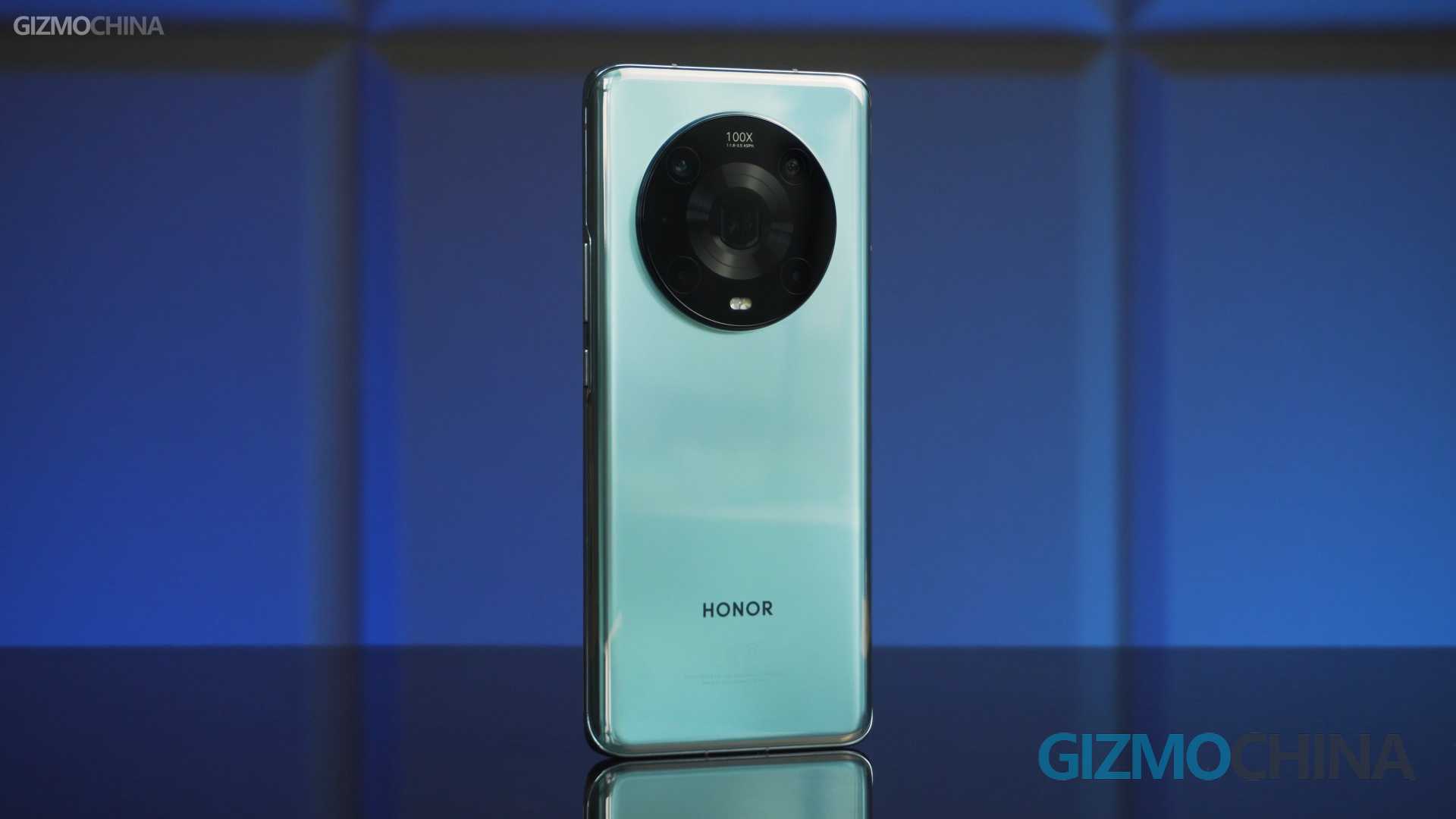
Just yesterday, we had covered a report regarding the Honor Magic 5 series of smartphones that revealed some key details regarding the flagship smartphones’ display. And now, another leak has revealed other specifications regarding the upcoming high end devices and even their possible launch timeline.
The latest news arrives from a tipster @厂长是关同学 who shared the information on Weibo (a Chinese microblogging website). Based on our previous report, the Chinese smartphone maker’s Magic 5 and Magic 5 Pro will feature a 6.78 inch and 6.81 inch curved AMOLED display panel respectively, which will support PWM dimming and LTPO technology.
The resolution on the higher end Pro variant is rumored to be a 2K resolution with support for 120Hz high refresh rate. Now, the latest leak reveals that the latest Magic 5 series of smartphones will feature Qualcomm Snapdragon 8 Gen 2 SoC. This isn’t surprising considering the upcoming devices are the brand’s premium flagship models. For those unaware, the chipset is manufactured on TSMC’s 4nm process that has the SM8550 model number.
The leak further adds that the Magic 5 series will also arrive with significant improvements in terms of camera, with better image quality and even stability as well. Notably, another major reveal is the launch time frame for the Magic 5 series. The flagship Magic 5 series will apparently launch sometime between the months of March and April of next year. This is still just a leak and has not been officially confirmed by the company yet so take this report with a grain of salt for now.
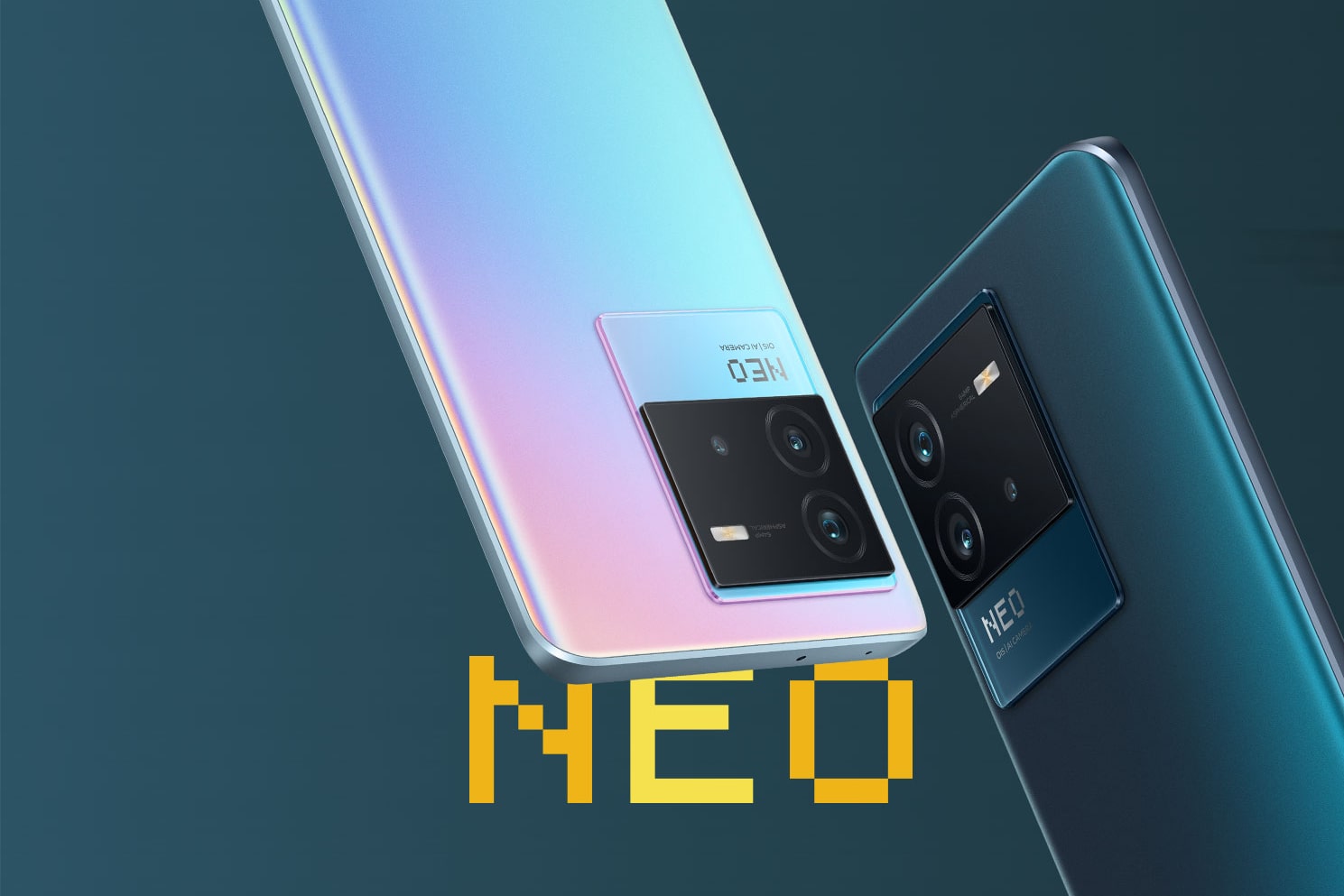
The iQOO Neo lineup is a popular series of affordable high end smartphones. The company had launched the Neo 6 earlier this year, and now the key specifications of its successor, the Neo 7, has been revealed. So let’s have a look.
Neo 6
The latest specifications leak arrives from a known tipster Digital Chat Station, with the new information revealing details regarding the internal hardware and even its camera module. The Chinese smartphone maker’s Neo 7 model was recently spotted in the 3C certification website, carrying the model number V2231A. This listing revealed that the smartphone will arrive with support for 120W fast charging, which is an upgrade over the 80W fast charging on the previous generation Neo 6 model.
Now, according to the Weibo tipster, the upcoming iQOO Neo 7 5G will be equipped with a MediaTek Dimensity 9000+ SoC under the hood. Meanwhile, the front is believed to sport an AMOLED display that will have a Full HD+ resolution and 120Hz high refresh rate. This panel will likely be a 6.78 inch size screen. Furthermore, the tipster also claimed that there will also be an upgrade in the camera department for the Neo 7. It will feature a new 50 megapixel primary camera on the rear.
This camera is reportedly a Sony IMX766V image sensor, which can also be found in the Chinese variant of the iQOO 8 Pro. The primary sensor might be accompanied with the 13 megapixel ultra wide angle lens and a 12 megapixel portrait telephoto shooter. Keep in mind that this is still an unconfirmed report so take this report with a pinch of salt for now and stick around for more updates.
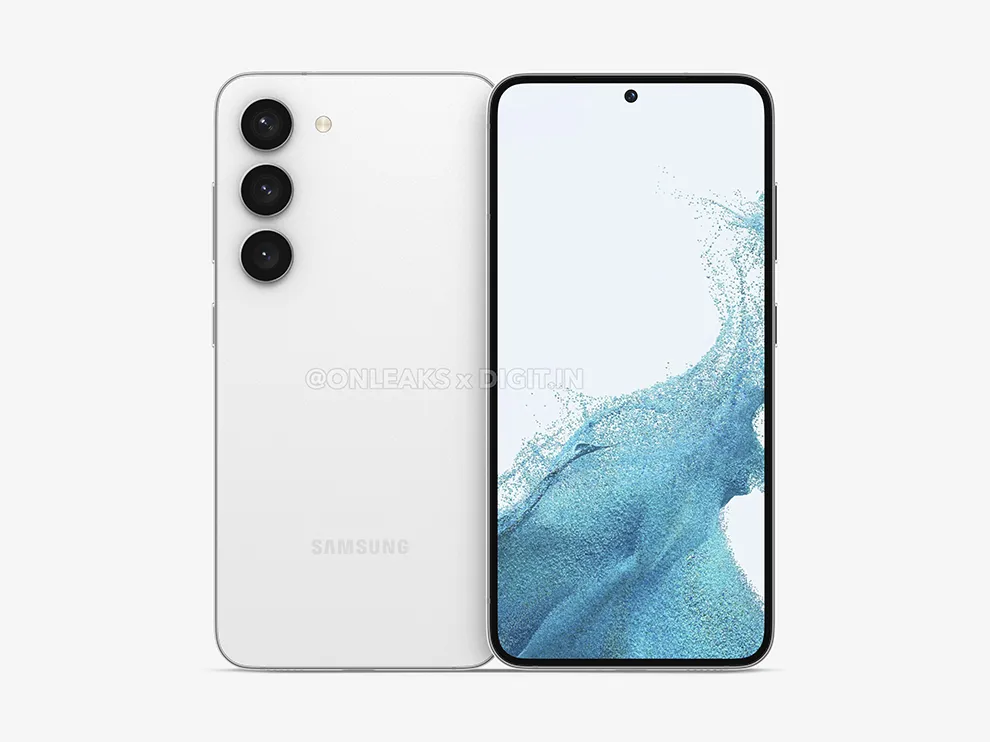
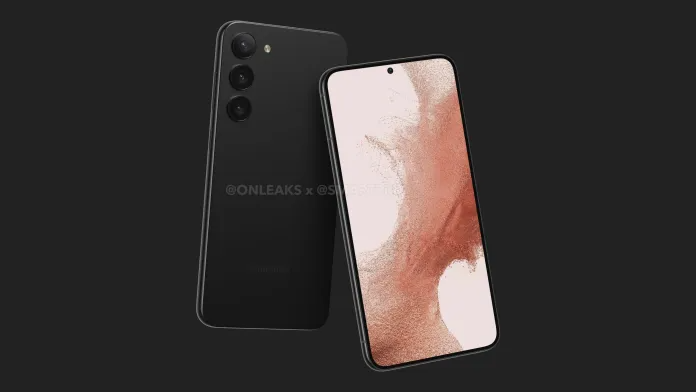
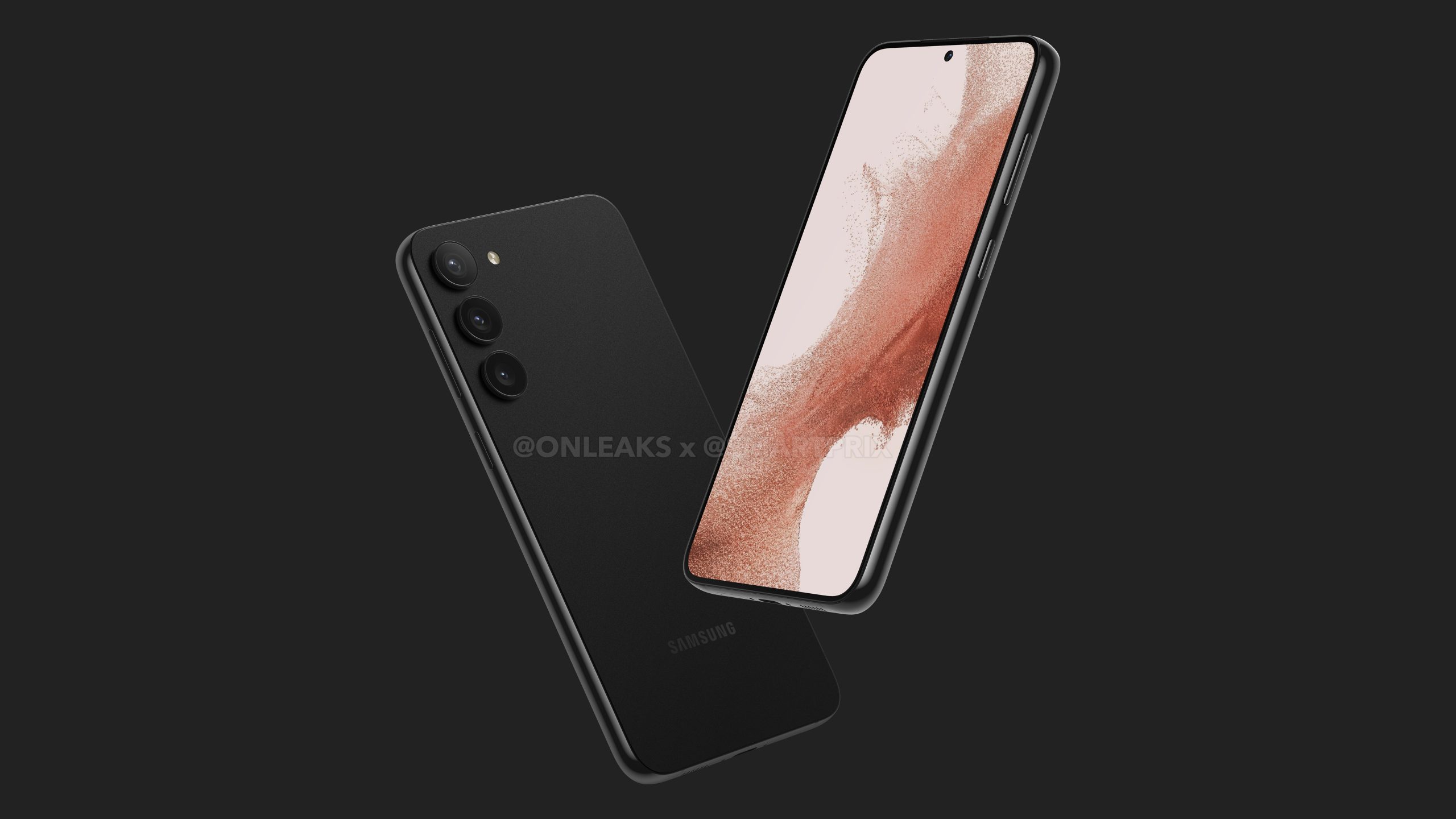
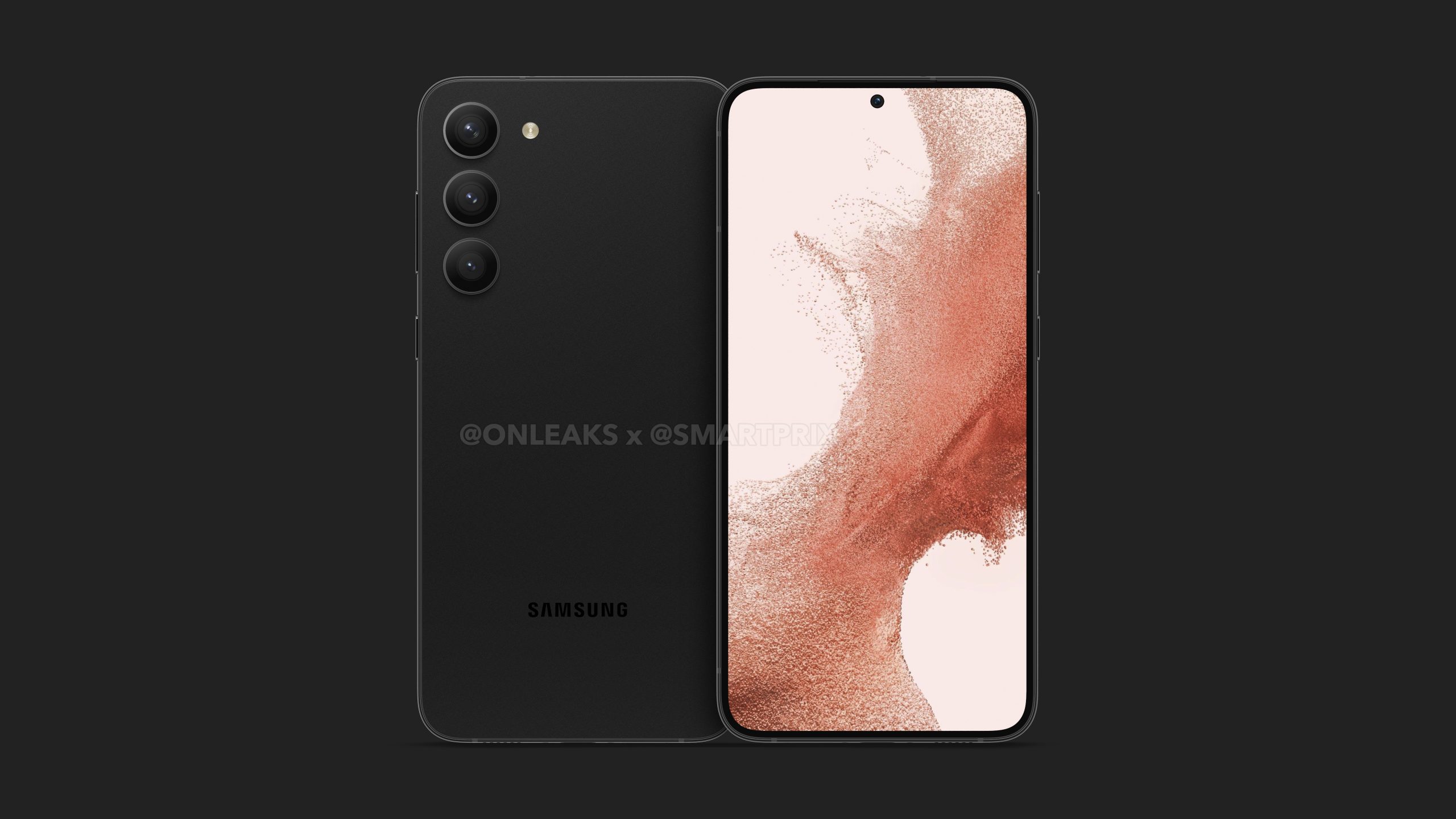
Yesterday, we got our first look at the upcoming Samsung Galaxy S23 Plus via CAD renders. Now, a new report has emerged that reveals the design of the vanilla Galaxy S23.
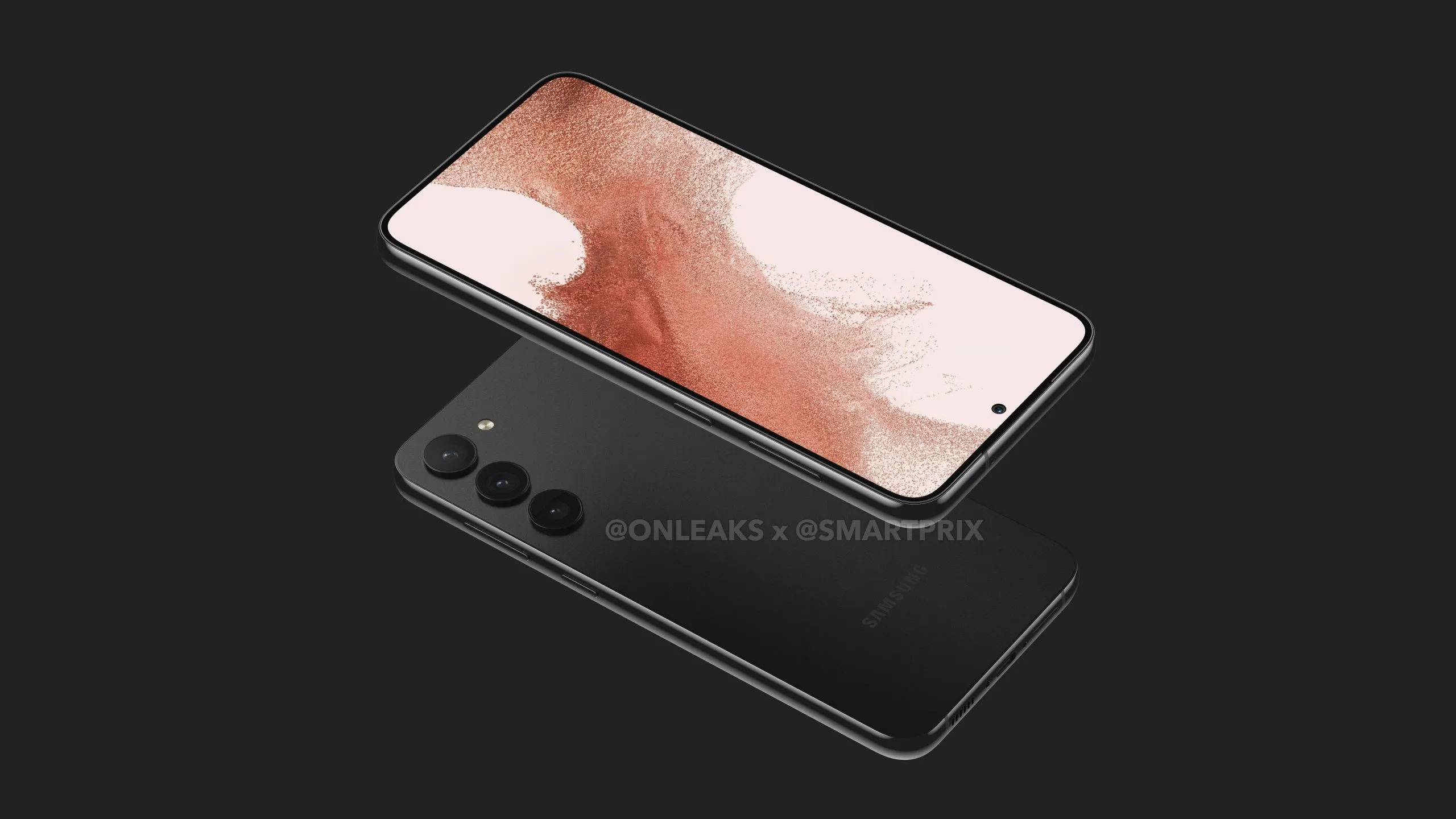
Samsung is expected to launch the Galaxy S23 series of smartphones in January or February of 2023. We are still a few months away from launch. However, popular tipster OnLeaks has revealed the CAD renders of the Galaxy S23 in collaboration with Digit.
Samsung Galaxy S23 renders
1 of 4
Earlier reports have stated that the Galaxy S23 will not have any significant changes from the S22. However, according to these renders, the camera array will get a new look on the upcoming device. It will ditch the camera island approach in favor of the S22 Ultra-inspired individually protruding lenses for each camera. The renders also reveal that the display will have slightly thicker bezels going around it.
OnLeaks has claimed that the phone will be slightly bigger – roughly 146.3 x 70.8 x 7.6 mm in size – compared to the Samsung Galaxy S22. The screen size will remain 6.1-inches diagonally, and the panel will most likely offer a 120Hz refresh rate.
Samsung Galaxy S23 specs (rumored)
So far, rumors surrounding the Galaxy S23 suggest that the device will debut with the upcoming Qualcomm Snapdragon 8 Gen 2 chipset. The display specs will mostly remain the same as last generation and the battery is said to see a 5 percent increase in capacity. Finer details about the specs are not available at the moment. So, stay tuned for more.
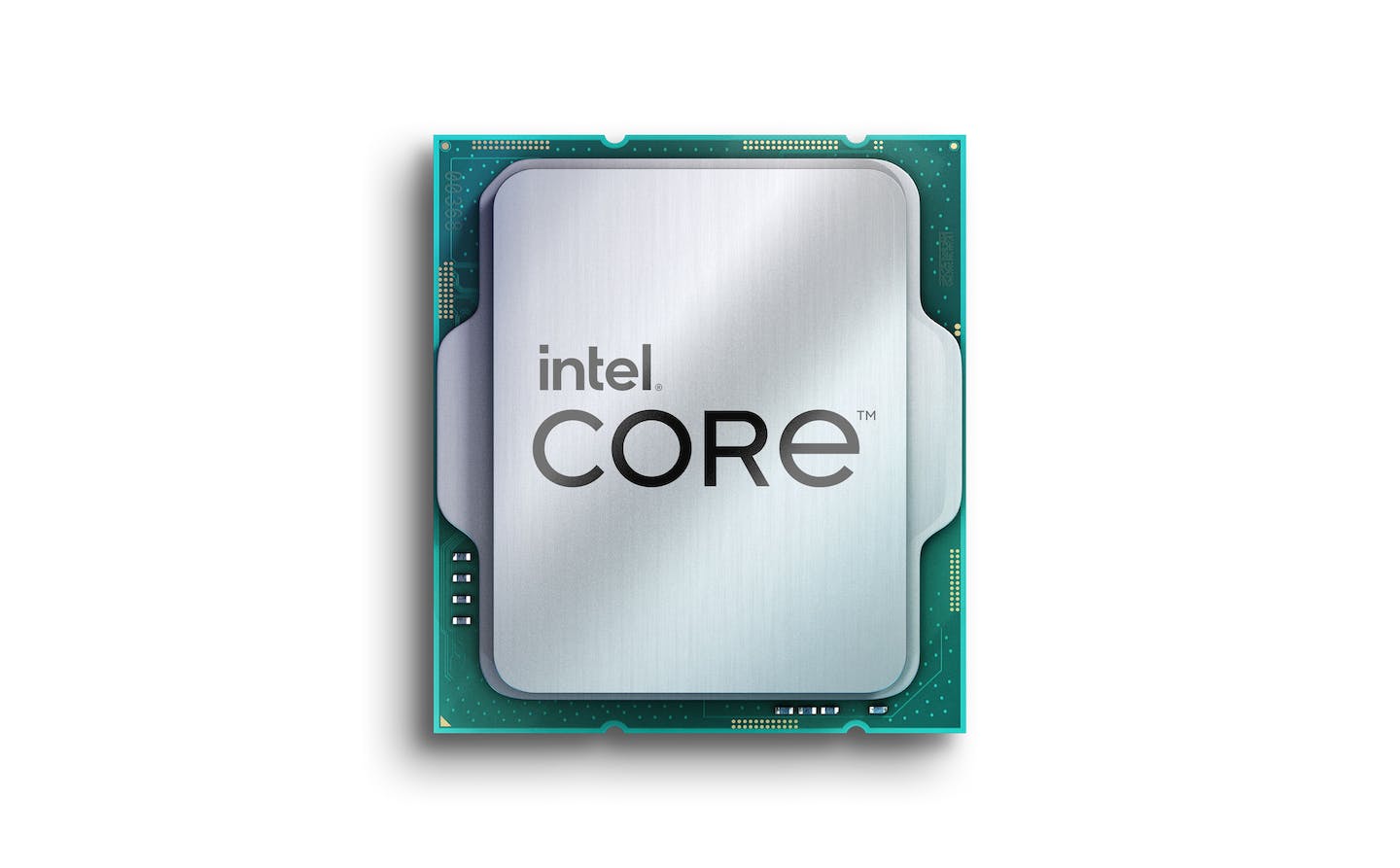
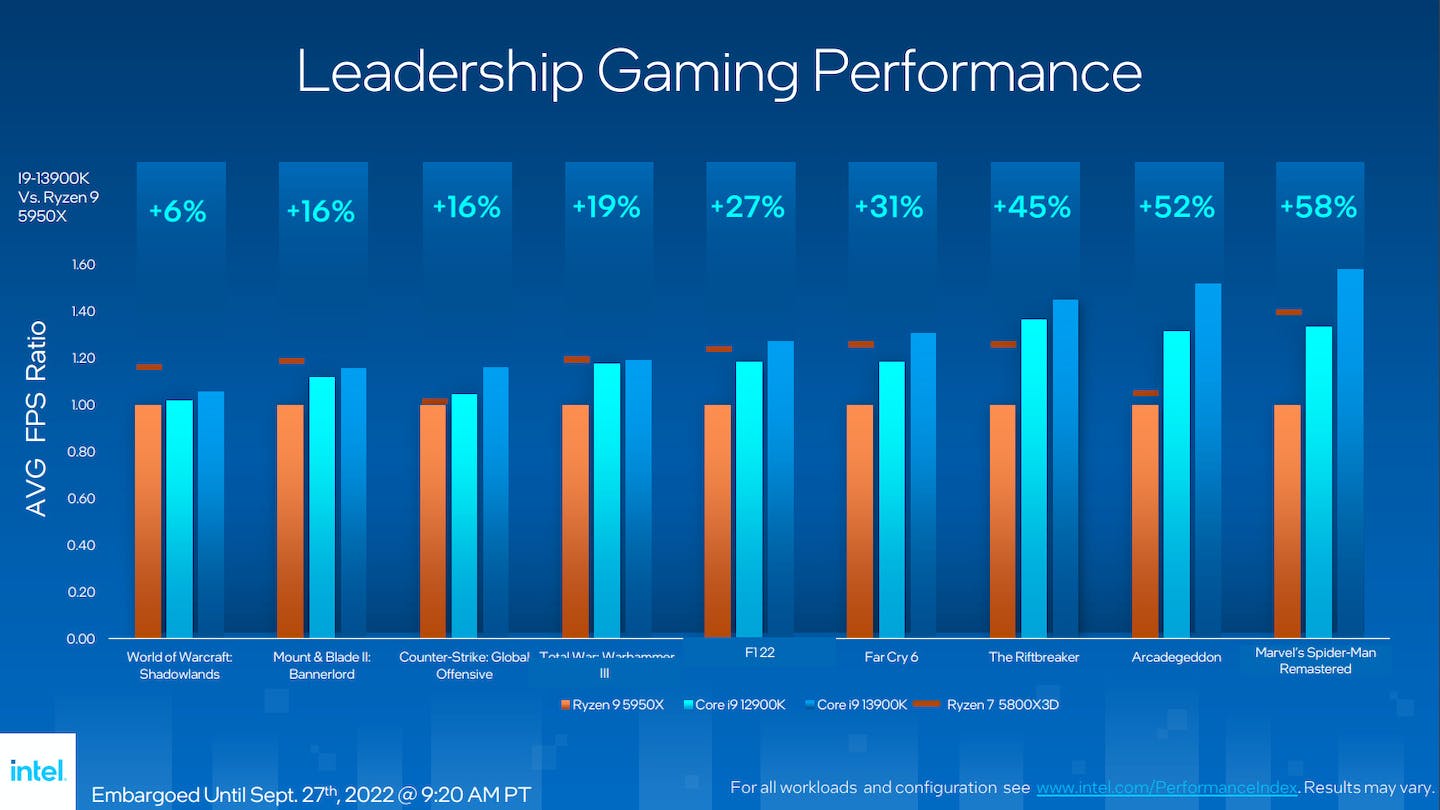
Intel recently launched the new 12th generation Intel Core processors that offer a combination of performance cores and efficiency cores. Now, the company has announced the new 13th-generation Raptor Lake processors.
The announcement of the new 13th generation processors from Intel comes at a time when its rival AMD has launched the new Ryzen 7000 processors for desktop devices.
The new chips are built on an upgraded version of the Intel 7 process (which is a 10nm design), featuring a third-generation SuperFin transistor and x86 performance hybrid architecture. It includes Performance cores (P-cores) and Efficient cores (E-cores) that split workloads using Intel’s Thread Director.
The top-end chipset in the new lineup is the Intel Core i9-13900K which packs 24 cores, offering eight performance cores and 16 efficiency cores. It is also said to be able to reach up to 5.8GHz Max Turbo frequency. The company also claims that it is 15 percent faster than its predecessor in single-threaded tasks and 41 percent better in multi-threaded work.
On the other hand, the Intel Core i5-13600K comes with 14 cores which is a combination of six performance cores and eight efficiency cores along with 20 threads. The Intel Core i7-13700K has 16 cores, which include eight performance cores and eight efficiency cores, and comes with 24 threads.
The L3 cache and L2 cache on the chips have been increased. Further, there’s also support for PCIe Gen 5.0 with up to 16 lanes off the processor along with DDR5-5600 and DDR5-5200 support. It is also compatible with DDR4 memory for the motherboard makers that still want to offer DDR4. All Core i5, i7, and i9 chips have a base power of 125 watts, but the Core i7 and Core i9 will both need 253 watts for their max turbo power.
Although Intel had warned about price increases for the flagship chips earlier this year, that is not the case as the pricing of the 13th generation chips are pretty much similar to the pricing of 12th gen processors.
The Intel Core i9-13900K is priced at $589, the same price as the last year’s 12900K chip. On the other hand, the Intel Core i5-13600K is priced at $319, which is a slight increase from the 12th gen’s price of $289. The Intel Core i7-13700K has a price tag of $409. The company says that the new 13th generation chips will start shipping from 20th October along with Z790 motherboards.
Motorola just launched a bunch of smartphones globally. Despite that, the company has no plans to stop debuting new handsets. According to the latest information, the firm will be announcing yet another phone next week.
Motorola Moto G72 | Source: @OnLeaks via PriceBaba
As per tech influencer Mukul Sharma (@stufflistings), Motorola will launch the Moto G72 on October 3. The smartphone will make its global debut in India.
He says that the device will sport a 10-bit pOLED display offering up to a 120Hz refresh rate. The screen will also house a fingerprint sensor underneath it.
Further, the handset will arrive with a 108MP primary camera. Lastly, it will also feature dual stereo speakers.
Since the renders of the Moto G72 had already leaked, we know how the phone will look. The device’s rear will be somewhat similar to that of the Motorola Edge 30 Fusion, which goes by the name of Moto S30 Pro in China.
The smartphone will be available in three colors, such as blue, silver, and black. It is said to come with an 8MP ultra-wide camera, 2MP depth sensor, 16MP selfie camera, 3.5mm headphone jack, Android 12, 5,000mAh battery, and 33W fast-wired charging support.
Unfortunately, the chipset powering the Moto G72 is still a mystery. We are looking forward to learning more about this handset in the coming days.
Google is gearing up to launch the Pixel 7 series of smartphones on October 6. The company has put out a teaser video of the Pixel 7 Pro showcasing its design from every angle.
Sleek, smooth, and sophisticated. 📱
The most refined design yet, #Pixel7 Pro is crafted with polished aluminum in three modern, elegant colors—Obsidian, Snow, and Hazel.
Design-wise, the device is quite similar to the Pixel 6 Pro, but it features a better-looking camera arrangement on the camera visor and an overall more polished and premium look.
Relatedly, Amazon has jumped the gun on the Pixel 7 series and has listed (now removed) the Pixel 7 device on its website with a $599 price tag. This was first brought to attention by M. Brandon Lee of This is Tech Today. Apparently, the device appeared on the Amazon US website when Lee searched for ‘B0BCQXXRJJ’.
This listing all but confirms that the earlier leaks about the Pixel 7 being priced at $599 were true. Going by this, we can also expect the Pixel 7 Pro to have a price tag of $899. It is worth noting that these are the same prices at which Google debuted the Pixel 6 and Pixel 6 Pro last year.
Other than the pricing, the specs of the devices also appear to be quite similar to the last generation devices, with a few improvements here and there. Google is most likely focusing on a more stable software experience this time around, as the constant bugs in the Pixel 6 series were the only drawback of those devices.
You can find out more about the Pixel 7 and Pixel 7 Pro by reading our latest reports regarding the leaked specs of the devices.
The United States-based audio product manufacturer Skullcandy is known for its products aimed at music lovers. The brand has now launched a new line of gaming headphones that come with functional and convenient features like detachable boom mics, onboard physical controls, and memory foam ear cushions.
The lineup currently consists of three headphones-SLYR, SLYR Pro, and PLYR. So let’s check them out in detail.
Skullcandy SLYR
The Skullcandy SLYR is a multi-platform wired gaming headset and the entry-level model in the lineup. It features Skullcandy’s Supreme Sound technology for “premium in-game audio depth” and comes with a bi-directional removable boom microphone for chatting with your friends or communicating in-game. The onboard controls include a mic mute button and a volume button. The headset is designed with lightweight materials and memory foam to maximize comfort during long gaming sessions.
Skullcandy SLYR Pro
The SLYR Pro model is also a multi-platform wired headset that includes all the comfort features of the SLYR headphones and adds some new features like Skullcandy’s more advanced audio processing technology. This includes Skullcandy’s Clear Voice Smart Mic, which utilizes AI to cancel out distracting background noises like keyboard clicks and Enhanced Sound Perception, which adjusts audio levels based on a hearing test and your preferences. These technologies are powered by an inbuilt battery that can run independently for up to 24 hours on a single charge.
Skullcandy PLYR
The Skullcandy PLYR is the flagship headset of the lineup. With the help of Bluetooth 5.2 technology, this gaming headset can be used in both wireless and wired modes, allowing you to play games or listen to music while you’re on the road and connect to your home computer at the same time. The same audio processing tools found in the SLYR Pro will also be available to you here. The PLYR and SLYR Pro both have built-in Tile Finding technology that enables you to “ring” the headsets with the Tile app if you ever misplace them.
Price & availability
The SLYR headset has a price tag of $59.99 and comes in three different colorways: Black DigiHype, Green DigiHype, and Blue DigiHype. On the other hand, the SLYR Pro comes in the same colorways as the base version with a price of $99.99. Lastly, the flagship PLYR Wireless Gaming Headset costs $129.99 and only comes in the black color option.
The base model is available for pre-order via the Skullcandy online store and Amazon, whereas the other two models will be available in October.
Earlier this week, a leak hinted that Xiaomi could launch the upcoming Xiaomi 12T and 12T Pro on October 4. Now, the brand has announced that it will be hosting a global launch event on October 4th. At this event, we will likely see the Xiaomi 12T series make its debut. So let’s take a look at what’s known so far about the devices.
Renders of the Xiaomi 12T Pro and Xiaomi 12T have already surfaced online, revealing that they feature a similar design. The 12T Pro is anticipated to launch with the Qualcomm Snapdragon 8+ Gen 1 SoC with a 6.67-inch AMOLED screen with 1,220 x 2,712 pixels and a 120Hz refresh rate. Additionally, a 200-megapixel Samsung HP1 main sensor is rumored to be included, along with an 8-megapixel ultra-wide-angle lens and a 2-megapixel macro lens.
Xiaomi 12T in Lunar Silver
The Xiaomi 12T, on the other hand, comes standard with a Dimensity 8100 chipset, a 108-megapixel main camera, an 8-megapixel ultrawide camera, and a 2-megapixel macro sensor. It’s revealed to have a 6.7-inch OLED display that offers a 120Hz refresh rate and HDR10+ support.
A 5000mAh battery is said to power both devices. They might have different charging capabilities as the Pro model is rumored to offer 120W fast charging, while the standard model might only support 67W fast charging.
Reports suggest the Xiaomi 12T will be sold in two storage models— 8GB RAM + 128GB storage and 8GB RAM + 256GB. On the other hand, the 12T Pro is said to offer 8GB RAM + 256GB storage and 12GB RAM + 256GB storage options.
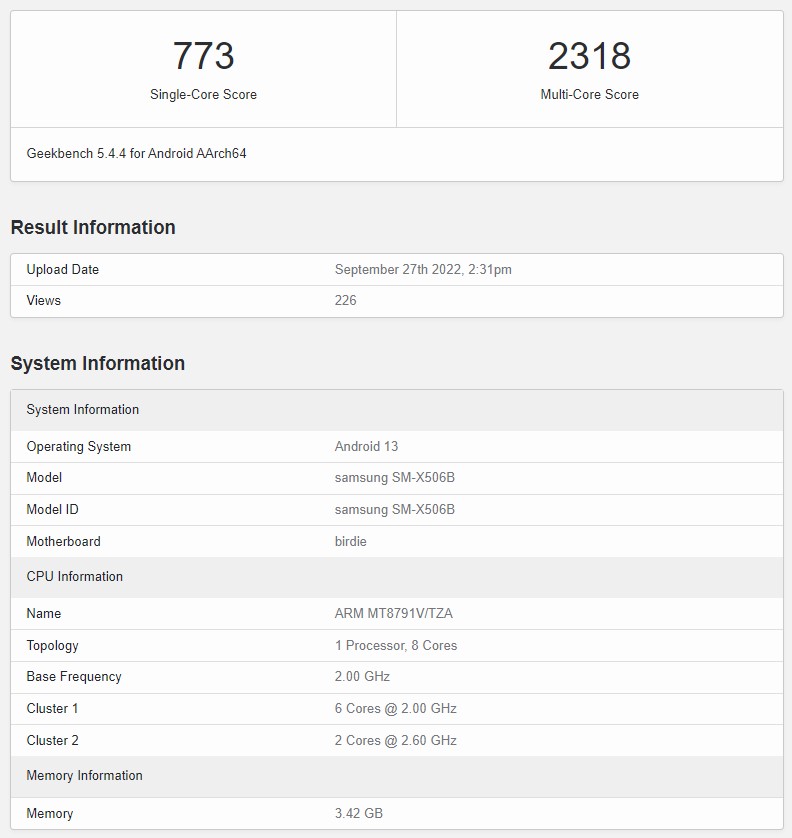
It was reported in November 2021 that Samsung may launch a tablet named the Galaxy Tab S8 FE towards the end of 2022. As the moniker suggests, it could be an affordable version of the Galaxy Tab S8 tablet. It appears that last year’s rumor may become true as the alleged tablet has surfaced in the database of the Geekbench benchmarking site.
Previous reports have claimed that the model numbers SM-X500 and SM-X506B are both associated with the Galaxy Tab S8 FE. According to GalaxyClub.nl, the SM-X506B model has emerged on Geekbench. The listing reveals that it is powered by a MediaTek chip, which has an MT8791V/ZA model number. It is nothing but the 6nm Kompanio 900T chip, which was announced by the Taiwanese chip maker in September 2021.
Samsung Galaxy Tab S8 FE Geekbench listing
The Kompanio 900T chip is specially designed for tablets and Chromebooks. It features 2 x Cortex-A78 CPU cores, 6 x Cortex-A55 cores, and a Mali-G68 GPU. When we look at the Geekbench listing again, we can see that the SoC comes with 4 GB of RAM.
What’s interesting about the listing is that it reveals that the device is running on Android 13. Hence, it is expected to debut as Samsung’s first tablet with the new Android OS onboard. The tablet scored 773 in the single-core test and 2318 in the multi-core test of the Geekbench 5.
The other specifications of the Galaxy Tab S8 FE. It will be arriving as a successor to the Galaxy Tab S7 FE. Considering that it belongs to the Tab S8 family, it may borrow some of its specs from the vanilla Tab S8. Now that the tablet has appeared on Geekbench, it appears that it may take only a few days, if not weeks, to go official.
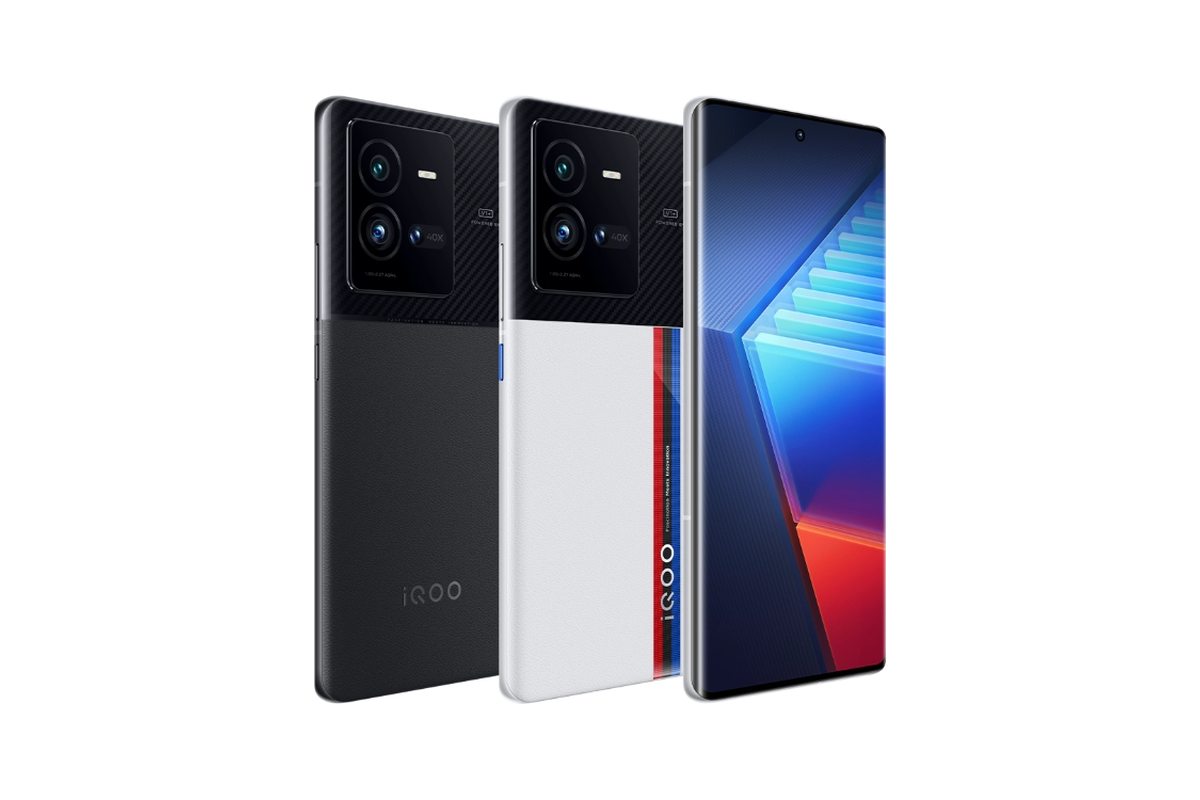
iQOO is likely to unveil the iQOO Neo 7 in China in October. It appears that the company will focus on the iQOO 11 lineup after the Neo 7. The rumor mill is gradually spilling information about the iQOO 11 and 11 Pro handsets. The tipster, Panda is Bald from China, has seemingly revealed (via. TechGoing) the display refresh rate of the iQOO 11 Pro.
Previous reports have claimed that the iQOO 11 and the 11 Pro will both feature the new E6 AMOLED display by Samsung. Today, the tipster reportedly claimed that the iQOO 11 Pro’s display will support a 144Hz refresh rate and Quad HD+ resolution.
iQOO 10 Pro
To recall, the iQOO 10 Pro has an E5 AMOLED display measuring 6.78 inches. It supports a Quad HD+ resolution and a 120Hz refresh rate. Like its predecessor model, the iQOO 11 Pro’s display is expected to feature curved edges and an ultrasonic in-screen fingerprint scanner.
The Snapdragon 8 Gen 2 mobile platform is likely to power the iQOO 11 and 11 Pro handsets. There is no word on the front cameras of either phone. However, both models are likely to feature a new 50-megapixel Sony IMX8-series primary camera. The iQOO 11 duo is also expected to come equipped with the Vivo V2 ISP for an enhanced photography experience.
While there is no confirmation yet, the iQOO 11 may support 120W fast charging, whereas the Pro model may offer 200W rapid charging like the iQOO 10 Pro. Both devices are expected to come preloaded with the Android 13 OS.
The iQOO 10 series debuted at the beginning of this year in China. Hence, it is likely that the iQOO 11 lineup may go official at the start of the year 2023 in the home market.
In August 2021, Xiaomi unveiled the Xiaomi Pad 5 and Pad 5 Pro tablets in China. At launch, both tablets were made available with 6 GB RAM and 128 GB / 256 GB storage. Last month, the company made both tablets available in an 8 GB RAM + 256 GB storage version. Now, the Chinese manufacturer has introduced a new 8 GB RAM variant with lower storage in the home market.
The Xiaomi Pad 5 with 8 GB RAM + 128 GB storage is priced at 2,099 Yuan (~$292). It comes in three other options, such as 6 GB RAM + 128 GB storage, 6 GB RAM + 256 GB storage, and 8 GB RAM + 256 GB storage. These models are priced at 1,799 Yuan (~$250), 2,099 Yuan (~$292), and 2,399 Yuan (~$334). The tablet comes in three colors: black, white, and green.
On the other hand, the new 8GB+128GB configuration of the Xiaomi Pad 5 Pro is priced at 2,599 Yuan (~$362). Its other variants like 6 GB RAM + 128 GB storage, 6 GB RAM + 256 GB storage, and 8 GB RAM + 256 GB storage cost 2,299 Yuan (~$320), 2,599 Yuan (~$362), and 2,899 Yuan (~$404), respectively. It can be purchased in white and black colors.
In terms of the Xiaomi Pad 5 Pro 5G, it is only available in an 8 GB RAM + 256 GB storage configuration. It comes in black only and is priced at 3,349 Yuan (~$466).
The Xiaomi Pad 5 and Pad 5 Pro are equipped with common features, such as an 11-inch IPS LCD display that offers 2K resolution, 6 GB / 8 GB of LPDDR4x RAM, 128 GB / 256 GB of UFS 3.1 storage, Android 12 OS, and quad speakers. The Pad 5 features the Snapdragon 860 chipset and an 8,720mAh battery with 33W fast charging. The Pad 5 Pro, on the other hand, has the Snapdragon 870v chipset, and an 8,600mAh battery with 67W fast charging.
The Xiaomi Pad 5 series has an 8-megapixel front camera. The Pad 5 has a 13-megapixel rear camera, while the Pad 5 Pro has a 13-megapixel (main) + 5-megapixel (depth) dual-camera system. The Pad 5 Pro 5G has a 50-megapixel (main) + 5-megapixel (depth) dual-camera system.
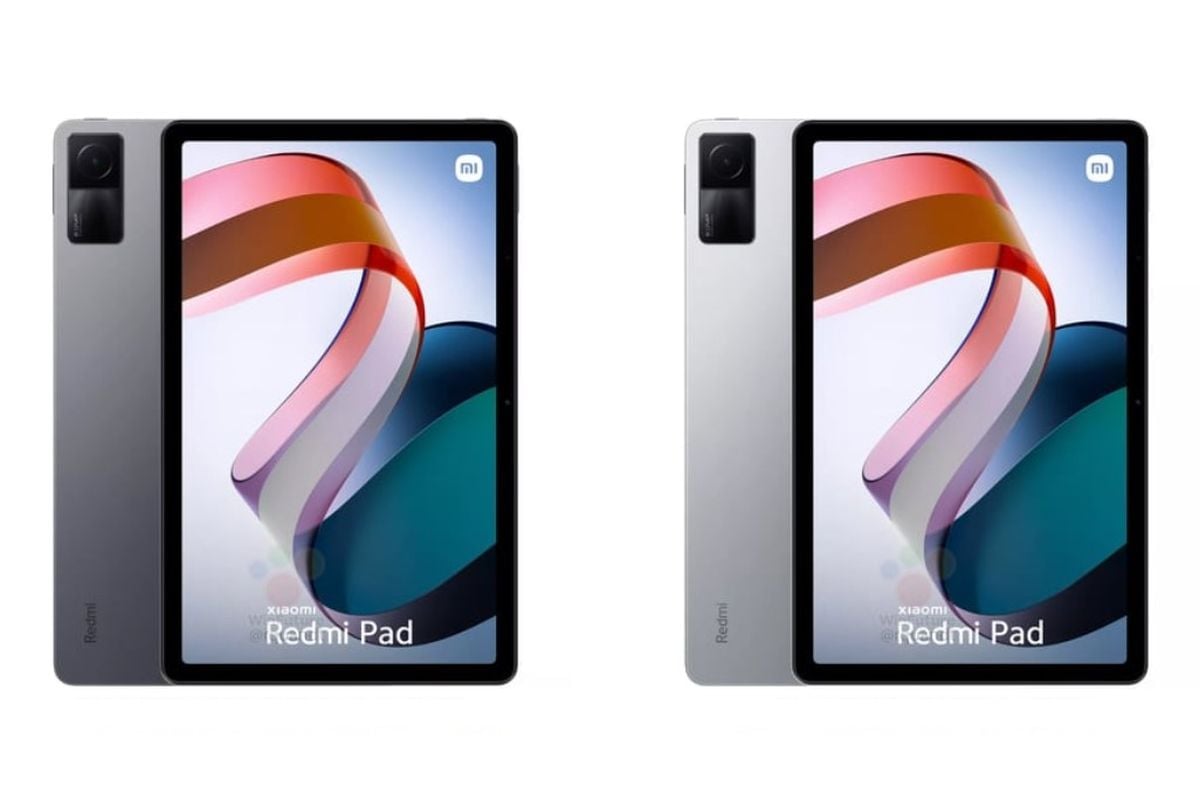
Xiaomi’s next launch event for the global market will be held on October 4. The company will launch the first-ever Redmi tablet alongside the Xiaomi 12T and 12T Pro on the said date. Before the Redmi Pad comes out, Winfuture.dehas released a new report that lists all of its features and shows pictures of it.
Redmi Pad specifications (rumored)
The Redmi Pad will arrive with a 10.61-inch LCD panel that produces a resolution of 2000 x 1200 pixels and a refresh rate of 90Hz. The screen supports up to 400 nits of brightness, a contrast ratio of 1500:1, and 10-bit colors.
Under the hood, the Redmi Pad will be equipped with the Helio G99 chipset. The SoC will be paired with 3 GB / 4 GB of RAM and 64 GB / 128 GB of UFS 2.2 storage. It will house an 8,000mAh battery with 22.5W fast charging support.
Redmi Pad tablet
The Redmi Pad will feature an 8-megapixel rear camera with autofocus support. On the front, it has an 8-megapixel camera with a 105-degree FOV. It will be equipped with the FocusFrame feature, which offers a wider field of view to accommodate more people in a single frame.
The tablet will offer other features such as Android 12 OS with MIUI’s tablet version and Dolby Atmos certified quad speakers. It will have a thickness of 7 mm and weigh around 445 grams.
Redmi Pad price (rumored)
The report further states that the Redmi Pad will be priced at around 250 euros. It will be available in three colors: Graphite Gray, Moonlight Silver, and Mint Green. There is no word on whether the company has plans to release a 5G version of the tablet.
Motorola surprised a lot of people by launching a very powerful flagship killer in the global market earlier this month. We are talking about the Motorola Edge 30 Ultra: it is essentially a rebrand of the Motorola Moto X30 Pro, but it is the first Ultra phone from the Lenovo-owned brand and it packs amazing specifications for everyone. However, in the global market, there are already several amazing flagship killers which reached very interesting street prices. We are obviously talking about the ones released in the first half of this year, such as the OnePlus 10 Pro and the Realme GT 2 Pro. Do they offer higher value for money? If you need to find out, check this comparison between the main specifications of the Motorola Edge 30 Ultra, the OnePlus 10 Pro, and the Realme GT 2 Pro.
OnePlus 10 Pro vs Realme GT 2 Pro
Motorola Edge 30 Ultra
OnePlus 10 Pro
Realme GT 2 Pro
DIMENSIONS AND WEIGHT
161.8 x 73.5 x 8.4 mm,
199 g
163 x 73.9 x 8.6 mm,
200.5 g
163.2 x 74.7 x 8.2 mm,
189 g
DISPLAY
6.67 inches, 1080 x 2400 pixels (Full HD+), P-OLED
6.7 inches, 1440 x 3216 pixels (Quad HD+), AMOLED
6.7 inches, 1440 x 3216 pixels (Quad HD+), LTPO AMOLED
Triple 200 + 12 + 50 MP, f/1.9 + f/1.6 + f/2.2
60 MP f/2.2 front camera
Triple 48 + 8 + 50 MP, f/1.8 + f/2.4 + f/2.2
32 MP f/2.2 front camera
Triple 50 + 50 + 3 MP, f/1.8 + f/2.2 + f/3.0
32 MP f/2.4 front camera
BATTERY
4610 mAh, fast charging 125W, fast wireless charging 50W
5000 mAh, fast charging 80W, fast wireless charging 50W
5000 mAh, Fast Charging 65W
ADDITIONAL FEATURES
5G, dual SIM, reverse wireless charging
5G, dual SIM, reverse wireless charging
5G, dual SIM
Design
The designs of the Motorola Edge 30 Ultra and OnePlus 10 Pro look more elegant due to the presence of curved displays. They are also built with premium materials, such as glass for the rear side and aluminum for the frame. The Realme GT 2 Pro has a flat display and a rear side made of a bio-polymer, so you should not expect the most amazing build quality, even though the material is unique in its genre and it resembles the touch and feel of the real paper. I personally prefer the Motorola Edge 30 Ultra due to its good look and more compact body.
Display
The OnePlus 10 Pro and the Realme GT 2 Pro have the same display (if we exclude the curvature) and it is a better panel than the one found on the Motorola Edge 30 Ultra. We are talking about an AMOLED display with a diagonal of 6.7 inches able to show up to one billion colors with a Quad HD+ resolution of 1440 x 3216 pixels, a 120 Hz refresh rate, the HDR10+ certification, and an in-display fingerprint reader. It is a panel similar to the ones you can currently find on the most expensive flagship phones out there. The Motorola Edge 30 Ultra has a higher refresh rate of 144 Hz, but the resolution is lower and it comes with different P-OLED technology, providing an inferior quality.
Specs & Software
The Motorola Edge 30 Ultra offers something more than its rivals in terms of performance because it packs a slightly better processor. We are talking about the Snapdragon 8 Plus Gen 1 built with a 4 nm production process and sporting an octa-core architecture composed of a Cortex X2 CPU running at a max frequency of 3.19 GHz, three Cortex A710 CPUs running at 2.75 GHz, and four Cortex A510 CPUs running at 1.8 GHz, as well as an Adreno 730 GPU. The chipset is paired with up to 512 GB of internal storage and up to 12 GB of RAM. The Realme GT 2 Pro and the OnePlus 10 Pro are fueled by an inferior Snapdragon 8 Gen 1 paired with up to 256 GB of native storage and up to 12 GB of RAM. On the other hand, they have better Android customization based on OPPO’s ColorOS.
Camera
On paper, the most advanced camera setup belongs to the Motorola Edge 30 Ultra. First of all, it is the world’s first device with a 200 MP rear camera, featuring OIS. Further, it has a 12 MP telephoto sensor and a 50 MP ultrawide camera. The Realme GT 2 Pro lacks a telephoto camera, replaced by a 3 MP microlens with 40x magnification. The OnePlus 10 Pro has a telephoto sensor with 3x optical zoom, but the main sensor is inferior with its 48 MP resolution. The Motorola also wins the selfie comparison thanks to its amazing 60 MP front camera able to record 4K videos.
The OnePlus 10 Pro and the Realme GT 2 Pro have a bigger battery than the Motorola Edge 30 Ultra, with a capacity of 5000 mAh. So they provide longer battery life; given that they have the same hardware components, they do not differ too much from each other in terms of battery life. But the OnePlus 10 Pro features faster 80W wired charging and, unlike the Realme, it even supports wireless charging.
Price
The Motorola Edge 30 Ultra launched in Europe with an €899/$899 starting price, the OnePlus 10 Pro can currently be found for less than €800/$800 with a bit of luck, and the Realme GT 2 Pro is even available for less than €700/$700. Which one would you pick?
Motorola Edge 30 Ultra vs OnePlus 10 Pro vs Realme GT 2 Pro: PRO and CONS
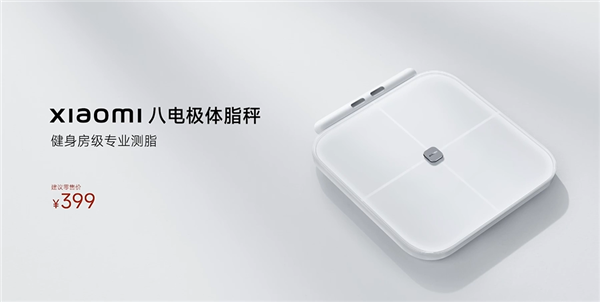
Xiaomi has announced its eight-electrode body composition scale that provides up to 35 body composition analysis reports. The new Xiaomi body fat scale adopts a dual-frequency bioimpedance measurement technology to provide accurate measurements.
Most of the common body scales in the market use a single-frequency mechanism that cannot measure intra-cellular fluid impedance due to the low-frequency current. This in turn affects the accuracy of these traditional body fat scales. The Xiaomi eight-electrode body composition scale, on the other hand, can accurately measure body fat, water, muscle, and other body indices.
It is equipped with an ADC chip, embedded thumb electrode, full foot contact ITO scale surface, and a handle connection cable with seven cores. The measurement system produces high-precision, floating-point calculations, and the output is benchmarked with the DEXA gold standard.
The Xiaomi eight-electrode body composition scale uses multi-frequency biological alternating current to accurately measure body weight. It has eight electrodes that form multiple current loops in the whole body. This enables the device to produce component measurements of the left arm, right arm, trunk, left leg, and right leg, providing the muscle and fat distribution in each segment. It can intelligently analyze whether the body type and posture of the person being weighed are balanced.
The Xiaomi eight-electrode body fat scale has both Bluetooth and Wi-Fi connectivity capabilities. It does not need to be connected to a mobile phone as the measurement will be recorded on the scale and uploaded to the cloud. Using the Xiaomi Sports Health app, users can view a detailed report of measurement data connected to their account. The scale has a net weight of 2.4kg and can weigh persons up to 150kg. It has a minimum wake-up weight of 5kg and a maximum capacity of 200kg.
The Xiaomi Eight-electrode Body Composition Scale is priced at 399 yuan (~$56) and is powered by four AA batteries.
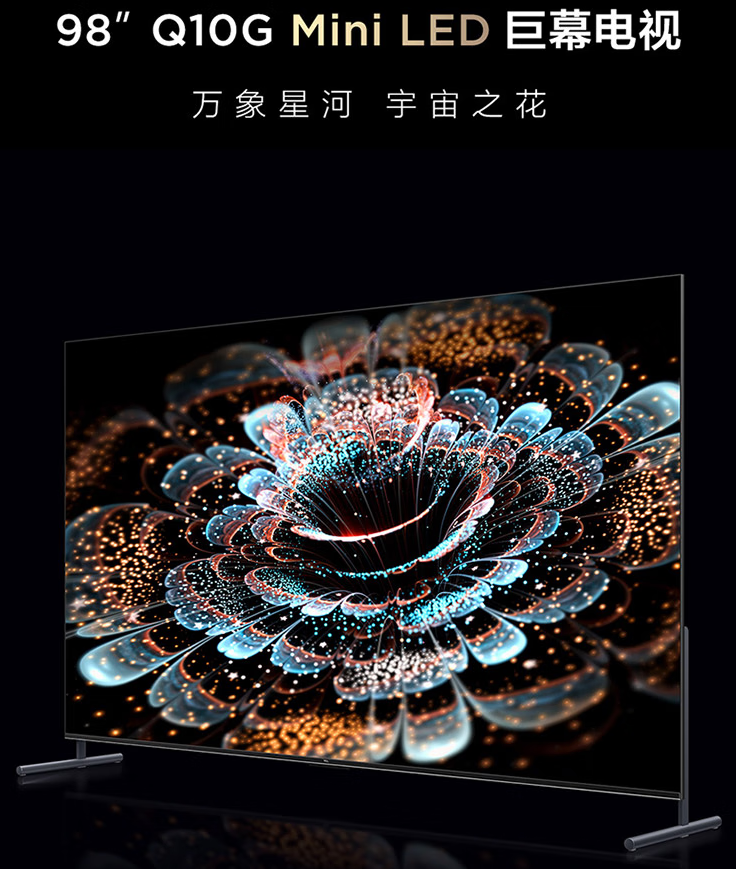
TCL has added a 98-inch model to its Q10G lineup of Mini LED TVs. The TCL Q10G Mini LED TV comes with a 4K display and a high refresh rate of 120Hz. In May this year, TCL launched the 55”, 65”, 75”, and 85” Q10G Mini LED TVs. TCL has now announced that the Q10G 98-inch model is now available on pre-order from September 27.
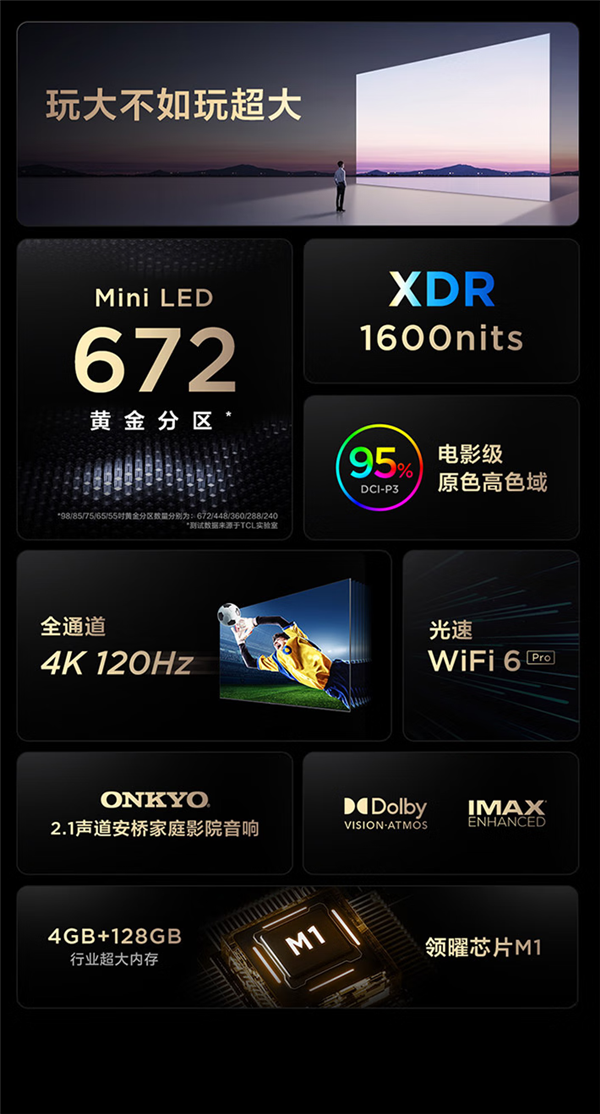
The TCL Q10G Mini LED 98-inch TV comes with 59 driver chips independently controlling the 672 partitions in the TV. The earlier models in the Q10G series adopted between 240 and 448 partitions. The expansive Q10G Mini LED TV has a maximum brightness of 1,600 nits and a dynamic contrast ratio of 16 million: 1. The Q10G 98” TV has a 95% DCI-P3 color gamut and is equipped with an M1 quad-core chip. It comes with 4GB of memory in addition to 128GB of flash storage.
The audio system of the Q10G 98-inch TV consists of a 2.1 channel Onkyo audio, 50W power, and 7-unit independent speakers. The TV also supports Dolby Atmos and its ports include HDMI 2.1 (x3), USB (x2), AV input (x1), network LAN (x1), RF antenna (x1), and a single digital audio input port.
The TCL Q10G 98-inch Mini LED TV is available on pre-order starting at 21,999 yuan (~$3,065) in China. It can be ordered directly from retail platforms like JD.com.
Xiaomi released a raft of products during its product launch conference held on September 27. One of the new products is the MIJIA transparent Steam Rice Cooker with 7 cooking modes for a great cooking experience. The new MIJIA steam rice cooker comes with a transparent design and a 300-degree viewing window for observing the cooking process. The cooker has an OLED screen at the top which offers information on recipes, cooking status, and more.
The Xiaomi MIJIA transparent steam rice cooker has a thickened transparent glass liner that can hold up to 4L of food. The glass covering is made of tempered high borosilicate glass that can withstand extremes of temperature (hot or cold). The interior of the steamer is made of food-contact standard stainless steel and can cook 1.6L of food when using the steaming mode. The cooker can be used to steam rice, stew soup, cook porridge, and for slow cooking. It can also be used for yogurt and can be connected via the MIJIA app.
The MIJIA transparent steam rice cooker has an interactive NFC and supports 24-hour smart appointments. It also offers long-lasting heat preservation and can be safely opened with the lid secured from the heat. The inner cover and the bubble breaker of the steam cooker are easily detachable.
The MIJIA transparent steam rice cooker is available in China and is priced at 599 yuan (~$84). It can be purchased from JD.com and Xiaomi has not released global availability details of the product.
The Samsung Galaxy S23 Plus was recently spotted with the Galaxy S23 in the database of China’s 3C certification site. Publication SmartPrixhas teamed up with reliable tipster Steve Hemmerstoffer (aka. OnLeaks) to release the CAD renders of the Galaxy S23+. The images show that there will be some design changes on the successor edition of the Galaxy S22+.
Samsung Galaxy S23+ design
The Galaxy S23+ renders show that the device will feature a punch-hole display on the front. Its back panel has a vertical triple camera unit at the upper-left corner. There is no separate camera island as it was seen on the Galaxy S22. Each camera has protruding rings like the Galaxy S22 Ultra.
1 of 4
Samsung Galaxy S23 Plus renders by SmartPrix / OnLeaks
Samsung Galaxy S23 Plus renders by SmartPrix / OnLeaks
Samsung Galaxy S23 Plus renders by SmartPrix / OnLeaks
Samsung Galaxy S23 Plus renders by SmartPrix / OnLeaks
The volume buttons and the power key are on the right side of the Galaxy S23+. Its bottom edge has a USB-C port and a speaker grille. While the SIM card slot is not visible in the renders, it appears that it will also be available on the bottom edge.
The report further states that the Galaxy S23+ measures 157.7 x 76.1 x 7.6mm and houses a 6.6-inch display. The S22+ also housed a same-sized screen but measured 157.4 x 75.8 x 7.6mm. The report has no other information on the specifications of the device.
Rumors surrounding the Galaxy S23 Plus have claimed that it will be equipped with the Snapdragon 8 Gen 2. It appears that the inclusion of the new chipset could be the only major change of the S23+ as compared to its predecessor. The reason behind it is that tipster Ice Universe recently claimed that the S23+ will have the same internals that is available on the S22+. Hence, the S23+ may not be a major upgrade over its predecessor.
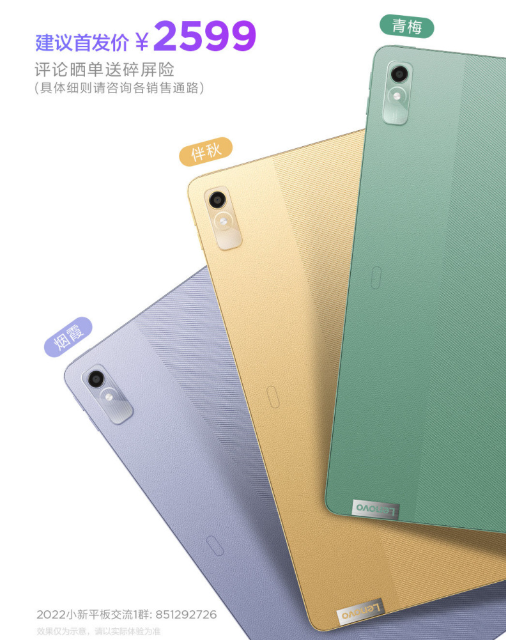
Last month, Lenovo launched a new tablet called the Xiaoxin Pad Pro 2022. It debuted with a plastic back panel and frame, which made the tablet look cheap. Thankfully, the company also introduced a plain leather version of the Xiaoxin Pad, which is now up for pre-sale in China.
Lenovo announced through a Weibo post that the Lenovo Xiaoxin Pad Pro 2022 Plain Leather Version will be available for pre-order from September 27th and it will go on sale on October 3rd at a starting price of 2599 yuan (roughly $362). The tablet will be offered in three colorways: haze, autumn, and green plum.
Lenovo Xiaoxin Pad Pro 2022 Specifications
The Lenovo Xiaoxin Pad Pro 2022 was launched back in August as the successor to the Xiaoxin Pad Pro 2021. It comes with an 11.2-inch OLED display offering a resolution of 2.5K pixels. It supports a 120Hz refresh rate, 600 nits peak brightness, HDR10+, and Dolby Vision. The device is compatible with a Xiaoxin stylus as well as a keyboard (both need to be purchased separately). The tablet is made to offer an immersive multimedia experience, it is equipped with JBL-powered quad speakers tuned by Dolby Atmos.
The Lenovo Xiaoxin Pad Pro 2022 is offered in two processor options—one powered by a Snapdragon 870 and the other by a MediaTek Kompanio 1300T. The tablet comes with up to 8GB RAM and 128GB onboard storage. It draws power from an 8,200mAh battery unit and supports 68W fast charging. In terms of optics, the tablet has 8MP front and 13MP rear camera.
For more detailed information about the tablet, you can check out our Lenovo Xiaoxin Pad Pro 2022 Review. Alternatively, you can watch the review video embedded below.
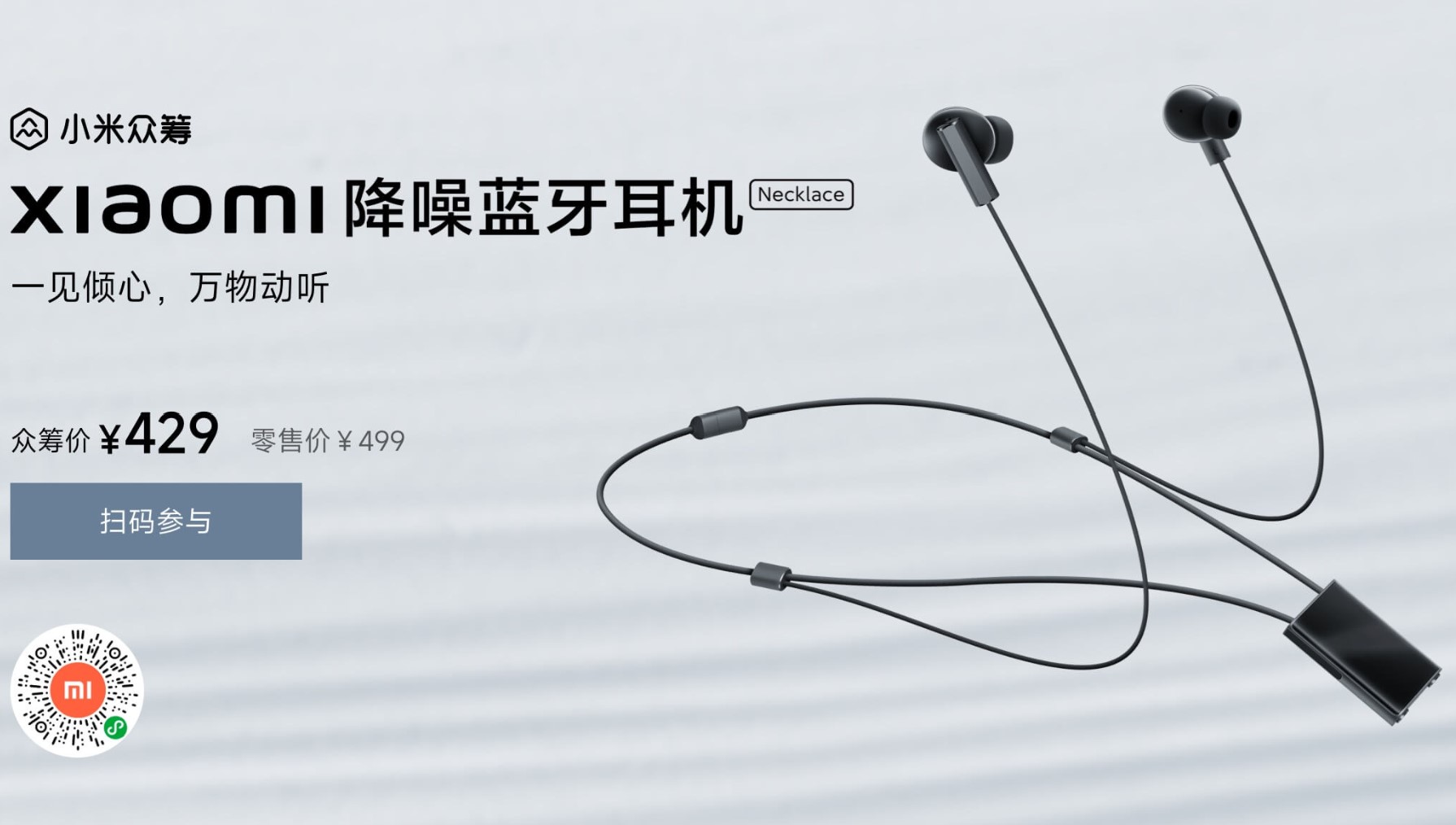
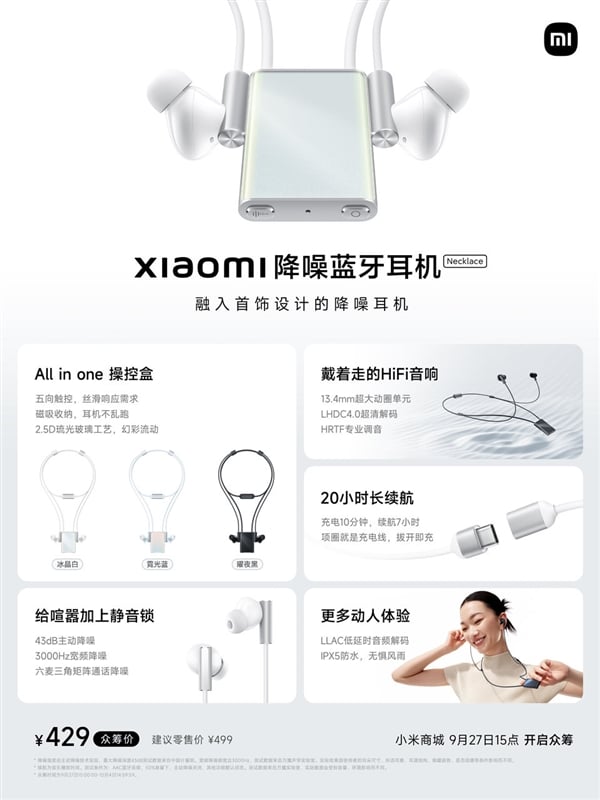
Xiaomi has unveiled a noise-cancelling Bluetooth headset necklace that boasts of up to 20 hours of playback. The product was launched via a crowdfunding campaign in China for 429 yuan (~$60). The Xiaomi Noise Cancelling Bluetooth Headset Necklace has a fashion-inspired design and can pass for a necklace. The headset necklace has five touch controls and magnetic absorption. It also supports 43dB active noise reduction.
The new Xiaomi wireless headset necklace is rated IPX5 and features 2.5D glazed glass technology. It also supports 3kHz broadband noise reduction and call reduction using its six-microphone system. The headset has a high-quality audio system consisting of a 13.4mm large moving coil unit, HHDC 4.0 ultra-clear decoding, and HRTF professional tuning. It also has an LLAC low-latency audio decoding mechanism.
The Xiaomi noise-canceling Bluetooth headset necklace can be recharged quickly, with 10 minutes of charging providing up to 7 hours of playback. The charging cable is the collar of the device and it can be charged when unplugged. The device is expected to start shipping on October 5. The original price of the noise-canceling Bluetooth headset necklace is 499 yuan (~$70). The crowdfunding launch price of 429 yuan will be for a limited period. Global availability and pricing details of the product are lacking at this time.
We use cookies on our website to give you the most relevant experience by remembering your preferences and repeat visits. By clicking “Accept”, you consent to the use of ALL the cookies.
This website uses cookies to improve your experience while you navigate through the website. Out of these, the cookies that are categorized as necessary are stored on your browser as they are essential for the working of basic functionalities of the website. We also use third-party cookies that help us analyze and understand how you use this website. These cookies will be stored in your browser only with your consent. You also have the option to opt-out of these cookies. But opting out of some of these cookies may affect your browsing experience.
Necessary cookies are absolutely essential for the website to function properly. This category only includes cookies that ensures basic functionalities and security features of the website. These cookies do not store any personal information.
Any cookies that may not be particularly necessary for the website to function and is used specifically to collect user personal data via analytics, ads, other embedded contents are termed as non-necessary cookies. It is mandatory to procure user consent prior to running these cookies on your website.