HTC has scheduled an event for June 28 where it is expected to unveil its latest 5G phone. The company has announced the Login Future event and the 5G smartphone integrated with HTC’s metaverse called Viverse.
HTC had announced during this year’s mobile world congress that it was working on an innovative smartphone to be integrated with its animated virtual world, the Viverse. The launch of the lineup had suffered some hitches due to the pandemic and other issues. An April 2022 launch was inevitably shifted, but we expect the device to pull through this time. There are scant details about the smartphone at this time apart from bits here and there.
An HTC device got a Dutch-based certification last month. The model 2QBK200 was certified by Telefication, while a 15W wireless charger from HTC recently certified also adds little information. If these certifications relate to the expected HTC 5G phone, then we expect it to support wireless charging. The Viverse platform is the culmination of a strong partnership between HTC and an array of telecom companies. It is already functional in the HTC Exodus series of native blockchain phones.
The coming days could see a raft of further details relating to the impending launch. We expect HTC to release the specs list and lineup of smartphones to be unveiled. Pricing and availability details will also emanate.
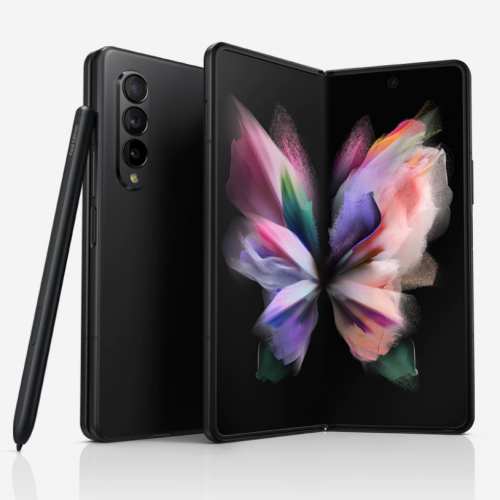
Samsung‘s Galaxy S22 series smartphones are attractive flagship devices not just for their specs and hardware, but also for their cutting-edge software. With the recent update, Samsung is now bringing some of the exclusive camera features found in their S22 devices to the Galaxy Z Fold 3 and the Galaxy Z Flip 3.
The first one is “Auto framing” which will be supported in video mode and some video calling apps. This feature will help the camera zoom in or out automatically for the best frame distance. It is capable of covering up to 10-people within a 5-meter distance.
The second feature coming to Samsung foldable is the Night photography mode. This mode was previously available on the foldable, however, the telephoto lens can now access the Night photography mode to produce bright and detailed portrait shots in low light conditions.
Last but not the least, the telephoto camera of the device can now be accessed in Pro mode giving users more diverse options while clicking zoomed-in or portrait shots.
The software update for the Galaxy Z Flip 3 has firmware version F711BXXU2CVEB, while the update for the Galaxy Z Fold 3 has firmware version F926BXXU1CVEB. This global update has started rolling out in Germany and Italy and will soon reach other countries and regions.
Tech giant LG Electronics has unveiled two of its premium products in India. The LG CineBeam 4K Laser Projector and the LG UltraFine Display OLED Pro monitor are now available in the subcontinent. The two products come with some impressive features to underscore their top-notch rating.
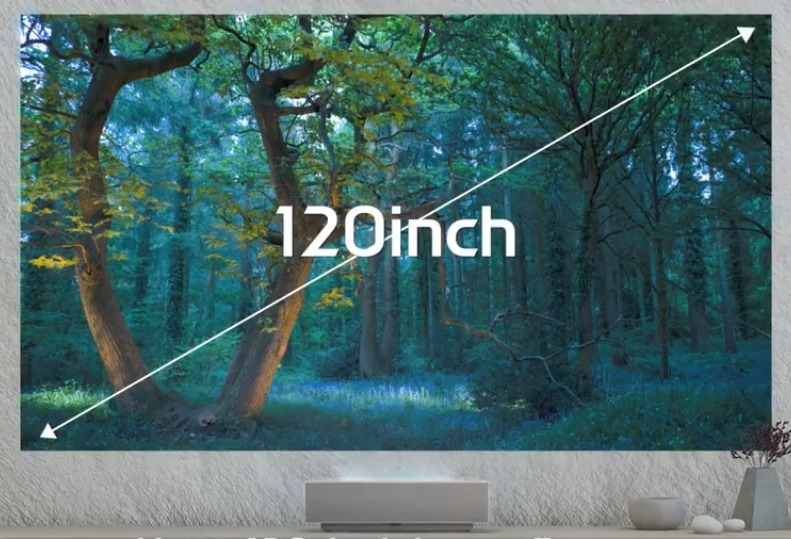
The LG CineBeam HU715Q 4K UHD is a 4K Ultra HD Laser projector that runs on Web-OS 6.0. It sports a premium and compact design and can project content at 4K resolution with sizes as large as 120 inches. It offers 2,500 ANSI Lumens of maximum brightness. The LG CineBeam HU715Q 4K UHD is capable of detecting the optimal lighting condition via its ambient sensor. It can thus adjust the brightness to levels that are comfortable and visible to the naked eye.
The LG CineBeam 4K laser projector is capable of projecting crisp and sharp images within a short distance. This is due to the Ultra Short Throw CineBeam technology present in the device. The CineBeam HU715Q 4K UHD is capable of delivering a decent sound output. It has built-in 2.2Ch 20W+20W stereo speakers, and connectivity is provided via HDMI, USB 2.0, and SPDIF optical audio out ports. The laser projector weighs just 11.1kg and its light source has a life cycle of about 30,000 hours of optimal usage.
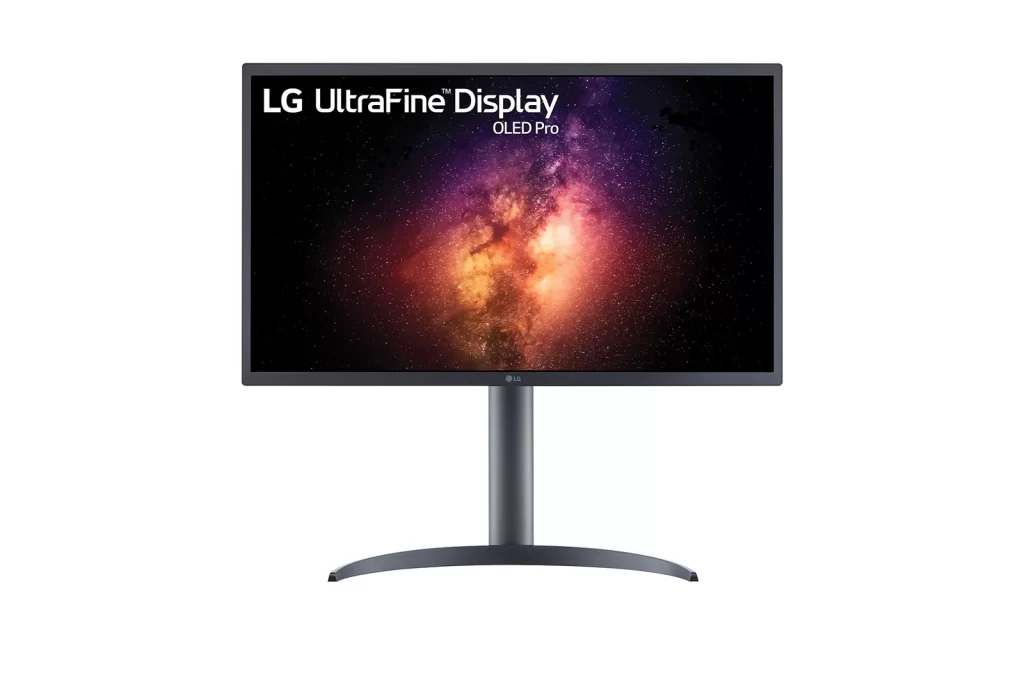
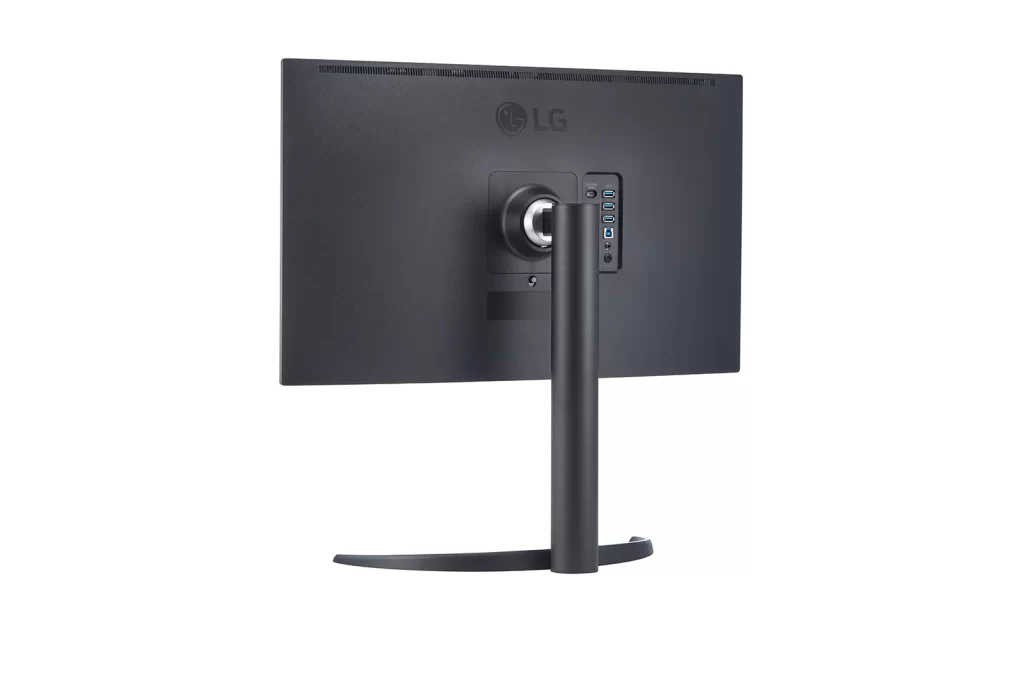
The LG UltraFine Display OLED Pro 4K Monitor is also a premium monitor that offers an excellent color output. It is available in two sizes namely 27 inches and 32 inches. It uses an OLED screen that delivers Ultra HD (UHD) resolution. It offers a super-high contrast ratio and covers 99% of the AdobeRGB color gamut. The LG UltraFine Display OLED Pro 4K Monitor provides pixel dimming technology for optimal brightness modulation. Connectivity for the 4K monitor is achieved via a number of options. These include USB-C, Display Ports, and HDMI. A 3.5mm headphone jack is also part of the mix that provides expanded compatibility.
The LG UltraFine Display OLED Pro 4K offers a 1ms response time and up to 178 degrees of viewing angle. It comes with an anti-glare coating and supports HDR10. The display positions for the monitor offer variety. The device can be tilted, raised higher, and pivoted.
The two LG models introduced in India come with premium pricing and they are available from the LG online store. While the LG laser projector comes in white, the 4K monitors both come in a black variant. The LG CineBeam HU715Q 4K UHD model is priced at 3.96 Lakhs ($5,094). The LG UltraFine Display OLED Pro 4K will sell for 2.475 Lakhs ($3,184) for the 27-inch model and 2.60 Lakhs ($3,344) for the 32-inch variant.
Samsung is facing another legal battle over alleged patent violation. The company has been sued by a patent troll over the use of an algorithm that predicts the remaining battery life on its Android smartphones.
The South Korean tech giant is being sued by a company called K. Mizra LLC. For those unaware, a patent troll is basically a term used to describe an entity that acquires and collects patents. Rather than using the technology described in the patents, these companies generate revenue by using “aggressive” litigation and legal battles based on patents. Now, K. Mirzra claims that Samsung infringed on its patent that is related to smartphone battery technology.
The lawsuit was filed against the South Korean company on May 20 in the Dusseldorf Regional Court in Germany. As per the accusation, K. Mizra’s “battery runtime prediction as implemented in Samsung devices using younger versions of the Android OS infringes the German designation of its patent EP 2 174 201 B1.” In other words, the company infringed on a patent that describes an algorithm that can analyze users’ behaviors to predict the remaining battery life of the smartphone.
This also enables the handset to showcase a more precise battery life estimate as well. Thus, K. Mizra claims that this Android based feature on Samsung Galaxy devices are based on the inventions covered in its patents. It remains to be seen how the patent dispute plays out. So stick around for more updates as we will be provide more updates if there are any notable developments with this case.
Riding the hype and success of PUBG and BGMI in India, many domestic studios have started the development of their own battle royale games for mobile. A good example would be Indus Battle Royale which is a futuristic BR game in development with an Indian flavor.
Now, another Indian studio named Mayhem Studios has begun pre-registrations (on Google Play Store) for their upcoming Battle Royale title dubbed Underworld Gang Wars (UGW). The game has already crossed 2 million pre-registrations in just one week and the numbers are continuously growing.
The game’s trailer has also crossed 17 million views on Youtube and has so far had a positive reception from the Indian mobile gaming community. The game appears to draw inspiration from popular gangster flicks like Gangs of Wasseypur, Sacred Games, and Mirzapur.
So far, the game appears to have a gang based battle royale mode and another game mode that likely pits the two gangs called Bhokal Toli and Velvets against each other. This could be something similar to Battlefield’s war mode where two teams made up of multiple players collide in a ‘capture the objective’ type setting. On the other hand, it could also be a Team Death Match style game mode.
The trailer also reveals a map called “Dhantara” which the devs have stated is based on real life locations in India. The map itself seems quite interesting with diverse locations and varied topography.
As the game is already available for pre registrations, it can be expected to launch sometime this year. Stay tuned for more updates on the Mayhem Studios’ Underworld Gang Wars.
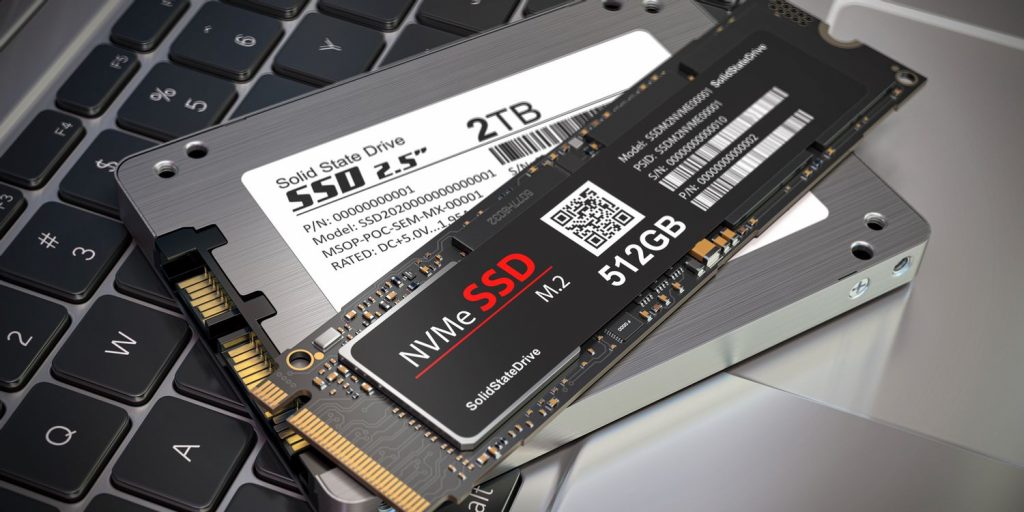
It will be mandatory for PC makers to switch from hard disk drives to solid-state drives for all Windows 11 PCs launching in 2023. The information comes from publication Tom’s Hardware which reported that the Redmond-based tech giant is pushing OEMs to drop HDDs as their primary storage and instead shift to SSD.
Currently, a large number of Windows laptops come with hybrid storage systems that include a HDD as well as SSD. The former is used for bulk storage whereas the latter offers performance enhancements like fast loading times, data transfers etc. The report adds that the exact date of shifting from HDDs to SSD is not clear yet but Microsoft had plans of making it a requirement this year. The switch to SSDs is now likely pushed to the second half of 2023.
PCs with hybrid storage systems and only SSDs are quite costly. Apart from this, leading brands including Dell, HP, Lenovo, and more also offer affordable models with only HDD as the storage option. There are also models with eMMC storage for those on a tight budget.
The move to switch to SSD from HDD would result in increased prices of PCs as SSDs are expensive compared to the traditional spinning drives. The additional costs are likely to be transferred to the customers by raising the prices of the laptops and PCs.
Microsoft’s rival Apple already uses SSDs in its MacBook and Mac range of computers.
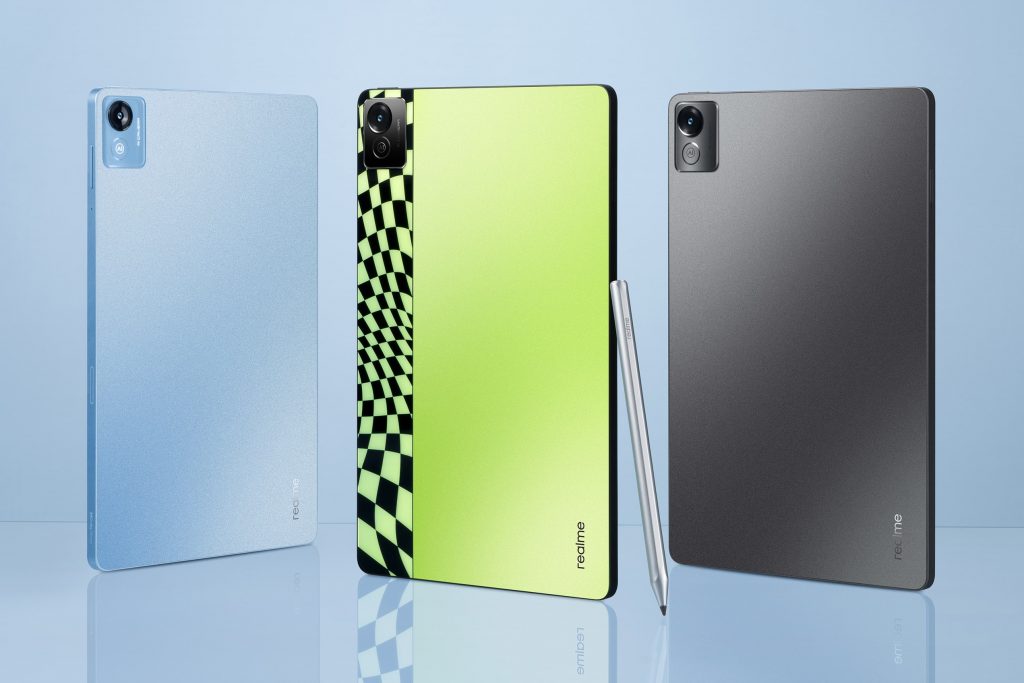
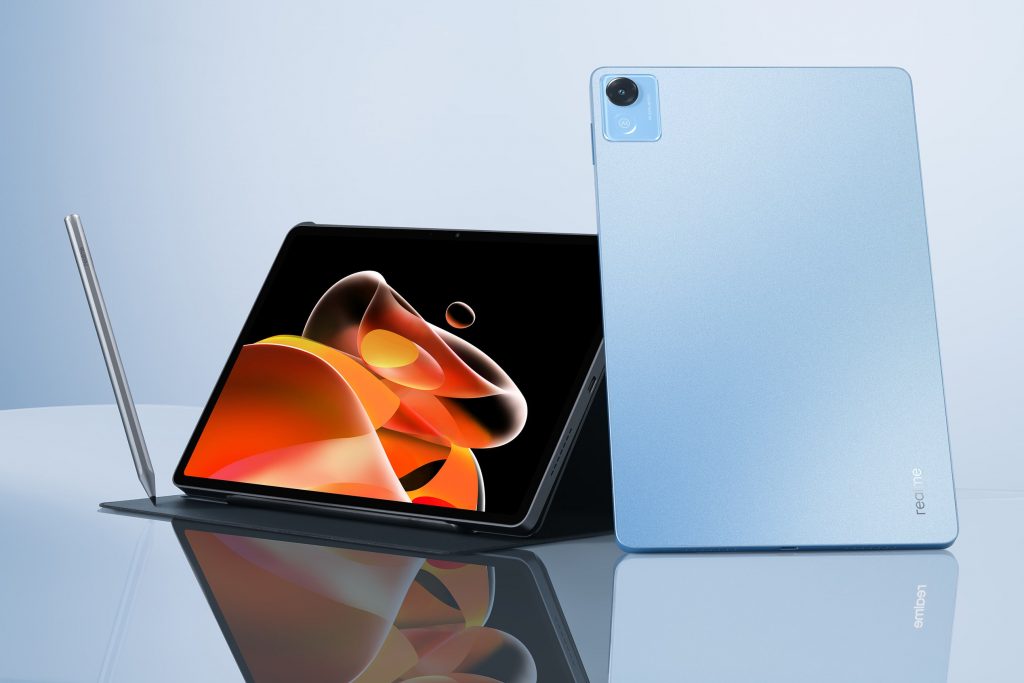
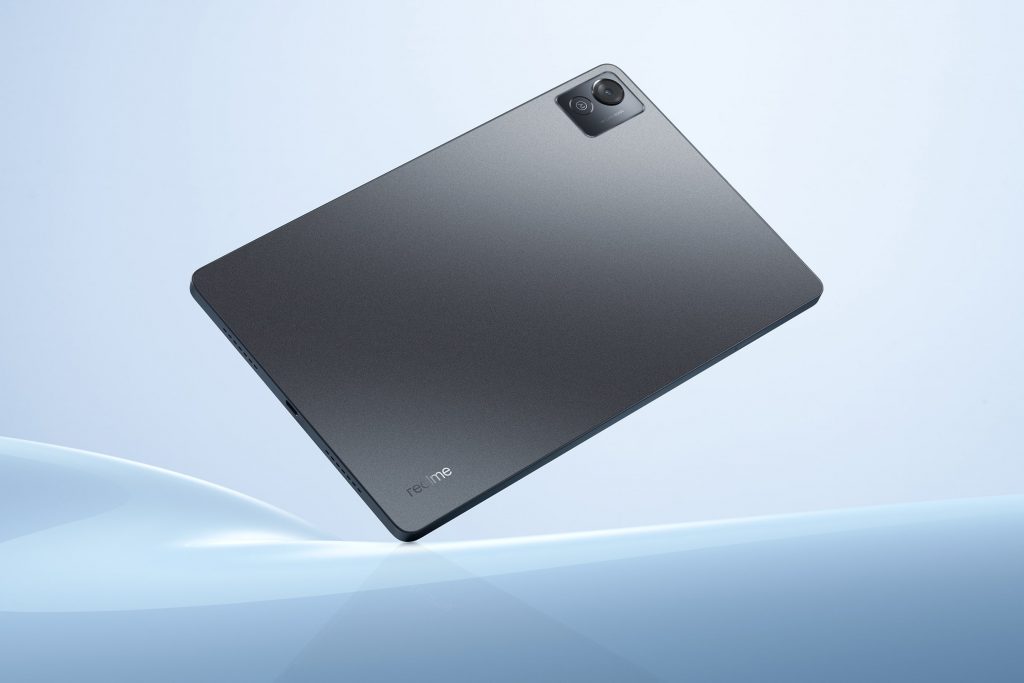
Late last month, Realme launched a new tablet in China called Realme Pad X. It is the brand’s first tablet in its home country. The product is expected to debut in India this month. Ahead of its release, I would like to share my opinion on why it could be a game-changer in the region if it is well-priced.
According to Counterpoint Research, ₹10,000-₹20,000 is the most popular price segment in India for tablets. It covers more than half of the total tablet market in the region.
The key players in this segment are Lenovo and Samsung. The former’s Tab M8 and Tab M10 are some of the hottest products.
However, none of these Lenovo tablets or the Galaxy A series tablets from Samsung can be considered value for money. They offer an inferior set of specs for the asking price.
Realme tried to shake the market with the introduction of Realme Pad late last year. The company’s first-ever tablet provides better hardware than the competitors. Despite debuting around the last quarter of 2021, the brand managed to grab a 4% market share.
Now, the company is gearing up to launch the Realme Pad X in the country after releasing the Realme Pad Mini last month. The brand’s third tablet for the region will reportedly go official in the first half of June.
The Realme Pad X starts at ¥1,299 in China for 4GB RAM and 64GB storage. The price roughly translates to ₹15,000. If the brand manages to price it below ₹20,000 in India, then it could be a stellar option for consumers.
Because unlike other tablets under ₹20,000 in India, the Realme Pad X houses a faster chipset. It is powered by a Qualcomm Snapdragon 695 SoC, the same chip that’s found inside smartphones like Realme 9 Pro 5G and Redmi Note 11 Pro Plus 5G.
On other hand, most of the tablets from other brands are powered by entry-level Mediatek chips. As a result, these tablets are slower and age quickly.
Further, the Pad X from Realme supports 33W fast charging, DC dimming, and stylus input (optional accessory). It also houses Dolby Atmos-supported quad speakers and a front-facing camera with Apple’s Center Stage-like feature.
The aforementioned features cannot be found on any other tablet under ₹20,000 in India. Hence, they make the Realme Pad X stand out in the crowd.
Hopefully, Realme ships the tablet with the Android 12-based Realme UI 3.0 for Pad (a fork of ColorOS 12 for Pad found on Oppo tablets) like in China. Because the two international tablets from the company run a near-stock version of Android with no special features like PC Connect.
Having said that, if the starting price of Realme Pad X crosses ₹20,000 in India, then it would be a tough sell. Because the Xiaomi Pad 5 offers even better value for ₹26,999 or less depending on discounts.
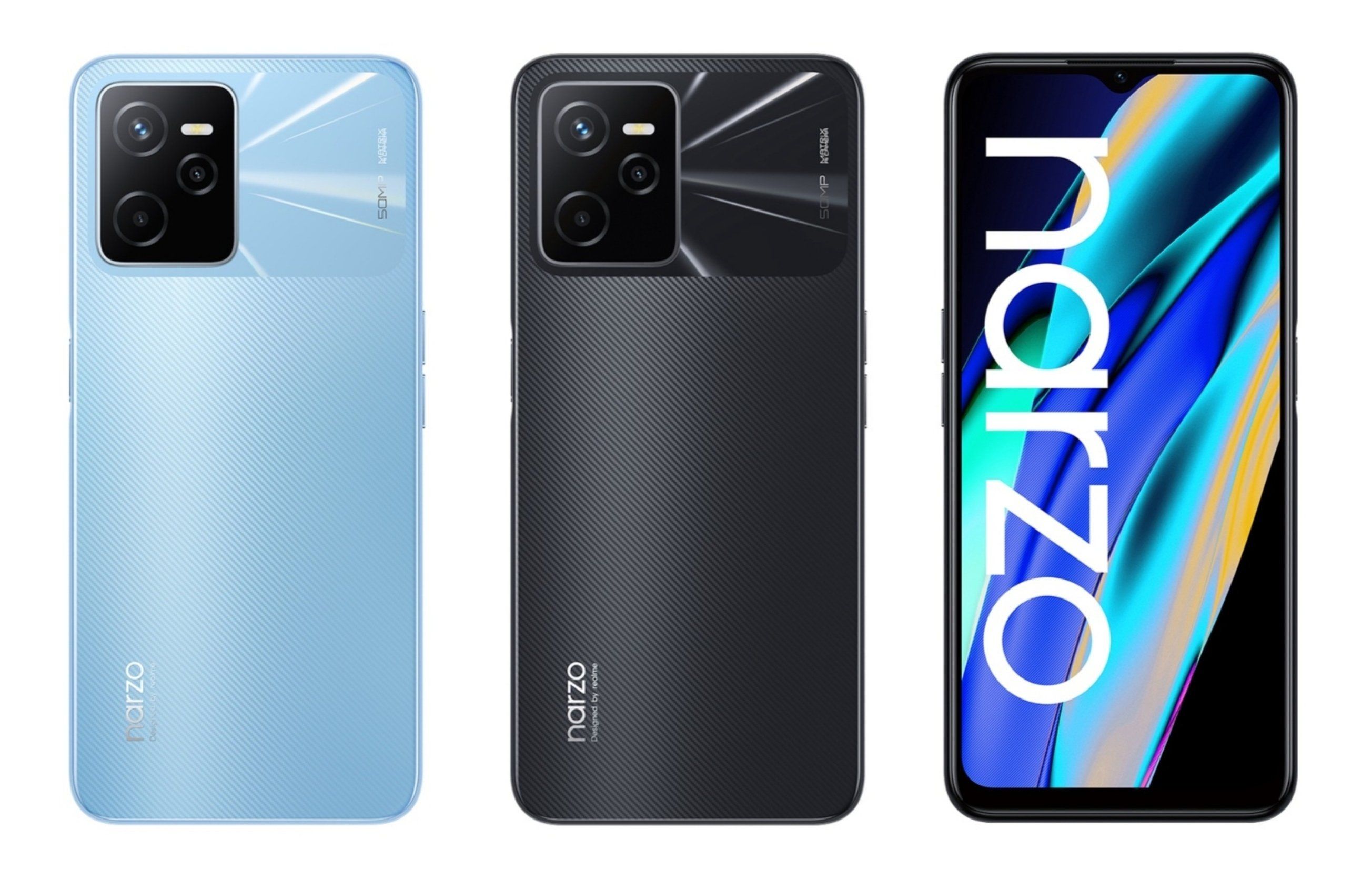
Recently, it was revealed that Realme is working on a new a smartphone under its Narzo series called the Narzo 50i Prime. Now, a new report has revealed that the device will feature Realme’s UI V R edition OS and could feature a design similar to another model from the brand.
Narzo 50A Prime
According to a MySmartPricereport, the upcoming Narzo 50i Prime has recently been spotted on multiple certification websites like NBTC, EEC, FCC, and more. It carries the RMX3506 model number and is confirmed to be a 4G enabled handset. The device is expected to launch in two color options as well as two different storage configurations. One of the certification listing also revealed that the device will run on Realme UI V R Edition, which has never been heard of before.
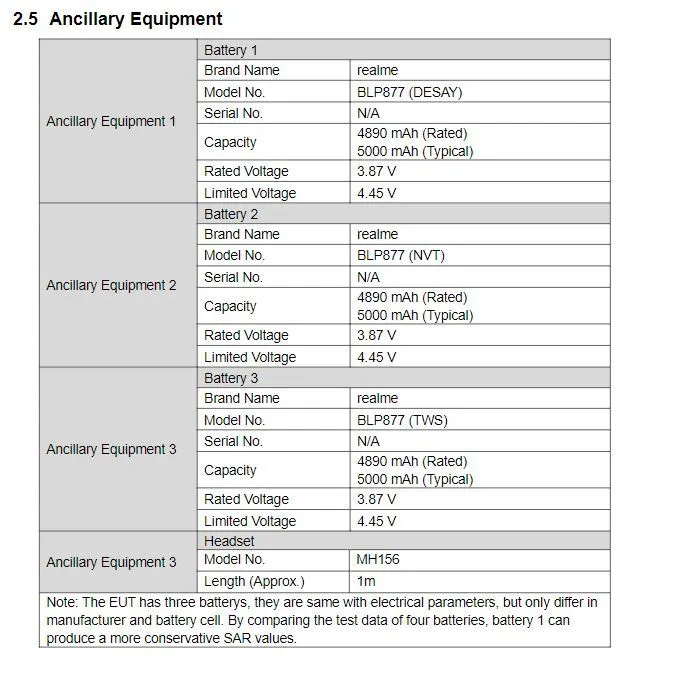
As per the FCC listing, this device will be powered by a large 5,000mAh battery pack and a BIS listing has suggested that the launch in the Indian market is just around the corner. The TÜV Rheinland website has listed the smartphone with support for the standard 10W charging. Other known aspects regarding the device includes a 3GB + 32GB and 4GB + 64GB storage configurations. The two color options include Mint Green and Dark Blue.
Notably, the Narzo 50i Prime will officially be the seventh installment within the Narzo 50 family of the Chinese smartphone maker. Apart from the aforementioned information, the certification databases have also revealed finer details like the 8.48mm in thickness, 181 grams in weight, and dual SIM support. Another notable detail revealed in the FCC listing was a document that stated that the Narzo 50i Prime will be based on the existing Realme C30 (RMX3581) but with a few changes in the camera module on the rear.
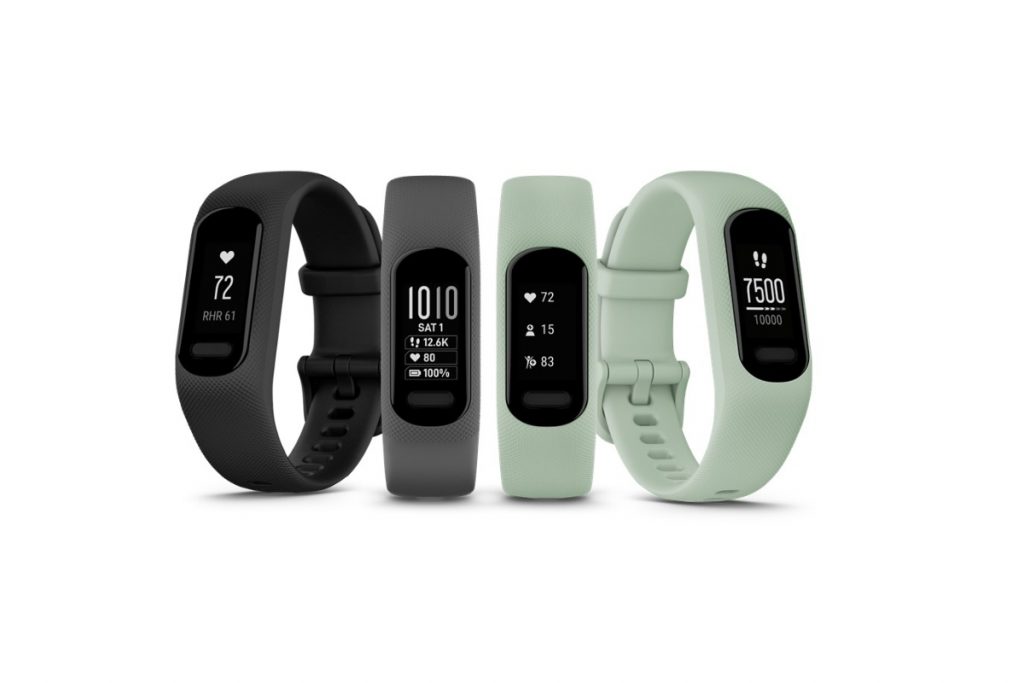
Garmin Vivosmart 5 has launched in India after its debut in the global markets last month. It is a premium fitness band from the smart wearables maker. The latest offering is the successor to the Vivosmart 4 that was announced way back in 2019.
Garmin Vivosmart 5 specifications and features
The Garmin Vivosmart 5 is said to be designed for comfort with a minimalistic design. It offers a 0.41 x 0.73-inch OLED screen bearing a resolution of 88 x 154 pixels. The brand claims that it offers 66 percent more screen space with larger text. There is a physical button at the bottom of the display.
On the health-centric front, the Garmin Vivosmart 5 is equipped with a 24×7 heart rate monitor, SpO2 sensor, sleep tracker, and stress monitor. It is capable of tracking the user’s energy levels, hydration logging, respiration, and menstrual cycle for women. Based on the user’s VO2 max, resting heart rate, and body mass index (BMI), the wearable device comes with a Fitness Age feature that displays the current age of the user. The fitness band packs a host of sports activities and it can be connected to a compatible phone’s GPS to track distance, pace, and speed.
The Garmin Vivosmart 5 comes with convenient features like notifications display including text messages, social media alerts, calendar, and weather updates. It is compatible with both iOS and Android. The fitness band is claimed to offer 7 days of battery life.
Garmin Vivosmart 5 pricing and availability
The Garmin Vivosmart 5 is priced at Rs 14,990 and is offered in Black and Mint colours. It will be available for purchase from June 10th from the brand’s store, Amazon, Flipkart, and Synergizer.
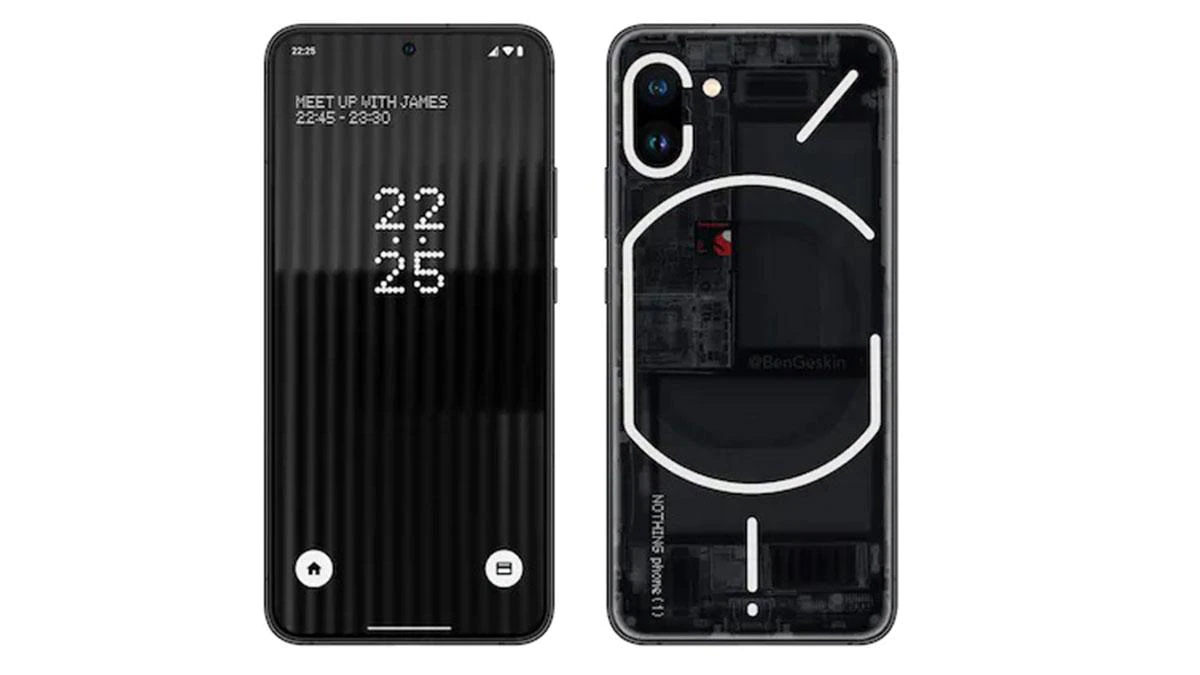
Nothing is gearing up to launch its first ever smartphone, which is highly anticipated. The company recently announced the official launch date for the upcoming Phone (1) model, but prior to its release, the device was spotted on NBTC database.
According to a MySmartPricereport, the company’s Phone (1) was found listed on the certification website with the model number A063. This model number was also previously spotted on the BIS (Bureau of Indian Standards) database as well. The listing on NBTC arrives as no surprise since the launch of the device is just a month later. Unfortunately, the NBTC listing did not reveal any details regarding the Phone (1), but we already have existing reports to go on for now.
The device is already confirmed to launch with the Qualcomm Snapdragon 7 Gen 1 SoC. It will also run on the Android OS based Nothing OS custom skin. This software is set to launch with minimal bloatware. Looking at its design, the smartphone is set to feature a transparent design on the back, similar to the company’s first ever product, the Nothing Ear (1). As of right now, finer details regarding the smartphone is still at large. So stick around for more as we will be providing updates when additional information is available regarding this matter.
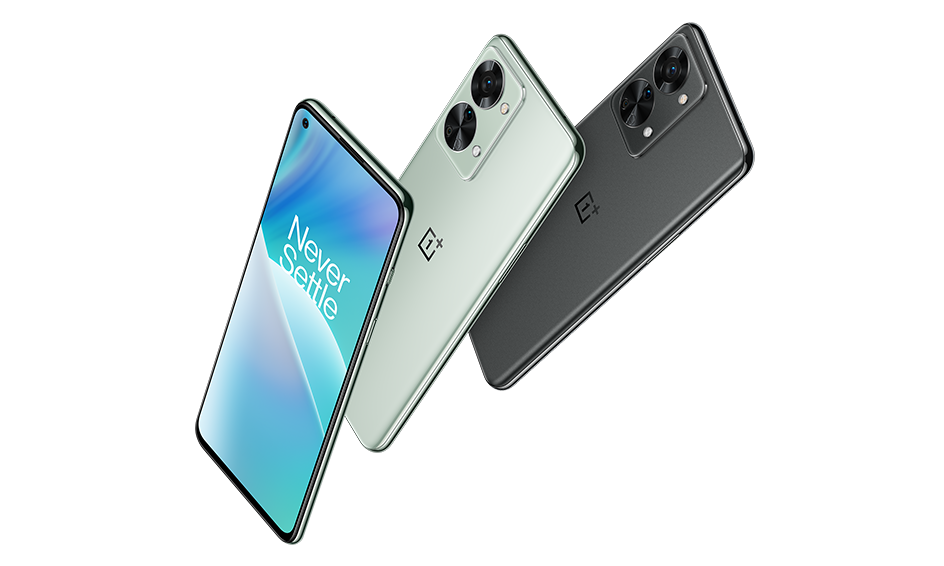
Last month, OnePlus launched the OnePlus Nord 2T 5G smartphone in some European regions. The smartphone has also been rumored for the Indian market, and now, we finally have a launch timeline.
Tipster Paras Guglani (@passionategeekz), citing industry sources has stated that the device will launch in India sometime in the month of June. The report does not give an exact launch date, but considering we are already in June, it will likely be revealed soon.
Oneplus Nord 2T 5G Specifications
As the device is already on shelves in multiple regions, we already know all of its specifications and features. The device has a 6.43-inch flat AMOLED display panel with an FHD+ resolution and support for a 90Hz refresh rate. The display panel has a punch-hole cutout on the top left and the fingerprint scanner is located on the power button.
Under the hood, the device houses a 5G enabled MediaTek Dimensity 1300 SoC paired with the Mali-G77 MC9 GPU. It comes with up to 8GB RAM and up to 256GB storage. The smartphone has a 4,500mAh battery with support for 80W SuperVOOC fast charging. Software-wise, the device runs Android 12-based OxygenOS 12.1 out of the box.
For optics, the smartphone has a 50-megapixel Sony IMX766 primary sensor with OIS support, an 8-megapixel ultrawide camera, and a 2-megapixel macro camera. On the front, the device has a 32-megapixel IMX615 sensor for selfies and video calls.
Pricing (expected)
The device launched in Europe with a €399 price tag, So it will likely debut in India priced below the ₹30,000 mark.
Back in April, Samsung discontinued the Galaxy S9 series software support and also moved the Galaxy S10 series from monthly to quarterly updates. However, the Galaxy S10 5G, the company’s first 5G smartphone, was excluded from this and enjoyed a monthly update schedule because it was launched a few months after the 4G variants. But now the Galaxy S10 5G has also been demoted to a quarterly update schedule.
Samsung Galaxy S10 5G was launched in early 2019 and holds the title of “Samsung’s first 5G smartphone”. The smartphone was launched in two Soc variants- Exynos 9820 and Snapdragon 855.
The handset has been getting monthly security updates since its launch. But now that it is over 3 years old, the company is degrading it to a quarterly update schedule meaning it will receive security patches once in three months.
The Galaxy S10 5G received its last update in the form of the May Security Patch, which means it will not receive its next update until August. The OG S10 5G is nearing its end of life and the smartphone will also not be receiving any major OS updates now. Android 12 OS was the end-game for it.
In addition, a few mid-range devices have also gone through a change of update schedule. The Galaxy A41, Galaxy A51 5G, and Galaxy M01 have now been moved to a bi-annual update schedule meaning they will only be updated twice a year. The Galaxy M13 has been added to the quarterly update cycle and will receive security updates once every three months.
Moreover, Samsung is retiring the Galaxy A6 and Galaxy J7 Duo, both smartphones will no longer be eligible for any updates.
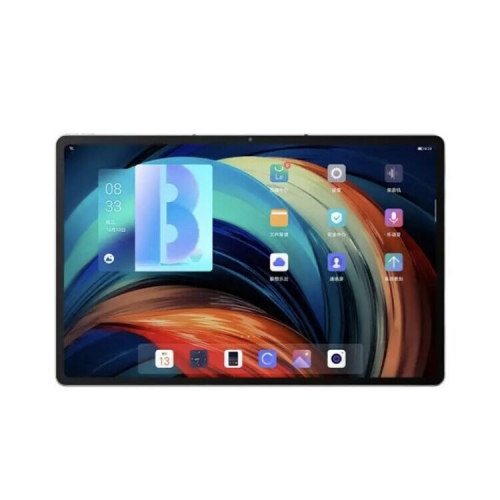
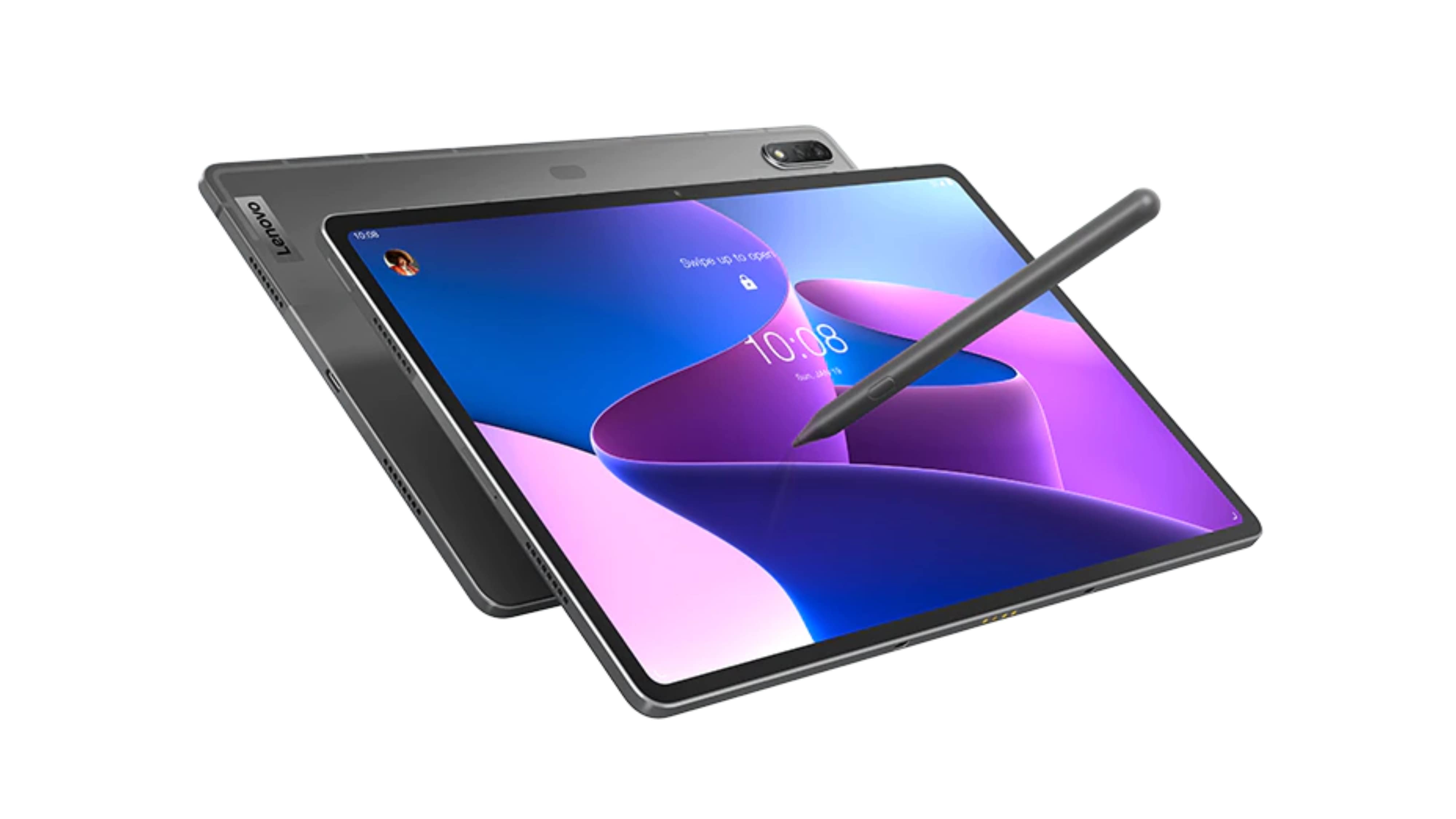
While the Lenovo Tab P12 Pro has already been launched in the global market, the company has just released the high end tablet for the Indian market but with a hefty price tag.
Talking about the specs of the Tab P12 Pro first, it sports a 12.6 inch AMOLED display with a 2560 x 1600 resolution and HDR10+ support. Under the hood, it is equipped with a Qualcomm Snapdragon 870 SoC paired with 8GB of RAM and 256GB of internal storage. A large 10,200mAh battery pack powers the device which supports 30W fast charging as well. The rear packs a 13 megapixel dual camera setup while the front houses an 8 megapixel selfie shooter.
For those unaware, the Chinese company’s Tab P12 Pro had launched in China as the Xiaoxin Pad Pro 12.6 back in November 2021. This model started from around 560 US Dollars in the Chinese market. But in India, the cost is nearly double, with a starting price of 69,999 INR, which is roughly 900 US Dollars. So, the tablet arrives months late and with a premium price tag. At this price, it competes with the likes of other high end tablets like the Samsung Galaxy Tab S8, which starts from 70,999 INR.
Interestingly, the new tablet is also one of the few devices that are eligible for the Android 12L. This OS version was announced by Google last year and was specifically made for large screen gadgets and foldable devices. The new Tab P12 Pro for India is currently listed on Amazon, company’s official website, and even exclusive Lenovo retail stores as well.
Earlier today, Noise launched the ColorFit Pulse Buzz smartwatch in the Indian market. The company is also gearing up to debut a new pair of TWS earphones in India dubbed the Noise Buds VS104.
The earbuds have already received a landing page on Amazon India, that mentions the earbuds will launch on June 14th at 12 PM (IST). The smartwatch will debut with a special launch price of ₹999 which is likely to go up later. Additionally, the earphones will also have a discount of ₹104 for the first 140 minutes i.e till 1:44 PM IST.
Noise Buds VS104 specs & features
The Buds VS104 features a contoured design for a snug and comfortable fit. It has a traditionally shaped case with LED lights to indicate the charging level of the earbuds.
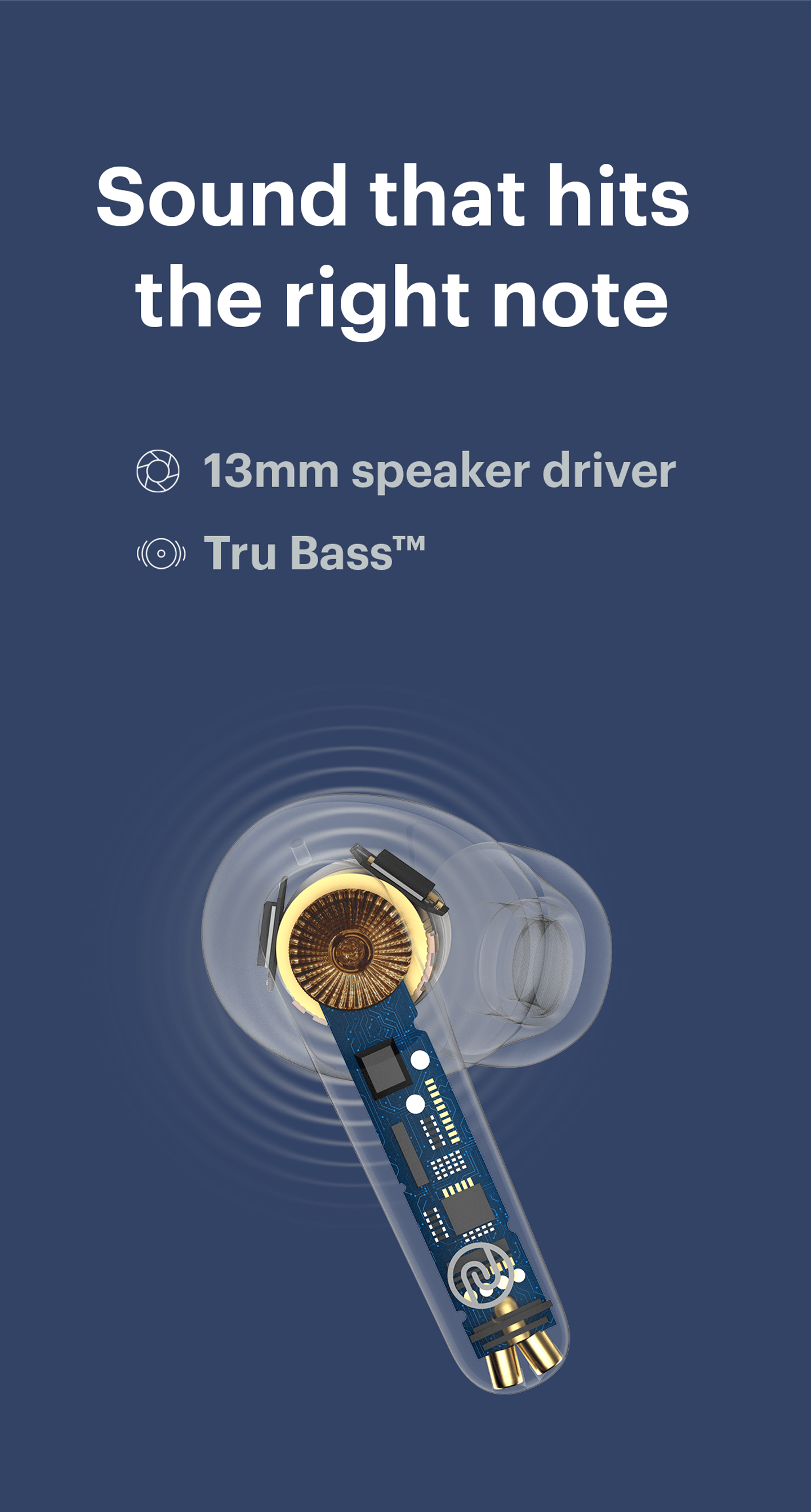
The Buds VS104 comes with large 13mm drivers and features strong bass output thanks to the Noise ‘Tru Bass’ tuning. The earbuds use Bluetooth 5.2 for connectivity that provides an uninterrupted connection up to 10 meters. The earbuds also use the ‘Hyper Sync’ technology to offer instant wake and pair as soon as you flip the charging case’s lid.
Coming to the battery life, the TWS earbuds offer a total of up to 30-hours of playback including the charging case. The device uses a USB Type-C port for charging and boasts up to 1 hour of playtime with just 10 minutes of charging. Lastly, the earbuds will come in four color options – Black, White, Green, and Blue.
Noise had recently announced a new smartwatch for the Indian market. Now, the company’s new ColorFit Pulse Buzz has gone on sale in the region. So lets have a look at its pricing and availability.
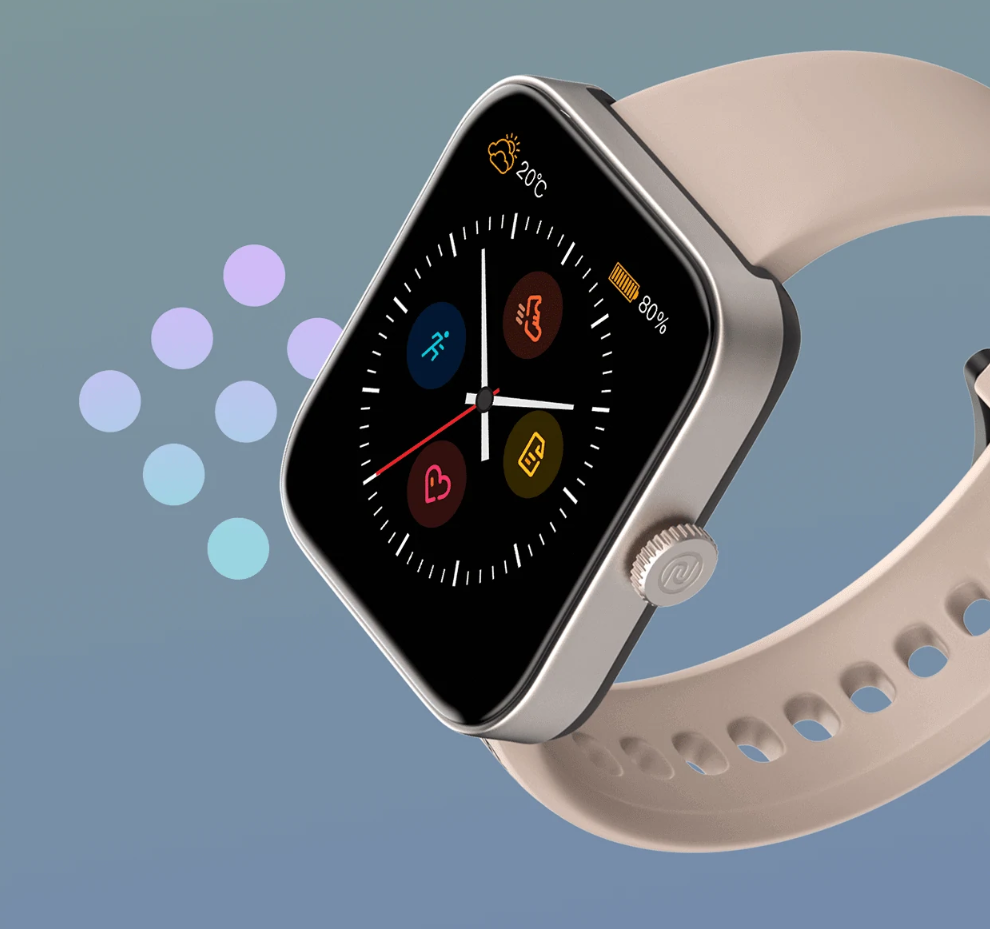
The brand’s new smart wearable has launched with a 1.69 inch TFT LCD panel that has a 240 x 280 resolutions. One of its most highlighting aspect includes the Bluetooth calling feature. It even arrives with support for more than 150 customizable watch faces offered in the NoiseFit Prime application. Under the hood, the smartwatch is powered by a 230mAh battery pack, which the brand claims will last for up to 7 days on a single full charge.
Being a modern day smartwatch, it features various health tracking features like the heart rate sensor, SpO2 blood oxygen monitoring, sleep mapping, blood pressure tracking, and even menstrual cycle tracking as well. It even comes with 60 sports modes and supports, SMS, reminders, and weather updates as well.
The new ColorFit Pulse Buzz arrives in multiple color options, including a Rose pink, Jet black, Olive green, Champagne grey, and Electric blue variant. The Noise ColorFit Pulse Buzz smartwatch is priced at 3,499 INR (roughly 45 US Dollars) in India. It is currently listed on the company’s official website and even Amazon India as well. The brand is also offering a flat 100 INR cashback when purchasing the smartwatch via the MobiKwik wallet.
Recently, Poco India teased the global debut of Poco F4 5G in the country. Yesterday, the device leaked in its entirety revealing almost everything about it. Today, the brand has officially confirmed the chipset that will be powering this upcoming smartphone.
Redmi K40S
According to the official Twitter account of Poco India, the forthcoming Poco F4 5G will house a Qualcomm Snapdragon 870 chipset underneath it. The brand calls this chip the ‘most optimized processor’, and it ain’t wrong.
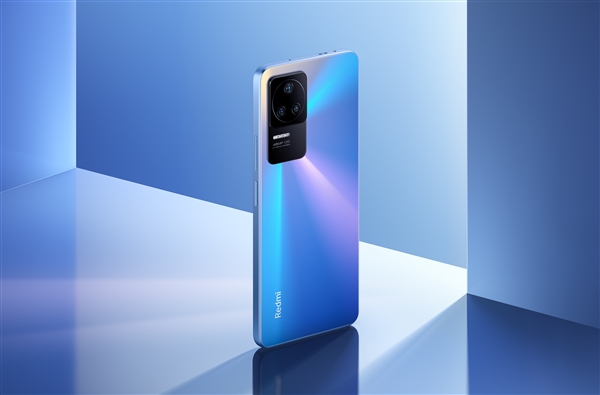
Thanks to a leak, we know more about the Poco F4 5G apart from its SoC. The device is nothing but a rebranded Redmi K40S.
Therefore, the Poco F4 5G will arrive with a 6.67-inch FHD+ AMOLED display with a 120Hz refresh rate and Dolby Vision support. Its chip will be paired with LPDDR5 RAM and UFS 3.1 storage.
The handset will boot MIUI 13 based on Android 12 and will be backed by a 4,500mAh battery with support for 67W fast charging. It will come with dual stereo speakers, a side-mounted fingerprint sensor, and an IR blaster.
Last but not least, the Poco F4 5G will feature a 64MP OIS-assisted primary camera instead of an OIS-assisted 48MP main camera on the Redmi K40S. Anyway, it is expected to have the same 8MP ultra-wide unit, 2MP macro snapper, and 20MP front-facing shooter.
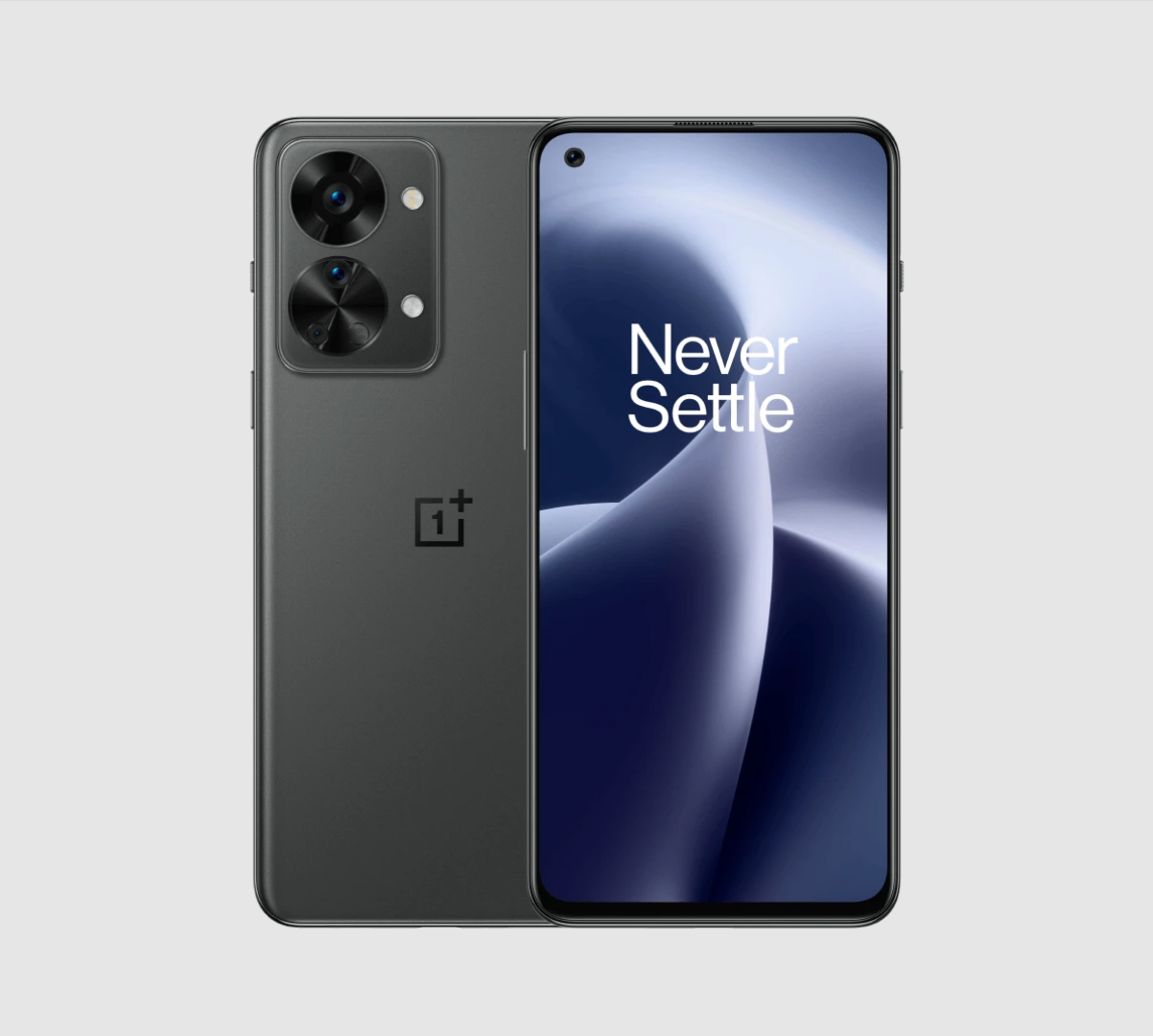
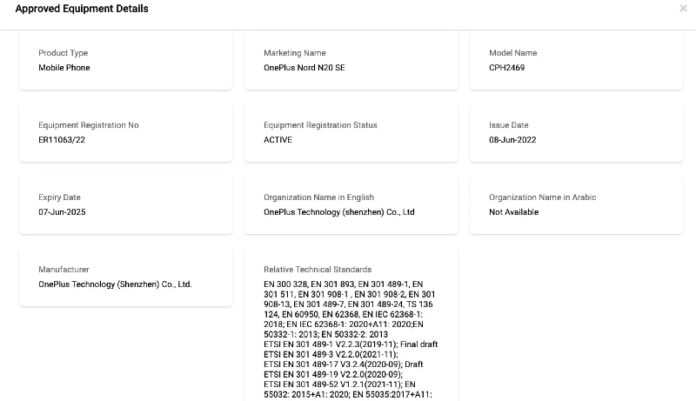
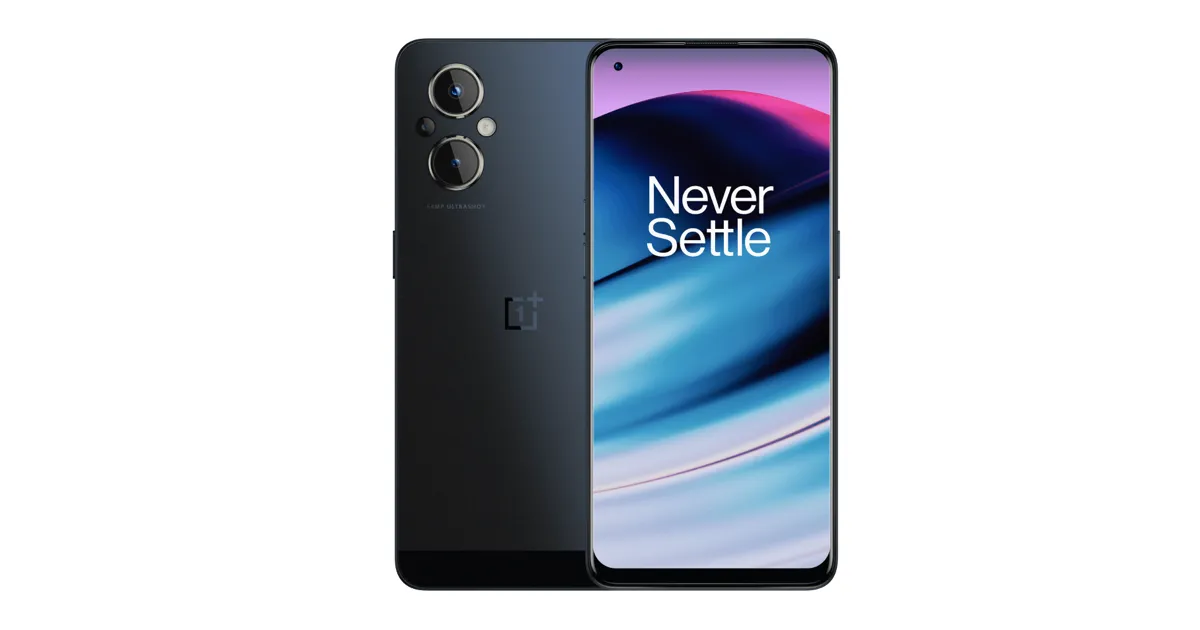
OnePlus is apparently planning on launching a new budget entry level smartphone soon under the Nord family. The handset’s name is confirmed to be the Nord N20 SE, which was spotted on the TDRA certification website.
Looking at the listing, the device carries the model number CPH2469 and was even spotted on FCC certification last week. For those unaware, the smartphone was spotted on FCC and was believed to the be most affordable Nord phone till date. While the previous certification listing did not reveal any finer details, the TDRA listing has confirmed its Nord 20 SE name. Notably, this handset will be the company’s first to feature the SE moniker.
However, looking at its model number, it appears that the Nord 20 SE might be a rebranded model of the Oppo A57. As of right now, the TDRA listing did not reveal any specifications regarding this upcoming OnePlus smartphone. Although, based on what we know regarding the A57, the Nord N20 SE might sport a 6.57 inch HD+ display that has a waterdrop notch on the front. Under the hood, it could also house a MediaTek Helio G35 SoC and might be powered by a large 5,000mAh battery pack.
Similar to the A57, the OnePlus Nord N20 SE could also be priced under the 15,000 INR mark (roughly 192 US Dollars). Other possible features include, a 13 megapixel dual camera setup on the rear, up to 8GB of RAM and 64GB of internal storage, support for virtual RAM expansion and microSD card slot for additional storage, and Android 12 OS.
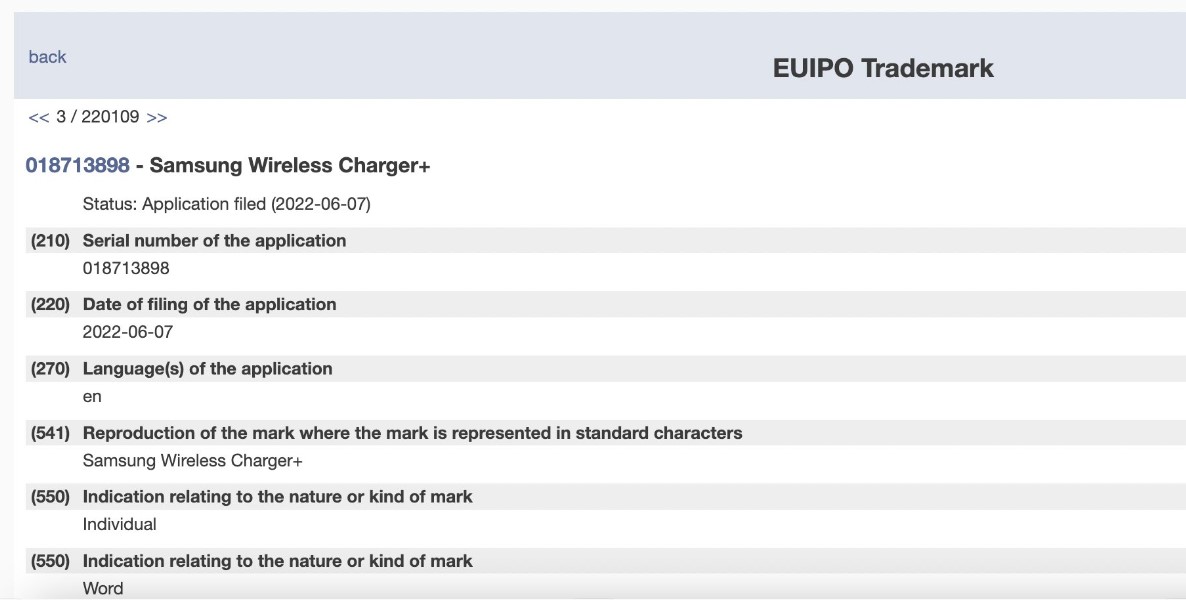
Samsung has arguably the best wireless chargers in the market. The company has developed a wide range of portable wireless chargers that offer fast charging and can even be used to charge 2-3 devices simultaneously. And now a EUIPO trademark listing suggests that the tech giant is working on a new wireless charger, dubbed Samsung Wireless Charger+.
As initially spotted by tipster Mukul Sharma, Samsung has filed a trademark application for a new wireless charger known as Samsung Wireless Charger+ on the European Union Intellectual Property Office (EUIPO) website. The Charger has been spotted with filling number 018713898. The trademark application has been accepted by the EUIPO meaning it has met the minimum filing requirements but it has not yet been assigned to an examiner.
Currently, only the moniker of the wireless Charger is confirmed and no other details are available. It is possible that the wireless charger could come in a flat-surface design like most of the previous models and it may support fast charging. However, it would be unwise to say anything this soon. We hope to learn more in the coming days.
In other news, Samsung Galaxy Z Fold 4, Z Flip, and Watch 5 series launch date has been revealed by tipster Jon Prosser. As per the tipster, the aforementioned Galaxy devices will be unveiled on August 10. The tipster has also revealed the color variants of the two foldables- The Galaxy Z Fold 4 will come in Phantom Black, Green, and Beige colors. Whereas, the Galaxy Z Flip 4 will be available in colors like Graphite, Bora Purple, Pink Gold, and Blue.
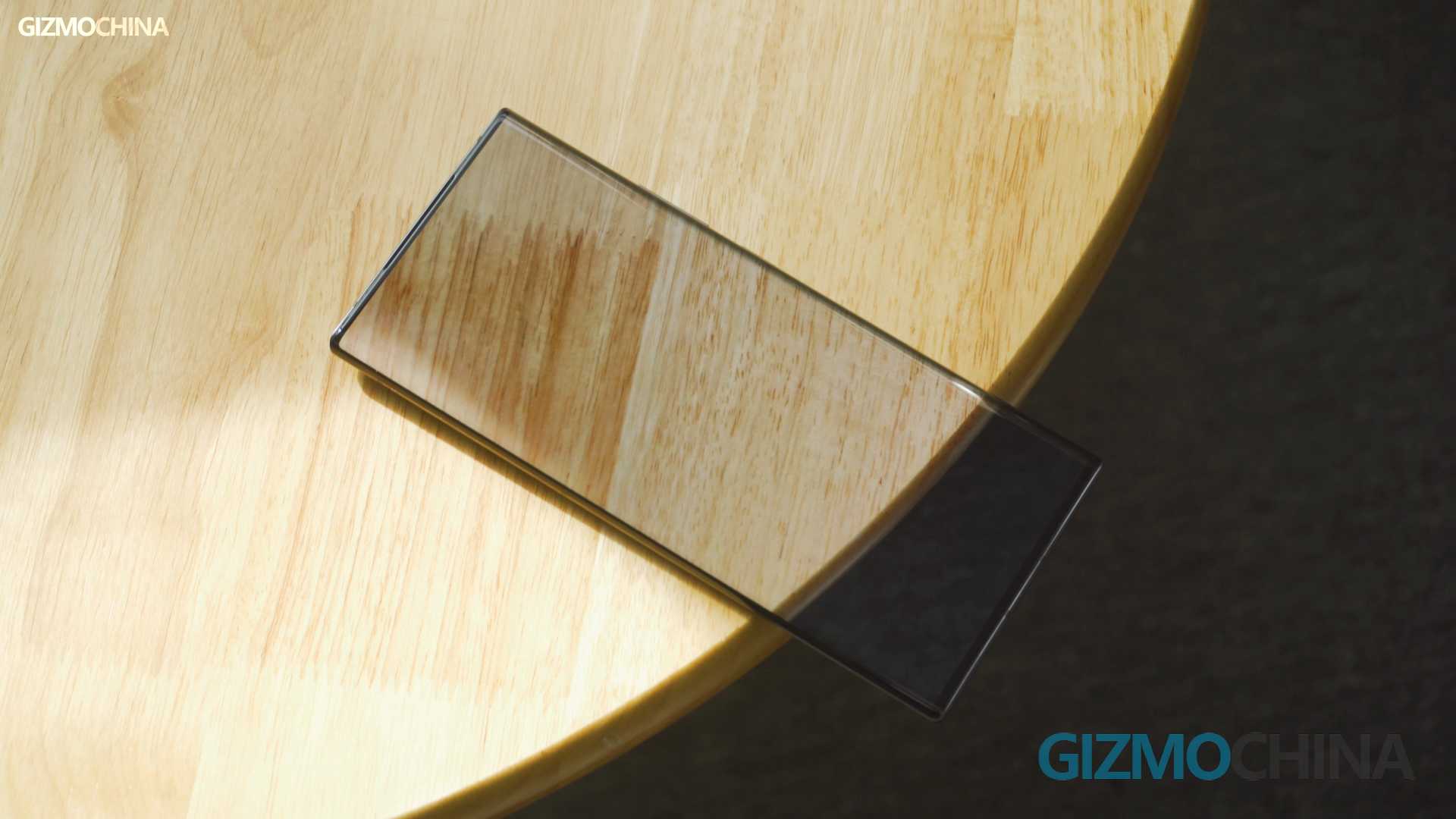
Ever since the concept of under-display cameras has come out, it seems that few phones are willing to try this new technology. It’s true that taking selfies with it will be poor, but you can’t ignore the fact that it can give us a perfect display of a full screen. As one of the pioneers of under-display camera phones, ZTE has upgraded this technology on their latest flagship phone: Axon 40 Ultra. It is probably the best under-display camera smartphone you can buy right now.
ZTE Axon 40 Ultra Review: Design & Under screen Display
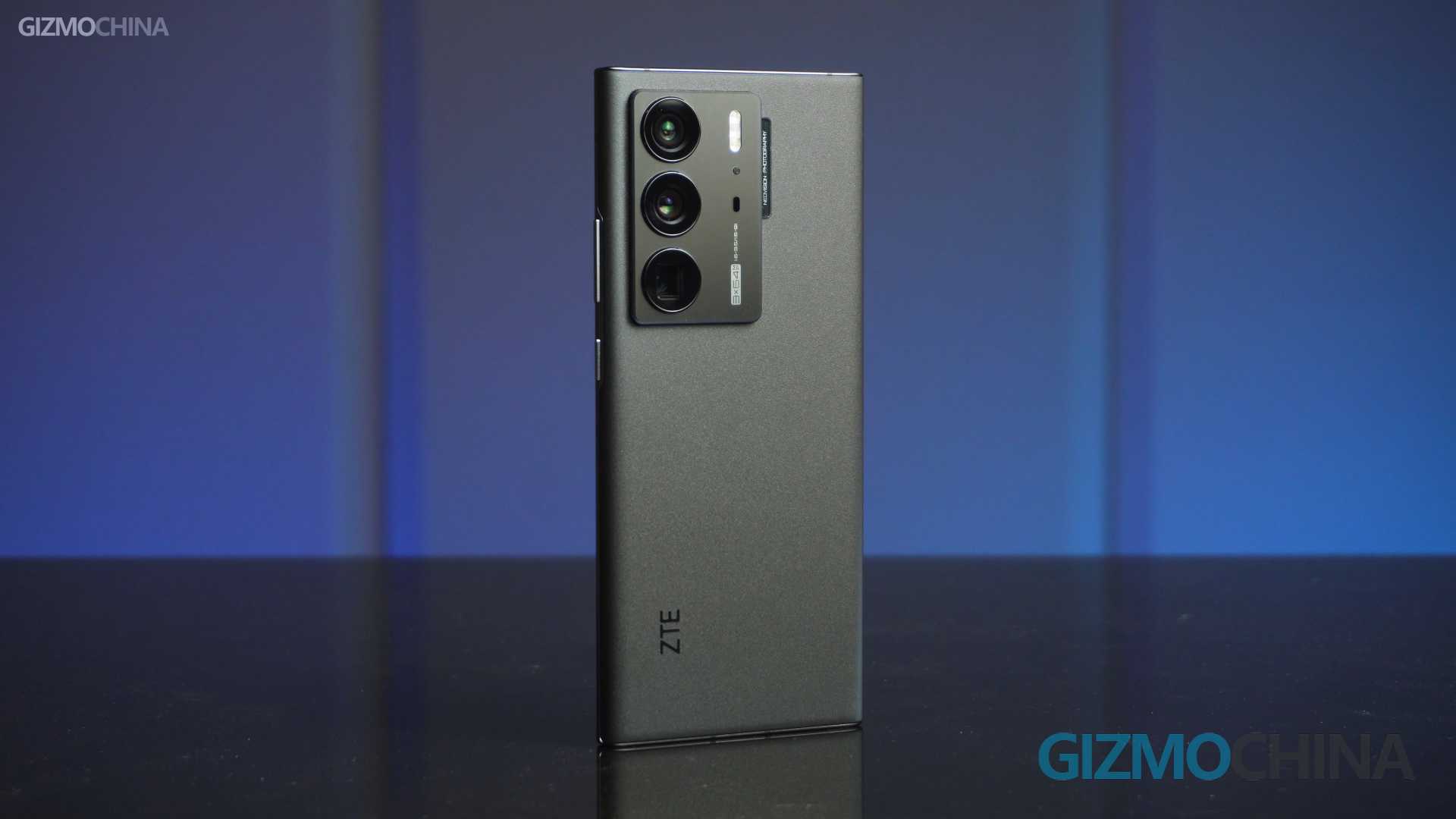
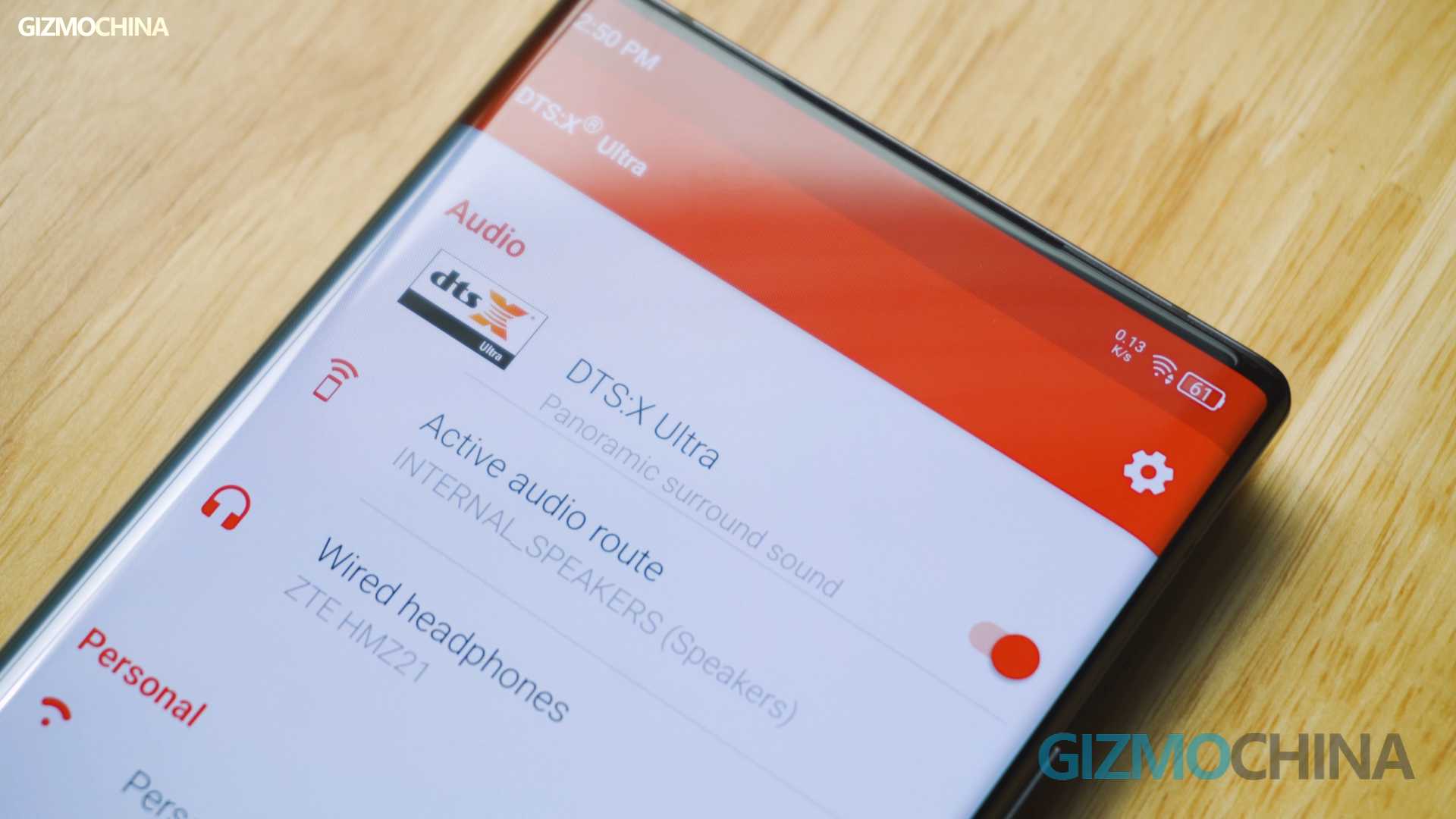
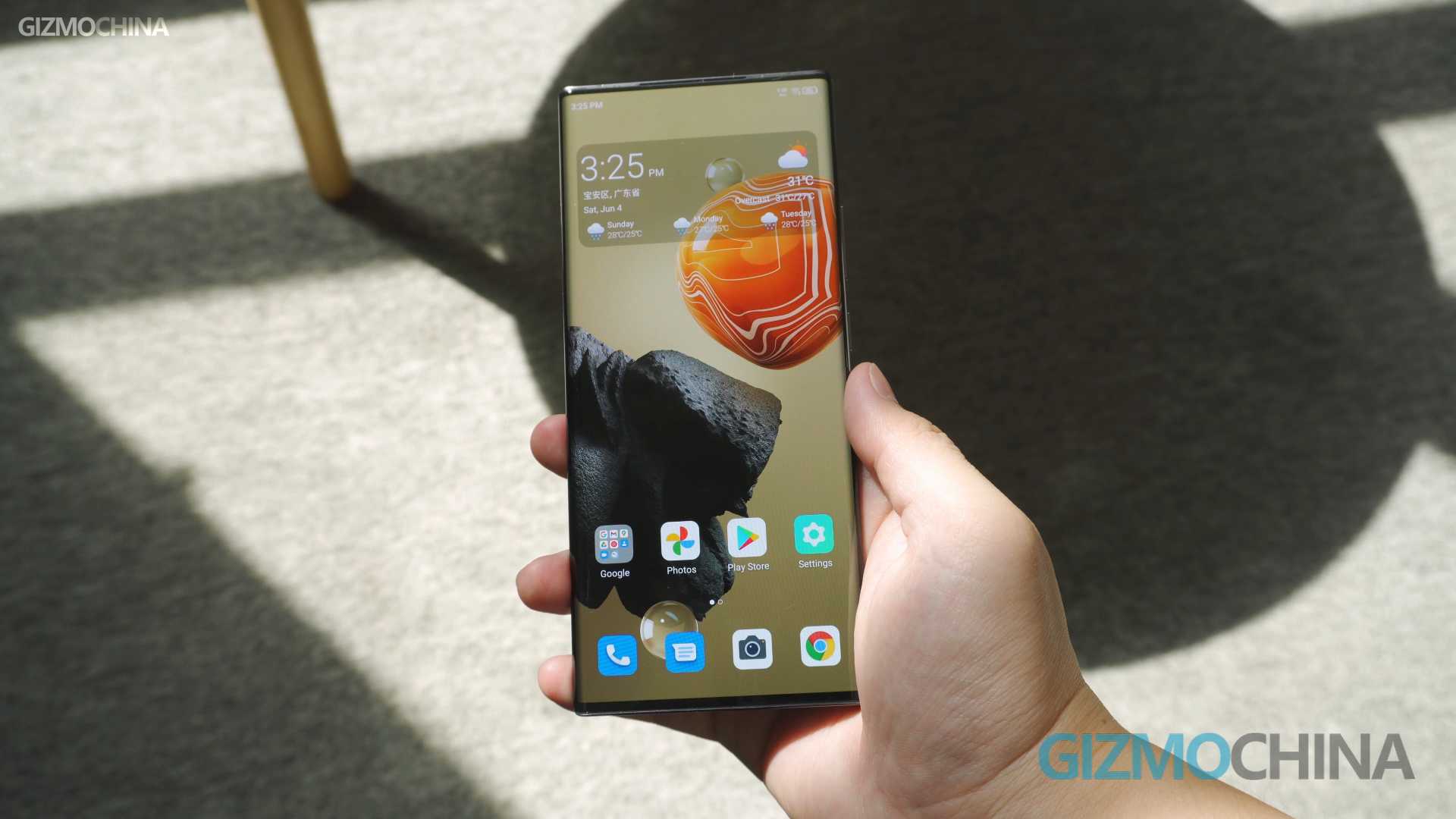
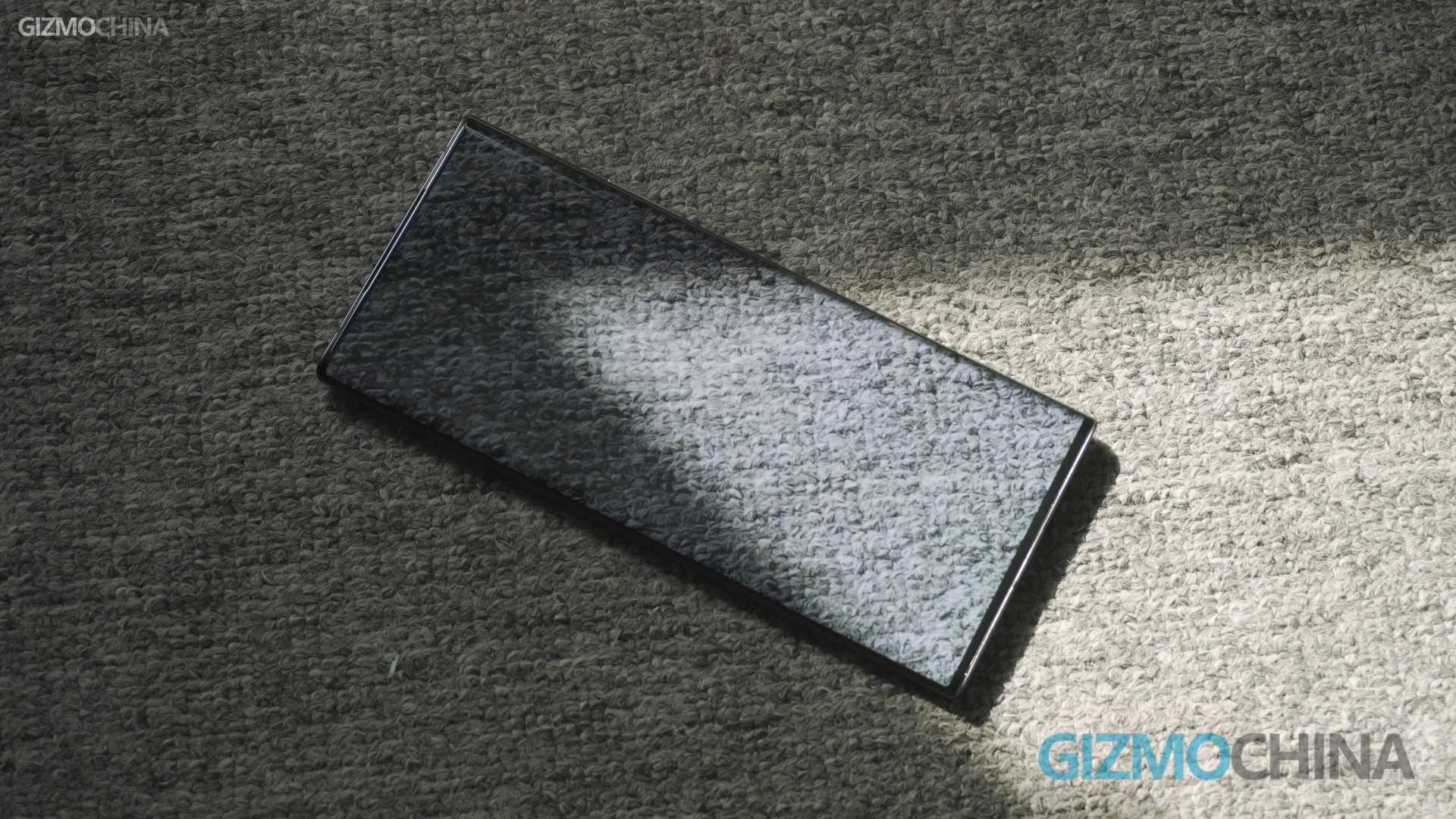
I’ve been using this phone for a week now, and while its square design is not destined to fit in my palm, I still love it. It’s different from other phones in that the top and bottom are flat, much like the previous Samsung Note series. But you still can tell the difference between them by the camera module. The Axon 40 Ultra has a similar camera module to its predecessor, but because the camera has been upgraded, it is much larger overall. The SIM slot is still dual-SIM only. There is an infrared emitter and stereo speakers with DTS support. And the joint between the frame and the back panel is smoother, making it better to hold than the Axon 30 Ultra. So the Axon 40 Ultra has little change in appearance compared to the Axon 30 Ultra, but the details are better done.
You must be very concerned about its under display camera, and so am I. So is this third-generation under-display camera selfie better? No, I don’t feel that its selfie effect has been improved. As with the previous under display camera phone, if you like to take selfies, I suggest you choose another phone. Especially in low light, believe me, you won’t be thinking about taking selfies.
1 of 2
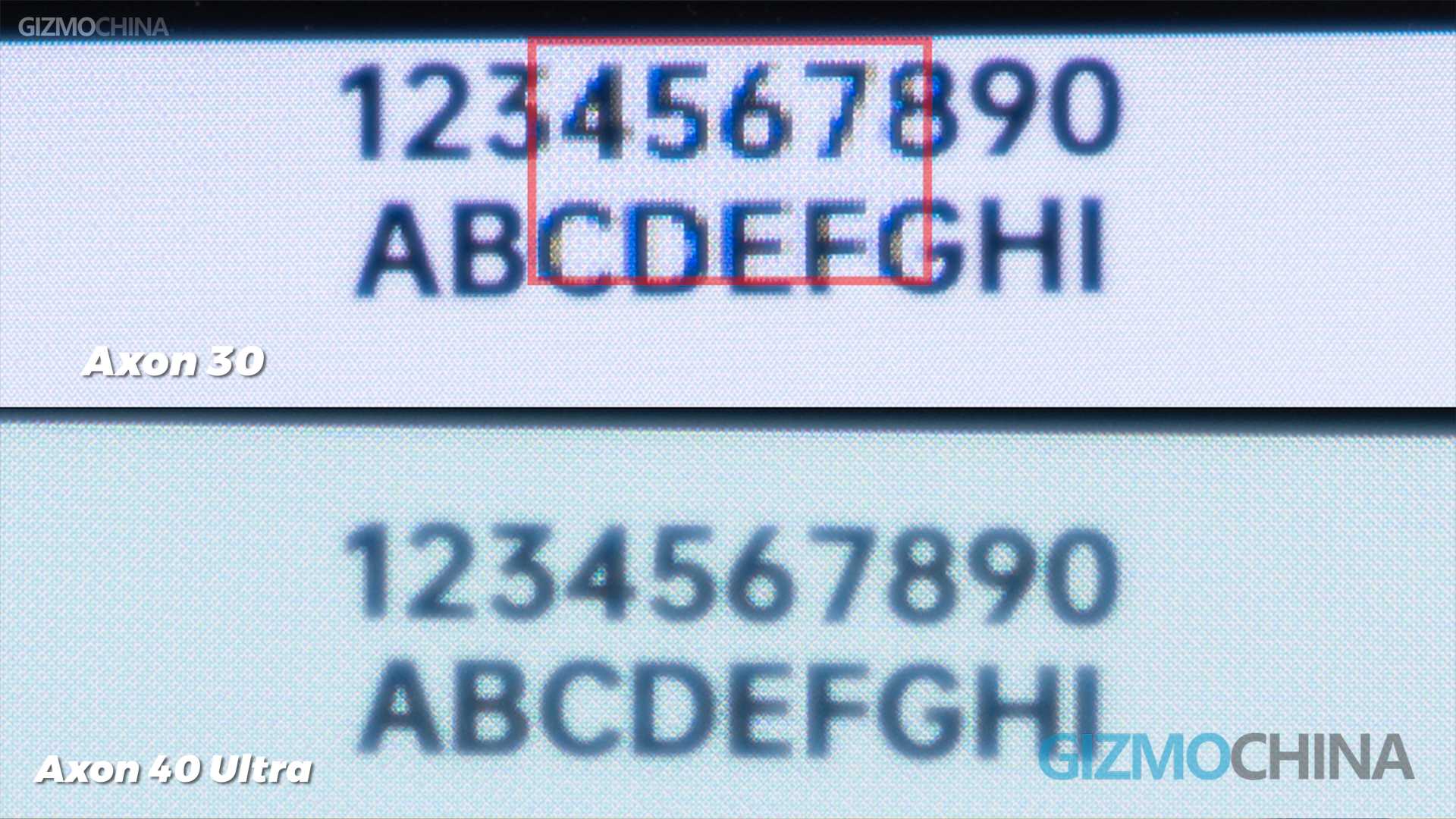
The upgrade point is mainly in the display part. Axon 40 Ultra can finally drive the pixels in the front lens area independently. Compared to Axon 30, you can notice that the resolution of the font will not be reduced. This time, you really don’t notice it when watching videos or playing games. It is also not darker than other areas at the highest brightness.
However, we still found its weakness, there will be a black streak in the front lens area in the gray interface or at low brightness. But don’t worry, you won’t find this problem most of the time you use it. Let’s hope that this problem will be fixed through the system when the global version is officially launched.
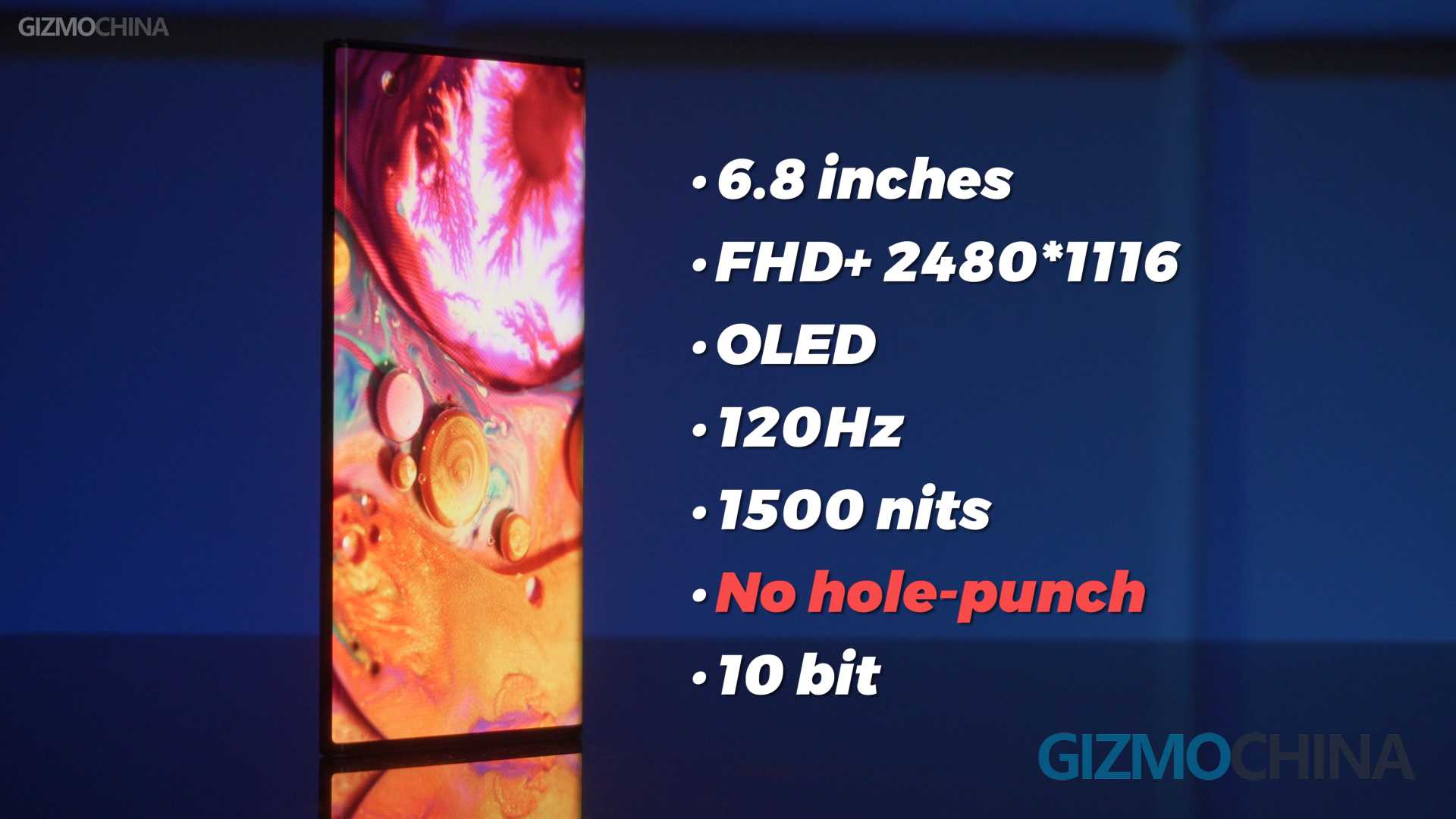
The Axon 40 Ultra’s screen looks good overall, with a peak brightness of 1500 nits. The default color is a bit greenish, but it’s good to know that you can manually adjust the screen color temperature yourself. I think the visual impact of this complete and flawless screen is better than any specification.
ZTE Axon 40 Ultra Review: Camera Performance
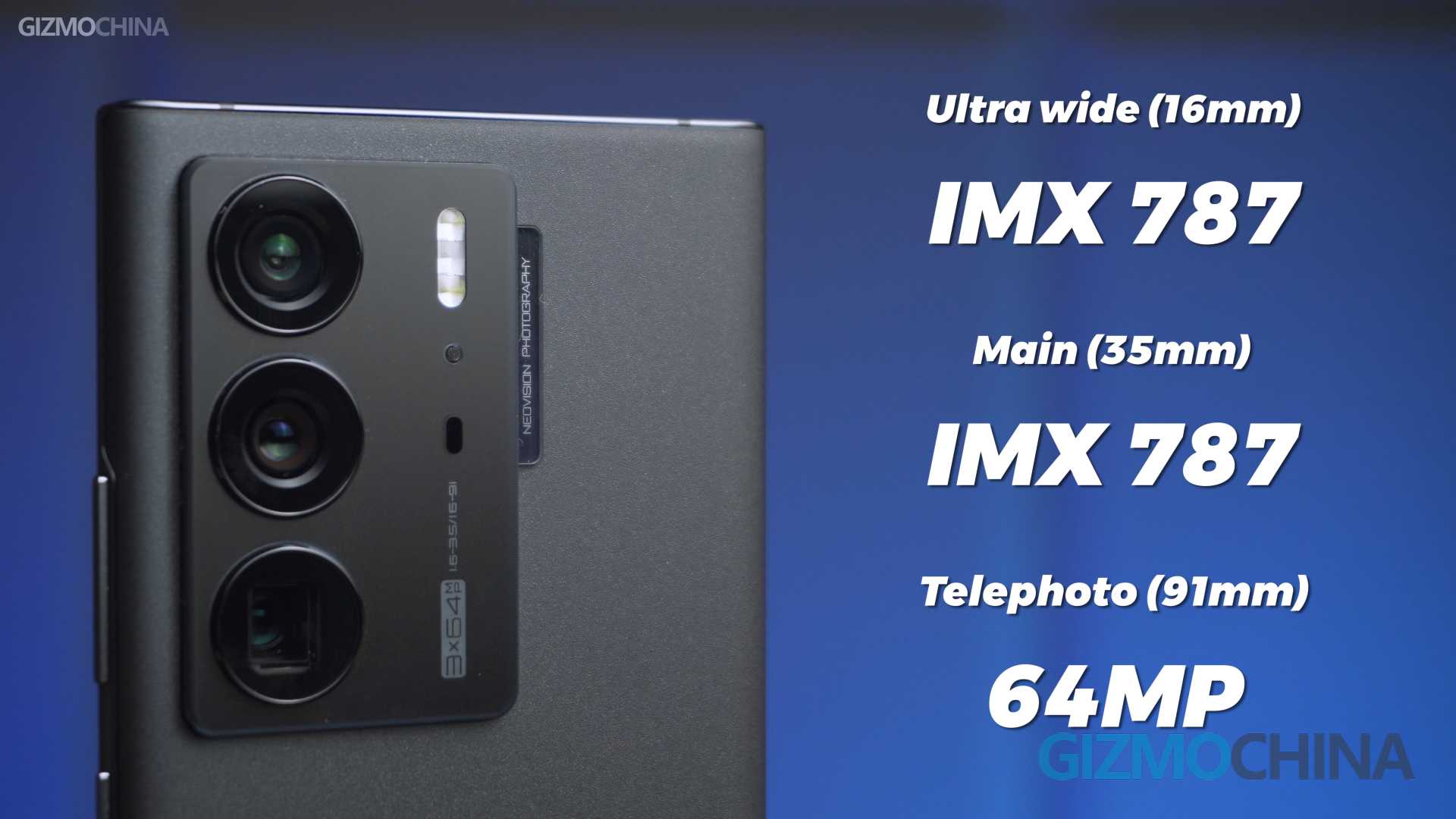
The Axon 40 Ultra’s camera system is not only very strong, but also very interesting. Most phones use a 28mm lens for the main camera, but the Axon 40 Ultra main camera is a 35mm one.
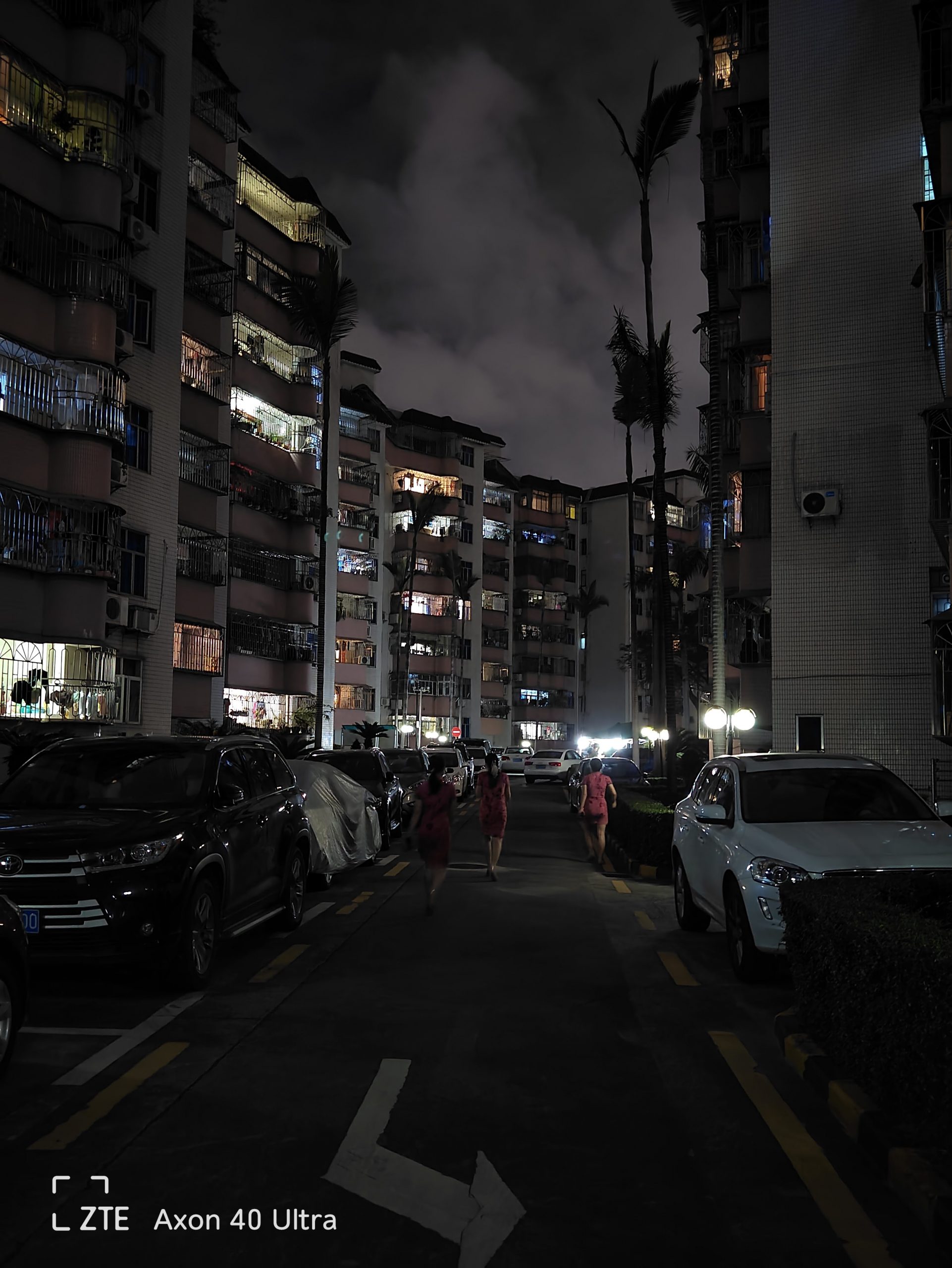
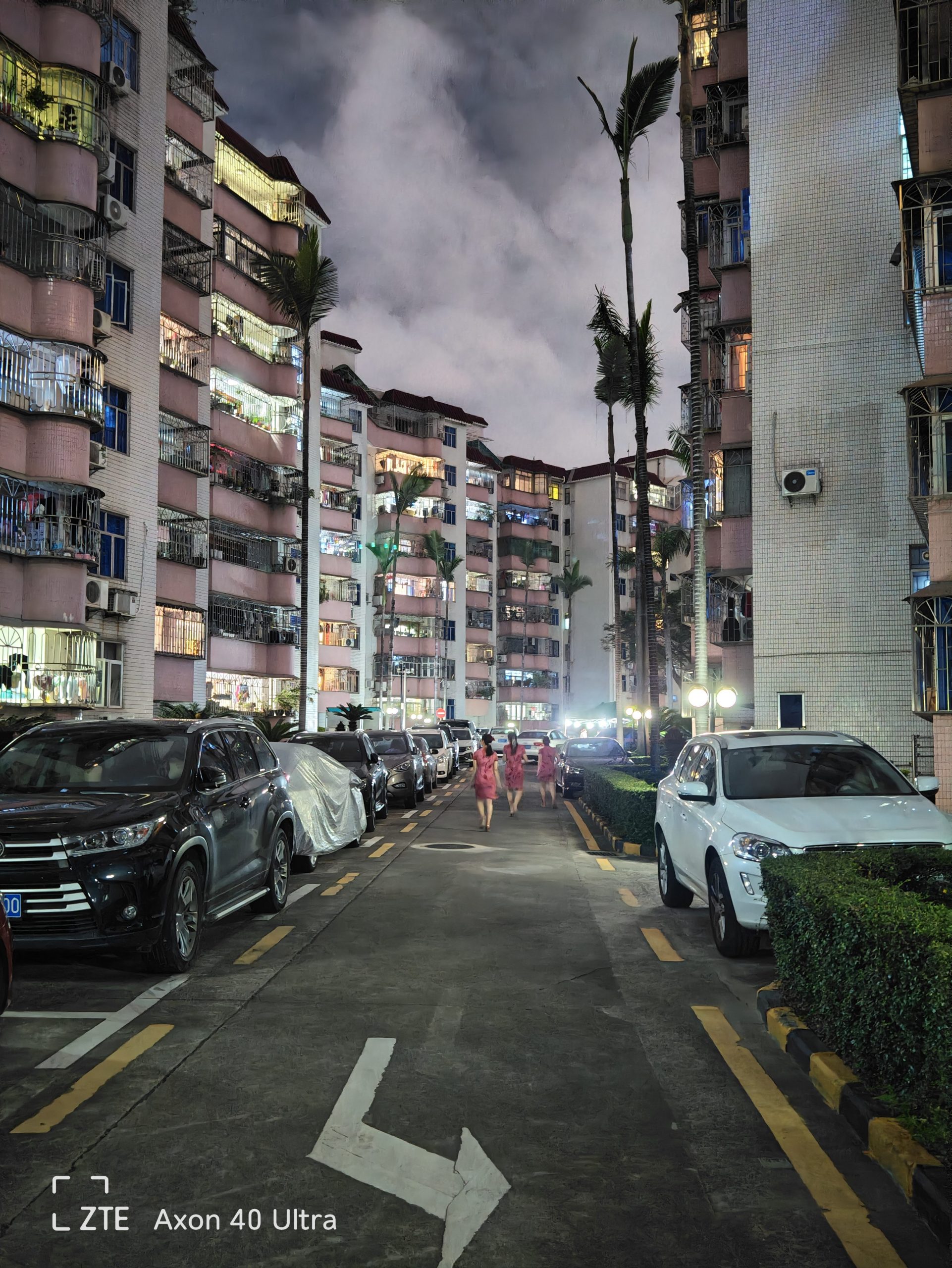
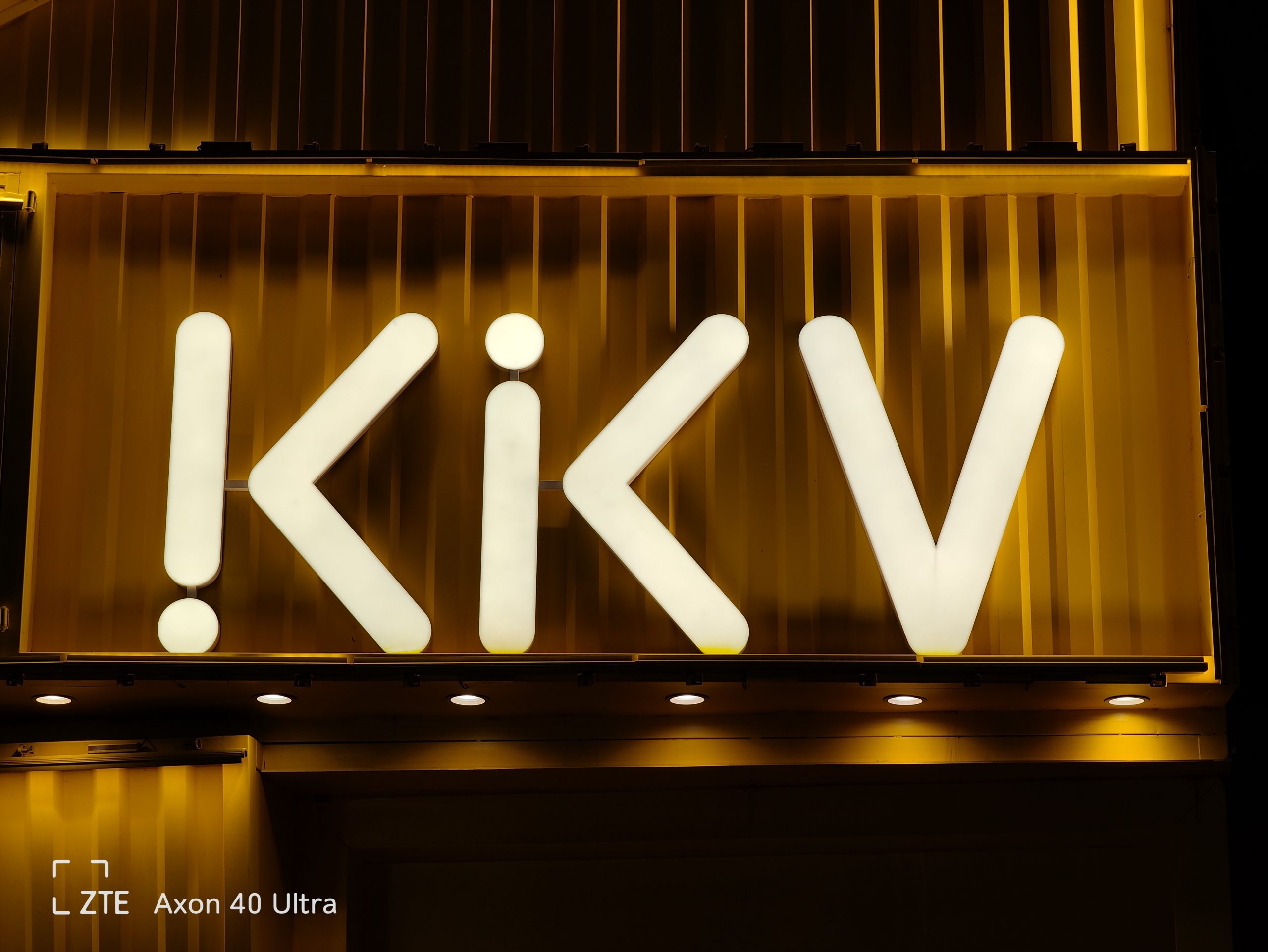
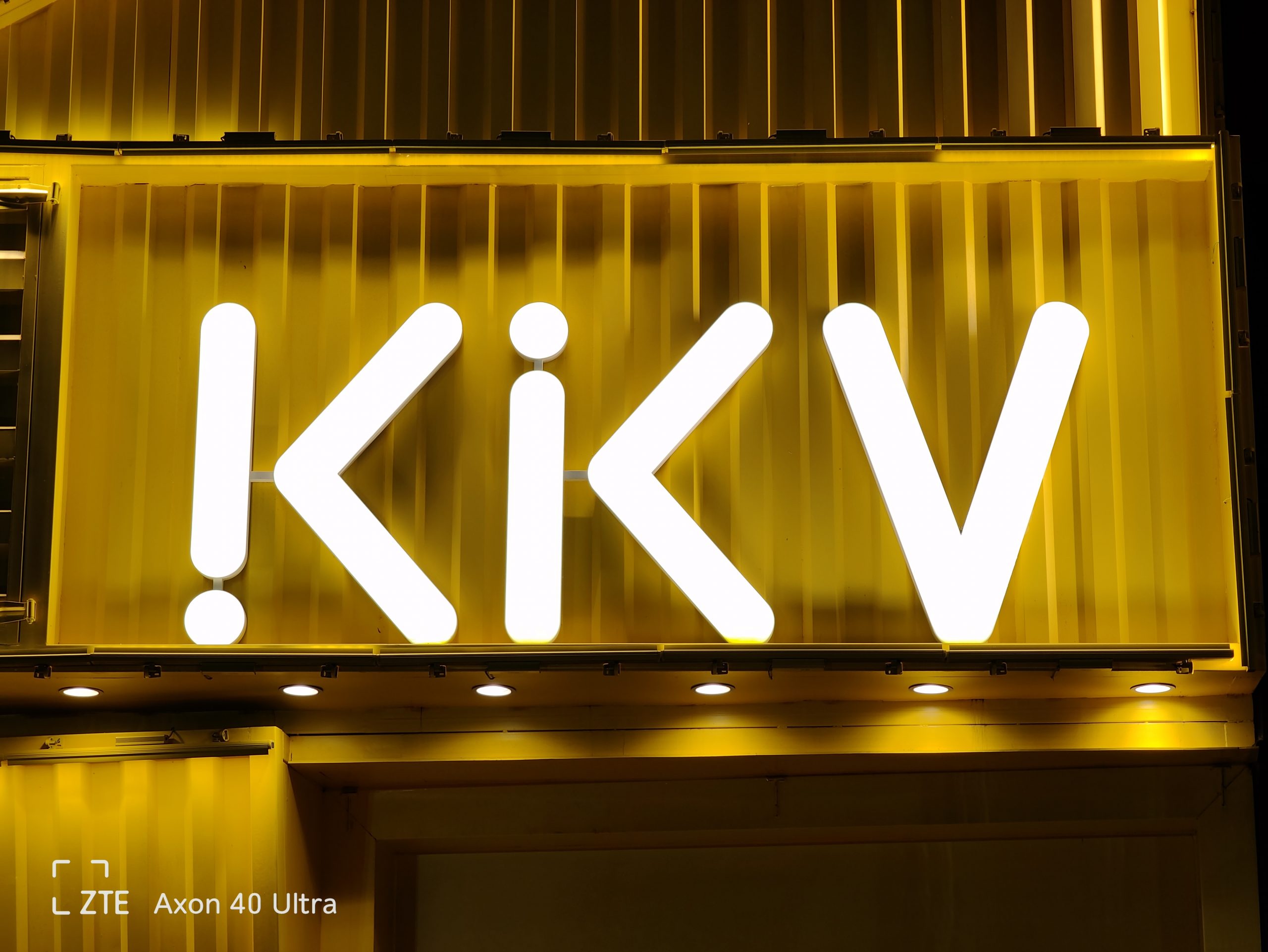
Many users who like photography should know the benefits of a 35mm lens. With less distortion than 28mm and wider than 50mm, it is one of the favorite lenses of many street photographers. Simply put, the photos look better with a handful of shots. The colors are not overly bright either, very clear and very nice. What I like most is the way ZTE handles night scenes. Taking a picture in auto mode will restore the scene as your eyes see it. If you take a picture in night mode, it’s just like any other flagship phone, the picture is very bright. In scenes with more light sources, it doesn’t pull up the exposure even when the night mode is turned on, still retaining the atmosphere of the night.
1 of 13
This approach, which allows the user to make their own choices, is also reflected in the autofocus. If you’ve seen our vivo phone review, you know how much I hate it when the system AI automatically switches lenses. The Axon 40 Ultra lets you choose whether the lens is switched by AI, and if you turn it off, you can lock in a lens shot even if it’s not Pro mode. I super love this switch, I hope Vivo can learn from it.
1 of 4
It is rare that the Axon 40 Ultra uses a large area sensor for both the ultra-wide camera and the telephoto camera. Both cameras perform very well. The telephoto lens in particular gives very good image quality even at night. In my week of use, I can use any focal length I want without reducing the image quality, which is a very good camera experience.
What surprised me even more is that Axon 40 Ultra supports 4k 120fps or 8k video recording for both main and ultra-wide cameras. The telephoto camera is also supposed to support 8K video recording, as the official Chinese website says so. But perhaps because we are the lab system version or the global version, so the telephoto camera can not currently shoot more than 4k resolution. Even so, I have been very satisfied with its video performance.
ZTE Axon 40 Ultra Review: Performance and Gaming
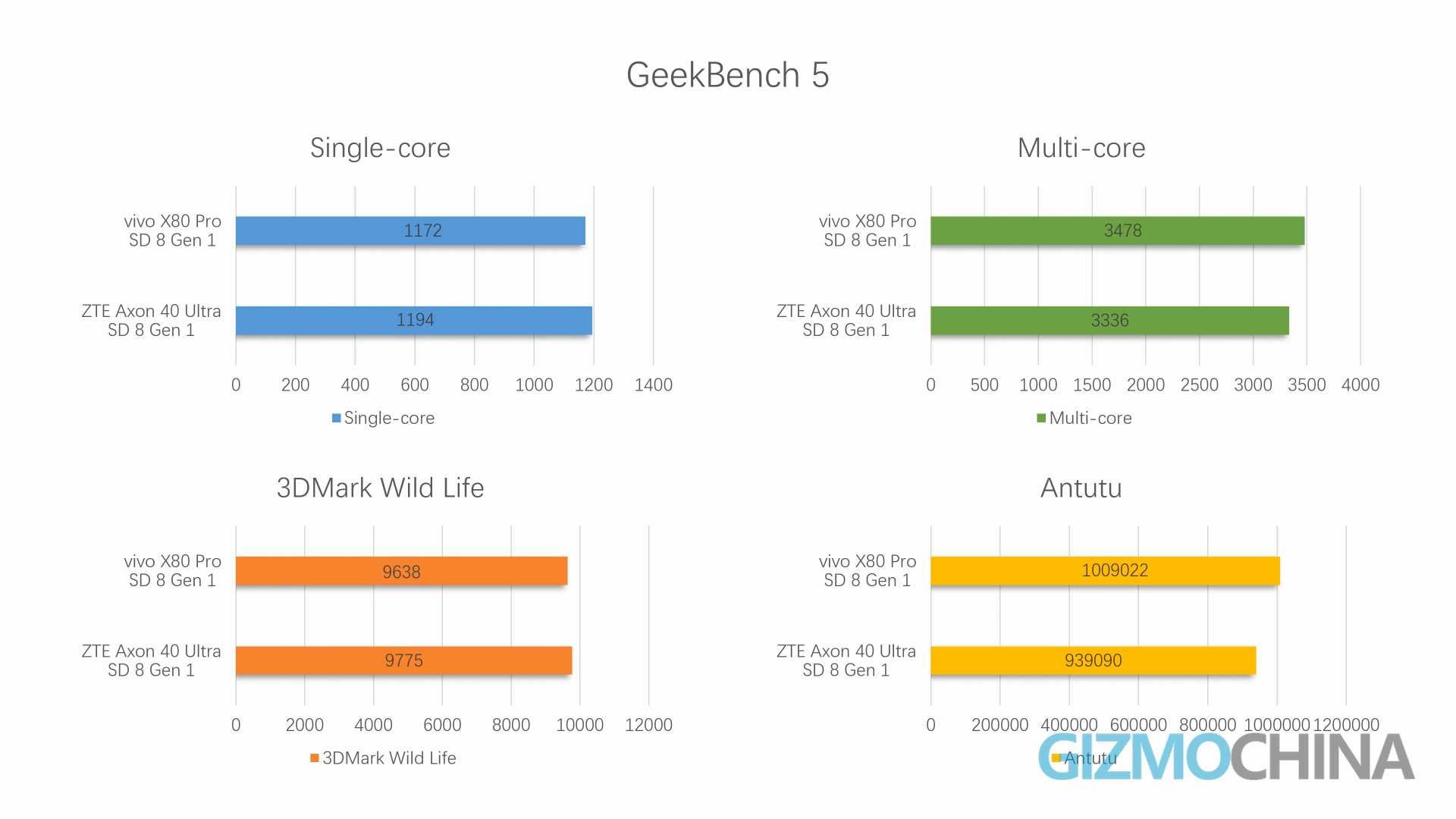
The Axon 40 Ultra is powered by Snapdragon 8 Gen 1. The benchmark score, which you can pause to look at, is the normal 8 Gen 1 level. What disappoints me is the gaming performance, ZTE doesn’t seem to want to let go of all the performance of the processor and let us play to our heart’s content.
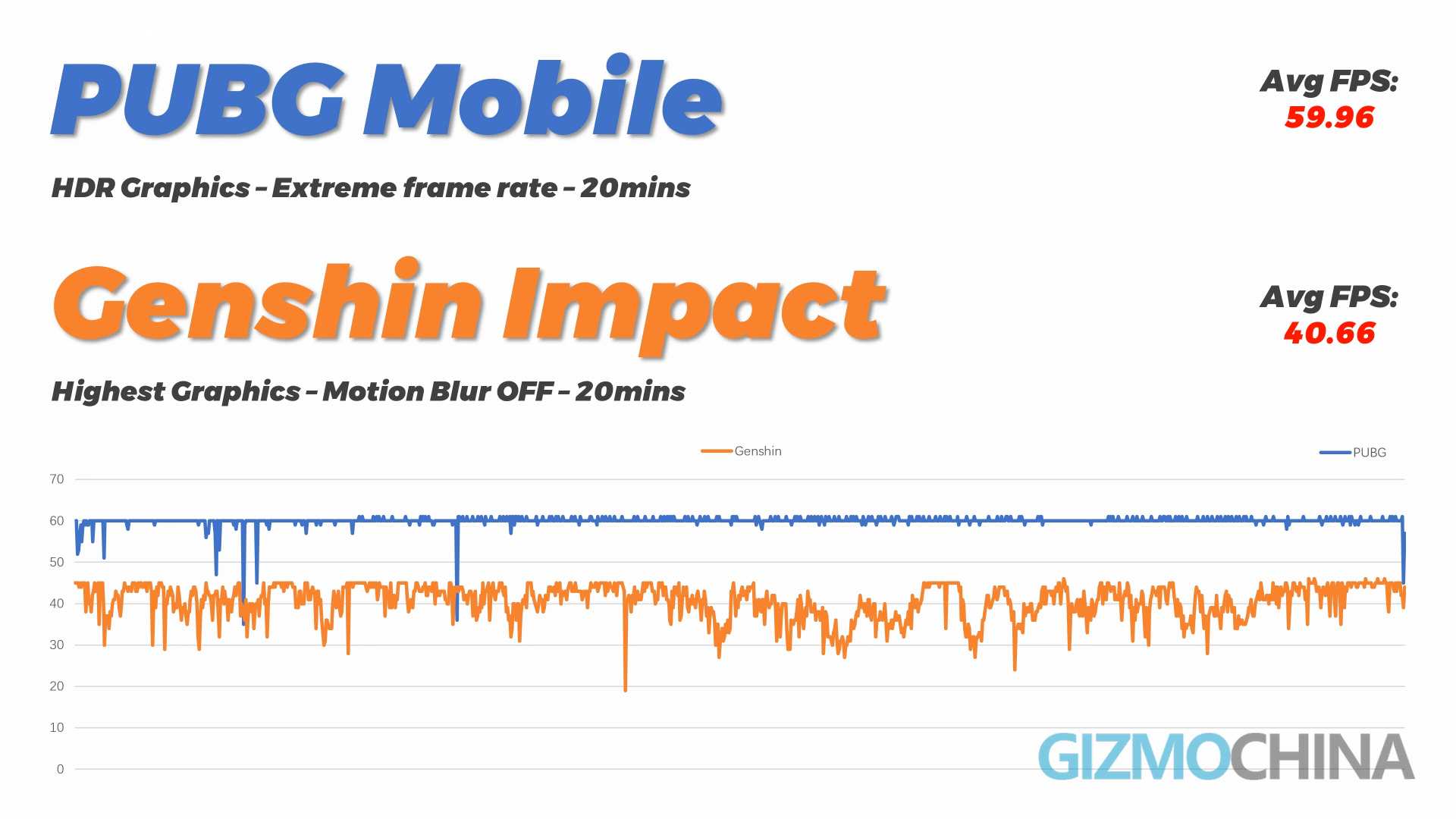
If it’s a game like PUBG that doesn’t require full performance Axon 40 Ultra can really run stable. But once your gaming needs get high, then its frame rate curve becomes less than pretty. Just like Vivo, the mobile games that took superb photos this year didn’t perform well, so we’re not going to blame this ZTE’s photo flagship.
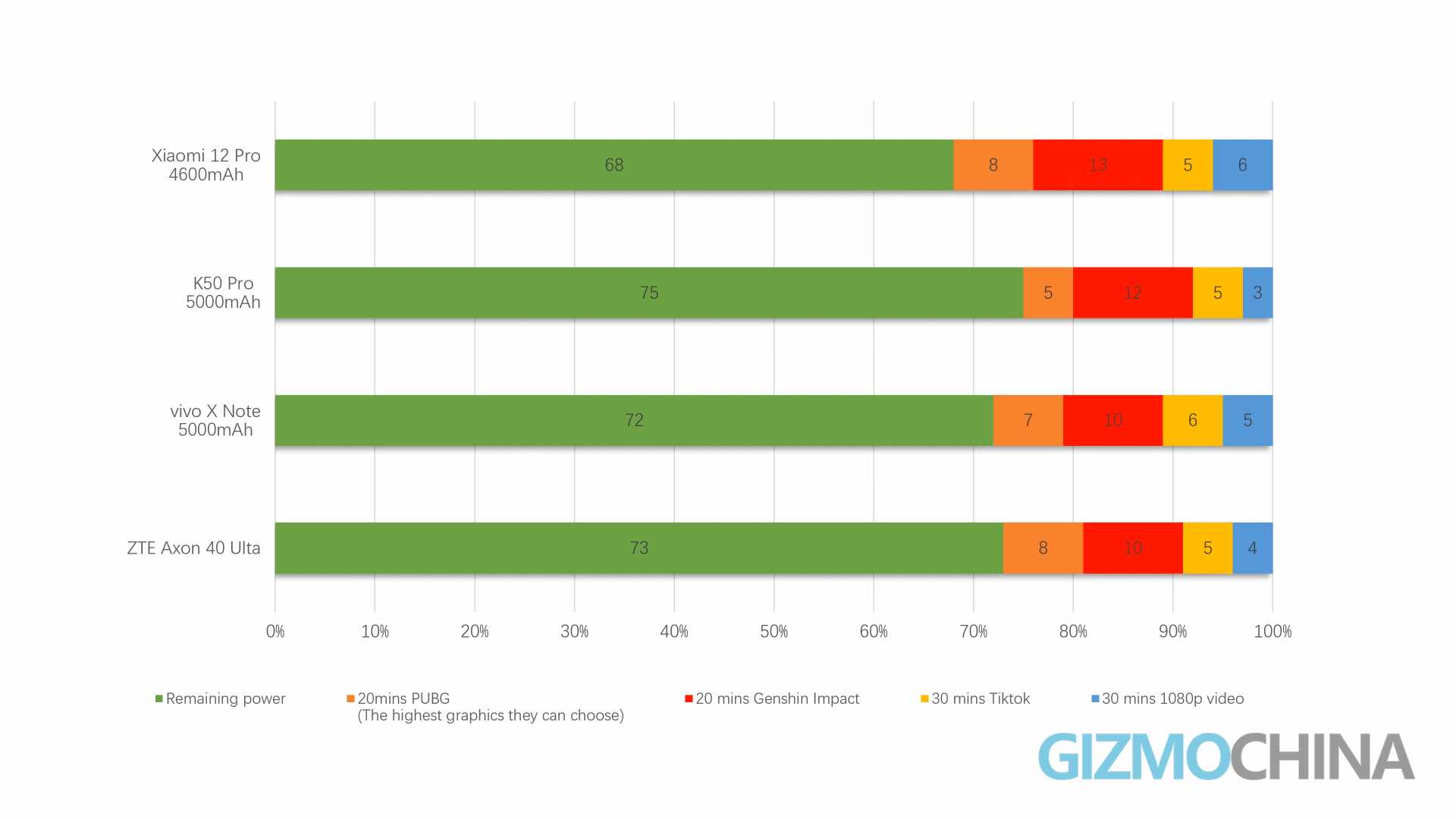
The Axon 40 Ultra Global Edition has a charging power of 65w, which is not superfast, but it’s good enough. 33% is charged in 10 minutes, and it takes 45 minutes to fill. Unfortunately, there is still no wireless charging. The battery capacity has been increased to 5000mAh, except when the game will consume more power, the battery life is basically the same level as other Snapdragon 8 Gen 1. If my personal use scenario, turn on the 5G network and do not play games, a full charge can be used for about 8 hours out.
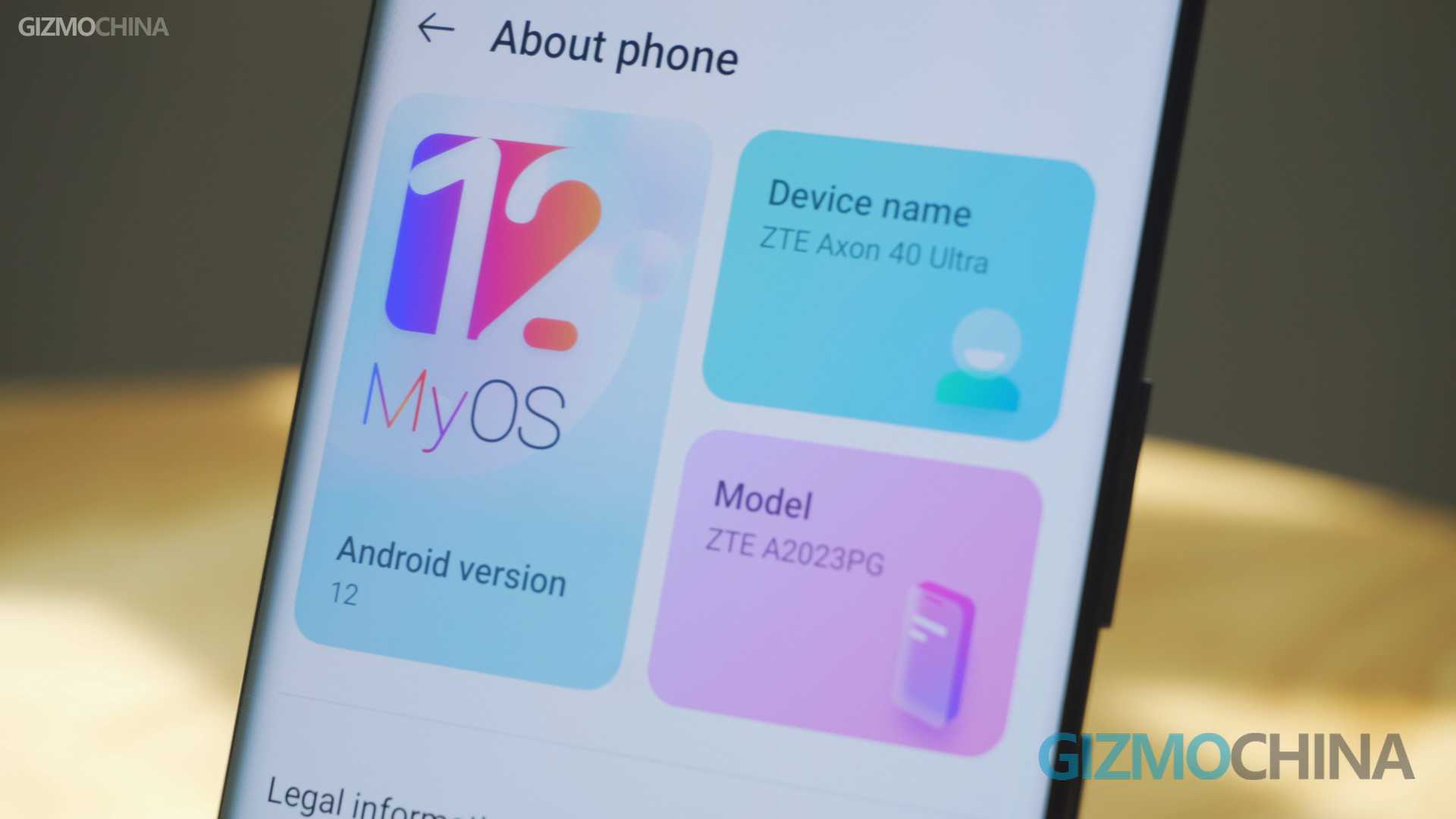
The new MyOS 12 system has become much better. Many features are available, and the operation logic is very reasonable. If the previous MyOS was not that good, this time MyOS is really able to compete with other brands’ systems.
Axon 40 Ultra is actually an improved version of Axon 30 Ultra. The strength of each lens has been strengthened, the hole-punch has been removed, the battery capacity has been increased, and the system has become better.
You can have many reasons not to buy it, but one reason to buy it is enough, that is: Axon 40 Ultra is currently the world’s best under display camera phone.
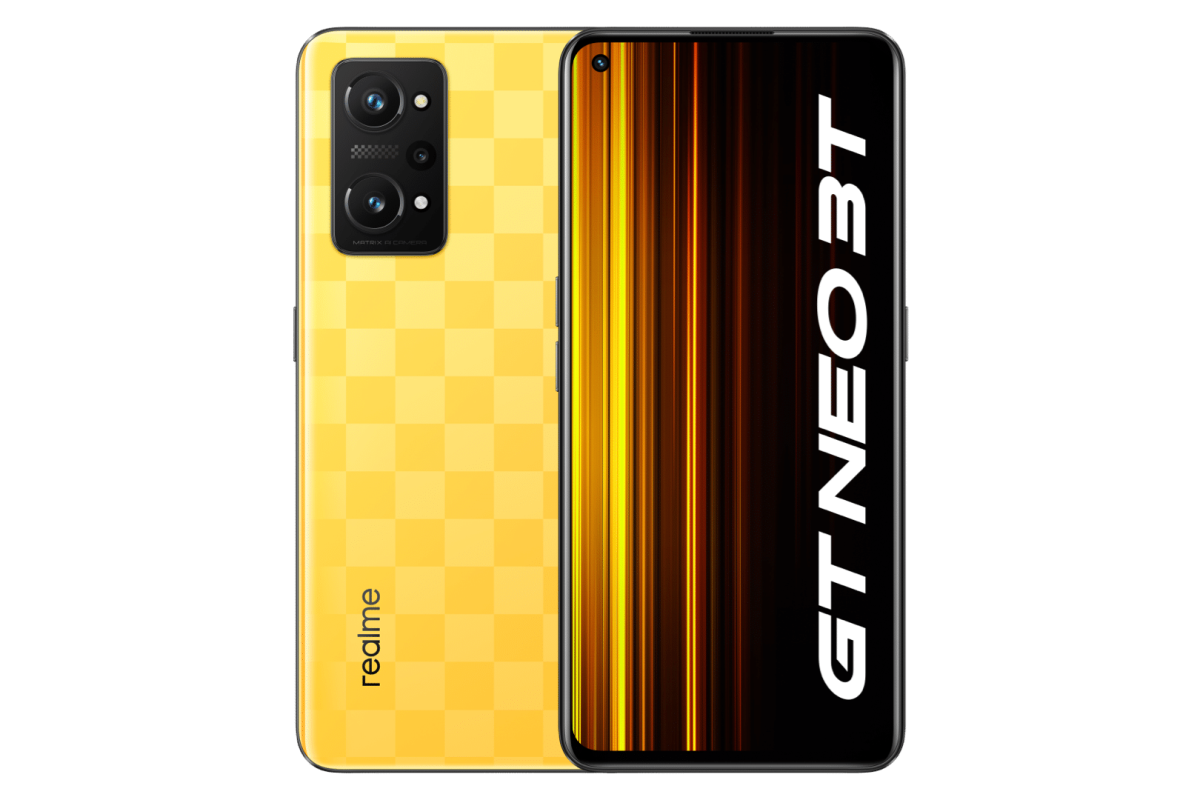
Realme GT Neo 3T was recently launched in Indonesia alongside the Realme GT Neo 3 and Realme Buds Air 3’s Nitro Blue edition. Now it seems that the India launch of the Realme GT Neo 3T might also be just around the corner as its support page has gone live in the country. The support page shows the prices of the various spare parts of the smartphone. The Chinese company is yet to officially confirm the smartphone’s availability in India.
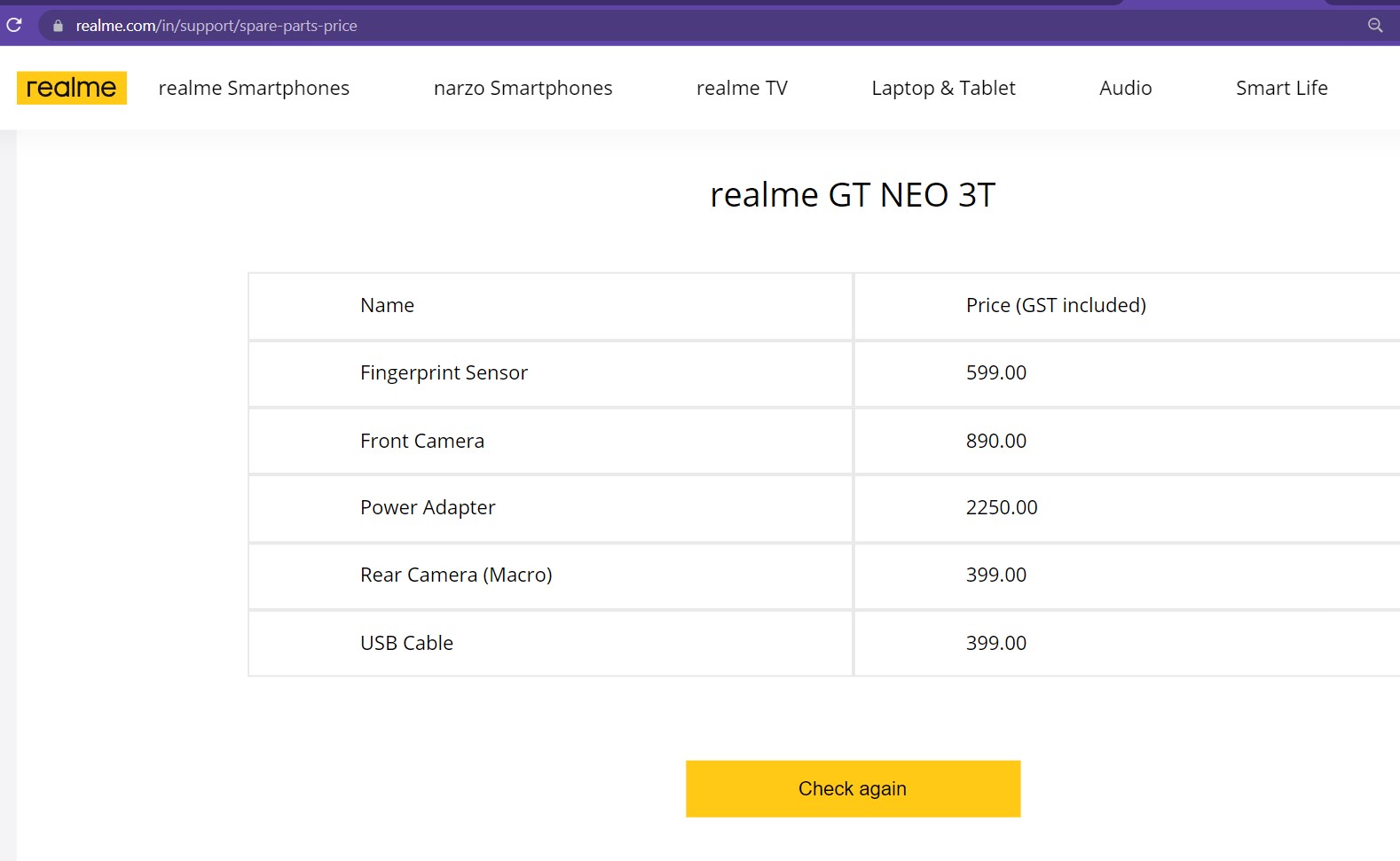
As initially spotted by tipster Mukul Sharma, the Realme GT Neo 3T’s support page has gone live on Realme‘s India website indicating an imminent launch. The support page shows the prices of different spare parts such as the fingerprint scanner, front camera, power adapter, rear camera (macro), and USB cable.
As mentioned above, the smartphone has already been unveiled in Indonesia so, its specifications are all out. Let’s check them out.
Realme GT Neo 3T Specifications
Realme GT Neo 3T flaunts a 6.62-inch E4 AMOLED display and carries support for a 120Hz refresh rate. The handset draws power from a Qualcomm Snapdragon 870 SoC paired with the Adreno 650 GPU.
Realme GT Neo 3T in Dash Yellow
The smartphone offers a triple rear camera sensor along with a 64-megapixel main lens, accompanied by an 8-megapixel ultra-wide-angle lens, and a 2-megapixel macro sensor. At the front, the handset features a 16-megapixel camera sensor for selfies and video calls.
The Realme GT Neo 3T packs a 5,000mAh battery with 80W fast charging support. It runs Android 12 with Realme UI 3.0 on top. The handset also features Bluetooth version 5.2, dual-band Wi-Fi, VC cooling, and up to 5GB of virtual RAM. It comes with 8GB RAM and up to 256GB of internal storage.
The smartphone is priced at $470 for the base variant with 8GB RAM + 128GB internal storage. Whereas the 8GB RAM + 256GB internal storage variant is priced at $509.99.
We use cookies on our website to give you the most relevant experience by remembering your preferences and repeat visits. By clicking “Accept”, you consent to the use of ALL the cookies.
This website uses cookies to improve your experience while you navigate through the website. Out of these, the cookies that are categorized as necessary are stored on your browser as they are essential for the working of basic functionalities of the website. We also use third-party cookies that help us analyze and understand how you use this website. These cookies will be stored in your browser only with your consent. You also have the option to opt-out of these cookies. But opting out of some of these cookies may affect your browsing experience.
Necessary cookies are absolutely essential for the website to function properly. This category only includes cookies that ensures basic functionalities and security features of the website. These cookies do not store any personal information.
Any cookies that may not be particularly necessary for the website to function and is used specifically to collect user personal data via analytics, ads, other embedded contents are termed as non-necessary cookies. It is mandatory to procure user consent prior to running these cookies on your website.