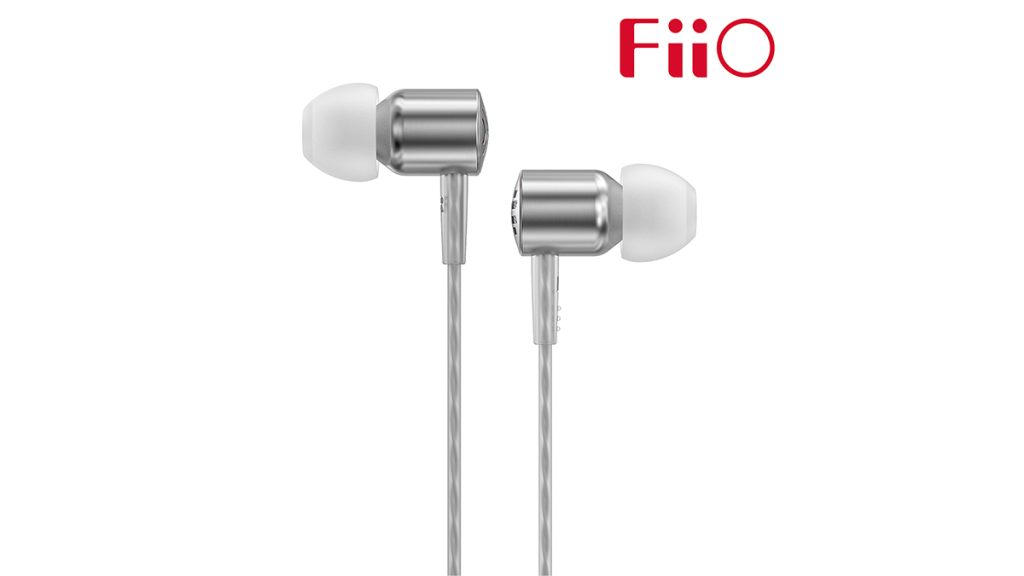
The Chinese audio and electronics manufacturer, FiiO, has announced new in-ear monitors (IEMs) in the Indian market. These IEMs, dubbed the JD3 come with professional tuning and powerful drivers, so let’s look at their specs and features.
The Fii0 JD3 IEMs come with a body made of high-grade aluminum and stainless steel. They are designed in a way to reduce distortion and provide better Bass. The design also takes the wearer’s comfort into account making these IEMs suited for longer use.
It comes color-coded with blue and red grilles to identify the left and right audio channels and also has braided cables, and an in-line controller.
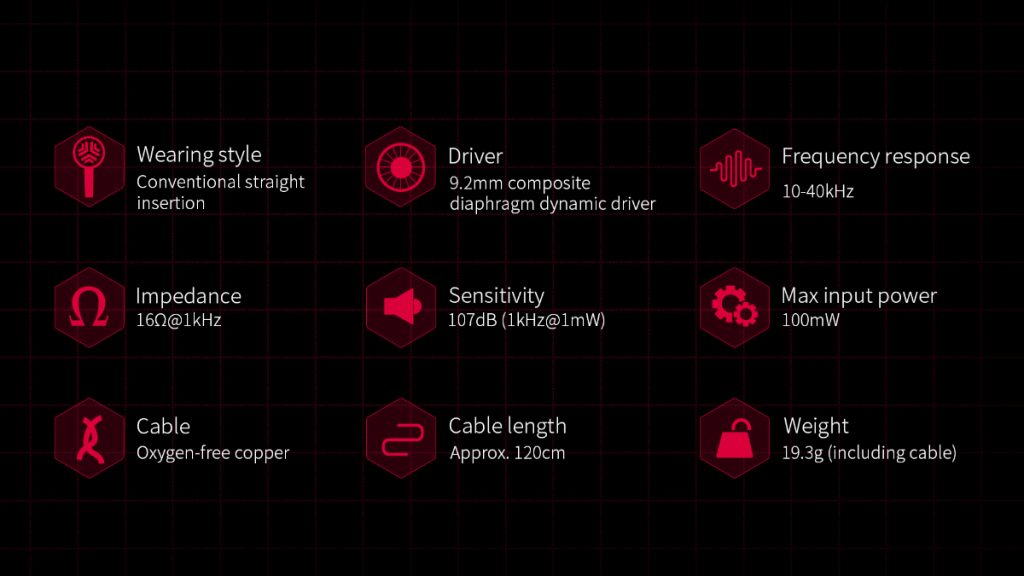
The JD3 features 9.2m composite, dynamic drivers with sensitivity up to 107dB. Other than that, the IEMs feature dual chambers, a sound-absorbing configuration, and strong neodymium magnets for great bass transient performance.
It also features a Line Type plug, 3.5mm connectors, and an HD microphone. The JD3 IEMs come with 4 pairs of silicone ear tips in the box to match SS/S/M/L ear sizes.
The FiiO JD3 IEMs have a price tag of ₹1,699 ($22) in India and are available to purchase from the FiiO store and all major online and offline retail stores across India.
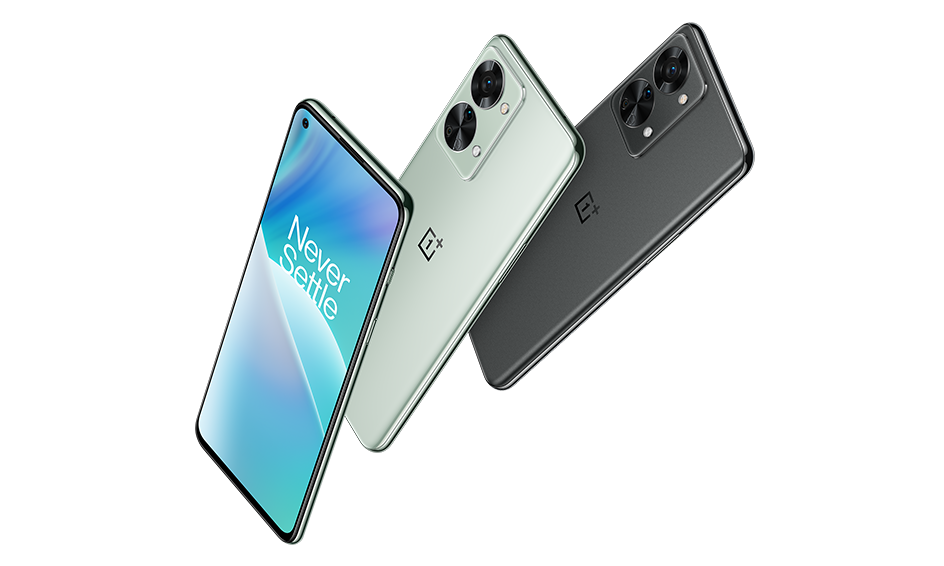
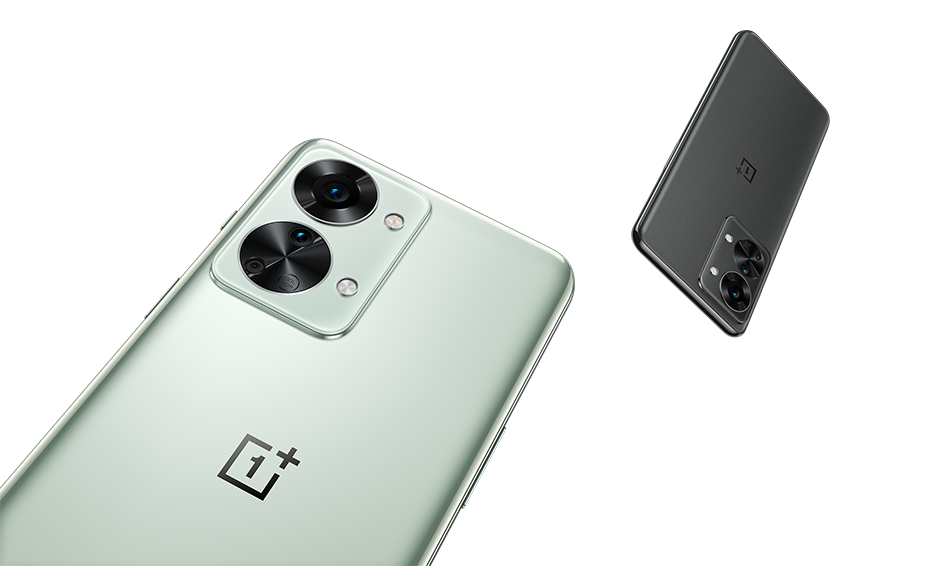
OnePlus is planning to launch a new mid-range smartphone in the global market. The upcoming OnePlus Nord 2T has already appeared on AliExpress and in a recent hands-on video.
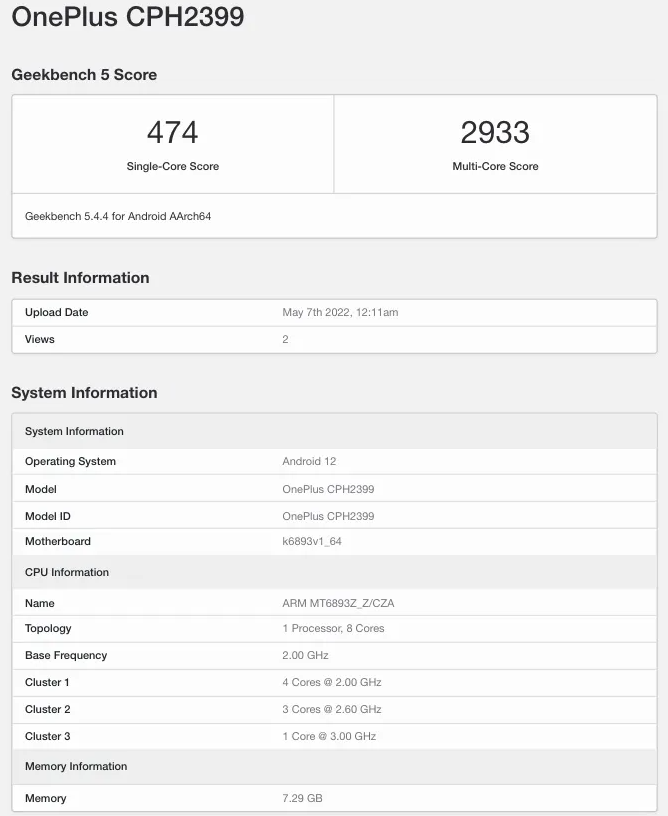
The device has now made an appearance on Geekbench with model number CPH2399. The listing revealed that the device comes powered by a MediaTek Dimensity 1300 SoC accompanied by 8GB of RAM. It operates on Android 12-based OxygenOS 12.1.
Jumping straight to the benchmarks, the device scores 474 points on the single-core test and 2933 points on Geekbench 5’s multi-core test.
The earlier listing has revealed that OnePlus Nord 2T will come with a 6.43-inch flat AMOLED display with a 90Hz refresh rate and FHD+ resolution. It will have a punch-hole in the top left corner and the right side of the phone will house the iconic OnePlus alert slider.
As mentioned above, the device will be powered by a Dimensity 1300 SoC paired with 8GB of RAM and 128GB of storage. It will come with a respectable 4500mAh battery with support for 80W SUPERVOOC fast charging. The charging brick will come included in the box.
Coming to optics, the smartphone has a 50-megapixel Sony IMX766 primary sensor with OIS support. It is paired with an 8-megapixel ultra-wide lens and a 2-megapixel macro camera.
On the front, the device features a 32-megapixel IMX615 sensor for selfies and video calls. It is capable of Face Unlocking and uses Bluetooth 5.2 for connectivity.
The earlier listing also revealed that the smartphone will come with a $399 price tag. The device is already available in Dubai where it costs around 1,422 Dirham or $387, so it is likely that the previously leaked $399 price tag turns out to be true.
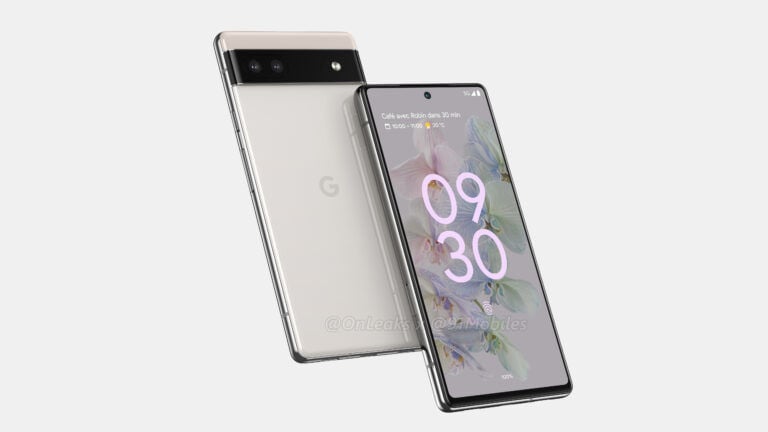
Google I/O is just around the corner and there have been tons of leaks and rumors regarding the launch of various products including the Pixel 6a. Google might unveil the new Pixel at the I/O event. However, just days ahead of the possible launch, a tipster has revealed that a Pixel smartphone, possibly the Pixel 6a, is undergoing Private testing in India.
Mukul Sharma took to Twitter to reveal that an unknown Google Pixel smartphone is undergoing private testing in India. The tipster is not completely sure about the moniker of the device but he suspects that it could be the Google Pixel 6a.
[Exclusive] A new Google Pixel smartphone is undergoing private testing in India. Though not entirely sure, there are chances that it could be the Google Pixel 6a.#Google#Pixel6a#GooglePixel6a
The Google Pixel 6a is expected to feature a compact 6.2-inch FHD+ display with a 90Hz refresh rate and an in-display fingerprint scanner for security. The device is likely going to be powered by Google’s home-brewed Tensor processor. The handset could have 6GB RAM and 128GB storage.
Google Pixel 6a
As far as the battery is concerned, the Google Pixel 6a is said to be equipped with a 4,500mAh battery with support for 20W+ fast charging. In terms of software, the smartphone will run Android 12 out of the box. It is also reported that the handset will come with facial recognition.
Previous certification listings have suggested that the Google Pixel 6a will land in four models- GX7AS, GB17L, G1AZG, and GB62Z. More details about these may get revealed in the upcoming Google I/O event, which will take place on May 11 and 12.
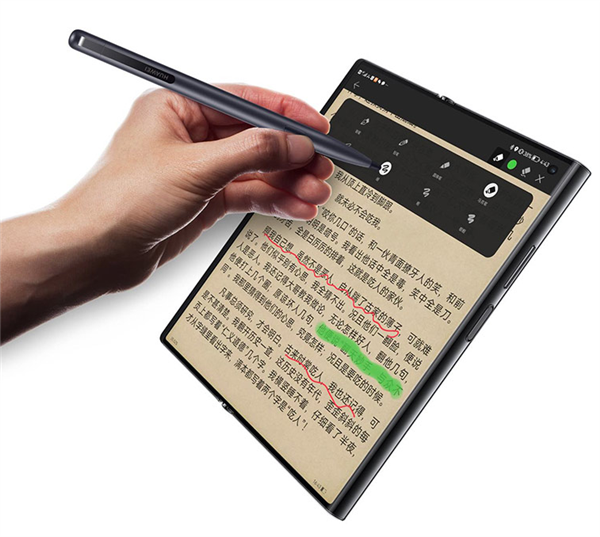
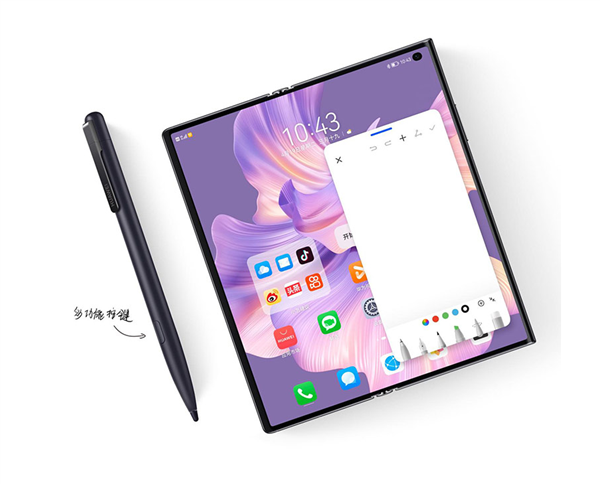
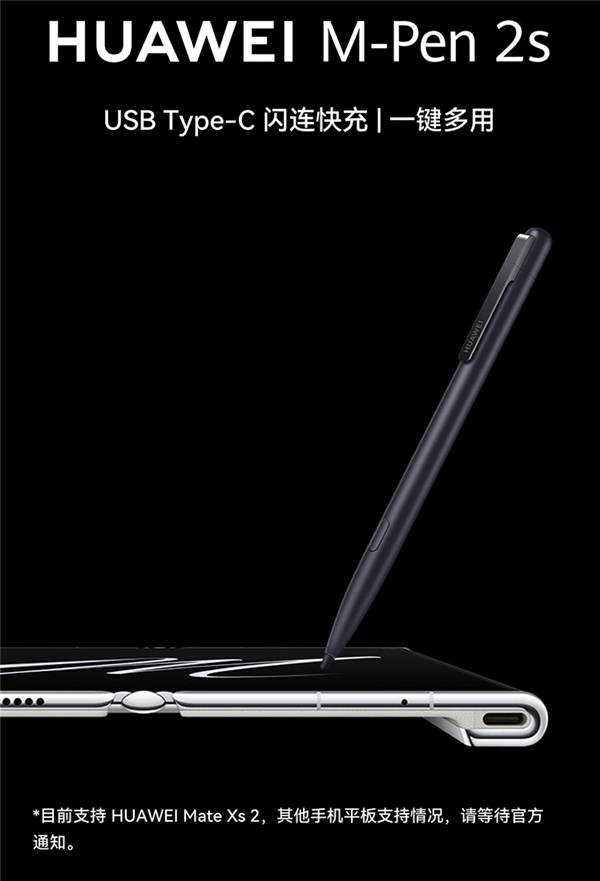
Embattled Chinese tech giant Huawei recently launched the Mate Xs 2 foldable smartphone as its latest iteration in the premium foldabe lineup. While the Mate Xs 2 was revealed to have support for stylus pen, it didn’t launch with one. Huawei has now announced a new M-Pen 2s Stylus that can be used with the Mate Xs 2. The Huawei M-Pen 2s Stylus carries a decent price tag of 599 yuan (~$89) and is set to go on sale from June 1.
The new Huawei M-Pen 2s stylus is ultra-lightweight, weighing in at about 17g. The stylus pen supports side front tilting drawing, 4096 levels of pressure sensitivity, and can write lines of different thicknesses. It is also equipped with multi-function buttons on the side, with a variety of gesture operations, bringing a more convenient and flexible control experience.
The stylus brings various control shortcuts such as calling up the memo when the pen is tapped on the screen while the screen is off. This same function of opening the memo pad can be initiated under bright screen by pressing and holding the multi-function button and tapping the screen with the pen. To take a full screenshot, users can simply press and hold the multi-function button and then double-tap the screen with the pen. To take a partial screenshot, users can simply press and hold the multi-function button and circle the required portion using the stylus pen. The pen also has a function for taking long screenshots.
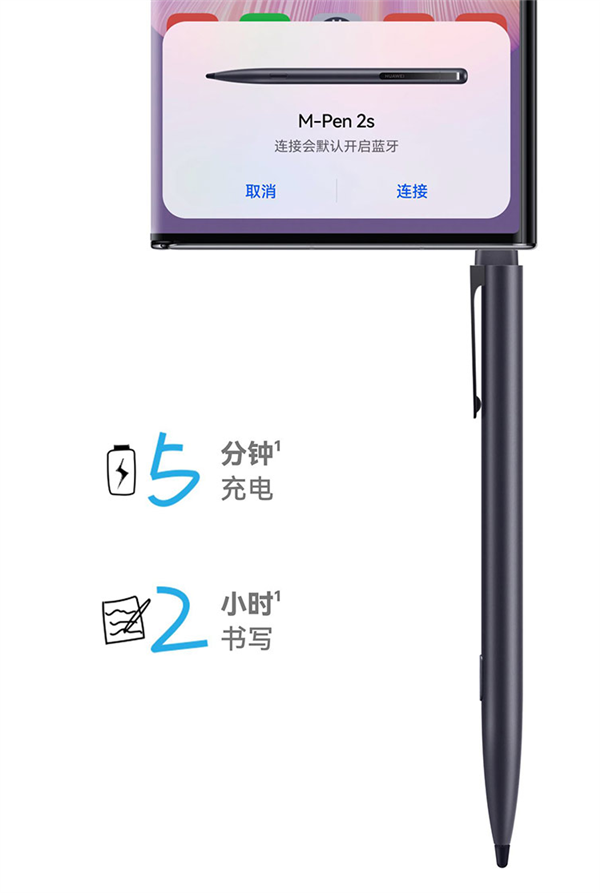
The Huawei M-Pen 2s stylus is designed with a unique embedded Type-C connector and has Huawei Flash Connect fast charging technology. A 5-minute charge can last for tw hours of writing while a full charge supports up to 10 hours usage. While on standby, the battery can last for up to 40 days.
The stylus also supports stylus annotation mode, a variety of brushes and colors, rich choices, colorful expressions, and easy annotation. Annotated content is saved with the book, and can be synchronized to Huawei Read Cloud to support viewing on multiple devices.
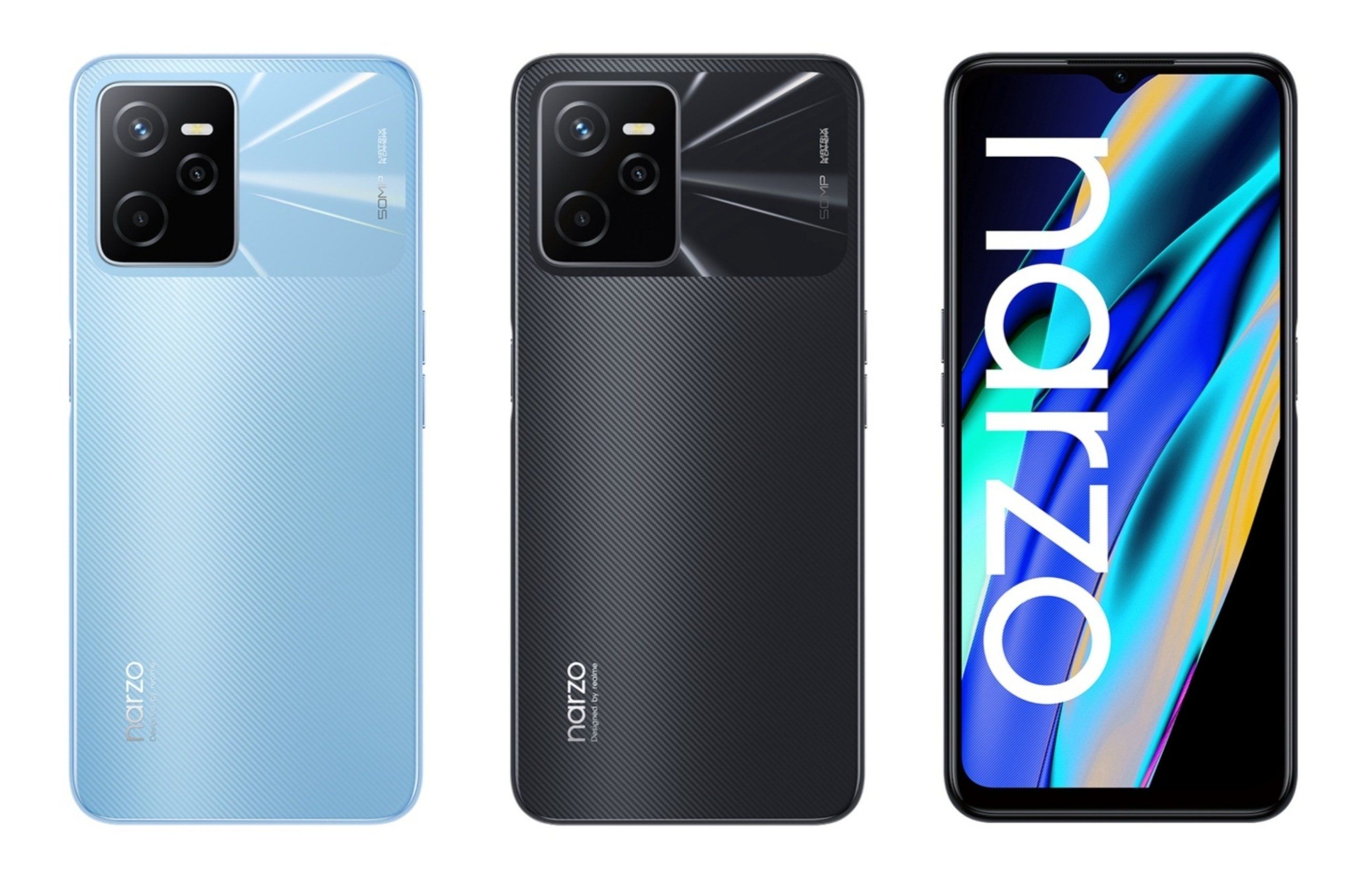
Realme GT Neo 3 recently made its way to India. Now, a fresh report reveals that the Chinese company might be ready to launch a Narzo series phone in the Indian markets. The upcoming smartphone appears to be a mid-range phone with MediaTek Dimensity 810 processor and a 90Hz display.
RMleaks, with the help of its industry sources, has received information regarding an upcoming realme phone. It is currently unknown what the official moniker of the smartphone will be. The publication believes that this device could be the Narzo 50 5G.
As per the report, the upcoming Realme device will feature a 6.58-inch Full-HD+ AMOLED display with a 90Hz refresh rate. The smartphone would be powered by an octa-core MediaTek Dimensity 810 processor, paired with up to 6GB of RAM and 128GB of storage. The phone is expected to run on Realme UI 3.0 based on Android 12.
Realme Narzo 50A Prime
The report reveals that the smartphone will feature dual rear cameras, consisting of a 13-megapixel main sensor and a 2-megapixel depth sensor. On the front, it will have an 8-megapixel snapper for selfies and video calls.
The smartphone will be fueled by a 4800mAh battery that supports 33W fast charging. The phone will arrive with a 3.5mm headphone jack and all the standard connectivity options, including Wi-Fi, Bluetooth, and GPS.
Judging from the features, the smartphone appears to be a decent mid-range phone. The pricing of the handset is yet to be known. According to the report, the Realme phone may see daylight in May 2022.
In related news, Realme V23i was spotted in the China telecom product database. The listing suggested that the smartphone may come with a 6.56-inch LCD screen along with a MediaTek Dimensity 700 SoC.
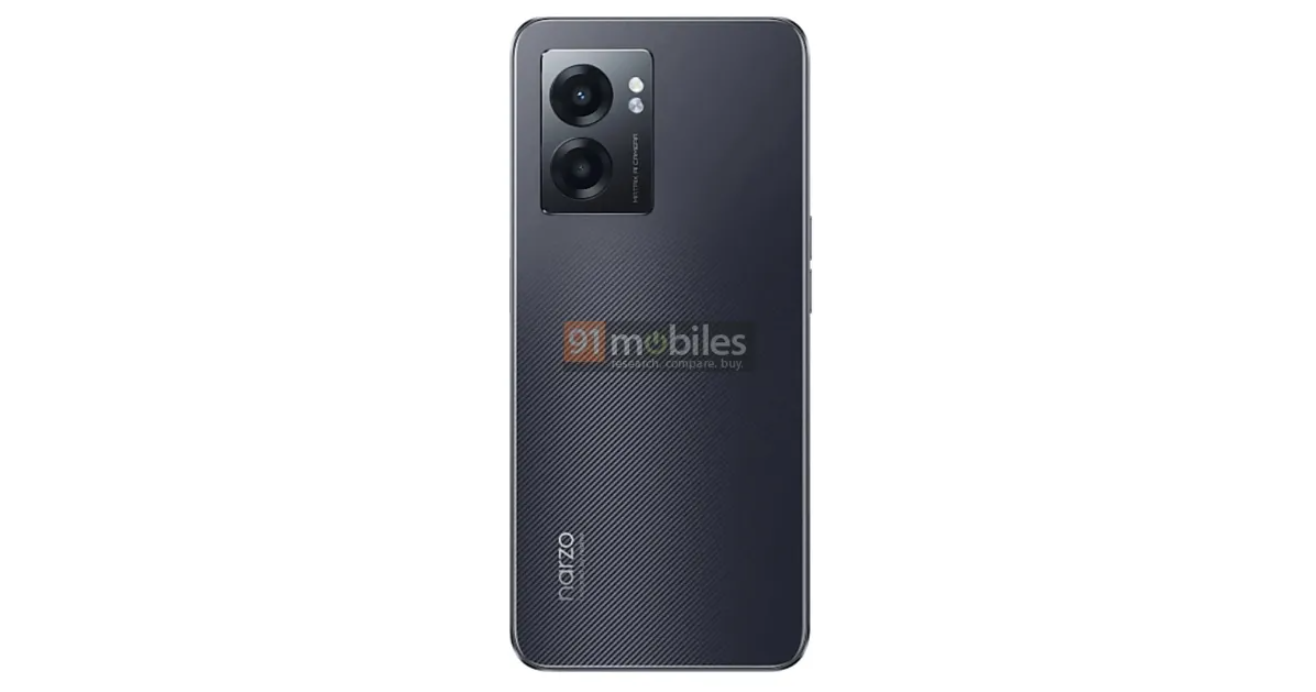
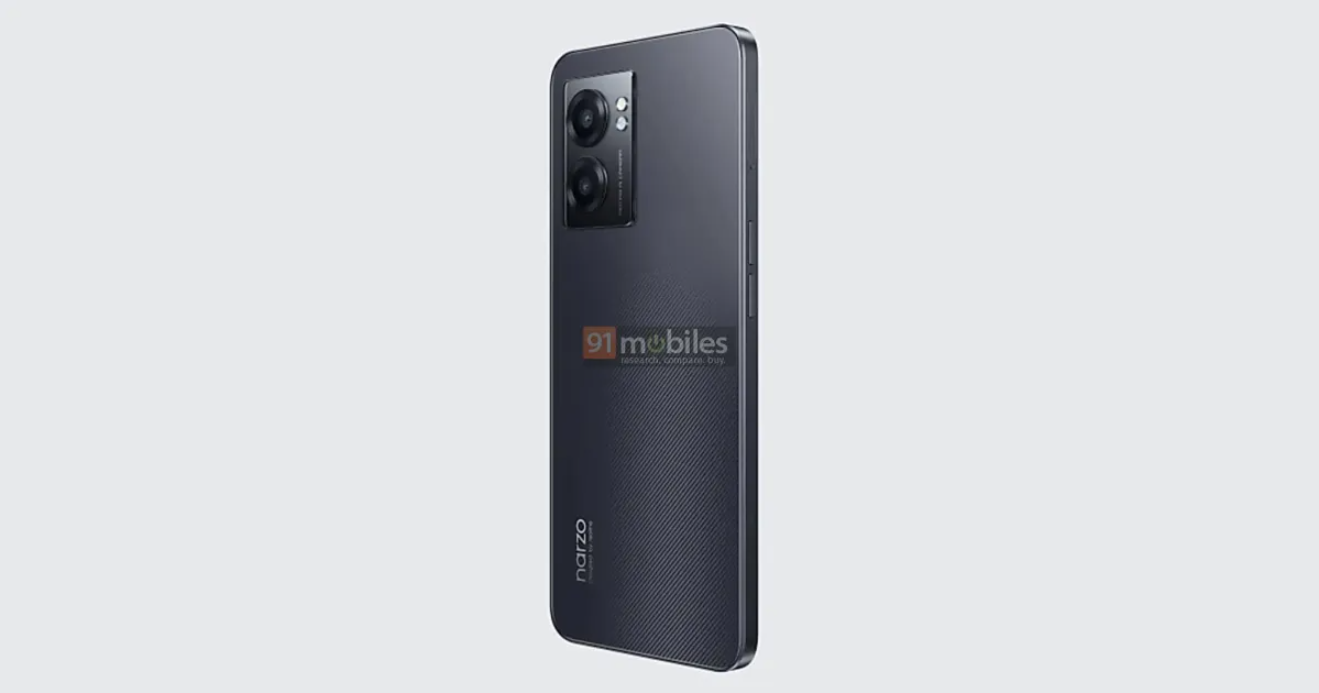
Last week, Realme was reported to debut its upcoming Narzo 50 5G in India this month. Now, the renders of the device have surfaced online.
91mobiles has published a new report revealing the renders of the upcoming Realme Narzo 50 5G.
Design-wise, the smartphone has a flat back and flat edges. The corners are rounded to make it more comfortable to hold in the hand. Its camera module has a rectangular shape and houses two lenses with a dual-LED flash.
So far, Realme is promoting the upcoming smartphone as having the “fastest 5G processor in the segment” and the “best cooling technology in the segment” on its website.
The company has not revealed any specs officially, however, rumors suggest that the device will come with a 6.58-inch AMOLED display with FHD+ resolution and 90Hz refresh rate. It is said to come powered with a MediaTek Dimensity 810 chipset which will likely be paired with 6GB RAM and 128GB internal storage. The device will likely come with Realme UI 3.0 which will carry with Virtual RAM expansion feature.
For optics, the Narzo 50 5G is rumored to feature a 13-megapixel primary camera paired with a 2MP depth sensor. Other than that, the device is expected to come with a 4,800mAh battery with 33W fast charging support.
OPPO Research Institute Innovation Accelerator has been announced. It aims to empower technology professionals and entrepreneurs to bring innovative solutions and create a better future. The Innovation Accelerator is held by OPPO Research Institute and Microsoft for Startups as a strategic partner. The program aims to encourage all technology innovators to solve the most pressing issues faced by humans.
OPPO also said that it will launch the Indian edition of the Innovation Accelerator as a part of the brand’s Elevate program to empower Indian startups.
OPPO’s Innovation Accelerator Program will be open from May 8th to June 30th
The program is centered around the theme of ‘Virtuous Innovation’. OPPO says that it deeply believes in this idea, and it remains dedicated to exploring new technology in a way that puts people first. Under the theme, the brand will look to recruit proposals under the Accessible Technology and Digital Health entry categories.
The online applications for the 2022 Innovation Accelerator will be open from May 8th to June 30th. The preliminary assessment will be from July 18th to August 5th and the first round demo will take place between August 10th and 11th. The winners will be announced after preliminary evaluations and up to ten proposals will be awarded grants of $46,000 each. OPPO will also provide further opportunities like technical support, research and commercial partnerships, and promotions at global events.
To submit a proposal, refer to a proposal, or learn more about the program, you can visit this link.
Honor laptop running the Magic OS for Windows has been teased. For those unaware, Magic OS is Huawei’s proprietary operating system for smartphones and tablets. It is expected to be a customized system based on the secondary development of the Windows system. Honor Vice President Xiong Junmin shared a photo of the brand’s upcoming laptop, revealing a metal body and matte texture.
Honor’s upcoming laptop is teased to come with Magic OS
The Honor executive stated, “ From mobile phones to PCs, Honor’s research and development and adjustment of the underlying systems have never stopped. Magic OS for Windows is roughly a scenario-based experience of active services. , Intelligent collaborative cross-device OS, and personalized basic OS composition will help PC products with stronger performance and lower power consumption! ”
The upcoming Honor notebook with Magic OS is teased to offer a similar experience and features like a smartphone. It is expected to come with GPU Turbo X, Link Turbo X, and OS Turbo X features. This also indicates boost modes for the laptop’s hardware and software.
Honor is set to launch the Magicbook 14 2022 laptop in on May 16th at 2:30 pm. As per some tipsters, the upcoming offering is positioned as a ‘small flagship’. The device is expected to be powered by a 12th-generation Intel Core processor or an AMD Ryzen 6000 chipset.
We will know more details about the Magicbook 14 2022 at the event next week.
Back in March, HMD Global confirmed that the company has no plans of launching a flagship or premium smartphone anytime soon. However, a new report suggests that the company is working on a flagship-tier smartphone.
According to the Chinese news site, CNMO, Nokia is working on a new smartphone with the N73 moniker. For those unaware, the brand has previously released a smartphone with the same N73 moniker back in 2006 which was quite popular at the time.
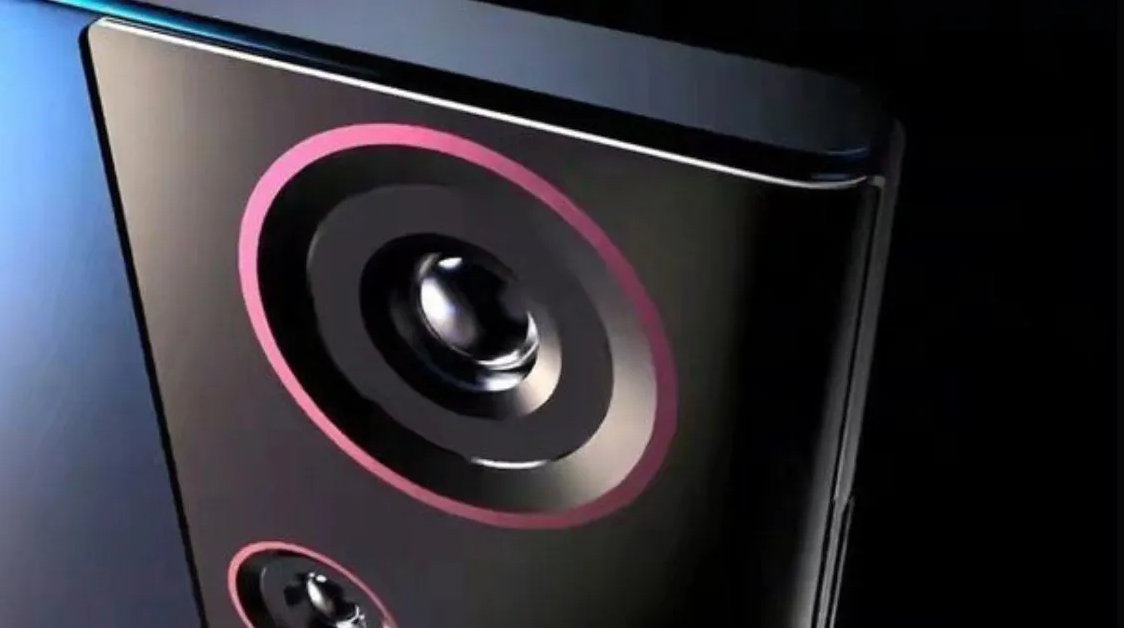
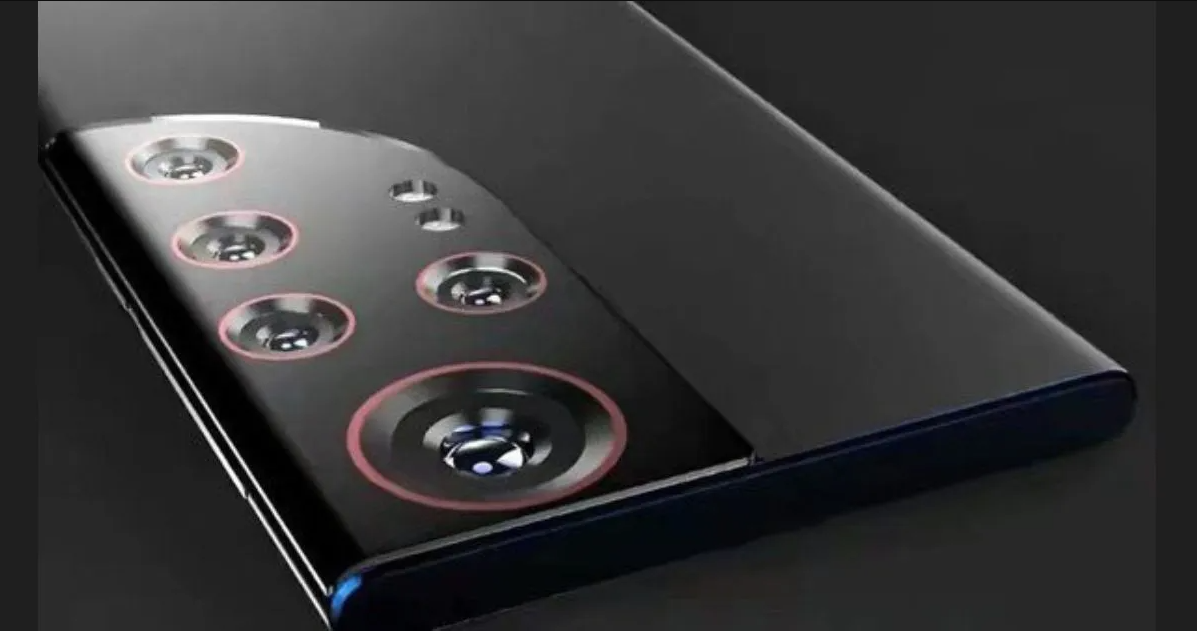
The alleged upcoming smartphone has also received some concept renders showcasing a flat top and curved sides. The camera module is shaped like a knife’s tip and houses a five-camera setup along with a dual flash module. The primary camera has the biggest lens and there are four other lenses aligned vertically below it.
The report states that the smartphone could feature a 200MP sensor made by Samsung. For those unaware, Samsung debuted the ISOCELL HP1 200-megapixel image sensor with a 0.64μm pixel sensor back in September 2021. However, the 200-megapixel sensor is yet to make a debut on any smartphone. These specs and renders are still rumored and unconfirmed, so we expect readers to take it with a pinch of salt.
Separately, Motorola is expected to launch the first 200-megapixel smartphone dubbed the Motorola Frontier. The smartphone is rumored to come with the Samsung HP1 200-megapixel image sensor.
The new sensor features an all-new ChameleonCell technology, a pixel-binning technology that uses a two-by-two, four-by-four, or full pixel layout depending on the environment. It can take 8K videos at 30fps with minimum loss in the field of view.
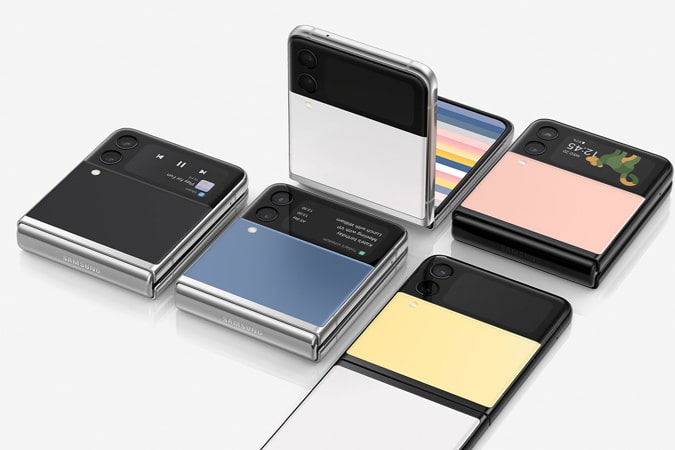
Even though the Samsung Galaxy Z Flip 4 and Z Fold 4 have not been announced yet, both devices seem to be garnering attention across the tech world for the past week because both devices have appeared on several national consumer electronics safety certification platforms across a few key international markets as of late.
As the conversation for both Samsung’s next generation of foldables continues to flare up, famous smartphone industry insider and leakster, Ice Universe, has taken to Twitter today to share some key specifications about Samsung’s upcoming Galaxy Z Flip 4 and Z Fold 4.
Samsung Galaxy Z Flip 3
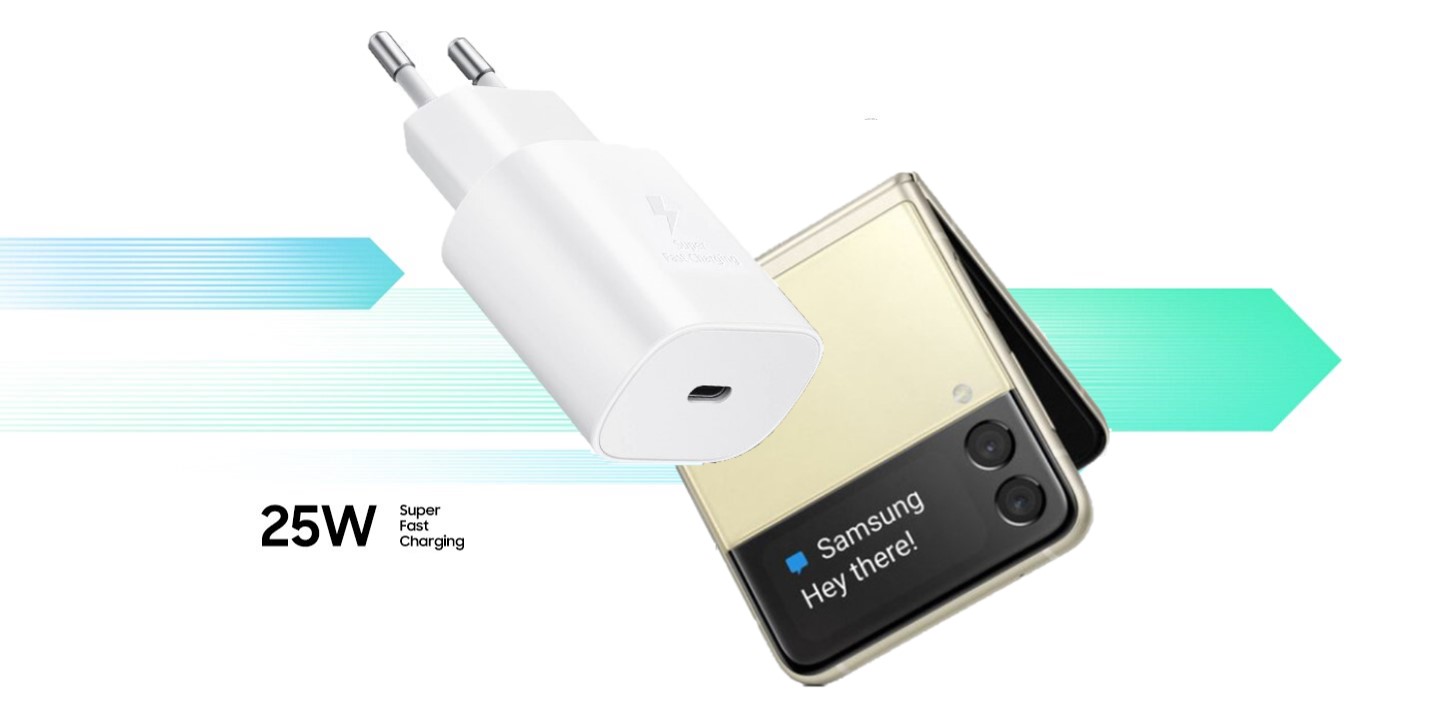
In his tweets today, Ice Universe reveals that the Z Flip 4 will be sporting a more generous 3,700mAh battery, which is 12 per cent larger than the 3,300mAh battery found on the Samsung Galaxy Z Flip 3. Coupled in with the latest news that the Z Flip 4 is confirmed to feature 25W charging over the 15W found on last year’s Z Flip 3, it seems that Samsung has created the 2022 Galaxy Z Flip 4 to solve the battery endurance complaints of its current-generation Z Flip users.
25W Charging. For illustration purposes only.
On the other hand, the bad news here is that the Samsung Galaxy Z Fold 4 will retain the same 4,400mAh battery as last year’s Z Fold 3. Although battery performance on the Z Fold 3 was not bad per se, it was not great either. Foldables fans will be disappointed to hear that the Z Fold 4 this year will also only sport 25W fast charging instead of the 45W charging that Samsung had introduced on its Galaxy S22 Plus and S22 Ultra devices this year.
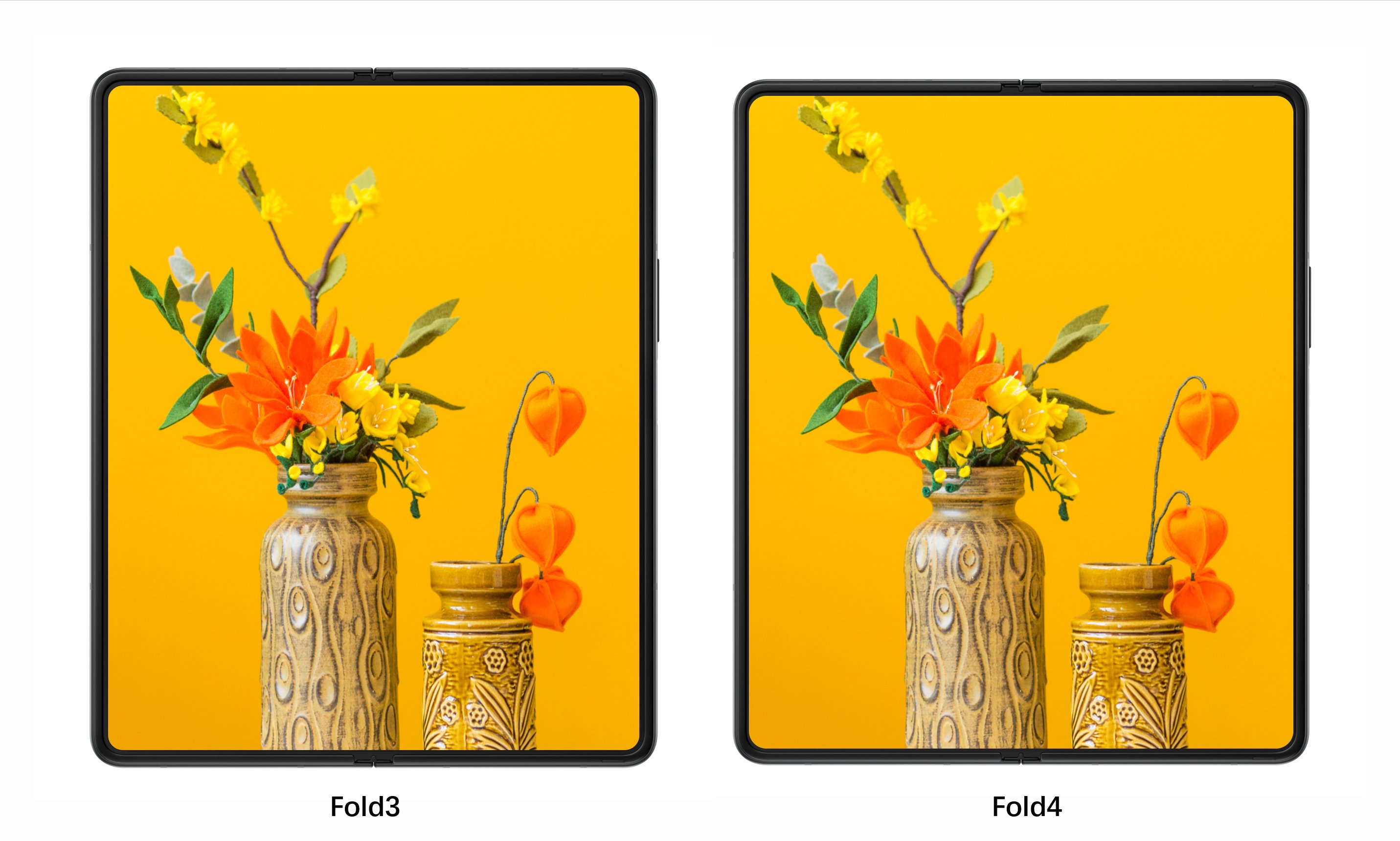
However, there was good news about the Z Fold 4 revealed today. Ice Universe has also shared the display aspect ratios for the Samsung Galaxy Z Fold 4 on Twitter. He shares that the Fold 4’s external cover display has an aspect ratio is 23:9, and the inner folding display has an aspect ratio of 6:5. For context, the Z Fold 3, has a 24.5:9 external cover display and a 5:4 inner folding display.
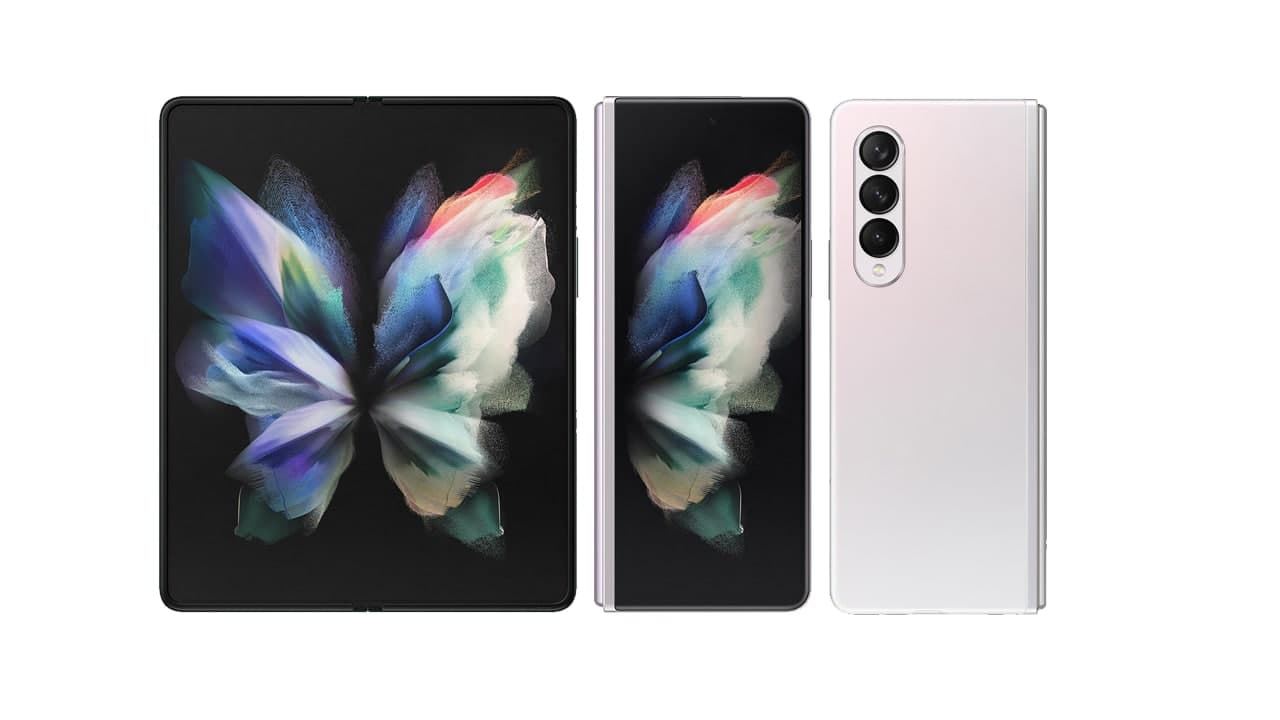
2021 Samsung Galaxy Z Fold 3 Current Screen Sizes
If those aspect ratios sound confusing to you, then here’s the TLDR after all the math is done. Assuming the height of the Samsung Galaxy Z Fold 4 will remain the same as the Z Fold 3, the Z Fold 4 will be featuring a 6.5% wider cover display, and a 4.17% wider inner folding display. This design means that the Z Fold 4 will be having an overall broader body, with more screen real estate, and the inner folding screen will now resemble more of a 1:1 square than that of a rectangle.
Z Fold 3 vs Fold 4 Aspect Ratio Comparison. Source: Ice Universe
The squarish design change for the Z Fold 4 sounds rather off-putting at first, but if Samsung can manage the proportions and ergonomics of its foldables just right, the design change may be a welcome one for the future foldable smartphone users worldwide.
Samsung launched the Galaxy F41 in India in October 2020 with Android 10 (One UI 2.x). The smartphone was updated to Android 11 (One UI 3.x) in January 2021. More than a year from that, the handset has now started receiving the Android 12 (One UI 4.1) update.
According to SamMobile, Samsung has begun to roll out One UI 4.1 update based on Android 12 for the Galaxy F41 in India. The latest software update for the phone arrives with March 2022 security patches carrying firmware version F415FXXU1CVD1.
Like any other OTA system update, this one is also being pushed in batches. Therefore, it will take some time to reach every unit. Some users may get access to the update earlier, while others may have to wait.
Additionally, the Galaxy F41 is also known as Galaxy M21s in Brazil. Hence, that device should also receive the Android 12 update soon.
Having said that, since the phone has received two Android updates since its release, it will no longer get any more OS updates. However, it will be receiving security updates for a while.
The Galaxy F41 was one of the best Samsung budget smartphones of its time. It offers features like a 6.4-inch FHD+ Super AMOLED display, Exynos 9611 SoC, 6GB LPDDR4x RAM, 64GB/128GB UFS 2.1 storage, 64MP (wide) + 8MP (ultra-wide) + 5MP (depth) triple camera setup, 32MP selfie camera, 6,000mAh battery, and 15W charging.
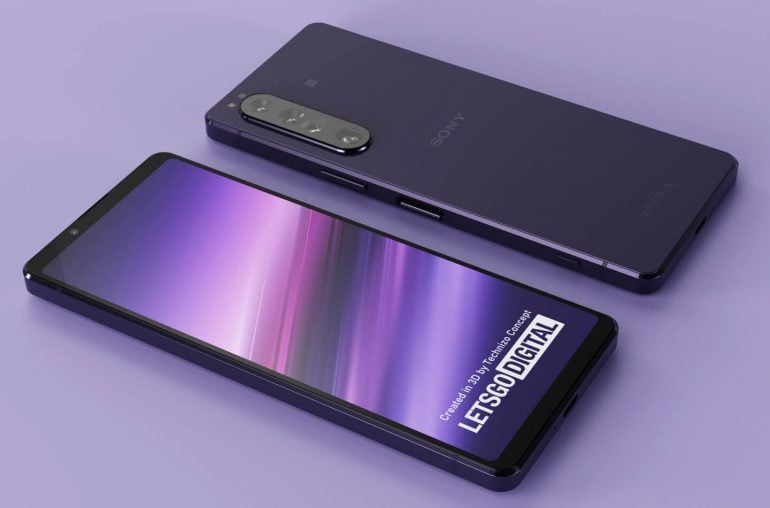
Sony is gearing up to launch its latest flagship Xperia 1 IV and mid range Xperia 10 IV smartphones soon. These will be the latest entry from the company, so let’s have a look at what we know so far regarding their specifications, pricing, and more.
Design & Display
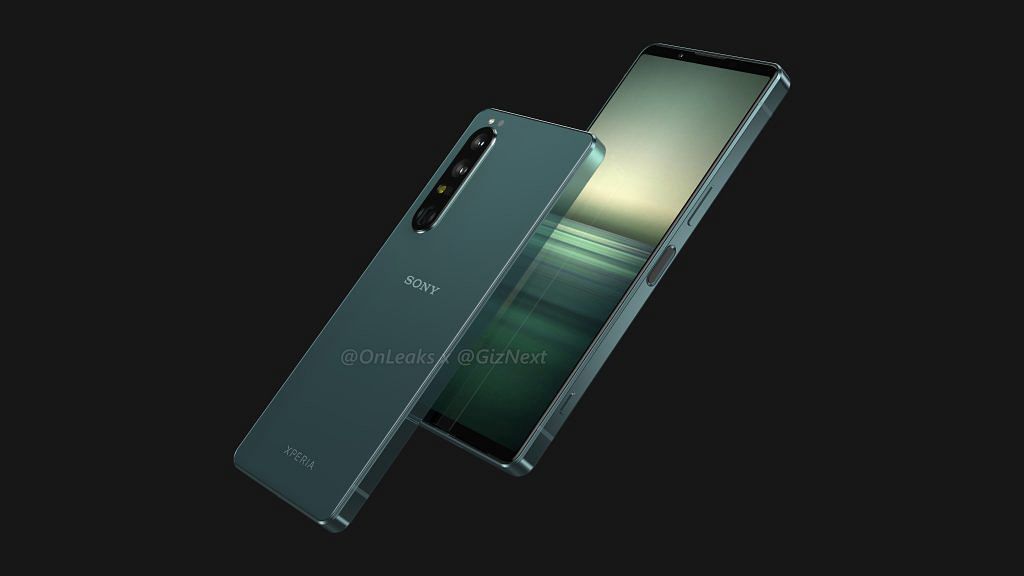
Based on all the concept and leaked images we have reported on, it seems that the Sony Xperia 1 IV will feature a flat design on both the rear and front. The corner are rounded but the edges appears sharp and straight. Notably, the front has quite a noticeable chin and notch. Meanwhile, the rear features a vertically stacked triple camera setup.
This camera module carried the ZEISS lens branding as well as the LED flash as well. The smartphone also has a fingerprint scanner on the right side. The display on the Japanese tech giant’s flagship model is 6.5 inch panel that is expected to offer a 21:9 aspect ratio, 120Hz refresh rate, and a 4K resolution. The screen is also protected by Gorilla Glass Victus and HDR support as well.
Specifications & Camera
The Xperia 1 IV is equipped with Qualcomm’s latest and greatest Snapdragon 8 Gen 1 SoC, which will likely be paired with up to 12GB of RAM and up to 512GB of internal storage. As per our previous leaks, the smartphone will be powered by a large 5,000mAh battery pack that supports 45W fast charging.
Other features includes USB Type C port, Android 12 OS out of the box, and IP68 protection rating as well. For photography, the smartphone sports a triple camera setup, but unfortunately, we have no information regarding its exact specifications. The module includes a primary sensor, a telephoto shooter, and an ultra wide angle lens.
Price & Colors
A recent leak had revealed the pricing for the premium grade smartphone. Apparently, the Sony Xperia 1 IV will cost 1,399 Euros (roughly 1,477 US Dollars). Talking about its color options, the device will come in multiple variants, including a Black, Violet, and White. The smartphone is set to be unveiled on May 11 during the official launch event, so stick around as we will be covering the conference.
Hisense is gearing up to launch its new reading-focused smartphone called the Hisense A9 on May 11. The Chinese manufacturer has taken a break from regular LCD panels and equipped its upcoming phone with a unique E-ink display.
Ahead of the official launch, the company has started teasing some key features of the e-ink smartphone through posters. In the recent teaser poster shared today, Hisense revealed that the smartphone will feature an intelligent brightness adjustment feature, officially called “day and night eye protection”. The poster also revealed that the smartphone will come with “HyperWave display technology”.
The theme of this Hisense new phone’s teaser poster is “Refresh Your View” which indicates that the e-ink smartphone will carry notable innovations and improvements in the refresh rate.
If we talk about the specifications, the Hisense A9 smartphone comes with a huge 6.7-inch e-ink display and 300 PPI resolution. The e-ink display is suitable for reading, even in low light. The display is glare-free and the screen-to-body ratio of the new smartphone is about 84%.
The smartphone is said to be capable of automatically adjusting brightness according to ambient conditions. The smartphone will be powered by an octa-core 1.8GHz Zhanrui T610 chip with 4GB RAM and 64GB RAM internal storage. The device will run TOUCH OS1 based on Android 10 out of the box. The UI is designed to let users focus on the reading task without getting distracted from notifications.
The new Hisense smartphone is already up for pre-booking in Jingdong, the prices and other specifications of the smartphone are yet to be known.
If you are in the market for a miniature tracking device, currently your only purchase options are either the Apple AirTags or Samsung’s SmartTags and SmartTag+. However, it seems that one well renowned Chinese brand is looking to expand to the portable tracker market with their own iteration of the category soon – Huawei.
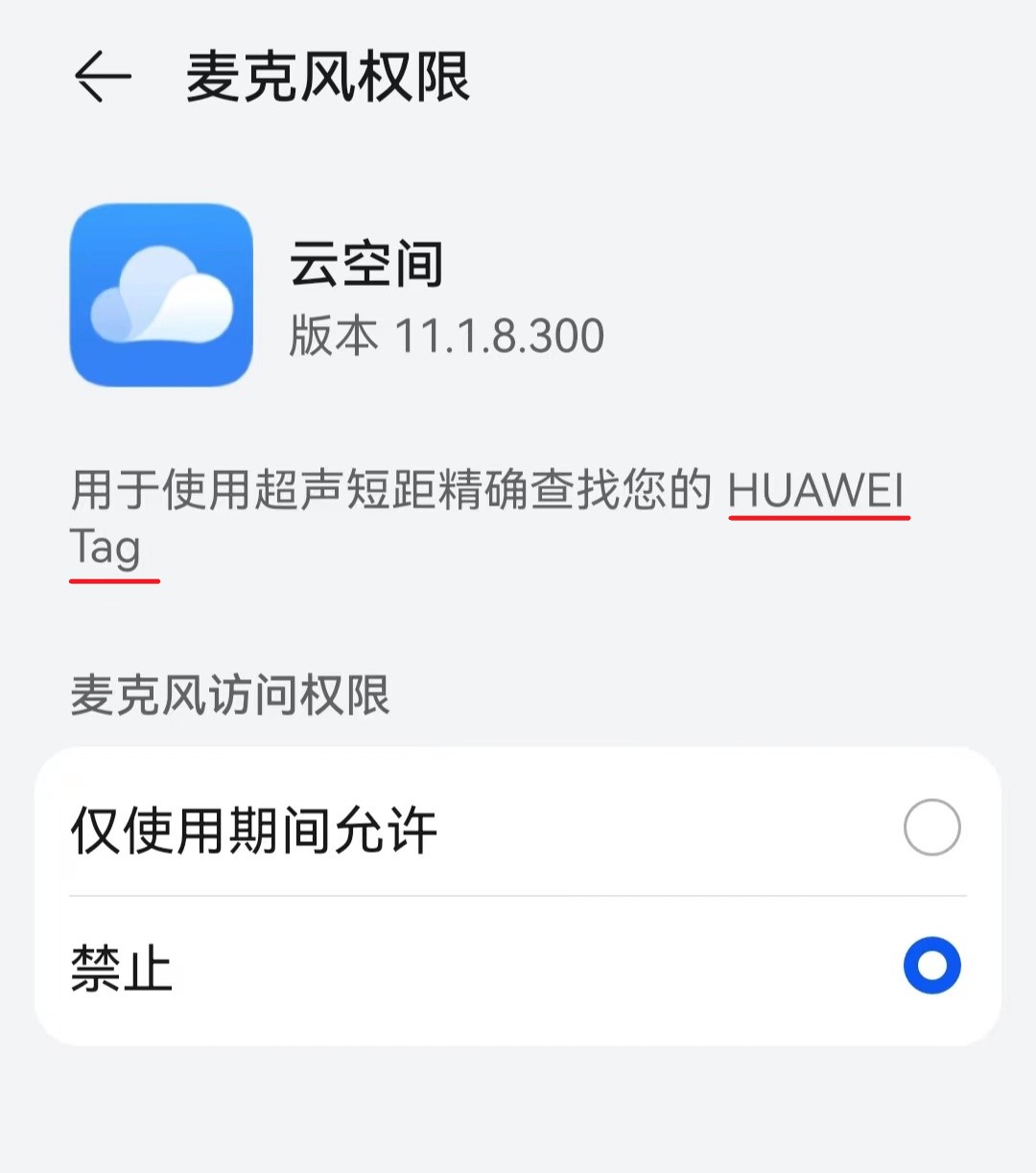
Recently, Huawei devices in China have received an update via the Huawei Cloud app on their phone stating that the Huawei Cloud app has added support for the “Huawei Tag”, in which the update log reads that the Huawei Tag is an ultra-wideband (UWB) tracking device that allows users to accurately locate their lost or misplaced personal belongings.
Source: Huawei Cloud
News of Huawei developing a smart portable tracking device is not something recent, as back in November 2021, our team had already reported that Huawei had applied for the “Huawei S-Tag” trademark in the European Union. However, with this recent leak, it seems that the launch of the Huawei smart tracker may be happening soon, and by then, consumers will have a third choice to the duopoly that Apple and Samsung currently hold in the smart tracker market.
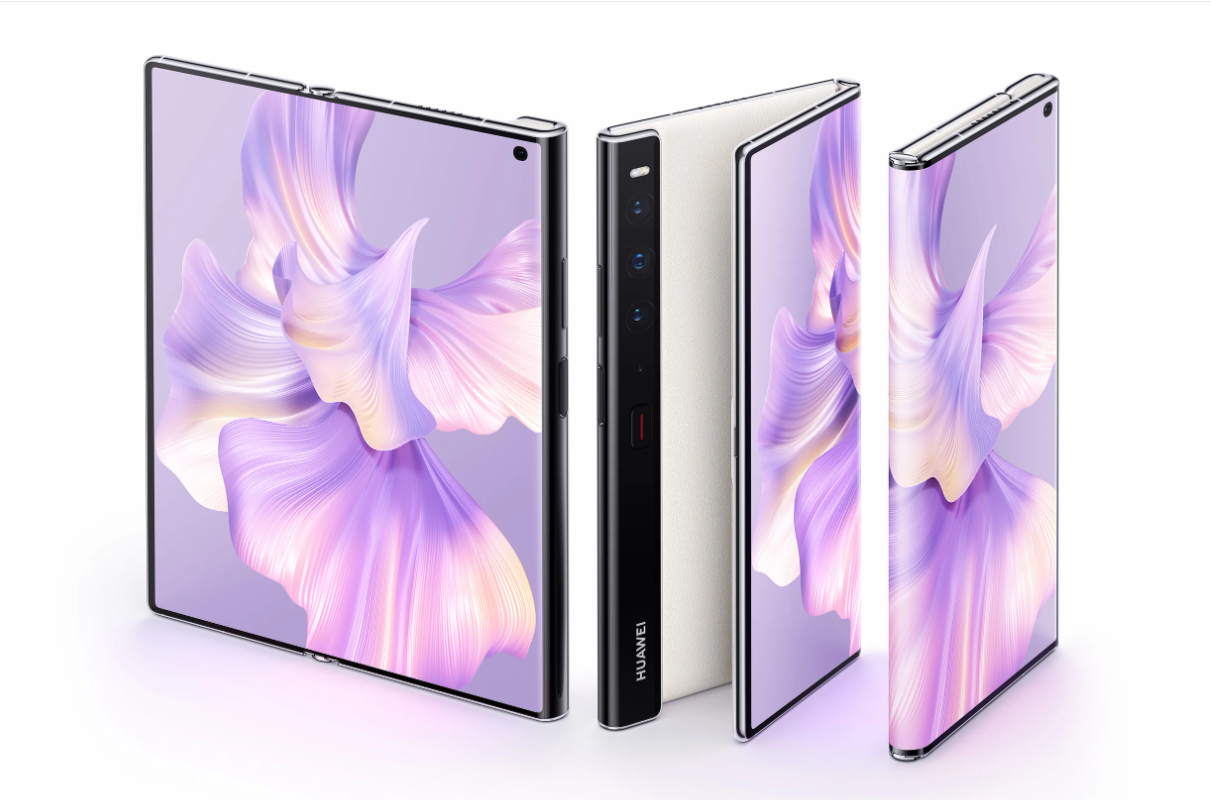
Speaking of Huawei, the company had recently announced its Huawei Mate Xs 2 foldable last month. Instead of folding inwards like the Samsung Galaxy Z Fold3 or Oppo Find N, the device features an outward folding design that is a 6.5-inch OLED screen when folded, and a 7.8-inch screen when unfolded.
Huawei Mate Xs 2
This revolutionary design allows for the Huawei Mate Xs 2 to be much lighter than its competitors, at only 255 grams overall. The camera setup of the Mate Xs 2 is quite potent as well featuring a 50MP main shooter, 12MP ultra-wide, and 8MP ultra-wide with OIS and 3x optical zoom outfitted in the slim and sleek chassis of the device.
The Oneplus Nord 2T is in the news since late January. The brand is yet to officially announce the smartphone but everything about it is already out. Last week, it was even listed on Aliexpress for sale. Now, a Youtuber has posted the device’s unboxing video.
Youtuber Sahil Karoul managed to purchase a Oneplus Nord 2T in Dubai. Hence, unsurprisingly, he has uploaded an unboxing video revealing almost everything about the handset.
The details shared by him in the video reiterate the leaks and the Aliexpress listing. In other words, the previous reports on the phone are accurate and there’s nothing new to learn, except for benchmark scores.
Per the video, the smartphone is capable of scoring around 622,964 points on AnTuTu Benchmark. On Geekbench, it can attain about 719 points and 2760 points in single-core and multi-core tests respectively.
As far as specs are concerned, the Oneplus Nord 2T is powered by a MediaTek Dimensity 1300 SoC. It flaunts a 6.43-inch FHD+ AMOLED display with a 90Hz refresh rate. It boots OxygenOS 12.1 based on Android 12.
It houses a triple rear camera system comprising an OIS-assisted 50MP Sony IMX766 primary sensor, an 8MP ultra-wide unit, and a 2MP monochrome sensor. On the front, the punch-hole nests a 32MP Sony IMX615 snapper for selfies and video calls.
The 5G-enabled handset is backed by a 4,500mAh battery with support for 80W SuperVOOC fast charging. Lastly, apart from dual stereo speakers, the phone also sports an alert slider, unlike the Oneplus 10R.
Last month, OnePlus launched the OnePlus Ace in China. The smartphone came with a new design, the Dimensity 8100-Max SoC, and a triple camera setup.
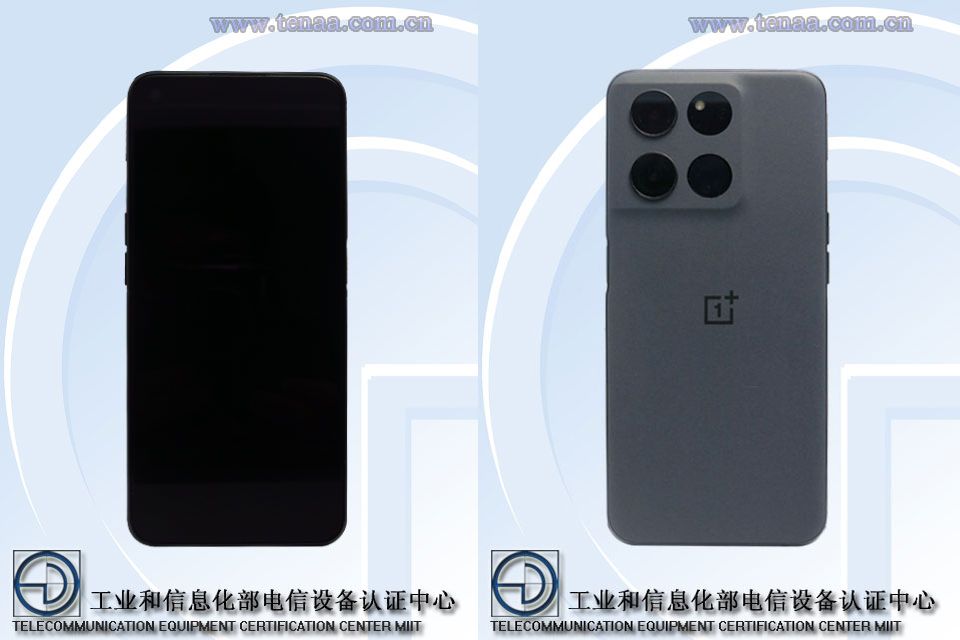
Now, a 91mobiles report has revealed that OnePlus is preparing to launch a special edition Ace smartphone soon which will be called the OnePlus Ace Racing edition.
The publication has also provided an image of the smartphone which matches the previously reported mystery OnePlus smartphone spotted on TENAA with model number PGZ110.
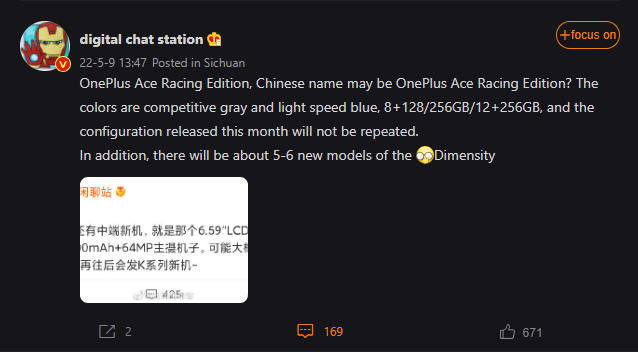
According to the images, the smartphone will ditch the OnePlus Ace design and rather adopt the stove-top camera module design first featured in the OnePlus 10 Pro. Weibo tipster Digital Chat Station has revealed that the smartphone will come with competitive gray and light speed blue colors.
Going back to the TENAA listing, the upcoming Ace Racing edition will measure 164.3 x 75.8 x 8.7mm and house a 6.59-inch LCD LTPS display with a Full HD+ resolution of 1080 x 2412 pixels. Under the hood, the device will have a 2.85GHz octa-core processor, and 8GB / 12GB of RAM.
Other than that, the device will arrive with a 4,890mAh rated battery, a 16-megapixel front camera, and a triple camera setup consisting of a 64-megapixel + 8-megapixel + 2-megapixel setup.
The Weibo tipster has also stated that the OnePlus Ace Racing edition will be available in 8GB + 128GB/256GB and 12GB + 256GB configurations. It will be a limited edition release and is likely to debut this month only. Additionally, the tipster also informs that the company is planning around 5 to 6 new smartphone models with a Dimesity chipset inside.
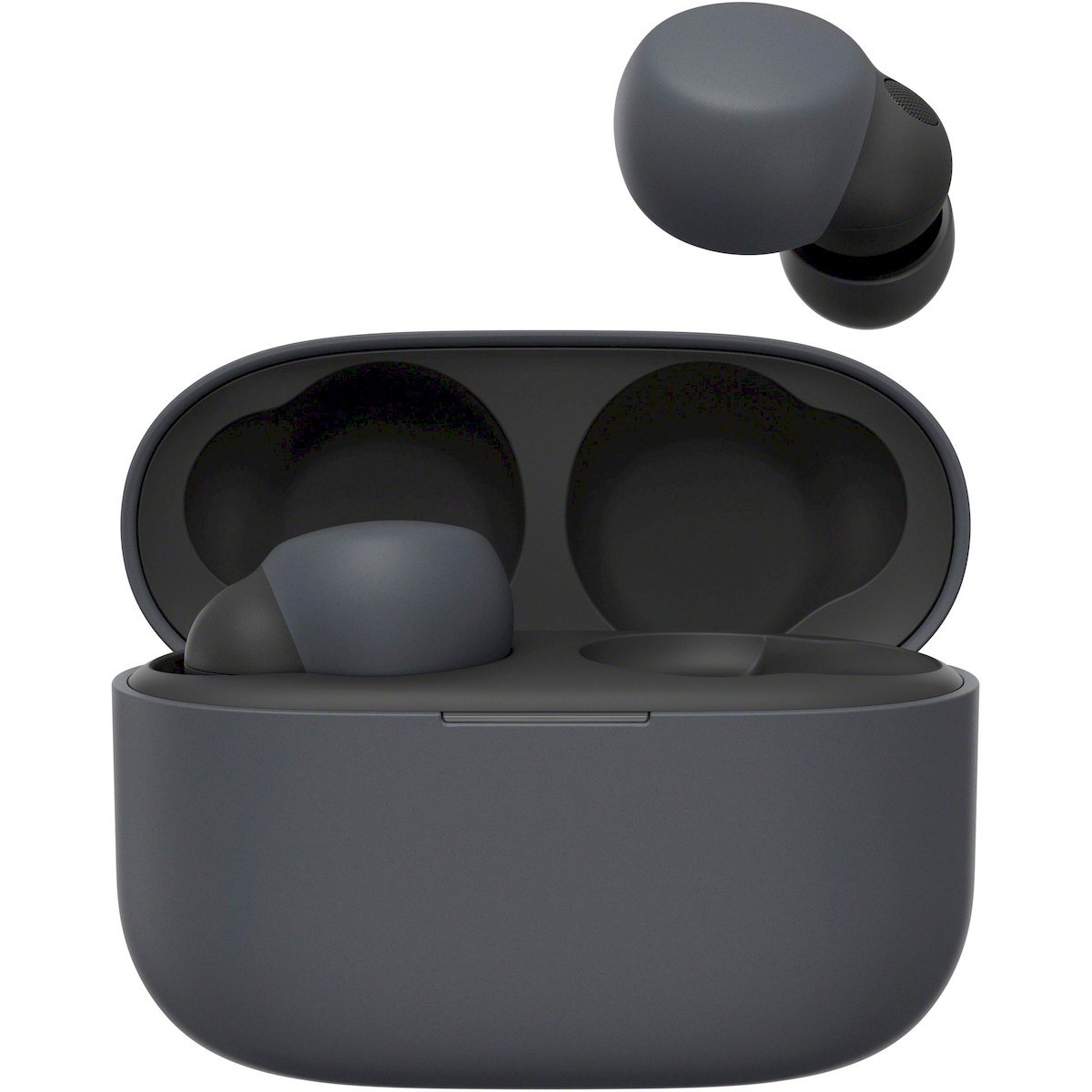
A new leak has revealed that Sony is already working on the successor of the LinkBuds truly wireless earbuds. Apparently, the launch of the new earbuds is just around the corner and it is called the LinkBuds S.
Yep.
Announcement on May 12 $399 XM4s will stay around for $349
The news arrives from a known tipster Jon Prosser who shared the news on Twitter. Reportedly, the new wireless earphones from the Japanese tech giant is set to be unveiled on the 18th of May 2022. Furthermore, he is expecting the brand to announce its flagship Sony WH-1000XM5 headphones a few days prior on May 12. As of right now, there is not a lot of information available regarding the LinkBuds S earbuds.
Although, it is rumored to come with a design that is different from the previously launched LinkBuds TWS. In other words, it won’t feature the unique hole in the center of the earbuds and will come with a closed design with a round vent near the ear canal that will allow sound to pass through. Jon Prosser further leaked the pricing for these upcoming earbuds. As per the tweet, the company is planning on launching the LinkBuds S for around 199 US Dollars.
This also means that it is priced slightly higher than the previously launched LinkBuds TWS earbuds. So, we can expect the newer model to offer improved specifications or better features overall. Unfortunately, this is all the information we have at the moment, so stay tuned for more, as we will be covering the launch of the upcoming Sony audio products.
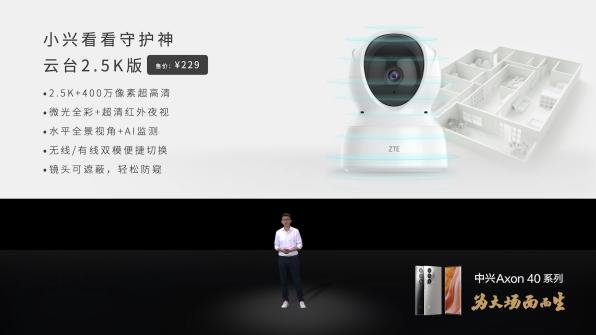
Earlier today (9th May 2022), ZTE hosted the Axon 40 Pro and Axon 40 Ultra launch event in China. Apart from the new Axon 40 series of smartphones. During this event, the company also announced other new gadgets as well, which includes a new WiFi Router and a Smart Camera.
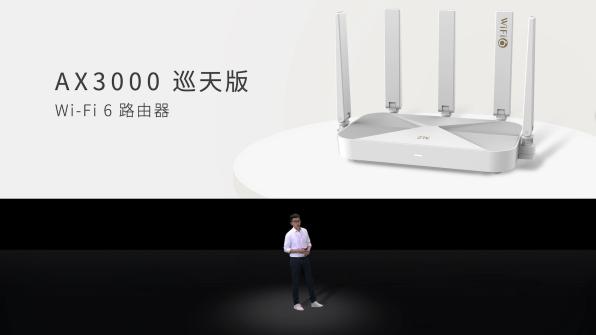
Talking about the new router first, the Chinese brand launched the new AX3000 Xuntian Edition Router. The new WiFi router is equipped with the company’s proprietary third generation dual core chipset. This processor comes with a 25 percent increase in performance and lower power consumption as well. It supports 160MHz bandwidth, 3,000Mbps rate, and adopts a 4+1 five antenna design that can cover a large apartment easily thanks to its 100 to 120 square meters coverage.
Furthermore, it is also equipped with a Gigabit Ethernet port and supports EasyMesh one click networking as well. It is priced at 289 Yuan (roughly 43 US Dollars) and will go on sale later this month. For those unaware, Xuntian is also known as the Chinese Survey Space Telescope or the Chinese Space Station Telescope. So in other words, the router is basically named after a space telescope.
Apart from the router, ZTE has also launched a new smart camera that is built for home security. The new smart camera can record in low light with full color and also supports ultra clear infrared night vision. Notably, it even supports 24 hours high definition monitoring as well. One of the highlighting aspects of the new Xiaoxing Patronus Gimbal is that it can record in 2.5K resolution. The security camera is priced at 229 Yuan (roughly 34 US Dollars).
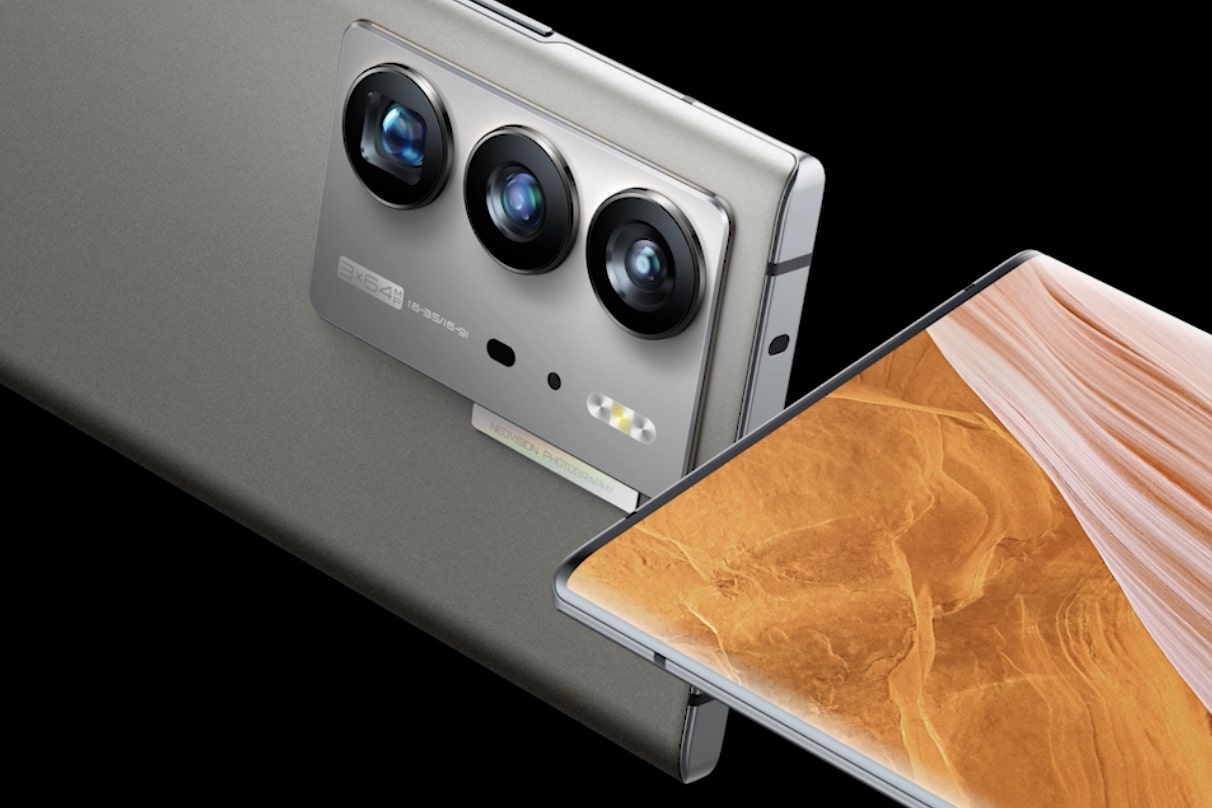
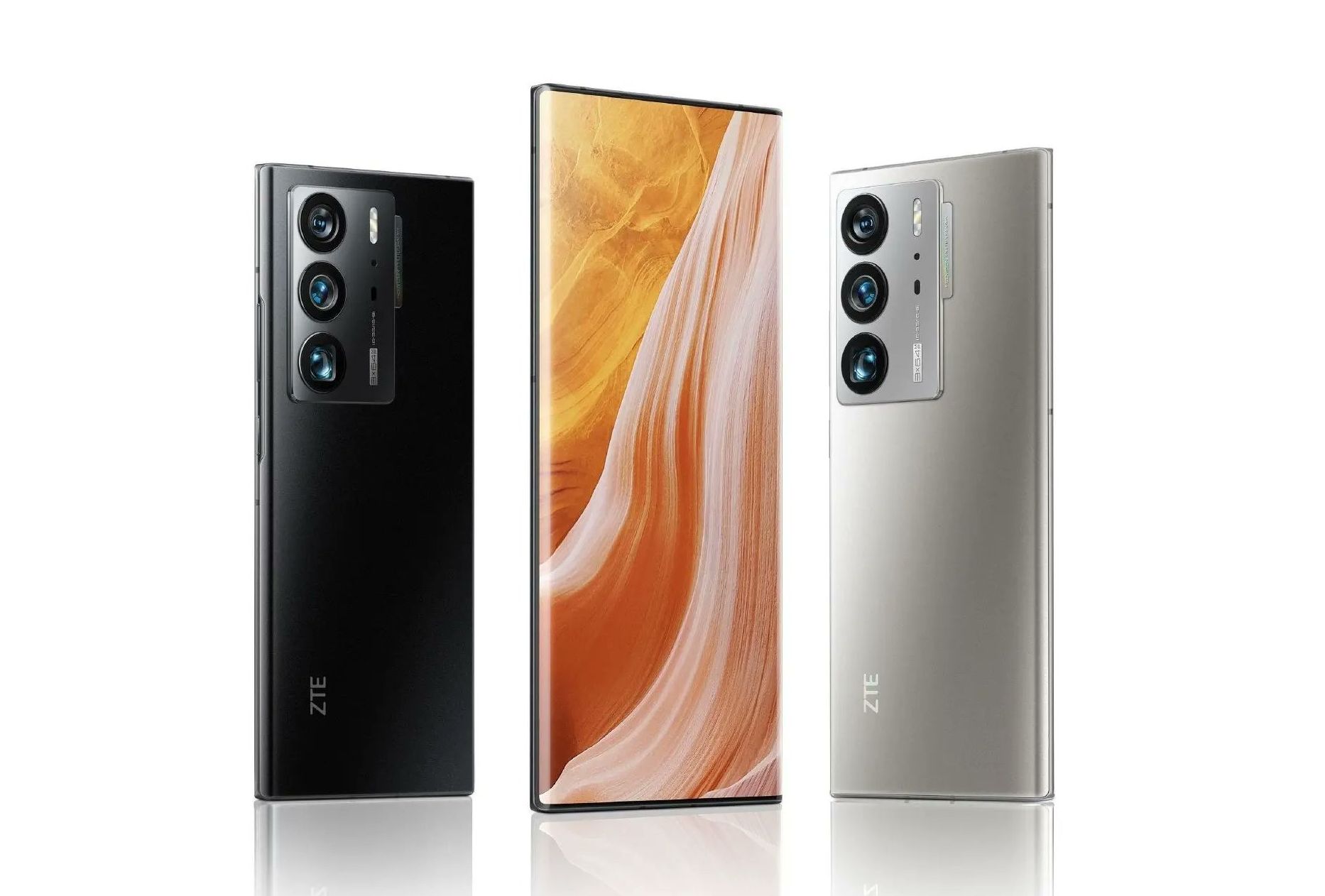
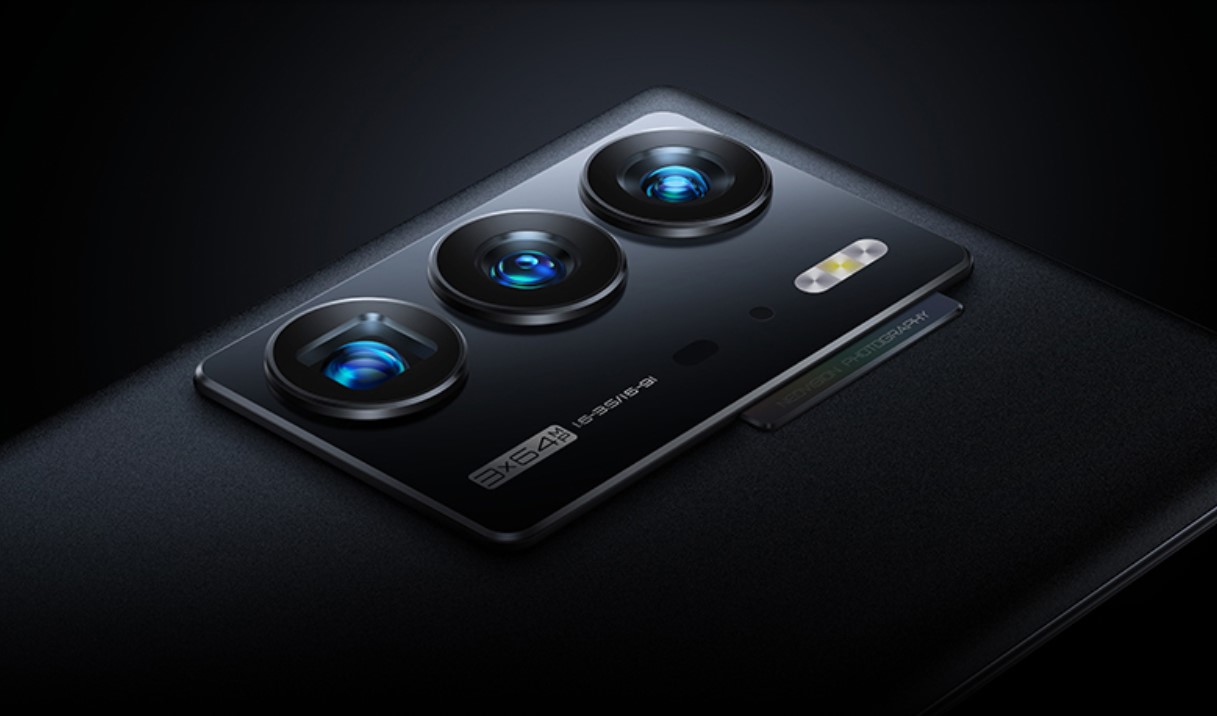
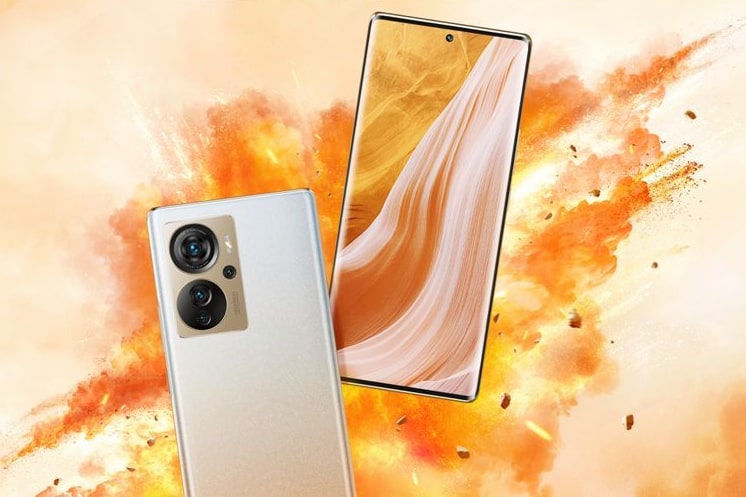
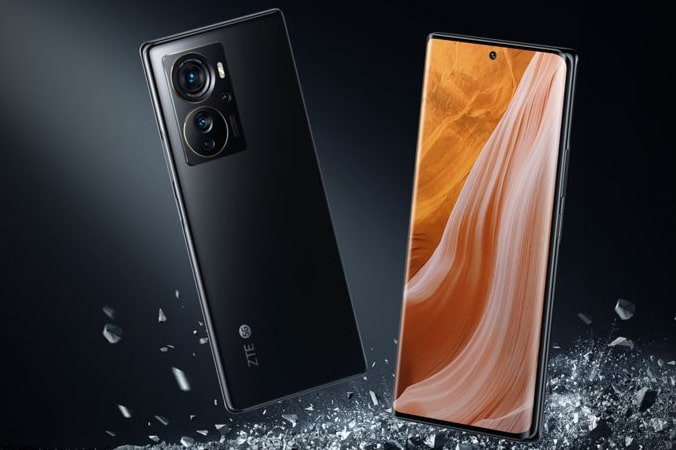
ZTEAxon 40 Ultra has gone official today. It is the world’s first Snapdragon 8 Gen 1 powered smartphone to come equipped with an under-display camera. It is a premium flagship that sports a curved edge display on the front and three 64-megapixel cameras on the back. Apart from announcing the Axon 40 Ultra, the company also took the covers off the Axon 40 Pro, which features a 144Hz display and Snapdragon 870. Here is all the information on the specifications, features, and pricing of the Axon 40 Ultra.
Design and Display
The Axon 40 Ultra measures 163.2 x 73.5 x 8.4mm and weighs around 204 grams. One of the major highlights of the device is its front design. Its OLED panel does not have a punch-hole or a notch because it is equipped with an under-display camera. In addition, the screen flaunts extremely curved edges with a 71-degree curvature.
The device has a 6.81-inch AMOLED display with a Full HD+ resolution of 2480 x 1116 pixels, a refresh rate of 120Hz, a 100 percent DCI-P3 color gamut, 10-bit colors, and 400 ppi pixel density, even in the area where the under-display selfie camera is placed.For security, it has an in-display fingerprint sensor.
Specifications
The Axon 40 Ultra is powered by the Snapdragon 8 Gen 1 mobile platform. The SoC is paired with up to 16GB of LPDDR5 RAM and up to 1TB of UFS 3.1 storage. The Axon flagship runs on the Android 12 OS with the MiFavor UI on top.
ZTE Axon 40 Ultra
The Axon 40 Ultra gets a 5,000mAh battery with 80W fast charging support. The device lacks support for wireless charging. For heat dissipation, it has VC liquid cooling unit, which occupies 36,356mm2 area inside the device.
Some of the other features of the flagship phone include dual speakers with DTS Ultra support and an X-axis linear motor. On the connectivity front, it offers dual-SIM support, Wi-Fi 6E, Bluetooth 5.2, dual-frequency GPS, NFC, and a USB-C port.
Cameras
The ZTE Axon 40 Ultra has a 16-megapixel under-display selfie with 2.24μm large pixels. The third-generation under-screen camera technology is equipped with an independent pixel driver, a distributed transparent circuit, and a dedicated UDC Pro screen display chip. The Axon 40 Ultra promises topnotch selfies like the front cameras of other flagship phones.
ZTE Axon 40 Ultra
The rear camera setup of the Axon 40 Ultra has an OIS-enabled 64-megapixel Sony IMX787 primary with full-pixel omnidirectional autofocus. It is assisted by a 64-megapixel Sony IMX787 ultrawide camera and an OIS-enabled 64-megapixel telephoto periscope camera. The rear camera setup is assisted by a flicker sensor, a ToF sensor, and a tri-microphone setup for audio zoom and audio recognition. All three 64-megapixel cameras of the Axon 40 Ultra are capable of shooting 8K resolution videos.
Pricing and Availability
Here is the pricing of the four variants of the Axon 40 Ultra
8 GB RAM + 256 GB storage – 4,998 Yuan (~$743)
12 GB RAM + 256 GB storage – 5,298 Yuan (~$788)
12 GB RAM + 512 GB storage – 5,798 Yuan (~$862)
16 GB RAM + 1 TB storage – 7,298 Yuan (~$1,085)
The pre-sale of the phone started in China. Its first sale will be held at 10 AM (local time) on May 13. It comes in two colors such as black and silver colors. There is no word on whether the device will be ever made available in markets outside China.
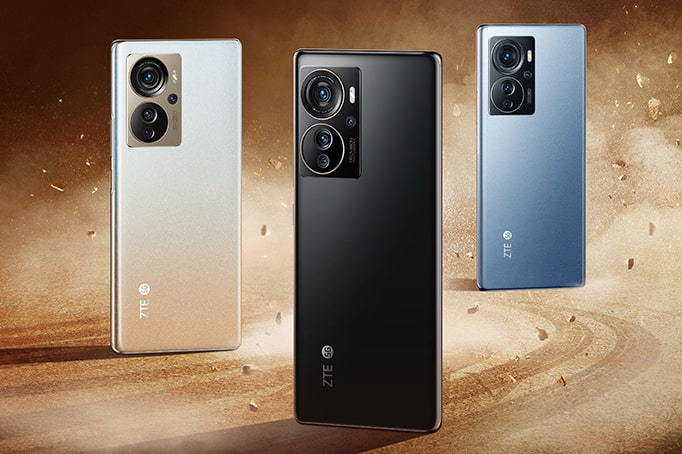
After teasing for days, ZTE has officially launched the ZTE Axon 40 series in China today as scheduled. The company announced two models in the lineup, namely ZTE Axon 40 Ultra and ZTE Axon 40 Pro. Let’s take a look a the latter smartphone in this article. You can learn about the former handset here.
ZTE Axon 40 Pro Specifications
Design and Display
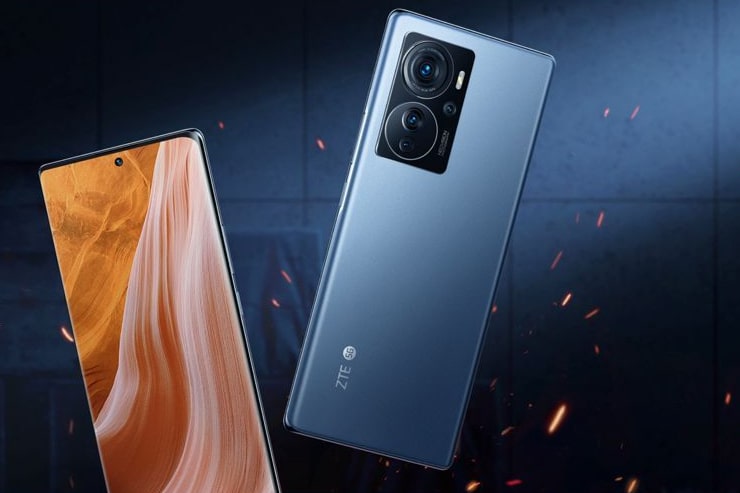
The ZTE Axon 40 Pro has a dual-camera ring rear design like the recent Huawei and Honor smartphones. The glass sandwich build is supported by a plastic frame.
The phone measures 8.46mm in thickness and weighs 199g. It comes in three color variants, such as Magic Night Black, Crystal Fog Blue, and Star Orange.
The device flaunts a 6.67-inch flexible curved AMOLED display with a resolution of 2400 x 1080 pixels (FHD+) and 10-bit color depth. The panel supports up to a 144Hz refresh rate, 360Hz touch sampling rate, and 1000 nits of peak brightness level.
The centered punch-hole screen has a 3000000:1 contrast ratio and 4096 brightness levels. It also covers 100% of the DCI-P3 color gamut.
Hardware and Software
The ZTE Axon 40 Pro is powered by Qualcomm Snapdragon 870 SoC. The chipset is paired with LPDDR5 RAM and UFS 3.1 storage. The handset features a graphene-based cooling (thermal management) system.
The ZTE Axon 40 Pro houses a quad-camera setup on its back. The system comprises a 108MP primary sensor measuring 1/1.52-inch in size, an 8MP 120° ultra-wide-angle unit, a 2MP 4cm macro snapper, and a 2MP depth sensor.
On the front, the phone has a 16MP shooter for selfies and video calls.
Battery and Charging
The ZTE Axon 40 Pro is backed by a 5,000mAh battery. It arrives with support for 66W fast charging.
Other Features
The ZTE Axon 40 Pro offers connectivity options like 5G, WiFi 6, Bluetooth 5.1, GNSS, NFC, and USB Type-C. It sports dual stereo speakers with support for DTS:X Ultra, an x-axis linear vibration motor, and an in-display fingerprint sensor.
ZTE Axon 40 Pro Price and Availability
The ZTE Axon 40 Pro will retail at the following price tags in China.
8GB + 128GB – ¥2,998 ($446)
12GB + 256GB – ¥3,298 ($491)
12GB + 512GB – ¥3,798 ($565)
It can be purchased in either Magic Night Black, Crystal Fog Blue, or Star Orange color versions from May 25.
We use cookies on our website to give you the most relevant experience by remembering your preferences and repeat visits. By clicking “Accept”, you consent to the use of ALL the cookies.
This website uses cookies to improve your experience while you navigate through the website. Out of these, the cookies that are categorized as necessary are stored on your browser as they are essential for the working of basic functionalities of the website. We also use third-party cookies that help us analyze and understand how you use this website. These cookies will be stored in your browser only with your consent. You also have the option to opt-out of these cookies. But opting out of some of these cookies may affect your browsing experience.
Necessary cookies are absolutely essential for the website to function properly. This category only includes cookies that ensures basic functionalities and security features of the website. These cookies do not store any personal information.
Any cookies that may not be particularly necessary for the website to function and is used specifically to collect user personal data via analytics, ads, other embedded contents are termed as non-necessary cookies. It is mandatory to procure user consent prior to running these cookies on your website.