Advertisement

Stable Android 16 update now rolling out to Motorola Edge 50 Ultra

Motorola Edge 50 Ultra

The Motorola Edge 50 Ultra entered Android 16 beta testing last month, and now that phase has ended as users have started receiving the stable update. This major upgrade brings essential upgrades, security enhancements, and several new features.

The Android 16 update for the Motorola Edge 50 Ultra is currently rolling out in Brazil, as spotted by folks at Ytechb. It comes with the firmware version W1UV36H.61-15 and has a download size of about 1.64GB. The update usually rolls out in stages, so it may take a few days to reach all the users.

Motorola Edge 50 Ultra Android 16 update

If you’re rocking an Edge 50 Ultra and the update still hasn’t popped up in the notification center, navigate to Settings > System updates > Check for updates to manually check for available updates.

The Edge 50 Ultra was launched last year with Android 14 out of the box, and later it got upgraded to Android 15. That means Android 16 is the second major OS upgrade for the smartphone, and it will receive one more such upgrade before reaching the end of major upgrades. However, it will continue to receive security patches at least until April 2028.

What’s new in Android 16 for Motorola phones?

After upgrading to Android 16, you won’t see a major visual refresh on your Motorola device, but minimal changes to several areas, including the Settings app. However, there are many useful upgrades and some new features to elevate the software experience. This includes a new Flash notification feature that flashes the camera or the screen when receiving calls and notifications.

The update also introduces the Notification cooldown feature on Motorola phones, which helps prevent you from getting annoyed by multiple notifications from an app in quick succession. This feature basically lowers the volume of incoming notifications for that app in that case. Furthermore, the update offers Advanced protection, a suite of security features designed to protect the device against incoming threats and vulnerabilities.

Motorola phones running Android 16 now have access to custom modes in the Settings app, allowing you to create profiles for different activities. Additionally, users can now connect to a Wi-Fi network or a hotspot with a single tap, without entering a password. The only condition is that both devices must use the same Google account. The Android 16 update also includes better compatibility with LE Audio devices.

Do regularly visit the Android 16 section on Gizmochina for the updates. Or, if you prefer your news instant and on the go, hop into our Telegram channel for instant notification about the latest software updates and all the biggest tech headlines.

Gemini for Wear OS: How Google’s AI Assistant Changes Daily Watch Use

Google‘s Gemini is no longer just a phone-first AI assistant; it’s now on your wrist, fundamentally changing how you interact with your smartwatch. Since its rollout earlier this year, Gemini has begun replacing Google Assistant on smartwatches running Wear OS 4 and above.

Whether you own a Pixel Watch 4, Galaxy Watch 8, or OnePlus Watch 3, Gemini has arrived to turn your smartwatch into a more helpful, conversational, and context-aware tool.

Gemini for Wear OS

1. Smarter than basic voice commands

Gemini for Wear OS isn’t just a name swap. Google rebuilt the assistant experience to be more intelligent, responsive, and useful across everyday scenarios. Instead of basic prompts like “set a timer” or “call Mom,” you can now ask Gemini to summarize your last email from Emily, create a running playlist, or remember that you parked on level 4, spot 27.

It uses the same foundational AI models as on phones and tablets, which allows for far more natural interactions. Gemini understands follow-up questions, interprets your intent with greater precision, and surfaces contextual results by tapping into your Gmail, Calendar, and other Google services. It’s the closest thing to having a lightweight AI companion right on your wrist, one that understands more than just commands.

2. Do more with fewer steps

Using Gemini on a smartwatch simplifies tasks that typically require multiple app hops. Mid-run, you can dictate a message to your manager without breaking stride. You can schedule a reminder for your kid’s next five cricket matches or ask for turn-by-turn directions to your dentist, all through voice.

It supports hotword detection “Hey Google”, app icon tapping, or pressing and holding the side button. Some watches even allow “Raise to Talk” gestures to wake Gemini when you lift your wrist.

All this means that the watch becomes a true productivity tool, not just a notification mirror. You don’t need to pull out your phone to check your schedule, respond to a quick email, or get updates. You just talk.

3. Deep integration with Google services

The biggest strength of Gemini lies in its ability to pull data from your Google account. It can read recent emails, look up locations mentioned in messages, check your calendar for conflicting events, or draft quick replies, all without requiring your phone to be unlocked.

And if your watch upgrades to Wear OS 6, Gemini’s utility jumps even higher. That’s because Wear OS 6 introduces a new App Functions API, letting Gemini control or extract data from brand-specific watch apps.

On Samsung watches, for example, this could mean better integration with Samsung Health or Calendar. On Pixel, it could pull from Recorder or Weather. It marks a step toward more personalized and brand-aware assistants.

4. Tiny but practical features

Beyond smart replies and deep app hooks, Gemini is useful for the small stuff too. You can tell it to remember your locker number, your preferred coffee order, or where you left your sunglasses.

Reminders can be location-aware. If you leave work, it can ping you to pick up groceries. If you ask for heart rate tracking or a workout summary, Gemini can trigger the supported app if it has those permissions.

It also works with Google Home devices, letting you broadcast messages, adjust lights, or check if the door’s locked, all from your wrist, even with hands full.

For more daily updates, please visit our News Section.

Stay ahead in tech! Join our Telegram community and sign up for our daily newsletter of top stories! 💡

Sony launches LYT-901, its first 200MP phone imaging sensor

Sony has officially launched the LYT-901 mobile camera sensor, built for future flagship smartphones. Over the past few weeks, details about its sensor size, HDR approach, and zoom modes have been appearing in leak-based updates, when the hardware was known internally as Sony IMX09E. This marks Sony’s first 200-megapixel image sensor designed for phones, and it is expected to compete directly with Samsung’s 200-megapixel sensor platforms. Read on to know all the important details about this new camera technology.

Sony LYT-901 key specifications

Sony LYT-901
Sony LYT-901

The Sony LYT-901 centres on a very large 1/1.12″ imaging surface paired with 0.7μm pixels and a 200-megapixel output, the brand’s first sensor at this resolution designed for mobile use. An earlier code linked to this hardware was IMX09E before Sony aligned it with its simpler LYTIA series labeling. Instead of traditional Bayer, Sony expands the base pixel grid using a Quad-Quad Bayer mosaic and completes the translation to a 2×2 Bayer pattern through a dedicated hardware Remosaic path.

The company layers AI logic into the sensor’s internal rebayer circuit, reducing translation penalties and making dense pixel data easier for phone SoCs to handle. A 12-bit analogue-to-digital pipeline, backed by a Fine 12-bit ADC, adds extra latitude in gradation and helps keep fully resolved reads clean with lower noise.

For HDR, Sony merges two common approaches by using Dual Conversion Gain HDR as the backbone and combining it with a Hybrid Frame-HDR design that briefly samples one microsecond-class very-short extra frame. This keeps highlight clipping in check while avoiding obvious ghosting in fast scenes. Combined dynamic range exceeds 100dB, roughly 17 photographic stops. Zoom modes are a core strength: the sensor handles 2x hardware zoom for photos and 4x sensor-in-zoom for stills and video. At 4x zoom, phones can tap the stream much like a virtual telephoto view without an added optical lens step.

Unlike competing options, this is the only current sensor that covers 4x hardware zoom and 4K video at 30fps, with 120fps 4K capture available in 4x binning configurations. Pixel-binned profiles include 50-megapixel (2×2) and 12.5-megapixel (4×4), which help night capturing and high-zoom crops look more composed. It’s tuned for stage, show, and arena moments, where far-distance crops are the default. Concert photography is one of its most convincing use cases.

Oppo Find X9 Ultra, Vivo X300 Ultra expected to Sony LYT-901

The first debuts built on this sensor could land in the Ultra tier. The Find X9 Ultra from Oppo is expected to introduce the hardware in March 2026, based on rumor timelines. Sony’s sensor could also reach Vivo’s X300 Ultra, which may break cover in Q2 2026, according to current rumors.

For more daily updates, please visit our News Section.

Stay ahead in tech! Join our Telegram community and sign up for our daily newsletter of top stories.

OnePlus Ace 6T reveal set for December 3rd: First Snapdragon 8 Gen 5 phone

It’s official now: OnePlus will announce the Ace 6T in China on December 3. It’s the second phone in the series after the OnePlus Ace 6, and the first to debut with Qualcomm’s new Snapdragon 8 Gen 5 processor.

The OnePlus Ace 6T will borrow some features from its sibling, including the Fengchi Gaming Core and a 165Hz refresh-rate display. OnePlus claims the device can hit 3,561,559 points on AnTuTu.

Previously, OnePlus confirmed that the phone will come in three colors: Flash Black, Fleeting Green, and Electric Violet. Its left edge also carries a dedicated “Plus key” for summoning Mind Space and other frequently used features.

OnePlus Ace 6T Specifications

For the rest of the specs, the phone will sport a 6.7-inch, 1.5K-resolution, 165Hz OLED display with an ultrasonic fingerprint sensor.

The camera setup includes a 50MP main and 8MP ultra-wide sensor on the back, while the front houses a 32MP selfie camera. It will run ColorOS 16–based Android 16.

The OnePlus Ace 6T is also expected to feature IP68, IP69, and IP69K ratings, along with vapor chamber cooling. It will pack an 8,000mAh+ battery and is expected to support 100W fast charging. The phone will ship with the latest ColorOS 16 in China.

OnePlus has also revealed that a special Genshin Impact Kamisato Ayaka edition of the Ace 6T is on the way. It is likely to launch at the same event. 

For global markets, OnePlus is renaming the Ace 6T as the OnePlus 15R. The latter is also the first Snapdragon 8 Gen 5 phone globally. Teasers for the device have already started rolling out, and it will launch alongside the Pad Go 2 and OnePlus Watch Lite on December 17.

Huawei’s Nova 15 lineup may land in early 2026 with Kirin 8 and 9 series chips

Huawei is barely done showing off the Mate 80 series, and rumors about what’s next from the brand are already starting to surface online.

Tipster Digital Chat Station on Weibo has shared possible specs for the upcoming Huawei Nova 15 lineup, and it looks like three models are in the works: the Huawei Nova 15, Nova 15 Pro, and Nova 15 Ultra.

Nova 15 / Nova 15 Pro

The base Nova 15 will reportedly sport a 6.7-inch screen, while the Nova 15 Pro is said to feature a slightly larger 6.84-inch panel. Both phones are expected to use 1.5K LTPO OLED displays.

The Pro model may also include a dual front-camera setup consisting of 50MP and 8MP sensors. The base model will likely stick to a single 50MP unit.

On the back, the Nova 15 Pro is expected to feature a 50MP main camera, a 50MP periscope telephoto lens, and an additional ultra-wide camera. Digital Chat Station also mentions a “multispectral sensor,” which Huawei often uses to improve color accuracy and low-light performance.

Lastly, both the standard and Pro versions are reportedly powered by new Kirin 8-series chips.

Nova 15 Ultra

The Nova 15 Ultra is, of course, the headline device. It’s expected to use a more powerful Kirin 9-series chip and a larger 1/1.3-inch 50MP main sensor. Although the tipster doesn’t mention it, it’s safe to assume the Ultra will also get a periscope, an ultra-wide lens, and the multispectral sensor at the very least.

All three models are tipped to pack batteries exceeding 6,000mAh.

Huawei Nova 14 Ultra

As for the launch, the series is rumored to debut before China’s Spring Festival, which typically falls in February, meaning an early 2026 release.

For more daily updates, please visit our News Section.

Stay ahead in tech! Join our Telegram community and sign up for our daily newsletter of top stories.

Lenovo’s new $200 tablet has a 12.7-inch screen, 10200mAh battery and keyboard support

Lenovo has quietly announced a new large-screen tablet under its Lecoo sub-brand, and it’s now up for pre-order. It’s called the Lecoo Tablet 12.7, and as the name suggests, the main attraction is the 12.7-inch display with a 2.1K resolution and a 90Hz refresh rate.

Lecoo Tablet 12.7 is a budget device powered by Helio G99

The inside reveals its budget roots. The tablet runs on MediaTek Helio G99, an entry-level chip. You can expect a decent experience for light everyday tasks, but the tablet is clearly not made for gaming. 

The chip is paired with 8GB of RAM and up to 256GB of storage, which you can expand with a microSD card up to 1TB, if you really need the space.

The Lecoo 12.7 also tries to push itself as a family-friendly device. Lenovo is including its Tianjiao Academy education suite, along with 24/7 remote parental controls that let parents manage apps, websites, and screen time. 

For media, there’s a quad-speaker setup, which should provide a louder, fuller sound than most budget tablets offer.

Powering everything is a 10,200mAh battery, paired with 18W charging. It’s not exactly fast charging by today’s standards, but the size of the battery suggests you won’t reach for the charger too often. The camera situation is simple: 8MP on the front and 8MP on the back.

The build is metal, and the tablet also supports a detachable keyboard via Pogo Pins, which could make it a lightweight productivity device. 

The Lecoo Tablet 12.7 costs CNY 1,399 (~ $197) in China and is available for purchase starting today. However, Lenovo hasn’t said whether the Lecoo Tablet 12.7 will launch outside China. Historically, many Lecoo products have stayed limited to the local market.

For more daily updates, please visit our News Section.

Stay ahead in tech! Join our Telegram community and sign up for our daily newsletter of top stories! 💡

AOC launches Q27G4SMN Mini LED gaming monitor with 300Hz QHD panel and HDR1000

AOC has introduced the Q27G4SMN, a 27-inch Mini LED gaming monitor with high refresh rate support and DisplayHDR 1000 certification. The monitor is now listed on AOC’s official website in China. AOC has not shared global availability or pricing information for the Q27G4SMN.

AOC Q27G4SMN Gaming Monitor

AOC Q27G4SMN Specifications

The Q27G4SMN features a Fast VA panel with a resolution of 2560×1440 and a 16:9 aspect ratio. AOC equips the display with a full-array, glass-based Mini LED backlight that contains 4,608 LED beads spread across 1,152 local dimming zones. The panel delivers a static contrast ratio of 5000:1 and achieves peak brightness of up to 1200 nits in HDR mode. The monitor is certified for VESA DisplayHDR 1000 and supports four local dimming modes to improve black levels and highlight detail.

The panel supports a refresh rate of up to 300Hz over HDMI 2.1 and DisplayPort 1.4 with DSC. It also supports Adaptive-Sync technology with AMD FreeSync, which reduces screen tearing and stuttering during gameplay. The Q27G4SMN achieves a 1ms GtG response time and includes features such as motion blur reduction, black-level enhancement, shadow control, sniper assist, and a real-time frame counter.

AOC uses a Quantum Dot layer to boost color accuracy. The monitor covers 100% of the sRGB color space and 97% of the DCI-P3 gamut. It supports 10-bit color (1.07 billion colors) and arrives factory-calibrated with a Delta E below 2. Color settings can be fine-tuned through a six-axis adjustment system, and the G-Menu software adds deeper customization controls.

The monitor includes two HDMI 2.1 ports, one DisplayPort 1.4 input with DSC, and an audio output. The on-screen display offers quick access to source switching, game modes, brightness, and other visual settings.

AOC fits the Q27G4SMN with an ergonomic stand that supports tool-free quick release. The stand allows height adjustment up to 130mm, tilt from -5 to 23 degrees, swivel from -20 to 20 degrees, and 90-degree pivot rotation. The monitor also supports VESA 100×100 mounting.

The Q27G4SMN uses TÜV-certified flicker-free technology and low-blue-light modes to reduce eye fatigue during long gaming or work sessions.

In related monitor news, HKC recently introduced a new 27-inch curved pro-grade gaming monitor priced under $200, and Xiaomi debuted the A27Qi 2026 Monitor with 95% DCI-P3 coverage, a 120Hz refresh rate, and slim bezels.

For more daily updates, please visit our News Section.

Stay ahead in tech! Join our Telegram community and sign up for our daily newsletter of top stories! 💡

(Source, Via)

Xiaomi launches a 67W GaN charger bundle with triple ports and USB-C cable

Xiaomi has launched a new 67W GaN triple-port charger set in China. The product is priced at 129 yuan ($18) and comes bundled with a 1.5-meter 6A USB-C to USB-C cable. It supports smart power distribution and delivers a maximum 67W output through any single port.

Xiaomi 67W GaN Charger

Xiaomi 67W GaN Charger Specifications

The charger uses third-generation gallium nitride (GaN) material. This allows it to maintain a smaller size while improving thermal performance and long-term stability. Xiaomi has included two USB-C ports and one USB-A port. Each USB-C port supports up to 67W fast charging, while the USB-A port can deliver up to 22.5W. The device supports major charging protocols including PD3.0, PPS, QC2.0, and QC3.0, and is compatible with Xiaomi’s proprietary fast charging standards.

The charger can fully charge the Xiaomi 13 in around 38 minutes. It can also deliver up to 55 percent charge to an iPhone 14 Pro Max in about 30 minutes. It supports 65W fast charging for laptops such as the Xiaomi Book Pro 16 2022 and newer MacBook models. Xiaomi has optimized the internal structure for better stability and heat management. The company claims the charger operates up to 11 percent cooler than the Chinese safety standard.

Xiaomi 67W GaN Charger

The device includes support for adaptive power distribution. When multiple devices are connected, the charger can allocate power based on priority. It delivers 45W and 22.5W in dual-port mode, and 45W, 12W, and 10W in three-port usage. Xiaomi says the charger automatically prioritizes laptop charging when needed.

The charger features a 90-degree foldable plug for easier travel use. The outer shell uses V0-grade flame-retardant materials. Xiaomi includes built-in protection for overvoltage, overcurrent, overheating, short circuit, and electrostatic damage. The product has passed China’s 3C certification for quality and safety.

In related news, Xiaomi recently introduced a gas water heater that addresses sudden cold showers, and Xiaomi also launched a smart car humidifier with HyperOS, USB-C, and support for the SU7 and YU7 models.

For more daily updates, please visit our News Section.

Stay ahead in tech! Join our Telegram community and sign up for our daily newsletter of top stories! 💡

(Source)

iPad mini 8: OLED is finally coming — but so is an old frustration

The iPad mini is finally on track to get something fans have been asking for for years. But while Apple seems ready to deliver a long-awaited visual upgrade, early leaks suggest one familiar limitation isn’t going anywhere.

New details from well-known leakers Instant Digital (via Weibo) and yeux1122 (via Naver) point to what’s shaping up as the iPad mini 8. The new model will reportedly bump its screen size slightly to 8.5 inches and switch from LCD to LTPS OLED, which means richer contrast and darker blacks.

Under the hood, Apple is said to be planning a serious spec jump. The mini could get the same A19 Pro chip used in the iPhone 17 Pro models, which would be far more power than most small-tablet owners will ever need. And for timing, the leaks suggest a launch sometime in the second half of 2026. Interestingly, the once-rumored OLED iPad Air upgrade doesn’t seem close, so the mini 8 might become Apple’s first compact OLED tablet if the schedule sticks.

But there’s a catch

The refresh rate. Even after moving to OLED, the iPad mini 8 is expected to stay locked at 60 Hz. That means scrolling and Apple Pencil input will feel just like they do now. In practical terms, the display tech will improve, but the experience won’t feel as modern as many hoped.

There’s also a quirky detail still up in the air: panel orientation. Apple is reportedly undecided on whether the OLED screen will be manufactured primarily for portrait or landscape use, which could influence camera placement.

For a device that’s always been defined by its size, the iPad mini has managed to hang onto a dedicated fanbase — people who are willing to trade a few high-end perks for portability. But with OLED finally arriving, some expected Apple to go all-in and eliminate long-standing compromises. If these leaks are accurate, 60 Hz might remain the tax mini fans pay for staying small.

Don’t miss a thing! Join our Telegram community for instant updates and grab our free daily newsletter for the best tech stories!

For more daily updates, please visit our News Section.

(Sources: 1, 2)

Meet the Mate 80 Series: Huawei’s Bold New Flagships

Earlier this week, Huawei introduced its Mate 80 series of next gen flagship smartphones in its home market. The lineup consists of the base Mate 80, Mate 80 Pro, new Mate 80 Pro Max, and the Mate 80 RS Ultimate Edition. These premium devices feature the brand’s in-house silicon, bold designs, and cutting edge camera and display technology. With four distinct models, Huawei is trying to cover all bases. So here’s a quick breakdown of what the Mate 80 series brings to the table.

Meet the Mate 80 Lineup

Huawei Mate 80 and Mate 80 Pro Launch Specs Price

The Mate 80 Series comprises four variants: Huawei Mate 80, Huawei Mate 80 Pro, Huawei Mate 80 Pro Max, and Huawei Mate 80 RS Ultimate Design. Each uses Huawei’s custom chipset and runs on HarmonyOS 6. The base Mate 80 is built with the Kirin 9020, targeting users who want flagship level design and features without spending an exorbitant sum. But the Mate 80 Pro and Mate 80 Pro Max step up the performance with the newer Kirin 9030/Kirin 9030 Pro chipsets. The RS Ultimate Design gets the Kirin 9030 chip as well, but pairs it with a whopping 20GB of RAM.

Dual-Ring Builds & Dual-Layer OLED

All models in the Mate 80 series carry a distinctive dual-ring design, combining glass, metal, and brocade fiber for enhanced durability. These also get an IP68 + IP69 rating for water and dust resistance, Xuanwu mid frame, Kunlun Glass for protection. The second ring below the circular camera module basically makes the infinity “8” figure.

On the front, the base Mate 80 and Mate 80 Pro ship with a tall 6.75-inch OLED display with LTPO support for a 1-120Hz variable refresh rate, 1.5K resolution, 1440Hz PWM dimming, 300Hz touch sampling rate, and second generation Kunlun glass. While this is fairly standard, the Mate 80 Pro Max and Mate 80 RS Ultimate take things a step further with a tall 6.9-inch dual layer OLED display. This also brings LTPO, 1-120Hz refresh rate, 1440Hz PWM dimming, 300Hz touch sampling rate, and a ludicrous peak brightness of 8000 nits. The new dual-layer OLED implementation is a standout, promising better durability, color accuracy, and higher brightness.

Cameras & Photography

Photography has been one of Huawei’s strong suits, and it hasn’t skipped out here. Across the series, the camera hardware stays compelling, with the Mate 80 Pro Max and RS Ultimate offering advanced imaging systems. You get a main 50 MP sensor, RYYB color filter, ultra-wide, macro telephoto, and a super-telephoto lens that delivers up to 6.2× optical zoom and 12.4× “optical-quality” zoom.

Huawei-Mate-80-Pro-Max-Launch-Specs-Price
Huawei Mate 80 Pro Max

The main camera is a large 1/1.28-inch sensor with 10 stop variable aperture, and there is even support for a new 3.3x teleconverter photography kit. This camera system is powered by Huawei’s proprietary XMAGE imaging tech. Meanwhile, the base Mate 80 and Mate 80 Pro feature less advanced hardware. The standard model gets a 50MP main + 40MP ultra wide angle lens, + 12MP periscope telephoto shooter, and the Mate 80 Pro arrives with a 50MP main + 40MP ultra wide angle lens, + 48MP macro telephoto shooter. For selfies and video calls, all four models pack a 13MP camera on the front.

On top of that, features like AI-assisted composition, dynamic portrait tweaks, super-night shots, RAW support, and Starry-Sky portrait mode make the cameras versatile. These are also suitable for creative work, travel photography, and content creation as well.

AI, Satellite Tools & Extras

All Mate 80 models run HarmonyOS 6, giving access to a suite of AI tools and cross-device integrations. More interestingly, the Pro Max and RS models support satellite communication (via Tiantong & Beidou) and come packed with robust outdoor tools: maps, compass, waypoint tracking, and emergency messaging.

Huawei-Mate-80-RS-Ultimate-Design-1

These are features that make the devices ideal for travel or outdoor enthusiasts. The RS Ultimate also adds further polish: titanium frames, enhanced glass protection, and even a smarter AI assistant that can learn your habits, automate tasks, and bring dynamic themes.

For more daily updates, please visit our News Section.

Don’t miss a thing! Join our Telegram community for instant updates and grab our free daily newsletter for the best tech stories!

Samsung and SK Telecom are collaborating on 6G — and they’re letting AI run the show

Most of the world is still trying to get proper 5G coverage, but some companies Samsung and SK Telecom are already leaning hard into what comes next. The two Korean tech giants have reportedly signed a new agreement to co-develop 6G technologies, and the focus is clear: let AI manage the network.

The partnership is all about turning future radio access networks — the part that connects phones to cell towers — into intelligent systems that can adjust to whatever’s happening around them. Samsung Research and SKT’s Network Technology Office will handle the heavy lifting, with Samsung bringing hardware know-how and SKT supplying real-world network conditions to test against.

So what exactly will AI do in a 6G network? The companies highlighted three big pieces:

• AI-based channel estimation: software that predicts signal distortion and fixes it before users notice a thing — especially useful in dense cities where wireless signals bounce everywhere.
• Distributed MIMO: letting antennas from multiple sites work together instead of acting like isolated islands, giving stronger and wider coverage.
• AI-driven scheduling and routing: smarter decisions on where to push data when the network gets crowded, reducing bottlenecks.

Samsung has been laying the groundwork for 6G since 2019 and already has major network clients like Verizon, Airtel, and O2. SK Telecom, meanwhile, offers a huge live testing environment inside South Korea. That should help take ideas out of the lab and into the real world faster.

Both companies are part of the AI-RAN Alliance, a global group trying to standardize this new approach. One of their proposals — using AI for channel estimation — has already been accepted as an official work item, and early research results were shown off this month.

Commercial 6G isn’t expected until around 2028, but this collaboration is aimed at making sure that when the switch eventually flips, the networks are a lot smarter than anything running today. Instead of just chasing higher theoretical speeds, Samsung and SKT want 6G to feel better in everyday situations — crowded stadiums, tall office towers, or anywhere 5G struggles.

If things pan out the way they hope, you might not care what version of “G” your phone says — because the connection just works.

Don’t miss a thing! Join our Telegram community for instant updates and grab our free daily newsletter for the best tech stories!

For more daily updates, please visit our News Section.

(Source | Image)

Frequent RAM price hikes prompted retailers to remove price labels altogether

If you walk into certain computer shops in the US right now, the RAM aisle looks… unfinished. No price cards, no promos — just empty slots where labels should be. Staff are telling customers to ask for the latest pricing because whatever number they printed yesterday probably isn’t accurate anymore.

RAM prices are increasing so fast, some retailers have basically stopped trying to keep up.

The big twist behind all of this is AI. Demand for high-bandwidth memory (HBM) — the kind used in powerful AI servers — has exploded over the past year. Manufacturers like Samsung, Micron, and SK Hynix earn far more from those chips than from regular DDR5 modules, so factories have shifted their attention. That leaves everyday PC memory in shorter supply… and suddenly much more expensive.

You can see the spike clearly in recent pricing data. Idealo’s tracking shows a popular Crucial Pro DDR5-6400 CL40 64GB kit has almost doubled in price since early October. And the swings aren’t happening gradually — some wholesalers were even adjusting rates several times per day. Retailers buying last-minute stock to avoid empty shelves are getting burned when prices rise again before they can even mark the items.

The whole situation has started to feel less like hardware shopping and more like a crypto chart. On Reddit, frustrated builders are sharing screenshots of RAM that jumped by $20, then $50, then nearly double within just a few days. Upgrades that used to be an easy “grab the 32GB kit and go” are now something people are putting off entirely.

Because of that, many stores are ditching printed tags and replacing them with small notes telling shoppers to check with staff. If you want RAM, you get quoted whatever the price happens to be at that moment — almost like asking for the day’s rate on gold.

No one seems to have a clear answer on when things will settle down. As long as HBM is the money-maker fueling the AI boom, regular consumer memory is likely going to remain pricey and unpredictable. So for PC builders trying to stretch a budget, the old strategy of “wait a few weeks and the price will drop” just doesn’t apply anymore — at least not right now.

Don’t miss a thing! Join our Telegram community for instant updates and grab our free daily newsletter for the best tech stories!

For more daily updates, please visit our News Section.

(Source)

Alleged OnePlus Ace 6T with Snapdragon 8s Gen 4, 9000mAh battery in works

OnePlus is expected to broaden its performance-focused Ace 6 lineup in China with a new Turbo-branded phone. Details shared by well-known tipster Digital Chat Station include the processor category, screen profile, and an unusually large battery for the price segment. While it is expected to be named the OnePlus Ace 6 Turbo in China, its specifications appear strong enough to support a global rebrand as the OnePlus Nord 6.

OnePlus Ace 6 Turbo key specifications (rumored)

Alleged OnePlus Ace 6 Turbo key specs

According to the tipster, the Snapdragon 8s Gen 4 chip will drive the OnePlus Ace 6 Turbo. It is also said to pack a massive 9,000mAh battery, but there is no information about its fast charging capabilities.

The leak states that the device will feature a 6.78-inch flat LTPS OLED panel paired with 1.5K resolution, with expectations of either 144Hz or 165Hz refresh rate support, depending on final tuning. The rest of the OnePlus Ace 6 Turbo’s details remain undisclosed.

OnePlus Ace 6 Turbo launch timeframe (rumored)

The OnePlus Ace 6 Turbo may go official in January or early February in China, ahead of the Chinese Spring Festival. Once launched, it is expected to rival new devices built on the upcoming MediaTek Dimensity 8500 chipset, including the Redmi Turbo 5 and Realme Neo 8 SE.

As for the OnePlus Nord 6, it is expected to debut in the second quarter of 2026. Readers are advised to wait for newer reports before concluding whether the OnePlus Nord 6 will be a rebranded or modified version of the OnePlus Ace 6 Turbo.

For more daily updates, please visit our News Section.

Stay ahead in tech! Join our Telegram community and sign up for our daily newsletter of top stories.

Huawei Mate X7 global launch confirmed for December 11

Huawei isn’t wasting any time with its latest foldable. The Mate X7, which made its first appearance in China only yesterday, is already gearing up for an international launch. Huawei has confirmed a dedicated global event, suggesting the company feels confident about putting its latest book-style foldable directly up against Samsung’s Galaxy Z Fold7.

Typically, Huawei and most other Chinese brands wait a while before bringing their devices overseas — sometimes weeks, sometimes months. This time, though, there’s barely a pause. Within hours of the Mate X7’s home-market reveal — which came alongside a stack of new products — Huawei announced that the phone would be shown off to the world in the very near future.

The big date? December 11. And the venue is Dubai, one of Huawei’s usual launch bases for international markets.

If the past few generations are any indication, the global Mate X7 should be nearly identical to the Chinese model. That means the same ultra-slim hinge, refined design, larger battery setup — essentially all the upgrades Huawei showcased at the domestic launch. No watered-down specs, at least from what we’ve seen so far.

For now, the Mate X7 is the only device officially confirmed for the Dubai stage. There’s speculation that some Mate 80 series phones might make an appearance, but Huawei hasn’t hinted at anything beyond the foldable yet. As for newly introduced devices like the MateBook Fold or the MatePad Edge, those seem unlikely to join the party right away — Huawei has been more cautious about bringing niche form factors outside China.

By rolling the Mate X7 out globally as soon as possible, the company is signaling that it intends to be back in the conversation — not just at home, but on the international stage.

Pricing, sale dates, and specific markets will be confirmed on December 11.

Don’t miss a thing! Join our Telegram community for instant updates and grab our free daily newsletter for the best tech stories!

For more daily updates, please visit our News Section.

(Source)

OnePlus phones are getting OxygenOS 16 update ahead of schedule

OxygenOS 16 update

The OxygenOS 16 rollout kicked off earlier this month, starting with the latest high-end phone, the OnePlus 13. The rollout progressed as scheduled to cover the most recent high-end phones and tablets, but some mid-range phones have also joined the party ahead of the rollout schedule.

I’m talking about the OnePlus Nord 5, Nord 4, and Nord CE 5, which have recently started getting the stable OxygenOS 16 update. These smartphones were scheduled to receive the update in December, but it’s already rolling out. The update is currently available in select regions, including India, but given OnePlus’s history of software rollouts, the expansion shouldn’t take long.

As per the OxygenOS 16 rollout timeline, November is reserved for high-end phones and tablets, but early updates for some mid-range phones suggest they won’t be in the queue for long. It won’t be surprising if more phones get the update ahead of schedule.

If your OnePlus device is still in the queue, review the OxygenOS 16 rollout timeline before to find out when it’s your turn:

Starting November 2025

  • OnePlus 13 – released
  • OnePlus 13R – released
  • OnePlus 13S – released
  • OnePlus Open – released
  • OnePlus 12 – released
  • OnePlus 12R
  • OnePlus Pad 3 – released
  • OnePlus Pad 2 – released

Starting December 2025

  • OnePlus 11 5G
  • OnePlus 11R 5G
  • OnePlus Nord 5 – released
  • OnePlus Nord CE5 – released
  • OnePlus Nord 4 – released
  • OnePlus Nord 3 5G

Starting Q1 2026

  • OnePlus 10 Pro 5G
  • OnePlus Nord CE4
  • OnePlus Nord CE4 Lite 5G
  • OnePlus Pad
  • OnePlus Pad Lite

As of writing this post, the OnePlus 12R is the only device left to receive the update in November, as per the schedule. However, it shouldn’t take more than a few days.

And with only three devices remaining to receive the update in December, we won’t be surprised if OnePlus starts covering the third wave of OxygenOS 16 rollout in December itself, which is scheduled to begin in the first quarter of 2026.

We’ll keep you posted with the latest developments and updates related to OxygenOS 16 in the OnePlus section. If you prefer your news instant and on the go, hop into our Telegram channel for instant notification about the latest software updates and all the biggest tech headlines.

Realme P4x and Realme Watch 5 Launching in India on December 4

Realme has officially revealed that its upcoming Realme P4x smartphone and the Realme Watch 5 will make their Indian debut. Both the smartwatch and the smartwatch were recently spotted in official teasers, and now, we finally have an official launch date for the new gadgets.

Realme P4x and realme Watch 5 Arriving in India Next Week

In the official teaser, the Chinese smartphone maker confirmed that the Realme P4x and Realme Watch 5 will launch in the region on 4th December 2025. Looking at the image posters, the Realme P4x is being marketed as “The Fastest 7000mAh Pioneer”. This is thanks to its massive 7,000mAh battery pack, which supports 45W wired fast charging and the MediaTek Dimensity 7400 Ultra SoC.

Realme P4x and Realme Watch 5 Launch Date
Realme P4x and Realme Watch 5

On AnTuTu, this processor managed to achieve a score of over 780,000, bringing performance, power efficiency, and AI performance. The teaser also confirms a 144Hz refresh rate display with a 1000 nits peak brightness on the front, a 50MP AI camera on the rear, military grade durability, virtual RAM expansion, 8GB RAM, and 256GB of UFS 3.1 storage. On the other hand, the Realme Watch 5 was just teased in India, after being quietly released in the European market.

This wearable sports a tall 1.95-inch AMOLED display with 600 nits of peak brightness and support for over 300 watch faces. With its 460mAh battery pack, Realme promises up to 14 days of battery life on the Realme Watch 5. There is also support for 108 sports modes, heart rate tracking, SpO2 blood oxygen monitoring, sleep monitoring, camera shutter control, flashlight, Always on, and much more. The Realme Watch 5 features an Apple Watch Ultra-inspired design with a metallic unibody.

For more daily updates, please visit our News Section.

Tech enthusiast? Get the latest news first! Follow our Telegram channel and subscribe to our free newsletter for your daily tech fix! ⚡

JBL Tune 770NC ANC Headphones on Sale for Just ₹5,498

Black Friday Deals are all over the web now. Amazon India has kicked off JBL Brand Days, a limited-time event featuring incredible discounts on JBL’s most popular audio equipment. Leading the charge is a noteworthy offer on the powerful JBL Tune 770NC Wireless Over-Ear Active Noise Cancelling Headphones.

JBL Tune 770NC Headphones Deal Details

The JBL Tune 770NC, renowned for delivering the iconic JBL Pure Bass Sound, is currently available at a spectacular 45% discount. You can grab these premium, noise-cancelling headphones for just ₹5,498. This is a substantial saving that makes high-quality audio extremely accessible.

Well, the product’s popularity is evident, being an “Amazon’s Choice” item and one of the best-selling headphones in the past month.

Please Note: When you buy something using the links in our articles, we may earn a small commission at no cost to you.

Engineered for a seamless audio listening experience, the Tune 770NC’s standout feature is its brilliant Active Noise Cancellation(ANC) capability. JBL promises up to 70 hours of playtime so that you can enjoy your favorite audio content for a couple of days with a single charge.

Furthermore, features like a clear built-in microphone, Dual Pairing to switch easily between your phone and laptop, and compatibility with the JBL App for sound customization solidify its position as a top-tier choice. You can choose from classic Black, Blue, and White stylish colors.

So, do not miss out on the incredible savings during the JBL Brand Days! This special pricing is only available for a limited time. Head over to Amazon and secure the JBL Tune 770NC for ₹5,498 if interested.

Other JBL Brand Days Deals

Last but not least, there are dozens of other amazing deals to discover as part of this JBL Brand Days campaign. So don’t forget to check the massive discounts on JBL’s range of True Wireless Stereo (TWS) earbuds, portable speakers, and other headphones from here.

ASUS Brings Its Tiny AI Supercomputer to India with Nvidia GB10 Chip & 128GB RAM

ASUS has officially brought its Ascent GX10 mini PC to India. This is a new AI workstation that is powered by Nvidia’s advanced GB10 superchip, a ridiculous amount of RAM, and more, packed in a compact form factor. So here’s everything you need to know.

ASUS Ascent GX10: What makes it special?

The Taiwanese brand had previously unveiled the ASUS Ascent GX10 mini PC in the global market. Now, this model has just been released in India. ASUS packs the Ascent GX10 with impressive hardware like the Nvidia GB10 SoC, which features 10 Cortex-A925 and 10 Cortex-A725 cores with 1,000 TFLOPS or 1 petaFLOP of AI performance. Nvidia’s superchip is coupled with 128GB of LPDDR5X unified system memory and up to 4TB of SSD storage.

ASUS Ascent GX10 Mini PC

These beefy specs are housed in a tiny body that measures just 5.9 x 5.9 x 2.0 inches in dimensions and weighs just 1.48 kilograms. With the tiny workstation, ASUS is targeting professional users, especially those who work with AI models, developers, AI researchers, and data scientists. So basically, anyone who works with large amounts of data. The brand also states that you can pair two of these mini supercomputers to boost the performance.

Other notable features include WiFi 7, Bluetooth 5, Nvidia DGX OS with Ubuntu Linux, a robust heat dissipation system, and a health selection of ports. The ASUS Ascent GX10 was just announced in the Indian market for an exorbitant price tag of Rs 450,000 (roughly 5,046 US Dollars). It will be available for purchase starting next month. In related news, the company just dropped the new ASUS ProArt P16 as one of the most powerful creator laptops yet.

For more daily updates, please visit our News Section.

Don’t miss a thing! Join our Telegram community for instant updates and grab our free daily newsletter for the best tech stories!

DOOGEE Note 56 Plus Black Friday Deal: Over $80 Off With Free Add-Ons

DOOGEE is offering major Black Friday discounts on its Note 56 Plus and Note 56 smartphones, giving buyers a chance to pick up these lightweight, long-battery devices at some of the lowest prices of the year. Both models share the same core features, with the main differences limited to RAM capacity and color options. The offer includes large price cuts, free accessories, free shipping and extended warranty benefits.

Slim and Light With a Large Battery

The Note 56 Plus is built for users who want a slim phone that still delivers strong battery life. It weighs 195 grams and has a thickness of 8.45 mm. It fits easily in one hand or a small pocket. The 6150 mAh battery lasts through a full day and supports 18 watt fast charging. There is also 5 watt reverse charging, so the phone can power small accessories or another device when needed.

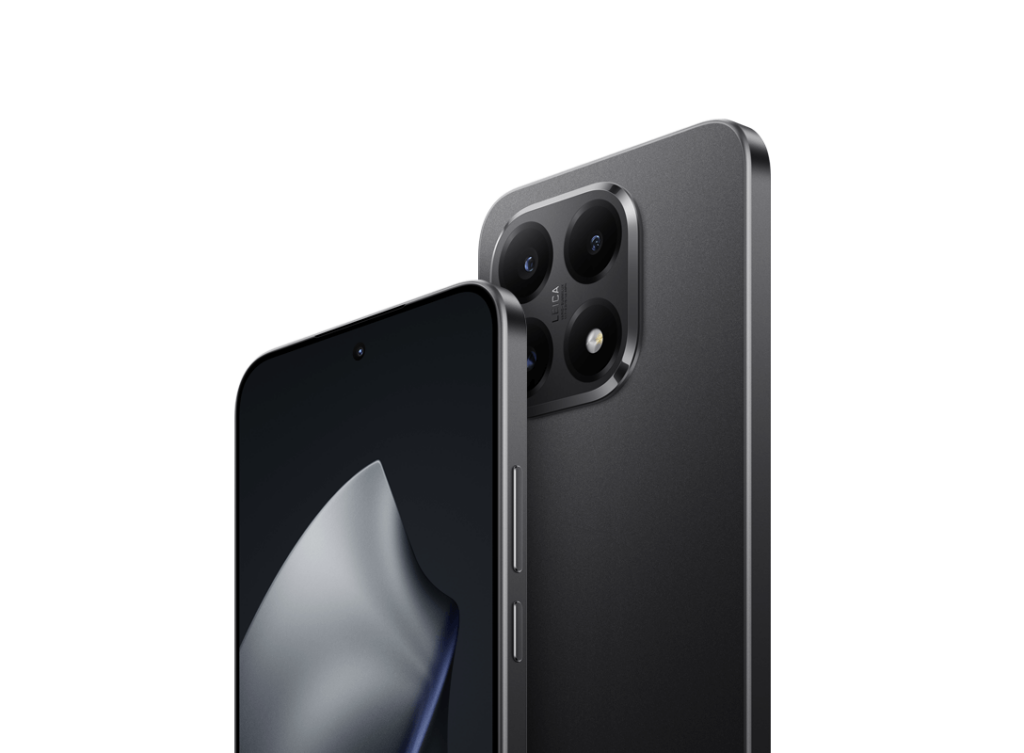
DOOGEE Note 56 Plus

The display has a 90 percent screen to body ratio with a slim bezel and a direct screen design that helps avoid accidental touches. The phone is available in Cosmic Purple, Obsidian Black, Natural Color and Forest Green.

AI Features and Camera Details

The Note 56 Plus runs Android 16 and includes the Google Gemini AI Assistant. It supports voice control, real time translation and simple task management. This helps with work, travel and daily use.

The main camera is 50 MP and captures clear shots with natural detail. The 8 MP front camera includes beauty filters for cleaner selfies.
Storage and Performance

The device has a Unisoc T7225 SoC, paired with 6 GB RAM and an extra 42 GB of virtual memory for smoother app performance. It comes with 256 GB of internal storage which can be expanded.

Black Friday Pricing

You can get the Note 56 Plus directly from DOOGEE with the code G625 for a 25 percent discount along with all free accessories and the extended warranty.

Amazon also lists the device with strong discounts.

Amazon UK
Note 56 Plus: 33 percent off plus 5 percent code U5YZGGPA. Final price 104.49 pounds
Note 56: 33 percent off plus 5 percent code 725BSFNJ. Final price 63.16 pounds

Amazon US
Note 56 Plus: 47 percent off. Final price 147.99 dollars
Note 56: 50 percent off. Final price 89.99 dollars

The DOOGEE Note 56 Plus Black Friday deal gives buyers a light phone with a large battery, AI features, plenty of storage and a complete accessory bundle at a low price.

Minisforum launches G1 Pro Gaming Mini PC with Ryzen 9 8945HX & desktop-class RTX 5060

Minisforum has launched the AtomMan G1 Pro, a compact mini PC aimed at gamers, creators, and professionals who demand full desktop-class performance in a smaller footprint. The G1 Pro is built around AMD’s Ryzen 9 8945HX processor and a 145W Nvidia GeForce RTX 5060 GPU, delivering a combined 245W performance that matches or surpasses many full-sized desktops and gaming laptops.

Minisforum G1 Pro Gaming Mini PC

Minisforum G1 Pro Specifications

The G1 Pro features a 3.8-liter vertical tower design that incorporates a built-in 350W power supply and a third-generation Glacier cooling system. The thermal solution is rated to handle up to 300W of heat, keeping the system cool during gaming or creative workloads. Minisforum claims the Ryzen 9 8945HX, which offers 16 cores and 32 threads with a boost clock of up to 5.4GHz, can maintain its performance even during sustained high-load conditions.

Minisforum G1 Pro Gaming Mini PC

The desktop-grade RTX 5060 enables hardware-accelerated ray tracing and supports DLSS 4 frame generation. According to Minisforum, the RTX 5060 in the G1 Pro delivers 25% more performance than the mobile RTX 4060. It also unlocks 614 TOPS of AI power, making it suitable for accelerating workflows in video editing, 3D modeling, generative AI, and architectural visualization. The system supports Nvidia Studio certification and works with over 130 creative applications.

In terms of memory and storage, the G1 Pro supports up to 96GB of DDR5 RAM at 5200 MHz and includes two PCIe 4.0 NVMe SSD slots, each supporting up to 4TB of storage. Connectivity is extensive, with dual HDMI 2.1 ports, three DisplayPorts (including two DP 2.1), 5GbE LAN, USB 3.2 Gen2, USB-C, Wi-Fi 7, and Bluetooth 5.4. It supports up to four displays simultaneously, making it suitable for productivity-focused setups.

Minisforum G1 Pro Gaming Mini PC

The G1 Pro also includes a dedicated software control center that allows users to switch between Beast, Gaming, and Office modes. RGB lighting, fan speed controls, and system monitoring are also accessible through the same interface.
The vertical chassis sports a white wave-textured finish with subtle RGB accents. Its design focuses on aesthetics as much as performance, aiming to fit into home entertainment setups, bedrooms, studios, or professional workspaces without taking up much space.

Pricing and Availability

The Minisforum G1 Pro is now available globally at a starting price of $1,430.90. The company is offering exclusive launch deals and updates through its official product page.

In related news, Minisforum recently unveiled the NAB3R Mini PC with an Intel i3-1220P processor and support for four 4K displays, while Beelink also introduced the SER9 Max powered by the Ryzen 7 H255 with Radeon 780M graphics and triple-display output.

For more daily updates, please visit our News Section.

Stay ahead in tech! Join our Telegram community and sign up for our daily newsletter of top stories! 💡