Advertisement

Telecoms offer free calls & waive roaming chargers in Ukraine due to ongoing crisis

With Ukraine facing an invasion, dozens of telecom operators have are providing free international calls to the region and are even waiving off roaming charging with the country to help people in the nation amid the ongoing crisis.

Notably, telecom operators include Deutsche Telekom, AT&T, Vodafone, Orange, Telefonica, Telia Company, A1 Telekom Austria Group, Telenor, Proximus, KPN, Vodafone, Vivacom, TIM Telecom Italia, Altice Portugal and Swisscom. Furthermore, some of these companies are even providing offers that include SIM cards to refugees in neighboring nations, offering free Wi-Fi in refugee camps. The firms have even activated the “SMS Donation” function to help organizations aiding the refugees and are including Ukrainian channels in the IPTV packages for free.

Ukraine

US Telecom group AT&T had also announced last month that its US consumer and business customers will be eligible for unlimited long distance calls to Ukraine till the 7th of March 2022. On the other hand, Verizon announced that it will be waiving roaming charges for calls from residential landline and consumer or business wireless phones to and from Ukraine till March 10. It is even removing costs for voice and text based roaming charges for customers in the country. Overall, the telecom operators that are providing these temporary offers are from both sides of the Atlantic and seek to help people in Ukraine amid the Russian invasion.

RELATED:


Redmi Note 11E 5G announced with an OPPO-inspired rear design

Xiaomi yesterday launched the Redmi Note 11 Pro 5G as the Redmi Note 11E Pro in China as the fifth addition to the lineup in the country. But that didn’t appear to be enough for the company as it today announced a vanilla variant of the model. Called the Redmi Note 11E 5G, the phone has been revealed to go on sale starting March 18.


redmi note 11e featured

The announcement also teases some of the specifications of the device. For photography, you get a dual-camera setup comprised of a 50MP primary camera and a 2MP depth sensor. Selfies are handled by a 5MP shooter at the front, housed within a waterdrop notch.

The phone supports 5G, made possible by the Dimensity 700 processor, and its display is a 90Hz 6.58″ FHD+ panel. The battery is sized 5,000mAh.

But perhaps the most interesting bit is the rear of the Redmi Note 11E 5G, which can easily be mistaken for being an OPPO offering from afar. The camera island looks quite similar to the one from the OPPO Reno7 so it’s obvious where Redmi has picked design cues from.

Anyway, you’ll need to spend about 1,199 Yuan (around $190) for the 4GB+128GB variant while the 6GB+128GB will set you back by 1,299 Yuan (around $205). Both are considerably cheaper than its Pro variant’s price of 1,699 Yuan (around $270).

RELATED:

Google Pixel 6’s selfie camera can now turn into a battery indicator using this app

If you think that the default battery indicator on your Google Pixel 6/6 Pro just isn’t slick enough, you can now replace it with another — only this one wraps around the selfie camera cut out instead of sitting tight on the right of the status bar. The “Energy Ring” app already supported a bunch of devices but the list now includes the Pixel 6 series too.

The battery ring engulfs the front camera and shows the remaining battery percentage in real-time. It’s highly configurable, allowing color codes for certain percentages. There are even a number of animations you can choose from that’ll play for as long as the phone’s on charging, and they do look kind of mesmerizing.

energy ring inline

The app itself is free but an in-app purchase will remove ads along with unlocking three additional color configs. While its latest update added support for the Pixel 6 series, I tried the app on my Xiaomi Mi 11X and it worked flawlessly, despite the device being unmentioned on the supported list.

However, you will probably want to make some tweaks to avoid redundancy. Simply download the System UI Tuner app and head over to Android’s built-in tuner using it. Once that’s done, just turn off the battery icon from the status bar so that you rely on nothing but the battery ring.

RELATED:

Realme V25’s topmost model to feature 12GB RAM, 256GB storage

Realme’s V-series of smartphones are exclusively available in China. On March 3, the company will be unveiling the Realme V25 in the home market. Today, it released a new poster to reveal the RAM and storage configuration of what appears to be the topmost variant of the V25.

The Realme V25 will be available with 12 GB of RAM and 256 GB of built-in storage. The TENAA appearance of the device revealed that will be offered in lower RAM variants such as 6 GB / 8 GB and 128 GB of storage.

Reports have revealed that the Realme V25 will be a tweaked version of the Realme 9 Pro 5G, which debuted in China last month. The Realme V25 has a 64-megapixel + 8-megapixel + 2-megapixel triple camera unit, whereas the TENAA appearance of the V25 has revealed that it has a 64-megapixel + 2-megapixel + 2-megapixel triple camera unit. The rest of the specs are likely to be identical on both devices.

The Realme V25 is equipped with a 6.43-inch AMOLED FHD+ display that offers a 120Hz refresh rate. It will feature a 16-megapixel front-facing camera. The device will come preinstalled with Realme UI 3.0 based Android 12 OS.

The Snapdragon 695 mobile platform will be powered by the Realme V25. It will house a 5,000mAh battery that supports 33W fast charging. For security, it has a side-facing fingerprint scanner. At present, there is no word on the pricing of the device.

Realme Buds Q2

The March 3 launch event will also see the arrival of the Buds Q2s. It is expected to offer features like 30 hours of playback time and Dolby Atmos support. It will sport a green paintjob and its charging case will have a translucent lid.

RELATED:

Microsoft Windows 11 is running on almost 20% of all PCs: AdDuplex

A new report has revealed interesting information regarding Microsoft Windows 11. The company’s latest operating system has apparently been installed in nearly 20 percent of all Windows PC across the globe.

Microsoft

Notably, this marks a small growth from 16.1 percent share that was recorded back in January 2022. In other words, the American tech giant’s Windows 11 OS has become the third largest in terms of the most used Windows version, following behind two Windows 10 versions (namely 21H2 and 21H1). AdDuplex‘s report arrives from collecting information from over 5,000 applications that use the AdDuplex v2 SDK on the Microsoft Store. Usually, surveys only take around 60,000 PCs as a sample size, which is quite small.

Meaning, this report won’t be completely accurate, although, it does offer a general observation regarding the latest Windows version’s adoption. Furthermore, it is also worth noting that the survey only covers around Windows 10 onward as well, so this data does not account for all of the other Windows OS versions. Looking at the chart shared by AdDuplex, we can see that Windows 11 is currently being used in around 19.3 percent of all Windows PCs.

Microsoft

On the other hand, Windows 10 version 21H2 took the second spot, since it is the update being rolled out for PCs that are not eligible for the Windows 11 due to its minimum requirements. While 20 percent isn’t a large figure, Windows 11 is still a relatively new OS, so we can expect the figure to grow higher in the coming months as well.

RELATED:


OPPO China reveals ColorOS 12 update plan for March 2022

OPPO is back again with an updated Android 12-based ColorOS 12 rollout timeline for the month of March 2022. As of now, the company has only announced its plans for its home country China. We expect the global schedule for the new month to follow soon. With that out of the way, let’s take a look at the latest update timeline.

ColorOS 12 Logo Featured A

According to the official announcement post on OPPO Community, 7 smartphones will join the beta program in March in China. At the same time, 14 handsets will get access to the stable release.


ColorOS 12 Beta Update Timeline China March 2022


March 15

  • OPPO A55 5G

March 16

  • OPPO A92s 5G

March 22

  • OPPO A93s 5G
  • OPPO A56 5G

March 29

  • OPPO Reno7 Pro 5G
  • OPPO Reno7 Pro 5G League of Legends Mobile Game Limited Edition
  • OPPO Reno7 SE 5G


ColorOS 12 Stable Update Timeline China March 2022


March 7

  • OPPO Reno4 Pro 5G
  • OPPO Reno4 Pro 5G 2020 Summer Limited Edition
  • OPPO Reno4 Pro 5G Artist Limited Edition
  • OPPO Reno4 5G

March 17

  • OnePlus 8
  • OnePlus 8 Pro
  • OnePlus 8T

March 24

  • OPPO Reno4 SE 5G
  • OPPO K9 Pro 5G

March 29

  • OPPO Find X3 Pro Photographer Edition
  • OPPO K7
  • OPPO Reno3 Pro 5G
  • OPPO Reno3 Pro 5G Classic Blue Limited Edition
  • OPPO Reno3 Vitality Edition

As always, we will be updating our readers whenever OPPO rolls out beta/stable update for the aforementioned devices. So stay tuned.


RELATED:


Samsung to launch Galaxy F23 in India in March under Rs 20,000 ($265)

Samsung is apparently gearing up to launch a new smartphone in India soon. It is the Galaxy F23, which was recently spotted on the company’s official Indian website back in February. Now, a new report has revealed the possible launch timeline for the upcoming device.

Samsung

According to industry sources close to the matter (Via 91Mobiles), the South Korean tech giant will reportedly be launching the upcoming device in the second week of March. For those unaware, the smartphone in question is a mid range handset that is expected to be powered by a Snapdragon 700 series 5G processor. Furthermore, the report adds that the new smartphone will likely launch in India under the 20,000 INR segment (roughly 265 US Dollars).

The chipset that runs the device might be the Qualcomm Snapdragon 765G, which could be paired with up to 6GB of RAM. Other features include Android 12 based OneUI custom skin and 5G networking support. On the front, it may sport a 6.4 inch AMOLED display that offers 120Hz refresh rate, which is quite impressive for a mid range handset. The rear will house a 48 megapixel primary camera while the front has a 13 megapixel selfie shooter.

Under the hood, a large 5,000mAh battery pack powers the Galaxy F23. Although, its unknown how fast the charging rate will be at the moment. Unfortunately, that is all the information we have so stay tuned for more, as we will be providing updates when additional details are available regarding this matter.

RELATED:


OxygenOS and ColorOS will remain independent, plans for unified OS axed

Last year, OnePlus officially merged with OPPO. With the merger, it became an independent sub-brand of the latter. The two companies also integrated the codebase of their operating systems based on Android. They even made an announcement regarding the arrival of a unified OS in the second half of 2022. But now, months later, the plans have changed. There will be no common software after all.

OnePlus Logo Green

In an official announcement post on OnePlus Community, the brand’s CEO Pete Lau confirms that OxygenOS and ColorOS will remain independent brand properties. This decision is based on feedback from the community.

However, it will not change the fact that both these Android skins will continue to use the unified codebase. In other words, OxygenOS will live on as a layer or skin atop ColorOS for better or worse.

In the past few months, we witnessed the migration of features across the two software. We believe the same will prevail in the future as well.

The primary reason for utilizing a unified codebase is to deliver updates faster. But so far, it hasn’t come into fruition. As of now, Android 12 stable is only available for the OnePlus 9 and the OnePlus 9 Pro.

Perhaps, it will get better with the release of OxygenOS 13 later this year. Though OnePlus hasn’t revealed it, the next iteration of OxygenOS will likely be based on Android 13.


RELATED:


Vivo X80 series may launch in India in April: Report

A new report has just surfaced that reveals the possible timeline for the launch of the Vivo X80 series. Apparently, the upcoming smartphone lineup will launch in India sometime in April 2022.

Vivo X80

According to a MySmartPrice report, industry sources close to the matter have claimed that the X80 series will be announced in India next month. As of right now, the Chinese smartphone maker has yet to official reveal the launch date for the new X80 series. But while no details are available at the moment, we do have some information regarding the the Vivo X80 series based on leaked reports.

For those unaware, the brand is expected to soon announced the launch date for the X80 series in China soon, with the Indian release date following soon after. Since the Indian launch is claimed to be in April, the Chinese announcement may be set a few days ahead. The X80 series is also expected to include three models, namely X80, X80 Pro, and X80 Pro+. Being a flagship lineup, the top end model will likely feature Qualcomm’s latest and greatest Snapdragon 8 Gen1 SoC and Zeiss camera module with Vivo’s Gimbal Stabilization.

Vivo

On the other hand, the lower end models may feature MediaTek’s Dimensity 9000 SoC, as per a recent benchmark listing. The benchmark platform also listed the X80 series with the model number V2186A. Another report hinted that the base model will sport a 6.56 inch LTPO AMOLED display with Full HD+ resolution. Meanwhile, the X80 Pro and X80 Pro+ may feature a 6.78 inch LTPO 2.0 E5 AMOLED panel that have FHD+ and QHD+ resolution’s respectively. All models are expected to offer 120Hz high refresh rate as well.

RELATED:


First batch of MediaTek Dimensity 8100 devices tipped, includes mystery Nord model

MediaTek Dimensity 8100 is all set to be launched today. The chip that looks to be MediaTek’s answer to Qualcomm’s Snapdragon 888 has already been speculated to be first featured on a Redmi device. But a new tip now has revealed the entire first batch of customers — and they all happen to be from China.

Tipster Yogesh Brar through a tweet today conveyed that Redmi, realme, OnePlus, vivo, and OPPO will comprise the first batch of OEMs to power their phones with the Dimensity 8100.

From these, the first device models will be the Redmi K50 Pro, followed by the realme GT NEO 3, and the vivo X80. There’s even an unspecified OnePlus Nord series model onboard, although Yogesh did say that the model is internally being referred to as “Nord Pro.” But a marketing name is yet to be assigned.

Coming to the chip itself, it’s in the same league as the Snapdragon 888, with scores crossing the 800,000 mark on AnTuTu. It adopts TSMC’s 5nm manufacturing process and comprises 4x 2.85GHz Cortex-A78 cores paired with 4x 2.0GHz Cortex-A55 cores. The CPU is assisted by the Mali-G610 MC6 GPU for graphics and comes with 4MB of L3 cache. Support for LPDDR5 RAM and UFS 3.1 storage is also present.

RELATED:

TikTok will soon let you upload 10 minute long videos

You can now upload videos that hit the 10 minute mark on TikTok. The company behind the application recently announced that it is rolling out an update that will allow users to upload videos that are up to 10 minutes long.

TikTok

Notably, this is the second major change following the extension of TikTok videos from 1 minute to 3 minutes in July 2021. This change had arrived since the social media platform was seeing explosive success across the globe. Now, the company is further extending its video’s total length to up to 10 minutes, since the platform shows no signs of slowing and this change would likely help creators upload more varied content as well.

According to a spokesperson speaking to TechCrunch, “We’re always thinking about new ways to bring value to our community and enrich the TikTok experience. Last year, we introduced longer videos, giving our community more time to create and be entertained on TikTok. Today, we’re excited to start rolling out the ability to upload videos that are up to 10 minutes, which we hope would unleash even more creative possibilities for our creators around the world.”

TikTok

Through this change, content creators would be able to put up longer videos for cooking demos, beauty tutorials, educational content, comedic sketches, and more. Although, the company says that the option to film videos on the app will roll out to global users over the next couple of weeks. Meaning, its still a while away before you can take advantage of the extended video limit.

RELATED:


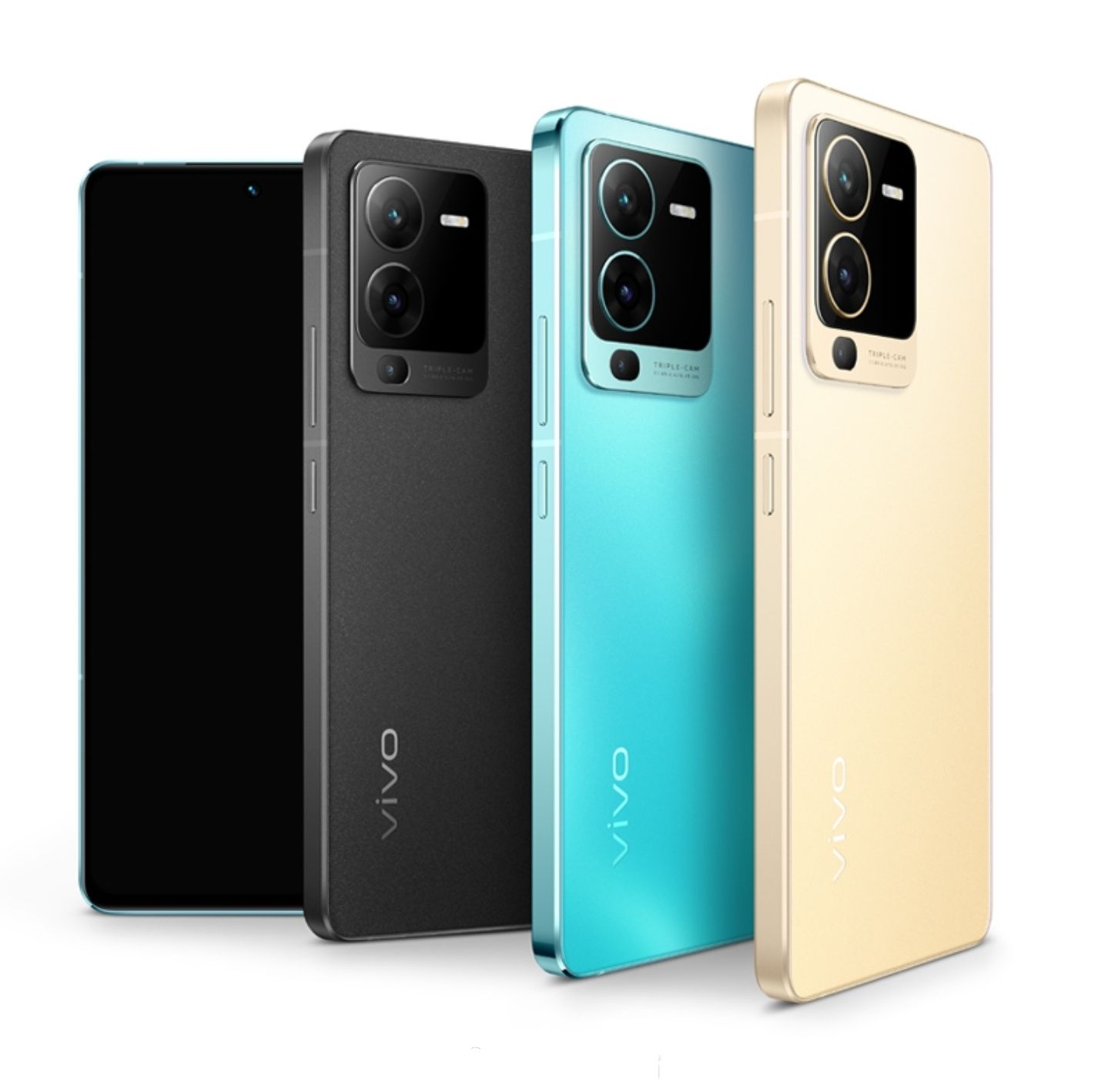
Vivo Y33s 5G launched with Dimensity 700, 5,000mAh battery, 13MP dual cameras

Vivo Y33s 5G has been silently announced in China. To recall, Vivo announced the Vivo Y33s 4G edition powered by the Helio G80 chip back in August 2021. Now, it is back with a 5G variant of the device. Here is everything on the specifications, features, and pricing of the new Y-series phone for the Chinese market.

Vivo Y33s 5G specifications and features

The Vivo Y33s 5G has a 6.58-inch LCD display with a waterdrop notch design. It has a 6.51-inch IPS LCD screen that offers an HD+ resolution of 1600 x 720 pixels, a 20.07:9 aspect ratio, 269ppi pixel density, and a 60Hz refresh rate. For security, it is equipped with features like face unlock and a side-facing fingerprint scanner. The device runs on Android 12 OS with Origin OceanOS UI on top.

The Dimensity 700 chipset is present under the hood of the Vivo Y33s 5G. The handset is equipped with 4 GB / 6 GB / 8 GB of LPPDR4x RAM and 128 GB of UFS 2.1 storage. It has a 5,000mAh battery that supports 18W fast charging through USB-C.

Vivo Y33s 5G
Vivo Y33s 5G

The Y33s 5G has an 8-megapixel camera for snapping selfies. Its rear camera setup has a 13-megapixel main camera, a 2-megapixel macro camera, and an LED flash. It offers other features dual SIM support, 5G, 5.8GHz Wi-Fi, Bluetooth 5.1, a microSD card slot, and a 3.5mm audio jack.

Vivo Y33s 5G pricing and availability

The Vivo Y33s 5G has hit the Chinese markets in three configurations such as 4 GB RAM + 128 GB storage, 6 GB RAM + 128 GB storage, and 8 GB RAM + 128 GB storage. The former two variants are priced at 1,299 Yuan (~$206) and 1,399 Yuan (~$221). It can be bought in colors like Snow Dawn, Nebula Blue, and Fluorite Black.

RELATED:

Redmi Note 11 Pro+ 5G variants, pricing tipped before launch in Europe

Redmi unveiled Redmi Note 11, Note 11S, Note 11 Pro, and Note 11 Pro 5G smartphones in global markets last month. The company is reportedly working on the Redmi Note 11 Pro+ 5G handset for the European markets. A fresh leak by Pricebaba has revealed the configurations and pricing of the Note 11 Pro+ 5G for Europe.

The publication has learned through industry sources that the Redmi Note 11 Pro+ 5G will be arriving in three options such as 6 GB RAM + 128 GB storage, 8 GB RAM + 128 GB storage, and 8 GB RAM + 256 GB storage. These variants are likely to be priced between 350 euros and 450 euros. The publication did not share any other information on the specs of the device.

Redmi Note 11 Pro Plus All Colors Featured A
Redmi Note 11 Pro+ 5G

The upcoming Redmi Note 11 Pro+ 5G was spotted at the Google Play Console and Google Supported Devices list. The latter revealed that its model number is 21091116UG and its codename is “pissarropro.” The listing revealed key specs such as FHD+ display, Dimensity 920 chip, 8 GB Of RAM, and Android 11 OS.

Redmi unveiled the Redmi Note 11 Pro+ back in October 2021. The same device was rebranded as the Xiaomi 11i HyperCharge in the recent past. It can be said based on the Google Play Console and Support Devices listings China’s Note 11 Pro+ 5G will be heading to Europe with the same moniker, specs, and design.

Redmi Note 11 Pro+ 5G specifications

The Redmi Note 11 Pro+ 5G has a 6.67-inch AMOLED FHD+ 120Hz display, a 16-megapixel front camera, and a 108-megapixel + 8-megapixel + 2-megapixel triple camera unit. The Dimensity 920 powered handset comes with up to 8 GB of RAM, up to 256 GB of built-in storage, a side-facing fingerprint scanner, Android 11 OS with MIUI 13, and a 5,160mAh battery with 120W fast charging.

RELATED:

Redmi Note 11E Pro goes official in China with a starting price of 1,699 yuan ($270)

Xiaomi-backed Redmi has today officially announced its new smartphone in its home market in China, dubbed as Redmi Note 11E Pro. Given the phone’s design and specs, it appears to be a rebranded version of the globally launched Redmi Note 11 Pro 5G.

The phone comes in three different color options — White, Black, and Blue. It is currently available for pre-order in China for a starting price of 1,699 yuan (~$270) for the 6GB RAM and 128GB storage model and will go on sale from 4th March.

Redmi Note 11E Pro Launched

The Redmi Note 11E Pro smartphone features a 6.67-inch Full HD+ AMOLED display sourced from Samsung. It offers 2400 x 1600 pixels screen resolution, DCI-P3 color gamut, and has support for a 120Hz refresh rate.

Under the hood, the device is powered by the Qualcomm Snapdragon 695 chipset, manufactured using a 6nm process node. It is coupled with up to 8GB LPDDR4X RAM and 256GB UFS 2.1 internal storage.

Coming to the camera department, the phone comes with a triple-camera setup that includes a 108-megapixel primary sensor, an 8-megapixel super-wide-angle lens, and a 2-megapixel macro lens. On the front side, the device features a 16-megapixel snapper for taking selfies and video calling.

As for the software, the device is running the Android operating system with the company’s own MIUI 13 custom interface on top. It is powered by a 5,000mAh battery which comes with support for 67W fast charging technology.

RELATED: 

Qualcomm unveils new S3 and S5 sound platforms for better wireless audio experience

Qualcomm S3 and S5 sound platforms have been announced by the company at Mobile World Congress. The launch of these new sound platforms marks the expansion of the Snapdragon Sound solution announced last year.

These new audio platforms from Qualcomm combine traditional Bluetooth and the new low-energy (LE) audio technology standard. The aim is to significantly improve audio quality when listening to music using wireless earbuds, headphones, and mobile devices.

Qualcomm S3 and S5 Sound Platforms

The Bluetooth LE audio capabilities also enable broadcasting to an unlimited number of devices and sharing of audio streams in a secure environment. The newly announced audio chips use Qualcomm Snapdragon 8 mobile platforms, FastConnect 6900, and the new 7800 subsystems to “deliver the ultimate wireless sound experience.”

The company is also touting a 16-bit 44.1kHz lossless Bluetooth audio experience and 32kHz super wideband voice call quality. There’s also support for 68ms ultra-low latency gaming mode, which Qualcomm says is 25% lower than the previous generation. It has also integrated Adaptive Active Noise Cancellation in a dedicated hardware block.

Qualcomm says it will begin sampling the S5 Sound Platform (QCC517x) and S3 Sound Platforms (QCC307x) commercial versions to customers in the second half of 2022. Jabra, Xiaomi, and iQOO are the first companies to use these audio platforms in their products.

RELATED: 

TAITO 3-wheeled electric scooter with a 30km range can navigate perilous terrain

The TAITO three-wheel electric scooter with a range of 30km is made for seamless navigation through pavements, cobblestones, and other difficult paths while also riding easily on the road. The TAITO three-wheeler is designed as a solid alternative to hoverboards, and scooters.

The e-scooter is designed by Francoise Desmet and Nathan De Baets. The design philosophy of the TAITO e-scooter is based on a reconsideration of what the device is capable of offering with its range and sturdy design. The range of 30km is a pretty decent figure for the quick intra-city commute. The three-wheel design offers stability and ruggedness that allows it to move around seemingly unfavorable and undulating terrain. It has a top speed of 25km/h. The dashboard comes populated with the necessary controls and navigational tools.

The e-scooter has IPX5 water-resistance, a solid shock-absorbing frame, and a lightweight 16kg body that further accentuates its sturdiness and versatility.Taitans

The TAITO is presently on sale on Indiegogo starting at €1,750 EUR (~$1,850) for the early bird offer. It is expected to start shipping in August 2022 but it remains to be seen how this sits with some of the lower-priced existing models in the market.

RELATED:


OnePlus 10 Pro confirmed to launch in the US, Europe and India by the end of this month

Earlier this year, in the month of January, OPPO-backed OnePlus announced its latest flagship smartphone, dubbed OnePlus 10 Pro. However, this time, the company initially limited the device to its home market China.

Now, a couple of months after its debut in China, the company is all set to launch the smartphone globally. At the Mobile World Congress, OnePlus confirmed that the flagship smartphone will launch in the US, Europe, and India by the end of this month.

OnePlus 10 Pro Global Launch Teaser

The company has also confirmed that the global version of the OnePlus 10 Pro will keep using the OxygenOS operating system. This is unlike the Chinese model which comes pre-installed with OPPO’s ColorOS.

Initially, the device will be running OxyenOS 12.1 but the company has promised that it will soon be updated to OxygenOS 13. It has also been confirmed that the model sold in China will continue to have ColorOS pre-installed.

The specifications of the OnePlus 10 Pro will mostly remain the same. It features a 6.7-inch second-generation LTPO AMOLED display with support for variable refresh rates from 1Hz to 120Hz. It offers a screen resolution of 3216 x 1440 pixels, 525 PPI pixel density, 1300 nits peak brightness, 5000000:1 contrast ratio, 20.1:9 aspect ratio, 92.7% screen-to-body ratio, and Gorilla Glass Victus for protection.

OnePlus 10 Pro hands-on 06

It also comes with an under-display fingerprint sensor for added security. Under the hood, the device comes powered by the Qualcomm Snapdragon 8 Gen 1 chipset, coupled with up to 12GB LPDDR5 RAM and 256GB UFS 3.1 internal storage.

Coming to the camera configuration, the phone comes with a 48MP Sony IMX789 primary sensor with OIS, a 50MP Samsung ISOCELL JN1 sensor 150-degree ultra-wide unit, and an 8MP 3.3x telephoto shooter with OIS. On the front side, the device has a 32MP Sony IMX615 snapper for taking selfies and video calling. All these cameras are co-tuned by Hasselblad with features like Hasselblad Natural Color Optimization 2.0.

The phone is running the Android 12 operating system with a custom interface on top. It is powered by a 5,000mAh battery and comes with support for 80W SuperVOOC fast charging, 50W AirVOOC fast wireless charging, and reverse wireless charging.

RELATED: 

Qualcomm announces AI-powered Snapdragon X70 5G modem with up to 10Gbps download speed

At the ongoing Mobile World Congress, Qualcomm has announced its latest next-generation modem for smartphones –Qualcomm Snapdragon X70 5G. It comes with increased uplink and downlink speed as well as new features.

While not yet confirmed by the company, it is likely that Qualcomm will use this new model for the upcoming Snapdragon 8 Gen 2 chipset that is expected to go official this year.

Qualcomm Snapdragon X70 5G Modem

The company says that the Snapdragon X70 can offer up to 10Gbps downlink speed and a peak 3.5Gbps upload speed, ensuring maximum performance. Do note that the real-world performance won’t be what the company is saying.

A major highlight for this new modem is that it uses artificial intelligence (AI) technology which improves the mmWave and sub-6GHz bands. It has an AI-based channel-state feedback and optimization algorithm to increase the average downlink and uplink speeds.

It uses AI-based mmWave beam management to increase the coverage and then uses an AI-based network selection algorithm. This latest baseband chip is also the first to support every commercial 5G band from 500MHz to 41GHz.

The Qualcomm Snapdragon X70 has support for global 5G multi-SIM and Dual-SIM Dual Active. The company claims that it is up to 60 percent more power-efficient, thanks to Qualcomm 5G PowerSave Gen 3 technology.

Qualcomm’s QET7100 Wideband Envelope Tracking and AI-based adaptive antenna tuning will also help in power conservation along with optimizing performance and latency. The company has revealed that the Snapdragon X70 modem is expected to launch in 5G devices by the end of this year.

RELATED: 

Redmi Note 11E Pro configurations, pricing leaked

Redmi is expected to announce the Redmi Note 11E Pro smartphone in China this month. Reports have revealed that it will be a rebranded version of the global Redmi Note 11 Pro 5G.  A fresh leak by Chinese tipster Bald is Panda has revealed the configurations and pricing of the Note 11E Pro.

The leak reveals that the Redmi Note 11E Pro will be available in three variants in China such as 6 GB RAM + 128 GB storage, 8 GB RAM + 128 GB storage, and 8 GB RAM + 256 GB storage. These models will be reportedly priced at 1,699 Yuan (~$269), 1,899 Yuan (~$301), and 2,099 Yuan (~$332).

Redmi Note 11E Pro specifications (rumored)

The Redmi Note 11E Pro will feature a 6.67-inch AMOLED display that offers a Full HD+ resolution of 1080 x 2400 pixels and a refresh rate of 120Hz. The device is likely to come preinstalled with Android 12 OS and MIUI 13.

Redmi Note 11 Pro 5G global edition

The Snapdragon 695 mobile platform will be powering the Redmi Note 11E Pro. It will be equipped with up to 8 GB of LPDDR4x RAM and up to 256 GB of storage. For additional storage, it will come with a microSD card slot.

The Note 11E Pro will be equipped with a 16-megapixel front-facing camera and its back panel will feature a 108-megapixel primary camera, an 8-megapixel ultrawide camera, and a 2-megapixel macro snapper.

The Note 11E Pro will be housing a 5,000mAh battery that carries support for 67W fast charging. For security, it will be equipped with a side-mounted fingerprint scanner.  It is tipped to arrive in colors like Time Monologue (White), Mysterious Black Realm, and Night Sea Glaze.

RELATED:

Tecno Camon series to debut the RGBW sensor with an in-house image processing algorithm

Chinese tech brand and Transsion Holdings subsididary Tecno has restated its plans to build high-quality mobile cameras with the development of the RGBW sensor (in conjunction with Samsung) and the accompanying algorithm to process the data which was developed in-house. The current RGBW sensor is called ISOCELL GWB and the 64MP RGBW sensor will premier in a Tecno Camon smartphone.Tecno Camon 17 Pro Review

The enhanced quality on offer in the RGBW sensor offers up to 60% improved performance in capturing incoming light, which significantly trumps an RGB sensor. In addition, the pricier and more effective Glass+Plastic lens assembly with improvements in the management of light, with better performance than the all-plastic lens.Tecno

The specific model number of the Camon phone that debuts the new RGBW sensor and algorithm has not been specified yet. Tecno insists that its algorithm has found a way to capture human features and skin tones more efficiently. Samsung is collaborating with Tecno in the development of the RGBW architecture and it says the time is close when DSLR-grade photography will be a reality for everyday smartphone users.

Tecno will hope to leverage the algorithm in producing excellent videos on its devices.

RELATED:


(via)