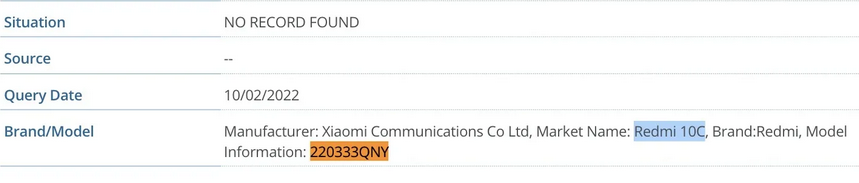
Xiaomi is apparently gearing up to announce a new budget smartphone. A new listing on the FCC (Federal Communications Commissions) certification website has revealed that the company is working on a Redmi 10C.
The handset appears to be a entry level device that has the model number 220333QNY. According to a MySmartPricereport, the smartphone’s IMEI database listing confirms that this model number is for the upcoming Redmi 10C. Apart from its name, the certification website also reveals some other details regarding the Chinese tech giant’s new phone as well. The device will run on the brand’s MIUI 13 custom skin, which is likely based on Android 12.
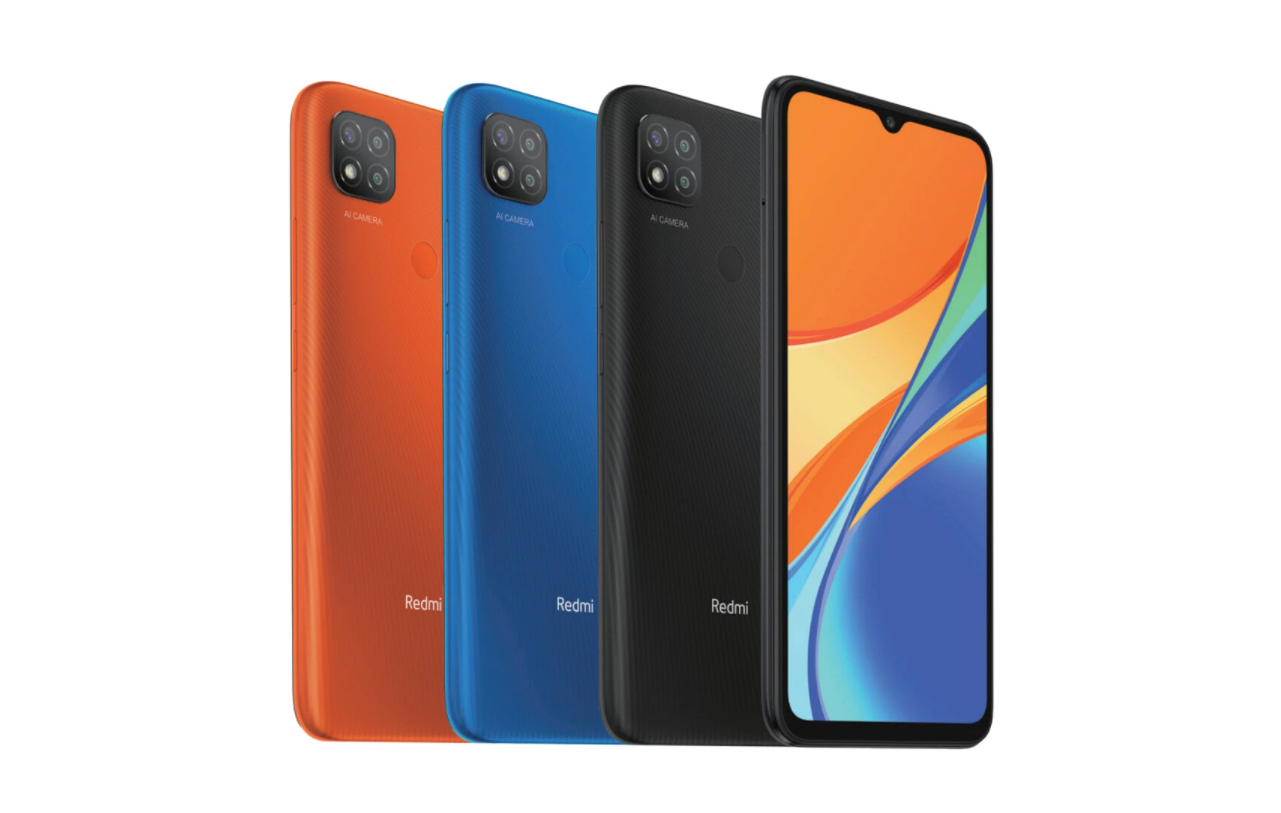
Notably, the Indian version of this Redmi smartphone has also cleared BIS certifications, with a model number of 220333QBI. Previously, the smartphone maker had launched the Redmi 9C as the Redmi 9 in India. In other words, we might see a similar case with the Redmi 220333QBI, which could be the Redmi 10 for the Indian market. While the listing does not reveal any specifications, the 9C launched with a 6.53 inch HD+ LCD display, MediaTek Helio G35, a triple camera sensor, and more.
Redmi 9C
These are some entry level specifications, so we can expect the 10C to rock similar features. Keep in mind that this is still just speculation at the moment, so take this report with a pinch of salt. But stick around for more, as we will be providing updates when additional information is available regarding this smartphone.
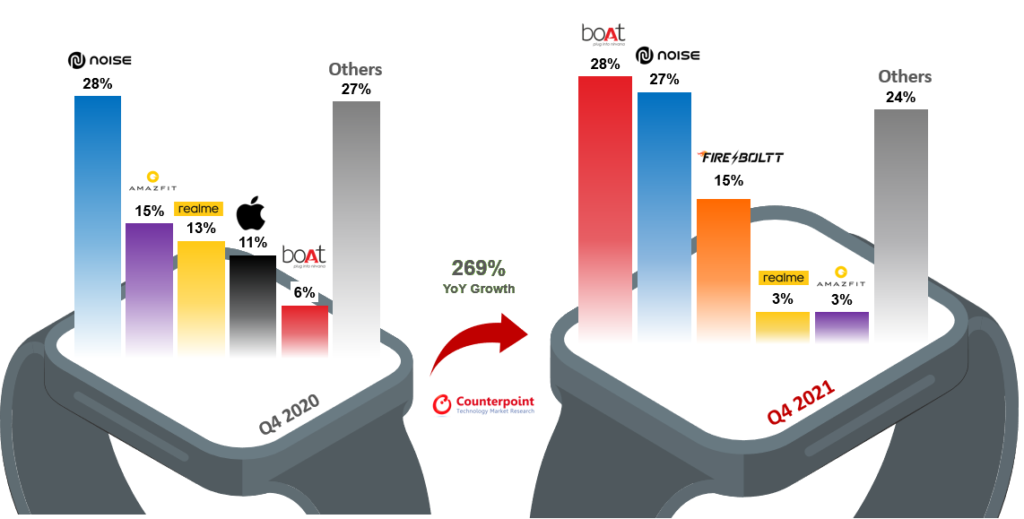
The Indian smartwatch market set quite some records last year, overseeing 274% YoY growth in shipments. This was paired by Q4 2021 becoming the market’s biggest-ever quarter, with QoQ growth of over 8%.
The figures come from Counterpoint Research which said that the growth can be attributed to increased health awareness, affordable prices, growth of new entrants, discount schemes, and plenty of launches throughout the year.
Source: India Smartwatch Shipments Model Tracker, Q4 2021 (Counterpoint)
The majority of shipments (86%) were driven by the sub-Rs 5,000 segment, compared to 59% in 2020. The main reason for this is the fact that many of the features like SpO2 monitoring, which were earlier present in the Rs 3,000 to Rs 5,000 segment, have begun making their way to the ~Rs 2,000 price point.
Commenting on market trends, research associate Harshit Rastogi said, “Indian players led the market by capturing over 75% share. The top three brands captured two-thirds of the total smartwatch market in 2021, compared to just half in 2020. The market saw over 10 new entrants in 2021, intensifying the competition. The market is estimated to grow by around 50% in 2022 considering the high demand and brands’ dedicated efforts to bring additional capabilities to their devices.”
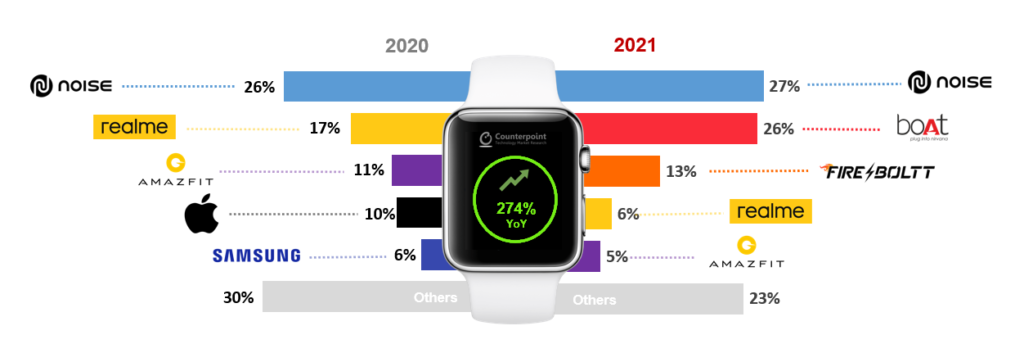
Source: India Smartwatch Shipments Model Tracker, 2021 (Counterpoint)
Noise led the overall Indian smartwatch market in 2021 with a 27% share and over 278% YoY growth. Four out of the top 10 models last year were from the company, with the ColorFit Pro 2 being its most popular offering. Portfolio expansion toward lower prices and emphasis on community building were the main drivers.
Next up is boAt, capturing the second spot in 2021 with a 26% share. The company, with its 10+ models, actually grabbed first place in Q4 2021. The boAt Storm was its best seller.
Fire Boltt, a relatively new entrant in the smartwatch space, quickly managed to capture the third position with over 20 models spread over a wide price spectrum. The Indian brand also entered the Middle East in 2021.
Other major players in the market were realme, Amazfit, Samsung, Apple, and Dizo, each recording significant YoY growth.
The smartwatch market in India is primarily driven by online channels (78%), with Flipkart and Amazon accounting for 48 percent and 43 percent of total shipments.
More wearables are expected to be manufactured in India this year, thanks to customs duty rates adjustments with Budget 2022.
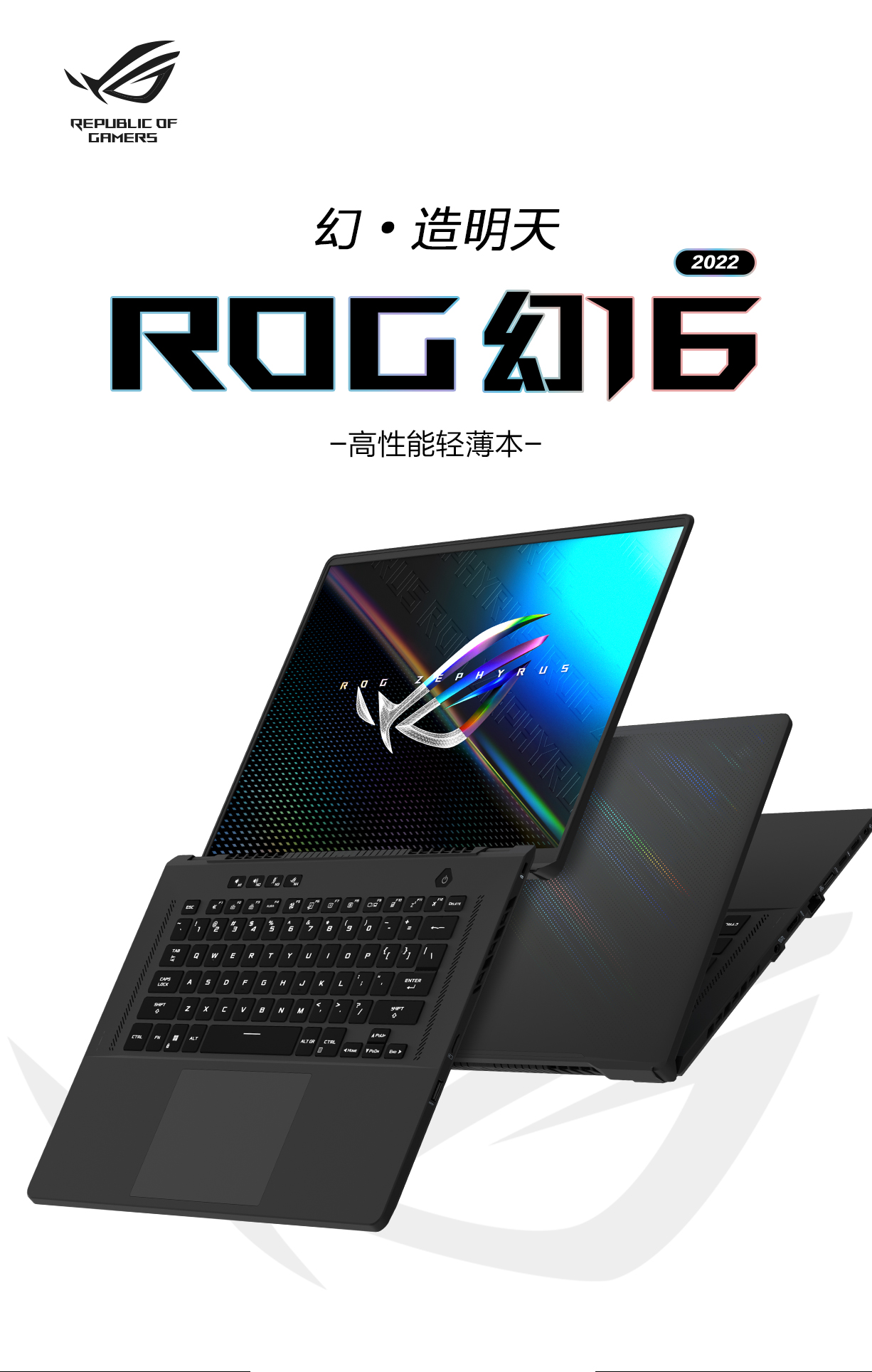
ASUS has today officially launched a new gaming laptop in the Chinese market, dubbed as ROG Magic 16 2022. As the name indicates, the device is an updated model of the ROG Magic 16 launched last year.
Apart from some upgrades, the majority of the specs remain the same as its predecessor. It has been confirmed by the company that the device will be available for purchase at a discounted price of 9,999 yuan (~$1,573) on the first day of its launch, i.e. 10th February.
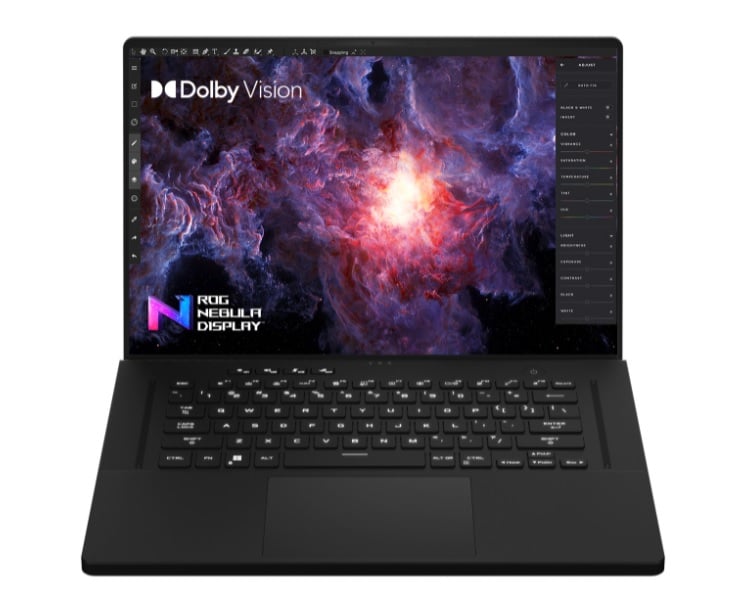
The laptop features a 16-inch display with 2560 x 1600 pixels screen resolution, 16:10 aspect ratio, 165Hz refresh rate, 100% DCI-P3 color gamut, 500nit brightness, and supports Dolby Vision.
Under the hood, the device is powered by the latest 12th generation Intel Core series processor, packing 14-core Intel Core i7-12700H. It is coupled with a dedicated 120W NVIDIA RTX 3060 graphics card that supports dual display and three-mode switching.
For heat dissipation, the ASUS ROG Magic 16 comes with dual fans, six heat pipes, and four air outlets. In another major upgrade, the device now comes with the new DDR5 memory, packing 16GB DDR5-4800 RAM and 512GB M.2 PCIe 4.0 SSD storage.
It comes with Wi-Fi 6e connectivity and has two USB 3.2 Gen 2 Type-A ports, one USB 3.2 Gen 2 Type C port with DisplayPort 1.4, a microSD 4.0 card reader, HDMI 2.0b port, RJ45 port for ethernet connection, and a 3.5mm headphone jack.
Other features on the laptop include six speakers, Dolby Atmos support, and Hi-Res Small Gold Standard certification. It runs the Windows operating system and is powered by a 90Wh battery with support for 100W PD charging.
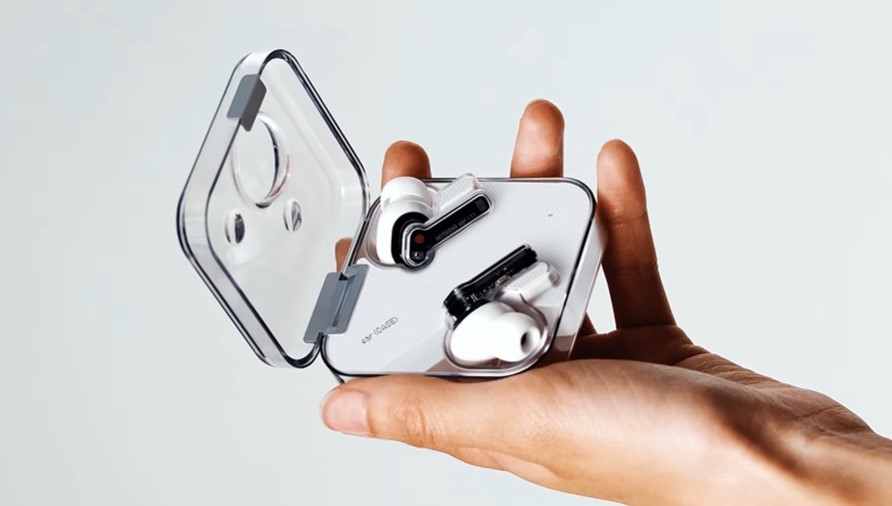
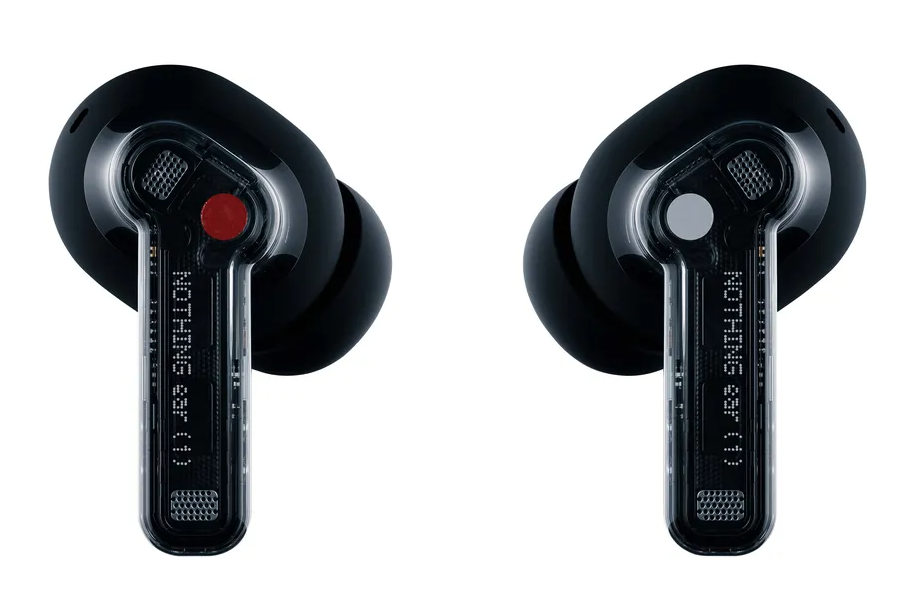
Nothing Ear (1), the true wireless earphones, launched as the first product coming from OnePlus co-founder Carl Pie’s new venture, has received a new firmware update.
The new firmware update adds support for smart voice assistants, including Google Assistant, Apple’s Siri, and Amazon’s Alexa to the device. The feature can be activated or triggered by triple-tapping the earbuds.
The company is rolling out firmware version 0.6700.1.86. With this update, the company has added a feature that will help the product compete against some popular TWS earbuds available in the market.
The official changelog for the firmware version 0.66700.1.86 lists the following:
Stronger connection between Ear (1) and third-party apps and laptops.
Optimised stability when switching between ‘multiple devices.
Voice assistant now available in gesture controls.
More accurate ear (1) battery display in the app.
Improved functionality of the In-Ear Detection switch in the app.
To update the Nothing Ear (1), open the Nothing app on the smartphone and navigate to Device Details > Firmware Update. Make sure that both earbuds are connected to the smartphone and have at least a 10% battery.
The Nothing Ear (1) true wireless earphones were first launched last year and since then, the firm has introduced a new black colored model and has also released a number of firmware updates that fixed some of the issues.
The earphones come with an in-ear design and some premium features, including Active Noise Cancellation, Transparency Mode, and Qi-compatible wireless charging support for the charging case along with the USB-C port.
It also comes with support for Fast Pairing in Android-powered devices but lacks support for iOS auto-pairing. The earbuds are also IPX4 rated for water resistance and the company is promising 24 hours of battery life with the charging case.
A recent report claimed that the OnePlus will be announcing the all-new OnePlus TV Y1S series on Feb. 17 in India. A new leak courtesy of tipster Abhishek Yadav reveals that the same event could be used to announce the OnePlus Nord CE 2.
It was reported last month that the OnePlus Nord CE 2 may launch on Feb. 11 (tomorrow). The date is drawing near and there is no official update on the arrival of the smartphone. Probably, the Chinese manufacturer will confirm the OnePlus Nord CE 2 launch date tomorrow through its social media handles.
The new leak states that the Nord CE 2 will come with Dimensity 900 chipset and 64-megapixel + 8-megapixel + 2-megapixel triple camera unit. It states that it will be equipped with a dedicated SD card slot.
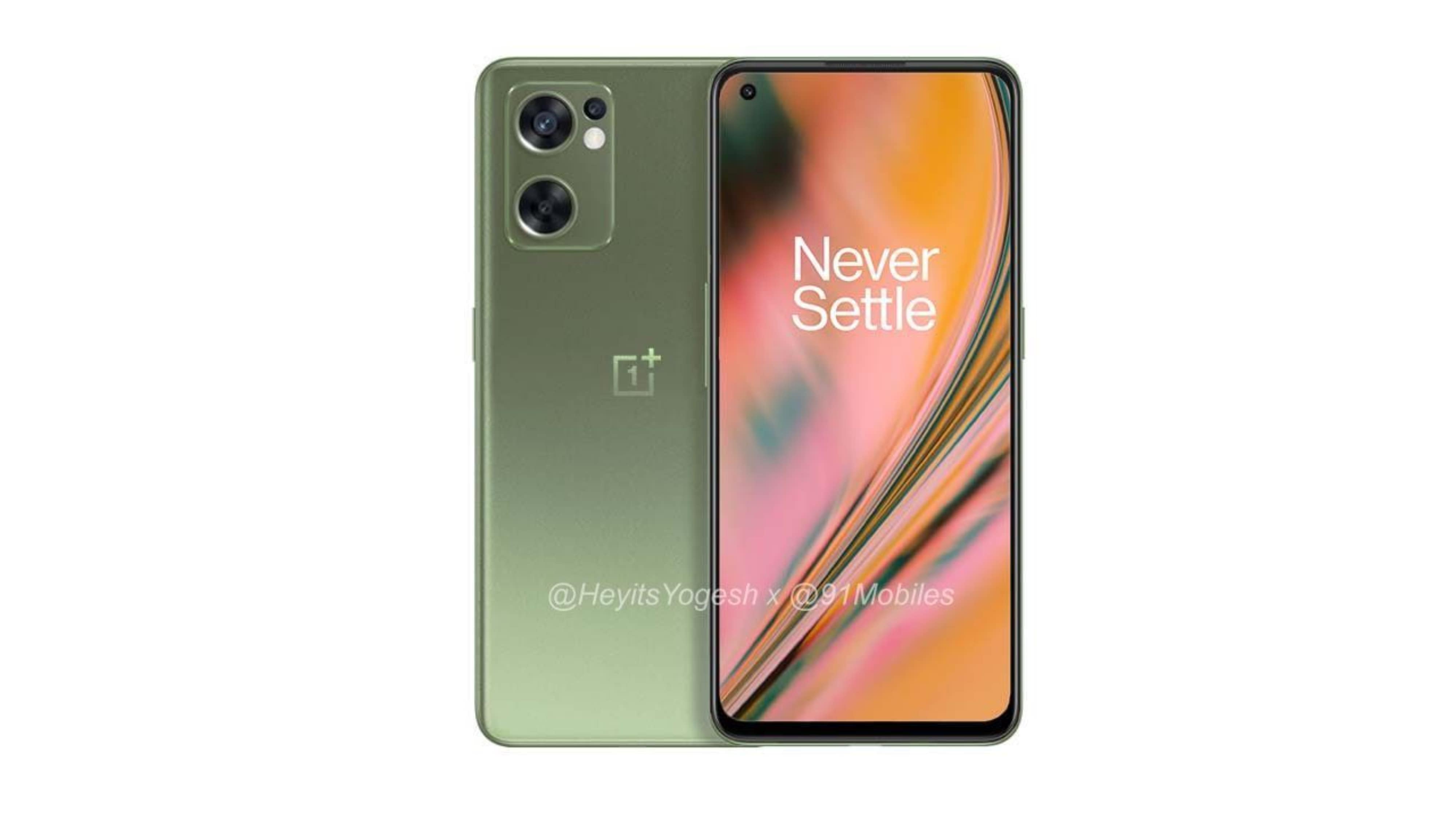
OnePlus Nord CE 2 Renders by Yogesh Brar / 91mobiles
The leak further states that the Nord CE 2 will be arriving in two variants such as 6 GB RAM + 128 GB storage and 8 GB RAM + 128 GB storage. As always, readers are advised to digest the leak with a pinch of salt. Previous reports have claimed that the device may carry a starting price of Rs 25,000 (~$334).
OnePlus Nord CE 2 specifications (rumored)
The OnePlus Nord CE 2 will feature a 6.4-inch AMOLED FHD+ display that offers a 90Hz refresh rate and an in-screen fingerprint scanner. It will run on Android 12 with OxygenOS 12 on top.
The device may come with a 16-megapixel front-facing camera and a 64-megapixel triple camera unit. The device may house a 4,500mAh dual-cell battery that supports 65W fast charging. It may come in black and green colors.
A Redmi phone with model number 2201116SC was certified by the TENAA telecom authority in China. The specifications of the phone suggested that it could be a rebranded version of the global Redmi Note 11 Pro 5G. While the 2201116SC device is expected to launch this month in China, none of the leaks have revealed its moniker. Ahead of the rumored launch, the device has appeared in the database of the Google Play Console (via) and Google supported devices list. The listing reveals that it will be hitting the Chinese markets with the Redmi Note 11E Pro moniker.
Redmi Note 11e Pro name spotted in Google supported devices list
To those who are unaware, Redmi is already selling the Dimensity 920 powered Redmi Note 11 Pro 5G in China. This device is made available in India with the Xiaomi 11i moniker. It can now be said based on the Google Play Console listing that the global Redmi Note 11 Pro 5G will be arriving in China with the Redmi Note 11E Pro name.
Redmi Note 11E Pro specifications (expected)
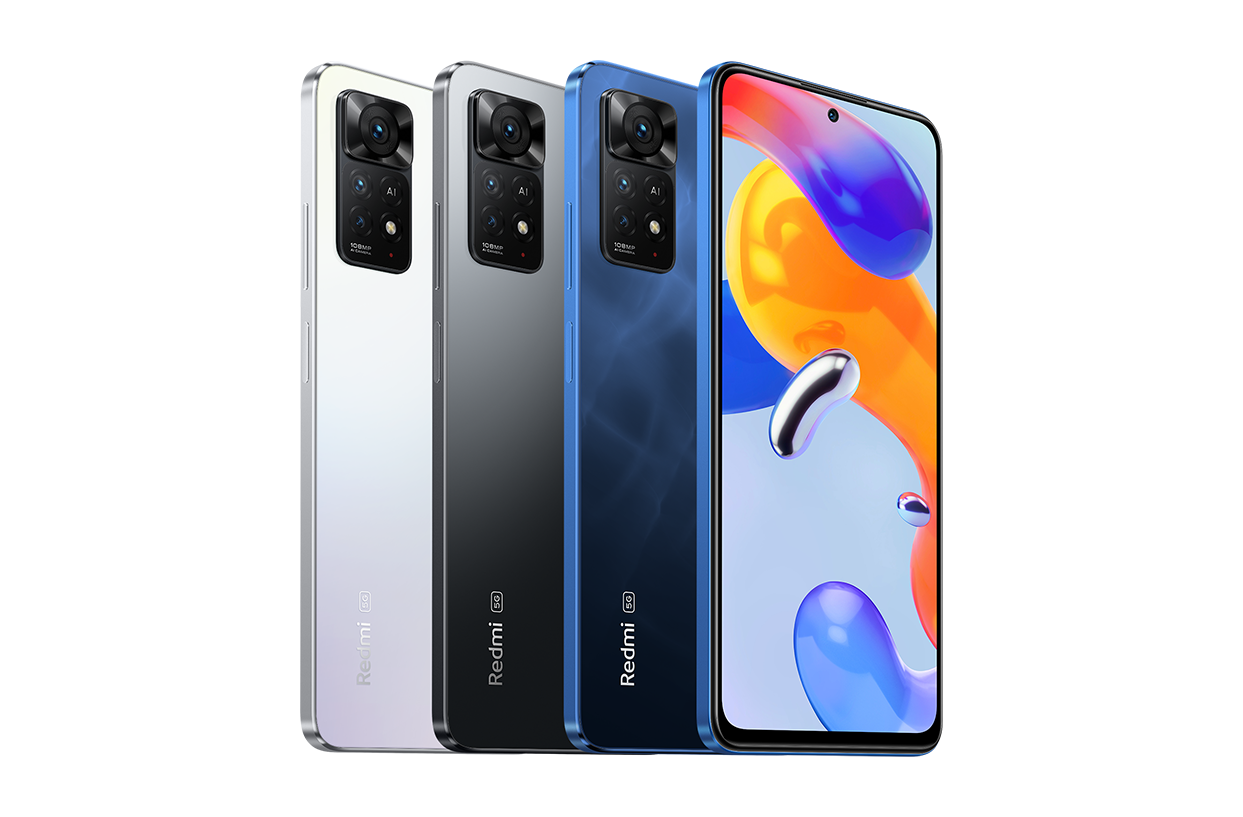
The Redmi Note 11E Pro will house a 6.67-inch AMOLED display that delivers an FHD+ resolution and a 120Hz refresh rate. The Snapdragon 695 chipset will be present under the hood of the Note 11 Pro.
Redmi Note 11 Pro 5G global edition
The TENAA listing of the device revealed that it may ship with 6 GB / 8 GB / 12 GB / 16 GB of RAM. It may come with 128 GB / 256 GB / 512 GB of storage. The device may run on MIUI 13 flavored Android 11. It will be fitted with a side-facing fingerprint scanner.
The rear shell of the device has a 16-megapixel front-facing camera and a 108-megapixel triple camera unit. It will come with a 5,000mAh battery that supports 67W rapid charging. It may arrive in multiple colors such as red, orange, yellow, green, blue, indigo, violet, black, white, and grey.
Leica has always been known for its class-leading photography in its premium segment. Every product developed with Leica or by Leica always had that signature Leica charm attached to it.
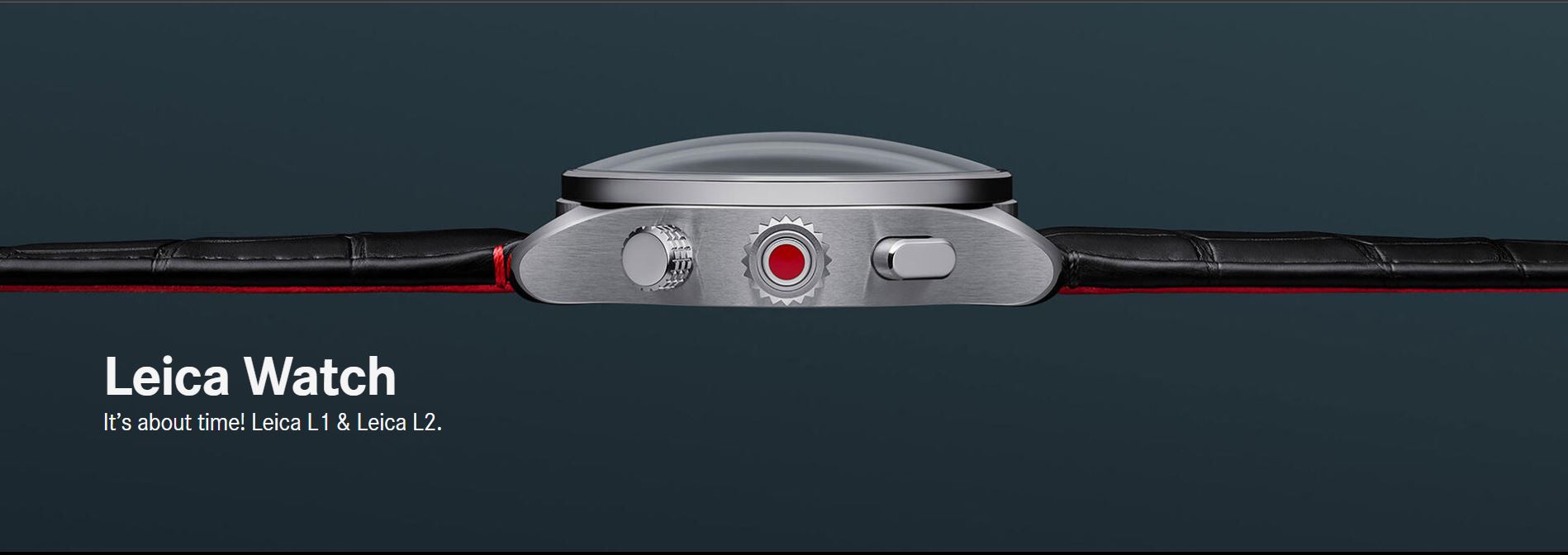
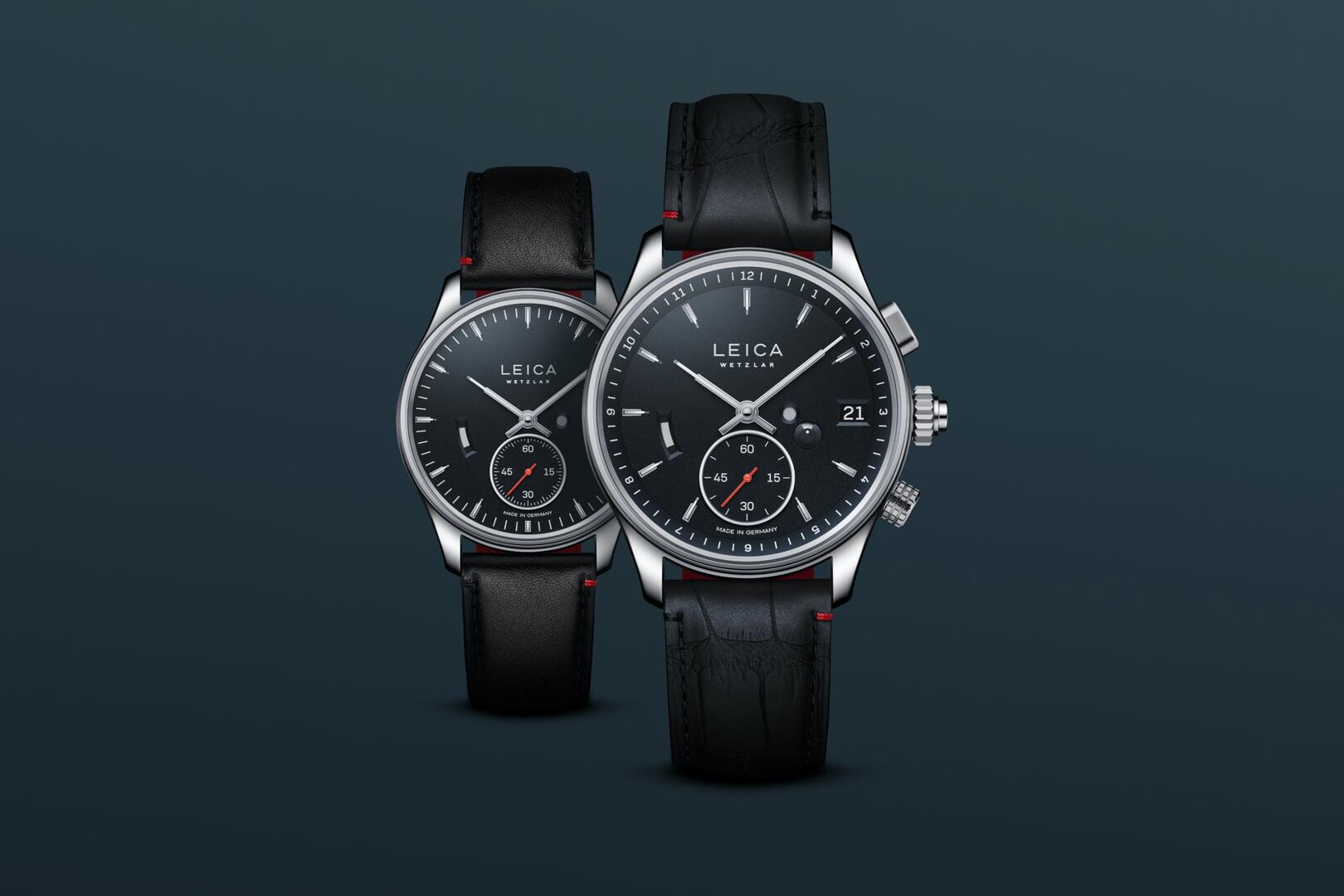
With 150 years of fame to its name, the brand has just announced its 2 latest additions to the Leica legacy, the Leica L1 and L2 premium wristwatches. Leica calls the watches “two remarkable timepieces with a patented push crown” as the watches draw inspiration from the engineering marvels made in Wetzlar.
The watches’ exterior was conceptualized by Professor Achim Heine, who has designed numerous Leica products in the past – giving him a profound understanding of the company’s aesthetic principles. As a result, the Leica L1 and Leica L2 contain subtle references to signature features from Leica’s rich history. These include, for example, the delicate design of the watch hands and applied indices, the shape of the intricate stainless-steel case, the special knurling on the crowns, and the domed watch glass that recalls the front element of a camera lens.
Both watches are powered by a completely newly developed mechanical movement with manual winding. The movement is visible through the transparent back made of resilient sapphire crystal to keep the watches resistant to scratches.
Maintaining the ‘Made in Germany’ designation was extremely important to Leica, which is why the company entered into a partnership with Lehmann Präzision GmbH. As a result, the movement and most of the watches’ components were developed and produced in the Lehmann factory in Germany’s Black Forest region, in which Leica mentions that it was to ensure an exceptional level of vertical range of manufacturing.
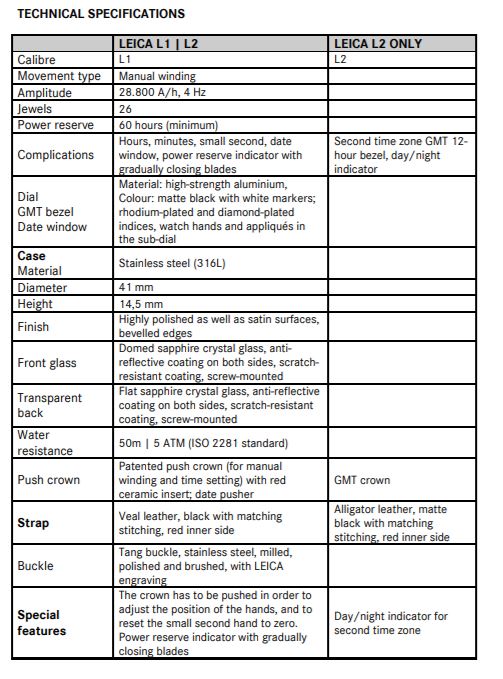
As for the specs of the watches, Leica shared that both watches share many specs such as the 50m 5 ATM water resistance, but with the Leica L2 being the more expensive sibling, it has several upgrades over the Leica L1.
Specifications of the Leica L1 and L2
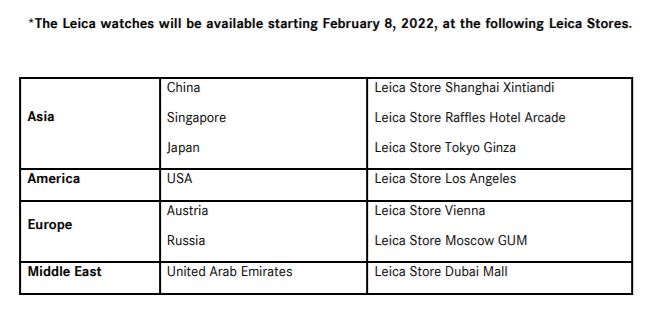
Currently, the Leica wristwatches will only be available in 7 selected markets, China, Singapore, Japan, the USA, Austria, Russia, and the United Arab Emirates. The watches will also cost you an arm as well, with the Leica L1 selling at €9,500 Euros (INR 8.13 Lakhs), and the Leica L2 selling at €13,500 (INR 11.55 Lakhs).
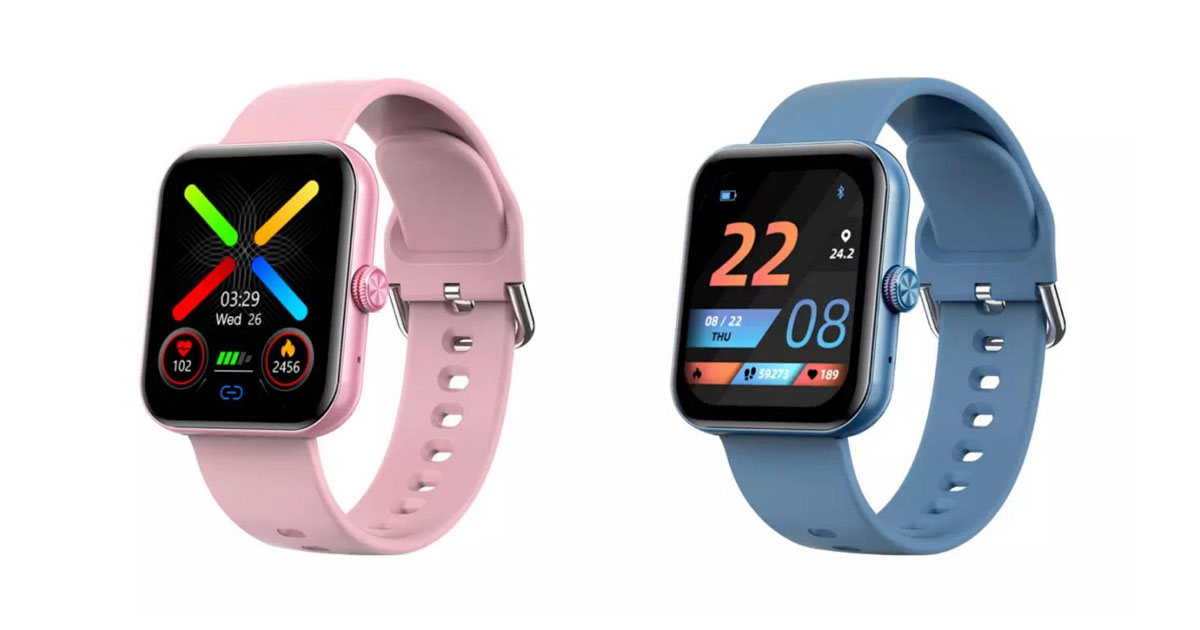
Ambrane, which is known for making mobile phone accessories, has launched a smartwatch in its FitShot lineup, dubbed as Ambrane FitShot Zest.
The device will compete in the overcrowded entry-level or budget smart wearable products in India. The company has announced that it is a voice assistance-enabled product and comes with a calling feature over Bluetooth.
The smartwatch features a 1.7-inch display that offers a screen resolution of 240 x 280 pixels and comes with support for over 60 cloud-based watch faces. For fitness tracking, it supports over 10 sports modes.
The device includes 24×7 real-time health tracking, including support for SpO2 monitoring, blood pressure monitoring, sleep monitoring, and heart rate monitoring, among others. It also has a menstrual cycle tracking feature that easily records and tracks the female cycles.
The wearable product is rated IP67, offering dust and water resistance. It also comes with support for music and camera controls. As for the battery life, the company is promising seven days of usage on a single charge.
The Ambrane FitShot Zest comes in three color options — Black, Blue, and Pink. The device is priced at ₹4,999 ($67) but it is currently available on e-commerce marketplace Flipkart at a discounted price of ₹2,999 (~$40). The company has revealed that the device will also be available for purchase through Amazon from next week.
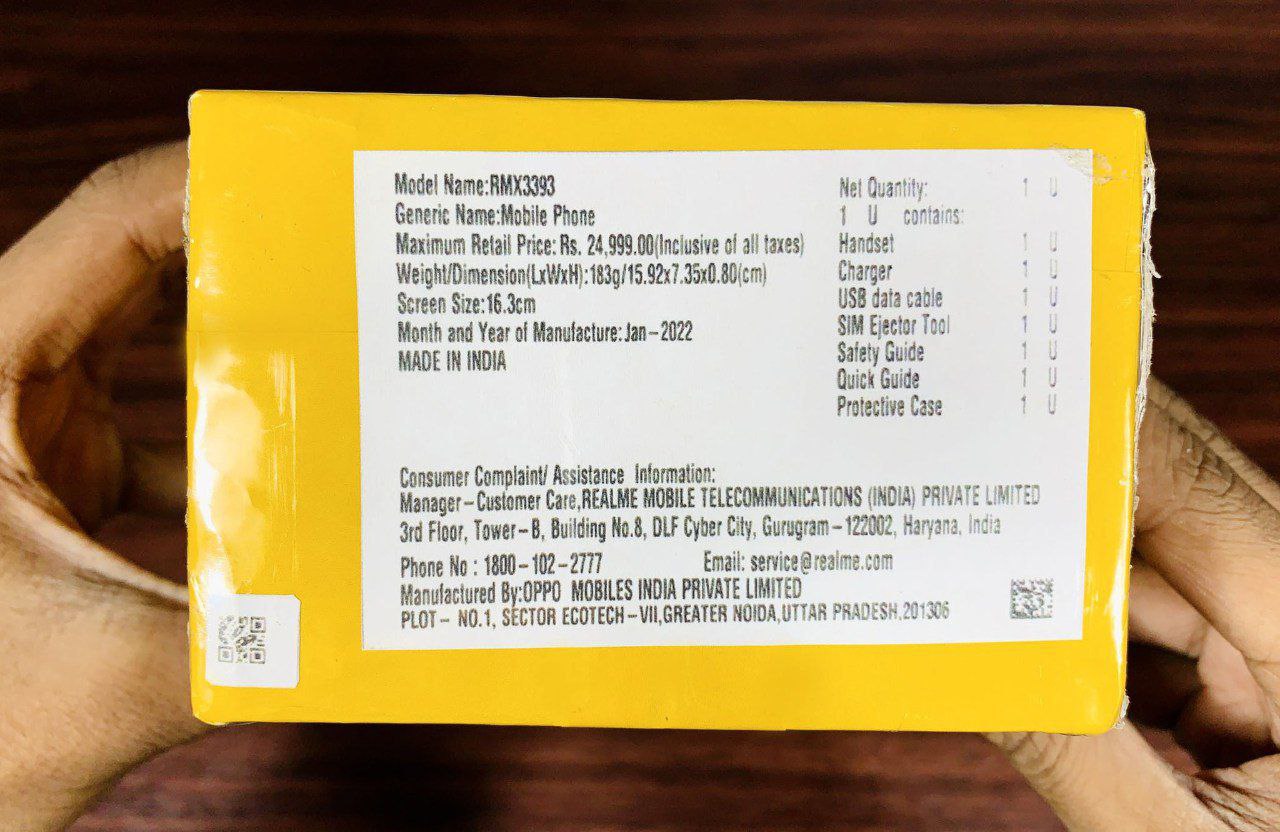
Realme 9 Pro 5G and Realme 9 Pro+ 5G will be announced at 1:30 PM (local time) on Feb. 16 in India. The rumor mill has already leaked a lot of information about the Realme 9 Pro series. Equal Leaks has now shared retail box images of the two phones to reveal their pricing.
Reports have revealed that the RMX3472 model number belongs to the Realme 9 Pro, while the RMX3393 is associated with the Realme 9 Pro+. The retail box of these phones will include a handset, a charger, a USB data cable, a SIM ejector tool, a protective case, a quick guide, and a safety guide.
1 of 2
Realme 9 Pro box
Realme 9 Pro box
As far as the pricing is concerned, the Realme 9 Pro 5G’s retail box carries a price tag of Rs 18,999 (~$254). On the other hand, the Realme 9 Pro+ 5G has a pricing of Rs 24,999 (~$334). Probably, these prices belong to the base models of the two phones. The retail box pricing leak suggests that the base variants could be made available for purchase with lower price tags of around Rs 16,999 (~$227) and Rs 22,999 (~$307), respectively. The authenticity of the above images could not be confirmed. Hence, it is unclear whether the images are real or fake.
Realme 9 Pro specifications (rumored)
The Realme 9 Pro has a 6.59-inch IPS LCD FHD+ 120Hz display, a 16-megapixel selfie camera, and a 64-megapixel (main) + 8-megapixel (ultrawide) + 2-megapixel (macro) triple camera system. The Snapdragon 695 powered device will come with 4 GB / 6 GB / 8 GB of RAM and up to 128 GB of built-in storage. It will house a 5,000mAh battery that supports 33W fast charging. For security, it will feature a side-facing fingerprint scanner.
Realme 9 Pro+ 5G specifications (rumored)
The Realme 9 Pro+ will feature a 6.43-inch AMOLED FHD+ 90Hz display, a 16-megapixel front-facing camera and a 50-megapixel (main, with OIS) + 8-megapixel (ultrawide) + 2-megapixel (macro) triple camera setup. The Dimensity 920 powered device may come with 6 GB / 8 GB of RAM and 128 GB / 256 GB of built-in storage. It may house a 4,500mAh battery that supports 65W fast charging. It will feature a heart rate sensor and an in-display fingerprint scanner. Lastly, it will come with a color-changing rear shell.
Samsung has improved a lot in terms of rolling out software updates for its smartphones and now the company is going a step forward by promising to offer four generations of Android operating system updates for the latest Galaxy S22 series smartphones.
At the Galaxy Unpacked event, the South Korean giant confirmed that the Galaxy S22 lineup as well as other recent devices from the company will be upgraded to the latest Android versions for four generations.
This means that the users will be getting new features and security updates down the line for a longer time compared to what is currently the industry standard. Most of the smartphones getting launched these days come with a promise of two years of Android version updates.
With long-time support for software updates, the useable life of the devices will be extended, keeping the device in the hands of the customer for a longer time. The development appears to be in line with Samsung’s “Together for Tomorrow” marketing campaign for promoting sustainability.
The company has confirmed 12 devices that will get Android operating system updates for at least four years. Apart from the Galaxy S22 lineup and the Galaxy Tab S8 series, the devices in the list include the Galaxy S21 lineup launched last year as well as the Galaxy S21 FE, Galaxy Z Fold3, and Galaxy Z Flip3.
Samsung’s commitment is interesting and impressive given that Google itself is promising just three years of Android OS updates for its Pixel 6 series flagship smartphones. However, the search engine giant has promised five years of security updates.
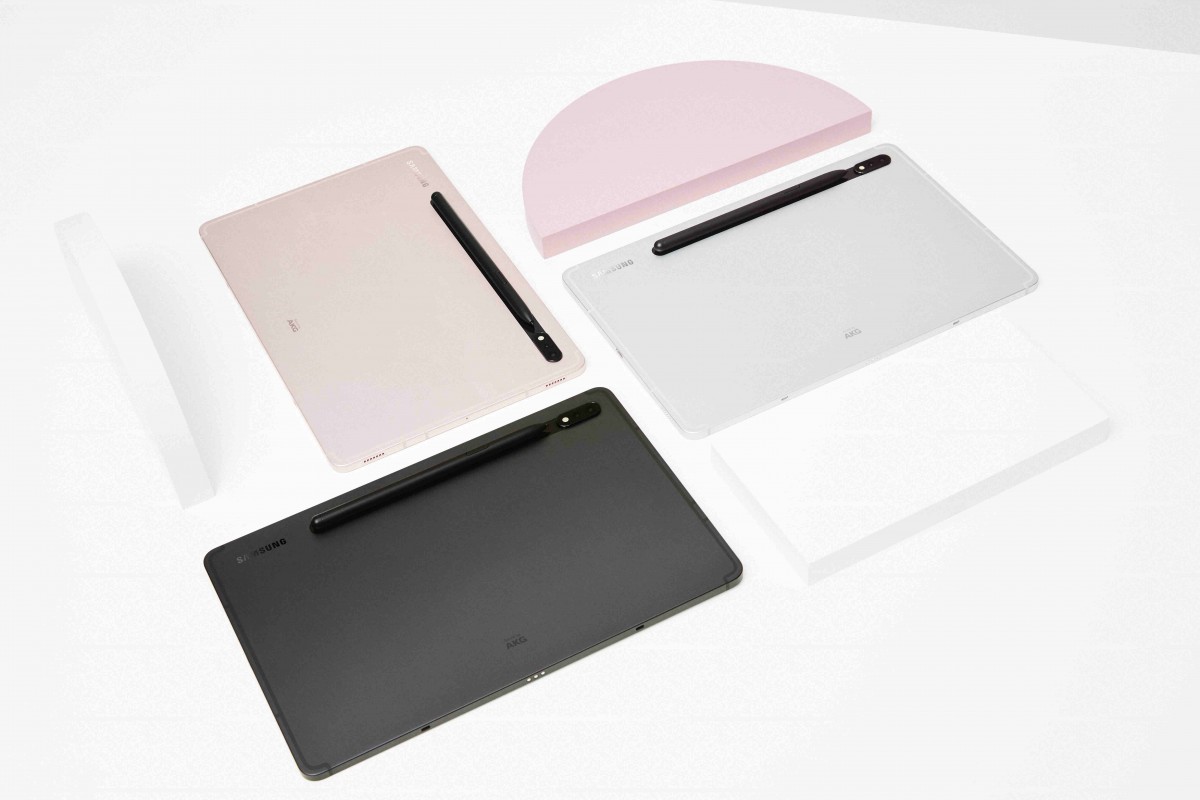
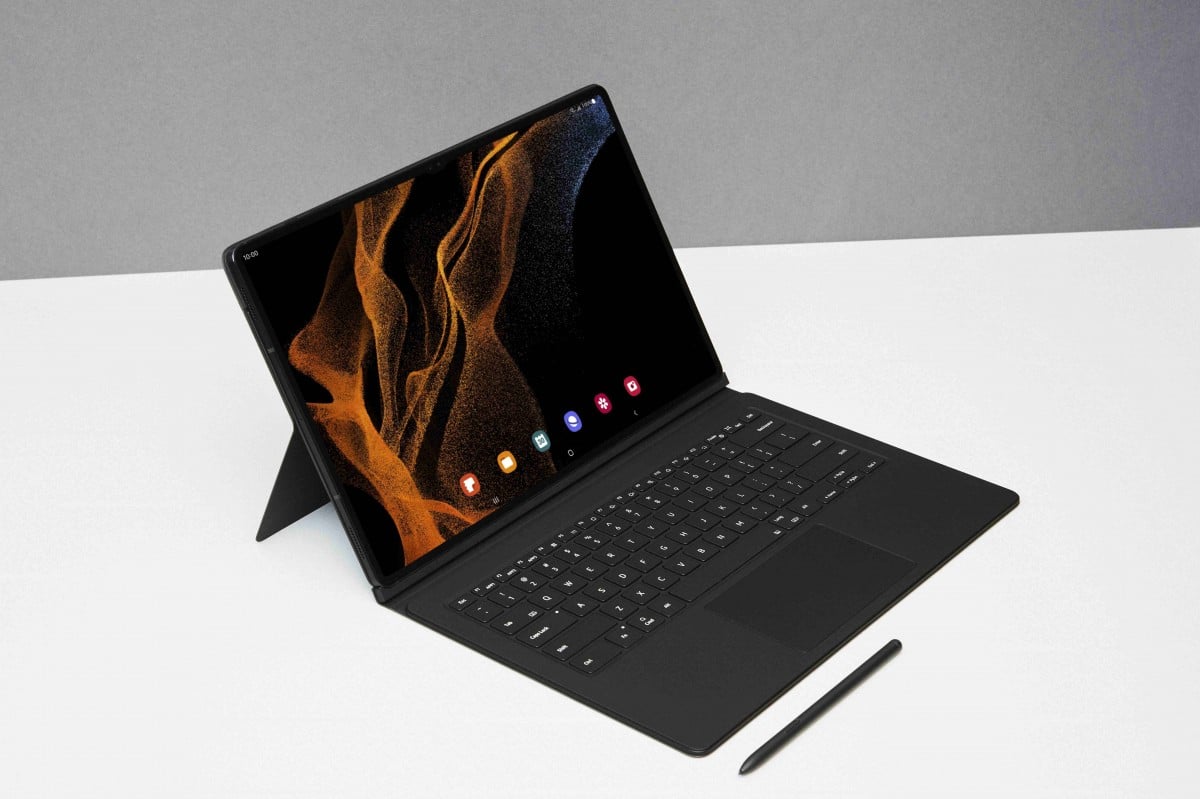
After months of leaks, the Samsung Galaxy Tab S8 series has gone official as the most powerful Android tablet. The Snapdragon 8 Gen 1 powered tablets come with up to 120Hz S-AMOLED display, impressive cameras, big batteries, and S Pen stylus support.
Samsung Galaxy Tab S8, Tab S8 Plus specifications and features
The Galaxy Tab S8 has an 11-inch LPTS TFT display that offers 2560 x 1600 pixels resolution. On the other hand, the Tab S8 Plus has a larger 12.4-inch AMOLED screen that produces 2800 x 1752 pixels resolution. Both models offer up to 120Hz refresh rate. The Plus model gets an in-screen fingerprint scanner, whereas the vanilla has a side-mounted fingerprint sensor.
Samsung Galaxy Tab S8 and Tab S8+
The frontside of the Galaxy Tab S8 and Galaxy Tab S8 Plus is flanked by a 12-megapixel ultrawide camera. The back panel of both devices have a 13-megapixel primary camera with autofocus support and a 6-megapixel ultrawide camera with dual-LED flash.
The Snapdragon 8 Gen 1 powered Tab S8 and S8 Plus ship with 8 GB / 12 GB of RAM and 128 GB / 256 GB storage. The vanilla model is packed with a 5,800mAh battery, whereas the Plus edition features a 10,090mAh battery. Both tablets carry support for 45W fast charging.
Samsung Galaxy Tab S8 Ultra specifications and features
The Galaxy Tab S8 Ultra has a 14.6-inch S-AMOLED display that offers a 2960 x 1848 resolution, a 120Hz refresh rate, and an ultrasonic in-display fingerprint reader. It is unique Android tablet that features a display notch, which houses a 12-megapixel main selfie camera and a 12-megapixel ultrawide lens. The back panel of the Tab S8 Ultra has a 13-megapixel + 6-megapixel dual-camera system, which is also available on the Tab S8 and S8 Plus tablets.
Samsung Galaxy Tab S8 Ultra
The Snapdragon 8 Gen 1 fuels the Galaxy Tab S8 Ultra. The flagship tablet comes with 8 GB / 12 GB / 16 GB of RAM and 128 GB / 256 GB / 512 GB of storage. It is backed by a massive 11,200mAh battery, which supports 45W fast charging.
The Galaxy Tab S8 lineup runs on Android 12 OS skinned with One UI 4.1. The OS tags along Samsung’s Knox security feature. The three tablets offer other features such as 5G, Wi-Fi 6E, Bluetooth 5.2, GPS, a USB Type-C Gen 3.2 port, quad stereo speakers tuned by AKG and Dolby Atmos, three microphones, wireless DeX, 30fps 4K recording, and support tor S Pen stylus.
Samsung Galaxy Tab S8 series pricing and availability
The base variants of the Galaxy Tab S8, Tab S8 Plus, and Tab S8 Ultra are priced at $699, $899, and $1,099, respectively. The pre-orders of the Tab S8 lineup have started in several markets with sales scheduled to begin later this month. The Tab S8 and Tab S8 Pus come in Graphite, Silver, and Pink Gold colors, whereas Tab S8 Ultra can be purchase in Graphite color only.
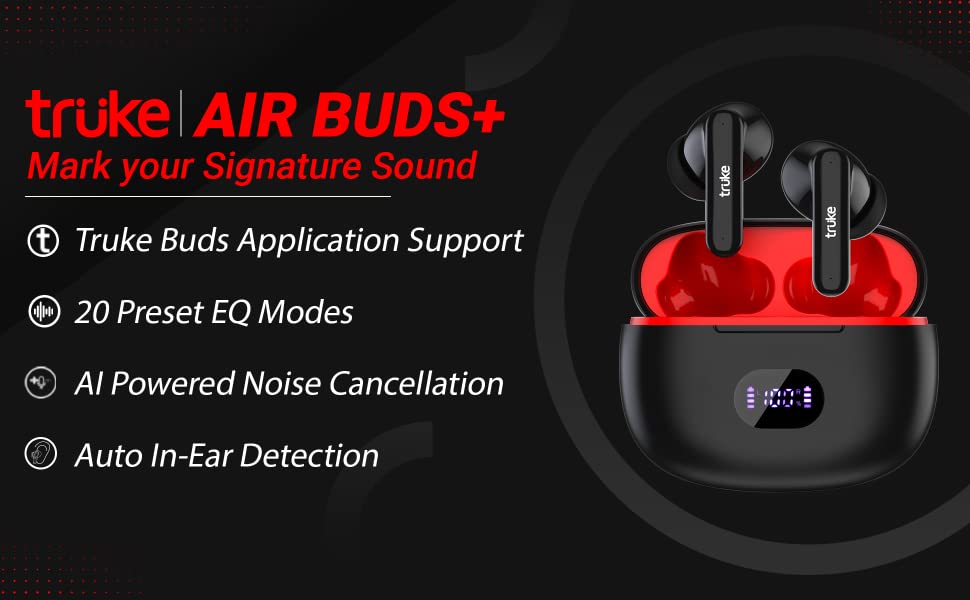
Indian audio accessories manufacturer Truke has launched a new set of audio products targeted at audiophiles. The lineup is led by the Truke Air Buds+ accompanied by the vanilla Truke Air Buds, two interesting truly wireless earbuds. The earbuds come just a month after the company launched the Truke BGS and Air Buds Lite.
The Truke Air Buds+ and Air Buds TWS earbuds both come with a 55ms low-latency gaming experience as well as an audio in-ear detection sensor. The earbuds also bring support for Bluetooth 5.1, Custom-User EQ, SBC codec, 20 Pre-defined EQ modes, and AI-powered noise cancellation with deep neural network call noise cancellation technology.
The duo utilizes 10mm dynamic drivers and has support for dual-mode configurations that allow users to switch between music and gaming mode. Users can also tune the earbuds during gaming for positional accuracy and improved gunshot effects.
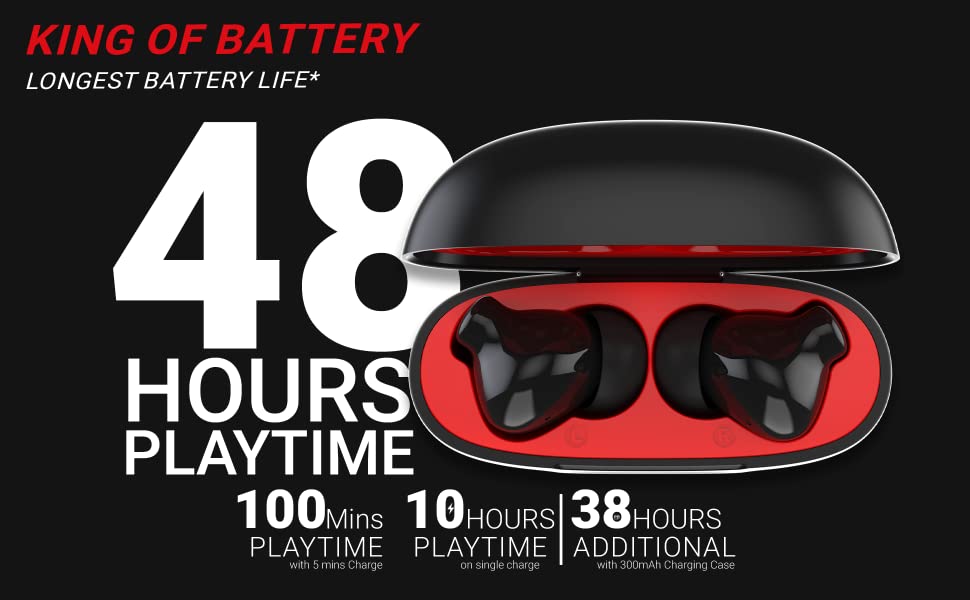
For the battery, the Truke Air Buds+ and Air Buds boast of up to 8-10 hours of playback on a single charge while the charging case packs a 300mAh battery that can extend the usage time to 48 hours. The case charges via USB-C port. The Air Buds+ case has a miniature screen that displays the battery stats.
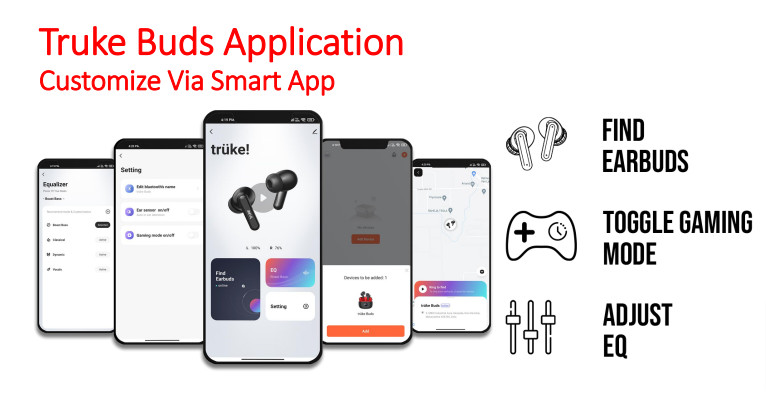
A first in the anals of Truke’s earbuds is the inclusion of a companion app designed for the device. The app lets users adjust the EQ as well as toggle gaming mode. They also arrive with IPX4 ratings for water resistance.
As for the price, the Truke Airbuds TWS earbud carries a price tag of Rs. 1599b(~$21) while the Airbuds+ TWS earbuds are priced at Rs, 1699 (~$23). The audio products are already on sale in India via Flipkart and Amazon.in.
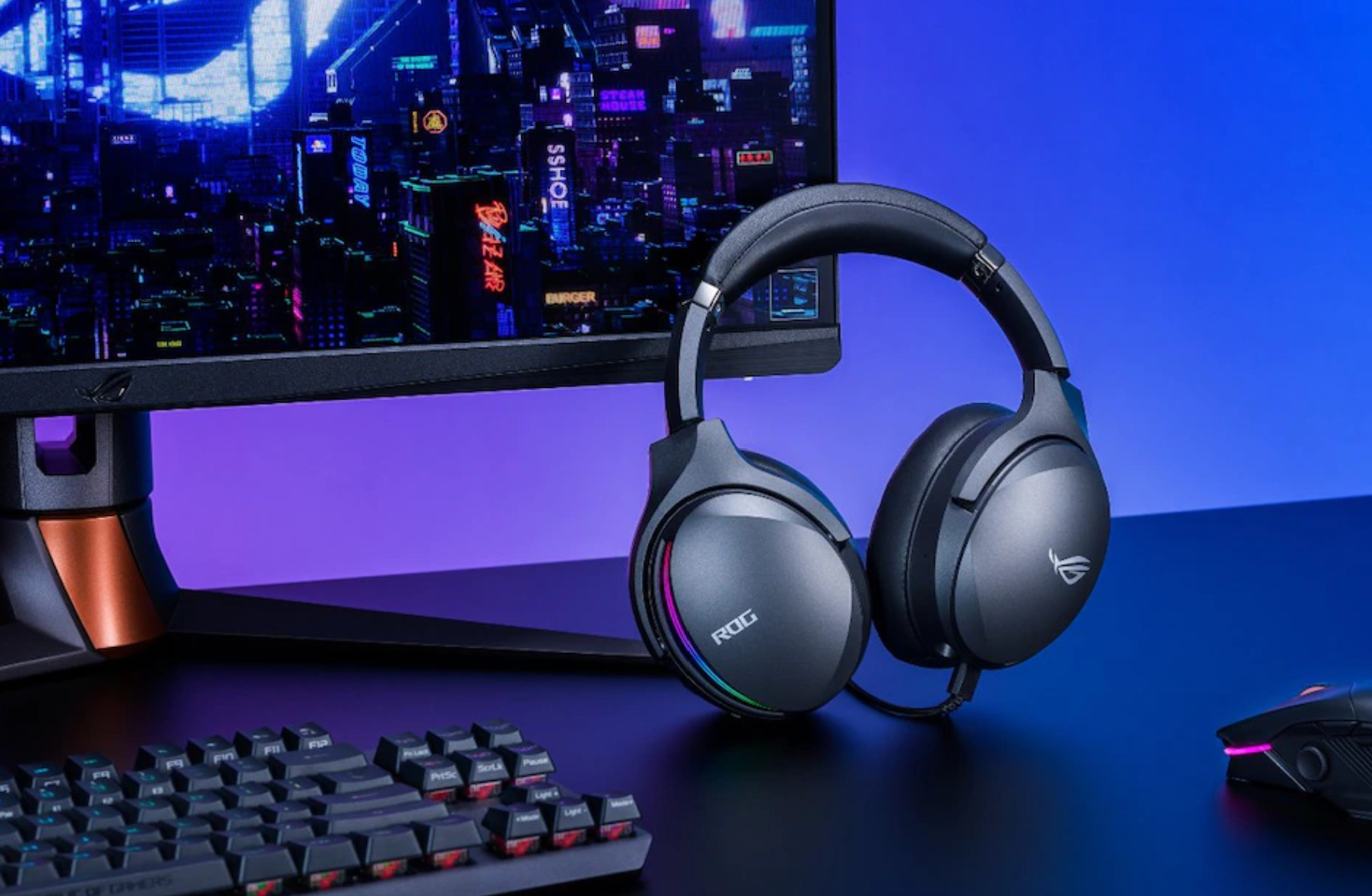
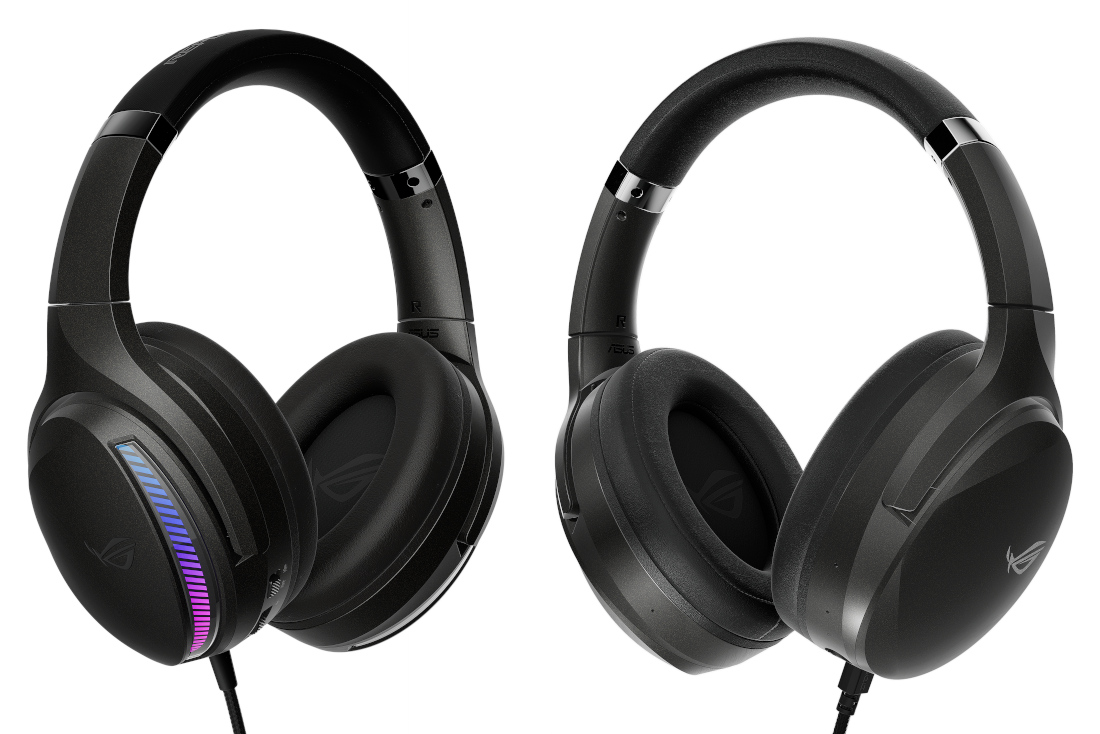
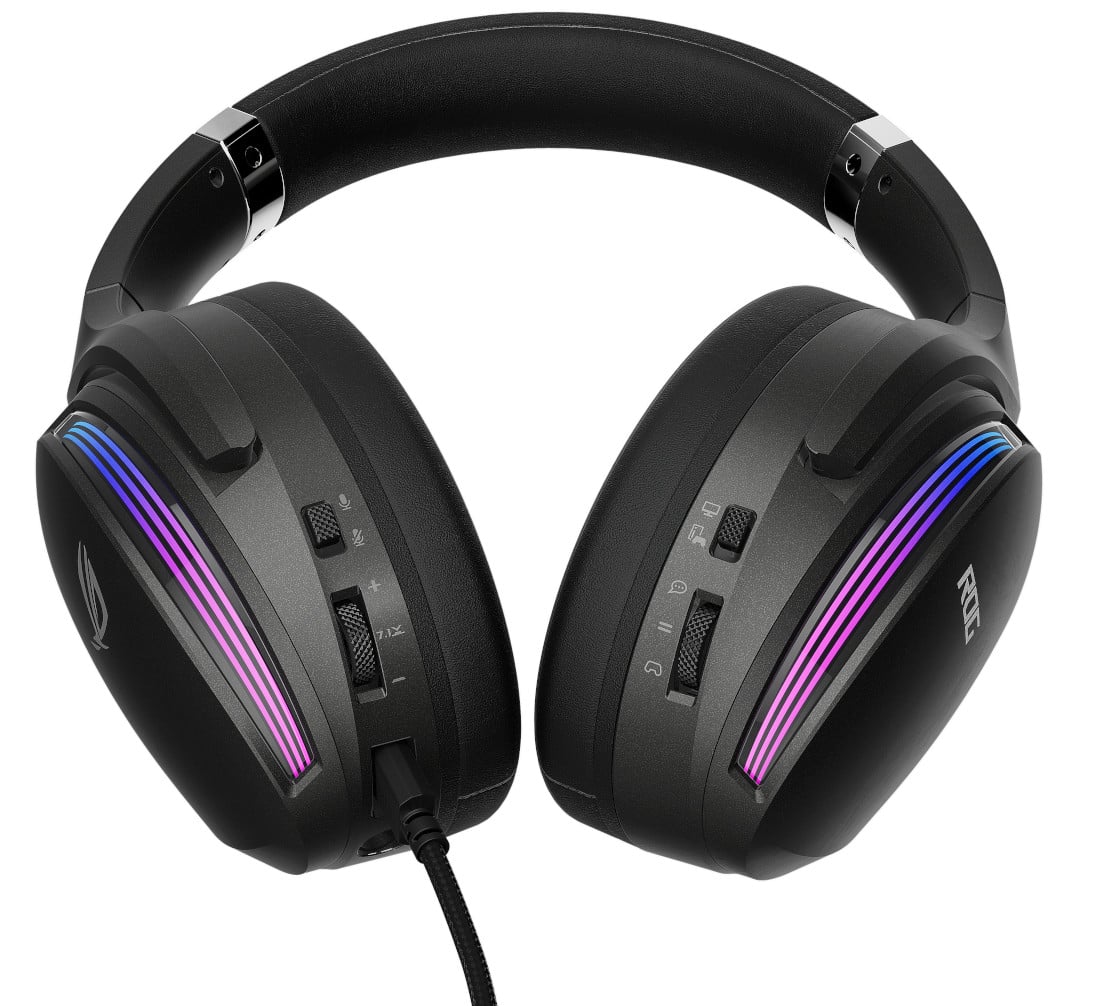
Popular gaming accessories provider ASUS is fast expanding its reach on that aspect of its business model as it has announced the ROG Fusion II 500 and Fusion II 300 gaming headsets in India. The two new gaming headsets feature the ESS 9280 Quad DAC together with AI Beamforming microphones that offer AI Noise Canceling technology.
The ASUS ROG Fusion II 500 will be priced at Rs. 22,999 ($307), while ASUS has not yet released the price of the Fusion II 300. Both gaming headsets will be sold via authorized ASUS stores in India, as well as its partners and online retail outlets. The two headsets are capable of producing crisp, clear, and lossless audio processing for high-quality audio outputs. Both headsets also have the 50mm ASUS Essence drivers with support for virtual 7.1 surround sound. The AI Beamforming mics create a 40-degree acoustic zone in front of the gamer’s mouth that automatically filters out background noise, in combination with the AI noise cancellation technology.
The two new ASUS ROG Fusion II headsets support USB-C and USB-A connectivity and a mix of several other features that delivers the best audio output that accentuates the overall gaming experience. There is a 3.5mm jack together with Game Chat volume control for the ROG Fusion II 500.
Ahead of the March 2022 unveiling of the ASUS ROG Fusion II 500 and Fusion II 300 in India, we expect to see more details about the two gaming headsets. ASUS will also hope that the two accessories get decent reception in the sub-continent and a hit with gaming enthusiasts.
Autonomous driving leader AutoX has hit another milestone in its trajectory of development of Level 4 autonomous driving technology through its Robo Taxi vehicles. The company has announced that it has hit the 1,000 vehicle fleet milestone, which is the largest in China, as it continues to expand rapidly its autonomous vehicle fleet. In a press statement, the company also states that it has also opened a new Robo Taxi operations center in San Francisco in the United States, to expand self-driving vehicle testing in the city.
AutoX is excited about achieving the 1,000 vehicles threshold for its RoboTaxis, as it represents a significant leap forward for scaling its operations and massive commercialization. The new milestone sits ahead of other autonomous vehicle industry leaders like Baidu, Waymo which are both yet to get up to 1,000 vehicles in their AV fleets. AutoX has maintained its leadership of the AV segment in China with its impressive fleet size. Of course, the company plans to scale beyond the 1,000 vehicles threshold in the RoboTaxi fleet, and its trajectory of development lends credence to its lofty goals in the AV industry globally.
AutoX’s autonomous vehicle assembly plant in China started producing the Gen5 system-equipped RoboTaxis in July 2021 and the Shanghai facility has been in full operation, churning out RoboTaxis into the market. The company says that such a dedicated production line for autonomous vehicles is critical in guaranteeing the quality, safety, and consistency of every RoboTaxi, and it is also the first of such facilities in China. The company continues to scale up the reach of its RoboTaxis as new vehicles enter the fleet.
The RoboTaxis have had a great reception since their introduction in China in January 2021. Robo Taxi operations centers are specially-built facilities that support the daily operations of large Robo Taxi fleets. The operations centers are the hub of the Robo Taxis operations and the company operates four of such facilities within a 1,000 square kilometers service area. The other operation centers are in Guangzhou, Beijing, and Shanghai. The company says its mission is to provide everyone access to fully driverless mobility with a great user experience. It continues to expand the segment of the Chinese urban population that is serviced by the Robo Taxi fleet, and AutoX plans to further scale its operations in that regard.
Sony has just launched a new system software beta for the PS4 and PS5 which brings many quality of life changes to the operating system along with some new features. The most intriguing out of these is the voice command preview which will enable users to use voice commands on their Playstation 5 consoles pretty much like a voice assistant. So let’s check out all the changes that come with the new software beta.
New Party Chat Options
Open and Closed Parties (PS5 and PS4 betas)
When you start a party, you can now select either an open party or a closed party:
An open party lets your friends see and join the party without an invite. Friends of party members can also join.
A closed party is only for players you invite
Voice chat reporting feature update (PS5 beta)
If you want to report something that someone in a party said, there are now visual indicators for you to identify who was speaking. This will help PlayStation Safety take appropriate action based on your report.
Share Play update (PS5 beta)
Start Share Play directly from the voice chat card. You no longer need to start Share Screen first to use Share Play.
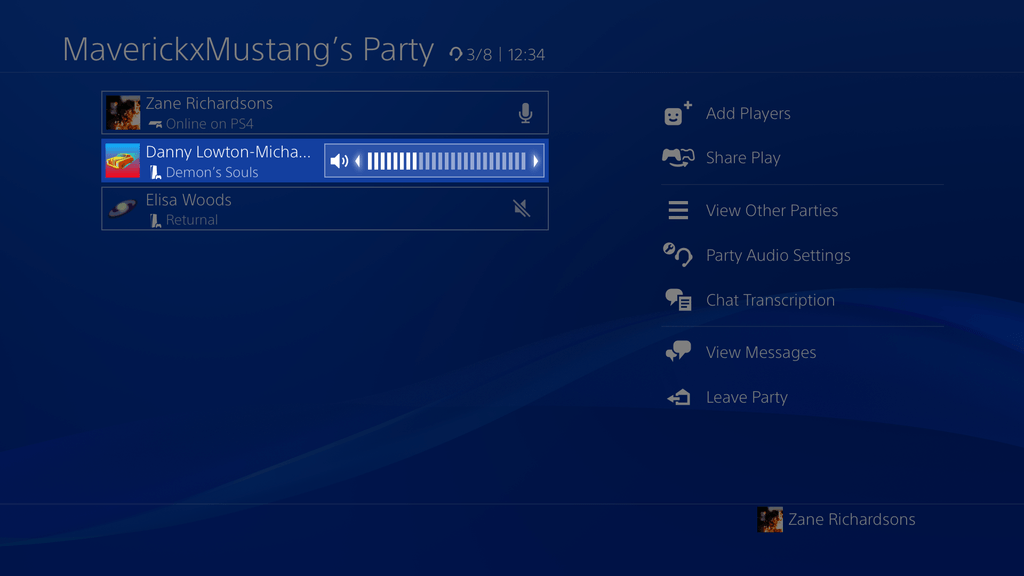
Voice chat volume (PS4 beta)
You can now individually adjust the voice chat volume of each player in a party on PS4, just like on PS5.
New PS5 UI Features
Filter by genre
Playstation has added an option to filter your game collection by genre, letting you quickly find specific types of game experiences.
Keep in Home
You can now keep the games or apps you choose on your home screen by selecting “Keep in Home” with the (options) button.
You can keep a maximum of five games and apps on each home screen with this feature.
Voice Command (Preview)
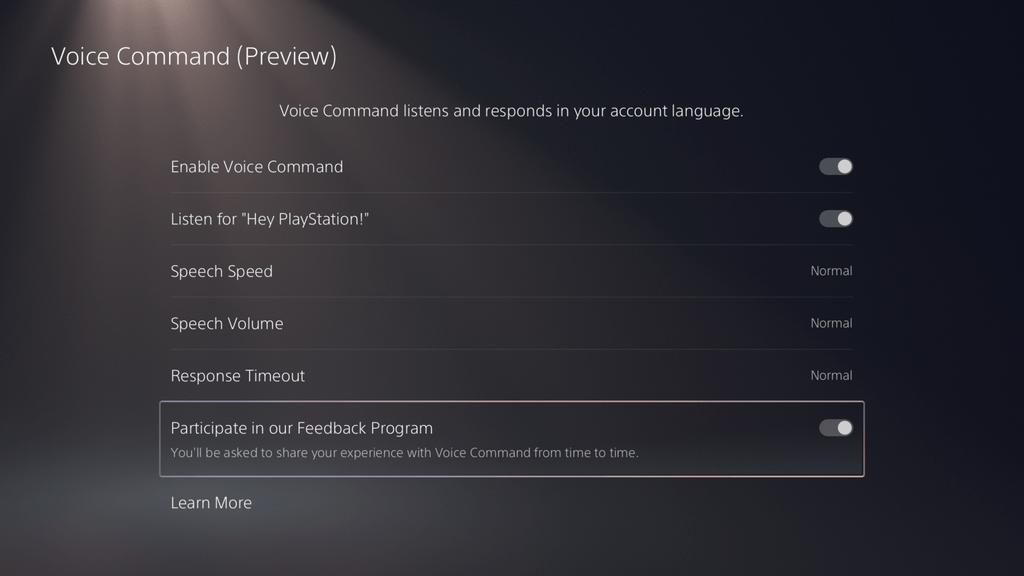
Playstation is testing the voice command feature on PS5 consoles for finding and opening games, apps, and settings, as well as controlling media playback.
To get started, enable Voice Command (Preview) from the Settings menu. Then, call out “Hey, PlayStation!” and ask your PS5 console to find a game, open an app or setting, or control playback while enjoying a movie, TV show, or song.
Do note that this feature is currently available in English for beta participants with accounts registered to the U.S. and U.K.
PlayStation has confirmed the final system software updates will be available globally later this year. Players selected to participate in the betas will receive email invitations when the updates are available to download tomorrow. To check out the complete changelog of this new beta program, click this link.
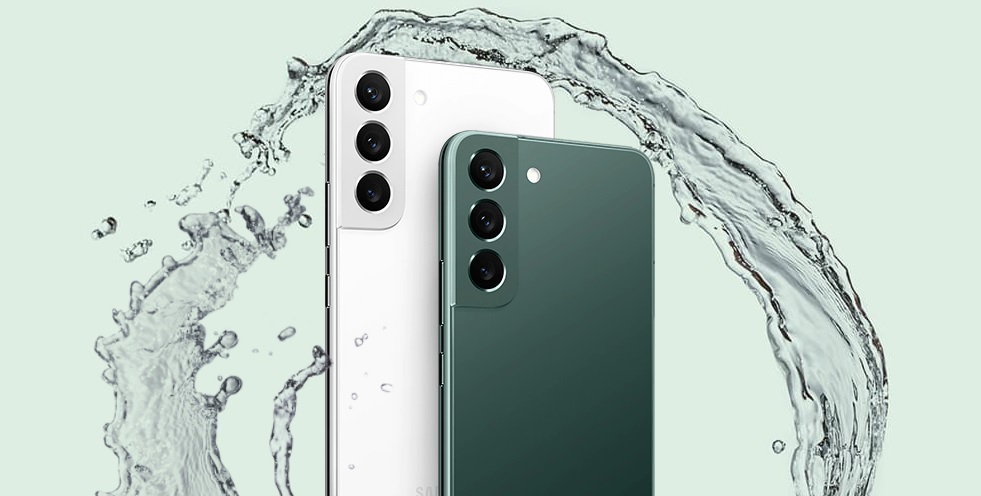
Samsung on Wednesday has officially unveiled the Galaxy S22 series. The smartphone series comprises the Samsung Galaxy S22, Galaxy S22+, and Galaxy S22 Ultra. While the S22 Ultra is indeed the star of the show, let’s not overlook the other S22 siblings. In this story, we’ll take a look at the S22 and S22+.
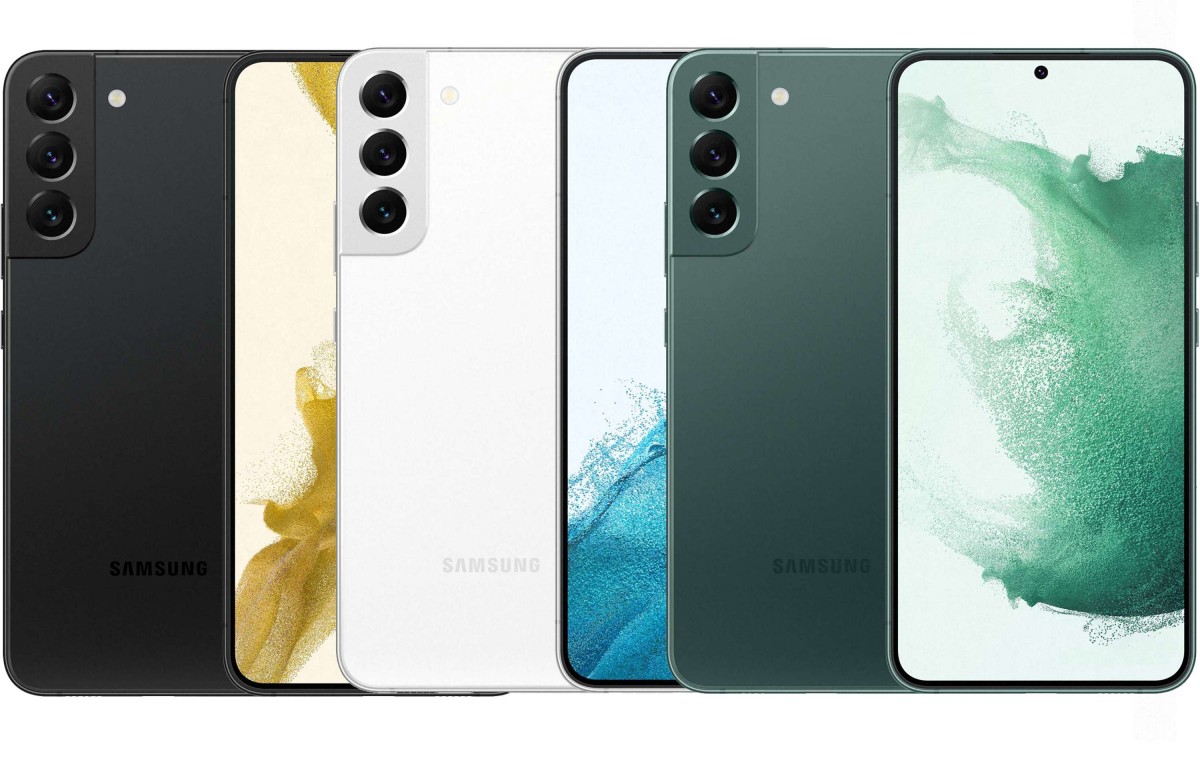
The Samsung Galaxy S22 is priced starting at $799, while the S22+ starts at $999. Both come in two configurations — 8GB RAM + 128GB storage variant and 8GB RAM + 256GB storage variant. The duo comes in four colors Phantom Black, Phantom White, Phantom Green, and Pink Gold.
Samsung Galaxy S22, Galaxy S22+ Specifications
Coming to the specifications, Samsung has retained the predecessor S21’s design for the new S22 and S22+. Especially at the rear, we get to see the same camera-island style. The Galaxy S22 sports a 6.1-inch Dynamic AMOLED 2X display with a Full-HD+ resolution. The S22+, on the other hand, has a larger 6.6-inch FHD+ Dynamic AMOLED 2X panel.
Both come with a 120Hz refresh rate and have Corning Gorilla Glass Victus+ protection. As for the built, the phones have Armor Aluminum frame. The S22 has 1300 nits of brightness, whereas, the S22+ supports 1750 nits brightness.
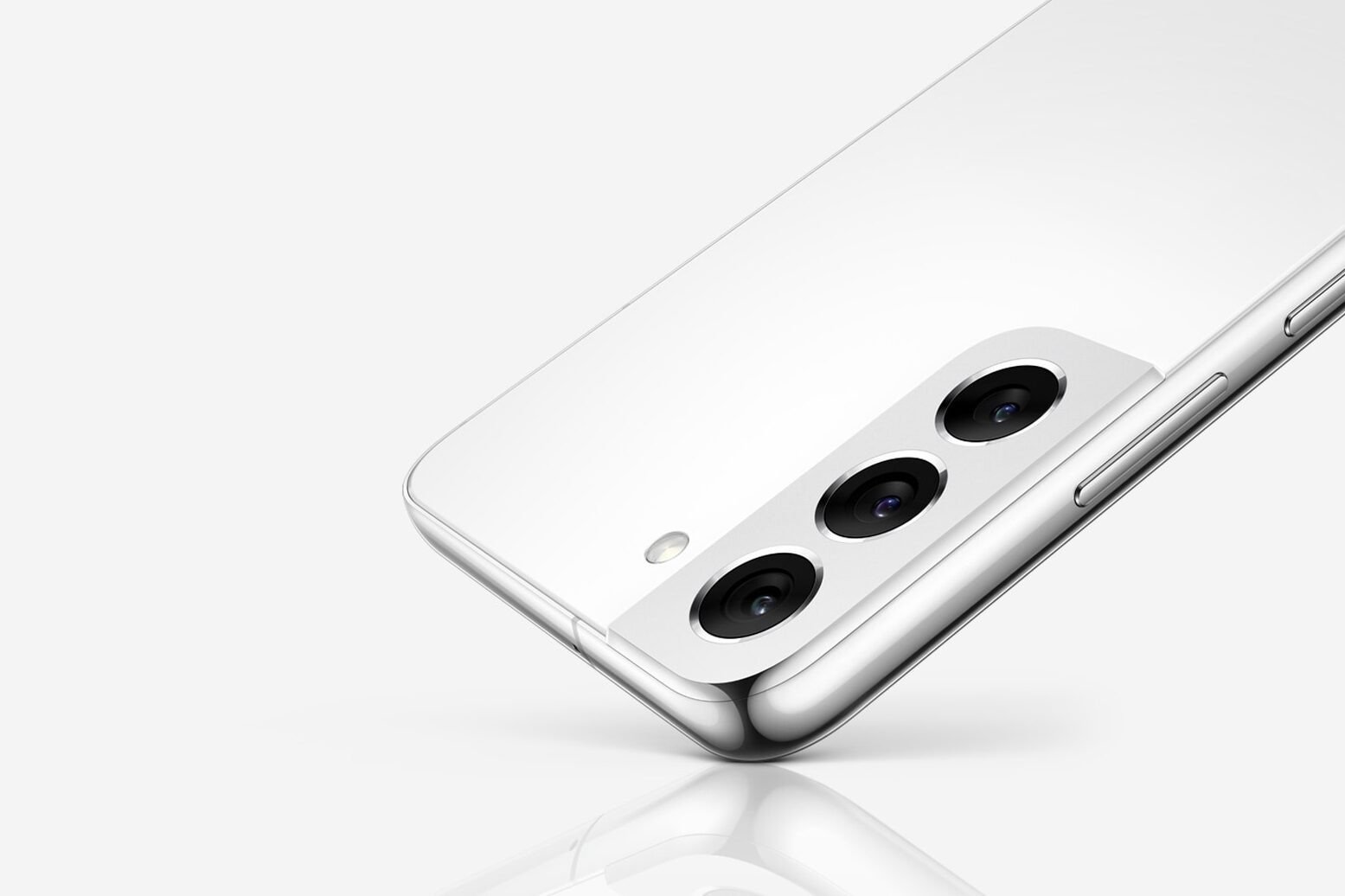
In terms of cameras, both come equipped with a triple camera system at the rear. This time around, Samsung replaced the 64MP main lens from the predecessor to the new 50MP Samsung GN5 sensor. The primary lens provides 12.5MP pixel binned images.
It also has a 12MP ultra-wide lens with a 13mm focal length. Lastly, there’s also the 10MP telephoto sensor with 30x Space Zoom and 3x optical Zoom. Upfront, both have a 10MP selfie snapper.
Furthermore, the duo gets the new Qualcomm Snapdragon 8 Gen 1 and Exynos 2200 SoC(depending on the region), which is the same as the Galaxy S22 Ultra. The major difference between the two is in the battery department. The Galaxy S22 packs a 3,700mAh battery with 25W fast charging support, whereas, the Galaxy S22+ gets a 4,500mAh battery and has a 45W fast charging support.
Samsung claims that the vanilla S22 can offer up to 54 hours of audio playback, while the Plus can provide 69 hours of audio playback. Both have a 15W wireless fast charging support. The phones run on the latest OneUI 4.1 on top of the Android 12 OS.
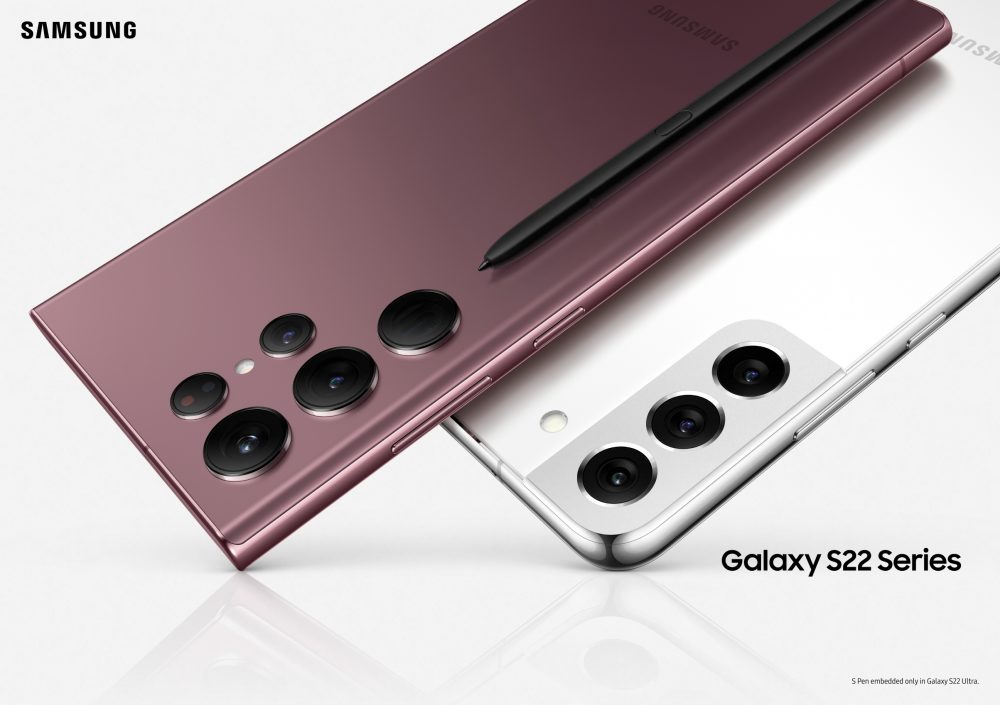
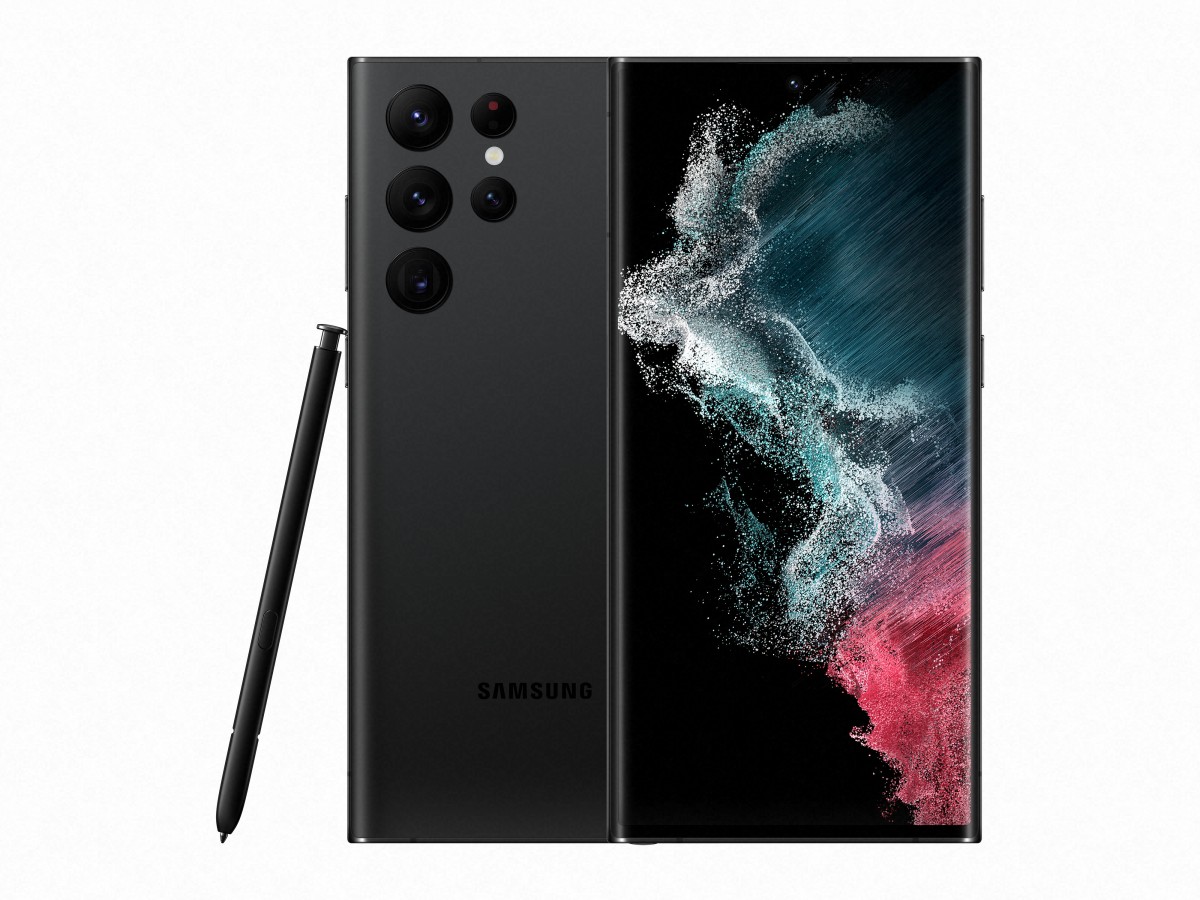
Samsung‘s flagship offering for 2022 is off to a bright start with the launch of the Galaxy S22 series comprising the Galaxy S22, Galaxy S22 Pro, and the Galaxy S22 Ultra. No doubt, the top-end Galaxy S22 Ultra is the star of the pack as it comes with several impressive features including some that are appearing on the Galaxy S series for the first time.
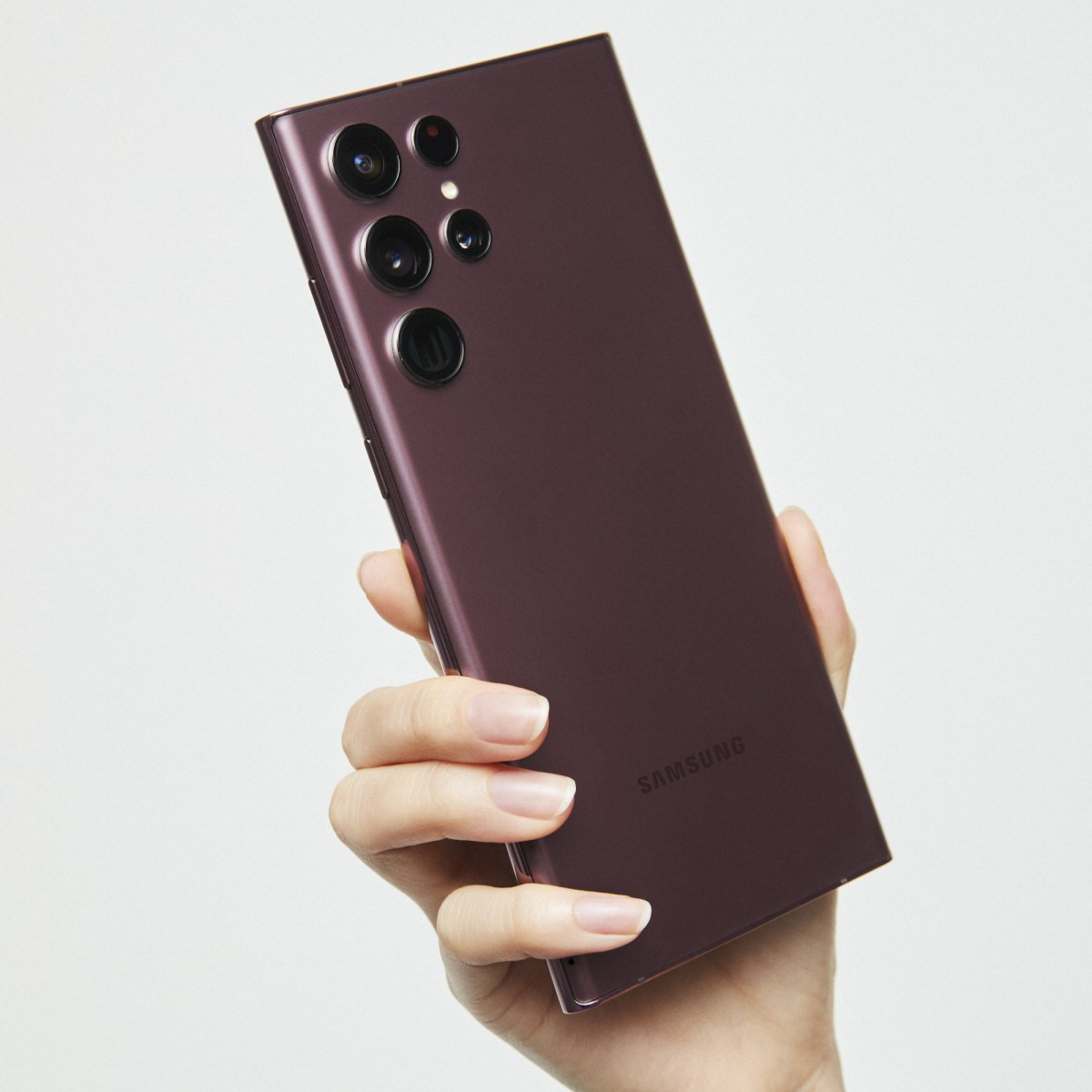
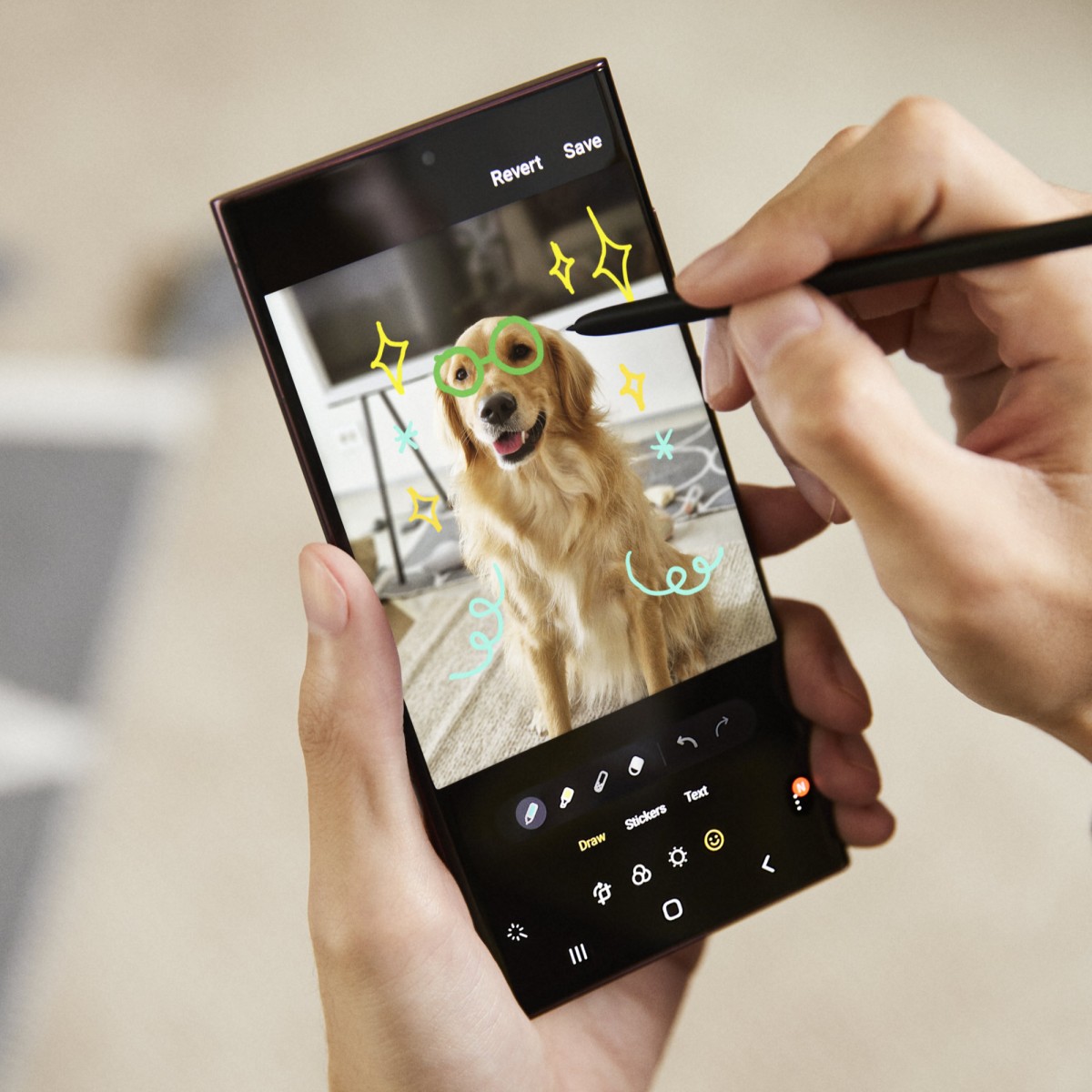
The Samsung Galaxy S22 Ultra is not only a successor to the Galaxy S21 Ultra, it is also the successor of the Galaxy Note 20 Ultra that was released in 2020 but never got a successor to date. The main highlight of the Galaxy S22 Ultra is the presence of an S Pen stylus, a device that is common with the Galaxy Note series.
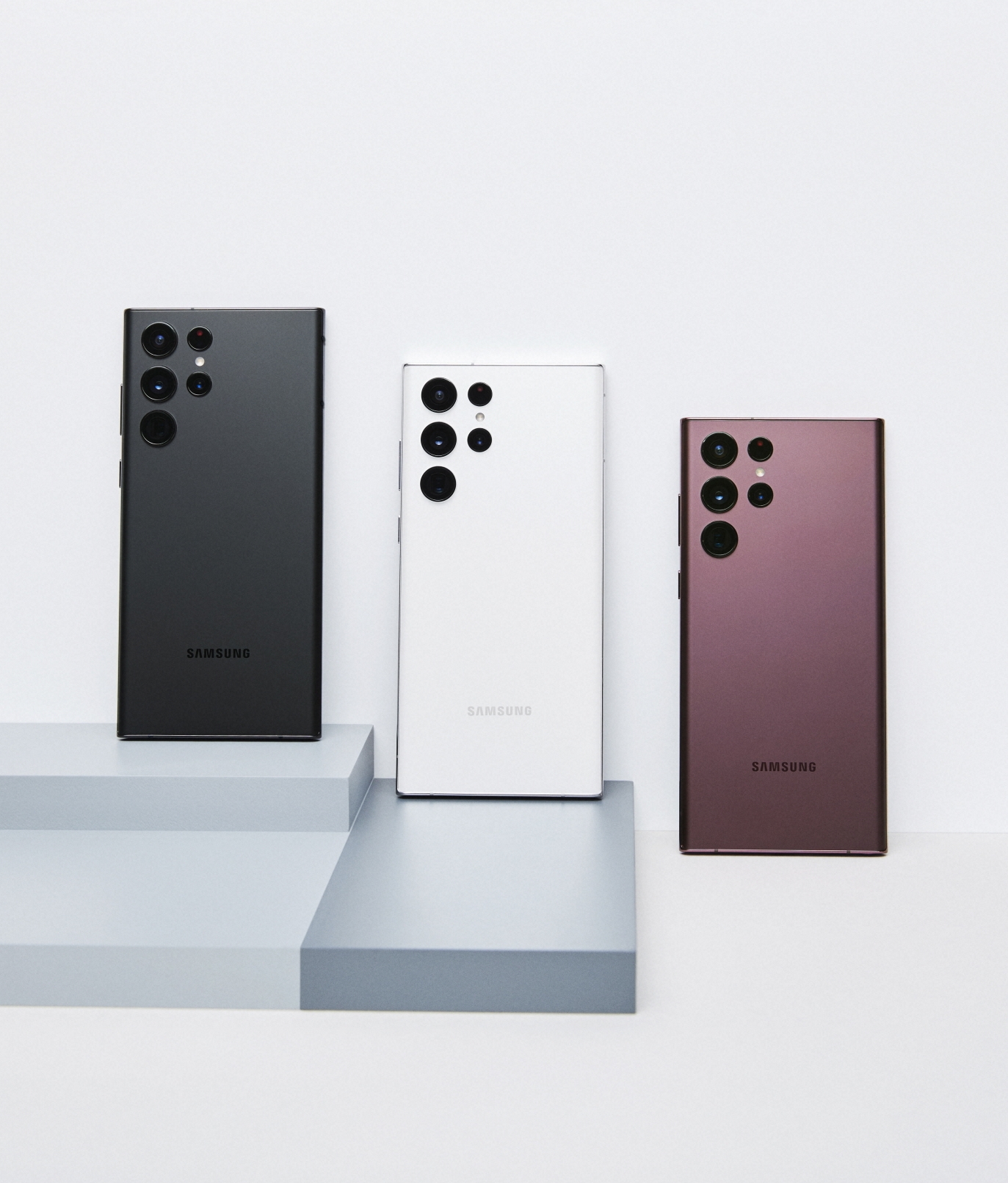
In terms of the design, the Galaxy S22 Ultra adopts a similar design to the Galaxy Note 20 Ultra whereby the front is flattened alongside the top and bottom while the sides are curved. Samsung even included a Burgundy color variant which looks similar to the Note 20’s Mystic Bronze color option.
The premium flagship phone utilizes an aluminum frame as well as the Corning Gorilla Glass Victus+ covering at the front and rear aspects. By the way, this is the first time the Gorilla Glass Victus+ is finding its way into a smartphone, corroborating an earlier rumor that Samsung will be the first to use the new glass protection. The phone also comes with IP68 water and dust resistance rating and this includes the S Pen.
Another aspect where the Galaxy S22 Ultra is expected to shine is the camera segment. The camera design ditches the large camera island which we have seen in its predecessor instead, opting for a plain design while retaining the array of sensors on the Galaxy S21 Ultra.
The camera configuration includes a 108MP F/1.8 main camera just like on the Galaxy S21 Ultra teaming up with a 12MP f/2.2 ultrawide camera, 10MP F/2.4 3x, and 10MP F/4.9 10x periscope lenses. At the front, there is a 40MP F/2.2 selfie camera. The main improvement in the camera segment is the introduction of AI enhancement deploying the updated NPU to improve photo and video quality in low light and also to add other camera features.
Some of the new features include Auto Framing that allows the ultrawide camera to adjust the shot to fit the number of people in the frame. The camera also expands to accommodate more people if others join in. There is also an option of manually zooming in or tracking just one person in the group and the shot’s frame will be adjusted. There is also an improved portrait mode effect, including a night portrait mode that kicks in automatically while shooting in low light.
As for the S Pen, it comes with an impressive latency of 2.8ms which makes it highly responsive. It also integrates AI-based coordinate prediction technology. The phone also features support for handwriting to text features, upgraded to support 88 languages.
In terms of the display, the Galaxy S22 Ultra packs a 6.8-inch AMOLED 2X panel with a 120Hz refresh rate and a QHD+ resolution of 3088×1440 pixels. The display also comes with a 240Hz touch sampling rate, 100 percent DCI-P3 coverage, and 1,750 nits of peak brightness. There is also an ultrasonic fingerprint sensor embedded under the screen.
Providing the juice is the latest Qualcomm Snapdragon 8 Gen 1 chipset while some regions will get the new Exynos 2200 SoC from Samsung on their models. The processor pairs with 8GB of RAM and 128GB storage on the base model while there is a 12GB RAM variant with either 256GB, 512GB, or 1TB storage options.
The Galaxy S22 Ultra will run the latest One UI 4.1 based on Android 12 OS. The device will be powered by a 5000mAh battery with support for up to 45W wired fast charging and 15W wireless charging.
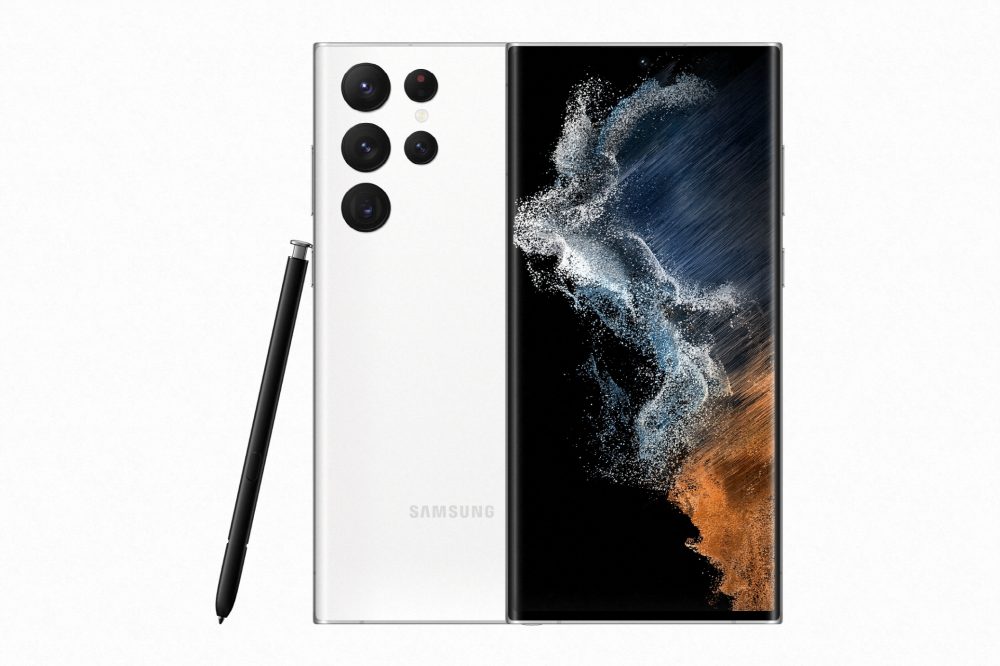
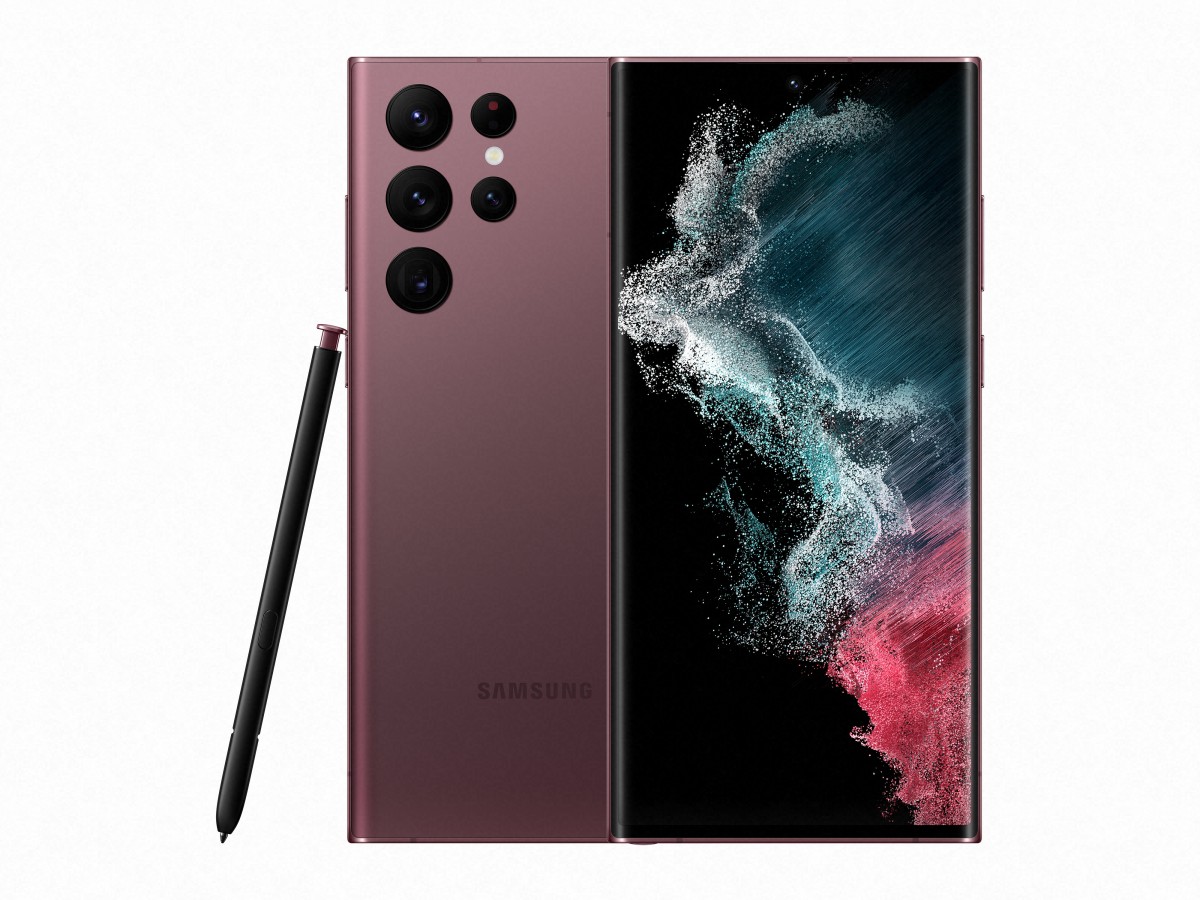
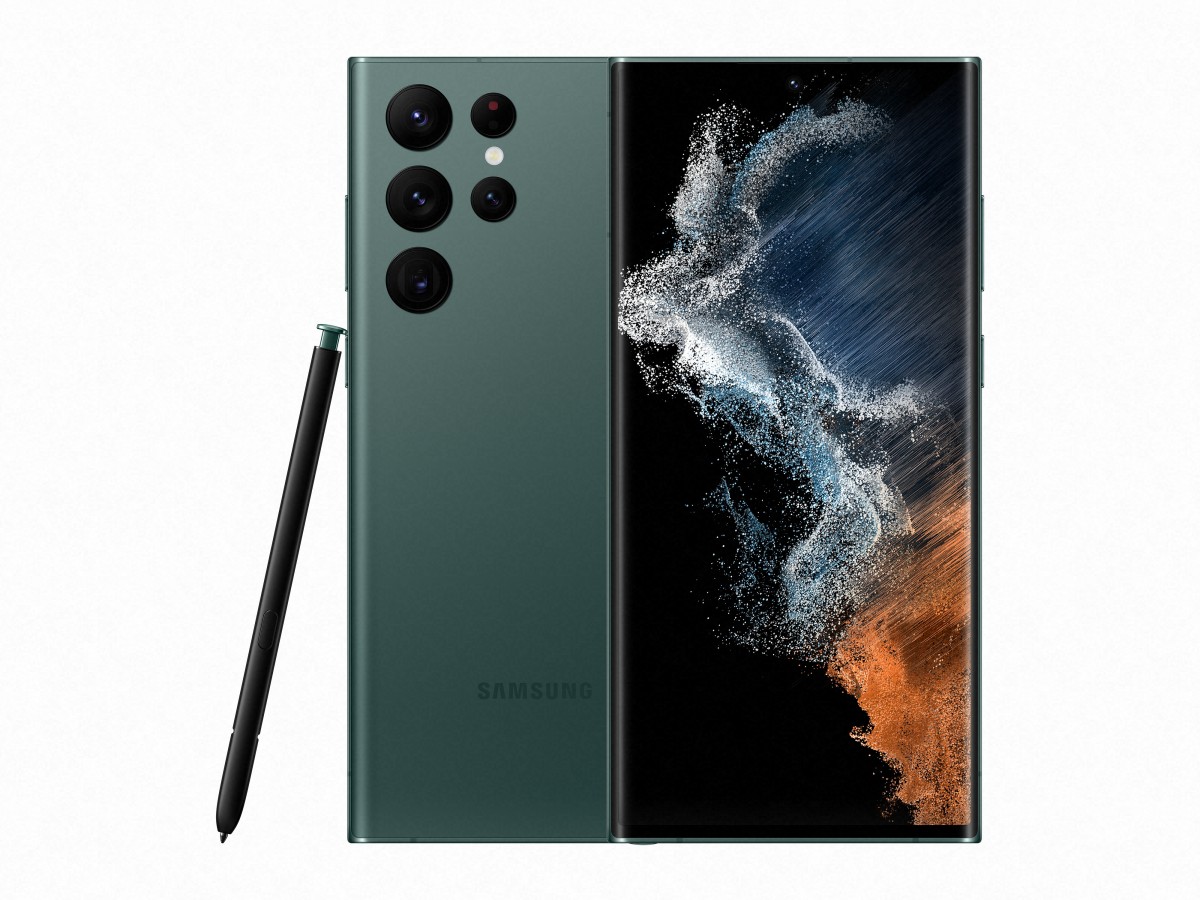
Samsung Galaxy S22 Ultra colors
1 of 4
The S22 Ultra will come in Phantom Black, Phantom White, Green, and Burgundy. It will retail in Europe for €1,250 for the 8GB+128GB version while the 12GB+256GB version is priced at €1,350. The 12GB+512GB and 12GB+1TB versions will sell for €1,450 and €1,650 respectively. The device will go on sale from February 25 but is now up for pre-orders. Samsung will also be exclusively selling additional Graphite, Red, and Sky Blue color options on Samsung.com.
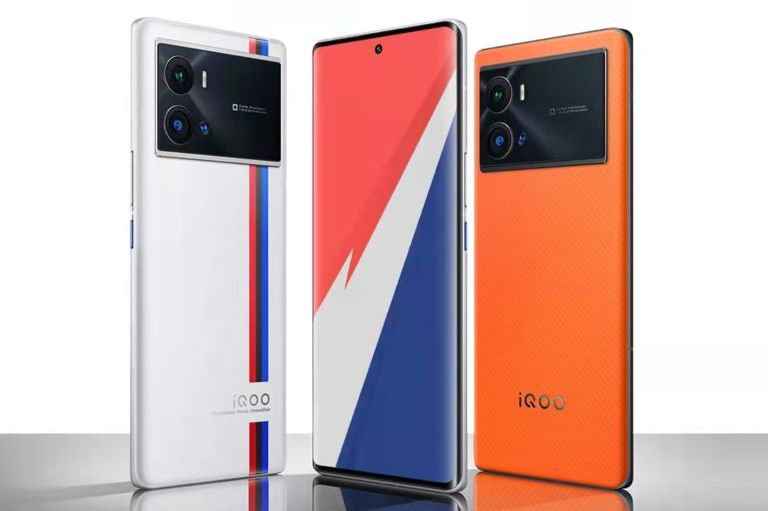
The Vivo sub-brand iQOO is gearing up to launch its latest flagship devices in the Indian market. The Indian lineup consists of three devices including the iQOO 9 and iQOO 9 Pro which have already been released in China and a new iQOO 9 SE. However, the iQOO 9 Pro model won’t be the same as the Chinese variant as revealed by a recent report.
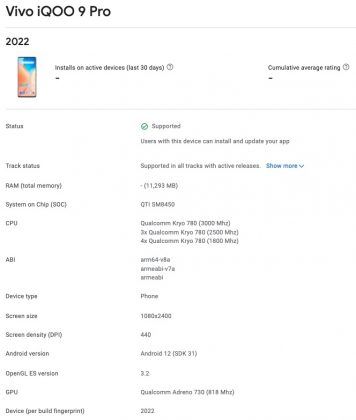
iQOO 9 Pro Google Play Console listing
1 of 2
Image via mysmartprice
Image via mysmartprice
MySmartPrice recently spotted the iQOO 9 Pro India variant carrying model number I2022 on the Google Play Console and Google Play supported devices list. The specs listed were mostly in line with the Chinese variant except for the display resolution. Where the Chinese iQOO 9 Pro gets a QHD+ (3200 × 1440 pixel) display, the latest listing revealed that the Indian variant is coming with an FHD+ (2400 x 1080 pixel) display 440ppi pixel density. The reason for this change is unknown however, it might be related to keeping the cost down to offer the device at competitive prices in the sub-continent.
iQOO 9 Pro Indian variant specs (rumored)
So far, we know that the iQOO 9 Pro will have a 6.78-inch FHD+ curved AMOLED display with a 120Hz refresh rate and an in-display fingerprint scanner.
As for the cameras, the iQOO 9 Pro has a 50MP Samsung GN5 + 50MP UW + 16MP triple camera system. The primary sensor will have gimbal stabilization support and the tertiary lens will have a 2.5x optical zoom support.
The Snapdragon 8 Gen 1 chipset will power the device with 8 GB / 12 GB of RAM and 128 GB / 256 GB storage. The device is likely to feature LPDDR5 RAM and UFS 3.1 storage. It will house a 4,700mAh battery that supports 120W fast charging and it will run on Android 12 OS.
The upcoming iQOO 9 lineup already has an Amazon Indian landing page so we can expect the device to launch this month only.
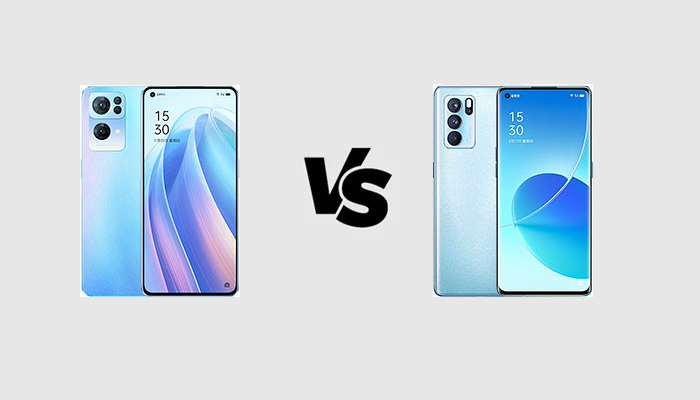
After a few months from the Chinese announcement, OPPO finally launched the Reno7 Pro 5G in the global market starting from India. The handset won’t come in Europe, neither under the Find X5 series, and it will remain exclusive for the Asian market. Instead of the OPPO Reno7 Pro 5G, the vanilla Reno7 will hit the European regions under the Find X5 Lite moniker. The same happened to its predecessor: the Reno6 Pro 5G, as the European variant of this handset, is a rebranded Reno6 Pro+. Is the Reno7 Pro 5G really an upgrade of the Reno6 Pro 5G? Is it worth switching from the latter to the former? This comparison will clear your ideas in regards.
OPPO Reno7 Pro 5G vs OPPO Reno6 Pro 5G
OPPO Reno7 Pro 5G
OPPO Reno6 Pro 5G
DIMENSIONS AND WEIGHT
158.2 x 73.2 x 7.5 mm, 180 grams
160 x 73.1 x 7.6 mm, 177 g
DISPLAY
6.55 inches, 1080 x 2400p (Full HD+), AMOLED
6.55 inches, 1080 x 2400p (Full HD+), AMOLED
PROCESSOR
Mediatek Dimensity 1200 Max 5G, octa-core 3 GHz
Mediatek Dimensity 1200 5G, octa-core 3 GHz
MEMORY
8 GB RAM, 256 GB – 12 GB RAM, 256 GB
8 GB RAM, 128 GB – 12 GB RAM, 256 GB
SOFTWARE
Android 11, ColorOS
Android 11, ColorOS
CONNECTIVITY
Wi-Fi 802.11 a/b/g/n/ac/ax, Bluetooth 5.2, GPS
Wi-Fi 802.11 a/b/g/n/ac/ax, Bluetooth 5.2, GPS
CAMERA
Triple 50 + 8 + 2 MP, f/1.8 + f/2.2 + f/2.4
32 MP f/2.4 front camera
One of the most important upgrades of the OPPO Reno7 Pro 5G if compared to its predecessor is definitely the design. Unlike the OPPO Reno6 Pro 5G, the new handset comes with a flat design including flat borders just like the latest iPhones and even a flat display. It is the first Pro variant from the Reno series without a curved display. Further, on the rear side, it comes with an array of LEDs surrounding the camera module which can be used to alert the users regarding new notifications and calls. The OPPO Reno6 Pro 5G has a curved screen at the edges and curved borders; both the phones come with a glass back and the Gorilla Glass 5 protection. Which one is the most attractive? It mostly depends on tastes, but the Reno7 Pro is definitely more original.
Display
It looks like the OPPO Reno7 Pro 5G and the Reno6 Pro 5G have the same display panels. We are talking about an AMOLED display with a diagonal of 6.55 inches, a Full HD+ resolution of 1080 x 2400 pixels, a 90 Hz refresh rate, an in-display fingerprint reader, and the HDR10+ certification. It is a very good display, not the best one but the image quality provided is great. These phones come with great color accuracy, a high brightness, and they provide a smooth user experience. Note that the Reno7 Pro 5G is the only one to offer stereo speakers.
Specs & Software
Even the hardware departments of these two devices are very similar to each other, but there is an important difference: the chipset. The OPPO Reno7 Pro 5G is powered by the MediaTek Dimensity 1200 chipset Max which is an upgraded version of the MediaTek Dimensity 1200 mobile platform found on the OPPO Reno6 Pro 5G. So, if you choose the former, you will get a slight performance boost. The memory configurations are the same, with up to 12 GB of RAM and up to 256 GB of UFS storage, but note that the Reno6 Pro 5G has UFS 2.1 internal storage instead of UFS 3.1: it makes the difference when it comes to reading and writing speeds. Last but not least, the former ships with ColorOS 12 out of the box, while the latter ships with ColorOS 11.3 (but it has already been updated to ColorOS 12).
Camera
The OPPO Reno7 Pro 5G is apparently a better camera phone than its predecessor, but the difference is not big. It is equipped with a 50 MP main camera, an 8 MP ultrawide sensor, and a 2 MP macro camera. Further, it comes with a better front camera: despite both the phones offering a 32 MP front snapper, the OPPO Reno7 Pro 5G has a superior Sony IMX709 providing a higher image quality.
The OPPO Reno7 Pro 5G and the Reno6 Pro 5G are equipped with exactly the same battery. It is a 4500 mAh battery that supports 65W fast charging. You should not notice big differences in terms of battery life.
Price
You need less than Rs. 40,000 / $535 to purchase the Reno6 Pro 5G in India, and it is available with even more affordable street prices, while the Reno7 Pro 5G starts from Rs. 40,000. It is not worth switching from the old model to the new one because the upgrades are just marginal, but the Reno7 Pro 5G wins the comparison thanks to its better cameras and chipset.
OPPO Reno7 Pro 5G vs OPPO Reno6 Pro 5G: PRO and CONS
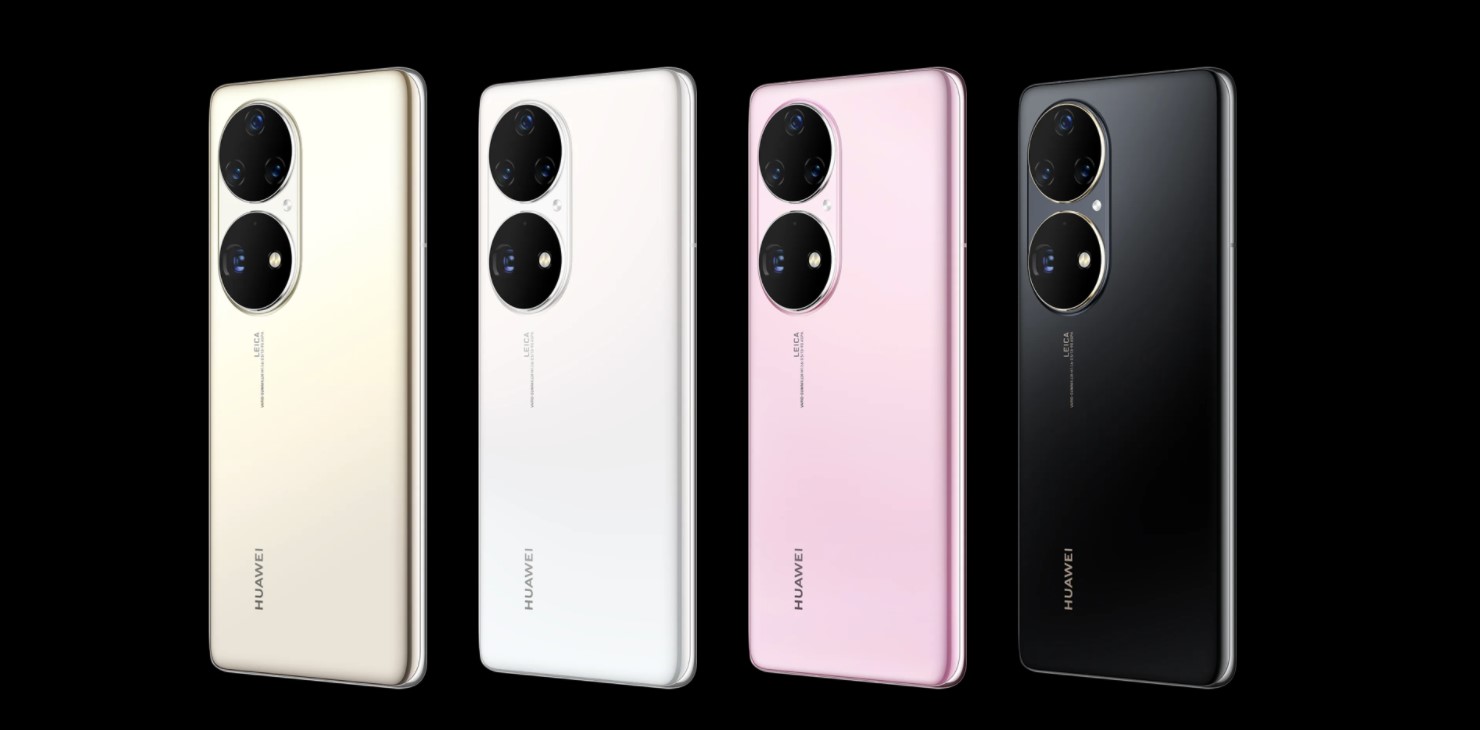
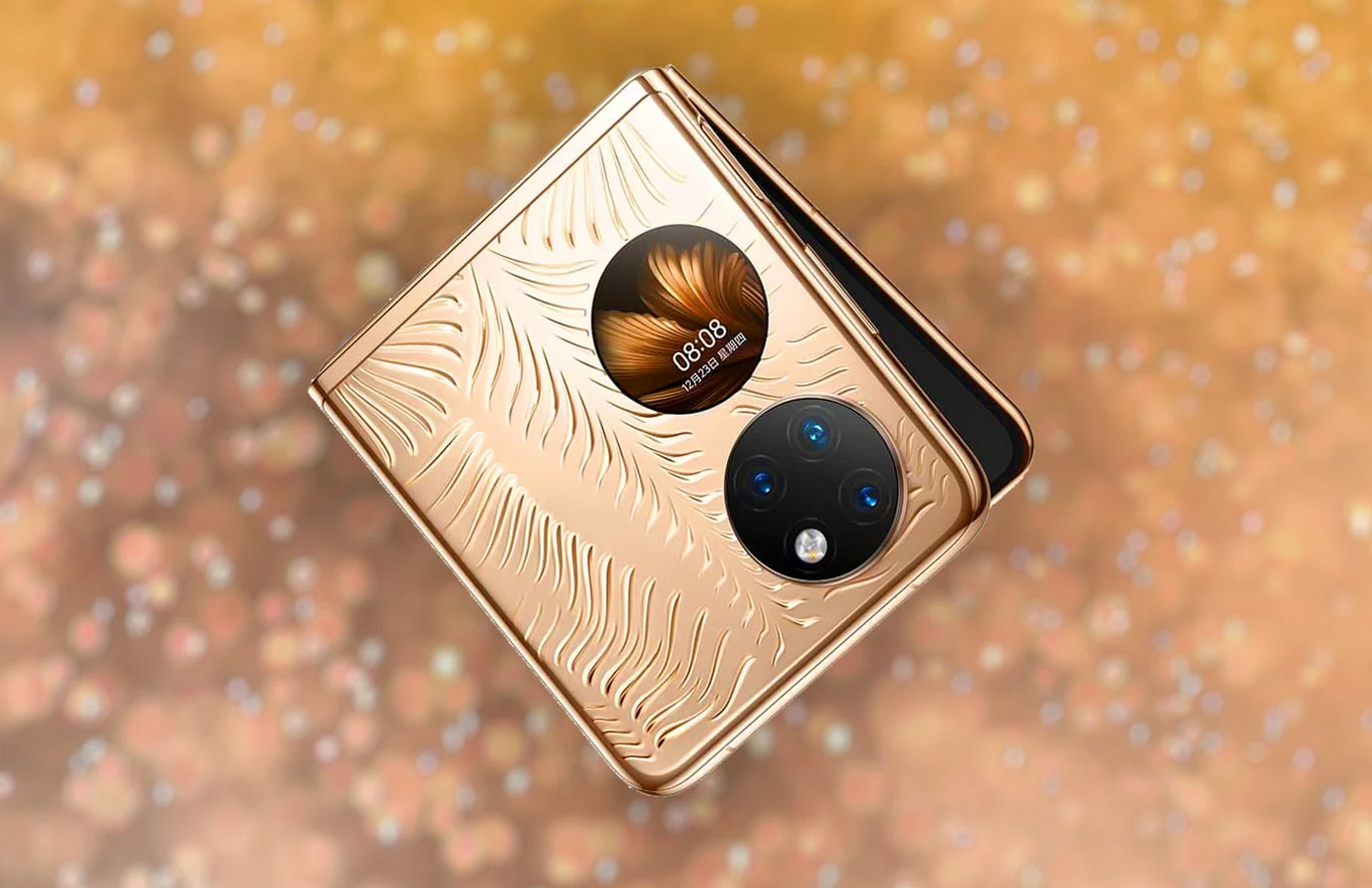
Chinese tech powerhouse Huawei released the P50 series to the global market a few weeks back with pre-orders available for the devices in the lineup. The company has now proceeded to announce the opening of pre-orders of the Huawei P50 Pro and the P50 Pocket smartphones. The two smartphones are now open for purchase by customers in Asia Pacific, Europe, South America, the Middle East & Africa. There are market-specific packages and pricing variations across the regions for the two devices.
All bundles will come with free wearables, Freebuds, warranties, and other accessories. The Huawei P50 Pro is priced at €1,199 ($1,371), while the P50 Pocket is Huawei’s first foldable clamshell with no visible gap when closed, is available at €1,599 ($1,829) for the gold color model with 12/512 GB configuration, and €1,299 ($1,486) for the white 8/256 GB model. The P50 lineup is a great offering by Huawei as it tries to claw its way to the top of the global smartphone market before the US sanctions hammer. The P50 series has an impressive camera setup as they are photography-oriented.
The Huawei P50 Pro and P50 Pocket have decent batteries and overall impressive performance across several segments. France-based customers will get a gift Freebuds Pro and three months subscription to Adidas Runtastic. There are similar offerings for other regions, and Huawei hopes the incentives will spur back its previous brand relevance to life. There are several other accessories like the wireless charging stand which comes at a significantly reduced price in line with the massive incentive regime put together by the company.
We use cookies on our website to give you the most relevant experience by remembering your preferences and repeat visits. By clicking “Accept”, you consent to the use of ALL the cookies.
This website uses cookies to improve your experience while you navigate through the website. Out of these, the cookies that are categorized as necessary are stored on your browser as they are essential for the working of basic functionalities of the website. We also use third-party cookies that help us analyze and understand how you use this website. These cookies will be stored in your browser only with your consent. You also have the option to opt-out of these cookies. But opting out of some of these cookies may affect your browsing experience.
Necessary cookies are absolutely essential for the website to function properly. This category only includes cookies that ensures basic functionalities and security features of the website. These cookies do not store any personal information.
Any cookies that may not be particularly necessary for the website to function and is used specifically to collect user personal data via analytics, ads, other embedded contents are termed as non-necessary cookies. It is mandatory to procure user consent prior to running these cookies on your website.







 It also has a 12MP ultra-wide lens with a 13mm focal length. Lastly, there’s also the 10MP telephoto sensor with 30x Space Zoom and 3x optical Zoom. Upfront, both have a 10MP selfie snapper.