Advertisement

realme smartphone sales exceeded 60 million units in 2021, company entered top 5 in 21 markets

realme on January 4th held a product launch event announcing its new GT2 series. Along with details about the flagship phones, realme VP Xu Qi also quoted a few figures pertaining to the company’s performance in 2021.

According to official figures, global sales last year exceeded 60 million units and realme entered the top 5 smartphone brands in 21 countries, ranking 6th worldwide. The number of units sold in 2021 showed a rise of 50% YoY growth and realme hopes to keep the growth rate stable this year, with a goal of touching the 90 million units mark.

realme global sales 2021

Also revealed was that the company is now the fastest-growing 5G Android phone brand and was the fastest phone company to cross 100 million units in terms of sales, further proving its prowess.

In addition, realme highlighted an updated global layout goal, with China obviously being the main focus but also supported by the European market. The company has indeed recorded a triple-digit YoY growth in the continent and it hopes to keep it up.

In terms of technological innovation, realme stated that the company will be spending 70% of its R&D expenses on high-end technology research and development, strengthening the company’s software and hardware capabilities, and enhancing the overall product experience.

At the same time, realme will also continue to keep up with the latest trends in the global market to continue to polish product design and make an impression as the “most fashionable brand in the technology industry.”

RELATED:

Samsung Galaxy S21 FE Indian pricing tipped, Pre-Bookings now live

Samsung is gearing up to launch the Galaxy S21 FE in India soon. But prior to its release, the pricing of the upcoming smartphone has been tipped. The news also arrives as the device’s pre-bookings start in the region.

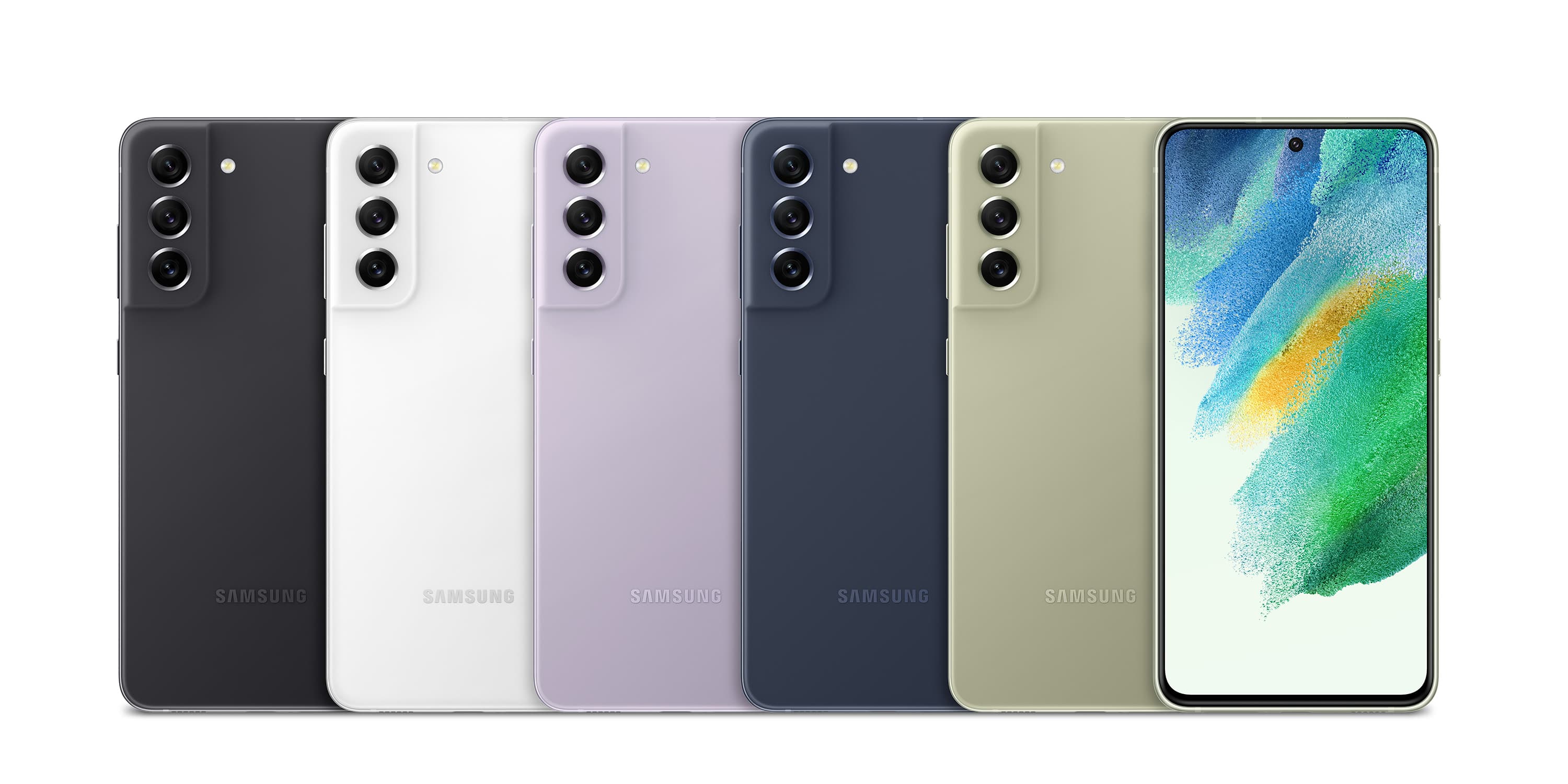
Samsung Galaxy S21 FE All Colors

The pricing for the Indian market was revealed by known tipster Yogesh Brar on Twitter. Reportedly, the South Korean tech giant will be launching the Galaxy S21 FE in India for a price tag of 52,000 INR (roughly 700 US Dollars). He further added that the price tag might fall to 48,000 INR or 49,000 INR (roughly 645 or 660 US Dollars) through discounts. Notably, a listing page on Amazon India has also recently gone live, which showcases the design and specs of the device and hints at its imminent launch.

The listing arrives just a day after the handset was launched in the UK. For those unaware, the Galaxy S21 FE sports a 6.4 inch full-HD+ Dynamic AMOLED display with a 120Hz refresh rate. Under the hood, the Indian variant of the device is expected to feature the Exynos 2100 SoC. On the rear, it features a triple camera module consisting of a 12 megapixel primary camera, a 12 megapixe ultra wide angle lens, and an 8 megapixel telephoto sensor.

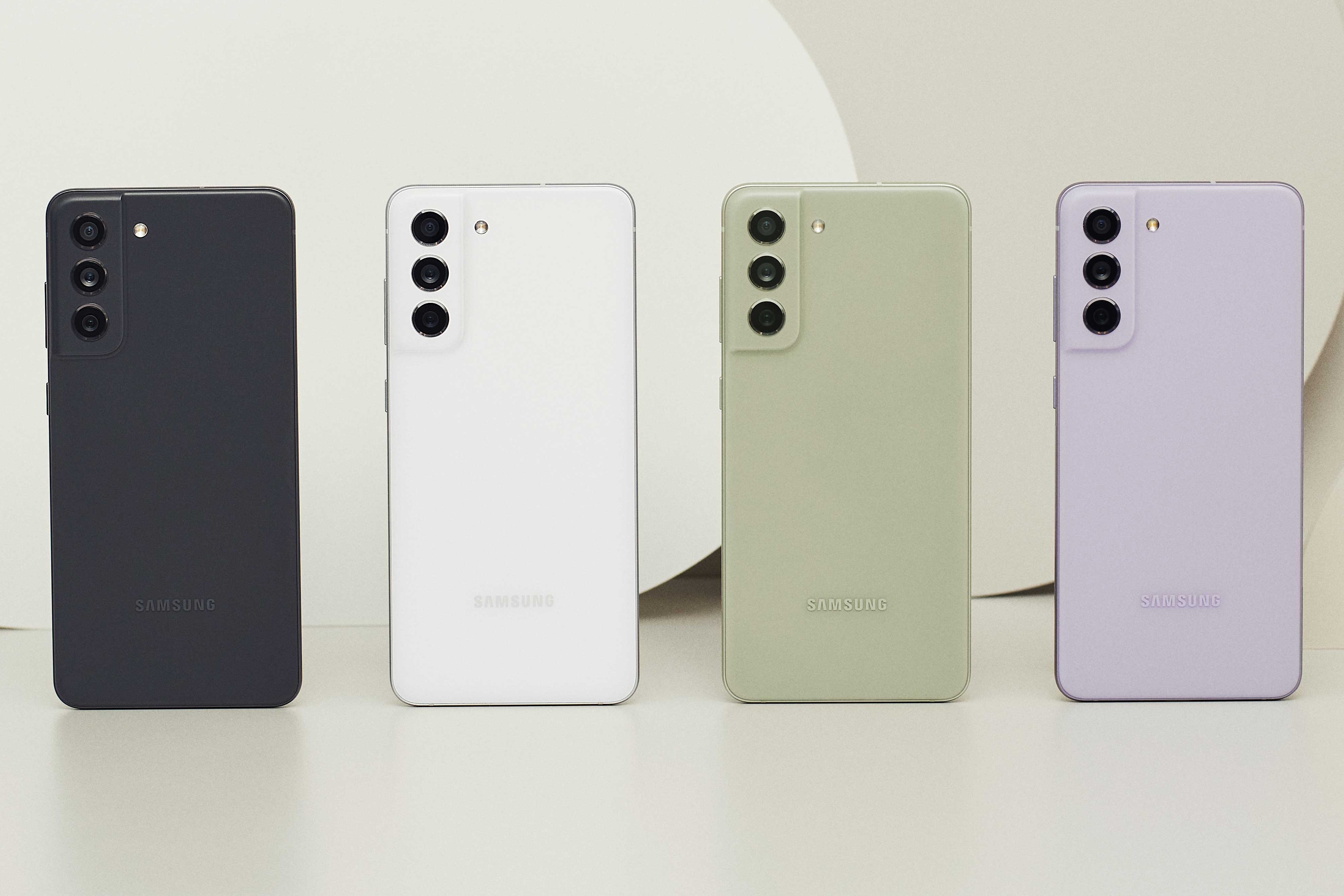
Samsung Galaxy S21 FE All Colors

A large 4,500mAh battery runs the device, which supports 25W fast charging, with the device also arriving with IP68 water and dust resistance. As of right now, the pre-bookings for the Galaxy S21 FE have begun. So for those interested, you can check out the official Samsung India website. Those reserving the smartphone prior to its launch will also be receiving a Galaxy SmartTag Bluetooth tracker for free.

RELATED:


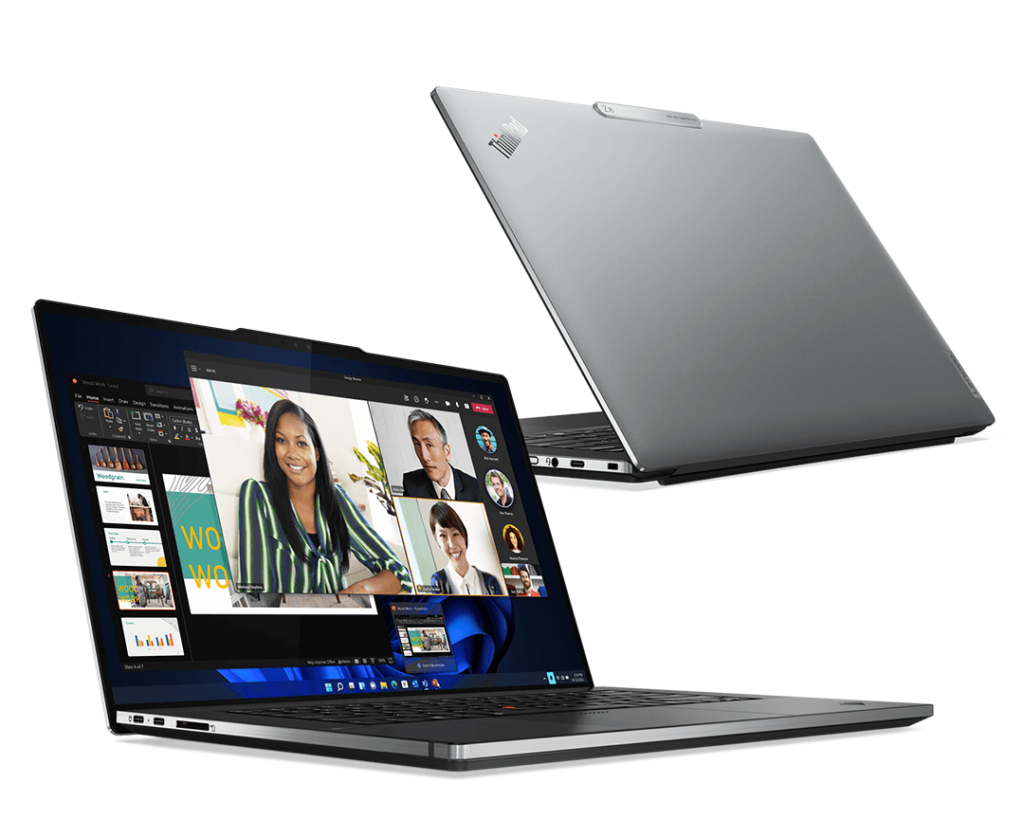
Lenovo ThinkPad Z13, ThinkPad Z16 laptops with latest AMD Ryzen CPUs launched, will hit the markets in May 2022

Ahead of CES 2022, the Chinese laptop manufacturer Lenovo launched their new notebook models dubbed the ThinkPad Z13 and ThinkPad Z16. These new ThinkPad models come packing the latest AMD Ryzen PRO 6000 series processors with the ThinkPad Z13 getting an optional exclusive AMD CPU, so let’s take a closer look at their specs and features.

Lenovo ThinkPad Z13 specifications

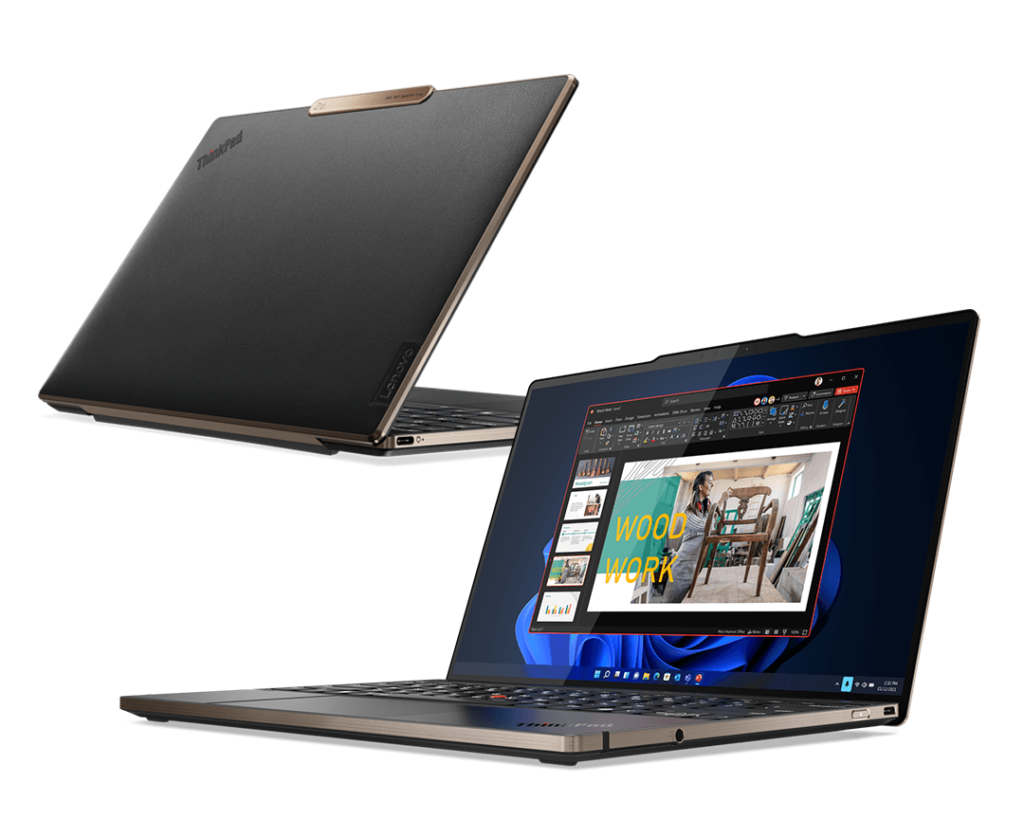
Lenovo ThinkPad Z13
(Image source: @evleaks)

The ThinkPad Z13 comes with a 13.5-inch IPS OLED 2K+ (2,880 x 1,620pixels) display with 400 nits of peak brightness, a 91.6 percent screen-to-body ratio, and a 16:10 aspect ratio. The device also has a low blue light emission mode and supports Dolby vision. The speaker system present on the device comes with Dolby Atmos support.

The hardware on this machine consists of an AMD Ryzen Pro U-Series processor or an exclusive AMD Ryzen 7 PRO 6860Z processor, coupled with up to 32GB of LPDDR5 RAM and up to 1TB of PCIe Gen 4 SSD storage.

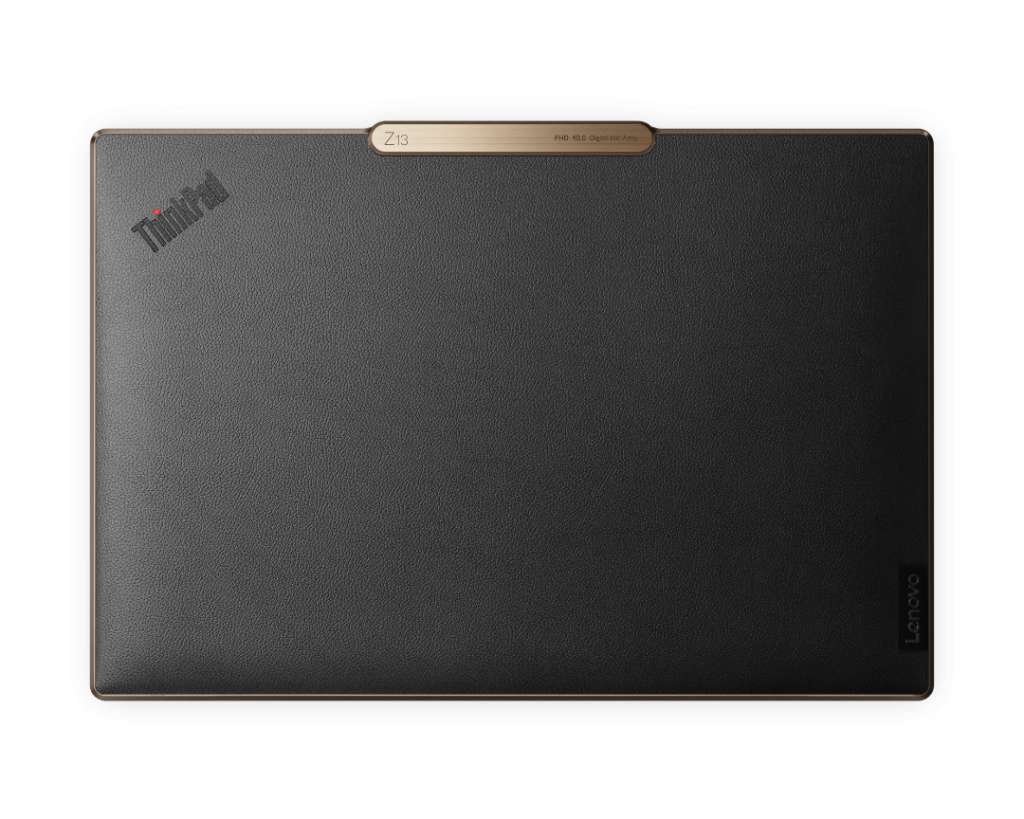
Lenovo ThinkPad Z13
(Image source: @evleaks)

Lenovo ThinkPad Z13 has integrated Lenovo’s match-on-chip fingerprint reader into the keyboard and uses a Microsoft Pluton security processor. The device comes with a full-HD infrared webcam integrated into the device with an aperture of f/2.0 and eShutter functionality. It also has dual-array microphones for audio input.

Other features of the laptop include Wi-Fi 6E, Bluetooth v5.2, LTE 4G, and a 3.5mm headphone jack. It sports a backlit keyboard and two USB 4.0 Type-C ports. Double-tapping the TrackPoint icon gives quick access to Communication QuickMenu for access to common camera and microphone settings.

Lenovo ThinkPad Z13 contains a 50Wh battery with Rapid Charge fast charging support. In terms of dimensions, it measures 294.4×199.6×13.99mm and weighs 1.25kg.

Lenovo ThinkPad Z16 specifications

Lenovo ThinkPad Z16
(Image source: @evleaks)

The Lenovo ThinkPad Z16 features a 16-inch IPS OLED 4K (3,840×2,160 pixels) display with a 16:10 aspect ratio, a 92.3 percent screen-to-body ratio, and 400 nits of peak brightness. Similar to the ThinkPad Z13 model, the ThinkPad Z16 also features Dolby Vision support and a low blue light emission mode.

The ThinkPad Z16 features an AMD Ryzen Pro H-series processor with integrated AMD radion graphics or an optional discrete AMD Radeon RX 6500M GPU. The device comes with up to 32GB of LPDDR5 RAM and up to 2TB of PCIe SSD. For security, the device includes a Microsoft Pluton security processor and comes with a match-on-chip fingerprint reader integrated into the keyboard.

Other features of the ThinkPad Z16 include a Dolby Atmos speaker system with Dolby Voice AI noise cancellation technology, a backlit keyboard, Wi-Fi 6E, LTE 4G, Bluetooth 5.2, three USB 4.0 Type-C ports, an SD card reader, and a 3.5mm audio jack.

The Lenovo ThinkPad Z16 comes with a 70Wh battery pack and measures 354.4×237.4x 15.8mm with a weight of 1.97kg.

Lenovo ThinkPad Z13, ThinkPad Z16 price, and availability

The ThinkPad Z13 will have a starting price of $1,549 while the ThinkPad Z16 will begin at $2,099. Lenovo has announced that both of these models will go on sale starting May 2022 and will be available in two color variants, namely Arctic Grey and Bronze.


RELATED:


OPPO Enco M32 launched in India, costs only ₹1,499 ($20) for a limited time

OPPO has officially launched the OPPO Enco M32 neckband-style wireless earphones in India as scheduled. The latest audio accessory from the company is the success of the popular OPPO Enco M31 from 2021. This product originally debuted at the end of November alongside the OPPO Reno7 series in China.

OPPO Enco M32
OPPO Enco M32

OPPO Enco M32 Price and Availability in India

The OPPO Enco M32 wireless earphones are priced at ₹1,799 ($24) in India. However, for a limited time, from January 10 to 12, buyers will be able to purchase them at an introductory price tag of ₹1,499 ($20).

The product comes in a single black color option in the country. It will be sold via Amazon India and OPPO Store.

OPPO Enco M32 Specifications and Features

As mentioned in the beginning, the OPPO Enco M32 is a pair of neckband-style wireless earphones. It connects with devices via Bluetooth 5.0 and has support for dual-connection feature. In simpler words, it can be switched between two devices seamlessly.

Further, the buds house 10mm drivers, an independent bass chamber, and they also have magnets for automatic on/off and play/pause functions. The earphones sport an inline remote control, an omnidirectional MEMC microphone and offer ENC (Environmental Noice Cancellation) during calls.

The accessory weighs around 33g and it is IP55-rated for dust and water resistance. Most importantly, it is rated to last for a whopping 28 hours on a full charge with its 220mAh battery that supports fast charging (20-hour playback with 10 minutes of charging).

Last but not least, unlike OPPO Enco M31, the OPPO Enco M32 lacks support for LDAC.


RELATED:


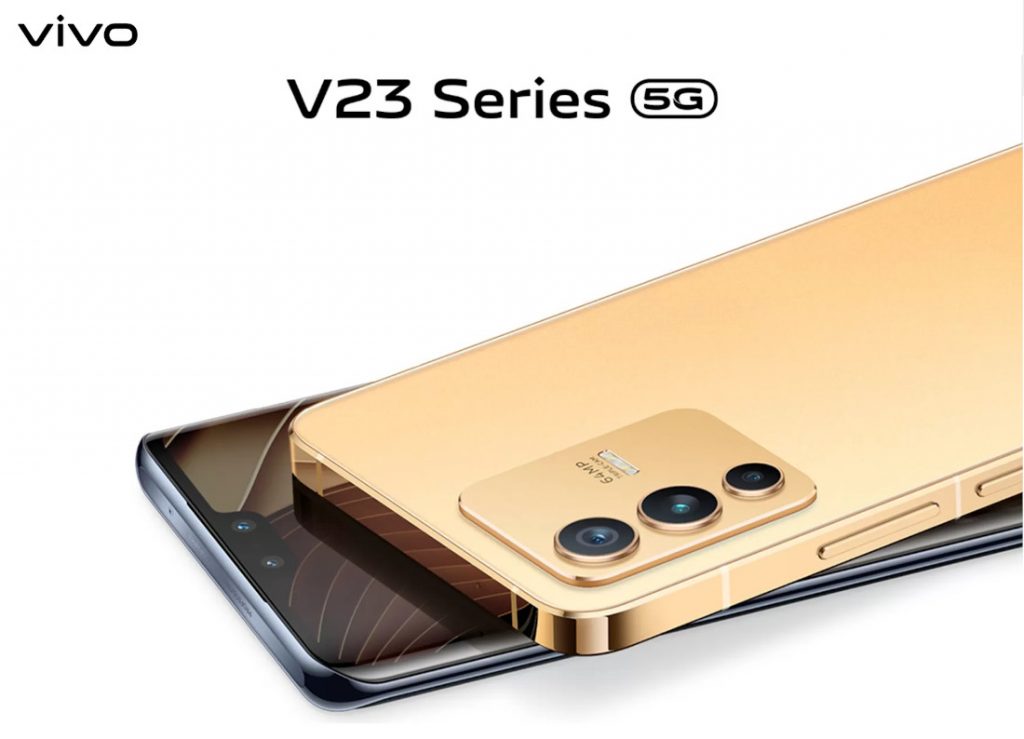
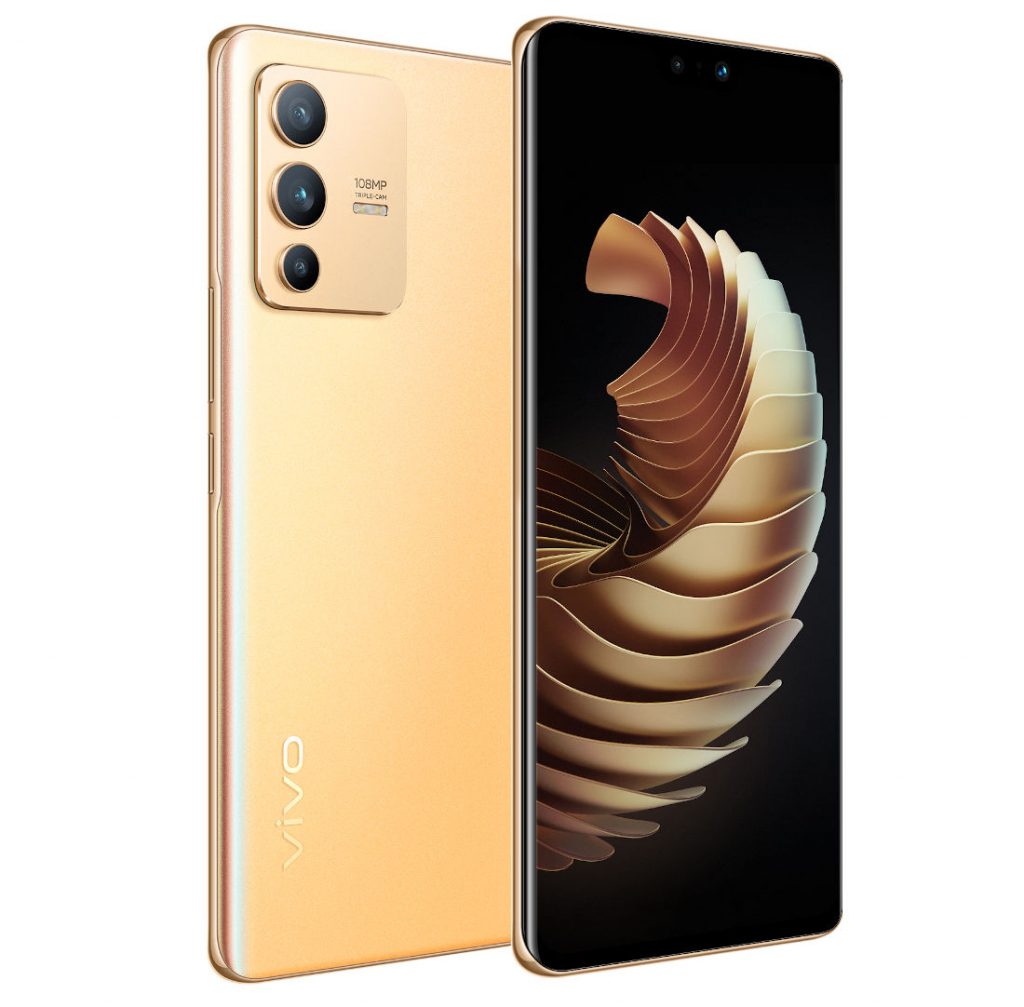
Vivo V23 5G series with color changing rear panel launched in India

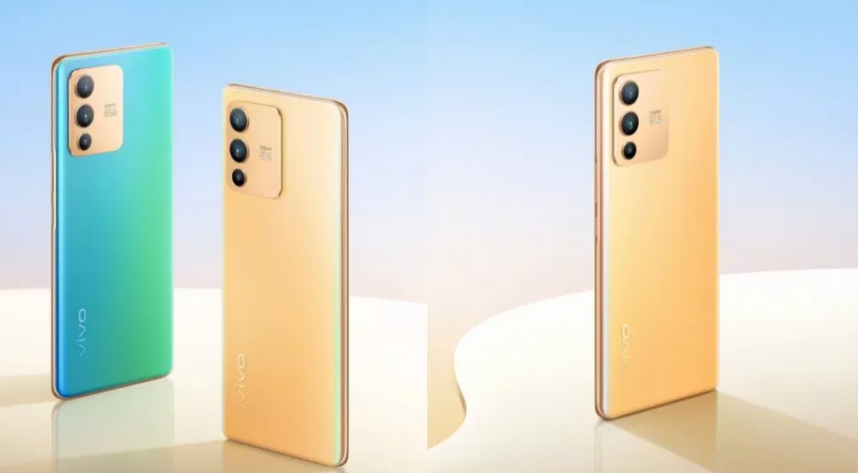
The Vivo V23 5G series has just been announced in India. The newly unveiled lineup includes the V23 and V23 Pro that arrive with a unique rear panel that changes color when exposed to UV light and sunlight.

Vivo V23

Talking about the base variant first, the V23 sports a 6.44 inch FHD+ AMOLED display that has a 90Hz high refresh rate. This panel is also certified for HDR10+ and includes an in display fingerprint scanner as well. For selfies, the device houses a dual front camera setup (44 megapixel primary + 8 megapixel ultra wide angle) along with a dual tone spotlight flash. On the other hand, the rear features a 64 megapixel triple camera module with an 8 megapixel ultra wide angle lens and a 2 megapixel macro sensor.

Vivo V23 5G

Under the hood, the V23 runs MediaTek Dimensity 920 SoC, which is a 6nm process based chip that is paired with the Mali G68 GPU. The device is powered by a 4,200mAh battery pack that supports 44W fast charging from its USB Type C port. It measures just 7.39mm at its thickest and weighs about 179 grams.

Vivo V23 Pro

Arriving at the top end version, the V23 Pro sports a 6.56 inch FHD+ Curved AMOLED panel that also has a 90Hz refresh rate. The Chinese smartphone maker claims that the panel is India’s slimmest 3D curved display. This screen also arrives with HDR10+ certification along with an in display fingerprint reader. Similar to the base variant, the Pro model also features a dual camera system on the front, but with a 50 megapixel sensor and another 8 megapixel ultra wide angle lens with dual tone flash as well.

On the rear, it features a 108 megapixel primary camera coupled with an 8 megapixel ultra wide angle lens and a 2 megapixel depth sensor. It is powered by the MediaTek Dimensity 1200 SoC, which is a 6nm process based chip with Mali G77 GPU. It houses a 4,300mAh battery pack that supports 44W fast charging from its USB Type C port. The device measures just 7.36mm and weighs 171 grams.

Color, Pricing, and Availability

Both devices arrive in two color variants, namely the Sunshine Gold and Stardust Black. Although, the Gold version is the variant that features color changing AG glass rear panel that can change its color depending on the angle at which VU light or sunlight rays fall. Notably, the Vivo V23 series runs FunTouch OS 12 based on Android 12 OS. So, let’s take a look at the pricing:

Vivo

Vivo V23 5G

  • 8GB + 128GB – Rs. 29,990 (roughly 403 US Dollars)
  • 12GB + 256GB – Rs. 34,990 (roughly 470 US Dollars)

Vivo V23 Pro 5G

  • 8GB + 128GB – Rs. 38,990 (roughly 524 US Dollars)
  • 12GB + 256GB – Rs. 43,990 (roughly 590 US Dollars)

The pre-orders for the lineup have already begun, with the Pro model sales starting from 13th January 2022. Meanwhile, the base model will go on sale via Flipkart in India starting from 19th January 2022.

RELATED:


Microsoft and Qualcomm partners to develop chips for AR glasses

Technology giant Microsoft and chipset leader Qualcomm have worked together for custom chips for Windows PC and now, during Qualcomm’s keynote at CES 2022, it has been announced that both the companies will be collaborating again for AR chips.

Qualcomm and Microsoft together will develop a new, customized version of Snapdragon chipset for augmented reality and the same will be powering the future AR glasses coming from Microsoft.

Qualcomm

Cristiano Amon, Chief Executive Officer at Qualcomm, said: “We’re announcing that we’re developing a custom augmented reality Snapdragon chip for next-generation, power-efficient, very lightweight AR glasses for the Microsoft ecosystem.”

He further added that the company is integrating into the chip platform software from both companies: the Microsoft Mesh platform, and the recently announced Qualcomm Snapdragon Spaces XR development platform. The Snapdragon Spaces will be fully integrated into Microsoft Mesh and will be available for next-generation glasses.

Earlier, Microsoft partnered with Qualcomm to develop custom SQ1 and SQ2 chips for its ARM-based Surface Pro X devices. The Microsoft HoloLens 2 is also powered by Qualcomm’s Snapdragon chips. So, the development of both these brands partnering for new chips isn’t surprising.

For those who are unaware, Microsoft Mesh is the company’s mixed-reality platform powered by Azure and is meant to create a sense of shared presence on a variety of devices. Recently, the company announced its plans to bring Mesh to its Teams group collaboration platform.

RELATED: 

Redmi Note 11S may launch globally by Feb end, with 108MP camera & 90Hz display: Report

Xiaomi is apparently planning on launching another Redmi Note 11 series smartphone soon. The new model will be the Note 11S, which is expected to globally launch by the end of next month.

According to 91Mobiles and Mukul Sharma, the Redmi Note 11S might be launching for the global market by the end of February 2022. The known tipster @stufflistings also added that the Chinese brand has already begun internal testing for the smartphone in Europe and Asian markets like Singapore, Malaysia, and Indonesia. It is currently unknown regarding when the device will be available in India, but it is likely to follow soon after the global release of the Note 11S.

Redmi

So, the handset is expected to hit the global markets by the end of February and is rumored o be powered by a 5G enabled MediaTek Dimensity chipset. Furthermore, the Note 11S will reportedly house a triple camera module on the rear, consisting of a 108 megapixel primary Samsung HM2 camera, an 8 megapixel Sony IMX3555 ultra wide angle lens, and a 2 megapixel OV2a OmniVision macro sensor. On the front, the device is tipped to house a 13 megapixel selfie shooter, with its display offering a 90Hz refresh rate display.

Although, it’s unknown if it is an AMOLED or LCD panel at the moment. Unfortunately, finer details about the device like its storage configurations, processor, design, and more are still unknown. So stay tuned for more, as we will be providing updates when additional information is available regarding the upcoming Redmi Note 11S.

RELATED:


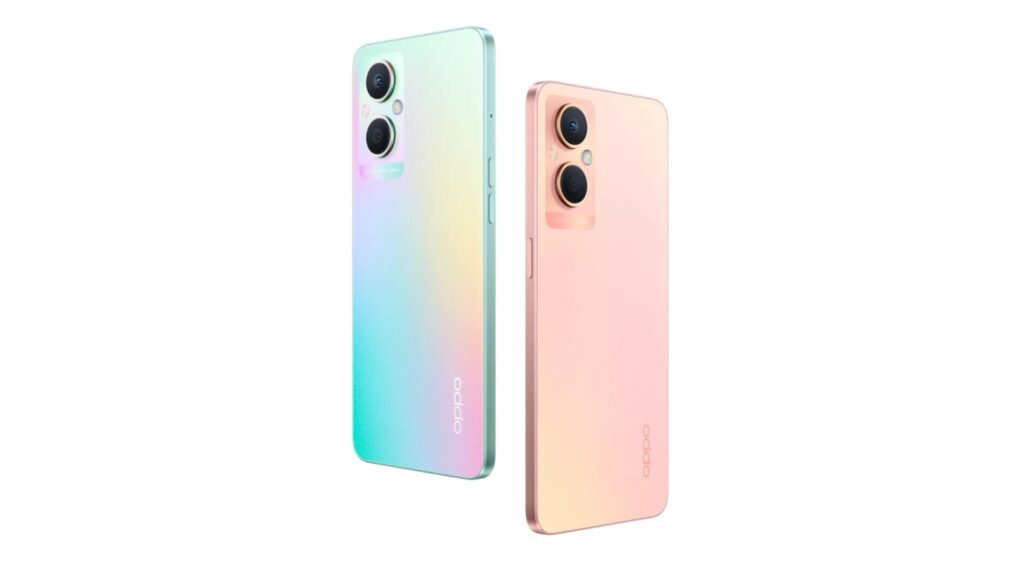
OPPO A96 5G launched with camera LED rings, Snapdragon 695 SoC, OLED display, and more

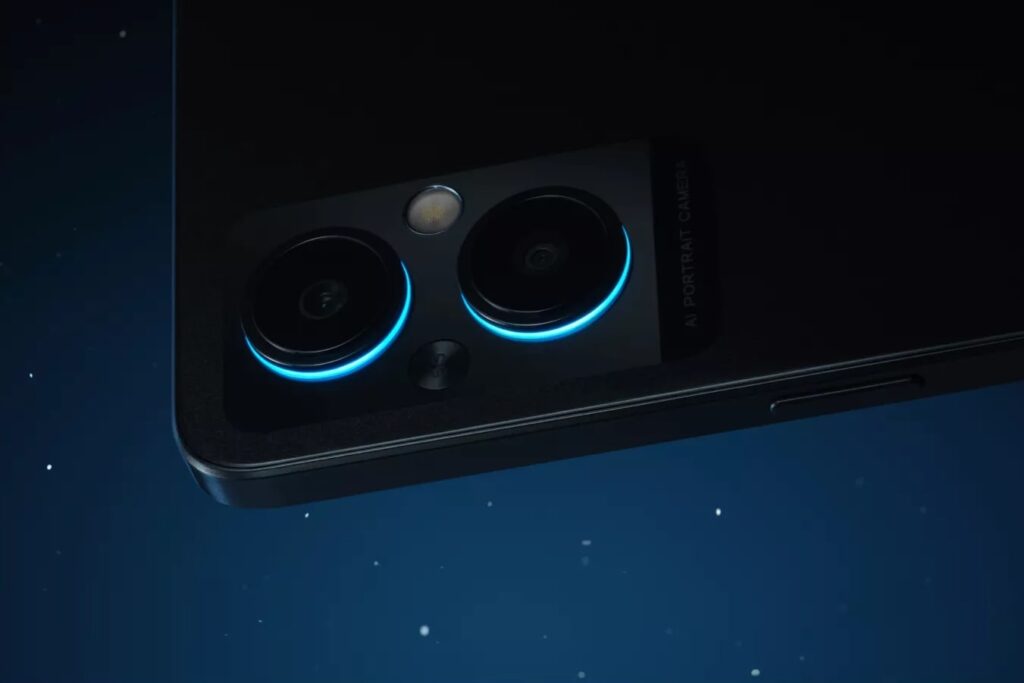
Yesterday, the OPPO A96 5G emerged on the internet in the form of renders. Only a few hours from that, the smartphone is now official in China. It comes with a flat frame design, OLED display, notification LED rings around the two rear cameras, and a Qualcomm chipset.

OPPO A96 5G

OPPO A96 5G Specifications and Features

The OPPO A96 5G features a flat frame like the OPPO Reno7 series. However, the rear camera layout is similar to that of the recent realme phones. Additionally, there are LED rings around these cameras. The OPPO Reno7 Pro also has a similar LED light for notifications but it runs along the rectangular camera island.

The back panel of the handset has numerous crystal-like structures to offer a matte and elegant finish like the OPPO Reno series. The device measures around 7.59mm in thickness and weighs about 171g.

OPO A96 5G Camera LED Ring Notification Light

Further, the smartphone is powered by a Qualcomm Snapdragon 695 chipset paired with 8GB RAM and 256GB storage. It also has support for 5GB virtual RAM.

On the front, the phone flaunts a 6.43-inch OLED display with a resolution of 2400 x 1080 pixels (FHD+), 60Hz refresh rate, up to 180Hz touch sampling rate, 1000000:1 contrast ratio, DCI-P3 color gamut support, and an in-screen fingerprint sensor. There’s also a punch-hole nesting a 16MP selfie camera at the top left corner. Whereas, on the back, the handset houses a 48MP (wide) + 2MP (depth) dual-camera setup.

As the name suggests, the OPPO A96 5G offers 5G connectivity backed by a 4,500mAh battery with support for 33W fast charging. Last but not least, it runs ColorOS 12.

OPPO A96 5G Price and Availability

The OPPO A96 5G in a single 8GB + 256GB memory configuration is priced at ¥1,999 ($315) in China. It is up for pre-order and will go on sale from January 9.

The device arrives in three colors, namely Apricot Powder Warm Sun (peach), Colored Glaze (multi-color gradient), and Night Dream Night Star (Black).


RELATED


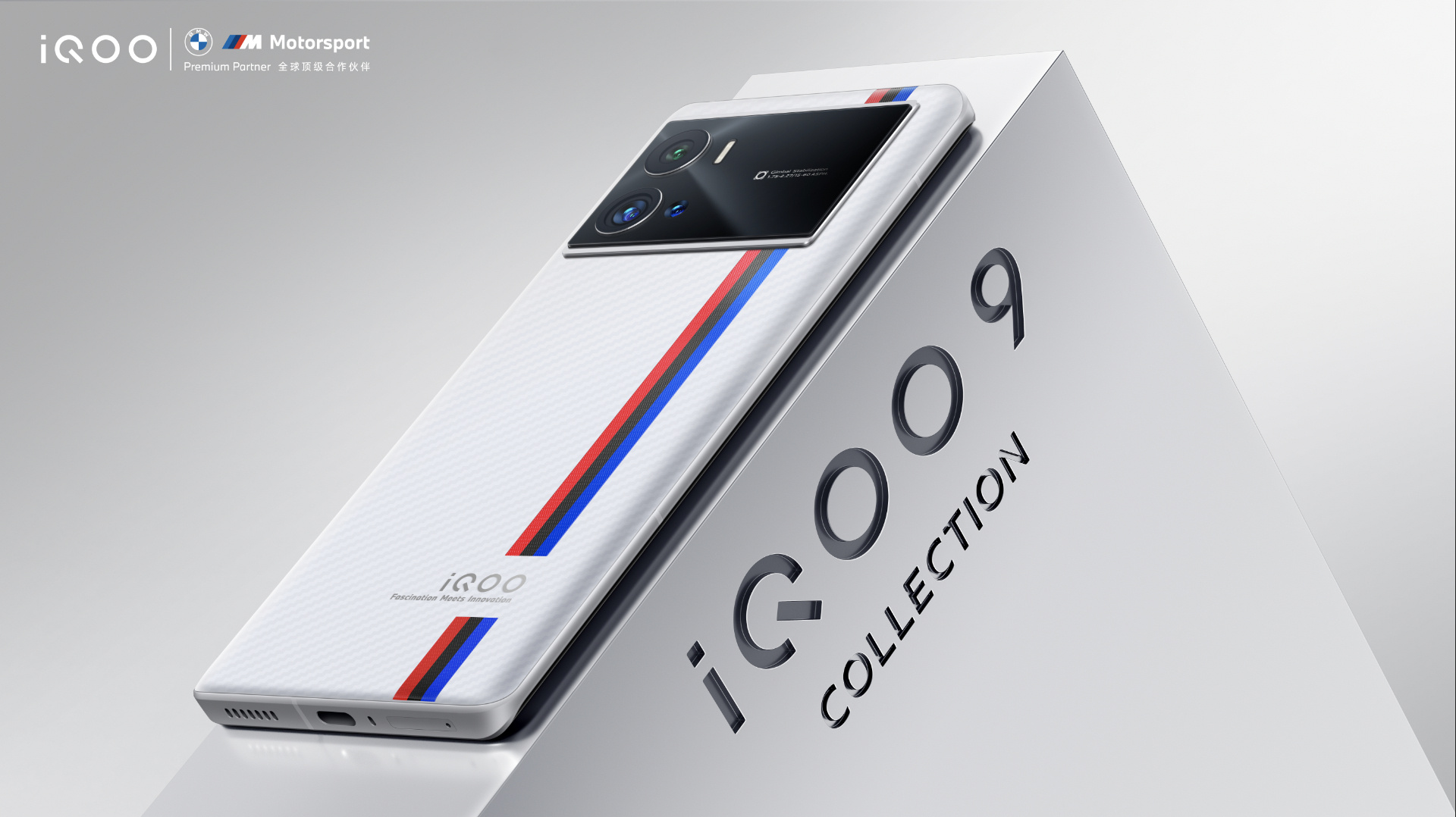
iQOO 9, 9 Pro full specifications emerge at TENAA hours before official announcement

iQOO smartphones with model numbers V2171A and V2172A have been spotted at Chinese certification platforms such as 3C and TENAA in the recent past. These smartphones are going to debut at 7:30 PM (local time) today in China with iQOO 9 and iQOO 9 Pro monikers. The TENAA listings of both phones are now populated with all their specifications to reveal what to expect from the iQOO 9 series.

iQOO 9, 9 Pro specifications (expected)

The iQOO 9 measures 164.55 x 76.7 x 8.37mm and weighs 206.1 grams. It has a 6.78-inch AMOLED FHD+ display. Reports have revealed that it will be sporting a punch-hole screen with a flat design. It has a 16-megapixel front camera and a 50-megapixel + 13-megapixel + 12-megapixel triple camera unit.

On the other hand, the iQOO 9 Pro has a 6.78-inch AMOLED display that offers a Quad HD+ resolution of 1440 x 3200 pixels. The punch-hole screen of the iQOO 9 Pro has curved edges. The device measures 164.81 x 75.2 x 9.21mm and weighs 202.69 grams. It has a 16-megapixel selfie camera and a 50-megapixel + 50-megapixel + 16-megapixel triple camera setup. The Pro model will come equipped with micro-gimbal OIS stabilization.

iQOO 9 series

The iQOO 9 and 9 Pro will run on OriginOS Ocean / iQOO UI based Android 12 OS. Both devices will ship with 8 GB / 12 GB of RAM and 128 GB / 256 GB / 512 GB of native storage.

The iQOO 9 and iQOO 9 Pro are powered by the Snapdragon 8 Gen 1. Both smartphones are backed by a dual-cell battery. The TENAA listings of both models only mention the size of one of its cells as 2,275mAh. Reports indicate that the iQOO 9 duo will be packed with a 4,700mAh (combined value) battery. Both smartphones will carry support for 120W fast charging. The Pro model is likely to arrive with support for 50W wireless charging.

RELATED:

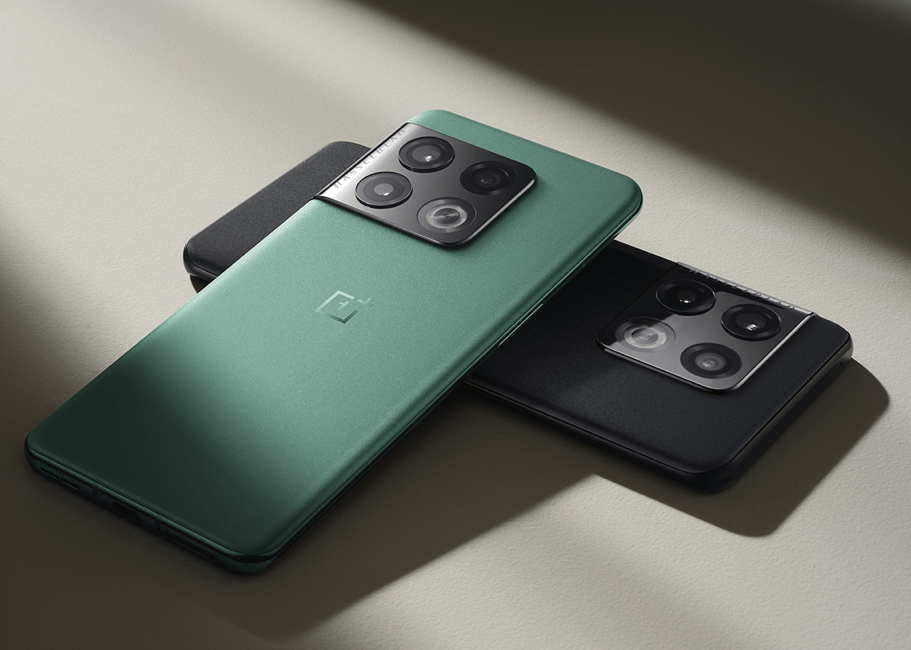
OnePlus 10 Pro specifications revealed by Pete Lau

OnePlus will be unveiling the OnePlus 10 Pro flagship phone on Jan. 11 in China. The entire specs of the phone were revealed yesterday through its TENAA certification. Now, the OnePlus co-founder and Chief Product Officer for OPPO has shared all the major specs of the flagship before its official announcement.

OnePlus 10 Pro features

To start with, the OnePlus 10 Pro will be sporting an AMOLED LTPO panel with second-generation LTPO calibration. The screen offers a 120Hz refresh rate. Lau did not share the screen size of the OnePlus 10 Pro. However, reports have revealed that the flagship will sport a 6.78-inch curved edge display with a punch-hole design.

Coming to the optics, the OnePlus 10 Pro has a 32-megapixel front-facing camera. The second-generation Hasselblad camera module available on the back panel of the device features a 48-megapixel + 50-megapixel + 8-megapixel triple camera unit with dual OIS support.

OnePlus 10 Pro
OnePlus 10 Pro

The Snapdragon 8 Gen 1 chipset fuels the OnePlus 10 Pro. The SoC is coupled with LPDDR5 RAM and UFS 3.1 storage. It has a 5,000mAh battery that supports 80W SuperVOOC wired charging and 50W AirVOOC wireless charging. It also carries support for reverse wireless charging.

In the global markets, the OnePlus 10 Pro runs on OxygenOS 12 based on Android 12. Its Chinese edition is expected to run on ColorOS 12. The device offers other features like VoLTE, VoWiFi, Bluetooth 5.2, NFC, X-axis linear motor, and dual stereo speakers.

While the OnePlus 10 Pro will be made official in China next week, the company is yet to confirm its launch date for the global markets. It is expected to debut in other markets by March or April.

RELATED:

AMD officially announces Ryzen 6000 Mobile CPUs for laptops at CES 2022

As expected, AMD has officially announced its new Ryzen 6000 CPUs at CES 2022. The chips are launched as the successor of the Ryzen 5000 lineup of laptop chips that were made official last year at CES.

The newly announced laptop processors are claimed to offer up to 1.3 times faster processing, two times better gaming performance, and up to 24 hours of battery life.

AMD Ryzen 6000

The company is offering the new AMD Ryzen 6000 chips in H-series (with 35W and 45) for devices aimed at powerful tasks, gaming, or creative work, and U-series (15W to 28W) that are aimed at thin and light devices.

They use a new Zen 3+ CPU architecture and 6nm manufacturing process and the integrated graphics processors have been swapped from the years-old Vega architecture for the modern RDNA2 architecture used in Radeon 6000-series graphics cards.

The flagship offering in the lineup is Ryzen 9 6980HX which packs eight cores, 16 threads, 3.3GHz clock speed that can be boosted to 5.0GHz, and 12 GPU cores at 2.4GHz. All of the Ryzen 9 and Ryzen 7 models include Radeon 680M GPUs with 12 GPU cores, while the Ryzen 5 models use weaker Radeon 660M GPUs with 6 GPU cores.

AMD Ryzen 6000 Mobile CPUs

It comes with support for PCI Express 4.0 for fast SSDs along with DDR5 RAM for more memory bandwidth. Also, all the chips in this lineup include a Microsoft Pluton security processor which is intended to make Windows 10 and Windows 11 PCs more secure.

These new chips come with support for USB4 with data transfer rates at up to 40Gbps, HDMI 2.1 with support for high frame rates and VRR, Wi-Fi 6E, and Bluetooth LE 5.2. As for the battery life, the company is claiming a maximum of 24 hours of battery life.

Laptops powered by the new AMD Ryzen 6000 series chips are set to be announced at the Consumer Electronics Show (CES) 2022 from brands like Acer, Asus, Alienware, Lenovo, Razer, and HP. The first set of devices is expected to go on sale from next month.

RELATED: 

Nokia C100, C200, G100, G400 launched at CES 2022

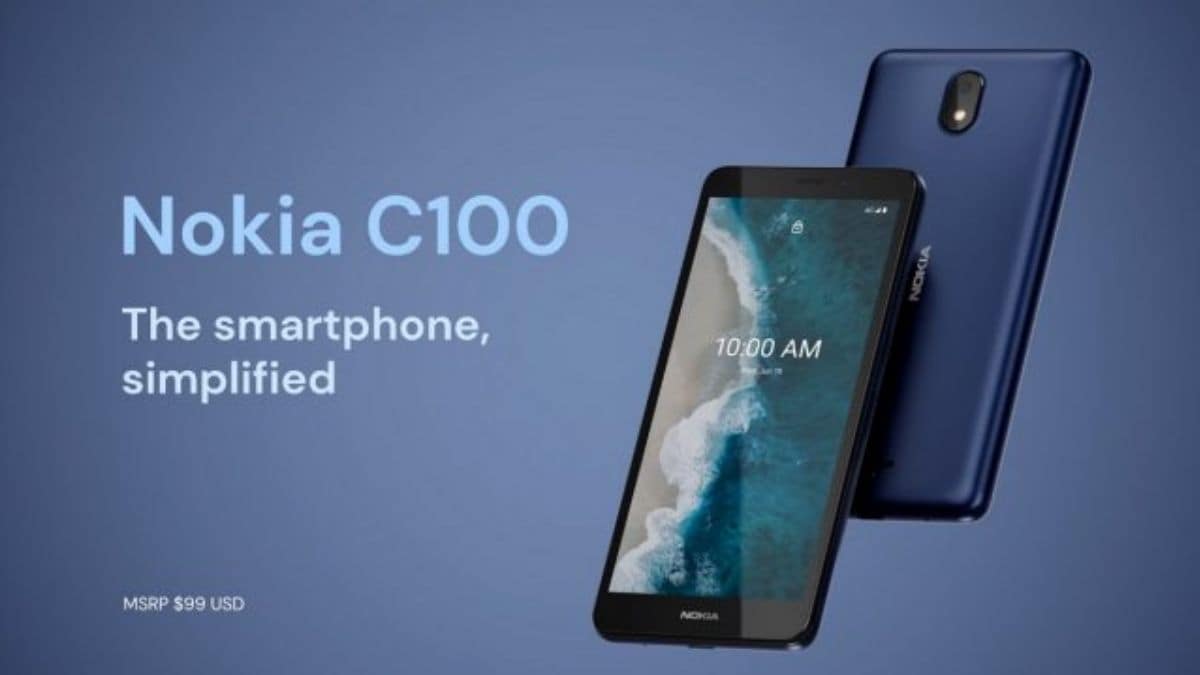
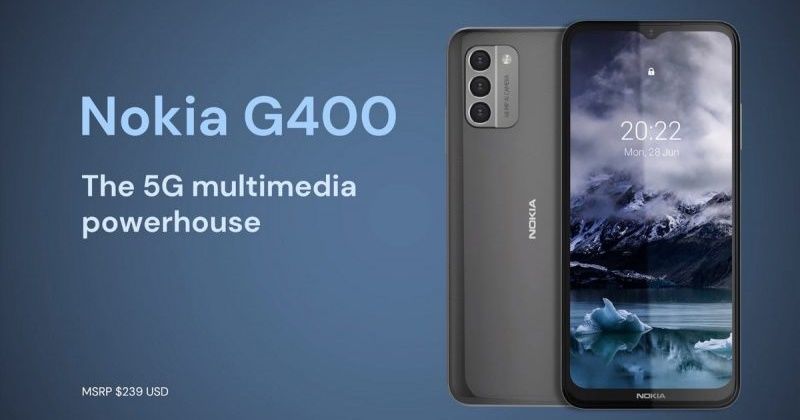
HMD Global has announced four new handsets namely, Nokia C100, Nokia C200, Nokia G100, and Nokia G400. The newly unveiled C-series and G-series of phones are heading to the U.S. Probably, the company may sell some of these devices in other markets. The C100, C200, G100, and G400 are all priced under $250.

Nokia C100, Nokia C200 specifications and price

Nokia-C100
Nokia-C100

The Nokia C100 and C200 offer common specs such as MediaTek Helio A22 chipset, 3 GB of RAM, 32 GB of built-in storage, Android 12 OS, a 4,000mAh battery, and a single rear-facing camera. The C200 has a bigger 6.1-inch display. The Nokia C100 and C200 phones are priced at $99 and $119, respectively.

Nokia G100, Nokia G400 specifications and price

The Nokia G100 has a 6.5-inch display that delivers an HD+ resolution. It is fueled by the Snapdragon 615 mobile platform and a 5,000mAh battery. The rear shell of the device features a triple camera unit. The power button available on the right edge of the device is integrated with a fingerprint scanner.

Nokia G400
Nokia G400

On the other side, the Nokia G400 has a waterdrop notch display that offers a 120hz refresh rate. It is yet another Nokia phone driven by the Snapdragon 480 5G chipset. The device offers 6 GB of RAM and 128 GB of internal storage. Its rear-facing camera module has a 48-megapixel main camera, an ultrawide lens, and a macro snapper.

The Nokia G100 is priced at $149. With a pricing of $239, the Nokia G400 is the company’s most affordable 5G phone.

RELATED:

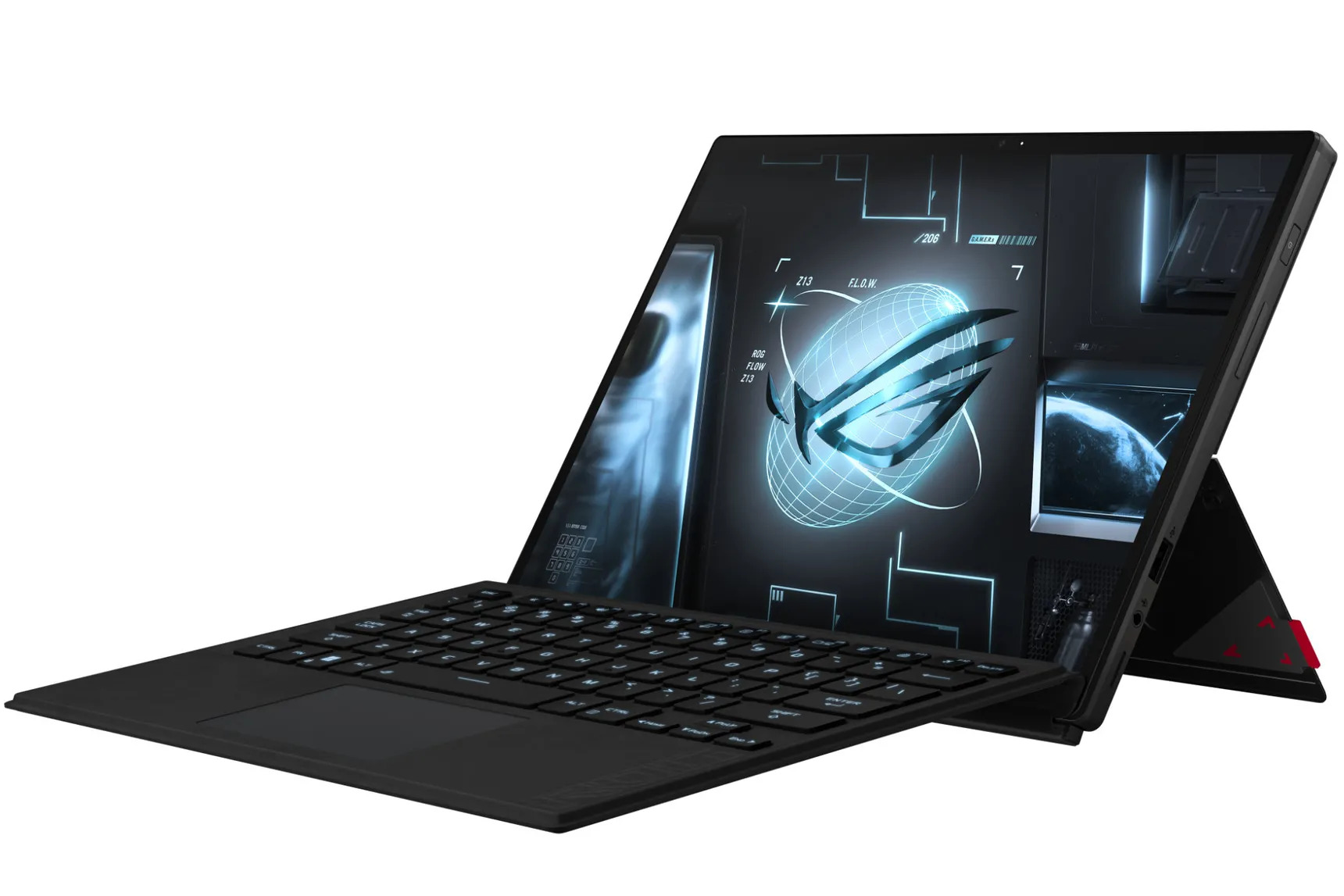
ASUS ROG Flow Z13 gaming tablet powered by Intel Core i9 processor announced at CES

There are not many high-end tablets available in the market and the options are quite limited when it comes to gaming. To fill the gap, ASUS has announced what seems like the most powerful gaming tablet — ASUS ROG Flow Z13.

The tablet has been announced at the ongoing Consumer Electronics Show (CES) 2022 and comes with a powerful set of specifications, on par with a high-end laptop. It is basically a high-end gaming laptop in a thin form factor.

ASUS ROG Flow Z13 Gaming Tablet

The ASUS ROG Flow Z13 features a 13.4-inch 4K 60Hz display and the company is also giving users a choice for a Full HD display with a 120Hz refresh rate. Both the touchscreen options support 16:10 aspect ratio, Dolby Vision, and MPP 2.0-compatible styluses. Further, the displays are protected by Gorilla Glass and are validated for color accuracy by Pantone.

Under the hood, the device comes powered by the Intel Core i9-12900H 45W processor, coupled with NVIDIA RTX 3050 Ti 40W graphics processor. For memory, it comes with DDR5 RAM and PCIe 4.0 storage.

ASUS ROG Flow Z13 Gaming Tablet

It has one Thunderbolt 4 port with DisplayPort 1.4 for video output and up to 100W PD charging, and another USB-C 3.2 Gen 2 port that can handle video and PD charging. There’s also a third USB-C port that can handle video and PD charging, but it isn’t confirmed if it utilizes integrated or dedicated graphics.

Along with that, the device also has an eGPU port, one USB-A 2.0 port, a UHS-II class microSD card reader, an HDMI 2.0 port, and a headphone jack. As for the software, the device is running the Windows operating system.

The ASUS ROG Flow Z13 is expected to be available for purchase in the first half of this year and the company has not yet announced pricing details.

RELATED: 

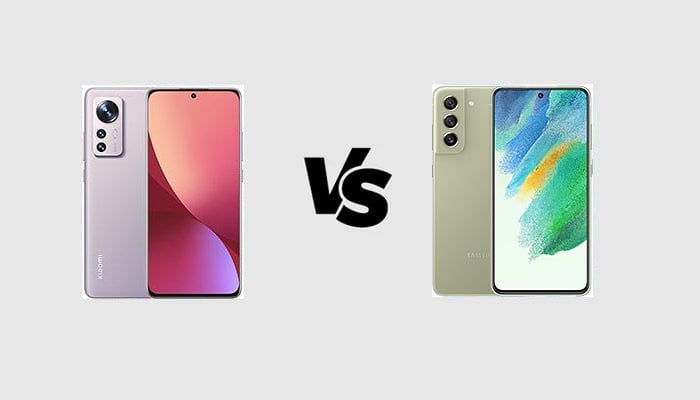
Xiaomi 12 vs Samsung Galaxy S21 FE: Specs Comparison

After a lot of delays caused by the semiconductor crisis, the Samsung Galaxy S21 FE 5G finally hitten the shelves. It was supposed to be released in 2021 but we had to wait until 2022 to see it become available worldwide. That is why, while initially a lot of people thought it would be a competitor of the Xiaomi Mi 11, it became one of the main rivals of the Xiaomi 12. Should people opt for the latest flagship killer by Xiaomi or did Samsung come up with a better option? This is a comparison between the specifications of the Xiaomi 12 and the Samsung Galaxy S21 FE 5G which will hopefully clear your ideas in regards.

Xiaomi 12 vs Samsung Galaxy S21 FE 5G

Xiaomi 12 Samsung Galaxy S21 FE 5G
DIMENSIONS AND WEIGHT 152.7 x 69.9 x 8.2 mm,
179 g
155.7 x 74.5 x 7.9 mm,
177 g
DISPLAY 6.28 inches, 1080 x 2400 pixels (Full HD+), OLED 6.4 inches, 1080 x 2400 pixels (Full HD+), AMOLED
PROCESSOR Qualcomm Snapdragon 8 Gen 1, octa-core 3 GHz Qualcomm Snapdragon 888, octa-core 2.84 GHz
MEMORY 8 GB RAM, 128 GB – 8 GB RAM, 256 GB – 12 GB RAM, 256 GB 6 GB RAM, 128 GB – 8 GB RAM, 128 GB – 8 GB RAM, 256 GB
SOFTWARE Android 12, MIUI Android 12, One UI
CONNECTIVITY Wi-Fi 802.11 a/b/g/n/ac/6, Bluetooth 5.2, GPS Wi-Fi 802.11 a/b/g/n/ac/6, Bluetooth, GPS
CAMERA Triple 50 + 13 + 5 MP, f/1.9 + f/2.4
32 MP front camera
Triple 12 + 8 + 12 MP, f/1.8 + f/2.4 + f/2.2
32 MP f/2.2 front camera
BATTERY 4500 mAh, fast charging 67W and fast wireless charging 50W 4500 mAh, Fast Charging 25W, Fast wireless charging 15W
ADDITIONAL FEATURES 5G, dual SIM, reverse wireless charging 5G, dual SIM, reverse wireless charging, IP68 waterproof

Design

Xiaomi 12 and Samsung Galaxy S21 FE 5G have very different designs, but they are both beautiful phones. The former is very attractive because of its very compact dimensions: it measures just 152.7 x 69.9 x 8.2 mm. Further, its design is very minimalistic, with a high screen to body ratio and a compact camera module sporting the same color as the rest of the rear side. The Samsung Galaxy S21 FE 5G is another beautiful device with its Contour Cut Design: it sports a camera module with the same color as the rear cover just like the Xiaomi 12, but in addition, it is waterproof with the IP68 certification. The rear side is made of plastic (unlike the Xiaomi 12), but the frame is made of aluminum and the front glass is protected by Gorilla Glass Victus.


Display

On the paper, the Xiaomi 12 has a better display than Samsung Galaxy S21 FE 5G, even though it is a way smaller panel. With its 6.28-inch diagonal, the Xiaomi 12 offers an OLED panel that shows up to one billion colors and supports a Full HD+ resolution, a 120 Hz refresh rate, the HDR10+ certification, and Dolby Vision. The Samsung Galaxy S21 FE 5G has a bigger display with a diagonal of 6.4 inches, as well as a 120 Hz refresh rate, HDR10+, and a Full HD+ resolution of 1080 x 2400 pixels. But it lacks Dolby Vision and it shows just 16 million colors like most of the other phones out there. Both the phones rely on an in-display fingerprint scanner for authentication.


Specs & Software

The Xiaomi 12 is a lot more powerful than Samsung Galaxy S21 FE 5G because it sports the new Snapdragon 8 Gen 1 mobile platform. Built with a 4 nm production process and running at a max frequency of 3 GHz, this octa-core processor is the best released by Qualcomm until now, and it is paired with up to 12 GB of RAM and up to 256 GB of UFS 3.1 internal storage. But the Samsung Galaxy S21 FE 5G is not disappointing with its flagship Snapdragon 888 chipset, up to 8 GB of RAM and up to 256 GB of native storage. Both the phones run Android 12, but they have different user interfaces.


Camera

The main camera of the Xiaomi 12 is actually better than the one found on the Samsung Galaxy S21 FE 5G: it is a 50 MP sensor with OIS (against an old 12 MP camera with OIS). But the Xiaomi 12 lacks a telephoto camera and the Samsung Galaxy S21 FE 5G has one with 3x optical zoom. Further, the Samsung Galaxy S21 FE 5G even features a better 12 MP ultrawide sensor.


Battery

The Xiaomi 12 and the Samsung Galaxy S21 FE 5G have the same battery capacity: 4500 mAh. But the former should be able to guarantee a longer battery life because it has a smaller display and a processor built with a 4 nm production process. Further, it charges quicker thanks to 67W fast charging and 50W fast wireless charging.


Price

Samsung Galaxy S21 FE 5G starts from €750/$846 in the global market ($699 in the U.S.), while Xiaomi 12 starts from €510/$575 in China and it is still not available globally. Overall, Xiaomi 12 looks like a better device if we exclude the secondary cameras, but it is very compact and it may not be the best for productivity users and gamers.


Xiaomi 12 vs Samsung Galaxy S21 FE 5G: PRO and CONS

Xiaomi 12

PRO

  • Better hardware
  • Very compact
  • Superior main camera
  • Faster charging
  • Better display

CONS

  • Small display


Samsung Galaxy S21 FE 5G

PRO

  • 3x optical zoom
  • Waterproof
  • Wider availability (temporary)

CONS

  • Inferior chipset
  • Slower charging

RELATED

Check the latest videos from our YouTube channel and subscribe:

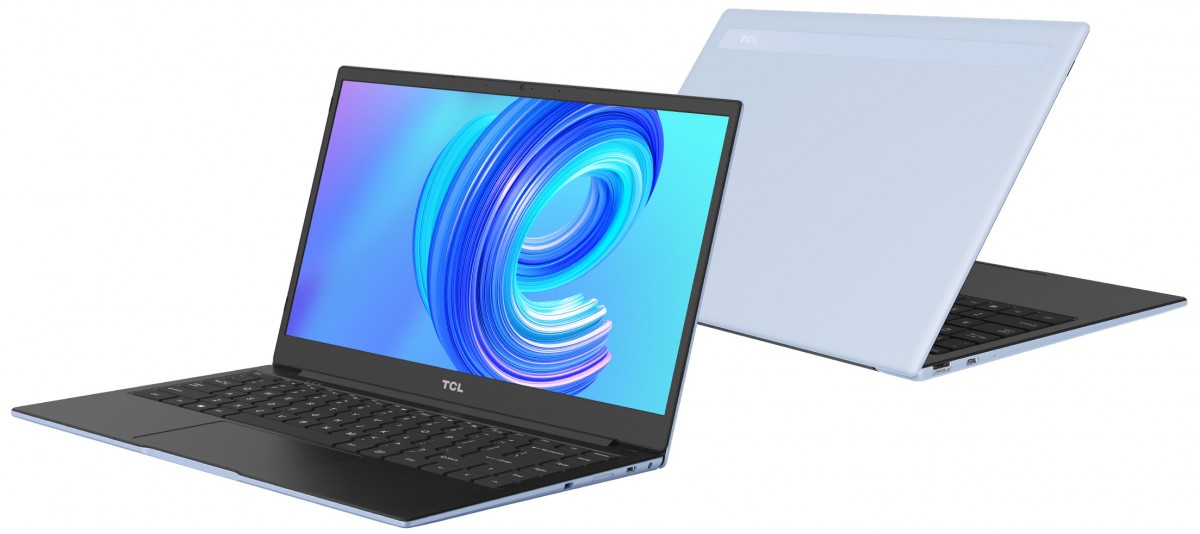
TCL Book 14 Go is the company’s first laptop priced at $349

TCL on Tuesday has officially announced its first laptop in the market. The all-new TCL Book 14 Go brings basics to the table by offering a Snapdragon 7c chipset and Windows 11 support.

The TCL Book 14 Go is priced at $349 for the only variant with 4GB of RAM and128GB of storage. It is touted to be available for purchase in Q2, 2022. At the moment, there are no details on its sale dates in different regions.

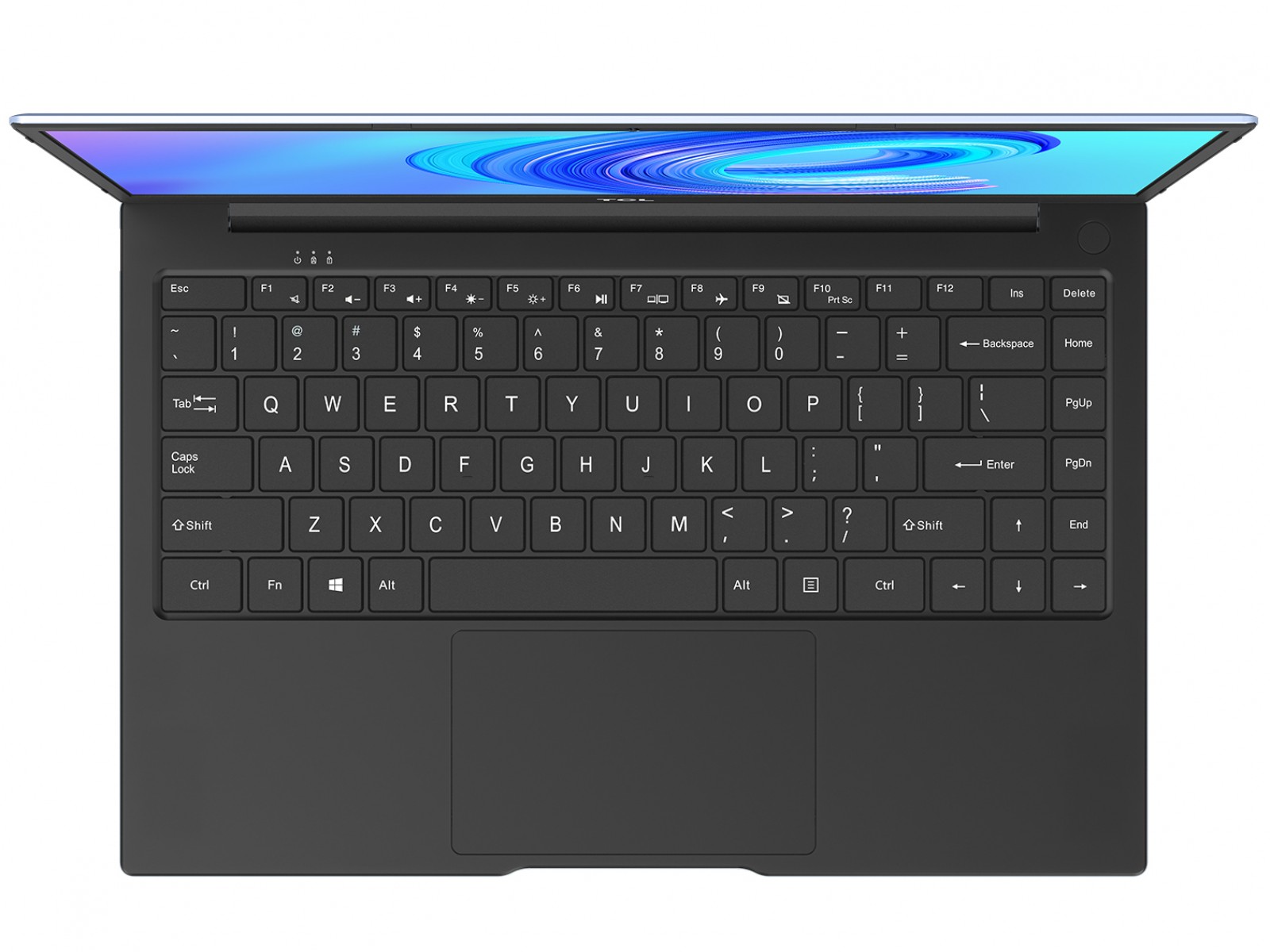
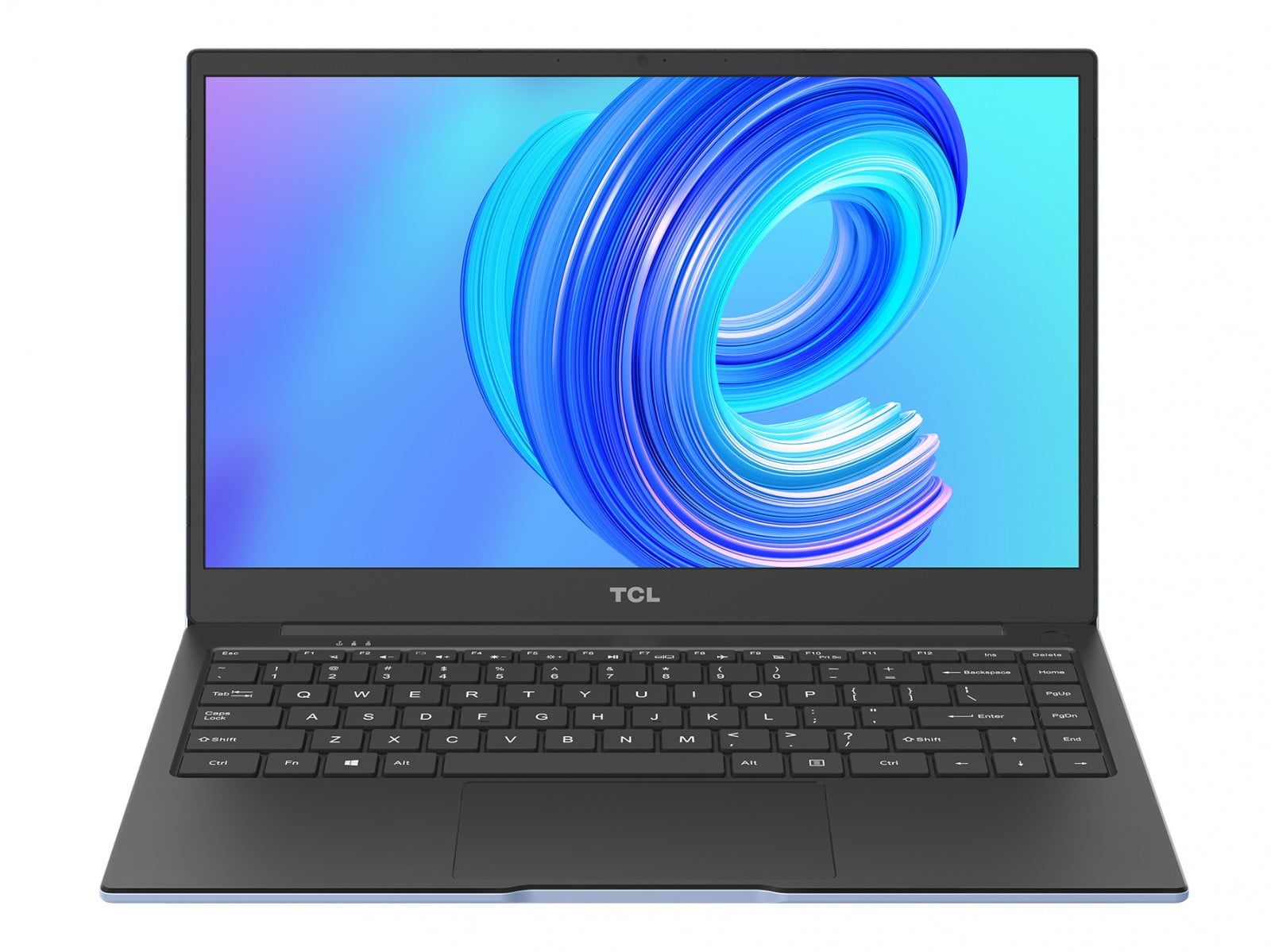
TCl Book 14 Go

TCL Book 14 Go Specifications 

The TCL Book 14 Go sports a 14.1-inch display with a resolution of 1366 x 268 pixels resolution. It has a modest design that looks similar to some budget-centric laptops from other Chinese giants. The screen has a standard 60Hz refresh rate.

It is powered by the Qualcomm Snapdragon 7c chipset paired with 4GB of RAM and 128GB of internal storage. It has a stereo speaker setup and a 720p webcam for video calls and meetings. For the unaware, the Snapdragon 7c is an 8nm octa-core SoC. The laptop has a chicklet style keyboard without a number pad.

It comes with Windows 11 out of the box and has a 40WHr battery. TCL claims it to last for up to 12 hours on a single charge. The device supports 25W fast charging with the bundled fast charger in the box. It has 4G, a SIM card tray, and Bluetooth v5.1. It also has Wi-Fi 5 with 2×2 MIMO support and features a 3.5mm audio jack.

RELATED:

Quantum Operation unveils a smartwatch with non-invasive blood glucose monitoring

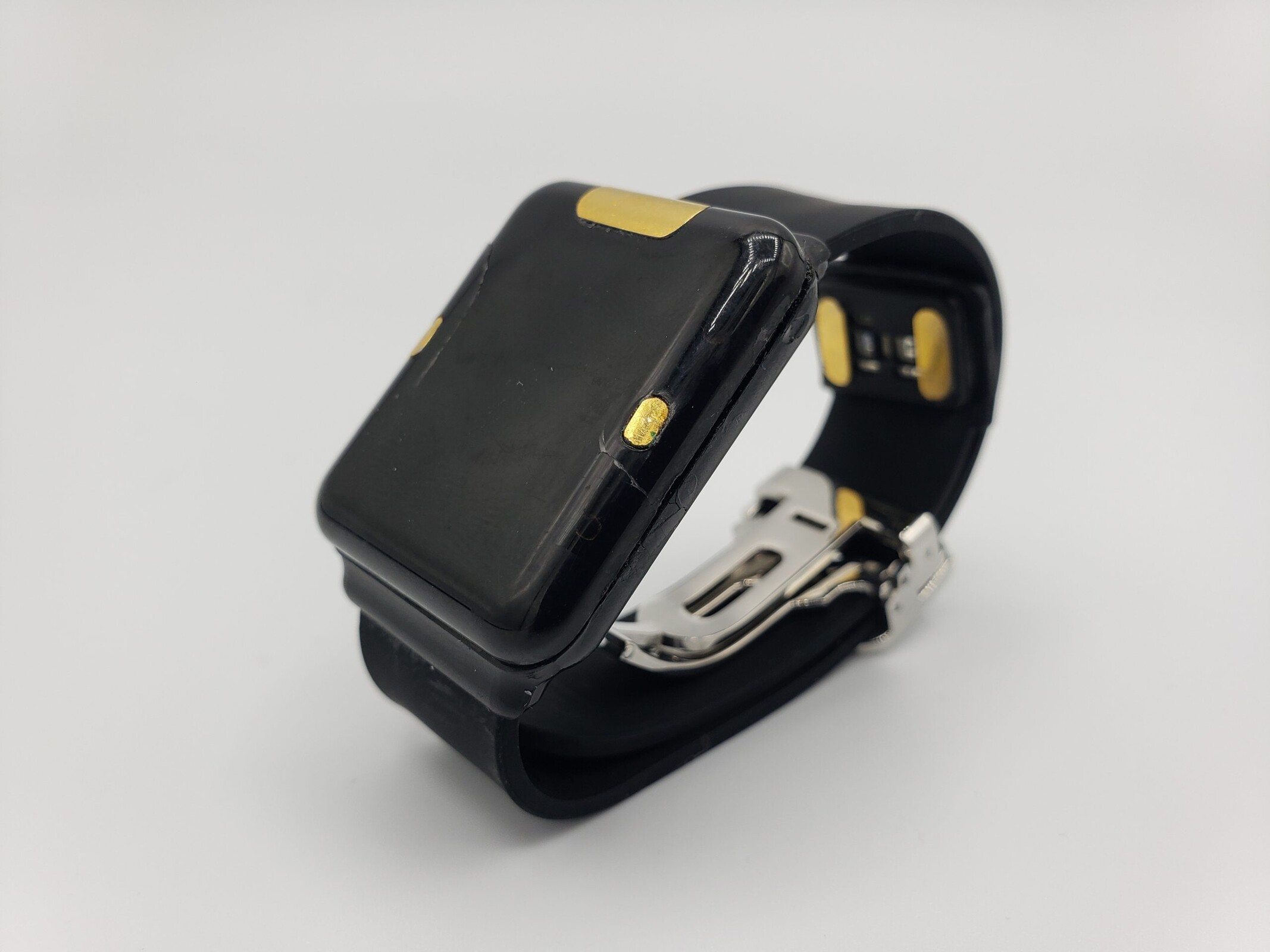
We have witnessed a raft of announcements of a broad array of products that will be showcased in CES 2022, which begins on Wednesday, January 5th at the Las Vegas Convention Center in the United States. Quantum Operation Inc has announced the release of its first smartwatch that offers blood glucose measurement via a non-invasive and proprietary technology.

At the last count, more than 2200 exhibitors will showcase their products during the most influential tech event this year, CES 2022. It will feature innovative products from a broad array of tech fields ranging from health, entertainment, fitness, mobility, and a whole lot more, and Quantum Operations is pitching itself into the fray with its smartwatch offering. The company says the new smartwatch will be of great assistance to diabetics who need to monitor their blood sugar levels regularly.

The watch features the possibility of monitoring the blood sugar levels pre and post-meal to check for changes in the metric. The smartwatch also features heart rate and blood oxygen monitoring to provide all-around health support. Quantum has released a video of the smartwatch which seems to yet to be out as a commercial product. It will however showcase a prototype of the smartwatch during CES 2022.

There has been a surge of innovative products that capture some of the very important health measurements and vital statistics using smart wearables. These sensors are capable of measuring heart rate, blood sugar, blood pressure, stress, and now, blood glucose levels. Quantum will hope that its new smartwatch will enjoy some great outings during CES 2022, although it is not the first brand to offer non-invasive blood glucose monitoring.

RELATED:


(via)


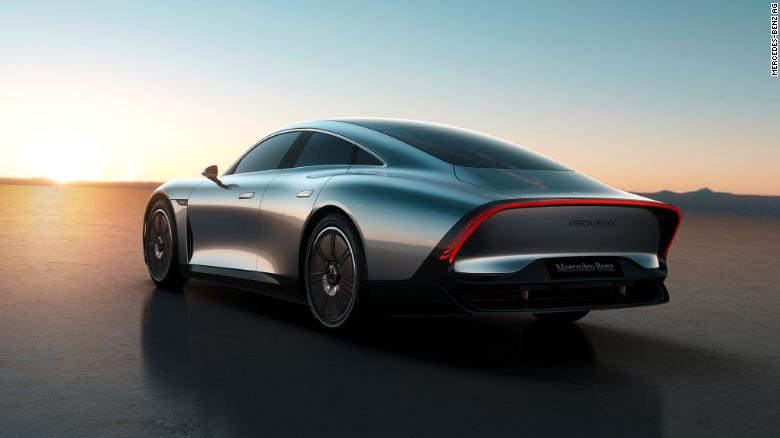
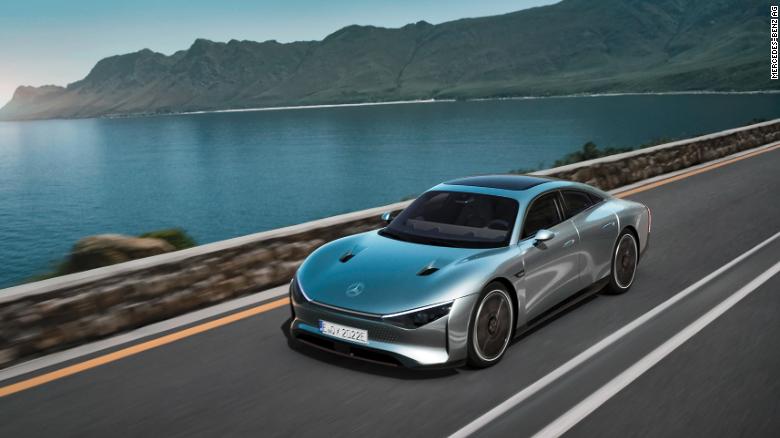
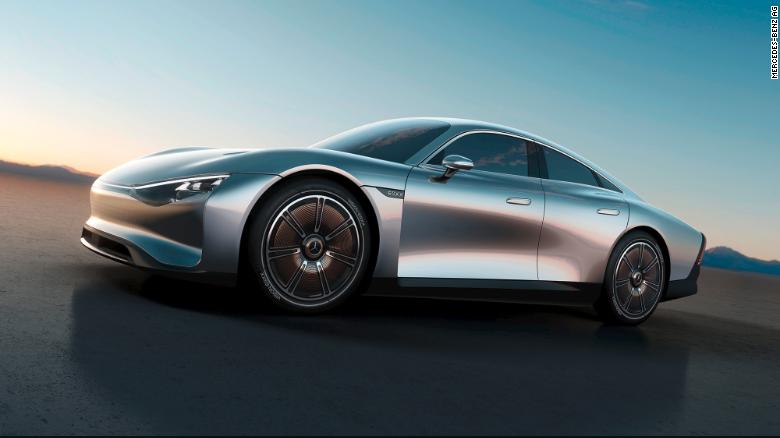
Mercedes EQXX concept EV showcased with a 620-mile range & seats made of mushroom fibres

German luxury carmaker Mercedes has unveiled yet another of its electric concept car with impressive futuristic credentials. The EQXX can cover up to 620 miles on a single charge according to the company and it is made with lots of recycled and sustainable materials. The design and materials used in its interior place the car several notches higher on the sustainability scale. These include mushroom fibers, ground-up cactus leaves, and even food scraps.Mercedes EQXX concept EV

The 620 miles range claim for the EQXX is based on simulations, hence the actual driving range of the car if when it gets to that stage could be different. Mercedes however insists that the simulated testing claims on the range are accurate and it is just a conservative figure. It expects the EQXX to go beyond the 620 miles threshold when it begins actual testing of the electric vehicle. Plans are afoot to demonstrate the EQXX’s range later this year when it commences actual driving tests for the car.Mercedes EQXX concept EV

The company says the EQXX is a technology blueprint for series production, as it plans to put much of the premium components of the EQXX into the production of all-electric Mercedes models by 2024. Some of the components include the battery, electric motor, and other environmentally friendly and reliable components. The battery pack of the EQXX is 30% lighter than that of the EQS electric sedan. The Mercedes EQS has a range of 487 miles, hence the concept car brings greater distance for a lighter battery, which is very remarkable. Mercedes is also saying that the EQXX offers greater energy efficiency better than even the Tesla Model S Long Range.Mercedes EQXX concept EV

The Mercedes EQXX concept EV is an all-around concept electric vehicle with lots of innovations and impressive features. It remains to be seen how its deployment to series production pans out, as Mercedes continues to make inroads into the luxury EV segment of the market.

RELATED;


ASUS Zenfone 8’s Android 12 update brings a rumored feature of the Zenfone 9

A few days back, the ASUS Zenfone 9 was spotted in a screenshot leak that revealed one of its upcoming features. Now, an ASUS user in the community has discovered that the recent software update for the existing ASUS Zenfone 8 brings a feature that we anticipate seeing in the upcoming Zenfone 9.

One of the members from the ASUS community shared that after the Android 12 update for the Zenfone 8, he has received an option in the settings that has the double back tap feature. However, it doesn’t seem to work on any of the Zenfone models.

ASUS Zenfone 9

If you are unaware, an earlier leak of the Zenfone 9 revealed the same setting to be in the phone as one of its features. That said, ASUS might be testing the double-tap feature for the upcoming Zenfone 9 and it may launch the phone soon.

Also, the upcoming ASUS Zenfone 9’s camera details have now been decoded and it will come with a 50MP + 12MP dual-camera setup. The primary lens will have optical image stabilisation(OIS) support, while the secondary lens will be an ultra-wide-angle unit.

Regarding the phone’s specs, we don’t have anything to learn at the moment. However, we expect to see the specs leak in the coming weeks, followed by a launch in a few months.

In related news, a design schematic of the upcoming ASUS ROG Phone 6 was also spotted recently. It revealed a triple camera system on the device and a vertical secondary screen. It will also have slightly tweaked graphics at the back.

RELATED:

(source 1, 2)

Google Pixel 6 slipped off from the top 10 list of DXOMark’s camera test; But not in the US

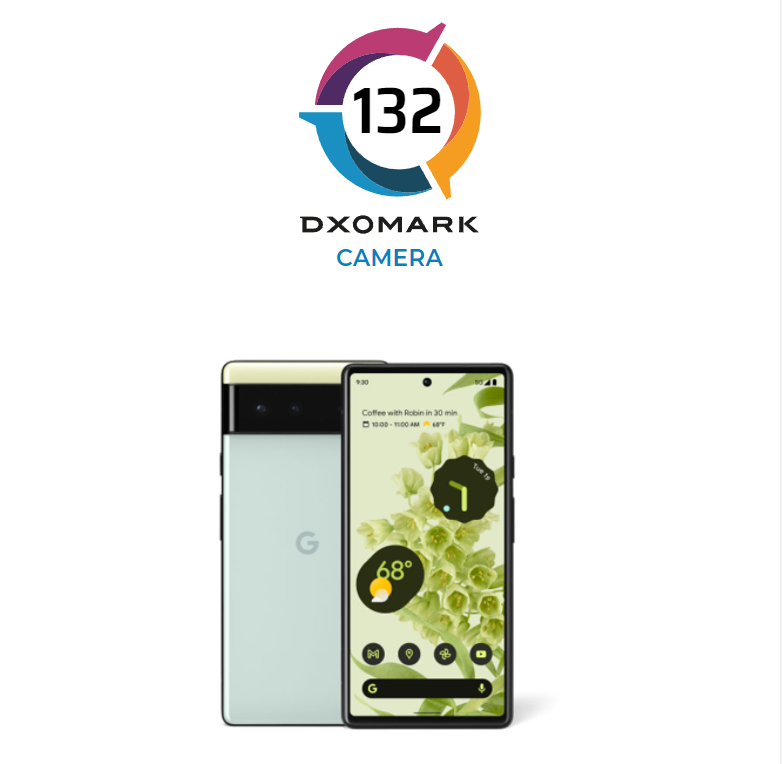
The Google Pixel 6 was launched back in October 2021 as a flagship phone from the search-engine giant. Just like every year, this year’s flagship smartphone was also expected to receive cheers for its camera performance out of the bunch. However, it looks like it’s not the case as the phone has just slipped off from the top 10 list of camera phones by DXOMark.

As per DXOMark, the Google Pixel 6 scored 132 points in the camera test. The score looks good but it has missed being in the top 10 list. The phone stands 11th in the list and comes below the Xiaomi 10 Ultra which has 133 points and is above the Huawei P40 Pro which has the same 132 points.

Google Pixel 6

Although it didn’t make it to the top 10 of its global camera test, the phone made it to the 5th spot in the US-based test. It seems that the phone was able to hold that position primarily because the US market doesn’t face any competition from the Chinese giants. The phone stands just below the Asus Snapdragon Insiders which scored 133 points and passes the Apple iPhone 13 that scored 130 points.

Coming to the cameras, the Google Pixel 6 has a dual-camera system with a 50MP main lens and a 12.5MP ultra-wide sensor. The phone scored 144 points in the photo department and 115 points in the videography department.

It scored 54 points in the zoom department. As per the website, the phone is great in offering natural detail and preserving shadows in the images. It has great stabilization, thanks to the OIS support on the primary lens.

RELATED:

JBL announces LIVE Pro 2, LIVE Free 2, and Reflect Aero earbuds with ANC at CES 2022

CES 2022 commenced earlier today and JBL took to the stage to unveil three of their new TWS earphone offerings. These included the Reflect Aero, the LIVE Pro 2, and the LIVE Free 2. All of these new earbuds will be offered at the same price of $149.95 and feature active noise canceling. Additionally, JBL has announced that these new earbuds will arrive in April 2022.

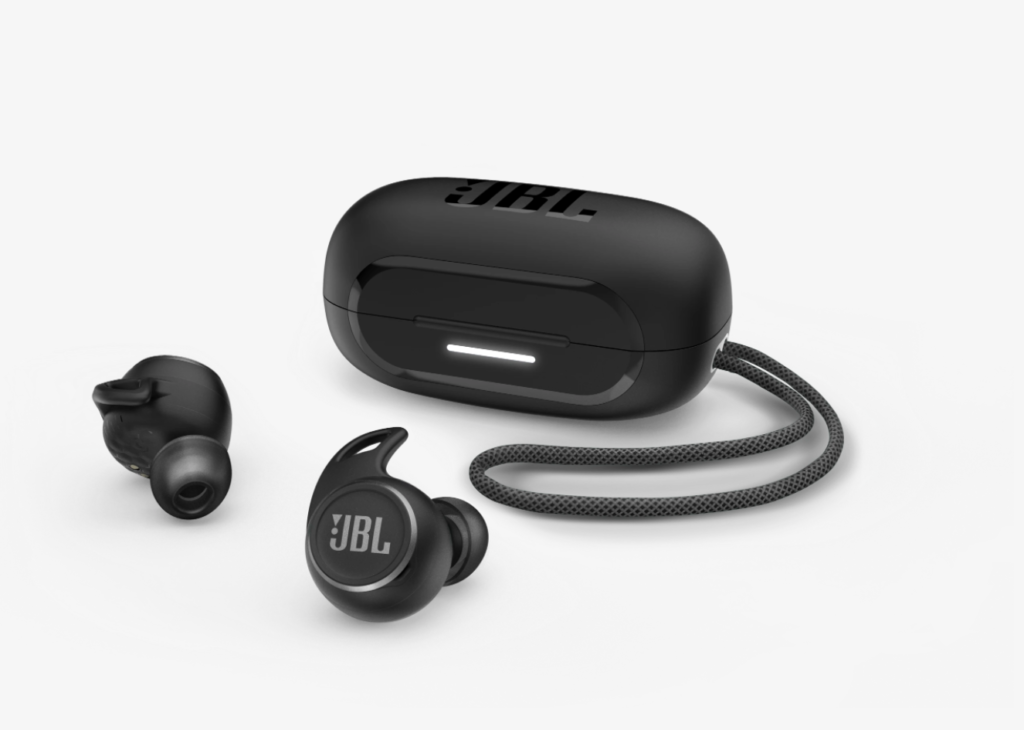
JBL Reflect Aero

JBL Reflect Aero

The new Reflect Aero TWS earphones are JBL’s offering catered towards customers in need of sporty earbuds. The device features a compact and rugged design accompanied by 6.8mm sound drivers and 6 microphones in total. Keeping the sports and fitness theme in mind, the earbuds provide IP68 water and dustproof rating and  8 hours of playtime which can be extended up to 24 hours with the charging case.

The ANC feature should be able to provide great call quality along with a pleasant listening experience when it comes to music. The earbuds also have touch control for different sound modes which can be further customized with the JBL Headphones App. Additionally, the earphones also provide hands-free voice control, which supports Amazon Alexa and Google Assistant.

The JBL Reflect Aero will retail at $149.95 when released in April.

JBL LIVE Free 2

JBL LIVE Free 2

Next up is the very compact JBL LIVE Free 2 with 10MM sound drivers and an IPX5 splash-proof rating. These clean and premium-looking earbuds have managed to capture one of the CES Innovation Awards.

Similar to the Reflect Aero earbuds, the LIVE Free 2 also features active noise cancellation using six microphones with noise and wind-isolation technology. They offer 7 hours of playtime, extendable up to 35 hours with the charging case. The JBL Live Free 2 offers the same hands-free control with Google Assistant and Amazon Alexa support. The earbuds are capable of switching sound modes via the earbuds’ touch controls and the touch controls can be further customized through the JBL Headphones App.

The JBL Live Free 2 will also come in April for $149.95.

JBL LIVE Pro 2

The JBL Live Pro 2 earbuds can be expected to be the best sounding of the trio due to their bigger 11mm sound drivers. JBL has taken a more traditional approach to the design of the Live Pro 2 which comes stem and features a premium matte finish.

The device comes with an IPX5 water resistance certification and can provide 10 hours of playtime, extendable up to 40 hours with the charging case. However, these earbuds also pack a fast charging feature that enables them to gain 4 hours of playtime in 15 minutes.

Other than these features, the LIVE Pro 2 also receives all the functionalities and quirks like active noise cancellation using six microphones with noise and wind-isolation technology, hands-free control with Google Assistant, and Amazon Alexa support, switching sound modes via the earbuds’ touch controls, and the touch controls that can be further customized through the JBL Headphones App.

Similar to the rest of the new JBL earbuds lineup, the LIVE Pro 2 will come in April for a price of $144.95.

RELATED:


(Source)