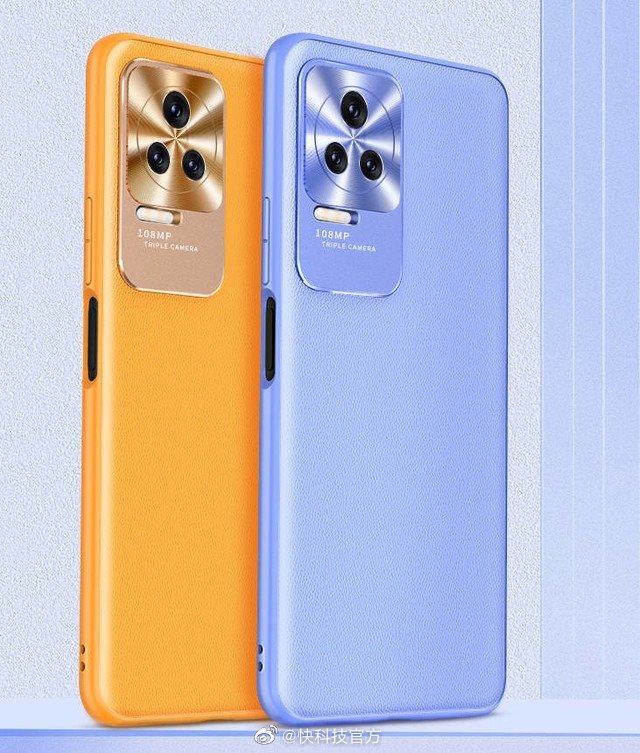
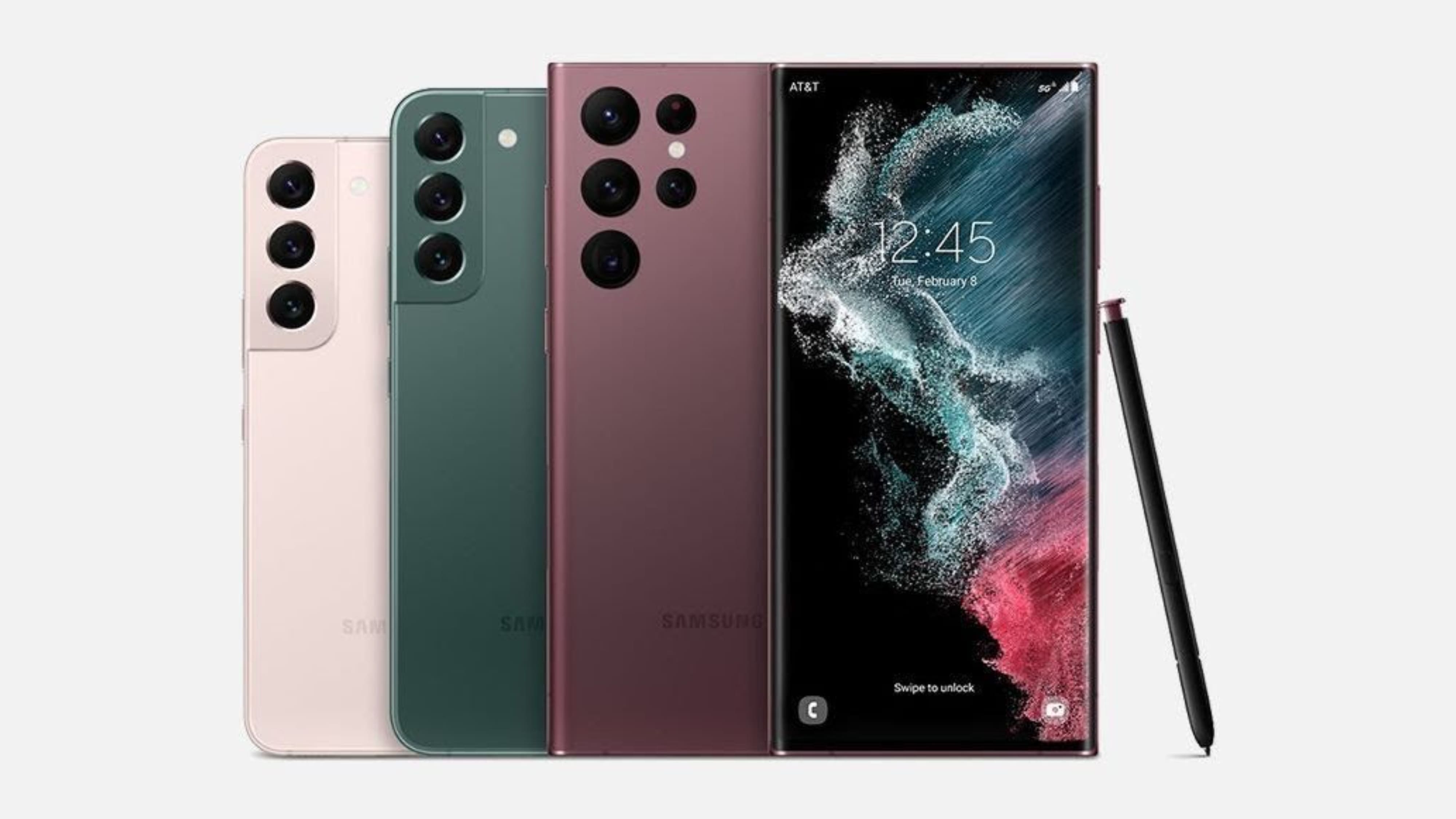
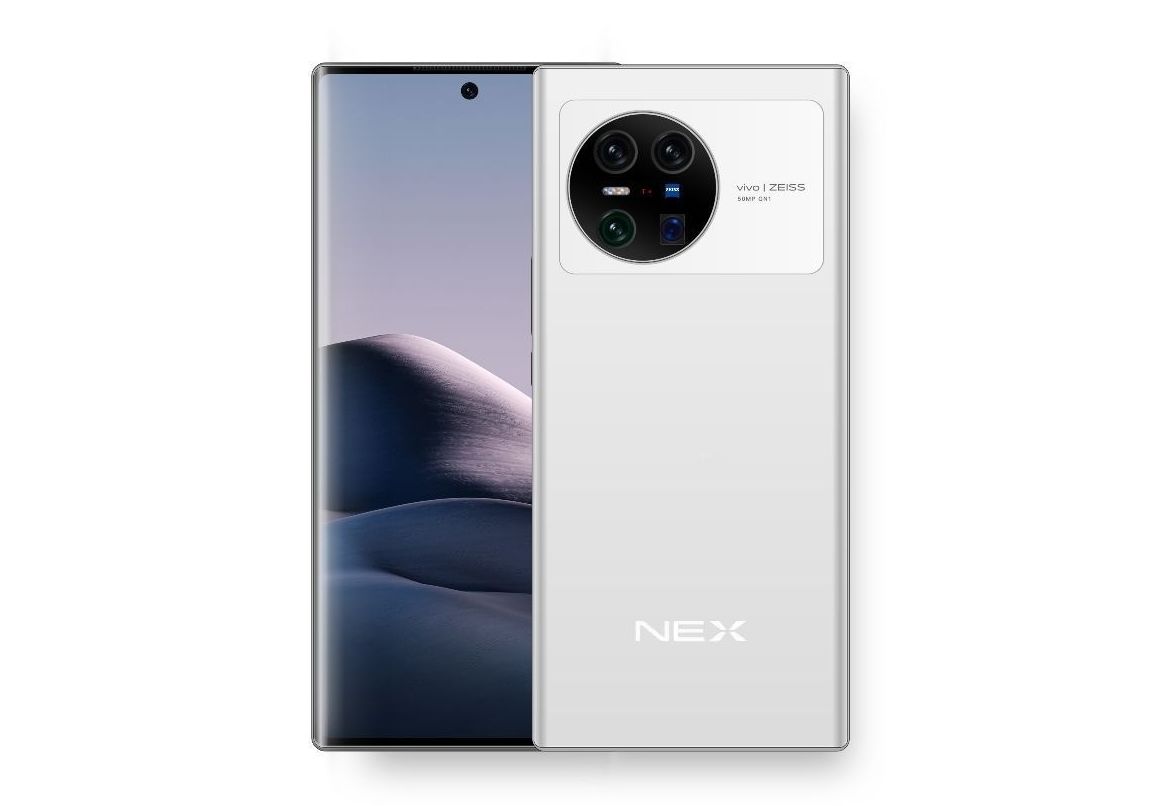
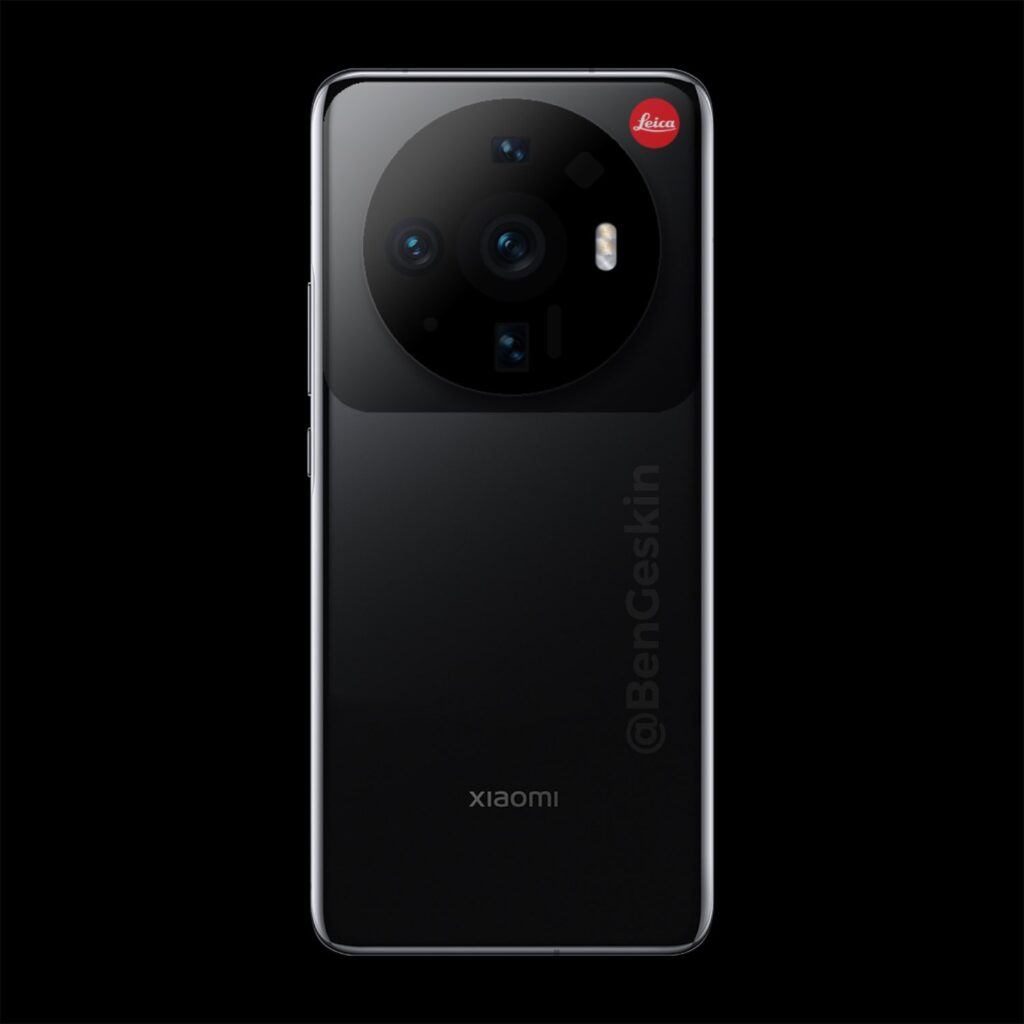
Xiaomi is expected to debut its next generation of premium smartphones starting in December. These new devices were anticipated to run Android 12. But it looks like some of them will be left out. However, they will boot the yet-to-be-announced MIUI 13.
Xiaomi Mi 11
According to reports by Xiaomiui, the alleged Xiaomi 12X and Redmi K50 will ship with Android 11 instead of Android 12. Anyway, though they will come with a year-old Android version, they will be still released with the upcoming MIUI 13.
The source suggests that the chipset, which will power the handsets, is the reason for an older version of Android. These devices codenamed Pschye and Poussin are said to feature a Qualcomm SM8250-based silicon. The exact name of the chip is rumored to be Snapdragon 870+.
Since all the previous SM8250-based phones came out with Android 11, Xiaomi appears to be doing the same with these forthcoming handsets. By doing so, the company will not have to develop an additional version of Android for these smartphones after Android 12.
Having said that, the reason stated here is merely an assumption. However, the phones will most likely launch with MIUI 13 based on Android 11 as their software builds are already in the testing phase.
As far as other details are concerned, the Xiaomi 12X (Psyche) is expected to be the long-rumored mini smartphone with a 6.28-inch display and a 50MP Samsung ISOCELL GN5 primary camera. On the other hand, the Redmi K50 (Poussin) will be similar to the Redmi K40 with a 48MP Sony IMX582 main camera.
Qualcomm is all set to launch its next-generation flagship smartphone chipset in a couple of days at its Tech Summit. This time, the company is also changing the naming scheme and the chipset will be called Snapdragon 8 Gen1 instead of Snapdragon 898.
Now, as per the latest report, the OnePlus 10 Pro will be among the first smartphones to come powered by this new flagship chipset. With this news, the Chinese company joins the list of Xiaomi and Motorola which are already reported to be the first to launch a device powered by the Snapdragon 8 Gen1 SoC.
Unlike its predecessors, the OnePlus 10 series phones will be launched in January, at least in the Chinese market. In this scenario, it will be among the first smartphones to come powered by the upcoming Qualcomm flagship chipset.
However, the global launch of the OnePlus 10 series smartphones is set to take place in March or April, in line with the previous launches. Not just the chipset, key specifications of the device have already been leaked online.
As per the reports, the phone will feature a 6.7-inch curved Quad HD+ AMOLED display with a 120Hz refresh rate and a single punch-hole on the left side of the screen. It is expected to pack 8GB or 12GB of LPDDR5 RAM and 128GB or 256GB of UFS 3.1 internal storage, with support for a microSD card slot for expanding the capacity.
In the camera department, the OnePlus 10 Pro will feature a Hasselblad-branded triple-camera setup on the back consisting of a 48-megapixel wide sensor, a 50-megapixel ultra-wide-angle lens, and an 8-megapixel telephoto lens.
On the front side, the device will have a 32-megapixel front-facing snapper which is an upgrade compared to the usual 16-megapixel snapper. It is said to be running the latest Android 12 operating system with OxygenOS 12 and comes powered by a 5,000Amh battery with support for 125W fast charging.
Earlier this month, MediaTek unveiled the Dimensity 9000 chipset. Now, the company has confirmed that it will be holding a press event on Dec. 16 in China. Since the chipset has been already unveiled, it is unlikely that some new details may get confirmed through the upcoming event. Probably, the names of the first Dimensity 9000 powered may get confirmed.
The Dimensity 9000 is the world’s first chipset to be manufacturer through TSMC’s 4nm process. It includes a single ARM Cortex X2 prime performance core that clocks at 3.05GHz, three Cortex-A710 cores that work at 2.85GHz, and four Cortex-A510 efficiency cores that ticks at 1.8GHz. The SoC includes a 10-core ARM Mali-G710 GPU.
The D9000 is equipped with a fifth-generation six-core APU for AI processing. It can support displays that support FHD+ resolution along with a 180Hz refresh rate. It comes with support for LPDDR5x RAM. The 18-bit ISP can shoot 4K HDR videos with three cameras simultaneously. Devices powered with D9000 can support a massive 320-megapixel camera.
The Dimensity 9000 supports connectivity options such as sub-6GHz 5G networks, Wi-Fi 6E, and Bluetooth 5.3. According to MediaTek Vice President of Corporate Marketing, Finbarr Moynihan that the Dimensity 9000 can deliver performance similar to the Apple A15 Bionic in multi-core benchmark tests. The first phones powered by the Dimensity 9000 chip is expected to launch in Q1 2022.
Qualcomm’s Snapdragon 8 Gen 1 will most likely be the name of the premium mobile chip from the company since it announced a new naming template for its chips. Ahead of the November 30 official announcement of the name changes to the Qualcomm Snapdragon lineup and the unveiling of its new chips, rumors on the debut devices remain rife. It is alleged that three upcoming premium ZTE smartphones will be powered by the new Snapdragon 8 Gen 1 chipset.
Xiaomi and Motorola have been some of the other OEMs that have been mentioned to deploy the new chipset in their models. The high-end Snapdragon 8 Gen 1 is rumored to be used by ZTE’s upcoming gaming-oriented smartphone lineup – the nubia Red Magic 7 and Red Magic 7 Pro, as well as the Nubia Z40. While the source of the leak is not fully specified, we cannot confirm at this time, other key details relating to these models are rumored to be powered by the Snapdragon 8 Gen 1 chip.
An official announcement from Qualcomm itself or from the smartphone maker itself will clarify all the doubts and uncertainty regarding the debut of the Qualcomm Snapdragon 8 Gen 1 chipset. It is also unclear when these models will hit the market and their pricing details. The November 30 Qualcomm event will illuminate some of these details at least.
With the Tesla Gigafacotry Berlin, the brand is setting up its first manufacturing facility in Europe and is also touted to be the company’s most advanced, sustainable and efficient facility so far. Now, it seems to be all set to start production of cars.
As per the new report from German media outlet Automobilwoche, the Berlin Gigafactory only requires the final operating permit from the environmental department and after that arrives, the company will be able to start manufacturing in the country.
The company is expected to start production in the Berlin Gigafactory next month, i.e. in December 2021, and by the end of the first half of 2022, it is expected to produce around 30,000 cars in this new factory.
It is being said that the company was set to start production of its cars in June this year but was postponed because Tesla didn’t receive the necessary EIA certificate in time. Now, the company is expected to get the required clearences within a few days.
If the reports are to be believed, then the Tesla Berlin Gigafactory has completed the production of around five Model Y cars but not on the production line. It is expected to start the production from January at a rate of around 1,000 cars per week and then will gradually increase the production rate.
Apart from this car production factory, the US-based electric car maker is also gearing up to build a large battery production plant at the same location in Glenheide near Berlin. But before that, the Tesla Gigafacotry for car production will operate at full capacity.
The global chip shortage that greatly affected the production schedule and launch dates of several models across manufacturers also affected the Realme 9 Series lineup. However, it seems the company might have overcome these challenges and is set for the launch of the Realme 9 series in India within the first quarter of 2022. The Realme 9 series will consist of four models namely the Realme 9, Realme 9 Pro, Realme 9i, and the Realme 9 Max/Pro+ which will be the first with such a name from Realme.
Although Realme had indicated a 2022 launch date for the Realme 9 series due to the global chip crisis, there were no specifics mentioned. The source for the current update however specified the first quarter of 2022 for the launch of the Realme 9 series in the subcontinent. In fact, a February launch has been specified by the rumors but we cannot confirm the date at this time. The rumors also include that the Pro and Max/Pro+ models in the Realme 9 series will be powered by Qualcomm Snapdragon 870 chipset, while the screens will be AMOLED with 120Hz display refresh rate.
More illumination could be provided by Realme as we inch closer to 2022, but it is also believed that the models in the Realme 9 series lineup will sport a 108MP main camera. No pricing or global availability details have been leaked at this time for the Realme 9 series.
Fast-rising global tech powerhouse Xiaomi is planning to build a 300,000 vehicles annual capacity plant in Beijing, China. The new plant will be focused on the production of electric vehicles for the smartphone giant and will indicate a milestone for the company when it comes alive. The news was divulged by the Beijing government and it is indicated that the plant will be constructed in two phases.
Xiaomi Shop
Tech companies are increasingly expanding their business model to capture previously uncharted territory and the electric vehicle (EV) market holds great potentials globally. Xiaomi is not the first tech company to have mulled the idea of going into EV production. Apple, Huawei, and a few other companies have cropped up as making plans in the development of their electric vehicles.
The Xiaomi EV manufacturing facility will also house the company’s headquarters for the new EV unit, sales, and research offices within the Beijing Economic and Technological Development Zone, according to the government source. The new Xiaomi EV plant is projected to begin operations by 2024 and up to $10 billion will be invested by the company within a 10-year window to bring its new electric vehicle division up to speed with the global EV market.
Xiaomi has been experiencing growth across several segments of its business model, with some very strong numbers coming from its smartphone arm globally. It will hope that its structures and technologies already in place will help fast-track the development of its EV division for sustained profitability and speedy return on investment.
Audio accessories manufacturer boAt has unveiled the Rockerz 660 wireless headphones in India. The headphone is priced at Rs. 2,499 (~$33) and one of the major highlights is a 60-hour battery life. The wireless headphones support Bluetooth 5.0 connectivity, have fast-charging support, and the audio experience is enhanced with its 40mm drivers. The boAt Rockerz 660 comes in the wake of the recent release of two gaming headphones by boAt last month. The earbuds is compatible with Google and Siri Voice Assistants and is available in three colors namely Active Black, Fiery Moon, and Bumble Blue. It is available in India via Flipkart.
The headphone offers extreme comfort to go with a long-use capability. The ear cushions offer a snug fit that is a great design ergonomically. Apart from Bluetooth, the Rockerz 660 can also be connected via its Aux port. The smart wireless wearable device has wear detection functionality that allows for instant music playback whenever it is worn. The wear detection also means that the device will stop its playback whenever it is removed from the ear.
The dual pairing feature of the boAt Rockerz 660 allows you to connect the headphones with two devices simultaneously. The 40mm drivers enable dual equalization modes while it sports a 1000mAh battery. A ten-minute charge of the Rockerz 660 could provide up to 8 hours of music. The boAt earbud offers premium features for its price and it should have a great reception in the subcontinent.
It seems Chinese tech powerhouse Huawei’s investment into research and development of smart wearables is paying off massively. The company this week unveiled its largest research lab focused on testing and development of wearables that will be massive health and fitness gems. A tipster has now revealed that Huawei will be unveiling its Watch D smart wearable in December it offers blood pressure monitoring.
A smartwatch that offers blood pressure monitoring could be a game-changer in the monitoring of human blood pressure. It is bound to provide a trove of real-time data that could drive new research into understanding the phenomenon.
There are only a few smart wearables that offer blood pressure monitoring due to the complexities involved in providing accurate and reliable blood pressure readings. In support of the rumored impending release of the Watch D with blood pressure monitoring, Huawei recently got certification for a wearable device that monitors blood pressure.
The alleged promo images of the Huawei Watch D were posted on Weibo and the images show a device that bears little semblance to previous Huawei wearables. The Watch D sports a rectangular design with a rectangular display and two buttons on the right-hand side of the smartwatch.
It is unclear the level of progress that Huawei had made in getting the necessary certifications for the Watch D outside China. The pricing detail for the Huawei Watch D is also not yet known. There has been no reaction from Huawei on the leaked details of the Watch 5 at this time.
The 78th edition of the EICMA Motorcycle Show currently held in Milan, Italy is the premier gathering of motorcycle aficionados and manufacturers. Leading electric scooter manufacturer NIU has used the EICMA 2021 platform to make some big announcements. It unveiled several new e-scooters including its fastest e-scooter yet (the MQi GT EVO) and a hybrid model combining gas and electric power (the YQi concept scooter).
The lineup of models unveiled by NIU during EICMA 2021 also includes the RQi Sport, NQi GTS, and BQi KQi. These NIU products offer a good mix of options, range, efficiency, and comfort, in addition to competitive pricing.
The MQi GT EVO can reach a top speed of 100 km/h with a power hub motor of 5 kW (6.7 hp). It has two 72V 26Ah batteries that can push the e-scooter up to 85 km (53 miles) on a single charge. The design philosophy behind the EVO is to make it a fun bike right from stepping in and pulling the throttle.
The EVO can accelerate from 0 to 60km/h in six seconds, which is quite impressive. The e-scooter also features a keyless start, an electric anti-theft steering column lock, and sharing profiles to allow authorized persons to use the e-scooter without a key. The MQi GT EVO will sell in Europe for €4,999 and comes with three years of connectivity and app support services.
The NIU YQi concept scooter is a hybrid model that adds a gas-powered engine to the electric drivetrain. NIU hopes the YQi will help gas-powered bikes ultimately transit to electric power. A total of 14.5 kW of power can be generated between the gas motor and electric engine, with a top speed of 110 km/h. It will have a 150cc liquid-cooled engine and a 2400W mid-mounted electric motor. The combined power available to the YQi means that it can achieve top speeds and acceleration times at par with 250cc+ bikes.
The other NIU model showcased during EICMA 2021 like the RQi Sport electric motorcycle (with a top speed of 160 km/h). The RQi Sport is well suited for city commute as well as inter-city movement on urban highways. Pricing for the RQi Sport will start at €6,999 in Europe.
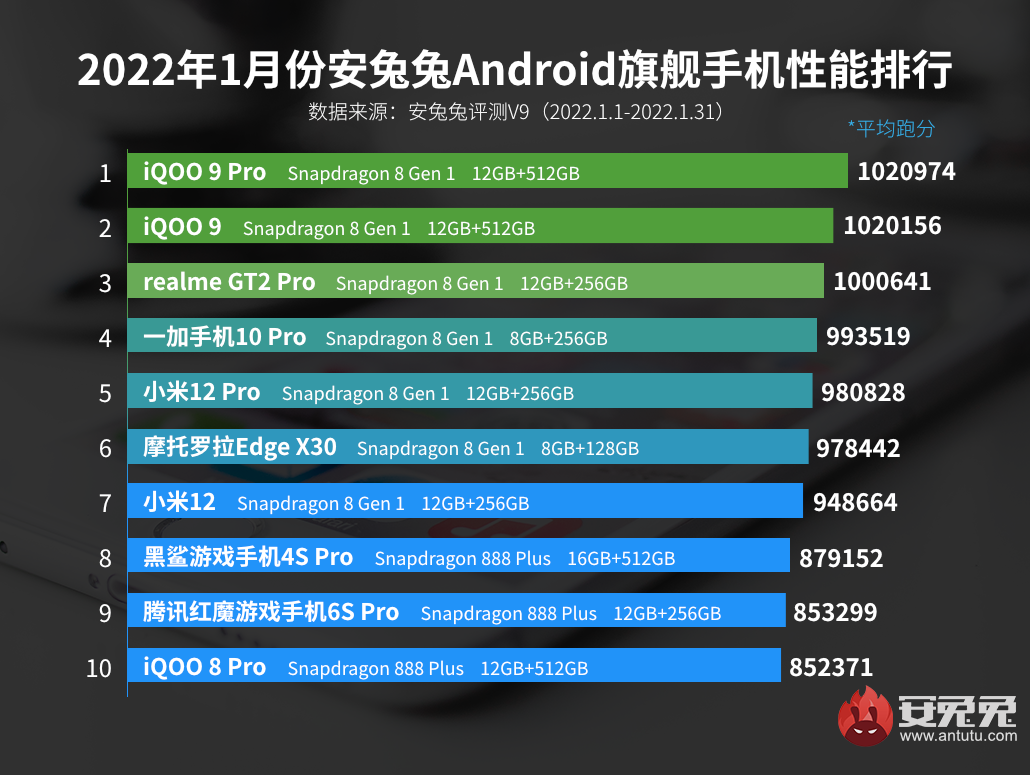
Recently, a tipster shared a screenshot of the alleged Realme GT 2 Pro’s AnTuTu benchmark score. While it mentioned a remarkable score of 1,025,215, it did not reveal details of the scores for GPU, CPU, memory, and UX tests. Soon after, the official AnTuTu listing of the phone was shared by the benchmarking platform. It not only gave the breakdown of the score but also revealed its key specifications
The AnTuTu listing of the Realme RMX3300 phone reveals that it features a 120Hz refresh rate display and is powered by the Snapdragon 8 Gen1 chipset, which tags along the Adreno 730 GPU. The device is equipped with LPDDR5 RAM and UFS 3.1 storage.
The variant of the RMX3300 that has appeared on AnTuTu has 12 GB of RAM and 256 GB of storage. The device runs on Android 12.
In the CPU test, the Realme RMX3300 scored 237,710 points. In the GPU test, it scored 447,926 points, which is an increase of around 37.5 percent compared to the Snapdragon 888’s GPU performance. It scored 167,082 in the memory test and 172,497 in the UX test. These scores of allowed the purported Realme GT 2 Pro to record an outstanding score of 1,025,215 on AnTuTu.
Realme GT 2 Pro specifications (Rumored)
Recent reports have claimed that the Realme GT 2 Pro will feature a 6.55-inch FHD+ 120Hz AMOLED display, up to 12 GB of LPDDR5 RAM, up to 256 G of UFS 3.1 storage, Snapdragon 8 Gen1, and Realme UI 3.0 flavored Android 12. It may house a 5,000mAh battery that supports 125W rapid charging. For selfies, it may feature a 32-megapixel front camera, and its rear camera system may include an OIS-ready 50-megapixel primary camera, an 8-megapixel ultrawide snapper, and a 5-megapixel camera. The GT 2 Pro may carry pricing of around 4,000 Yuan (~$625). It is likely to debut by early 2022.
Recently, a Vivo phone with model number V2164A was approved by the 3C authority of China. A previously seen IMEI database listing of the same device revealed that it may debut in the market with the Vivo Y55s moniker. Now, a listing of the phone has appeared at China Telecom’s website. It has revealed that the entire specs and images of the phone. The listing also mentions that Vivo will release the Y55s on Dec. 4 in the Chinese market.
Vivo Y55s specifications (Rumored)
The Vivo Y55s has 163.87 x 75.33 x 9.17mm dimensions and weighs 199 grams. It has a 6.58-inch LCD screen with a teardrop notch that offers a Full HD+ resolution. The front notch houses an 8-megapixel selfie camera and its back panel has a 50-megapixel primary camera and a 2-megapixel auxiliary lens.
Vivo Y55s
The Dimensity 700, which is mentioned with the MT6833 model number in the listing, powers the Vivo Y55s. The device may come in a single variant offering 8 GB of RAM and 128 GB of built-in storage. The Vivo Y55s houses a massive 6,000mAh battery. As per the 3C listing of the phone, it supports 18W fast charging.
The device will come preinstalled with Android 11 OS. The connectivity mentioned in the listing of the device includes dual SIM support, Wi-Fi, Bluetooth, a USB-C port, and a 3.5mm audio jack. It also seems to feature a side-facing fingerprint scanner.
Vivo Y55s pricing and availability
The Vivo Y55sis listed with a pricing of 1,899 Yuan (~$297) in China Telecom’s listing. It also mentions that the device will release on Dec. 4 in the home market and will come in multiple colors such as Ceramic Black, Mirror Lake Blue, and Cherry Pink Meteor.
It was reported last week that Xiaomi may hold a launch event on Dec. 12 in China to announce the Xiaomi 12 and Xiaomi 12X flagship phones. Fresh information reveals that the Chinese manufacturer may announce the Xiaomi 12X lineup by the end of December. Last year, Xiaomi announced the Xiaomi Mi 11 5G in December to become the first brand to launch a Snapdragon 888 SoC powered phone. A reliable tipster claimed that this year Xiaomi will not unveil the first Snapdragon 8 Gen1 flagship phone.
A screenshot of an internal document of Xiaomi China seems to have appeared on Weibo. It shows that the company will be holding a press conference on Dec. 28 to announce a new product. This indicates that the rumored Xiaomi 12 and Xiaomi 12X may go official on Dec. 28.
Even tipster Digital Chat Station has claimed that Xiaomi’s product launch conference is scheduled for the end of next month. He added that there is a probability that Xiaomi may not be the first brand to launch Snapdragon 8 Gen1 powered phone. This suggests that the Moto Edge X featuring the Snapdragon 8 Gen1 may go official before the Xiaomi 12 lineup.
Reports have revealed that the Xiaomi 12X will be driven by the Snapdragon 870 mobile platform, whereas the Xiaomi 12 will be equipped with Qualcomm’s new flagship SoC. Both models are expected to arrive with a curved edge AMOLED display that offers a Full HD+ resolution, a 120Hz refresh rate, and an in-screen fingerprint sensor. The Xiaomi 12X is expected to house a 6.28-inch display.
The Xiaomi 12X may feature a 20-megapixel selfie snapper. Both models are likely to house a 50-megapixel main camera on the back. The 12X may house a 5,000mAh battery with 67W rapid charging and 33W fast charging. On the other hand, the Xiaomi 12 may carry support for 100W rapid charging.
The OPPO Reno7 series went official in China and soon it will hit the Indian market as well. It won’t come to Europe like all the odd numbers of the series (except the first generation), but there is a chance that the devices from this lineup will hit the European market in 2022 under the OPPO Find X4 series. As for now, the new series is composed of three variants: OPPO Reno7, Reno7 Pro, and Reno7 SE, one of which is a flagship, while the others are mid-rangers. This is a comparison between their specifications.
Triple 64 + 8 + 2 MP camera, f/1.7 + f/2.2 + f/2.4
32 MP f/2.4 front camera
Triple 50 + 8 + 2 MP, f/1.8 + f/2.2 + f/2.4
32 MP f/2.4 front camera
Triple 48 + 2 + 2 MP camera, f/1.7 + f/2.4 + f/2.4
16 MP f/2.4 front camera
BATTERY
4500 mAh, fast charging 60W
4500 mAh, fast charging 65W
4500 mAh, fast charging 33W
ADDITIONAL FEATURES
Dual SIM slot, 5G, reverse charging
Design
The OPPO Reno7 comes with a new design scheme: OPPO decided to ditch the curved screen on all the variants and opted for a design with a flat display and iPhone-like flat borders, just like the vanilla version of the OPPO Reno6 series. The exception is the OPPO Reno7 SE which still comes with a flat display, but it has curved borders like most of the other phones out there. The camera module has a brand new look and, on the OPPO Reno7 and the Reno7 Pro, it also comes with a LED ring for notifications and more.
Display
There are not very important differences between the displays of these phones, but the OPPO Reno7 Pro provides the best specifications on paper. The display of the OPPO Reno7 Pro 5G is not only wider, but it even provides a better image quality thanks to the HDR10+ certification enhancing the experience on streaming platforms. Further, it has a higher peak brightness with up to 920 nits. All the phones from the OPPO Reno7 series have an AMOLED display with a Full HD+ resolution, an in-display fingerprint reader, and a 90 Hz refresh rate, but the panels of the OPPO Reno7 and the Reno 7 SE are smaller with a diagonal of 6.43 inches.
Specs & Software
As already mentioned above, OPPO Reno7 and Reno7 SE are midrange phones, while the OPPO Reno7 Pro 5G has flagship-class hardware. It is powered by the MediaTek Dimensity 1200 Max mobile platform, which is an upgraded version of the DImensity 1200 providing higher performance. The SoC is paired with up to 12 GB of RAM and up to 256 GB of UFS 3.1 internal storage. Between the OPPO Reno7 and the Reno7 SE, the former is more powerful thanks to its Snapdragon 778G mobile platform, and, unlike the latter, it offers up to 12 GB of RAM just like the Pro sibling. All the phones run ColorOS 12 out of the box, but it is still based on Android 11.
Camera
The only device from this series providing a high-end camera experience is the OPPO Reno7 Pro 5G. It is far from flagship camera phones, but it comes with a great Sony IMX766 main camera sporting a 50 MP resolution and OIS. Unfortunately, the secondary sensors are not good enough for high-end phones, so you won’t get so much versatility. The OPPO Reno7 5G comes right after with a 64 MP triple camera.
Battery
All of these phones are equipped with a 4500 mAh battery, but the OPPO Reno7 should be the one with the longest battery life because it has a smaller display than OPPO Reno7 Pro and a better production process than OPPO Reno7 SE. The OPPO Reno7 Pro 5G has the fastest charging tech with a power of 65W.
Price
OPPO Reno7 has a €380/$430 starting price, Reno7 Pro starts from €520/$589, and Reno7 SE begins at €310/$351. Each device has its pro and cons with the Reno7 being very close to the Pro variant if we exclude hardware and camera. Which one would you pick?
Black Friday is over but you can still grab this amazing deal offered by Giztop on the newly released Redmi Note 11 4G. The retailer is offering the Redmi Note 11 4G device for $199 to international customers!
The interested customers can grab the Redmi Note 11 4G smartphone in three colors: Black, White, and Blue. However, you can also choose between the two different storage options of 4GB RAM + 128 GB and 6GB RAM + 128GB storage. It is the best price deal from Giztop on the newly launched smartphone that is currently retailing in the Chinese market only.
Redmi Note 11 4G specifications and features
Redmi Note 11 4G
The Redmi Note 11 4G has a 6.5-inch FHD+ LCD display that delivers a 90Hz refresh rate, a 180Hz touch sampling rate, and a 1,500:1 aspect ratio. It has an 8-megapixel camera on the front for capturing selfies. Its rear shell has a triple camera unit with a 50-megapixel primary camera, an 8-megapixel ultrawide lens with a 120-degree FOV, and a 2-megapixel macro camera.
The Helio G88 powers the device with 4 GB / 6 GB of LPDDR4x RAM. It comes with 128 GB of eMMC 5.1 storage. For more storage, it features a dedicated microSD card slot. The device is backed by a 5,000mAh battery that supports 18W fast charging and 9W reverse charging. It ships with a 22.5W fast charger.
The device is loaded with MIUI 12.5 based Android 11. It also offers features such as dual SIM, 4G VoLTE, Wi-Fi 802.11ac, Bluetooth 5.1, GPS, IR blaster, dual stereo speakers, and a 3.5mm audio jack.
Don’t miss a chance to get the Xiaomi Redmi Note 11 4G carrying these exciting specifications for $199 via Giztop.
Earlier today, the Chinese smartphone maker, Doogee confirmed their upcoming rugged 5G smartphone, the Doogee V20, will be officially launched and available for purchase in January 2022.
After the success of the V10 that was released in August of 2021, Doogee has announced the V20, which will focus and improve the features that made the V10 succeed, namely its large battery, fast charging, cameras, and temperature measurement capabilities.
Doogee V20 is the first rugged phone to feature a 6.43-inch Samsung AMOLED display with 2k resolution. The display also features 409ppi pixel density, an aspect ratio of 20:9, a dynamic contrast ratio of 80000:1 and is capable of displaying 16.7 million different colors. The front camera is placed in the top center as a punch-hole cutout.
The unique design of this rugged phone is also enhanced by a secondary display provided adjacent to the rear camera module. The 1.05-inch display provides functionality-based features like displaying time, notifications, incoming calls and allowing you to control your music.
When it comes down to toughness, the body of the Doogee V20 consists of Aerospace grade carbon fiber, making the phone lightweight as well as the toughest rugged smartphone available in the market. This claim is backed by various credentials like IP68 and IP69K waterproof certificates, MIL-STD-810G droop proof certificate, and the MODE high and low-temperature resistant certificate.
The Doogee V20 also appears to house a triple rear camera setup with an LED flash, but no official specs of these cameras have been unveiled thus far, so stay tuned as we will be covering its launch event scheduled for January 2022.
In the meantime, you can participate in a giveaway hosted by Doogee with a chance to win their upcoming V20 device as well as many other exciting gifts!
Giztop is giving out an amazing deal on Lenovo Xiaoxin Pad Pro under the Black Friday– Cyber Monday 2021 sale. Under this sale, you can now buy the Lenovo Xiaoxin Pad Pro 2021 which generally retails for $490 at a heavily discounted price of $369 only. Moreover, you get an additional 5% OFF by using the coupon code: GT5. Thus the final price comes down to $350.55 only. This super deal ends on 30 November.
Lenovo XiaoXin Pad Pro is a premium tablet that features an 11.5 inch, 2.5K OLED display and is powered by the Snapdragon 870 Octa-Core Processor. The tablet comes with 6GB RAM and 128GB ROM. XiaoXin Pad Pro is fueled by a powerful 8600mAh battery that gives you 8 hours of non-stop usage on one single charge and supports 20W fast charging. The tablet features 4 JBL certified speakers and dual 8MP front and 13MP + 5MP rear cameras.
So, this holiday season if you are planning to buy a tablet for yourself or as a gift for a loved one, then check out this super deal on the 11.5-inch Xiaoxin Pad Pro. Please note that this tablet is compatible with an official Lenovo Smart Keyboard and Stylus touch Pen that can be purchased separately. This deal ends on 30 November. So grab your Xiaoxina Pad Pro before the deal expires.
For more information on such exciting deals and offers check out ourdeals hub.
You can also find the best Black Friday Dealshere.
According to industry sources, Huawei had begun the mass production of its next generation of foldable phones in November. The models will be competing with Samsung’s Galaxy Z Flip 3 but the price is expected to be lower.
A report by Economic Times (via IT Home) said that an investor meeting was held on November 25 where Zhaoli Technology revealed it had commenced mass manufacturing of a new foldable smartphone hinge for a customer. This hinge was said to be cheaper to make and thus granted a higher rate of return. While Zhaoli Technology had not specified who the hinges were being produced for, industry observers were positive that it was for Huawei.
Foldable smartphones are obviously the next big thing in smartphone design, and almost every major player is dedicating huge resources to their development. The success of the Samsung Galaxy Z Flip3 particularly served as an incentive for other brands as it was proof that buyers no longer see foldables as experimental devices.
After all, foldable phones have until now often cost twice a regular smartphone despite being rather clunky. So, when the Galaxy Z Flip3 came into the picture with its affordable price tag, it managed to sell over a million units in just 40 days. Samsung, having tasted success, now plans to increase foldable phone shipments from 7 million to 13 million by 2022, including 4 million Galaxy Z Fold and 9 million Galaxy Z Flip models.
Samsung Galaxy Z Flip3
On the other hand, Samsung’s main rival in the foldable space – Huawei – is currently lagging behind in the game owing to restrictions from the US.
OPPO has announced the rollout of new firmware updates for multiple OPPO Enco-branded truly wireless earphones. The new software builds will be pushed to four models, namely Enco X, Enco Air, Enco Play, and Enco Free2 from December 1. Let’s take a look at the new features that are being introduced.
OPPO Enco Air
According to an official announcement post by the OPPO Smart Life Weibo account, the double-tap camera control feature from Enco Free2 and Enco Free2i is now available for older Enco Models. The eligible earbuds include Enco X, Enco Air, and Enco Play.
The double-tap camera control feature on Enco TWS earphones only works on select smartphones running ColorOS. Also, the version of the software should be at least ColorOS 11.3.
Further, the Enco X also gets the personalized sound boost from the Enco Free2 series. This feature is available on ColorOS, other Android skins (Android 6.0 or above), and iOS. Users need to install the HeyTap app on non-ColorOS handsets to utilize the feature.
Lastly, the Enco Free2 from earlier this year receives dual-connection capability from the newly released Enco Free2i. Hence, users can now switch between two paired devices seamlessly. This feature works on all devices, irrespective of the platform and product category.
In order to experience the above-mentioned features, users will have to update their TWS earbuds to the latest firmware version available on or after December 1. This can be performed using the HeyTap application. The features should be also available in international markets in the coming days.
Lu Weibing, president of Xiaomi Group China and general manager of the Redmi brand today took to Weibo to seek netizens’ opinion on whether the upcoming Redmi K50 series needs an SE version.
The post saw some conflicting replies, but overall, the sentiments seemed to be leaning towards such a model being unnecessary since the K50 series already will be offering 4 models. Others – the more curious types – said they’ll only be able to decide upon getting some further details about the device’s config.
The remainder of the commentators said that the Redmi K50 SE can be a smaller model, noting that while compact phones don’t sell that well, it will be great to give an extra choice to buyers. Such a model can also come with an LCD display.
As to why Lu Weibing posed such a question, it could be possible that the GM is looking to compensate for the lacking of a Redmi K40S model this year. Xiaomi had last year launched a Redmi K30 followed by a Redmi K30S last year in China – a trend we didn’t see in 2021. Or it could simply be an attempt to lock horns with the freshly launched Reno7 series that does include an affordable SE model.
Redmi K40 Pro
Either way, it does not make much sense to add yet another model to the already-jampacked Redmi K50 series that’s comprised of four models codenamed I10, I10a, I11, I11r. Too many offerings can sometimes confuse buyers after all.
At present, not much is known about the K50 series, although leaks have suggested that the I10 will be equipped with Dimensity 9000 processor and the I10a model will use the Snapdragon 870 processor. The lineup will be using four different processors from both MediaTek and Qualcomm.
We use cookies on our website to give you the most relevant experience by remembering your preferences and repeat visits. By clicking “Accept”, you consent to the use of ALL the cookies.
This website uses cookies to improve your experience while you navigate through the website. Out of these, the cookies that are categorized as necessary are stored on your browser as they are essential for the working of basic functionalities of the website. We also use third-party cookies that help us analyze and understand how you use this website. These cookies will be stored in your browser only with your consent. You also have the option to opt-out of these cookies. But opting out of some of these cookies may affect your browsing experience.
Necessary cookies are absolutely essential for the website to function properly. This category only includes cookies that ensures basic functionalities and security features of the website. These cookies do not store any personal information.
Any cookies that may not be particularly necessary for the website to function and is used specifically to collect user personal data via analytics, ads, other embedded contents are termed as non-necessary cookies. It is mandatory to procure user consent prior to running these cookies on your website.