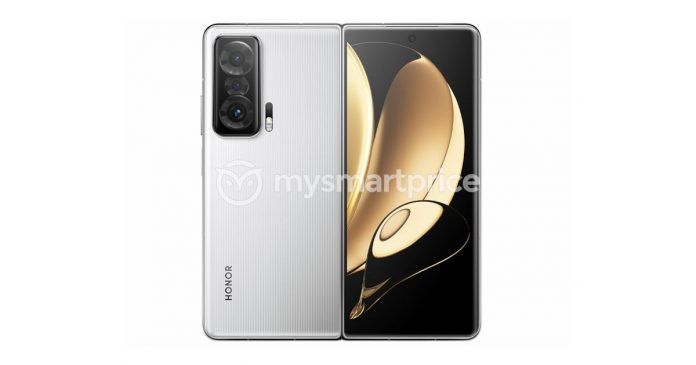
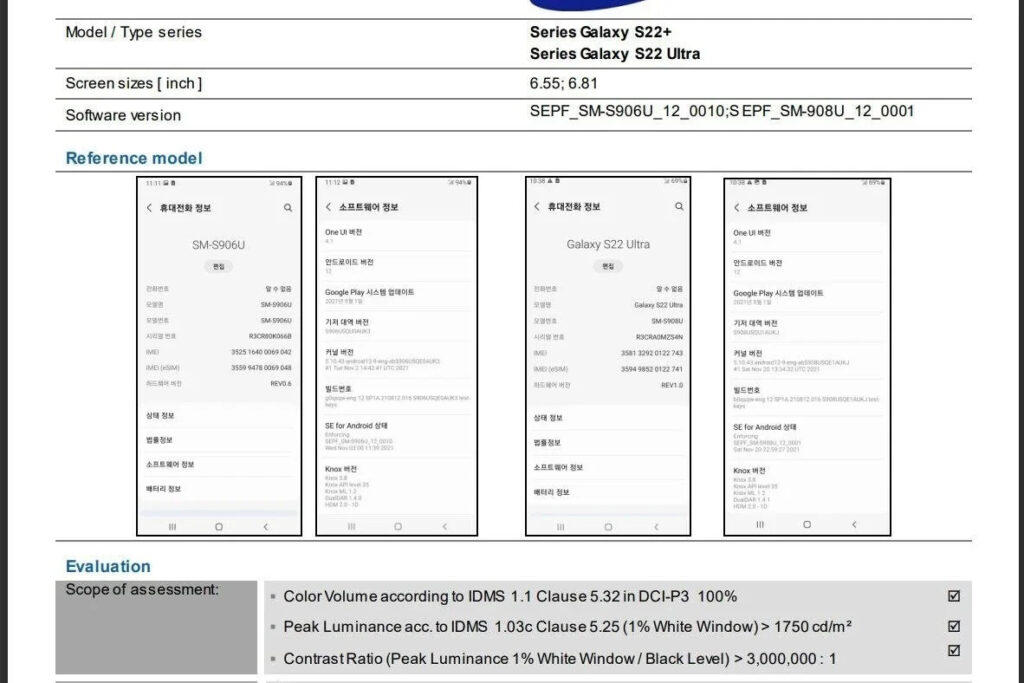
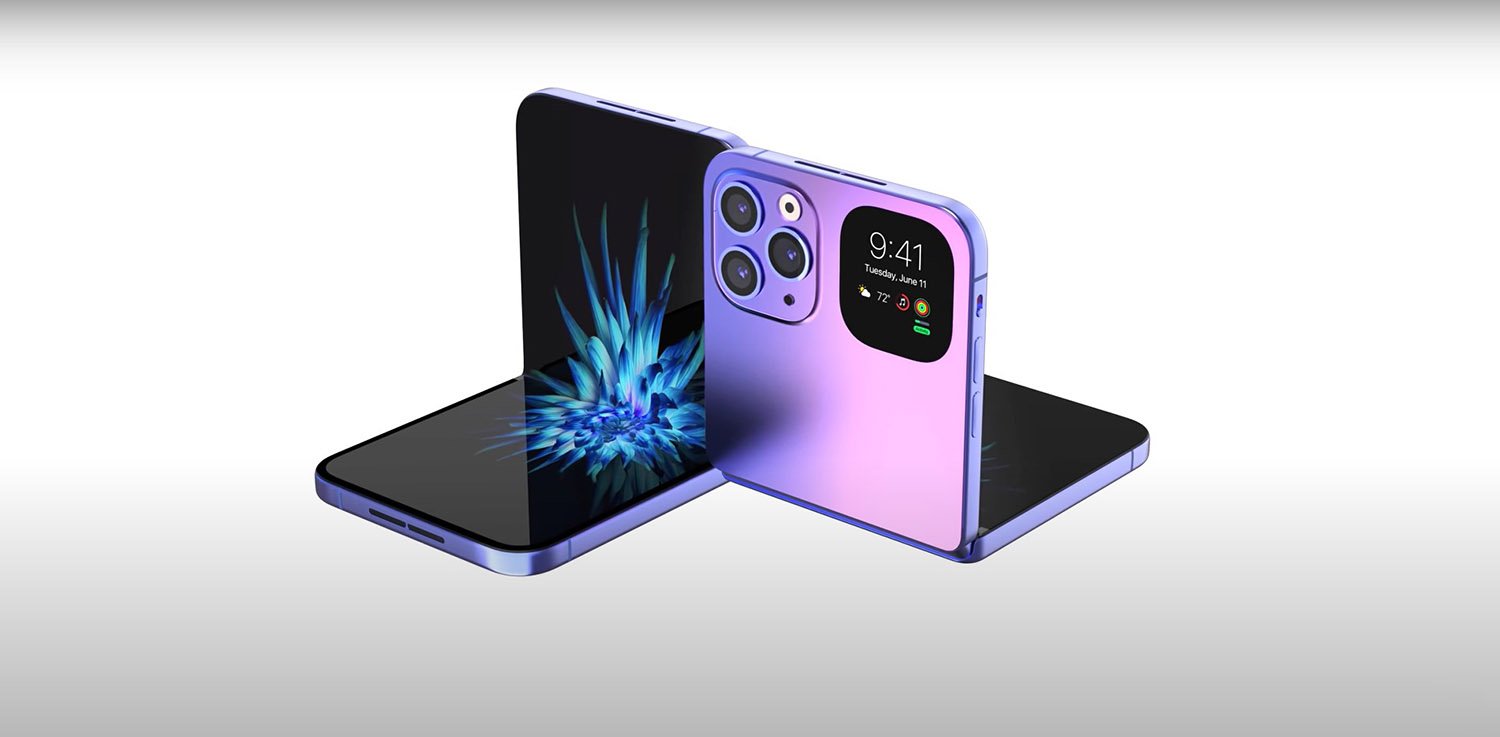
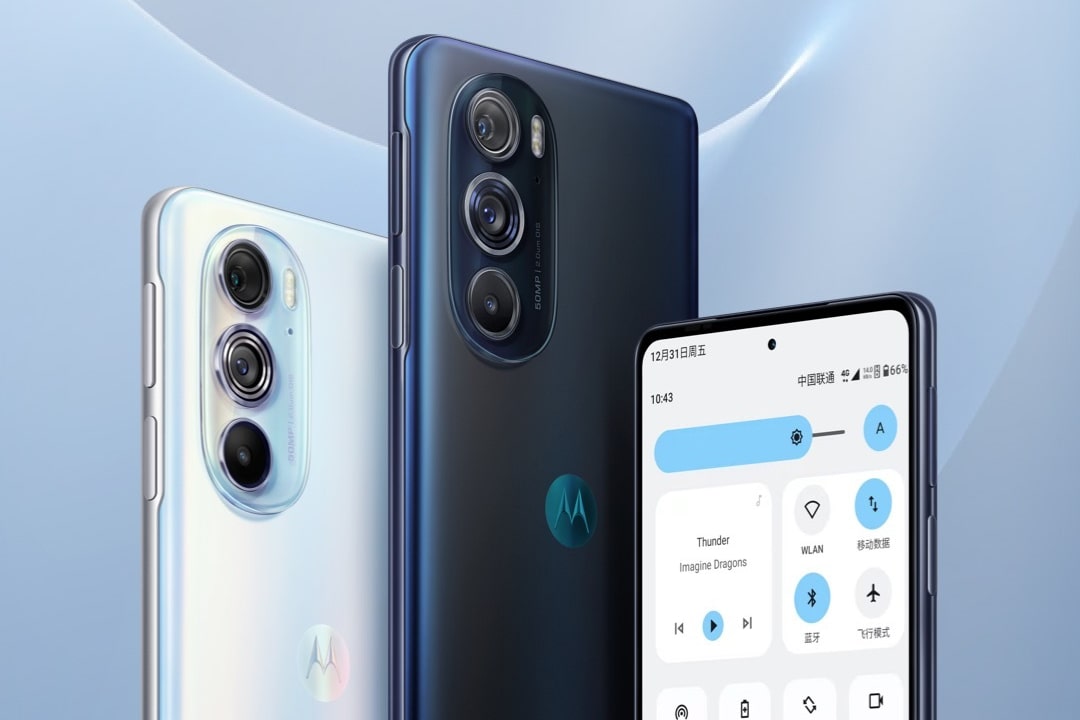
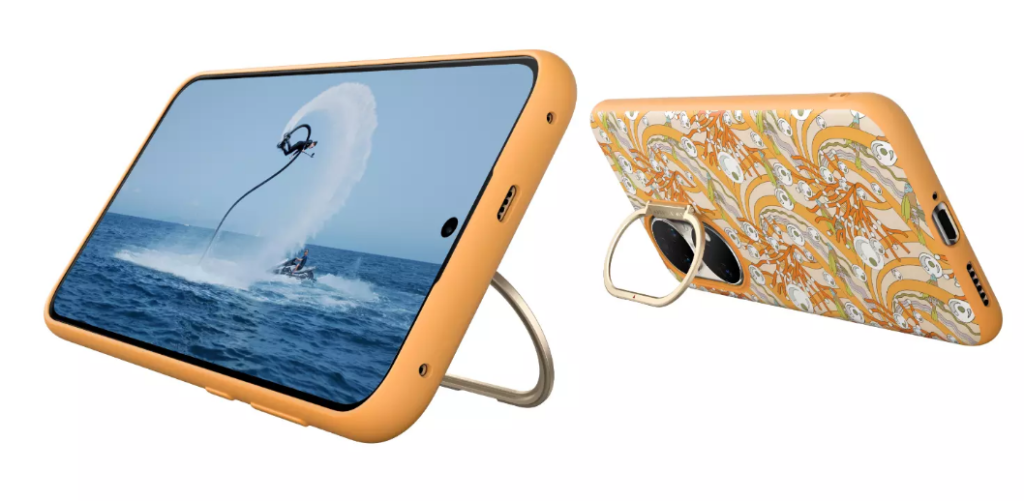
The upcoming OPPO Reno7 series of smartphones is scheduled to release on November 25th in China. Ahead of its official launch, the e-commerce website JD.com has already revealed the renders and specifications of the upcoming Reno7 devices.
Here’s a quick summary of what to expect from the Reno7 series launching on November 25.
OPPO Reno 7 Pro: Expected Specs
The OPPO Reno7 Pro is the top-end phone of the Reno7 series and features a squared-out design with rounded corners, similar to that of the iPhone 13. A JD listing also reveals the phone to have a thickness of 7.45mm. On the rear, the phones house a rectangular camera module with rounded edges. The phone will be available in three color variants: Star Rain Wish, Dawn Gold, and Starry Night Black.
The device features a triple camera setup for photography, including a 50-megapixel Samsung GN5 sensor, a 64-megapixel OmniVision OV64B ultrawide lens, and a 13-megapixel Samsung S5K3M5 telephoto lens. The selfie snapper on this device is the new 32-megapixel Sony IMX709 cat-eye lens.
The Reno7 Pro features a 6.55-inch AMOLED display with FHD+ resolution and a 120Hz refresh rate. Under the hood, the smartphone comes with the MediaTek Dimensity 1200-Max SoC paired with up to 12GB RAM and 264GB internal memory. The device will offer other specs such as Android 11, an in-screen fingerprint scanner, a 4500mAh battery with support for 65W fast-charging. Its connectivity features include 5G, 4G LTE, Wi-Fi 6, Bluetooth 5.2, GPS, and USB Type-C port.
OPPO Reno7: Expected Specs
The Reno7 will be identical to the Pro variant in the design department, other than the camera module and the difference in thickness at 7.59mm. The screen featured on this device will also be identical to the pro variant, with a lower refresh rate of 90Hz. The Reno7 will be available in the same three colors as the pro version.
It gets a 50-megapixel Sony IMX766 sensor, a 16-megapixel Sony IMX481 ultrawide lens, and a 2-megapixel portrait lens. On the front side, the device features a 32-megapixel Sony IMX615 snapper for taking selfies and video calling.
Inside, the OPPO Reno7 gets the Qualcomm Snapdragon 778G chipset. The variants for the device are listed on JD.com as – 8 GB RAM + 128 GB storage, 8 GB RAM + 256 GB storage and 12 GB RAM + 256 GB storage. The Reno 7 will be powered by a 4,500mAh battery with support for 65W fast charging(via).
OPPO Reno7SE: Expected Specs
The Reno7 SE specs are yet to be listed on any e-commerce website in China, but the rumored specs of the upcoming phone state that it may come with a 6.43-inch FHD+ AMOLED display and a 90Hz refresh rate. The phone is also expected to house a triple camera array within a rectangular module. With a 64-megapixel OmniVision OV64B primary sensor, an 8-megapixel Sony IMX355 sensor, and a 2-megapixel portrait lens. On the front side, there will be a 32-megapixel Sony IMX615 snapper.
The phone is expected to be powered by the MediaTek Dimensity 920 chipset, paired with Mali-G68 MC4 GPU for graphics. It will likely come in two configurations: 8GB + 128GB and 8GB + 256GB internal storage. A 4390mAh battery handles the energy needs and should be filled up quickly thanks to 65W fast charging support.
OPPO Reno7 Series: Expected Pricing
Oppo Reno7 is expected to start at 3,499 yuan (around $547) for the 8GB + 128GB variant and CNY 3,999 (around $625) for the 12GB + 256GB variant. The Oppo Reno7 Pro is tipped to start at 4,299 yuan ($672) for the 8GB +256GB variant, and will go up to 5,299 yuan (around $829) for the 12GB+256GB variant. The Reno7 SE 8GB + 128GB variant is hinted to be priced around 2,699 yuan ($422) whereas the 12GB + 256GB will cost around 2,999 yuan ($469).
The OPPO Reno7 series is set to release on November 25th at 6 PM in China, so stay tuned as we will be covering the launch.
Microsoft launched the Surface Duo 2 phone back in September with the device arriving with several improvements over the first-gen Surface Duo. YouTuber JerryRigEverything has published a durability test video that highlights the features of the device. The video shows the Surface Duo 2 being put through some rigorous tests in what has become Zack Nelson’s usual routine.
The new Microsoft smartphone has a foldable screen setup although its design is seemingly different from the foldable devices we have come to see like the Galaxy Fold 2. The Surface Duo 2 has two screens separated by a hinge and bezels, but neither of the screens can fold. The hinges remain a delicate underbelly of foldables and the Surface Duo 2 has been put through some strong tests in this regard. The two screens are capable of taking a direct flame from a lighter without any visible damage.
The phone is also well-kitted in surviving bend testing, although the part opposite the hinge is prone to flexing which is a drawback. The sides of the Surface Duo 2 are plastic leaving the device prone to scratches. However, its screens are covered with Gorilla Glass Victus, with a level 6 rating on the Mohs hardness scale.
Microsoft will hope that the Surface Duo 2 will get a better run and reception than its predecessor. It however remains to be seen how it will fare with the foldable flagships already having a ball like the Galaxy Z Fold3 and Galaxy Z Flip3. Potential users are at least assured of some levels of ruggedness for the Surface Duo 2.
Chinese tech giant Lenovo is expected to launch a new device which apparently will be a Snapdragon-powered machine. Although it has not been confirmed whether it will be a laptop or a tablet, it is certain that it will be a powerful machine. Now, thanks to the Geekbench listing, we’ve learned some significant details of this rumoured model called Lenovo QRD.
According to the Geekbench v5 results, the Lenovo QRD uses the Qualcomm Snapdragon 8cx chipset, however, it isn’t the old Gen chipset. Rather, it is the Gen 3 chipset that is much more powerful than the Gen 2 chipset.
For starters, the original Snapdragon 8cx was launched back in 2018 and later in 2020, the Gen 2 SoC was announced. Now, the Snapdragon 8cx Gen 3 will soon launch and will power many upcoming laptops and tablets.
Coming back to the QRD, the laptop boots on the latest Windows 11 Home out of the box and has scored 1010 single-core points, 5335 multi-core points. As of now, we aren’t sure about the device’s other specs and design. But, since the laptop/tablet has passed the Geekbench certification, the launch seems to be in the pipeline.
So far, we have seen a few Windows computers powered by Qualcomm’s ARM chips and not from any other chipset maker and as it turns out, there’s a reason behind this. XDA-Developers reports that Qualcomm has an exclusive deal with Microsoft for Windows on ARM, but the deal is set to expire soon.
Also, Microsoft has also publicly said that anyone can build a Windows on an ARM chip. The exclusive deal was in place because both Microsoft and Qualcomm worked together for the development of Windows on ARM.
With the deal set to expire, we will be seeing more and more manufacturers competing in this space. There’s also a possibility that Samsung, which is now working with AMD for graphics processors on its chips, could make Exynos-powered Windows PCs.
MediaTek has already announced that the company is planning to build a chipset for Windows on ARM and with Qualcomm also working for the same for the past few years, it’s inevitable that the transition is about to take off from x86 architecture to ARM. It’s also high time for Windows given that Apple is making impressive progress towards this with its new Apple Silicon chips.
It’s been a few years since Windows on ARM was first announced and has made quite progress, including adding support for x64 emulation, along with ARM64EC, to make it easier to run apps natively with emulated plug-ins. There’s still more work to do but it’s good to see the development picking up pace and with more players getting involved, they can push the platform further.
The United Kingdom will require new home and business constructions to incorporate EV chargers into their designs beginning from 2022. The new requirement could mean up to 145,000 new EV charging points will be added annually to the national pool. The move by the UK government is aimed at expanding access to charging resources for the fast-growing electric vehicle segment.
The UK government is thus making proactive moves to ensure a seamless future of electric vehicles in the country. The press statement released by the government says the regulation will mean that people can buy new properties ready for an electric vehicle future. It will also ensure that charging stations are readily available at new shops and workplaces in the country. The fine details of the new law are not yet available and the operation of the model is still unclear.
Already, the UK government has seen the installation of over 250,000 charging points although the opposition Labour Party is calling out the government for the uneven distribution of charging stations across the country. London and the southeast of England is favored to benefit more from the new law than the rest of England and Wales. The opposition is also accusing the government of not doing enough to make EVs affordable to lower and middle-income families.
After a series of leaks and benchmark appearances, Vivo has officially unveiled the V23e mid-range smartphone for the Vietnamese market. Vivo V23e arrives as the brand’s latest offering under the V series. The device packs a host of impressive features that will surely offer users amazing value for their bucks.
The Vivo V23e sports a 6.44-inch Full HD+ AMOLED screen with a 90.37% screen-to-body ratio. The device uses a waterdrop notch design which houses a stunning 50-megapixel camera. This is perhaps the most spectacular feature onboard the device. The selfie camera comes with autofocus as well as Eye AF which allows the camera to follow the user’s eye to help users stay in focus during photo capture. The device also has a 7.36mm ultra-thin body.
The V23e is powered by a MediaTek Helio G96 chipset paired with up to 8GB RAM. As is consistent with Vivo’s recent models, the V23e comes with up to 4GB of extended RAM. The device comes with 128GB of UFS 2.1 storage and it is expandable via microSD.
At the rear aspect, the Vivo V23e features a rectangular camera module. The module houses a 64-megapixel main camera teamed up with an 8-megapixel ultra-wide sensor and a 2-megapixel macro camera. The device crams a 4050mAh battery supported by a stunning 44W fast charging that Vivo claims can charge the device from zero to 69% in just 30 minutes.
In terms of the interface, the V23e runs on Funtouch OS 12 based on Android 11 OS. It equally features an in-display fingerprint sensor. Other features onboard the device includes Bluetooth 5.1, Wi-Fi 802.11 ac (2.4GHz + 5GHz), dual 4G VoLTE, and GPS/ GLONASS /Beidou.
As for the price, the Vivo V23e is priced at 8,490,000 Vietnamese Dong (~$375). It will be available in Dawn Melodies and Moonlight Dance colors.
Redmi Note 11 Pro which generally retails for $339 is now available for as low as $279 under the Black Friday 2021 Sale at Giztop. This means you get a huge discount of $60 on this offer.
Redmi Note 11 Pro features a 6.67″ Samsung AMOLED display with front and rear dual ambient light sensors and is powered by the TSMC 6nm Dimensity 920 chipset. The phone comes in three memory variants viz: 6GB + 128GB, 8GB + 128GB and 8GB + 256GB. Weighing just 207g, Redmi Note 11 Pro is fueled by a 5160mAh battery and supports 67W fast charging. This means you can charge your phone to 100% in just 43 mins.
Redmi Note 11 Pro comes with professionally tuned dual JBL speakers and a 3.5mm headphone jack and supports Dolby Atmos. It features a triple rear camera setup with a 108MP main camera and 8MP + 2MP secondary cameras. For the selfie camera, you have a 16MP sensor in the front.
Under the Black Friday, 2021 sale Giztop is now giving out Redmi Note 11 Pro at a massively discounted price of $279 only. This price is applicable to 6GB + 128GB Black and Green color variants. However, you can buy the Blue color variant at a little higher price of $289 while the Purple color variant is available for $299 only. Please note that this is a limited-time offer. So grab your discounted phone asap.
For more information on such exciting deals and offers check out ourdeals hub.
You can also find the best Black Friday Deals here.
Xiaomi just announced that as of November 22, 2021, MIUI global monthly active users have crossed the 500 million mark. This signifies that around 15% of the world now uses a Xiaomi, Redmi, or POCO phone running MIUI. Along with this, the company also revealed that as of 2021, there are 18.65 million new monthly active users in China and 100 million new monthly active users worldwide.
MIUI first hit the 100 million mark back on August 19, 2015. Following this, growth has been exponential, with the brand quickly reaching the 200 million global monthly active users mark less than three years later. A year later, on October 28, 2019, MIUI global monthly active users crossed 300 million. And at the start of this year, the active user count stood at 400 million.
In August this year, Xiaomi released an enhanced version of MIUI 12.5, which was claimed to fix 160 system-level problems and 224 system application bugs. Xiaomi also said that the update brought forward optimizations across all levels – from the lower system levels to top-level applications. The update release notes mentioned under-the-hood improvements such as smart algorithms to dynamically allocate system resources, RAM optimization, and core system improvements.
The company is now working to bring Android 12 paired with MIUI 13 for eligible devices. And reports suggest that the update is already ready for premium devices like Xiaomi MIX 4, Mi 11, and Mi 11 Lite 5G. MIUI 13 has been confirmed to go official before the end of 2021 and has been said to bring a “lot of changes.”
Thailand smartphone sales in Q3 2021 saw a 14% YoY decrease, mostly due to the peak of COVID-19 infection rates in the country in August, which in turn led to the slowing of the economy. But on the bright side, 5G smartphone sales during the same period were the highest ever.
Image: Counterpoint Research
Counterpoint Senior Research Analyst Glen Cardoza commented saying that Thailand’s government and industry have made sure to continue with 5G ecosystem improvements. However, OEMs have suffered due to supply constraints coupled with unfavorable consumer sentiment in Q3 2021. Decreasing shipments saw consumer demand increase for the sub-$150 band, with the realme C series and Samsung’s entry-level A-series devices selling quite well.
Samsung, as a result, led smartphone shipments in the country in Q3 2021 thanks to offerings like the A12, A02, and A22. The company managed to grab a share of 22% with OPPO and Xiaomi following with 17% each.
But amid the decrease in shipments, online channels shined with a QoQ increase, reaching 24% of total sales. This growth will likely be carried forward to Q4 2021 as well. A major contributor to the rise in online sales is the 9.9 online festival sales in September. Platforms like Shopee, Lazada, and JD Central, as a result, performed quite well.
Image: Counterpoint Research
But Q4 2021 will not be doing well in the online channel alone as Thailand has shown quite the potential to absorb the COVID-19 impact. This could mean that the country’s smartphone market could do better than other SEA countries.
OEMs have begun launching 5G SA (standalone network) compatible models as 5G infrastructure becomes a priority. Thailand’s digital transformation is progressing well, with an emphasis on Industry 4.0. With their experience and investments in the country, technology companies like Huawei are at the forefront. Because of all of these considerations, 5G will become more widely adopted, not just for smartphones but also for smart homes and other IoT devices.
GAC Group has just recently unveiled its latest electric vehicle that will launch under its Aion brand. The car in question is an SUV called the Aion LX Plus, which apparently offers an impressive 1,008 kilometer range (roughly 626 miles).
According to a CarScoopsreport, the news arrives from the China light duty vehicle test cycle (CLTC). This upcoming electric SUV was just showcased during the 2021 Guangzhou Auto Show and is an improved version of the GAC Aion LX that was announced back in 2019. Furthermore, the vehicle will now be placed among the smaller Aion V Plus SUV and even the Aion S Plus sedan.
Keep in mind that the CLTC is a different standard from Europe’s WLTP or US’ EPA. Although, its operational range of over 1,000 kilometers is still quite a spectacular feat. This holds even more true considering the vehicle is an SUV. The car’s durable range is thanks to its massive battery pack, which has a capacity of 144.4 kWh in the top end model. This battery is made with GAC’s technology with elastic sheets that also makes it 20 percent smaller and 14 percent lighter than conventional ones. It even offers an energy density of 205Wh/kg.
Talking about the vehicles’ other specs, the Aion LX Plus houses dual electric motors that produce 225 hp that is transmitted to all four wheels through a two speed gearbox. Through this, the LX Plus is capable of hitting 0 to 100 km/r in just an impressive 2.9 seconds as well. Unfortunately, this range is still not confirmed so take it with a pinch of salt for now.
A new report has revealed that iQOO and POCO are planning on entering the offline market in India. The companies will apparently expand their presence in their region by having their offerings sold through offline stores in early 2022.
According to a 91Mobilesreport, known tipster has revealed that the two Chinese brands are planning to finally enter the offline market in India. For those unaware, the Indian smartphone market relies on two major channels, which is offline and online. While the online channels dominate in major cities via Flipkart and Amazon, the offline segment is still a largely popular in tier 2 and tier 3 cities. This is also the segment where brands like Samsung, Vivo, Oppo, and even Xiaomi hold a strong presence in, with their budget offerings.
As of right now, iQOO and POCO have sold their handsets through online channel, but this might soon change. Reportedly, the companies are expected to launch their devices offline sometime between the months of January to March 2022. This move arrives as no surprise since these companies are also sub brands of established giants (iQOO-Vivo & Xiaomi-POCO) in the market.
Unfortunately, finer details about the roll out of devices in the offline channels is currently unknown. But the brands are expected to first begin entering this segment in tier 1 cities first, before moving forward and expanding to other regions within the country. Keep in mind that this is still an unconfirmed report so take it with a pinch of salt for now and stay tuned for more updates.
The Redmi K50 series may very well be the most comprehensive lineup from the brand to date, and will use four different high-end processors from both Qualcomm and MediaTek. The preceding Redmi K40 series relied on three, so it’s quite clear that the lineup has been expanded.
Notable tipster @PandaIsVeryBald posted on Weibo today saying that the Redmi K50 series will be using a ‘complete range of processors’, namely the Snapdragon 870, Snapdragon 8 Gen1, Dimensity 7000, and Dimensity 9000.
While the Snapdragon 870 has been used on the Redmi K40 (Mi 11X / Poco F3) earlier, the other three chips are totally new and are yet to make it to any smartphone offering.
To recall, the Snapdragon 870 is a flagship-level chip, identical to the Snapdragon 865, but rebranded into a more affordable alternative to the top-of-the-line Snapdragon 888 chip.
The Snapdragon 8 Gen1, on the other hand, will be a true flagship processor that will supersede the current king of the hill – the Snapdragon 888. The chip was earlier touted to be called Snapdragon 898 but has now been officially given a new moniker.
Moving on to the MediaTek camp, the Dimensity 9000 will be the brand’s top-of-the-line offering and will be competing with the Snapdragon 8 Gen1. It is joined by the Dimensity 7000, which according to the latest reports has already entered the engineering stage. Its AnTuTu score was around 750,000 – higher than the Snapdragon 870 but lower than the Snapdragon 888.
Coming to the series itself, it will likely be comprised of the Redmi K50, K50 Game Edition, K50 Pro, and K50 Pro+. Of course, as always, Xiaomi will be going for different names for various regions. The Redmi K50 can be sold as the Mi 12X in India and Poco F4 in the rest of the world, if Xiaomi sticks to its current naming convention.
As for specs, the Redmi K50 Pro and Redmi K50 Pro+ models will come with high-end E5 AMOLED displays with a high refresh rate. They will also support 100W fast charging. The series is expected to go live in either February or March.
Smarwatch shipments across the globe rose by 16 percent year on year in the third quarter of this year. During this time, Samsung saw a strong performance with its Galaxy Watch 4 series, which helped in narrowing the gap with Apple.
According to a Counterpoint Research report, Apple still held the top spot in Q3 2021, with a 21.8 percent smartwatch market share. Although, its share dropped by 10 percent over last year due to the delay of its Watch 7 series. On the other hand, the South Korean tech giant’s Galaxy Watch 4 helped the brand secure its highest quarterly shipments. Furthermore, the company even reclaimed its second spot from Huawei and came closer to Apple, with a 14.4 percent market share in this quarter.
As per Senior Analyst, Sujeong Lim “Samsung performed better than expected in the third quarter. Although the Galaxy Watch 4 series shipments were much higher than expected, more than 60 percent of the total shipments were sold in North America and Europe, where the share of mid to high price range models is high. To further increase its market share, Samsung is expected to launch affordable models within 2 to 3 years to target the fast growing Asian market. One third of smartwatches sold in Q3 2021 were priced under 100 US Dollars.”
Notably, the robust demand for the Galaxy Watch 4 series also boosted the market share of Wear OS in the smartwatch OS market as well. Since Samsung made a shift to user Wear OS for its wearables, the market share of the OS surged to 17 percent in Q3 2021, which is a significant rise from 4 percent back in Q2 2021. This figure is expected to further rise in the arriving quarters.
Google has long been teasing a major upgrade to the capabilities of the At a Glance widget on Android 12 for the Pixel 6 series. Most expected it to go live as soon as Android 12 hit stable, but that, unfortunately, hasn’t been the case. However, a new APK teardown has revealed that the new features may finally be on the way.
9to5Google, on one of their “APK Insight” posts, gave out their findings after decompiling the latest version of the Android System Intelligence app. The S10 version of the app contains a slew of new strings describing an upgraded “smartspace.” FYI, smartspace is what the Google app calls the functionality of At a Glance.
To recall, the At a Glance widget already displays various pieces of info like Weather, Commute & Time to Leave, Alerts, Travel, and upcoming calendar events and reminders.
ASI seems to be replicating all of it and has even added more, indicating two things. Firstly, At a Glance will be getting several new features. And secondly, Google may be moving At a Glance to the Android System Intelligence app for faster updates.
The new features include ‘At a store’ that will be displaying shopping lists and Google Pay rewards cards when you’re in a supported store. This one first made an appearance with the Material You teaser from May but could now finally be making its way through.
Not all of these new features are coming in late though. ‘Timer & stopwatch’, for example, has been live since the Android 12 Beta days.
But perhaps the most useful addition is ‘Connected devices’ that will let you see the connection status and battery levels for your Bluetooth devices. Connected Nest Doorbells will go a tad further and even display a shortcut on the home screen to the live feed.
Moreover, more apps will gain integration with At a Glance including Google Clock and Personal Safety. You should soon also be able to view workout stats directly from the home screen through the function.
And last but not least, At a Glance will be displaying a reminder for when the flashlight is on.
So far, 9to5Google has only spotted signs of the upgrade on the Pixel 6 series, although newer ASI releases may add all of it to older Pixel phones as well. It is worth mentioning here that none of the newer aforementioned features are live yet and there’s no indication of when they’ll be rolling out.
Xiaomi had just launched the highly awaited Redmi Note 11 series in China last month. Now, listings of the Note 11, Note 11 Pro, and Note 11 Pro+ on certifications portals have revealed that the global launch for these devices might be right around the corner.
According to a 91Mobilesreport, Mukul Sharma revealed that the global variants of the Note 11 Pro and Note 11 Pro+ have entered internal testing in Europe. In other words, the two smartphones might be launching in the global markets soon. The report adds that the Chinese tech giant might launch the new Redmi handsets in European markets first, before launching it in other regions across the globe.
Both models are also expected to feature the same model number and specifications as their Chinese variants. Similarly, the Note 11 Pro and Note 11 Pro+ were also spotted on the IMEI database and the BIS with 21091116I and 21091116UI model numbers respectively. As per a previous report, Xiaomi is also expected to launch these smartphones in India as rebranded Xiaomi 11i and Xiaomi 11i HyperCharge.
On the other hand, the Note 11T 5G series is set to launch in the region on November 30. Just yesterday, we had also reported on the company partnering up with Indian telecom operator Reliance Jio for 5G trials for its upcoming Note 11T 5G, which will support 7 5G bands.
In addition to being a top PC brand, Lenovo has strangely become one of the most popular tablet brands in 2021. The Xiaoxin Pad series, also known as the Lenovo Tab P series, stands out for its excellent value for money. Especially the Xiaoxin Pad Pro 2021, also known as Lenovo Tab P11 Pro, comes very close to the premium tablet category. And just six months later, we now have an upgraded option. A bigger and better AMOLED 120Hz display is now featured on the latest Lenovo Tab P12 Pro. Along with the upgraded display, the new tablet also comes with a larger battery and an upgraded Memory and storage combination. Since we loved the Tab P11 Pro, now we really wonder how exactly the new tablet performs as a higher-level model.
Enough of an introduction. Let’s find out what we got on this Tab P12 Pro!
Let’s start with its pricing. Probably some of you don’t consider it as value for money as for the Tab P11 Pro. Indeed, now you have to pay around 200 to 300 dollars more for the upgraded P12 Pro, but the performance will be more or less the same, since they are both powered by the Snapdragon 870 chipset. However, the 870 chipset is still the best chipset that you can have on an Android tablet. And if you compare it with the SAMSUNG Tab S7+, the P12 Pro is obviously an excellent cheaper option with much better value for money. The S7+ tablet uses a 120Hz 2K AMOLED display powered by a Snapdragon 865+ chipset, which can deliver a very close performance in terms of hardware capacity. With this in mind, just think about whether it’s worth paying the extra money to upgrade to a Tab S7+?
Xiaoxin Pad Pro 12.6 2021: Design
Let’s look at its design. These two Lenovo tablets come with exactly the same design and form factor. The P12 Pro has the same integrated metal body without any seams. It still feels pretty premium and no doubt has the best built among all the Android tablets. The P12 Pro’s bezels are as narrow as the predecessor, but it’s visually narrower because of the bigger display. As for the thickness, It’s physically 2mm thinner and feels even thinner than what the figure gives us when holding it in hand.
And to guarantee a stable wireless signal, the antenna band is also reserved. Other details like the quad speakers tuned by JBL, fingerprint unlock, and Micro-SD card slot are also present. You may note that the camera module seems to be different from the P11 Pro, but actually, the hardware used inside doesn’t change at all. Another most significant difference is about the attached stylus. The second generation of the stylus finally supports magnetically attaching at the back with wireless charging support. But I also want to remind you that the first generation of the stylus designed for the P11 Pro also works with the P12 Pro, although it won’t charge magnetically.
And the new tablet also comes with a new keyboard kit, which now supports Bluetooth connectivity besides a contact connection. Like its predecessor, the P12 Pro can be considered a 2-in-1 tablet with a keyboard kit.
Xiaoxin Pad Pro 12.6 2021: Display
The display is definitely the most important factor in making your choice between the two Xiaoxin tablets. First, the new model is bigger and smoother with better pixel detail. The new tablet’s display applies the same pixel arrangement as the SAMSUNG Tab S7+. And this new pixel arrangement significantly improves the font blurring issue that we found on the Lenovo P11 Pro during its comparison with the Xiaomi Pad 5 Pro.
When compared to its predecessor, the sharper text edge on the P12 Pro brought a much better reading experience, which is pretty close to what we have on LCD panels. And it’s not only a better reading experience, the new design of pixel arrangement also brings out more vibrant colors where blue pixels are involved. Without comparison with the P12 Pro, I wouldn’t realize that the older P11 Pro’s colors were a bit dull but the new display is much more vibrant. And it continuously supports Dolby Vision and HDR content. As you can see in the video, although our camera may not exactly show the difference, I believe most of you already can pick out which one looks better.
And the better color presentation also makes it an excellent option for photo or video editing. In the latest ZUI 13 operating system, users can turn the tablet into a second screen for a PC by wireless connection. However, by far it only supports the projection at 2K 30Hz signal with perceivable latency. And under this mode, the wireless projection cannot really show the strength of this display as it should.
In addition, for professional image processing, it’s also important to note that the tablet supports 100% of the P3 gamut and no other gamut for conversion.
In addition, the 120Hz takes the whole system to another level of fluidity, which is also the highest refresh rate that you can have on a tablet product. No matter, for a high-frame-rate video or gaming, it can provide excellent support for users.
On the other hand, its 2k resolution is still the same as the Lenovo P11 Pro. And the peak brightness also remains at around 600nit, which is only available in partial area. And this time the new tablet supports an enhanced-brightness mode in strong sunlight, which makes it pretty convenient to use outdoors.
As for audio performance, the P12 Pro still uses 4 x JBL speakers for stereo sound. And if you are going to use it for watching Dolby vision or listening to Dolby Atmos, the tablet will not let you down.
Xiaoxin Pad Pro 12.6 2021: Performance
1 of 3
Like the P11 Pro, the new tablet has taken full advantage of the Snapdragon 870 chipset. So the performance tests didn’t bring us much surprise. No matter for the benchmark results or the actual gaming performance, the P12 Pro is still the most powerful beast among all the Android tablets. By the way, playing games on this 12.6-inch 120Hz display is really delightful.
On the P12 Pro, Lenovo eventually updated the operating system to ZUI 13 for Pad, which aims to give users a better experience with tablet products and make it more suitable for tablet use scenarios.
But the upgrade is not very effective. While we did find some optimization for the existing features, but very few new features were added in the latest version of the OS. The PC Mode is still the most successful feature for the new software, but there’s no obvious update for the PC mode. You can still open 5 app windows at the same time; there is still the same interface as what we had on the P11 Pro. Even so, it’s still the best solution for a 2-in-1 tablet that you can have in the market now. One of the few new features that we mentioned above is the wireless capacity of being a second screen for PC. But just like I said, it doesn’t really work well for the latency and poor colors.
Xiaoxin Pad Pro 12.6 Review: Cameras
As for its camera module, we shot a few samples for you with its 13MP main camera and 5MP wide-angle camera. The tablet is not exactly designed for photography, and of course, its performance doesn’t compare to some mid-range phones. So here, just check for yourself whether it meets your needs.
1 of 7
Main Cam
Main Cam
Main Cam
Main Cam
UW
UW
UW
Xiaoxin Pad Pro 12.6 Review: Battery Life & Charging
Another small upgrade is the power solution. The P12 Pro features a 10200mAh battery, which is 1,600mAh larger than the P11 Pro, with up to 45W QC fast charge. But the charger included is just a 30W one. So if you want to speed up the charging, you will have to get a 45W charger that supports the Quick Charge 4 protocol. Here are the results of our charging test and battery-life test. No doubt it can last for more than an entire day as long as you don’t play games all day.
So that’s the new Xiaoxin Pad Pro 12.6, also known as the Lenovo P12 Pro. Obviously, it’s a more refined version of the P11 Pro, coming with a brand-new perfect display and a higher configuration for memory and storage. And it brings a slightly better power solution too. Apart from it, all the features are retained from its predecessor.
So, if the display was the main reason that stopped you from buying the Lenovo P11 Pro, we would happily recommend the new tablet to you. But if you are not that sensitive to displays, I would rather say that the P11 Pro is already good enough, at least better than most Android tablets in the market.
Meanwhile, if you decide to buy the P12 Pro, please note that you are also going to pay more money for the exclusive stylus and keyboard case.
Unfortunately, we still haven’t got the exclusive stylus and keyboard case. But we will show you all about the new accessories in the next video about this tablet. Please stay tuned!
The YouTube TV app on smart TVs has been facing an issue across the globe. The service has been freezing up for many smart TV users. This issue even appears to be affecting people across different platforms as well.
According to a 9To5Googlereport, users of smart TVs from multiple brands have reported on facing an issue with the TV app service. The freezing bug doesn’t just affect the content being streamed but also the platform itself. A temporary fix for the issue is to exit the app and restarting it from the home menu. As per the report, the issue first start surfacing a couple of days ago after the Roku update.
As of right now, this issue affects all sorts of streaming boxes, including Roku, Fire TV, Chromecast, Apple TV, Nvidia Shield, and others. Furthermore, the problem has also been affecting game consoles from the PlayStation and Xbox platforms, but the freezing bug has not been affecting smartphone and tablet users. Notably, the issue had first surfaced on Roku devices, with a common fix requiring users to remove the TV app from the device and reinstalling it.
Sorry to hear about this – just to clarify, are you having this issue on Roku? If yes, we're already aware of this issue, and our team is currently working on a fix. We'll let you know as soon as we receive an update. Let us know if it's something different.
Unfortunately, this might not be possible anymore as the TV app has been unavailable on the Roku Channel Store for months. But while Google had added a clever workaround in the standard YouTube app, its base service is also set to be removed from Roku next month, as both companies continue to feud.
OPPO will be announcing the Reno7 series of smartphones on Nov. 25 in China. The company today confirmed that the Reno7 series will be featuring the world’s first Sony IMX709 cat-eye lens. It appears that this lens will be available for capturing selfies on the Reno7 and Reno7 Pro smartphones.
OPPO claimed that the Sony IMX709 coupled with OPPO’s self-developed RGBW image technology. The lens can capture images with 60 percent increase in light sensitivity and 35 percent reduction in noise.
A recent report revealed that the Reno7 Pro will be equipped with a Sony IMX709 32-megapixel front-facing camera. It remains to be seen whether the Reno7 will also feature the same selfie camera.
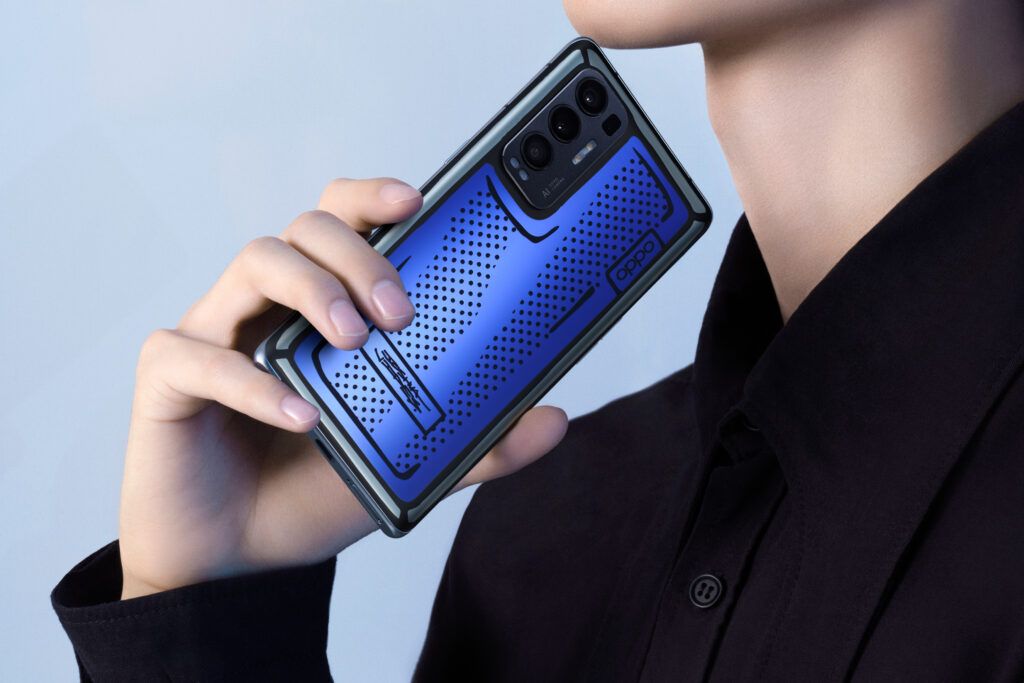
In addition, an image released by the brand showcases the unique notification LED light that will be made available on the Reno7 series. The phone that can be seen in the image below appears to be the Reno7 Pro. As can be seen, the frame of the camera module can light up for notifications and charging. It is likely that this unique notification feature will be only available on the Reno7 Pro.
The Pro model is expected to arrive with specs like a 6.5-inch AMOLED FHD+ 90Hz display with a punch-hole design. It will come with Dimensity 1200-Max, 8 GB / 12 GB of RAM, 128 GB / 256 GB of storage, and a 4,500mAh battery with 65W charging.
Its rear camera setup may include a 50-megapixel Sony IMX766 primary camera, an 8-megapixel ultrawide lens, and a 2-megapixel macro camera. The device will offer other specs such as Android 12 and an in-screen fingerprint scanner.
With the OnePlus 10 series being the next gen 2022 flagship launch from the company, various rumors and reports have recently surfaced online that reveal details about the upcoming device. But amid all of these rumors, a person has went ahead and built a dummy model for the OnePlus 10 Pro.
The dummy was shared by xleaks7 on Twitter, who also collaborated with Fathom Bracelets to built it. For those unaware, the 10 Pro would be the top end model within the next gen flagship series and is currently expected to launch sometime in later January or even February. But prior to an official announcement, the dummy model that is made from aluminum was shared online.
Notably, the dummy features a design that is in line with our previous reports, with the rear features a square shaped camera module that houses four round cutouts for the rear cameras and the flash. Similarly, the SIM tray slot is still on the bottom with the power button and alert slider being on the right side of the device while the left features the volume rockers. Although, the Chinese smartphone maker has yet to reveal any details related to the OnePlus 10 Pro as of right now, so take this dummy model’s design with a pinch of salt for now.
It’s a known fact that POCO smartphones run MIUI like Xiaomi (formerly Mi) and Redmi-branded devices. Hence, POCO recruits MIUI testers for its handsets from time to time. The brand has now opened registrations for the recruitment of a fresh batch of testers.
According to an official announcement post on POCO Community, the brand is looking for testers interested in trying out MIUI Stable ROM. These users will be the first to use stable builds before they are rolled out to the general public.
They will be responsible for providing feedback on new software builds. They are expected to point out bugs and offer suggestions. They should be aware of the issues while using beta software and are recommended to have the ability to recover phones in case of any failure.
Most importantly, POCO is only accepting applicants who are at least 18 years of old. This means curious teenagers cannot enroll in the program.
POCO is currently recruiting MIUI Stable ROM testers for the following devices.
POCO M4 Pro 5G
Global
EEA
POCO X3 GT
Global
Indonesia
Turkey
POCO X3 Pro
Global
EEA
India
Indonesia
Rusia
Turkey
Taiwan
POCO F3
Global
EEA
Indonesia
Russia
Turkey
Taiwan
POCO M3
Global
EEA
India
Indonesia
Rusia
Turkey
Taiwan
POCO X3 / POCO X3 NFC
EEA
Indonesia
Russia
Turkey
POCO F2 Pro
Global
EEA
Indonesia
Russia
Turkey
POCO F3 GT
India
POCO M3 Pro 5G
India
Indonesia
Russia
POCO C3
India
POCO M2
India
Interested users of the above-listed smartphones can register themselves for the MIUI Stable ROM testing program by following the instructions mentioned in this POCO Community post.
We use cookies on our website to give you the most relevant experience by remembering your preferences and repeat visits. By clicking “Accept”, you consent to the use of ALL the cookies.
This website uses cookies to improve your experience while you navigate through the website. Out of these, the cookies that are categorized as necessary are stored on your browser as they are essential for the working of basic functionalities of the website. We also use third-party cookies that help us analyze and understand how you use this website. These cookies will be stored in your browser only with your consent. You also have the option to opt-out of these cookies. But opting out of some of these cookies may affect your browsing experience.
Necessary cookies are absolutely essential for the website to function properly. This category only includes cookies that ensures basic functionalities and security features of the website. These cookies do not store any personal information.
Any cookies that may not be particularly necessary for the website to function and is used specifically to collect user personal data via analytics, ads, other embedded contents are termed as non-necessary cookies. It is mandatory to procure user consent prior to running these cookies on your website.