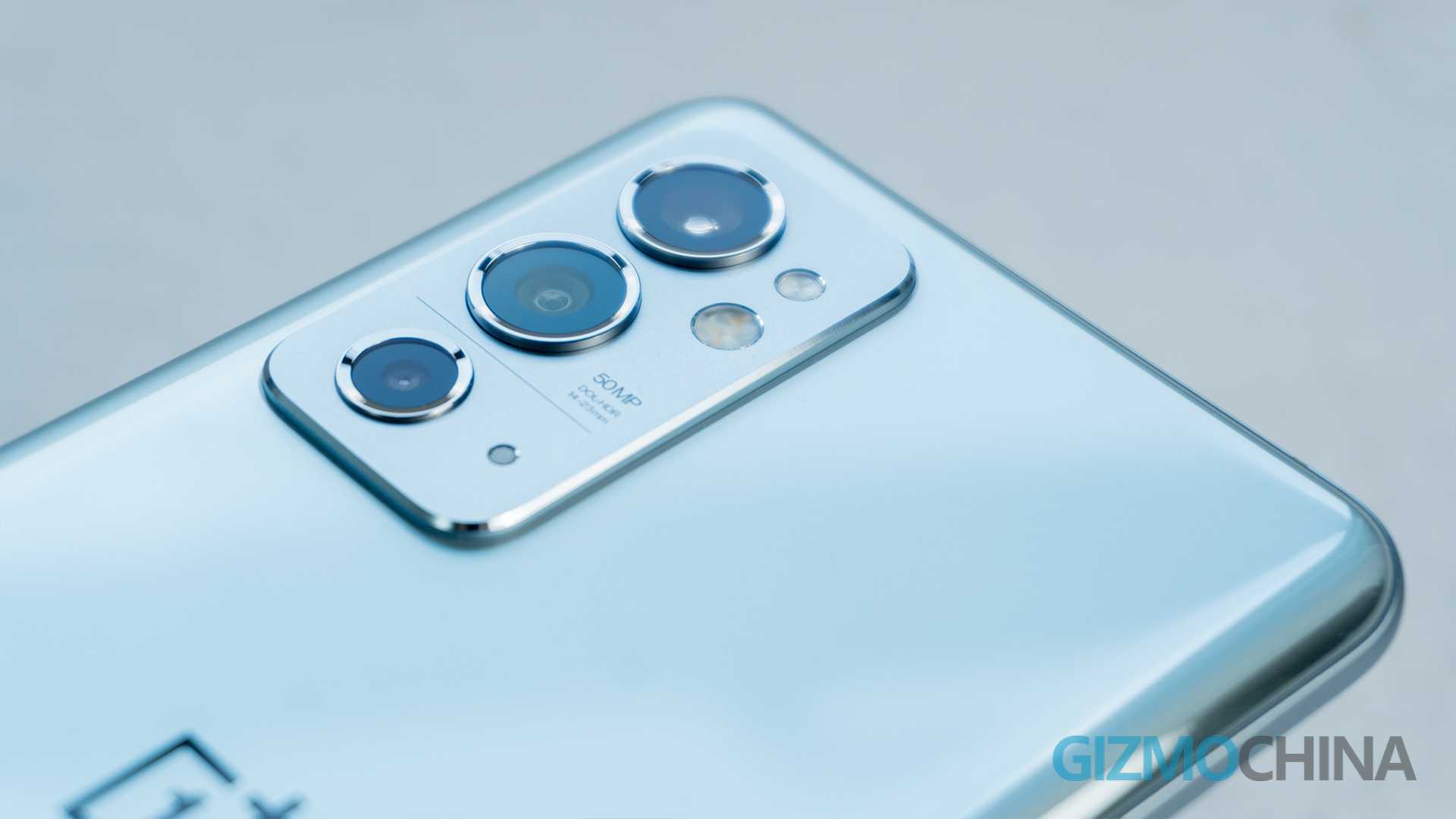
Yesterday, tipster Mukul Sharma spotted a device with the OnePlus RT moniker at the Google Play Console and Goole Supported Devices List. It was found to be the Indian variant of the OnePlus 9RT. Hence, it is being speculated that the OnePlus 9RT may launch in India with the OnePlus RT moniker. A fresh tweet by Sharma suggests that may indeed launch soon in India with the new name.
As can be seen in the screenshot, an Amazon India advertising of the OnePlus RT has surfaced in the Google Search results. However, the OnePlus RT is not yet listed on the retailer site. The appearance of the OnePlus RT’s ad is a good hint that it may launch soon in India.
It is likely that a landing page for the OnePlus RT may soon surface on Amazon India. Hopefully, the device may land in India by the end of this month or early December. Speculations are rife that the company will also announce the OnePlus Buds Z2 TWS earbuds alongside it.
OnePlus 9RT specifications
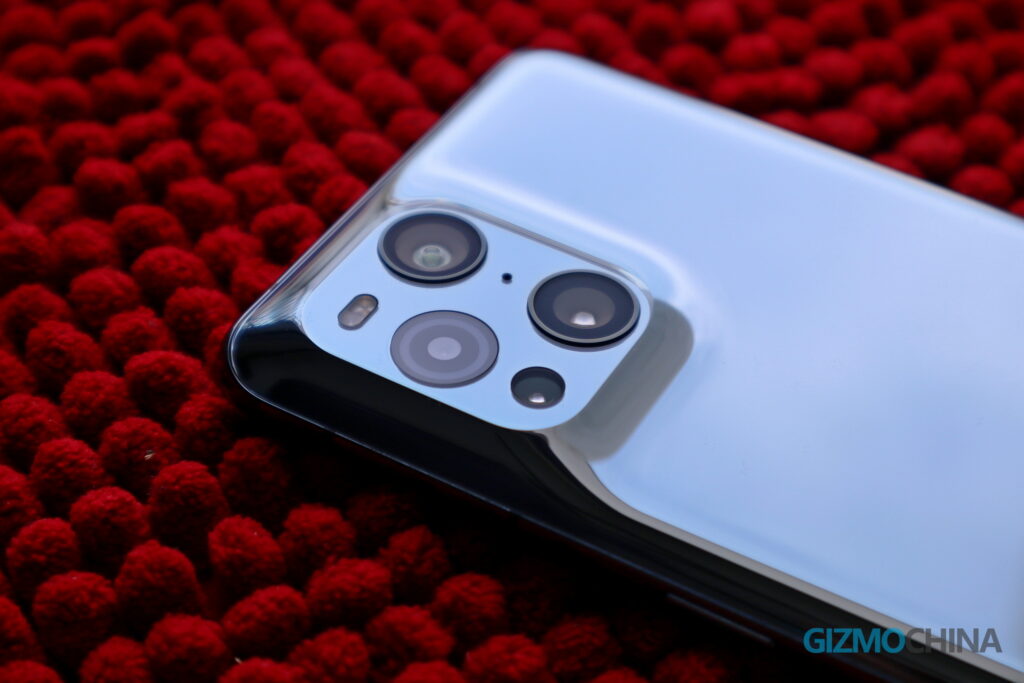
The OnePlus 9RT has a 6.62-inch AMOLED display that offers an FHD+ resolution and a 120Hz refresh rate. The Snapdragon 888 chip fuels the device with up to 12 GB of LPDDR5 RAM and 256 GB of UFS 3.1 storage. It has a 4,500mAh battery that supports Warp Charge 65T.
OnePlus 9RT
The 9RT has a 16-megapixel front-facing camera. Its rear shell has a 50-megapixel primary camera, a 16-megapixel ultrawide shooter, and a 2-megapixel macro camera. The device is expected to run on OxygenOS 12 based Android 12 in India. For security, it will be equipped with an in-screen fingerprint scanner.
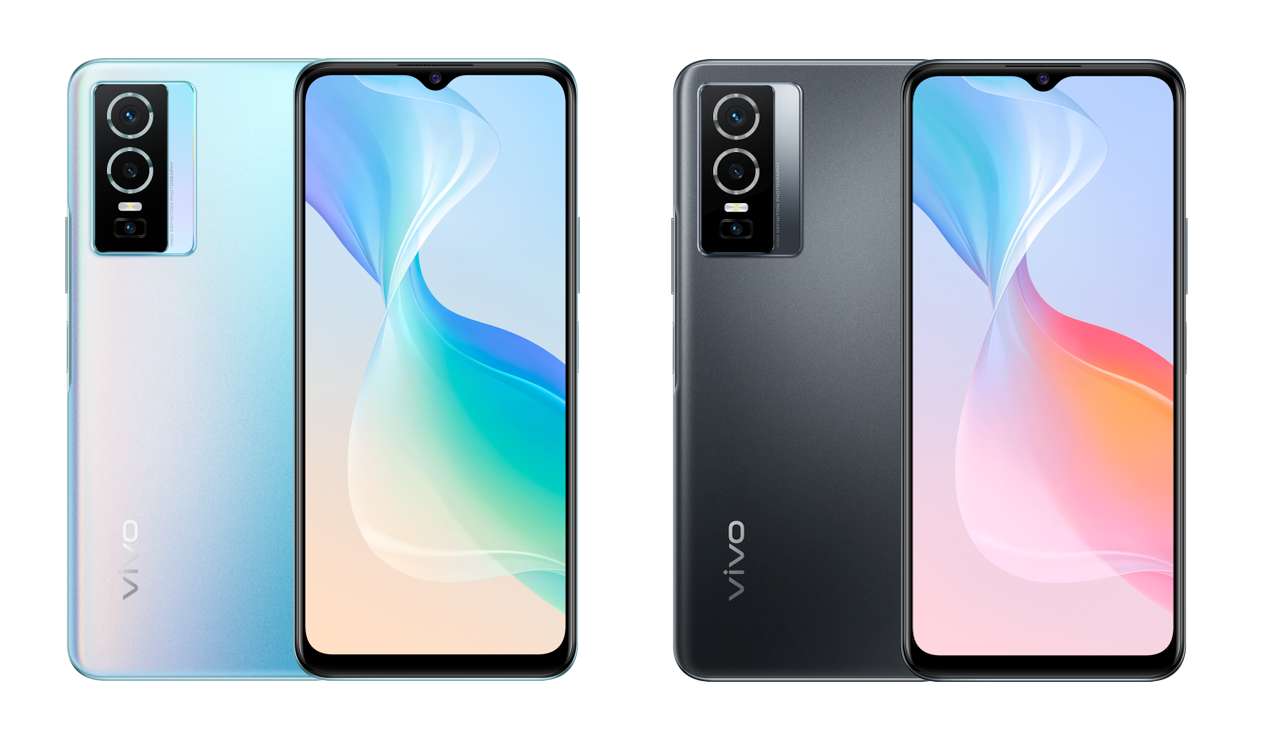
Earlier this month, Vivo announced the Vivo Y76s 5G smartphone in China with specs like Dimensity 810 chipset, 50MP dual cameras, and 44W fast charging. Now, the company has unleashed the Vivo Y76 in Malaysia. While it features a 50-megapixel triple camera unit, it features the less powerful Dimensity 700 chip.
Vivo Y76 specifications and features
The Vivo Y76 measures 163.84 x 75 x 7.79mm and weighs 175 grams. It has a 6.58-inch IPS LCD teardrop notch display that offers a Full HD+ resolution of 1080 x 2408 pixels, a 20:9 aspect ratio, and 460nits of brightness. The company claims that it offers a screen space of 90.6 percent.
Sitting on the front side of the Vivo Y76 is a 16-megapixel. Its back panel has a triple camera unit, which comprises a 50-megapixel main camera with an f/1.8 aperture, a 2-megapixel depth sensor, and a 2-megapixel macro camera. The phone offers photography features such as super night mode, dual-view mode, ultra-stable video, face beauty, double exposure, Full HD video recording, and slow-motion video shooting.
Vivo Y76
The Vivo Y76 is driven by the Dimensity 700 chipset and 8GB of RAM. The device comes with 4GB of virtual RAM and 128G of storage. For more storage, it has a microSD card slot.
The FunTouch OS 12 based on Android 11 comes preinstalled on the Vivo Y76. It has a 4,100mAh battery, which supports 44W fast charging. The other features that can be found on the device are dual SIM support, 5G, Wi-Fi 802.11ac, Bluetooth 5.1, GPS, USB-C, a 3.5mm audio jack, and a side-facing fingerprint scanner.
Vivo Y76 pricing and availability
The Vivo Y76 has landed in Malaysia with a price tag of MYR 1,299 (~$310). It comes in two colors such as Midnight Space and Cosmic Aurora. It is unclear which other markets will be receiving the Y76.
Honor will be unleashing the Honor 60 series of smartphones on Dec. 1. in China. Ahead of the launch, the Chinese manufacturer has released a poster to showcase its rear design.
In the poster, Chinese model and actor, Gong Jun can be seen endorsing the Honor 60. The gradient blue rear shell of the device is flanked with starry sky elements. At its top-left corner is an oval-shaped camera housing that houses two large-sized camera rings with what appears like a small camera in between. Hence, it appears that the device could be equipped with a triple camera unit, which is accompanied by an LED flash unit.
Honor is yet to spill the specs of the Honor 60 series. Reports surrounding the lineup have revealed that it will include three models such as Honor 60, Honor 60 Pro, and Honor 60 SE. It appears that these models will rival with the OPPO Reno 7, Reno7 Pro, and Reno7 SE that are scheduled to launch on Nov. 25 in China.
The Honor 60 and Honor 60 Pro are likely to arrive with support for 66W fast charging. On the other hand, the Honor 60 SE could be equipped with 40W fast charging. Hopefully, newer reports will spill more information on the Honor 60 lineup before its official announcement.
In related news, Honor is reportedly working on the Honor X30 smartphone. It is speculated to arrive with specs like a punch-hole display, Snapdragon 695 chip, and a 48-megapixel + 2-megapixel + 2-megapixel triple camera unit. The company is also rumored to launch two foldable phones in Q1 2022.
Last week, Motorola announced 5 smartphones. One of them was Moto G200. This device is expected to go official as Motorola Edge S30 in China. Ahead of it, the parent company Lenovo accidentally reveals a Transformers Edition of the handset.
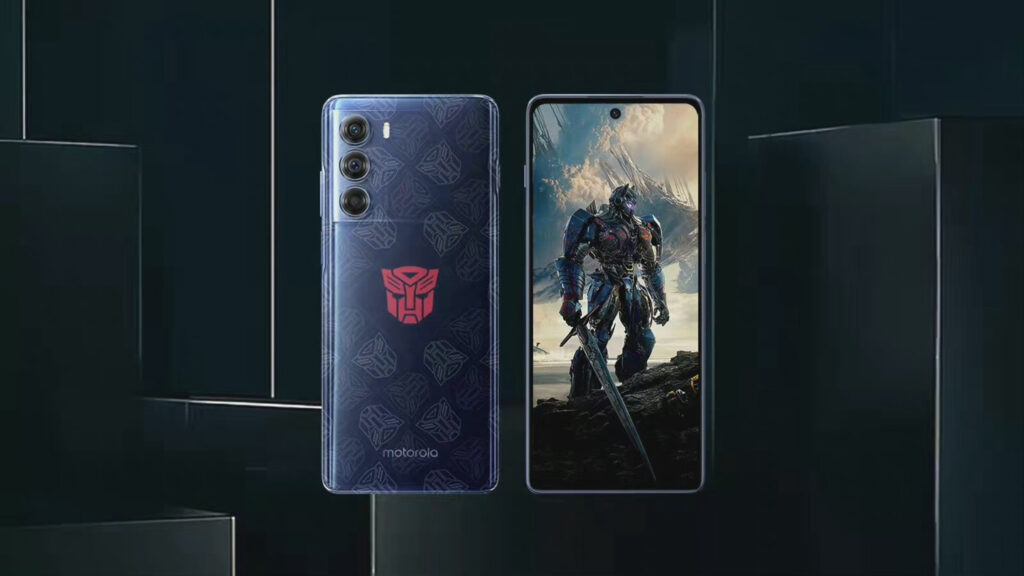
Lenovo is offering discounts on almost all of its smartphone portfolio in collaboration with Hasbro’s Transformers in China. On one of the promotional pages for these offers, the PC giant appears to have coincidentally exposed the renders of yet-to-release Motorola Edge S30 Transformers Edition.
These renders have been now taken down. But multiple netizens managed to save them and certain Chinese publications like ITHome even reported on this incident.
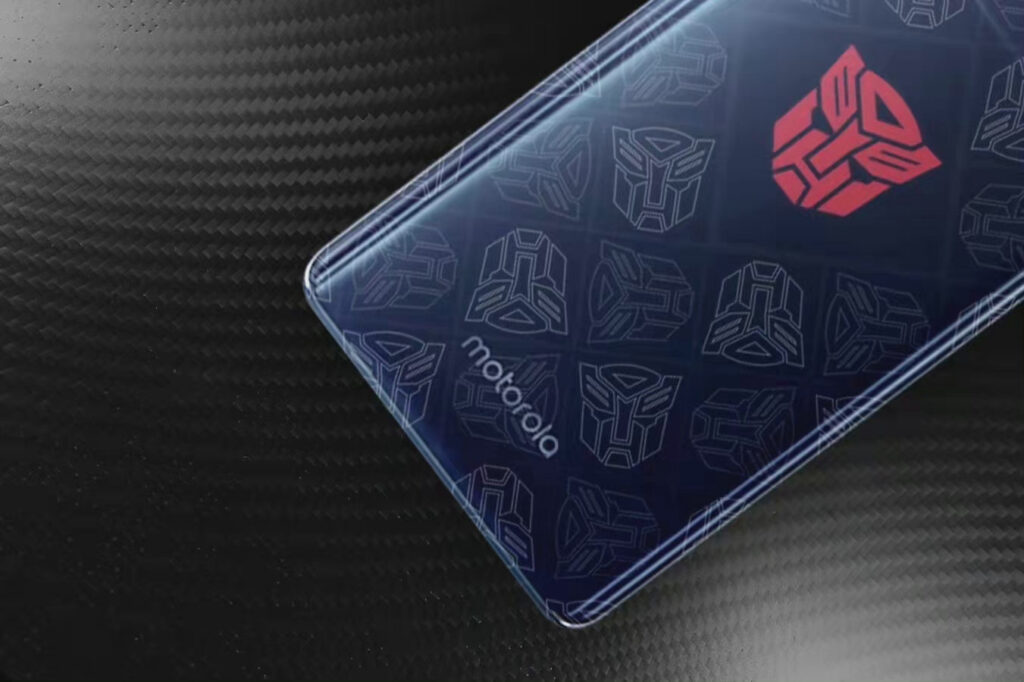
The renders showcase the Motorola Edge S30 Transformers Edition in a navy blue color with ‘Autobot’ logos imprinted all over its back. In fact, the rear Motorola Batwing logo is replaced by a large red-colored Autobot logo at the center. However, there’s still a ‘motorola’ branding at the bottom.
The special version of the phone will be most likely similar to the regular version in terms of specifications. It should only differ in terms of looks and might come with a customized software themed after the Transformers.
Motorola Edge S30 is expected to go official in China before the end of 2021. The main highlights of the handset include a 6.-inch 144Hz display (LCD), Qualcomm Snapdragon 888+ chipset, LPDDR5 RAM, UFS 3.1 storage, 108MP (wide) 13MP (ultra-wide, macro) + 2MP (depth) triple camera setup, 16MP selfie camera, plastic body, 5,000mAh battery, and 33W fast charging.
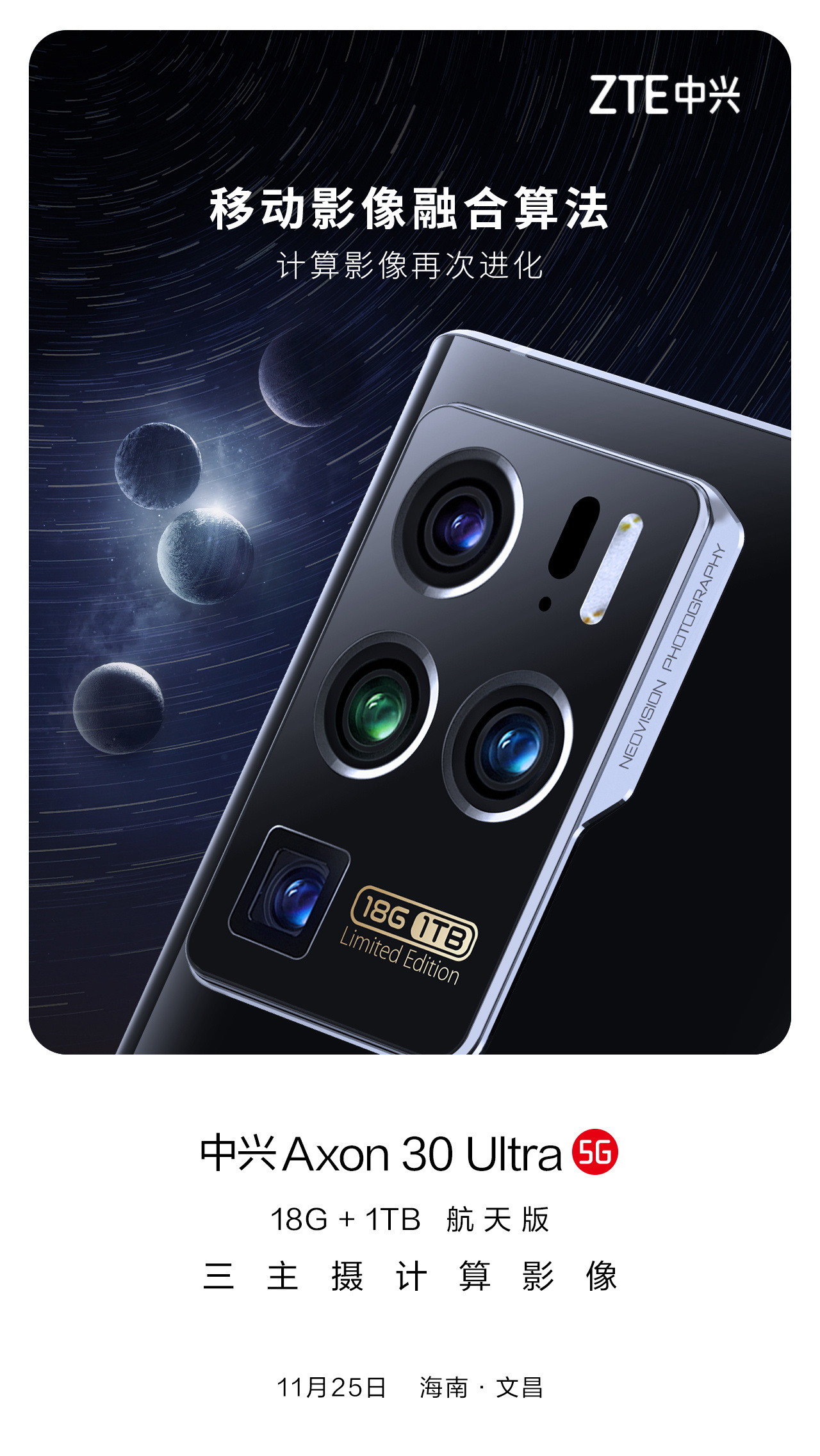
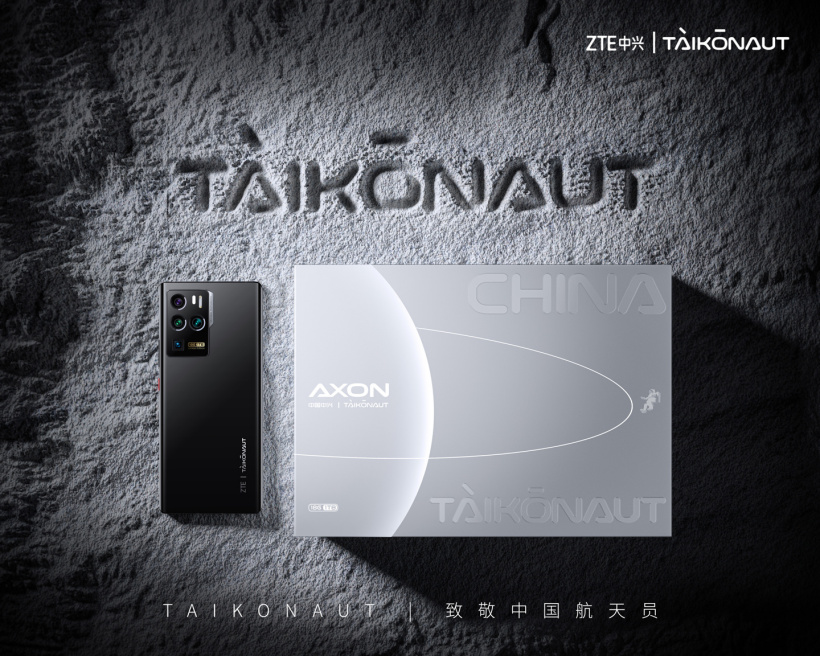
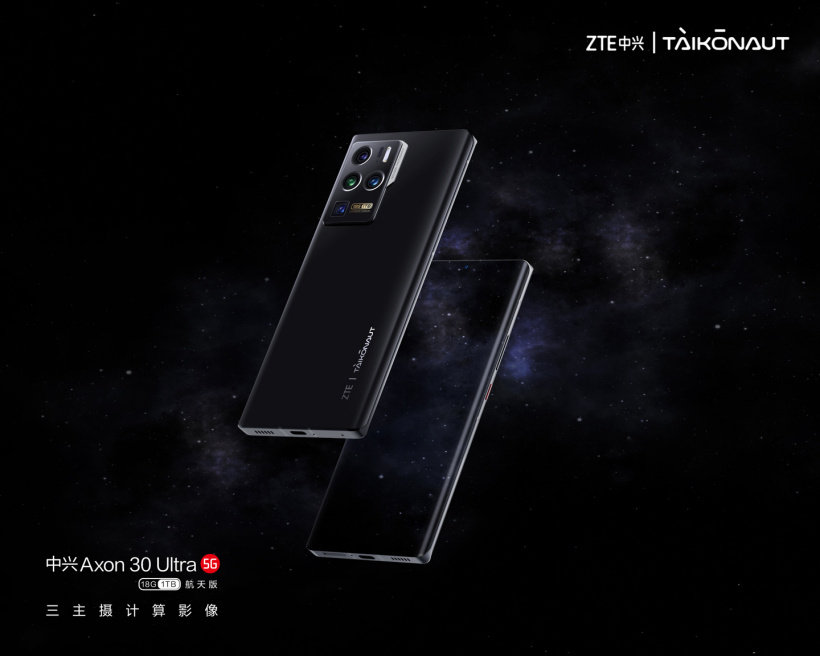
ZTE has already announced that the company will be launching a new variant of its current flagship smartphone Axon 30 Ultra on 25th November in China, which is dubbed as ZTE Axon 30 Ultra Space Edition.
Ahead of the phone getting officially unveiled, the company has shared another teaser which reveals that the smartphone’s quad-camera setup on the back panel will be using Image Fusion Technology for enhancing the photo quality.
For those who are unaware, Image Fusion Technology basically combines photos captured using different camera lenses into a single image to provide features like higher resolution, better low-light performance, and lower noise levels, among others.
Previously, the company revealed some high-definition images of the ZTE Axon 30 Ultra Space Edition smartphone, revealing a special logo or branding of TAIKONAUT, a Chinese astronaut, on the phone. It has also been confirmed that the limited edition device will come packed with 18GB of RAM and 1TB of internal storage.
We expect the rest of the phone’s specifications to remain the same as the Axon 30 Ultra. It features a 6.67-inch AMOLED display with a Full HD+ screen resolution of 1080 x 2400 pixels, a 144Hz refresh rate, a 20:9 aspect ratio, and Corning Gorilla Glass 5 protection.
Under the hood, the device is powered by the Qualcomm Snapdragon 888 mobile platform, coupled with LPDDR5 RAM and UFS 3.1 storage. In the camera department, there’s a quad-camera setup on the back that includes a 64-megapixel main camera, a 64-megapixel wide-angle lens, a 64-megapixel ultrawide shooter with a 120-degree FOV, and an 8-megapixel telephoto lens.
On the front side, the smartphone features a 16-megapixel snapper for taking selfies and video calling. Running Android operating system, it is powered by a 4,600mAh battery that supports 66W rapid charging.
OPPO entered the smart television category in October 2020. The company initially introduced two models, namely OPPO Smart TV S1 and OPPO Smart TV R1. Over a year after their debut, the latter model has been confirmed to get a new variant later this week.
OPPO Smart TV R1 Enjoy Edition
OPPO will be holding a launch conference for the OPPO Reno7 series in China on November 25. The firm has revealed that it will be unveiling a new smart television dubbed as OPPO Smart TV R1 Enjoy Edition at this event, in addition to OPPO Enco Free2i TWS earbuds.
As the name suggests, the upcoming television from the brand will be a variant of the already existing model. According to the teaser, the new version of OPPO TV R1 will bring improvements in audio with collaboration with Dynaudio.
For those who don’t know, the original OPPO Smart TV R1 from last year lacks Dynaudio tuning, while the expensive OPPO Smart TV S1 has it. The company says that users will be able to hear the picture when they close their eyes while in front of the forthcoming OPPO Smart TV R1 Enjoy Edition.
Apart from audio, the new variant should be most likely similar to the original in terms of features. It may also arrive in multiple-size versions.
The OPPO Smart TV R1 comes with a 4K LCD panel, 93% DCI-P3 color gamut, MEMC, MediaTek MTK9652 chipset, 2GB RAM, 32GB storage, 8K video playback support, WiFi 6, HDMI 2.1, OPPO Share, NFC remote control, pop-up camera, 20W speakers, Dolby Audio, far-field microphones, and ColorOS TV operating system.
Last year in December, Qualcomm announced the Snapdragon 888 mobile platform. A successor for this chip will be announced on Nov. 30 through the Snapdragon Tech Summit event. It was speculated that Snapdragon 888’s successor could be called Snapdragon 898. However, it was revealed last week that Qualcomm may use an entirely different name for it. The U.S. based chip maker has revealed that its next Snapdragon 8-series chip’s name will have a single-digit series and generation number, which means it has been named the Snapdragon 8 Gen1.
Qualcomm believes that a new simplified and consistent naming structure for its mobile platforms will make it easier for its customers to discover and choose devices powered by Snapdragon. Hence, the company will be switching to a new naming scheme for its other chipsets that are now being called Snapdragon 695, Snapdragon 480+, and so on. It is likely that the forthcoming less powerful Qualcomm chips could be named as Snapdragon 7 Gen1, Snapdragon 6 Gen1, and so on. At present, there is no official confirmation on these monikers.
Qualcomm also said that it will be using colored badges in its chip logos. This will help users to distinguish flagship SoCs from low-powered chipsets. It will be using a Gold badge for top-tier chips, whereas Midnight, Gunmetal, Nickel, and Red will be used for other chipsets.
The company has separated the Qualcomm and Snapdragon brands. The latter will be a standalone product brand with specific ties to the Qualcomm brand where appropriate. The mobile platforms will no longer carry suffix “5G” and the iconic “fireball” will gain new prominence and manifest itself in new visual assets and other creative executions, said Qualcomm in its blog.
Xiaomi, Motorola, Lenovo, OPPO, Samsung, and Huawei are the first batch of companies to launch phones featuring the Snapdragon 8 Gen1 chip. Probably, the Xiaomi 12 and Motorola Edge X may break cover as the first phones driven by the new chip.
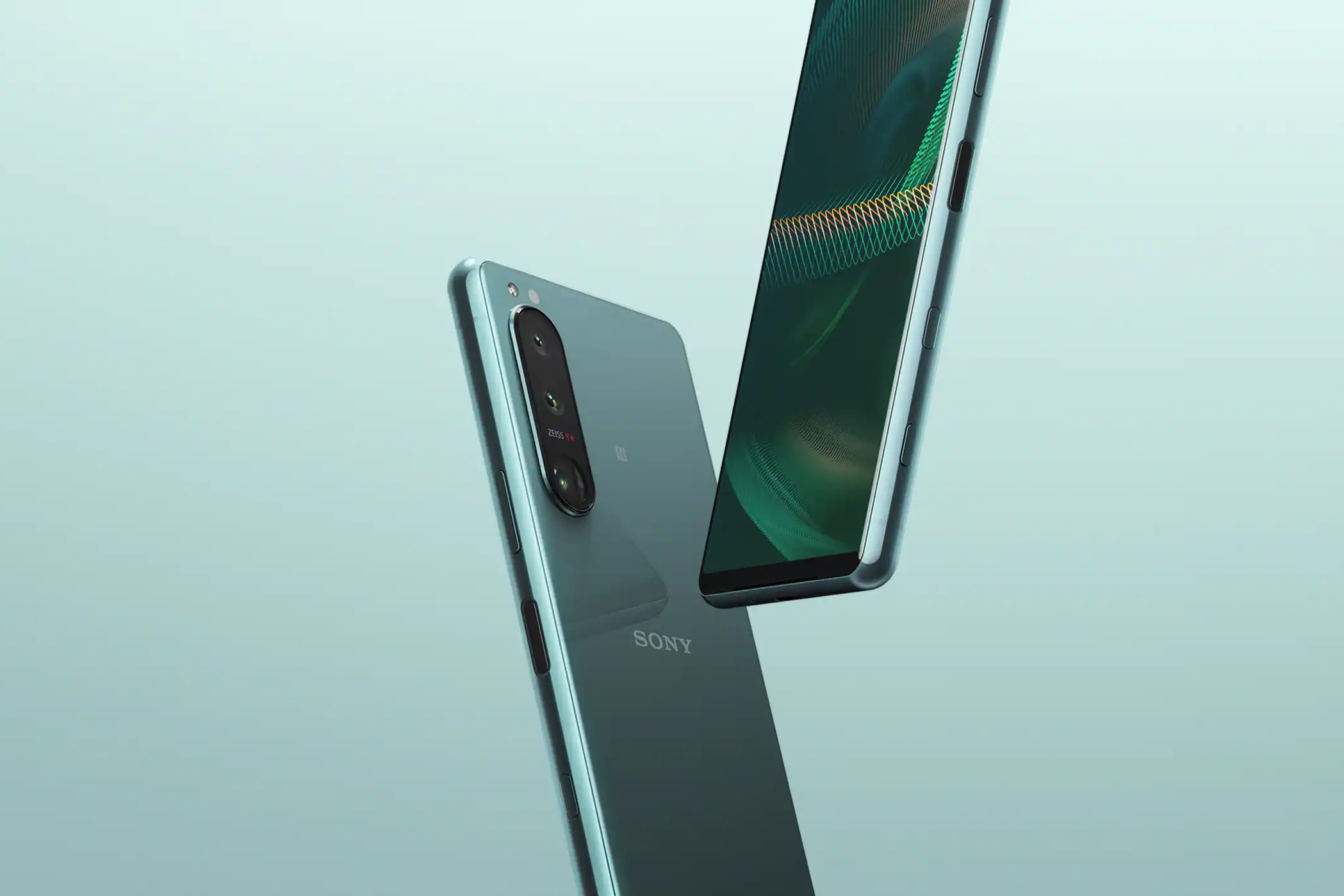
Sony had announced its two flagship smartphones in April this year — Xperia 1 III and Xperia 5 III. While the Sony Xperia 5 III has been available for purchase in the United States, the UK, and Australia, the device is yet to go on sale in China.
Today, the company has started taking pre-orders for the Xperia 5 III smartphone in China which is priced at 6,599 yuan, approximately $1,033. It comes in three color options — Black, Pink, and Green, and the device will go on sale from 1st December.
The smartphone features a 6.1-inch Full HD+ OLED display that offers a 120Hz refresh rate and a 21:9 aspect ratio. Under the hood, it is powered by the Qualcomm Snapdragon 888 chipset, coupled with 8GB of RAM and 256GB of internal storage.
In the camera department, Sony says that the phone is jointly developed with Alpha 9 series mirrorless camera engineers. The triple-camera system includes a 12-megapixel primary sensor, a 12-megapixel ultrawide sensor, and a 12-megapixel telephoto zoom lens.
The phone has a side-mounted fingerprint sensor and comes with a two-step physical camera shutter button. The company has also decided to retain the 3.5mm headphone jack. The device also supports 360 live sound effects, and Hi-Res audio playback.
Unlike the global version, the Xperia 5 III smartphone in China will be running Meizu’s Flyme OS out-of-the-box, based on the Android operating system. It aims to offer a localized experience and will come with support for Alipay and WeChat mobile payments. It is powered by a 4,500mAh battery and supports 30W fast charging technology.
The OPPO Find X3 Pro was the first device to receive ColorOS 12 beta in international markets. A little over a month later, the smartphone now gets access to the stable release. The latest software update is currently available in three regions.
OPPO Find X3 Pro
According to an official announcement post on OPPO Community, ‘ColorOS 12 Official Version’ (aka stable update) is now ready for the OPPO Find X3 Pro in the following markets.
Malaysia
Thailand
Indonesia
Interested users will have to register in order to receive the fresh system update before the general public. To do so, applicants should be on firmware version A.26, head over to Settings > Software Updates > Gear Icon > Trial Version, and follow the on-screen instructions.
The first-ever ColorOS 12 stable build for OPPO Find X3 Pro in the above-listed regions arrives with firmware version CPH2173_11.C.33.
Since Android 12 is out for only a few weeks, OPPO warns of compatibility issues with certain applications. In fact, the company’s own HeyTap Health app is still not compatible with ColorOS 12. Hence, users will not be able to use their OPPO wearable devices. However, the firm promises to fix this issue by the end of November.
Lastly, like any other OTA system update, this one will be also available for all users without needing any registration in the coming days.
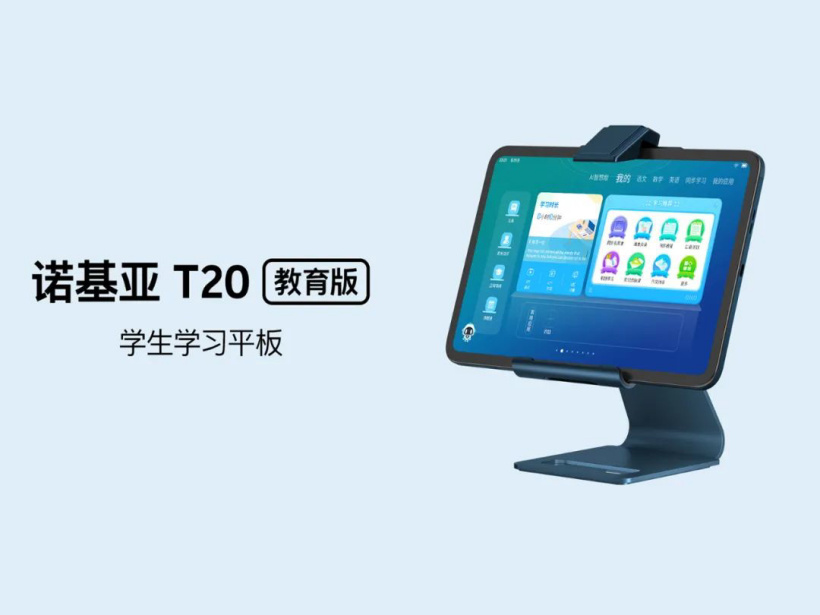
Last month, HMD Global launched its Nokia T20 tablet in several different markets and within a few weeks, the Finnish company has now announced a new variant of the same, dubbed as Nokia T20 Education Edition.
It has been revealed that the Nokia T20 Education Edition will be available for purchase from next month, i.e. December but the company has not yet revealed the pricing details.
As the name indicates, the product is aimed at students to aid in their learning. It features a 10.4-inch 2K display with 1200 x 2000 pixels screen resolution and has passed the Swiss SGS low blue light certification and also provides eye protection mode, sitting posture correction, and eye exercises.
Internally, the device is powered by the Unisoc T610 processor which is an octa-core offering that includes two Cortex-A75 cores clocked at 1.8GHz and six Cortex-A55 cores clocked at 1.8GHz. It packs 4GB of RAM and 64GB of storage and there’s also a microSD card slot for expanding the storage capacity.
The Nokia T20 Education Edition provides nine simultaneous teaching aids for elementary, middle, and high schools, that too without the need of downloading any additional apps or purchasing separate courses. The company has also said that the teaching supplement content will be updated from time to time. It also supports functions such as reading textbooks, translating between multiple countries, and correcting oral calculations.
For parental controls, there’s a feature through which parents can check the usage of the tablet at any time through WeChat, and control the software to close, uninstall, etc. Also, the device does not support the self-downloading of games.
It is powered by an 8,200mAh battery that supports 15W PD fast charging but the company is including a 10W charger in the box. We expect the company to soon reveal the pricing details and the launch date.
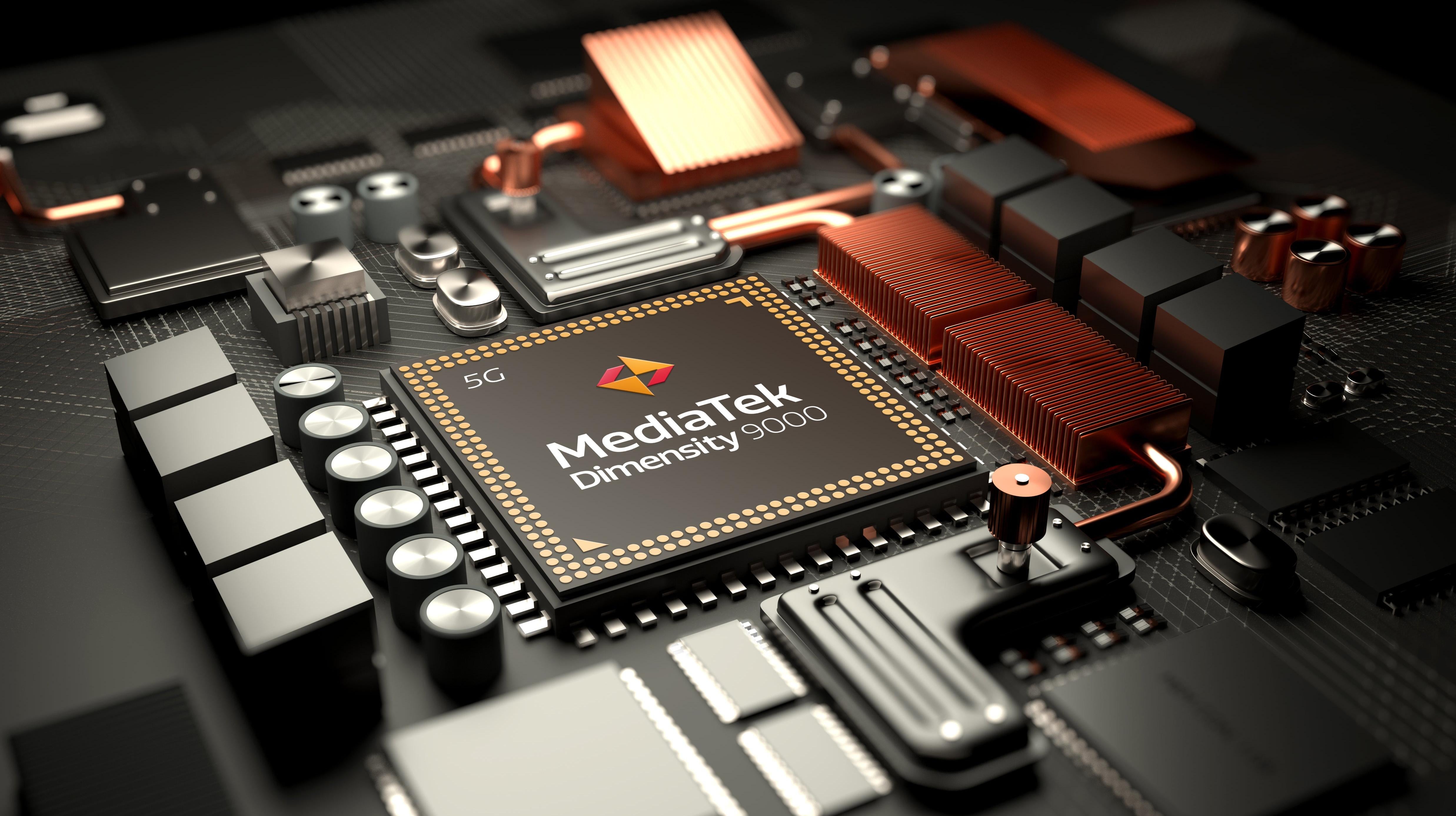
Chipmaker MediaTek is leaping into the high-end segment of smartphones with its innovative Dimensity 9000 chip. The SoC is the company’s first real foray into the production of highly powerful chips that could compare with the leading lights used in flagship models.
Ahead of MediaTek’s Annual Summit, the company has highlighted the features of the Dimensity 9000 which is seen as its most technically advanced chipset so far. MediaTek’s Vice President of Corporate Marketing, Finbarr Moynihan, threw more light on the new flagship chipset during an interview with DigiTrend. Importantly, the Dimensity 9000 is the first chip to be produced using the advanced 4nm process. It is also the first chip that uses the ARM Cortex X2 core, based on the innovative ARM V9 architecture. The ARM Cortex X2 offers up to 3.05 GHz and combines with up to seven lower Cortex A710 and A510 cores. The GPU of the Dimensity is ARM’s Mali G710 Graphics Processing Unit.
The MediaTek VP claims the flagship chipset is expected to pair up with the Apple A15 Bionic in multi-core benchmark tests. Curiously, Apple’s own flagship chipset is built using a 5nm process. Moynihan also made reference to the Dimensity 9000’s recent feat of hitting an AnTuTu score of over a million points for the first time.
The Dimensity 9000 has enjoyed substantial upgrades from MediaTek’s previous highest chip. It will have a 14MB total cache which is as high as it can get for any smartphone. The all-around innovation in the MediaTek Dimensity 9000 chip also includes camera resources, display capabilities and it could be well-primed for gaming applications. The Dimensity 9000 will support Bluetooth 5.3 connectivity and will have a 5G modem operating at the latest quality, 3GPP Release 13.
The 4nm process is a massively complicated process leading to the production of the cutting-edge 4nm chips. It requires close collaboration, according to MediaTek, and the company’s proximity with the TSMC foundry in Taiwan where the chips were built, helped a lot. It is expected that the MediaTek Dimensity 9000 chip will compete favorably with the flagship offerings in the field, it will be more power-efficient among several other performance metrics.
Overall performance of the smartphone powered by the Dimensity 9000 chip is expected to be substantially higher. The company’s partners are already developing smartphones that will be powered by the chipset and the first smartphones could be launched by the end of Q1, 2022. It remains to be seen if the Diemnsity 9000 can indeed be compared with the current league of flagship processors. Only time will tell.
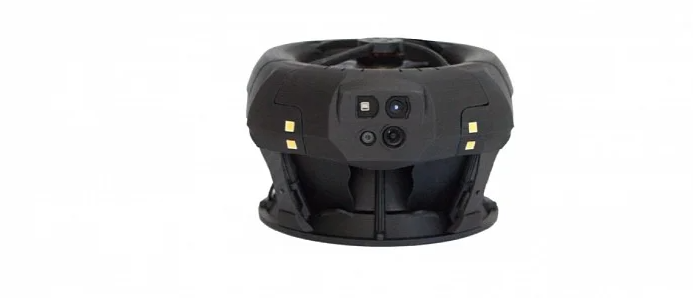
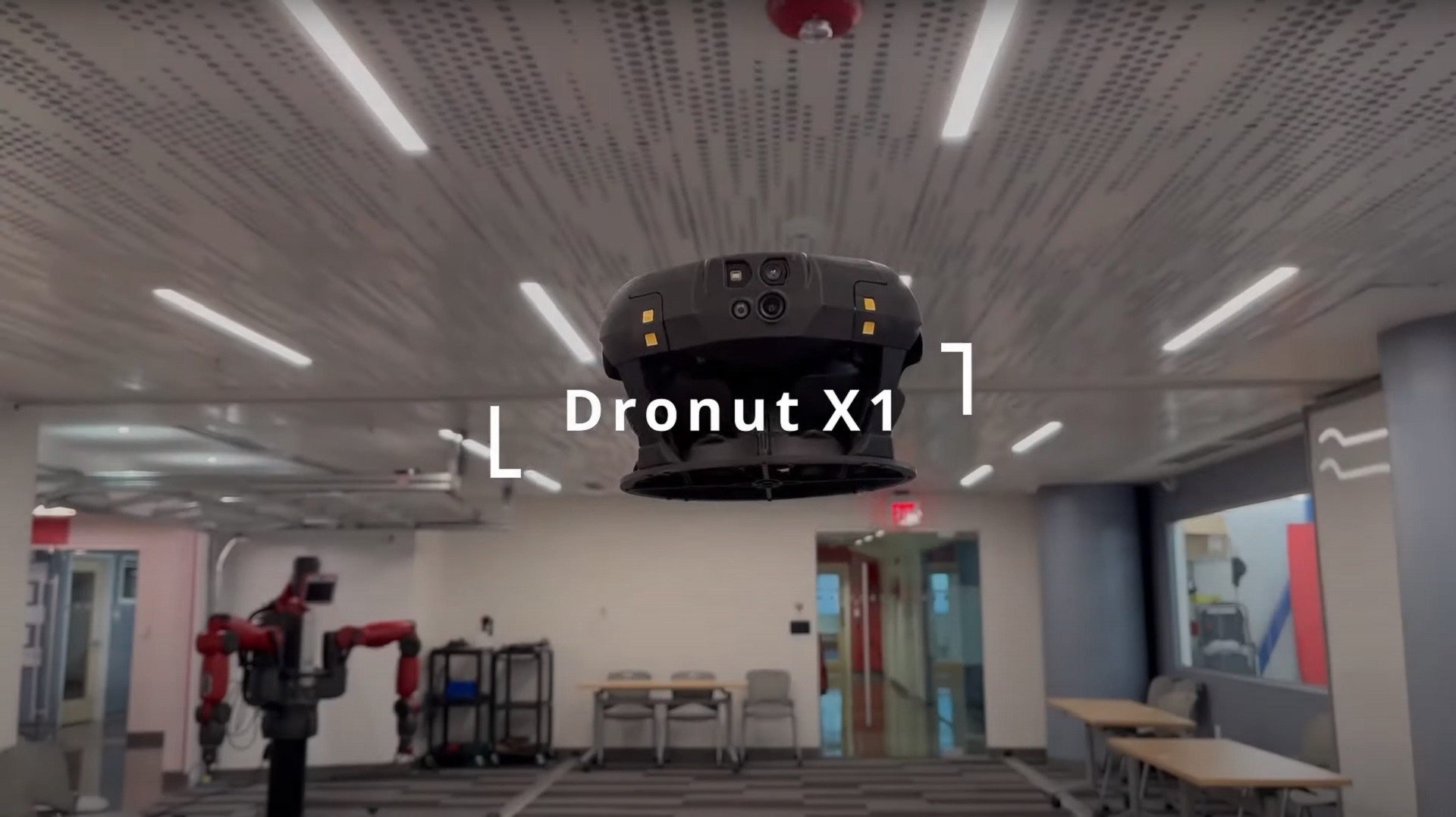
The Dronut X1 is a two-rotor, donut-looking ducted drone that comes with an unconventional design. The device owned by Cleo Robotics bears little semblance to a drone on the outside, at least. In addition, the drone doesn’t use the same flying technology prevalent in conventional drones.
Cleo Robotics says the Dronut X1 is the world’s first bi-rotor ducted drone, being able to fly in previously uncharted areas for any drone. The palm-sized drone is designed for indoor use – the outer propellers visible in drones are absent in the Dronut X1. The ducted fan design, therefore, allows the drone to operate extremely close to humans and can operate around sensitive equipment.
The Dronut X1 uses Cleo Robotics’ proprietary thrust vectoring technology for lift resources, while several other sensors provide a variety of functionality for the drone. It is powered by a Qualcomm Snapdragon processor. The compact Dronut X1is well-suited for applications in challenging environments such as tight spaces even with poor or no illumination.
The Dronut X1 is fitted with a 3D LiDAR, a 4K camera, a global shutter camera for precise positioning, and can be reliable in areas lacking GPS service. It can accurately detect and avoid obstacles, and can also be remotely controlled via an Android smartphone.
The Unmanned Aerial Vehicle (UAV), produced in the US, has a $9800 price tag. The battery of the device however only offers 12 minutes of flight time on a full charge. The battery can be charged from 0-100% in 40 minutes. The drone can be deployed in several innovative ways to track activities in confined and difficult spaces. The short battery life could however be a limitation of the device, for its high price.
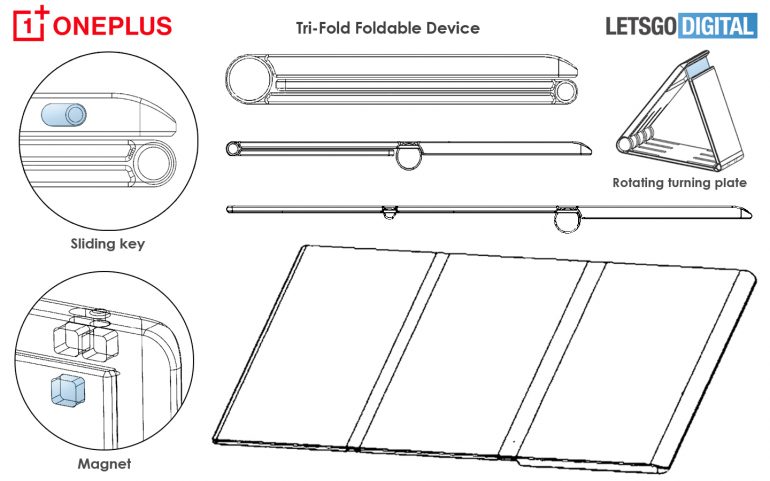
A recently discovered patent relating to OnePlus has indicated that the tech company is probably working on a foldable smartphone with two hinges that can be locked by a handy slider. The three-display device seems to be the very first by OnePlus amidst the innovations that have been done in the field of foldable displays. Samsung, Huawei, and Xiaomi are the current front-runners in foldable display technology, while other OEMs are also making strides in the area.
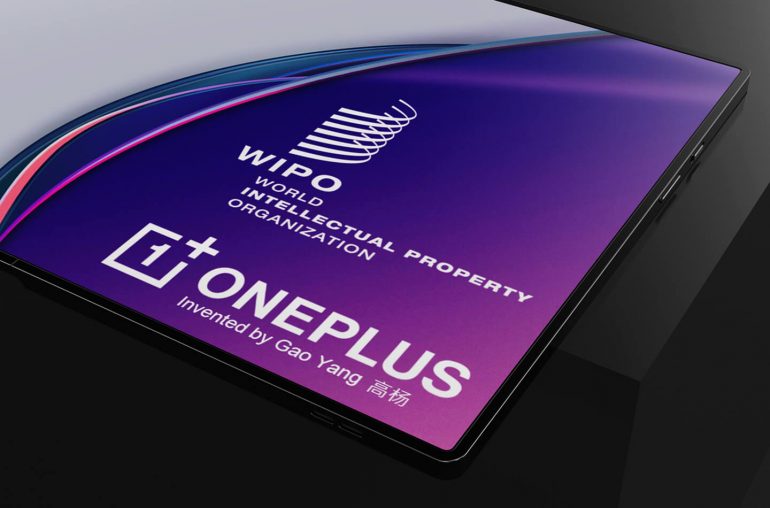
The patent relates to a foldable phone with three display parts invented by Gao Yang and the patent document is captioned: Mobile terminal. It is believed that the patent document was filed in China in 2020 and was published in July 2021. It has now been included in the global repository of patents, in the World Intellectual Property Office (WIPO) database. The WIPO documentation has therefore given a stamp of approval and protection to OnePlus for the stated patented technology.
Some stunning renders of the OnePlus Tri-Fold smartphone, derived from the patent images have also been released by Technizo Concept. The device can be folded in different ways, providing interesting options for more User applications of the device. It can work as a large tablet apart from its operation as a smartphone. The versatile design comes with quite a few challenges, and it will be exciting to see the debut of the innovative OnePlus tri-foldable smartphone. It remains to be seen how the actual device will look, as it bears little semblance to current tri-foldable designs.
The OnePlus design really leaves much to the imagination on the multiple applications that could be deployed with the device. We expect the first foldable OnePlus smartphone in 2022 and this could come with a bang expectedly. However, the complex design of the device will warrant the resolution of several challenges due to the multiple foldable displays and the reliability of the hinges.
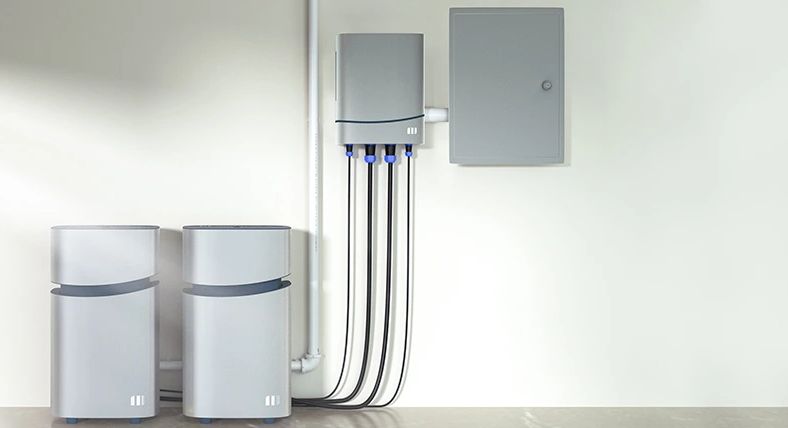
Power disruptions are now becoming more frequent in the developed world too. Due to perennial extreme weather events, a power outage has become a concerning issue, and people started looking for alternatives to address the issues. Several companies are coming up with the idea of portable home inverters to address the issue without burning a hole in the pockets. Innovative electronics solutions company, Mango is soon coming with a 4.35KW Mango Power Union portable home inverter and the campaign will be live via Indiegogo.
The highly portable home inverter unit is modular and offers 95% transfer efficiency. It can even run Air Conditioner as the unit offers a maximum load of up to 4350W at the same time. It is a highly effective home inverter unit that can even be assembled stacked with other invertor units to increase the overall capacity or the power output.
The smart control makes it easily usable as the user can wirelessly control the system over the WiFi or the dedicated app.
The modular design helps in enhancing the limits of the home inverter units. However, it can be taken anywhere without worrying about the connections and the wire hassles that these standard home investors usually carry.
Mango Power Union portable home inverter can be stacked together to get maximum output of up to 43.5kW. It even supports 2KW MPPT x2 solar charging as it features a built-in PV charger. You can know more by heading to the official Indiegogo listing page.
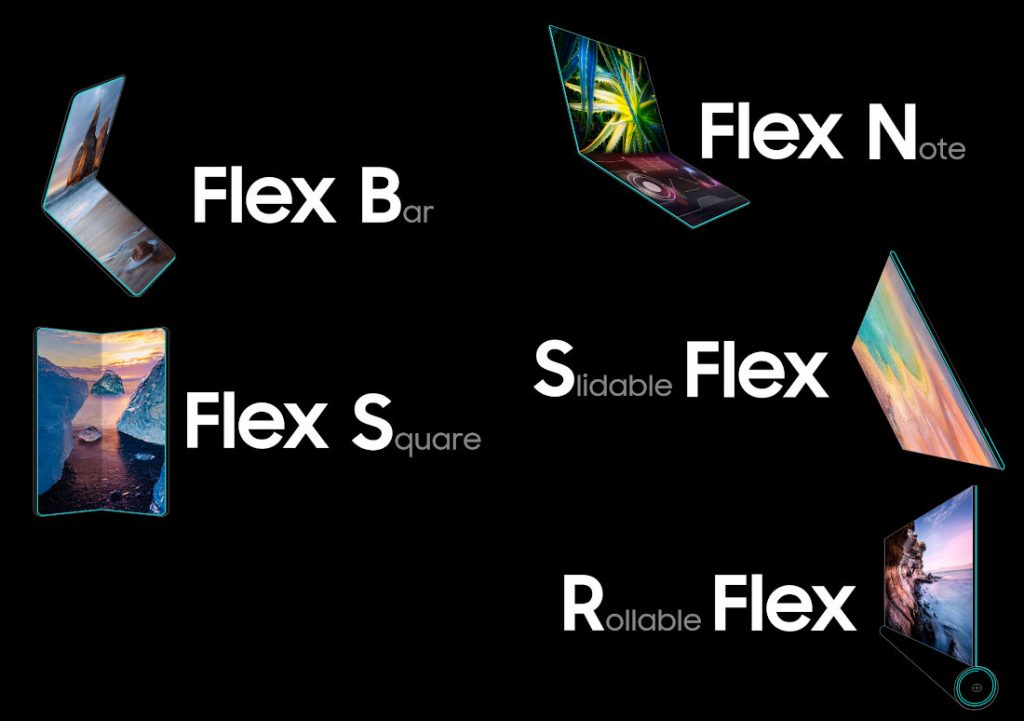
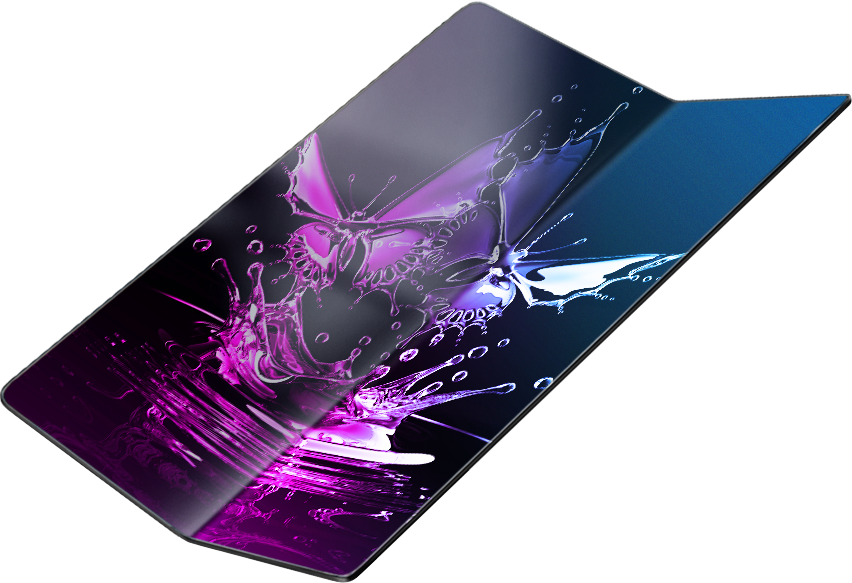
Samsung Display, the display arm of global tech giant Samsung, has unveiled a new microsite focused on its OLED technology. The new Samsung Display microsite is a rich platform for an array of several of the industry-leading technologies that will continue to drive the company as a global leader in innovation.
The new dedicated OLED microsite is adorned with details and images of new OLED display technologies for foldable smartphones, laptops, and other products. The website features general information on Samsung Display’s OLED products and key principles through videos, articles, and reviews in English, Korean and Chinese.
The dedicated global OLED microsite will highlight news, product innovations, multimedia assets, insights on industry trends, and it will also serve as a communication hub. It is a culmination of Samsung Display’s growth and expansion moves around the world.
With the recent expansion of the OLED market and extended application of Samsung Display’s newest OLED display technologies, consumers are increasingly attracted to OLEDs and Samsung has been very productive in that segment. The new microsite will thus drive Samsung’s offerings of OLED solutions widely.
Samsung Display will continue to highlight the excellence of OLED for small and medium-sized devices, as it carves a niche for itself in innovative and industry-changing OLEDs. The company’s Display arm will host digital launch events across its social media channels to celebrate the new microsite.
Earlier, we reported Android 12‘s tendency to crash games when the wallpaper is changed in the background. The bug was first reported in September on the Google Issue Tracker. Now, according to Twitter user Mishaal Rahman, this issue will be tackled in Android 12L.
"…people with automatic wallpaper switchers have found that you can actually crash a game if it happens in the background"
A fix for this is coming in Android 12L. Background wallpaper changes won't trigger theme changes.
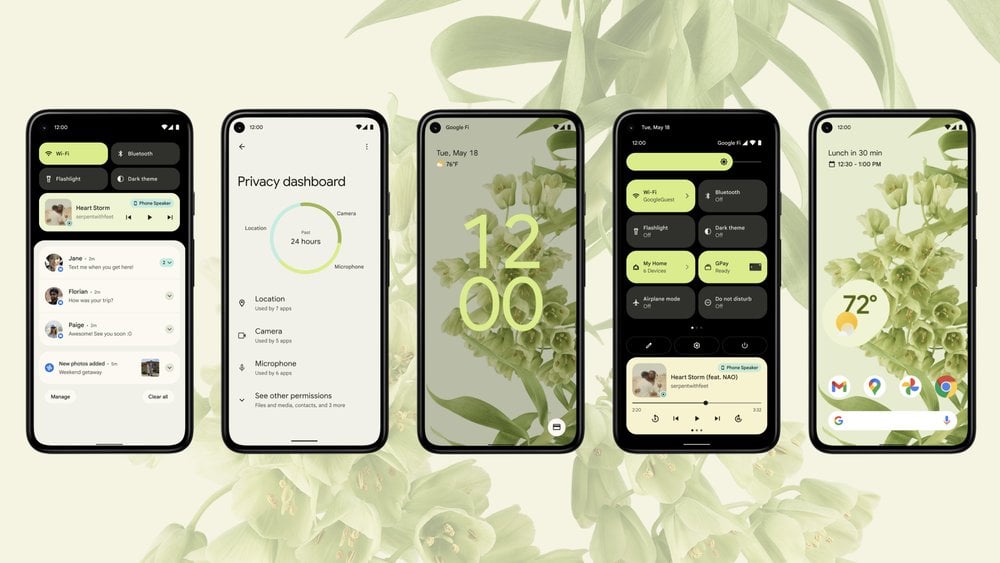
Google‘s new UI, the Material You, introduced with Android 12, is a dynamic theming engine that extracts colors from the current wallpaper and splashes it across the system UI and supported apps, giving users greater control than ever over what their phone’s software looks like. Changing the wallpaper in Android 12 results in a configuration change forcing all app activities to restart so that they use the new colors from the wallpaper for theming purposes.
The root cause of this game crashing bug was spotted to be this forced Android configuration changes. Games typically used to ignore such changes but that isn’t the case anymore with Android 12.
This bug, which has remained unsolved for more than 2 months, will now be addressed in the Android 12L. The Android 12L is primarily meant for foldable phones, tablets, and big display devices but will fix many bugs present in Android 12. The fix will ensure that background wallpaper changes will not trigger theme changes or force app activities to restart, preventing crashes. The OS, set to go live in early 2022, will enter beta testing from December to February.
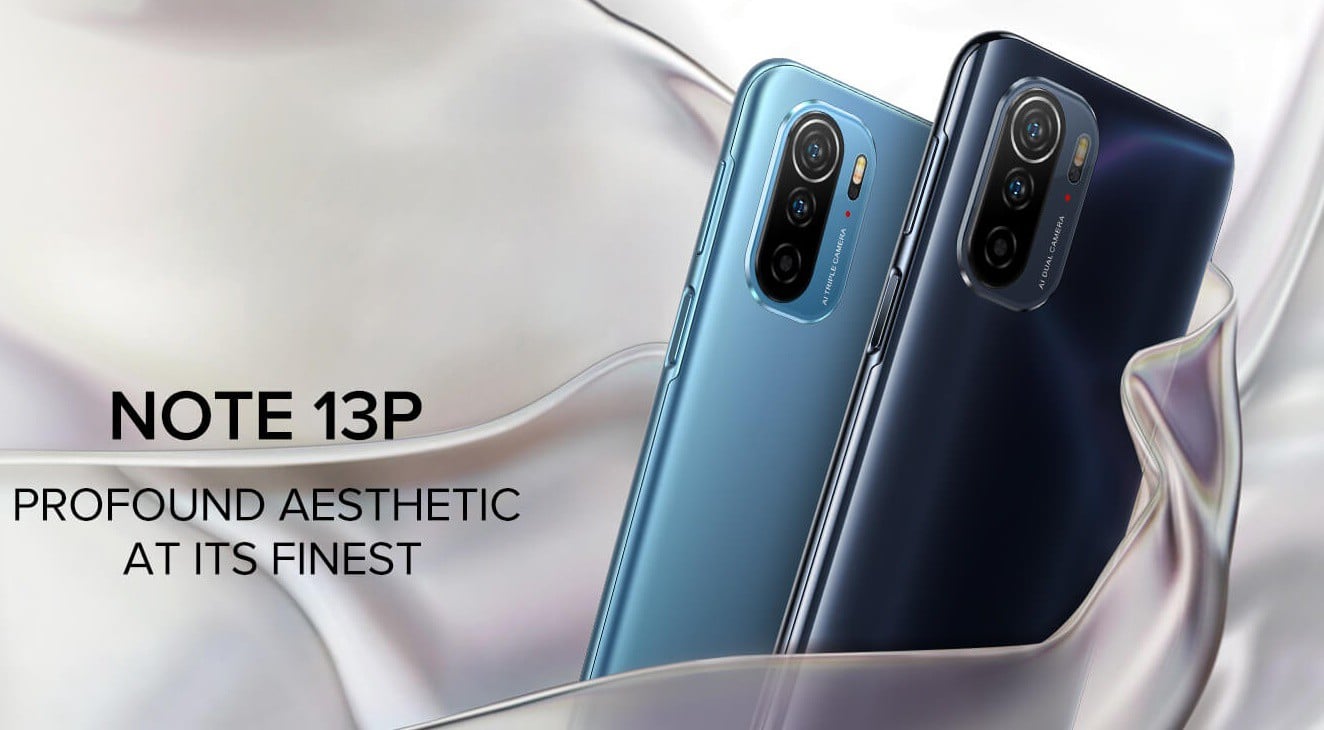
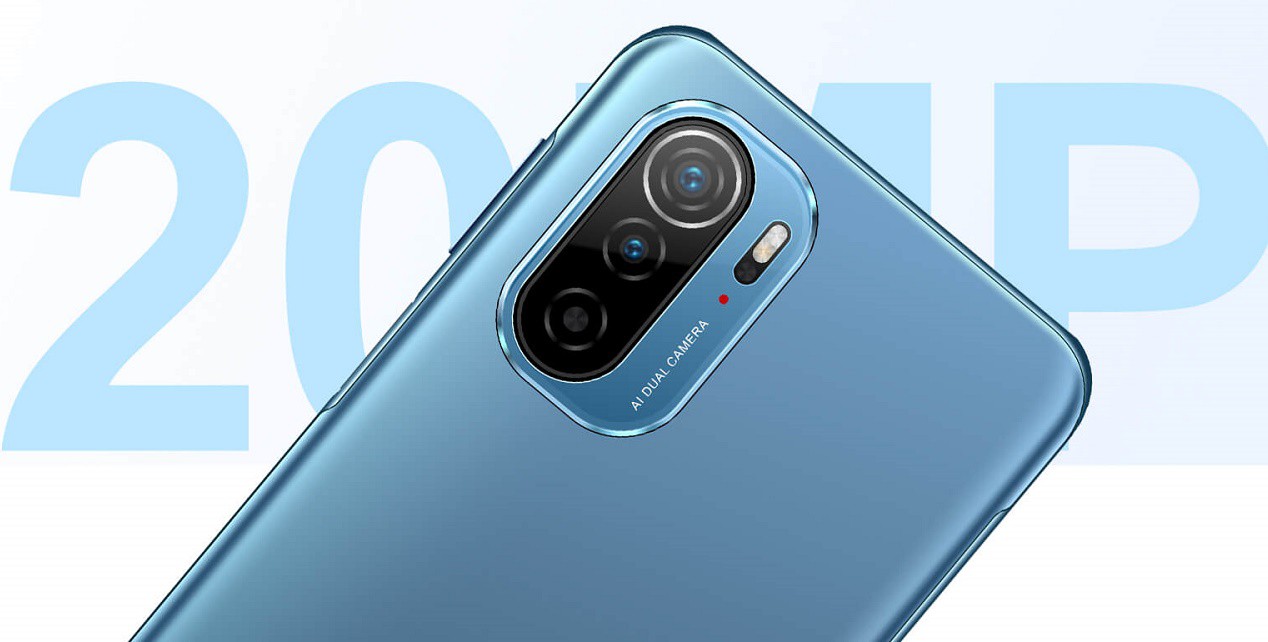
Ulefone has officially unveiled the Note 13P smartphone in the global market. The smartphone succeeds the Ulefone Note 12P which was launched a few months back. The major highlights of the phone are a 6.5-inch FHD+ display, MediaTek’s Helio SoC, and a 20MP dual-camera system.
The Ulefone Note 13P is priced at $170 for the sole 4GB RAM and 64GB storage variant. It comes in Starry Black and Mystery Blue colour variant. The device is up for sale on the official Ulefone website.
The smartphone comes with a 6.5-inch IPS LCD display with a Full-HD+(1800 x 2400 pixels) resolution. This is an upgrade over the predecessor Note 12P’s HD+ screen. The display has thinner edges and flaunts the modern 20:9 aspect ratio.
It equips a dual-camera system at the rear with a 20MP Sony IMX350 primary lens and a 2MP macro sensor. Upfront, it has a 16MP Sony IMX481 sensor with an f/2.2 lens. The dual-SIM phone is powered by the MediaTek Helio G35 SoC coupled with 4GB of RAM and 64GB of internal storage. The company has offered a microSD card slot for storage expansion up to 1TB.
In terms of battery, it has a 5,180mAh cell with a standard 10W charging speed. It has a side-mounted fingerprint scanner which also doubles up as a power button. The device has NFC support, features a 3.5mm headphone jack and a USB Type-C port. The handset runs on Android 11 out of the box.
Amazfit is giving out huge discounts and offers under the Black Friday 2021 Deal at Amazon US. Known for their smart wearables like fitness bands and smartwatches, Amazfit has brought about a revolution in the affordable smart wearable segment.
Considering their varied product line, you are spoiled for choices in terms of features and pricing, and this week most of their smartwatches are available at a massively discounted price.
Here are some of the best deals on Amazfit Smart Watches at Amazon US.
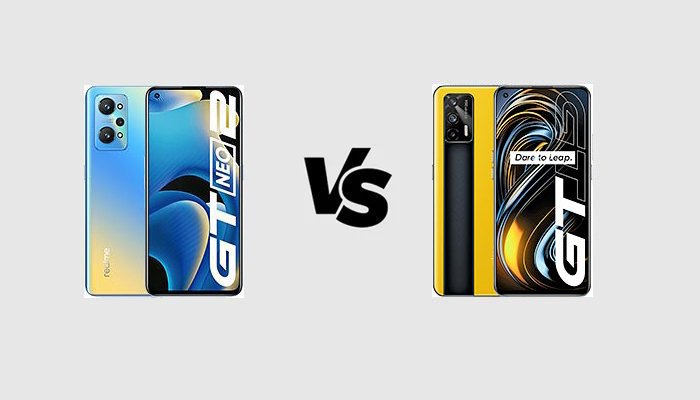
Realme GT Neo2 hitten the European market a few days ago with an interesting promotion that will last for all the Black Friday period. Thanks to the promotion, its listing price becomes even more affordable than its predecessor Realme GT 5G, which is the only other flagship killer launched by Realme in Europe this year. However, the street prices of the Realme GT 5G are great too in this period. That is the reason why a lot of people are wondering whether they should go for the Realme GT Neo2 or the Realme GT while the price of the two handsets is more or less the same. In this comparison, we will analyze the differences between the two flagships.
Realme GT Neo2 vs Realme GT 5G
Realme GT Neo2
Realme GT 5G
DIMENSIONS AND WEIGHT
162.9 x 75.8 x 9 mm, 199.8 grams
158.5 x 73.3 x 8.4 mm or 9.1 mm, 186 g
DISPLAY
6.62 inches, 1080 x 2400p (Full HD+), Super AMOLED
Triple 64 + 8 + 2 MP, f/1.8 + f/2.3 + f/2.4
16 MP f/2.5 front camera
Triple 64 + 8 + 2 MP, f/1.8 + f/2.3 + f/2.4
16 MP f/2.5 front camera
BATTERY
5000 mAh, fast charging 65W
4500 mAh, fast charging 65W
ADDITIONAL FEATURES
Dual SIM slot, 5G
Dual SIM slot, 5G
Design
If you choose the Racing Yellow color variant of the Realme GT 5G, you will get the most attractive design. This variant is indeed built with a leather back and an aluminum frame, providing great materials and an amazing touch & feel. It is slightly thicker than the average phone, but the leather back is very good to see, especially in that yellow color option. If we only focus on the glass variant, then Realme GT Neo2 has a more interesting design due to better aesthetics for the camera module and better color options. Note that the Realme GT Neo2 is bigger than Realme GT 5G because it has a wider display.
Display
With the Realme GT Neo2 and the Realme GT 5G, you get more or less the same display quality. They come with an AMOLED display supporting the HDR10 certification, a Full HD+ resolution of 1080 x 2400 pixels, a 120 Hz refresh rate, and an under-display fingerprint reader for the authentication. They also pack stereo speakers for a great audio experience, but the Realme GT 5G is the only one with a 3.5 mm audio jack. Coming back to the displays, the real difference between these two panels is the dimensions: Realme GT 5G has 6.43 inches, while the Realme GT Neo2 comes with a wider 6.62-inch display which may be better for gamers and productivity.
Specs & Software
The hardware department is superior on the Realme GT 5G simply because this phone is powered by a stronger processor. We are talking about the Snapdragon 888 mobile platform by Qualcomm, an octa-core built at 5 nm running at a frequency of 2.84 GHz and paired with up to 12 GB of LPDDR5 RAM and up to 256 GB of UFS 3.1 native storage. The Realme GT Neo2 has a less impressive Snapdragon 870, while the memory configurations are the same. Nothing changed in the software: Android 11 and Realme UI 2.0 for both handsets. They will most likely get two major Android updates in the European market.
Camera
Just like the software, even the cameras of the Realme GT 5G and the Realme GT Neo2 are exactly the same. On the rear side, there is a 64 MP main camera with an f/1.8 focal aperture, an 8 MP ultrawide sensor, and a 2 MP macro camera, while on the front there is a 16 MP selfie camera. It is an average camera setup, good for a mid-ranger but bad for a flagship. That is the main compromise of these phones and what allowed Realme to guarantee such a low price.
The main advantage of the Realme GT Neo2 over the Realme GT 5G is the battery: the former has a bigger battery capacity with 5000 mAh, while the latter stops at 4500 mAh. Both the phones support 65W fast charging, but the GT 5G obviously needs less time for a full charge because of its smaller battery.
Price
The starting listing price of the Realme GT 5G and the Realme GT Neo2 is €449/$505 for the 8/128 GB configuration. There is no definitive winner for this comparison: I personally prefer the Realme GT 5G because it has a better chipset and a leather back in the Racing Yellow color variant, but if you care more about having a longer battery life, then you should go for the Realme GT Neo2 which is still powered by a great Snapdragon 870 processor.
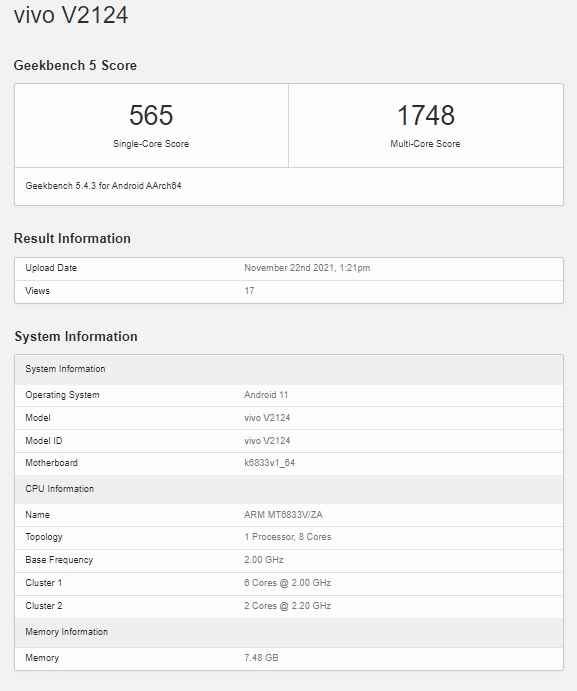
A Vivo smartphone carrying model number V2124 has been making rounds in the rumour mill. The device has appeared in multiple leaks and has passed a couple of certifications. The smartphone in question was nothing but the upcoming Vivo Y76 5G and it is scheduled to launch on November 23. Today, a day before its launch, the smartphone has passed Geekbench certification revealing key specs.
The Vivo V2124 has passed the Geekbench 5 listing by scoring 565 single-core points and 1748 multi-core points. These scores are possible, thanks to the MediaTek Dimensity 700 SoC under the hood. It is paired with 8GB of RAM and we expect it to either have 128GB or 256GB of internal storage. The smartphone runs on Android 11 out of the box and is expected to have FunTouch OS on top of it.
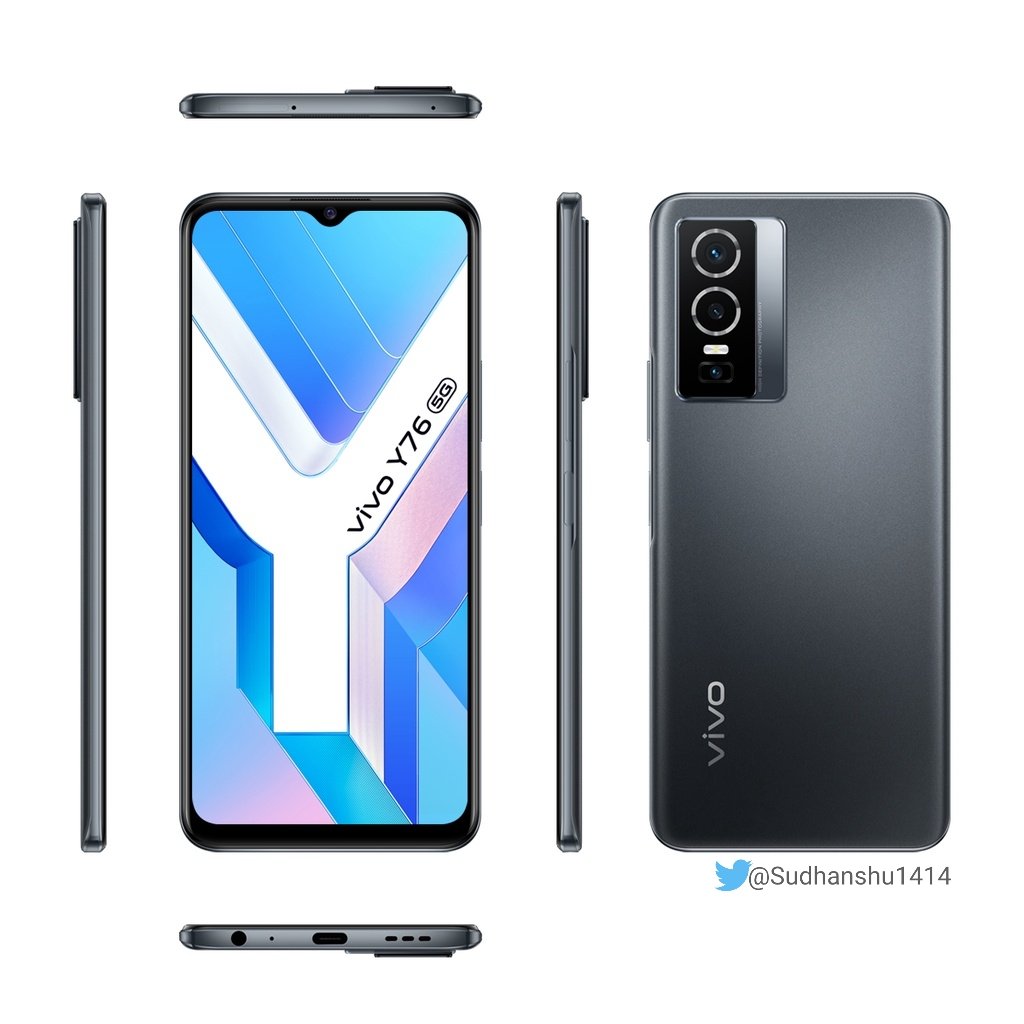
Apart from this, previous leaks revealed that the phone may feature a 6.58-inch Full-HD+ screen. It could feature a 60Hz refresh rate and a thin-bezel design. Leaked renders showcase it to have a water-drop notch display.
Vivo Y76
The smartphone will come equipped with a triple camera system with a 50MP main, a 2MP depth, and a 2MP macro sensor. It is touted to pack a 4,100mAh battery with support for 44W FlashCharge technology. As for security, it will have a side-facing fingerprint scanner and support for face unlock. It will have a USB Type-C port and a 3.5mm headphone jack at the bottom, and besides it, there will be a speaker grille.
As per the renders, the smartphone will go official tomorrow in two colour variants – Midnight Space and Cosmic Aurora.
We use cookies on our website to give you the most relevant experience by remembering your preferences and repeat visits. By clicking “Accept”, you consent to the use of ALL the cookies.
This website uses cookies to improve your experience while you navigate through the website. Out of these, the cookies that are categorized as necessary are stored on your browser as they are essential for the working of basic functionalities of the website. We also use third-party cookies that help us analyze and understand how you use this website. These cookies will be stored in your browser only with your consent. You also have the option to opt-out of these cookies. But opting out of some of these cookies may affect your browsing experience.
Necessary cookies are absolutely essential for the website to function properly. This category only includes cookies that ensures basic functionalities and security features of the website. These cookies do not store any personal information.
Any cookies that may not be particularly necessary for the website to function and is used specifically to collect user personal data via analytics, ads, other embedded contents are termed as non-necessary cookies. It is mandatory to procure user consent prior to running these cookies on your website.