Advertisement

Blackview coming soon with three new Android tablets – Tab 11, Tab 6 and Tab 6 Kids

Blackview is set to broaden its reach with the launch of three new tablets – Tab 11, Mini Tab 6, and Tab 6 Kids. After dominating the rugged smartphone market and adamant praise in the earbuds and laptops segment, the company is all set to improve its reach in the tablet market. Blackview will launch the bigger Tab 11 4G, Tab 6 4G, and Tab 6 Kids tablets in November.

Blackview Tab 11

It is the flagship table model featuring a large 10.336-inch display having 2K resolution. Blackview Tab 11 is powered with Unisoc T618 SoC, 8GB RAM, and 128GB Internal storage. The new tablet features a bit reduced battery capacity of 6580 mAh than the predecessor’s 7480mAh battery.

Must See: Blackview BV4900s launched with improved SoC and Android 11 for $98.79

The tablet has abundant RAM and storage to enhance multitasking and satisfy the growing needs for digital content. Its high-quality display also offers a seamless viewing experience which is a key aspect of any tablet. However, its Widevine L1 certifications enable the users to enjoy high-quality video streaming services from major providers like YouTube, NetFlix, Display+, etc.

In the software front, the tablet runs on DOkeOS 2.0 which is based on Android 11. Along with added benefits, it carries all the luxuries of Android 11. The presence of the new Notes app offers the ability to take notes in audio and images.

It is a beautifully designed masterpiece and is available in the Teal Green color option. The design resembles the iPad Pro and feels outstanding while holding in hand.

Blackview Tab 6 and Tab 6 Kids

Considering the ongoing world situation, the usage of large portable screen devices has drastically increased in several workplaces. The students, workers, and even the home users are now looking for a more portable solution to perform their daily tasks. The recent work from home or school from the home regime has increased dependency on tablets.
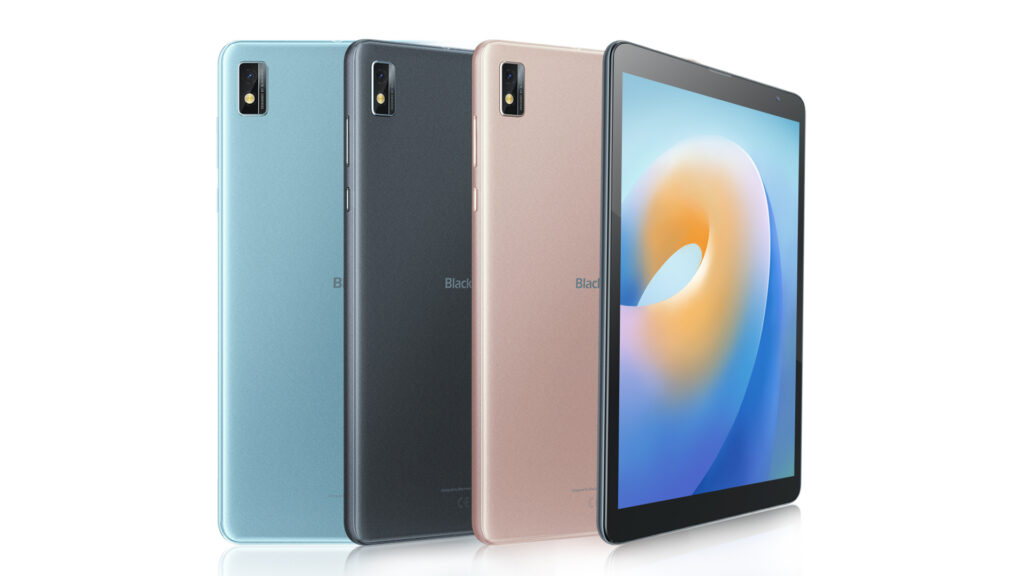
Especially, notebooks have been replaced by tablets. To offer affordable yet powerful options, Blackview introduced Tab 6 and Tab 6 Kids tablet that offers an 8-inch display, a Unisoc T310 processor, and a 5580mAh battery. It runs DokeOS 2.0 based on Android 11. Apart from these similarities, both the tablets differ in these aspects.

Blackview Tab 6 offers 4G LTE support, 3GB RAM, 32GB Internal Storage, and up to 128GB expandable storage option.

Meanwhile, the Tab 6 Kids variant offers dual-SIM support and carries a 4-in-1 navigation system – GPS, BDS, GLONASS, and Galileo. To further enhance its usage for kids, the tablet houses an exclusive iKids app to offer a host of features like parental control. Furthermore, there are special child themes, reading mode, split view support, and more.
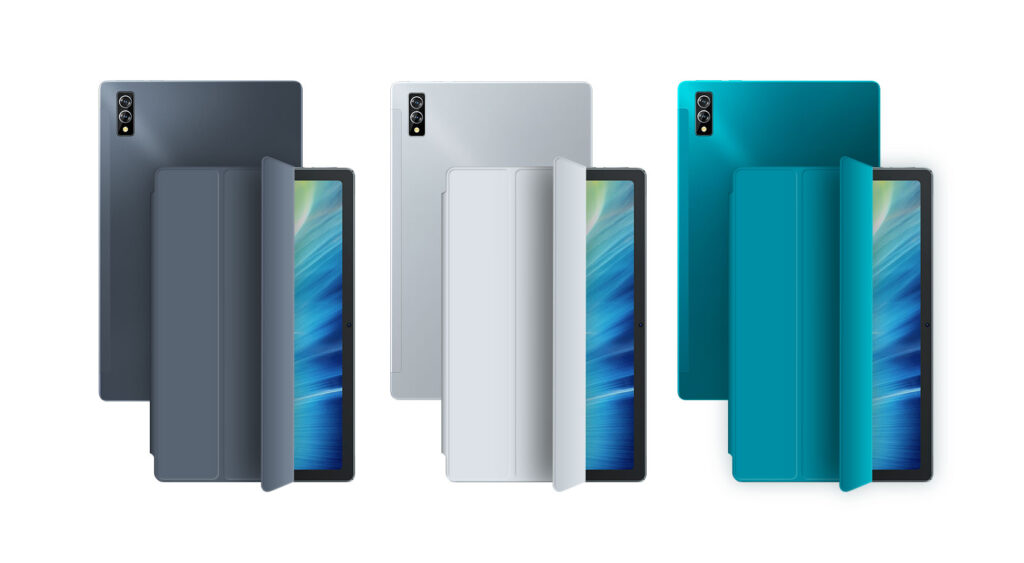
Blackview Tab 6 Kids houses a rugged case from EVA in two color options of Donut Blue and Pudding Pink. However, Tab 6 comes with a standard case. Blackview Tab 6 series comes in three color options of Truffle Gray, Macaron Blue, and Peach Gold, and the Kids variant is available only in Truffle Gray.

All the new Blackview Tablets will launch this November at affordable pricing.
Related: Blackview BV6600 Pro starts retailing with introductory pricing of $239

Garmin Launches Index S2 Smart Scale in India featuring Weight Trend Graph and Wi-Fi connectivity

Garmin Launches the Index S2 Smart Scale in India in the connected health and wellness segment, targeting athletes and fitness enthusiasts.

Garmin Index 2

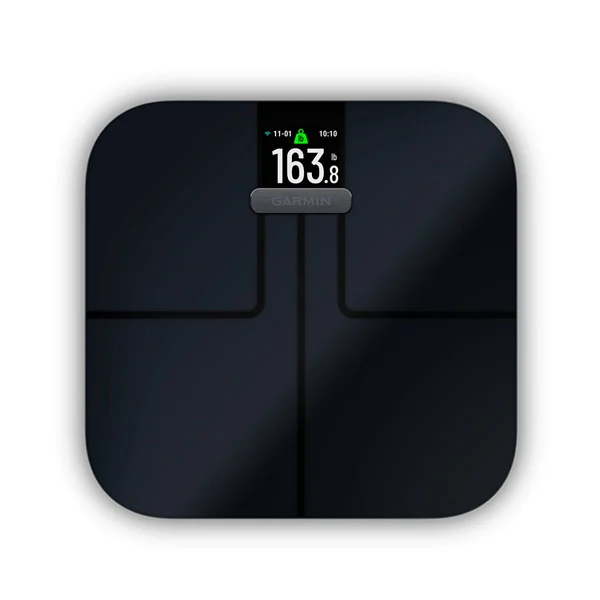
The Index S2 smart scale comes with a color display and offers a plethora of measurements that can be used to micromanage your day-to-day weight and activity. These exciting features include body mass index (BMI), body fat percentage, skeletal muscle mass, bone mass, and body water percentage. The Garmin Index S2 Smart Scale shows the body fat proportion of the user to indicate the percentage of essential and stored fat.

Index S2 also features a weight trend graph that tracks and represents the change in your body weight. The graph shows you the changes in body weight over the last 30 days, making it easier to set achievable goals and track actual progress.

The smart scale claims to showcase the complete biometric data of its users. And also supports Bluetooth and Wi-Fi connectivity, through which users can connect their devices to the smart scale via the Garmin Connect app available on the App Store and Google Play Store.

Some other impressive features packed into the Index S2 smart scale are its 181.4 KG weight limit and 16 profile support, which enables 16 different accounts to be linked with the scale and track their progress separately. This feature makes it especially ideal for an athletic team to monitor and manage their progress.

Garmin has claimed to deliver up to 9 months of battery life with the use of four AAA batteries. The Index Smart scale comes with a price tag of ₹15,999 with two color offerings, Black and White. It is available to purchase via the Germain brand store and online stores including Amazon, Flipkart, and Tata Cliq.

RELATED


Vivo Y15s goes official in Singapore packing an Helio P35 chip, Android 11 Go edition

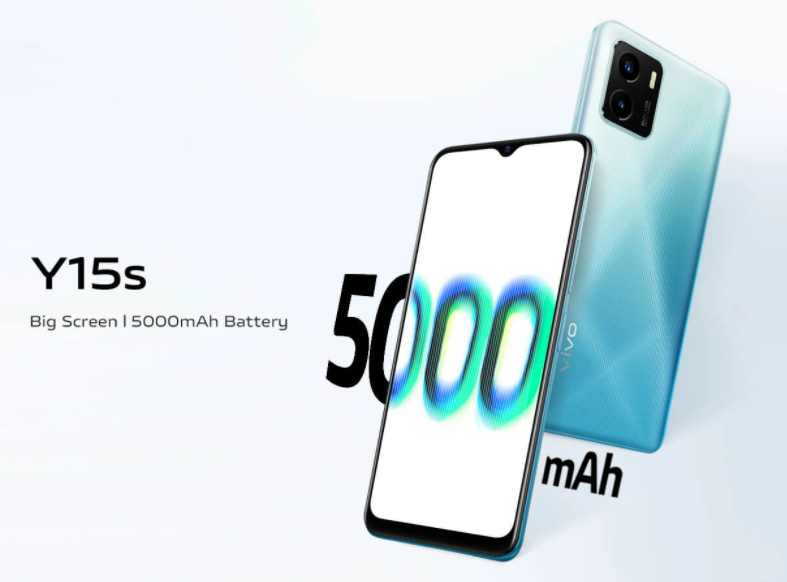
Vivo has quietly unveiled a new budget smartphone under the affordable Y-series. The device is christened Vivo Y15s and features a decent specs lineup as well as an affordable price tag. Vivo Y15s

In terms of the design, the Vivo Y15s packs a 6.51-inch LCD screen with an HD+ resolution of 780 pixels. The display has a waterdrop notch which is home to an 8-megapixel selfie camera. At the rear, the device has a camera module located at the top left corner of the back panel. The panel houses a dual-camera setup consisting of a 13-megapixel sensor and a 2-megapixel depth-of-field sensor.  Vivo Y15s

The Y15s is powered by a MediaTek Helio P35 chipset and runs on Android 11 (Go edition). The phone also has a 5,000mAh battery under the hood with 10W charging via a micro-USB port. The device comes with three slots consisting of two SIM slots and a third memory expansion slot that can take up to a 1TB memory card. This saves you the hassle of switching cards.  Vivo Y15s

The Vivo Y15s carries a decent retail price of SGD 179 ($133) in Singapore and will be available in Wave Green and Mystic Blue color options. The device is already available to buy in Singapore via Vivo’s official website and other authorized retailers.

RELATED:


How to enable Pixel Magic Eraser on old Pixel smartphones

Google unveiled the Pixel 6 series with several camera-based advancements and home-built Google Tensor SoC. Apart from the usual hardware improvements, the smartphone unleashes some advanced software features to improve efficiency, performance, and camera quality. Among such features, Magic Eraser is a feature that removes unwanted objects from your images without any effort. It is quite a handy tool to save a lot of time and effort while capturing photos in the public space.

Follow the steps below to enable the Pixel Magic Eraser feature on any Pixel smartphone.

Enable Magic Eraser on old Pixel Smartphones

Must See: Google Pixel 6, Pixel 6 Pro teardown reveals extensive heat dissipation, poor repairability

The Pixel Magic Eraser is currently limited to the Pixel 6 series. In our guide, we will let you know about a way out to enjoy the Magic Eraser feature on any Pixel smartphone. You can download the apks listed below to flawlessly enjoy the magic Eraser feature.

What is Magic Eraser Feature?

It is an advanced AI-based feature that allows users to remove object in the background of an image. The feature uses technologies like machine learning and neural networks to recognize unnecessary objects in the photo and then stabilize them with proper marking. It is a time-saving tool for photographers.

Enable Magic Eraser on old Pixel Smartphones

Magic Eraser feature is part of the Google Photos, and not the Google Camera 8.4. Follow the steps below to enjoy the feature on other Pixel smartphones:

  1. Uninstall the Old Google Photos App or uninstall app updates.
  2. Download the Split APKs Installer from the Google Play Store to install APKs files on your Android smartphone.
  3. Download this APKs file directly from Pixel 6 carrying the Magic Eraser Feature.
  4. Now, Open the Split APKs Installer app and browse the APKs that you downloaded from the above link, after giving the app access to your files.
  5. Select the Google Photos APKs file and tap the “Install” button.
  6. If a pop-up opens related to the installation of “unknown apps from this source…”, then open “Settings” and enable the toggle.
  7. Now, proceed with the installation.
  8. Enjoy the Magic Eraser feature by heading to the edit button and then to the Tools section.

You can now install the app, and enjoy the new features. However, the feature will be disabled if you update the app. Google can even disable the feature for old Pxiel smartphones via a server-side switch. Interestingly, some users of non-pixel Android smartphones were able to install the APKs.

You can also try it if your smartphone is running Android 12.

Related: Download Google Camera 8.4 APK with new Pixel 6 Pro features

China’s Geely launches its own Electric truck, rivals Tesla Semi

Homtruck, a new electric semi-truck has been launched by China’s Geely. Faizron Auto, Geely’s commercial vehicle group, is planning to roll out the vehicle in 2024 and the company will target international markets as well.

Geely HomTruck

This launch comes at a time when Tesla has delayed the production of a similar electric vehicle, the Tesla Semi till 2023, which was supposed to release in 2017. Mercedes and Warren Buffett-backed BYD have also announced their own electric trucks, according to a report by CNBC.

The Homtruck will have two power options, Methanol Hybrid and Pure Electric. Methanol-powered batteries are a technology that Geely has been investing in for a few years and its also providing this power option in some of its models. Farizon also stated that the Homtruck’s batteries can also be swapped out, which cuts down on the need to wait for charging. The company said that the interiors consist of a shower and toilet, single bed, refrigerator, kitchen area, and a small washing machine.

The Homtruck is built with autonomous driving in mind, with autonomous driver-less features. Vehicles also have the ability to communicate with each other for maintaining safe speed and distance. In the exclusive covered by CNBC Mike Fan, CEO, Geely commercial vehicle group, said that “Geely plans to introduce autonomous driving in three phases. By 2023, the company hopes to have some partial driverless features with more advanced systems by 2026. Geely plans to achieve full autonomy in 2030.” Rumors are also rife that Geely will collaborate with Huawei to integrate the HarmonyOS into its vehicles.

Notably, the production of Homtruck could face a challenge due to the ongoing global chip shortage which however the company feels is a seasonal phenomenon.

RELATED

OPPO A95 4G official teaser appears in the Philippines revealing a similar design to the F19

Budding Chinese smartphone maker Oppo is to add the A95 smartphone to its lineup in the Philippines market soon. The A95 5G is already available in the market, but obviously, Oppo is considering adding the LTE version of the smartphone, which will be more affordable than the A95 5G.OPPO A95

It seems however that the new Oppo A95 is just a rebranded Oppo F19, as the specs sheets of both models are amazingly identical. The Philippines arm of the Chinese smartphone maker had posted the A95 on its official Facebook page with a link to an online retailer for pre-ordering. The online retailer is Lazada although the listing was later brought down. The Oppo A95 is the LTE version of the A95 5G and will be powered by Qualcomm’s Snapdragon 662 chipset. It will run on Android 11 OS and has a 6.43-inch AMOLED display with full HD+ resolution.

The Oppo A95 has 128GB of internal storage and will come in two color variants for the Philippines market namely black and silver. Ahead of the official unveiling, the Oppo A95 will be sold for PHP 15,995 ($320), and it may be restored on Lazada’s online list as the launch date draws closer. Other retailers may also be set to display the product.

RELATED:


(source, via)


POCO F3 Moonlight Silver variant is the new kid on the block

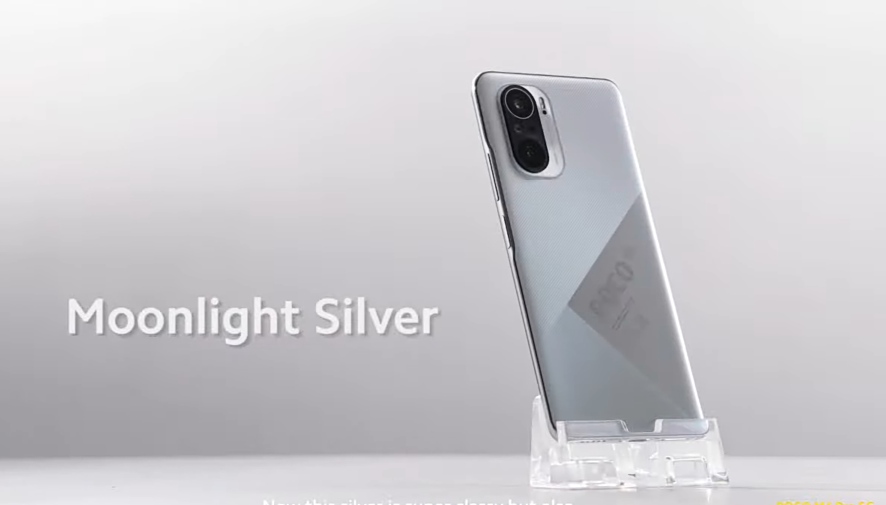
POCO today held a launch event where the M4 Pro 5G was the main attraction. Apart from the M4 Pro 5G, the Chinese tech giant also announced the POCO F3 Moonlight Silver variant. The new variant is just the regular F3 with a new moonlight silver hue.POCO F3 Moonlight Silver variant

The POCO F3 was first launched in March this year as the brand’s flagship offering. It arrives as a remake of the Redmi K40 but was made available in Night Black, Arctic White, and Deep Ocean Blue color options. The new Moonlight Silver variant joins as the fourth color option. The variant looks super classy, bringing a refreshed design feel to the glass back panel.

Apart from the paint job, the Silver variant isn’t any different from the other color options. Even the pricing isn’t very different. It starts at €299 for the 6GB + 128GB variant while the 8GB + 256GB variant will retail for a slightly cheaper €329.

To recall, the POCO F3 packs a 6.67-inch E4 AMOLED screen with support for a 120Hz refresh rate as well as a 360Hz touch sampling rate. The device is powered by a Qualcomm Snapdragon 870 chipset paired with 6GB/8GB of RAM while there are 128GB and 256GB IFS 3.1 storage options.POCO F3 Moonlght Silver price

The F3 packs a triple camera setup at the rear consisting of a 48MP Sony IMX582 main camera, an 8MP ultrawide angle sensor, and a 5MP f/2.4 telemacro lens. For selfies, the device houses a 5MP sensor under the display punch-hole. Keeping the lights on is a 4520mAh battery with support for 33W fast charging via USB-C.

RELATED:


Instagram currently testing an OnlyFans-like subscription feature for creators

Meta-owned social media app Instagram has been testing a subscription feature that seems heavily inspired by OnlyFans. It will let creators earn extra money by letting fans pay a fee to unlock exclusive content like stories and live videos.

A new “Instagram Subscriptions” category under the “In-App Purchases” section for the Instagram App Store listing has popped up. These subscriptions cost between $0.99 and $4.99 in the US. The same has made an appearance on the Indian App Store as well, showing a subscription fee of ₹89 per month.

instagram fans subscription
Image: Alessandro Paluzzi

The new subscription option is visible along with Instagram Badges that users can buy to gift creators during live sessions. It is expected to work in a similar way to Twitter Blue, where users can gain access to exclusive tweets and other content.

This isn’t the first time a subscription-based feature has come to attention as Instagram head Adam Mosseri had announced earlier this year that the company is exploring the same (via Business Insider).

Alessandro Paluzzi, a reverse engineer working on Instagram’s subscription-based fan has been posting updates related to its development.

Instagram is experimenting with a subscribe button on a creator’s profile. Subscribers will have access to special content such as stories and live videos. When you DM (direct message) the creator or comment on their posts, a special member badge will appear next to your username. This badge will make interactions prioritized with the creator.

And on the creators’ end, there will be options to view approximate earnings, active members, and expired memberships. Instagram will also allow them to customize their subscription name and plans.

RELATED:

POCO M4 Pro 5G with a Dimensity 810 SoC, 33W Pro Fast Charging Launched

Xiaomi‘s independent POCO brand today held an online launch event heralding the launch of the POCO M4 Pro 5G. The M4 Pro 5G comes as the brand’s last device that’ll launch this year and it really isn’t a disappointment. The device bears a striking resemblance with the recently unveiled Redmi Note 11 in terms of the design, though, but the specifications are somewhat different. POCO M4 Pro 5G

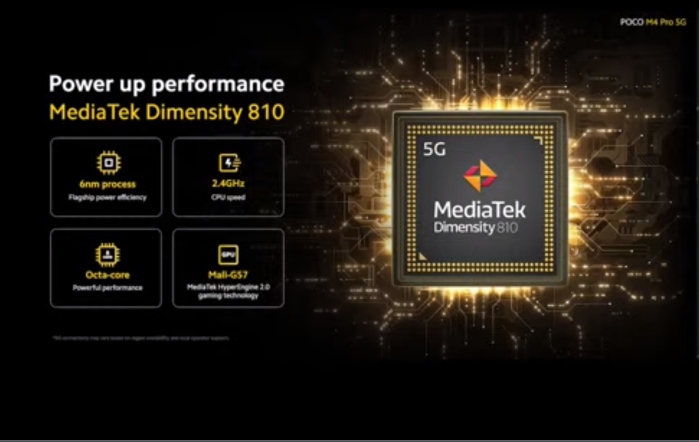
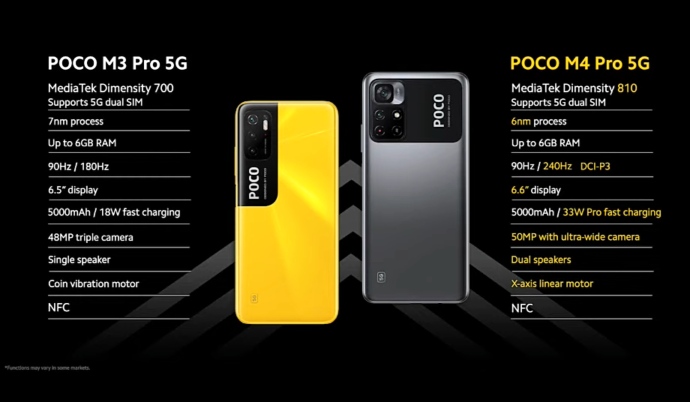
The POCO M4 Pro 5G is a successor to the POCO M3 Pro 5G which was launched a few months back emerging as a top-selling model in several countries across Europe. The M4 Pro 5G improves on the performance of the M3 Pro 5G with the presence of a better MediaTek Dimensity 810 Octa-core processor built on a flagship-level 6nm process. The chipset also bundles a Mali-G57 GPU. The processor pairs with 4GB/6GB of RAM while there are 64GB and 128GB storage options onboard. POCO M4 Pro 5G

The M4 Pro 5G sports a 6.6-inch FHD+ display with a 240Hz touch sampling rate and support for a 90Hz refresh rate. The display also comes with a DCI-P3 Wide color gamut bringing vibrancy to the color output. The display holds a punch-hole at the top which houses the selfie camera. POCO M4 Pro 5G

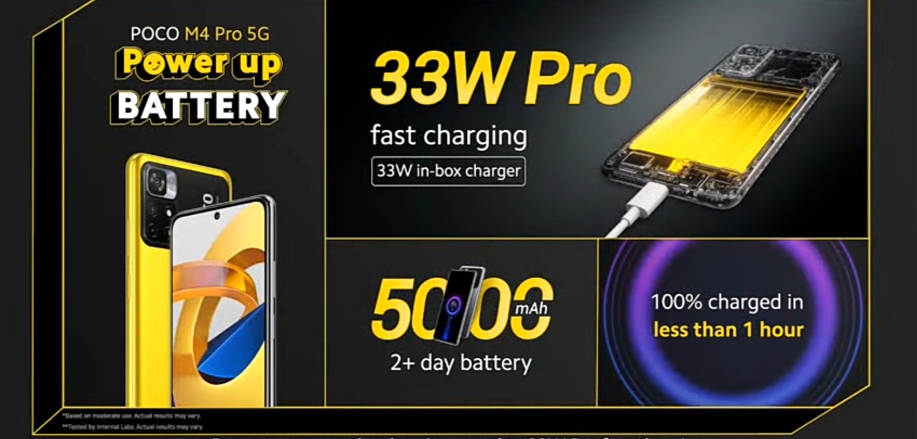
In terms of battery life, the POCO M4 Pro 5G retains the huge 5000mAh battery found onboard the M3 Pro 5G which offers up to 2 days of battery life. The device also comes with what POCO calls 33W Pro fast charging technology which uses MMT charging technology. This means it charges through two electric currents instead of one, thereby speeding up the charging while avoiding overheating. The battery can charge for zero to 100% in just 59 minutes. POCO M4 Pro 5G

When it comes to the aspect of photography, the M4 Pro 5G features a triple camera setup at the rear. The setup consists of a 50MP main camera and an ultra-wide lens. There is also a 16MP selfie sensor bigger than the 8MP sensor on the M3 Pro 5G. The phone also comes with dual speakers, an X-axis linear motor, and NFC.

The M4 Pro 5G runs on the latest MIUI 12.5 for POCO which is touted to bring about a 22% reduction in CPU usage and 15% less power consumption.  POCO M4 Pro 5G

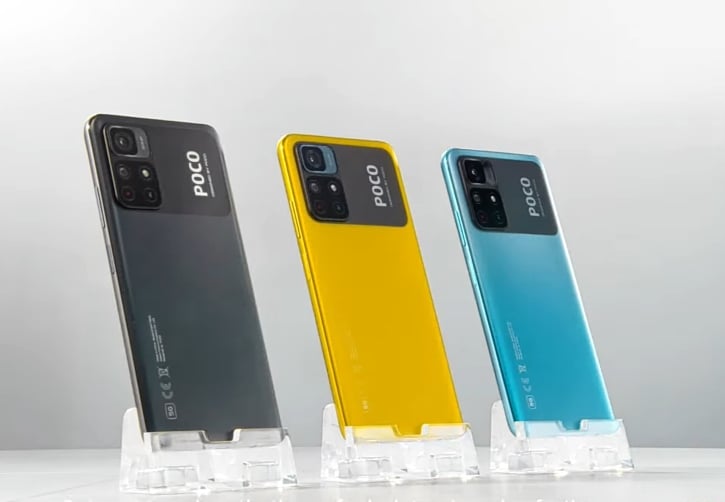
Speaking of the pricing, the Poco M4 Pro 5G comes in Power Black, Cool Blue, and Poco Yellow color options and starts at €199 for the 4GB RAM and 64GB storage variant. The 6GB RAM + 128GB storage version will retail for €219. The smartphone will be available via POCO’s website, AliExpress, Goboo and Shopee from November 11.

RELATED:


Xiaomi patents Smart Wheelchair that offers improved comfort by adapting to its user

Xiaomi has recently been granted a new patent. The patent in question is for a new Smart Wheelchair that is adaptable to the user. Meaning, it can possibly adjust itself to offer the user better comfort.

The patent was spotted by ITHome and was titled under “Smart Wheelchair Adjustment Method, Smart Wheelchair Adjustment Device and Electronic Equipment” with its publication number being CN110693654B. As per the patent’s description, the Chinese tech giant talks about a method through which the smart wheelchair would be able to adapt to the user while in use. In other words, the smart wheelchair can adjust according to the user on the go without any human intervention/input.

Xiaomi Logo Branding 2021

To achieve this automatic adjustments, it would have to first obtain the users information. This would allow it to change certain aspects to better suit the users. Notably, these adjustments would not only depend on the user’s physique but also the environment around the user of the smart wheelchair. The wheelchair would even be able to adjust the height, or even shift the inclination angle of the back rest to offer better comfort to the user while also enhancing the user experience.

Interestingly, the patent description describes certain physical features of the smart wheelchair as well. The company on having the wheelchair be able to collect information in real time regarding its surroundings by collecting sounds and images. This means that it would house a number of sensors, including cameras and microphones, that might help it to determine whether the user is at home or outdoors. Although, this is just speculation at the moment, so take it with a pinch of salt for now.

RELATED:


Electric vehicles will be as cheap as petrol vehicles in India in just two years, according to Nitin Gadkari

Union Transport Minister Nitin Gadkari, during a webinar organized by the Sustainability Foundation, Denmark, said that electric vehicles will cost as much as petrol vehicles in the next two years. This will be so thanks to the production-linked incentives provided by the Indian government. The installation of EV charging ports at fuel stations and major highways will also be a major contributor.

ola electric scooter

The statement is quite significant considering EVs are yet to pick up pace in terms of sales. A recent report had shown EVs only covered 1.3% of vehicle sales in India in FY 2020-21. But a cost reduction in new energy vehicles paired with a boost in production should increase their sale significantly.

India had already planned to have 30 percent EV sales for private cars, 70 percent for commercial vehicles, 40 percent for buses, and 80 percent for two and three-wheelers. Gadkari now says that the government isn’t only focusing on the penetration of EVs in the country, but also ensuring that EV charging stations get their energy from renewable sources instead of coal (via 91mobiles).

“Within two years, the cost of EVs will come down to a level that will be at par with their petrol variants. Already GST is only 5 percent on EVs and the cost of lithium-ion batteries is also declining,” said Gadkari. “Besides, the government has already framed a policy allowing petrol pumps to set up EV charging stations. In two years, there will be a lot of charging points across India as well.”

Gadkari further added saying that there’s no benefit in producing coal-based electricity and that their full attention is now on renewable sources such as solar, tidal, wind energy, and biomass.

He also believes that EV charging through solar panel systems at homes, malls, and offices would make electric vehicles more affordable and adaptable. India is after all the fourth largest country in terms of renewable energy capacity.

RELATED:

Qualcomm seeks to deepen its cooperation with its Chinese partners

Qualcomm is seeking to deepen and grow its relationship with its partners in China. The news arrives as the company sets its expansion plans in fields like 5G, artificial intelligence, IoT (internet of things), and more.

According to a ChinaDaily report, a senior executive of the American chipmaking giant shared the news in a comment. This statement came as the company is teaming up with local partners in China to showcase a number of new advanced solutions and products at the China Intentional Import Expo that is currently being held in Shanghai. The comment was made by Frank Meng, chairman of Qualcomm China.

Qualcomm

The senior official further added that China’s efforts will also help in creating more open and inclusive business environment. Additionally, the executive believes that its willingness to share development opportunities with the world will also help raise international cooperation for innovation. Meng said that such efforts are also what encouraged Qualcomm to set up investment in China and expand its cooperation with Chinese partners.

The Chairman stated that the deepening cooperation with Chinese partners will also help in the development and growth in fields like smart terminals, industrial internet, smart transportation, smart cities, and other industries. In other words, the growing partnership is also a promotion of digital economy and its development.

RELATED:


NVIDIA’s DRIVE Concierge is a Siri-like voice assistant but for cars

NVIDIA founder and CEO Jensen Huang, in his GTC keynote, announced NVIDIA DRIVE Concierge and DRIVE Chauffeur AI platforms. These are dedicated to removing the stress and hassles of everyday driving using intelligent technologies.

NVIDIA DRIVE Concierge is an AI-driven assistant that combines conversational voice assistance with driver monitoring and autonomous parking tech. With it, drivers and passengers have access to always-on intelligent services that make use of NVIDIA DRIVE IX and NVIDIA Omniverse Avatar tech for real-time conversational AI.

Omniverse Avatar enables DRIVE Concierge to serve as a digital assistant, helping them make recommendations, book reservations, make phone calls and provide alerts. It comes with 3D graphics so that drivers and passengers can see what’s in the mind of the vehicle’s AI.

Here’s the tech in action:

DRIVE Concierge is also an on-demand valet, designed to effortlessly park the car and give unparalleled convenience to the driver as a result. It also doubles up as a guardian and uses interior cameras to pull the driver’s attention to the road whenever necessary.

DRIVE Chauffeur is an AI-assisted driving platform based on the NVIDIA DRIVE AV SDK that can handle both highway and urban traffic with the utmost safety. It aims to completely relieve a human from driving ensuring safety, while also saving time and energy.

DRIVE Chauffeur makes use of the Drive Hyperion 8 sensor set that is now available for 2024 model cars. Volvo and Mercedez have already announced partnerships that will use NVIDIA Drive tech in future cars.

RELATED:

Samsung hints at November 19 launch for its Exynos chip with AMD GPU

Samsung and AMD have been known to be working together for a while now for an upcoming custom made Exynos chipset that features RDNA graphics from Team Red. Although, while this new chip is in the works, it has yet to be officially announced. But now, we might have an official date for its launch.

Samsung

According to a recent Instagram post on the South Korean tech giant’s @samsungexynos, the rumored Exynos 2200 SoC might be made official on the 19th of November 2021. The post on Instagram reads “With gaming graphics continuing to evolve, let’s show you what entertainment will look like in the future. Everything changes on November 19, 2021.” The social media post even brought in a new “#EverythingChanges,” which signifies a big announcement being on the way.

So, this might be an official confirmation for the upcoming next gen Exynos will be announced later this month. In the caption, Samsung adds that “Gaming has come a long way. What we used to deem ‘immersive’, relied on a slew of external factors, like the surrounding environment. But the advancements of semiconductors have changed that – learn how, when we move to our new home on Nov. 19th. Stay tuned.”

Samsung

While AMD’s RDNA architecture for graphics is sure to boost gaming performance on new Samsung smartphones that feature this chip, we still don’t know the finer details. AMD had recently teased certain features like ray tracing and variable rate shading earlier this year, but we will still have to wait for an official announcement to know for sure.

RELATED:


Researchers discover new Bluetooth vulnerability that can expose your location

Researchers at the University of California San Diego have found a way to track a phone based on its Bluetooth signal.

The UCSD researchers focused on fingerprinting devices communicating with Bluetooth Low Energy (via Android Police). BLE tech was designed to reduce the power consumption of traditional Bluteooth at the cost of a bit of bandwidth and range. However, its negatives were outweighed by its positives considering it only used 1% of the power required by traditional Bluetooth. This allowed BLE-equipped devices to broadcast constantly.

ble-tracking-fingerprint (1)

Rather than trying to break through the encryption of the data within the signal, the researchers instead focused on identifying unique features of the radio signal being broadcast. All wireless transmitters have a signal variance unique to each device. These disturbances are carried through the signal and can be isolated from the data, creating a unique fingerprint for the broadcasting device.

The fingerprints are fairly unique too. The researchers found that both the false-positive rate and the false-negative rate were below 5% when using the technique. And on some devices, like the Pixel 5, the false-negative rate was 0%. This means that there wasn’t a single case where the fingerprint was incorrectly identified.

But while the figures can be scary, it is worth noting that there are significant limits on the feasibility of this tracking method. For starters, not all imperfections are unique. Some BLE chipsets produce similar imperfections, making identification much more challenging. Further, fingerprints can vary based on temperature, which limits the Bluetooth vulnerability to more stable environments.

Bottom line is, the Bluetooth vulnerability isn’t much to be concerned about. But if it keeps bothering you, then your best bet would be to simply turn off your Bluetooth, at least when you don’t need it.

RELATED:

Here’s a 3rd party Windows 11 tool that makes installing Android APKs easier

Microsoft had just recently released Windows 11, which was the latest iteration of the popular PC operating system. It arrived with various improvements and new features over the previous gen Windows 10, with one of its most anticipated feature being support for Android apps. However, this feature was omitted during its initial launch and running Android apps at the moment is still limited. But, there is a simple tool that makes it just too easy.

Windows 11

For those unaware, Android apps being run directly on the new OS iteration had a few limitations. This included that the supported list of apps is limited to just the Amazon app store. Many were disappointed that the Windows Subsystem for Android (WSA) wouldn’t feature Google’s official support, but it isn’t surprising due to requirements for Google Play certification. Although, this could change in the future but we have to rely Amazon’s android ecosystem for now.

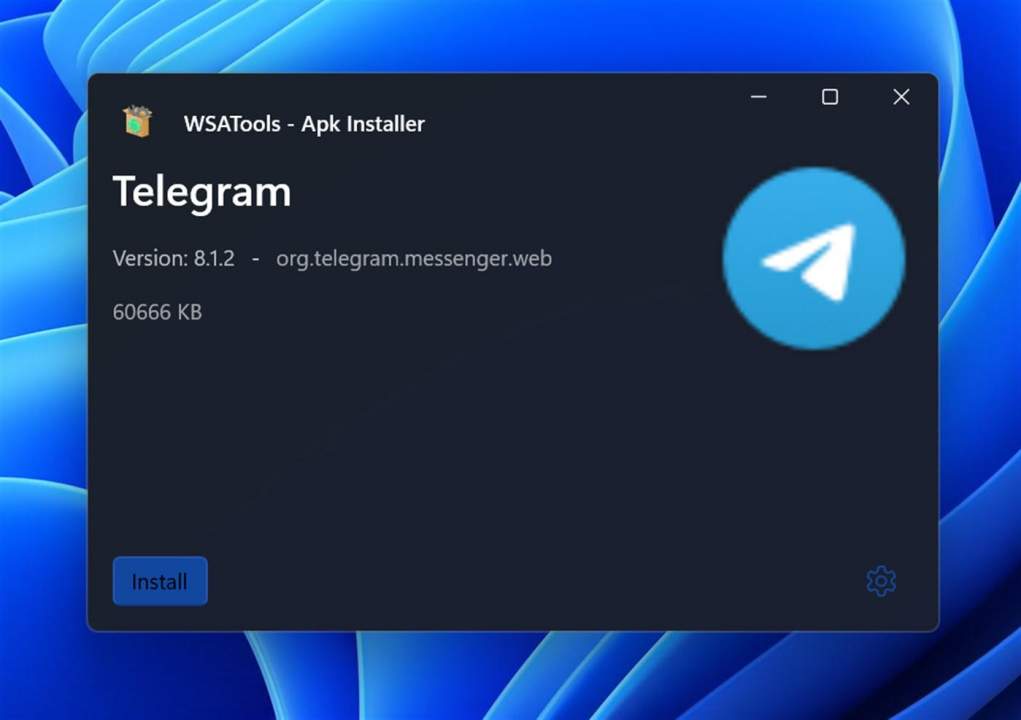
Thankfully, Microsoft did not lock down the WSA and some have already figured out how to find ways around the limitations and sideload Google Play Store, its apps, and even services. But this requires some technical knowledge, like how to use Android Debug Bridge (ADB). This is where the WSATools utility comes in, as it offers you a much more easier method of sideloading Android APKs (Via SlashGear).

Windows 11

The third party tool is currently available for free on Microsoft Store and allows you select an APK downloaded from some other app store and install it on your Windows 11 system. Furthermore, this process is even automated so you won’t have to bother with installing ADB and other related tools at all. In other words, its a single tool that makes the process of sideloading extremely simplified. It remains to be seen if the company ends up blocking this feature sometime in the future, but for now, it is one of the best ways to install Android APKs outside of the meager 50 apps offered on Amazon’s app store.

RELATED:


OPPO foldable phone with external folding display spotted in a patent, launch imminent?

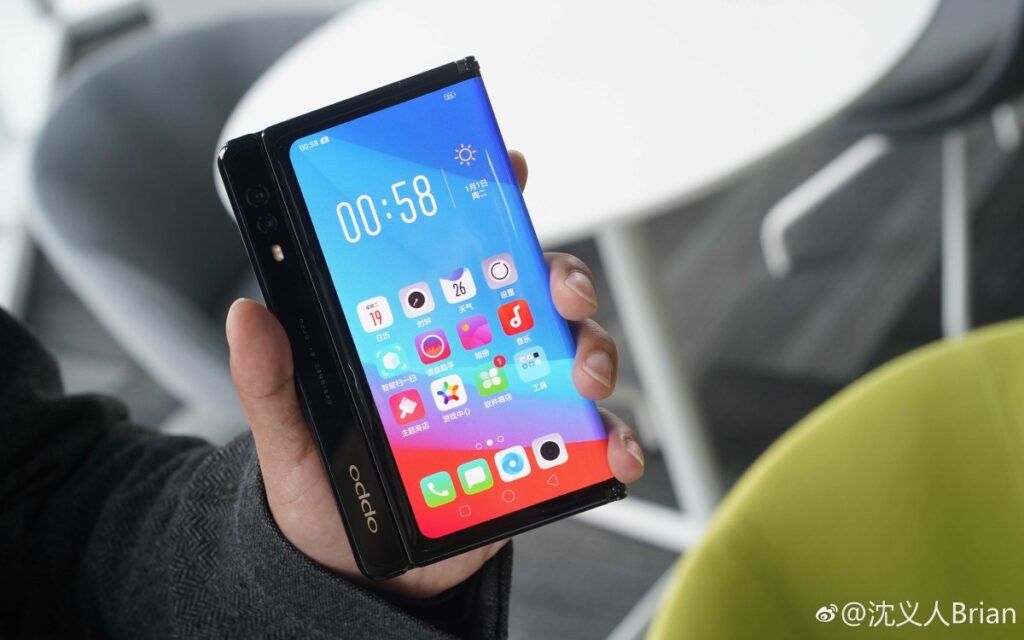
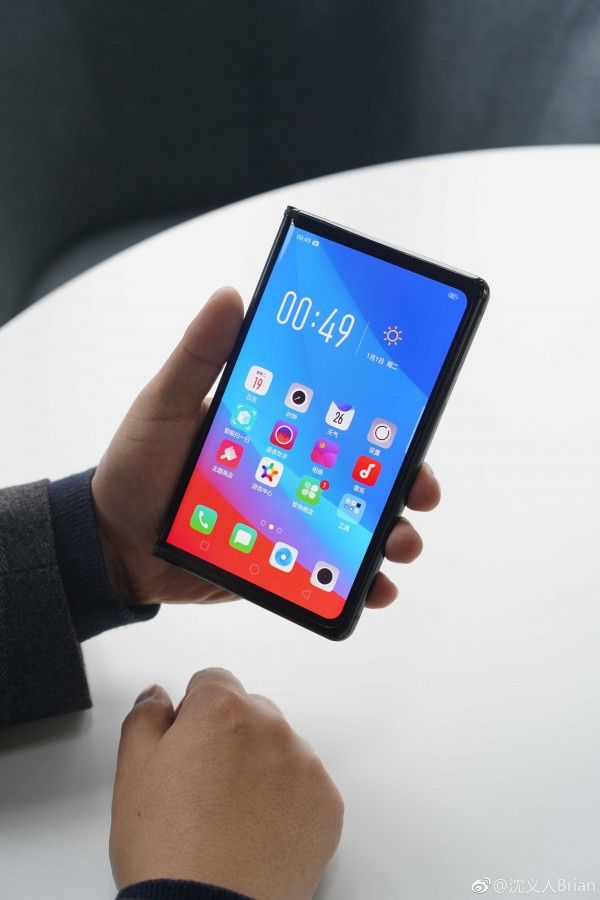
A patent filed by OPPO on CNIPA shows that the Chinese smartphone company is set to soon lift the curtains on its first-ever foldable phone. The design featured on the patent is reminiscent of a prototype from 2019, indicating that OPPO has been working on the phone for over a couple of years now.

The images (via 91mobiles) reveal a phone not too different in design from the Huawei Mate X that was unveiled back in 2019. It sports an external folding display. Because of this, its power and volume buttons are all on the right side of the device. The left side is part of the display itself.

The patent images further reveal that the phone will have a vertical camera module. While it’s difficult to ascertain, the module looks like it can easily fit 3 lenses. The top of the device has a SIM card tray and the bottom part holds a USB Type-C charging port along with the speaker.

GSMArena had earlier reported that the OPPO foldable phone may launch as early as this month. That remains unconfirmed officially though.

Expected specifications of the device include an 8-inch foldable display with a 120Hz refresh rate and LTPO technology. The Snapdragon 888 is expected to be powering the phone – a strange move considering that the Snapdragon 898 is set to be unveiled pretty soon.

Previous rumors talked about the OPPO foldable having a 50 MP primary rear camera with Sony’s IMX766 sensor and a 32 MP selfie shooter, as well as a side-mounted fingerprint sensor.

RELATED:

Samsung first to develop faster & more efficient 14nm LPDDR5X DRAM for next gen flagship phones

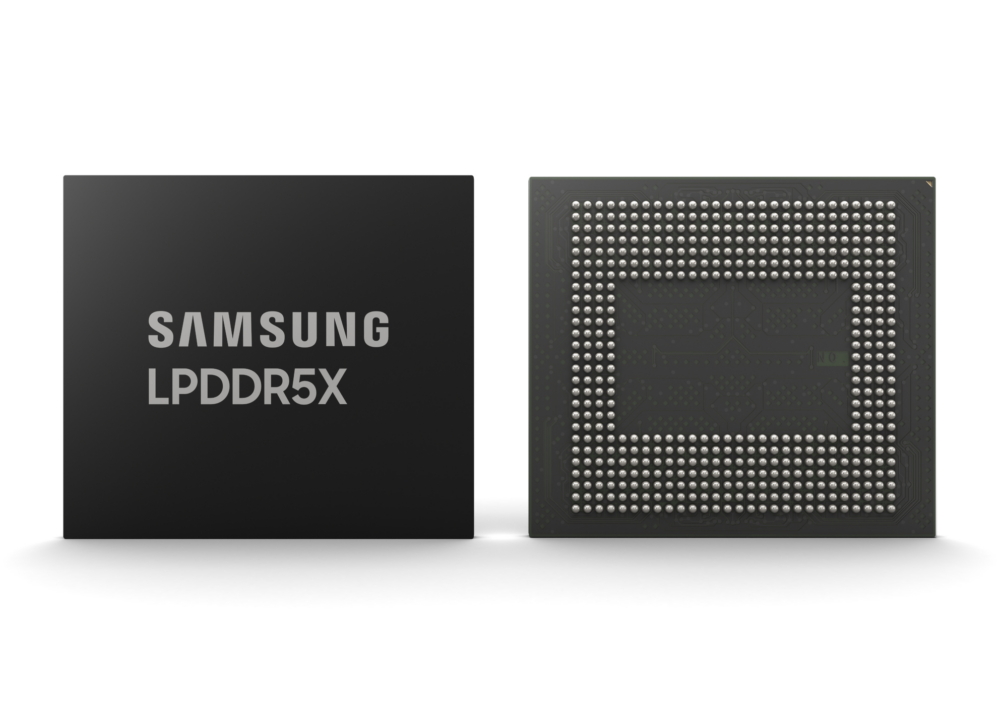
Samsung Electronics has just announced its latest LPDDR5X DRAM. The company is the first in the industry to develop the next generation memory module that is faster and more efficient over the previous generation.

The South Korean tech giant unveiled its latest LPDDR5X DRAM earlier today (9th November 2021) and it is the first memory module in the industry to be based on the 14nm process. Furthermore, the memory is a 16 gigabit Low Power Double Data Rate 5X (LPDDR5X) DRAM that will be featured in upcoming flagship grade smartphones that are set to launch next year. Previously, we had even reported on Xiaomi 12 being equipped with LPDDR5X memory along with the next gen Qualcomm Snapdragon 898 SoC.

Samsung

Apart from smartphones, the company’s latest DRAM will also has applications in high speed data service applications including 5G, artificial intelligence (AI) and the metaverse. SangJoon Hwang, Senior Vice President and Head of Samsung’s DRAM Design Team, stated that “In recent years, hyper connected market segments such as AI, augmented reality (AR) and the metaverse, which rely on extremely fast large-scale data processing, have been rapidly expanding.”

He further added that “Our LPDDR5X will broaden the use of high-performance, low power memory beyond smartphones and bring new capabilities to AI-based edge applications like servers and even automobiles.” Notably, the company’s LPDDR5X will offer over 1.3x faster processing speed while consuming nearly 20 percent lower power than the previous LPDDR5 solution, which should benefit the upcoming smartphone generations.

RELATED:


iQOO 8 India launch nears as its bags BIS certification

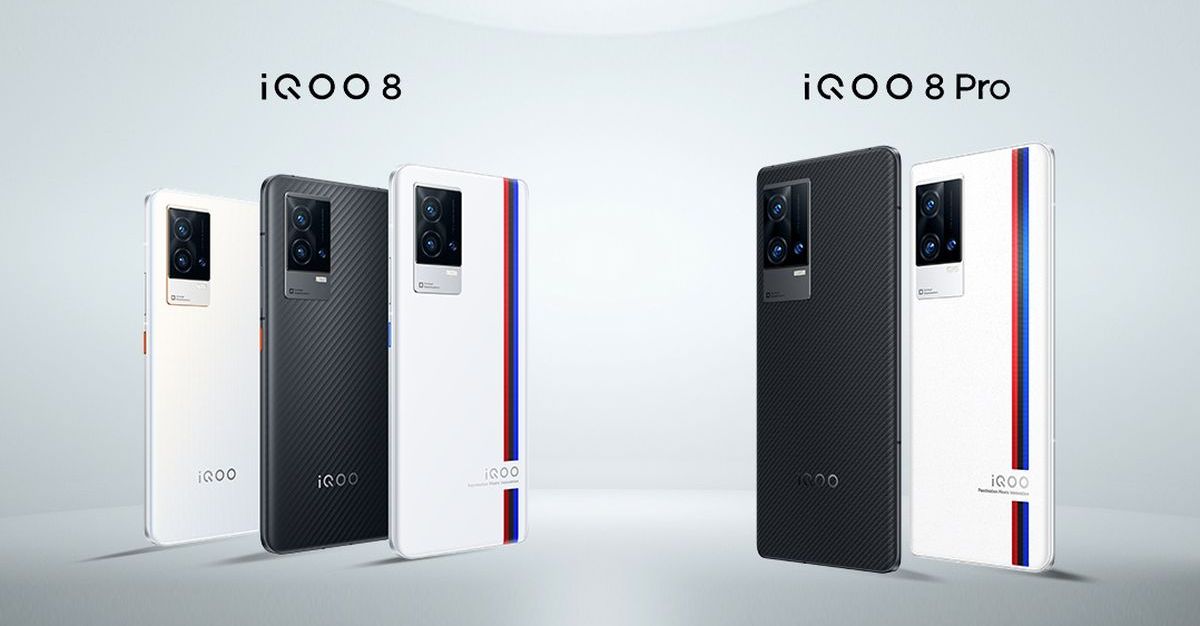
iQOO India is reportedly planning to launch the iQOO 8 and iQOO 8 Legend smartphones in India this month. Today, the vanilla iQOO 8 with model number V2136 was founded listed in the database of BIS authority. The BIS certification is a good hint that its India launch may not be far away.

The specifications of the iQOO 8 are no secret since it has already been launched in China. It features a 6.56-inch AMOLED display that offers a 120Hz refresh rate and a Full HD+ resolution. The device is fitted with an in-screen fingerprint scanner. It runs on Android 11 OS.

The iQOO 8 is powered by the Snapdragon 888v mobile platform. It is assisted by up to 12 GB of LPDDR5 RAM and 256 GB of UFS 3.1 storage. The device lacks support for external storage.

iQOO 8 and iQOO 8 Pro

The iQOO 8 has a 16-megapixel camera for selfies and video calls. Its back panel has a 50-megapixel primary camera, a 13-megapixel ultrawide lens, and a 13-megapixel telephoto snapper. The device is backed by a 4,350mAh battery that supports 120W fast charging.

iQOO India is currently silent on the launch of the iQOO 8 series. Probably, the company may start teasing its next flagship phones for India in the coming days.

Reports have revealed that China’s iQOO 8 Pro may get rebranded as the iQOO 8 Legend in India. It has a 6.78-inch LTPO AMOLED display, Snapdragon 888 Plus chipset, 50-megapixel (gimbal OIS) + 48-megapixel (ultrawide) + 16-megapixel (telephoto) triple camera unit, and a 4,500mAh battery with 120W fast charging and 50W wireless charging.

RELATED:

Huawei donates its open source OS ‘openEuler’

Earlier today (9th November 2021), Huawei officially announced during the Operating System Industry Summit 2021 that it will be joining hands with all of its partners in the community to formally donate its open source operating system, openEuler.

Huawei

At the conference, the Chinese tech giant announced that it will be donating its openEuler operating system to the OpenAtom Foundation. For those unaware, the openEuler program was initially announced back in 2019, with the new openEuler OS being launched back in September 25. While the company’s HarmonyOS was targeted for smart terminals, IoT terminals, and industrial terminals, openEuler was aimed for servers, edge computing, and cloud infrastructure.

According to Wang Tao, Executive Director of Huawei and Director of ICT Infrastructure Business Management, stated that the company will be donating the complete source code of its open source operating system along with the brand’s trademark, community infrastructure, and other related assets to OpenAtom Foundation. As of right now, the openEuler platform’s community has brought in around 10,000 developers across nearly a hundred special interest groups, and even bringing in 300 companies.

Huawei

Despite donating its open source platform, Deng Taihua, Huawei’s vice president and president of computing product line, said that the company will continue to invest in and promote the development of openEuler in five aspects. This includes, technological innovation, ecological construction, commercial promotion, open source construction, and talent development. In other words, it still aims to grow the platform.

RELATED: