Popular social networking platform LinkedIn has announced plans to wind down its operations in China due to what it terms as a challenging environment. The platform has had to undertake a strong censorship process in compliance with current Chinese regulations. This has impacted its core mandate as a platform open to an array of users of different political and religious leanings. In a statement released on Thursday, October 14, the Seattle-headquartered company announced it was shutting down its professional networking service in China by the turn of the year. It expressed its difficulties in navigating the increasingly challenging operating environment amidst greater compliance requirements.
LinkedIn is not the first social networking platform to encounter serious challenges in China. Twitter and Facebook had been blocked from the country. LinkedIn has also stated that it will offer a new app for the Chinese market solely focused on job postings. This would seem a watered-down version of the original LinkedIn platform, as the new app will not have social networking functionalities such as sharing of posts and commenting. It remains to be seen how the Chinese audience will receive the new app and how successful it could be.
The trajectory of the development of Microsoft-owned LinkedIn has been proximately linked to the freedom of sharing and commenting on posts among users to engender robust discussions. This has been the case both in the United States and other jurisdictions where LinkedIn has been very successful as a key economic growth driver.
The decision by LinkedIn brings to the end of the chapter of its foray into the Chinese space in 2014. It began with a localized service that was to be pliant to government regulations. It agreed to censor posts made by users in China in line with extant Chinese laws, which was a strong departure from the stance of other American internet companies. It was an experiment that was primed for an underwhelming performance even from the outset.
Since then, LinkedIn had struggled to stay relevant in the country due to its adherence to the censorship requirements. Now it seems the bubble has burst, hence the decision to wind down its China service. It had also endured some stern rebukes from Chinese regulators for failing to control political content on the platform.
Huawei Technologies is calling on the information and communications global technology industry to cooperate for the development of the next generation of 5G networking technologies.
Hu Houkun, rotating chairman of Huawei recently stated that “5G has provided a considerable upgrade in mobile experiences for consumers, and it’s already starting to empower different industries around the globe. Progress was much faster than we expected, especially in terms of subscriber base, network coverage, and the sheer number of 5G terminals on the market.” The senior official made the statement during the Chinese tech giant’s 12th annual Global Mobile Broadband Forum earlier this week.
Notably, the call for cooperation arrives after 5G networking has seen five years of commercial deployment. As of right now, there are currently 176 commercial 5G networks around the globe that offer services to more than 500 million customers. Furthermore, the average download speeds of the latest generation of networking is roughly 10 times faster than 4G network, which has had a positive impacts in various fields.
At the moment, the enterprise market already has over 10,000 projects that are exploring B2B applications of 5G. This includes the manufacturing, mining, and ports businesses that have passed the trials, which are fields Huawei has recently been shifting its focus towards. Hu further added that “Right now more than half of these 10,000 5G to B (5G to business) projects are in China. We have a huge number of use cases already, but we need to build more sustainable business cases.”
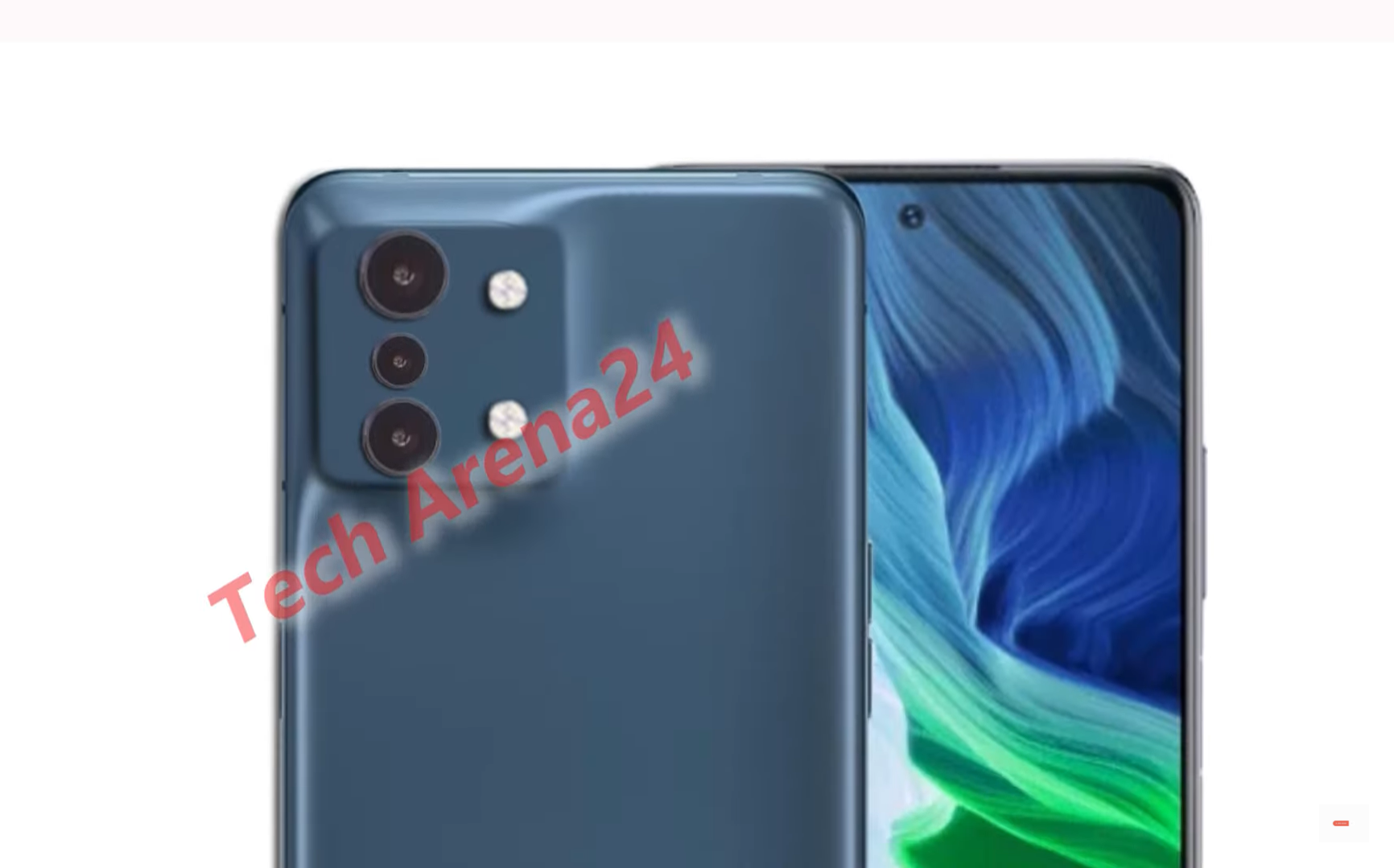
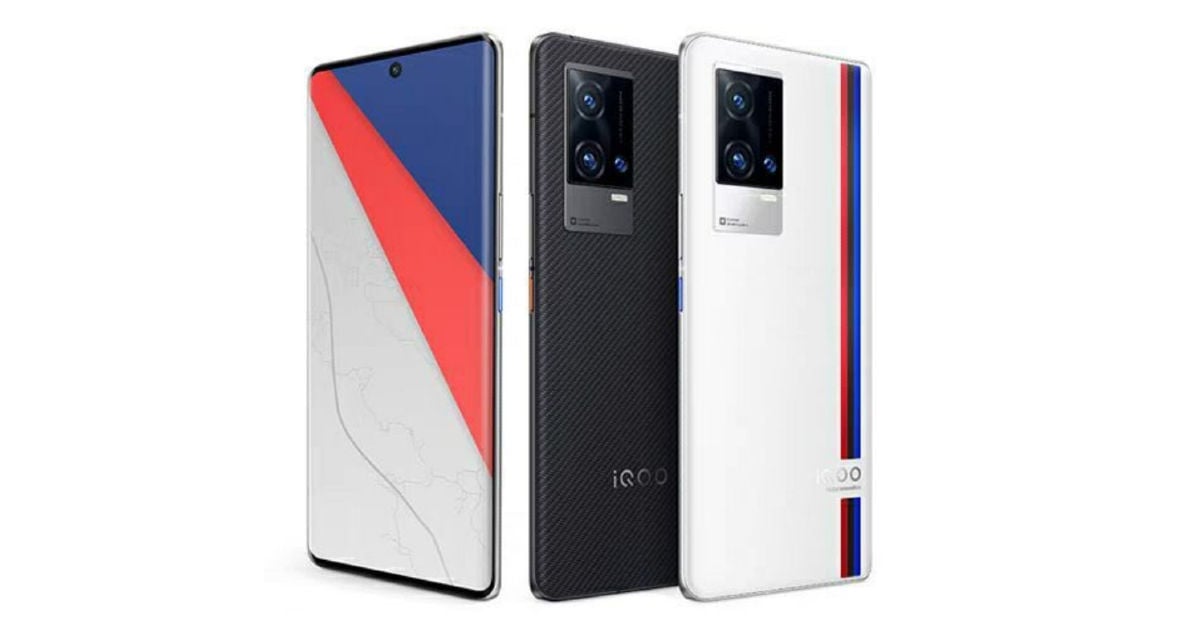
Chinese handset maker vivo is all set to debut a new lineup of smartphones called vivo T series. One of the models in the lineup recently appeared on JD. Now, a leaker reveals a few details about the first two models in the new series.
According to Digital Chat Station, vivo will be launching two devices in the vivo T series initially. These handsets will be called vivo T1 and vivo T1x respectively. The latter will be a cheaper variant of the former.
As per him, the vivo T1 series will be available in the following memory configurations and color options.
vivo T1
Memory Configurations
8GB + 128GB
8GB + 256GB
12GB + 256GB
Colors
Black
Electric Light Blue
vivo T1x
Memory Configurations
6GB + 128GB
8GB + 128GB
8GB + 256GB
Colors
Iridescent
Starry Night
Sea Salt
Unfortunately, the tipster did not expose anything else other than the above-mentioned details. But since the devices are rumored to launch ahead of Double Eleven (singles’ day) shopping festival, we expect vivo to start teasing the phone very soon.
Going by the previous reports, the vivo T series will succeed the now discontinued vivo Z series. It will be targeted at male youth who crave performance. These smartphones are said to cost around ¥2,000-¥2,500.
Renowned PDA manufacturer Palm has had a turbulent past since its purchase by PC giant HP in 2010. The ownership of the company had changed hands in 2014 from HP to TCL. It had also experienced a period of seeming inactivity after the release of its Palm phone that was a mixed bag of success. The company has now provided some teasers about its unveiling of a pair of AirPods-like earbuds that will be a good match for the Palm Phone, which is reputed as one of the world’s smallest Android phones.
The Palm Phone although a very compact Android device had a few significantly visible drawbacks like a very poor battery setup, an underwhelming camera, as well as challenges in the overall use of the very small screen of the device. It has been about two years since Palm unveiled the Palm Phone and the company has now risen from the lull to announce the birthing of the Palm earbuds. The announcement was via a tweet and some images on the Palm Twitter handle.
A blurred image indicated the outline of the earbuds shows the contour and the elongated stems alongside other visible features. Although Palm had not provided many details on the new device, we expect it to be true wireless earbuds with active noise cancellation (ANC) functionality. These are some of the irreducible minimum standards that could help restore some attention to the company. We await more details about the new Palm earbuds as we inch closer to the official announcement date. More teasers will also possibly come from Palm on the new device.
Xiaomi recently released a completely different phone than what they have ever released before: the Xiaomi Civi. This phone is aimed at the female market, but as a guy, even I am very much interested in this phone. After using it for a week, I have some things to share with you.
Xiaomi CIVI Review: Stand out design
If you’ve seen Xiaomi’s promo video, you know how cute and good-looking the pink back covers of the Xiaomi Civi are this time. They have added a fluffy texture to the pink glass back panel. It looks quite pretty under the light. And this design won’t just appeal to female users but even guys like me would appreciate this back cover.
And because of the curved screen and the narrower width of the body, it feels better in your hand. The upper and lower metal frames are recessed to make the phone more refined. But the charging port isn’t centered and this makes me uncomfortable. The lens is made smaller, and this lens design is a bit like a smaller version of the Mi 10T series. The best part is that Civi is only 6g heavier than the XIAOMI 11 Lite 5G NE, but the battery has been increased to 4500mAh. Who doesn’t like a phone that is only 166g but can be used all day without charging?
I know I do!
While such a light phone is easy to use, its back cover is like a layer of flour and is really, really slippery. Plus, the center frame is very narrow and doesn’t provide enough friction. So if you use it for a long time, the full weight of the phone presses down on your little finger, so it’s not really easy to hold much like a heavy phone. Of course, if you like to use a case, you won’t have this problem.
1 of 5
Overall, the Xiaomi Civi is a mid-range phone, but it looks and feels like a flagship device.
Xiaomi CIVI Review: Better Display
I carefully compared the official specs of the Civi’s screen and found little change on paper between it and the XIAOMI 11 Lite 5G NE. The Civi’s refresh rate has become 120Hz, and the peak brightness is a little higher too. However, after a week of use, the screen’s difference between the two is actually quite large. For example, from a straight screen to a curved screen, the bezels have become narrower. In particular, the lower bezel is narrower than Xiaomi’s own flagship phone, the Mi 11 Ultra. And it uses an under-screen fingerprint instead of a side fingerprint scanner.
The Xiaomi 11 Lite NE’s screen uses RGB Delta Pixels, which resulted in a very poor screen clarity problem that was solved on the Civi. After changing the supplier of the screen to Diamond-like pixels, the clarity is no different from that of Samsung’s screen. However, the problem of rainbow lines on the screen is a bit more serious than the 11 Lite NE. All in all, the Xiaomi Civi’s screen is in the upper-middle class, much better than the XIAOMI 11 Lite 5G NE.
Xiaomi CIVI Review: Selfie & Rear Cameras
Because it is a phone specifically designed for female users, before we talk about the rear lens for taking pictures, I want to talk about the front camera first. This time, Civi is finally using a new 32MP lens that can auto-focus instead of a traditional 20MP front lens without autofocus.
Because young Asian female users generally like to retouch their selfies, Xiaomi is also introducing a new beauty mode algorithm that will make your selfies look more natural even in beauty mode. Compared to the beauty mode of Xiaomi 11 Lite NE, the biggest change is that the skin has become smoother, with less noise, and at the same time the skin pores are not completely eliminated. This makes it look better than the previous beauty mode.
1 of 5
flash light on
Beauty mode on
Beauty mode off
When we turn off the beauty mode, with the superb front lens, it can still take selfies with more details and less noise. Although the HDR effect is weaker than the Lite NE, the advantage is that the hair will not turn purple. For the self-portrait effect, Xiaomi Civi really spares no effort. It has two flash lights tucked on either side of the front lens. The area around the screen can also turn white to light up your face. The flash + screen fill light effect is excellent, and the face skin tone is more natural, the details become more, even the HDR effect has become stronger. But if you wear glasses, the reflection from the lights can be a problem.
And with the addition of autofocus on the front, you no longer need to worry about losing focus due to the close shooting distance. You can really use your phone as a mirror to check your makeup.
The main rear camera uses the same sensor as the Xiaomi 11 Lite NE, and the ultra-wide lens is also 8 MP. But the macro lens is not as good as the telephoto macro lens on the 11 Lite NE.
1 of 26
Xiaomi CIVI Macro (2)
The performance of the main camera in the daytime is relatively close between the two phones. The main difference is the color tuning for food. When the AI recognizes the subject as food, Civi’s colors are more intense and the contrast is higher. The difference in other scenes is almost negligible. When the sky is dark, although both perform very well in most scenes with more lights, when the lighting goes down and the Xiaomi Civi in auto mode reveals its problems. The highlights can’t be controlled, while 11 Lite NE doesn’t have this problem. The good thing is that Civi’s night mode is well optimized, not only can the highlights be controlled, but the colors can also be reproduced. For example, the red light sign is definitely not the rosy red of the 11 Lite NE, but closer to the positive red as seen on the Civi sample.
1 of 5
The ultra-wide lens on both phones is also very similar. Xiaomi Civi still has the problem of partial overexposure in low light, and the purple edge problem is not optimized. Sometimes the purple edge effect is worse on the Xiaomi 11 Lite NE, while sometimes it’s worse on the Xiaomi Civi. But this ultra-wide lens is also average, and it performs well as long as there’s enough light.
1 of 2
Xiaomi CIVI Macro (2)
As for the macro lens, it is an ordinary macro lens. Both the closest focusing distance and image quality are worse than 11 Lite NE’s telephoto macro lens.
The main difference between Xiaomi Civi’s video recording capabilities and the 11 Lite NE is still the color, which is more intense on the Civi most of the time. As for noise, dynamic range, stabilization, etc., there is still no visible difference with 11 Lite NE.
Xiaomi CIVI Review: Performance and Gaming
The chip is still Snapdragon 778G with LPDDR 4X and UFS 2.2, and the Benchmark score is almost the same as the Xiaomi 11 Lite NE.
The phone scores 510,000 on AnTuTu, 2400 on 3Dmark, 780 on Geekbench 5 single-core, and nearly 3000 on its multi-core test. This chip’s gaming performance is also very clear to everyone. Because they feature Snapdragon 778G, PUBG can only be run in the Ultra frame rate under HDR Graphics. It offers stable performance at 40FPS without problems.
Genshin Impact started out at 50 FPS, but was soon locked at 30 FPS. Finally, it didn’t even stabilize at 30 FPS, averaging at 24.8 FPS which is not very good. But if you compare it to the Xiaomi 11 Lite NE, you’ll find that the Xiaomi Civi is actually performing quite well. The Xiaomi 11 Lite NE not only struggled to achieve a frame rate above 30 fps, but it also lagged a lot. When you think about it, the fact that the phone is light and thin makes it impossible to dissipate heat very well. Xiaomi probably didn’t intend this phone for playing any big games, and that’s exactly what we could confirm.
Xiaomi CIVI Review: Battery Life
This time the Xiaomi Civi’s box is also very simple, it has no charger and no charging cable. Of course, if Xiaomi’s charger is not inside the box, it will definitely come with a separate charger. Much like the provided charger, the phone supports up to 55w of charging power. It takes ten minutes to charge to 27%, half an hour to charge to 77%, and 45 minutes to 100%.
Will the 4500mAh battery last longer than the 11 Lite NE?
Half an hour of 1080P online video consumed 4%, Tiktok consumed 5%. Ten minutes of PUBG dropped the charge by 3%, and 20 minutes Genshin Impact by 8%. Basically it’s the same battery life score as the Xiaomi 11 Lite NE.
So the Xiaomi Civi is a beefed-up version of the Xiaomi 11 Lite NE, with an upgraded look and a more powerful screen and front-facing camera. The fact that the Xiaomi Civi is selling well in China shows that many people still like a nice and thin phone, provided it doesn’t have too many flaws.
Earlier this week, Xiaomi had officially announced the MIJIA Robot Vacuum Mop Pro, which had been launched for crowdfunding. Now, the company has officially released the new robot vacuum cleaner and is available on sale on major Chinese e-retailers.
The MIJIA Robot Vacuum Mop Pro is the first vacuum cleaner from the company to offer dry mopping. Furthermore, the device is also capable of self cleanings its mop via its charging compartment. This charging station features an LCD touch display as well. The mop on the new vacuum cleaner is design to run at 40 degree Celsius to rfmove mold, any odor, or other forms of bacteria.
Under the hood, a LiDAR sensor guides the automated robot and is equipped with 8 ToF sensors to avoid any collisions and obstacles in its way. It also offers a maximum suction power for 3000 Pa along with four cleaning modes as well. Notably, the vacuum cleaner features a square like head design over a conventional circular design that will help it clean corners and edges.
The device supports MIJIA control app and XiaoAI voice assistant. It is currently priced at 2,999 Yuan (roughly 466 US Dollars) and will be available for purchase starting from 20th October 2021. So for those interested you can find this product on major e-retail website like JD.com.
Nothing is allegedly working on its own phone now following the success of its ear (1) earbuds and is planning on releasing it as early as 2022. A power bank that will go by the name of ‘power (1)’ is also in the works, as per a report.
The startup recently partnered with Qualcomm Technologies and if the news of an upcoming smartphone is indeed true, then it is likely that Qualcomm is lending a helping hand in the matter. The phone will thus likely sport a Snapdragon processor.
The report by Mukul Sharma (via: 91Mobiles) further reveals that a Nothing-branded power bank may launch before the phone. The power (1) power bank could debut in the coming weeks or maybe at the end of the year.
Details are slim regarding either of the two products, so any known specifications and the like are out of the question for now. Regardless, Nothing’s upcoming products should pick design cues from the existing ear (1) and may hence sport similar simple and minimalistic looks, transparent design even.
Nothing ear (1) TWS earbuds
Hopefully, we will be seeing teasers and getting more info as we inch closer to a launch of the alleged products.
Back in February, Nothing had acquired Andy Rubin’s Essential company – the folks behind the Essential Phone that debuted back in 2017. The Nothing phone along with sporting a Snapdragon processor, may thus, also benefit from a technological transfer from Essential. After all, both companies share an interest in offering products with minimal designs and no-frills experiences.
As for the name of the smartphone, well, we are hoping that it will be called the Nothing hand (1), although that admittedly does sound a bit too cheesy and Nothing may just call it the phone (1).
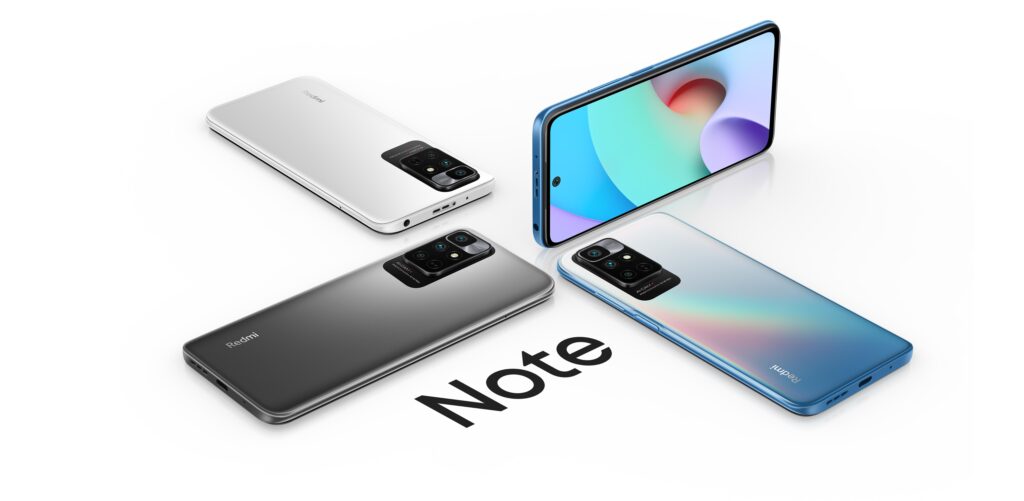
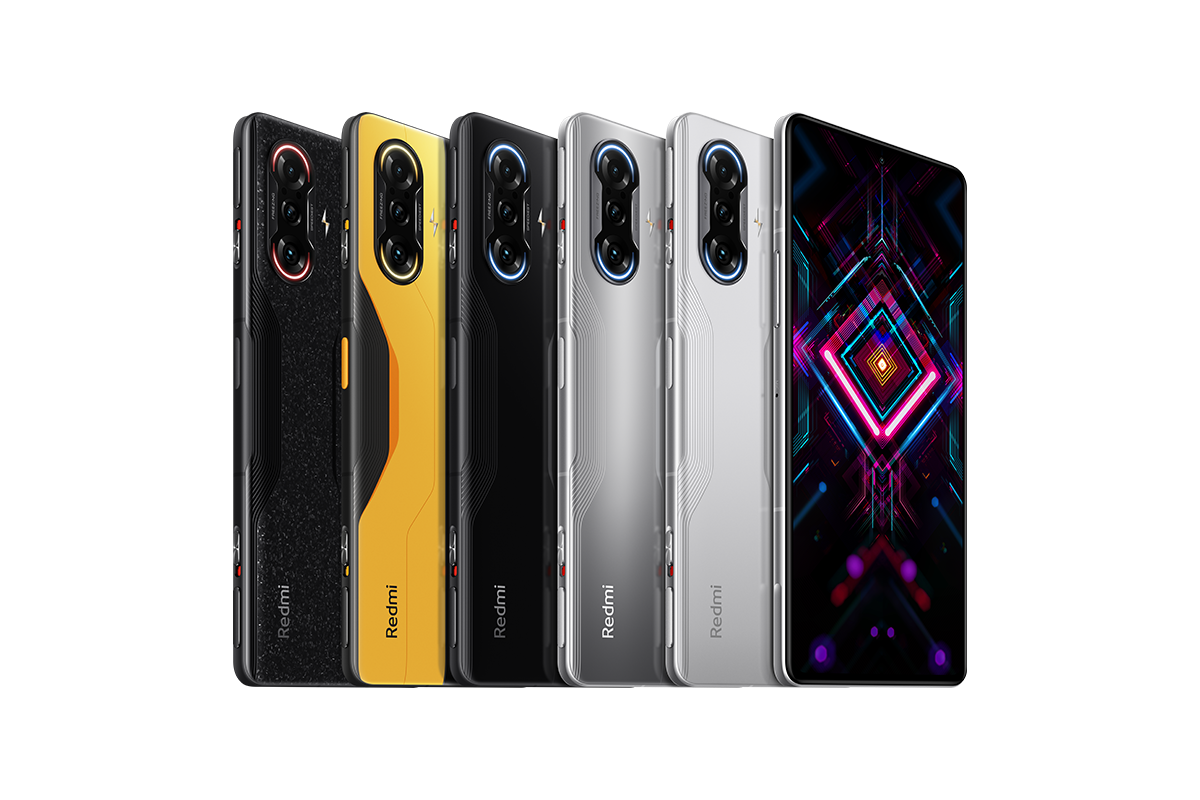
Redmi is expected to launch new smartphones in China in the coming days. These devices have started appearing on certification websites. At the same time, two of the brand’s executives also officially tease the arrival of the latest handsets.
Smartphone companies in China have begun to release new phones for the upcoming ‘Double Eleven’ (singles’ day) shopping festival in the country. Hence, it’s not surprising to learn that Redmi will be also debuting certain new products.
The hintsby Wang Teng Thomas (Product Director – Redmi) and Lu Weibing (General Manager – Redmi), the upcoming Redmi devices could belong to the Redmi Note series.
There’s a high chance for these handsets to go official as Redmi Note 11 series. In fact, specifications of the two models in the lineup, namely Redmi Note 11 and Redmi Note 11 Pro leaked a few hours back.
These phones could be also accompanied by Redmi K40S. The new Redmi K40 variant is said to be a rebranded Xiaomi 11T. Hence, its main highlights will be 120W fast charging, Dolby Vision display, and three Android updates.
Whatever these smartphones turn out to be, we expect to learn more about them before their official announcement in the next few days.
What are your thoughts on the upcoming Redmi phones for China? Do let us know in the comment section below.
Apple has added Chinese electronic components producer BOE Technology to its list of suppliers for the latest iPhone’s display, providing a major boost to Beijing’s tech ambitions and adding pressure on Samsung – the current go-to display supplier for Apple.
The Beijing-based display maker has already been supplying a small number of OLED panels for the 6.1-inch non-Pro iPhone 13 model since September but is now expected to increase the shipments soon, if the final verification process that will mostly focus on the durability of the screens is gotten over with, Nikkei Asia reports.
Apple iPhone 13
This supply from BOE was limited to repaired and refurbished iPhones but Apple now seems keen on expanding it to new iPhones as well, although only the more affordable models will be getting it for now.
“It is in the process of final testing, but based on the results of earlier samples, BOE should have no problem passing the tests,” an executive-level source with direct knowledge of the matter told Nikkei Asia. “The foundation of the collaboration between Apple and BOE is based on their previous project on the iPhone 12, and both Apple and BOE want this to happen soon.”
BOE will initially be splitting orders with Samsung for the 6.1-inch display iPhone 13, making up about 20% of the units. However, the company aims to raise that figure to 40% under the most optimistic scenario.
The BOE OLED displays for the iPhone 13 are being manufactured at Mian Yang complex in Sichuan Province where the company is already producing the same for Huawei, Honor, Xiaomi, and Vivo.
BOE’s breakthrough will add to the pressure on LG Display and Samsung Display, especially the latter, which has dominated the supply of OLEDs for iPhones since 2017. A third manufacturer under Apple will grant the company greater bargaining power over its South Korean suppliers.
BOE already makes LCD displays for the Apple iPad but has been trying for years to break into iPhone’s supply chain with limited success. But that is beginning to change now.
Sony is joining hands with Meizu for its flagship smartphone in China. The company will now include Meizu apps and services on the Xperia 1 III flagship handset to better appeal to the Chinese market.
According to an official announcement from the Japanese tech giant, both firms are entering into a strategic partnership earlier today (15th October 2021). The collaboration will have the former offer the latter’s services and applications on its Xperia 1 III flagship smartphone in China. This would include the device arriving with pre installed apps or allopw users to download several apps from Meizu’s Flyme Android skin on the Xperia 1 III and newer devices in the region.
In other words, Chinese users of the new Sony Xperia smartphone can now download the Flyme app store along with services related to news, email, and weather. Although, users need the system update that was apparently pushed out to devices back in October. As per the official announcement, “During the strategic cooperation period, Sony and Meizu will further explore more Flyme functions and application cooperation possibilities on different products.”
The partnership would help devices from the Japanese company seem more appealing in the Chinese market, which is usually harder to enter for non China based brands. Although, Meizu is not exactly a major player in the region either. So it remains to be seen if Sony actually benefits from this partnership in any noticeable way in the arriving months.
The HTC Vive Flow VR headset’s USP is its size and weight, designed such that it goes where you go. Despite growing lighter each year, VR headsets are still known to result in rashes and weariness. But the Flow’s official site portrays the headset as being so light that it effortlessly gets integrated into one’s life, among other things.
However, it’s unsettling to see HTC pull photos from Shutterstock and photoshop its HTC Vive Flow VR onto models’ faces rather than using their own stuff. And once you see it, there’s no turning back.
Now, don’t get us wrong here for the headset has actually received positive reviews, mainly for its light weight and comfort. But it’s difficult to believe that it is any good when HTC has apparently cheaped out on the marketing.
1 of 2
Image: Getty Images/iStockphoto
It’s not just the headset that’s been photoshopped though. Take the image above for example. The woman in the photo originally held a bowl of popcorn, which has been duly erased and replaced with a phone. The editing itself seems to be a fine job, but it’s odd seeing a woman throwing in the “finger purse” sign when engrossed in virtual reality.
Emojipidea says that in Italy, this gesture tends to be used in disagreement, frustration, or disbelief – definitely not the kind of reactions a company would want from their product, unless of course if it’s so good that it leaves its beholders staggered in disbelief.
The above image is just the tip of the iceberg though as Protocol’s Janko Roettgers pointed out (via: The Verge) yesterday on Twitter that the majority of HTC’s leaked lifestyle images of the HTC Vive Flow can be traced back to istockphoto.com. These images have now made their way to the headset’s official site.
1 of 2
Image: Getty Images/iStockphoto
Nonetheless, it is worth mentioning here that making use of Photoshop in product images in such a manner isn’t exactly something new. Companies do it all the time. It’s just that HTC has photoshopped images from Shutterstock, rather than using their own, and has gotten caught in the act.
Dear HTC, in conclusion, just try not to get caught next time.
Last year, OPPO changed the ColorOS branding in line with the version of Android it is based on. Hence, the latest version of the company’s mobile software is called ColorOS 12 much like the underlying Android 12 version. It succeeds the Android 11-based ColorOS 11 from 2020 with subtle changes.
I got to use a beta build of ColorOS 12 for the past few days. I will be sharing my experience with the new software in this article.
ColorOS 12 Review
Visual Changes
ColorOS 12 brings improvements to the design introduced in the ColorOS 11, which itself is a refinement of ColorOS 7’s design language. The firm calls the new design ‘inclusive.’
According to OPPO, it has made changes to the UI taking internationalization into consideration. The smartphone brand claims that it has worked with a linguistic expert team to implement accurate, concise, and fully localized text.
Lock Screen
Home Screen
Notification Drawer
Quick Settings
App Drawer
Recents Screen
In the latest iteration, ColorOS supports 67 languages, including 13 Indian languages. I tried out some languages like Tamil, Hindi, and Gujarati. I would say it’s still a work in progress, since a simple search in the Settings menu in these languages does not yield proper results. Also, most of the app names are listed in English instead of the selected language.
Though ColorOS 12 focuses on reducing redundancy by bringing a common UI layout everywhere possible, dual languages fail to conform to this design philosophy. Also, in some regions, OPPO devices will continue to ship with Google Phone and Google Messages. This further affects the company’s goal of reducing redundancy.
Settings
About Phone
System Update
Then, there are new first-party icons. These 3D icons animate while opening and closing an app, much like on MIUI. Almost all the UI elements now act like objects in the physical world. For instance, when you tap on an icon, it gets pressed as if you are clicking on a button.
The most obvious change is inertia of animations. Elements across the UI make movements depending upon how fast or slow you interact with them. This feels very natural but it’s difficult to express in words.
Personalisations
Icons
Quick Settings
Always-on Display (AOD)
Unfortunately, there is no ‘Material You’ theming in ColorOS 12, but it does come with a wallpaper-based color palette. I am not a fan of this, as most of the time I had to choose the colors myself. The system would end up selecting random colors instead of picking up suitable ones.
Finally, there are no new first-party live wallpapers. It would have been nice of OPPO to introduce some. However, we do get Canvas AOD from OxygenOS, which is known as ‘Portrait silhouette’ on ColorOS.
Improved Features
Flexible Windows
ColorOS11 brought a floating window feature called FlexDrop. With ColorOS 12, OPPO has changed the name of this feature to ‘Flexible windows’. As its new name suggests, the floating windows can be now resized by dragging the left or right corners.
Further, floating windows can now be activated either by simply swiping up the app from the bottom or tapping on the app icon from the Smart Sidebar. Users can convert these floating windows into ‘Mini windows’ by reducing their size and can also hide them quickly by dragging them to the left or right edge of the screen.
The floating windows can be easily hidden while playing games by simply tapping outside them. These windows now also support drag and drop gesture to share files to other apps.
Despite all the improvements, users can only use one floating window at a time.
Smart Sidebar 2.0
The Smart Sidebar 2.0 on the Chinese version of ColorOS 12 shows options depending on different usage scenarios. But on the Global variant, all we get is quick access to ‘Screen translate’ that was introduced in ColorOS 11 and a new ‘Background stream’ option in media apps like YouTube.
Smart Sidebar 2.0
For those unaware, ‘Screen translate’ on ColorOS uses Google Lens to translate the content on the screen to your desired language. Hence, users can translate content in just two steps – swipe to access Smart Sidebar 2.0 and tap on Screen translate.
This process takes longer on other Android skins. Users first need to take a screenshot of the page they want to translate. Then, they have to open that image in the Google Lens app or in a gallery app that has Google Lens built-in.
As for ‘Background stream’, it enables users to stream videos on apps like YouTube in the background. Although Google’s streaming platform supports this functionality on all devices, it requires a premium subscription. But ColorOS users can now bypass the need for a subscription.
New Features
Android 12 Features
ColorOS 12 arrives with all the new Android 12 features. Users get access to a Privacy Dashboard, approximate location sharing, camera/microphone indicators and toggles, chat bubbles, conversation widgets, and others.
Privacy
Privacy Dashboard
Conversation Widgets
These new features enable users to have granular privacy controls and more. All of them work as expected without any issues.
Omoji
OPPO has become the latest Android OEM to introduce an Apple Memoji clone called Omoji. This feature is still in the initial stage, and therefore, it feels unfinished.
Since none of the current-gen OPPO smartphones feature a 3D face scanning system like on iPhones, Omoji uses the front-facing camera to detect users’ facial expressions.
Omoji
Currently, users can click pictures or record videos with Omoji. They can also use these personalized 3D avatars for AOD (Always-on Display).
I personally don’t think this feature will stay for long, as it’s difficult to replicate the success of Memoji. Other Android manufacturers have already moved on.
PC Connect
PC Connect is probably the best new feature on ColorOS 12. But unfortunately, it is not yet available in the international markets. OPPO says that this productivity feature will be introduced in the future for select models.
PC Connect is OPPO’s answer to HUAWEI Multi Screen Collaboration and Samsung DeX. It enables users to connect their smartphones with compatible Windows computers. Users can not only share screens but also transfer files, sync notifications, and more.
Rollout Plan
OPPO says that ColorOS 12 will be its widest rollout in the company’s history. The firm plans to upgrade 110+ devices and cover 150 million users worldwide.
The beta rollout has already kicked off. However, it will continue through the second half of 2022. In other words, the update rollout is still slower than Samsung’s.
Samsung updated most of its massive smartphone/tablet portfolio to Android 11-based One UI 3.x within the first half of 2021. Considering the improvements OPPO has brought to the table over the past couple of years, we think it could also come up with a better rollout strategy in the coming years.
Update Policy
ColorOS 12 is the first version of OPPO’s mobile operating system to reach devices that are nearly three years old. That’s because the firm has now updated its software update policy to provide up to three Android updates and up to four years of security updates.
OPPO’s new policy goes in line with that of its powerful international competitors Samsung and Xiaomi.
Future of ColorOS
OPPO has confirmed that the next major release of its mobile operating system will be a unified software that will run on both OPPO and OnePlus devices. It has not revealed the new branding for this Android skin, but I think the company will continue calling it ColorOS. Let me explain why.
OxygenOS 12 based on Android 12 was also released recently. It is almost identical to ColorOS 12 with some minor changes. In China, OnePlus phones already run ColorOS.
1 of 2
Hence, I believe that ColorOS will become the face of OPPO and OnePlus globally with the next major release. The new software will most likely be based on Android 13 and will be called ColorOS 13.
On the other hand, although OPPO and realme continue to deny, realme UI is another clone of ColorOS much like the new OxygenOS. But at present, we cannot tell for sure if the world’s fastest-growing smartphone brand will adopt the unified branding or continue with the relame UI name.
Conclusion
ColorOS 12 takes OPPO’s mobile operating system in the right direction. The new version of the software follows the ‘if it ain’t broke, don’t fix it’ mantra.
Users who are accustomed to ColorOS 7 and ColorOS 11 will feel right at home with some minor changes here and there. OPPO advertises ColorOS 12 to be close to stock Android 12. But it, actually, isn’t.
Though ColorOS 12 brings all the new features of Android 12 and Google services, it has its unique look, which one cannot deny. With more meaningful tweaks keeping internationalization in mind, ColorOS could get even better.
Gone are the days when Chinese Android skins were known for mimicking iOS. Hopefully, more Chinese OEMs will adapt their software keeping in mind the global users’ preferences.
BOE Technology Group has just began the construction of the world’s largest production plant that will manufacture display modules for mobile devices earlier this week in the Qingdao, Shandong province in China.
The production site is expected to improve the Chinese display maker’s manufacturing capacity, which, in turn, would help boost its competitiveness in mobile display market. Notably, this factory would also help the city of Qingdao build a key national electronic information industry along with a high end research and development and manufacturing base, as per the company’s official website (Via ChinaDaily). The company’s total investment in this site is expected to be around 8.17 billion Yuan (roughly 1.27 billion US Dollars).
The project is situated in the Qingdao West Coast New Area in China. This new manufacturing site will produce display panels for mobile devices such as smartphones, tablet PCs, and even laptops. Interestingly, the company is also planning on the complete production of mobile phones and other products in the factory later in the future. The first batch of screen panels is expected to roll out by the end of next year.
Furthermore, the new site will also reach its full capacity in March 2024. BOE stated that its mobile screen panels have started mass production, and its new production site in Qingdao will help met its market needs display modules that will be used for medium to small mobile devices across the globe.
Earlier this week, Republican Senators led by Marco Rubia urged the Biden administration to blacklist Honor, which is a former subsidiary of the Chinese tech giant Huawei that had had previously been designated as a national security threat.
According to an SCMPreport, the US Senators sent a letter to the Biden administration on 14th October 2021. In this letter, Honor was described as an entity that is an “arm” of the Chinese government. The letter further added that the Chinese smartphone maker also has access to the US technologies that is currently being denied to its former parent brand, Huawei. In other words, the Senators are seeking to blacklist the company in a similar fashion.
Rubio wrote that spinning off Honor has let Beijing “effectively dodged a critical American export control.” For those unaware, Huawei had sold off its budget sub brand back in November 2020 to ensure its survival. The letter also stated that “By failing to act in response, the Department of Commerce risks setting a dangerous precedent and communicating to adversaries that we lack the capacity or willpower to punish blatant financial engineering by an authoritarian regime.”
Unfortunately, Honor as well as the US Commerce Department and the Chinese Embassy in Washington has yet to respond to requests for a comment regarding this matter at the moment. Huawei has also declined to provide any comments, but pointed to a previous statement in which it assured that it would not hold any shares or will be involved in managing Honor in any manner.
The job listing was first posted back on September 3 and was spotted by HotHardware. Looking at this listing, it appears that the American tech giant is seeking to hire someone to work for its Surface team that will “light up Microsoft experiences with the next generation of devices.” It also mentions how creating those devices involves “a close partnership between silicon, hardware and software engineers, designers, and manufacturing.” Notably, this role would have the person “defining the features and capabilities of SoC used on Surface devices.”
Interestingly, this is not the first time we’ve heard that the company is working on its own custom chipset. Back in December 2020, we had reported that Microsoft is working on its own ARM based processor for servers and Surface series PCs. Furthermore, the company could reportedly also be partnering up with AMD for this ARM based chip. Previously, it has already working with Qualcomm for the SQ1 and SQ2 chips that were found in the Surface Pro X, although, its performance was not on par with the Apple M1 chip.
As of right now, Microsoft does use its own custom chips for the Surface Pro 8 and Surface Laptop Studio, which allows it to offer haptic feedback for inking with the Surface Slim Pen 2. With Apple having shifted to its own custom chips, it isn’t surprising when other tech giants are also rumored to follow suit. So stay tuned for more updates.
A new report claims that devices like the iPhone 12 and others have helped Apple rake in most (75%) of the operating profits and 40% of the revenue generated via global smartphone sales in Q2 2021, despite accounting for just 13% of total shipments.
This, despite Chinese companies like Xiaomi and Realme recording record growth during the same period, with the former bagging second place in terms of the number of smartphone units sold.
Image: Counterpoint Research
While the report by Counterpoint Research does prove Apple as the dominator of the industry, this year’s figures are actually lower than the ones from Q4 2020 where the company recorded a staggering 50% revenue share. Its profits also touched an unprecedented 86%, up from 51% in the previous quarter.
Do keep in mind here that since Apple doesn’t share its sales and shipment figures for its iPhone, the figures are based on Counterpoint’s own calculations and not official information from Apple.
Anyway, the Q4 2020 feat can be attributed to Apple’s iPhone 12 series that sold like hotcakes thanks to the introduction of 5G support. The company saw a jump from 9% to 17% in its shipment share during the time. Other contributing factors include interoperability between Apple devices, made possible by Apple’s significant control over both hardware and software, enabling a seamless shift of work on an app between multiple devices.
Apple iPhone 12
Apple is likely to retain such a position and continues to work on improving its services while also charging premium prices for its handsets, thus keeping its operating profit margins untouched by any other.
The Cupertino-based tech behemoth is followed by South Korea’s Samsung which tops the list in another factor – annual global smartphone shipments. But despite its massive sales, Samsung has still remained number two in terms of profits for several past quarters.
Other than the relatively stable top 2 spots enjoyed by Apple and Samsung, the rest of the rankings have seen a major shift due to the US ban on Huawei. Companies like Xiaomi, Oppo, and Vivo benefited from it majorly, creeping into the gaping hole left by Huawei. They were the biggest revenue generators respectively after Apple and Samsung in Q2 2021.
But while Xiaomi has seen steady growth in terms of shipments, its profit generation has not been satisfactory. This isn’t anything unexpected though considering Xiaomi has been prioritizing its number of shipments over everything else. It will likely be focusing on increasing its profits only after capturing a sizeable chunk of the market.
A couple of days back, OnePlus announced its latest smartphone in its home market — OnePlus 9RT, making it the third model in the flagship lineup for the year that already includes OnePlus 9 and the OnePlus 9 Pro.
Currently, the device is only limited to the Chinese market but is expected to be made available in India and Europe soon, but the launch date remains unknown. However, a new report from tipster Yogesh Brar on Twitter claims that the OnePlus 9RT could be priced between ₹40,000 to ₹44,000 ($533-587) in the Indian market.
The OnePlus 9RT features a 6.62-inch E4 AMOLED display that comes with 2400 x 1080 pixels screen resolution, 120Hz refresh rate, support for sRGB and P3 color gamut, and Corning Gorilla Glass protection.
Under the hood, it is powered by the Qualcomm Snapdragon 888 chipset, coupled with up to 12GB of LPDDR5 RAM and 256GB of UFS 3.1 internal storage. It also comes with a 19067.44 mm² space cooling system to keep the temperature low while gaming.
In the camera department, there’s a 50MP f/1.8 Sony IMX766 sensor with a 6P lens and both optical and electronic image stabilization. It also comes with a 16MP f/2.2 sensor with a 123° field of view and a 2MP 4CM macro camera to complete the triple camera setup.
On the front side, the device features a 16MP Sony IMX471 camera with electronic image stabilization for taking selfies and video calling. The device comes with an in-display fingerprint scanner, Bluetooth 5.2, NFC, Wi-Fi 6, dual Nano-SIM support, USB-C, and stereo speakers with Dolby Atmos.
The smartphone is running the Android 11 operating system with ColorOS 12 on top, however, the international version is expected to ship with OxygenOS 12 pre-installed. It is powered by a 4500mAh battery that supports Warp Charge 65T.
Samsung and Huawei were among the first smartphone manufacturers to commercially launch foldable smartphones and currently, the South Korean giant is leading the category with several devices in the market.
Many other device manufacturers have been working on their own foldable smartphones for quite some time and it seems that the companies are now gearing up to officially launch their products in the market.
While Xiaomi has already launched its Mi MIX Fold earlier this year, it’s now time for OPPO and Vivo to launch their foldable smartphones. Both the brands have unveiled interesting concept phones in the recent past but are yet to officially launch their foldable phones.
Vivo Foldable Smartphone Design Patent With Stylus
Now, a new report coming from Digital Chat Station claims that the OPPO foldable smartphone will come powered by the Qualcomm Snapdragon 888 chipset while the Vivo device will be powered by the upcoming Snapdragon 898 chipset.
Recently, it was reported that the OPPO’s foldable phone will have an inner fold design with an OLED display measuring 7.8-inch to 8-inch, offering a screen resolution of 2K+ pixels and a 120Hz refresh rate. It is also said to have a 50MP Sony IMX766 primary camera on the rear and a 32MP front-facing camera. We expect the phone to be running the Android 11 operating system out-of-the-box with ColorOS 12 on top.
Huawei is also expected to launch a new foldable smartphone in the market, which will come powered by the company’s own Kirin 9000 4G chipset and will reportedly have a clamshell design similar to the Galaxy Z Flip3. It seems that the Chinese giant won’t be launching a 5G compatible model, at least initially.
Motorola has also launched two foldable smartphones in the market, taking a different approach in terms of design compared to the other models available in the market. It was the first foldable smartphone to adopt a clamshell design. However, there’s no information about the third foldable device from the brand.
Apart from these Chinese brands, Google is also working on a foldable smartphone which is currently being referred to as Pixel Fold. Recently, it was reported that the company is developing a second foldable Pixel phone codename Jumbojack. Apple is also expected to launch a foldable iPhone in a couple of years.
A recent Weibo post Redmi General Manager Lu Weibing hinted that Redmi is gearing up to launch the Redmi Note 11 series of smartphones in China. Probably, the company may unveil the Note 11 lineup just before the Double Eleven (Nov. 11) shopping festival in China. A reliable tipster from China has shared the rumored specs of the Note 11 and Note 11 Pro.
Redmi Note 11 specifications (Rumored)
The Redmi Note 11 5G is likely to house an LCD panel that supports a 120Hz refresh rate. For photography, it may feature a 13-megapixel front camera and a 50-megapixel camera on the back. The Dimensity 810 chipset may fuel the device.
The handset may house a 5,000mAh battery that supports 33W fast charging. It may come in variants like 6 GB RAM + 128 GB storage and 8 GB RAM + 128 GB storage. The tipster has speculated that these variants could be priced a 1,199 Yuan (~$186) and 1,599 Yuan (~$248).
Redmi Note 10 Pro 5G
Redmi Note 11 Pro specifications (Rumored)
The Redmi Note 11 Pro 5G is expected to arrive with an OLED screen that offers a 120Hz refresh rate. It may feature a 16-megapixel camera on the front and a 108-megapixel snapper on the back. It could be powered by the Dimensity 920 chipset.
The Note 11 Pro could be backed by a 5,000mAh battery, which may support 67W rapid charging. It may offer other features like X-axis linear motor, JBL powered stereo speakers, and NFC. It may release in variants such as 6 GB RAM + 128 GB storage, 8 GB RAM + 128 GB storage, and 8 GB RAM + 256 GB storage. The leaker speculated that these variants may cost 1,599 Yuan (~$248), 1,799 Yuan (~$279), and 1,999 Yuan (~$311).
MSI has officially launched a new laptop in the Japanese market. The all-new MSI Creator 15 A11UH-003JP is the company’s first thin and light notebook that comes with a 4K OLED display. It is currently available in Japan for a hefty price of ¥350,000(~$3,071).
The MSI Creator 15 A11U comes powered by the 11th gen Intel Core i7-11800H CPU paired with Nvidia GeForce RTX 3080 GPU. It comes with 16GB of DDR4 RAM and a 1TB M.2 NVMe SSD storage. The laptop features a 15.6-inch OLED display with a 3840 x 2160 pixels resolution. It supports HDR support and has a DCI-P3 colour gamut.
1 of 3
The notebook runs on Windows 10 Pro OS but is expected to have support for Windows 11. It has a Thunderbolt 4 port, a USB 3.2 Gen 2 Type-C port, three USB 3.2 Gen 2 Type-A ports, an HDMI port, and a headphone jack.
It has Cooler Boost Trinity+ technology which is backed by six heat pipes and three cooling fans. The laptop also supports Duo Wave Speaker support. The laptop comes in Black colour and has the following dimensions 358.3 x 248 x 19.8 mm.
Notably, this is one of the laptops from the Creator 15 A11U series and there might be more notebooks under the same series launching later in the country.
In related news, MSI recently launched a gaming laptop dubbed MSI Delta 15 in Japan. The laptop is powered by the Ryzen 9 5900HX processor and has Radeon’s RX 6700M GPU. It has a 15.6-inch screen with a 240Hz refresh rate. It is priced at ¥218,000(~$1,942).
We use cookies on our website to give you the most relevant experience by remembering your preferences and repeat visits. By clicking “Accept”, you consent to the use of ALL the cookies.
This website uses cookies to improve your experience while you navigate through the website. Out of these, the cookies that are categorized as necessary are stored on your browser as they are essential for the working of basic functionalities of the website. We also use third-party cookies that help us analyze and understand how you use this website. These cookies will be stored in your browser only with your consent. You also have the option to opt-out of these cookies. But opting out of some of these cookies may affect your browsing experience.
Necessary cookies are absolutely essential for the website to function properly. This category only includes cookies that ensures basic functionalities and security features of the website. These cookies do not store any personal information.
Any cookies that may not be particularly necessary for the website to function and is used specifically to collect user personal data via analytics, ads, other embedded contents are termed as non-necessary cookies. It is mandatory to procure user consent prior to running these cookies on your website.