Advertisement

Vivo X300 Pro beats Galaxy S25 Ultra in side-by-side camera test

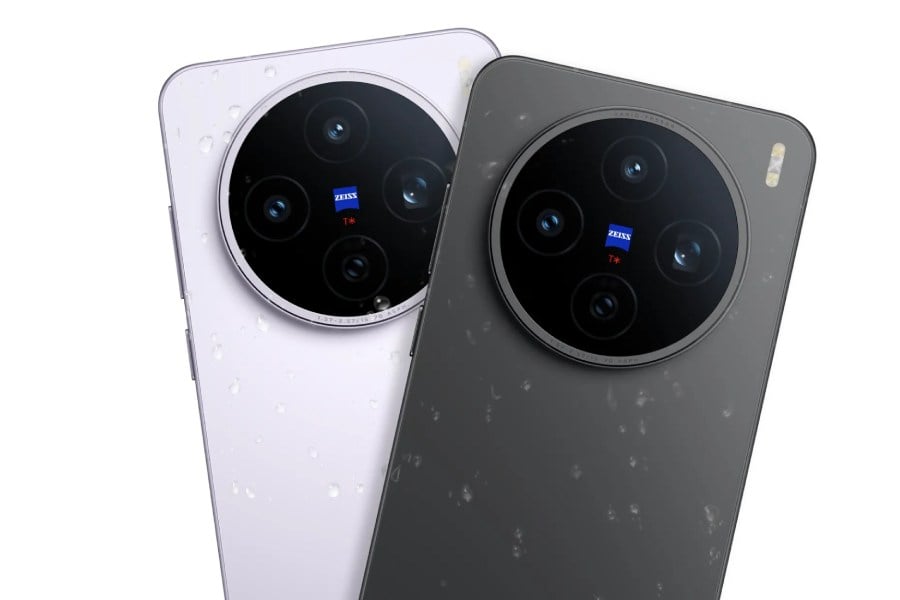
Vivo has launched the X300 series with iterative improvements across both design and specifications. One of the notable upgrades comes in the camera department — a new 200MP ISOCELL HPB sensor from Samsung. It powers the main camera on the standard X300 and the 3.7x periscope telephoto on the X300 Pro.

Vivo X300 Pro (left) vs Galaxy S25 Ultra (right) — 10x samples on closer inspection

Samsung, on the other hand, still uses a 10MP sensor for the 3x periscope telephoto on its S Ultra phones. But since the S Ultra still costs significantly more than the X300 Pro (starting at around $750 in China) and is widely regarded as one of the best camera phones out there, it’s worth seeing how the Galaxy S25 Ultra stacks up against Vivo’s X300 Pro.

The camera samples shared by tipster Ice Universe were taken at 10x and 35x zoom in relatively low-light conditions — and they show just how capable Vivo’s zoom setup really is. At first glance, both 10x samples look similarly saturated. But the X300 Pro preserved textures much better than the S25 Ultra, which suffered from noticeable noise and artifacts. To be fair, it’s not just about sensor size — much of it comes down to image processing, especially noise handling. Moving to the 35x shots, the difference becomes even more apparent.

Perhaps there’s a limit to how much “intelligent” image processing can squeeze out of a sensor design that dates back half a decade. Either way, the difference in final output is clear — and for most users, that alone could be a deal-breaker.

Vivo X300 Pro (left) vs Galaxy S25 Ultra (right) — 35x samples on closer inspection

Samsung’s upcoming Galaxy S26 Ultra hasn’t exactly thrilled enthusiasts either, with most leaks suggesting a nearly unchanged camera setup. There will likely be more “AI-assisted” imaging improvements in the next flagship, but it’ll be interesting to see how that compares against the Vivo X300 Ultra when it launches.

And for those wondering, there’s also a side-by-side comparison of main camera samples from the standard Vivo X300 and the Galaxy S25 Ultra, taken in broad daylight.

Don’t miss a thing! Join our Telegram community for instant updates and grab our free daily newsletter for the best tech stories!

For more daily updates, please visit our News Section.

(Source)

Every Type of Smartphone Case Explained: Find the Right Fit for Your Device

Choosing the right smartphone case isn’t just a simple matter of picking your favorite color. With so many options on the market, from hard shells, soft shells and others, it helps to understand what differentiates them. From materials like polycarbonate and TPU to design features like kickstands or built-in wallets, the type of case you choose affects protection, aesthetics and everyday usability. So here’s a quick breakdown of the major types of smartphone cases.

1. Hard Shells

Type of Smartphone Case Explained
Hard Case

Hard shell cases are typically made from strong plastics such as polycarbonate (PC) and often combine this with a softer inner layer for impact absorption. These cases are known for their durability, minimal flex and ability to resist scratches and accidental dings. These rigid polycarbonate protective covers offer structural strength while still letting wireless signals pass through without interference.

However, the trade-off is that hard shells can feel rigid in the hand and may not absorb shocks as well as softer materials. If your priority is maintaining the slim profile of your phone while keeping it protected from everyday abuse, a hard shell style is a strong choice.

2. Soft Cases

Silicon Case

Flexible cases are by far one of the most popular cases in the market. These use materials like thermoplastic polyurethane (TPU), silicone or a soft rubbery blend that prioritize grip and shock absorption. These types are described as offering good impact protection thanks to their softer material that can flex and disperse the energy of a drop.

Because they fit snugly, they are great for users who drop their phone often. The downside may be that they can attract dust or become stretched over time, and they often feel thicker. Some of the transparent options even struggle with discoloration that makes them turn yellow. But for regular protection that prioritizes function over fashion, flexible bumper-style cases are a practical pick.

3. Wallet Cases

Wallet Case

Wallet or folio cases open like a book and often include extra features such as card slots, cash pockets or even a stand mode. These are popular among the more mature crowd who wish to minimize the number of items in their pocket or get rid of a wallet for an all-in-one case. These tend to be made from faux or real leather, and their design blends protection with accessory-style utility. Real leather cases offer a premium look and feel. While these do look elegant, they aren’t as great for protection as bulkier rugged cases.

4. Rugged Cases

Type of Smartphone Case Explained
Rugged Case

For users who demand maximum protection, a rugged case is designed to offer the best possible protection. These are suited for people working in rough environments, outdoors, and are even popular for those who want peace of mind. These often combine a hard outer shell and soft inner layer, reinforced corners, raised camera lips and sometimes built-in screen protectors.

Most robust units use a combination of a hard outer shell plus a soft sleeve, often TPU inside polycarbonate frames. The drawback with these cases is the noticeable bulk being added to your phone that basically mask the original design of your smartphone.

5. Specialty Cases

XIaaomi 17 Pro series retro handheld case

Beyond protection, cases today also serve as style statements or add other nifty functions. Some of the feature Materials like wood, metal, carbon fibre and aramid fibre are increasingly used to give phones a unique look and feel.

You even get fun options like the retro handheld console case for the Xiaomi 17 Pro, which helps turn the typical protective cover into a functional retro controller. These might not always offer the best protection, but these make up for it with aesthetic or material value.

For more daily updates, please visit our News Section.

Tech enthusiast? Get the latest news first! Follow our Telegram channel and subscribe to our free newsletter for your daily tech fix! ⚡

OnePlus Ace 6 appears on China Telecom listing just ahead of launch

OnePlus is gearing up to launch its Ace 6 on October 27, and we now get more details about it as it has been listed on China Telecom. 

The Ace 6’s (model number OPPO PLQ110) carries a familiar squircle rear camera module, which houses a 50MP main sensor alongside an 8MP secondary lens. 

Up front, there’s a 16MP selfie camera, set into a 6.83-inch FHD+ display (2800×1272) likely with a 120Hz refresh rate. 

Powering the device is the SM8750 processor, better known as the Snapdragon 8 Gen Elite. In terms of software, the Ace 6 will ship with Android 16-based ColorOS 16 out of the box. 

OnePlus isn’t holding back on storage options either. The phone will be available in five configurations, starting from 12GB + 256GB and going all the way up to 16GB + 1TB. The Ace 6 will be available for purchase in three shades: Competitive Black, Quick Silver, and Flash White.

OnePlus Ace 6

The Ace 6 also comes with a massive 7,800mAh battery. Despite this, the device measures 163.41 × 77.04 × 8.32mm and weighs about 213g. Connectivity options include a USB Type-C port, though transfer speeds are listed at USB 2.0 HS, which feels a bit dated for a flagship-tier phone.

OnePlus Ace 6 Specifications

Display6.83-inch touchscreen, 2800×1272 (FHD+), 120Hz
ProcessorSnapdragon 8 Elite (SM8750)
Operating SystemAndroid 16-based ColorOS 16
Rear Cameras50MP (main) + 8MP (secondary)
Front Camera16MP
Battery7800mAh (non-removable)
Charging PortUSB Type-C (USB 2.0 HS)
Storage & RAM Options12GB+256GB / 16GB+256GB / 12GB+512GB / 16GB+512GB / 16GB+1TB
Dimensions163.41 × 77.04 × 8.32mm
Weight~213gm
ColorsCompetitive Black, Quick Silver, Flash White

Don’t miss a thing! Join our Telegram community for instant updates and grab our free daily newsletter for the best tech stories!

For more daily updates, please visit our News Section.

Xiaomi TV S Pro Mini LED Series 2026 Launched: Giant 98-Inch 4K 144Hz Display

Xiaomi has just launched a series of new smart TVs that feature Mini LED backlighting technology. The Xiaomi TV S Pro Mini LED Series 2026 arrives with a massive screen sizze, ultra high resolution, and other flagship grade specs. So stick around for more.

Xiaomi TV S Pro Mini LED Series 2026: What Does it Offer?

The Chinese tech giant’s latest Mini LED Smart TVs arrive with a frameless, boundless design with super slim bezels surrounding the screen. Xiaomi previously released the TV S Pro Mini LED Series 2026 in 55-inch, 65-inch, 75-inch, and 85-inch models, and now, the company has announced a massive 98-inch model in the brand’s home market of China. The gigantic display supports a 144Hz refresh rate that can be bumped up to 288Hz, MEMC technology (at 4K 120Hz), 93 per cent, DCI-P3, HDR10+, Dolby Vision support, and peak brightness of 5,700 nits.

Xiaomi TV S Pro Mini LED Series 2026
Xiaomi TV S Pro Mini LED Series 2026 Models

With Mini LED technology, the biggest Xiaomi TV S Pro Mini LED 2026 model offers 880 dimming zones. You also get Xiaomi Qingshan eye protection, a Filmmaker maker mode, and Xiaomi’s Visual Engine Pro that incorporates low reflection tech to reduce glare for a more immersive experience. For audio, the smart TVs feature a 2.1.2 audi Harman tuned speaker setup that includes 2 25W full-range and high-frequency audio units, 1 15W low-frequency unit, and 2 8W high-frequency drivers.

Under the hood, the Xiaomi TV S Pro Mini LED Series 2-6 runs on a quad core chip with 4GB of RAM and 64GB of internal storage, with the model running on Google TV. Other notable features include Bluetooth 5.2, WiFi 6, three HDMI 2.1 ports, a 3.5mm audio jack, and an Ethernet port. Xiaomi has just announced the massive Mini LED smart TV in China for 7,599 Yuan (roughly 1,066 US Dollars), which is available for pre-orders right now.

For more daily updates, please visit our News Section.

Don’t miss a thing! Join our Telegram community for instant updates and grab our free daily newsletter for the best tech stories!

Redmi TV X 98 (2026) launches with a Mini LED screen, 144Hz refresh rate

Alongside the K90 series phones, Xiaomi has unveiled a massive 98-inch Redmi TV X 2026 in China. The TV is priced at 7,599 yuan (around $1,070), almost double the cost of the 85-inch model launched earlier this month, which comes in at 4,799 yuan (about $670).

For the price, the Redmi TV X 98 offers a Mini LED panel with 880 backlight zones and a peak brightness of 1300 nits. Xiaomi says the screen offers a 4K resolution, supports 144Hz natively, and can hit 288Hz in competitive mode. 

The company also claims that its Qingshan Eye Protection system uses a combination of hardware and software to reduce blue light and automatically adjust color temperature based on ambient lighting.

Under the hood, the TV runs HyperOS 3 and packs a quad-core Cortex-A73 processor, 4GB of RAM, and 64GB of storage. Connectivity options include Wi-Fi 6, Bluetooth 5.2, and dual HDMI 2.1 ports with support for eARC. There’s also a USB 3.0 port, Ethernet, and optical audio output for traditional setups.

On the display side, Xiaomi promises HDR10+ support, DCI-P3 94% color gamut, and a ΔE≈2 color accuracy, with every unit factory-calibrated. 

There’s even a “Full-Stack Color Engine” and an AI-driven local dimming system that manages contrast and brightness on a zone-by-zone basis. The result, according to Xiaomi, should be deeper blacks, brighter highlights, and more natural color reproduction

For gamers, the Redmi TV X 2026 supports VRR, Dolby Vision Gaming, and FreeSync Premium, paired with a 4ms response time.

Like other Xiaomi TVs, it also doubles as a smart home hub. The new Xiao Ai assistant can recognize multiple Chinese dialects and maintain continuous conversations, while the updated interface links seamlessly with other Xiaomi ecosystem devices. You can also watch multiple sports games at once or turn the TV into an art display when not in use.

Don’t miss a thing! Join our Telegram community for instant updates and grab our free daily newsletter for the best tech stories!

For more daily updates, please visit our News Section.

6 Must-Have Accessories for iPad

Apple loves to call the iPad a computer, and honestly, the claim isn’t far from reality. Over the years, the iPad has evolved from a simple tablet into something that can replace a laptop, notepad, or drawing tablet. 

However, the iPad doesn’t reach its full potential on its own. It needs its supporting cast. We mean accessories. Whether you’re sketching or just trying to make Netflix nights better, the right gear can completely change how your iPad feels to use.

So, here are the must-have accessories to consider for your iPad.

1. Apple Pencil

If there’s one accessory that defines (and refines) the iPad experience, it is the Apple Pencil. It is the sole reason that the iPad can replace a full drawing tablet. 

All the Apple Pencils, from first-gen to Pro, are designed to offer low-latency input for drawing, writing, and annotating on iPads. The 2nd-gen Apple Pencil also supports magnetic charging and quick tool switching for easier use.

If you have a 10th-gen iPad or an older model that doesn’t support the 2nd-gen Pencil, Apple recently released a USB-C Apple Pencil, which is cheaper and still great for basic writing and drawing. It lacks pressure sensitivity, but it’s a solid entry point for casual users.
For those who want the best stylus experience can choose Apple Pencil Pro. It is compatible with iPad models powered by the M2 chip and above, and with iPad mini (A17 Pro). The Pencil Pro has some exclusive features up its sleeves, including Haptic Feedback, Find My, Squeeze gesture, and more.

2. Magic Keyboard (or a Great Alternative)

Typing on glass is fine for short messages, but if you want to actually work on your iPad, a proper keyboard is a must.

Apple’s Magic Keyboard is the gold standard. It transforms your iPad into a sleek mini-laptop, complete with a backlit keyboard, smooth trackpad, and a floating magnetic hinge that looks futuristic every time you open it. The typing experience is also fantastic, as you’d expect from Apple.

However, it’s not an affordable accessory, and unlike the Apple Pencil, it’s not something you must buy from Apple. There are some great alternatives like the Logitech Combo Touch that offer a similar experience with a detachable keyboard, built-in kickstand, and trackpad at a lower price.

3. Screen Protector

Apple-iPad-Pro-13-2024

Phone or tablet, a screen protector is always a must. As JerryRigEverything says, “glass is glass and glass breaks.” It’s prone to scratches, no matter how tough the glass claims to be.

You’ve got two main types to choose from: tempered glass and matte paper-like protectors. Glass protectors keep that crisp, glossy look and don’t reduce contrast. Meanwhile, matte “paper” protectors like Paperlike or MOSISO give the screen a textured feel, perfect for note-takers and artists using the Apple Pencil.

There is a trade-off: matte protectors slightly reduce clarity and brightness. But for many users, the improved writing feel makes it worth it.

4. A Sturdy Case or Sleeve

No matter how careful you are, your iPad will take a few hits. A good case means you can be confident it’ll survive a slip or drop.

If you want slim protection that doesn’t hide Apple’s design, the Apple Smart Folio is a classic. It’s thin, magnetic, and doubles as a simple stand. But if you need something tougher, OtterBox and UAG make rugged cases that can handle drops and bumps.

And for people who carry their iPad to class, cafés, or meetings, a sleeve is a great option. Brands like Inateck, Tomtoc, and Bellroy make soft, minimal sleeves that look professional and protect against scratches.

5. External Storage

If you’re someone who frequently edits videos on an iPad, manages large design files, or simply runs out of space, an external SSD can save you. Sure, iCloud is great, but it’s not always fast, cheap, or available when you are offline.

The iPad’s USB-C port (on most modern models) makes connecting drives incredibly simple. The Samsung T7 Shield and SanDisk Extreme Portable SSD are fast, compact, and rugged.

They work seamlessly with apps like Files and LumaFusion, letting you transfer or edit directly from the drive. If you’re on an older Lightning-based iPad, you can still use flash drives with an adapter. It’s not as elegant, but it works.

6. A Stand or Dock

If you like to use your iPad as a second screen, for video calls, or for watching YouTube while cooking, a stand is a thoughtful addition to your setup.

There are plenty of options. The Twelve South HoverBar Duo clamps to your desk or table and holds the iPad at almost any angle. For a simpler option, the Lamicall adjustable stand is sturdy, sleek, and affordable.

Some docks, like the Satechi Aluminum Hub, also combine a stand with USB ports, HDMI, and SD card slots.

Don’t miss a thing! Join our Telegram community for instant updates and grab our free daily newsletter for the best tech stories!

For more daily updates, please visit our News Section.

Microsoft rushes out emergency Windows 11 patch to fix a critical issue in the October 2025 security update

If your Windows 11 PC recently refused to boot and you suddenly found your keyboard and mouse unresponsive, you weren’t alone. A botched October update left many users stuck in the Windows Recovery Environment (WinRE) with no way to control their PCs — a nightmare scenario that forced Microsoft to push out an emergency fix this week.

The issue came from update KB5066835, rolled out earlier this month. It broke support for USB keyboards and mice inside WinRE — the part of Windows that kicks in when something goes wrong, like failed startups, malware cleanup, or system resets. Without working input devices, users were left staring at the recovery screen, unable to even select options or type commands.

Reports quickly spread across Reddit and Microsoft’s support forums, with some desperate users digging out ancient PS/2 keyboards or pairing Bluetooth devices just to escape the recovery loop.

“After installing the Windows security update released on October 14, 2025 (KB5066835), USB devices, such as keyboards and mice, do not function in the Windows Recovery Environment (WinRE). This issue prevents navigation of any of the recovery options within WinRE,” the company clarified in a blog post.

Microsoft has since released a fix: KB5070773, an “out-of-band” update now available via Windows Update and the Microsoft Update Catalog. It restores USB functionality in WinRE for Windows 11 versions 24H2, 25H2, and Windows Server 2025.

For everyday users, it’s a good reminder to keep both your system and recovery partitions up to date — and maybe keep a bootable USB handy, just in case. With KB5070773 now live, affected users can finally regain control of their PCs — and breathe a little easier next time Windows decides to go off-script.

Don’t miss a thing! Join our Telegram community for instant updates and grab our free daily newsletter for the best tech stories!

For more daily updates, please visit our News Section.

(Source: Microsoft)

Redmi K Pad gets a stunning new Flowing Gold White color

Xiaomi has updated the Redmi K Pad tablet lineup with a new “Flowing Gold White” color option. The new variant starts at 2,999 yuan ($420) for the 12GB + 256GB model after a 100-yuan ($14) first-sale discount. Xiaomi also offers a 16GB + 512GB version at a launch price of 3,499 yuan ($490).

This new finish joins the previously released Deep Black, Misty Purple, and Spruce Green color options. The tablet maintains its 8.8-inch LCD screen with a resolution of 3008×1880, a variable 165Hz refresh rate, and peak brightness of up to 700 nits in high-brightness mode. The display supports HDR10, HDR Vivid, Dolby Vision, and comes with Gorilla Glass 5 protection.

The device continues to use the Dimensity 9400+ processor. Xiaomi has implemented a centered thermal architecture and a 12050mm² aluminum alloy vapor chamber to improve heat dissipation. The tablet supports native 3K full-frame gaming and includes the Immortalis-G720 MC12 GPU.

Redmi equips the tablet with LPDDR5X RAM and UFS 4.1 storage, offering up to 16GB of RAM and 1TB of internal storage. The tablet features a symmetrical quad-speaker setup with four-voice coil drivers and Dolby Atmos, along with dual X-axis linear motors for enhanced haptic feedback.

The tablet supports Wi-Fi 7 and includes a three-antenna concurrent architecture to reduce latency. It also has Bluetooth 5.4, USB Type-C 3.2 Gen1, and USB 2.0 ports. Xiaomi adds support for bypass charging via a new dual-USB-C design.

The device houses a 7500mAh battery and supports 67W fast charging. It has a 13MP rear camera and an 8MP front camera. The Redmi K Pad weighs 326g and measures 6.46mm in thickness.

Alongside this, the company also unveiled the Redmi K90 and Redmi K90 Pro Max smartphones, as well as the Redmi Watch 6.

For more daily updates, please visit our News Section.

Stay ahead in tech! Join our Telegram community and sign up for our daily newsletter of top stories! 💡

Xiaomi Launches Redmi K90 Pro Max Automobili Lamborghini Squadra Corse Champion Edition

In a fusion of high-performance tech and luxury automotive styling, Xiaomi’s subsidiary Redmi has unveiled the K90 Pro Max Champion Edition. This model arrives as a premium special variant of the newly launched Redmi K90 Pro Max, so here’s what it offers.

What’s New with Redmi K90 Pro Max Automobili Lamborghini Squadra Corse Champion Edition

The biggest change with the special edition is its design. Xiaomi has partnered up with Automobili Lamborghini’s motorsport arm, the Squadra Corse. The Champion Edition of the K90 Pro Max features a more premium build with a unique aesthetic. It features the Lamborghini brand logo on the rear, racing lines, and an angular camera module, which still houses the 2.1 speaker unit but replaces the Bose logo with a Redmi branding.

Redmi K90 Pro Max Automobili Lamborghini Squadra Corse Champion Edition

Apart from this, you get a special retail box that includes a special protective case and charging adapter that also adapts a similar Lamborghini inspired design language. All of the internals remain the same, so buyers still get the Snapdragon 8 Elite Gen 5 SoC, massive 7560mAh battery pack, Xiaomi 17’s main camera on the rear, and Xiaomi 17 Pro Max’s display on the front. Just like the standard Redmi K90 Pro Max, this model is alsothe first Redmi branded smartphone with a 5x periscope telephoto shooter.

The Chinese tech giant just announced the Redmi K90 Pro Max Automobili Lamborghini Squadra Corse Champion Edition in China for 5,299 Yuan (roughly 771 US Dollars) for the lone 16GB + 1TB storage configuration. It is also available for purchase in China along with the regular version.

For more daily updates, please visit our News Section.

Tech enthusiast? Get the latest news first! Follow our Telegram channel and subscribe to our free newsletter for your daily tech fix! ⚡

Redmi Watch 6 launched with 2.07″ AMOLED display, HyperOS 3 & 24-day battery

Xiaomi has officially launched the Redmi Watch 6 in China, its latest budget smartwatch featuring a large AMOLED display, long battery life, and deep integration with the HyperOS ecosystem. The watch is priced at 599 yuan ($84) in China and comes in three color options: Misty Blue, Elegant Black, and Moonlight Silver.

Redmi Watch 6

Redmi Watch 6 Specifications

The Redmi Watch 6 features a 2.07-inch AMOLED display with a resolution of 432×514 pixels, a 2000-nit peak brightness, and a 60Hz refresh rate. The display has ultra-narrow 2mm bezels on all sides and an 82% screen-to-body ratio, protected by 2.5D curved glass. The watch supports a full-color Always-On Display (AOD) at 5Hz, allowing users to view time and notifications even when the screen is off.

Xiaomi has equipped the watch with a dual-button layout, including a repositioned stainless-steel crown and an additional side button for quick access to key functions. The case measures 46.45 × 40.03 × 9.94 mm and weighs 31 grams without the strap. It uses a high-strength aluminum alloy frame and supports quick-release interchangeable straps, available in both silicone and vegan leather options.

Redmi Watch 6

The Redmi Watch 6 is powered by HyperOS 3, enabling smooth connectivity with smartphones, smart home devices, and even vehicles. It allows users to control home appliances, unlock supported cars, and access interactive notifications. The watch also supports Xiao Ai voice assistant and lets Android users reply to WeChat messages directly from the watch.

Xiaomi has equipped the watch with a 550mAh battery that provides up to 24 days of usage in basic mode, 12 days in typical scenarios, and 7 days with AOD turned on. It supports magnetic charging and includes a linear vibration motor with over 20 haptic feedback styles.

Redmi Watch 6

The watch supports independent dual-L1 GNSS positioning and is compatible with GPS, GLONASS, Galileo, QZSS, and BeiDou. It includes health monitoring features such as 24-hour heart rate tracking, all-day SpO₂ monitoring, sleep tracking, stress detection, and women’s health management. It is also rated 5ATM water-resistant, suitable for swimming and shallow-water activities.

The Redmi Watch 6 supports more than 150 sports modes, including automatic recognition for walking, running, and cycling. It comes equipped with Bluetooth 5.4, NFC, music playback, voice recording, compass, weather updates, calendar synchronization, and remote camera control.

Alongside the smartwatch, the company also introduced the Redmi K90 and Redmi K90 Pro Max smartphones.

For more daily updates, please visit our News Section.

Stay ahead in tech! Join our Telegram community and sign up for our daily newsletter of top stories! 💡

(Source)

Get Huawei FreeClip 2 at Giztop: AI-Powered Open-Ear Earbuds for $229

Huawei has introduced the FreeClip 2, a next-generation open-ear audio device that blends intelligent features with a stylish, comfortable design. Built for convenience, this wearable aims to deliver high-quality sound, long battery life, and smart controls for a seamless daily experience.

Price and Availability

The Huawei FreeClip 2 is priced at $229 and is available in Black, Blue, and White color options. You can get it on Giztop, which offers global shipping, making it accessible to users worldwide.

All-New C-Bridge Design for Ultimate Comfort

The FreeClip 2 adopts Huawei’s innovative “Cloud-feel C-Bridge” design, crafted from new materials that make it 25% softer than the previous model. This flexible structure reduces pressure on the ear, ensuring all-day comfort whether you’re working, exercising, or on the go.

Smarter Audio and AI-Powered Interactions

At its core, the FreeClip 2 is powered by Huawei’s 3rd-generation self-developed audio chip with an NPU AI processor. This smart processor can sense your surroundings in real-time and automatically adjust the volume for optimal clarity. Whether you’re in a quiet library or a busy street, you’ll always hear your music or calls clearly.

Gesture Control and Real-Time Translation

Huawei adds convenience with head gesture controls; you can answer or reject calls by simply nodding or shaking your head. For travelers and multilingual users, the AI Translation feature supports real-time translation between Chinese and 20 other languages, acting like your personal interpreter.

Enhanced Sound and Connectivity

The FreeClip 2’s 10.8mm open dual-diaphragm unit delivers a 100% boost in both loudness and bass power, improving on the limitations of typical open-ear headphones. With Bluetooth 6.0 and support for L2HC audio coding, it ensures fast and stable connections. A future update will introduce SparksLink (StarLink) audio for even better sound quality and stability.

Dual Device Connection and Long Battery Life

The earbuds support automatic pairing with nearby Huawei phones, tablets, or PCs running HarmonyOS 3.0 or higher, and can stay connected to two devices at once, allowing smooth audio switching. On a single charge, the FreeClip 2 lasts up to 9 hours, and with the charging case, users can enjoy up to 38 hours of playback.

Easy Touch Controls

With tap and swipe gestures, users can easily adjust volume, answer calls, and control music playback. 

The Huawei FreeClip 2 stands out as a smart, stylish, and AI-enhanced audio companion designed for comfort, clarity, and convenience in everyday use.


Read More:

Redmi K90 Pro Max Debuts: HyperOS 3, Bose Speakers, & Snapdragon 8 Elite Gen 5

After weeks of rumors and teasers, Xiaomi has finally unveiled the highly anticipated Redmi K90 Pro Max in its home market of China. The company’s popular budget subsidiary’s K90 lineup is the latest flagship series, packing impressive specs and features that can even rival the premium Xiaomi 17 series. So here’s everything you need to know.

Redmi K90 Pro Max: Design & Display

The Redmi K90 Pro Max was just unveiled with a refined and premium build quality, which also appears quite familiar. Just like the Xiaomi 17 Pro Max, the K90 Pro Max features a flat rear panel, flat metallic edges, and a large rectangular camera island. Although this one skips the secondary camera on the back. This module features three camera sensors, an LED flash, and a dedicated rear facing speaker with “Sound by Bose” tuning.

Redmi K90 Pro Max

Xiaomi has confirmed that the Redmi K90 Pro Max has an IP68 rating for high-end water and dust resistance. There are multiple color variants of this model, with a notable option being a denim blue variant. Xiaomi is even reproducing the texture and feel of real denim on this model, without compromising on dirt, wear, and scratch resistance.

On the front, this model borrows the same screen as the Xiaomi 17 Pro Max, sporting a tall 6.9-inch M10 OLED display with a 2K+ resolution, a 120Hz refresh rate, 3500 nits of peak brightness, uniform bezels on all four sides, and Xiaomi’s Qingshan Eye Protection 3.0 that offers 1-nit low-light eye protection, full brightness DC dimming, and Circular Polarized Light 2.0 to reduce glare and eye strain during extended use.

Hardware

While the K90 Pro Max drops from Xiaomi’s budget sub brand, Redmi’s latest flagship brings cutting edge hardware under the hood. The device is equipped with the Snapdragon 8 Elite Gen 5 SoC, which is paired with up to 16GB of RAM and 1TB of storage. So you can expect flagship level performance. For an improved gaming experience, Redmi packs this model with a dedicated D2 graphics chip. A large 6,700mm² 3D ice-cooling system helps keep the temperature in check.

Redmi K90 Pro Max - 2.1 speaker
Redmi K90 Pro Max With Bose Tuned Speakers

Another impressive aspect of the Redmi K90 Pro Max is battery capacity and charging. A gigantic 7,560mAh battery pack powers this device, which supports 100W wired fast charging and 50W wireless fast charging. You also get 22.5W reverse wireless charging support. This model runs on the Android 16 OS based HyperOS 3 custom skin out of the box. The audio setup is another highlight of this device. The Redmi K90 Pro Max stands out with a sizeable 2.1 channel audio thanks to a dedicated speaker on the back, which has its audio tuned by Bose. This audio setup includes two ultra linear speakers and a large independent bass unit.

Photography

Redmi K90 Pro Max

While the display on the front is the same as the Xiaomi 17 Pro Max, the main camera on the rear is taken from the standard Xiaomi 17. So you get a 50MP 1/1.31-inch Light Fusion 950 main sensor, a 50MP OV50M ultra wide angle lens, and a 50MP Samsung JN5 periscope telephoto shooter with 5x optical zoom (a first for a Redmi smartphone).

Pricing and Availability

Xiaomi has just unveiled the Redmi K90 Pro Max in China in four color options, namely gold, white, black, and the denim version. There are multiple storage configurations as well, so here are the pricing details:

  • 12GB + 256GB – 3,999 Yuan
  • 12GB + 512GB – 4,499 Yuan
  • 16GB + 256GB – 4,799 Yuan
  • 16GB + 1TB – 5,299 Yuan

Early buyers get 2 years of accidental screen damage protection, 2 years of battery coverage, and more.

For more daily updates, please visit our News Section.

Don’t miss a thing! Join our Telegram community for instant updates and grab our free daily newsletter for the best tech stories!

Redmi K90 launches with Snapdragon 8 Elite, Bose-tuned speaker, and 7100mAh battery under $400

Redmi has officially launched its new K90 series in China, and while the top-end K90 Pro Max is getting the flagship spotlight, the standard Redmi K90 is no less. 

At just around $350, the K90 delivers hardware that would have cost twice as much not long ago, including a 2K display, a Snapdragon 8 Elite chip, and even sound tuning by Bose.

Redmi K90 Specifications

The Redmi K90 sports the same TCL M10 screen as the Xiaomi 17 series. It’s a 6.59-inch 2K LTPO display with a 120Hz refresh rate and 3500 nits of peak brightness. The flat panel also has 2560Hz PWM Dimming and HDR10+ and Dolby Vision support. 

Under the hood, Redmi has gone with Qualcomm’s Snapdragon 8 Elite SoC paired with Adreno 830 GPU, LPDDR5X RAM, and UFS 4.1 storage. It also has a 5300mm² cooling area with a three-step design to keep thermals under control. Out of the box, the phone runs HyperOS 3, Xiaomi’s latest software overhaul based on Android 16.

The K90’s camera setup packs a 50MP Light Hunter 800 main camera with OIS, joined by an 8MP ultrawide and a 50MP 2.5x telephoto periscope lens on the rear. Whereas the front has a 20MP camera for selfies. 

Powering all that is a massive 7100mAh battery with 100W wired charging, which should easily deliver more than a full day of heavy use. Other notable features include Wi-Fi 7, Bluetooth 5.4, NFC, IP68/IP69 water and dust resistance, and a 3D ultrasonic in-display fingerprint scanner.

The phone also brings dual stereo speakers tuned by Bose and a refined X-axis linear motor for better haptic feedback. Despite its large battery, it’s relatively sleek at 8mm thick and weighs 206 grams.

Price and Availability

Available in Light Purple, Aqua Blue, Black, and White, the Redmi K90 starts at 2,599 yuan for the 12GB + 256GB model, scaling up to 3,999 yuan for the 16GB + 1TB variant. 

Here’s the full price breakdown:

  • 12GB+256GB: 2,599 CNY (~Rs 32,100 | ~$360)
  • 16GB+256GB: 2,899 CNY (~Rs 35,750 | ~$410)
  • 12GB+512GB: 3,199 CNY (~Rs 39,400 | ~$450)
  • 16GB+512GB: 3,499 CNY (~Rs 43,100 | ~$490)
  • 16GB+1TB: 3,999 CNY (~Rs 49,200 | ~$560)

Don’t miss a thing! Join our Telegram community for instant updates and grab our free daily newsletter for the best tech stories!

For more daily updates, please visit our News Section.

DJI Osmo Mobile 8 accidentally appears on official site, revealing design and key features

DJI may have just spoiled its own surprise. The company’s next smartphone gimbal, the Osmo Mobile 8, briefly appeared on its official Chinese website before being pulled down—confirming a design overhaul and several new features ahead of its official launch.

First spotted by GSMArena, the listing revealed detailed product images, key specifications, and even pricing before vanishing with a “Sorry, the page was not found” message. It appears DJI uploaded the page early, unintentionally revealing what could be one of the brand’s biggest mobile stabilizer refreshes in years.

From the leaked materials, the Osmo Mobile 8 keeps DJI’s signature 3-axis stabilization but adds a few clever upgrades. The standout feature is 360-degree rotation support, allowing smoother panoramic motion and creative transitions without manual repositioning. The gimbal also includes an integrated extension rod for low-angle or selfie shots, a feature returning from the previous generation.

The design looks lighter and sleeker, featuring a fourth-generation magnetic clamp with stronger grip—likely to better accommodate larger flagship phones like the iPhone 17 Pro Max or Nubia Z80 Ultra. DJI’s signature ergonomic grip also appears refined, with accessible quick-action buttons and an improved folding mechanism for portability.

Software-wise, references to ActiveTrack 7.0 were spotted, suggesting smarter and faster subject tracking via the DJI Mimo app. Another image hinted at an optional multifunction module featuring a fill light and built-in microphone—potentially combining stabilization, lighting, and audio capture into a single setup for vloggers.

The briefly visible price tag listed CNY 898 (around $125) for the standard kit, with a Vlog Kit version priced slightly higher. While DJI has yet to make an official announcement, the early listing strongly indicates that a formal reveal is imminent—likely within the next few weeks.

With 360-degree tracking, better ergonomics, and AI-assisted shooting, the Osmo Mobile 8 looks like a solid step forward for creators on the go. Now, it’s just a matter of when DJI decides to make it official.

Don’t miss a thing! Join our Telegram community for instant updates and grab our free daily newsletter for the best tech stories!

For more daily updates, please visit our News Section.

(Via)

Realme GT 8 Pro at Giztop: Starts at $699 with Worldwide Shipping

Realme GT 8 Pro is the brand’s latest flagship smartphone, designed for those who crave top-tier performance, cutting-edge visuals, and long-lasting power. With its sleek design and premium hardware, it delivers an all-around experience that’s ideal for gaming, photography, and everyday productivity.

Price and Availability

Realme GT 8 Pro is available at a starting price of US $699 on Giztop, with worldwide delivery options. It comes in three elegant colors: White, Blue, and Green, allowing users to pick a style that suits them best. Giztop confirms international shipping, making the device accessible to buyers across the globe.

Brilliant Display and Smooth Performance

The Realme GT 8 Pro comes with a stunning 6.79-inch QHD+ OLED display that offers ultra-sharp visuals and vibrant colors. With a 144Hz refresh rate and 2600Hz touch sampling rate, it ensures buttery-smooth interactions and responsive touch controls, perfect for gaming and fast scrolling. The screen can reach an impressive 6500 nits peak brightness and supports 4608Hz PWM dimming for eye comfort in any lighting condition.

Powering this device is the latest Snapdragon 8 Elite Gen 5 octa-core processor, paired with up to 16GB LPDDR5X RAM. Whether you’re switching between apps, editing videos, or playing heavy games, the GT 8 Pro handles everything effortlessly.

Professional-Grade Camera System

Photography lovers will appreciate the triple rear camera setup featuring a 50MP OIS main lens, a 200MP periscope telephoto camera, and a 50MP ultra-wide lens with a 116-degree field of view. The 32MP front camera ensures detailed and clear selfies, making it perfect for vlogs and video calls.

Massive Battery and Fast Charging

The Realme GT 8 Pro is powered by a 7000mAh dual-cell battery, offering excellent endurance for heavy users. It supports 120W SuperVOOC fast charging, allowing users to quickly top up and get back to action in minutes.

Advanced Cooling and Audio

For gamers, Realme includes a diamond ice core cooling system that spans 7700mm² with aerospace-grade cooling gel and 3D graphene layers, ensuring stable performance during long gaming sessions. Dual stereo speakers with Dolby Atmos support deliver immersive audio, whether you’re gaming or watching movies.

Software and Security

Running on Realme UI 7.0 based on Android 16, the phone offers a clean and fast interface with the latest features. It also includes an under-display fingerprint sensor for secure and quick unlocking, and full access to Google Play for apps, movies, and more.

The Realme GT 8 Pro blends cutting-edge performance, premium display technology, and advanced cooling into one powerful package, making it one of the most feature-rich flagships in Realme’s lineup.


Read More:

Samsung Galaxy S26 Ultra may go Snapdragon-only as Exynos 2600 faces yield issues

Samsung has officially entered the 2nm era, but not without turbulence. The company’s Foundry Division has kicked off mass production of its next-gen Exynos 2600 chipset using its cutting-edge 2nm GAA process. While this should mark a triumphant return for Samsung’s in-house silicon after the Exynos 2500’s absence from the Galaxy S25, the reality is more complicated.

Exynos 2500
Exynos 2500

Galaxy S26 Ultra could drop Exynos 2600

According to a report by Korean outlet Dealsite, initial output stands at just 15,000 wafers, with yield rates hovering around 50%, far below the industry’s target of 70% for profitability. That number, while an improvement over Samsung’s broader 2nm yields in the 30% range, still limits how widely the Exynos 2600 can be deployed.

Sources now suggest that only about 30% of Galaxy S26 units will ship with the Exynos 2600, primarily in Samsung’s home market. The flagship S26 Ultra is expected to skip the chip entirely, instead relying on Qualcomm’s Snapdragon 8 Elite Gen 5, contradicting earlier reports that projected a full Exynos rollout across all S26 variants.

The reduced allocation follows promising early tests that initially supported a broader deployment. However, limited wafer supply and unstable 2nm yields have forced Samsung to scale back. The Foundry Division now faces a pivotal moment as it works to recover from mounting losses and rebuild trust with major partners.

Samsung is also preparing to produce Tesla’s AI6 chip using the same 2nm process, with pilot runs scheduled for next year and full-scale production expected by 2027. The deal, valued at around 22 trillion won (roughly $15.2 billion), includes plans for roughly 10,000 wafers per month. However, initial output will remain limited, and profitability will depend heavily on improving yield rates.

Despite the growing pains, Samsung’s Exynos 2600 and Tesla AI6 projects are shaping up as high-stakes proving grounds. If the company can stabilize its 2nm output, it could turn these two chips into marketing weapons, and perhaps even lure Qualcomm back into the fold.

For more daily updates, please visit our News Section.

Stay ahead in tech! Join our Telegram community and sign up for our daily newsletter of top stories! 💡

(Source)

Honor Power 2 to pack a 10,000mAh battery in an 8mm body

It’s been some time since we have been hearing rumors of Honor working on a smartphone with an unusually large battery. Now, new leaks from China have shed more light on what appears to be the Honor Power 2.

According to leaked details, the Honor Power 2 is expected to feature a 10,000mAh (±) battery. What’s impressive is that the phone reportedly measures around 8.0 mm thick, suggesting that Honor has done some serious work in optimizing its design.

Honor Power 2 specs leak

The device is also expected to feature a 1.5K LTPS flat display, an optical fingerprint sensor, and a drop-resistant body. Powering the phone will be the MediaTek Dimensity 8500 chip, which itself is yet to launch. 

The Honor Power 2 will succeed the first-generation Honor Power, which launched in April this year. This too comes with an impressively large battery—an 8,000mAh cell with 66W wired charging—while still maintaining an 8mm thickness.

It is decent in other areas as well. The Honor Power flaunts a 6.78-inch AMOLED panel with a 120Hz refresh rate, 4,000 nits of peak brightness, and HDR support. It’s powered by a Snapdragon 7 Gen 3 processor and carries a 50MP + 5MP rear camera setup, while the front camera uses a 16MP lens.

Honor Power officially launches with 8000mAh battery
Honor Power

Interestingly, the device even supports satellite connectivity on the 512GB model. It’s likely that some of these features will carry over to the Honor Power 2, with a few expected upgrades.

While Honor hasn’t confirmed anything officially yet, the release window is said to be Q1 2026, so we might not have to wait long to see how the company balances performance, design, and endurance in one device.

For more daily updates, please visit our News Section.

Stay ahead in tech! Join our Telegram community and sign up for our daily newsletter of top stories.

Striking a Balance Between Portability and PRO: The XPPen Artist 12 3rd Did

XPPEN Artist 12 3rd

For digital creators, the age-old dilemma persists: professional-grade drawing displays demand size and weight that make them impractical for desk use. At the same time, portable tablets often cut corners on the precision and functionality that define “pro” workflows. With 20 years of expertise in digital drawing, XPPen’s 12-inch Artist 12 3rd targets this gap directly—anchored by a featherlight 719g build and an upgraded stylus, its hardware is engineered to deliver mobility without compromise. So, we will examine whether, after addressing the portability issue, it still provides professional creative capabilities.

Core Hardware

The advantages of the XPPen Artist 12 3rd primarily lie in its “stylus” and “screen”. Let’s start with a set of key specifications: it boasts 16,384 levels of pressure sensitivity, enabling precise detection of pressure intensity—ink flows with the lightest touch—and a positioning error of less than 0.2 millimeters. These metrics are highly professional for their price range. Additionally, it maintains an ultra-lightweight profile of 719 grams.

Moreover, the X-Dial and its related shortcut functions are truly impressive. Firstly, the X-Dial is exceptionally easy to operate. Common tasks such as rotating the canvas and adjusting brush thickness can be done with just a turn, which naturally fits creative thoughts and greatly boosts creative efficiency. Then, the eight customizable shortcut keys can be pressed not only from the side but also from the front, and the key feedback is very clear, letting users know for certain that the commands have been executed.

Additionally, the new key layout narrows the bezel, resulting in a higher screen-to-body ratio. Visually, it is more immersive, enabling creators to focus more on their works. Whether it’s digital painting, illustration, or design work, these functions can adapt well to the workflow and become extremely practical and helpful assistants in the creative process, making the entire creative process both efficient and smooth.

Several thoughtful design details further enhance its usability. The stylus can be “magnetically attached” to the device: a strong magnetic module on the right side of the display instantly secures the stylus with a satisfying “click”. The magnetic force is so robust that we conducted a test—pulling the stylus could lift an object three times the stylus’s weight without it detaching. This eliminates the need for a stylus case and the worry of misplacing the stylus, a rare feature among 12-inch pen displays.

All-in-one connectivity via a single cable: It features a full-function USB-C port that handles charging, display output, and data transfer simultaneously. Unlike some pen displays that require separate HDMI and power cables—forcing users to carry a tangled mess of wires—this design reduces cable clutter by 60%, significantly enhancing portability.

Adjustable stand with storage consideration: The included stand, crafted from durable composite material, offers adjustable angles from 0° to 60° and remains stable even with a 500-gram load. However, due to the display’s slim 12-millimeter thickness, the stand cannot lie completely flat against the device when folded, adding approximately 15 millimeters to its storage footprint—roughly the thickness of a smartphone.

Practical Experience

When creating illustrations indoors, the performance of the X4 smart stylus is impressive. It accurately detects pressure variations, making it ideal for intricate details like hair strands or leaf veins. The drawing experience feels natural, eliminating the need to “press hard” as with older stylus models, which reduces wrist fatigue during extended sessions. It can render 128 distinct shades from light gray to deep black—double the industry average of 64 levels—with detail fidelity comparable to traditional paper drawing.

Near-zero latency: Professional testing showed that the latency between the stylus tip touching the screen and the image appearing ranges from 28 to 32 milliseconds, consistently meeting or exceeding the official 30-millisecond claim. When drawing quick circles or ellipses, there is no “trailing” effect. The difference in performance compared to the 11-inch iPad Pro is negligible, making it fully suitable for professional drawing tasks.

Left-handed users will find it intuitive: We specifically tested it with left-handed users. When drawing diagonal lines with the stylus tilted at 60°, the line angle error was only 0.8°. Additionally, a one-click “Left-Hand Mode” eliminates the need for cumbersome system adjustments.

One minor adaptation required: The original “bullet-shaped” nib has a slightly slippery surface, which may feel “hard to grip” during the first three uses. Replacing it with the included official “matte nib” resolves this issue, increasing friction by 40% and delivering a feel similar to drawing on 80-gram sketch paper.

Screen Performance

Authentic paper-like texture: The screen surface is coated with AG nano-etched glass. Under a microscope, it reveals dense 1.2-micron protrusions, closely mimicking the fiber structure of real sketch paper. In practice, the friction between the stylus nib and the screen is higher than that of regular glass. With a friction coefficient of 0.35, it prevents lines from straying due to slippage, making it highly comfortable for artists accustomed to traditional paper drawing.
Effective anti-glare, with limitations in direct sunlight: Testing on a balcony at noon showed a screen reflectivity of only 8.5%, ensuring clear visibility of image details. However, the screen’s maximum brightness is 260 nits. In direct sunlight environments, such as parks, the screen angle must be adjusted to over 45° to avoid “whitening” of the display.
Accurate color reproduction, reducing repetitive adjustments during editing: The screen covers 99.2% of the sRGB color gamut and 97.1% of the Adobe RGB color gamut, with a color accuracy of just 1.1—top-tier performance for its price range. When editing images in Photoshop, exported colors such as “sky blue” and “vegetation green” are nearly indistinguishable from those displayed on professional monitors, reducing post-color correction time by 60%.

Compatibility

The Artist 12 Gen3 supports four major operating systems: Windows, macOS, Android, and ChromeOS. We tested it with a Windows 11 laptop, MacBook, and 11-inch Huawei MatePad Pro. In all cases, the drivers installed successfully on the first attempt, with no issues such as “device not recognized” or “non-functional shortcut keys”.

However, after extended use, we identified three areas requiring optimization: Screen brightness: At 260 nits, visibility is limited to bright light. An anti-glare hood is recommended for outdoor use. Stand stability: The foldable stand has a maximum load capacity of only 500 grams, leading to slight wobbling during vigorous drawing. A third-party desktop stand is advised.

Nib compatibility: The initial bullet-shaped nib has low friction; replacing it with the matte nib is necessary to achieve the optimal drawing feel.

Conclusion

While the XPPen Artist 12 3rd is not a perfect pen display, it addresses the category’s core dilemma – “professional devices can’t be portable, while portable devices are not Pro enough” through its “lightweight design”. The overall performance surpasses that of most comparable products, empowering artists to create with ease.

Apple’s 20th anniversary iPhone might not be called iPhone 19 after all

Apple could be planning one of its biggest marketing shake-ups in years as the iPhone nears its 20th anniversary in 2027. According to new industry chatter, the company might skip “iPhone 19” entirely and jump straight to the iPhone 20, marking two decades since the first iPhone changed the tech world back in 2007.

The rumor comes from Omdia analyst Heo Moo-yeol, who believes Apple’s 2027 flagship will bring more than just a name change. If true, this would be the biggest visual overhaul since the iPhone X — when Apple famously skipped “9” to launch the Roman numeral “10,” introducing Face ID and the edge-to-edge design that still defines modern iPhones.

Leaked details point to a bezel-free front, possibly achieved with under-display sensors and cameras. In fact, the company has been exploring Under-Display Camera tech for quite a while. If pulled off, it would finally enable a truly full-screen design, much like the just-released Nubia Z80 Ultra.

Before then, Apple’s roadmap could take an unusual turn. Alongside the book-style foldable, which is said to be delayed to 2027, the development of a clamshell model also seems to be in progress.

By 2027, Apple may split its launches across the year — with a base “iPhone 20” and a budget “iPhone 18e” in the spring, followed by the Pro, Air, and Fold models in the fall.

“Apple will release the iPhone 18e and iPhone 20 in the first half of 2027, and the iPhone 20 Air, Pro, Pro Max, and iPhone Fold 2 in the second half.” noted Heo Moo-yeol.

Skipping numbers isn’t new for Apple — it’s a way to signal something big. If the leaks hold up, the iPhone 20 won’t just celebrate 20 years of iPhone history; it could mark the start of a completely new chapter in Apple’s design story.

Don’t miss a thing! Join our Telegram community for instant updates and grab our free daily newsletter for the best tech stories!

For more daily updates, please visit our News Section.

(Source: ETNews)

Oppo Find X9 series goes on sale in China with 7,000mAh+ batteries and a new look

Oppo’s latest flagship duo — the Find X9 and Find X9 Pro — is now on sale in China, bringing a blend of premium hardware, long-lasting batteries, and Hasselblad-tuned cameras that could give 2025’s best a serious run. Following their debut last week, both Android 16-powered phones are now available for purchase, giving a clear preview of what global buyers can expect soon.

The Find X9 starts at CNY 4,400 (around $620) for the 12GB/256GB variant, with options scaling up to 16GB RAM and 1TB storage. It’s available in Red, Titanium, White, and Black. The Find X9 Pro starts at CNY 5,300 (roughly $745) and shares similar configurations but sticks to three colors: Red, Titanium, and White. Both run ColorOS 16 on top of Android 16, promising a smoother AI-assisted experience and tighter integration across Oppo’s ecosystem.

The Find X9 features a 6.59-inch OLED LTPO panel with a 120Hz adaptive refresh rate and an ultrasonic fingerprint scanner, while the Pro bumps that up to 6.78 inches. The standard X9 packs three 50MP cameras — main, ultrawide, and telephoto — co-engineered with Hasselblad for natural color tuning and sharp detail.

The real headline, though, is battery life. The Find X9 carries a 7,025mAh cell with 80W wired and 50W wireless charging. The Pro goes even further with a 7,500mAh battery and faster 90W charging — both standouts in a market moving toward thinner designs.

Oppo is teasing a global launch on October 28 in Barcelona, likely with only minor tweaks for international bands and Google services. With the Find X9 series, Oppo seems to be betting big on practicality — blending camera power with a slick design and serious endurance.

Don’t miss a thing! Join our Telegram community for instant updates and grab our free daily newsletter for the best tech stories!

For more daily updates, please visit our News Section.