Advertisement

OPPO, Vivo phones with Dimensity 810 likely to launch in September  

MediaTek announced the Dimensity 810 and Dimensity 920 chipsets earlier this month. Recent reports have revealed that Realme and OPPO may soon launch a Dimensity 810 powered smartphone. A fresh Weibo post by a Chinese tipster reveals that OPPO and Vivo will both brands will release their Dimensity 810 phones in September.

The tipster did not reveal the name of the Dimensity 810 powered OPPO and Vivo phones that are expected to debut next month. However, she had previously claimed that the OPPO phone will feature a 6.5-inch Full HD+ LCD screen and it will be equipped with a 16-megapixel front camera.

OPPO and Vivo

Its rear camera setup may feature a 48-megapixel Samsung GM1 lens as the main camera, an 8-megapixel ultrawide lens, and a 2-megapixel macro snapper. It will be housing a 5,000mAh battery that supports 18W fast charging. It is expected to offer other features like Gorilla Glass protection for the display, P2i grade dust and water resistance, and a side-facing fingerprint scanner. Unfortunately, there is no information available on the specs of the Dimensity 810 powered Vivo phone.

In related news, Realme is planning to launch the Realme 8s 5G in India. Probably, it will debut as the country’s first phone with a D810 chip. It is expected to arrive with specs like a 6.5-inch FHD+ display that offers a 90Hz refresh rate, 6 GB / 8 GB of RAM, 128 GB / 256 GB of built-in storage.

For photography, the Realme 8s may feature a 16-megapixel front camera and a 64-megapixel quad-camera unit. It may house a 5,000mAh battery with 33W fast charging support. The Realme 8s may launch with the upcoming Realme 8i smartphone in September.

RELATED:

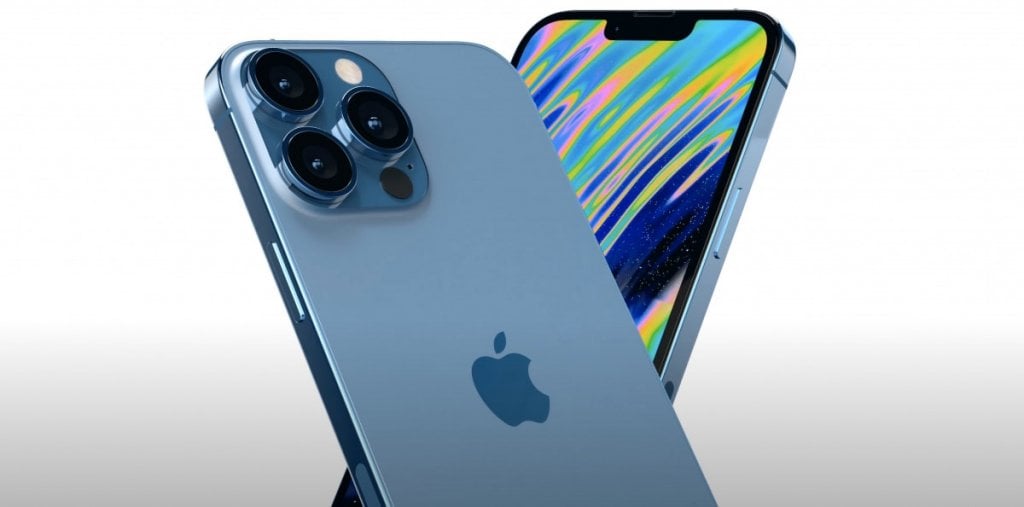
Apple iPhone 13 could come with higher pricing due to increased components cost

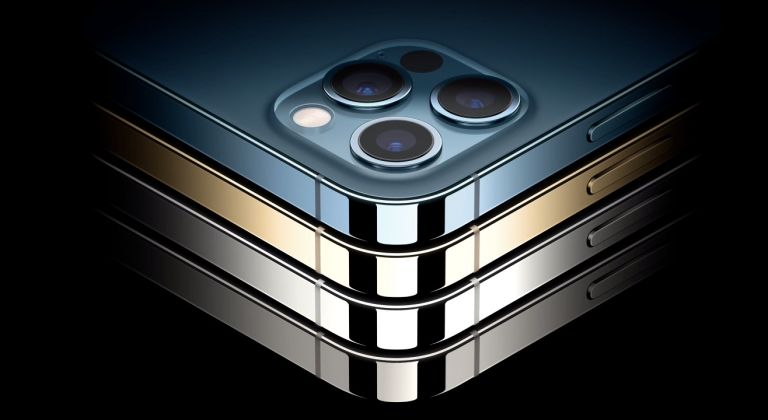
Apple’s upcoming iPhone 13 has been in the news for some time, revealing almost everything that we should expect from the lineup. As the launch in September nears, more and more details about the smartphone series keep surfacing online.

In the latest development, a report coming from DigiTimes claims that Apple could be rising the price of the iPhone 13 models to compensate for the increasing cost of component manufacturing.

Apple iPhone 13

We would advise you to take this information with a pinch of salt as DigiTimes doesn’t have a credible track record when it comes to predicting plans related to Apple. However, this time, it is citing industry sources, so it may turn out to be true.

Taiwan Semiconductor Manufacturing Company, the world’s largest chip manufacturer, is also a contract manufacturer for Apple chipsets, including the Apple A15 Bionic that will be powering the upcoming lineup, which is based on the 5nm+ process.

With TSMC set to increase pricing, Apple will be passing on that price to the customers. TSMC has notified customers about increasing pricing up to 20 percent. Apple, which is among the biggest client of the company, could see a price rise between 3-5 percent.

While the price increase from TSMC is set to go into effect from January next year, Apple will be launching the new devices with increased pricing instead of hiking price just a couple of months after its official launch.

A few months ago, it was reported that Apple had placed a massive order of more than 100 million units of the A15 Bionic chips with TSMC as the company wants to eliminate any issues with supply and components for its upcoming iPhone 13 lineup.

RELATED: 

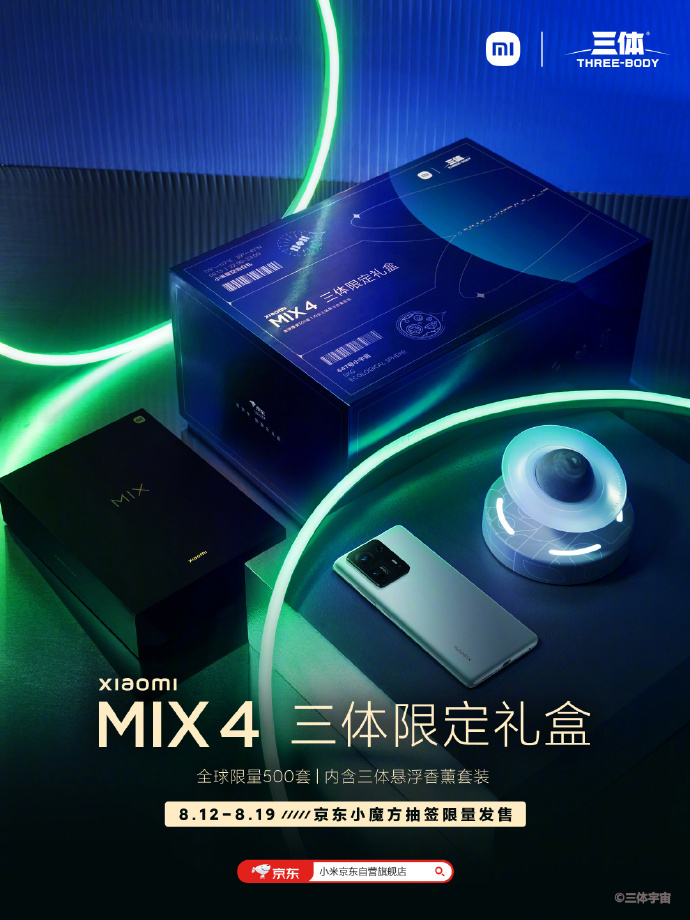
Xiaomi MIX 4 Three-Body Limited Edition goes on sale in China for 6,299 yuan ($971)

Xiaomi recently launched its laetst MIX series flagship smartphone named Xiaomi MIX 4, making it the first smartphone from the brand to feature an in-display fingerprint sensor. Soon after the launch, a limited edition variant of the device was announced, dubbed Xiaomi MIX 4 Three-Body Limited Edition.

Today, the Xiaomi MIX 4 Three-Body Limited Edition goes on sale in its home country China for the price of 6,299 yuan which roughly converts to $971. It comes in a single variant that packs 12GB of RAM and 512GB of internal storage.

Xiaomi MIX 4 Three-Body Limited Edition

The company says that it has a limited stock of just 500 units available for sale. In this Three-Body Limited Edition box set, along with the Shadow Ceramic Black MIX 4 smartphone, there’s also a floating planet aromatherapy set. The box also comes with a unique planet-themed design in a blue hue.
Coming to the specifications, the Xiaomi Mi Mix 4 comes with a 6.67-inch full-screen AMOLED display with a 10-bit color depth. It is a curved display panel with Gorilla Glass Victus protection. One of its major highlights is the in-display camera. The device features a 20MP CUP (Camera Under-Panel) with a 4-in-1 Super pixel sensor.

Additionally, the display also doubles up as an in-display fingerprint scanner for added security. Under the hood, it comes powered by the Qualcomm Snapdragon 888 Plus 5G chipset. It packs a 4,500mAh battery with support for 120W fast wired charging and 50W wireless charging technology.

The smartphone features a triple-camera setup on the back that consists of a 108-megapixel Samsung HMX primary sensor, an 8-megapixel periscope lens, and a 13-megapixel ultra-wide sensor.

It also comes with a Harman Kardon-powered Stereo speaker setup and has support for 500Mhz Ultra Wide Band. There’s also a cooling system inside the device for maintaining the phone’s temperature. As for the software, the device runs the Android 11 operating system ou-of-the-box with MIUI on top.

RELATED: 

Microsoft Surface Duo 2 has Snapdragon 888, reveals Geekbench listing

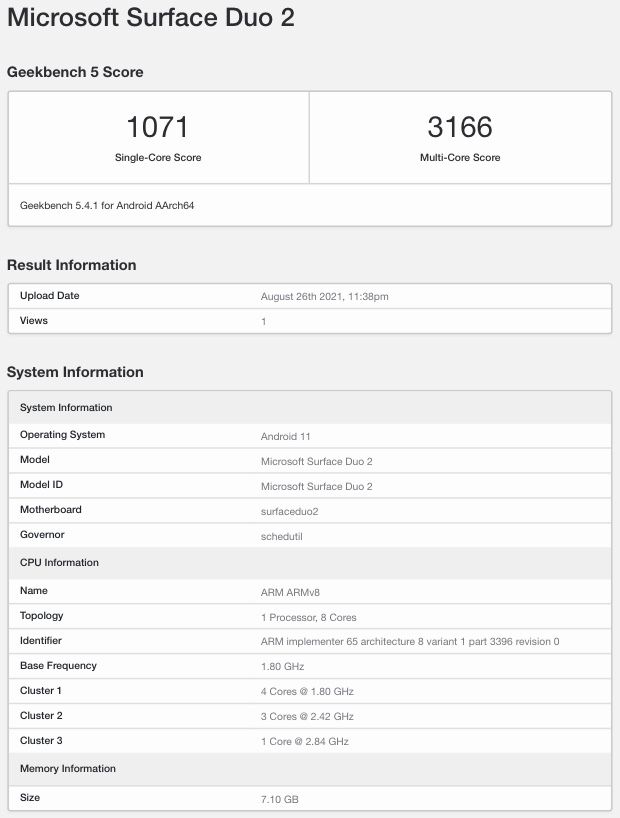
Microsoft is expected to announce the Microsoft Duo 2 in October this year. It will be arriving as the successor to debuted in August 2020. The last year’s model came with the older Snapdragon 855 chip when other Android phones sported the Snapdragon 865. It is being speculated that Surface Duo 2 will sport the latest Snapdragon 888 chip. A Geekbench listing of the Surface Duo 2 has been spotted by MySmartPrice today. The listing reveals that it is indeed powered by the SD888.

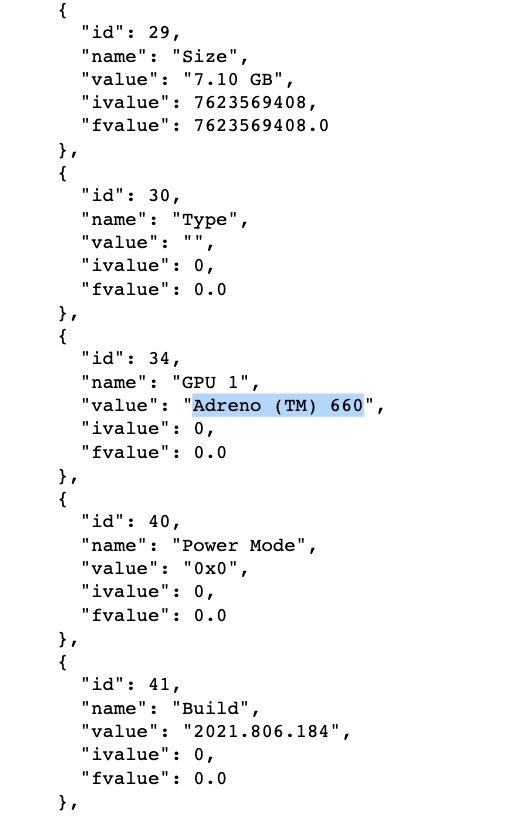
The Surface Duo 2 Geekbench listing reveals that it is powered by a Qualcomm chip that features four CPU cores running at 1.80GHz, three CPU cores clocking at 2.42GHz, and a prime core working at 2.84GHz. The source code of the listing reveals that the Qualcomm chip is equipped with Adreno 660 GPU.

These specs reveal that the Surface Duo 2 smartphone will be powered by Snapdragon 888v SoC. The inclusion of the chip suggests that it will be a 5G-ready device.

The listing further mentions that it has 8 GB of RAM, and it runs on Android 11 OS. It scored 1071 in the single-core test, and 3166 in the multi-core test. According to a recent report, the Android OS on the device will be overlaid with an improved version of the Microsoft Launcher.

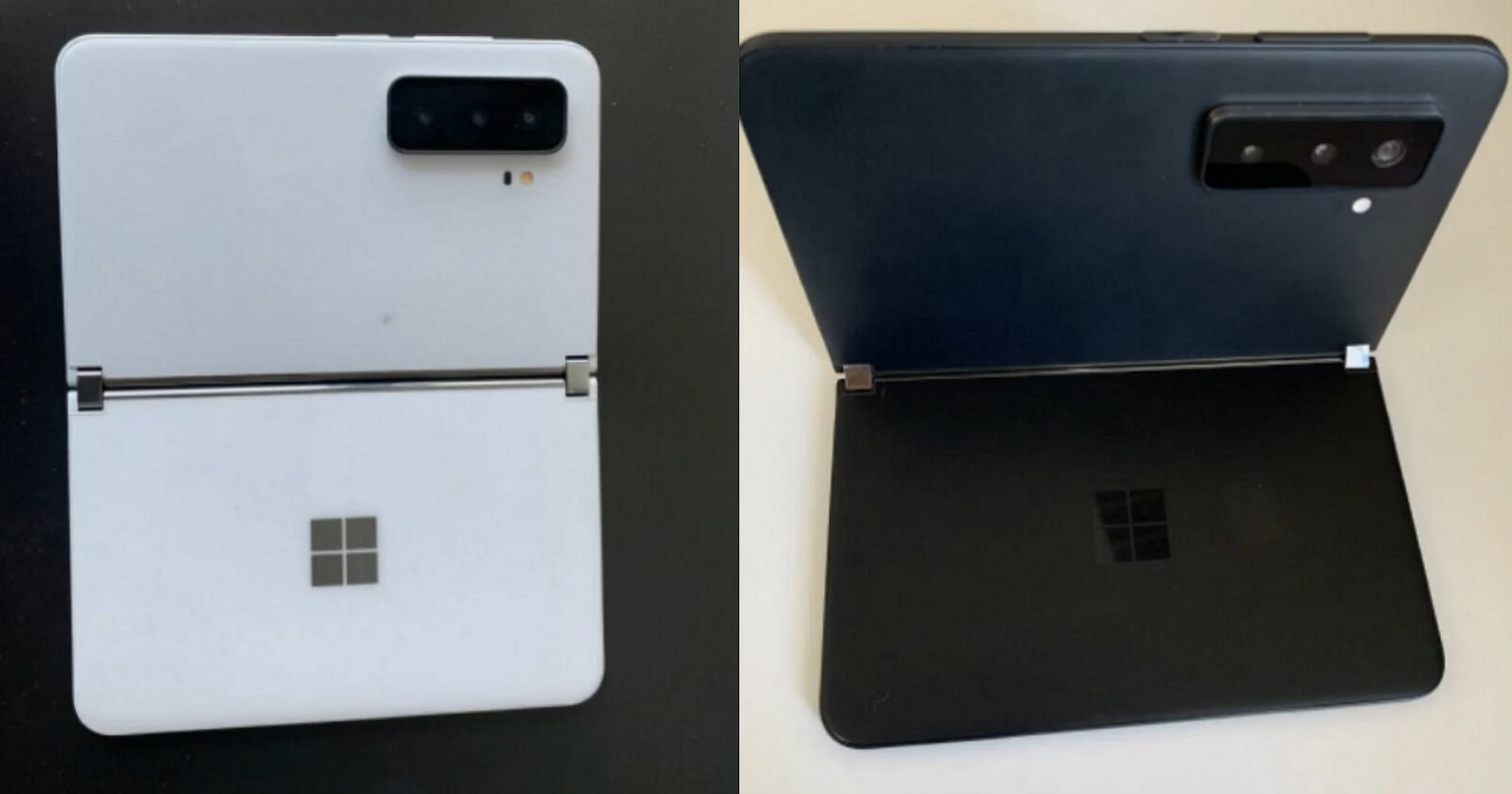
Microsoft Surface Duo 2
Microsoft Surface Duo 2 leaked shot

Last month, a leaked video had appeared on YouTube to reveal the design of the alleged Duo 2. It revealed that the device is equipped with two separate displays held together by a 360-degree rotating hinge. It was seen sporting a triple camera unit. It also revealed that the device will be arriving in black and white colors.

It is speculated that the Surface Duo 2 will also feature an upgraded front camera. There will be an improved camera app to offer a better photography experience. The other specs of the Surface Duo 2 are under wraps.

RELATED:

BLU G91 Pro arrives with a new design and downgraded specs
Last year, at around the same time, the BLU G90 Pro was launched in the US as a budget gaming smartphone. The brand is now back with its successor dubbed as BLU G91 Pro. The new model arrives with a different design but with downgraded specs.

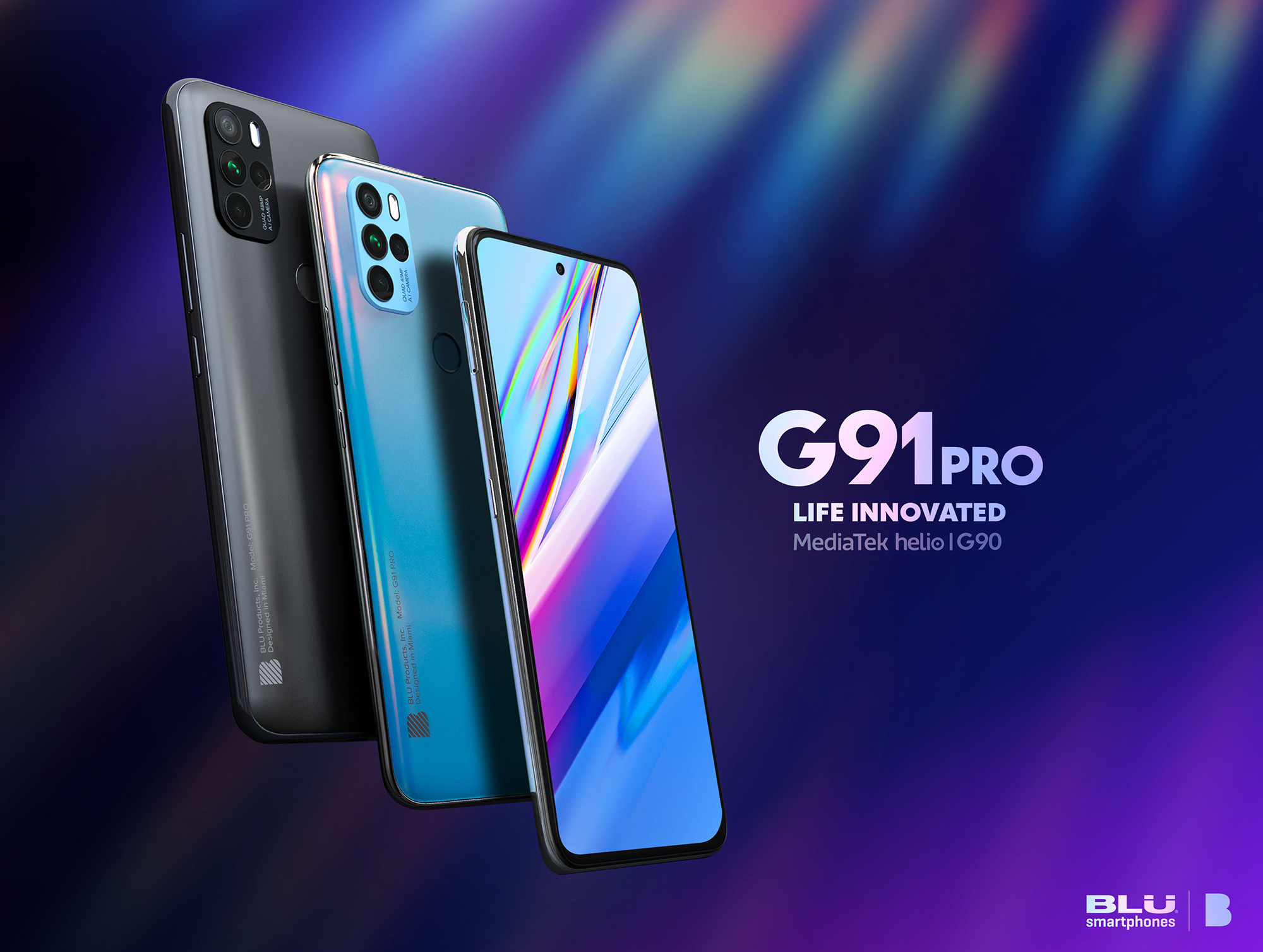
BLU G91 Pro Featured A

BLU G91 Pro Specifications and Features

The BLU G90 Pro had a Redmi Note 8 Pro-like design. Whereas, the BLU G91 Pro resembles the OPPO Reno series. The new device comes in two colors, namely Moonstone and Graphite. It measures 162.9 x 77 x 10.1mm in dimensions and weighs 215g.

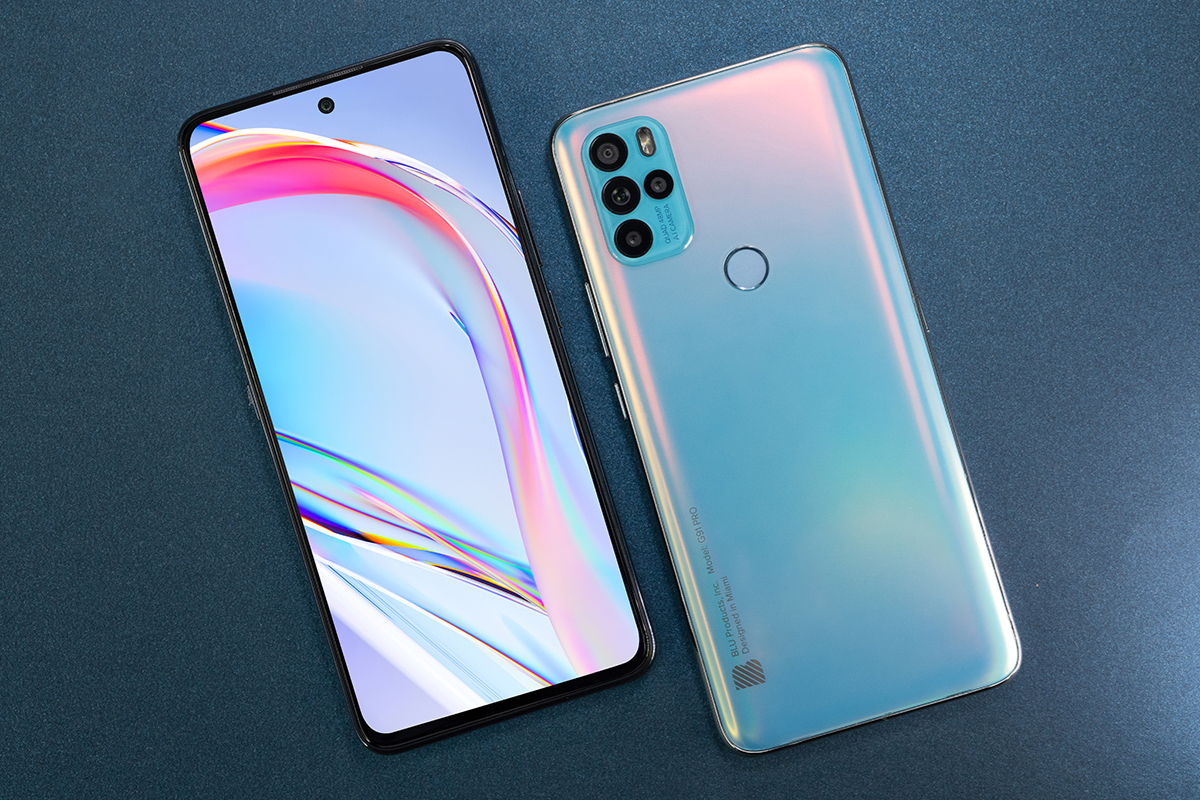
On the front, it flaunts a 6.7-inch LCD panel with a resolution of 2400 x 1080 pixels (FHD+), 395 PPI, 20:9 aspect ratio, and a centered punch-hole. For comparison, its predecessor had a smaller 6.5-inch display with a dewdrop notch.

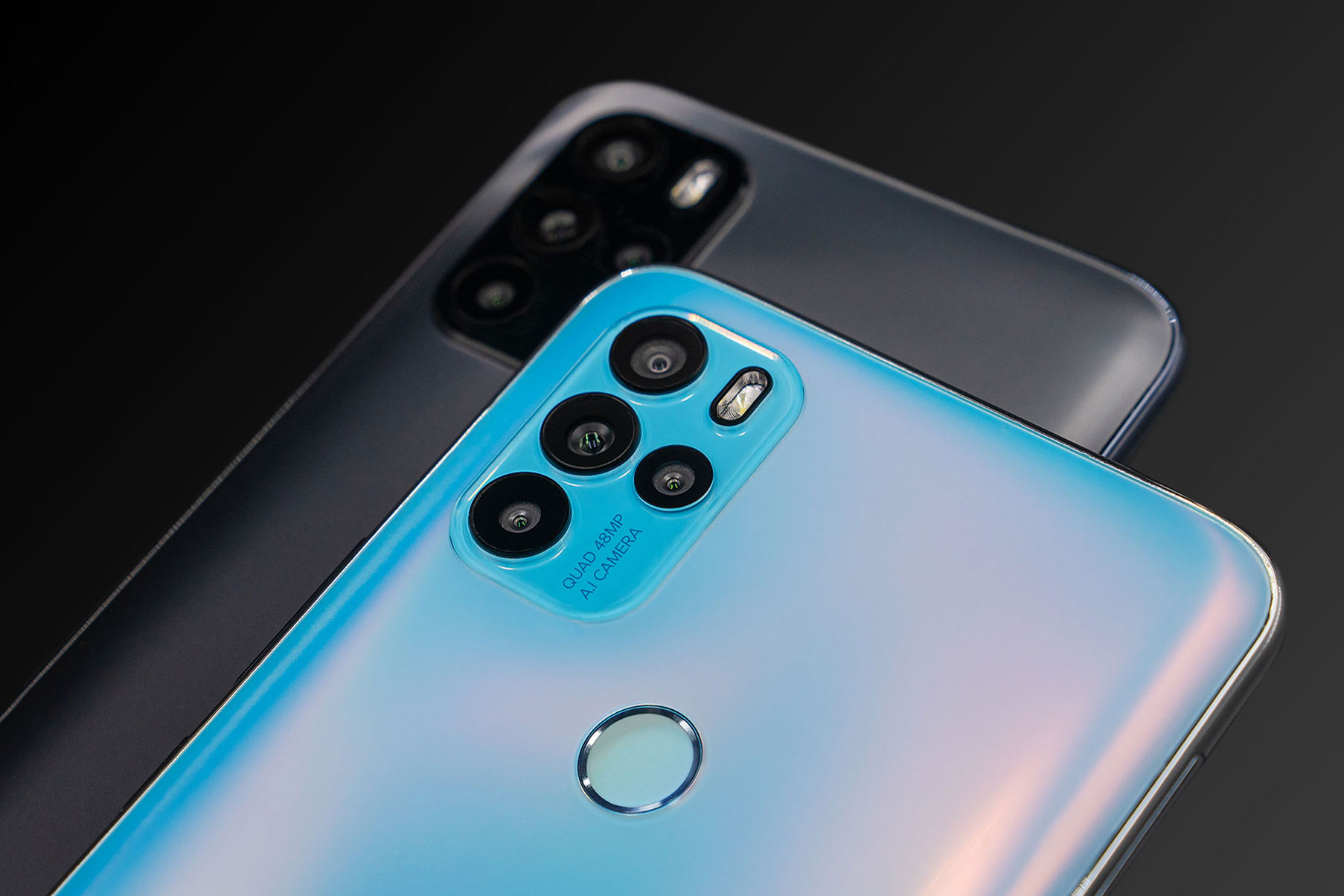
BLU G91 Pro Featured B

Further, the BLU G91 Pro is powered by a MediaTek Helio G90 SoC as opposed to an Helio G90T inside its predecessor. However, the new phone comes with 6GB RAM and 128GB internal storage instead of 4GB RAM like its forerunner.

There’s still a quad-camera setup but the ultra-wide-angle sensor has been lowered from 8MP to 5MP. The remaining sensors include a 48MP primary shooter, 2MP macro snapper, and 2MP depth sensor. Also, the selfie camera is 16MP, down from 32MP.

BLU G91 Pro Featured C

On the connectivity front, the handset supports dual-SIM, 4G, dual-band WiFi, Bluetooth 5.0, USB Type-C port, and a 3.5mm headphone jack. Other features include a rear-mounted fingerprint sensor, MicroSD card slot, and Android 11 operating system.

Last but not least, the smartphone is backed by a 5,000mAh battery with support for 30W wired charging and 10W wireless charging.

BLU G91 Pro Price and Availability

The BLU G91 Pro is priced at $249.99 in the US. It is already up for sale exclusively on Amazon. For a limited time, the brand is offering a whopping $100 discount. Hence, customers can purchase the handset for only $149.99.

Additionally, the few hundred buyers are also eligible for a free pair of ARIA POD+ truly wireless earphones.


RELATED:


Infinix Zero X Neo with model number X6810 appears on BIS Certification

Infinix is expected to launch a new smartphone dubbed Infinix Zero X Neo soon as the smartphone has just appeared on BIS certification. Previously, the smartphone arrived on the Bluetooth SIG certification and was also spotted on the Google Play Console listing.

The BIS certification doesn’t really reveal anything other than its existence. It could mean that the smartphone’s launch is in the pipeline and it may launch in India and a few other markets soon. Adding the previously learned details, the Infinix Zero X Neo carries the model number X6810 and is powered by the MediaTek Helio G90 SoC.

Infinix Zero X Neo

The smartphone has a Full-HD+ display with an exact resolution of 1080 x 2460 pixels. It has a pixel density of 480 PPI. The device has 8GB of RAM and we expect it to be paired with 128GB of onboard storage.

The device was also seen on Malaysia’s SIRIM certification with the moniker Infinix Zero M. It could mean that the phone will be having a different name in Malaysia. However, the device was seen with Media Helio G95 instead of Helio G90. This could further mean that it may have different hardware depending on the region.

Infinix Zero X

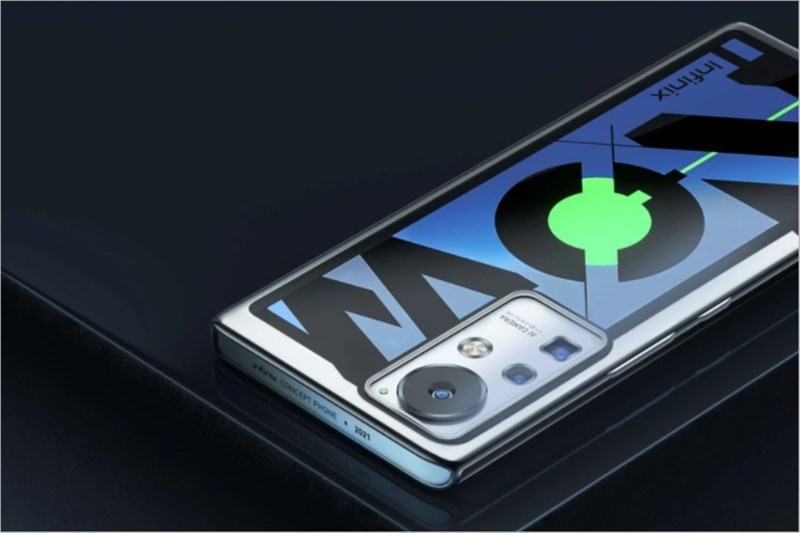
Apart from this, Infinix recently showcased its Concept Phone 2021 with a whopping 160W fast charging support. Rumors are rife that it could be launching as the Infinix Zero X Neo in a few markets.

As of now, the company is silent about its announcements. But, considering that the phone has emerged on several listings, we expect the launch to be in the coming weeks.

RELATED:

Apple, Samsung, Garmin amongst key contributors to the increased 27% YoY Smartwatch Market; BoAt & Noise emerging from India!

Last year, the smartwatch market was quite sluggish in terms of growth, thanks to the COVID-19 pandemic. This year, however, the smartwatch market has shown 27% YoY growth. Interestingly, the premium contender Apple is leading the smartwatch market and the Apple Watch has crossed 100 million user base globally.

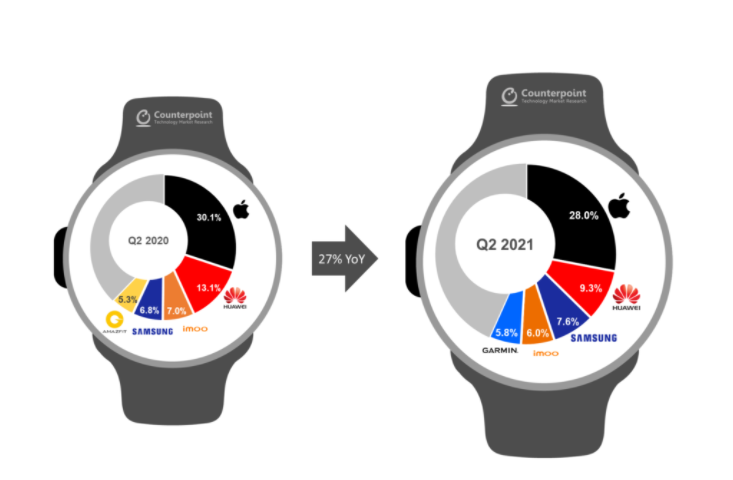
According to Counterpoint, the top 5 smartwatch leaders this year, especially in Q2 are Apple, Huawei, Samsung, IMOO, and Garmin. Compared to last year, all these brands have seen a great increase in the smartwatch market share except Huawei. Huawei is still up there but its share has slightly declined compared to the same time last year.

Apple, Samsung, Garmin amongst key contributors to the increased 27% YoY Smartwatch Market; BoAt & Noise leading in India!

On the other hand, Garmin has seen a big leap as it reached the top 5 segments with a 5.8% market share in Q2 this year. Samsung has also seen an increase on the charts compared to the same time last year. Speaking of Apple, which has just crossed 100 million user base has witnessed some contrasts. Although it has most of the smartwatch market share covered, it has also gone down to 28% from last year’s 30% market share in Q2. However, the company is still maintaining the lead and the major user base contributing to this share is the US.

Apple’s increased market share has led other emerging Chinese and Indian brands to come to the smartwatch segment. Brands like Xiaomi, Realme, and Oppo have offered similar technology and features at an affordable price. Indian brands like Noise and boAt have also been contributors to the increased global market share.

Boat vs Noise

India has over 6% market share in the smartwatch segment, which is increased significantly over the 2% market share last year. Post COVID-19 pandemic, the smartwatch market has reportedly shown great recovery majorly due to several health-related features. Now that even affordable smartwatches are equipped with health and fitness features like SpO2 sensors, heart-rate sensors, and breathing exercises, the smartwatch market is expected to see continuous growth YoY.

RELATED:

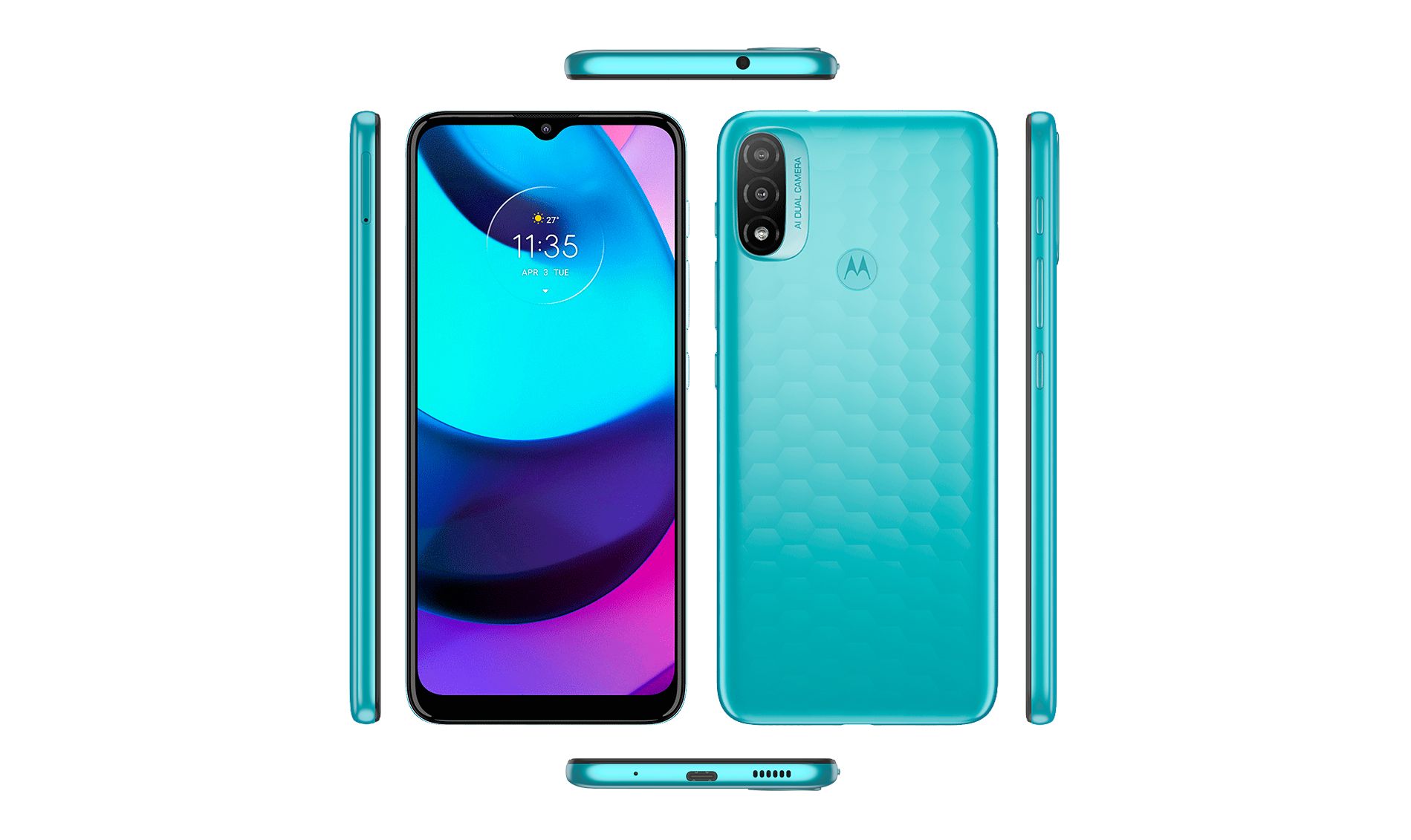
Moto E20 visits Geekbench, reveals Unisoc chip

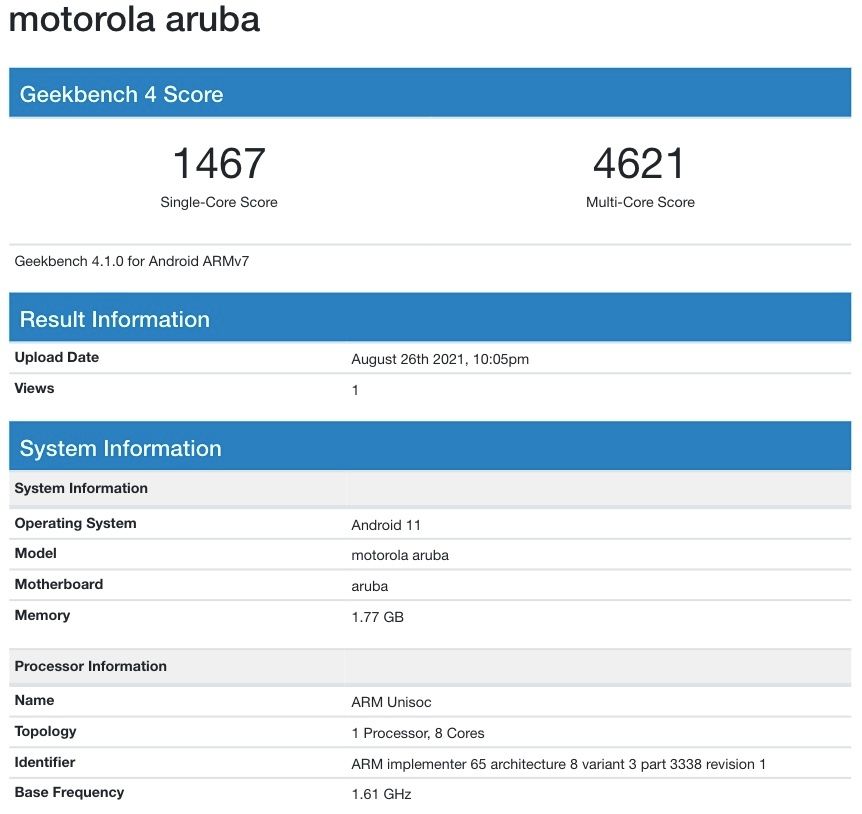
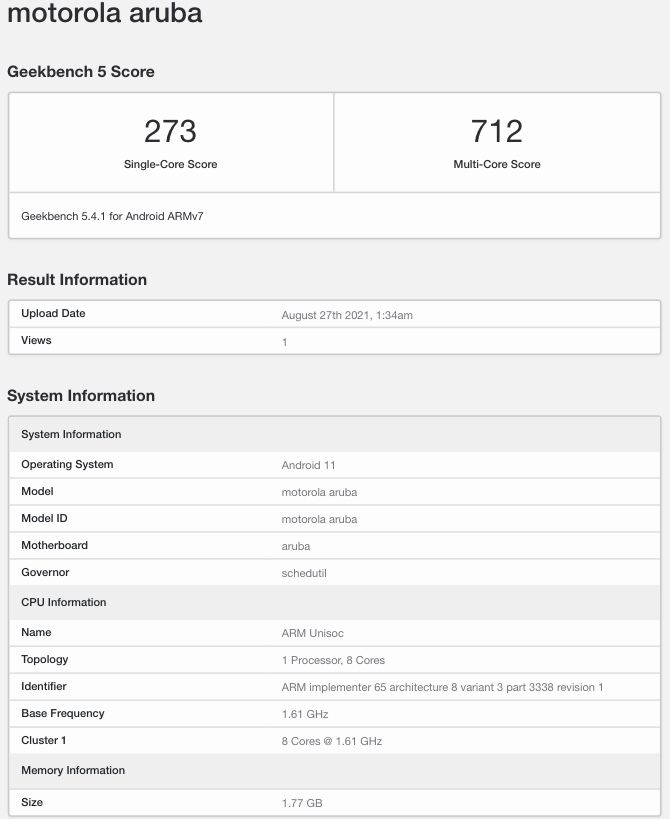
Reliable tipster Evan Blass recently shared a render of the upcoming Moto E20. He also revealed the key specs of the smartphone and he added that it is not powered by a Qualcomm chipset. This gave birth to rumors that Motorola may provide a Unisoc chip on the E20. Today, the smartphone paid a visit to the Geekbench benchmarking site (via. MySmartPrice). The listing confirms that it will feature a Unisoc chip.

It is known that the upcoming Motorola Moto E20 is internally known as Aruba. Today, the Motorola Aruba appeared on Geekbench 4 and Geekbench 5 platforms with key specifications. Both listings show that the handset has a Unisoc chip that works at 1.6GHz, 2 GB of RAM, and Android 11 OS.

The listing does not clearly mention which Unisoc chip is present under the hood of the E20. Probably, it could be equipped with SC9863 SoC that works at 1.6GHz.

Moto E20 specifications (Rumored)

The Moto E20 (model number XT2155) will be sporting a 6.5-inch HD+ display with a tear notch. It will offer 720 x 1600 pixels resolution and a 20:9 aspect ratio. The Unisoc power phone will offer 2 GB of RAM and 32 GB of built-in storage. It will come equipped with Android 11 OS.

Motorola Moto E20
Motorola Moto E20

The device will be backed by a 4,000mAh battery. It will feature a front camera of 5-megapixel and its rear camera setup may include a 13-megapixel main camera and a 2-megapixel lens. It is speculated that the same device may release as the Lenovo K14 in select markets.

RELATED:

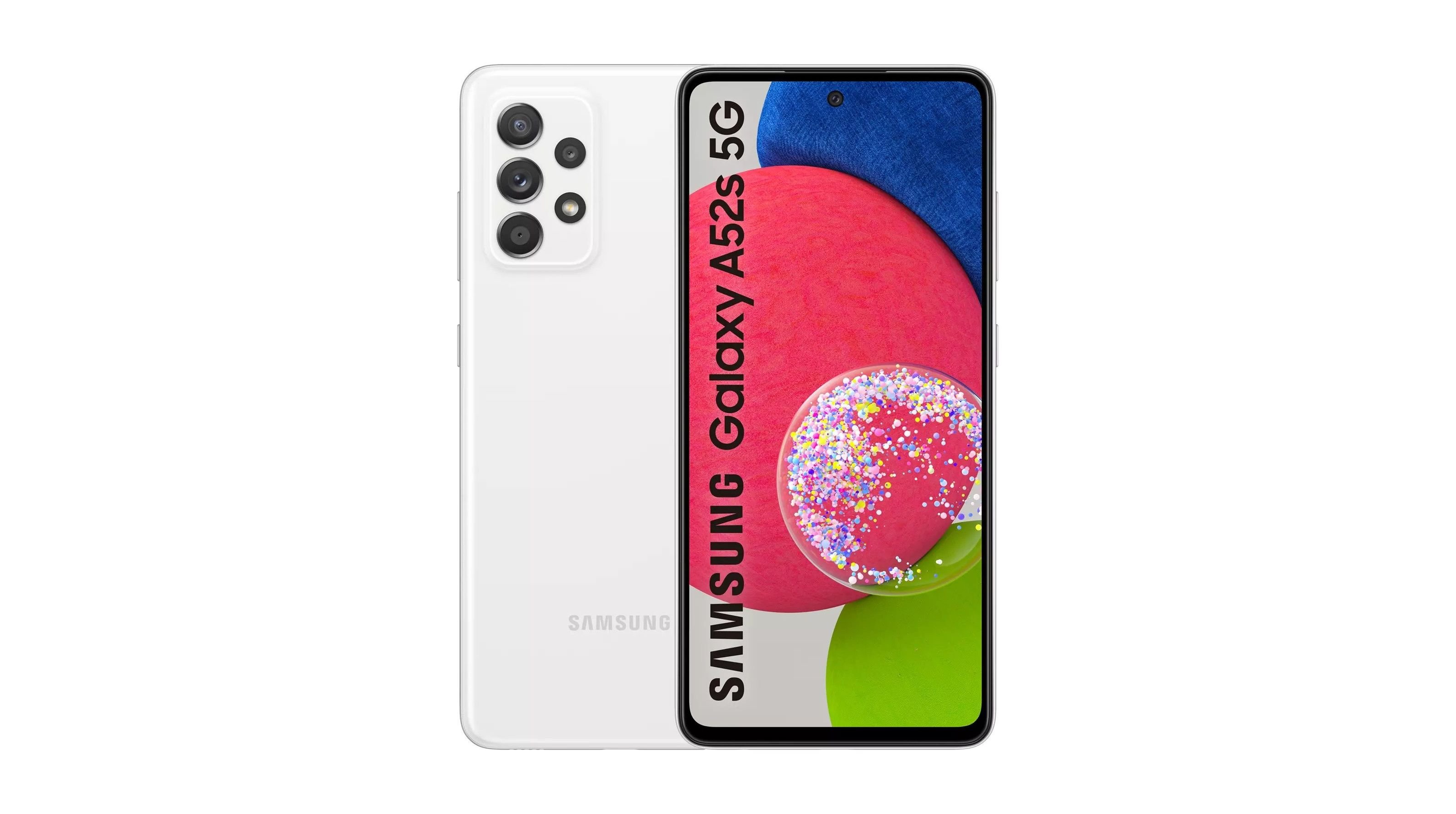
Samsung Galaxy A52s 5G price in India tipped

Samsung Galaxy A52s 5G went official in Europe recently. Rumors are rife that it will break cover soon in India. Ahead of the expected launch, tipster Abhishek Yadav has leaked the pricing of the A52s 5G.

As can be seen in the tweet, the Galaxy A52s 5G will be arriving in India in two variants such as 6 GB RAM + 128 GB storage and 8 GB RAM + 128 GB storage. The leak reveals that the two variants will be listed for Rs 35,999 (~$485) and Rs 37,499 (~$505), respectively.

In Europe, the Galaxy A52s 5G is available in two options such as 6 GB RAM + 128 GB storage and 8 GB RAM + 256 GB storage. They are priced at €449 (~$528) and €509 (~$598), respectively.  Samsung India is yet to confirm the arrival of the Galaxy A52s 5G. It remains to be seen whether the company announces it by the end of this month in India or in September. In the coming month, the South Korean company is also expected to announce some other phones such as Galaxy M52 5G and Galaxy F42 5G in India.

Samsung Galaxy A52s 5G

Samsung Galaxy A52s 5G specifications

The Galaxy A52s 5G has a 6.5-inch S-AMOLED screen that delivers a Full HD+ resolution and a 120Hz refresh rate. It has a front camera of 32-megapixel and its rear features a 64-megapixel (main) + 12-megapixel (superwide) + 5-megapixel (macro) + 2-megapixel (depth) quad-camera unit.

The Snapdragon 778G fuels the device along with a 4,500mAh battery, which supports 25W fast charging. Its other features include One UI 3.1 based Android 11, an in-display fingerprint scanner, and an IP67 rated body.

RELATED:

PC shipments to reach half billion units by 2023: IDC

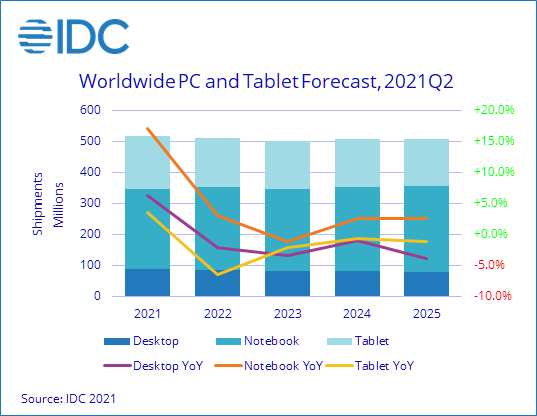
Over the last year, the PC market has shown a huge increase owing to the pandemic situation across the globe. However, the future looks grim. According to the latest forecast report from IDC Worldwide Quarterly Personal Computing Device Tracker, PC shipments are expected to drop off in 2022.

As per the report, the worldwide shipments of PCs are expected to rise 14.2%, with 347 million units shipped in 2021. However, this is lower than IDC’s earlier forecast, which suggested 18% growth. IDC suggests that the constraints and logistical challenges are the main reason behind the dip in numbers. The tablet market is also expected to grow slowly at 3.4%. 

“We continue to believe the PC and tablet markets are supply-constrained and that demand is still there,” said Ryan Reith, program vice president with IDC’s Worldwide Mobile Device Tracker. “The lengthening of the supply shortages combined with ongoing logistical issues are presenting the industry with some big challenges.”

IDC PC Shipment
Source: IDC

By 2025, traditional PCs, including desktops, notebooks, and workstations, are expected to have a compound annual growth rate (CAGR) of 3.2%. IDC says that “despite short-term supply constraints related to panels and ICs, notebook PCs will remain the main driver of future PC growth.” Meanwhile, tablet shipments are expected to decline by 1.5%.

In November 2019, IDC predicted a total market of 367 million units in 2023. But as per the current predictions, IDC expects over half a billion units of personal computing devices to be shipped in 2023. The market is expected to dip in 2022 and rise again in 2023, but the numbers would be lower than 2021.

The report suggests that consumer spending habits will shift towards travel and leisure instead of spending their money on technology. However, the numbers could still be more than expected if many had not spent the last few months on PCs.

RELATED:

Vivo V1 self-developed chip confirmed to be equipped with the X70 series phones launching in September

After reports about Vivo working on its self-developed Image Signal Processor (ISP) chip, we recently reported that the first in-house chip from the company will be called Vivo S1 which has now been confirmed by Vivo’s Executive Vice President Hu Baishan.

He has also confirmed that the upcoming Vivo X70 series smartphones will come equipped with this new Vivo V1 ISP chip. Further, he has also revealed that the upcoming flagship smartphones from the brand will be made official next month, i.e. in September.

Vivo V1 Chip Leak
Leaked image of mass-produced Vivo V1 ISP chip

Hu Baishan added that while the company is starting with its self-developed ISP, the plan is also considering laying out chips on other tracks — Design, Image, Performance, and System, which was established by Vivo last year.

It is being reported that it took about two years for the company to develop its own ISP chip which has now reportedly completed mass production. The chip department at Vivo reportedly has a Research & Development team of more than 300 members and the company is also looking to fill many more vacancies in the same department.

The development is in line with the company’s long-term vision as revealed by the Founder and CEO of Vivo, Shen Wei earlier this year. The company is set to heavily invest in technological innovation as well as strategic resources for improving design, imaging, and performance, as well as other areas that users are paying more attention to.

So far, we are aware of two chip-related trademarks from the Chinese firm — Vivo SoC and Vivo Chip. The product categories covered by these two trademarks include central processing units, modems, computer chips, printed circuits, and computer storage.

Chinese smartphone manufacturers are now spending more on innovation and becoming self-reliant after the issues faced by Huawei when it was banned by the United States. It will be interesting to see what Vivo has up its sleeves in this department. OPPO, the sister company of Vivo, is also developing its own chip which is expected to be officially released with the Find X4 smartphone early next year.

RELATED: 

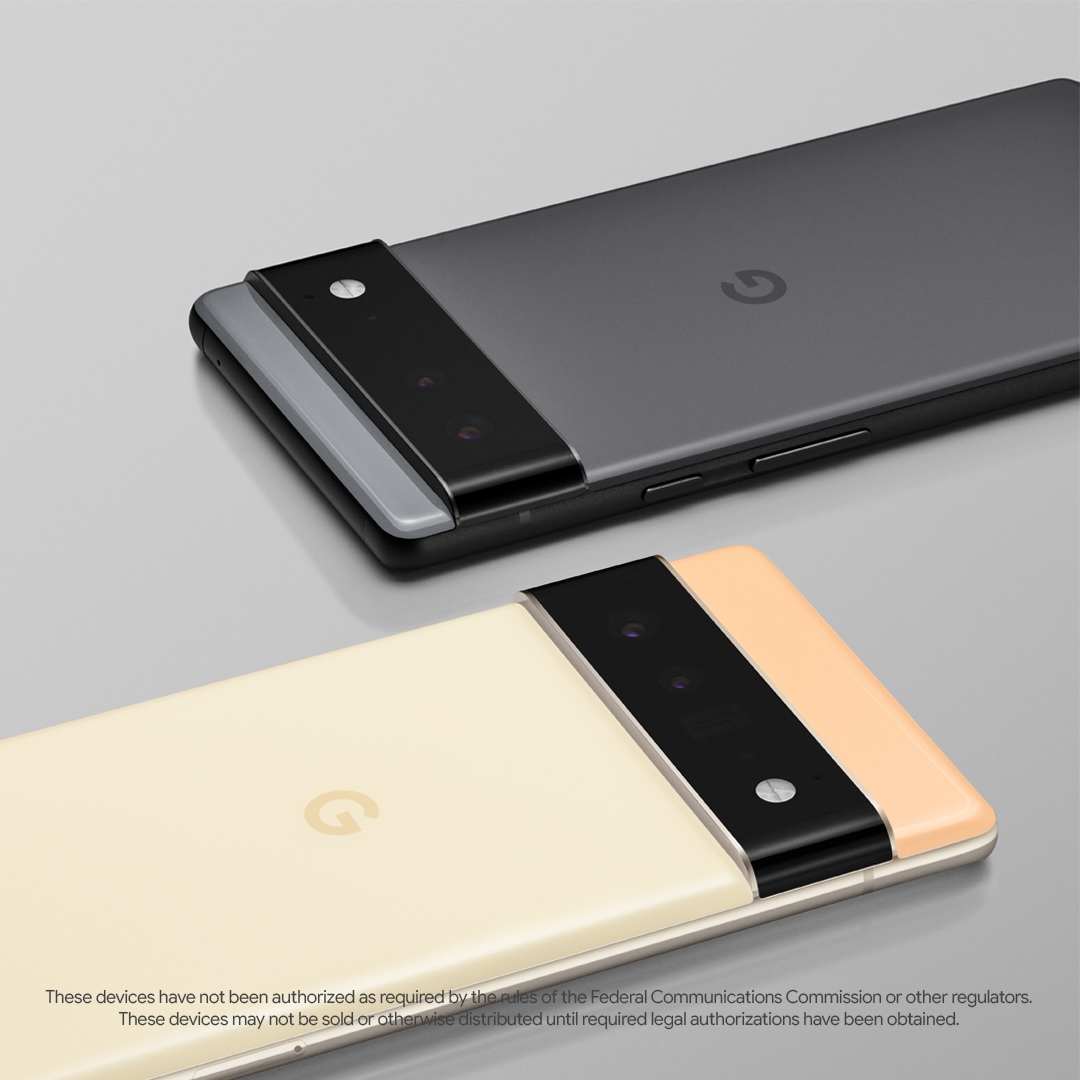
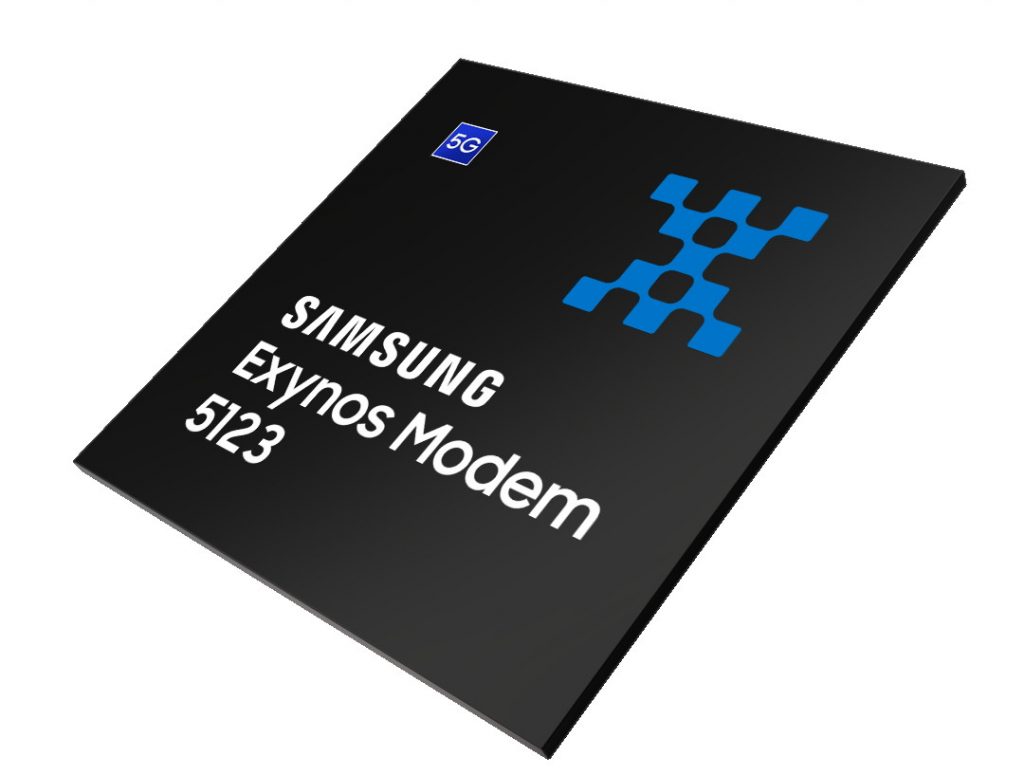
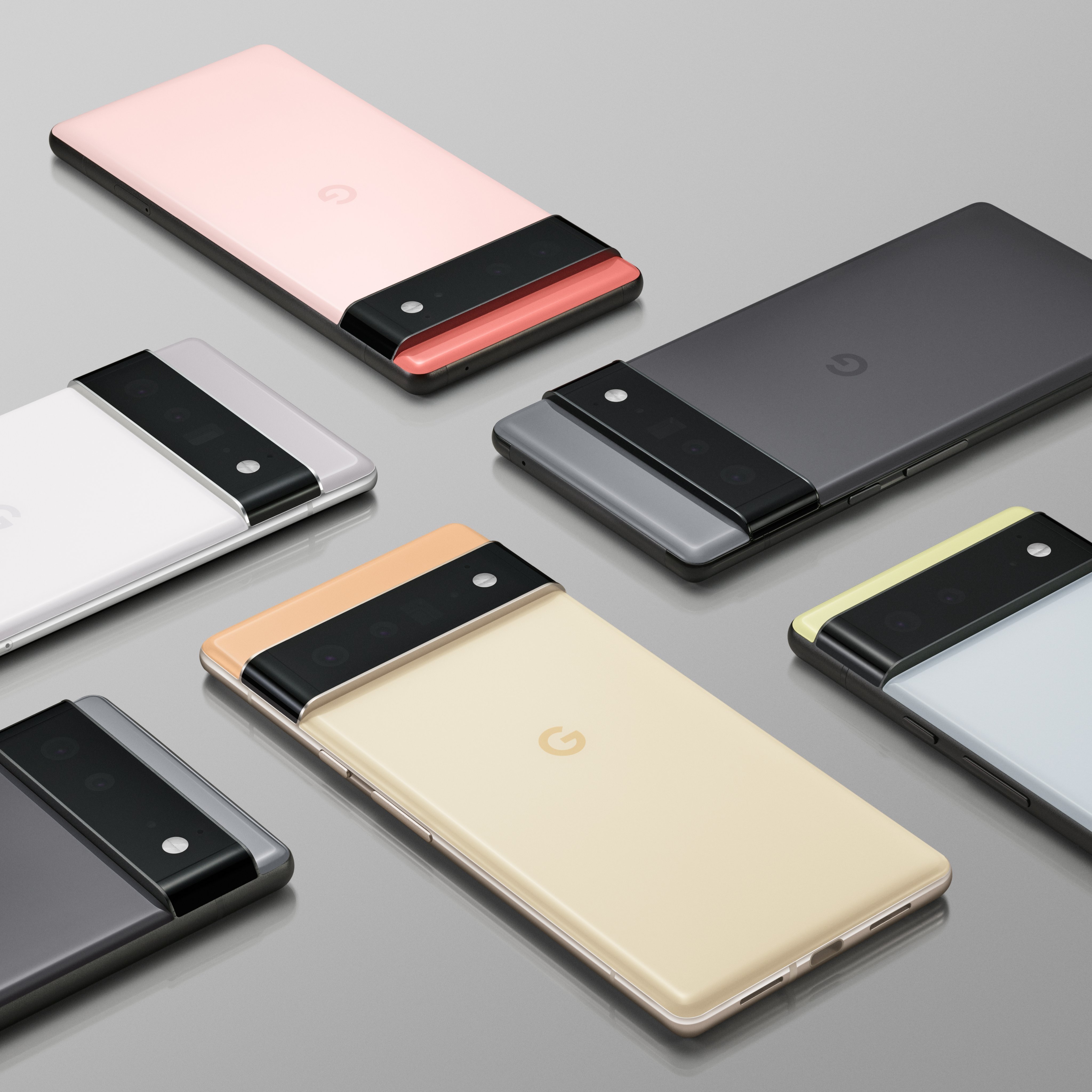
Google Pixel 6 series smartphones to pack Samsung’s Exynos 5123 modem

Apart from dominating the market for smartphone processors, Qualcomm was also dominating when it comes to modem chips that enable connectivity on a device. However, the company seems to be slowly losing its grip.

Google has already announced that the company will be using its own Tensor SoC for powering the next-generation Pixel 6 series smartphones. So far, the company had relied on Qualcomm Snapdragon series processors for its mobile phones.

Google Pixel 6

Now, if the latest report is to be believed, then it’s not only the mobile processor that Google is ditching Qualcomm for but also the modem chip. The report adds that instead of using Qualcomm’s modem, the upcoming flagship smartphones from Google will come packed with Samsung Exynos 5123 modem.

This is a major development given that every smartphone available in the United States packs a Qualcomm modem for wireless connectivity. If the Pixel 6 series ends up with Samsung’s modem, then it’ll break Qualcomm‘s monopoly in the market for the first time.

Another major development will be for Samsung as this will be the first time the South Korean giant’s Exynos modem chip will be used in a non-Samsung smartphone. The Samsung Exynos 5123 modem is also quite advanced, coming with support for sub-6Hz connectivity and up to 256-QAM in Millimeter Wave for uplink and downlink.

Pixel 6
Samsung Exynos 5123 Modem

While the search engine giant has not officially revealed it but it seems that the company has partnered with Samsung for the Pixel 6 series phones given that almost every major component has a connection to the South Korean giant.

There have been reports claiming that Google’s newly announced Tensor processor is an unreleased Samsung Exynos 9855 SoC. Apart from the processor and 5G modem, the display and camera on the Pixel 6 series will be sourced from Samsung.

Google has not yet revealed the full set of specifications of the upcoming phones but has confirmed some key details. The Pixel 6 comes with a 6.4-inch Full HD+ display offering a 90Hz refresh rate while the Pro has a 6.7-inch QHD+ display offering a 120Hz refresh rate.

Google Pixel 6 series featured

The standard model features a dual-camera setup on the back while the Pixel 6 Pro has a triple-camera setup — a wide-angle lens, an ultra-wide-angle lens, and a 4x telephoto lens. This time, the photography performance could top the charts given that the chipset is said to be focused on photo output and use artificial intelligence and machine learning.

Powered by Tensor SoC with on-device AI and ML capability, the chip is also claimed to offer a significant improvement in translation, captioning, and dictation. The Pixel 6 series will also feature the most layers of hardware security in any phone. The lineup is expected to launch in the coming weeks, so we’ll have to wait a bit longer to know its pricing as well as availability details.

RELATED: 

Apple iPhone 13 series to go on pre-orders from September 17th, entire launch timeline leaked!

Apple is expected to launch the new iPhone 13 series sometime in September this year. However, the exact launch date is yet to be confirmed by the company. Now, ahead of any announcements, the series’ launch timeline has been allegedly revealed.

According to IT Home,  the iPhone 13 series is already listed on an e-commerce website in China. The listing’s screenshot was first shared on Weibo by Chinese leaker @Pandalsbald. Not just the iPhone 13 and 13 Pro, rather the entire series including the vanilla smartphone, the Pro model, the Pro max model, and the mini variants were listed. Even the rumored Apple AirPods 3 was found listed on the portal.

Apple iPhone 13

Additionally, the publication revealed that the series will go on pre-orders from September 17th. It is said to go on sale starting September 24th in the market. While the launch date, as well as the sale date, is revealed, we aren’t sure if the dates are legit. Previously, the Chinese publication was subject to incorrect launch dates. However, this time around, the tipster Jon Prosser confirmed that the listed date is real and indeed the launch timeline is correct.

iphone 13

If we go by the said launch date then Apple is expected to send invites by September 7th. This is how the entire launch timeline would look like.

Press invites on September 7th  

Announcements of the smartphone series – September 14th

Pre-orders to start from September 17th

First sale on September 24th

In related news, Apple is touted to raise the prices of iPhones. Reportedly, TSMC has increased the costs of chipset production resulting in these increased prices. Rumors suggest that Apple will increase the prices of upcoming iPhones by 20% later in January 2022.

RELATED:

Huawei quietly announces EMUI 12, brings a redesigned UI and new customizations

Huawei’s focus has been on HarmonyOS for more than a year now. The manufacturer has been working on updating its older phones sold in China from EMUI to HarmonyOS, while newer devices run the new operating system out of the box. If you thought Huawei was done with EMUI, it appears that isn’t the case as it has quietly unveiled EMUI 12.

Huawei EMUI 12 featured

Yes, EMUI 12 is now official and it comes with a refreshed user interface as well as tons of customizations. The launch of the new version of its Android fork means Huawei is still keeping EMUI alive for devices launched outside China. Here are the new features and changes that EMUI 12 brings:


EMUI 12 interface

A Cleaner, Minimalist, and Realistic Interface

EMUI 12 brings a minimalist and realistic interface. According to Huawei, “the innovative interface design brings the digital world to life”. The interface makes use of three major colors – white, black, and blue – for a clean look.

For the animation, Huawei says EMUI 12 takes inspiration from how celestial objects move in the universe. You will notice this in the way it has designed the language selection page which has each language shaped like a sphere and in the syncing animation which mimics a celestial object rotating around another.

Font Customization

EMUI 12 will allow users to adjust not only the size of the font but also its weight just with a slider. This way you can choose the most comfortable viewing experience.


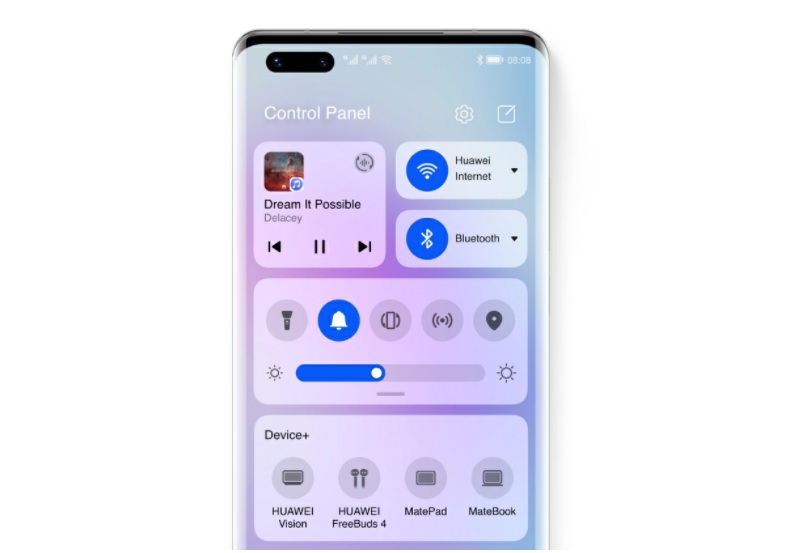
Huawei EMUI 12 Control Panel and Device+

Easy Access Control Panel

With the new version of EMUI, users will be able to easily access a control panel from wherever screen they may be on by simple swipe. The control panel will allow users to control playback, get access to Bluetooth and Wi-Fi settings as well as shortcuts, and connected devices on Device+.

Device+

Device+ is a feature that allows for easy collaboration between Huawei devices. Tapping the MatePad icon gives you a multi-screen collaboration with the Matepad. Users will be able to make calls, send messages, and view the photos from their phone on the screen of the tablet.

Tapping the MateBook icon allows for editing of your phone files on your PC while tapping the Huawei Vision icon allows you to enjoy videos from your phone on the big screen. Tapping the headset icon will switch audio playback from the MatePad or Huawei Vision to the connected earbuds.


Huawei MeeTime

MeeTime

MeeTime is Huawei’s video calling app that was announced as one of the features of EMUI 10.1 in March of 2020. The new version of the app allows users to seamlessly shift calls to the Huawei Vision and back to their phone.

Fast and Long-Term Performance

Huawei claims EMUI 12 is fast as web pages and apps load as you scroll. It also promises that even after long-term use, response time and application startups will be smooth as always.

Security

EMUI 12 will allow users to unlock their phone from their laptop when using Multi-screen Collaboration. They will also be able to set their smartwatch as a trusted device for their phone.

There is no info yet on which devices will be getting the EMUI 12 update nor is there a release schedule. Once we have more details, we will make sure to inform you.


RELATED:

Xiaomi launches the MIJIA Smart Multi-function Cooking Pot 1.5L under crowdfunding

Xiaomi’s MIJIA sub-brand has often played host to several innovative home appliances. The Chinese etch giant has now launched the MIJIA Smart Multi-function Cooking Pot 1.5L. The product is presently available for crowdfunding in Xiaomi Mall. The product carries a crowdfunding price tag of 169 yuan (~$26) but will retail for 199 yuan (~$30) after the exercise. MIJIA Smart Multi-function Cooking Pot 1.5L

The MIJIA smart pot has a 1000W power rating and is capable of rapid heating which can effectively increase the cooking speed. The company claims that it only takes 6 minutes to heat 1L of water to boiling point. In addition, it supports 9 levels of firepower, which can meet different cooking needs. There is also a low power mode where the device will work within the power range of 300W-800W.

The MIJIA Smart Multi-function Cooking Pot 1.5L supports steaming, stewing, and boiling, and users have access to 50 popular recipes via the MIJIA app. Each recipe has a customized optional heating curve. All the user needs to do is to select the desired recipe and add the  ingredients. The smart pot will automatically regulate the heat to the right level until the food is cooked. The MIJIA app can also be used to remotely control the device.

MIJIA Smart Multi-function Cooking Pot 1.5L

In terms of the design, the MIJIA smart pot adopts a convenient split structure design. It is a pot when it is turned on but it can be used as a bowl when turned off. The device has a manual knob equipped with an OLED screen. The device also has a protection against extremely high temperature while the interior of the bowl is non-sticky. It is actually manufactured using food contact-grade 304 stainless steel line.

The MIJIA Smart Multi-function Cooking Pot 1.5L is expected to start shipping in China on September 15. Unfortunately, Xiaomi has not been very consistent in releasing such smart home products outside China. Thus, we don’t expect to see this product launched outside China any time soon.

RELATED;


(via)


Google Pixel 5a 5G teardown reveals the internals & a low reparability

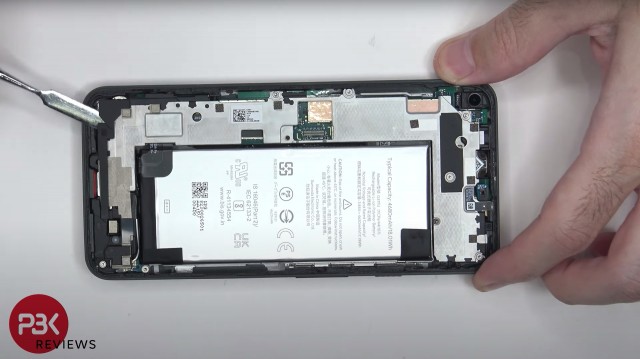
A teardown of Google’s latest Pixel 5a 5G smartphone has been spotted and it confirms that the device is not easily disassembled and thereby pointing that it will not be an easily reparable smartphone.Pixel 5A teardown

The video credited to PBK reviews shows several of the internal elements of the Pixel 5a 5G. The comprehensive examination showed that that the screen could be properly extracted, of course with the right tools and expertise. The screen also has a plastic frame that is surrounded by a strong water–repellent adhesive seal.

A large black graphene film covering becomes visible when the screen is removed, and this is covering the battery of the latest affordable smartphone from Google. Several other protective coverings are observed in various parts of the internals of the smartphone.

The video reveals how the main cameras and battery were removed from the panel with the application of some alcohol solvent. A cursory look at the video shows how it will be pretty difficult to disassemble the device, and it is appropriately rated 5/10 on the reparability scale.

The Google Pixel 5a 5G was launched last week and is already available. It features a 6.34-inch screen, 6GB of RAM, and 128GB internal storage. It is powered by Qualcomm Snapdragon 765G 5G chipset, offers dust and water resistance with its IP67 rating, runs on the Android 11 operating system out of the box, and offers 18W fast charging.

RELATED: 

Netflix Mobile Gaming makes its debut in Poland with two Stranger Things games

Netflix announced a few months ago that it plans to add game streaming to its service as early as next year. Last month, it revealed that will begin with mobile games first. Today, Netflix Gaming made its debut in Poland with two Stranger Things mobile games.

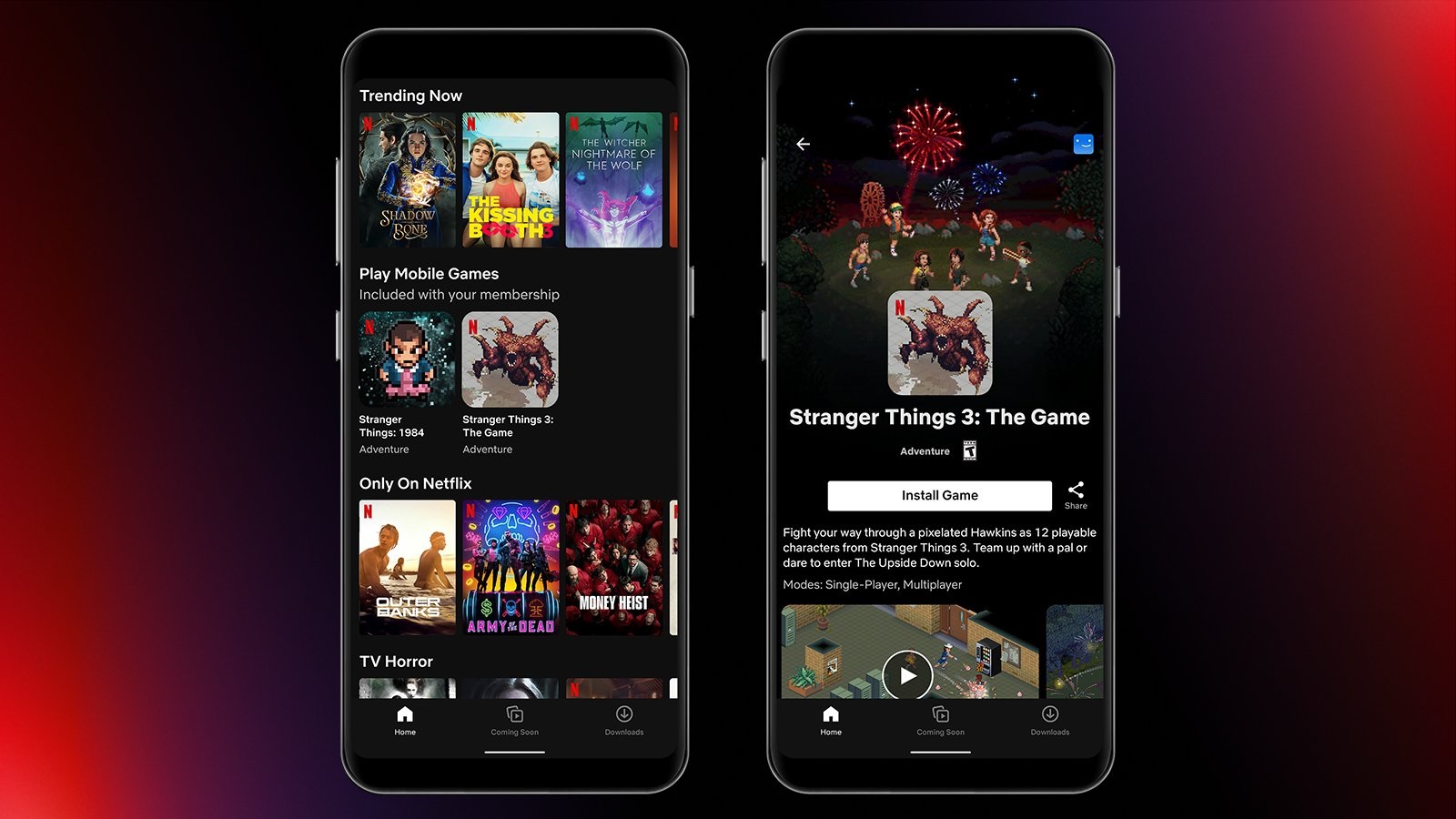
Netflix Mobile Gaming

The service will be exclusive to Android for now and includes two games, Stranger Things: 1984 and Stranger Things 3. The games will appear under a new tab in the Netflix mobile app as seen in the image above. From the screenshot attached to the announcement, users will have to install these games to play and not stream them.

When you tap on the install button, it opens up the Google Play Store within the app. Once the download is complete, you will be able to play the game from within the Netflix app only as the games won’t appear in your app drawer.

If you are disappointed that this isn’t game streaming but just a way to access mobile games made for popular Netflix shows, the streaming service said “it’s very, very early days and we’ve got a lot of work to do in the months ahead,”.

What Netflix is offering now is a way to play games tied to its shows at no extra price. Stranger Things 3 is available on the Nintendo Switch but for $9.99. Netflix subscribers will be able to play the game for free with no ads and no in-app purchases.

It is too early to write off the service as this is just a test run. We expect Netflix has big plans in the pipeline and a true game streaming experience awaits users.


RELATED:

You can now experience Windows 11 on your browser – here’s how

A few months ago, Microsoft announced the biggest update to Windows operating system in over five years with Windows 11. However, the new version is not available for everyone as of now. But did you know that you can try out Windows 11 without installing it?

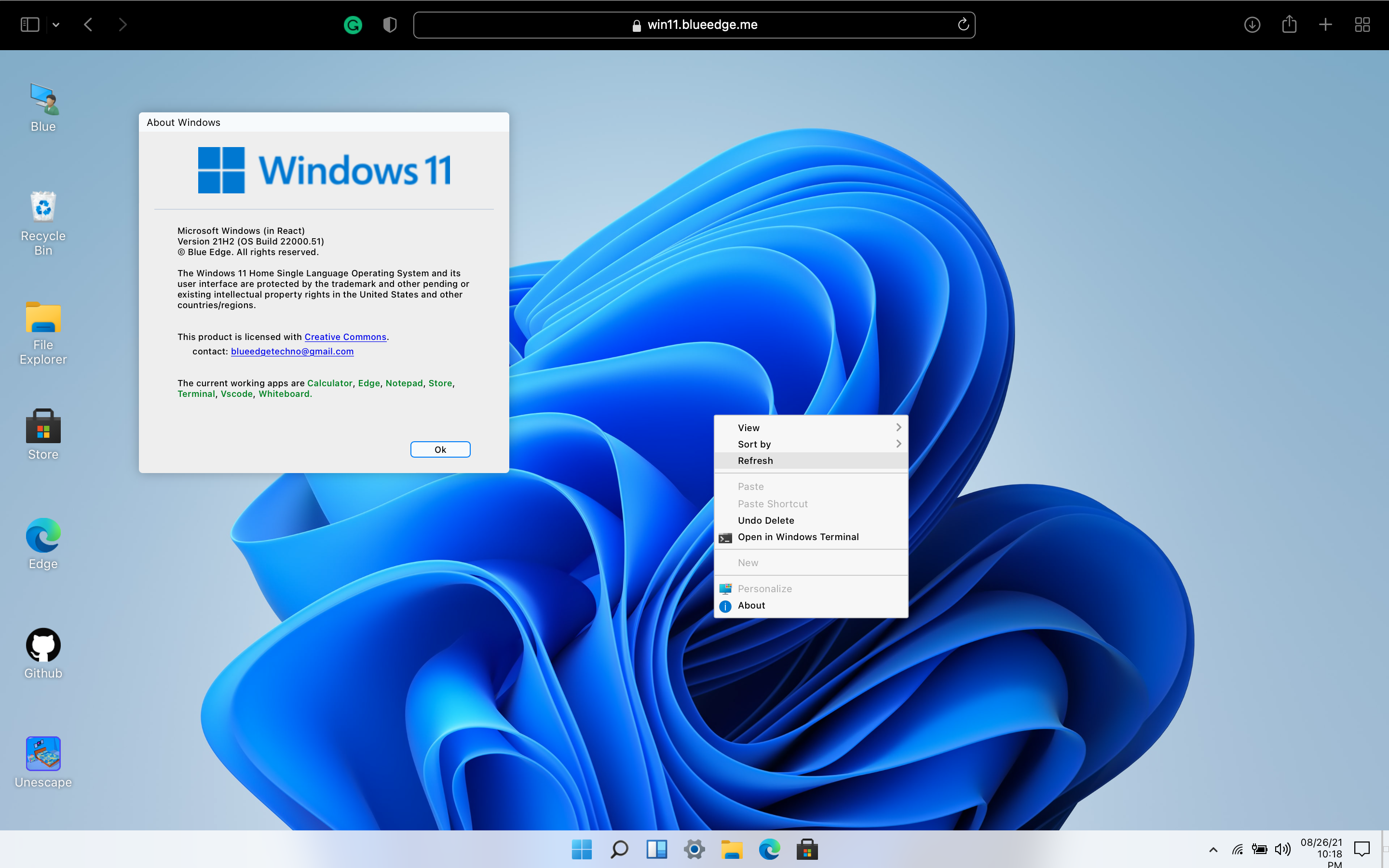
Yes. A developer named Blue Edge developed a web application for users to try out Windows 11 from their internet browser. Using the application, one can experience the upcoming Windows 11 without installing it on their computers. All you need is an internet connection and a browser.  

windows 11 on react
Windows 11 on React

“This open source project is made in the hope to replicate the Windows 11 desktop experience on the web, using standard web technologies like React, CSS (SCSS), and Js,” says the developer.

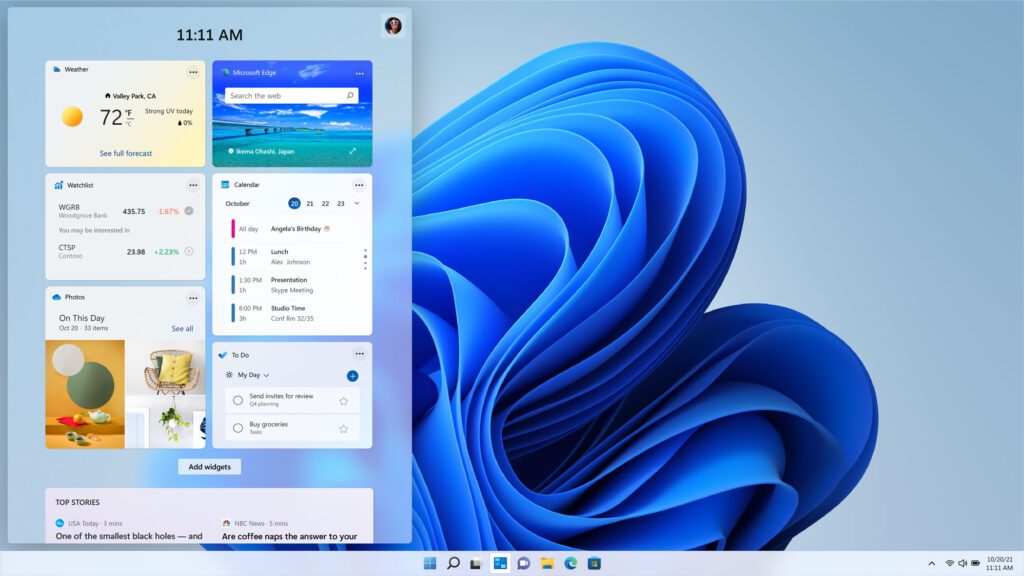
The Windows 11 on React gives users a brief look at Windows 11. The developer says that the project is mainly built on the React Javascript framework, which allowed him to recreate Windows 11 for the web. However, it is not a full-fledged recreation. The project only imitates the look and feel of Windows 11.

Windows 11 Widgets
Source: Microsoft

The project allows users to experience the desktop, new start menu and the Edge browsers. Users can also try out the new Windows Store. However, there’s no option to check out the new File Explorer but opening it shows a “coming soon” web page. It gives a sneak peek of the new Start and Search menu. Though, the performance is not as smooth as the actual operating system.

There’s a thing to remember, Windows 11 on react is not a real operating system, but it’s just a web app to show how things would look once you upgrade to the new version of Windows 11. So, you should avoid comparing the performance with the real OS since the full version of the OS will perform very differently from what is shown here.

The Windows 11 will be released later this year as a free upgrade for compatible PCs during the holidays. Meanwhile, you can check out 11 interesting features on Windows 11.

RELATED:

Huawei Mate50 series won’t launch until end of Q2 2022, will come in Snapdragon and Kirin variants

Huawei has had a tough year with respect to its smartphone business. The ban which is still in effect has led to delays in the release of its phones especially its flagships. Seeing as its product calendar has suffered a huge disruption, it is not surprising that it has been reported that the next-gen Mate series of smartphones won’t launch until next year. While we wait, more details of the Mate50 series have surfaced.

Huawei Mate 40 featured

The source of the new details is the Weibo account 菊厂影业Fans who revealed earlier that the Mate50 series will launch next year. In a Weibo post earlier today, the account revealed that Huawei will probably announce the next-gen Mate smartphones by the end of the second quarter of next year, which is about 9 months from now.

The post also reveals that while Huawei plans to release the Mate50 phones with support for 5G, we will still see 4G variants. The new phones will also launch with a mix of Qualcomm’s Snapdragon processor and Huawei’s own Kirin chipset. The Snapdragon processor will most likely be a 4G version of the yet-to-be-announced Snapdragon 898 processor.

The source also states that Huawei’s strategy, for the time being, will be one flagship series per year rather than two. This means, we most likely won’t get a successor to the Huawei P50 series next year.


RELATED:

Roborock G10 Robot Vacuum & Roborock U10 Smart Dual Scrubber launched in China

Xiaomi‘s ecological chain company Roborock Technology has officially released its annual flagship products and they include the Roborock G10 Robot Vacuum Cleaner and Roborock U10 Smart Dual Scrubber.

Roborock U10 Smart Dual Scrubber

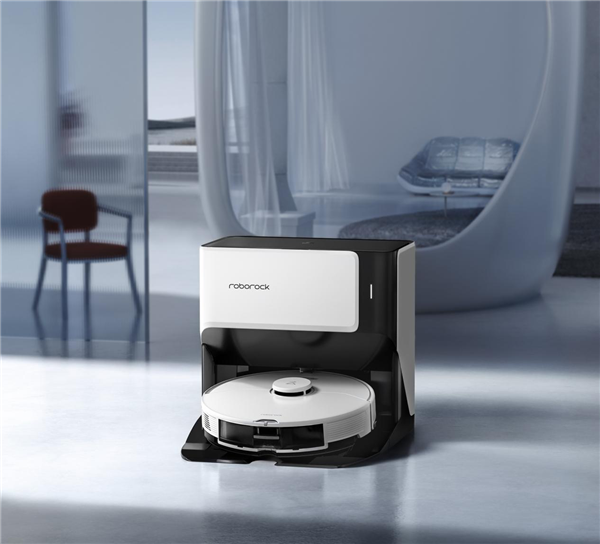
The Roborock G10 Robot Vacuum Cleaner deploys the dual function of sweeping and mopping, a feature that has come to be a regular on modern vacuum cleaners. To this end, it features a water tank that sprays water through a peristaltic pump. The vacuum cleaner also automatically evacuates the receptacle when it is full.

The Roborock G10 comes with different mopping models depending on the type of floor and user preferences that can be selected from the mobile app. Users can set and choose standard backwashing, smart backwashing, manual backwashing, and manual pile backwashing according to their needs.Roborock G10 Robot Vacuum

In terms of the hardware, the Roborock G10 adopts a high-frequency vibration design of up to 3000 rpm motor which can effectively remove dirt on the ground. With the combination of floating mopping module and high-frequency vibration, even if the surface is rough and uneven, specks of dirt can effectively be removed.

The Roborock G10 Robot Vacuum will utilize an upgraded RR Mason 8.5 path navigation algorithm. The algorithm can automatically determine whether the mop needs to be washed. It can also automatically navigate back to the charging base if there is a need to refill the water tank and also to automatically clean the mop. This offers a fully hands-free operation.

Roborock U10 Smart Dual Scrubber

On its part, the Roborock U10 Smart Dual Scrubber features an entirely new design that improves the cleaning effect, flexibility, and corner coverage of the scrubber. The handheld device has a combination of two roller brushes. It wipes the floor more cleanly, internally rotates the dirt, and doesn’t leave the floor wet.

The Roborock U10 is equipped with two independent high-power motors to provide power, with a total power of up to 100W. In addition, the handheld can intelligently detect the degree of dirt on the ground, automatically adjust the cleaning intensity, and clean the dirty areas, increasing the water volume and suction power to enhance the cleaning effect.

In terms of battery life, the device has a built-in 5000mAh capacity battery, which can work for more than 35 minutes on a single charge.

The capacity of the clean water tank and the wastewater tank is 850ml and 600ml respectively, and the automatic mode can work for 15 minutes with a full water tank.

In terms of price, the Roborock G10 Robot Vacuum Cleaner is available for 3999 yuan (~$617), and the Roborock U10 Smart Dual scrubber is available for 3,499 yuan (~$540). The products will go on sale in China simultaneously on Tmall, JD.com, Suning, and other platforms on August 25.

RELATED: