Siri, the voice-command-based virtual assistant from Apple that is available on almost all of Apple’s devices, faced the wrath of social media users in China this week after the platform was unable to read out China’s tally of gold-medal wins at the ongoing Tokyo Olympics.
Apple’s Siri says that the issue was because of a technical setting that only allowed Siri to read out the name of one country if two countries have the same amount of gold medals. The problem had been fixed and Siri was able to read out the correct tally for China.
Chinese social media users started uploading videos on Weibo showing the official Olympic gold medal tally of China. The video showed that Japan won 11 gold medals, followed by the US and China with 10 gold medals each, and Russia with seven gold medals, but Siri was unable to read out China’s number of wins.
People started speculating that the US-based tech giant may have deliberately snubbed China because of the ongoing tensions related to tech and trade. Apple has a strong presence in China but has suffered pushback because of the pressure piled by the United States on Chinese companies, especially Huawei Technologies, which is now barred from using US-origin technology. Currently, China is Apple’s third-largest market by revenue.
Microsoft had announced the Windows 11 operating system a few weeks ago and it was available to install as a Dev build. The Redmond-based tech giant has now released the first beta version of the Windows 11 OS.
The Windows 11 Beta is available for those who are enrolled in Windows Insider Program. As per the company, the beta release is less volatile compared to the Dev build and is being validated by Microsoft.
To test out this new version of Windows you will need to have a computer that meets the compatibility requirements laid out by Microsoft. Those who have installed the Dev version can switch to the Beta version by going to Settings > Windows Update > Windows Insider Program and then clicking on Choose your Insider Settings.
Do note that while Beta releases are more stable than the Dev releases, they are still not stable versions and are likely to have bugs, crashes, and missing features. So, we would suggest not installing Windows 11 on your primary device yet.
Windows 11 operating system features a new user interface, including a centered Start menu and Taskbar design, rounded corners, new sounds, and much more. The preview version available misses some interesting features like in-box app experience and Android app support but Microsoft adds that they will soon go into testing.
At the beginning of this month, the upcoming Samsung Galaxy A03s that has a model number of SM-A037F/DS was spotted at the Bureau of Indian Standards (BIS). Now the support page of the phone has gone live in India. This indicates that it may not take too long for the South Korean company to announce the Galaxy A03s in India.
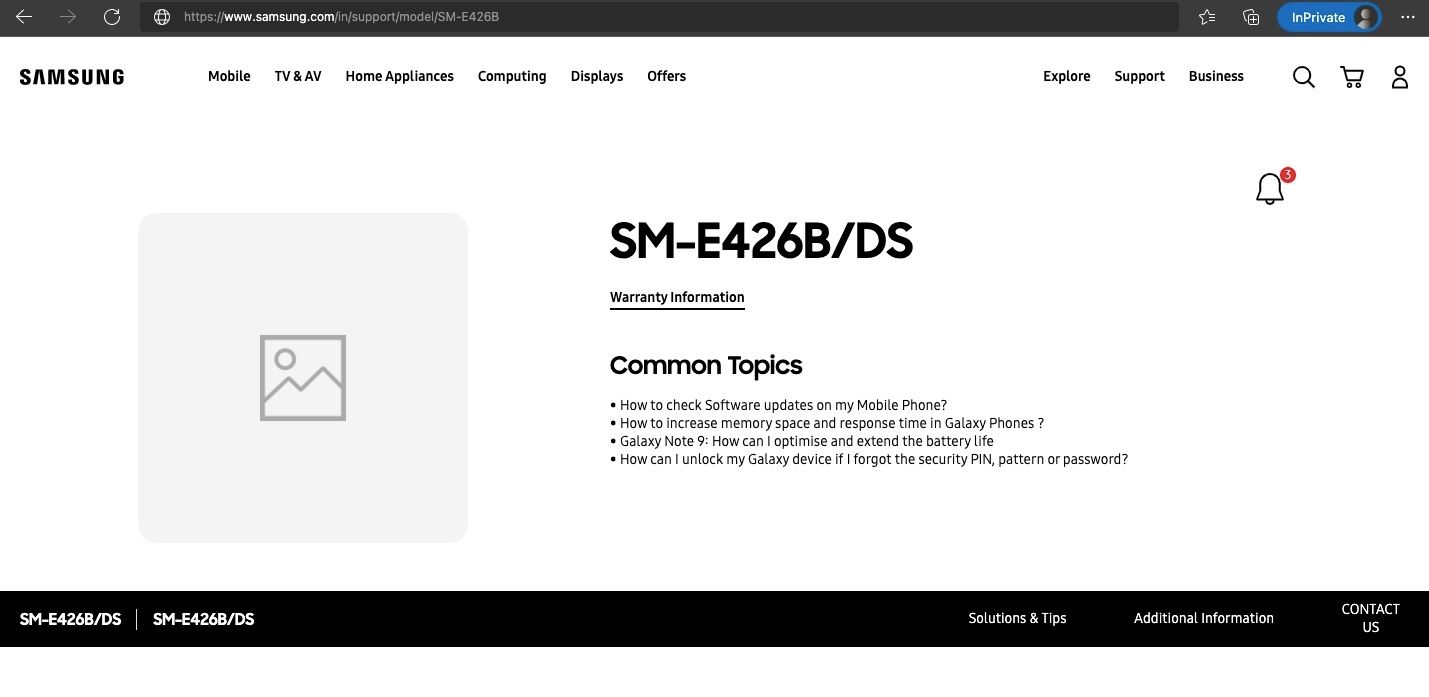
Shown above is a screengrab of the Galaxy A03s support page listing (via) from Samsung India’s website. The listing only mentions the model number and has no information on its specs. In recent weeks, the Galaxy A03s has been spotted at various places such as Federal Communications Commission (FCC), Bluetooth SIG authority, and Geekbench. The handset has also been certified by Indonesia’s TKDN authority, which indicates that it will be also arriving in Indonesia.
The Galaxy A03s will be replacing the Galaxy A02s that debuted in November last year. Like the predecessor, the A03s will be packed with modest specs. Past reports have revealed that the Galaxy A03s has a 6.5-inch HD+ display with a teardrop notch, which houses a 5-megapixel selfie camera.
Samsung Galaxy A03s CAD renders by OnLeaks/91mobiles
The Helio G35 chipset will be driving the Galaxy A03s. To recollect, the predecessor model was fueled by the Helio P35 chip. The device is expected to house a 5,000mAh battery with 15W rapid charging support. It is likely to come equipped with a 13-megapixel + 2-megapixel dual-camera system.
The Galaxy A03s is expected to go official in early August. At present, there is no word on the pricing of the device.
The Samsung Galaxy Z Flip3 will be announced with the Galaxy Z Fold3 on Aug. 11. Ahead of the launch, the clamshell device has received 3C certification in China. The original Galaxy Z Flip and Galaxy Z Flip 5G carries support for 15W fast charging. The 3C listing suggests that the Z Flip3 may offer faster charging capabilities.
Past reports have revealed that the SM-F7110 model number belongs to the upcoming Galaxy Z Flip3. It is not the first time that the Z Flip3 has appeared at 3C. The device was spotted with a 15W charger at 3C authority in May.
The new listing that has been today suggests that the device will carry support for two chargers with model numbers EP-TA200 and EP-TA800. The former supports 15W fast charging, whereas the latter offers 25W rapid charging. Hence, there is a possibility that the retail package of the device may include a 15W charger, but the users will be able to purchase a 25W charger separately for faster charging.
The Galaxy Z Flip3 is expected to arrive with a 3,300mAh battery. It will be housing a 6.7-inch foldable screen and a 10-megapixel selfie camera on the inside. On the outside, it will be featuring a 1.9-inch cover display and a pair of 12-megapixel cameras.
Samsung Galaxy Z Flip3 5G renders by Winfuture.de
The Snapdragon 888 mobile platform will fuel the Galaxy Z Flip3. It may come with 8 GB of RAM and 128 GB / 256 GB of storage. It will be an IPX8 rated water-resistant device. It will be sporting an impressive dual-tone design and will come in multiple hues such as dark green, light violet, beige, grey, pink, dark blue, and white.
Xiaomi has already confirmed that the company will be launching its new RedmiBook laptop in the Indian market on 3rd August. The launch will mark the debut of the Redmi-branded notebook device in India.
Apart from the launch date, the brand has not revealed anything about the laptop. But, details about the upcoming product have already leaked online, and now the latest leak coming via 91Mobiles sheds light on the device’s specifications and pricing details.
The China-based company is gearing up to launch RedmiBook 15 in India on 3rd August which will come with a 15.6-inch display offering a Full-HD screen resolution. The panel is likely to be an LCD screen.
Under the hood, the device will be powered by Intel‘s 11th generation Core i3 and Core i5 processors, coupled with 8GB of RAM. The laptop will come in two PCIe SSD options — 256GB and 512GB.
The laptop will offer dual-band Wi-Fi and Bluetooth v5.0 as connectivity options. Unlike the brand’s first Mi Notebook in India, this one will come with an HD webcam so the users won’t need to attach the webcam separately.
Taking care of the audio needs will be two 2W speakers, most probably in a stereo configuration. As for the ports, the device will come with USB Type-C 3.1, USB Type-A, USB 2.0, HDMI, and audio jack.
In the software department, the laptop will be running the Windows 10 operating system. Currently, there’s no information about the battery capacity but the leak says that the device will come with a 65W charger.
As for the pricing, the leak indicates that the laptop should be priced under ₹50,000 in the Indian market, which is roughly around $672. The device, which is expected to come in Charcoal grey color, will compete against the offerings from Acer and Asus, and most likely the upcoming Realme Book that is expected to go official in August.
Xiaomi has said that it aims to broaden its device portfolio in the Indian market and in line with that, the brand will be launching products like power banks, earbuds, smart bands, and more, which would complement its smartphones and the users’ lifestyles.
Elon Musk-led electric carmaker Tesla has agreed to pay $1.5 million to settle a lawsuit that claims that the company used a software update to reduce the maximum battery voltage in 1,743 Tesla Model S sedans, reports Reuters.
As a part of this settlement, owners of the vehicle will get getting $625 each which is touted to be “many times the prorated value of the temporarily reduced maximum voltage.” This is based on the proposed settlement documents filed Wednesday in U.S. District Court in San Francisco.
Tesla Model S
Do note that the proposed settlement is subject to approval by a judge. A U.S. judge set a Dec. 9 hearing on the proposed settlement for the lawsuit that was filed in August 2019.
Lawyers, who filed the lawsuit for the car owners said that the “voltage limitation was temporary, with a 10% reduction lasting about 3 months, and a smaller 7% reduction lasting another 7 months before the corrective update was released in March 2020.”
A subsequent update restored about 3 percent of the battery voltage in these vehicles, and a third update released in March 2020 was designed to fully restore the batteries’ voltage over time as the vehicles are driven, the settlement documents said.
The documents further add that the company data shows 1,552 vehicles with the maximum battery voltage fully restored and 57 have had battery replacements. As for the other vehicles, the maximum voltage should continue to be restored over time.
Tesla recently announced that its revenue stood at $11.9 billion in Q2 2021, beating analyst expectations and showing a 98 percent increase compared to the same period of last year. GAAP earnings per share soared by 920 percent year-on-year to $1.02.
The TECNO Spark Go 2021 is priced at N46,299(~$113/~₹8,395) in Nigeria. This is slightly expensive than the Indian pricing of ₹7,299(~$98). The smartphone comes in multiple shades including Blue and Orange.
TECNO Spark Go 2021 Edition Specifications
As said above, the most significant upgrade over the predecessor is the design. The phone has a textured back with a ‘TECNO SPARK’ branding beneath the camera lens. It sports a 6.52-inch TFT IPS Dot notch display with HD+(720 x 1600 pixels) resolution. Although it has the modern 20:9 aspect ratio, the device still has a thicker border around the screen. The screen has 480 nits of brightness and a 269 PPI pixel density.
The smartphone has an AI-enhanced dual-camera setup at the rear with a 13MP main sensor and a 0.3MP depth sensor. Upfront, it has an 8MP selfie shooter. The handset can shoot 1080p videos at 30fps.
It draws power from the MediaTek Helio A20 chipset and has 2GB of RAM and 32GB of internal storage. The storage is expandable via a microSD card up to 128GB. It packs a 5,000mAh battery which is claimed to offer up to 36 days of standby time. It has a fingerprint scanner at the rear and supports Face unlock for added security. It runs on Android 10 Go Edition and has HiOS v6.2 on top of it.
Global chip shortage has become a serious issue for everything related to technology. While the shortage was impacting automakers initially, it is now also making a dent in the business of consumer electronics makers.
As the global chip shortage is hitting the smartphone industry, Apple has said that it could affect iPhone production and the company has also forecasted slowing revenue growth. This will also impact the tech giant’s services business.
Apple executives said that the revenue for the current fiscal fourth quarter will grow by double-digits but be below the 36.4% growth rate in the just-ended third quarter. They added that while the impact of the chip shortage was less severe than feared in the third quarter, it will get worse in the fourth, extending to iPhone production.
Tim Cook, CEO of Apple, said that chips affected by the shortages are made using older technology but those are still vital as supporting parts for making iPhones. Analysts believed that Apple could be stockpiling chips for its next-generation iPhone models.
There are several reasons behind the global shortage of chips, including factory closures due to the COVID-19 pandemic and increased demand for consumer electronics products during the lock-down and Work from Home setups.
The situation is not as bad for Samsung and Apple as with smaller phone manufacturers. HMD Global, which makes Nokia-branded devices, has warned that the semiconductor shortage could prove challenging for smaller device makers.
Reports indicate that many players in the mobile phone industry are struggling to procure a variety of semiconductors, including the struggle for sourcing power-management chips, display drivers, application processors, in addition to 4G and 5G chipsets.
The Huawei P50 series was announced yesterday, and as Huawei is known to do with every launch of a flagship phone, it also unveiled multiple accessories for the new phones. While most of them are cases, one is the manufacturer’s first multi-coil wireless charging pad.
Huawei P50 and P50 Pro Art Theme Cases
Just like the Mate 40 series, Huawei has also announced Art Theme cases for the P50 series. The cases are available in four colorful options for both the P50 and P50 Pro. Apart from their eye-catching designs, the cases also have a built-in kickstand and offer extra protection at the corners. Huawei has also made matching themes that users can apply on their phones. You can grab the case on Vmall for ¥199 (~$30) a piece.
Huawei P50 Pro Ring Flash Case
The Huawei P50 Pro also gets an exclusive ring flash case that has a built-in ring flash for when you want to take a selfie or record a vlog. The case has a button for switching between three levels of brightness and three color temperatures (warm, cold, and mixed). It charges via reverse wireless charging which explains why it is exlcuive to the Huawei P50 Pro. The ring flash case is available in pink and white on Vmall for ¥299 (~$46).
Huawei P50 series Smart Window Case
If you want something more classy, there is the smart window flip case with a transparent part that allows you glimpse the time, date, weather, and your notifications. The case will also automatically wake-up the phone when flipped open and put it to sleep when shut. It is priced at ¥229 (~$35) and is available in black and gray.
Huawei P50 series silicone case and leather case
Huawei has also launched silicone cases for the new phones and they are available in five colors including black, light green, and orange for ¥99 (~$15). The leather case is more expensive at ¥199 (~$30), comes in Classic Black and Elephant Gray, and has a built-in kickstand.
Huawei multi-coil wireless charger
Huawei also announced a multi-coil wireless charger that can charge three items at the same time at up to 15W per device. The pad is shaped like a giant elongated pill and appears to have a fabric surface. It also has a USB-C port for connecting to a power adapter. The specs are unknown and so is the price. We hope Huawei will reveal these details soon.
Recently, it was reported that Apple had activated several in-house and external strategies to curtail the embarrassing leaks of its unreleased products. While the Cupertino-based company has secured convictions for some of its employees who accessed and divulged unauthorized information, it has also put several security protocols to cut to zero the leak of its trade secrets.
However, it seems Apple is getting more assertive in its efforts, gong by the recent legal cease and desist notice sent to yet another leaker in China. A Weibo user posted a letter from Apple China’s legal representative, Fangda Partners warning the tipster to desist from publishing and disseminating information about Apple iPhone prototypes. What makes this interesting is that Apple gave the alleged leaker 14 days to respond to the allegation of unauthorized release of Apple’s trade secrets. More surprising is that the US firm wants the leaker to disclose the sources of the leaked prototypes.
It is unclear what would be the next step for Apple whether the issue may escalate to a court case. However, the impact of the seemingly effective Apple strategy is being noticed, as some known tipsters are gradually cleaning their stables and going incommunicado on Twitter. This action could also lead to actions on Weibo. Apple, therefore, seems to be progressively winning the battle, as fewer tipsters have taken the risk to mention a product leak that will bring Apple’s legal representative to such a person.
Audio products manufacturer JBL prides itself on having a legacy of consistency in delivering excellent and innovative audio products for more than seven decades. It is a global player and trailblazer in the audio technology segment of the industry and continues to exemplify its ideals with the launch of its latest products in India.
JBL has unveiled two earbuds in India. The products are the Live Pro+ TWS earbuds and the Live 660NC wireless headphones. Both devices come with several features and functionality that place them on a solid pedestal for massive acceptance by the Indian market. These devices come with some of the properties of past products, including Adaptive Noise Cancellation, Ambient mode, and several other features. The two products are ergonomically designed for maximum comfort when used for extended periods.
The JBL Live Pro+ TWS earbuds will sell at Rs. 16,999 ($229), while the Live 660NC wireless headphones are priced at Rs. 12,999 ($175). Both products are available via JBL’s online store, as well as several outlets across the subcontinent.
JBL’s long years of production of audio products puts it in a vantage position to develop technologically advanced products. Some of these JBL technologies are present in the JBL Live Pro+. These include Signature Sound, Smart Ambient mode, and Echo-Cancelling technology which guarantees crisp and clear voices during calls. The battery of the Live Pro+ can give up to 7 hours on a full charge without ANC, and 6 hours with ANC activated. However, with the charging case, the device could offer up to 28 hours of continuous listening activity.
The Live 660NC wireless headphone has some similar features to the Live Pro+. It also supports a multi-point connection and Voice Assistant Hands-free support. Its battery can offer up to 50 hours of playback on a full charge without ANC, and 40 hours, with ANC.
Early this month, Qualcomm announced its first smartphone, the ASUS-made Smartphone for Snapdragon Insiders, with a promise that it will be available in August. Ahead of the release date, interested buyers can now pre-order the smartphone.
Priced at $1499, the Smartphone for Snapdragon Insiders can be pre-ordered on ASUS’ US website. The estimated shipping date is 27th of August which is practically a month away. Pre-orders are not live yet in the UK, Europe, and India.
The Smartphone for Snapdragon Insiders has a 6.78-inch FHD+ AMOLED display with a 144Hz refresh rate and a peak brightness of 1200 nits. There is no bezel or notch or punch hole for the front-facing camera, instead there is a slim bezel that houses the 24MP selfie camera and other sensors.
Qualcomm’s phone is powered by the Snapdragon 888 processor and packs 16GB of RAM and 512GB of storage. It has a 64MP main camera on the back that drags along with it a 12MP ultrawide angle camera that doubles as a macro camera and an 8MP telephoto camera with 3x optical zoom.
There is a fingerprint scanner on the back as well as a Snapdragon logo that has an LED underneath. The Smartphone for Snapdragon Insiders has stereo speakers with a smart amplifier. It is also the first phone to come with Snapdragon Sound technology.
The Smartphone for Snapdragon Insiders has a 4000mAh battery and support for 65W fast charging. It will come with a 65W Quick Charge 5 adapter in the US and Europe while India gets a 30W power adapter. Qualcomm also ships the package with a pair of premium TWS earbuds, two charging cables, and a case.
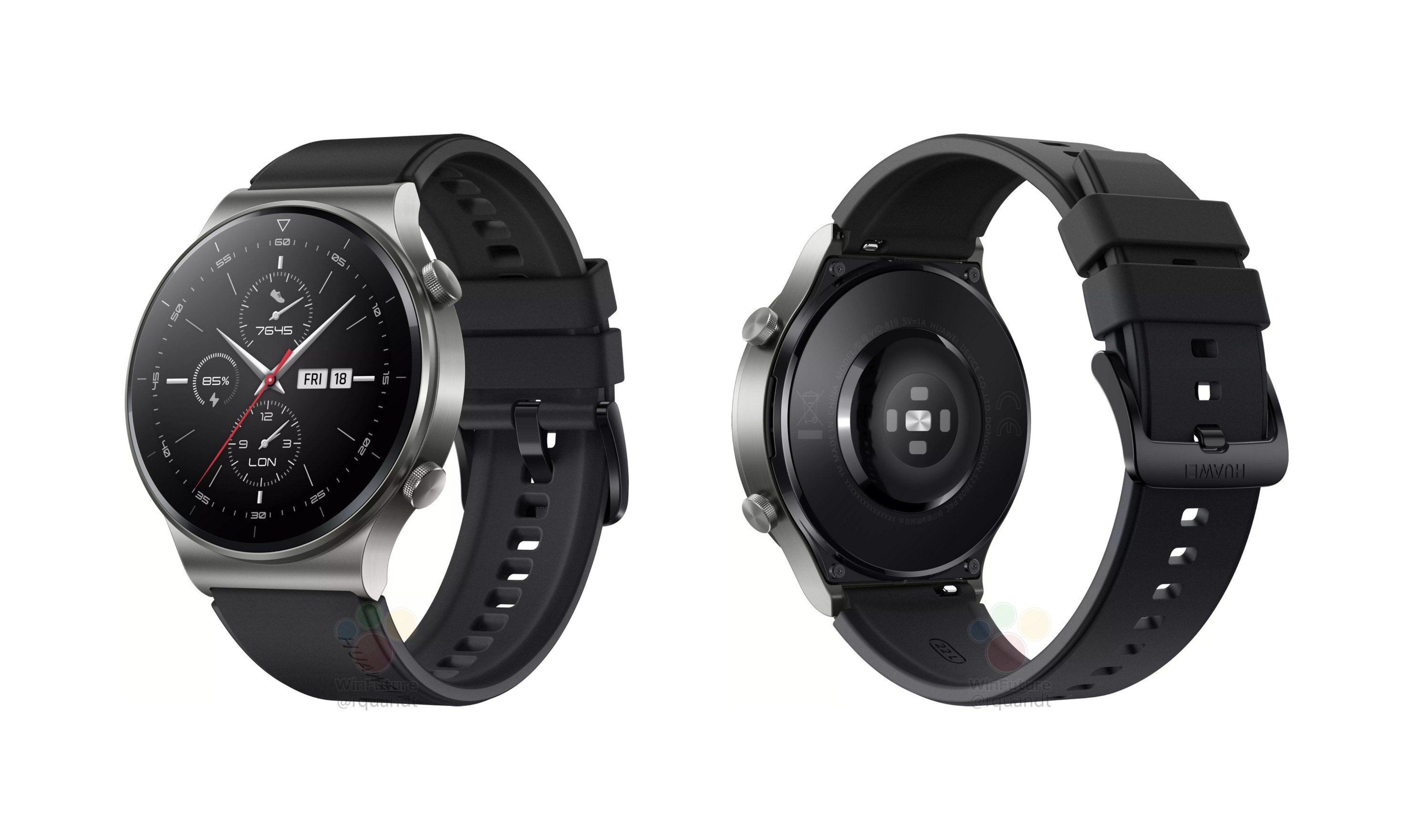
Huawei continues its resurgence in the extended tech market by releasing two smart wearable devices that offer some wonderful upgrades from their predecessors. Today, the Chinese tech giant has released the Huawei Watch GT 2 Pro ECG and the Band 6 Pro smartwatches today. The launch is coming on the heels of several releases, including its new generation smart speaker and smart screen and the P50 series.
The Huawei Watch GT 2 Pro ECG and the Huawei Band 6 Pro are improved versions of their predecessors, the Watch GT 2 and the Band 6. The Watch GT 2 Pro ECG comes with a sensor that takes electrocardiogram measurements, and the Band 6 Pro has a body temperature sensor. In addition to the ECG heart measurements, the Watch GT 2 Pro ECG also retained the sensors present in its predecessor like blood oxygen monitoring, heart rate tracking, sleep, and stress levels indicators. It features a 1.39-inch AMOLED display, 100 workout modes and comes with Huawei’s Lite OS. The Watch GT 2 Pro ECG has Sapphite crystal-infused glass protection and a titanium frame.
The Huawei Band 6 Pro sports a bigger 1.47-inch AMOLED display and the same sensors as the Watch GT 2 Pro, except that the ECG sensor is absent in the Band 6 Pro, replaced by a body temperature sensor. The Band 6 Pro has up to 96 workout modes. It also has a 14-day battery life on a full charge and moderate usage.
Pricing and local availability information have also been made public. The Huawei Watch GT 2 Pro ECG will be available from August 12, and it will sell at CNY 3,088 ($478), while the Band 6 Pro will sell at CNY 449 ($70) when sales begin on August 20. The pricier Huawei Watch GT 2 Pro comes in a single color variant – black.
Global pricing and availability details could follow subsequently.
Compact phones are not a trend, but Apple is still releasing several compact phones in the last years. In 2020, the Cupertino giant came up with the iPhone SE 2020, the second model ever from the SE lineup. Right after, the company launched the iPhone 12 Mini alongside the other variant from the iPhone 12 series, which is the first Mini variant of an iPhone. A lot of people are wondering whether they should go for the affordable iPhone SE 2020 or spend more on the iPhone 12 Mini in order to get the best compact phone out there. If you are one of them, you are in the right place: this specs comparison will highlight the differences.
Apple iPhone SE vs Apple iPhone 12 Mini
Apple iPhone SE 2020
Apple iPhone 12 Mini
DIMENSIONS AND WEIGHT
138.4 x 67.3 x 7.3 mm,
148 g
131.5 x 64.2 x 7.4 mm,
135 g
DISPLAY
4.7 inches, 750 x 1334 pixels (HD+), Retina IPS LCD
5.4 inches, 1080 x 2340p (Full HD+), Super Retina XDR OLED
The iPhone SE 2020 has a very old design: it is the design of the iPhone 8 series which makes it the only last-generation iPhone with the Touch ID. The iPhone SE 2020 has thick bezels around the display and a 16:9 aspect ratio: very outdated. But it still comes with a great build quality: it has a glass back, an aluminum frame, and the IP67 certification making it dustproof and water resistant. The iPhone 12 Mini has the most modern design ever made by Apple: it is the same design as the other devices from the 12 series, but with smaller dimensions. Despite it has a wider display than iPhone SE 2020, it is more compact thanks to its bezel-less front panel. Further, it is very thin and lightweight. It also comes with the IP68 certification: it is dustproof and waterproof up to 6 meters deep. The iPhone 12 Mini does not have Touch ID but it relies on Face ID for the authentication.
Display
With the iPhone 12 Mini, you can actually get a way better display. Instead of the IPS panel of the iPhone SE 2020, you get an amazing Super Retina XDR OLED panel with HDR10 and Dolby Vision, as well as a higher Full HD resolution providing a higher level of detail. The color accuracy is better, colors are more brilliant and blacks are deeper. The panel is also wider with 5.4 inches and a 19.5:9 aspect ratio. The iPhone SE 2020 still comes with a good display, but it is inferior. It has an HD+ panel with a diagonal of 4.7 inches and True-tone technology.
Specs & Software
Besides offering a better design and display, the iPhone 12 Mini also packs better hardware components. It is powered by the Apple A14 Bionic chipset which is much better than Apple A13 Bionic and, unlike the A13, it supports 5G. The iPhone 12 Mini also comes with more RAM (4 GB vs 3 GB) which allows for a better multi-tasking experience. The internal storage is the same for each device: you get a version with 64 GB of storage, a 128 GB configuration, and a 256 GB one. Note that iPhone SE 2020 runs iOS 13 out of the box, while iPhone 12 Mini is based on iOS 14. This means the Mini will get longer software support.
Camera
The iPhone 12 Mini wins the camera comparison too, thanks to a superior camera setup. It has a 12 MP main camera with a bright f/1.6 aperture, alongside a 12 MP ultrawide sensor and OIS support. The iPhone SE 2020 has just a single camera on the rear side which has a 12 MP resolution and an f/1.8 aperture. The iPhone 12 Mini is also a better selfie phone with its 12 MP front camera (iPhone SE 2020 has a 7 MP sensor).
Last but not least, the iPhone 12 Mini has longer battery life. The reasons are pretty simple: first of all, it has a bigger battery capacity. Further, its display has a lower energy consumption, and its processor is built with a production process making it more efficient. Both the phones support fast charging and wireless charging, but the Mini has the MagSafe technology which is not present in its rival.
Price
You can actually find the iPhone SE 2020 for less than €400/$400, while iPhone 12 Mini starts from €550/$550 thanks to online street prices (note that prices vary depending on the market). The iPhone 12 Mini is a much better option due to its great design, superior display, more powerful chipset, longer battery life, and better cameras. You should go for SE 2020 only if your main intention is to save as much money as possible.
After a formal announcement a few weeks ago, Chuwi Hipad Pro tablet is inching closer. It is slated for global debut via AliExpress on August 2, 2021, for the special price of $199.99. Some special goodies aka magnetic keyboards are bundled for the first 300 buyers. It is an exceptional deal for buyers who are looking to grab a Qualcomm tablet at an affordable price.
There are several other outstanding features including a 10.8-inch large display, Qualcomm Snapdragon 662 SoC and support for Widevine L1 digital rights management certification. Let’s talk about each prominent aspect of the Chuwi HiPad Pro tablet below –
Massive 10.8-inch Display
Chuwi HiPad Pro comes with a large 10.8-inch full-view display which offers the highest 90% screen-to-body ratio. Its Full HD resolution display comes with 280 PPI of pixel density and offers 600 nits of maximum brightness. It offers a golden screen ratio of 16:10 for an optimal viewing experience.
Moreover, the tablet houses 4 matrix surround sound speakers to offer an immersive experience while watching the digital content via the prominent OTT apps. The tablet houses Google’s official Widevine L1 digital certification which enables to enjoy the premium content from Netflix, Amazon and other OTT apps without compromising don’t eh quality.
Powerful Qualcomm Snapdragon 662 Onboard
Chuwi HiPad Pro tablet is powered with a Qualcomm Snapdragon 662 SoC coupled with an octa-core processor and Adreno 610 GPU. The chipset offers a fast 4G LTE connectivity with blazing fast download and upload speeds. The new tablet debuts with a 128GB UFS 2.1 high-speed storage while offering speeds of up to 800MBp/s.
There’s a 7000mAh battery coupled with a Qualcomm QC 3.0 fast charging support. It is sufficient enough to offer a decent battery backup time of up to a couple of days.
The Chuwi HiPad offers support for wireless accessories such as Bluetooth keyboard and H6/H7 calligraphy and painting stylus.
It is a powerful tablet that comes with Snapdragon 662 SoC while having an affordable price tag of $199. However, the device offers up to a 90% screen share ratio while maintaining cost-effectivity. The tablet will be on sale from August 3-5 for the initial retail price of $199.99. There will be free magnetic keyboards for the first 300 buyers. You can know more about the device by heading to the official Chuwi store.
Ever since Huawei kicked off its proprietary OS, the HarmonyOS for its phones in 2019, the OS has continued to develop. Back in June, the second iteration of the OS, the HarmonyOS 2 was pushed for many Huawei devices. Today, Huawei has officially confirmed that the Harmony OS 2 is installed on over 40 million devices.
If you are unaware, the software was booting on over 10 million devices within a week of its launch. News broke out that within a month it was booting on over 25 million Huawei phones. Now, with the 40 million milestone, Huawei’s HarmonyOS has accomplished a higher position across phone operating systems.
At this pace, the OS seems to compete head-to-head with other operating systems. Huawei has also been adding open source components to the OS and it had recently added 400+ open source components.
OPPO has been updating its devices to ColorOS 11 based on Android 11 since September 2020. As per the update plan for July 2021, only a single device in India will get the beta update this month. That device is OPPO K3 and beta registrations for it are already live for the past few days and should have probably ended by the time you will be reading this.
OPPO K3
According to the ColorOS 11 update plan for the month of July 2021, OPPO was supposed to open beta registrations for the OPPO K3 in India from July 28 (yesterday). However, that did not happen.
As per an official announcement post on ColorOS Community, the company opened registrations days earlier on July 22. Hence, the registrations are scheduled to end by July 29 (today). Thankfully, there will be more batches for interested users.
In order to participate, users need to be on the firmware version C.16. To enroll, they will have to head over to Settings > Software Update > Gear Icon > Apply for Beta Version > Update Beta Version and follow the on-screen instructions. The beta build will be rolled out to applicants via OTA if they get selected.
The OPPO K3 debuted with ColorOS 6.x based on Android 9.0 Pie. The smartphone was updated to Android 10-based ColorOS 7.x last year. Going by OPPO’s update track record, ColorOS 11 (Android 11) should be its second and last major update.
Huawei announced new phones today but rather than abandon its older devices, it has announced a program that will allow users to hold on to them for longer. The Chinese manufacturer has launched a storage upgrade program for more than 30 phones.
Huawei says that starting this month, owners of the phone below will be able to take their device to an after-sales service center to have the storage capacity increased. The manufacturer is offering three storage upgrade options – 128GB, 256GB, and 512GB. The bigger storage combined with the update to HarmonyOS is expected to breathe new life into these devices. The service will have a starting price of ¥369 (~$57).
Below are the eligible devices for the upgrade program. The list has been divided into two, those that will be available to be upgraded starting this month and those that will be eligible for an upgrade between August and December:
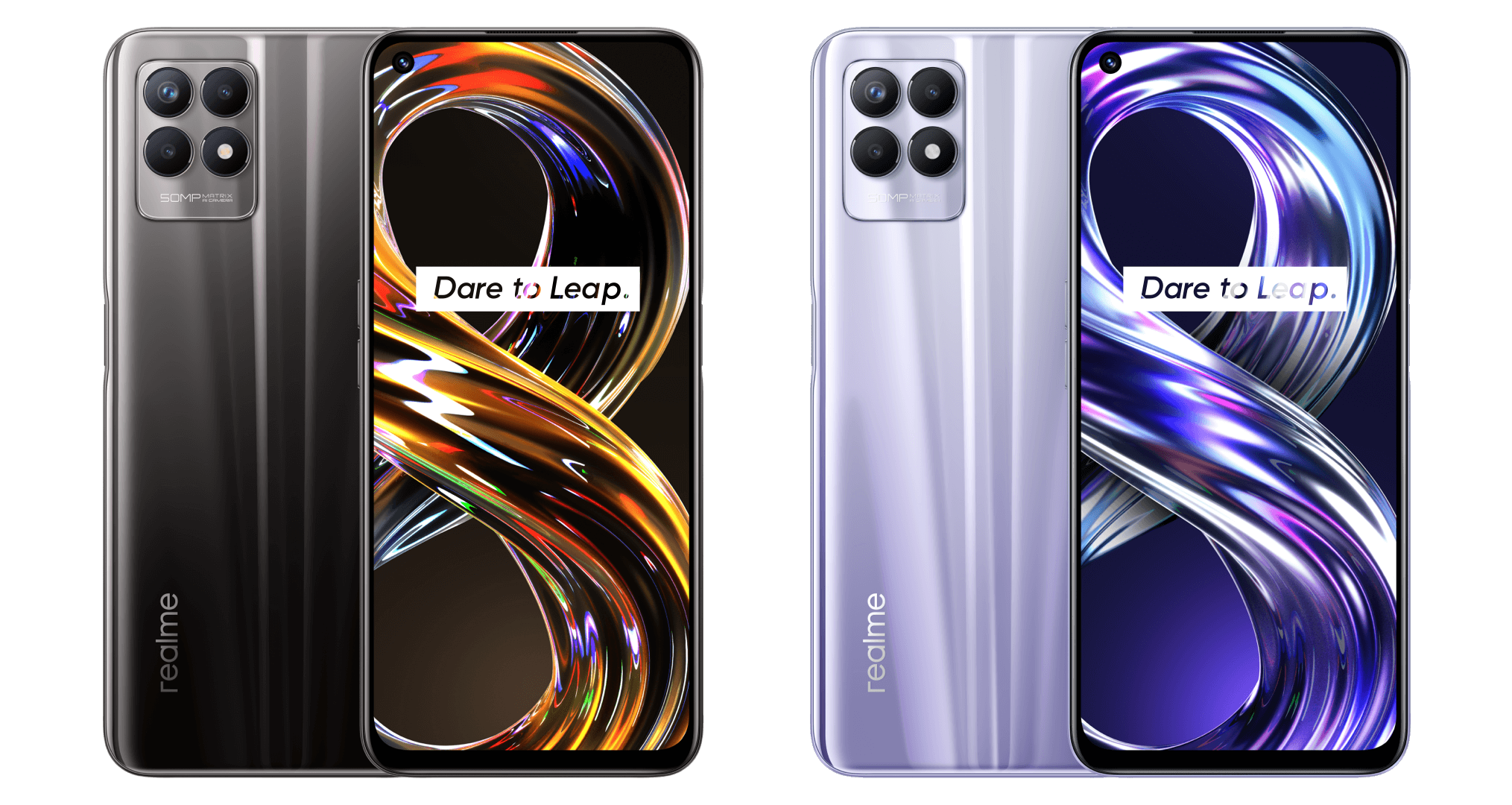
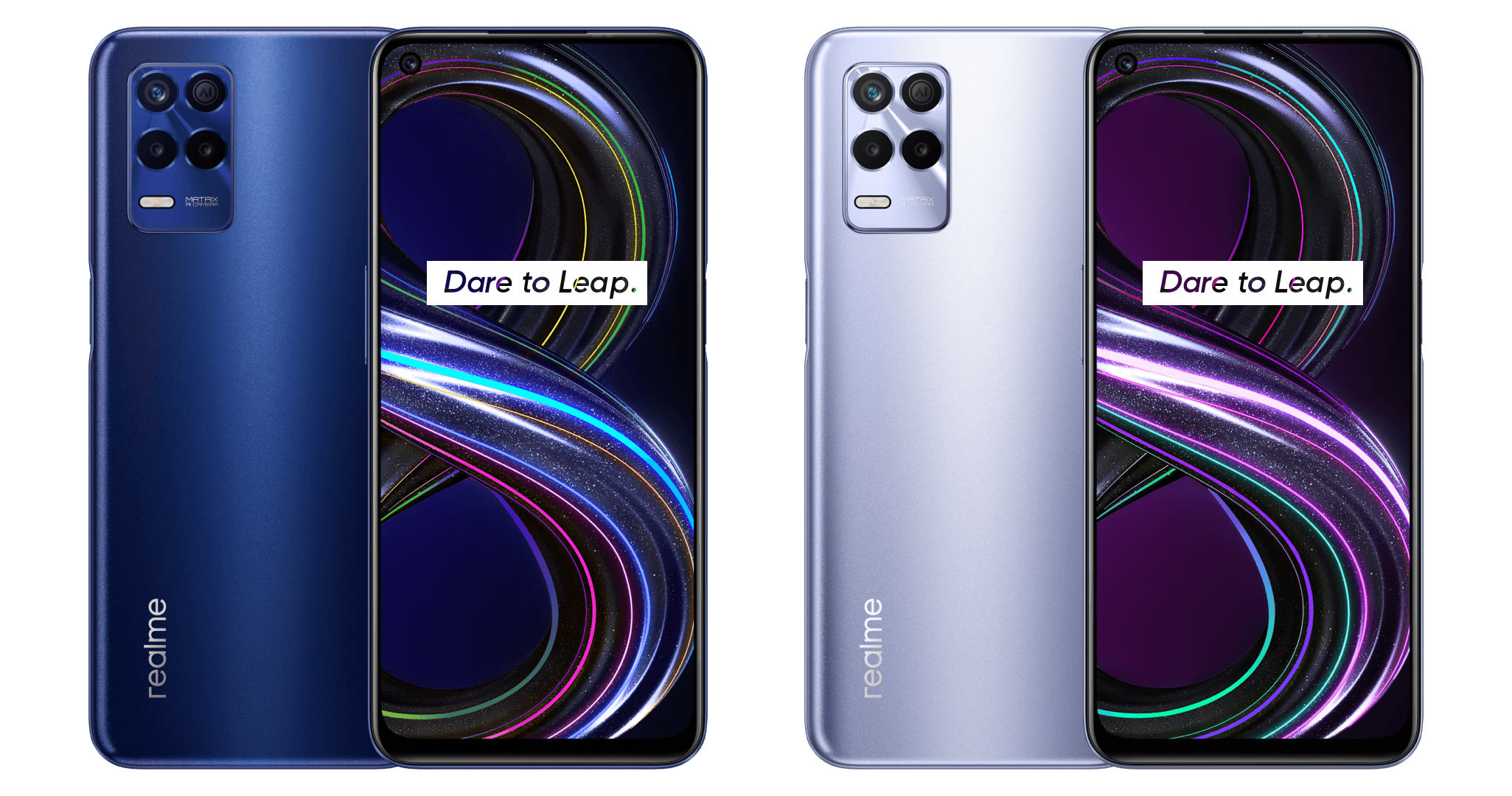
After launching Realme 8, 8 5G, and 8 Pro, the Chinese phone manufacturer is preparing to add two more phones to the series. The series will include Realme 8s and Realme 8i. While the details of the Realme 8i are already available, the specifications of the Realme 8s are still unknown. Now, a new piece of information reveals the upcoming Realme 8s’ design and specs.
According to the renders shared by91Mobiles, the Realme 8s will feature a slightly different design at the rear. It will have a rectangular camera island placed vertically. The island holds a quad-camera setup and also has a tiny pill-shaped LED flash.
1 of 3
Rumors have it that it will feature a 64MP primary lens at the rear and a 16MP single camera lens at the front. We can expect other sensors to be an ultra-wide lens, and macro or depth units.
Additionally, the phone has a Realme branding at the bottom and flaunts a purple shade. Unfortunately, the renders didn’t give the front exposure of the smartphone but we do get to see the sides. The smartphone seems to have a side-facing fingerprint scanner at the right and a SIM tray at the left.
It has a USB Type-C port, a 3.5mm headphone jack, and a speaker grille at the bottom. And, the secondary microphone is present at the top.
Realme 8s Specifications(Expected)
Apart front this, it is touted to come with a 6.5-inch display with a 90Hz refresh rate. We can expect an FHD+ panel with thin bezels. As said above, the phone will boast a 64MP quad-camera system and a single 16MP selfie shooter.
At the helm, it is expected to come powered by the MediaTek Dimensity 810 chipset paired with 6GB, 8GB of RAM, and 128GB, 256GB of internal storage. Just like other newly launched BBK phones, the Realme 8s is said to have virtual RAM support of up to 5GB. For software, it will boot on Realme UI 2.0 based on Android 11. It will be backed up by a 5,000mAh battery with support for 33W fast charging.
You’d expect a phone with Edge in its name to have a curved display, but Motorola told us that isn’t a standard rule when it announced the Motorola Edge S announced in January. In case the lesson didn’t stick, it has now announced three new Edge phones and none of them has a curved screen. However, the Motorola Edge 20 Pro, Edge 20, and Edge 20 Lite do have some pretty interesting specs including a 108MP camera on all three models.
Motorola Edge 20 Pro and Motorola Edge 20
The Edge 20 Pro is the leader of the pack and it gets all of the best features. It has a 6.67-inch 10-bit OLED display with DCI-P3 color gamut, HDR10+, Amazon HDR, and an impressive 144Hz refresh rate. It also has a centered punch hole for the front-facing camera. The Edge 20 has the same display size, type, and features, save for the lack of support for Amazon HDR.
Powering the Motorola Edge 20 Pro is the Snapdragon 870 processor, the same one that made its global debut in the Edge S a.k.a. Moto G100. There is 12GB of RAM and 256GB of UFS 3.1 storage. It also has two features called Turbo Write and Host-Aware Performance Booster.
The Motorola Edge 20 comes with the less-powerful Snapdragon 778G processor, 8GB of RAM, and 128GB of storage. It also misses out on the fast writing speed and performance booster of the pro model.
There is a primary 108MP rear camera on both phones. In addition, the Edge 20 Pro has an 8MP periscope camera with 5x optical zoom and 50x superzoom and a 16MP ultrawide angle camera that can shoot macro photographs. The Pro model can also shoot in 8K.
The Edge 20 also has an 8MP camera but with 3x optical zoom and 30x superzoom and a 16MP ultrawide angle camera that doubles as a macro camera. Both phones have a 32MP front-facing camera.
The Edge 20 Pro has a 4500mAh battery while the Edge 20 has a smaller 4000mAh battery but both phones support 30W TurboPower fast charging. The two phones run Android 11 with My UX on top. They also come with the Ready For PC feature that allows the phone to be connected to an external display to use in desktop mode, serve as a webcam, or as a gaming console.
Motorola Edge 20 Lite
The Motorola Edge 20 Lite also has a 6.67-inch 10-bit OLED display with DCI-P3 color gamut and HDR10+. Its refresh rate is lower at 90Hz and it also misses out on Amazon HDR support.
Powering the phone is MediaTek’s Dimensity 720 processor and it is paired with 8GB of RAM and 128GB of storage. The 108MP primary rear camera comes along with an 8MP ultrawide angle camera that can also take macro photos and a 2MP depth camera. Its front-facing camera is a 32MP sensor too.
Unlike its siblings which have an in-display fingerprint scanner, the Edge 20 Lite has a side-mounted scanner. However, it does have a water-repellent design, ThinkShield Security for mobile, support for Ready For albeit with fewer features, and Wi-Fi 6.
Motorola gives the Edge 20 Lite a bigger 5000mAh battery and adds support for 30W TurboPower fast charging. It runs My UX based on Android 11 out of the box.
According to Nils Ahrensmeier of Techniknews, Motorola has revealed that all three phones will receive OS upgrades and security updates for two years. So we should see them receive Android 12 and Android 13 updates.
Pricing and Availability
TThe Edge 20 Pro will sell for €699, the Edge 20 will retail for €499, and the Edge 20 Lite will be sold for €349.99. All three phones will go on sale in August and you will be able to buy the Motorola Edge 20 Pro is available in Dark Blue, White, and Indigo Vegan Leather. The Motorola Edge 20 will be available in Frosted Onyx and Frosted Pearl and the Edge 20 Lite will be available in Electric Graphite and Lagoon Green.
We use cookies on our website to give you the most relevant experience by remembering your preferences and repeat visits. By clicking “Accept”, you consent to the use of ALL the cookies.
This website uses cookies to improve your experience while you navigate through the website. Out of these, the cookies that are categorized as necessary are stored on your browser as they are essential for the working of basic functionalities of the website. We also use third-party cookies that help us analyze and understand how you use this website. These cookies will be stored in your browser only with your consent. You also have the option to opt-out of these cookies. But opting out of some of these cookies may affect your browsing experience.
Necessary cookies are absolutely essential for the website to function properly. This category only includes cookies that ensures basic functionalities and security features of the website. These cookies do not store any personal information.
Any cookies that may not be particularly necessary for the website to function and is used specifically to collect user personal data via analytics, ads, other embedded contents are termed as non-necessary cookies. It is mandatory to procure user consent prior to running these cookies on your website.