Advertisement

iQOO 15 India debut confirmed in November

iQOO today confirmed it will launch its next flagship, the iQOO 15, in India in November. The device is set to debut in China on October 20. 

The news was confirmed by iQOO India on X (formerly Twitter). While the company hasn’t revealed the exact launch date yet, the announcement confirms that India will be among the first markets outside China to get the device.

The iQOO 15, as expected, will be a performance-centric phone like its predecessor. It is powered by the Snapdragon 8 Elite Gen 5 chip along with an upgraded Q3 gaming chip designed to enhance graphics performance and support 144fps gameplay at 2K resolution.

To handle the resulting heat, iQOO has added a new 8K vapor chamber (VC) Dome cooling system. The company says this new setup uses a double layer of high-conductivity graphite, which reportedly improves cooling efficiency by 47 percent compared to the previous generation. 

The VC heat sink inside the iQOO 15 is also said to be three times larger than the one in Apple’s iPhone 17 Pro Max, according to iQOO’s product manager.

The display specs are equally ambitious. The phone will use a 6.85-inch 2K 8T LTPO Samsung “Everest” panel that supports a 144Hz refresh rate and reaches up to 6,000 nits of peak local brightness. 

iQOO 15 black

Other confirmed features include wireless charging, a battery exceeding 7,000mAh, and an IP69 rating for dust and water resistance. It will also feature a 3D ultrasonic fingerprint sensor for more reliable biometric authentication.

While the Indian variant is expected to mirror the Chinese model, iQOO might make small adjustments, such as changes in storage options or battery capacity. 

Stay ahead in tech! Join our Telegram community and sign up for our daily newsletter of top stories!

For more daily updates, please visit our News Section.

32-inch ASUS ProArt mini-LED 8K monitor set to hit the shelves this month

In the world of professional monitors, where color accuracy and detail can make or break a project, Asus is gearing up to launch something serious. The ProArt PA32KCX, a 32-inch 8K display first teased back at CES 2025, is finally making its way to market this October. It’s built for the kind of creators who live and breathe precision—think editors, designers, and photographers who won’t settle for less.

The mini-LED display packs an 8K (7680 x 4320) resolution, which means everything from high-res video editing to photo retouching looks razor-sharp. Asus isn’t just chasing pixels here, though—the Mini-LED backlight features 4,032 local dimming zones, pushing brightness up to 1,200 nits peak and a consistent 1,000 nits full-screen, ideal for HDR workflows. You also get 95% Adobe RGB, 97% DCI-P3, with Delta E <1 color accuracy right out of the box. Each unit goes through a detailed factory calibration before shipping.

Additional features:

There’s even a built-in motorized colorimeter that handles automatic recalibration, with support for both Calman and Light Illusion software—no external gear needed. On the connectivity side, it’s stacked: dual Thunderbolt 4 ports (96W charging), DisplayPort 2.1, HDMI, a USB hub, plus Picture-in-Picture, Picture-by-Picture, and a KVM switch so you can control multiple systems with one setup. Asus also includes a detachable hood to cut down reflections during grading or color work.

To top it off, buyers get a three-month Adobe Creative Cloud subscription worth about $397, redeemable until August 2026. The monitor supports HDR10 and HLG formats, giving professionals more flexibility in how they preview their content.

The Asus ProArt PA32KCX won’t be for everyone, but for studios or solo creators who need absolute accuracy, it’s shaping up to be one of the most capable displays ever made. With pre-orders expected soon, this could easily become the new gold standard for 8K production workflows.

Stay ahead in tech! Join our Telegram community and sign up for our daily newsletter of top stories!

For more daily updates, please visit our News Section.

(Source)

Here’s how RedMagic’s first active liquid cooling system would work inside RedMagic 11 Pro series

RedMagic is taking smartphone cooling to the next level. At its recent Shenzhen conference, the company unveiled what it calls the world’s first active liquid cooling system designed for phones—a setup that borrows tricks from gaming PCs and AI servers. The goal is simple: keep performance steady even under heavy loads, without the throttling that tends to hit after a few minutes of intense gameplay.

Unlike the vapor chambers most phones use (which are technically passive systems), RedMagic’s new setup actually circulates coolant through a tiny ceramic micropump. The liquid moves heat away from the chipset and toward a fan-cooled radiator, combining both liquid and air cooling in what the company calls a “dual-track” design. It’s a big engineering challenge, and RedMagic claims it took “thousands of design iterations to reach the final design.”

The pump itself uses piezoelectric ceramics, and the internal coolant channels are laser-cut at the micron level to ensure smooth flow. The fluid—an antifreeze-grade fluorinated liquid—can handle extreme temperatures from –40°C to 70°C, offering stability similar to what’s used in high-end AI servers. To make it durable, RedMagic says it employed low-temperature bonding and anti-puncture membranes, helping the system pass tens of thousands of drop tests without leaks or failures.

You’ll first see this in action on the upcoming RedMagic 11 Pro series, powered by Qualcomm’s new Snapdragon 8 Elite Gen 5 chip. In internal tests, the phone reportedly ran Wuthering Waves at ultra-high graphics and 90fps for two straight hours without dropping frames. According to the brand, the 11 Pro series will support over 200 titles optimized for 2K resolution and 144Hz displays at launch.

RedMagic’s motto is “Win More Games,” and this might be the hardware that makes it possible. As mobile gaming continues to blur the line with desktop-level experiences, active liquid cooling could become the next big leap. For now, it’s RedMagic leading that charge—and keeping things cool while doing it.

Don’t miss a thing! Join our Telegram community for instant updates and grab our free daily newsletter for the best tech stories!

For more daily updates, please visit our News Section.

(Via)

Realme GT 8 Pro’s interchangeable camera deco, color options officially revealed

Realme has officially revealed the design of its upcoming Realme GT 8 Pro smartphone. The announcement comes from Xu Qi, Realme’s Vice President and President of Global Marketing, who shared details about the phone’s unique mechanical assembly concept. Here’s a look at the GT 8 Pro’s color variants and modular camera feature.

Realme GT 8 Pro: Detachable, swappable and customizable design

The Realme GT 8 Pro introduces the industry’s first mechanical modular design that allows users to detach, assemble, and swap components. The camera deco module can be replaced with different shapes and finishes, giving the device multiple visual identities. Users can switch between square, round, and “robot” styles. When it comes to color options, the GT 8 Pro will be available in White, Blue, and Green.

The GT 8 Pro features an AG matte glass back and a matte metal frame, offering a smooth and fingerprint-resistant texture. Xu Qi described the design as the brand’s new aesthetic peak, merging mechanical craftsmanship with refined materials.

Realme GT 8 Pro key specifications

Realme GT 8 Pro colors

The Realme GT 8 Pro sports a 2K 144Hz display with 7000-nit peak brightness and advanced eye protection features. For security, it features an ultrasonic in-screen fingerprint sensor.

Under the hood, the Realme GT 8 Pro will be powered by the Snapdragon 8 Elite Gen 5 processor paired with 16GB RAM and the R1 gaming display chip. The device packs a 7000mAh battery with 120W wired and 50W wireless charging support.

For photography, it features a 50-megapixel Ricoh GR-certified main camera with a 1/1.56-inch sensor, 7P high-transmission lens, and five-layer anti-reflective coating for cleaner, distortion-free images. The main snapper is joined by an ultra-wide lens and a 2000-megapixel periscope telephoto camera. 

Realme GT 8 Pro is set to launch on Oct. 21 in China. Alongside, the brand will also unveil the Snapdragon 8 Elite-powered GT 8. Readers can visit this post to know more about the standard GT 8.

For more daily updates, please visit our News Section.

Stay ahead in tech! Join our Telegram community and sign up for our daily newsletter of top stories.

OriginOS 6 global rollout timeline is here: check when the update is coming to your device

Vivo OriginOS 6 rollout timeline

Vivo has launched OriginOS 6 globally, marking a significant upgrade for its devices. It replaces the traditional Funtouch OS with a modern custom skin featuring numerous visual changes, new features, and substantial under-the-hood improvements. The OriginOS 6 Preview Program has been available for some time, and the brand has now confirmed its stable rollout schedule for global markets.

OriginOS 6 rollout timeline for India and global markets

Vivo has confirmed that the OriginOS 6 beta program will also expand to Vivo X Fold and Vivo X200, and that the beta program will end in early November. That’s when the stable rollout begins, starting with premium models such as X200 series phones, iQOO 13, Vivo V60, and Vivo X Fold 5.

The Vivo X100 series phones and the iQOO 12 are set to join the party in the second half of November. The rollout continues in December to cover more mid-range phones, while the rest of the eligible devices will receive the update in the first quarter of 2026.

Early November 2025

  • Vivo X Fold 5
  • Vivo X200 Pro
  • Vivo X200
  • Vivo X200 FE
  • Vivo V60
  • iQOO 13

Mid November 2025

  • Vivo X Fold 3 Pro
  • Vivo X100 Pro
  • Vivo X100
  • iQOO 12

Mid December 2025

  • Vivo V60e
  • Vivo V50
  • Vivo V50e
  • Vivo T4 Ultra
  • Vivo T4 Pro
  • iQOO Neo 10
  • iQOO Neo 10R
  • iQOO Neo 9 Pro

First half of 2026

  • Vivo X90 Pro
  • Vivo X90
  • Vivo V60 Lite 5G
  • Vivo V60 Lite
  • Vivo V50 Lite 5G
  • Vivo V50 Lite
  • Vivo V40 Pro
  • Vivo V40
  • Vivo V40e
  • Vivo V40 Lite 5G
  • Vivo V40 Lite
  • Vivo V40 SE 5G
  • Vivo V40 SE 80W
  • Vivo V40 SE
  • Vivo V30 Pro
  • Vivo V30
  • Vivo V30e
  • Vivo V30 Lite 5G
  • Vivo V30 Lite
  • Vivo V30 SE
  • Vivo T4 5G
  • Vivo T4R 5G
  • Vivo T4x 5G
  • Vivo T3 Ultra
  • Vivo T3 Pro 5G
  • Vivo T3
  • Vivo Y400 Pro 5G
  • Vivo Y400 5G
  • Vivo Y400
  • Vivo Y300 Plus 5G
  • Vivo Y300 5G
  • Vivo Y200 Pro 5G
  • Vivo Y200
  • Vivo Y200e 5G
  • Vivo Y100 5G
  • Vivo Y100
  • Vivo Y58 5G
  • Vivo Y39 5G
  • Vivo Y38 5G
  • Vivo Y31 Pro 5G
  • iQOO 11
  • iQOO Z10R
  • iQOO Z10x
  • iQOO Z9
  • iQOO Z9s Pro
  • iQOO Z9s

The update is usually rolled out in stages. So, if an update goes live in a region, it may take a few days to expand to other regions. You will receive a notification when the update is available for your device. Or, you can manually check for updates by navigating to Settings > System update.

OriginOS 6 rollout schedule
Image via @saaaanjjjuuu/X

After upgrading to OriginOS 6, you will start to see changes right from the boot screen. It brings a redesigned Control Center panel that’s modern and offers greater customization. There’s also an Origin Island, which works similarly to Apple’s Dynamic Island, allowing users to see ongoing activities from apps without needing to open apps.

OriginOS 6 introduces a new Private Space feature, designed to secure sensitive data and store app clones for private use. There are also new Lock Screen Grid widgets, a new charging animation, an improved status bar, and Flip Cards. Furthermore, the update includes AI Retouch, Smart Call Assistant, DocMaster, AI Creation, AI Search, and Google Gemini integration.

The new Origin Smooth Engine boosts the app’s cold start speed by 18.5% and stabilizes frame rate by 10.5%, while the Memory Fusion accelerates data loading by 106%. Thanks for various under-the-hood changes, animation performance is up by 35% and the touch response is 41% faster.

Regularly visit our Android 16 section for the latest updates. Also, don’t forget to join our Telegram channel for instant updates about the latest happenings in tech.

Also read: six major upgrades to OriginOS 6 you must know about

Find X9 series to launch as Oppo’s first eSIM-enable phones for China

Oppo is set to unveil the Find X9 series tonight at 7:00 PM (local time) in China. The lineup includes two models, the Find X9 and X9 Pro. Today, Zhou Yibao, Oppo’s Find series product lead, released a Weibo post to confirm that the lineup will include a variant supporting eSIM connectivity.

Find X9 series’ eSIM version confirmed

Oppo Find X9 series to feature eSIM support

This marks Oppo’s first-ever smartphone to feature eSIM technology in China, aligning with the country’s recent approval for full-scale commercial trials of eSIM-enabled phones by all three major carriers. It remains to be seen whether both Find X9 and X9 Pro will come with eSIM support.

The Find X9 series will debut with MediaTek’s flagship Dimensity 9500 chip, offering top-tier performance and efficiency. It also introduces ColorOS 16 out of the box, delivering an improved user interface and enhanced stability.

On the imaging front, the Find X9 series has been co-engineered with Hasselblad to deliver a professional-grade photography experience. It supports 4K 120fps Dolby Vision video recording and introduces the Hasselblad XPAN film mode with dedicated shutter sound and visual animation effects. Oppo will also release a new Hasselblad Professional Imaging Kit featuring a magnetic grip, protective case, and shoulder strap for a complete mobile photography setup.

Apart from packing stellar cameras, the Find X9 series also promises longer battery life than before. The X9 will have a 7,025mAh, whereas the Pro version will feature a 7,500mAh battery, both offering 80W wired and 50W wireless charging support. Oppo claims the battery retains 80% of its health even after five years of regular use, a significant leap in battery reliability.

The Find X9 series is expected to launch by the end of this month globally. The lineup may hit the Indian market on Nov. 18.

For more daily updates, please visit our News Section.

Stay ahead in tech! Join our Telegram community and sign up for our daily newsletter of top stories.

Redmi K90 Pro Max launches next week with around ~$560 pricing

Xiaomi’s Lu Weibing has officially confirmed that the new Redmi K90 series will be unveiled next week. He described it as the second chapter in Xiaomi’s flagship launch season and highlighted that the lineup marks a major step forward for the Redmi brand in both positioning and innovation. The announcement follows the success of the Xiaomi 17 series, which surpassed one million sales in just five days, setting the tone for Redmi’s next flagship evolution.

Redmi K90 Pro Max aims for the 4K+ price segment

Redmi K90 Pro Max moninker
Redmi K90 Pro Max moniker revealed by Lu Weibing

According to Weibing, the K90 series introduces two models: the Redmi K90 and the Redmi K90 Pro Max. This time, Redmi has advanced its product timeline from November to October, making it the brand’s earliest flagship launch in recent years. The K90 Pro Max will be the first “Pro Max” device under Redmi, targeting the 4,000 Yuan (~$560) above segment.

Weibing mentioned that the Pro Max aims to deliver “top-tier performance and quality,” excelling in performance, endurance, display, and camera technology. It is expected to feature a 50-megapixel 1/1.3-inch main sensor with optical image stabilization and a periscope telephoto lens, a first for the K series.

Weibing further stated that the K series is no longer defined by pricing or technical hierarchy, signalling Redmi’s readiness to compete directly with Xiaomi’s main lineup. The K90 will serve as an upgraded all-round flagship, while the K90 Pro Max will represent a comprehensive technology flagship focused on breakthrough innovation.

According to reports, the Redmi K90 and Redmi K90 Pro Max will be powered by the Snapdragon 8 Elite and 8 Elite Gen 5 chipsets, respectively. Both phones will have a 2K resolution OLED screen and are expected to arrive with up to 7,500mAh battery.

For more daily updates, please visit our News Section.

Stay ahead in tech! Join our Telegram community and sign up for our daily newsletter of top stories.

OnePlus to share more details about the OnePlus 15 and Ace 6 tomorrow

[Update]
While both OnePlus and President Li Jie have posted about the upcoming OnePlus 15 and OnePlus Ace 6 launches on their official Weibo accounts, it remains uncertain whether the company will actually launch the devices tomorrow or merely announce their official launch dates. Chinese media outlet CNMO suspects the latter.

Given the unusually short notice, a full launch tomorrow appears unlikely, though nothing can be ruled out at this point.

Li Jie on his latest post. Image Source: Weibo

Original article follows.

OnePlus has finally confirmed launch dates for its upcoming flagship phones, and it’s rather spontaneous. OnePlus China President Li Jie took to Weibo today to announce that the OnePlus 15 and OnePlus Ace 6 will launch together in China on October 17, which is tomorrow.

A new teaser image shows both the OnePlus 15 on the left and the OnePlus Ace 6 on the right. Here’s what we know so far about the two devices.

OnePlus 15 and OnePlus Ace 6 launch date announced

OnePlus 15

The main highlight here is the 165Hz OLED screen with 1.5K resolution. Interestingly, Li Jie recently explained why the company avoided going for a 2K panel like some rivals. 

Under the hood, the phone runs on Qualcomm’s Snapdragon 8 Elite Gen 5, making it the first OnePlus device to debut the chip.

OnePlus 15 in Sand Storm

For cameras, the OnePlus 15 may pack a 50MP Sony LYT-700 main sensor, a 50MP periscope telephoto with Samsung’s JN5 sensor, and another 50MP ultra-wide camera. It will be fueled by a 7000mAh battery that supports 100W wired and 50W wireless charging.

OnePlus Ace 6

The OnePlus Ace 6 takes a slightly different route. It’s rumored to feature a 1.5K BOE OLED screen with a 120Hz refresh rate and an ultrasonic in-display fingerprint sensor. 

It will be powered by last year’s Snapdragon 8 Elite chipset, paired with an even larger 7,800mAh battery that supports 120W fast charging. Other highlights include a metal middle frame, a possible IP68 rating, and ColorOS 16 based on Android 16 out of the box.

For more daily updates, please visit our News Section.

Tech enthusiast? Get the latest news first! Follow our Telegram channel and subscribe to our free newsletter for your daily tech fix!

(Source)

OnePlus reveals why it chose a 1.5K display for OnePlus 15

OnePlus is gearing up for the launch of its next flagship, the OnePlus 15, in China later this month, and the company has officially kicked off its marketing blitz. Earlier this week, OnePlus held an event to show off what might be the phone’s biggest selling point: its display.

The OnePlus 15 will feature a BOE X3 OLED panel with a 1.5K resolution and, more impressively, a 165Hz refresh rate, the highest ever on an OLED smartphone. OnePlus says it already has a few optimized games ready to take full advantage of that lightning-fast screen.

ONePlus 15 to feature 165Hz OLED screen

However, this resolution and refresh rate combo seems to have created some debate among fans. Why not go for a full 2K panel like most premium flagships? According to Li Jie, President of OnePlus China, the answer isn’t about cost-cutting but technical limitations.

In a detailed Weibo post, Li explained that no display manufacturer has yet managed to produce a 2K OLED screen that can sustain 165Hz. And since OnePlus is locked in on 165Hz refresh rate, 1.5K is the only feasible option. 

And no, OnePlus isn’t cutting costs

And if you think that means OnePlus is cheaping out, Li says that the new BOE X3 panel actually costs more than the previous-generation X2 display used on the OnePlus 13.

Li also shed light on why the smartphone industry seems to have hit a wall at 120Hz for most flagship displays. Until now, the highest resolution available for ultra-high-refresh panels, 165Hz and beyond, was limited to 1080p. Moving beyond that required solving a series of serious engineering challenges, including:

  • Pixel charging times that weren’t fast enough
  • Screen driver chips that couldn’t handle the computing load
  • Sync issues between touch input and display refresh
  • Image instability caused by rapid switching
  • Shorter panel lifespans due to increased pixel activity
OnePlus-15-display

According to Li, OnePlus and BOE have tackled these head-on by reengineering the display at both hardware and software levels. The company says it redesigned the entire screen circuit and developed new proprietary driving algorithms, reducing the pixel charging time to just 1.3 microseconds.


On the hardware side, the display chip now has 1.3 times more transistors, giving it the power to maintain full-frame 165Hz operation. OnePlus also built two custom production lines—the only ones of their kind in the world, and the only ones in China—to ensure every screen is precisely calibrated at the pixel level.

For more daily updates, please visit our News Section.

Tech enthusiast? Get the latest news first! Follow our Telegram channel and subscribe to our free newsletter for your daily tech fix!

(Source)

Casio Unveils PRO TREK PRW-B1000 Series Watches Inspired by Yosemite’s Iconic Rock Face

Casio has officially unveiled the new PRO TREK PRW-B1000 series, featuring two models, the PRW-B1000-1 and PRW-B1000-5. These watches will be available later this month and are built for serious outdoor use.

Casio PRO TREK PRW-B1000

The PRW-B1000 design is inspired by Yosemite’s El Capitan. Its square stainless-steel bezel reflects the vertical rock formation, while the inset dial at 9 o’clock features an indicator hand shaped like a climbing piton. The multilayered dial, large hands, and raised indexes improve visibility, and the side buttons and crown are made of metal for extra durability.

The watch uses a Dura Soft band made from CNF-reinforced rubber. CNF, or cellulose nanofiber, is a wood-based material that is strong, lightweight, and resistant to heat, cold, and cracking. The case is made from flame-retardant bio-based resin certified to UL94 V-0 standards, meaning it self-extinguishes when exposed to flame. This makes it safe for use near campfires or cooking stoves.

Power comes from Casio’s Tough Solar technology, which converts sunlight and even weak indoor light into energy. It includes triple sensors for measuring direction, barometric pressure, altitude, and temperature. The watch is also equipped with both Bluetooth and Multiband 6, ensuring accurate timekeeping anywhere in the world. Multiband 6 automatically receives radio signals from stations in Japan, China, the U.S., the U.K., and Germany.

Using the CASIO WATCHES app, users can sync the watch via Bluetooth for automatic altitude correction, Time & Place logging, and route tracking. The Location Indicator shows direction and distance to saved points. The full-auto double LED Super Illuminator lights up both the analog and digital displays for easy reading in dark environments.

The PRW-B1000 features a scratch-resistant sapphire crystal with an anti-reflective coating, 100-meter water resistance, and low-temperature resistance down to –10°C.

Pricing and regional availability will be announced later this month.

(Source: 1, 2)

Honor MagicPad 3 12.5 Official: 165Hz Display, Snapdragon 8 Gen 3 Power and 10,100mAh Battery

Honor has launched the MagicPad 3 12.5, a smaller and more affordable alternative to the Honor MagicPad 3 Pro. The company had earlier introduced a 13.3-inch model in July. The new tablet offers high-end performance in a lighter design.

Honor MagicPad 3 12.5

Honor MagicPad 3 12.5 features

The MagicPad 3 12.5 comes with a 12.5-inch 3:2 IPS LCD display with a resolution of 3048×2032 pixels, 294 PPI, and an 89 percent screen-to-body ratio. It supports a refresh rate of up to 165Hz with seven levels available: 165Hz, 144Hz, 120Hz, 90Hz, 60Hz, 48Hz, and 30Hz. The screen delivers 700 nits of full brightness and up to 1,000 nits in HDR mode, with a contrast ratio of 1500:1.

Honor MagicPad 3 12.5

The tablet runs on the Snapdragon 8 Gen 3 processor with eight cores, including one Cortex-X4 core at 3.3GHz, three Cortex-A720 cores at 3.2GHz, two Cortex-A720 cores at 3.0GHz, and two Cortex-A520 cores at 2.3GHz. It ships with MagicOS 9.0.1 based on Android 15 and can be upgraded to MagicOS 10 based on Android 16.

For cameras, the MagicPad 3 12.5 has a 13MP rear camera with an f/2.0 aperture and autofocus, and an 8MP front camera with an f/2.2 aperture. It supports Wi-Fi 7 and Bluetooth 5.4, along with LDAC and aptX Adaptive audio codecs for better wireless sound.

The tablet features a 10,100mAh battery that supports 66W fast charging through USB-C. It measures 277.8mm in length, 190.93mm in width, and 5.88mm in thickness, weighing around 528g including the battery. The MagicPad 3 12.5 has an aluminum body and is available in silver, black, green, and purple.

Pricing & availability

The tablet includes an 8GB RAM and 256GB storage model priced at ¥2699 (about $380) in China, while the 12GB RAM version costs ¥2999 (around $420). Honor offers a stylus and keyboard case separately for the device. Global release details have not been shared yet.

In addition to the tablet, Honor has also introduced Magic 8 series smartphone in China, featuring the recently launched Snapdragon 8 Elite Gen 5 chip.

For more daily updates, please visit our News Section.

Tech enthusiast? Get the latest news first! Follow our Telegram channel and subscribe to our free newsletter for your daily tech fix!

GIGABYTE Launches GAMING A16 PRO and A18 Laptops with RTX 5080 Graphics and 12-Hour Battery Life

GIGABYTE has announced the global launch of its next-generation gaming laptops: the GAMING A16 PRO and GAMING A18, expanding its 2025 GAMING Series lineup. Both models feature up to NVIDIA GeForce RTX 5080 Laptop GPUs, GIGABYTE’s GiMATE AI Agent, and more than 12 hours of battery life.

GIGABYTE GAMING A16 PRO and GAMING A18

Design and Cooling

The GAMING A16 PRO weighs around 2.3 kg and is under 20 mm thick. It uses the WINDFORCE Infinity EX cooling system, which includes a Frost Fan with 158 asymmetric blades that helps maintain up to 115W GPU power while keeping temperatures low. The laptop also features a 180° lay-flat hinge.
The GAMING A18 weighs about 2.8 kg with a 20 mm profile. It uses a surround-vent cooling system for stable thermal control during long gaming or editing sessions.

Display and Audio

GIGABYTE GAMING A16 PRO
Gigabyte Gaming A16 PRO

Both laptops use WQXGA 165Hz displays with a 3ms response time for sharp visuals. The A16 PRO has a 16-inch 16:10 screen with 2560×1600 resolution, sRGB 100% color coverage, and 400 nits brightness. The A18 offers an 18-inch panel with up to DCI-P3 100% color accuracy and 300 nits brightness. Dolby Atmos audio and dual 2W speakers provide a more immersive sound experience. The keyboard has been redesigned with 1.7mm key travel and larger keycaps for improved comfort.

Performance and AI Features

The GAMING A16 PRO uses Intel Core 7 240H processors and up to RTX 5080 GPUs, while the GAMING A18 runs on AMD Ryzen 7 260 CPUs with up to RTX 5060 GPUs. Storage options go up to 4TB PCIe NVMe SSD, and both models support up to 64GB DDR5 or LPDDR5x memory depending on configuration. Pricing and availability will vary by region.

GIGABYTE GAMING A18
Gigabyte Gaming A18

The GAMING A16 PRO and A18 are built for gaming, AI workloads, and creative tasks. They support NVIDIA DLSS 4, NVIDIA Studio, and NVIDIA NIM microservices for faster rendering and smoother visuals. GiMATE, GIGABYTE’s built-in AI Agent, lets users control system settings, cooling, and privacy using simple voice commands through a “Press and Speak” button. Both models include a MUX Switch that allows users to toggle between integrated and dedicated graphics for higher frame rates or better battery life.

Battery, Connectivity, and Availability

Both laptops have 76Wh Li-Polymer batteries with Type-C PD 3.0 fast charging support. Connectivity includes Wi-Fi 6E, Bluetooth 5.2, HDMI 2.1, Gigabit LAN, and USB-A and USB-C ports. Each has a 1080p IR webcam, a built-in array microphone, and Dolby Atmos audio.

Pricing & availability

Sales of the GAMING A16 PRO and GAMING A18 laptops may differ by region and depend on the launch timelines set by local retailers and e-tailers. Gigabyte has not officially revealed the pricing of these laptops yet.

For more daily updates, please visit our News Section.

Tech enthusiast? Get the latest news first! Follow our Telegram channel and subscribe to our free newsletter for your daily tech fix!

(Source)

Xiaomi confirms its next flagship will keep the rear display

It took four years for Xiaomi to fully capitalize on the idea of a rear display in a phone. The Xiaomi 17 Pro and 17 Pro Max are the first phones since the Mi 11 Ultra to feature a secondary display on the camera module. And this time, it seems Xiaomi is finally taking the idea seriously.

In a recent livestream, Xiaomi President Lu Weibing confirmed that the company’s next-generation smartphones will continue to use the rear screen design. Xiaomi is also reportedly planning to increase its R&D investment in the coming years.

According to Lu, Xiaomi spent over 1 billion yuan developing the technology. The result is a 2.1-inch AMOLED panel that’s as good as the main screen. It has a 120Hz LTPO refresh rate, is protected by Dragon Crystal glass, supports the HDR standard, and peaks at 3500 nits of brightness. 

Xiaomi 17 Pro series is a massive hit in China

This investment seems to have paid off. The Xiaomi 17 series smashed sales records in China, becoming the fastest-selling phone lineup across all price segments in 2025.

Within just five minutes of launch, it broke first-sale records, while the Pro Max variant set a new benchmark for single-day sales among domestic smartphones. Overall sales rose 20% compared to the previous generation, and the Pro series tripled its sales figures.

Functionally, the rear screen on the Xiaomi 17 Pro already does more than just look cool. It can show notifications, answer calls, display real-time photo previews, and even feature dynamic “cute pets” and AI wallpapers. It’s also surprisingly useful for everyday tasks like displaying meal pickup codes, tickets, and itinerary reminders.

Lu also hinted that Xiaomi will roll out real-time translation for the rear screen by the end of October, with monthly feature updates to follow.

Don’t miss a thing! Join our Telegram community for instant updates and grab our free daily newsletter for the best tech stories!

For more daily updates, please visit our News Section.

(Source)

Honor’s latest concept is a smartphone that moves on its own

At the launch of the new Magic 8 series, Honor also revealed something far more interesting. CEO Li Jian took the stage to introduce the Honor Robot Phone. As wild as it sounds, it’s exactly what the name suggests. A phone with robotic mobility. 

The Robot Phone is built on three core technologies: an AI brain, robotic mobility, and professional imaging. Its highlight feature is a hidden robotic arm gimbal that unfolds with a click, allowing the phone to move and stabilize itself like a robot. It can automatically frame shots, track subjects, and even reduce shake without any human input.

What’s surprising is that the phone doesn’t look particularly robotic. There’s no obvious sign that it has a gimbal tucked inside. From the back, it looks like a regular smartphone, though the camera module is noticeably thick.

Honor Robot Phone is powered by AI

The company’s large-scale AI model, YOYO, plays a central role in this process. It reportedly understands emotions, recommends content, and manages connected devices. Honor frames this as a part of its so-called “Alpha Project,” which aims to evolve phones from simple tools into what it calls “silicon-based life partners.”

If all that sounds ambitious, it is. Honor has been investing heavily in what it calls “embodied intelligence,” with new research labs focused on robotics, motion systems, and bionic design. The Robot Phone appears to be the first tangible result of that work.

For now, the device remains more of a concept than a commercial product. Honor plans to reveal more at MWC Barcelona 2026. A teaser video shows a gimbal camera that moves like a robotic head, reminiscent of commercial gimbals, but built directly into a smartphone.

Honor says users can register on its website to receive early updates and even take part in product research.

Don’t miss a thing! Join our Telegram community for instant updates and grab our free daily newsletter for the best tech stories!

For more daily updates, please visit our News Section.

HP OMEN 25: 360Hz Esports Monitor Built for League of Legends and VALORANT Pros

Alongside the OMEN 16 League of Legends Limited Edition laptop, HP also introduced the OMEN 25 Gaming Monitor, which is now the official display for Riot Games’ global esports events for League of Legends and VALORANT.

HP Omen 25

HP OMEN 25 Gaming Monitor features

The OMEN 25 is a 24.5-inch Full HD monitor with a 360 Hz refresh rate and 1 ms GTG response time. It supports NVIDIA G-SYNC and VESA AdaptiveSync for smooth, tear-free gameplay. The display is certified for VESA DisplayHDR 400 and VESA ClearMR 6000, offering sharp motion clarity and balanced brightness during fast-paced matches.

Color accuracy is a major focus. The monitor is factory-calibrated and covers 93% of the Display P3 and 99.5% of the sRGB color gamut. It uses an IPS panel that ensures consistent colors and viewing angles. The stand allows four-way adjustment for height, tilt, swivel, and pivot, and includes a detachable headset hook, cable management, and customizable aRGB lighting through the OMEN Gaming Hub and Windows Dynamic Lighting.

The monitor includes two HDMI 2.0 ports, one DisplayPort 1.4, two USB-A 5 Gbps ports, one USB-B upstream port, and a 3.5 mm audio jack. It also supports 4K downscaling for console HDR gaming. HP tested the OMEN 25 with more than 140 major console setups to ensure compatibility.

Pricing & availability

The OMEN 25 Gaming Monitor will be available soon on HP.com for a starting price of $419.99.

Don’t miss a thing! Join our Telegram community for instant updates and grab our free daily newsletter for the best tech stories!

For more daily updates, please visit our News Section.

HP Launches OMEN 16 League of Legends Limited Edition Gaming Laptop at Worlds 2025

At the 2025 League of Legends World Championship, HP unveiled the OMEN 16 League of Legends Limited Edition Gaming Laptop, developed in collaboration with Riot Games.

HP OMEN 16 League of Legends Edition

HP OMEN 16 League of Legends Limited Edition Laptop features

The laptop features signature League touches such as highlighted QWER and DF keys, HEXTECH gold accents, and an exclusive typeface across the chassis. It is powered by up to an Intel Core i7-14650HX processor (16 cores, 24 threads, up to 5.2 GHz) and an NVIDIA GeForce RTX 5070 Laptop GPU with 8 GB of GDDR7 VRAM. Paired with up to 32 GB of DDR5-5600 RAM and a 1 TB PCIe Gen4 NVMe SSD.

HP has improved the cooling system with a wider fan gap, an additional heat pipe, and quieter acoustics to maintain temperature stability during extended sessions. The 16-inch WQXGA (2560×1600) display supports up to a 240 Hz refresh rate, a 3 ms response time, and 100% sRGB color coverage, providing sharp visuals and fast response times for competitive play.

Running on Windows 11 Home, the device includes Intel Wi-Fi 6E, Bluetooth 5.3, and a range of ports—three USB-A, one USB-C (with DisplayPort 1.4 and Power Delivery 3.0), HDMI 2.1, RJ-45, and a headphone/microphone combo jack. The keyboard is a full-size, 4-zone RGB backlit unit with 26-key rollover anti-ghosting support.

Audio is enhanced with DTS:X Ultra and dual speakers tuned with HP Audio Boost and HyperX technology. The HP True Vision 1080p camera includes noise reduction and dual microphones for clear communication. The 83 Wh battery provides up to 9 hours and 45 minutes of playback and supports 50% charge in 30 minutes.

Pricing & availability

The OMEN 16 League of Legends Limited Edition Gaming Laptop is now available for pre-order on HP.com, starting at $1,999.99.

For more daily updates, please visit our News Section.

Stay ahead in tech! Join our Telegram community and sign up for our daily newsletter of top stories!

Xming launches Q6 portable projector with 500 CVIA lumens, 1080p & HDR10+

Xming has officially launched the Q6 smart projector in China. The device supports Xiaomi’s Mi Home ecosystem and features a 500 CVIA lumens light engine. The retail price is set at 1,799 yuan ($252), with a limited-time launch offer of 1,399 yuan ($196).

Xming Q6 Projector

Xming Q6 Specifications

The Xming Q6 uses a compact, portable design with a fashion-inspired “JellyMint” green finish. It includes a braided nylon strap for carrying. The projector weighs 2.8 kilograms and doubles as both a lifestyle accessory and a home entertainment device.

Xming equips the Q6 with its PhotonX 3.0 full-sealed LED light engine. The projector delivers 500 CVIA lumens and supports 1080p native resolution and 4K content decoding. The device supports a 1.2:1 throw ratio and can project screen sizes from 40 to 120 inches with a 16:9 aspect ratio.

The projector features the FAV Picture Engine, which enhances image clarity using AI-based contrast and color tone adjustments. It supports HDR10+ decoding and automatically fine-tunes brightness and saturation to match different types of content.

Xming Q6

The Q6 includes dual 5W speakers powered by Wanos panoramic sound technology. The setup simulates surround sound and supports Bluetooth speaker mode. It also supports microphone input for karaoke use.

Xming has designed the projector with a dual-arm rotating gimbal. The mechanism allows 360° horizontal rotation and up to 180° vertical tilt, including ceiling projection. The Q6 supports automatic focus, omnidirectional keystone correction, screen alignment, and obstacle detection.

The projector integrates with Xiaomi’s Mi Home platform and supports Xiao Ai voice control. It offers 32GB of internal storage and supports Wi-Fi 6 for stable wireless performance. The device includes HDMI 2.0, USB 2.0, a headphone jack, and AC power input. It operates at ≤26dB noise levels and consumes up to 90W of power.

In related projector news, Xgimi has recently launched the Z9X 4K portable projector with optical zoom, 1300 CVIA lumens brightness, and AI smart features, while Dangbei has introduced the Smart 2 portable projector featuring 550 CVIA lumens brightness, 1080p resolution, and 65W PD charging support.

For more daily updates, please visit our News Section.

Stay ahead in tech! Join our Telegram community and sign up for our daily newsletter of top stories! 💡

(JD)

Inside the Apple M5 Chip: Next-Gen GPU, Faster Neural Engine, and Improved Efficiency

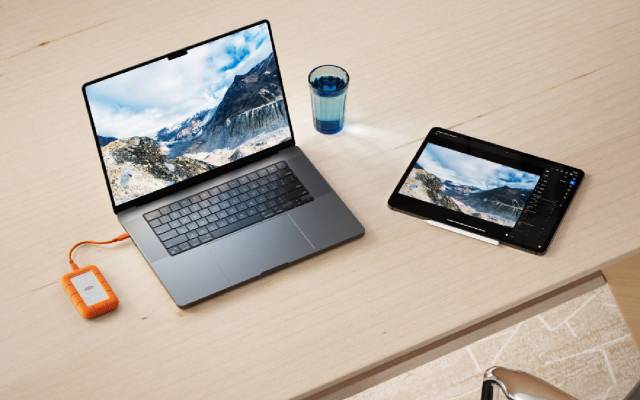
Apple has introduced the M5 chip, its next big leap in performance and efficiency for MacBook Pro, iPad Pro, and Apple Vision Pro. Built using third-generation 3-nanometer technology, M5 improves nearly every part of Apple silicon with faster AI processing, a stronger GPU, and higher memory bandwidth. All devices powered by M5 are available for pre-order today.

Apple M5 chip

Powerful GPU Built for AI and Graphics

The M5 features a new 10-core GPU with a Neural Accelerator in each core. This design lets the GPU handle AI workloads much faster, offering over four times the peak GPU compute performance compared to M4 and more than six times compared to M1. The GPU also brings third-generation ray tracing and improved shader cores, resulting in up to 45 percent higher graphics performance than M4 and up to 2.5 times faster than M1.

The GPU’s new dynamic caching and optimized architecture deliver smoother gameplay, faster rendering, and more realistic visuals in creative and 3D apps. On Apple Vision Pro, M5 helps render 10 percent more pixels on the micro-OLED displays, with refresh rates up to 120Hz for sharper detail and reduced motion blur.

Faster CPU and Neural Engine

The chip includes a 10-core CPU with four performance cores and six efficiency cores, giving up to 15 percent faster multithreaded performance over M4. It also features a faster 16-core Neural Engine that handles AI-powered tools like Apple Intelligence and spatial photo creation on Vision Pro with greater speed and efficiency. Developers using Apple’s frameworks such as Core ML and Metal 4 can take advantage of the Neural Accelerators for improved AI app performance.

Improved Memory and Energy Use

M5 has a unified memory bandwidth of 153GB/s, about 30 percent higher than M4 and more than double that of M1. It supports up to 32GB of unified memory, letting users run large AI models or creative apps like Final Cut Pro and Adobe Photoshop at the same time.

(Source)

Lenovo launches Blade 7000P gaming desktop with up to Ryzen 9 9955HX3D & RTX 5070 Ti

Lenovo has launched the 2025 Blade 7000P professional gaming desktop in China. The new model is based on AMD’s FL1 MoDT (Mobile on Desktop) platform and features mobile-class Ryzen processors in a compact tower design. Lenovo is offering the desktop with a choice between the Ryzen 9 9955HX3D and Ryzen 9 8945HX.

Lenovo 2025 Blade 7000P

Lenovo Blade 7000P 2025 Specifications

The top variant comes equipped with the Ryzen 9 9955HX3D processor. This 16-core, 32-thread CPU is built on TSMC’s 4nm process and supports AMD’s Zen 5 architecture along with 3D V-Cache. Lenovo offers two GPU options for the system: Nvidia’s GeForce RTX 5070 Ti and AMD’s Radeon RX 9070 XT, both with 16GB of memory.

The Blade 7000P comes with 32GB of DDR5-5600 memory in dual-channel configuration and a 1TB PCIe 4.0 SSD. The system utilizes Lenovo’s custom QianKun thermal architecture, which features direct die contact, a phase-change thermal pad, quad heat pipes, a 7208 cm² heatsink, and intelligent matrix fan control.

The desktop is built on a 6+2+1 phase M-ATX motherboard with VRM and SSD heatsinks. It supports two M.2 slots and two SATA drives. It includes an 850W 80 Plus Gold modular power supply and features HDMI 2.1, triple DisplayPort 2.1, USB-C, multiple USB-A ports, Gigabit Ethernet, and Wi-Fi 6.

For audio, the system uses a Nahimic-enhanced 5.1-channel setup. The desktop ships with Windows 11 and supports customizable RGB and ARGB lighting effects.

Pricing and Availability

The top-tier variant with the Ryzen 9 9955HX3D and RTX 5070 Ti is priced at 15,999 yuan ($2,244), while the RX 9070 XT version comes in at 13,999 yuan ($1,964).

Models powered by the Ryzen 9 8945HX are available with three GPU options: RTX 5070 12GB for 10,599 yuan ($1,487), RTX 5060 Ti 16GB for 9,499 yuan ($1,332), and RTX 5060 8GB for 7,799 yuan ($1,094).

In related news, Lenovo has recently introduced the Legion Blade 7000P gaming desktop powered by the Ryzen 7 9800X3D, alongside a new mecha-inspired gaming PC featuring up to an Intel Core i5-13400F and GeForce RTX 5060.

For more daily updates, please visit our News Section.

Stay ahead in tech! Join our Telegram community and sign up for our daily newsletter of top stories! 💡

(JD, Via)

Lenovo launches Legion Blade 7000P gaming desktop with Ryzen 7 9800X3D, RTX 5070 Ti/RX 9070 XT

Lenovo has launched the 2025 Legion Blade 7000P Extreme Edition, a high-end gaming desktop built on a standard desktop platform. This model is positioned above the MoDT-based Legion Blade 7000P and is aimed at gamers seeking maximum performance and expandability.

Lenovo Legion Blade 7000P Extreme

Lenovo Legion Blade 7000P Extreme Specifications

The system is powered by AMD’s Ryzen 7 9800X3D processor, which is part of the Ryzen 9000 series. The CPU is based on the Zen 5 architecture and manufactured using TSMC’s 4nm FinFET process.

It offers two GPU options: the Nvidia GeForce RTX 5070 Ti 16GB and the AMD Radeon RX 9070 XT 16GB. The RTX 5070 Ti is based on Nvidia’s Blackwell architecture and features 16GB of GDDR7 VRAM, 8960 CUDA cores, and support for DLSS 4, ray tracing, and 1406 TOPS of AI computing power.

The desktop includes an 8+2 phase power delivery motherboard, 32GB of DDR5-5600 memory, and a 2TB PCIe 4.0 SSD. It also provides three M.2 slots, four SATA ports, a 2.5Gbps Ethernet port, and Wi-Fi 7 connectivity. The system is powered by an 850W fully modular 80 Plus Gold PSU.

Lenovo uses its Qiankun thermal architecture for cooling, with a 240mm all-in-one liquid cooler installed for the CPU. The redesigned airflow structure directs cold air to the GPU and pushes hot air out more efficiently. The company claims a 3.5°C reduction in GPU temperatures under stress compared to previous models. The system also includes matrix temperature sensors and automatic fan curve adjustment for thermal management.

The chassis features Lenovo’s “Halo Phantom Night Portal” design with CNC-cut elements and ARGB lighting zones. It comes in a Carbon Crystal Black finish with customizable lighting for the logo, fans, and side vents. Additionally, it features a large removable bottom-mounted dust filter, dual-layer tubing protection, and a dedicated GPU support bracket to prevent PCB sag.

Pricing and Availability

The desktop runs Windows 11 and includes Lenovo’s Legion Zone software for system monitoring, lighting control, and performance tuning. The RTX 5070 Ti version is priced at 19,999 yuan ($2,806), while the RX 9070 XT variant is priced at 17,999 yuan ($2,526) in China.

In related news, Lenovo has also unveiled a new mecha-inspired gaming desktop recently featuring up to an Intel Core i5-13400F processor and NVIDIA GeForce RTX 5060 graphics.

For more daily updates, please visit our News Section.

Stay ahead in tech! Join our Telegram community and sign up for our daily newsletter of top stories! 💡

(JD, Via)