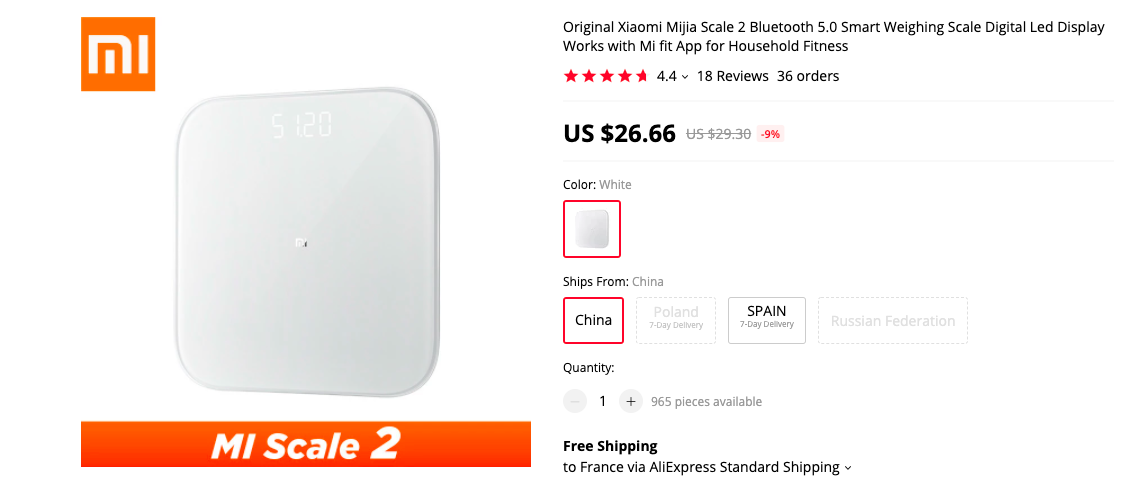
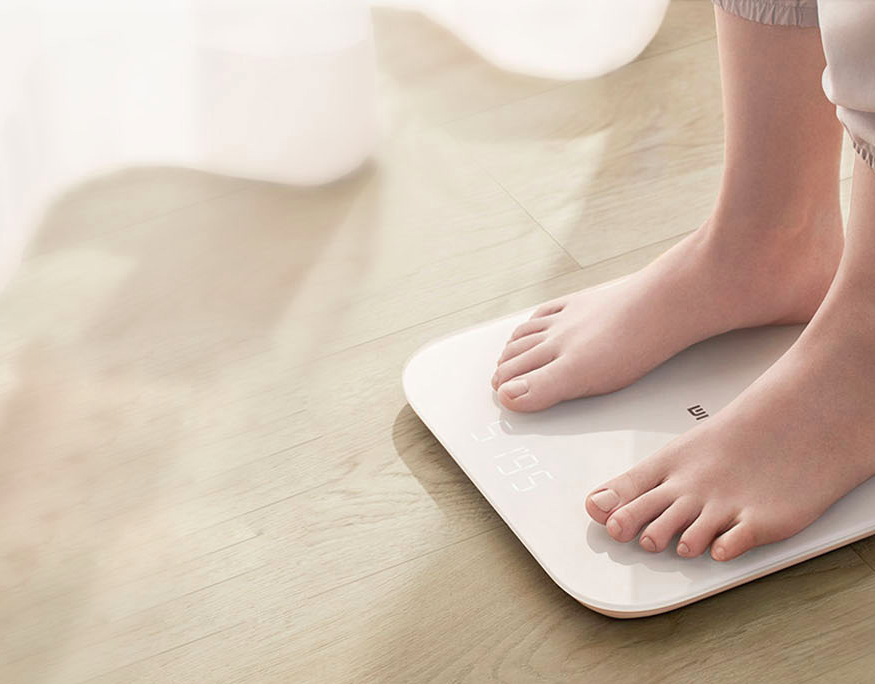
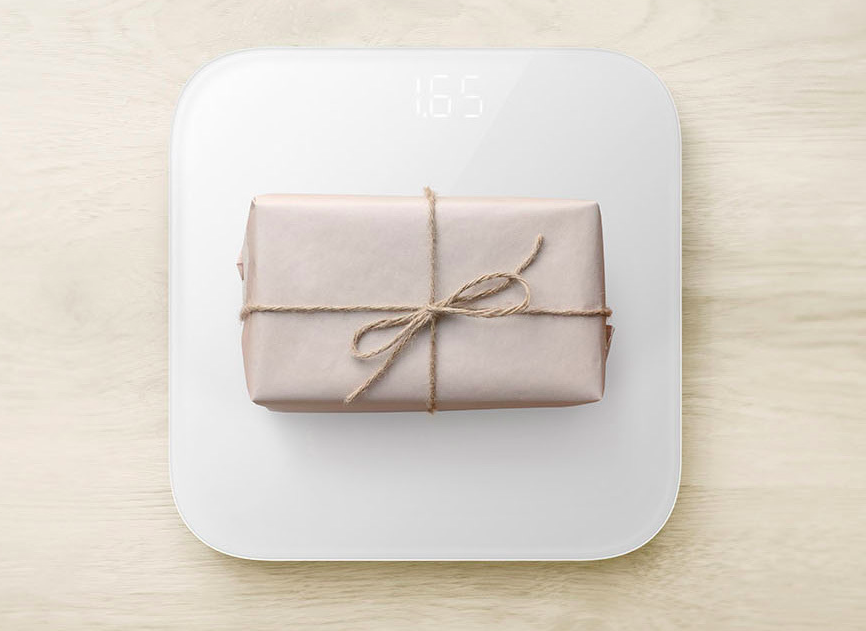
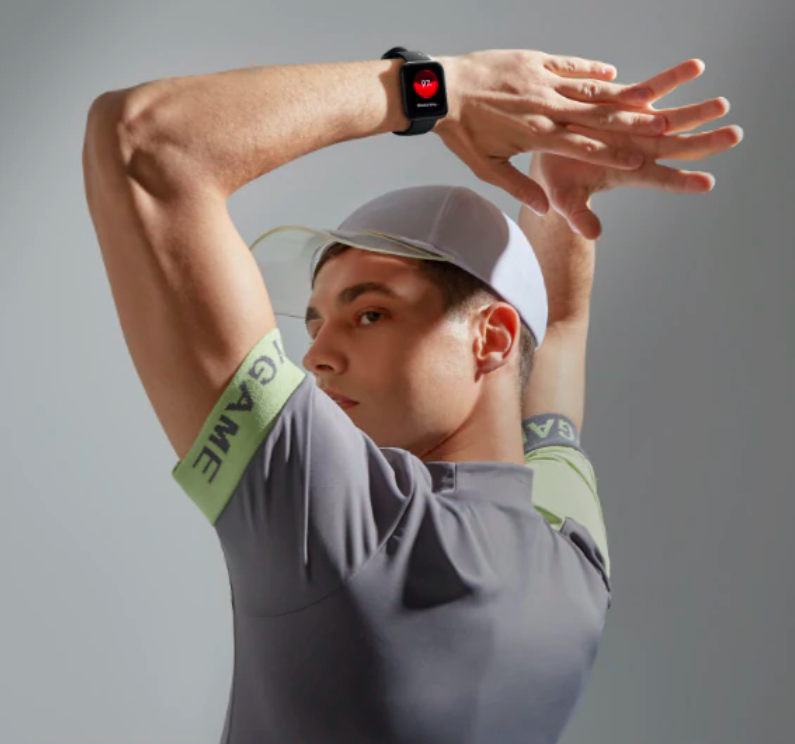
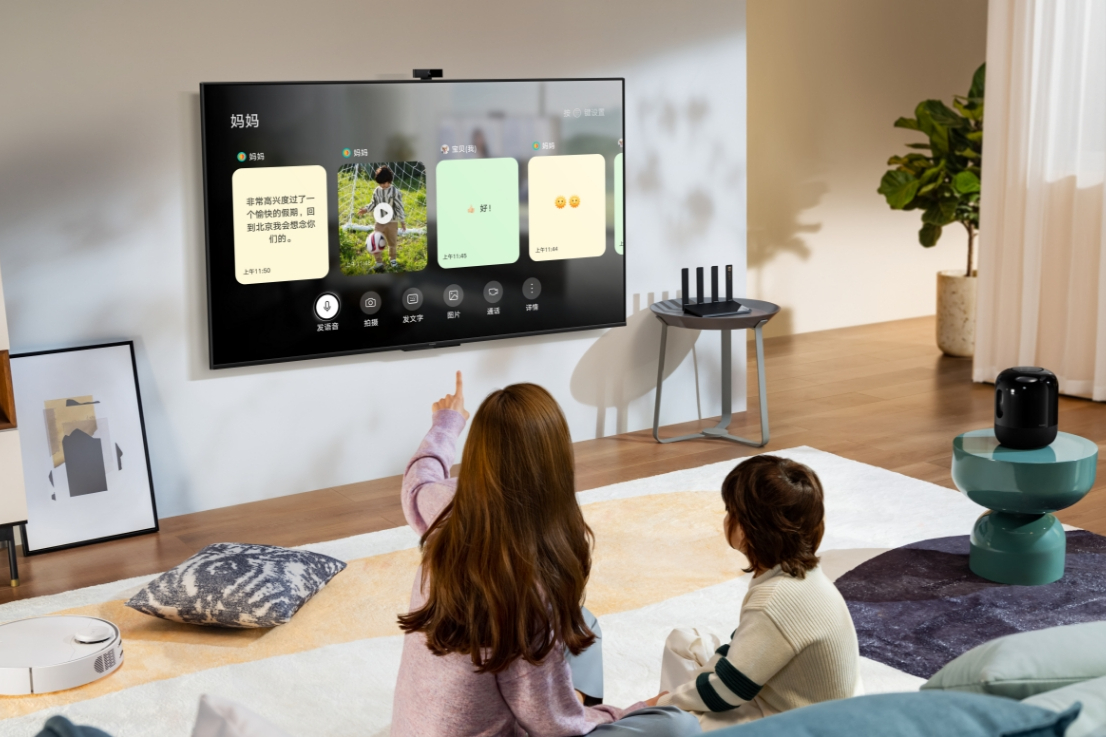
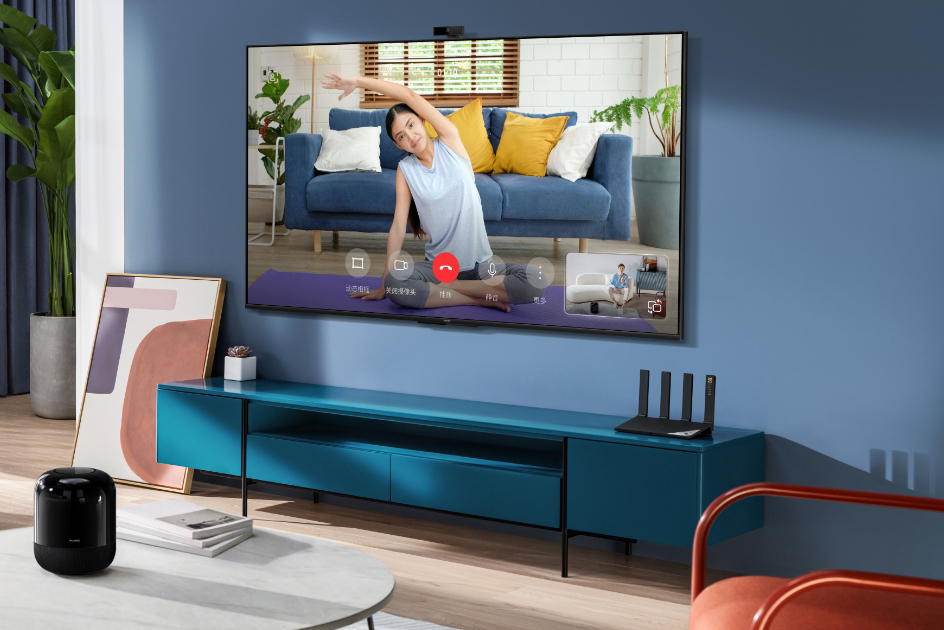
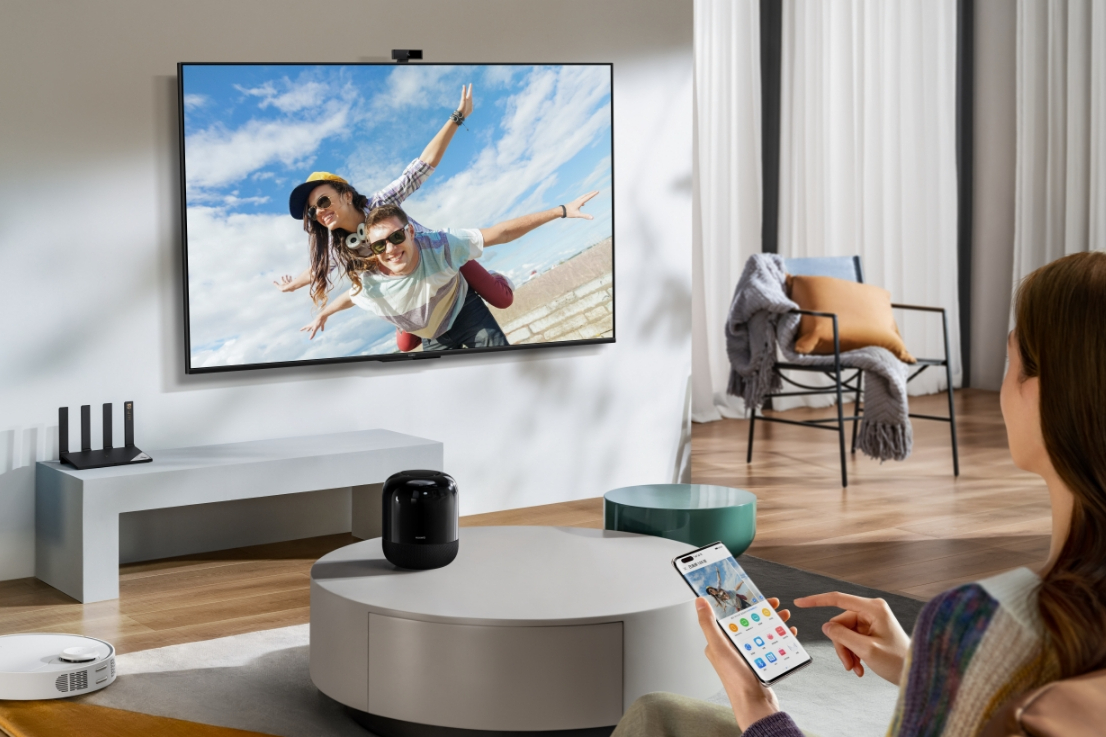
Generally retailing for $30, you can now buy Xiaomi Mi Scale 2 for $26.66 only at AliExpress. Please note that this deal is applicable only on the orders placed from the China warehouse.
For more information on such exciting deals and offers check out ourdeals hub.
* Please Note: When you buy something using the links in our articles, we may earn a small commission at no cost to you.
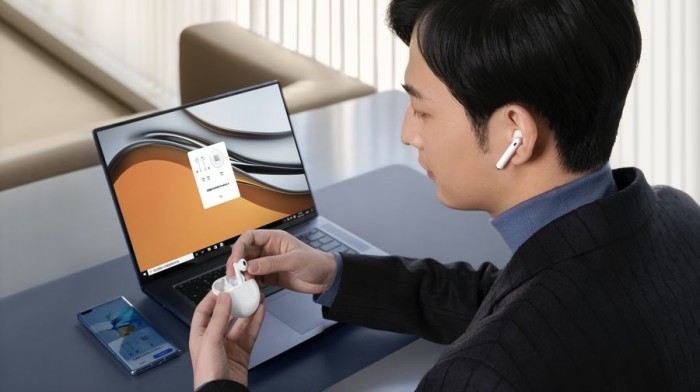
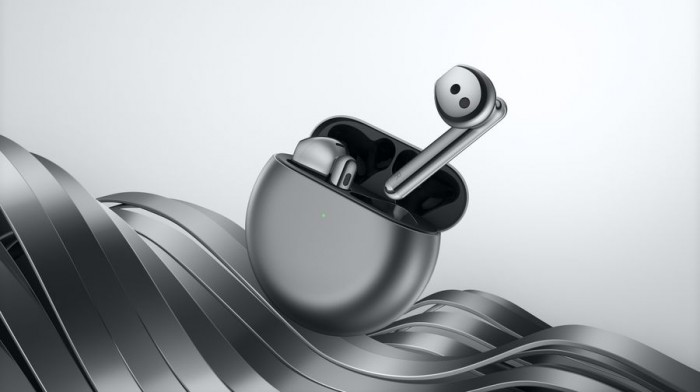
During Huawei‘s Full-scene smart life new product launch conference held today, the Huawei FreeBuds 4 was one of the main products unveiled. The wireless earbuds come with active noise cancellation. The FreeBuds 4 is priced at 999 yuan (~$155) and will go on sale on June 1.
In terms of the design, Huawei FreeBuds 4 truly wireless earbuds still use a semi-in-ear design just like FreeBuds 3. Huawei says it collected tens of thousands of 3D human ear model data to create a wearing comfort that meets the needs of more people, making it more comfortable than in-ear headphones. The earbuds are said to fit the user’s ears better and are not stuffy when worn for a long time.
Huawei FreeBuds 4 retains support for active noise cancellation technology, which is more difficult to apply to semi-in-ear headphones. Most of the common active noise reduction headphones use in-ear design, precisely because the in-ear design has better innate sealing. However, to solve this challenge, the FreeBuds 4 adopts the “dual-microphone hybrid noise reduction technology” bringing an excellent noise reduction performance.
In terms of sound quality, Huawei’s FreeBuds 4 uses a classic dynamic speaker structure. It features a liquid crystal composite (LCP) diaphragm that is lighter and more rigid. This takes the headset’s frequency response range up to 40kHz. The bass is also of vivid sound quality.
Further, the FreeBuds 4 is equipped with a high-sensitivity microphone that can record high-fidelity sound with a sampling rate of up to 48 kHz, retaining the rich details of the sound. The microphone also has a powerful noise pickup reduction.
In terms of the smart connection, the FreeBuds 4 supports dual connections with mobile phones, tablets, PCs, watches, and smart screens. For example, when the user is using the tablet to listen to music or watch a movie if a phone call comes in, the tablet will automatically pause the content, and the headset will seamlessly switch to the phone channel. In the Huawei Audio Connection Center, you can switch devices with one key without repeating the tedious operation of disconnecting and connecting before.
Each of the earbuds weighs only 4.1g while the storage box weighs 38g. As for the pricing, the Huawei FreeBuds 4 starts at 999 yuan (~$155) and will be sold via Huawei Mall, Huawei experience stores, major authorized e-commerce, and other retail licensees.
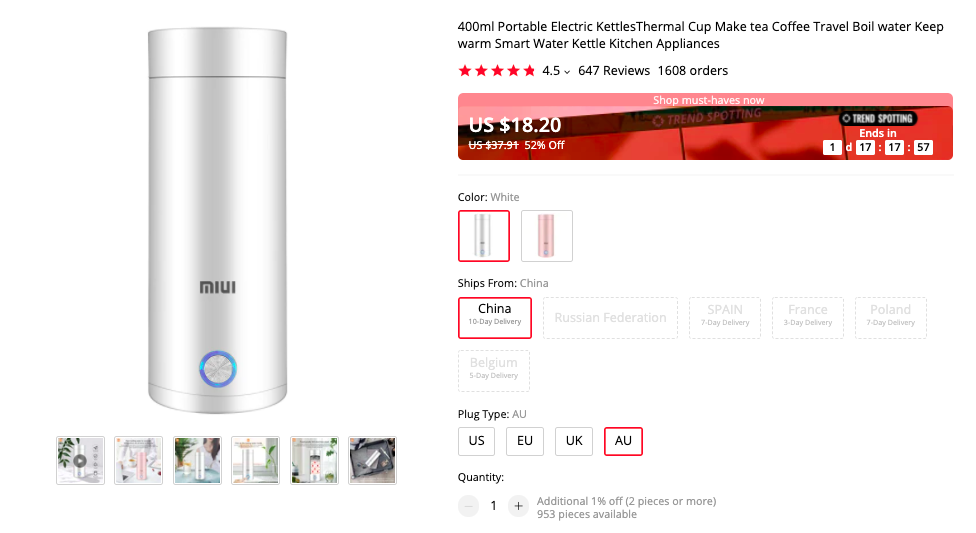
AliExpress is giving a fantastic deal on Xiaomi Portable Electric Kettle. The 400ml kettle which generally retails for $30 is now available at a discounted price of $ 18.20only.
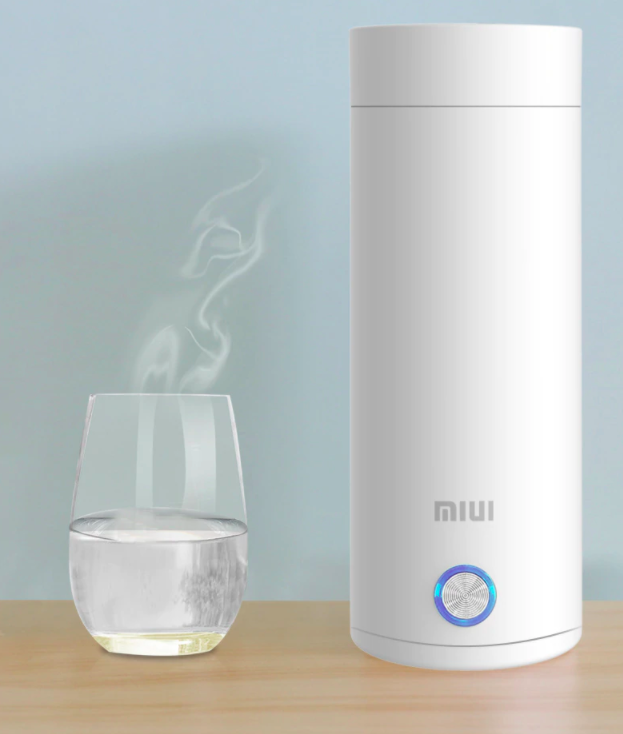
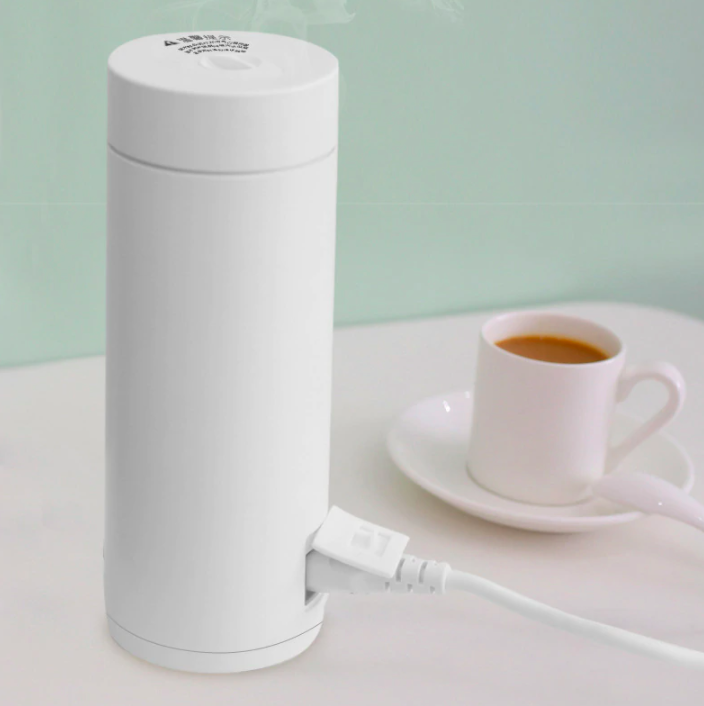
Xiaomi Portable Electric kettle is designed to look like a beautiful 400ml thermos bottle but works like a kettle. Made from food-grade stainless steel, the kettle comes with hollow insulation and an anti-scald shell. This means you can not only boil your liquid but also keep it hot or warm as per your requirement.
The dual-purpose device works both as a kettle and a thermos and can be easily packed into your school bag, bag pack, purse, or suitcase. The kettle comes with a one-touch key switch and auto shut-off function and is waterproof (without the chord). It comes with an anti-skid bottom, wide mouth, and multiple safety features.
Generally retailing for $30, you can now buy Xiaomi Portable Electric Kettle for $18.20 only at AliExpress. This super deal expires in the next 24 hours. So place your order asap.
For more information on such exciting deals and offers check out ourdeals hub.
* Please Note: When you buy something using the links in our articles, we may earn a small commission at no cost to you.
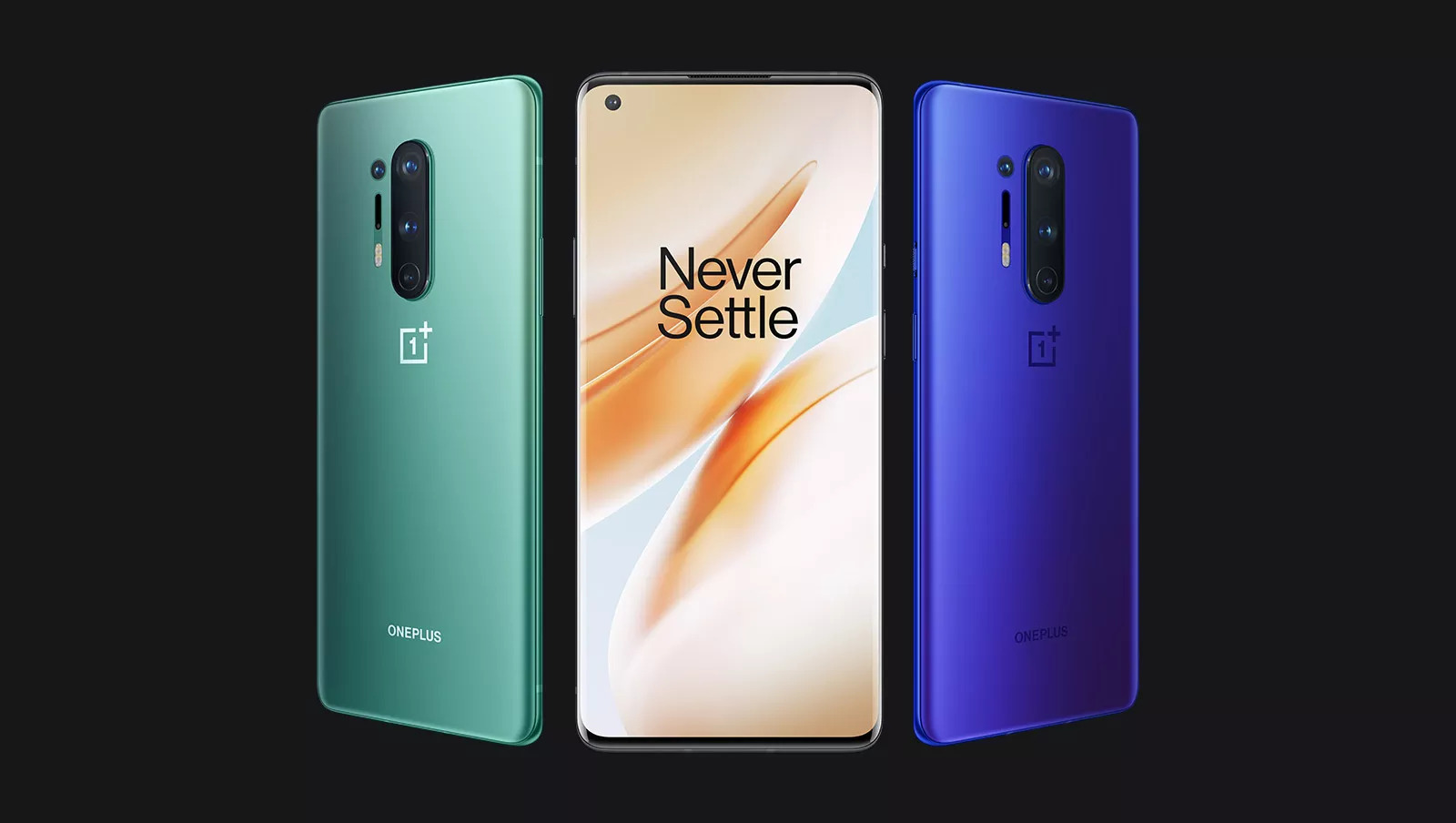
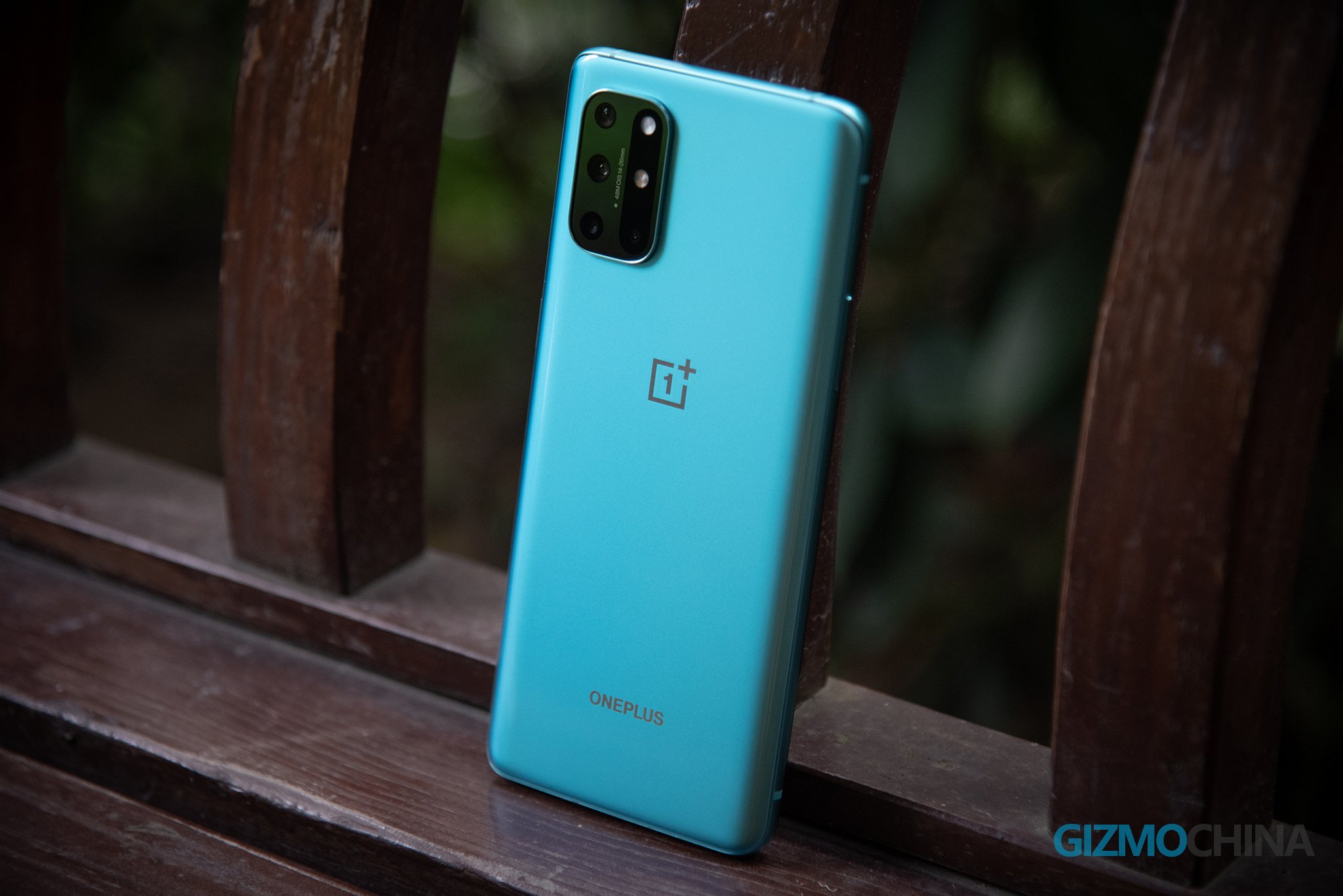
OnePlus switched from HyrdrogenOS to ColorOS for its smartphones in China with the launch of the OnePlus 9 series. The company has also planned to update its older devices to new ColorOS for OnePlus operating system. Keeping up with its words, the brand has released ColorOS 11 ‘Early Access’ builds for OnePlus 8, 8 Pro, and 8T.
OnePlus is known for its operating system, which is called OxygenOS in international markets and HydrogenOS in China. But now, the brand has abandoned HydrogenOS in its home county in favor of ColorOS for OnePlus.
With the decline of Huawei’s smartphone business, OPPO and vivo have been gradually filling the void left by the telecom giant in China. To further push its devices, the Oujia group has been unifying OPPO and OnePlus since last year.
We think the shift to ColorOS on OnePlus smartphones is part of Oujia’s strategy to bump up OnePlus’s market share in China. With ColorOS for OnePlus, the sale of OnePlus devices could improve as HyrdrogenOS is not popular in China. The consumers in this country prefer feature-rich UI with ecosystem benefits.
OnePlus 8 Pro
But unfortunately, the transition process will not be easy for older devices because ColorOS and HydrogenOS are completely different Android skins. Hence, interested users will have to use Windows 10 PC to install the newly released ColorOS 11 Early Access builds on OnePlus 8, OnePlus 8 Pro, and OnePlus 8T respectively.
That’s not all, these builds are also said to have a plethora of known bugs. Since OnePlus is lately known for software issues, there could be plenty more unknown bugs.
OnePlus 8T
If you are using a Chinese variant of any of three smartphones, you can try out ColorOS 11 by following the installation process mentioned in the official announcement posts on OnePlus Community China (1, 2). But do proceed with caution due to the risks involved.
Having said that, we are not sure how OnePlus will be delivering stable update via OTA to general users. What are your thoughts on this situation? Do let us known in the comment section below.
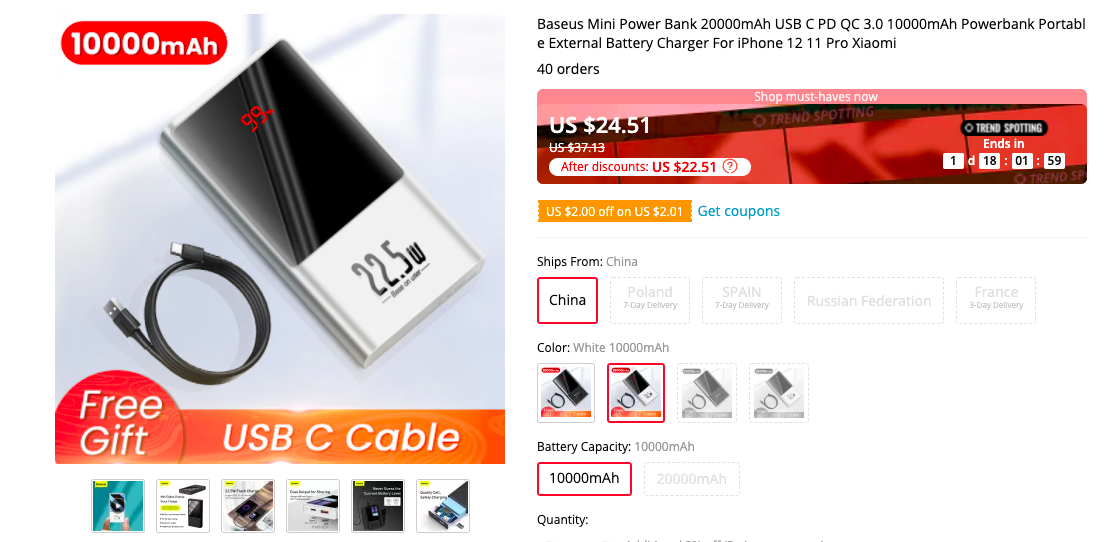
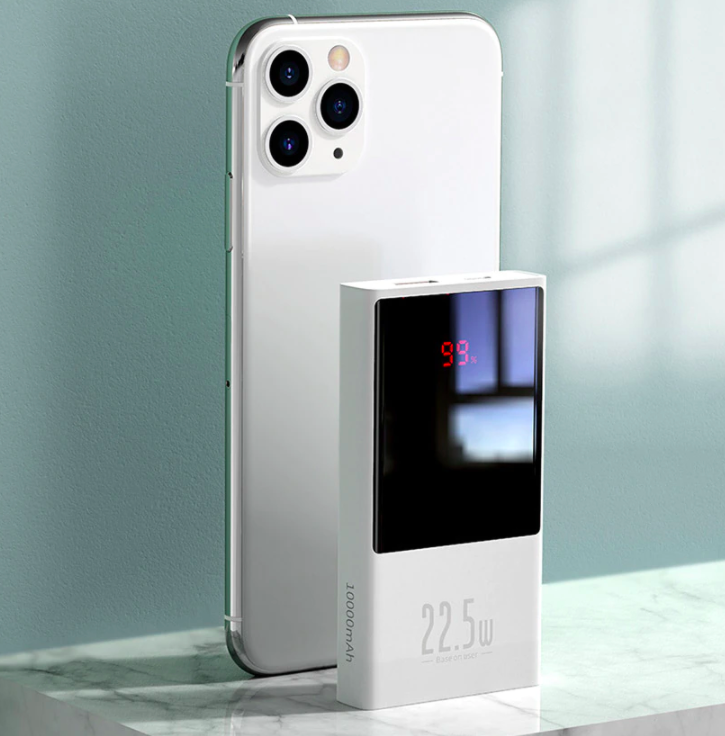
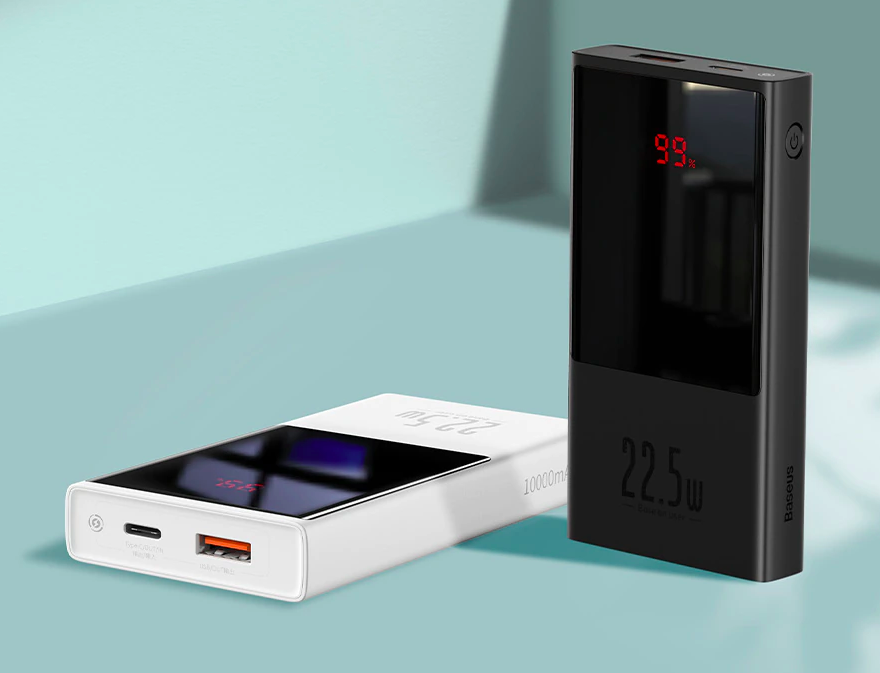
Baseus 10000mAh Mini Power Bank is a lightweight and highly portable digital display power bank. 50% smaller than the average power bank, you can easily carry the device in your pocket or purse. Designed to be highly efficient yet beautiful, this mini power bank is made from high-quality material and comes with a matt oil finish which makes it anti-slip, anti-scratch, and smudge-free.
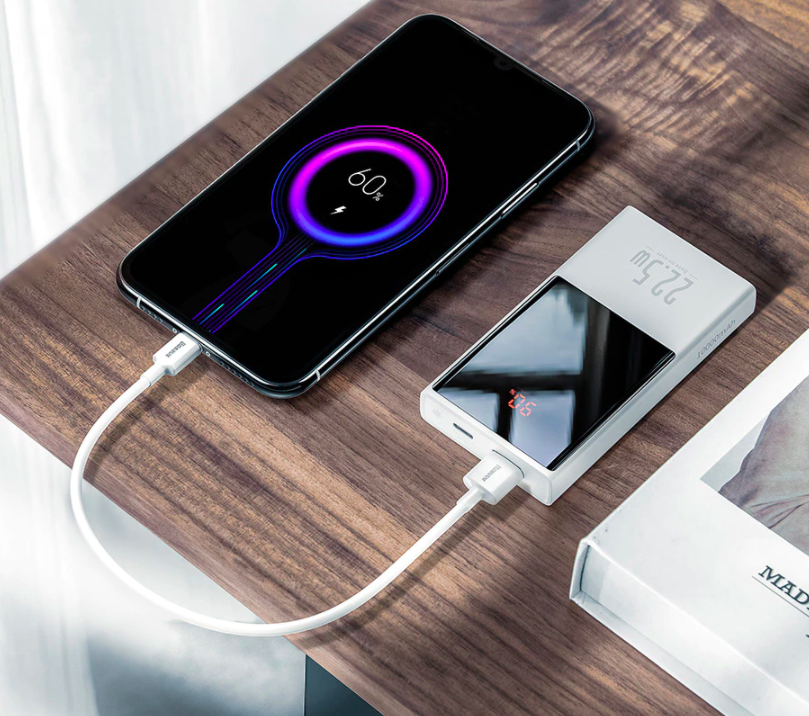
The power bank supports a 22.5W SCP Flash charge and 20W PD fast charge. It comes with a BPS charging technology and supports USB and Type-C port charging. The highlight feature of this power bank is the mini LED display that shows you the battery percentage in real-time.
Fitted with a high-quality and flexible polymer lithium cell, the power bank comes with multiple safety features like overcharge protection, over-discharge protection, short-circuit protection, restore protection, etc.
Generally retailing for $37, you can now buy Baseus 10000mAh Mini Power Bank for $22.51 onlyat AliExpress. Please note that this deal will expire in the next 24 hours. So place your order asap.
For more information on such exciting deals and offers check out ourdeals hub.
* Please Note: When you buy something using the links in our articles, we may earn a small commission at no cost to you.
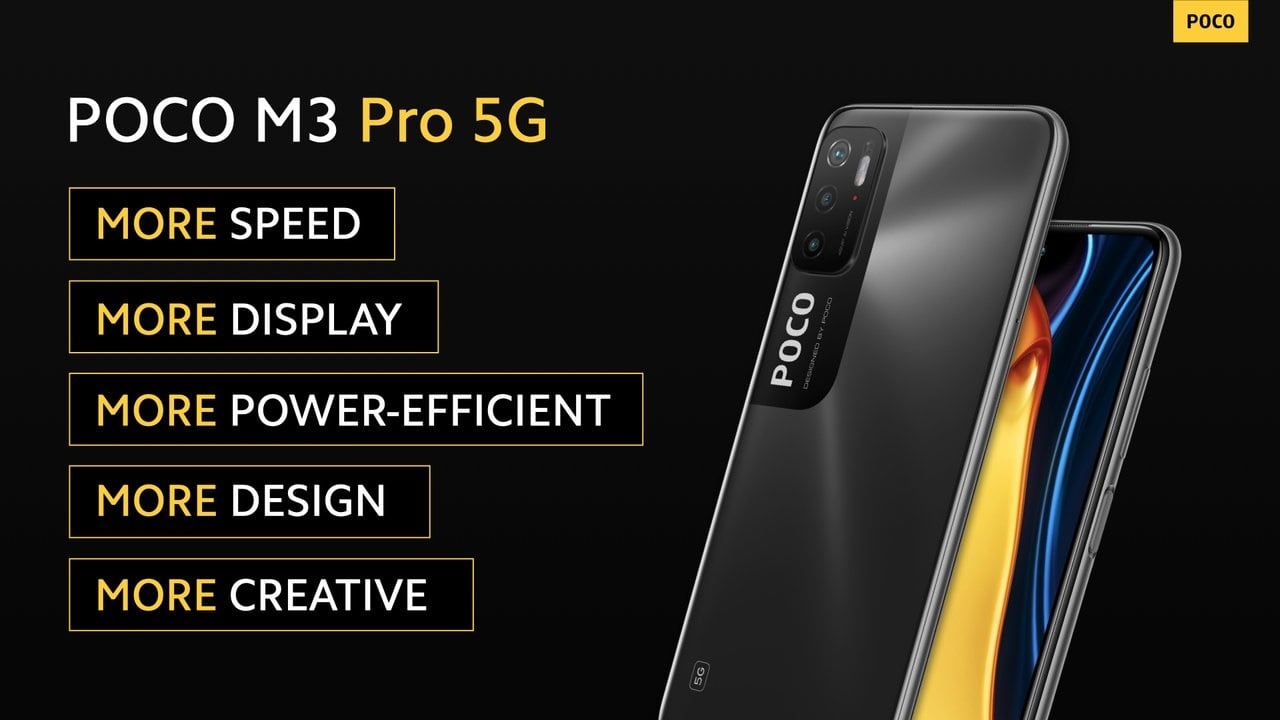
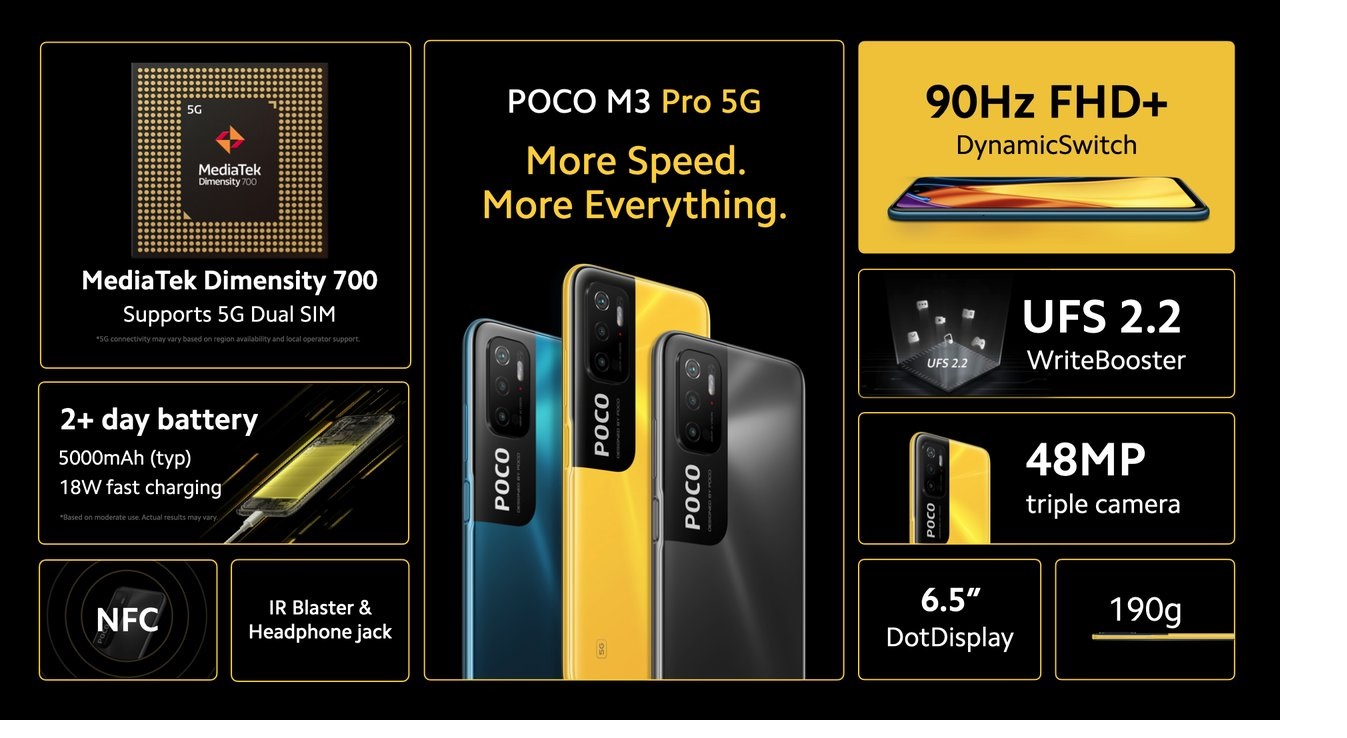
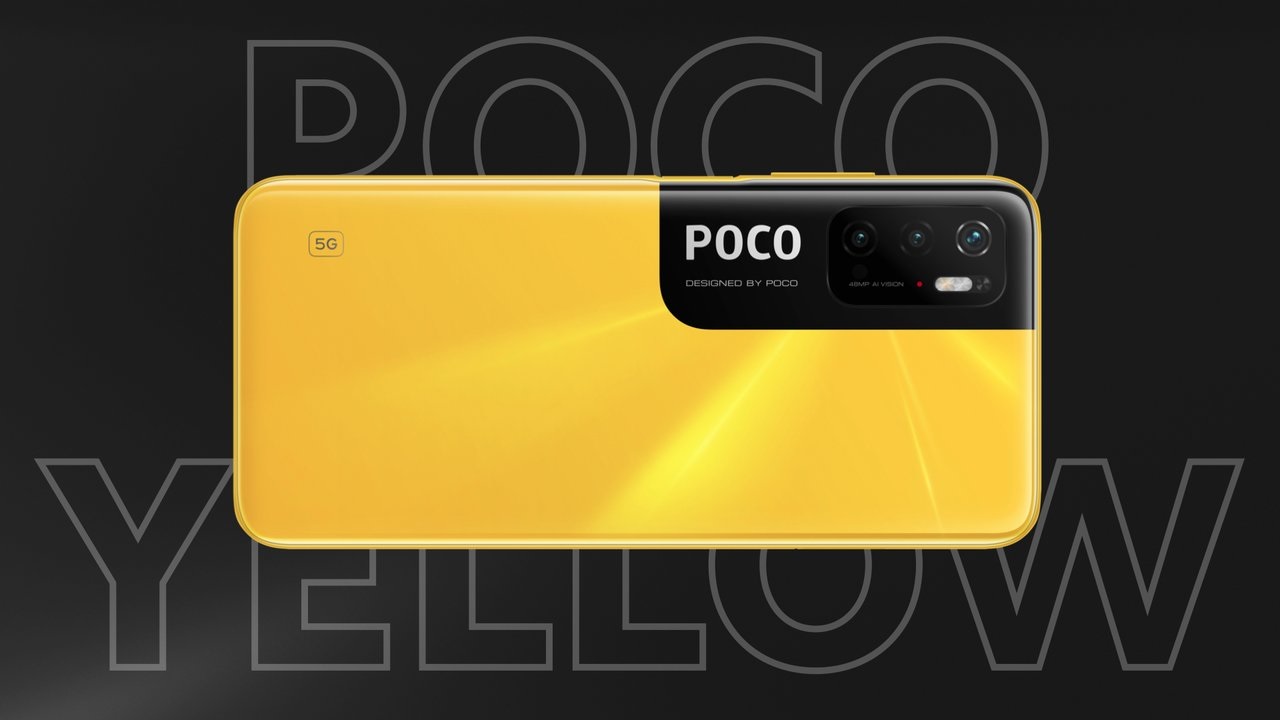
POCO has announced a new smartphone today. The POCO M3 Pro 5G is its first budget 5G device and that is a big deal for the young phone brand. The device comes with a design that should turn heads, satisfactory specs, and an affordable price tag.
POCO M3 Pro Specs
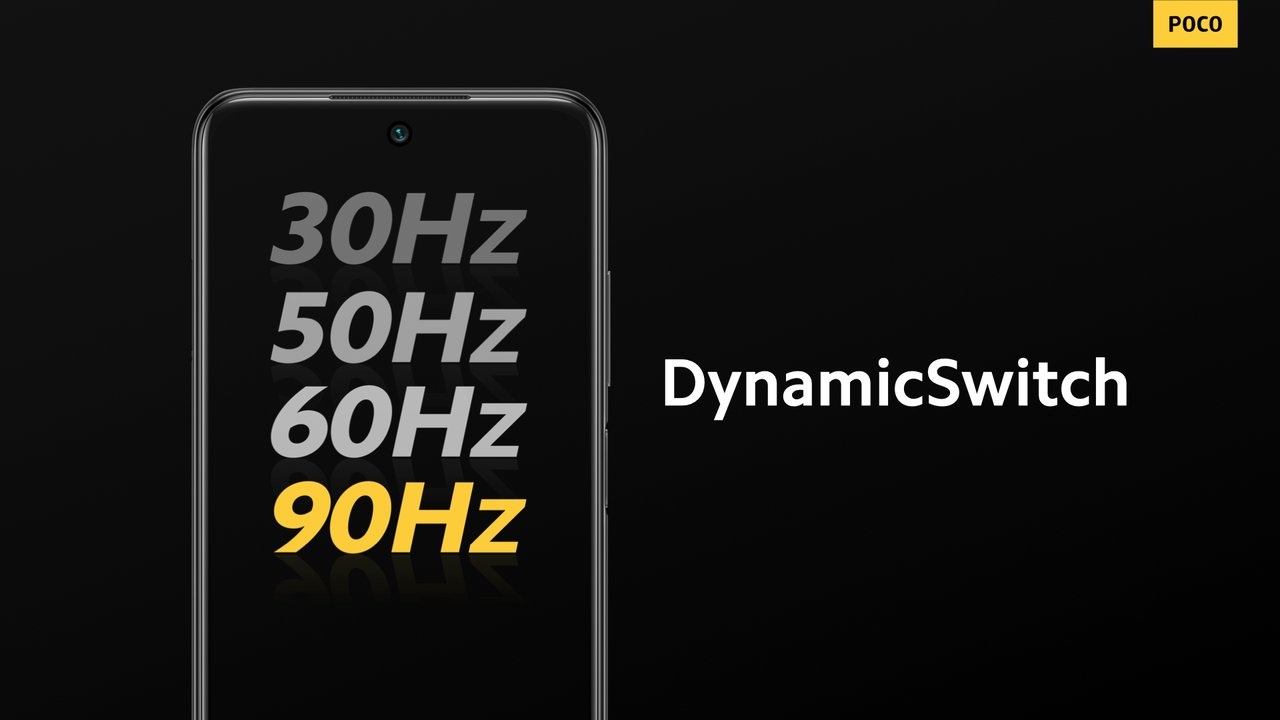
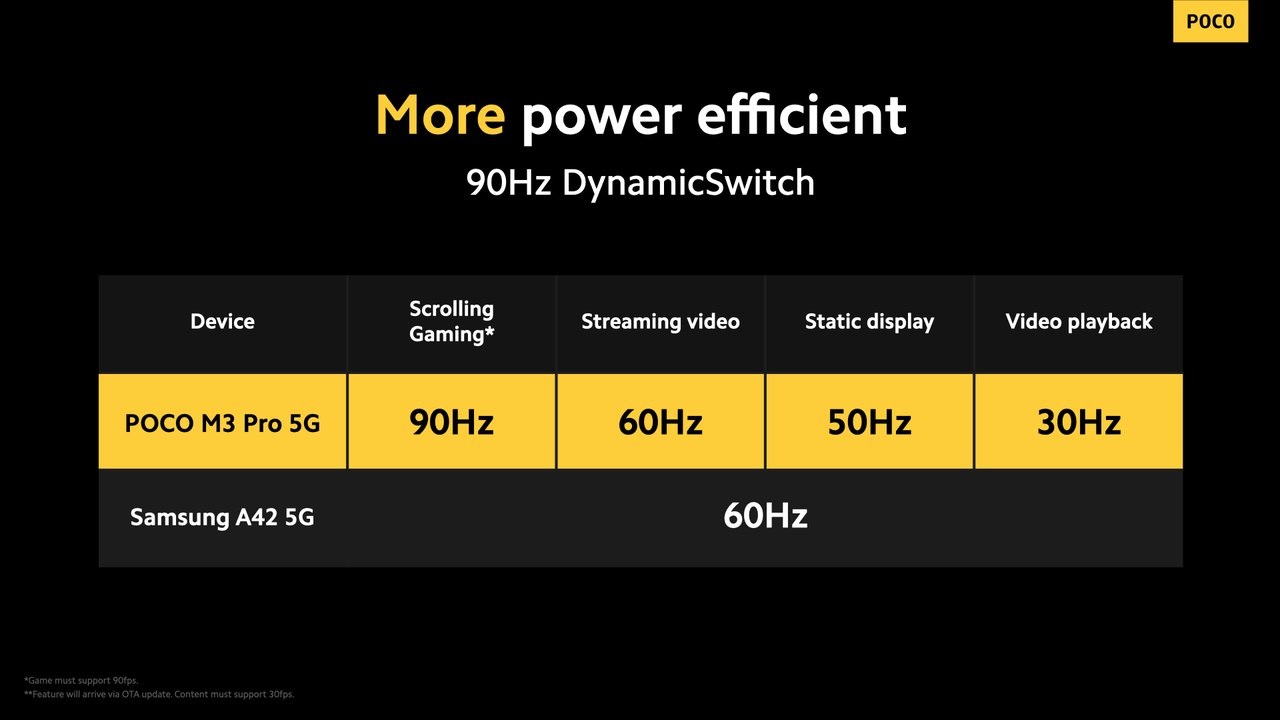
The POCO M3 Pro 5G has a 6.5-inch screen with a 1080p+ display, a centered punch hole for the front-facing camera, and a 90Hz refresh rate. POCO has added a feature called DynamicSwitch that automatically adjusts the refresh rate based on the content you are viewing. The phone will switch between 30Hz, 50Hz, 60Hz, and 90Hz.
While the POCO M3 has a Snapdragon 662 processor, the pro version swaps it for a 7nm Dimensity 700 chipset that not only outperforms the former but also the Snapdragon 720G processor on AnTuTu. The phone comes with up to 6GB of RAM and up to 128GB of UFS 2.2 storage. It has a dual-hybrid SIM slot, so you can either pop in two 5G SIM cards or a 5G SIM and a MicroSD card (up to 1TB).
1 of 3
POCO M3 Pro 5G specs
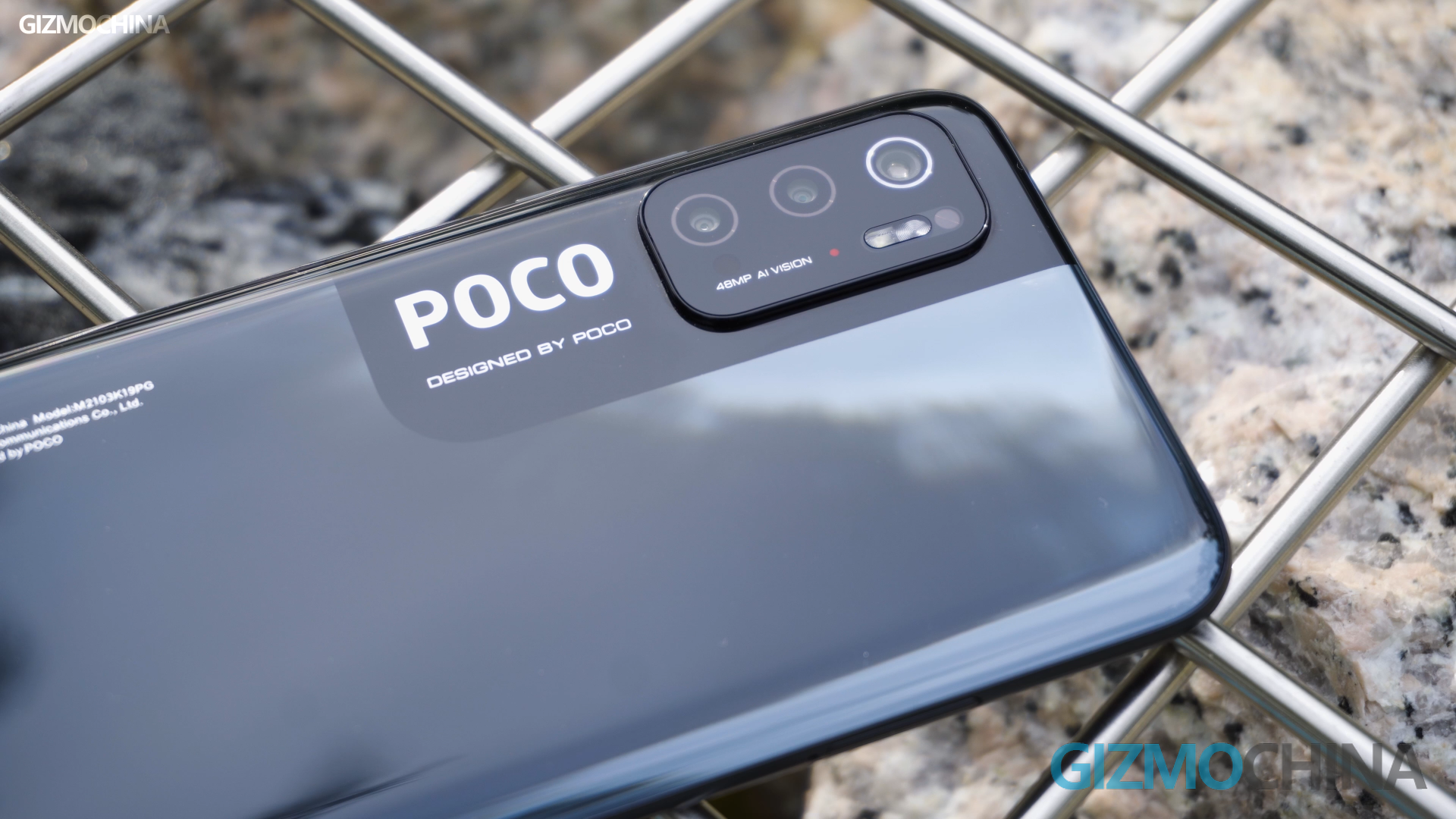
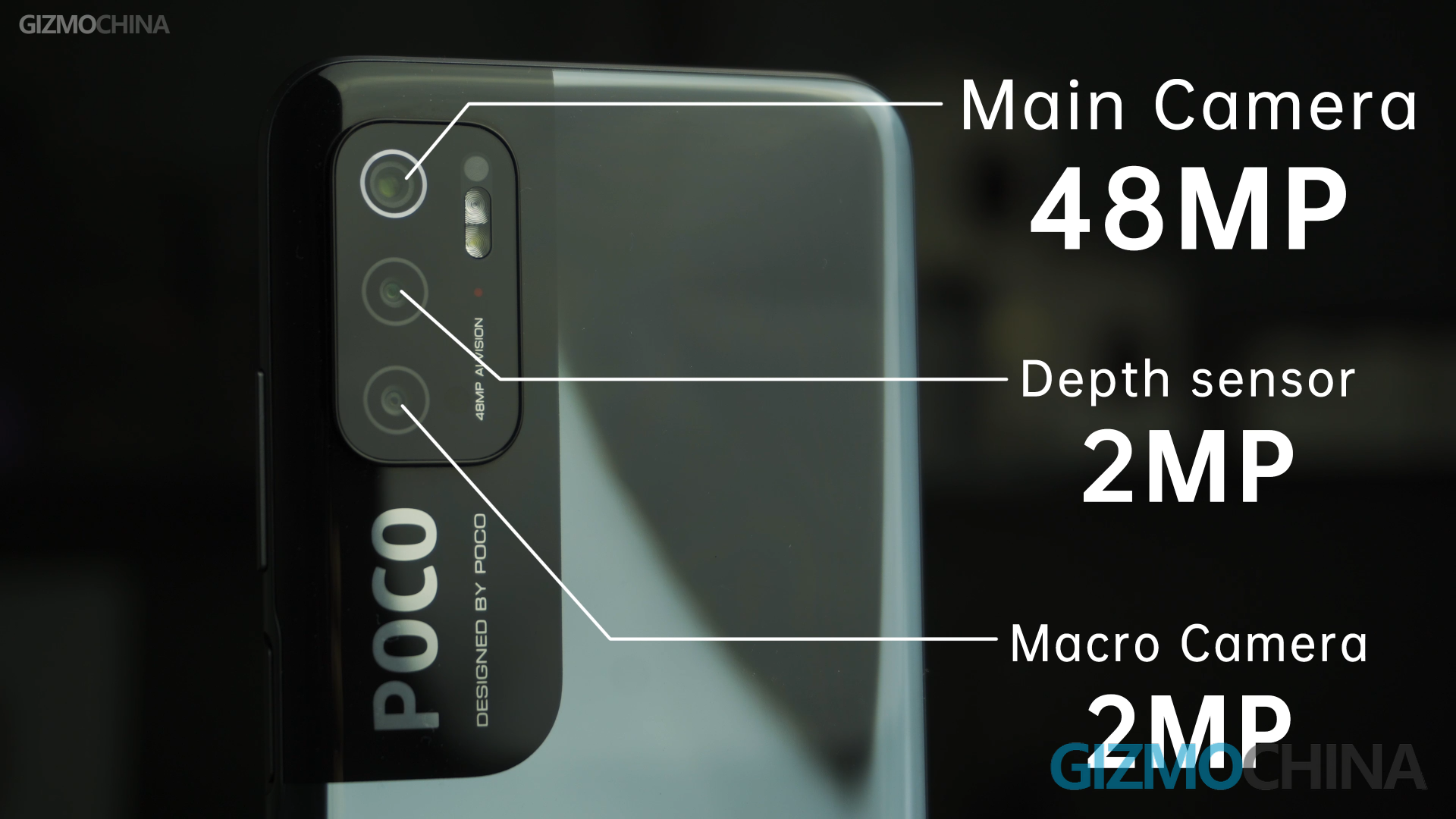
For cameras, there are three on the back. The primary sensor is a 48MP camera and it is paired with a depth Sensor and a macro camera. For features, you get a Night Mode and a time-lapse mode.
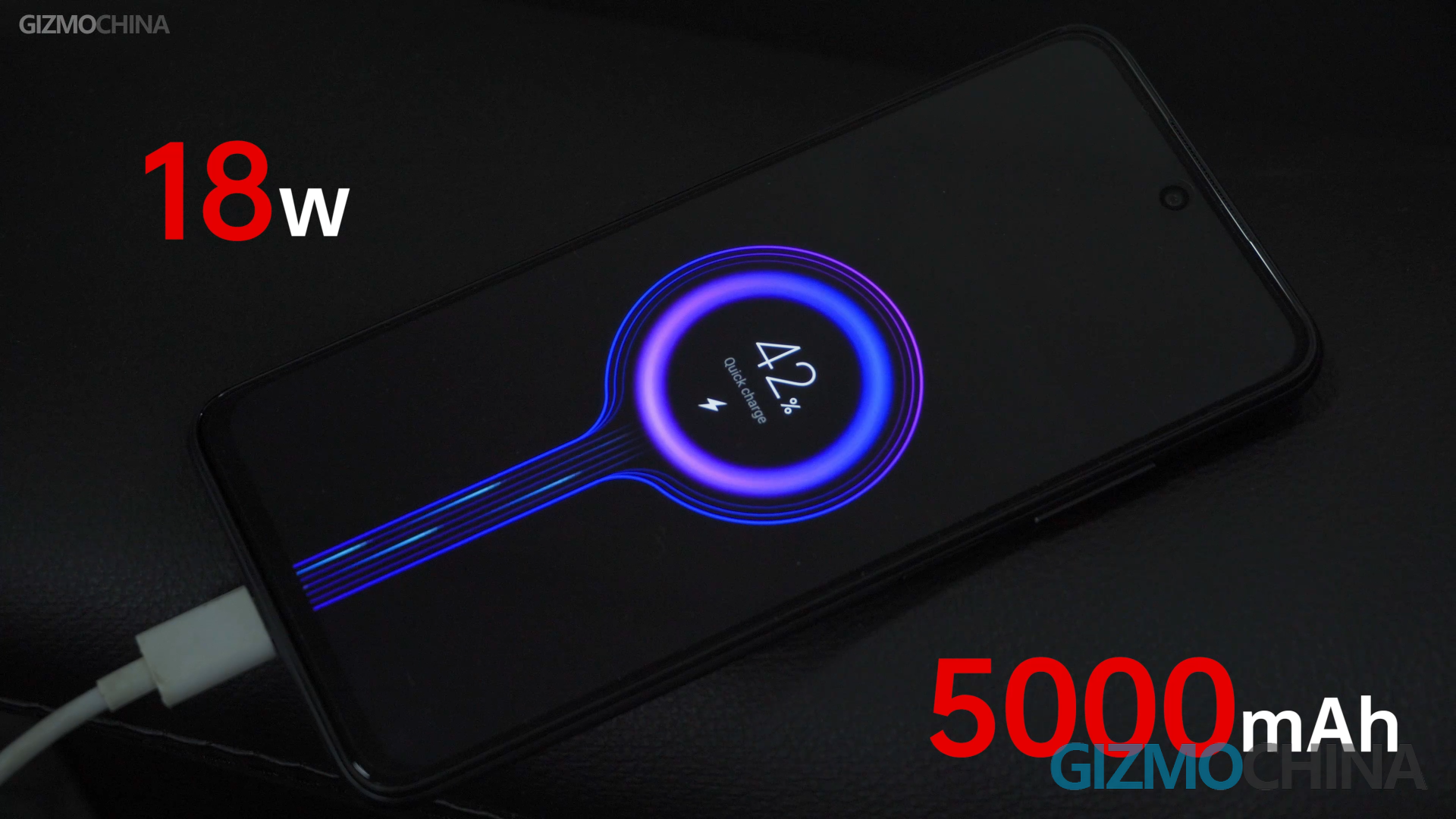
The phone packs a 5000mAh battery capacity with support for 18W fast charging but comes with a 22.5W power adapter that you can use for your other devices too. POCO claims it will last up to 2-days on a single charge depending on the usage. There is an audio jack at the top alongside an IR blaster. It also has NFC with support for payments and a side-mounted fingerprint scanner.
Price and Availability
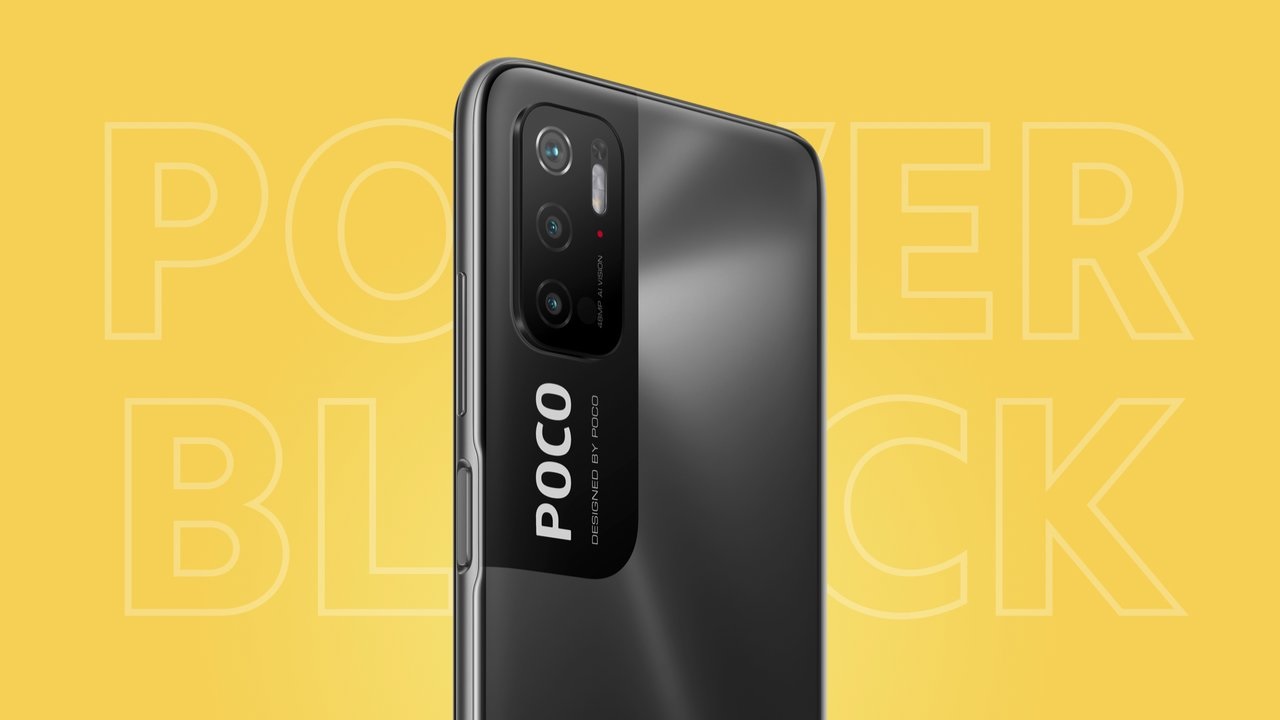
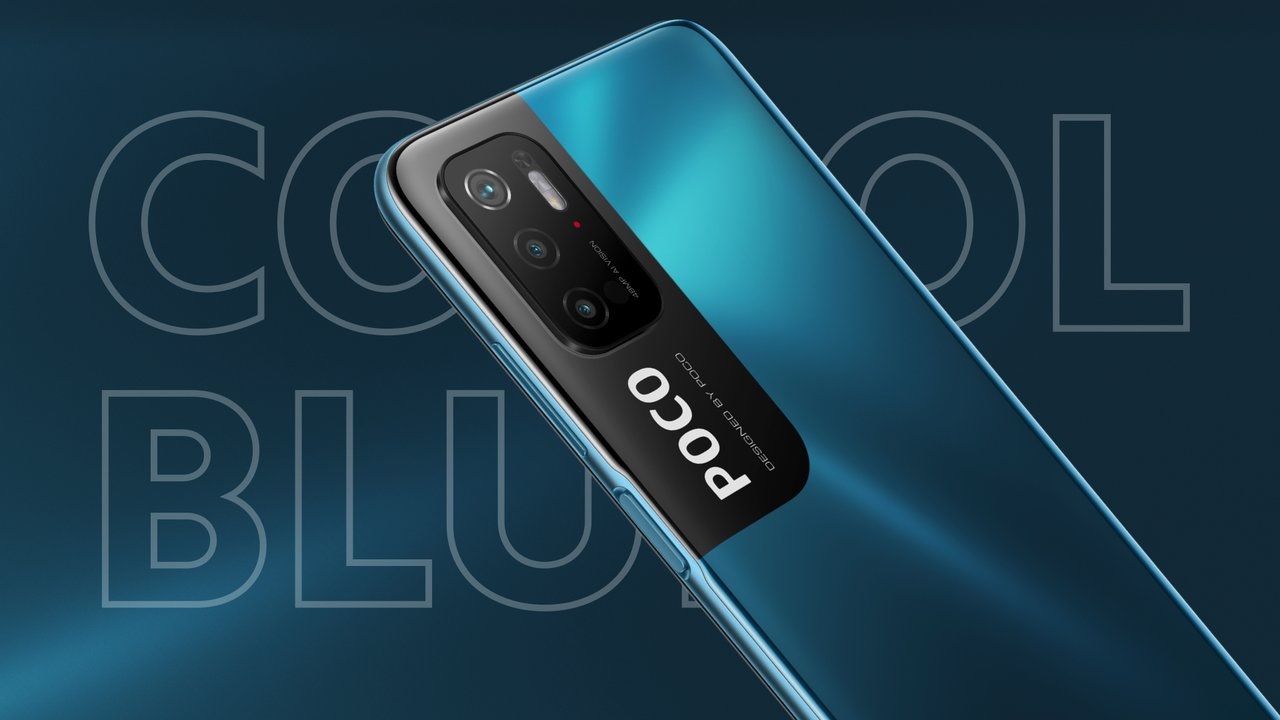
The price of the POCO M3 Pro 5G is €159 for the 4GB + 64GB version and €179 for the 6GB + 128GB version. These are early bird prices for those who purchase the phone tomorrow and during the dates of May 20th to May 27th. Buyers will be able to pick up the phone in Power Black, Cool Blue, and POCO Yellow.
1 of 3
POCO M3 Pro 5G Cool Blue
POCO M3 Pro 5G POCO Yellow
The phone will be available for purchase tomorrow on the POCO website, on AliExpress, Amazon, and on Goboo. It will be available later on partner platforms such as Lazada, Jumia, MediaMarkt, Souq, Gearbest, and Banggood.
Six months after the launch of the POCO M3 model, POCO has launched an upgraded version, the M3 Pro. The M3 standard version is doing relatively well among many 4G entry-level phones, so can the M3 Pro do well among entry-level 5G phones?
The POCO M3 Pro 5G is currently available on Aliexpress for just $169. Use coupon code 10M3PRO to get another $10 off!
We got the phone in advance to check out the brand’s latest entry-level 5G phone.
POCO M3 Pro 5G Review: Design
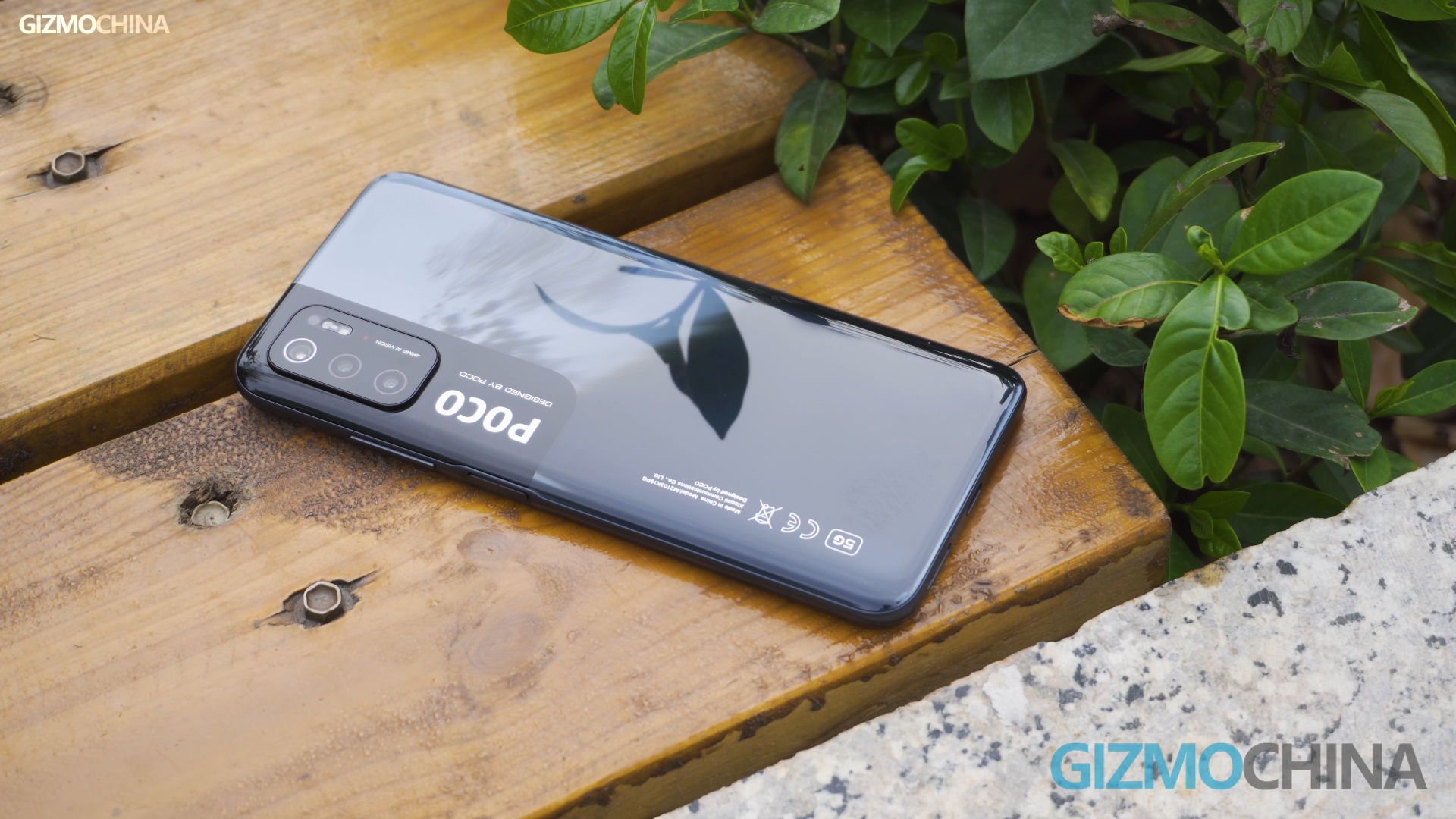
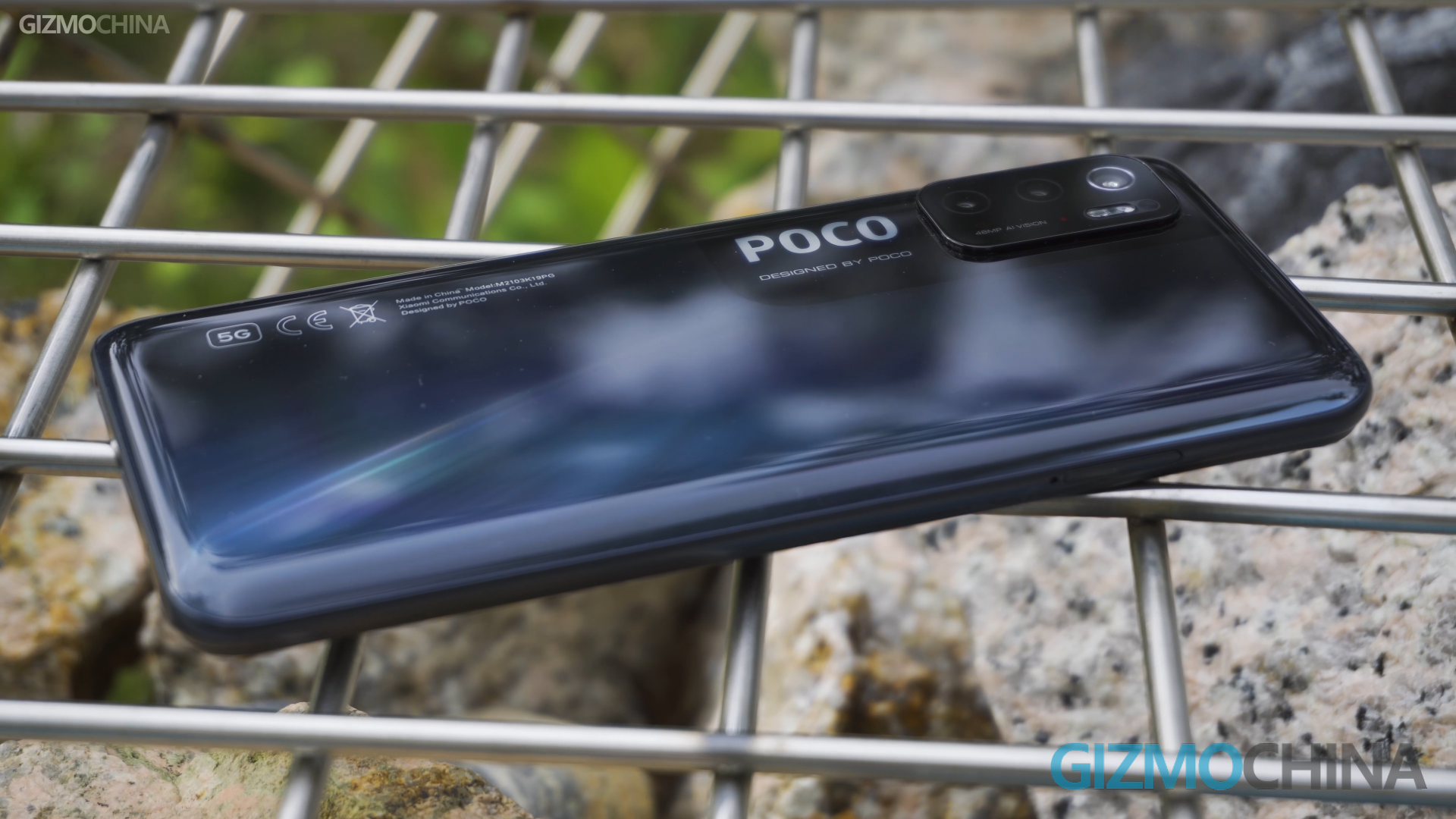
The M3 Pro’s appearance differs from that of the M3, and clearly, changes have been made once again. The lens module is still a vertical triple camera setup, but the large black rectangular design has been removed. The M3 Pro has a new back cover design, with two rounded rectangles near the lens and the POCO logo inside.
The leather-like material on the back cover has been replaced with a mirror-reflective coating, which is a fingerprint magnet. Although this back cover pattern design is pretty unique, and beautiful, I still prefer the M3’s standard design because it leaves a deeper impression. The fingerprint sensor is still on the side of the body. And the M3 Pro is not only equipped with a 3.5mm headphone jack and IR blaster, but it even features NFC, which is not present on the standard version of the M3. However, we still found some minor drawbacks, such as the omission of the dual speakers found on the standard version.
POCO M3 Pro 5G Review: Display
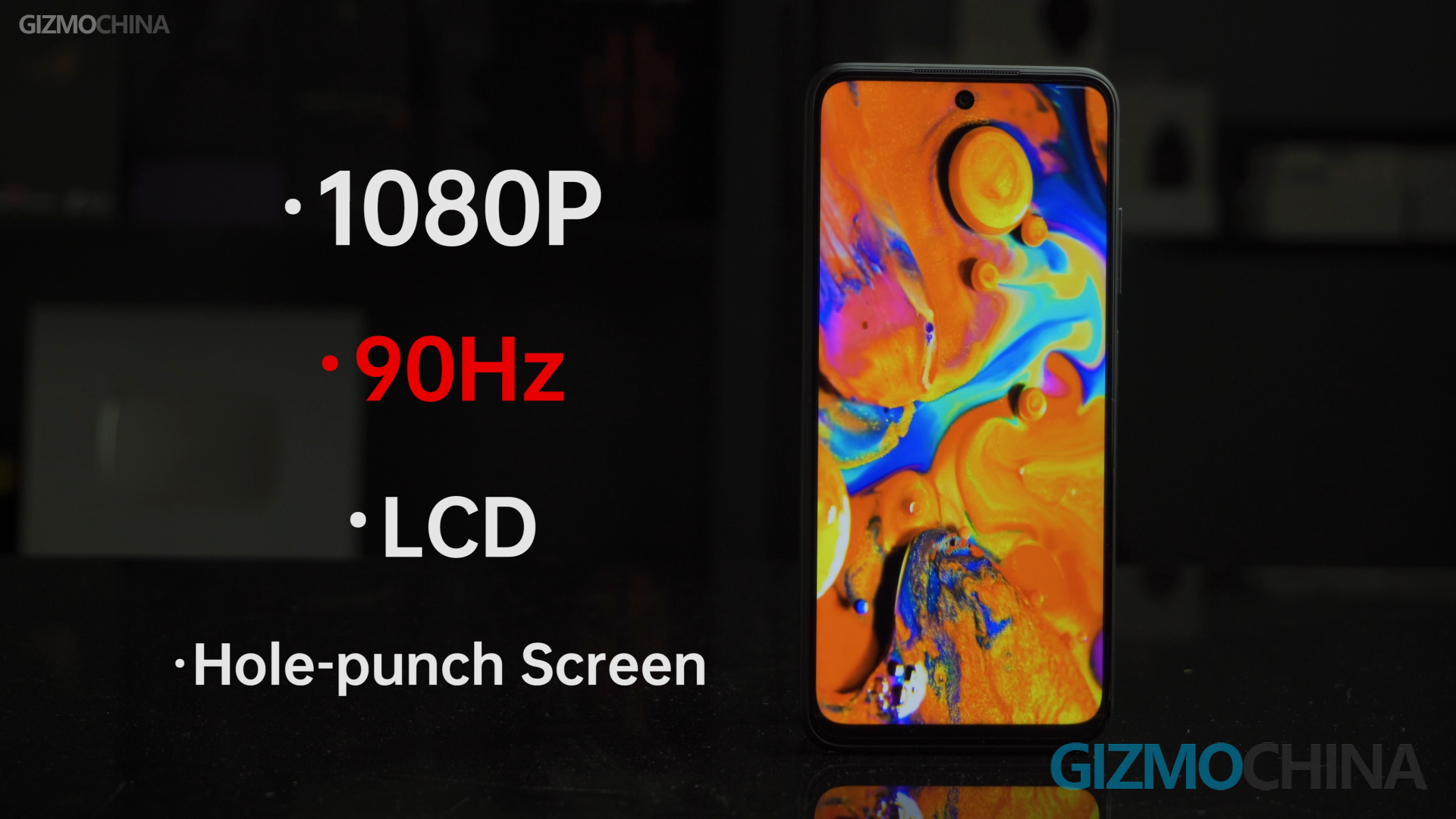
However, the M3 Pro brings much-needed screen upgrades. Although it is still an LCD 1080P screen, the refresh rate is increased to 90Hz, and the water drop screen has also been replaced with a hole-punch screen. The hole size is larger, but the surrounding shadows are better controlled. The screen looks rather average, but considering it is only a 5G entry phone, to have a 90Hz screen is already ahead of many other phones in the same price range.
So our evaluation of this screen is: it basically meets the needs of a customer in this price segment
POCO M3 Pro 5G Review: Hardware & Gaming
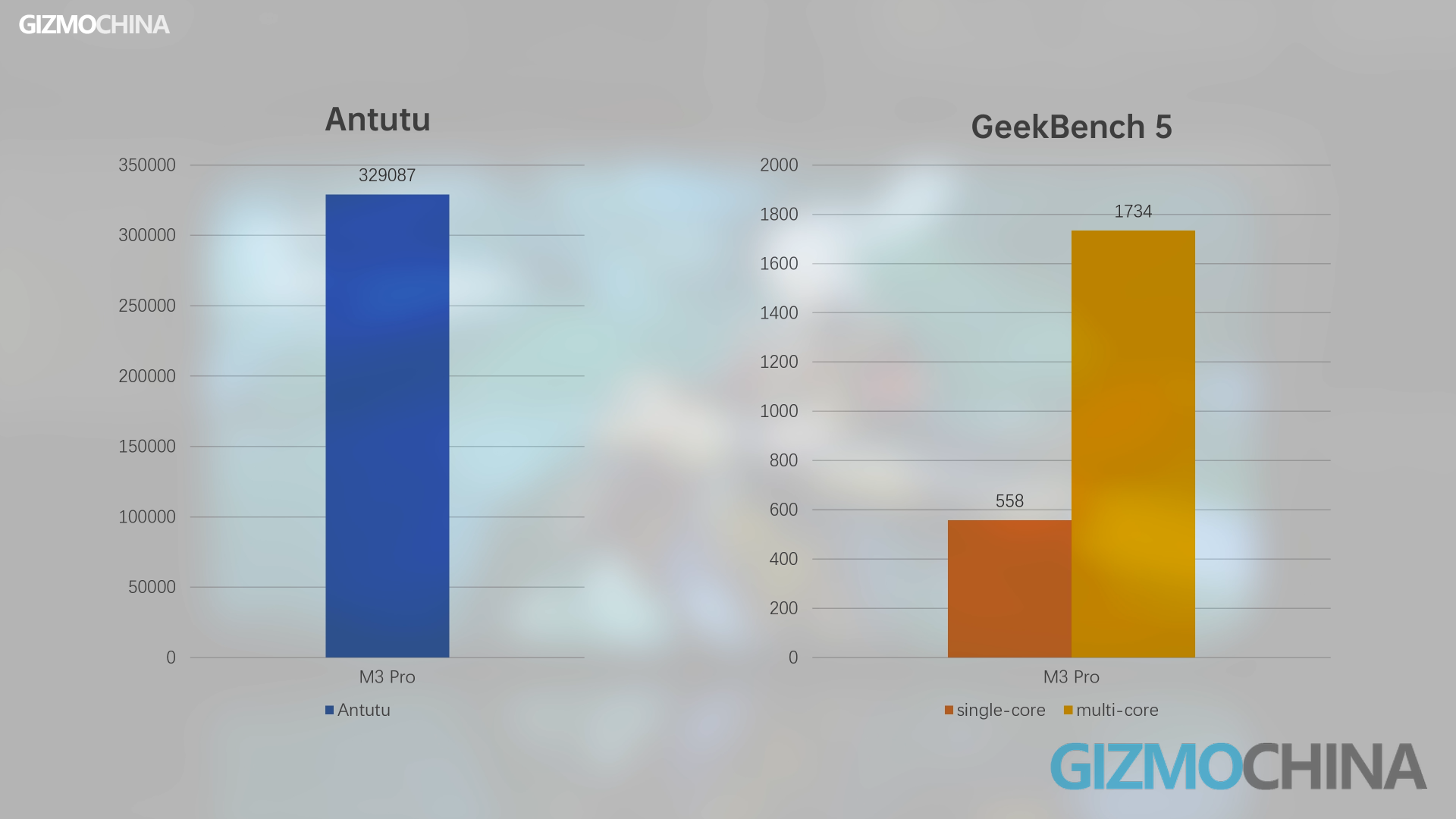
The POCO M3 Pro uses MTK’s Dimensity 700 SOC, which is one of the entry-level 5G chips available, so it makes sense to use it. The phone scores 329087 on AnTuTu, while in Geekbench 5 single-core test it scores 558, and in the multi-core test around 1734.
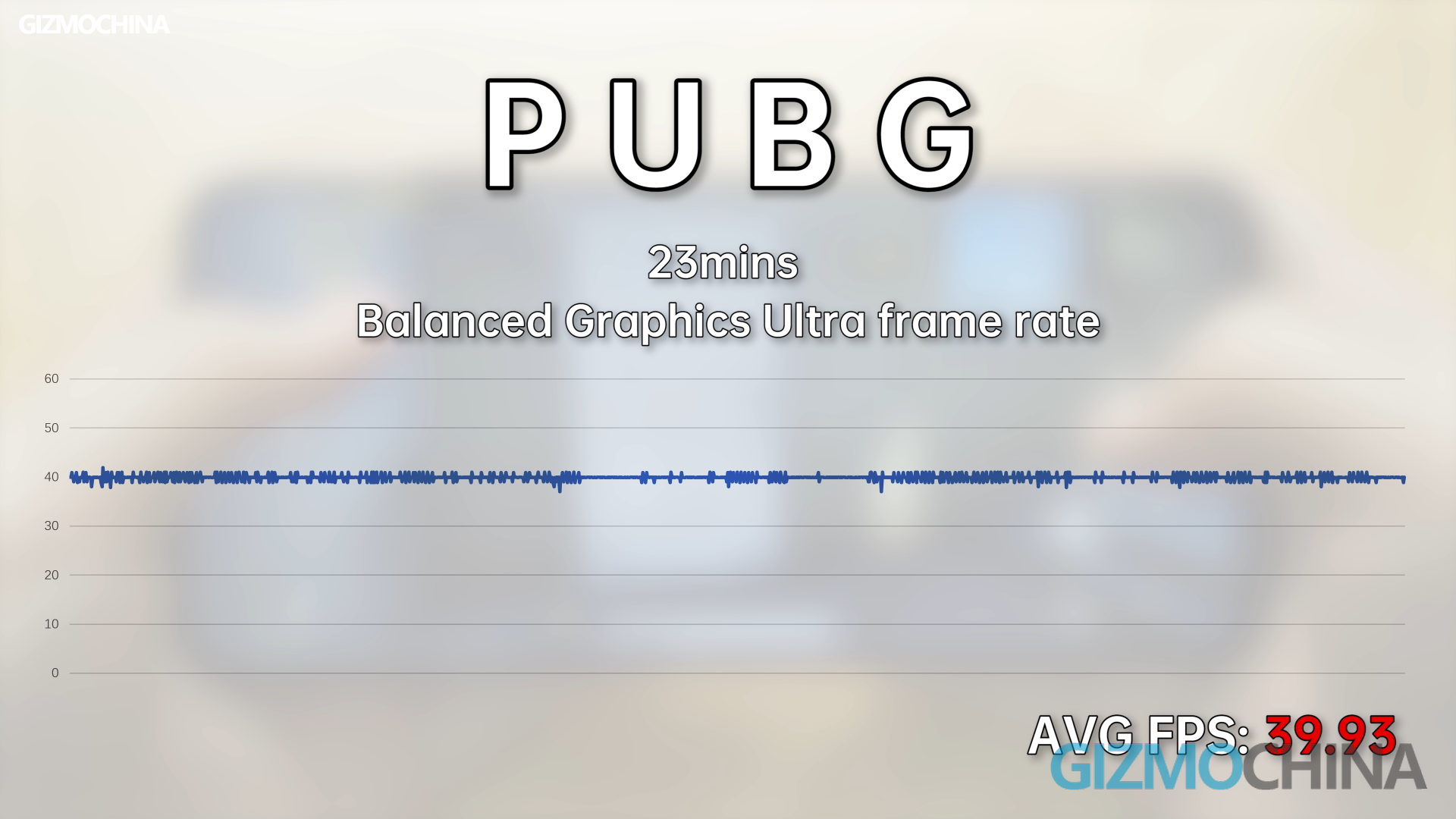
This score is a little better than the M3’s Snapdragon 662, but not by much. Because it is an entry-level chip, the gaming performance is not very good. PUBG has no way to turn on HDR Graphics and Extreme frame rate, and in HD Graphics you can’t turn on Ultra frame rate, which means if you want to play PUBG at 40fps, you have to turn on Balanced Graphics or Smooth Graphics. The good news is that it still plays smoothly with Balanced Graphics.
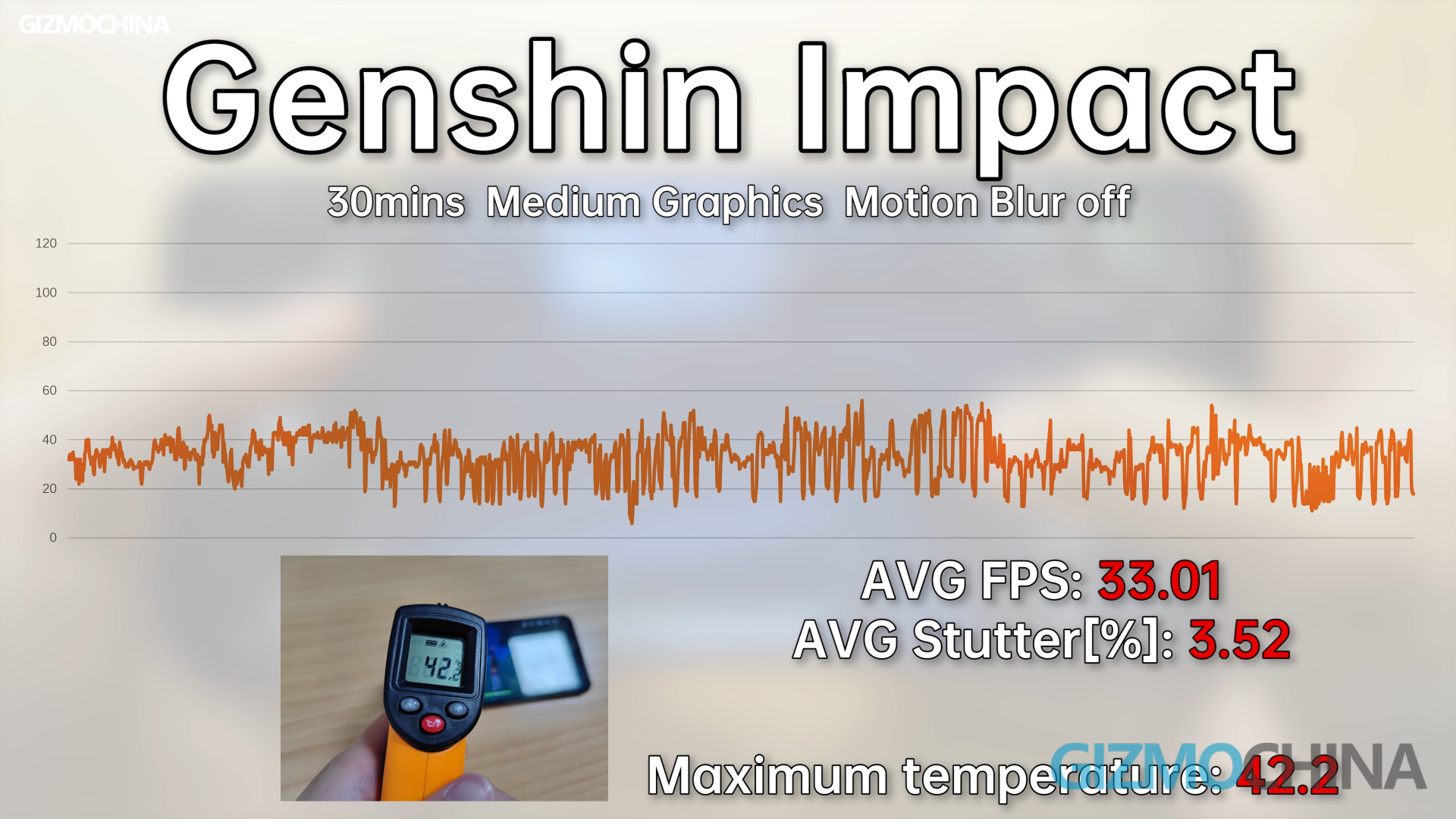
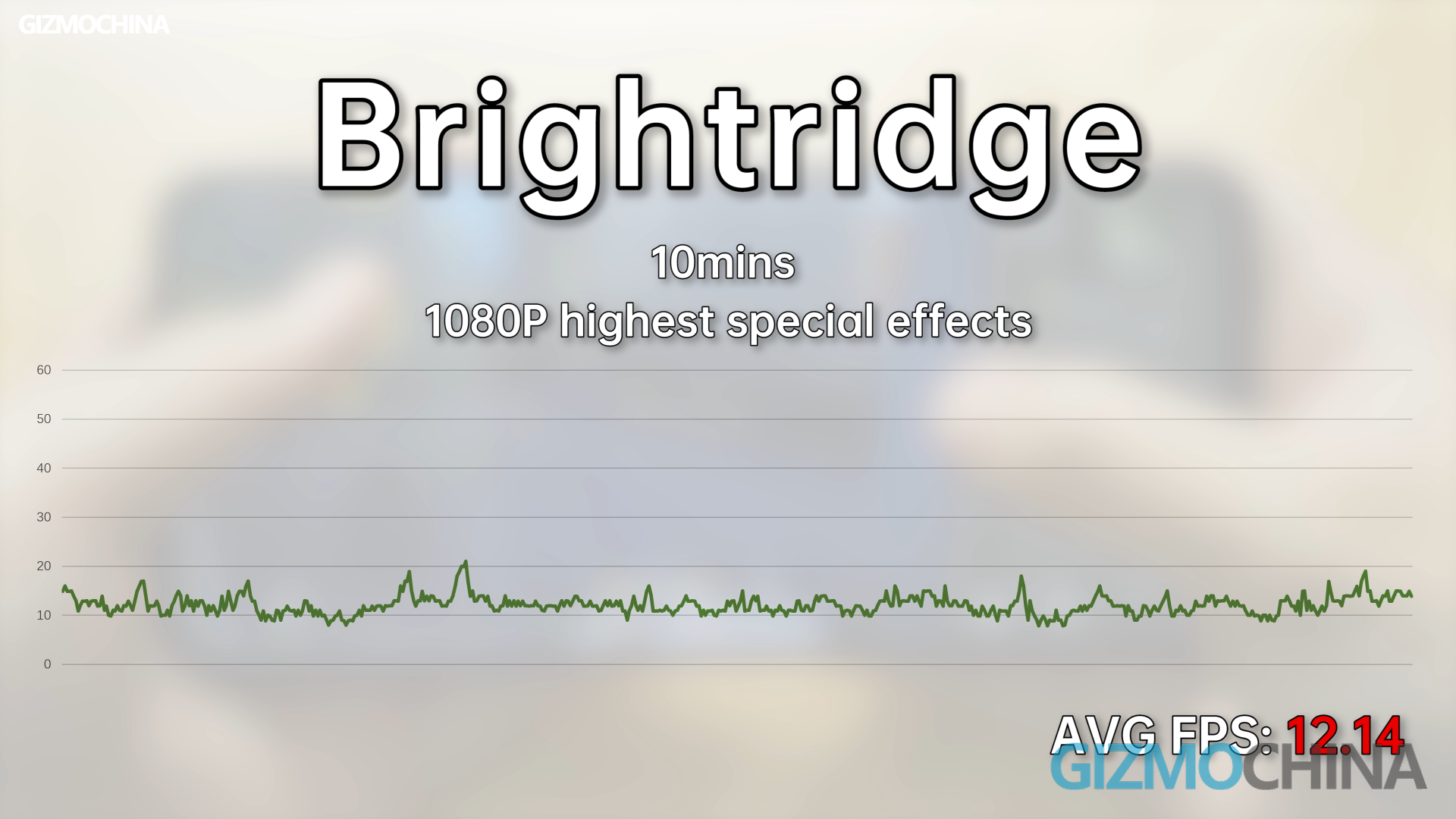
Genshin Impact and Brightridge turned out to be too much for this chip, and even with Genshin Impact on Medium Graphics and Motion Blur off, the frame rate is not high. And even though the temperature is only 42 degrees Celsius, there is still a decrease in the CPU frequency in the later stages. Brightridge is only 12fps on average with the highest special effects. While it is not recommended to play these games on an entry-level phone, it’s still possible to play some games that don’t require high performance such as PUBG.
POCO M3 Pro 5G Review: Camera Performance
Main Camera
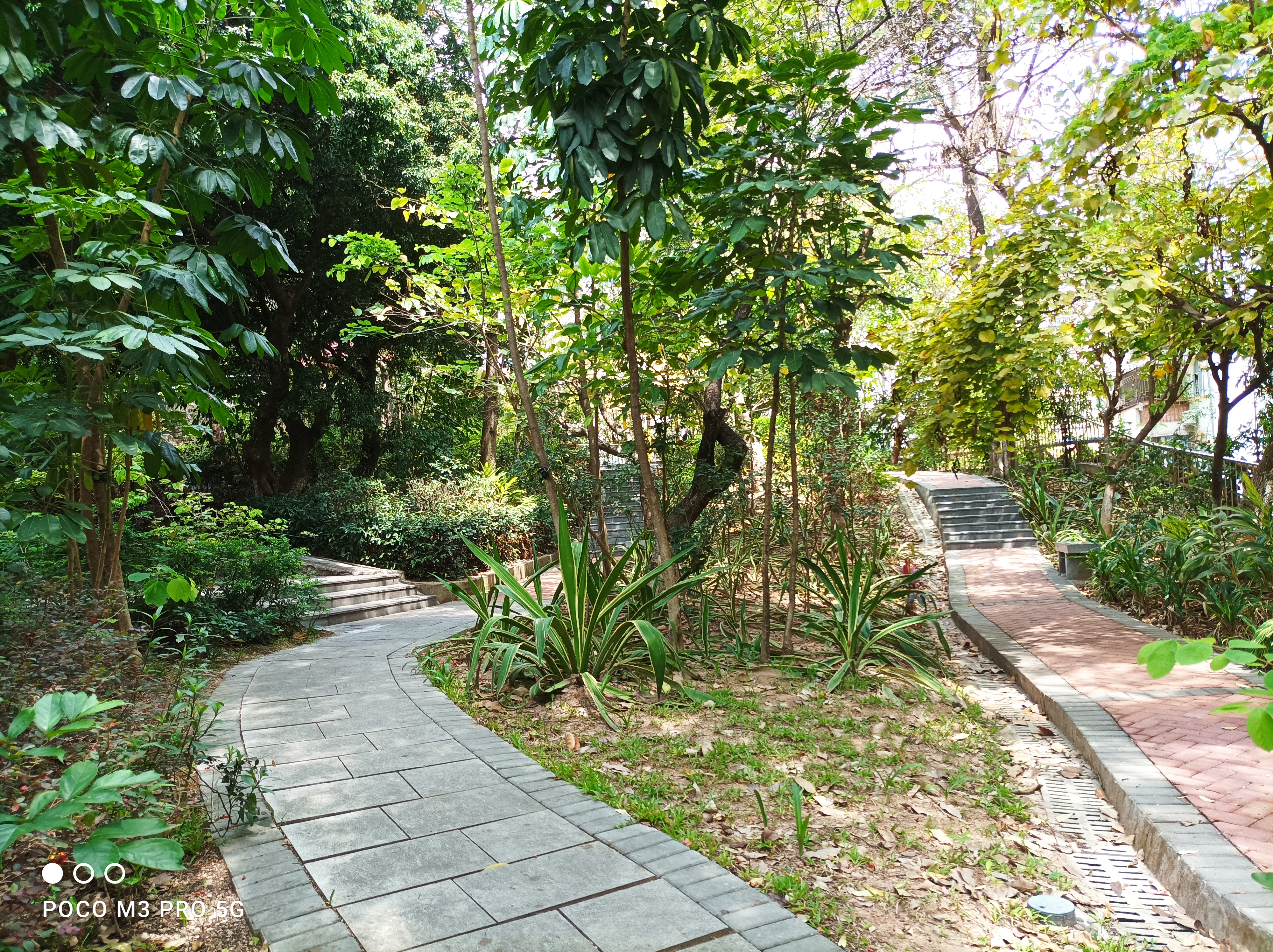
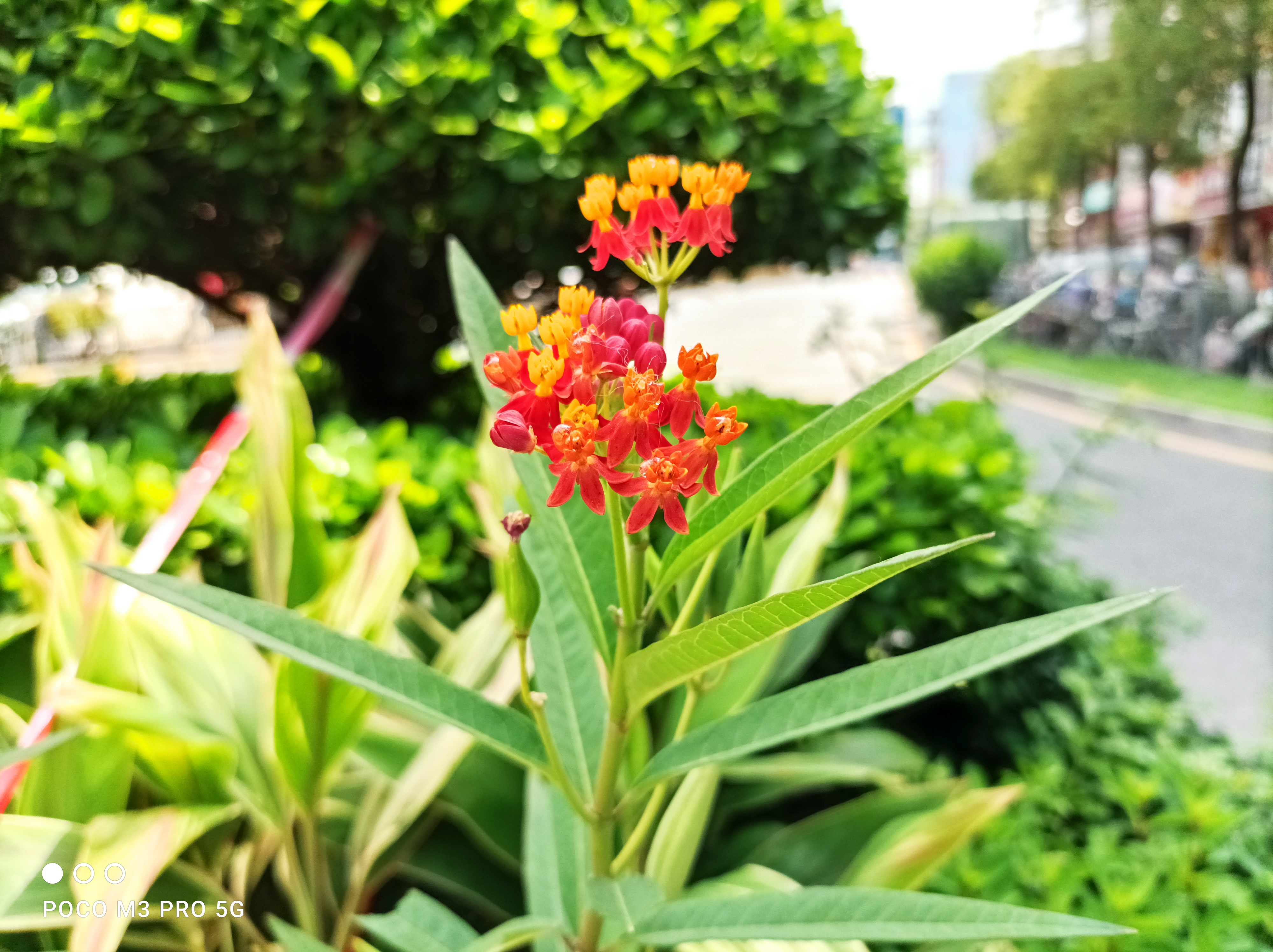
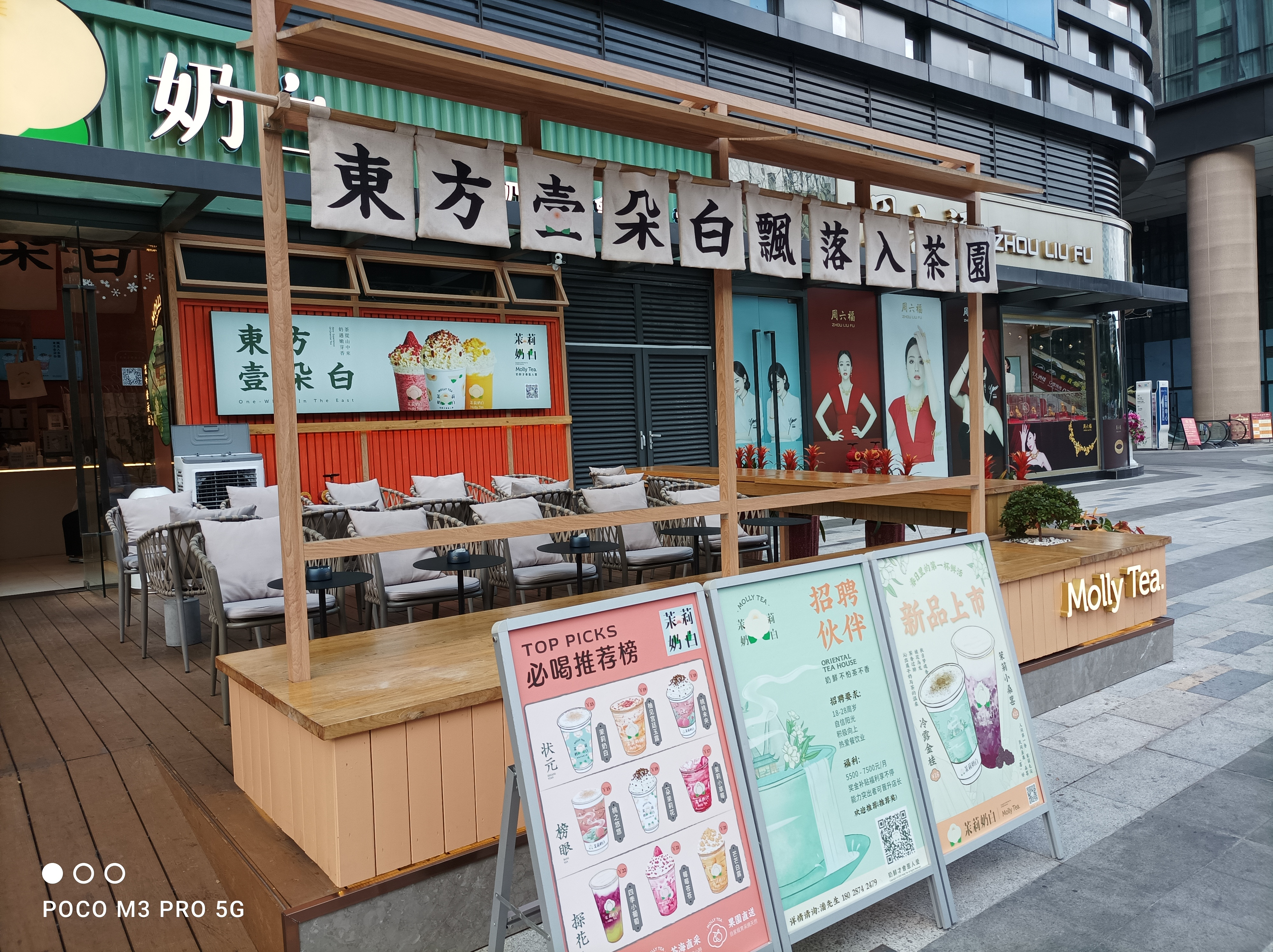
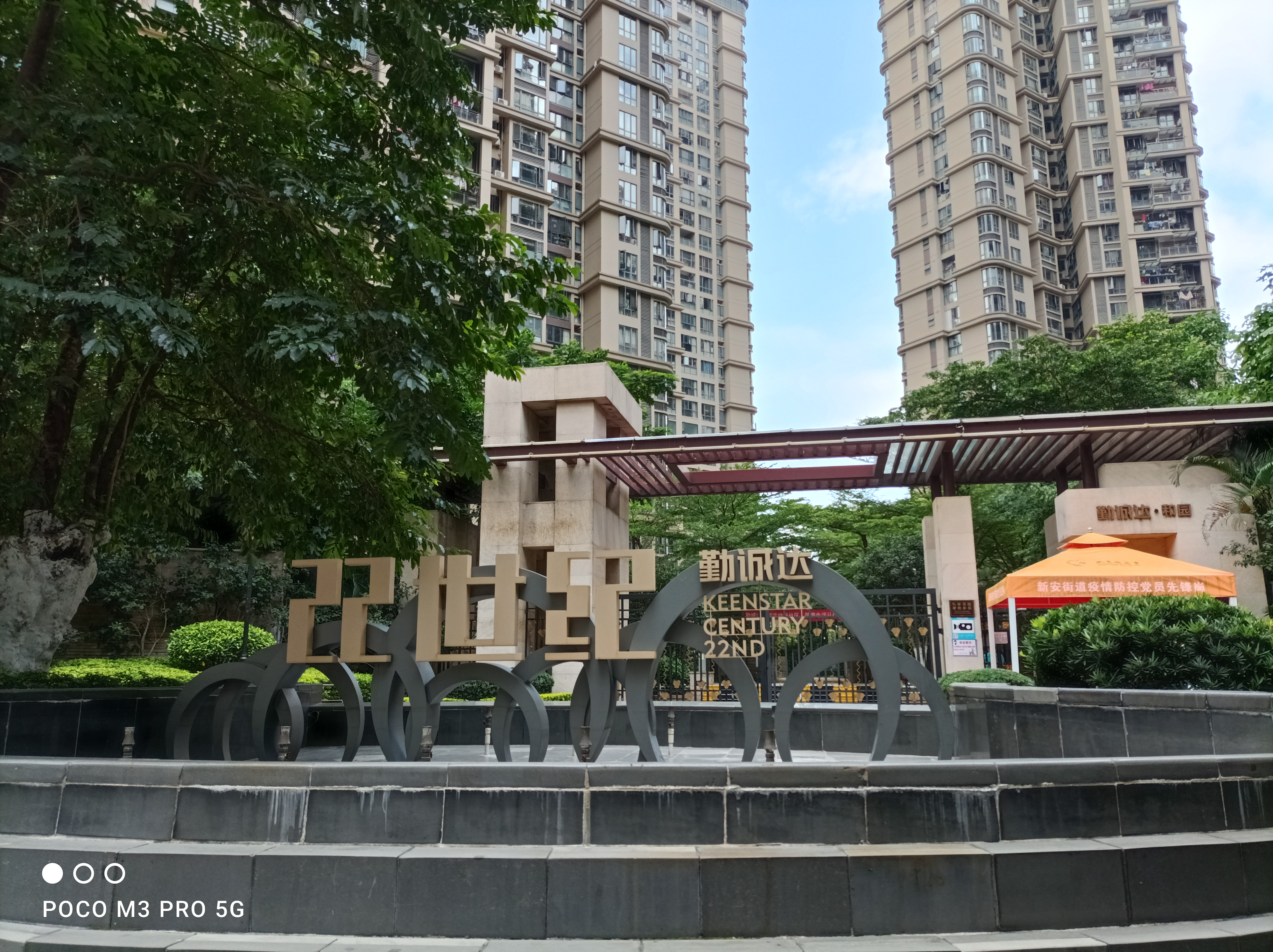
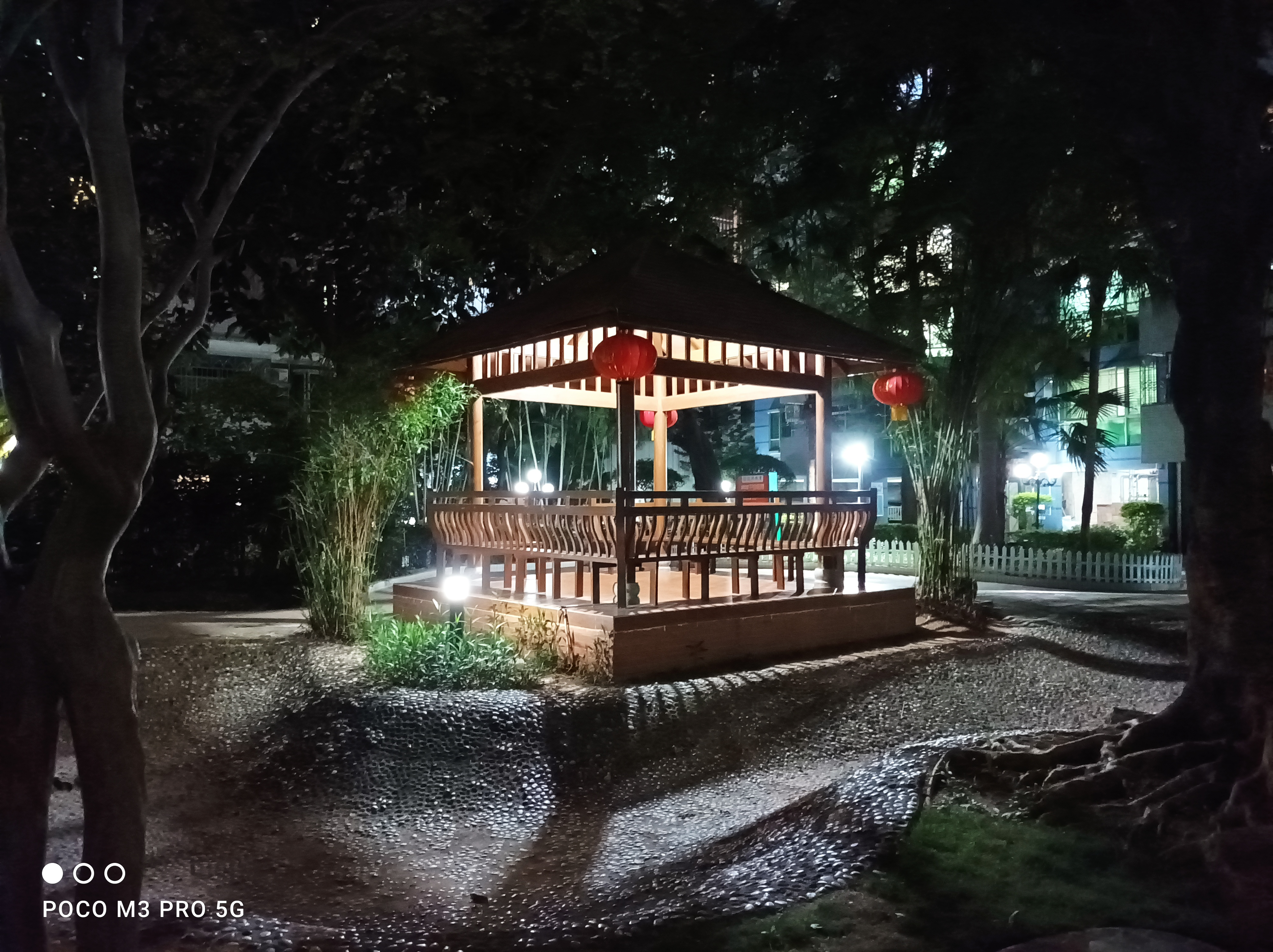
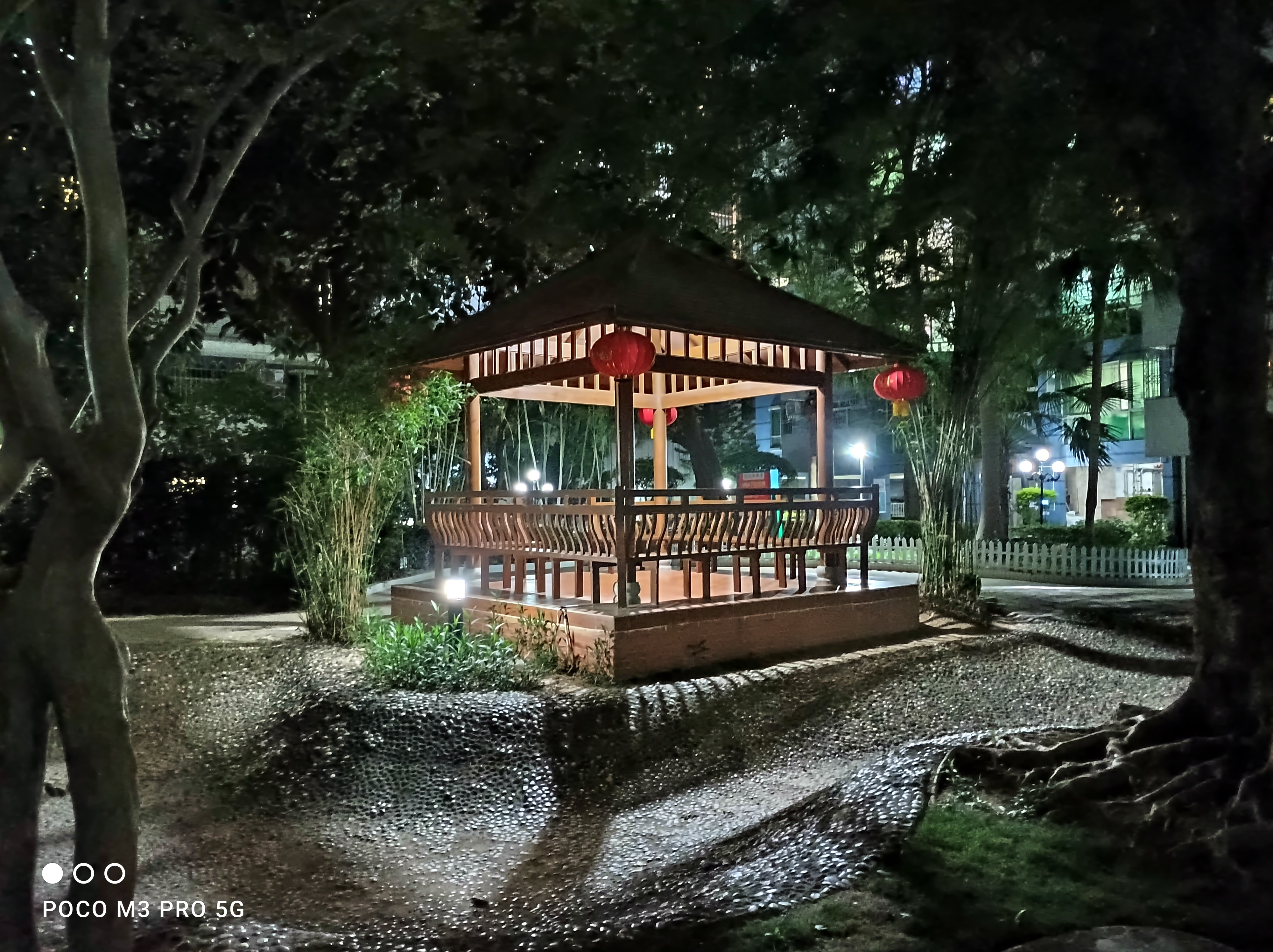
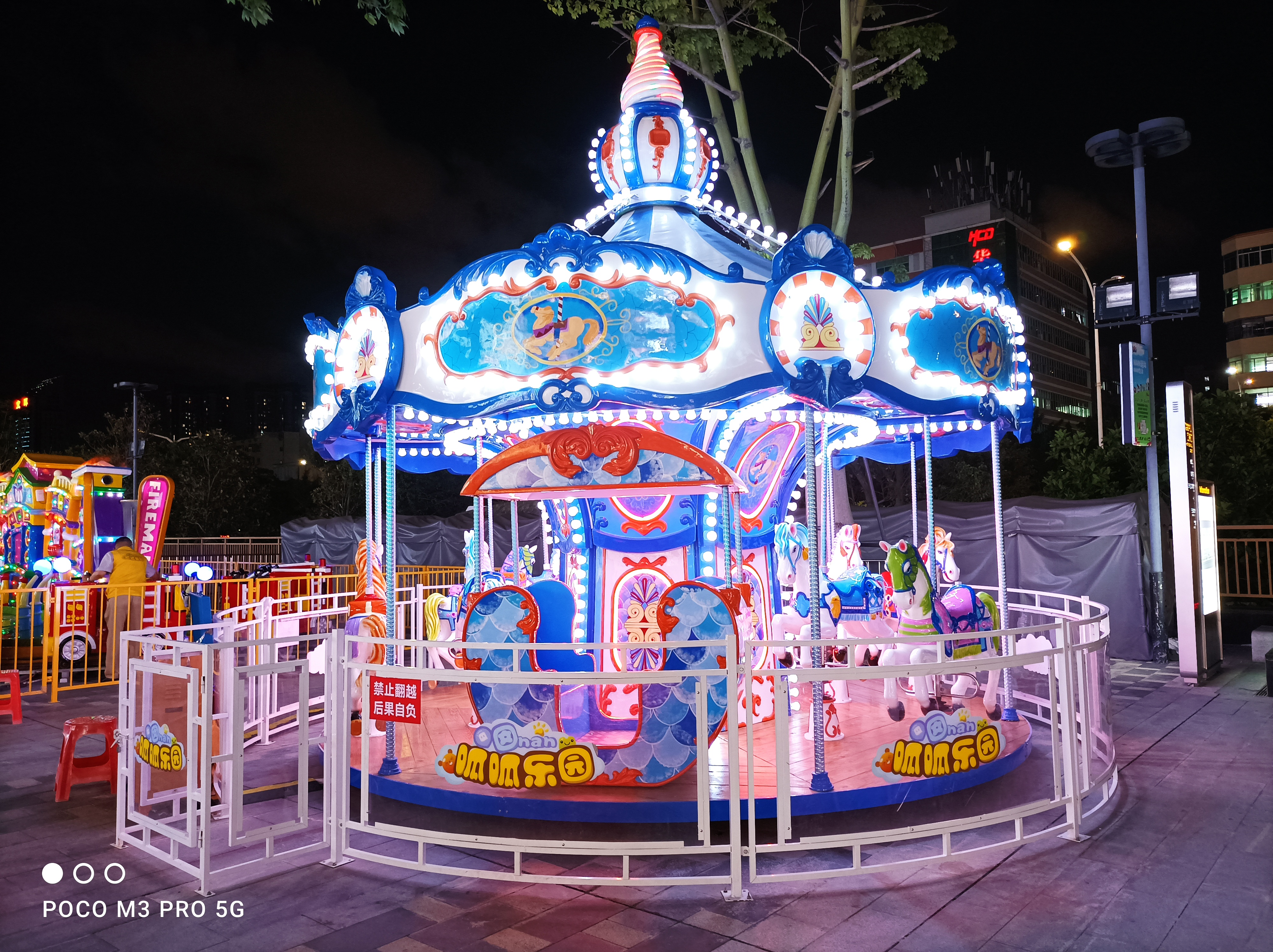
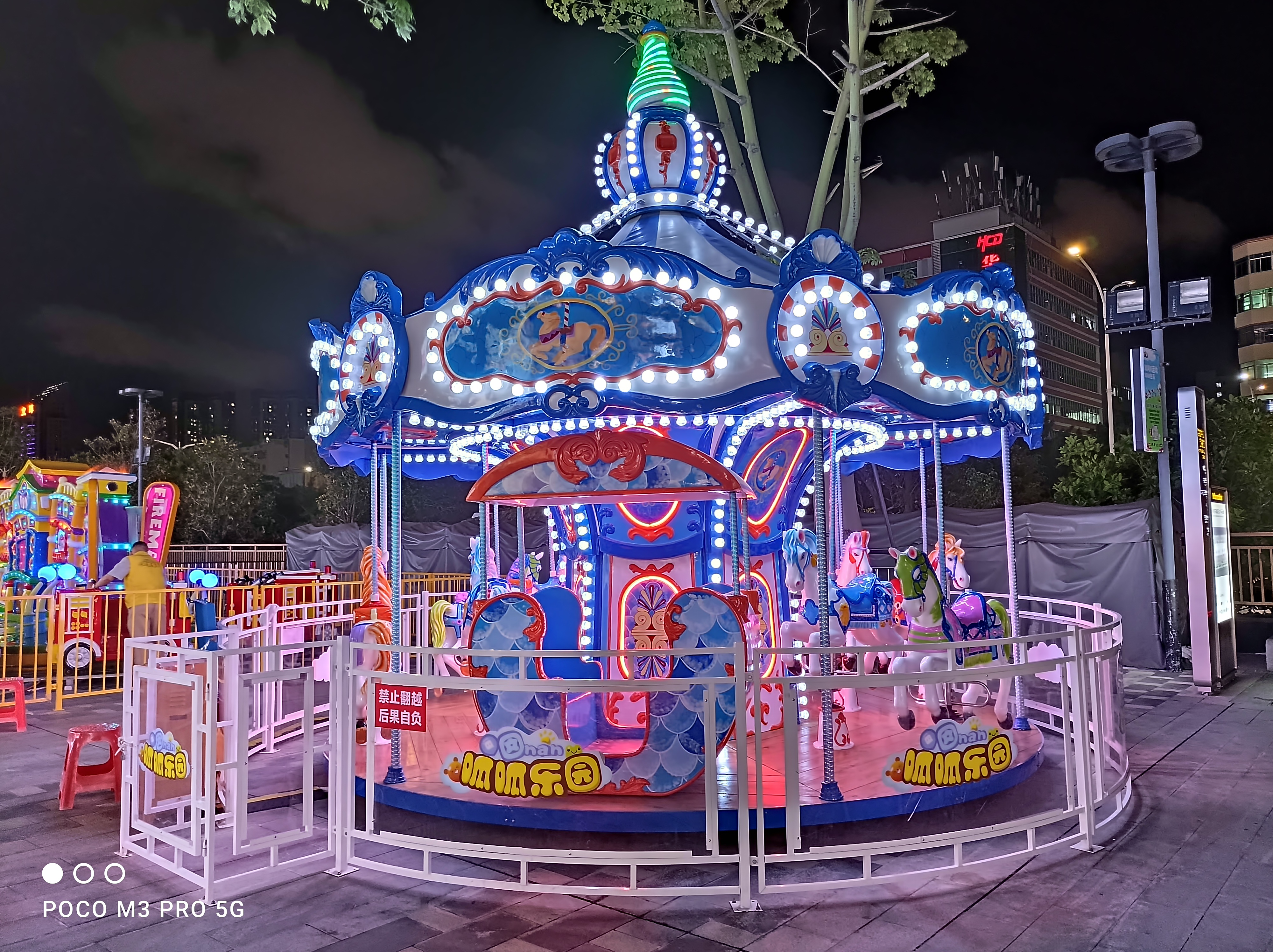
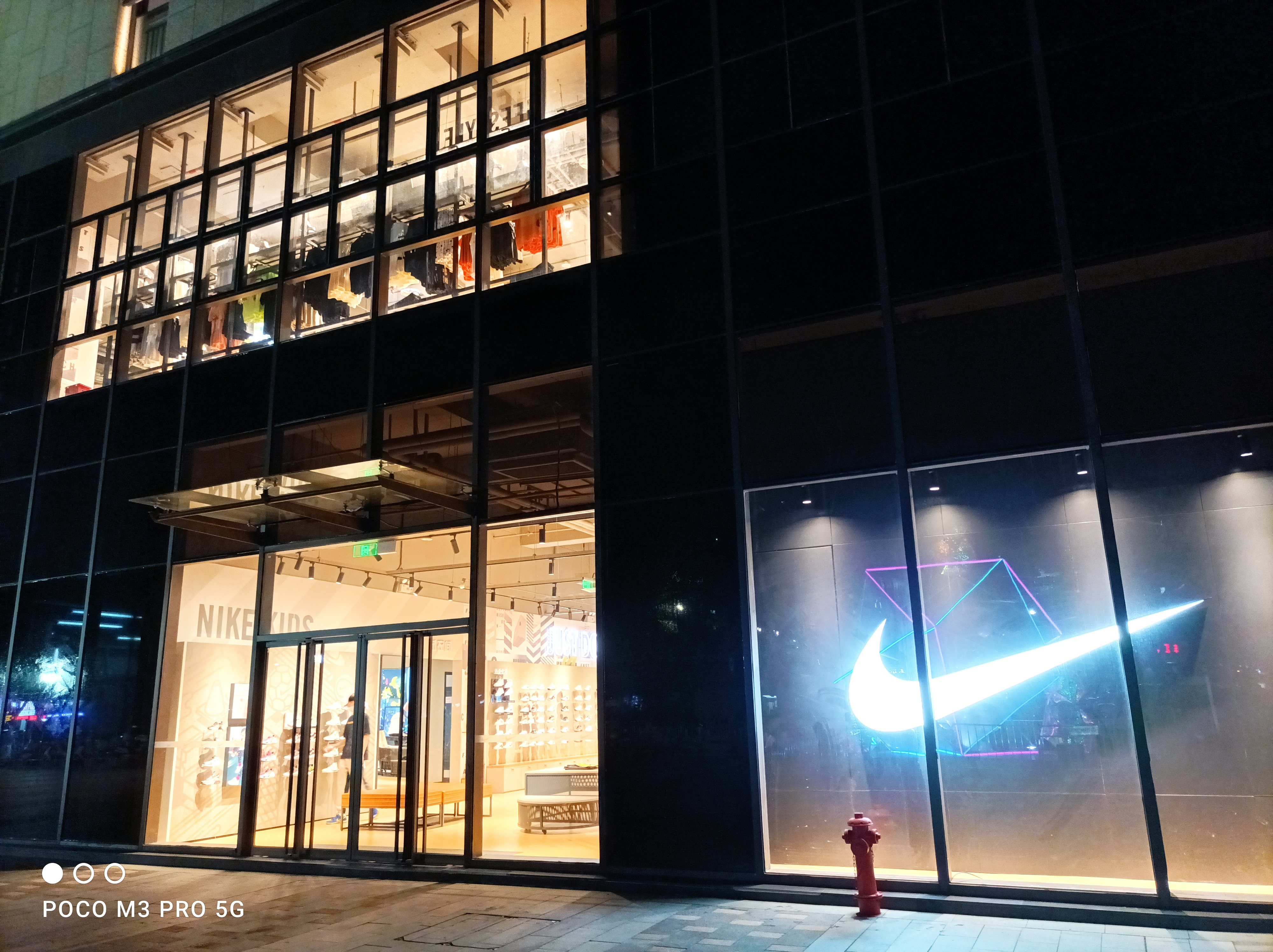
The lens is still configured with a 48MP main camera plus a depth of field lens and a macro lens. There is no ultra-wide lens. The imaging style is relatively realistic, with moderate HDR intensity, but the colors of the flowers tend to spill over when AI is turned on. The same situation of AI spoiling the images also occurs in the evening. The control of highlights with AI on is not as good as with AI off. Perhaps POCO feels that brighter lights are more pleasing to the eye. But the best performance at night is still with the night mode, the highlight control is better than with AI off, but probably it’s because of the limited ability of CMOS, the detail part of the picture is not much improved.
Night Mode
Night Mode
Night Mode
Night Mode
Portrait Mode
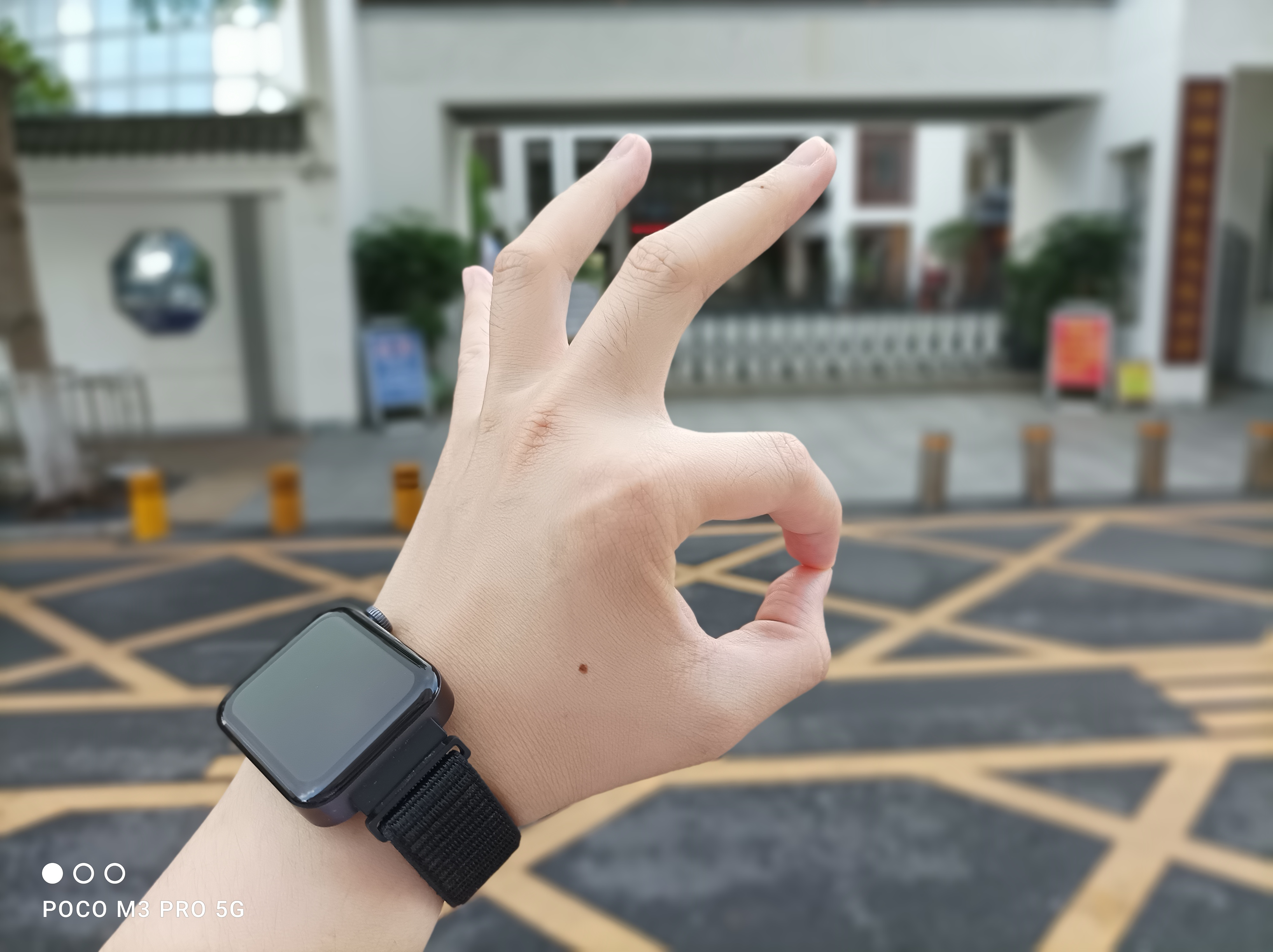
One of the more pleasant surprises is the portrait mode. Because of the assistance of the depth-of-field lens, keying errors are rare. Even if the subject is not a person, the depth of field information can be correctly identified.
macro
macro
As for Video, the M3 Pro only supports 1080P and 720P 30fps recording, but there is Image stabilization. So daily recording won’t be a problem.
POCO M3 Pro 5G Review: Battery Life
POCO M3 Pro Charging
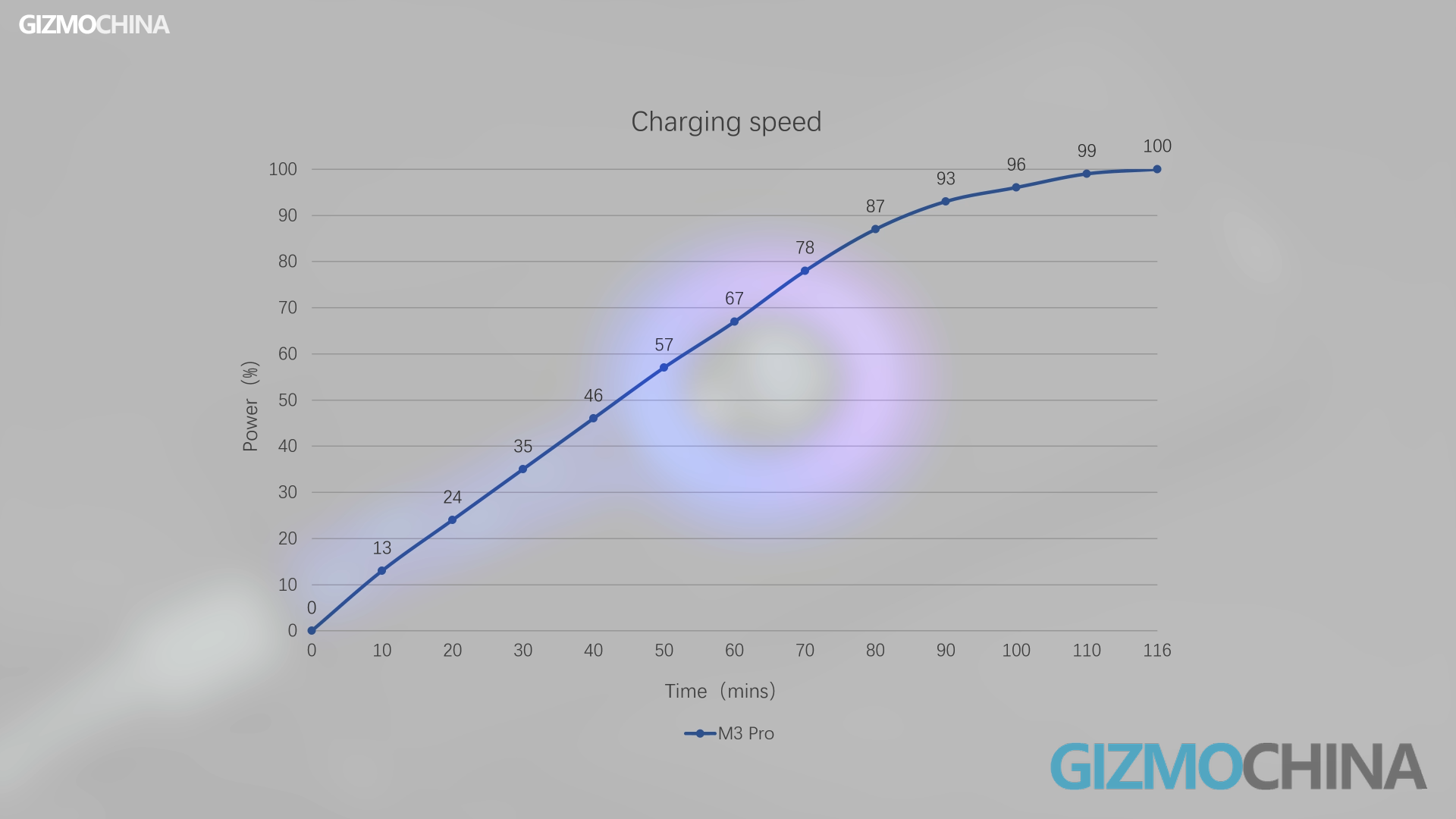
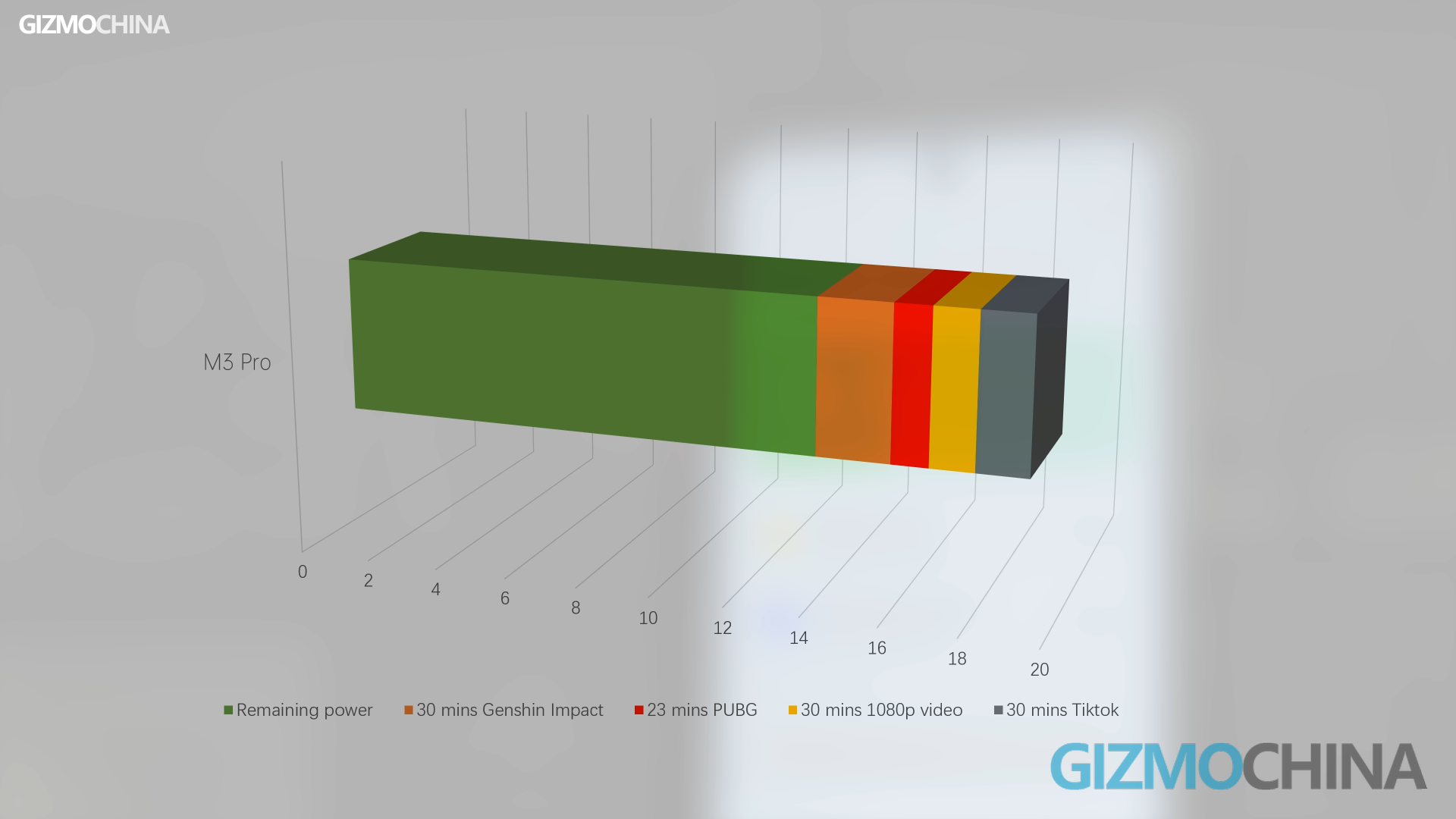
Coming to the battery, the POCO M3 Pro is the same as the M3, it only supports 18W charging power, but the box is equipped with a 22.5w charger. 18w charging power is still slow to fill the 5000mAh battery. Half an hour charges to 35%, and one hour to charge to 67%. It takes 116 minutes to fully charge to 100%. Weak SOC performance also means more power saving. Half an hour of Tik Tok consumes 7%, half an hour of online video uses up 6%. 23 minutes of PUBG drains 5%, and half an hour of Genshin Impact only around 10%. This level of battery life is good for an entire day.
POCO M3 Pro Battery Life Chart
So the M3 Pro is POCO’s first entry-level 5G mobile phone this year.
What do you think? Has the phone met your expectations?
Compared to the M3, the main upgrade point of the M3 Pro is the support for 5G and a high refresh rate of 90Hz. Although 5G may be of little use now to some users, if you plan to use the phone for two or three years, then 5G support can be a differentiating factor.
The POCO M3 Pro 5G is currently available on Aliexpress for just $169. Use code 10M3PRO to get another 10$ off!
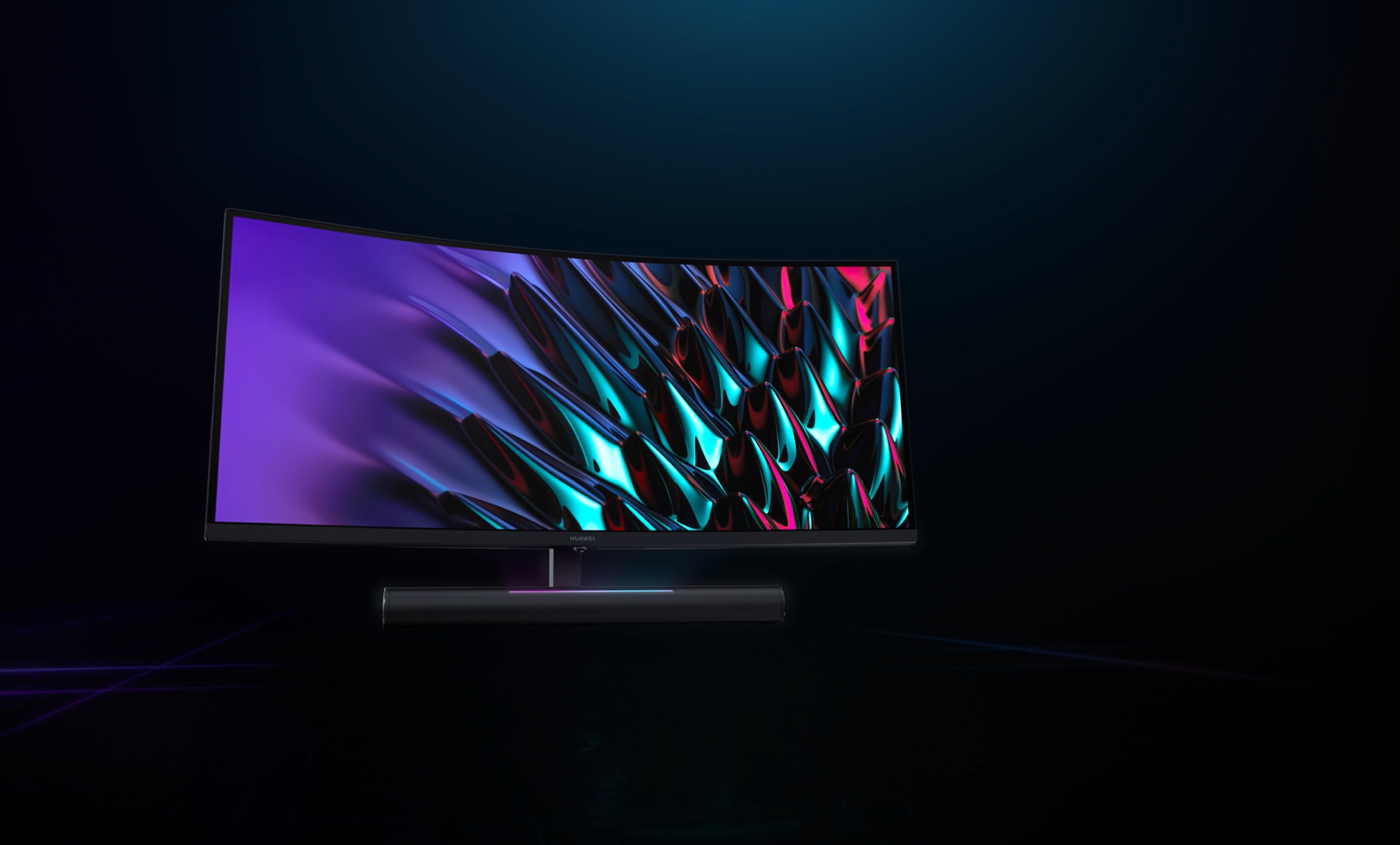
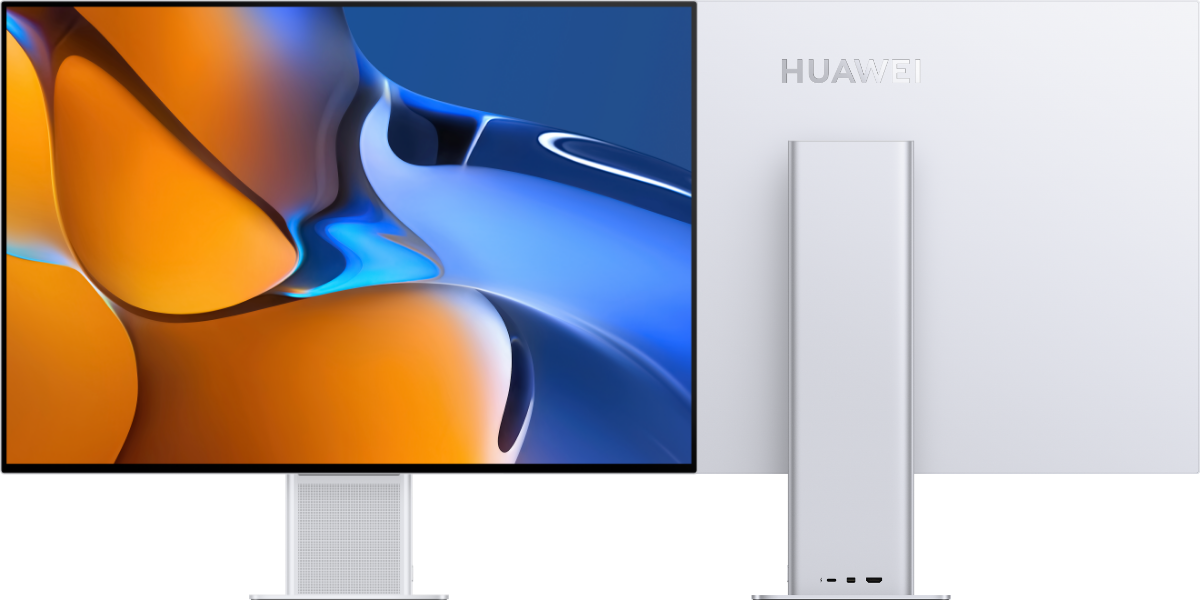
Huawei has just launched new monitors earlier today (19th May 2021) in China. This includes the new MateView and MateView GT monitors that are targeted towards professionals and gamers, respectively.
MateView
Talking about the MateView monitor first, it is one of the newly launched monitors from the Chinese tech giant and features specifications that are useful for productivity. It sports a 28.2 inch display that has a 3840x2560px resolution with a 3:2 aspect ratio. Looking at its design, the company has offered a minimalistic design with ultra thin bezels and a broad stand that expands into the base.
The screen is an IPS panel and offers a maximum brightness of 500 nits along with HDR400 and the standard 60Hz refresh rate. Furthermore, it offers a 1200:1 aspect ratio, a 94 percent screen to body ratio, and even 98 percent DCI-P3 color gamut with 100 percent sRGB that is a required feature for any visual media based professional. For ports, it offers a single USB C for power supply, and another for display, data transmission, external charging up to 65W. Other ports include, two USB A 3.0 ports, an HDMI 2.0, a MiniDP, and even a 3.5 mm headphone and microphone port.
MateView GT
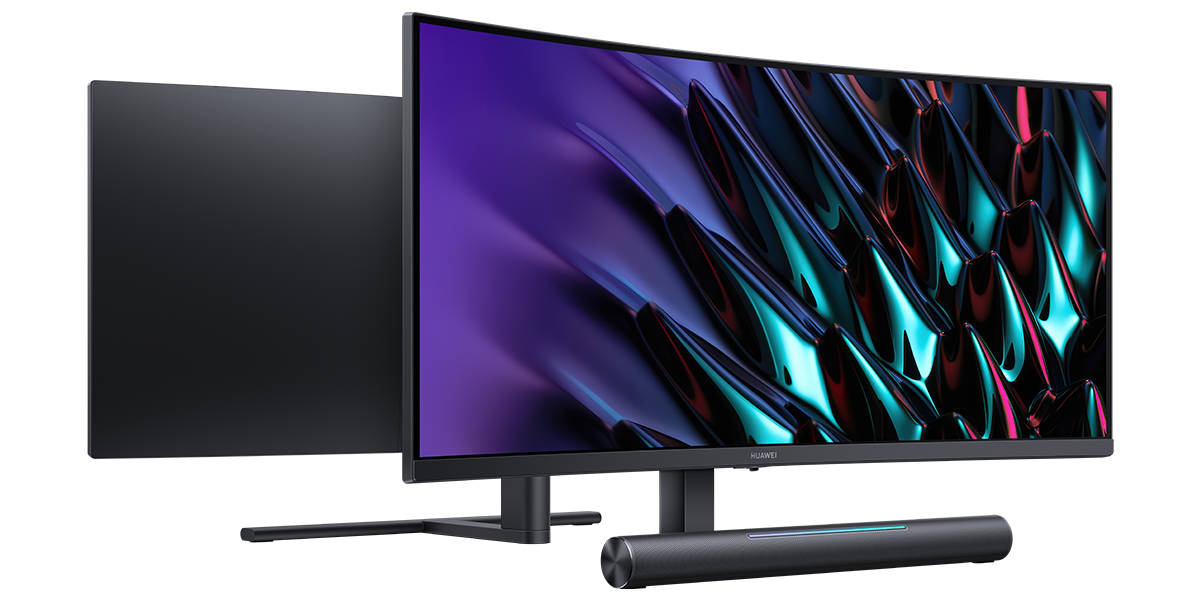
Unlike the former base MateView, the GT variant is targeted solely towards gamers. It sports a large 34 inch curved display that has a screen curvature of 1500R and a maximum brightness of 350 nits. The monitor offers a 21:9 aspect ratio and a 4000:1 aspect ratio as well. It has a 3440 x 1440px resolution and offers a high 165Hz refresh rate that is an important factor for PC gamers.
Huawei has even included TÜV Rheinland Eye Care Certification for the MateView GT to ensure long gaming sessions to not strain the users eye. Despite being a gaming monitor, the brand has also added 90 percent DCI-P3 and 100 percent sRGB color gamut as well. Another notable inclusion with the GT variant is the addition of a dual 5W speaker that is fixed on the base of the monitor.
Pricing and Availability
The base variant of the MateView is priced at 4,699 Yuan (roughy 730 US Dollars) and will be available for purchase in a single white color variant by 1st June 2021. On the other hand, the MateView GT gaming monitor is priced at a lower 3,599 Yuan (roughy 560 US Dollars) and will also be available in a single black color variant on the same date in China. Both monitors are currently available for pre bookings on Vmall (1,2).
Update: The post has been updated with official photos of the black version.
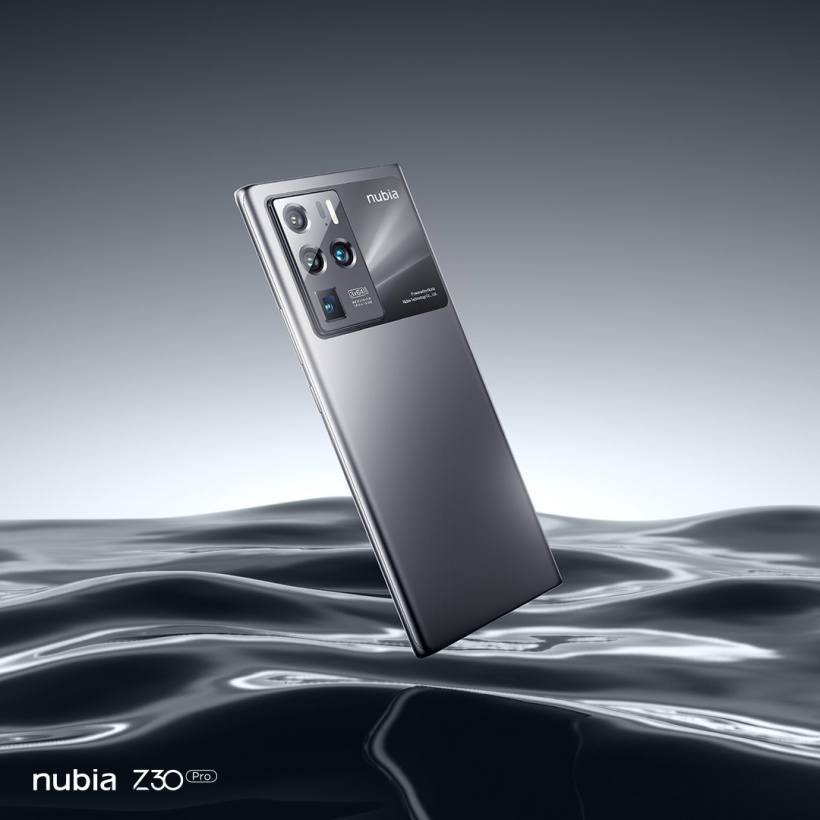
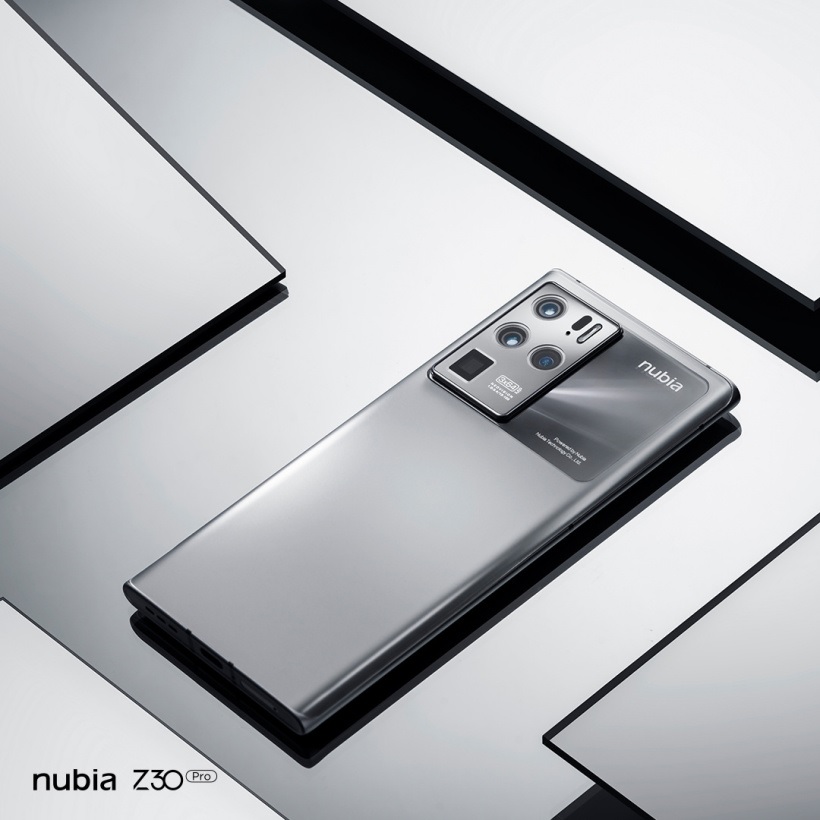
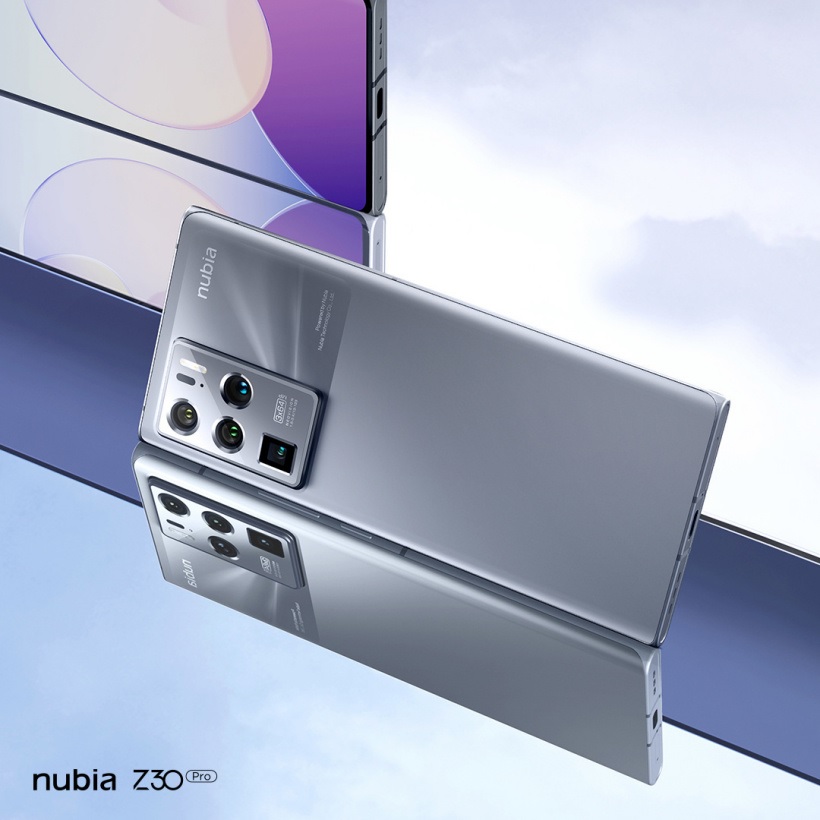
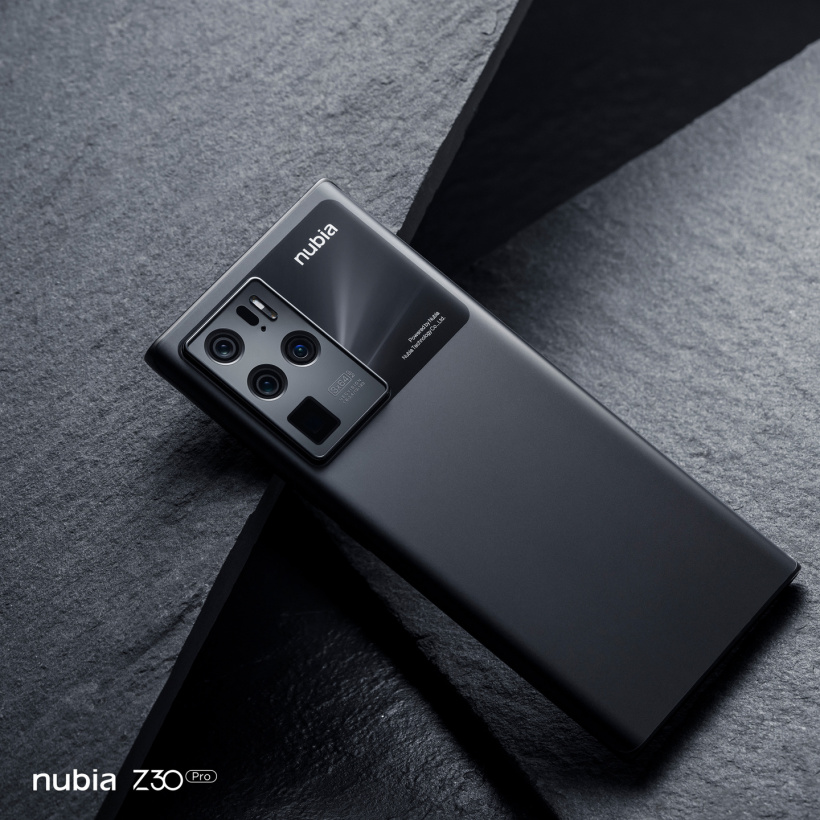
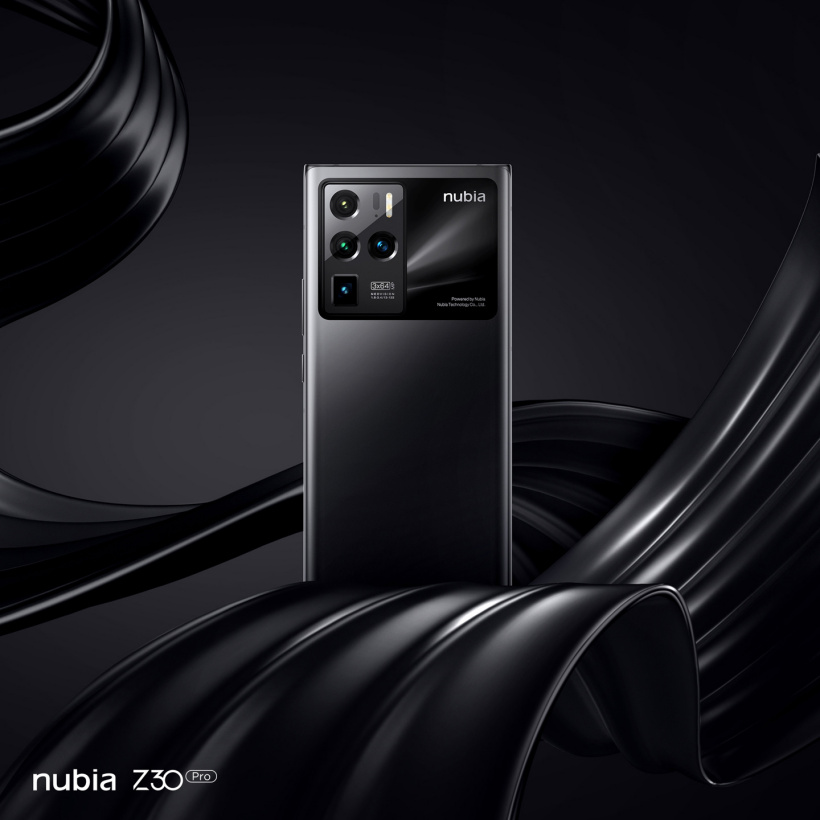
A common trend among some Chinese manufacturers, especially those with multiple brands, is the rebadging of phones. Companies such as Xiaomi are known to launch the same phones under different names in different markets. Now ZTE is joining the trend with its upcoming Nubia Z30 Pro which is practically a rebadged Axon 30 Ultra.
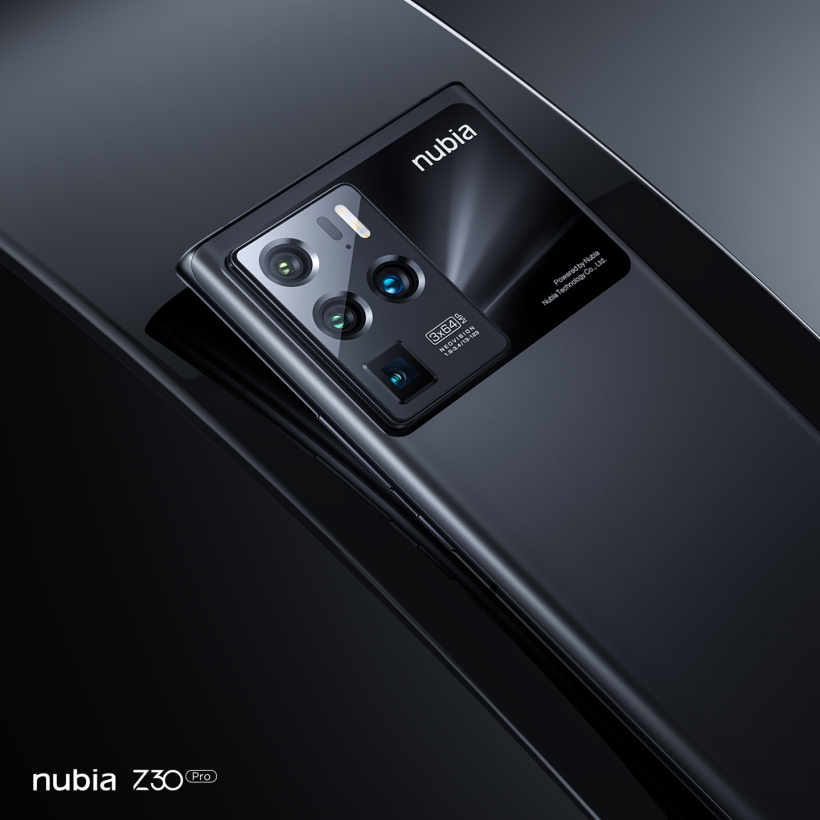
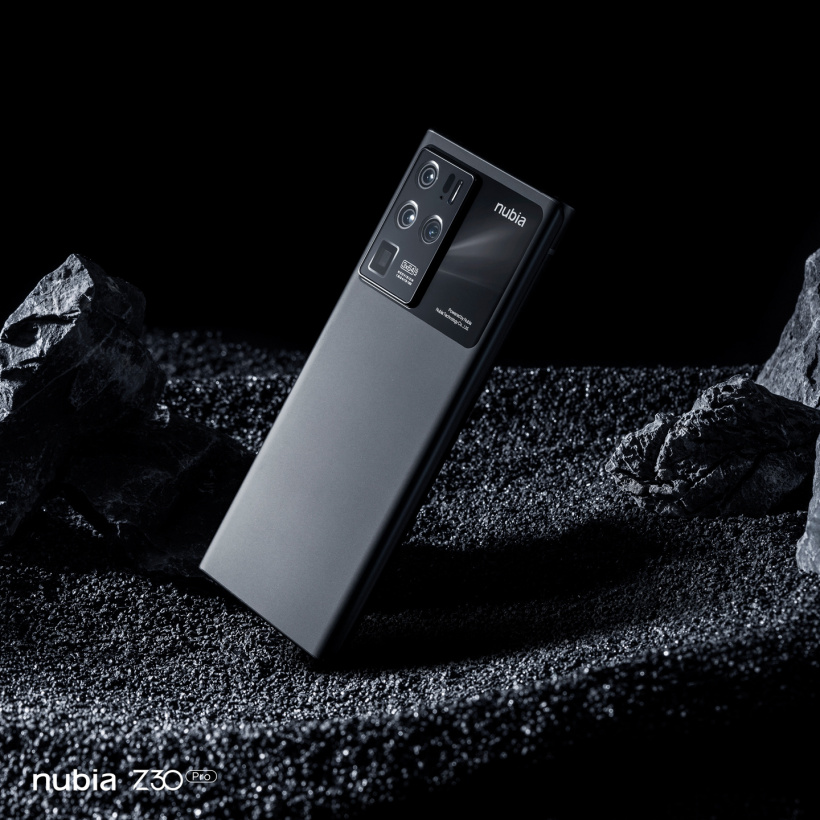
The latest renders posted by the manufacturer showing off one of the available colorways of the upcoming flagship give us our best look yet at the device, and if you have not been living under a rock, then you should be able to tell that this is the ZTE Axon 30 Ultra with a new name and paint job.
1 of 7
Nubia Z30 Pro Interstellar Silver
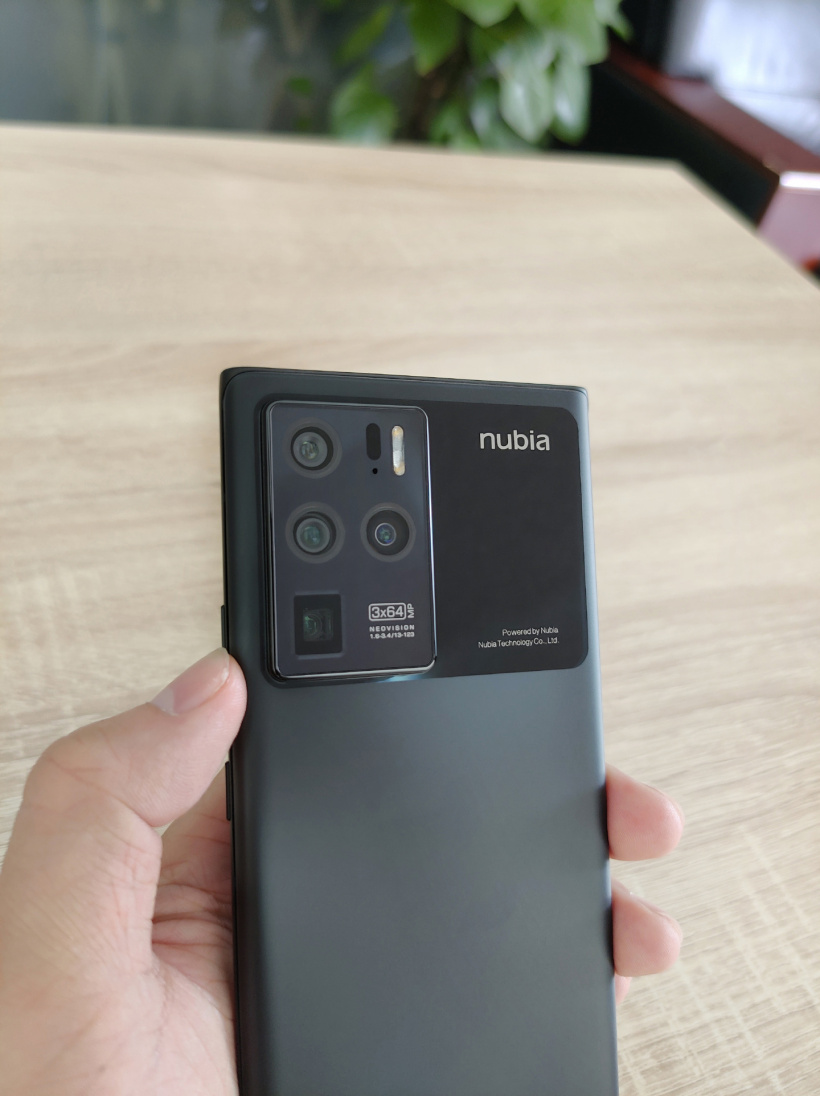
Nubia has dubbed the color Interstellar Silver and has spruced up the design by adding a darker coat of paint to the area beside the camera module. The images confirm the phone has three 64MP cameras too and a periscope camera for zoom.
A live photo of the device has also shown up on the web but it has a darker shade than the renders above.
The Nubia Z30 Pro will have an OLED display with a high refresh rate and a centered punch hole, be powered by the Snapdragon 888 processor, and support 120W fast charging.
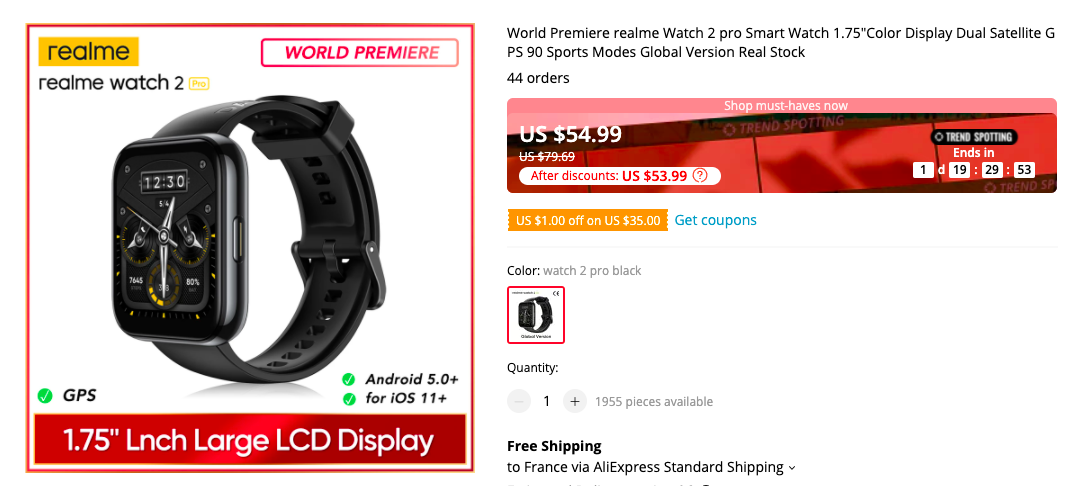
Realme Watch 2 Pro features a 1.75” large color display with 320*385 high resolution. The watch comes with a high-precision dual satellite GPS, that gives you accurate and precise route info, step tracking, and activity monitoring.
To manage your health and fitness, the smartwatch features 90 dedicated sports modes and comes with a blood oxygen monitor, real-time heart rate monitor, sleep tracker, calorie counter, etc. The IP68 certified water-resistant watch works on Bluetooth v5.0 and gives you two weeks of battery life on standby mode on a single charge.
Generally retailing for $70, you can now buy Realme Watch 2 Pro for $53.99 only at AliExpress. Please note that this deal will end in the next 24 hours. So place your order asap, before the deal expires.
For more information on such exciting deals and offers check out ourdeals hub.
* Please Note: When you buy something using the links in our articles, we may earn a small commission at no cost to you.
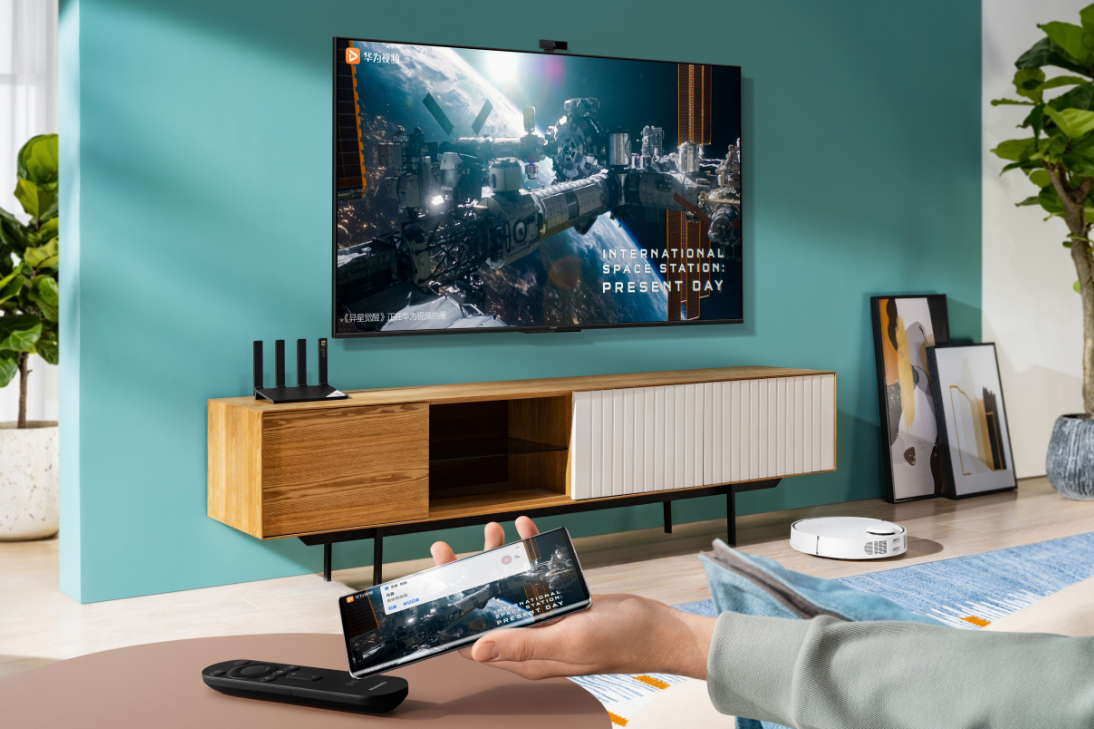
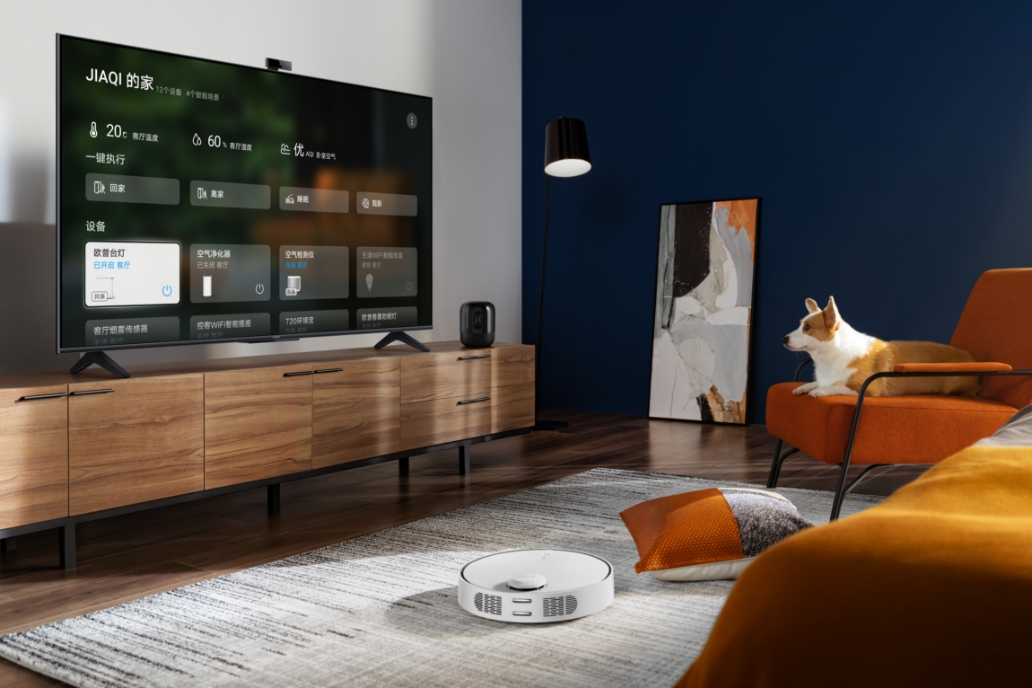
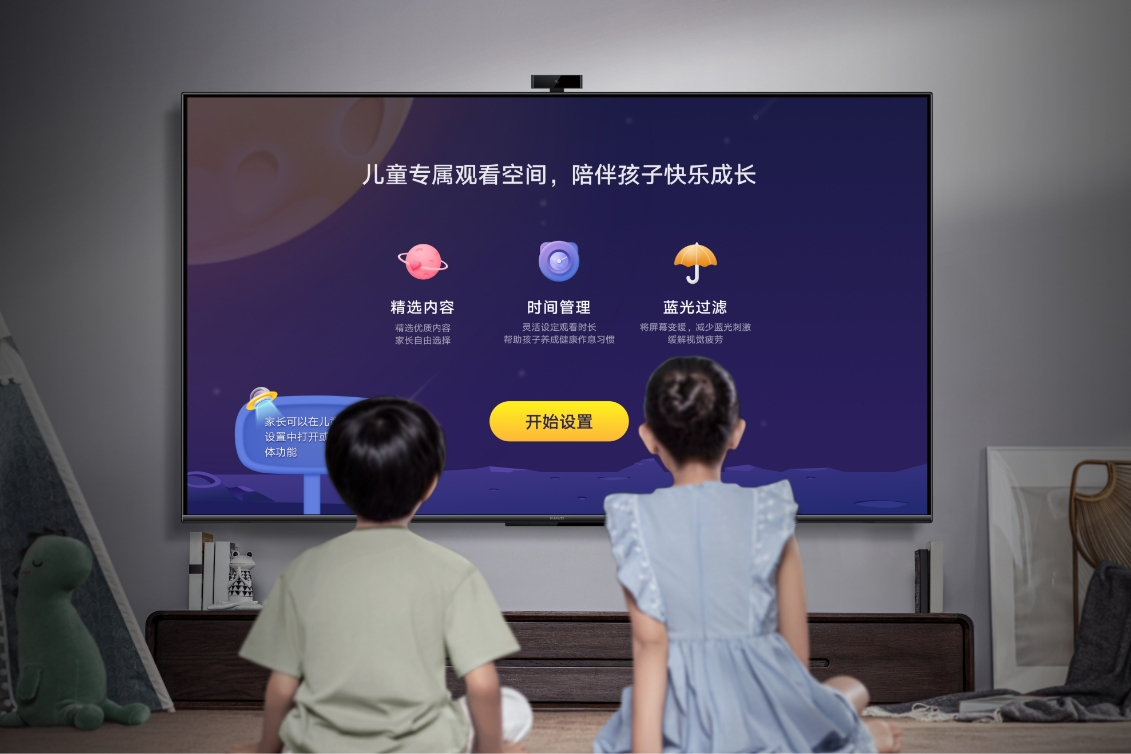
Last month, Huawei launched the HUAWEI Smart Screen V Series 2021. A month later, the company is back again with another smart TV model called HUAWEI Smart Screen SE aka HUAWEI Vision SE. This mid-range television comes in two sizes (55-inch, 65-inch) and both variants have the exact same set of features.
HUAWEI Smart Screen SE Specifications and Features
The HUAWEI Smart Screen SE sports a 55-inch/65-inch LED-backlit LCD panel with a resolution of 4K (3840 x 2160 pixels), 16.7 million colors, 92% DCI-P3 color gamut, and 60Hz refresh rate. This display has a 178° viewing angle, 16:9 aspect ratio, and TÜV Rheinland certification for low blue light emission.
Unlike other smart TVs in the market, this one is powered by a HiSiliicon Honghu SoC coupled with 2GB RAM and 16GB internal storage. The television runs HarmonyOS 2.0 operating system with support for features like HUAWEI Share, EMUI Desktop, HUAWEI Xiaoyi AI voice assistant, HUAWEI Smart Life app, HUAWEI HiLink Smart Home controls, messaging, video calls via a magnetically detachable 13MP webcam, and more.
On the connectivity front, the TV supports dual-band WiFi, Bluetooth 5.1, and NFC (Remote Control). As for ports, it comes with 2 x HDM 2.0 (one of them is ARC compatible), 1 x USB 2.0, 1 x AV In, 1 x S/PDIF, 1 x RJ45 (Ehternet), and 1 x DTMB.
1 of 5
Last but not least, the HUAWEI Smart Screen SE sports a plastic build with Interstellar Black paintjob and features 2 x 10W (20W) speakers with support for HUAWEI Sound.
HUAWEI Smart Screen SE Price and Availability
The HUAWEI Smart Screen SE (Vision SE) will retail for the following price tags in China.
HUAWEI Smart Screen SE 55-inch – ¥3,299 ($513)
HUAWEI Smart Screen SE 65-inch – ¥4,299 ($668)
Both the variants are already up for pre-order will go one sale for the first time on June 1.
As of now, there’s no official word on this smart TV’s availability outside mainland China.
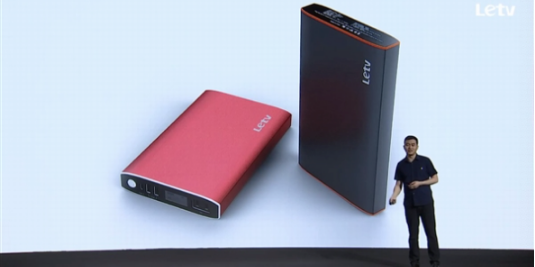
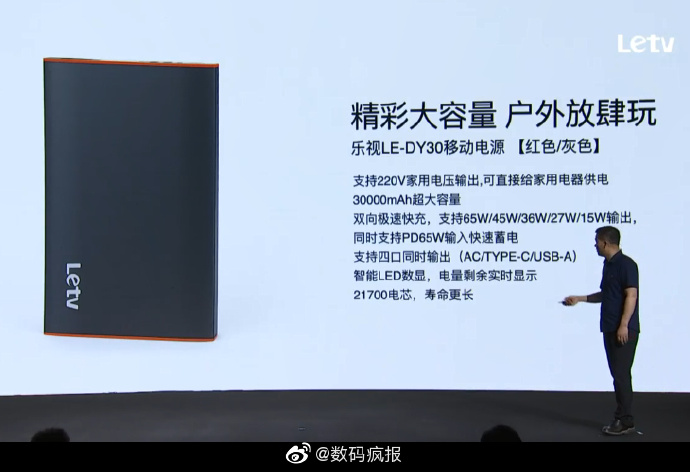
Earlier this week, LeEco launched the LE-DY30 power bank. This power bank houses a large 30,000mAh battery pack that is rated to power home appliances through its 220V AC output.
On 18th May 2021, the Chinese consumer electronics maker announced more than 60 new products. This includes, the LeTV Super TV M65, LeTV Super TV GS series, LeTV Gaming Monitor 2Q, and other smart wearable products like smartwatches and even power banks and smart door locks. While the new TVs were the highlighting products of the launch conference, the company also launched two new power bank models, namely the LE-DY20 and LE-DY30.
The LE-DY20 power bank features a 20,000 battery capacity and serves a function similar to a charge a smartphone like a regular power bank. On the other hand, the LE-DY30 sports a total capacity of 30,000mAh battery pack. While this means that the power bank cannot be carried on the plane, this product was targeted towards users home and offers three DC outputs ports. It also sports a USB Type C port that supports bidirectional 65W PD fast charging.
This power bank features a aluminum alloy shell and even sports an LCD screen that can display the remaining charge along with other useful statuses. LeEco has launched the product in China and is priced at 638 Yuan (roughly 100 US Dollars).
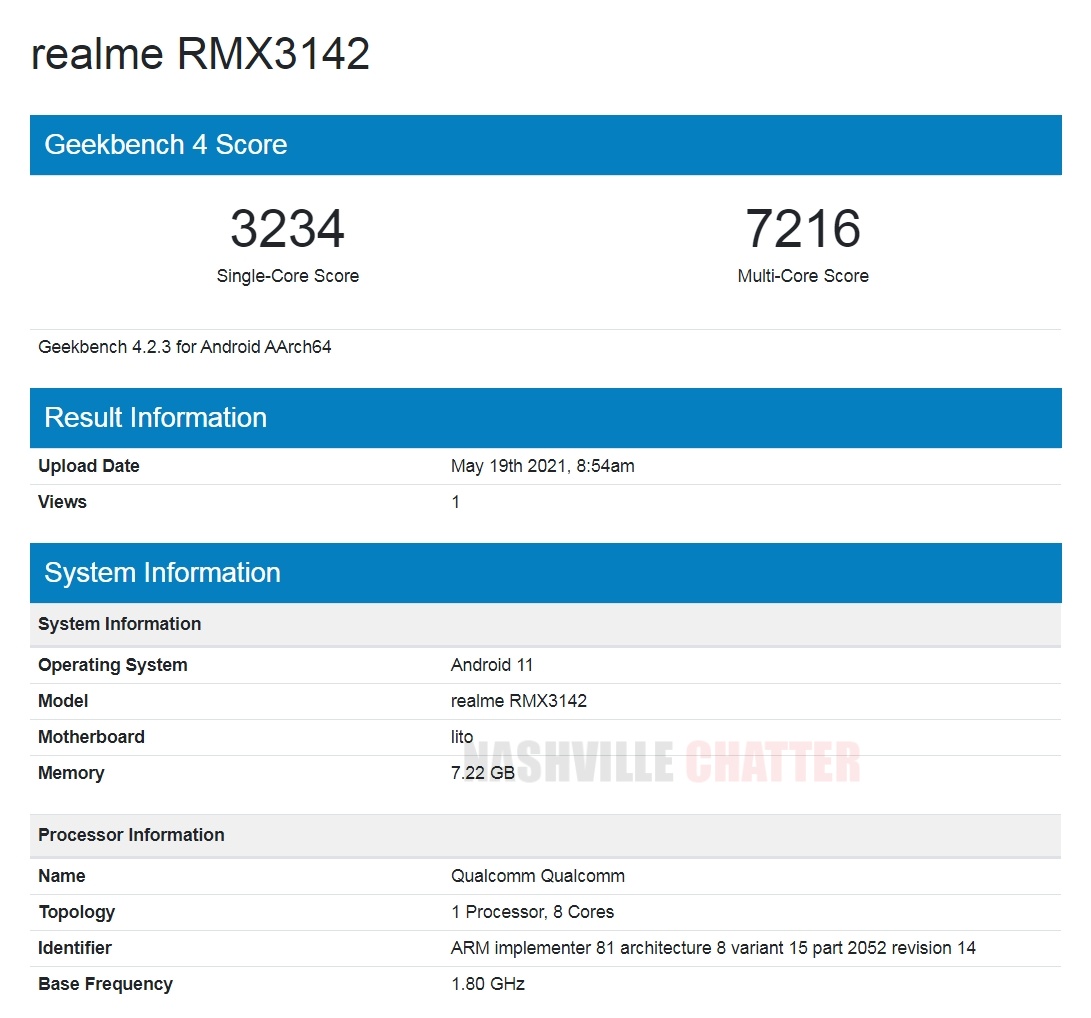
OPPO announced the OPPO K9 5G with Snapdragon 768G chipset in China earlier this year. A new Realme phone with model number RMX3142 and the same chip has emerged at Geekbench (via). It appears that it could be soon arriving to China as a rebadged version of the OPPO K9 5G.
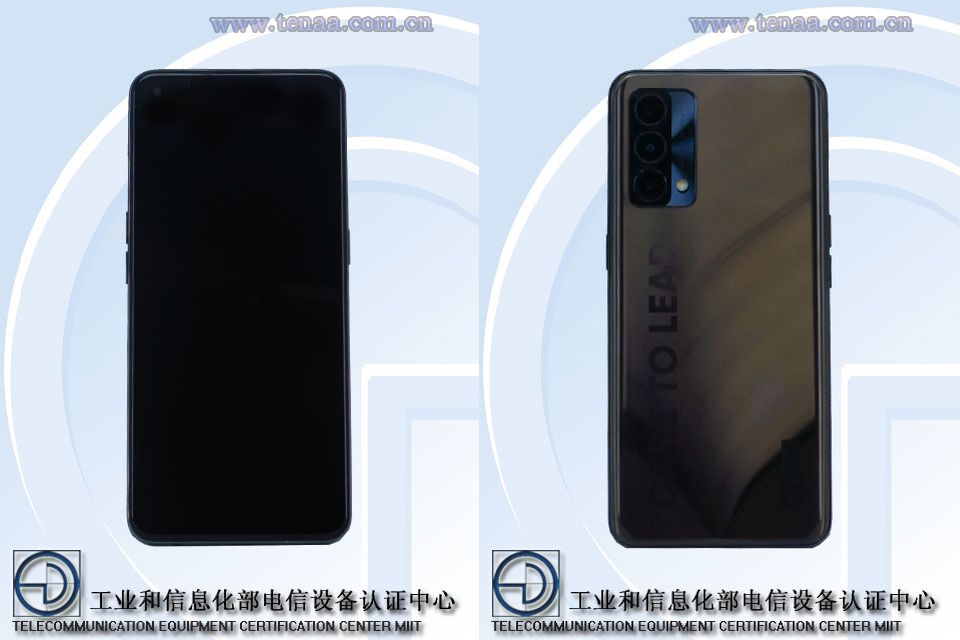
The RMX3142’s Geekbench listing does not explicitly mention that it has Snapdragon 768G. The listing only mentions it with the “lito” codename and a base frequency of 1.80GHz. The RMX3142 smartphone was spotted at the TENAA certification site of China in last month. The listing mentioned that it is powered by a 2.8GHz octa-core processor. Hence, it can be said that the RMX3142 is equipped with the Snapdragon 768G chipset.
The Realme RMX3142’s Geekbench listing further reveals that it has 8 GB of RAM and Android 11 OS. It scored 3234 and 7216 in the single-core and multi-core tests of the benchmarking platform.
The other specs of the RMX3142 that are mentioned in its TENAA listing are identical to the OPPO K9 5G. According to GSMArena, the OPPO phone may arrive in the global markets with the Realme branding. However, since the phone has received TENAA certification, it is also expected to launch soon in China. Some reports suggest that it may break cover as the Realme V25 5G.
Realme RMX3143
The RMX3142 is equipped with specs like a 6.43-inch S-AMOLED Full HD+ display, a 32-megapixel front camera, a 64-megapixel + 8-megapixel + 2-megapixel triple camera, a 4,400mAh rated battery, and an in-screen fingerprint reader. The handset is expected to arrive in 6 GB / 8 GB / 12 GB RAM variants and 128 GB / 256 GB storage variants in the home market.
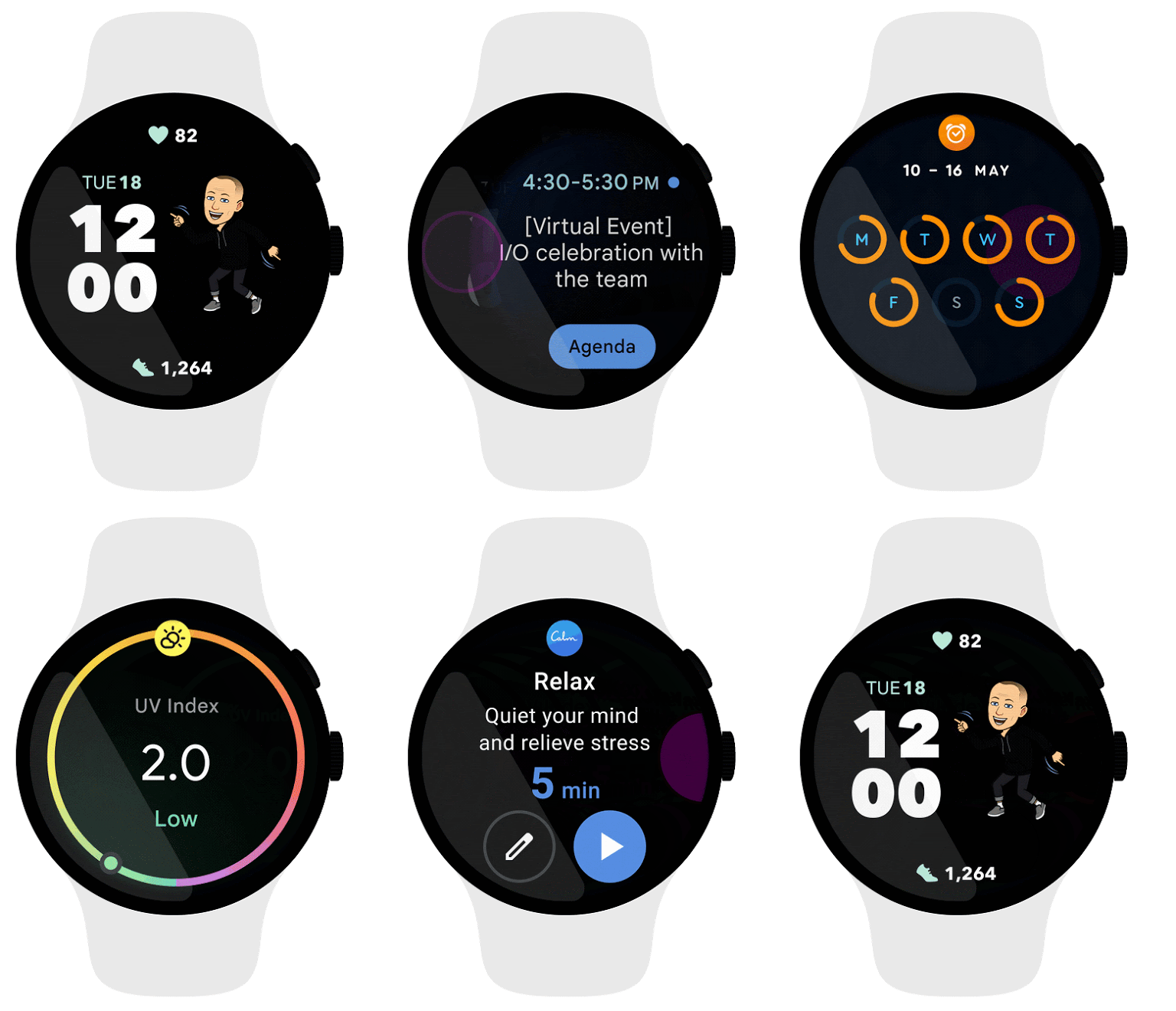
Samsung and Google are deepening their relationship as both companies announced earlier this week that they are combining their respective wearable operating systems, namely Wear and Tizen OS.
In a blog post, the search engine giant announced that it will be combining its Wear OS with Tizen based software platform that was used in wearable products from the South Korean smartphone maker. This new platform has simple been dubbed as “Wear,” although the name has yet to be finalized and is subject to possible change. The merger of the two wearable OS would enable both firms to offer a better user experience to their customers.
With this joint effort, the companies would be able to offer improvements in battery life. Other benfits from this mergers also includes, 30 percent fster loading times for wearable applications, and smoother animations as well. The parnership would even help developers in making things simpler. Furthermore, it would also create a ingle central smartwatch OS for the Android platform while also offering a greater selection of apps and watch faces.
We’re combining the best of @wearosbygoogle and @SamsungMobile Tizen into a unified wearable platform. ⌚ Apps will start faster, battery life will be longer and you'll have more choice than ever before, from devices to apps and watch faces. #GoogleIOpic.twitter.com/vj2aYZD81x
Google’s Bjorn Kilburn added that “All device makers will be able to add a customized user experience on top of the platform, and developers will be able to use the Android tools they already know and love to build for one platform and ecosystem.” Samsung has also confirmed that next generation Galaxy Watch will run on this new platform and this will even ship with future high end Fitbit devices as well.
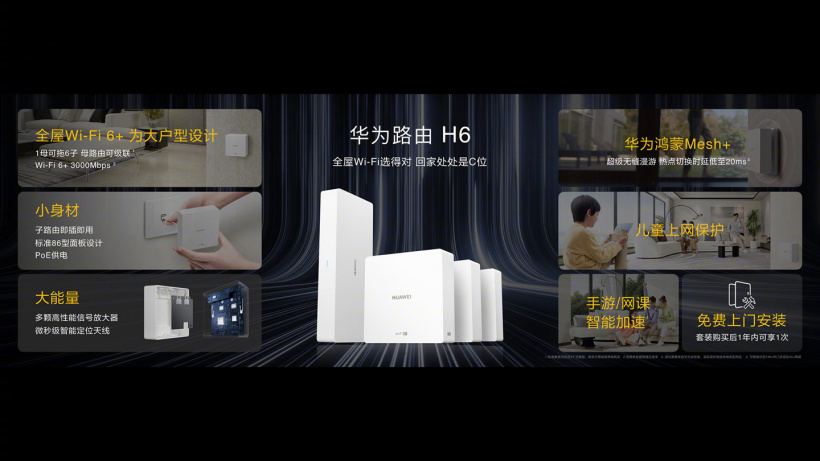
Earlier today (19th May 2021), Huawei held a new launch conference in which it launched a number of new products. This includes smart products including a new WiFi router that features HarmonyOS.
The Chinese tech giant just launched the Huawei H6 WiFi router, which runs on HarmonyOS and offers a large 200 square meters coverage. This router is equipped with a sub routing design and runs on the company’s proprietary operating system. Notably, the new router is designed for large houses. This router can connect with up to 6 sub routers and can offer networking speeds of up to 3000Mbps with a maximum range of about 200 square meters.
Furthermore, the company will also include a variety of smartphone games, online courses, and other application to its ‘fast lane.’ The device uses smart algorithms to intelligently identify more than 140 online video games and over 40 online course related applications to automatically reduce latency by about 20 percent. This will enable a more consistent and stutter free gaming and online learning experience to the users.
The H6 WiFi router also supports the latest Wi-Fi 6 Plus standards for fast networking speeds and is priced at 499 Yuan (roughly 78 US Dollars) in China. One can purchase the H6 router alone or even buy the entire set of sub routers for a total price of 1999 Yuan (roughly 310 US Dollars). A single sub router alone costs 399 Yuan (roughly 62 US Dollars).
Google’s newest Android iteration, Android 12 is finally here. The company has given us a first good look at the new operating system, which brings significant visual upgrades and more security-focused features that keep you in charge of your privacy.
Source: Google
So let’s take a quick look at all the new Android 12 features and changes announced by Google today.
Android 12 Features: Visual Design Changes
Google’s Material design philosophy is getting an upgrade with Android 12. The new OS brings in a new design concept called the Material You. This design is meant to be more expressive and humanistic, shying away from the concept of a traditional user interface. Google says the design is a result of a deep collaboration between its ‘software, hardware and Material Design teams’.
So here are the major visual changes in Android 12:
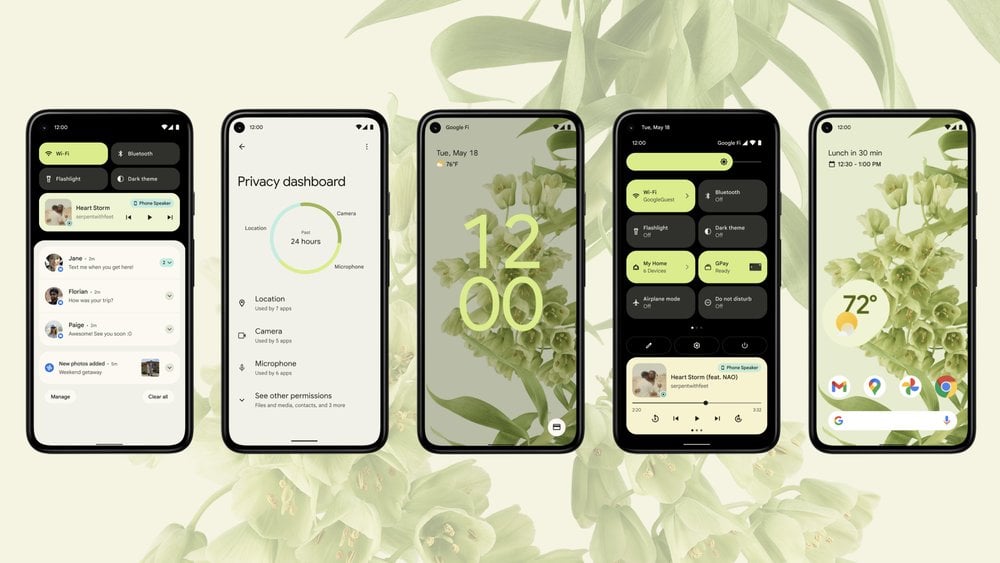
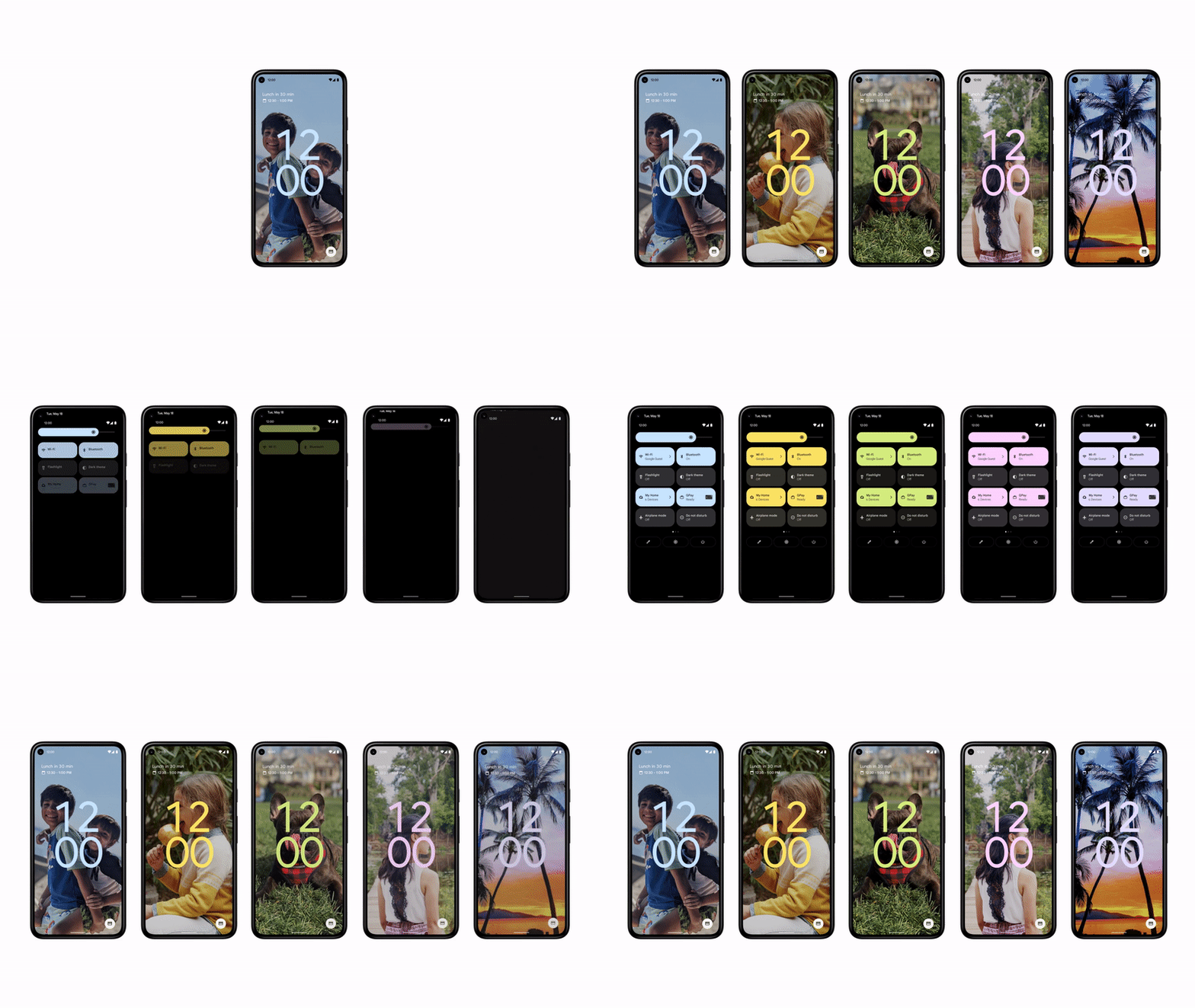
Personalization is a big part of Android 12 and in this regard, the OS brings changes to the UI colors, shapes, lights, and motion. The biggest change is the new adaptive color palette of the UI. Based on your wallpaper, the system will automatically determine dominant and complementary colors and will apply them to the entire OS including the notifications shade, volume controls, lock screen, and even the widgets.
As mentioned above, the Android 12 design is now more expressive. So shapes and colors will both play an important role in the UI. Along with adaptive color palettes, the new OS will also play around with the sizes of the UI elements.
A simple example is your lock screen clock. The size of the clock will depend upon whether you have notifications on your screen. Without any notifications, you get an enlarged clock widget which looks pretty good.
Quick Settings The Quick Settings panel aims to be a true control panel on Android 12. In this regard, the buttons have become larger along with new additions to the panel. For example, Android 12 adds Google Pay and Home Control buttons along with two privacy-focused toggle buttons namely Camera & Microphone Access. These two access buttons can directly revoke system-wide permissions for the two sensitive sensors on your smartphone.
Power Button
The power button now brings up Google assistant. So no more awkward gestures at the bottom to launch the assistant.
Android 12 Features: Faster & More Efficient
Since Material You design is all about expression, Android 12 has faster and smoother animations. In this regard, Sameer Samat, VP of Product Management, Android & Google Play reveals, “This was achieved by some under-the-hood improvements including reducing the CPU time needed for core system services by up to 22% and reducing the use of big cores by the system server by up to 15%.”
This sounds exciting but we’ll have to wait and see if the new tweaks can ensure smoother and faster animations across all smartphones.
Android 12: Security & Privacy Features
Apart from the visual overhaul, Android 12 brings important security and privacy-centric features to your smartphone.
The biggest addition is the new Privacy dashboard. Android 12 will showcase a pie chart of the number of data requests from your installed apps over a span of 24 hours. The same dashboard panel will allow you to tweak permission settings for each app, giving you better control over your data.
Source: Google
Another important addition is the new camera and microphone indicator on the top right corner. Every time your camera or microphone is being accessed, the indicator will light up giving you a heads up that the sensor is in use.
Moreover, with the included Camera and Microphone Access buttons in the Quick Settings panel, you can revoke system-wide access to these sensors.
Source: Google
Android 12 adds an approximate location permission setting which will only give out your rough location. This will be handy for apps like the weather for which you don’t have to share your precise location information.
The new OS also isolates key AI processes into a separate, secure location within your system. Android 12’s Android Private Compute Core will handle all audio and language processing for Live Caption, Now Playing, and Smart Reply. This will ensure that your personal information is secure and stays locally on your smartphone. Sameer further adds in the official blog post ” the protections in Private Compute Core are open source and fully inspectable and verifiable by the security community.”
There are a lot of other small additions to the new OS like scrolling screenshots, conversation widgets, and improvements to impaired vision features.
The Android 12 Beta is already live on Pixel and a number of other smartphones from brands like Xiaomi, Realme, OPPO, OnePlus, ASUS, and Samsung.
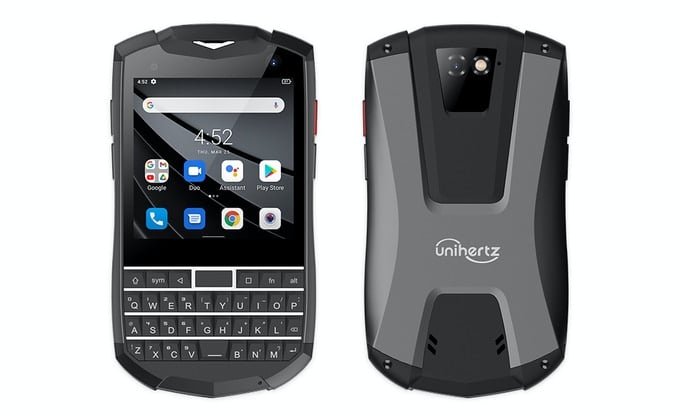
Unihertz has launched a new Kickstarter project — Titan Pocket which is the smallest QWERTY smartphone running the Android 11 operating system. This is the sixth device from the company which had previously launched Jelly, Atom, Titan, Atom XL, and Jelly2.
The campaign aims to raise $50,005 but at the time of writing this, it has successfully reached the goal. With still 30 days to go, the campaign has raised more than $520,900 from 2,310 backers.
The smartphone is an upgraded version of its predecessor, named Titan. The company says that it is now 30 percent smaller, lighter, and comes with the latest Android 11 operating system. Apart from the size, it is globally unlocked, equipped with a fingerprint sensor, IR blaster, GPS, and more features.
The phone, which is made of aluminum alloy material, features a 3.1-inch display with 716 x 720 pixels screen resolution. The device is powered by a 4,000mAh battery which the company claims can last for days on a single charge.
The keyboard on the device supports several languages, including English (US, UK), German (QWERTZ, QWERTY), French (AZERTY, QWERTY), Italian, Portuguese, Spanish, Dutch, Russian, Russian (TRANSLIT), Japanese, Simplified Chinese (Pinyin), and Traditional Chinese (Phonetic, Cangjie, Quick Input).
Further, the company adds that the Titan Pocket is though and drop-resistant but note that the device isn’t water-resistant. As for the camera, there’s a 16-megapixel camera sensor on the back and an 8-megapixel snapper up front for taking selfies and video calling.
For connectivity, the dual hybrid SIM supporting device comes with support for global LTE bands, compatible with most international and local carriers. This should offer great flexibility and is useful for business travelers and tourists, says the company.
Yesterday, Google revealed more details about Android 12 at the Google I/O 2021 Keynote. As expected, the search giant even announced the Android 12 Beta program in partnership with several OEMs. Let’s have a look a the list of eligible devices in this article.
According to the official announcement, the Android 12 Beta program includes 11 OEMs this year. However, HMD Global (Nokia) has revealed that it will be also releasing builds for Nokia X20. So this increases the total count to 12.
Although OEMs are providing Android 12 Beta for their select devices, these builds are clearly not meant for everyone. Companies like OPPO have explicitly mentioned that this initiative is only meant for developers.
Therefore, proceed with caution as these software builds have tons of bugs.
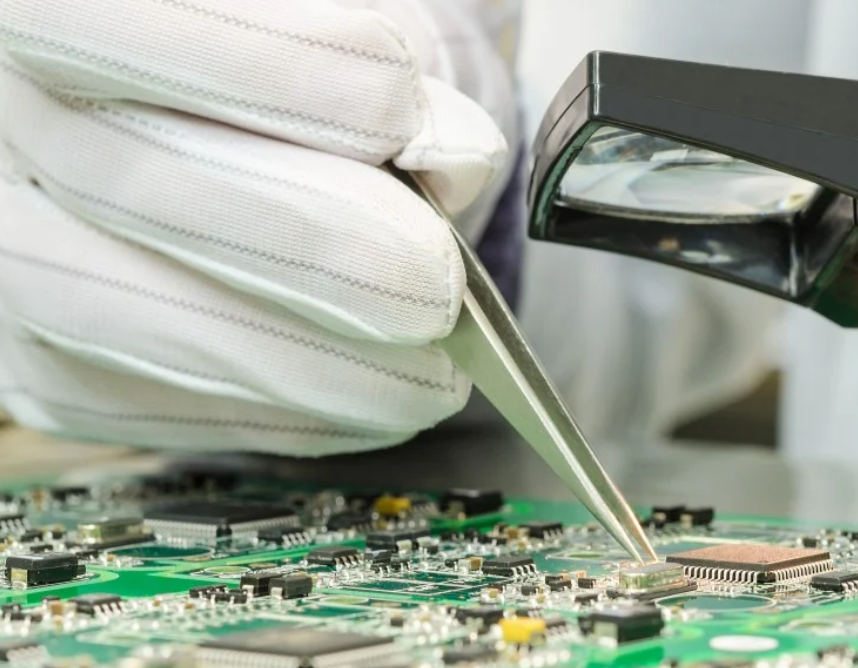
The second largest chipmaker in Europe, STM (STMicroelectronics) has announced that it would be raising the prices of its products across the line starting from 1st June 2021. This announcement was shared earlier this week, as the firm claims that it is facing issues with the procurement of materials.
Reportedly, the price hike arrives as the cost of materials has also risen along with the surge in demand amid the growing global shortage of semiconductors. STM added that “Semiconductor demand is currently reaching unprecedented heights, leading to major challenges in meeting orders despite our significant capital investment.” The chipmaking giant also shared a statement that was cosigned by Collins Wu, the regional vice president for the Asia Pacific region.
For those unaware, the firm is based in Switzerland and specializes in making power discrete devices and microcontrollers units (MCU) for automotive applications. But now, the company is struggling to secure materials suppliers, as the suppliers themselves are struggling to meet customer demand due to the semiconductor shortage. This has led to “cost increases and more aggressive commercial terms to maintain our supply of these scarce materials.”
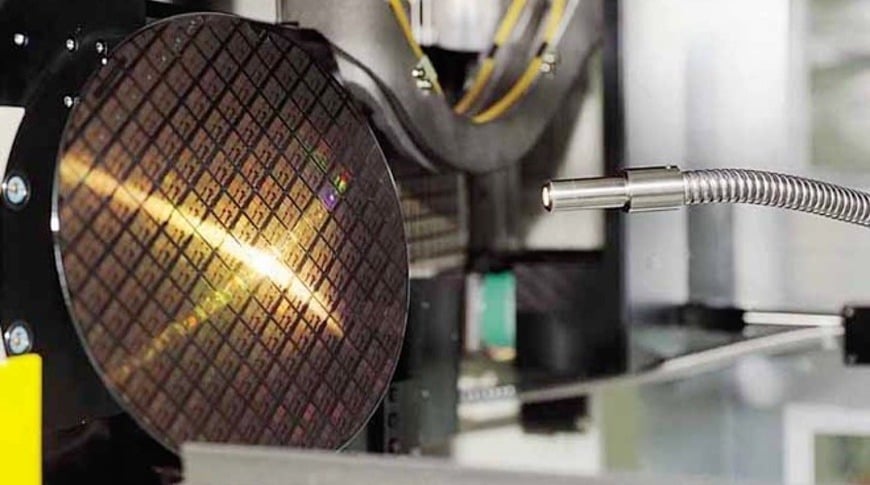
Furthermore, the hike in price is supposedly not a short term surge as it is expected to be sustained for at least another year or two. This situation is also further worsened by the already stretched 6 to 12 month long lead times that are required for capacity expansion at foundries like TSMC, the world’s largest contract chipmaker.
The world is currently facing a chip crisis, with semiconductor shortages affecting industries and economies across the globe. Now, the chip shortage has neared the ‘Danger Zone’ as wait times for shipments have reached a new record high, but Taiwan promises to keep supplying chips across the globe.
According to a Bloombergreport, the chip shortage has even hampered recovery of economies post the Coronavirus pandemic and has caused a major gap between chip orders and deliveries. At the moment, the wait times have reached a whpping 17 weeks in back in April 2021. This is indicative of the fact the clients are struggling to secure a stable supply, as per a research by Susquehanna Financial Group. The 17 weeks lead time is the highest the group has ever recorded and has even marked the situation as the ‘danger zone.’
Amid this crisis, the Taiwanese government has pledged to work on providing the world with a steady chip supply despite the growth of the COVID-19 pandemic. Notably, the government also adjusted its GDP projections for this year, raising it by 4.64 percent in preparation of a global ‘scramble for semiconductors’ that will cause a surge in exports, as per an SCMP report.
Currently, the global chip shortage has affected variou indutries including automobiles, smartphone, home applicances, and other as well. Just in this year alone, automakers are expected to lose out on a reported 110 billion US Dollars in sales. So, it remains to be seen how the situation plays out as many chip makers are rushing to start the operations of new chip plants to raise chip supply in various regions.
We use cookies on our website to give you the most relevant experience by remembering your preferences and repeat visits. By clicking “Accept”, you consent to the use of ALL the cookies.
This website uses cookies to improve your experience while you navigate through the website. Out of these, the cookies that are categorized as necessary are stored on your browser as they are essential for the working of basic functionalities of the website. We also use third-party cookies that help us analyze and understand how you use this website. These cookies will be stored in your browser only with your consent. You also have the option to opt-out of these cookies. But opting out of some of these cookies may affect your browsing experience.
Necessary cookies are absolutely essential for the website to function properly. This category only includes cookies that ensures basic functionalities and security features of the website. These cookies do not store any personal information.
Any cookies that may not be particularly necessary for the website to function and is used specifically to collect user personal data via analytics, ads, other embedded contents are termed as non-necessary cookies. It is mandatory to procure user consent prior to running these cookies on your website.