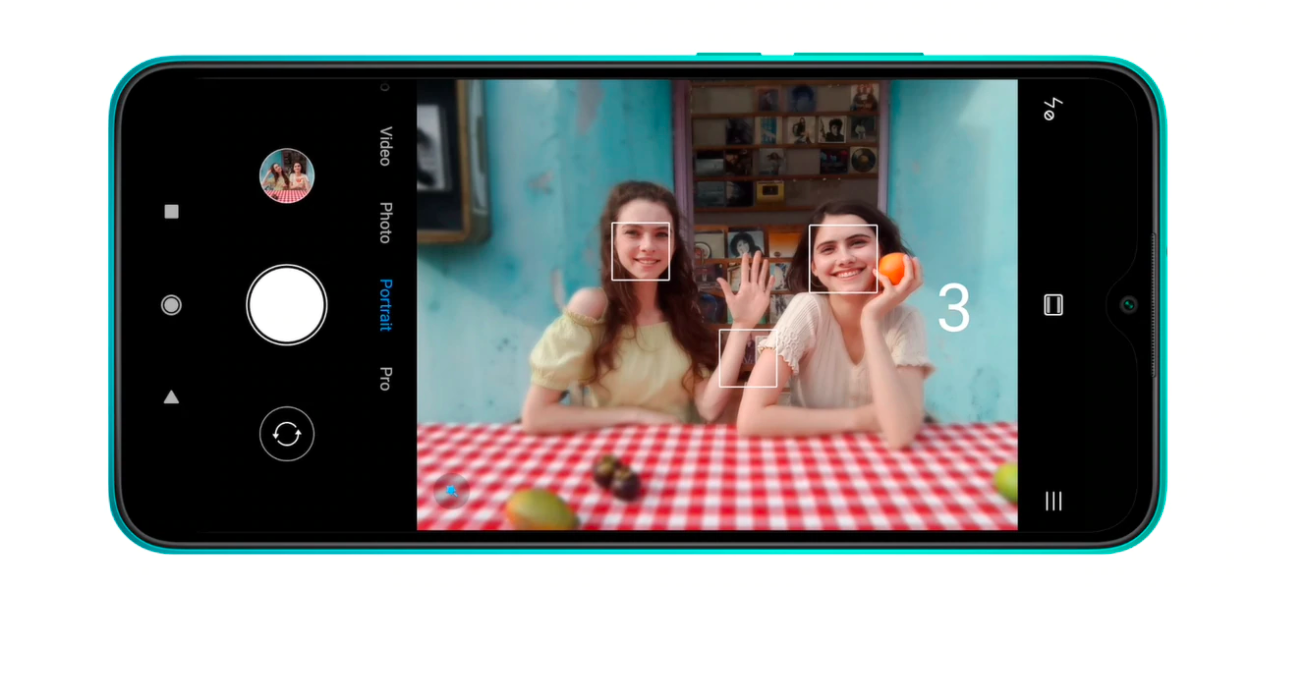
AliExpress under its Les Happy Days deal is giving a fantastic discount on Xiaomi Redmi 9. The smartphone which generally retails for $150 will be available for $119.49 only.
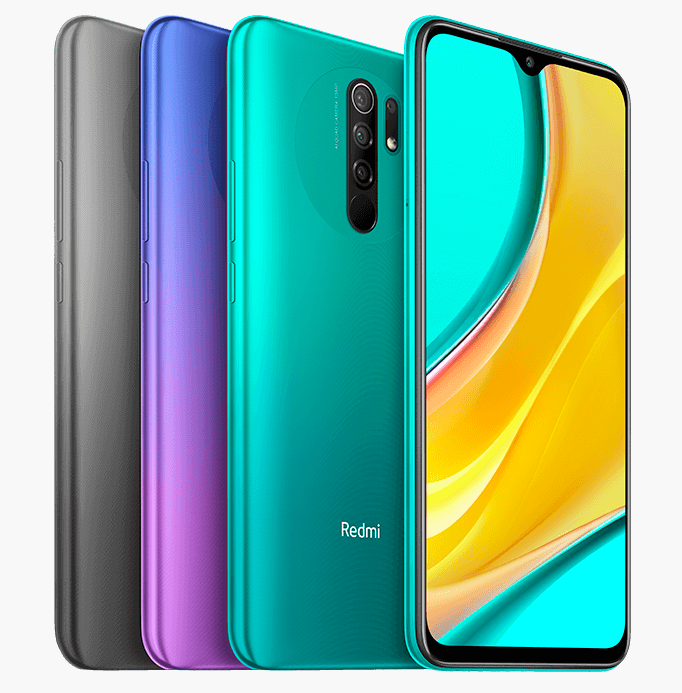
Xiaomi Redmi 9 is powered by an Octa-core MediaTek Helio G80 processor and features a 6.53” IPS LCD display with Corning Gorilla Glass 3 protection. The smartphone sports a rear quad camera setup with a 13MP main camera and 8MP + 5MP + 2MP secondary cameras. For the selfie camera, it has an 8MP camera in the front.
Xiaomi Redmi 9 comes in different memory and storage varaints viz: 3GB + 32GB, 4GB + 64GB, 4GB + 128GB and 6GB + 128GB. Fueled by a 5020mAh battery the smartphone supports 18W fast charging.
Generally retailing for $150, you can now buy Xiaomi Redmi 9 for as low as $119.49. Please note that this discounted price is applicable under the Les Happy Days offer which starts in the next 16 hours. The above-mentioned price is for the 32GB, Gray color variant ordered from the Spain warehouse only. The price may change according to the variant. So make sure to order your Redmi 9 under the Les Happy Days Deal to avail of the maximum discount.
For more information on such exciting deals and offers check out ourdeals hub.
* Please Note: When you buy something using the links in our articles, we may earn a small commission at no cost to you.
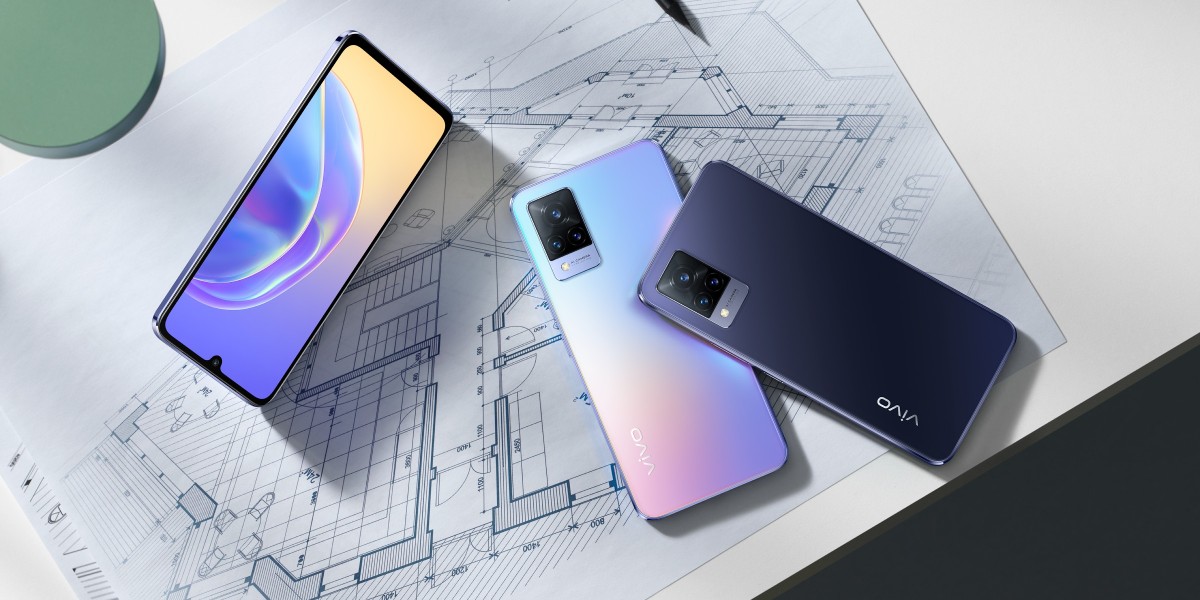
Vivo has unveiled its mid-range V21 series smartphones in Malaysia, each signposted with an excellent camera setup and other nice features. The models include the Vivo V21, V21 5G, and V21e and they are touted to have among the best selfie cameras found on mid-rangers in the market.
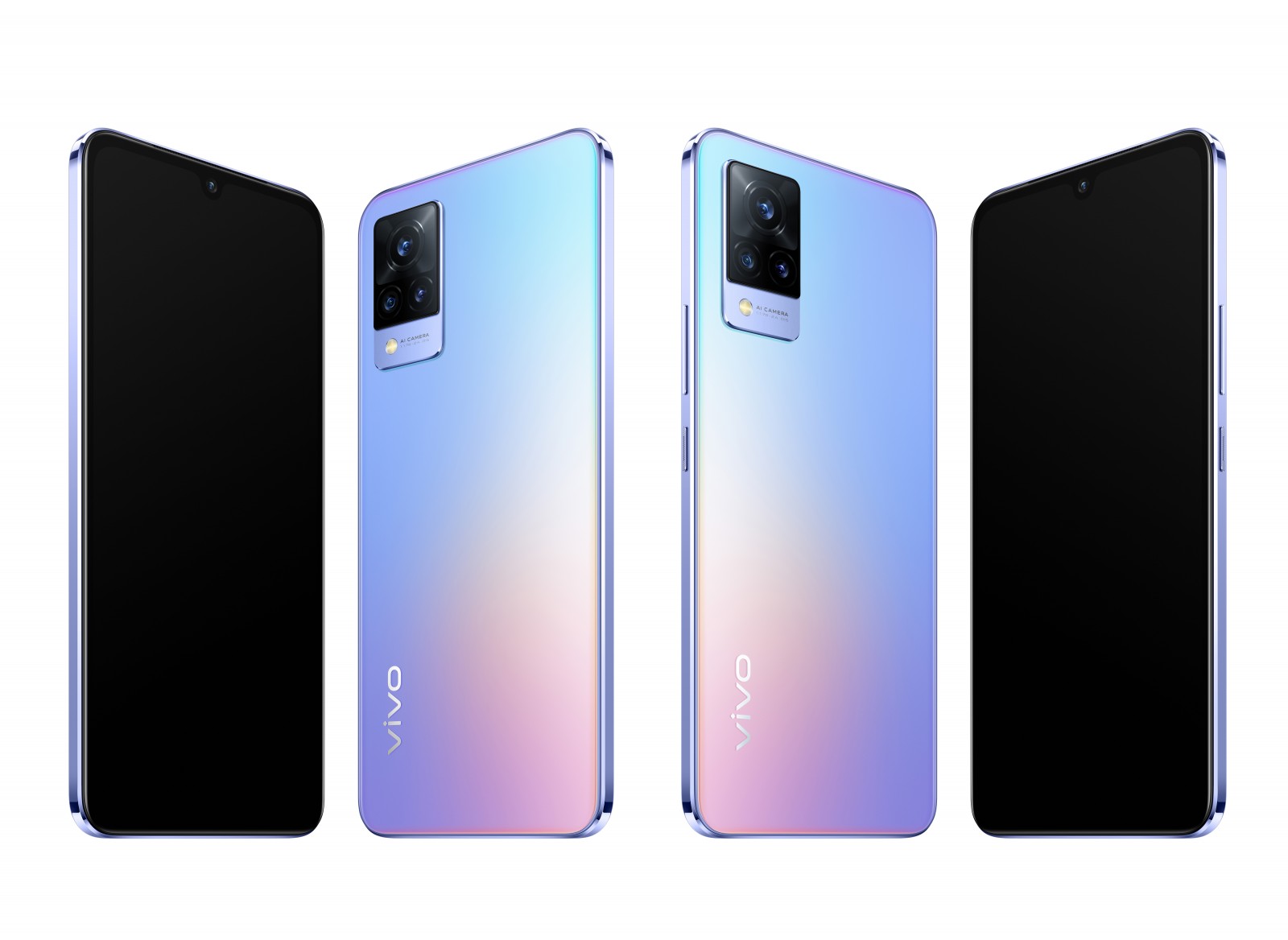
The three models feature an exact triple rear camera system highlighted by a 64MP main OIS-enabled camera. They each have an 8 MP ultra-wide-angle camera and a 2 MP macro setup. The front and the rear cameras are capable of split-screen shots.
The V21 and the V21 5G are powered by Dimensity 800U chipset, but the V21 5G has 5G capability and a few connectivity differences. You can get up to 8GB of RAM and 128GB of internal storage for the devices. The V21e, on the other hand, runs on a Snapdragon 720G chipset, a bit different from the first two models in the series.
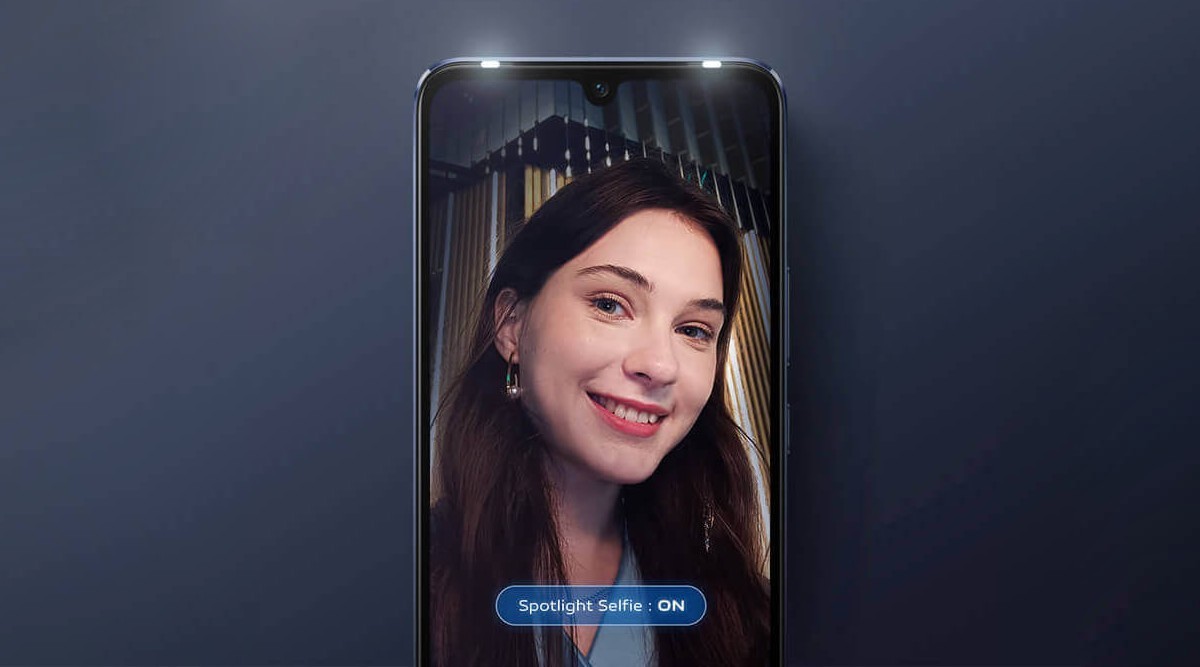
The V21 and V21 5G offer a 44MP selfie camera with autofocus capabilities and a few added features like OIS and EIS, providing high-quality output while watching videos via the device. With a decent refresh rate, the display is capable of showing 4K videos and a 90Hz refresh rate. The dual-LED flash on both devices works together with the OIS selfie camera for excellent output. The LED also helps produce excellent photo and video content in the dark, combined with the AI Night portrait mode. The autofocus mode present in the models is also an innovation that is not even present in some high-end models.
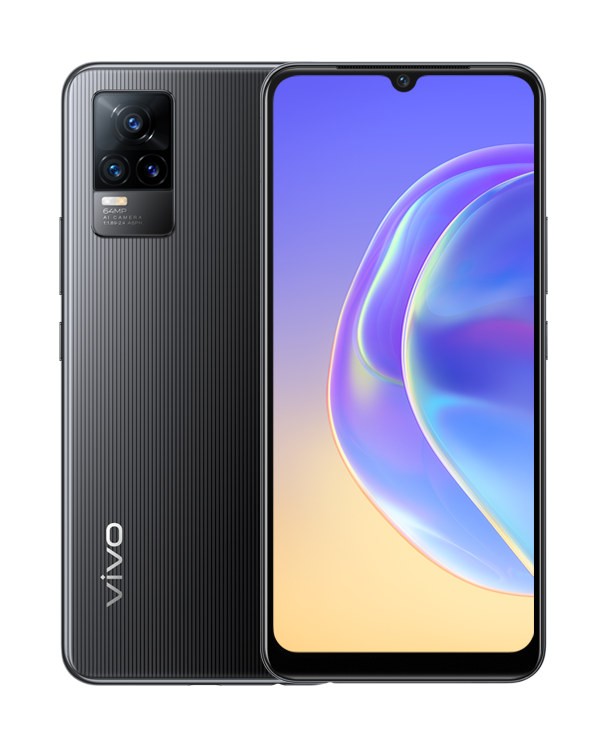
Vivo V21e
The Vivo V21e comes with a 44MP front camera with autofocus capability and OIS absent. The dual-LED flash is absent from the V21e, but Night Portrait and Super Night Selfie modes present. The three Vivo smartphones each come with a 4,000 mAh battery and 33W fast charging support.
As for the price, the Vivo V21 will cost around MYR 1,600 (~$390), and the V21e costs about MYR 1,200 (~$293). The 5G V21 will not be released in Malaysia. The models will become available in a few days in select parts of the world as the global rollout unfolds. India is expected to see the models on April 29.
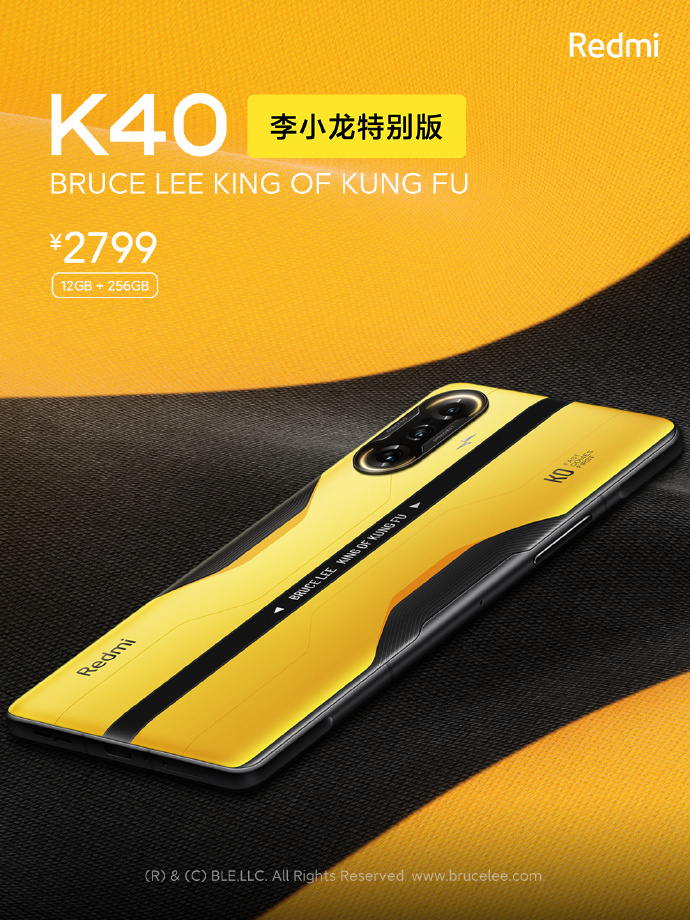
It has become a trend in the mobile industry for manufacturers to announce a special edition of a phone. These special edition phones are sometimes inspired by pop culture (movies, anime, or comic book characters) or partnerships with other brands. Redmi has decided to take things to another level with the Redmi K40 Game Enhanced Edition Bruce Lee Special Edition!
Yes, we know that is a mouthful but this one is a stunner. The Bruce Lee Special Edition of the gaming smartphone was actually teased a few days ago when Redmi sent out invites for the launch event. The invite included a nunchaku a.k.a. nunchucks which are the late martial artist’s favorite fighting weapon.
Coming to the phone itself, the Redmi Redmi K40 Game Enhanced Edition Bruce Lee Special Edition drops the dull colors of the standard version for a bright yellow + black dual-color finish. Bruce Lee fans will recognize these colors are not random but favorites of the actor.
There is a long strip of black in the middle with the inscription “Bruce Lee King of Kung Fu”. The frame is also black and so are the shoulder buttons. You get a yellow power button and the accent inside the switches for the shoulder buttons is yellow.
The Redmi K40 Game Enhanced Edition Bruce Lee Special Edition not only comes in a special box but also has customized accessories. There is a yellow bumper case, a yellow power brick, and a yellow charging cable included.
The Bruce Lee Special Edition is priced at ¥2799 (~$432) and comes with 12GB of RAM and 256GB of storage. It will be available for purchase on April 30.
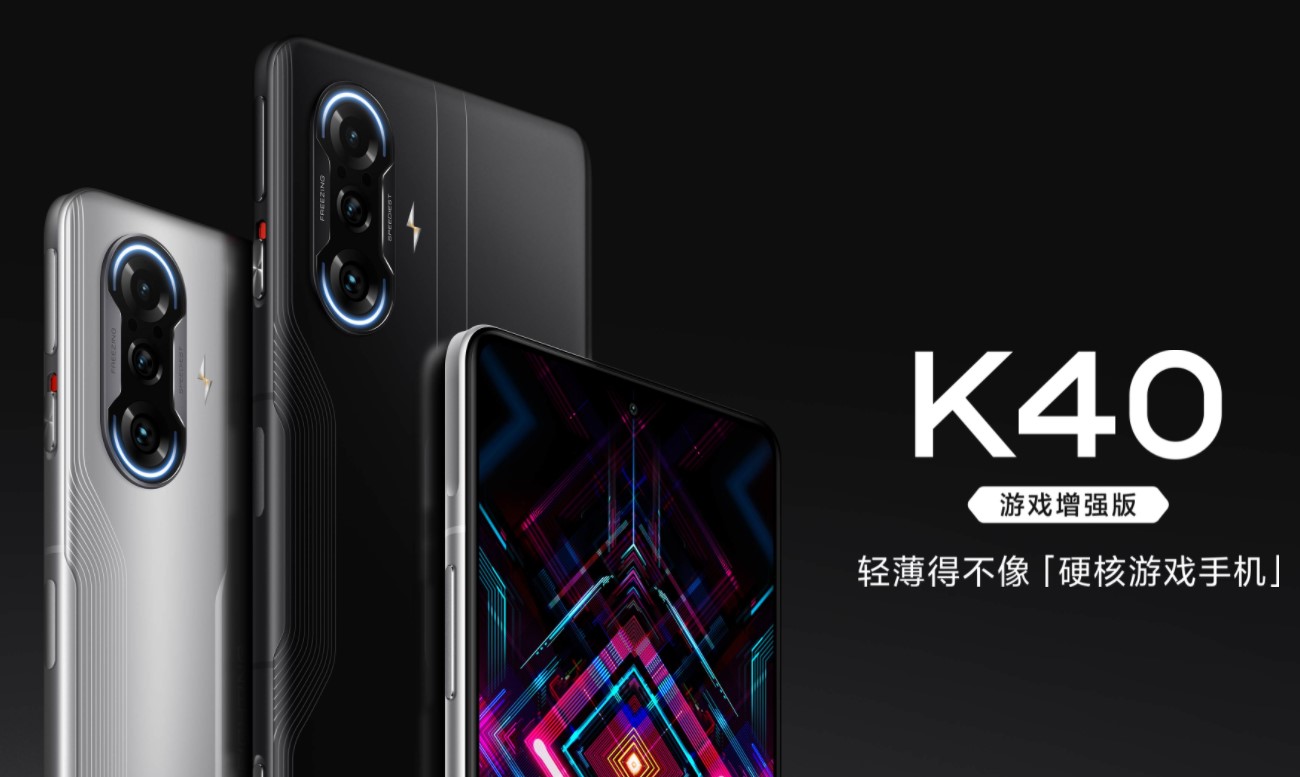
While you can pick up any regular smartphone with a capable processor and play the latest mobile game on it, gaming smartphones make that experience better with the extra features that they have such as a better display, bigger battery capacity, faster-charging technology, and more. That is what the Redmi K40 Game Enhanced Edition brings to the table – a better way to play games compared to its siblings.
Redmi K40 Game Enhanced Edition Design
The latest entry in the Redmi K40 series builds upon the design of its siblings. While it keeps the centered punch-hole display design, it adds a customizable RGB light to the rear camera module, drops the boring round/pill-shaped LED flash for a lightning bolt-shaped one, adds retractable shoulder buttons to the frame, and also changes the speaker grille design. It also manages to squeeze a significantly bigger battery capacity in a body that is just a bit thicker (8.3mm).
All these design changes help the Redmi K40 Game Enhanced Edition stand out from its siblings.
Redmi K40 Game Enhanced Edition Specifications
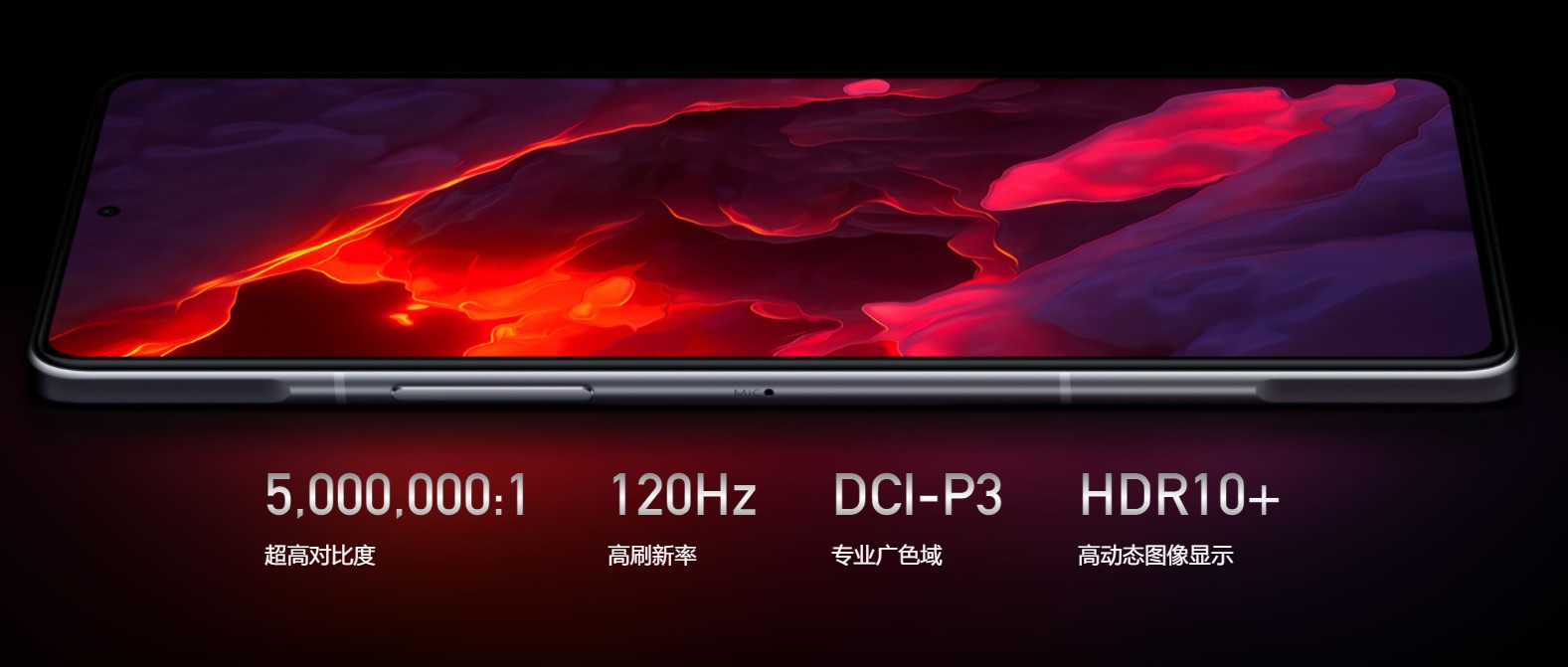
The Redmi K40 Game Enhanced Edition has a flexible OLED screen that measures 6.67 inches. The display has a 120Hz refresh rate, a three-finger 480Hz touch sampling rate, a DCI-P3 color gamut, and HDR10+ certification. The bezels on three of the sides measure 1.8mm while the chin is 2.7mm thick. There is Gorilla Glass 5 on both sides of the phone.
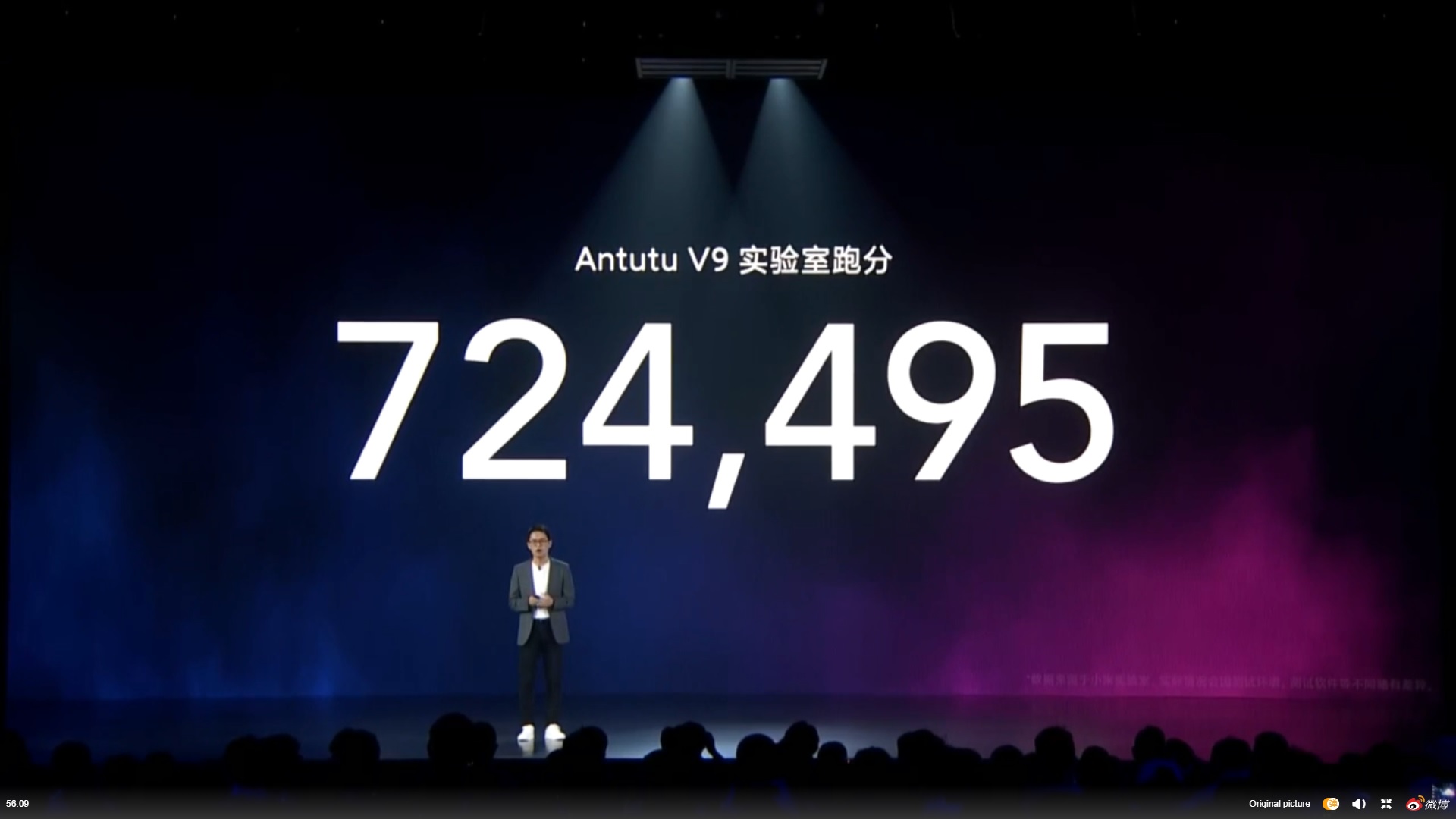
For the gaming edition, Redmi has gone with MediaTek’s Dimensity 1200 processor. The 6nm chipset also has a GPU whose drivers can be independently upgraded as we have seen with some Qualcomm chipsets. The chipset is paired with up to 12GB of RAM and 256GB of storage.
For its cameras, the Redmi K40 Gaming Enhanced Edition has a 64MP triple camera setup on the back. The phone is the first in the industry to use an ultra-low dispersion optical glass lens. The 64MP f/1.65 sensor is paired with an 8MP 120° ultrawide angle camera, and a 2MP 40mm macro camera. The front-facing camera is a 16MP sensor and the camera app is packed with lots of software features.
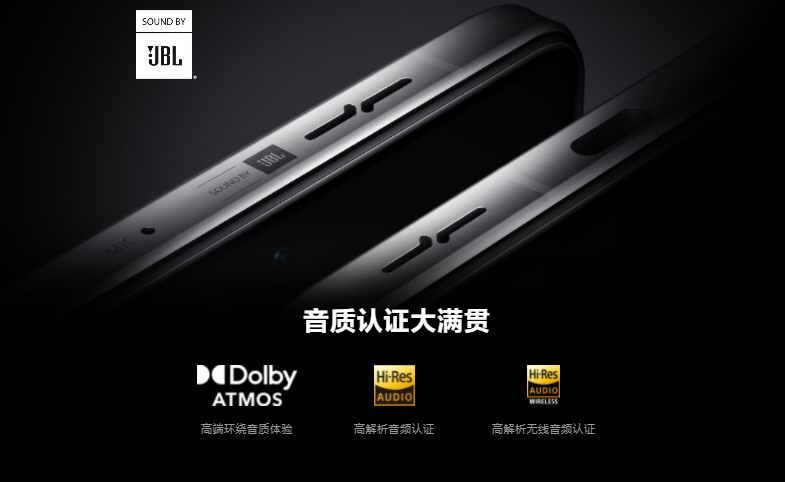
Redmi has partnered with JBL for the stereo speakers of the Redmi K40 Game Enhanced Edition. The phone also has Dolby Atmos, Hi-Res Audio (wired and wireless), a 3-mic design (top, side, and bottom), and an x-axis linear motor. It has Bluetooth 5.2, Wi-Fi 6, GPS (including NavIC), and support for AAC, LDAC, and LHDC codecs.
The Redmi K40 Game Enhanced Edition packs a 5065mAh battery capacity, a 12% increase over that of the other K40 models. It then pairs it with 67W fast wired charging, the fastest in a Redmi-branded smartphone. The phone also supports Quick Charge 3.0 and Power Delivery 3.0.
There is liquid cooling and specially designed Wi-Fi and 5G antennas to make sure that you remain connected while gaming. As expected, there is a Game Mode that you can turn on to customize your gaming experience. The phone runs MIUI 12.5 based on Android 11 out of the box.
Redmi K40 Game Enhanced Edition Price and Availability
The Redmi K40 is available in five configurations. It is already available for pre-order and the first sale is scheduled for April 30 at 10 AM. Below are their prices:
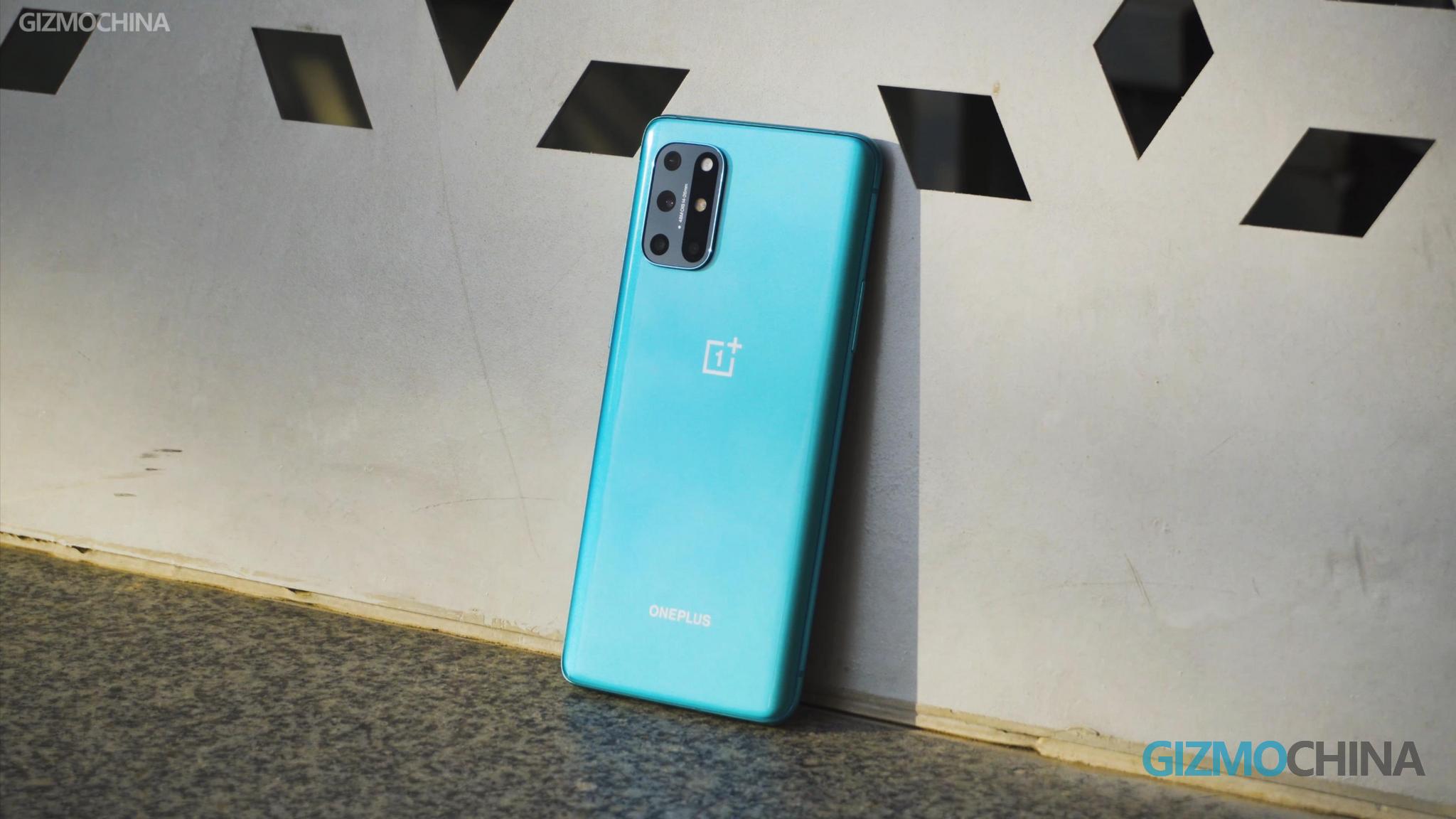
Last week, OnePlus rolled out OxygenOS Open Beta 3 for the OnePlus 8T. However, the company halted the rollout within a few days. Instead of resuming the rollout, the brand is now seeding this very same update as OxygenOS Open Beta 4.
The latest OxygenOS Open Beta 4 update for the OnePlus 8T comes with the same changelog as the older OxygenOS Open Beta 3. OnPlus says that it has rolled out the OTA for users on both Open Beta 3 as well as Open Beta 2.
According to the official changelog, the new public beta build for the OnePlus 8T brings April 2021 security patches, a new real-time FPS/CPU/GPU monitor feature in OnePlus Games, improvements for OnePlus Gallery loading speed, and a number of fixes.
As far as fixes are concerned, this update arrives with fixes for abnormal display of fonts, status bar cannot be pulled down, status bar not displaying app icons, missed calls not displaying in notification bar, expanded screenshot not working, audio recording not working on headphones, flickering of previewed photos, abnormal display of calculator in split-screen, AOD contextual information not updating timely, ambient display switching to Canvas when device owner is changed, and abnormal display of AOD time when system language is Hebrew.
OnePlus 8T Oxygen OS Open Beta 4 Official Changelog
System
Fixed the issue that some app’s fonts are displayed abnormally after setting customized fonts
Fixed the small probability issue where the status bar cannot be pulled down
Fixed the small probability issue where the status bar does not display app icons
Fixed the issue that the missed calls are not displayed in the notification bar
Fixed the small probability issue that the expanded screenshot may stop working
Fixed the small probability issue where recording audio with headphones may not work as expected
Fixed known issues
Updated Android security patch to 2021.04
Camera
Fixed the small probability issue that the previewed photos are flickering under the photo mode
Calculator
Fixed the abnormal display with the calculator under the split screen
Ambient Display
Fixed the issue that the contextual information of AOD is not updated timely
Fixed the issue that the ambient display is switched to Canvas after the device owner is changed
Fixed the issue with AOD that the time is displayed abnormally when the system language is Hebrew
OnePlus Games
Newly added the Data Monitor feature, you can find it in the Game Toolbox and monitor the FPS/CPU/GPU changes in real-time
Gallery
Improved the loading speed of the gallery to speed up the process of previewing pictures
This update is currently being pushed in batches. It should be available for all the users on the OxygenOS Open Beta channel in the coming days. Also, users on the OxygenOS Stable channel can download and install this new build from the OnePlus Community.
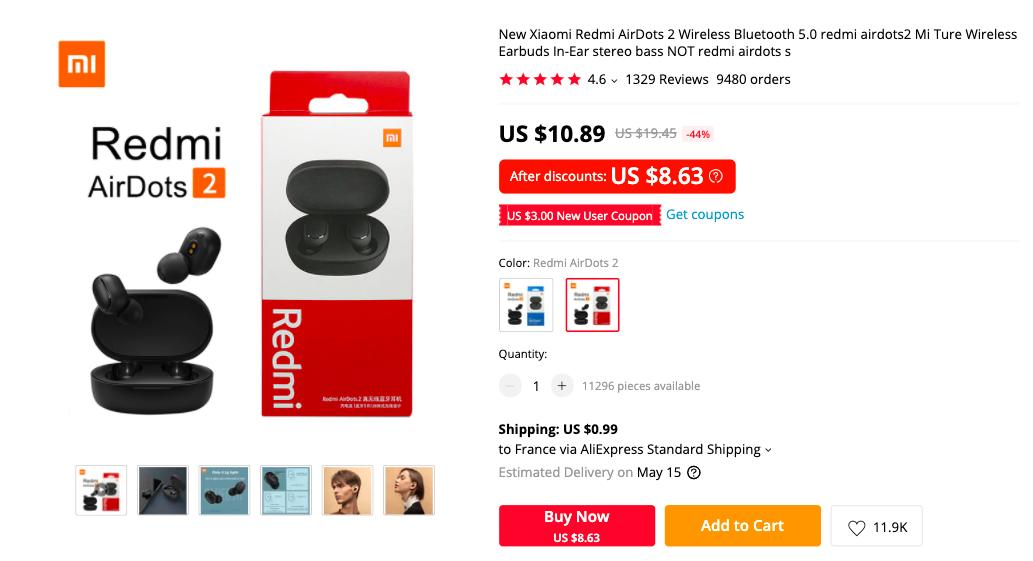
Xiaomi Redmi Airdots S and Airdots 2 are now available at heavily discounted prices at AliExpress.Both Redmi Airdots S and Redmi Airdots 2 are now available for $8.63 only.
Redmi Airdots S and Airdots 2 come with Bluetooth 5.0. This means faster and stable connections with a high speed and data transmission rate. The deep bass and high-quality stereo audio make it a pleasure to listen to your favorite tunes on Xiaomi Redmi Airdots S and Airdots 2. The multi-functional touch control can easily navigate through your music as well as pick up and hang calls and activate the built-in XiaoAI voice assistant.
The main difference between the Redmi AirDots 2 and Redmi AirDots S is that Airdots S has a dedicated games mode which significantly reduces the latency and enhances your gameplay. Available in a single Black color, these budget earbuds are selling on AliExpress at heavy discounts. Redmi Airdots S and Redmi Airdots 2 are selling for $8.63 only. So go and grab your discounted Airdots asap.
For more information on such exciting deals and offers check out ourdeals hub.
* Please Note: When you buy something using the links in our articles, we may earn a small commission at no cost to you.
Apple is expected to face anti competitive charges by the European Commission later this week. The news arrives over concerns that its the company’s App Store would break EU competition law.
According to a FinancialTimesreport (Via MacRumors), the charges are regarding a two year old antitrust dispute with Spotify, the popular music streaming platform. For those unaware, Spotify filed a complaint back in 2019 with the European Commission alleged that the Cupertino based giant enforced App Store rules that “purposely limit choice and stifle innovation at the expense of the user experience,” accusing the company of “acting as both a player and referee to deliberately disadvantage other app developers.”
Spotify had even accused the iPhone maker takes a 30 percent commission on every App Store purchase. This includes in app subscriptions, which forced the music streaming service to charge existing subscribers 12.99 US Dollars per month for its Premium plan on the store just to collect 9.99 US Dollars per month for its usual charges. The app is also arguing that the tech giant is abusing its unfair advantage since it is unable to compete with its own music streaming platform, Apple Music.
Notably, the antitrust case from Spotify is just one of several charges opened by the European Commission into Apple’s business practices since June 2020. Just last month, EU regulators were in the process of finalizing a charge sheet against the company in relation to Spotify’s antitrust complaint. Meanwhile, Apple has denied allegations of anti competitive behavior and stated that its rival Spotify was using “its financial motivations in misleading rhetoric.”
According to an AppleInsiderreport, sources told NikkeiAsiathat the M2 processor has entered volume production earlier this month. As per people familiar with the matter, it is possible that shipments could begin as early as July. The sources also stated that the new processors will first be seen in the new MacBook Pro models. Similar to the M1 processor back when it launched, the Cupertino based giant is expected to launch the new processor across a wider range of products later.
The company’s M2 processor is likely to arrive with various improvements in terms of performance and optimizations. Unfortunately, it is still too early to offer any concrete statements. Thus, we will have to wait for more leaks or an official company announcement to know for sure, so stay tuned for more as we will be providing updates when additional informational is available regarding the matter.
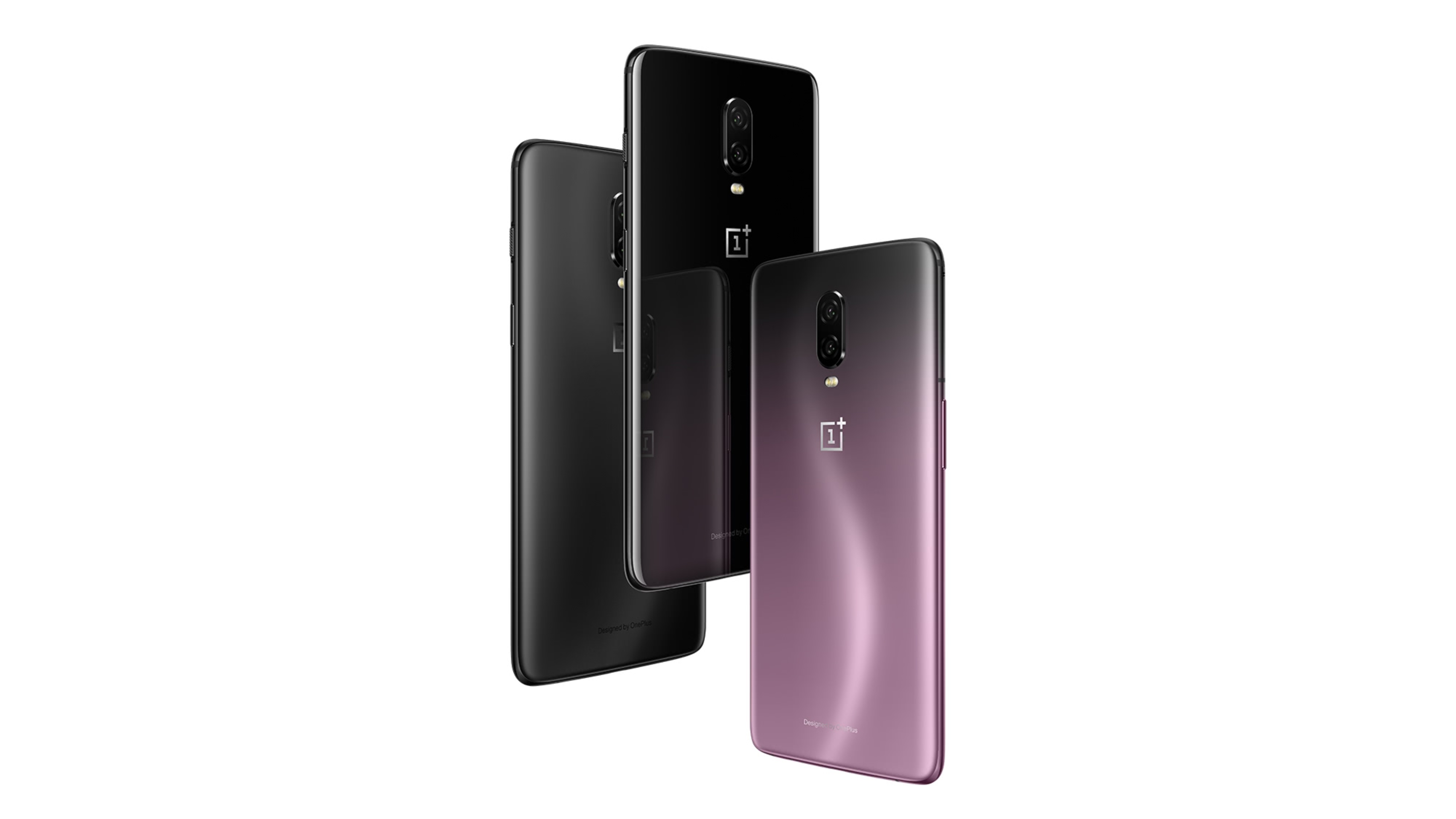
Late last month, OnePlus rolled out a new system update for the OnePlus 6 and the OnePlus 6T. A month later, these old smartphones are receiving another OTA update. The latest firmware for the brand’s yesteryear flagship devices comes with build number OxygenOS 10.3.10.
OnePlus 6T
OnePlus is rolling out a new system update for the OnePlus 6 and the OnePlus 6T from 2018. The new update arrives with firmware version OxygenOS 10.3.10.
The announcement post on OnePlus Community only lists two changes. According to the official changelog, this new update bumps up the security patch level to April 2021.
Apart from this month’s security patches, the latest system update for these smartphones also brings fixes for known issues and improves system stability.
OnePlus 6/6T OxygenOS 10.3.10 Official Changelog
System
Updated Android Security Patch to 2021.04
Fixed known issues and improved system stability
Like any OTA system update, the OxygenOS 10.3.10 update for the OnePlus 6 and the OnePlus 6T is being rolled out in batches worldwide. Hence, the build may take some time to reach every user.
Lastly, it is worth noting that although these two phones are eligible for Android 11 (OxygenOS 11), OnePlus is yet to release any beta build for them.
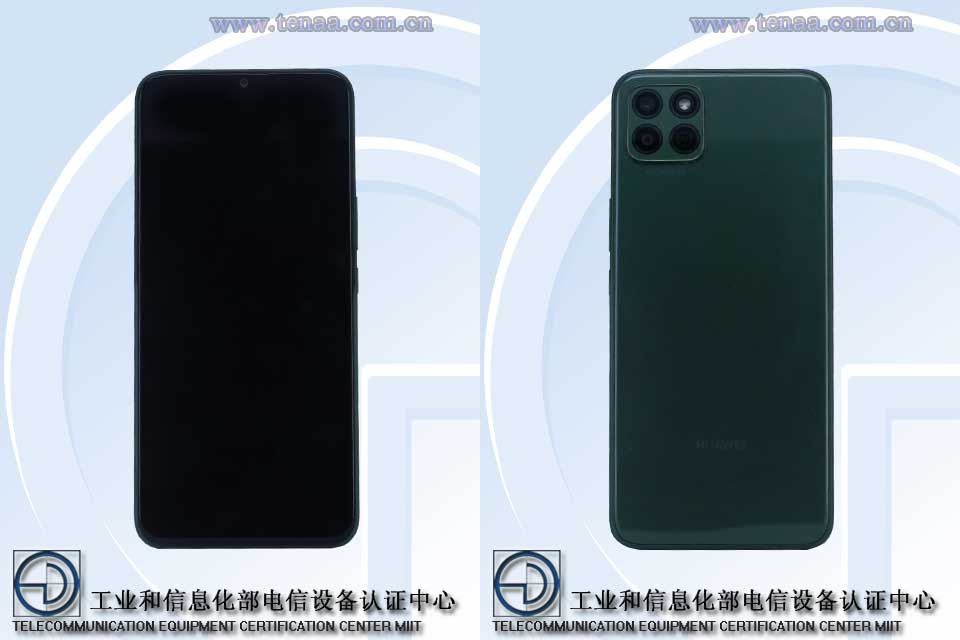
A new Huawei smartphone with PKU-AL40 model number has received approval from the TENAA regulatory body of China. While the final product name of the device is yet to be confirmed, the TENAA listing of the PKU-AL40 has revealed its entire specifications and images.
The Huawei PKU-AL40 is a 4G LTE smartphone that houses a 6.5-inch LCD screen that delivers an HD+ resolution of 720 x 1600 pixels. it has a front-facing camera of 5-megapixel.
The rear camera array has an LED flash, a 13-megapixel main camera, and a 2-megapixel secondary shooter. The device seems to be lacking a fingerprint scanner.
Huawei PKU-AL40 TENAA
The PKU-AL40 Huawei smartphone is preinstalled with Android 10 OS. It is powered by an octa-core processor that works at 1.80GHz. It is likely to arrive in China with 4 GB / 6 GB RAM editions and storage options like 64 GB and 128 GB.
The Huawei PKU-AL40 has a 3,900mAh battery, but there is no word on whether it carries support for fast charging. The handset was certified by the Bluetooth SIG authority last month through which it was revealed that it supports Bluetooth 5.0.
The TENAA listing further revealed that the Huawei PKU-AL40 has 163.93 x 75.79 x 8.95mm dimensions and it weighs 198 grams. It is expected to arrive in color editions like Magic Night Black, Frosty Silver, and Spruce
The smartphone shipments in India in the first quarter of this year saw a record growth of 23 percent year on year, reaching over 38 million units. This marks the highest first quarter shipments in the country but are expected to lower in the following quarter due to the resurgence of Coronavirus in the region.
According to a Counterpoint Research report, the record rise in shipments in the nation arrives as new product launches paired with promotions, new financial schemes, and pent up demand coming from last year. Research analyst Prachir Singh stated that “Continuing with its stellar run, India’s smartphone market registered a third consecutive quarter of record shipments in Q1 2021, riding on pent-up demand. Consumer confidence also increased due to the beginning of a vaccination drive in the country. But these numbers should be taken with caution as a second and more virulent wave of COVID-19 is currently on in the country and is likely to impact the coming quarters. The consumer demand will take a hit due to the ongoing COVID-19 wave and subsequent lockdowns.”
Furthermore, the report also added that the Chinese brands also held around 75 percent share in the first quarter of 2021. In the local market, Xiaomi led with a 26 percent market share followed by Samsung, Vivo, Realme, and Oppo. Xiaomi managed to hold the lead thanks to the expansion of its local manufacturing capacities with new EMS partners. Samsung also maintained a high number of new product launched in its Galaxy M series, Galaxy F series as well as the Galaxy S21 series as well.
The Indian mobile handset market also grew by 19 percent year on year in Q1 2021 due to the strong performance of both feature phones and smartphone segments. The feature phone market saw a growth of 14 percent year on year. Notably, OnePlus led the 5G smartphone market in the region, with a 33 percent market share while Samsung recorded the largest growth in the region at 52 percent year on year.
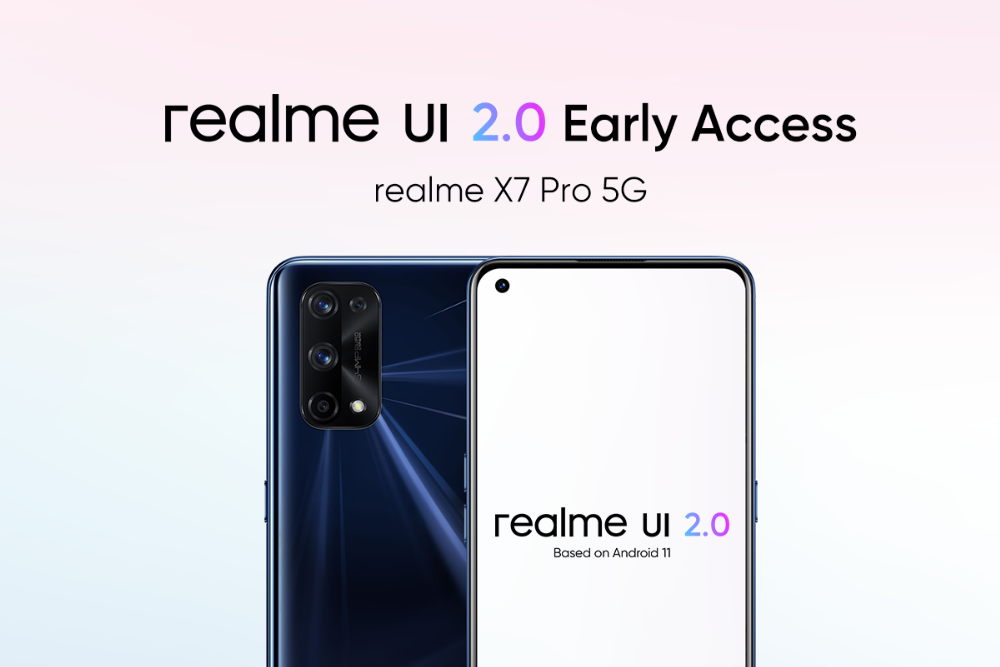
The realme X7 Pro launched in India in early February. Just like the original that was released in China last year, the Indian variant also debuted with an outdated Android 10-based realme UI operating system. Now, a little over two months after its release, the brand has started recruiting beta testers for Android 11.
In early March, realme revealed that the realme X7 Pro will be part of the realme UI 2.0 Early Access program in Q2 2021. As promised, the company has opened registrations for testers.
According to the official announcement post on realme Community, interested users should be running the latest firmware with build number RMX2121PU_11.A.14. To enroll in the program, users will have to navigate to Settings > Software Update > Gear Icon > Trial Version > Apply Now and submit details.
Not all users will be eligible to try Android 11 on the realme X7 Pro. That’s because the brand has only allocated limited seats and it does not say how much. Hence, the availability of seats will be based on FCFS (First Come First Serve).
Anyway, we would advise you not to register yourself if this is your only smartphone. Because beta builds are always buggy and realme also warns the same. But it is worth noting that you can roll back to the stable channel if you don’t like the realme UI 2.0 Early Access build. However, this process will wipe the internal storage of the device.
According to the KoreaTimesreport, a source close to the matter stated that “A lot of NPEs have approached LG Electronics for the possible acquisition of its 5G mobile patents.” Unlike LG’s products, the company’s mobile patents are still considered competitive. This has caused multiple firms to seek its patents including Samsung. An official from the South Korean tech giant said that “We have not reviewed any plans.”
For those unaware, NPEs are firms that holds a patent or patent rights. These companies do not manufacture or produce such patented technology but rather generate profit by licensing it out to other firms. As per the source, LG currently holds patents in LTE and 5G technology that are worth around 901 million US Dollars. In total, the former smartphone maker holds about 24,000 LTE and 5G standard essential patents, which is the third largest nuymber of 5G standard patents, as per data provided by IPlytics.
Furthermore, the company is also ranked 1st in terms of global 4G standard patents for four consecutive years from 2012 to 2016. Thus, after its exit from the mobile market due to the unit being a loss maker, it arrives that no surprise that other firms aim to buyout its patents. An LG Electronics’ official also offered a statement citing that “We cannot confirm the speculation. We are reviewing the use of our network patents in other sectors such as IoT or self-driving.”
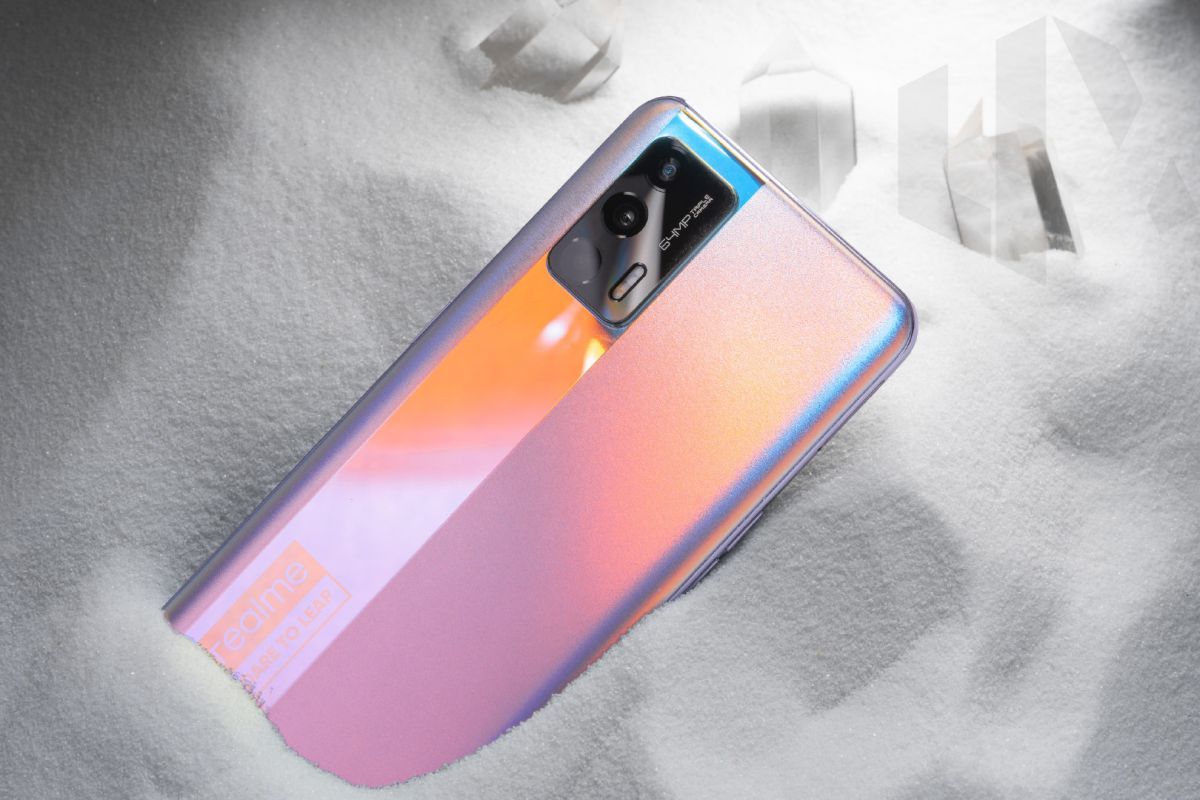
A recent report claimed that Realme could be planning to launch a new phone called the Realme X7 Max in India. The report had revealed the color variants and configurations of the device. However, it was incorrectly speculated that it could be based on the Realme X7 Pro Ultra (Extreme Edition), which was announced in China recently. Some reports have claimed the company is planning to launch the Realme GT Neo in India in May. Fresh information shared by a tipster reveals that the Realme GT Neo will be rebranded as the Realme X7 Max in India.
According to tipster Debayan Roy, the specifications of the Realme X7 Max are totally similar to the GT Neo. It was reported by TechRadar last week, that the X7 Max will come in variants like 8 GB RAM + 128 GB storage and 12 GB RAM + 256 GB storage. It may come in color editions such as Mercury Silver, Asteroid Black, and Milky Way.
Realme GT Neo
Realme X7 Max specifications (expected)
Considering that the Realme X7 Max could be rebranded GT Neo, it is likely to arrive a 6.43-inch S-AMOLED FHD+ 120Hz display with an in-screen fingerprint reader and the 6nm Dimensity 1200 chipset. The device is expected to come preloaded with Realme UI 2.0 based Android 11 OS.
For selfies, it may feature a front camera of 16-megapixel. Its rear camera setup may include a 64-megapixel primary camera with f/1.8 aperture, an 8-megapixel ultrawide lens with a 119-degree FOV, and a 2-megapixel macro shooter.
The X7 Max may house a 4,500mAh battery and it may support 50W rapid charging. The device may come with LPDDR4x RAM and UFS 3.1 storage. It is expected to retain the good old 3.5mm audio jack. The GT Neo is available in China with a starting price of 1,799 Yuan.
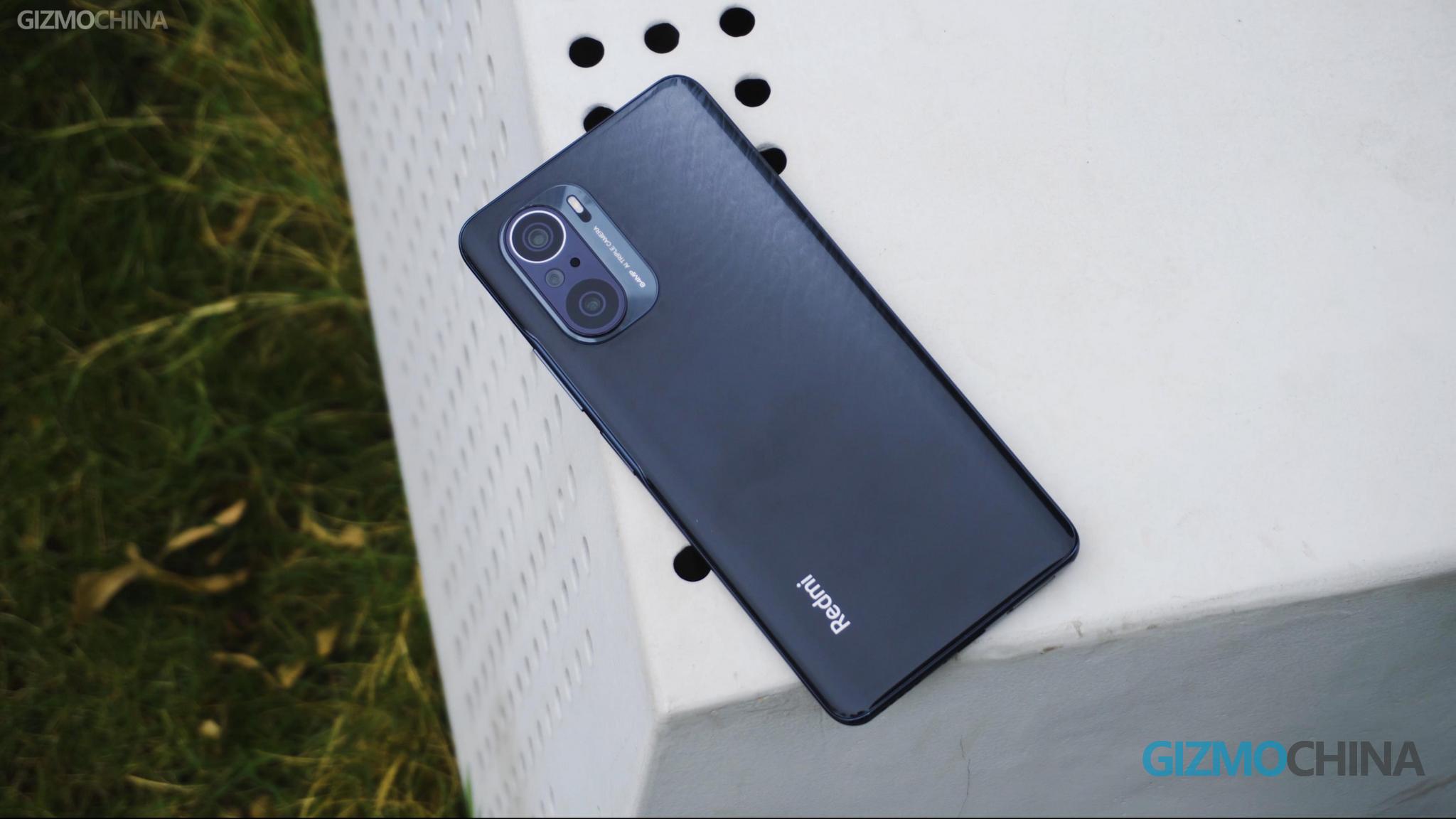
MIUI 12.5 is the latest version of Xiaomi’s mobile operating system. The company has been delivering this update to eligible devices for the past few weeks. The latest phones to receive this update are Redmi K40 Pro, Redmi K40 Pro+, and Redmi Note 9 5G.
Redmi K40 Pro
The Redmi K40 Pro and Redmi K40 Pro+ are basically the same phones with a different primary camera. Hence, these handsets run a common MIUI build. Therefore, they are receiving the MIUI 12.5 update at the same time.
The MIUI 12.5 update for the Redmi K40 and the Redmi K40 Pro+ comes with build number V12.5.2.0.RKKCNXM. It is currently in the Stable Beta phase. That means the new system update is only available for a select few users.
On the other hand, the Redmi Note 9 5G MIUI 12.5 update arrives with build number V12.5.1.0.RJECNXM. It is also in the Stable Beta phase. Most importantly, this update also brings Android 11.
The MIUI 12.5 update for these smartphones should be available for all users in the coming days if there are no major issues with the builds. Similarly, we can soon expect the international versions of these devices to get the update as well.
For those unaware, the Redmi K40 Pro+ is sold as Mi 11i and Mi 11X Pro in the global markets. Whereas, the Redmi Note 9 5G is known as Redmi Note 9T 5G.
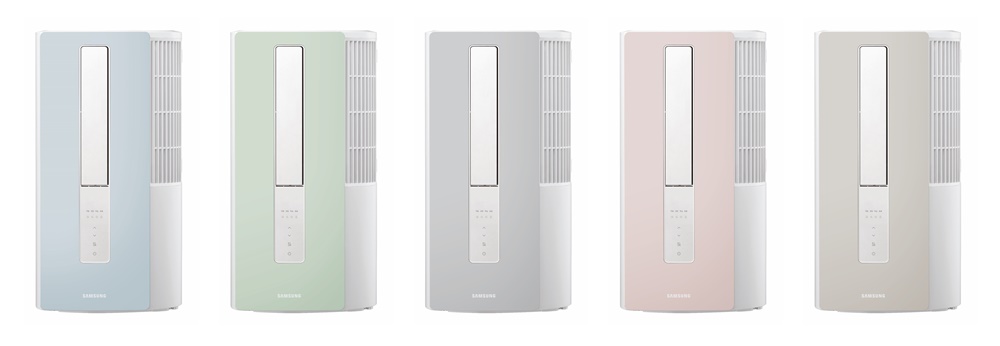
One major drawback of owning a wall-mounted or split-unit air-conditioner is the cumbersome installation methods which are beyond DIY jobs. Well, Samsung seems to be thinking of a solution to that as it has launched an air conditioner model that you don’t need to get a technician to install for you. The product is dubbed Samsung Window Fit air conditioner.
The Window Fit is a movable air conditioner that also provides users the leverage to move it at will to any room they want it to be. The air conditioner combines an outdoor unit and an indoor unit in one, and it can be installed in any room with a window. All that is needed is a dedicated frame that will be attached to the window, removing the need for a cumbersome installation process. It is also easy to remove the frame when the there is need to install the air conditioner a different room or when it is not in use.
In addition, this product naturally evaporates moisture generated during the heat exchange process through a fan, so there is no need to install a separate drain pipe.
Samsung Window Fit has an excellent cooling performance. It deploys double wind blades that can be switched in four directions, such as left, right, center, and swing, sending strong winds wide and evenly in every corner of the room.
The unit utilizes a digital inverter compressor which has twin inverter that reduces vibration and noise while two cylinders rotate. There is also a twin-tube muffler that reduces the friction noise of refrigerant using two tubes are applied to effectively block noise. When used in the low-noise mode, the noise is at a level of 40dB (decibels). This ensures the device won’t disturb the sleeping owner.
The Samsung air conditioner will be available in blue, beige, gray, and pink colour options. The gadget is priced at 849,000 won (~$764) in South Korea. There is no word yet on when it will enter other markets.
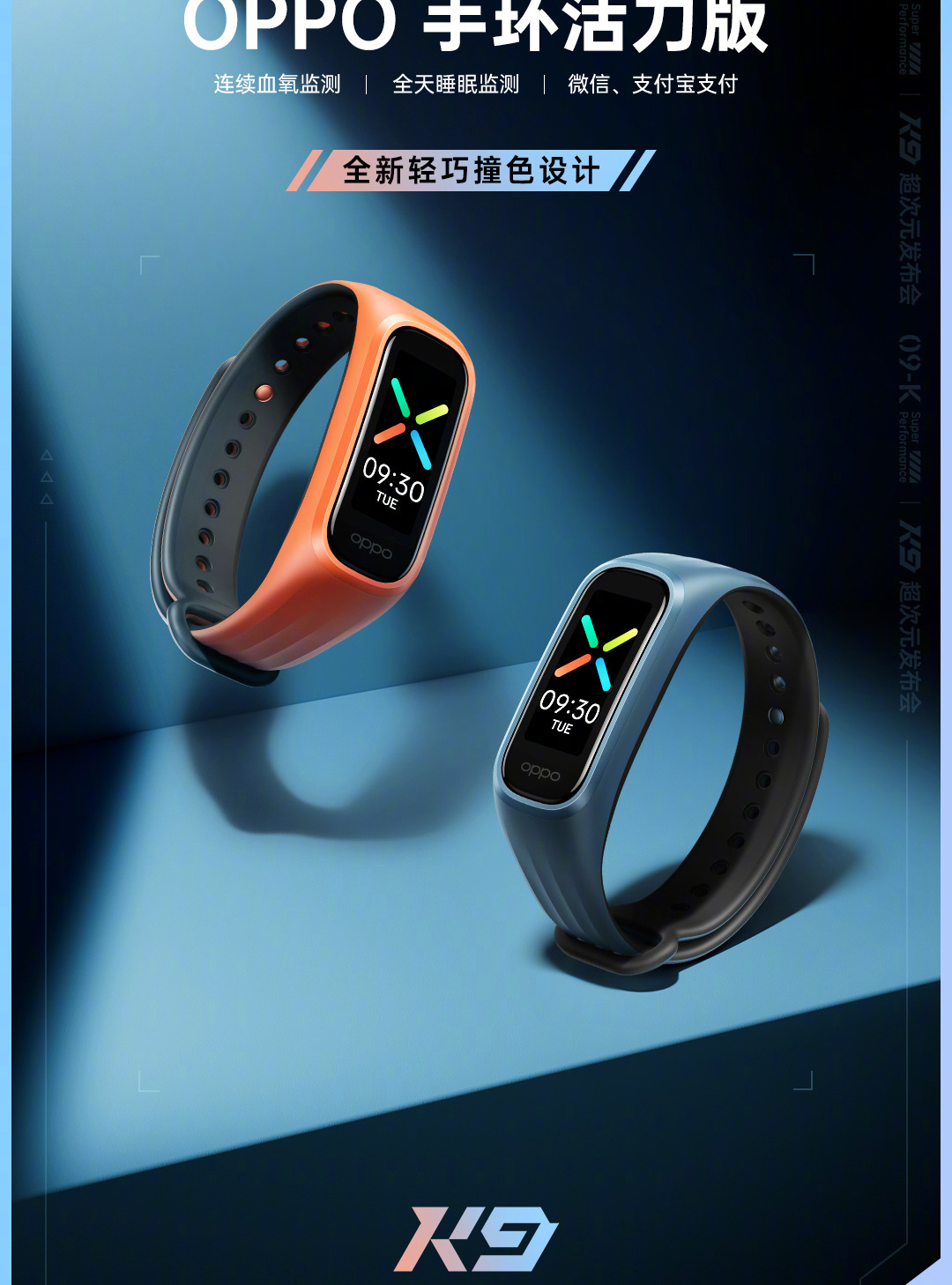
The new Oppo Band Vitality Edition is set to launch on 6th May 2021 and will be unveiled along with the upcoming K9 series of smartphones and Enco Air earphones as well. The new smart wearables will be available in two color variants.
The new smart band from the Chinese tech giant will arrive with vibrant color designs in two variants, namely orange and blue. Similar to most smart bands, the company’s Band Vitality Edition supports real time blood oxygen monitoring, along with online payment services like WeChat and Alipay payment as well. The smart wearables also supports live heart rate monitoring and even allows users to control music on their smartphones.
For protection, the band also has water resistance up to 50 meters. Furthermore, the smart wearable is also expected to arrive with common band features like multiple sports mode. It also sports an AMOLED panel on the front. Unfortunately, we do not have finer details regarding the upcoming Vitality Edition so we will have to wait for the official company announcement to find out more details. So stay tuned for more, as we will be providing updates when additional information is available regarding the arriving launch.
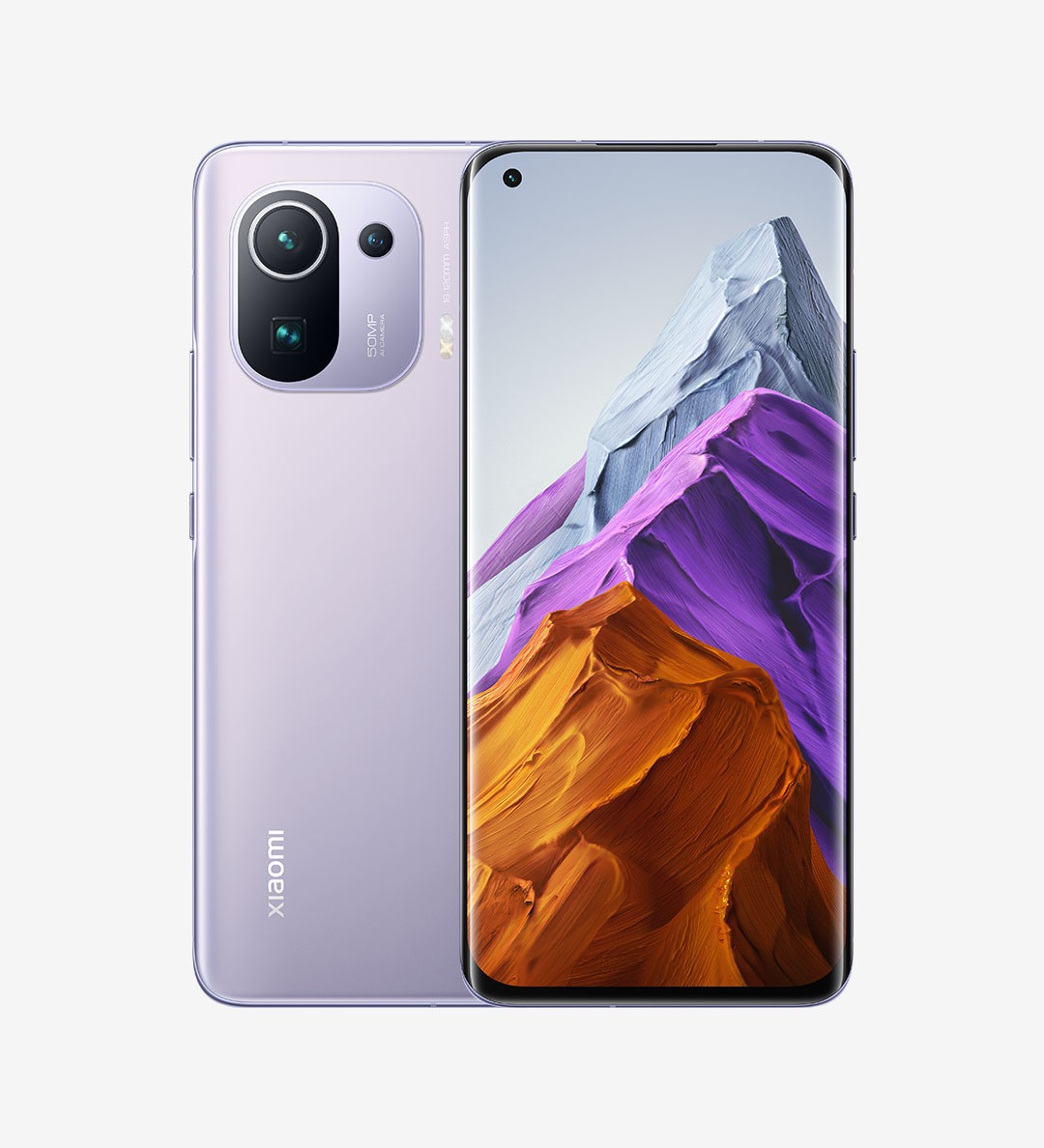
Xiaomi Mi 11 Pro Version comes with a 6.81 inch 2K E4 AMOLED display and Corning Gorilla Glass Victus protection. The smartphone is powered by a Qualcomm Snapdragon 888 5G processor and comes in three memory variants viz: 8GB + 128GB, 8GB + 256GB, and 12GB + 256GB.
The smartphone comes with triple rear cameras with a 50MP main camera and a 13MP ultrawide and 8MP telephoto camera. This studio-style camera setup is perfect for creating professional images and videos. The 20MP selfie camera is adequate for all your social media needs and the cinematic filters and ultra night video function make it a pleasure to capture images and videos in dim and night light. Xiaomi Mi 11 Pro is fueled by a massive 5000mAh battery and supports 67W Wireless charging, 10W Reverse charging, and Quick charge 4+.
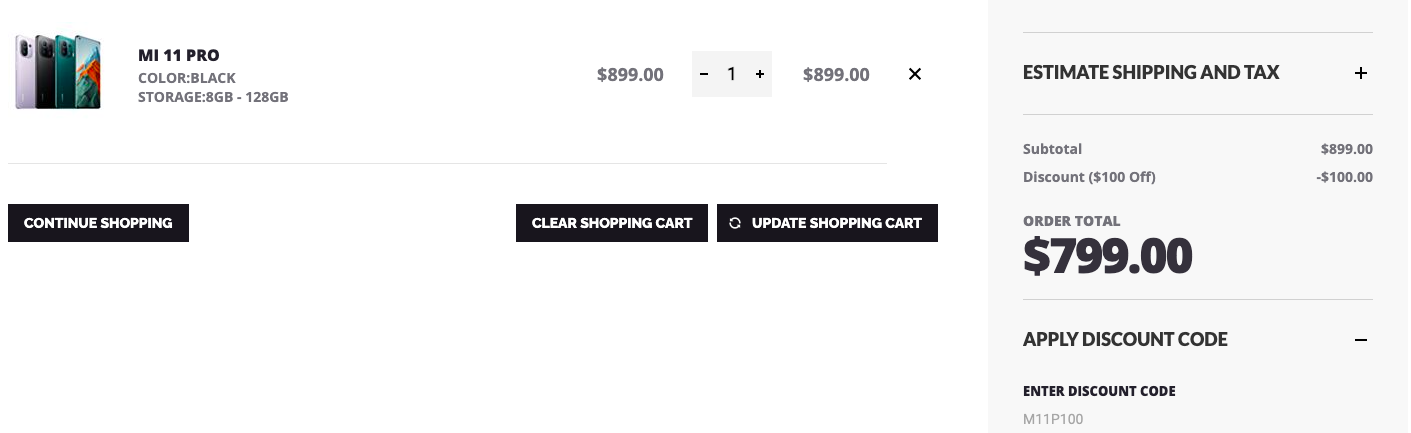
Retailing at $899, Giztop is giving out this flagship phone at a discounted price of $799 via coupon code: M11P100. Please note that this price is applicable on the 8GB – 128GB storage and Black, Green, and Purple color variant and can be shipped across the globe. However, the coupon code is applicable to all the variants available at the store. Additionally, Giztop is giving the original Xiaomi 67W charger free of cost with this purchase.
So without further delay grab Your Xiaomi Mi 11 Pro while this offer lasts.
For more information on such exciting deals and offers check out ourdeals hub.
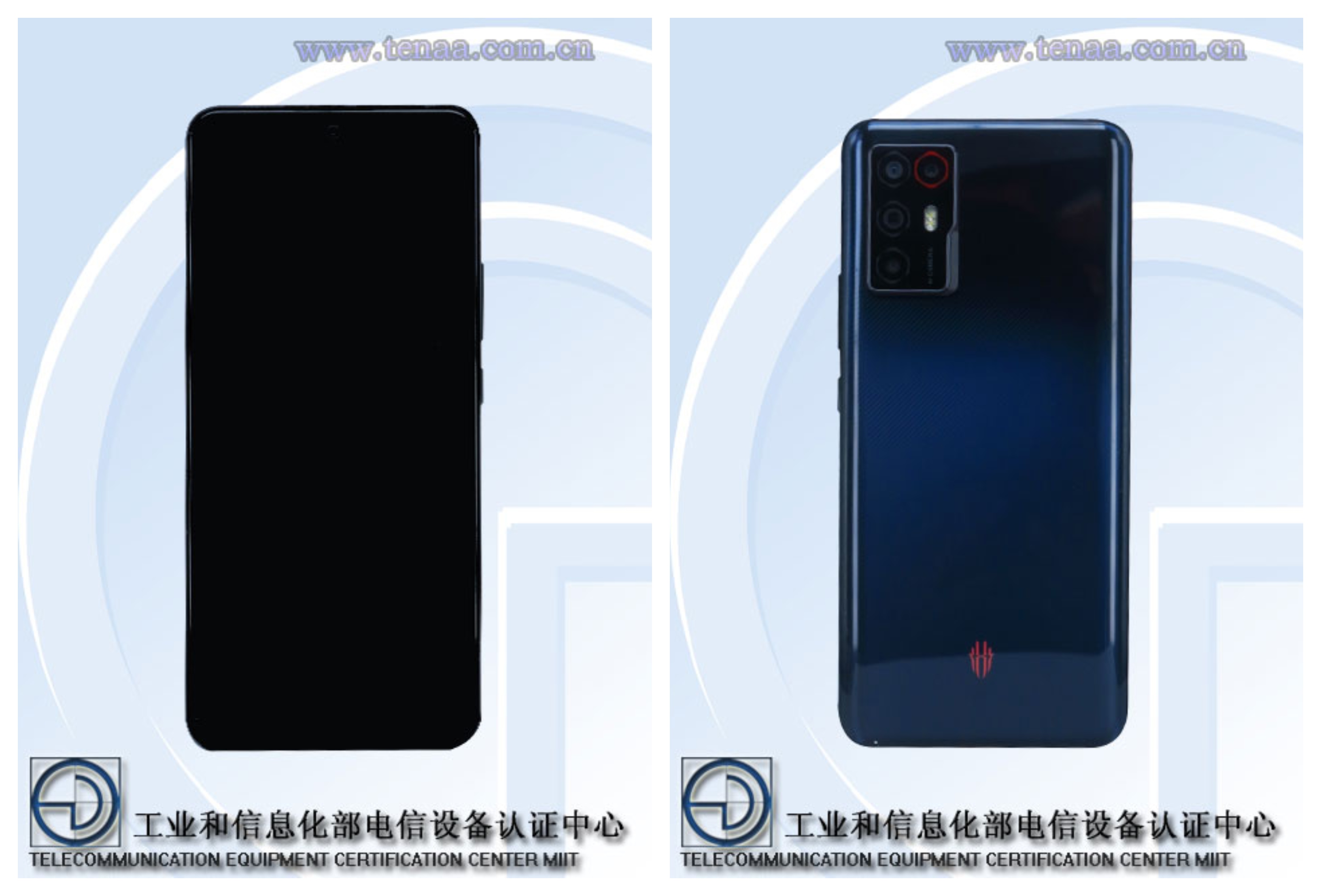
Last week, a smartphone called RedMagic NX666J was certified by TENAA. The listing revealed the design as well as all the key specifications of this handset. Now, we have learned the official name of this phone, thanks to its Bluetooth SIG certification.
RedMagic NX666J | Source: TENAA
The upcoming RedMagic NX666J smartphone has been certified by Bluetooth SIG with Bluetooth v5.2. According to the certification, this device will launch as RedMagic 6R (shortened). The handset’s exact brandings will be RedMagic 6 Racing and Tencent RedMagic Gaming Phone 6R respectively.
As per TENAA, this smartphone will sport a 6.67-inch FHD+ (2400 x 1080 pixels) OLED display. It will be powered by a 2.842GHz octa-core processor with support for 5G connectivity. This SoC will be coupled with 6GB/8GB/12GB RAM and 128GB/256GB/512GB internal storage.
Further, the phone will house a 64MP quad-camera setup on the back and a 16MP centered punch-hole selfie camera on the front. It will include all the essential sensors, such as an accelerometer, ambient light sensor, proximity sensor, and in-screen fingerprint sensor.
The RedMagic 6R (NX666J) will run Android 11 and will be backed by a 4,100mAh battery (rated capacity). Lastly, it will measure 163.04 × 75.34 × 8.20mm in dimensions and weigh 186.4g.
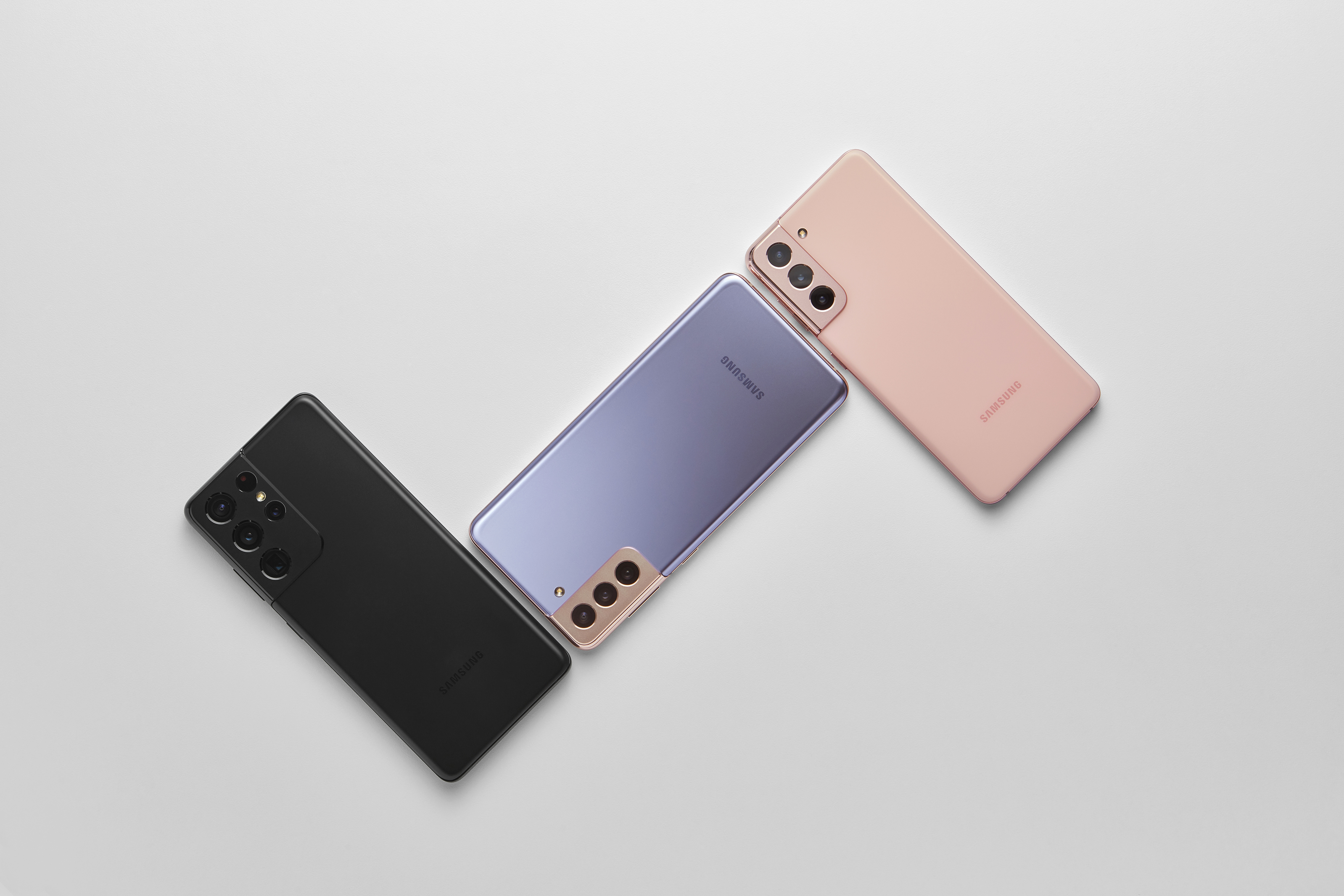
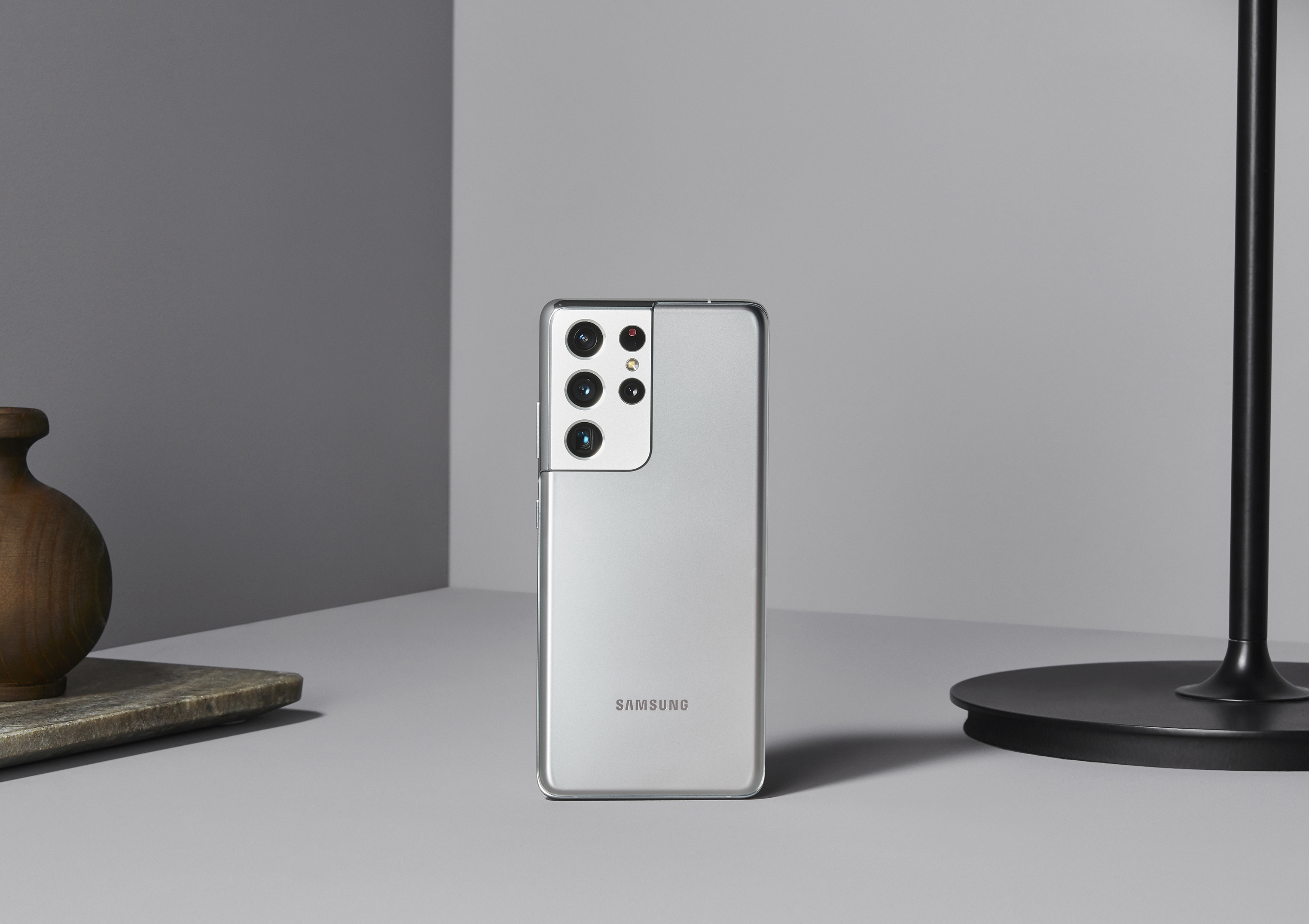
The cost of producing a Samsung Galaxy S21 Ultra 5G costs about 533 US Dollars, which is around 7 percent lesser in comparison to its predecessor, the Galaxy S20 Ultra 5G, as per a BoM analysis.
The analysis arrives from Counterpoint Research, which stated that the Galaxy S21 series has an optimized cost structure with the devices’ cost falling between 400 to 600 US Dollars. The reduction in cost is also helped by the integrated 5G modem in the main chipset, which simplifies the new system and helps bring the cost down. Furthermore, the South Korean tech giant adopting the in house Exynos 2100 processor also enables more cost effectiveness.
Samsung’s ecosystem contributed as high as 63 percent of the total BoM (bill of materials) cost for the international edition. While the device cost lower to produce, it also saw great sales in markets such as Europe and North America. The series overall sales volume in February alone was 22 percent higher than the 2019 Galaxy S20 series, reaching over 3.4 million units in shipments. The report added that the Galaxy S21 and Galaxy S21+ were the most cost oriented models, with BoM cost drops by about 12 to 13 percent than their predecessor, the Galaxy S20 and Galaxy S20+.
Parv Sharma, research analyst, commented on aggressive pricing of the Galaxy S21 series stating that, “In line with the price drops, Samsung managed to deftly balance the performance versus cost. It made a significant improvement in computing power with the 5nm process-based mobile platforms, either Snapdragon 888 or Exynos 2100 depending on the sales market, and also introduced a refreshed design for the rear camera bump.”
We use cookies on our website to give you the most relevant experience by remembering your preferences and repeat visits. By clicking “Accept”, you consent to the use of ALL the cookies.
This website uses cookies to improve your experience while you navigate through the website. Out of these, the cookies that are categorized as necessary are stored on your browser as they are essential for the working of basic functionalities of the website. We also use third-party cookies that help us analyze and understand how you use this website. These cookies will be stored in your browser only with your consent. You also have the option to opt-out of these cookies. But opting out of some of these cookies may affect your browsing experience.
Necessary cookies are absolutely essential for the website to function properly. This category only includes cookies that ensures basic functionalities and security features of the website. These cookies do not store any personal information.
Any cookies that may not be particularly necessary for the website to function and is used specifically to collect user personal data via analytics, ads, other embedded contents are termed as non-necessary cookies. It is mandatory to procure user consent prior to running these cookies on your website.

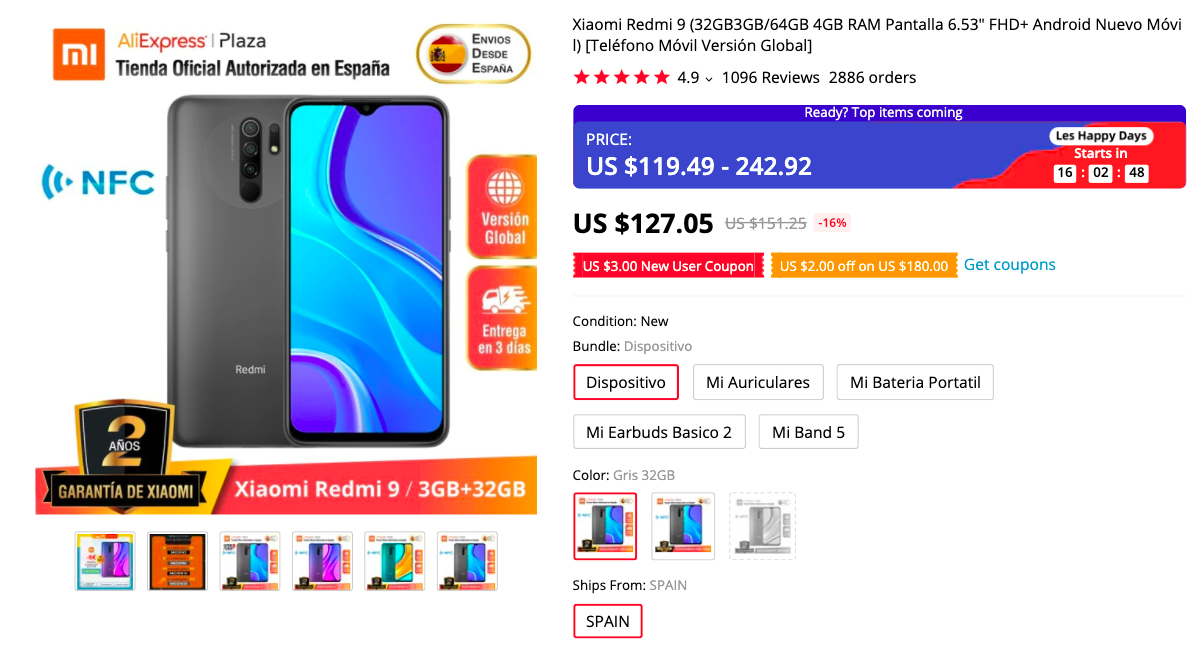
 Generally retailing for $150, you can now buy Xiaomi Redmi 9 for as low as $119.49. Please note that this discounted price is applicable under the Les Happy Days offer which starts in the next 16 hours. The above-mentioned price is for the 32GB, Gray color variant ordered from the Spain warehouse only. The price may change according to the variant. So make sure to order your Redmi 9 under the Les Happy Days Deal to avail of the maximum discount.