Advertisement

Redmi Book 2027 series launches next week with a 72Wh battery and third-gen Intel Core chips

Xiaomi has confirmed the Redmi Book 2027 series will launch in China on October 27. The laptops will launch alongside the Redmi K100.

The new laptops follow the Redmi Book 14 and 16 2026 models, which arrived in April with Intel Core Ultra 5 125H processors. For the 2027 series, Xiaomi is moving to Intel’s third-generation Core platform, bringing a newer processor generation than the previous models.

Redmi Book 14 2027 Launch Date

Xiaomi hasn’t shared many details yet, but it has confirmed a 72Wh built-in battery. The laptops will also get a refreshed design with brighter color options and, according to Xiaomi, a noticeable improvement in build quality. The company says the new models are intended for people who work away from a desk.

Screen sizes, memory and storage configurations, and pricing remain in the shadows. Xiaomi also hasn’t confirmed how many models the lineup will include, so those details will likely have to wait until the launch event.

Redmi Book 14 2027 Series

Redmi K100 launches on the same day

The Redmi Book 2027 series won’t be the only new product arriving on October 27. The Redmi K100 launches on the same day, and fortunately, we know a fair share of details about the phone. 

The standard Redmi K100 will have a 10,000mAh battery, the largest in any Xiaomi phone, along with a dedicated graphics chip, a relatively large vibration motor, and dual Bose speakers. The phone is expected to use a Snapdragon 8 Elite processor and fall within the 3,500 yuan price range.

The Redmi K100 will join the K100 Pro and K100 Pro Max, both of which launched in China in August. The standard model will complete the series, with more details expected at the October 27 event.

Don’t miss a thing! Join our Telegram community for instant updates and grab our free daily newsletter for the best tech stories!

For more daily updates, please visit our News Section.

OnePlus Ace 7 Pro aims to kill overheating with its dual-airflow cooling system

OnePlus has just confirmed that the OnePlus Ace 7 series will be unveiled on October 29 in China. Soon after the announcement, Li Jie Louis, president of OnePlus China, shared official details about the lineup’s new cooling technology. The company says its approach aims to maintain high gaming frame rates while keeping temperatures lower during extended sessions.

OnePlus Ace 7 introduces a dual-airflow cooling system

According to Li Jie, the OnePlus Ace 7 series features what the company calls a dual-airflow cooling system, designed to tackle both internal heat and the warmth users feel while holding their phones. One airflow channel directs cool air toward the chipset to help dissipate heat, while the second sends air across the rear panel to improve comfort during gaming.

The system also incorporates a tower-style fin structure similar to cooling designs used in graphics cards. OnePlus says this arrangement increases the heat-dissipation area and helps transfer heat away from the processor more efficiently. A dedicated temperature sensor and intelligent control algorithms coordinate the fan’s operation, allowing the system to adjust cooling based on temperature and usage conditions. You can read more about the company’s dual-outlet cooling design.

Infographic showing the OnePlus Ace 7 Pro dual-airflow cooling system and internal components.

OnePlus claims the new system can keep gaming temperatures up to 10 degrees Celsius lower while maintaining stable frame rates. The company is positioning this as a significant improvement over earlier fan-cooled smartphones, which often prioritize either lower temperatures or consistent performance rather than addressing both together.

The series is expected to include the standard Ace 7 and the Ace 7 Pro. According to earlier reports, both models could feature a 6.78-inch 1.5K OLED display with a 185Hz refresh rate, a battery of around 9,000mAh, and a 200-megapixel primary camera. The Pro model may also include a 50-megapixel periscope telephoto camera with 3.5x optical zoom. These specifications remain unconfirmed.

The OnePlus Ace 7 series will launch in China on October 29 at 7 PM local time. More details about its hardware and pricing should emerge at the event.

For daily updates, please visit our News Section.

Stay ahead in tech! Join our Telegram community and sign up for our daily newsletter of top stories!

OnePlus Turbo 7 Pro leak tips 185Hz display, 200MP camera, and a 10,000mAh battery

While OnePlus is teasing the arrival of the Ace 7 series, it may introduce another performance-focused smartphone before the year ends. A new leak points to an upcoming model that could target gamers and users who prioritize high refresh rates and long battery life. The device is expected to join the company’s Turbo lineup in China.

OnePlus Turbo 7 Pro specifications leak

OnePlus Turbo 7 Pro leak
OnePlus Turbo 7 Pro leak by DCS

Tipster Digital Chat Station has revealed several details about the upcoming OnePlus Turbo 7 Pro in a Weibo post. The handset is tipped to feature a 6.78-inch flat display with a 1.5K resolution and a 185Hz refresh rate. These specifications would put it among the high-refresh-rate smartphones aimed at gaming enthusiasts.

The phone is expected to use Qualcomm’s 3nm SM8845 Pro chipset, which has been linked to the Snapdragon 8 Gen 6 or Snapdragon 8 Gen 5 Pro branding in recent leaks. Its rear camera setup could include a 200-megapixel primary sensor with a large sensor format. Another reported addition is an external cooling fan accessory, potentially connecting to the phone through a compatible case with pogo pin contacts. It is likely to compete with the upcoming iQOO Z12 Turbo, which is also rumored to pack the same chip and a built-in cooling fan.

Battery capacity could be another major selling point. The OnePlus Turbo 7 Pro is tipped to pack a battery rated at 9,000mAh or higher, while engineering samples from the series have reportedly reached 10,000mAh. However, the final retail capacity and charging specifications remain unconfirmed.

The Turbo 6 series includes several models, and among them the Turbo 6 equipped with the Snapdragon 8s Gen 4 chipset is the most powerful model. It has a 6.78-inch 1.5K OLED display running at 165Hz, and a 9,000mAh battery. It also supports 80W wired charging and includes a 50-megapixel main camera with optical image stabilization. The rumored Turbo 7 Pro could deliver a higher refresh rate, a substantially higher-resolution primary camera, and a newer processor.

Interestingly, the leaked display and battery specifications resemble those attributed to the OnePlus 16, although the two phones are expected to use different chipsets. OnePlus has yet to confirm the Turbo 7 Pro’s name, specifications, pricing, or launch date.

For daily updates, please visit our News Section.

Stay ahead in tech! Join our Telegram community and sign up for our daily newsletter of top stories!

You can now buy a wide-screen Android phone from Coolpad, and it’s affordable

The wide-screen smartphone that Coolpad announced a few days ago is now available for pre-order in China. You can pre-book the Coolpad Cool X Wide via JD.com, with shipping set to begin on November 8.

Coolpad calls it the first wide-screen phone in the Android camp, and it is also the company’s first phone with this form factor. More importantly, it costs a fraction of what Huawei, the only manufacturer that currently sells a wide-screen smartphone, asks for the Pura X View.

Two Coolpad Cool X Wide smartphones in white and magenta showing their rear cameras.

The base model retails at 999 yuan (~ $150) with 8GB of RAM and 128GB of storage. The other options include 8GB + 256GB for 1,199 yuan (~ $180) and 12GB + 256GB for 1,399 yuan (~ $209). This affordability directly translates to what the phone offers.

Coolpad Cool X Wide Specifications

The Cool X Wide has a 6.38-inch display with a 16:10 aspect ratio and a 90Hz refresh rate. Its 720 x 1158 resolution is relatively low, particularly compared with the Full HD screens found on many phones, but it helps keep the price down.

Hands holding a wide-screen Coolpad Cool X smartphone displaying a Greek church landscape.

Its dimensions are 150.3 x 94.5 x 8.95mm. At 94.5mm wide, the phone is much broader and shorter than a typical smartphone, giving it a different shape from the tall, narrow designs most manufacturers sell. Oppo is also reportedly developing a wide-screen phone, according to an earlier leak, but the Cool X Wide is already available to order.

Inside, the phone runs on MediaTek’s Helio G99 chipset, paired with LPDDR4X RAM and UFS 2.2 storage. Buyers can get up to 12GB of RAM and 256GB of internal storage, while the latter is expandable up to 256GB via a TF card. Worth noting, the Helio G99 is a 4G-only chip, so the phone does not support 5G connectivity.

The remaining hardware includes a 4,600mAh battery and a single 50-megapixel rear camera. 

Coolpad wide-screen phone

For now, the Cool X Wide is limited to the Chinese market. Coolpad has not announced plans to release the phone in other markets.

Don’t miss a thing! Join our Telegram community for instant updates and grab our free daily newsletter for the best tech stories!

For more daily updates, please visit our News Section.

Official: OnePlus Ace 7 and Ace 7 set to launch on October 29

OnePlus has officially confirmed that the OnePlus Ace 7 series will launch in China on October 29 at 7 PM local time. The lineup includes two models, the Ace 7 and the Ace 7 Pro, whose names surfaced in the Google Supported Devices catalog last week. The company has also opened reservations for both phones on its official online store in China.

OnePlus Ace 7 series design officially revealed

Official OnePlus Ace 7 series launch poster showing two phones in silver-orange and light blue finishes with the October 29 launch date

The poster first appeared in a leaked image on Weibo a few days ago, but OnePlus has now made it official and confirmed the launch date alongside it. The poster describes the Ace 7 series as a generational leap in performance and confirms that both phones ship with ColorOS.

It shows two phones from the back. One features a silver finish that fades into a warm orange toward the bottom, with a glowing outlined pattern and an outlined OnePlus logo. The other comes in light blue with a frosted, wind-like texture spreading out from a blurred OnePlus logo in the center.

Both units sport a large squircle camera island in the top-left corner. It houses a tall pill-shaped lens, a smaller circular lens, and a ring-shaped element, while the flash sits just outside the module. The phones also feature flat frames with the buttons placed on the right side.

OnePlus Ace 7 and Ace 7 Pro specifications (rumored)

Per earlier reports, the Ace 7 Pro will use the Snapdragon 8 Elite Gen 5, while the standard Ace 7 may get the chip’s V Series version. The highlight of the series is a built-in cooling fan, and OnePlus China President Li Jie has confirmed a dual-airflow design in which one stream cools the chipset and the other cools the rear panel. In a test shared by Digital Chat Station, the Ace 7 Pro ran Delta Force at close to 185fps.

Both phones are tipped to feature a 6.78-inch 1.5K OLED panel with a 185Hz refresh rate, up to 16GB of RAM, and up to 1TB of storage. They may pack a 9,000mAh battery with 100W or 120W fast charging.

For photography, both models are expected to get a 200-megapixel primary camera and a 16-megapixel selfie shooter. The Pro is tipped to add a 50-megapixel periscope telephoto camera with 3.5x optical zoom. Both phones should run ColorOS 17 based on Android 17.

OnePlus has not confirmed these specifications or pricing yet, but we should learn more in the run-up to the October 29 event.

For daily updates, please visit our News Section.

Stay ahead in tech! Join our Telegram community and sign up for our daily newsletter of top stories.

iPhone Duo getting Apple Pencil support with iOS 27.2 next week

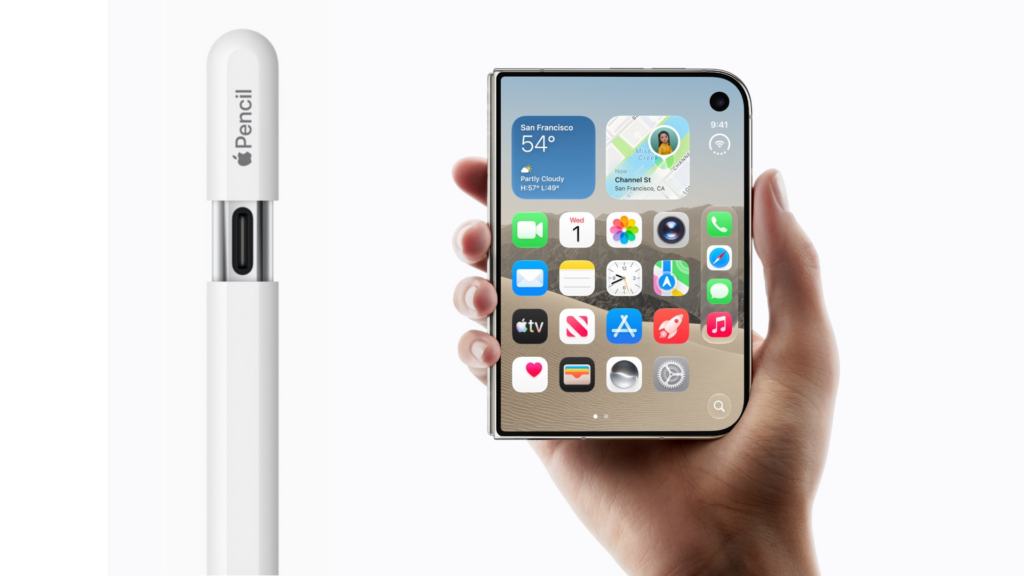
When Apple showed off its first foldable iPhone last month, one big promise felt a little incomplete. The company said Apple Pencil support would show up “later this year,” which left a lot of early buyers wondering just how long “later” really meant. That wait is getting a lot clearer, and it’s shorter than most people expected.

A hand holds an iPhone Duo next to an Apple Pencil stylus.

The iPhone Duo starts shipping this Friday, October 23, on iOS 27.1. At launch, the Pencil won’t work. But according to 9to5Mac and analyst Max Weinbach, full Apple Pencil support is already up and running in the iOS 27.2 Release Candidate that started rolling out this week. The public version of 27.2 should land around Monday, October 26.

That means anyone who gets a Duo on day one and updates right away should have stylus support within a few days. People already on the RC build have it now. Weinbach even showed it working on his unit after installing the candidate, with drawing, annotating, and navigation all functioning on both the inner and outer displays.

There’s one important catch: the Duo only works with the Apple Pencil that has USB-C. The fancier Pencil Pro and older models aren’t compatible. The USB-C version pairs and charges with a cable instead of snapping on magnetically, which actually makes sense given the Duo’s design doesn’t have a good magnetic spot for the Pro.

Check price →
Where to buy
Apple iPhone Duo
Latest price on Amazon

This is the first time any iPhone has supported Apple Pencil at all. On a big foldable canvas, that suddenly opens up proper note-taking, sketching, and document markup in apps that support it, making the Duo feel a lot more iPad-like for productivity while still folding down into a regular phone when you need it.

Apple’s original “later this year” wording had a lot of people assuming a December update, which is usually when bigger feature drops land. Getting it in 27.2 is a nice surprise for the people who managed to grab one of the limited launch units. Pre-orders were intense, and plenty of buyers are looking at delivery windows that stretch well into 2027.

If you’re one of the lucky ones getting a Duo this week, the Pencil wait is going to be measured in days, not months.

Don’t miss a thing! Join our Telegram community for instant updates and grab our free daily newsletter for the best tech stories!

For more daily updates, please visit our News Section.

(Source)

iQOO Pad Pro teaser reveals four-layer cooling setup including active cooling fan

The company has confirmed that the upcoming iQOO Pad Pro will pack an industry-leading large active cooling fan along with a four-layer cooling setup. The whole system is built for long, demanding gaming sessions.

A robotic hand holds an iQOO Pad Pro tablet flanked by gaming controllers.

They’re highlighting a total heat dissipation area of 23,253 mm² and a pretty chunky 30 × 30 × 3.5 mm active cooling area. The cooling fan has three levels of speed adjustment so it can ramp up or stay quiet depending on what you’re doing. This combination of large VC and active cooling should help keep frame rates steady and temperatures in check.

iQOO Pad Pro promotional poster highlighting the tablet's active cooling fan and technical specifications.

Under the hood, you’ll get Qualcomm’s Snapdragon 8 Elite Gen 5 chipset paired with iQOO’s own Q3 gaming chip. That dual-chip combo is meant to handle heavy games without breaking a sweat. The screen is an 8.8″ OLED running at 165 Hz. It’s all powered by a solid 9,020 mAh battery.

The iQOO Pad Pro is set to launch on October 28. The idea is to give you flagship-level gaming performance in a relatively portable size, instead of the usual big tablet that sometimes feels like a laptop replacement. Heat has always been a weak point for performance-oriented devices, so stuffing a cooling fan into a slim body is a smart move, as Honor has also shown with its first Win series tablet.

With the Snapdragon 8 Elite Gen 5, the Q3 gaming chip, the high-refresh OLED, and adaptive cooling, the iQOO Pad Pro looks like a strong option if you want something powerful that still fits in a bag easily.

Pricing and exact variants haven’t been locked in yet, so we’ll have to wait for those closer to launch. Keep an eye out for more official details in the next few days.

Don’t miss a thing! Join our Telegram community for instant updates and grab our free daily newsletter for the best tech stories!

For more daily updates, please visit our News Section.

9Source: iQOO on Weibo)

Galaxy A57 and A56 gain AirDrop compatibility as part of One UI 9.0 update

Samsung is quietly rolling out a popular cross-platform file-sharing feature to more affordable phones, making it easier for Galaxy users to swap files with Apple devices.

Three Samsung Galaxy A57 5G smartphones in different colors displayed against a white background.

The Quick Share “Share with Apple devices” option used to be limited to flagship Galaxy models. With the One UI 9.0 update starting to roll out this October, Samsung is bringing AirDrop-compatible sharing to some Galaxy A series phones.

This feature started with Google’s cross-platform sharing efforts on Pixel devices, then moved to Samsung’s premium Galaxy S26 series and later models like the Galaxy S25 FE and S24 FE. No third-party app is needed, the native Quick Share app simply has a toggle called “Share with Apple devices” that lets you send and receive files between Android and iOS.

Recent reports confirm the expansion. A Galaxy A57 owner spotted the option after installing One UI 9.0, and people with last year’s Galaxy A56 are also seeing AirDrop support after the same update.

Samsung community forum post discussing AirDrop support on the Quick Share feature.

Just open Quick Share Settings and flip on the “Share with Apple devices” switch. Once it’s on, you can share with iPhones, iPads, and Macs, as long as the Apple device is set to allow AirDrop from everyone. Interestingly, the official One UI 9.0 changelogs don’t mention this expansion, but confirmed reports on the A56 and A57 show it’s already live.

Wider availability like this could push other Android makers to follow, potentially making file sharing between iOS and Android a lot less painful for millions of people. As the One UI 9.0 rollout continues, more Galaxy A models may pick up the same feature. If you spot it on your Galaxy phone, sharing a screenshot and model details with the community helps track how far it’s spreading.

By bringing Quick Share AirDrop support beyond just the flagships, Samsung is making cross-platform sharing more practical for everyday mid-range users.

Don’t miss a thing! Join our Telegram community for instant updates and grab our free daily newsletter for the best tech stories!

For more daily updates, please visit our News Section.

(Sources: Samsung Community | Reddit)

Oppo launches Find X10 and Find X10 Pro Max globally, but with smaller batteries

Oppo has launched the Find X10 and Find X10 Pro Max in global markets, but buyers in Europe will get smaller batteries than customers in China. Both phones come with a 7,150mAh battery in Europe, compared with the 8,000mAh cells in their Chinese versions. 

The charging aspect remains unchanged at 80W wired and 50W wireless. However, the global Find X10 also misses out on the 16GB + 1TB configuration available in China. 

The India launch is scheduled for tomorrow, and there’s a chance the Indian models could retain the larger 8,000mAh battery. Oppo hasn’t confirmed whether that will be the case, however.

Oppo Find X10 specs

The standard Find X10 has a 6.59-inch LTPO AMOLED display with a resolution of 2768 × 1272 pixels, a 144Hz refresh rate and 0.99mm bezels. Peak HDR brightness reaches 3,600 nits.

Powering the phone is MediaTek Dimensity 9600M, built on TSMC’s 3nm process. The phone pairs the chip with 12GB of LPDDR5X RAM and up to 512GB of UFS 4.1 storage.

Oppo Find X10 - Ice Blue

Oppo has also equipped the Find X10 with two 200MP rear cameras. The main camera uses Samsung’s ISOCELL HPE sensor with a 1/1.4-inch size, while the telephoto camera uses the 1/1.56-inch ISOCELL HP5 sensor. A 50MP ISOCELL JN5 handles ultra-wide shots, and the front camera uses another 50MP JN5 sensor.

Oppo’s Lumo True Color imaging system handles color reproduction, with an emphasis on natural-looking colors and skin tones. Both the main and telephoto cameras can record 4K video at 120fps or 8K footage at 30fps.

Oppo Find X10 Pro Max specs

The Find X10 Pro Max steps up to the Dimensity 9600 Pro and has three 200MP rear cameras. Oppo’s Find X10 series is among the first global phone lineups to use MediaTek’s 2nm chip.

Oppo Find X10 Pro Max

MediaTek says the chip’s Arm C2 CPU cores are 61% more power-efficient in multi-core tests than those in the previous generation. The Mali-G2 Ultra NX GPU is reportedly 27% faster, with 18% faster ray tracing and 24% better power efficiency. The NPU also delivers 51% faster prefill and 55% faster token generation per watt.

The Pro Max supports Oppo’s new Hasselblad teleconverter kit, which the company announced earlier in a separate announcement.

Oppo Find X10 price in Europe and the UK

The standard Find X10 starts at €1,300 (£1,100) for the 256GB model, while the 512GB version costs €1,500 (£1,250). The Find X10 Pro Max comes in a single 512GB configuration priced at €1,800 (£1,500).

Check price →
Where to buy
Oppo Find X10
Latest price on Amazon

Oppo is offering several extras to UK buyers. Customers purchasing either phone can choose an accessory worth up to £500, including the Oppo Hasselblad Teleconverter (£500), Oppo Watch X3 (£330) or Oppo Pad 5 (£400). Likewise, you can trade in an older Oppo or OnePlus phone for a £250 bonus, and Oppo is adding a £100 discount from October 21 to 28.

Germany has a similar promotion, with buyers able to choose the teleconverter kit for €550, the watch for €380 or the tablet for €460. Oppo is also offering a €100 voucher that customers can claim with one click, along with a €250 trade-in bonus for older Oppo and OnePlus devices.

The new models arrive at higher price points than some of their predecessors. The Find X9 with 512GB of storage still sells for €1,000, while the Find X9 Pro costs €1,300. The Find X9 Ultra is priced at €1,700 in France, making it €100 cheaper than the new Find X10 Pro Max.

For daily updates, please visit our News Section.

Stay ahead in tech! Join our Telegram community and sign up for our daily newsletter of top stories!

Honor launches Win Earphones with 12.4mm drivers, 55dB ANC, 8.5h/42h battery life

Honor has expanded its gaming-focused WIN lineup with a new pair of wireless earbuds built for low-latency audio and solid noise cancellation.

White Honor Win Earphones and their charging case displayed against a blue background.

The Honor Win Earphones launched in China alongside the WIN 2 series phones and the Win Pad. They come in a clean white-and-grey look, with a multi-layer pearlescent spray coating on the white shell and precision-cut dark grey text details. The only color option right now is Champion White, and they’re priced at 269 yuan, which translates to around $40 or €35.

Exploded view of the 12.4mm driver inside the Honor Win Earphones with technical text.

Designed with gamers in mind, the earbuds deliver 40ms low-latency audio through a dedicated low-latency channel and some communication optimizations. A spatial surround sound algorithm is meant to widen the soundstage and make footsteps and gunfire easier to pinpoint. Active noise cancellation goes up to 55dB, and there are dedicated sound modes tuned for music and movies.

On the audio hardware side, they use 12.4mm titanium-plated diaphragm drivers, a Bluetrum flagship chip with a 24-bit/110dB architecture, and a 50mW high-power amplifier. LHDC 5.0 high-definition decoding and Hi-Res Audio Wireless certification are also on board.

Call quality relies on a three-microphone AI noise-reduction system in each bud, plus a 90-degree bend physical structure to cut wind noise. Dual-device connectivity lets you stay connected to a phone and tablet at the same time without having to re-pair, and audio can switch seamlessly between phones, tablets, and PCs.

You can customize the touch controls for playback, calls, track switching, and voice assistant, and quickly toggle between Noise Cancellation, Transparency, and Off modes. Extra everyday features include real-time translation across multiple languages and one-key audio recording.

Battery life is rated at up to 8.5 hours on a single charge and 42 hours total with the case. The earbuds carry an IP54 rating for dust and splash resistance. Each bud weighs about 4.8g, while the case measures 63.5 × 48.8 × 26.5mm and weighs roughly 33.5g without the buds.

Don’t miss a thing! Join our Telegram community for instant updates and grab our free daily newsletter for the best tech stories!

For more daily updates, please visit our News Section.

Ugreen’s new 11-in-1 USB4 docking station offers 8K output and 115W charging

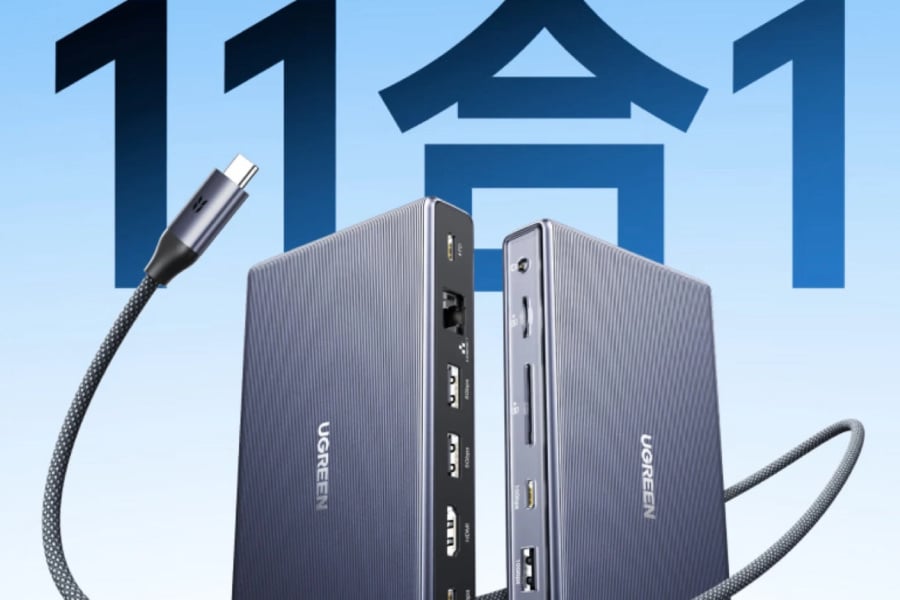
Ugreen has announced a new 699 yuan, or about $105, 11-in-1 USB4 docking station called the Ugreen U500. It connects to a laptop through a single USB4 cable and adds ports for high-speed data transfer, 8K video output, 2.5GbE networking, and up to 115W of laptop charging.

The Ugreen U500 supports up to 40Gbps of shared bandwidth across its ports. Its USB4 downstream port gets up to 20Gbps, allowing users to connect another USB4 device through the dock.

Ugreen U500 11-in-1 dock

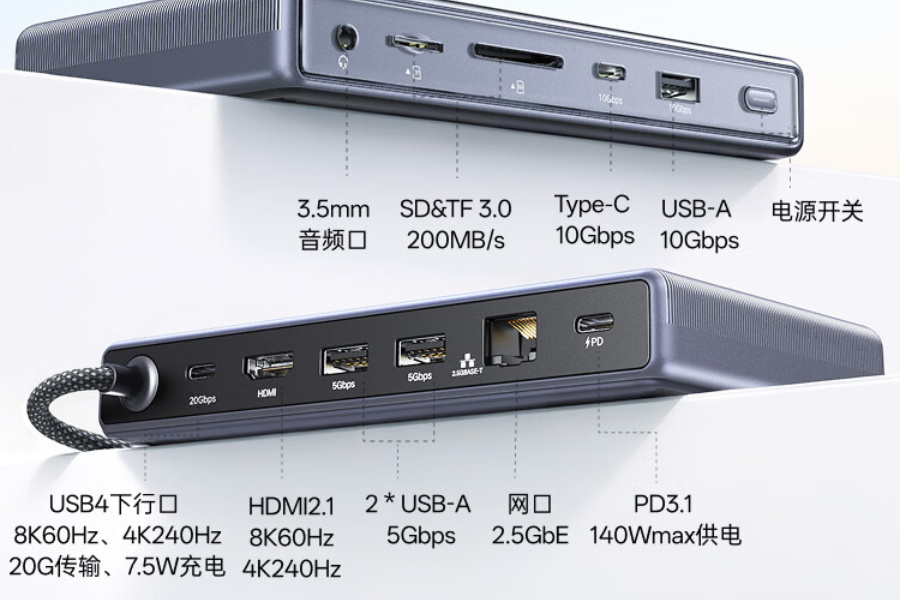
The front panel houses a 3.5mm audio jack, SD and TF card slots with transfer speeds of up to 200MB/s, a 10Gbps USB-C port, a 10Gbps USB-A port, and the power switch. Around the back, there’s another USB4 port, an HDMI 2.1 port, two 5Gbps USB-A ports, a 2.5GbE Ethernet port, and a PD input.

For external displays, the dock supports resolutions up to 8K at 60Hz or 4K at 240Hz. An indicator light shows the current display mode: white indicates USB4 mode, which supports dual-screen setups, while orange indicates DP Alt mode, which supports a single screen or no display.

Shop now →
Where to buy
Ugreen USB4 docking stations
Browse the range on Amazon

The power switch also lets users turn the dock off and back on with a short press. Ugreen also includes a Type-C to DisplayPort cable in the box, while networking is handled by the built-in 2.5GbE port, which supports 2500Mbps, 1000Mbps, and 100Mbps connections.

Check price →
Where to buy
140W USB-C PD charger
Latest price on Amazon
Ugreen U500 ports

Power delivery is another key part of the U500. It supports PD 3.1 and accepts up to 140W of total input power, with up to 115W delivered to a laptop through the upstream USB4 port. The downstream USB4 port can also supply up to 7.5W, allowing users to charge a phone or tablet while working.

Where it fits in Ugreen’s dock lineup

Ugreen has released several docking stations over the past year, including models built around the newer Thunderbolt 5 standard. In March, the company launched the Maxidok 17-in-1 Thunderbolt 5 docking station, which delivers up to 140W of power to a connected laptop. Last month, it introduced the LinkStation Pro Thunderbolt 5 eGPU dock.

For daily updates, please visit our News Section.

Stay ahead in tech! Join our Telegram community and sign up for our daily newsletter of top stories!

Honor Win Pad launches with Snapdragon 8 Elite Gen 5 chip, 15000rpm turbo fan, 10000mAh battery

Honor just launched its first gaming tablet in the Win series, alongside the Win 2, Win RT 2, and Win Turbo 2 phones.

The back of the silver Honor WIN Pad showing its camera and cooling fan.

The tablet, called the Honor WIN Pad, is built around an 8.4″ OLED display. It runs at 240Hz with a 2304 × 1440 resolution, 324 PPI, peak brightness of 6000 nits, and a 93% screen-to-body ratio. The panel supports 240Hz in more than 40 games, and also offers native 185Hz and 165Hz options for a similar number of titles.

Hands holding the Honor Win Pad displaying a high frame rate gaming experience.

Under the hood is Qualcomm’s Snapdragon 8 Elite Gen 5, paired with a 15000rpm turbo fan that lowers the temperature by up to 8°C. There’s a dual X-axis linear motors for responsive haptics. Battery capacity is a hefty 10,000mAh, with 66W fast charging, 27W reverse charging, and the ability to charge and discharge separately so sessions can keep going longer.

On the software side there’s a new “Geek Center” that lets you customize settings like screen refresh rate, memory scan size, and low-battery protection, then save them as local profiles. There’s also a “Full Throttle” performance mode when you need an extra boost.

Pricing and availability:

  • 12GB+256GB: 4499 yuan (~ $673)
  • 16GB+512GB: 5499 yuan (~ $823)

Limited-time offers and national subsidies bring the prices down to 3,699 yuan (~$553) for the 12GB+256GB version and 4,699 yuan (~$703) for the 16GB+512GB version.

Check price →
Where to buy
66W USB-C chargers
Latest price on Amazon

Overall, the Honor WIN Tablet packs a high-refresh OLED, flagship chipset, active cooling, and a big battery into an 8.4″ body. With the subsidized pricing and those deeper customization options, it’s clearly aimed at people who want a dedicated portable gaming machine rather than a regular tablet.

Don’t miss a thing! Join our Telegram community for instant updates and grab our free daily newsletter for the best tech stories!

For more daily updates, please visit our News Section.

Redmi K100 to ship with HyperOS 4, 50MP flagship camera, and gaming-focused features

Redmi is revealing more details about the Redmi K100 ahead of its official launch in China. The upcoming smartphone is expected to deliver improvements across software, photography and gaming. The company has also highlighted new features designed to make the device more useful in everyday scenarios.

Redmi K100 to launch with HyperOS 4 and new AI features

Redmi has confirmed that the Redmi K100 will run HyperOS 4, bringing a redesigned visual experience inspired by its flagship devices. The software will include Super XiaoAi 2.0, powered by the Xiaomi MiMo large language model, with features such as convenient memory capabilities and new AI experiences. The phone will also support cross-device connectivity, allowing tablets and PCs to access and process data from the smartphone, alongside enhanced privacy protection.

The Redmi K100 is also being positioned as a camera-focused device. Xiaomi has confirmed an 50-megapixel Light Hunter 800-series main camera sensor with high dynamic range, IP68-rated dust and water resistance, and an ultrasonic fingerprint sensor. These features add to the phone’s previously revealed hardware, including a 6.83-inch display with a 165Hz refresh rate and a Snapdragon 8 Elite processor paired with a dedicated D2 gaming display chip.

For an enhanced gaming experience, the Redmi K100 will arrive with symmetrical dual 1115X speakers. The phone will also feature seven gaming antennas for improved connectivity, dual T1+ signal enhancement chips and a 0815 X-axis linear motor for more precise vibration feedback. A three-microphone system will further optimize voice communication during gameplay.

The Redmi K100 will house a 10,000mAh battery, 100W wired charging, and 27W wired reverse charging. On the front, it has a 6.83-inch 1.5K OLED display with a 165Hz refresh rate support. Under the hood, it features the Snapdragon 8 Elite chip along with D2 gaming enhancement chip.

Redmi has opened pre-reservations in China, with the launch scheduled for October 27 at 7 pm local time.

For daily updates, please visit our News Section.

Stay ahead in tech! Join our Telegram community and sign up for our daily newsletter of top stories!

Xiaomi 18 Pro vs Galaxy S26: The Flagship Battle Samsung May Not Win

Xiaomi 18 Pro and Samsung Galaxy S26 target buyers who want flagship performance without moving to larger phones. However, they approach the premium experience differently. Xiaomi focuses on advanced camera hardware, a distinctive secondary display, and fast charging, while Samsung prioritizes a refined everyday experience, long-term software support, and a familiar flagship design. The choice ultimately comes down to whether superior hardware capabilities or a more balanced, long-lasting smartphone experience matters more.

Side-by-side comparison of the pink Xiaomi 18 Pro and white Samsung Galaxy S26 smartphones.

Major Features:

CategoryXiaomi 18 ProSamsung Galaxy S26Winner
BuildGlass front, aluminum frame, Dragon Crystal Glass 3Gorilla Glass Victus 2 front and back, aluminum frameXiaomi — Dragon Crystal Glass 3 protection and distinctive rear display
Water ResistanceIP68, up to 6m for 30 minutesIP68, up to 1.5m for 30 minutesXiaomi — Higher specified water immersion depth
Main Display6.4-inch LTPO AMOLED, 120Hz6.3-inch Dynamic LTPO AMOLED 2X, 120HzXiaomi — Higher claimed peak brightness and Dolby Vision
Display Resolution1120 × 2436 pixels1080 × 2340 pixelsXiaomi — Slightly higher resolution
Peak Brightness4,000 nits2,600 nitsXiaomi — Higher claimed peak brightness
Secondary Display2.7-inch rear AMOLED displayNoXiaomi — Additional screen for quick interactions
Operating SystemAndroid 17, HyperOS 4Android 16, One UI 9; up to 7 major OS upgradesSamsung — Longer stated software upgrade commitment
ProcessorSnapdragon 8 Elite Gen 6, 2nmSnapdragon 8 Elite Gen 5 or Exynos 2600, depending on regionXiaomi — Newer-generation Snapdragon option
RAM12GB or 16GB12GBXiaomi — Offers a 16GB RAM configuration
Storage256GB, 512GB, 1TB128GB, 256GB, 512GBXiaomi — Higher maximum storage capacity
Storage TechnologyUFS 4.1UFS 4.XXiaomi — Specifically listed UFS 4.1 storage
Rear Cameras200MP main, 200MP periscope telephoto, 50MP ultrawide50MP main, 10MP telephoto, 12MP ultrawideXiaomi — Higher-resolution camera system
Optical Zoom3.2x3xXiaomi — Slightly higher optical zoom
Selfie Camera50MP with autofocus12MP with autofocusXiaomi — Higher-resolution front camera
Rear Video RecordingUp to 8K at 30fps; 4K up to 120fpsUp to 8K at 30fpsXiaomi — Supports 4K recording at up to 120fps
Stereo SpeakersYes, Dolby AtmosYesXiaomi — Dolby Atmos support
Wi-FiWi-Fi 7, dual-bandWi-Fi 7, tri-bandSamsung — Tri-band Wi-Fi support
BluetoothBluetooth 6.0Bluetooth 5.4Xiaomi — Newer Bluetooth version
USBUSB-C 3.2, DisplayPort, OTGUSB-C 3.2, DisplayPort 1.2, OTGTie — Both support DisplayPort output
Desktop ModeNo dedicated desktop mode listedSamsung DeX and Wireless DeXSamsung — Dedicated desktop experience
Battery7,000mAh silicon-carbon4,300mAh Li-IonXiaomi — Much larger battery capacity
Wired Charging100W25WXiaomi — Faster wired charging
Wireless Charging50W15W Qi2 ReadyXiaomi — Higher wireless charging speed
Reverse Wireless Charging27W4.5WXiaomi — Faster reverse wireless charging
Price / ValuePriced around $1,000 / ₹1,20,000Priced around $900 / ₹88,000Samsung — Lower stated price and extended software support
Overall WinnerHardware-focused flagshipSoftware-focused flagshipXiaomi — Stronger cameras, battery, charging, and display features
Disclaimer: Specs are based on available data. Actual performance may vary. Verify details from official sources before buying.

1. Design and Display

Build and Feel

The Xiaomi 18 Pro combines a premium glass-and-aluminum construction with Dragon Crystal Glass 3 protection and an IP68 rating. Its standout design feature is the secondary display on the rear, which adds functionality beyond the conventional flagship formula. This extra screen gives Xiaomi a distinctive identity and potentially makes quick interactions more convenient without opening the main display.

The Samsung Galaxy S26 adopts a more traditional approach, pairing Gorilla Glass Victus 2 with an aluminum frame and IP68 protection. Its cleaner design prioritizes familiarity and everyday practicality rather than experimenting with an additional screen. Samsung also offers broader SIM flexibility in several markets, including eSIM support. For buyers who prefer an uncomplicated flagship design, Samsung feels like the more straightforward choice.

Display Quality

The Xiaomi 18 Pro features a 6.4-inch LTPO AMOLED display with a 120Hz refresh rate, Dolby Vision, HDR10+, and a claimed peak brightness of 4,000 nits. Its rear AMOLED display adds versatility for notifications, selfies, and quick interactions.

Samsung counters with a 6.3-inch Dynamic LTPO AMOLED 2X panel, 120Hz refresh rate, HDR10+, and 2,600-nit peak brightness. Xiaomi offers the more ambitious display package, particularly for HDR content and outdoor visibility, while Samsung remains well equipped for everyday viewing.

Verdict

Xiaomi wins this section with its brighter main display, Dolby Vision support, and useful secondary screen. Samsung remains attractive for buyers who prefer a conventional, streamlined flagship design.

2. Specifications Including Battery

Performance

The Xiaomi 18 Pro is powered by the Snapdragon 8 Elite Gen 6, built on a 2nm process, paired with up to 16GB RAM and UFS 4.1 storage. This combination positions it for demanding gaming, intensive multitasking, and resource-heavy applications. Its newer-generation platform also gives it a compelling advantage on paper, although real-world performance will depend on thermal management and software optimization.

The Galaxy S26 offers either the Snapdragon 8 Elite Gen 5 or Exynos 2600, depending on the market. Its 12GB RAM configuration and UFS 4.X storage should provide a responsive flagship experience, while Samsung’s One UI 9 adds a polished software environment. Samsung also promises up to seven major Android upgrades, making it a particularly appealing option for buyers who keep their phones for years. Xiaomi looks stronger for raw hardware potential, but Samsung has a clearer long-term software commitment.

Battery and Charging

Xiaomi equips the 18 Pro with a 7,000mAh silicon-carbon battery, 100W wired charging, 50W wireless charging, and 27W reverse wireless charging. This combination should suit heavy users who want fewer charging interruptions and greater flexibility when powering accessories.

Samsung’s 4,300mAh battery supports 25W wired charging, 15W wireless charging, and 4.5W reverse wireless charging. Its battery capacity and charging speeds are considerably more modest, making Xiaomi the more promising choice for endurance and convenience. Actual battery life will still depend on usage and efficiency.

Verdict

Xiaomi wins decisively with its larger battery, faster wired and wireless charging, and stronger reverse charging. Samsung’s software support remains its key advantage for long-term ownership.

3. Camera

Main and Secondary Lenses

The Xiaomi 18 Pro features a 200MP main camera with optical image stabilization, a 200MP periscope telephoto camera offering 3.2x optical zoom, and a 50MP ultrawide camera. Leica lens branding, laser autofocus, and advanced video recording capabilities further strengthen its flagship credentials. The high-resolution telephoto camera is particularly promising for portraits and detailed zoom photography, while the versatile camera system should appeal to enthusiasts who enjoy experimenting with different focal lengths.

The Samsung Galaxy S26 takes a more conservative approach with a 50MP stabilized main camera, a 10MP telephoto camera with 3x optical zoom, and a 12MP ultrawide camera. It supports 8K recording and offers features such as Horizon Lock and Super Steady video. Samsung’s system remains versatile for everyday photography, but Xiaomi has a more ambitious hardware setup, especially for zoom and high-resolution imaging. Actual image quality will depend on processing, exposure, and consistency rather than megapixel counts alone.

Selfie Camera

Xiaomi includes a 50MP autofocus selfie camera with 4K recording, while Samsung uses a 12MP autofocus front camera with 4K video support. Xiaomi offers greater resolution, but Samsung’s processing could still deliver competitive skin tones and exposure.

Verdict

Xiaomi wins on camera hardware versatility, particularly with its dual 200MP rear cameras and high-resolution selfie camera. Samsung remains a capable choice for dependable everyday photography.

4. Pricing

The Xiaomi 18 Pro is priced around $1,000 (₹1,20,000), placing it firmly in the premium flagship category. Its asking price reflects an ambitious combination of camera hardware, a secondary display, a large battery, and high-speed charging. Buyers receive a feature-rich package designed to compete with the most advanced Android smartphones.

The Samsung Galaxy S26 is priced around $900 (₹88,000), making it the more affordable option at the stated prices. It offers flagship processing, a capable triple-camera system, a premium build, and extended software support. However, regional pricing, storage configurations, and taxes can affect the final cost. Samsung’s lower entry price makes it easier to recommend to mainstream premium-phone buyers, while Xiaomi targets those willing to spend more for enhanced hardware.

Is the price justified?

Xiaomi’s premium is easier to justify for buyers who prioritize photography, battery endurance, and charging speed. Samsung offers stronger value for users who want flagship essentials and extended software support without paying as much upfront. For most everyday users, Samsung is the more economical purchase, but Xiaomi delivers more ambitious hardware for enthusiasts.

Verdict

Samsung wins on value for money at the stated prices, offering flagship features and long-term software support for less. Xiaomi justifies its premium through more advanced hardware.

Disclaimer:
Prices are approximate and may vary based on country, region, launch timing, and applicable taxes. Always check whether the listed price is for a China unit or a global/international variant when purchasing.

5. Conclusion

The Xiaomi 18 Pro stands out with its rear secondary display, dual 200MP camera system, 7,000mAh silicon-carbon battery, and 100W wired charging. These features make it particularly appealing to users who want a feature-packed flagship with fewer compromises in photography and battery convenience. Its newer-generation Snapdragon platform also promises substantial performance potential, although independent testing will determine the practical difference.

The Samsung Galaxy S26 counters with a more conventional premium design, a capable triple-camera system, Samsung DeX desktop functionality, and a commitment to up to seven major Android upgrades. Its lower stated price also makes it attractive to buyers who value software longevity and a dependable everyday experience. Samsung’s combination of usability, support, and cost is difficult to overlook, even though its battery and charging specifications are less ambitious. Xiaomi feels more exciting from a hardware perspective, while Samsung makes a stronger case for long-term ownership.

Verdict

Overall winner: Xiaomi 18 Pro. Its superior camera hardware, larger battery, faster charging, brighter display, and secondary screen make it the more compelling flagship. The Galaxy S26 remains the smarter value pick for buyers prioritizing software support and a lower price.

Disclaimer: Prices, specifications, and availability may vary by region and retailer. Recommendations in this article are based on editorial opinion, feature-based value, and market positioning at the time of writing. Readers are advised to do their own research before making a purchase.

Read More:

iQOO 16R inches towards launch, bags another important certification

iQOO has started teasing the iQOO 16 in India, and the phone is likely to launch in November. While the device has not yet received India’s BIS certification, it was recently approved by Malaysia’s SIRIM authority. Apart from the iQOO 16, the brand is also working on another phone in the 16 series. Its launch also appears to be approaching, as it has received an important certification.

iQOO 16R gets TKDN certification

A TKDN certification document listing technical specifications for the iQOO I2606 mobile phone.
iQOO 16R TKDN certification

As seen above, a new iQOO phone with the model number I2606 has been approved by Indonesia’s TKDN authority. The listing confirms that the device has been certified in the country but does not reveal any specifications. However, a previous IMEI database listing revealed that the device will be called the iQOO 16R when it launches.

iQOO 16R EEC certification

Apart from the IMEI database and TKDN listings, the iQOO 16R also appeared in Europe’s EEC certification database in August. The phone is believed to be based on the iQOO Z12 Turbo, which is expected to launch soon in China. The reason for this speculation is that the iQOO 15R, released in India, was a tweaked version of the China-bound iQOO Z11 Turbo.

iQOO 16R specifications (rumored)

The iQOO Z12 Turbo is expected to feature the Snapdragon 8 Gen 6, which has not yet been officially announced. On the front, it is tipped to feature a 6.59-inch OLED display with a high refresh rate.

The Z12 Turbo is expected to draw power from a massive 10,000mAh battery. Another major addition could be a built-in cooling fan, which was not available on the Z11 Turbo.

Considering that the iQOO 16R, aimed at global markets, is expected to be based on the Z12 Turbo, it could feature the aforementioned specifications. However, iQOO has not confirmed the phone’s specifications or launch timeline.

For daily updates, please visit our News Section.

Stay ahead in tech! Join our Telegram community and sign up for our daily newsletter of top stories!

(via)

Vivo Buds Ultra brings 60dB noise cancellation and 50-hour battery life

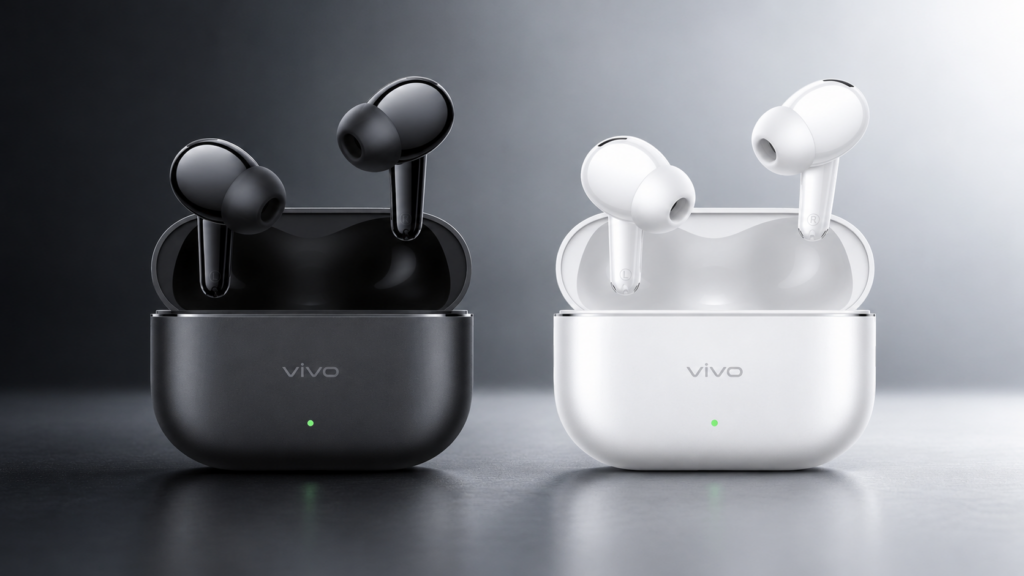
Vivo has unveiled its Buds Ultra true wireless earbuds in Europe, bringing premium audio features and advanced noise cancellation to the market. The new earbuds focus on sound quality, long battery life and convenient controls. They are available in two color options, with introductory discounts offered in select European markets.

Vivo Buds Ultra specifications and features

Vivo Buds Ultra
Vivo Buds Ultra

The Vivo Buds Ultra feature a hybrid driver system combining a Knowles co-developed balanced armature driver with a dual-fold dynamic driver. This coaxial arrangement aims to deliver balanced bass and treble, while a dedicated acoustic tube separates high and low frequencies. The earbuds support a 16Hz to 60kHz frequency response, an independent Hi-Fi DAC with a 113dB dynamic range and LDAC audio transmission at up to 990kbps.

For noise cancellation, the earbuds use four microphones and Vivo’s Intelligent Noise Cancellation 2.0 technology, offering up to 60dB of noise reduction across a 5,500Hz bandwidth. An Adaptive mode automatically balances noise cancellation and transparency, while dedicated settings cater to planes, subways and buses. Calls benefit from a bone conduction sensor and three microphones, with Vivo claiming up to 99% wind noise reduction.

Infographic panels showcasing the features and design of Vivo Buds Ultra wireless earbuds.

Battery life reaches 11 hours per charge with ANC disabled and up to 50 hours with the charging case. A five-minute charge provides two hours of music playback, while the case supports wireless charging. The earbuds carry an IP54 rating for dust and sweat resistance. Other features include multipoint connectivity for three devices, spatial audio modes, a 10-band equaliser, personalised hearing profiles and remote camera controls.

Price and availability

The Vivo Buds Ultra are priced at €199, but Vivo’s official online stores in Spain and Portugal are currently offering them for €169. The earbuds come in Glacier White and Cosmic Black. More regional availability details are expected at Vivo’s X500 series European launch event on October 27.

Check price →
Where to buy
Vivo Buds Ultra
Latest price on Amazon

Notably, the Buds Ultra appear to be a rebranded version of the Vivo TWS 5 Pro, which debuted in China alongside the X Fold6 in June. Vivo has not announced Indian pricing or availability.

For daily updates, please visit our News Section.

Stay ahead in tech! Join our Telegram community and sign up for our daily newsletter of top stories!

Realme 2027 plans revealed, numbered series to lead its smartphone lineup

Realme has outlined its smartphone strategy for 2027 as it reinforces its commitment to India following major changes to its business structure. The announcement comes after a relatively quiet period for the brand in China and a stronger focus on C Series devices in India during the second half of 2026. The company has now offered an indication of what buyers can expect from its upcoming smartphone portfolio.

The Realme Number series will remain a key priority in 2027

Realme Super Agents

Realme confirmed its plans during a meeting with India Super Agents led by Chase Xu, the company’s Vice President and CMO. The Number series will be a major part of its 2027 smartphone portfolio, with improvements planned across performance, gaming, imaging, AI and the overall user experience. Realme says consumer research, hands-on testing and feedback will guide these developments.

The announcement is particularly notable following the restructuring that placed Realme and OnePlus as product series and sub-brands under Oppo within the OPlus group. The companies are also transitioning eligible global devices towards Oppo’s ColorOS software platform.

Before these changes, Realme was expected to introduce its Realme 17 series in the second half of 2026, following the Realme 16 lineup earlier in the year. However, the company has not announced the Realme 17 series or confirmed its launch schedule.

Shop now →
Where to buy
Realme C series
Browse the range on Amazon

Realme outlines its India strategy, but GT and Neo remain uncertain

Alongside the Number series, Realme plans to continue its C Series for buyers prioritizing reliability, battery life and smooth everyday performance. The company also intends to increase marketing efforts through gaming communities, campus activities, creator collaborations and in-store experiences. Closer coordination between marketing teams, retailers and distributors will support these efforts, with partner profitability remaining an important consideration.

Realme has not shared any specific details about its GT or Neo series for 2027. Although a recent claim suggested that these lineups could also receive new models, their launch plans remain unconfirmed. The company has yet to reveal the names, specifications or release dates of its upcoming smartphones.

For now, the Number series appears to be the clearest indication of Realme’s smartphone priorities for 2027, particularly in India, one of its major markets. More details about individual devices are expected to emerge closer to their launches.

For daily updates, please visit our News Section.

Stay ahead in tech! Join our Telegram community and sign up for our daily newsletter of top stories!

Caviar launches $90,000 iPhone Duo collection with 18K gold, platinum and diamonds

Caviar, a company known for creating luxury modifications of popular electronics, has announced its World Treasures collection. The new line uses Apple’s recently released foldable smartphone, the iPhone Duo, as its base.

For this collection, Caviar replaces the standard factory casing of the device with high-end materials, including 950 platinum, 18-karat gold, jewelry enamel, and natural diamonds. The internal hardware and specifications of the iPhone Duo remain unchanged.

Caviar iPhone Duo collection

Design Details

The collection consists of four distinct models, each featuring a design based on different cultural or artistic traditions. The highest-priced model is the Dali, available for $90,290. Its exterior is constructed from 18-karat gold, shaped into asymmetrical, flowing lines intended to reference the surrealist art of Salvador Dalí. The design incorporates violet jewelry enamel between the gold ridges, and the standard Apple logo on the back is recreated using 36 natural diamonds.

Priced at $80,290, the Jingtai Blue model utilizes an 18-karat gold frame to enclose a detailed floral pattern. The back panel is made using multicolored cloisonné enamel against a blue background, a design choice that mimics the traditional Chinese Jingtai Lan enamel techniques developed during the Ming dynasty.

Shop now →
Where to buy
Caviar iPhone cases
Browse the range on Amazon

The remaining two models, the Qasr Al Noor and the Omkara, are both priced at $73,000. The Qasr Al Noor model is the only one in the collection to use a 950 platinum body instead of gold. The metal is machined with symmetrical arabesque patterns inspired by Middle Eastern palace architecture.

The Omkara model features an 18-karat gold body centered around an Om symbol. The central medallion uses red jewelry enamel and is framed by 36 diamonds, with lotus flower motifs carved into the surrounding gold relief.

Due to the materials and the hand-finishing required for the metalwork and gem setting, production is strictly limited. Caviar plans to produce only seven units each of the Dali, Omkara, and Qasr Al Noor models.

The Jingtai Blue model will have a slightly larger production run of eight units. Each modified iPhone Duo is delivered in a wood and leather presentation box, which is housed inside a lockable outer case finished with 24-karat gold plating.

In related news, Caviar has recently launched ultra-luxury Black Edition versions of the iPhone 18 Pro and iPhone Duo without cameras, along with a premium iPhone 18 Pro collection featuring 24K gold, titanium, and carbon fiber.

For more daily updates, please visit our News Section.

Stay ahead in tech! Join our Telegram community and sign up for our daily newsletter of top stories!

(Caviar)

Honor Win 2 debuts with Snapdragon 8EE Gen 6, 10,100mAh battery, dual-fan cooling that lowers temp by up to 14.4°C

Honor has finally unveiled a successor to the Win gaming phone, and this one is built for sustained high performance. It packs Qualcomm’s top-of-the-line chipset, a cooling fan, and a huge battery.

Close-up of the Honor Win 2 gaming smartphone showing its rear camera module and cooling fan.

One of the biggest selling points of this phone is the Snapdragon 8 Elite Extreme Gen 6 chip, an upgrade over the Snapdragon 8 Elite Gen 5 in its predecessor. This 2nm flagship chip is paired with LPDDR5X Ultra memory and UFS 4.1 storage.

The company’s official performance figures include an average frame rate of 184.8 FPS in CrossFire at 2K resolution, with the frame rate set to 185 FPS, during five hours of continuous combat gameplay. Honor highlights similar figures for other popular titles, too. The phone supports 185 FPS gameplay in more than 40 titles at launch, while a few others support native 165 FPS gameplay.

Internal view of the Honor Win 2 showing dual cooling fans dissipating heat.

A big reason the phone can hold these frame rates is its dual active cooling fan system. Honor says it can reduce temperatures by up to 14.4 degrees and offers a 150% improvement in heat dissipation over its predecessor. Despite this active cooling system, the phone still retains IP68, IP69, and IP69K dust and water resistance, which is a nice touch.

The front features a 6.89″ 2K 185Hz display with 0.93mm symmetrical bezels. The panel can hit a peak brightness of 10,000 nits and go as low as 1 nit for darker environments. Additionally, Honor highlights a 5,000Hz touch sampling rate and 5,920Hz PWM dimming for responsive gaming and a more eye-friendly visual experience.

Check price →
Where to buy
100W USB-C charger
Latest price on Amazon

To power through the day, the phone packs a 10,100mAh silicon-carbon battery, which supports 100W wired charging, 80W wireless charging, and 27W reverse charging. The latter can power accessories like smartwatches and TWS earbuds, or even other smartphones on the go.

As for battery life, Honor’s official figures include 17.7 hours of continuous gameplay, 30 hours of scrolling through short videos, or 50 hours of navigation.

The rear camera setup includes a 200MP main camera with a large 1/1.4″ sensor, along with a 12MP ultra-wide camera. There’s also a 50MP selfie camera on the front. It’s a dual-camera setup on the back, which isn’t too surprising given the phone’s focus on performance and the current semiconductor situation.

Pricing and availability:

  • 12GB + 256GB: 5499 yuan (~ $824)
  • 16GB + 256GB: 5799 yuan (~ $869)
  • 12GB + 512GB: 6299 yuan (~ $944)
  • 16GB + 512GB: 6999 yuan (~ $1,048)
  • 16GB + 1TB: 7999 yuan (~ $1,198)

The Win 2 series is currently exclusive to China, with no word on a global rollout at the time of writing.

Don’t miss a thing! Join our Telegram community for instant updates and grab our free daily newsletter for the best tech stories!

For more daily updates, please visit our News Section.

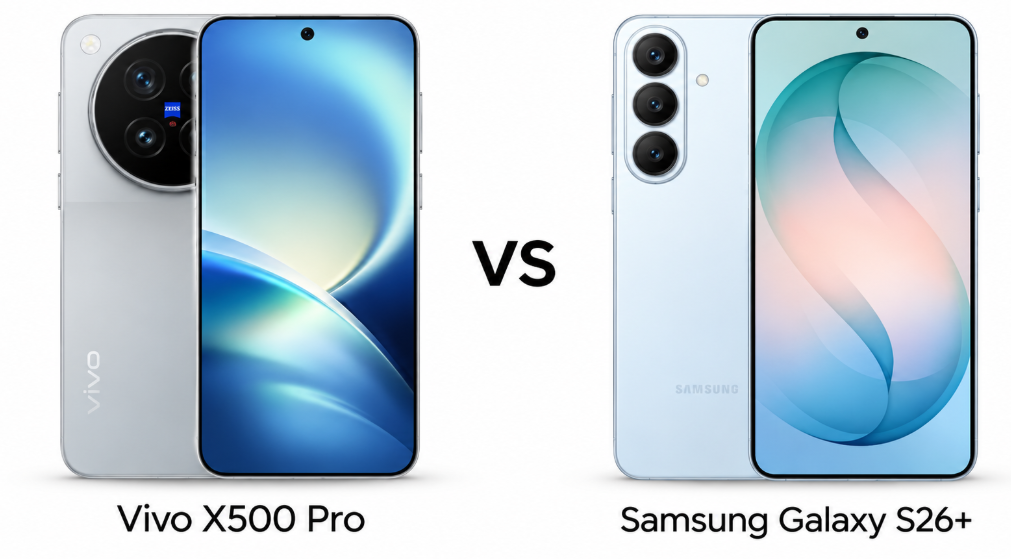
Vivo X500 Pro vs Samsung Galaxy S26+: Which Flagship Is Worth Your Money?

Vivo X500 Pro and Samsung Galaxy S26+ take different approaches to the premium smartphone experience. Vivo focuses on advanced photography, faster charging, and a compact flagship design, while Samsung combines a sharper display, long-term software support, and productivity features. Both target buyers seeking high-end performance, but their differences in cameras, battery life, and pricing make this comparison particularly important for anyone choosing a premium Android phone.

Side by side comparison of the Vivo X500 Pro and Samsung Galaxy S26+ smartphones.

Major Features:

CategoryVivo X500 ProSamsung Galaxy S26+Winner
BuildGlass front, aluminum frame, glass or glass-fiber reinforced plastic backGorilla Glass Victus 2 front and back, Armor Aluminum 2 frameSamsung — premium glass protection
Water ResistanceIP68/IP69IP68Vivo — higher water-resistance rating
Display6.36-inch LTPO AMOLED, 144Hz, Dolby Vision, 4500 nits peak6.7-inch Dynamic LTPO AMOLED 2X, 120Hz, HDR10+, 2600 nits peakVivo — higher refresh rate and peak brightness
Resolution1216 × 2660 pixels1440 × 3120 pixelsSamsung — sharper resolution
Operating SystemAndroid 17, OriginOS 7, up to 5 major OS upgradesAndroid 16, One UI 9, up to 7 major OS upgradesSamsung — longer software support
ProcessorMediaTek Dimensity 9600 Pro (2nm)Snapdragon 8 Elite Gen 5 (3nm) or Exynos 2600 (2nm)Vivo — advanced 2nm platform, subject to real-world testing
RAM12GB12GBTie — identical RAM capacity
Storage256GB, 512GB, 1TB256GB, 512GBVivo — offers a 1TB option
Storage TypeUFS 4.1UFS 4.XVivo — specified storage standard
Main Camera50MP, f/1.6, OIS50MP, f/1.8, OISVivo — wider aperture
Telephoto Camera64MP periscope, 3.5x optical zoom, OIS10MP telephoto, 3x optical zoom, OISVivo — higher resolution and greater optical zoom
Ultrawide Camera50MP with autofocus12MPVivo — higher resolution and autofocus
Selfie Camera50MP with autofocus12MP with dual-pixel autofocusVivo — higher resolution and 4K 60fps video
Rear VideoUp to 8K at 30fps, 4K up to 240fps in listed modesUp to 8K at 30fps, 4K at 60fpsVivo — higher listed 4K frame-rate options
AudioStereo speakers, 24-bit/192kHz Hi-Res audioStereo speakers, high-bitrate audio supportVivo — specified Hi-Res audio support
Battery6510mAh silicon-carbon4900mAhVivo — larger battery capacity
Wired Charging90W45WVivo — faster charging
Wireless Charging40W20W Qi2.2Vivo — higher listed charging power
Reverse ChargingReverse wireless and reverse wired4.5W reverse wirelessVivo — supports wired and wireless reverse charging
ConnectivityWi-Fi 7, Bluetooth 5.4/6.0, NFC, infraredWi-Fi 7, Bluetooth 6.0, NFC, UWBSamsung — UWB support
Productivity FeaturesUSB-C 3.2, OTGSamsung DeX, Wireless DeX, DisplayPort 1.2Samsung — desktop productivity features
Price / ValuePriced around $950 / ₹93,000Priced around $1,200 / ₹1,00,000Vivo — lower price with stronger camera and battery hardware
Disclaimer: Specs are based on available data. Actual performance may vary. Verify details from official sources before buying.

1. Design and Display

Build and Feel

The Vivo X500 Pro combines a glass front, aluminum frame, and glass or glass-fiber reinforced plastic back, depending on the variant. Its IP68/IP69 rating offers stronger protection against dust and high-pressure water jets. Samsung uses Gorilla Glass Victus 2 on both sides, an Armor Aluminum 2 frame, and an IP68 rating. Its construction feels more focused on durability and everyday refinement. Vivo’s more extensive water-resistance rating provides an advantage for users who frequently encounter challenging outdoor conditions, while Samsung offers a familiar premium finish.

Display Quality

Vivo features a 6.36-inch LTPO AMOLED display with a 144Hz refresh rate, Dolby Vision, HDR10+, and a claimed peak brightness of 4,500 nits. Samsung counters with a 6.7-inch Dynamic LTPO AMOLED 2X panel, a sharper QHD+ resolution, 120Hz refresh rate, HDR10+, and 2,600 nits of peak brightness. Samsung suits users who prefer a spacious screen for reading, streaming, and multitasking. Vivo delivers smoother scrolling and broader HDR format support, making it attractive for gaming and compact-phone enthusiasts.

Verdict

Vivo wins on refresh rate, peak brightness claims, and water resistance. Samsung is better for immersive viewing, higher resolution, and a larger workspace, making the choice dependent on display priorities.

2. Specifications Including Battery

Performance

The Vivo X500 Pro uses the MediaTek Dimensity 9600 Pro, built on a 2nm process, paired with 12GB RAM and UFS 4.1 storage. Samsung offers the Snapdragon 8 Elite Gen 5 in selected markets or the Exynos 2600 in other regions, alongside 12GB RAM. Both target demanding gaming, multitasking, and AI workloads, although real-world performance will depend on thermal management and software optimization. Vivo’s newer platform and fast storage look promising, while Samsung’s established Galaxy ecosystem and regional chipset options make its performance profile more dependent on the version purchased.

Battery and Charging

Vivo packs a 6,510mAh silicon-carbon battery with 90W wired charging, 40W wireless charging, and reverse wireless and wired charging. Samsung uses a 4,900mAh battery, 45W wired charging, 20W Qi2.2 wireless charging, and 4.5W reverse wireless charging. Vivo has a clear advantage in battery capacity and charging flexibility, potentially making it more suitable for heavy users and frequent travelers. Samsung supports USB Power Delivery 3.0 and offers a balanced charging setup, but its smaller battery and slower charging make Vivo the more compelling option for users who prioritize endurance.

Verdict

Vivo wins for battery capacity, charging speed, and reverse charging versatility. Samsung remains competitive for everyday performance, but Vivo offers the more convincing package for power users.

Check price →
Where to buy
Vivo X500 Pro
Latest price on Amazon

3. Camera

Main and Secondary Lenses

Vivo equips the X500 Pro with a 50MP main camera featuring optical image stabilization, a 64MP periscope telephoto camera with 3.5x optical zoom, and a 50MP autofocus ultrawide camera. Zeiss optics, lens coating, and advanced video recording options further strengthen its imaging credentials. Samsung uses a 50MP stabilized main camera, a 10MP telephoto camera with 3x optical zoom, and a 12MP ultrawide camera. Its Horizon Lock and Super Steady video features are useful for action footage. Vivo’s higher-resolution telephoto and ultrawide cameras suggest greater flexibility for portraits, distant subjects, and landscapes, while Samsung prioritizes practical everyday shooting and stabilized video.

Selfie Camera

Vivo features a 50MP autofocus selfie camera capable of recording 4K video at 60fps. Samsung has a 12MP selfie camera with dual-pixel autofocus, HDR10+ support, and 4K recording at 60fps. Vivo offers greater resolution and a wider field of view, which may benefit group selfies, travel content, and detailed video calls. Samsung’s autofocus system and HDR support remain useful for consistent results across different lighting conditions. For creators who frequently record themselves, Vivo appears better equipped, although final image quality will still depend on processing, exposure, and skin-tone reproduction rather than megapixel counts alone.

Verdict

Vivo wins on camera versatility, telephoto hardware, ultrawide resolution, and selfie specifications. Samsung remains a capable everyday camera phone, but Vivo looks more appealing for photography enthusiasts and content creators.

4. Pricing

The Vivo X500 Pro is priced around $950 / ₹93,000, while the Samsung Galaxy S26+ is priced around $1,200 / ₹1,00,000. Vivo is the less expensive option in both quoted markets, although the difference is considerably larger in dollar terms than in rupees. That makes the Vivo particularly attractive to buyers seeking flagship-level hardware without paying the highest premium. Samsung commands a higher price for its display experience, extended software support, and productivity ecosystem. Actual retail prices may vary by storage configuration, region, import duties, and promotional offers, so local availability matters when comparing the final cost.

Check price →
Where to buy
Samsung Galaxy S26+
Latest price on Amazon

Is the price justified?

Vivo’s pricing looks more compelling because it combines a substantial battery, faster charging, versatile cameras, and a high-refresh-rate display at a lower starting price. Samsung’s premium is easier to justify for buyers who value seven major Android OS upgrades, Samsung DeX, UWB, and the broader Galaxy ecosystem. However, these advantages may not matter equally to every user. For hardware-focused buyers, Vivo offers stronger apparent value, while Samsung suits those who intend to keep their phone for years and use its productivity features regularly.

Verdict

Vivo wins on overall hardware value, offering more camera flexibility and faster charging for less. Samsung justifies its premium mainly through software longevity and productivity features.

Disclaimer:
Prices are approximate and may vary based on country, region, launch timing, and applicable taxes. Always check whether the listed price is for a China unit or a global/international variant when purchasing.

5. Conclusion

The Vivo X500 Pro distinguishes itself with Zeiss-backed imaging, a 64MP periscope telephoto camera, Dolby Vision support, a 144Hz display, and a large silicon-carbon battery. Its IP68/IP69 protection and reverse wired charging add practical benefits for demanding users. Samsung’s Galaxy S26+ counters with a sharper QHD+ display, Gorilla Glass Victus 2 protection, seven major OS upgrades, Samsung DeX, Wireless DeX, and UWB support. These features make it a more attractive choice for users invested in Samsung’s connected-device ecosystem. Both phones deliver a premium Android experience, but their strengths serve different priorities. Vivo emphasizes hardware versatility and charging convenience, whereas Samsung focuses on software longevity, productivity, and a polished everyday experience.

Verdict

Overall winner: Vivo X500 Pro. Its stronger camera hardware, larger battery, faster charging, brighter 144Hz display, and lower starting price make it the better all-round hardware package. Samsung Galaxy S26+ is the better choice for buyers prioritizing long-term software support, a sharper screen, and productivity tools.

Disclaimer: Prices, specifications, and availability may vary by region and retailer. Recommendations in this article are based on editorial opinion, feature-based value, and market positioning at the time of writing. Readers are advised to do their own research before making a purchase.

Read More: