Advertisement

Timex and Fender release two new guitar-inspired watches in the US

Timex has released a pair of new watches in collaboration with Fender, integrating design elements from the guitar manufacturer’s most recognizable instruments into a standard wristwatch format.

The release marks Fender’s 80th anniversary, along with the 75th anniversary of the Telecaster. The lineup includes a Telecaster-themed gift set and a Stratocaster-inspired model, both of which are available to purchase now on the Timex US website.

Timex Fender guitar-themed watches

Design Details & Pricing

Both models use the same 37mm polished stainless steel case, measure 12mm thick, and feature 20mm lug widths. They are powered by a quartz analog movement with an SR626SW battery.

They also share a domed acrylic crystal and 50 meters of water resistance, which is adequate for washing hands or light swimming, but not intended for diving or prolonged water exposure.

Timex Fender guitar-themed watches

The differences lie entirely in the dial and hardware customizations. The $299 Telecaster 75th Anniversary Giftset features an ice blue dial with a white guitar graphic stamped across the background. Timex swapped the standard second hand for one shaped like a Telecaster headstock, and the crown features a standard Fender logo.

Timex Fender guitar-themed watches

The caseback includes a specific 75th-anniversary engraving. This model ships with a black leather strap that has turquoise stitching, plus an extra fabric strap designed to resemble a standard guitar strap.

The $269 Stratocaster version takes a slightly different approach to the guitar theme. It uses a mother-of-pearl dial to mimic the look of Fender’s Pearloid pickguards. The second hand is shaped like a Stratocaster headstock, and the crown is molded to look like a standard guitar tone knob.

Timex Fender guitar-themed watches

This model also includes luminous material on the hands and hour markers for visibility in the dark. It comes with a brown leather strap featuring yellow stitching.

Both watches feature leather straps with quick-release spring bars for easy, tool-free changes. As a functional extra, Timex includes a co-branded tortoiseshell guitar pick in the box with each watch.

🔌 You’ll NeedThe quick-release spring bars make strap swaps tool-free — a spare 20mm leather band lets you switch looks fast. Check quick release leather watch strap price on Amazon →

In related news, Timex has recently launched the retro Rotary Phone Dial watch with a distinctive 1970s-inspired face, alongside the new MK1 Anchor watch featuring a vintage-style dial and fabric straps.

For more daily updates, please visit our News Section.

Stay ahead in tech! Join our Telegram community and sign up for our daily newsletter of top stories!

(Timex 1,2)

Timex launches retro Rotary Phone Dial watch with a striking 1970s-inspired face

Timex has released the 1976 Rotary Phone Dial Reissue (model TW2Y82100), a quartz watch that brings back a specific dial layout from the company’s 1970s archives. The watch is available now for $219 in the US and ₹21,495 in India.

Timex 1976 Rotary Phone Dial Reissue

Design Details

The defining feature of this release is the dial, which is formatted to physically resemble the circular number pad of a classic rotary telephone. Instead of standard applied indices or printed numbers, the dial features a black center surrounded by a white outer track.

Inside this white track, the Arabic numerals are placed within individual gold-tone circular frames. At the three o’clock position, Timex included a dual-window complication that displays both the day of the week and the date.

The case is constructed from stainless steel with a gold-tone finish that incorporates both brushed and polished surfaces. Dimensionally, it measures 37mm in diameter with a 43mm lug-to-lug distance and a case height of 12mm.

Timex 1976 Rotary Phone Dial Reissue

These measurements make it a relatively compact watch by modern standards, which remains consistent with the sizing of the original 1970s model it is based on. The total weight of the watch is 51 grams.

For the crystal, Timex opted for domed acrylic rather than mineral glass or sapphire. While acrylic is more prone to surface scratches than modern alternatives, it is historically accurate to the time period and can be polished to remove minor scuffs.

The watch carries a water resistance rating of 50 meters, meaning it can handle splashes and light swimming, but it is not built for submersion in diving scenarios.

Timex 1976 Rotary Phone Dial Reissue

Internally, the watch runs on a standard battery-powered quartz analog movement using an SR920SW battery. It ships with a 20mm brown crocodile-grain leather strap secured by a standard gold-tone buckle.

This 20mm lug width and quick-release system allow users to easily swap the band for aftermarket options without needing a spring bar tool. The watch is currently available for purchase directly through Timex’s regional websites.

🔌 You’ll NeedThe quick-release 20mm strap swaps out easily, so a spare leather band lets you change the look without tools. Check brown leather quick release watch strap price on Amazon →

In related news, Timex has recently launched the new MK1 Anchor watch, featuring a vintage-inspired dial and fabric straps.

For more daily updates, please visit our News Section.

Stay ahead in tech! Join our Telegram community and sign up for our daily newsletter of top stories!

(Timex)

Anker launches new 45W GaN charger with screen, smart iPhone detection & foldable plug

Anker has introduced the 45W Smart+ Charger in China, currently available on JD.com for 149 yuan ($22). The new power adapter is a gallium nitride (GaN) charger that includes a built-in color display and specific software support for Apple’s newer devices, including the iPhone 17 series.

Anker 45W Smart+ GaN charger

Anker 45W Smart+ Specifications

The charger measures 34 x 35.5 x 40mm and weighs 75 grams. On the front, it features a small color screen that displays real-time charging metrics, such as current power output, battery level, device details, and charging progress. Because power strips and wall outlets are often positioned at different angles, the display interface can be rotated by holding the control button for two seconds.

You can also set the screen to turn off automatically after one or five minutes. The physical design includes a folding plug that locks into 90-degree and 180-degree positions, providing flexibility for routing cables behind furniture or in tight spaces.

Anker 45W Smart+ GaN charger

Internally, the charger supports Apple’s AVS dynamic fast-charging protocol, a standard that adjusts voltage and power based on the connected device’s requirements. According to Anker, the charger can identify the iPhone 15, iPhone 16, and iPhone 17 series, applying a specific charging curve for these models. To maintain compatibility with future hardware, the charger supports over-the-air firmware updates through the Anker mobile app.

🔌 You’ll NeedThe charger doesn’t include a cable, and you’ll need a USB-C one to actually use its 45W output. Check Anker USB-C to USB-C cable price on Amazon →

The device includes a physical button to switch between two primary charging profiles: Smart Fast Charging and Device Protection Mode. The protection mode applies a slower charging curve intended for extended sessions, such as overnight charging.

Anker says that using this mode for half of a user’s charging sessions can reduce battery degradation by around 20% over time. For thermal management, the charger uses the ActiveShield 5.0 system to monitor operating temperatures and holds a TÜV Rheinland low-temperature certification.

Anker 45W Smart+ GaN charger

While the charger includes specific software features for newer iPhones, it functions as a standard 45W USB-C adapter for other electronics. It supports output profiles of 5V/3A, 9V/3A, 15V/3A, and 20V/2.25A. This makes it compatible with iPads, MacBook Airs, Android smartphones, and handhelds like the Nintendo Switch and Steam Deck.

The charger is sold in four colors: Aurora White, Morning Mist Blue, Anker Black, and Burgundy Red.

In related news, check out our recent roundup of the best 100W+ GaN chargers you can buy in 2026.

For more daily updates, please visit our News Section.

Stay ahead in tech! Join our Telegram community and sign up for our daily newsletter of top stories!

(Anker)

Xiaomi 18 Fold tipped to start around 12,000 yuan (~$1,785)

Xiaomi’s next foldable is rumored to break new ground on price. A recent post from the well-known leaker DCS suggests the Xiaomi 18 Fold will start at more than 10,000 yuan, making it the first Xiaomi smartphone across all versions to cross that threshold.

According to reports, every configuration will land above 10,000 yuan, with the base model expected to sit around 12,000 yuan. Even as a leak, the number is significant enough to signal a clear shift toward ultra-premium positioning.

For context, the Xiaomi MIX Fold 4 launched in China back in 2024 starting at 8,999 yuan with 12GB of RAM and 256GB of storage. The ongoing memory shortage is also likely playing a role in the higher price tag this time around.

The 18 Fold is scheduled for an official launch on September 7 in China. It is expected to be the first device powered by Xiaomi’s in-house Xring O3 chipset. It includes a Leica-tuned triple camera setup: a 200MP main sensor with a 1/1.56″ sensor, a 50MP periscope telephoto offering 3.5x optical zoom, and a 50MP ultra-wide. Check out the camera samples here to get an idea of how the phone handles exposure, white balance, and contrast. Battery capacity is also confirmed to be 6,000mAh with support for 67W wired and 50W wireless charging.

On the design side, the 18 Fold is described as a mid-fold with a 5.38″ outer display and a 7.58-inch inner screen. It introduces a new color called “West Wild Red,” features a horizontal rear camera module, and leans into a clean aesthetic with symmetrical bezels, large rounded corners, a track-shaped Deco, and a completely flat wraparound mid-frame. Higher configurations, including the 16GB + 1TB version, are expected to use Changxin LPDDR6 memory.

If the leaked pricing holds, Xiaomi is clearly aiming higher with this foldable than it has with previous models.

Don’t miss a thing! Join our Telegram community for instant updates and grab our free daily newsletter for the best tech stories!

For more daily updates, please visit our News Section.

(Source: Digital Chat Station on Weibo)

Aurzen launches ZIP Pro tri-fold pocket projector with 1080p resolution & 2.5h battery
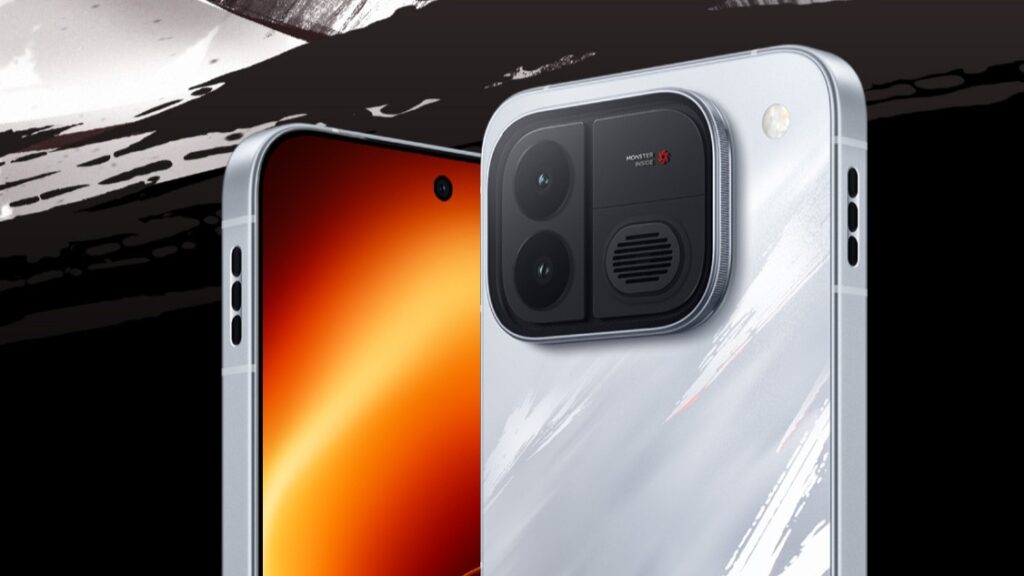
Aurzen has introduced the ZIP Pro at IFA 2026, an upgraded version of its original ZIP portable projector. The new model keeps the unusual tri-fold design but doubles the native resolution from 720p to 1080p and increases brightness to 200 ANSI lumens.

Aurzen ZIP Pro Specifications

The ZIP Pro uses DLP projection and Aurzen’s new 10.7mm optical engine. It has a 1.2:1 throw ratio, a 300:1 contrast ratio, and 85% NTSC color gamut coverage. Aurzen recommends a 60 to 80-inch image in dark environments, though the projector supports distances between 0.5 and 3 meters.

Its Z-shaped folding body doubles as an adjustable stand, allowing the projector to work at different angles without requiring a separate mount. The device measures 115 x 97 x 44mm when folded and weighs 586 grams. It also supports portrait projection for vertical smartphone content.

Aurzen ZIP Pro

Setup is handled by ToF autofocus and four-point keystone correction. The ZIP Pro runs a Linux-based screen-mirroring system with support for AirPlay, Miracast, DLNA, and Google Cast. P2P screen mirroring can work without an external Wi-Fi network.

There are two USB-C ports, including one with DisplayPort Alt Mode for wired video input from compatible phones, tablets, and laptops. Nintendo Switch consoles can also connect directly over USB-C without a dock, with Aurzen claiming a 20-40ms response time.

Aurzen ZIP Pro

Audio comes from two 2W speakers, while Bluetooth 5.4 supports simultaneous connections to two pairs of Bluetooth headphones. Aurzen has also added a touchscreen for checking battery and connection status and accessing projector controls.
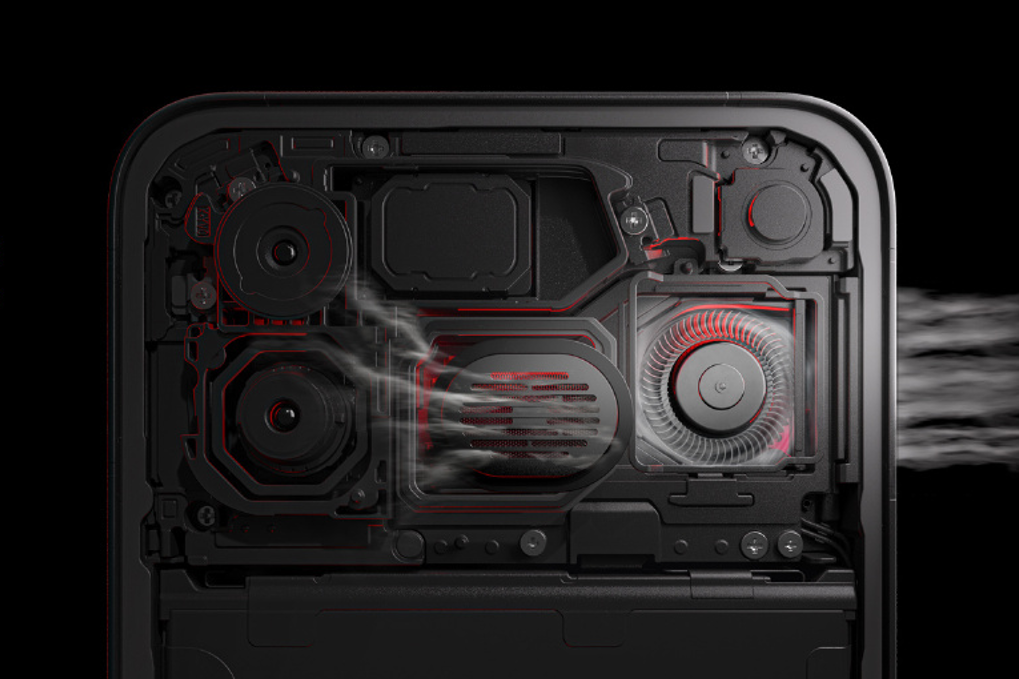
The built-in 38Wh battery provides up to 2.5 hours of playback in Eco mode, compared with 1.5 hours on the original ZIP. The projector supports 65W USB-C PD charging and can operate from compatible power banks. Fan noise is rated at 24dB in Eco mode and 28dB in Normal mode.

Aurzen ZIP Pro

Pricing and Availability

The Aurzen ZIP Pro is available for preorder in the US, UK, and Europe for $579.99, while its listed MSRP is $629.99. The ZIP Pro + CastPlay Pro bundle is priced at $629.99 during the preorder period, down from its listed MSRP of $759.98. Shipping is expected to begin on October 30.

In related news, Dangbei has recently launched the RX10 1080p laser projector with 1,200 CVIA lumens, a rotating gimbal, and power bank support. The company also refreshed the D7X Pro 4K projector with a brighter triple-laser system and 1,700 CVIA lumens of brightness.

For more daily updates, please visit our News Section.

Stay ahead in tech! Join our Telegram community and sign up for our daily newsletter of top stories!

(Aurzen)

Xiaomi announces Mijia brand expansion in Europe at IFA 2026

Xiaomi just made a pretty big statement in Berlin. For the first time ever, the company showed up at IFA with its own massive presence, and it’s clear they’re serious about expanding beyond phones in Europe.

At their global launch event during the show, Xiaomi officially introduced the Mijia smart home brand to European (and global) audiences and confirmed it’s coming to the region in a big way. Their booth is over 3,300 square meters, the largest standalone overseas exhibition they’ve ever done, and it’s packed with more than 380 products. The whole thing revolves around their “Human × Car × Home” idea: phones, smart home devices, and eventually cars all talking to each other through AI.

Mijia is being positioned under the theme “The Art of Smart Living.” The brand has over 2,000 products across more than 130 categories. What’s interesting is that they’re finally bringing over some of the bigger appliances that were mostly limited to China until now, including multi-function washers, air conditioners with radar sensors, and fridges designed to keep food fresher for longer. The pitch is that all these devices work together in one ecosystem and can actually anticipate what you need.

Lu Weibing, Xiaomi’s partner and president, was on stage and once again confirmed that Xiaomi cars are still on track to launch in Europe next year (2027). They’re not just talking about it either. The company already has an R&D setup in Munich, is working on adapting the cars for European roads and regulations, and has signed agreements with major German dealer groups to start building a sales and service network.

All in all, Xiaomi’s first real IFA appearance feels like a clear signal: they’re no longer just a phone company in Europe. By pushing Mijia hard and locking in the 2027 car timeline, they’re betting that European customers will actually want a fully connected ecosystem that stretches from the living room all the way to the driveway.

Don’t miss a thing! Join our Telegram community for instant updates and grab our free daily newsletter for the best tech stories!

For more daily updates, please visit our News Section.

(Source: Xiaomi)

Sony WH-CH730N and WH-CH530 could launch on September 7 at affordable prices

Sony appears to be getting ready to add two new models to its affordable headphone lineup, and they could arrive pretty soon. A new leak has revealed a possible launch date for the Sony WH-CH730N and WH-CH530, along with their expected prices, colors, and some other details. According to well-known leaker Roland Quandt, both headphones could go on sale as early as September 7.

The WH-CH730N is expected to sit above the entry-level WH-CH530 and could serve as the successor to the WH-CH720N. What’s particularly interesting this time is the reported price. The latest leak puts the European price at just €69.99, which would be less than half the €149 launch price of the WH-CH720N in 2023. Despite the much lower price, the new model is still expected to offer active noise cancellation (ANC).

There is a bit of a trade-off in terms of weight, though. The WH-CH730N is reportedly 220 grams, compared with 192 grams for the WH-CH720N. That’s 28 grams heavier, or roughly a 14.6% increase. The headphones are also expected to come in four colors: black, pink, blue, and sand. Sony could, of course, give these colors different names when the headphones officially launch.

Previous retail leaks have also suggested that the WH-CH730N will feature Bluetooth connectivity, a 3.5mm headphone jack, and a USB Type-C port. None of these details have been confirmed by Sony yet.

The WH-CH530, meanwhile, is expected to be the cheaper option of the two. The latest leak suggests a €34.99 price tag, with five color options: black, blue, mint green, pink, and white. Unlike the WH-CH730N, the entry-level model is reportedly expected to skip ANC.

If the September 7 date turns out to be accurate, there’s a good chance we’ll see both headphones at IFA 2026 in Berlin.

Don’t miss a thing! Join our Telegram community for instant updates and grab our free daily newsletter for the best tech stories!

For more daily updates, please visit our News Section.

Source: Ronald Quandt (1, 2)

Xiaomi launches new 500mL thermos with baby bottle-grade PPSU and 316L stainless steel

Xiaomi is currently running a crowdfunding campaign on its Youpin platform for a new travel mug, the Mijia Flip-Top Thermos Cup 2. The campaign runs from September 2nd through September 9th, pricing the 500mL thermos at 79 yuan ($12) before it moves to a standard retail price of 109 yuan ($16). It is a standard, non-smart thermos that focuses on basic utility and material choices rather than connected features.

Xiaomi Mijia Flip-Top Thermos Cup 2

Mijia Flip-Top Thermos Cup 2 Specs

The lid incorporates a mechanical auto-locking design meant for one-handed operation. To open it, you slide a small lock switch to the left and press the release button. When you close the lid, the lock automatically slides back into place. The goal of this mechanism is to keep the thermos from opening by accident and spilling inside a bag.

Inside the lid, the drinking spout and the internal filter are made of polyphenylsulfone, or PPSU. This is a plastic polymer often used in baby bottles because it handles high temperatures well and does not easily retain smells from drinks like coffee or tea. The spout can also be completely detached from the main lid, which makes it easier to clean out any trapped residue.

Xiaomi Mijia Flip-Top Thermos Cup 2

The main body of the thermos uses a 316L stainless steel liner. According to Xiaomi, the manufacturing process involves a thin-wall construction to reduce the overall weight of the cup, along with a mirror electrolytic treatment. This treatment gives the inside of the thermos a smooth finish, meaning a simple rinse with water is usually enough to clean it out.

For insulation, the cup uses a standard tailless vacuum process between the inner and outer walls, supplemented by a copper-plated inner layer. Xiaomi’s testing claims the thermos will maintain hot liquids at 68 degrees Celsius or higher for six hours. For cold drinks, it will hold temperatures at 10 degrees Celsius or lower for the same six-hour period. The vacuum layer also keeps the outside of the thermos at a normal temperature when carrying hot water.

Xiaomi Mijia Flip-Top Thermos Cup 2

The mug also includes a silicone pad on the bottom to prevent the metal from clanking on hard surfaces, a dual-thread design for taking the lid off, and a pull tab on the rubber sealing ring to make it easier to remove for washing. The thermos is available in matte white, navy blue, and mist purple, as well as a pearlescent glacier blue.

In related news, Xiaomi has recently launched a new mini dual-drum washer-dryer with a 40-minute wash-and-dry cycle, alongside a new floor-standing air conditioner featuring rapid cooling and heating with AI-powered energy saving.

For more daily updates, please visit our News Section.

Stay ahead in tech! Join our Telegram community and sign up for our daily newsletter of top stories!

(Xiaomi Youpin)

Xiaomi 18 Fold confirmed to pack a 6000mAh high-density stacked battery

Xiaomi is continuing to reveal details about its upcoming 18 Fold ahead of its September 7 launch, and the latest announcement focuses on something that could make a noticeable difference in everyday use. The company is putting a surprisingly large battery inside its wide, book-style foldable while still emphasizing a slim and lightweight design.

The brand has confirmed that the upcoming foldable will feature a 6000mAh Xiaomi Jinshajiang battery. The battery uses an innovative stacking process designed to fit its large capacity into the foldable’s relatively compact body. Xiaomi also says the battery has a 20% silicon content and reaches an energy density of up to 920Wh/L.

Charging should be reasonably quick as well. The Xiaomi 18 Fold supports 67W wired charging and 50W wireless charging, giving users both a fast wired option and the convenience of charging without a cable.

The battery announcement adds to a growing list of hardware details Xiaomi has confirmed for the device. The 18 Fold will launch alongside the Xiaomi Pad 9 Pro Max and will be powered by Xiaomi’s in-house Xring O3 chipset. It is also set to be the first smartphone to use LPDDR6 memory from ChangXin Memory Technologies.

On the camera side, Xiaomi has confirmed a triple-camera setup consisting of a 200MP main camera, a 50MP 3.5x periscope telephoto camera, and a 50MP ultra-wide camera. The rear cameras also use Leica’s Summilux lenses. Check out the official camera samples here to see how the Leica-tuned image processing performs.

The battery capacity is particularly notable because large batteries are difficult to accommodate in foldables, where manufacturers have to balance capacity against thickness and weight. Xiaomi’s use of high silicon content and a stacked battery design appears aimed at addressing that challenge without making the phone bulkier.

Don’t miss a thing! Join our Telegram community for instant updates and grab our free daily newsletter for the best tech stories!

For more daily updates, please visit our News Section.

(Source: Xiaomi on Weibo)

Citizen launches rugged new Eco-Drive field watch with a military-inspired look

Citizen has added a new watch to its US lineup. The AW1890-01A, part of the company’s Terra Force series, is now available on Citizen’s website for $350. It is a straightforward, military-style field watch that runs on the company’s standard solar-powered movement.

Citizen Terra Force field watch

Design Details

The watch features a 41.2mm silver-tone stainless steel case. This is a fairly average size for a modern men’s watch, meaning it should fit most wrists without looking oversized. The case design is angular, and it includes a textured crown to make it easier to grip and turn.

Instead of a metal bracelet or leather band, Citizen opted for a gray nylon Nato strap with a standard buckle. Nato straps are common for field watches because they are lightweight and easy to swap out, which fits the utilitarian design Citizen is going for here.

On the dial, the watch is mostly gray. It uses standard Arabic numerals for the hours and features a curved ring around the outer edge to mark the minutes. The hour and minute hands are partially skeletonized and have luminous material applied to them so you can read the time in the dark. The seconds hand is blue, which is the only real bit of color on the watch. There is also a date window positioned at the bottom of the dial at 6 o’clock.

Citizen Terra Force field watch

To protect the dial, Citizen used mineral crystal. This provides decent impact resistance, but it is worth noting that mineral crystal is more prone to scratching than the sapphire crystal you sometimes see on other watches in this price range.

Inside, the AW1890-01A uses Citizen’s Caliber J810 movement. This is an Eco-Drive mechanism, which is Citizen’s proprietary solar technology. It charges the internal battery using any available light source, whether that is the sun or just the lamps in your office.

For water resistance, the watch is rated at 100 meters (10 Bar). This means it is perfectly fine to wear while swimming or in the shower, though it is not built for scuba diving.

In related news, Citizen has recently launched two striking limited-edition timepieces: a bullhead racing watch with Eco-Drive technology and 200-meter water resistance, and a bold Promaster Eco-Drive model featuring an oversized gold-tone design.

🔌 You’ll NeedMineral crystal resists impact but scratches easily — a protector film keeps the dial clear. Check watch screen protector mineral crystal price on Amazon →

For more daily updates, please visit our News Section.

Stay ahead in tech! Join our Telegram community and sign up for our daily newsletter of top stories!

(Citizen)

Xiaomi 18 Fold camera samples impress with a more natural approach to photography

The Xiaomi 18 Fold is launching on September 7 with the new in-house-developed Xring O3 chipset, alongside the Pad 9 Pro Max. The company has already revealed quite a few details about the short-and-wide book-style foldable, including its camera specifications. And the latest leak includes several high-resolution image samples from the phone.

The camera system includes a 200MP 1/1.56″ main camera, a 50MP 3.5x periscope telephoto, and another 50MP sensor for the ultra-wide. And, of course, the entire imaging system is tuned in collaboration with Leica, as expected.

The very first image sample highlights the phone’s ability to handle white balance. It kept the warmer tone intact, the darker corners don’t look noisy, and there are no major artifacts anywhere in the photo. In terms of detail, we can see the individual bricks on the wall, and even the bright outdoor light coming through the open area isn’t entirely overexposed. So, the overall dynamic range isn’t too bad.

Of course, the imaging system could brighten up the darker parts of the photo, making it look flat. It seems Xiaomi‘s imaging system is focusing on the mood, or the aesthetic look, rather than just flexing the dynamic range, which is a good thing.

The watermark reveals that the photo was taken at a 23mm focal length (main camera) with an f/1.7 aperture, a shutter speed of 1/50 second, and ISO 80, which confirms it was a fairly low-light situation. And again, it’s impressive how the phone handled the overall mood of this image instead of ruining it.

The second shot is also similar. It kept most of the frame underexposed, prioritizing the mood rather than proper exposure. The third one is taken at 46mm, which means it’s a 2x digital crop on the main sensor. Upon closer inspection, we can see plenty of detail with no major noise or artifacts.

The 100mm portrait is also impressive. It has plenty of detail, seemingly accurate skin tones, and looks clean overall.

That said, these are image samples shared by the brand right before the release, so they are expected to be handpicked and showcase the phone at its best. It will still be worth checking the imaging performance ourselves once we get access to the device.

Don’t miss a thing! Join our Telegram community for instant updates and grab our free daily newsletter for the best tech stories!

For more daily updates, please visit our News Section.

(Source: Lu Weibing on Weibo)

DailyObjects just showed the world why its tech accessories deserve more attention

DailyObjects has taken its India-born design philosophy to an international audience with its debut at IFA Berlin 2026. The brand is showcasing several of its latest lifestyle-tech products and concepts at the event. Its presentation also offers a glimpse into the products it plans to bring to consumers in the coming year. IFA Berlin 2026 is taking place in Berlin from September 4 to 8.

DailyObjects brings NODE and Stack to IFA Berlin

Node Wire Charging Ecosystem

The centrepiece of DailyObjects’ showcase is NODE, described as a modular wireless charging ecosystem. It uses a single base with four interchangeable modules that can be rearranged for charging, holding and ambient lighting based on how the setup is used. The brand is also showcasing its Stack ecosystem, which uses a mechanical Stack-and-Lock system and magnetic alignment to combine stands, grips, wallets, lanyards and colour plates. At IFA, the company is presenting a new Stack lineup designed for the iPhone 18 series.

DailyObjects has also brought products spanning watchbands, charging accessories and the Loop power bank to Berlin. Charging products adapted for European and US markets are part of the showcase, alongside existing products such as the Loft Charging Station and Park Tech Kit. The brand is also giving visitors a first public look at upcoming concepts covering carry products, desk accessories and charging solutions.

The company’s booth follows the same design-focused approach, with a minimal, grid-based layout where products are kept accessible rather than placed behind glass. Visitors can pick up and interact with the products, allowing them to experience the materials, finishes and functionality directly.

Stack Ecosystem
Stack Ecosystem

The IFA appearance marks DailyObjects’ first presence at the major consumer technology event and comes after 14 years of building products around everyday use. The brand’s design work has received recognition from the Red Dot Design Award 2026, iF Design Award 2026 and European Product Design Award 2025.

DailyObjects currently operates 13 exclusive brand outlets in India and is also present across more than 300 Apple Authorised Retail stores. In Berlin, the company is using its IFA debut to explore retail and distribution partnerships as it works towards expanding into international markets.

For daily updates, please visit our News Section.

Stay ahead in tech! Join our Telegram community and sign up for our daily newsletter of top stories!

Global Oppo Find X10, X10 Pro Max appear in major certifications

Oppo is preparing its next flagship smartphone lineup, with the Find X10 series expected to make its debut soon. The upcoming phones have already started appearing across certification databases outside China. These listings are now offering a clearer picture of Oppo’s plans for the international market.

Oppo Find X10, Find X10 Pro Max clear global certifications

Global Oppo Find X10 NBTC listing
Oppo Find X10 BIS listing

he standard Oppo Find X10, carrying model number CPH2911, has received certification from India’s BIS platform. The same model has previously appeared on Thailand’s NBTC database, where its final marketing name was revealed as the Oppo Find X10. It has also cleared certification in Europe through the EEC and Indonesia through TKDN.

Global Oppo Find X10 Pro Max NBTC listing

The Find X10 Pro Max, meanwhile, carries model number CPH2913 and has also appeared on Thailand’s NBTC database. It has additionally been spotted on the EEC and TUV certification platforms. The TUV listing reveals support for 80W wired charging, although the certification does not provide further specifications.

Interestingly, the Find X10 Pro has not appeared in the same global certification activity so far. This has led to speculation that Oppo could launch the standard Find X10 and Find X10 Pro Max in all the markets, and there may not be at all. The reason behind the lineup for the Chinese market is expected to include an entry-level model called the Find X10E instead of X10 Pro.

The Find X10 series is already confirmed to debut in China in September, with the Find X10 and Find X10 Pro Max tipped to reach global markets by late October. India is also expected to receive the two models by the end of October, although Oppo has yet to announce an official launch date.

For daily updates, please visit our News Section.

Stay ahead in tech! Join our Telegram community and sign up for our daily newsletter of top stories!

(via 1, 2)

Vivo V80, X500 Pro Max bag fresh certifications, fast charging speed revealed

Vivo is reportedly working on the V80 and X500 series for the global market. While the X500 lineup will debut this month in China, it may hit the global market in October or November. The V80 is likely to launch soon, as the V80 Lite has already gone official in different markets. In a new development, the V80 and X500 Pro Max have bagged fresh certifications, suggesting that their global launch may not be too far away.

Vivo V80, X500 Pro Max bag SDPPI certification

Vivo V80 and X500 Pro Max SDPPI
Vivo V80 and X500 Pro Max SDPPI listings

As can be seen, Indonesia’s SDPPI has approved two upcoming Vivo smartphones with model numbers V2648 and V2610. The listings have confirmed that these devices will be called the V80 and X500 Pro Max when they debut in the market.

These devices have also recently appeared in the database of TÜV certification. The listings suggest that the V80 and X500 Pro Max will have support for 90W fast charging. While it is not mentioned in these listings, the X500 Pro Max, being a more premium model, may also carry wireless charging support, which will likely be absent on the V80.

These devices have also been spotted on Europe’s EEC certification platform and Indonesia’s TKDN certification database before, indicating a wider launch for both phones.

As mentioned above, the V80 Lite has just launched, and it is likely that the V80 may debut as early as this month. Apart from this, the brand may also unveil another model called the V80 FE alongside the V80. It remains to be seen whether both devices will debut later this month.

For daily updates, please visit our News Section.

Stay ahead in tech! Join our Telegram community and sign up for our daily newsletter of top stories!

(via 1, 2, 3)

Citizen launches limited-edition bullhead racing watch with Eco-Drive & 200m water resistance

Citizen has released a new limited-edition watch, the Promaster Tsuno Chrono Racer. In the UK market, the same model is sold under the name Promaster Bullhead Racing Chronograph. The watch is available now on the company’s regional websites, priced at $1,350 in the US and £895 in the UK. It combines a 1970s automotive layout with Citizen’s current solar-powered movement technology.

Citizen Promaster Tsuno Chrono Racer watch

Design Details

The main physical characteristic of this model (AV0104-06W) is its bullhead case design. Instead of the standard placement on the right side of the watch, the main crown and the chronograph pushers are located at the top of the case. This configuration was originally used in older racing watches to make the stopwatch functions easier to operate while holding a steering wheel. The case measures 44.5mm in diameter and is constructed from two-tone stainless steel.

The dial incorporates several design elements based on car dashboards. The power reserve indicator is formatted to look like a vehicle’s fuel gauge, while the 60-minute chronograph subdial is styled after a speedometer. The dial itself is green with gold-tone accents. The watch comes with a brown leather strap secured by a push-button deployant clasp.

Internally, the watch is powered by Citizen’s hand-assembled Caliber E210 movement. It utilizes the Eco-Drive system, which charges the internal power cell using any available natural or artificial light, eliminating the need for standard battery replacements. The chronograph features a 1/5-second flyback timer that can measure intervals up to 12 hours. Additionally, it includes a daily alarm, a standard date window, and a tachymeter scale along the edge.

The watch is fitted with a flat sapphire crystal for scratch resistance. It carries a water resistance rating of 200 meters (20 Bar), making it suitable for swimming and snorkeling.

Citizen is limiting production to 5,000 unnumbered units worldwide, and each unit ships in a specific edition box that includes a metal plaque.

In related news, Casio has recently launched new F-91WF watches in the US with recycled cloth bands and the iconic F-91W design, alongside a sleek limited-edition retro watch in a matcha green colorway.

For more daily updates, please visit our News Section.

Stay ahead in tech! Join our Telegram community and sign up for our daily newsletter of top stories!

(Citizen 1,2)

Galaxy SmartTag 3 bags key certification; launch could be on the horizon

A device with the model number EI-T5900 recently got certified by South Korea’s National Radio Research Institute. The filing just calls it a small wireless device and doesn’t give an official product name. But the numbering lines up pretty closely with previous SmartTag models. The current Galaxy SmartTag 2 uses EI-T5600, and the original SmartTag was EI-T5300. That pattern makes it very likely this new one is the long-rumored Galaxy SmartTag 3.

There’s also been talk of a design change. The SmartTag 3 is expected to switch to a squircle shape, basically a square with heavily rounded corners. That would be different from the first SmartTag’s more rounded-square look and the longer, pill-shaped design of the SmartTag 2. It would also fit better with the rounded style Samsung has been using in One UI icons and recent Galaxy Watches.

Samsung hasn’t officially confirmed anything about the SmartTag 3 yet. There’s still no word on pricing, features, battery life, or when it might actually launch. Radio certification is usually one of the last steps needed before a wireless product can go on sale in South Korea, so this clearance suggests things are progressing. More details could start showing up in the coming weeks or months as Samsung gets ready for its next round of accessories.

For context, the current Galaxy SmartTag 2 (model EI-T5600) uses Bluetooth Low Energy 5.3 along with ultra-wideband for precise nearby finding. It has a Bluetooth range of up to 120 meters, an IP67 dust and water resistance rating, and runs on a replaceable CR2032 battery that lasts up to 500 days in normal use (or around 700 days in Power Saving Mode).

The tag measures about 28.8 x 52.44 x 8 mm and weighs just 13.75 grams. It also includes a physical button, a buzzer for ringing, Compass View guidance on compatible phones, Lost Mode via NFC, and the ability to control SmartThings-compatible devices.

Don’t miss a thing! Join our Telegram community for instant updates and grab our free daily newsletter for the best tech stories!

For more daily updates, please visit our News Section.

(Source)

Oppo says Find X10 is a huge upgrade, and the leaked specs back it up

Oppo is all set to announce the Find X10 series of flagship phones in China this month. As the launch approaches, the company has started dropping hints about what it has planned for the new lineup. In a recent Weibo interaction, Oppo Find series product manager Zhuo Shijie revealed what users can expect from the standard Find X10.

Oppo Find X10 to be a major upgrade

Shijie said that Oppo had recently started intensive preparations for the launch event for its new X10 series phones. He also described the standard Find X10 as being “top-notch” and suggested that the improvements should make it a worthwhile upgrade. He also specifically mentioned that both the Find X8 and Find X8 Pro are worth replacing, hinting at a substantial generational jump with the upcoming model.

Oppo Find X10 specifications (rumored)

According to previous leaks, the Oppo Find X10 could feature a 6.59-inch 1.5K LTPO display and a Dimensity 9500-series chipset. The phone is also tipped to pack an 8,000mAh battery, which would be unusually large for a flagship of this size.

Its camera setup could include dual 200-megapixel sensors for the main and telephoto cameras, a 50-megapixel ultrawide camera, and a multispectral sensor and a possible. For selfies, it may feature an autofocus-enabled 50-megapixel front camera.

Other rumoured features include an ultrasonic fingerprint scanner, full-level water resistance and a customisable AI button. The phone has also appeared in 3C certification with an 80W charger and is expected to support 50W wireless charging.

The Find X10 lineup is expected to include three models, comprising the Find X10E, Find X10 and Find X10 Pro Maxv. The global launch is also getting closer, with the Find X10 and Find X10 Pro Max already approved in Thailand.

For daily updates, please visit our News Section.

Stay ahead in tech! Join our Telegram community and sign up for our daily newsletter of top stories!

Snapdragon 8 Elite Gen 6 chips include 3x “Adreno Matrix” cores for improved graphics, up to 40% reduction in power consumption

After earlier details about the CPU upgrades, Qualcomm has now shared more about the upcoming Adreno GPU. The biggest new addition is something called the Adreno Matrix Core. From the schematics, the GPU will include three of these cores, built specifically to handle local AI tasks with lower latency and better power efficiency. This continues the SME matrix approach Qualcomm first brought to its CPUs last year, and now it’s bringing a similar idea into the graphics side.

These Matrix Cores are what power the new Adreno Neural Fusion technology. Compared to previous solutions, Neural Fusion is said to reduce common image issues like flickering and ghosting, deliver more consistent performance, and produce clearer details, all while cutting power use by up to 40%.

For gamers, the practical benefits should show up in better frame generation and image upscaling. Qualcomm has already confirmed support in both Unreal Engine and Unity, which should make it easier for developers to adopt and hopefully bring more compatible games faster.

Architecturally, the next-generation chip uses a three-slice GPU design. This splits the shader cores and other hardware into separate sections so the system can allocate power and performance more precisely.

The new Adreno GPU hits a clock speed of 1.45 GHz, up from the 1.2 GHz on the Snapdragon 8 Elite Gen 5. It still has 18 MB of Adreno high-performance memory and is claimed to be about 12% more energy efficient. Other platform pieces include the Qualcomm X105 modem and FastConnect 8800 connectivity.

Earlier CPU details still matter here too. The next processor will use an Oryon CPU that can reach 5 GHz, the first time a smartphone chip has crossed that mark, along with a FlexCache architecture meant to handle instruction data more efficiently. Overall, the Snapdragon 8 Elite Gen 6 series looks like it’s shaping up to be a strong performer. The real test, as always, will be how well smartphone makers optimize their software to make the most of the chip’s capabilities.

Don’t miss a thing! Join our Telegram community for instant updates and grab our free daily newsletter for the best tech stories!

For more daily updates, please visit our News Section.

(Source: Qualcomm)

Xiaomi Pad 9 Pro Max officially revealed with a 13.3-inch display, Xring O3 and desktop-class performance

Last month, Xiaomi confirmed that it will unveil the Pad 9 Pro Max flagship tablet alongside the Xiaomi 18 Fold in September. The brand has now revealed the design and some key details ahead of its launch in China. The tablet is also set to introduce several hardware and software upgrades aimed at making it a more capable PC alternative.

Xiaomi Pad 9 Pro Max brings a bigger display and flagship chip

Xiaomi Pad 9 Pro Max

The Xiaomi Pad 9 Pro Max features a 13.3-inch LCD display and is designed to support PC-level applications, giving users a larger canvas for work, content creation and other productivity tasks. It will be the first Xiaomi tablet to feature the company’s in-house Xring O3 flagship processor, which is positioned to deliver desktop-class performance.

The Xring O3 uses a 10-core all-big-core CPU configuration with a maximum clock speed of 4.35GHz. It also introduces a 16-core G2-Ultra NX GPU, which Xiaomi claims delivers an 85% improvement in graphics performance while reducing power consumption by 64% compared with the previous generation. Some reported GPU benchmark results have even surpassed Apple’s A19 Pro, although real-world performance remains to be seen.

The tablet will also debut HyperOS 4, with Xiaomi optimizing the software for large-screen productivity scenarios. Combined with support for PC-level applications, the setup could make the Pad 9 Pro Max more suitable for office work and creative tasks. A soft-light display variant of the tablet is also expected to get unveiled.

The Xiaomi Pad 9 Pro Max is tipped to feature a battery exceeding 10,000mAh with support for 120W wired charging. The device may arrive in 512GB and 1TB storage choices and is expected to weigh around 650 grams. Xiaomi is scheduled to launch the Pad 9 Pro Max in China on September 7.

For daily updates, please visit our News Section.

Stay ahead in tech! Join our Telegram community and sign up for our daily newsletter of top stories!

Vivo demonstrates X500 series’ “Atomic Workbench” multitasking feature: a first for bar phones

The software feature, called “Atomic Workbench”, was first introduced on Vivo’s foldable phones and is now coming to the upcoming X500 lineup. Product manager Han Boxiao shared the details yesterday, explaining that it lets you keep up to five apps open and visible on a single screen at the same time, then switch between them almost instantly.

On a normal bar-style phone, this could make everyday work feel a lot smoother. You could have a report, email, messages, and a research tab all appear on screen for quicker app switching. Han Boxiao pointed out that while the idea sounds simple, no other Android brand has actually done this yet. The reason is that it’s pretty demanding on the technical side, the software ecosystem, and ongoing support.

Vivo had to build a multi-level dependency scheduling system that can hand out processing power with very fine precision, instead of just following Android’s usual habit of prioritizing the app in front and freezing everything else.

They also reworked the memory management and worked closely with MediaTek’s Dimensity platform at a deeper level so more apps can stay alive instead of getting killed when things get busy. On the display side, the original system couldn’t handle multi-window rendering properly, so they had to rewrite the compositing logic to let the GPU handle multiple windows in parallel.

Han admitted this is just the beginning. Because they’ve gone so deep into the framework, every major Android update from Google means a lot of fresh adaptation work, which drives up the long-term costs. Still, Vivo says they’re committed to keeping the feature going so users can actually benefit from it.

The X500 series will also support something called interruptible first-frame interactions. That means you can swipe up, down, left, right, or tap without having to wait for the previous animation to finish. This comes from two main changes: a more accurate touch-response system that better reads your finger input, and a rebuilt app-switching scheduler that prioritizes touch commands so the phone reacts immediately.

By bringing Atomic Workbench from foldables to the regular X500 phones, Vivo is trying to give people with standard smartphones a much more practical and responsive multitasking experience than what its competitors currently offer.

Don’t miss a thing! Join our Telegram community for instant updates and grab our free daily newsletter for the best tech stories!

For more daily updates, please visit our News Section.

(Source: Vivo Han Boxiao on Weibo)