Advertisement

Apple anti fingerprint patent hints at future titanium devices

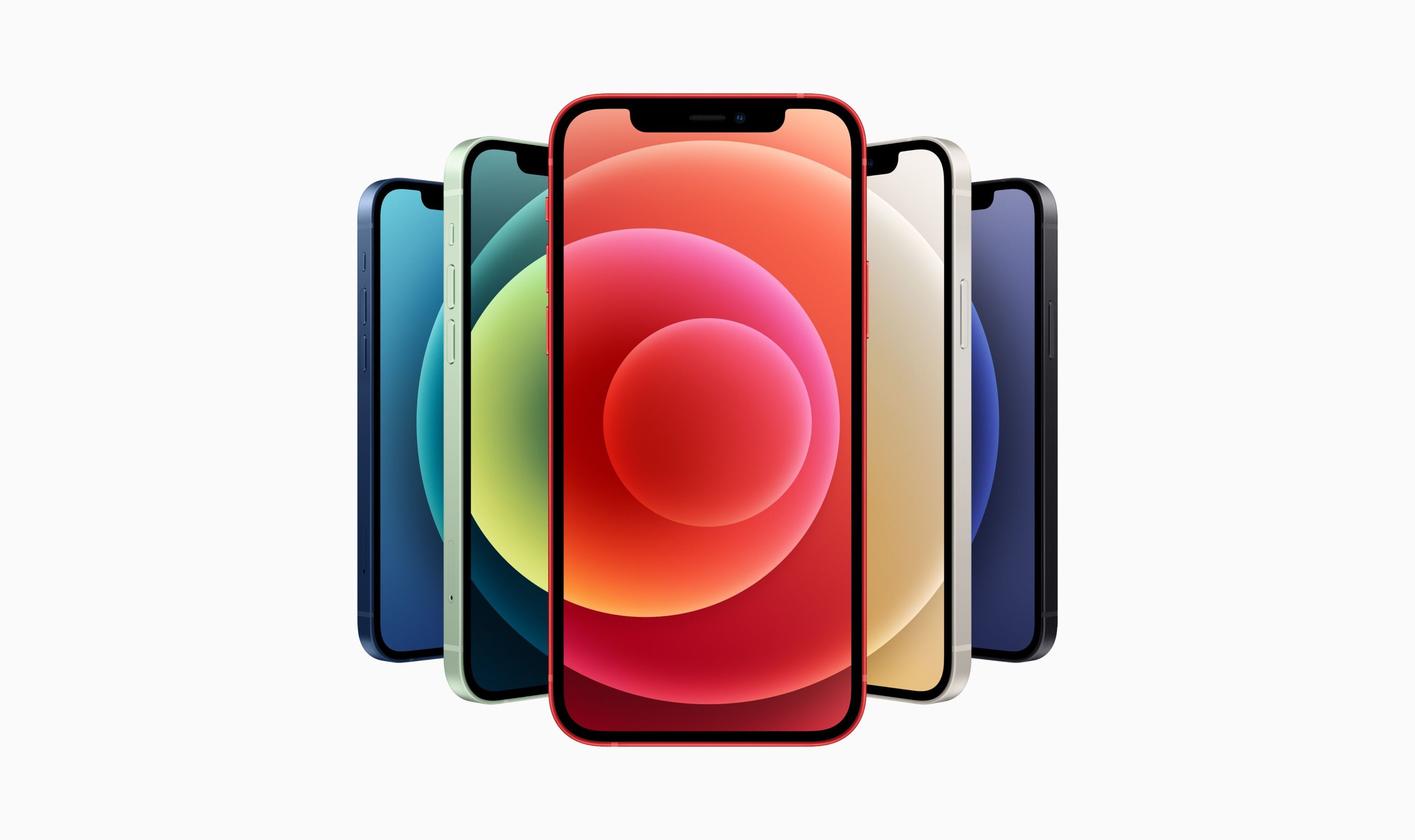
Apple is currently researching ways to reduce the appearance of fingerprints and smudges that form on metallic surfaces of its gadgets. This is another hint that the company might soon be launching products with titanium.

Apple

According to a MacRumors report, a recent patent from the Cupertino based giant was filed with the US Patent and Trademark Office. This patent was titled “Oxide coatings for metal surfaces” and described in details how a thin coating can significantly reduce the appearance of fingerprints on the metallic surfaces of its products. Just last month, the company had patented titanium device enclosures, which also reveals its plans to add the material to its future devices.

This could include products like MacBooks, iPads, and iPhones, which may arrive with titanium casings with a distinctive textured finish. Furthermore, the latest patent describes the use of oxide coatings, which again stresses the advantages of using titanium on consumer electronics products with terms like “high strength, stiffness, and hardness.” Through the patent, Apple highlights that titanium is more susceptible to fingerprint than other metals.

Apple

While the oleophobic coatings are usually used to reduce fingerprints from glass surfaces, the coating does not work as well with metallic surfaces like Titanium. The patent is indicative of its interests in using titanium for its devices, which has even led it to patent related technologies and solutions as well. Unfortunately, this is still just a patent and could be the company’s attempts to simply cover all bases. So take this this report with a grain of salt and stay tuned for more updates.

RELATED:


realme Buds Air 2 launched in India with ANC, 25-hour battery life, and ₹3,299 price tag

Chinese smartphone maker realme has officially launched the realme Buds Air 2 truly wireless earphones in India after teasing them for quite a while. This new pair of TWS comes with features like ANC and low-latency mode. Let us take a look a closer look at their specs, price, and availability.

realme Buds Air 2 Closer Black Featured

realme Buds Air 2 Specifications and Features

The newly announced realme Buds Air 2 features a similar design as the realme Buds Pro that debuted in October 2020. The latest model also has identical specs.

The new earbuds sport 10mm DLC (Diamond-like Carbon) drivers and connect via Bluetooth 5.2. They are powered by a chip called realme R2 and support Google Fast Pair, wear detection as well as touch gesture controls.

The earphones feature ANC (Active Noise Cancellation) like almost all the TWS models that are being released in the market, unlike the Lenovo ThinkBook Pods Pro. The brand claims that these buds can reduce the external noise to up to 25dB, just like the Xiaomi Mi Neckband Bluetooth Earphones Pro.

As an added bonus, these truly wireless earphones support low-latency mode for gaming sessions. Enabling this mode will lower the latency to up to 88ms. They also support ENC (Environmental Noise Cancellation) for calls and even come with Transparency Mode.

Talking about endurance, the company advertises the product to offer up to 25-hour battery life with ANC turned off and up to 22.5 hours with ANC turned on. Further, the buds themselves offer up to 5-hour battery life. Lastly, 10 minutes of charging is said to deliver 2 hours of playback, while the TWS takes up to 2 hours to charge completely.

Last but not least, the earbuds weigh 4.1g each, and together with the charging case, they weigh 42.7g. The buds are IPX5-certified for water resistance and ship with three different-sized tips (S, M, L). The product comes in two colors, namely Closer Black and Closer White.

realme Buds Air 2 Pricing and Availability

The realme Buds Air 2 truly wireless earphones are priced at ₹3,299 ($46). They will go on sale for the first time on March 2 at 12 PM. It will be available at realme.com and Flipkart. Like most realme products, the new TWS will also hit offline stores in the coming days.

They should be soon available in other regions where realme has its presence.


RELATED:


PlayStation 5 to be in short supply till second half of 2021 due to chip shortage

Despite being launched last year, the Sony PlayStation 5 is still facing short supply. Since its launch, the newest console iteration has seen great demand across the globe, but this demand is met with short supply due to the global chip shortage.

PlayStation 5 FAQ

According to a FinancialTimes report (Via MySmartPrice), Sony has been struggling to maintain the supply of the PS5 consoles. Previously, the company had stated that the shortage in supply is due to the manufacturing constraints that was being faced because of the pandemic. However now, Sony Interactive Entertainment President and CEO, Jim Ryan, has now stated that the PS5 supply will start picking up in the second half of this year.

For those unaware, Sony has been struggling to keep up with the rising demand for its latest generation of gaming console. Ryan further added that the demand for the PS5 was higher than what had been expected, and that the complexities of the supply chain issues resulted in a lower supply. But, the CEO believes that the supply will get better every month throughout 2021. He said that “The pace of the improvement in the supply chain will gather throughout the course of the year, so by the time we get to the second half of [2021], you’re going to be seeing really decent numbers indeed.”

PlayStation 5

Similar to Sony, Microsoft is also struggling to keep up with the demand for its own consoles. Microsoft’s Vice President of Gaming, Phil Spencer, said that the company is also pushing AMD to supply more chips. Although, the supply chain constraints are expected to last till April 2021.

RELATED:


Realme Narzo 30 Pro 5G launched as India’s most affordable 5G phone, Narzo 30A tags along

Realme has announced the Realme Narzo 30 Pro 5G and Narzo 30A smartphones in India. Like the Realme X7 5G that was announced earlier this month in February, the Narzo 30 Pro 5G is equipped with Dimensity 800U. Since the Narzo 30 Pro 5G has slightly inferior specs as compared to the X7 5G, it has landed as India’s most affordable 5G smartphone. Apart from announcing Narzo 30A, the company also took off covers from the Realme Buds Air 2 TWS earbuds, gaming accessories, and other lifestyle products.

Realme Narzo 30 Pro 5G specifications and features

The Realme Narzo 30 Pro 5G flaunts a punch-hole display of 6.5 inches. The IPS LCD screen produces a Full HD+ resolution of 1080 x 2400 pixels and a 120Hz refresh rate. A fingerprint scanner can be found on the right edge of the device. The Dimensity 800U powered smartphone comes in 6 GB / 8 GB LPDDR4x RAM variants and 64 GB / 128 GB storage editions. Users can expand its storage by adding a microSD card.

realme narzo 30 Pro 5G Featured
Realme Narzo 30 Pro 5G

The Narzo 30 Pro 5G has a front camera of 16-megapixel. The triple camera setup of the device features a 48-megapixel main camera, an 8-megapixel superwide lens with 118-degree FOV, and a 2-megapixel depth assist lens. The device is backed by a 5,000mAh battery that supports 30W fast charging.

The Narzo 30 Pro offers other features Realme UI 2.0 based Android 10 OS, dual SIM support with 5G, Wi-Fi 802.11ac, Bluetooth 5.1, GPS, USB-C, and a 3.5mm audio jack. The Narzo 30 Pro 5G is a rebranded version of the Realme Q2, which went official in October with a starting price of 1,199 Yuan (~$185; ~Rs 13,400).

Realme Narzo 30A specifications and features

The Realme Narzo 30A has a 6.6-inch teardrop notch-enabled IPS LCD screen that delivers an HD+ resolution of 720 x 1600 pixels. The handset draws power from the Helio G85 chipset and 3 GB / 4 GB of RAM. The phone comes in two storage choices as 32 GB and 64 GB. For additional storage, it has a microSD card slot. The phone boots to Realme UI 2.0 flavored Android 10 OS.

Realme Narzo 30A
Realme Narzo 30A

For snapping selfies, the Narzo 30A has a front camera of 8-megapixel. The square-shaped module placed on the rear shell of the device has a 13-megapixel primary camera and a 2-megapixel depth assist lens. The device is backed by a 6,000mAh battery that supports 18W charging. It carries support for reverse charging. It includes other features like a side-facing fingerprint reader, dual 4G VoLTE, Bluetooth 5.0, GPS, USB-C, and a 3.5mm headphone jack.

Realme Narzo 30A and Narzo 30 Pro 5G prices in India

Here are the pricing of the different variants of the Realme Narzo 30A and Narzo 30 Pro 5G smartphones:

Realme Narzo 30A

  • 3 GB RAM + 32 GB storage – Rs 8,999 (~$124)
  • 4 GB RAM + 64 GB storage – Rs 9,999 (~$138)
    Color variants: Laser Blue and Laser Black

Realme Narzo 30 Pro 5G

  • 6 GB RAM + 64 GB storage – Rs 16,999 (~$235)
  • 8 GB RAM + 128 GB storage – Rs 19,999 (~$276)
    Color editions – Sword Black and Blade Silver

The first sale of the Narzo 30A will be carried out on Realme India’s online shop and Flipkart on March 2nd (12 PM local time). The Narzo 30 Pro 5G will go on sale for the first time through both platforms on March 4 (12 PM local time). Buyers of Narzo 30 Pro can avail Rs 1,000 instant discount through ICICI credit card and credit card EMI transactions.

RELATED:

Redmi Y3 finally gets Android 10 update in India

Xiaomi launched the Redmi Y3 in India as a selfie-centric smartphone in late April 2019. The handset debuted with MIUI 10 based on Android 9.0 Pie. It was later updated to MIUI 11. But unfortunately, the company canceled its MIUI 12 update in December 2020. Thankfully, the device has at least started receiving the delayed Android 10 update in the country.

Redmi Y3 Elegant Blue Featured

The Redmi Y3 Android 10 update for India comes with build number V11.0.5.0.QFFINXM. Apart from bringing over a year-old Android version, the latest system update for the handset also bumps up the security patch level to January 2021.

The update is currently in the Stable Beta phase. Therefore, it is only available for a select few users at the moment. However, it should be available for more users if early adopters don’t face any major issues like the Mi A3 Android 11 update.

That said, the currently rolling out OTA update could be the last major system update for the Redmi Y3. That’s because out of the blue. Xiaomi canceled the MIUI 12 update for this phone along with Redmi 7, Redmi 6, and Redmi 6A in December citing performance issues.

Despite that, the Redmi 7 got the MIUI 12 update last month. So maybe Redmi Y3 could also receive it as well since both of them are basically the same smartphone with a different selfie camera.


RELATED:


Apple M1 Mac users face severe SSD degradation: Report

Recently, a number of users of the Apple M1 Mac have been reporting an issue with their device’s storage. Apparently, various devices have been facing alarming degradation of the SSD’s, as per health readings.

Apple Mac mini with M1 chip

According to a MacRumors report, this issue suggests that these Macs have been writing an excessive amounts of data to their drives. Many users have been reporting that their M1 Macs are facing high drive writes within a short period of time. Certain sever cases found that these M1 Macs from the Cupertino based giant end up using 10 to 13 percent of the maximum warrantable total bytes written (TBW) value of the SSD storage.

For those unaware, flash memory on solid state drives are only capable of writting a certain number of times before they become unstable. Thus, softwares are used to make sure that the load is spread evenly across the drive’s memory cells. However, there is still a point when the drive has been written so many times that it can no longer hold onto data any longer. In other words, SSD health degradation over time is to be expected, but the drives on the M1 Macs losing their ability to hold data this quickly suggests an issue affecting these devices.

Furthermore, one user showed that their Mac had already consumed one percent of its SSD, within just two months of purchase. Similarly, another user reported that their Mac had already consumed 3 percent of its 2TB SSD. This implies that the total data units currently being written by these drives is running into many terabytes, which is much higher than the normal amount. Unfortunately, there is no fix at the moment, but we can expect one to arrive with an update soon. So stay tuned for more updates.

RELATED:


Here are the 6 new features Google is rolling out for every Android user

Google had recently introduced several new Android features like Emoji Kitchen and auto-narrated audiobooks. Now, the company has added six new features that should be available for everyone very soon.

The company is rolling out Dark Mode for Google Maps, a new Password Checkup tool for Android users, ability to schedule messages in Google Messages, new Assistant commands that can be used hands-free, a new version of TalkBack, and some more customizations for Android Auto. Here is a list of the same, with information about the changes and updates.

Password Checkup Tool

The password checkup tool from Google is very helpful as it checks the user’s saved login credentials against “known compromised passwords.” The feature has been available for Desktop users and now it is coming to Android.

Google Password Checkup Tool Android

If the user has enabled the Autofill on the smartphone for saving credentials, the service will check for any compromised information and then Google will recommend changes to be made, if needed.

Message Scheduling

Google Messages application from the company is confirmed to get the ability to schedule messages. The feature was spotted by some users in September last year but wasn’t officially confirmed by the company.

Google Messages Scheduling

Users can now finally schedule message just by opening the app, typing out the message to the contact and then long-pressing the send button to get options for scheduling. The app will also show suggested timings but users can set their own date and time.

Google Maps Dark Mode

Dark Mode has been introduced in almost all applications of Google and now the company is finally bringing it to Google Maps. The feature was expected to be available around September 2020 but has been delayed and now it’s finally here.

Google Maps Dark Mode

To enable Dark Mode in Google Maps, the user will need to go to the Settings in the application and then look for “Theme.” In there, toggle the option for “Always in Dark Theme” or anything else from the options.

Hands-Free Google Assistant Commands

This isn’t a new feature as the hands-free commands for Google Assistant have been available for some time. However, the company is now expanded the list of commands to make it easier to use.

Google Assistant Hands-free Commands

As per the announcement, the user will now be able to set an alarm, play music, send text messages or make calls, all without unlocking the phone. There’s also a new set of glanceable cards showing basic info on the lock screen.

Updated TalkBack

Android has a screen reader named TalkBack which is aimed at those who are blind or with low vision. It is now getting revamped with more intuitive gestures, a unified menu, a new reading control menu, and more.

Google TalkBack Update

The company claims that it has added several new easy-to-learn multi-finger gestures for Pixel and Samsung Galaxy devices to make it easier to interact with apps. It has also added new reading controls that are adjusted with 3-finger swipe. There are also new voice commands, support for two new languages in TalkBack’s braille keyboard, and more.

Android Auto Customizations

A new update to the Android Auto service will being support for custom wallpapers as well as voice-activated games. The company is also planning to offer home screen shortcuts for things like contacts and tasks like checking weather or adjusting thermostat through Google Assistant.

Android Auto Update

It will also roll out a new new split-screen view when the car has a wider display and a privacy screen when there are others along with the user in the car.

RELATED: 


Vivo Y31 Standard Edition with Dimensity 700 may launch this week in China

The Vivo Y31s smartphone went official last month in China as the world’s first phone with Snapdragon 480 chip. A product listing of the phone named Vivo Y31s Standard Edition has appeared on the website of China Telecom. It appears that it is a new chipset version of the original Y31s phone.

The model number of Vivo Y31s Standard Edition is V2068A, while the model number of Y31s is V2054A. Both handsets have identical design, which includes a teardrop notch display, a side-facing fingerprint scanner, and a square-shaped camera module with two cameras and an LED arranged in a triangular manner.

Vivo Y31s Standard Edition specifications

The Vivo Y31s came with Full HD+ resolution support, whereas the Vivo Y31s Standard Edition’s 6.51-inch screen offers HD+ resolution of 720 x 1600 pixels. The new device is powered by Dimensity 700. The SoC is mentioned with its MT6833 model number in the listing. Apart from these differences, the remaining specs of the Vivo Y31s Standard Edition resemble the Y31s.

Vivo Y31s Standard Edition at China Telecom
Vivo Y31s Standard Edition images at China Telecom

The Vivo Y31s Standard Edition has an 8-megapixel front camera. Its rear camera setup has a 13-megapixel primary lens and a 2-megapixel secondary sensor. The handset is packed with a 4,910mAh rated battery. Its typical size could be a 5,000mAh. The 3C listing of the phone revealed that it may support 18W charging. The handset boots to Android 11 OS.

The Vivo Y31s Standard Edition is expected to land in China in two options such as 4 GB RAM + 128 GB storage and 6 GB RAM + 128 GB storage. Both variants are listed with price tags such as 1,499 Yuan (~$232) and 1,699 Yuan (~$262). The Vivo Y31s Standard Edition is likely to cost lower than the Vivo Y31s, which has a starting price of 1,499 Yuan. Hence, readers are requested to digest the pricing information of the Y31s Standard Edition with a grain of salt. Lastly, the listing claims that the device will be released in the Chinese markets on Feb. 27.

RELATED:

OPPO Reno5 K launching tomorrow, full specifications emerge

A Chinese leakster claimed yesterday about the existence of an upcoming phone called the OPPO Reno5 K. He claimed that it is a new version of the OPPO Reno5 5G handset that went official back in September. He revealed that the main difference between the two phones is that the Reno5 5G has a Snapdragon 765G chipset, whereas the forthcoming Reno5 K is driven by the Snapdragon 750G. Today, OPPO released an official confirmation that the Reno5 K will break cover tomorrow in China.

The OPPO Reno5 K posters released by the brand reveals its two color editions such as Green and Starry Dream. As far as appearance, it appears identical to the Reno5 5G.

OPPO Reno5 K specifications and price

The Reno5 K (PEGM10 model number) has also appeared in the product library of China Telecom. The listing states that the smartphone has a 6.43-inch punch-hole display that produces a 1080 x 2400 pixels resolution. The screen type is AMOLED, and it features an in-screen fingerprint reader.

The Snapdragon 750G chip is mentioned with its sm7225 model number in the China Telecom listing. The phone runs on Android 11 OS. It is fueled by a 4,300mAh battery. The 3C appearance of PEGM10 revealed that it may carry support for 65W rapid charging.

The Reno5 K has a front camera of 32-megapixel. Its rear camera setup comprises of a 64-megapixel primary camera, an 8-megapixel lens, and a pair of 2-megapixel sensors.

The OPPO Reno5 K variants such as 8 GB RAM + 128 GB storage and 12 GB RAM + 256 GB storage prices are mentioned incorrectly in the China Telecom listing. The handset is expected to cost lower than 2,699 Yuan (~$417), which was starting price of OPPO Reno5 5G. The handset is also expected to come in a third color edition of Midnight Black.

RELATED:

Xiaomi Mi 11 Lite live shots appear with key specifications, Could be called Mi CC11 in China

In January, the FCC certification platform approved a Xiaomi device with model number M2101K9AG. Its IMEI database listing revealed that the moniker of this device is Xiaomi Mi 11 Lite 4G. After FCC, the handset bagged certifications from other platforms like India’s BIS, Thailand’s NBTC, Singapore’s IMDA, Europe’s EEC, Malaysia’s SIRIM, and Bluetooth. The leaked images of the phone have now appeared on Weibo to reveal its appearance in reality.

In the first image, the M2101K9AG model number can be seen at the bottom. The device can be seen running on MIUI 12 Global based on Android 11 OS. The handset is powered by an unknown octa-core processor that clocks at 2.3GHz. The SoC is coupled with 6 GB of RAM. The second image showcases the rear design of the smartphone. It seems to feature a glass back with a square-shaped camera module housing a triple camera setup and an LED flash.

It is speculated that the device could be called the Xiaomi Mi CC11 in China. The variant heading to China may have a model number of M2101K9C. The 5G-ready device has already bagged certification from the MIIT authority of China. Its global version with the M2101K9G model number was recently certified by the IMDA authority.

According to the leakster, the Xiaomi Mi CC11 will be the first phone to feature the next-generation Snapdragon 7-series chipset, which is speculated to arrive with Snapdragon 775G moniker. The handset is expected to feature a 4,150mAh battery.

For photography, the Xiaomi Mi CC11 may feature a 64-megapixel camera as the primary shooter. The handset is expected to carry support for 5x optical zoom. The other details of the device are under the wraps. Probably, the smartphone may go official in the coming month.

(via 1, 2)

RELATED:

Meizu 18 series flagship smartphones’ render confirms curved screen with punch-hole cutout

Chinese smartphone maker Meizu has confirmed that the company will be launching its next-generation Meizu 18 series flagship smartphones on 3rd March in its home country. The launch event will be held at 2:30 PM local time.

Now, just days ahead of the official launch, the company has shared official renders of the upcoming flagship smartphones, revealing its design. Along with sharing images, the company added that Meizu 18 is lightweight while the 18 Pro is a high-end device.

Meizu 18 Series Renders

The image reveals that both the smartphones feature a curved screen design with a punch-hole cutout for the front-facing camera in the center of the display. The phones also come with an under-display fingerprint sensor.

A recent leak suggests that both the smartphones are expected to have Samsung E4 AMOLED display with support for Full HD+ screen resolution and a high 120Hz refresh rate.

The Meizu 18 is rumored to be powered by the Qualcomm Snapdragon 870 SoC, coupled with 8GB of RAM and 256GB of internal storage. It is expected to feature a triple-camera setup consisting of 64MP + 12MP + 5MP sensors.

Coming to the Meizu 18 Pro, the device is expected to be powered by the latest Qualcomm Snapdragon 888 flagship chipset. It should have a quad-camera setup consisting of 48MP + 48MP + 8MP + ToF lens. On the front side, there is expected to be a 20MP snapper for taking selfies and video calling.

Both the smartphones could be running the latest Android 11 operating system out-of-the-box with the company’s own custom user interface. The Meizu 18 Pro is said to be powered by a 4,500mAh battery with 40W fast charging support.

To know for sure about the phone’s specifications, variants, color options, pricing, and availability details, we will have to wait for a week for the smartphones to go official in China. Meanwhile, we expect the company to reveal more information through teasers.

RELATED: 

Dashcam captures woman chasing after a summoned Tesla Model 3 thinking it was rolling away

Tesla may be selling more electric vehicles (EVs) by the day but there still quite a number of persons who don’t even know that the car offers way more than just no carbon emission. This was proven recently when a woman who perhaps didn’t realize Teslas have self-driving capabilities was caught on tape chasing one down the parking lot thinking it was rolling away, obviously trying to help out.

The video was captured by Tesla’s Sentry Mode onboard the Model 3. In case you don’t know, the Sentry Mode is a surveillance system integrated into the vehicles Autopilot cameras which can help capture incidents such as potential vandalism and others. The feature is actually a response to a spate of car vandalism targeted at Tesla owners in San Francisco’s Bay Area. The owner will have to plug in a storage device in any of the USB ports in the center console and footages both from the surveillance camera and dashcam will be stored there.

The footage which was shared by the Model 3 owner in Pennsylvania shows the woman jumping out of her own SUV and dashing after the Model 3 in a bid to stop the car from rolling. The owner even disclosed that the woman even attempted to stop it by putting her weight on the front left pillar but that wasn’t captured in the video.

The truth is the Smart Summon is a relatively new feature released by Tesla in September 2019 and so not many people may have seen it working. It allows owners to summon their Tesla cars from a maximum distance of 200 feet and as long as the car is within their line of sight, even in a difficult parking zone. The feature builds on the “Summon” which allows the car to only move a few feet in their driveway or from a tight parking space where there isn’t enough room for the owner to get inside the car.

Tesla is even planning to take things a step further by releasing a “reverse summon” which will give owners the leverage to disembark from the car at an entrance and have the car find a parking spot autonomously.

RELATED;

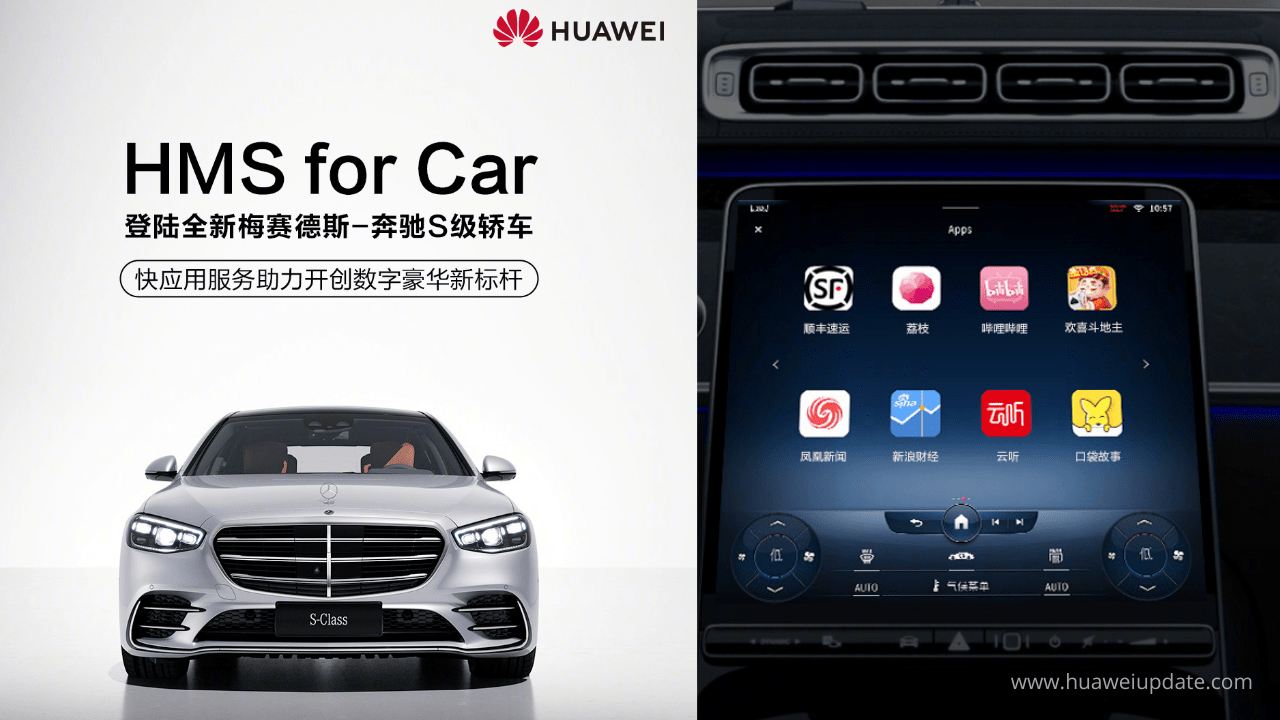
Huawei HMS for Car will feature on the 2021 Mercedes-Benz S-Class

In an effort to keep its business afloat after the US government blocked access to components for its smartphones, Huawei turned to other businesses that weren’t affected by the US ban. One such aspect is the development of smart cloud solutions for cars. One of such solutions is the HMS for Car solutions.Huawei HMS for Car

After the US ban prevented Huawei from using Google Mobile Services, it unveiled its own version dubbed  Huawei Mobile Services (HMS). The company, later on, showcased a custom version for cars called Huawei HMS for Car. Last year, Huawei’s rotating chairman Guo Ping disclosed that the company was in talks with manufacturers to use the HMS. Apparently, German car maker Mercedes will be deploying the HMS for Car on the 2021 Mercedes Benz S-Class. This was disclosed by Yu Chengdong, the CEO of Huawei’s consumer business. Huawei HMS for Car

The Huawei CEO touts HMS for Car to deliver a fast application service that will allow users to enjoy various in-car leisure and entertainment functions such as reading news, listening to stories, watching videos, and playing games while driving. He also disclosed that as a smart car cloud service solution, HMS for Car will continue to provide everyone with a high-quality travel life based on the rich application ecosystem of Huawei cloud services.

The accompanying posters show that the smart display installed on the car will feature several apps with icons of various apps such as SF Express, Lychee, Bilibili, etc. seen on the display screen. There is likely going to be more apps and we expect the users to have access to Huawei’s app store to download more apps as desired.

We can’t say for sure if this solution will be on the China models of the S-Class but we believe it will be for China only since Mercedes already uses Android Auto for most of its models in Europe and elsewhere.

The Mercedes Benz S-Class is said to include the S400L, S450L, and S500L models, with prices starting at 899,000 yuan (around $139,046. The car’s central control screen utilizes a massive 12.8-inch OLED screen having a resolution of 1888×1728 pixels. The in-vehicle system onboard the sleek ride also includes a voice assistant and the software can be updated remotely via OTA push.

Recall that BYD General Manager Zhao Changjiang recently disclosed also that the company will utilize Huawei HMS for Car on the BYD Han. This brings to two the number of car manufacturers that are already deploying Huawei’s cloud solution. We expect more brands to come on board soon.

RELATED;

(via)

Lenovo ThinkPad X13 Gen 2 launched with 16:10 display, Wi-Fi 6e, and optional 5G support

Lenovo has announced the newly refreshed Lenovo ThinkPad X13 Gen 2 which the company continues to offer in two options — Intel and AMD chipsets, upgraded to the latest processors from both the companies.

The first major update is in the form of display. It now comes with a taller aspect ratio of 16:10, which is said to be better suitable for productivity work. The company continues to offer several 13.3-inch options in WUXGA and WQXGA resolutions.

Lenovo ThinkPad X13 Gen 2

To differentiate between different models, the company has decided to call the laptops powered by the Intel chipsets ThinkPad X13 Gen 2 i, which will be powered by the latest 11th generation Intel Core i7 chips with vPro support.

On the other hand, the AMD-powered models will come with the latest AMD Ryzen 5000 chips. This model removes the Thunderbolt 4 port and the user only has USB-C. The company is yet to reveal full specs of this model.

The Intel-powered model has two USB-A ports, two Thunderbolt 4 ports, a full-size HDMI port, and an analog audio port. For connectivity, the device offers options that range from Wi-Fi to Wi-Fi 6E as well as LTE 4G and 5G modem.

It also comes with an option for a 1080p webcam along with support for Windows Hello biometric support. The company is offering two options for the battery — 54.7Wh or 41Wh.

The Lenovo ThinkPad X13 Gen 2 i (Intel model) will be available for purchase from next month for a price of $1,299 while the AMD-powered model will be available from May this year, with its price starting at $1,139.

RELATED: 

Samsung Galaxy Z Fold 3 could be the spiritual successor to Galaxy Note 20

Samsung, breaking with the tradition, started offering the S-Pen stylus with the Galaxy S-series phones, starting with the Galaxy S21 lineup. Earlier, the support for stylus was limited to the Galaxy Note series only.

The reason behind this change is rumored to be the discontinuation of the Galaxy Note series. Several reports have pointed out that Samsung is done with the Note-series and isn’t expected to launch the Note 21 series this year.

Samsung Galaxy Z Fold 3 Concept
Samsung Galaxy Z Fold 3 Concept Render

Now, the latest report from ‘Ice universe’ claims that the upcoming Samsung Galaxy Z Fold 3 will be the spiritual successor of the Note 20 lineup. It is said to double up as a Note series device and come with the latest cutting-edge technologies.

There is also speculation that the Galaxy Z Fold 3 will become the second non-Note series smartphone from Samsung to come with support for the S-Pen stylus. The phone could also be the first from the South Korean giant to feature under-display camera sensor.

While not much is known about the phone’s specifications at this time, we expect the device to come powered by the Qualcomm Snapdragon 888 chipset with at least 256GB of internal storage. It will be running the latest Android 11 operating system with the company’s own One UI 3.5 on top.

Reports indicate that Samsung will start mass producing the upcoming Galaxy Z-series foldable smartphone around June and thus, the device should get launched around September, similar to its predecessor, the Galaxy Z Fold 2.

RELATED: 

Message Scheduling comes to Google Messages

Google lets you schedule when you want an email sent on Gmail. Now, a similar feature is rolling out to Google Messages.

Google Messages Logo Featured

Called “Schedule Send”, users will now be able to set when they want a message sent to a recipient. Android Police reports that the feature was first available for a few users back in November 2020. Now, it is getting a wider rollout.

Schedule Send is pretty easy to use. Once you type your message, press and hold the send button. You get a dialog box that shows you some preset times and dates that you can choose to have the message sent. There is also an option to choose your own date and time. Once done, tap the send button and the message will have a “Scheduled message” tag underneath it.

Users will be able to update or delete the message before the chosen date and time. You can also choose to have the message sent immediately. Do note that the message will only send if your phone is turned on at that time or connected to the internet (in case you use the chat feature of Google Messages).

Schedule Send is rolling out as a server-side switch, so even if you have the latest version of Google Messages, it doesn’t mean you have the feature already. We expect it to be available to most users in the next few days.

This is a nice feature to have but many Android phones will be missing out on it as a lot of manufacturers ship their phones with their own messaging app. However, you can install the Google Messages app from the Play Store and set it as your default messaging app if this is a feature you really want.

RELATED:

Realme 7 5G vs Redmi Note 9T 5G vs Samsung Galaxy A32 5G: Specs Comparison

I recently got a unit of the Realme 7 5G which is actually one of the most affordable 5G phones in the global market. I was impressed by its potentialities and I realized that most people do not even need a higher-end device to get a great user experience and 5G in the same phone. But there are also a lot of other affordable 5G phones in the global market. Among the most interesting ones in the actual market, we got the Redmi Note 9T 5G by Xiaomi and the Galaxy A32 5G by Samsung. We decided to publish this specs comparison because we wanted to help our readers to make the best choice while looking for an affordable 5G phone among the latest ones.


Realme 7 5G vs Xiaomi Redmi Note 9T 5G vs Samsung Galaxy A32 5G

Realme 7 5G Xiaomi Redmi Note 9T 5G Samsung Galaxy A32 5G
DIMENSIONS AND WEIGHT 162.2 x 75.1 x 9.1 mm, 195 grams 161.2 x 77.3 x 9.1 mm, 199 grams 164.2 x 76.1 x 9.1 mm, 205 grams
DISPLAY  6.5 inches, 1080 x 2400p (Full HD+), IPS LCD 6.53 inches, 1080 x 2340p (Full HD+), 395 ppi, 19.5:9 ratio, IPS LCD 6.5 inches, 720 x 1600p (HD+), 270 ppi, 20:9 ratio, TFT LCD
PROCESSOR Mediatek Dimensity 800U, octa-core 2.4 GHz Mediatek Dimensity 800U, octa-core 2.4 GHz Mediatek Dimensity 720, octa-core 2 GHz
MEMORY  6 GB RAM, 128 GB – 8 GB RAM, 128 GB – micro SD slot 4 GB RAM, 64 GB – 4 GB RAM, 128 GB – micro SD dedicated slot 4 GB RAM, 64 GB – 4 GB RAM, 128 GB – 6 GB RAM, 128 GB – 8 GB RAM, 128 GB – micro SD slot
SOFTWARE  Android 10, Realme UI Android 10, MIUI Android 11, One UI
CONNECTIVITY  Wi-Fi 802.11 a/b/g/n/ac, Bluetooth 5.1, GPS Wi-Fi 802.11 a/b/g/n/ac, Bluetooth 5.1, GPS Wi-Fi 802.11 a/b/g/n/ac, Bluetooth 5, GPS
CAMERA  Quad 48 + 8 + 2 + 2 MP, f/1.8 + f/2.3 + f/2.4 + f/2.4
16 MP f/2.1 front camera
 Triple 48 + 2 + 2 MP  f/1.8, f/2.4 and f/2.4
13 MP f/2.3 front camera
Quad 48 + 8 + 5 + 2 MP f/1.8, f/2.2, f/2.4 and f/2.4
13 MP f/2.2 front camera
BATTERY 5000 mAh, fast charging 30W  5000 mAh
Fast charging 18W
5000 mAh, Fast charging 15W
ADDITIONAL FEATURES Dual SIM slot, 5G Dual SIM slot, 5G Dual SIM slot, 5G

Design

If we look at the rear sides of these phones, the Samsung Galaxy A32 5G has the most interesting one, at least in my opinion. Its rear cameras are integrated on the back cover without an invasive square-shaped or rectangle-shaped camera module. On the other hand, if we look at the front panel, the Samsung Galaxy A32 5G is the most disappointing because of a lower screen-to-body ratio and the waterdrop notch. With the Realme 7 5G and the Redmi Note 9T 5G you get a higher screen-to-body ratio and a punch-hole design. In each case, you get a side-mounted fingerprint reader.


Display

The display of the Samsung Galaxy A32 5G is all but exciting. It is a below-average TFT LCD panel with a below-average HD+ resolution. You would expect such a display from an entry-level phone, but not a mid-ranger. The Redmi Note 9T 5G sits in the middle with its 6.53-inch IPS display boasting a Full HD+ resolution. The best one is definitely the Realme 7 5G with its Full HD+ display sporting a 120 Hz refresh rate. Besides its very high refresh rate, the Realme 7 5G also offers a higher brightness (the typical brightness is 480 nits, against 450 nits offered by Redmi Note 9T 5G).


Hardware/Software

Not only the best display: Realme 7 5G is even equipped with the best hardware setup. The phone packs the Dimensity 800U chipset by MediaTek, just the Redmi Note 9T 5G, but it ships with more RAM. You get either 6 or 8 GB, while Redmi Note 9T 5G only comes with 4 GB of RAM. The internal storage is 128 GB. The Samsung Galaxy A32 5G loses the comparison again with a Dimensity 720 SoC, but it has 8 GB of RAM, unlike the Redmi Note 9T 5G. Further, Samsung Galaxy A32 5G runs Android 11 out of the box (Realme 7 5G and Redmi Note 9T 5G are still based on Android 10) and it will likely get longer software support.


Camera

The most advanced rear cameras are on board of the Samsung Galaxy A32 5G: it packs a 48 MP main sensor and an 8 MP ultrawide sensor like the Realme 7 5G, but the macro camera has a higher 5 MP resolution (the Realme 7 5G has an inferior 2 MP macro camera). On the other hand, the Realme 7 5G is a better selfie phone with its 16 MP front snapper. Redmi Note 9T 5G is disappointing as it lacks an ultrawide sensor and it has an inferior selfie camera as well.


Battery

Redmi Note 9T 5G, Realme 7 5G, and Samsung Galaxy A32 5G have the same battery capacity: 5000 mAh. But the Samsung Galaxy A32 5G should have a longer battery life because its display has an inferior HD+ resolution. On the other hand, Realme 7 5G charges faster with its 30W fast charging technology.


Price

Realme 7 5G is priced at €279/$339 in the global market, Redmi Note 9T 5G starts from €229/$278, and Samsung Galaxy A32 5G costs €299/$363. The Realme 7 5G wins the comparison due to its better hardware, display, and faster charging.


Realme 7 5G vs Xiaomi Redmi Note 9T 5G vs Samsung Galaxy A32 5G: PRO and CONS

Realme 7 5G

PROS

  • 120 Hz display
  • 30W fast charging
  • Great selfie camera
  • Reverse charging

CONS

  • Nothing particular


Xiaomi Redmi Note 9T 5G

PROS

  • Stereo speakers
  • Affordable price
  • Water-repellent
  • IR blaster

CONS

  • No ultrawide sensor


Samsung Galaxy A32 5G

PROS

  • Longer software support
  • Android 11 out of the box
  • Better rear cameras
  • Good rear design

CONS

  • Inferior display


RELATED

Check the latest videos from our YouTube channel and subscribe:

Retail box of the Redmi Note 10 reveals it has an AMOLED display

Just a day after an image of the Redmi Note 10 Pro’s retail box was posted on the internet, baring the design of the upcoming phone, another image, this time of the retail box of the Redmi Note 10 has surfaced too.

We get a good look at the Redmi Note 10 via a photo of its retail box which was shared on Twitter by Abhishek Yadav (@yabhishekhd). However, unlike the retail box of the Redmi Note 10 Pro which only has the photo of the phone, this includes a few key specs as well, one of which fans will be excited for.

As shown in the photo, the Redmi Note 10 will have an FHD+ AMOLED DotDisplay. The screen has a centered punch hole for the camera and has a bit of bezel at the bottom. It doesn’t mention a high refresh rate, so the screen is most likely a 60Hz one.

The retail box also says that the phone has 48MP quad (rear) cameras. The design of the camera array is similar to that of the Redmi Note 10 Pro albeit with some little differences. For example, there is no silver accent around the main camera of the Redmi Note 10 and it has a pill-shaped flash rather than a circular one. Another difference is that the Redmi Note 10 Pro appears to have a laser focus system for better focusing.

The Redmi Note 10 is shown in green on the retail box. We expect there will be other colors too and you will be able to tell what color is inside the box by the image outside.

One key info we should note is that this is the Redmi Note 10 for India. The one that will be sold in Europe and some other markets might be different.


RELATED:


Samsung reveals the prices for the 4K QLED TV series & The Frame 2021

In January, South Korean electronics giant Samsung unveiled its 2021 lineup of the Frame smart TV alongside the Neo 4K QLED TV at CES 2021. Since then, there has been no word about the pricing and availability even though the Neo QLED TV was recently crowned as the best TV of all time by German AV magazine.

The 2021 Frame
The Frame (2021)

The prices of the TV models have now been announced by Samsung , since customers were kept in suspense about the prices during the CES event last month. The prices released show that interested fans or customers will part with a minimum of $549 for the base model.

The unique concept behind the Frame TV is that it serves a dual purpose of both a television and a picture frame, and can be deployed to display choice works of art whether in landscape or portrait view. The Frame 2021 and 4K QLED TVs come in different sizes and reflect significant improvements in quality and sleekness over their predecessors.

The Samsung 4K QLED TV series has the Q60A as the lowest-priced model. In total, there are eight different screen sizes beginning with the 43-inch Q60A priced at $549, while the 85-inch model at the other end of the spectrum goes for a steep $2,599.

The prices of the Q70A series start from $950 for the 55-inch model, while the 85-inch model goes for about $3,000. In addition, the premium offering for 2021 is the Q80A series costing between $1,300 for the 55″ model and a princely $3,700 for the 85″ model.

On the other hand, the prices of the Frame TVs begin at $999 for the 43-inch model. There are also 50″, 55″, 60″, 65″ and 75 inches models with the 75-inch model priced at $2,999.

Samsung also indicated that most of the models in the entire lineup will start shipping next month while some of the sizes will be released in April.

RELATED;

(source)

Samsung’s upcoming watches are codenamed Wise & Fresh, possibly hinting at Wear OS

This week, two videos detailing the workings of Samsung’s Augmented Reality (AR) glasses were leaked online. The AR glasses could be used for several applications and it was said that mid-air gestures won’t work for the device, but rather it would be operated using a Samsung smartwatch. Now, another report has revealed that indeed Samsung may soon release two separate smartwatch models and the codenames of the models have also featured in the rumour mills.Samsung Galaxy Watch 3 Featured

Not too long ago, a leak emerged about Samsung’s 2021 lineup of Galaxy smartwatches having the model numbers SM-R86x and SM-R87x. Going by the tradition of Samsung, these models will likely be different sizes of the Galaxy smartwatch. It is also rumoured that at least one of the smartwatch models could have the Android’s Wear OS instead of the usual Tizen OS, reflecting an improvement in the model.

This rumor seems to have been lent more weight with the discovery by the guys at GalaxyClub that the Korean giant was working on two smartwatches with codenames Wise and Fresh. The codenames are being interpreted in some quarters as reflecting that Samsung is indeed planning to introduce a fresh approach to its smartwatches by unveiling the Wear OS smartwatch which reflects a new direction for the company’s watches.Galaxy Watch Active2

The Android integration for Samsung’s smartwatches holds a lot of promise. The integration will open a wide array of opportunities and possibilities on tasks that can be accomplished by the new smart wearable device. Obviously, the company would have its own AR glasses in mind while developing the soon-to-be unveiled smartwatches, as it continues to expand the frontiers of technology along the lines of augmented reality (AR) and virtual reality (VR).

Samsung is yet to make any statement on the impending release of its Galaxy Watch lineup for 2021, but the speculations remain rife about a shift to the Wear OS for one of the models.

RELATED;