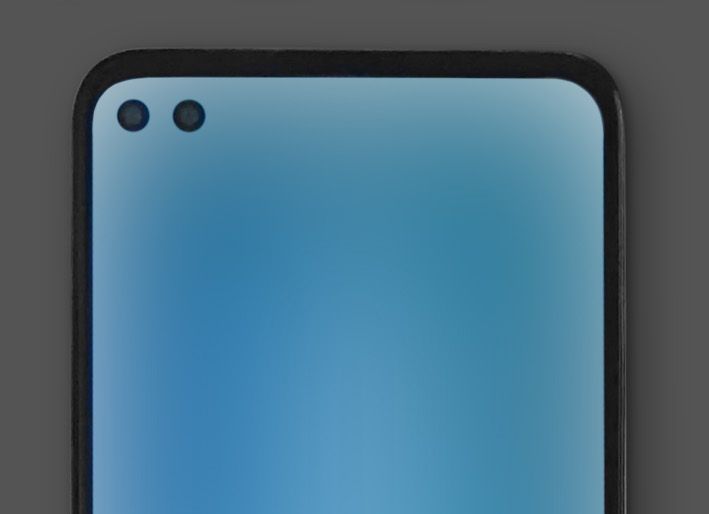
On Monday, the General Manager of Lenovo China teased the arrival of a new Motorola smartphone powered by Snapdragon 8xx SoC. He did not reveal its name but his Weibo post exposed the phone’s branding to be Motorola Edge S. Now, today, a well-known Chinese tipster suggests that this handset will be powered by a yet to release Qualcomm Snapdragon 800 series SoC and not Snapdragon 888 or 865.
According to a Geekbench listing, it will be powered by Qualcomm Snapdragon 865 chipset paired with 8GB RAM. This suggests that the unannounced Snapdragon 800 series chip could be based on last year’s flagship SoC. Also, since there’s already an overclocked version in the form of Snapdragon 865+, the new chipset could be an underclocked variant.
Whatever it turns out to be, it will be debuting first in the Motorola Edge S aka Motorola Nio (XT2125), as per Digital Chat Station. That said, as Qualcomm announced the Snapdragon 865+ out of the blue, we can expect the same thing for this underclocked Snapdragon 865 SoC.
Other leaked specs of this device include a 64MP (primary) + 16MP (ultra-wide) + 2MP (depth) triple rear camera setup, a 16MP (primary + 8MP (ultra-wide) dual front camera setup, 8GB/12GB RAM, 256GB internal storage, and Android 11.
Earlier this week, GM (General Motors) unveiled a new futuristic self driving car. This was a new Cadillac imagined by the automobile maker, which is even capable of flying and can carry a passenger through the skies.
According to a Reutersreport, the new flying Cadillac is autonomous and can even land and take off vertically. As per a senior executive from the company, the new concept vehicle is a “reimagining the future of personal transportation.” The flying Cadillac from GM can only carry a single passenger and is technically more akin to a VTOL drone (Vertica Take off and Landing). It will be capable of flying from one urban rooftop to another and can reach speeds of up to 55 miles per hour as well.
The vehicle is fully autonomous and all electric and is powered by a 90KW motor. This battery is a GM Ultium battery back, which is housed in an ultra lightweight body with pairs of motors. The company unveiled the new concept car in a video as a part of its virtual keynote presentation, which had Chief Executive Mary Barra reveal the futuristic flying car along with a family friendly Cadillac electric shuttle.
Back in 2020, the senior executive had revealed that GM is exploring alternative methods of transportation, which included aerial taxis. GM design chief Mike Simcoe further added that “VTOL is key to GM’s vision for a multimodal future,” and he believes that the vehicle can be “the Cadillac of urban air mobility” as well. At the moment, no finer details regarding the vehicle are currently known, but the company did state that it is “arriving soon” with lounge like seating, biometric sensors, voice controls, and hand gesture support as well.
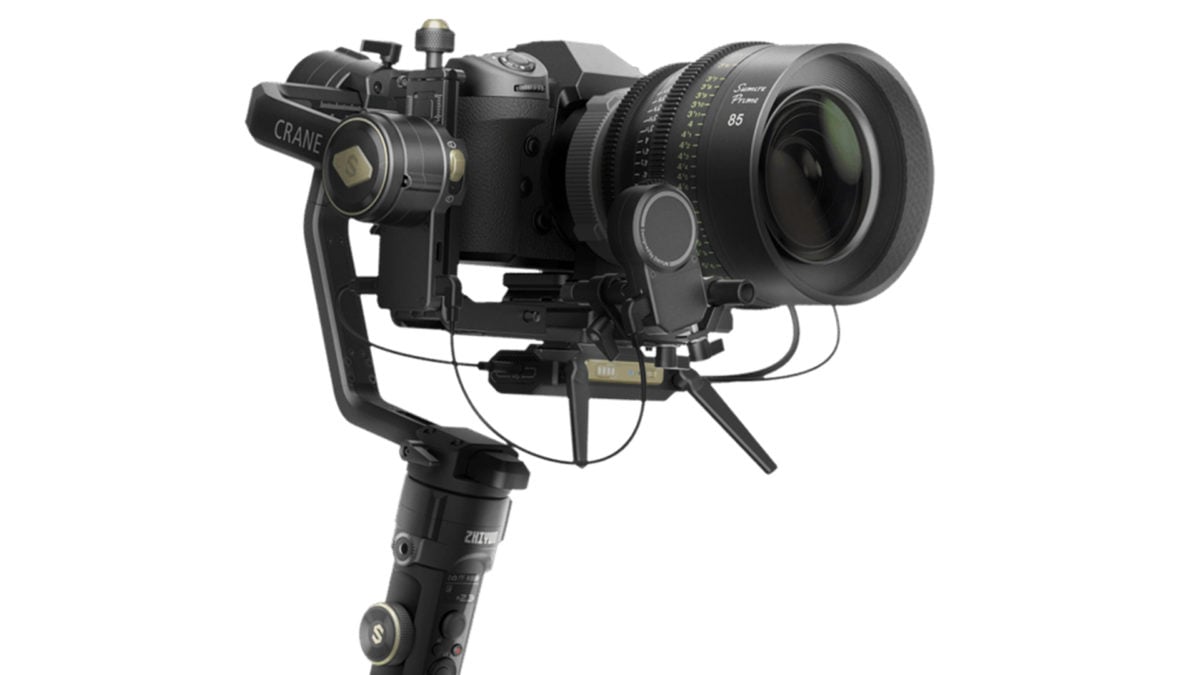
Zhiyun is well-known for making smartphone gimbals and now, at the CES 2021, the company has launched its new Crane-2S gimbal, aimed at videographers, and can handle some of the largest pro cameras.
The company says that the product has a load capacity high enough to carry premium DSLRs and mirrorless cameras such as Canon EOS 1DX Mark II, Nikon D850, and others. To keep the weight low, it has opted for carbon fiber material to keep the design strong.
It comes with ninth-generation Instune Algorithm image stabilization and powerful motors for overall improved responsiveness. The company adds that it has been comprehensively tested to ensure reliable performance even in the most challenging environments.
The Zhiyun Crane-2S comes with a 0.96-inch OLED screen that enables users to easily navigate through the menu and swiftly switch modes. As for the battery life, it is claimed to last for around 12 hours on a single charge and has support for backup batteries.
The device is priced at $599 and is now available for purchase in the United States. The combo of gimbal, batteries, and grip cost $649 while the Zhiyun Crane-2S Pro Kit with a smartphone cradle, a stand, and other attachments is priced at $849.
The global shipments of smartphones saw a noticeable decline of 8.8 percent in 2020 as per a new report. During this period, handset shipments only reached 1.24 billion units with the primary cause of the decline being the Coronavirus pandemic.
According to a DigiTimesreport, the viral outbreak had seemingly crippled the market. Although, despite the overall decline of smartphone shipments, the 5G enabled handsets saw a significant rise, reaching 280 to 300 million units in shipments last year. This is up from just 20 million units from back in 2019, marking an upwards of ten fold growth in a single year.
During the first quarter of 2020, smartphone shipments worldwide fell by over 20 percent year on year. The double digit decline fell rapidly by the second quarter and the market recovered further in the third, which only faced a single digit dip in shipments. Notably, the fourth and final quarter saw a single digit rise in shipments, marking the pent up demand for smartphones from consumers from across the globe.
The DigiTimes research report also added that in 2020, the top six major brands in the market included Samsung Electronics, Apple, Huawei Technologies, Xiaomi, Oppo, and Vivo. Between all of these OEMs, Apple and Xiaomi managed to raise their respective shipments by over 10 percent on a year on year basis. On the other hand, brands like Samsung and Huawei faced a double digit decline in shipments during the same period.
A few days back, MediaTek scheduled an event for January 20 to unveil its latest flagship mobile chipset. This silicon is expected to be the 6nm Dimensity series SoC, which the company teased back in November 2020. Now, ahead of its official announcement, Redmi’s GM has confirmed a smartphone powered by this chip.
Recently, Lu Weibing, the General Manager of Redmi, confirmed the arrival of the Redmi K40 series powered by Qualcomm Snapdragon 888. Listing some key specs, he also revealed that the brand’s latest flagship smartphone series will debut in February.
Earlier today, he surprised his followers on Weibo by confirming another high-end Redmi smartphone powered by the upcoming 6nm MediaTek Dimensity SoC. His post notes that Redmi K30 Ultra featuring MediaTek Dimensity 1000+ has now reached its end of life. Therefore, a new device featuring the latest Dimensity chip will replace it in 2021.
Since he does not mention the specific time period for the launch of this handset, we believe it may only debut in the second half of the year just like the Redmi K30 Ultra. Hence, it is safe to assume that the upcoming Redmi K40 and Redmi K40 Pro will be powered by a Qualcomm Snapdragon 700 series chip and Snapdragon 888 SoC.
Anyway, there’s still a chance for a third device featuring this new MediaTek chip in the Redmi K40 series that is set to launch next month.
That said, according to a leak, the forthcoming flagship Dimensity chip will bear the model number MT6893. It will be an octa-core processor built on a 6nm fabrication process. Its CPU will consist of 1 x ARM Cortex-A78 clocked at 3.0GHz, 3 x ARM Cortex-A78 clocked at 2.6GHz, and 4 x ARM Cortex-A55 clocked at 2.0GHz. As for GPU, it will come with ARM Mali-G77 MC9.
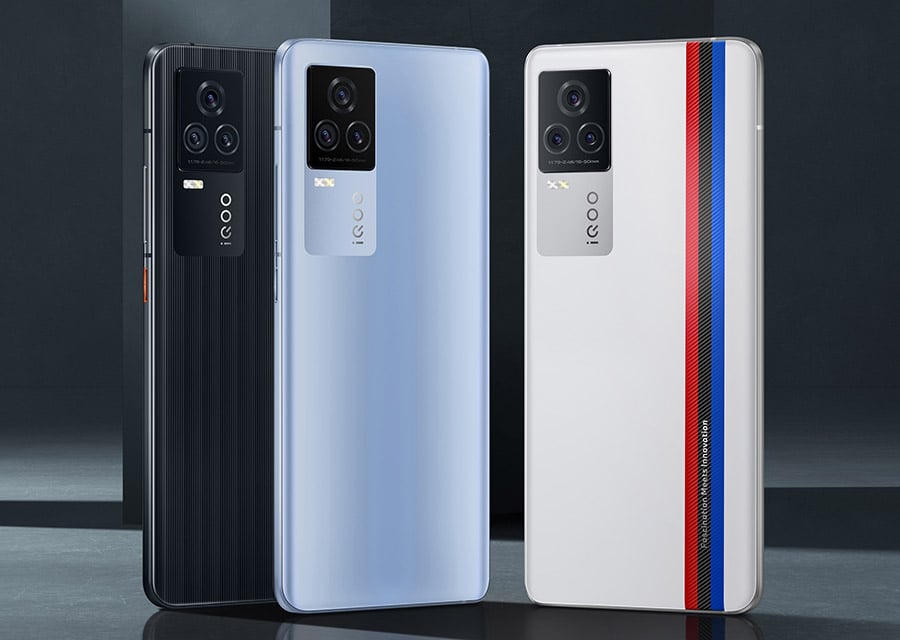
A couple of days ago, Vivo’s sub-brand iQOO launched its latest flagship smartphone in its home market China — iQOO 7. With that, it became the second smartphone to come powered by the Qualcomm Snapdragon 888 chipset, after Xiaomi Mi 11.
Now, the smartphone is up for pre-orders in China in two variants — 8GB RAM + 128GB storage and 12GB RAM + 256GB storage, costing 3,798 yuan (~$588) and 4,198 yuan (~$650) respectively. The devices are offered in two colors — Black Mirror and Latent Blue. The devices are set to go on sale from 15th January.
iQOO 7
Coming to the specifications, the smartphone features a 6.62-inch AMOLED Full HD+ display that offers a 120Hz refresh rate, 6000000:1 contrast, supports HDR 10+ content, 1000Hz instant touch sample rate, and 300Hz touch report rate.
Under the hood, the device is powered by the Snapdragon 888 chipset, coupled with up to 12GB of DDR5 RAM and 256GB of UFS 3.1 internal storage. For cooling, iQOO says the device has a 4096 sq. mm head spreader inside and an L-shaped VC cooling plate.
In the camera department, the phone features a triple-camera setup that includes a 48MP f/1.79 main sensor with OIS and dual 13MP sensors. One is an f/2.2 120-degree ultra-wide-angle lens whereas the other one is an f/2.46 Portrait camera with a 50mm focal length. On the front, there’s a 16MP snapper for taking selfies and video calling.
The smartphone is running Android-based OriginOS and is powered by a 4,000mAh battery. It comes with support for 120W FlashCharge technology which the company claims can fully charge the device within 15 minutes. The company is also offering a standard 120W charger in the box.
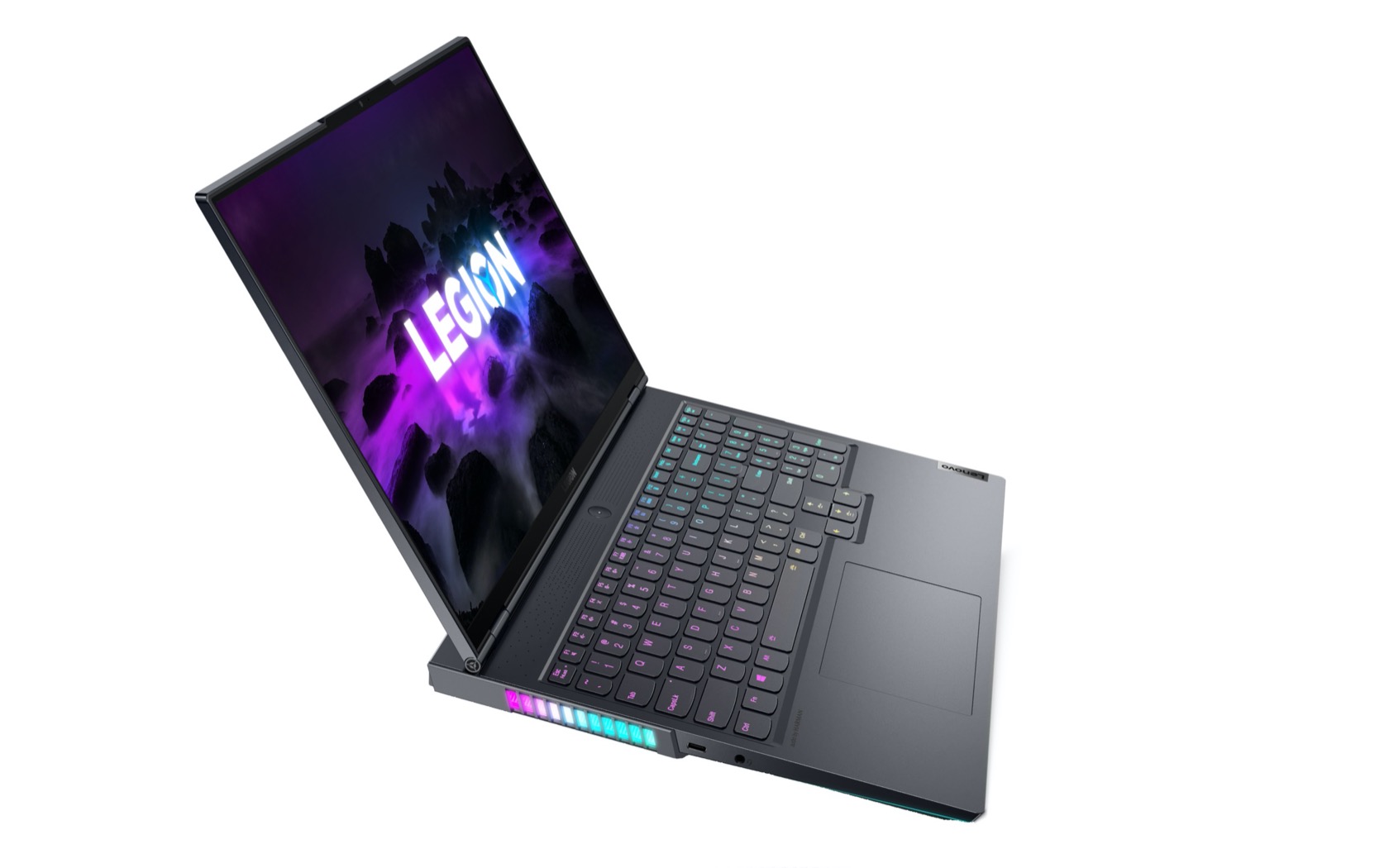
In the event, the company announced the Lenovo Legion 7, which is its series’ flagship gaming laptop. The laptop has been upgraded to a 16 inch display with a 16:10 aspect ratio with a 2560 x 1600px resolution and a high refresh rate of 165Hz and a response time of just 3ms. Furthermore, the display can output 500 nits of brightness and is also HDR 400 certified with Dolby Vision support and NVIDIA G Sync as well. This makes the laptop a great option for both gaming and creative work.
Under the hood, the Lenovo Legion 7 is powered by Team Red’s latest Ryzen 5000 series of laptop processors, which is based on the 7nm Zen 3 architecture. Users can choose up to a high end Ryzen 9 chip, although, the lower configurations and options are currently unknown. Alongside the powerful chipset is an NVIDIA RTX series graphics card, which is most likely to be the new RTX 3000 series GPUs. For memory, the company is also offering up to 32GB of 3200MHz DDR4 RAM and 2TB of M.2 NVMe PCIe SSD storage. The laptop will be launched in June 2021 with a price tag of 1,699.99 US Dollars.
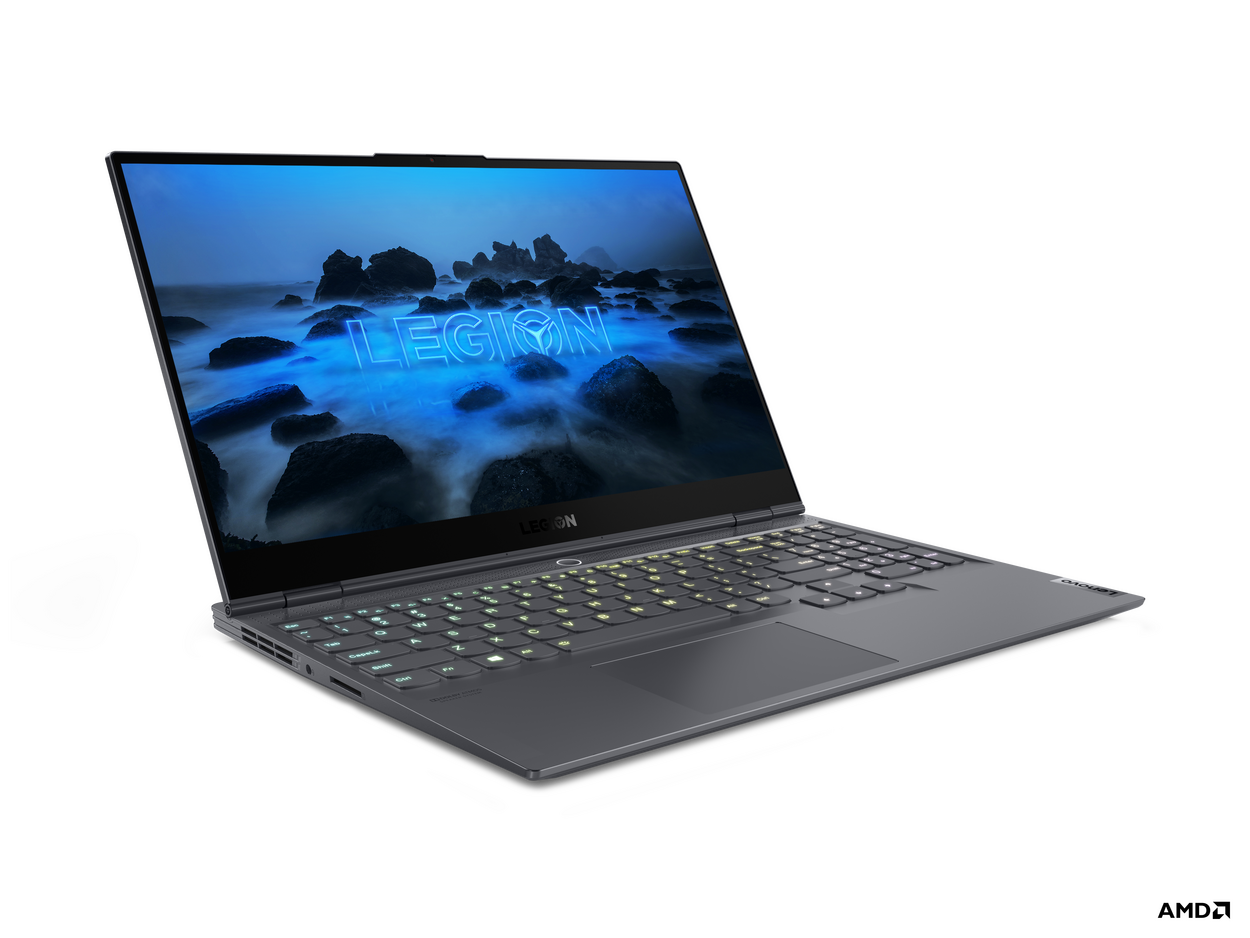
Legion Slim 7
For those that are leaning more towards portability and accessibility, the company has also unveiled the new Lenovo Legion Slim 7. This laptop is a lighter and thinner gaming notebook, which is even slimmer and weighs lesser than the previous model which weighed around 1.9 kilograms. According to the company, the Legion Slim 7 is the thinnest and lightest Legion gaming laptop ever made. It sports a 15.6 inch display with up to a 4K panel with a 60Hz refresh rate or an FHD panel with a 165Hz refresh rate. Unfortunately, the company has yet to reveal the pricing for the laptop, but we do know that it will launch in May 2021, as per TheVerge.
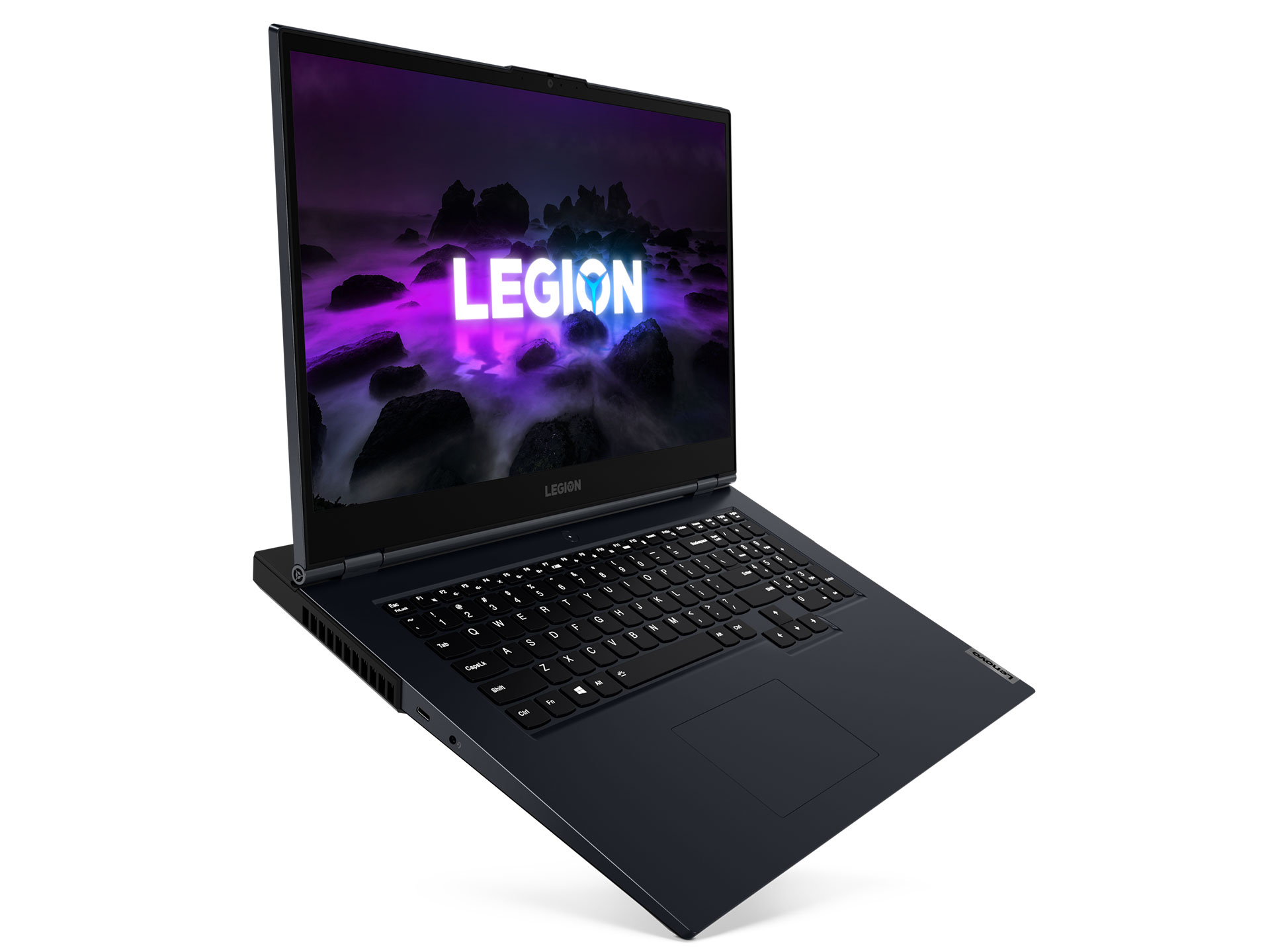
Lastly, the company also announced its Lenovo Legion 5 series of gaming laptops. The lineup consists of two variants of the Legion 5, both the 15 and 17 inch versions, along with the Legion 5 Pro gaming laptop. All three models will begin shipping in March 2021 and will be the first from the 2021 Legion family to hit the markets. The Legion 5 Pro starts from 999 US Dollars and offers a display that is similar to the Legion 7. The primary difference between the two series is the internal specs, with Legion 5 Pro topping out with a Ryzen 7 chip and just 16GB of RAM.
On the other hand, the Legion 5 starts from 769 US Dollars and will also arrive with up to a Ryzen 7 chip as well. However, it can be configured with up to 32 GB of RAM alongside 2TB of SSD storage. This laptop also sports the Ryzen CPU and NVIDIA GPU combo, with the only difference being the size of the display. the 15 inch variant arrives with an FHD panel with 60Hz, 120Hz, and 165Hz while the 17 inch offers just a 144Hz and 60Hz option.
At the CES 2021, Lenovo updated two of its top-tier devices — Lenovo ThinkPad X1 Carbon and Lenovo X1 Yoga. Both the devices are now powered by the 11th generation Intel processors with vPro support.
The devices also come with an updated display panel. This time, the company has opted for a 16:10 aspect ratio screen with a reduced bottom bezel. It also supports Dolby Vision for display and Dolby Atmos for audio. For the first time, these laptops come with support for Dolby Voice for online meetings.
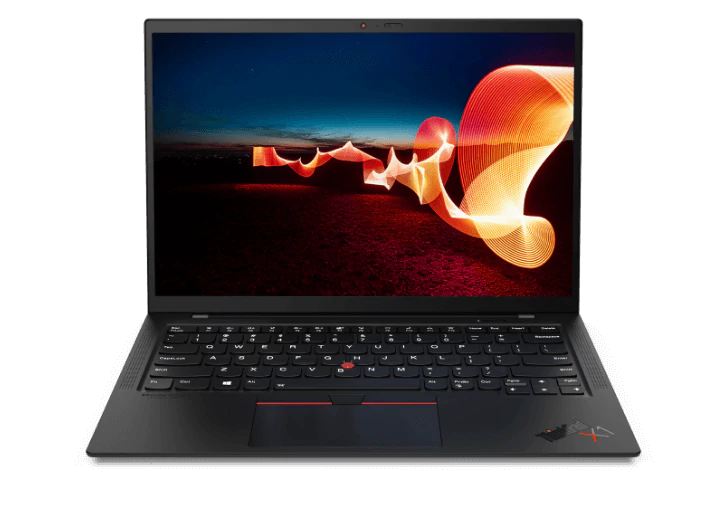
Lenovo ThinkPad X1 Carbon
The laptop features a 14-inch display with a 16:10 aspect ratio and comes with Full HD+ resolution as well as UHD+ resolution support and the brightness on the device can reach a peak value of 500nits.
Along with the Intel 11th generation processor, the device packs Intel Xe graphics, promising better overall performance compared to the previous generation models. It packs up to 32GB of LPDDR4x RAM and up to 2TB SSD.
It comes with an optional 4G LTE or 5G connectivity option. Running the Windows 10 operating system, the device supports Windows Hello IR with a privacy shutter. It is powered by a 57WHr battery and should offer more battery life than its predecessor.
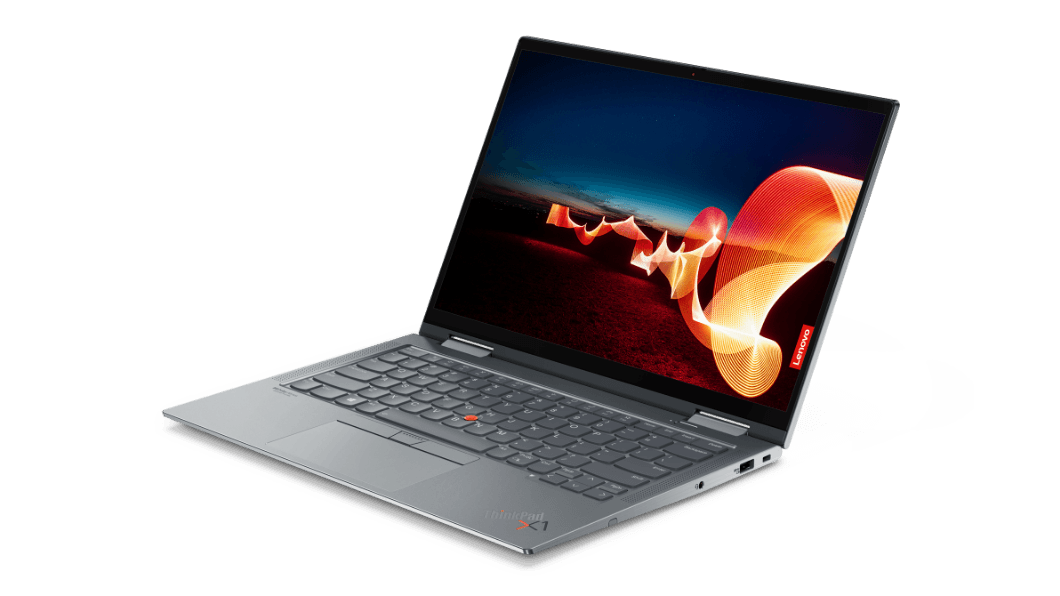
This is the latest convertible offering from the company. It comes with a detachable keyboard with TrackPoint system and has an integrated pen that makes it easier for the users to take notes or markup a document.
As for the specifications, the configuration is similar to the one found in the Lenovo ThinkPad X1 Carbon. This one too comes with support for 4G or 5G connectivity, making it a good choice for productivity tasks.
Coming to the pricing and availability, the Lenovo ThinkPad X1 Carbon is priced at $1,429 while the Lenovo ThinkPad X1 Yoga costs $$1,569. Both the devices will be up for sale in the United States from next month.
With Tesla gearing up for its upcoming launch in India later this year, the company is making new moves to prepare for its entry into the region. As per a recent regulatory filing, it has been revealed that the EV maker has registered a new company in the country.
According to a Reutersreport, Tesla Motor India and Energy Private Limited have just been incorporated as of 8th January 2021. The company has registered its office in Bengaluru, a southern city in the state of Karnataka, which is also known as the IT Hub of India as various global tech based firms have their headquarters in the same region. As per the filing, the Indian arm of Tesla has three directors, which includes David Feinstein, who is already a senior executive of the automobile manufacturer.
In an interview with a local newspaper, India’s transport minister, Nitin Gadkari, stated that the US based electric car maker will first sell its offerings in the region and would then consider local assembly and manufacturing as well. Over the course of the last year, Tesla CEO and Founder Elon Musk had stated that the company is planning on entering the Indian market, so registering its brand in the country was an expected move for the brand that aims at launching its cars later this year.
Tesla Model S
Notably, Tesla’s launch in India also arrives as the country’s Prime Minister Narendra Modi is promoting the production and use of electric vehicles to reduce the nation’s dependency on oils to lower pollution. Although, the lack of investment in supporting infrastructure like charging stations has caused stagnation in the industry’s growth. However, the government has planned incentives worth over 4 billion US Dollars to companies that are setting up advanced battery manufacturing facilities in India.
AMD has been gaining momentum in the market and in a bid to capture more market share, the company has announced its new Ryzen 5000 mobile CPUs during its keynote at the virtual CES 2021.
While making the announcement, Lisa Su, CEO of AMD claimed it to be the “most powerful PC processors ever built.” Some models of the new chipset are based on 7nm “Zen 3” architecture while some are based on the older Zen 2.
The company has divided the processors into two categories — H-series which is aimed at gaming and content creation, and U-series which is aimed at ultrabooks. The H-series models are based on Zen 3 architecture while the U-series have Zen 2 architecture.
Both the categories have four chipsets — Ryzen 3, Ryzen 5, Ryzen 7, and Ryzen 9. The high-end offering in the H-series is the AMD Ryzen 9 5980HS that has eight cores and 16 threads, offering a 3.0GHz clock speed that can be boosted up to 4.8GHz.
The company has also introduced new HX chips in the lineup, aimed at “serious gamers.” The Ryzen 9 5900HX has 45W+ TDP and will power 2021’s best gaming notebooks but has not revealed more information about the upcoming hardware.
The top-end offering in the U-series is the Ryzen 7 5800U, an eight-core, 16-thread CPU with a 1.9GHz clock speed that can be boosted up to 4.4GHz. It is claimed by the company to deliver up to 17.5 hours of general-usage battery life and 21 hours of movie playback.
AMD’s CEO Lisa Su says that the company is expected over 150 Ryzen 5000 series laptops to get launched in the market this year. The first devices powered by these new chipsets are expected to be available for purchase from next month.
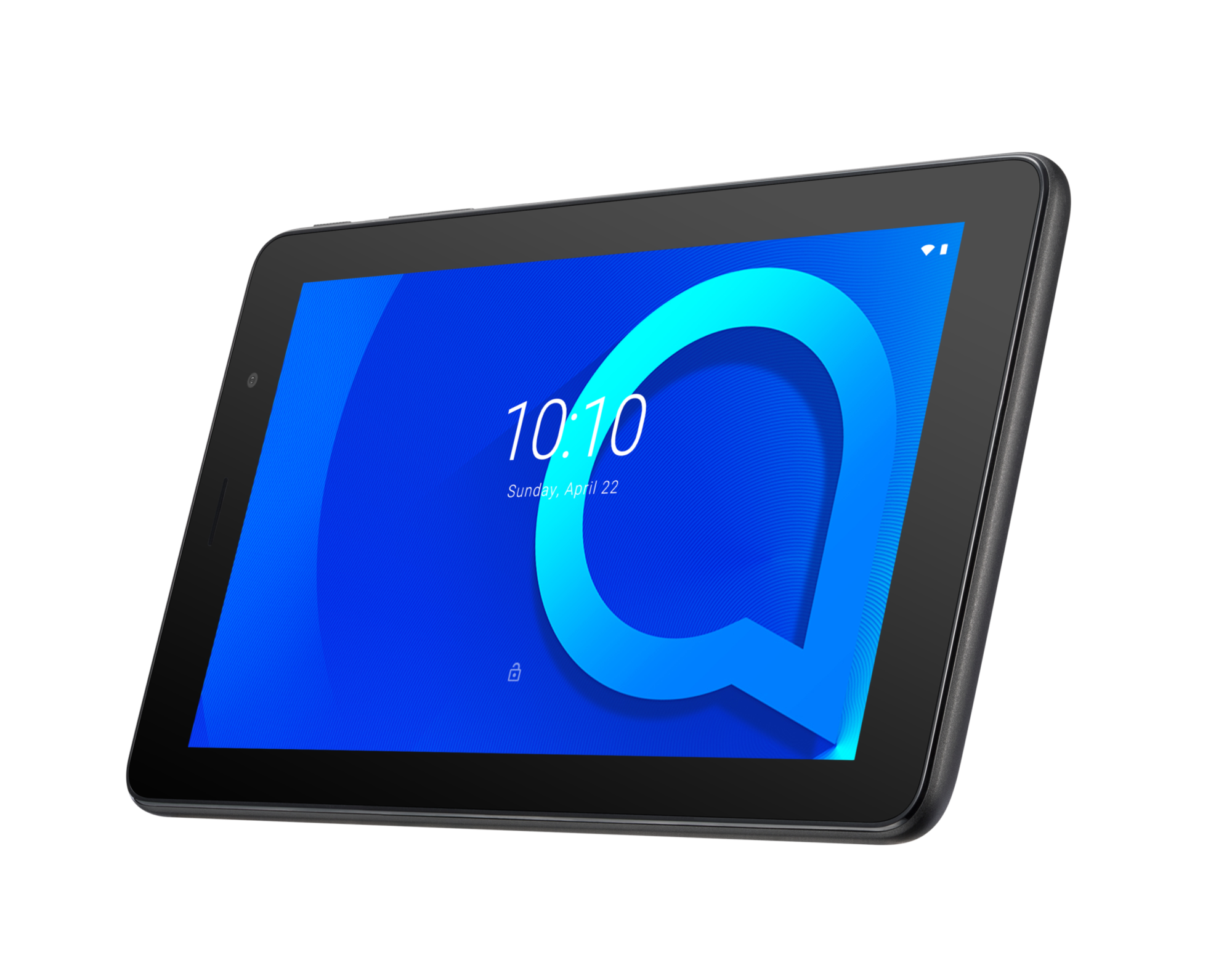
At this year’s CES 2021, TCL announced a wide range of devices such as TCL 20 series, rollable OLED screen, scrollable display, and more. In addition, the company took off covers from three Alcatel branded smartphones such as Alcatel 3L (2021), Alcatel 1S (2021), and Alcatel 1L (2021). The company also announced the Alcatel 1T 7 Wi-Fi tablet.
Alcatel 1S (2021) and Alcatel 1L (2021) specifications and features
The Alcatel 1S (2021) has a 6.52-inch IPS LCD HD+ display with a waterdrop notch. It has a 5-megapixel front camera and a 13-megapixel + 2-megapixel + 2-megapixel rear camera system. The MediaTek SoC powered device has 3 GB of RAM and 32 GB of built-in storage. The 4,000mAh battery of the Alcatel 1S (2021) can be charged through microUSB.
Alcatel 1S
The Alcatel 1L (2021) has a 6.1inch LCD HD screen with a teardrop notch. While the Alcatel 1S (2021) runs on Android 11 OS, the 1L is equipped with Android 11 (Go edition). The quad-core MediaTek chip powered device has 2 GB of RAM and 32 GB of storage. It has a 3,000mAh battery and it features a 13-megapixel + 2-megapixel dual camera setup. Both phones have rear-mounted fingerprint scanners and microSD card slots.
Alcatel 1L
The Alcatel 1S (2021) is priced at 109 euros and will go on sale in February, while the Alcatel 1L (2021) is priced at $135 and will be available for purchase in March. Both smartphones come in two colors like Elegant Black and Twilight Blue.
Alcatel 3L (2021) and Alcatel 1T 7 specifications and features
The Alcatel 3L (2021) brings a 6.52-inch FHD+ LCD panel with a teardrop notch. The 1.8GHz MediaTek octa-core processor fuels the device along with 4 GB of RAM. It has a 64G GB built=in storage and it runs on Android 11 OS. The 4,000mAh battery of the phone can be charged through microUSB.
Alcatel 3L
For photography, the Alcatel 3L (2021) has an 8-megapixel front camera and a 48-megapixel + 2-megapixel + 2-megapixel triple camera setup. It also features a rear-positioned fingerprint sensor and a microSD card slot. The Alcatel 3L (2021) will on sale in March with a price tag of 149 euros. Its color variants are Jewelry Black and Jewelry Blue.
Alcatel 1T 7
The Alcatel 1T 7 Wi-Fi tablet’s entire specs are not known yet. Its 16 GB and 32 GB editions are priced at 59 euros and 69 euros, respectively. The family-oriented tablet runs on Android 10 (Go edition) and comes with a Kids Mode. Its sales will begin later this month and it can be bought in colors like green and black.
Chinese smartphone maker OPPO is reportedly working on its upcoming flagship smartphone lineup — the OPPO Find X3 series. While the device has been leaked a few times, the company is yet to officially confirm anything related to it.
Now, it seems that the company might have teased its arrival timeline. OPPO has today shared a new post on Weibo which says “Impossible Surface, See you in March,” revealing that it has planned a launch event in March.
While details about the launch event have not been revealed, it is believed that the company is teasing the launch of OPPO Find X3 series smartphones. This would be in line with the previous launches as the Find X2 was also launched in March last year.
Recently, Evan Blass shared the render of the Find X3 Pro smartphone which showcases that the phone has a curved display panel and a quad-camera setup on the back. It hints that the phone could come in four color options — Black, Blue, Orange, and White.
The smartphone is expected to feature a 6.7-inch 1440p display that could offer a refresh rate of 120Hz. For the front-facing camera, the phone will have a punch-hole cutout. As for the rear camera setup, it will have two 50MP Sony sensors, a 13MP telephoto lens, and a 3MP macro lens with 25x zoom support.
We expect the phone to be running the latest Android 11 operating system with the company’s own ColorOS 11 on top. The OPPO Find X3 Pro is expected to be powered by a 4,500mAh battery with support for SuperVOOC 2.0 fast charging technology that includes 65W wired charging and 30W wireless charging.
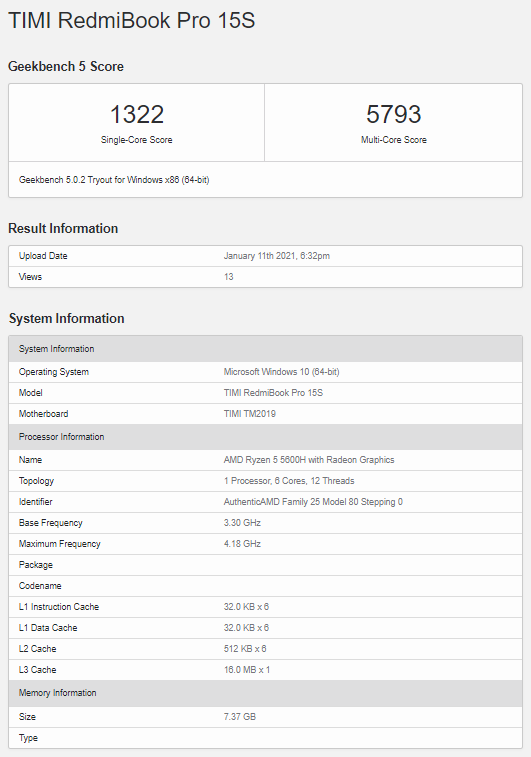
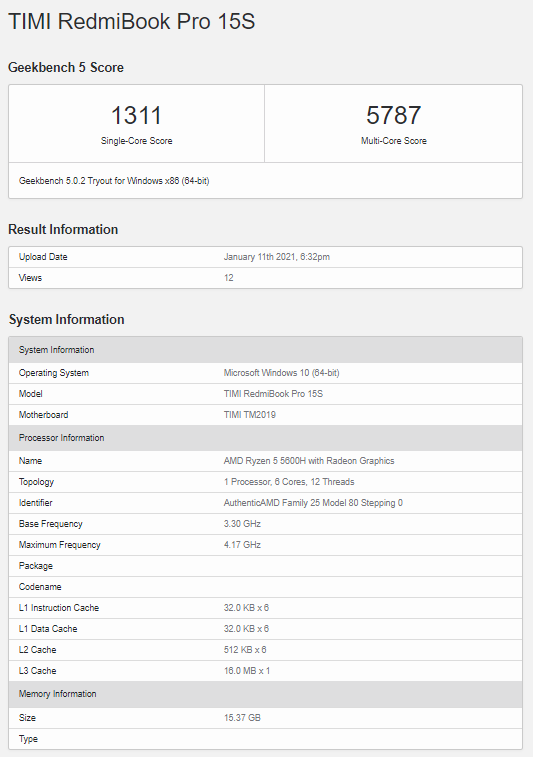
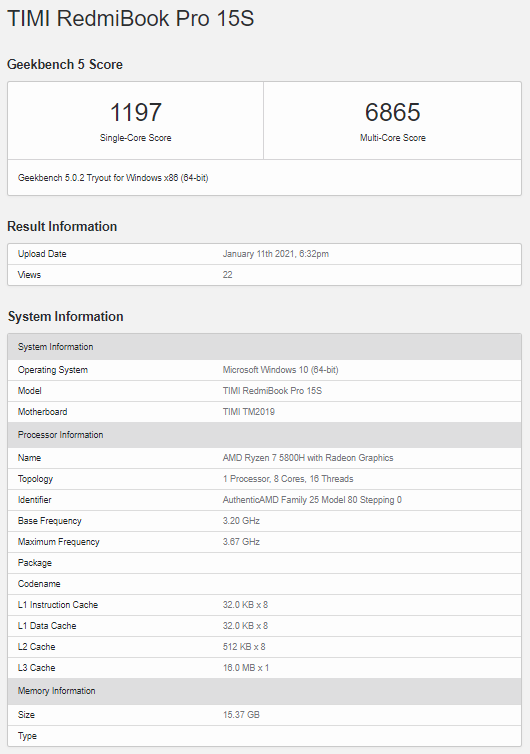
At the Consumer Electronics Show (CES) 2021 tech exhibition, intel announced the all-new 11th Gen Tiger Lake H35 chipset. Soon after its announcement, Xiaomi took to Weibo to reveal that the upcoming RedmiBook Pro will be equipped with the newly announced H35 processor. In addition, new laptops from the brand named as RedmiBook Pro 15 and RedmiBook Pro 15S have emerged at the Geekbench benchmarking platform.
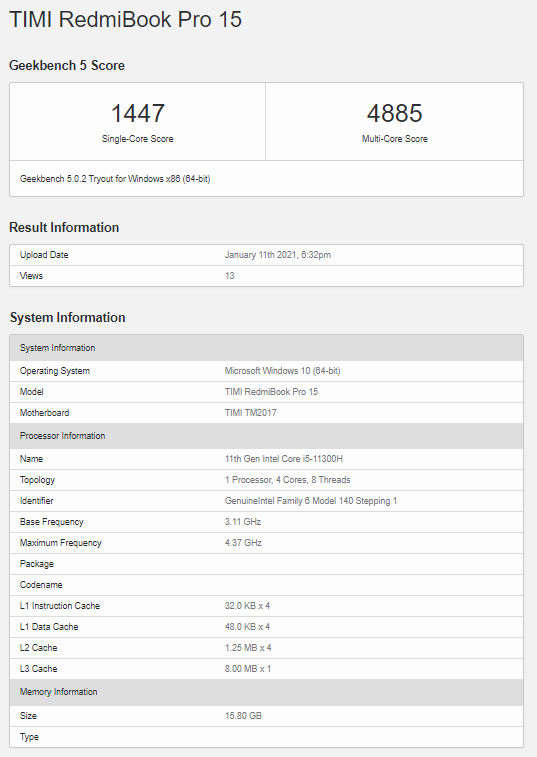
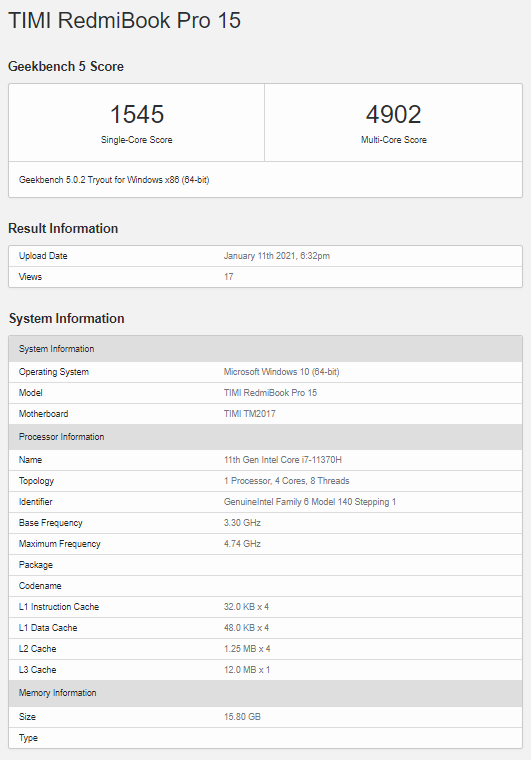
As can be seen in the screenshots below, the 11th gen Intel Core i5 and Core i7 editions of the RedmiBook 15 Pro have surfaced on Geekbench 5. Both models are equipped with 16 GB of RAM and they are preinstalled with Windows 10. The Core i5-11300H model scored 1545 and 4902 in the single-core and multi-core tests of Geekbench, respectively. The Core i7-11370H variant scored 1447 in the single-core test and 4885 in the multi-core test.
The AMD Ryzen 5 5600H edition of the RedmiBook Pro 15S has 8 GB / 16 GB of RAM, whereas the Ryzen 7 5800H version has 16 GB of RAM. Both models are running on Windows 10 OS.
The Ryzen 5 5600H variant with 8 GB RAM recorded 1322 and 5793 points in the single-core and multi-core tests of Geekbench, respectively. Its 16 GB RAM version scored 1311 and 5787 in the single-core and multi-core tests, respectively. On the other hand, the Ryzen 7 5800H model scored 1197 and 6865 in both tests. The RedmiBook Pro 15S notebooks are equipped with Radeon graphics. Since Xiaomi has already started teasing the arrival of the new notebook, the RedmiBook Pro 15 and Pro 15S may launch soon.
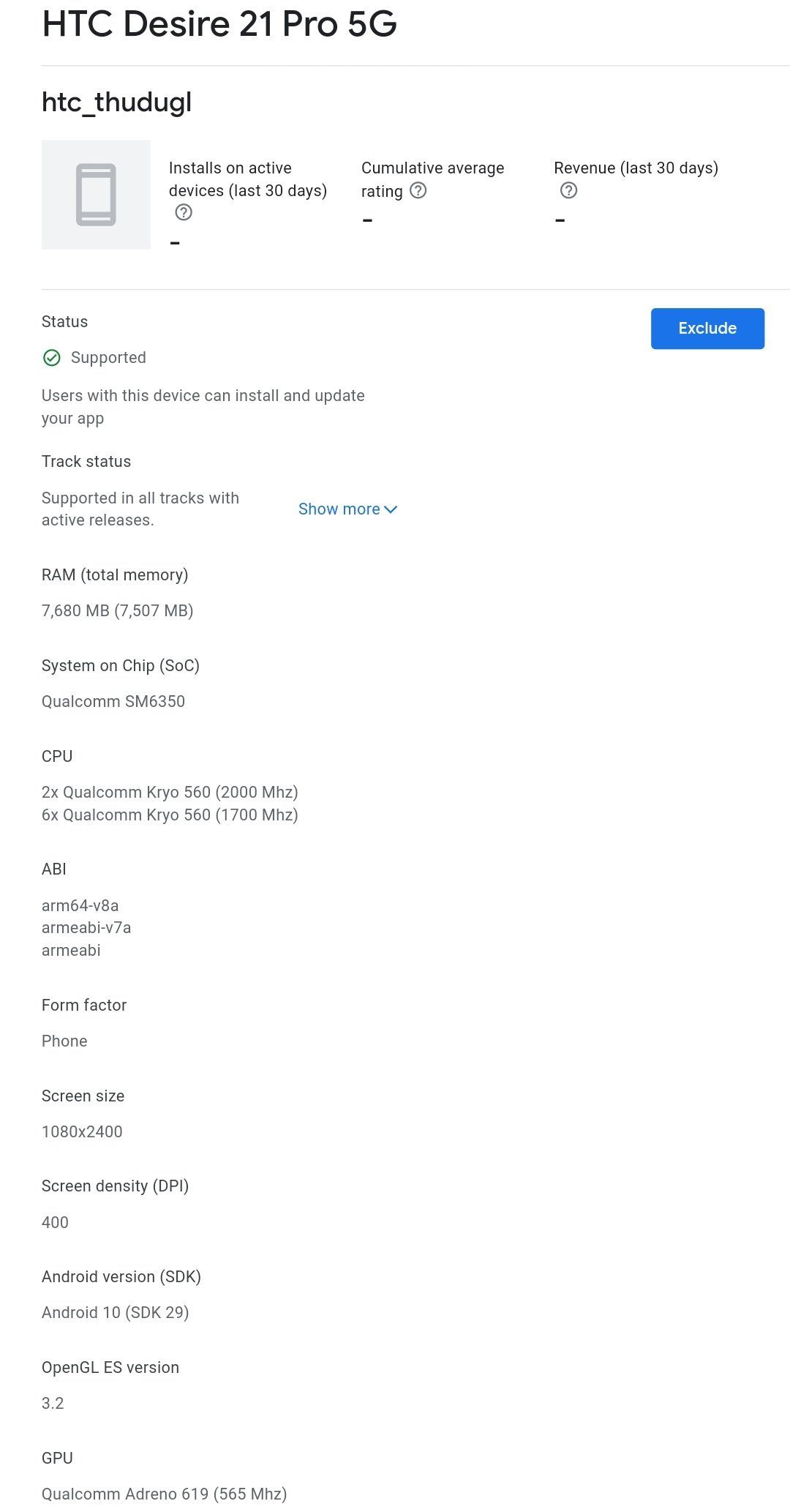
Update: A few specs of the HTC Desire 21 Pro 5G is now known through its Google Play Console listing (via). It reveals that the phone’s screen offers a Full HD+ resolution of 1080 x 2400 pixels and it has 8 GB of RAM.
Original story continues…
Last year, HTC announced the HTC U20 5G as its first 5G-ready smartphone. The handset was fueled by the Snapdragon 765G chipset. The next 5G phone from the Taiwanese brand could be the Desire 21 Pro 5G. Last week, the unannounced phone appeared in several live shots. Fresh information reveals that the Desire 21 Pro 5G could be fueled by the Snapdragon 690 SoC.
Coming back to the Desire 21 Pro 5G, nothing much is known about its other specs. Its live shots revealed that it is a dual SIM phone, and its model number is 2QAG100. Also, the device was found to be running on Android 10 OS.
The real images of the Desire 21 Pro 5G revealed that its display has a centered punch-hole. Probably, the screen carries support for Full HD+ resolution. Except for a slightly thick chin, the handset was seen with slim bezels. The device seems to be equipped with a side-mounted fingerprint sensor.
The rear side of the Desire 21 Pro 5G has a quad-camera setup and a dual-LED flash unit housed inside a rectangle-shaped camera module. The setup is led by a 48-megapixel camera. The other details of the smartphone are yet to appear.
It will be arriving as the successor to the Desire 20 Pro smartphone from last year. At present, there is no word on its launch timeframe and pricing.
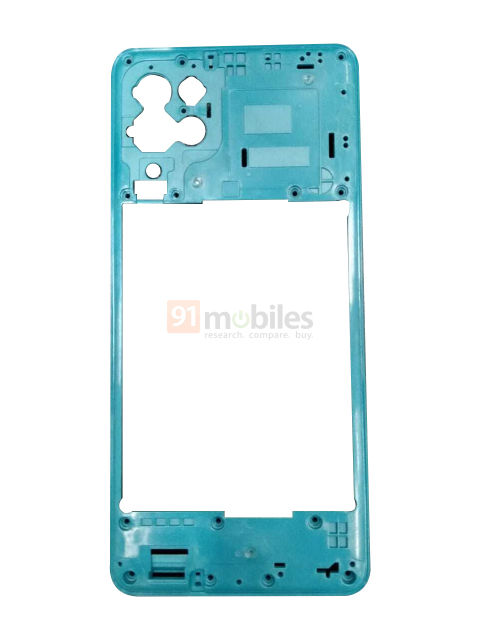
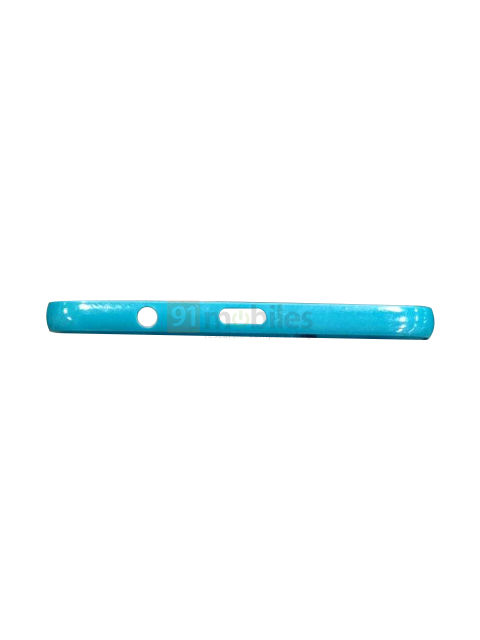
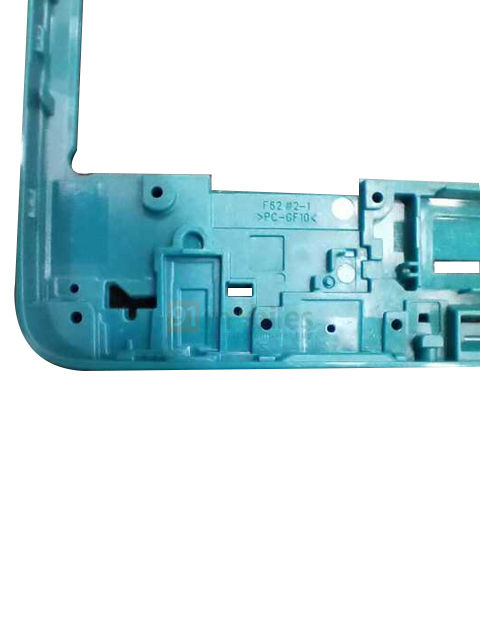
For a couple of weeks, the rumor mill has been gradually leaking information about an upcoming F-series Samsung phone called the Galaxy F62. It was reported last month by 91mobiles that the South Korean company has started the production of the Galaxy F62 and it may launch in Q1 2021. It had recently shared live shots of the phone’s rear shell. The publication is back with some new shots of the Galaxy F62’s panel to shed some information on its design.
The images reveal that the Galaxy F62 could be sporting a square-shaped camera module. There seems to be a cutout for the camera housing, which suggests that it could be flaunting a quad-camera system.
The image also shows the presence of a 3.5mm audio jack and a USB-C port on the bottom frame of the Galaxy F62. It appears that the phone could be equipped with an in-screen fingerprint reader. Hence, there is a possibility that the phone may sport an AMOLED panel. The smartphone could be available in teal color.
Recent reports have revealed that the model number of the Samsung Galaxy F62 is SM-E625F. The handset was recently certified by the Bureau of Indian Standards (BIS). In December, the Galaxy F62 had surfaced at the Geekbench benchmarking platform. The listing revealed that the phone is driven by the Exynos 9825 SoC that fueled the Galaxy Note 10 and Note 10+ in 2019. It further revealed that the F62 has 6 GB of RAM and Android 11 OS.
One of the above-shown images also shows ‘F62’ etched on the panel. However, a contradictory report from last month suggested that the phone may debut as the Galaxy E62.
The new Exynos 2100 packs some significant upgrades including GPU performance over its predecessor but its Arm Mali-G78 GPU may have been disappointing for some. To this category of people, the next Exynos flagship chipset may be the one to look forward to as it will feature that long-awaited AMD GPU.
During the Exynos 2100 event, the President and GM of the System LSI Business at Samsung, Dr. Inyup Kang, revealed that their next flagship Exynos processor will have a GPU co-developed with AMD. The news has gotten fans excited as it has been a long wait since the partnership was first announced back in June 2019.
Samsung has been playing catch-up with Qualcomm whose processors always have the overall better performance. So there is a chance this next-gen chipset with an AMD-developed GPU may turn the tables and result in Qualcomm be the one with the less-powerful processor.
Famed Samsung leaker, Ice Universe, believes this new processor will be unveiled this year and may appear in the Galaxy Z Fold 3 but we will take that with a pinch of salt. We don’t expect the chipset to arrive until next year and should make its debut inside the Galaxy S22 series. We believe this year’s Galaxy Z Fold 3 will most likely feature a Snapdragon processor in all regions just like its predecessors.
As I said, Exynos2100 is just the beginning. It is almost certain that Samsung will release a new processor with AMD GPU this year and may use it for the Galaxy Z Fold3. pic.twitter.com/J3GIRoBSBA
So if you don’t mind the long wait, you may want to skip this year’s Galaxy S21 series. Nevertheless, the Exynos 2100 should be able to handle any mobile game you throw at it though not as great as its rivals the Kirin 9000 and the Snapdragon 888.
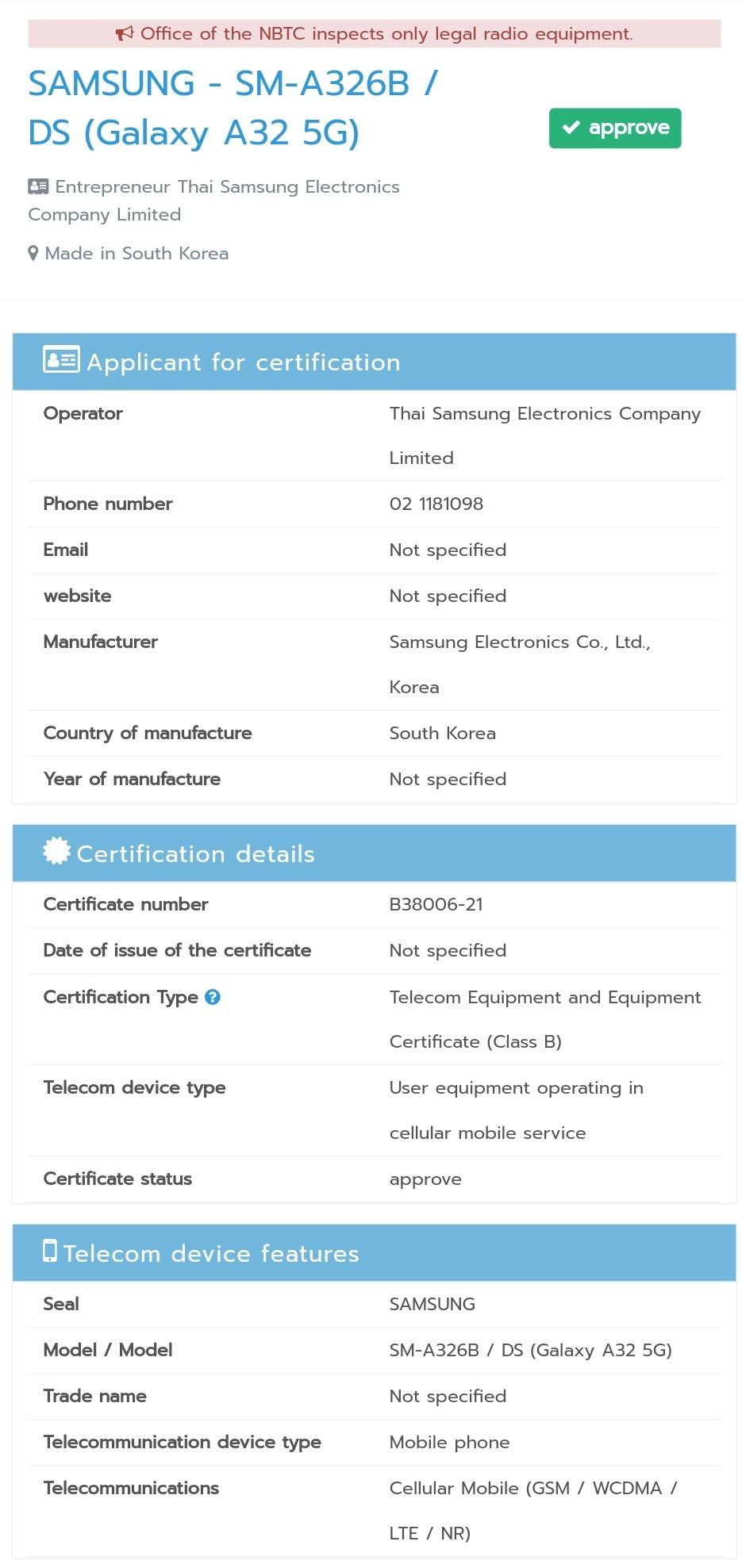
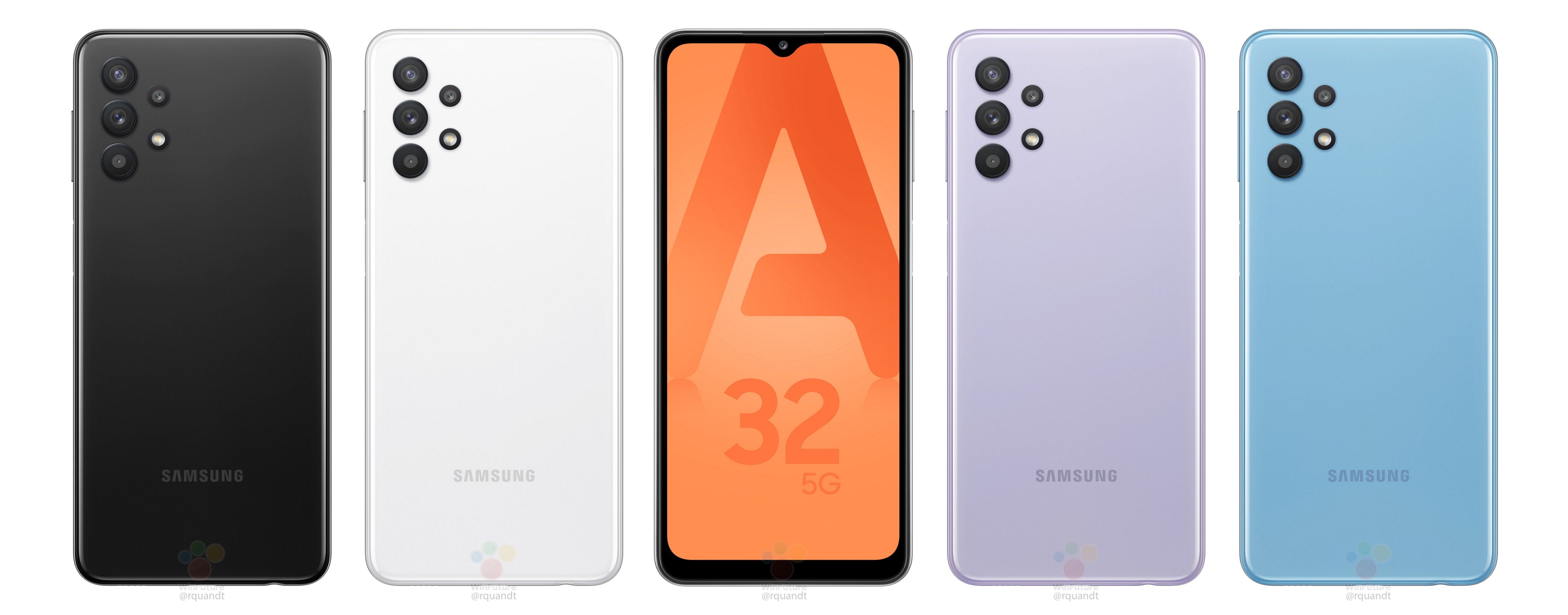
Samsung is expected to soon unveil at least three new A-series smartphones such as the Galaxy A32 5G, Galaxy A52 5G, and Galaxy A72 5G. Reports have claimed that in some of the markets where 5G networks have not commercialized yet, the company may release the 4G editions of these phones. In December, the handset that the Galaxy A32 5G that has a model number of SM-A326B was seen at certification platforms like the Federal Communications Commission (FCC) and Bluetooth SIG. The handset has now received approval from the National Broadcasting and Telecommunications Commission (NBTC) authority of Thailand.
As usual, the NBTC has not revealed any major information on the specs of the Galaxy A32 5G. With important certifications in tow, the A32 5G may break cover this month. Recently, the support page of the smartphone emerged had appeared on Samsung UK and Ireland websites, which indicates that its launch could be close at hand.
The 4G edition of the phone was approved by the Bureau of Indian Standards (BIS) recently. Hence, it is likely that India may receive the 4G version of the Galaxy A32.
Some of the other specs that could be available on the A32 5G include Android 11 OS, NFC, 48-megapixel quad-camera system, and a 5,000mAh battery with 15W charging support. Lastly, the Galaxy A32 5G is expected to debut as the cheapest 5G-ready phone from Samsung.
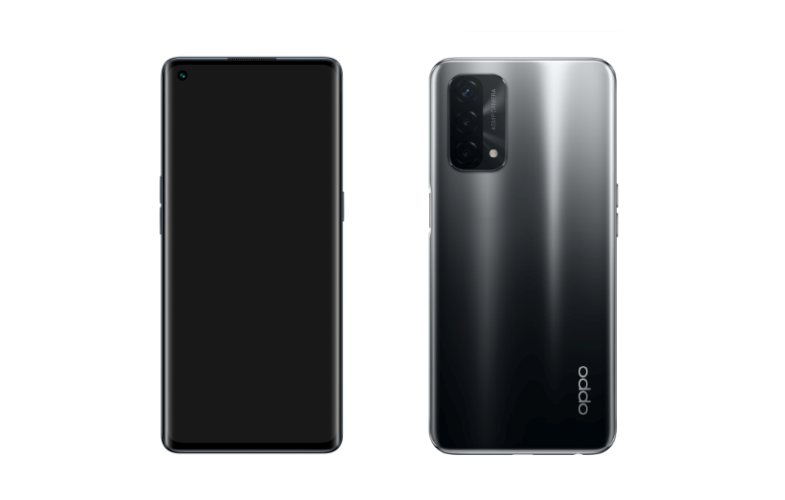
An upcoming OPPO smartphone with PEHM00 / PEHT00 model number surfaced at the Geekbench benchmarking platform earlier this week. Now a product listing of the OPPO PEHT00 has appeared with full specifications, images, and pricing on China Telecom’s website. The listing reveals that the smartphone will be arriving soon in China as the OPPO A93 5G.
OPPO A93 5G specifications
The OPPO A93 5G features a punch-hole screen with curved edges. The screen offers a Full HD+ resolution of 1080 x 2400 pixels. It is unclear whether it supports a high refresh rate. The handset is fueled by Snapdragon 480 chipset, which is mentioned with its SM4350 part number in the China Telecom listing.
The OPPO A93 5G has 8 GB of RAM and 256 GB of built-in storage. The listing does not confirm the presence of a microSD card slot. The device is preinstalled with Android 11 OS and it is backed by a 5,000mAh battery. In December, the phone was spotted at 3C’s database with an 18W charger.
For capturing selfies, the OPPO A93 5G has an 8-megapixel selfie camera. The glass back of the device has a rectangle camera housing that comprises of a 48-megapixel main camera and two 2-mgeapixel sensors. The A93 5G is equipped with connectivity ports such as USB-C and a 3.5mm audio jack.
OPPO A93 5G pricing and release date
The OPPO A93 5G is listed with a 2,199 Yuan (~$340) pricing at China Telecom. The handset is expected to arrive in three colors like Aurora, Dazzling Black, and Elegant Silver. It is expected to debut in China on Jan. 15.
Every time a new flagship killer hits the shelves, a lot of people wonder whether they should opt for the new arrival or for the top-tier flagships released by the concurrence during the previous year. Xiaomi Mi 11 just went official with the powerful Snapdragon 888 mobile platform, but is it really the best option in its price tag? In order to let you know this, we decided to compare it with the latest Samsung flagship in the same price range. Given that the Galaxy Note 20 Ultra is definitely too expensive for this comparison, we chose the vanilla Samsung Galaxy Note 20 for this specs comparison with the Mi 11.
Xiaomi Mi 11 vs Samsung Galaxy Note 20
Xiaomi Mi 11
Samsung Galaxy Note 20
DIMENSIONS AND WEIGHT
164.3 x 74.6 x 8.1 mm, 196 g
161.6 x 75.2 x 8.3 mm, 192 g
DISPLAY
6.81 inches, 1440 x 3200p (Quad HD+), AMOLED
6.7 inches, 1080 x 2400p (Full HD+), Super AMOLED Plus
Triple 108 + 13 + 5 MP, f/1.9 + f/2.4 + f/2.4
20 MP front camera
Triple 12 + 64 + 12 MP, f/1.8 + f/2.0 + f/2.2
10 MP f/2.2 front camera
BATTERY
4600 mAh, fast charging 50W, wireless charging 50W
4300 mAh, fast charging 25W and wireless charging 15
ADDITIONAL FEATURES
Dual SIM slot, 5G, reverse wireless charging 10W
Dual SIM slot, 5G, water resistant (IP68), S Pen
Design
Despite it is a flagship, the Samsung Galaxy Note 20 does not come with premium materials like the Xiaomi Mi 11. Surprisingly, unlike top-tier flagships by Samsung, it has a plastic body. On the other hand, the Mi 11 offers a glass back protected by Gorilla Glass and an aluminum frame, as well as a display protected by Gorilla Glass Victus. It is sturdy, resistant, and very elegant thanks to its premium materials. But the Samsung Galaxy Note 20 has an important advantage: unlike the Xiaomi Mi 11, it is waterproof thanks to the IP68 certification.
Display
Samsung produces the best displays in the mobile sector, but in this comparison, Samsung Galaxy Note 20 is not the winner. The Xiaomi Mi 11 has a superior display with a higher Quad HD+ resolution and a higher 120 Hz refresh rate. Samsung Galaxy Note 20 has a Full HD+ display with a standard refresh rate. But even when it comes to the displays, Samsung has an advantage: the Samsung Galaxy Note 20 supports the S Pen for handwriting and drawing, a very interesting feature for productivity users. The Samsung Galaxy Note series and the Huawei Mate 40 series are actually the only series supporting pens thanks to an active digitizer.
Specs & Software
The Xiaomi Mi 11 wins the hardware comparison from every point of view simply because it has a more powerful processor. The Mi 11 is the first phone ever to feature the Snapdragon 888 mobile platform, which is the most powerful Qualcomm SoC released until now. With the Xiaomi Mi 11, you also get up to 12 GB of RAM and UFS 3.1 internal storage. The Samsung Galaxy Note 20 has an older and less powerful Snapdragon 865+ chipset in the U.S. variant and an even older Exynos 990 in the European version. But in each case, you get 5G support. Xiaomi Mi 11 ships with Android 11 out of the box, while Samsung Galaxy Note 20 ships with Android 10.
Camera
The Samsung Galaxy Note 20 is actually a more interesting camera phone. Xiaomi Mi 11 features an amazing 108 MP main camera, but it lacks a telephoto sensor. On the Samsung Galaxy Note 20, you get a 64 MP telephoto lens with 3x hybrid zoom, as well as a 12 MP main sensor with OIS and a 12 MP ultrawide camera. Last but not least, the Samsung Galaxy Note 20 features a better 10 MP front camera that can record 4K videos. In a few scenarios, you can shoot more detailed photos with the Xiaomi Mi 11, but the Samsung Galaxy Note 20 is definitely better thanks to its great secondary sensors providing more possibilities. The front camera of the Xiaomi Mi 11 is a 20 MP sensor but it is actually inferior and it can only record 1080p videos. On the other hand, you get 8K video recording from the rear camera.
The phones from the Samsung Galaxy Note 20 series are not exactly the best in terms of battery life, especially the Exynos version which has pretty high energy consumption. The Xiaomi Mi 11 has a bigger battery and it lasts more on a single charge in several scenarios, but the display is more energy-demanding. Both the phones feature wireless charging and reverse wireless charging, but you get way faster charging speeds with the Xiaomi Mi 11. The Mi 11 has 55W wired charging, 50W fast charging, and 10W reverse charging technologies, while Samsung Galaxy Note 20 stops at 25W, 15W, and 4.5W respectively.
Price
The listing prices of the Xiaomi Mi 11 start from about €500/$610 in the Chinese market. The smartphone is still not present in the global market, so we do not know how much it will cost. We will give you feedback once it hits the global market. The Samsung Galaxy Note 20 costs about €700 in the global market and you can buy it for $719 in the U.S. The results of this comparison are everything but obvious. The Samsung Galaxy Note 20 offers S Pen and more interesting cameras, which are important features for several users looking for high-end smartphones. It is even waterproof, unlike most of the phones out there. But with the Xiaomi Mi 11, you get a better display, design, faster charging speeds, and a better hardware department. We think most people would find the Xiaomi Mi 11 a more interesting choice, but productivity users and camera phone lovers would prefer the Samsung Galaxy Note 20. The price difference between these two devices is not relevant.
Xiaomi Mi 11 vs Samsung Galaxy Note 20: PRO and CONS
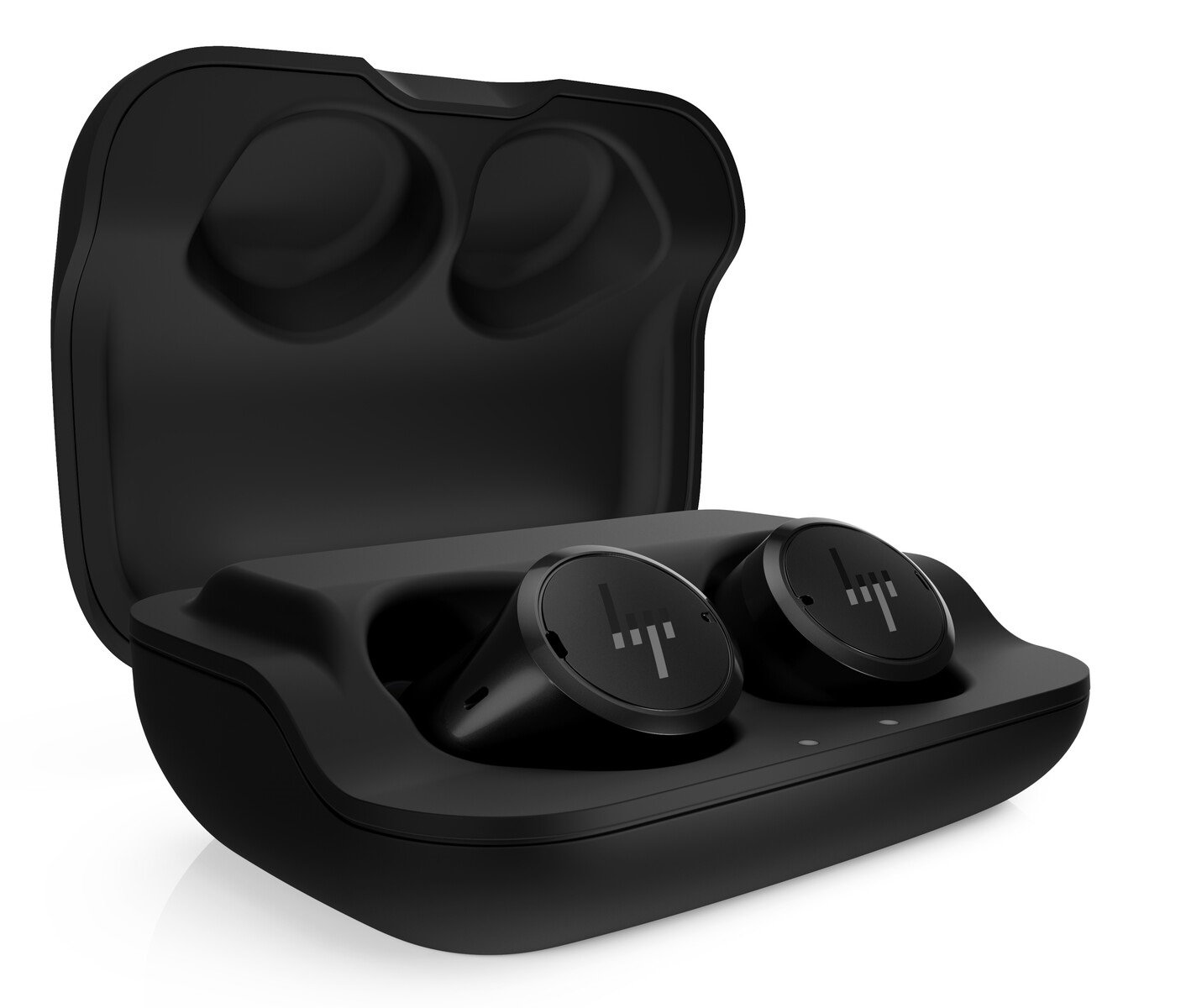
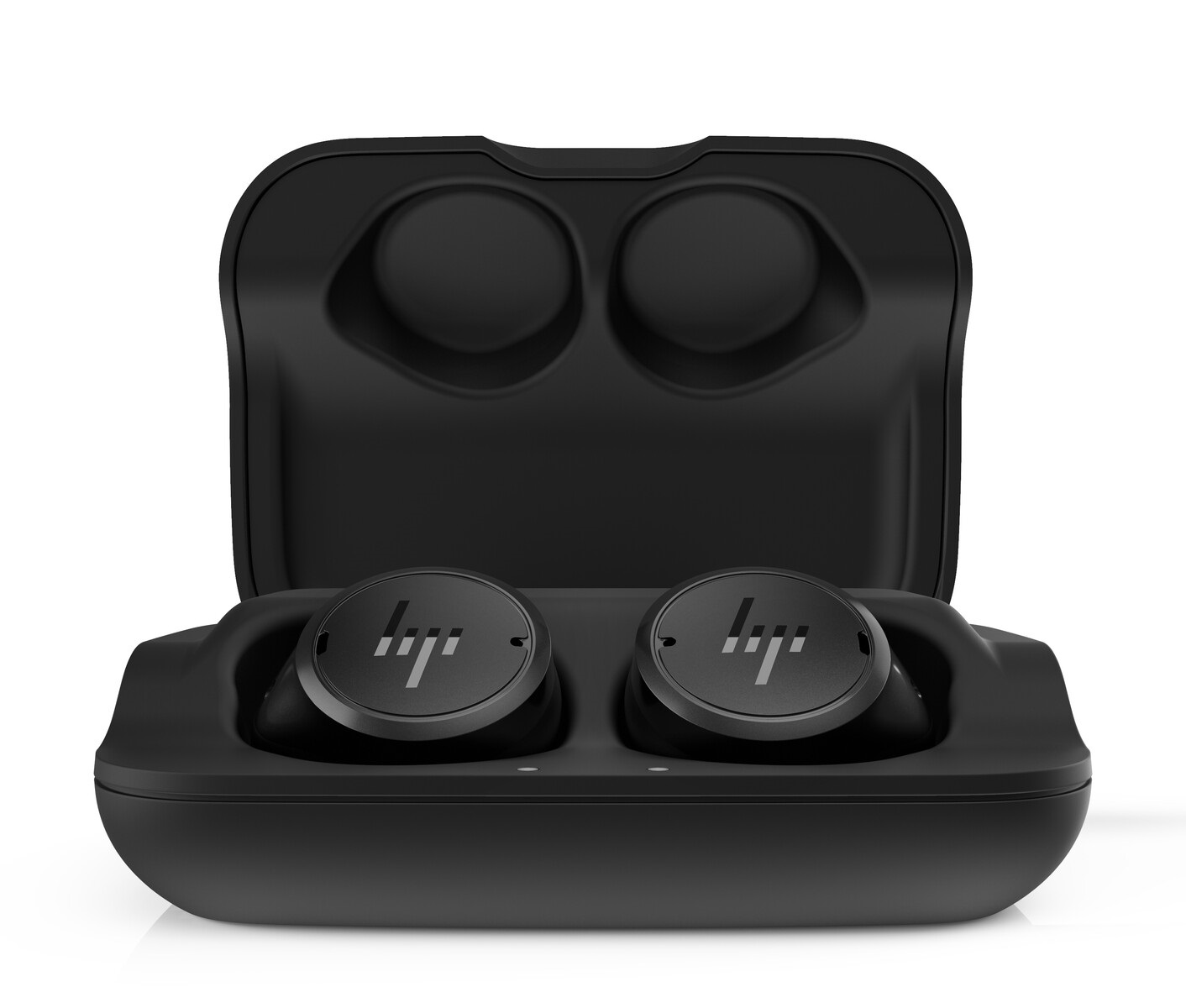
At the Consumer Electronics Show 2021, leading PC maker HP unveiled several notebooks and monitors in order to continue to enjoy its newfound position as the world’s largest PC maker. The company also ventured out of its stronghold with the launch of the Elite Wireless Earbuds, its first noise-canceling true wireless earbuds.
In terms of appearance, the Elite Wireless earbuds are designed with a black matte finish. They are relatively flat, with a size of 0.7 x 0.5 inches and weighing in at 2.3 ounces (about 65 grams). The headset is also dominated by black matte, and the external buttons are marked with a semi-gloss “HP” logo.
In terms of the configuration, HP Elite Wireless Earbuds uses Bluetooth 5.0 technology. It also adopts a 9.2 millimeter (mm) neodymium magnet drive unit, supports a frequency range of 20~18000 Hertz (Hz) and a sensitivity of 103dB (SPL at 1000Hz), and has Active noise reduction and passive noise reduction function. The rated sensitivity of the “omnidirectional” microphone is 94dB SPL.
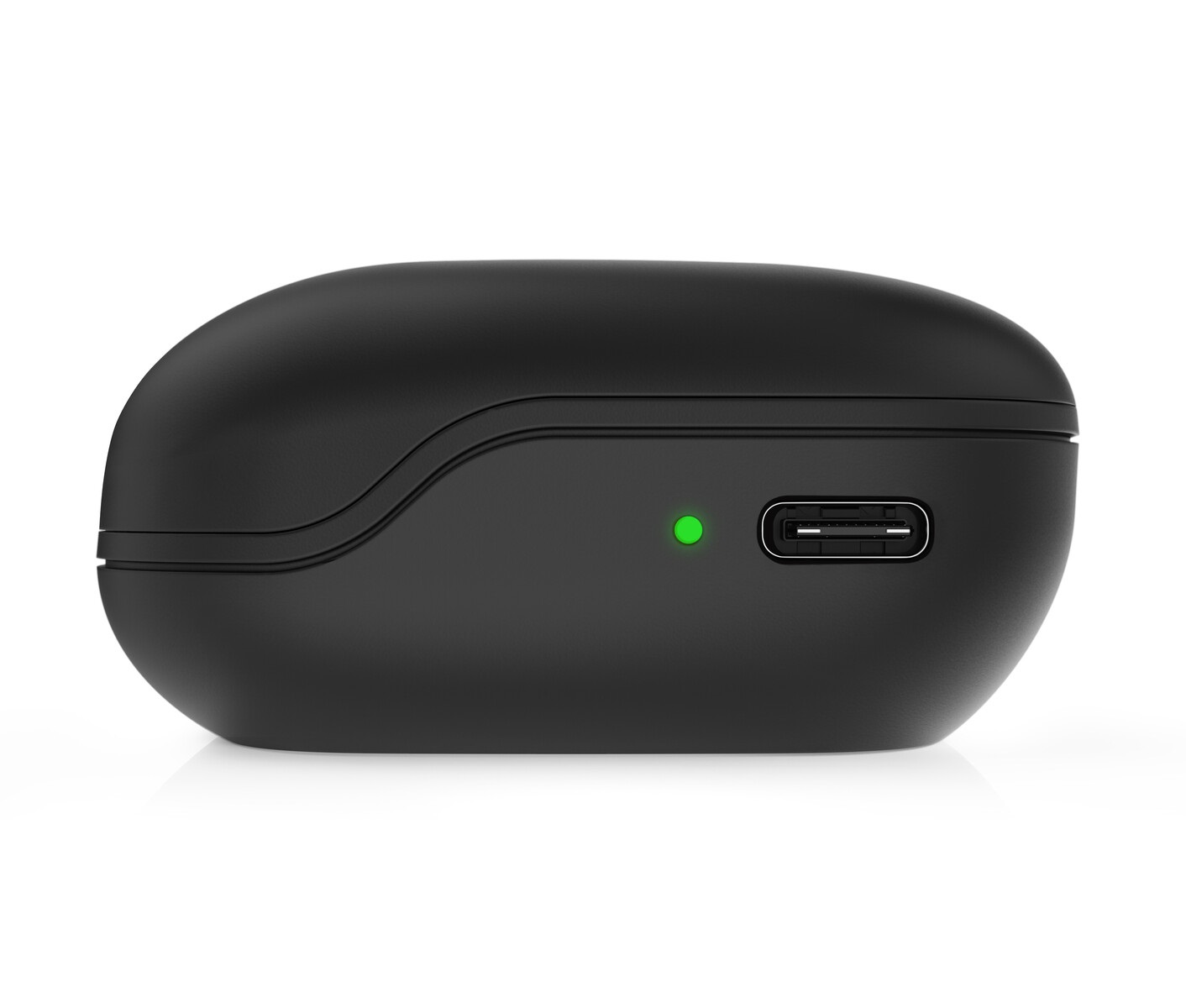
HP officially stated that Elite Wireless Earbuds supports Microsoft Swift Pair, which can seamlessly switch between Windows 10, iOS and Android devices. The earbuds also pack a decent battery which charges via a USB-C port on the charging box. The battery is said to last for up to 1.5 hours after just 15 minutes charge.
As for the pricing and availability, the Elite Wireless Earbuds will go on sale in April this year, with an estimated price of $199. It is worth mentioning that HP officially stated that it will give away this headset for free to customers who purchase Elite Dragonfly Max laptops. The laptops are said to go on sale in January 2021 meaning buyers can lay their hands on the earbuds this January.
We use cookies on our website to give you the most relevant experience by remembering your preferences and repeat visits. By clicking “Accept”, you consent to the use of ALL the cookies.
This website uses cookies to improve your experience while you navigate through the website. Out of these, the cookies that are categorized as necessary are stored on your browser as they are essential for the working of basic functionalities of the website. We also use third-party cookies that help us analyze and understand how you use this website. These cookies will be stored in your browser only with your consent. You also have the option to opt-out of these cookies. But opting out of some of these cookies may affect your browsing experience.
Necessary cookies are absolutely essential for the website to function properly. This category only includes cookies that ensures basic functionalities and security features of the website. These cookies do not store any personal information.
Any cookies that may not be particularly necessary for the website to function and is used specifically to collect user personal data via analytics, ads, other embedded contents are termed as non-necessary cookies. It is mandatory to procure user consent prior to running these cookies on your website.