President of the United States, Donald Trump, who lost the election and is set to leave office in a couple of weeks, has signed an executive order banning transactions with eight Chinese applications, including Alipay and WeChat Pay.
Interestingly, the order is set to take effect in 45 days, after Donald Trump leaves office. The applications banned with this executive order includes apps from some of the biggest companies like Ant Group and Tencent.
In an attempt to justify the ban, Trump said that the applications can access private information from users and could be used by the Chinese government to “track locations of Federal employees and contractors, and build dossiers of personal information.”
Several US-based companies, including Apple, Ford Motor, Walmart, and Walt Disney previously objected to an executive order by Donal Trump that banned Tencent’s WeChat as well as ByteDance’s TikTok. A federal court has issued a preliminary injunction blocking the ban on WeChat.
As noted above, the executive order bans Alipay, a payments application from Ant Group with more than a billion users. It also bans three applications from Tencent, which includes WeChat Pay, QQWallet, and Tencent QQ. Other apps in the list include CamScanner, SHAREit, Vmate, and WPS Office.
The move seems to be furthering the US-China trade war which started when Donald Trump issued an executive order banning China-based Huawei Technologies, the world’s largest telecom equipment manufacturer.
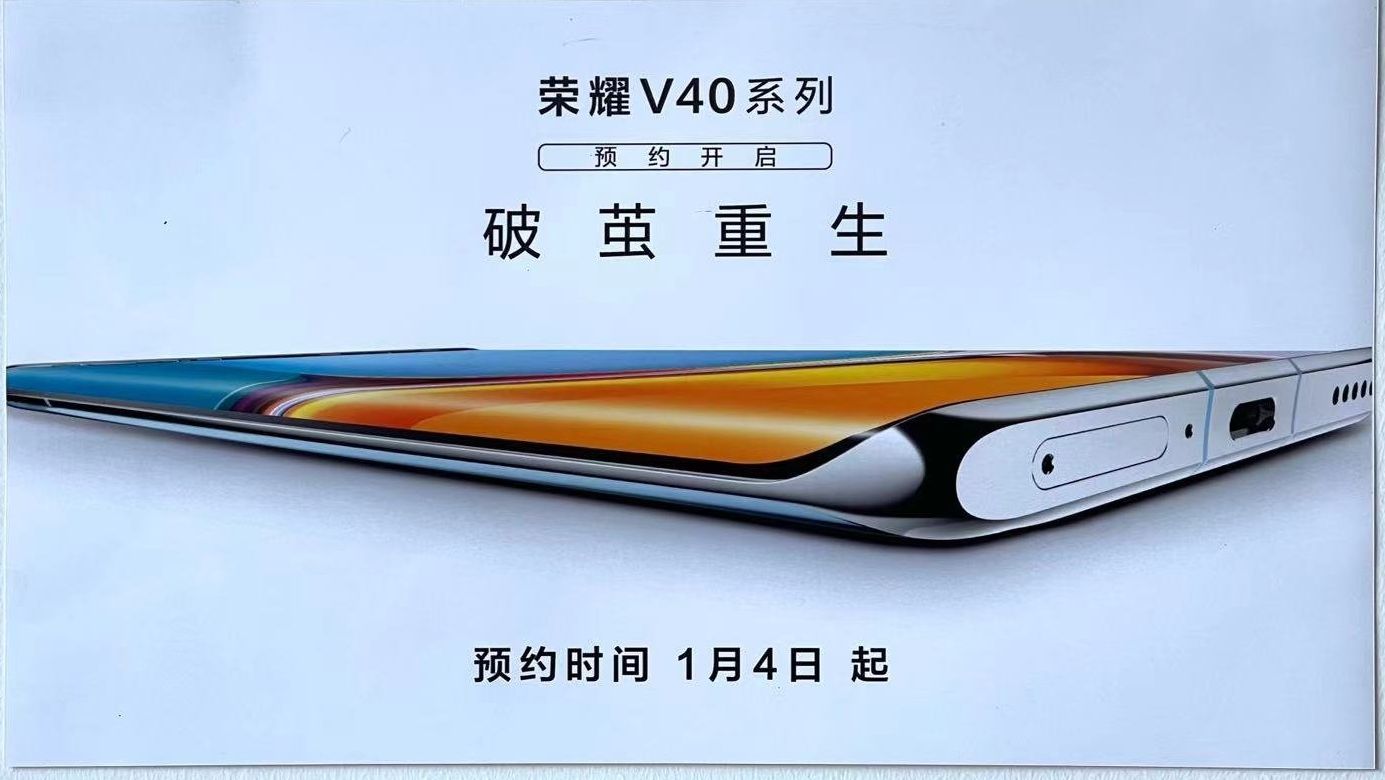
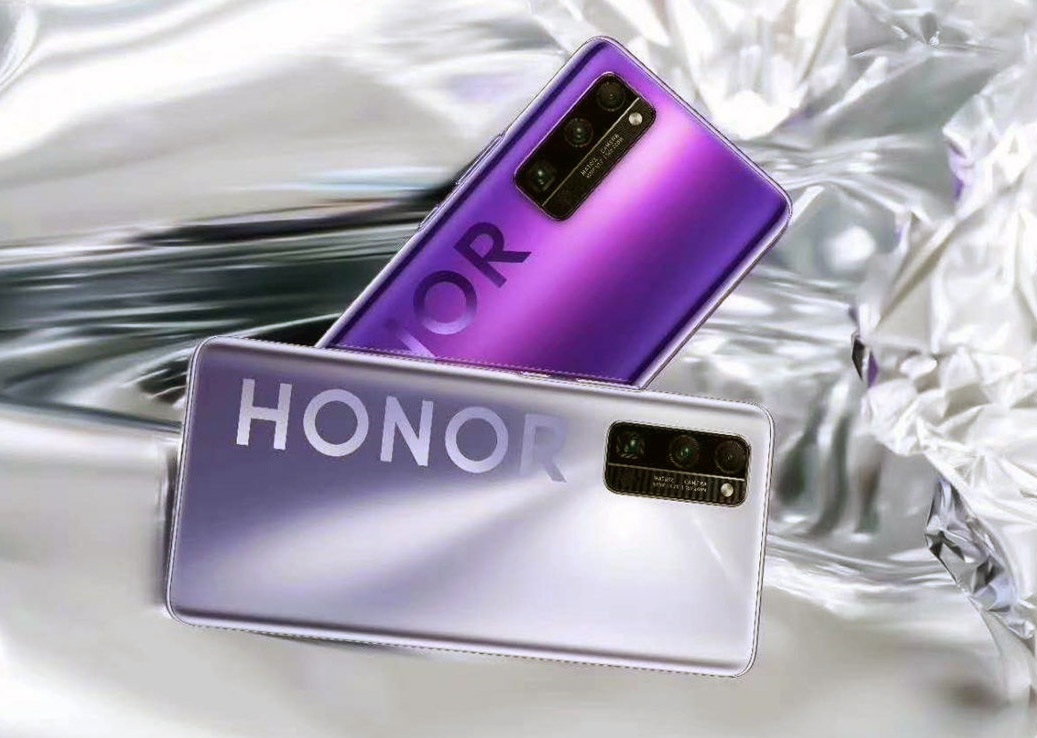
A recent report revealed that Honor has postponed the launch event of the Honor V40 series to Jan. 18. Ahead of the rumored launch, a specs sheet of the Honor V40 smartphone has appeared on Weibo (via. Mydrivers).
Honor V40 specifications (Rumored)
According to the leak, the Honor V40 measures 163.32 x 74.08 x 7.85mm and weighs around 184 grams. It houses a 6.72-inch OLED screen with a punch-hole design and 80-degree curvature at the edges. The screen supports a Full HD+ resolution of 1236 x 2676 pixels resolution, 1.07 billion colors, a 120Hz refresh rate, and a 300Hz touch sampling rate. It has a front camera of 32-megapixel.
The rear shell of the phone has a quad-camera setup that could be featuring either the Sony IMX766 50-megapixel primary lens or a 64-megapixel camera as the primary shooter. The main lens will be coupled with an 8-megapixel superwide lens, a 2-megapixel depth sensor, and a 2-megapixel macro shooter.
The Dimensity 1000+ chipset will fuel the device with 8 GB of LPDDR4x RAM and 128 GB / 256 GB of UFS 2.1 storage. The device will be backed by a 4,000mAh battery (3,900mAh rated value). The handset carries support for 66W fast charging and 45W fast wireless charging technology.
The Honor V40’s OLED panel is equipped with a fingerprint scanner. It will also carry support for 2D face unlocking. For additional storage, the device features an NM card slot. The device is preinstalled with Magic UI 4.0 based Android 10 OS. The leak has no information on the pricing of the device.
It is speculated that the Honor V40 series has two models. The above-mentioned variant’s model number could be YOK-AN10. The other model may have an NWE-AN10 model number. The latter was recently spotted with a 90Hz refresh rate display and Dimensity 1000+ chip at GameBench benchmarking site.
It’s been a couple of months since Honor became an independent brand and is no longer a part of Huawei. Since its detachment from the Chinese tech giant, the company has been working towards organizing its supply chain.
A few weeks ago, it was confirmed that Honor is in talks with Qualcomm for chipset supply. Now, as per the latest report coming from China, it seems that both companies are in an agreement where Qualcomm will supply chips for Honor’s upcoming smartphones.
Honor is no longer a part of Huawei and thus the restrictions imposed on the Chinese giant don’t apply to Honor, paving a path for Qualcomm, as well as other vendors such as MediaTek, to supply components to the newly formed entity.
Recently, it was reported that Honor is planning to produce over 100 million smartphones and has already communicated this goal to its suppliers. A big role in this process will be played by the company’s ability to form partnerships with suppliers and efficiently setting up its supply chain and production.
Apart from that, the company is also working on expanding its presence in the market by setting up new stores in China. It is all set to launch Honor Mall, the company’s official online store, next week. If the reports are to be believed, then the company has several new products up its sleeves, including smartphones, such as the Honor V40 series, as well as Honor SmartScreen Smart TVs.
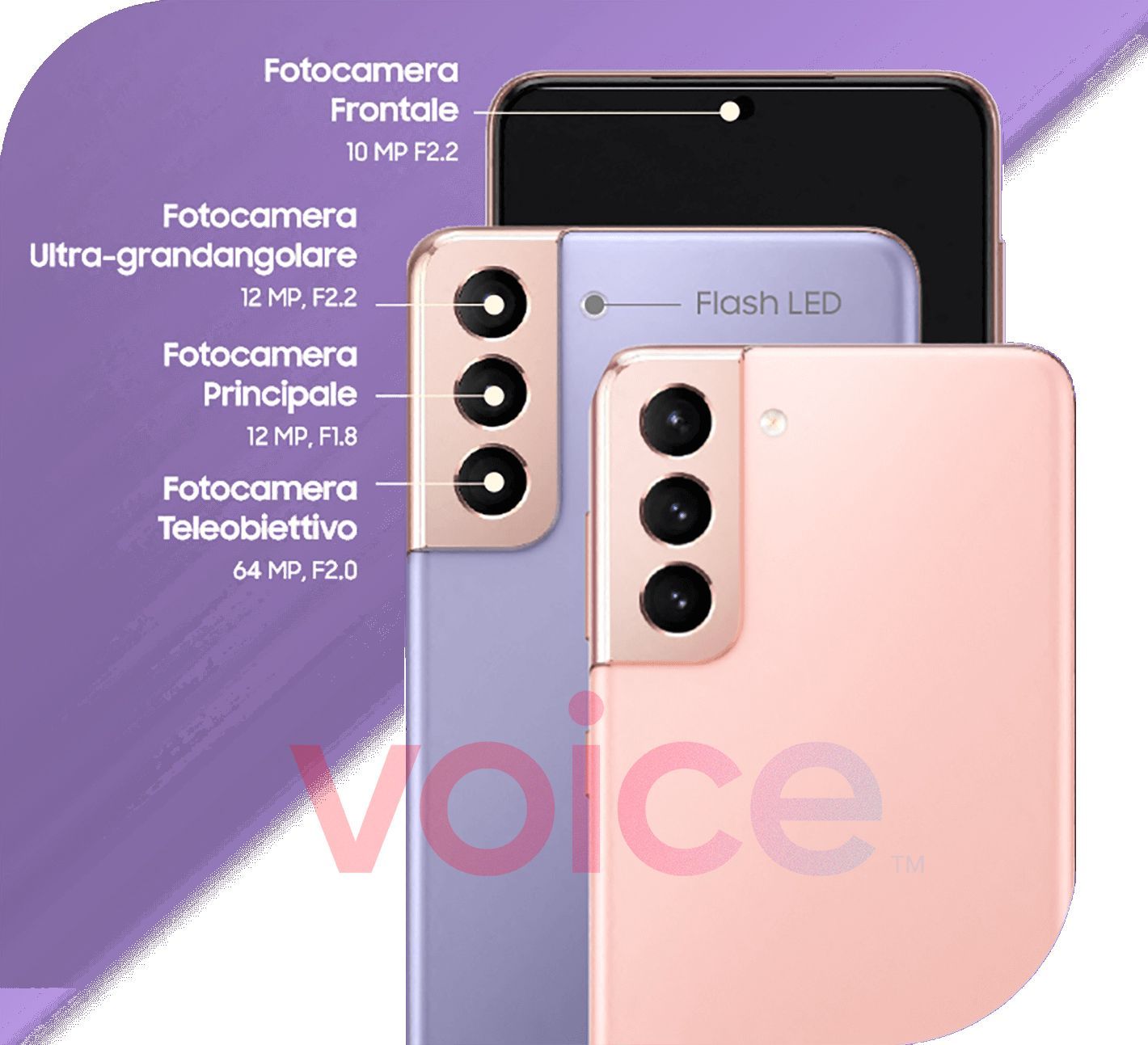
The Galaxy S21 5G and Galaxy S21 Plus 5G will both feature a 10-megpaixel selfie camera with f/2.2 aperture. The rear-facing camera module of the S21 features a 12-megapixel primary with f/2.2 aperture, a 12-megapixel ultrawide lens with f/2.2 aperture, and a 64-megapixel telephoto lens with f/2.0 aperture. The main and telephoto lenses are expected to arrive with OIS support. The triple cameras are assisted by an LED flash.
The Galaxy S21+ 5G features the same triple camera setup found on the S21. As it is known through past leaks, the S21+ will be coming with a larger display and a bigger battery as compared to the vanilla model.
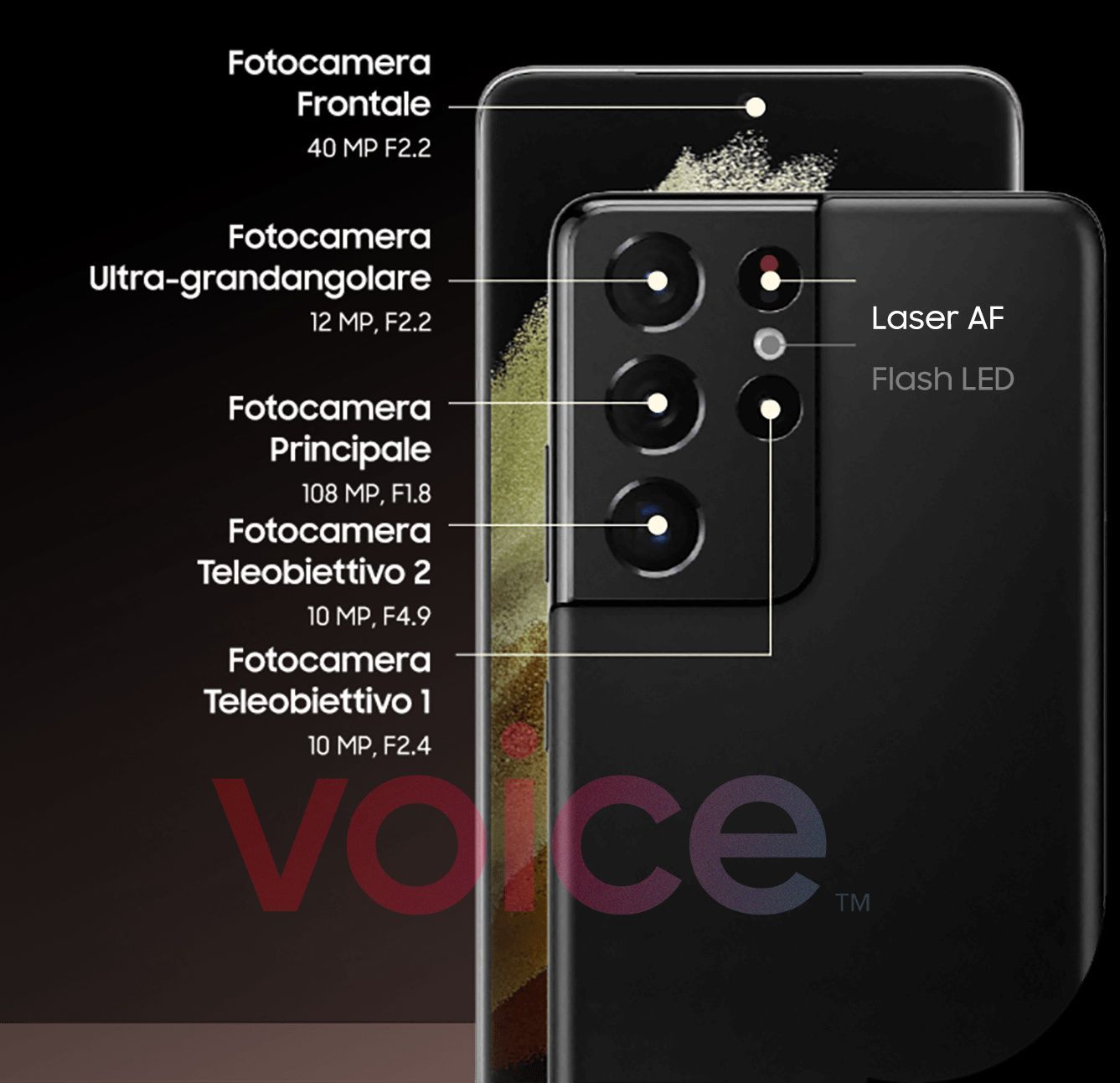
The Galaxy S21 Ultra 5G is blessed with a 40-megapixel selfie camera with f/2.2 aperture. The rear camera housing of the smartphone features a 108-megapixel main camera (probably, the new HM2 or HM3 lens) with f/1.8 aperture, a 12-megapixel ultrawide lens with f/2.2 aperture, a 10-megapixel telephoto lens with f/2.4 aperture, and another 10-megapixel telephoto snapper with f/4.9 aperture. The two telephoto sensors are expected to offer 3x optical zoom and 10x optical zoom, respectively.
The main sensor and the telephoto lenses of the S21 Ultra are said to be equipped with OIS support. The camera housing of the S21 Ultra also features an LED flash and a laser autofocus unit.
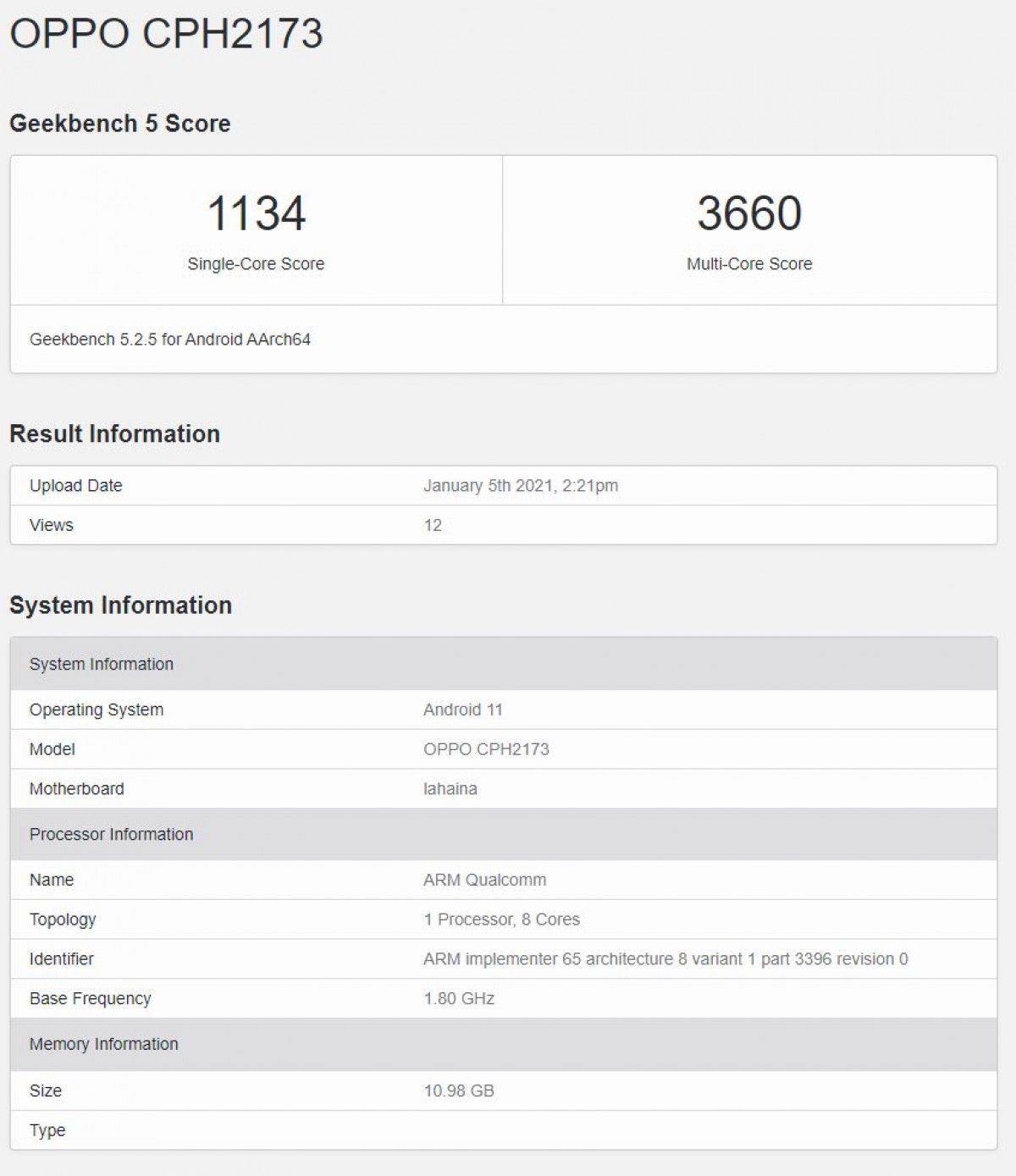
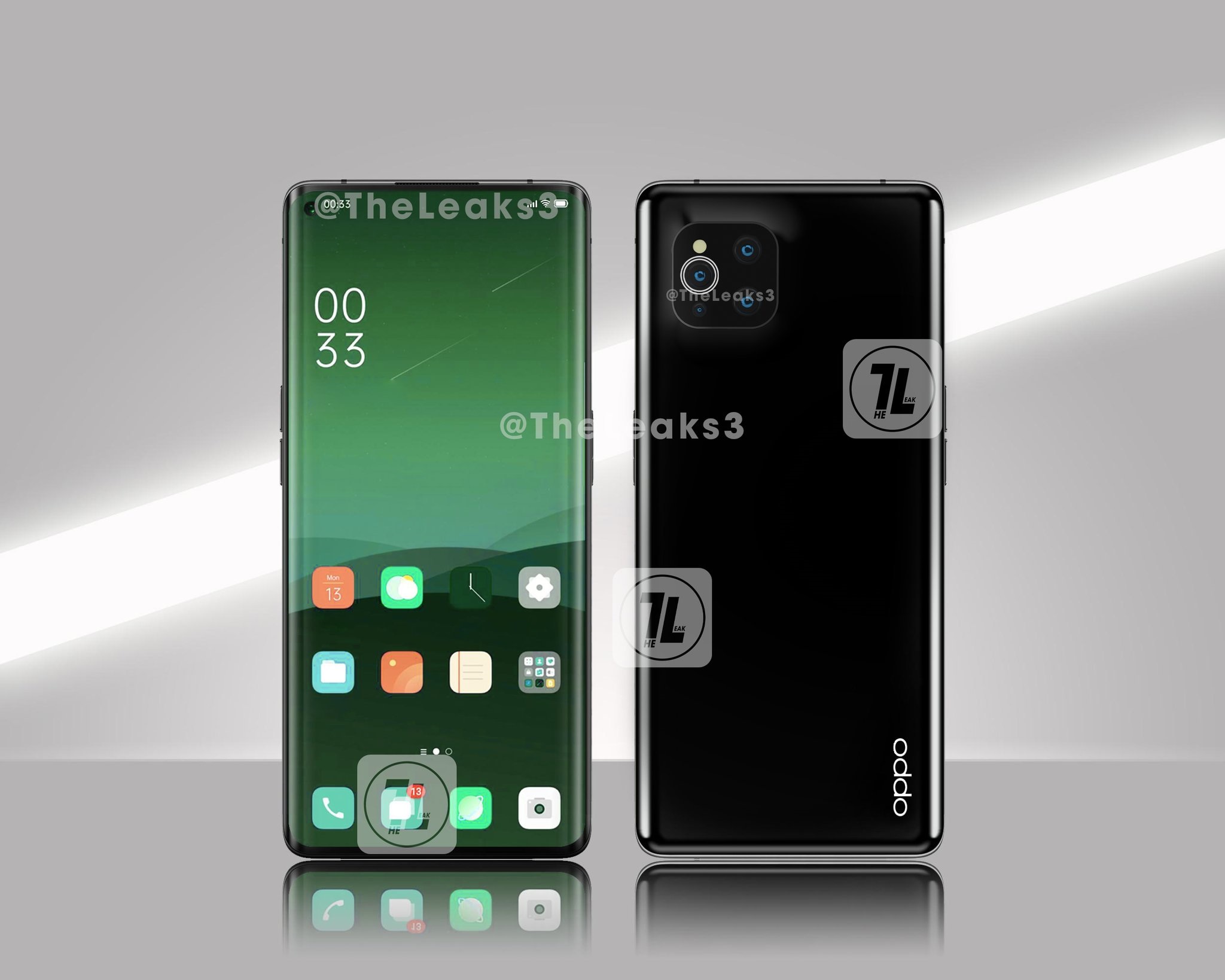
Earlier this week, an OPPO phone with model number PEEM00 had appeared in AnTuTu benchmarks with a staggering score of 771K+. It was speculated that it could be the Find X3 or Find X3 Pro smartphone. The PEEM00 model number suggests that it will be releasing in the Chinese markets. A new OPPO phone with a CPH2173 model number has appeared on the Geekbench 5 benchmarking site (via). The listing reveals that it is packed with flagship specs. Since OPPO is known for using CPHXXXX model numbers for its phones heading to global markets, it is likely that the CPH2173 smartphone could be the global version of the Find X3 or Find X3 Pro.
The “Lahaina” codenamed chipset that powers the OPPO CPH2173 is the Snapdragon 888 flagship chipset. The listing reveals that the phone is running on Android 11 OS and the SoC is coupled with 12 GB of RAM. In the single-core test, the Find X3 series phone has scored 1134 and it reached a score of 3660 in the multi-core test.
OPPO Find X3 and Find X3 Pro specifications (Rumored)
Last month, well-known tipster Evan Blass shared the key specifications of the Find X3 Pro. The specifications of the Find X3 are not known. However, it is likely that it may differ from the Pro variant only in departments like cameras and battery size.
The Find X3 Pro has a 6.7-inch OLED punch-hole display with curved edges. It is expected to produce 1440 x 3216 pixels and offer 1.07 billion color support. It is also said to arrive carry support for adaptive refresh rate ranging from 10Hz to 120Hz. The device will be running on ColorOS 11 based Android 11 OS.
The rear camera setup of the phone is expected to feature a pair of 50-megapixel Sony IMX766 sensors, one for the primary shooter, and the other one for superwide shots. The camera setup is also rumored to house a 13-megapixel telephoto lens with 3x optical zoom and a 3-megapixel macro lens that may offer 25x zoom.
The Find X3 Pro is likely to get a 4,500mAh battery with an enhanced 65W SuperVOOC 2.0 fast charging support. The handset is also expected to arrive with 30W VOOC Air wireless charging technology. It could be arriving in ceramic or glass build and it could be available in three colors like black, blue, and white.
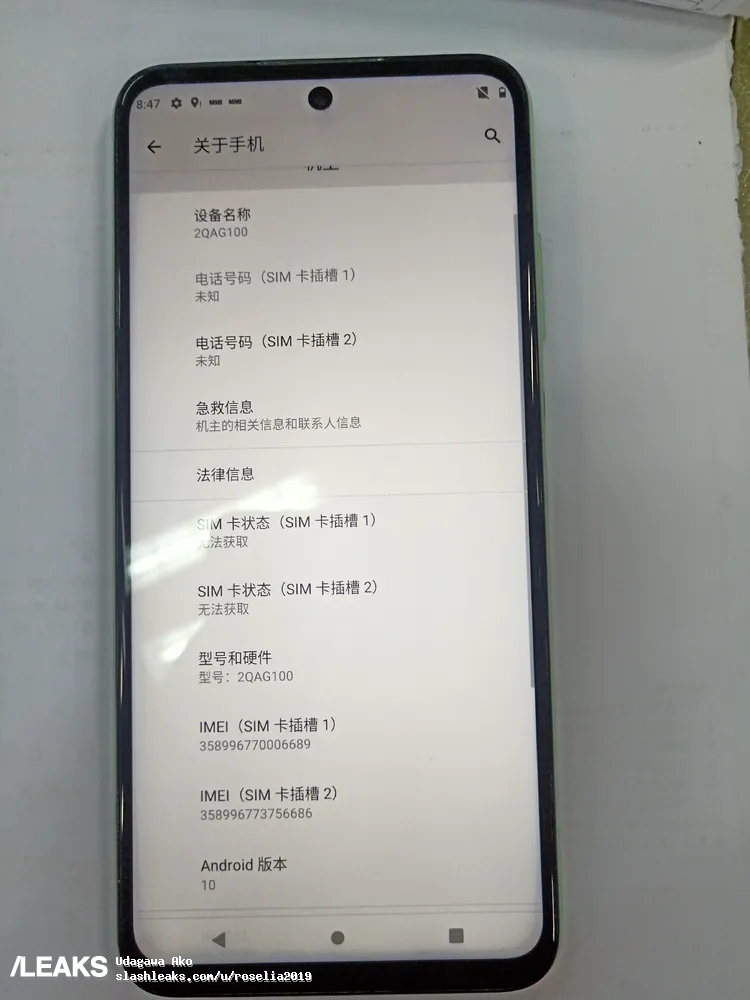
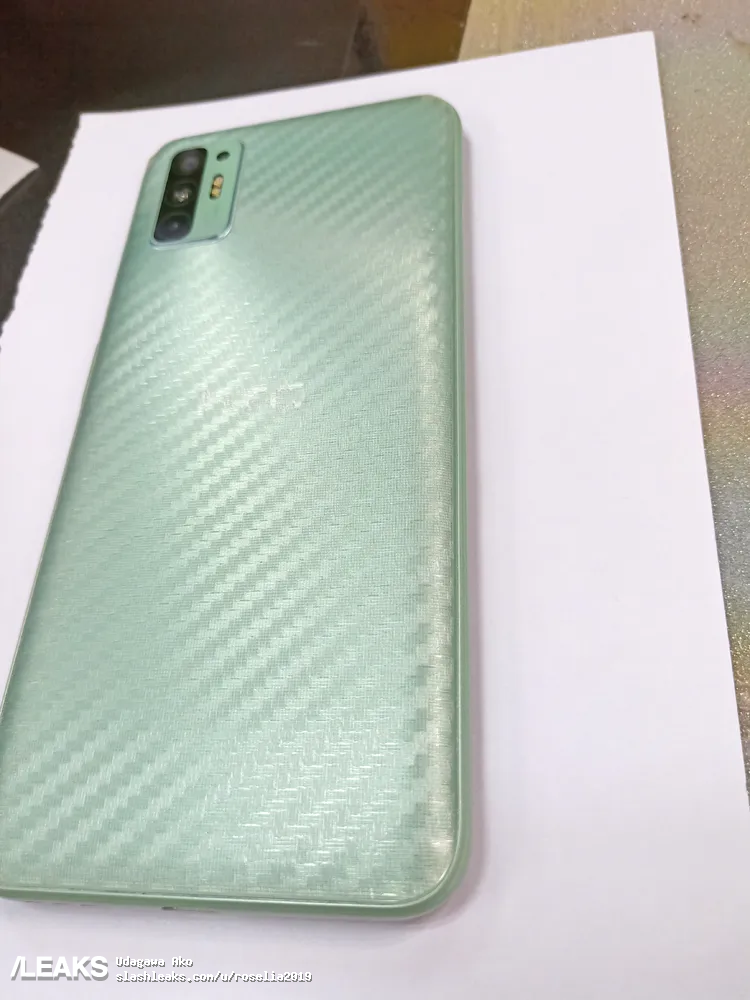
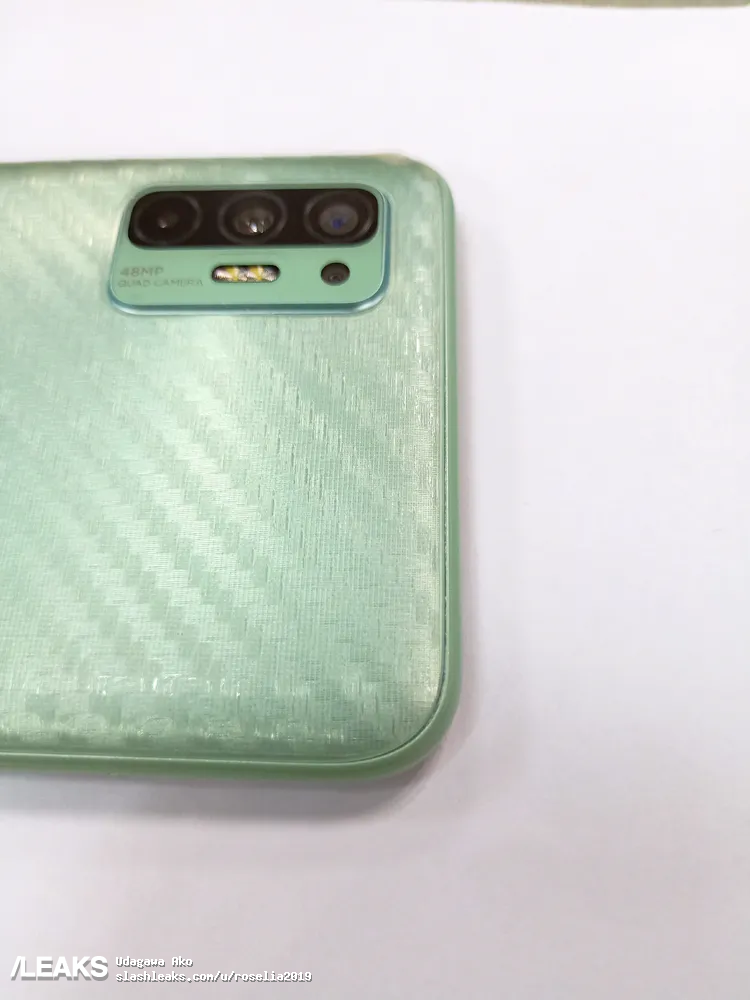
Last year, HTC announced two Desires smartphones called the Desire 20 Pro and Desire 20+ with mid-range specs. It appears that the Taiwan-based is now gearing up to launch a new Desire branded phone called the HTC Desire 21 Pro 5G. The live shots of the smartphone (via) have appeared to reveal its design from all angles. After the HTC U20 5G that went official last month, the Desire 21 Pro will be the second 5G-ready phone from the brand.
In the live shots, the upcoming HTC Desire 21 Pro 5G seems to be placed inside a green colored case. The right edge of the device seems to be equipped with a volume rocker and a power key that is integrated with a fingerprint scanner. it is unclear whether the handset has a 3.5mm audio jack.
At the front, the handset has a display with a punch-hole positioned at the top-center. The back panel of the device has a rectangle-shaped camera module, which seems to house four cameras and an LED flash. The text engraved in the camera housing reveals that it has a 48-megapixel camera as the primary shooter.
One of the snapshots reveals a few key pieces of information about the Desire 21 Pro 5G. Its model number is “2QAG100” and it carries support for dual-SIM connectivity. The device is preinstalled with Android 10 OS. The other specs of the device are under wraps. Hopefully, newer reports will reveal more details on the specs of the device. Readers can view the other images of the phone by visiting the above-provided links.
The HTC U20 5G that debuted last year in June offered specs like a 6.8-inch IPS LCD FHD+ punch-hole display, Snapdragon 765G, 8 GB of RAM, 256 GB of storage, Android 10 OS, and a 5,000mAh battery. It came with a 32-megapixel selfie camera and a 48-megapixel + 8-megapixel + 2-megapixel + 2-megapixel quad-camera system.
To start the new year on a fresh and positive note, many websites and companies have decided to offer huge discounts on their products. Giztop being one of them, is offering $30 off on Xiaomi Redmi Note 9 Pro 5G till January 10th using a coupon code – N9P5G30. The smartphone is a recent release and comes with decent specs and high-speed network connectivity.
Redmi Note 9 Pro 5G features a 6.67-inch punch-hole FHD+ display with a 20:9 aspect ratio and a 120Hz refresh rate. It runs on an Android 10 OS and is powered by a Snapdragon 750G SoC Octa-core processor coupled with 6GB/8GB of RAM and 128GB/256GB internal memory space. This Xiaomi flagship supports a 5G data network that offers high-speed downloading, streaming content, and more.
Packed with a quad-rear camera, this Redmi smartphone provides a decent photography experience. It includes a 108MP primary camera, an 8MP ultrawide camera, a 2MP macro camera, and a 2-megapixel portrait depth-of-field lens with a 16MP selfie camera. This smartphone also features portrait mode, AI beautifies, short film shooting, and more. Additionally, it comes with a 4820mAH battery that supports a 33W fast charging.
Other features include a 2+1 hybrid SIM and memory card slot, fingerprint scanner, and global network band compatibility.
Currently, Giztop is offering a $30 discount (original price: $299) on Redmi Note 9 Pro 5G. Interested users can avail this offer after using the coupon code – N9P5G30. The offer is only available till January 10th so hurry and make the most of it.
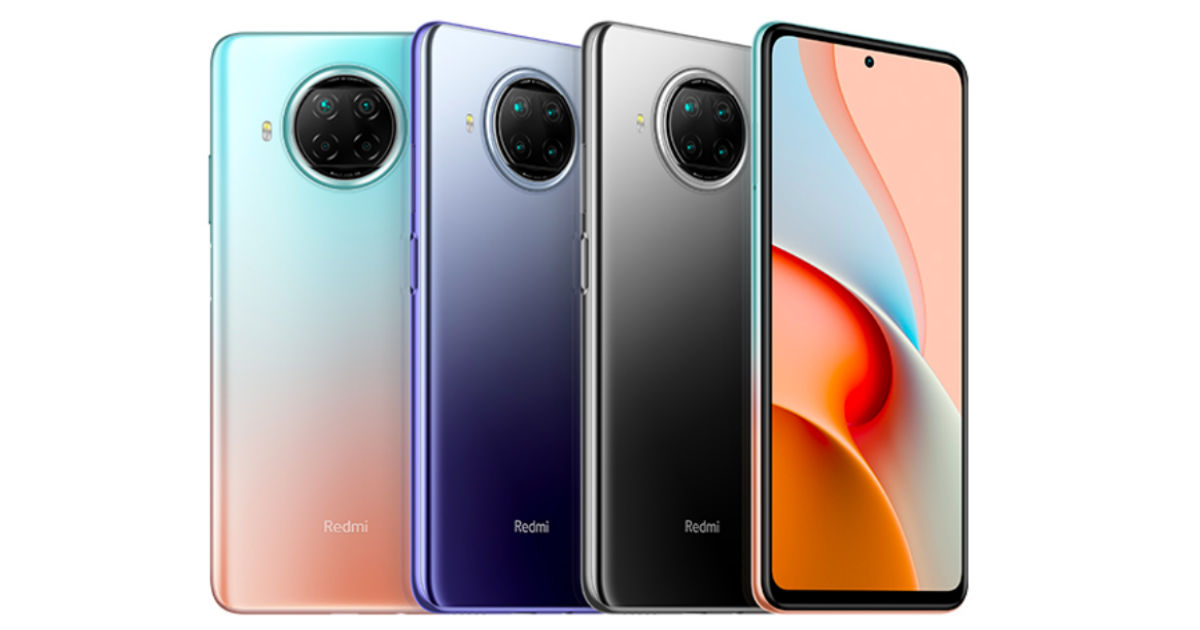
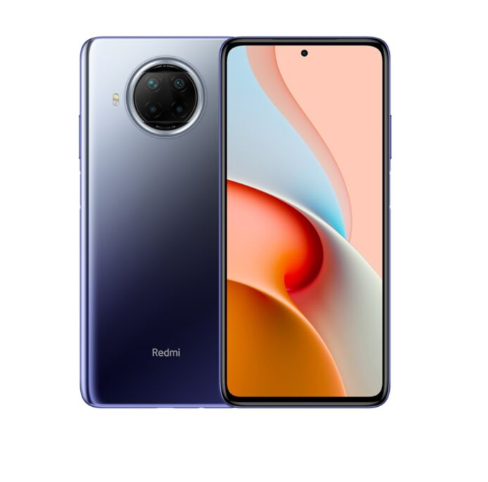
The Redmi Note 9 Pro launched in India nearly a year ago. Then in April, Redmi announced a global version with a 64MP primary camera instead of the 48MP of the Indian version and support for a faster-charging technology (30W as against 18W). Now, a successor which will launch as the Redmi Note 10 Pro, is coming. However, we do not know yet if this is the global version or if it will be exclusive to India.
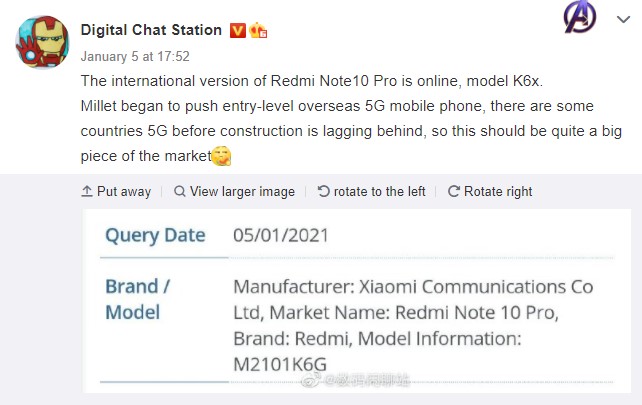
The Redmi Note 10 Pro was spotted on the FCC’s website with model number M2101K6G. It has also been certified by the European Economic Commission, Singapore’s IMDA, and Malaysia’s MCMC.
While they don’t specifically say that the phone is the Redmi Note 10 Pro, an image from another certification agency is the one that reveals the device’s market name. The image was posted on Weibo by Digital Chat Station and he adds that the device supports 5G. Another leaker, Sudhanshu Ambhore also confirmed that the device with the model number M2101K6G is the Redmi Note 10 Pro 5G.
We do not know the specs of the phone but if it is a 5G device, it should come with a processor from Qualcomm’s Snapdragon 700 5G series or one of MediaTek’s Dimensity series. We also expect it to pack a big battery, most likely the same 5020mAh capacity as its predecessor, have at least 30W fast charging, and run Android 11 out of the box.
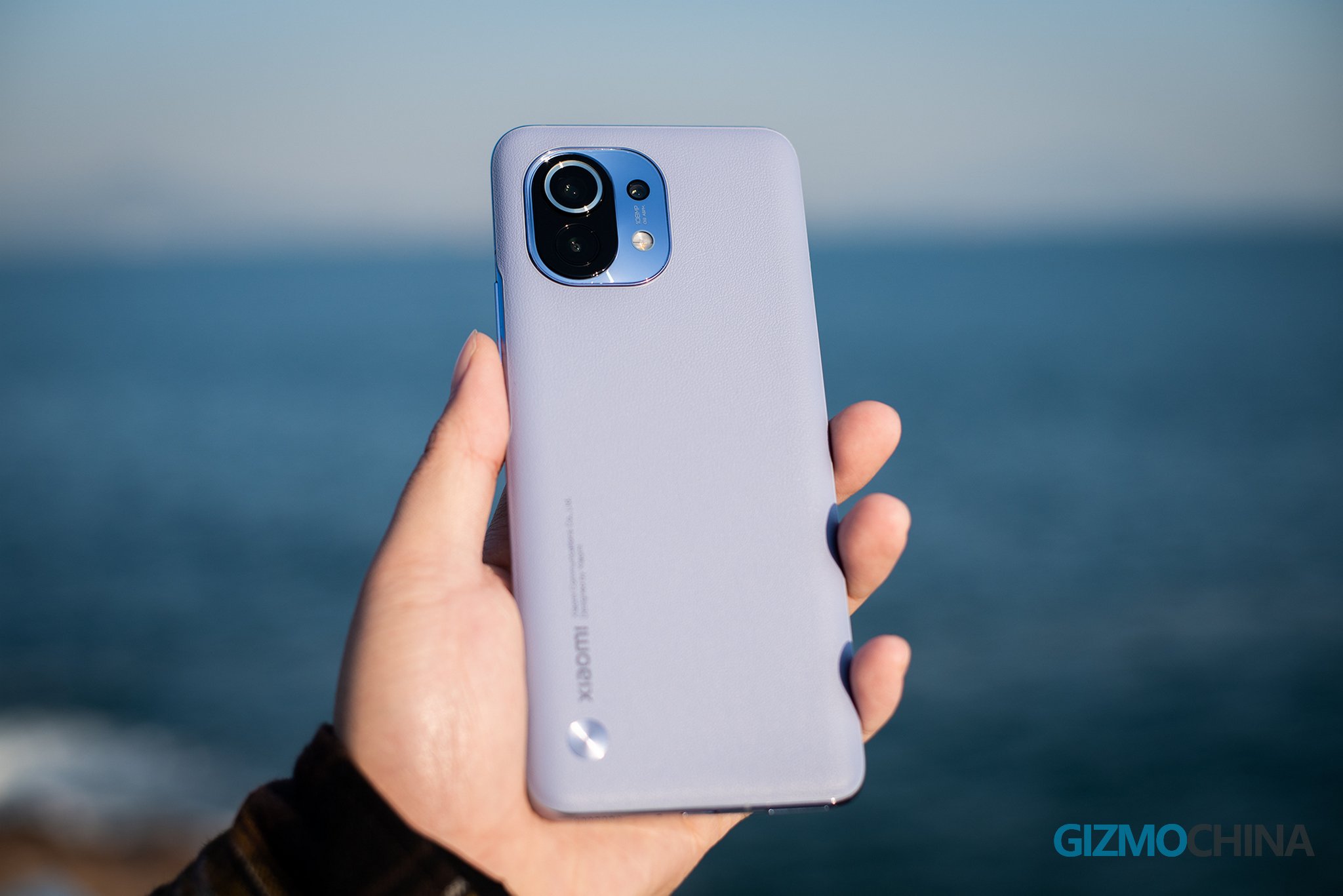
When Xiaomi officially unveiled the Mi 11 flagship series on December 28, the glitz and glamour that attended the arrival of the sleek, premium flagship was somewhat tainted by the announcement that the device will ship without a charging adapter.
Xiaomi Mi 11
Xiaomi’s decision comes just two months after Apple announced the iPhone 12 series without a charging adapter in the miniaturized retail box. What makes Xiaomi’s decision even surprising is that they had poked fun at Apple alongside Samsung and OnePlus, over the iPhone 12’s adapter removal.
The decision still continues to generate heated debates among Mi fans, many of whom question the sense behind the decision, considering that most buyers will still have to purchase a fast charging adapter separately, anyway. When the Mi 11 went on sale on January 1, only 20,000 persons purchased the “Green Edition” which is without an adapter. Also, an ongoing poll being conducted by Gizmochina shows that most of the respondents think the removal is a bad idea.
Quite a large number of persons who have expressed their thought about this issue think Xiaomi just copycatted Apple. Well, Xiaomi’s CEO Lei Jun has come out to debunk such notions. The CEO hinted recently in a live broadcast (via) that the idea of not including the charger was initiated by him and wasn’t a copy of what Apple did.
He stated that he had mooted the idea in 2015. Indeed Lei Jun had asked the big question on Weibo in a bid to gather user opinions on the matter. The story was covered by several blogs at the time, including GSMArena. He also added that when the company moved to Xiaomi’s Beijing Park last year, several boxes of chargers were thrown away. Thus, he again moved to implement the idea o removing the adapter from the retail box with the option to buy it separately.
In summary, Xiaomi’s decision is the implementation of an idea conceived five years ago. However, that cannot in any way remove the fact that the move to implement the idea may have been influenced by Apple.
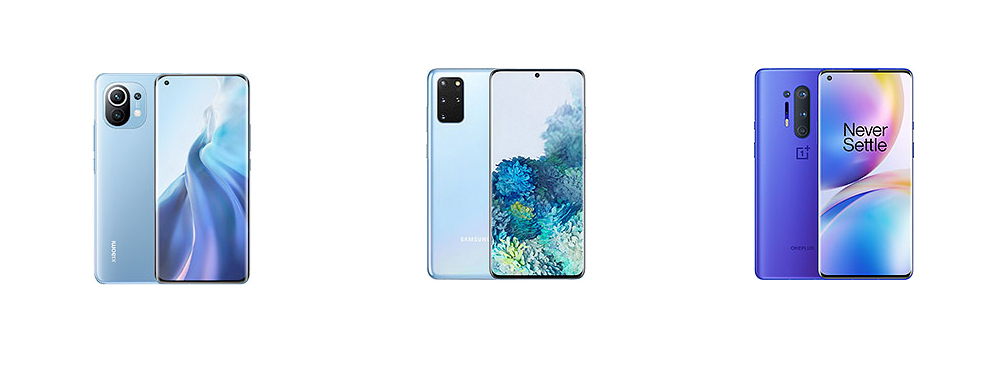
Xiaomi Mi 11 is finally here and it is the first-ever phone equipped with the Snapdragon 888 mobile platform. Despite that, it is not a top-tier flagship and Xiaomi decided not to opt for the most advanced specifications in order to offer it at an affordable price. For this reason, a lot of people are wondering whether it is the case to choose the Xiaomi Mi 11 or an older flagship with top-tier specifications. In order to answer this question, we decided to compare the Xiaomi Mi 11 with Samsung Galaxy S20+ and OnePlus 8 Pro which are actually available at similar prices thanks to several deals.
Xiaomi Mi 11 vs Samsung Galaxy S20+ vs OnePlus 8 Pro
Xiaomi Mi 11
Samsung Galaxy S20+
OnePlus 8 Pro
DIMENSIONS AND WEIGHT
164.3 x 74.6 x 8.1 mm, 196 g
161.9 x 73.7 x 7.8 mm, 188 g
165.3 x 74.4 x 8.5 mm, 199 g
DISPLAY
6.81 inches, 1440 x 3200p (Full HD+), AMOLED
6.7 inches, 1440 x 3200p (Quad HD+), Dynamic AMOLED 2X
6.78 inches, 1440 x 3168p (Quad HD+), Fluid AMOLED
You should definitely discard the Xiaomi Mi 11 if you are looking for the best build quality. It features the Gorilla Glass Victus protection, sure, but it is not waterproof. The Samsung Galaxy S20+ and the OnePlus 8 Pro have the IP68 certification guaranteeing water resistance up to 1.5 meters deep. On the other hand, Mi 11 has a more original and beautiful design thanks to its cleaner rear side and high screen-to-body ratio. Do you prefer having the best look or a waterproof phone?
Display
All of these devices feature an astonishing display: in each case, you get a great AMOLED panel with a 120 Hz refresh rate, the HDR10+ certification, and a high Quad HD+ resolution. But on paper, the Xiaomi Mi 11 looks slightly better with its very high brightness and one billion colors. Unfortunately, we had no chance to test the display of the Xiaomi Mi 11 as it was announced just a few days ago, but it looks very promising. Right after, we should have the OnePlus 8 Pro which shows one billion colors just like the Mi 11: the quality should be similar.
Hardware/Software
The king of the hardware department is undoubtedly the Xiaomi Mi 11: it is the only one to feature the Snapdragon 888 chipset which is actually the best SoC by Qualcomm. Further, it offers up to 12 GB of RAM and up to 256 GB of UFS 3.1 internal storage. Both the OnePlus 8 Pro and Samsung Galaxy S20 Plus are powered by the older Snapdragon 865 mobile platform (the European version of the Galaxy S20+ gets the Exynos 990). Further, Mi 11 runs Android 11 out of the box, while the OnePlus 8 Pro and Samsung Galaxy S20+ ship with Android 10.
Camera
Do you need the best camera phone? Just do not go for the Xiaomi Mi 11, because it lacks a telephoto sensor. The most advanced is the OnePlus 8 Pro featuring a dual 48 MP sensor on the rear side, an 8 MP telephoto lens with 3x optical zoom, and a 5 MP color filter camera. Even the Samsung Galaxy S20+ has a telephoto sensor with 3x optical zoom, while you do not get it on the Xiaomi Mi 11. On the other hand, the Mi 11 has a better 108 MP main camera which looks more promising for normal photos and videos.
Battery
Xiaomi Mi 11 has a bigger battery than Samsung Galaxy S20+ and the OnePlus 8 Pro, but the difference is marginal. This means that you should not get huge differences in battery life between Mi 11 and the OnePlus 8 Pro. What makes the difference is the charging speed, as the Mi 11 has faster charging technologies.
Price
Unfortunately, we still do not know the international price of the Xiaomi Mi 11 as it is still a China-exclusive. You can actually find the Samsung Galaxy S20+ and the OnePlus 8 Pro for less than €800/$985 globally. Unless the camera is your main priority, the Xiaomi Mi 11 is a more advanced handset than its two rivals. It lacks water resistance, but it has a lot of superior features.
Qualcomm announced the latest generation of its fast charging technology last year. Called Quick Charge 5, the technology brings support for 100W+ fast charge to compatible devices.
Following the announcement in July 2020, only one device has been officially confirmed to support the charging protocol and that is the Xiaomi Mi 10 Ultra. An official document published by Qualcomm last November that contains a list of different Quick Charge technologies and compatible devices and chargers has no phone or charger listed under Quick Charge 5. This is not surprising as there are less than five devices in the world that even support 100+W fast charging.
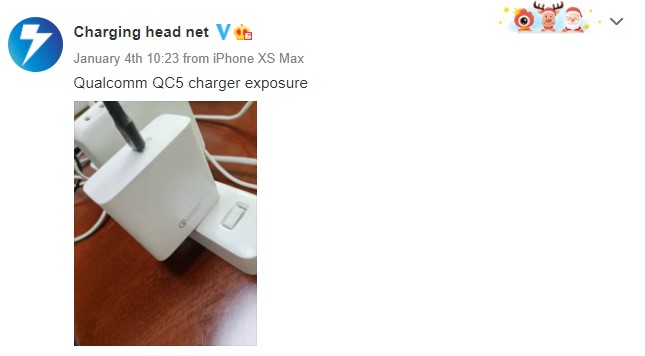
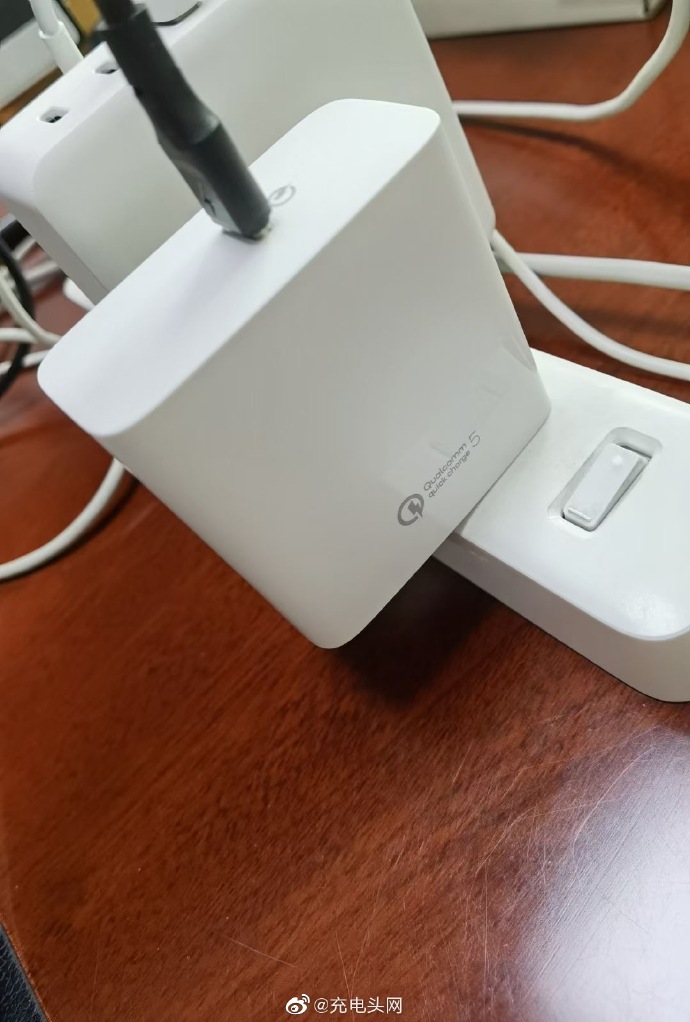
While we wait for more devices to launch with support for Quick Charge 5, an image of what is most likely the first Quick Charge 5 charger has surfaced on the web.
The photo which was posted on Weibo by the account 充电头 (Charger) shows a white power adapter with Qualcomm Quick Charge 5 printed on one side. It has a white body and a single USB-C output port at the top. It is not the smallest of chargers but it should easily fit into the average pocket. Unfortunately, there are no details about the manufacturer and the price of the charger.
We expect only a few manufacturers will launch phones with support for Quick Charge 5 this year. These manufacturers will definitely also have their own chargers which may or may not support the charging protocol but third-party accessory makers such as ZMI, Anker, Aukey, Baseus, etc. should launch power adapters that support the charging protocol.
Qualcomm says that Quick Charge 5 is 70% more efficient than Quick Charge 4+ and is also 10°C cooler than Quick Charge 4 and Quick Charge 4+. The charging technology is also backward-compatible with previous versions up to Quick Charge 2.0. So if you decide to pick up a Quick Charge 5 charger, you will be able to use it to charge a device that supports previous Quick Charge protocols.
Chinese tech giant Meizu first made its breakthrough manufacturing MP3 players before delving into other audio products like headphones and finally smartphones. The brand’s smartphone arm has slowed in recent times but it is still pushing other tech gadgets. Meizu was teased as planning to launch a smartwatch and truly wireless earbuds with active noise cancellation (ANC). Meizu’s Marketing Director Wan Zhiqiang has now confirmed on Weibo that active noise canceling truly wireless headset will be launched later this month.
Meizu has several headphones to its name including the Meizu POP launched in 2018 and subsequently the POP 2 and POP 2s TWS headphones. All the models with noise cancellation use Electronic Noise Cancellation (ENC) technology. The upcoming model, which may likely be called Meizu POP 3, will be the brand’s first true wireless headset with Active Noise cancellation (ANC).
The headset reportedly aroused heated discussions recently due to the design style that is similar to Apple’s AirPods Pro. Some netizens are of the opinion that it is too similar to the AirPods Pro. Although the company is yet to officially reveal the design, a patent application by Meizu for the earphone’s charging box (TWS ANC) filed on November 3, 2020, provides a sketch of the earbuds and the charging case.
The sketch shows the device will have a long stem unlike Meizu’s previous TWS headphones considering the form factor of the charging box. The charging box has a power button on the outside and at the bottom, there is a Type-C charging interface. There is a battery status indicator at the front of the case.
Apart from the headset, the Meizu Marketing Director also revealed some details about the brand’s first smartwatch. Wan Zhiqiang stated that Meizu will strive to sell the smartwatch in the first quarter of this year. The smartwatch was earlier tipped to go official in the fourth quarter of 2020.
Back in June 2020, Flyme’s official Weibo announced that the smart visual design and intimate interactive experience would not only be on the phone, with a “Flyme for Watch” teaser poster showing it will feature on the brand’s smartwatch. A teaser poster showing a vague outline of the watch was also released. The company had also applied for the registration of the “Flyme For WATCH” trademark.
A team of Malaysian researchers has developed a method to transform the fiber found in discarded pineapple leaves into a durable material that can be used to build the frames for drones.
The research team, drawn from Outta University in Malaysia is working on a project, led by Professor Mohamed Sultan. The researchers had been working on evolving sustainable ways of using pineapple waste generated by farmers in the Hulu Langat province, close to the capital Kuala Lumpur.
The process involves transforming the leaf of the pineapple into a fiber that can then be used as cheap and disposable parts of drones, with a wider aerospace application also being considered.
The team leader of the research group said that such drones made out of the bio-composite material had a higher strength-to-weight ratio than those made from synthetic fibers, and were also cheaper, lighter, and easily disposable, thereby making such parts to be biodegradable and environmentally friendly.
The prototype drones have been undergoing testing and are able to fly to a height of about 1,000 metres (3,280 ft) and stay in the air for about 20 minutes, according to the team.
Pineapple Drone
The research team hopes to scale up the size of the drones and the amount of load they can carry. This will expand the application of such drones to a variety of situations, including agriculture and aerial inspection.
The goal is to provide innovative solutions for farmers that will result in improved yields and a more pleasant farming experience, said William Alvisse of the Malaysian Unmanned Drones Activist Society, an NGO involved in the project.
It is hoped that the project which was launched in 2017 will boost revenues for pineapple farmers in the country, who previously discarded the stems and leaves of the annual fruit after harvest.
The pace of technology in accomplishing super-fast charging for smartphones is very astonishing. In what can be termed literally as lightning pace, we have moved sturdily and progressively from charging a smartphone for several hours before achieving a full charge to the new technology of fast charging and now we are having super-fast charging technology.
Last year, some of the OEMs came up with some ultra-fast charging that could provide up to 100W of charge, thereby dramatically reducing charging times to minutes. Samsung released a pair of new Type-C power delivery (PD) controllers that can offer up to 100 watts of charging power (20V / 5A).
Chinese smartphone maker Xiaomi also headlined its entry into the super-fast charging arena with its Mi Charge Turbo, at par with Samsung’s fast-charging model, at 100W charging power, which is an indication of the direction of the competition in this segment of smartphone and other smart devices market.
A new report obtained from Digitimes projects that we may see a widespread revolution in the adoption of supercharging technology across the world this year. Epistar’s Chipmaker arm, Unikorn Semiconductor is expected to extend the production of GaN-on-Si chips for fast charging devices from the current 65W to 100W chips from the third quarter this year, according to Lee Biing-jye, the chairman of Epistar.
Obviously, Unikom’s decision was based on the growing demand for GaN-on-Si chips and a fair perception of the future direction of the market. Lee Biing-jye predicts that more devices will support 100W fast charging in 2021. The report was silent on possible big hitters who may have plans to adopt super-fast charging. Obviously, Samsung is one of the manufacturers that support the concept of a single adapter that can serve multiple devices in minutes. Recently. Xiaomi showcased a 100W fast charger which charged completely a 4,000mAh battery under 17 minutes!
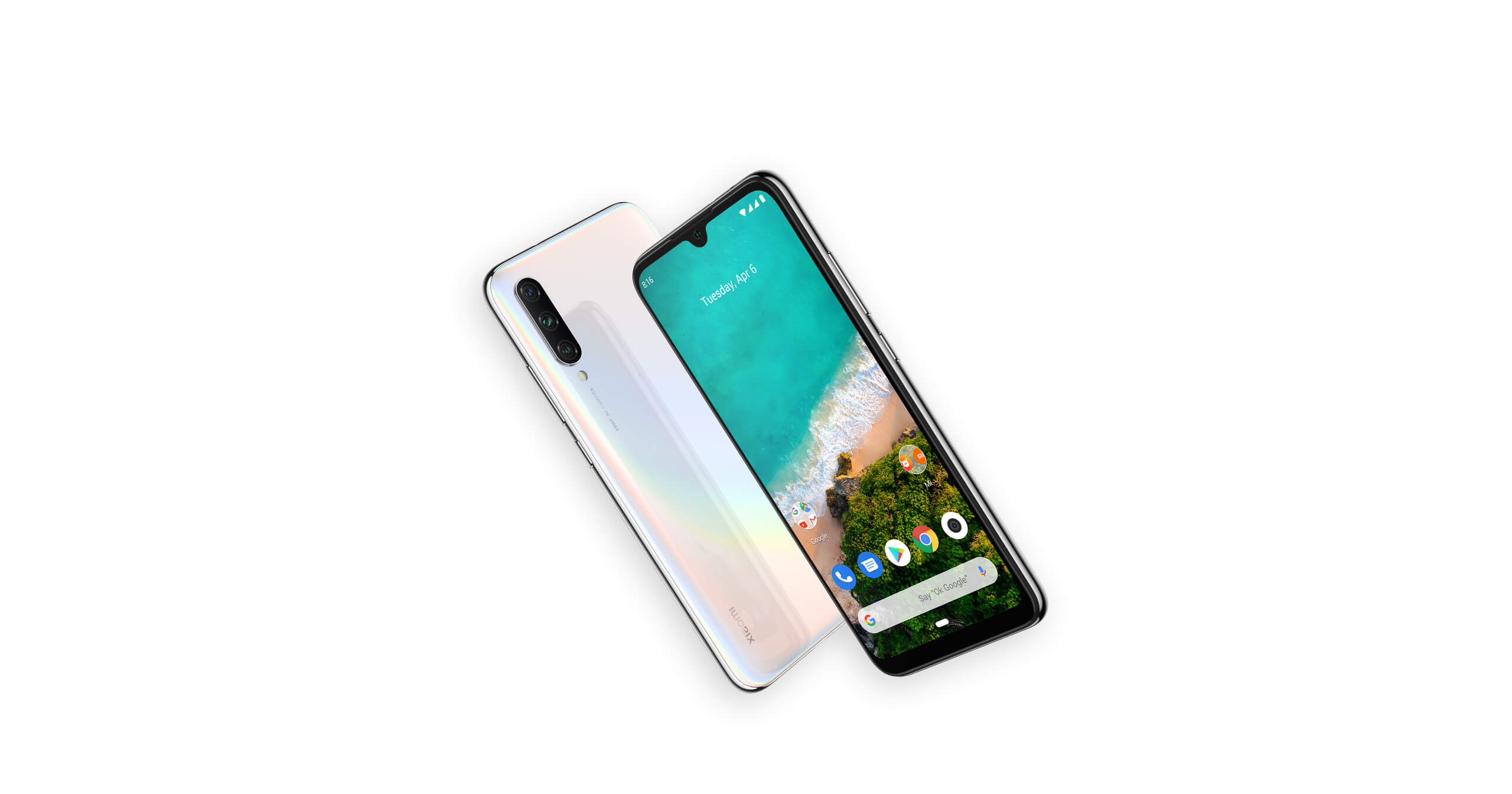
Some of the Mi A3 users, who updated their devices to Android 11 a few days back, must have faced a bit of an Anxiety attack. The update, which was sudden but half-baked, rendered many of the devices dead, essentially a hard brick. Today, Xiaomi has re-released the update and it is free of that issue.
First, we would like to apologize to our readers for the delayed update to this news. Although people started reporting about this second Android 11 update online, we had to personally verify that it steers clear of further heartbreaks.
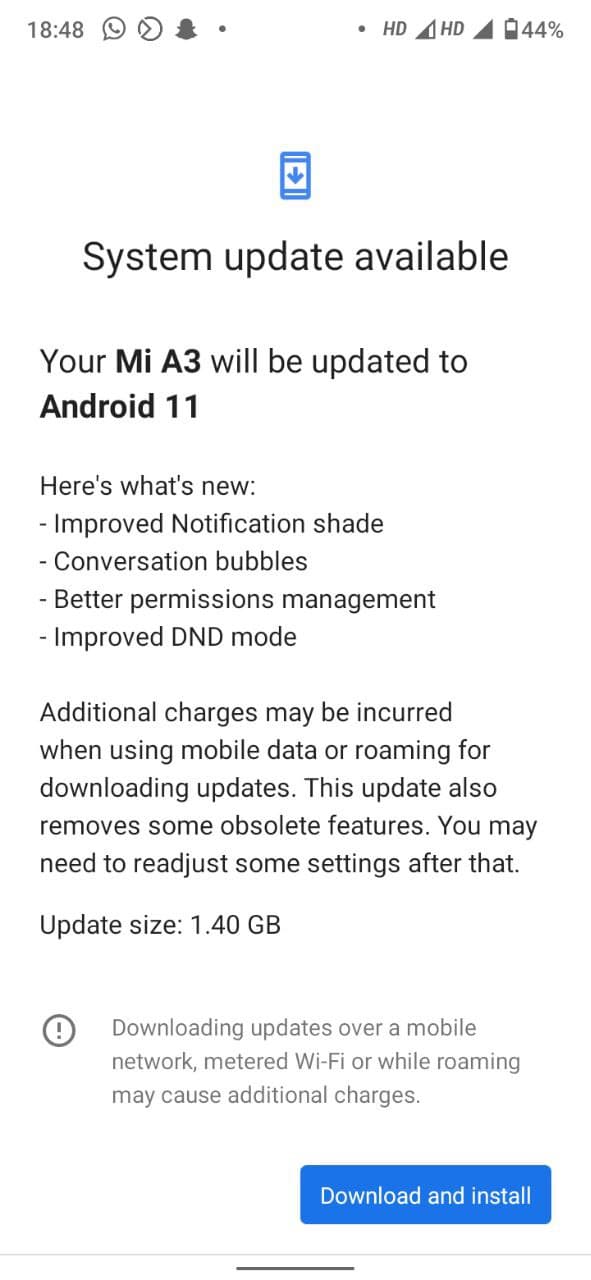
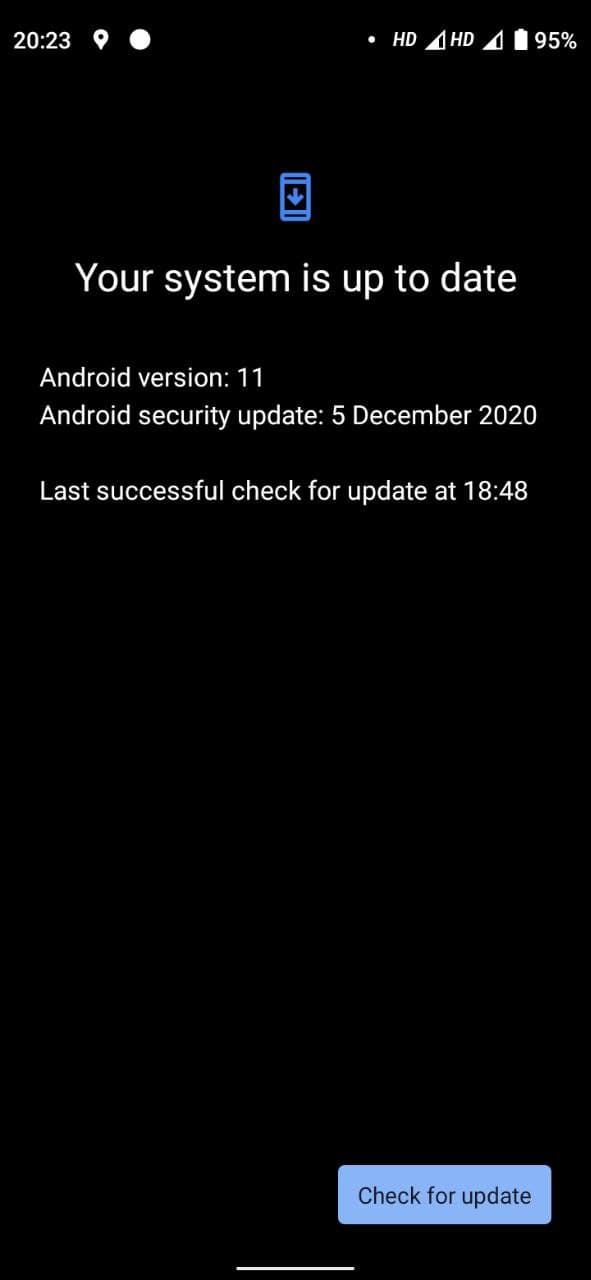
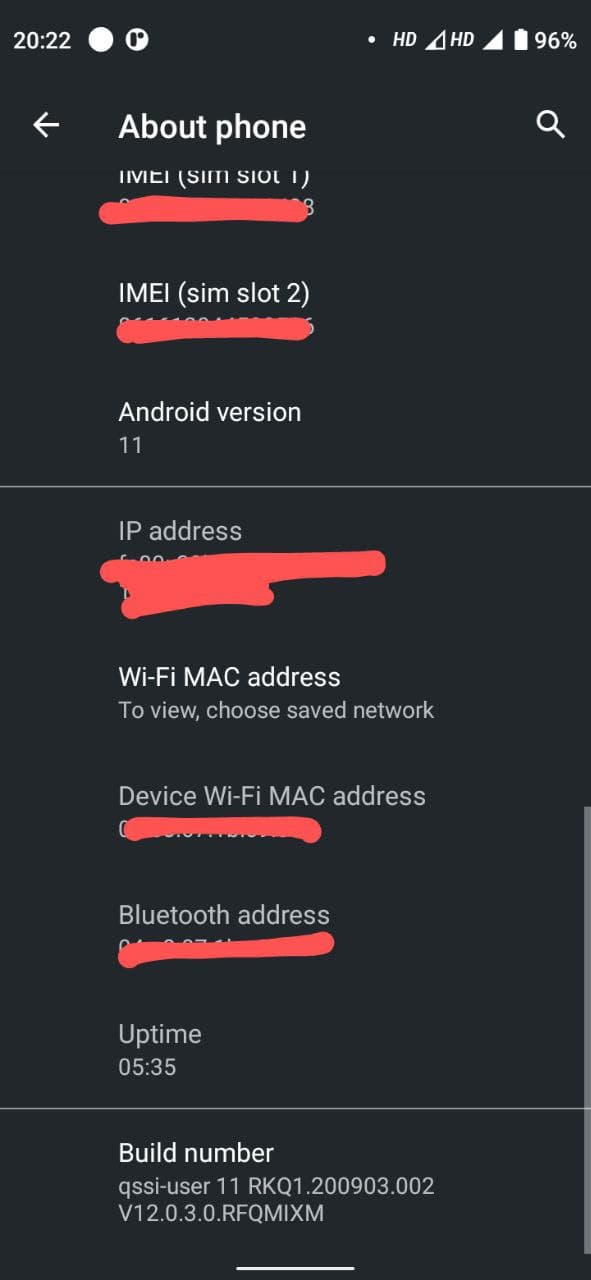
That said, our unit got the update with a build number 12.0.3.0.RFQMIXM and weighs around 1.40GB in size. The changelog is the same as the first update and shows typical features of the Android 11 OS. Additionally, the update also brings December 2020 security patch.
On updating, the device successfully jumps to the newer Android. So far, the update also doesn’t seem to have any major bugs. Below are some of the screenshots to give you confidence that it is safe from major issues and you can safely give it a go this time.:
1 of 3
Also, it is worth noting that this update is for those who fortunately didn’t pull the trigger earlier. That means, if you have updated your device already, it should dead by now. In that case, all you can do is visit one of the 2000+ Mi service centers across the country. Xiaomi has also promised that it would repair the devices free of cost.
Xiaomi has so far sidestepped Mi A3 when it comes to update priorities. A while ago, the company mistakenly rolled out a Mexican firmware to the Global variant which disabled SIM-functionality. Even before that, users literally had to sign a petition to raise the awareness of the older Android-10 update delay.
With two major Android updates served already, we really hope the company doesn’t repeat its mistake while providing future security updates.
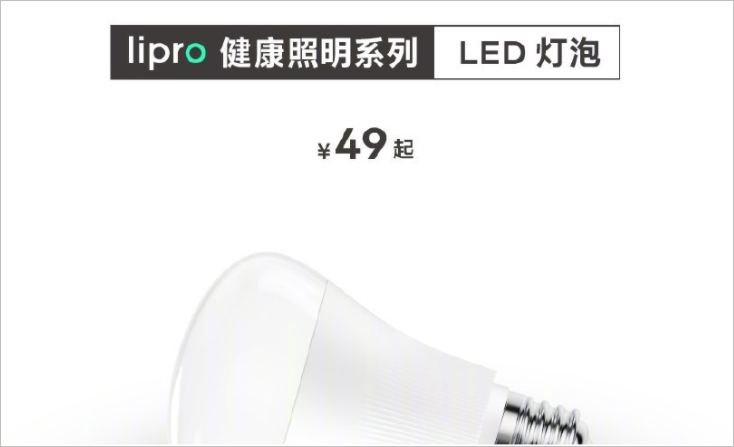
Chinese innovative tech company Meizu has been on the low for quite a while now. The company’s product cycle was heavily reduced last year but this year, Meizu is starting up with a bang. The company has released the Lipro Health Lighting series composed of several lights with prices ranging from 49 yuan to 999 yuan for the highest variant.
Meizu says the Lipro Health Lighting pays more attention to the origin of the home product experience. The company also asserted that some of the modern lighting around today have many invisible hazards such as missing spectrum, severe flicker, poor color accuracy, and blue light hazards. Thus, there is need for sufficiently soft and high-quality light sources for those who are exposed to light most of the time to create a comfortable eye environment.
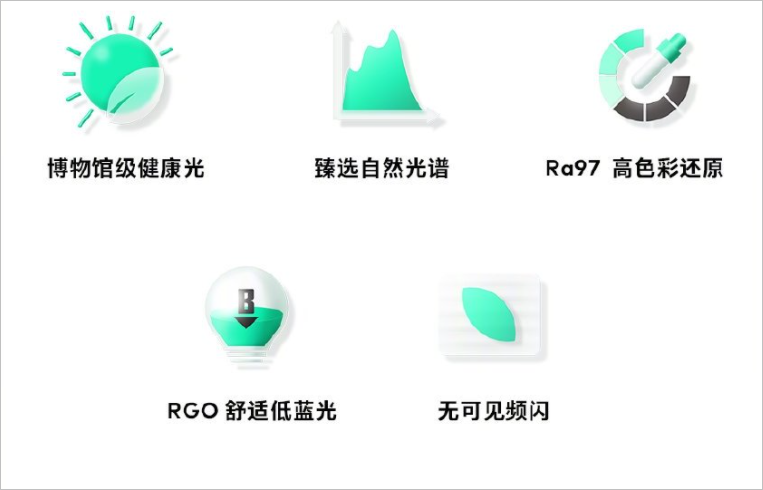
The full range of Meizu Lipro health lighting is equipped “Ruran” light source which uses violet light to excite, reducing the blue light harm from the source. The lights also use ultra-primary color phosphors, with higher spectral continuity and color rendering.
Meizu claims that Ruran’s light source selects natural spectrum, museum-level healthy light, Ra97 high color reproduction, RGO comfortable low blue light, and has no visible strobe, which is a light source closer to natural light.
Meizu Lipro health lighting fixtures use sculpture lines design language. Meizu claims that its sculptural lines are simple and compact, and express the most content with the least lines.
In addition, Meizu will launch the “Lipro Lighting Design Service” for the lighting experience in the future. The service will provide customized one-on-one solutions for home and business scenarios.
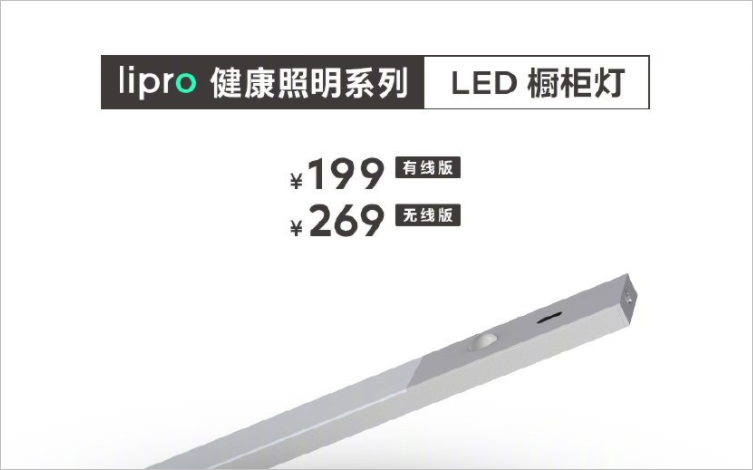
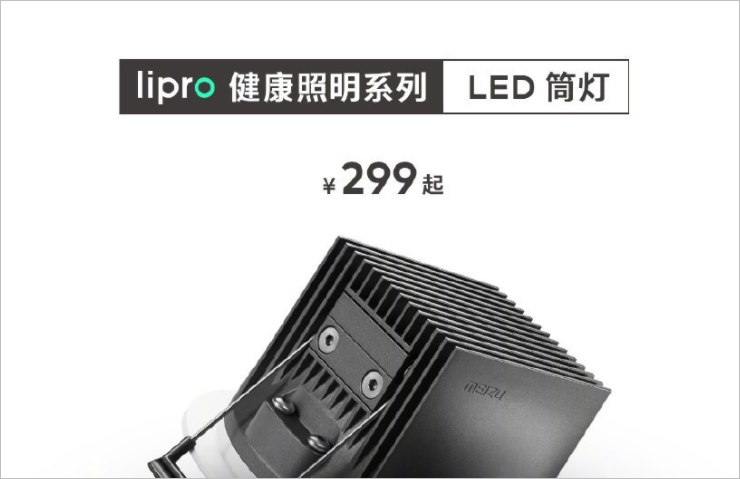
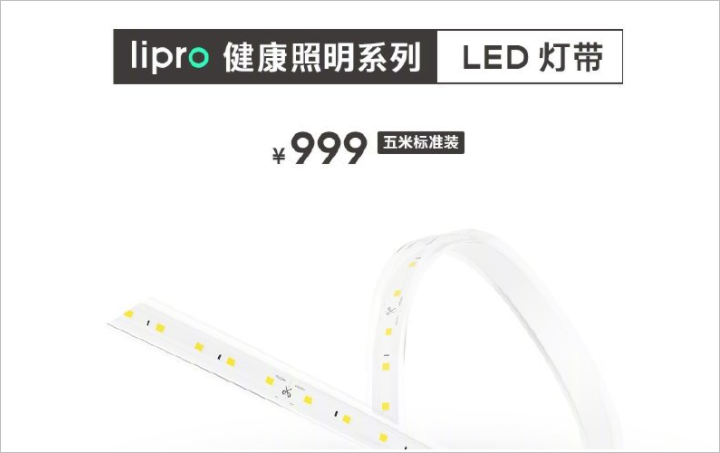
Meizu Lipro health lighting products include LED downlights, LED cabinet lights, LED strips, LED bulbs, LED footlights. Others include LED Smart Ceiling Lights, Stepless dimming panels, and other products.
In terms of prices, LED downlights starts at 299 yuan (~$46), LED cabinet lights start at 199 yuan (~$30) for wired version / 269 yuan (~$41) for the wireless version. LED strips starts at 999 yuan for the five meters standard, the LED bulbs starts at 49 yuan ($7), and finally, the LED footlights starts at 99 yuan (~$15).The company will also release smart ceiling lamps and Stepless dimming panels in the first quarter of this year.
When the Nord N10 5G and Nord N100 were announced last October in Europe, OnePlus disclosed that the two budget phones will arrive in North America later. Nearly three months after that and OnePlus is finally bringing the two new phones to the continent.
The two phones will be available starting January 15 according to a tweet by the OnePlus US account. The OnePlus Nord N10 5G will be available in a single configuration – 6GB RAM + 128GB – and a single color variant – Midnight Ice for $299.99. The OnePlus Nord N100 which is a 4G phone will be available with 4GB of RAM and 64GB of storage and in Midnight Frost for $179.99.
North America, say hello to our most affordable lineup to date – the OnePlus Nord N-Series. Get your N10 5G and N100 on 1/15! pic.twitter.com/MK818iUx5B
You can sign up for Early Access and get 10% off the Nord series between the 5th and 15th of January. It appears OnePlus will also sell the phone a week earlier to lucky buyers.
The official OnePlus US website states that the phones will be available in 2 days. Those who purchase the Nord N10 5G will get a free pair of OnePlus buds Z while those who purchase the Nord N100 will get a free pair of OnePlus Bullets Wireless Z.
The Nord N10 5G has a 6.49-inch LCD display with an FHD+ resolution and a 90Hz refresh rate. There is a hole in the top left corner of the screen for a 16MP front-facing camera while the back is home to a quad-camera setup that consists of a 64MP primary camera, an 8MP ultrawide angle camera, a 2MP macro camera, and a 2MP depth sensor.
Inside the phone is a Snapdragon 690 processor that draws juice from a 4300mAh battery with support for 30W fast charging. You also get a rear-mounted fingerprint scanner, NFC, an audio jack, stereo speakers, a MicroSD card slot, and a USB-C port. OnePlus ships it with OxygenOS 10.x based on Android 10.
The OnePlus Nord N100 is a 4G device with a 6.52-inch HD+ 90Hz screen and a punch hole for an 8MP camera. It has a Snapdragon 460 processor, a 5000mAh battery, and support for 18W fast charging. A 13MP triple camera setup is on the back along with a fingerprint scanner. It also has a USB-C port, stereo speakers, and an audio jack but no NFC. It runs Android 10 out of the box but will get updated to Android 11 along with the Nord N10.
CES 2021 will be a virtual event due to the on-going pandemic situation. The event, which will last from Jan. 11-14, 2021, is going to witness a host of new technologies. Among them, looks like the OLED tech will gather a lot of attention. A new teaser of Samsung Display Promises OLED display with “Super Image Quality”, “Cinematic Colors” for Laptops. And it is said to unveil up to 10 displays for the same.
Samsung Display, via YouTube, shared the features of the upcoming OLED displays. First, the video begins with the above-mentioned slogans of display qualities. Samsung then shows how the OLED will have Ultrapure RGB Colors compared to conventional OLED displays.
In fact, it indirectly hints that Samsung Display‘s OLED for laptops will have improved Sun Light legibility, HDR. Precisely, it says that a combination of Brightness x Chroma which is probably an algorithm will enhance the quality. Further, the OLED displays will also cover 120% of the DCI-P3 color gamut.
That’s a whopping 46% bump up from the conventional display’s gamut as per the company. As if this wasn’t enough, Samsung says the displays will have deeper blacks even when tested at 0.0005nit, contrast ratio>1,000,000:1, 85% of the true-HDR coverage, and more.
Nevertheless, we can’t wait to see the working prototype versions at CES 2021 and are sure that Samsung Display is going to pioneer the notebook category like it has been doing it for Smartphones and TV panels.
While the YouTube video doesn’t say anything about the CES announcement, a report by computerbase.de says that Samsung will unveil up to 10 OLED displays for Laptops at the event. The sizes will vary from 13.3 to 16-inches and arrive in commercial products later in 2021.
Also, Samsung Display will reportedly share it with other brands breaking the stereotype of keeping it exclusive to itself. What is even surprising is that the company will likely unveil a 15.6-inch 1920×1080 pixels OLED display that will appear in products as early as February 2021. If the report is true, we might see FHD OLED laptops from Asus, Dell, HP, and Lenovo soon.
Cristiano Amon is a popular name in the mobile industry as he is the president and the face of Qualcomm. However, he is not the highest-ranking executive at the company. That position is held by Steve Mollenkopf who is the CEO.
Cristiano Amon | Image source: Qualcomm
Today, Qualcomm has announced that the current CEO will be retiring and he will be succeeded by Cristiano Amon. Mr. Mollenkopf has served as CEO since 2014 and has been with Qualcomm for 26 years.
Mr. Amon was unanimously chosen as the next CEO by the Board of Directors following Mr. Mollenkopf’s announcement of his decision to retire. His appointment will take effect on June 30, 2021, while the former CEO will remain at Qualcomm as a strategic advisor.
Steve Mollenkopf’s achievements include pushing Qualcomm to the top of the mobile chipset supply chain and as a global leader in the semiconductor industry. During his reign as CEO, he also helped propel the adoption of smartphones as Qualcomm’s chipsets power millions of phones from several manufacturers. The company executive also helped with the expansion of Qualcomm’s portfolio to include IoT, RF Front End, and Automotive chips.
Qualcomm was founded in 1985 and it started as a contractor for government and research products. In the 90s, it restructured its business and decided to focus on the patents and chipset businesses. By the year 2000, the company which had 8 employees in 1986 and grown to 6300 employees.
Motorola is expected to launch a number of smartphones in the near future. Almost all of them have leaked lately. A couple of days back, a tipster revealed the design and specs of Moto G Play 2021 but we missed the news. Hence, let us take a look at this phone in this post.
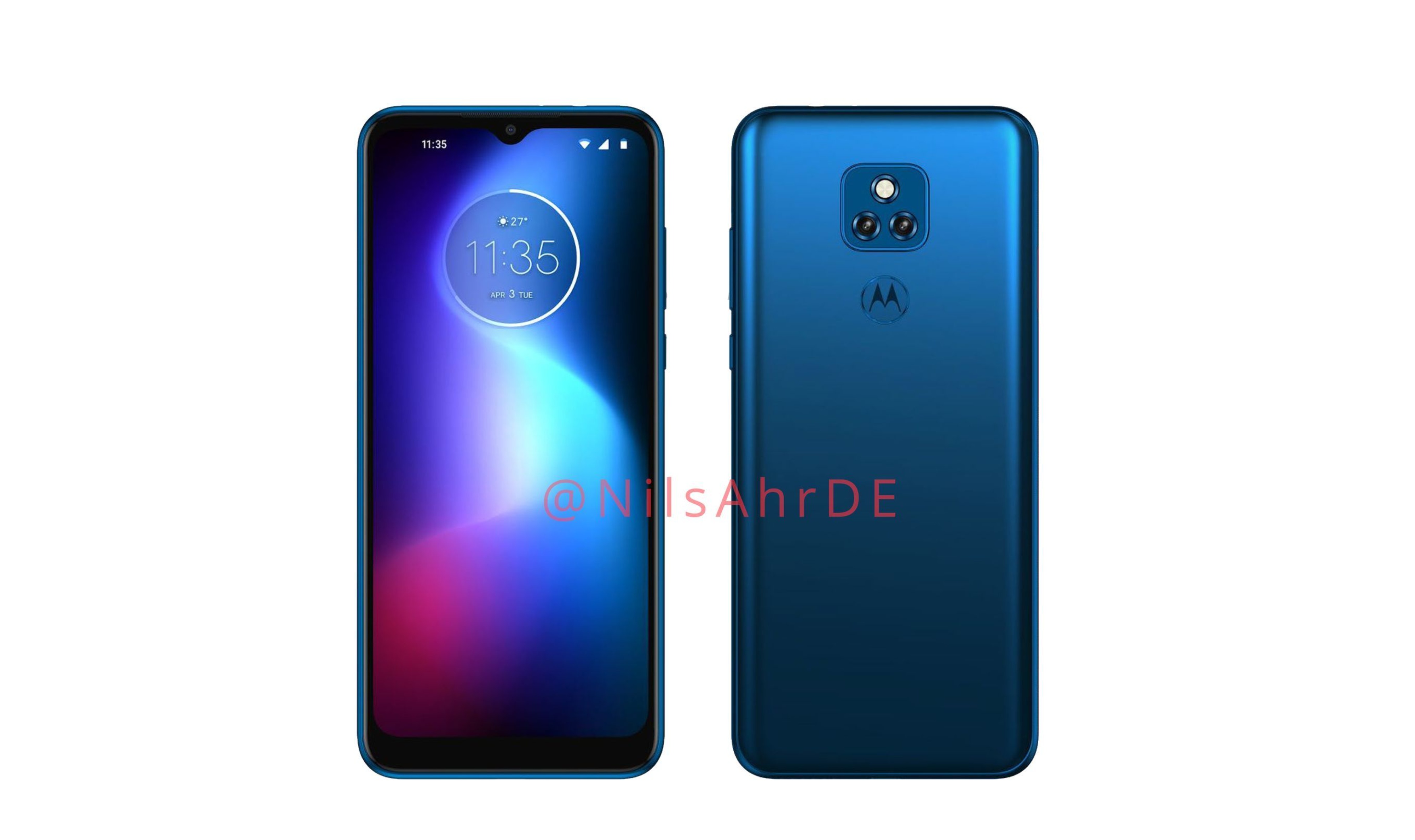
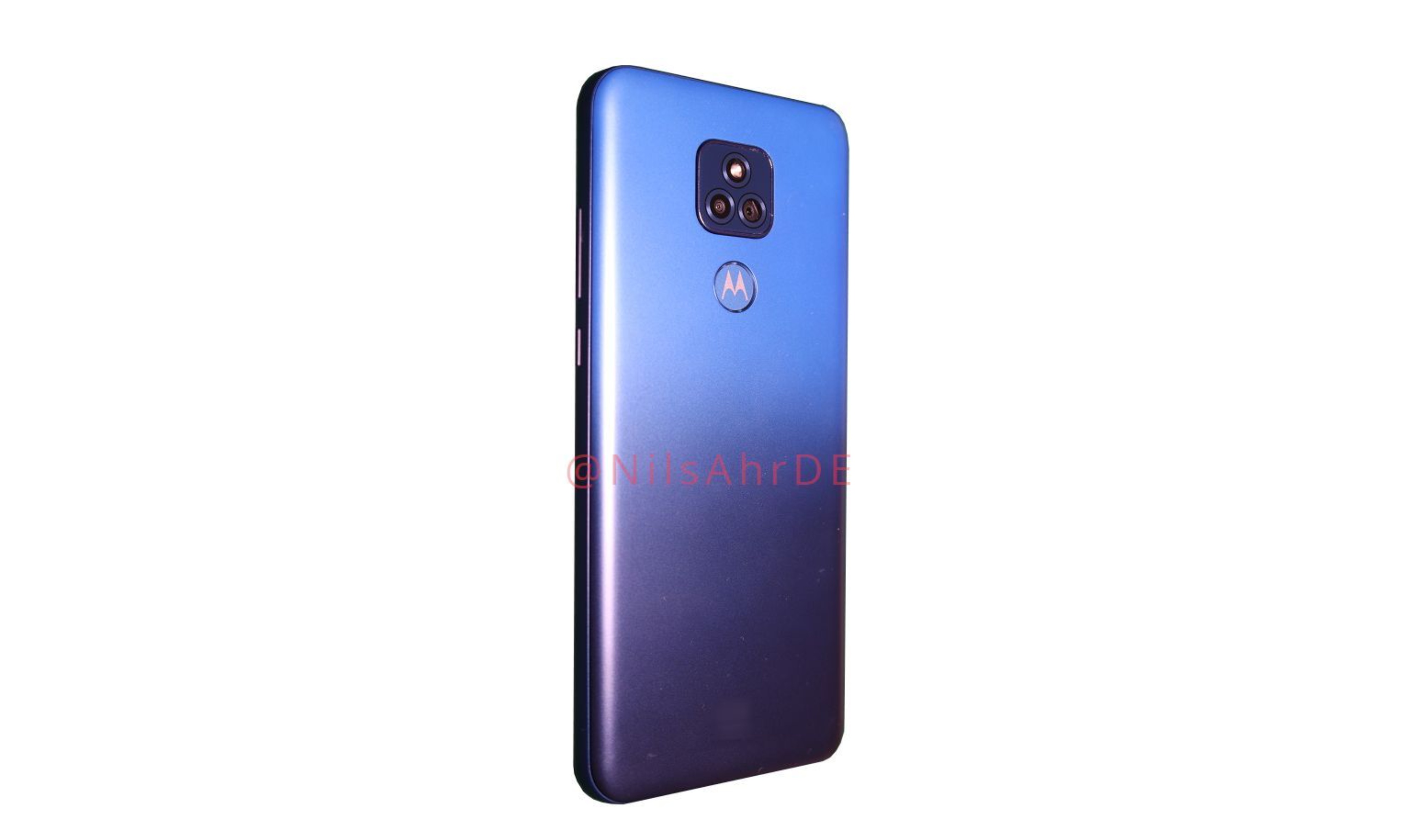
The new Moto G Play 2021 leak comes from Nils Ahrensmeier of TechnikNews, the same person who shared details of Moto G Power 2021. He posted the press renders, a live image, and key specs of this handset on Voice.
According to him, this upcoming Motorola branded smartphone is codenamed ‘Guam’ and will come with model number XT2093 for the US. It will be powered by Qualcomm Snapdragon 460 chipset paired with 3GB RAM and 32GB internal storage.
On the front, the device will sport a 6.5-inch HD+ display with a dew-drop notch, as per Google Play Console listing. Whereas, the back of the phone will house a fingerprint sensor (with Motorola Batwing logo) and a dual-camera setup consisting of a 13MP primary sensor and 2MP secondary sensor, which could feature a macro lens,
Further, the volume rocker and power key will sit on the right side. Also, since this device is expected to be tweaked version of Moto E7 Plus with a different camera setup, the SIM card slot should be on the left, MicroUSB port, the primary mic, and speaker hole at the bottom, and finally, 3.5mm headphone jack and secondary mic at the top.
Last but not least, it is said to be backed by a 5,000mAh battery. Although nothing is known about the software, it should probably run Android 10 just like the other Moto G Play 2021 that was spotted on Geekbench with Qualcomm Snapdragon 662. This model’s renders first appeared in early November, courtesy of @OnLeaks.
We use cookies on our website to give you the most relevant experience by remembering your preferences and repeat visits. By clicking “Accept”, you consent to the use of ALL the cookies.
This website uses cookies to improve your experience while you navigate through the website. Out of these, the cookies that are categorized as necessary are stored on your browser as they are essential for the working of basic functionalities of the website. We also use third-party cookies that help us analyze and understand how you use this website. These cookies will be stored in your browser only with your consent. You also have the option to opt-out of these cookies. But opting out of some of these cookies may affect your browsing experience.
Necessary cookies are absolutely essential for the website to function properly. This category only includes cookies that ensures basic functionalities and security features of the website. These cookies do not store any personal information.
Any cookies that may not be particularly necessary for the website to function and is used specifically to collect user personal data via analytics, ads, other embedded contents are termed as non-necessary cookies. It is mandatory to procure user consent prior to running these cookies on your website.