Advertisement

Redmi Watch is launching tomorrow in China

Redmi fans are eagerly waiting for the arrival of the company’s first smartwatch. Past reports have revealed that the alleged Redmi Watch will be a rebranded version of the forthcoming Xiaomi Mi Watch Lite. Tomorrow at 8 PM (local time) in China, Redmi will be taking off covers from the Redmi Note 9 5G smartphones. The company has confirmed that it will be unleashing a smartwatch at the same event.

The poster released by Redmi showcases the upcoming smartwatch with a square-shaped screen. The company has claimed that it is a lightweight device.

The Mi Watch Lite’s FCC certification from last month revealed that is its model number is REDMIWT02. A device with REDMIWT01 model number was approved by the MIIT authority of China in August. Hence, it appears that REDMIWT02 and REDMIWT01 could be identical devices.

Redmi Watch teaser

The FCC listing of the device had revealed that it has a 1.4-inch square-shaped color display. It houses a 230mAh battery with 5W charging support. The device is compatible with Android 4.4 or higher and iQS 10 or above devices.

The smartwatch will offer users multiple fitness models and 24-hour heart rate tracking. The 50ATM water-resistant device has a swimming stroke recognition feature. Other features of the wearable tech include Bluetooth and built-in standalone GPS.  The other specifications of the device are under wraps.

Right at the beginning of this year, a Redmi smartwatch was spotted in a listing at the Bureau of Indian Standards (BIS). Hence, it is likely that the smartwatch may also go official in India in the forthcoming months.

In related news, the Redmi Note 9 5G series launch event will see the arrival of two Redmi Note 9 series phones with 5G support and a 4G-ready Note  9 smartphone.


Eluktronics launches world’s first gaming laptops with 1440p 165Hz display

Eluktronics has launched a new laptop in the market which the company claims is the world’s first to come equipped with a high-quality IPS 1440p display that offers a 165Hz refresh rate. It has also been confirmed that the display panel of this new laptop has been built by China-based BOE.

This display panel offers a maximum brightness of 318 nits and also offers 100 percent sRGB coverage and 87 percent Adobe RGB coverage. Thanks to the high refresh rate, the screen response time is 2.5ms, making it suitable for high paced games.

Eluktronics 165Hz Laptops

The company has introduced three variants, all of which are powered by the Intel Core i7-10870H processor. Similar to all the new Eluktronics laptops launched recently, this one too comes packed with NVIDIA RTX 2070 SUPER graphics processor.

Here are the details of the three different models launched by the company.

Eluktronics MECH-15 G3 QHD Edition

  • 15.6-inch 1440p 165Hz Display
  • Intel Core i7-10870H CPU with Liquid Metal
  • NVIDIA GeForce RTX 2070 Super GPU
  • 16GB DDR4 RAM
  • 1TB PCIe
  • Mechanical Per-Key RGB Keyboard
  • Massive 94WHr Battery

EDITOR’S PICK: Apple’s new Mac devices powered by the M1 chipset face Bluetooth connectivity issues

Eluktronics MAX-15 QHD Edition

  • 15.6-inch 1440p 165Hz Display
  • Intel Core i7-10870H CPU with Liquid Metal
  • NVIDIA GeForce RTX 2070 Super GPU
  • 16GB DDR4 RAM
  • 1TB PCIe
  • Weighs 3.82Lbs

Eluktronics MAX-17 QHD Edition

  • 17.3-inch 1440p 165Hz Display
  • Intel Core i7-10870H CPU with Liquid Metal
  • NVIDIA GeForce RTX 2070 Super GPU
  • 16GB DDR4 RAM
  • 1TB PCIe SSD
  • Weighs 4.81Lbs
  • Massive 91WHr Battery

Pricing for these laptops range from $2199 to $2299 and the company is currently offering a promotion of a $300 discount with coupon code BFQHD. It remains to be seen if the company is planning to launch AMD-powered variants of these devices.


COUMI ANC-860 ANC Wireless Earbuds Review: Decent Sound with Noise-canceling

By now, most of us have become familiar with ANC TWS earbuds. And almost all of the popular manufacturers have come out with their own flagship ANC wireless earbuds in the market. While they each have their own features, one thing is common among these earbuds — they’re expensive. And even the cheapest Xiaomi Mi Air2 Pro featuring ANC will set you back around 699 RMB ($105). But what if you don’t want to pay a hefty premium for ANC earbuds? Then you can take a look at some niche brands like COUMI which has launched cheap wireless earbuds called ANC-860.

Coumi TWS review 01

As usual, let’s start with the design. At first glance, there’s no doubt that the COUMI ANC-860 box is big. But its not just regular big, it’s kind of huge for its product segment. Its bigger than the case of the Xiaomi Air2 pro we’ve tested before and if you remember, we called that case bulky. Plus unlike other earbuds, the COUMI ANC-860 doesn’t have a magnetic case. So you have to manually pull up the case lid, making it nearly hard to open it with one hand.

Coumi TWS review 03

The oval shape of the COUMI earbuds makes it look like Sony’s WF-1000XM3, but it’s actually very different from WF-1000XM3’s design. First of all, in this model, when you wear the earbuds, the oval exterior of the earbuds stays vertical, unlike in Sony’s model where it’s horizontal. Secondly, it wears fixed in a different way. The ANC-860 hangs against the ear canal. The same way as the half-in-ear earbuds is fixed. Yeah, it can take off its in-earbuds cover, and you can see that the earbuds are actually half in-ear design. And people who don’t like in-ear earbuds can remove the cover and use them as half in-ear earbuds without any problem. Except maybe a little lower volume.

Coumi TWS review 04

Because of the oval design of the earbuds, so the noise-canceling function is just average performance. Also, the large oval design tends to be heavy and sometimes falls off when worn outside. So the best use case scenario for this pair of earbuds is not outdoors, but indoors.

Coumi TWS review 06

It has no app controls, and all your earbuds control needs to be done on the earbuds. You can double click on the left ear to switch modes between Noise canceling on, Transparency mode, and Noise-canceling off. Single left or right earbud tap increases or decreases the volume or answers/hangs up calls. Double click on the right earbud to play or pause music. Long press left or right earbud for two seconds to play the previous song or the next one, or you can reject calls with this gesture. Left or right ear long press for one second to wake up the Smart voice assistant.

Wait, doesn’t this feel like an overload of instructions? When it comes to functionality it meets all your requirements, but the learning curve is long. So don’t bother memorizing all the controls. Just remember the important controls, that should be enough.

In the noise-canceling mode, the earbuds last for about 5.5 hours, which is good for mainstream noise-canceling earbuds. Incidentally, it doesn’t have the ability to automatically pause when you take off the earbuds.

Coumi TWS review 02
Coumi TWS review 02

The COUMI earbuds support AAC codec.The sound quality is good in this protocol. And the low and mid frequencies are relatively strong. But the latency of this protocol is quite high. Maybe around 0.8s delay while gaming, so these earbuds are not recommended for gaming on AAC. If you switch back to SBC, it will reduce the latency a lot, and then you can play games with minimal lag.

Coumi TWS review 07

So we cannot recommend the COUMI ANC-860 as noise canceling ANC earbuds. But as normal earbuds, it’s not bad. You can use it as in-ear earbuds or as half-in-ear earbuds with a noise-canceling mode bundled with it. It sells for around $60 on Amazon. There is a 10% coupon along with 40% OFF code LYRAT7J3 to grab it with 50% off on Amazon.  So if you’re using the earbuds at home or in an office where you don’t need to exercise, and the noise isn’t very loud, it’s still capable of meeting your requirements.

Alleged OPPO Reno5 Pro key specs appear at TENAA; Mysterious PEMM00 with MT6833 spotted at Geekbench

Recent reports have revealed that the PEGM00 / PEGT00 TENAA certified OPPO phone is the upcoming Reno5 Pro. A new OPPO phone with model number PDSM00 / PDST00 has appeared in the database of TENAA. It is speculated that it could be the Reno5 Pro.

Recently, the PDSM00 / PDST00 phone was spotted at the Geekbench benchmarking platform with Dimensity 1000+, 8 GB of RAM, and Android 11 OS. Rumors have it that it is equipped with support for 65W fast charging.

At present, the TENAA listing of the OPPO PDSM00 / PDST00 has only a few details such as 159.7 x 73.2 x 7.6mm dimensions, a 6.55-inch display, a 2,215mAh dual-cell battery, and 5G support. The alleged Reno5 Pro’s TENAA listing is expected to get populated with its image and specifications soon.

It is speculated that the OPPO PDRM00 could be the Snapdragon 865 mobile platform powered Reno5 series flagship. Its 3C appearance revealed that it may ship with a 65W fast charger.

In related news, the Chinese brand could be working on a new smartphone that has a model number of PEMM00. The device has appeared on Geekbench with an unknown MediaTek chipset.

At Geekbench (via), the OPPO PEMM00 smartphone has appeared with a new MediaTek chipset that is mentioned as MT6833. It is unclear whether the SoC carries support for 5G connectivity. There are speculations that it could be a 12nm SoC. The listing reveals a base frequency of 2.0GHz. The mysterious device has scored 2857 in the single-core test and 6574 in the multi-core test.

Oppo-PEMM00-Geekbench The listing reveals that the MT6833 chipset is coupled with 8 GB of RAM. Also, the device is loaded with the latest Android 11 OS. There is no information on the final marketing name of the OPPO PEMM00 smartphone. Hopefully, newer reports will reveal its identity.


Samsung rolls out the free TV Plus app for more Galaxy phones including the A series

Samsung first launched the TV Plus as a video rental service in the U.S. in 2016, while at the same time experimenting with ad-supported videos in its homeland of South Korea. The service was first made available for the firm’s smart TVs from 2016 upwards but has been expanded to its smartphones.
Samsung is now rolling out the free TV service to all three Samsung foldable devices which include the Galaxy Fold, Galaxy Z Fold 2, and the Galaxy Z Flip. The service will also roll out to the Galaxy S9, Galaxy Note 9, and some Galaxy A series handsets. An explicit list of supported devices is yet to be posted by Samsung on its website but the Galaxy Store and Google Play Store listings of the Samsung TV Plus app shows that the Galaxy A51, Galaxy A51 5G, and Galaxy A71 5G are the three Galaxy A series phones gaining support for the app. Also among the supported devices is the rugged Galaxy Xcover Pro.

Samsung TV Plus has already been made available to the latest Galaxy S series models including the Galaxy S20, Galaxy S10, Galaxy Note 20, and Galaxy Note 10 series devices earlier in September. The latest addition expands the free TV Plus service to most of the galaxy flagship and into the mid-range segment.Samsung TV Plus

Samsung TV Plus is a free TV service which gives users access to thousands of shows ranging from news to documentarie, entertainment and others across a selection of over 150 channels. The Samsung TV Plus smartphone app is currently only available in the US. You can download the app from the Galaxy Store or the Google Play Store.

UP NEXT: Oppo X 2021 unveiled as the world’s first smartphone concept with an extending display


Apple’s new Mac devices powered by the M1 chipset faces connectivity issues

Apple recently launched its new M1 chipset as a part of Apple Silicon which is based on ARM architecture. It also launched three devices powered by the same — MacBook Air, MacBook Pro, and Mac Mini, officially kicking off the transition from Intel to Apple Silicon.

It has been about a week since the devices are available in the market and now some users are complaining about Bluetooth connectivity issues, which range from sporadic disconnections with peripherals to complete failures.

Apple m1 chip

EDITOR’S PICK: Xiaomi Q3 2020 financial report reveals that the company recorded 46.6 million shipments

If the reports coming from users on Reddit are to be believed, then the devices powered by the new Apple M1 chipset faces intermittent connectivity issues with both first- and third-party peripherals, including mice, keyboards, and headphones. Analyst Patrick Moorhead has also shared these issues on Twitter.

As of now, there’s information about how many M1-powered devices are impacted by this issue. Also, Apple is yet to confirm this Bluetooth-related connectivity issue.

Another set of users are also complaining about battery life, disputing the claim made by Apple. At the time of launch, the company had said that the new MacBook Pro powered by the M1 chipset can offer up to 20 hours of battery life.

Some users are saying that they are only getting around five hours of usage before the battery life drops to 10 percent. However, we will have to wait for more reports related to such issues to determine if the problem is limited to specific devices or not.


ZTE poses national security risk to the United States, reaffirms FCC

The Federal Communications Commission (FCC) has revealed that it has rejected a petition from China-based ZTE Corp which had asked the agency to reconsider its decision to designate the company as a U.S. national security threat to communications networks.

For those who are unaware, earlier this year in June, FCC has formally designated China-based Huawei Technologies and ZTE as a national security threat. With this, the companies were barred from tapping an $8.3 billion government fund to supply equipment.

ZTE Logo

Huawei has also made a similar request to the FCC to which the agency said that it is extending the timeline to respond to Huawei’s petition until 11th December “to fully and adequately consider the voluminous record.”

Prior to FCC declaring these two Chinese giants as a security risk, in May 2019, Donald Trump had signed an executive order banning U.S. companies from using telecommunications equipment from companies that pose a national security risk and has also added Huawei to the “Entity List” which is basically a trade blacklist.

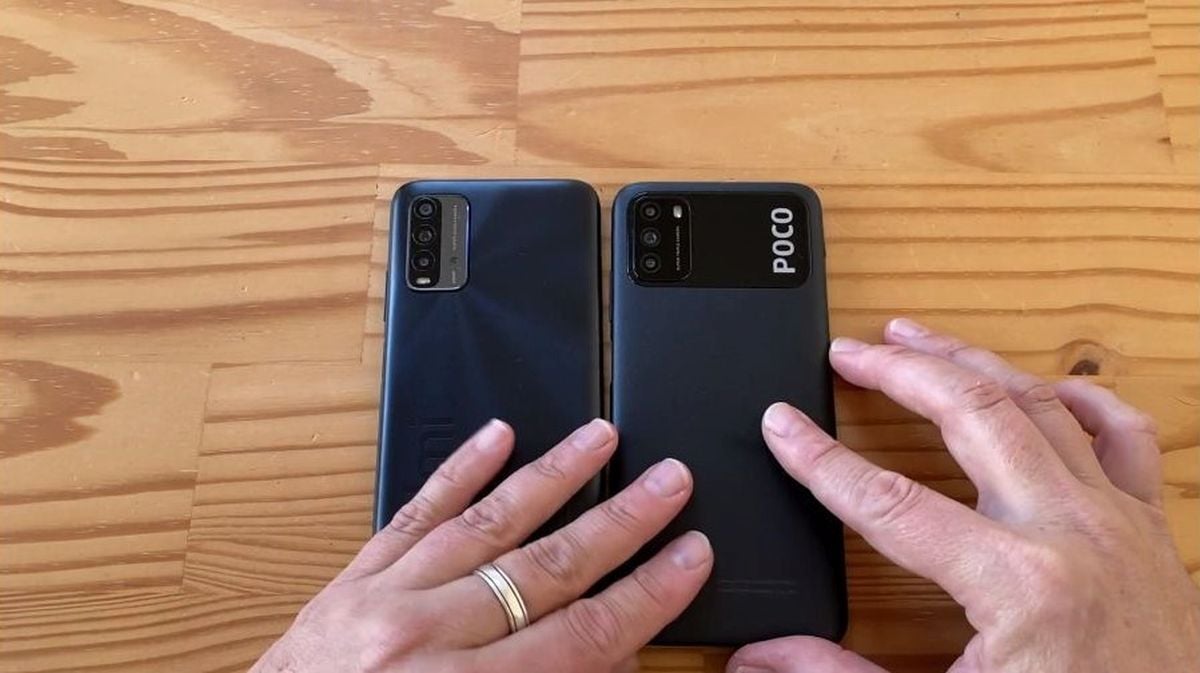
EDITOR’S PICK: POCO M3 Hands-on overview– a refreshing new smartphone design for the budget segment

The reaffirmation from FCC indicates that the agency is determined to keep both these Chinese companies away from the country’s telecom market where small rural carriers are still relying on their cheap network equipment.

Although both Huawei and ZTE have denied the allegations leveled against them, the United States has been increasingly making it difficult for the Chinese companies to operate in the U.S. because of the US-China trade war.


Xiaomi TV brand retains the No.1 position in China for the seventh consecutive quarters

Xiaomi has officially released its financial report for the third quarter of the year. The report shows that the revenue from Xiaomi’s IoT and consumer products segment increased by 16.1%  from 15.6 billion yuan recorded in the third quarter of 2019 to 18.1 billion yuan recorded in Q3 2020. The growth in revenue is mainly due to the growth in demand for IoT product category ranging from robot vacuum, smart TVs to electric scooters.
Xiaomi’s revenue from smart TVs and notebook computers rose from 5.8 billion yuan in the third quarter of 2019 to 5.9 billion yuan in the third quarter of 2020. This represents a YoY growth of 2.6%. Specifically, the report shows that Xiaomi shipped 3.1 million units of Mi TVs in the third quarter, the highest by any brand. Again, this places the brand at the top of the smart TV shipment ranking for the Chinese market, a feat it has achieved for seven consecutive quarters
Shipping estimates published by market research firm Avi Cloud (AVC) shows that apart from ranking first for seven straight quarters in China, Xiaomi’s smart TV shipments will continue to rank among the top five globally.

The growth recorded by the Chinese tech giant in the sector is driven by a consistent outflow of quality products and that continued in the third quarter of 2020. During this period, the tech giant released a host of IoT and consumer products which may have helped shore up the revenue. Xiaomi launched the 34-inch Mi Curved Display, MIJIA Internet Direct Drive Washing and Drying Machine 10kg, MIJIA Smart Steam Oven, Mi True Wireless Bluetooth headset Air 2 Pro and other products. Despite always sticking to the minimalist design pattern, the products are often of topnotch quality while retaining the affordable pricing which Xiaomi is reputed for. (via)

UP NEXT: Oppo X 2021 unveiled as the world’s first smartphone concept with an extending display


ZTE launches its first Wi-Fi 6 Set-Top Box in China

China-based ZTE has launched its first Wi-Fi 6 set-top box — ZTE ZXV10 B860AV6 in its home country. Thanks to the built-in support for the Wi-Fi 6 technology, it offers high-speed internet access along with high stability and low latency.

Additionally, it also comes with support for Wi-Fi 6 Transmission QoS solution as well as the Smart Networking Solution for the whole house. The device aims to offer a clear and smooth viewing experience to the users.

ZTE ZXV10 B860AV6 Wi-Fi 6 Router

EDITOR’S PICK: Xiaomi Q3 2020 financial report reveals that the company recorded 46.6 million shipments

The ZTE set-top box comes in a black-colored square-shaped box with sharp corners. On the top, there’s ZTE branding. The company has also shared that the device also won the 2019 iF Design Award.

The development comes soon after the company announced the launch of the industry’s first 5G converged set-top box. It offers a three-in-one design that offers a gigabit gateway, router, and set-top box.

For those who are unaware, the Wi-Fi 6 or 802.11ax is a new generation or the sixth generation of wireless LAN standard. It has certain advantages, including high bandwidth, low latency, and multiple access. With the technology being used in this set-top box from ZTE, it offers ultra-high-definition video, zero lag games, and ultra-rich applications for a new user experience.


Vivo Y1s price in India leaked, tipped to arrive with Jio lock-in benefits

The Vivo Y1s entry-level phone was made official in Cambodia back in August. A recent leak revealed that Vivo is planning to launch the Vivo Y1s phone in India. According to tipster Mukul Sharma, the handset will break cover in December in the country.

Vivo Y1s price in India (Rumored)

The tipster has revealed that the Vivo Y1s will be available with a pricing of around Rs 8,000 in India and it will be up for purchase from December. He also claimed that Viv will partner with Jio to sell the Vivo Y1s. Buyers will have a choice to lock-in their handset with the Jio network to reap special benefits. The details of the lock-in period can be seen in the images below.

Vivo Y1s specifications

The Vivo Y1s has a 6.22-inch Halo Full View display that produces an HD+ resolution of 720 x 1520 pixels. It will come with NEG T2X-1 screen protection. The device measures 155.11 x 75.09 x 8.28mm and it weighs 161 grams.

The waterdrop notch on the display has a selfie camera of 5-megapixel. Its rear shell features a single camera of 13-megapixel with LED flash. The phone will arrive preinstalled with FunTouch OS 10.5 based Android 10 OS.

Vivo Y1s in Aurora Blue and Olive Black colors

The 2.3GHz MediaTek Helio P35 chipset will be present under the hood of the Vivo Y1s. It is backed by a 4,030mAh battery that supports reverse charging. The handset will come with 2 GB of LPPDR4x RAM and 32 GB of native storage. For additional storage, it will have a microSD card slot. It is expected to arrive In Olive Black and Aurora Blue colors in India The handset is expected to rival the likes of the OPPO A1k and Samsung Galaxy M01 in the country.


Vivo V20 Pro 5G may launch on December 2 in India

India has already received the Vivo V20 SE and Vivo V20 smartphones. Recent reports have revealed that the Vivo V20 Pro 5G phone will be made official in the country in December. Yesterday, Vivo India took to Twitter to tease the arrival of the Vivo V20 Pro 5G’s for the first time. The tweet that showcases the appearance of the phone only mentions that it is “coming soon” to the country. Tushar Mehta From XDA Developers retweeted the Vivo’s tweet and claimed that the Vivo V20 Pro 5G on Dec. 2.

Vivo V20 Pro 5G price in India

According to a recent report, the Vivo V20 Pro 5G could be landing in India with a starting price of Rs 29,999 (~$405). Vivo is yet to officially start the pre-orders of the smartphone, but a leaked poster that appeared earlier this week revealed that customers will get a 10 percent cashback on ICICI credit and debit cards, a 10 precent cashback from ZestMoney Finance, and a 10 precent cashback through Bank of Baroda credit cards. Buyers of Vivo V20 Pro 5G will also get Jio benefits worth up to Rs 10,000 (~$135), Vivo upgrade offers, and one EMI cashback from IDFIC First Bank.

Vivo V20 Pro 5G specifications

The specifications of the Vivo V20 Pro 5G are no secret since it has already launched in some of the Southeast Asian markets. The Vivo V20 Pro 5G has a 6.44-inch AMOLED display with a big notch for housing an eye-focus enabled 44-megapixel + 8-megapixel dual selfie camera system.

The backside of the Vivo V20 Pro 5G has a 64-megapixel main camera, an 8-megapixel ultrawide lens, and a 2-megapixel mono sensor. The device is preinstalled with Android 11 OS and FunTouch OS UI. It is powered by the Snapdragon 765G chipset, 8 GB of RAM, and a 4,000mAh battery with 33W fast charging support. It has an internal storage of 128 GB and it has a microSD card slot for additional storage.


Vivo V2054A full specifications revealed through TENAA appearance

It appears that Vivo will be soon launching a midrange smartphone before the end of 2020 in China. The reason behind it is that an unknown Vivo phone with model number V2054A has received approval from China’s TENAA authority. The TENAA listing has revealed all its specifications and images.

The Vivo V2054A smartphone measures 164.15 x 75.35 x 8.4mm and it weighs 185.5 grams. It seems to feature a waterdrop notch display and its back panel has a square-shaped camera module. A volume rocker and a fingerprint scanner can be found on the right edge of the Vivo V2054A.

Vivo V2054A specifications             

The handset features a 6.58-inch LCD panel that produces a full HD+ resolution of 1080 x 2400 pixels and a 20:9 aspect ratio. It has a front camera of 8-megapixel. The rear shell of the device seems to be fitted with a dual-camera setup that includes a 13-megapixel main camera and a 2-megapixel secondary lens.

IQOO V2054A TENAA

The Vivo V2054A is powered by an unknown octa-core chipset that clocks at 2.0GHz. The handset has 128 GB of storage and it is expected to arrive in China in three RAM editions like 4 GB, 6 GB, and 8 GB. It does not feature a microSD card slot.

The Vivo V2054A will be the first phone from the brand to come preinstalled with Android 11 OS. It is powered by a rated battery with 4,910mAh capacity, which carries support for rapid charging.  It carries support for 5G connectivity.

The final product name of the V2054A is yet to be revealed. With TENAA certification in tow, the handset is likely to go official in the next few days in China.


Xiaomi Q3 2020 financial report reveals it recorded 46.6 million shipments

Yesterday, we reported that Huami had released its third-quarter financial report which revealed big wins for the wearables manufacturer. Now, it is the turn of Xiaomi, and the Chinese tech giant’s report includes some gigantic figures.

Xiaomi

According to an excerpt of the report posted on Weibo by Lei Jun, Xiaomi’s total revenue for the third quarter of 2020 was RMB 72.2 billion (~$10.9 billion), an increase of 34.5% year-over-year. Its adjusted net profit for the quarter was RMB 4.1 billion (~$622 million), an increase of 18% from Q3 2019. Both values exceeded their expectations for the quarter.

Xiaomi says its total smartphone shipments for the last quarter was 46.6 million units, a year-over-year growth of 45.3%. Xiaomi says this year, it has shipped more than 8 million premium smartphones (price tag of RMB 3000 (~$) and above in China and €300 and above overseas). The recorded revenue from the smartphone business was RMB 47.6 billion (~$), an increase of 47.5% year-over-year.

Xiaomi Q3 2020 Smartphone x AIoT

The increase in smartphone shipments propelled Xiaomi to the third spot, with a global market share of 13.5%, on the list of manufacturers with the highest number of shipments. Canalys, reports that Redmi, Xiaomi’s subsidiary accounted for three of the world’s top ten best-selling smartphones in the third quarter of the year.

Xiaomi also claims that its overseas market is growing rapidly as more than half of its total revenue came from markets outside China. In Western Europe, it recorded a 107.3% increase in smartphone shipments. IoT and lifestyle product revenue from overseas markets grew 56.2% year-over-year. A summary of the financial report says that Xiaomi is among the top 5 brands in 54 global smartphone markets.

Xiaomi global position

Xiaomi says its MIUI Monthly Active Users (MAU) increased from 292 million in Q3 2019 to 368 million in Q3 2020. It also recorded significant growth in the AIoT segment. The report says there are now 289 million connected IoT devices on its platform and 5.6 million users have five or more devices connected to its AIoT platform, a 59.0% increase compared to the same quarter last year.

Xiaomi revealed it has continued to invest in R&D. Earlier this month, at its 2020 edition of its Mi Developer Conference, it announced Xiaomi Vela, an IoT platform that is built on the Nuttx open-source embedded operating system. The new platform is said to be aimed at enhancing the interconnectivity across all everyday scenarios to build out a thriving IoT ecosystem. It also announced XiaoAI AI Assistant 5.0, the latest version of the smart assistant that powers its smart products in China.


DxOMark Speaker: Google Nest Audio smart speaker scores 112; Yamaha MusicCast 50 scores 136

DxOMark has added two more devices to its speaker rankings. The first is the Google Nest Audio smart speaker which falls under the Essential category while the other speaker is the Yamaha MusicCast 50 which falls under the Advanced category.

Google Nest Audio DxOMark

Google Nest Audio

With an overall score of 112, the Nest Audio grabs the second spot on the Essential category, trailing behind the Amazon Echo Studio which has a score of 124.

The review says the Nest Audio delivers “remarkable maximum volume for its size”. However, the fact that it has a mono speaker and is front-firing means “the sound reproduction isn’t consistent”. There is also a lack of bass in most use cases according to DxOMark. The review also commends the speaker’s Ambient IQ feature which allows it to automatically adapt to its acoustic environment when streaming vocal content such as news, podcasts, and audiobooks from the internet. This means the feature is not available when playing content locally.

You can read the full review here.


Yamaha MusicCast 50

The Yamaha MusicCast 50 is the latest addition to DxOMark’s speaker ranking. The MusicCast series was announced in 2015 but the MusicCast 50 didn’t launch until September 2018.

The speaker which weighs 4.5 kilograms is not designed to be moved around. It has two 30mm dome tweeters and two 100mm woofers and supports Google Assistant and Amazon Alexa. It also supports AirPlay 2 in addition to MusicCast, Bluetooth, and Google Cast. It also has an optical input port and a mini 3.5mm jack.

Yamaha MusicCast 50 Speaker

Its overall score of 136 puts it behind the Harman Kardon Citation 200 and
Google Home Max. The speaker gets praise for its maximum volume, great bass, wide sound field, strong punch, and few artifacts making it great for watching movies.

The speaker is not perfect. For starters, the Yamaha MusicCast is also a front-firing speaker just like the Nest Audio, which means you don’t get surround sound and makes it unsuitable for outdoor use. Considering this speaker weighs 4.5 kilograms, we don’t know why you will want to move it around in the first instance.

The full review goes in-depth with a focus on dynamics, spatial, and timbre tests.


HUAWEI reveals EMUI 11 update timeline for global markets

Huawei unveiled EMUI 11 as the latest version of its mobile operating system in September at the HUAWEI DEVELOPER CONFERENCE 2020. The Chinese telecom giant has been running beta programs for eligible devices in its home country China since the day of the announcement. Some of the devices have already received stable release as well. Now, over two months later, the company has finally revealed the update timeline for global markets along with eligible devices.

EMUI 11 Logo White Background Featured

Huawei has divided the EMUI 11 update schedule into seven market categories and they are as listed below.

  • The Middle East, Africa, and Russia
  • Asia Pacific
  • Western Europe
  • Northeastern Europe
  • Latin America
  • Japan
  • India


Before listing the update roadmap for eligible smartphones and tablets, we would like to inform you that this information comes directly from Huawei (via XDA Developers) and the schedule mentioned below is tentative and the actual final stable rollout may differ based on various factors.

Also, the carrier versions of the below-listed smartphones may have a different update timeline. So if you are using one of those models, do check with your carrier for details regarding the EMUI 11 update.

With that out of the way, let us take a look at the EMUI 11 update roadmap for global markets.

EMUI 11 Update Timeline for Global Markets

The Middle East, Africa, and Russia

Device
Model Name
Schedule

HUAWEI P40

ANA December 2020

HUAWEI P40 Pro

ELS

December 2020

HUAWEI P40 Pro+ ELS

December 2020

HUAWEI Mate30 Pro LIO December 2020
HUAWEI Mate30 Pro 5G LIO December 2020
HUAWEI Mate Xs TAH January 2021
HUAWEI nova7 JEF January 2021
HUAWEI P30 ELE Q1 2021
HUAWEI Mate20 X EVR Q1 2021
HUAWEI Mate20 X 5G EVR Q1 2021
HUAWEI Mate20 HMA Q1 2021
PORSCHE DESIGN HUAWEI Mate20 RS LYA Q1 2021
HUAWEI Mate20 Pro LYA Q1 2021
HUAWEI P30 Pro VOG Q1 2021
HUAWEI nova 5T YAL Q1 2021
HUAWEI MatePad Pro MRX Q1 2021
HUAWEI MatePad Pro 5G MRX Q1 2021
HUAWEI MediaPad M6 10.8” SCM Q1 2021


Asia Pacific

Device
Model Name
Schedule
HUAWEI P40 ANA December 2020
HUAWEI P40 Pro ELS December 2020
HUAWEI P40 Pro+ ELS December 2020
HUAWEI Mate30 Pro LIO December 2020
HUAWEI Mate30 Pro 5G LIO December 2020
HUAWEI Mate30 TAS December 2020
HUAWEI Mate Xs TAH January 2021
HUAWEI nova7 JEF January 2021
HUAWEI P30 ELE Q1 2021
HUAWEI Mate20 X EVR Q1 2021
HUAWEI Mate20X 5G EVR Q1 2021
HUAWEI Mate20 HMA Q1 2021
HUAWEI Mate20 Pro LYA Q1 2021
PORSCHE DESIGN HUAWEI Mate20 RS LYA Q1 2021
HUAWEI P30 Pro VOG Q1 2021
HUAWEI nova 5T YAL Q1 2021
HUAWEI MatePad Pro MRX Q1 2021
HUAWEI MatePad Pro 5G MRX Q1 2021
HUAWEI MediaPad M6 10.8” SCM Q1 2021


Western Europe

Device
Model Name
Schedule
HUAWEI P40 ANA December 2020
HUAWEI P40 Pro ELS December 2020
HUAWEI P40 Pro+ ELS December 2020
HUAWEI Mate30 Pro LIO December 2020
HUAWEI Mate Xs TAH January 2021
HUAWEI P30 ELE Q1 2021
HUAWEI P30 Pro VOG Q1 2021
HUAWEI Mate20 HMA Q1 2021
HUAWEI Mate20 Pro LYA Q1 2021
PORSCHE DESIGN HUAWEI Mate20 RS LYA Q1 2021
HUAWEI Mate20 X EVR Q1 2021
HUAWEI Mate20 X 5G EVR Q1 2021
HUAWEI nova 5T YAL Q1 2021
HUAWEI MatePad Pro MRX Q1 2021
HUAWEI MediaPad M6 10.8” SCM Q1 2021


Northeastern Europe

Device
Model Name
Schedule
HUAWEI P40 ANA December 2020
HUAWEI P40 Pro ELS December 2020
HUAWEI P40 Pro+ ELS December 2020
HUAWEI Mate30 Pro LIO December 2020
HUAWEI Mate Xs TAH January 2021
HUAWEI P30 ELE Q1 2021
HUAWEI P30 Pro VOG Q1 2021
HUAWEI Mate20 HMA Q1 2021
HUAWEI Mate20 Pro LYA Q1 2021
PORSCHE DESIGN HUAWEI Mate20 RS LYA Q1 2021
HUAWEI Mate20 X 5G EVR Q1 2021
HUAWEI nova 5T YAL Q1 2021
HUAWEI MatePad Pro MRX Q1 2021
HUAWEI MediaPad M6 10.8” SCM Q1 2021


Latin America

Device
Model Name
Schedule
HUAWEI P40 ANA January 2021
HUAWEI P40 Pro ELS January 2021
HUAWEI P40 Pro+ ELS January 2021
HUAWEI Mate30 Pro LIO January 2021
HUAWEI Mate Xs TAH January 2021
HUAWEI P30 ELE Q1 2021
HUAWEI Mate30 Pro VOG Q1 2021
HUAWEI Mate20 HMA Q1 2021
HUAWEI Mate20 Pro LYA Q1 2021
HUAWEI nova 5T YAL Q1 2021
HUAWEI MatePad Pro MRX Q1 2021
HUAWEI MediaPad M6 10.8” SCM Q1 2021


Japan

Device
Model Name
Schedule
HUAWEI P40 Pro ELS January 2021
HUAWEI Mate30 Pro 5G LIO January 2021
HUAWEI P30 ELE Q1 2021
HUAWEI nova 5T YAL Q1 2021
HUAWEI Mate20 Pro LYA Q1 2021
HUAWEI MatePad Pro MRX Q1 2021


India

Device
Model Name
Schedule
HUAWEI Mate20 Pro LYA Q1 2021
HUAWEI P30 Pro VOG Q1 2021


Everything you need to know about EMUI 11


Samsung unveils Galaxy A12 and Galaxy A02s with Infinity-V displays and 5000mAh batteries

Samsung has announced two new phones but you won’t be able to purchase them until next year. The two new phones are the Galaxy A12 and Galaxy A02s and they both have Infinity-V displays and 5000mAh batteries.

Galaxy A12 and Galaxy A02s featured

Galaxy A12

The Galaxy A12 has a 6.5-inch screen with an HD+ resolution. The screen has moderately sized bezels and inside the notch is an 8MP camera. The back of the phone is a slab of polycarbonate that has 75% of its area textured and the remaining part smoothened out.

At the top left corner is a squircle camera housing that has four cameras – a 48MP primary camera, a 5MP ultrawide angle camera, a 2MP macro camera, and a 2MP depth camera.

Inside the phone is an unnamed octa-core processor with some of its cores clocked at 2.3GHz and the rest clocked at 1.8GHz. There are speculations that the processor is the Helio P35 from MediaTek. Buyers will be able to choose from three configurations – 3+32GB, 4+64GB, and 6+128GB. There is also support for storage expansion.

The battery capacity is 5000mAh and it supports 15W fast charging. There is a side-mounted fingerprint scanner and the bottom is home to an audio jack and USB port. Samsung does not say which operating system the phone is running but once we can confirm, we will update the post.

Galaxy A12 all colors

The phone will come in Black, Blue, Red, and White when it goes on sale in January 2021. The 64GB version will sell for €179 while the 128GB version will sell for €199. There is no info on the price of the 32GB version.


Galaxy A02s

The Galaxy A02s also has a 6.5-inch screen with an HD+ resolution. It also has a polycarbonate back that has a diamond pattern design. There is a 5MP selfie camera inside the notch while the rear has a 13MP + 2MP + 2MP triple camera setup.

The phone has an octa-core processor clocked at 1.8GHz and it comes with 3GB of RAM and 32GB of storage with support for storage expansion (1TB max). Sadly, there is no fingerprint scanner on this phone.

Galaxy A02s all colors

Its 5000mAh battery also supports 15W fast charging and it will come in Black, Navy Blue, Red, and White when it goes on sale in February 2021 with a price tag of €150.


Black Friday Deal: Get free Google Nest Hub in a bundle with Pixel 4a [UK Only]

The major consumer electronics makers are offering massive discounts, and the retailers are further making the deals even sweeter by bundling some products together. In such a similar deal, a major UK retailer – BT is offering Google Nest Home for free if the buyer grabs Pixel 4a/Pixel 4a 5G in a bundle for £319.

Must See: Google’s Black Friday discount shaves $150 off the Google Home Max, $50 off the Pixel 5

The offer is applicable on both the Pixel 4a and Pixel 4a 5G edition which costs £319 and £459, respectively. However, the Pixel 4a 128GB is available only in Black color on BT and the offer is limited to the user residing in the UK. You can head over to the product page and can scroll down to the “Bundle” section to get the deal.

We suggest the interested buyers grab it as soon as possible, otherwise, it may get out of stock. Bringing Google Nest Home can be like icing on the cake along with the Google Pixel 4a smartphone. It will enhance the Google experience at your home or workplace.

Google Pixel 4a was launched earlier this year in two variants – 5G and non-5g variant. The smartphone carries a 5.8-inch OLED display with Full HD+ resolution. It offers powerful performance with Snapdragon 730G chipset which couples 6GB RAM and 128GB storage. As with other Pixel smartphones, Pixel 4a offers an excellent photography experience with its 12.2-rear camera lens.

Google Nest Hub, on the other hand, can be your entertainment console and also acts as a smart device manager. It’s a door to automation at your place with minimum investment.

Grab Now

Related: Black Friday Deals: OnePlus 8 series now starts at $499; free buds with Pro model


Xiaomi, OnePlus & Sony execs to share the spotlight at Qualcomm’s Snapdragon Summit

Leading United chip maker, Qualcomm will announce the release of its latest 5G chipsets at its annual Snapdragon Summit, as well as its next premium offering – the Snapdragon 875. The two-day event will hold in Hawaii, and it was revealed today by the company that all of the high-profile executives invited to give keynote speeches have indicated their readiness for the event.

Qualcomm Tech Summit 2020

Some of the notable tech executives that would grace the event are Lei Jun, CEO at Xiaomi, Mitsuya Kishida, President of Sony Mobile, and Kyle Kiang from OnePlus.

The event is expected to be declared open by Cristiano Amon, the president of Qualcomm. He will be joined on the stage by representatives of Verizon and NTT Docomo, the largest carriers in the US and Japan, respectively.

With the spotlight on smartphone producers, it is expected that there could be big announcements about the release of new smartphones with the flagship Snapdragon chipset within the first half of the new year, 2021.

The new Snapdragon 875 chipset will have innovative face recognition capabilities and AI technologies. Its implementation will be explained in detail by Clement Delangue, co-founder and CEO of Hugging Face, a neural language processing platform that has collaborated with Qualcomm on their flagship and game-changing chipset.

As a consequence of the coronavirus pandemic, all the keynote speeches will be streamed live on multiple platforms for greater viewership by the teeming global audience holding her breath for a revolutionary shift in wireless communications.

The Snapdragon Tech Summit holds from December 1-2, 2020 in Hawaii. It is the fifth in the series and is expected to chart the way in the next generation 5G technology.

UP NEXT: Oppo X 2021 unveiled as the world’s first smartphone concept with an extending display


South Korea’s new remote Infrared Wireless charging could challenge Huawei’s Laser-based charging

South Korea may have just got an answer to the Huawei‘s Truly Wireless laser Charging tech. A professor in South Korea has developed an infrared-wireless charging technology that will work for devices with several meters apart.

Huawei Freebuds Pro earbuds reverse wireless charging featured
Representative Image: Inductive Wireless Charging

As reported by Korean media(via Sina Technology) Professor Ha Jin-Yong of Sejong University said that he has developed a wireless charging technology and registered a patent locally. Apparently, it is infrared-based and can reach devices at several meters. Additionally, users can select different bandwidths of the infrared spectrum to charge multiple devices simultaneously.

The present wireless charging is merely a wireless charging tech. Precisely, it is based on the electromagnetic induction principle where the devices need to be attached with each other. It has limitations like low conversion rates, inability to use your phone while it is charging(since you need to keep it on the base), heating issues, expensive, and more. Also, you need wires to connect the power source and the charging base.

However, Huawei’s recently filed a patent which allows your devices to charge 100% wirelessly via laser tech. That is, it uses a laser charging module to beam safe, invisible lasers that your devices can capture. Similarly, the latest infrared charging tech is truly wireless.

It uses a high-power infrared light generated by optical amplifiers. Henceforth, as mentioned above, the bands can be varied to charge multiple devices wherein each device can pick a band to receive the power. This not only overcomes the loss while sharing the energy across devices, but it also ensures that it reaches your device across several meters.

That said, Ha Jin-Yong says this patent opens a world where the country’s domestic tech can respond to Huawei’s laser-based wireless charging technology in China. Apparently, the university has been receiving multiple proposals for commercialization from companies around the world.

Nevertheless, the future looks bright for charging technology but we really hope that companies find a way to bring them to the masses as not all can afford wireless charging smartphones at present.

Realme 7 5G vs Redmi Note 9 Pro vs POCO X3: Specs Comparison

A few days ago, Realme launched the most affordable 5G phone in Europe: the Realme 7 5G. But as you probably know, 5G phones are more expensive than 4G ones, even when they have similar specifications. Is it worth going for the Realme 7 5G despite it comes with an inferior specs sheet to 4G phones or it is better to opt for LTE devices with better specifications? We will try to answer this question in this comparison between Realme 7 5G and two best-sellers of the most recent period: Redmi Note 9 Pro and POCO X3 NFC. Note that we are referring to the Global version of the Redmi Note 9 Pro, not the Indian one.

Realme 7 5G vs Xiaomi Redmi Note 9 Pro vs Xiaomi POCO X3

Xiaomi Redmi Note 9 Pro Xiaomi POCO X3 NFC Oppo Realme 7 5G
DIMENSIONS AND WEIGHT 165.8 x 76.7 x 8.8 mm, 209 grams 165.3 x 76.8 x 9.4 mm, 215 grams 162.2 x 75.1 x 9.1 mm, 195 grams
DISPLAY 6.67 inches, 1080 x 2400p (Full HD+), 395 ppi, IPS LCD  6.67 inches, 1080 x 2400p (Full HD+), IPS LCD 6.5 inches, 1080 x 2400p (Full HD+), 405 ppi, IPS LCD
PROCESSOR Qualcomm Snapdragon 720G, octa-core 2.3 GHz Qualcomm Snapdragon 732G, octa-core 2.3 GHz Mediatek Dimensity 800U, octa-core 2.4 GHz
MEMORY 6 GB RAM, 64 GB – 6 GB RAM, 128 GB – micro SD dedicated slot 6 GB RAM, 64 GB – 6 GB RAM, 128 GB – micro SD slot 6 GB RAM, 128 GB – 8 GB RAM, 128 GB – micro SD slot
SOFTWARE Android 10, MIUI  Android 10, MIUI Android 10, Realme UI
CONNECTIVITY Wi-Fi 802.11 a/b/g/n/ac, Bluetooth 5, GPS  Wi-Fi 802.11 a/b/g/n/ac, Bluetooth 5.1, GPS Wi-Fi 802.11 a/b/g/n/ac, Bluetooth 5.1, GPS
CAMERA Quad 64 + 8 + 5 + 2 MP f/1.8, f/2.2, f/2.4 and f/2.2
16 MP f/2.5 front camera
Quad 64 + 13 + 2 + 2 MP, f/1.8 + f/2.2 + f/2.4 + f/2.4
20 MP f/2.2 front camera
Quad 48 + 8 + 2 + 2 MP f/1.8, f/2.3, f/2.4 and f/2.4
16 MP f/2.1 front camera
BATTERY 5020 mAh, fast charging 30W  5160 mAh, fast charging 33W 5000 mAh, fast charging 30W
ADDITIONAL FEATURES Dual SIM slot Dual SIM slot, splash proof Dual SIM slot, 5G

Design

The POCO X3 NFC has the sturdiest design: instead of a classic plastic body, it sports an aluminum frame allowing for better resistance and a more elegant look. But it is thicker and less beautiful than the Realme 7 5G if we only consider the look. I prefer the Realme 7 5G because it has a more modern look, better color variants (imho), and a thinner design. I do not like the design of the Redmi Note 9 Pro due to its ugly and square-shaped camera module, but unlike the Realme 7 5G, it offers a glass back. Which is your favorite one?


Display

The most advanced display belongs to the POCO X3 NFC. Its panel comes with the Full HD+ resolution, the HDR10 certification for better image quality ad a 120 Hz refresh rate for a smoother viewing experience. The Realme 7 5G has a Full HD+ display with a 120 Hz refresh rate as well, but it lacks the HDR10 certification. The Redmi Note 9 Pro is inferior because it lacks both HDR and a high refresh rate, so do not choose it if you need the best display.


Specs & Software

The Snapdragon 732G chipset found on the POCO X3 NFC is actually superior to the Snapdragon 720G SoC you can find on the Redmi Note 9 Pro and a lot of people trust it more than the Dimensity 800U of the Realme 7 5G. But with the Realme 7 5G, you can get up to 8 GB of RAM, while Redmi Note 9 Pro and POCO X3 NFC only offer 6 GB of RAM. Further, Realme 7 5G is the only one that supports 5G connectivity. And, at the end of the day, the MediaTek Dimensity 800U is at the same level as the Snapdragon 732G if not superior. For these last reasons, Realme 7 5G wins the hardware comparison.


Camera

On paper, the POCO X3 NFC has the best camera setup on the rear side. It sports a 64 MP main sensor just like the Redmi Note 9 Pro, but its secondary ultrawide sensor with its 13 MP resolution is actually better than the 8 MP sensors found on its rivals. The POCO X3 NFC also sports a great 20 MP front camera. Redmi Note 9 Pro has a better main camera than Realme 7 5G (64 MP vs 48 MP).


Battery

The king of battery life in this comparison is the Redmi Note 9 Pro: it has a smaller battery than POCO X3 NFC, but it is able to last more because it has a lower refresh rate. Naturally, if you do not use 120 Hz, you can get a longer battery life with the POCO X3 NFC.


Price

Redmi Note 9 Pro is actually priced less than €200/$237 globally, while you can find the Realme 7 5G and the POCO X3 NFC for €230/$273. If you care about 5G and you need to have the best connectivity options for the coming years, choose the Realme 7 5G as it sports similar specifications to its opponents. But if you need better cameras, then go for the POCO X3 NFC. With the Redmi Note 9 Pro, you can save some money, but for just 30€ it is worth going for the POCO X3 NFC.


Realme 7 5G vs Xiaomi Redmi Note 9 Pro vs Xiaomi POCO X3: PROs and CONS

Xiaomi Redmi Note 9 Pro

PROs

  • Very affordable
  • Big battery
  • HDR10
  • Wide display

CONS

  • Standard refresh rate


POCO X3 NFC

PROs

  • Great price
  • Best hardware
  • Good cameras
  • Stereo speakers
  • 120 Hz HDR10 wide display
  • Huge battery

CONS

  • Nothing particular


Oppo Realme 7 Pro

PROs

  • 120 Hz display
  • Reverse charging
  • 5G
  • Compact
  • Big battery

CONS

  • Inferior camera