Back in February, Sony announced the Xperia 1 II (read as Xperia One Mark Two) as the successor to the Xperia 1 flagship that was announced in 2019. There was no Compac model or Premium model but that may change next year according to a new leak.
The source of the info is a comment that was posted on Android Police by a user that goes by “HGHR181”. According to a screenshot of the comment, there will be no Xperia Compact model this year but a source informed him that Sony will bring back its 3-model flagship pattern next year. So we might get a Compact, a standard, and a Premium model next year rather than just one. He adds that he is not sure if all three phones will be announced at the same time.
Sony switched to a different naming scheme last year and ditched the XZ naming scheme. The new naming scheme is said to have been adopted from its camera division.
While we advise that you take the above info with a grain of salt, bringing back the old Xperia XZ naming scheme with Compact and Premium models may be a good idea. A Compact model should also be well received since there are users who still want a phone that isn’t big.
Xiaomi is known for its MIUI Android skin apart from smartphones. The company seeds out at least 2 to 3 MIUI updates for all of its devices. However, the same cannot be said for Android platform update, which is mostly one for all devices unless they are flagship or popular mid-ranger. Having said that, a Mi Community post is now live revealing the Xiaomi, Redmi, POCO, and Black Shark handsets that are eligible for Android 11.
This particular Mi Community post is shared by a user who is part of Mi Fans Team (via PiunikaWeb). The post even details the Android 11 development for certain devices. Hence, we believe it to be true and this could be more or less the final list.
The post also confirms the delivery of stable update to commence from September when Google is expected to officially announce Android 11. Also, the update for all the devices mentioned below will come with MIUI 12.
At first, the post lists the devices which are currently being tested for Android 11. Here’s that complete list of Xiaomi, Redmi, and POCO smartphones (as of August 3).
Device
Status
Xiaomi Mi 10
Android 11 Beta 2 – MIUI 12
Xiaomi Mi 10 Pro
Android 11 Beta 2 – MIUI 12
Xiaomi Mi 10 Youth Edition
Internal Testing
Redmi K30 Pro/POCO F2 Pro
Android 11 Beta 2 – MIUI 12
Redmi K30/POCO X2
Confirmation by POCO India
Redmi K30 5G
Internal Testing
Redmi K30i 5G
Internal Testing
Xiaomi Mi CC9 Pro/Mi Note 10/Mi Note 10 Pro
Internal Testing
Xiaomi Mi Note 10 Lite
Internal Testing
Redmi K20/Xiaomi Mi 9T
Internal Testing
Apart from the above list, the Mi Community post all lists the entire Xiaomi, Redmi, POCO, and Black Shark smartphones that will be getting Android 11 update. Unfortunately, the post also confirms no update for Snapdragon 845-powered 2014 high-end handsets like Mi 8, Mi Mix 2S, POCO F1, Black Shark, and Black Shark Helo.
Xiaomi Android 11 Eligible/Supported Devices
Mi 10
Mi 10 Pro
Mi 10 Ultra
Mi 10 Youth Edition
Mi CC9 Pro/Mi Note 10/Mi Note 10 Pro
Mi Note 10 Lite
Mi 10 Lite 5G
Mi 9
Mi 9 Pro
Mi 9 SE
Mi CC9/Mi 9 Lite
Mi CC9 Meitu Edition
Mi 9T
Mi 9T Pro
Mi A3
Redmi Android 11 Eligible/Supported Devices
Redmi K30 Pro
Redmi K30 Ultra
Redmi K30
Redmi K30 5G
Redmi K30 5G Racing Edition
Redmi K30i 5G
Redmi K20
Redmi K20 Pro
Redmi 10X Pro
Redmi 10X
Redmi 10X 4G/Redmi Note 9
Redmi Note 9 Pro Max
Redmi Note 9 Pro
Redmi Note 9 Pro (India)/Redmi Note 9S
Redmi 9/Redmi 9 Prime
Redmi 9C/Redmi 9 (India)
Redmi 9A/Redmi 9AT
POCO Android 11 Eligible/Supported Devices
POCO F2 Pro
POCO X3
POCO X4
POCO M2
POCO M2 Pro
POCO C3
Black Shark Android 11 Eligible/Supported Devices
Black Shark 2
Black Shark 2 Pro
Black Shark 3
Black Shark 3 Pro
Black Shark 3S
Anyway, it is worth noting that this is an initial list. Hene, there could be some changes depending upon various factors. We will make sure to keep this article updated.
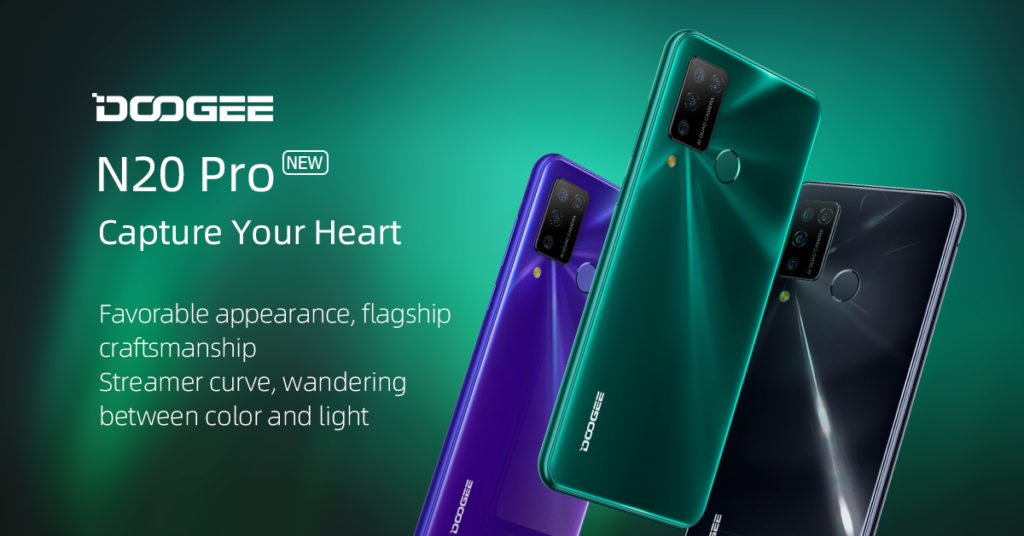
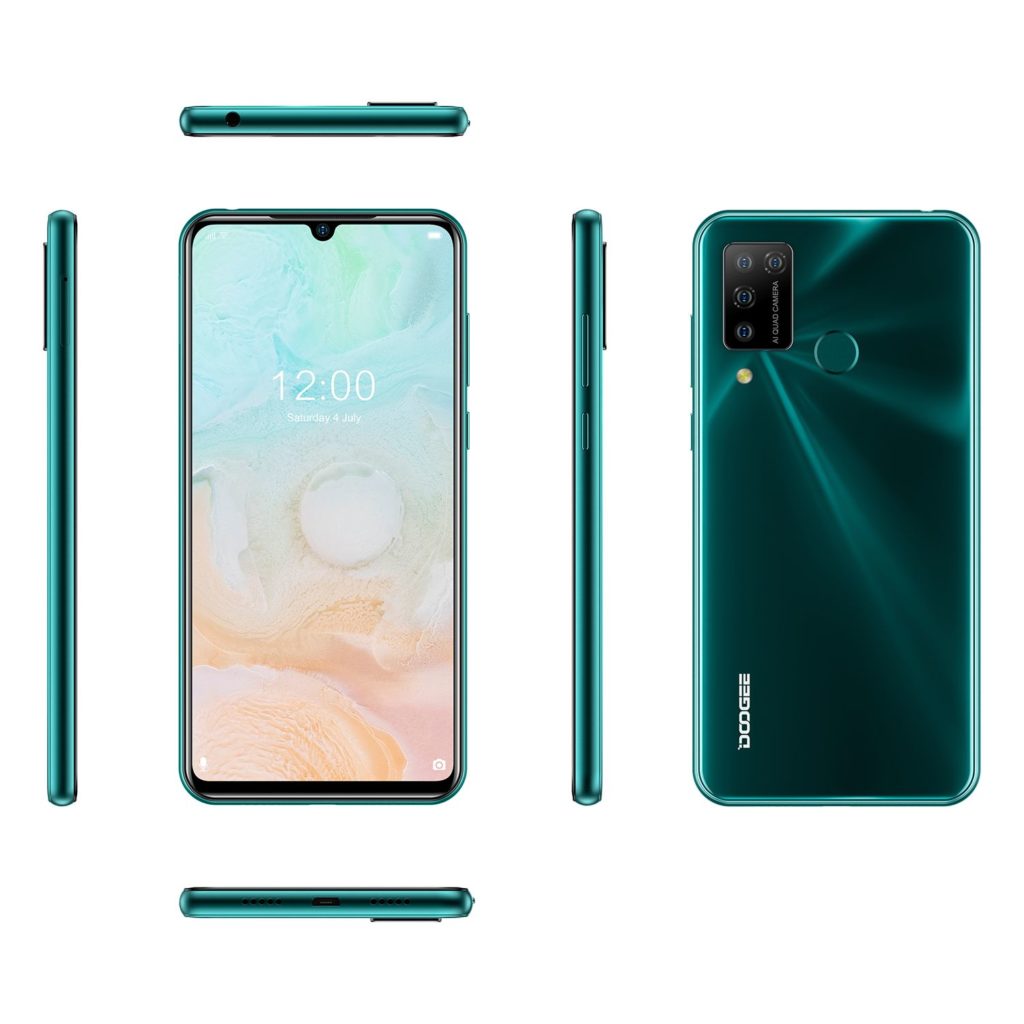
Doogee N20 Pro is finally launched with some interesting features at an affordable price of $119. The primary highlights of the device include a 16-megapixel quad-rear AI camera, Helio P60 SoC, and an impressive 6.3-inch Waterdrop display. The smartphone will compete against the competitors in the mid-range segment. Its unique double-layer coating technology and other splendid features make it worth every cent.
Doogee N20 Pro is a powerful smartphone featuring advancements over its predecessor. It is available at an affordable price of $199 from its global online store and AliExpress.
Performance
The smartphone comes powered with a 12-nm based Helio P60 SoC which houses an octa-core processor and ARM Mali-G72 GPU clocked at 800MHz. The chipset is capable to smoothly run power-intensive tasks such as gaming. Doogee N20 Pro is available in a single storage variant of 6GB RAM and 128GB internal storage. However, you can even expand the storage up to 256GB via external microSD card eliminating any storage problem while downloading large-sized games and other media.
Display
Doogee N20 Pro houses a large 6.3-inch FHD+ waterdrop display having an aspect ratio of 19:9. The display is efficient enough to provide a vivid viewing experience while playing games and watching movies.
Camera
On the rear side, there’s a quad-rear camera module featuring a 16-megapixel primary camera, a 130° ultra-wide camera lens with 3x optical zoom, a 4cm macro lens and a portrait lens providing depth effect. Apart from the finest camera hardware, the phone also packs ultimate software facilitated by AI algorithms to produce better photos.
There’s a punch-hole encasing a Samsung 16-megapixel front camera for impressive and high-resolution selfies.
Other Features
There’s a 4400 mAh battery with 10W quick-charging technology. The smartphone weighs 175 grams and is just 8.8mm thin which makes it more comfortable and portable. It’s a Dual SIM device that can provide you seamless network coverage while traveling.
Doogee N20 Pro runs on Android carrying all the latest features like improved Dark Mode, enhanced permission controls, and much more. Even the system security and stability have improved with the Android 10 OS. Moreover, the smartphone houses a fingerprint scanner on the rear side for quick and secure authentication.
I/O Interface – 1 x Nano SIM Card, 1 x Nano SIM Card or microSD Card Slot, micro USB Port, Audio Out Port, Power Button, Volume Button, Microphone, Speaker
Dimensions – 159 mm x 77.1 mm x 8.8 mm
Weight – 175 Grams (With Battery)
Pricing
Doogee N20 Pro is available for the price of $119 from AliExpress and you can even grab a discount of $10 from August 10-11. The discount is limited to the first 2000 buyers by using a coupon code N20PRO10. You can know more details about the device by heading to the official website.
The OnePlus Nord will go on sale tomorrow in India. For a starting price of INR 27,999 (~$370). That amount gets you the 8GB RAM + 128GB version. There is a 6GB RAM + 64GB version that is priced at INR 24,999 (~$330) but it won’t be available until September.
Since the mid-range OnePlus phone launched, there have been debates over whether it is worth buying over flagship killers from last year such as the Redmi K20 Pro. The 2019 Redmi flagship packs some really impressive features including the more powerful Snapdragon 855 processor, a telephoto camera lens, and even has an audio jack.
The Redmi K20 Pro is priced at INR 26,999 (~$359) for the 6GB+128GB version and INR 29,999 (~$399) for the 8GB+256GB version. The OnePlus Nord is INR 29,999 (~$399) for its 256GB version but it packs 4GB RAM more than the Redmi K20 Pro.
For this week’s poll, we want to know which of the two devices you will purchase? Is it the Redmi K20 Pro even though it doesn’t have support for 5G or the OnePlus Nord which has 5G support and a display with a 90Hz refresh rate? Please take the poll and also share your reason(s) for picking one over the other in the comment box.
MediaTek made a comeback into the high-end and mid-range smartphone chipset segment last year with the introduction of Dimensity 5G chips. But for some unknown reasons, handsets with these SoCs have remained exclusive to China for a very long time. Thankfully, they are now confirmed by the company to debut in global markets sometime in Q3 2020 (current quarter).
The first-ever Dimensity series chipset by MediaTek is Dimensity 1000. But there is not a single smartphone in the world with this chip. Instead, we have got a device powered by Dimensity 1000L (OPPO Reno3 5G) and Dimensity 1000+ (iQOO Z1 5G) respectively. These two chips are toned-down and beefed-up models of the standard Dimensity 1000, which is yet to see the light of the day.
Further, the Taiwanese chipmaker continued to debut a number of Dimensity mid-range 5G chipsets such as Dimensty 800, Dimensity 820, and Dimensity 720. These chips power some of the cheapest 5G smartphones available in the Chinese market.
But as mentioned in the beginning, none of them is available outside China. However, we might soon see them powering smartphones sold in global markets. MediaTek itself confirmed in its Q2 2020 earning call.
We think the LG Velvet series handset spotted on Google Play Console with Dimensity 800 could be the first-ever MediaTek Dimensity 5G smartphone for international markets. That’s not all, we may also witness the launch of already available Chinese Dimensity handsets in global markets.
MediaTek is expecting sizeable revenue growth for the third quarter of this year. According to a DigiTimes report, the revenue will reach NT$82.5 – NT$87.9 billion (roughly $2.75 – $2.79 billion). This marks a 22 to 30 percent sequential growth, which is well beyond market expectations.
The growth estimation arrives as the company expected high demand and healthy sales for its Dimensity lineup of 5G chips. MediaTek also expects that its gross margin to be around 41.5 to 44.5 percent for the third quarter, which is roughly the same as the second quarter. Furthermore, the Taiwanese chipmakers revenue for the first half grew by 12.4 percent while net profits surged by 33.33 percent year on year.
MediaTek surpassed its original financial guidance for the first half of 2020 and is expected to post a minimum annual revenue increase of 15 percent and double its growth projection during this year, according to industry sources. The company’s CEO stated that the 5G handset market will reach 170 to 200 million units in shipments by the end of 2020, which will be supplemented by upcoming MediaTek 5G chips in the latter half of 2020
Huawei is increasing the use of mobile APs (applications processors) from third party suppliers for its smartphones. The move will have the Chinese tech giant reduce the use of its Kirin chips made from its subsidiary HiSilicon Technologies, which marks a notable shift as Huawei has typically relied on its own subsdiary.
The primary reason for the multiple sourcing of mobile APs is to maintain the competitiveness of its products. Furthermore, stable supply and profit also comes into play, with the Chinese smartphone maker expected to bring an additional 1-2 vendors to its supplier list for smartphone APs. Despite the company already having Taiwan’s MediaTek as a third-party 5G AP supplier, Huawei might also buy 5G APs from US based Qualcomm.
Furthermore, Huawei has also increased the number of purchases for MediaTeks midrange Dimensity 800 SoC for its Enjoy and Honor lineup of smartphones since Q2 2020. Similarly, Samsung and Unisoc Technologies are also potential alternative sources for 5G APs for the Chinese brand, according to a DigiTimes report. Although, this is still unconfirmed as well.
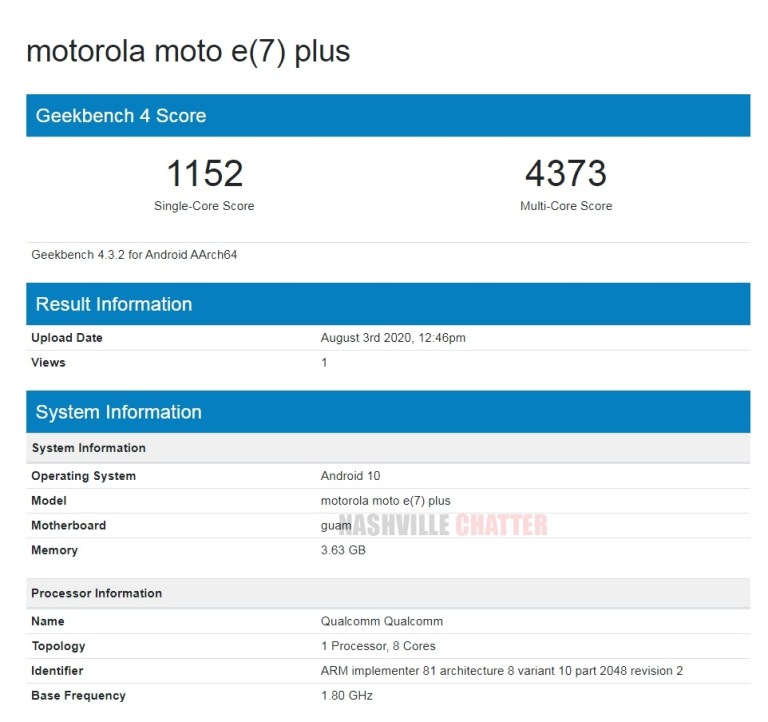
Last month, 91mobiles had shared leaked shots of the upcoming Motorola Moto E7 Plus. The leak did not reveal any information on the specs of the device. The live images of the phone only revealed its design from different angles. Today, the Moto E7 Plus appeared on Geekbench to reveal some of its key specs.
Spotted first by Nashville Chatter Class, the Geekbench listing reveals that the Moto E7 Plus is equipped with 4 GB of RAM. The handset is loaded with Android 10 OS. However, the name of the processor is not mentioned on the Geekbench listing.
The listing reveals that the E7 Plus is powered by Qualcomm’s octa-core processor that has a base frequency of 1.8GHz. The listing seems to have “guam” codename of the processor mentioned in the listing. The handset recorded 1152 and 4373 respectively in the single-core and multi-core tests of Geekbench.
The “guam” codename was previously seen in the Geekbench listing of the forthcoming Moto G9 Play phone. It is speculated that the codenamed could be associated with the Snapdragon 662 mid-range SoC. It is advisable to wait and see whether the guam processor that fuels the Moto G9 Play and Moto E7 Plus is the Snapdragon 662 or some other chipset.
The leaked shots of the Moto E7 Plus that appeared last month revealed that it has a waterdrop notch screen. Its rearview revealed a fingerprint scanner and a vertical camera setup that included two cameras, a laser autofocus unit, and an LED flash. It could be backed by a beefy battery and it has a speaker grille, a USB-C port, and a microphone in its bottom edge.
There is no word on the launch date of the Moto E7 Plus. Considering that the predecessor Moto E6 Plus debuted in September last year, it is likely that the Moto E7 Plus may debut next month.
With Xiaomi nearing the 10th anniversary of its founding, the company is planning a special virtual event on August 11. This event will likely have a few notable products and smartphone launches and may even have the announcement for the latest flagship Mi 10 Pro Plus.
The Chinese tech giant recently shared a teaser for the upcoming event. In the virtual event, Lei Jun, the CEO, will be looking at the past, present, and future of Xiaomi while also revealing some new devices as well. According to known WEibo leakster Digital Chat Station, the company will unveil “several new phones” and other “new products.”
Is this almost an official announcement? Several new phones and new products including the Mi 10 Series Super Cup are scheduled to be released on August 11 [吃瓜]
Unfortunately, it is currently unknown what exactly the company has in stores for, at least not officially. However, the tipster mentioned that the Xiaomi Mi 10 Pro Plus will be announced during this event. For those unaware, the new rumored entry in the Mi 10 series will be the company’s ultra high end flagship that will also its top offering. Although, this has yet to be confirmed so stay tuned as we will be covering the event.
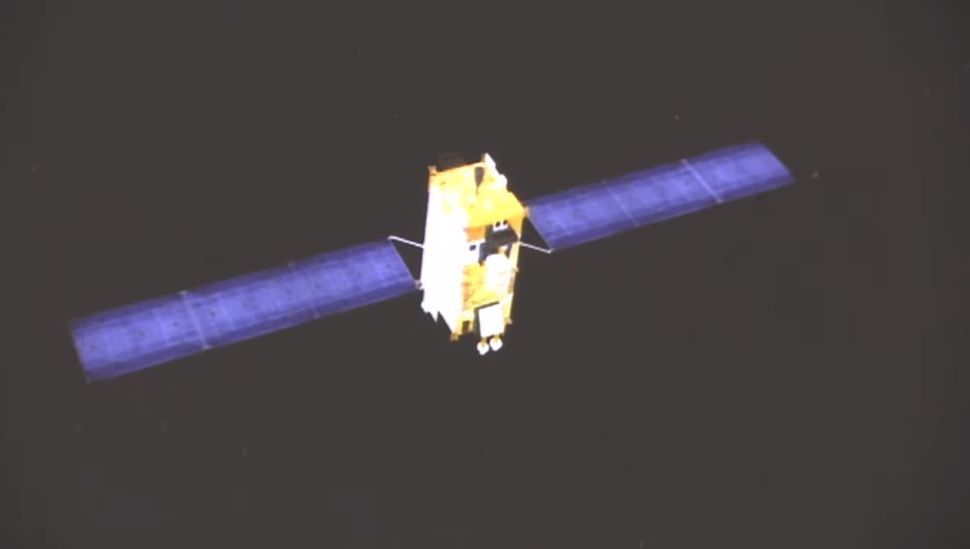
The new navigation system is now within the same league as US’ GPS, Russia’s GLONASS, and the EU’s Galileo. At the moment, more than 100 countries including Pakistan and countries part of the Belt and Road Initiative (BRI) are already using the system. Experts told Chinese media that “the completion of BeiDou-3 was due to the fact that core technologies cannot be bought or begged from other countries.”
The project had brought in over 300,000 scientists, engineers, and technicians from more than 400 domestic institutes, universities, and enterprises. It has been under development since the 1990s and has finally been completed. Chinese President Xi Jinping commissioned the system last week, with a ceremony held at the Great Hall of the People.
The system effectively lowers the country’s reliance on foreign navigation system and “By the end of 2019 in the Chinese mainland, more than 6.5 million road vehicles, 40,000 postal and express delivery vehicles, 80,000 buses in 36 major cities, 3,200 inland navigation facilities, and 2,900 marine navigation facilities had adopted the BDS, forming the world’s largest dynamic monitoring system for road vehicles.”
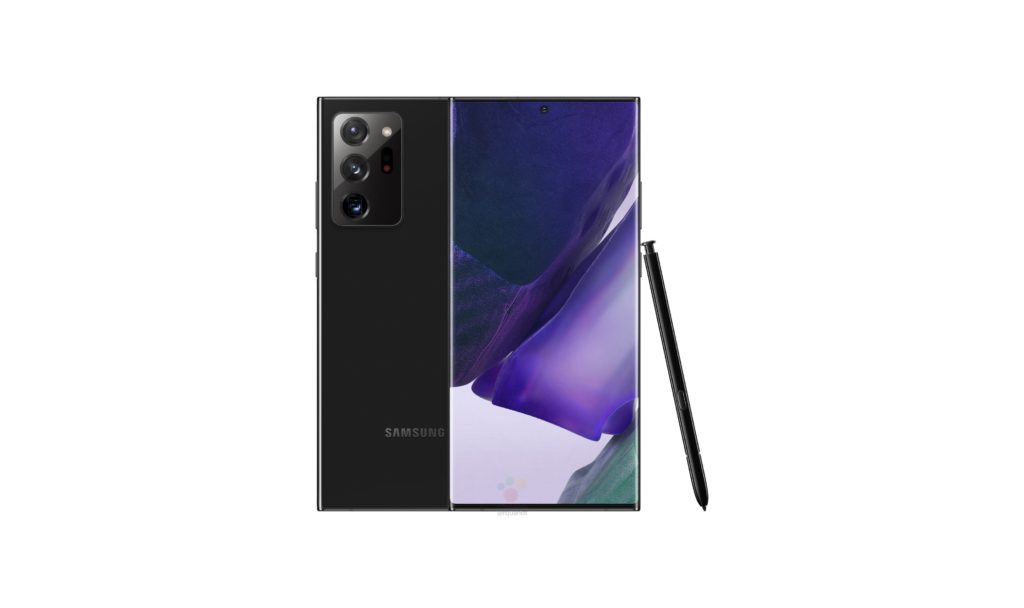
The Samsung Galaxy Note20 series is the most anticipated smartphones of H2 2020 apart from Apple iPhone 12 series and HUAWEI Mate40 series. It will be unveiled on August 5 (coming Wednesday) alongside Galaxy Z Fold2, Galaxy Buds Live, Galaxy Watch 3, and Galaxy Tab S7 series. Ahead of it, the Galaxy Note 20 Ultra visits FCC revealing it to feature UWB (Ultra-wideband) chip.
Galaxy Note20 Ultra Mystic Black
The upcoming Galaxy Note 20 Ultra will not be the first smartphone to launch with UWB chips. The iPhone 11 series from last year already has it and its successor is expected to feature it as well.
The confirmation for the presence of UWB chip in Galaxy Note20 Ultra comes directly from FCC (via @SaudiAndroid). The test for the chip was only conducted on the US variants of the handset – SM-N986U and SM-N986U1. Hence, we cannot tell for sure if models for other regions will have this chip.
Having said that, one might ask what is the use of this so-called UWB Chip. To simply put, it is primarily used on the new iPhones for quick file transfer via AirDrop. Additionally, it can be also used to sense and connect with IoT devices. The best example for it is “Apple Car Keys”, which will debut on iOS 14.
In a similar way, we can expect Samsung to use the UWB chip inside Galaxy Note20 Ultra for “Nearby Share”, an AirDrop alternative by Google and for it SmartThings range of IoT products.
Samsung Electronics is making a comeback in the Indian smartphone market with a lineup of new affordable smartphones and improved online presence in the region, according to a Reuters report.
The South Korean tech giant is out to regain market grounds it had lost to Chinese rival, Xiaomi. Notably, Samsung is the only major non-Chinese OEM in the country and has already started gaining momentum. This is further backed by the anti-Chinese sentiments that are growing in the nation due to a prior military clash in the border regions between both nations.
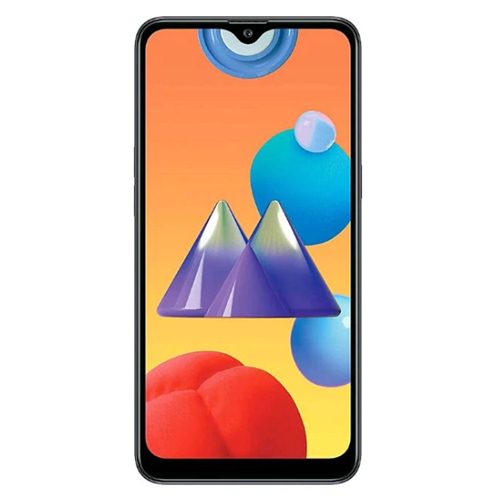
Samsung Galaxy M01s
According to a previous Counterpoint report, Samsung came in second in India’s smartphone market, with a 26 percent market share in Q2 2020. The company trailed behind Xiaomi that took the lead with a 29 percent market share in the same period. Despite being the dominating figure in the world’s second largest smartphone market, Samsung has slowly been losing ground to Chinese OEMs in recent years.
But now, the company is seemingly building the momentum again, with seven recent smartphone launches in June, out of which, three were priced under 10,000 INR (roughly 133 US Dollars). A source close to the matter stated that, “The COVID crisis has pushed people to use smartphones for everything from online education to digital payments to even connecting with friends on video calls. That’s why these budget phones are focused on the mass market.”
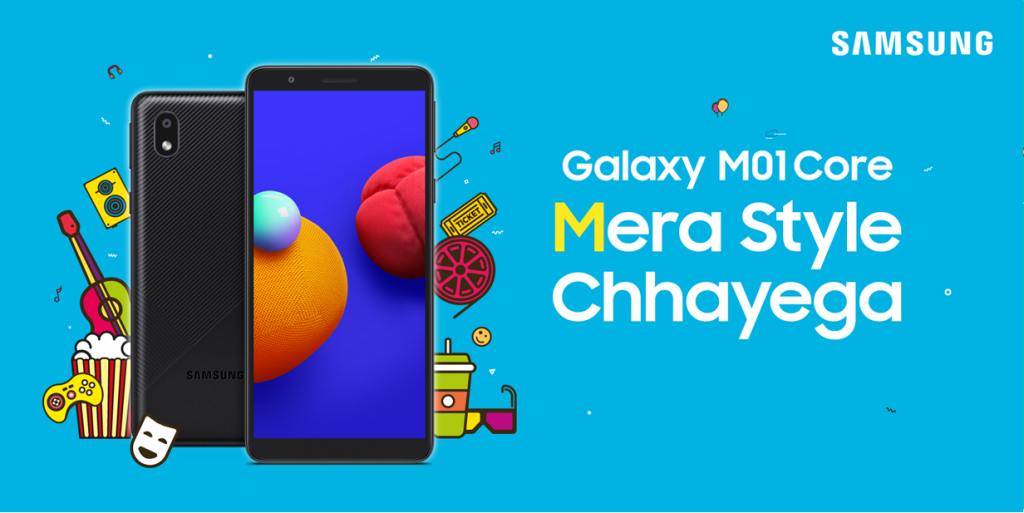
Samsung Galaxy M01
Furthermore, a company executive also said that “Samsung is India’s No.2 smartphone brand after Apple by image, So a phone priced between 6,000 rupees to 15,000 rupees from Samsung is very well placed today to capture market share from Chinese rivals.” In other words, the vendor is strengthening its budget offerings to better suit the market demand.
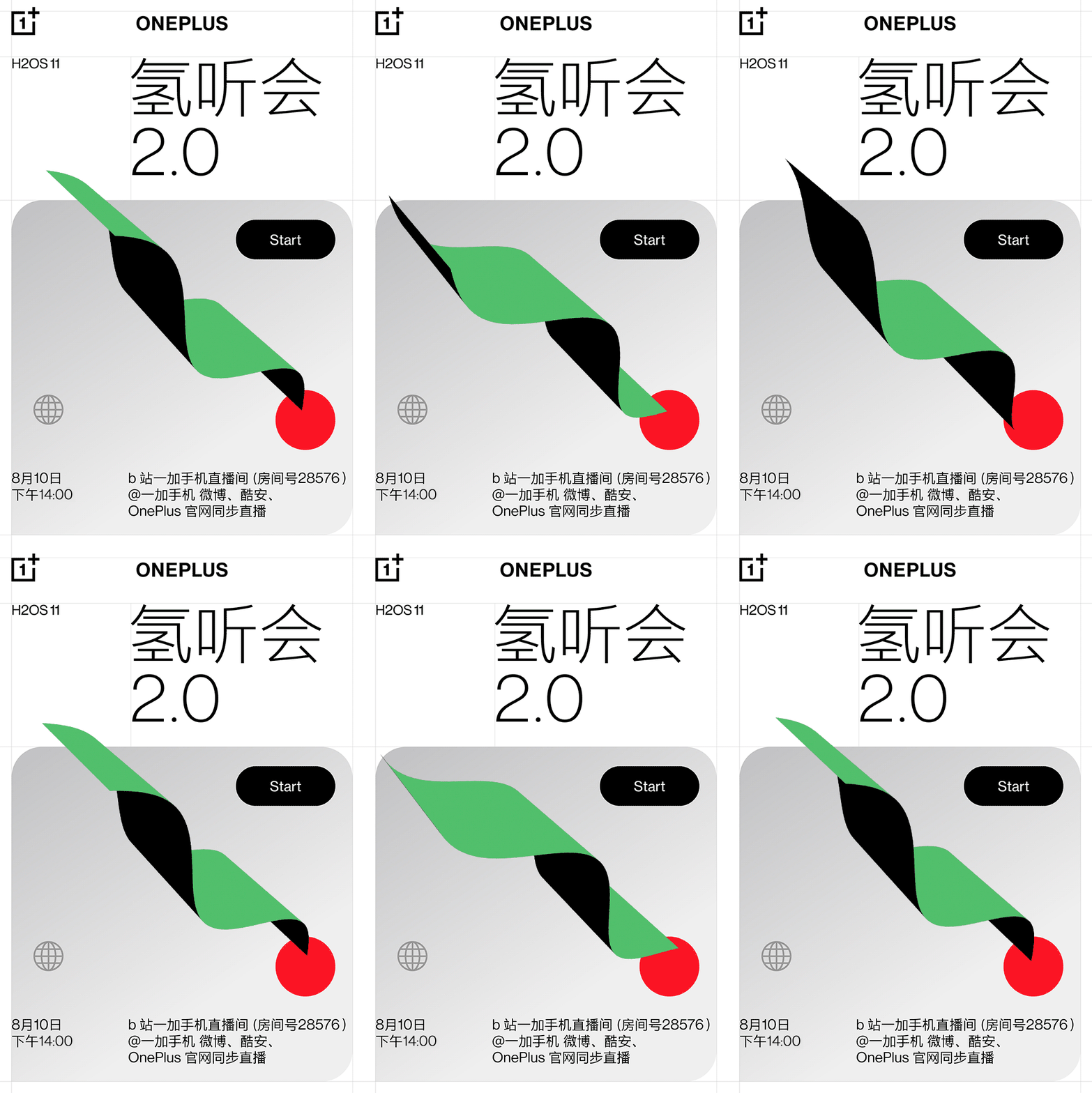
While OnePlus phones outside of China are shipped with OxygenOS, its smartphones heading to Chinese markets come with HydrogenOS based Android OS. OnePlus is expected to release OxygenOS 11 based Android 11 update in the coming weeks. It could be made available in September since Android 11 is expected to debut on Sept. 8. Fresh information reveals OnePlus is gearing up to launch the HydrogenOS 11 on Aug. 10 in China.
Through Weibo, OnePlus confirmed that it will be announcing HydrogenOS at 2 PM (local time) on Aug. 10 in the home market. Since it is a China-bound version, it comes without Google Play services. The upcoming HydrogenOS 11 will be based on Android 11 OS.
Nothing much is known on the features that will be arriving on the HydrogenOS 11 except for the fact that it could be coming with native support for Always-On Display (AOD) function. HydrogenOS 11 is expected to bring visual improvements, new functions, and something that is dubbed as a “brand-new interactive concept.”
Recently, OnePlus CEO Pete Lau shared a tweet that hinted at the arrival of the AOD feature in the upcoming OxygenOS 11 updated. The AOD function is one of the most requested features by OnePlus fans even though it can consume 300 to 500mAh battery power.
The AOD function could be available in the closed beta builds arriving this month, followed by open beta in September. It is speculated that OnePlus 6 and higher will be treated with AOD function. Hopefully, the company will confirm on the other features that will be available on the OxygenOS 11 and HydrogenOS 11 before they are made official.
Apple has apparently asked various landlords in the UK to lower the rent by 50 percent for its multiple retail stores, according to The Sunday Times report.
In exchange for the rent being lowered or being offered a “rent-free period,” the Cupertino based giant will possibly extend its lease considerably. The period of this rent slash or extension is currently unknown, although, it is understood that several stores in the region still have many years left on their leases. Thus, the landlords do not have to make a prompt decision regarding the matter.
According to the report, the move has already agitated the numerous property owners in the UK, as despite Apple stores being closed during the initial outbreak of the Coronavirus, the company has still managed a record 59.7 billion US Dollars increase in sales in the second quarter of 2020, since the demand for its products online was relatively high.
This tactic of proposing lowered rent is in line with other businesses that had benefitted from this. Landlords had to lower rent to keep the property in shopping centers occupied. Apple currently runs 38 retail stores in the UK, all of which had to close doors for a few months earlier this year. At the moment, these stores have now reopened and are one of the most profitable outlets in the industry.
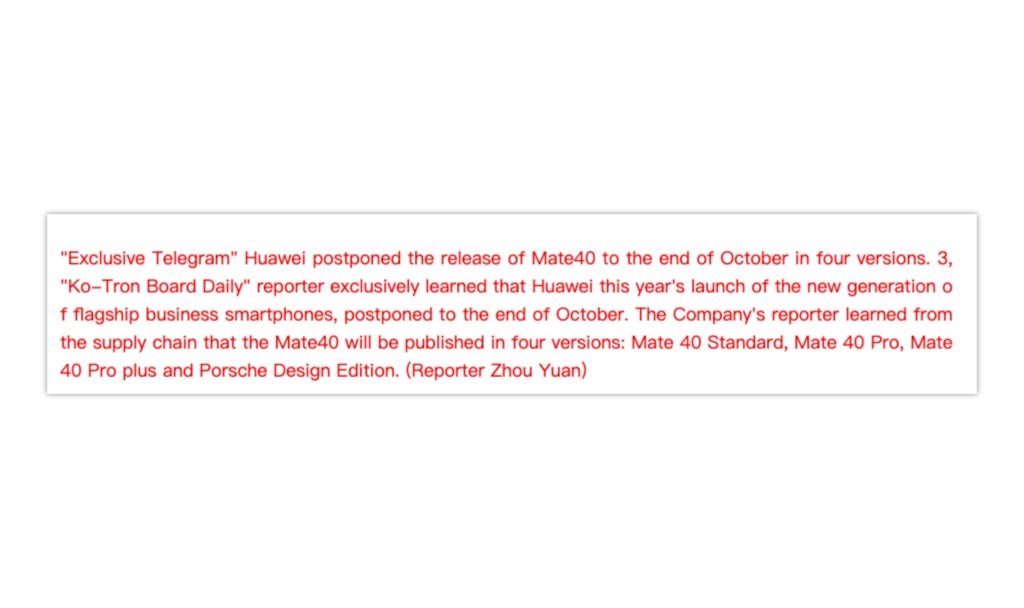
Huawei surpassed Samsung as the world’s largest smartphone brand in April as well as the whole of Q2 2020. But the future of the company is uncertain due to the extension of the US ban and end of its relationship with TSMC. Despite the hurdles, the Chinese telecom giant is expected to release the Mate40 series. A new report from China reveals there will be a delay in the launch and the series will include four models.
The Mate40 series was previously reported to launch in early October on the occasion of Chinese National Day. Huawei is also said to unveil Mate Watch with HarmonyOS alongside these handsets.
Now, a new report by Chinese media says the launch of Mate40 series will be delayed late October. Also, it revealed that there will be four models and they are as listed below.
HUAWEI Mate40
HUAWEI Mate40 Pro
HUAWEI Mate40 Pro+ (Plus)
PORSCHE DESIGN HUAWEI Mate40 RS
This piece of information is said to come directly from supply chain partners and hence, there’s a high chance of it to be true.
Huawei is not the only company delaying the launch of its new flagship smartphones. Even Apple is reported to do the same for its iPhone 12 series. Another most delayed device of 2020 is Google Pixel 4A, which is finally expected to debut later today.
The Samsung Galaxy S20 FE (Fan Edition) has been rumored for a while now. So far, various rumors and leaks have discussed the internals and specifications (1,2,3,4) of the device, but now, a new render has revealed the front half of the upcoming smartphone.
According to a new image that was recently shared online by Evan Blass (@evleaks), the Samsung Galaxy S20 FE can be seen with a punch hole display on the front. The camera is aligned in the top middle of the handset, while the display covers most of the front surface of the device. Minimal bezels can be observed on the sides, with a negligible chin and notch as well.
On the right of the device, the power button and volume rockers can be found while the left seems to be devoid of any buttons. Unfortunately, this is all we have to go on for now and we would have to wait for a new leak or an official Samsung announcement to provide any more details. The Samsung Galaxy S20 FE is expected to be the successor of the Galaxy S10 Lite, but with new branding. So maybe the company has more in store for us in the newer generation.
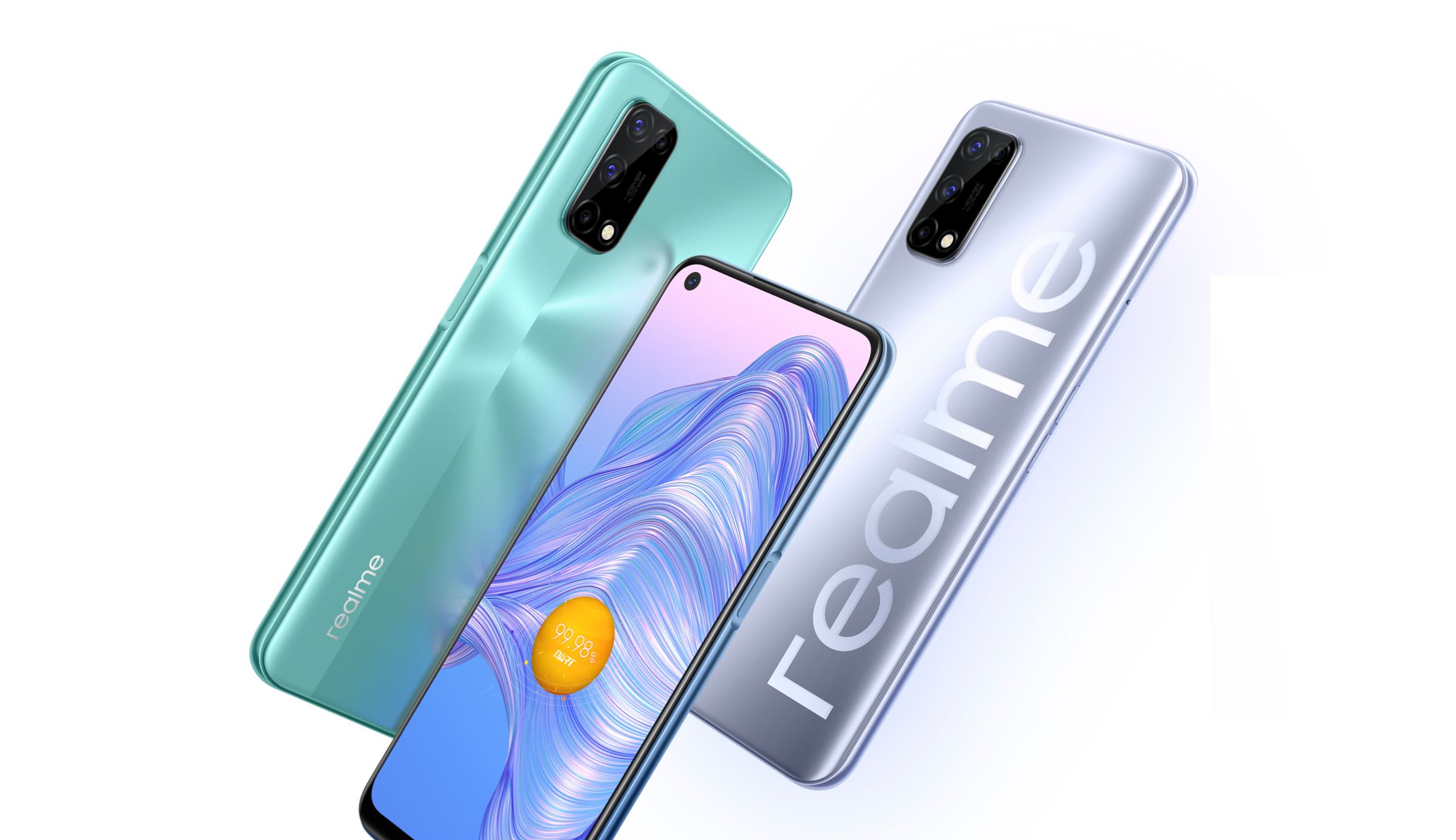
Realme began the year 2020 with the launch of Realme X50 5G and its advanced version named Realme X50 Pro 5G debuted in February. The Realme X50m 5G debuted in April and the Realme X50 Pro Player Edition got unveiled in May. Since then, the company did not launch any phones in China. Today, the company had an unveiling event in the home market to announce the Realme V5 5G phone as its first V-series device. With an enticing price tag of 1,399 Yuan (~$200), the mid-ranger offers with attractive specs like 90Hz refresh rate screen, 48-megapixel quad cameras, Dimensity 720 SoC and a huge battery with rapid charging support.
Realme V5 5G specifications and features
The Realme V5 has a 6.5-inch IPS LCD display that delivers Full HD+ resolution of 1080 x 2400 pixels, 20:9 aspect ratio, 90Hz refresh rate, and 180Hz touch sampling rate. The smartphone offers 90.7 percent screen space and it is protected by Gorilla Glass panel. There is a punch-hole positioned at the upper-left corner of the display. It houses an f/2.0 aperture 16-megapixel selfie shooter. Some of the features offered by the front camera include HDR, background blur, panorama, AI beauty, gesture photography, time-lapse, and 30fps full HD video recording.
The Realme V5 has a quad-camera system on its back. For the first time, Realme has used a rectangle-shaped camera module on its smartphone. It includes a 48-megapixel main camera with f/1.8 aperture, a 119-degree 8-megapixel ultrawide lens with f/2.3 aperture, a 2-megapixel macro lens with f/2.4 aperture, and a 2-megapixel depth sensor with f/2.4 aperture. The quad cameras of the Realme V5 provide users with features such as super night scene mode, panorama, time-lapse, bokeh, HDR, ultrawide angle video recording, UIS /UIS Max video super anti-shake, 120fps 1080p slow-motion video shooting, and 30fps 4K video recording.
The Realme V5 5G has a behemoth battery of 5,000mAh capacity. It can be fueled by using a 30W SuperDart charger. The company claims that it takes 65 minutes to completely charge the Realme V5 through SuperDart technology. The smartphone can be used for charging other devices like powerbank by using the reverse charging feature. Despite housing a massive battery, the phone weighs only 194 grams.
The Dimensity 720 chipset by MediaTek with dual-mode 5G support fuels the device with up to 8 GB of LPDDR4x RAM. The phone offers users with 128 GB of UFS 2.1 storage and it comes with Realme UI based Android 10 OS. The smartphone comes with connectivity features like dual SIM slot, 5G, Wi-Fi 802.11ac, Bluetooth 5.0, GPS, USB-C, and 3.5mm audio jack. The other features that are available on the Realme V5 are side-facing fingerprint scanner, microSD card slot, superlinear speaker, and Hi-Res audio.
Realme V5 5G pricing
The Realme V5 has arrived in three variants in China such as:
6 GB RAM + 128 GB storage – 1,499 Yuan (~$215)
8 GB RAM + 128 GB storage – 1,899 Yuan (~$272)
The Realme V5 5G will go on sale in China on Aug. 7. On the first sale day, the 6GB+128GB model will be available for 1,399 Yuan (~$200). Silver Wing Boy, Breaking Light (Green) and Blue are the three color editions of the Realme V5 5G. The silver model has a large-sized logo of the brand on its rear. Realme is yet to confirm whether this phone will be made available in markets outside of China.
What’s your opinion on the specifications and pricing of the Realme V5 5G? Let us know your views by posting your comments below.
A few months ago, in May this year, China-based Meizu had launched the Meizu 17 and 17 Pro smartphones in its home market. At the time, Meizu 17 was made announced in three color options — Green, Gray, and Aurora White.
Today, the company has launched two new color options for the smartphone — AG Intersteller Gray and AG Field Green. Both the color variants are now available for purchase in China, for a starting price of 3,699 yuan which is around $530.
This comes just days after the company started selling Moonlight Blue color variant for the Meizu 17 Pro smartphone in China. The front panel of this variant is in White color while the rest of the body seems similar to the Azure color.
As for the pricing, the Meizu 17 with 8GB RAM + 128GB storage is priced at 3,699 yuan (~$530) while the 8GB RAM + 256GB storage variant costs 3,999 yuan (~$573).
The Meizu 17 comes with a 6.6-inch Full HD+ custom Samsung AMOLED display with a 19.5:9 aspect ratio and 120Hz refresh rate, along with an in-display fingerprint sensor for added security.
Under the hood, the device is powered by the Qualcomm Snapdragon 865 octa-core processor. The smartphone has a quad-camera setup that includes a 64-megapixel primary camera sensor, a 12-megapixel wide-angle lens, an 8-megapixel ultrawide sensor, and a 5-megapixel macro lens.
On the front side, it comes with a 20-megapixel snapper for taking selfies and video calling. It runs Android 10 with the company’s own custom user interface and is powered by a 4,500mAh battery and has support for 30W Super mCharge fast charging technology.
Apple has acquired Mobeewave, a Canadian startup that works on a technology to turn iPhones into mobile payment terminals. The development was first reported by Bloomberg. The acquisition could help Apple expand its reach with merchants for Apple Pay.
The company’s technology, which only requires NFC chip to work, allows users to tap on their smartphone or credit card to another device for processing payment. Since all iPhones after iPhone 6 come with NFC chip, it is compatible with all the iPhones currently available in the market.
As per the report from Bloomberg, Apple is retaining the entire team of Mobeewave, which employs around 100 people, all working from the Montreal office. It is also being reported that the office will remain as it is.
Interestingly, Samsung had partnered with last year to enable Samsung smartphones to use the company’s technology. This resulted in a pilot program with over 10,000 downloads of Samsung’s POS app, which smaller businesses used to boost sales. Samsung’s venture capital arm is also an investor in the company.
Apple has a history of buying startups and then turn their technology into features for the company’s own products. Thus, we could see the use of Mobeewave’s technology in Apple Pay, allowing anyone with an iPhone to accept payments without additional hardware.
For the past few years, Apple started included the Secure Enclave chip on its devices as a way to encrypt and secure user data stored on the device. Now, a new exploit has allegedly been found for the chip, putting data of millions of users at risk.
As per the reports, Chinese hackers from the Pangu Team have found an “unpatchable” exploit on the Apple Secure Enclave chip that could break the encryption of the private keys stored on the device.
This is claimed to be unpatchable because the vulnerability is related to the hardware and not software, so there’s nothing Apple can do to fix this issue for the devices that have already been shipped. This also means that hackers need to have physical access to the device in order to do obtain data.
While there are no exact details available about the exploit, but the devices at risk include all the devices running Apple A7 chipset to A11 Bionic chip.
The Team Pangu has found an “unpatchable” vulnerability on the Secure Enclave Processor (SEP) chip in iPhones. https://t.co/9oJYu3k8M4
For those who are unaware, Secure Enclave is a security-related co-processor that Apple includes in almost all of its devices now as a way of providing an extra layer of security for the user data stored locally on the device.
The data on the device is encrypted with random private keys, which can only be accessed by the Secure Enclave. These keys are unique to the device and are never synchronized with iCloud. The chip also stores keys for passwords, the credit card for Apple Pay, and even biometric data for Touch ID and Face ID.
We use cookies on our website to give you the most relevant experience by remembering your preferences and repeat visits. By clicking “Accept”, you consent to the use of ALL the cookies.
This website uses cookies to improve your experience while you navigate through the website. Out of these, the cookies that are categorized as necessary are stored on your browser as they are essential for the working of basic functionalities of the website. We also use third-party cookies that help us analyze and understand how you use this website. These cookies will be stored in your browser only with your consent. You also have the option to opt-out of these cookies. But opting out of some of these cookies may affect your browsing experience.
Necessary cookies are absolutely essential for the website to function properly. This category only includes cookies that ensures basic functionalities and security features of the website. These cookies do not store any personal information.
Any cookies that may not be particularly necessary for the website to function and is used specifically to collect user personal data via analytics, ads, other embedded contents are termed as non-necessary cookies. It is mandatory to procure user consent prior to running these cookies on your website.