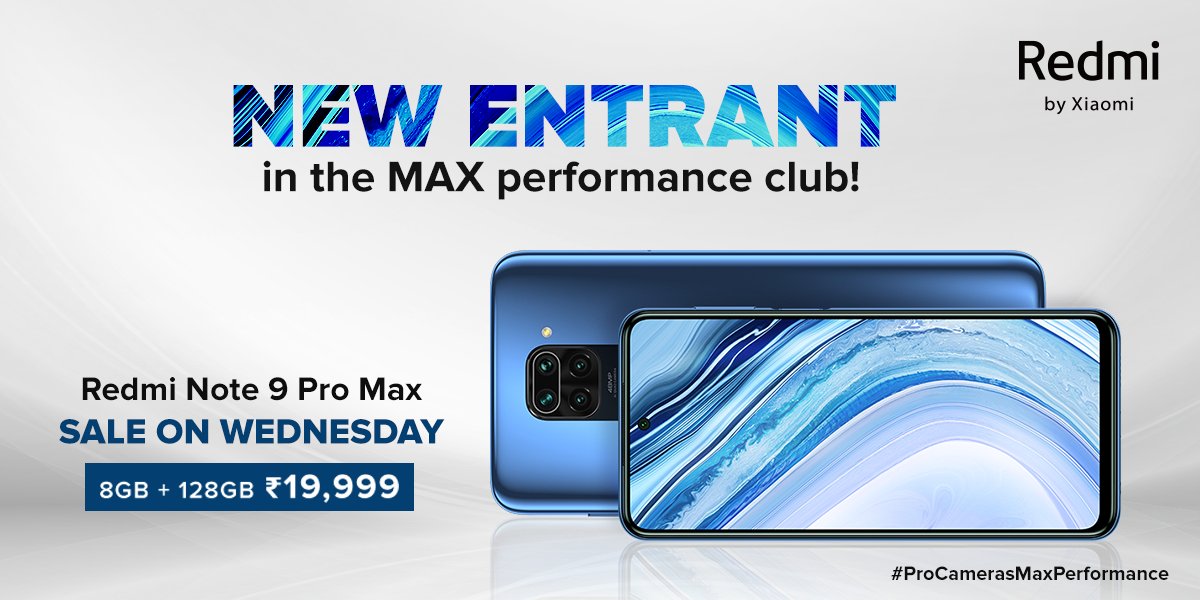
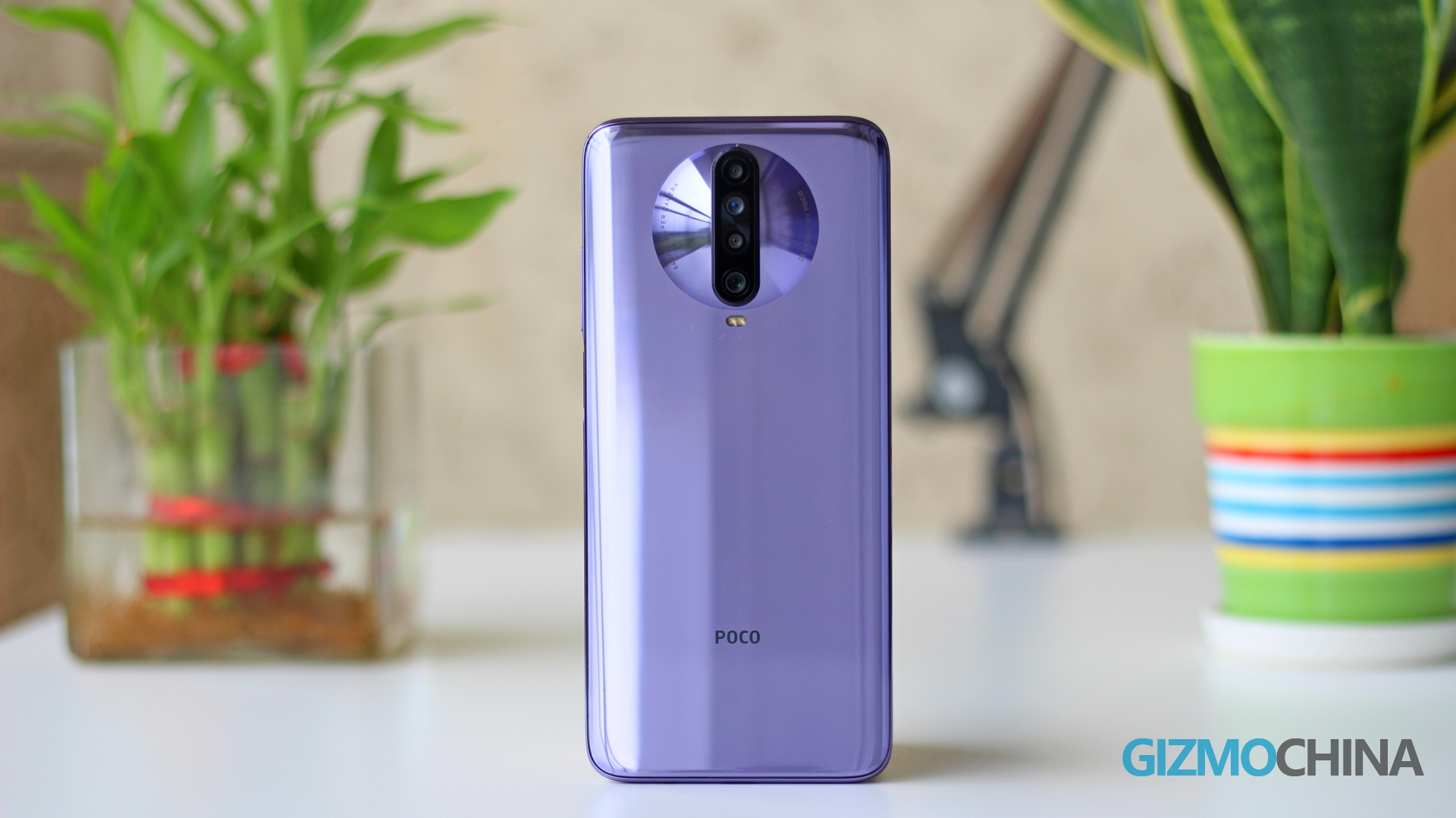
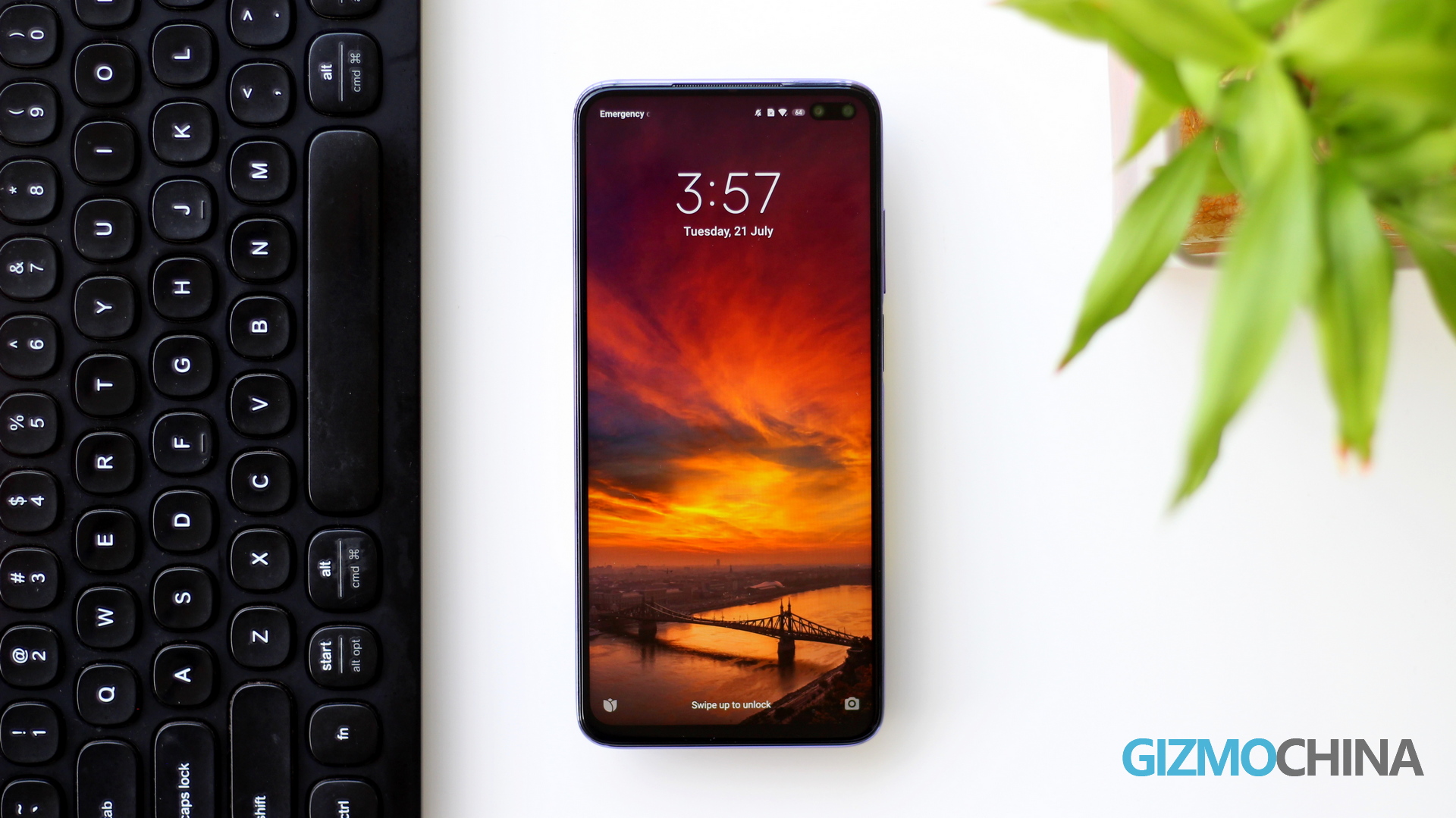
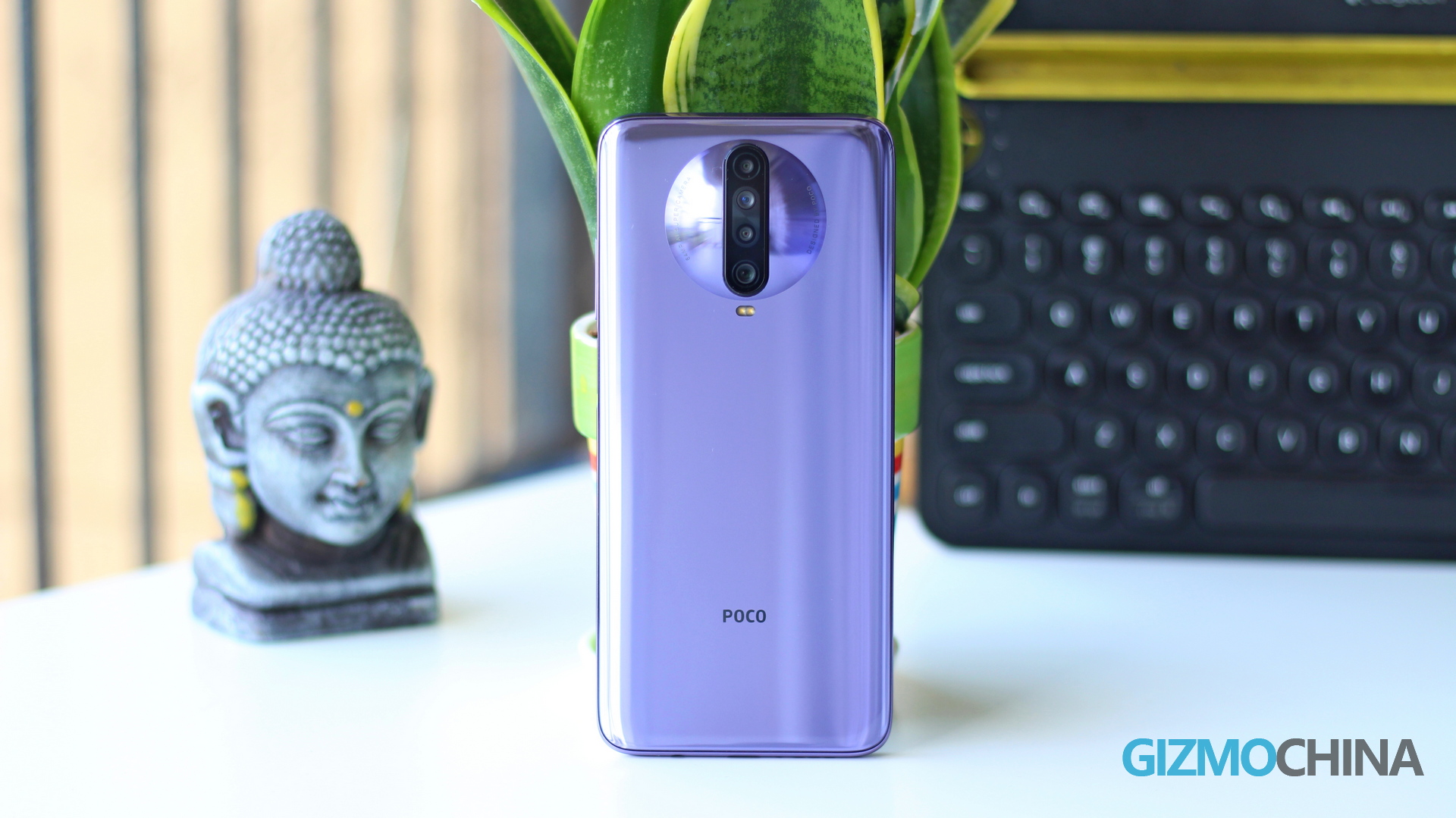
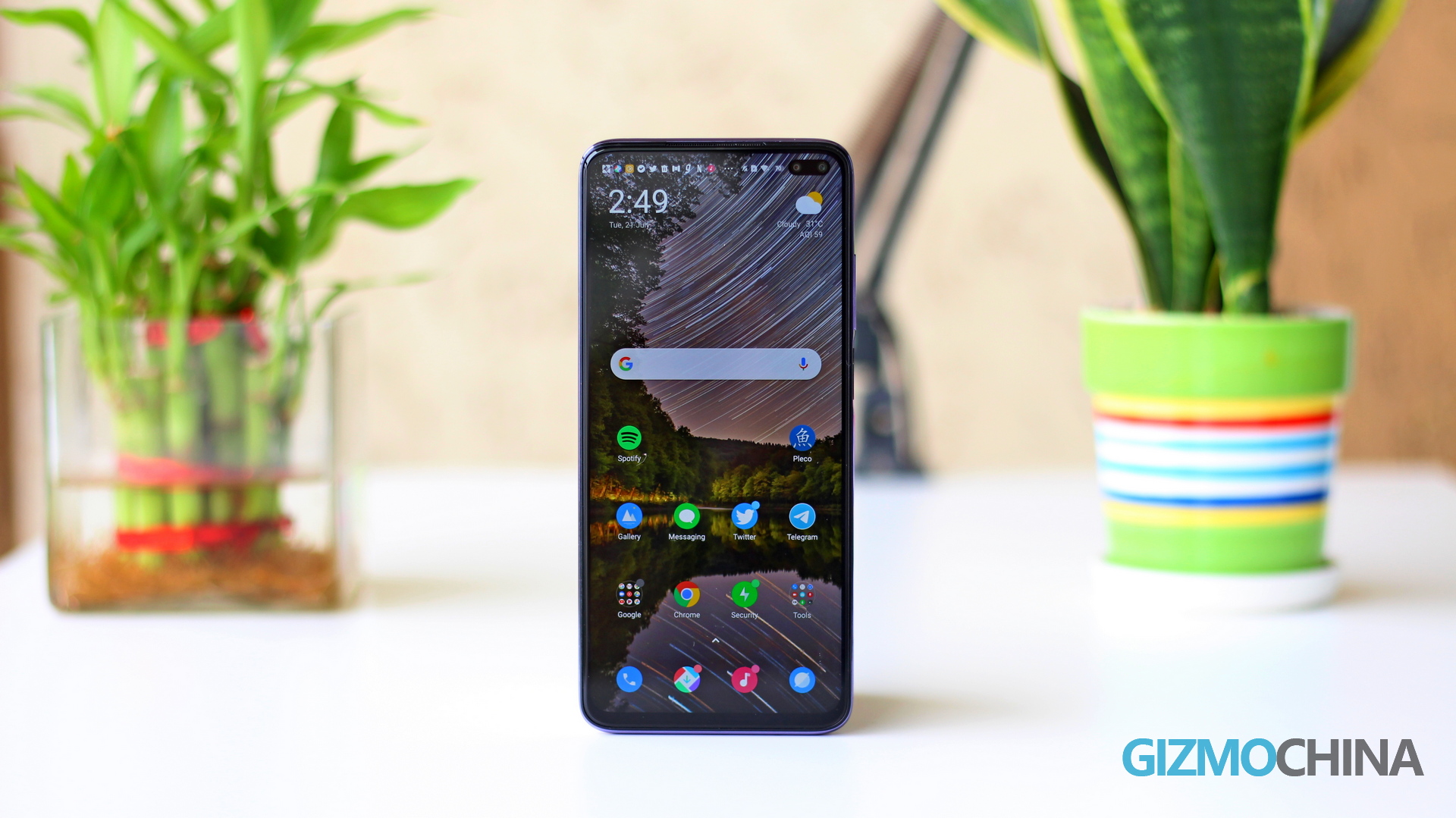
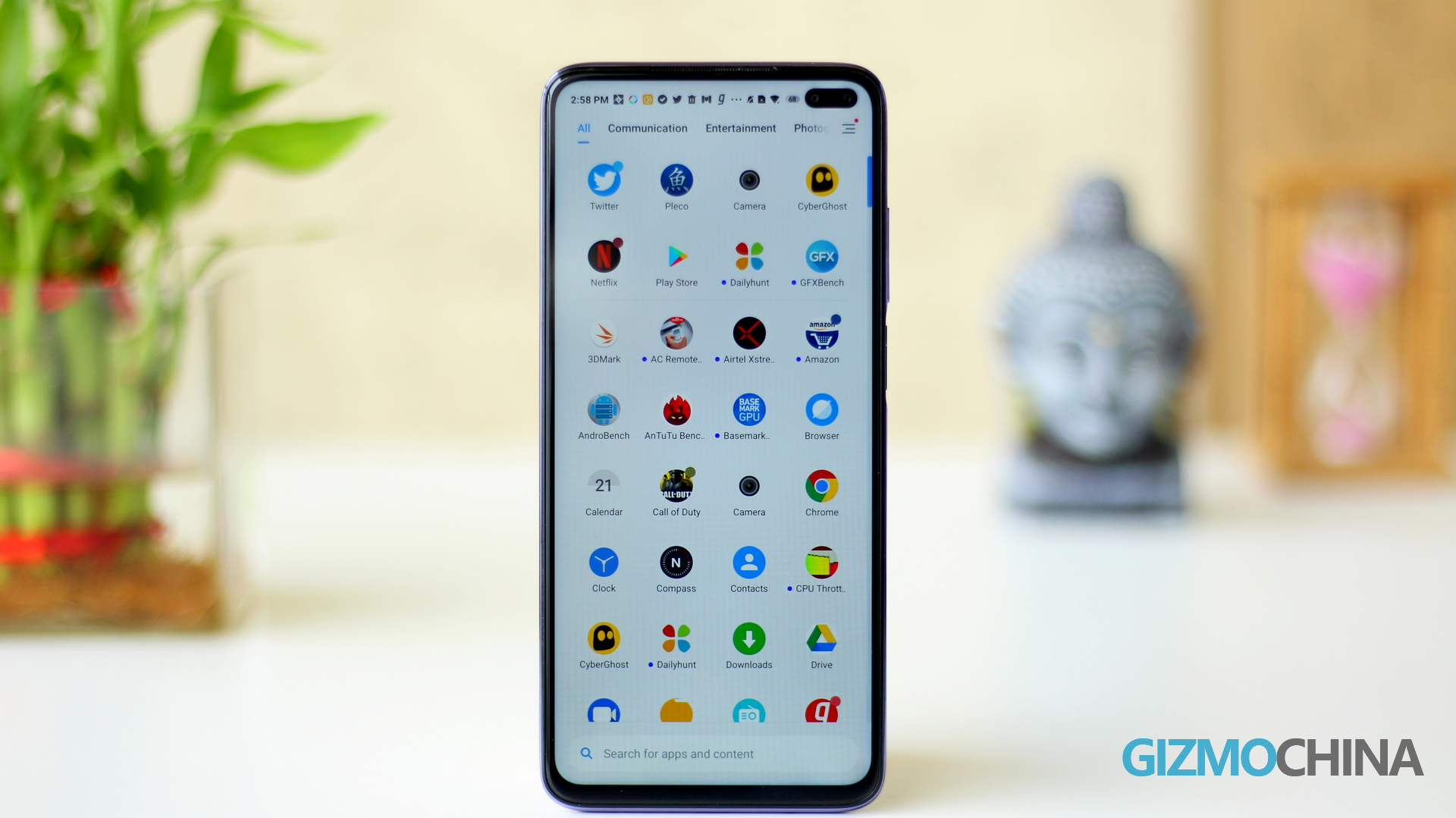
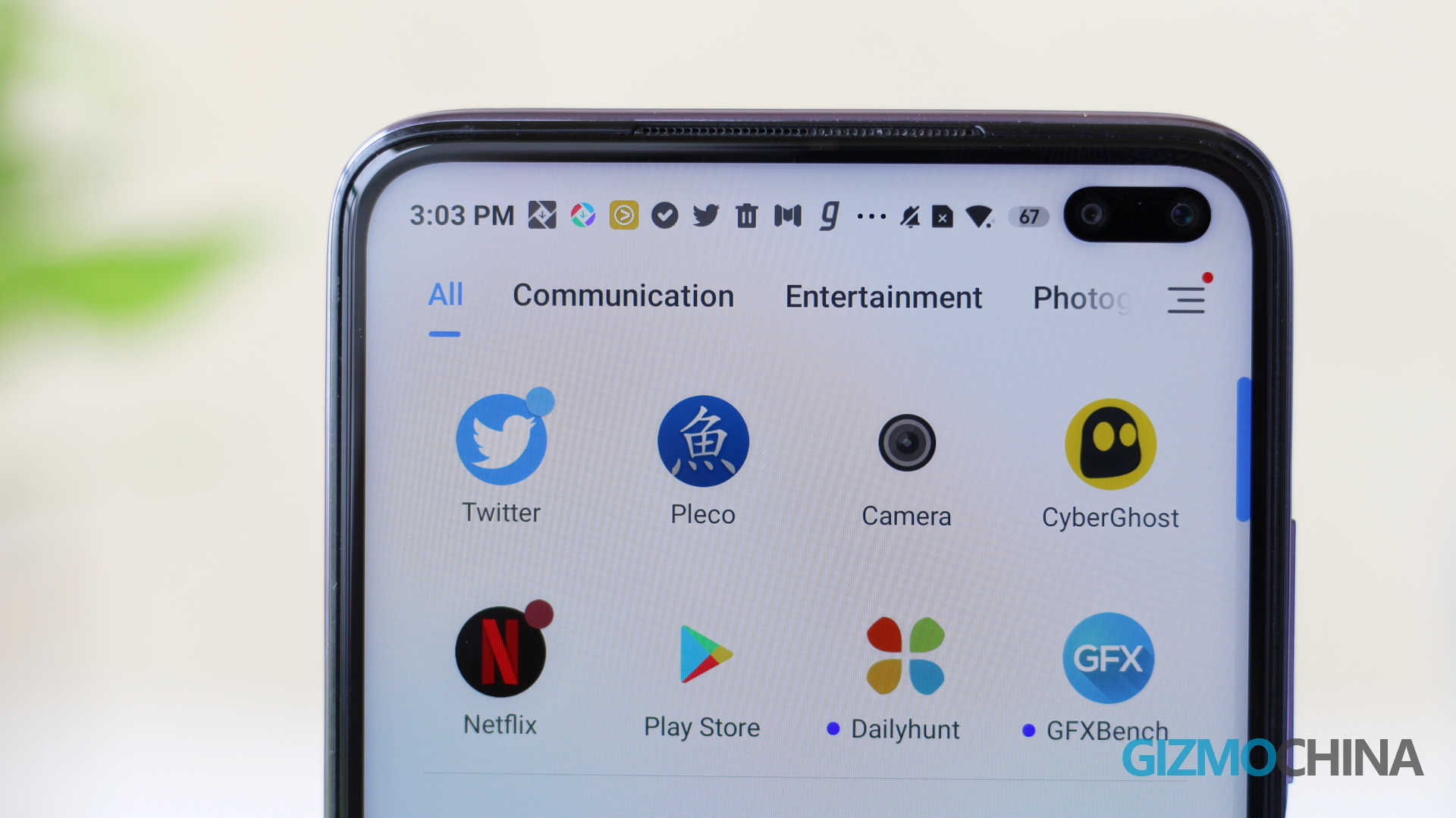
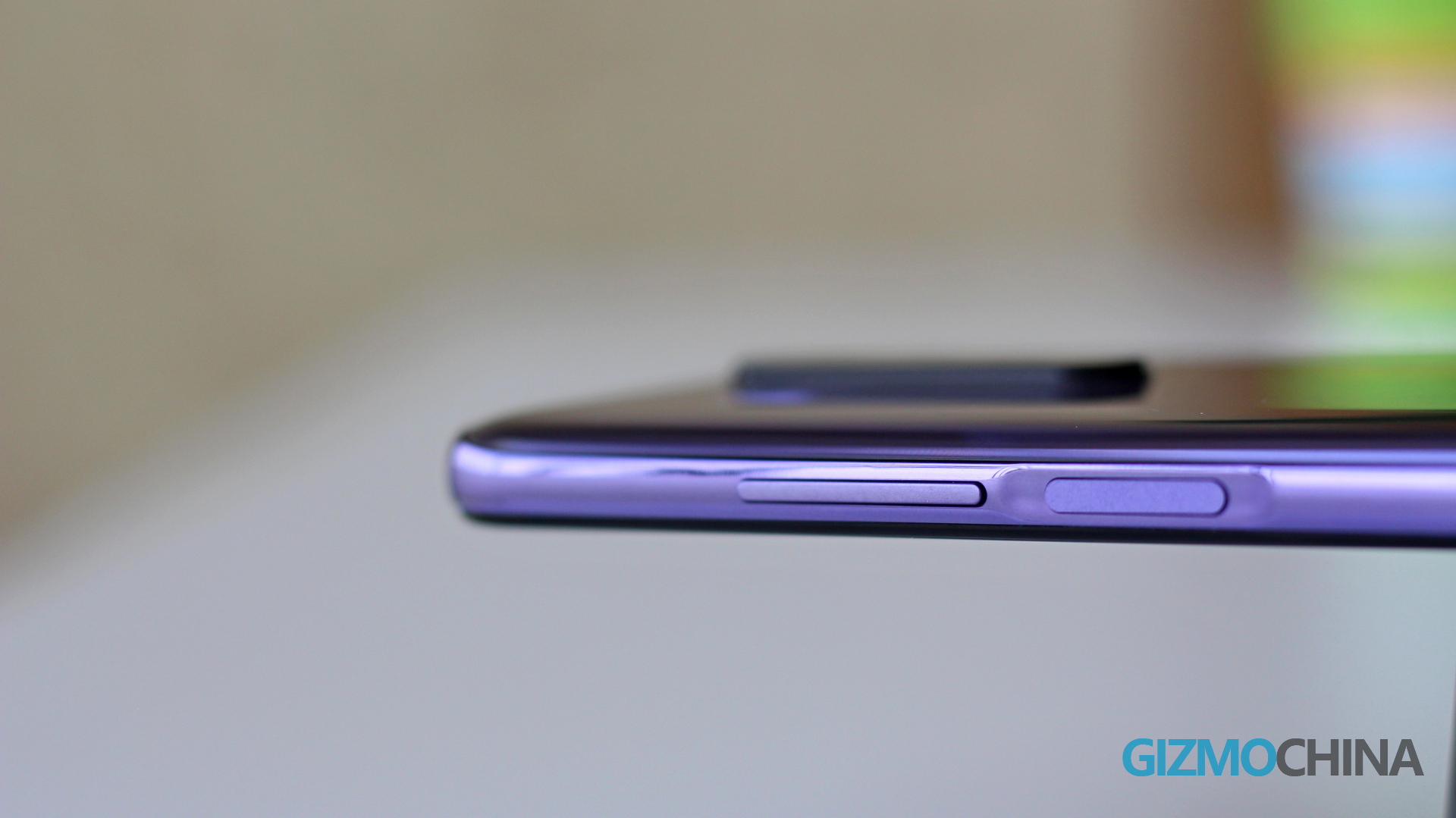
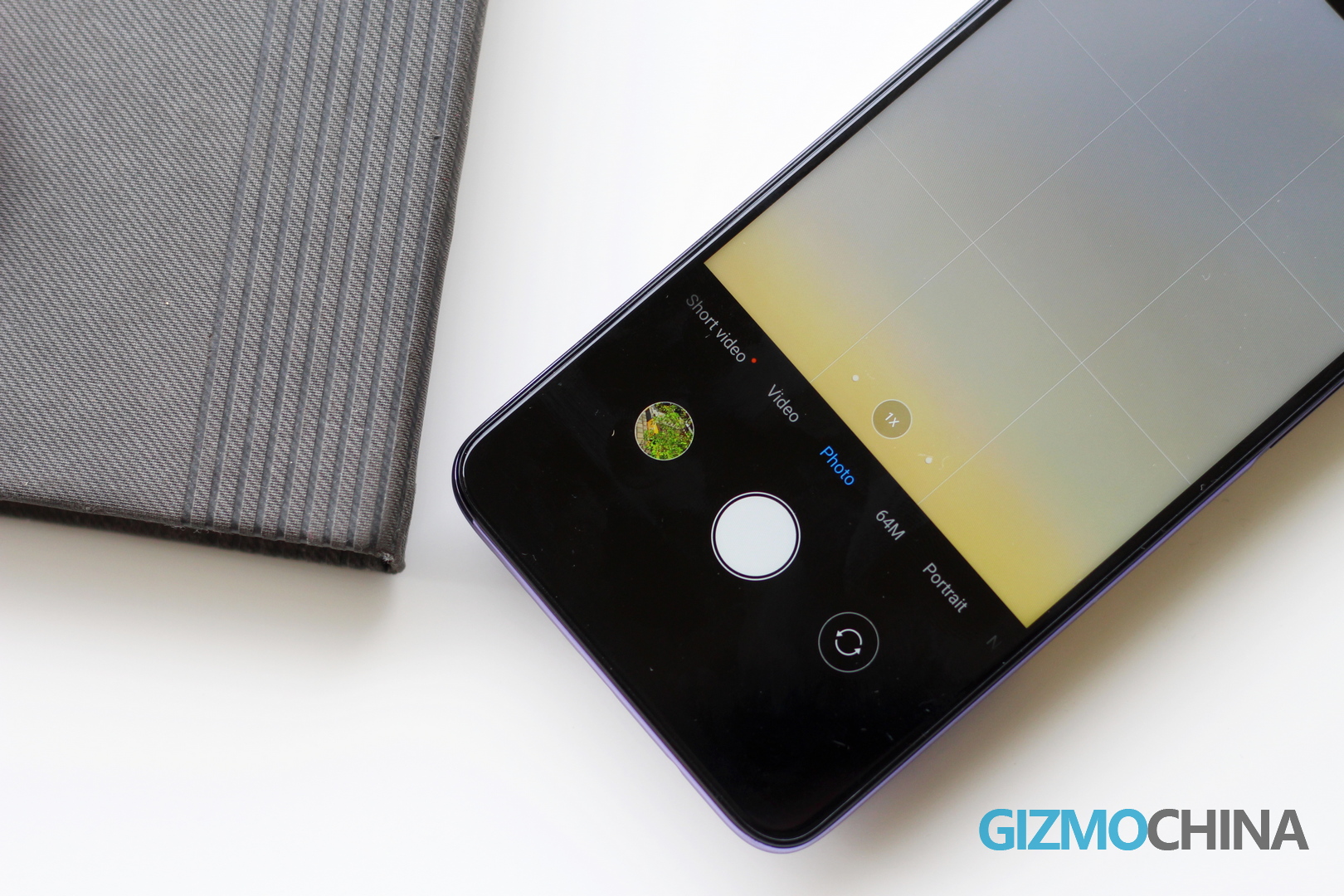
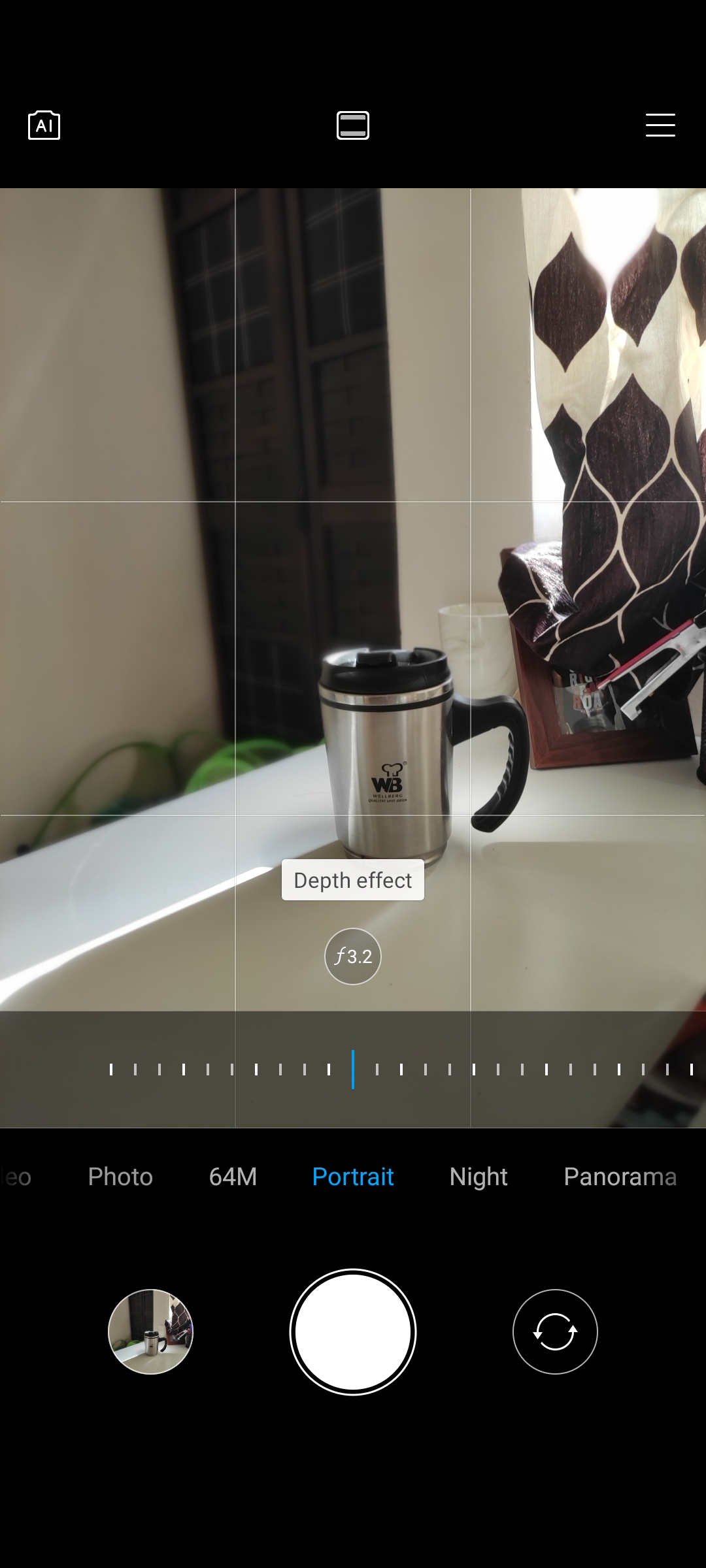
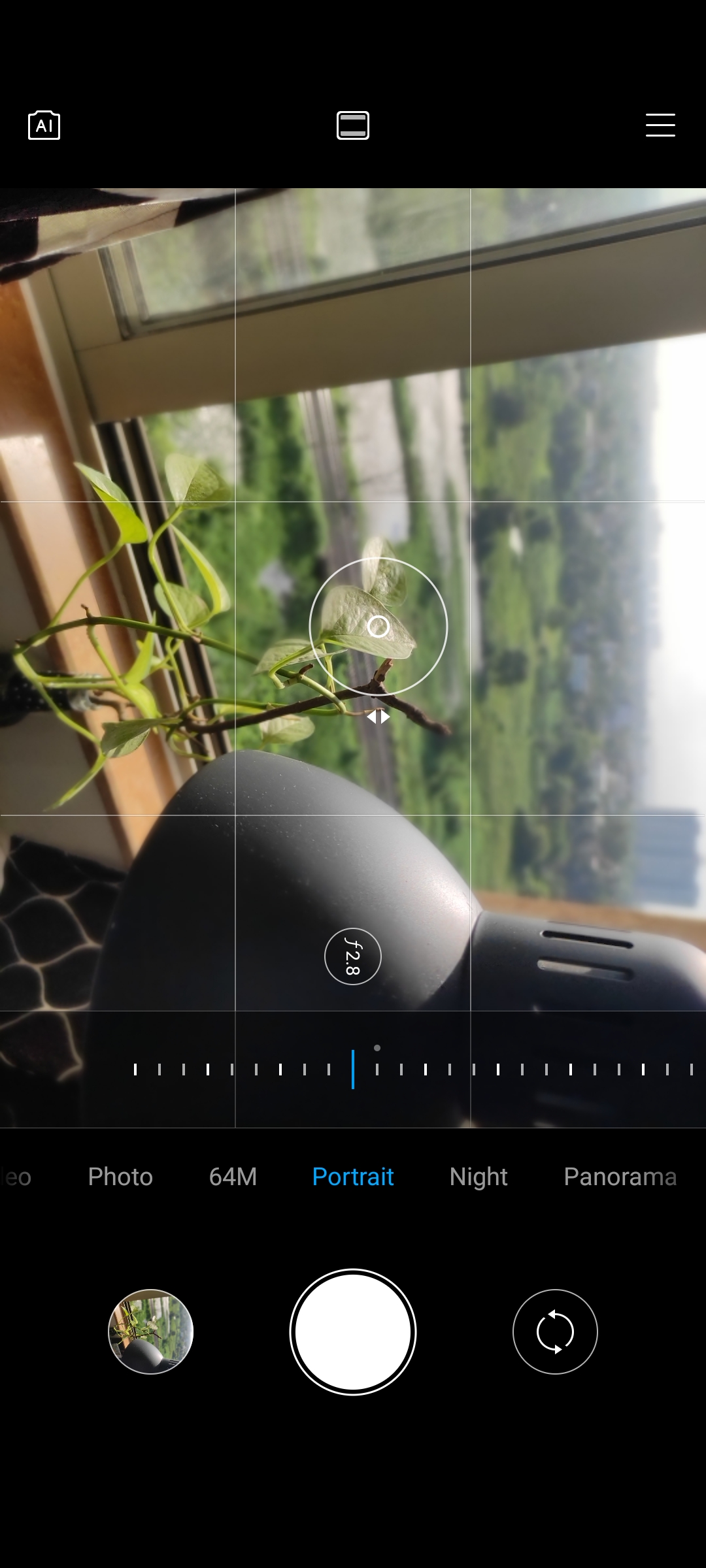
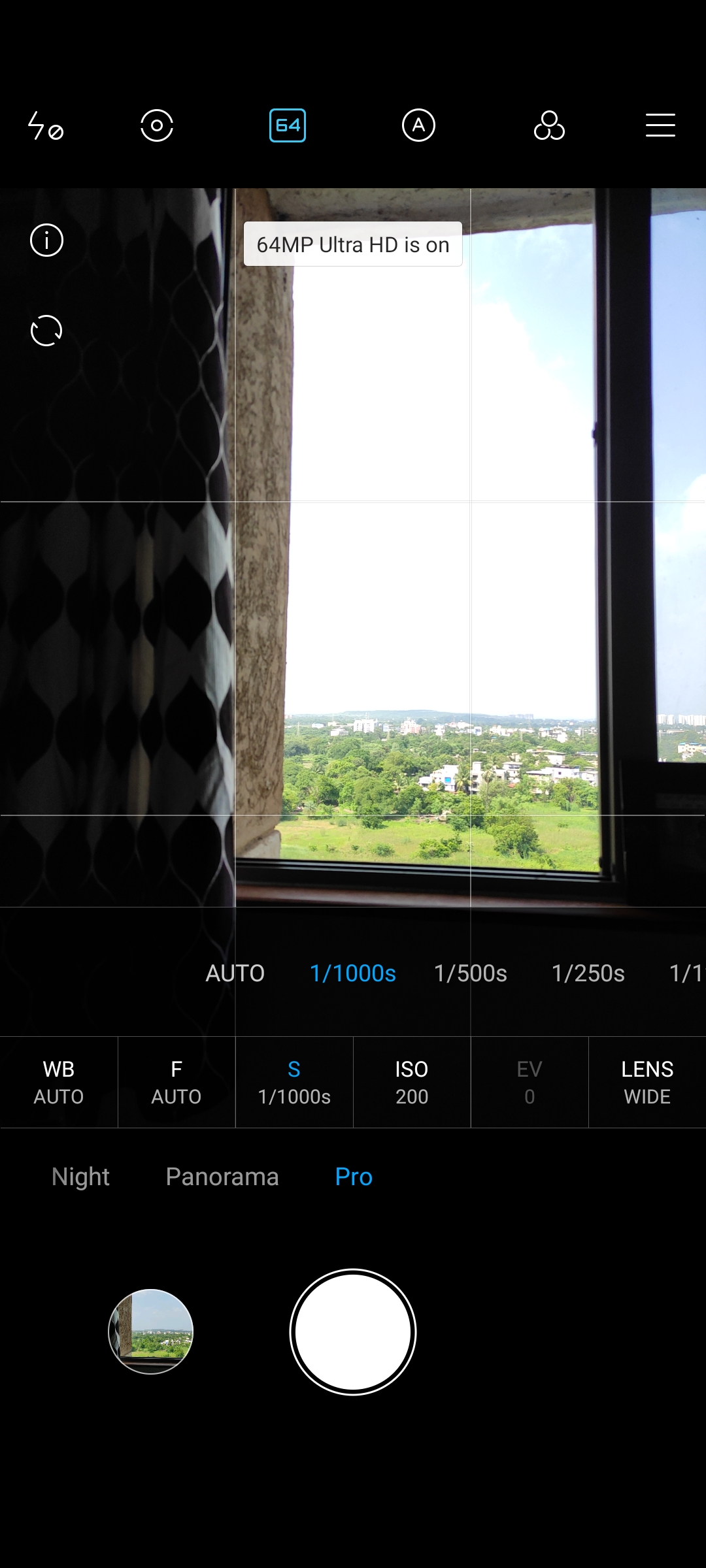
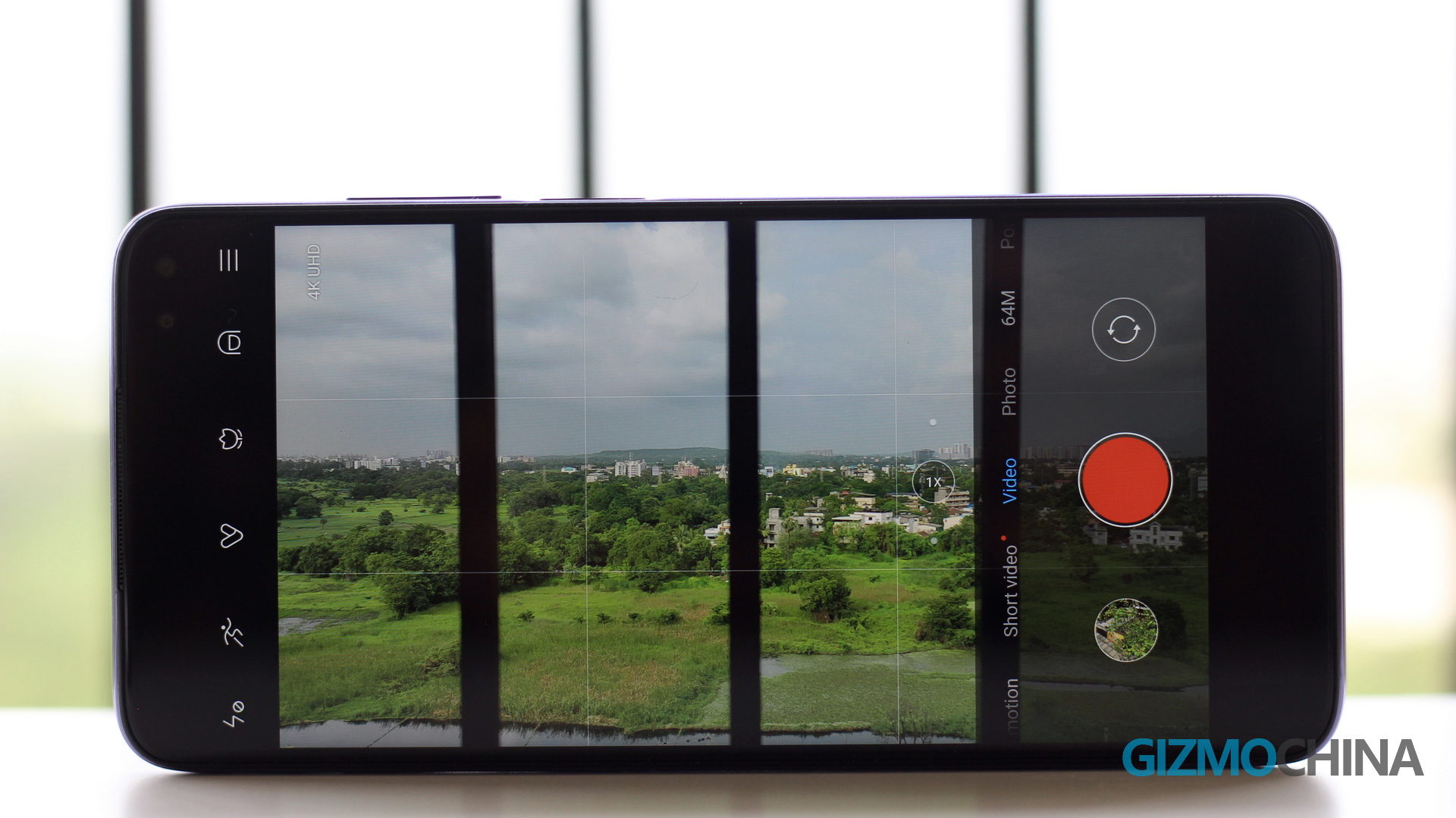
Today, new variants were announced for the Redmi Note 9 Pro series. The Redmi Note 9 Pro will now be available in 4GB RAM + 128GB while the Redmi Note 9 Pro Max will add an 8GB RAM + 128GB version.
The Redmi Note 9 Pro 4GB + 128GB version will go on sale tomorrow, July 28, at 12 noon on Amazon India and Mi.com. It will sell for INR 15,999 (~$214). The new 8GB+128GB Redmi Note 9 Pro Max will go on sale on Wednesday, July 29 for INR 19,999 (~$267).
With the new variants, the Redmi Note 9 Pro and the Redmi Note 9 Pro Max are now available in 3 configurations each.
The Redmi Note 9 Pro series was announced in March in India. The two devices share a lot of specs such as having a 6.67-inch FHD+ display, a Snapdragon 720G processor, and a 5020mAh battery. However, while the Pro comes with a 48MP quad rear camera setup and a 16MP selfie camera, the Redmi Note 9 Pro Max has a 64MP quad rear camera setup and a 32MP selfie camera. The Redmi Note 9 Pro also supports 18W fast charging while the Redmi Note 9 Pro Max supports 33W fast charging.
Samsung‘s 2020 Galaxy S20 flagship series features the Galaxy S20 Ultra which was dressed in the best of hardware including the camera configuration and that was well received. There are indications that the tech giant may stick with the same strategy with the Galaxy S21 Ultra.
Samsung Galaxy S20 Ultra
Recent rumours tip that the Korean tech giant may be planning to utilise the unannounced 5nm Exynos 1000 processor solely for the Galaxy S21 Ultra in addition to the obvious upgrades such as more RAM, bigger battery, and others. The tipster also stated that the customary Galaxy S21 may highlight an Exynos 991 or Exynos 992, whatever Samsung chooses to name it toward the end.
that is being debated as the roster, the 990 was considered too, but not much success, so far* they are also talking about changing the name Exynos, so a 2×1 leak i guess 🙂
He likewise expresses that the Exynos 990 was thought of, however taking a gander at how the processor failed to major up with the Snapdragon 865, it’s to some degree evident that Samsung will forgo utilizing this in its next lead run for 2021. Prior, it was rumoured that the Snapdragon 875 was excessively costly, driving Samsung to look for another option. Normally, the Galaxy S21 isn’t expected until 2021, so Samsung has a few to months to choose what kind of processor will be available in each model.
The Exynos 991, or Exynos 992 could be utilized to bring down the retail cost of the Galaxy S21, as Samsung will allegedly stay with a 60Hz refresh rate alternative with the base model to cut down the expense. While this may incense a lot of clients, Samsung needs to utilize such measures and forestall its flagship mobile phone prices from arriving at another ‘high’. Fortunately, since Samsung hasn’t formally affirmed this data, it’s ideal to consume it with a pinch of salt until it is official.
Xiaomi’s Redmi in March launched the Redmi Note 9 Pro Max in India with a starting price of Rs. 14,999 ($200). The premium mid-range smartphone was announced to come in three variants – 6GB+64GB, 6GB+128GB and 8GB+128GB. However, only the 6GB+64GB and 6GB+128GB variants have been on sale all this while.
Redmi Note 9 Pro Max
The company has now announced that the 8GB+128GB variant of the Redmi Note 9 Pro Max will go on sale for the first time in India. The first sale will take place on Wednesday, July 29 and will run simultaneously on Amazon.in, Mi.com, and Mi Home Stores. It will retail for Rs,19.999 ($267)
As a reminder, the Redmi Note 9 Pro Max features a 6.67-inch IPS LCD screen that supports Full HD+ resolution. The Snapdragon 720G processor fuels the device with LPDDR4x RAM and UFS 2.1 storage. The MIUI 11 based Android 10 comes preinstalled on the phone. A microSD card slot is on board for additional storage.
At the front, it has a 32-megapixel selfie snapper. The back panel has a quad-camera setup with a 64-megapixel primary lens, an 8-megapixel ultrawide shooter, a 5-megapixel macro lens and a 2-megapixel depth sensor. There is support for 33W fast charging for its massive battery of 5,020mAh capacity.
The phone comes in colors like Interstellar Black, Glacier White and Aurora Blue.
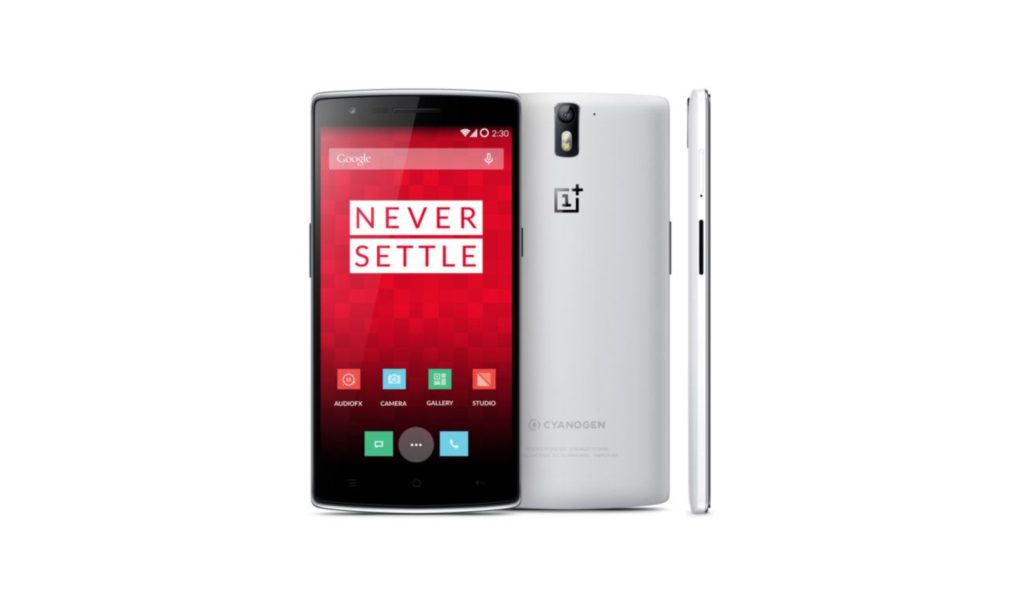
OnePlus One was the Chinese smartphone maker’s first-ever handset. It launched in 2014 with Android KitKat. The device got official support up to Marshmallow. Since it is popular in the custom ROM community, the phone has received multiple ROMs with every new Android release thereafter. Now, even after six years from its launch, the handset is getting Android 10 support, thanks to LineageOS 17.1.
LineageOS 17.1 builds based on Android 10 began to release for supported devices from April 2020. Since then, new devices have been added support for the ROM. OnePlus One is the latest phone to get support for the release.
Anyway, it is worth noting that builds for OnePlus’ fist smartphone are yet to go live. But we expect it to happen anytime soon. Also, if you are wondering to install it on your old phone, do note that initial builds may have bugs. That’s because LineageOS 17.1 will be the first-ever Android 10 custom ROM for the OnePlus One.
On the other hand, if you still happen to have an OnePlus One, it would be probably laying somewhere around in a drawer collecting dust. Hence, it won’t be a problem installing a buggy custom ROM on a handset, which has been sitting idle without any use.
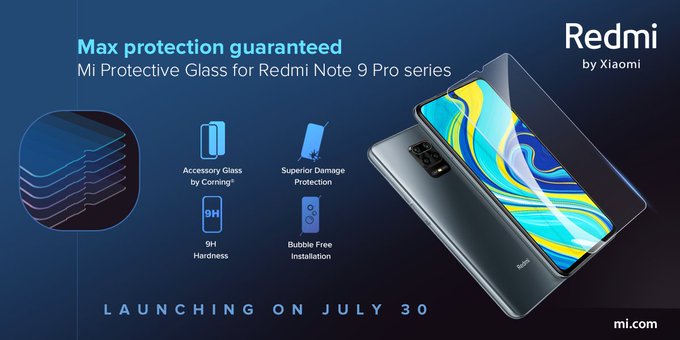
One phone accessory that has become really popular since touchscreen phones became mainstream is the screen protector. A screen protector can be made from a plastic film or can be made of glass, however, the aim is the same – to protect the display. Today, Xiaomi has announced the Mi Protective Glass for the Redmi Note 9 Pro and Redmi Note 9 Pro Max.
The screen protector is made using Accessory Glass by Corning which is said to be an alkali-aluminosilicate glass with better protection than the one offered by generic soda-lime tempered glass. Compared to soda-lime tempered glass, this provides 5x the protection. Xiaomi says the glass has 9H hardness and claims it offers superior damage protection.
This is not the first Mi Protective Glass to be announced by Xiaomi. The manufacturer also announced for the Redmi Note 8 series last year. Just like the one for the Redmi Note 8 series, this too has a notch even though the Redmi Note 9 and Redmi Note 9 Pro Max have punch holes.
Actually, both the Redmi Note 9 Pro and Redmi Note 9 Pro Max phones have Gorilla Glass 5 protection on both sides. Nevertheless, the Mi Protective Glass should provide additional protection for the displays of the two devices.
Xiaomi is yet to announce the price of the tempered glass but we believe it will not sell for more than ₹599 (~$8) when it goes on sale on July 30.
Last year, Motorola launched the Razr flip phone with a flexible OLED screen. The phone was adjudged to be a cool phone but with some inferior specs compared to existing flagship models expected in 2020. However, it was well-received among fans and that has prompted Motorola to hatch plans to release the RAZR 2020 which is already in the works.
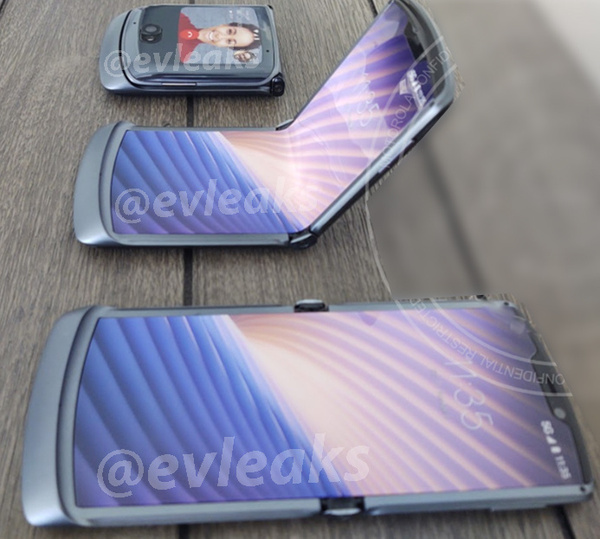
Right now, renders of the RAZR 2020 has leaked online, thanks to tipster Evan Blass (@evleaks). According to the tipster, the phone bears the codename Odyssey and is also known as RAZR 5G. That is obviously because it will be powered by a Snapdragon 765G SoC which supports 5G connectivity.
The renders come in a Mercury Silver colour which confirms the rumour that the clamshell phone may arrive in a Mercury Silver colour edition. The designs similar in all the visible aspects to the RAZR launched in 2019.
The Motorola Razr 5G is expected to house a 6.2-inch Flex View P-OLED flexible display. It may come with a secondary Quick View G-OLED screen of 2.7 inches. The Lenovo-owned company is expected to launch the Razr 5G with improved cameras as compared to its 4G LTE variant. Instead of a 5-megapixel front camera, the Razr 5G is likely to house a 20-megapixel selfie snapper. The 16-megapixel rear camera could be swapped for a 48-megapixel Samsung GM1 sensor.
Further, the RAZR 2020 was certified by 3C in China showing the presence of 18W fast charge support as against 15W on its predecessor. The Razr 5G is also expected to house a 2,845mAh battery as against a 2,510mAh battery on the Razr 4G.
There is no official word yet as to when the 5G foldable smartphone will be launched.
Samsung’s Galaxy Unpacked event is next week and practically all the products that will be unveiled at the event have already been leaked. Samsung has now released a trailer that shows us silhouettes of the devices that will be announced including the Galaxy Fold 2.
The Galaxy Z Fold 2 is coming with a Snapdragon 865 Plus processor. It will pack a larger secondary display, triple rear cameras, and come in Bronze Gold, a color that will appear on other products launching on that day. The device will also have a flexible punch-hole display with a 120Hz refresh rate and stereo speakers.
The Galaxy Unpacked event is scheduled for August 5 and it will be live-streamed.
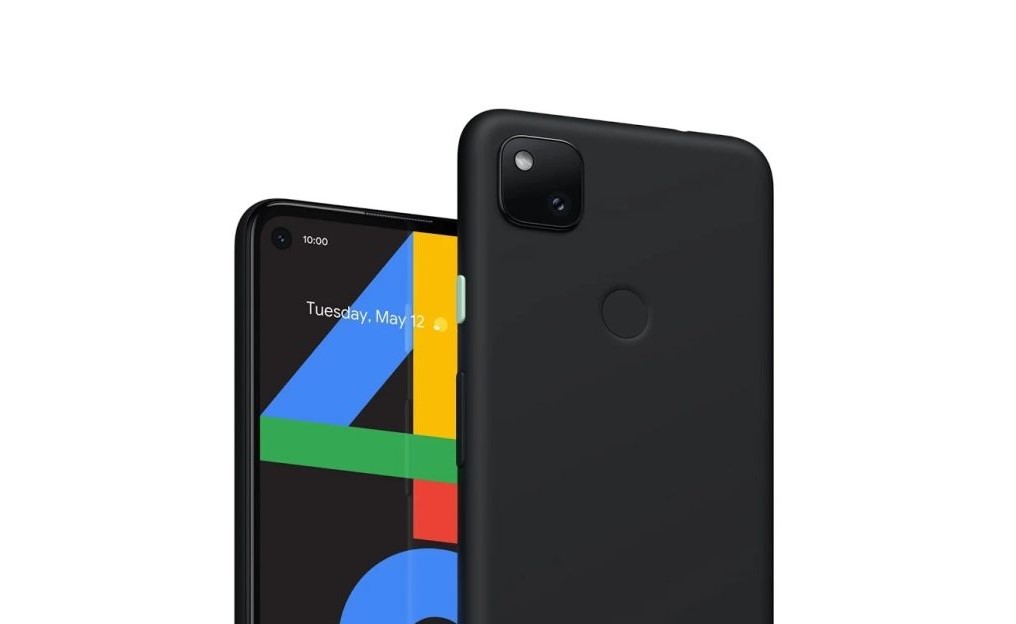
Google‘s upcoming Pixel 4a smartphone has been elusive for quite a while now despite several launch dates pushed forward which ended up not materializing. Once again the Pixel 4a has now been rumoured to launch on August 3 by a Twitter tipster.
Tipster @jon_prosser had earlier tipped over two weeks back that the smartphone will launch on the said date. Today’s tweet is a confirmation of his earlier tweet, affirming the information is 100% correct. The tipster shot into the limelight with the iPhone SE 2020 with all of his shared details turning out to be correct, including the launch date. Bu then, this isn’t an official confirmation. Google is yet to announce any launch details regarding the Pixel 4a.
Finally happy to give a final update on Pixel 4a!
The last date I gave you (provided in the tweet below) is the launch day!
Pixel 4a. August 3. 100%.
Only question is… Do you care anymore? Or have they pushed this off too much? https://t.co/SZkQpvRAZI
The Pixel 4a is expected to launch with a 3,140 mAh battery as well as support for 18W fast charging. The phone packs a single rear camera housed inside a square-shaped module at the upper left corner. The handset will feature a 5.7-5.7-inch display with the bezels better trimmed than the Pixel 3a’s. The display will use a single punch hole for the selfie camera. The phone may arrive in the U.S with a starting price of $349.
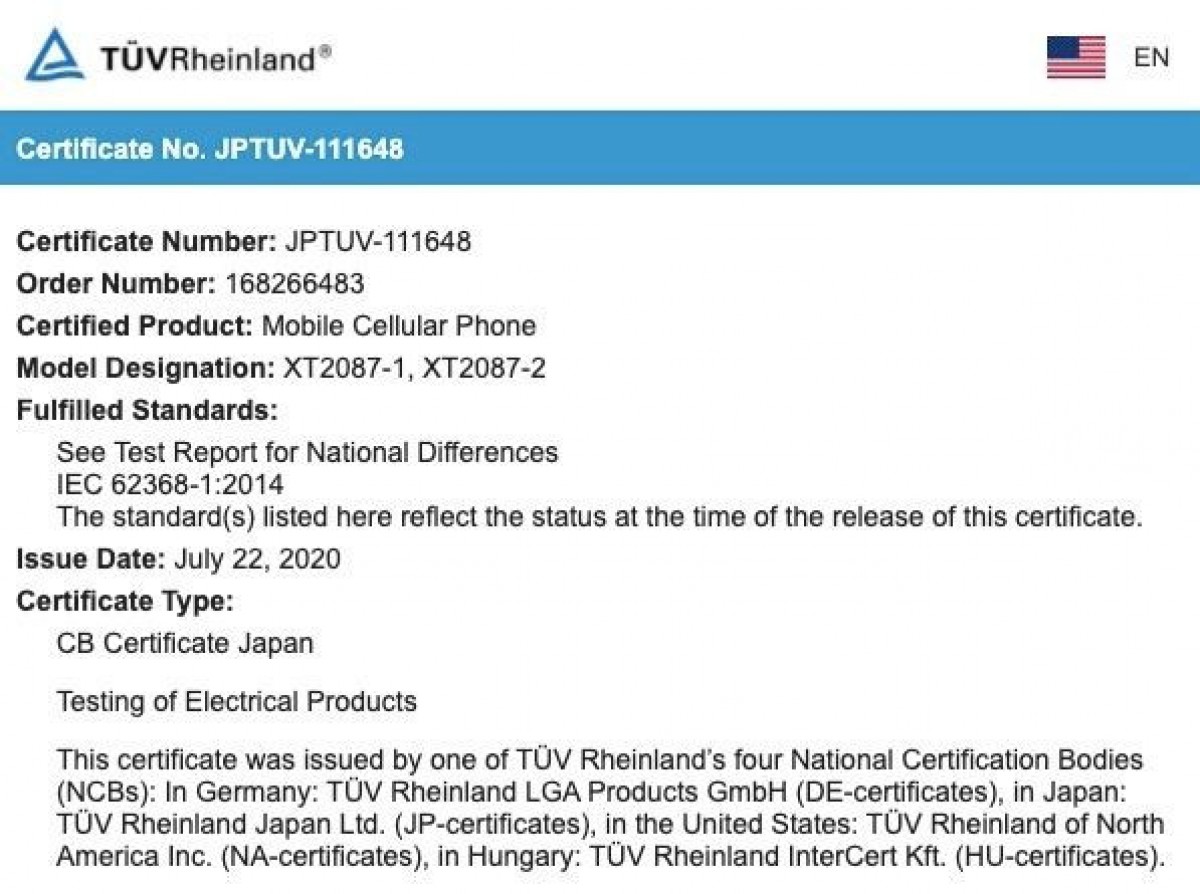
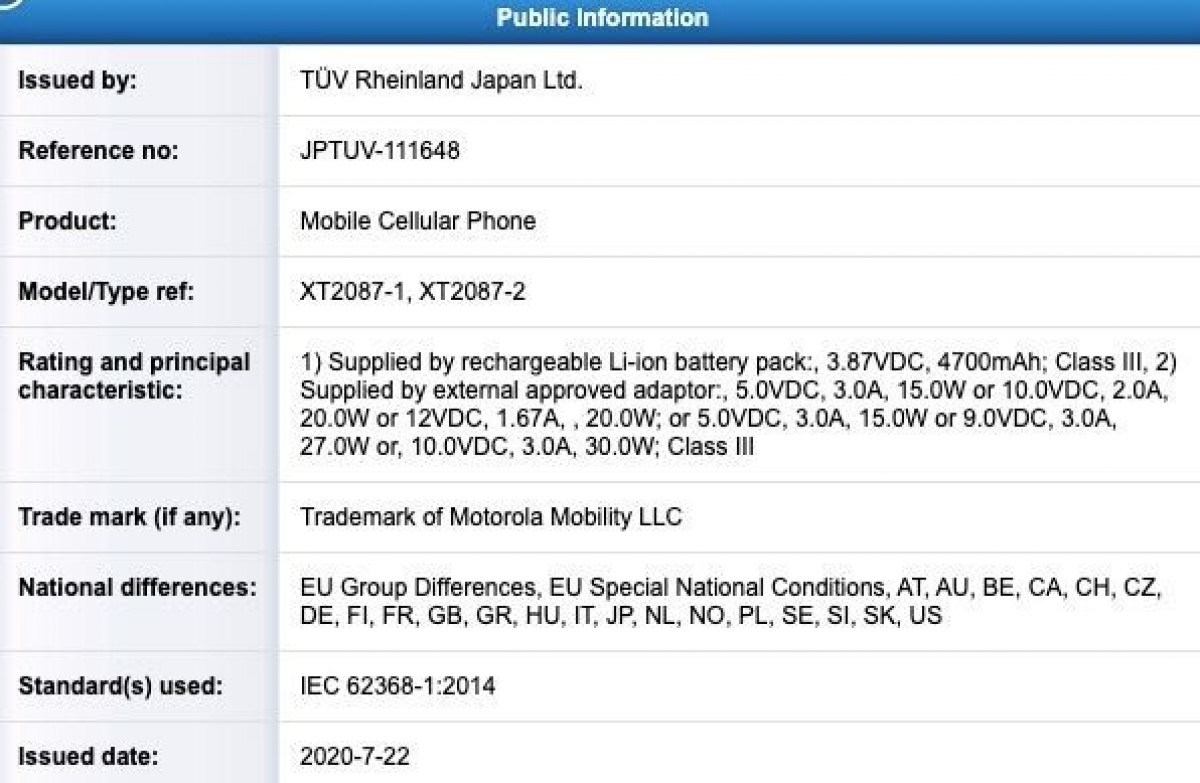
Motorola‘s Moto G9 Plus had earlier made an appearance in a leak revealing the likely retail price. The smartphone also clinched EEC certification. As an indication that the device may soon be launched, the Moto G9 Plus has again been spotted on TUV Rheinland bearing the same model numbers XT2087-1 and XT2087-2.
The TUV Rheinland’s certification pages show the battery capacity and charging speeds. This includes the presence of a large 4700mAh battery and a super-fast 30W charging support. The two model numbers could be that there may be two variants, perhaps the Moto G9 alongside the G9 Plus.
Earlier on, the device was certified by EEC which reveal the presence of up to 4GB of RAM as well as internal storage of 128GB. If we are to hudge by the number of certifications the mobile phone has garnered, it is safe to assume that the launch is by the corner. Motorola may just spring a surprise and announce the models in one of its key markets in the coming weeks without any pre-launch teaser.
OnePlus Nord is considered to be one of the best mid-range smartphones of 2020. But to make a phone at this price, the company had to sacrifice some things. Instead of a metal frame like on flagships with glass design, OnePlus went with a plastic frame on the Nord. Due to this, the handset miserably fails JerryRigEverything durability test.
The newly launched OnePlus Nord is the first mid-range smartphone from the brand in years after the OnePlus X. It nails the basics with a good 90Hz FHD+ AMOLED display protected by Corning Gorilla Glass 5, a good enough Qualcomm Snapdragon 765G SoC with support for 5G, 30W fast charging, and OxygenOS based on Android 10 with support for two platform updates as well as three years of security updates.
However, despite housing a glass sandwich design, the device comes with a plastic frame like most budget phones cheaper than its price. Although it is not noticeable, one can easily make out if the frame is metal or not by holding the handset in hand.
Having said that, as you can see from the Zach Nelson video attached above, the plastic frame of the OnePlus Nord breaks near the volume rockers. This results in a snap damaging the display altogether but interestingly, the outer Gorilla Glass remains intact.
In a nutshell, if you are buying the OnePlus Nord, then make sure to have a case on all the time to avoid any accidental bends, which may damage your phone.
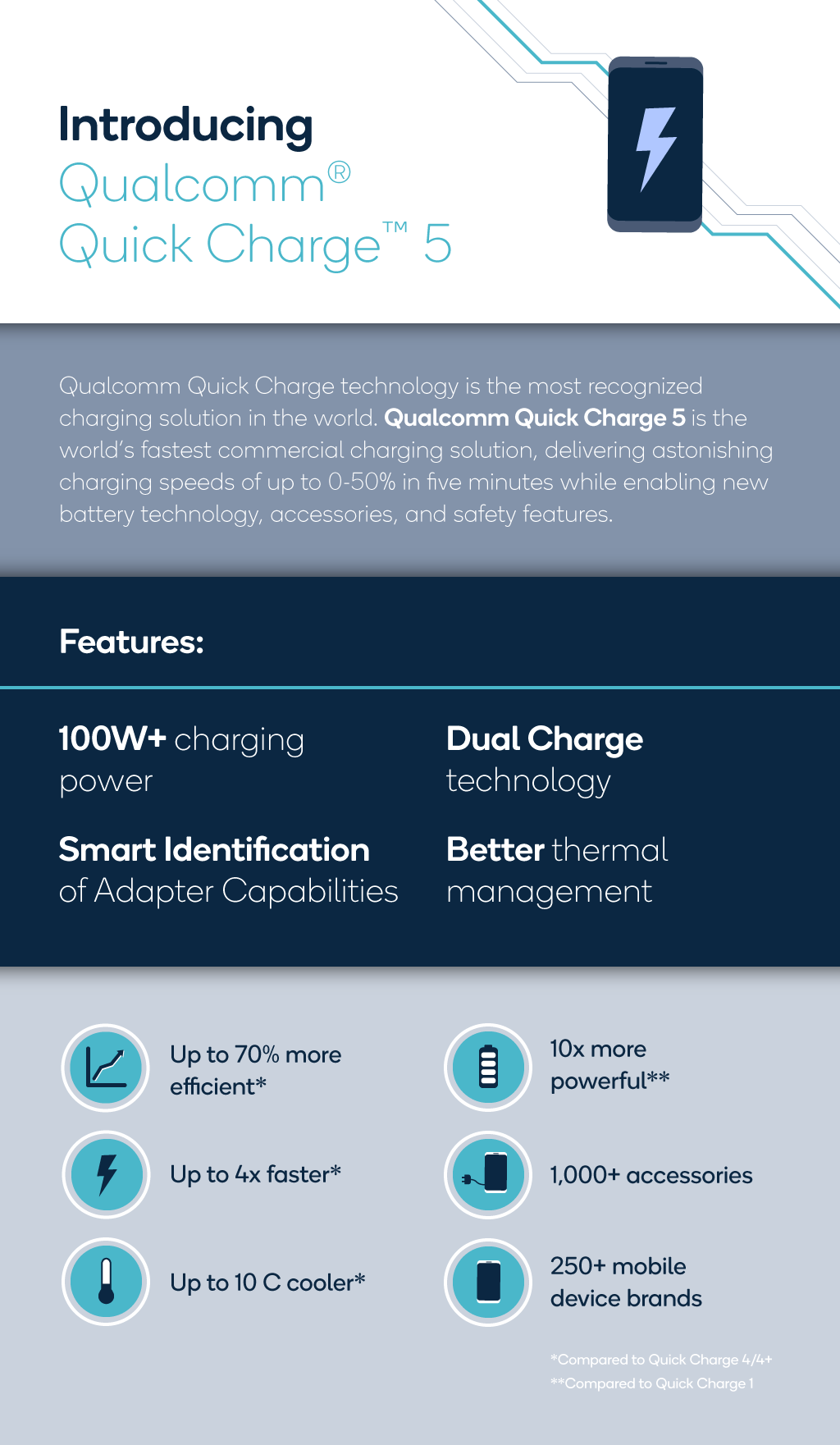
Back in April, Qualcomm announced Quick Charge 3+ for affordable devices. It came as a surprise since there was already Quick Charge 4 and Quick Charge 4+. Today, it has announced Quick Charge 5 which brings key upgrades, the key one being support for 100W+ fast charging.
Lately, we have heard manufacturers such as OPPO and Realme announce fast charge technology over 100W+. The aforementioned fast charging technologies are proprietary, but for several other manufacturers, Qualcomm’s Quick Charge is what they use which explains why the semiconductor company is also jumping on the high-power fast charging train.
Qualcomm says the new fast-charging technology is the world’s fastest commercial charging solution.
Quick Charge 5 enables charging speeds of up to 0-50 in five minutes (for a 4500mAh battery), with 100W+ charging power with our new Dual Charge Technology
Quick Charge 5 uses Dual Charge technology, similar to what a number of other manufacturers use for their high-power fast charging technology. The battery is split into two and Qualcomm says a single battery can be charged at up to 45W to 50W.
Qualcomm says the new battery technology is 70% more efficient than Quick Charge 4+ and offers 10 times more power than Quick Charge 1.0. It is also up to 10°C cooler than Quick Charge 4 and Quick Charge 4+.
Worried about battery life? Qualcomm says battery saver algorithms will extend battery life cycles. Quick Charge 5 will not only use Qualcomm Battery Saver but also use the new Qualcomm Smart Identification of Adapter Capabilities to extend battery life.
XDA-Developers explains Smart Identification of Adapter Technologies as the ability of Quick Charge 5 to identify the real capabilities of a power source and adjust charging based on that rather than going with the advertised power source which may be incorrect. Some of the details it can identify include voltage behavior, current behavior, and voltage ranges. There are also several protections; up to 12 voltage, current, and temperature protections built into Quick Charge 5.
Quick Charge 5 is also backward compatible with previous versions up to Quick Charge 2.0. Charging accessories will have a voltage range of 3.3V to 20V and 3A, 5A, and greater than 5A for current. There is also support for USB Power Delivery.
Quick Charge 5 is currently supported by the Snapdragon 865 and Snapdragon 865 Plus Mobile Platforms as well as future premium and top-tier mobile platforms. It is currently in sampling with manufacturers and expected to appear in devices as early as this quarter.
Mid-range processors such as the Snapdragon 765 series, Snapdragon 720G, and Snapdragon 690 are not supported. However, Qualcomm promises that the technology will eventually be available for the mid-range category but just not the current offerings.
Xiaomi has announced that its future devices will support Quick Charge 5.
A lot of people are calling the OnePlus Nord the highest value for money mid-ranger of 2020. But is it the truth or you can get something better in the actual market? In order to find it out, we are comparing the new handsets with all the 5G phones released in the same price range. After comparing it to the Xiaomi Mi 10 Lite and the Moto G 5G Plus, now it is time for two other affordable 5G phones sold in the global market. If we exclude the Huawei P40 Lite 5G, there are two other Chinese 5G affordable phones sold globally for less than €500. We are referring to the Realme X50 5G and the Oppo Find X2 Lite. Are they better than OnePlus Nord in terms of quality-price ratio? Let’s discover it together.
OnePlus Nord vs Realme X50 5G vs OPPO Find X2 Lite
Quad 48 + 8 MP + 5 + 2 MP f/1.8, f/2.3, f/2.4 and f/2.4
Dual 32 + 8 MP f/2.5 and f/2.5 front camera
Quad 48 + 8 MP + 2 + 2 MP f/1.8, f/2.3, f/2.4 and f/2.4
Dual 16 + 2 MP f/2.0 and f/2.4 front camera
Quad 48 + 8 + 2 + 2 MP f/1.7, f/2.2, f/2.4 and f/2.4
32 MP f/2.0 front camera
BATTERY
4115 mAh
Fast charging 30W
4200 mAh
Fast charging 30W
4025 mAh, Fast charging 30W
ADDITIONAL FEATURES
Dual SIM slot, 5G
Dual SIM slot, 5G
Dual SIM slot, 5G
Design
At first glance, you may think that the Oppo Find X2 Lite has a less interesting design because it comes with a waterdrop notch instead of a punch-hole display. But the truth is that the Oppo Find X2 Lite is the device with the most premium design of this comparison. It comes with a glass back and an aluminum frame just like flagships, it is the most compact device and it is even thinner and lighter than Realme X50 5G and OnePlus Nord. So, despite it is more anonymous, you get a definitely better build quality. Unfortunately, it is not dual SIM, while OnePlus Nord and Realme X50 5G sport a dual SIM slot.
Display
If you want the best display overall, choose the OnePlus Nord without thinking twice. You get a lower refresh rate than Realme X50 5G (90 Hz vs 120 Hz), but unlike the X50, you get an AMOLED panel with the HDR10+ certification which provides a way higher image quality. We do not recommend the Oppo Find X2 Lite more than the OnePlus Nord because it lacks a high refresh rate, but it still comes with a great AMOLED panel. Unfortunately, Realme X50 5G has an IPS display with inferior image quality, but you get a 120 Hz refresh rate and, if you are a gamer, it might be a better option for you.
Hardware/Software
OnePlus Nord, Oppo Find X2 Lite, and Realme X50 5G are all powered by the Snapdragon 765G mobile platform including 5G connectivity. But with the OnePlus Nord, you can get a higher-end memory configuration with 12 GB of RAM and 256 GB of internal storage, if you spend a bit more. In the global market, Realme X50 5G is 6/128 GB, while Oppo Find X2 Lite is 8/128 GB. Note that Oppo Find X2 Lite is the only with a 3.5 mm audio jack. Realme X50 5G and Oppo Find X2 Lite have a similar customized UI based on Android 10, while OnePlus Nord is different with its Oxygen OS close to stock Android.
Camera
The OnePlus Nord takes the gold medal even when it comes to the camera department. It is the only one to feature OIS for the main cameras, and it has a better front camera department including a 32 MP main sensor and an 8 MP ultrawide lens. But you should note that Oppo Find X2 Lite is very close, even better in several scenarios. If you want an above-average camera phone, just do not choose the Realme X50 5G.
Battery
Realme X50 5G has a bigger battery, but it does not mean that it lasts more on a single charge. We had no chance to test all of these devices, but according to us, Oppo Find X2 Lite may last more in a lot of scenarios due to its smaller display with a standard refresh rate and the AMOLED technology.
Price
OnePlus Nord is priced €399/$469 in its base variant, Realme X50 5G starts from €369/$435, and Oppo Find X2 Lite costs €499/$589. The OnePlus Nord looks like the most complete device in this comparison thanks to its great display and cameras, but do not forget that Oppo Find X2 Lite offers better build quality and the audio jack; it is even more compact.
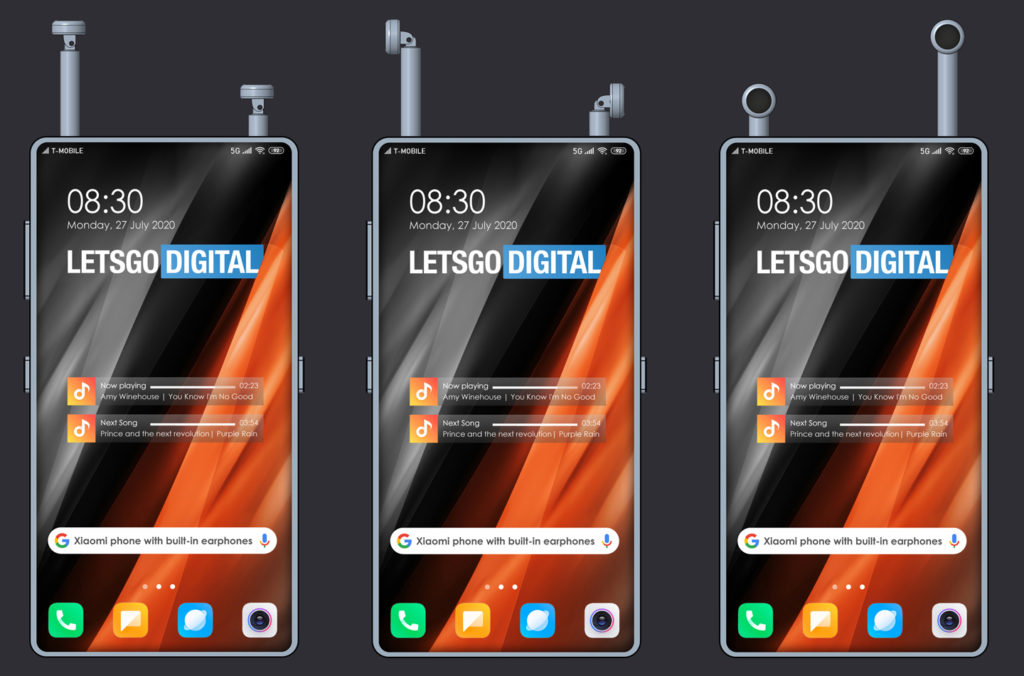
Xiaomi has been lately applying for weird futuristic design patents. Recently, we saw a smartphone design with an all-around screen and a huge 108MP “AI Super Camera”. Now, just a few days later, another patent has emerged that shows a handset with built-in TWS.
As always, this new patent was spotted by LetsGoDigital. The publication also happens to have found the same design last month at the China National Intellectual Property Administration (CNIPA). But only now, they could understand its design, thanks to the documents submitted at The Hague International Design System, which is part of the World Intellectual Property Office (WIPO).
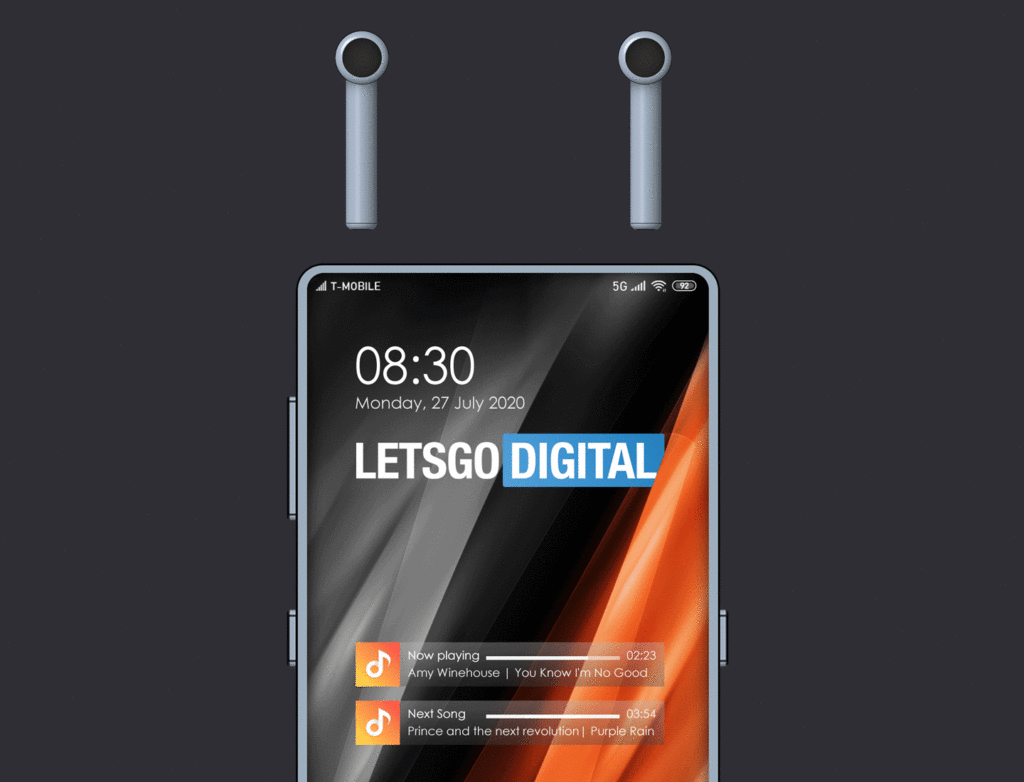
As you can see from the pictures, the smartphone in the design patent is capable of housing a pair of truly wireless earphones, commonly known as TWS. It is similar to the compartment for S Pen on Samsung Galaxy Note series of phones.
The patent does not mention the working of this TWS but it should be connecting with the handset via Bluetooth. Though it is a cool idea to integrate wireless earphones with the phone, it has shortcomings.
For example, housing for buds requires space inside the phone. Hence, the company needs to cut some corners like reduce the battery size to achieve this design. Anyway, we don’t expect Xiaomi to launch such a smartphone in the new future but who knows.
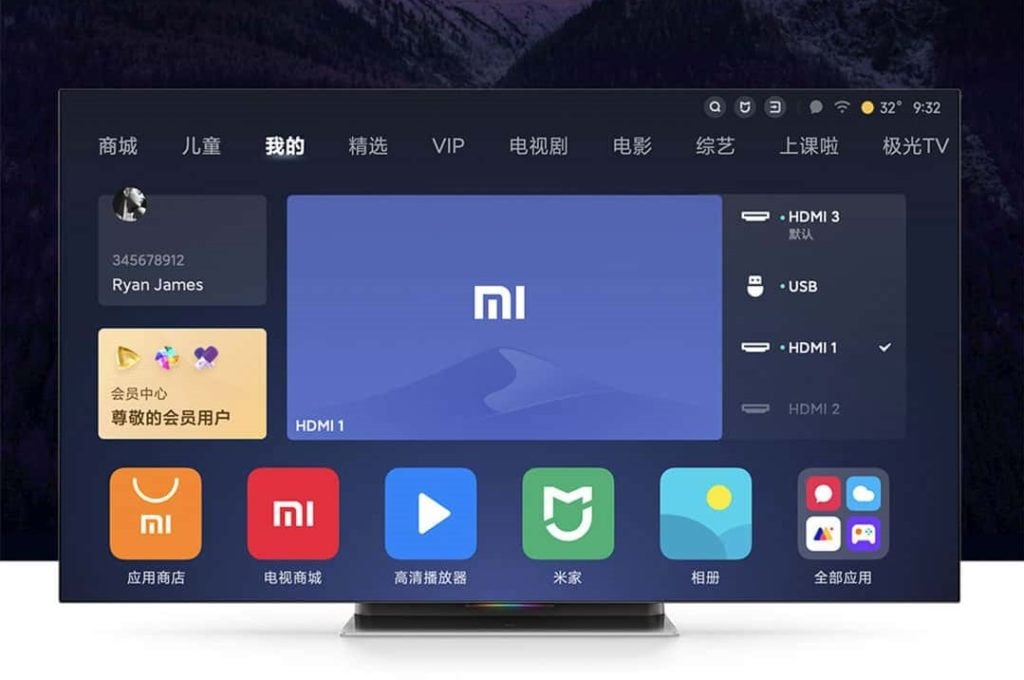
Xiaomi’s smart TV official Weibo platform has announced the data released by Avi Cloud which shows the Mi TV models ranked first in China in terms of fo shipments for the first half of the year 2020. The post also noted that the Mi brand has led the smart TV market for the sixth consecutive quarter.
It would be recalled that Xiaomi’s TV shipments and sales volume both ranked first in China for the entire 2019. The company recorded an annual shipment of 10.46 million units, becoming the first TV brand in the history of the Chinese market with an annual shipment of over 10 million. Lei Jun, chairman of Xiaomi Group, said last year: “As the home appliance with the largest screen and the most interactive, TV has naturally become a hub product of AIoT. Xiaomi will use major appliances as one of the core aspects of the blueprint for sustainable development in the next 10 years.”
Apart from China, Xiaomi smart TVs are also performing well in India. In 2018, after the Mi TV brand was launched in India, the company announced that it had sold more than 500,000 Mi TVs in over six months. This was a spectacular feat considering the presence already established brands like Samsung in the country.
This year, the brand took things a notch higher in China with the launched of the Mi TV that Master series, which is Xiaomi’s first OLED TV and also Xiaomi’s first ultra-high-end flagship TV. We expect the company to also post positive growth in the second half of the year.
MIUI is the core of Xiaomi’s business. In fact, the company started with its Android skin rather than smartphones. Even the firm’s smart TVs run the same software, which is also known as Patchwall. Do note that Patchwall found on Mi TVs in international markets is merely a launcher but in China, it is the whole system. Having said that, Xiaomi recently announced MIUI for TV 3.0 in its home country with new visuals and features.
MIUI for TV 3.0 Supported Models
Xiaomi unveiled MIUI 12 for its smartphones in late April and since then, the company has been updating the eligible devices. Similarly, it now announces MIUI for TV 3.0 but the information regarding supported TV models is bleak. Anyway, we can surely expect the company roll out this new update to the recently launched Mi TV Master Series 65-inch OLED and Redmi TV X series.
MIUI for TV 3.0 Features
First and foremost, the new version of MIUI for TV brings changes to animations. Following the footsteps of content-first strategy, the system will continue to recommend movies and series by learning user habits like before with new improved AI algorithm. What’s new is the playback can be now resumed quickly as it slowly converts into the background when stopped instead of exiting the player altogether.
Further, the iteration of the software brings profile page for different members of the family. The content recommendation will be unique for different profiles based on watching habits. Even, the Kids Mode is now upgraded to support app controls so that parents can supervise what their children watch directly from their smartphones.
Lastly but not least, the Mi Remote app is now more capable than before. Users can download and install apps directly from their smartphones. Also, they can mirror the TV screen to their handset to navigate to control their smart TV with touch inputs. The remote app also includes a gamepad to play games on TV without investing in a separate controller.
Unfortunately, this OS will mostly not make its way to the international markets as Mi TVs sold in these regions come with Android TV, which is must for Google services like Chromecast, Play Store, and Google Assistant.
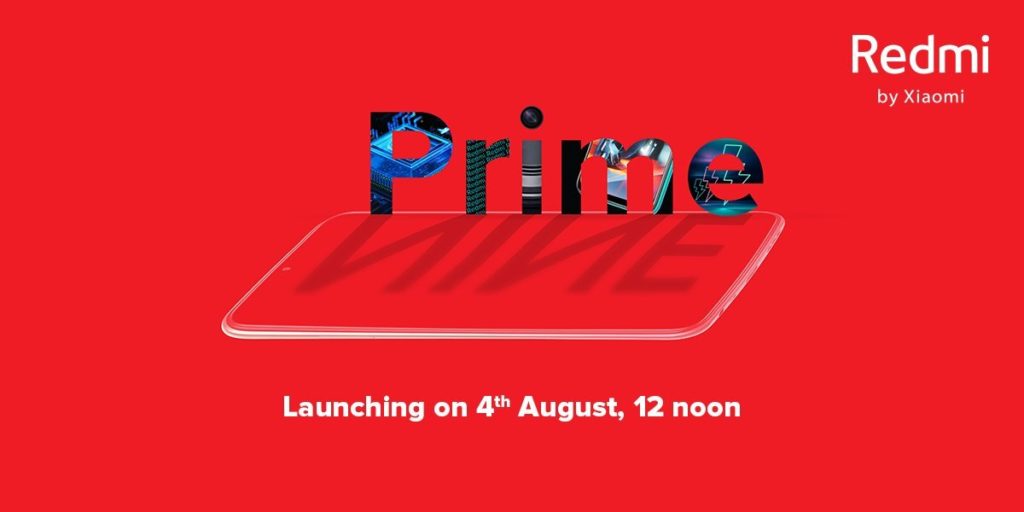
As we speculated the other day, Xiaomi is indeed rebranding the Redmi 9 as Redmi 9 Prime for India. Here’s a teaser video posted by the company on YouTube confirming the handset’s name.
Original Story
India was the debut country for Redmi Note 9 Pro and Redmi Note 9 Pro Max earlier this year. But it will be one of the last regions to get Redmi 9 as Xiaomi India has finally announced its launch date to be August 4. The handset will be exclusive to Amazon and will be available during the annual Prime Day sale (August 6-7).
Xiaomi or rather Redmi India is teasing the Redmi 9 with “Prime” word for every feature. Also, the company is using #BackToPrime, which suggests the handset to retail as Redmi 9 Prime in the country.
For those unaware, the last Xiaomi phone with such branding was Redmi 4 Prime from 2016 but it did not launch in India. Anyway, this is just a speculation and the “Prime” word used in the teaser could mostly mean “Amazon Prime Day” sale and nothing else.
Having said that, the company recently launched Redmi Note 9 in India starting at ₹11,999. Therefore, we expect the upcoming Redmi 9 to retail at a lower price than that. For context, the 4GB + 64GB variant costs CNY 799 ($114) in China and RM 599 ($141) in Malaysia.
The highlights of the handset include MediaTek Helio G80, quad-camera setup, FHD+ display, and 5,020 mAh battery with support for 18W fast charging.
After more than a year’s absence from the smartphone market, Poco made a comeback earlier in 2020 with its Poco X2. While the X2 wasn’t a direct successor to the incredibly popular Poco F1, it still had big shoes to fill. Poco fans have always been extraordinarily demanding, and even with competent specs, it was always going to be tough to meet their expectations.
Poco’s answer was to take help from its big brother – Redmi. So Poco X2 launched in India as a rebranded Redmi K30 4G model from China. This made sense since the K30 was an extremely value for money deal, and it would allow Poco to price it aggressively in India without building a phone from scratch.
Poco has been releasing rebadged models ever since, with the two models after the X2, namely the Poco F2 Pro and Poco M2 Pro being the rebranded Redmi K30 Pro 5G and Redmi Note 9 (EU) models respectively. But today, I won’t go into the ethics of rebadging models. Instead, my focus is to review the Poco X2 and judge it as an independent model.
I have been using the X2 for the past few weeks as my daily driver, and here’s my review of the device.
POCO X2 Overview
165.3 x 76.6 x 8.8mm
208 grams
Snapdragon 720G
8GB RAM + 256GB storage
6.67-inch FHD+ 120Hz IPS LCD
4500mAh battery 27W
MIUI 11 based on Android 10
What’s In The Poco X2 Box?
Phone
Silicone Case
SIM Ejector Pin
2-pin 27W Charger
USB A to C cable
User Manual
You might have already noticed above that the phone doesn’t come with a screen protector installed, so you’ll have to buy it separately. Here are some good ones if you are interested.
POCO X2 Design
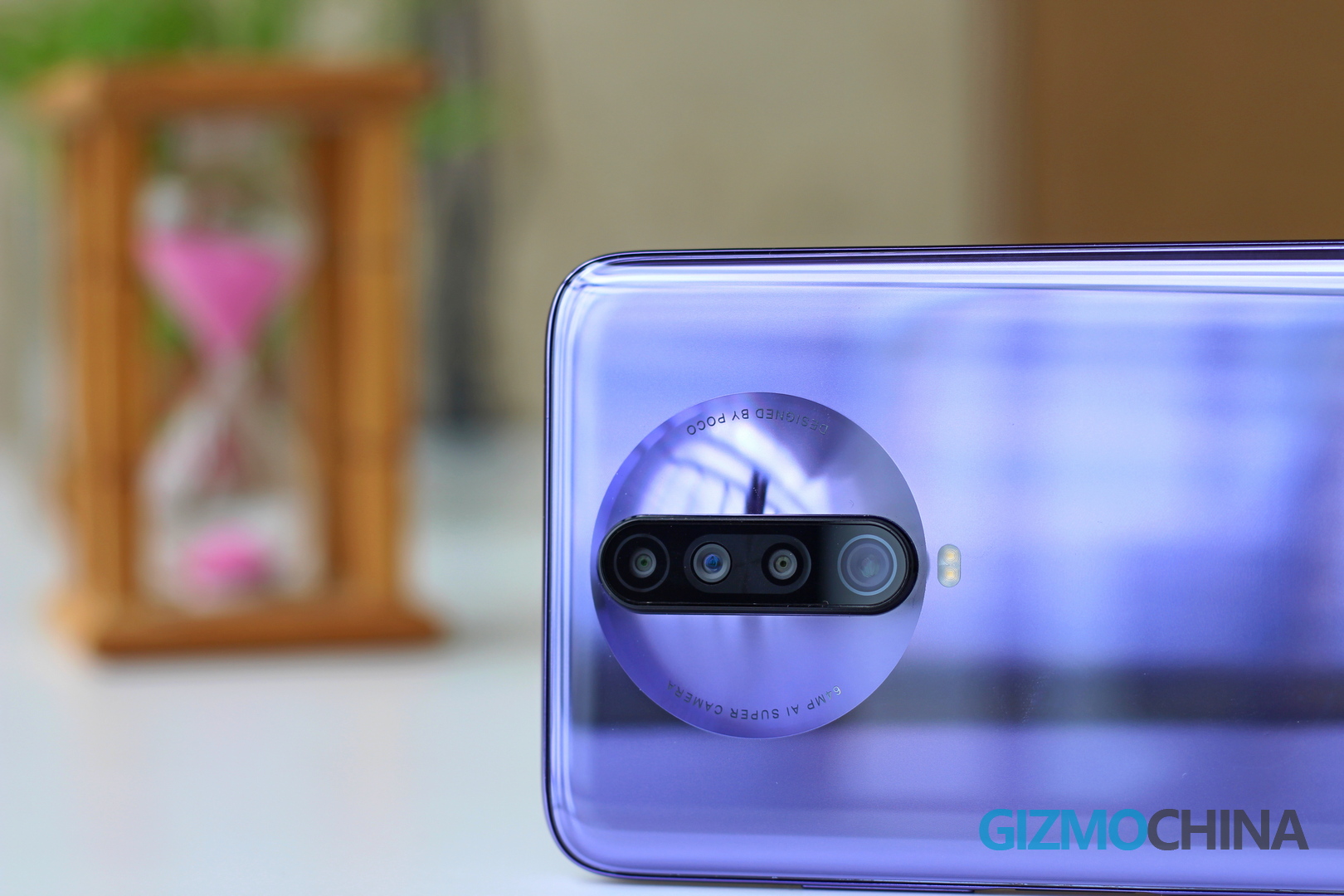
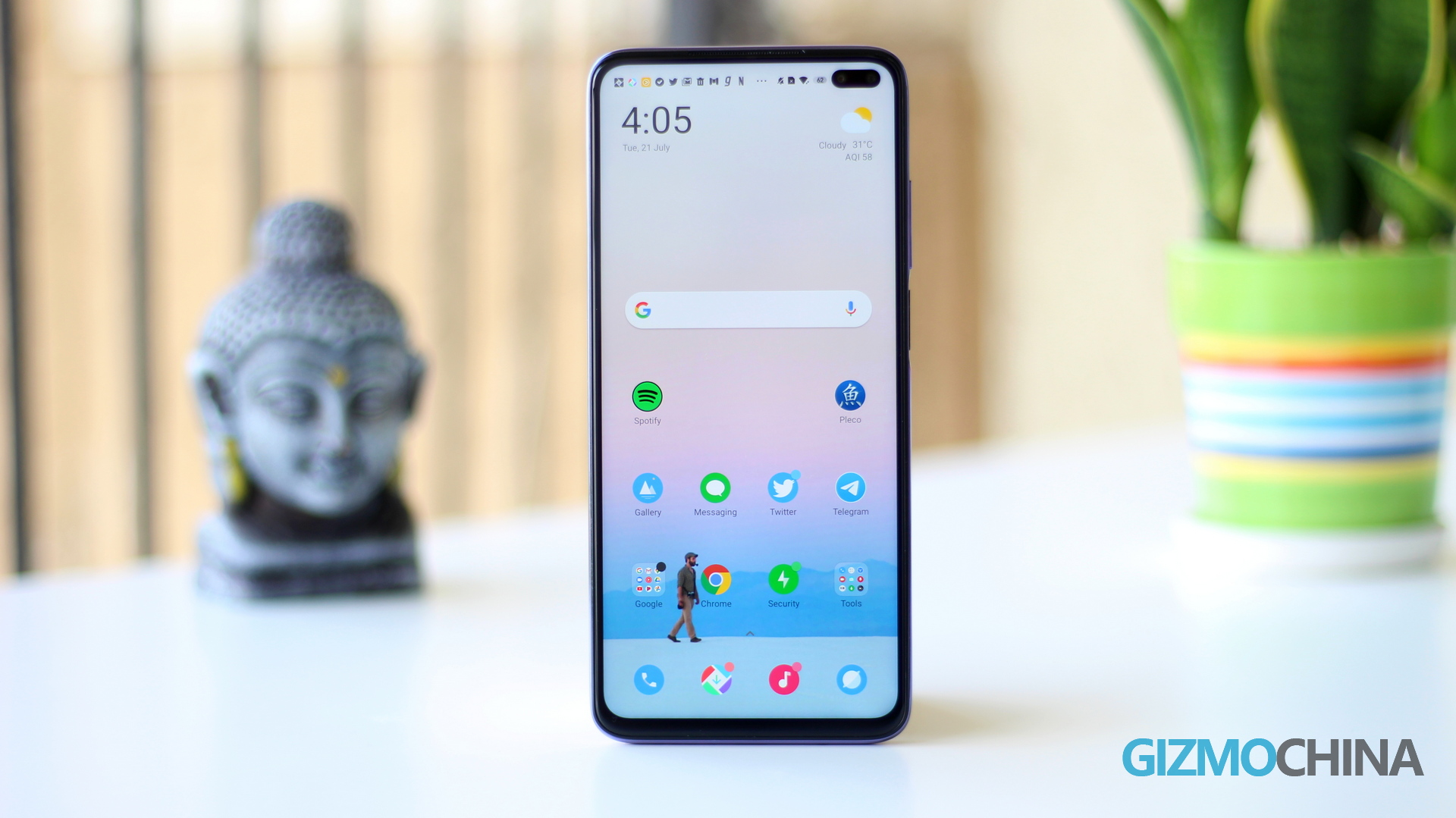
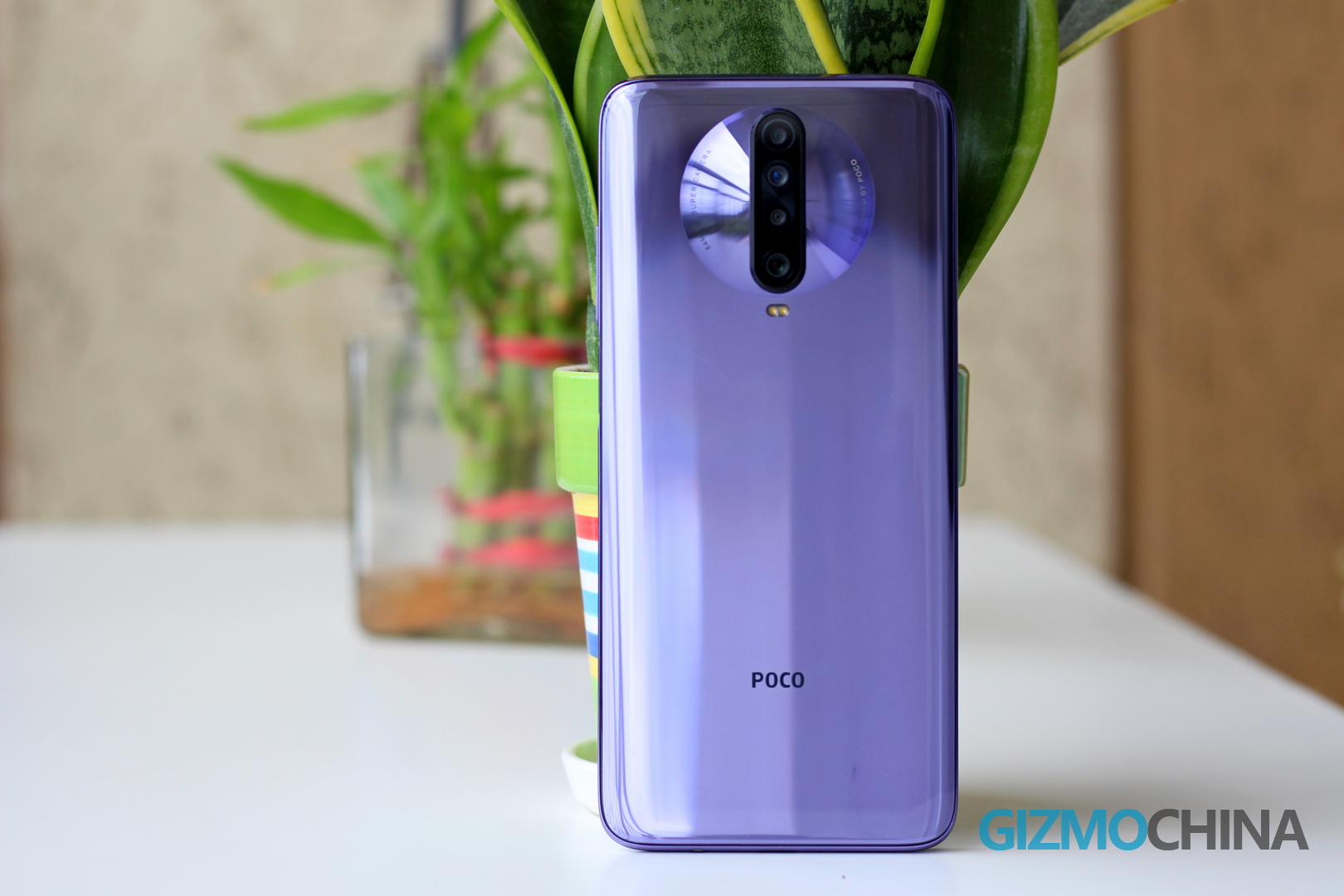
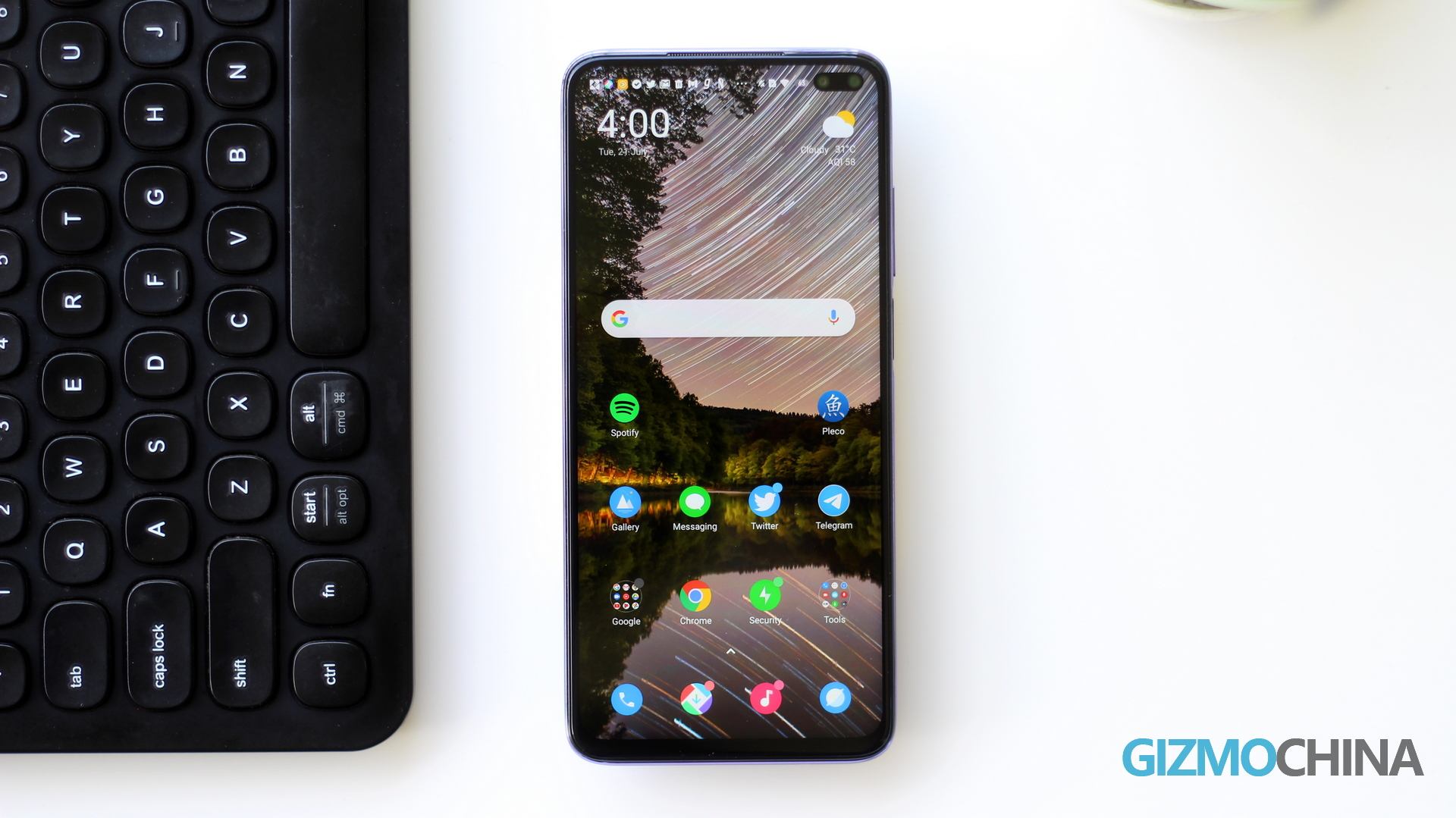
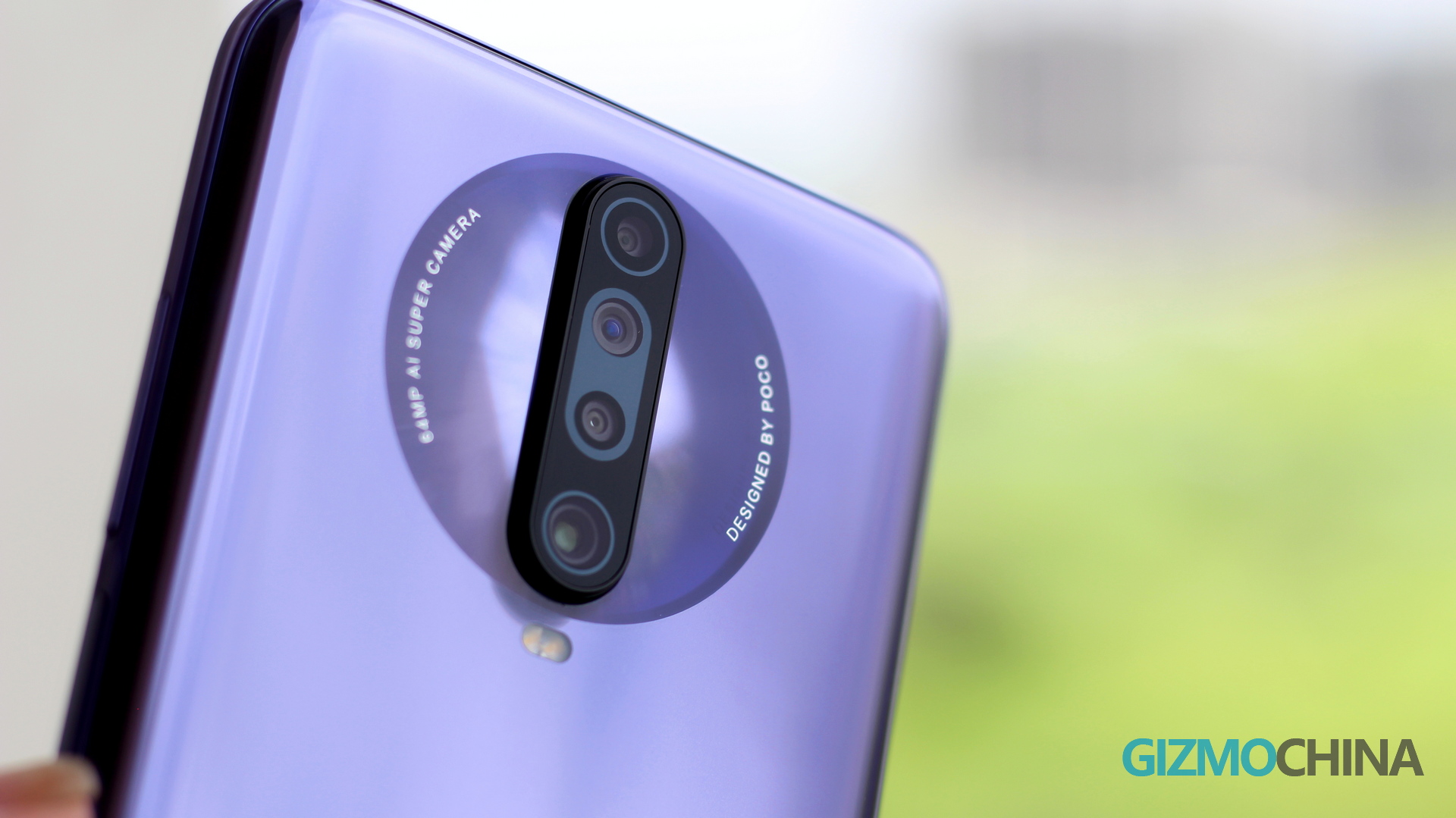
The Poco X2 comes with a familiar design, mainly because it’s a rebranded Redmi K30. So you have a glossy glass back with a pill-shaped camera setup and dual-selfie shooters upfront.
The Glass sandwich design features Gorilla Glass 5 on the front as well as the back, with a plastic frame for support. There’s no denying that the Poco X2 is a heavy smartphone. It weighs 208 grams, making it heavier than some of the top flagships in the market like the OnePlus 8 and the Huawei P40. But you get a large 4500mAh large battery and a premium glass sandwich design to justify this weight. And in its defense, most of its direct rivals such as the Realme 6 Pro and the Redmi Note 9 Pro Max are heavy phones.
The smooth glass at the back and its weight can increase the chances of accidental drops. So I would highly recommend you to protect the phone with a case – the one provided in the box should be good enough for most people. Honestly, having a case on this phone gives me the confidence to be carefree. Even with Gorilla Glass 5 on top, a typical glass sandwich design doesn’t take drops very well – unlike say plastic or a metal phone (my Pixel 2 XL has a few dents here and there but they are hardly visible).
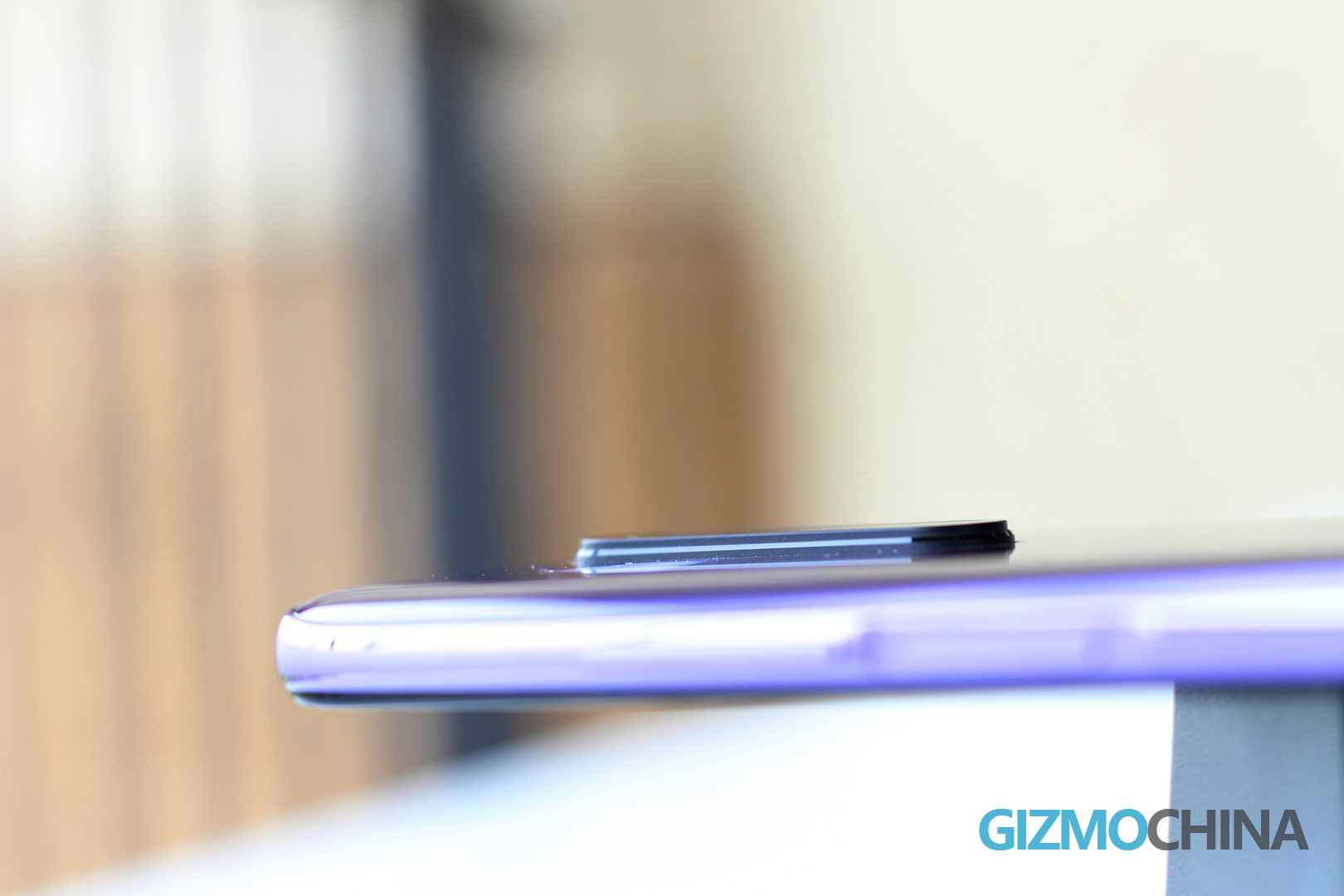
The glass back picks up a few fingerprints, but it’s pretty easy to clean. Also, despite the protruding camera bump, its centered placement ensures the phone doesn’t wobble when placed on the table.
I’ve got the Matrix Purple color variant and it looks pretty unique. But personally I’m not a fan of this purple as it can look quite dull at times. If I had to choose, I would go for its Atlantis Blue color.
1 of 8
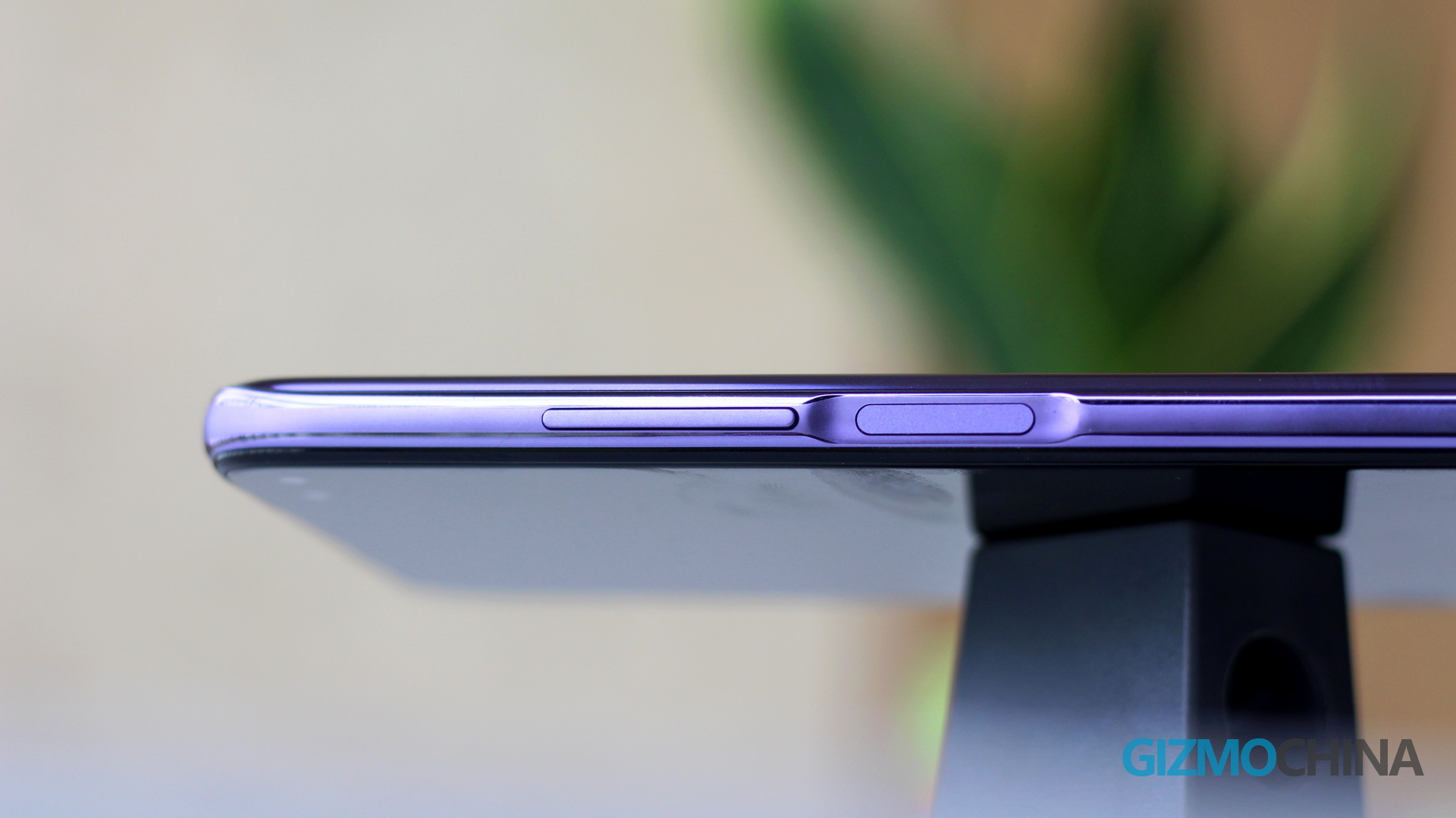
The Poco X2 comes with a side-mounted fingerprint sensor (that’s also its power button) on its right side. The fingerprint recognition is quick and accurate, and I find this sensor placement more convenient than other solutions. The volume buttons are on the same side.
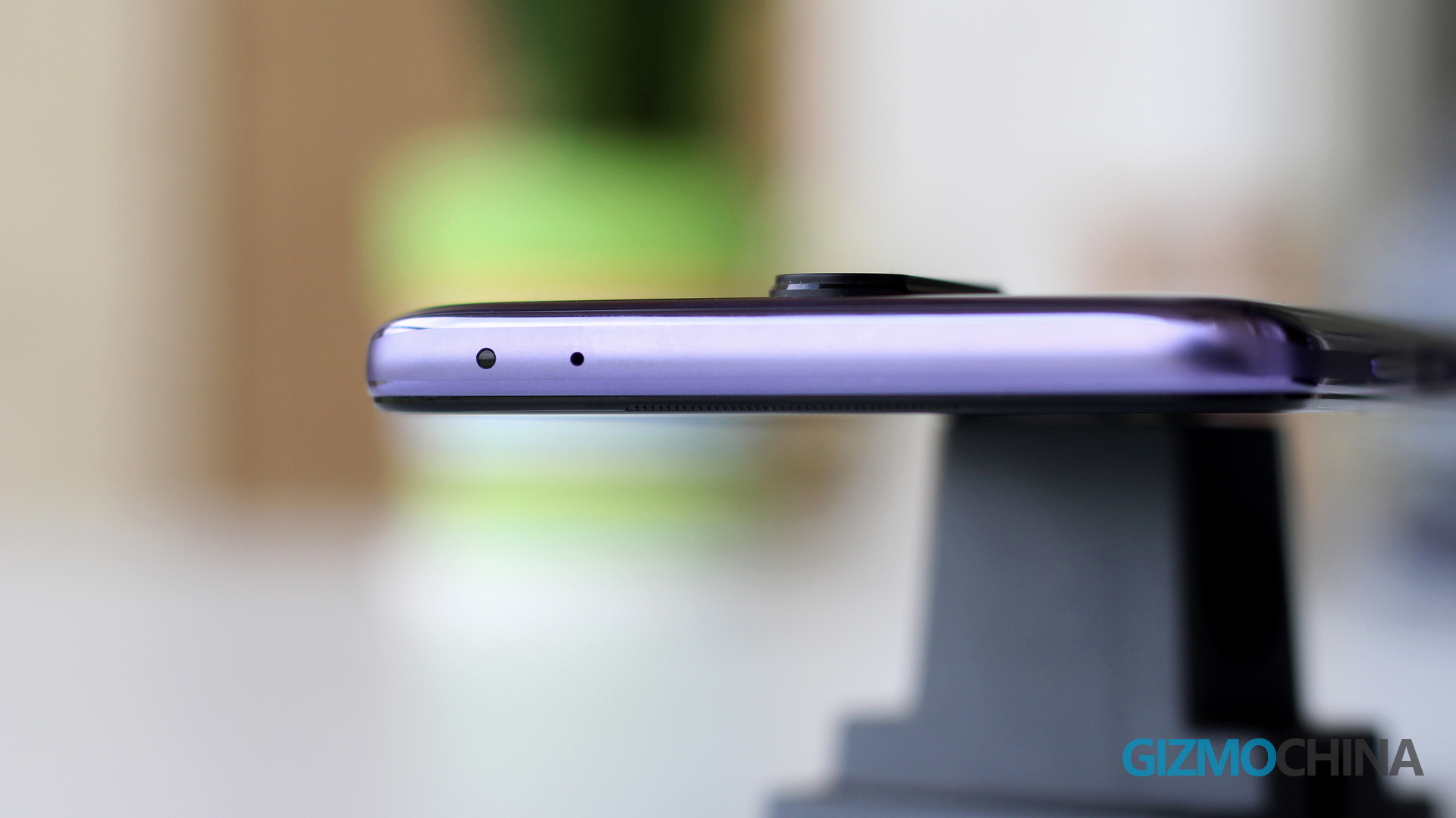
The left side of the phone houses the hybrid dual SIM card slot. At the bottom, you get a single speaker, USB-C, 3.5mm headphone jack, and a microphone opening. On top, you have an IR sensor with a microphone hole.
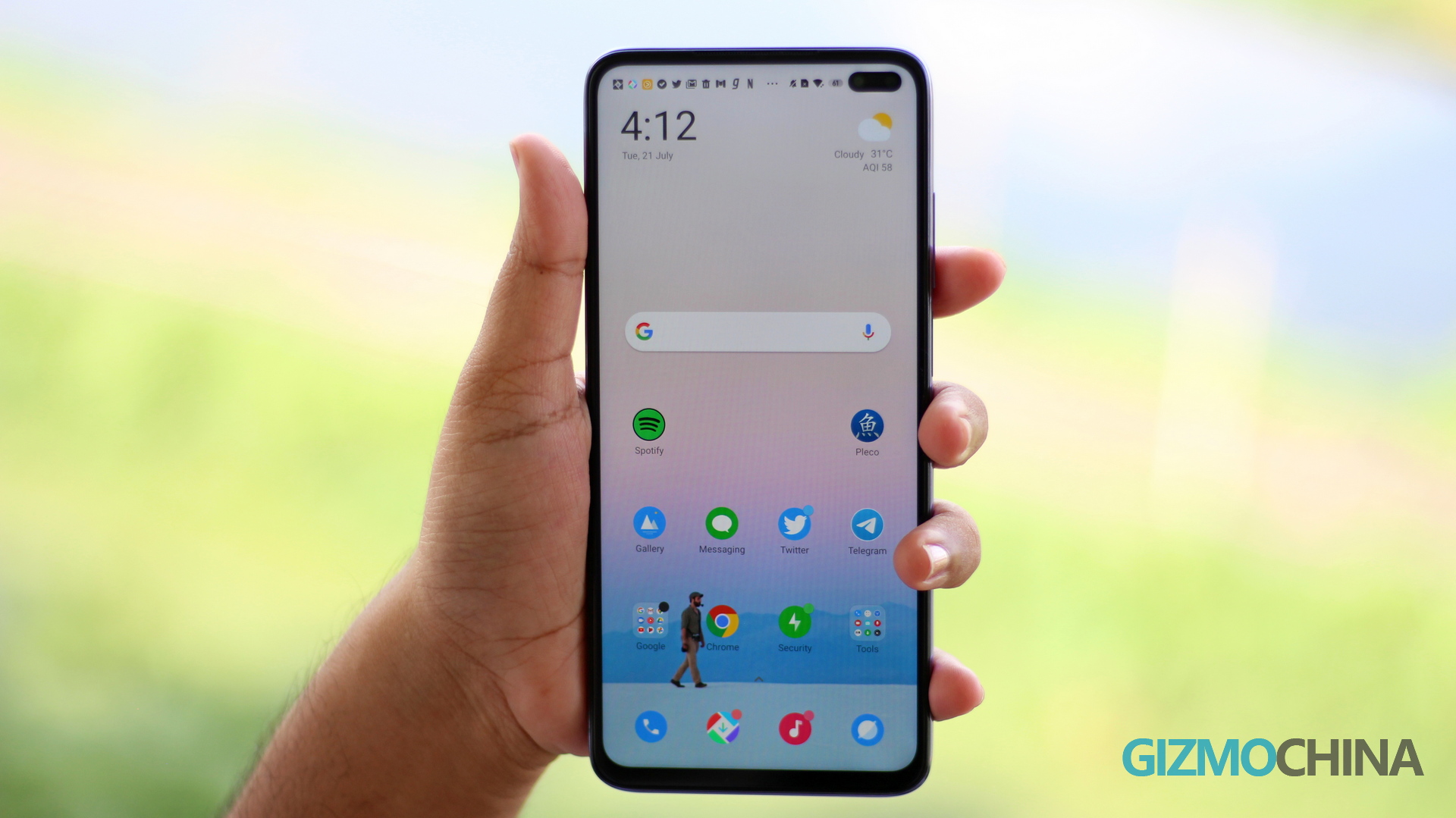
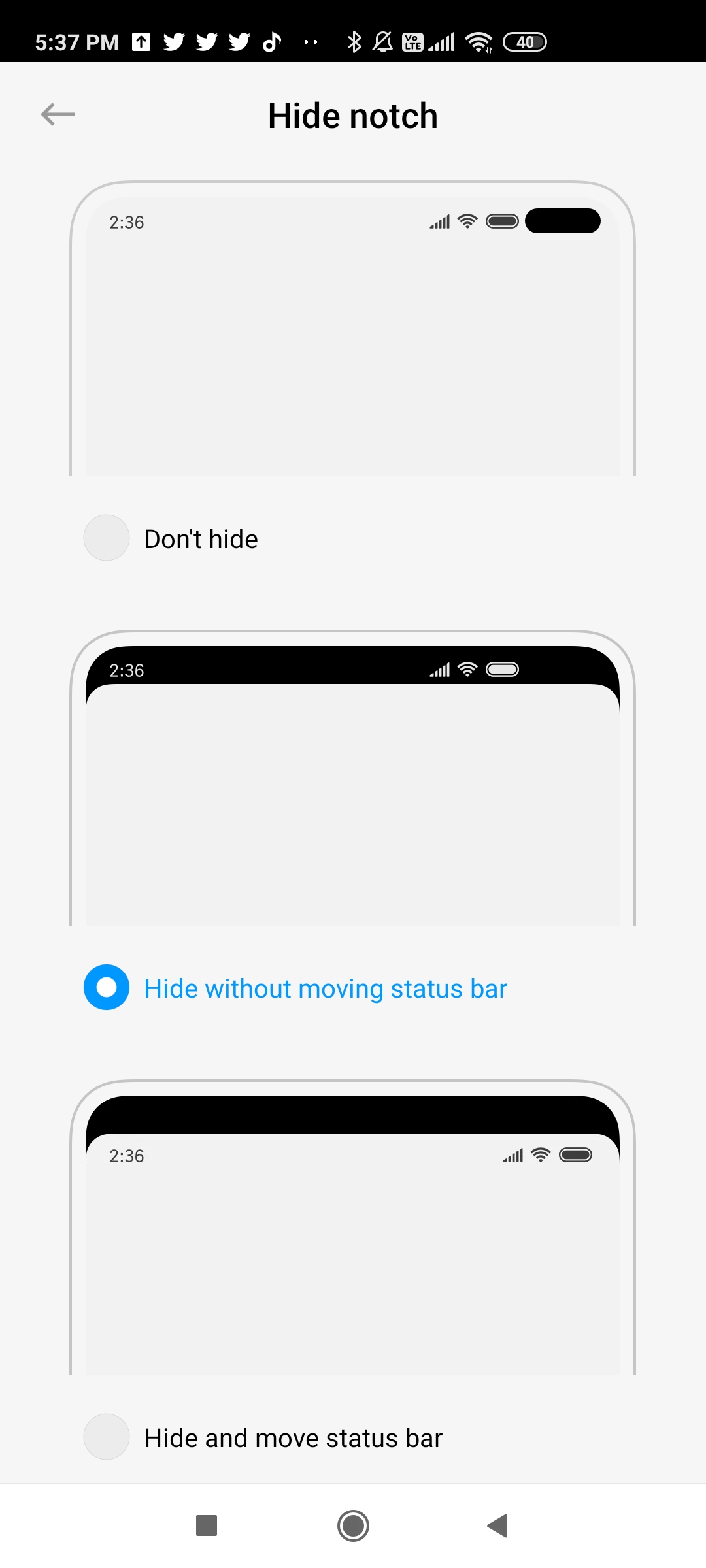
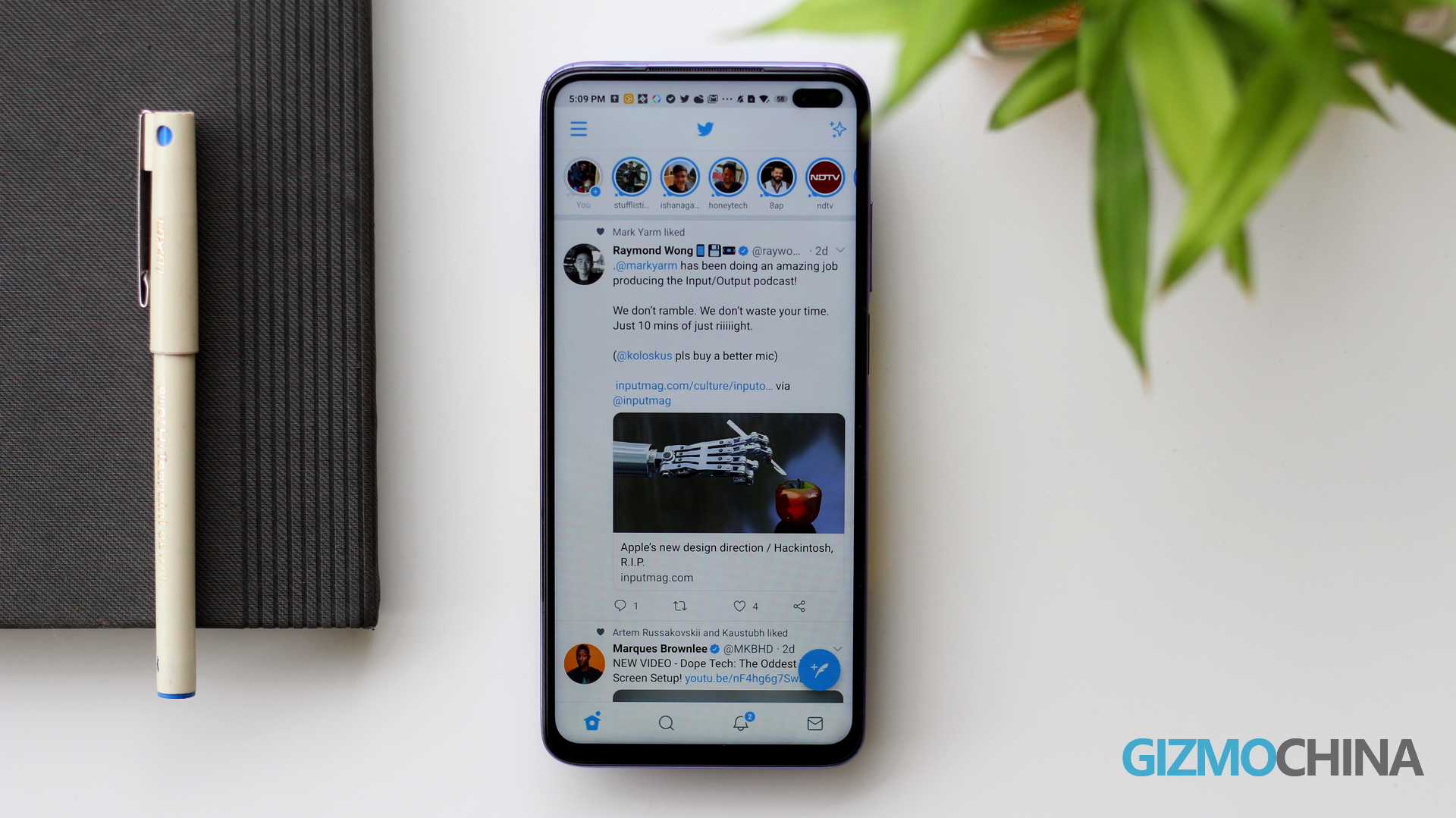
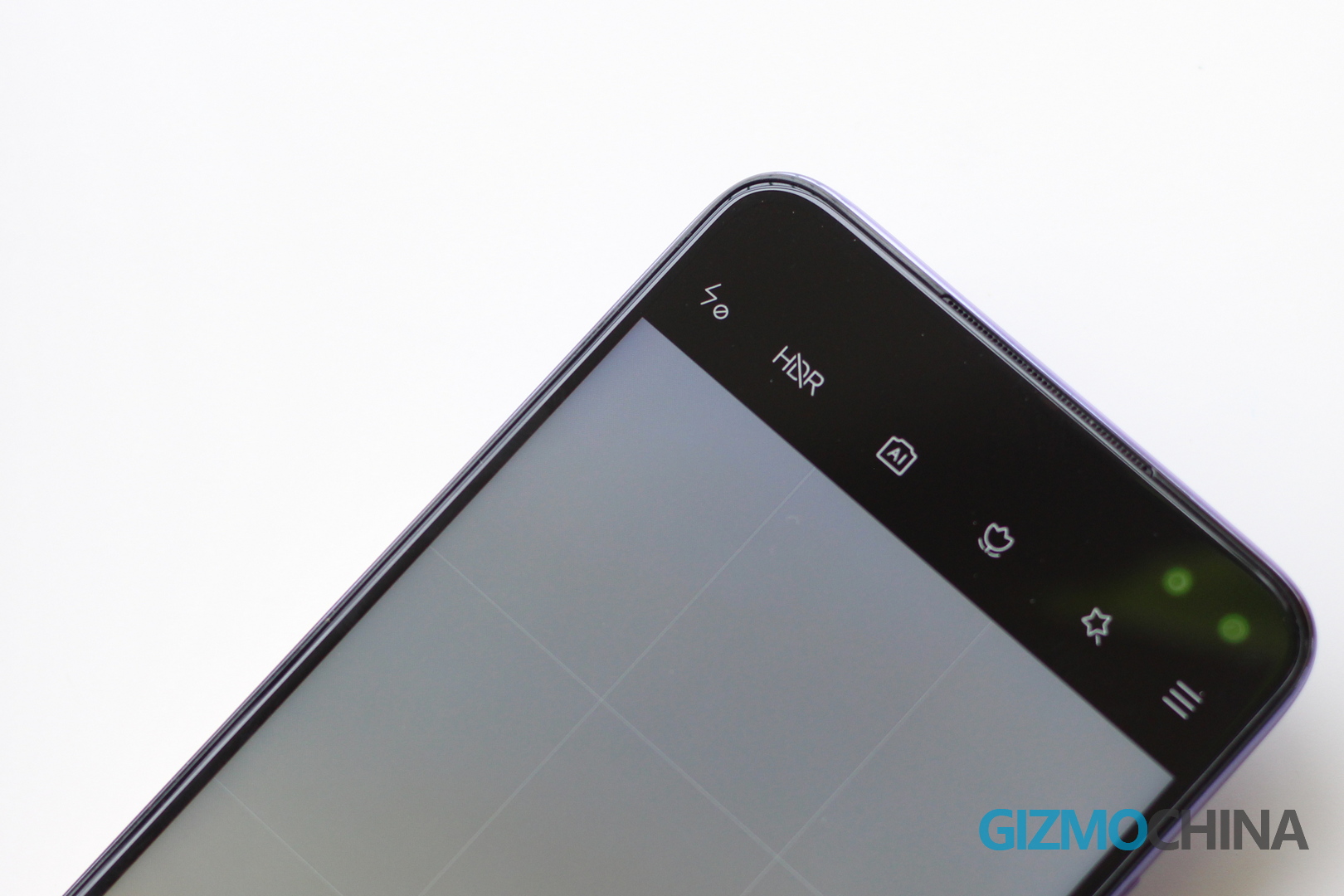
As for the front, the Poco X2 features a 6.67-inch LCD flat display with dual punch-hole cameras on the top right corner. The screen is good for its price (I will talk more about in the next section), but the dual selfie cameras on the top can be a bit bothersome as it stands out quite significantly. However, MIUI has a couple of solutions to fix this issue – including an option to darken the status bar, thereby hiding the cameras.
To conclude, I’m not a fan of Poco X2’s design or the Matrix Purple color. However, the phone looks polished and has a comfortable grip. So even if the design isn’t its strong point, you shouldn’t have any significant complaints.
Poco X2 Display
The Poco X2’s biggest highlight is its display. The 6.67-inch RealityFlow FHD+ LCD panel on the device supports up to 120Hz refresh rate. This display is snappier than most other 60Hz and 90Hz LCD smartphones in its price segment.
The saturation levels on the LCD panel are good, and support for HDR10 ensures you get punchy colors while streaming. At 500 nits, the Poco X2’s display is bright too, even under direct sunlight. The auto-brightness feature also worked pretty well, so I rarely had to adjust it manually.
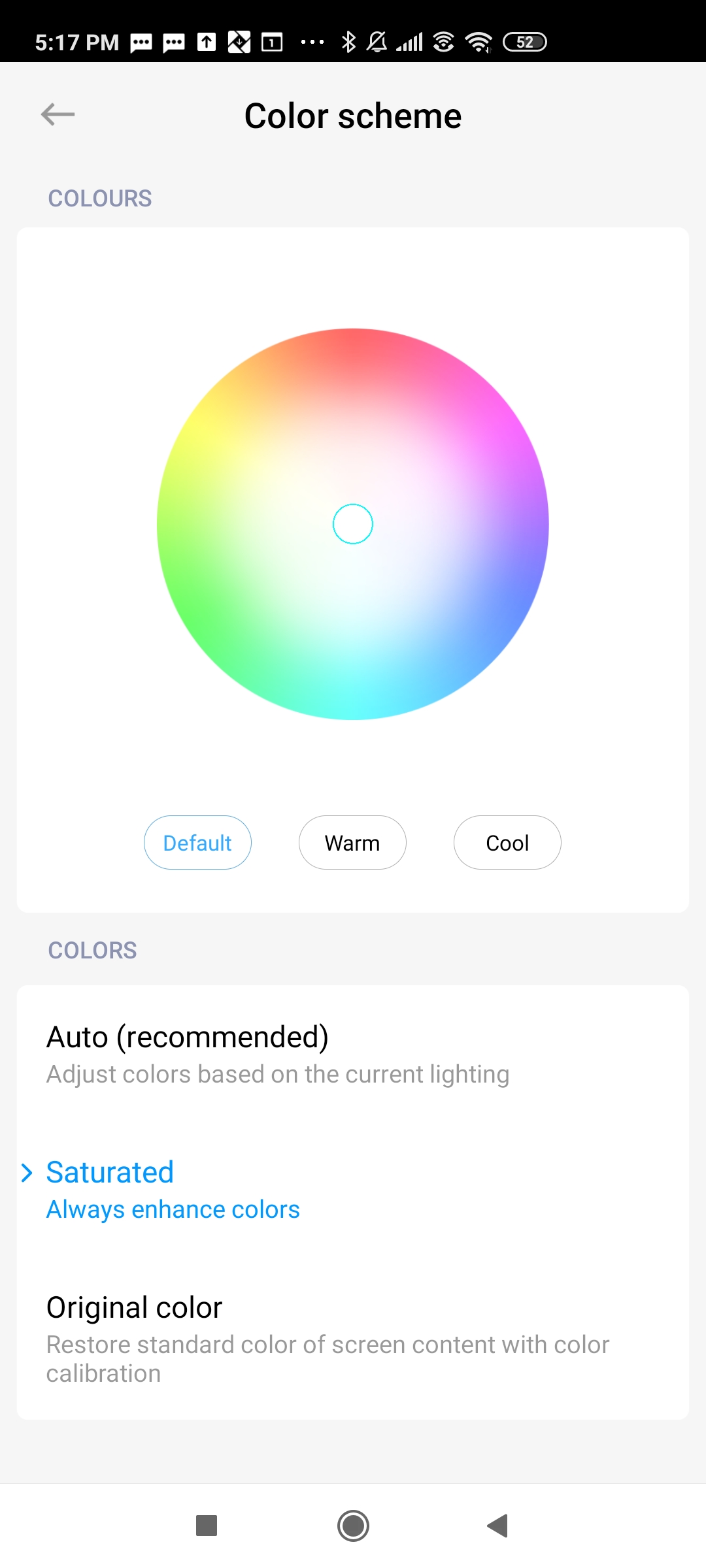
You also get a couple of color calibration options for the display, but since this is an LCD screen, the colors won’t pop out as well as an AMOLED panel. There’s an auto mode that chooses the best color profile for the screen, and I’ve been using that mode for the past few weeks without any real complaints.
That said, I did notice the occasional jitters while scrolling through in the UI. So the software needs a few more tweaks to perfect the high refresh rate screen.
Also, the dual punch-hole camera setup on the top right corner feels a bit invasive. If you look closely, you’ll see that these are two separate cameras in a pill-shaped enclosure. The phone adds a black background to manifest its integrated look.
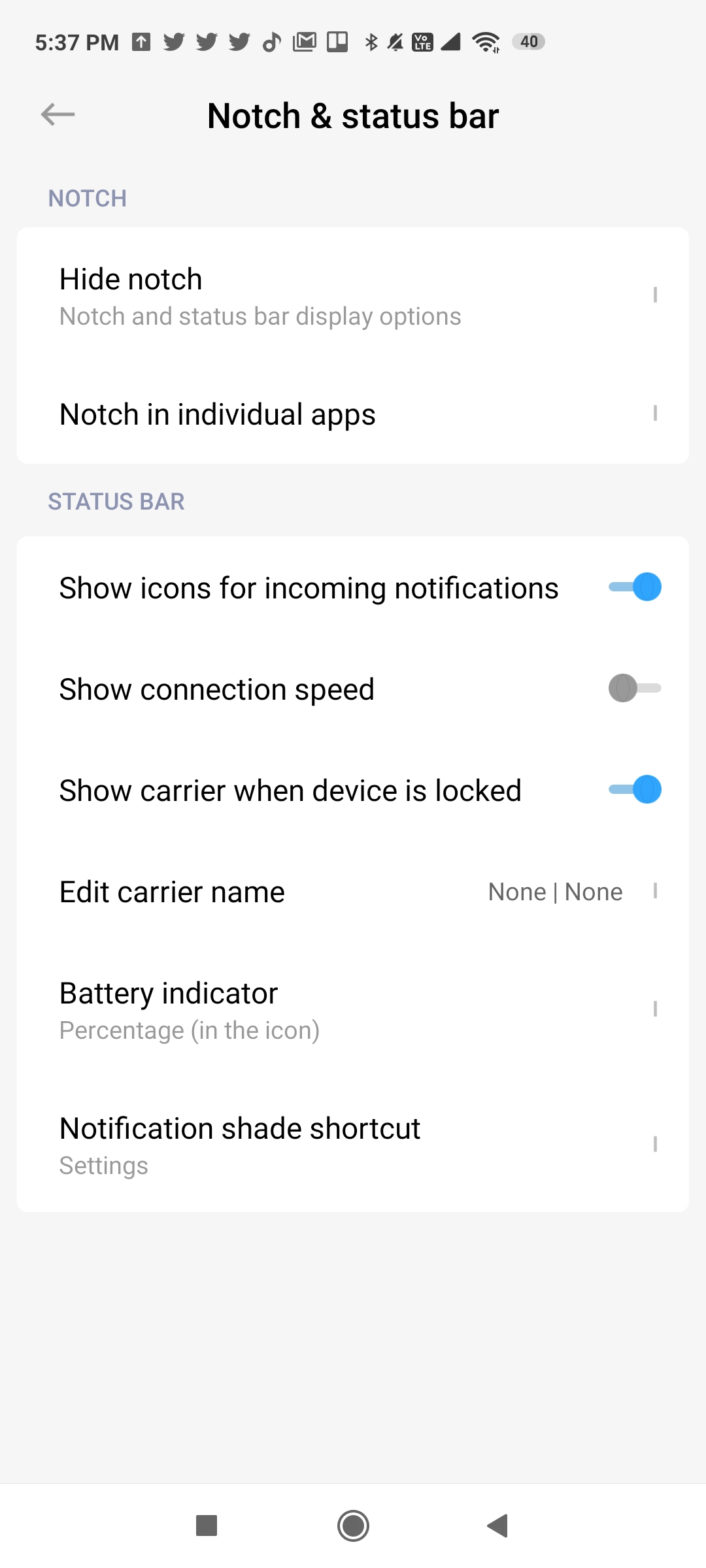
There are some workarounds for this though. You can hide the punch-hole cameras using software (from the notch & status bar option inside the display settings), which darkens the status bar, thereby hiding the cameras.
Even with the hide notch setting enabled, the Poco X2 offers a satisfying viewing experience, all thanks to the minimal bezels around the display. Plus, with full-Screen gestures enabled, you get additional screen real estate at the bottom.
Poco X2 Performance
The Poco X2 is powered by the 8nm Snapdragon 730G processor with up to 8GB of RAM and 256GB of storage. The review unit with me is the top-end version, and in this age of streaming, you’ll find it hard to fill up this storage. But if you do end up using up all the available memory, you can use a MicroSD card for storage expansion. The phone comes with a hybrid memory SIM card slot, so you can always add a MicroSD card in one of the hybrid nanoSIM card slots.
The UI performance is also pretty fluid. 120Hz refresh rate translates into smoother animations and scrolling, but you do see occasional jitters. It looks like the UI struggles to handle the high refresh rate sometimes. However, it’s not significant, and further software optimizations could likely eliminate them.
I’ll also try to address the big old question about whether you can spot the difference between a 120Hz and 60Hz display. The short answer is yes! Scrolling is visibly smoother, and you will also notice that the animations are fluid.
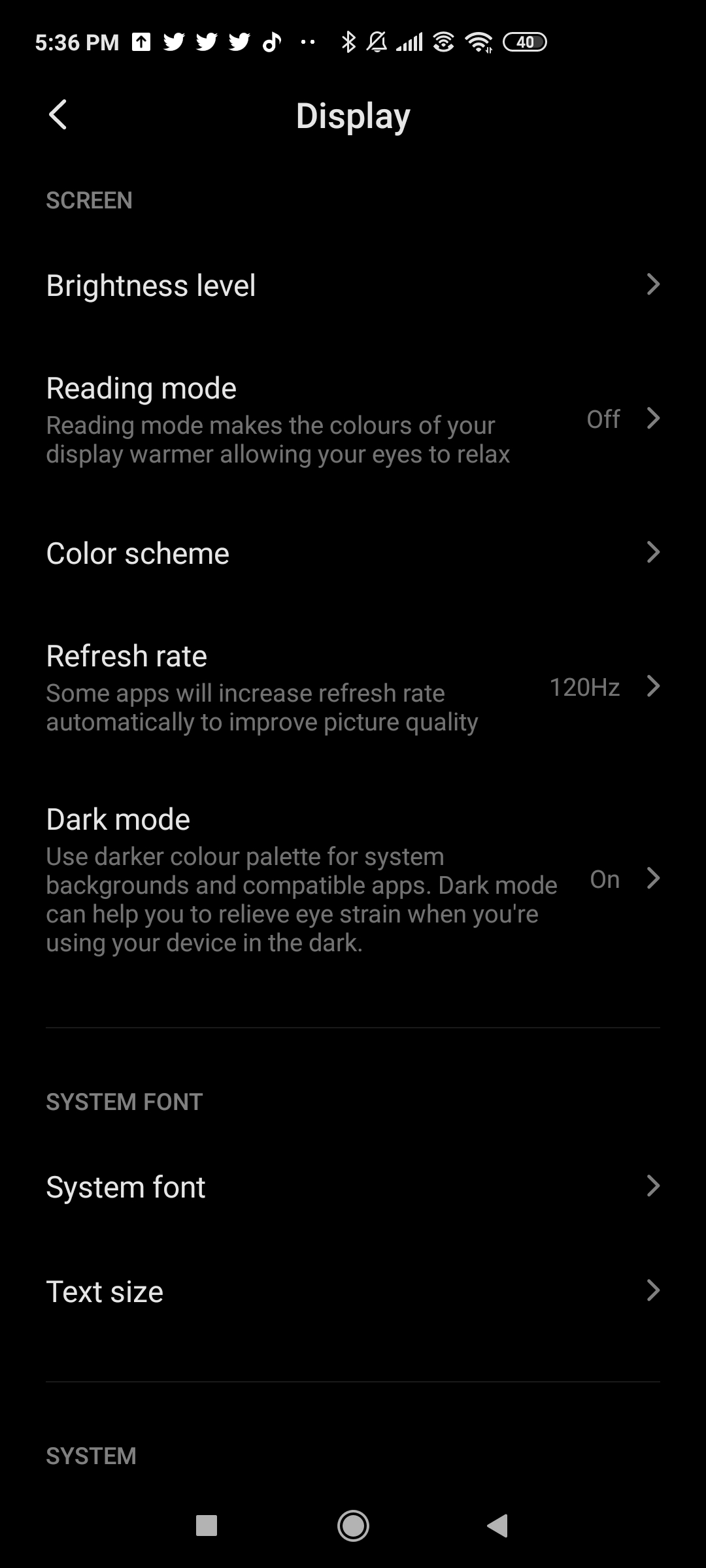
However, once your eyes get used to the refresh rate, be it 60Hz or 120Hz, you won’t comprehend the difference. Also, I feel a 90Hz refresh rate option in the settings would have been the sweet spot between fluid performance and battery life. But unfortunately, Poco only offers a standard 60Hz and a high 120Hz refresh rate option in the display settings.
Benchmarks
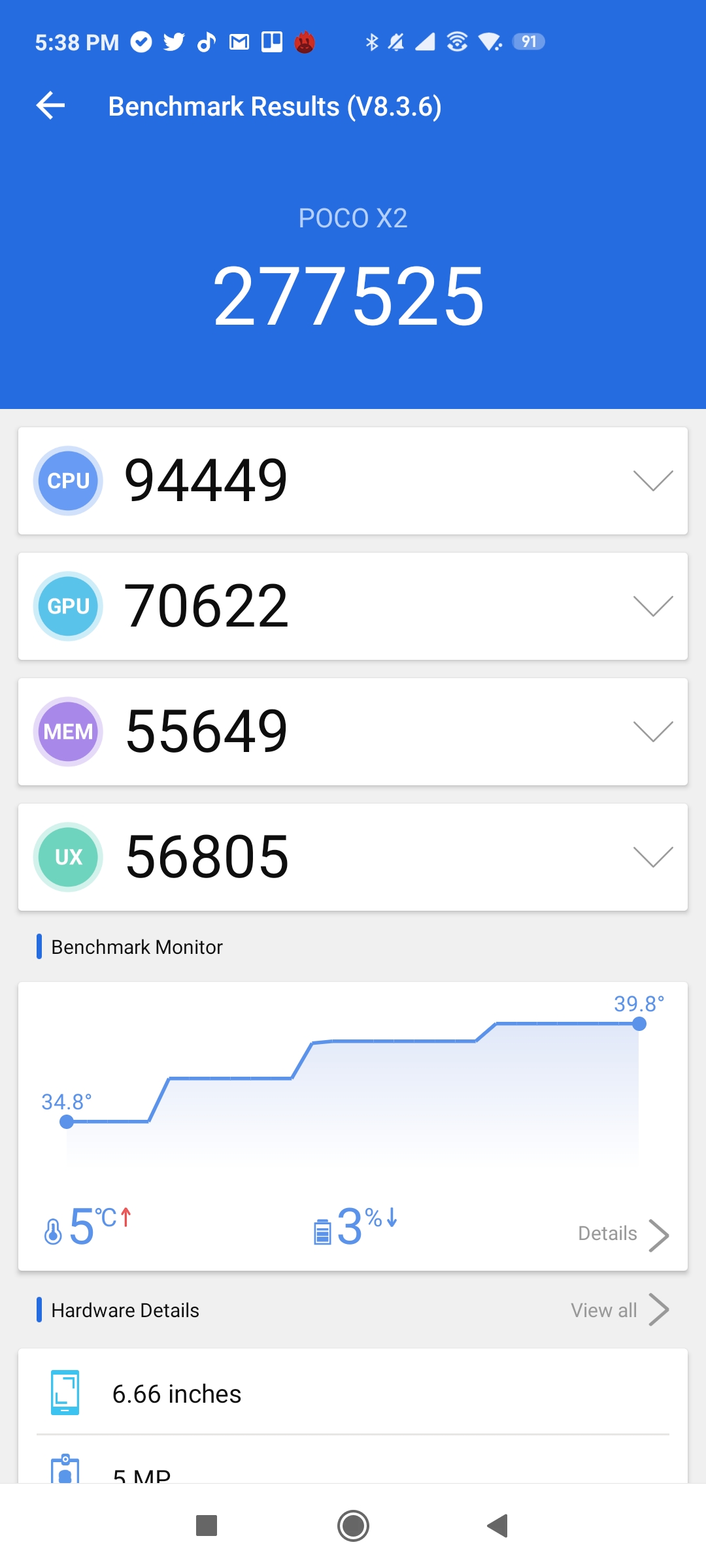
The benchmark scores are pretty much what you’d expect from a Snapdragon 730G phone.
Antutu (v8.3.6) – 277,525
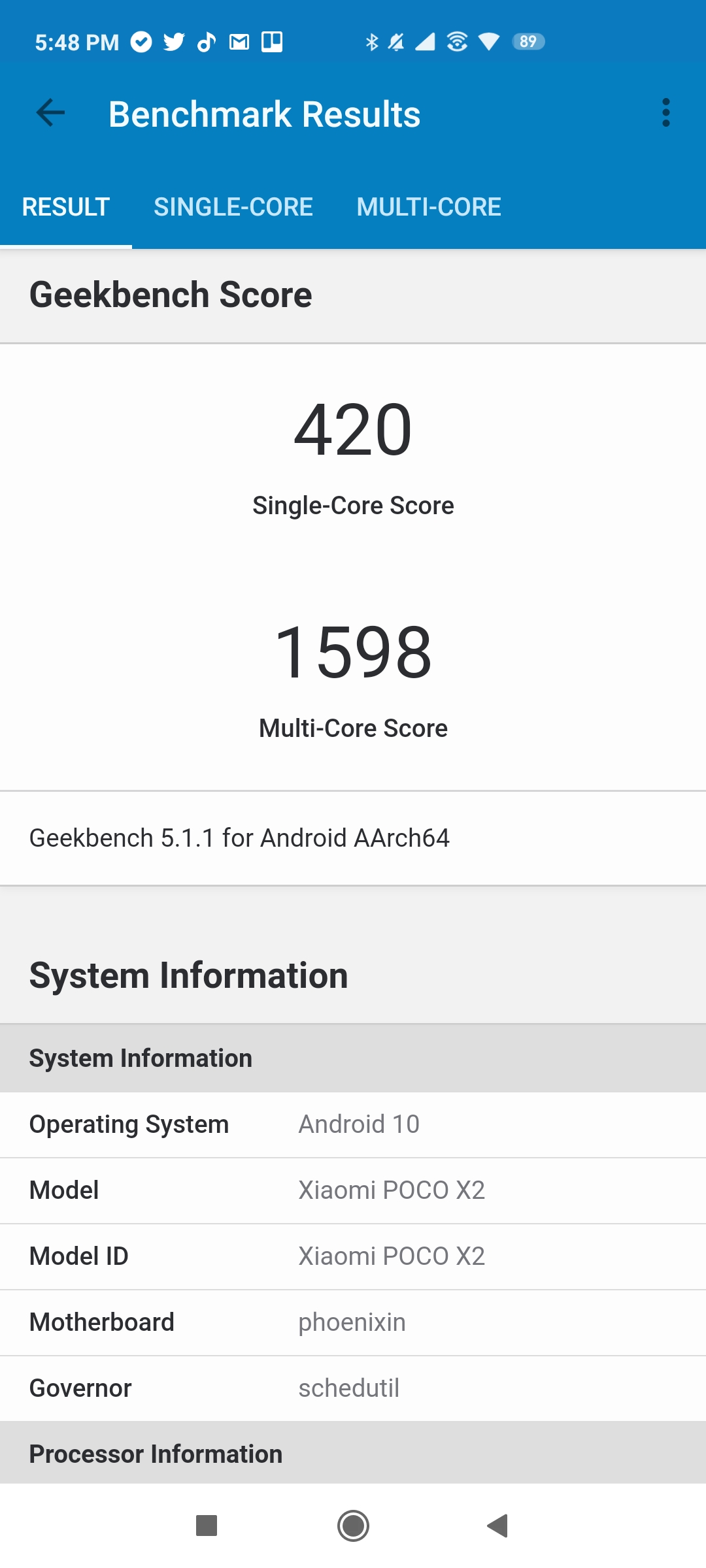
Geekbench – SINGLE-CORE – 420 | MULTI-CORE – 1598
1 of 3
Antutu
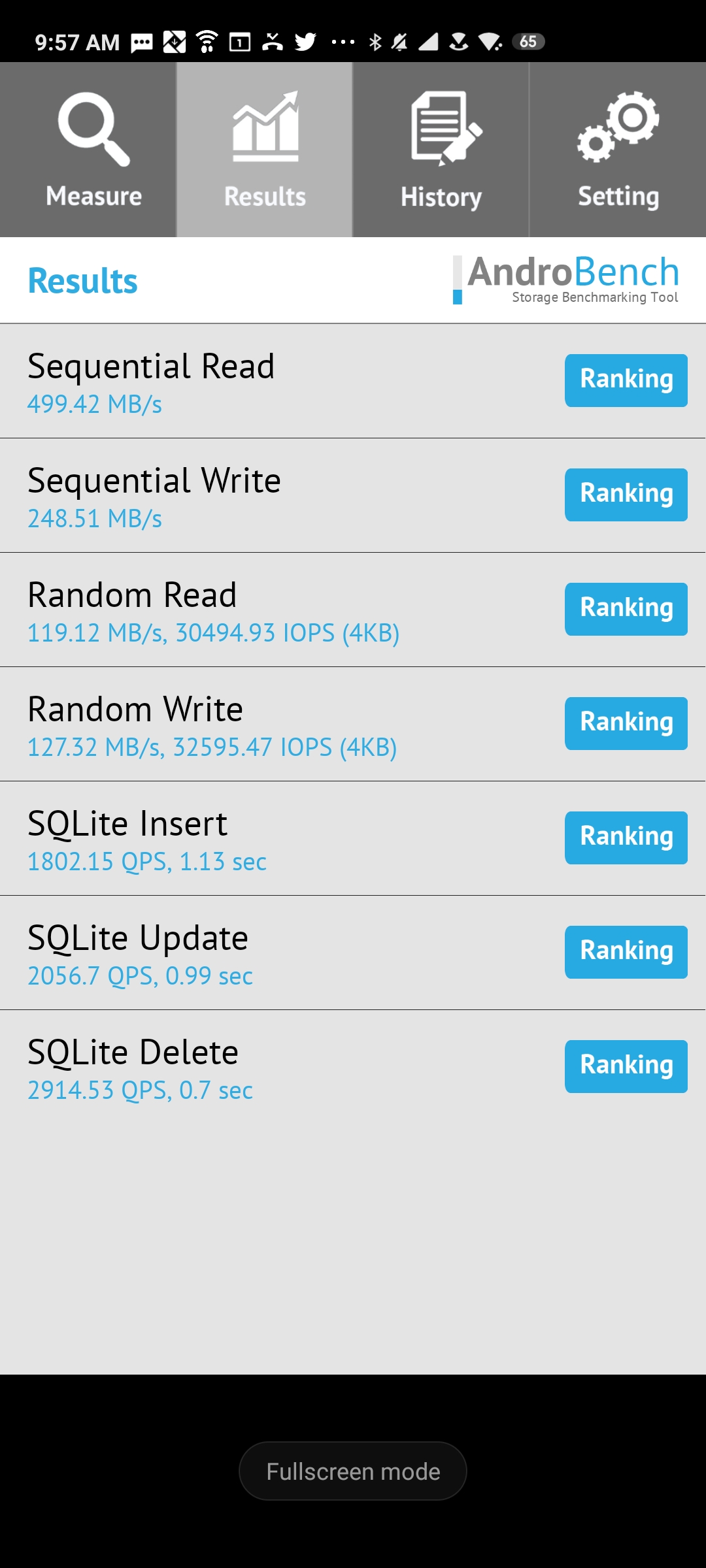
AndroBench
Geekbench 5
For some reason, graphic centric benchmarks like GFXBench and 3DMark failed to run on the device.
Note that the Snapdragon 730G inside the phone is a gaming chipset. So the phone performs pretty well even in graphic intensive scenarios like gaming.
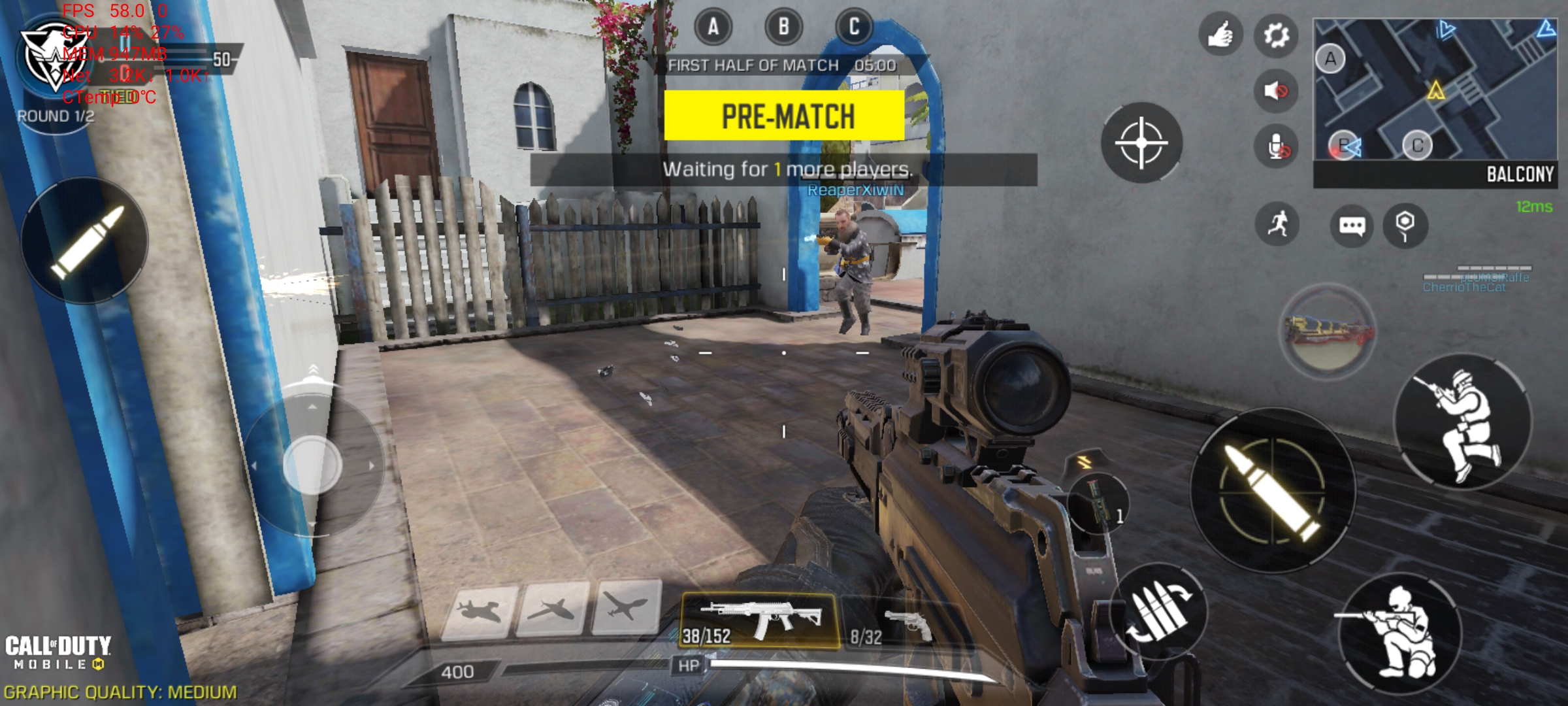
COD Mobile hits 60fps on Poco X2 consistently
The phone handles COD Mobile, PUBG, and games like Mario Kart without any significant hiccups. You can hit 90 fps on COD and PUBG, and the gameplay is smooth in the medium graphics settings.
POCO X2 Battery
The Poco X2 is equipped with a 4500mAh battery that charges at a maximum wattage of 27W. While on paper, this might feel slower than the likes of the 40W Huawei SuperCharge or the 125W OPPO SuperVOOC, but in reality, it still translates into a hassle-free, fast charging experience.
The Poco X2 charges up to 25% from 0% (dead battery) in 15 minutes. In half an hour, the phone is topped up to 50%, and it takes slightly over an hour to charge up to 100%. Again, I ‘ll reiterate that on paper, this might not look fast, but for a phone that can last an entire day on a single charge, you won’t likely be ever worried about its charging speed.
In my test, an hour of Netflix drained slightly less than 10% of the battery on Wi-Fi and around 10% on mobile data. And with moderate usage, you’ll easily get 6 hours of screen on time on 120Hz. Bring that down to 60Hz and the Poco X2 will be your companion for another day.
Simply put, the Poco X2 has an all-day battery. So even though it’s a bit heavy, you know that the weight is being put to good use.
Poco X2 Software
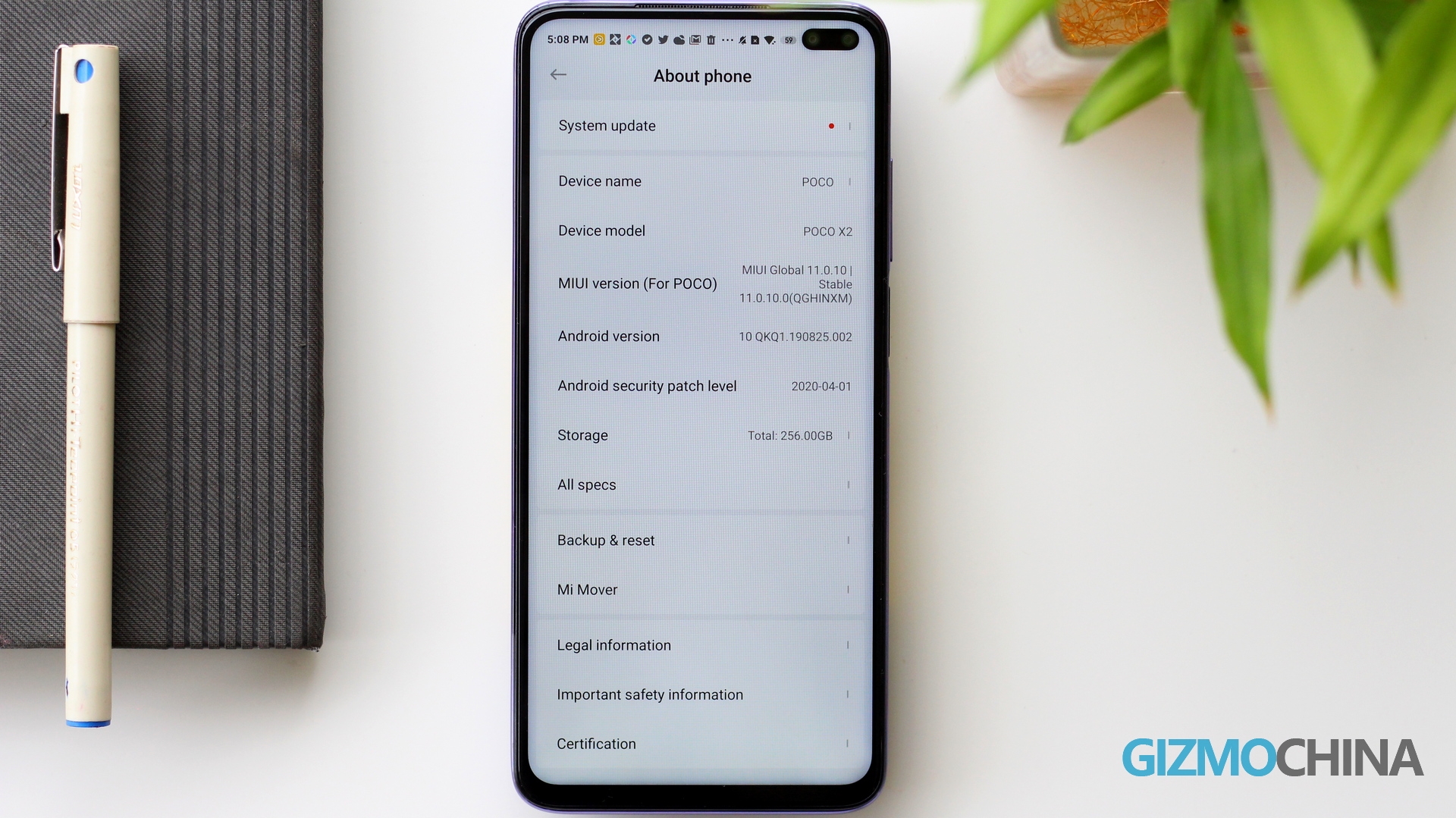
The Poco X2 came with stable Android 10 out of the box with the Poco launcher on top. The phone has received several updates since I started using it. It was initially running MIUI 11.0.4 based on Android 10 with the January security patch. But currently, it’s got the MIUI 11.0.10 stable update with the Android 10 and April 2020 security patch.
As mentioned above, apart from the occasional jitters while scrolling, the UI is responsive and useful. You do get a bunch of pre-installed software on the device – just like any other MIUI smartphone. But you can easily uninstall third-party apps like Facebook and Messenger. Note that Xiaomi’s apps like Mi Pay, Mi Video, etc. cannot be uninstalled from the device.
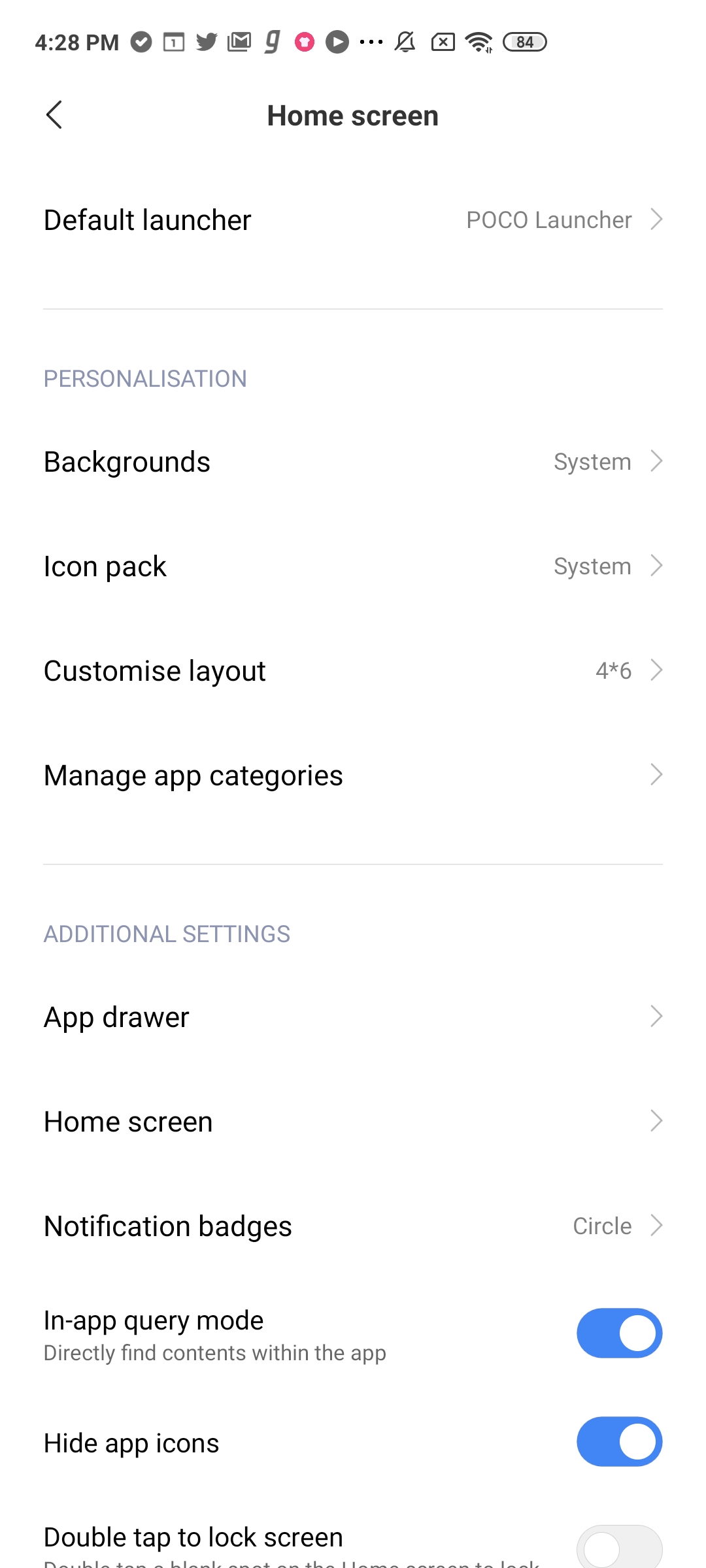
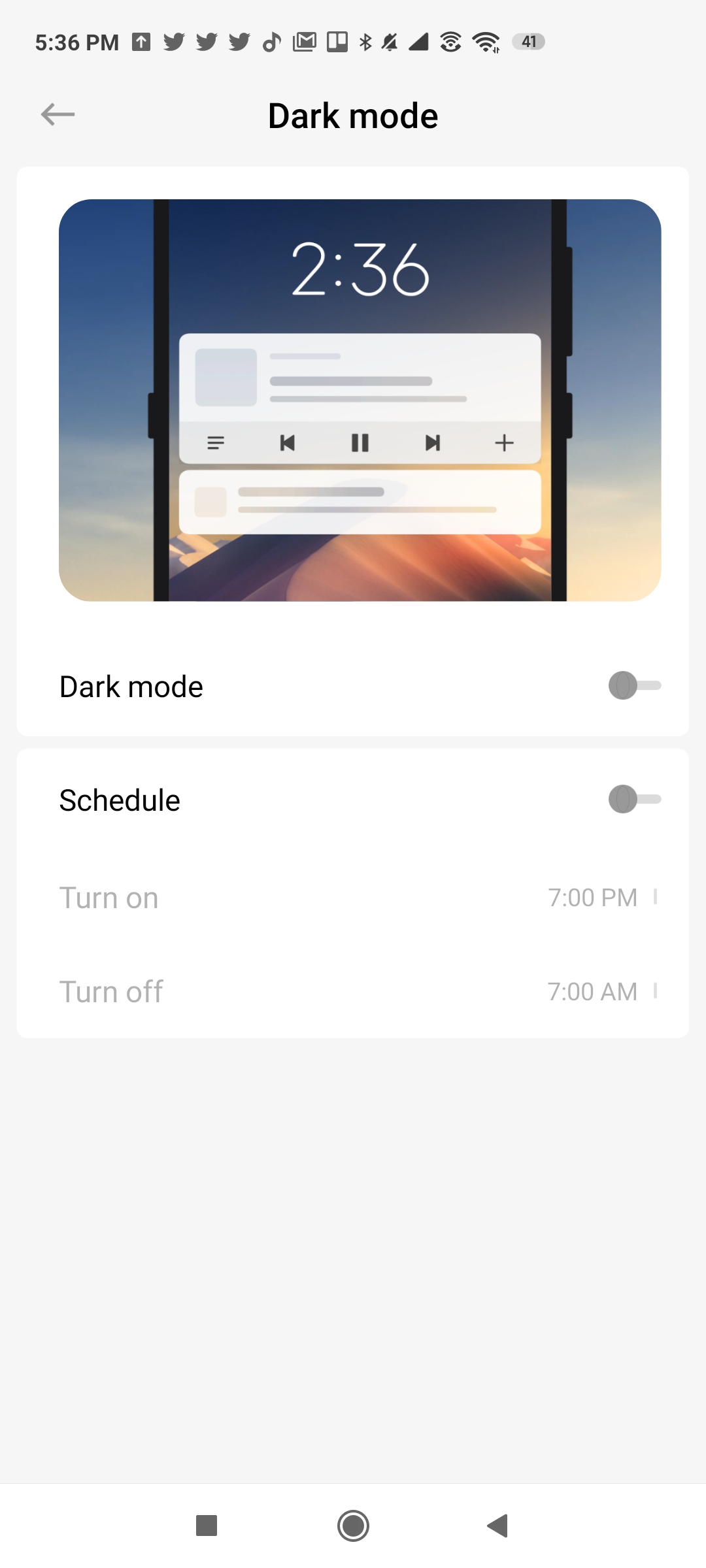
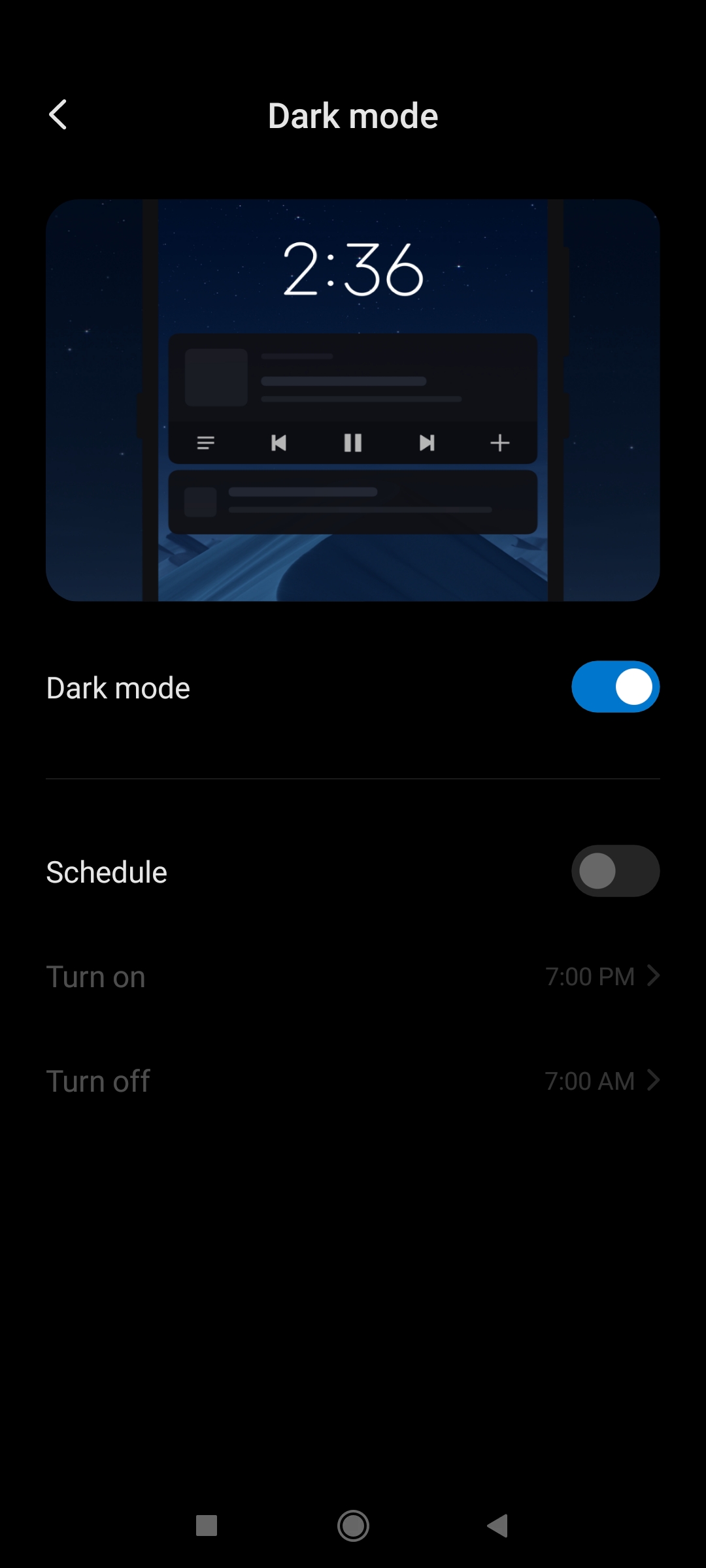
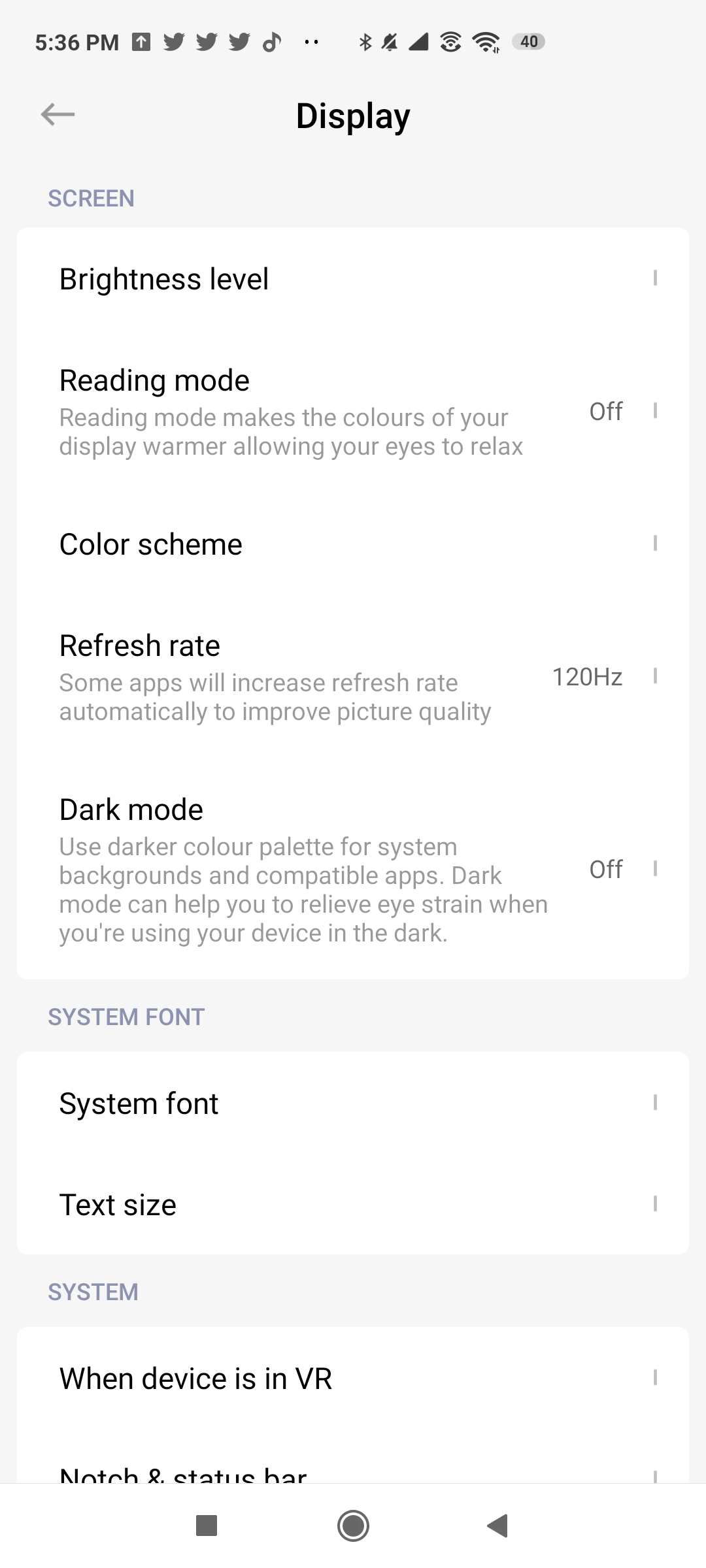
You also get a system-wide dark mode which I personally like.
1 of 6
While MIUI is not one of my favorite UIs, it still has a lot of customization options to tweak the phone according to your liking. So if you don’t like something, you can easily customize it.
Poco X2 Camera
The Poco X2 features a versatile camera setup led by a 64MP Sony IMX686 sensor with 0.8μm pixels, PDAF, and f/1.89 aperture. There are three more camera sensors with different functions. The 8MP Ultrawide camera comes with f/2.2 aperture and 120-degree FoV, the 2MP f/2.4 macro camera is ideal for close up shots (2-10cm), and there’s a 2MP portrait camera too. Note that the phone doesn’t have OIS, so it relies on software-based stabilization.
Main Camera 64MP – 16MP binned
In the regular mode, you get 16MP binned photos, which are pretty sharp and colorful. The Poco X2 doesn’t try to oversaturate the images and gives you colors that are pretty close to real life. If you are used to saturated photos, X2’s samples might come off as a bit dull, but note that you’d be getting life-like colors in them.
Poco X2’s 64MP camera can capture rich colors
The dynamic range is good and the phone manages the dark as well as shadow areas pretty well. When there’s ample light, the Poco X2 delivers crisp photos with good colors.
But in some cases – like that of landscapes, you might feel the 16MP binned photos don’t have enough details. In such situations, you can simply switch to the 64MP ultra HD mode for landscapes.
64MP mode
The 64MP mode captures significantly more details than the regular photo mode. This is especially true when the image has a lot of data, like in the case of landscapes. You can clearly see the difference in the image quality between the two modes, and I would recommend switching to 64MP whenever you are taking a landscape shot.
Poco X2 64MP
Didn’t I say this mode took significantly more details? So it’s not surprising that the resulting images are considerably larger too. So expect the 64MP samples to be around 40-50Mb for landscapes while the regular 16MP binned samples are only around 10Mb for the same image.
Also, note that in most scenarios, the dynamic range was better on the 16MP camera samples than the 64MP ones.
Ultra-Wide Camera
The 120-degree Ultra Wide Angle camera is also pretty useful on the Poco X2. Under ample sunlight, you get a decent amount of details. So you can take really wide samples that bring in more objects into your frame, which wouldn’t have been possible with the regular lens.
Poco X2 Wide Angle
However, the 8MP ultrawide camera is not as sharp as the 64MP shooter. The samples taken from the UW camera had fewer details. Even the colors were a bit muted.
To better understand the difference between the quality of the three photo modes, check out the samples below.
1 of 3
Poco X2 Regular Mode
Poco X2 64MP
Poco X2 Wide Angle
Macro Camera
The macro camera is often a gimmick on some phones, but on the Poco X2, it turned out to be a fun feature. You can go really close to the object (as close as 2cm) to take snaps of objects. It might take a few tries to master the macro mode, but once you figure out the basics, the Poco X2’s macro camera can output detailed and saturated shots. Note that as with other macro cameras, you have to be very steady to capture clear shots of your object.
Poco X2 can take some really good Macro shots!
Portrait
Poco X2 Portrait camera
The portrait mode on the Poco X2 is pretty decent with relatively accurate edge detection. It may not be the best in the market, but it’s good enough for your bokeh shots on social media. You can also adjust the level of blur in real-time – giving you more control over your shots.
Poco X2 Portrait
You also get a well equipped Pro mode on the device for enthusiasts who would like to tinker the camera settings for the perfect shot.
1 of 3
Poco X2 Portrait camera
Poco X2 potrait Camera 2
Poco X2 Pro mode 64MP
Night
The quality of the images becomes considerably lower when the lighting goes down. This isn’t surprising given most cheap mid-range phone cameras struggle with low lighting conditions. However, you’ll find the 16MP binned as well as the 64MP mode to be usable. The night mode does an excellent job of brightening the image but still struggles with details. The ultra-wide-angle mode, unsurprisingly, performs the worst among the other three modes with visibly less detail and sharpness.
1 of 7
Poco X2 Decent Light Regular Photo Mode 01
Poco X2 Low Light Regular Photo Mode
Poco X2 Decent Light 64MP mode
Poco X2 Low Light Wide Angle
You can check out all full-size samples from the Poco X2 from the Flickr album below.
Video
The Poco X2 can shoot videos up to 4K 30 fps. So you get crisp and saturated videos which are well stabilized too, thanks to EIS. However, note that EIS is disabled for 60fps 1080p video shooting. So the resulting video in this resolution can be quite shaky. But in all other modes, including 4K 30fps (there’s no 60fps mode in 4K on the X2), the EIS kicks in and does a fine job at producing shake-free videos.
Poco X2 Final Verdict: Should you buy it?
The Poco X2 is a well-balanced smartphone in the mid-range segment in India. The phone doesn’t try to overdo in any particular segment and hits all the right spots. It has got a good screen, a capable camera, and a long-lasting battery.
Even after the recent price hike, the Poco X2 offers incredible value for your money. Sure, there are other competent smartphones in this price segment (like the Realme 6 Pro or the Redmi Note 9 Pro), but the phone’s incredible aftermarket support from developers and the backing of India’s top smartphone maker for service makes it easy for me to recommend the device to anyone looking for a quality mid-range smartphone around Rs. 18,000.
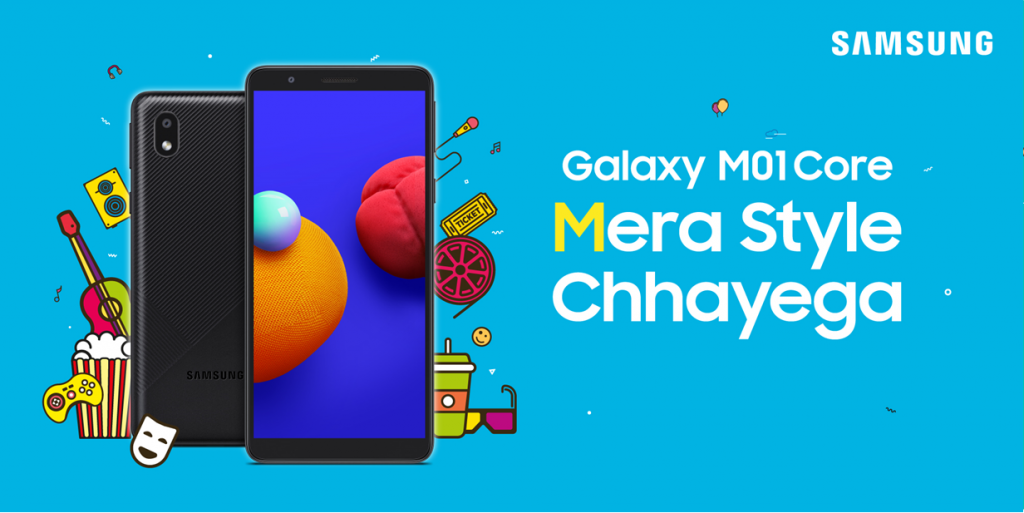
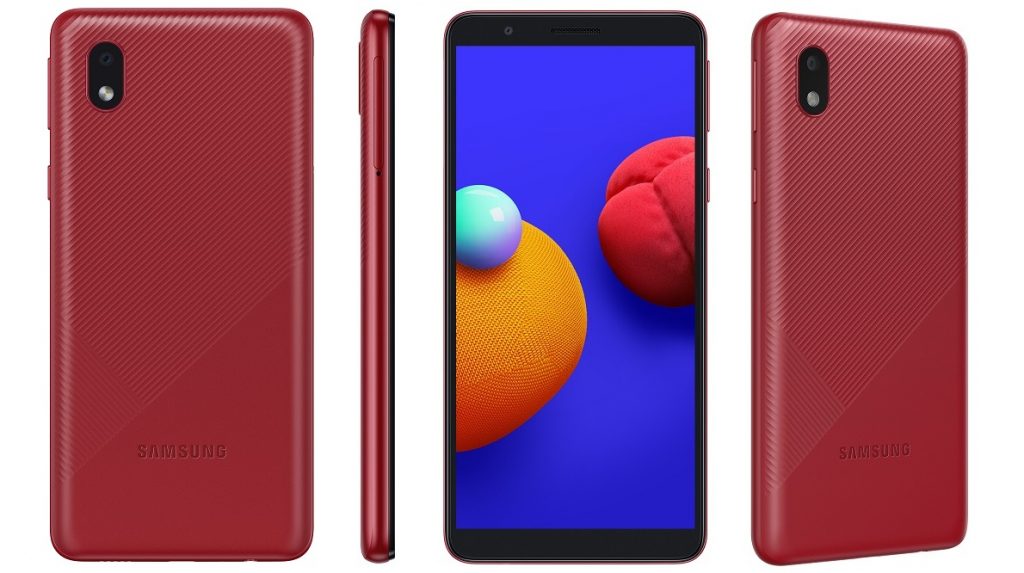
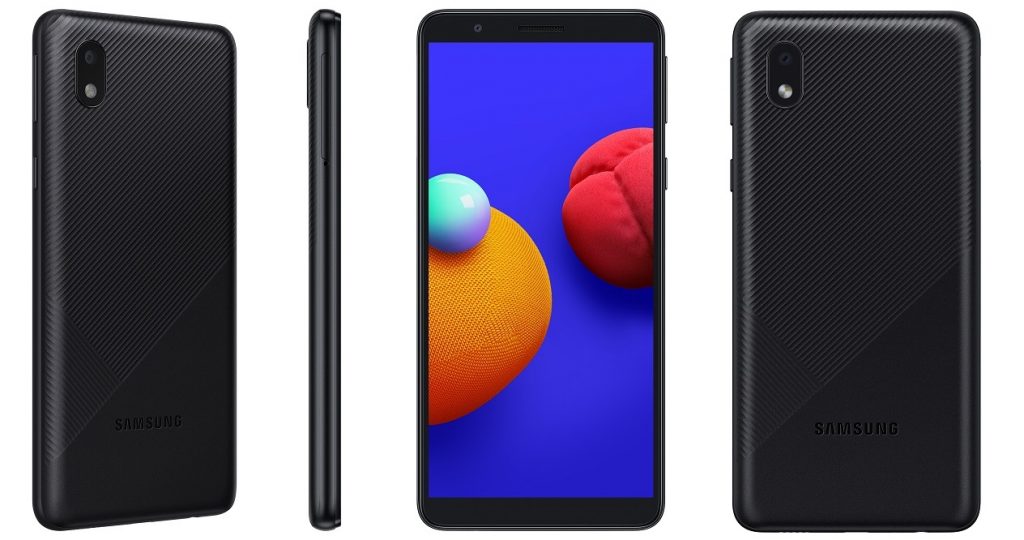
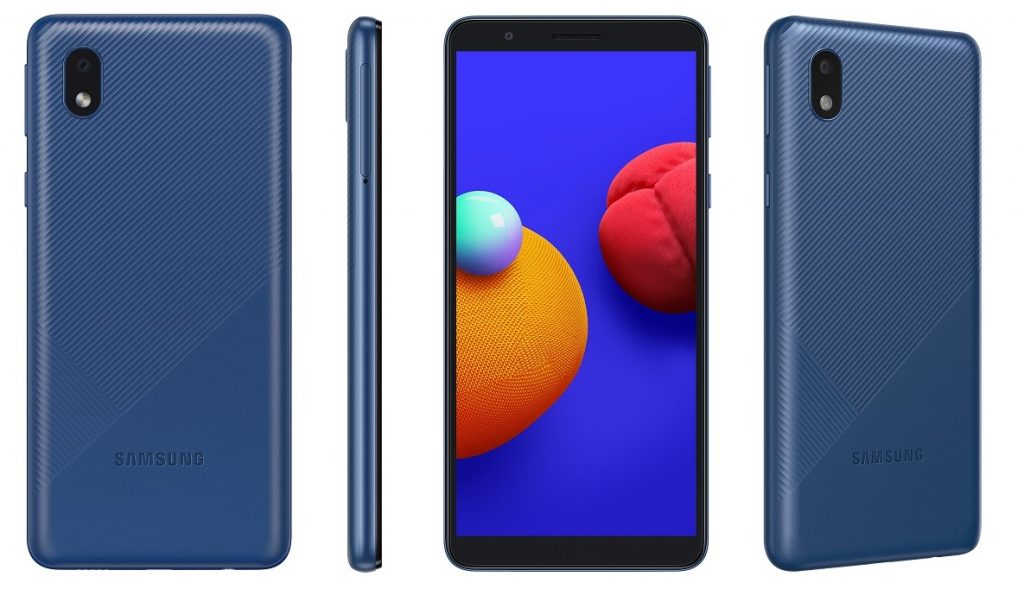
Samsung launches Galaxy M01 Core in India as its cheapest 2020 smartphone in the country. Unlike the company’s regular handsets, this phone runs Android 10 Go edition with One UI on top of it. It is priced at ₹5,499 ($73) and ₹6,499 ($87) for 1GB + 16GB and 2GB + 32G storage variants respectively.
As the OS and price suggest, the Galaxy M01 Core aka Galaxy A01 Core is an entry-level Samsung smartphone powered by MediaTek MT6739 quad-core processor with a maximum clock speed of 1.5GHz. This chipset features 4 x ARM Cortex-A53 cores for CPU and PowerVR GE8100 GPU.
The chip is further paired with 1GB/2GB LPDDR3 RAM and 16GB/32GB eMMC 5.1 storage with support for microSD card. On the front, the phone sports a 5.3-inch HD+ TFT LCD panel with 18:9 aspect ratio and a 5MP selfie camera above it.
Whereas, the back of the handset features an 8MP primary camera paired accompanied by an LED flash. The device is entirely made of plastic with patterns on the rear panel for better grip.
1 of 3
Samsung Galaxy M01 Core Red
Other features of the phone include 4G, VoLTE, 2.4GHz WiFi, Bluetooth 4.2, 3.5mm headphone jack, MicroUSB port, and a 3,000 mAh battery. Lastly, the device comes in three color options namely Red, Black, and Blue.
The Galaxy M01 Core will be available to purchase across India starting July 29 from Samsung Opera House, Samsung online store, offline retailers, and leading online portals.
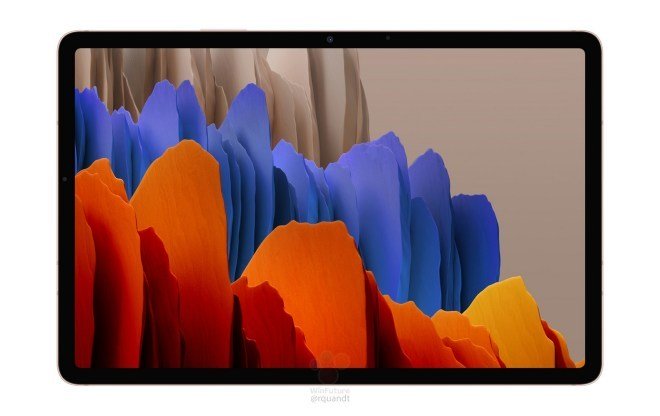
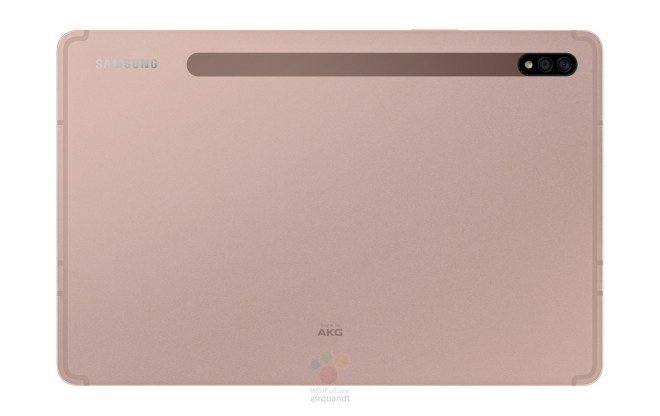
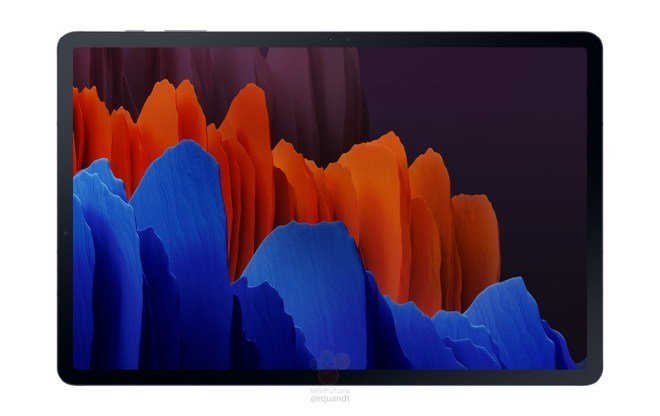
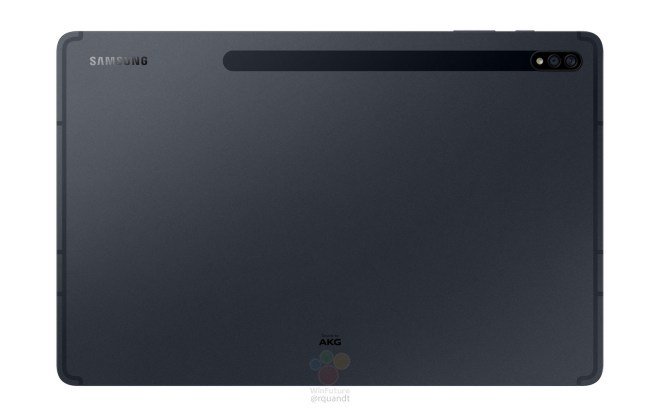
Samsung is soon going to announce the Galaxy Tab S7 and Galaxy Tab S7+ flagship tablets. Ahead of the launch, Winfuture.de has shared leaked renders and specifications of the Tab S7 and Tab S7 Plus tablets. The Galaxy Tab S7 series will rival with the powerful tablets form Apple and Microsoft.
Samsung Galaxy Tab S7 and Tab S7+ specifications
The Galaxy Tab S7 has an 11-inch LTPS IPS LCD screen that offers 1600 x 2560 pixels resolution, 274ppi pixel density, 500nits brightness, and 120Hz refresh rate. It has a side-mounted fingerprint scanner.
Samsung Galaxy Tab S7Samsung Galaxy Tab S7
The advanced Galaxy Tab S7 Plus has a 12.4-inch S-AMOLED display that produces 1752 x 2800 pixels resolution, 287ppi pixel density, 420nits brightness, and 120Hz refresh rate. The AMOLED screen is embedded with a fingerprint sensor. Both tablets come with the improved S Pen stylus with 9 milliseconds latency that promises real pen-like experience.
The Galaxy Tab S7 and Tab S7 Plus feature the 3.09GHz Snapdragon 865 Plus flagship chipset. The presence of Snapdragon X55 modem brings support for 5G connectivity. Both devices have LPDDR5X RAM, at least 128 GB of storage, and a microSD card slot. The Tab S7 has a 7,040mAh battery whereas the Galaxy Tab S7+ edition has a larger 10,900mAh battery. These tablets ship with 15W charger. However, they can support up to 45W fast charging.
Samsung Galaxy Tab S7+Samsung Galaxy Tab S7+
The rear side of the Galaxy Tab S7 features a dual-camera setup that includes a 13-megapixel main lens with f/2.0 aperture and an f/2.2 aperture 5-megapixel ultrawide shooter. Both tablets support 4K video shooting at 30fps. There is an f/2.0 aperture 8-megapixel camera on the front side of the Tab S7 and S7 Plus.
The Galaxy Tab S7 series will be available with a new keyboard cover with a built-in trackpad. The other features of the Tab S7 and Tab S7+ include Wireless DeX for desktop experience, AKG-tuned quad speakers with Dolby Atmos support, 5G, Wi-Fi 802.11ax, Bluetooth, GPS, ANT and USB-C. The Tab S7 measures 6.34mm in thickness and it weighs 495 grams whereas the Galaxy Tab S7 Plus measures 57mm in thickness and weighs 590 grams. Both models are expected to come in color editions such as Mystic Black, Mystic Bronze, and Mystic Silver. The Galaxy Tab S7 and Tab S7+ are expected to debut on Aug. 5 along with Galaxy Note20 series, Galaxy Z Fold 2, and Galaxy Buds Live.
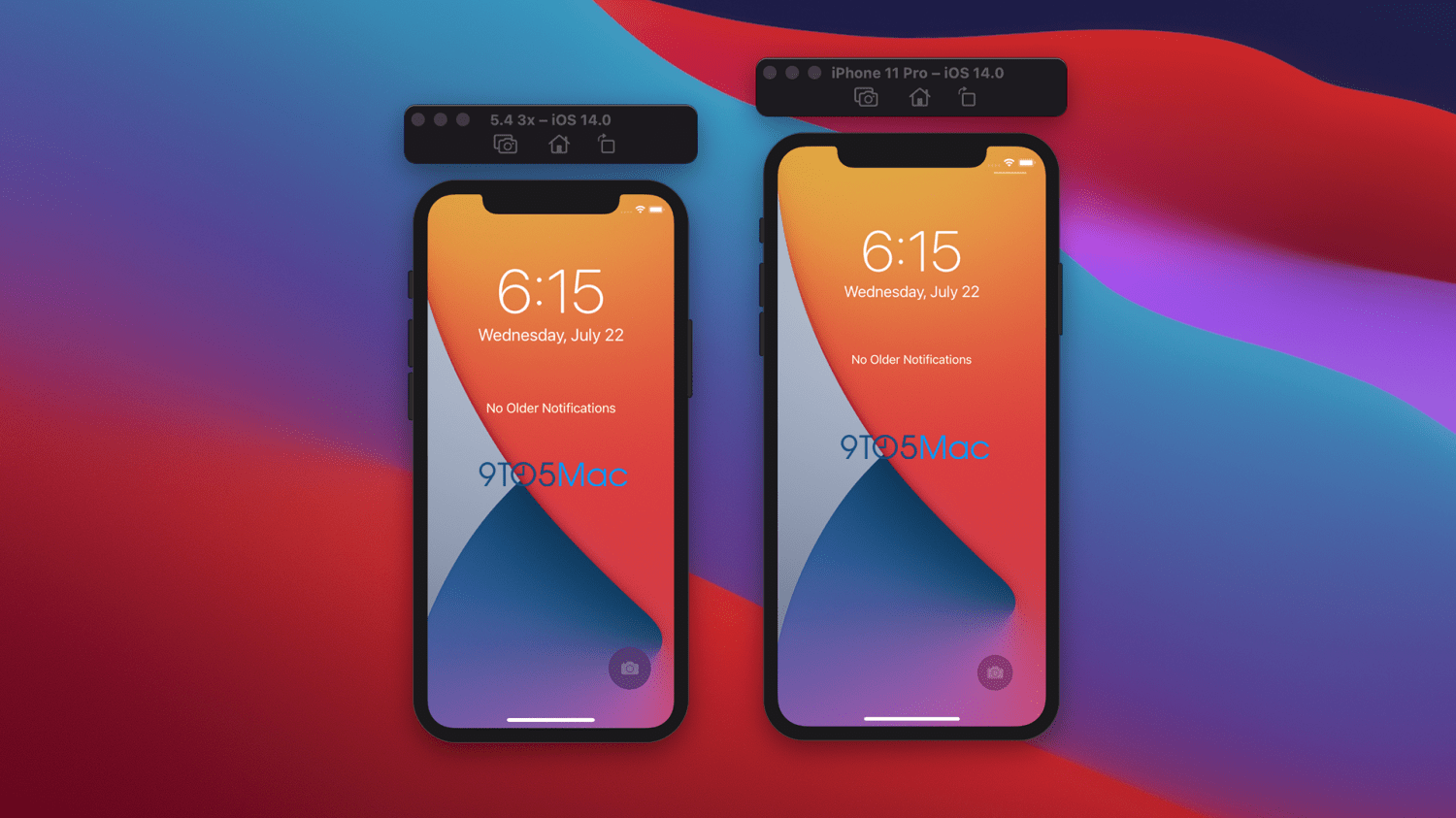
Apple has released its new iOS 14 Developer Beta 3 and along with the newer update, the company has also revealed the upcoming 5.4-inch iPhone 12 model. It showcases the newly launched iOS 14 is ready to work on devices with smaller screens.
Folks at 9to5Mac forced the iOS Simulator to run at a screen resolution of 960 x 2079 pixels and the interface worked correctly. This confirms that iOS 14 is now ready to power 5.4-inch iPhones. The report adds that running the iOS simulator on even smaller resolutions crashed it.
The iPhone in question is the upcoming iPhone 12 which is expected to come with a 5.4-inch display. At the above-mentioned screen resolution, the newer iPhone models could offer more pixel density than current-generation models.
Recently, it was revealed that all the iPhone 12 models launching this year will come with an OLED display panel, completely ditching the LCD panels. There could be four variants this time, including iPhone 12, iPhone 12 Max, iPhone 12 Pro, and iPhone 12 Pro Max.
The standard iPhone 12 will have a 5.4-inch display while the Max and Pro models will have a 6.1-inch screen. The top-end model in the form of the iPhone 12 Pro Max will reportedly have a 6.7-inch display.
Despite not including the power adapter and Earpods in the box, the pricing is expected to go up, mainly because of 5G. Reports indicate that the pricing for the base model in the iPhone 12 series is expected to be $50 more, starting at $749.
As per the reports, the launch of next-generation iPhone could take place in September, possibly on 8th September but all the models may not be available for sale the same month. Apple could start selling one model in September and delay the sales for other models by a month or so.
We use cookies on our website to give you the most relevant experience by remembering your preferences and repeat visits. By clicking “Accept”, you consent to the use of ALL the cookies.
This website uses cookies to improve your experience while you navigate through the website. Out of these, the cookies that are categorized as necessary are stored on your browser as they are essential for the working of basic functionalities of the website. We also use third-party cookies that help us analyze and understand how you use this website. These cookies will be stored in your browser only with your consent. You also have the option to opt-out of these cookies. But opting out of some of these cookies may affect your browsing experience.
Necessary cookies are absolutely essential for the website to function properly. This category only includes cookies that ensures basic functionalities and security features of the website. These cookies do not store any personal information.
Any cookies that may not be particularly necessary for the website to function and is used specifically to collect user personal data via analytics, ads, other embedded contents are termed as non-necessary cookies. It is mandatory to procure user consent prior to running these cookies on your website.