Smartphone shipments have been on the rise since the past few years, although it could see a decline this year because of COVID-19. The reason behind the increased demand is the new features and technology that phone makers keep introducing at regular intervals.
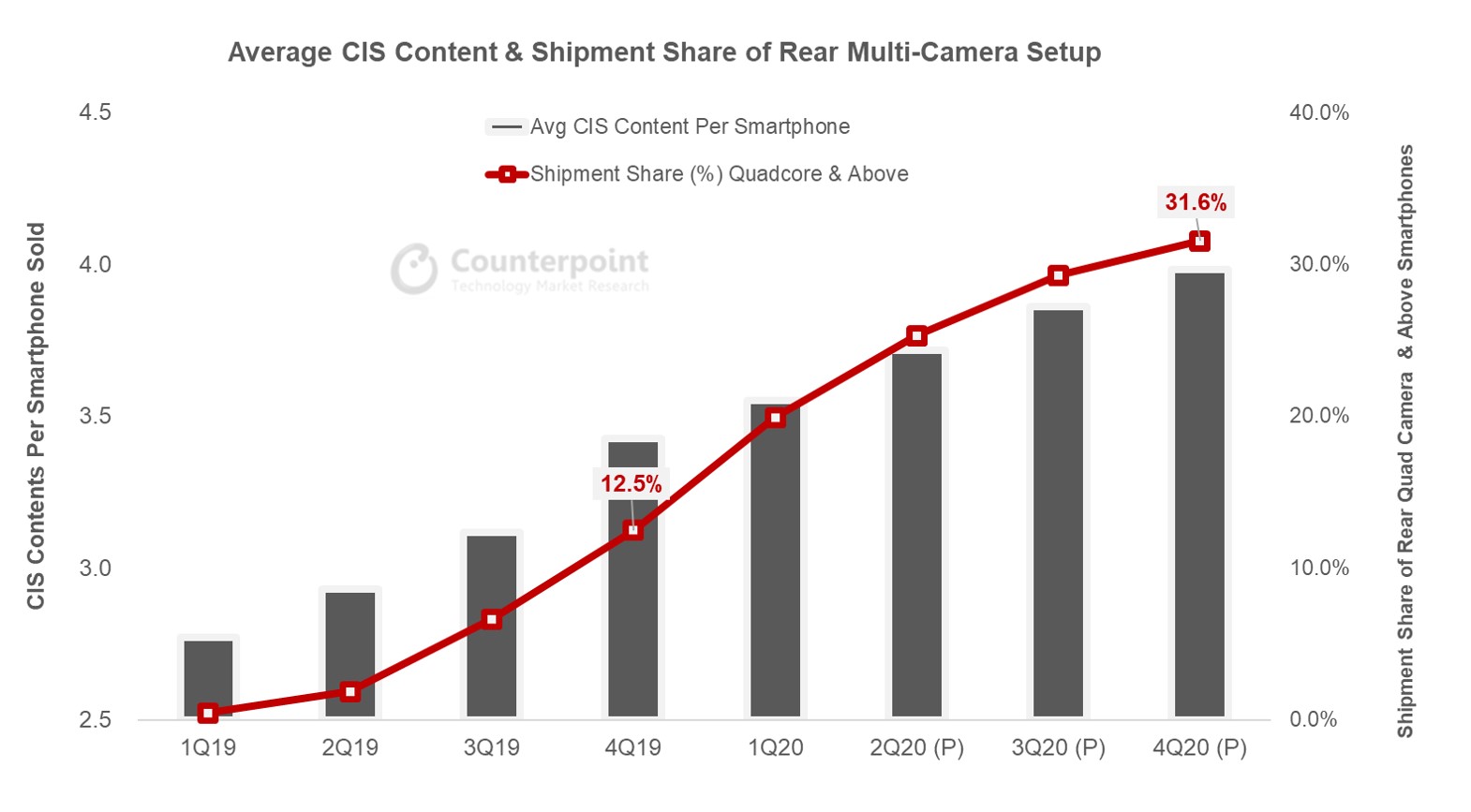
Thus, demand for several components has been on the rise since the past few years and it seems that image sensors have seen major growth. A report from Counterpoint Research says that demand for CMOS Image Sensors aka CIS for smartphones has increased about eightfold over the past decade. In the year 2019, it crossed the 4.5 billion units market.
Even though the smartphone shipments are expected to decline this year, the CMOS Image Sensor shipments will probably rise and have an all-time high shipment, hitting almost 5 billion units this year, claims Senior Analyst Ethan Qi.
This is likely because of the multi-camera setup and 3D sensing sensors for the smartphones that manufacturers have made a norm. Almost all smartphones getting launched these days have a multi-camera set up — the majority of which feature either the triple-camera sensor or quad-camera setup.
Counterpoint’s Component Tracker, each smartphone shipped in the first quarter of this year packed more than 3.5 image sensors on average. It also witnessed around 20 percent growth in the high- to mid-range smartphones’ quad-camera setup.
Given the current market conditions because of the ongoing COVID-19 pandemic, smartphone shipments are expected to decline significantly. In fact, the report predicts a 10 percent year-on-year decline compared to last year.
Samsung recently confirmed that it will be holding its next Galaxy Unpacked event on Aug. 5. Multiple reports have claimed that the event will be used to launch the Galaxy Note 20 series, the Galaxy Z Fold 2 foldable phone, and the Galaxy Z Flip 5G. The Galaxy Tab S7 and S7+ flagship tablets and the Galaxy Watch 3 are also anticipated to debut soon. According to a tipster, the next S-series tablets and the smartwatch may go official on Aug. 5.
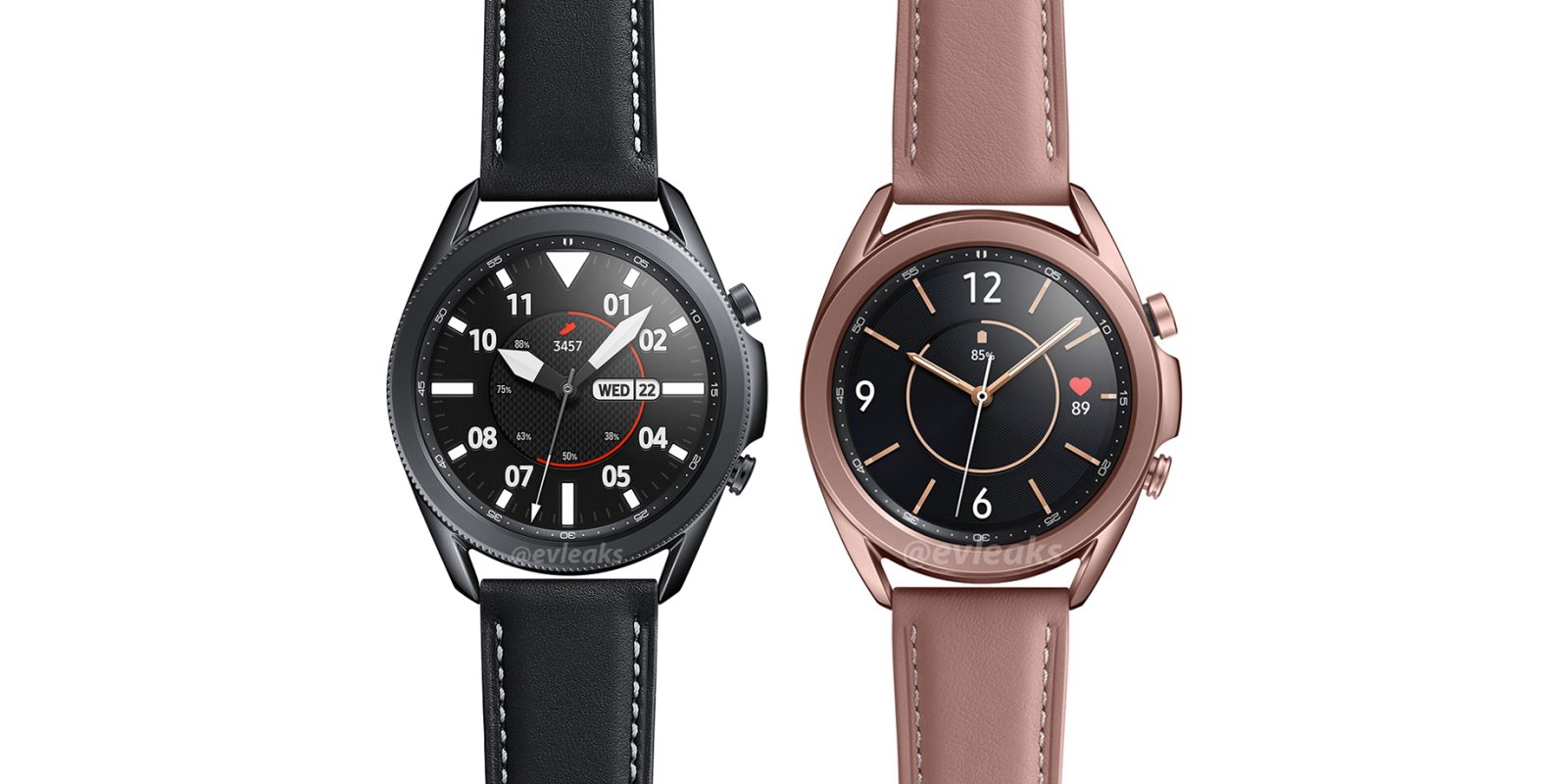
The July 22 date was found mentioned in the leaked renders of the Galaxy Watch 3 that surfaced recently. Since then, it has been speculated that the South Korean tech giant may announce the Galaxy Watch 3 on the said date which falls exactly two weeks before the Galaxy Unpacked event.
According to a tipster, the Galaxy Tab S7 and Galaxy Watch 3 will not debut at the Galaxy Unpacked. His tweet hints that event the Tab S7 will break cover along with the Galaxy Watch 3 on July 22. Since Samsung has not officially confirmed the launch date, it may not hold a separate launch event for these devices. Probably, the company will be rolling out a press release to announce the Tab S7 lineup and Watch 3.
The Galaxy Watch 3 is expected to arrive in 45mm (1.4-inch display) and 41mm (1.2-inch display) options. The bigger model will be housing a 340mAh battery whereas the smaller one will have a 247mAh battery. The 50ATM and MIL-STD-810G certified smartwatch will come with various other features like LTE connectivity, GPS, health sensors, and more.
The Galaxy Tab S7 Plus is expected to come with a 12.4-inch display and 10,090mAh battery whereas the smaller 11.4-inch Galaxy Tab S7 could be backed by a 7,860mAh battery. Both tablets will be powered by Snapdragon 865+ SoC and are likely to sport AMOLED displays with 120Hz refresh rate support. These tablets are expected to be available in 5G, LTE, and Wi-Fi editions.
Since the past couple of years, Android smartphone makers have been offering fast charging technology to quickly charge the phone’s battery. With time, the charging speeds have been increasing.
There is heavy competition between smartphone manufacturers regarding the fastest charging speed offered on their premium smartphones. Now it seems that the competition has reached the next level.
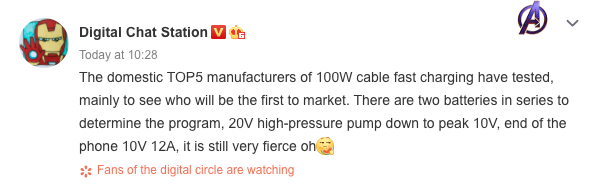
A leakster from China claims that the top five smartphone brands have tested the 100W wired fast charging technology to see the market fit. From 20V to 10V, the peak power for this reaches 120W (10V/12A).
Currently, no more information is available regarding this. But we have seen a few brands tease their fast charging solutions and brand like Xiaomi and Vivo have already showcased their fast charging technology.
Recently, Xiaomi has been rumored to soon launch its 100W fast charging technology in a premium smartphone. In fact, the company’s 120W power adapter with model MDY-12-ED has already passed through the 3C certification process last week.
Last month, OPPO’s executive Shen Yiren had hinted that the company could soon launch a smartphone with support for 100W fast charging technology. Last year, Vivo had showcased its 120W Super Fast Charging technology.
However, when Xiaomi and Vivo showcased their fast charging technology last year, they had added that the technology was not ready for commercial usage. But now it seems that the tech is finally ready and could come in upcoming premium devices.
After launching the Ninebot Kart Pro and the Ninebot E8 kids’ electric bike, Xiaomi has now today launched the Ninebot C30 series electric bikes meant for adults and is possibly the cheapest such device in the market.
The newly launched Ninebot C30 will be joining the existing list of C-series products from the company, which includes Ninebot C40, C60, and C80, priced at 3,999 yuan (~$571), 4,999 yuan (~$714), and 5,999 yuan (~$857) respectively.
For those who are unaware, last year, Xiaomi-backed Ninebot had unveiled two new series for electric bikes in China — C-series and E-series. Among the two, the C-series devices don’t need the user to have a valid driver’s license or vehicle registration to use it.
The pricing of the Ninebot C30 is 3,599 yuan (~$514) but it was available for 2,999 yuan (~$428) for the initial sale, offering a discount of 600 yuan. As for the specifications, there are no major changes in terms of maximum speed or battery life.
It is more lightweight and compact when compared to the other models. We will update this article whenever more information about this device is available.
Currently, OPPO’s 65W SuperVOOC Flash Charging technology is the fastest charging technology available commercially. The same technology is also available on Realme phones like the Ace2 and the Reno4 series that went official in June in China. Fresh information shared by reputed tipster Ishan Agarwal reveals that Realme is currently working on a 100W+ fast charging solution. This tech may get announced this month.
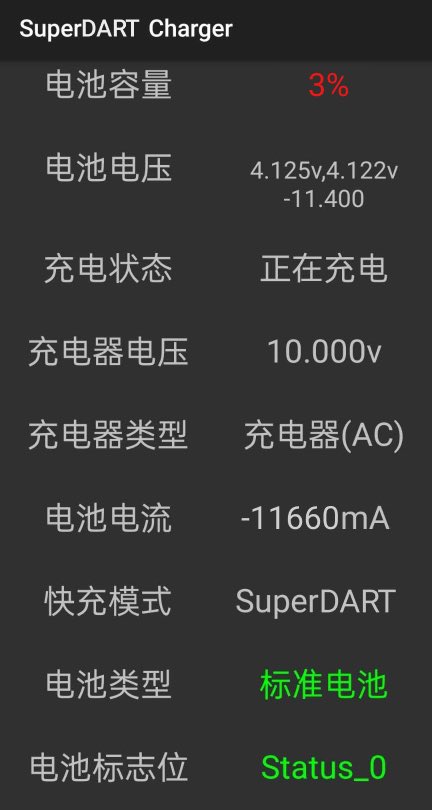
Realme’s 65W fast charging tech is dubbed as SuperDart, but the upcoming 100W+ rapid charging tech is expected to get announced as Ultra Dart. The tipster revealed that it can charge 1/3rd of a 4,000mAh battery in just 3 minutes.
The above image shared by the tipster reveals that a 4,000mAh battery can be completely charged in around 10 minutes. The “11660mA” mentioned in the image indicates that the technology can offer almost 120W charging speeds.
Realme’s former Vice President for China named Xu QI recently interacted with netizens saying that the 100W fast charging is a bit slow. It indicated that the company could be planning to offer a faster charging solution than 100W. While the 120W Ultra Dart could be debuting this month, it remains to be seen when it will be made available to the users.
Last month, Xiaomi’s 120W charger was spotted at the 3C certification platform. The charger has a model number of MDY-12-ED and it was also spotted in a leaked video in real. A reliable Chinese tipster had claimed that Xiaomi could be the first brand to launch a phone with a 100W+ charging solution. Last year in June, Vivo had showcased its 120W Super FlashCharge technology that could charge a 4,000mAh battery in 13 minutes. There is a possibility that Vivo may too launch a smartphone with 120W charging support.
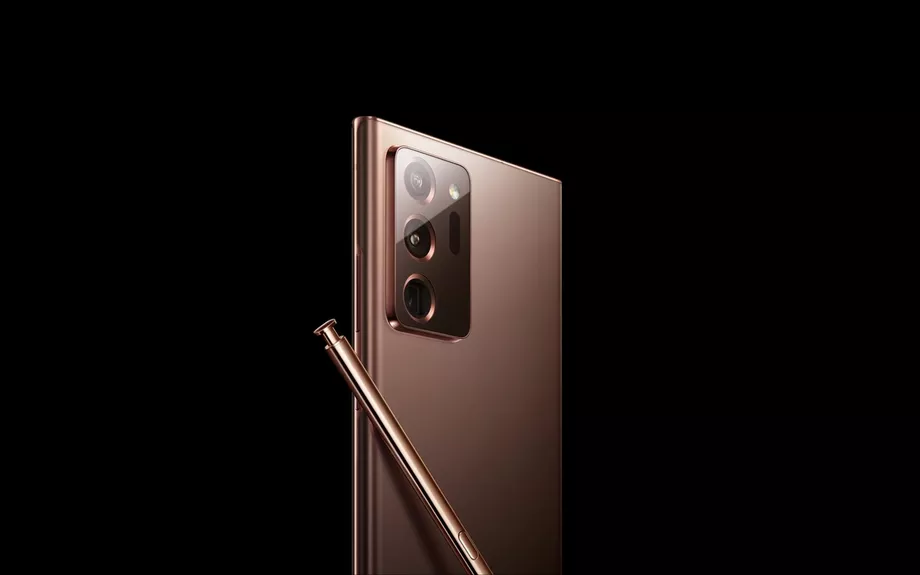
Samsung has confirmed that its next Galaxy Unpacked event will take place on 5th August, where the company is expecting to launch its next-generation Galaxy Note20 series as well as Galaxy Z Fold 2 and a couple of other products.
Now, ahead of the launch of the upcoming Note-series flagship smartphones, a report claims that the South Korean giant isn’t keeping high expectations from the lineup in terms of sales, at least for the initial phase.
Samsung Galaxy Note20 Ultra Render
The report further goes on to add that Samsung is being cautious about ordering too many components for the new phones from its suppliers because of lower sales expectations. The primary reason for this is being cited as the ongoing COVID-19 pandemic.
Samsung has also been struggling with the sales of its Galaxy S20 lineup, the number of which stands lower than the sales number of Galaxy S10 series. As per the data available, Samsung sold 3.5 million units of the Galaxy S20 Plus in Q1 2020 while the company had sold 5.2 million units of Galaxy S10 in Q1 2019.
The entire Galaxy S20 lineup, which includes Galaxy S20, S20 Plus, and S20 Ultra, managed to sell 8.2 million units in the first quarter of this year. Do keep in mind that the smartphone was announced in February this year and went on sale in the month of March. So, the device had been on sale for just three weeks in the first quarter of this year.
However, the pandemic is also one of the reasons behind the lower sales numbers for the latest Galaxy S-series flagship smartphones from Samsung. And it seems that the company will continue facing the same issues with the upcoming Galaxy Note20 series.
Sony is all set to soon launch its next-generation gaming console — Sony PlayStation 5, the design of which has already been unveiled by the company, along with a list of games that users will be able to play when it gets launched.
Now, the Japanese company has announced an investment of $250 million in Epic Games — the company behind the Fortnite game. With this investment, Epic Games has raised $1.83 billion so far.
This deal will enable Sony and Epic to broaden their collaboration, with Sony’s portfolio of entertainment assets and technology and Epic’s social entertainment platform and digital ecosystem, to create unique experiences for consumers and creators.
Sony is acquiring a minority stake in Epic Games, about 1.4 percent, which values the gaming company at $17.86 billion. Epic has also confirmed that it will still be able to publish its games on other platforms.
Commenting on the development, Tim Sweeney, Founder and CEO of Epic, said: “Sony and Epic have both built businesses at the intersection of creativity and technology, and we share a vision of real-time 3D social experiences leading to a convergence of gaming, film, and music. Together we strive to build an even more open and accessible digital ecosystem for all consumers and content creators alike.”
Epic is also the creator of Unreal Engine, a fundamental toolset for building many games. A few weeks ago, Epic had showcased the upcoming Unreal Engine 5 graphics running on Sony PlayStation 5.
For ardent phone users, one key consideration when pitching their tent with a phone maker is usually the speed at which the OEM pushes updates to its models. Phone manufacturers are increasingly putting this into perspective for their old and new models. The result is the increased pace at which the latest Android 10 operating system was adopted. A release made on the Android Developers blog Thursday shows that Android 10 recorded the fastest adoption of any Android update till date.
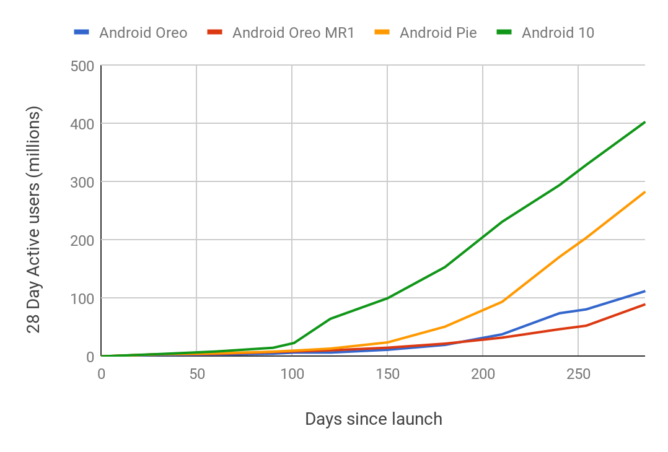
Google has since stopped releasing the comprehensive Android Distribution chart but this line graph shows the adoption rate for the last four major Android updates namely Android 8.0 Oreo, Android 8.1, Android 9.0 Pie and Android 10 since they were launch.
Android 10 has so far attained 28% faster adoption rate than Android 9 Pie with the total number of devices running the latest Android version put at 100 million barely five months after launch. At present, Android 10 runs in over400 million devices worldwide.
Google’s initiative for faster adoption of new OS versions is responsible for the progress. The tech giant’s Project Treble, Mainline, and GSIs were introduced at some point with the Project Treble and Mainline aimed at further decoupling the OS components from Android itself.
Project Treble gives phone manufacturers the leverage to deliver updates devoid of considerations about deeper hardware drivers. This helps to trim down the amount of time it takes to design and build software updates for new devices. The effect was felt with the adoption speed for Android 9.0 Pie. This latest chart shows progress is being made at a rapid pace.
A few phone manufacturers are developing AR glasses and Huawei is one of them. A pair of AR glasses with a feature found on phones has been patented by the Chinese manufacturer.
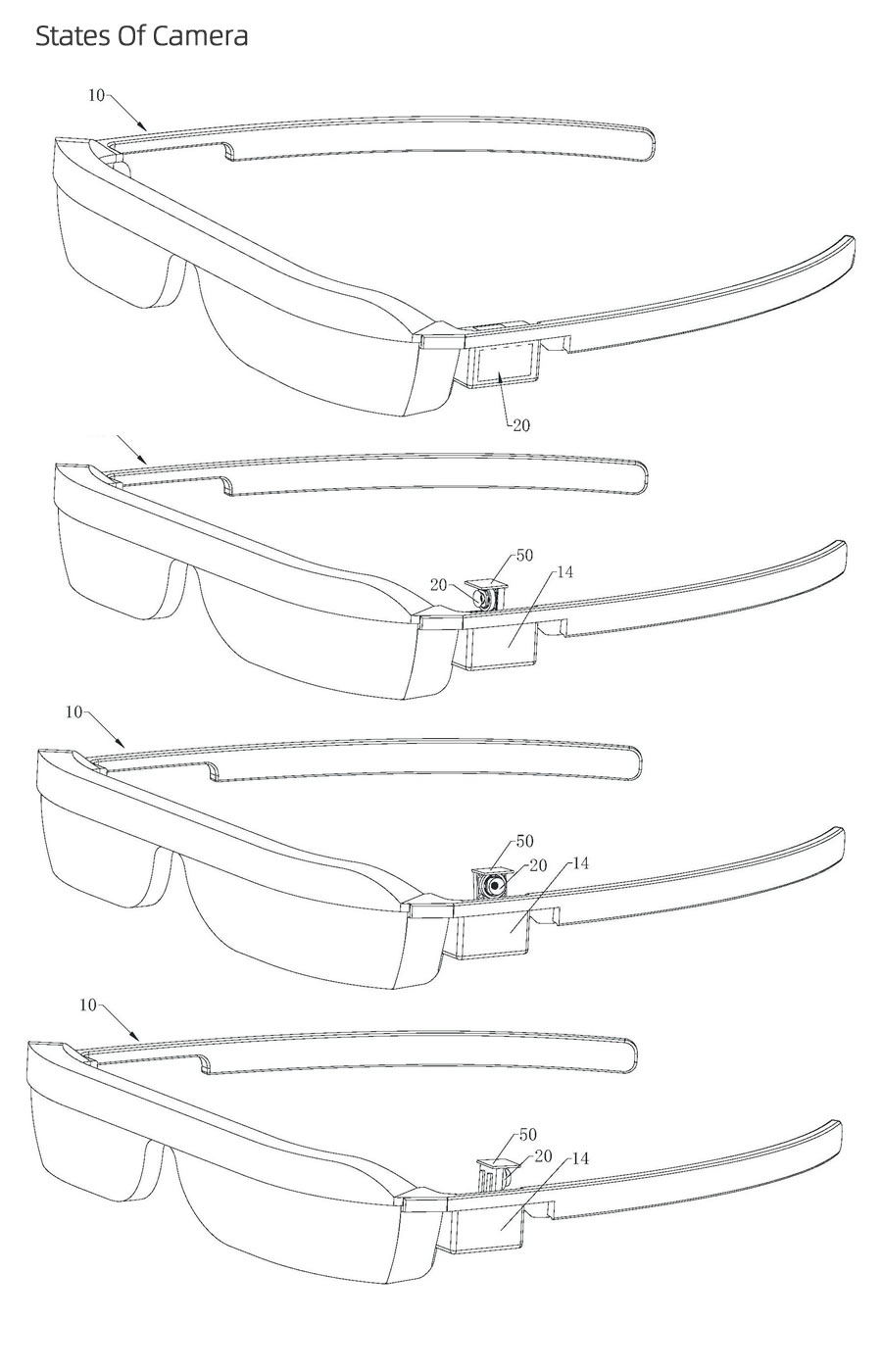
The patent for the AR glasses was recently approved by the China National Intellectual Property Office and sketches of the device have popped up online. The diagrams show that the AR glasses will have a motorized pop-up selfie camera similar to the one found in smartphones including those made by Huawei too, but it doesn’t stop there.
While the pop-up camera for most phones only serves as the front-facing camera, the one for Huawei’s AR glasses can rotate and also capture images from the left side and the rear of the wearer.
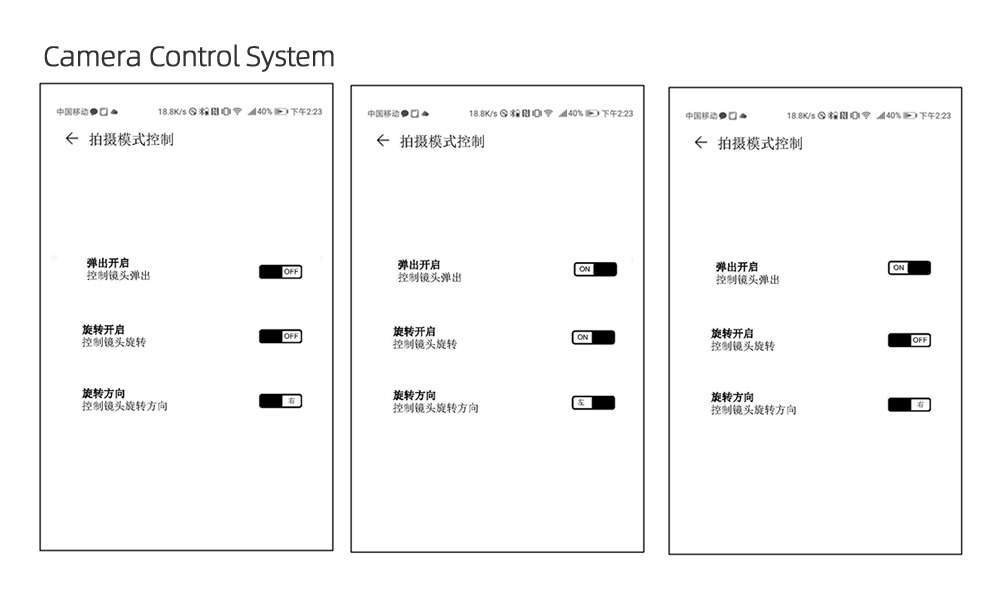
The patent’s documents also mention that there is an app that can be used to control the camera. You can use the app to activate the camera and also to change its direction. If you don’t need the camera anymore, you can turn it off via the app and it will slide back into the frame of the glasses.
There is no news yet regarding when Huawei will launch the AR glasses. There is even no guarantee it will end up as a commercial product. The company may decide to launch a pair of AR glasses with a different design entirely, so we advise you not to raise your hopes.
In May this year, a tipster shared a few key details of a Huawei Honor MagicBook laptop powered by AMD Ryzen 7 4800H processor said to be in the works. Fresh details about the launch of the model are now out. According to a Weibo user, the Honor MagicBook AMD Ryzen Edition will be released on July 16.
The tipster shared a teaser poster for the laptop and the poster indicates that it will feature “A+ Productivity”. We can’t say for sure what this means but it should be related to the notebook’s hardware performance.
The poster also details some of the design highlights of the MagicBook Ryzen edition. It will feature a thin and light build and is expected to have an upgraded Ryzen 4000 series chipset from the ones used on the Honor MagicBook 14./15 and MagicBook Pro. As stated, an earlier leak tips the chipset to be the AMD Ryzen 7 4800H. The processor will be paired with 16GB of DDR4 RAM. Further, it will include a Western Digital PC SN720 NVMe SSD.
The Ryze-poweredMagicBook isn’t expected to be a gaming rig as there is no dedicated GPU onboard. It utilises the Radeon RX Vega GPU which is a decent one, nonetheless. However, Honor may equally unveil a gaming-focused laptop during the press conference. We’ll have to wait and see how that pans out.
MediaTek‘s resurgence in the semiconductor industry may end up as a case study in a MBA program somewhere someday. The company was almost on the verge of being buried by Qualcomm, confined to the sales of just entry-level chipsets. However, it made a gradual comeback with its mid-range Helio lineup. Further, in a targeted move for the 5G era, the Dimensity processors are giving the Taiwanese fabless chipmaker a much-needed in-road into the high-end market.
With the impressive products under the Dimesity 1000 and 800 series, the company is planning to cement its place in the segment with the impending release of the Dimensity 600 series. There are speculations that the new series will be unveiled before the end of this month or the end of September at the latest.
The report has it that although MediaTek is yet to release the new Dimensity 600 series, the company has received a large number of orders in advance. The report also disclosed that a number of OEMs will release products powered by the Dimensity 600 series in the second half of the year.
If this is true, it is an unprecedented feat for the chipmaker. It also suggests the chipset may have a decent price. Of course, it is a 5G chipset but specifications are not known at the moment.
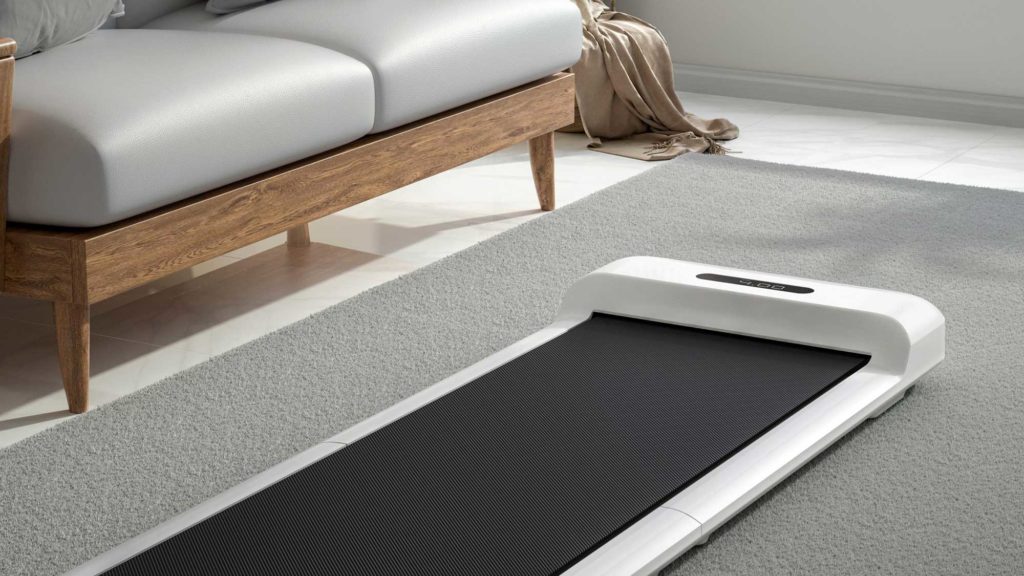
Since the COVID-19 outbreak, millions of people have confined to their homes. The respective Governments have issued advisories to work from home and to follow some precautions while stepping outside the house. It has barred the people from working and following a healthy lifestyle. However, WalkingPad S1 can solve some of your woes by bringing the ability to walk within the house.
WalkingPad S1 is an upgraded version of its predecessor with several new improvements. It is 20lbs lighter, takes 45% less pace and minimal noise. The smart treadmill is a perfect machine to keep living a healthy life even during tough times. There are many advantages of having WalkingPad S1 at home for walking, jogging and running within the house.
Design
WalkingPad S1 is carved using premium materials and can be folded into a compact machine. It is 45% smaller than its predecessor and other competitors in the market. The lightweight WalkingPad S1 uses SMC material to enhance safety, durability and aesthetics.
Its belt is built using EVA material which provides better grip and reduces the impact on your knee. It measures 32.5-in x 20.4-in x 5.5-inch in size and weighs 61.3lbs.
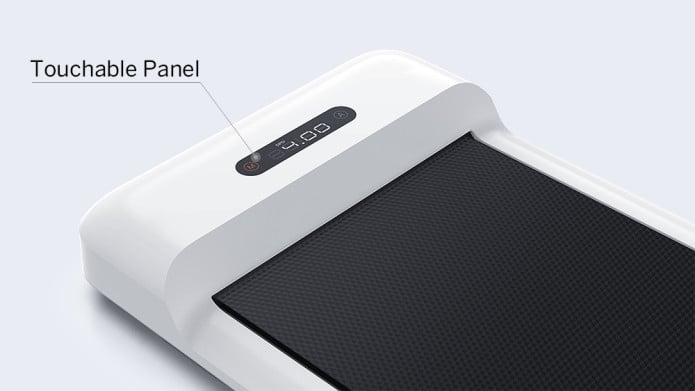
The touchable panel on the WalkingPad S1 backside gives a summary of workout speed and data. You can easily control the brightness, speed, modes with a simple touch.
Speed Control
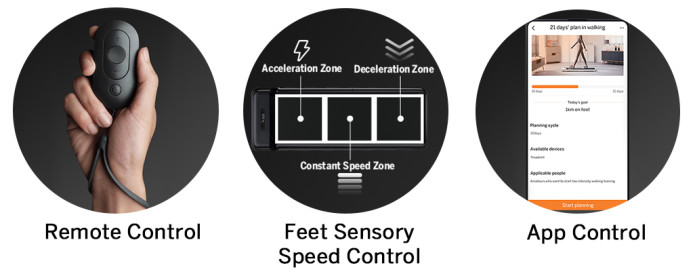
There are three ways to control the speed. You can either use Remote Control, App Control or Feet Sensory Speed control as detailed below.
WalkingPad S1 houses Feet Sensory Technology which automatically adjusts pace on the basis of personalized training data and pressure change actually measures the position. While walking, moving towards the front side of the pad will accelerate the machine. Whereas the speed remains the same if you walk in the middle of the pad, it will slow down if you move back to the middle position of the pad. These are three different areas, through which you can accelerate, decelerate easily.
A dedicated remote is also attached to the WalkingPad to control it easily using physical touch. Next, you can download the KS Fit App on Android or iOS device to control the speed.
Safe and Secure
WalkingPad S1 use all the safety measures that are necessary for such a walking pad. In order to enhance the already present safety measure, the treadmill automatically stops if no movement is detected, it even sticks to a pre-set speed limit to avoid any injury. Further, the anti-slip mat is made out of EVA material with less friction coefficient.
More Productive with Private Gym
If you’re a fitness freak and want to maintain your physique during the global pandemic era, then WalkingPad S1 is the best choice. You can work while walking within your home, or can even take conference calls.
You can even watch movies, tv shows or listen to music while walking or running on the treadmill.
Portability
It can be easily stored under the bed, or sofa or you can set it against the wall. It can be folded and doesn’t take too much area to expand within the house.
Extensive Features using App
The KS Fit app enables some extensive features that are part and parcel of the WalkingPad S1. It allows the users to personalize training plan, manage workout data and share progress including stats from steps, calorie, and speed countries.
Technical Specifications
Platform Height: 2.03-inch
Belt Size: 17.3-inch
Max Speed: 3.75mph
Moto Power: 1.25hp
Surface: SMC Material
Display: LED Dot Matrix
Pricing
WalkingPad S1 is available via different perks starting from $469 including a single unit. However, you can gran WalkingPad S1 and Detachable Handlebar for $559. A pair of two WalkingPad S1 is available with a bundle worth $919, and 3X units costs $1359. You can grab it on discount from Indiegogo.
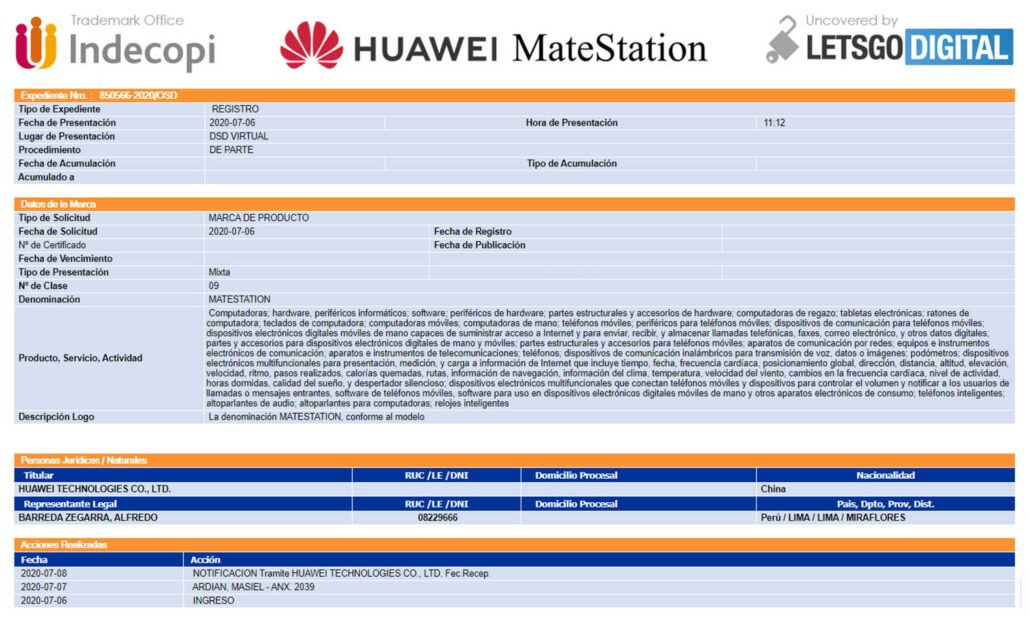
Huawei has slowly been restructuring its product line. The Mate name is no longer exclusive to its smartphones but now includes the MateBook line of computers, the MatePad line of tablets, and may soon include the Mate Watch line of smartwatches and the MatePod line of smart speakers. We may be getting yet another product category seeing as the Chinese giant has filed a trademark application for “MateStation”.
First reported by LetsGoDigital, the trademark application was filed in Peru on Monday, July 6. There are speculations the MateStation may be a sort of dock for the upcoming Mate 40 series and even Mate V foldable device. And it is understandable why.
Huawei has built a desktop mode into EMUI as far back as 2018. This means you can connect the device to a display wirelessly or using a cable and enter a desktop-like user interface. Users can decide to pair a Bluetooth keyboard and mouse for a full desktop experience.
The MateStation may be a dock to make this setup easier. If it is a dock, the phone will be able to charge when placed on it while also working in desktop mode. The dock will also most likely have ports for connecting peripherals such as a mouse and keyboard.
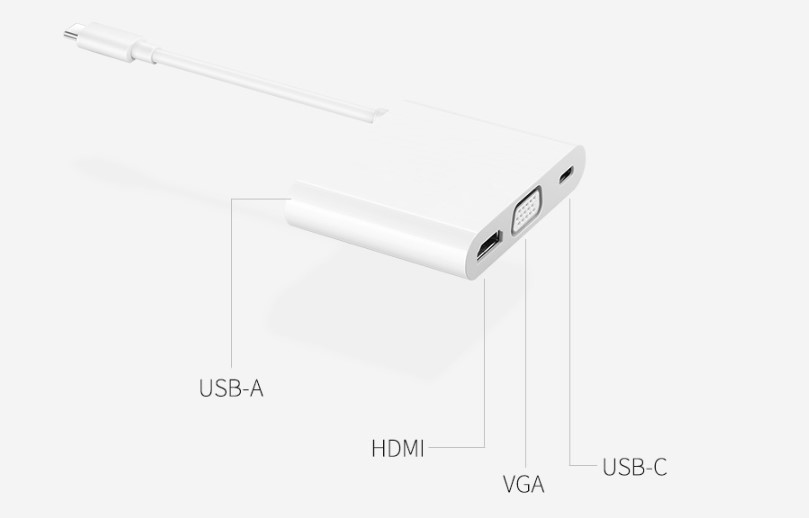
Huawei MateDock 2 Docking Station
It is important to state that Huawei actually has a device called the MateDock 2 Docking Station which is a device that allows you to add additional ports to the MateBook, MateBook E, and MateBook X series.
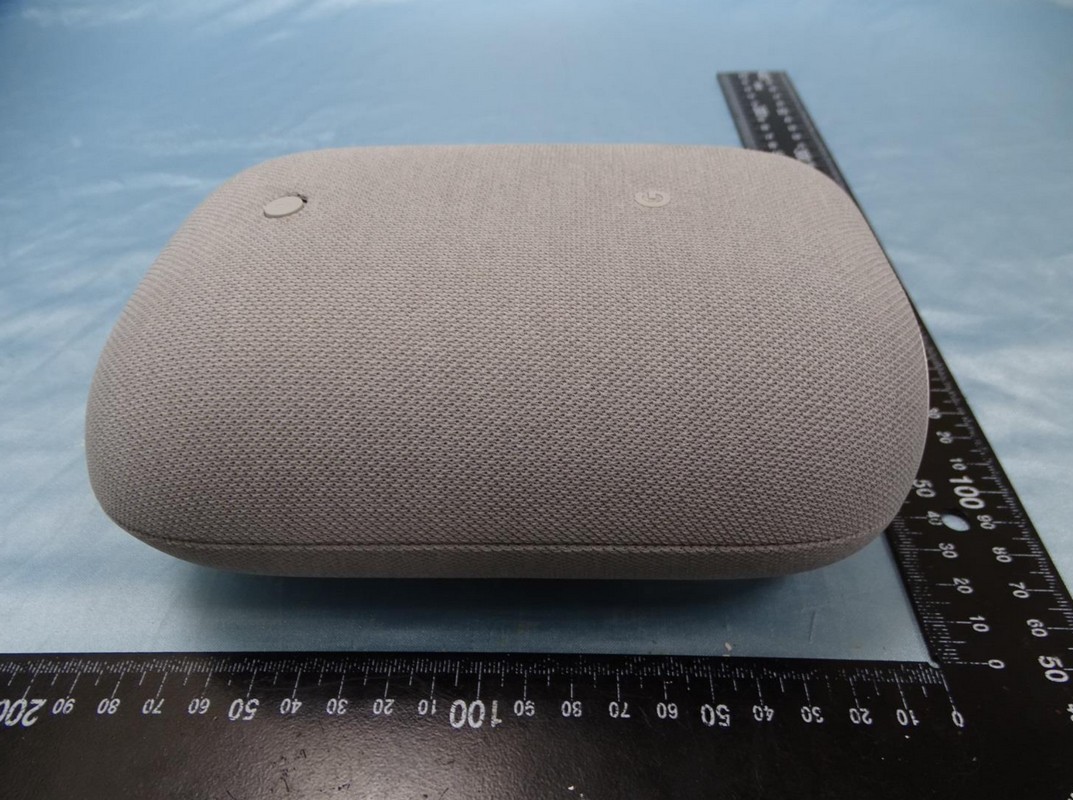
It has been almost four years since the Google Home Smart Speaker was announced. Google’s smart speaker family has gotten larger following the launch of the Google Home with products like the Google Home Max, Google Home Mini, and the Nest Mini (Google Home Mini 2). New reports say there is another speaker coming soon and now we have our first look at the upcoming product.
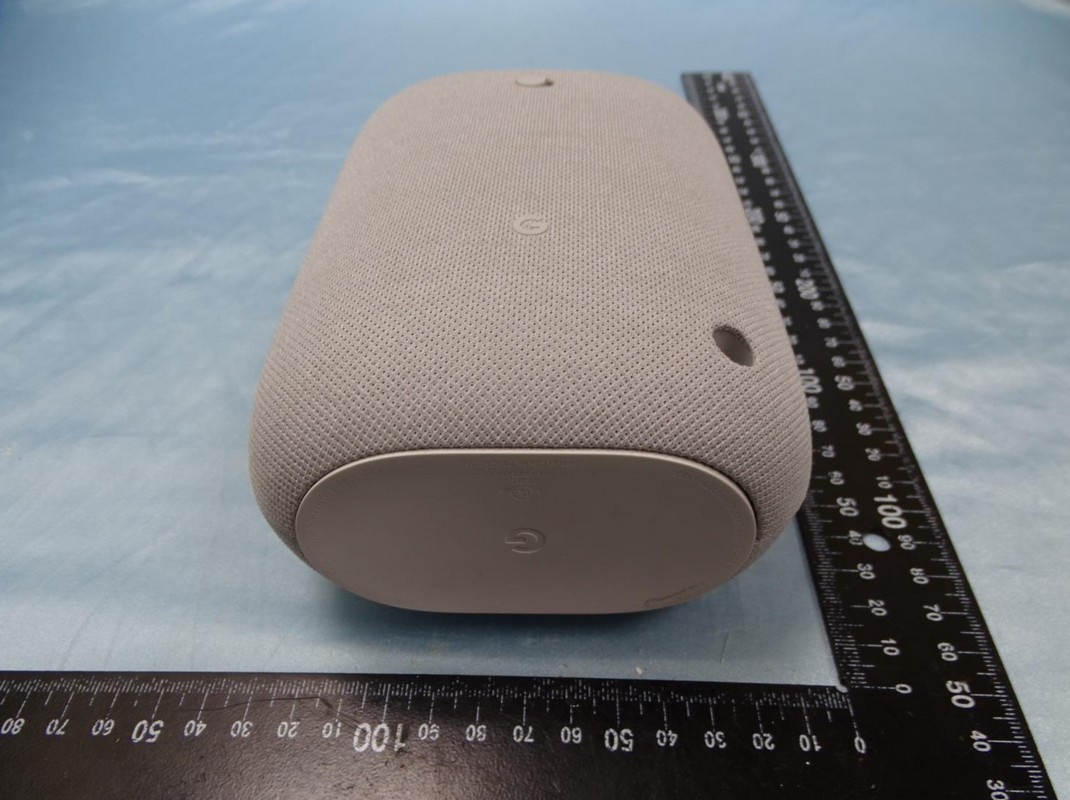
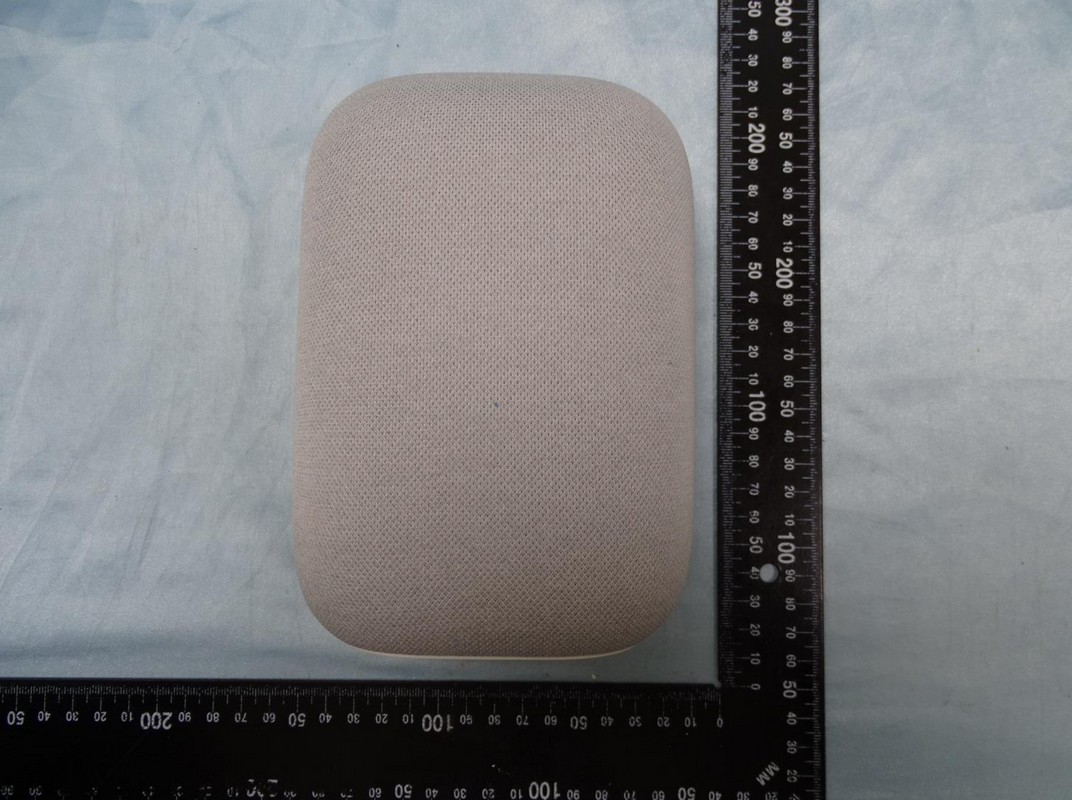
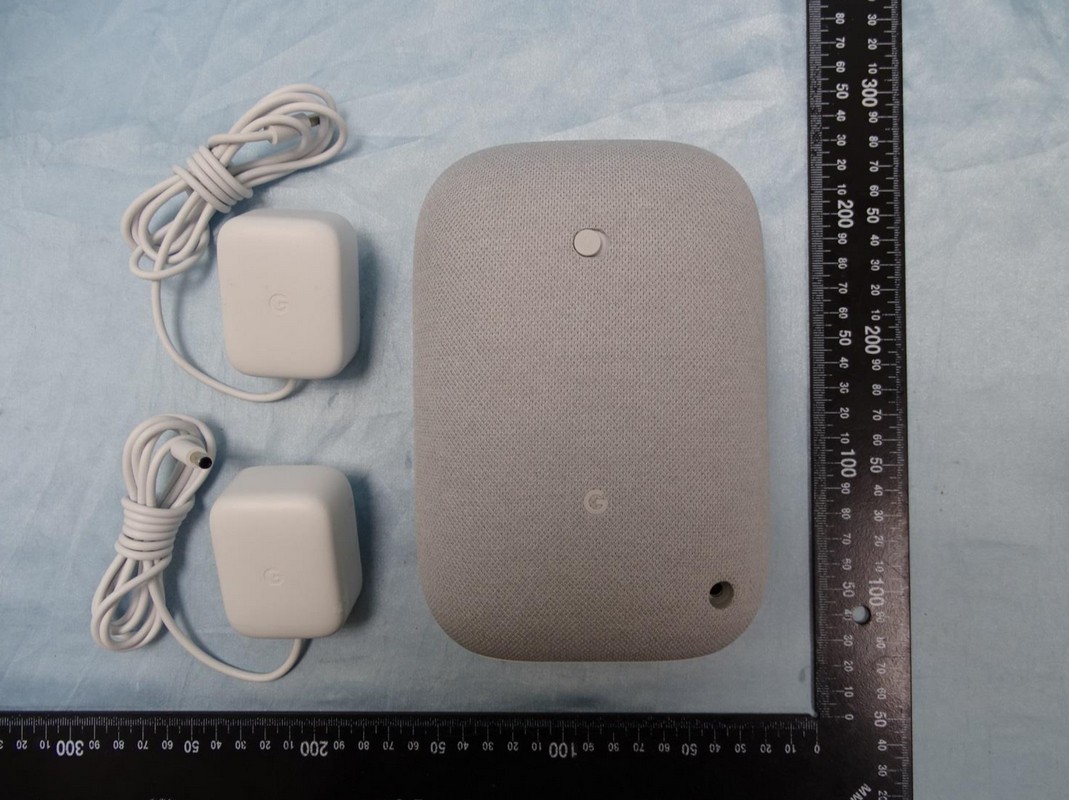
The new speaker is being touted as a successor to the original and its images are from the Japanese Wireless Standards website. The speaker which will launch under the Nest brand is designed to stand upright on one of its sides (the silicone with the Google logo).
The speaker is wrapped in a similar chalk-colored fabric as Google’s other smart speakers. The back of the speaker is shown in the images. There is a mute button at the top and below it (closer to the bottom actually) is the Google “G” logo. At the bottom right corner is a hole for the power adapter.
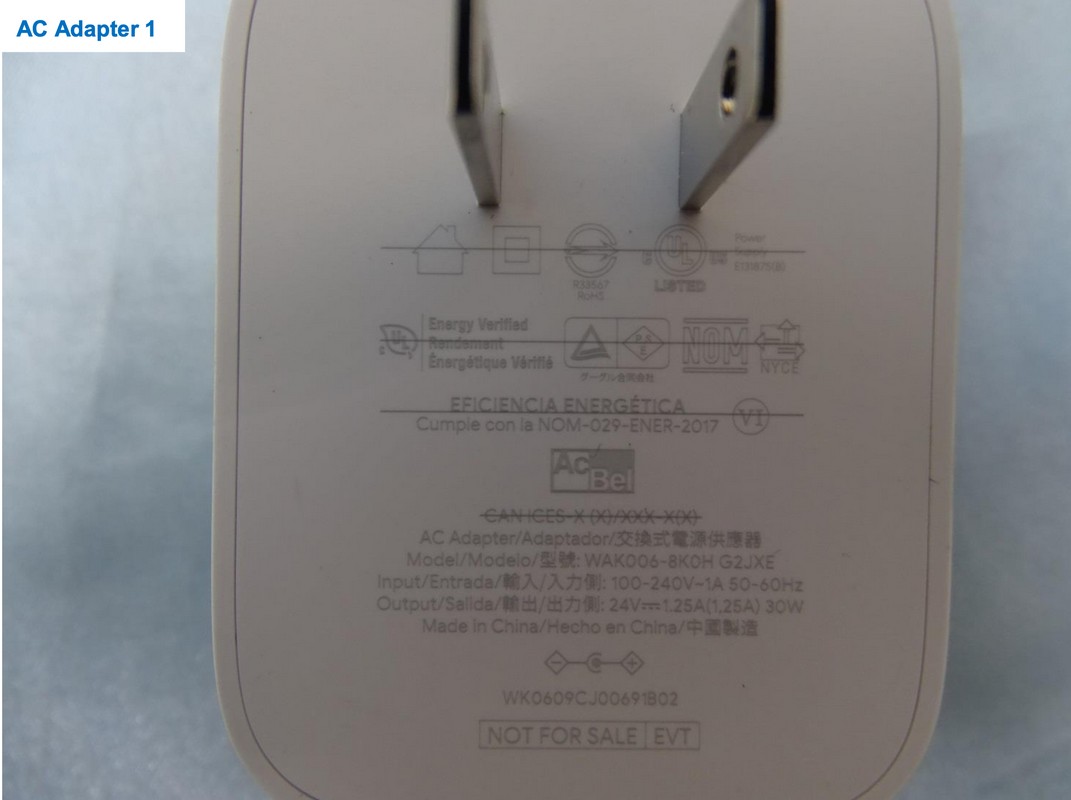
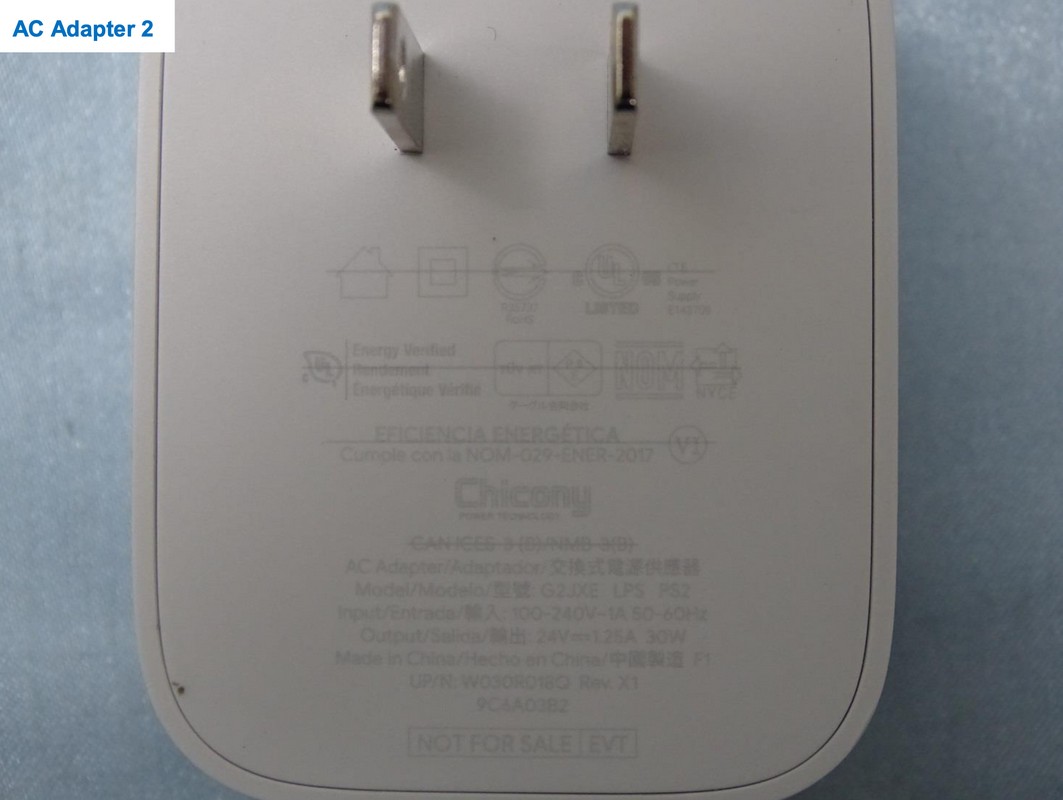
The images also show the smart speaker will come with a 30W adapter with a barrel mouth plug and not a USB Type-C connector.
The smart speaker is referred to as an “interactive media streaming device” according to its documentation. It is about 220mm in length, making it taller than the Google Home Max which stands at 220mm tall. It will also connect via Bluetooth and Wi-Fi.
There is no info on when the smart speaker will be announced but it should be available for purchase in time for the holidays.
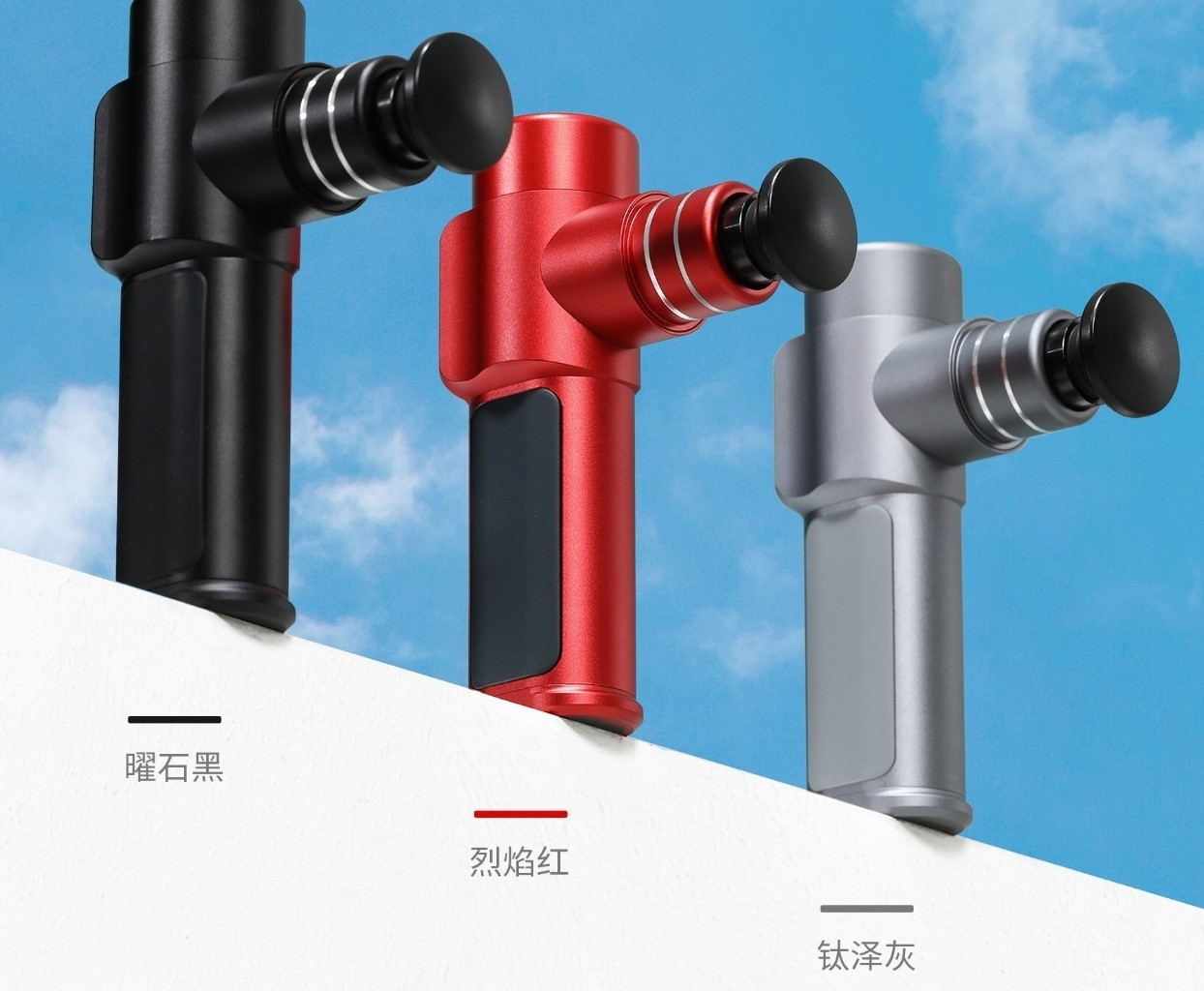
Xiaomi has launched the Merach Merrick Nano Pocket Massage Gun for crowdfunding on the Youpin platform. The product comes with a decent 369 yuan (~$53) price tag. It is a portable massage gun which weighs just 360g.
The massage gun works with the principle of relaxing the muscle fascia deeply through high-frequency vibration. This allows blood to circulate smoothly. It also takes away the lactic acid produced by exercise, so as to eliminate muscle soreness.
As stated, the massage gun weighs 360g with a portable and compact design. It is very friendly to female users. At the same time, the extremely lightweight also solves the need for some people to carry around and relax their muscles immediately after exercise.
In terms of parameters, the Merach Merrick Nano Pocket Massage Gun uses a 3200 rpm brushless motor, with powerful torque of 490mN.m. The motor delivers a massage depth of 7.5mm. It also features deep-sea noise reduction technology which reduces the operating noise to 40db.
The Merach Merrick Nano Pocket Massage Gun utilises a front centre of gravity design and an ergonomic handle. The three-speed shift can be used to awaken the muscles, relax the fascia and deep massage. It equally comes with four different types of heads- standard cylindrical head, flat head, ball head and U Type head. The fascia gun also uses the most versatile Type-C interface for charging. It is also equipped with a 2500mAh battery and fast charging technology.
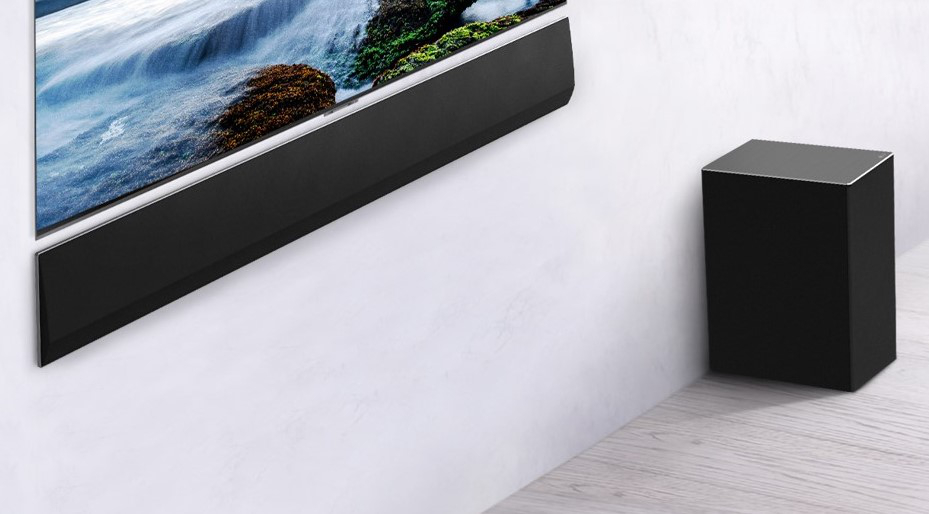
Although its smartphone business is struggling, LG Electronics is performing well in terms of other products like its smart TV and accessories. The Korean tech ain’t has now launched a new GX soundbar designed to assume the role of a fitting companion to their GX Gallery OLED Series TVs.
The LG GX soundbar is portable with a dimension of 15cm x 144.6cm x 3.25cm. The size and finish blends perfectly with the 65.-inch GX Gallery Series TV, also by LG. The soundbar comes with a solid steel stand but if you don’t want to use the stand, it can also be mounted on the wall.
The soundbar features support for Dolby Atmos and DTX:S in order to get superior sound output. It also comes with 4K pass-through for Dolby Vision support. The speaker also comes with a wireless subwoofer which can be connected via Bluetooth to the soundbar. The subwoofer delivers low-frequency bass signals but it is sold separately.
In addition, the LG GX soundbar features eARC support which enables playback of high-resolution audio formats such as Dolby True HD and DTS Master Audio. The soundbar’s Hi-Res Audio certification means it comes with the capability to playback audio at 24bit/96kHz. Other features include Bluetooth connectivity and LG AI Sound Pro that analyses audio content to automatically apply the best sound settings.
LG is yet to announce the price but the GX soundbar is billed to go on sale in Europe, North America, Asia later this month.
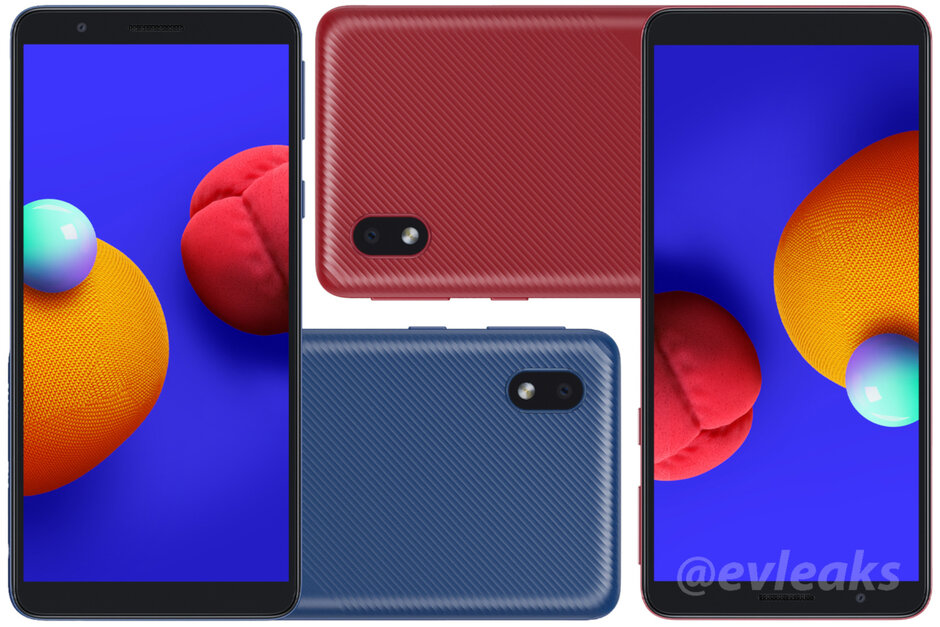
Samsung is soon expected to launch its next Android Go entry-level smartphone in the form of Galaxy A01 Core. Though the specs of this device are modest as per the leak, its removable battery makes it stand out in the crowd of handsets with non-removable batteries.
According to an exclusive leak by SamMobile, the upcoming Galaxy A01 Core will be powered by MediaTek MT6739 SoC paired with 1GB RAM and 16GB internal storage. On the front, it will sport a 5.3-inch FHD+ (1480 × 720 pixels) PLS TFT LCD panel.
In the camera department, the phone will feature an 8MP primary sensor with f/2.2 aperture and a 5MP selfie camera with f/2.4 aperture. As for software, it will be the first Samsung device to launch with Android 10 (Go Edition) out of the box.
The removable battery we mentioned in the beginning will be of 3,000 mAh capacity, which is enough to run this hardware for a whole day.
Apart from the above-mentioned specs, we can expect this entry-level handset to come with MicroUSB port, 3.5mm headphone jack, and support for microSD card as well as dual SIM.
Having said that, since this phone has begun to receive certifications from various bureaus, it can launch anytime in the coming days mostly via press release instead of a launch event.
The OnePlus Nord launches on July 21 and there is a lot we already know about the mid-range 5G phone. However, if you don’t want to wait until the launch date to know the full spec sheet, then you are in luck as a new leak revealing the full specs of the device has surfaced.
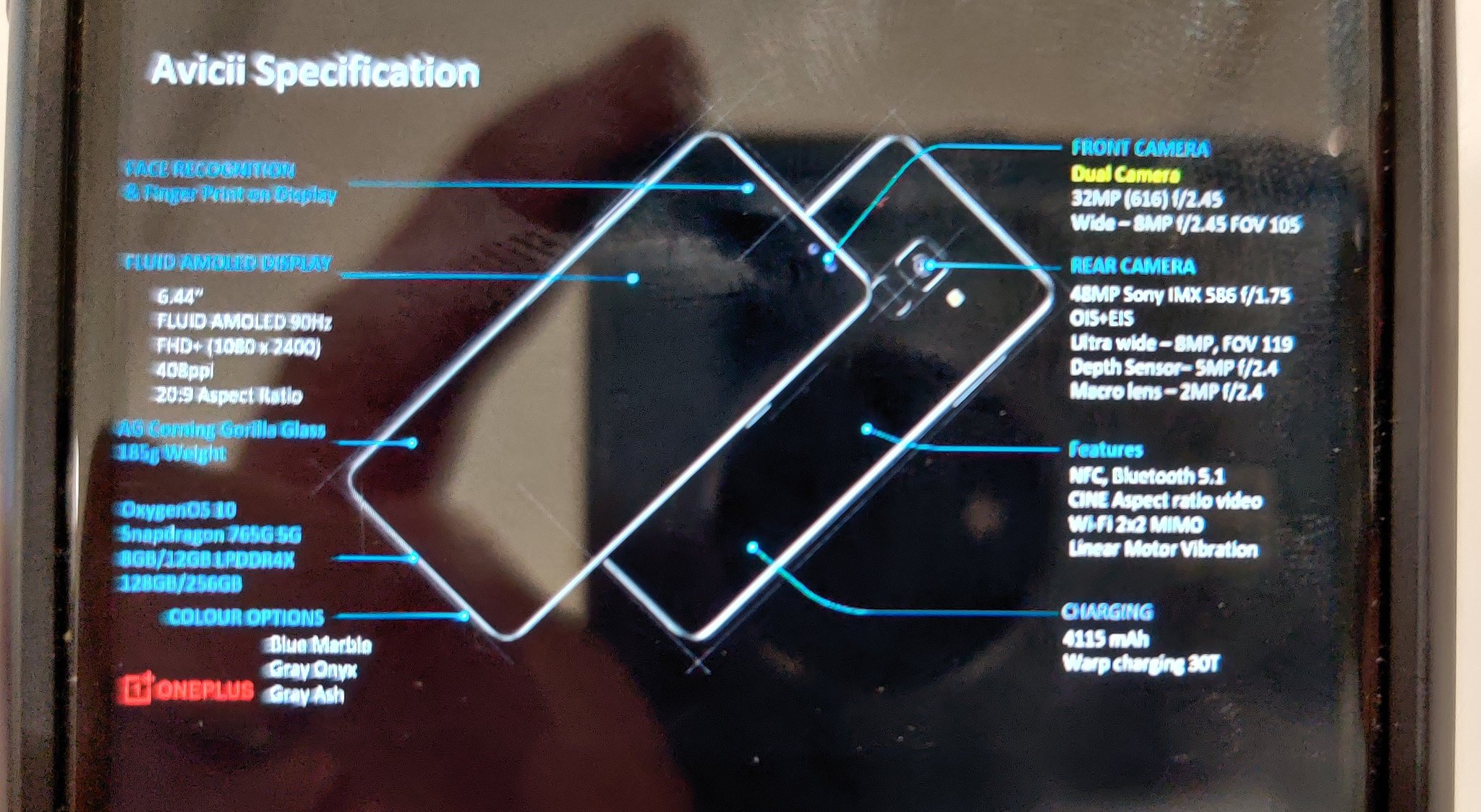
The leak is an image shared on Twitter by Evan Blass. He said it was sent by a tipster and that it was taken from a virtual presentation.
According to the image, the OnePlus Nord has a 6.44-inch Fluid AMOLED display with a 1080 x 2400 resolution. The screen has a 20:9 aspect ratio and a PPI of 408. Just as already confirmed, there is a Snapdragon 765G processor under the hood. The phone will be available in two configurations – 6GB RAM + 128GB and 8GB RAM + 256GB.
Said by a tipster to come from a virtual Nord training presentation, this lines up quite well with what we already know (save for the phone imagery, which is an obvious placeholder). Let the debunking begin! pic.twitter.com/pA5N4oxJOF
With respect to cameras, the OnePlus Nord will have a 32MP Sony IMX616 f/2.45 primary front-facing camera that is paired with an 8MP f/2.45 wide-angle camera with a field of view of 105°. On the back is the 48MP Sony IMX586 with an f/1.75 aperture size. There is another 8MP ultrawide angle camera on the back but its field of view is 119°. The quad-camera setup on the rear is completed with the addition of a 5MP f/2.4 depth and a 2MP f/2.4 macro camera.
The OnePlus Nord has an in-display fingerprint scanner and also has support for Face Unlock. It also has NFC, Bluetooth 5.1, Wi-Fi 2×2 MIMO, and linear motor vibration.
OnePlus has included a 4115mAh battery with support for Warp Charge 30T. It will come in three color variants called Blue Marble, Gray Onyx, and Gray Ash. There is Corning Gorilla Glass protection and the device’s weight is 185 grams.
Some of the specs check out with what we already know about the phone but we will advise you to take the others with a grain of salt. As you can see, the image used for the phone is nothing like the OnePlus Nord, though we think it is just a placeholder.
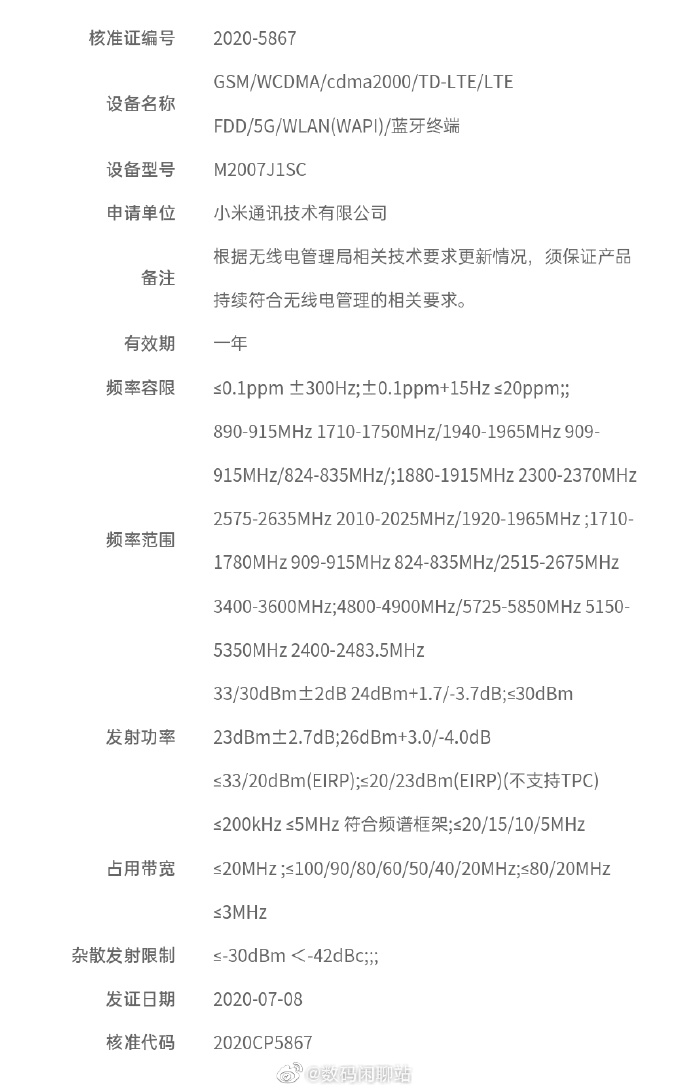
Seven months into the year 2020, we have seen Xiaomi release several new models despite the hiccup caused by the pandemic. Apparently, the tech giant still has a few more to come before the year wraps off. A new Xiaomi model with the model number M2007J1SC has just received network certification in China.
According to well-known blogger Digital Chat Station, the model will be released around August. The phone will also come with a high screen refresh rate. The Mi 10 came with a 90Hz refresh rate so we expect this model to come with up to 120Hz refresh rate.
In addition, the model may also feature the Snapdragon 865+ chipset which was announced by Qualcomm recently. While there is no official confirmation fo am impending launch of this model, it is important to point out that the model M2007J1SC is among the models listed by XiaomiShka earlier this year as the models that would be launched this year.
Although no other details were included for this model, it is important to note that most of the other models listed have been launched. However, the identity of this flagship model remains a mystery. Could this be the Mi Mix 4 or an entirely new flagship series? Time will tell.
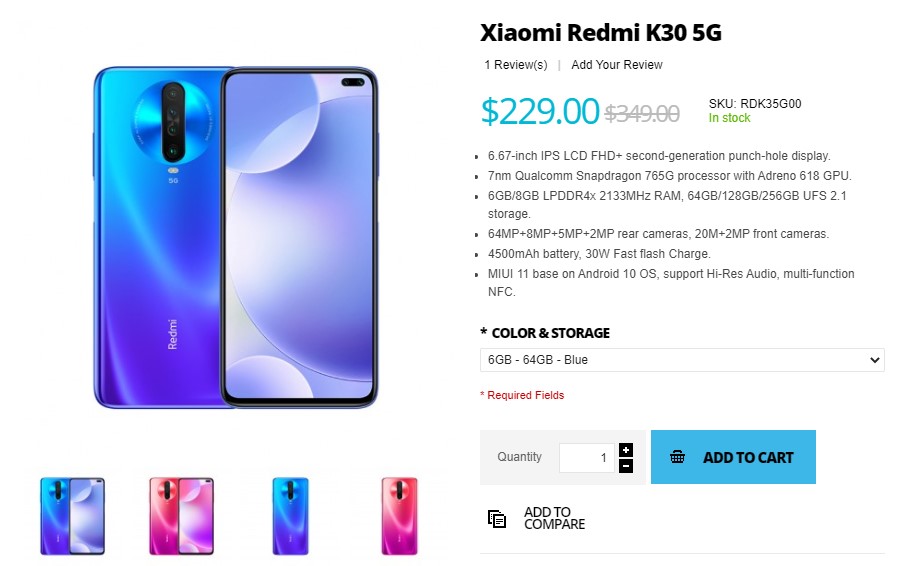
The mid-range smartphone segment is getting competitive with the launch of every single device. Most of the smartphone manufacturers always love to escalate their sales by launching an affordable yet powerful mid-range smartphone. Redmi K30 5G is a popular device featuring a quad-rear camera and Snapdragon 765G chipset has received a price drop from Giztop.
Redmi K30 5G is available in three different variants 6GB RAM + 64GB, 6GB RAM + 128GB and 8GB RAM + 256GB variants for $229, $279 and $379. You can choose between Red, Blue, White and Purple color options.
Redmi K30 5G Specifications
The smartphone carries a 6.67-inch IPS LCD punch-hole display featuring Full HD+ 1080 x 2400 pixels resolution and 20:9 aspect ratio. It even supports HDR 10 display. Redmi K30 5G comes powered with Snapdragon 765G chipset coupled with an octa-core processor and Adreno 620 GPU. It houses a 6/8GB RAM with 64/128/256GB storage variants.
In the camera department, there’s quad-rear camera module featuring a primary camera of 64-megapixel. Other sensors include an 8-megapixel ultrawide lens with a 120-degree view, a 5-megapixel macro lens and a 2-megapixel depth sensor. The smartphone can capture high-quality photos even while shooting in a low-light environment. A dual 20-megapixel and 2-megapixel reside on the front side for selfies and video calling.
A 4500 mAh battery is available with 30W fast charging which takes around an hour to fully charge an empty battery. It runs on Android 10 based MIUI 11. It measures 165.3*76.6*8.79mm and weighs 208 grams in size.
We use cookies on our website to give you the most relevant experience by remembering your preferences and repeat visits. By clicking “Accept”, you consent to the use of ALL the cookies.
This website uses cookies to improve your experience while you navigate through the website. Out of these, the cookies that are categorized as necessary are stored on your browser as they are essential for the working of basic functionalities of the website. We also use third-party cookies that help us analyze and understand how you use this website. These cookies will be stored in your browser only with your consent. You also have the option to opt-out of these cookies. But opting out of some of these cookies may affect your browsing experience.
Necessary cookies are absolutely essential for the website to function properly. This category only includes cookies that ensures basic functionalities and security features of the website. These cookies do not store any personal information.
Any cookies that may not be particularly necessary for the website to function and is used specifically to collect user personal data via analytics, ads, other embedded contents are termed as non-necessary cookies. It is mandatory to procure user consent prior to running these cookies on your website.