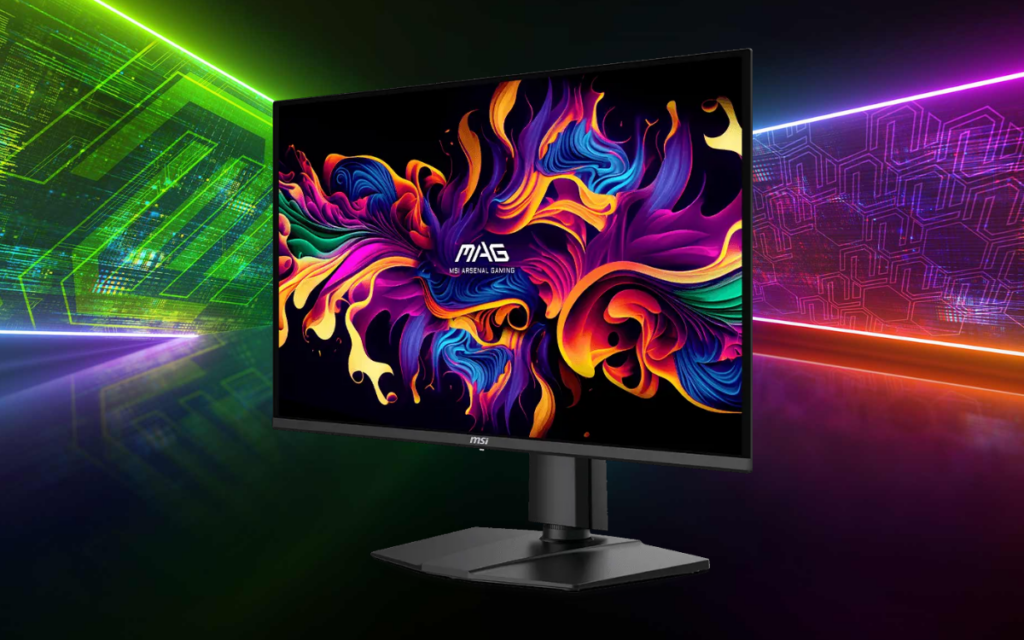
Samsung Electronics has added a new 37-inch model to its ViewFinity S8 (S80UD) lineup, sitting between the existing 32-inch and 43-inch versions. The monitor is built for work environments, giving users more space, better readability, and improved comfort during long hours.
The 37-inch ViewFinity S8 has a 16:9 aspect ratio with UHD resolution. Compared to the 32-inch version, the extra five inches give more room to work while keeping details sharp. Text is easier to read, making documents clearer and reducing strain. The larger display also makes it better for sharing content in meetings or working with teammates on the same screen.
Samsung has designed the monitor with user comfort in mind. It is TÜV Rheinland-certified as an Ergonomic Workspace Display, which means it helps reduce eye fatigue during tasks like text editing and documentation. The Intelligent Eye Care feature is also TÜV-certified and includes eye saver mode and flicker-free technology to cut down on blue light and strain.
For creative work like video editing, the 37-inch display offers both precision and space. Users can view subtle details more easily and keep multiple windows, folders, or video sources open side by side, which makes editing and organizing smoother.
The monitor supports multitasking with a built-in KVM switch, picture-by-picture (PBP), and picture-in-picture (PIP). Users can connect two devices and control them with one keyboard and mouse, display separate inputs at once, or overlay one screen on another. It also comes with a USB-C port that supports 90W charging, data transfer, and a built-in LAN port for Ethernet connectivity.
Setup is simple with the Easy Setup Stand that locks in place without tools in about 10 seconds. The ergonomic stand allows height adjustment, tilt, and swivel so users can set the best angle.
Samsung also announced the 37-inch Odyssey G7 (G75F) gaming monitor at Gamescom 2025. It features a 1000R curved 4K UHD display, a 165Hz refresh rate, and 1ms (GTG) response time for smooth, immersive gameplay.
itel has officially introduced the Super 26 Ultra in Nigeria, with pre-orders now open on its website. The phone comes in two storage variants and four colour options, and sales will begin mid-September.
The device is powered by the 6 nm Unisoc T7300 processor and uses a 10-layer IceCool Tech system to maintain stable performance. On the front, it features a 6.78-inch 3D-curved AMOLED display with 1.5K resolution and a 144 Hz refresh rate, protected by Corning Gorilla Glass 7i. The company claims six years of consistent fluency with this model.
The Super 26 Ultra has a 6,000 mAh battery while keeping the body thickness at 6.8 mm. The phone is IP65-rated and includes an AI Rainproof Touch feature that allows users to operate the screen even when wet. Buyers can choose from Silver, Blue, Gold, and Grey finishes.
Pre-orders run from August 28 until September 14, 2025, with sales starting September 15. Customers can secure a unit with a ₦5,000 (~$3.26) deposit and will be notified of updates through email, WhatsApp, and push notifications. The phone is available in two storage variants: 128 GB at ₦227,700 (~$148) and 256 GB at ₦257,300 (~$168). Store pickup will be available after payment is completed, and itel is also offering pre-order buyers added benefits worth ₦156,300.
In other news, Itel has recently launched the Zeno 20 in India as a rugged, budget-friendly smartphone with a 6.6-inch HD+ 90Hz IPS display, powered by the Unisoc T7100 processor and running Android 14 Go Edition. It comes with up to 4GB RAM (expandable with virtual RAM), up to 128GB storage, and a 5000mAh battery.
For more daily updates, please visit ourNews Section.
Xiaomi’s next flagship phone may be closer to launch. The alleged global version of the Xiaomi 15T Pro has now surfaced on Geekbench, following multiple appearances on certification platforms.
The smartphone made its benchmark run under the model number 2506BPN68G. The listing confirms that the device is running on MediaTek’s Dimensity 9400+ processor, clocked at 3.73GHz and paired with ARM’s Mali-G925 Immortalis MC12 GPU.
In terms of raw numbers, the device scored 1611 points in single precision, 1572 points in half precision, and 2223 points in quantized tests. The Geekbench entry also reveals that the phone is running Android 15 and comes with 12GB of RAM.
It’s coming soon!
This isn’t the first time the 15T Pro has surfaced in the rumor mill. The phone was previously spotted on Singapore’s IMDA certification site, Europe’s EEC database, and even in Xiaomi’s own HyperOS code.
A recent TikTok leak has also given us a first look at the design. The phone features a bold, squircle-shaped Leica camera module on the back, finished in a metallic bronze-like tone with a flat frame and a matte rear panel.
According to earlier reports, the Xiaomi 15T Pro will ship with a flat OLED display supporting a high refresh rate, a triple camera setup with a 50MP main sensor, a 5,500mAh battery, and 90W fast charging. There are also whispers of a metal build with an IP69 rating.
With certification filings and now a Geekbench listing stacking up, the Xiaomi 15T Pro looks almost ready to go official. It is expected to launch sometime in September. We will keep you in the loop as we hear more about it.
For more daily updates, please visit ourNews Section.
TECNO POVA 7 and Samsung Galaxy F54 aim at the mid-range market but approach it differently. One focuses on gaming power and battery innovation, while the other prioritizes premium cameras and long-term software support. This comparison shows how they stack up and which users each device best serves.
Build and Feel: TECNO POVA 7 has a gamer-inspired design with IP64 splash resistance and a unique LED status light on the back. It feels functional and durable, suited for users who value utility. The Galaxy F54 opts for a sleeker finish with a glass front, but it lacks any water resistance, making it less rugged but more refined in hand.
Display Quality: The POVA 7 comes with a 6.78-inch IPS LCD panel featuring an impressive 144Hz refresh rate, ideal for gaming and smooth scrolling. In contrast, the Galaxy F54 offers a 6.7-inch Super AMOLED Plus screen at 120Hz, delivering richer colors, deeper contrast, and a more immersive viewing experience for videos and general use.
Verdict: Galaxy F54 takes the lead with its AMOLED screen and premium feel, though the POVA 7 stands out for gamers who want smoother refresh rates and practical durability.
2. Specifications
Galaxy F54
Performance: Powered by the MediaTek Dimensity 7300 Ultimate, the TECNO POVA 7 delivers strong gaming performance with efficient power handling. The Galaxy F54 relies on the Exynos 1380, optimized for daily stability and deep One UI integration, but not as tuned for high-performance gaming.
Battery and Charging: Both devices feature massive 6000mAh batteries, but charging options differ greatly. The POVA 7 supports 45W wired, 30W wireless, and 10W reverse charging, giving it unmatched versatility. The Galaxy F54’s charging speed remains unspecified and lacks wireless or reverse charging support, which limits convenience for heavy users.
Verdict: TECNO POVA 7 wins this category by offering better raw performance for gaming and far more advanced charging capabilities, while the Galaxy F54 mainly benefits from long-term software support.
3. Camera
Galaxy F54
Main and Secondary Lenses: Samsung equips the Galaxy F54 with a 108MP main camera featuring OIS, supported by an 8MP ultrawide and 2MP macro sensor. This setup offers flexibility and sharp results in various conditions. The TECNO POVA 7 instead provides a single 50MP lens, which, while decent, lacks the versatility of multiple lenses.
Selfie Camera: The Galaxy F54 continues its advantage with a 32MP selfie camera capable of 4K recording, whereas the POVA 7 offers a 13MP sensor with more basic output. This makes the Galaxy far stronger for social media and content creation.
Verdict: Galaxy F54 clearly outperforms the POVA 7 in photography, thanks to its versatile rear setup and higher-quality selfie camera.
4. Pricing
TECNO POVA 7
At $200, the TECNO POVA 7 delivers excellent value with its strong performance and advanced charging features. The Galaxy F54, priced at $400, doubles the cost but brings superior cameras, an AMOLED display, and extended software support.
For budget-conscious buyers, the POVA 7 is the smarter pick, while the Galaxy F54 justifies its price mainly for users who prioritize camera quality and longevity.
Disclaimer: Prices are approximate and may vary based on country, region, and applicable taxes.
5. Conclusion
TECNO POVA 7
TECNO POVA 7 shines with its 144Hz display, wireless and reverse charging, and even a rear status LED, making it highly practical for gamers and power users. The Galaxy F54 sets itself apart with its 108MP OIS camera, AMOLED display, and Samsung’s commitment to four major Android upgrades.
Verdict: The TECNO POVA 7 is the better choice for gamers, heavy battery users, and value seekers. Galaxy F54 is ideal for photography enthusiasts and those who want reliable long-term software support.
Huawei Pura 80 and Pura 70 are positioned as premium flagships in Huawei’s lineup, offering refined design, powerful cameras, and strong battery life. Comparing these two models is important as the Pura 80 introduces upgrades in durability, chipset performance, and display brightness while retaining the sleek form factor of its predecessor. For buyers, knowing the generational improvements helps determine whether the Pura 80 is worth the price difference.
The Pura 80 offers an upgraded IP68/IP69 rating, making it resistant not just to water immersion but also to high-pressure water jets, an edge in durability over the Pura 70’s IP68 rating. Both phones feature glass front and aluminum frames, but the Pura 80 feels more rugged while maintaining a premium aesthetic. This makes the Pura 80 the better option for those seeking long-term durability.
Display Quality:
Both phones sport 6.6-inch LTPO OLED panels with HDR support, 120Hz refresh rate, and high PWM dimming. The Pura 80 increases peak brightness to 2800 nits compared to the Pura 70’s 2500 nits, enhancing outdoor visibility. With slightly better HDR Vivid support, the Pura 80 ensures sharper visuals, particularly in bright conditions. The Pura 80 has the edge for media consumption and readability.
Verdict:
While both phones look nearly identical, the Pura 80 wins in durability and display quality. For users who want a device that feels just as premium but tougher and brighter, the Pura 80 is the more future-proof choice.
2. Specifications
Huawei Pura 70
Performance:
The Pura 80 introduces the Kirin 9010s chipset, a more efficient and powerful upgrade over the Pura 70’s Kirin 9000S1. Combined with EMUI 15/HarmonyOS 5.1, the Pura 80 ensures smoother multitasking and better handling of demanding apps. While both phones offer up to 1TB storage and 12GB RAM, the Pura 80 edges ahead in sustained performance and responsiveness. This makes it the better performer for heavy users.
Battery and Charging:
The Pura 80 packs a larger 5170 mAh (international) or 5600 mAh (China) battery compared to the Pura 70’s 4900 mAh unit. Both support 66W wired and 50W wireless charging, along with reverse charging features. The larger capacity of the Pura 80 translates to longer endurance, especially for media and gaming. This gives the Pura 80 a practical advantage in day-to-day usage.
Verdict:
The Pura 80 delivers a stronger chipset and bigger battery, making it more appealing for power users. While charging speeds are the same, the increased capacity ensures the Pura 80 stands out for reliability over long sessions.
3. Camera
Huawei Pura 80
Main and Secondary Lenses:
Both phones feature a triple-camera system with a 50MP wide, 12MP 5x telephoto, and 13MP ultrawide lens. However, the Pura 80’s video capabilities include 1080p at 480fps (interpolated) and HDR Vivid, making it better suited for creative videography. The Pura 70, while excellent, offers slightly less flexibility in video features. The Pura 80’s advantage lies in improved software optimization and video recording versatility.
Selfie Camera:
The Pura 80 has a 13MP selfie shooter with autofocus, recording up to 4K at 240fps, while the Pura 70 provides a 13MP unit with HDR but limited video recording features. Autofocus and higher frame-rate video on the Pura 80 make selfies and vlogs more polished. This upgrade is meaningful for content creators and casual users alike.
Verdict:
The Pura 70 and Pura 80 share similar camera hardware, but Huawei has given the Pura 80 a more advanced video system and improved selfie capabilities. For users prioritizing versatility, the Pura 80 is the clear winner.
4. Pricing
Huawei Pura 70
The Huawei Pura 80 is priced around $800, while the Pura 70 sits slightly lower at $760. The $40 difference is relatively small considering the Pura 80 brings a better chipset, larger battery, tougher build, and brighter display. From a value perspective, the Pura 80 offers more longevity and features for just a modest increase, making it the smarter purchase.
Disclaimer: Prices are approximate and may vary based on country, region, and applicable taxes.
5. Conclusion
Huawei Pura 80
The Huawei Pura 80 introduces IP69 durability, an upgraded chipset, a brighter display, larger battery options, and improved video recording features, setting it apart from the Pura 70. Both phones retain Huawei’s signature design and powerful cameras, but the Pura 80 adds unique touches that make it more adaptable for demanding users.
Verdict:
While the Huawei Pura 70 remains a solid flagship with competitive specs, the Pura 80’s incremental yet meaningful upgrades make it the better all-around choice. For those seeking future-proofing, stronger durability, and enhanced multimedia performance, the Pura 80 is worth the upgrade.
Xiaomi is voluntarily recalling nearly 146,891 units of their popular 20,000mAh power bank after discovering potential safety issues with some of the batteries inside.
The recall affects the PB2030MI model, the 33W power bank with the built-in charging cable that many people love for its convenience. If you bought one between August and September 2024, yours might be part of this recall.
Here’s what happened: A small batch of these power banks ended up with version 2.0 of a specific battery cell (the 126280, if you’re curious about the technical details) that could potentially become unsafe if you really push the device to its limits. Xiaomi worked with regulators and decided to play it safe by recalling all the affected units rather than waiting for any problems to actually occur.
The good news? Xiaomi is offering full refunds of 159 yuan (about $22) for anyone with an affected power bank. They’ve made the return process pretty straightforward too.
You have two options for getting your refund. You can either take your power bank to any Xiaomi Home store, where the staff will help you through the verification and refund process, or handle everything online through the given website. If you go the online route, you’ll need to safely drain the battery, upload proof that you’ve disposed of it properly, and submit your product information.
To check if your power bank is part of the recall, flip it over and look at the model number and serial number printed on the back. Xiaomi has an official tool you can use to verify if your specific unit is affected. Just keep in mind that if your serial number (SN) is damaged or missing, you won’t be eligible for the refund.
Don’t worry if your power bank isn’t from this batch. Xiaomi says all their other power banks use different battery cells and are perfectly safe to keep using.
It’s refreshing to see a company being proactive about potential safety issues rather than waiting for problems to surface. If you think you might have one of these power banks, it’s worth checking those numbers on the back just to be sure.
For more daily updates, please visit ourNews Section.
DJI is one of the most popular companies for camera gimbals and drones. If you’re searching for a mobile phone gimbal for videography or vlogging, consider this deal on the DJI OSMO mobile 6 gimbal stabilizer. You can get this gimbal stabilizer for just Rs. 8,500 (effectively) on Amazon India.
The launch price of the DJI OSMO Mobile 6 Gimbal Stabilizer is Rs. 17,999. On Amazon right now, the DJI OSMO Mobile 6 Gimbal Stabilizer is listed for Rs. 9,999. If you make a payment via select Credit card or Debit card, you can get an instant Rs. 1500 discount. Which makes the effective price of the DJI OSMO Mobile 6 Gimbal Stabilizer just Rs. 8,500.
Please Note: When you buy something using the links in our articles, we may earn a small commission at no cost to you.
DJI OSMO Mobile 6 Gimbal Stabilizer Specification and features
3-Axis Stabilization
Experience smoother, more cinematic phone video with 3‑Axis Stabilization, where DJI’s advanced stabilization compensates for shakes to keep shots steady and horizons level. Purpose-built gimbal modes ensure fluid pans and tilts for professional-looking walks, reveals, and tracking shots from a smartphone.
Quick Launch
Unfold, magnetically snap in the phone, and the DJI Mimo app auto-prompts so shooting can start within seconds—ideal for spontaneous moments and on-the-go creators. Quick Launch availability applies to iPhone, enabling nearly instant setup when the gimbal is unfolded and the phone is attached.
ActiveTrack 5.0
Stay locked on the story with ActiveTrack 5.0, which follows subjects smoothly and keeps them centered even as they turn to the side or briefly face away. This enhanced tracking makes everyday motion walk-and-talks, spins, and dynamic reveals look intentional and polished for social-ready content.
Lightweight, Compact, Extendable
Travel light with a foldable, palm-friendly design weighing about 309 g, so it’s easy to pack and quick to deploy whenever inspiration strikes. Use the built-in extension rod to unlock wider selfies, creative high/low angles, and more comfortable vlogging without extra accessories.
Simple Guides and One‑Tap Editing
ShotGuides and easy tutorials inside DJI Mimo walk through camera moves step by step, helping capture complex shots with confidence. Finish fast with LightCut One‑Tap Edits, where AI recommends templates and auto‑generates share‑ready videos directly from selected clips.
Lenovo has launched two new configurations of its Legion Blade 7000K Super Edition desktop, now featuring the Nvidia GeForce RTX 5060Ti 16GB graphics card. The new variants are priced at 9,999 yuan ($1,398) and 10,799 yuan ($1,510) in China and are now available for purchase.
Lenovo Legion Blade 7000K Super Edition Specs
The entry-level model features an Intel Core i7-14650HX processor paired with 32GB of DDR5-5600 dual-channel memory, the RTX 5060Ti 16GB GPU, and a 1TB PCIe 4.0 SSD. The higher-end variant upgrades the CPU to an Intel Core i9-14900HX and increases the RAM to 48GB while keeping the same GPU and storage configuration.
For thermal management, the Legion Blade 7000K Super Edition uses Lenovo’s Qiankun Thermal Architecture. The cooling system includes direct CPU contact, upgraded phase-change thermal pads, thin-wall heat pipes with over 7200cm² of heatsink area, and high-pressure ARGB fans.
The redesigned 3D mesh front panel and rear exhaust layout improve airflow across the chassis. Lenovo has also included a 240mm liquid cooling system rated for 230W heat dissipation.
The desktop provides two M.2 SSD slots, two SATA slots, and an 8+1+1 phase power supply that supports up to 253W PL2 burst loads. The chassis is finished in Titanium Grey, drop-tested for up to 0.91 meters.
For connectivity, the PC features USB 3.2 Gen2 Type-C, multiple USB 3.2 Gen1 and USB 2.0 ports, HDMI 2.1b, DisplayPort outputs, 2.5G Ethernet, Wi-Fi 6, and 5.1-channel surround audio. Lenovo also includes Nahimic sound effects and pre-installs Windows 11 Home and Microsoft Office Home & Student Edition with lifetime activation.
Samsung has kept its lead in India’s tablet market through the first half of 2025, even as overall sales took a hit. Fresh numbers from IDC show the company shipped 886,000 Galaxy Tabs, giving it a 41.3% share of the market. That’s a drop from 1.43 million units a year earlier, but the whole sector has slowed — shipments across the board fell more than 30% as buyers pulled back on spending.
Lenovo came in second with 264,000 units (12.3%), while Apple was close behind at 253,000 iPads (11.8%). Xiaomi and Acer followed with 244,000 (11.4%) and 196,000 (9.1%), respectively. Samsung’s strength remains its premium lineup, and its wider ecosystem of AMOLED displays, S Pen features, and Galaxy AI tools, which help it stand apart from Lenovo’s Tab Plus and Apple’s iPads.
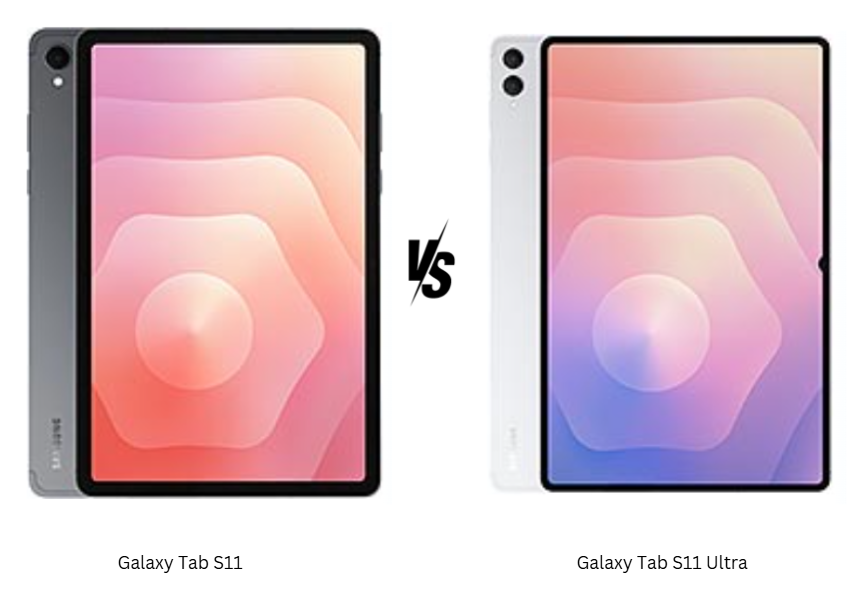
Samsung is set to launch the Galaxy Tab S11 series at IFA on September 4. The series includes two models — the Tab S11 and Tab S11 Ultra — with rumored prices ranging from about $860 to $1,700. Expected highlights include the new MediaTek Dimensity 9400+ chip, 14.6-inch AMOLED display (Ultra model), Android 16 with One UI 8, and up to seven years of software updates. The S11 Ultra could also pack a smaller water drop notch and 11,600mAh battery, putting it in direct competition with Apple’s iPad Pro.
Despite a shrinking market, Samsung’s 41% share shows just how far ahead it remains of rivals in India. With new hardware and AI upgrades expected next week, the company looks set to hold its lead for the foreseeable future. In the meantime, retail and Geekbench listings offer a clearer look at what’s on the way.
Samsung’s upcoming Galaxy Tab S11 Ultra has popped up on Geekbench, giving us an early look at performance numbers just days before its official launch.
The Geekbench listing shows the Tab S11 Ultra running on MediaTek’s Dimensity 9400+ chip, which packs a Cortex-X925 prime core clocked at 3.73GHz. In Geekbench 6.4.0, it managed around 2,500 points in single-core and 8,700 in multi-core — comfortably ahead of the Tab S10 Ultra’s Dimensity 9300+ scores (2,200/7,500).
It doesn’t quite catch the Snapdragon 8 Elite in the Galaxy S25 Ultra (3,148/10,236), but the jump year-on-year is clear. The Device Info HW app also confirmed it’s the Plus version of the chip, clearing up earlier speculation.
3.73GHz clock speed of the prime core confirms it’s the Dimensity 9400+ and not Dimensity 9400
What’s interesting is the comparison to the regular Tab S11. That model (SM-X736B) appeared on Geekbench about six weeks ago with the same processor but posted much lower results — roughly 1,420 single-core and 5,312 multi-core. The difference could be down to heat dissipation, or maybe Samsung has tweaked power management in the weeks since. Either way, buyers looking at the base Tab S11 shouldn’t assume identical results just because the chips match.
On the hardware side, the Ultra is tipped to come with a 14.6-inch OLED panel, slimmer bezels, and a smaller notch for its 12MP front camera. It’s also said to be thinner and lighter than the S10 Ultra (around 5.1–5.5mm, 692g) while housing an 11,600mAh battery with 45W charging.
Pricing is expected to start at $1,200 for the 12GB/256GB Wi-Fi model, topping out at $1,700 for the 16GB/1TB version. Samsung will make it all official on September 4, alongside the Tab S11 and Galaxy S25 FE at IFA.
Google just unveiled the latest Pixel 10 series of flagship smartphones with various upgrades over its predecessor. But one of the new features that seems quite underrated is the PixelSnap. Pairing newer wireless charging tech with magnets is a great quality of life change that not only makes wireless charging better but also opens the door to a series of magnetic accessories. So here’s everything you need to know about the PixelSnap.
Simply put, PixelSnap is Google’s new magnetic hardware platform exclusive to the Pixel 10, Pixel 10 Pro, Pixel 10 Pro XL, and Pixel 10 Pro Fold. This feature brings magnets embedded into the new Pixels, which allows users to “snap” their phone onto wireless charging, stands, and slap on other kinds of accessories. One could argue that we are finally getting Apple’s MagSafe on Android, but PixelSnap also brings open Qi2 (and Qi2.2) wireless charging standard.
2. Qi2 Wireless Charging
PixelSnap leverages the Qi2 wireless charging protocol, which is the next gen wireless charging standard. Qi2 basically adds magnetic alignment for accurate, optimal charging, while also bringing cross-compatibility with Apple MagSafe accessories and other future Qi2 certified add ons. Wireless charging now becomes truly effortless as the users can drop the Pixel 10 onto any PixelSnap charger or stand, and magnetic alignment starts the charge securely every time.
This reduces frustration with misaligned wireless pads. To recall, Google brings Qi2 on the Pixel 10, Pixel 10 Pro, and Pixel 10 Pro Fold with 15W wireless charging support. On the other hand, the flagship Pixel 10 Pro XL brings support for Qi2.2 standard with a faster 25W wireless charging.
3. Magnetic Accessories
Wireless charging is not replacing wired charging anytime soon, and is still just a convenient alternative. However, many still don’t rely on this technology on a day-to-day basis. But with the new PixelSnap, Pixel 10 owners also get access to accessories from Google and third party vendors. You can expect a wide range of magnetic peripherals, like the Ring Stand Google showcased.
If you’re a fan of the Wallet attachments from iPhones, you could also use it with your Pixel 10. Other useful aspects include magnetic mount and holder compatibility without needing a case with agents and cross compatibility with MagSafe accessories. This is a simple plug and play tech that doesn’t require any comples setup process.
For more daily updates, please visit our News Section.
Samsung’s next flagship tablets are showing up early, with European retailers already listing the Galaxy Tab S11 and Tab S11 Ultra ahead of their expected debut at IFA 2025. The early listings give us a good look at pricing and confirm several key specs.
According to two Polish online retailers, the Galaxy Tab S11 will start at PLN 4,099 (€960) for the Wi-Fi-only model with 256GB storage. A 5G version with 128GB storage is listed at PLN 4,399 (€1,030), with higher-capacity 512GB options available for both. Previous US leaks suggest the base Wi-Fi version could start at around $860. The standard Tab S11 is expected to feature an 11-inch 120Hz AMOLED display (2560×1600), MediaTek Dimensity 9400+ chipset, and an 8,400mAh battery with 45W charging.
The larger Galaxy Tab S11 Ultra comes in at PLN 6,299 (~€1,475) for the Wi-Fi 512GB model, with the 5G 256GB option listed at the same price. In the US, pricing is rumored to start at $1,200 for the 12GB/256GB model and climb up to $1,700 for the top 16GB/1TB version. It features a 14.6-inch AMOLED display (2960×1848) and the same Dimensity 9400+ chip. Both models support microSD expansion, pack a 13MP rear and 12MP front camera, and will ship with Android 16 and One UI 8. Samsung is promising seven years of software support.
The Galaxy Tab S11 series is expected to be announced on September 4 at IFA 2025, alongside the Galaxy S25 FE. With strong specs and AI-focused software, Samsung is clearly positioning the lineup against Apple’s iPad Pro.
Dreame has officially launched the T50 Mix floor scrubber in China, following the earlier debut of the T50 Dreamer model. The scrubber is priced at 3,349 yuan ($468) and is now available for purchase on JD.com.
Dreame T50 Mix Specifications
The T50 Mix features a 5-in-1 cleaning system that supports floor washing, vacuuming, drying, sterilization, and hair detangling. It is equipped with Dreame’s updated Lingbu AI Mechanical Arm 2.0, which adjusts dynamically to reach corners and edges more accurately. According to the company, this arm increases grime detection sensitivity by 37% and enhances effective edge cleaning by 50%.
The scrubber delivers 22,000Pa suction via Dreame’s 170AW motor and multi-cone cyclone system, paired with a 5-layer sealed filter that traps 99.9% of dust mites. Its 480 RPM roller brush exerts 21.18N pressure for effective scrubbing.
Dreame includes the Swiss PPA hair-cutting comb blade 2.0 in this model, which is designed to prevent hair tangling. The company claims it can handle up to 1,000 strands of long hair without clogging or interruption.
The T50 Mix supports a 100°C hot water deep-cleaning system, described as “Volcano Lake immersion wash,” which sterilizes internal components such as the roller brush, ducts, and water tanks. It also includes real-time electrolyzed water sterilization. For drying, the machine uses dual-chain drying with 100°C near-infrared heating and moisture sensors to automatically stop once the components are dry.
The device integrates LingTan multi-spectrum stain detection, which identifies various types of dirt such as liquids, powders, and fine particles. It adjusts cleaning time and power in real time based on the type and amount of detected dirt.
The 4000mAh removable battery delivers up to 65 minutes in gentle mode and 46 minutes in vacuum mode, with support for hot-swapping extra packs. It features a built-in display, voice guidance, and app control for scheduling, filter checks, and mode switching.
In related news, Xiaomi has recently introduced the Mijia 5C robot vacuum featuring 15,000Pa suction and its first edge-mopping technology. Meanwhile, Ecovacs has launched the X11 robot vacuum and mop with a powerful 24,800Pa suction system and support for rapid charging.
For more daily updates, please visit our News Section.
The Galaxy S24 series received the first One UI 8 beta update earlier this month, and now the second beta has arrived. As one would expect, there are several bug fixes and a new September 2025 security patch. Nothing else is mentioned in the changelog, but further investigation reveals that Samsung has actually added three new AI features.
The AI features included with the second One UI 8 beta update are Audio Eraser v2, Call Captions, and Now Brief. The Audio Eraser v2 and Call Captions features were first spotted in the initial One UI 8 betas of Galaxy S25.
The Now Brief, though, isn’t a brand new feature. It debuted on the Galaxy S25 series with One UI 7, but Samsung didn’t bring this feature to any other Galaxy device with the One UI 7 update. That’s changing, as the One UI 8 beta for the S24 series includes this feature. A few other Galaxy devices may also receive this feature with the stable release.
This is an AI-powered feature that provides users with a personalized daily briefing of selected content that updates throughout the day. It’s accessible via the Now Bar, through a widget on the home screen, and the Edge panel. This feature displays bite-sized information such as weather updates, upcoming events, health insights, reminders, and missed calls.
Now Brief is designed to keep users organized and informed by delivering relevant, timely updates. The good thing is that Samsung processes most of its personalized data on the device itself rather than fully relying on the cloud. The company uses Personal Data Engine (PDE) and Knox Vault security to store and process user data locally, while also ensuring the data remains private and protected on the device.
Audio Eraser v2
Samsung’s Audio Eraser feature, debuted with One UI 7, uses AI to automatically identify audio tracks in a video and remove background noise. The tool can identify up to six distinct sound sources in a video and allows users to reduce, remove, or enhance individual sound types based on their needs.
One UI 8 beta brings an upgraded Audio Eraser that also works with Samsung Notes and Voice Recorder (previously limited to Gallery). In both of these apps, once you record the audio, a small Galaxy AI icon appears below the audio; tapping it instantly removes the noise from the audio. So, the improved Audio Eraser doesn’t require a dedicated screen to remove noise. Samsung has also made the feature faster inside the Gallery app.
Call Captions
The new Call captions feature, spotted in the second One UI 8 beta for the S24 series, provides real-time captions for voice calls using AI. When enabled, it transcribes what the other person says during a voice call. This can be pretty helpful in noisy environments or for people with hearing difficulties.
Lenovo’s Project Pivo just surfaced in a new leak, which revealed a concept laptop with a rotating display. This model is expected to debut during the upcoming IFA 2025 event, but it might just be one of multiple Lenovo notebooks arriving at this conference.
Lenovo ThinkPad X9 Aura Glacier White Edition
Here’s Every New ThinkPad Model Arriving at IFA
The latest leak was shared by known tipster Evan Blass, who previously shed light on the rotating display laptop. He claimed that the Chinese tech giant is working on unveiling a series of new ThinkPads for the global market during the IFA 2025 event.
Lenovo ThinkPad P1 Gen 8
Alongside Project Pivo, Lenovo is expected to unveil the ThinkPad P1 Gen 8, ThinkPad P14s Gen 6, ThinkPad P16s Gen 4, ThinkPad P16 Gen 3, ThinkPad P16v Gen 3, ThinkPad X9 Aura Edition 14 Glacier White, and ThinkPad X9 Aura Edition 15 Glacier White.
Lenovo ThinkPad P14s Gen 6
To recall, the IFA 2025 event will be hosted in Berlin from 5th September 2025 to 9th September 2025. Back in July 2025, the company unveiled the ThinkPad X9 Aura Edition laptops in a new “Moonlight White” finish in China. So this is just a wider release.
Lenovo ThinkPad P16s Gen 4
Over six ThinkPad laptops are set to debut soon with Evan Blass confirming new Intel processors powering the ThinkPad P1 Gen 8, ThinkPad P14s Gen 6, ThinkPad P16s Gen 4, ThinkPad P16 Gen 3 and ThinkPad P16v Gen 3.
For more daily updates, please visit our News Section.
Samsung’s next big experiment in foldable tech is confirmed for a Q3 launch, and the date may be closer than expected. Fresh leaks now suggest the company is adding features that could make the device more practical than its prototype predecessors.
Wireless charging, reverse charging, and NFC
Tipster @TechHighest shared three animations on X that appear to come from Samsung’s One UI 8 software. The clips highlight key functions of the upcoming tri-folding device, including wireless charging, reverse wireless charging, and NFC payments.
One animation shows the TriFold resting on a wireless charging pad, with charging coils located on the rightmost panel when folded. Another demonstrates reverse wireless charging, allowing the phone to top up accessories like earbuds. The third clip confirms NFC payments will work even when the phone is fully unfolded.
The TriFold is expected to use a triple-fold design with two inward hinges forming a “G” shape, similar to Samsung’s Flex G concept shown at MWC 2025. Leaks point to a 10.1-inch inner display, Qualcomm’s Snapdragon 8 Elite processor, and a 200MP main camera. On the software side, One UI 8 may introduce a new “Split Trio” mode for multitasking across the large screen.
Pricing hasn’t been confirmed, but early estimates put it between $3,000 and $3,499. Samsung could share more at its IFA 2025 press event on September 4.
If the leaks are accurate, the Galaxy Z TriFold will mark Samsung’s boldest move yet in foldable technology. By combining wireless charging, reverse charging, and NFC with a slim tri-fold form factor, it could offer a mix of innovation and everyday convenience. Positioned against rivals like Huawei’s Mate XTs, the device might reshape what a foldable can do for power users and early adopters.
I’ve been writing about AR and XR glasses for a while, but the RayNeo Air 3s Pro is the first pair I’ve personally lived with for more than two weeks. Going in, I knew what to expect on paper: a brighter display than the standard Air 3s, upgraded audio, and some ergonomic refinements. What I didn’t expect was how much the “big screen anywhere” promise would actually hold up in practice.
Over the past two weeks, I’ve watched movies, gamed a little, and used the glasses as an external display for my laptop. The Air 3s Pro is not trying to be a futuristic mixed-reality headset. It’s a personal display, an external monitor you wear on your face. But in that narrow focus, it often shines brighter (literally and figuratively) than many of its rivals.
That said, these glasses aren’t perfect. But at $299, they sit in an approachable space where XR glasses start to make sense.
What’s in the Box
RayNeo keeps things simple. Inside the retail box, you’ll find:
Air 3s Pro glasses in matte black
Soft felt carrying pouch
1.2-meter USB-C cable with a downward-angled connector
Two swappable nose pads
Prescription lens frame insert
Quick start guide
That’s it. There’s no hard-shell travel case, no lens shade for ambient light reduction, and no optional adapters like the Pocket TV or JoyDock in my unit. RayNeo sells those separately. I really wish a braided cable and rigid case were included. These accessories aren’t just nice to have; they’re necessary for travel and daily wear.
Design and Build Quality
The Air 3s Pro looks nearly identical to the standard Air 3s but swaps the chrome highlights for a full matte black treatment. The design feels less flashy and more understated, which I prefer for commuting or casual public use.
It weighs 76 grams and is built from plastic that feels solid, not fragile. The matte coating helps cut down on fingerprints and unwanted reflections. The 9-point FlexiFit system remains, letting me tilt the lens arms, tweak the nose pad angles, and dial in a comfortable fit without much hassle.
There’s no smartphone app to mess with; everything happens right on the glasses. Brightness controls live on the right side, volume and menu buttons on the left. Hit that menu button, and you get an overlay with settings for refresh rate, audio modes, and color profiles. The USB-C port sits under the right temple, and while that angled connector helps the cable hang naturally, I still found it stiffer than I’d like.
The built-in visor blocks most ambient light, but it’s not a total blackout. In bright rooms or outdoors, you’ll definitely notice some glare creeping in. Unlike the Xreal Air 2 Pro, there’s no fancy electrochromic dimming, though RayNeo is apparently selling a clip-on shade accessory now.
Features
The hardware specs are impressive for the price.
Each eye sees a 0.6-inch Sony micro-OLED display pushing 1920×1080 resolution at up to 120Hz. The peak brightness reaches 1,200 nits thanks to RayNeo’s new tandem OLED light engine, and it supports 20 brightness steps for granular control. These are the brightest AR glasses I’ve used to date.
The visuals are powered by RayNeo’s HueView 2.0 system, which promises sharper edges, accurate colors, and better contrast. It hits 98% of the DCI-P3 color space and maintains ΔE < 2 color accuracy, which shows in movies and HDR video. Contrast is rated at 200,000 to 1, and it really helps blacks stay black and highlights pop.
There are six display presets: Movie, Game, Standard, Professional, Eye-Care, and Vision Boost. Eye-Care mode introduces a warmer tone to reduce strain in dark rooms.
Spatial audio is also here. RayNeo has built four speakers into the arms, two per side, using what they call a dual opposing acoustic chamber design. Sound is directed toward your ears while minimizing leakage. Whisper Mode 2.0 uses phase cancellation to prevent others nearby from hearing what you’re playing, unless the volume is maxed.
You can watch 3D SBS video too. Holding both rockers switches into 3D mode, and the depth effect is more convincing than I expected.
What’s missing: adjustable IPD, built-in diopter correction, and any screen repositioning. If your eyes don’t naturally align with the 14 by 7 mm eyebox, image sharpness may suffer.
Comfort
This was honestly what I was most curious about, and I’m happy to report that comfort really isn’t an issue. At 76 grams, they’re light enough for movie marathons or multi-hour work sessions without causing fatigue.
RayNeo says they reduced the clamping force by 15% compared to the standard Air 3s, and I can feel the difference. Once you get the fit dialed in, they just feel like wearing a chunky pair of sunglasses.
The nose pads are soft and flexible, and that adjustment system really does accommodate different face shapes well. It took me a few minutes of fiddling to get the temple angle and nose pad position just right, but once I did, everything clicked.
If you wear prescription glasses, trying to layer these on top is pretty awkward and gets uncomfortable fast. The prescription insert works if you want to invest in custom lenses, but that’s extra money on top of an already $299 purchase.
The only real discomfort I noticed was during longer sessions, my right temple area would get a bit warm after an hour or so, though never uncomfortably hot. Also, because the cable exits downward and slightly back, I couldn’t comfortably lean against a pillow or couch arm without it poking me awkwardly. I would’ve loved a side-mounted port or at least a swappable cable design for people who like to use these while lying down.
And can we talk about that cable for a second? The rubber coating feels pretty basic, almost cheap. For something that’s supposed to be portable entertainment gear, a braided cable should’ve been standard.
Performance
During my testing, the Air 3s Pro mostly served as a second screen for my Asus laptop, and in that role, they were excellent. The display genuinely feels like a 201-inch screen floating a few feet in front of you.
And the display is so bright that most of the time you won’t even need full brightness to enjoy movies or games. Even at 60% brightness, everything looks bright and crisp. I could write emails, scroll the web, or binge on entire movies while sitting comfortably.
Movies looked absolutely stunning. Those OLED blacks, the vibrant colors, the strong contrast, it all adds up to something that genuinely feels cinematic. Watching Oppenheimer and Interstellar on these glasses came surprisingly close to that mini-theater experience. I ran everything at 120Hz when possible, and you can really see the difference in fast motion, whether you’re gaming or just scrolling through web pages.
Gaming wasn’t my main focus, but I tested a few titles on my laptop. Latency was minimal, motion blur was well controlled, and the high refresh rate made everything feel responsive.
The one display quirk I noticed is that the bottom edge curves inward slightly. You might miss it during movies, but it can clip UI elements like the Windows taskbar clock or game HUDs that sit in the corners. Not a dealbreaker, just something to be aware of.
Audio quality genuinely surprised me. That four-speaker setup delivers clear dialogue, solid bass response, and convincing stereo separation. The spatial audio mode adds a sense of width and height that works particularly well for games and movies. Whisper Mode actually works too, I played a podcast at moderate volume while sitting next to someone, and they couldn’t hear anything.
That kind of private listening experience without needing earbuds or noise cancellation makes these perfect for shared spaces. I could enjoy my content while still being aware of what’s happening around me.
My biggest limitation was mobile compatibility. I daily drive an iPhone 14 Pro, and since these glasses need a USB-C DisplayPort connection, I couldn’t use them directly. RayNeo didn’t include any adapters with my review unit, so I couldn’t test the full mobile experience properly. I also didn’t get the Pocket TV accessory, which could’ve offered a completely different experience and possibly changed my overall opinion.
I did briefly test them with a friend’s Galaxy S24 Ultra, and Samsung DeX worked flawlessly. But without those adapters, your mobile experience will totally depend on what devices you already own.
Final Thoughts
The RayNeo Air 3s Pro isn’t trying to revolutionize AR. It won’t pin virtual windows around your living room, it doesn’t do 6DOF head tracking, and it’s not going to replace your main monitor. But as a personal entertainment device? It’s genuinely impressive.
If you love movies, travel frequently, or just want a second screen without the desk space requirements, this is one of the best plug-and-play options available right now. The display is sharp, the brightness is industry-leading, and the audio is good enough that you can ditch your earbuds entirely.
The limitations matter: no dimmable visor, no IPD or diopter adjustment, and that awkward cable situation for certain use cases. But for $299, you’re getting an OLED personal theater with solid audio and broad device compatibility. That value proposition is pretty hard to argue with.
Pricing and Availability
RayNeo sells the Air 3s Pro for $299, but a limited-time launch offer drops the price to $249 with $50 off auto-applied at checkout. Optional accessories like the JoyDock, Pocket TV, blackout visors, or prescription inserts will increase the total cost depending on your setup.
Anker appears to be preparing an updated version of its Nano 45W wall charger, and this time the focus is on smarter features rather than shrinking the size. Details of the accessory, reportedly called the Anker Nano 45W Wall Charger with Smart Display (model A2693), surfaced on August 28 through AnkerInsider.
The new charger is said to measure 43 x 36 x 35 mm, making it about 40% larger than the current Nano 45W (model A2692), which comes in at 33 x 32 x 36.9 mm. Even so, it keeps a compact form with folding pins and a single USB-C port that can deliver up to 45W. Anker is expected to release the charger globally before the end of the year.
The headline feature here is the addition of a small smart display, paired with Bluetooth connectivity and support for the Anker app. According to the leak, users will be able to view charging status in real time, schedule charging sessions, and enable a battery protection mode.
That mode is reportedly compatible with the iPhone 15/16 series and USB-C iPads released after 2020. It may pause charging when the battery temperature is too high or too low, similar to Anker’s Laptop Power Bank (model A1695). Competing chargers such as Belkin’s BoostCharge 67W already include comparable safeguards, though Anker’s focus here seems to be tighter app integration.
One limitation is the single-port design. Users who want to charge multiple devices may find options like Belkin’s 67W 3-Port USB-C charger more suitable.
The Nano 45W with Smart Display was first hinted at in July and, if the leaks prove accurate, will represent a shift in Anker’s charger lineup toward smart functionality rather than just compact design.
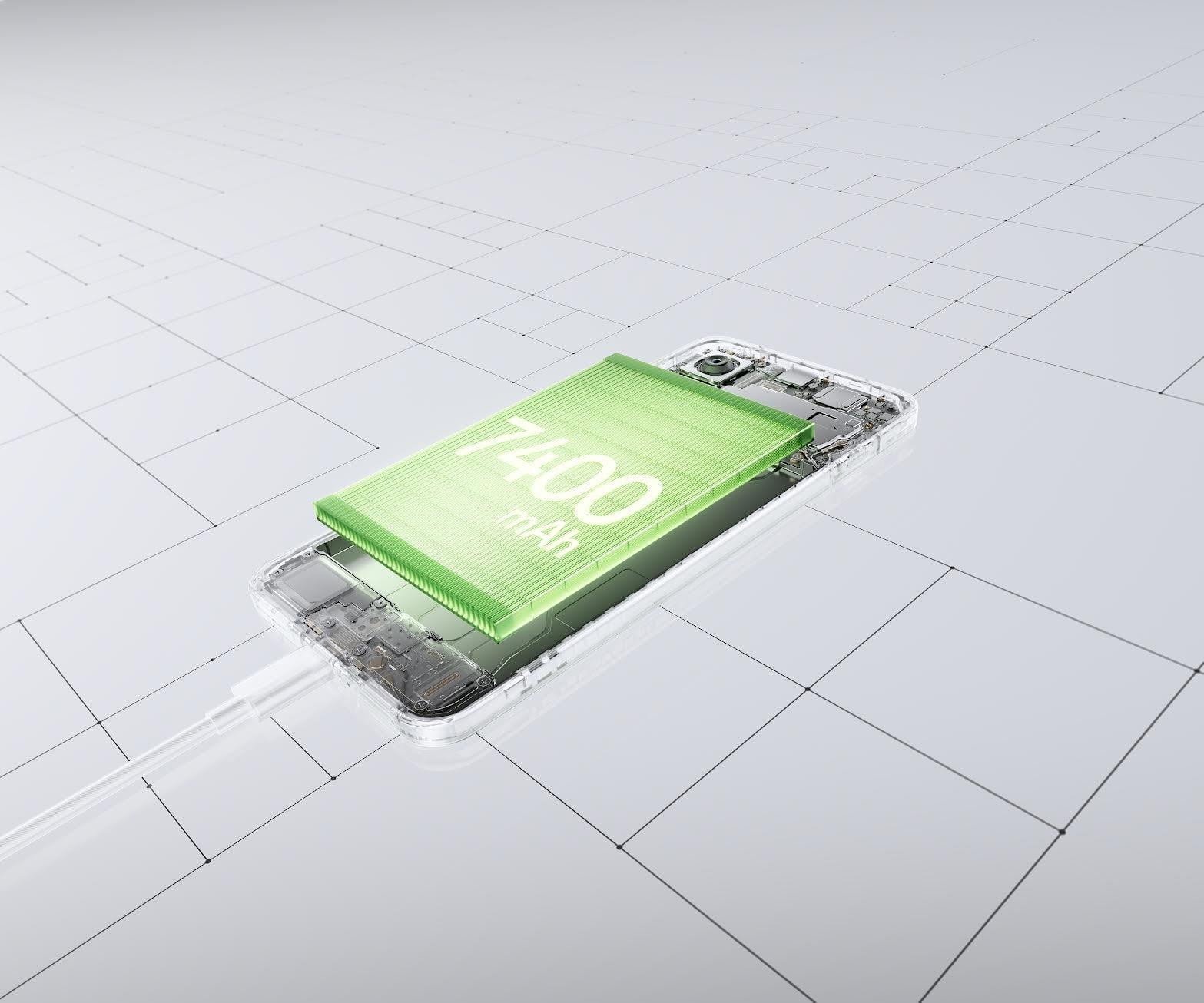
Oppo has quietly launched a new mid-range phone in China, the Oppo A6 Max. The phone is built around a slim 7.7mm body yet packs a massive 7,000mAh battery.
It supports 80W charging, which Oppo says can bring the phone to 50 percent in just 24 minutes. Despite the large battery, it weighs only 198 grams.
Oppo A6 Max Specifications
Up front, the A6 Max features a 6.8-inch OLED display with a 2800 × 1280 resolution and a 120Hz refresh rate. The screen can reach up to 1,600 nits of peak brightness and even supports input when your hands are wet. Oppo also protects the display with its in-house Crystal Shield Glass for extra durability.
The device camera setup includes a 32MP selfie shooter and a dual-camera system on the back, headlined by a 50MP main sensor alongside a basic 2MP monochrome camera. The phone comes in two finishes: Streamer White with a glass back and Rock Mist Blue with a fiberglass back.
Under the hood, the A6 Max runs on Qualcomm’s Snapdragon 7 Gen 3 chip, paired with 8GB of RAM and 256GB of storage. To keep performance steady, Oppo has added a 5,200mm² vapor chamber for cooling.
The phone also features Oppo’s Shanhai Communication enhanced chip for more reliable connectivity, plus dual-band GPS, triple-band Beidou, NFC, and offline communication support.
What really makes the phone stand out is its durability. The A6 Max is rated IP66, IP68, and IP69 for dust and water resistance, meaning it can withstand high-pressure water jets and extreme outdoor conditions.
Oppo says the phone also passed SGS certification for high-temperature operation, and it comes with extra-loud speakers (up to a 300 percent boost) designed for outdoor use.
Price and Availability
The Oppo A6 Max (8GB + 256GB) is available now in China for 1,599 yuan (around $220). Oppo hasn’t confirmed whether the phone will launch internationally.
For more daily updates, please visit our News Section.
Suunto has announced two new products for runners and active users: the Suunto Race 2 trail running watch and the Wing 2 bone conduction headphones. Both are upgrades to their earlier versions, focusing on performance, comfort, and safety while offering better tools for training and daily use.
Suunto Race 2: Trail Running Watch
The Race 2 is Suunto’s most advanced running watch to date. It features a 1.5-inch LTPO display with 466 × 466 resolution, 2,000 nits peak brightness, and Always-On Display support. The LTPO technology allows the refresh rate to drop to 1 Hz to save power, while thinner bezels improve visibility.
The watch is designed for endurance with a battery that offers up to 55 hours of GPS tracking with dual-band GNSS, 16 days with continuous heart rate monitoring, or 22 days with heart rate monitoring off. It weighs 57g without the strap and 75g with it, making it 6 percent thinner and lighter than the earlier model. Built with a wear-resistant bezel, sapphire crystal glass, and stainless steel or titanium options, it is made to handle tough conditions. Color options include All Black, Feather Gray, Coral Orange, and Wave Blue in stainless steel, while titanium models come in Titanium Black and Titanium Trail.
It comes with more than 115 sports modes, including running, cycling, swimming, winter sports, and team sports. Users can also create custom modes with their preferred metrics. Offline maps can be downloaded for full navigation without a phone, along with climb guidance that provides real-time elevation data and pacing support on uphill and downhill runs. Training Zone features include Training Stress Score, Recovery Score, sleep and HRV tracking, and long-term fitness monitoring through Cumulative Training Load, VO₂ Max, and lactate threshold. The updated optical sensor delivers more accurate heart rate data, with continuous tracking and high heart rate alerts. The watch supports more than 300 third-party apps like Strava, Adidas Running, MapMyRun, and Runkeeper.
Suunto Wing 2: Bone Conduction Headphones
The Wing 2 headphones are built for runners and outdoor athletes who want to stay aware of their surroundings while listening to music. They deliver deeper bass and clearer sound with reduced leakage using improved metal components and optimized EQ. They feature dual microphones, AI call noise cancellation, and a wind filter that works at speeds up to 30 km/h.
Battery life is rated at 12 hours per charge and 36 hours with the included power bank. Fast charging provides 1.5 hours of playback in 5 minutes or 3 hours in 10 minutes. Connectivity is handled by Bluetooth 5.3. The headphones have an open-ear design with a slimmer and lighter shell for a better fit and stability. They are available in All Black and Coral Orange.
The Wing 2 also includes LED safety lights with Turn and Brake Mode and Cadence Sync Mode for night visibility. Built-in motion sensors track neck mobility and posture, giving reminders when strain is detected. Motion-based controls allow users to change tracks, adjust volume, or answer calls without touching the headphones. Real-time voice feedback keeps runners updated during training.
Pricing and Availability
The Suunto Race 2 will be available from August 27, 2025, at €499 / $499 for the stainless steel edition and €599 / $599 for the titanium edition. The Wing 2 will be available from September 2025 at €179 / $179.
For more daily updates, please visit our News Section.
We use cookies on our website to give you the most relevant experience by remembering your preferences and repeat visits. By clicking “Accept”, you consent to the use of ALL the cookies.
This website uses cookies to improve your experience while you navigate through the website. Out of these, the cookies that are categorized as necessary are stored on your browser as they are essential for the working of basic functionalities of the website. We also use third-party cookies that help us analyze and understand how you use this website. These cookies will be stored in your browser only with your consent. You also have the option to opt-out of these cookies. But opting out of some of these cookies may affect your browsing experience.
Necessary cookies are absolutely essential for the website to function properly. This category only includes cookies that ensures basic functionalities and security features of the website. These cookies do not store any personal information.
Any cookies that may not be particularly necessary for the website to function and is used specifically to collect user personal data via analytics, ads, other embedded contents are termed as non-necessary cookies. It is mandatory to procure user consent prior to running these cookies on your website.