People in the US do not have access to a wide range of budget smartphones that are available elsewhere in the world, especially Asian countries like China and India. Their options are limited like the newly launched ZTE Blade A3 Prime.
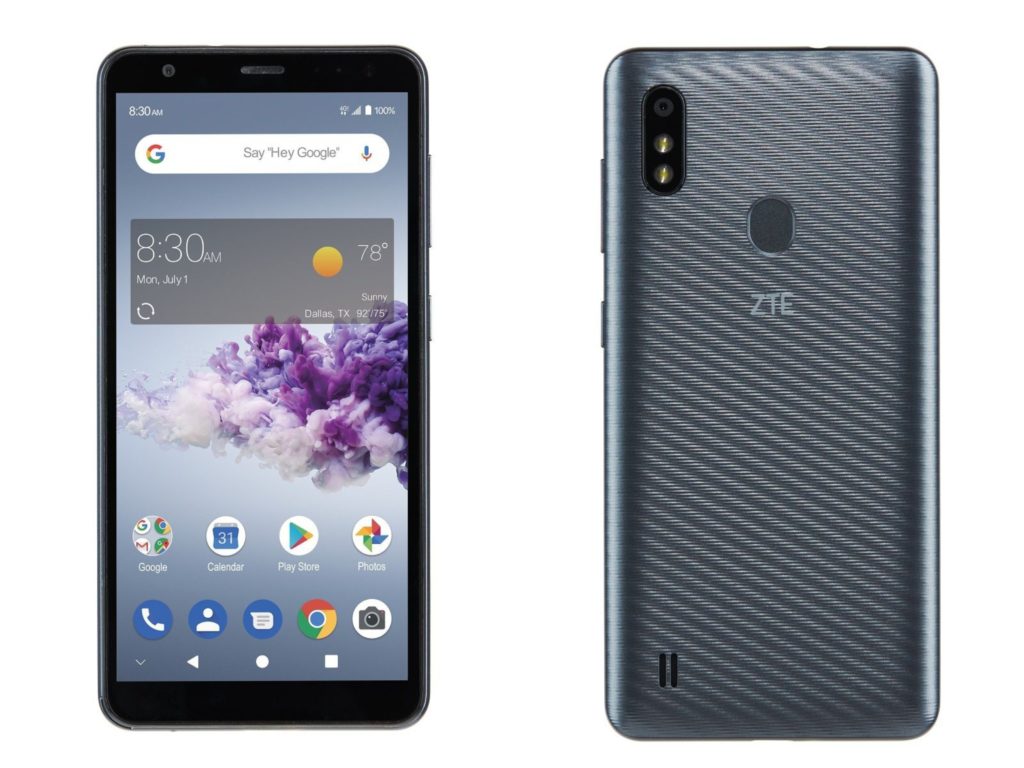
The all-new ZTE Balde A3 Prime is an entry-level smartphone for an MSRP of $99. This handset is only available on Verizon-owned MVNO networks – Yahoo Mobile and Visible. People can even get the device for free on the latter through its SWAP program.
The phone sports a 5.45-inch HD+ (1440 x 720 pixels) IPS LCD panel with 295 PPI and 18:9 aspect ratio. It is powered by MediaTek Helio A22 SoC paired with 2GB RAM and 32GB ROM. The storage can be further expanded via microSD card if needed.
The device features an 8MP primary camera with dual-LED flash and a 5MP front camera. It has all the basics such as 3.5mm headphone jack, USB Type-C, dual-band WiFi 5, Bluetooth 4.2, and fingerprint sensor.
Last but not least, the ZTE Blade A3 Prime gets its power from a smaller 2,660 mAh battery and runs Android 10 out of the box.
Update: According to well-known tipster Mukul Sharma, the Indian version of the One Fusion+ will not feature SD730, but it will come with Snapdragon 730G. The device will launch on June 16. And his source has claimed that the device will be priced between Rs. 15,000 (~$197) and Rs. 20,000 (~$263).
Motorola One Fusion Plus will feature Snapdragon 730g processor in india, not SD730. It's launching on June 16. If my source is to be believed, the price will be somewhere around 15k to 20k, making it quite interesting 😉#motorola#motorolaonefusionplus
The Motorola One Fusion+ went official earlier this week as the second phone from the company after the Motorola One Hyper from last year with a notch-less display and pop-up selfie camera. Motorola India has released a new teaser with #UltimateOne hashtag. The teaser reveals that the country will be soon receiving a pop-up selfie camera One series smartphone. It appears that India could be the next market to receive the One Fusion+ handset.
The Motorola One Fusion+ landed in Europe with a pricing of 299 euros (~$338). There is no word on the pricing of the phone for the Indian market. It came in color editions like Moonlight White and Twilight Blue colors in Europe.
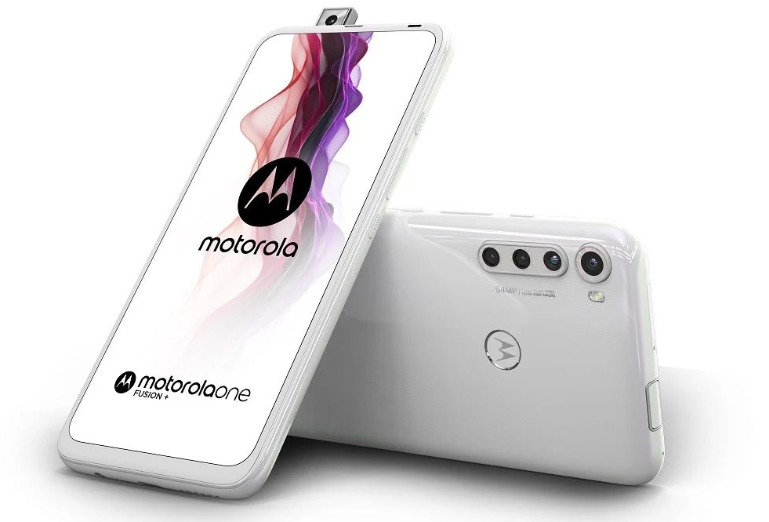
The One Fusion+ has a 6.5-inch IPS LCD display with notch-less design and it features a splash-resistant polycarbonate construction. The screen supports 19.5:9 aspect ratio and Full HD+ resolution of 1080 x 2340 pixels. A fingerprint reader can be found on the backside of the One Fusion+.
Motorola One Fusion+
The Snapdragon 730 octa-core processor is present under the hood of the Motorola One Fusion+. The phone features 6 GB of RAM and it has an internal storage of 128 GB. There is a shared SIM slot for additional storage.
It has a pop-up selfie camera of 16-megapixel. The backside of the phone has a quad-camera setup. It is pioneered by a 64-megapixel main shooter. It is assisted by a 118-degree ultrawide 8-megapixel lens, a 5-megapixel macro lens and a 2-megapixel depth sensor.
The One Fusion+ is preinstalled with Android 10 OS and Motorola’s new UI that is dubbed as My UX. The phone receives power from a 5,000mAh battery that is coupled with a 15W TurboPower charger.
Samsung could soon launch the Galaxy A21s in India next week. The budget phone is expected to come in two variants – 4GB + 64GB and 6GB + 64GB. The highlight of this handset is the new 8nm Exynos 850 chip that powers it.
The South Korean electronics giant has been releasing a number of sub-₹20,000 ($263) phones in the Indian market for the past few weeks.
Adding to the evergrowing portfolio of budget smartphones, Samsung might launch the Galaxy A21s in the country next week according to an IANS report.
The company will be skipping the base 3GB + 32GB variant and will be bringing the other two storage configurations with 64GB ROM and 4GB/6GB RAM. They are believed to be priced between ₹15,000 ($197) – ₹20,000 ($263).
As mentioned in the beginning, the Galaxy A21s is powered by Exynos 850 chipset, which is the latest budget SoC from Samsung.
The handset sports a 6.5-inch HD+ ( 720 x 1600 pixels) PLS TFT LCD panel with a punch hole for the 13MP selfie camera. On the back, the phone houses a quad-camera setup comprising of a 48MP primary shooter, an 8MP ultra-wide unit, a 2MP macro camera, and a 2MP depth sensor.
The device runs One UI 2.0 based on Android 10 and draws power from a 5,000 mAh battery with support for 15W fast charging.
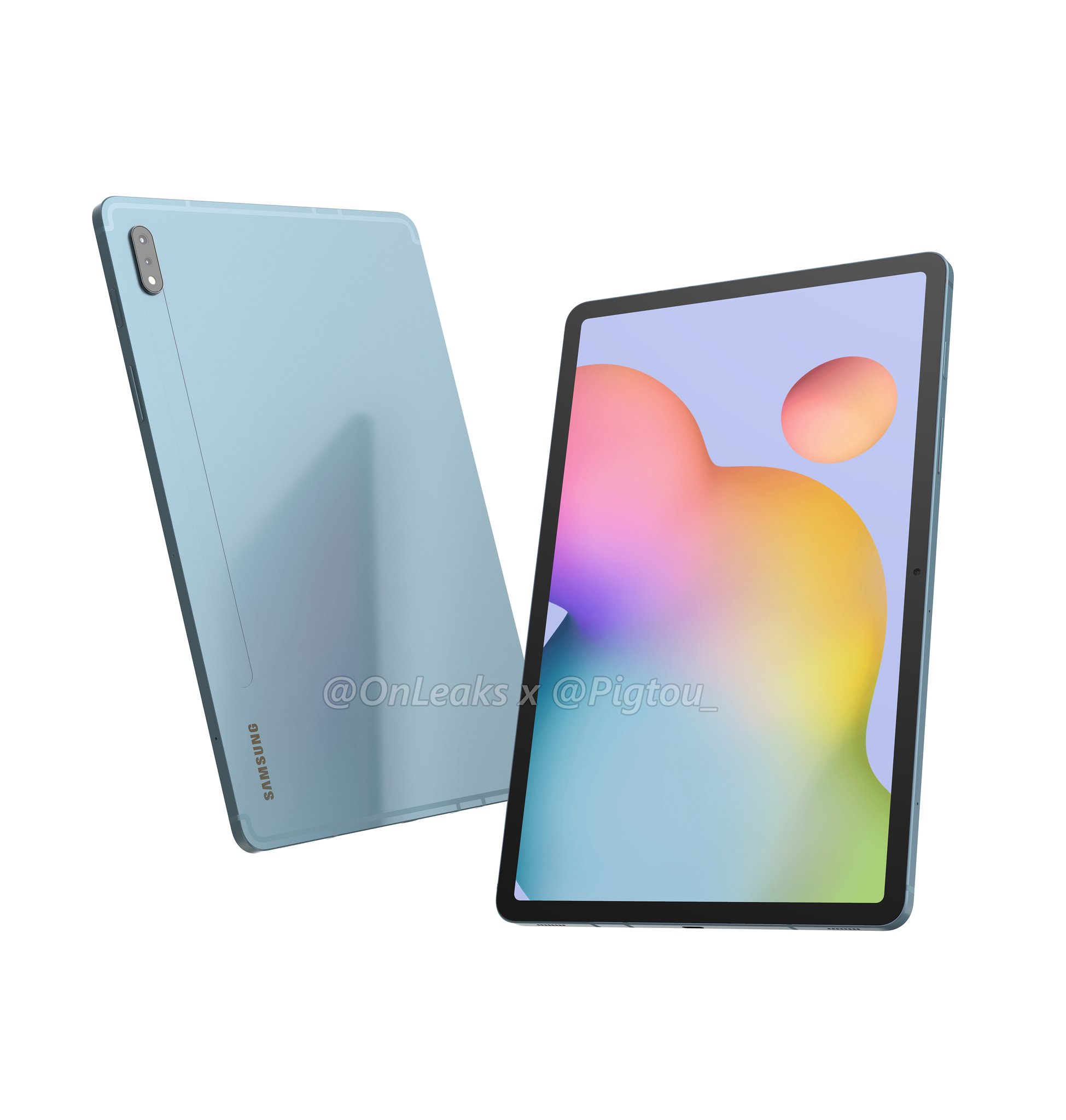
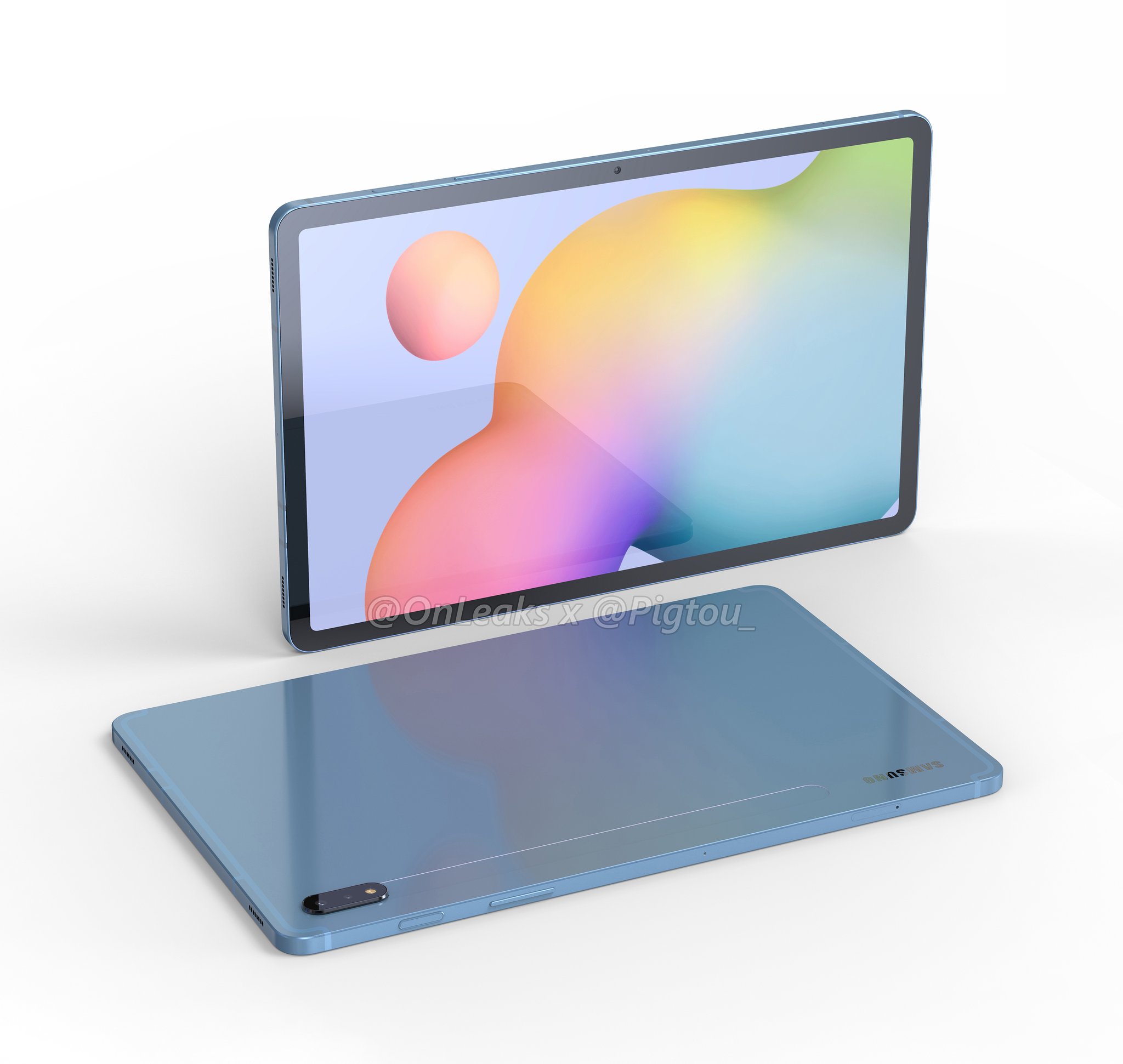
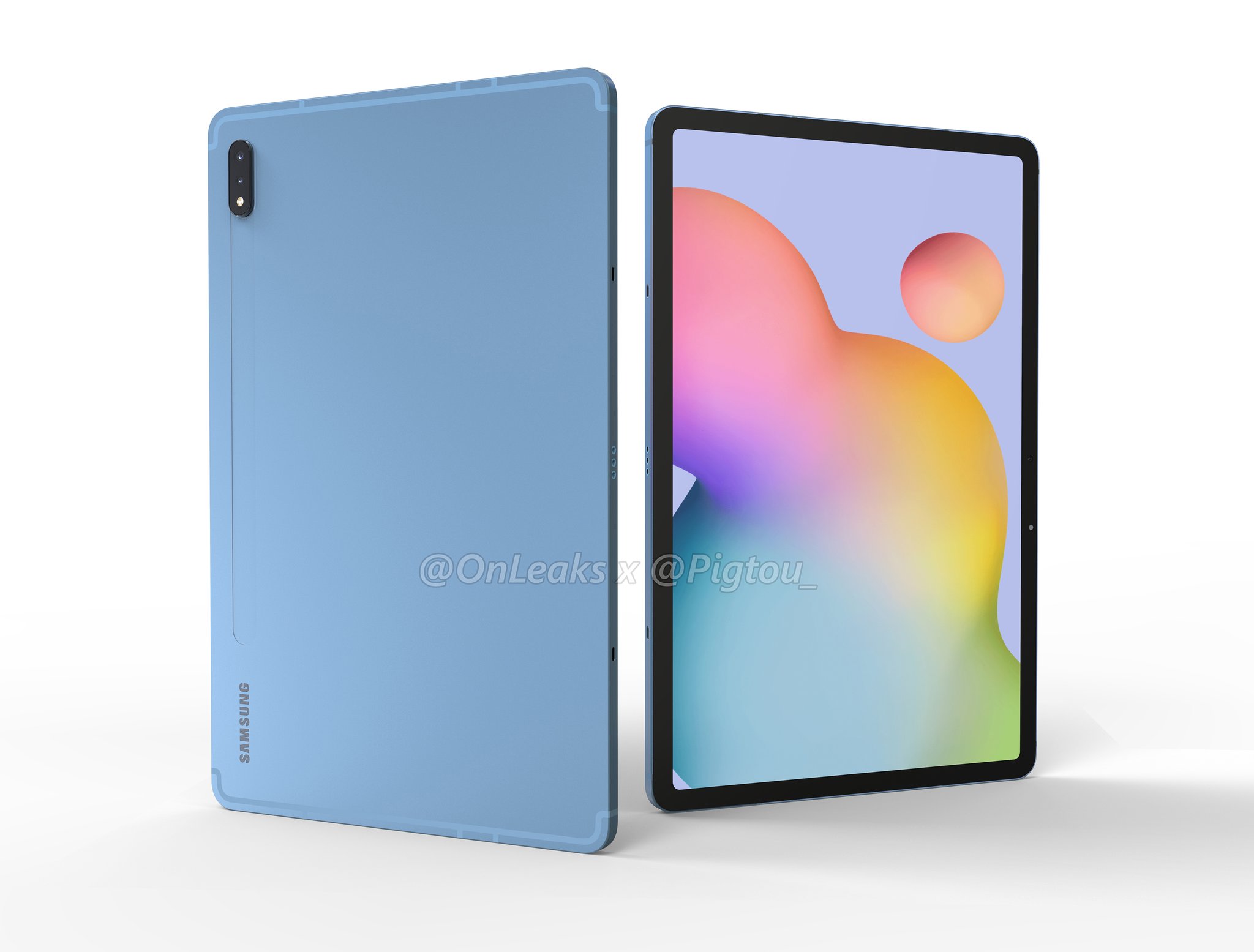
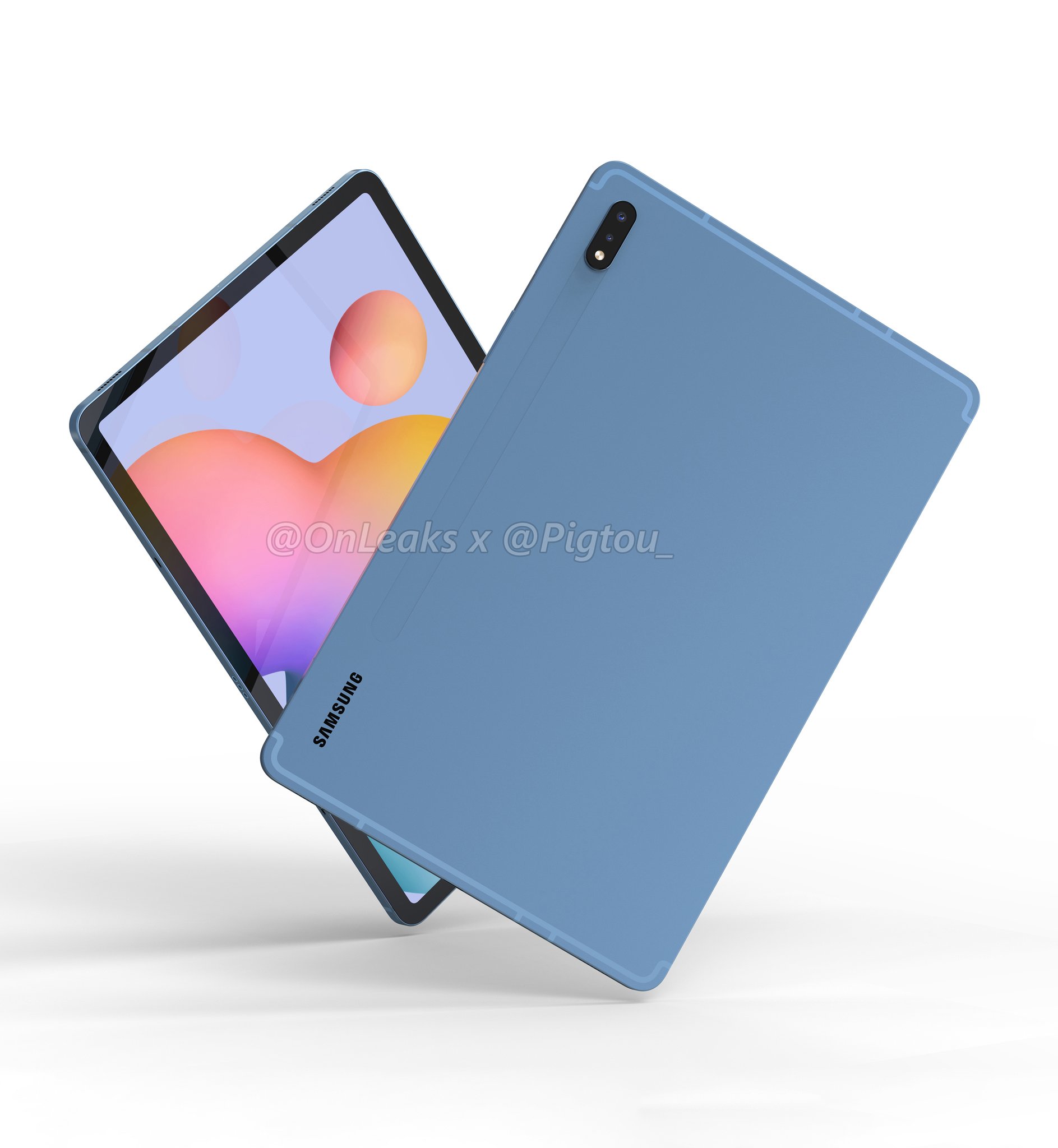
Samsung is reportedly aiming to launch the Galaxy Tab S7 and Galaxy Tab S7+ 5G in July. The latter has recently bagged approvals from Bluetooth SIG and Wi-Fi Alliance platforms. The alleged battery capacities of both devices have also leaked. Reliable tipster @OnLeaks has teamed up with Pigtoucoques.fr to showcase the CAD renders of the Galaxy Tab S7.
The new leak reveals that the Galaxy Tab S7 has 253.7 x 165.3 x 6.3mm dimensions. In comparison, the device is bigger than the 11-inch iPad Pro 2020. It is also larger than the Galaxy Tab S6 that has 244.5 x 159.5 x 5.7mm. The thickness of the Tab S7 has slightly increased and it reaches 7.7mm at the rear camera bump.
As far as the overall design of the tablet is concerned, it is not very different from the predecessor model. A selfie camera is available on the left facet of the slate.
The device is expected to flaunt a metallic chassis. The antenna lines can be seen at the top and bottom edges of the rear shell. At the upper-left corner of the tablet’s rear is a vertical dual camera setup followed by an LED flash. The bottom view of the table shows the presence of a USB-C port between two external speaker grills.
The leak states that the Galaxy Tab S7 has an 11-inch display. It is most likely to feature an OLED panel. The S Pen stylus can be attached to the device on the rear between the camera setup and Samsung logo. The device is expected to house a 7,760mAh battery. There is no word on the other specifications of the Galaxy Tab S7.
As far as the Galaxy S7+ 5G is expected to come with a 12.4-inch display. It could be housing a 9,800mAh battery. Its design could be almost identical to the vanilla Tab S7.
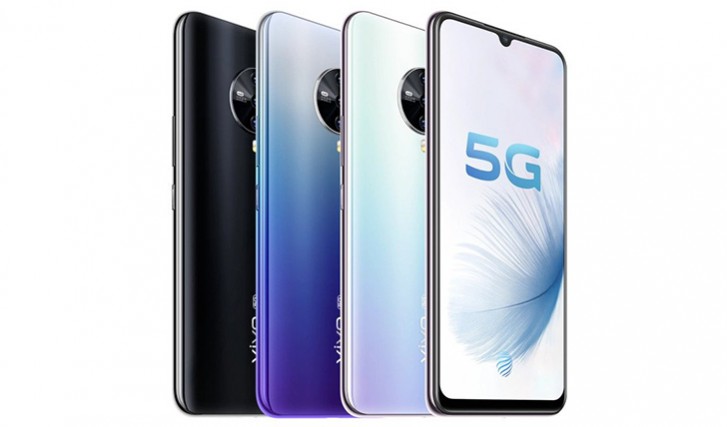
Launched in April, the Vivo S6 5G is the first S-series phone with 5G support from Vivo. The handset is currently available only in China. A fresh leak reveals that Vivo is working on an advanced version of the phone called Vivo S6 Pro 5G. The Chinese tipster who revealed the existence of S6 Pro has also shared its rumored specs and pricing. The smartphone is expected to rival with the likes of OPPO Reno4 and Huawei Nova 7 in the home market.
Vivo S6 Pro 5G specifications (Unconfirmed)
The Vivo S6 Pro will be featuring an OLED panel that offers a 60Hz refresh rate. The leak does not mention the size and design of the screen. Since the Vivo S6 5G came with a punch-hole screen, the S6 Pro may house a dual punch-hole display since it expected to feature a 32-megapixel Samsung GD1 + 8-megapixel (superwide) dual selfie camera setup. Like the vanilla model, the Pro edition is likely to feature an under-display fingerprint sensor.
The rear shell of the phone will house a quad camera setup. It will be led by a 64-megapixel Samsung GD1 main shooter followed by an 8-megapixel superwide lens, a 2-megapixel super macro sensor, and a 2-megapixel depth sensor. The rear and front sides of the Vivo X50 Pro 5G will be protected by Gorilla Glass 5 panels.
The Snapdragon 765G octa-core processor with 5G support will fuel the Vivo X50 Pro 5G. The SoC will be assisted by LPDDR4x RAM and UFS 2.1 storage. The phone is likely to be equipped with a 4,200mAh battery that supports 33W FlashCharge 2.0 rapid charging technology. The device is equipped with to house copper tube liquid cooling technology, roto motor and NFC.
Vivo S6 Pro 5G pricing (Unconfirmed)
The Vivo S6 Pro 5G will debut in China in two options like 8 GB RAM + 128 GB storage and 8 GB RAM + 256 GB storage. These models are likely to be priced at 2,998 Yuan (~$423) and 3,298 Yuan (~$465).
Readers are advised to take this leak with a grain of salt and wait for further reports to confirm the arrival of the Vivo S6 Pro 5G.
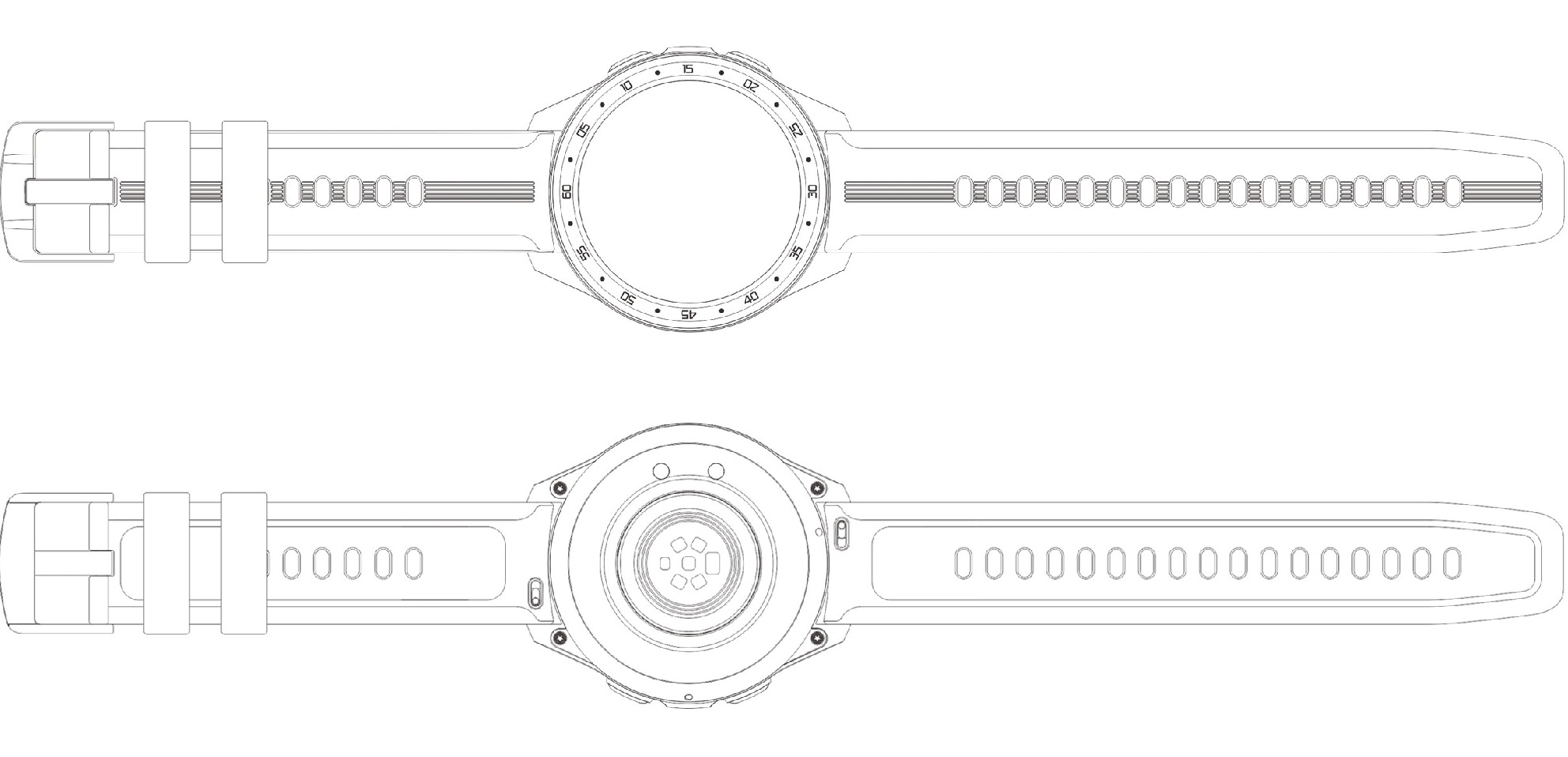
Several Chinese smartphone companies have recently launched their smartwatches and now another brand is joining the bandwagon — Vivo. After the launch of smartwatches from Xiaomi, OPPO, and Realme, Vivo is working on its own smartwatch.
While we reported about the same in the month of April, alleged patents of the upcoming wearable device from Vivo were leaked last month. Now, the Vivo smartwatch has passed through the 3C certification process.
The listing reveals that the device carries model number WA2056 and will come with support for audio playback. It is also revealed that the product is being manufactured at a plant of Dongguan Huabei Electronic Technology Co. Ltd.
Vivo had filed a trademark application earlier this year with EUIPO which reveals that the upcoming wearable device from the company could be named Vivo Watch. However, nothing much is known about this product at this time.
Although the company is yet to confirm this wearable device and there’s no official information about the same, reports indicate that the Vivo Watch could get launched next month in China. Since the device has passed the 3C certification process, it seems likely that the launch is imminent.
At the beginning of this month, Vivo unveiled the Vivo X50 series of smartphones in China. The lineup comprises of three devices such as Vivo X50 5G, Vivo X50 Pro 5G and Vivo X50 Pro+ 5G The vanilla model went on sale on June 6 in the home market. The X50 Pro+ is slated to hit the market in July. Today, the Chinese manufacturer began with the sales of the Vivo X50 Pro smartphone.
Vivo X50 Pro pricing
The Vivo X50 Pro has arrived in China in two models such as 8 GB RAM + 128 GB storage for 4,298 Yuan and 8 GB RAM + 256 GB storage for 4,698 Yuan. Black Mirror and Liquid Oxygen (Blue) are the two color editions of the smartphone.
India will be one of the first markets outside of China to receive the X50 Pro. Yesterday, a report revealed that it may debut in India in July.
The Vivo X50 Pro comes with an exciting camera setup. The camera setup on its back features a gimbal-style topnotch stabilization for its Sony IMX598 48-megapixel main sensor that has an aperture rating of f/1.6. The main sensor is accompanied by an 8-megapixel periscope telephoto lens with OIS and 5x optical zoom, a 13-megapixel portrait lens with 2x optical zoom, and an 8-megapixel ultrawide lens. At the front, the phone features a 32-megapixel selfie camera housed inside the display’s punch-hole cutout.
The Vivo X50 Pro has a 6.56-inch AMOLED display that offers Full HD+ resolution of 1080 x 2376 pixels. The phone runs on FunTouch OS 10.5 based Android 10 OS. The Snapdragon 765G fuels the device with LPDDR4x RAM and UFS 2.1 storage. It lacks external storage.
The Vivo X50 Pro draws power from a 4,315mAh battery that is coupled with 33W fast charging. The other features that are available on the X50 Pro are under-display fingerprint reader, NFC, USB-C, 3.5mm audio jack, dual-SIM, support, 4G VoLTE, and Wi-Fi 802.11ac.
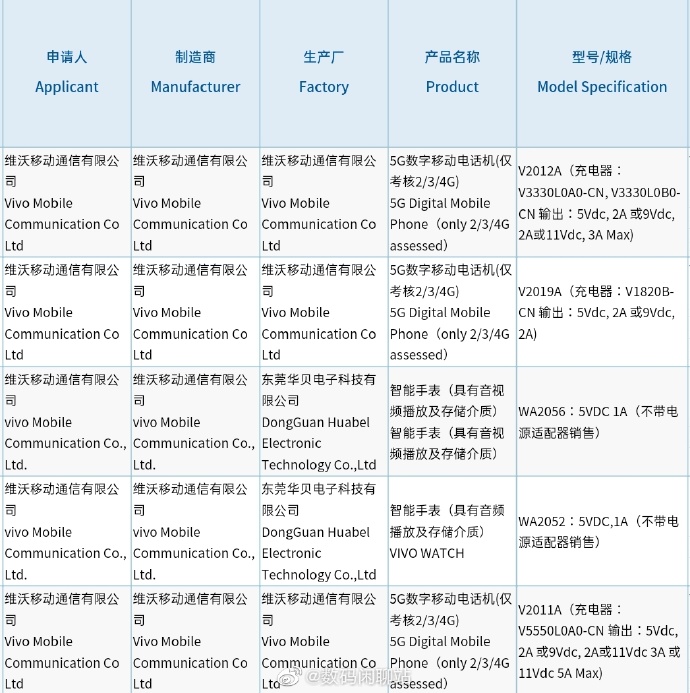
iQOO has so far launched two smartphones such as iQOO 3 and iQOO Neo 3 in China this year. Recently, a Chinese tipster had revealed that iQOO is planning to launch its first mid-range phone named iQOO Z1x. The Chinese brand is yet to confirm on the existence of the iQOO Z1x. It appears that the mysterious Vivo V2012A phone that just got approved by the 3C authority of China could be the upcoming iQOO Z1x phone.
The 3C listing states that the Vivo V2012A is a 5G-enabled handset. The other thing that it reveals is that it could be shipping with a 33W fast charging. No other details on the phone are mentioned in its 3C listing.
The Vivo V2012A was spotted last month at the Geekbench benchmarking platform. The listing revealed that the phone could be powered by the Snapdragon 765G processor and 8 GB of RAM. The phone was found to be loaded with Android 10 OS.
According to a well-known tipster from China who shared the above screenshot, the V2012A is the iQOO smartphone that he recently mentioned about. Earlier this month, he claimed that the iQOO’s next smartphone that is powered by Snapdragon 765Ght is called iQOO Z1x. He said that iQOO’s first mid-range phone will break cover this month with an affordable price tag.
The tipster also revealed that the Vivo V2019A phone that has appeared on 3C is a 5G-ready entry-level phone from the company. Its 3C appearance reveals that it may ship with an 18W fast charger. The V2011A seen in the list is the already announced Vivo X50 Pro+ and the W2052 / W2056 is the upcoming Vivo Watch smartwatch.
Lenovo has been building hype around its upcoming Legion gaming phone since December 2019. Today, it finally confirmed that the Legion gaming phone will debut in July. It is expected to battle with ROG Phone 3 gaming phone from ASUS that is rumored to break cover in July.
While the company’s latest Weibo post confirms the July launch for the Legion gaming phone, it is still mum on the unveiling date of the device. While the ROG Phone 3 will be driven by the Snapdragon 865, some reports about the Legion gaming phone claimed it could be featuring the forthcoming Snapdragon 865 Plus mobile platform.
The rumor mill has rival many of the key features of the Legion gaming phone. The handset is said to have a model number of L79031. This model number has been spotted at China’s 3C platform with a 45W fast charger and it has also appeared on the Geekbench benchmarking platform with 12 GB of RAM. The phone is speculated to be equipped with a 4,000mAh battery. Lenovo has claimed that the Legion gaming phone will be arriving with support for 90W rapid charging.
The Legion gaming phone is rumored to house a Full HD+ resolution supporting OLED panel with up to 144Hz refresh rate. It has a side-facing pop-up selfie camera of 20-megapixel. The rear shell of the device could be featuring a dual-camera system comprising of a 64-megapixel main shooter and an ultrawide lens of 16-megapixel.
The Snapdragon 865 or 865+ SoC of the Legion gaming phone could be coupled with LPDDR5 Ram and UFS 3.0 storage. The phone will be loaded with the gaming-grade Legion UI based Android 10 OS. Some of the other features arriving on the gaming smartphone include dual speakers, X-axis linear motor, in-display fingerprint reader, and dual USB-C ports.
Earlier this month, Huawei-backed Honor launched the Honor Play4 and Play4 Pro smartphones in its home country. Both the phones were up for pre-orders soon after the announcement and the Pro variant went on sale a few days ago.
Today, the company has started selling the Honor Play4 in China, which is also the company’s cheapest 5G smartphone so far. The 6GB RAM model is priced at 1,799 yuan (~$255) while the 8GB RAM model costs 1,999 yuan which is about $283.
Coming to the specifications, the smartphone features a 6.81-inch Full HD display with 2400 x 1080 pixels screen resolution. It has a punch-hole cutout in the top-left corner for housing the front-facing camera sensor.
Under the hood, the device is powered by the MediaTek Dimensity 800 5G chipset, coupled with Mali-G57MP4. Both the models — 6GB and 8GB RAM, come with 128GB of internal storage along with a microSD card slot for expanding the storage capacity.
It has a VC liquid cooling technology and a 12 layer heat dissipation structure, which is good to have in a mid-range device. As for the camera, on the front side, there’s a 16-megapixel snapper for taking selfies and video calling.
On the back, it comes with a quad-camera setup that includes a 64-megapixel primary sensor, an 8-megapixel ultra-wide sensor, a 2-megapixel macro lens, and a 2-megapixel depth sensor. The device is equipped with a side-mounted fingerprint sensor.
The smartphone is running the latest Android 10 operating system out-of-the-box with the company’s own Magic UI 3.1 custom user interface. Do note that it doesn’t come with any Google services on board. The Honor Play4 is powered by a 4,300mAh battery and comes with 22.5W fast charging support.
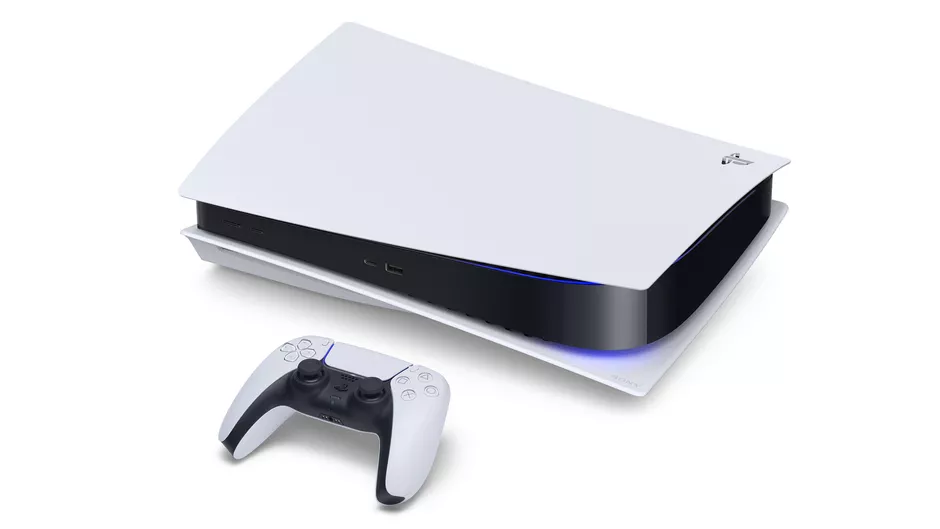
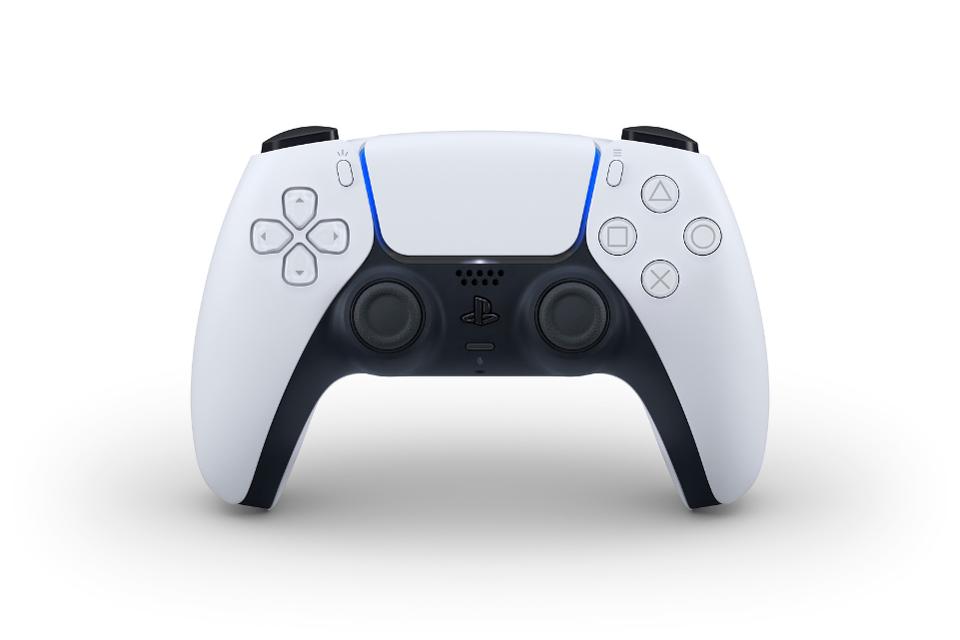
Sony hosted a “Future of Gaming” event where the company unveiled the look of its next-generation PlayStation 5 gaming console. The console was showcased at the end of the event, along with the DualSense controller, which was revealed in April.
The Sony PlayStation 5 is stepping away from the carbon black color scheme of its predecessor and has adopted a bolder arctic white case that features blue accent lights. There’s a possibility that the company could announce the console in other color options.
It will be made available in two versions — one standard model and another a slimmer digital model which will be “discless”.The device packs SSD and the game discs will support a capacity of up to 100GB.
The new Sony DualSense controller is confirmed to come with haptic feedback, built-in microphone, more ergonomic design and shape. Along with this, the company has also revealed a suite of gear, which includes an HD camera, a controller charging station media remote, and a Pulse 3D wireless headset.
The company spent the majority of the time during the event to talk about and show off some of the exclusive PS5 launch game titles, as well as indie and third-party games. Here’s the full list of games revealed at the event:
Spider-Man: Miles Morales
Gran Turismo 7
Ratchet & Clank: Rift Apart
Project Athia
Stray
Returnal
Sackboy: A Big Adventure
Kena: Bridge of Spirits
Oddworld: Soulstorm
GhostWire Tokyo
Godfall
Solar Ash
Hitman III
Astro Bot
Little Devil Inside
NBA 2K21
Bugsnax
Deathloop
Resident Evil: Village
Pragmata
Horizon: Forbidden West
Grand Theft Auto 5 Enhanced
So far, the company has confirmed that the PS5 includes AMD hardware with Zen 2 CPU and Navi GPU, along with super-fast PCIe 4.0 SSD and new data-transfer architecture.
Sony is yet to reveal pricing and availability details of the PlayStation 5 gaming console but the company’s CEO has revealed that the device will be launched during the holiday season this year.
Xiaomi has officially launched the Redmi Note 9 in Spain. The smartphone is now available on Xiaomi Spain official website. Pricing starts at 179 Euros. The Chinese tech giant also took the wraps off the Redmi Note 9 and Redmi Note 9 Pro for the Indonesian market.
The Redmi Note 9 and Note 9 Pro are successors of the Redmi Note 8 and note 8 Pro which heralded the market last year and raked in good revenue for the Chinese tech giant. For the Indonesian market, pricing starts at RP 2,399,000 (~$170) for the 4GB+64GB variant. The 6GB+128GB variant adopts a retail price of RP 2,799,000 (~$199).
On the other hand, the Redmi Note 9 Pro 6GB+64GB variant costs RP3,399,000 (~$241) and the 8GB+128GB variant retails for RP3,799,000 (~$270).
The Redmi Note 9 is powered by a MediaTek Helio G85 chipset and sports a 6.53-inch FHD+ DotDisplay with Gorilla Glass 5 and splash-proof nano-coating. The display houses a punch hole at the top left corner of the screen for the selfie camera
As the rear, you get a quad-camera setup consisting of a 48MP f/1.79 with 4-in-1 Super Pixel, an 8MP f/2.2 ultrawide angle with a 118° viewing angle, a 2MP f/2.4 depth sensor, and a 2MP Macro Camera. Up in front is a 13MP sensor with support for Face Unlock. Xiaomi ships the Redmi Note 9 with a bunch of cool camera features including a kaleidoscope effect, document scanner, night mode, and portrait mode (on both sides).
There is a massive 5020mAh battery inside the Redmi Note 9 and it supports 18W fast charging. You also get a 3.5mm audio jack, NFC, IR blaster, and a rear-mounted fingerprint scanner.
On the other hand, the Redmi Note 9 Pro features a 6.67-inch IPS LCD display that offers Full HD+ resolution and 20:9 aspect ratio. It is powered by a Snapdragon 720G processor paired with LPDDR4X RAM and UFS 2.1 storage.
At the rear aspect sits a quad-camera setup which includes a 48-megapixel main lens, an 8-megapixel ultrawide shooter, a 5-megapixel macro shooter and a 2-megapixel depth sensor. It has a 16-megapixel front-facing camera. The device crams a 5,020mAh battery with support for 18W fast charging.
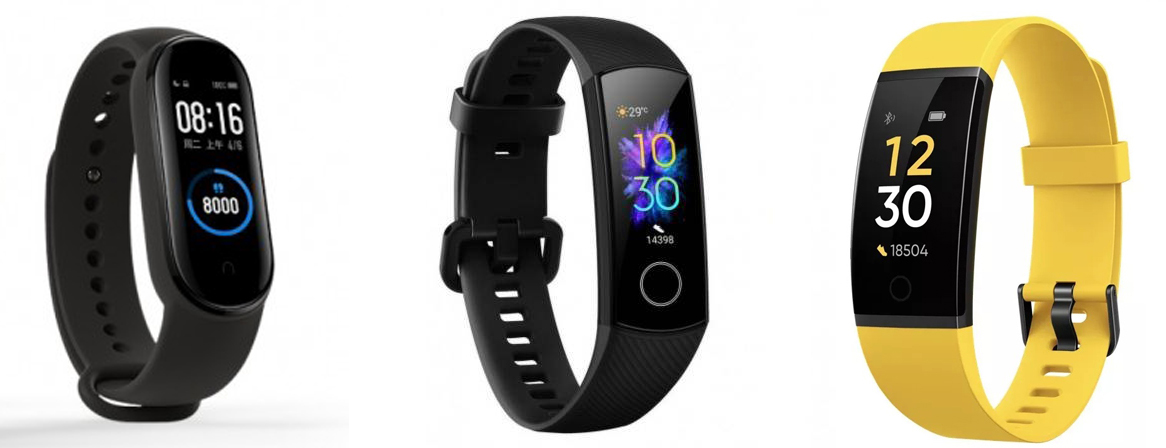
Today is a great day for geeks because Xiaomi officially launched the Mi Band 5: the fifth generation of its best-selling series of smart bands. The new wearable comes with plenty of improvements and new features, including improved software and features thought to provide a better user experience. But in 2020 the Mi Band 5 has a lot of rivals from other smartphone manufacturers. Since smart bands are currently a very important niche of the hi-tech world, we chose two of the most valid ones for a specs comparison with the new Mi Band 5. We are referring to the Honor Band 5 and the Realme Band, both among the cheapest and most functional fitness tracker you can find out there.
Xiaomi Mi Band 5 vs Huawei Honor Band 5 vs Realme Band
Xiaomi Mi Band 5
Huawei Honor Band 5
Realme Band
DISPLAY
1.1 inches color, AMOLED, curved glass
0.95 inches, AMOLED, curved glass
0.96 inches color, flat glass
WATER RESISTANCE
Up to 5 ATM (50m)
Up to 5 ATM (50m)
IP68 (1.5m)
NOTIFICATIONS SUPPORT
Yes
Yes
Yes
NFC
Yes (optional)
Yes (optional)
No
BATTERY LIFE
Up to 14 days
Up to 14 days
Up to 9 days
CHARGING PORT
Custom
Custom
USB-A
HEART RATE SENSOR
Yes
Yes
Yes
ADDITIONAL FEATURES
HR sensor
SpO2 sensor
HR sensor
NUMBER OF SPORT MODES
11
10
9
Design and display
When it comes to the design, it is all a matter of taste. I personally prefer the Xiaomi Mi Band 5 due to its curved shape making it more attractive, in my honest opinion. But some may prefer the Realme Band because it is more similar to a bracelet since its display looks like an extension of the strap. Mi Band 5, Honor Band 5, and Realme Band are waterproof smart bands, but Realme Band is less waterproof than its rivals.
With the Realme Band, you can go up to 1.5 meters deep without damages (and it is enough for people who want to use it in the swimming pool), while Xiaomi Mi Band 5 and Honor Band 5 can go up to 50 meters deep. Xiaomi Mi Band 5 is very elegant, but Honor Band 5 and Realme Band are more compact. Mi Band 5 is bigger because it has a wider display with a 1.1-inch diagonal. And it is also the most attractive panel due to its quality and very interesting software features allowing the users to use all of its potentialities.
Software and features
Xiaomi Mi Band 5 has the highest number of sports modes: it can monitor up to 11 different activities. On the other hand, Honor Band 5 offers 10 sports modes, but unlike the Mi Band 5, it sports a SpO2 sensor to monitor the oxygen level in the blood. Realme Band does not feature a SpO2 sensor as well. Mi Band 5 has a very accurate PPG sensor: unfortunately, we still did not test it, but we believe it is likely the most accurate since Xiaomi says it offers 50% more accuracy compared to the Mi Band 4.
The Mi Band 5 also supports animated watch face and third-party designs, which you can not get on its two opponents. Besides the SpO2 sensor (Honor Band 5 only), on these smart bands, you can find an accelerometer, a heart rate monitor, a barometer, and a gyroscope. There are variants of the Mi Band 5 and Honor Band 5 with NFC connectivity, while you do not get it with the Realme Band.
Battery
Despite they provide more features, Xiaomi Mi Band 5 and Honor Band 5 offer a longer battery life than Realme Band: up to 14 days on a single charge. Realme Band has a 9 days battery life, but it offers an important advantage: it does not need an external charger since it includes a USB-A connector which can be directly plugged to a USB-A port. On the other hand, Mi Band 5 supports magnetic charging thanks to a pin placed on the rear side: you do not even need to remove the wearable from its strap in order to charge it. But it needs a custom charger (included in the box, naturally).
Price
Xiaomi Mi Band 5 is priced $26 in the base variant without NFC and $30 in its NFC version. It just launched in the Chinese market, in which it will be available to purchase starting from June 18. We still do not know what will be the price of the Mi Band 5 for the global market. Honor Band 5 has a listing price of $28, while Realme Band is priced just €12. Unless you need the SpO2 sensor, we recommend the Xiaomi Mi Band 5. But if you want to save money and you only need essential features, Realme Band is enough since it has accurate measurements and it does not lack common features.
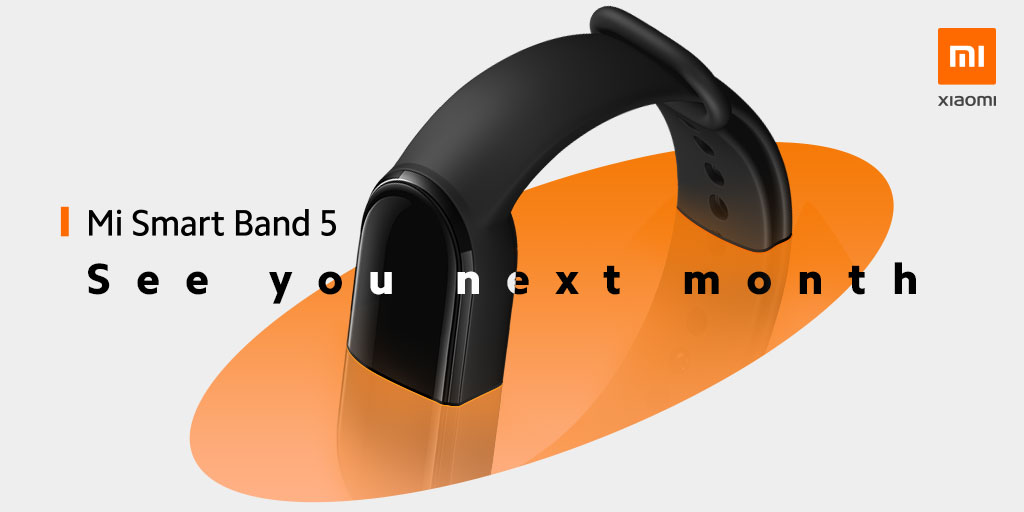
The Mi Band 5 was launched Thursday in China with a starting price of 189 yuan (~$27). As usual, the big question on the lips of fans outside China is when will the smart band be released for the global market? Xiaomi didn’t keep us in doubt for long as the company has disclosed via a tweet that the Mi Band 5 will launch next month. The tweet also reveals it will adopt the moniker Mi Smart Band 5. However, no specific date was mentioned.
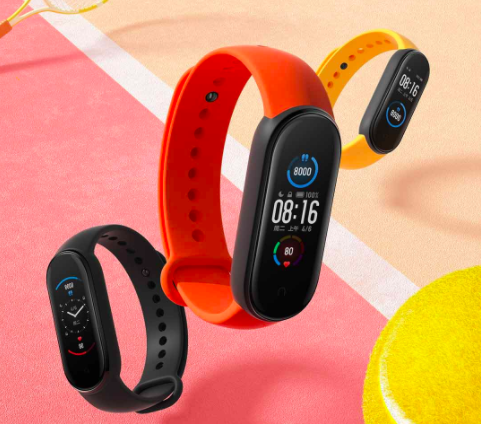
The Mi Smart band 5 features a larger 1.1-inch AMOLED dynamic color display. The smart band sees several upgrades over the Mi Smart Band 4 such as an upgrade of the number of sports modes from just 6 on the Smart Band 4 to 11 on the Mi Smart Band 5. The new additional models include cycling, jump rope, yoga, elliptical and rowing machine.
The wrist band also come with over 100 theme sets and ATM5 water resistance which means they can withstand being kept underwater up to a depth of 50m. In addition, the smart band features seven (7) new features such as pressure assessment, breathing training, PAI index (Personal Activity Intelligence), women’s health tracking and remote shutter control. There is also support for 24-hour sleep monitoring and REM (Rapid eye movements) detection.
On the design aspect, the new smart wearable device utilises a magnetic snap-on charger design. The global variant is also expected to feature support for Amazon Alexa and Google Pay.
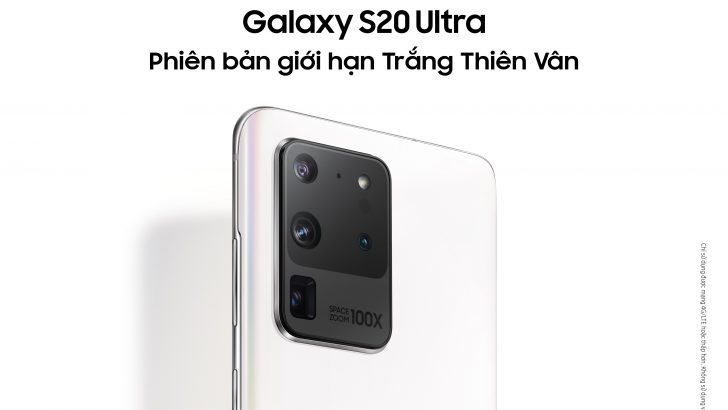
Samsung has announced a new colorway for the Galaxy S20 Ultra in Vietnam. Called the Galaxy S20 Ultra White Limited Edition, The color is similar to the Cloud White variant that its siblings got recently.
The phone will sell for VND 29,990,000 (~$1289) beginning June 19, 2020, at CellPhone S stores. Those who pre-order will get a free Harman Kardon Auro Studio 3 Speaker worth more than VND 6,900,000 (~$297) and also get an instant VND 4,000,000 (~$172) cashback. The press release says those who will receive their orders between June 19 and June 21 will be eligible for an extra VND 3,000,000.
The Galaxy S20 Ultra White Limited Edition has a 6.9-inch QHD+ screen with a 120Hz refresh rate. There is an Exynos 990 processor inside but the RAM and storage weren’t revealed. Nevertheless, it should be 12GB RAM and 128GB of storage.
You also get a 108MP quad-camera setup on the back and a 40MP selfie camera. There is a 5000mAh battery under the hood with support for 45W fast charging and 15W fast wireless charging. It also has support for 9W reverse wireless charging.
The handset market across the world has declined in recent months due to the COVID-19 pandemic. The China Academy of Information and Communications Technology recently released the mobile phone shipments for the month of May. According to it, the Chinese phone market slumped 11.8% YoY last month.
Photo by Gary Tamin from FreeImages
It is interesting to see the mobile phone market in China to decline in May when it recovered in April with 14.2% YoY increase in shipments.
Phone makers shipped a total of 33.8 million units in May 2020 in China. Whereas, from January to May, they shipped 124 million handsets, an 18% YoY drop.
A total of 32 new models were released last month, which is 22% less compared to last year during the same period. Also, the launch of new models decreased by 18.8% YoY overall in the last five months with only 169 SKUs.
Smartphone shipments were down by 10.4% YoY in May with 32.66 million units. It was even lower by 16% YoY from January to May with 121 million units.
Having said that, 5G smartphones accounted for half of the new release in May with 16 models. Companies shipped 15.64 million 5G phones last month covering 46.3% of total mobile phone shipments in May.
During the past 5 months, China witnessed the launch of 81 5G phones shipping 46.08 million units. This is the only segment where the country observed progress.
Last but not least, Chinese smartphone brands ruled the market with 91.7% market share in May and 90% in the last 5 months.
Taiwanese phone maker HTC used to deliver good quality smartphones in the past but the company has long fallen off the pecking order. HTC is no longer a force to reckon with, as Chinese firms like Xiaomi, Realme, Vivo have pushed it off the cliff. The company is still making some attempt at grabbing a piece of the pie and will launch a new Desire 20 Pro smartphone on June 16.
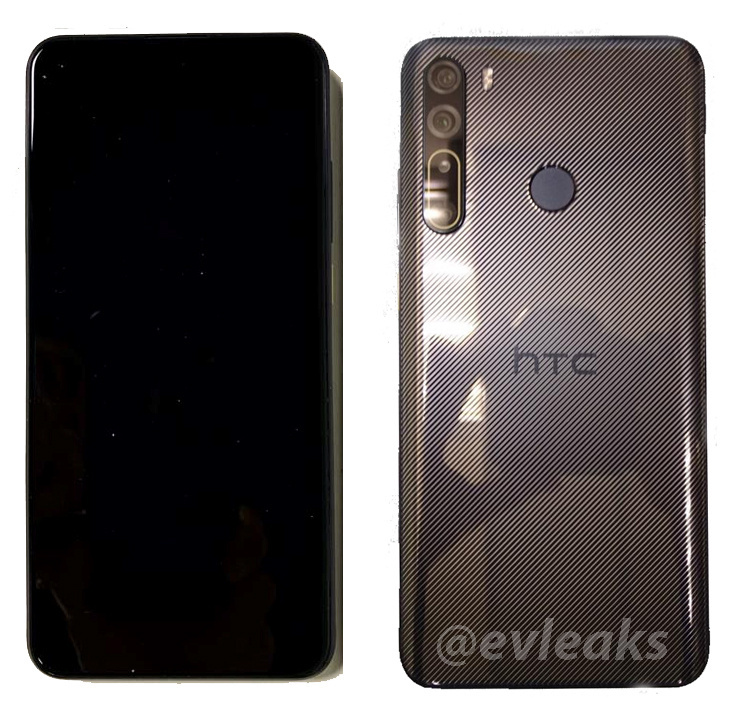
Noted tipster Evan Blass has now shared the first hands-on images of the phone. The images show both the front and rear aspects and align well with the schematics which leaked back in April. the device packs a quad-camera setup at the rear as well as a rear-mounted fingerprint sensor. The rear panel has a glossy finish which looks like it is made from glass.
The front aspect shows a display panel slightly curved on all sides. The device also utilises a punch-hole design located at the top left corner.
The Desire 20 Pro is a mid-range smartphone which is expected to feature a 6.5-inch LCD with FHD+ resolution. GeekBench listing reveals the presence of Qualcomm chipset which is likely the Snapdragon 660 or 665 chipset paired with 6GB RAM. The phone will also run Android 10 OS out of the box, the first HTC model to do so.
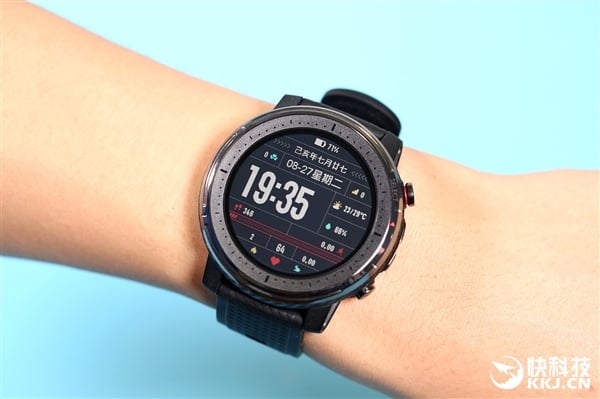
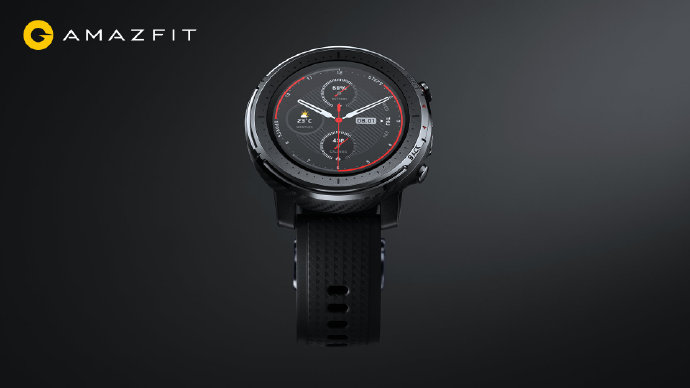
Xiaomi‘s ecological chain company Huami is gradually increasing its product portfolio in India. The company has recently launched the Amazfit Bip S and T-Rex smartwatch in India. A fresh report has emerged which tips the company to have got plans to launch yet another smartwatch in the country. This time around, the Amazfit Stratos 3 professional sports watch. The report say the Stratos 3 will be launched later this month but later than 20th June. The smartwatch will be available on Flipkart and Amazfit India official store.
The Amazfit Stratos 3 is designed for professionals and enthusiasts. It has a circular 1.34” JDI Full-Moon reflective low-power display covered with Gorilla Glass 3. There are two operating systems on the watch as well as two chips – one for each OS. It also has four buttons on the right side of the frame.
The Amazfit Stratos 3 has 4GB of storage and 512MB of RAM. There is a built-in music player, so you can load it up with podcasts to listen to while you work out. It can track up to 19 different activities, has a continuous heart rate tracker and V02 max measurement.
In Ultra Endurance Mode, the Stratos 3’s 300mAh battery will last up to 2 weeks on a single charge while sports mode will see the battery life drop to half. It also has GNSS (GPS, Beidou, GLONASS, and Galileo) and NFC and has a 5ATM water-resistant rating. Of course, you also get notifications from apps and calls when paired to your phone.
There is a premium version called the Stratos 3+ (Sports Watch 3 Elite Edition) with Sapphire Glass instead of Gorilla Glass, a titanium bezel instead of stainless steel, and quick release fluoro-rubber straps instead of silicone straps. There is no indication if Huami will also launch this version in India.
Apple‘s 2020 iPhone models are said to include four different models but in actual sense, the models will come in three display sizes. The iPhone 12 series will feature a 5.4-inch, two 6.1-inch variants and a larger 6.7-inch model. The protective case of the 6.1-inch iPhone models have appeared online and it leaves clues of the design. The leak source also confirm the three sizes the next-gen iPhone model will come in.
The protective case is on display alongside the front render of the device. We can expect to see a notch design on this year’s iPhone 12. Apple entered the notch trend back in 2018 with the launch of the iPhone X. As is usual with the US tech giant, the iPhone X’s display notch didn’t just house the front camera and earpiece, it also holds an array of cutting-edge sensors: there’s an infrared camera, flood illuminator, proximity sensor, ambient light sensor, and dot projector. These are all essential to enable Apple’s secure Face ID authorization system and TrueDepth camera. The iPhone 12 series notch may also bring an array of cutting-edge sensors at the front cut out.
The protective case reveals a square-shaped cut-out at the rear that is due to the shape of the camera module. Going by previous rumour, this is likely the iPhone 12 Pro which will have a triple camera setup and a Lidar sensor at the rear. The 6.1-inch iPhone 12 is rumoured to feature a dual rear camera setup and that won’t likely be on a square-shaped module.
Apple is yet to say when the iPhone 12 series will be launched but there are speculations the launch may take place in October or November. We expect more details of the models to emerge as time goes on.
Adobe has a plethora of mobile apps for both Android and iOS. Adding to the list, the firm has published a new app called Photoshop Camera on App Store and Google Play Store.
The new Adobe app is unlike any other mobile application by the company. It is targeted at social media users who frequently use filters.
The Photoshop Camera app can be simply termed as any other third-party camera filter app. It offers a number of lenses as well as filters and even lets users edit their clicked pictures to some extent.
This is a perfect app for those who love Photoshop creative edits but do not have a skillset for them. Thus, in a way, Adobe is trying to lure potential customers for its ecosystem with its new app.
Though the app is good and all, it competes directly with popular social media like Snapchat and Instagram who have been regularly adding new filters and lenses for its users for years.
To make a breakthrough, an app should be first accessible to all the users. Unfortunately, right off the bat, Adobe Photoshop Camera is not available for all the Android devices. It is currently limited to the latest Samsung Galaxy handsets and Google Pixels.
Only time will tell if this application will be a success. A dedicated app for filters and lenses is a tough idea to sell. Even the most trending apps in recent times, Prisma did not last for a long time.
We use cookies on our website to give you the most relevant experience by remembering your preferences and repeat visits. By clicking “Accept”, you consent to the use of ALL the cookies.
This website uses cookies to improve your experience while you navigate through the website. Out of these, the cookies that are categorized as necessary are stored on your browser as they are essential for the working of basic functionalities of the website. We also use third-party cookies that help us analyze and understand how you use this website. These cookies will be stored in your browser only with your consent. You also have the option to opt-out of these cookies. But opting out of some of these cookies may affect your browsing experience.
Necessary cookies are absolutely essential for the website to function properly. This category only includes cookies that ensures basic functionalities and security features of the website. These cookies do not store any personal information.
Any cookies that may not be particularly necessary for the website to function and is used specifically to collect user personal data via analytics, ads, other embedded contents are termed as non-necessary cookies. It is mandatory to procure user consent prior to running these cookies on your website.



 ]
]