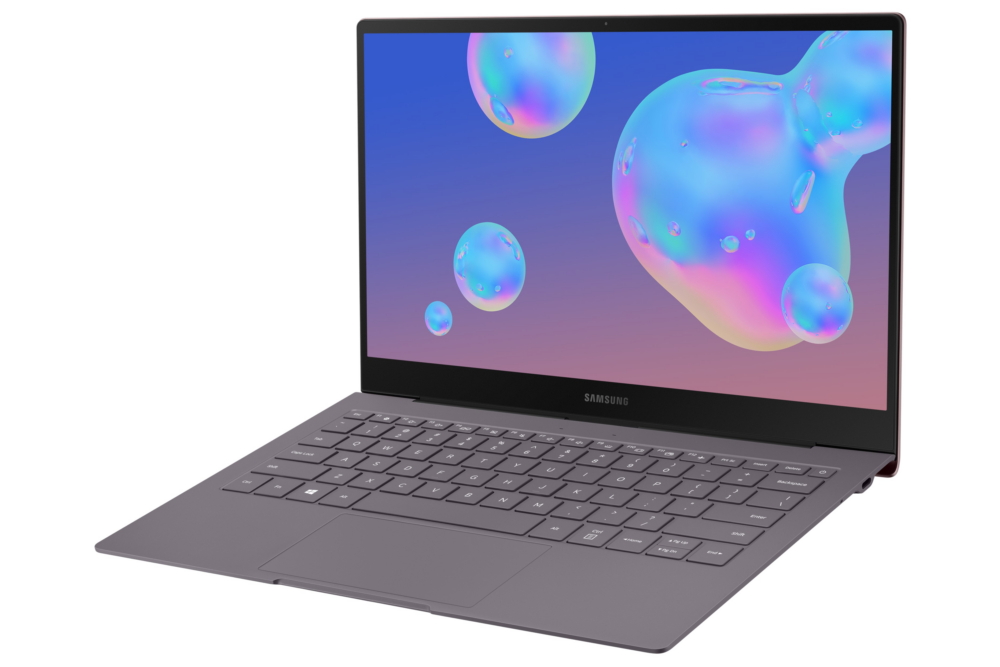
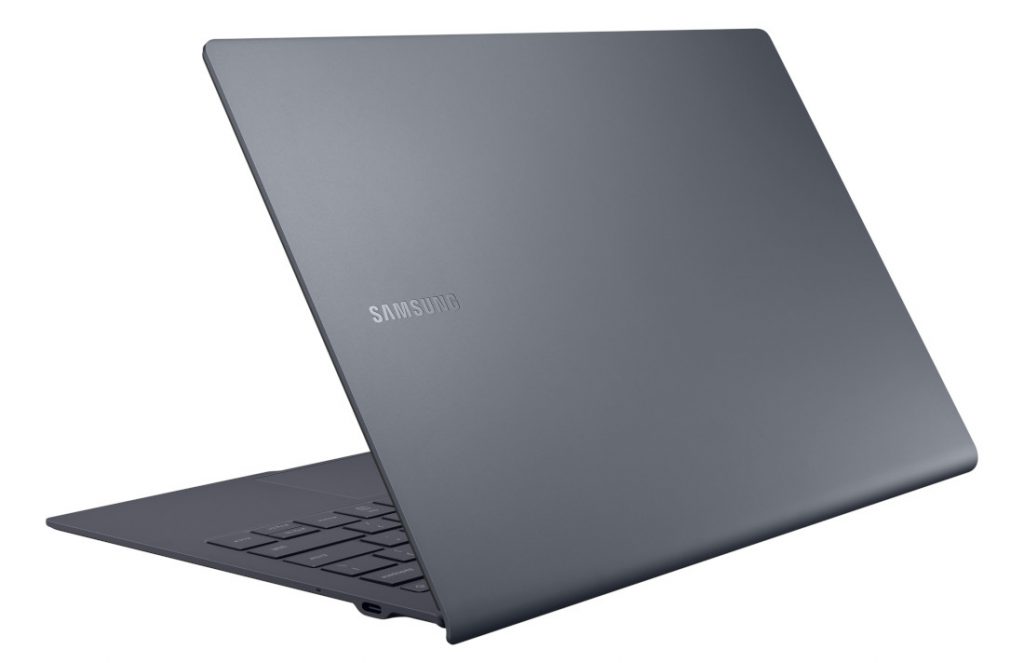
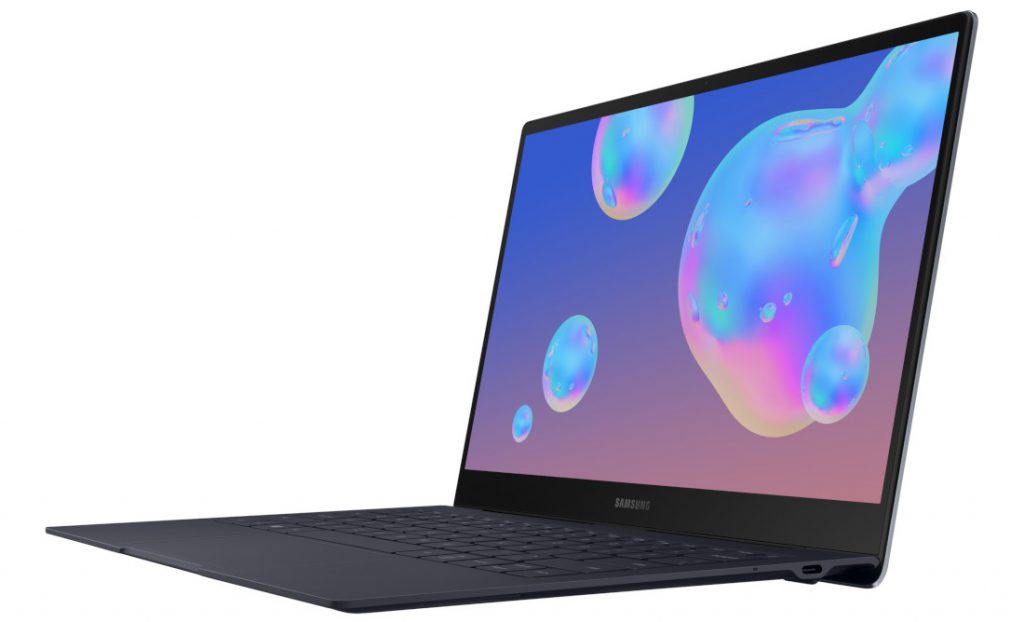
Samsung launched the Galaxy Book S model for the first time last year. The laptop is a super-slim, fanless device backed by the Snapdragon 8cx mobile platform and it runs on Windows 10. The Koren tech giant has now announced an upgrade – the Galaxy Book S 2020.
The Samsung Galaxy Book S 2020 retains the 13.3-inch Full HD touch display on its predecessor. However, Samsung decided to replace the Qualcomm Snapdragon 8cx compute platform with a new Intel Core processor. Thus, the laptop becomes the first device to offer the processor with Intel’s Foveros 3D stacking technology and a hybrid CPU architecture. It intelligently balances multiple high-performing processes during use while conserving battery when not in use, says the company. The laptop comes with 8GB (LPDDR4X) RAM, 256/512GB eUFS storage and a MicroSD slot for expansion up to 1TB).
The Galaxy Book S 2020 comes with 4G LTE, support as well as support for Wi-Fi 6 (Gig+). It weighs just 950g and only 11.8mm at its thickest point. It lets you boost the brightness up to 600 nits using a two-key shortcut. Samsung also partners Microsoft to allow users to enjoy the Android operating system on your Windows PC for a seamless and continuous device-to-device experience. With Microsoft’s Your Phone feature, you can sync your mobile device to receive notifications, messages, cross-device copy & paste and photo transfer, all on the Galaxy Book S.
The Samsung Galaxy Book S (2020) comes in Earthy Gold and Mercury Gray colors and is priced at 1,129 Euros (~$ 1256) for the 256GB storage version in Europe and the 512GB storage version costs £999 (~$ 1,230) in the UK.
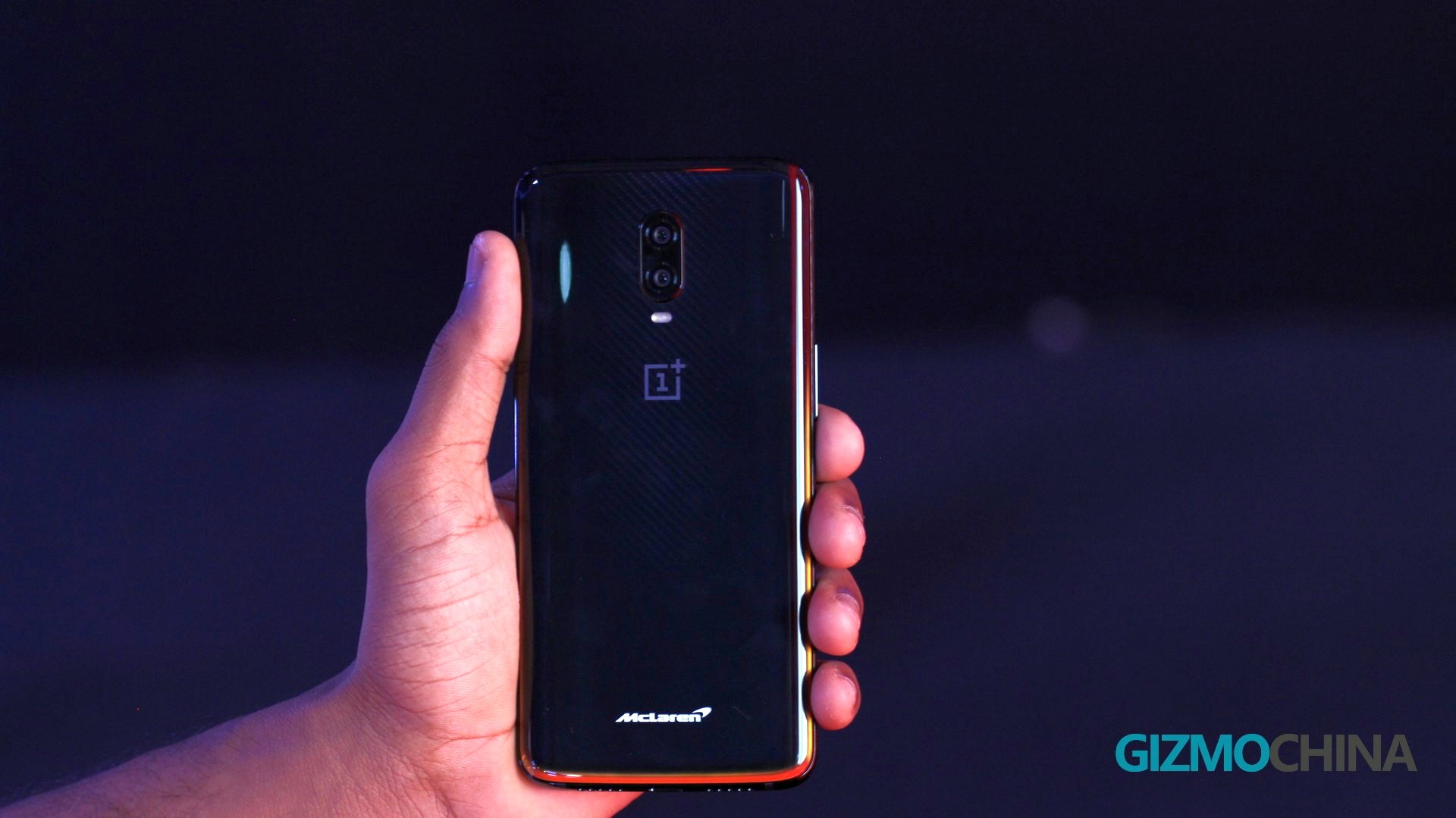
Recently, there were speculations that OnePlus’ partnership with McLaren might be at its endpoint as the premium smartphone manufacturer was noticed to have been delisted as a 2020 F1 partner on the McLaren website. Android Authority has now received an official confirmation from the British sports car manufacturer that it is no longer in partnership with OnePlus.
OnePlus 6T McLaren Edition
Android Authority quotes a McLaren spokesperson to have hinted in an email statement that both company’s partnership came to its scheduled conclusion recently. This clearly indicates that there wasn’t any acrimony but the partnership has run its full course.
The McLaren special editions released by OnePlus were known for their souped-up specs and exclusive designs. While fans were expecting a McLaren edition for the OnePlus 8 series, that may never happen except both companies enter into a fresh partnership.
The worldwide smartphone market has evolved over the years. The rise of ultra-premium handsets with the launch of iPhone X has changed the whole landscape. People are now turning towards so-called ‘affordable premium’ devices, at whose price the flagships were sold earlier. The latest report by Counterpoint Research on South Korean smartphone market explains this new trend clearly.
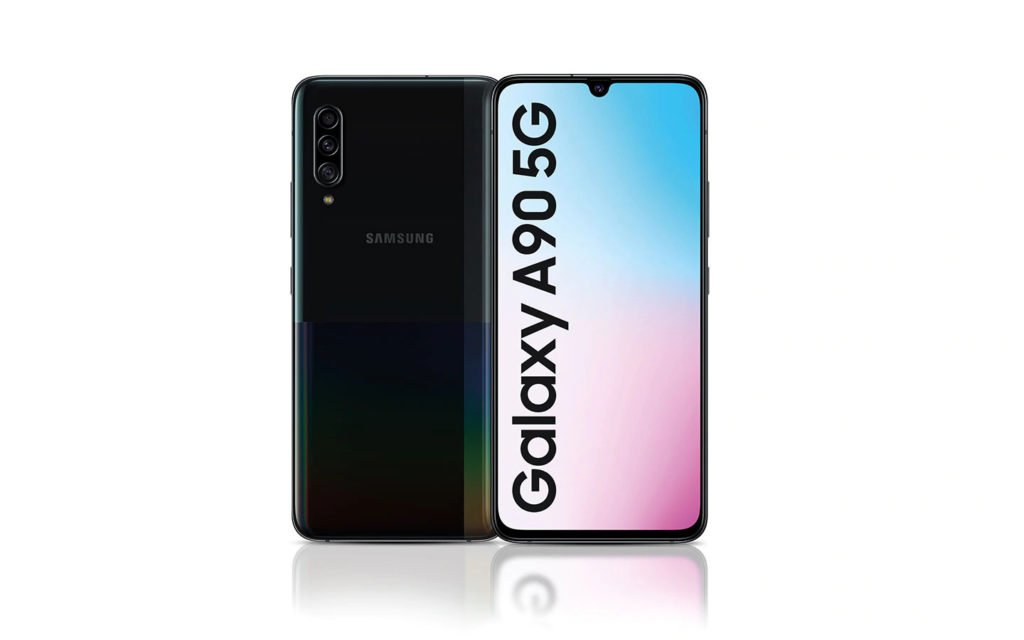
Samsung Galaxy A90 5G
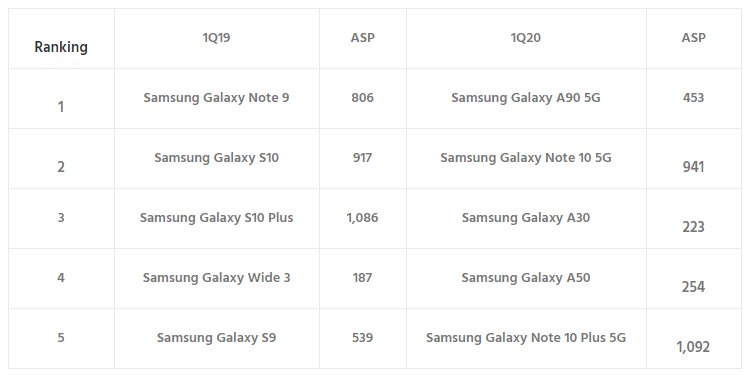
For years, Samsung’s Galaxy S series and Galaxy Note series have been the top-selling smartphone models in South Korea. But it has now changed and the effect can be clearly seen in the Q1 2020 Counterpoint Research smartphone sales tracker for South Korea.
The top-selling Samsung handset in this period was Galaxy A90 5G whose ASP (Average Selling Price) was $453 compared to $806 Galaxy Note 9 in Q1 2019. That does not mean ultra-premium devices did not make the top 5.
Source: Counterpoint Research
The second most-selling Samsung phone was Galaxy Note 10 5G for $941 and the fifth position was held by Galaxy Note 10 Plus 5G. When we look at last years sales around the same time, the first three were ultra-premium handsets followed by an entry-level model and a yesteryear flagship.
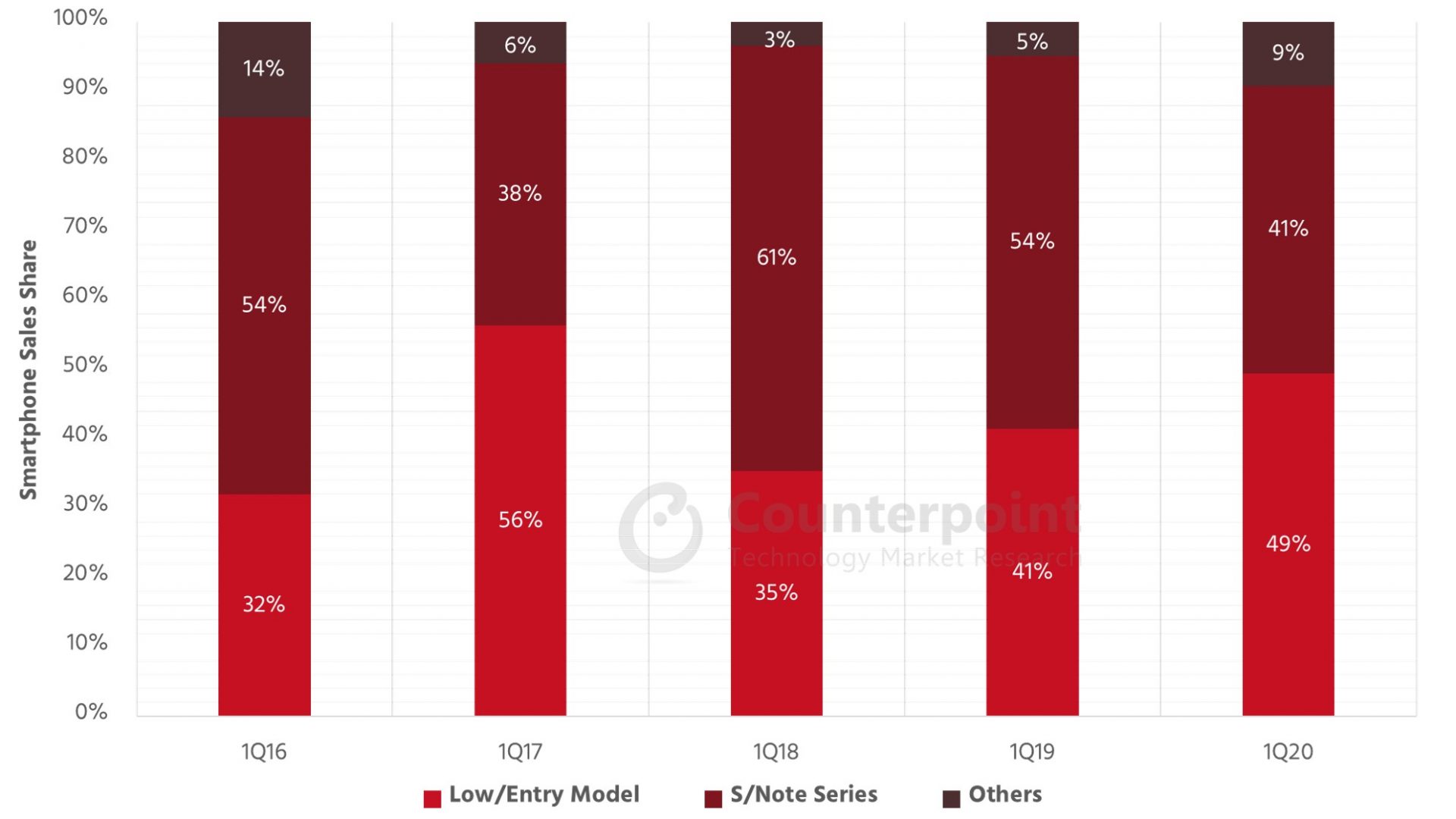
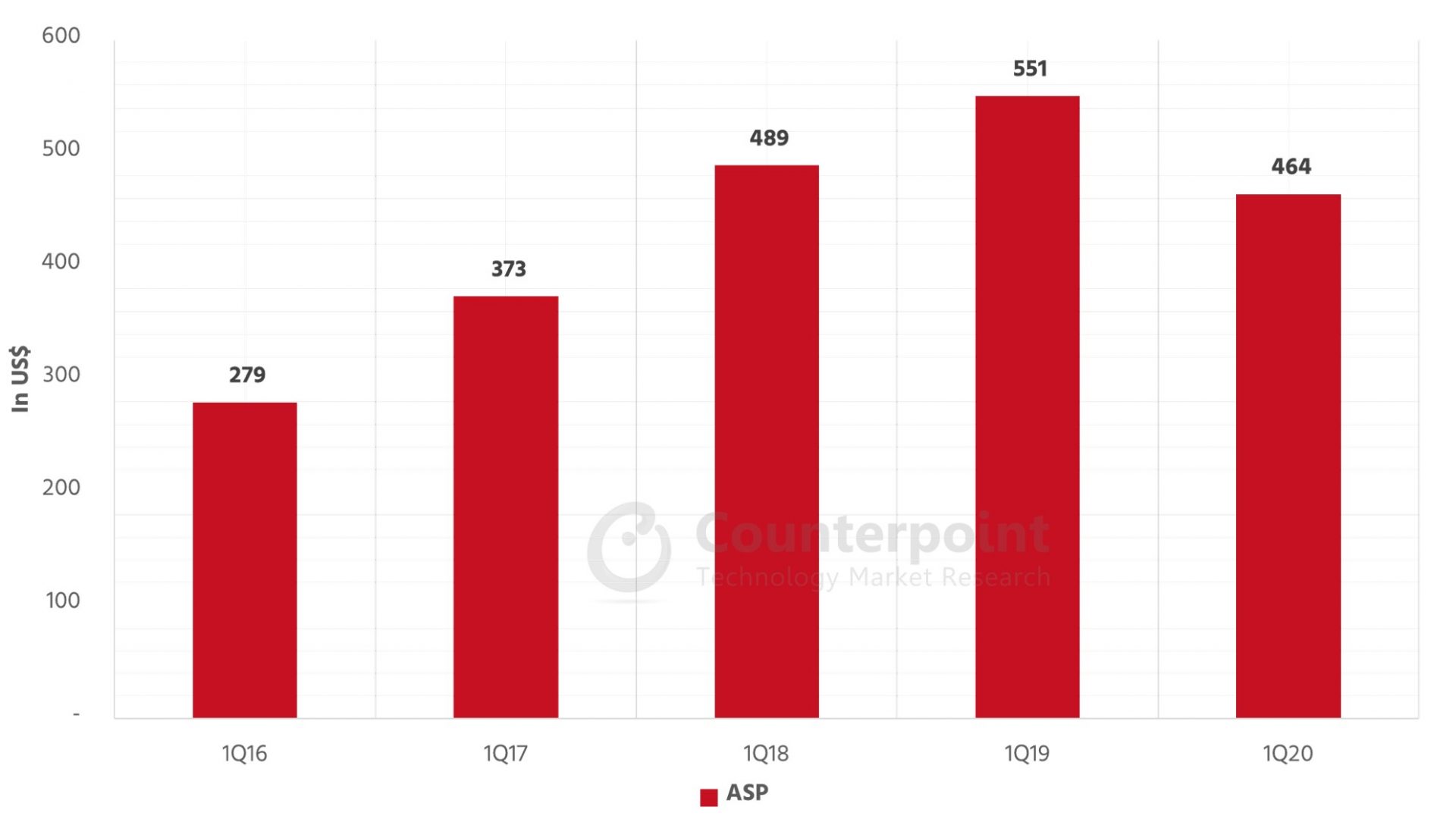
This trend can be noticed since 2018 as Galaxy S and Note series have been giving up their shares to entry-level and mid-range devices. Also, although the average selling price (ASP) of smartphones sold in South Korea increased steadily till last year, it has declined in Q1 2020 for the first time indicating the changes to come.
1 of 2
Source: Counterpoint Research
Source: Counterpoint Research
The price of high-end smartphones has rocketed high in the past couple of years. But not all OEMs are winners and hence LG revamped its mobile strategy this year by ditching premium G and V series with new Velvet series priced around $730.
Also, Apple who initiated the craze for ultra-premium smartphones introduced iPhone SE 2020 retailing at $450, its cheapest smartphone in years. The trend of affordable premium handsets is expected to continue in not only South Korea but worldwide, thanks to the ongoing pandemic.
There isn’t any doubt now that Gionee has made a comeback to the tech scene. The company has chosen to play safe by focusing on the Chinese and Indian market. Recently, we reported the launch of the Gionee K6 in China. The phone comes powered by an Helio P60 chipset with up to 8GB RAM and 256GB storage but having a starting price of just 799 yuan (~$112).
The Chinese brand has now unveiled a new power bank in India. The product dubbed Gionee GBuddy True Wireless Power Bank stuffs a 10000mAh battery under the hood. The product is also the firm’s first wireless charging power bank to be sold in India, joining the existing Gbuddy lineup of standard power banks that were unveiled last year.
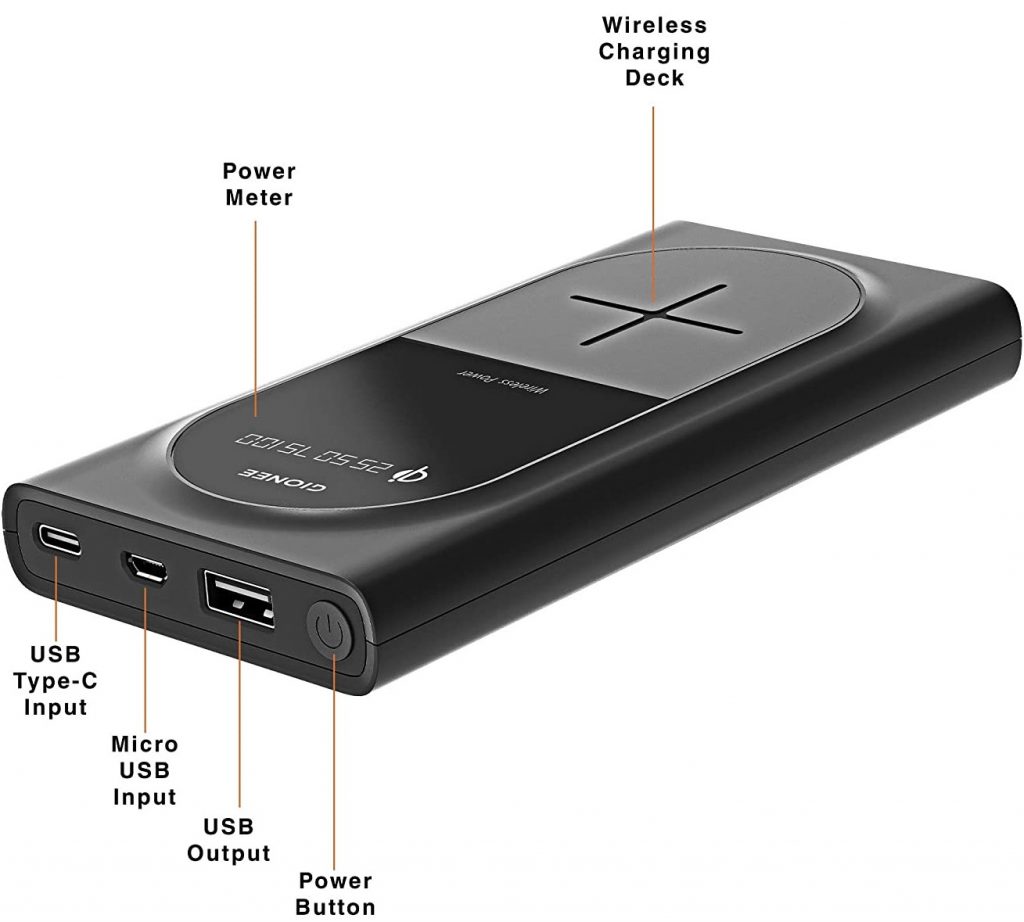
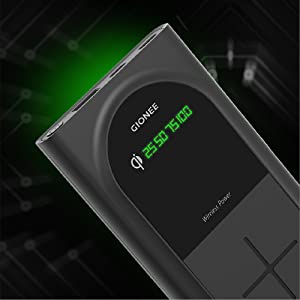
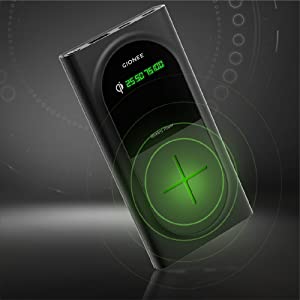
The GBuddy True Wireless Power Bank adopts a design which looks like a regular power bank but on one side of the flat surfaces is a 5V wireless charging pad along with a digital power meter that displays the charging level.
The Gbuddy wireless power bank adopts an all-metal body. It features a single USB-A port that can be used to charge other devices. The port has a 5V/2.4A rating. In addition, there is a micro USB input port rated 5V/2A and a USB Type-C input with the same 5V/2A rating. It can simultaneously charge devices through the wireless charging pad and the USB-A port.
1 of 2
The wireless power pack isn’t bulky as it weighs 245 grams, having a dimension of 1.5 x 6.8 x 13.8 cm. Gionee says that it can charge a device with a 3000mAh battery 2.2 times and a device with a 4000mAh battery 1.7 times.
Pricing and Availability
Gionee GBuddy True Wireless Power Bank with a 10,000mAh cell comes with a decent Rs. 1299 (~$17) price tag and is presently available on Amazon.in. It is available in a single Black colour option.
Nokia seems to have reduced steam in terms of product release compared to the early days of HMD Global’s revival of the brand. That has no stopped the company from giving a thought to the idea of a foldable pie. Earlier this year it was rumoured that the company was working on a foldable smartphone which would be released later this year.
A reliable source has now hinted that the foldable Nokia phone project is still in the works. The source, Nokia Anew, has a reputation for accurate news concerning Nokia phones. is short tweet only reaffirmed the existence of the project but did not reveal further details as it concerns release.
We can’t be certain if the tweet is referencing a smartphone or the clamshell-like Nokia 2720 Fold which has a similar design like the Moto Razr. The Razr and Galaxy Z Flip are not truly foldable phones but flip phone using a flexible display as they can’t be used in the folded state unlike the Galaxy Fold and Mate X.
Regardless of the design of Nokia’s own foldable phone, we’ll have to wait until next year at earliest to see it launched. The company unveil the device at MWC 2021, that is if the COVID 19 pandemic has abated to an extent that would allow such social gathering. Nokia may even decide against continuing with the project and focus more on 5G which seems to be the future of the smartphone industry.
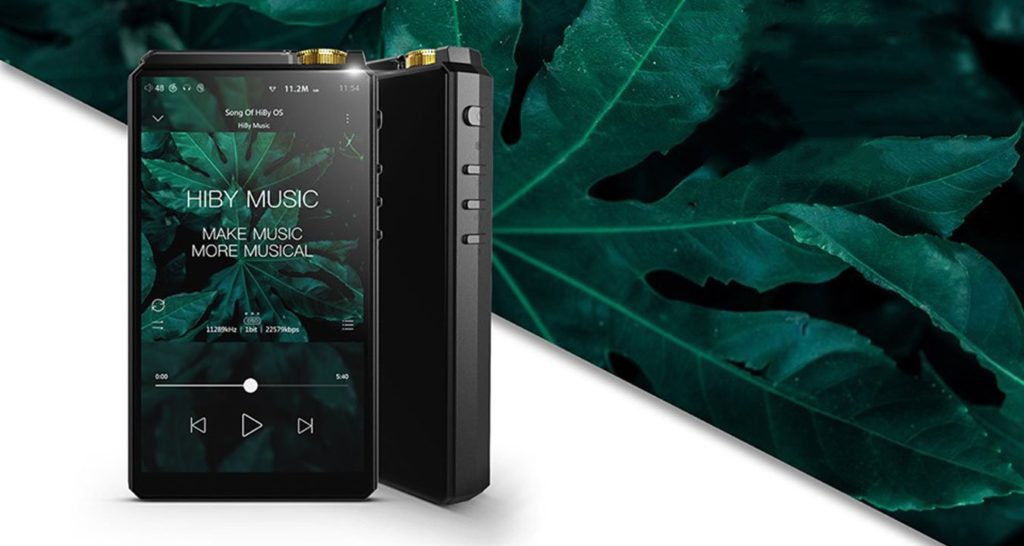
HiBy is popularly known for its high-end audio player like HiBy R6, R6 Pro, R3 Pro. The audiophiles often look for HiBy audio players due to the consistent performance and premium sound output and build quality. It is a praiseworthy brand with highly-competitive products used by professionals. As an addition to its product catalog, Hiby has taken the route of virtual launch to announce the world’s first 4G flagship R8 Music players.
The new Music is offered in two versions – one carved with Aluminium alloy version while the other uses a stainless steel version.
The HiBy R8 Music Player features a 5.5-inch-full HD display with 1080p resolution support. It is powered with Qualcomm Snapdragon 660 chipset with support for 4G network and Adreno 512 GPU for handling graphics. It is the maiden DAP coupled with such a powerful chipset.
4G Connectivity
The dedicated SIM slot enables 4G connectivity for wireless streaming and downloading music from anywhere. Unlike the other Music player, the user need not rely on WiFi, which improves the portability of the device.
The HiBy R8 DAP uses HiBy OS based on Android 9.0 Pie. There won’t be any problem while downloading apps from Google Play Store due to GMS certification. Moreover, the impressive user interface offers a smooth and snappy experience to users.
Storage and Battery
HiBy R8 Music Player stainless steel version houses a 6GB RAM with 128GB internal storage, whereas the Aluminium Alloy brings 4GB RAM with 64GB storage. The users can even expand the storage using a MicroSD card up to 2TB.
Both the variants support the Type-C interface for speedy file transfers.
There’s a massive gargantuan 10000 mAh huge battery with current output of 38Wh. the company has customized the battery capacity for better standby time and high voltage output.
Better Sound on Hiby R8 DAP
HiBy R8 is building for the impressive yet detailed sound experience. In order to make the Music Player offer premium sound, the company has added Dual-DAC, ELNA Capacitors, better oscillators, and high power output with low impedance. The company has even added Turbo Mode, Line out port, volume control rotator, and a colling engine. There’s a lot of premium hardware packed along with HiBy R8 to offer precise, accurate, and enriching sound.
Turbo Mode:
HiBy R8 features a new “Turbo Mode” which is designed specifically for high impedance headphones requiring a lot of power and voltage. It can be turned on using a simple toggle button.
However, we suggest not to use the Turbo mode for highly sensitive IEMs.
Dual AK4497 AKM DACs and ELNA Capacitors:
HiBy R8 uses high-quality dual-DAC design consisting of Dual AKM4497 DAC chips. It is a high energy efficient chip with the ability to deliver the high current output and high SNR of 117dB.
The capacitors are from popular Japanese company ELNA. These are designed with high-quality Aluminium and silk fibers featuring 4x ELNA SILMICII capacitors.
Low Jitter and High Power Output
HiBy R8 uses two femtosecond ultra-low jitter crystal oscillators to reduce jitter levels. These oscillators are programmed by FPGA for an accurate clock.
It is capable of bringing record-breaking power output using custom-designed OPO2 op-amps. The R8 is capable of 5.9 Vrms 1088mW@32Ω with THD+N ≤ 0.00083% and 3.1 Vrms 300mW@32Ω with THD+N ≤ 0.00065%.
Low Noise with low Impedance
The new DAp is quite and offers impressive sound with a noise level of < 8.4uVrms for 4.4mm balanced output. It maintains noise level of ≤ 4.6uVrms. for single-ended output.
The new HiBy Music Player keeps impedance comfortably low with 0,4Ω for single-ended output, and 0.8Ω for the balanced output, It offers the best frequency response and damping factor for In-Ear Monitors and impedance headphones.
LineOut and Volume Control
There are multiple physical ports that can be used by professionals for their work. It has two line-out ports, one 3.5mm port supporting 10K impedance, 2Vrms output, and a THD+N < 0.0004%. The other is for 4.4mm output with 10K impedance with 4.1 Vrms and THD+N < 0.00046%.
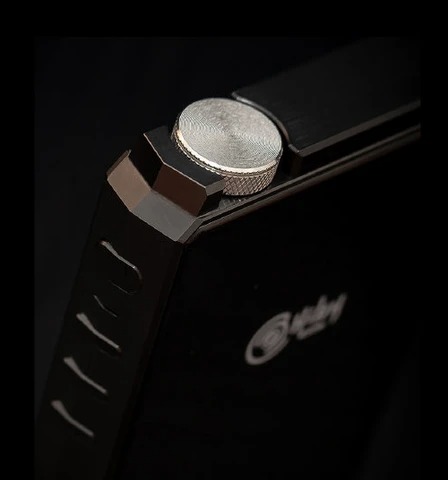
A beautiful and quite useful pro-audio-grade Japanese ALPS Volume control button is present on the top. It accurately and precisely adjusts the volume.
Highly Efficient cooling ane MQA support
The new Hiby R8 player houses a graphene shield to dissipate the heat from the high-end components offering massive power output.
Moreover, it supports MQA for fully decoding up to 16x MQA files at the hardware level.
Connectivity
The new music player uses Bluetooth 5.0 with DLNA, AirPlay, WiFi music transfer, HiByLink to act as a convenient remote control.
Availability and Pricing of HiBy R8 DAP
The powerful Audio Player with Aluminum alloy is available with 64GB storage for 12988 Yuan which roughly translates to $1819. The Stainless steel version with 128GB ROM and 6GB RAM is available for 15988 Yuan (~$2240) in China. The shipping will start on June 22. You can check all the HiBy collection of exceptional audio devices.
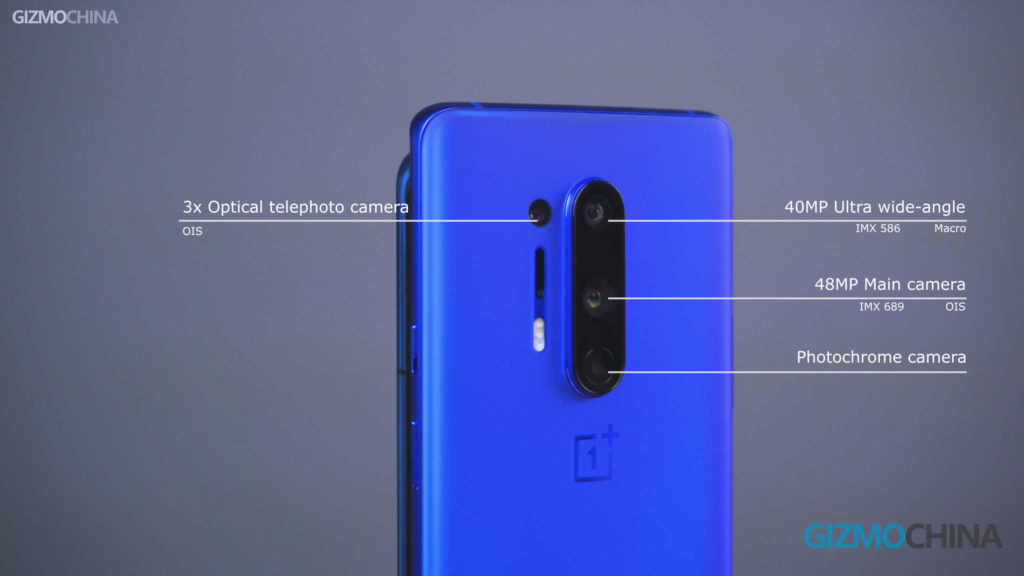
OnePlus, in a statement to Android Police, said it had accidentally rolled out the OxygenOS 10.5.9 update, which temporarily removes the photochrom filter on OnePlus 8 Pro global units. A small set of users who have installed the update will be receiving a new OTA to re-enable the filter.
Official Statement
“This OTA inadvertently went out to a limited number of devices. We will re-enable that filter in the next OTA.”
Original Story
OnePlus 8 Pro became a victim of controversy because of its color filter camera which is capable of seeing through thin plastics and clothes. To this, the company responded by saying it will disable the ‘Photochrom / Autumn filter’ in HydrogenOS for Chinese users but will not make any change in OxygenOS for global customers. However, OnePlus has now temporarily removed the filter on all the variants of the device with the latest update.
OnePlus is currently rolling out OxygenOS 10.5.9 OTA update to all the global variants of OnePlus 8 Pro. The changelog of the update mentions the temporary removal of photochrom filter for adjustment. Also, it reads the filter will come back in June but does not provide any specific details on when it will be added again.
The new OxgenOS 10.5.9 for OnePlus 8 Pro weighs 157MB and comes with the following changelog.
Camera
Photochrome filter temporarily removed for adjustment. The feature is expected to come back around June, but exact time is subject to the latest official announcement.
Having said that, it is interesting of OnePlus to disable the filter on global versions of OnePlus 8 Pro running OxygenOS although it made an announcement clearly stating it won’t. We expect the company to soon make a post on OnePlus Community explaining this.
Honor Play series is a popular one and the reason isn’t far from the fact that the models come with a rich blend of decent design/hardware and affordable pricing. The Honor Play 4T is said to be the last 4G model and soon, the coming will go official with the Play 4 Pro which should usher in 5G connectivity on the series.
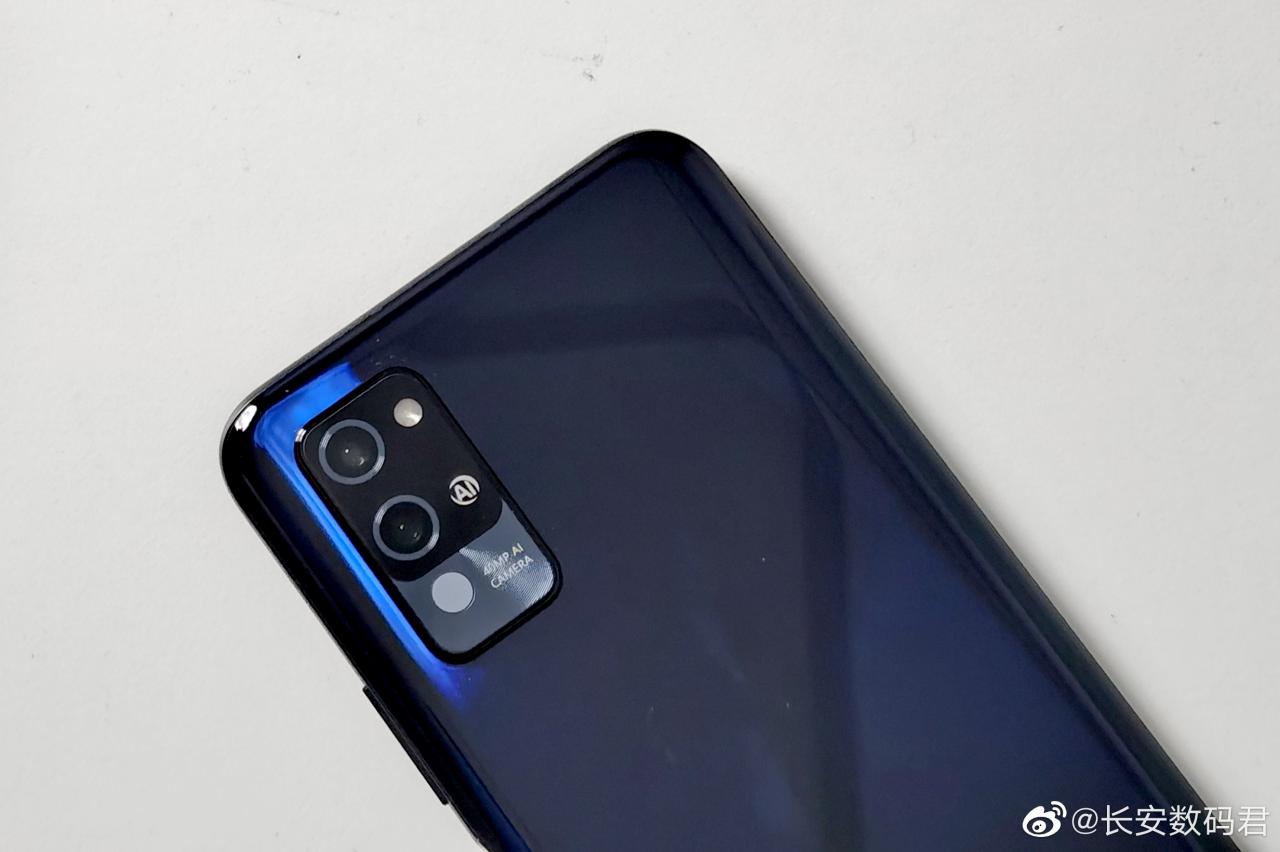
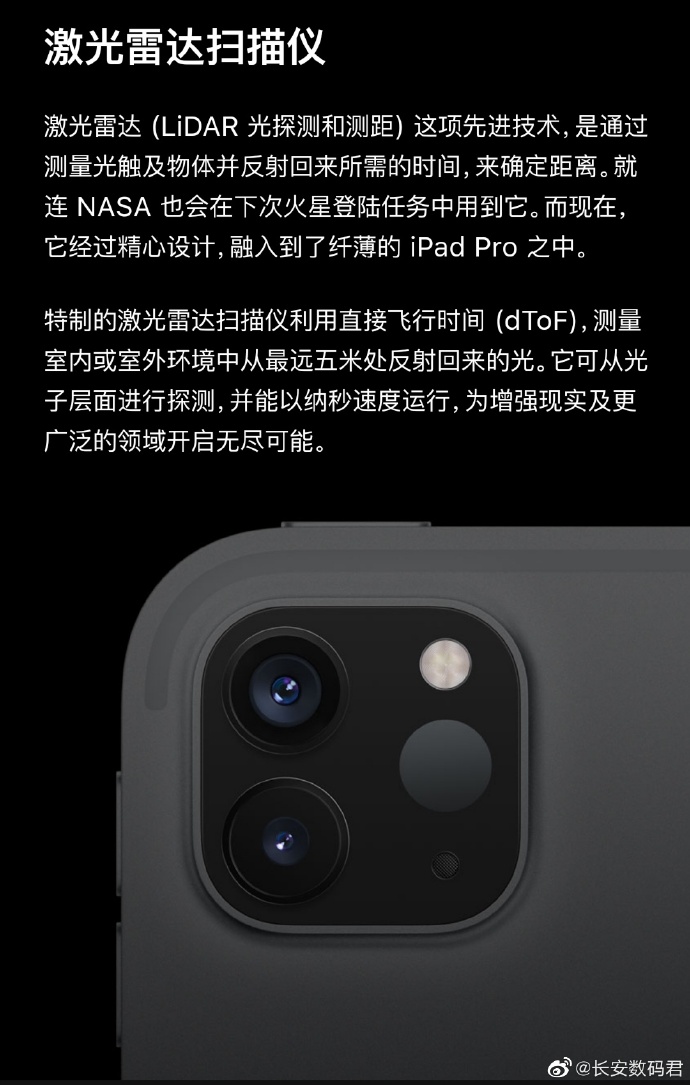
We have now laid our eyes on the image of the device for the first time, thanks to a leakster on China’s Weibo. The leaked image shows the rear aspect of the device with the camera setup visible. From the leaked image, we can confirm the Honor Play 4 Pro will pack a dual-camera setup. The cameras and LED flash are housed in a rectangular housing. Apart from the camera and flash, there is also a third sensor which looks like a LiDAR sensor. The iPad Pro is one model which features a LiDAR sensor.
LiDAR, short for light detection and ranging, is a remote sensing technology that uses light in the form of a pulsed laser to measure ranges (distances) to a target. A LiDAR sensor fires off beams of laser light and then measures how long it takes for the light to return to the sensor.
The applicability of the sensor on the Play 4 Pro is not known but there are speculations that the sensor will power 3D mapping used in Augmented Reality (AR) applications. The sensor is also believed to be just an infrared temperature measurement sensor.
The Honor Play 4 Pro will pack a dual AI-camera setup consisting of a 40MP main camera. The rear camera has a rear camera bump and the device will have a curved body and edges at the rear aspect.
The device is expected to be launched on June 3 and we hope to get more details when that happens.
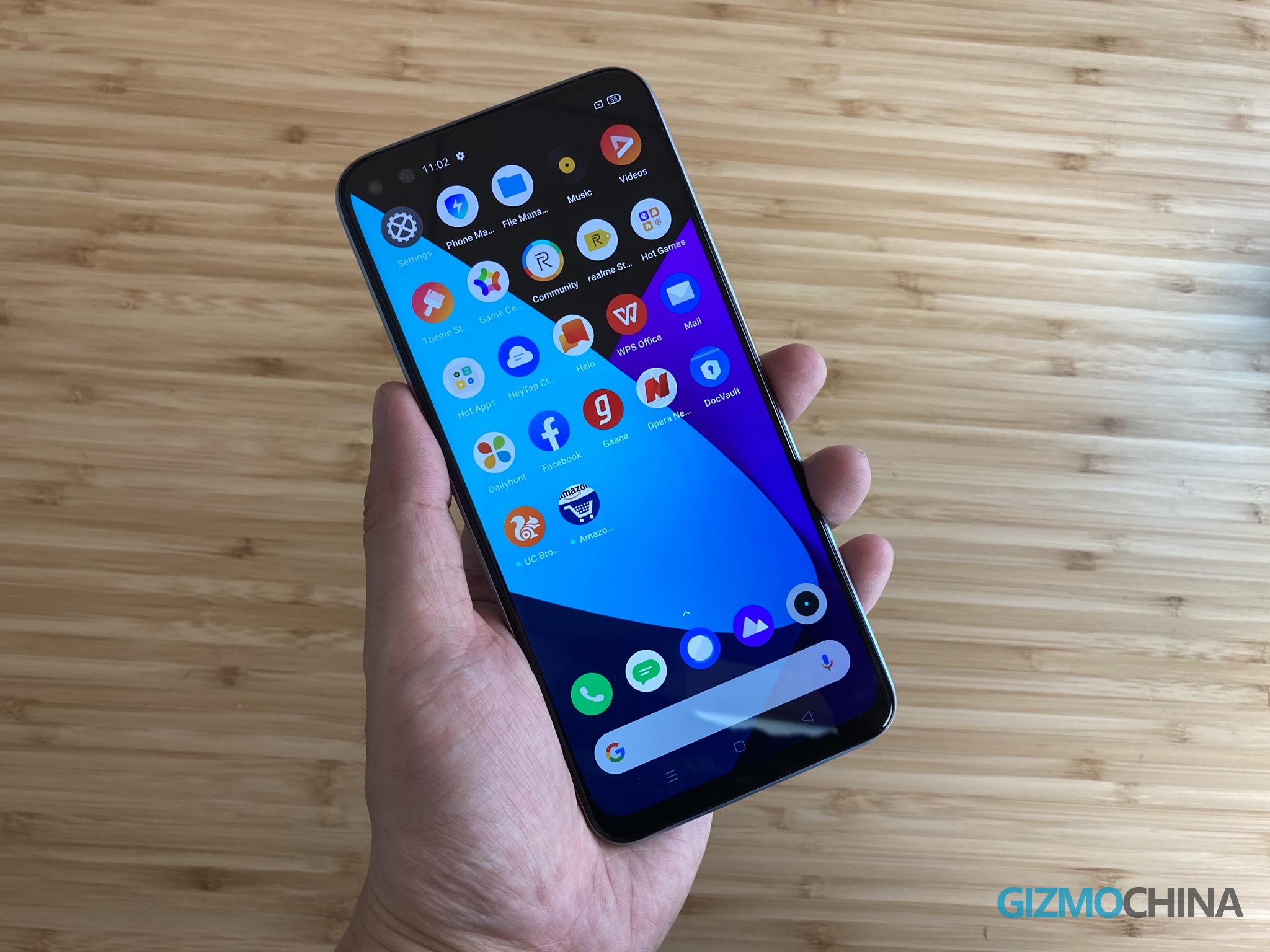
Realme announced its camera-centric upper mid-range smartphone, the Realme X3 SuperZoom this week in Europe. The phone’s biggest highlight is its 60x zoom camera, rivaling the likes of Huawei in terms of its maximum zooming capability. While the focus is on its camera department, the Realme X3 SuperZoom is also a pretty good smartphone in terms of other hardware. It comes with a year-old Snapdragon 855+ processor, which by the way, is still quite powerful for a 2020 smartphone and up to 12GB RAM and 256GB of UFS 3.0 storage. In case you are wondering, given the older chipset, the Realme X3 SuperZoom DOES NOT support 5G. So the company has made it clear that this phone is for people looking for high value for money, instead of the latest technology.
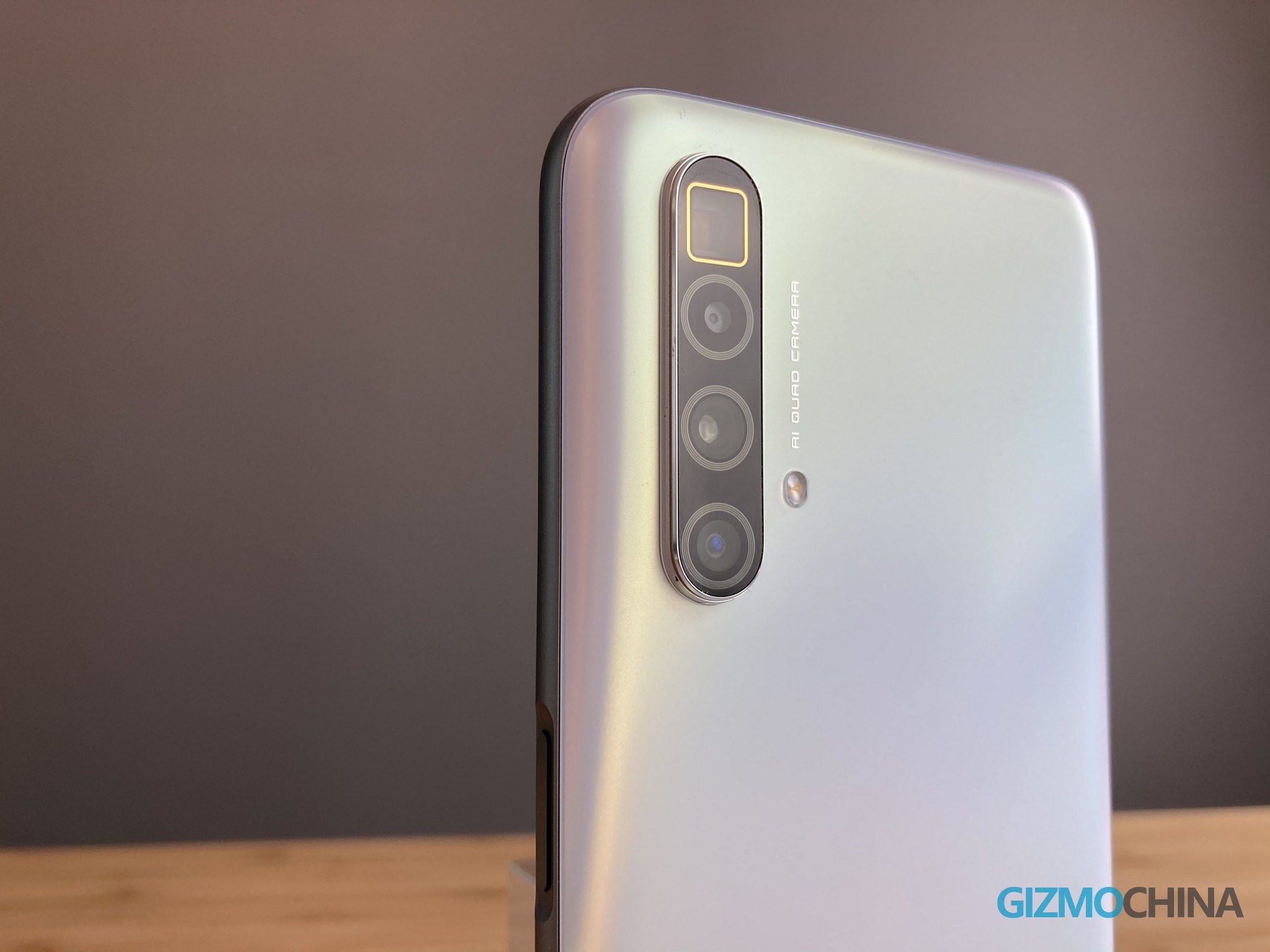
In terms of design, the Realme X3 SuperZoom is very similar to the Realme X50 Pro 5G that was announced a few months back in China. This includes a matte finish back and a vertically arranged rear camera setup. Upfront, you also get a dual-camera selfie setup, similar to the X50 Pro 5G.
The Realme X3 SuperZoom comes with a dense plastic frame with a glass back. We’ve got the Arctic White with us today and the silverish-color gives the phone a very elegant look. The matte-like finish also ensures that the back is not a fingerprint magnet.
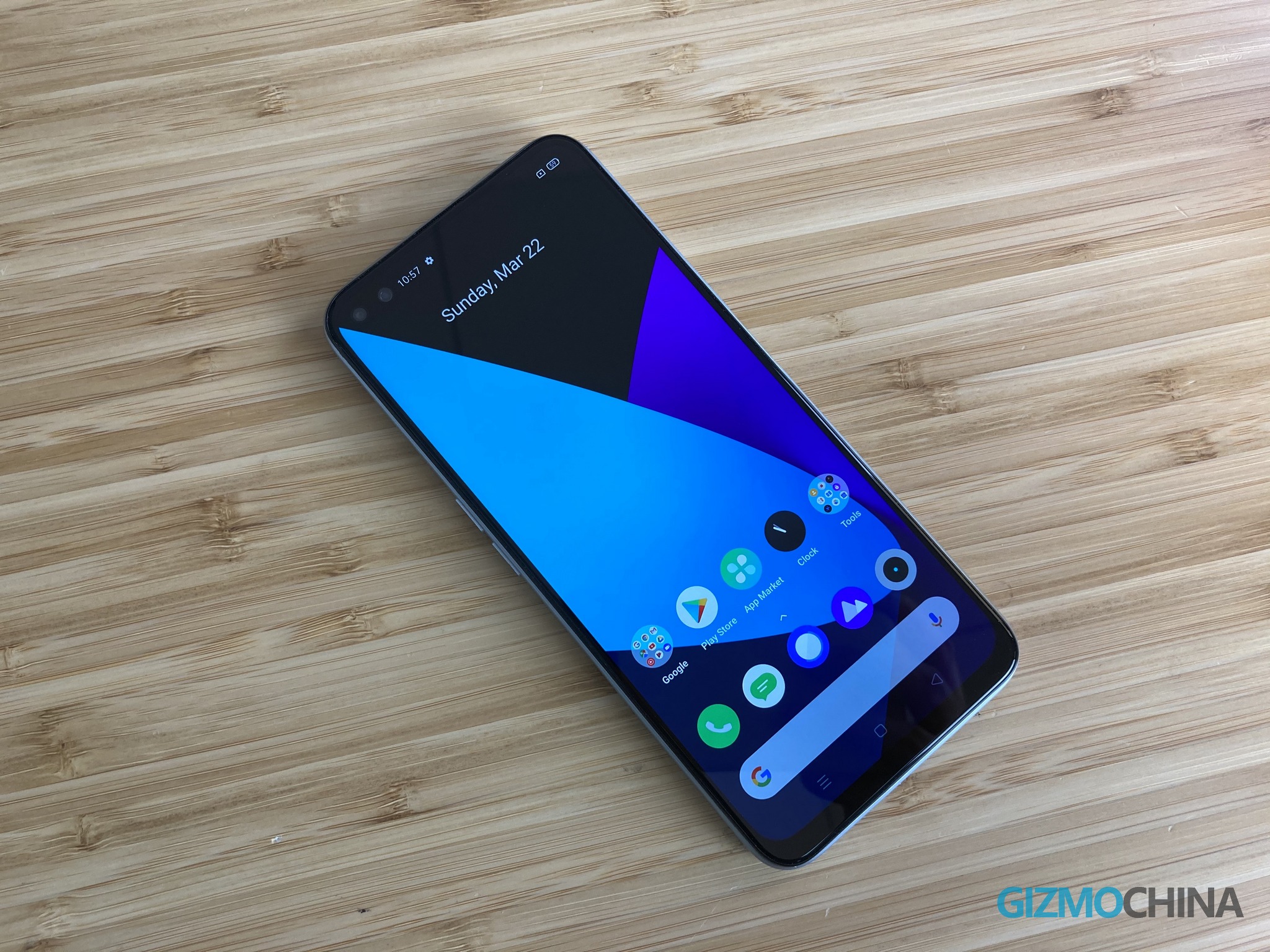
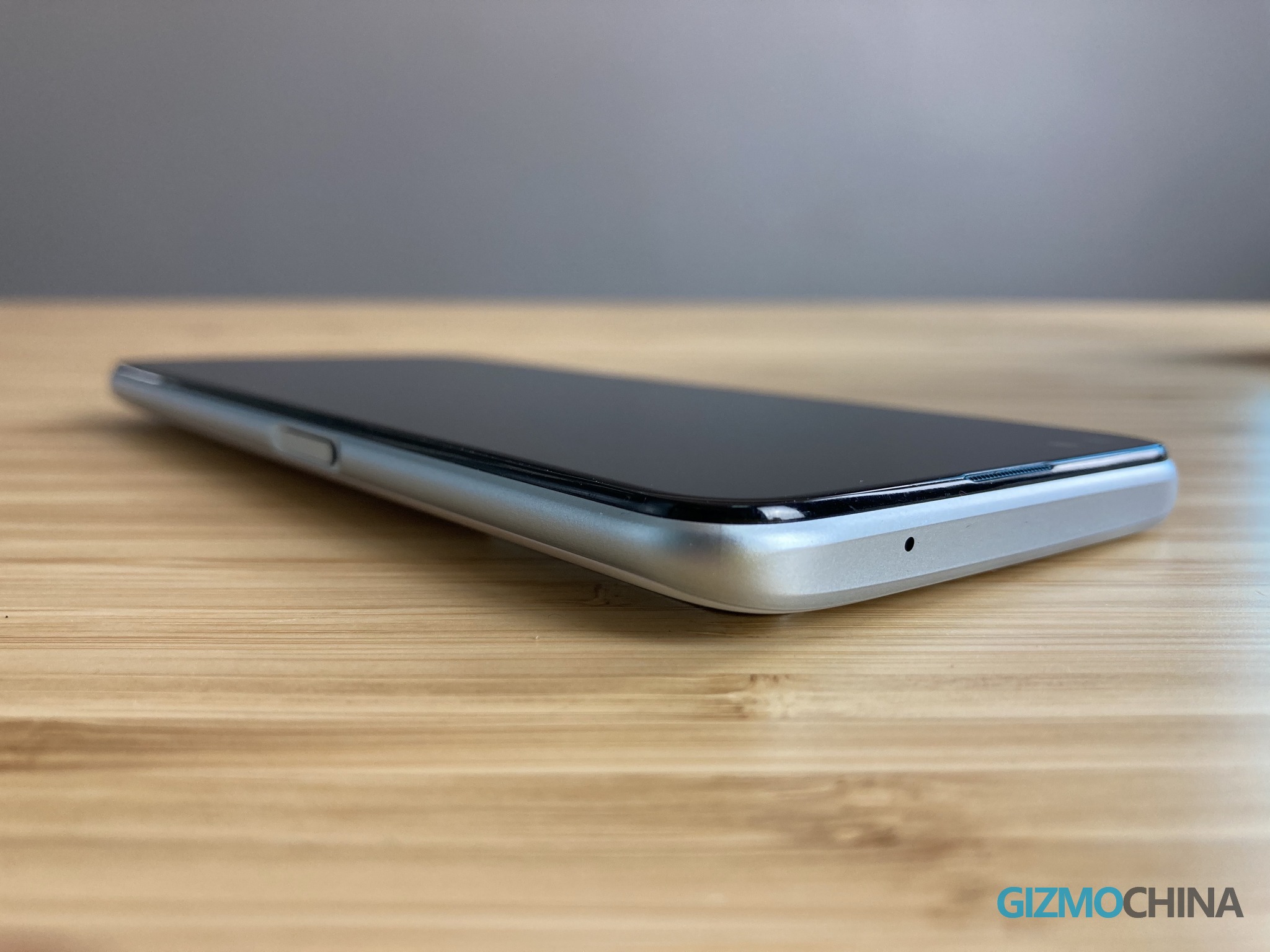
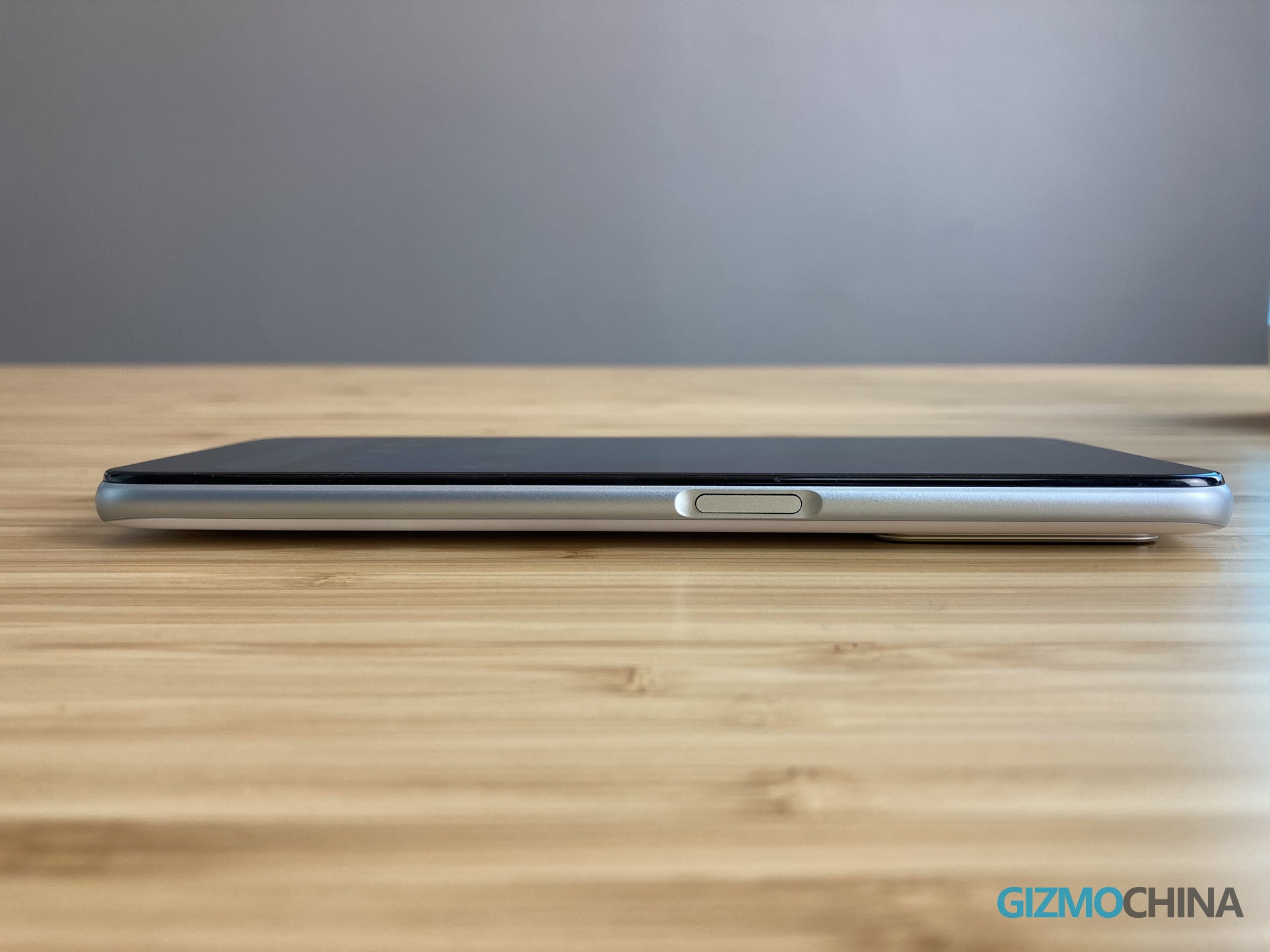
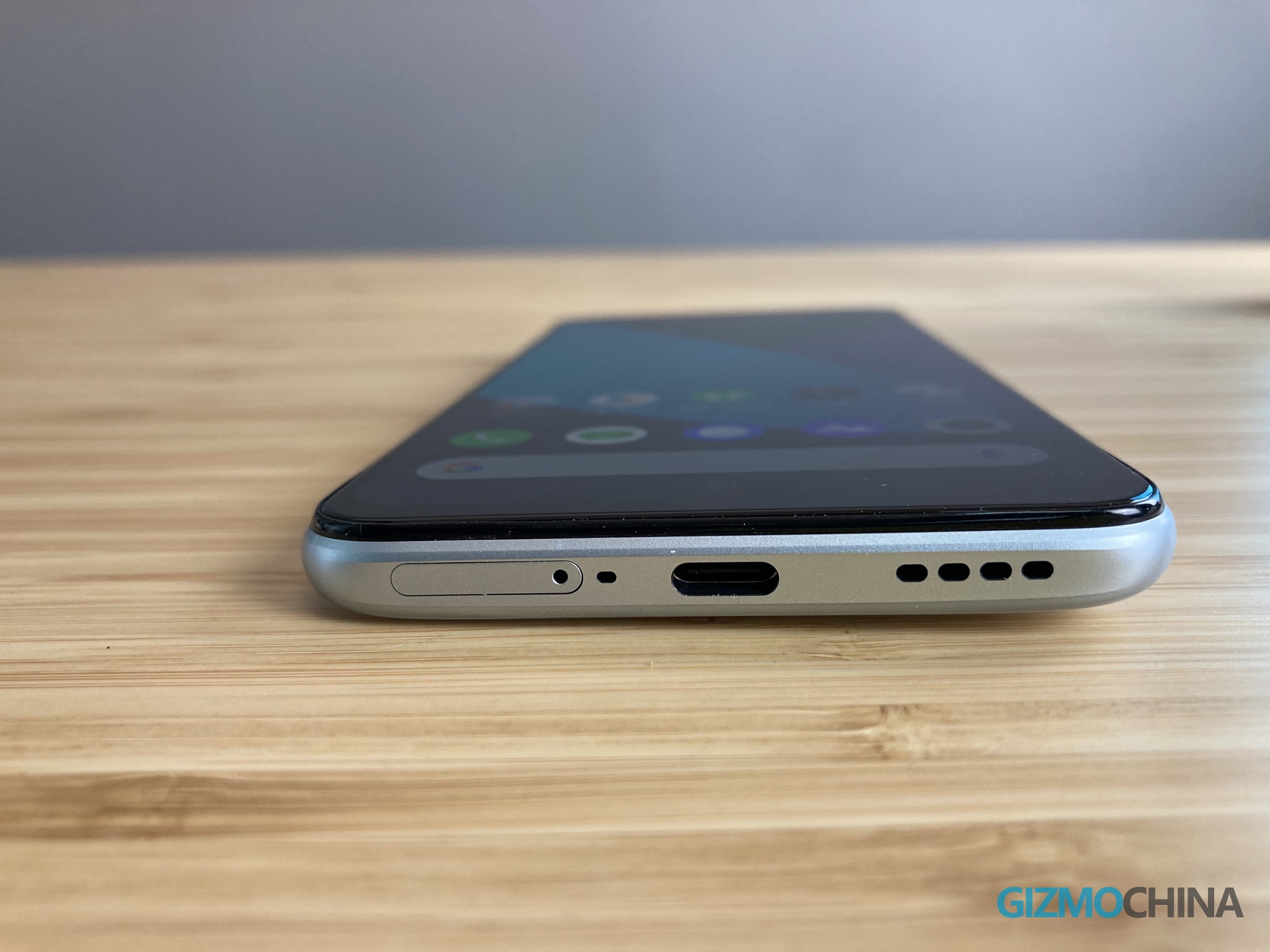
It is also worth adding that the phone has a 120Hz IPS LCD display and NOT AMOLED. So there’s no in-screen fingerprint sensor. However, you get a super-fast fingerprint sensor on the right side – which also doubles as the power button. Coming to the bottom of the phone, you have a Type-C port at the center, a single speaker on one side, and a dual nano-SIM slot on the other.
The rear camera, which protrudes a bit from the body, consists of four cameras – in line with other Realme higher-end devices. But what makes the Realme X3 SuperZoom special is its 8MP f/3.4 telephoto camera with OIS that supports 5x optical zoom and up to 60x digital zoom. There’s a 64MP high-resolution primary camera in this setup along with another 8MP ultra-wide-angle shooter and a 2MP macro camera. As for the front camera, you get a large 32MP primary shooter paired with an 8MP wide-angle shooter for selfies.
The Realme X3 SuperZoom comes with the same 4200mAh battery size as the X50 Pro 5G, however, it only supports 30W fast charging.
Realme X3 Superzoom hands on
1 of 3
The 6.6-inch 120Hz IPS LCD looked pretty bright and responsive in our first impressions. The UI and animations were superfluid, thanks to the high refresh rate, and overall, the phone was as quick as any other smartphone launched this year. The 9mm body and 200+ gram weight did make it a bit bulky to use. But the size is very similar to most top-end flagships available in 2020.
Overall, the Realme X3 SuperZoom feels like a strong option in its €499 price segment. We’ll be checking out the X3 SuperZoom’s camera in detail in our upcoming article. So stay tuned for that.
Every Android OEM is supposed to make the kernel source code of their device public. With new Android updates, the code is tweaked to support the latest software and the device’s hardware. So when the company rolls out a new Android update, it is mandatory for them to share the updated kernel source code. That’s what Xiaomi has done for Mi 8 SE, Mi 9SE, Mi 8 Lite, Mi 9 Lite, and Mi Max 3.
Xiaomi recently updated the above-listed handsets to Android 10 and since these devices use the same family of Qualcomm chipsets, their updated kernel source code was released together.
For instance, the Mi 8 SE, Mi 9 SE, and Mi 9 Lite are powered by Snapdragon 700 series, Snapdragon 710 and Snapdragon 712 to be exact. Hence, Xiaomi has unified the Android 10 kernel source code of these three handsets. The Mi CC9 Meitu Edition, which is the original Mi 9 Lite also shares the same source tree.
On the other hand, Mi 8 Lite and Mi Max 3 feature the same Snapdragon 660 chipset. Therefore, kernel source code for their Android update have been unified now.
Kernel source code plays an important role in the development of custom ROMs. Since Xiaomi has been releasing them in a timely manner (now), its devices are the most popular in the developer community.
Huawei has launched a new budget smartphone in Japan dubbed as Nova Lite 3 Plus with GMS (Google Mobile Services). This handset is a rebranded P Smart 2020 launched earlier this month in Europe. It comes in a single 4GB RAM + 128GB ROM variant and costs 24,800 Yen ($231).
Huawei Nova Lite 3 Plus Specifications
The Huawei Nova Lite 3 Plus is powered by Kirin 710 SoC paired with 4GB RAM and 128GB ROM. The internal storage can be further expanded up to 512GB via microSD card.
On the front, the phone sports a 6.21-inch FHD+ (1080 x 2340 pixels) LCD panel with a dewdrop notch housing an 8MP selfie camera. The back of the device features a dual-camera setup consisting of a 13MP primary shooter and a 2MP depth sensor. The rear panel also has a capacitive fingerprint sensor.
Other features of the handset include 4G, VoLTE, WiFi 5, Bluetooth 4.2, GPS (A-GPS, GLONASS, BeiDou), NFC, 3.5mm headphone jack, MicroUSB port, ambient light sensor, compass, proximity sensor and accelerometer. The phone gets its juice from a 3,400 mAh battery with support for 10W charging.
The most important as well as the sad thing about Huawei Nova Lite 3 Plus is that it runs EMUI 9.1 based on Android Pie in 2020. But due to the old internals and software, it also comes with GMS, which is a big deal for most people. However, the handset clearly cannot compete with offerings from competitors.
Huawei Nova Lite 3 Plus Pricing and Availability
The phone is priced at 24,800 Yen ($231) and comes in two color variants namely Aurora Blue and Midnight Black. It is not sure whether this handset will be made available outside Japan with the same name.
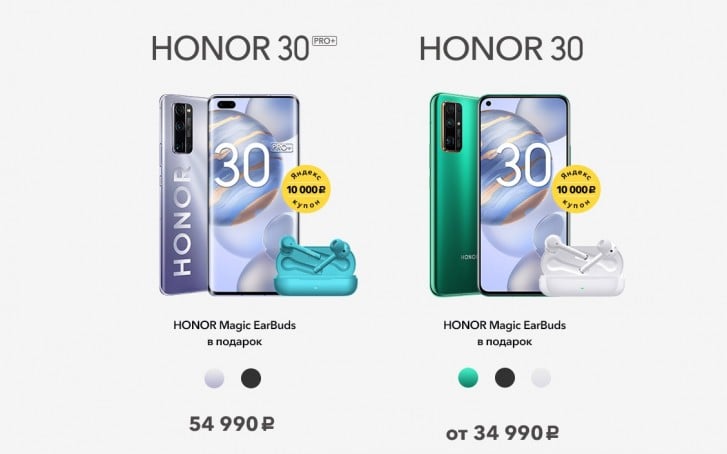
Huawei’s independent Honor brand unveiled three new models in China in April this year – Honor 30, Honor 30 Pro, and Honor 30 Pro+. The company has now launched the models outside China and the first port of call is Russia.
The Honor 30 and Honor 30 Pro+ has been launched in Russia with the Honor 30 Pro missing in action. The Honor 30 features a flat 6.53-inch display and is powered by a Kirin 985 chipset. The phone also packs a 40 MP main camera. The phone comes in more than one memory option but only the 8GB/256GB variant is currently up for pre-order. The model is priced at RUB39,990 ( around $565/€510) which is 15% more expensive than it is in China. That is fair when you take tax and shipping into consideration.
The Honor 30 Pro+ features a 6.57-inch curved OLED panel up front with dual punch-hole cameras. The display has an FHD+ resolution of 1080p with support for 90Hz refresh rate panel and 180Hz touch sampling rate. All three models have in-display fingerprint sensors.
The Honor 30 Pro+ is priced at RUB54,990 (around $777/€700) for the 8GB+256 GB memory combo which is the only variant available.
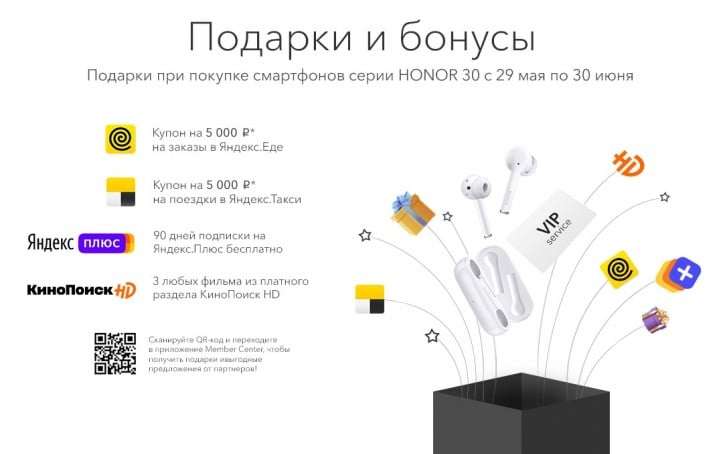
In a bid to woo buyers, Honor is offering several gifts for each purchase. Every device comes with Honor Magic Earbuds, and a bumper case or a tripod selfie stick. Also, if a purchase is made until June 30, you get the equivalent of up to RUB10,000 in Yandex goods – up to RUB5,000 for Yandex.
The Russian platform also offers 90-day free trial of Yandex Plus and three movies from KinoPoisk HD.
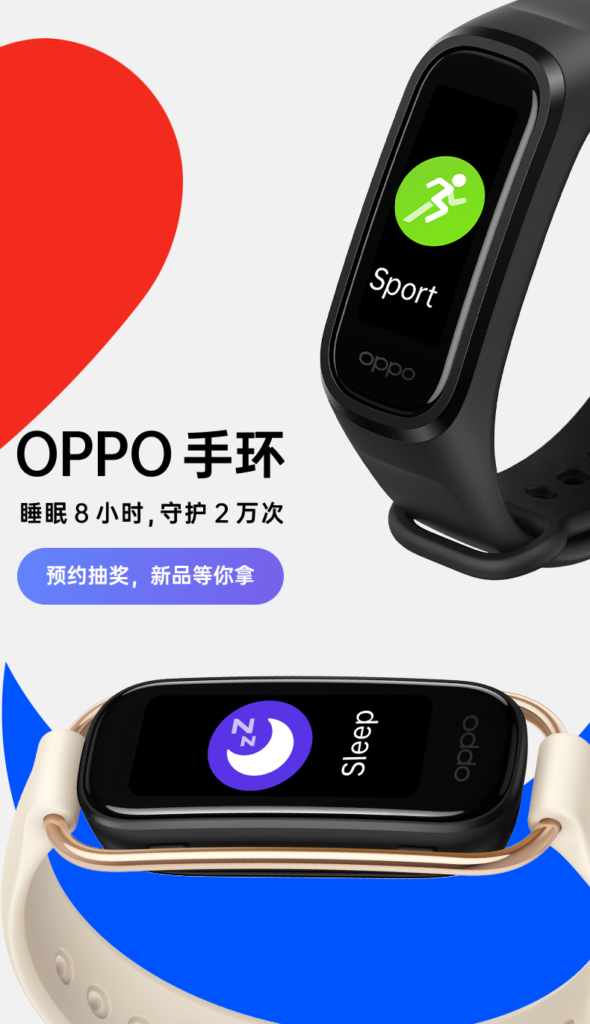
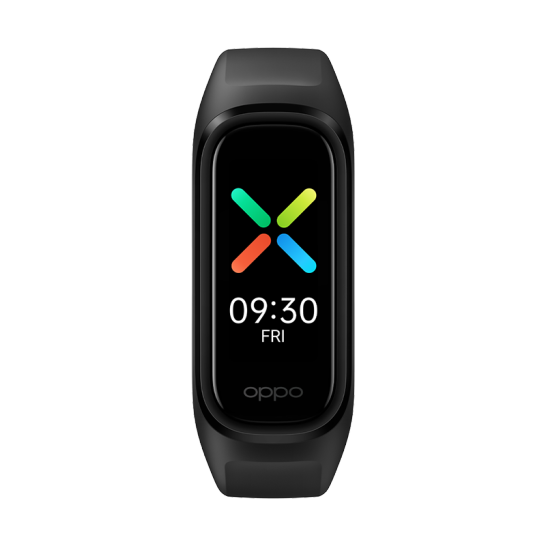
Yesterday, Oppo Band EVA Limited Edition was revealed by the company along with other accessories to celebrate 25th anniversary of Neon Genesis Evangelion anime. We thought it was the first time the brand has showcased the Oppo Band. But it turns out it had already teased the regular version last week and the listings for the same are live on TMall, Jingdong (JD), and Oppo official website.
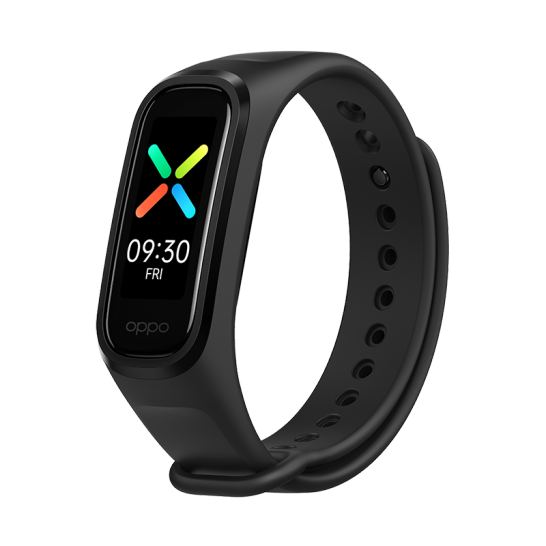
Unfortunately, the listings do not say anything about the specifications of Oppo Band. But we do get to see the design of the standard version, which is mainstream than the limited edition.
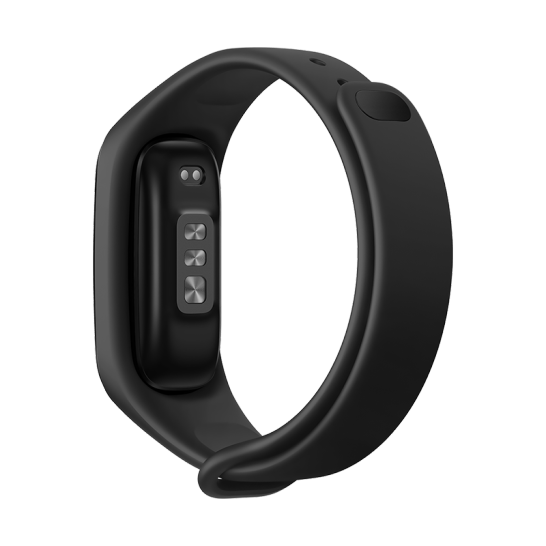
As per different renders, we can say the fitness tracker from Oppo will have straps of different colors. The renders also show us two types, the first one features a regular design in black color, whereas the second version in pink color has a floating design.
We believe the Oppo Band will charge via pogo pin charger since the receivers are present at the bottom and there’s no visible USB plug in the second strap design. Since we are talking about Oppo, the fitness tracker might also support some sort of VOOC fast charging tech like Oppo Watch.
Oppo Band Official Renders
1 of 3
The Oppo Band follows the company’s classic design with branding below the display. As per the listing on JD, the fitness tracker will not support touch input and will also lack water-resistance. Also, the listing confirms the presence of sleep monitoring function.
Anyway, we would like you to take this information with a pinch salt. We expect Oppo to tease some features of the Oppo Band officially before the launch in June.
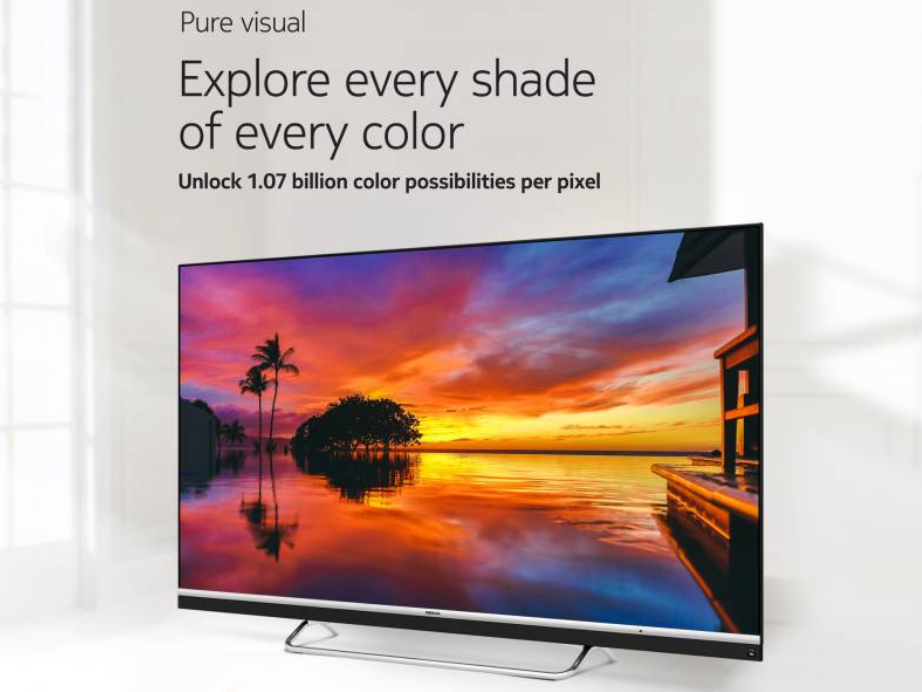
The Nokia Smart TV will be launching in India on the 4th of June 2020. The 43 inch model will be available for purchase on Flipkart, a popular Indian e-retailer. While the official prices haven’t been revealed yet, Flipkart has hinted at the price range in which customers can expect to buy it.
Previously, Nokia had launched its 55 inch Smart TV model back in December 2019, with the newer and smaller variant being placed right under it. The company had been teasing the launch of the 43 inch Smart TV since March, but it had since gotten delayed due to the Coronavirus pandemic. For those unaware, Flipkart is the one that makes the smart TVs but uses the Nokia branding as part of their licensing agreement.
According to the hinted price range, the 43 inch Nokia Smart TV will be priced between 31,000 INR and 34,000 INR (roughly 410 and 450 US Dollars). It will be available exclusively through Flipkart and details regarding its exact pricing and availability should be announced closer to the launch date. Unfortunately, finer details of the upcoming smart TV specifications are currently unknown. However, looking at the larger 55 inch model, a few speculations can be made.
The Nokia Smart TV 43 inch could run the Android 9 operating system, similar to the larger version. Furthermore, apart from the display size, we can also sport a similar design, with thin bezels on the sides and a V shaped stand as well. At the moment, the 55 inch variant is available for 41,999 INR (roughly 555 US Dollars). It also houses a quad core processor and Mali-450 GPU and supports 4K resolution. In terms of memory, 2.25GB of RAM and 16GB storage is also provided and we can expect the smaller and affordable to offer most if not all of these features as well.
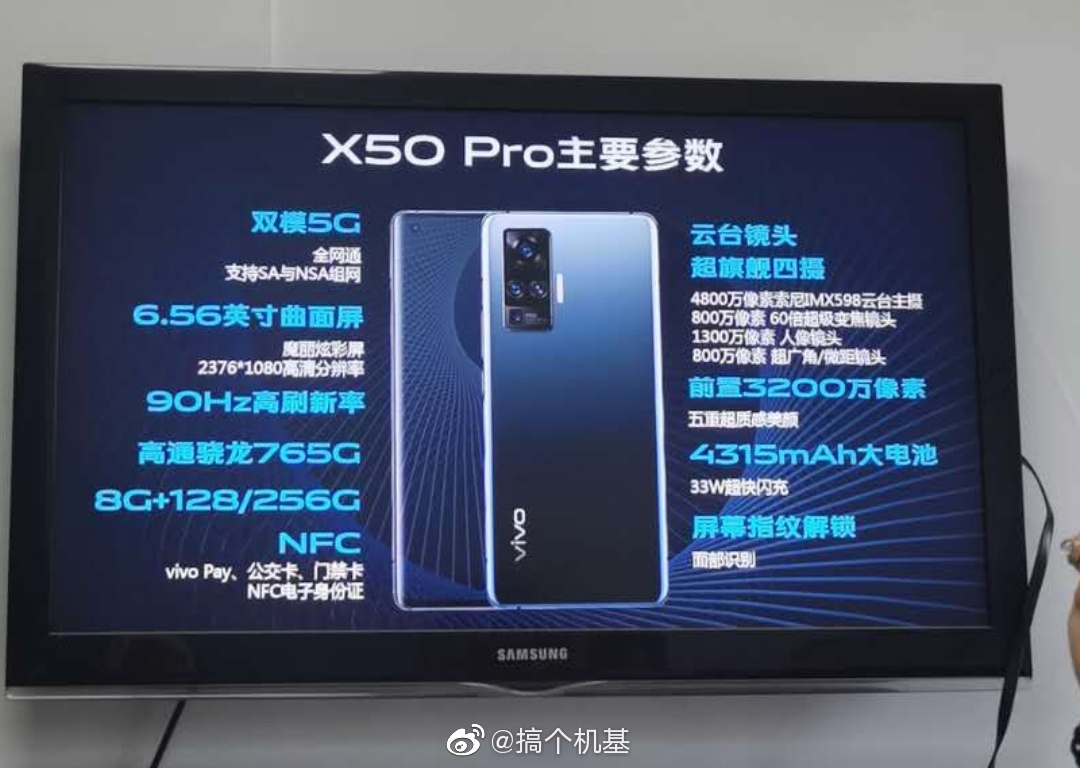
Vivo is all set to unleash the Vivo X50 5G and Vivo X50 Pro 5G smartphones on June 1 in China. Yesterday, a Chinese tipster had leaked the specifications of the Vivo X50 smartphone. Another tipster has shared an image on Weibo through the specs of the X50 Pro have been revealed.
The leaked image shows that the Vivo X50 Pro has a punch-hole display with curved edges. The screen supports 1080 x 2376 pixels full HD+ resolution and 90Hz refresh rate. The punch-hole on the screen houses a 32-megapixel selfie snapper.
The backside of the device has four cameras. The first one is said to be Sony IMX598 lens, an 8-megapixel telephoto lens with 60X hybrid zoom, a 13-megapixel depth sensor, and an 8-megapixel superwide lens.
The Snapdragon 765G SoC that brings support for dual-mode SA and NSA 5G connectivity powers the Vivo X50 Pro. The phone draws power from a 4,315mAh battery that supports 33W fast charging. The handset will also support NFC connectivity.
The Vivo X50 Pro is expected to arrive in two models in China such as 8 GB RAM + 128 GB storage and 8 GB RAM + 256 GB storage. The tipster claims that the handset is priced at 3,398 Yuan, but its unclear whether the pricing belongs to the 128 GB or 256 GB edition of the smartphone.
The only gripe with this leak is that it is almost the same as the specs of the Vivo X50 that emerged yesterday. Probably, the Pro model will have advantages like a curved screen and a gimbal-like camera system over the X50 model that is likely to come with a flat display and lack a gimbal camera setup.
Earlier this week, Realme announced the Realme Buds Q and Realme Buds Air Neo in China. However, only the latter was announced in India, but that won’t be the case for long.
Francis Wang, the CMO of Realme Mobiles, took to Twitter today to announce that the Realme Buds Q is coming soon (to India). The tweet said the TWS earbuds will be priced under INR 2,000 (~$26).
#BudsAirNeo brings features like Super Low Lantency, 13mm big bass, 10m wireless range, standing at the best choice below 3k. Still looking for TrueWiless below 2k? #realmeBudsQ coming soon. pic.twitter.com/A2f5mb9MlH
The Realme Buds Q has 10mm driver units with Dynamic Bass Boost technology and support for AAC. They connect via Bluetooth 5.0 and have a battery life of up to 20 hours with the case.
The TWS earbuds also have support for touch controls and a game mode that allows for real-time transmission between the earbuds and the phone thanks to a built-in chip (R1Q).
The Realme Buds Q works with the Realme Link app. This will allow you to configure various settings and can also be used to upgrade the firmware.
There is no mention of the launch date but it most likely will be next month. The earbuds are priced at ¥149 (~$21) in China; our guess is it will sell for INR 1899 (~$25) when it launches in India.
The Chinese tablet market has been seeing a decline overall during the first quarter of 2020. But despite the slump in the market, the Chinese vendor, Huawei has managed to edge ahead of Apple’s iPad in the same segment.
Apple iPad Pro 2020
Earlier this year, the Coronavirus pandemic had initially broken out in China. This caused various complications in the industry, with many company’s having to shut down their manufacturing plants in compliance with the government’s regulations. The production delay caused supply chains to suffer as well and the already declining tablet market to fall ever lower by 30 percent in 2020 over 2019.
In the Chinese tablet market, the Cupertino based giant, Apple, is a major player with its iPad series being a popular choice in the country. However, a recent IDC report has revealed that Apple’s sales have dropped in the market by 42.5 percent year on year. Despite this time of crisis, it seems some brands faired better, with Huawei witnessing a growth of 4.3 percent during this period.
Huawei MediaPad M7 (MatePad Pro)
This, in turn, translates to Apple losing its best selling tablet label in China, losing to Huawei. The former had a market share of 35.1 percent while the latter accounted for 40.2 percent in the first quarter. The Chinese tech giant seems to be an exception in the industry with other OEMs also seeing declines of varying degrees, including Xiaomi, Lenovo, and even Microsoft.
Xiaomi India has begun to tease the launch of Mi-branded laptops in India. A new teaser shared by the brand today gives us a glimpse of the model it is going to launch first. Also, the company’s chief business officer shared some details about the laptops they are going to release in India.
Xiaomi has changed the smartphone market of India since its entry. It has been leading the market for 11 quarters (close to 3 years). The company is even leading the smart TV and the wearable segments. Now, it is all set to shake up the laptop industry of the country as well.
People have been requesting Xiaomi to bring their laptops to India for years. The company’s top-level executives confirmed their arrival by posting teaser videos with ‘Its time’ and #WhatsNextFromMi.
The very next day, Raghu Reddy, the chief business officer of Xiaomi India revealed some information about the company’s laptop strategy to the Economic Times.
According to him, Xiaomi will not follow its smartphone model of affordability by launching entry-level laptops. Also, it won’t flood the markets with too many models. Instead, the company will target power users such as content creators, gamers, and students.
He also revealed that they were planning to launch laptops ahead of Diwali festive season. But the current ‘work from home’ situation has increased the short-term demand compared to the past.
Mr Reddy also hinted Xiaomi will be launching ‘thin and light’ and ‘gaming’ laptops in the country since these two segments witnessed a growth rate of 70-80% and 5% last year. Anyway, it is worth noting that India’s laptop market fell by 26.5% in Q1 2020 compared to Q4 2019.
Further, he also mentioned the difficulty of demonstrating products from a new brand offline. But he believes Xiaomi can leverage its brand presence in retail with strong marketing.
Last but not least, the company also has plans to start manufacturing laptops locally in India after reaching a certain level of monthly sales.
The LG Velvet is arriving in Europe soon. It was spotted recently on LG’s official Italian website and is expected to launch in June 2020. The device is the latest launch from the South Korean company and is likely to be another attempt at revitalizing its falling smartphone business.
LG Velvet
LG Velvet is a mid range handset, which features Qualcomm’s Snapdragon 765G. It was announced a few weeks back but the company had yet to reveal any details regarding its availability outside its home country of South Korea. But now, the official listing that was recently spotted revealed that the availability of the device will arrive in June 2020. Furthermore, it may even arrive with every color variant in Europe, namely Sunset, Aurora White, Aurora Gray, and Aurora Green.
At the moment, a similar listing in nearby countries like Spanish and French websites have not revealed any findings. This may be due to a mishap from the Italian counterpart, or launch that starts from Italy’s markets. Notably, South Korean reports have even stated that the LG Velvet might also be heading to the US very soon. Unfortunately, no specifics regarding launch dates have been given out so far. So stay tuned, as we will be providing updates as soon as there is more information available.
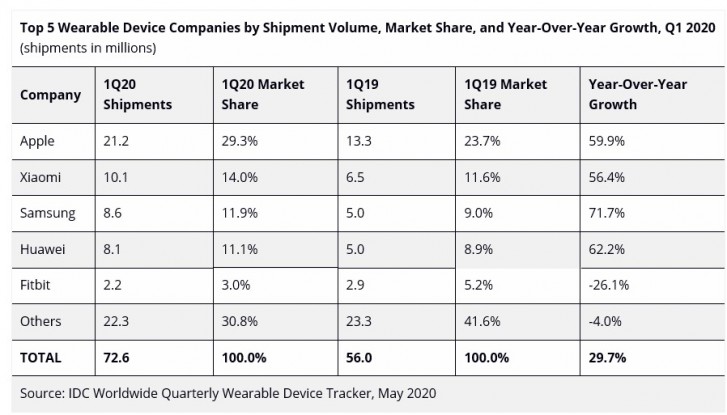
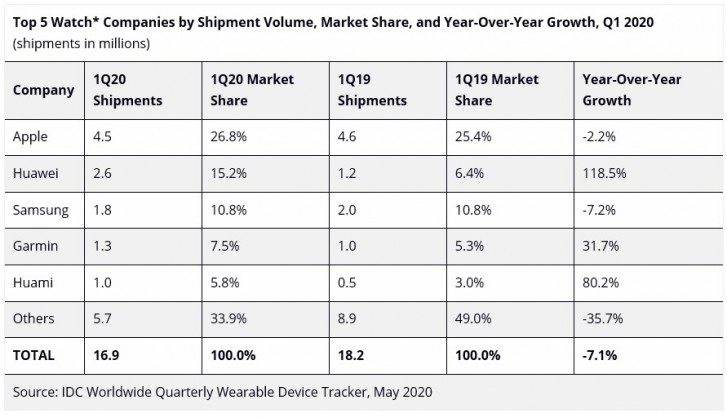
The first quarter of 2020 had the wearables market see a significant growth despite the ongoing Coronavirus pandemic. According to an IDC report, the hearables market has seen impressive growth during this time of crisis, while smartwatches and fitness trackers have seen a decline in sales.
The hearables category includes all the headphones, earphones earbuds, and other audio related products in the market. With the COVID-19, work from home has become the new norm and professional environment for many across the globe. Thus, the demand for hearables and other personal audio devices have also risen because of this. For example, Apple has seen a massive growth of 59.9 percent year on year, with shipment numbers rising to 21.2 million units over 2019’s 13.3 million units.
Xiaomi comes in second with a global market share of 10.1 million units in this quarter. This also marked an impressive growth of 56.4 percent from 2019. Samsung and Huawei followed close behind in third and fourth positions with 8.6 percent and 8.1 percent respectively. Notably, the South Korean tech giant’s hearables department accounted for nearly 74 percent of its wearables shipments.
During Q1 2020, the known wearables and fitness tracker maker, Fitbit, saw a sizeable decline. Since manufacturing plants and supply chains were disrupted earlier this year in China, the company had faced many issues during its operations. This caused the Fitbit to lose 35.7 percent year on year, with its shipments falling from 72.6 million units to 56 million units.
We use cookies on our website to give you the most relevant experience by remembering your preferences and repeat visits. By clicking “Accept”, you consent to the use of ALL the cookies.
This website uses cookies to improve your experience while you navigate through the website. Out of these, the cookies that are categorized as necessary are stored on your browser as they are essential for the working of basic functionalities of the website. We also use third-party cookies that help us analyze and understand how you use this website. These cookies will be stored in your browser only with your consent. You also have the option to opt-out of these cookies. But opting out of some of these cookies may affect your browsing experience.
Necessary cookies are absolutely essential for the website to function properly. This category only includes cookies that ensures basic functionalities and security features of the website. These cookies do not store any personal information.
Any cookies that may not be particularly necessary for the website to function and is used specifically to collect user personal data via analytics, ads, other embedded contents are termed as non-necessary cookies. It is mandatory to procure user consent prior to running these cookies on your website.