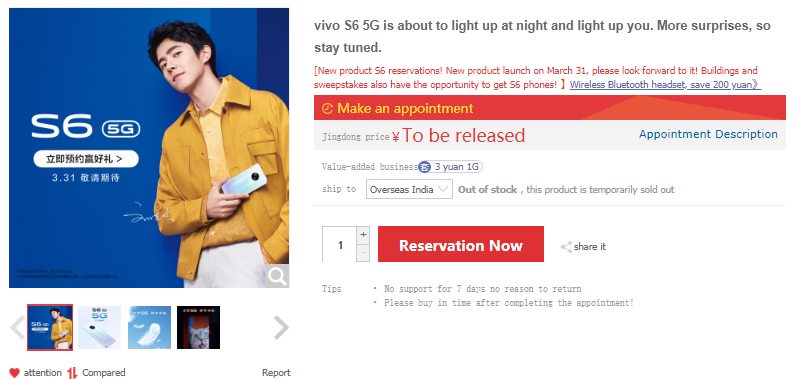
Vivo is gearing up for the launch of the Vivo S6 5G phone which will be made official on March 31. Ahead of the launch, the Chinese firm is gradually teasing on the design of the phone. Recently, it released a poster that showcased the bottom portion of the Vivo S6 5G’s rear shell. It revealed that the phone will be arriving with an ultra-thin design. Fresh posters of the phone that have appeared today reveals that the back panel of the phone features the so-called Oreo design quad camera system.
The Vivo S6 5G has a color gradient back which seems to be flanked with a 3D curved glass. Its upper half has a round-shaped camera system that seems to house four cameras. An LED flash appears to be positioned below the camera housing. The volume rocker and power key are present on the right edge of the device.
Vivo is yet to reveal the front design of the Vivo S6 5G smartphone. Last week, an alleged live shot of a Vivo phone with dual punch-hole display had appeared on Weibo. There is a possibility that the Vivo S6 5G may arrive with two front-facing cameras. Again, no information is available on the configurations of its front cameras. Some reports have claimed that the Vivo S6 5G’s dual front camera setup will have a 32-megpaixel lens borrowed from the predecessor Vivo S5 along with a depth assist lens.
The Vivo S6 5G could be the Vivo V1962BA phone that was approved by the 3C authority of China in the recent past. It had revealed that it is a 5G-capable phone that may include a 18W fast charger in its retail package. It could be either powered by the Exynos 980 or Snapdragon 765 chipset.
The smartphone is now for reservations on JD.com. The listing reveals that it is equipped with a 48-megapixel lens on its back and it will also come in another dark blue gradient color.
South Korean giant Samsung launched its flagship Galaxy S-series smartphones — Galaxy S20, S20 Plus, and S20 Ultra last month and the devices went on sale earlier this month. And now, just weeks after this, details about Samsung’s next major smartphone have started surfacing online.
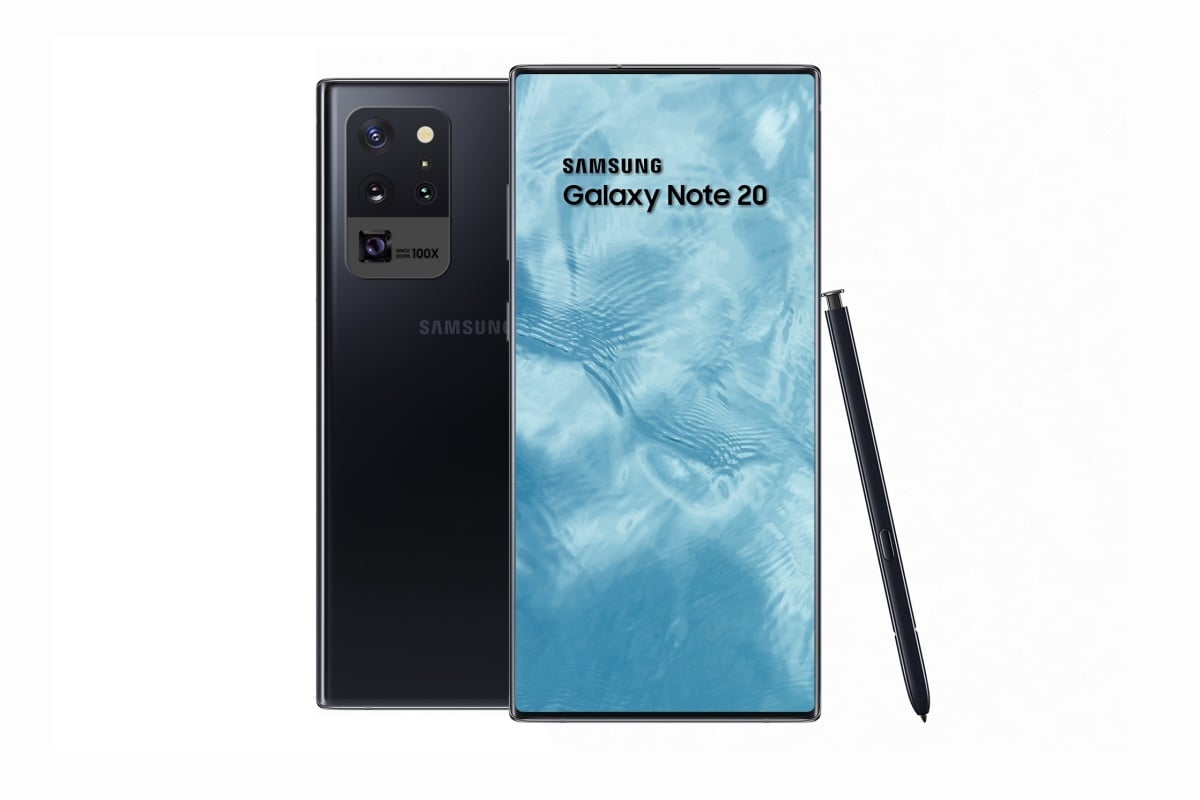
According to the new leaks, the next-generation Galaxy Note series smartphone — Samsung Galaxy Note 20 will be much similar to the Galaxy S20 series in terms of design. it seems that the only difference is the squared-corners and support for S-Pen.
Also, the similarities aren’t limited to just designs. Both the tipsters Ice Universe and Max Weinbach claims that the Galaxy Note 20’s hardware specifications will “not be significantly changed compared to the S20 series” and the cameras will also be the same.
It seems that Samsung went all-in with the Galaxy S20 Ultra and has nothing much left to offer with the Galaxy Note 20 in terms of innovation. However, we do expect the company to offer something innovative, along with improved S-Pen.
As per the previous reports, the Samsung could launched three Galaxy Note models this year — Galaxy Note 20, Galaxy Note 20+ and the Galaxy Note 20 Ultra. Apart from Europe, all units will be powered by Qualcomm Snapdragon 865 chipset while in Europe, they will be packed with the company’s own Exynos 990 SoC.
The Super AMOLED display on the upcoming flagship series should have 120Hz refresh rate. As for the memory configuration, we expect it have up to 16GB RAM and 512GB of internal storage. The top-end model in the lineup could come with 5,000mAh battery.
The Samsung Galaxy Note 20 series is expected to launch by the end of July but the timeline could be impacted because of the disruption caused by coronavirus outbreak. As far as the pricing goes, it will obviously be the most expensive iteration in the Note series and given the cost of S20 Ultra, we expect the Note 20 to cost around $1,400.
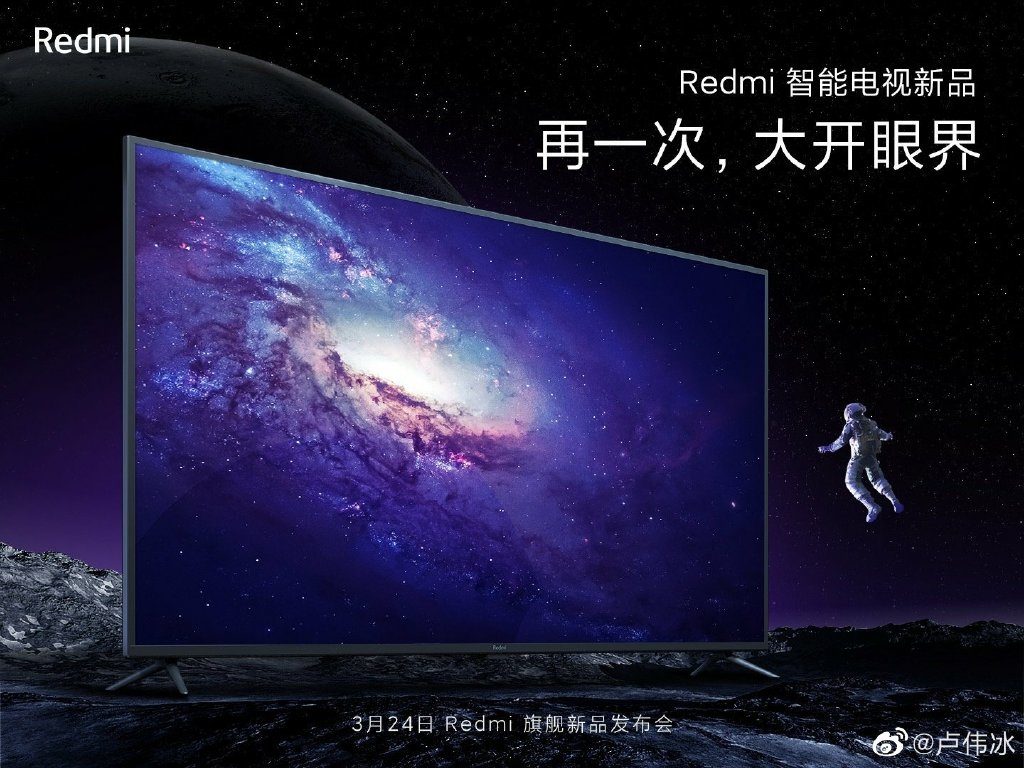
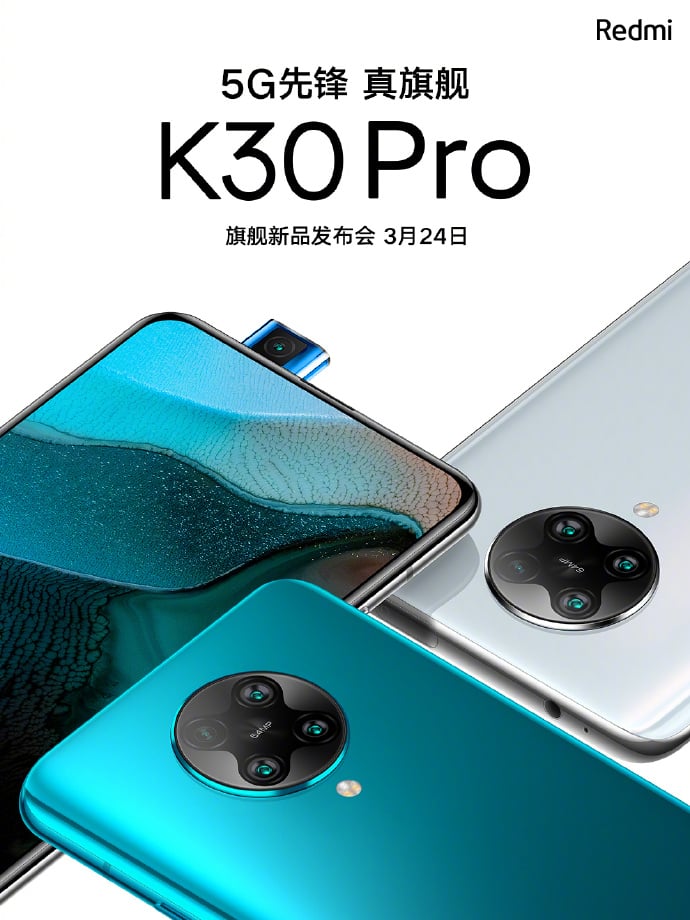
Redmi will be unveiling the Redmi K30 Pro on March 24 in China. At the same launch, the brand will also announce a new Redmi Smart TV as per a new teaser posted by the company’s General Manager Lu Weibing on Weibo. Additionally, according to a previous report, Redmi may also unwrap a new variant of RedmiBook 14 Ryzen Edition and Redmi Air Purifier F1.
Xiaomi sells a number of products apart from smartphones. Redmi, which was previously a lineup of budget smartphones from the company, is now an independent brand itself with an increasing number of self-branded products. Last year, the brand ventured into smart TV business by launching its first product in this category simply called Redmi TV. It was announced alongside the Redmi Note 8 series in late August 2019 in China.
Now, according to a teaser on Weibo, the brand will be unveiling its next smart TV at the Redmi K30 Pro launch scheduled for March 24, i.e tomorrow. Unfortunately, the brand has not teased any specs of it but going by the quote on the Weibo teaser post, which reads ‘TV, once again, eye-opening’ (translated), this new TV could be larger than the 70-inches Redmi TV launched last year. If that is the case, then expect it to feature similar specs as the last TV, except for an increase in panel size.
To refresh your memory, the Redmi TV 70-inches launched last year has a 4K HDR panel and comes powered by an Amlogic quad-core 64-bit processor paired with Mali-450 MP3 GPU. As for memory, the TV features 2GB RAM and 16GB ROM, whereas, on the software side, it runs PatchWall UI. Connectivity options on the TV include WiFi, Bluetooth 4.2, 3 x HDMI ports, and 2 x USB ports. Lastly, audio formats such as Dolby Audio as well as DTS-HD are present and accounted for.
Earlier this year, in January, Xiaomi started crowdfunding a new speaker, named MORROR ART Transparent Bluetooth Speaker that features a “dynamic floating lyrics” based on the mood of the music.
Now, the product is finally available for purchase in China. While the original price of the the Xiaomi MORROR ART Transparent Bluetooth Speaker is 3,799 yuan (~$535), it is currently available for 3,499 yuan, which is roughly $493. The crowdfunding price of the product was 2,999 yuan (~$423).
The MORROR ART speaker from Xiaomi comes equipped with a 21.5-inch IPS screen that offers a Full HD screen resolution of 1920 x 1080 pixels. The device features an AR-coated high-transmittance glass that has excellent transparency and is also used in museum exhibit windows.
It also comes with a backlight technology procured from Japan-based Mitsubishi Corporation which enables the screen to show brightness that is comfortable for the eyes in the dark environment.
The device is equipped with an upgradeable 32-bit control unit and is claimed to be fine-tuned by subjective acoustic debugging experts. It also supports three tuning modes — high-fidelity mode, sweet voice mode, and rhythm mode, and various music styles can be easily controlled.
The speaker uses a unique 100mm diagonally configured speaker. As per the company, with 10L resonance air volume in the box and long and loose “air spring” design, it has greatly improved the speaker output.
It uses 6-series aluminium alloy body that combines sandblasting and anodising processes that resists oxidation and corrosion and also shows a high-level surface texture. The speaker measures 525 mm x 140 mm x 322 mm and weighs 10 kg.
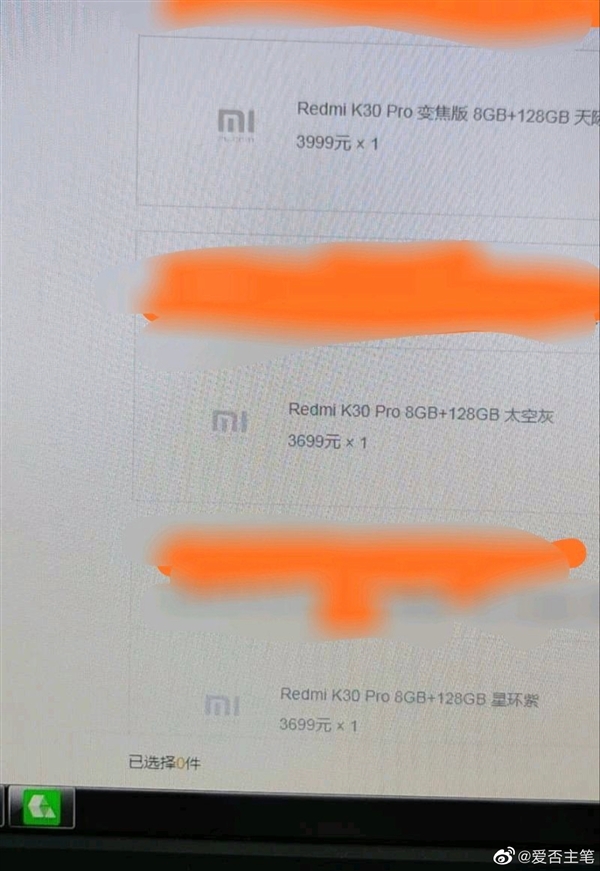
The launch event of the much-anticipated Redmi K30 Pro will be held tomorrow. The handset will be accompanied by Redmi K30 Pro Zoom Edition that is expected to offer better photography experience. Xiaomi Product Director Wang Teng Thomas had hinted in the recent past that the pricing of the Redmi K30 Pro will begin at over 3,000 Yuan (~$422). A fresh leak that is now doing rounds on Weibo shows the pricing of the Redmi K30 Pro and K30 Pro Zoom Edition smartphones.
The leak shows that the 8 GB RAM + 128 GB storage edition of the Redmi K30 Pro Zoom Edition is priced at 3,999 Yuan (~$563). On the other side, the Redmi K30 Pro with the same amount of RAM and storage costs 3,699 Yuan (~$521). The authenticity of the pricing leak could not be confirmed. Hence, readers are advised to take the report with a grain of salt.
It was revealed over the weekend that the Redmi K30 Pro will be coming to China in two editions such as 6 GB RAM + 128 GB storage and 8 GB RAM + 128 GB storage. The Zoom edition phone is expected to arrive in the home market in three choices such as 8 GB RAM + 128 GB storage, 8 GB RAM + 256 GB storage and 12 GB RAM + 512 GB storage.
Redmi K30 Pro specifications
The Redmi K30 Pro will be coming with a notch-less AMOLED display with 60Hz refresh rate. It is powered by Snapdragon 865 mobile platform. The rear-facing quad camera of the phone features a 64-megpaixel Sony IMX686 lens with dual OIS support and 3x optical zoom. The phone is rumored to house a 4,700mAh battery with 33W fast charging support.
Last week, Apple had set purchase limit across several of its products, including iPhone and iPad in various countries as the company closed all of its brick-and-mortar stores outside China, as the coronavirus spreads globally and forces lockdowns.
It seemed that the purchase limits were imposed as Apple braces for a blow due to the coronavirus’ impact on sales because of supply chain disruptions and weak demand. As for the limits, the company had limited purchase of iPhone and iPad Pro to two units while MacBook Air and Mac mini are limited to five orders per customer.
However, the company has now lifted the purchase limits that was imposed on iPhone, new iPad Pro, and new MacBook Air in countries outside of China. Apple’s website in the U.S. no longer has purchase restrictions and customers can buy as many 2020 iPad Pro, iPhone 11 Pro and 2020 Macbook Air as they want.
While the restrictions have been lifted, it seems that the company is not having a smooth run as far as selling of the newly launched devices is considered, mostly because of the disruption caused by the coronavirus outbreak.
Orders placed for the 2020 iPad Pro on the company’s online store shows that the device won’t get delivered before first week of April while some orders will be delivered in the last week of March. However, since there’s are no purchase restrictions, it seems that Apple has the situation under control.
Huawei recently confirmed that it’s going forward with the plan of launching its flagship smartphone lineup, Huawei P40 series, on 26th March. However, instead of hosting a launch event in Paris, the company will make it a virtual press conference because of the coronavirus outbreak.
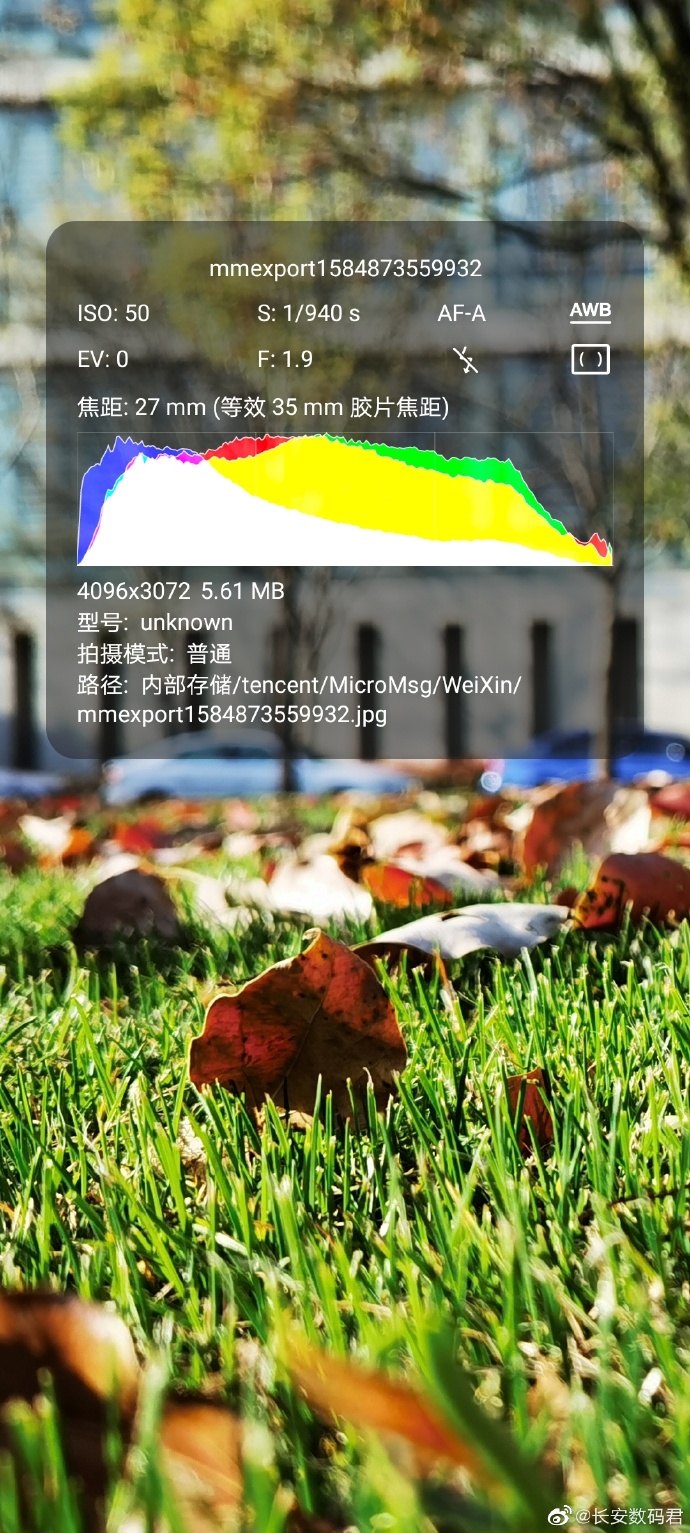
Now, ahead of the launch, amid new leaks related to the smartphones, camera samples have also leaked online. The leaked images are claimed to have been captured using the Huawei P40 series smartphone but the model has not been confirmed.
The photo details reveal that the resolution is of 4096 x 3072 pixels and the image size is 5.61MB while the aperture is f/1.9. From the image, it seems that the camera does a good job of depth sensing, resulting is better bokeh effect. It also looks like that the phone will offer great camera, with bright color reproduction and accurate focus.
Along with this, images taken using the Huawei P40 series 10x zoom has also been leaked which showcases that even after zooming into the photo, details are not lost. Check out some of the samples below.
Previous leaks have indicated that the P40 Pro will come with five camera sensors on the back. The setup includes a 1/1.28” Sony IMX700 52-megapixel Hexadeca Bayer RYYB lens, a 1/1.5” Sony IMX650 40-megapixel ultrawide Cine RGGB lens, a telephoto lens with 3x optical zoom, a dual prism periscope zoom lens with 10x optical zoom as well as a ToF (Time of Flight) sensor.
The company is expected to launch three devices in the series — Huawei P40, P40 Pro, and P40 Pro PE. The Huawei P40 Pro PE is said to come with a ceramic body and should feature camera support for 10x optical zoom. The devices, powered by the company’s own Kirin 990 5G chipset, will go official on 26th March.
It seems that the devices will be equipped with a display that’s curved on all four sides and will have a pill-shaped cutout for housing front-facing cameras. It is expected to come in different colors such as Black, Blush Gold, Silver Frost, Deep Sea Blue and Ice White.
Tomorrow, Redmi will be announcing the Redmi K30 Pro 5G smartphone. Recent reports have revealed that the Chinese manufacturer will be announcing two phones tomorrow. First one is the Redmi K30 Pro phone and the second one is its variant dubbed as Redmi K30 Pro Zoom Edition. Reputed tipster Ishan Agarwal has teamed up with 91mobiles to reveal the RAM, storage and color variants of the Redmi K30 Pro and K30 Pro Zoom Edition smartphones.
The tipster has revealed that the Redmi K30 Pro will be coming in four hues namely, Moonlight White, Sky Blue, Purple and Space Gray. In the previous week, the Chinese manufacturer had released the renders of these color variants on Weibo. The Redmi K30 Pro Zoom Edition will be also available in the same color choices, revealed the tipster.
The Redmi K30 Pro 5G is expected to release in China in two variants such as 6 GB RAM + 128 GB storage and 8 GB RAM + 128 GB storage. The Redmi K30 Pro 5G Zoom Edition will be coming in three models like 8 GB RAM + 128 GB storage, 8 GB RAM + 256 GB storage and 12 GB RAM + 512 GB storage. The prices of these variants are not known.
Last year, Redmi had launched RedmiBook 14 Ryzen Edition with Ryzen 7 3700 CPU, 8 GB of RAM and 512 GB of storage. The tipster revealed that an updated version of the notebook will also be announced tomorrow. It will come with 16 GB of RAM. The Chinese firm is also rumored to introduce other products like Mi Air Purifier F1 and some sort of accessories dubbed as Redmi x Keith Haring.
Huawei is all set to announce the Huawei P40 series of flagship smartphones on March 26. The Kirin 990 5G chipsets that drove the Huawei Mate 30 series phone last year will be powering the P40, P40 Pro and P40 Pro PE (Premium Edition). The specs of the P40 and P40 Pro have surfaced through different sources in the recent months. A fresh report on 91mobiles has revealed the entire specifications of the P40 duo.
Huawei P40 specifications
The leaked information that was sourced from reliable tipster Ishan Agarwal revealed that the Huawei P40 has a 6.1-inch OLED display with a single punch-hole for its 32-megapixel front camera.
The back panel of the phone has a Lecia engineered camera setup that comprises of a main lens of 50-megapixel, a secondary shooter 16-megapixel, an 8-megapixel Ultra Vision sensor with support for up to 30x digital zoom. The Huawei XD Fusion Engine will be present onboard for enhanced photography experience. The Kirin 990 5G powered smartphone will be backed by a 3,800mAh battery with support for 40W fast charging. It may support 27W wireless charging.
The Huawei P40 Pro features a bigger 6.58-inch OLED screen with curved edges. The pill-shaped cutout on the screen will be home for its 32-megapixel main selfie snapper and a depth sensor.
The rear side of the Huawei P40 Pro has a primary lens of 50-megapixel in its Leica Ultra Vision quad camera system. It is accompanied by a 40-megapixel lens, a 12-megapixel sensor and a 3D ToF sensor. It will be driven by Kirin 990 5G and it will be backed by a 4,200mAh battery with 40W wired charging and 40W wireless charging. The tipster has claimed that the latter could be limited to 27W.
There is no word on the RAM and storage combinations of the P40 and P40 Prov in the new leak. Also, these phones will lack Google Mobiles Services and feature Huawei Mobile Services with AppGallery instead.
Most manufacturers now ship their phones with a TPU case that provides protection against scratches and drops. However, some folks do not like putting a case on their phone.
There are also others that prefer a different type of case from the one in the box. You will also find people that have multiple cases that come in different designs and colors.
Another group of folks prefers applying a skin on to their phone that gives it a pretty unique look as well as feel and also protects it from scratches.
For this week’s poll, we want to know which category you belong to. Do you like your phone bareback i.e. without a case or skin on? Are you a case person? Or do you prefer skins? Do take the poll below and also let us know in the comment box why you prefer one over the other.
The Kirin 820 5G is Huawei‘s upcoming mid-range processor and its very first one with support for 5G. A few days ago, some key details of the processor were leaked on the web. Now benchmark results have surfaced that compare it to the Kirin 980 and even Qualcomm’s Snapdragon 855.
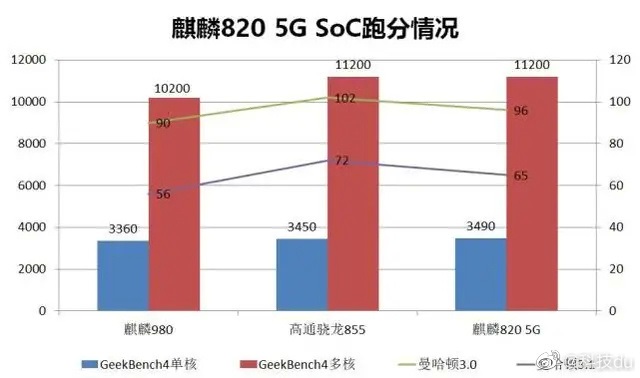
A graph comparing the benchmark scores of the three chipsets was posted on Weibo and it shows the Kirin 820 5G scored 3490 points in the single-core test and 11200 points in the multi-core test.
The chipset scored higher than the Kirin 980 processor which powers phones such as the Huawei P30 series and the Mate 20 series. It even scores higher than the Snapdragon 855 in the single-core test and ties with it for multi-score.
The Kirin 820 5G is a 7nm processor with Cortex-A76 cores and a Mali-G77 GPU. Based on its Geekbench scores, we presume it has four Cortex-A76 cores paired with four Cortex-A55 cores. It has also been revealed that the chipset will have an upgraded NPU and ISP.
Honor’s upcoming phone, the Honor 30S, should be the first device with a Kirin 820 5G chipset.
The World Health Organisation (WHO) recently declared the Coronavirus as a pandemic. That is because the virus has spread from China to other parts of the world with Italy being the worse hit presently. The advice presently is for persons all over the world to practice social distancing.
Apart from that, regular and proper handwashing practices are also advocated. It also advised that surfaces that are frequently touched should be cleaned. This is where our smartphones and gadgets fall into. Smartphones can be a potential means of transmitting diseases as germs on the phone can easily be transmitted to the skin when the phone is used.
Here are some important tips to help us keep our smartphones and gadgets free from germs including Coronavirus.
The use of Colorex wipes or similar products with 70 percent isopropyl to clean your phones is recommended. The use of alcohol isn’t recommended because it could damage the screen as well as the ports. A better option is to use the disinfectant wipes.
It is also not advised to use bleaches, sprays and abrasives as they could damage the screen as well. Instead, it is recommended to use soft linen free cloths to clean the phones. Also, there are several mobile sanitisers available online like the Mobiwash, Rnaux cleaning kit, among others that you can buy. If you’re using any of these kits, they come with solutions and clothe that can be used to wipe the screen. Abrasive cloth, towels, paper towels are not advisable to use.
There are also a couple of infrared disinfecting pods on sale in the market. Samsung equally announced a free Galaxy Sanitising service in 19 countries including the US and UK. The service uses infrared technology and will b expanded to more countries in the coming weeks.
When Huawei announced the Mate 20 series back in 2018, it unveiled the NM Card or Nano Memory Card. This is an SD card that is the same size as a nano-SIM. NM Cards do not require a dedicated slot as they fit into the same slot for a nano-SIM which most phones use these days. Huawei hoped more manufacturers would adopt the new memory card but up until now, it is only used by Huawei phones.
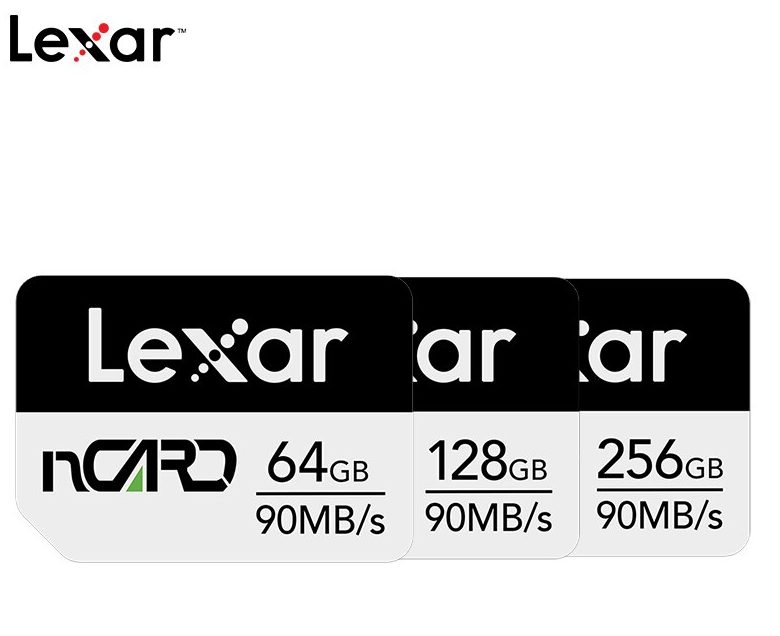
Huawei itself makes NM cards but no big-name manufacturer has done so up until now. Lexar, the company known for its wide range of storage products has announced three new NM cards for Huawei phones which should be widely available compared to Huawei’s own.
The Lexar nCard as it is called is available in three variants – 64GB, 128GB, and 256GB. They have a read speed of 90MB/s and a write speed of 70MB/s. The nCard is available on Jingdong Mall for ¥199 (~$28) for the 64GB version, ¥299 (~$42) for the 128GB capacity, and ¥599 (~$84) for the 256GB capacity. It is also available on AliExpress.
The NM card works with the Mate 20, Mate 20 Pro, Huawei P30, Huawei P30 Pro, Mate 30, Mate 30 Pro, etc. If more phone manufacturers adopt the standard then more companies that make storage devices such as SanDisk and Samsung should begin manufacturing NM cards too. We also expect the price to reduce when that happens. However, the adoption rate is practically non-existent at the moment.
Xiaomi’s Mi Wallet has a new feature that allows phones without NFC to use Mi Pay. At the moment, the feature is only available for the Redmi Note 7, Redmi Note 5, and Redmi 6. The compatible devices only have to install the beta version of the app.
An infographic shared by Xiaomi shows the steps users have to take to set up the new payment option on their phone.
After setting up, all a user is required to do to make a payment is double-tap the power button to launch Mi Pay and verify with their fingerprint. The app then generates a QR code for payment.
More phones should get it once the feature is out of beta testing.
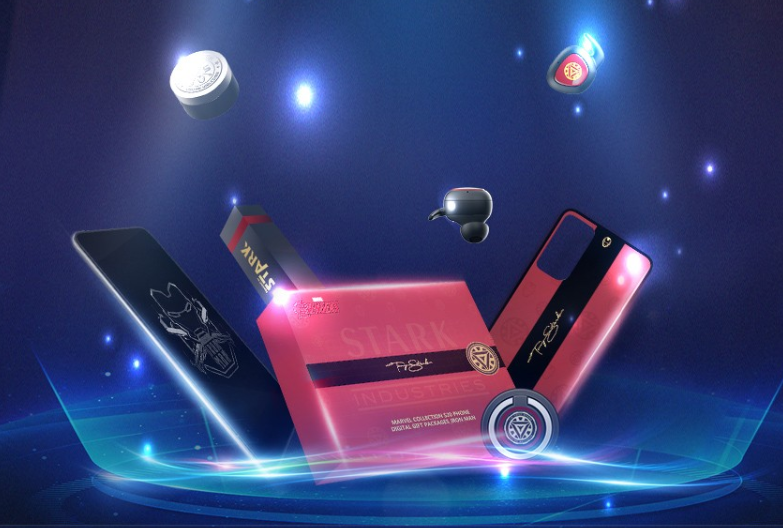
The special edition phones (Galaxy S20 5G, Galaxy S20+ 5G, and Galaxy S20 Ultra 5G) come in a special red box with Tony Stark’s signature as well as the word’s Stark Industries written boldly on it. Inside is a custom case, customized earbuds with a custom case, and a ring that is similar to the arc reactor on Iron Man’s suit. The phones also have a custom theme with special wallpapers and ring tones included.
You can purchase any of the limited edition phones on JD.com. The Galaxy S20 5G Iron Man Edition is ¥6999 (~$986)and it has 12GB of RAM and 128GB of storage. The Galaxy S20+ 5G Iron Man Edition is ¥7999 (~$1127) with the same RAM and storage as the Galaxy S20.
The Galaxy S20 Ultra 5G Iron Man Man Edition is more expensive and comes in gray and black. It is available in 12GB RAM + 256GB and 16GB RAM + 512GB variants. The price tag is ¥9999 (~$1409) for the 12GB version while the 16GB version is ¥12,999 (~$1831).
Due to the coronavirus outbreak, there was not a physical event, but Apple still announced the new iPad Pro 2020 series. It includes two models: the 11-inch variant and the 12.9-inch variant, just like the previous generations. Apple currently leads the tablet market, but is the iPad Pro 2020 really the best option for every user? In order to establish that, we compared it with the best Chinese flagship tablet launched until now: the MatePad Pro by Huawei which also comes in a 5G variant. The iPad Pro 2020 we talk about in this comparison is the 11-inch variant since it is the most similar to Huawei MatePad Pro in terms of price and features.
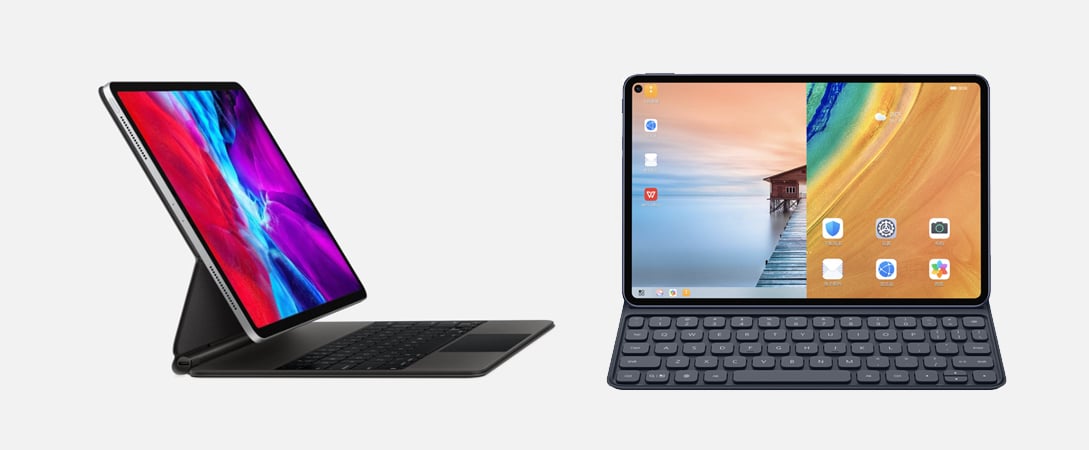
Apple iPad Pro 2020 and Huawei MatePad Pro boast wonderful designs. They both come with a very high screen-to-body ratio as well as an aluminum body. Huawei MatePad Pro looks more impressive due to its higher screen-to-body ratio and it is definitely my favorite one if we talk about aesthetics only. Both the tablets support a keyboard and a stylus. But due to an integrated trackpad, the support for some macOS gestures, backlit keys, and more, the new Magic Keyboard of the iPad Pro 2020 looks superior.
Display
We still did not try the iPad Pro 2020 since it became official a few days ago, but its specs on the paper make us think that it is a slightly superior display to Huawei MatePad Pro. Not by a high margin, though. These displays come with a high 2K resolution, a wide color gamut, and a stunning image quality. However, they are not OLED display but classic IPS panels. But as what you just read suggests, this does not mean they are not amazing displays.
Specs & Software
The Apple A12Z Bionic processor and the presence of iPadOS which is a very well-optimized operating system should make the iPad Pro 2020 a much more performing tablet compared to the Huawei MatePad Pro. Further, iPadOS offers a lot of professional and PC-like features that you can not get with the Huawei MatePad Pro. On the other hand, iPad Pro 2020 does not support 5G, while the Huawei MatePad Pro also exists in a version with the support of 5G connectivity. The iPad Pro 2020 comes in WiFi and 4G versions: the 4G one supports the eSIM technology besides a standard nanoSIM. Note that if you get the Huawei MatePad Pro in its global version, you won’t get Google services out of the box, despite the tablet runs Android 10.
Camera
Apple iPad Pro 2020 is the clear winner of the camera comparison, we have not any doubt about it even though we are only assuming it after looking at the specs sheet. It boasts a triple camera setup composed of a 12 MP main sensor, a 10 MP ultrawide lens and a TOF 3D LiDAR scanner which can provide very accurate depth info thanks to a laser mechanism. If you need more info about how the LiDAR scanner works, check our official launch article about the new Apple tablets. The Apple iPad Pro 2020 even supports 3D facial recognition thanks to Face ID. On the rear side, Huawei MatePad Pro has just a single 13 MP sensor and it is a camera commonly used on affordable smartphones. The iPad even offers a better front camera which can record videos in 1080p at 60 fps.
According to Apple, the iPad Pro 2020 provides 10 hours of battery life on a single charge, if you use it on WiFi and without 4G connectivity. Huawei MatePad Pro’s battery has a 7250 mAh capacity and it supports a 40W fast charging tech: one of the fastest charging technologies ever seen on a tablet. Unlike the iPad Pro, it even supports wireless charging and reverse wireless charging. The iPad Pro supports reverse charging via cable, but you can not charge it wirelessly.
Price
Apple iPad Pro will have a starting price of €899/$799 in the global market (the price refers to the WiFi-only version), while Huawei MatePad Pro will be sold for €549.90 in its WiFi variant. While the MatePad Pro has a way higher value for money, the iPad Pro 2020 wins the comparison when it comes to specs and features, despite it does not come in any 5G variant.
Apple iPad Pro 2020 vs Huawei MatePad Pro: PRO and CONS
Companies around the world have been severely affected by the coronavirus outbreak and Samsung Electronics is no exception in this regard. Still, the firm expects to hire a record number of well-trained workers for its DS (device solutions) division in the first half of 2020 according to a report by Yonhap News Agency.
Samsung’s DS division includes the company’s memory chip, system LSI, and foundry businesses. This division is slated to hire experienced workers in 51-career fields but the total count is unknown for now. Normally, the South Korean tech giant employs experienced workers for these businesses on an occasional basis whenever there is a need for manpower. But this time around, the company might hire workers for the whole division. This means the firm will offer jobs at a record number since its inception.
As per the latest survey on South Korea‘s top 500 firms by sales with a workforce of 300 or more by Korea Economic Research Institute (KERI), one-fourth of those companies are expected to cut back on their hiring or either has no plans to recruit new workers at least in the first half of the year amidst current situation. According to insiders from the industry, Samsung wants to make use of this situation by creating a win-win scenario for both itself and the jobless people.
Samsung will be focussing more on producing fourth-generation 1z nanometer (nm) DRAM and seventh-generation V-NAND chipsets this year as per the company’s DS division chief Kim Ki-nam.
The Redmi K30 Pro is coming soon and Redmi has been revealing key features of the phone. We already know it will support 8K video recording, have quad rear cameras, and have a 60Hz refresh rate. Today, the Redmi Weibo account has revealed more details about the phone but this time with respect to connectivity.
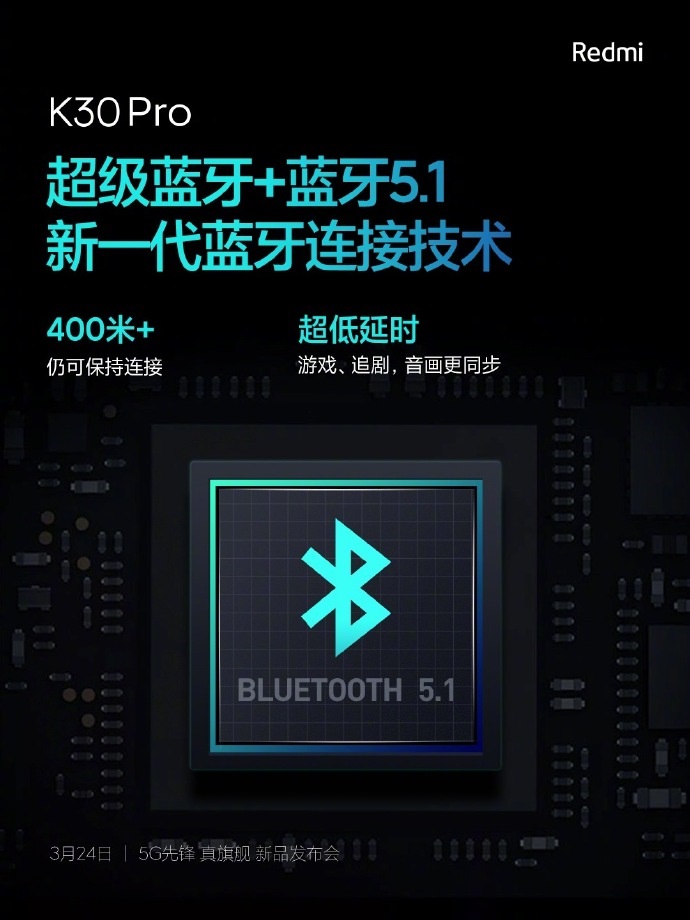
According to one of the posters, the Redmi k30 Pro will come with what is called “Super Bluetooth” along with Bluetooth 5.1. The image says with Super Bluetooth, the connection range is extended to up to 400 meters. The range for Bluetooth 5.1 is about 243 meters which means the Redmi K30 Pro has nearly double that range.
There is no explanation as to how the phone is able to extend its Bluetooth range but we expect more details will be disclosed at the launch.
The phone will also have Bluetooth 5.1 which provides low latency when connected to Bluetooth audio devices so your audio from games and movies sync properly.
[envira-gallery id=”311905″]
The manufacturer has also revealed that the Redmi K30 Pro will be able to connect to three networks at the same time with its 5G MultiLink feature. With this, you can connect to one 2.4GHz Wi-Fi connection, a 5GHz Wi-Fi connection, and a 4G or 5G mobile network to maintain a stable internet connection that comes in handy when playing online games.
The Redmi K30 Pro will be announced on March 24 in China. It is expected to make its global debut later but as the POCO F2.
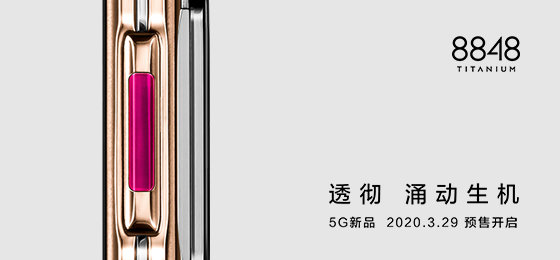
The year 2020 is expected to be headlined by 5G phones especially in China. Already, top brands like Huawei, Xiaomi, OPPO, Vivo have all launched some 5G models. Luxury brand 8848 Mobile isn’t planning to be left out of the 5G race as it announced its first 5G phone dubbed 8848 Titanium M6 in December last year. The brand is now set to launch the 5G phone in China.
A couple of teaser posters shared on 8848 Mobile’s Weibo page shows that the M6 smartphone will go on pre-sale on March 29. When that happens, the flagship phone will become the first 5G luxury phone, that is if we don’t count the custom versions of the Galaxy S20 and such like. The phone will come with a premium titanium body, the teaser hints. The teaser also promised a design crafted with the best form of craftsmanship.
Talking of the specs, the 8848 Titanium M6 is expected to feature a 6.01-inch AMOLED display and will be powered by the Qualcomm Snapdragon 865 chipset which brings dual-mode SA and NSA 5G bands. The smartphone will equally come with up to 12GB of RAM and a whopping 1TB of storage. We expect it to have other lower memory variants. On the camera end, t will have It also has a 64MP camera that can shoot 100MP photos.
We don’t have details of the pricing yet but the previous-generation 8848 M5 was released in August 2018 with a base price of 12,999 yuan (~$1,831). Thus, the M6 is expected to be higher than that. The luxury phone market is not a very popular one but since 8848 Mobile had kept faith with its product like, we want to assume it has enough buyers to warrant investing in 5G phone.
Huawei P40 series is slated to launch on March 26, almost a month later than previous years due to various factors such as coronavirus outbreak and Huawei ban. Nevertheless, the phones in the series have leaked multiple times over the past few months leaving nothing to be awed at while watching the launch online. Now, even the official wallpaper of the series is available to download, thanks to Ishan Agarwal, a popular leakster from India.
Chinese smartphone maker Huawei’s P series of premium smartphones debut in the first half of the year followed by Mate series in the second half. Lately, the P series has been performing extremely well in the camera department. Unsurprisingly, this year too will be no exception as a recent leak suggests beefy camera specs on the P40 Premium Edition, which at least on paper seems to be on par with Samsung Galaxy S20 Ultra.
Anyhow, we will know more about the P40 series when it will go official in a few days from now. Until then, all we can do is personalize our current smartphone with this simple yet inspiring official wallpaper of the series shared by Ishan on Twitter. This high-quality wallpaper comes in 7 MB in size with a pixel resolution of 1525 x 3218. If you liked it, then download it from the Google Drive link provided below.
We use cookies on our website to give you the most relevant experience by remembering your preferences and repeat visits. By clicking “Accept”, you consent to the use of ALL the cookies.
This website uses cookies to improve your experience while you navigate through the website. Out of these, the cookies that are categorized as necessary are stored on your browser as they are essential for the working of basic functionalities of the website. We also use third-party cookies that help us analyze and understand how you use this website. These cookies will be stored in your browser only with your consent. You also have the option to opt-out of these cookies. But opting out of some of these cookies may affect your browsing experience.
Necessary cookies are absolutely essential for the website to function properly. This category only includes cookies that ensures basic functionalities and security features of the website. These cookies do not store any personal information.
Any cookies that may not be particularly necessary for the website to function and is used specifically to collect user personal data via analytics, ads, other embedded contents are termed as non-necessary cookies. It is mandatory to procure user consent prior to running these cookies on your website.

 The Vivo S6 5G has a color gradient back which seems to be flanked with a 3D curved glass. Its upper half has a round-shaped camera system that seems to house four cameras. An LED flash appears to be positioned below the camera housing. The volume rocker and power key are present on the right edge of the device.