Xiaomi kicked off the year with a bang, taking the wraps off a new product dubbed the Mijia LED Bulb (Bluetooth mesh version). After been on crowdfunding at Xiaomi Mall in January 2020, the LED bulb has finally gone up for sale through Giztop.
You’d need to shell out $5.99 for a singled piece. You can get 3 pieces by spending just $12 extra (i.e. for $17.99). Those interested in purchasing ten pieces will end up shelling out $50, which means, ten Xiaomi Mijia LED Smart Bulb (Bluetooth Mesh Version) will set you back a reasonable $55.99.
The Xiaomi Mijia LED Smart Bulb can switch on and off without requiring you to get out of your bed. You can easily pair the bulb with smartphones, smart displays, smart speakers and various other devices that support Bluetooth mesh gateway function. It provides stable connectivity without using broadband and thus, effortlessly be controlled via a connected smartphone.
Moreover, the Mijia LED Smart Bulb allows you to adjust the brightness, as well as the color temperature at any time. Just like any other LED bulb, this is an energy-saving bulb that comes with a 5W power consumption rating. With impressive 500lm brightness, the Mijia LED Smart Bulb can light up a medium-sized room. You can adjust the color temperature between 2700-6500K. On top of that, the MIJIA LED Bulb (Bluetooth Gateway version) supports XiaoAI smart voice control. In short, you can turn the lamp off and on with just a word. You can use the MIJIA app for carrying out various functions such as setting the timer switch, delaying lights off, etc.
Aside from that, the MIJIA app comes in handy for grouping multiple MIJIA LED light bulbs, such as the main bedroom light bulb group, the kids’ room light bulb group, the second bedroom light bulb group, etc. By grouping, you can accomplish group control and real-time lighting status synchronization.
You can follow this link to check out more details about the Xiaomi Mijia LED Smart Bulb (Bluetooth Mesh Version) and place your order via Giztop.
The Gizmochina Coupons is a community that finds, reports and evaluates deals and coupons of Chinese products from online shops. Please visit it here to find more coupons to save money on mobiles and smart gadgets.
Apple iPhone SE 2 aka iPhone 9 has been in the news since past several weeks and was expected to get launched later this month, along with some other devices, including new generation of iPad Pro.
However, Apple was reportedly forced to change its plan and cancel the March launch event because of the coronavirus outbreak. As per the report, while the event has been cancelled, the company has just postponed the announcement and release date of the upcoming iPhone 9.
The decision of canceling the March 31st launch event from Apple comes as the Santa Clara County has temporarily banned mass gatherings of people due to the increasing number of coronavirus cases in the region.
Apple also reportedly considered holding the event elsewhere or announcing the new products through an online-only press event. While it’s still unclear what Apple has decided, it’s sure that the new devices are getting launched in a few weeks.
As for the iPhone 9, it seems that the coronavirus outbreak has really impacted the smartphone’s production and supply chain. It is now being reported that the device could get launched in June this year or could get further delayed, depending on the situation.
It is also being reported that the launch of the flagship iPhone 12 models will also get delayed from usual September to October or November this year. The report cites travel issues as hinderance which is preventing Apple from going forward as planned with the development of its next flagship handset.
Xiaomi-backed Redmi launched its Redmi K30 smartphone in China in December last year and the company has also confirmed an upgraded variant of the same, dubbed as Redmi K30 Pro.
Redmi’s General Manager Lu Weibing recently confirmed that the Redmi K30 Pro will be officially launched later this month in China, which will continue the mission and glory of last year’s K20 Pro.
Redmi K30 Pro Render
Now, it seems that the company has made a new marketing strategy to boost the upcoming flagship smartphone. As a part of that, the Redmi K30 Pro will be showcased in a movie as well as variety of TV shows in China.
Lu Weibing hinted about this strategy from the company by asking question about the same on micrblogging platform Weibo. When the company’s executive teases anything with a question, the brand usually has moved forward with the idea.
The Redmi K30 Pro is expected to come with 6.67-inch OLED Full HD+ display with in-screen fingerprint. It will feature a pop-up selfie camera and a 64-megapixel Sony IMX686 quad camera system on the back.
Under the hood, the device will come powered by the Qualcomm Snapdragon 865 SoC and may pack 4,700mAh battery with 33W fast charging support. It is speculated that there could be a variant of the phone called K30 Pro Zoom Edition.
While the launch of K30 Pro smartphone in China is confirmed to take place this month, it remains to be seen if the company opts for an offline press conference to do so. The company has scheduled a global launch event for Mi 10 series on 27th March, which will be live streamed.
Sensor Tower, an analytics platform which aggregates data on app downloads and usage for developers, has secretly collected data from millions of Android and iOS users through VPN and ad-blocking apps, reports Buzzfeed News.
The report adds that the company owns at least 20 Android and iOS applications with more than 35 million downloads. Out of those, Free and Unlimited VPN, Luna VPN, Mobile Data, and Adblock Focus were recently available in the Google Play Store while Adblock Focus and Luna VPN were available in Apple’s App Store.
However, Apple has now removed Adblock Focus while Google has removed Mobile Data after being contacted by BuzzFeed News. The companies are further conducting an investigation regarding this.
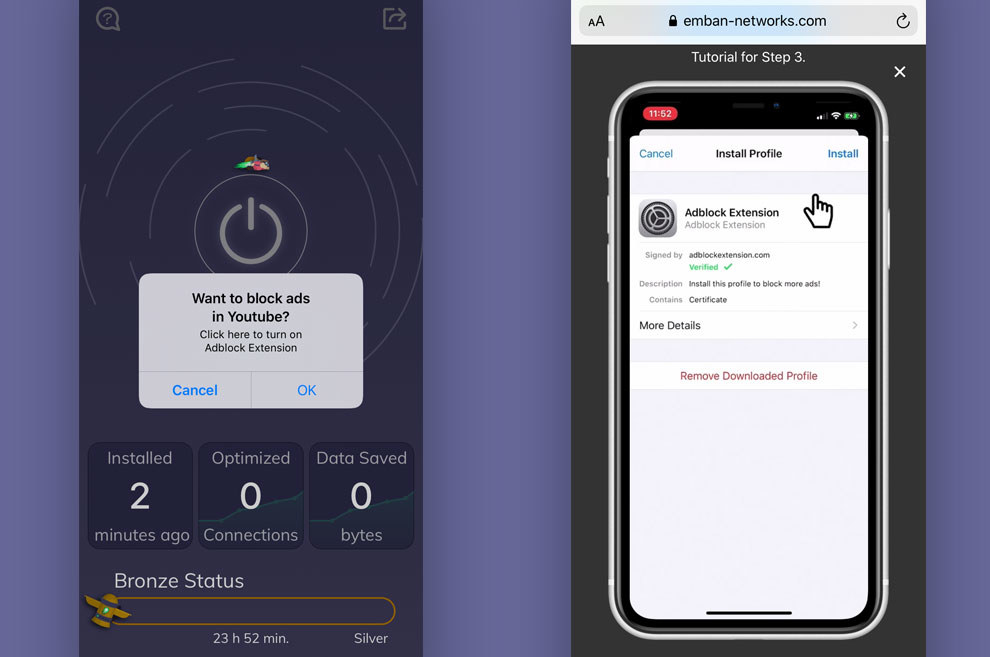
Here is how it all worked. When Sensor Tower’s app gets installed on the device, it asks users to install a root certificate, which enables Sensor Tower to monitor all traffic and data passing through the phone.
Sensor Tower bypasses Apple and Google’s restrictions on root certificate privileges by requiring users to install the certificate through an external website. The company says that it only collects anonymised usage and analytics data.
Interestingly, none of the applications have been tied to Sensor Tower on the App Store as they were listed under other company names. They were tied to Sensor Tower after BuzzFeed realised that the apps “contain code authored by developers who work for the company.” Apple spokesperson has confirmed that a dozen of Sensor Tower apps have been removed from the App Store due to violations.
Randy Nelson, Sensor Tower’s head of mobile insights, explains that the “vast majority” of the apps are “defunct and a few are in the process of sunsetting.” He doesn’t admit that the apps are now defunct because they were removed for policy violations.
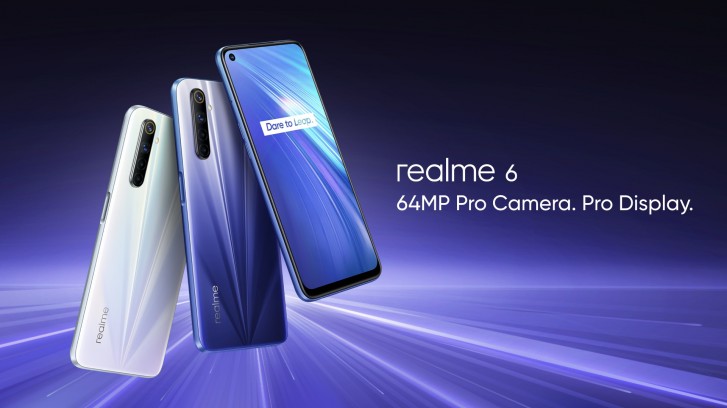
The Realme 6 and Realme 6 Pro smartphones had gone official in the previous week in India. As scheduled, the Realme 6 will be available for purchase for the first time in the country at 12PM (local time) today. The handset can be availed through Flipkart and Realme India’s website.
Realme 6 price and first sale offers
The first sale will be carried out through the above mentioned platforms until the Realme 6 runs out of stock. The Realme 6 models such as 4 GB RAM + 64 GB storage and 6 GB RAM + 128 GB storage will be with respective price tags of Rs. 12,999 (~$175) and Rs. 14,999 (~$203). The 8 GB RAM + 128 GB storage edition of the Realme 6 is priced at Rs. 15,999 (~$216). The handset can be bought in colors like Comet White and Comet Blue.
ICICI Bank credit card owners can avail a discount of Rs. 750 on Flipkart. A 5 percent price cut on EMI transactions is available for owners of Axis Bank credit and debit card owners.
Arrived as the successor of Realme 5 Pro, the Realme 6 is equipped with a 6.5-inch full HD+ display with a single punch-hole that houses a 16-megapixel selfie snapper. The rear side of the phone features a quad camera setup that includes a Samsung GW1 64-megapixel main lens, an ultrawide lens of 8-megapixel, a macro lens of 2-megapixel and a portrait lens of 2-megapixel.
The MediaTek Helio G90Tv drives the Realme 6 handset. It is equipped with LPDDR4x RAM and UFS 2.1 storage. The handset has a 4,300mAh battery that supports 30W VOOC 4.0 Flash Charge technology. It has a side-facing fingerprint reader. The Realme UI based Android 10 OS comes preloaded on the Realme 6.
Vivo recently launched its new smartphone named Vivo Z6 which comes with support for 5G connectivity. Now, the company is all set to launch another smartphone with 5G support pretty soon.
The company has today confirmed that the Vivo S6 smartphone is coming soon to Vivo’s home country China. Vivo has shared a poster to announce this, which also confirms support for 5G connectivity on the upcoming S6 device.
While Vivo has confirmed that the Vivo S6 5G is coming soon, the company has not yet revealed exact launch date. However, given the announcement from Vivo, we expect the smartphone to go official in this month only.
As for the features, we expect the device to come with support for dual-band 5G connectivity, including SA and NSA. Thus, it could come powered by the Qualcomm Snapdragon 765G SoC, making it an upper mid-range offering.
There’s also a possibility that the company could opt for Samsung Exynos series processor, and if that’s the case, then we expect it to pack Exynos 980. The Vivo S5, launched in November last year, comes with a focus on the front-facing camera and thus, the upcoming Vivo S6 could also have an innovative selfie snapper.
However, these are just speculation from our side and the company has not yet confirmed its features. But we expect Vivo to start sharing the phone’s features and key specification on its social media platform in the coming days.
Xiaomi India will be launching the Redmi Note 9 series tomorrow. Leaks surrounding it have revealed that it includes three devices such as the Helio G70 powered Redmi Note 9, Snapdragon 720G fueled Redmi Note 9 Pro and another phone called Redmi Note 9 Pro Max. Among these, the Redmi Note 9 Pro have appeared in multiple leaks. Ahead of tomorrow’s launch, a Vietnamese Youtuber shared some live shots of the smartphone.
The new images have for the first time revealed the front design of the Redmi Note 9 Pro. As it can be seen, the handset is equipped with a top-center positioned punch-hole like Samsung’s Galaxy S20 series. It is said that the phone features a 6.64-inch IPS LCD display that produces full HD+ resolution.
The bezels surrounding the display are not as thin as flagship models, but they are at an acceptable level. The top bezel of the phone house the speaker. It is said to be equipped with a front-facing camera of 16-megapixel.
The Redmi Note 9 Pro has the fingerprint reader embedded in the power button on the right edge. The back panel of the phone has a square-shaped camera module. Recent reports have revealed that it comprises a 48-megapixel main lens, an 8-megapixel ultrawide shooter, a 5-megapixel macro lens and a 2-megapixel depth sensor.
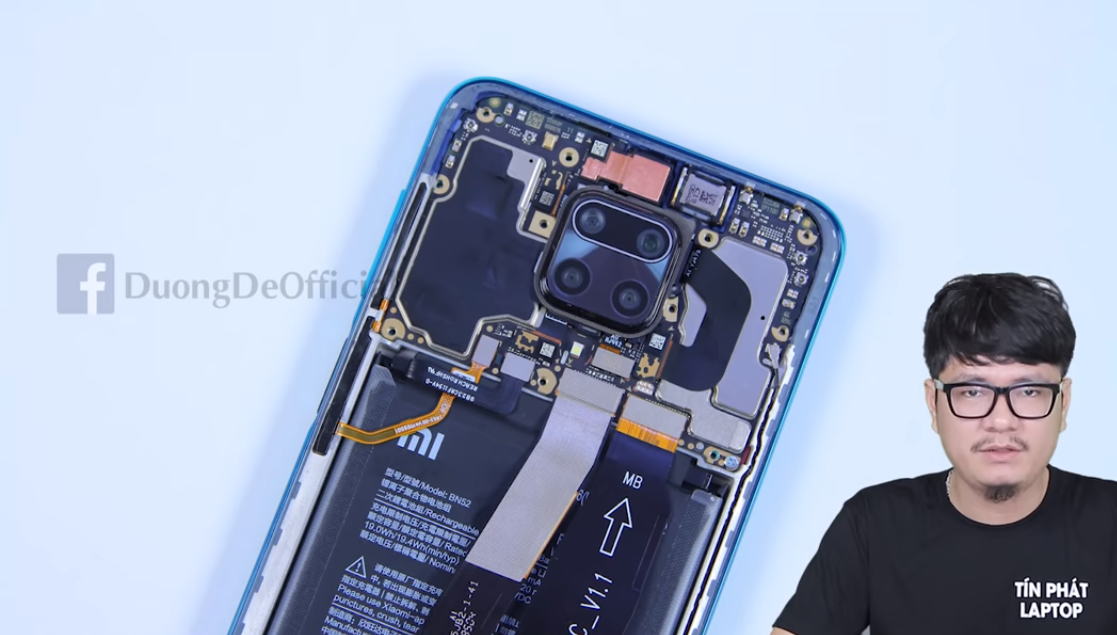
The screenshot above shows the innards of the phone. The phone is equipped with a dedicated microSD card slot. The bottom edge of the phone has a 3.5mm audio jack, a USB-C port, and an external speaker.
The Snapdragon 720G which is only a bit weaker than the Snapdragon 730G powers the Redmi Note 9 Pro. The handset has reached a score of 274K+ on AnTuTu benchmarks. The Note 9 Pro is expected to house a 5,020mAh battery that supports 18W fast charging.
The Redmi Note 9 Pro is expected to debut in India in RAM options of 4 GB and 6 GB and storage sizes of 64 GB and 128 GB. The handset is speculated to be priced at $192. Aurora Blue, Glacier White, and Interstellar Black are the rumored color editions of the Note 9 Pro.
While the rumor mill is speculating that the Galaxy M21 will go official on March 16, Samsung is yet to release an official confirmation on it. Recent reports have revealed that the company will be also announcing the Galaxy M11 phone in this month. Ahead of the rumored launch, the smartphone appeared on Google Play Console through which its key specs and an image have been revealed.
Samsung Galaxy M11
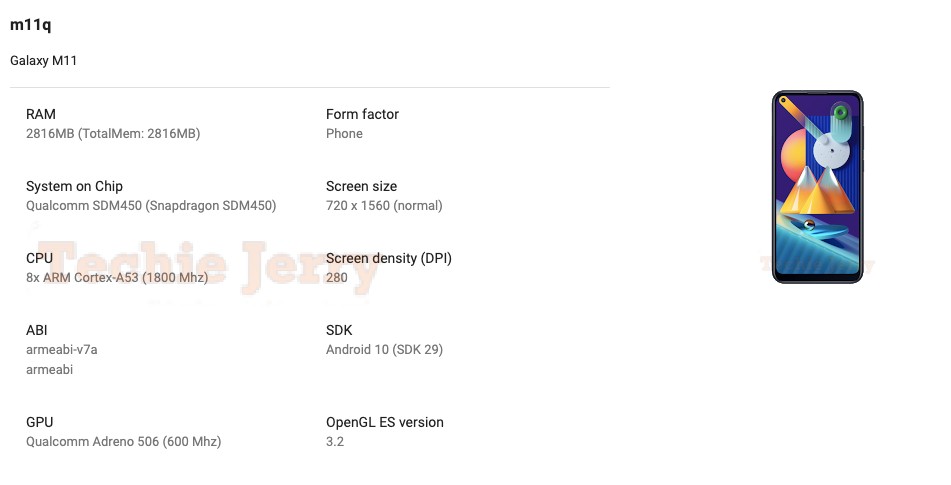
The Google Play Console listing shows that the upcoming Galaxy M11 is equipped with a punch-hole display. Except for the thick chin, the other bezels surrounding its screen are slim. The volume and power buttons are available on the right side of the phone.
The display size is not known, but it has been found that it supports 720 x 1560 pixels resolution. Hence, the phone will offer an aspect ratio of 19:9. It is not known whether the phone features an OLED or LCD panel. The display of the Galaxy M11 offers a pixel density of 280ppi.
The listing further reveals that the modest Snapdragon 450 mobile platform that tags along Adreno 605 graphics will be powering the device. The SoC will be coupled with 4 GB of RAM. The handset is loaded with Android 10 OS. The other specs of the device are currently under the wraps.
The arrival of the Galaxy M11 seems to be close at hand as it has been spotted at multiple places like Thailand’s NBTC certification site and Wi-Fi Alliance database. A recent report had claimed that the Galaxy M11 will be arriving in a new violet color. The handset will be replacing the Galaxy M10s phone from last year.
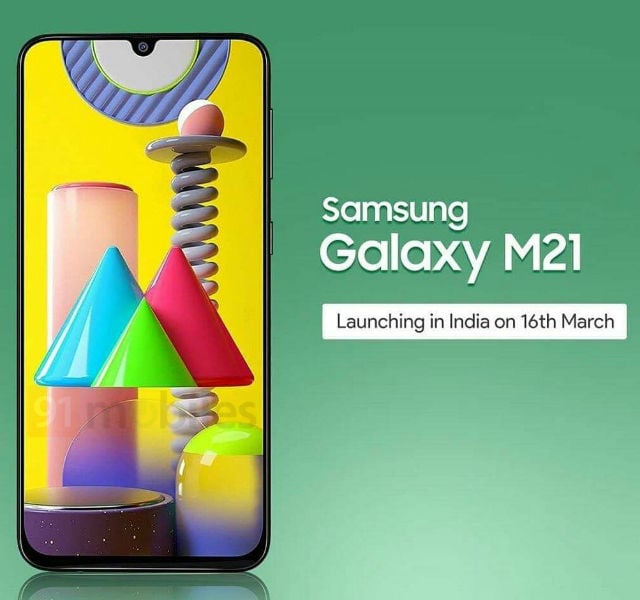
Samsung is expected to announce the Galaxy M21 phone on March 16. A leaked poster of the phone that was spotted yesterday revealed that it will be sporting an Infinity-U notch display design. The handset is rumored to borrow its specs from the Galaxy M30s from last year. Hence, it is expected to feature a 6.4-inch display, 48-megapixel triple cameras, Exynos 9611 chipset and 6,000mAh battery.
Samsung has recently launched the Galaxy M31 smartphone in India. Recent reports have revealed that the South Korean company is also gearing to launch the Galaxy M21 phone as the successor for last year’s Galaxy M20. A recent report had revealed that the Galaxy M21 will be made official on March 16 in India. 91mobiles has acquired a leaked poster of the phone. It not only confirms the same launch date for India, but also reveals its front design.
The Galaxy M20 had featured an Infinity-V notch screen. The leaked poster shows that the company has settled for a Infinity-U notch display design for the upcoming Galaxy M21. The side bezels appear thin and the bottom bezel of the phone is slightly thick. The volume controller and power button can be seen on the right edge of the phone.
Image Courtesy: 91mobiles.com
Recent reports have revealed that the Galaxy M21 will be arriving with the same specs as the Galaxy M30s which debuted in September 2019. The publication has claimed after its March 16 launch in India, it will be available for purchase through offline and online channels simultaneously.
The Samsung Galaxy M21 is expected to house a 6.4-inch sAMOLED display that offers Full HD+ resolution. The Exynos 9611 chipset will be the driving force of the smartphone. The phone could be coming to the market in 4 GB and 6 GB RAM editions. The handset may offer users with storage choices like 64 GB and 128 GB.
The Galaxy M21 will be running on the latest Android 10 OS coupled with One UI 2.0. It will draw power from a 6,000mAh battery. The rear shell of the smartphone houses a triple camera setup with a 48-megapixel main lens. It will also be equipped with a rear-facing fingerprint reader. At present, there is no word on the pricing of the Galaxy M21.
Vivo NEX 3S 5G is official: the upgraded version of the revolutionary NEX 3 just debuted as a very interesting affordable flagship and it will go on sale on March 14 in China. But the competition is very fierce when it comes to affordable flagships: is the Vivo NEX 3S 5G really the best choice for the money asked? We think there is no better way to know it than comparing it to the best affordable Chinese flagships unveiled in the most recent period. And we are talking about Oppo Find X2 and Xiaomi Mi 10, two devices with amazing specifications that will not carry the highest prices in the market. Below you can find an in-depth specs comparison.
Vivo NEX 3S 5G vs Oppo Find X2 vs Xiaomi Mi 10
Xiaomi Mi 10
Vivo NEX 3S 5G
Oppo Find X2
DIMENSIONS AND WEIGHT
162.6 x 74.8 x 9 mm, 208 g
167.4 x 76.1 x 9.4 mm, 219.5 g
164.9 x 74.5 x 8 mm, 196 g
DISPLAY
6.67 inches, 1080 x 2340p (Full HD+), Super AMOLED
6.89 inches, 1080 x 2256p (Full HD+), Super AMOLED
Triple 64 + 13 + 13 MP, f/1.8 + f/2.5 + f/2.2
16 MP f/2.1 front camera
Triple 48 + 13 + 12 MP, f/1.7 + f/2.4 + f/2.2
32 MP f/2.2 front camera
BATTERY
4780 mAh, fast charging 30W, Fast wireless charging 30W
4500 mAh, fast charging 44W
4065 mAh, fast charging 65W
ADDITIONAL FEATURES
Dual SIM slot, reverse wireless charging 10W, 5G
Dual SIM slot, 5G, Waterfall display
Dual SIM slot, 5G, IP54 splash proof
Design
The presence of a Waterfall FullView, notch-less and holeless display would definitely let me go for the Vivo NEX 3S 5G if I had to choose the device with the most amazing design. But let’s explain those three terms better. The Waterfall display of the NEX 3S 5G is a display with extremely curved edges reaching almost 90 degrees: thanks to this solution, not only the phone provides a very high screen-to-body ratio, but it also replaces the physical buttons with a side touch technology. Further, it is a display without notch and holes since the phone sports a motorized pop-up camera. When it comes to the whole body of the devices, I personally prefer the Oppo Find X2 since it comes in a ceramic version and it is splash proof and dust resistant with the IP54 certification. I would not go for the Xiaomi Mi 10 at all.
Display
Oppo Find X2 is equipped with the king of displays: a 6.7-inch AMOLED panel with a high Quad HD+ resolution, a high 120 Hz refresh rate and a high 240 Hz touch sampling rate, a very high brightness and an amazing color accuracy (100% DCI-P3 coverage and 0.8 JNCD certified). The silver medal goes to the Xiaomi Mi 10 sporting a Full HD+ AMOLED panel with a 90 Hz refresh rate. Unfortunately, Vivo NEX 3S 5G does not provide a high refresh rate, but it has a wide 6.89-inch panel which is even HDR10+ compliant, so still a great display. But obviously, Oppo Find X2 wins the comparison.
Hardware/Software
Oppo Find X2, Vivo NEX 3S 5G, and Xiaomi Mi 10 5G are all powered by the Qualcomm Snapdragon 865 chipset supporting dual-mode 5G connectivity and paired with up to 12 GB of RAM and up to 256 GB of internal storage. Vivo NEX 3S 5G is slightly more advanced because it packs a UFS 3.1 internal storage, while Xiaomi Mi 10 5G and Oppo Find X2 come with UFS 3.0 storage. But this does not mean Vivo NEX 3S 5G will automatically offer the highest performance as software optimization will play an important role here. Android 10 is installed out of the box and highly-customized by ColorOS 7, Funtouch OS 10 and MIUI 11, respectively.
Camera
While Xiaomi Mi 10 offers the most impressive main sensor in its quad rear camera, it does not offer so much when it comes to secondary sensors. Well, it can record 8K videos, but unlike Oppo Find X2, it lacks a telephoto lens. On the paper, I personally prefer the Oppo Find X2 due to the presence of a telephoto lens and a 64 MP main sensor (both supporting OIS), as well as a higher-end selfie camera. Vivo NEX 3S 5G is inferior to both: despite coming with a telephoto sensor, it does not support OIS, either for the main sensor of its triple camera. Further, the main sensor is a midrange-class Samsung ISOCELL Bright GW1.
Battery
The battery is one of the strongest points of Xiaomi Mi 10: despite being a more affordable version, it has an even bigger battery than Mi 10 Pro with a huge 4780 mAh capacity, and it will probably last a lot more than Oppo Find X2 and Vivo NEX 3S 5G. Further, unlike its two rivals, it features both fast wireless charging and reverse wireless charging. Vivo NEX 3S 5G comes right after in terms of battery life, while Oppo Find X2 has the fastest charging technology.
Price
Oppo Find X2 starts from €701/$792 in China, Vivo NEX 3S 5G will be priced €630/$712 in its base variant, and Xiaomi Mi 10’s listing price will be just €530/$599 for the base variant. If we exclude battery life, Oppo Find X2 is way superior to Vivo NEX 3S 5G and Xiaomi Mi 10 5G in terms of overall specifications. So if you want the best phone, you should go for it unless you need a very long battery life: in that case, Xiaomi Mi 10 5G is a more convincing device. Vivo NEX 3S 5G offers the most impressive aesthetics and a bigger display, but it lacks a flagship camera and a high refresh rate that is the trending feature of the moment.
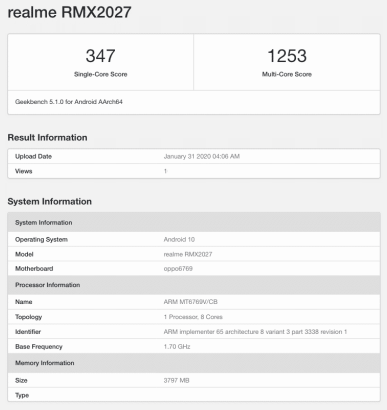
Xiaomi is expected to launch the Redmi Note 9 series in India on March 12. The company is yet to confirm the names of the models that would make up the series. There are talks of a Redmi Note 9 Pro Max model but going by precedence, the company is expected to launch the Redmi Note 9 and Redmi Note 9 Pro. A Xiaomi model believed to be the Redmi Note 9 has appeared on the database of benchmarking app GeekBench.
The device appears as Xiaomi Merlin and from the listing, we can gather that the device will run on Android 10 operating system out of the box. The most interesting part is the processor onboard the device. Although the name wasn’t explicitly stated, the chipset onboard is given as ARM MT6769V/CZ. It has an octa-core architecture and is a MediaTek chipset. We’ll need to draw reference with the Realme C3’s GeekBench listing to confirm this is likely the Helio G70 SoC. The Geekbench single-core and multi-core tests scores of 345 points and 1247 points respectively align with those of the MediaTek Helio G70 onboard the device.
Realme C3 GeekBench listing
The device is also listed to have 6GB of RAM onboard.
The Huawei Mate 30 Pro doesn’t have physical volume control buttons, thanks to its waterfall display. To control the volume, you have to double-tap either side of the phone before an on-screen volume control pops up which you can slide up or down.
The above is one example of how physical buttons have been replaced. Another example is the AirTriggers on the ASUS ROG Phone II which are designed to replicate the shoulder or trigger buttons of a gamepad.
Sentons is the company that made the tech for the ROG Phone II and their new goal is to replace the physical buttons on phones with their own solution which is called SDS Buttonbar, where SDS is short for Software-Defined Surfaces.
SDS ButtonBar is said to be a button replacement solution that is “designed to provide advanced virtual button functionalities”. The technology allows manufacturers to place 20 tiny sensors in the phone where the physical buttons usually reside. The sensors occupy an area that measures just 1.9-inches and can be placed anywhere inside the phone. These sensors function as the volume and power buttons when touched or pressed.
Sentons says their solution is designed to reject false touches and can identify touches and presses. It is also said to work with devices that are designed to be waterproof.
The partnership with Foxconn, which is one of the biggest contract manufacturers in the world, should result in more manufacturers adopting the technology.
While ButtonBar is the solution it is advertising, Sentons has other solutions such as Slider Bars which can be used for gesture navigation such as scrolling or as a virtual zoom button for the camera. You can also have squeeze sensors similar to what is available on the Pixel phones, that will allow you to launch apps or carry out pre-configured actions.
Sentons solutions can be applied to other devices too such as smartwatches. With this application, you can totally ditch the crown or buttons on a watch and instead control the watch by sliding on the sides of the case or squeezing the frame to begin tracking.
There are several applications and we look forward to seeing the technology becoming mainstream.
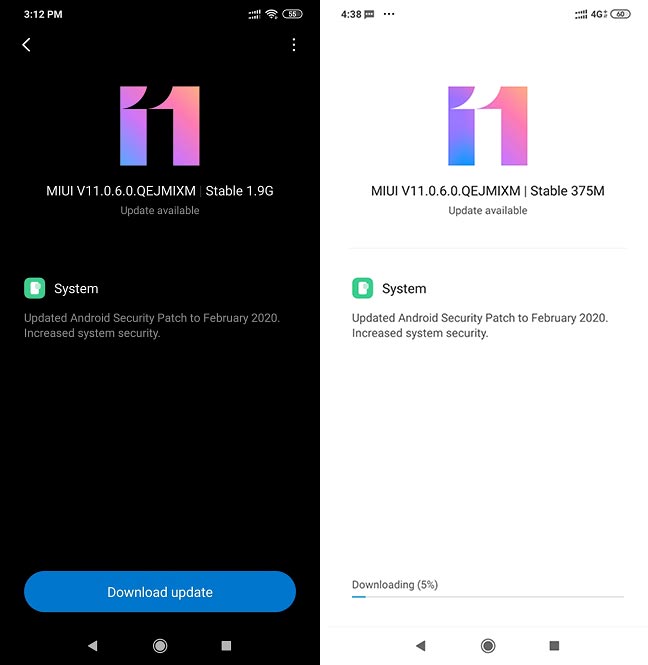
After a long wait, Xiaomi has finally commenced the Over-the-air (OTA) push of MIUI 11 which brings ANdroid 10 to the Poco F1. The new update ushers in the MIUI V11.0.6.0.QEJMIXM and also delivers Android security patch for February 2020 for the device.
The Poco F1 was released by Xiaomi in 2018 as a flagship killer. The device packs decent hardware, including a Snapdragon 845 flagship SoC. It ran on Android 8.1-based MIUI 9. The device was later updated to Android 9 last year. In January 2020, Xiaomi commenced the rollout of Android 10-based MIUI 11 to the device but soon halted the process due to discovery of several bugs on the software.
The Android 10 update comes with a file size of 1.9GB while the February 2002 security patch has a size of 375MB. We didn’t get to see the changelog but we expect the company to have fixed the bugs detected on the earlier release.
Android 10 is a big update that brings a lot of changes alongside the features of the new MIUI 11 custom ROM. Starting with the visual aspects, you get slightly softer icons, a system-wide dark mode, new Mi Lan Pro system font and improved always-on display functionality. There are also new animations, themes, wallpapers and improved notification system among others.
MIUI 11 also delivers an enhanced audio experience with all-new dynamic natural sound effects and alarms. Xiaomi also announced the new Mi Go Travel suite which will help you with booking tickets for a broad range of transport ranging from aeroplane to rail and bus. The update also brings an improved currency converter and an extreme power-saving m
If you are yet to get the OTA push on your device, you can follow the source link to download it manually.
Update: The TENAA listing has been updated with images of the phone which have now been added below. The images show the phone will have a punch hole at the top left corner of the screen for the selfie camera. There is also a fingerprint scanner on the back of the phone.
[envira-gallery id=”309594″]
Honor may soon announce a mid-range smartphone in China seeing as TENAA has recently published the specs of a phone with model number AKA-AL10.
The Honor AKA-AL10 has a 6.39-inch display with a 1560 x 720 resolution. Unfortunately, there are no images, but from the resolution, we can tell it has a punch-hole display just like the recently announced Huawei P40 Lite E.
The phone is powered by a 2.0GHz octa-core processor. We are not sure about the identity of the processor but we know it is neither the Kirin 710 or Kirin 810 as they are both clocked at 2.2GHz. Our guess is the processor is from MediaTek and might be the Helio P22.
The Honor phone will come in 4GB RAM and 6GB RAM variants with 64GB and 128GB of built-in storage respectively. TENAA says it has support for MicroSD and you will be able to add up to an additional 512GB of storage.
On the back of the Honor AKA-AL10 are a 48MP primary rear camera and a 2MP depth sensor. The selfie camera is an 8MP sensor.
Honor will ship the phone with Android 10 out of the box and also include a 3900mAh battery. TENAA does not mention a fingerprint scanner is present on the phone but it should have support for face unlock.
The phone weighs 176 grams and measures 159.81 x 76.13 x 8.13 millimeters. It will be available in Black, Blue Water Emerald, and White.
Apple is working on its new iOS 14 mobile operating system as well as iPadOS 14. While the company has not yet announced anything about it, latest report indicates that the newer version will come with improved system-wide support for mouse cursors.
A report from 9to5Mac indicates that the mouse support with iOS 14 and iPadOS 14 will be much richer. Apple has already introduced rudimentary mouse support but it is added deeper into the accessibility menu.
It is said that several mouse-related features of the Mac will be brought to the iOS with the new update. For instance, different types of pointers will show up depending on where the mouse hovers. Currently, it just shows a semi-opaque circle that has a dot in the middle.
Along with that, it is reported that Mac-like gestures like tapping with two fingers to right click will also be introduced with iOS 14.
The build for iOS 14 reviewed by 9to5Mac also has references to two new Smart Keyboard models. This is in line with the previous report which claimed that there was a new Smart Keyboard on the way with a built-in trackpad.
There’s also a reference to “tap to click” setting which indicates that the trackpad will have some sort of depression, probably with some kind of haptic feedback. We expect to know more about all this in the coming weeks or months.
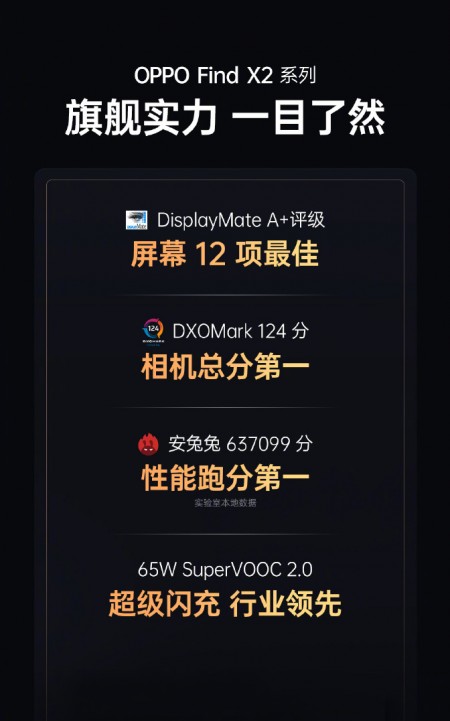
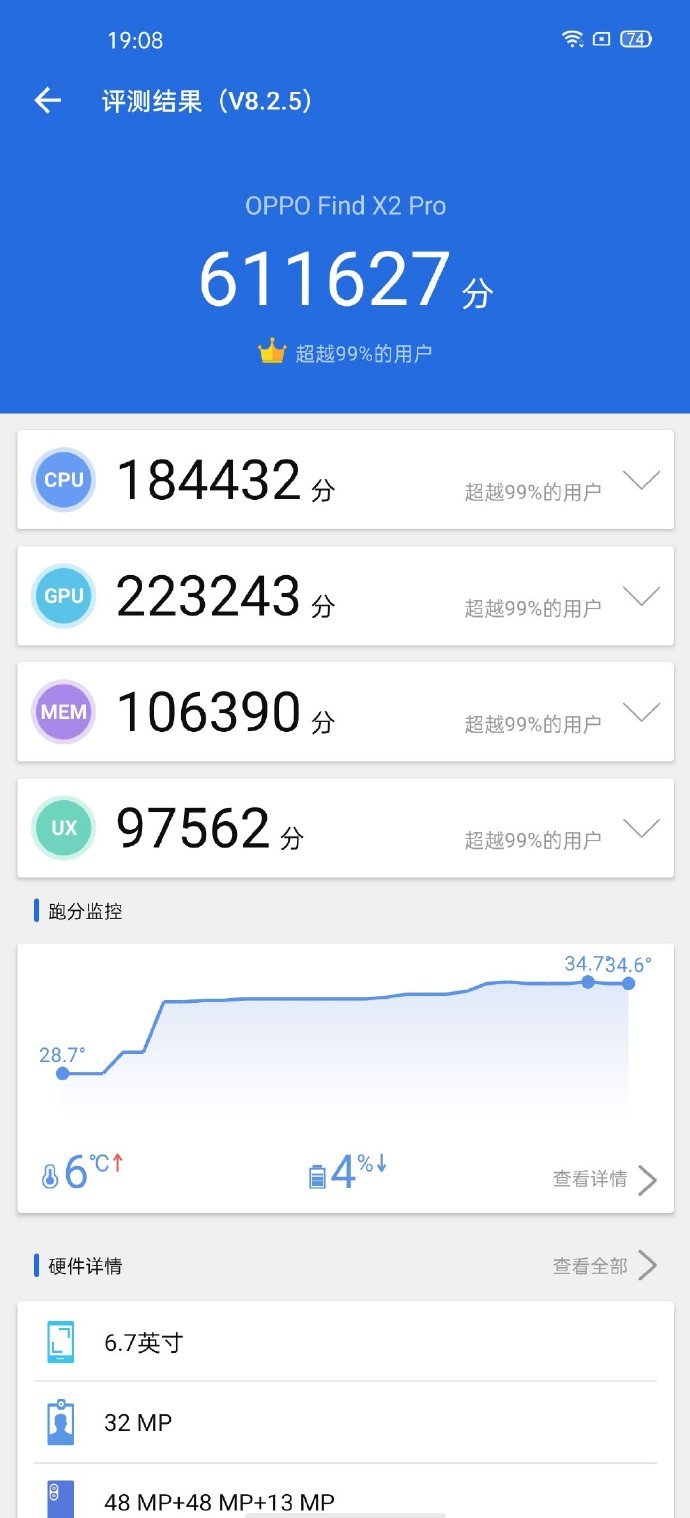
Some time ago, it was discovered that some OEMs tweaked their smartphones to detect when a benchmark app is running in order for the processor to run at full throttle. That practice may have stopped but OEMs still try to outpace rival models on benchmark app. AnTuTu has come to be recognised as one of the most popular apps for benchmarking smartphones and tablets. Of late, we have seen a streak of new flagship smartphones, each cruising past the previous model on AnTuTu. The Find X2 Pro is the newest flagship in recent times and OPPO says it was able to achieve the highest score on AnTuTu.
OPPO Find X2 Pro scored 637,099 points which OPPO claims is the highest score recorded on the platform by Snapdragon 865-powered models. We must add, that OPPO admitted that the benchmark test was conducted using ice-sealed mode in the laboratory. This resulted in externally-assisted heat dissipation, something that cannot be achieved under room temperature. So, the score listed by AnTuTu for the Find X2 Pro is considerably lower – 611627 points.
We can’t rely on a test that wasn’t conducted under normal conditions to judge how the phone fare but then, the device is a decent flagship model that can stand on par with other SD 865 models. For comparison, the Black Shark 3 which is a gaming phone scored 620,952 points while the upcoming Nubia Red Magic 5G has a score of 633,724 points.
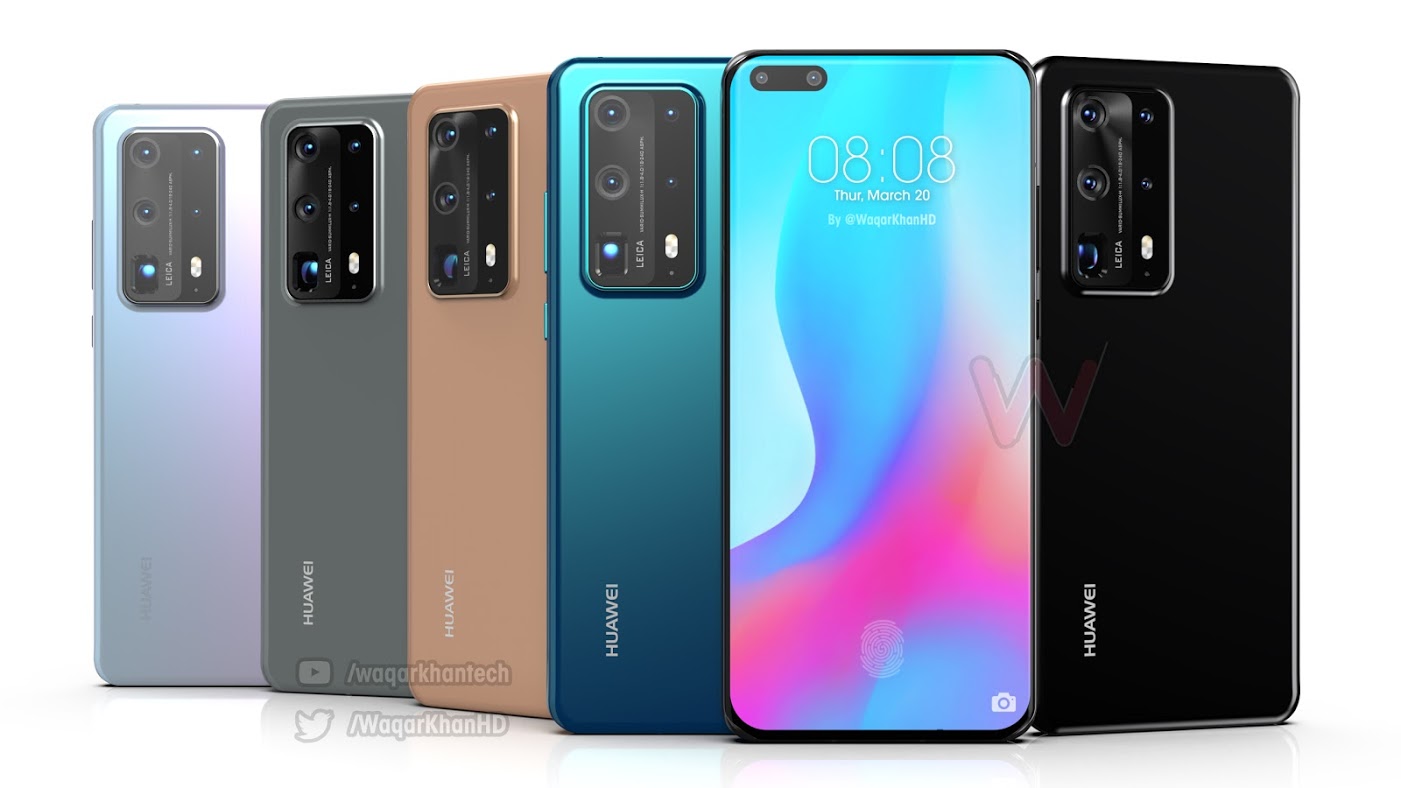
Earlier today, Huawei officially confirmed that the P40 series will be released globally via an online event on March 26. The company’s P-series has always been a special lineup for tech enthusiasts across the world as the brand has upped the bar in smartphone photography every year. This year’s P40 series is even more special. Rivals like Xiaomi, OPPO, and even Samsung have upgraded the camera departments on their 2020 flagships. And Huawei will have to prove that it’s still the best in the business by surpassing these top-end camera flagships!
Huawei P40 concept renders by WaqarKhanHD
I know we are all looking forward to the new P40 Pro and we’ve got some juicy details about the upcoming device. In a closed-door session with Huawei about the upcoming model, the company briefed us about the Huawei P40 Pro. Of course, the company didn’t give out specific hardware details about the device, but it has given us a solid direction on what to expect from the series on March 26.
Huawei P40 series “Guarantees New Records” In Mobile Photography
Okay, I know this is a bold statement. But it’s not from me, I’m directly quoting the Huawei representative who briefed us about the phone.
Let me put you in the right direction. The Huawei P30 series took smartphone photography to new heights. It came with the brand new custom RYYB sensor instead of a traditional RGB, a first in the smartphone industry. Second, it came with a ‘Periscope Camera’ which offered insane zoom capabilities. Today, P30 Pro’s tech might not feel like much, but back in March 2019, this kind of tech was never before seen on a smartphone camera.
Now coming to 2020 Huawei P40 Pro, what does Huawei mean when it says it ‘Guarantees New Records’ in smartphone photography?
They did give us a clue. The Huawei P40 series will build upon the technologies introduced in the P30 series last year. The Huawei P40 Pro and probably the standard P40 model too will feature the company “Second Generation Persicope Zoom Camera“. The company confirmed this at the meeting.
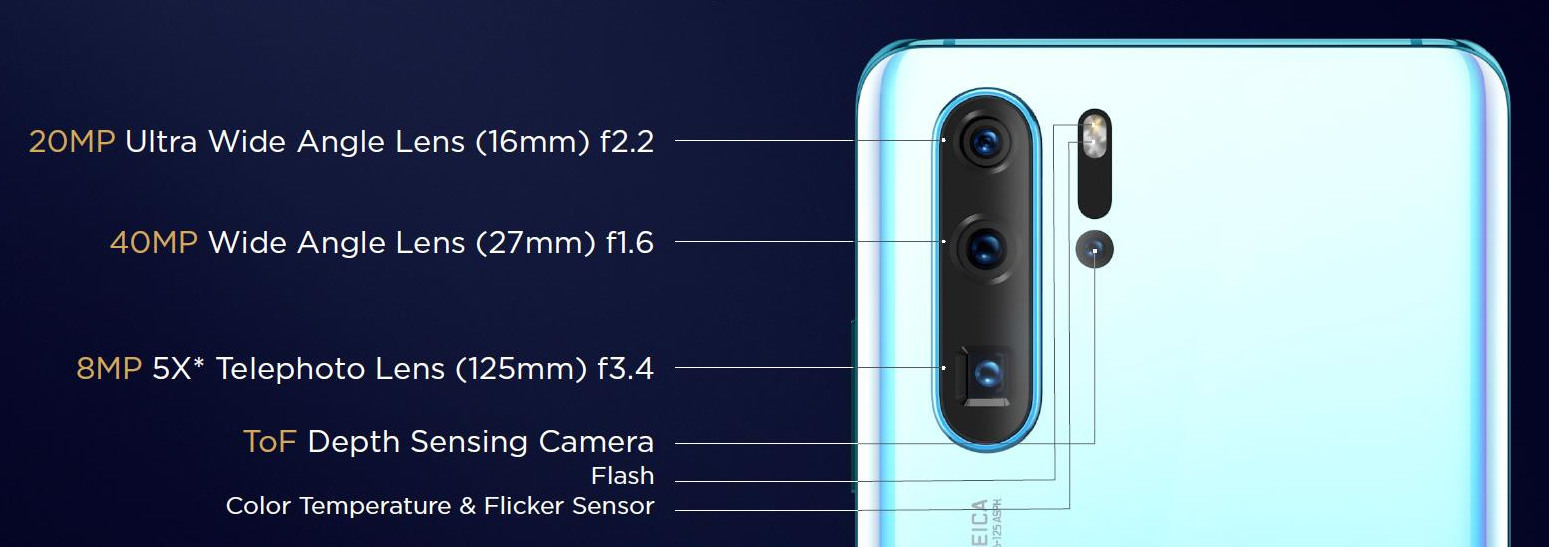
Huawei P30 Pro’s camera breakdown
But what can we expect from the “second-gen” tech? To recall, the Huawei P30 Pro offered 5x optical zoom, up to 10x hybrid zoom and 50x digital zoom.
And from what we heard at the meeting, it looks like the second-generation tech will increase the ‘optical zoom capabilities’ and also improve its hybrid zoom range as well.
Huawei P40 is inspired by the ‘Eagle Eye’
At the briefing, Huawei mentioned how an eagle could spot its prey from nearly 3kms away with great resolution and clarity. That’s what the company is aiming for here. Huawei said that software will also play a major role in the P40 series’ zoom capabilities. This has got us thinking that the company will push the 10x hybrid zoom barrier with the P40 Pro. At present, the top-end flagship smartphones from rival brands all max out at 10x hybrid zoom, and if Huawei manages to increase this range, it will be a new breakthrough in smartphone zoom technology.
AI will also play a huge role in the P40 series. Huawei revealed that the P40 lineup will come with the highest AI capability “never before seen” on a smartphone. The Huawei Kirin 990 5G chip that’s expected to power the P40 series has come out top on AI benchmarks and the company will be looking to take full advantage of this chip on the new lineup.
Huawei is Completely Invested in Its RYYB filter tech
When I asked the Huawei representative if the RYYB tech will make a comeback in the new Huawei P40 series, he said: “Huawei has invested a lot in this tech and wouldn’t want it to go to waste”. This basically means that the P40 series will continue to use a custom sensor with an RYYB filter. To recall, the P30 Pro featured the custom IMX650 RYYB sensor. Rumors state that the new P40 series will have the custom IMX700 Sony sensor with the same RYYB filter. But the company hasn’t confirmed the phone’s camera specifics.
Huawei P40 Series will Offer ‘New Material’ Options
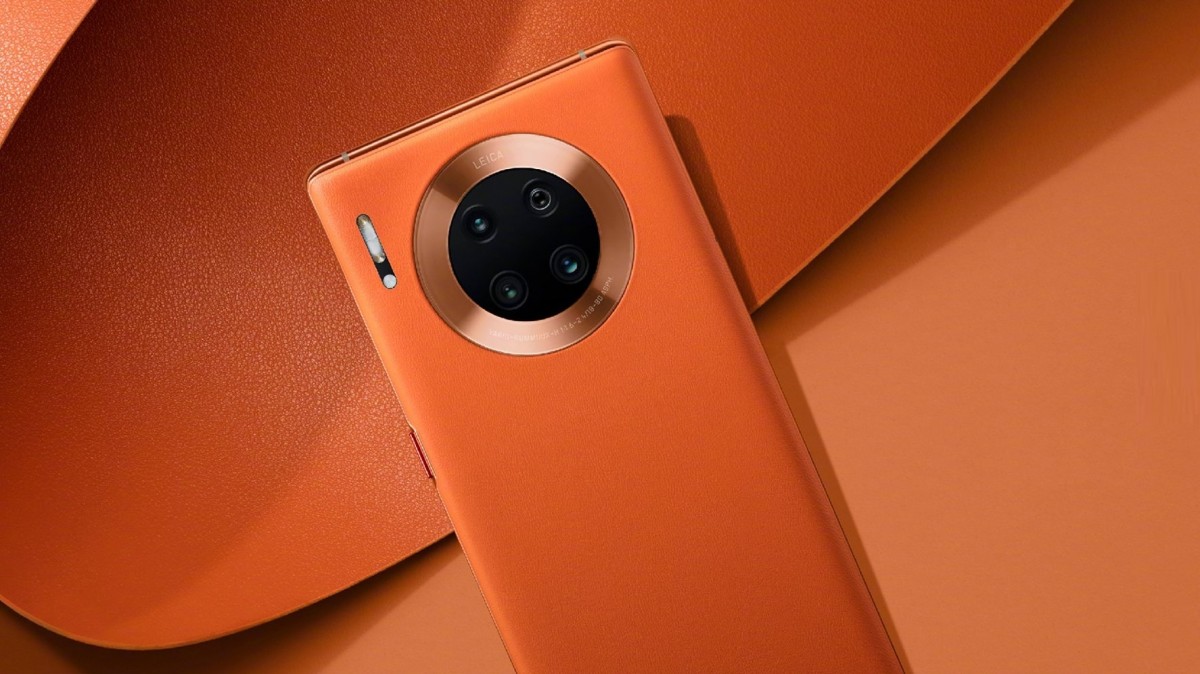
If you recall, the Huawei P30 series got some really beautiful color options like Aurora and Amber Sunrise. Then the Mate 30 series got these two really cool Vegan Leather variants in orange and forest green colors. The company confirmed that it will add ‘New Material’ options for the Huawei P40 lineup. Unfortunately, it didn’t talk about what kind of materials to expect. All it said was the company will continue to work on colors, materials, and finish of its smartphones to offer unique options to its users.
Huawei Mate 30 Pro 5G Vegan Leather Orange
Huawei even offered a ‘Hands-on’ experience to attendees, but unfortunately, I couldn’t try it out. A handful of journalists did get to touch and feel the phone that was hidden in a sensory box (see image below). They said that the phone had a large camera bump and the camera housing felt in line with what the leaks had revealed earlier. So this likely means the P40 Pro will have a rectangular camera housing, much like the Galaxy S20 series. Plus, the phone was curved on both sides.
Source: Gizmochina
You couldn’t see the phone, but could touch and feel it | Source: Gizmochina
Huawei representatives also talked about how it is building its AppGallery app store for Huawei smartphones. The company revealed that the AppGallery is the third largest app store in the world and is available in over 170+ countries across the globe. The app store has more than 400 million monthly active users right now.
Huawei P40 Pro Source: Render by 91Mobiles
The Huawei P series has always been a camera-centric lineup. And from what we heard from the company recently, the P40 series will have exciting upgrades in the camera department. There are a lot of details we still don’t know about the upcoming device, but hopefully, we can bring you more details before the official launch on March 26!
If you are expecting OnePlus will announce a 4G phone among its next lineup, that will not be happening. The official OnePlus Twitter account has revealed that its upcoming lineup will be 5G ready which means there will be no new OnePlus 4G phone, at least with the upcoming lineup.
OnePlus is expected to announce the OnePlus 8 series next month. Both the OnePlus 8 and OnePlus 8 Pro will be powered by Qualcomm’s processor which is the Snapdragon 865. A follow-up tweet by Pete Lau (@PeteLau) confirms that.
OnePlus has worked with Qualcomm since our start. We kicked off the 5G era with them, and we can't wait to see what's next. @cristianoamon@Qualcomm
The Snapdragon 865 doesn’t have a built-in modem but it is shipped to manufacturers with the Snapdragon X55 5G modem. This means any phone with a Snapdragon 865 processor should have 5G support out of the box, right? No.
iQOO has demonstrated that you can have a 4G phone powered by the Snapdragon 865 processor. Its iQOO 3 has a 4G version with Qualcomm’s flagship processor. The explanation presented is that 5G support was deactivated on the device. It remains to be seen if other manufacturers will do the same so as to provide an option for markets where 5G is yet to be available.
The OnePlus 8 series will not only come with 5G support, but they will also be the first OnePlus phones with support for wireless charging. The phones will also come with 120Hz AMOLED displays with punch holes.
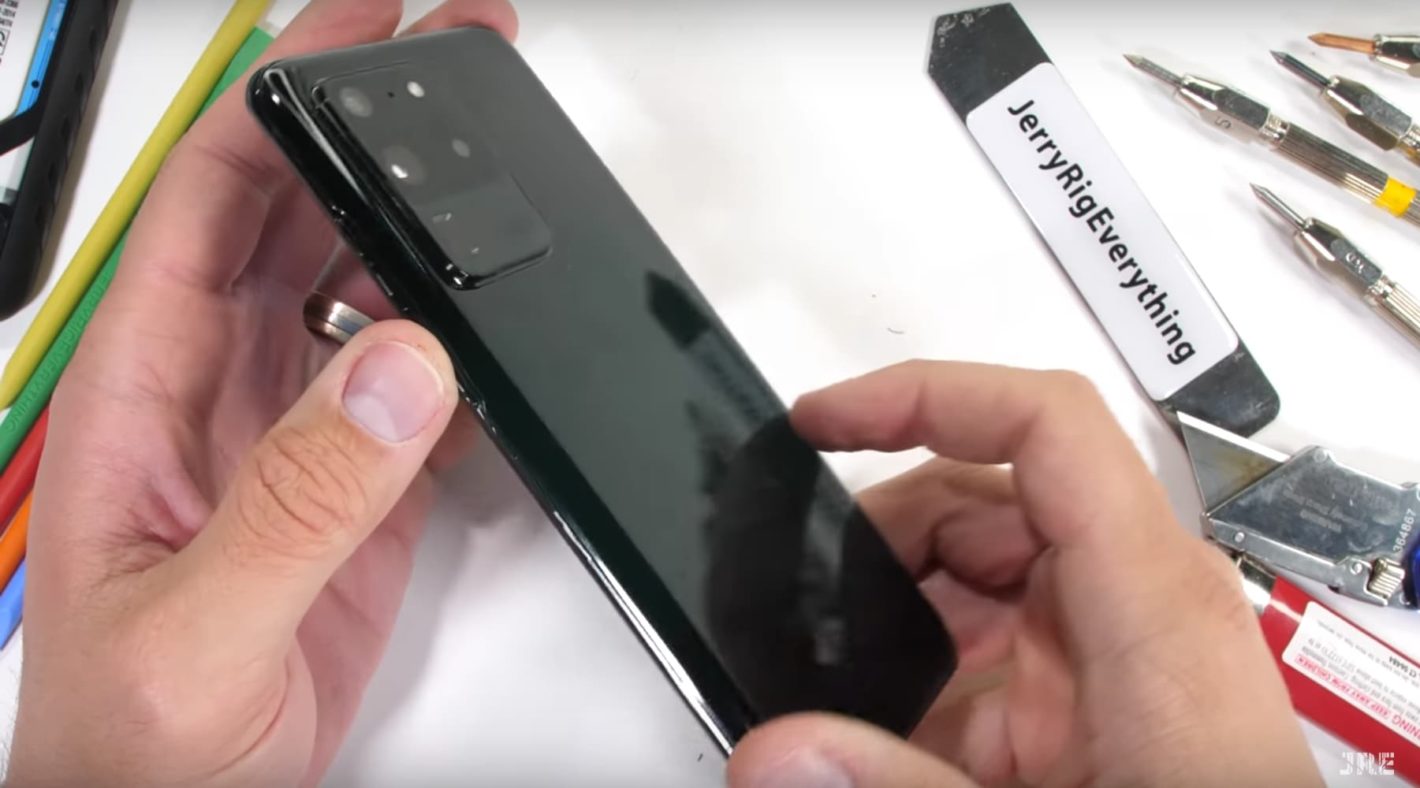
Zack Nelson of JerryRigEverything fame has got his hands on the Galaxy S20 Ultra, Samsung‘s latest top-of-the-line 5G flagship model. We are already familiar with the routine – an unboxing/durability test video and then a teardown video revealing the internals. The Youtuber has now published a video of the Galaxy S20 Ultra’s durability test.
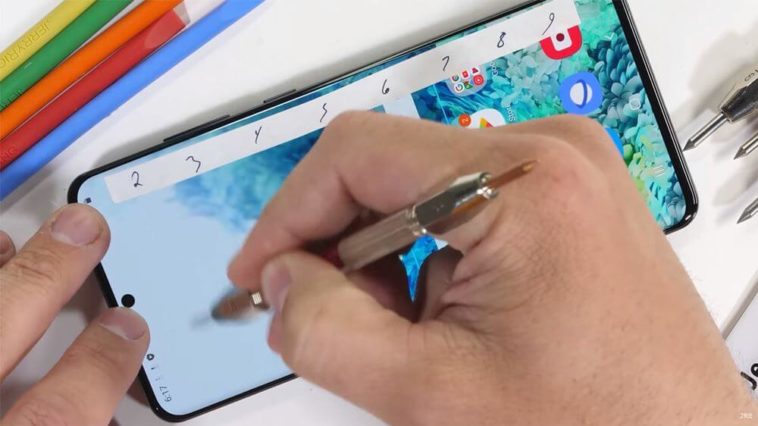
The video takes us through the various tests such as scratch, bend and heat test that should affirm if the device is a durable one or not. First off is the scratch test where the screen is tested using a Mohs pick to determine where the device lies in the Mohs hardness scale. The Galaxy S20 Ultra’s AMOLED screen began scratching at level six. The scratches become deeper at level seven which means the device can conveniently withstand scratches from objects inside the user’s pocket such as keys. However, sand particles are an exception as they contain minerals that can scratch above those levels.
The S20 Ultra is shown to have a metal frame which won’t break but will scratch easily. Zack also notes the absence of a front speaker grille at the top. The rear panel is also made from the same glass on the display and it extends to the camera hump. The phone’s buttons on the side are made from metal, making them equally durable.
The next test is the burn test where the display is made to go under the flame. The test underscores the impressive heat resistance which the Galaxy S20 Ultra offers. The screen came in contact with a naked flame and was unscathed but when held up for 30 seconds, the display got damaged. However, it recovers from the damage over time.
The final test was a bend test and even though the device bends slightly, there wasn’t any audible creaking or groans from the device and it only bends slightly. You can check out the YouTube video from down below.
Overall, the Galaxy S20 Ultra is a durable phone but as Zack Nelson noted repeatedly in his test, the device is not quite as durable as should be expected of a device that costs well over $1000.
The Black Shark 3 and Black Shark 3 Pro are the latest gaming smartphones in town. The two phones pack flagship specs and extra features that you won’t find on a regular flagship. While the Black Shark 3 already had its first sale last week, the Black Shark 3 Pro is yet to go on sale.
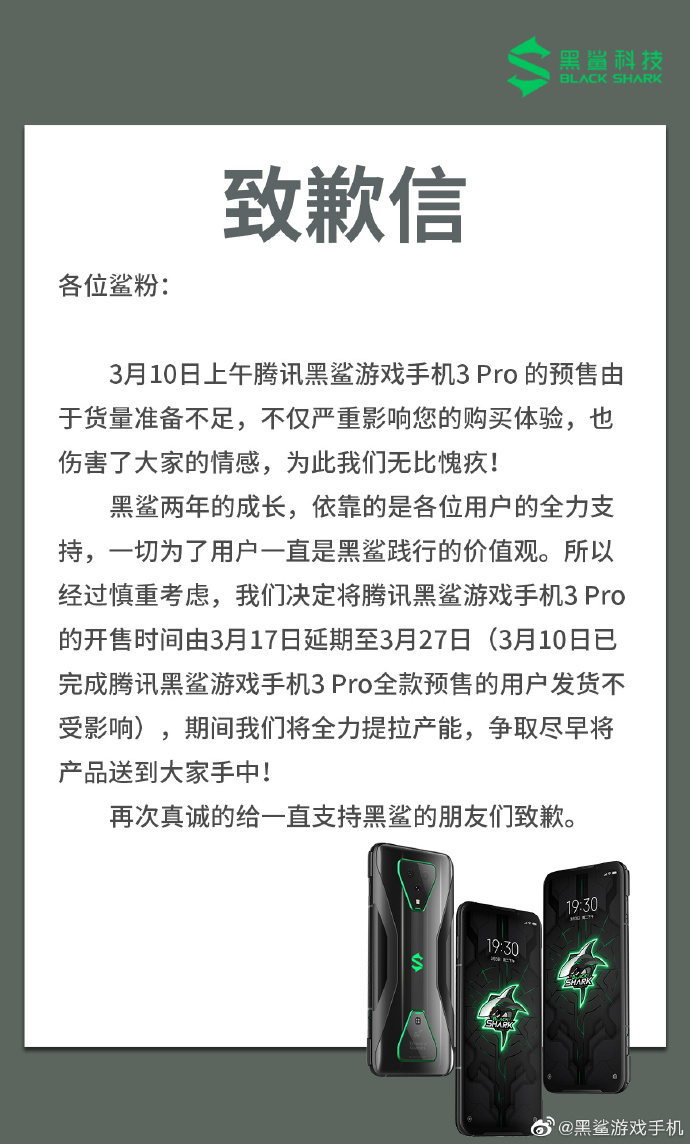
The first sale was originally scheduled for March 17, but today Black Shark announced that the date has now been postponed to March 27. In the Weibo post, the manufacturer apologized to its fans and stated that the reason for postponing the date is due to having insufficient stock. With the extension, there should be enough units for the first sale. The press statement adds that all those who pre-ordered the phone will still get their device at the expected time.
The Black Shark 3 Pro has a 7.1-inch QHD+ AMOLED display with a 90Hz refresh rate and 270Hz touch-sensing. There is a Snapdragon 865 processor under the hood with up to 12GB of RAM and 256GB of storage. The phone has a 64MP primary rear camera paired with a 13MP ultrawide-angle camera and a 5MP depth sensor. For selfies, it comes with a 20MP camera.
Black Shark has included stereo speakers, an audio jack, an in-display fingerprint scanner, and a 5000mAh battery under the hood. The phone supports 65W fast charging via the USB type-c port at the bottom. There is also a set of connector pins at the back that you can use to charge the device; this connector supports 18W fast charging. The Black Shark 3 Pro also comes with retractable shoulder buttons on the right side of the phone.
The phone is priced at ¥4699 (~$674) for the 8+256GB version and goes up to ¥4999 (~$717) for the 12GB RAM + 256GB version.
We use cookies on our website to give you the most relevant experience by remembering your preferences and repeat visits. By clicking “Accept”, you consent to the use of ALL the cookies.
This website uses cookies to improve your experience while you navigate through the website. Out of these, the cookies that are categorized as necessary are stored on your browser as they are essential for the working of basic functionalities of the website. We also use third-party cookies that help us analyze and understand how you use this website. These cookies will be stored in your browser only with your consent. You also have the option to opt-out of these cookies. But opting out of some of these cookies may affect your browsing experience.
Necessary cookies are absolutely essential for the website to function properly. This category only includes cookies that ensures basic functionalities and security features of the website. These cookies do not store any personal information.
Any cookies that may not be particularly necessary for the website to function and is used specifically to collect user personal data via analytics, ads, other embedded contents are termed as non-necessary cookies. It is mandatory to procure user consent prior to running these cookies on your website.

 You’d need to shell out $5.99 for a singled piece. You can get 3 pieces by spending just $12 extra (i.e. for $17.99). Those interested in purchasing ten pieces will end up shelling out $50, which means, ten Xiaomi Mijia LED Smart Bulb (Bluetooth Mesh Version) will set you back a reasonable $55.99.
 On top of that, the MIJIA LED Bulb (Bluetooth Gateway version) supports XiaoAI smart voice control. In short, you can turn the lamp off and on with just a word. You can use the MIJIA app for carrying out various functions such as setting the timer switch, delaying lights off, etc.