Xiaomi has expanded its business well beyond the limits of a smartphone brand. Apart from smartphones, the company has products in various categories, including laptop, power, smart home, lifestyle, wearable, among others.
The company also holds stakes in several other companies, including the likes of Huami which makes Amazfit smart wearable devices; Black Shark which makes premium gaming smartphones; Roborock which makes smart cleaning robots; among others.
Now, Xiaomi is expanding its presence in the chipset industry by becoming a shareholder of two chipset companies. As per the report from 36Kr, Xiaomi is investing in these two chip companies through its investment arm Hubei Xiaomi Yangtze River Industrial Fund.
It is being reported that Xiaomi took 1.38 percent stake in Shanghai-based ASR Microelectronics. And just a few days before that, the company had become the third-largest external shareholder of OnMicro Corporation with 6.98 percent stake.
Founded in 2015, ASR Microelectronics focuses on chips for a variety of consumer electronics uses, including mobile intelligent terminals, Internet of Things devices, and navigation. The biggest shareholder of the company is the eCommerce giant Alibaba, which holds about 21.75 percent stake.
As for OnMicro Corporation, it is a developer and researcher of high-performance integrated circuit and peripheral products for various electronics. It specialises in developing RF integrated circuit chips and analog integrated circuit chips utilized in wireless communication, power management, and RF front-end modules.
The development hints that the company could have given up on its efforts to develop its own chipset for smartphones. Xiaomi has previously launched Surge S1 mobile processor but there has no follow up after that. Now, instead of developing its own, the company seems to have taken the route of strategic investments.
Prior to investment in these two companies, Xiaomi had last year made a strategic investment in VeriSilicon Holdings Co Ltd, acquiring roughly 6 percent stake and becoming the second-largest external shareholder of the company.
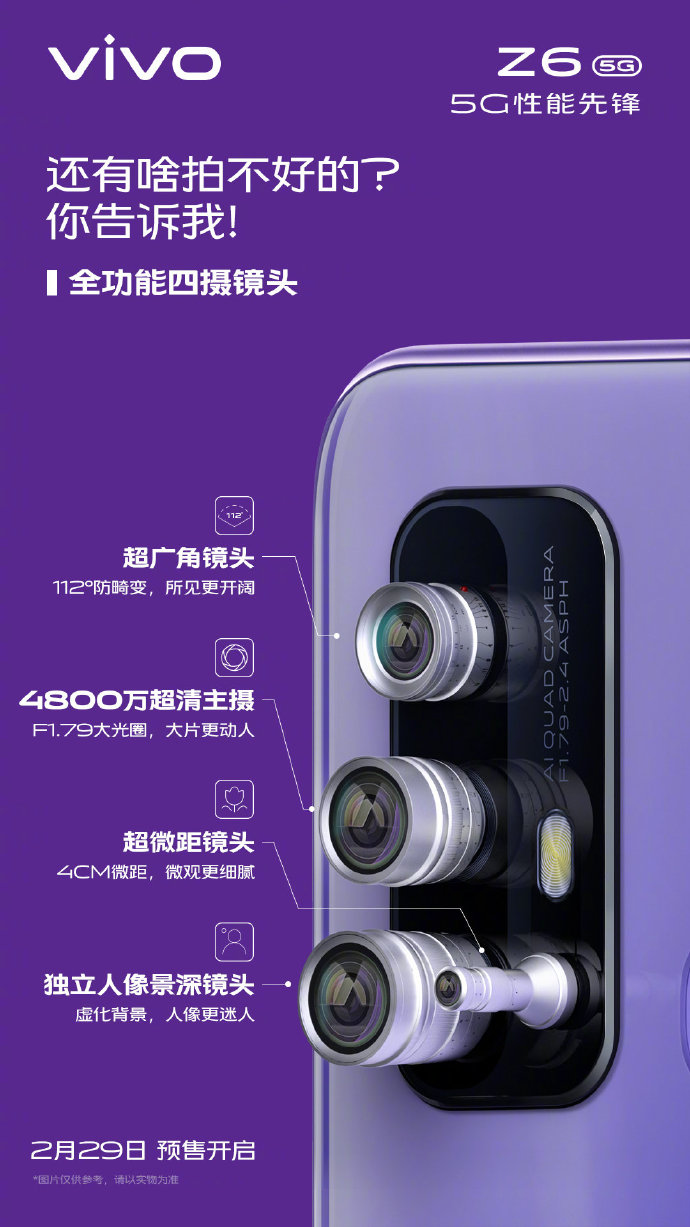
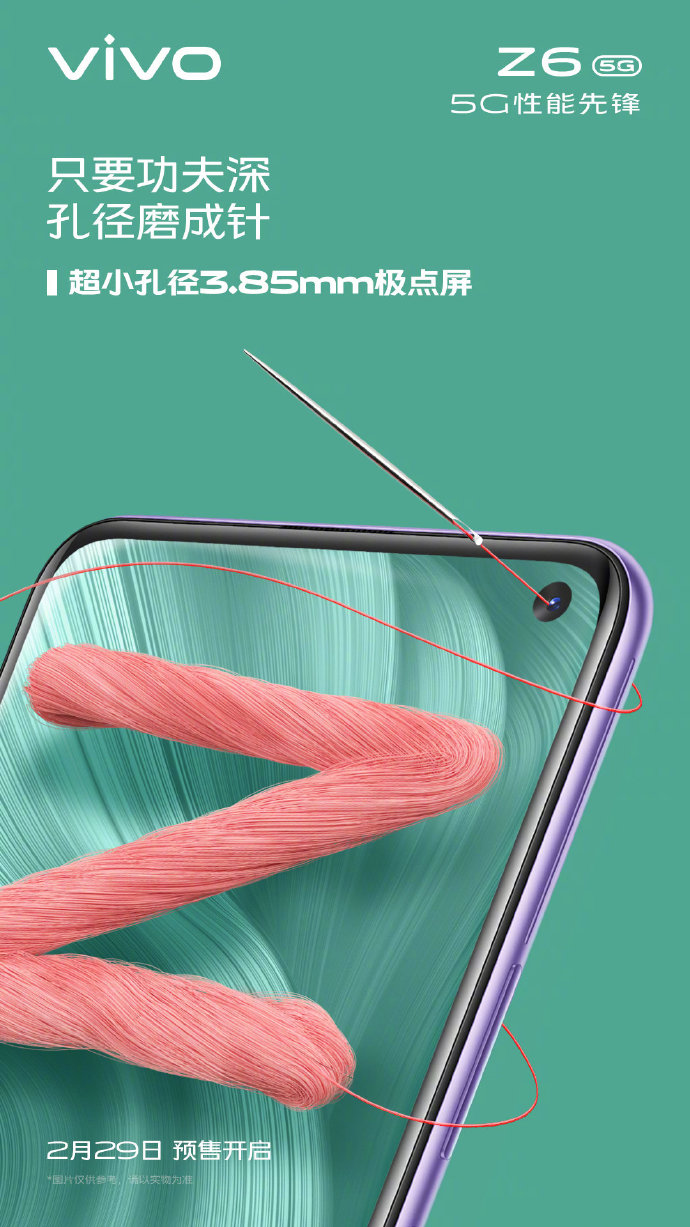
Vivo is all set to announce the Vivo Z6 5G smartphone on Saturday. Ahead of the launch, the Vivo Z6 5G that has a model number of V1963A has been spotted at TENAA with full specifications. Ahead of the Feb. 29 launch, the company is now receiving reservations of the smartphone in China. Today, Vivo shared two posters to reveal the camera configurations and display features of the Vivo Z6 5G phone.
The rear shell of the Vivo Z6 5G features a rectangle-shaped camera setup. The new poster that gives a closer look at the setup reveals four cameras and a pill-shaped LED flash unit. While the TENAA listing confirmed that the Vivo Z6 5G confirmed that the phone has a 48-megapixel + 8-megapixel + 2-megapixel + 2-megapixel quad camera system, the poster only reveals the megapixel count of the main sensor.
The image shows that the first lens in the setup is a 112-degree ultrawide lens of 8-megapixel with a wide aperture. It is followed by the 48-megapixel main shooter with f/1.79 aperture. Next comes the 2-megapixel depth sensor and a below the LED flash is a 2-megapixel macro lens with 4cm focal length.
The other poster showcases the punch-hole display of the Vivo Z6 5G. The circular cutout at the top-right of the screen is of 3.5mm. The phone promises a tall aspect ratio of 20:9. The TENAA listing revealed that the phone offers full HD+ resolution of 1080 x 2400 pixels. It has an in-display selfie camera of 16-megapixel. The phone promises a screen-to-body ratio of 90.74 percent.
The Android 10 OS will come preloaded on the Vivo Z6 5G smartphone. It will come with up to 8 GB of RAM and up to 256 GB of native storage. The phone will be available in three colors like black, purple and light blue.
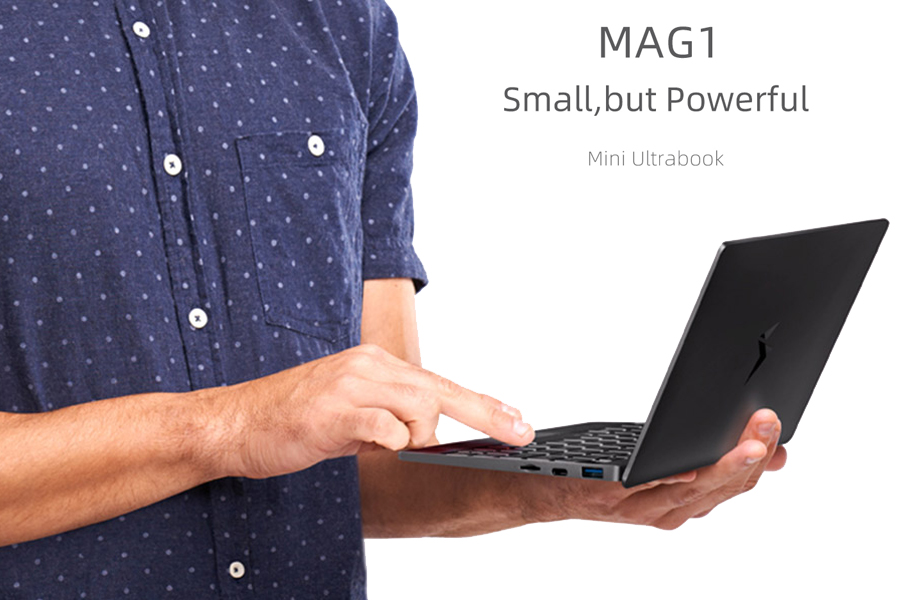
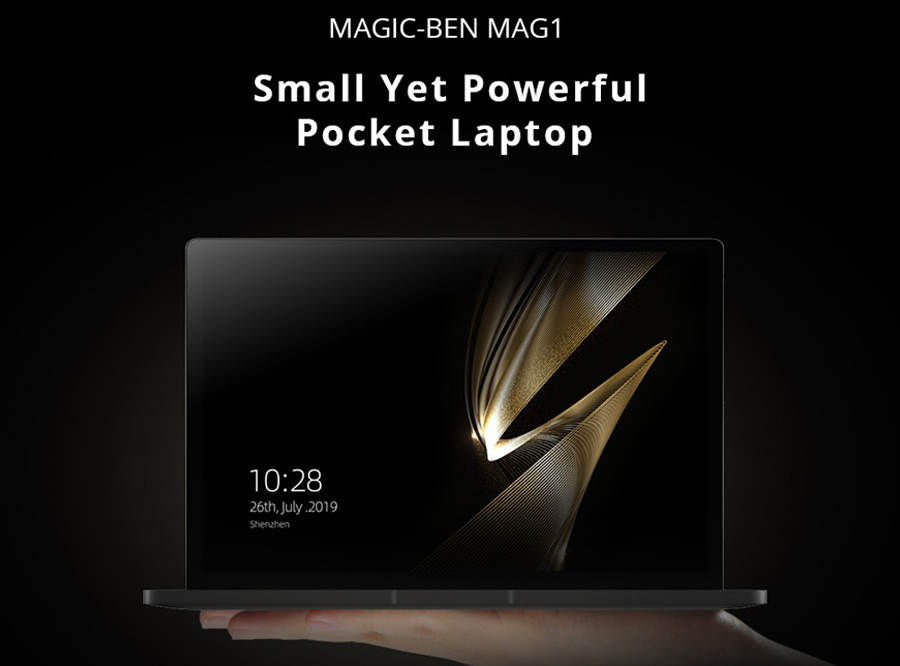
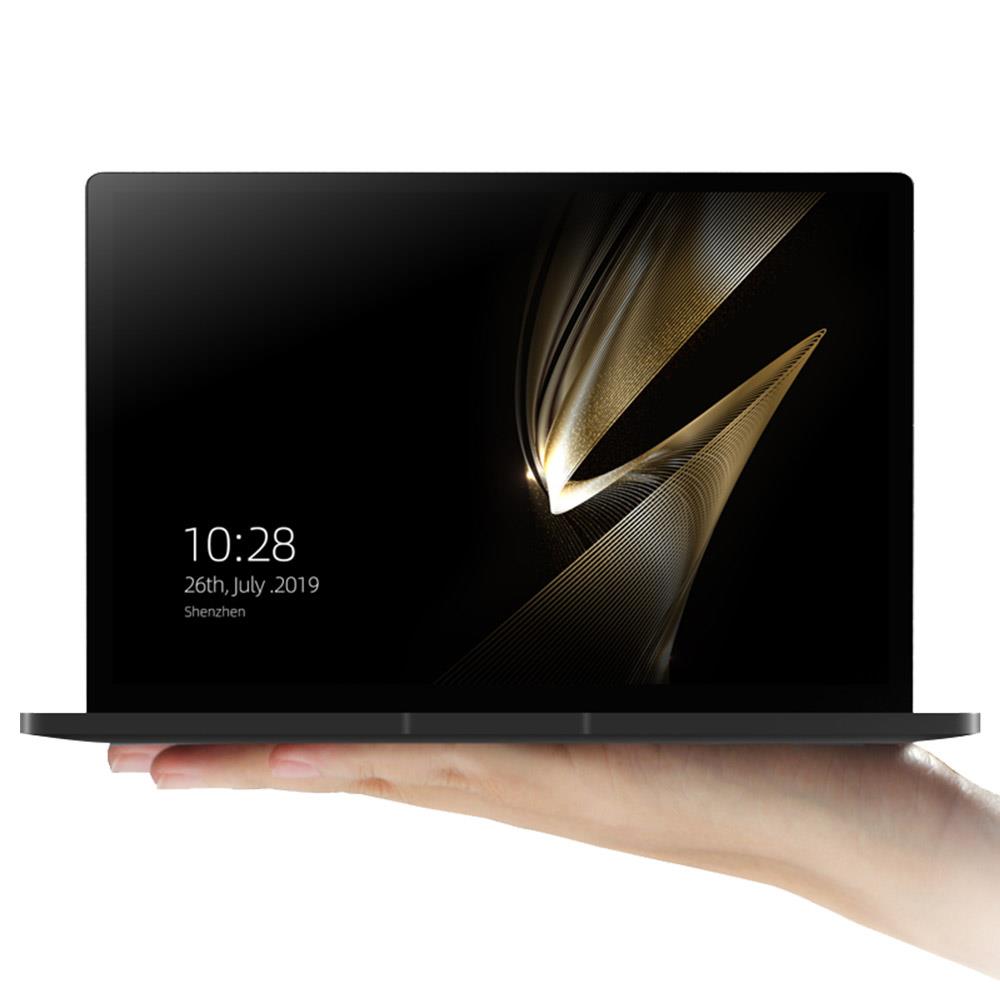
Windows OS-based pocket laptops are all the rage right now with leading manufacturers launching compact 7-inch to 8.9-inch laptops. To cash in on the growing popularity of these devices, Magic-Ben launched an 8.9-inch Windows 10 pocket laptop dubbed the Magic-Ben MAG1 on October 10th last year.
Less than a year after hitting the store shelves, the Magic-Ben MAG1 4G LTE Pocket Laptop has received a noteworthy price cut. The 16GB RAM+512GB SSD storage MAG1 variant would normally set you back $1047.99, but you can now get your hands on it through GeekBuying for just $869.99, which converts to a 17 percent off.
Aside from receiving the aforesaid discount, you can avail of an extra 2 percent off by applying the New User Coupon at checkout, provided this is your first order with GeekBuying. An absolute bargain at this price, the Magic-Ben MAG1 sports an 8.9-inch touchscreen with a high resolution of 2560×1600 pixels.
It is powered by Intel Core m3-8100y, Dual-Core, 1.10GHz~3.4GHz processor for advanced multitasking, superior gaming and movie-watching experience. Furthermore, the Magic-Ben MAG1 draws its juices from a large 8100mAh battery, allowing you to use the mini laptop for an entire with just one charge.
Touted as an ultraportable business notebook, the Magic-Ben MAG1 runs the latest genuine Windows 10 OS with updated software. Moreover, it is the same size as the iPad Mini and weighs in at just 690 grams, which means, you can carry it in your pocket wherever you go.
It features a backlit keyboard to ensure your work is not interrupted even in a dark environment. On top of that, it can be held by one hand for a long time without experiencing any sort of discomfort.
To know more about the Magic-Ben MAG1 pocket laptop and to place your order, all you need to do is to follow this link without wasting time. Note that the promotion will come to an end in just one day.
The Gizmochina Coupons is a community that finds, reports and evaluates deals and coupons of Chinese products from online shops. Please visit it here to find more coupons to save money on mobiles and smart gadgets.
HMD Global seems to be gearing up to launch a few new devices in the market pretty soon. The company’s three upcoming Nokia smartphones have been spotted on the Wi-Fi Alliance certification website.
The smartphones that have passed through the certification process carry model number TA-1223, TA-1227, and TA-1229. The listing reveals that all three smartphones are running the latest Android 10 operating system.
Further, it has also been revealed that the listed devices come with support for dual-band Wi-Fi connectivity. Apart from this, nothing much is known about the upcoming smartphones, nor their names.
As the model numbers TA-1223, TA-1227 and TA-1229 have not appeared before, we don’t know what to expect from these phones. It is also not clear if the devices are a part of the company’s premium lineup or they are mid-range offerings.
HMD Global was expected to launch new smartphones at the Mobile World Congress 2020 in Barcelona, Spain. However, with MWC 2020 getting cancelled, the company is likely to hold a standalone event for launching the devices.
There’s a possibility that the device now spotted on Wi-Fi Alliance website are the ones that were planned to get launched at MWC 2020. The company was rumored to launch Nokia 8.2 5G, Nokia 5.2, Nokia 1.3 and Nokia 400 feature phone at Mobile World Congress.
Xiaomi recently launched its flagship smartphone of the year in the form of Mi 10 series which includes the Mi 10 and Mi 10 Pro. Now, it seems that the company could launch a new variant of the same with transparent back.
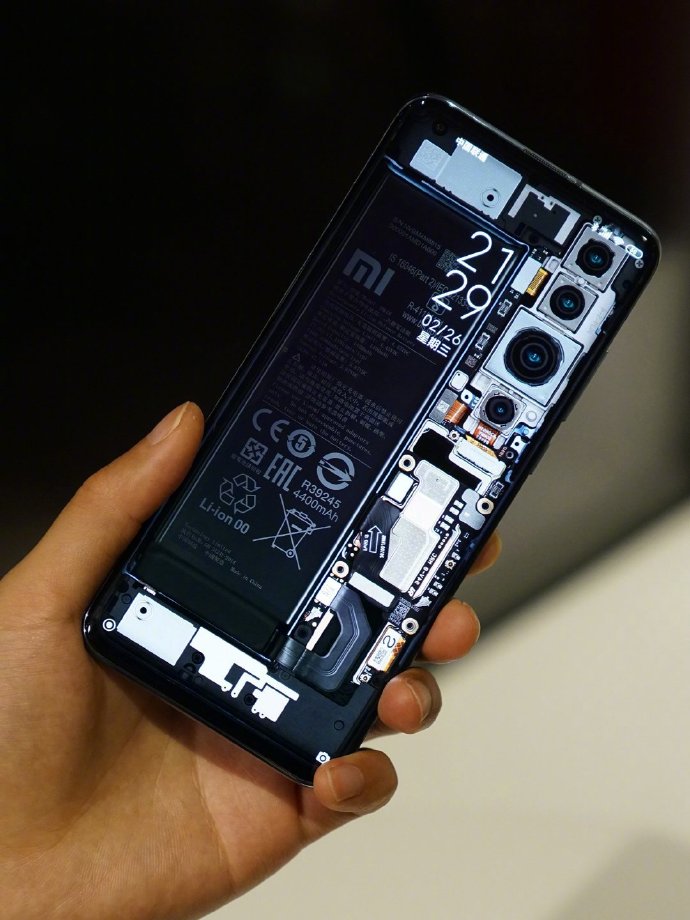
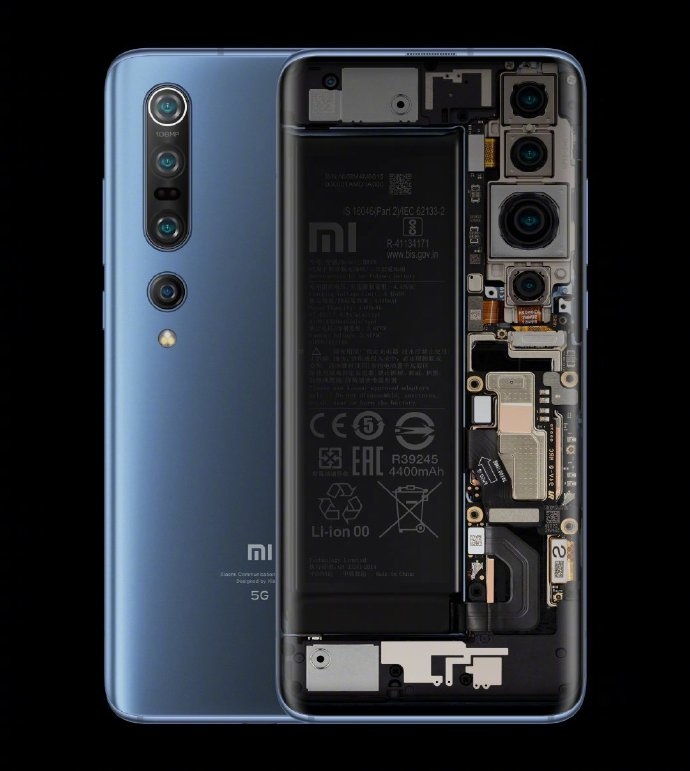
Today, Lei Jun, Chairman of Xiaomi took to Weibo and shared a photo of Mi 10 with the caption “Xiaomi Mi 10 Transparent Edition”. However, the picture shows the Mi 10 smartphone with a wallpaper of the phone’s internal view.
While he has not explicitly said that the Mi 10 with transparent back is coming, the shared image and the caption has sparked the rumors that such device could get launched.
If it does get launched, it won’t be the first time given that Xiaomi had launched Mi 9 Explorer Edition with the transparent back and a similar transparent back cover version of the Mi 8 smartphone as well.
The Xiaomi Mi 10 comes with a 6.67-inch curved AMOLED display with a 90Hz refresh rate and 180Hz touch sampling rate. Under the hood, the device comes powered by Qualcomm’s octa-core Snapdragon 865 chipset, coupled with up to 12GB of LPDDR5 RAM, and UFS 3.0 storage.
Thanks to SD865 SoC, the phone comes with support for both SA and NSA dual-mode 5G connectivity. As for cooling, the phone comes with Vapour Chamber liquid-cooling system with multiple layers of graphite and AI machine learning to keep the temperature under control. The company is also offering a special cooling fan as a separate accessory.
Coming to the camera department, the Mi 10 comes with a quad-camera setup on the back, consisting of 108MP primary sensor, a 13MP ultra-wide-angle lens, a 2MP depth sensor, and a 2MP macro lens. On the front side, it features a 20MP camera sensor for taking selfies and video calling.
The smartphone, running Android 10, is powered by a 4,780mAh battery which also comes with 30W wired fast charging and 30W wireless fast charging as well as support for 10W reverse wireless charging.
The Mi 10 series smartphones have been on sale in China for three times now in which the company has managed to sell hundreds of thousands of units, generation revenues of millions of yuan. Xiaomi has also scheduled another sale on 28th February.
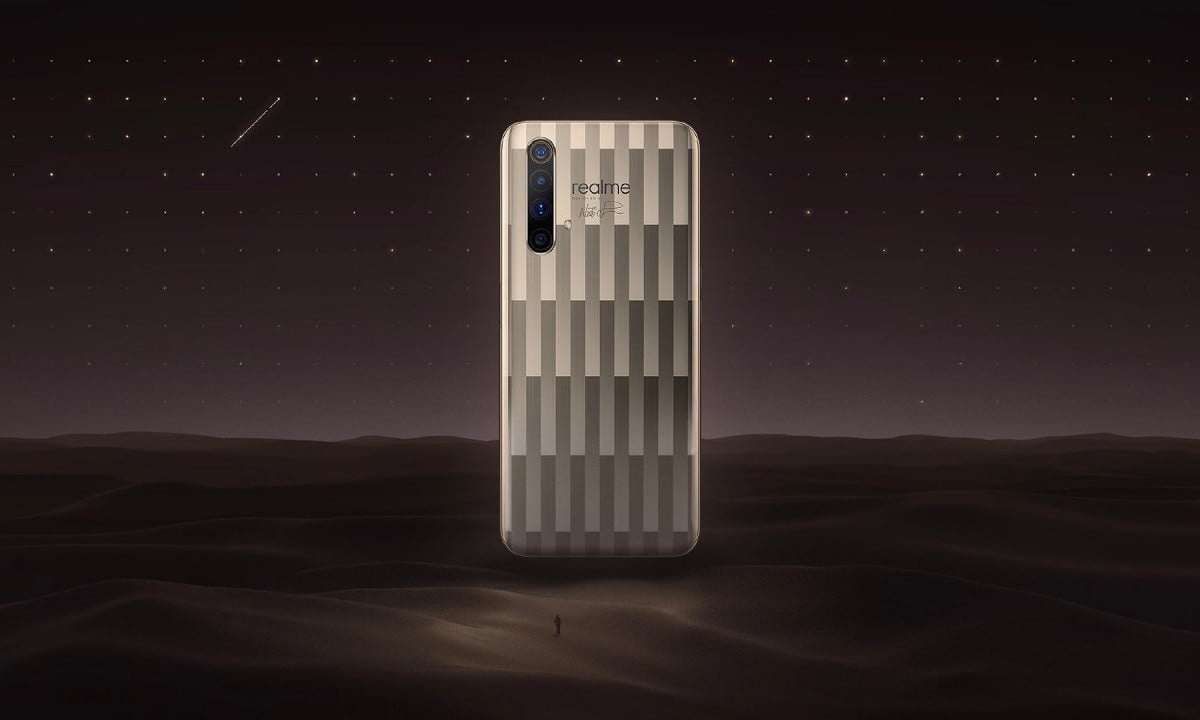
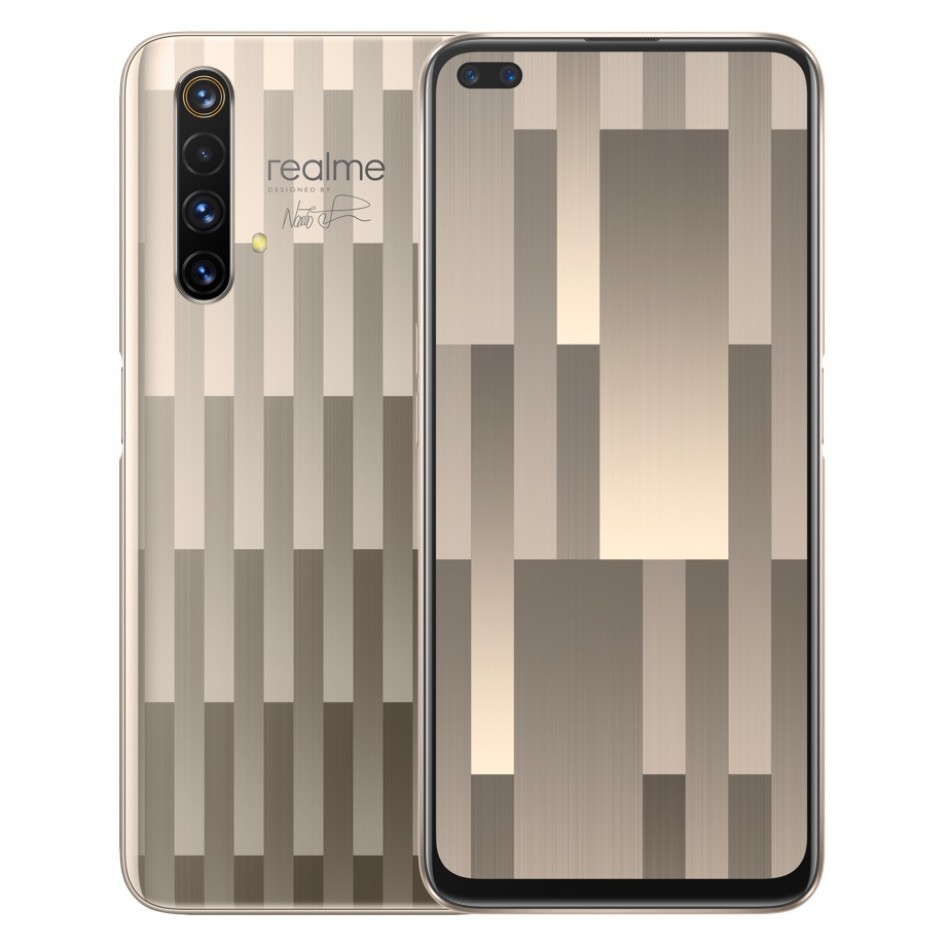
Prior to launching the Realme X50 Pro 5G smartphone, the company had launched the Realme X50 5G smartphone in China last month. Along with the standard models, Realme had also unveiled Master Edition in two options — Dots and Lines.
While the Realme X50 5G Master Edition Dots has already been on sale, the company has today launched the Master Edition Line which will be available for purchase in its first sale in China on 8th March. Pre-booking for the same are already up on several online platforms, including Realme.com, JD.com, Tmall, Suning, among others.
The Realme X50 5G Master Edition come in a single memory variant that packs 12GB of RAM and 256GB of internal storage. The smartphone is priced at 3,099 yuan, which roughly converts to $440.
The phone features a 6.57-inch IPS LCD display with Full HD+ screen resolution of 2400 x 1080 pixels, 20:9 aspect ratio, 120Hz refresh rate, and 90.4 percent screen-to-body ratio. Under the hood, the device is powered by Qualcomm Snapdragon 765G chipset.
While the standard model comes in 6GB, 8GB, and 12GB RAM models, the Master Edition comes packed with 12GB of RAM and 256GB internal storage. On the other hand, the regular version gets option from 64GB, 128GB, and 256GB UFS 2.1 internal storage.
The smartphone can connect two dual Wi-Fi connections along with 5G networks simultaneously for stable and uninterrupted web connection. It packs five-dimensional ice-cooled heat dissipation system that includes a double layer of graphite sheet, liquid cooled copper pipe, thermal gel, thermal silicon pad, copper foil thermal array and more layers of graphite sheet, ensuring the phone remains cool during intensive performance.
Coming to the camera setup, the device features a quad-camera setup on the back, which consists of a Samsung GW1 64-megapixel primary camera, an 8-megapixel ultrawide lens with 119-degree field-of-view, a 12-megapixel telephoto lens and a 2-megapixel macro lens with a focal length of 4cm.
On the front side, the device comes with a Sony IMX471 primary lens that is coupled with an 8-megapixel superwide sensor. The front cameras also come with features like UIS Super Image Stabilizer, video portrait blur, portrait night, AI portrait beauty, and others.
The device runs the latest Android 10 operating system with Realme UI on top and is powered by a 4,200mAh battery with 30W VOOC 4.0 Flash Charge technology that can charge the smartphone up to 70 percent in just 30 minutes.
Black Shark 3 gaming phone will be unveiled on March 3 in China. Reports surrounding it have suggested that there could be two handsets since KLE-A0 and MBU-A0 Black Shark 3 models have been spotted at Geekbench benchmarking platform and at the database of China’s 3C certification body. Ahead of the March 3 launch, Xiaomi CEO Lei Jun released a promo video of the phone to reveal a new feature. The video reveals that the phone will be arriving with a new magnetic charging connector.
According to Jun, the magnetic charging connector on the Black Shark 3 will make it possible to charge it easily while enjoying games. This reminds us of Vivo APEX 2019 concept phone that was introduced last year sported a port-less design and a similar magnetic port for charging.
The machine translated text of Jun’s Weibo post reads that the Black Shark 3 has a USB-C port for charging. Also, he states the phone is equipped with an earphone slot. The Black Shark 2 and Black Shark 2 Pro phones from last year lack support for 3.5mm audio jack. While Jun states the presence of an earphone slot on the device, the placement of the port cannot be seen in the above show promo video. The Tencent Games branding is imprinted towards the bottom of the device.
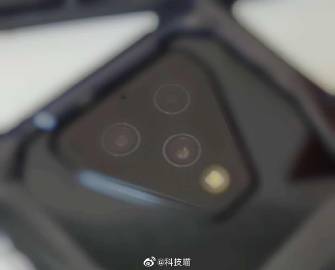
The predecessor Black Shark 2 series phones came with dual rear cameras. However, a leaked shot of the alleged Black Shark 3 phone has surfaced on Weiboshows that it will be sporting a triple rear cameras with LED flash inside an inverted triangle-shaped module.
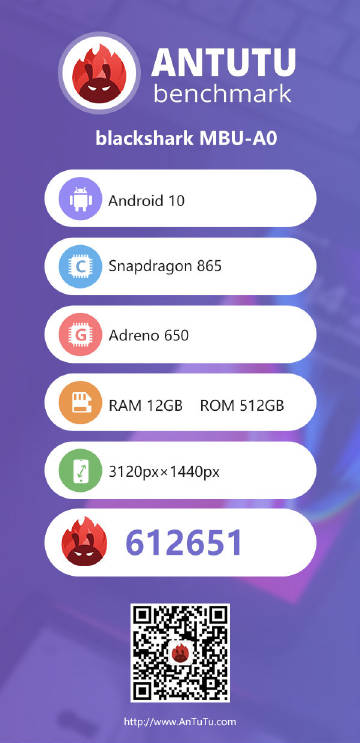
Lastly, the purported Black Shark 3 Pro with model number MBU-A0 was recently benchmarked on AnTuTu. The listing revealed that the phone supports 1440 x 3120 pixels resolution and it is driven by Snapdragon 865 mobile platform and 12 GB of RAM. It has a massive storage of 512 GB. The phone that has been benchmarked on AnTuTu has a refresh rate of 90Hz. However, the handset is said to offer 120Hz refresh rate.
In the CPU, GPU, memory and UX test of AnTuTu, the phone scored 181,539, 221,273, 122,234 and 87,605, respectively. The handset reached an average benchmarking score of 612,651 on AnTuTu. Lastly, the company has confirmed that the Black Shark 3 has a two-part battery system with a total capacity of 4,270mAh. The handset will carry support for 65W fast charging.
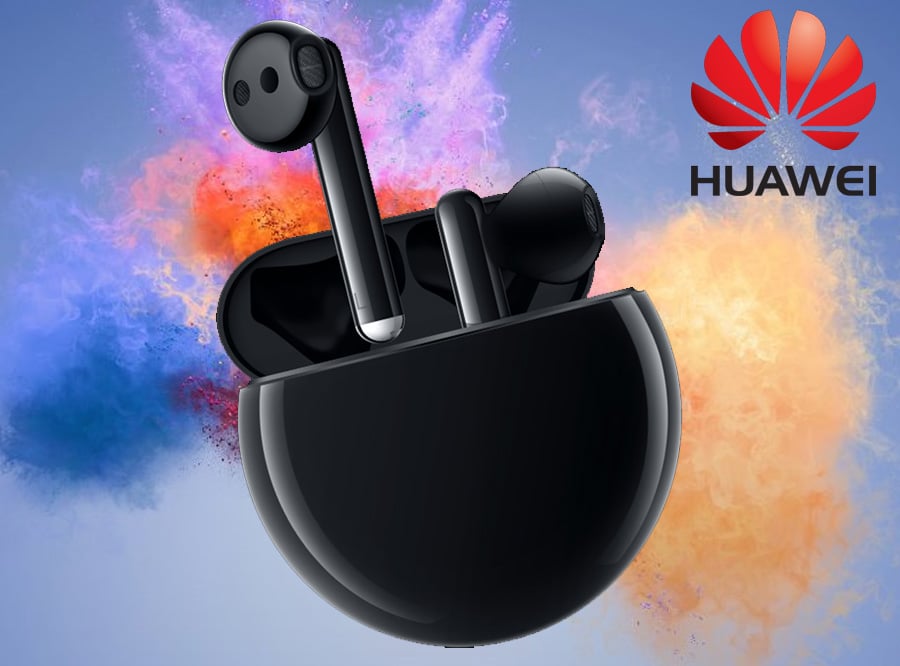
Touted as the world’s leading trade show where manufacturers show off their new home appliances and consumer electronics, the IFA 2019 kicked off on September 6th last year. Cashing in on the event, Huawei took the covers off its new wireless earbuds dubbed the FreeBuds 3.
Even months after hitting the store shelves, the Huawei FreeBuds 3 continues to garner popularity among music lovers who fancy listening to favorite soundtracks on the go. Taking its skyrocketing popularity and undying demand into consideration, Huawei is now offering the FreeBuds 3 for a lowered price through Giztop.
While you’d normally end up shelling out $199 on the white, as well as black tinted FreeBuds 3, you can now purchase these eye-catching color options for a lowered price of just $165. The red color option, on the other hand, usually retails for $209 but is currently up for grabs bearing a reduced price tag of just $175 through the popular Chinese e-tailer.
Sporting a new design, the Huawei FreeBuds 3 is powered by the Kirin A1 chipset. The first and second generation of Apple AirPods that packs the W1 and H1 proprietary chipsets, respectively.
Huawei decided to follow suit and outfitted its new earbuds with the Kirin A1 chipset that adopts the Isochronous Dual Channel Bluetooth data transmission. The low=power processor uses advanced Bluetooth for an immersive listening experience.
Moreover, the Huawei Freebuds 3 is the world’s first earbuds to use Bluetooth 5.1 and Bluetooth 5.1 LE wearable chipset. The Freebuds 3 adopt a design that draws inspiration from a dolphin’s vocal cavity. Unlike the rest of the earbuds available in the market today, the Freebuds 3 comes with a one-of-a-kind circular case that has a glossy finish.
While one earbud acts as a master, the other serves as the slave. With the FreeBuds 3, you can pair each earbud as a separate channel to the phone. According to Huawei, FreeBuds 3 is the world’s first earbuds to offer open-fit active noise cancellation with up to 15-decibel ambient noise reduction.
You can visit this link to check out more details about the Huawei FreeBuds 3 and place your order before the promotion comes to an end.
The Gizmochina Coupons is a community that finds, reports and evaluates deals and coupons of Chinese products from online shops. Please visit it here to find more coupons to save money on mobiles and smart gadgets.
Huawei will be launching the P40 series of flagship phones on March 26. It said to include devices such as Huawei P40, P40 Pro and P40 Premium Edition. The P40 lineup also has the Huawei P40 Lite that has gone official now. The handset is a rebranded version of the Huawei Nova 6 SE smartphone that was announced in China in December along with the Kirin 990 chipset powered Huawei Nova 6.
Huawei P40 Lite specifications and features
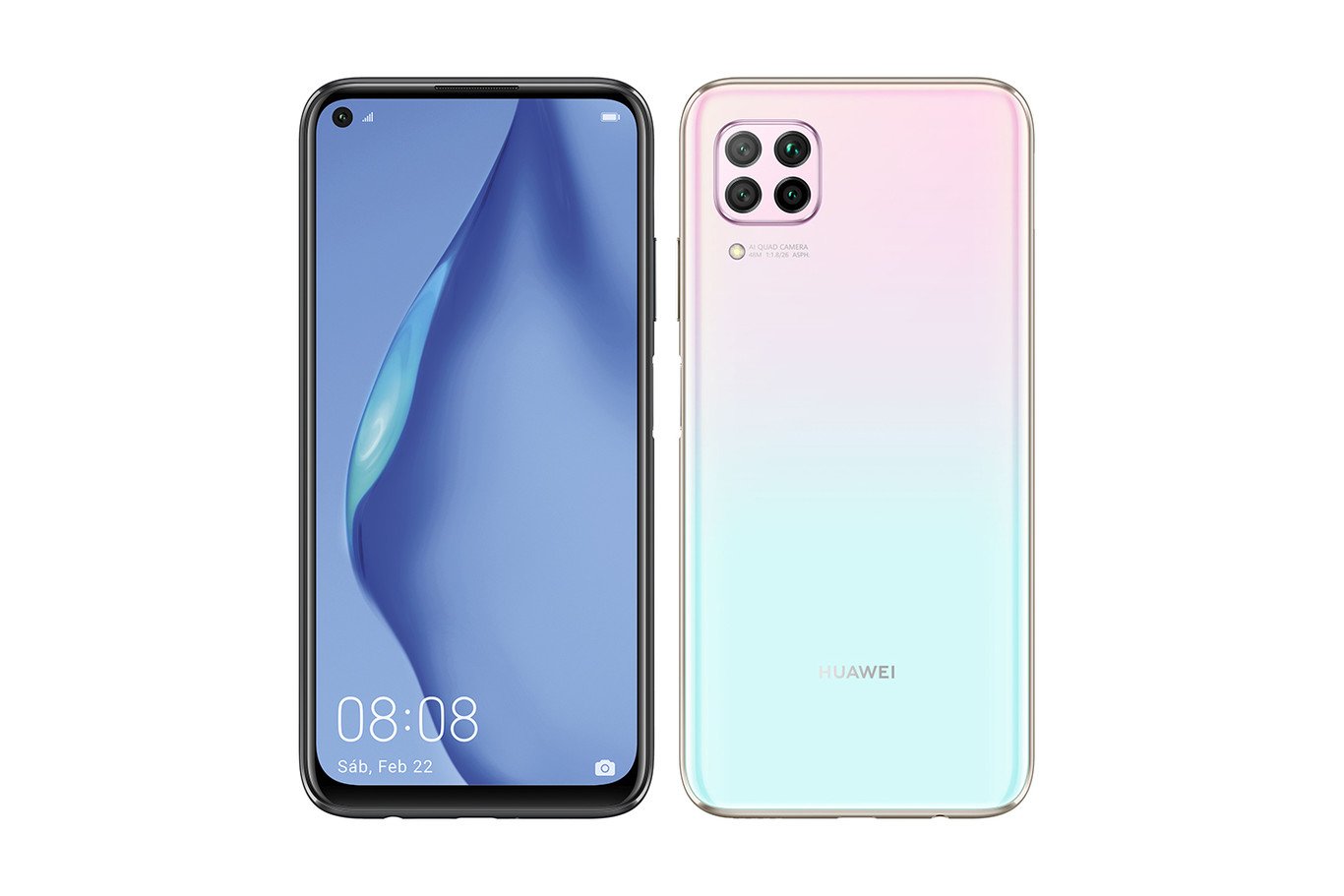
The Huawei P40 Lite phone has 159.2 x 76.3 x 8.7mm and it weighs 183 grams. The phone features an IPS LCD display with a punch-hole at its top-left corner. The 6.4-inch display produces full HD+ resolution of 1080 x 2310 pixels. The P40 Lite delivers a screen-to-body ratio of 90.6 percent.
The 7nm Kirin 810 chipset powers the smartphone with 6 GB of RAM. The device is equipped with an internal storage of 128 GB. An expansion slot is available for expanding the storage of the device. The EMUI 10 based Android 10 OS is preloaded on the device. It does not feature Google Mobile Services (GMS).
The Huawei P40 Lite has a square-shaped camera module at the upper-left corner. It has a 48-megapixel main lens with f/1.8 aperture, a 120-degree 8-megapixel wide-angle lens with f/2.4 aperture, a 2-megapixel macro lens with 4cm focal length and f/2.4 aperture and a 2-megapixel depth sensor with f/2.4 aperture. For snapping selfies, the P40 Lite provides users with a frontal shooter of 16-megapixel with f/2.0 aperture. Some of the photography features of the P40 Lite include Super Night Mode and AI driven video editor that allows users to add background music and trim sequences.
The Huawei P40 Lite has a big battery of 4,200mAh capacity. Thankfully, the phone comes with 40W SuperCharge fast charging technology which makes it possible to gain 70 percent battery juice in 30 minutes. There is a side-mounted fingerprint scanner on the device. On the connectivity front, the P40 Lite provides user with dual SIM support, 4G LTE, Wi-Fi 802.11ac, Bluetooth 5.0 LE, USB-C and 3.5mm audio jack.
Huawei P40 Lite price and release date
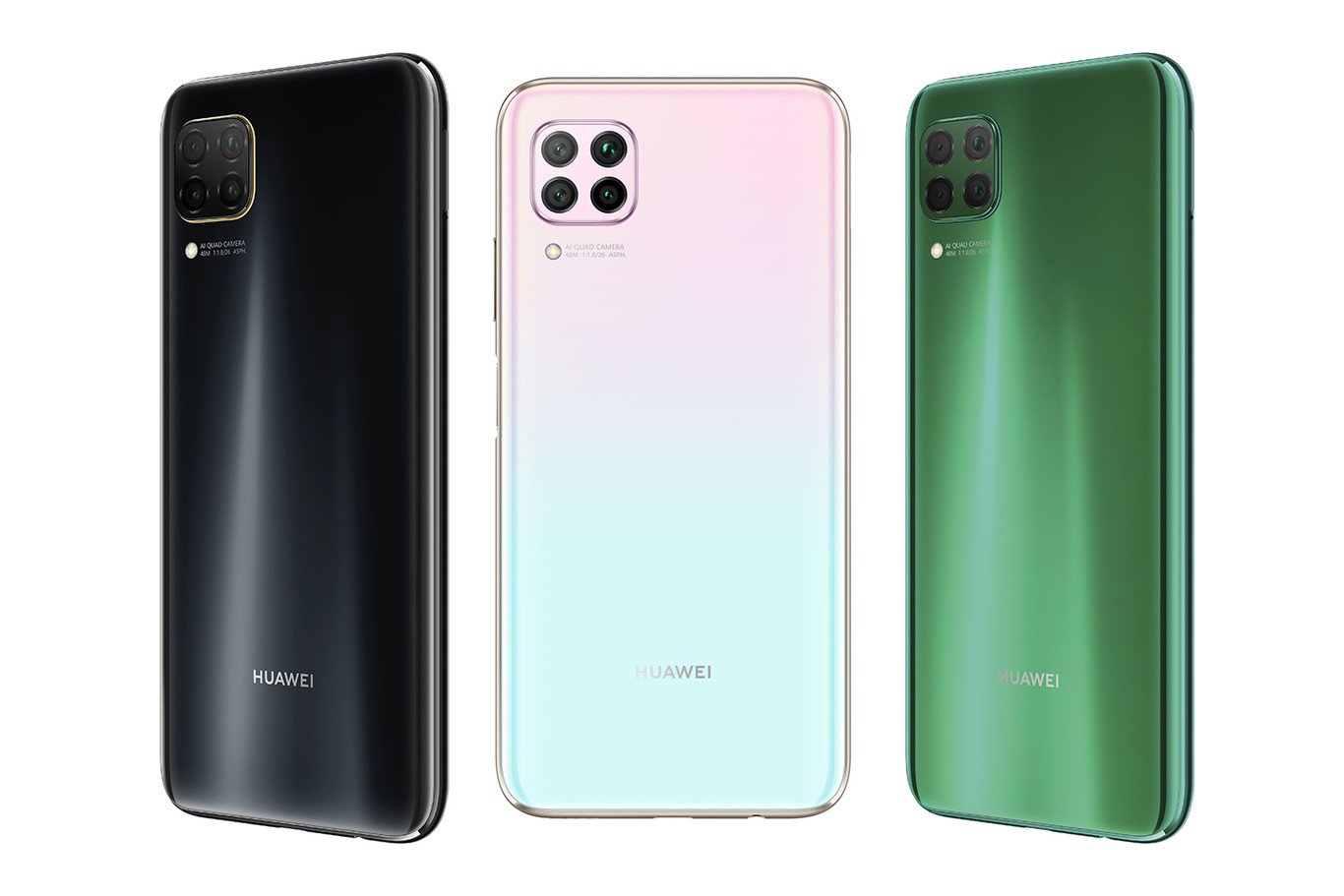
The Huawei P40 Lite carries a price tag of 299 euros (~$325). Midnight Black, Sakura Pink and Crush Green are the three color variants of the smartphone. The pre-sale of the phone will begin in European markets on March 2 which will continue until March 16. While the black and pink color editions of the P40 Lite can be bought readily during the pre-sale period, the green variant will be made available at some point later. Lastly, customers who pre-order the P40 Lite will be provided with Freebuds wireless earphones and screen protector for free.
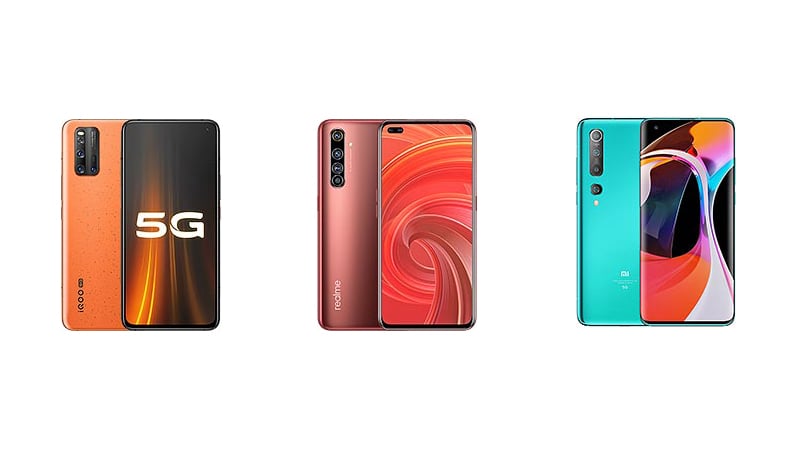
Despite 2020 is still in its early months, we already assisted in the launch of several flagship smartphones. And we are not talking only about expensive ones, but also about affordable flagships providing the highest performance at modest prices. Vivo’s brand iQOO just announced the iQOO 3, its latest affordable flagship especially meant for gamers. In this article, we compared its specifications to the ones of the best Chinese affordable flagships launched in 2020: Realme X50 Pro 5G and Xiaomi Mi 10, both announced a few days ago with the support to 5G connectivity.
Vivo iQOO 3 vs Realme X50 Pro vs Xiaomi Mi 10
Xiaomi Mi 10
Vivo iQOO 3
Realme X50 Pro 5G
DIMENSIONS AND WEIGHT
162.6 x 74.8 x 9 mm, 208 g
158.5 x 74.9 x 9.2 mm, 214.5 g
159 x 74.2 x 9.4 mm, 207 g
DISPLAY
6.67 inches, 1080 x 2340p (Full HD+), Super AMOLED
6.44 inches, 1080 x 2400p (Full HD+), Super AMOLED
6.44 inches, 1080 x 2400p (Full HD+), Super AMOLED
Quad 64 + 12 + 8 + 2 MP, f/1.8 + f/2.5 + f/2.3 + f/2.4
Dual 32 + 8 MP f/2.5 and f/2.2 front camera
BATTERY
4780 mAh, fast charging 30W, Fast wireless charging 30W
4400 mAh, fast charging 55W
4200 mAh, fast charging 65W
ADDITIONAL FEATURES
Dual SIM slot, reverse wireless charging 10W, 5G
Dual SIM slot, optional 5G
Dual SIM slot, 5G
Design
After the notch, punch-hole displays are becoming the trend in the smartphones market. iQOO 3, Realme X50 Pro 5G and Xiaomi Mi 10 do not need a notch to minimize the bezels since they are equipped with punch-hole displays. The front panel of iQOO 3 and Xiaomi Mi 10 come with a better look because they have a single punch-hole display, while Realme X50 Pro 5G is less minimalistic due to its dual punch-hole, but it offers one more sensor on the front. Overall, Xiaomi Mi 10 has a more attractive design due to its curved screen with the highest screen-to-body ratio, but iQOO 3 should be more sturdy due to Gorilla Glass 6 (front and back). Further, iQOO 3 has shoulder buttons (an interesting feature for gamers), and it is even more compact.
Display
When it comes to the quality of displays, Realme X50 Pro 5G and Xiaomi Mi 10 should be very close. Both offer an AMOLED panel with a high 90 Hz refresh rate, HDR10+, and high DCI P3 coverage, as well as the same resolution. Both high-end panels with great image quality and a high brightness, as well as a high touch sampling rate. Realme X50 Pro 5G and Xiaomi Mi 10 have the most convincing displays, while we would not go for the iQOO 3 since it lacks a high refresh rate, but it retains a 180 Hz touch sensing and a high quality.
Hardware/Software
The strongest point of these handsets is definitely the hardware side: they have the most advanced Qualcomm’s chipset, which is Snapdragon 865 with the support to 5G network thanks to a Snapdragon X55 modem. Note that iQOO 3 provides 5G connectivity only in its most expensive variant with 12 GB of RAM and 256 GB of internal storage. iQOO 3, Realme X50 Pro 5G and Xiaomi Mi 10 all come with the new LPDDR5 RAM and UFS 3.1 native storage, but none of them features expandable storage. Android 10 is preinstalled and customized by proprietary user interfaces. It is a draw when it comes to hardware, software optimization will be the key to success.
Camera
The most advanced camera is mounted on the Xiaomi Mi 10: it has a quad camera setup with a 108 MP main sensor, OIS, an ultrawide sensor, a classic depth sensor, and a dedicated macro camera. Unfortunately, Xiaomi Mi 10 does not have a telephoto sensor (unlike Realme X50 Pro 5G and iQOO 3), but it should provide overall better photo quality. Realme X50 Pro 5G wins the selfie comparison with a dual front camera including an ultrawide lens.
Battery
The battery champion here is the Xiaomi Mi 10 thanks to its huge 4780 mAh battery. It is also the only to feature wireless charging (and it is very fast thanks to a 30W power) and reverse wireless charging.
Price
iQOO 3 starts at €475/$517 in China (the base variant has no 5G), Realme X50 Pro 5G will sell for €599/$652 globally in its base variant, and Xiaomi Mi 10 has a €526/$572 starting price in China, but it will likely cost a lot more globally. Due to its great cameras, bigger battery, wireless charging and more interesting feature, Xiaomi Mi 10 looks like a more complete device. iQOO 3 is the best for gamers, but overall, Realme X50 Pro 5G is more valid and we think it even provides the highest value for money.
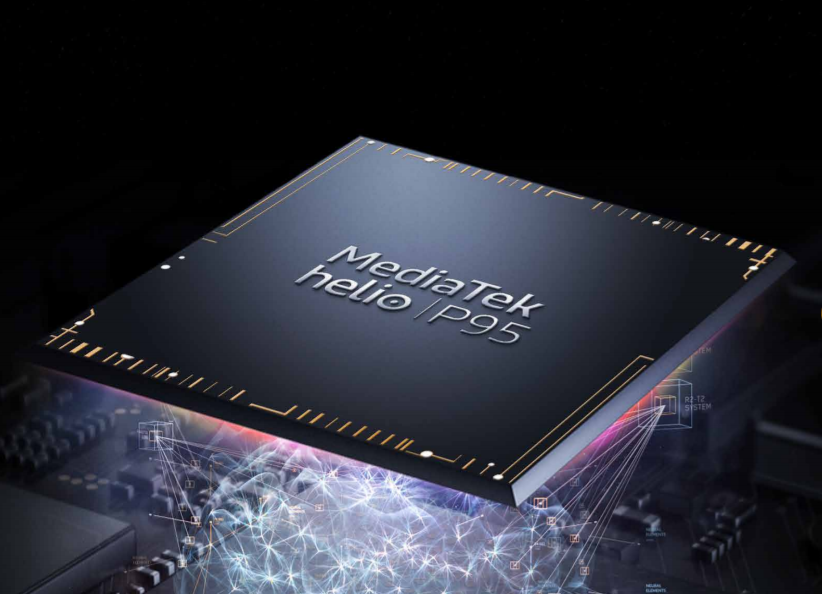
MediaTek has announced a new chipset albeit without any fanfare or publicity. The Helio P95 is the latest member of MediaTek’s Helio P Series.
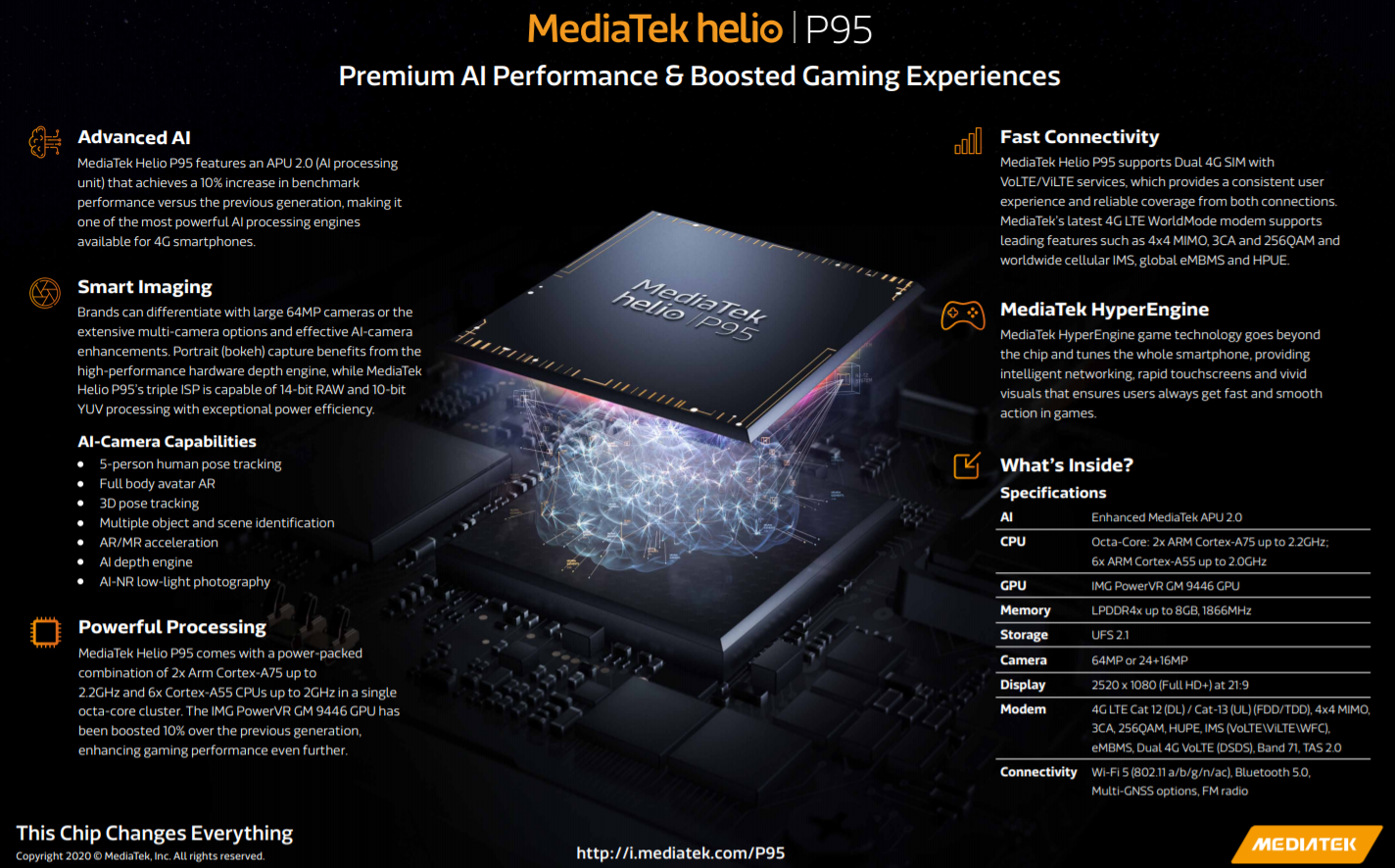
The Helio P95 is a single-cluster 8-core chipset with 2x Cortex-A75 cores clocked at 2.2GHz and 6x Cortex-A55 clocked at 2.0GHz. There is an Imagination PowerVR GM 94446 GPU with a 10% improvement in performance over the last generation. The chipset also has a large L3 cache.
The processor supports up to 8GB LPDDR4X RAM (1866MHz) and UFS 2.1 storage. With respect to cameras, it supports 64MP sensors or 24MP + 16MP dual cameras, while it supports displays with resolutions of up to 2520 x 1080 with a 21:9 aspect ratio.
The processor has a triple ISP with 14-bit RAW and 10-bit YUV processing. It also has AI-camera enhancements such as AI-NR low-light photography, 5-person human pose tracking, multiple objects and scene identification, and AI depth engine.
The Helio P95 also comes with APU 2.0 (AI Processing Unit) which MediaTek claims achieves a 10% increase in benchmark performance compared to the last generation. MediaTek says this makes it one of the most powerful AI engines available for 4G smartphones.
MediaTek’s HyperEngine brings improvements in gaming and tunes the whole device, so users can experience a fast and smooth gaming experience.
For connectivity, the Helio P95 supports 4G LTE Cat. 12 download speeds, Cat. 13 upload speeds, 4 x 4 MIMO, 256 QAM, ViLTE, VoLTE, Dual 4G VoLTE Dual SIM, Band 71, WiFi 5, and Bluetooth 5.0.
No manufacturer has announced if it will be the first to launch a phone powered by the chipset. MediaTek has also not revealed when we should expect to see it in devices.
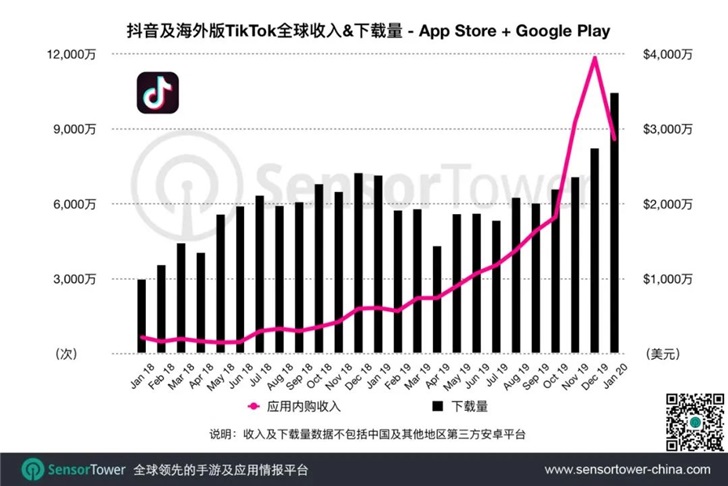
Our previous report had heralded the success achieved by Chinese short-video content platform TikTok and its Chinese equivalent Douyin in 2019. The app dethroned Facebook to slide behind Whatsapp as the most-downloaded app last year. This year, the popularity of the short-video app continues to soar. Recent data released by Sensor Tower shows that Douyin and TikTok were downloaded 104 million times on the Google Playstore and Apple app store.
The latest data shows that the app surpassed WhatsApp as the world’s most downloaded mobile app in the month under reference. The figure represents a massive 46% increase over the same period last year and an impressive 27% increase when compared to the total downloads in December 2019.
The stats show that the top three markets for TikTok downloads during this period are India, Brazil and the United States each accounting for 34.4%, 10.4% and 7.3%, respectively. Thus, the figure could even be higher as it doesn’t include downloads on third-party Android platforms in China and other regions.
At present, the total download of the application has exceeded 1.82 billion times. From a trend perspective, the download volume in February is expected to reach a new high, and the demographic dividend of overseas emerging markets will support TikTok to maintain rapid growth.
In terms of in-app purchase revenue, Douyin and TikTok ’s global revenue in December soared to $ 39.4 million but fell to $ 28.6 million in January. The revenue still ranks as the third-highest revenue-generating month after December and November 2019. At present, in-app purchase revenue is mainly from China and the United States, accounting for 84.5% and 10.1% of total revenue in January, respectively.
The Chinese version Duoyin at first saw a decline in its in-app purchases in early January but quickly rebounded when the Spring festival holidays began on January 23. Duoyin’s in-app purchases were said to be 18.7 times higher than the revenue during the Spring Festival 2019. This may be due to the Coronavirus which meant more persons were at home and spent time with their smartphones and other electronic gadgets. TV viewership was earlier revealed to have reached an all-time high during the holidays due to the coronavirus outbreak.
The Helio G70 is one of MediaTek’s newest processors. Since its announcement in January 2020, the processor has appeared in one device so far, and that is the Realme C3. As part of the marketing for the chipset, MediaTek has released a video comparing it against Qualcomm‘s Snapdragon 665 processor.
Since the Realme C3 is the only commercially-available phone with an Helio G70 processor, it is no surprise that it is the device MediaTek has chosen for its test. The Snapdragon 665 phone used for comparison is the OPPO A9 2020. The comparison covers areas such as Benchmark Scores, App Launch Time, and Game Launch Time.
The first test has both phones running AnTuTu and the result shows the Helio G70 wins the round with 193,790 points as against the Snapdragon 665’s 166,126 points. It is important to state that both phones are not running the same version of AnTuTu. Actually, the Realme C3 is running a more recent version of the benchmark app. There is also a Geekbench test, a 3DMark test, and a GFXBench test. And the Helio G70 comes out on top in all scenarios.
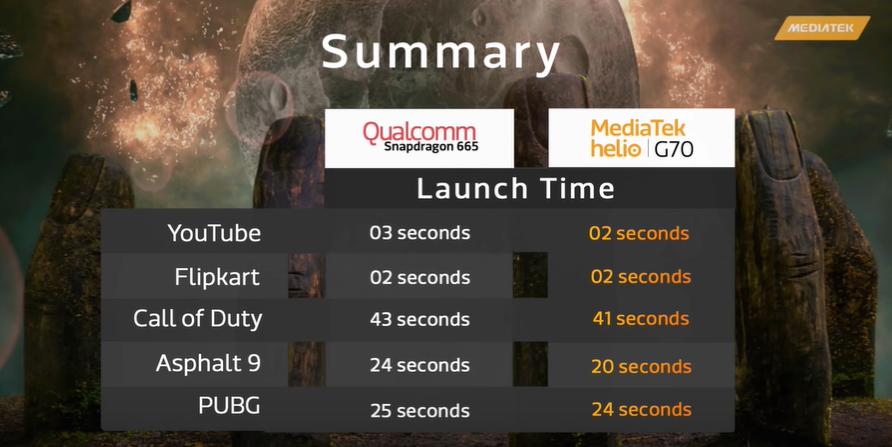
For App Launch Time, the time to launch apps such as YouTube and Flipkart are compared. While the Realme C3 was faster in loading YouTube, both devices tied with respect to Flipkart.
The last stage of the test compares launch time for games such as PUBG, Asphalt 9, and Call of Duty. The image below shows the result of the tests.
While the Helio G70 does win all three rounds, the Snapdragon 665 is definitely not lagging behind. Nevertheless, MediaTek does deserve to be praised as its latest chipsets have tremendously improved and even beat the competition.
The Helio G70 is a 12nm chipset with 4x Cortex-A75 cores clocked at 2GHz and 4x Cortex-A55 cores clocked at 1.7GHz. It has a Mali-G52 GPU clocked at 820MHz. The Snapdragon 665 is an 11nm processor with 8x Kryo 260 cores (semi-custom Cortex-A73 cores + semi-custom Cortex-A53 cores) clocked at 2.0GHz. It has an Adreno 610 GPU.
The COVID-19 epidemic isn’t just about China as several countries have now recorded several cases. The epidemic will no doubt have an effect on the global economy. Just recently, Samsung Electronics closed down its factory in South Korea after a worker tested positive to the viral disease. The Chinese economy is presently worse-hit as several companies have moe out with more foreign companies planning to do so.
A report carried by Nikkei Asian Review reveals that two tech giants Microsoft and Google are working assiduously on efforts to shift production of their new phones, personal computers and other devices from China to Southeast Asia amid the worsening coronavirus outbreak. Factories in Vietnam and Thailand are the likely beneficiaries, the report added.
Google is expected to commence the production of its latest low-cost smartphone which is said to go by the moniker Pixel 4A. The production will be carried out by Google’s partners in northern Vietnam as soon as April. Nikkei quotes two people with direct knowledge of the matter to have disclosed that the US company also plans to commence the manufacture of its next-gen flagship that will go by the name Pixel 5 in the second half of 2020 directly from the Southeast Asian nation (Vietnam).
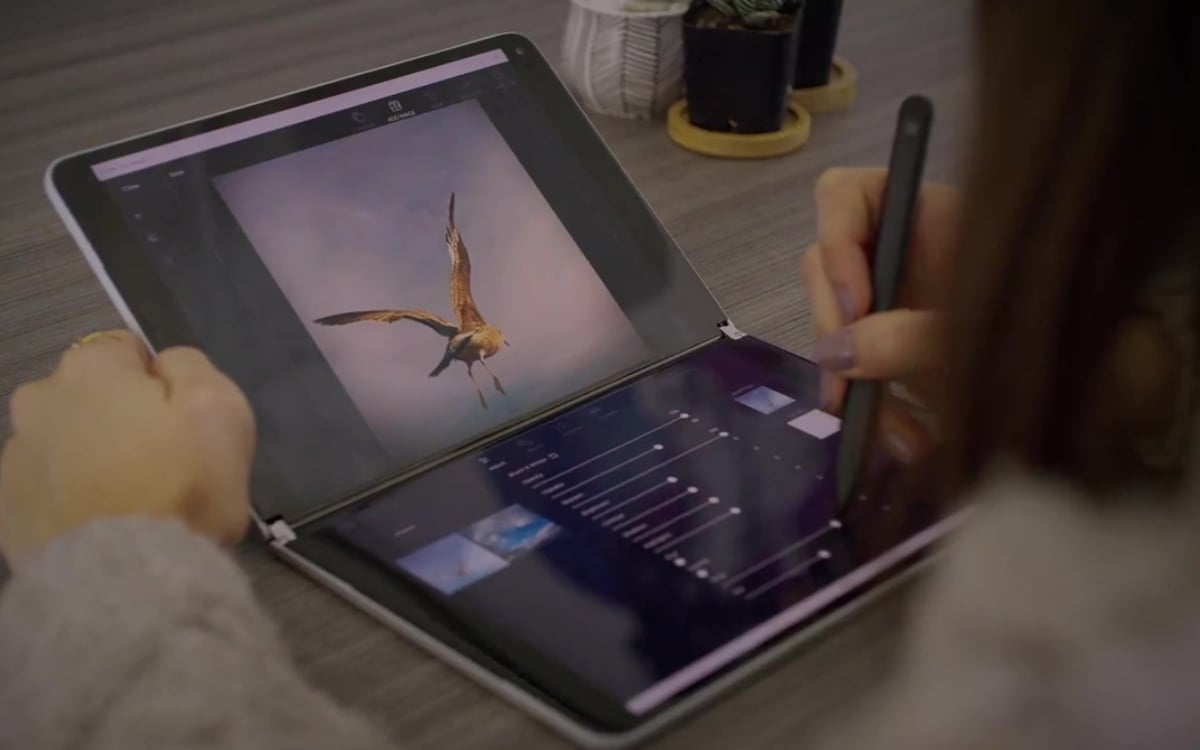
On its part, Microsoft is said to have scheduled the commencement of production of its Surface line which includes notebook and desktop PCs in north Vietnam in the second quarter of 2020 at the earliest. “The volume in Vietnam would be small at the beginning, but the output will pick up and this is the direction that Microsoft wants,” a supply chain executive with direct knowledge of the matter told Nikkei.
China remains the most cost-effective hotbed for manufacturers but the coronavirus epidemic that is yet to get any effective containment is forcing companies to seek alternatives. Even before now, Trump’s trade ban on China had brought up the need to diversify from relying solely on China. Google is reported to have asked a long-time manufacturing partner to help ready production lines in Thailand for its “smart home” related products, including voice-activated smart speakers like the Nest Mini. The first products are expected to start shipping in the first half of 2020, the sources said.
It is easier for internet companies such as Microsoft and Google to move production in a swift manner than for hardware-focused tech brands like Apple, HP and Dell, Nikkei quotes three supply chain executives to have hinted.
Google’s effort to move out of China is said to have started last year when it asked one of its partners to convert an old Nokia factory in the northern Vietnamese province of Bac Ninh to handle the production of Pixel phones. Google even asked its suppliers to evaluate the feasibility and cost implications to uninstall some production equipment and ship it from China to Vietnam via land, sea or air transportation after virus fears left production facilities unable to immediately return to work in February, one of the sources briefed on the matter said.
There has been no official statement from both companies to confirm this report.
Last week, OPPO had confirmed it will be launching the OPPO Reno3 Pro smartphone in India on March 2. The handset is already up for pre-orders in the country through Flipkart, Amazon India and retail stores. The landing page of the Reno3 Pro on the OPPO India website now carries detailed information on its camera configurations. One of the major selling points of the Reno3 Pro is that it will be debuting as the world’s first 44-megapixel dual punch-hole camera phone.
The OPPO Reno3 Pro has an AMOLED screen with an elliptical punch-hole at the upper-left corner. The display cutout houses two cameras. It will be housing a 44-megapixel ultrawide main lens along with a 2-megapixel depth assist sensor. The Reno3 Pro will users to capture amazing portrait shots with bokeh effect through the Dual Lens Bokeh feature. In dim light conditions, users can rely on the Ultra Night Selfie Mode to capture stellar and flawless night shots.
The backside of the Reno3 Pro has a quad camera setup which includes a 13-megapixel telephoto lens, a 64-megapixel Ultra Clear main shooter, a 2-megapixel monochrome lens with an LED flash alongside it and an 8-megapixel ultrawide lens. The quad cameras promise 5x hybrid zoom and 20x digital zoom. For videographers, the Reno3 Pro is equipped with Ultra Steady Video 2.0 functionality for capturing jerk free footages.
The marvelous display of the Reno3 Pro is embedded with a fingerprint reader. The smartphone features 8 GB of RAM and 128 GB of native storage. It will be arriving with support for 30W VOOC Flash Charge 3.0. The Chinese version of the Reno3 Pro has Snapdragon 765G which enables 5G connectivity on the device. There is no information on the processor that will be fueling the Reno3 Pro that will be arriving in India.
The other specifications of the OPPO Reno3 Pro smartphone is yet to be confirmed. The first 1,000 customers who pre-order the Reno3 Pro smartphone can avail a wireless speaker from OPPO for free. Another 1,000 users will stand a chance to win OPPO Enco earbuds for free.
The Reno3 Pro can benefit from launch offers like Complete Damage Protection and 10 percent cashback from leading banks like HDFC Bank, ICICI Bank, RBL Bank and Yes Bank. At present, there is no word on the pricing of the Reno3 Pro phone. Buyers can avail the smartphone in color editions such as Auroral Blue, Midnight Black and Sky White.
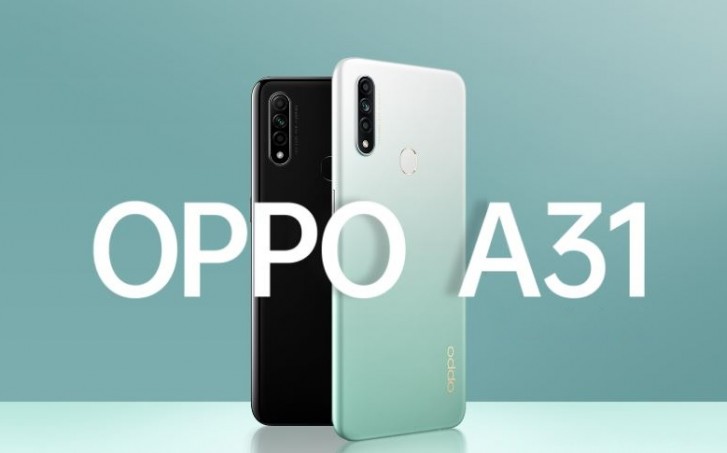
The OPPO A31 smartphone had gone official in Indonesia in the previous week. Today, the same phone has launched in India as it is now officially listed on OPPO India website. While the Indonesian market received the OPPO A31 smartphone in a single variant, it has landed in two variants such as 4 GB RAM + 64 GB storage and 6 GB RAM + 128 GB storage.
OPPO A31 specifications and features
The OPPO A31 has 163.9 x 75.5 x 8.3mm and it weighs 180 grams. The handset has a 6.5-inch IPS LCD display with teardrop notch. The display offers HD+ resolution of 720 x 1600 pixels, 20:9 aspect ratio, 480nits brightness and a contrast ratio of 1500:1. The phone promises a screen space of 89 percent.
The MediaTek Helio P35 chipset along with up to 6 GB of RAM powers the OPPO A31 smartphone. The phone houses a 4,230mAh battery that promises a talk time of 45 hours, 8 hours of video playback and 35 hours of music playback. The big battery comes with support for 10W charging. The ColorOS 6.1.2 based Android 9 Pie OS runs on the device.
The front notch of the OPPO A31 has an 8-megapixel selfie camera with f/2.0 aperture. The LED assisted AI triple camera system of the A31 consists of a 12-megapixel main shooter with f/1.8 aperture, a 2-megapixel depth sensor with f/2.4 aperture and a 2-megapixel macro lens with 2cm focal length and f/2.4 aperture rating. The OPPO A31 comes with other features like dual SIM support, Wi-Fi 802.11ac, Bluetooth 5.0, GPS, microUSB, USB OTG, 3.5mm audio jack and a rear-mounted fingerprint reader.
OPPO A31 price and availability
The 64 GB and 128 GB variants of the OPPO A31 are priced at Rs. 11,490 (~$160) and Rs. 13,990 (~$195), respectively. Fantasy White and Mystery Black are the two color editions of the OPPO A31 for India.
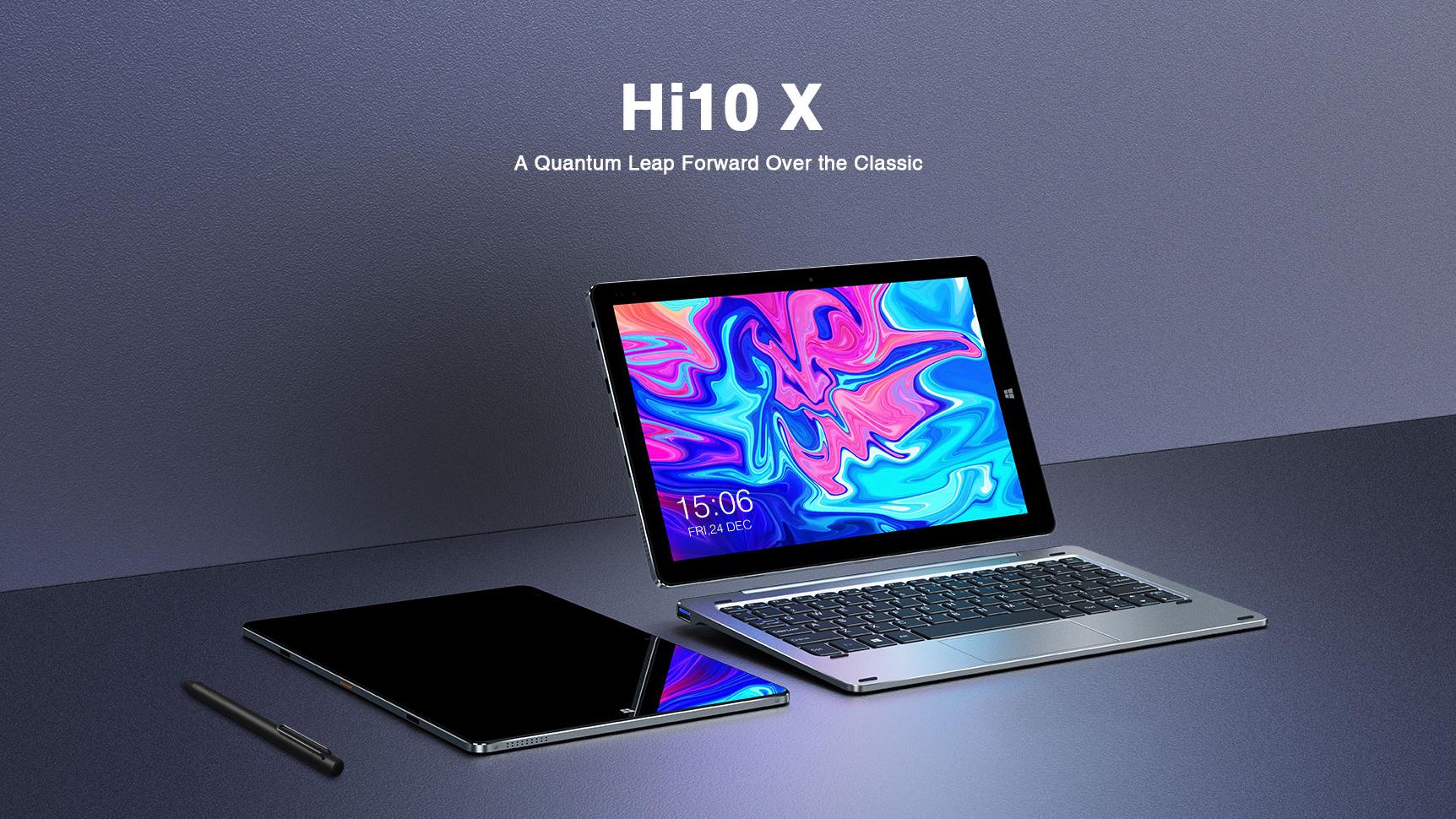
Over the years, Chuwi has built a solid reputation for itself in the tablet/laptop market. Despite the fall in tablet popularity, Chuwi kept faith in the market and was doing well. Just like all other Chinese firms, the company had gone into the Chinese Lunar New year holidays with high expectations and plans for the new year until the Coronavirus epidemic happened. As a result of the health situation, the government extended the holidays and even after the tension, most workers couldn’t return to work. Apparently, Chuwi has shut down production all this while but is now set to resume business activities for the year. A press release by the company indicates that the tablet brand will open shop again on February, 26 which is today.
The COVID-19 has had severe effects on companies in China and even on the Chinese economy. Presently, it has even spread beyond the shores of China into other countries with no cure in sight. China has been able to relatively contain the spread with the adoption of several measures that prevent cross-infection.
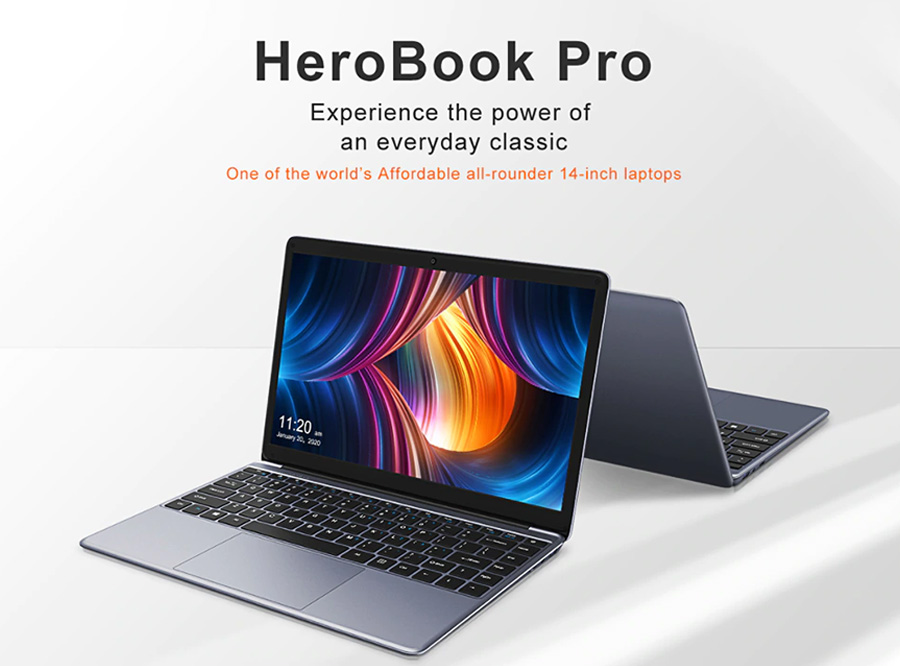
Chuwi says it has gotten the approval of the Chinese authorities to resume work. The PC maker is, thus, craving for the support of fans the world over while also appreciating its fans for their support in time past. The company is already expected to launch the HeroBox Mini-PC, HeroBook Pro laptop and the Hi 10X 2-in-1 tablet.
You can read the full press release from Chuwi below.
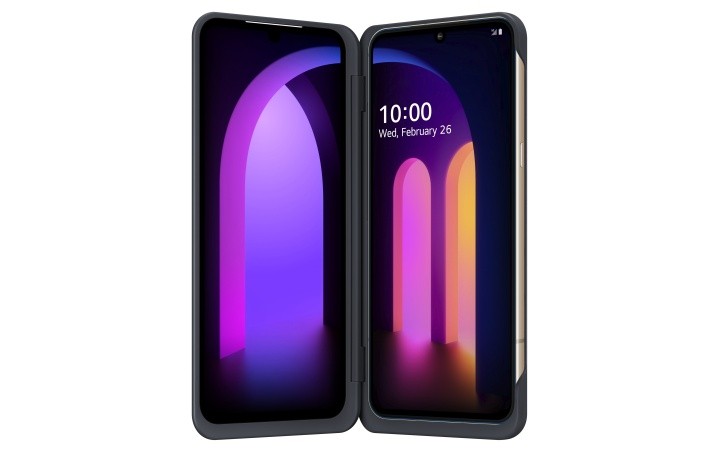
After weeks of leaks, the LG V60 ThinQ 5G phone has finally gone official. The major highlights of the Snapdragon 865 powered flagship smartphone include behemoth battery and 64-mgeapixel triple cameras. Also, the smartphone comes with an improved Dual Screen accessory.
LG V60 ThinQ specifications
The LG V60 ThinQ smartphone offers users with a massive display of 6.8 inches. The OLED screen produces full HD+ resolution of 1080 x 2460 pixels and a tall aspect ratio of 20.5:9. Like the V50S ThinQ smartphone from last year, the V60 ThinQ features a waterdrop notch on the display which houses a 10-megapixel selfie snapper. The Gorilla Glass 5 protected display of the phone is embedded with a fingerprint reader.
The Snapdragon 865 mobile platform that tags along X55 5G modem allows the LG V60 ThinQ to connect to sub-6GHz and mmWave 5G networks. The 5,000mAh gargantuan of the V60 ThinQ supports wireless charging and Quick Charge 4+ fast charging technology. The SD865 chipset is accompanied by 8 GB of RAM. The phone comes with a native storage of 128 GB / 256 GB. There is a microSD card slot for additional storage.
The V60 ThinQ has a horizontal camera setup on its back. It comprises of triple cameras and an LED flash. The setup includes an OIS enabled 1/1.7” 64-megapixel main lens with f/1.8 aperture, a 117-degree 13-megpixel ultrawide shooter and a 3D ToF (Time of Flight) sensor. The V60 ThinQ supports 10x digital zoom and is capable at shooting 8K videos.
The Android 10 OS coupled with the latest LG UX 9.0 runs on the LG V60 ThinQ. For audiophiles, the South Korean company has features like 32-bit Quad DAC, stereo speakers and four microphones. The connectivity features that are available on the device include Wi-Fi 6, a dedicated hardware key for accessing Google Assistant and a 3.5mm audio jack. Lastly, the smartphone comes with an IP68 rated and MIL-STD 810G complaint chassis.
LG V60 ThinQ Dual Screen accessory
The Dual Screen case designed for the LG V60 ThinQ smartphone features a 6.8-inch OLED panel that supports full HD+ resolution. The case features a 360 Freestop Hinge that makes it possible to use the phone in different ways such as notebook, stand and tent modes. The case also features a 2.1-inch notification panel which offers users with always-on feature.
LG V60 ThinQ price and availability
LG is yet to confirm on the pricing and the names of the markets that will be receiving the V60 ThinQ. As it can be seen in the above renders, the phone will be available in two colors such as Classy Blue and Classy White. The Dual Screen accessory comes in Black and White color options.
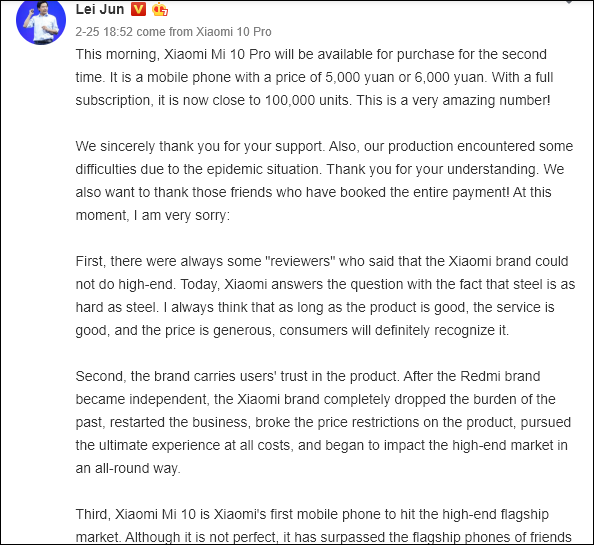
Xiaomi recently announced that it would be putting up the Mi 10 Pro high-end version for sale across various channels on Tuesday (February 25). Indeed, the flagship model went on sale in China. Concerning the sales, the company’s CEO Lei Jun disclosed in a Weibo post yesterday that close to 100,000 units of the model have been sold.
The top-end model of the Mi 10 Pro comes with 12GB RAM and 512GB storage and adopts a hefty price tag of 5999 yuan ($853). The lesser memory variants sell for around 5000, yuan. This is the first time Xiaomi will be selling the Mi series models at such high prices. Lei Jun things it is amazing to rake up almost 100,000 units in sales between February 13 when it was launched and now. We find it amazing too.
The Mi 10 series comes with a premium build and some powerful hardware configuration with some innovations in the screen, camera, sound quality and system performance. Lei Jun reiterated the new strategy of the company to remove the price restrictions on its flagship products, especially as the Redmi series became independent. The CEO equally promised that the next-generation models will be more powerful.
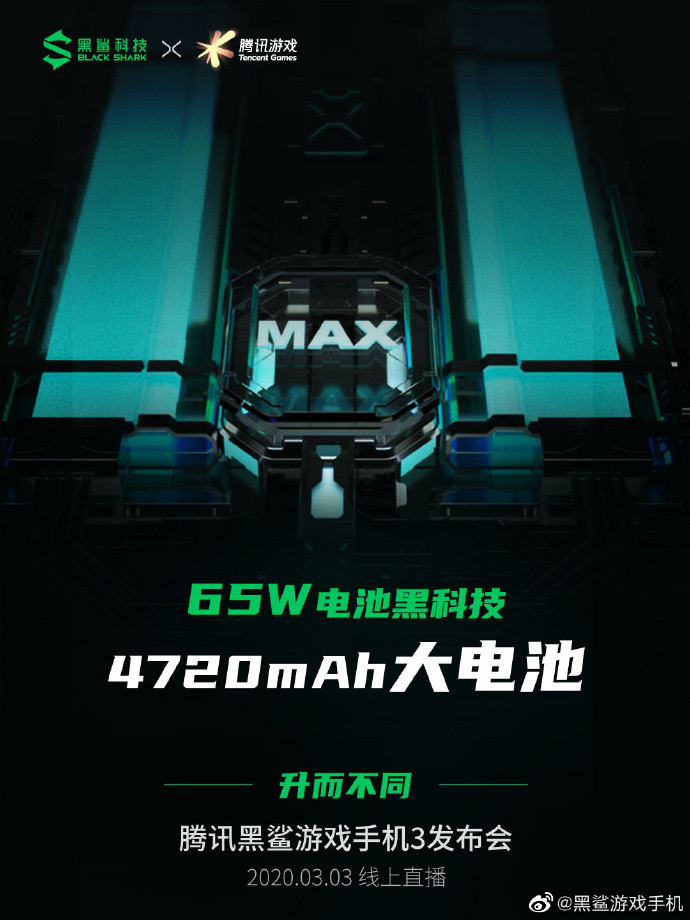
Ahead of the Black Shark 3’s launch next week, the manufacturer has been sharing posters on Weibo that reveal some of the phone’s features. The latest one released today tells us the battery capacity as well as the supported power rating.
The Black Shark 3 will have a 4720mAh battery capacity and from the poster, it shows the battery is split into two just like that of the Xiaomi Mi 10 Pro. It was previously reported that it has a 5000mAh battery but the poster shows that is not the case.
The phone will also have support for 65W fast wired charging just like the upcoming OPPO Find X2 and the Realme X50 Pro 5G that was announced earlier this week. The Weibo post revealed that it will take just 15 minutes to charge one of the batteries (2780mAh) to full.
Other known features of the phone are a 120Hz refresh rate, LPDDR5 RAM, Snapdragon 865 processor, UFS 3.0 storage, and Dual-mode 5G.
We use cookies on our website to give you the most relevant experience by remembering your preferences and repeat visits. By clicking “Accept”, you consent to the use of ALL the cookies.
This website uses cookies to improve your experience while you navigate through the website. Out of these, the cookies that are categorized as necessary are stored on your browser as they are essential for the working of basic functionalities of the website. We also use third-party cookies that help us analyze and understand how you use this website. These cookies will be stored in your browser only with your consent. You also have the option to opt-out of these cookies. But opting out of some of these cookies may affect your browsing experience.
Necessary cookies are absolutely essential for the website to function properly. This category only includes cookies that ensures basic functionalities and security features of the website. These cookies do not store any personal information.
Any cookies that may not be particularly necessary for the website to function and is used specifically to collect user personal data via analytics, ads, other embedded contents are termed as non-necessary cookies. It is mandatory to procure user consent prior to running these cookies on your website.