Advertisement

Redmi K30 5G sold out in 2 hours in first sale

Redmi had introduced the Redmi K30 series in China in December 2018. Its 4G edition had released in the home market in the same month. The Redmi K30 5G was made available for purchase for the first time in China today. The sale was carried out at 10 AM (local time). As expected, the Redmi K30 5G has met with a good reception from the audience as it was sold out in just 2 hours.

Redmi is currently only selling the 8 GB RAM + 128 GB storage edition of the Redmi K30 5G. It carries a price tag of 2,499 Yuan (~$360) and it is available in blue color only. The Chinese firm confirmed that the next sale of the smartphone will be held on Jan. 10 in China at 10 AM (local time).

There is no confirmation on when it will be selling the other variants of the Redmi K30 5G. Its base model has 6 GB of RAM and 64 GB of storage and is priced at 1,999 Yuan (~$288). The 6 GB RAM + 128 GB storage and 8 GB RAM + 256 GB storage editions are respectively priced at 2,299 Yuan (~$331) and 2,899 Yuan (~$418).

[su_note note_color=”#ffffff”]Editor’s Pick: Realme X50 5G with 120Hz display, SD765G, 64MP quad cam, 16MP dual front cameras debuts for 2,499 Yuan (~$360)[/su_note]

Redmi K30 5G specifications

The Redmi K30 5G has a 6.67-inch IPS LCD that offers a high refresh rate of 120Hz. It offers 20:9 aspect ratio and 1080 x 2400 pixels full HD+ resolution. It is the first phone to be fueled by the 7nm Snapdragon 765G processor. The phone comes with up to 8 GB of LPDDR4x and up to 256 GB of UFS 2.1 storage. There is a microSD card slot onboard for additional storage.

The MIUI 11 based Android 10 OS runs on the Redmi K30 5G. The quad camera system positioned on the rear shell of the phone features a 64-megpixel Sony IMX686 primary lens, an 8-megapixel ultrawide lens, a 2-megapixel macro lens and a 2-megapixel depth sensor. The dual selfie camera setup of the Redmi K30 5G includes a 20-megapixel main sensor and a 2-megapixel depth assist lens. The Redmi K30 5G is backed by a 4,500mAh battery that is coupled with 30W fast charging technology.


HiSense showcases its laser TVs and Dual Cell ULEDs at CES 2020

HiSense today took the stage at CES to showcase a host of new television sets that the company will be releasing this year. The products displayed by the company includes a refresh of its projector/television hybrid laser TV and premium ULED TVs.

The company showcased HiSense L5 Laser TV which is a follow-up to the L10E launched in 2018. It retains the same form factor that teams a display screen with an ultra-short throw projector for precise image control.

HiSense Laser TV

However, the TV is now a bit dimmer than the previous model, at 2,600 lumens rather than the L10E’s 3,000 lumens. It runs a rather simpler Android TV smart platform and has a smaller color gamut. Coming to the markets in April with lower specs compared to the predecessor, it could be priced aggressively.

Along with that, the company also showcased HiSense XD9G ULED TV which is making use of the company’s own Dual Cell panel. It fuses a 2K and 4K panel together for enhanced contrast, and boasts ‘rival contrast’ to OLED at a lower price. It is said to be available for purchase in late 2020.

Hisense’s H Series of ULEDs will also get some new models, with a H9G Quantum follow-up to the H9F, and an H8G successor to the H8F. These devices are slated to be available for purchase in April and March respectively.

Also, the company is set to launch H65G (4K) and H55G (2K) LCD sets later this year but has not specified any timeline. They are less advanced models with Android smart platforms and without ULED enhancements.

For more coverage on CES 2020 events and launches, click here.


Apple now lets you engrave an emoji on your Airpods case for free

Engraving is not a new thing and Apple has long offered such the option for selected products. The engraving option has been available for AirPods as well, but it was limited to text only. Now the company is expanding the engraving option for AirPods to include emojis as well. Yes, you heard that right, you engrave an emoji onto your AirPods case.

“New personal engraving options, from A to emoji” states Apple in a new banner featured on the home page of its website. You can now customize AirPods in the Apple Online Store through the “Personalize it for free” option that appears when you select the earphones. The current options are fairly limited, but all the most popular emojis are mostly there.

Users can also add text to personalize their devices, with Apple introducing a new uppercase typeface that offers more pop than the original typeface, which was lower case and smaller on the AirPods. Right now, it’s not possible to mix emoji and text – you must choose one or the other, though, for text-based options, you can add numbers and dates.

Once you add a pair of AirPods or AirPods Pro to your basket, you can click on the ‘Add Engraving’ option and run through the short engraving process. The offer right now is available in United States, Canada, United Kingdom, Australia, Japan, and a few other countries where iPhone maker can exercise direct online sale.

(Source)

Realme X50 5G with 120Hz display, SD765G, 64MP quad cam, 16MP dual front cameras debuts for 2,499 Yuan (~$360)

The Realme X50 5G smartphone has finally gone official today. It has arrived as the company’s first 5G ready smartphone. The Chinese firm also announced the Realme Buds Air alongside it with a price tag of 369 Yuan (~$53). With a starting price of 2,499 Yuan (~$360), the Realme X50 5G offers users with a 120Hz refresh rate supporting display, the latest Snapdragon 765 processor, 64-megapixel quad rear cameras, 16-megapixel dual selfie snappers and a large-sized battery with fast charging support.

Realme X50 5G
Realme X50 5G

Realme X50 5G specifications and features

The Realme X50 is a glass bodied smartphone with Gorilla Glass 5 panels on its front and rear. The smartphone weighs 202 grams and its dimensions are 163.8 x 75.8 x 8.9mm. The smartphone is equipped with a 6.57-inch IPS LCD display. The 120Hz display offers an aspect ratio of 20:9 and delivers full HD+ resolution of 1080 x 2400 pixels. The smartphone promises a screen-to-body ratio of 90.4 percent.

The 7nm Snapdragon 765G mobile platform that includes Adreno 620 graphics, fifth generation AI processing engine and dual-mode 5G powers the Realme X50 5G. It supports n1, n41, n78 and 79 5G frequency bands of China. The smartphone comes in 6 GB, 8 GB and 12 GB LPDDR4x RAM variants. Its UFS 2.1 storage options are 64 GB, 128 GB and 256 GB.

The Realme X50 5G smartphone can not only connect two dual Wi-Fi connections but also with 5G networks simultaneously for stable and uninterrupted web connection. The five-dimensional ice-cooled heat dissipation system that includes a double layer of graphite sheet, liquid cooled copper pipe, thermal gel, thermal silicon pad, copper foil thermal array and more layers graphite sheet ensures the Realme X50 5G remains cool during intensive performance.

Realme X50 5G Polar and Glacier
Realme X50 5G Polar White and Glacier Blue

The pill-shaped cutout at the upper-left corner of the Realme X50 5G’s display has an f/2.0 aperture Sony IMX471 primary lens that is coupled with an f/2.2 aperture 8-megapixel superwide sensor. The front cameras are blessed with features like UIS Super Image Stabilizer, video portrait blur, portrait night, AI portrait beauty and 1080p video recording at 30fps.

The rear shell of the Realme X50 5G features a quad camera system. It comprises of an f/1.8 aperture Samsung GW1 64-megapixel main lens, an f/2.3 aperture 8-megapixel ultrawide lens with 119-degree field-of-view, an f/2.5 aperture 12-megapixel telephoto lens and an f/2.4 aperture 2-megapixel macro lens with a focal length of 4cm. The quad cameras offer user with features such as dual-LED flash, 20x hybrid zoom, UIS and UIS Max video stabilization, 4K video recording at 30fps and 960fps slow-motion recording.

The Realme X50 5G is backed by a 4,200mAh battery. The enhanced version of the 30W VOOC 4.0 Flash Charge technology can fill the battery of the phone to 70 percent from scratch in just 30 minutes, claims the company. The Realme X50 5G comes with other features such as a side-mounted fingerprint reader, microSD card slot, 1216 super linear speaker Dolby Sound and Hi Res audio support, dual-SIM slot with microSD support, dual frequency GPS, Wi-Fi 802.11ac, Bluetooth 5.0 and USB-C. The smartphone lacks a 3.5mm audio jack. The Android 10 OS customized with Realme UI runs on the device.

Realme X50 5G Master Edition

Realme X50 5G Master Edition

Designed by well-known Japanese designer, the Realme X50 5G Master Edition comes in two colors. Its designer features unique pattern of lines and points carved with classic indium plating process to achieve a metallic luster appeal. It comes with 12 GB of RAM and 256 GB of native storage.

Realme X0 5G Pricing and Release Date

Here is the pricing of the different variants of the smartphone.

  • 8 GB RAM + 128 GB storage – 2,499 Yuan (~$360)
  • 6 GB RAM+ 256 GB storage – 2,699 Yuan (~$388)
  • 12 GB RAM + 256 GB storage -2999 Yuan (~$432)
    Color variants: Polar White and Glacier Blue
  • Realme X50 Master Edition (12GB + 256GB) – 3,099 Yuan (~$446)

The company did not announce the pricing of the 6 GB RAM variant of the Realme X50 5G at the launch event. The Realme Buds Air is priced at 399 Yuan (~$57). However, its price has been slashed to 369 Yuan (~53) for the initial sale. It can be availed in Black, White and Yellow colors in China. It is now available for purchase in China.

The Realme X50 5G Master Edition will be made available for purchase from Jan. 14. The 8 GB and 12 GB RAM editions are listed on the official online store of Realme China.

What’s your opinion on the specs and pricing of the Realme X50 5G? Which one between Realme X50 5G and Redmi K30 5G is a better device? Share us your thoughts by posting your comments below.


Lenovo ThinkPad X1 Fold arrives with a foldable OLED display, priced at $2499 (17,370 CNY)

At CES 2019, Lenovo has showcased what seemed like the “world’s first foldable PC.” It was a prototype laptop notebook that could fold into and resemble a book. Jump forward to today (7th December 2020), Lenovo has unveiled the same laptop at CES 2020 which is now ready for commercial markets and is dubbed as the ThinkPad X1 Fold.

Lenovo
ThinkPad X1 Fold

Design

Lenovo’s ThinkPad X1 Fold is the world’s first foldable PC and thus arrives with a body mainly consisting of the screen on the front side. It arrives with an additional wireless keyboard but users can use the laptop without it as well. On the rear, the laptop is bound in leather, which is a really premium touch, that slides back and forth as the hinge unfolds. Interestingly, the device can easily pass off as a regular leather bound book when folded.

Lenovo
A leather finish can be observed on the rear of the ThinkPad X1 Fold

Specifications

Unfortunately, Lenovo has yet to reveal the exact specification of the product, similar to last year. However, it has barely changed in its internal specifications from the prototype variant. Hence, it arrives with a 13.3 inch flexible OLED panel with aa resolution of 2048 x 1536 and a 4:3 ratio. The ThinkPad X1 Fold also features Microsoft’s Windows Hello-compatible camera on its bezel.

The display is provided by LG and is said to be a product of a 4 year long partnership between the South Korean electronics company and Lenovo. Notably, there are still concerns being raised about the durability of the device. The doubt is in the right place considering one of the first foldable devices to be launched ended up breaking very soon (Samsung Galaxy Fold comes to mind). Also, a slight crease can be noticed in the middle of the screen where it bends if one looks hard enough.

Lenovo’s ThinkPad X1 Fold comes with Windows 10 Pro; thus, the company has to ship the device with its own solutions and optimizations for the foldable screen functionality. There is a version of Windows called Windows 10X which is expected to arrive later this year and bring Microsoft optimizations for the OS on dual display devices like the Surface Neo.

Under the hood, the foldable laptop from Lenovo runs a special Intel chipset which has not been specified, although it is hinted at as “hybrid technology.” This new processor is apparently power efficient as well since the company claimed an 11 hour battery life on it. For memory, it is equipped with 8GB of RAM and up to 1TB of SSD storage.

Price and Availability

The ThinkPad X1 Fold from Lenovo is a new breed of laptops and hence arrives with a hefty price tag. It will have buyers shell out $2,499 or roughly about 17,370 Yuan. The PC will start its shipping in mid 2020 and will be an experiment to see how well such one of a kind devices are received by the global market.

For more coverage on CES 2020 events and launches, click here.


(Via)


Realme Buds Air true-wireless earbuds officially launched in China

A few weeks ago, Realme launched the Realme Buds Air true-wireless earphones in the Indian market along with the Realme X2 smartphone. The company had promised to launch the same in China along with its first 5G smartphone Realme X50 5G.

Keeping its promise, the company has today officially launched the Realme Buds Air in China. It will be available for purchase in three color options — Yellow, White, and Black. Priced at 399 yuan (~$57), they are currently up for sale at 369 yuan (~$53).

Realme buds air

Realme Buds Air are ergonomically designed in a semi-open shape that relieves you from the discomfort caused by in-ear earbuds. They have an imported LCP advanced multi-layer composite diaphragm and a big 12mm sound unit.

To delivery immersive sound, the earbuds uses a custom Dynamic Bass Boost solution to provide powerful bass that enhances the immersive experience of watching movies and listening to music.

They pack two built-in microphones for dual-mic noise cancellation — one for capturing the human voice and the other for ambient sound, which are algorithmically synthesised to offset environmental noise and deliver clear conversation quality during calls.

The Realme Buds Air are powered by the high-performance R1 processing chip that solves the problem of wireless audio latency. It also supports Bluetooth 5.0 protocol that effectively processes audio transmission and ensures extremely low latency.

The company says that with the technology used in Buds Air, once thet are recognized by the smartphone, it connects instantly every time the case cover is opened, ensuring seamless music experience.

The two earbuds are connected to the phone synchronously to ensure seamless audio sync and keep the latency as low as possible. Unlike other similar products in the market, this one come with a Gaming Mode.

Realme Buds Air

The Gaming Mode on Realme Buds Air further reduces the latency by 51 percent to achieve excellent sound and picture synchronisation, says that company. It further adds that when compared to competitors, it beats them hands-down with a latency of 120ms only.

It also comes with Smart Wear Detection and built-in distance sensor that detects wearing and removal of the buds for truly wireless and seamless experience. It supports smart touch controls such as double tap to play/pause, triple tap to skip track, a long press to wake up Google Assistant for voice operation, etc.

As for the battery life, the company claims to offer 3 hours of continuous playback and up to 17 hours with the charging case. Further, Realme adds that the Buds Air also supports wireless charging and the case has a Type-C port for wired charging.

You can check out our review of the Realme Air Buds here.


OtterBox launches first EPA approved antimicrobial Glass Screen Protector at CES 2020

Protecting phones from malware and viruses is necessary in this current day and age, but it could carry another possible threat to its user – bacteria. While that may sound out of place, it’s actually quite true and Otterbox has upgraded its glass screen protectors with technology that protects users from the harmful microorganisms.

At CES, OtterBox has announced the world’s first glass screen protector for smartphones with integrated antimicrobial technology registered with the EPA. The new Amplify Glass screen protector offers protection against scratches and drops and germs and comes to Google and Samsung smartphones after first arriving for iPhone later this year.

Otterbox CEO Jim Parke says, “Amplify Glass now features proprietary anti-microbial technology that suppresses the growth of several common stains and odor-causing bacteria to protect the surface of the screen protector.” So you will be able to put your face against your phone’s display when making a call without fear of random diseases we suppose.

It also allegedly protects the display on a phone up to five times better than rival screen protectors and keeps the screen on your phone from succumbing to drops, bumps and falls. OtterBox has not yet released information about the release or pricing, but shared that it will be arriving “soon” on OtterBox.com.

You can find more CES2020 coverage from here.

(Source)

The Alienware Concept UFO prototype is a gaming PC in the Nintendo Switch form factor

The quest to play demanding AAA games on the go has long been a dream of PC makers. The closest we’ve come is the Nintendo Switch, which made console gaming portable in a way no previous handheld gaming device was ever really able to do. Companies like Razer have tried to replicate this in the PC market, but now Dell is taking a crack at it with the Alienware Concept UFO handheld at CES 2020.

Featured above, the new handheld is a full Windows PC, and is reportedly focused, unsurprisingly, on gaming. The Concept UFO packs an 8-inch screen and a 1900 x 1200 display into a portable form factor with detachable controllers. The device overall seems a bit chunkier than the Switch, which also appears to make the controller more ergonomic.

Flip the Alienware Concept UFO over and you’ll see the rear of the display panel is made of more white aluminum with hexagonal, honeycombed-shaped vents — similar to what’s used on the cool the Area-51m. However, the panel also functions as a downward-folding kickstand revealing a black metallic back.

The device on the show floor uses an Intel 10th-gen Ice Lake processor and is powered by a 65-watt power brick. It plays F1 2019, World War Z, and Mortal Kombat 11 at decent frames, albeit at fairly low settings. Above the display, you’ll find the power and volume buttons, a USB-C port, and a headphone jack.

Now normally Nintendo, a company that’s extremely protective of its intellectual property, would try to prevent something like this from coming to market, but we feel that wouldn’t apply here. This is because it’s not really a Switch competitor. Alienware PCs are expensive, and you can expect this to be priced more like a gaming laptop than a portable console.

Unfortunately, it’s just a concept. Though the press got to go hands-on and the unit seemed to perform well, Dell (which owns Alienware) isn’t promising it’ll actually come to market. And though the company has working prototypes, it isn’t providing any specifications beyond the display and the fact it uses a 10th gen Intel processor.

You can find more CES2020 coverage from here.

(Source)

Samsung Galaxy A51, A71 prices in India leaked ahead of next week’s launch

In December, Samsung had launch the Galaxy A51 and Galaxy A71 smartphones in Vietnam. Earlier this month, the company confirmed the pricing of both phones for European markets. Both the new 2020 A-series phones are also rumored to debut in India. According to 91mobiles, the Galaxy A51 and A71 are will be made official in India in the coming week. The publication has also shared the leaked pricing of both smartphones.

Soon after the announcement of the Galaxy A51 and A71 in Vietnam, the support page for the A51 had gone active on Samsung India’s website. The publication claimed that a retail store in Delhi-NCR in India has put up posters for both smartphones. Samsung is yet to confirm an exact launch date for its new A-series phones for India, but the publication seems quite confident that the A51 and A71 phones will go official as early as next week.

Samsung Galaxy A51 price in India (Rumored)

Citing information acquired from retail sources, the Galaxy A51 could be available in 4 GB RAM + 64 GB storage and 6 GB RAM + 128 GB storage models in India. The starting of the Galaxy A51 could be Rs. 22,990 (~$320). In the global markets, Samsung is also selling the Galaxy A51 in 8 GB RAM + 128 GB storage version. However, there is no confirmation on whether this variant will be brought to India.

Samsung-Galaxy-A51

The predecessor phones such as Galaxy A50 and Galaxy A50s had launched in India with respective starting prices of Rs. 19,990 (~$278) and Rs. 22,999 (~$320).

Samsung Galaxy A71 price in India (Rumored)

The Galaxy A71 was introduced in 6 GB RAM + 128 GB storage and 8 GB RAM + 128 GB storage. However, there is no confirmation on both models will be brought to India. The Galaxy A70 and Galaxy A70s had both debuted with a price tag of Rs. 28,990 (~$404). The publication claims that the Galaxy A71 may arrive with a pricing of Rs. 29,990 (~$418).

Samsung Galaxy A71

Samsung Galaxy A51 and Galaxy A71 specifications

The Galaxy A51 and A71 are respectively fitted with 6.5-inch and 6.7-inch S-AMOLED Infinity-O displays that offer full HD+ resolution. The Exynos 9611 powers the A51 whereas the A71 is driven by Snapdragon 730 processor. The One UI 2.0 based Android 10 OS comes preloaded on both phones.

The Galaxy A51 has a 4,000mAh battery that supports 15W rapid charging. The Galaxy A71 has a larger 4,500mAh batter that is coupled with 25W fast charging. These phones are fitted with 32-megapixel front-facing cameras. The quad camera setup of the Galaxy A51 includes a 48-megapixel lens, a 12-megapixel ultrawide lens, a 5-megapixel macro lens and a 5-megapixel depth sensor. The Galaxy A71 has a 64-megapixel main lens in its quad camera setup. It is assisted by a 12-megapixel ultrawide lens, a 5-megapixel macro lens and a 5-megapixel depth sensor. Both phones are equipped with in-display fingerprint readers and a microSD card slot.

The Galaxy A51 has Prism Crush Black, White, Blue, and Pink colorways. On other side, the Galaxy A71 has color variants like Galaxy Prism Crush Black, Silver, Blue and Pink.


(source)

Lenovo unveils the IdeaPad Duet and IdeaPad Flex 5 Chromebooks at CES 2020

It wouldn’t be CES without a few pre-show surprises, and this year is no different. Perhaps more surprising than that is that this year there have been more Chromebooks than we expected. Lenovo has just announced its IdeaPad Duet Chromebook, a detachable laptop, and the IdeaPad Flex 5 Chromebook, a 2-in-1 laptop.

Let’s first take a look at the more unconventional and arguably exciting of the two, that being the Ideapad Duet. The Lenovo IdeaPad Duet is a detachable Chromebook that comes with a keyboard base in the box. The 10.1-inch tablet has a FHD display, a single USB-C port, and runs on top of Google’s Chrome OS with “up to” eight years of updates.

Lenovo IdeaPad Duet Chromebook

The whole experience is powered by a MediaTek Helio P60T processor along with 4 GB of RAM and 128 GB of storage on the top-tier model. There’s also a 7,180 mAh battery within, an 8 MP camera on the back, and a 2 MP camera on the front. Forgoing the standard Intel chipset allows the Lenovo IdeaPad Duet Chromebook to hit a lower price point of $279.


Meanwhile, the Lenovo IdeaPad Flex 5 Chromebook is a more traditional and neat looking 13.3-inch 2-in-1 with up to an Intel i5 processor, a water-resistant backlit keyboard, and a starting price of $360. There’s also support for styluses on the device, which is always nice to have.

Lenovo IdeaPad Flex 5 Chromebook

The device is certified for Intel’s Project Athena innovation program. It is one of the only Chromebooks on the market that runs a 10th generation Intel processor. This is paired with 8GB of DDR4 RAM, and up to a 128 GB PCIe SSD. Lenovo claims the battery will last up to 10 hours. The Flex 5 Chromebook also supports WiFi 6 and charges via a USB-C port.

You can find more CES2020 coverage from here.

(Source)

Samsung Galaxy Fold 2 concept video showcases the upcoming foldable smartphone’s design

In the year 2020, many smartphone makers are expected to launch new concepts and designs for their devices in a bid to showcase their technical expertise, innovation and to make their smartphones stand out from the crowd.

Samsung made a big splash when the company introduced its first foldable smartphone last year — Galaxy Fold. Now, the South Korean giant is gearing up to launch a second-generation foldable smartphone.

As per the reports, the company could launch the Samsung Galaxy Fold 2 at its Samsung Unpacked event on 11th February along with the next-gen Galaxy S-series flagship smartphone series — Galaxy S20.

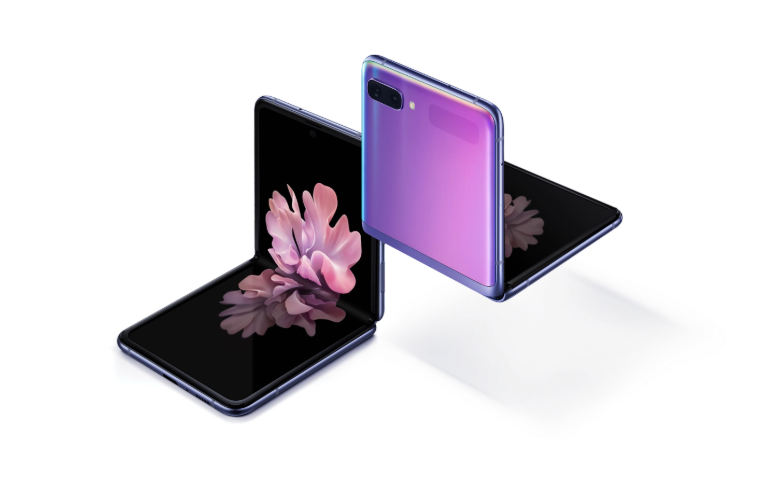
Now, a concept video of the Galaxy Fold 2 smartphone has surfaced online, which showcase what we can expect the company to offer this time. The video shows a curving plastic that makes up the spine of the Fold 2, the full ‘edge to edge’ closure that avoids the slight gap seen on the first-generation model.

The display has a punch-hole cut-out for the front-facing camera and on the back side, there’s a dual-camera setup. Unlike the Galaxy Fold, the smartphone in the video has a clamshell design, which is in line with the reports and leaks.

However, do note that this is a concept video mimicking the official smartphone introduction video from Samsung. The company is yet to reveal information about this upcoming foldable smartphone.

Recently, it was reported that the upcoming clamshell foldable phone from Samsung will be equipped with a 6.7-inch display. It had also claimed that it will be featuring a 1-inch external display.

While everyone is calling it Galaxy Fold 2, the official name of the device is under the wraps.  Since the phone is expected to make its debut on 11th February, we expect to get leaks related to this foldable smartphone in the coming days or weeks.


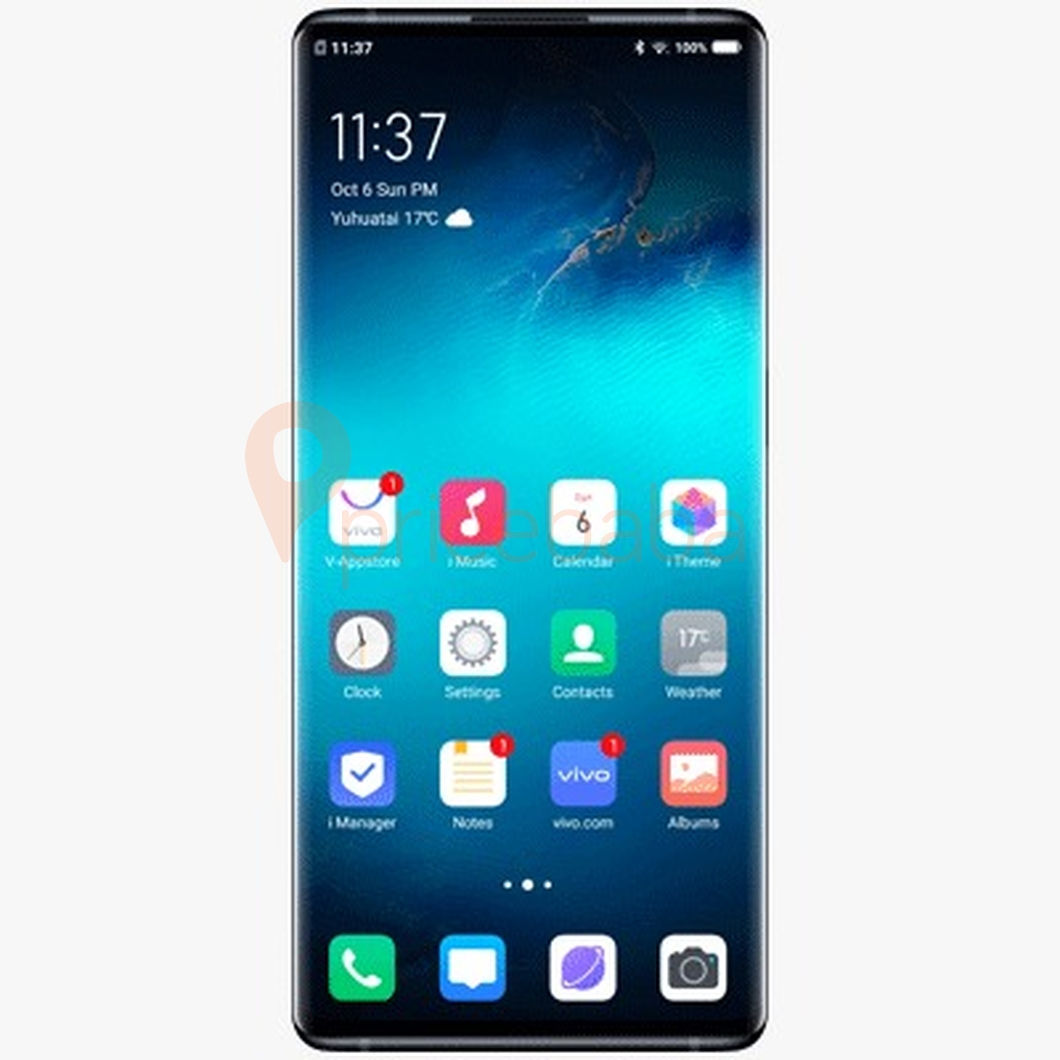
Purported Vivo iQOO 3 3C certified along with 44W charger

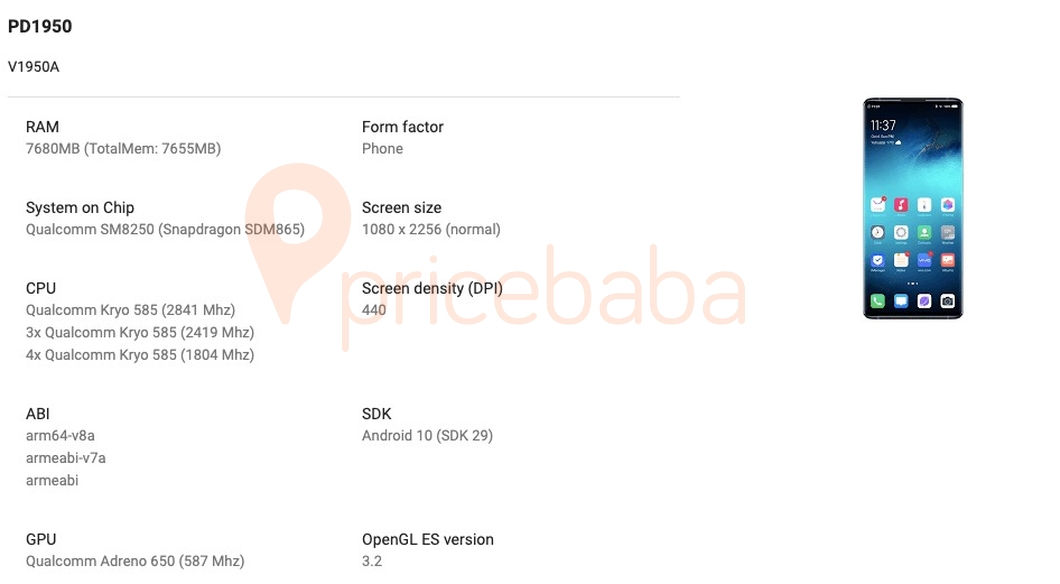
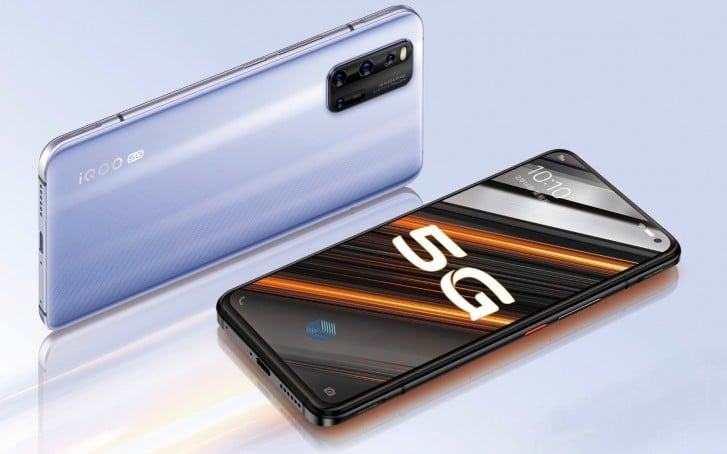
Last week, a Russian tech website Mobiltelefon had claimed that it had spotted the Vivo iQOO 3 moniker in the IMEI database. This indicated that the Chinese firm is not only working on a new iQOO gaming smartphone, but also it will be skipping the iQOO 2 moniker for it. The company had done the same with the NEX series. The original NEX had debuted with Vivo NEX S name and its successor that had debuted last year was dubbed as Vivo NEX 3. A new Vivo smartphone with model number V1950A has received certification from 3C agency of China. It could be the upcoming iQOO 3 gaming smartphone.

The 3C certification of Vivo V1950A has revealed that it is a 5G smartphone. Moreover, it also reveals that the phone may ship with a charger that may support up to 44W fast charging. The smartphone has also bagged approval from China’s MIIT authority. The listing revealed that it is equipped with support for China’s 5G frequency bands like N1, N41, N78 and N79.

There is no concrete proof to confirm whether the Vivo V1950A is the iQOO 3. It could be a different phone and probably the rumored Vivo flagship phone that may is expected to break cover at the Mobile World Congress (MWC) 2020 next month. Considering the fact that the Vivo V1950A is a 5G phone and it could be equipped with a 44 charger, it could be a Vivo flagship phone powered by the Snapdragon 865 mobile platform.

A reputed Chinese tipster has claimed that the Vivo V1950A will be equipped with a waterfall display which indicates that its screen will be extremely curved towards the edges. The “without any openings” text in the above shown Weibo post suggests that it could be a port-less design. It is advisable to wait for further reports to know the true identity of the Vivo V1950A.

The Vivo V1963A is the other upcoming smartphone from the company. The handset was recently spotted on Geekbench benchmarking platform with some of the key specs. The handset was seen with Android 10 OS and 6 GB of RAM on Geekbench. It is believed to be powered by the Snapdragon 765G. This indicates that it could be a budget-friendly 5G phone from the company. Hopefully, TENAA will spill the specifications of the Vivo V1950A and V1963A smartphones in the next few days.


(via)

Huawei dominates Android smartphone market in China: Master Lu

After revealing list of best performing smartphones, smooth performing smartphones, and the smoothest user interface, Master Lu has now announced a new list which reveals the market share of Android smartphone makers in China for the year 2019.

Going by the listing, Huawei is leading the market with 15.36 percent market share while Honor ranks second with 10.45 percent market share. The combined market share of both these brand stands at 25.8 percent. Thus, Huawei accounts for a quarter of the entire Android smartphone market in China.

MasterLu Chinese Market Share 2019

Vivo and Oppo are following closely at third and fourth position with a market share of 9.45 percent and 9.26 percent respectively. With a market share of 8.25 percent, Xiaomi is ranked fifth in terms of market share in China.

As per the reports, despite the overall decline in the Chinese mobile phone market, Huawei’s market share keeps on growing and the cumulative shipments in the first three quarters have exceeded 185 million units.

However, do note that the information mentioned on this report is based on Master Lu’s statistics derived from their background data. The report may not necessarily be accurate but it pretty much gives idea about the standing of different brands in the region.

(Via)

Sony unveils Sony Vision-S, an all-electric concept car at CES 2020

Today at CES 2020, Sony unveiled a car. There were rumblings that Sony would be taking the wraps off or at the very least previewing the PlayStation 5 at CES, but instead the Japanese-based tech giant went and showed off something much, much bigger, unveiling an all-electric concept car dubbed the Sony Vision-S.

The Sony Vision-S concept vehicle features a total of 33 sensors and this includes CMOS and ToF sensors that are embedded inside the car itself. These sensors are designed to detect both people and objects within and outside the car, allowing for features like autonomous driving, 360 Reality Audio tech, and wide-screen displays.

Instead of all that however, Sony says its real innovation is in fusing the data collected from all those things to produce cleaner data with fewer errors. Although it’s not widely known, Sony isn’t entire new to this game. Their CMOS sensors, like those used in its cameras, are already used in vehicles like the Toyota Corolla and Lexus NX.

Sony’s Vision-S continues its technology-focused theme in the cabin thanks to a set of large infotainment screens behind the headrests of both front seats as well as a panoramic touchscreen display stretching the width of the dashboard. There are also dedicated displays that provide a live view of what the wing-mounted cameras see in real-time.

According to the press account, Sony partnered with industry leaders to build this prototype, including Bosch, Continental, Genetex, Magna and Nvidia. “We believe that the evolution of mobility will also redefine cars as a new entertainment space,” said Sony CEO Kenichiro Yoshida.

Other than that, Sony remained pretty vague on any other details. Probably because, again, this thing isn’t actually going into production. Yes, you will never be available to drive the Sony Vision-S. Instead, it is designed to show how far and capable Sony is when it comes to pushing technology to its absolute limits.

You can find more CES2020 coverage from here.

(Source)

Xiaomi’s Mitu Children Learning Watch 4Pro with dual cameras launched for 1299 yuan (~$187)

Xiaomi has today launched a new wearable product aimed at children in China — Mitu Children Learning Watch 4Pro. The device is priced at 1,299 yuan which roughly converts to $187 and is up for purchase through Xiaomi Mall.

It features a 1.78-inch display that offers pixel density of 326PPI and the surface is protected by a layer of 2.5D curved Gorilla Glass 3 with a diamond-like coating process and hardness of 9H, making it resistant to scratches and drops.

Mitu Children Learning Watch 4Pro

The highlight of the Mitu Children Learning Watch 4Pro is that it comes with a high-definition dual cameras and has dual-frequency GPS positioning that offers 24 track tracking. Other connectivity options on the device include 4G LTE and NFC.

On the front side, it comes with a 5-megapixel wide-angle camera sensor with f/2.4 aperture and 82-degree field-of-view. There’s also an 8-megapixel zoom camera on the side with f/2.2 aperture and 84.9-degree field-of-view with T-LENS ultra-fast focus.

Further, the company has confirmed that the dual cameras can work at the same time so that you can see your child as well as the surrounding environment at the same time. The smartwatch uses ten-fold Al positioning and is equipped with L1 + L5 dual-frequency GPS coordinated positioning system.

Mitu Children Learning Watch 4Pro

The signal is stronger and more stable, making positioning more accurate and the company company adds that the watch supports indoor positioning of 4000+ large shopping malls, high-speed rail stations, and airports in the country.

Under the hood, the device is powered by Qualcomm Snapdragon Wear 2500 SoC, coupled with 1GB of RAM and 8GB of internal storage. While the device is running Android 8.1 operating system, it is heavily customised to make it suitable for easy use for children.

Since the smartwatch has been named Mitu Children Learning Watch 4Pro, it comes with support for AI ​​learning machine and Xiaoai voice assistant, using which the user can select a variety of high-quality learning apps, covering Chinese, English, math, social, fun, logical thinking and other content. It also supports interactive English learning tool with support for oral practice at any time, AI assessment of children’s pronunciation accuracy, American pronunciation, among others.


Sony Xperia 5 Plus renders reveal tall display, front speakers and 3.5mm audio jack

The smartphone wing of Sony has been struggling since the past few years, but it has been consistently launching new phones. Last September, Sony had announced the Xperia 5 flagship phone at the IFA 2019 tech trade show. Reputed tipster @OnLeaks has collaborated with SlashLeaks to showcase the CAD renders of the forthcoming Sony Xperia 5 Plus smartphone. The Japanese tech giant is known for launching new flagship phones at Mobile World Congress (MWC) tech exhibition. Hence, it is likely that the Xperia 5 Plus may go official at the MWC 2020 in the coming month.

The Sony Xperia 5 Plus can be seen flaunting its 6.6-inch display in the CAD renders. Being a Plus edition phone, it features a larger display than the 6.1-inch screen found on the Xperia 5. As it can be seen, the phone sports super-slim side bezels. The upper and lower bezels are slightly thick, and they are equipped with dual front-firing speakers. The upper bezel is equipped with an 8-megapixel selfie camera, claims the leakster. The tall appearance of the phone suggests that it will continue to sport a 21:9 aspect ratio like the Xperia 5.

A major addition on the Plus model is the inclusion of a 3.5mm audio jack which was absent on the Xperia 5. The boxy frame of the device seems to be made out of aluminum. The bottom edge of the device has a USB-C port. The right side of the device has volume buttons, side-facing fingerprint reader and a dedicated camera shutter. The fingerprint scanner may double up as a power key.

The rear side of the Sony Xperia 5 Plus has a vertically arranged triple camera setup at the top-left corner of its rear. The main lens is coupled with an ultrawide shooter and a telephoto lens. The Japanese firm has also added a ToF (Time of Flight) sensor for enhanced portrait photography.

In terms of dimensions, the Sony Xperia 5 Plus measures 168.2 x 71.6 x 8.1mm. The device is bigger than the Xperia 1 and slightly larger than the Xperia 1 that had debuted as company’s first flagship smartphone in 2018. At present, there is no word on the specifications of the device. Being a flagship device, it could be equipped with the new Snapdragon 865 mobile platform.


(source)

Alcatel 3L, 1S, and 1V get 2020 editions; Alcatel 1B tags along

TCL may be pushing its own branded-phones but that isn’t to say it has abandoned the other brands it is a licensee. At CES 2020, four new Alcatel phones have been announced and three of them have familiar names.

The Alcatel 3L, Alcatel 1S, and Alcatel 1V all sound familiar and that is because phones with the same names were announced last year at MWC 2019 and IFA 2019. To avoid confusion, Alcatel has added “2020” as a suffix to their names.

Alongside these three, there is a new model called the Alcatel 1B.

Alcatel 3L (2020) Chameleon

Alcatel 3L (2020)

The 2020 edition of the Alcatel 3L has a new design. It still has a notch like last year’s model but it is a waterdrop notch and not the U-shaped type. It also has three rear cameras now and they are arranged vertically on the left side of the phone.

The display is 6.22-inches with an HD+ resolution and a 19:9 aspect ratio. Alcatel calls the screen Vast Display but the lower bezel is still pretty thick.

The phone has a textured Google Assistant button on the left side of the frame just below the SIM tray. It is powered by the Helio P22 processor paired with 4GB of RAM and 64GB of expandable storage via a dedicated MicroSD card slot (32GB max.).

It has a 48MP f/1.8 primary rear camera with 4-in-1 big pixel technology paired with a 2MP f/2.4 macro camera and a 5MP ultrawide angle camera. The selfie camera is an 8MP sensor. The camera app has AI scene detection, HDR, night mode, beauty mode, portrait mode, and panorama mode.

The Alcatel 3L (2020) packs a 4000mAh battery that should last up to a day with moderate use on a single charge. The battery will take 2.5 hours to get fully charged. The phone also has a rear-mounted fingerprint scanner, an audio jack, Bluetooth 5.0, and FM radio.

We are pleasantly surprised that Alcatel is shipping the phone with Android 10 out of the box. It will sell for $155/€139 and will be available later this quarter in different markets. Interested buyers will be able to purchase the Alcatel 3L in Chameleon Blue, Dark Chrome, and Agate Green.


Alcatel 1S (2020)
Alcatel 1S (2020)
Alcatel 1S (2020)

The Alcatel 1S also gets the triple rear camera treatment as well as the waterdrop-style notch. Actually, this is the same 6.22-inch HD+ Vast Display as that of the Alcatel 3V (2020). It also has a dedicated Google Assistant button.

The main rear camera is a 13MP f/1.8 camera and it is paired with a 2MP f/2.2 macro camera and a 5MP f/2.4 depth sensor. It also has AI scene detection, Face Beautification, HDR, and Night Mode. The selfie camera is a 5MP f/2.2 sensor with its own Night Mode.

The Alcatel 1S (2020) is powered by the MT6762D processor with 3GB of RAM and 32GB of storage. It has a dedicated MicroSD card slot too (32GB Max.). There is a 4000mAh battery under the hood and a fingerprint scanner on the back too. It ships with Android 10.

The phone has a price tag of $110/€99 and will go on sale this quarter in Europe, LATAM, Asia Pacific, Middle East, and Africa. The Alcatel 1S (2020) will be available in Agate Green and Power Gray.


Alcatel 1V (2020)
Alcatel 1V (2020)
Alcatel 1V (2020)

The Alcatel 1V (2020) has the same screen size and design as the Alcatel 1S (2020). It is designed to provide a firm grip when held and has a finish called Feather Design that is smudge-resistant. It is available in Prime Black and Pine Green.

The Alcatel 1V (2020) is powered by MediaTek’s MT6762D processor with 2GB of RAM and 32GB of storage. It has a dedicated MicroSD card slot which surprisingly takes up to 128GB cards. You also get a Google Assistant hardware button.

There is a 13MP camera paired with a 5MP depth sensor on the back of the phone while the selfie camera is a 5MP sensor. The phone has a 4000mAh battery, a fingerprint scanner, face unlock, Bluetooth 5.0 and runs Android 10 out of the box.

The Alcatel 1V (2020) will be sold for $88/€79 and will go on sale later this quarter in select markets in Europe, Africa, Middle East, Asia Pacific, and Latin America.


Alcatel 1B
Alcatel 1B
Alcatel 1B (2020)

The Alcatel 1B is the first phone in the world to launch with Android 10 (Go Edition). TCL/Alcatel deserves praise for shipping all its new phones with the latest version of Android.

The phone has a 5.5-inch HD+ display with thick bezels around the screen. Even though it is the cheapest of the lot, it also gets a dedicated Google Assistant button. It has a polycarbonate back that has what Alcatel calls Feather Design.

There is a Snapdragon 215 processor under the hood along with 2GB of RAM and 16GB of expandable storage. There is a single 8MP f/2.0 camera on the back with HDR while the selfie camera is a 5MP f/2.2 camera. It also has a dedicated MicroSD card slot, Bluetooth 4.2, dual-SIM support (nano only) and an FM radio.

There is no fingerprint scanner but there is Face Key (face unlock) and it will be available via an OTA update. There is a 3000mAh battery inside the phone.

The Alcatel 1B will be sold for $66 and will go on sale this quarter. It will be available in Prime Black and Pine Green.

You can find more CES 2020 coverage here.

(Source)

TCL 10 Pro, TCL 10 5G and TCL 10L make an appearance at CES 2020

When it comes to the mobile industry, TCL is known as the manufacturer behind Alcatel and BlackBerry phones since it got the license to make and sell phones using the two brand names. However, things began to change following the launch of the TCL Plex last year.

Last year’s TCL Plex marked the Chinese company’s first step in pushing its own branded phones to the market. This year, there will be more, starting with the TCL 10 Pro, the TCL 10 5G, and the TCL 10L. All three phones have been brought to CES 2020 ahead of their global release later.


TCL 10 Pro

The TCL 10 Pro is expected to be a flagship device, probably a flagship killer. Its screen, whose dimension wasn’t revealed (should be about 6.5-inches), has a waterdrop notch for the selfie camera. The display is most likely AMOLED since it has an in-display fingerprint scanner.

The screen is curved on the sides and TCL claims it has a custom-made hardware controller that converts SDR into HDR. This is a feature we have seen on some Nokia phones such as the Nokia 7.2. There is no mention of a high refresh rate but it is possible the phone has.

The TCL 10 Pro has four rear cameras arranged horizontally on the back of the phone and flanked by an LED flash at both ends. It also has a laser focus module. The primary rear camera is a 64MP sensor and another one of the sensors is a macro camera. The Verge reports that TCL was honest about the camera performance as it said it won’t be the best camera but should meet the quality of similarly priced phones.

The phone is running a custom version of Android which has been reported to be “relatively light” and has “a couple of nice touches”. There is a physical button on the left side that can be customized to three different actions. The phone also has an audio jack at the top; not my preferred position, but better than not having one at all. The battery capacity is unknown but the phone appears to be quite thick.


TCL 10 5G (T790Y)

This will be a 5G device with a price tag under $500 and a significant difference in price between it and the TCL 10 Pro.

TCL 10 5G and TCL 10L

The TCL 10 5G has a punch-hole display with the hole at the top left corner. It also has four rear cameras and two LEDs for flash arranged the same way as that of the 10 Pro. The primary camera is a 64MP sensor and there is a macro camera too.

Unlike the 10 Pro, the TCL 10 5G has a rear-mounted fingerprint scanner, so we can assume the screen is an LCD panel.

TCL 10 series
TCL 10 series

It has been reported that the phone will have a Snapdragon 700-series processor, and since it is a 5G phone, this leaves the Snapdragon 765 5G and Snapdragon 765 5G as the two possible options.

The TCL 10 5G is shown in blue in the image above.


TCL 10L (T770H)

The TCL 10L has the same punch-hole display as the TCL 10 5G. It also has quad rear cameras and two pill-shaped LED flash at each end. However, the primary rear camera is a 48MP sensor but it too has a macro lens.

TCL 10L

There is no info on the processor inside the TCL 10L neither is there a mention of its battery capacity. However, the TCL 10L is said to not be as thick and bulky as the TCL 10 5G, so it most likely has a smaller battery capacity.

TCL told The Verge that more details about the three phones will be revealed at Mobile World Congress 2020 this year.


You can find more CES 2020 coverage here.

(Source)

Best Value for Money Smartphones of January 2020

2020 just kicked off and a lot of amazing and innovative smartphones are hitting the shelves. With 5G and other important innovations, the smartphone world is becoming every day more interesting. But on the other hand, prices get higher and key brands are slowly decreasing, that is why it is more difficult for people finding a high value for money. If you do not want to spend a fortune but you still want the best smartphone for your needs, you are in the right place. Here we will show you the best value for money smartphones of January 2020.

Best value for money smartphones of the month

OPPO Reno3 vs REno3 Pro

Redmi K30 5G

Xiaomi Redmi K30 5G

Alongside the Reno3 line-up and some Huawei smartphones, the Redmi K30 5G is one of the first midrange smartphones to hit the shelves with 5G connectivity. Just for this reason, its value for money is very high. Further, for about €255 in its base variant, you can get an amazing Snapdragon 765G which is currently the most powerful chipset from Qualcomm’s 700 series. Redmi K30 5G also offers a big 4500 mAh battery, a dual front camera with 20 and 2 MP resolution and a punch-hole display. Thanks to the UFS 2.1 internal storage, the handset may result even faster than you expected.

You can learn more about the Redmi K30 5G by clicking here.

Realme X2 Pro

Realme X2 Pro

Realme X2 Pro is not a 2020 device but it still remains one of the best value for money smartphones you can currently get, especially on its price range. It is the most affordable smartphone boasting the most powerful chipset in the Android market: the octa-core Snapdragon 855+ running at a 2.96 GHz max frequency. It is one of the fastest smartphones ever and it even features an amazing display with a 90 Hz refresh rate and the HDR10+ technology. In its most advanced configuration, it offers 12 GB of RAM and 256 GB of UFS 3.0 internal storage. You even get one of the fastest charging technology with a max power of 50W. The Realme X2 Pro is sold globally with a price tag starting from just €399 in Europe.

You can learn more about the Realme X2 Pro by clicking here.

Oppo Reno3

Oppo Reno3

Right after Christmas, Oppo announced its first 5G mid-ranger that is already available to purchase: the Reno3. And it is not exactly a mid-ranger. It is powered by the new Dimensity 1000L chipset providing high-end performance, it seems to be even better than the Snapdragon 765G. And the cool thing is that it comes with a modest price. For just €440 in China, the handset offers an amazing quad camera on the rear side, including optical stabilization and a monochromatic sensor. Besides 5G, you also get Wi-Fi 6.

You can learn more about the Oppo Reno3 by clicking here.

Samsung Galaxy Note 10 Lite

For the first time in Samsung’s history, the Note series has a Lite variant. Samsung Galaxy Note 10 Lite is going to hit the shelves with a price tag of just €599 and it will still offer all the features of the S Pen, including Air Command. That is something amazing, given that there is not any device other than the Galaxy Note series to come bundled with a pen and a digitizer. Besides being a Lite variant the Galaxy Note 10 is still a high-end device: it features the Exynos 9810 chipset and up to 8 GB of RAM. Further, it has a very nice triple camera including OIS, a bright focal aperture and 2x optical zoom. There is even a big 4500 mAh battery.


OnePlus 7T

OnePlus 7T

If you are looking for the best performance but you did not like the Realme X2 Pro and you also need a decent camera, OnePlus 7T is your perfect choice. It is one of the most powerful devices out there in terms of speed as it features an octa-core Snapdragon 855+ chipset paired with 8 GB of RAM and UFS 3.0 internal storage. Just like the Realme X2 Pro it even features an HDR10+ display with a 90 Hz refresh rate and an amazing image reproduction. Unfortunately, the battery is smaller than Realme X2 Pro (3800 mAh) but on the other hand, you get a very good 48 MP triple camera with OIS. The listing price of the OnePlus 7T is not the most attractive, but thanks to the current street prices it is a very good deal as you can even find it for less than €450, with a bit of luck.

You can learn more about OnePlus 7T by clicking here.

Redmi Note 8T

Xiaomi Redmi Note 8T

If your budget is very limited, Redmi Note 8T might become your paradise. It offers a very well-balanced specs sheet and its price is incredibly affordable. You can currently find it for much less than €200, thanks to online street prices. Unlike almost every affordable smartphone in the market, it features NFC and that is what makes it differ from the vanilla Redmi Note 8. It is equipped with a 6.3-inch display showing images at a Full HD resolution of 1080 x 2340 pixels. Under the hood, there is a Snapdragon 665 SoC paired with up to 4 GB of RAM and up to 128 GB of internal storage. On the rear side, you get a quad-camera with a 48 MP main sensor, an 8 MP ultrawide lens, a 2 MP dedicated macro camera and a 2 MP depth sensor. Its battery has a capacity of 4000 mAh and it supports 18W fast charging.

You can learn more about the Redmi Note 8T by clicking here.


Huawei Nova 6

Huawei nova 6

We know Huawei is not a trendy brand due to the U.S. ban, but the Nova 6 is still an astonishing device for its price. It is essentially a flagship sold at a midrange price and it even sports a nice camera and a great design. For less than €420, you get a Kirin 990 chipset and 8 GB of RAM, as well as a triple camera with 3x optical zoom and fast autofocus. There is even a punch-hole display embedding a dual front camera with an ultrawide lens. Last but not least, a 4100 mAh battery with 40W fast charging.

You can learn more about the Huawei Nova 6 by clicking here.

Over 5.5 million units Realme 5 series phones sold in 2019

Realme first unveiled the Realme 5 series around August 2019 as a budget series in its sprawling lineup. Since then the products under the series have expanded tremendously. The Chinese company has now hinted that over 5.5 million units of the Realme 5 series lineup have been sold globally. This was disclosed by Realme India’s CEO Madhav Sheth on Twitter.realme 5

The Realme 5 series is comprised of the Realme 5, Realme 5 Pro, Realme 5s and most recently, Realme 5i that was launched in Vietnam earlier today. However, the sales figure comes from the trio of Realme 5, Realme 5 Pro and the Realme 5s. All three smartphones clutch a quad-camera setup and a unique crystal-inspired design which may have contributed to the huge patronage. Apart from that, the Realme 5 series comes with affordable prices ranging from Rs 8,999 to Rs 15,999 in India, making them a competitive budget and mid-range smartphones.

As a reminder, the Realme 5 was launched in August 2019. It features a 6.5-inch HD+ display with a waterdrop notch that houses a 13MP selfie shooter. The device is powered by the Qualcomm Snapdragon 665 SoC paired with 3GB and 4GB RAM options and there are 32GB, 64GB and 128GB storage options. At the rear, the Realme 5 features a quad camera setup with 12MP primary, 8MP ultrawide, 2MP macro and 2MP depth sensors. It is fuelled by a 5,000mAh battery and runs Android 9.0-based ColorOS.

On the other hand, the Realme 5 Pro features a 6.3-inch full HD+ display, a Snapdragon 712 SoC, RAM and storage variants of 4GB + 64GB, 6GB + 64GB and 8GB + 128GB, and a quad-camera setup including 48-megapixel primary, 8-megapixel ultrawide, 2-megapixel macro and 2-megapixel depth sensors.

Realme 5s made its debut in November 2019. The features are almost similar to that of the Realme 5 but the main camera is upgraded to a 48MP sensor.