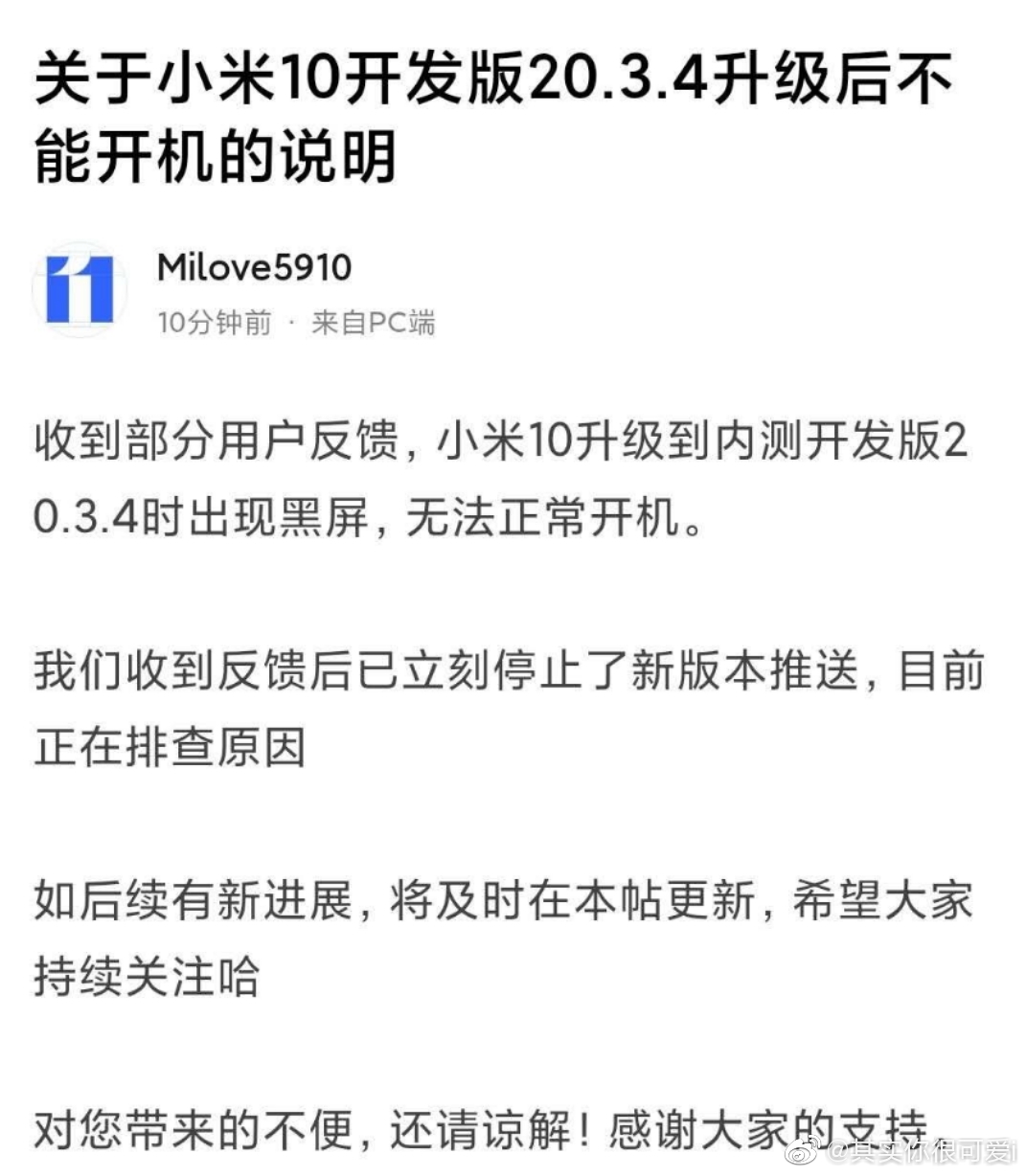
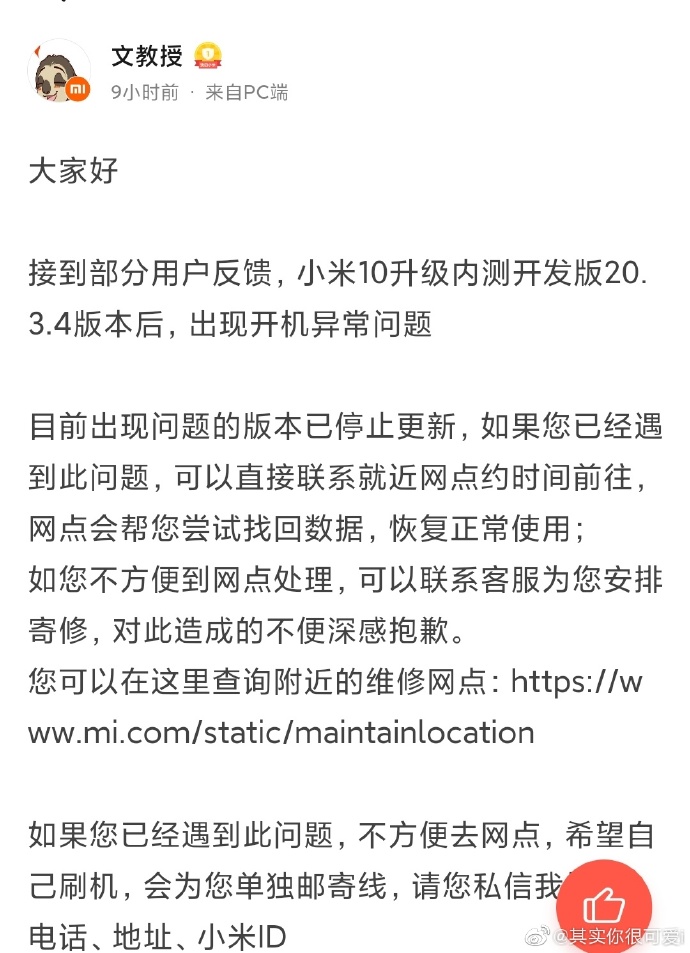
A recently rolled out update for the Xiaomi Mi 10 has been causing issues in the smartphone. Multiple users reported on their Mi 10 units not booting up after the latest developer ROM update, 20.3.4; and now, the Chinese tech giant has responded to the problem as well.
Earlier today (5th March 2020), Xiaomi‘s official Weibo account, a Chinese microblogging website, issued a statement acknowledging the faulty update and stopping the further rollout of the same. According to a few people on Weibo, the Mi 10 cannot use a card after updating the beta firmware. Even after holding down the power button, certain handsets did not boot up.
The official statement read, “After receiving some user feedback that the Xiaomi Mi 10 has a black screen when upgrading to the internal test development version 20.3.4 and cannot boot normally, we stopped pushing the new version immediately. We are currently investigating the reasons. If there are new developments in the future, we will update this post in a timely manner. We hope everyone will continue to pay attention to the inconvenience caused to you. Please forgive me! thanks for your support.”
So, as of right now, Xiaomi is investigating this issue and the reason for the failure of the boot sequence. The company has promised an update soon, although an exact date/timing has yet to be divulged. It is unknown how they would fix the issue affecting devices that have already faced the issue and are not booting, but we will have to wait for future official statements. So stay tuned
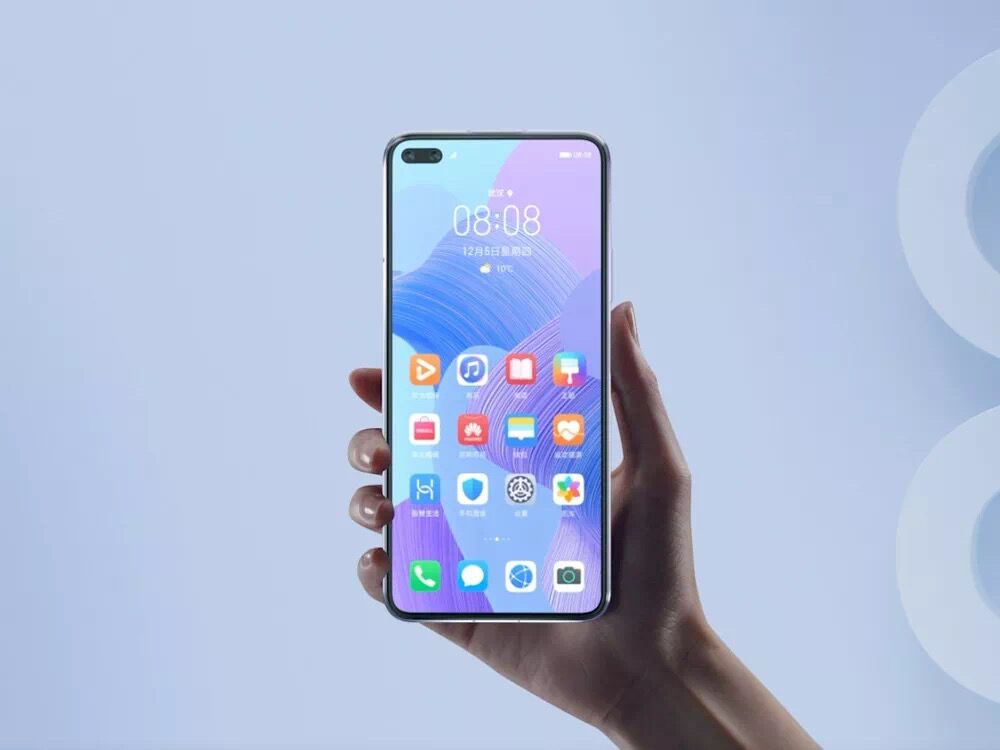
A few days ago, it was revealed that the Chinese smartphone giant Huawei will be launching its new Nova 7 series of smartphones in April, soon after the launch of its flagship Huawei P40 lineup later this month.
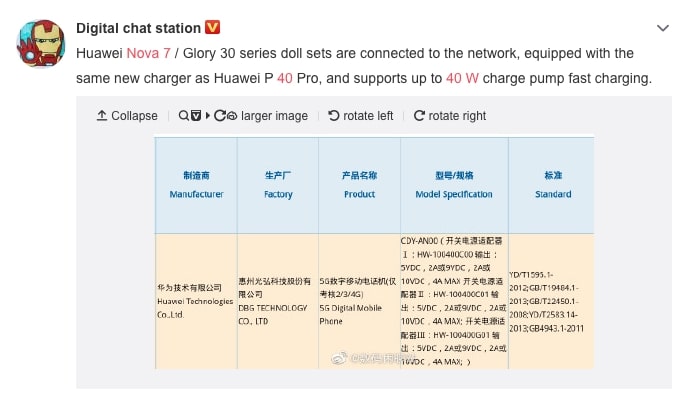
It was also revealed that there will be three models in the Nova 7 lineup — Huawei Nova 7 5G, Nova 7 SE 5G, and Nova 7 Pro 5G. Now it is believed that the smartphone could come with support for 40W fast charging technology.
A new Huawei smartphone with model number CDY-AN00 has passed through the 3C certification process which reveals that the device will come equipped with the same charger as the Huawei P40 Pro.
The charger model is HW 100 40 0C00 which has support for 40W fast charging. While the name of the smartphone with model number CDY-AN00 has not been disclosed yet, reports indicate that is a part of the upcoming Nova 7 series.
As per the reports, the Huawei Nova 7 lineup will come with an OLED display panel along with an in-display fingerprint scanner for added security. Under the hood, the top-end variant will be powered by the company’s own flagship Kirin 990 5G chipset.
Since Huawei does not have a mid-range mobile chipset with 5G connectivity support, it remains to be seen if the company announced a new 5G chipset during or before the Nova 7 series launch to make the phone more affordable.
There’s still a lot of information regarding this upcoming lineup missing and we expect to know more about these devices ahead of their rumored launch in April, i.e. next month.
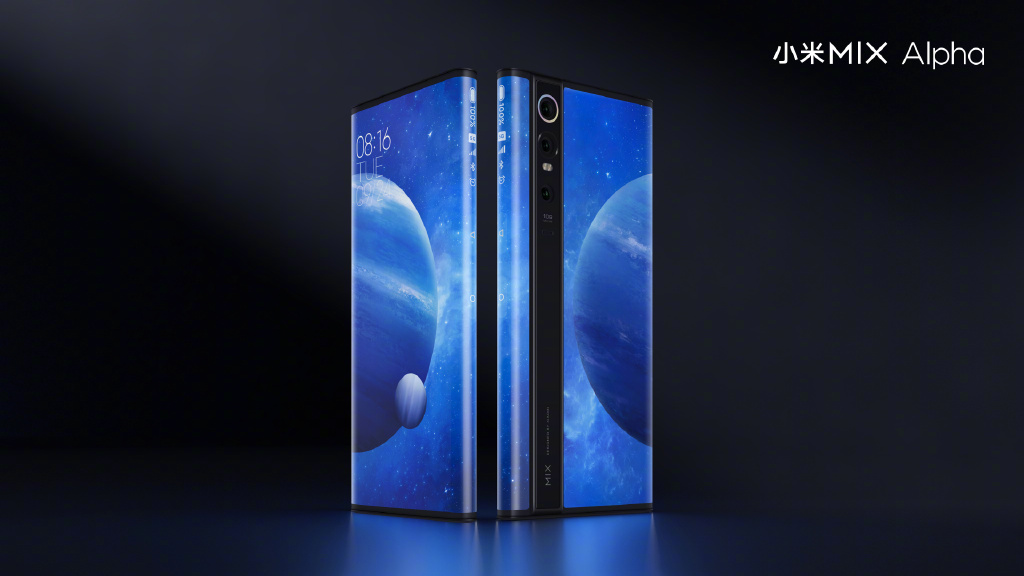
Back in September last year, Xiaomi had announced the Mi MIX Alpha concept smartphone, getting much attention because of its unique surround screen technology that covers the majority portion of the device.
Earlier this year, in January, during a business conference held by Xiaomi Group, it was revealed that the Mi MIX Alpha is ready for mass production. Today, at Xiaomi Science and Technology Park, the company reportedly showcased the smartphone with few upgrades.
The Xiaomi Mi MIX Alpha is priced at 19,999 yuan in China which roughly converts to $2,883. However, the smartphone is not yet available for purchase in the company’s home country and we are anticipating more information on this.
The upgraded variant comes with support for full dual-mode 5G with SA/NSA connectivity and is now powered by the latest Qualcomm Snapdragon 865 SoC. When first announced, the device was powered by the Snapdragon 855 Plus chipset.
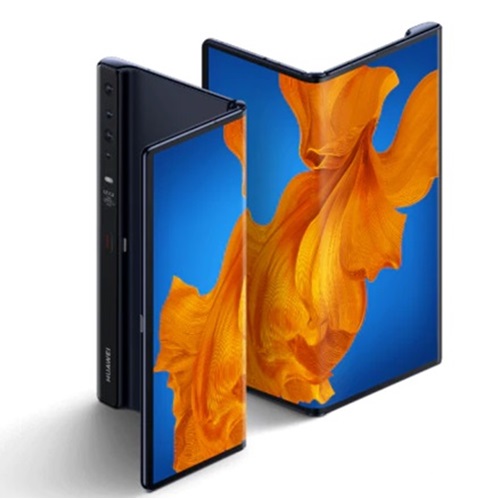
Xiaomi Mi Mix Alpha is like a permanently folded phone
The Mi MIX Alpha 5G features a 7.92-inch flexible S-AMOLED display with 2250 x 2088 pixels resolution support and comes with an in-display fingerprint reader. It runs on MIUI 11 which is based on the latest Android 10 operating system. The device packs 12GB of RAM and 512GB of internal storage.
The handset has a vertical camera strip on its back panel that includes a 108-megapixel primary camera sensor, a 12-megapixel telephoto lens with 2x optical zoom support, Dual Pixel PDAF and laser autofocus and a 20-megapixel ultrawide lens with laser autofocus. The phone is powered by a 4,050mAh battery with 40W fast charging support.
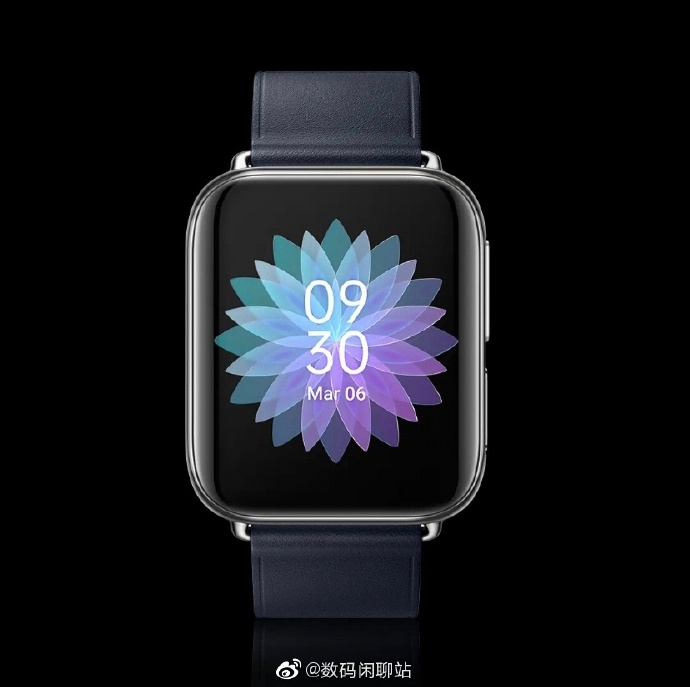
OPPO Watch will be unveiled tomorrow alongside the OPPO Find X2 and Find X2 Pro flagship phones. Past reports have revealed the appearance of the OPPO Watch. However, its specs and features have remained a mystery. Today, a popular tipster from China shared some key information on the features of the OPPO Watch.
The tipster has revealed that the size of the OPPO Watch’s 3D curved screen is 1.19 inches. The device will be coming with sensors for heart rate monitoring and electrocardiogram (ECG). The Snapdragon Wear 2500 along with the Apollo3 ultra low power chip will be powering the OPPO Watch. The Apollo3 chip can assist prolonging the battery life of the device by consuming less power. The OPPO Watch will be a 5ATM waterproof device and it could be priced around 2,000 Yuan (~$288).
OPPO had recently released a poster on Weibo which confirmed that the OPPO Watch will be available in two color edition such as blue and gold. Both color variants were seen sporting a silicone strap. Rumors have it that the company may also the OPPO Watch in leather strap versions.
There are two flat hardware keys on the right spine of the OPPO Watch. These buttons may help in scrolling across the different features of the smartwatch. It remains to be seen whether the device comes with ColorOS based Android Wear OS. The smartwatch will offer users with voice call function. This suggests that the device will carry support for eSIM.
With only one day remaining for the launch, it appears that the rest of specs and features of the OPPO Watch will be confirmed through tomorrow’s unveil event. It is likely that the company may offer the OPPO Watch with some sort of offer for the buyers the Find X2 series.
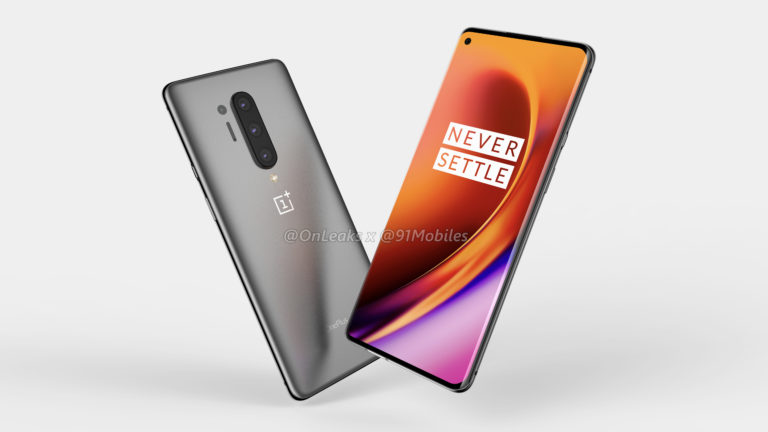
The OnePlus 8 series is expected to have an early launch this year. Previously, the company was rumored to launch the OnePlus 8 lineup in May. However, it is now believed that the Chinese firm may announce it on April 14. Yesterday, 91mobiles in collaboration with reliable tipster Ishan Agarwal shared leaked details of the OnePlus 8 Lite smartphone. In another report, the same publication revealed some important details on the OnePlus 8 and OnePlus 8 Pro smartphones.
In January, OnePlus had joined Wireless Power Consortium which suggested that the OnePlus 8 series will arrive with support for wireless charging. The Chinese firm did not provide the wireless charging feature on its previous phones. After the launch of the OnePlus 7T, OnePlus CEO Pete Lau released a statement as to why it does not feature wireless charging. He said that the wireless charging speeds are not on par with its Warp Charge wired charging technology. This suggested that the OnePlus 8 series will be equipped with superfast wireless charging tech.
The new leak reveals that the OnePlus 8 Pro will come equipped with 30W wireless charging technology. Like the current flagship phones, the Snapdragon 865 powered OnePlus 8 Pro will carry support for dual-mode 5G connectivity. The fast wireless charging and 5G connectivity could be also available on the OnePlus 8, but there is no concrete evidence to back it. Being a less powerful device, the OnePlus 8 Lite may not feature wireless charging support.
The OnePlus 8 and OnePlus 8 Pro will come equipped with punch-hole displays that will carry support for 120Hz refresh rate. Rumors have it that the OnePlus 8 will feature a 6.5-inch display and sport a 48-megapixel + 16-megapixel + 2-megapixel triple camera setup on its back. It may house a 4,00mAh battery with 30T Warp Charge support. The handset may come with up to 12 GB of RAM and 256 GB of UFS 3.0 storage.
The OnePlus 8 Pro could be housing a 6.65-inch AMOLED screen. It is said to sport a quad camera setup which will include an additional ToF sensor. It may house a 4,500mAh battery with 50W fast charging support.
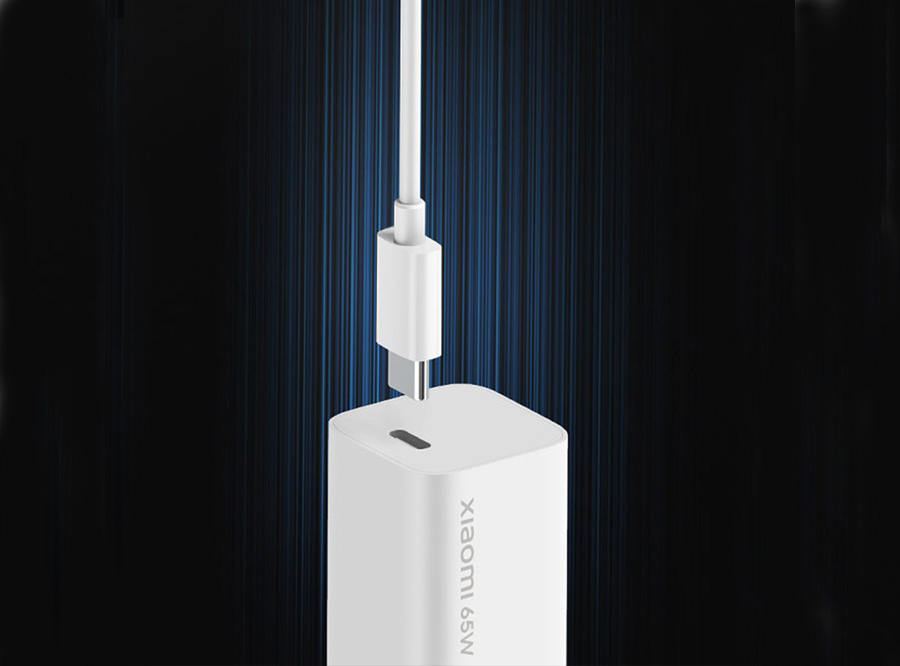
On February 13th, Xiaomi hosted a live broadcast conference of Xiaomi 10 new products, wherein the Chinese tech giant released the long-awaited flagship mobile phone of the Mi 10 series. Aside from that, the company also took the covers off the Xiaomi GaN Type-C 65W Charger.
The GaN Charger Type-C 65W was made available to the public on February 18th. It adopts gallium nitride technology and comes with 65W fast charging support, providing a maximum charging power of 50W for Mi 10 Pro. It can fully charge the Mi 10 Pro is just 45 minutes.
Moreover, the Xiaomi GaN Type-C 65W Charger supports a slew of fast-charging protocols including PD 3.0 and Xiaomi’s fast flash charging. It can charge your iPhone as well. According to Xiaomi, the GaN charger Type-C 65W can charge the iPhone 11 50 percent faster than the original 5W charger.
As compared to a standard adapter for Xiaomi Notebook, the GaN charger Type-C 65W is nearly 48 percent smaller in terms of size as it uses the newfangled semiconductor material GaN i.e. gallium nitride. The interface provides support for intelligent adjustment of output current in various gears and it can charge about 65W for Xiaomi Notebooks, MacBook Pro and a myriad of other high-power devices.
The product package comprises Xiaomi USB-C to USB-C data cable, integrated with E-Marker chip, and 5A maximum current support. You can buy the Xiaomi GaN Type-C 65W Charger for just $31.99 through Giztop simply by following this link.
The Gizmochina Coupons is a community that finds, reports and evaluates deals and coupons of Chinese products from online shops. Please visit it here to find more coupons to save money on mobiles and smart gadgets.
Xiaomi has confirmed that the company will be launching a new Redmi Note 9 series smartphone in India on 12th March. While the company had planned a launch event, it has now been cancelled due to coronavirus and instead, the launch will be live streamed.
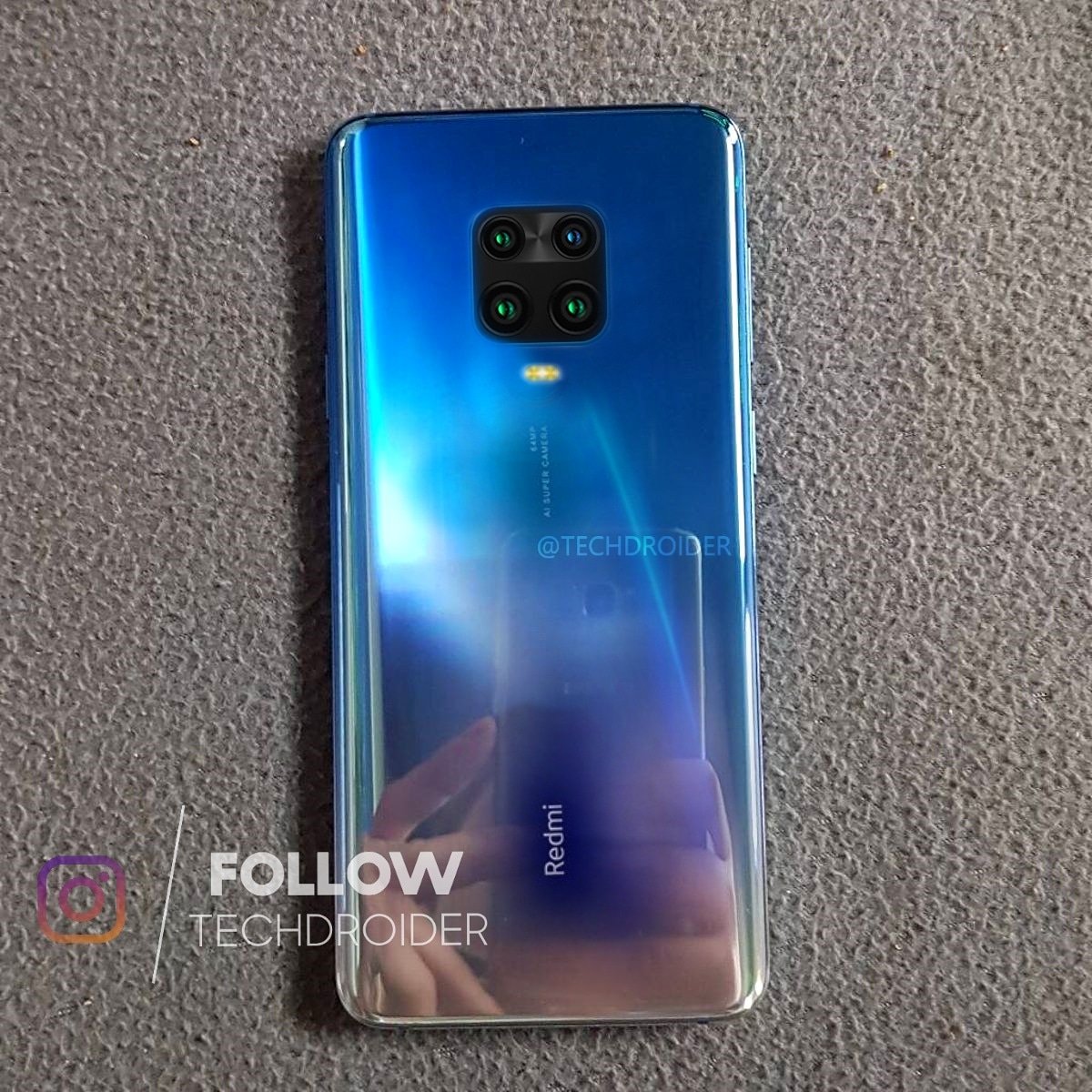
Ahead of the launch, a real-life image of the upcoming Redmi Note 9 Pro smartphone has been leaked online, which showcases the phone’s back panel. The phone is shown in a Blue gradient color option and features a quad-camera setup with a square-shaped module placed in the top-center position.
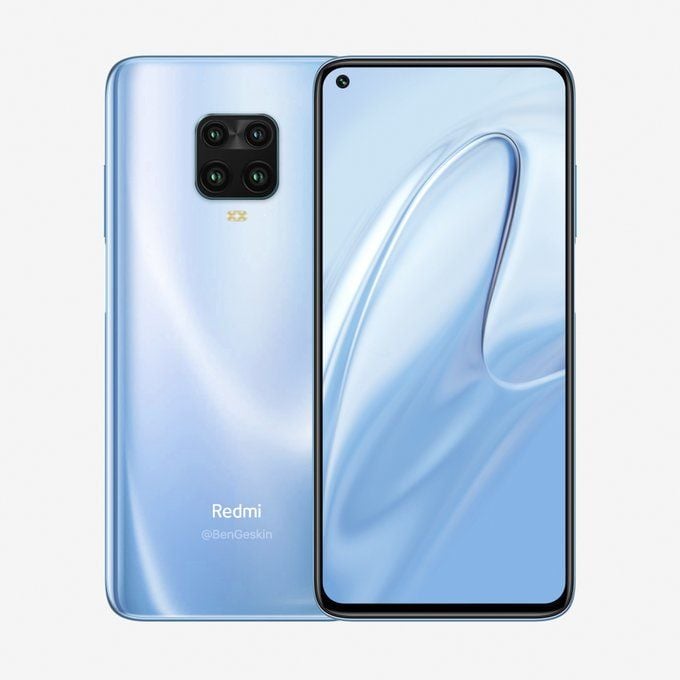
This is in line with the recently leaked render of the smartphone. The render also revealed that the smartphone will come with a punch-hole cutout in the top-left corner for housing the front-facing snapper.
There’s no fingerprint scanner visible on the phone’s back panel which could mean that the company has opted to integrated it with the power button. The Pro variant could also come with support for dual-mode 5G SA/NSA.
Redmi Note 9 Pro concept render by Benjamin Geskin
The Redmi Note 9 Pro was recently spotted on Geekbench, which revealed that the phone is equipped with 6GB of RAM and will come pre-installed with Android 10 operating system. In the single-core test of Geekbench 5, the Redmi Note 5 Pro scored 569 whereas it recorded a score of 1755 in the multi-core test.
While the listing doesn’t mention the chipset, the device is said to come powered by the Qualcomm Snapdragon 720G processor, making it the first device to come equipped with the SD720G SoC. The phone is also said to come with 22.5W fast charging support and some advanced gaming features.
A couple of weeks ago, Chinese giant Huawei launched its second foldable smartphone, dubbed as Huawei Mate Xs. As the name itself confirms, the device is the upgraded variant of the Huawei Mate X launched last year.
Today, the Huawei Mate Xs foldable smartphone was officially made available for purchase in the Chinese market at 10:08 AM local time, for a price of 16,999 yuan which roughly converts to $2,450. The device was up for reservation from 26th February on e-commerce platform likes Vmall and JD.com.
The Huawei Mate Xs comes with some improvements over the predecessor model. It features an upgraded hinge structurer and an enhanced cooling system. Also, the device comes powered by the latest Huawei Kirin 990 5G chipset, coupled with 8GB of RAM and 512GB of internal storage.
The smartphone features a dual layer structure over the 8-inch foldable OLED display that offers a screen resolution of 2200 x 2480 pixels. The frontal 6.6-inch screen offers an aspect ratio of 19.5:9 and the screen portion on the rear offers a tall aspect ratio of 25:9.
The camera setup of the device includes a 40-megapixel main lens, an 8-megapixel telephoto shooter with OIS, 16-megapixel ultra-wide lens and a ToF sensor. There’s no separate front-facing camera module given that the main cameras with the rear screen working as viewfinder can be used for shooting selfies and video calling.
The smartphone is running the latest Android 10 operating system out-of-the-box with Huawei’s EMUI 10 user interface on top. As the company has been banned from using Google’s apps and services, it comes with Huawei Mobile Services (HMS) as a replacement for Google‘s services. The device is powered by a 4,500mAh battery and comes with support for 55W fast charging.
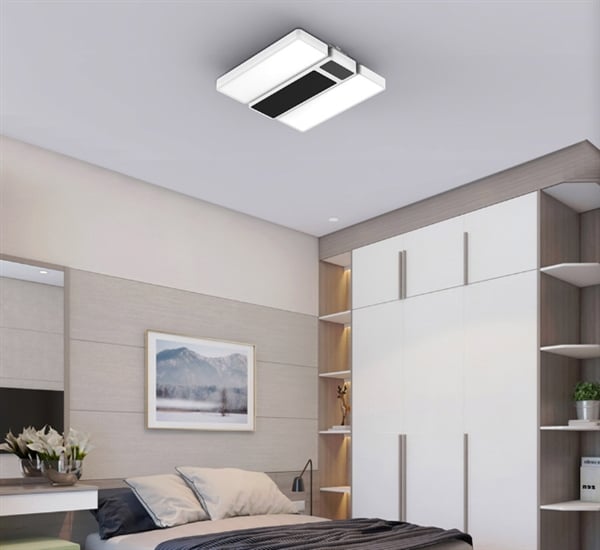
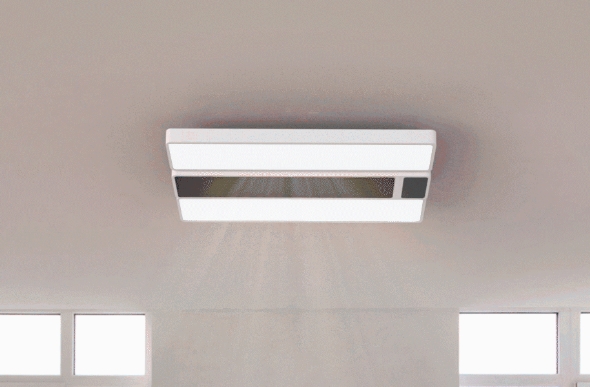
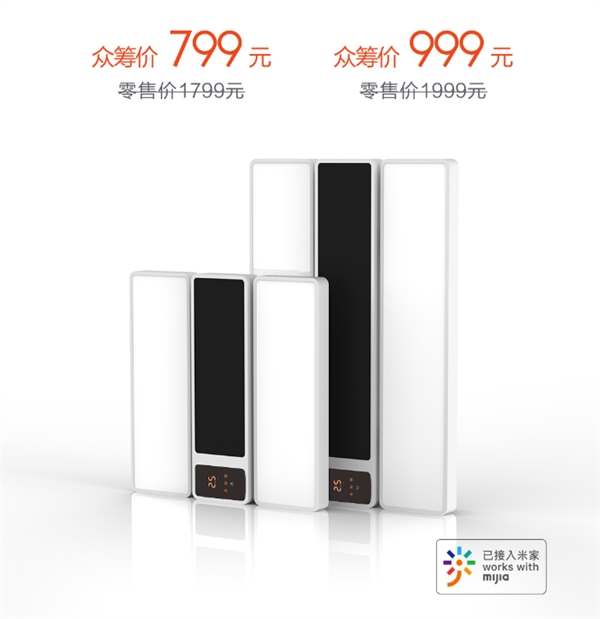
Xiaomi has unveiled a new product that will be launched on the Youpin crowdfunding platform o March 5. The product is a ceiling lamp which also doubles as a heater. The product comes in two versions; a square-shaped model which will adopt a crowdfunding price of 799 yuan ($114) and a rectangular version priced at 999 yuan ($143). Off crowdfunding, the lamps will have a retail price of 1799 yuan ($258) and 1999 yuan ($286) respectively.
The smart lamp utilises a dual-function design which means it does not only meet the needs of home lighting but also bring you warmth. The warm air starts flowing out in just 3 seconds after the lamp is turned on. There is no motor inside to stimulate circulation which means it can work quietly without any noise.
The heating plate onboard the lamp has a compression-type surface texture design, which increases the heating area by 20%. This ensures the circulation of the heat is fast as well as heat dissipation. It equally gives the lamp a lightweight design and decent durability. Even under temperatures of up to 400 degrees, the device won’t have any deformation. and is light in weight, high in strength, and no deformation in a high temperature of 400 degrees, and the quality and life are guaranteed.
The smart lamp/heater usees far-infrared heating without wind, which doesn’t easily dry up the moisture in the air, and thus, offer better comfort than the traditional filament heating system.
The Square model of the smart lamp has equal length and width of 60cm and is 12cm thick. It packs an 80W LED light bulb while the heater has a power rating of 1000W. On the other hand, the rectangular model has a dimension of 90cm X 60cm X 12cm with a 120W LED lamp onboard and 1300W heating power rating.
As a ceiling lamp, its packs a full-size lamp board with evenly distributed LED lamp beads. The lamp beads are arranged evenly and reasonably without shadows, reducing light loss, and delivering a uniform light effect without glare. The cover is made of thickened PC material, which is accurately cut, has a uniform thickness, good flexibility, high light transmittance, uniform and soft brightness.
The lamp works with the MIJIA smart app which can be used to the light as well as the temperature of your home. You can also use the XiaoAI smart voice assistant to control the light brightness and heating temperature.
The Realme 6 series launches tomorrow and we are pretty excited about the two new phones. Ahead of the launch, the price of the Realme 6 has leaked thanks to a Flipkart ad that popped up on Google. The ad also confirmed some of the phone’s key specs.
The Realme 6 will have a starting price tag of INR 12,999 (~$177) according to the ad. It will also go on sale for the first time on March 11 at 12 Noon (12:30 PM?).
It is no surprise that the Realme 6 has a higher price tag than the Realme 5. The phone is coming with some pretty great features that are usually found on upper mid-range phones and flagship devices.
Francis Wang, the CMO of Realme Mobiles, also revealed that the Realme 6 is actually not a successor to the Realme 5. The company executive added that their product portfolio has been redefined and the Realme 6 is the new pro.
From the pricing perspective, realme 6 is not a successor of realme 5. Our product portfolio has been redefined. #realme6 is our new pro. Hope this clarifies price part. 👆 See you on 5th March, watch it live! pic.twitter.com/jKLHNZrnTZ
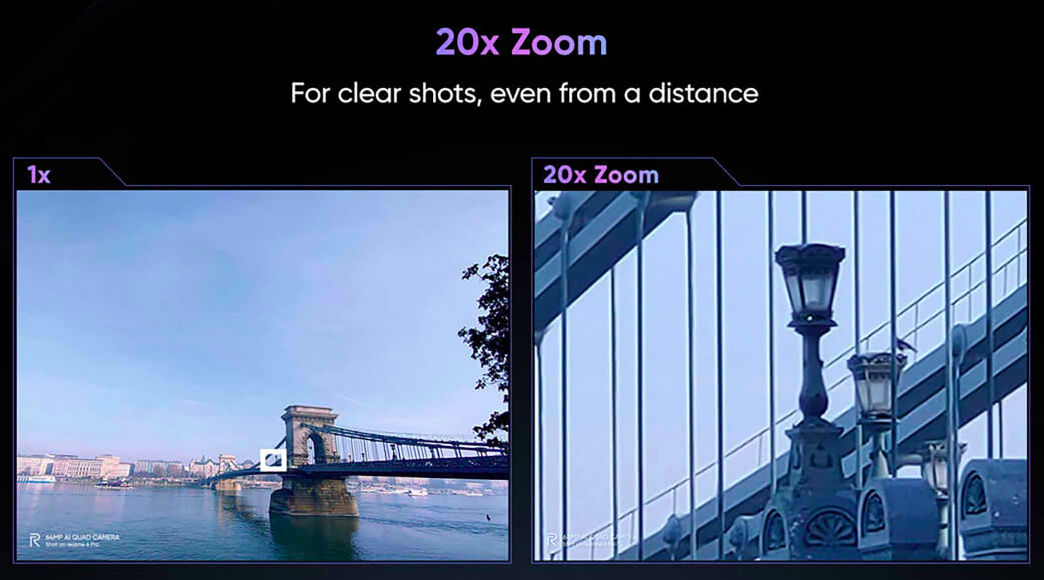
The advert confirms the Realme 6 has 20X zoom, so this will not be a feature limited to just the Realme 6 Pro as earlier presumed. The phone will also have a 90Hz Ultra Smooth Display. We already know the screen has a punch hole at the top left corner for the selfie camera. The Realme 6 will also have support for 30W Flash Charge.
Other confirmed features are an Helio G90T processor, 8GB of RAM, and a 64MP primary rear camera.
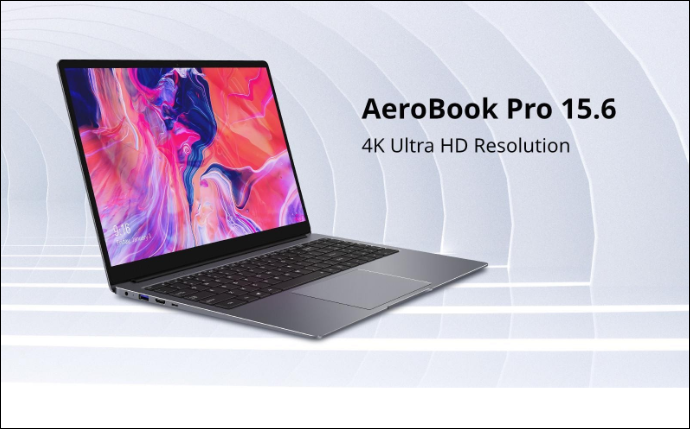
Chinese tablet/laptop maker Chuwi recently announced the resumption of production after the extended Lunar holidays. The company has now sent out words that a new laptop will be hitting soon. The Chuwi Aerobook Pro, as it is called, is an upgraded version and indeed the successor of the Chuwi Aerobook that was launched in January 2019.
The Aerobook Pro is expected to deliver a fantastic design, solid performance with top-of-the-pack hardware configuration. The specifications of the laptop are already out in the open ahead of the official launch.
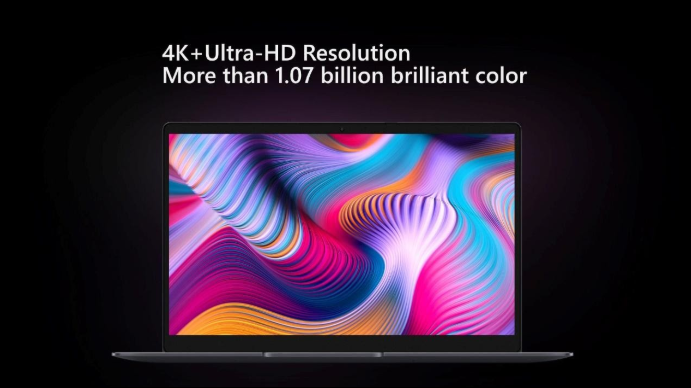
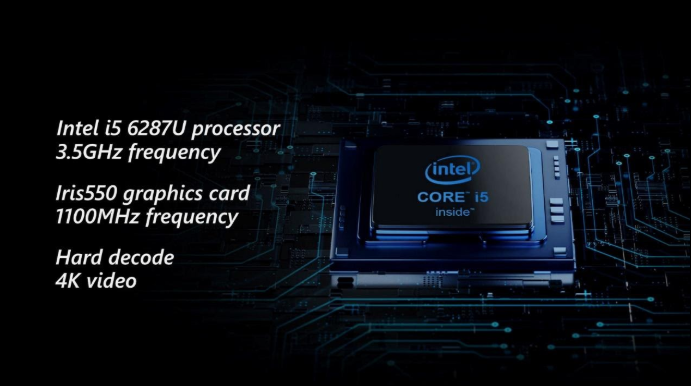
The Chuwi Aerobook will feature a 15.6-inch display with 4H UHD resolution. The display has a 282 PPI, 100% sRGB gamut, and a maximum brightness of 340 nits. The laptop will be encased in an all-metal body with a full-size keyboard as well as a large touchpad. The AeroBook Pro features an Intel Core-i5 6287U processor which the same processor found onboard the Apple Macbook Pro. The processor is integrated with an Intel Iris Graphics 550 GPU which can handle videos and games satisfactorily as well as render 4K videos. The processor delivers a powerful performance alongside low power consumption.
Some may think the AeroBook Pro 15.6 could be bulky due to the large screen size but the laptop only weighs 1.53kg. It also comes with ultra-thin bezels on the edges of the display giving users an immersive view of the screen.
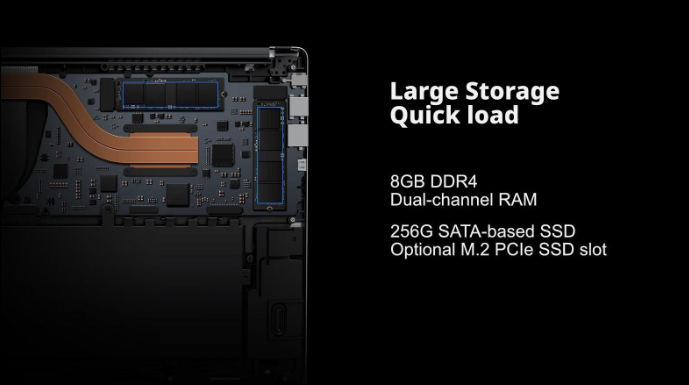
For memory, the Chuwi AeroBook Pro 15.6 packs 8GB LPDDR4 RAM and 256GB SSD. There is an M.2 PCle slot which can be used to expand the storage capacity when needed.
Chuwi says the AeroBook Pro 15.6 will be launched on IndieGoGo at the end of this month and will carry a retail price of $599. You can sign up on the AeroBook Pro page on Chuwi’s website to get informed when the IndieGoGo crowdfunding goes live. You could equally get a 25% discount which is likely an early bird offer.
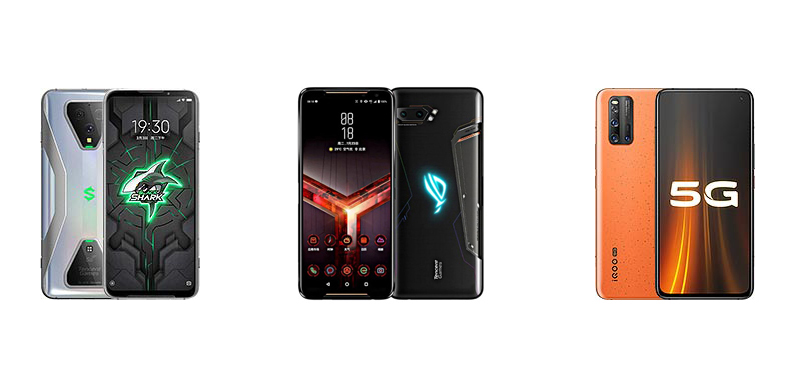
We are still in Q1 2020 but there are already several gaming phones on the way. Xiaomi’s brand just launched the Black Shark 3 series which includes two variants: Black Shark 3 and 3 Pro. While the Pro variant is definitely the most advanced gaming phone out there this year, the vanilla version has a few rivals. Comparing it with the most interesting gaming phone is the goal of this specs comparison. If you think about gaming phones, the first name coming to your mind will probably be Asus ROG Phone II. Alongside the Black Shark 3 series, another gaming phone launched this year is iQOO 3 5G. Here is a specs comparison between Black Shark 3, Asus ROG Phone 2 and iQOO 3 5G.
Xiaomi Black Shark 3 vs Asus ROG Phone 2 vs Vivo iQOO 3 5G
Dual SIM slot, magnetic charging, support for external accessories
Dual SIM slot, support to external accessories, RGB light
Dual SIM slot, optional 5G
Design
Gaming phones usually come with an aggressive gaming-centric design. Well, that is not the case of the iQOO 3 5G. It has a more sober design with a higher screen-to-body ratio thanks to its waterdrop notch, and it is the perfect candidate for people needing a normal device with gaming-centric features and hardware. With their RGB lights and aggressive looks, Asus ROG Phone II and Black Shark 3 both come with a gaming-centric design. They carry the support to interesting external accessories (especially the ROG Phone II) and the Black Shark 3 even comes with physical shoulder buttons.
Display
On the display side, Asus ROG Phone II takes the gold medal, at least for gamers. It sports a higher DCI-P3 coverage and the highest refresh rate with 120 Hz. But you should not underestimate the display of the Black Shark 3, which we consider just slightly inferior. The Black Shark 3 has a lower 90 Hz refresh rate, but a higher touch sampling rate and the support of HDR10+ technology for great image quality. Unfortunately, iQOO 3 5G comes with a standard refresh rate and a lower (but still high) touch sampling rate of 180 Hz. It is still a great display for gaming, but Asus ROG Phone II and Black Shark 3 are more suitable.
Hardware/Software
Given that they are fueled by the more powerful Snapdragon 865 SoC, Black Shark 3 and iQOO 3 5G are stronger devices than ROG Phone II when it comes to performance. The iQOO 3 5G is also one of the first smartphones packing UFS 3.1 internal storage. Both Black Shark 3 and iQOO 3 5G support the 5G connectivity (note that only the highest-end memory configuration of the iQOO 3 does), while Asus ROG Phone II does not. But the ROG Phone II is the only to offer up to 1 TB of native storage, it is important to note since none of these devices feature expandable internal storage. All feature Wi-Fi 6 support, but only the iQOO 3 5G supports Bluetooth 5.1.
Camera
The presence of a great quad camera setup including a telephoto sensor and a good 48 MP main sensor makes iQOO 3 the most interesting camera phone, but Black Shark 3 should still provide a good photo quality with its 64 MP triple camera. We can not tell you which one clicks the best photos since they are yet to be available to purchase, but on the paper, ROG Phone II looks less suitable for photos.
Battery
Asus ROG Phone II wins the battery life comparison thanks to a way bigger 6000 mAh battery, followed by the Black Shark 3 packing a 4720 mAh battery. Black Shark 3 has the fastest charging technology with a power of 65W and it supports magnetic charging (pins on the back), so that you can charge it while playing without having a cable between your fingers. Asus ROG Phone II supports 30W fast charging and reverse charging, while iQOO 3 5G supports a faster 55W charging technology.
Price
iQOO 3 5G starts at €463/$515 in China, Black Shark 3 ranges from €450/$502 to €517/$575, and ROG Phone II starts from €457/$509. There is not a definitive winner of this comparison. If you are looking for a device with the widest range of external accessories, the best display for gaming and the biggest battery, Asus ROG Phone II is a better option. But BS3 and iQOO 3 5G are definitely more interesting for average users since they offer higher performance, 5G, and petty nice cameras. Which one would you pick?
More details of the OPPO Find X2 keep pouring in. OPPO itself has been releasing teasers of the device, that confirm features of the phone. Ahead of the launch which is two days away, press renders of the phone have been posted on the web.
The renders were posted on Twitter by Roland Quandt of Winfuture.de. The Find X2 is shown with a curved display that has a punch hole at the top left corner. OPPO is not going with the sound-on-display technology we have seen from manufacturers such as Samsung and LG. Instead, they are sticking to the traditional earpiece which is a slit at the top of the frame.
[envira-gallery id=”308526″]
The OPPO Find X2 has three rear cameras. Nope, not four and definitely not five. The cameras are stacked on top of each other in a pill-shaped housing along with an LED flash. There are volume control buttons on the left side of the phone while the power button is on the right. The phone will be available in Black and Blue color options.
With respect to design, the Find X2 won’t turn heads like the Find X. OPPO seems to have played it safe this time around but it should still be a stellar device nonetheless.
The Find X2’s selling points include its QHD+ display which is said to be a 10-bit OLED panel capable of displaying up to 1 billion colors and with a 120Hz refresh rate; its cameras; and its support for 65W fast wired charging.
OPPO will also announce a Find X2 Pro at the event on Thursday.
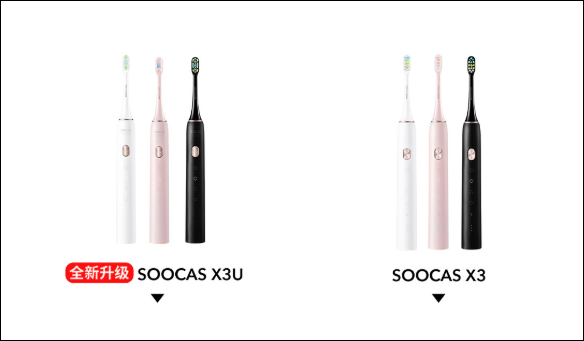
Xiaomi has launched an upgraded version of the SOOCAS X3 Sonic Electric Toothbrush under the Youpin platform. This model is dubbed SOOCAS X3U Sonic Electric Toothbrush and comes with several enhanced features over its predecessor. The gadget still comes with an affordable 329 yuan ($47) price tag which is slightly higher than the 249 yuan ($35) of the X3.
The SOOCAS X3U still retains the design of the X3 but the power train is upgraded to allow for longer use. The toothbrush also comes with wireless charging, lesser operating noise, a standard travel case and bootsplash protection.
The SOOCAS X3U uses a true magnetic levitation acoustic wave motor whose vibration has been upgraded from 38600 times per minute to 39600 times per minute . The vibration still remains strong even when the tactile pressure on the brush is increased and it offers splash protection.
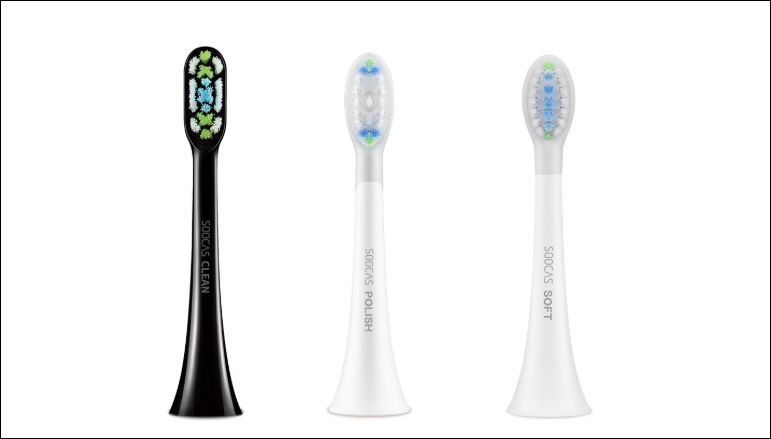
Another aspect that has been upgraded is the inclusion of two extra brush heads, bringing the total to three (3). The brush heads include a copper-free whitening brush head, a soft bristle brush head and a deep polishing brush head.
Furthermore, you equally get an IPX7 waterproof protection a Type-C charging port meaning the charging will be faster. Onboard is a 1000mAh battery which supports wireless charging.
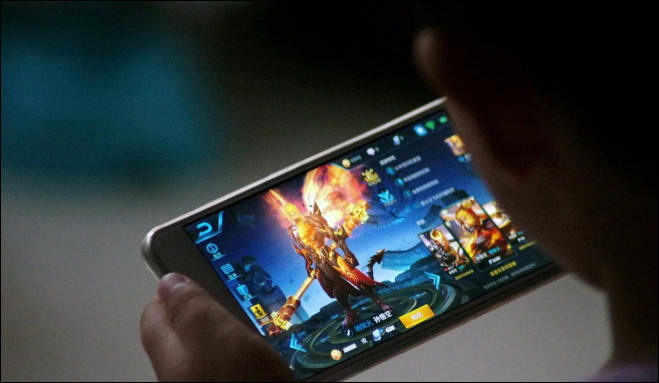
China is a gaming hub of sort and in recent times, the government had to adopt tougher restrictions in order to curb a rising problem of gaming addiction and eye defect. However, gaming is coming to the rescue of Chinese families who have had to adjust their routine in the face of the Coronavirus outbreak and quarantine efforts aimed at preventing the spread of the virus.
App Store data from mobile app researcher Apptopia (via Bloomberg) shows that the number of active users of mobile games developed by two of China’s top games developers – Tencent Holdings Ltd and NetEase Inc. has risen astronomically in mainland China due to the quarantine efforts by the government aimed at curbing person-to-person transmission of the virus. As a result, the shares of both companies continued to surge despite a struggling domestic market as a result of the coronavirus epidemic.
The data shows that the percentage of active users daily for two of Tencent’s most popular titles – Mahjong and Game For Peace, increased 109% and 44%, respectively, between January and February. Other games by Tencent such as Honor of Kings, Happy Poker, and QQ Speed also saw a surge in their usage by more than 20% in the two-month period under review.
On the other hand, the game Werewolves of Miller’s Hollow produced by Netease has also seen its daily active users more than doubled in China since December, attaining a growth of 131%.
The spike in game-playing began in late January after coronavirus quarantines kept people indoors during the Chinese New Year, limiting their entertainment options. Online entertainment and gaming are ordinarily expected to benefit as people are locked down in their homes. During this period, the TV viewership also saw a surge in numbers as more families spent time indoors since the virus started its rampage. Analysts project that stocks tied to in-home entertainment could see more gains ahead as more people avoid socializing and look for alternative ways of passing time within the safe precinct of their homes.
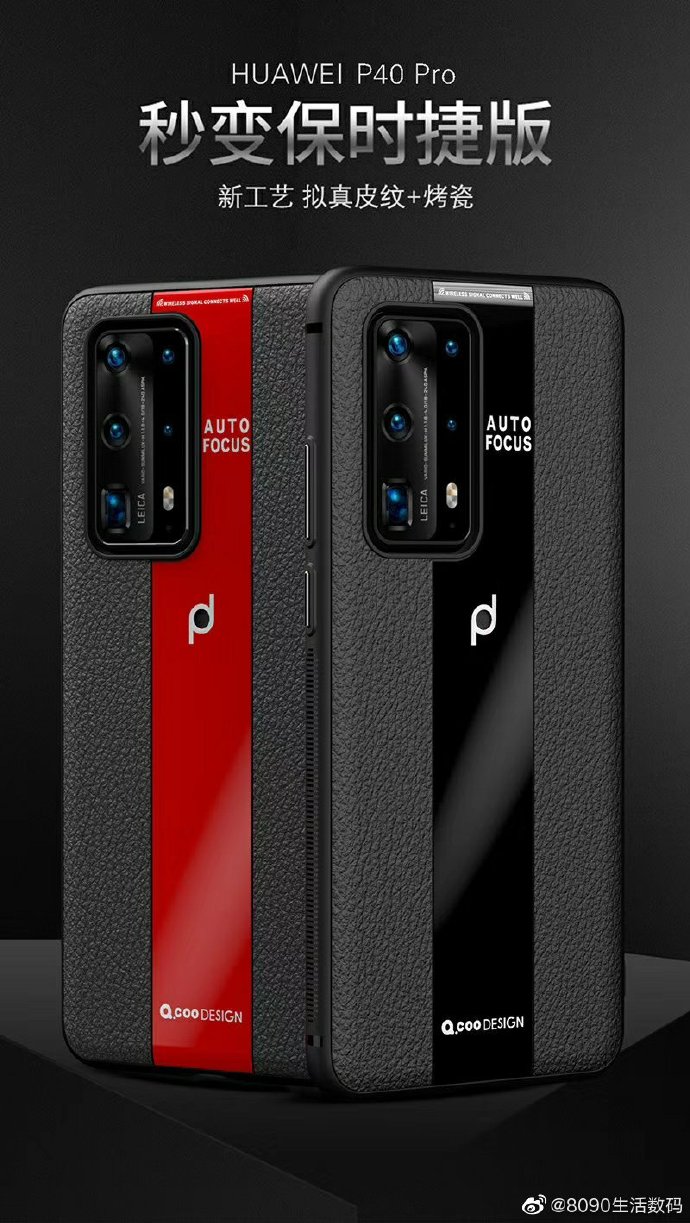
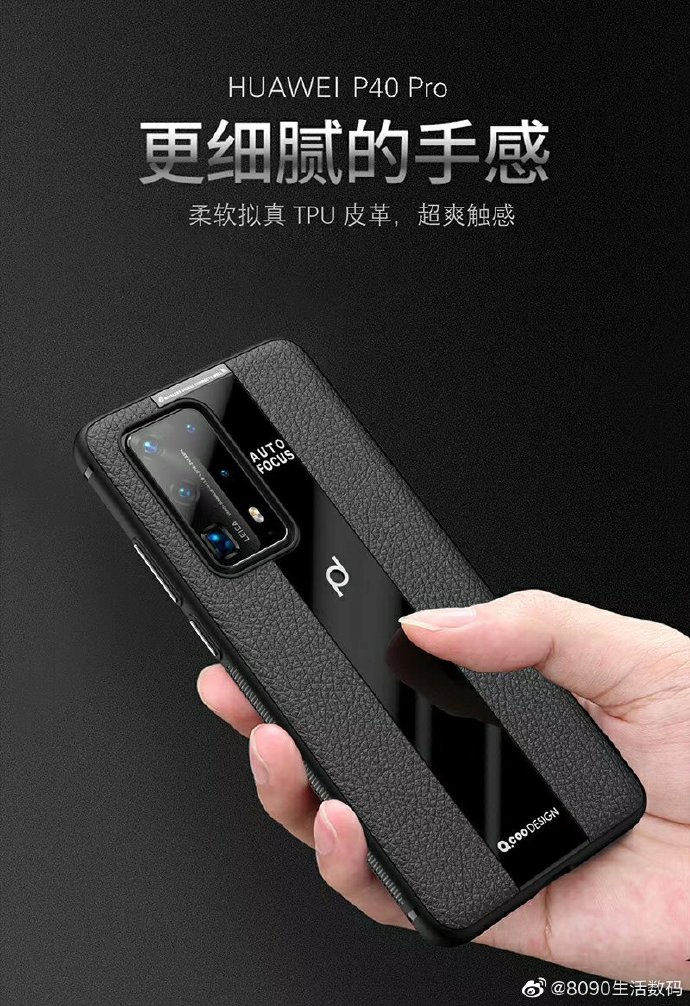
Huawei‘s P40 series is expected to go official later this month. The protective case of the P40 Pro has been leaked from the production factory. The protective case adopts a pseudo-skin pattern and porcelain technology. It bears some styling similar to the Porsche Design version of the Mate series.
While the protective case looks amazing, what is most interesting about the leak is the renders of the P40 Pro that was also revealed. The renders are those of the front and rear view of the device. The renders seem to confirm the presence of a curved edge display as well as a dual hole-punch camera design.
At the rear, the device packs a rectangular camera module which houses a Penta-camera setup as well as an LED flash. One of the five sensors looks like a periscope camera. The camera also bears the Leica badge which isn’t surprising. The power button and volume rockers are located on the right side of the display.
Previous leaks and rumours tipped the Huawei P40 Pro to pack a 32MP dual selfie camera setup. The phone will be powered by a Kirin 990 chipset which will bring 5G support. The phone is expected to launch in Paris on March 26.
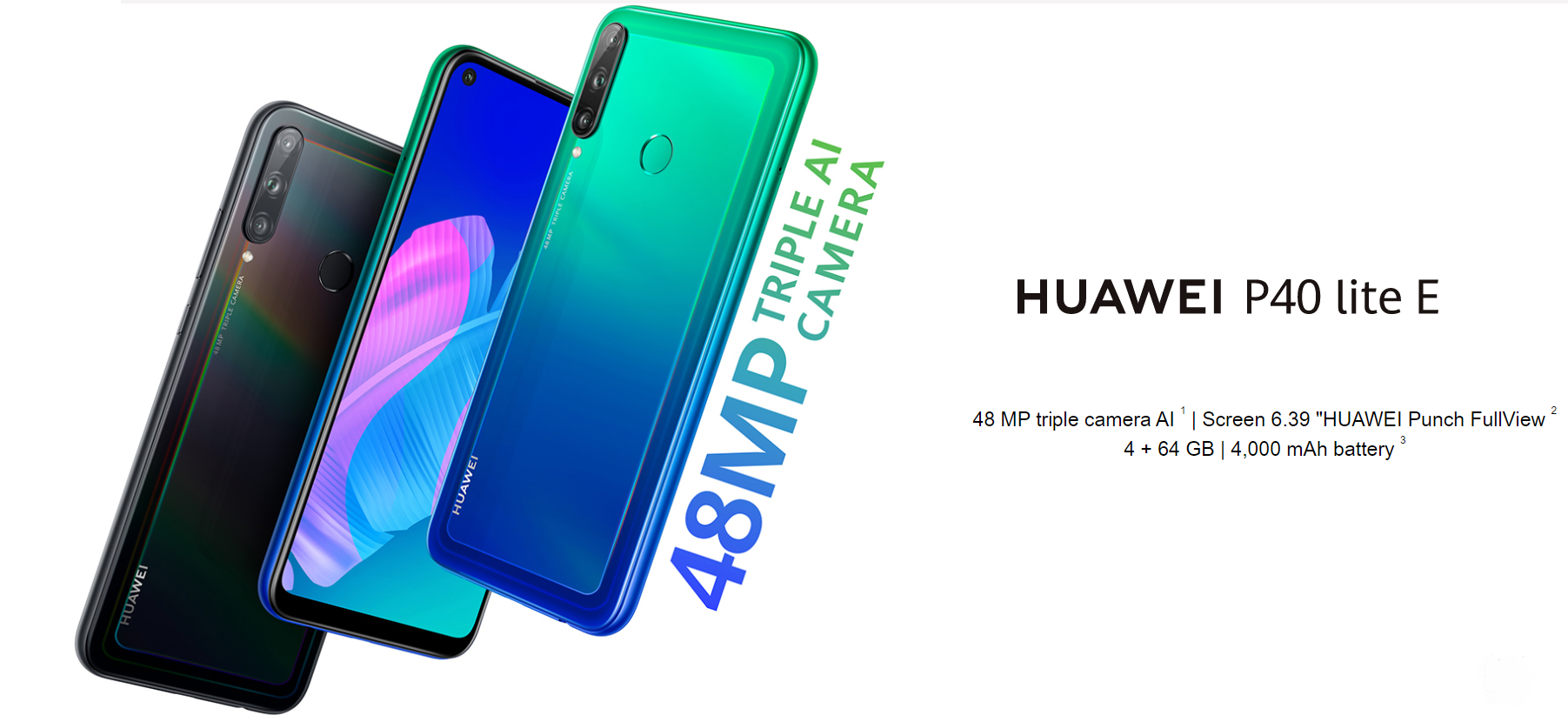
The Huawei P40 Lite E is a familiar device as it is practically a rebranded Huawei Y7p. The phone has a 6.39-inch Punch FullView Display. The hole is at the top left corner of the screen. Huawei says the screen covers over 90% of the front panel. The resolution for the screen is 1560 x 720 (HD+) and it is an LCD panel.
There is a Kirin 710F processor inside the phone and it is paired with 4GB of RAM and 64GB of storage. There is a MicroSD card slot that allows you to add up to an additional 512GB of storage.
The P40 Lite E has three rear cameras – a 48MP f/1.8 primary camera + 8MP f/2.4 ultrawide camera + 2MP depth of field camera. The front-facing camera is an 8MP sensor.
Huawei has put a fingerprint scanner on the back of the phone. There is a 4000mAh battery inside and it has support for 5V 2A charging via a MicroUSB port. The Huawei P40 Lite E also has dual SIM support, Bluetooth 5.0, and an audio jack. The phone runs EMUI 9.1 based on Android 9 Pie out of the box. You also get Huawei’s Mobile Services with apps like the Huawei AppGallery.
The P40 Lite E is available in Aurora Blue and Black. It has a pre-order price tag of PLN 699 (~$181) and Huawei will ship all pre-orders with a free Huawei Band 4. The pre-order page says orders will begin shipping on the 12th of March.
Taiwanese manufacturing firm Foxconn has long been the major supplier or Apple and several other phone companies. The firm has now disclosed that it expects a drop in revenue of up to 15% from its consumer electronics and enterprise products in the first quarter. The company projects that revenue will rebound in the second quarter as production returns to normal in its China factories.
Foxconn which is also known as Hon Hai Precision Industry Co Ltd has several factories domiciled in China where production has been halted due to the Coronavirus outbreak and an extended Lunar New Year holidays. The Taiwanese company disclosed that it does not expect to see any revenue growth in the first half and a “mild downward revision” from original guidance of “slight growth” for the year due to the coronavirus.
The development was responsible for Apple’s decision to reduce its March quarter sales guidance citing a slower production pace in China amid travel restrictions and an extended Lunar New Year break.
Foxconn isn’t the only company affected as overall manufacturing activity has been almost entirely crippled in China by travel restrictions and quarantine requirements aimed at containing person-to-person transmission of the coronavirus.
The Taiwanese manufacturing giant is, however, upbeat about its business as it expects normal production to resume in China by March ending.
The Coronavirus is a flu-like virus that was first detected in Wuhan from where it has spread to other regions in China. The virus has since spread to over 60 countries with more than 86,000 people infected and over 3,000 people, many of them in China.
Realme’s new 6 series is meeting us tomorrow at 12:30 PM IST in India. The company canceled the offline event and is keeping a virtual press conference to launch one of the most important smartphones from the brand this year. The Realme 6 and 6 Pro will be a bit different from its predecessors, in the sense that the Realme 6 is now targeted at a slightly higher price segment. The company executive cleared this in a tweet earlier this week, saying that the Realme 6 will be the real ‘Pro’ for the brand. This means the Realme 6 Pro will be pushed further higher up in the price segment as well, offering premium features unseen in its predecessors.
There’s a lot we know about the upcoming Realme 6 series, but there’s a lot we don’t know as well. Whenever possible, we’ll try to speculate the missing specifications in this article to give you a complete picture of what to expect from the online event tomorrow.
Realme 6 & 6 Pro Design
Both models are expected to feature a similar design, which includes a punch-hole camera in its display and quad-rear cameras. This would be a deviation from the waterdrop notch on its predecessor but fits right alongside other mid-range punch-hole devices like the Poco X2. One big difference between the two models in terms of design is in the front. The Realme 6 will come with a single punch hole shooter on its display, while the Realme 6 Pro adds two punch-hole cameras on the front.
We have no official word on the placement of the fingerprint sensor, but it could be placed on the side.
Realme 6 Specs
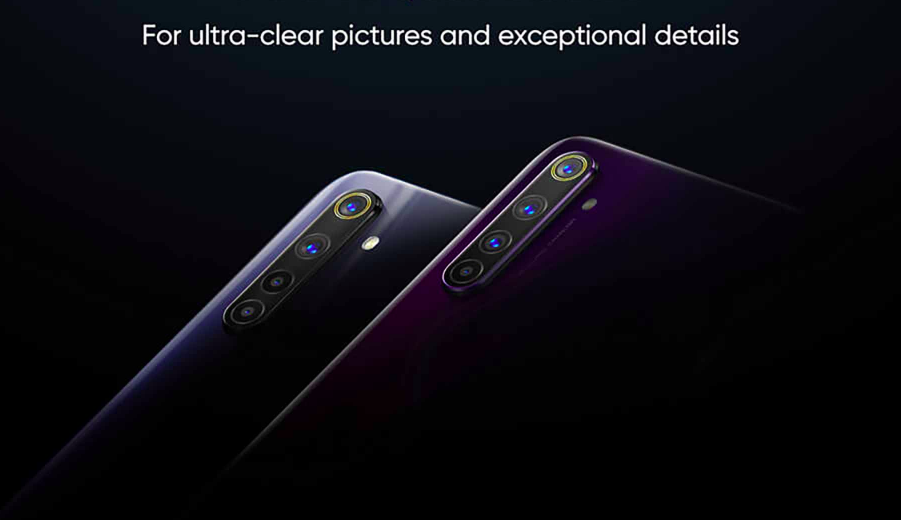
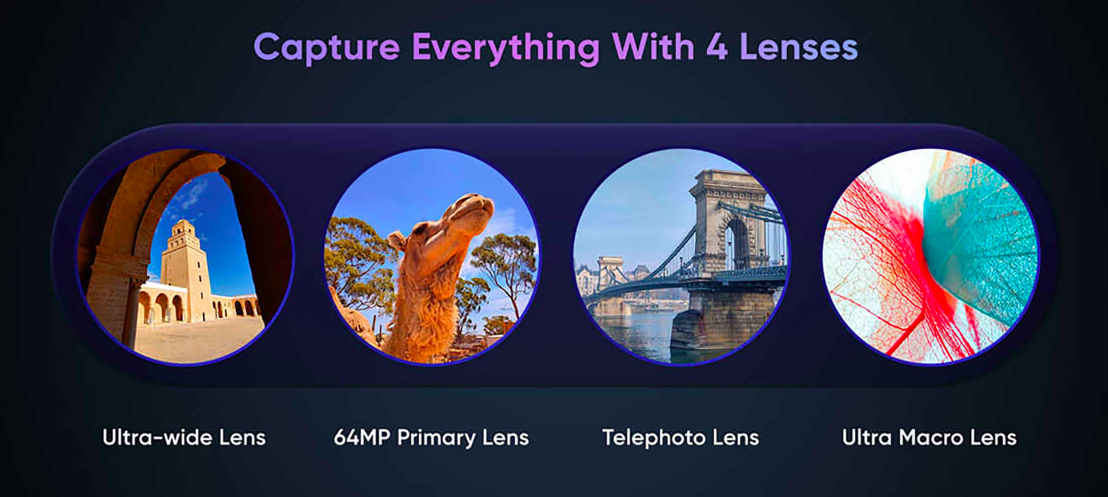
Let’s take a quick look at what to expect from the Realme 6 tomorrow. There are some really big upgrades in the new model. The phone is confirmed to feature a 64MP camera setup at the back likely with a new telephoto sensor. Realme teased 20x zoom on the Realme 6 series, which could be limited to the Pro model.
Another big change that’s expected is in the CPU department. Instead of the Snapdragon 665 chipset found on its predecessor, the Realme 6 should feature MediaTek’s gaming Helio G90T processor. Yes, I said G90T, the same chip found inside the Redmi Note 8 Pro. There were some rumors about the phone getting the slower G90 variant, but the Wi-Fi Alliance certification has practically confirmed MT6785T aka Helio G90T as the chip powering the new device. Also, G90 doesn’t support a 90Hz refresh rate panel, only the G90T does.
In places where we have added an * after the specs, note that those are pure speculations and not based on any trustworthy teasers or leaks.
6.4/6.5-inch IPS LCD display* with 90Hz refresh rate and FHD+ resolution (confirmed)
MediaTek Helio G90T @ 2.05GHz
4GB / 6GB RAM with 64GB / 128GB ROM*
Dedicated MicroSD card slot*
Quad-camera setup: 64MP primary camera + ultrawide camera + telephoto camera + Macro camera (confirmed)
Single punch-hole selfie shooter (confirmed)
3.5mm headphone jack*
Rear placed fingerprint sensor*
4500mAh battery capacity* with 30W fast charging (30 minutes for a day’s charge – confirmed)
The Realme 6 Pro will be a premium offering with mid-range pricing. Premium features include a high refresh rate display, 20x zoom via its telephoto lens, and Snapdragon 720G chipset.
6.4-inch IPS LCD display* with 90Hz refresh rate and FHD+ resolution (confirmed)
Snapdragon 720G @2.3GHz
4GB / 6GB RAM with 64GB / 128GB ROM*
Dedicated MicroSD card slot*
Quad-camera setup: 64MP primary camera + ultrawide camera + 20X zoom telephoto camera + Macro camera (confirmed)
Dual punch-hole selfie cameras including one ultra-wide angle shooter (confirmed)
3.5mm headphone jack*
Rear placed fingerprint sensor*
5000mAh battery capacity* with 30W fast charging (30 minutes for a day’s charge – confirmed)
Realme 6 & Realme 6 Pro Expected Pricing
Realme 6 is expected to start at around Rs. 12,000 ($164) – 13,000 ($178) in India. The Realme 6 Pro is expected to be priced between Rs 15,000 ($205) and Rs 20,000 ($274). The company has promised sufficient stock despite the Coronavirus epidemic that has affected China and countries globally. Both the models should be available via online as well as offline stores after its launch tomorrow.
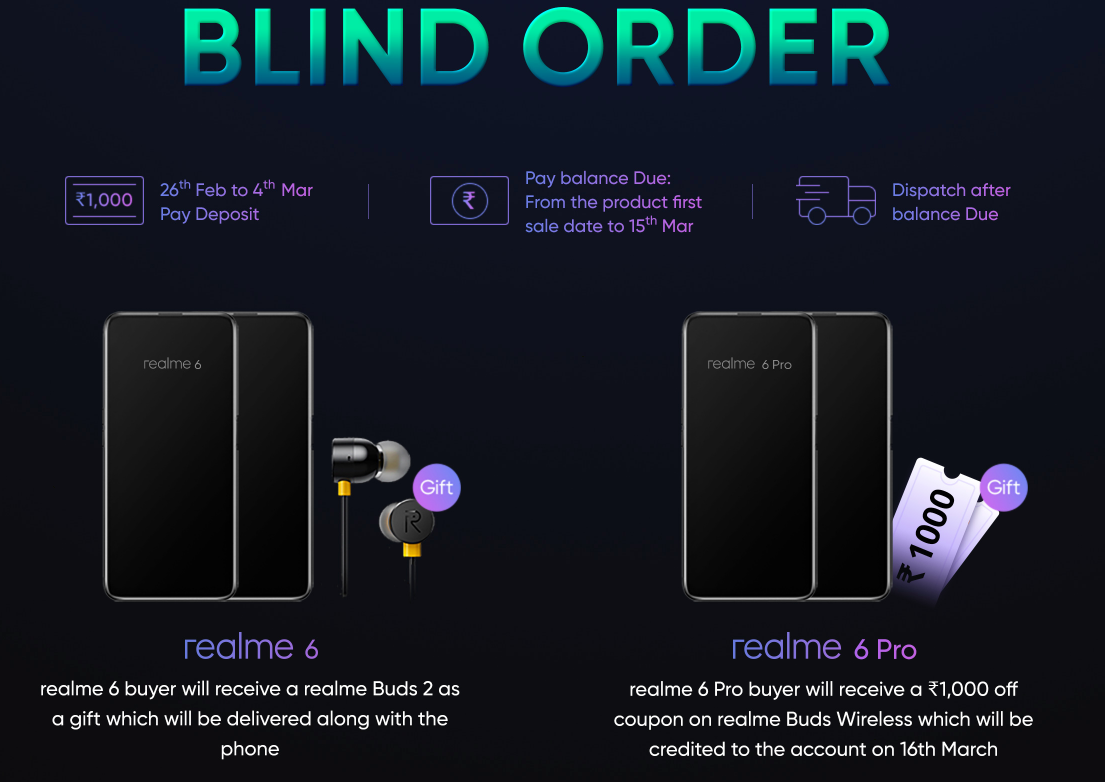
The company is currently running a promotional blind order event for the Realme 6 series. Details are as below. Note that the Realme Band will also launch alongside the Realme 6 series tomorrow. You can read all about the new band here.
Samsung‘s popular Galaxy A series has a couple of entries lined up for launch in the near future. However, prior to any official announcements, reports have surfaced regarding the Galaxy A31 and Galaxy A71. The former has been spotted on Geekbench, revealing its specs, while the latter has received 3C certification.
Samsung Galaxy A31
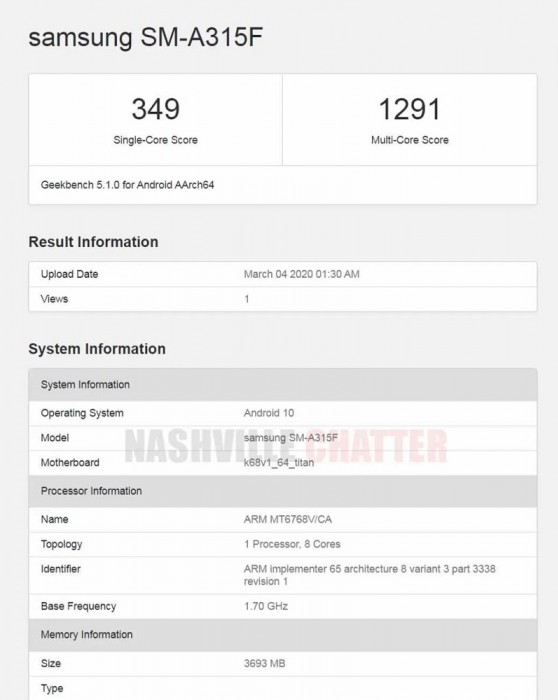
The Galaxy A31 is a mid range smartphone from the South Korean tech giant. It was spotted on the popular benchmarking software, Geekbench, bearing the model number SM-A315F. The device scored 349 points in single core performance and 1,291 points in the multi core performance. This score was achieved thanks to its MediaTek processor, dubbed MT6768V/CA, which could be the Helio P65 SoC.
Additionally, Samsung Galaxy A31 also runs the latest Android 10 OS and has 4GB of RAM. However, it is unknown if it will arrive with other memory configurations. Unfortunately, other finer details could not have been discerned from the benchmark, but reports have suggested that a 64GB base storage alongside a 5,000mAh battery and 48MP primary camera can be expected as well.
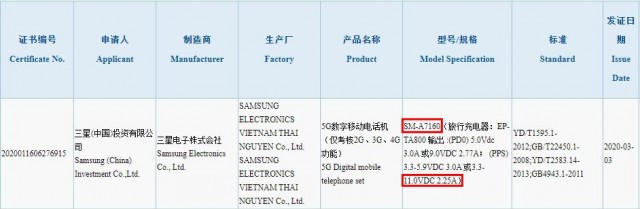
Samsung had launched the 4G version of the Galaxy A71 two months ago. But since then, there has been no sign of its 5G variant. But now, it might soon be available considering the smartphone has received China’s 3C certification. The certification also revealed certain specs regarding the device, namely support for 25W fast charging.
Samsung Galaxy A71 5G certification
The Galaxy A71 was spotted with the model number SM-A7160, similar to what had previously also been spotted on Geekbench listing. The handset will carry Exynos 980 SoC paired along with 8GB of RAM running Android 10 OS. It is expected to launch in various markets including, China, US, Australia, New Zealand, and European regions as well. Although no official announcement has been made, its launch might be just around the corner. So stay tuned for additional reports on Galaxy smartphones.
We use cookies on our website to give you the most relevant experience by remembering your preferences and repeat visits. By clicking “Accept”, you consent to the use of ALL the cookies.
This website uses cookies to improve your experience while you navigate through the website. Out of these, the cookies that are categorized as necessary are stored on your browser as they are essential for the working of basic functionalities of the website. We also use third-party cookies that help us analyze and understand how you use this website. These cookies will be stored in your browser only with your consent. You also have the option to opt-out of these cookies. But opting out of some of these cookies may affect your browsing experience.
Necessary cookies are absolutely essential for the website to function properly. This category only includes cookies that ensures basic functionalities and security features of the website. These cookies do not store any personal information.
Any cookies that may not be particularly necessary for the website to function and is used specifically to collect user personal data via analytics, ads, other embedded contents are termed as non-necessary cookies. It is mandatory to procure user consent prior to running these cookies on your website.


 The GaN Charger Type-C 65W was made available to the public on February 18th. It adopts gallium nitride technology and comes with 65W fast charging support, providing a maximum charging power of 50W for Mi 10 Pro. It can fully charge the Mi 10 Pro is just 45 minutes.