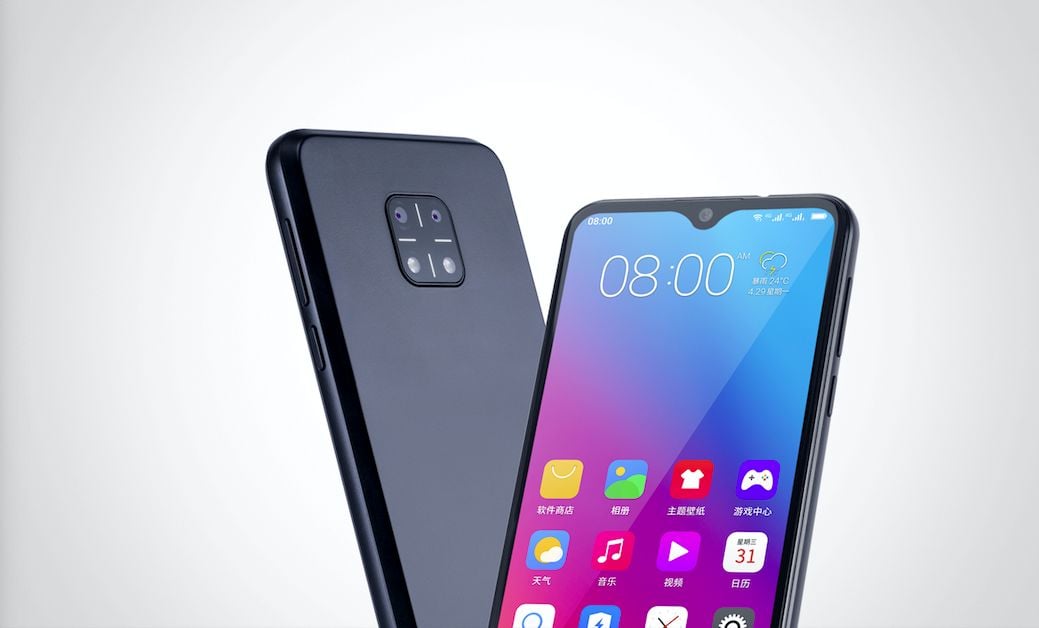
We are already aware that OnePlus will announce three new phones in the first half of the year. There is the OnePlus 8 and the OnePlus 8 Pro which are successors to last year’s OnePlus 7 and OnePlus 7 Pro respectively. We will also be getting a third device called the OnePlus 8 Lite. Ahead of the release date which may likely be earlier this year compared to last year, the OnePlus 8 Pro has been spotted on Geekbench.
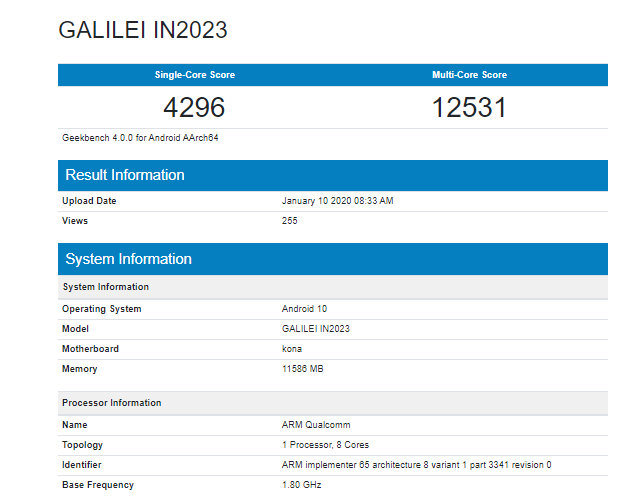
The device was benchmarked on Friday, January 10, and appears on Geekbench’s database as “GALILEI IN2023”. It runs Android 10 and has 12GB of RAM paired with the Snapdragon 865 processor. We know it is the Snapdragon 865 because it has the same motherboard name as the Sony Xperia flagship that was spotted on Geekbench last month.
The OnePlus 8 Pro scored 4296 points in the single-core test and 12,531 points in the multi-core test. The scores are lower than that of the Sony phone which we believe is the flagship, Xperia 5.
The OnePlus 8 Pro will have a curved AMOLED display with a punch-hole at the top left corner and has been reported to have a 120Hz refresh rate. It will also have quad rear cameras and an in-display fingerprint scanner. The phone will come in multiple configurations with the base model having 8GB of RAM.
Smartphones have become the lifeline for every working human being. It has become the sole companion as it is widely used around the globe to connect. Smartphones have become the primary source to store data, including our photos, contacts, passwords, and even some financial information. It is acting as our personal data bank these days, along with flawless connectivity. It has become necessary to keep a backup of our stored data on smartphones. We have crafted a guide to backup essential data on Android smartphones.
Recovering Data – The sole and primary motive of doing a backup is to improve it if any data loss happens.
Individual File Restoration – It is not necessary to restore the full backup, the user can recover individual files.
Protection Against Hardware Failure – In case of sudden hardware failure like bricking the smartphone, Backups can play a vital role in getting back essential data.
Enhanced reliability – If you’re using any custom ROM, or any Framework, it is highly recommended to create backups.
There are different ways to backup Android data, including Contacts, Call Logs, SMS, images, videos, and other files. Some of the below-mentioned ways need root access, but most of the methods are rootless.
Root Based Methods to Backup Android Phones
Titanium Backup
Using a rooted device offers you more flexibility in creating backups using different apps. One such app is the Titanium Back, which helps to backup app settings, system data, and even Wi-Fi passwords within a single console. It is quite a powerful app that allows to backup and restores data with few taps. It can be easily used by following the steps below:
Download and Install the Titanium Backup app.
Open the app, press the hamburger icon on the top-right corner, and select ‘ batch actions.’
Select the different options to backup or select every option to fully backup the smartphone.
It also offers the flexibility to upload the backup to Google Drive or Dropbox directly. Choose the desired option in the settings.
The user can also choose to create a recovery compatible .zip backup file. (Note: This option can unbrick your device if you found it unresponsive.)
That’s it
This is the most productive way to backup every file and settings present on your smartphone.
Backup Android Phone Without Root Access
Using Google Services
Android being native to Google services and products, it is always recommended to backup essential data by using Google’s inbuilt service on Android system. There are different ways to backup every document on Google servers. Follow the steps below to recover Photos and Videos, Contacts And Call Logs, WhatsApp, and other apps data.
Photos and Videos
Google Photos is the sole app that allows users to store unlimited photos and videos on Google servers in high quality. It is the easiest way to backup and restores videos and pictures to the cloud. The Google Photos app is always available on Android Phones. Otherwise, the users can download it here. Here are the steps to use Google Photos App Auto Backup:
Download and Install Google Photos app
Open Settings and Tap ‘Backup & Sync’ to turn on Sync
Select ‘Upload Size’ to enable ‘High quality with free unlimited storage, or Original with Google Drive storage limits.’
Enjoy Easy Backup!
You can successfully upload photos, and videos present in your smartphone by toggling each folder in your Photos App.
Other Files
Google Drive is the best companion app to store every other file to the cloud. It can act as a primary backup location for the files present on your Android smartphones. The user can add files or folders to the Google Drive app:
Open Google Drive App
Press the ‘+’ button and upload files you’d like to backup.
That’s it!
Other Settings and Contacts data
The service essentially backs-up every useful app and its data to Google servers. It can be easily turned on by heading to Android Backup services as follows:
Open Smartphone settings app.
Head over to ‘Accounts and Backup”
Tap on ‘Backup and Restore’
Enable ‘Back up my data’ switch and select your Google Account.
Google also offers the inbuilt facility to back up most of the settings and contacts to the cloud.
You can enable the feature to backup contacts and other apps data by heading to the Settings>Accounts>Google>Enable Sync option for backup.
Using Other Apps
There are a lot of other apps that let users to backup and store data on Android Phones easily. Using other Apps is a perfect choice to backup important data on external media. Super Backup & Restore app allows users to backup all individual items, including apps, SMS, contacts, calendars, voice calls, and more.
Select items or categories you want to backup on the smartphone.
Tap on “Backup”
It’s Done!
Using Other PC/Laptop
It’s free, and anyone having a PC/Laptop can backup phone data by connecting via USB cable. The user can use specific PC Suites for easy data backup and restore options. However, the Mac users can install Android File Transfer App to backup Android devices to a computer. Follow the steps below to backup Android Phones using PC/Laptop:
Connect Phone with your PC/Laptop using a USB cable.
Goto respective PC Suite or open Phone Storage by going to ‘My Computer’.
Now enable Sync or directly use Windows or Mac commands to backup or restore files.
These are some best ways to backup your Android smartphones. Based on your phone status, you can follow the respective method. If you have any queries, please follow up via the comments below.
At the just-concluded 2020 edition of CES, Samsung demoed a number of products to a select number of individuals. One of the products is its soon-to-be-released second foldable phone with a clamshell design. A leaked photo from the event showed the phone, which was originally referred to as the Galaxy Fold 2, with the name “Galaxy Bloom”. Now, a new leak has revealed that is not the official name of the phone but its codename.
Popular leaker Ice Universe (@UniverseIce) took to Twitter a few hours ago and posted a tweet saying “Bloom is just a code name…” and that “the real name is Galaxy Z ****”. A few hours later, probably unable to contain his excitement, he shared a photo showing the official name of the device.
According to the tweet, the device known as the Galaxy Bloom will launch as the Galaxy Z Flip. Based on this new info, it is safe to say the Galaxy Z is a new line of smartphones from Samsung.
The Samsung Galaxy Z Flip will have a fold across its horizontal axis, unlike the Galaxy Fold that folds across its vertical axis.
It has been reported that the device will come with a Snapdragon 855 processor under the hood rather than the new and more powerful Snapdragon 865. It will also feature a new type of glass covering the display called Ultra Thin Glass which replaces the polymer film used for the Galaxy Fold.
Other features of the Galaxy Z Flip include support for 8K video recording, dual cameras, and an Infinity-O display with a centered punch-hole for the selfie camera. It should also run Android 10 based on OneUI out of the box. You can check out images of the device that leaked last month here.
Samsung will announce the Galaxy Z Flip alongside the Galaxy S20 series at an event scheduled for February 11.
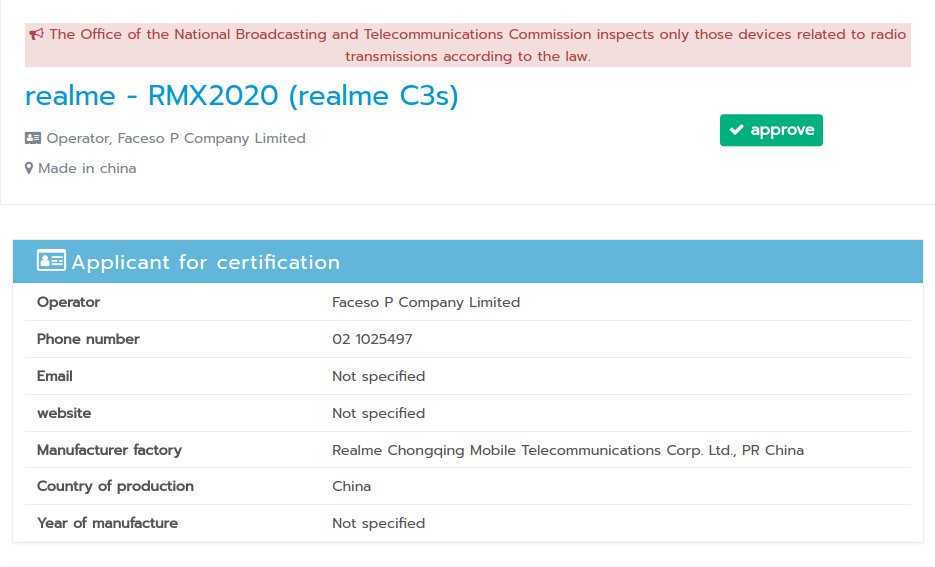
A few days ago, we reported that Realme announced a new phone in Thailand called the Realme C2s. That phone may be getting a successor soon as Thailand’s National Broadcasting and Telecommunications Commission (NBTC) has certified a new phone called the Realme C3s.
The certificate reveals the Realme C3s has the model number RMX2020. While there is no other info about the device, we believe this will be a variant of the yet-to-be-announced Realme C3. And both phones will differ just the same way the Realme C2s differs from the Realme C2 with respect to RAM and storage.
Just a couple of days ago, Realme had an event in China where it announced the Realme X50 5G along with some lifestyle products. The manufacturer may be planning another event soon, most likely in India, where it will unveil its first fitness band that was recently teased by its CEO. There is a possibility the successor to the Realme C2 will be announced at the event too.
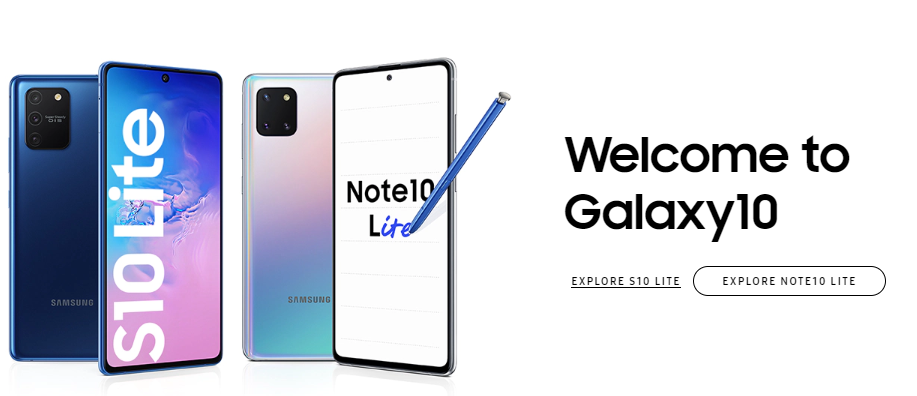
Just a few days into the year, Samsung announced the Galaxy S10 Lite and Galaxy Note10 Lite as affordable versions of its 2019 Galaxy S and Galaxy Note flagships. The two phones were also on display at CES 2020 where those who attended were able to get hands-on experience. Samsung is set to launch it in India, and thanks to Flipkart, we now know the exact date.
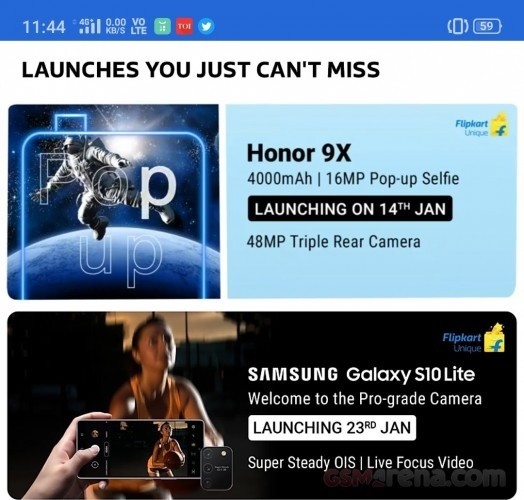
The Galaxy S10 Lite will be launched on January 23 in India according to a screenshot from the mobile app. There is no mention of the Galaxy Note10 Lite but it should arrive on the same day since the Samsung India website has both phones listed.
Flipkart has a landing page for the Galaxy S10 Lite that lists some of its top features such as its pro-grade camera system. The phone has a 5MP macro camera paired with a 48MP main camera with Super Steady OIS and a 12MP 123° ultrawide angle camera on the rear. Up in front and nestled inside the centered punch-hole is a 32MP sensor.
Galaxy S10 Lite and Galaxy Note10 Lite listed on Samsung India’s website
The Galaxy S10 Lite has a 6.7-inch FHD+ Super AMOLED Infinity-O display. There is a Snapdragon 855 processor inside it with 6GB or 8GB of RAM and 128GB of expandable storage irrespective of the RAM variant. It packs a 4500mAh battery with support for 25W Super Fast Charging and runs One UI 2.0 based on Android 10 out of the box. There is an in-display fingerprint scanner but there is no audio jack.
The Galaxy Note10 Lite shares some of its specs with the Galaxy S10 Lite such as its screen, RAM and storage variants, battery capacity, and selfie camera. It swaps out the Snapdragon 855 for the older and less-powerful Exynos 9810; it has a 12MP main camera paired with a 12MP ultrawide camera and a 12MP telephoto camera; keeps the audio jack; and of course, has an S Pen.
For fans of the POCOPHONE F1, last year was definitely not a great one seeing as Xiaomi didn’t release a successor. It became a norm to find users ask about the POCO F2 when Xiaomi and its executives made an announcement via any of their social media channels. Today, there is good news for them.
Screenshots showing a trademark application for “POCO F2” were shared on twitter by @_the_tech_guy. The images show the application was filed on the 4th of December, 2019 at the China Trademark Office and has application number 4280005.
[envira-gallery id=”300285″]
For those wondering why the trademark was filed in China seeing as the POCO brand isn’t available there, it will interest you to know that Xiaomi filed a trademark application for the POCO F1 in its home country too in June 2018 before it launched in August 2018.
The trademark application is proof that there is a successor to the POCO F1 (POCOPHONE F1) in the works. However, there is still no info on when the POCO F2 will launch, though we presume it may arrive in February or March seeing as the POCO F1 arrived two months after its trademark application.
That date also makes sense, especially for India. There are reports the Mi 10 series will launch next month but unfortunately, Xiaomi will not launch the Mi 10 and Mi 10 Pro in India. So, announcing the POCO F2 flagship killer in India between February and March is plausible.
The POCO F1 was a huge success as it offered flagship specs at an affordable price. It launched with the same processor as other flagships such as the Samsung Galaxy S9 and the OnePlus 6T but sold for significantly less.
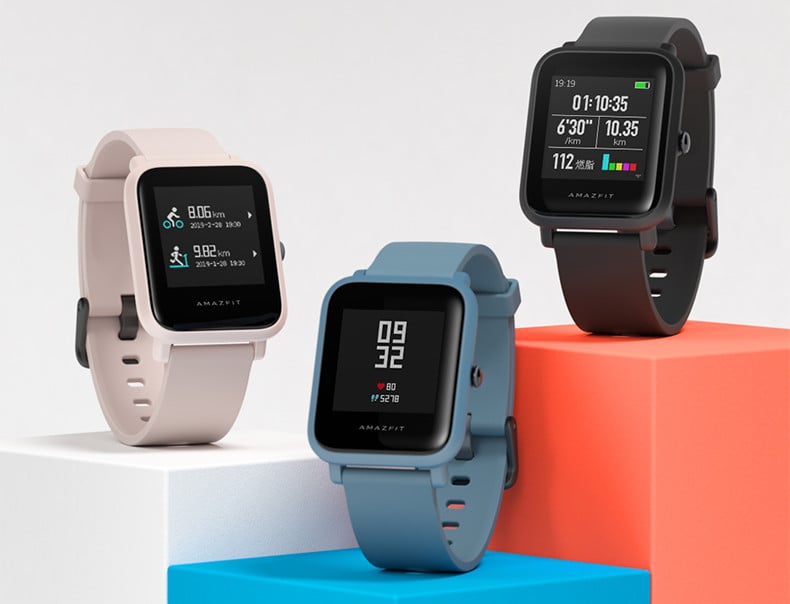
Back in 2018, Huami launched the Bip Lite fitness tracker under its well-received AMAZIT brand. Encouraged by its success, the Xiaomi-backed wearable device company launched another variant of the Bip Lite dubbed the Huami AMAZFIT Bip Lite smartwatch.
Before we dive into more details about the AMAZFIT Bip Lite’s awe-inspiring features and specifications, it might interest you to know that you can now get your hands on the newfangled smartwatch without emptying your pockets via Giztop. The Chinese e-tailer is currently offering the Amazfit Bip Lite for $69.99.
You can use coupon code GTAZBPL20 to reduce the retail price of the smartwatch to just $49.99. In short, you can save $20 simply by applying the aforesaid coupon code before placing your order.
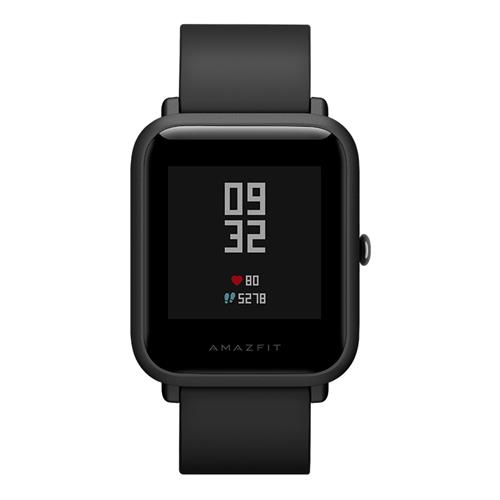
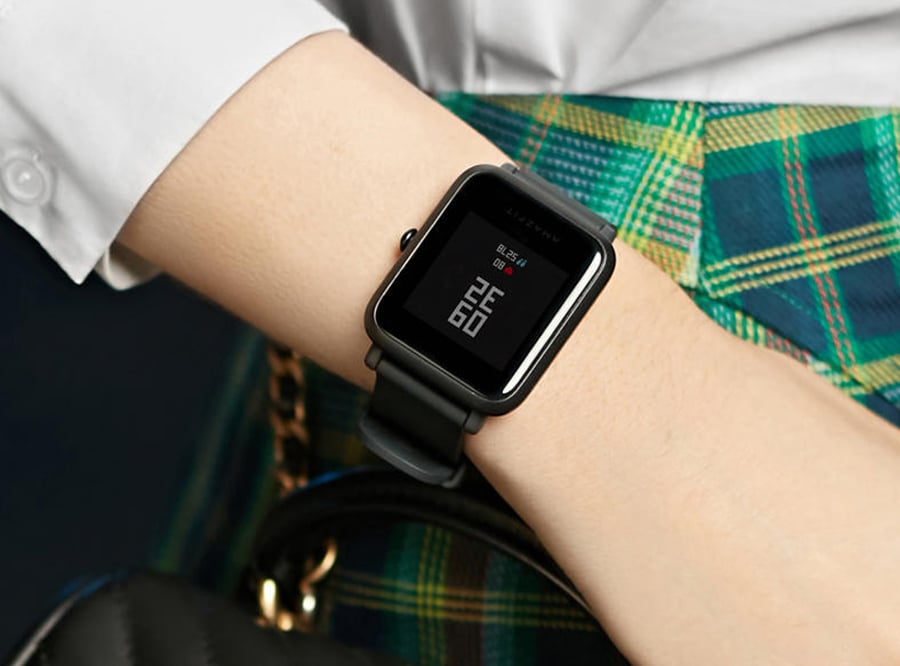
Available in black color option, the AMAZFIT Bip Lite is a perfect fitness and sports companion. The smartwatch boasts an impressive array of features that come in handy while you are working out at the gym or doing an adventurous outdoor activity such as trekking, hiking, dirt biking, etc.
It has a 1.28-inch screen which offers a high resolution of 176×176 pixels for enhanced readability. Moreover, it is housed in a high-quality polycarbonate material body and has Corning Gorilla 3 tempered glass + AF coating on top for supplemental protection.
With a 3ATM waterproof rating, the AMAZFIT Bip Lite is designed to efficiently withstand water during daily activities such as washing hands. Moreover, you can wear this smartwatch while swimming (up to 30 meters’ water pressure). However, the company advises avoiding wearing it for bathing, sauna, and diving.
Furthermore, the AMAZFIT Bip is compatible with Android 4.4, iOS 8 or above OS and is backed by a 200mAh LiPo battery that lasts for 45 days. On top of that, the smartwatch has been integrated with a slew of useful sensors including an acceleration sensor and a slew of other functions including heart rate monitoring, message reminder and more.
To know more about the Amazfit Bip Lite and to take advantage of the coupon, simply follow this link. Note that the coupon code will be valid for the first hundred units only.
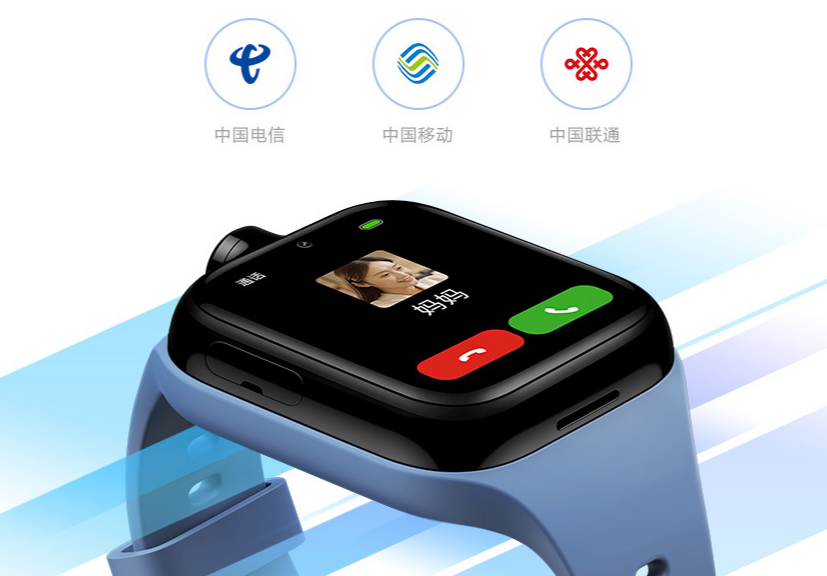
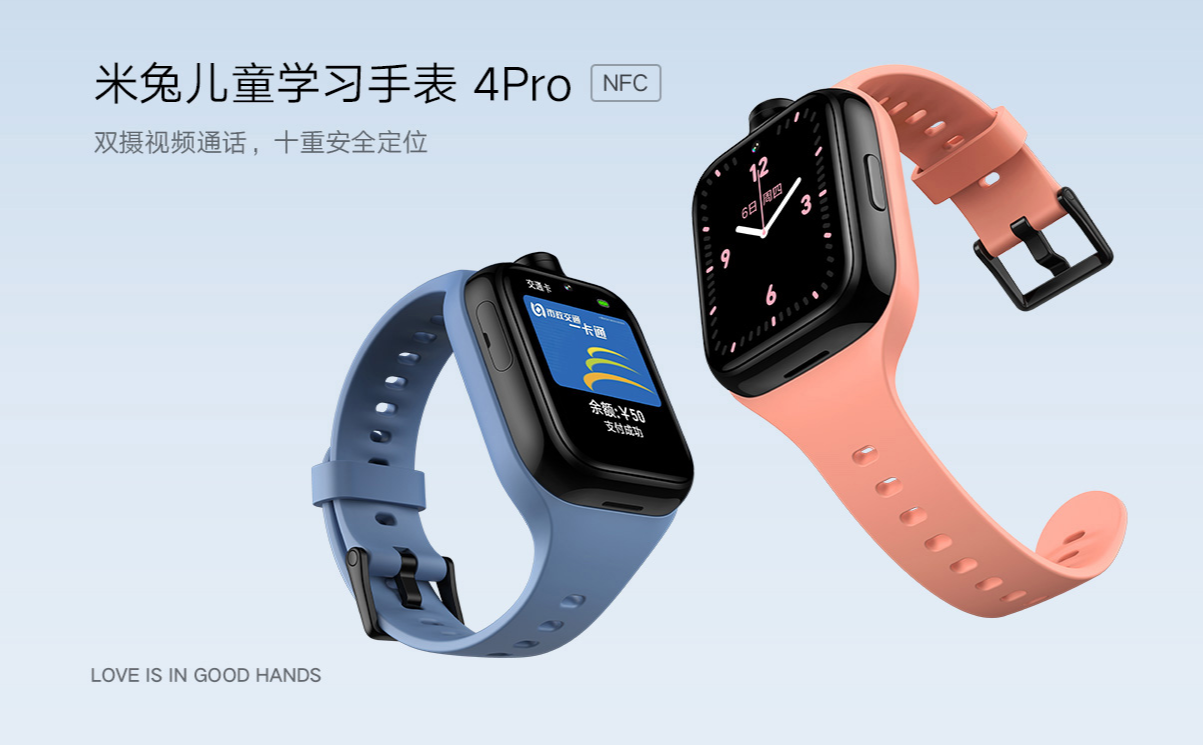
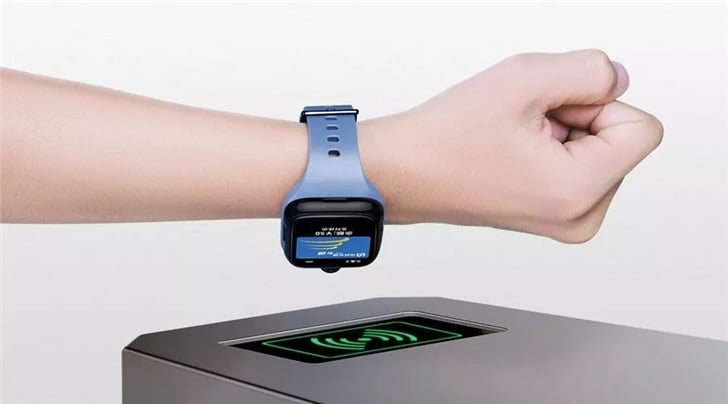
Xiaomi announced a new smartwatch for kids a couple of days back dubbed Mitu Children Learning Watch 4Pro. The smartwatch is now on sale on Jingdong (JD.com) for 1,299 yuan (~$187).
The Mitu (Mi Bunny) Children Learning Watch 4Pro comes with several upgrades over its predecessors but keeps up with the design philosophy for which the Mi Bunny models are known.Before this model, there is the Mi Bunny Smartwatch 3, Mi Bunny Smartwatch 3C, Mi Bunny Smartwatch 2C. The Mi Bunny Watch 4Pro offers 4G, NFC and GPS among others.
For the hardware, the smartwatch packs a 1.78-inch display with a 326PPI pixel density and protected by a layer of 2.5D curved Gorilla Glass 3 making it resistant to scratches and drops. The is powered by Qualcomm Snapdragon Wear 2500 SoC, coupled with 1GB of RAM and 8GB of internal storage. While the device is running Android 8.1 operating system, it is heavily customised to make it suitable for easy use for children.0
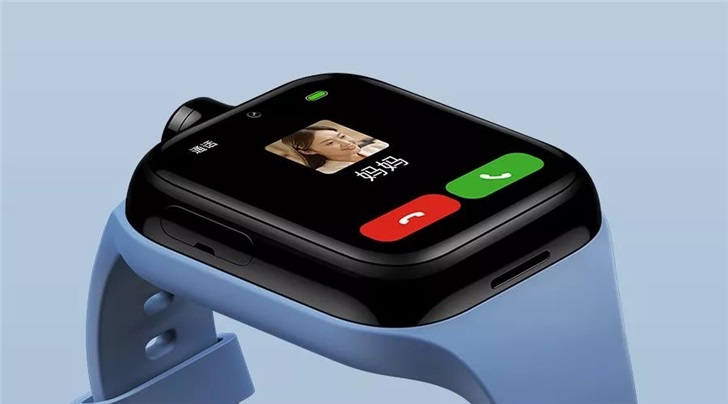
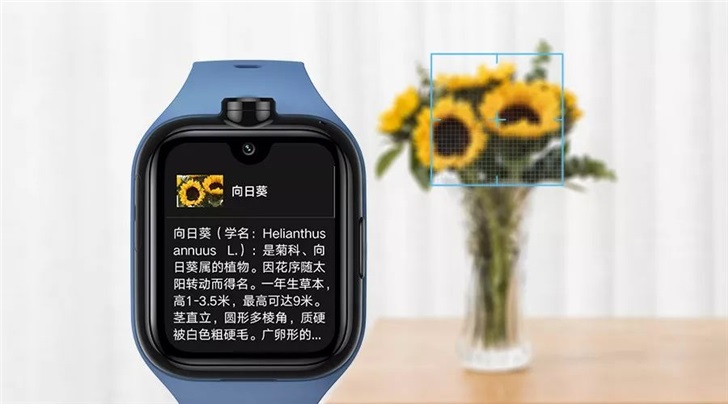
The highlight of the Mitu Children Learning Watch 4Pro is that it comes with high-definition dual cameras. At the top, there is a 5-megapixel wide-angle camera sensor with f/2.4 aperture and 82-degree field-of-view. The second camera is an 8-megapixel zoom camera with f/2.2 aperture and 84.9-degree field-of-view as well as T-LENS ultra-fast focus located at the side just above the strap. This dual-camera arrangement lets the parent see the child and the surrounding environment at the same time during video calling.
The NFC supports contactless payments in 4000+ large shopping malls, high-speed rail stations, and airports in China. As for the AI feature, it brings XiaoAI voice assistant support as well as AI learning machine. The learning machine can be deployed by the kids to learn new stuff in various subjects such as Chinese, English, math, social, fun, logical thinking and other content. It also supports interactive English learning tool with support for oral practice at any time, AI assessment of children’s pronunciation accuracy, American pronunciation, among others.
The Mi Bunny Smartwatch 4Pro comes in Blue and Pink colours.
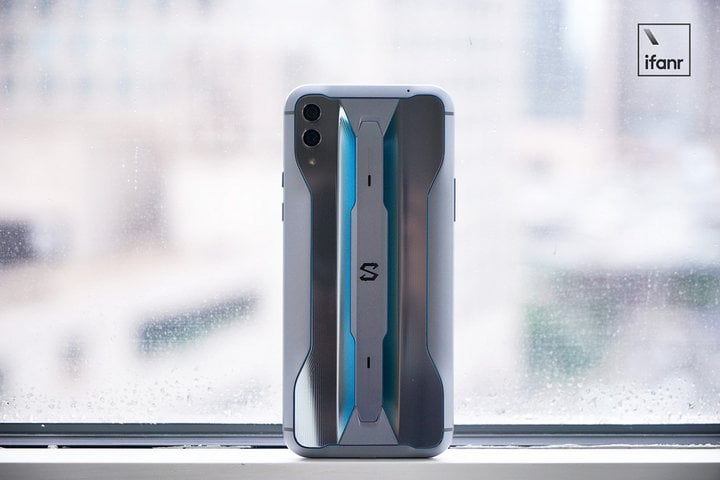
A Black Shark model with model number SHARK KLE-AO and believed to be the Black Shark 3 was certified in China last month. The certificate didn’t reveal many details about the device but shows that it will feature support for 5G.
Black Shark 2
Apart from the 5G support which will feature onboard the device, a tipster has revealed that the Black Shark 3 will come with a whopping 16GB RAM. According to the tipster, that would potentially make the gaming smartphone the first phone to have such a large RAM. That will sure be overkill if it becomes a reality.
The Black Shark 3 will take the baton from the Black Shark 2 Pro which was the last phone from the Chinese manufacturer, announced back in July 2019. The Black Shark2 Pro features a 6.39-inch FHD+ screen, a Snapdragon 855+ processor, and packs a 4000mAh battery with support for 27W fast charge. We don’t expect anything lesser from the Black Shark 3. A recent leak says it will have a bigger 4700mh battery.
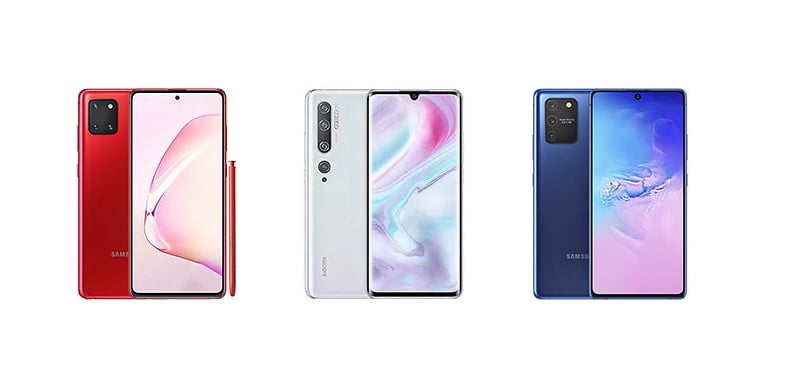
The Lite versions of the latest Samsung’s flagships are going to hit the shelves very soon. But despite being affordable variants, they will have a lot of rivals. And the fact that they are the first Lite versions of the S series and the Note series does not matter. That is why, in order to let you understand whether it is worth giving a chance to Samsung’s affordable flagships, we think it is time to compare them with the competition. In this comparison, you will learn not only the differences and the strong points of Samsung Galaxy Note 10 Lite and Galaxy S10 Lite, but you will also see them compared with the Xiaomi Mi Note 10 which is another high-end device launched in a similar price range.
Samsung Galaxy Note 10 Lite vs Xiaomi Mi Note 10 vs Samsung Galaxy S10 Lite
Samsung Galaxy Note 10 Lite
Xiaomi Mi Note 10 Pro
Samsung Galaxy S10 Lite
DIMENSIONS AND WEIGHT
163.7 x 76.1 x 8.7 mm, 199 g
157.8 x 74.2 x 9.7 mm, 208 grams
162.5 x 75.6 x 8.1 mm, 186 g
DISPLAY
6.7 inches, 1080 x 2400p (Full HD+), Super AMOLED
6.47 inches, 1080 x 2340p (Full HD+), Super AMOLED
Triple 12 + 12 + 12 MP, f/1.7, f/2.4 and f/2.2
32 MP f/2.2 front camera
Penta 108 + 5 + 12 + 20 MP, f/1.7, f/2.0, f/2.2 and f/2.4
32 MP f/2.0 front camera
Triple 48 + 12 + 5 MP, f/2.0, f/2.2 and f/2.4
32 MP f/2.2 front camera
BATTERY
4500 mAh, fast charging
5260 mAh, fast charging 30W
4500 mAh, fast charging
ADDITIONAL FEATURES
Hybrid Dual SIM slot
Dual SIM slot
Hybrid Dual SIM slot
Design
Despite the curved edge-to-edge display of the Xiaomi Mi Note 10 are definitely very attractive, the award for the design goes to the Samsung Galaxy S10 Lite, at least in my opinion. It has a higher screen-to-body ratio and a more interesting punch-hole display making the overall aesthetics better. The Note 10 Lite is similar, but with slightly thicker bezels and a thicker profile. Samsung Galaxy S10 Lite is the thinnest and the most lightweight one. But obviously it is also a matter of taste. Which one would you pick?
Display
We still did not test the displays of the Samsung Galaxy S10 Lite and Note 10 Lite, but there should not be so much difference in terms of image quality, even compared to the Xiaomi Mi Note 10 Lite. In each case, you get a great HDR display with high-end image quality. The real difference is the presence of the support to the S Pen for the Samsung Galaxy Note 10 Lite. If you need a phone for productivity and you would like handwriting or draw on your phone, you should not miss this device. It is the most affordable device from the Note 10 lineup supporting the S Pen.
Hardware/Software
While Xiaomi Mi Note 10 and Samsung Galaxy Note 10 Lite come with a hardware side which can be considered upper-midrange, Samsung Galaxy S10 Lite is a real flagship thanks to the presence of a Snapdragon 855 chipset. So if you need the most powerful device, go for it without thinking twice. Unlike the Xiaomi Mi Note 10 which is the lower-end one, it offers up to 8 GB of RAM and a micro SD slot to expand the internal storage. The Galaxy Note 10 has the same processor as the Galaxy S9, it is high-end, but you can not compare it to 2019 flagships.
Camera
It may seem odd, but if you need the best camera this time you have to choose a Xiaomi device instead of a Samsung flagship. With its 108 MP penta camera, the Xiaomi Mi Note 10 is one of the most amazing camera phones ever released. It includes OIS and even 5x optical zoom, besides an ultrawide lens and a dedicated macro camera. Right after, we got the Samsung Galaxy S10 Lite. We still did not test its cameras, but on the paper, it looks very promising. It has a new technology of optical stabilization which should help shooting even better photos and videos. The Samsung Note 10 Lite is not the best camera phone of the trio, but it is still very capable thanks to its 12 MP triple camera including a bright focal aperture and OIS.
Battery
Finally, Samsung includes very big batteries inside its flagships. Both Samsung Galaxy S10 Lite and Note 10 Lite are equipped with huge 4500 mAh batteries and both support fast charging (but no wireless charging, neither reverse wireless charging). But the Xiaomi Mi Note 10 has an even bigger unit: a mammoth 5260 mAh battery with 30W fast charging. This does not necessarily mean that it will last more on a single charge in every scenario, but it should be superior in most of the situations.
Price
Samsung Galaxy S10 Lite will hit the shelves globally with a price starting from €649/$722, while Samsung Galaxy Note 10 Lite will cost €599/$666 in its base configuration. Xiaomi Mi Note 10 was launched for €599, but you can currently find it for about €450/$500. Overall, Samsung Galaxy S10 Lite is a more complete and well-balanced device, but it lacks the S Pen. Xiaomi Mi Note 10 should have a superior camera and battery, but when it comes to hardware, it is just a mid-ranger. Despite its specs sheet does not have more to offer, the Note 10 Lite is the only affordable flagship supporting the S Pen, so it is still an amazing option.
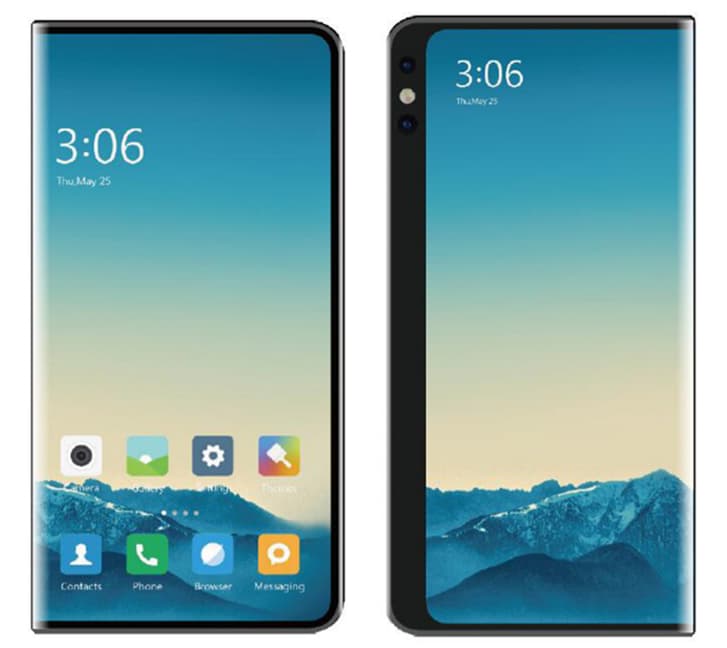
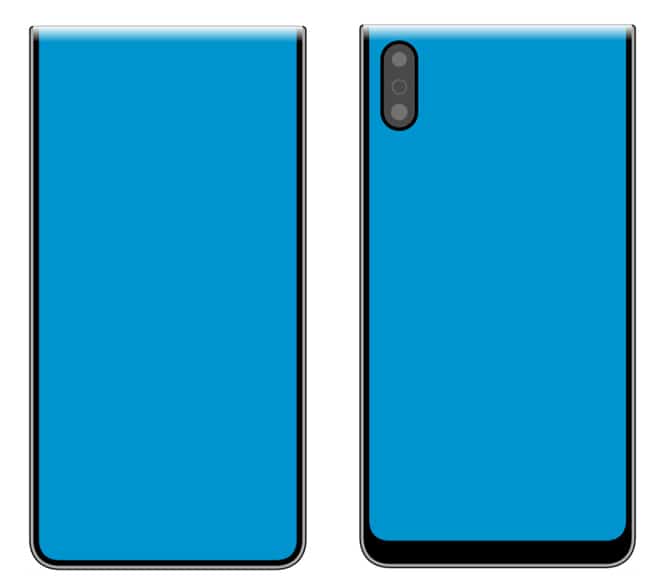
Xiaomi has patented two new vastly different foldable smartphone concepts in China. These two patents feature designs that are familiar to what we’ve seen from other companies before, but they’re also slightly different in their own way. The first device folds horizontally making a wider display, while the second folds vertically for a longer display.
The first design shows a phone that reminds us of the Huawei Mate X, and it’s the more practical of the two patented devices. The display folds over to the back, making the device feel like a normal sized smartphone. When folded out however, the device will be similar in size to your standard 8-inch+ tablet. The camera strip on the patent is much more subtle when compared to the Mate X’s camera strip.
The second patented device on the other hand is VASTLY more bizarre than the previous device. Instead of forming a wider display, this device features a much longer display in a clamshell form. The main thing however is that the display is always on the outside of the device, which means that folding the phone is only for making the device shorter. The camera bump also interestingly seems to sit on the display.
While it seems to have been inspired by things like the Motorola Razr, the fact that the display is always on the outside of the device is just such a weird decision to us. This leaves it exposed to the elements at all times for what seems to be no practical reason. We’d much prefer to see a standard clamshell design like the upcoming Galaxy Fold 2.
While it’s fully possible neither one of these devices will ever fully materialize, it’s certainly interesting to discuss and imagine what they’d be like if they were real. This second device especially seems to be rather pointless, so it’d be nice to see what sort of counter arguments and features we could see in favor of it.
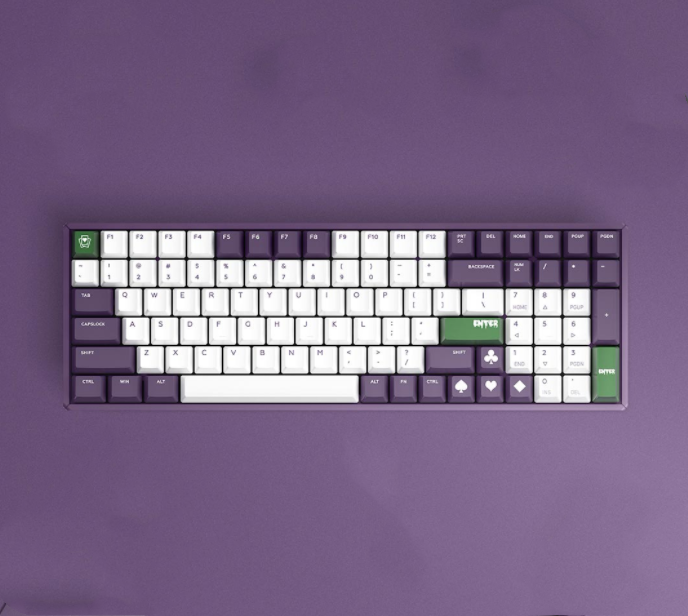
Xiaomi‘s Youpin crowdfunding platform has brought us plenty of oddities and interesting gadgets, but today’s product is a lot more conventional. The IQUNIX F96 is a new mechanical keyboard featuring Cherry MX keys and key-line separation. The wired version starts at 896 yuan ($130), while the wired + Bluetooth variant goes for 1188 yuan ($172).
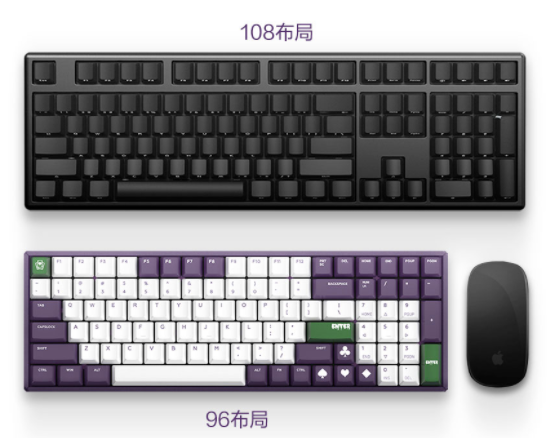
So, let’s take a closer look at the dimensions of the colourful little mechanical keyboard here. The dimensions for the IQUNIX F96 measure in at 372 × 123.5 × 42mm with a weight of 1060g. It adopts an all-aluminum alloy shell with three colors of dark blue, coral orange and white, as well as built-in RGB lights with a variety of lighting effects.
The IQUNIX mechanical keyboard uses Cherry MX switches, ensuring that the keys have a nice and satisfying click with every press. These come in red, green, brown and muted red options, as you’d expect from any mechanical keyboard. On top of that, they also come in backlit and non-backlit versions in case you need it.
As for connectivity, the wireless version of the IQUNIX F96 utilizes Bluetooth 4.0 for its wireless connection. The device can seamlessly switch between three different paired devices, and in case you suddenly need it, you can also use a USB Type-C cable for a wired connection. Overall, the IQUNIX looks like a solid mechanical keyboard, especially with its smaller size making it more portable.
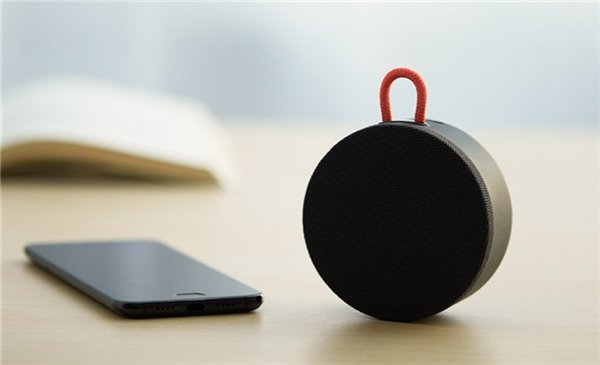
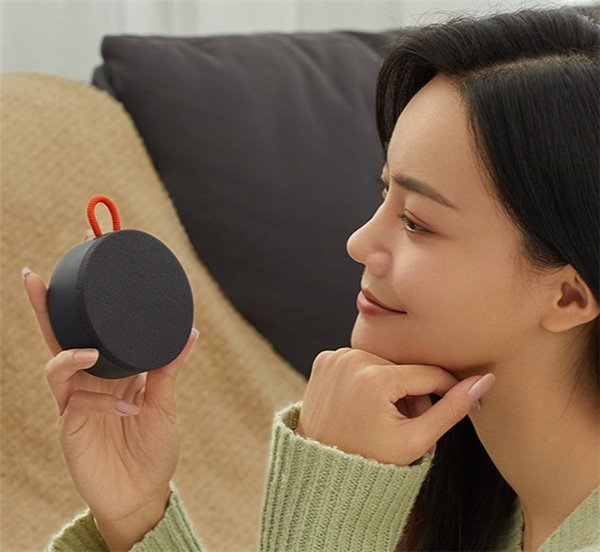
Xiaomi has launched the Mi Outdoor Bluetooth Speaker Mini and it is now on sale on Mi Mall for 99 yuan ($14). As the name implies, the Outdoor Bluetooth Speaker Mini is a smaller version of the MI Outdoor Bluetooth Speaker that was launched in September 2019 priced at 199 yuan ($28).
This new model looks like a miniaturized version of last year’s sleek portable Bluetooth speaker. The design is similar as well as several of the features. This model adopts the attractive lanyard pattern of its predecessor but the lanyard is shorter on this model. It also supports Bluetooth 5.0 protocol. The mini has a dimension of 86 × 86 × 45mm and weighs 185g. It also utilises a USB Type-C interface which is located just under the lanyard. The Mi Bluetooth Speaker Mini also presents with an impressive 2000mAh battery that Xiaomi says can deliver up to 10 hours of music playback at 60% volume level. The portable speaker also comes with IP55 level dustproof and waterproof protection.
Furthermore, the Mi Outdoor Bluetooth Speaker mini supports true wireless stereo interconnection function. This means it can interconnect two speakers to form a wireless stereo speaker with the delivery of stereo effects on left and right channel playbacks.
The Bluetooth speaker mini equally has a built-in high-sensitivity, high-signal-to-noise ratio microphone, and integrated echo cancellation technology, which can be used to answer and hang-up calls with one click.
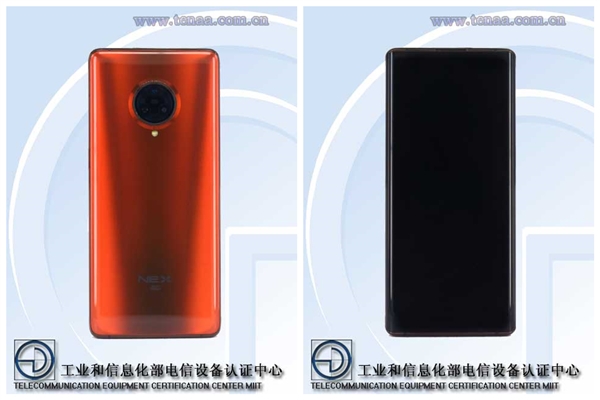
Vivo was one of the smartphone manufacturers who shook the industry last year with its array of amazing products. Little wonder the company still ranks among the top 5 OEMs in terms of phone shipment. One of the spectacular smartphones we saw from its stable was the Vivo NEX 3. The model is about getting a new variant this year if the latest TENAA listing is anything to go by.
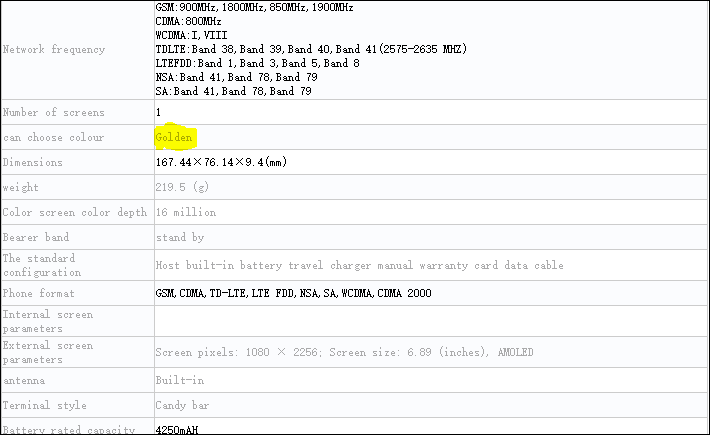
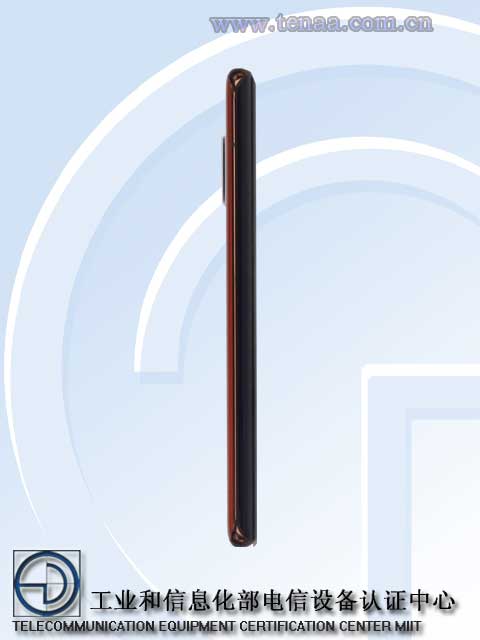
The BBK subsidiary has got a new orange variant of the NEX 3 which has just been certified by China’s telecoms regulatory agency TENAA. The colour is listed as “Golden” but the corresponding image shows it in fact, has an orange-coloured rear panel.
Apart from the new colour, the model is similar to the Vivo NEX 3 that has already hit the market. As a reminder, the NEX 3 comes with dual-mode 5G support making it the first 5G flagship from the NEX series with such configuration. The phone is powered by a Snapdragon 865 SoC and sports a 6.89-inch display with a resolution of 2256 x 1080pixels. Most spectacular, the phone boasts of a mammoth 99.6% immersive screen ratio which happens to be the highest any OEM has been able to expand to on a commercial device.
The NEX 3 comes with 8GB of RAM and 128GB/256GB storage options. For photography, there is a 16MP camera at the front. On the other hand, the device features a triple rear camera setup comprised of a 64 MP main cameras + 13 MP super wide-angle/macro + 13 MP telephoto lens. It gets its light from a 4500mAh which supports 44W ultra-fast flash charge.
On 10th January 2020, Lei Jun, Co-Founder and CEO of Xiaomi group, revealed on the company was almost called Xuande or Red Star when it was founded. The story was shared earlier today on the 10th anniversary of the Xiaomi community.
According to Lei Jun, a few of the founding members sat for a meeting, the first official meeting ever, on 14th January 2010. In the meeting, the main topic of discussion was the naming of the brand. Apparently, Red Star was one of the first to be proposed but was rejected due to a certain trademark issue.
Xiaomi’s new logo that was unveiled on the company’s 10th anniversary earlier this month
Another name that was put up was Xuande but that was also not approved due to people saying it not sounding right. The list of supposed names numbered in the hundreds and included Red Storm, Xuande, Qianqi, Antong, Lingxi and more, which were introduced a decade ago.
Since the Xiaomi was branded, the “MI” logo has been prevalent and associated with the company. Mi stands for more than just an acronym (shortened version) and holds two different meanings, according to Lei Jun. First, Mobile Internet, as Xiaomi was going to be a mobile company on the internet. The second was Mission Impossible as the company was going to perform and complete a task that seemed impossible, difficult or not yet undertaken.
The official Mi logo of Xiaomi
Lastly, the founder also shared a Buddhist proverb that described the aforementioned values relating a grain of rice to a large mountain. This was shared on the senior executive’s official Weibo account (the Chinese microblogging website).
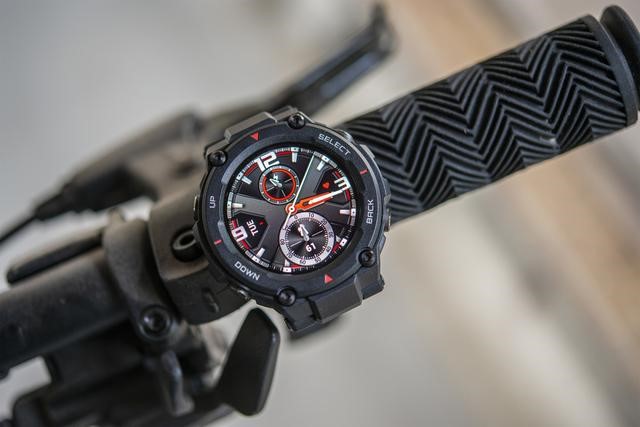
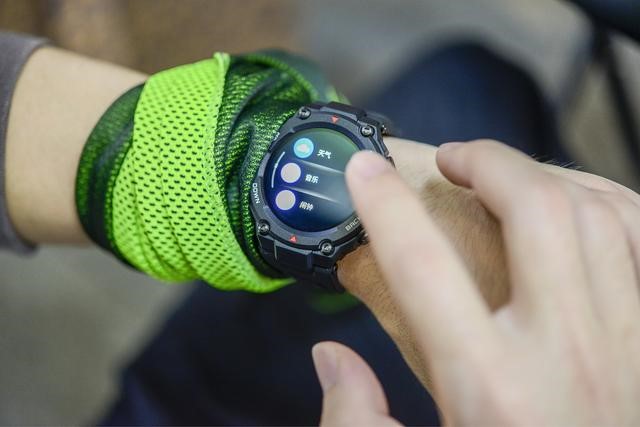
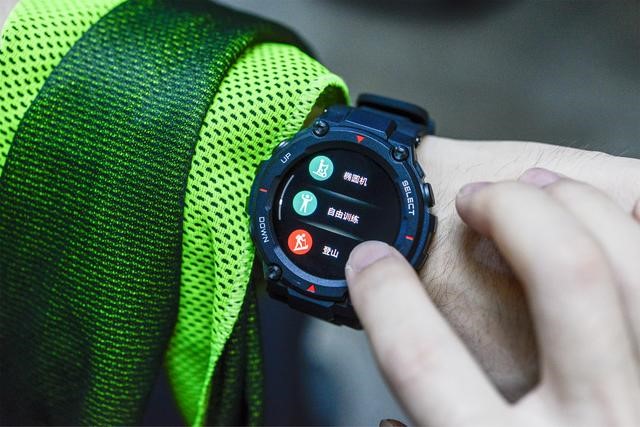
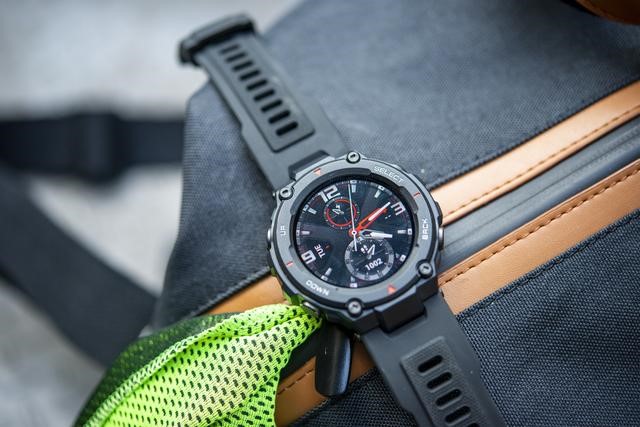
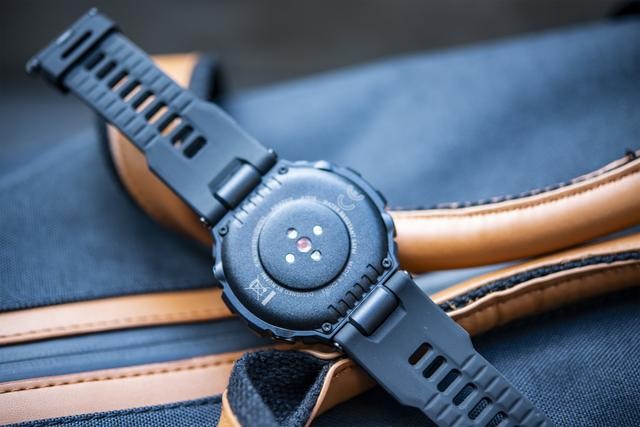
Xiaomi‘s ecological chain company Huami held a launch event at CES 2020 and perhaps, the most outstanding product that was announced was the Amazfit T-Rex smartwatch which was dubbed by the media as the Casio G-Shock of smartwatches. That is because the T-Rex presents with a rugged design that bears semblance with Casio’s popular G-Shock watch. We have now got a couple of hands-on pictures of the smartwatch courtesy of Giztop.
The Amazfit T-Rex fits perfectly into its own class, that is a rugged smartwatch equipped with all the features you’ll find in a regular smartwatch. Even the watch faces reflect the outlook of a mechanical watch. The watch has the MIL-STD-810G military-grade build and can withstand extreme heat and cold. The heat resistance is up to 70℃ while it can stick up in severely cold weather condition of up to -40℃.
Further, the watch is resistant against corrosion, moisture and has a durable body. The T-Rex is touted to have passed a 240-hour damp heat test and 96-hour acid-alkali test.
As a reminder, the Amazfit T-Rex packs a 1.3-inch AMOLED screen with an “always on display” function and resolution of 360 x 360 pixels. The display is protected by a layer of Corning Gorilla Glass 3 on top.
Features onboard include an optical heart rate monitor (PPG), 3-Axis Acceleration Sensor, Geomagnetic Sensor, and Ambient Light Sensor. For connectivity, it comes with Bluetooth 5.0 LE and GPS + GLONASS and is compatible with Android 5.0 devices or later and iOS 10.0 or later.
The smartwatch features 14 sports modes, has 5ATM water-resistant design, is equipped with BioTracker PPG optical sensor for all-day heart rate monitoring and provides rapid heart rate alerts. The device is powered by a 390mAh battery which Huami claims to offer up to 20 days of battery life on a single charge.
The Amazfit T-Rex comes in five colour options — Black, Ash, Camouflage, Green, and Khakhi. As for the availability, the Black version (Chinese and Global versions) is available to buy from Giztop for just $139.99. The Chinese version is expected to ship before January 15 while the Global version will ship before mid-February.
Google is known for its free and open-source products and services. The search giant has a never-ending list of services that are used by users globally in order to get information, manage businesses, and host personal content. Similarly, Google Calendar helps users to manage their time, schedule tasks, and remember things with reminders. There are various benefits of using the Google calendar as the sole schedule maker for your day-to-day tasks. However, some privacy concerned users are looking for alternatives to Google Calendar.
Google Calendar offers seamless sync of reminders, scheduled tasks, and other details across various devices. The user only needs to sign-in the Google account to get access to all the information on another device. Moreover, it supports voice commands over Google Assistant-powered devices like Google Nest, Nest Mini, and others. On the other hand, there are some privacy concerns, along with some other issues that are making users move towards alternatives.
We have concluded a list of some best Google Calendar alternatives below.
List of best Google Calendar Alternatives
Simple Calendar
Price: Free – $1.19
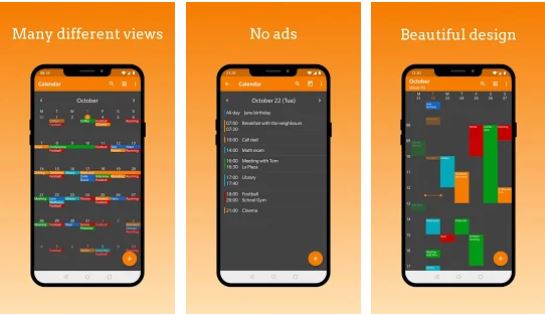
It is an open-source calendar app offering highly customizable features with a simple yet beautiful interface. The app is ad-free and does not need unnecessary permissions. It is the product of Simple Mobile Tools, which is known for its competitive open-source tools that stand neck-to-neck with the professional tools from Google and Microsoft.
Simple Calendar carries all the necessary features without any advertisements and annoying popups. The privacy, security, and stability of the app is ensured by the fact that it does not need internet access. It supports 29 languages, export, and import events utility via .ics files, multiple event reminders, handy snooze option, and much more.
The users can quickly switch between daily, weekly, monthly, or yearly views for easy accessibility. The flexible event creation is possible with the support for powerful repetition rules, and reminders. Simple Calendar offers customizable themes and also carries widgets for better integration. Users can flawlessly sync events from other apps like Google Calendar, Microsoft Outlook, Exchange, etc. There’s also support for location via Google Maps, proper notification channels, customizable reminders, and more.
Simple Calendar Pro version is also available at a negligible cost $1.19.
TimeTree is a shared calendar platform, with over 18 million users globally. It’s is awarded as the Best App of 2015 on Apple’s App Store. The main feature of teh TimeTree is its shared calendar feature that allows multiple users to access and maintain the same calendar. It has the flexibility to remind every user within the group for reminders. The roles such as admin, members can be assigned to users for better maintenance.
The user can form different groups and can add members of his/her choice. This feature is quite helpful while sharing Calendars with family, friends, and the workplace.
TimeTree can also be used to jot down notes and then share it with the users, groups. The Shared Notes feature is quite useful in planning events, organizing to-do lists, and creating small notes.
TIMETree includes all the Multinational Holidays of 13 countries and 13 languages. It offers heavy dynamicity for the users residing in different countries. It helps organize events, manage work, and becoming more productive. The app supports Widget and also works on PC, iOS, and Android smartphones. The calendars can be easily shared with anyone via any social media platform.
It is regarded as the best calendar app for Android by several renowned media houses. Digi Calendar Agenda is the most flexible and customizable calendars. Its clean and elegant User Interface makes scheduling quick and easy.
It easily sync with major apps such as Google Calendar, Outlook, and Exchange. Digi Calendar Agenda app offers great accessibility within the app with seven intuitive views, including day, week, agenda, month, next month, list, and year. The users can also use six different widgets for viewing the schedule at a glance.
Digi Calendar supports more than 560K+ public holidays, sports, and TV schedules. Planning something for travelling or hosting a party in your backyard? Then the app will make you aware of the Weather conditions of that particular day. It can give you an accurate weather display, including metrics like temperature, humidity, precipitation, pressure, cloud, wind, and sunrise.
There’s support for 42 different colors for better organizing along with a built-in location search. Other features include, Notifications maps navigation support, local calendar without sync, combines date and time picker, Invitation management, even image matching, etc.
The app is available for free on the Play Store with in-app purchases.
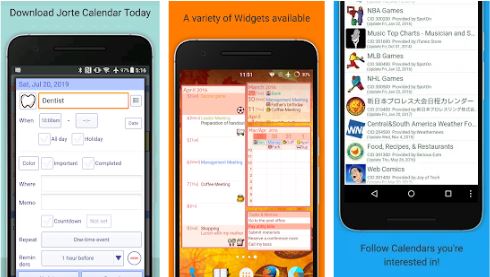
Jorte App is known for its ability to customize. The app can be tweaked not only based on appearance but also on its functionality. The users can select different types of events apart from color and font customization. It is a single app for writing notes, planning, and setting reminders and events.
Jorte is downloaded more than 30 million times and is termed as the most popular organizer app. Major publications have termed it as one of the best apps offering competitive calendar and event organizing features.
It can sync with Microsoft Office 365 and Evernote. It even supports a countdown feature to calculate the remaining days to an event. Jorte helps in writing down notes. It also offers cross-platform sync via Jorte Cloud. Other features include different widgets, multiple calendar views, sync with Google calendar, and Cloud.
Jorte also offers some premium features, including Weather Forecast, Jorte Store for icons and themes, and others.
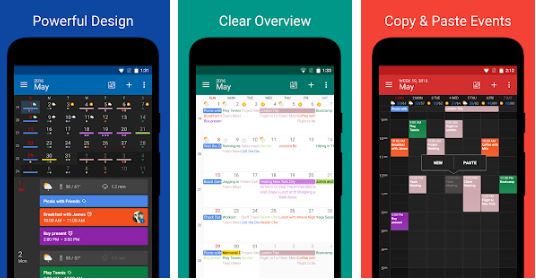
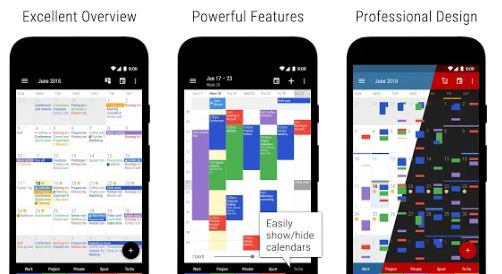
It is the sequel of Business Calendar from Appgenix Software. It is a popular personal organizer with support for calendar, schedule planner, and task organizer within a single app. Business calendar 2 supports six different calendar views of the month, week, day, agenda, year, and tasks. There are a flexible daily and weekly planner with adjustable 1-14 days.
Business calendar 2 supports sync with Google Calendar, Microsoft Outlook, Exchange, and other popular services. The beautiful yet intuitive user interface eases the navigation between different views. There’s also an inbuilt appointment scheduler with drag and drop events feature. It provides hassle-free event details with convenient dialogs.
Support for status bar reminders and popup notification makes you never miss any event. Seven different native widgets are available for easy accessibility features. Along with online sync option with various services, the users can also use it locally without any internet connection.
It has inbuilt event management tools, including invitee management, heat map in a year view, live search, sharing, and initiations management. There are over 600+ emoticons support to make the calendar look for expressive. Business Calendar 2 Pro version offers several useful features without advertisements.
It is a convenient and flexible iOS app that can sync across your Mac calendar. It can easily take control of your events, reminders, and essential meetings by syncing across your iOS device. Fantastical 2 is an award-winning calendar app with several powerful features and an intuitive user interface.
It can sync across different calendar services such as iCloud, Google Calendar, Exchange, and more. Fantastical 2 supports English, French, German, Italian, and Spanish languages. It can show event details along with the map for actual locations. The background app allows events, reminders, and alerts notifications, even if the app is not opened for a while.
Fantastical 2 features significant new parser features. Along with reminders, the app also supports geofencing for some automation. The users can add URLs and locations to events, search within the calendar, and integrate other calendar services. Simple voice commands allow you to add calendar events.
It is available on iOS and Mac for $1.99 and $24.99.
These are some best alternatives for Google Calendar. Each app mentioned above hosts different features and have their own merits and demerits. If you have any popular recommendations, then let us know via the comments below.
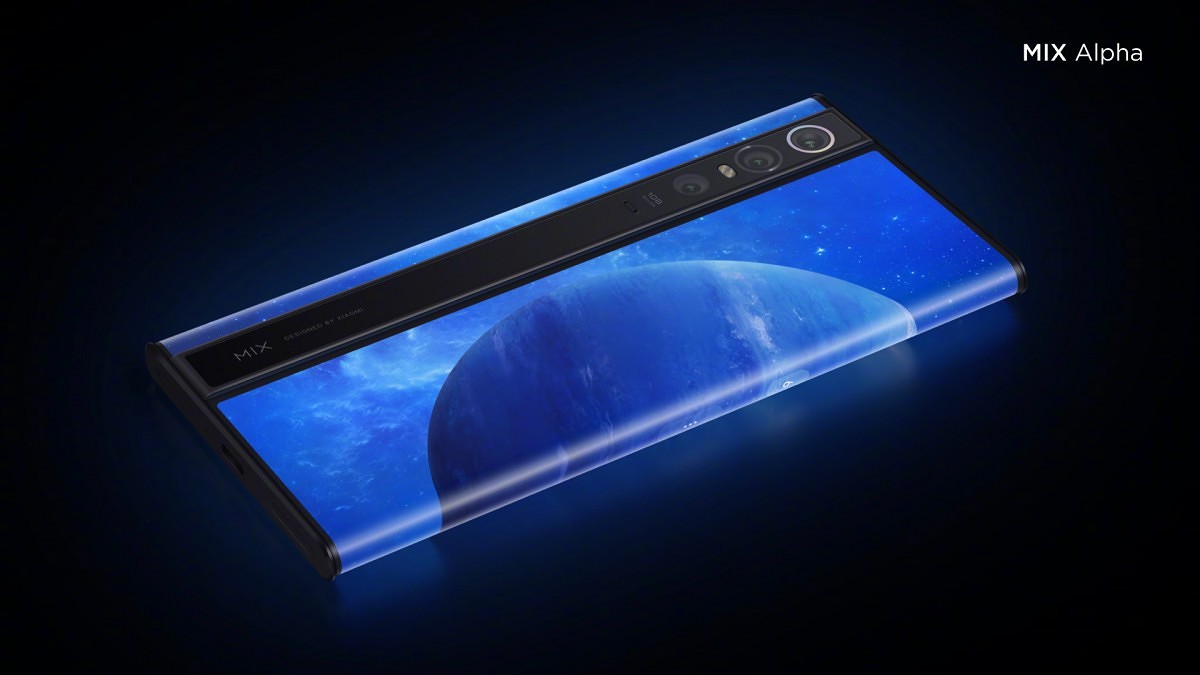
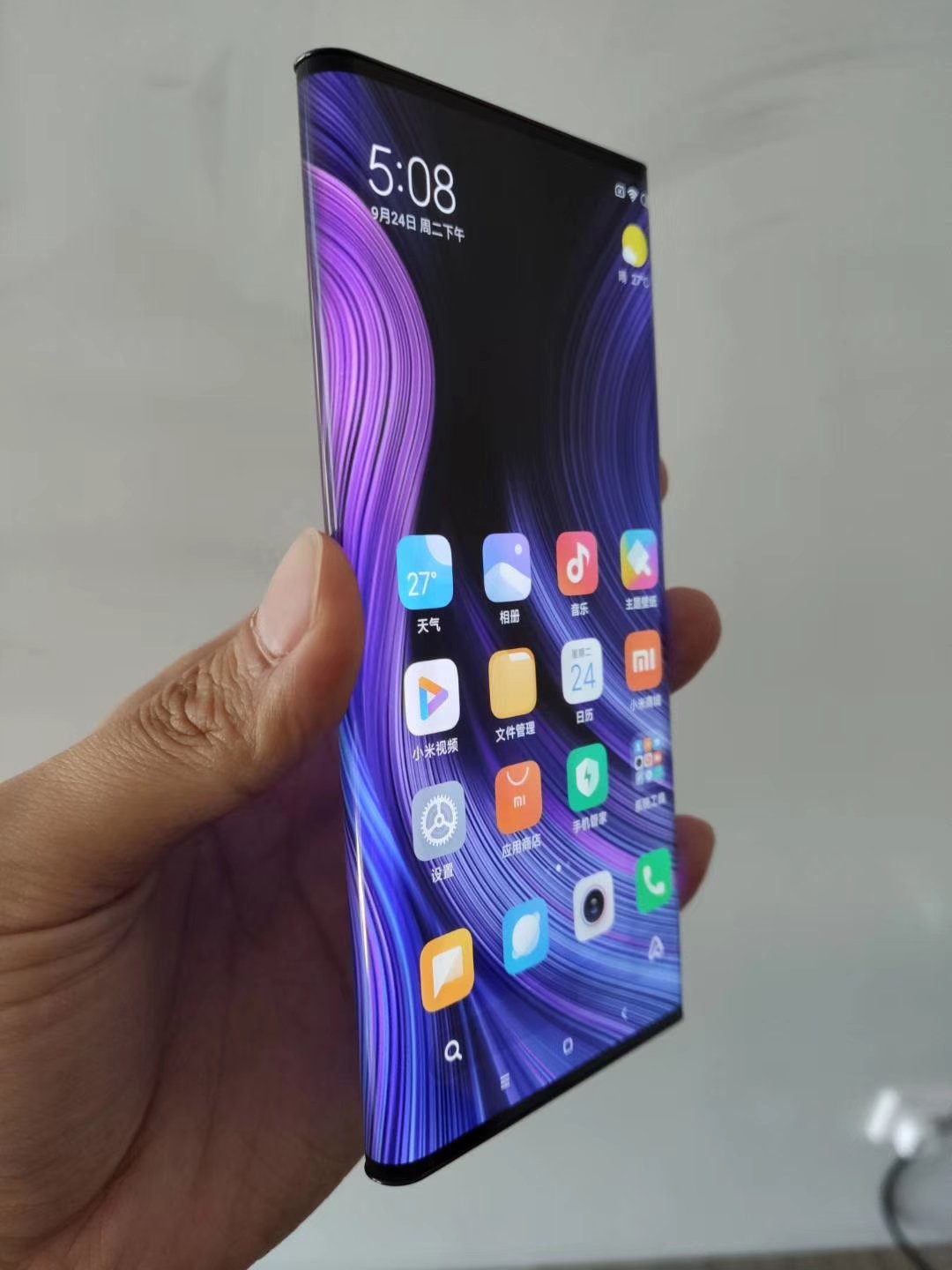
Earlier today (10th January 2020), a business conference was held in Beijing by the Xiaomi Group. In the event, a notable announcement regarding the Mi Mix Alpha was made public, that the device is currently ready for mass production
The event saw the appearance of the Chinese company’s research and development team for smartphones (the ones behind the surround screen technology in the Mi Mix Alpha), who won Xiaomi’s Annual Technology Award for 2019. And in an interview, Cui Baoqiu, chairman of Xiaomi’s technical committee and Han Haicai, the architect behind the surround sound screen research and development team brought up the topic regarding the production of Mi Mix Alpha.
Xiaomi’s Mi Mix Alpha with a surround screen display that covers a majority of the smartphone’s body
According to the senior officials, the smartphone has not been mass produced yet, with no plans of doing so being on the table. However, they stated that Xiaomi is currently at the capacity where it can start the mass production of the handset.
It has further been revealed that the Mi Mix Alpha was developed after Lei Jun (Co-Founder and CEO) decided on the need for a unique and innovative smartphone. Additionally, the device was also made to break the repetitive cycle of similar types of smartphones that are currently in circulation.
Xiaomi had initially announced the Mi Mix Alpha back on 24th September 2019, which has garnered a lot of attention ever since. One of its unique selling points was definitely its unique surround screen technology, that had the display cover a vast majority of the smartphone’s body. From what we know so far, it is a concept handset that will likely not see mass production like Xiaomi’s other flagships and would only be released in limited numbers.
Although the interview confirmed that the company can technically start mass production, Xiaomi needs to first coordinate with the local Chinese Government and other smartphone-related departments before selling the product on a large scale. As of right now, the Mi Mix Alpha stands as a testimony to Xiaomi’s innovative creations and technological developments, according to Cui Baoqiu.
“The best camera is the one you carry with you”. This is one of the biggest truths in photography. Especially nowadays that smartphone cameras have improved so much that the average eye wouldn’t be able to distinguish a photo shot on a smartphone from one shot on a DSLR camera. And since all of us carry our smartphone every day, this is the best camera.
But there are some obstacles that prevent a user from shooting the best photo he can with the greater of all being an unstable hand. Just Mobile managed to solve this problem with its original ShutterGrip™ a year ago and now they are ready to release ShutterGrip 2 with a brand new finish and more flexible ways of controlling your camera in your pocket.
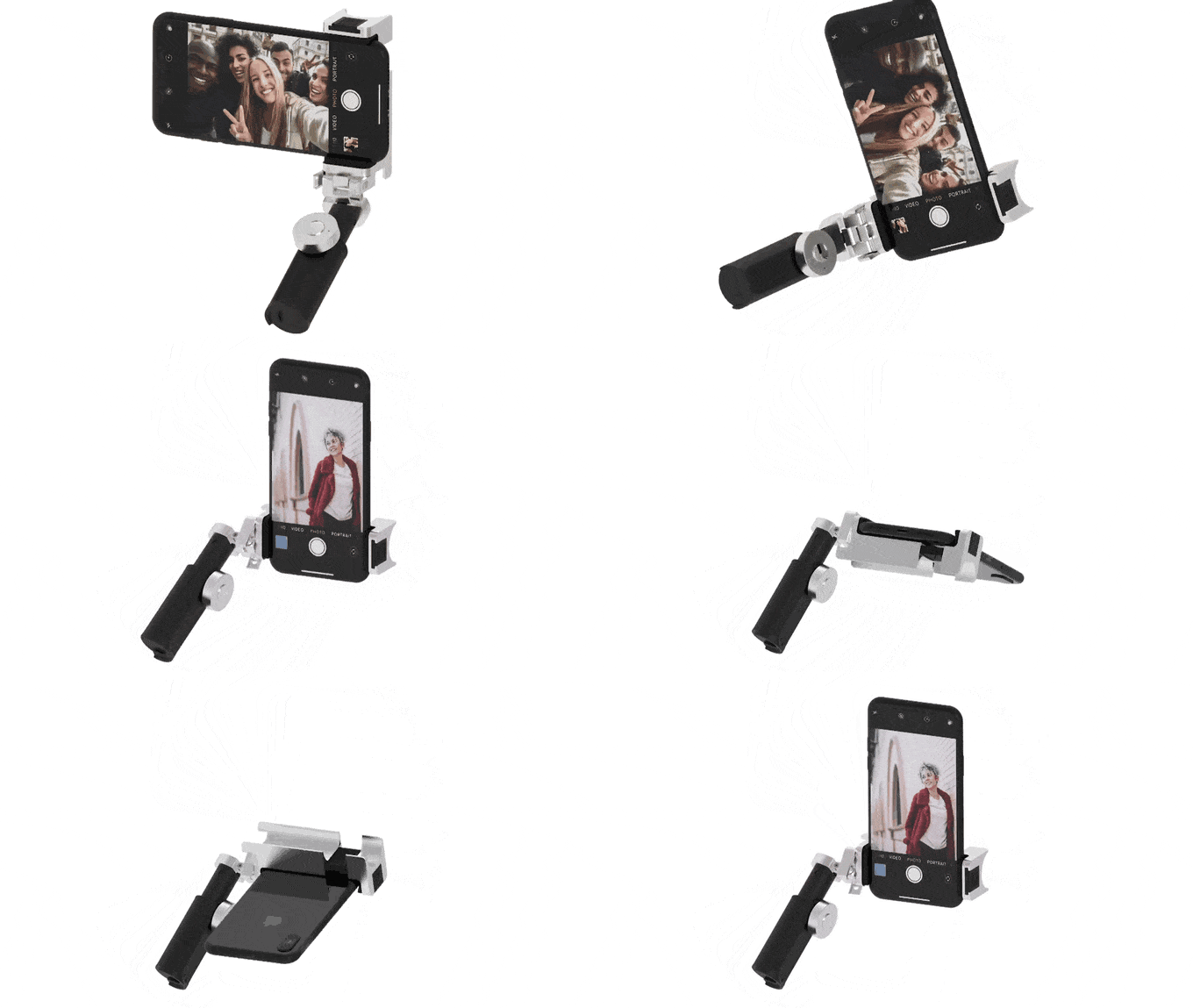
The design goal of ShutterGrip 2 is to re-create the comfort and control of a traditional DSLR camera. Starting from the palm grip, to the optimally positioned shutter release button, the final creation is a palm grip that is comfortable to operate with one hand, and a secured camera that is always ready by your side.
And there’s no need for a proprietary app, just Bluetooth pairing is enough and you are good to go no matter if you own an Android or iOS device.
It is able to support both landscape and portrait grips. When taking landscape videos, just place the ShutterGrip 2 in the middle of the phone and flip the palm grip down. Besides that, there are several other uses of the accessory that you can see on Kickstarter crowdfunding platform. Go ahead and visit the campaign and catch an Early Bird offer now.
Update: TENAA has published the full specs of the Gionee Steel 5. It confirms the resolution is 1520 x 720. Other new details have been added to the post.
Gionee has announced a new smartphone called Gionee Steel 5. The last Steel series phone from the company was the Gionee Steel 3, released back in 2017. The smartphone sports a trendy waterdrop notch display screen. The company claims that the Steel 5 has a tough and stylish design. Also, it features a square-shaped camera system for its dual-camera setup.
Gionee Steel 5 specifications and features
The Gionee Steel 5 has a 6.217-inch IPS LCD display with a waterdrop notch. The screen has an HD+ resolution of 1520 x 720 pixels.
The back panel of the phone has a square-pattern camera housing that includes two camera sensors and a pair of LED flash. It comprises of the main camera of 12-megapixel and a secondary shooter of 2-megapixel that are coupled with Phase Detection Autofocus (PDAF) technology. The device is fitted with a 13-megapixel camera on the front for capturing selfie shots.
The Gionee Steel 5 is backed with a 5,000mAh battery that is coupled with an intelligent power management system. The smartphone supports 5V/2A charging. The phone comes in three memory options – 3GB, 4 GB, and 6 GB RAM with 64GB or 128 GB of expandable storage. The company did not reveal the name of the processor that powers the smartphone but it is an octa-core chipset with four cores clocked at 2.0GHz and the other four cores clocked at 1.5GHz. The Android 9 Pie OS customized with the company’s Amigo OS skin runs on the device. It does not seem to feature a fingerprint scanner. The handset measures 159.7 x 75.9 x 9.9mm.
There is no word on the availability of the Gionee Steel 5. It is good to see the brand trying to resurrect by announcing its first phone of 2020 at the beginning of the year. Hopefully, the company will be unveiling more phones this year.
We use cookies on our website to give you the most relevant experience by remembering your preferences and repeat visits. By clicking “Accept”, you consent to the use of ALL the cookies.
This website uses cookies to improve your experience while you navigate through the website. Out of these, the cookies that are categorized as necessary are stored on your browser as they are essential for the working of basic functionalities of the website. We also use third-party cookies that help us analyze and understand how you use this website. These cookies will be stored in your browser only with your consent. You also have the option to opt-out of these cookies. But opting out of some of these cookies may affect your browsing experience.
Necessary cookies are absolutely essential for the website to function properly. This category only includes cookies that ensures basic functionalities and security features of the website. These cookies do not store any personal information.
Any cookies that may not be particularly necessary for the website to function and is used specifically to collect user personal data via analytics, ads, other embedded contents are termed as non-necessary cookies. It is mandatory to procure user consent prior to running these cookies on your website.


 With a 3ATM waterproof rating, the AMAZFIT Bip Lite is designed to efficiently withstand water during daily activities such as washing hands. Moreover, you can wear this smartwatch while swimming (up to 30 meters’ water pressure). However, the company advises avoiding wearing it for bathing, sauna, and diving.