The Realme 5 Pro has just received a price drop in India. This could indicate the company’s intentions of introducing the next-gen Realme 6 lineup in the coming months. The Realme 3 was unveiled in March followed by Realme 3 Pro in April last year. Hence, the arrival of the Realme 6 series that is speculated to include Realme 6i, Realme 6 and Realme 6 Pro could be drawing near.
Realme 5 Pro Price and Availability
The base variant of Realme 5 Pro with 4GB of RAM and 64GB of native storage is currently listed at Rs. 12,999 (~$182) on Flipkart. The base variant was priced at Rs. 14,999 (~$210) at launch.
The 6GB + 64GB variant originally priced at Rs. 15,999 (~$224) is now priced at Rs. 13,999 (~$196). While the top of the line variant with 8GB of RAM and 128GB of storage is now priced at Rs. 15,999 (~$238) instead of the original Rs. 17,999 (~$252).
Realme 5 Pro Features and Specifications
The Realme 5 Pro flaunts a 6.3-inch LCD display with an HD+ resolution. The device is powered by a Snapdragon 712 SoC with a list of memory and storage combinations listed above. The key feature of the smartphone is its quad rear camera setup comprising of the highly-valued 48-megapixel Sony IMX586 primary sensor. It is paired with an 8-megapixel ultra-wide lens and two 2-megapixel sensors in-charge of macro and depth sensing.
Realme 5 Pro
The Realme 5 Pro flaunts a 16-megapixel selfie camera housed within the waterdrop notch. The smartphone draws power from a 4,035 mAh battery with support for 30W VOOC charge and runs on Android 9.0 Pie-based ColorOS 6. It gets a rear panel-mounted fingerprint sensor in terms of security. Connectivity options include 4G LTE, Bluetooth v5.0, GPS, Wi-Fi 802.11, and more. The smartphone is available in two color options namely Crystal Green and Sparkling Blue.
In related news, the Realme 6i has been certified by Singapore’s Infocomm Media Development Authority, better known as the IMDA. There is no clear report on when the certification came through. Initial reports claim that the smartphone bears model number RMX2040.
Mystery Realme Smartphones Spotted at FCC
Two mystery Realme smartphones featuring model numbers RMX2063 and RMX2001 was recently approved by the United States Federal Communications Commission (FCC). The RMX2063 measures 163.9 x 75.8 x 9.4 mm and weighs 196 grams. Judging by these dimensions, the smartphone is likely to flaunt a 6.5-inch display. It is possible that Realme plans to include a 4,300 mAh battery on the device, which might run on ColorOS 7. The RMX2001, on the other hand, measures 162.1 x 74.8 x 9.6 mm and weighs 191 grams. It could sport a slightly smaller display than the one found on the RMX2063. It also features a 4,300mAh battery.
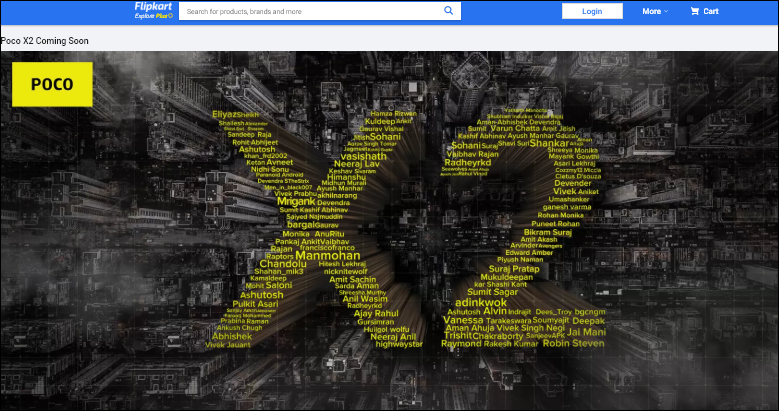
Poco put the rumour mills to rest when it indeed revealed that the first phone from the independent Poco brand will be the Poco X2. The company has equally confirmed the device will be launched on February 4. The Poco X2 has now been confirmed to be sold on Flipkart in India. A landing page for the device has now gone live on Flipkart’s website.
The landing page only contained the teasers that have already been revealed by the tech giant. This includes a display refresh rate of 120Hz. Flipkart promises to reveal more about the smartphone in the days leading to the official announcement.
The Poco X2 is said to be a rebranded version of the Redmi K30 that was launched in China last month. If that be the case, the device is expected to feature a 6.67-inch FHD+ display and will be powered by a Snapdragon 730G SoC with a 4,500mAh battery under the hood.
On the camera end, the Poco X2 is expected to pack a dual selfie camera setup made up of a 20MP+2MP combo. At the rear, there will be a quad camera setup. The device may also pack a rear-mounted fingerprint sensor on board even though the Redmi K30 packs a side-mounted fingerprint sensor.
Motorola’s is reportedly working on a flagship phone that will be announced on Feb. 23, a day before the Mobile World Congress (MWC) 2020 tech event kicks off in Barcelona, Spain. The said device is expected to debut as Motorola Edge+. The name of this phone was revealed by reputed tipster Evan Blass few days ago. A Geekbench listing of the phone has been spotted through which its key details have been revealed.
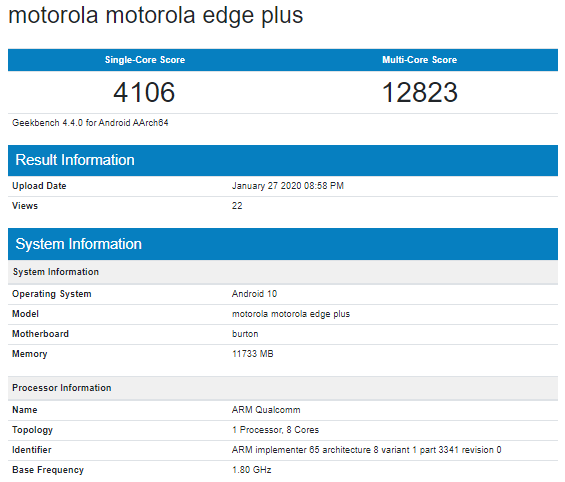
The Geekbench listing of the Motorola Edge Plus reveals that its powered by a flagship processor. The smartphone scored 4106 in the single-core test. It recorded a score of 12823 in the multi-core test. It is driven by an octa-core chipset by Qualcomm that has a base frequency of 1.80GHz. It is mentioned as “burton” in the motherboard field. Although the name burton has been spotted for the first time, it seems to be referring to the Snapdragon 865 mobile platform.
The Android 10 OS comes preloaded on the Motorola Edge+. The chipset is accompanied by 12 GB of RAM. The other specifications of the smartphone are currently under the wraps.
The only thing that is known about the Motorola Edge+ is that it will be sporting a punch-hole display. There is no word on whether position of the punch-hole will be on the top-left or top-right corner of the display. The Motorola One Vision that was unveiled few months ago was the first punch-hole display from the company. The upcoming Moto G8 and Moto G8 Power phones will be also sporting punch-hole screens.
There is an upcoming Motorola phone that will be arriving with a stylus. The said phone also features a punch-hole screen. However, the name of the device is currently under the wraps. It is speculated that the phone will be fueled by the Snapdragon 765 that is integrated with X52 5G modem.
The Moto Z2 Force that came in 2017 was the last flagship phone from the company. The Moto Z3 and Moto Z4 that went official in the succeeding years featured non-flagship chipsets. Hence, 2020 will mark as the year as Motorola returns to the flagship arena with the launch of Motorola Edge+. Since it is said to be equipped with Snapdragon 865, it could be a 5G ready phone. In the U.S., the handset will be available through Verizon.
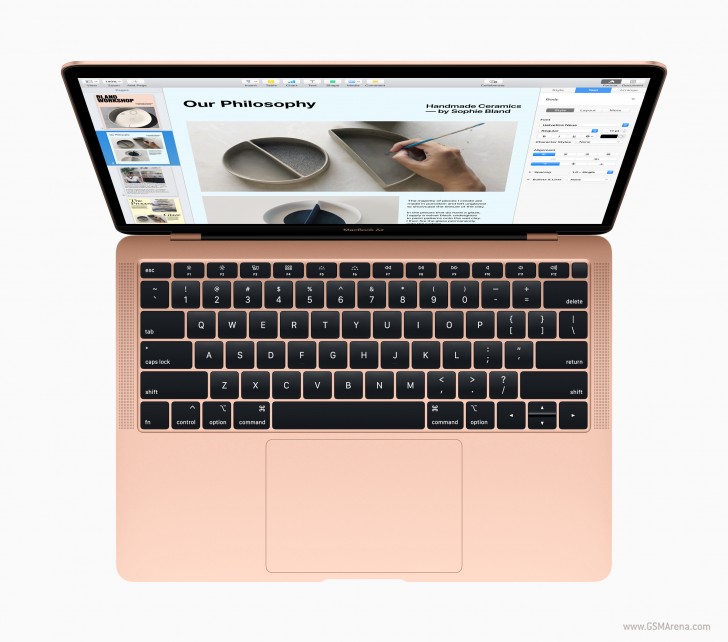
According to a new report, Indians are one of the most affected by the macOS malware called Shlayer. This is one of the most widespread macOS malware in 2019 and has infected the most number of devices in the Southeast Asian subcontinent.
Kaspersky, a cybersecurity expert, reported that Shlayer utilizes a smart malware distribution system that allows it to spread via a partner network, entertainment websites and even Wikipedia. This showcases the scale of the rampant malware is and that even established and well known websites are infected and need additional security measures put in place.
In the data, it is seen that India arrives second only to the US in terms of the total number of affected users. The former sits at 18.9 percent while the latter has a massive 31 percent, with numbers further expected to grow. Similarly, Germany ranks third with 14 percent while France and the UK trail behind with 10 percent each respectively.
Anton Ivanov, Kaspersky Security Analyst, stated that “The macOS platform is a good source of revenue for cybercriminals, who are constantly looking for new ways to deceive users, and actively use social engineering techniques to spread their malware. This case demonstrates that such threats can be found even on legitimate sites.” But, “Luckily for macOS users, the most widespread threats that target macOS currently revolve around feeding illicit advertising rather than something more dangerous, such as stealing financial data.”
In other words, macOS platform is an active target for cybercriminals which aim to make a profit by selling services based around advertising and other forms of illegal and unavoidable branding. Meaning, Apple users currently do not face any major risk apart from a few annoying pop up ads and more but the fact that it is possible might eventually lead to further harmful malware in the near future.
Apple MacBook Air
As of right now, the malware is only based around installing adware that modifies search results, gather user search history and feed illicit advertisements without user consent. Furthermore, Shlayer attacks reportedly account for nearly a third of all malware infections on the macOS; and are also responsible for the installation of other adware like AdWare.OSX.Bnodlero, AdWare. OSX.Geonei, AdWare.OSX.Pirrit and AdWare.OSX.Cimpli.
A recent report on XDA Developers revealed the entire specifications of the upcoming Motorola Moto G8 and Moto G8 Power phones. Now, a fresh report on 91mobiles has revealed the design of the Moto G8 through leaked renders. The publication has also revealed the different color editions of the smartphone.
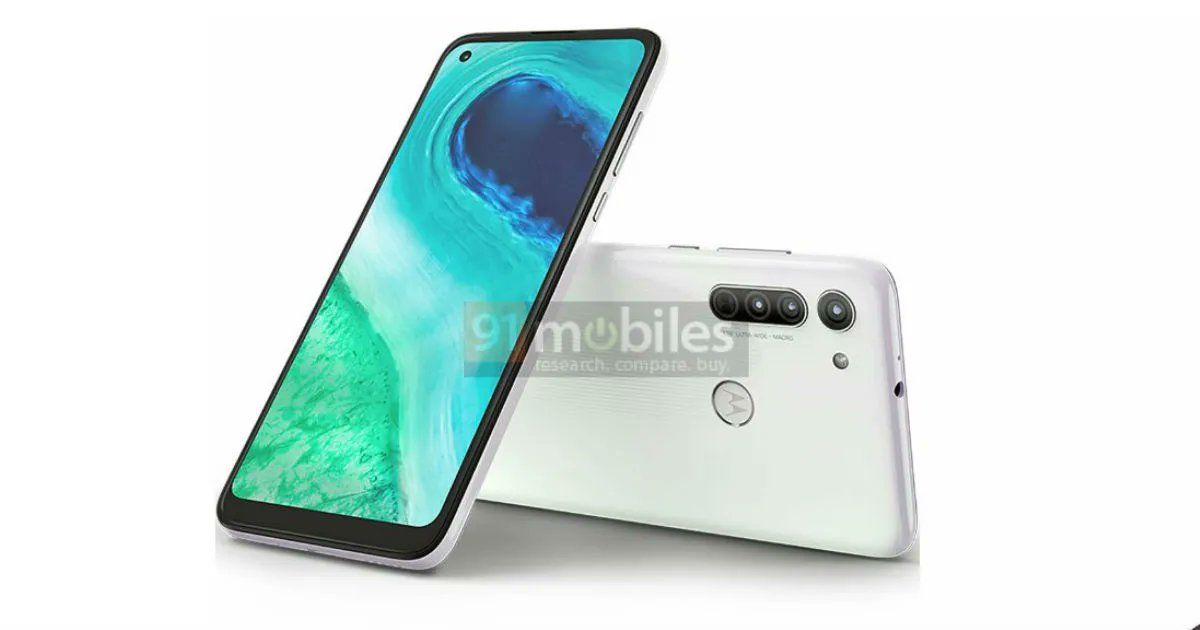
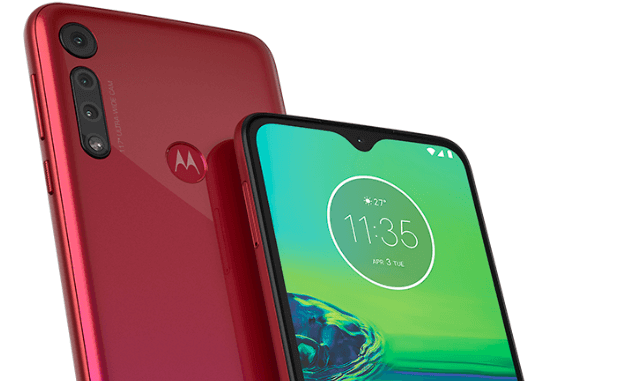
The leaked renders of the Motorola Moto G8 reveal that it will be fitted with a punch-hole display like the recent Motorola One series phones. It will be the first G-lineup device to flaunt a punch-hole screen. The LED flash rear-facing camera setup of the Moto G8 appears similar to the Moto G8 Plus phone. The text imprinted alongside the cameras reveal that the setup will include a macro lens and an ultrawide shooter.
Motorola Moto G8
The logo on the backside of the Moto G8 is integrated with a fingerprint sensor. The tope edge of the phone is the home for its 3.5mm audio jack. There is a volume rocker and a power key on the left side of the smartphone. The bottom edge of the phone is not visible, but it is likely to house a speaker grill and a charging slot. The Moto G8 is expected to arrive in color editions like White and Blue. Both color variants will have a textured rear.
The Moto G8 has a 6.39-inch display that produces HD+ resolution of 720 x 1560 pixels. The Snapdragon 665 SoC will be fueling the phone. It will come in 2 GB, 3 GB and 4 GB RAM variants. The phone may arrive in 32 GB and 64 GB storage editions. A microSD card slot will be onboard for more storage.
Motorola Moto G8
The Android 10 OS will come preloaded on the Moto G8. The phone will be housing a 4,000mAh battery with 10W charging support. The phone will be fitted with a frontal shooter of 8-megapixel. The triple camera setup placed on the rear side of the device could be featuring an 8-megapixel front camera.
There is no word on the pricing of the Moto G8. North America, Latin America (Mexico), Europe, the Middle East and Africa are the markets that are expected to receive the smartphone. It is believed that the company will be launching the Moto G8 Power alongside it.
Motorola will be holding a press conference on Feb. 23 just before the Mobile World Congress (MWC) 2020. The event will be used to announce the Motorola Edge+ flagship phone. It is not known whether the Moto G8 and G8 Power will be made official at MWC 2020 or it will hold an unveil event in Brazil to announce them.’
Samsung‘s latest flagship series is just around the corner. The Galaxy S20 series will be unveiled in the arriving month, during its Unpack event and is the successor to the Galaxy S10 series. However, even before the launch, many leaks have already surfaced and now even its official case has been revealed.
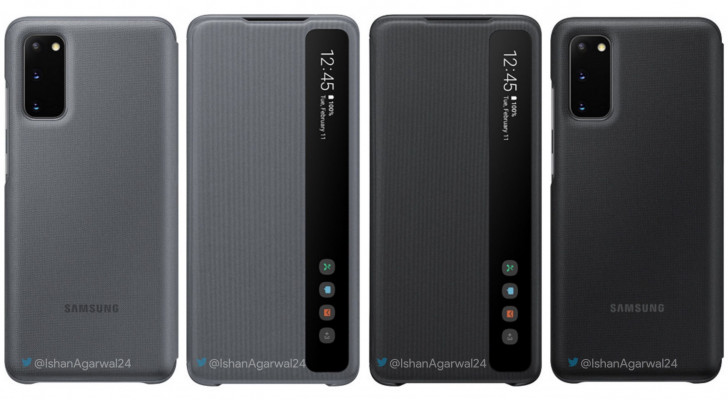
Leaked: Samsung Galaxy S20 series Rugged Cover
A leakster went on Twitter to share images of the official cases and covers of the Samsung Galaxy S20 series. The tweet arrived with multiple images that showcased the smartphone accessories and are said to be compatible with three different models with designs resembling the Galaxy S10 official cases from last year.
Samsung Galaxy S20, S20+ and S20 Ultra is getting these new Protective Standing Cover, LED View Cover and Clear View Covers. Here are the official renders of the same. Only Black/Grey colour renders as of now. Like them? #Samsung#UNPACKED#GalaxyUNPACKEDpic.twitter.com/cpxif3G0mr
According to the images, the first one is a thin case that features a rugged design for better protection and also arrives with a built-in stand on the rear. Furthermore, one of the cases has a see-through flip-style cover with a window-like area on the flap. This window area lets useful information from the smartphone to be portrayed even when the display is covered, including time, notifications, battery and more. The last of the cases follows Samsung’s traditional LED cover design. It arrives with LED lights on the flap that covers the front which displays the time.
Unfortunately, this has not been officially confirmed by the company but the renders might just be a true representation of the actual product. A protective standing cover, LED View Cover and a Clear View Cover were used to describe these leaked cases and covers but we will have to wait for Samsung’s official announcement to confirm the names as well.
Apple might manufacture 116 million iPhones in the first half of the fiscal year 2020, according to an estimate by Cohen & Company Inc. analyst Krish Sankar. The figures rely heavily on the growing demand for the upcoming low-cost iPhone SE 2, along with continued interest in the iPhone 11 lineup. Rumors have claimed that the upcoming low-cost iPhone may debut as iPhone 9.
According to Cohen’s previous estimate, Apple produced close to 70 million iPhones in the final quarter of 2019. About 52 million or 74 percent of the total figure were the iPhone 11 and the iPhone 11 Pro. The company is expected to build around 46 million iPhones in the first quarter of 2020, out of which 6 million are expected to be the forthcoming iPhone SE 2 / iPhone 9 handset.
It is said that the demand for the new iPhone 9 will be high if Apple manages to price it within the $500-mark, which Sankar claims is extremely likely. Sankar estimates the low-cost iPhone will be priced at $475, at par with the launch price of the 1st generation iPhone SE. Apple had designed the original SE around the then flagship iPhone 6S, and the device is still manufactured in India.
Sankar further estimates Apple will produce over 43 million iPhones in Q3 2020, to meet rising demands at the onset of the holiday season. Sankar valued Apple’s future stock pricing at $350 based on Services and the upcoming lineup. The Apple iPhone SE 2 and the 5G-ready iPhone 12 are expected to further boost sales in the second half of 2020. Apple’s steady service growth also plays a crucial role in bumping share prices.
According to Sankar, “High demand for the iPhone 11 coupled with a steady bullish sentiment in the smartphone market is expected to pump up Apple’s stock prices in the calendar year 2020. Notable mentions include the SE 2, despite chances of cannibalization with some of the older models, and the introduction of 5G handsets. Revenue from services is expected to grow with gross margins over 60% as expansion plans continue in full swing.
Last year, Motorola had launched the Moto G8 Play and Moto G8 Plus smartphones in October. The other G8-series members had surfaced in multiple leaks but haven’t gone official yet. A fresh leak on XDA Developers has revealed the entire specification of the forthcoming Moto G8 and Moto G8 Power smartphones. The appearance of the new leak indicates that the arrival of the Moto G8 and G8 Power could be close at hand.
The publication has claimed that the Motorola Moto G8 and G8 Power will be arriving with similar design. Hence, both phones will be equipped with single punch-hole displays, fingerprint sensors embedded in the rear-facing company logo and vertical camera setup placed at the top-left corner of the rear shell. There is no information on the pricing of the upcoming G8 phones. However, it is speculated that the Moto G8 could be arriving with a cheaper price tag than the G8 Power.
Moto G8 and Moto G8 Power specifications
The Moto G8 will be arriving with a 6.39-inch display with support for 720 x 1560 pixels HD+ resolution. The G8 Power could be coming with a 6.36-inch display with support for 1080 x 2300 pixels full HD resolution. The Snapdragon 665 mobile platform will be driving both smartphones.
The Moto G8 may come in multiple RAM choices of 2 GB, 3 GB and 4 GB and storage options like 32 GB and 64 GB. The G8 Power could be coming with 4 GB of RAM and 64 GB of storage. The G8 could be housing a 4,000mAh battery with 10W charging. The G8 Power would be continuing the trend of sporting a large-sized battery. It will be arriving with a 5,000mAh battery that supports 18W fast charging.
When it comes to photography, the Moto G8 will be sporting a triple camera setup that will house an f/1.7 aperture 16-megapixel main lens, an f/2.2 aperture 2-megapixel macro lens, an f/2.2 aperture 8-megapixel ultrawide shooter with 118-degree field-of-view. The G8 Power will be equipped with a quad camera setup that will borrow three lenses from G8 and it will feature an additional 8-megapixel sensor with f/2.4 aperture. The Moto G8 has a front camera of 8-megapixel with f/2.0 aperture. On the other side, the G8 Power will be flaunting a 25-megapixel selfie snapper with f/2.0 aperture.
The Android 10 OS will come preinstalled on the Moto G8 and G8 Power phones. The Moto G8 will be releasing in North America, Latin America (Mexico), Europe, the Middle East and Africa. The Moto G8 Power will be coming to markets like North America, Latin American regions like Argentina, Costa Rica and Mexico and other international markets.
Motorola will be holding a press event on Feb. 23 to announce its Snapdragon 865 mobile platform driven flagship smartphone. It is speculated that the device could be arriving with Motorola Edge+ moniker. There is no word on whether the Moto G8 and G8 Power will be unveiled at MWC 2020. There is a possibility that the company may hold a dedicated event for the new G8 phones in Brazil soon.
Government officials in Russia have drafted a new law in the country that will mandate the inclusion of apps that support traditional Russian values in smartphone sold within the country.
The new law is applicable to smartphone tablets, computers and more of such kind and has been created by the Russian Anti-Monopoly Service. According to local state officials, the new guidelines help in the “formation of the priority of traditional Russian spiritual and moral values.” In other words, the smartphones sold within the country should arrive with apps that support Russian sentiments and beliefs.
Previously, the Russian Government had banned the sale of electronic devices that do not arrive with pre-installed Russian software. This law came into effect in November 2019 and was made so the local citizens are made aware of alternatives to popular western applications.
Oleg Nikolayev, a co-author of the new guideline, stated that the smartphones sold in Russia only arrive with pre-installed western apps and the new law meant to change that. Meaning, help boost the local app makers and make their presence more known within the country. Oleg also mentioned that this will give more choice to the customers and foster a right to choose as well.
Despite the previous law passing in last November, manufacturers and distributors in Russia have yet to fully adopt the practice of pre-installation. The Association of Trading Companies and Manufacturers of Household Electrical Equipment and Computers said that installing Pro-Russian software in some devices might not be possible; with Apple being a great example, as the Cupertino-based giant might withdraw from the market because of the new law.
Apple representatives also discussed the new laws and claimed that they will consider withdrawing from Russia due to the new law. Reportedly, Apple does not consider Russia a significant or strategic market from a global standpoint
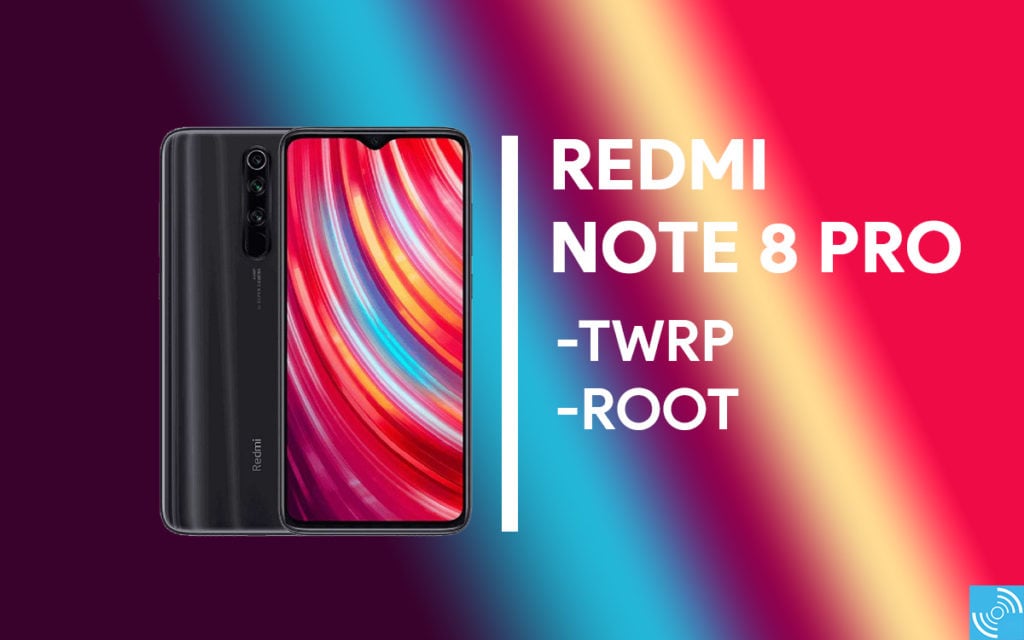
It was a remarkable year for Xiaomi and Redmi, as both the companies split up to bring more user-friendly and more relatable devices as per the user demands. Since Xiaomi and Redmi parted ways, both the companies have stormed the market with their respective devices and gained massive sales. It has increased the competition among the companies to offer better hardware specifications at affordable prices. Redmi Note 8 Pro is such a device that is available at competitive prices while offering high-end specifications. We have prepared a guide to install TWRP and root Redmi Note 8 Pro.
There are various advantages of rooting the Redmi Note 8 Pro. It will allow the advanced users to flash the mods and tweak the smartphones as per desire. The users can change themes, boot animations, lock screens, fonts, and a lot of other things after rooting the device. It even opens doors for a single click backup and restoration.
What is TWRP Custom Recovery?
TWRP stands for Team Win Recovery Project is an open-source recovery project for Android-based smartphones. It allows users to perform various functions from installing the custom mods, firmware to taking full system backups. TWRP has primarily used custom recovery on Android devices as it has extensive support. There are several benefits of using TWRP Custom Recovery.
Merits
GUI and touch-based interface
Easily flash zips of MODs, Frameworks, and ROMs
Brings the ability to flash custom Kernels.
Allows to make full system Backups
It helps to remove bloatware from the system.
Facilitate in rooting the device easily.
Ability to Wipe, Cache and Data.
Demerits
Your Warrant voids
It could brick your device permanently
Xiaomi Redmi Note 8 Pro Specifications
Xiaomi Redmi Note 8 Pro was launched in September 2019 with a lot of goodies. The smartphone comprises a 6.53-inch IPS LCD display with a resolution of 1080 x 2340 pixels and a 19.5:9 aspect ratio. The display sports a Corning Gorilla Glass 5 and supports 500 nits max brightness with a pixel density of 395 PPI.
It is powered with a MediaTek Helio G90T chipset packing an octa-core processor and Mali-G76 MC4 GPU. The smartphone is available in several different storage options like 64 GB + 6 GB, 128 GB + 6 GB, 128 GB + 8 GB and 256 GB + 8 GB. The user can use a microSDXC card along with the SIM slot to expand the storage.
In optics, Xiaomi Redmi Note 8 Pro consists of a quad camera setup featuring a 64-megapixel primary lens, an 8-megapixel ultrawide sensor, a 2-megapixel macro lens, and a 2-megapixel depth sensor. There’s a 20-megapixel front camera for beautiful selfies and video calling.
There’s support for WiFi, Bluetooth 5.0, NFC, GPS, Infrared, Radio and USB 2.0. Moreover, the smartphone supports a Fingerprint sensor, accelerometer, gyro, proximity, and compass. The smartphone comes with a 4500 mAh non-removable battery with 18W fast charging. It comes in different color variants including, Black, Red, Blue, White, Deep Sea Blue, Midnight Blue, Twilight Orange, and Electric Blue.
Install TWRP on Redmi Note 8 Pro
Follow the instructions carefully to get TWRP custom recovery on Redmi Note 8 Pro.
Note: It is recommended to proceed only if you’re an advanced user. The device hard bricks easily, and you may have to spend a few bucks to get it repaired from the service center.
GizmoChina.com is not responsible for any damage to data or devices. Rooting or installing TWRP may void your warranty and you won’t be able to get direct OTA updates.
Download TWRP from here and keep it into the extracted ADB and Fastboot Drivers folder. (Note: rename the recovery to twrp.img.)
Unlocked Bootloader is necessary for the TWRP installation.
Enable Developers Option by heading to the Settings > About Phone > Tap MIUI Version 7 times.
Enable USB Debugging Mode by heading to the Settings > Additional Settings > toggle USB Debugging option.
Steps to install TWRP on Redmi Note 8 Pro
Before proceeding, make sure USB Debugging and Bootloader is unlocked.
Extract ADB and Fastboot tools in a folder.
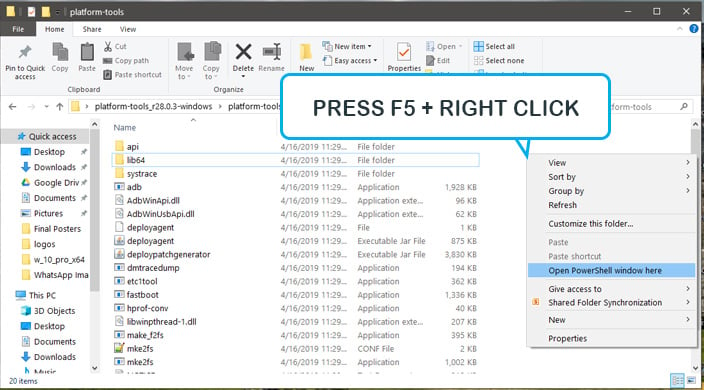
Now, press Shift + Right Mouse Click in the same folder to open CMD or Powershell window.
Connect your device with PC via a USB cable.
Now, turn off your device and execute the following command to reboot into the bootloader mode. (Note: Press OK if a popup to “Allow USB debugging” comes.)
adb reboot bootloader
Now to flash the TWRP, make sure to execute the following command after renaming the recovery file to twrp.img.
fastboot flash recovery twrp.img
Now, reboot your device upon typing the below command. (Note: Sometimes, the stock ROM replaces the TWRP. IN order to prevent that, hold the Volume UP + Power Key after typing the below command.)
fastboot reboot
You can normally reboot the device from TWRP and enjoy the TWRP recovery.
You have successfully installed the TWRP on Redmi Note 8 Pro. If you want to root, then follow the process below.
Root Xiaomi Redmi Note 8 Pro
Rooting is the initial step before installing any other custom MOD on the device. We have listed below the steps and the requirements that you need to download.
Turn off your device and boot into recovery by pressing the Volume Up + Power Key button for 3-5 seconds.
Select Wipe > Advance Wipe > Select Cache Data.
Now, Return to TWRP Home and select Install.
Browse for Disable DM-Verity ForceEncrypt.zip
Upon installation, now again select Install from TWRP Home.
Browse Magisk.zip and install it.
Now, Reboot your device and enjoy the root access via Magisk manager.
After following our guide, you have successfully installed the Magisk and gained root access on Redmi Note 8 Pro. If you have any problem or issue while following the steps above, then let us know via the comments below.
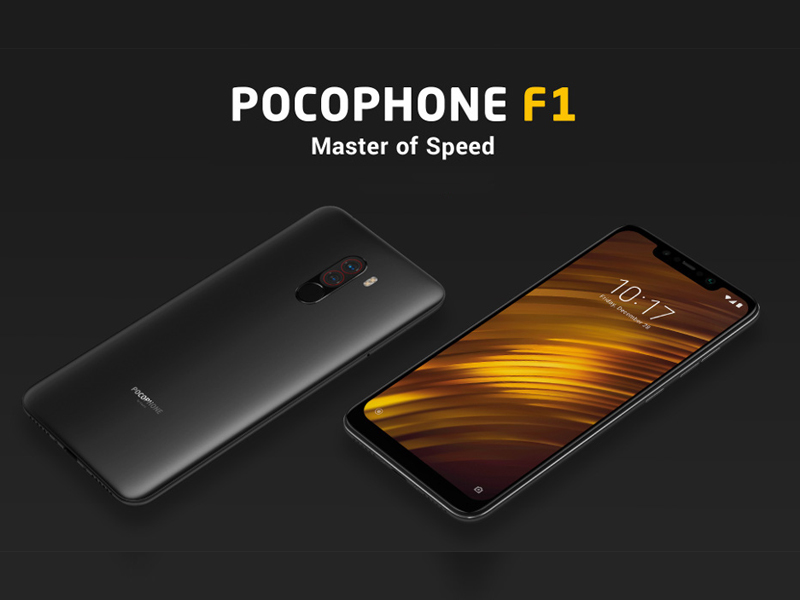
For a brand that literally means ‘Little’ in Spanish, Poco managed to gather a HUGE fan following. It was so popular that Manu Kumar Jain, MD of Xiaomi India was bombarded with one question – every single day – ‘when is Poco F2 launching in India?’.
And Poco’s popularity was backed by figures. Poco sold 700,000 units of its first smartphone in just three months. Counterpoint reports that Poco managed to grab a solid 3.6 percent market share in the year 2018 in the Rs. 15,000-30,000 price segment. This figure dropped to 1.1 percent in 2019. Notably, Poco has launched only one model so far: the Poco F1.
So what was the secret behind Poco’s incredible popularity?
The Poco F1 tapped into a market that OnePlus opened up back in 2014. It came from a young & dynamic brand, was youth-oriented and affordable. But what made the Poco F1 truly special was its flagship Snapdragon 845 processor at the INR 20,000 or $300 price tag in India and €350 in Europe. Nobody could have ever imagined the all-powerful SD845 at this price point. The phone offered an incredibly smooth experience with a really capable camera. It was truly a phone built for enthusiasts.
But even after 1.5 years, Poco’s popularity has shown no signs of dialing down.
Why?
Because there’s no one else like Poco. OnePlus sneaked its way into the premium segment recently, leaving a void in the INR 15,000-30,000 segment. Both Realme and Redmi have powerful phones in this segment right now, but their product portfolio is pretty huge, and the phones in this segment don’t really have their own separate identity.
Personally, I think fans are still waiting for Poco because they want something unique, with its own identity. So splitting up the Poco brand was definitely the right way forward.
However, if Poco X2, that’s all set to debut on February 4th in India, turns out to be a rebranded Redmi K30, I’d be really disappointed. Splitting up Poco from Xiaomi was a smart move, not just for better management. I feel Poco could have leveraged its separate identity to offer something unique to its customers, which is exactly what Poco F1 did back in 2018.
Almost everyone I have come across who have used or are still using the Poco F1 are extremely proud of their smartphones. I believe it’s because they feel no other phone can match the specifications or experience of the Poco F1, especially at its affordable price point.
Poco X2 teasers show its similarity with the Redmi K30
After the recent teasers, we are almost sure that the Poco X2 will be a rebranded Redmi K30. But that’s not really a good thing. The Redmi K series already had a pretty strong fan following in India. If Poco fans were looking for flagship specs for an affordable price tag, the Redmi K20 Pro should have been enough. But why were fans demanding Poco F2? Because they were looking for a smartphone that has its own identity, kind of like what OnePlus enjoys in the premium segment right now.
Poco X2 makes sense in the short term
So will the Poco X2 do well in the market? Of course! The Redmi K30 is an extremely value for money smartphone and in a price-sensitive market like India, it is bound to sell well.
But Poco could lose its exclusivity by launching a rebranded Redmi device. And given how Poco plans to release multiple devices this year, it could easily lose its charm. With this strategy, Poco is setting itself to become just another value for money brand in the Indian market. But are we looking for a Redmi replacement? I think not.
It’ll be a real shame if both Xiaomi and Poco miss out on this opportunity. After all, with the kind of fan following it enjoyed, Poco could have transformed into a real OnePlus rival in India. Unfortunately, the upcoming X2 isn’t a threat to OnePlus. In fact, it’s more of a threat to the Redmi Note 8 Pro!
Poco X2 will feature a high 120Hz refresh rate
Regardless of how Poco performs after splitting up, it’s a really exciting time to be a consumer in the Indian market. I guess we will have to patiently wait and see what it does in the coming months.
A few weeks ago, Xiaomi announced the split of POCO and made it an independent smartphone brand. Soon after that, the company started teasing the launch of its next smartphone.
Recently, POCO confirmed that it will be hosting a launch event on 4th February in India where the company will launch its second smartphone — POCO X2. This will be the first device from POCO after becoming independent.
Now, in a teaser photo posted on the phone’s landing page on Flipkart, it has been confirmed that the POCO X2 will come with a 120Hz refresh rate display. Earlier, the company had teased “Extreme Refresh Rate” but had not revealed the exact specs.
The company has also teased a 64MP Sony IMX686 camera sensor, a Qualcomm Snapdragon chipset, and a some sort of liquid cooling feature. Since the brand has confirmed refresh rate, we expect the company to keep revealing more details about the smartphone as the launch date nears.
The 120Hz refresh rate for the smartphone seems to be confirming what the rumors have started about the upcoming POCO X2. The phone is said to be a rebranded version of the Redmi K30 that was launched in China last month.
Features of the POCO X2 teased by the company fits the features of Redmi K30. The Redmi K30 comes with a 120Hz refresh rate display, has a 64MP Sony IMX686 quad-camera setup on the back, dual front-facing cameras, and is powered by a Qualcomm Snapdragon SoC.
POCO X2 was also spotted on benchmarking platform Geekbench some time back, which revealed that the phone will come packed with 8GB of RAM and will be running the latest Android 10 operating system out-of-the-box, likely with MIUI 11 with POCO Launcher.
Motorola hasn’t technically launched a flagship smartphone in over two years. But that’s going to change next month. Motorola has confirmed that it will launch a flagship device at MWC 2020 to be held from February 24 in Barcelona, Spain.
Motorola has started sending out media invites confirming a launch event on February 23 at 7 PM CEST, just a day before the MWC 2020 kicks off. This could be a smart move from the Lenovo owned brand given that both Samsung and Huawei are not going to launch their flagship devices at this event. So Motorola’s new smartphone could get a decent spotlight at the Barcelona event.
The company’s last true flagship was the Motorola Z2 Force, which was announced in August 2017. And the closest thing to a flagship smartphone from Motorola lately is the new Razr 2019. However, even the Razr caters to a niche market with mid-range specs.
HMD Global will be present at the Mobile World Congress (MWC) 2020 tech trade show to announce new devices. The rumored Nokia 9.2 flagship phone with Snapdragon 865 may not get unveiled at the MWC 2020 as it is speculated to go official few months later. A new report on Nokiamob.net that cites leaked information from a trusted source has revealed the specs of some of the phones like the Nokia 1.3, Nokia 5.2, Nokia 8.2 5G and the existence of a new series. Readers can read about the latter two devices through a dedicated article on our site.
Nokia 5.2 specifications and price (Rumored)
The Nokia 5.2 will be a mid-ranger powered by the Snapdragon 632 chipset. The phone is expected to house a 6.2-inch LCD panel. It may come with breathing light notification feature. The appearance of the rear camera setup on the Nokia 5.2 will be similar to the Nokia 6.2.
Nokia 6.2
Hence, the round-shaped camera setup of the Nokia 5.2 could be fitted with an LED flash, a 16-megapixel main lens and an 8-megapixel secondary shooter. It could be sporting a front camera of 8-megapixel. The phone may draw power from a 3,500mAh battery. The phone may arrive in all markets in 3 GB RAM and 32 GB storage version with a pricing of 169 euros (~$186). The higher 4 GB RAM + 64 GB storage edition of the Nokia 5.2 could be available in select markets.
Nokia 1.3 appears to be the next entry-level smartphone from the Finnish firm. In terms of design, it will look like the Nokia 2.3. That means it could be housed in a 3D nano-textured polycarbonate chassis and may sport a durable plastic frame. It may come in vibrant color choices like Nokia 1 Plus. A previous leak claimed that the model number of the Nokia 1.3 could be TA-1207.
The Nokia 1.3 could be sporting a large display of around 6 inches. The display may sport a U-shaped or a teardrop notch. The Nokia 1.3 could be fueled by the MediaTek chipset and 1 GB of RAM. The phone may arrive with a native storage of 8 GB of RAM. The smartphone could be drawing power from a removable 4,000mAh battery. It is likely to lack breathing notification light. The Nokia 1.3 could be costing around 79 euros (~$87) in European markets.
What’s your opinion on the specifications and leaked pricing of the Nokia 5.2 and Nokia 1.3? Share us your thoughts by posting your comments below.
At a time when South Korean giant Samsung is gearing up to launch its next-generation S-series flagship smartphones on 11th February at its Unpacked event, details about the company’s next-gen Note device have started surfacing online.
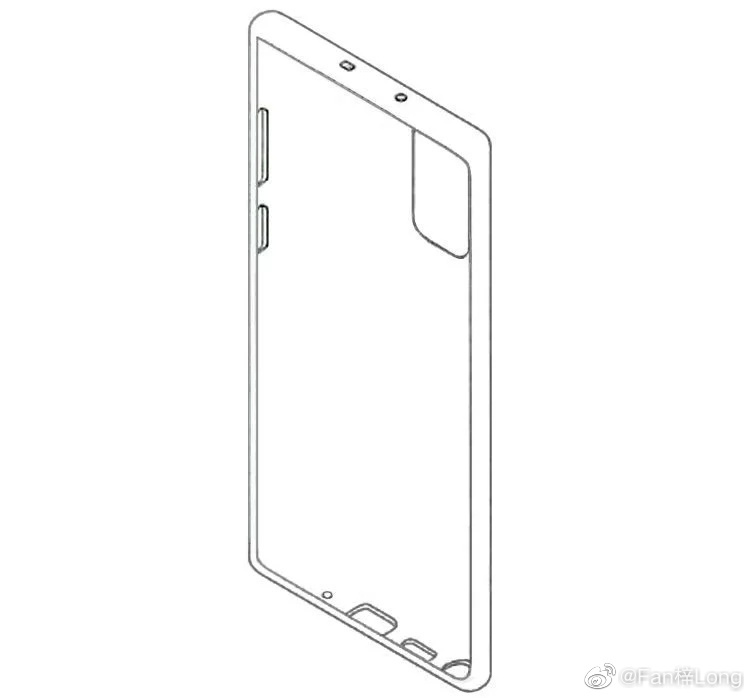
A purported case schematic for the Galaxy Note 20 has appeared on Chinese microblogging platform Weibo. Although the design seems to be a very early stage prototype, it depicts a design that resembles what we’ve seen so far about the S20-series.
The first thing you may notice about the design is the huge rectangular camera module on the back of the same, similar to what we have already seen on the Galaxy A71 and Galaxy A51 smartphones.
On the front side, the smartphone will carry very thin bezels at the top as well as bottom, similar to the Galaxy S20 family, if the leaks related to the upcoming series are true. At the bottom, there’s USB Type-C port, dedicated section for the S-Pen stylus, a speaker grille and a microphone.
However, this seems very early to have a final design of the Galaxy Note 20 but you never known. Since the design seems to be in line with what Samsung has to offer with its premium flagship phones, this one could make the final cut.
The current-generation Galaxy Note10 comes with a 6.3-inch 1080 x 2280 Infinity-O display and is powered by either Snapdragon 855 SoC or Exynos 9825 processor. The hole in the display is home to a 10MP camera while the rear panel houses a 12MP + 12MP + 16MP triple camera setup. The device is powered by a 3,500mAh battery with support for 25W fast wired charging and 12W fast wireless charging.
There’s also a bigger variant of the phone, dubbed Galaxy Note10+ that comes with a larger 6.8-inch screen with a 3040 x 1440 resolution. It has the same configuration under the hood in terms of chipset. It also has the same selfie camera and adds a ToF camera for a quad-camera setup on the rear. The phone is backed by a bigger 4,300mAh battery with support for 45W fast wired charging and 15W fast wireless charging.
Since the past two years, HMD Global has been using the Mobile World Congress (MWC) tech exhibition platform to announce new devices. This year too, the Finnish firm will be unwrapping its new phones at the upcoming MWC 2020 event. A fresh leak courtesy of Nokiamob.net has revealed some of the names of the devices that may get announced at MWC. It has mentioned names like Nokia 1.3, Nokia 5.2 and Nokia 8.2 5G. The report claims that the monikers of these devices are not final. The Finland-based firm is also poised to unleash a new series of Nokia phones at MWC 2020.
Nokia 8.2 5G specifications and price (Rumored)
Citing information from a known source, the publication has revealed that the 4G edition of the Nokia 8.2 has been cancelled. The specs leak of the Nokia 8.2 5G suggests that it could be the Snapdragon 765 driven 5G phone will be announced at MWC 2020.
The leak states that the design of the rear camera setup of the Nokia 8.2 5G could be similar to the Nokia 7.2 phone from 2019. A leak from October 2019 had claimed that the phone will be sporting a round-shaped camera setup with four cameras with a 64-megapixel mains lens. The handset is expected to house a 32-megapixel pop-up selfie shooter. The phone could be coming with a pOLED or LCD screen and a side-mounted fingerprint reader that won’t come with breathing light notification feature. A previous leak had claimed that it could be coming with a curved display. However, the new report claims that it has been found to be incorrect.
The Nokia 8.2 5G could be housing a 3,500mAh battery. The phone could be coming with fast charging support, but the leak has not revealed details on its presence. The handset is likely to lack support for wireless charging. The device will come equipped with a 3.5mm audio jack.
The starting variant of the Nokia 8.2 5G could be featuring 6 GB of RAM and 128 GB storage. There could be a limited edition of the phone with 8 GB of RAM and 128 GB / 256 GB of storage. The base model of the Nokia 8.2 5G may carry a price tag of 459 euros (~$506).
New original series phone coming at MWC 2020
The report further states that Nokia was expected to announce a new original series device around the Spring Festival of China. However, due to the ongoing situation of Coronavirus, the company has reportedly pushed its launch to MWC 2020. Unfortunately, there is no word on the design, name and specs of the new original series phone.
The original series phone could be referring to a revised version of the one of the yesteryear feature phone.
Pegatron, a Taiwanese company which is the world’s second largest contract manufacturer of electronics is reportedly planning to setup and run new factories in Indonesia and Vietnam by the end of this year.
With such as move, the company will essentially be shifting its production away from China as the production cost are rising because of higher labor costs as well as the on-going U.S.-China trade war. Further, the move is also aimed at diversifying production regions.
In an interview, Tung Tzu-hsien, Chairman of Pegatron said that China “has not been an optimum manufacturing location since more than five years.” He also added that when the U.S. President Donald Trump “threw a stone, diversification of production began like tumbling building blocks.”
Sharing details about the company’s new plans in Indonesia and Vietnam, Tung said that these new plants will make devices for internet connectivity. The Indonesian plant will on Batam Island, about 20 km from Singapore, while the Vietnamese plant will be in the north of that country.
Further, the company plans to expand domestic production lines in response to Taiwanese President Tsai Ing-wen’s policy of promoting local manufacturing. Pegatron makes a wide range of devices, including Apple iPhones, under contract. It is second only to fellow Taiwanese company Hon Hai Precision Industry, better known as Foxconn.
While some of the leading smartphone makers have established their manufacturing facilities in India and are doubling down on that, Pegatron is not ready to do so. Commenting on this, Tung said that India “is an important option, but we haven’t obtained consent from our customers.”
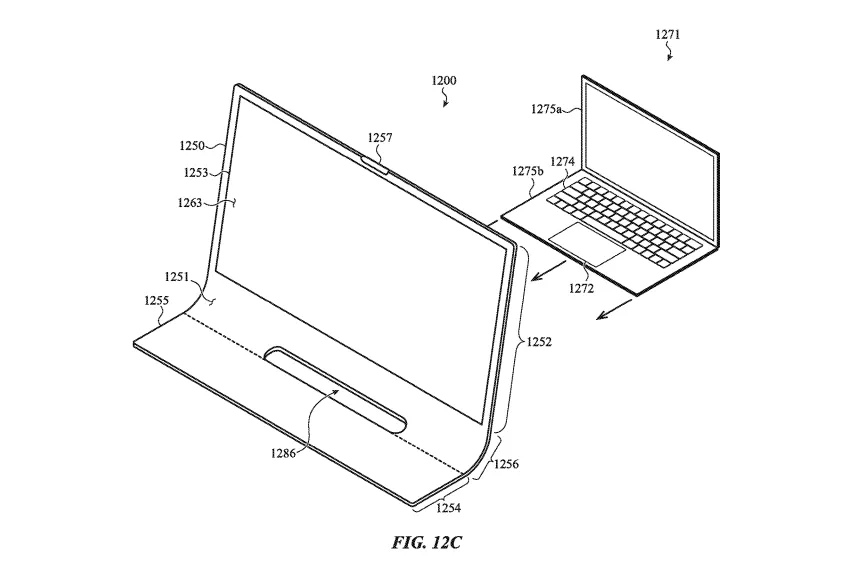
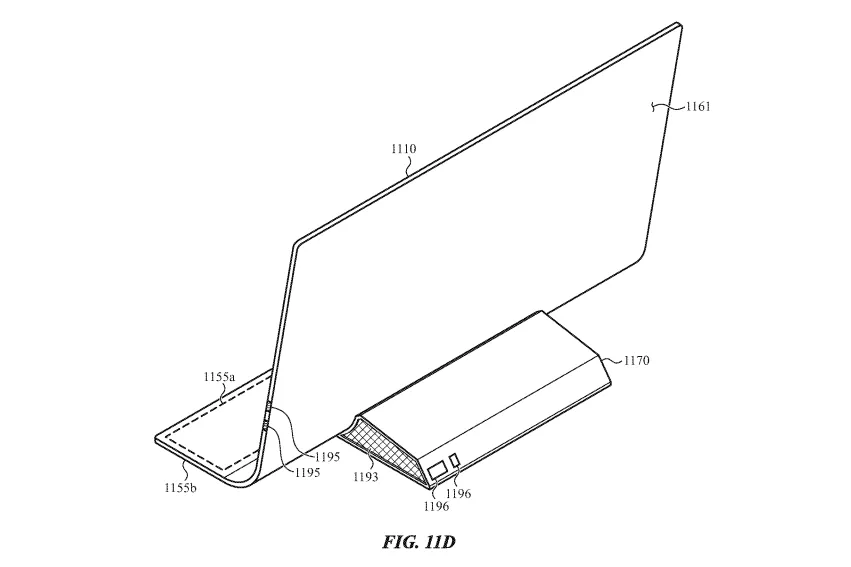
A new patent application filed by Apple suggests that the company is planning for an ambitious design for an all-in-one computer that integrates display as well as keyboard into a single curved glass sheet.
The patent was filed in May last year and showcased how a device similar to the iMac has the “input area” as well as “display area” built into a single surface. It seems like there is a support structure at the back of the display, which should contain CPU.
Apple has clarified that the glass housing could be made with materials that are transparent, coated, painted, or otherwise treated to produce a non-transparent component. Translucent components may be formed by producing a textured or frosted surface on an otherwise transparent material.
This is quite interesting, first of all from the design point-of-view that Apple is trying to implement the whole hardware on a curved sheet of glass, which the company has not done so far with any of its products.
Another interesting take on this is that the company is taking the all-in-one computer design to another level with the integration of computer, display, keyboard, as well as touchpad. However, it seems that the keyboard can be detached so that it can be used as per the users’ need.
While Apple has filed a patent for this new device, we don’t see the company planning to launch such as device in the market anytime soon and certainly not with this radical design, which the company is calling “Electronic Device with Glass Housing Member”.
However, we do expect the company to make some changes in the design of the iMac given that it has largely remained unchanged over the past decade. This hints that the designers at Apple are looking for ways to shake-up the design of the iMac.
Huawei P40 series is one of the most anticipated lineups of the first half of 2020. After the immense success of the P30 Pro, the upcoming series has some pretty big shoes to fill. And according to the latest rumors, we can expect to see an even more powerful camera setup on the P40 lineup. One of the biggest changes this year is the presence of an additional premium variant in the P series lineup. In addition to the P40 and the P40 Pro devices, we could also see a P40 Pro Premium handset that’ll be the most powerful model in the series this year. The Premium model is said to feature five cameras at the back instead of the four sensors that’ll be found on the P40 Pro and non-Pro variants.
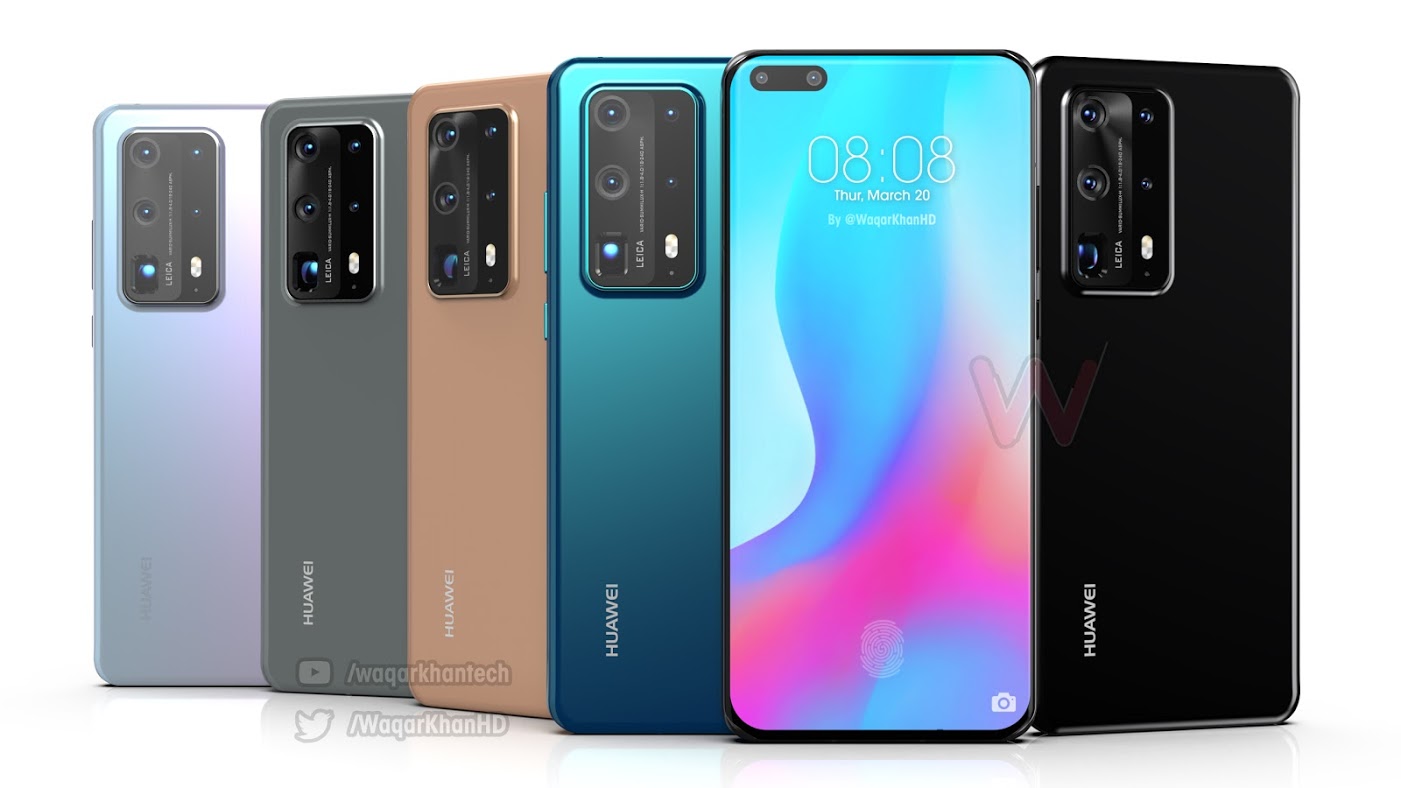
Today, Waqar Khan has brought the P40 Pro Premium design to life with a concept video. We know it’s the Premium edition because of the Penta camera setup at the back. The concept video showcases the phone’s curved screen up front as well as dual punch-hole cameras on the top left corner. Clearly, it looks like 2019 will be the year of the punch-hole shooter given how companies are freely embracing the design on their new models.
The Penta camera setup at the back will be placed in a rectangular housing at the back. Honestly, I don’t mind seeing this design come to reality, given how I personally find it pretty refined. However, note that the Huawei P40 Pro Premium’s camera setup will protrude quite significantly, much like most premium smartphones launched lately, including the OnePlus 7T.
The five cameras at the back should feature an 8MP 240mm periscope lens with 10x optical zoom, a 52MP 1/1.3″ sensor, a 40MP cine camera, and a 3D ToF sensor. The fifth sensor could be a dedicated macro camera, but we don’t have specific details right now.
The Huawei P40 Pro is expected to launch sometime in March this year.
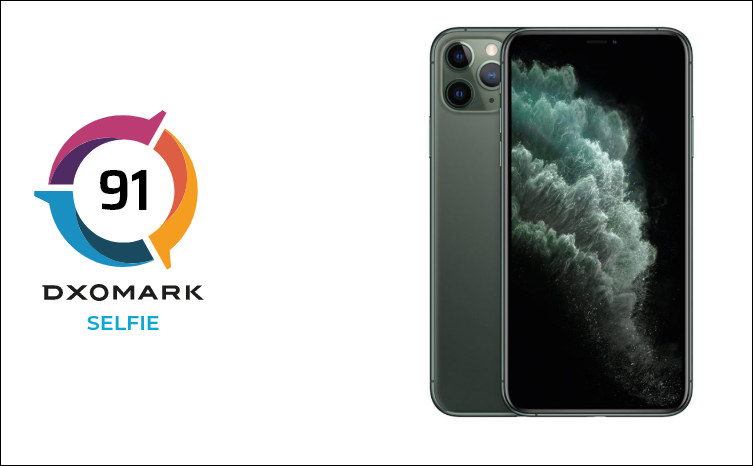
DXOMark added the review of selfie cameras to its itinerary in January last year. Since then, we have seen several phons’ selfie shooters get reviewed. The iPhone 11 Pro Max is the latest smartphone selfie that DXOMark would be reviewing. The smartphone had a score of 91 to rank among the Top 10 phones in DxOMark’s selfie cam charts.
The model edged out the Huawei P30 Pro which scored 89 points on the selfie camera charts. However, it is just a little below the Galaxy Note 9 which is ranked 9th. The score is 9 points higher than last year’s iPhone XS Max score put at 82 points.
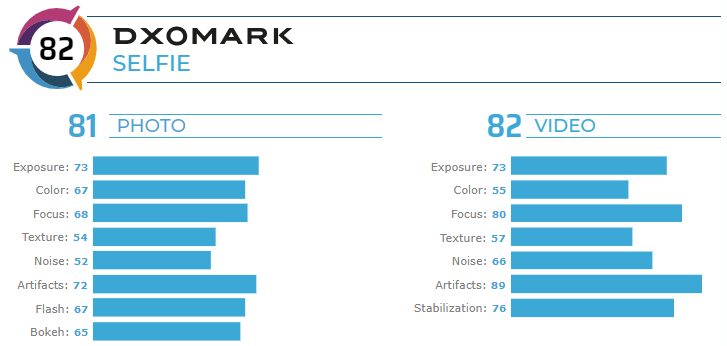
According to DXO Mark, the front camera on the iPhone 11 Pro Max offers a nice improvement in image quality over the XS Max. The addition of a wider lens on the new device is a big plus, helping you fit more into the frame and get better compositions in a range of situations. There are other strengths, too, including a higher score for focus, with both faces and backgrounds boasting good detail at a range of distances, and effective bokeh shots when you want to blur the background. Selfies pack plenty of punch outdoors, too, with accurate exposure on faces, and fairly wide dynamic range ensuring well-controlled highlights and skin tones even in very bright conditions. Also, the new SL 3D camera performs well when it comes to rendering bokeh in portrait shots.
The camera is shown to have lagged in the aspects of noise and low-light performance. The phone lost most points in the aspect of low light tests.
We use cookies on our website to give you the most relevant experience by remembering your preferences and repeat visits. By clicking “Accept”, you consent to the use of ALL the cookies.
This website uses cookies to improve your experience while you navigate through the website. Out of these, the cookies that are categorized as necessary are stored on your browser as they are essential for the working of basic functionalities of the website. We also use third-party cookies that help us analyze and understand how you use this website. These cookies will be stored in your browser only with your consent. You also have the option to opt-out of these cookies. But opting out of some of these cookies may affect your browsing experience.
Necessary cookies are absolutely essential for the website to function properly. This category only includes cookies that ensures basic functionalities and security features of the website. These cookies do not store any personal information.
Any cookies that may not be particularly necessary for the website to function and is used specifically to collect user personal data via analytics, ads, other embedded contents are termed as non-necessary cookies. It is mandatory to procure user consent prior to running these cookies on your website.