Advertisement

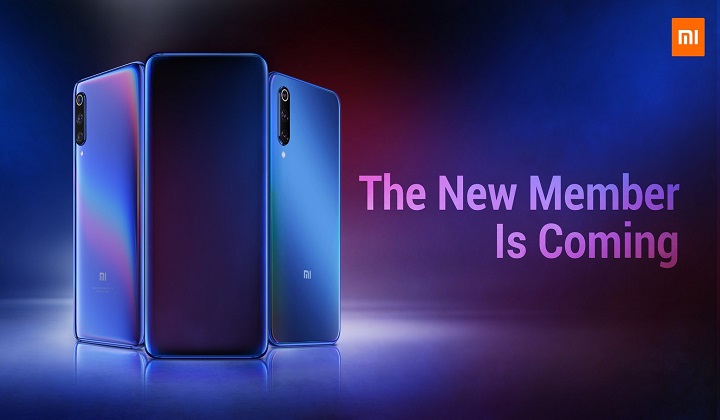
Xiaomi Corp. officially appoints Lin Bin as vice chairman, among other changes

Earlier today, Xiaomi announced that there’s been a bit of restructuring within the company. There aren’t all that many changes, but the ones that are here are pretty big changes. So, let’s take a closer look at the new changes within Xiaomi Corp.

First of all, Lin Bin has been appointed as the vice chairman of Xiaomi and will continue to serve as the executive director and president of the company, responsible for managing the company’s mobile phone R&D department. He’s been doing a pretty great job so far, so it’s nice to hear that he’s still around in the company.

In other news, Koh Tuck Lye has resigned as a non-executive Director and a member of the audit committee of Xiaomi. Mr. Koh Tuck Lye tendered his resignation in order to focus on investment and management matters of Shunwei Capital. Mr. Koh has confirmed that he has no disagreement with the Board and there were no problems in respect of his resignation.

Meanwhile, Chew Shou Zi has been appointed as an executive Director and will continue to hold the positions of Senior Vice President and Chief Financial Officer of Xiaomi. Mr. Chew is a director of various members of the Group. Mr. Chew is also a director of Kingsoft Cloud Holdings Limited, a subsidiary of Kingsoft Corporation Limited, a company whose shares are listed on the Stock Exchange (stock code: 3888).

Finally, Liu Qin has been appointed as a member of the audit committee within Xiaomi, and will continue to serve as a non-executive director. Liu Qin has been a director of YY Inc. since June 2008, and a director of Xunlei Limited since September 2005. According to Xiaomi, all these changes will take effect on October 25, 2019.

(Source)

HTC made 3D Mona Lisa to be showcased at the Louvre’s da Vinci exhibition

The Mona Lisa is getting a fresh lease of life with the help of Virtual Reality, five centuries after the iconic portrait came to life. This is part of a new initiative by the Louvre, in association with HTC, which struggled with the iconic painting’s popularity this year. With the upcoming Leonardo exhibition right around the corner, the experts are busy fine-tuning the 3D viewing angles that protrude beyond the shatterproof glass enclosure.

The idea behind the experience is to educate people about the Mona Lisa and its history so that its value can be better appreciated. With the help of VR, people that are unable to be present physically can also get the same experience right from the living room. HTC has set up a special viewing room inside the museum with 11 Vive Cosmos headsets for people to soak in the VR experience.

According to a statement issued by Dominique de Font-Réaulx, the Director of Interpretation and Culture Programming at the Louvre, “This is our first attempt at using VR to educate and entertain the guests visiting the museum”. Commenting on the VR experience, Dominique added, “She is seated face-to-face with the audience in the manner of having a conversation”.

HTC 3D Mona Lisa

The experience includes many of da Vinci’s original designs, including the wing-flapping glider that he had sketched. Dominique added that the two curators who were assigned the task spent countless hours researching important materials for the narration. They are also responsible for highlighting the visual details on and around Mona Lisa, including the gentle waves on her velvet dress, to the clay tiles from 16th Century Florence.

The digital experience is part of an experiment to broaden the Louvre’s appeal with the younger generation. The French Government is leaving no stone unturned to promote the country’s artistic heritage with Virtual Reality and other alternatives. Franck Riester, the French Minister of Culture, unveiled a plan to set up a thousand ‘micro-follies’ or digital museums around the country within the next three years, back in September. The locations include places frequented by people such as libraries, cinemas, hair salons, and social centers.

The most dramatic portion of Mona Lisa: Beyond the Glass, perhaps is the 3D model of the woman. The VR artists used infrared, X-Ray and refractive data collected from the Louvre to deduce what she might have looked like. The team at Emissive VR studio did not just infer her physical features, but also recreated her clothes, which folded and creased at the right places with her every twist and turn.

According to Emissive’s Art Director, Emmanual Gorinstein, “The landscape behind Mona Lisa was not created to feel realistic. It is based on da Vinci’s imagination and geographical knowledge of the region, which adds to its charm”. The tour concludes with Mona Lisa’s 3D portrait in her iconic pose, placed in front of the newly recreated background. HTC Vive Arts have volunteered its services for the Louvre’s Mona Lisa VR project.


Huawei Nova 6 5G render reveals punch-hole display with dual selfie cameras

Huawei is reportedly working on the launch two new smartphones. Past reports have revealed plenty of information on the Honor V30 5G that has a model number of OXF-AN00. A report that was published earlier today that not only the Honor V30 5G has been approved by the China’s TENAA telecom authority, the Nova 6 5G with WLZ-AN00 has also been approved by the same body. It appears that the arrival of Huawei Nova 6 5G phone is drawing near as a leaked render revealing its front and rear design has surfaced.

The leaked render revealed by 91mobiles shows the Huawei Nova 6 5G smartphone with glass panels on front and rear sides. The gradient rear of the phone has a vertical camera system that includes three camera sensors followed by an LED flash. Alongside it is another module that could be a 3D ToF sensor or laser autofocus. The right edge of the phone seems to feature a volume rocker and a power key.

Huawei Nova 6 5G render

The frontside of the Huawei Nova 6 5G is fitted with a notch-less display. The top-left corner of the screen has an elliptical punch-hole display that includes two front-facing cameras. It seems to be featuring a side-mounted fingerprint scanner. The chin of the device appears a bit thick.

There is no information available on the specifications of the Huawei Nova 6 5G smartphone. The handset is expected to arrive in 4G and 5G variants. It is speculated that Nova 5G could be arriving by December this year. Hopefully, more details of the smartphone could be revealed through its TENAA appearance in the coming days.


(source)
 

Flexible Displays are better suited for smartwatches than smartphones: ex-Meizu VP Li Nan

Foldables are the new craze in town, and we already have commercial foldable devices from the world’s top two smartphone makers: Samsung and Huawei. While Samsung’s Galaxy Fold went on sale back in September in multiple markets, the Huawei Mate X foldable will go on sale in China on November 15. In fact, earlier today, even TCL showed off an impressive foldable phone with a triple-folding design

TCL triple foldable phone concept 2
TCL triple foldable phone concept

While we are all impressed with the flexible display on these foldables that transform them from a tiny smartphone to a large screen tablet, Meizu’s ex-VP, Li Nan, thinks these displays are better suited for smartwatches. He backs his statement saying that a flexible screen will allow smartwatches to increase their screen real estate without sacrificing on durability since the bend range is limited. 

Notably, flexible screens have been used in smartwatches before, and the Nubia Alpha is the best example of this design. The company has used a 4-inch 192×960 foldable display on its smartwatch shaped phone that allows it to wrap around a user’s wrist

nubia alpha
Nubia Alpha

Irrespective of Li Nan’s opinion, foldable smartphones will continue to pop-up in the market in the next few years. Xiaomi, OPPO, and other brands have already confirmed that they are working on a foldable phone. The Xiaomi’s Mi Mix Alpha is just a glimpse of our smartphone future with the help of flexible screens. 

So what do you think? Should companies focus more on smartphone concepts like Nubia Alpha that stay on your wrist?


(Via)

Xiaomi Mi Mix 2S finally receives Android 10 based MIUI 11 beta in China

In the past few weeks, Xiaomi has been busy rolling out both beta and stable builds of MIUI 11 to its devices. Today, the company has rolled out another beta MIUI 11 update for the Mi Mix 2S, but this time, it’s based on the new Android 10 OS. Also, the MIUI 11 9.10.25 beta build brings the latest October security patch to the device. 

Mi MIX 2S Emerald Green

Given that this is a beta build, Xiaomi recommends backing up your data before upgrading the Mi Mix 2S to the new version. Note that this particular beta version ( MIUI 11 9.10.25 ) could be buggy since it updates the device from Android 9 Pie to the latest Android 10 OS. The update log also mentions that there could be third-party compatibility issues. So, some apps may not function properly in this beta build. 

Also, note that the Mi Mix 2S received a stable release (MIUI 11.0.2.0) of MIUI 11 earlier this month, but it was based on Android 9. So Android 10 is available only in the beta release right now.

The new MIUI 11 update to the Mi Mix 2S comes right after Xiaomi updated the Mi Mix 3 model with a new beta release based on Android 10. Interestingly, the Xiaomi Mi 6 updated to a stable MIUI 11 release a couple of days back, but it was based on the old Android 9 Pie version.

MIUI 11

MIUI 11 brings a host of new features to Xiaomi and Redmi devices like new sound effects and alarms, Mi Go travel suite, dark mode, and ambient display. If you want to know everything about the MIUI 11 OS, click here.


(Via)

OPPO is also working on a True Wireless headphone: VP Brian Shen

OPPO has had a busy year so far, releasing two Reno generations within six months, along with a bunch of other smartphones and accessories. The company’s VP, Brian Shen, never shies away from teasing new models, and today, he revealed that OPPO is also working on a true wireless headset. 

OPPO Enco Q1 Orange2
Oppo announced the Enco Q1 neckband headphones last month

OPPO has been involved in the audio business for a while, and the company’s high-end headphones have received rave reviews for its excellent quality output. It recently released the OPPO Enco Q1 noise-canceling wireless neckband headphones in China for under $100. Now, it looks like we’ll see yet another headphone from the company, a true wireless earbuds. 

TWS is a growing accessory segment, and almost all major smartphone makers, including XiaomiMeizuHuawei, and Vivo, have at least one TWS headphone model. So it’s no surprise that OPPO is looking to grab a share of this market. However, given OPPO’s history with headphones, it could focus on the premium segment of the earbuds industry with its upcoming TWS headset. 

oppo headphones teaser
Apart from this, Brian Shen also revealed that he is looking forward to ColorOS 7. The company had announced the ColorOS 6 version back in November 2018, so a new update to the OS is due very soon. Note that the ColorOS 6 only started appearing on smartphones after March 2019, so even if the new version is announced this year, don’t expect it on your smartphones anytime soon. 

OPPO’s ColorOS has often been criticized for bloatware and heavy customizations. But things could change with the ColorOS 7 release. Realme’s CEO, Madhav Sheth, recently revealed that Realme would get an exclusive version of ColorOS 7, which will be very close to stock Android experience. 

We don’t know what kind of features to expect from the new ColorOS 7 version, but we should hear more about it very soon. 


The Redmi Note 8T is already up for pre-order on Giztop, even before official release

While we wait for the official launch of the rumored Redmi Note 8T, Giztop has already listed the phone up for pre-order on its website. What’s even more interesting is that the phone is said to ship from next week itself. 

redmi note 8t giztop

Giztop has listed the Redmi Note 8T Global version for $199. However, the official price tag at launch should be slightly lower than this. Note that there’s only one storage variant listed on the website, featuring 4GB of RAM and 64GB of ROM in gray color. 

The phone is identical to the regular Redmi Note 8 version, featuring quad-cameras, a fingerprint sensor at the back, and a waterdrop display upfront. So the big difference between the ‘Redmi Note 8T’ and the regular ‘Note 8’ will be the added support for NFC. Internationally, people use NFC on a wider scale than in countries like India. So the new device should be targeted at the global markets. 

Redmi Note 8T front render

Apart from this, the 8T will have the same specifications as the regular version, which includes Snapdragon 665 octa-core processor, a 6.3-inch dot-notch FHD+ display, a 48MP+8MP+2MP+2MP quad-camera setup at the back, and a 4000mAh battery. Note that the Giztop listing shows that the phone will come preloaded with MIUI 10 based on Android 9. 

Given that Giztop has already listed the phone up for sale, we expect a soft launch of the Redmi Note 8T very soon. 


Xiaomi continues to be the highest selling smartphone OEM in India in Q3 of 2019

Counterpoint Research has recently published its report about the Indian smartphone market in the Q3 of 2019. While all other market segments are observing a slowdown, smartphone sales broke previous shipment records with combined sales reaching 49 million units. The report highlights that the growth can be accredited to new launches, heavy discounts on existing models during the pre-Diwali sale.

Unsurprisingly, Xiaomi was the company that sold highest number of units in the last quarter. It accounted 26% of overall sales which dropped from 27%, in comparison to last year. However, the total number of units sold surged 7% YoY it’s best selling devices are the Redmi 7A, Redmi Note 7s and Redmi Note 7 Pro.

The number two spot was secured by Samsung whose YoY shipments declined by 4% but grew 3% in comparison to the preceding quarter. Best selling devices from the company include Galaxy A2 Core and newly refreshed A series and M series handsets including A30s, M30s, A10s, A50s and M10s.

redmi note 7 pro
Redmi Note 7 Pro

The third, fourth and fifth spot is held by Vivo, Realme and Oppo, respectively. All of which have a common country of origin and parent, the BBK elecrtronics which is based in China. While Vivo grew from 10% to 17%, Realme gained signinificant share and it accounted for 16% of the total sales which was just 3% in the same time period last year. Oppo despite having a steady growth maintained a 8% market share.

itel which is yet another Chinese OEM grew 40% YoY which was mainly driven by strong offline penetration. It is the most selling offline smartphone brand under the price bracket of Rs 5000 (US$ 70). It’s sister companies, Infinix and Techno which are subsidiaries of Transsion group was ranked the number sixth highest selling smartphone OEM in the country for Q3 fo 2019.

While OnePlus and Apple are both hidden under the unbrella of others category in this list, the former which is also a subsidiary of BBK electronics became the number one selling premium smartphone maker. On the other, Apple also made its entry to the top ten brands whose sales were mainly driven by iPhone XR that has received a considerable price cut and the newly launched iPhone 11 which has been well received globally.

The same report also shed light on the sales figures of feature phones whose sales have gone down 37% on YoY comparison. The top five leaders in this segment are Samsung, itel, Lava, Nokia and Karbonn respectively.

According to Counterpoint, the sharp decline in this segment was hugely contributed by the slowdown in new shipments from Reliance Jio as the company has been focusing clearing the older inventory of this handset.

(source)
 

Huawei won’t build Electric Cars but will help existing automotive companies with Technology: Huawei official

Chinese tech titan, Huawei has been claimed to be working on electric cars similar to what the American automotive company, Tesla makes. However, in a recent interview with CNMO, Huawei’s rotating chairman, Xu Zhijun confirmed that the company will not be getting into the business of building automobiles. Instead, Huawei will channelise its resource to develop new technologies which will help existing car manufacturers to build smart cars.

It was also revealed that the company did plan to build an electric car until as recent as October 2018. But the company observed that the market is already laden with capable automotive makers across the globe that could build refined products with the technological solutions that Huawei currently offers or the ones that are currently under development.

In the month of May this year, Huawei had showcased a smart car solution which stands atop five main aspects which are as follows:

  • An intelligent network that will help smart cars to connect to the cloud, which can help them locate nearby vehicles, pedestrians or any obstacles on the road.
  • A refined driving experience.
  • A sophisticated cockpit i.e the layout of an automobile’s interior.
  • Credible provider of electrical solutions including components such as motors and EESD (Electrical Energy Storage Devices)/ Batteries.
  • Provide a series of cloud services to help car companies to come up with new innovation and pay for travel services.

All the elements laid out above will essentially allow any car manufacturer to develop and build highly advanced automobiles via Huawei’s off the shelf intellectual property and technologies.

Tesla Model X
Tesla Model X (smart electric car)

The senior Huawei official also said that the company will utilise its 5G expertise to develop mm-wave and laser radar using optoelectronic technology to solve the cost and performance problems faced by existing solution providers. This technology will ultimately help in building true driverless vehicles, similar to what Tesla is currently aiming for.

It is clear that Huawei does not want to enter a market, which as previously mentioned, is already crowded and could only reward marginalised profits. Instead, it is carving a completely new industry which also falls in line with its existing role that is of a B2B supplier.

(via)


Meizu 16T TÜV Rheinland certification is not false proves company

On the 23rd of October, Meizu launched it latest flagship smartphone, dubbed the Meizu 16T, it is one of the most affordable Snapdragon 855 powered handsets in the market. At the launch event, Meizu officials were observed boasting off that the display on their latest offering is low blue light certified by TÜV Rheinland.

Meizu 16T marketing material
Meizu 16T marketing material reveals TUV Rheinland certification

Soon after the event was over, the company landed itself in trouble as TÜV Rheinland AG released a statement saying that the phone wasn’t tested or certified by their organization. For reference purposes, displays certified by TÜV have reduced blue light and are flicker-free to protect eyes and preserve the vision of the users and allow them to change body position without compromising visual image quality.

Obviously, such a mistake could lead to bad consumer reception for any newly launched product, therefore, Meizu was quick enough to release a response statement. According to which, Meizu 16T’s AMOLED display is jointly customized with Samsung who holds the TÜV Rheinland Eye Comfort Certification (ID: 14190721437).

Meizu further clarified that the TÜV Rheinland logo was actually meant to highlight just the display certification and not the entire handset which was the root cause of the misunderstanding. The statement also includes an apology to the certification provider and potential consumers of Meizu.

Meizu 16T
Meizu 16T

Following Meizu’s narrative, TUV Rheinland acknowledged the apology of the Chinese corporation and a senior official replied with the following statement:

I am very pleased to see that Meizu Technology is responsible for this event and appreciates the rigorous and realistic attitude of Meizu Technology in product promotion.

To wrap things up, the whole matter has now been sorted between two parties and Meizu, without any hurdles, can proceed with the sales of its latest flagship.


Xiaomi Mi CC9e’s 4GB RAM +128GB storage variant pre-sales begin

In July, Xiaomi had launched the Mi CC9v, Mi CC9e and Mi CC9 Meitu Custom Edition smartphones in China. At launch, the Chinese manufacturer had introduced the Mi CC9e in three variants. Now, it has begun with the pre-sales of a new model that features 4 GB of RAM and 128 GB of native storage.

The 4 GB RAM + 128 GB storage pre-sales is live on the official Chinese edition of Mi.com. The new model of the phone will be available for purchase from Nov. 1. It comes in three colors like White Lovers (White), Deep Blue Planet (Blue) and Deep Night Prince (Deep Gray). The new model is priced at 1,399 Yuan (~$198). However, it can be availed for 1,199 Yuan (~$169) during pre-sales for customers who deposit 100 Yuan.

xiaomi Mi Cc9e 4GB+128GB

At launch, the Mi CC9e was made available in variants such as 4 GB RAM + 64 GB storage, 6 GB RAM + 64 GB storage and 8 GB RAM + 128 GB storage. The latter two are now available with respective price tags of 1,299 Yuan (~$183) and 1,599 Yuan (~$229). The 4 GB + 64 GB is no longer listed on Mi.com.

Xiaomi Mi CC9e Specifications and Features

The Xiaomi Mi CC9e that comes with Gorilla Glass 5 panels on the front and rear has a 6.01-inch S-AMOLED display with waterdrop notch. It supports HD+ resolution of 720 x 1560 pixels and 19.5:9 aspect ratio. The 11nm Snapdragon 665 chipset fuels the smartphone.

The frontside of the Mi CC9e has a 32-megapixel selfie camera. The rear-mounted triple camera system has a 48-megapixel primary lens with f/1.8 aperture, an ultrawide 8-mgeapixel sensor and a depth lens of 2-megapixel. The handset is equipped with an in-display fingerprint reader.

The Xiaomi Mi CC9e has a 4,035mAh battery that carries support for 18W fast charging through USB-C. The MIUI 10 based Android 9 Pie OS runs on the device. For additional storage, it is equipped with a hybrid SIM slot. The Mi CC9e is available outside of China as Xiaomi Mi A3 Android One smartphone.


iFixit’s Google Pixel 4 XL teardown reveals How complex it is to repair

Earlier this month, Google launched its latest flagship smartphones, the Pixel 4 and Pixel 4 XL at the “Made by Google” event which took place the U.S. Some netizens have criticised Google for the design it has implemented with its new devices, especially the thick forehead which is non-existent on almost every other smartphone in this price bracket.

While we already know, the chunky forehead has been retained to make room for the Soli Radar Chip, recently published iFixit teardown of the Pixel 4 XL has exposed what this tiny chip actually looks like, in addition to revealing other details about its innards.

Like most modern smartphones, the rear glass panel of the Google Pixel 4 XL has been glued to the chassis with the help of strong adhesive which requires a lot of heat to pry open. New for 2019, the wireless charging coil & NFC that are stuck to the glass back, use spring contacts which makes the device a tad more repair friendly than last year.

The teardown revealed that removing the battery was fairly simple accrediting to elastic pull tabs and some IPA (Iso-Propyl Alcohol). However, below the battery is the thin flex cable for the Active Edge feature which can easily be torn if the handler is not careful.

Next in the line, was the slender motherboard which is held in place via T3 Torx screws and several brackets that were carefully removed. As the images show, the 6 GB of Micron LPDDR4x RAM is placed next to the Qualcomm Snapdragon 855. On the same side of the board is Titan M security chip, Knowles 8508A quad-core audio processor, and dedicated RAM for the Pixel Neural Core chip.

The other side of the motherboard houses other essential components like the  Sky5-8212-11 front-end module, Qualcomm QET5100 envelope tracker, STMicroelectronics ST54J NFC controller and Maxim MAX77826 companion PMIC.

The motherboard extraction was followed by removal of a unified chunky component that features the earpiece speaker, mic, ambient light sensor, and the Soli chip which was previously mentioned.

All seemed fine until the next step which was dis-assembly of 90 Hz display. Like the rear panel, the display assembly has been stuck to the chassis, however, the adhesive is much stronger, therefore it is highly unlikely to take the screen apart in a single piece. Nevertheless, display panels are usually taken apart only during the replacement process in case they have broken already.

Interestingly enough, the display panel of the Google Pixel 4 XL is manufactured by none other than Samsung who also supplies panels to OnePlus but has not yet treated its own smartphone with a high refresh-rate display.

To wrap things up, iFixit experts have appreciated the use of standard T3 Torx screws across the device and east pull tabs for the battery. However, this is where the good bits end, all repairs require access through the back panel which is not the easiest to remove. Moreover, as previously mentioned, display replacement requires complete disassembly of the phone. All factors inclusive, iFixit has given the Pixel 4 XL a repairability score of just 4 out of 10.

(source)
 

Buy Xiaomi Mijia MTJD02YL Portable Eye-protection LED Desk Lamp for Just $85.99 from Gearbest [Limited 100 Units]

Usually overlooked, proper task lighting is an important aspect of a room, especially the work environment. There are all sorts of task lights available on the market, but desk lamps are by far the most useful ones.

Xiaomi Mijia MTJD02YL Portable Eye-protection LED Desk Lamp for Home

The question probably popping into your head right now would be ‘where do I get a good desk lamp that doesn’t cost a bomb?’ Well, we got your back! We will talk about the best-LED desk lamp you can get your hands on without breaking the bank in just a bit.

Xiaomi is known for offering high-end mobile devices, particularly smartphones that boast an impressive array of features, coupled with the high-end specification. The Chinese electronics giant also makes other equally top-notch smart home appliances in collaboration with Mi ecosystem companies.

Keeping in line with that, Xiaomi teamed up with Mijia to come up with the Xiaomi Mijia MTJD02YL Portable Eye-protection LED Desk Lamp, which is exclusively designed for the home. Available in a white color option, the LED desk lamp adopts a unique design that enables you to see it at first glance.

Xiaomi Mijia MTJD02YL  Portable Eye-protection LED Desk Lamp for Home- White

Aside from the Xiaomi Mijia MTJD02YL offers different levels of brightness, allowing you to choose the temperature, as well as brightness level for studying, sleeping or just relaxing. Moreover, it comes with an adjustable stand for enhanced visibility and improved user experience.

A top-branded LED desk lamp, loaded with exciting features would understandably carry a steep price tag, but that’s not the case with the Xiaomi Mijia MTJD02YL Portable Eye-protection LED Desk Lamp, which can now be yours for only $89.99 through Gearbest. This is a 29 percent reduction in the device’s original selling price of $127.26. The first lucky hundred buyers will be able to get it for only $85.99.

Those still unsure about buying this Xiaomi-branded LED desk lamp might want to check out some of the awe-inspiring features it offers. First off, it uses anti-blue light technology, paired with an Imported LED eye-protection lamp bead for the safety of your loved ones.

Furthermore, the LED desk lamp comes with a high-sensitivity rotatable switch that provides an elegant control experience. Its triaxial design enables you to effortlessly adjust the light angle to meet your needs. Moreover, it is energy-saving and environmental-friendly.

To offer perfect light, the Xiaomi Mijia MTJD02YL eliminates any sort of visible ghosting, which makes it a great choice for reading. If you need more details about the LED desk lamp before placing your order, all you need to do is to follow this link without wasting time as the promo is slated to end soon.

Buy Yeelight YIDL01YL LED Smart Pendant Light for Just $84.99 from GeekBuying [Coupon]

Touted as one of the world’s leading smart lighting brands, Yeelight has an impressive portfolio of smart home lighting products including ceiling lights, desk lights, essential lightings, and ambiance lights.

YEELIGHT YIDL01YL LED Smart Pendant Light

Integrating advanced technology, unparalleled designs, professional optical research into their products, Yeelight has won several awards such as the iF design award, red dot award and more. The brand promotes healthy lighting, and that is quite evident in the YIDL01YL LED Smart Pendant Light, which is the product GeekBuying is currently offering for a lowered price.

The Yeelight YIDL01YL is housed in a carefully designed optical structure. The device uses the side-lighting technology to allow 280 light bulbs to pass through the plate that transmits the light and is then activated by the diffusing plate to form a uniform light-emitting effect. This ensures the light is transparent, just like natural light.

YEELIGHT YIDL01YL LED Smart Pendant Light 6500K APP Remote Control For Dining Room - White

Other features include a step-less adjustment, voice and APP control, IP50 level of protection that makes it dustproof, mosquito proof and even avoids the pollution inside the lamp body. With CRI up to Ra95, the chandelier efficiently makes the room bright, showing the original color of every object.

Yeelight LED chandelier employs 280 high-quality LED lamp beads, offering a color rendering index of up to 95, which retains the original colors of the illuminated object and gets rid of the color rendering index. It has a low impact on your vision but makes the table more colorful for you to have a superior dining experience.

Sporting an exclusive patented design, the top of the chandelier features a colorful atmosphere lighting, using 141 lenses, a 60-degrees luminous angle for creating a transparent, and uniform atmosphere. Furthermore, it supports a color temperature of 2700K to 6500K.

YEELIGHT YIDL01YL LED Smart Pendant Light 6500K APP Remote Control For Dining Room - White

The irresistible YIDL01YL LED Smart Pendant Light would normally set you back $113.99 and the aforesaid features completely justify this price tag, but GeekBuying is giving you a chance to buy it for a lowered price of only $86.99. On top of that, if this is your first order with Banggood, you can use the 2% Off New User Coupon and save more money.

The rest of the consumers can take advantage of the coupon code GKB02PP for an extra $2 off. In other words, you can bring the already lowered asking price of the YIDL01YL LED Smart Pendant Light further down to just $84.99 simply by applying the above-mentioned coupon during the checkout process.

To get this discount and use the coupon code before it expires; just follow this link without wasting time. Note that the promotion sale is slated to end in just 22 days.


Samsung has announced 12GB RAM and UFS 3.0 storage combo for mid-range devices

Samsung Electronics has officially begun mass producing the world’s first 12GB double-data UFS multi-chip package. The uMCP (Multi-Chip Package) combines UFS 3.0 storage with 12GB of LPDDRX4 RAM, and will power its mid-range smartphones from 2020. The announcement was made at Samsung’s annual Tech Day event at their Device Solutions headquarters in San Jose, California.
The new combo features the four 24-gigabit RAM chips built using the 1y process. 1y is Samsung’s acronym for the second generation chipsets designed on the upgraded 10nm platform. What other manufacturers are calling the 10nm+ architecture, Samsung is calling the 1y. The LPDDRX4 RAM has been tested to reach speeds of up to 4,266Mbps. The chaebol unveiled its first batch of 12GB modules back in March 2019. However, they were based on the smaller 16-gigabit RAM chips. The latest batch is based on four 24-gigabit chips instead.

Samsung-12GB-LPDDR4X-uMCP_01 (1)

Since Samsung is offering this technology to mid-range smartphones too, they have created an alternate device with 10GB of RAM, combining two 24-gigabit chips and two 16-gigabit chips. It is always interesting to see such innovations from the larger players. Since that opens up new opportunities for the smaller players to try something similar. Not to mention, the competition is also forced to try and up their game. After all, no manufacturer to date has offered a mid-ranger with 12GB of RAM. Such a healthy competition is always good for consumers.

Samsung is yet to officially announce the specifications of the UFS 3.0 storage. Although, they should launch a few variants based on multiple storage capacities. It is safe to assume that more players will offer 10GB and 12GB of RAM on their mid-range smartphones once Samsung has made their foray. Even though the 12GB of RAM on an Android device is an overkill, people’s needs have been evolving constantly. With mobile gaming taking the world by storm within the past two years, consumers can expect even better hardware on smartphones soon.


Vivo NEX 3 5G smartphone lands in Taiwan just as 5G rolls out in the country

Last month, Vivo launched its flagship smartphone — Vivo NEX 3 5G and today, the smartphone has made its way to Taiwan. The launch of this new Vivo NEX 3 5G smartphone in Taiwan comes just as the 5G service rollout has begun in the region.

Interestingly, the company has not increased the pricing for the 5G variant and is selling the smartphone at the same price of the 4G model. Apparently, the company decided not to increase price for the 5G model to meet the customers’ expectations.

Vivo Nex 3 featured 01 (2)

In China, the Vivo NEX 3 5G smartphone with 8GB RAM and 256GB storage is priced at ¥5698 (~$806) while the 12GB RAM and 256GB storage version costs ¥6198 (~$877). Both the variants are on sale in the country.

The Vivo NEX 3 5G comes with a Waterfall Display design which curves right into the area where you will usually find the power and volume control buttons. As a replacement for the removal of the buttons, Vivo has included a pressure-sensitive sensor and X-axis motor in the side of the phone.

The smartphone has a 6.89-inch Super AMOLED display with 2256 x 1080 pixels screen resolution that offers 93.6 percent screen-to-body ratio. There is no notch and neither is there a punch hole. Instead, there is a pop-up selfie camera with its own LED flash that slides out from the middle part of the top side of the frame.

vivo nex 3 5G

It is powered by the Qualcomm Snapdragon 855 Plus octa-core processor and comes packed with 8GB and 12GB RAM models along with 256GB UFS 3.0 internal storage. The handset comes with a 16MP f/2.09 front-facing camera.

On the back side, there’s a 64MP f/1.8 main camera paired with a 13MP f/2.2 ultrawide angle camera and a 13MP f/2.48 telephoto camera. Connectivity options on the device include NFC, Dual-SIM, Dual-VoLTE, Bluetooth 5.0, 2.4GHz, 5GHz, and 5.8GHz WiFi.

It also has an audio jack at the top, an AK4377 HiFi audio chip, liquid cooling, and 4D game shock. The smartphone runs FunTouch OS 9.1 based on Android 9 Pie operating system and is powered by a 4500mAh battery with support for 44W Superfast Flash Charge.


RED cancels Hydrogen phone project following the retirement of founder, Jim Jannard

Jim Jannard, the founder of RED Digital Cinema has announced that the Hydrogen One project is being shut down because of his retirement which is due to “a few health issues.”. The project first came to life in the year 2017, when the company’s first handset, RED Hydrogen One concept was announced.RED Hydrogen One

At that time, the company promised to deliver a handset that would bring several industry-first features like a “holographic display“, high-end camera system and support for modular accessories. Sadly, the device when turned into a reality in 2018, was nowhere near the promises and hype that RED had established.

The RED Hydrogen One, at the time of launch, carried a price tag of $ 1295 and it simply could not compete with other flagship smartphones that were priced likewise. Talking about its shortcomings, the holographic display technology was not polished enough and was not ready for the end consumers. It featured the Snapdragon 835 SoC which was Qualcomm’s flagship chip from a year before and it had chunky bezels on both the top and bottom of the display which didn’t either help in making it more appealing.

RED Hydrogen One

RED affirmed that it had learned from its mistakes and the second-gen smartphone would be designed in-house rather than being made from off the shelf parts by a Chinese ODM. Moreover, its highlighting feature, the camera setup was promoted to be tuned by the company’s engineers at the camera division. After all, following the announcement, we won’t be seeing this second-gen smartphone from RED.

While the first handset is now being sold for $645 which is about 50 % lower than its original price, the company’s ex-CEO has announced existing device owners won’t be abandoned and the RED Hydrogen One will continue to be supported in the future.

Besides, he has teased RED’s upcoming camera, the Komodo 6K which will supposedly work with the smartphone in some manner. After his departure, the company will be led by Jarred Land (RED’s current president), Tommy Rios (RED’s executive vice president) and Jamin Jannard (RED’s president of marketing and creative).


OnePlus 7T teardown reveals waterproofing and true stereo speakers

OnePlus recently launched its second flagship smartphone of the year under its T-lineup, dubbed OnePlus 7T. Now, in a teardown video coming from JerryRigEverything, some interesting details have been revealed.

It shows that when the smartphone is opened, the ribbon connection of the components with the motherboard are surrounded by a red-colored rubber gasket. This basically makes the smartphone water-resistant.

This is interesting that the smartphone doesn’t come with a certification that claims that the device is waterproof. However, it has everything to make the smartphone water resistant, except for the IP ratings for certification.

The OnePlus 7T also comes with dual speakers at the top. Sometimes, when manufacturers claim stereo speakers, they just bump up the volume for the earpiece — Samsung and Apple both have done this. However, OnePlus is actually using two speakers when it is claiming stereo speakers. This brings the total speaker count on the smartphone to three.

Coming to the specifications of the OnePls 7T features a 6.55-inch 90Hz Fluid AMOLED Display with HDR10+, 2400 x 1080 pixels screen resolution, and 3D Corning Gorilla Glass on top for protection.

Under the hood, the device is powered by Qualcomm Snapdragon 855 Plus processor and is paired with 8GB of RAM and 128GB or 256GB of UFS 3.0 2-lane storage. As expected, there is no support for storage expansion.

It has a triple rear camera setup that consists of a 48MP f/1.6 Sony IMX586 with OIS and EIS and a 7P lens paired with a 12MP f/2.2 telephoto lens and a 117° and a 16MP f/2.2 ultrawide angle lens. On the front side, it comes with a 16MP snapper for taking selfies.

Other features on the device include in-display fingerprint scanner, Face Unlock, NFC, Bluetooth 5.0, a vibration motor with an advanced haptic engine, and stereo speakers with Dolby Atmos. Running on OxygenOS based on Android 10, the smartphone is powered by a 3800mAh battery and brings Warp Charge 30T fast-charging technology.


Honor 9X international edition has Kirin 710F and 48MP triple cameras

Honor has just confirmed that the Honor 9X will arrive in Europe shortly. The smartphone launched in China back in July 2019. The Honor 9X is perhaps the last Google-supported device from the Chinese tech giants before the US Trade Ban took effect. The smartphone uses the Android OS and offers a full suite of Google’s interactive and support services. However, the breaking news is that the international model has some differences as compared to its Chinese version. The device is powered by a different processor and flaunts a 48-megapixel primary camera. The global variant of the Honor 9X borrows the specifications of the Chinese Honor 9X Pro but drops the ‘Pro’ badging.

Honor 9X (International Edition) Specifications and Features

The Honor 9X flaunts a 6.59-inch IPS LCD notch-less screen with a resolution of 2340 x 1080 pixels and an aspect ratio of 19.5:9. The device draws power from a Kirin 710F SoC instead of Kirin 810 and is available with 4 GB of RAM and 64 GB of native storage. Honor also plans to launch the 6GB + 128GB variant in certain markets. Both devices feature expandable storage up to 512GB with a microSD card.

The Honor 9X features a triple camera layout at the back. The primary unit is a 48-megapixel primary camera with an aperture rating of f/1.8. Although it can record videos at 1080 pixels, the AI video stabilization stops working beyond 720p. The second camera uses an 8-megapixel ultrawide sensor for a 120-degree field-of-view. The third lens is a 2-megapixel depth sensor. The front camera is a 16-megapixel pop-up unit.

The Honor 9X draws power from a 4,000 mAh battery with 10W charging. This is not a problem since Honor has kept the 3.5mm AUX port. Users can listen to music while recharging their smartphones. The smartphone runs on the Android 9.0 Pie-based EMUI 9.1. The device supports the Google Play Store and Google Play Services. Connectivity options include dual-SIM 4G VoLTE, Bluetooth v5.0, Wi-Fi 802.11 a/b/g/n/ac, GPS and A-GPS. and supports face unlock. Honor offers the GPU Turbo 3.0 boost that promises to smooth out the 9X’s performance during gaming. The other change on the international variant is the presence of a rear-facing fingerprint scanner. The Chinese model has a side-mounted fingerprint reader.  

The Honor 9X features holographic X pattern that appears on the rear panel. The design moves around forming rhombic patterns as light is reflected off of its surface. Honor calls this change in color patterns their ‘halo gradient’. The Honor 9X international edition will be available in the existing color options, namely Sapphire Blue and Midnight Black. Expect the smartphone to be priced around 350 euros (~$388). Honor is yet to officially announce the pricing and launch date of the international edition. 


Huawei Nova 6 and Honor V30 smartphones get certified in China

Huawei Technologies, the China-based smartphone maker has filed application with the Ministry of Industry Certification for its two new smartphones having model numbers WLZ-AN00 and OXF-AN00.

Some reports from the Chinese market claims that the smartphone with model number WLZ-AN00 is the Huawei Nova 6 while the one carrying model number OXF-AN00 is the Honor V30. Both the smartphone are said to have similar design.

Huawei, Honor Phone Filing

Huawei, Honor Phone Filing

Among the two smartphones, nothing is known about the Huawei Nova 6. However, the Honor V30 smartphone has already been confirmed by the company and will get launched next month.

Honor President Zhao Ming confirmed in a recent interview with Chinese media that the smartphone will come with support for both Non-Stand Alone (NSA) and Stand Alone (SA) modes for 5G, essentially future-proofing the device.

The phone is expected to come in two variants — Honor V30 and Honor V30 Pro and both of them will feature punch-hole display for housing the front-facing cameras, with the Pro model reportedly getting dual front-facing shooters.

As for the rear camera, it is being said that the camera setup will be quite powerful. The Honor V30 should come with a 60MP primary sensor with 16MP super wide-angle shooter, a 2MP macro lens, and a ToF camera completing the quad-camera setup.

The Pro version, on the other hand, will have a 60MP primary shooter, but adds an 8MP telephoto camera instead of a macro lens, and upgrades the wide-angle shooter to 20MP. The phone will also have a ToF camera sensor.