Advertisement

OnePlus Nord CE 5 Review: A Power Upgrade That Misses the Point

The OnePlus Nord CE is one of my favorite smartphone lineups. Having reviewed the last two generations, I was excited to experience the 2025 iteration, the OnePlus Nord CE 5.

After using the phone for an extensive period, I’m ready to share my thoughts. It’s clear that the latest model in the series retains its core principles but also differs from its predecessors in some key aspects.

For those who may not know, the “CE” in the name stands for “Core Edition.” This product line is marketed as a more affordable version of the mainline Nord phone, aiming to deliver the core experience in spirit.

The Nord CE 5 costs around ₹25,000, which is one of the hottest price segments in India. So, how is it overall? Let’s find out.

Disclosure: This review was made possible by a OnePlus Nord CE 5 unit provided by OnePlus India. However, the brand had no editorial input or early access to this article, and the opinions expressed here are solely my own.

1. Design: A Return to Simplicity

OnePlus Nord CE 5

The OnePlus Nord CE 5 has a minimalistic design like its more expensive sibling OnePlus Nord 5. Both phones are nearly identical, with only major differences being the camera island and the absence of the ‘Plus’ key on the CE.

In fact, the Nord CE 5 is the simplest-looking smartphone in the lineup since the original model, which was released back in 2021. This plain yet practical design caters to a wider audience.

I have the handset in the Nexus Blue color variant. This hue is stunning and I would recommend it over Black Infinity and Marble Mist if you like to stand out.

Despite the change in design compared to previous generations, the CE 5’s body is still plastic. But the material used is as strong as usual and feels comfortable to hold.

2. Performance: A Huge Leap Forward

OnePlus Nord CE 5

The OnePlus Nord CE 5 is the most powerful device in the series to date. It is even faster than many other handsets in its price segment.

The smartphone is powered by a MediaTek Dimensity 8350 chip, paired with LPDDR5x RAM and UFS 3.1 storage. This chipset is as powerful as flagship silicon from a few generations ago.

These powerful internals make the phone more future-proof than its predecessors. There are none of the occasional stuttery animations seen on previous models. The gaming experience is also significantly improved, with performance approaching that of last year’s mainline OnePlus Nord 4.

Furthermore, the product should age well, as it is eligible for four generations of Android updates and six years of security patches. At launch, it ships with OxygenOS 15, based on Android 15.

3. Display, Cameras, and a Marathon Battery

OnePlus Nord CE 5

The OnePlus Nord CE 5 is built around a 6.77-inch centered punch-hole OLED display. This panel is different from previous generations, despite having a similar size, resolution (FHD+: 2392 x 1080 pixels), and refresh rate (120Hz).

The newer screen is rated to reach 1300 nits of peak brightness in auto-brightness mode. Under direct sunlight, it is noticeably brighter than the displays on earlier models.

Furthermore, the CE 5 is equipped with the same 50MP Sony LYT-600 primary camera as the CE 4. The ultrawide unit remains 8MP; however, the sensor is now an OmniVision OV08D10 instead of the Sony IMX355. The selfie camera remains a 16MP unit.

The output from these cameras is slightly better than that of the earlier models, despite the hardware being largely the same. This improvement is attributed to the better ISP (Image Signal Processor) in the newer chip and improved software optimization.

The CE 5 also supports video recording up to 4K 60fps from the main camera and 1080p 60fps from the selfie camera. For comparison, its predecessor was limited to 30fps for both.

The optical in-display fingerprint sensor is as snappy as ever. There’s also a useful IR blaster placed between the rear camera modules to control various devices.

Lastly, there’s a massive 7,100mAh battery inside. Despite this battery not being the latest silicon-carbide variety, the product still weighs only around 199g and measures about 8.2mm in thickness. The large battery delivers up to two days of endurance with light usage and can easily last more than a day even with moderate to heavy use.

4. The Compromises: What’s Missing?

OnePlus Nord CE 5

The previous Nord CE phones I reviewed were not perfect, but they excelled at the basics. They were neither bad nor exceptional in any single area; rather, they were well-balanced in all aspects.

Unfortunately, I cannot say the same for the OnePlus Nord CE 5. It has significant shortcomings in key areas where its predecessors did not. To accommodate the large battery, OnePlus has sacrificed the dual stereo speaker system and the premium x-axis linear vibration motor. These two omissions significantly hamper the overall user experience.

The bottom-firing mono speaker gets loud, but its audio quality is average at best. The media experience feels incomplete due to the lack of stereo separation, effectively forcing users to rely on earphones.

Similarly, the haptics on earlier Nord CE models were among the best in the segment. The experience on the CE 5 is the complete opposite, much like on the more expensive Nord 5. It’s easy to miss calls when the phone is in vibrate mode, and UI interactions feel lifeless due to the bland haptic feedback.

The 80W charging speed sounds fast on paper, but it isn’t in practice. Since the handset features a single-cell lithium-ion battery, it still takes over an hour to charge fully.

Finally, the India variant of the device continues to lack NFC, just like the CE 4. For context, the first three models in the series included NFC in all regions.

5. Verdict: Who Is This Phone For?

OnePlus Nord CE 5

In my review of the OnePlus Nord CE 3, I called it the “mid-ranger for the masses,” and its successor, the Nord CE 4, followed closely in those footsteps. Unfortunately, I cannot say the same for the OnePlus Nord CE 5.

In its pursuit of a larger battery, the brand has sacrificed crucial aspects that define the daily user experience, such as stereo speakers and quality haptics. While the phone is still a great value for its price, these new shortcomings, ones not present in previous models, negatively impact the overall package.

This decision to prioritize battery life at the expense of core features was likely a calculated one, possibly driven by market research. However, for a lineup once praised for its balance, these compromises feel like a step in the wrong direction.

Ultimately, if you can overlook these specific drawbacks and value battery longevity above all else, the OnePlus Nord CE 5 could still be the right choice for you.

Please Note: When you buy something using the links in our articles, we may earn a small commission at no cost to you.

For more daily updates, please visit our News Section.

Stay ahead in tech! Join our Telegram community and sign up for our daily newsletter of top stories! 

8 of July’s top 10 sub-flagship phones run on MediaTek chips

AnTuTu has released its Android sub-flagship phone performance rankings for July, and the iQOO Z10 Turbo sits comfortably at the top. The device scored an impressive 1,739,524 points in AnTuTu’s v10 benchmark run.

iQOO Z10 Turbo

At the heart of the Z10 Turbo is MediaTek’s Dimensity 8400 chip, built on TSMC’s 4nm process. iQOO pairs this with iQOO’s in-house gaming chip, the Q1, which helps the phone deliver more consistent frame rates and improved power efficiency. Backing all that performance is a massive 7,620mAh battery, which is one of the largest in the segment. 

MediaTek Dimensity 8400 dominates AnTuTu’s sub-flagship phone ranking in July

Coming in second is the Realme Neo7 SE, which scored 1,708,892 on AnTuTu. It runs on a slightly tweaked Dimensity 8400-Max and features a massive 7,700mm² vapor chamber cooling system.

The third spot goes to Redmi’s Turbo 4 with a score of 1,699,698. It also debuts with a customized version of Dimensity 8400, called the Dimensity 8400-Ultra. 

AnTuTu’s ranking for sub-flagship phones, July 2025

Surprisingly, both the fourth and fifth phones in the ranking are also powered by MediaTek’s Dimensity 8400 series. The Oppo Reno 14 Pro, equipped with the Dimensity 8450, lands in fourth place with 1,559,095 points. Meanwhile, the Vivo Y300 GT, running the standard Dimensity 8400, follows closely with a score of 1,532,677.

Snapdragon chips make only a brief appearance on the list. The OnePlus Ace 3V, powered by the Snapdragon 7+ Gen 3, ranks sixth with 1,397,322 points. At tenth, the Redmi Note 12 Turbo comes in with a Snapdragon 7+ Gen 2 and a score of 1,134,754.

In total, 8 out of the top 10 sub-flagship phones are running on MediaTek silicon. It’s clear that MediaTek is dominating the sub-flagship performance space for now. Qualcomm still has competitive offerings, but adoption appears limited at this stage.

For more daily updates, please visit our News Section.

Stay ahead in tech! Join our Telegram community and sign up for our daily newsletter of top stories.

iQOO Z10 Turbo+ confirmed to be one of the first phones to support 144Hz in Valorant mobile

iQOO has officially confirmed that its upcoming Z10 Turbo+ will be among the first smartphones to support Valorant Mobile’s 144Hz high frame rate mode. The official launch of the mobile game, titled Valorant: Primal, is set for August 19. iQOO’s announcement arrives just days ahead of the Z10 Turbo+ release, which is scheduled for August 7.

The news was shared during the recent ChinaJoy 2025 event. Alongside iQOO, OnePlus China President Louis Li made an appearance at the OnePlus booth and confirmed that OnePlus devices will also be among the first to enable the 144Hz mode for Valorant Mobile.

Riot Games is working closely with Tencent’s Photon Studio Group to bring Valorant: Primal to mobile. Additionally, Riot says that it has worked extensively with top mobile FPS players who have helped shape the game through multiple rounds of testing.

As a result, Valorant’s mobile version is expected to deliver visuals on par with the PC edition, while also adapting controls and skill mechanics for touchscreens. The game will also have a new skill release guide system meant to lower the entry barrier without dumbing things down. 

iQOO Z10 Turbo+ Specs

As for the Z10 Turbo+ itself, the phone is clearly geared towards gaming. It’s being marketed as the only phone in the industry with both a massive 8000mAh battery and MediaTek’s flagship Dimensity 9400+ chip. 

The company claims the battery can support up to 20 hours of MOBA gaming or 22.2 hours of short video playback. And charging the phone for 9 minutes will allow users to enjoy MOBA games for around three hours

The phone is built around a flat OLED panel that supports 2000 nits of peak brightness. The design follows the company’s usual minimal rear layout, and it’ll ship in three colors: Cloud White, Desert, and Polar Gray.

For more daily updates, please visit our News Section.

Stay ahead in tech! Join our Telegram community and sign up for our daily newsletter of top stories.

(Via)

Baseus launches BS1 semi in-ear earbuds with 10mm drivers, AI ENC, 50h battery & Bluetooth 6.0

Baseus has launched a new pair of semi in-ear Bluetooth earbuds called the BS1, now available on JD.com for 99 yuan ($14). The earbuds focus on everyday practicality and long battery life, featuring a lightweight design, quad-mic AI noise cancellation, and support for low-latency wireless audio.

Baseus BS1 Earbuds

Baseus BS1 Earbuds Specifications

The BS1 earbuds weigh 4.1 grams each and use an ergonomic design based on data from over 1,000 ear models. The company has designed a forward-tilted cavity structure that fits more naturally in the ear canal and stays secure during movement. The semi in-ear fit targets users who prefer less pressure on the ear for prolonged use.

The Baseus BS1 features 10mm dynamic drivers with high-elastic PET diaphragms and supports a 20Hz to 20kHz frequency range. It uses a dynamic EQ algorithm that adjusts sound output according to volume levels to maintain consistent audio quality

The earbuds use Bluetooth 6.0 technology to improve wireless performance. Baseus claims a stable connection within a 10-meter range and supports a 60ms low-latency mode for gaming and video playback. Codec support includes both SBC and AAC, making the BS1 compatible with most Bluetooth devices.

Baseus BS1 Earbuds

The earbuds provide up to 8 hours of playback at 40% volume, with the 600mAh charging case boosting total usage to 50 hours. They support fast charging, delivering up to 2 hours of playback from a 10-minute charge. The case uses a USB Type-C port and takes about 2 hours to fully recharge.

Baseus has included a quad-microphone array with AI-powered environmental noise cancellation. The earbuds also feature a wind-resistant structure to improve call clarity in outdoor conditions. The BS1 is IP55-rated for dust and sweat resistance.

The earbuds support dual-device connectivity, customizable touch controls, and integration with the Baseus app. Through the app, users can adjust EQ settings, enable low-latency mode, and locate misplaced earbuds.

The BS1 earbuds come in a compact form factor, with each earbud measuring 34mm and the charging case measuring 53.2mm by 46.7mm. The earbuds also carry QQ Music audio certification, indicating high-quality audio performance in supported apps.

In related news, Baseus recently introduced the compact PicoGo AN12 45W charger and also launched the BH1 over-ear headphones featuring -45dB active noise cancellation, LDAC support, Bluetooth 6.0, and up to 80 hours of battery life.

For more daily updates, please visit our News Section.

Stay ahead in tech! Join our Telegram community and sign up for our daily newsletter of top stories! 💡

ASUS 31.5-Inch Curved Gaming Monitor Debuts with 250Hz Overclocked Display

ASUS has launched the VG32VQM5B, a 31.5-inch curved gaming monitor, now available on JD.com for 1,299 yuan (US$180). It features a 1500R curvature and a 1920×1080 resolution VA panel with support for up to 250Hz overclocked refresh rate and 0.5ms GtG response time. The panel delivers a 3000:1 contrast ratio, 330 nits brightness, and covers 120 percent of the sRGB color gamut.

The monitor supports ELMB-Sync, which allows Extreme Low Motion Blur and Adaptive-Sync to run at the same time, reducing motion blur and screen tearing. It also includes variable overdrive that dynamically adjusts based on the frame rate, and is compatible with AMD FreeSync Premium and VESA AdaptiveSync standards for stable and low-latency visuals.

The VG32VQM5B supports DisplayHDR 400 and multiple HDR modes to improve color accuracy and contrast. It includes built-in 2-watt dual speakers and provides ergonomic adjustment options for tilt, swivel, and height. It also supports VESA wall mounting with a 100 by 100 millimeter layout.

For connectivity, the monitor offers two HDMI 2.0 ports, one DisplayPort 1.2, and a 3.5mm audio out. It weighs 6.8 kilograms and comes with a 3-year warranty.

In other news, AGON by AOC has announced the AGON PRO CS24A, a 24.1-inch gaming monitor designed with Counter-Strike 2. It features CS2 branding, a 600Hz refresh rate (610Hz overclocked), and ultra-fast 0.5 ms GtG and 0.3 ms MPRT response times. The CS Mode optimizes visuals for better clarity in matches using MBR+ dual backlight strobing. The monitor offers 99.8% sRGB and 93.6% DCI-P3 color coverage, DisplayHDR 400 certification, Adaptive-Sync, FreeSync Premium, and G-SYNC compatibility.

For more daily updates, please visit our News Section.

Stay ahead in tech! Join our Telegram community and sign up for our daily newsletter of top stories!

(via)

OnePlus 15R (Ace 6) Leak Reveals Top Tier Specs on a Budget Flagship

A fresh leak has revealed impressive specs on a next gen budget flagship from OnePlus. The OnePlus 15R could be bringing a series of upgrades over its predecessors, which could make it one of the best phones in its segment. These rumored upgrades includes a faster chip, massive battery, better durability, and more. So let’s check it out.

OnePlus 15R/Ace 6 Leak: Flagship Specs on a Budget?

The news arrives from tipster Gadgetsdata. This tweet claims that the OnePlus 15R, which could debut in China as the Ace 6, will feature notable hardware upgrades. On the front, it may sport a flat OLED display panel with a 1.5K resolution and a 165Hz refresh rate. In other words, the Chinese brand could market it as a gaming smartphone. This is further backed by the process under the hood, rumored to be a Snapdragon 8 Elite. The chip is Qualcomm’s current flagship processor that powers top end Android flagships like the OnePlus 13.

OnePlus 13R vs OnePlus 12R
OnePlus 13R

The OnePlus 13R debuted with an impressive 6,000mAh battery pack, but its successor could pack an even larger 7,000mAh cell. We can also expect fast charging support like 80W or higher. For optics, the rear will have a main camera with an ultra wide angle lens and a telephoto shooter similar to its predecessor. Although the camera sensors might get some upgrades as well. Another notable improvement is the ultrasonic fingerprint scanner, which is faster and more accurate than the optical sensor on the 13R.

The tipster claims that the design will retain the metal frame; however, it will get better protection against the elements with an IP68 + IP69 rating. In comparison, the OnePlus 13R only has an IP65 rating. Considering these upgrades, OnePlus will likely hike the price on the new OnePlus 15R, which might be a rebranded OnePlus Ace 6.

For more daily updates, please visit our News Section.

Tech enthusiast? Get the latest news first! Follow our Telegram channel and subscribe to our free newsletter for your daily tech fix! ⚡

Qi2 25W Wireless Charging Is Here: How It Works & Why It Matters

The wireless charging game is finally getting a meaningful upgrade. While the wired fast charging speeds have seen great improvements, the wireless counterpart only saw practical speeds on Chinese smartphones. But the standard for wireless charging as a whole is seeing an upgrade with the Qi2 update. Next-gen smartphones will soon be able to charge up at 25W. So here’s everything you need to know.

Note: Chinese smartphones are typically Qi certified, so they do support the charging standard. But these offer faster charging speeds from their respective accessories (wireless chargers/pads). At the moment, Qi2 isn’t as widely supported on the Android market.

Galaxy-S25-Qi2
Samsung Galaxy S25 with Qi2

1. What Is Qi2 Wireless Charging?

Qi2 is the next evolution of the Qi wireless charging standard, developed by the Wireless Power Consortium (WPC). Officially introduced in 2023 and rolling out more widely in 2024–2025. Qi2 improves on the original Qi spec by offering faster charging (up to 25W) and magnetic alignment similar to Apple’s MagSafe. Thanks to this magnetic alignment, your device can perfectly line up with the charger every time, reducing power loss and heat. Both of these were common issues with older Qi pads.

2. 25W Wireless Charging

The headline upgrade with Qi2 is 25W charging support. This is a welcome bump from the older 15W limit found in many Qi-compatible devices. While this still won’t beat the crazy-fast 50W+ wired charging speeds on some Chinese Android phones, this is still a lot more practical than its predecessor. Realistically, one can charge an average phone in a little over an hour.

3. Built on Apple’s MagSafe Tech

Apple isn’t quite known for its crazy charging tech, but its MagSafe was undoubtedly a notable advantage in wireless charging. Qi2 borrows from Apple’s MagSafe system, using a Magnetic Power Profile (MPP) that ensures better contact between the charger and device. So the new Qi2 standard means that this isn’t locked to Apple anymore. Meaning, even Android devices can adopt the same precise, snap-on alignment tech. We can expect a future where a single Qi2 compatible charger can juice up your iPhone, Android, TWS earbuds, and more.

4. When Will Qi2 Devices Be Available?

Adoption of the Qi2 wireless charging standard is still a bit slow on the Android side. While Apple’s latest iPhone supports this standard, it is still limited to 15W charging rates. Samsung’s current flagship Galaxy S25 series also features Qi2 charging standard, but with the same slower 15W speeds. However, these models arrive are only “Qi2 Ready”, meaning the phone lacks built-in magnets and requires a compatible case with a magnetic ring for magnetic alignment and the full Qi2 experience. The next generation of smartphones are rumored to bring support for this standard, which could include brands like Xiaomi, OnePlus, and others. Meanwhile, the accessories makers have already begun rolling out Qi2 certified products.

For more daily updates, please visit our News Section.

Don’t miss a thing! Join our Telegram community for instant updates and grab our free daily newsletter for the best tech stories!

Lenovo launches Legion R7000P 2025 with RTX 5050 GPU & Ryzen 9 8940HX

Alongside the Legion R7000 2025, Lenovo has also launched a new configuration of the Legion R7000P 2025 gaming laptop in China. The latest model features the Nvidia GeForce RTX 5050 laptop GPU paired with the AMD Ryzen 9 8940HX processor. The device is priced at 8,499 yuan ($1,180) and is now available on JD.com.

Lenovo Legion R7000P 2025

Lenovo Legion R7000P 2025 Specifications

The Legion R7000P 2025 targets performance-focused users with AMD’s high-end Ryzen 9 8940HX mobile CPU. The chip is based on a 5nm process and offers 16 cores and 32 threads. It supports a 115W TDP and reaches up to 5.3GHz in single-core boost.

Lenovo has equipped the laptop with the GeForce RTX 5050 GPU, which is based on Nvidia’s latest Blackwell architecture. The GPU includes 8GB of GDDR7 memory and uses a 128-bit memory interface. It supports DLSS 4, ray tracing acceleration via 4th-gen RT cores, and AI-driven enhancements through 5th-gen Tensor cores. The GPU can draw up to 115W of power and supports factory overclocking in “Beast” and “Extreme” modes.

The laptop features a 16-inch display with a 2560×1600 resolution, 240Hz refresh rate, and 3ms response time. It supports Dolby Vision, G-Sync, FreeSync Premium, and DisplayHDR 400. The panel covers 100% of the DCI-P3 color gamut and is factory-calibrated to an average DeltaE below 2. Lenovo also includes TÜV Rheinland eye comfort certification and hardware-level low blue light filtering.

The R7000P 2025 features 16GB of DDR5 5600MHz RAM and a 1TB PCIe 4.0 SSD, both of which are upgradeable via dual M.2 slots. It supports Wi-Fi 7 and offers a wide range of ports, including USB-C with DP 2.1 and 140W PD, HDMI 2.1, RJ45 Ethernet, multiple USB-A ports, a 3.5mm headset jack, and a webcam kill switch.

The laptop uses Lenovo’s second-generation Qiankun cooling system, which includes a triple-fan setup, airflow tunnels, and composite heat pipes. Lenovo claims a 12% improvement in airflow and a 9dB reduction in fan noise compared to the previous version.

The R7000P 2025 includes an 80Wh battery and a 245W charger, with support for fast charging through USB-C. It weighs approximately 2.35kg and comes preloaded with Windows 11 and Lenovo’s Legion Zone utility for performance tuning and system management.

In related news, Samsung recently launched the Galaxy Book 4 Edge 15″ in India, featuring a 27-hour battery life. Meanwhile, Lenovo has quietly introduced the Legion Y7000 2025 Core Edition, equipped with an Intel Core i7-14650HX processor and an RTX 5060 GPU.

For more daily updates, please visit our News Section.

Stay ahead in tech! Join our Telegram community and sign up for our daily newsletter of top stories! 💡

The Most Unique Lenovo Laptops of 2025: From Rollables to Dual-Screens

Lenovo is one of the biggest laptop brands in the global market. But the brand doesn’t just play it safe all the time. It has unveiled a series of bold laptops that push the boundaries of design and usability. From a laptop with a rollable display to one of the thinnest 4K laptops ever, Lenovo has some impressive notebooks to offer. So here’s a quick look at Lenovo’s most unique laptops of 2025.

1. Lenovo ThinkBook Plus Gen 6

ThinkBook-Plus-Gen-6-Rollable
Lenovo ThinkBook Plus Gen 6

The Chinese tech giant unveiled the ThinkBook Plus Gen 6 earlier this year, with this laptop even being our pick for one of the most bizarre tech products of CES 2025. This model finally went on sale for an exorbitant price tag, with its unique selling point being its expandable display. Lenovo has managed to blend a comfortable format factor with a large screen thanks to a rollable screen.

The ThinkBook Plus Gen 6 has a 14-inch OLED screen when in the regular mode, which can roll out to 16.7 inches by unfurling upwards. You also get Intel’s latest Series 2 (Core Ultra 258V) CPU under the hood that promises great power efficiency and battery life. Other notable features include a high resolution (that grows with the screen), 120Hz refresh rate, Dolby Atmos, WiFI 7, and Harman Kardon speakers.

2. Lenovo ThinkPad X9 Aura (Moonlight White)

Lenovo ThinkPad X9 Aura Edition
Lenovo ThinkPad X9 Aura (Moonlight White)

Lenovo recently updated its ThinkPad X9 Aura Edition laptop with a new “Moonlight White” variant. This is the first White ThinkPad notebook from the brand, but that’s not the only thing special about this model. The 14-inch version of the ThinkPad X9 Aura Edition weighs just 1.27 kilograms and measures just 6.8mm in thickness. This makes it lightweight and super thin, even more than the MacBook Air.

Despite its slim form factor, Lenovo packs a large battery in its chassis (80Wh on the 15-inch variant). You can configure it with up to an Intel Core Ultra 9 288V, up to 32GB of RAM, and up to 2TB of internal storage. Even the display is gorgeous with a 2.8K OLED panel with a 120Hz refresh rate.

3. Lenovo Yoga Slim 9i

Lenovo Yoga Slim 9i (2025)

Back in February 2025, Lenovo unveiled its slimmest ever laptop that sports a 4K display. The Yoga Slim 9i debuted with a 4K OLED PureSight Pro panel that offered a 120Hz refresh rate, 600 nits of peak brightness, and 100% sRGB color gamut. The front even managed to get an impressive screen-to-body ratio of 98%. Being a thin and light model, the laptop measures just 1.25kg. You can equip this model with an Intel Core Ultra 7 256V or 258V processor as well.

Please Note: When you buy something using the links in our articles, we may earn a small commission at no cost to you.

4. Lenovo Yoga Book 9i (2025)

Lenovo Yoga Book 9i

We’ve already seen a rollable expanding display on a Lenovo laptop, but what if one needs even more screen real estate? This is where the Yoga Book 9i got you covered. There are two 14-inch 2.8K OLED displays with a 120Hz refresh rate, and up to 750 nits of peak brightness. Even with two screens, it measures just 1.22 kilograms in weight and comes equipped with a massive 88Wh battery pack. You can equip this laptop with an Intel Core Ultra 7 255H CPU, offering the most powerful processor in this list.

Please Note: When you buy something using the links in our articles, we may earn a small commission at no cost to you.

For more daily updates, please visit our News Section.

Tech enthusiast? Get the latest news first! Follow our Telegram channel and subscribe to our free newsletter for your daily tech fix! ⚡

AnTuTu July 2025 Rankings: Red Magic 10S Pro+ Leads for Third Straight Month

AnTuTu has published its Android flagship performance rankings for July 2025 in China. Once again, the Red Magic 10S Pro+ has claimed the top spot with an average score of 2,943,537, marking its third straight month at number one. Powered by the Snapdragon 8 Extreme Edition, the device features a super core clocked at 4.47GHz and a GPU boosted from 1.1GHz to 1.2GHz. Its optimized performance tuning allows it to fully leverage the chip’s capabilities.

Red Magic 10S Pro+

In second place is the Vivo X200 Ultra, with an average score of 2,893,125. It uses the Snapdragon 8 Extreme Edition. While it focuses on imaging, with lenses at 14mm, 35mm, and 85mm and ISZ support at 28mm and 70mm, its gaming and overall performance are still strong.

Third is the iQOO Neo 10 Pro+, which scored 2,889,141. It also uses the Snapdragon 8 Extreme Edition. As the top model in the Neo 10 series, it focuses on steady performance while keeping good camera and design quality.

The rest of the top ten are:

  1. Vivo X200s – Dimensity 9400+, 16GB + 1TB, score: 2,860,875
  2. Honor GT Pro – Snapdragon 8 Extreme OC, 12GB + 512GB, score: 2,851,956
  3. OnePlus Ace 5 Pro – Snapdragon 8 Extreme, 16GB + 1TB, score: 2,722,244
  4. OnePlus 13 – Snapdragon 8 Extreme, 24GB + 1TB, score: 2,706,899
  5. iQOO 13 – Snapdragon 8 Extreme, 16GB + 1TB, score: 2,687,611
  6. Redmi K80 Ultra – Dimensity 9400+, 16GB + 1TB, score: 2,667,786
  7. OPPO Find X8 Ultra – Snapdragon 8 Extreme, 16GB + 512GB, score: 2,667,408

There were no major changes this month as most brands are waiting for new chips from Qualcomm and MediaTek in September. AnTuTu’s scores are based on average results from user benchmarks collected between July 1 and July 31. Only models with over 1,000 valid scores are included.

For more daily updates, please visit our News Section.

Stay ahead in tech! Join our Telegram community and sign up for our daily newsletter of top stories!

(Source)

AOC 10W1D tablet launched with 10-inch E-Ink display, Wacom stylus & smart study features

AOC has launched a new 10-inch black-and-white E-Ink tablet in China. The model, named “10W1D,” is now available on JD.com with a retail price of 1,699 yuan ($236). It targets students and professionals who want a distraction-free, eye-friendly reading and writing experience.

AOC 10W1D Tablet

AOC 10W1D Tablet Specifications

The 10W1D features a 10.1-inch E-Ink display with a resolution of 1200×1600 pixels and a 3:4 aspect ratio. The screen uses AOC’s Carta E-Ink panel with 200 PPI pixel density. It comes with an AG etched cover glass offering 23% haze, which helps reduce glare and enhances visibility under different lighting conditions. The display supports stylus input using a Wacom EMR pen that does not require charging.

AOC has built the device with a metal mid-frame, fiberglass back panel, and a thickness of 6.5mm. The tablet weighs 385 grams, making it portable and suitable for daily use in schools or offices. The construction focuses on durability while keeping the design slim.

The tablet is powered by a Rockchip RK3566 quad-core processor built on the Cortex-A55 architecture, paired with 2GB of LPDDR4 RAM and 32GB of eMMC storage. It runs on Android 11 with AOC’s custom Smart Study OS and supports third-party educational and reading apps via a curated AOC app store.

AOC 10W1D Tablet

The 10W1D supports dual-band Wi-Fi (2.4GHz/5GHz) and Bluetooth 4.2. It has a USB-C port that supports OTG and audio output. There is no mic input jack, but the device includes dual microphones for voice recording and AI transcription. Audio playback comes from dual 1W speakers built into the frame.

The device has a 4000mAh battery that supports 10W charging. AOC claims the battery can deliver several weeks of standby time and extended reading or study sessions without frequent recharging. The display supports multiple refresh modes, including HD, Normal, Fast, and Ultra-fast.

AOC has added AI features such as document OCR, test generation, smart error notebooks, and study-specific tools. The tablet supports PDF annotation, handwriting markup, file encryption, and split-screen multitasking.

In related news, AOC recently released a 144Hz gaming monitor priced below $75, and also introduced a 27-inch 2K curved gaming monitor with a 260Hz refresh rate for under $250.

For more daily updates, please visit our News Section.

Stay ahead in tech! Join our Telegram community and sign up for our daily newsletter of top stories! 💡

(Source)
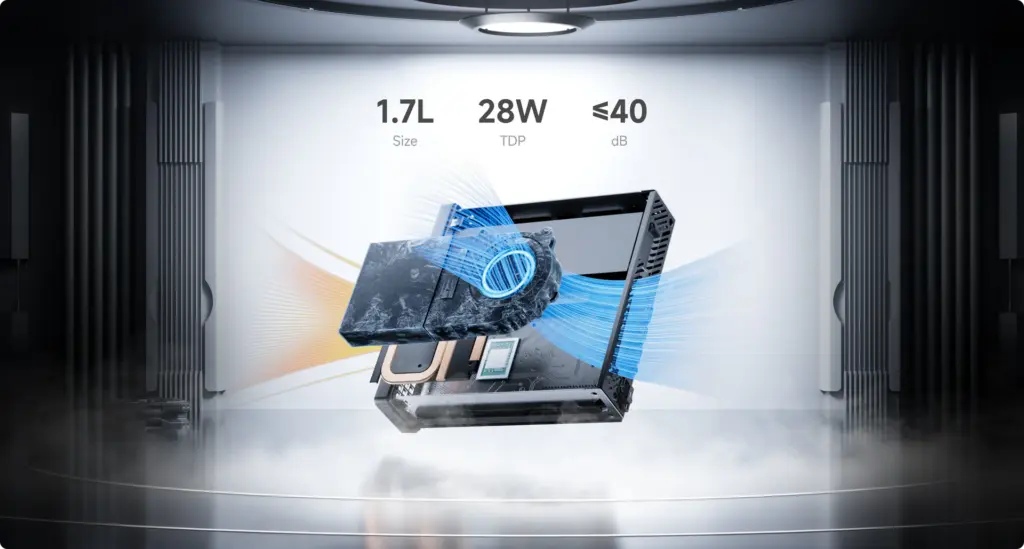
Lenovo launches Legion R7000 2025 with RTX 5050 GPU and Ryzen 7 H255

Lenovo has launched a new configuration of its Legion R7000 2025 gaming laptop in China. The updated model features AMD’s Ryzen 7 H255 processor paired with Nvidia’s newly released GeForce RTX 5050 GPU. The laptop is now available on JD.com with a retail price of 7499 yuan ($1,040).

Lenovo Legion R7000 2025

Lenovo Legion R7000 2025 Specifications

The Ryzen 7 H255 processor is built on a 4nm Zen 4 architecture and integrates Radeon 780M graphics. It has 8 cores and 16 threads, with a maximum single-core frequency of 4.9GHz.

The RTX 5050 GPU in this model uses Nvidia’s Blackwell architecture and includes 8GB of GDDR7 video memory on a 128-bit bus. It supports real-time ray tracing, DLSS 4, and Dynamic Boost 2.0. Lenovo has enabled the GPU to run at a peak power of 115W, contributing to a combined CPU and GPU performance output of up to 170W.

The laptop features a 15.3-inch LCD display with a resolution of 2560×1600, a 180Hz refresh rate, and a 3ms response time (overclocked from its native 5ms). The panel reaches 400 nits of brightness and covers 100% of the sRGB color gamut. It supports both Nvidia G-Sync and AMD FreeSync Premium technologies and carries TÜV Rheinland certification for low blue light and flicker-free viewing.

Lenovo uses its second-generation Qiankun cooling system for thermal management. The system includes a dual-fan inward-blowing design and a 3D composite heat pipe to manage high-performance output during extended workloads.

The laptop is equipped with 16GB of DDR5 RAM running at 5600MHz and a 512GB PCIe 4.0 SSD, both of which are user-upgradable. It features Lenovo’s TrueStrike 2.0 keyboard, offering 1.6mm key travel, full-size arrow keys, customizable backlighting, and a dedicated numeric keypad. Audio is enhanced by Nahimic tuning.

In terms of connectivity, it includes USB-C with DisplayPort 2.1 and 140W Power Delivery, HDMI 2.1, RJ45 Ethernet, multiple USB-A ports, and a 3.5mm headphone jack. The system supports hybrid graphics switching without requiring a reboot and includes Legion Zone software for customization and tuning.

The Legion R7000 weighs about 2kg and features a 60Wh battery. Lenovo provides a compact 245W charger, and the laptop supports 140W fast charging via USB-C, reaching 70% in approximately 30 minutes. The device ships with Windows 11 and includes a lifetime license for Microsoft Office Home Edition.

For more daily updates, please visit our News Section.

Stay ahead in tech! Join our Telegram community and sign up for our daily newsletter of top stories! 💡

(Source)

Redmi Turbo 5 December launch tipped, Poco X8 Pro may debut earlier than expected

Recent reports suggest that successors to last year’s smartphones are arriving earlier this year. For example, the Xiaomi 16 series is anticipated to launch by the end of September, which is a month ahead of its predecessor, the Xiaomi 15 series, unveiled in October last year. Additionally, a new leak indicates that the Redmi Turbo 5 will also be released ahead of its expected schedule.

Redmi Turbo 5 may launch in December

Redmi Turbo 5 December launch tipped

To recall, the Redmi Turbo 4 was announced in January 2025 in China. However, tipster Smart Pikachu claims that the company is speeding up the arrival of the Turbo 5 and is aiming for a December launch for the home market.

The Redmi Turbo 5 is expected to debut as the world’s first phone powered by the next-generation Dimensity 8500 chipset. The company will enjoy exclusivity of this chip, as Honor, Realme, and iQOO phones powered by the same chip may debut in Q1 2026.

According to reports, the Redmi Turbo 5 will feature a 6.67-inch flat OLED LTPS panel that supports a 1.5K resolution. The chip that powers the device may be marketed as the Dimensity 8500 Ultra. It is also expected to feature a metal middle frame and a battery of around 7,000mAh capacity.

It appears that the Redmi Turbo 5 Pro, arriving next year, will be a larger device featuring a 6.83-inch screen similar to the Turbo 4 Pro. Rumours suggest it will house an 8,000mAh+ battery with 100W charging support and may launch globally as the Poco F8.

Poco X8 Pro could be coming soon

Poco X8 Pro EEC certified

The upcoming Poco X8 Pro for the global market is said to be a rebranded version of the Redmi Turbo 5. To recall, the Poco X7 Pro was certified by EEC in December 2024, and it went official in January 2025. Surprisingly, the Poco X8 Pro has already been approved by the EEC authority (via. XpertPick), indicating that it may debut soon after the Turbo 5, probably in December this year.

For more daily updates, please visit our News Section.

Stay ahead in tech! Join our Telegram community and sign up for our daily newsletter of top stories.

Vivo Y400 5G price, specifications, official images leaked before launch

The Vivo Y400 is all set to go official tomorrow (Aug. 4) in India. While the landing page of the phone has been available on Vivo India’s website for the past few days, the brand hasn’t revealed anything significant about it. Fret not, a new leak that has emerged, courtesy of tipster Sudhanshu Ambhore, has revealed almost everything from its specifications to images.

Vivo Y400 5G specifications (rumored)

As per the leak, the Vivo Y400 5G will feature a 6.67-inch AMOLED display that offers a Full HD+ resolution, a 120Hz refresh rate, and 1800 nits of brightness. For security, it features an optical in-screen fingerprint sensor.

On the front, the Vivo Y400 5G will feature a 32-megapixel selfie camera. Its back panel will be equipped with a 50-megapixel primary camera and a 2-megapixel auxiliary lens.

The Y400 5G will feature the Snapdragon 4 Gen 2 chipset and a massive 6000mAh battery with 90W charging support. The device will arrive with 8GB of RAM and 128GB / 256GB of internal storage. Previous reports have claimed that it will have an IP68/69-rated body.

Vivo Y400 5G price in India (rumored)

The Vivo Y400 5G will be available in two configurations, such as 8GB+128GB and 8GB+256GB. These variants will have market operating prices of Rs 21,999 and Rs 23,999, respectively. These are said to have Rs 26,999 and Rs 28,999 MRP prices, respectively. The handset will be sold in shades like Glam White and Olive Green.

In related news, Vivo is also working on two new phones for the Indian market. While the Vivo V60 equipped with the Snapdragon 7 Gen 4 chip is slated to go official on Aug. 12, the brand is also said to be working on the Vivo T4 Pro. At present, there is no information about the core specifications of the T4 Pro.

For more daily updates, please visit our News Section.

Stay ahead in tech! Join our Telegram community and sign up for our daily newsletter of top stories.

(source 1, 2)

Big Bespoke AI Fest: Samsung offers cashback on refrigerators, washing machines, and more

Samsung has revealed details of its upcoming Big Bespoke AI Fest, scheduled from August 1 to 17, 2025. According to the company, the event will focus on its AI-powered home appliances, offering benefits and incentives to encourage upgrades.

Samsung Big Bespoke AI Fest offers

Big Bespoke AI Fest
Big Bespoke AI Fest

During the fest, Samsung is promoting its Bespoke AI range, which includes refrigerators, washing machines, air conditioners, and microwaves. Cashback offers include Rs 50,000 on the 25kg Bespoke AI Laundry Combo and Rs 20,000 on the French Door Refrigerator with Family Hub. Side-by-Side Refrigerators, Front Load Washing Machines, Top Load models, and Frost Free Refrigerators are listed with savings of up to Rs 20,000, Rs 10,000, Rs 4,500, and Rs 7,000, respectively.

Financing options feature zero down payment and a ‘1 EMI off’ benefit on select refrigerators and washing machines through Samsung’s 20/5 scheme, where payments are spread over 20 months at no cost, with Samsung covering the first instalment. Extended warranties are also part of the campaign, including 20 years on Digital Inverter components in refrigerators and washing machines, 10 years on Ceramic Enamel Cavities in microwaves, and 5 years of of comprehensive coverage on select air conditioners. Free professional installation is offered on 5-Star-rated WindFree ACs.

The offers will be accessible via Samsung.com, major e-commerce platforms, and select retail outlets across India.

This post is based on a press release shared by the brand. Prices and discounts advertised during sale periods may sometimes match regular prices, so it is advisable to verify details before purchasing.

For more daily updates, please visit our News Section.

Stay ahead in tech! Join our Telegram community and sign up for our daily newsletter of top stories.

Rogbid M2 Kickstarter launch brings tungsten steel smartwatch with offline GPS, 810mAh battery

Rogbid has introduced the Rogbid M2 through a Kickstarter campaign. The major highlight of this device is that it is the world’s first smartwatch with a tungsten steel build. Its other key features include offline GPS, 3ATM water resistance, and 810mAh battery, promising a device aimed at fitness enthusiasts and outdoor explorers. Here is a closer look at what the Rogbid M2 offers.

Rogbid M2 specifications and features

Rogbid M2
Rogbid M2

The Rogbid M2 features a 1.6-inch AMOLED display with 466 x 466 pixels resolution and 1500 nits brightness, protected by Corning Gorilla Glass. It is built around a tungsten steel unibody said to be significantly harder than stainless steel, with customizable side inserts and triple-layer plating. The watch weighs 90 grams, has a 24mm fluororubber strap, and carries 3ATM water resistance.

For positioning, it supports dual-band GNSS and six satellite systems (GPS, GLONASS, GALILEO, NAVIC, QZSS, BDS), complemented by advanced route planning algorithms for offline navigation. Fitness features include over 100 sports modes, 6-axis sensors, trajectory optimization, heart rate and blood oxygen monitoring, sleep tracking, fatigue analysis, and mood monitoring. Additional sensors cover compass, gyroscope, geomagnetic data, barometric altimeter, and acceleration.

Rogbid M2
Rogbid M2

The M2 is powered by an 810mAh battery with a claimed 100-day standby, 4GB storage for music playback, and Bluetooth 5.3 for wireless connectivity. It supports Android 5.0 and iOS 11.0 or newer devices.

Rogbid M2 Kickstarter campaign details and price

As of this writing, the Kickstarter campaign has raised $10,376 of its $2,790 goal, supported by 75 backers, with 20 days remaining. Interested users can back the project via Kickstarter. Pricing starts at $119 for a limited offer, followed by $129 for Super Early Bird and $149 for Early Bird tiers. An add-on option is also priced at $119, while a Combo Deal for two units costs $235 (MRSP $398).

For more daily updates, please visit our News Section.

Stay ahead in tech! Join our Telegram community and sign up for our daily newsletter of top stories.

Nothing announces Independence Day sale in India with discounts on phones, audio and IoT devices

Nothing has announced special Independence Day offers across its smartphone, audio and IoT products in India. The company says the sale runs from July 31 to August 10 and highlights price drops on popular devices, including its CMF and Nothing lineups. Here’s a closer look at what’s on offer.

Nothing Independence Day Sale

CategoryModelNet Effective Price
SmartphonesCMF Phone 2 ProRs 16,999
Nothing Phone (3a)Rs 22,999
Nothing Phone (3a) ProRs 26,999
Audio DevicesCMF by Nothing Buds ProRs 2,799
CMF by Nothing Buds 2ARs 1,899
CMF by Nothing Neckband ProRs 1,899
CMF by Nothing Buds 2Rs 2,499
CMF by Nothing Buds 2 PlusRs 3,099
CMF by Nothing Buds Pro 2Rs 3,499
Nothing Ear (a)Rs 5,999
Nothing EarRs 8,999
SmartwatchesCMF by Nothing Watch ProRs 3,499
CMF by Nothing Watch Pro 2Rs 4,499
Chargers & AccessoriesCMF by Nothing 65W GaN 3 A 3 Port ChargerRs 2,699
CMF by Nothing 33W Type-C Power Fast ChargerRs 999
CMF by Nothing 100W Power GaN 5Rs 3,999
CMF by Nothing 140W Power GaNRs 4,999
CMF by Nothing 45W ChargerRs 2,299
Nothing USB Type-C Cable 1MRs 599
Nothing USB Type-C Cable 1.8MRs 799

The CMF Phone 2 Pro is priced at Rs 16,999 and features a 6.77-inch display with 3000 nits brightness, MediaTek Dimensity 7300 Pro chip, 50-megapixel main and 50-megapixel telephoto cameras, IP54 water resistance and 45W charging.

The Nothing Phone (3a) is available for Rs 22,999, offering a 6.77-inch FHD+ display with 120Hz refresh, Snapdragon 7s Gen 3 chip, 50-megapixel triple camera setup and 32-megapixel selfie camera. The Nothing Phone (3a) Pro, priced at Rs 26,999, adds a periscope lens with 60x zoom and a 50-megapixel front camera capable of 4K recording.

For audio and accessories, prices start at Rs 599 for a Type-C cable and go up to Rs 8,999 for the Nothing Ear. Options include CMF Buds from Rs 1,899, CMF Watch Pro series from Rs 3,499 and chargers such as the CMF 140W Power GaN at Rs 4,999.

The sale is available on Flipkart, Myntra, Vijay Sales, Croma and other retailers, with additional bank discounts of Rs 2,000 and exchange bonuses of up to Rs 1,000.

Disclaimer: This article is based on a press release shared by the brand. In many cases, products are sold at the same prices outside sale periods but are advertised as discounted. It is advisable to double-check pricing before making a purchase.

Vivo Y04s launched with 90Hz display, 6000mAh battery, and IP64 rating

Vivo has introduced a new Y-series phone, the Vivo Y04s, in Indonesia. It is an entry-level 4G smartphone offering a large battery, decent performance, and a durable design. Here’s a detailed look at its specifications, features, and price.

Vivo Y04s specifications and features

Vivo Y04s
Vivo Y04s

The Vivo Y04s features a 6.74-inch LCD screen with an HD+ resolution of 1600 x 720 pixels. The display offers a selectable refresh rate of either 60Hz or 90Hz and can achieve a peak brightness of 570 nits. The phone is built to be durable, with an IP64 rating for dust and splash resistance and MIL-STD-810H certification for shock resistance. Its rear panel sports a Crystalline Matte finish.

Powered by the Unisoc T612 chipset, the Vivo Y04s comes with 4GB of LPDDR4X RAM, 64GB of eMMC 5.1 storage, 4GB of extended RAM, and supports up to 1TB of external storage via microSD.

For cameras, the device features a 5-megapixel front camera and a dual rear setup with a 13-megapixel main sensor and a QVGA lens. The phone runs Funtouch OS 14 based on Android 14.

Vivo Y04s
Vivo Y04s

The Y04s houses a 6,000mAh battery with 15W FlashCharge support. Connectivity options include dual SIM, Wi-Fi (2.4GHz/5GHz), Bluetooth 5.2, GPS, USB 2.0, OTG, and FM radio. It also features a side-mounted fingerprint sensor. The phone measures 167.30 x 76.95 x 8.19mm and weighs 202 grams.

Vivo Y04s price and availability

In Indonesia, the Vivo Y04s is priced at IDR 1,399,000 (~$85) and comes in two color options: Crystal Purple and Jade Green. Availability details for other regions are yet to be announced.

For more daily updates, please visit our News Section.

Stay ahead in tech! Join our Telegram community and sign up for our daily newsletter of top stories.

The best 360 cameras you can buy in 2025

360-degree cameras are still a niche product, but they’ve been around long enough to become reliable tools for creators, vloggers, and adventure enthusiasts.

If you’re one of them and looking to buy a 360 camera, there are plenty of solid options to choose from in 2025. The best overall still comes from the popular Insta360 brand, but new entries from other major players bring strengths of their own. 

Here are the best 360 cameras you can buy in 2025.

1. The 360 camera that most people should buy

Insta360 X5 360° Action Camera

If you’re looking for a 360 camera that does almost everything right, Insta360’s X5 is probably it. It’s the successor to the X4 and brings upgrades in the areas where it needed them most.

The X5’s twin 1/1.28-inch sensors can now capture up to 8K video at 30fps, which not only gives you more flexibility when reframing but also lets you export sharp 4K clips for traditional use.

The X5’s footage also looks clean and dynamic, and Insta360 mostly has a color science that flatters people. There’s also a new PureVideo mode that significantly improves low-light performance. And if you end up scuffing the lenses during a hike or bike ride, replacements cost just $30.

This is also one of the more versatile cameras on the list. It has a bright touchscreen, responsive gesture controls, and a single-lens mode that essentially turns it into a standard action camera.

You also get RAW photo support and Insta360’s standout software suite, which makes editing on desktop or mobile far less painful than it used to be.

  • Video: 8K 30fps (360), 4K 60fps (single-lens)
  • Photos: Up to 72MP
  • Battery: 80 minutes at 8K
  • Weight: 200g

2. For the Outdoor Action Crowd

The GoPro Max is the company’s first and only 360 camera. It is perfect for those who are already using GoPro’s ecosystem or just want a camera that works well in water, mud, and snow. The Max is waterproof up to five meters without a case, and it leans heavily into GoPro’s action-camera roots.

The selling point here is simplicity. GoPro’s OverCapture software lets you turn 360-degree footage into more traditional 2D video without much hassle. You just shoot everything and choose your angle later. The catch is that the exported video maxes out at Full HD, which is noticeably less sharp than the 4K+ files coming from newer cameras like the Insta360 X5.

Still, the Max offers rock-solid stabilization (thanks to GoPro’s HyperSmooth tech) and some cool shooting modes like 360 TimeWarp. For people who care more about ease-of-use and ruggedness than top-tier resolution, the Max could be a dependable pick.

  • Video: 5.6K 360 video
  • Photos: 18MP
  • Battery: 1600mAh
  • Weight: 154g

3. DJI Osmo 360

DJI Osmo 360

DJI has (finally) entered the 360 space with its first dedicated model, the Osmo 360. And more than anything, it feels like a clear response to the Insta360 X5. This camera is built on DJI’s drone and action cam experience, and it shows. 

It has dual 1-inch sensors, 8K video at 50fps, and a claimed 13.5 stops of dynamic range. You also get the ability to shoot 4K at 120fps with a super-wide 170° field of view, and it can shoot massive panoramic stills equivalent to 16K resolution.

There are thoughtful extras, too. It has 105GB of internal storage, a USB-C fast-charging port, voice controls, and support for DJI’s wireless mic system without a receiver. It even includes features like gesture commands, stereo and mono audio recording, and magnetic mounts borrowed from the Osmo Action line.

Perhaps the most surprising part is the battery endurance. According to DJI, it can last up to 100 minutes on continuous 8K recording, or up to 190 minutes at 6K. That’s well above what most 360 cams offer. 

  • Video: 8K 50fps (360), 4K 120fps
  • Photos: 1.2 billion-pixel panoramic images (16K)
  • Battery: Up to 190 minutes (5=6J)
  • Weight: 183g

4. A reliable 360 camera for less

While the X5 may be Insta360’s new flagship, the X4 is still on sale and often discounted heavily. For people on a budget, it’s a solid entry point into 360 video. You still get 8K video capture at 30fps and decent battery life (about 68 minutes at 8K), but the sensors are smaller (1/2-inch), and the image quality isn’t as clean as the X5.

You also miss out on PureVideo, which means low-light footage can be rough. But in good lighting, it still holds up well. Like the X5, it can shoot in single-lens mode, making it useful for vlogging or handheld walk-and-talk videos.

The best thing about the X4 is probably the price. If you’re okay with some compromises in dynamic range and night performance, this is a way to get into the 360 world without spending top dollar.

  • Video: 8K 30fps (360), 4K 60fps (single-lens)
  • Photos: 72MP
  • Battery: 68 minutes at 8K
  • Weight: 203g

For more daily updates, please visit our News Section.

Stay ahead in tech! Join our Telegram community and sign up for our daily newsletter of top stories.

Vivo V60 Lite in works, expected to debut with 90W charging after the V60

Earlier this year, Vivo introduced the V50 lineup, which included the V50, V50e, and V50 Lite in both 4G and 5G variants. The company skipped the V50 Pro and launched the V50 Lite in select markets. With the Vivo V60 set to launch on Aug. 12 in India, a new development indicates that the Vivo V60 Lite could be next in line.

Vivo V60 Lite bags certifications

Vivo V60 Lite SDPPI certified

The upcoming Vivo V60 Lite has appeared on multiple certification platforms, including SDPPI (Indonesia), CQC (China), and EEC (Europe), under the model number V2530. The SDPPI listing confirms the device’s final marketing name, while the CQC certification suggests it will support 90W fast charging.

It is not yet clear whether the V60 Lite bearing the V2530 model number will be a 4G or 5G model, but more details are expected to surface in the coming weeks.

Vivo V50 Lite specifications

Vivo V50 Lite (4G)
Vivo V50 Lite (4G)

For reference, the Vivo V50 Lite features a 6.77-inch AMOLED display with FHD+ resolution and a 120Hz refresh rate. It includes a 32-megapixel front camera and a 6,500mAh battery with 90W fast charging.

The 4G variant is powered by the Snapdragon 685 chipset, paired with 8GB of RAM and 128GB or 256GB of storage. It has a dual-camera setup with 50-megapixel and 2-megapixel sensors. The 5G version uses the Dimensity 6300 SoC, offers up to 12GB of RAM and up to 512GB of storage, and features a 50-megapixel + 8-megapixel dual-camera system.

For more daily updates, please visit our News Section.

Stay ahead in tech! Join our Telegram community and sign up for our daily newsletter of top stories.

(via)