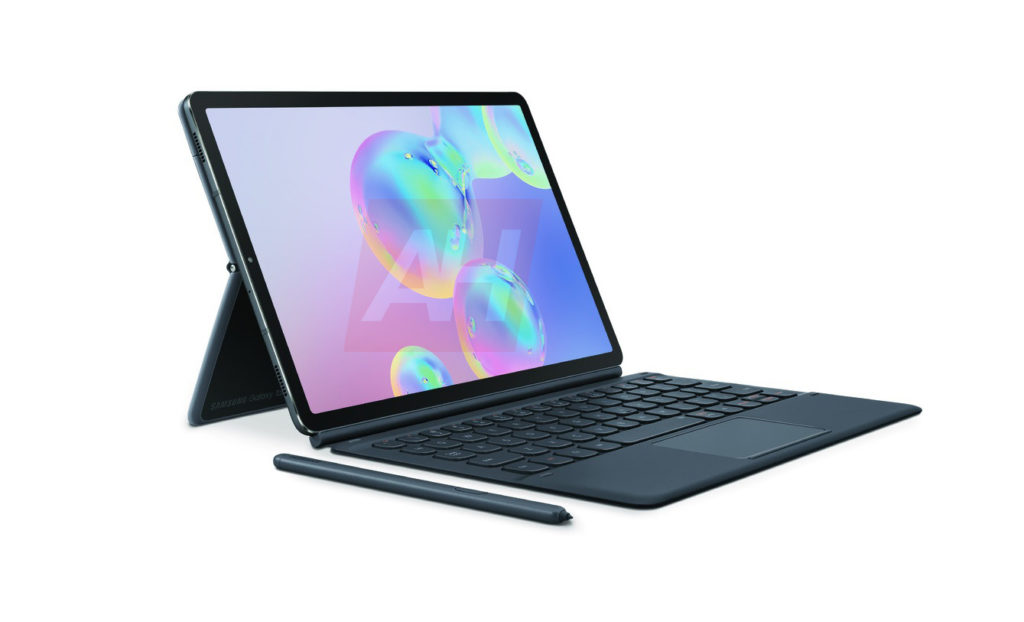
Recent reports have revealed plenty of information on the upcoming Galaxy Tab S6 flagship tablet from Samsung. The South Korean company will be launching the Galaxy Note 10 series on Aug. 7. Probably, the Tab S6 device may go official at the same event. The leaked renders of the tablet have revealed the entire design of the tablet. A fresh leak by Ishan Agarwal has revealed the key specifications of the device.
Samsung Galaxy Tab S6 Specifications
The Galaxy Tab S6 measures 244.5 x 159.5 x 5.7mm and it weighs 420 grams. The tablet is expected to come with an AMOLED display that supports 2560 x 1600 pixels. It is speculated that it could be 10.5-inch panel that will come embedded with an in-screen fingerprint reader.
The Galaxy Tab S6 will be the first tablet to be fueled by the Snapdragon 855 mobile platform. The SoC will be assisted by up to 8 GB of RAM and 256 GB onboard storage. The expected variants of the tablet are 6 GB RAM + 128 GB storage and 8 GB RAM + 256 GB storage. It will also feature an expandable storage that will support up to 512 GB microSD card.
The front side of the Galaxy Tab S6 has an f/2.0 aperture 8-megapixel snapper. The rear shell of the tablet is fitted with a dual camera setup that includes a primary lens of 13-megapixel with f/2.0 aperture and a 5-megapixel lens with f/2.2 aperture.
The device will be powered by a 7,040mAh battery. It will come with support for fast charging. There is a groove present on the backside of the device where the S-Pen can sit flush on its rear. The Air Gesture (aka Air Mouse) of S-Pen will allow users to control the tablet with touching on the display.
1 of 3
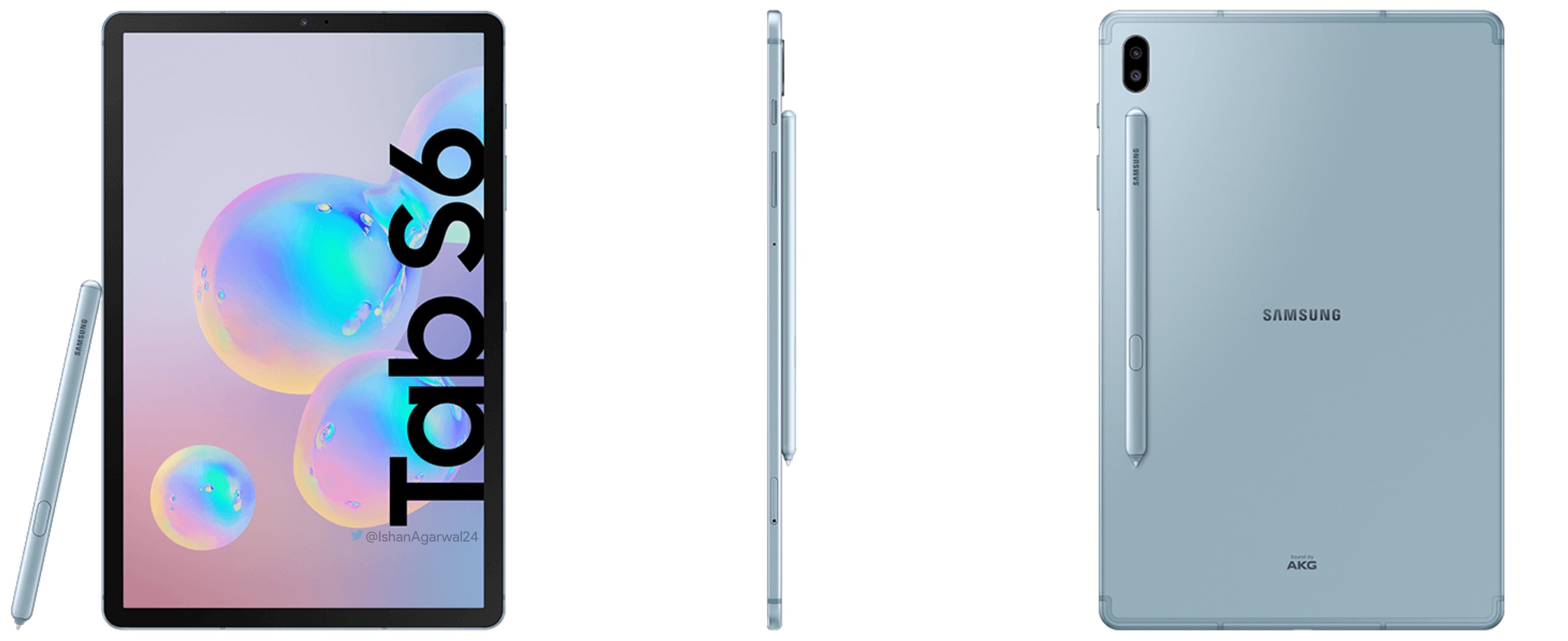
Samsung Galaxy Tab S6 Blue
Samsung Galaxy Tab S6 Blue
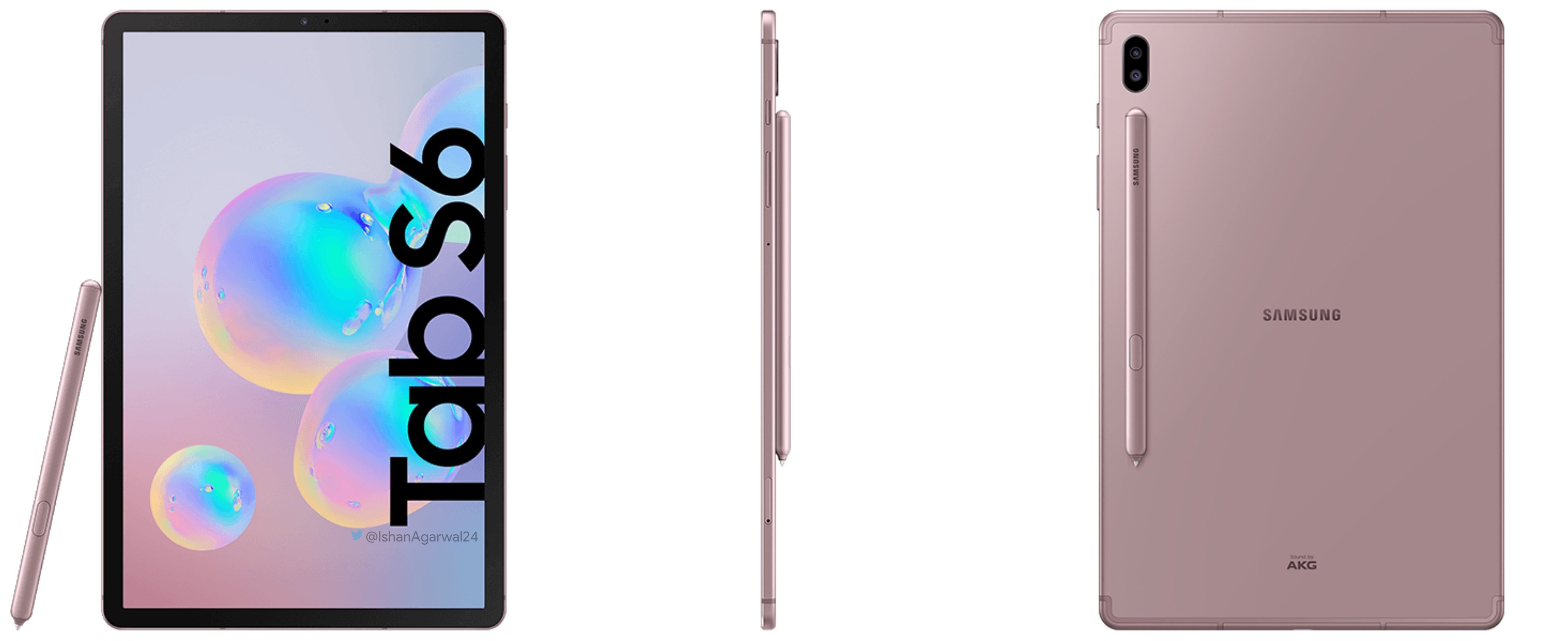
Samsung Galaxy Tab S6 Rose Gold
Samsung Galaxy Tab S6 Rose Gold
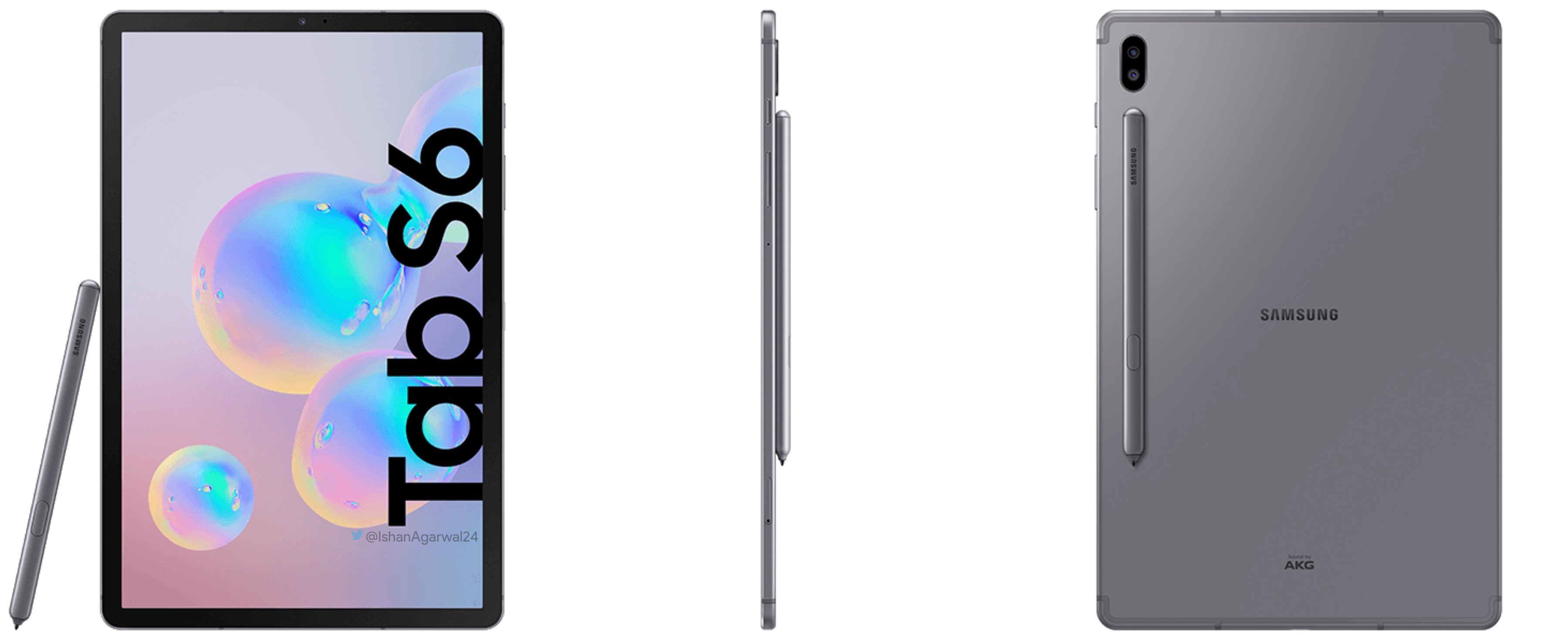
Samsung Galaxy Tab S6 Mountain Grey
Samsung Galaxy Tab S6 Mountain Grey
According to the leakster, the Tab S6 S-Pen can last for nearly 6 hours on a single charge. However, with Air Mouse features activated, it can only last for 30 minutes. The tablet will also come equipped with face recognition feature. It will come equipped with AKG tuned quad speakers and it will carry support for Samsung DeX for full-blown desktop experience by connecting it to a larger monitor. Samsung’s Bixby Assistant will be also there on the device. The Galaxy Tab S6 may come in colors like Mountain Grey, Rose Gold and Blue.
ByteDance — the creator of social video platform TikTok, which is currently the world’s most valuable startup, is reportedly working on making a smartphone. The company has also made a deal with device manufacturer Smartisan Technology for the same.
This development comes as ByteDance, or Douyin as it is known in mainland China, is expanding into new sectors beyond its dominating market of video and news apps. In a statement, ByteDance spokesperson confirmed that a smartphone had been a part of its development plans, adding that “the product was a continuation of earlier Smartisan plans, aiming to satisfy the needs of the old Smartisan user base.”
As per the report coming from the Chinese media, the smartphone from ByteDance has been in development since the past seven months. The effort for the same is being led by Wu Dezhou, who is a former executive of Smartisan.
For the development of smartphone, ByteDance has acquired a set of patents from Smartisan Technology and some of the device makers’ employees have also been transferred to ByteDance which it likes to call a “normal flow of talent.”
While Smartisan may not be as well-known as other Chinese smartphone brands, it has been a niche player in the highly competitive market. The privately-owned company was founded by Luo Yonghao and is based in Beijing.
On the other hand, ByteDance was founded in the year 2012 and has now become a leading player in China’s technology industry and is competing against the likes of giants such as Baidu and Tencent.
The company currently has more than 300 million active users on a monthly basis in China only, as ByteDance revealed last month. On the other hand, TikTok, the global-facing product has seen a surge in its popularity in North America and India.
Recently, ByteDance acqui-hired UK-based startup Jukedeck for an undisclosed amount. The company makes software that can autonomously compose music and also has certain intellectual property assets.
The market is teeming with FPV (first-person-view) racing drones for beginners, as well as experienced drone pilots; however, these unmanned aircraft don’t come cheap.
If you have restlessly been waiting to get your hands on an FPV racing drone without spending a lot of money, GeekBuying’s got your back! The popular Chinese online store has launched a New FPV Racing Drone Arrivals promotion, giving its users a chance to buy top-end racing drones starting at just $14.99.
To simplify and expedite the search process, GeekBuying has divided a wide range of heavily discounted drones and other items into specific categories. The promotion page features New Arrivals, FPV System, and the Big Discount sections that are crammed with drones and a slew of other accessories that you can buy for lowered prices.
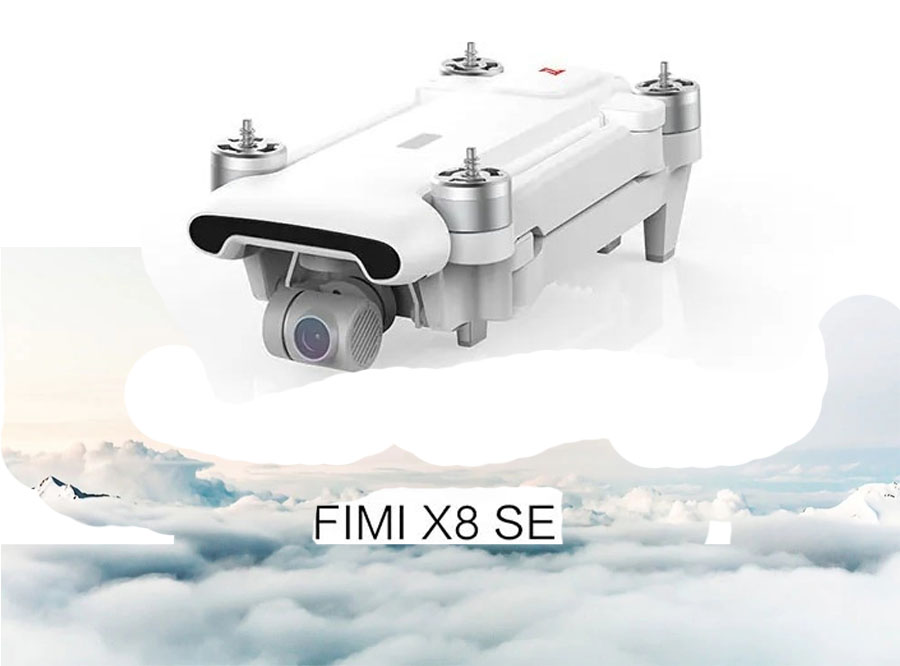
We will be checking out the discount GeekBuying is currently offering on the Xiaomi FIMI X8 SE 4K drone. On top of that, we will show how you can save a considerable amount of more money at the time of checking out.
Equipped with the latest encoder and decoder, the Xiaomi FIMI X8 SE 4K drone offers superior4K 100Mbs videos, coupled with low latency. While most drones fail to deliver good quality videos in high speed or strong-wind conditions, the FIMI X8 SE offers ultra-smooth and jello-free videos, thanks to the lightweight 3-axis mechanical gimbal, and professional control algorithms it adopts.
This highly compact and lightweight RC drone usually retails for $559.99 on both online, as well as offline stores. Much to the relief of drone enthusiasts who aren’t willing to spend that kind of money on an RC drone, GeekBuying is now offering the FIMI X8 SE for a dropped price of just $499.99.
You can follow this link to avail the discount and take advantage of the coupon before it expires. The promotion sale was on the verge of wrapping up at the time of checking out.
With mobile devices including smartphones, tablets, and phablets becoming an inseparable part of our fast-paced lives, leading manufacturers have jumped the mobile phone accessories wagon.
As a result, the market is brimming with a wide selection of must-have accessories for Android, as well as iOS smartphones. Taking the undying demand for mobile phone accessories into consideration, GeekBuying has launched the Price Drops Save On Smarthome Essentials promo.
As part of this promo, GeekBuying is giving its loyal users an unmissable chance to grab an extra 6 percent off on various accessories that not only enhance the appearance of your smartphones but also improve their overall performance.
While the products featured on the activity page carry noteworthy discounts and have carefully been added to specific categories to expedite the search process, you can use coupon code SMARTHOME6 and get an extra 6 percent off during the checkout process. Note that this coupon will be valid for Items on this promo page only.
Living up to its reputation for offering China’s best electronic items at unbeatable prices, GeekBuying is doling out great discounts on the Xiaomi Mijia Smart Sensor Set, and the Xiaomi Mijia Smart Door Lock. We will not only shed light on the aforesaid discounts but also show how you can save more money before placing your order.
Xiaomi Mijia Smart Sensor Set
The Xiaomi Mijia Smart Sensor set comprises one Mi Control Hub, two Mi motion sensor, two Mi window and door sensor, and one Mi wireless switch. Other functions include an online radio, night lights, an IP camera, customizable bell for alarm, and more.
This set would normally set you back a pretty penny, but you can now buy it for a lowered price of only $89.99 from GeekBuying. This is a noteworthy 40 percent reduction in its original asking price of $148.99.
You can extend this discount with the help of coupon code 3HFAHOYI. The coupon helps you grab an extra $10 off, by reducing the retail price of Xiaomi Mijia Smart Sensor Set to just $79.99 during the checkout process.
You can follow this link to avail the discount, which will be valid for the color version for a short period. Note that the coupon is likely to expire soon as well.
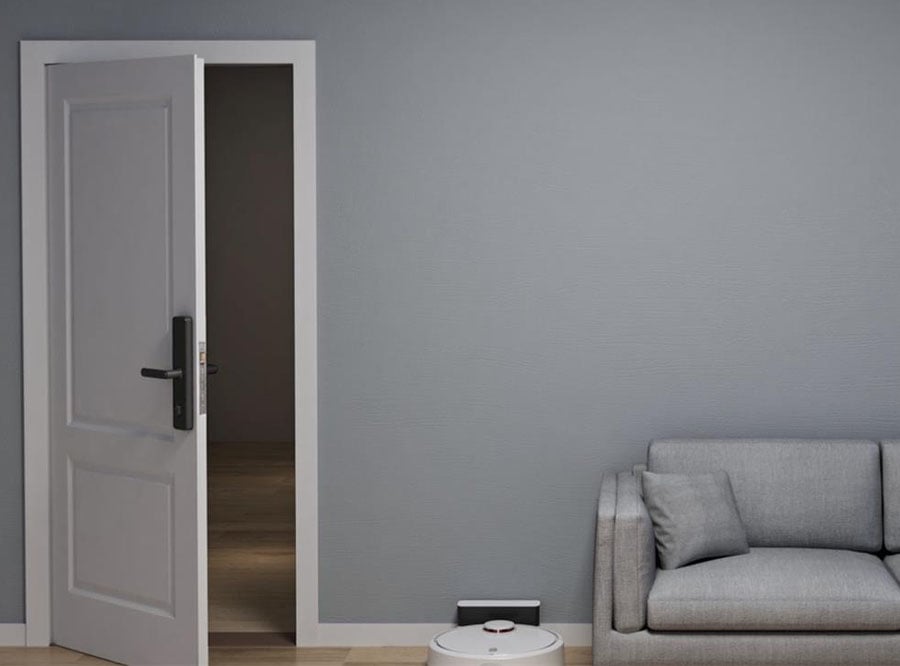
Integrate with 3D living fingerprint identification, the Mijia Smart Door Lock features six unlocking modes including Fingerprint, NFC, Bluetooth, Password, etc. A great choice for 40-80mm thick doors, this Xiaomi-branded smart door lock supports 50 fingerprints, 50 passwords, and 25 NFC devices.
The feature-rich Xiaomi Mijia Smart Door Lock usually retails for $379.99 on both online, as well as offline stores but you can now buy it for a lowered price of only $283.99 from GeekBuying. This is a 25 percent reduction in the device’s original asking price.
On top of that, you can use coupon code 3HFAWCDG to save $14 more at checkout. In other words, you can bring the already lowered retail price of the Xiaomi Mijia Smart Door Lock further down to $269.99 simply by applying the aforesaid coupon at checkout.
You can visit this link to take advantage of the coupon and avail the discount before the promo comes to an end.
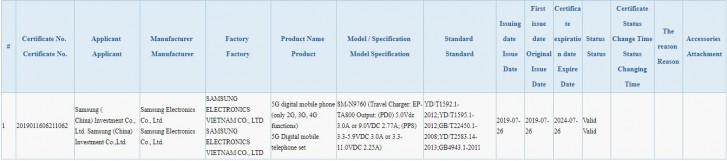
Samsung will be launching the Galaxy Note 10+ through a global launch event in New York on Aug. 7. The reservations of the Note 10 series have started in the U.S. Its pre-orders will begin in India on Aug. 8. China too will be receiving the Note 10 lineup in the near future since it has been certified by the 3C authority of China.
The database of 3C has a listing for SM-N9760 model number. Recent reports have revealed that it belongs to Galaxy Note 10+. The 3C listing also reveals that it is the 5G version of the Note 10+ and it will be accompanied by a charger that supports up 25W charger. Recent reports have revealed that the Galaxy Note 10+ will be equipped with an optional 45W charger. The 3C listing suggests that the Galaxy Note 10+ 5G will be coming with a 25W charger.
It goes without saying the Galaxy Note 10+ 5G being a premium device will command a hefty price tag. However, its disappointing to know that users will have to spend more money to get 45W charger for it.
Rumors surrounding the Galaxy Note 10+ have revealed that it measures 162.3 x 77.1 x 7.9mm and it weighs 198 grams. The smartphone houses a 6.8-inch S-AMOLED Infinity-O curved display that supports quad HD+ resolution of 1080 x 3040 pixels. There is a centered punch-hole at the top version of the display for the 10-megapixel front-facing camera. The display of the phone is embedded with an ultrasonic in-screen fingerprint sensor.
Depending on the market, the Galaxy Note 10+ will come in Snapdragon 855+ or Exynos 9825 chipset models. The SoC will be assisted by 12 GB of RAM and it may come in 256 GB or 512 GB UFS 3.0 internal storage options. It will lack support for external storage.
The back panel of the phone will feature a triple camera setup along with a ToF sensor. It will come with a 12-megapixel main sensor with f/1.5 – f/2.4 variable aperture, a 12-megapixel telephoto lens with f/2.1 aperture and a 16-megapixel ultrawide lens with f/2.2 aperture. The smartphone houses a 4,300mAh battery. It will come with up to 20W fast wireless charging and 12W reverse wireless charging. The Note 10+ has AKG-tuned stereo speakers, but it lacks support for a 3.5mm audio jack.
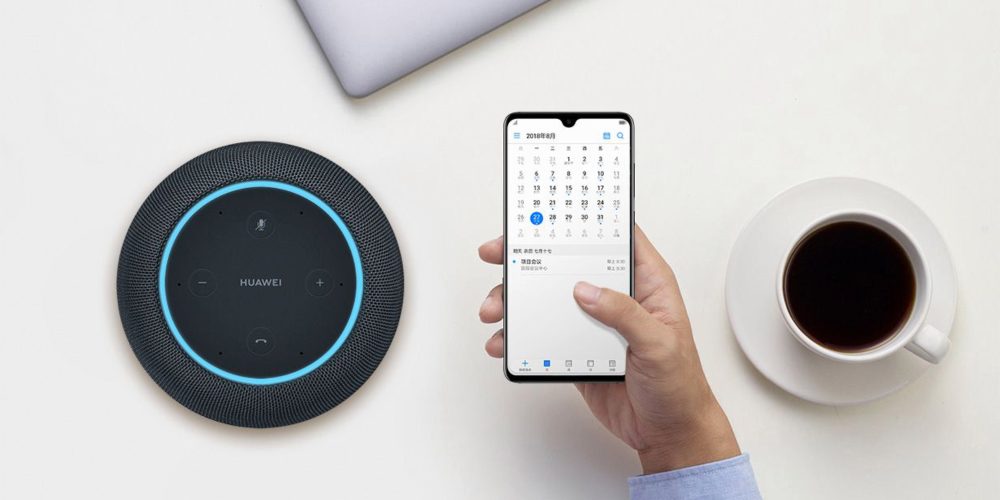
Huawei and Google have had a strong relationship in the past. However, after the recent US ban, this relationship has faced its share of struggles. Although things seem to be better now, with the Trump administration allowing Huawei to use Google’s Android, these companies reportedly had to kill a couple of projects because of the recent US ban.
Huawei has an AI speaker called Hero in China
According to the Information, Huawei and Google were working on a smart speaker powered by the Google Assistant. The company was expected to launch the new speaker at IFA, Berlin in September this year and planned to sell it online in the US. However, when the US ban came into effect, both the companies had to stop working on it. It is said that they spent at least a year on the speaker, so it’s a shame that it may never see the light of the day. During this period, Google and Huawei were also discussing ways to make Huawei phones compatible with Android Auto.
However, the US ban seems to have strained Huawei’s relationship with all US companies. In fact, recently, a report said that Huawei aimed to reduce its reliance on US suppliers by the next couple of years to avoid any supply issues in the future. The company is said to have survived the recent US ban by stockpiling essential components and chips before hand.
So even if US removes Huawei from its ‘Entity List’, it’s unlikely that things will go back to normal between these two companies.
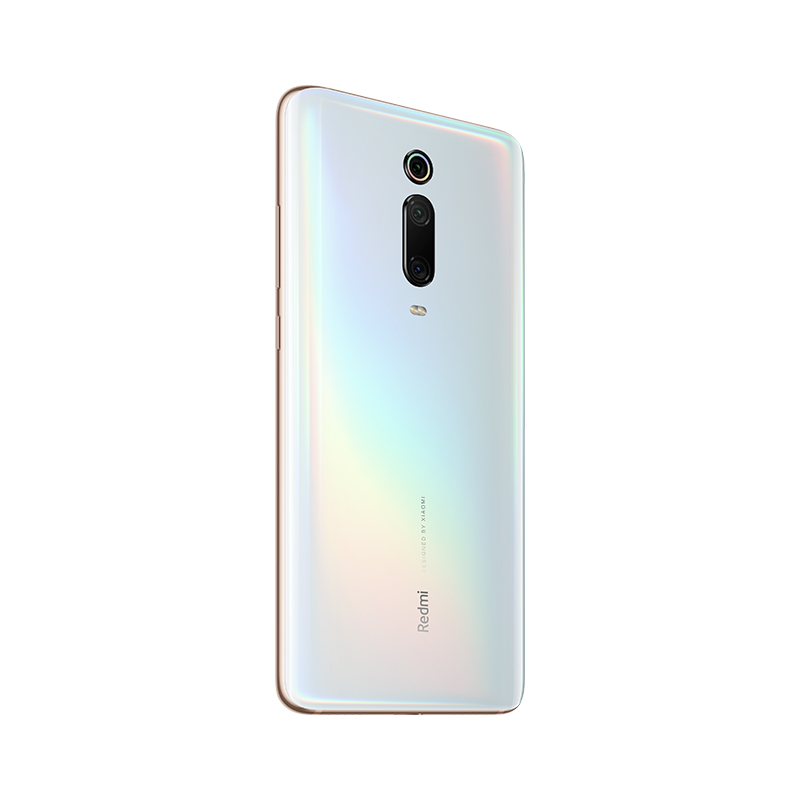
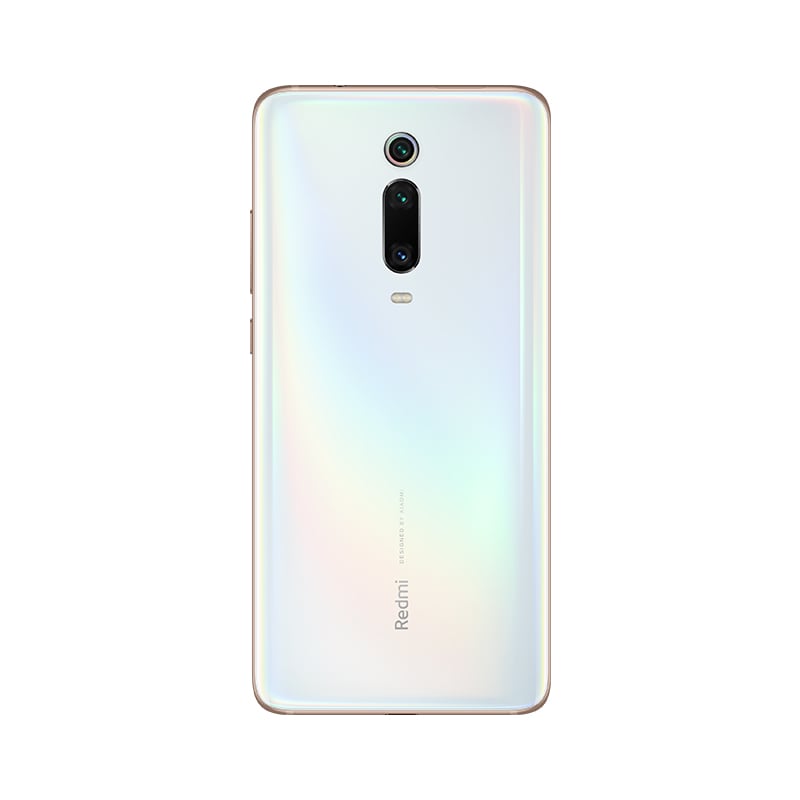
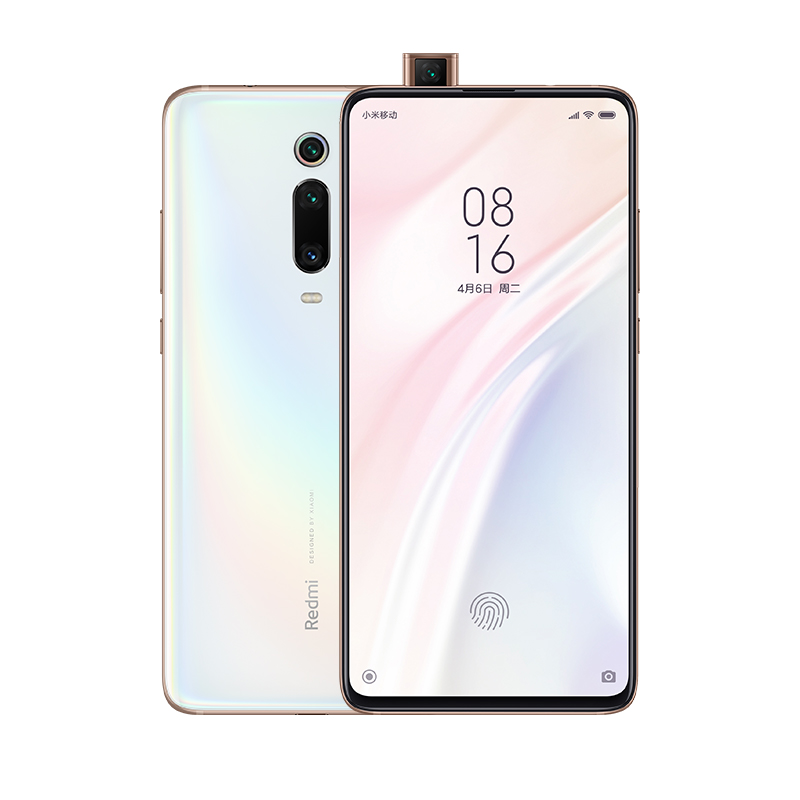
Redmi has unveiled the Redmi K20 Pro in a new color variant called the Summer Honey White. From the official poster of the new variant, it looks like Redmi has taken its inspiration from Xiaomi’s CC9 series. The new color looks a lot similar to CC9’s white color model.
Note that the Redmi K20 Pro will not be available in the base 6GB + 64GB variant. It is already up for reservations in China and will go on sale on August 1.
The Redmi K20 Pro has turned out to be a best-seller for the independent Redmi brand, bringing in powerful specs at an affordable price tag. The phone features a Snapdragon 855 flagship-grade processor, a 6.39-inch FHD display, up to 8GB + 256GB storage option, a triple camera setup of 48MP, 8MP, and 13MP at the back and a considerably large battery of 4000mAh. In addition to these powerful hardware specs, the Redmi K20 Pro also comes with software features such as Mi Turbo and Game Turbo to boost UI and gaming experiences, respectively.
Redmi K20 Pro comes in Summer Honey White in China
Apart from Summer Honey White, the Redmi K20 Pro is also available in three other colors: Glacier Blue, Flame Red, and Carbon Black.
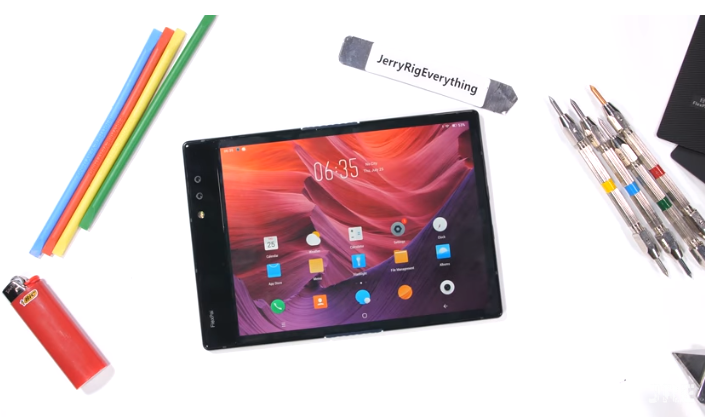
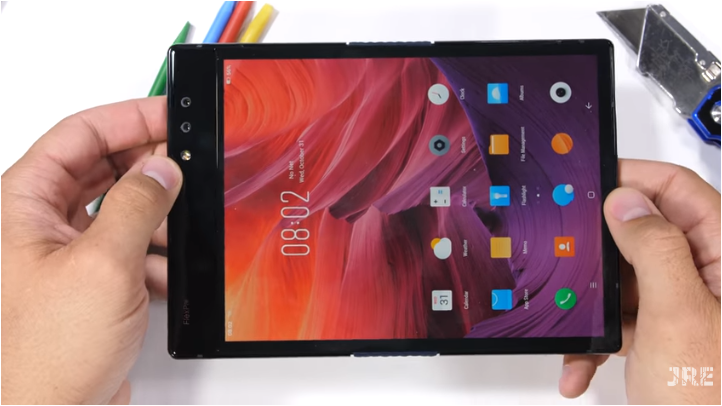
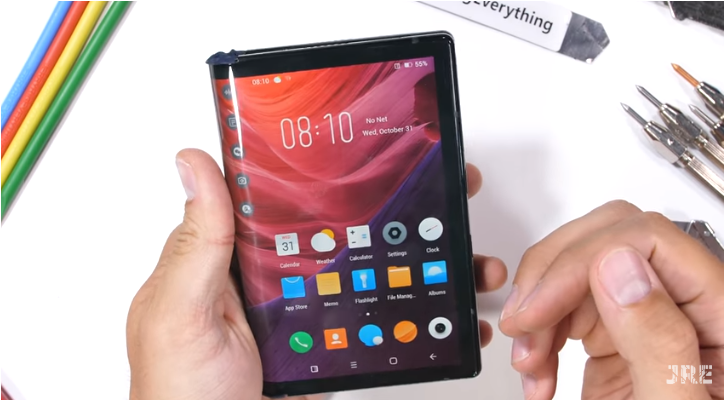
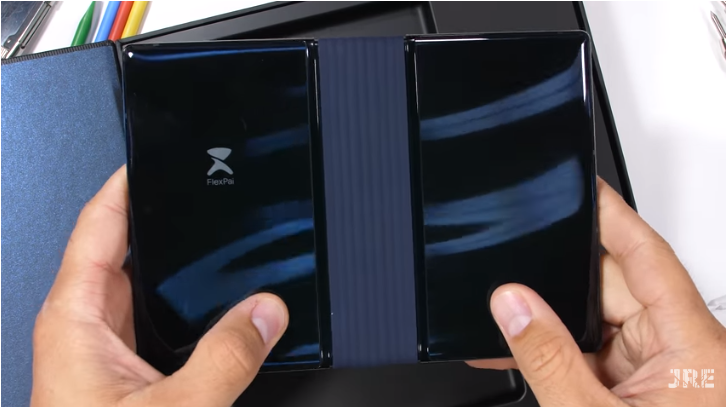
Samsung‘s Galaxy Fold isn’t the first foldable smartphone to be unveiled, in case you don’t know. A little known Chinese company known as Royole holds the record as the first company to release a foldable phone dubbed Royole Flexpai. The foldable phone has been on sale in China for a while now but it seems Royole is set to release the device for the global market. How else can we explain the FlexPai popping into the hands of revered YouTuber Zack Nelson of JerryRigEverything.
We already know that foldable phones are very fragile due to the lack of protection on the flexible OLED panel. The YouTuber didn’t spare the FlexPai as he takes the device through the complete dose of scratch, burn and bend tests.
We don’t expect the flexible phone to survive such extreme conditions. The scratch test only survives till level 3 when scratch started appearing visibly on the screen. The flame test sees the OLED getting burnt out at the spot where the flame hits.
The bend test sees the tester flipping the device open and close severally without any effect. Trouble actually started when he decided to turn it the wrong way. The hinge was damaged and with some more bend, the flexible screen got damaged.
Overall, te FlexPai may not have withstood the extreme conditions like the regular flagships, but the response is impressive. However, with the littleflaws lke the lack of protection for theflexiblescreen, we won’t if it won’t be a big risk to pay $1300 and get absolutely no protection from keys in your pocket and stuff. Here’s the video by JerryRigEverything.
The noise-reducing earphones of niche products can be touted as the out-of-the-box hardware designed exclusively for enthusiasts. They can also be deemed as the artifacts of tech giants, which are unique from the rest of the products available in the market today. “Three-piece in the air.”
As a brand that spearheads the noise reduction segment, the Bose QC series has been the easiest to search Bluetooth device at high altitude. The brand also continues to wrap the several numerous heads of the two cabins of the Beijing-Shanghai line.
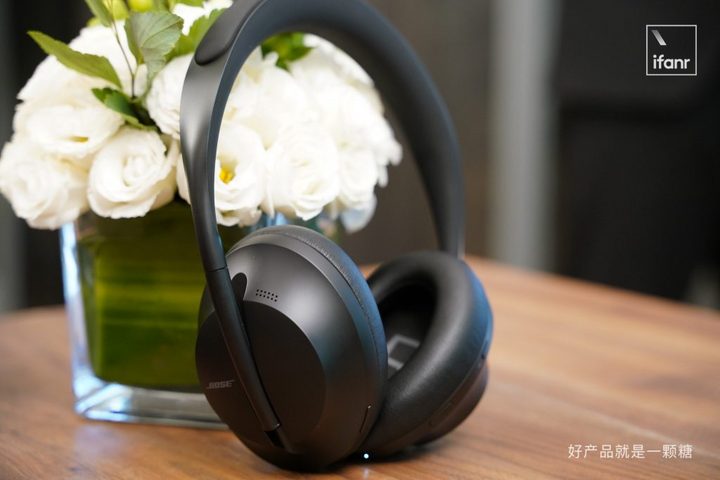
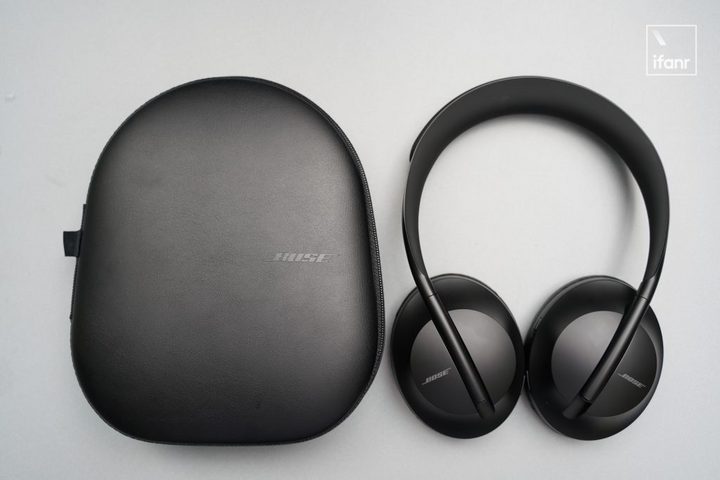
Regrettably, the QC35 (QuietComfort 35) wireless smart headphones have experienced noteworthy iterations in the past three years, and this has given Sony a chance to compete with it. Much to the delight of those who have restlessly been waiting for noisy headphones, aside from the Bose QC35 and Sony 1000X, there’s a new arrival in the market – the Bose Noise Cancelling Headphones 700 (referred to as Bose 700), which retails for $2,999.
Perhaps the name QuietComfort is too subtle, and the new series has such a long but straightforward name.
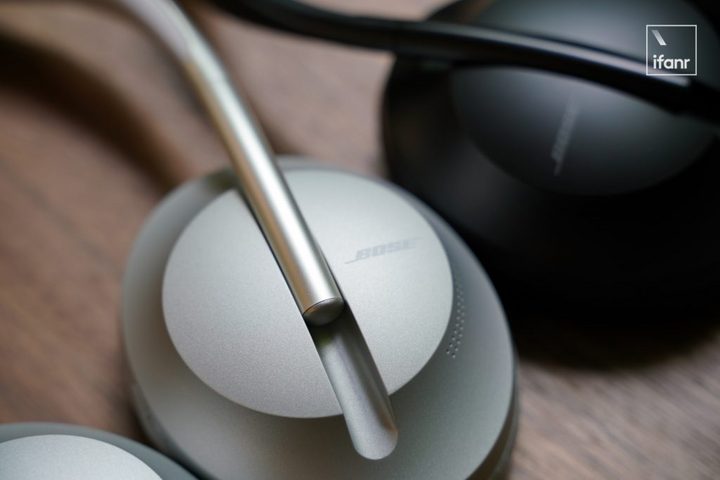
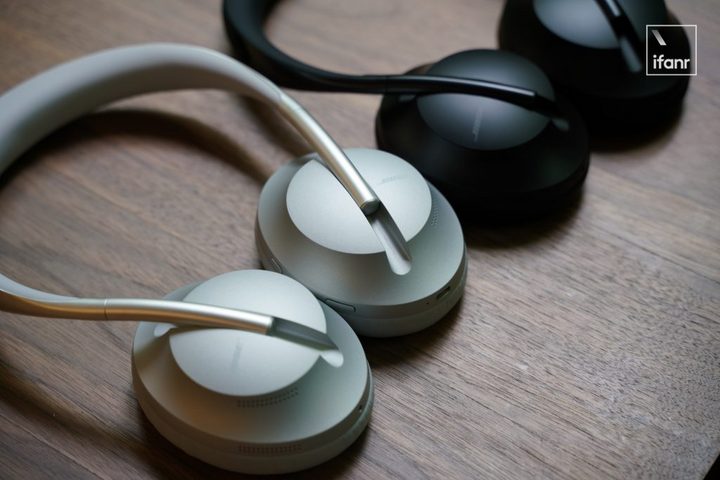
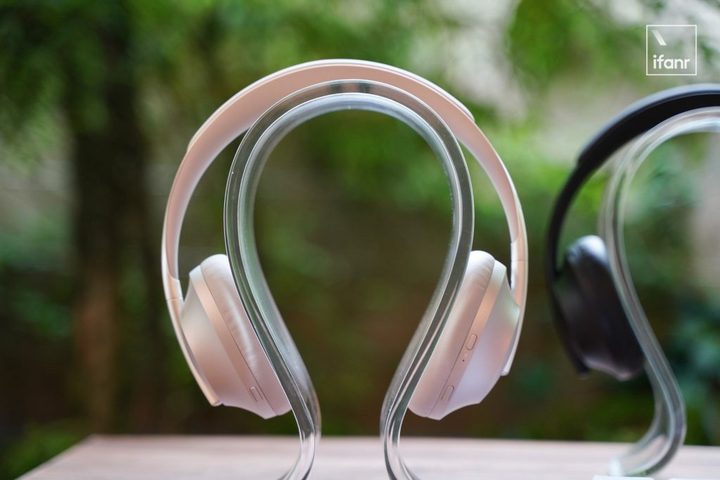
Apparently, the QuietComfort moniker is kind of subtle, but the new series carries a long and straightforward name. The Bose 700 boasts a revamped design that comprises a telescoping structure with the head beam connection fixed in a groove with a rotating structure that allows the ear cup to rotate to a horizontal mode. This change eliminates the use of screws, making the head beam more slender, stronger and aesthetically pleasing.
The head beam of the Bose 700 is made using high-quality silicone material, which is easier to clean than the QC 35’s fleece.
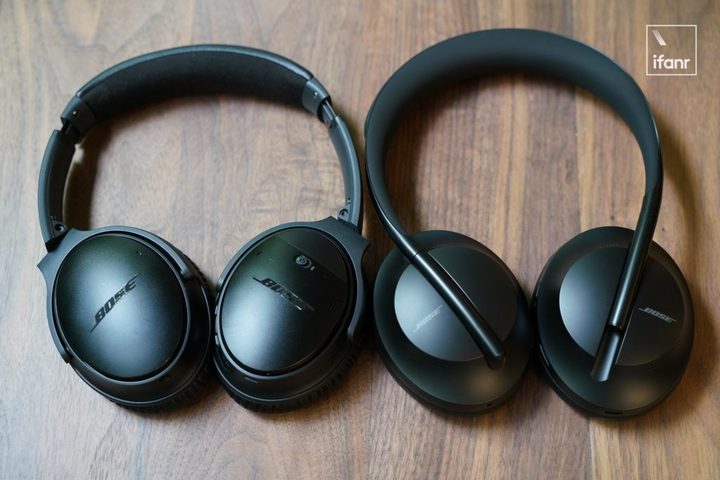
The real machine offers a superior experience. The different material, seams, and buttons on the QC35 ooze simplicity.
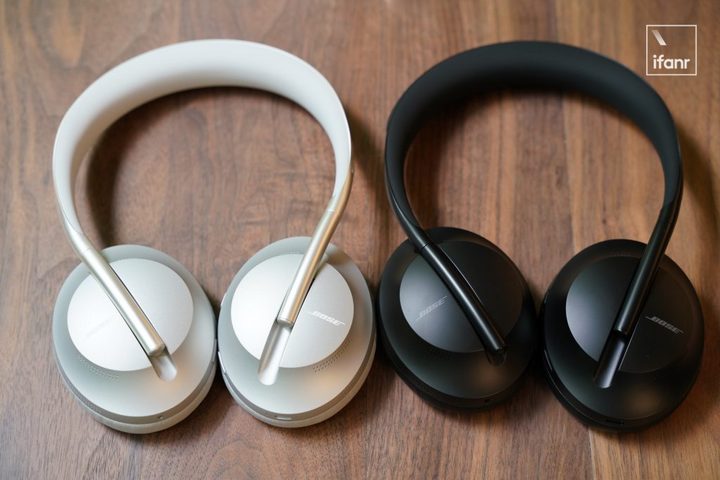
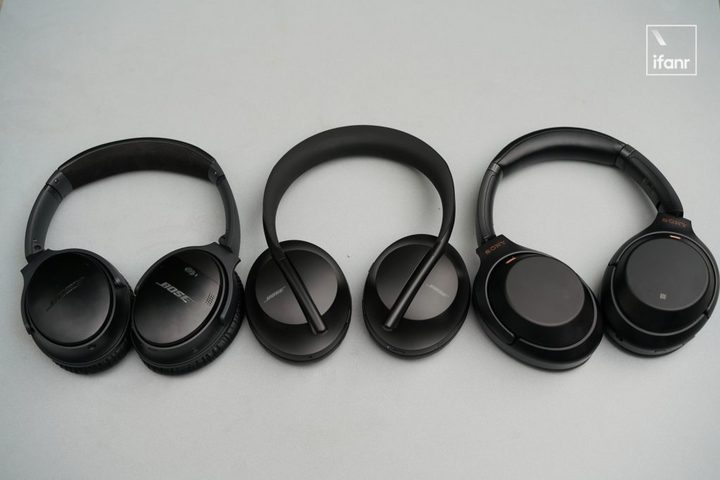
QC35 and Bose 700
On the downside, simple design makes the device easily foldable, and it requires a storage box which is larger than the QC35. Thankfully, the storage box is flatter, and the mezzanine located in front of the airplane seat most probably will not be very tight.
In terms of interface, the Bose 700 features a USB-C charging port and a 2.5mm interface, but the headphone adapter on the aircraft is not included.
Just like the QC35, the Bose 700 is comfortable to wear. It uses the same gasket material and has an identical space of the earmuffs found on the QC35. There is no pressure even with the biggest head with a five-kilometer radius.
Bose made a FaceTime video chat on the launch site. When a Bose staff member who was at a nearby cafe using the QC35, switched to the Bose 700, there was an immediate improvement in terms of clarity. The ambient sounds and vocals at the cafe also reduced drastically.
The call noise reduction is a new feature available on the Bose 700. In other words, this feature reduces the noise of the other party. Bose has managed to achieve two-way noise reduction since then.
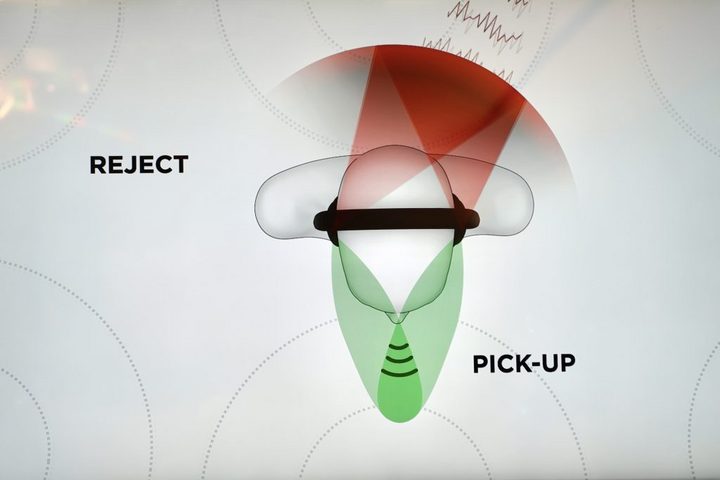
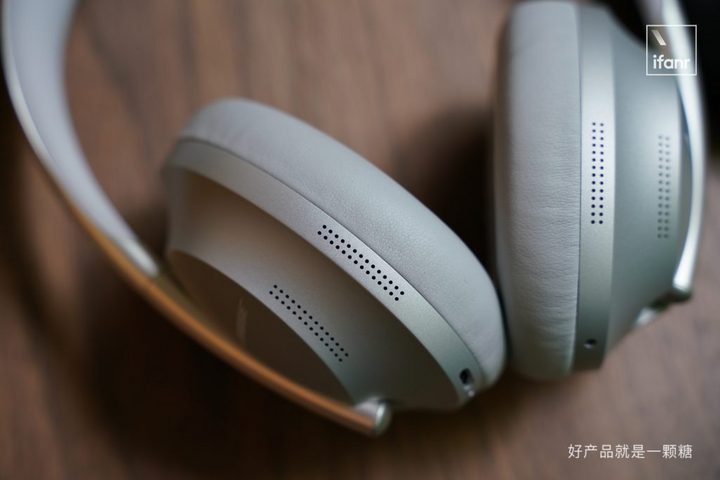
Ai Faner figured out that two of Bose’s eight microphone systems are combined with another pair of microphones for an improved sound pickup effect. A microphone array capable of producing beamforming can efficiently pick up the user’s voice while reducing the vocals around the other part. The second microphone array produces a suppression signal for identifying and blocking residual noise.
“Communication is two-way.” Bose’s product manager told Ai Fan that, except that you can’t hear the noise, the other party can now clearly hear you.
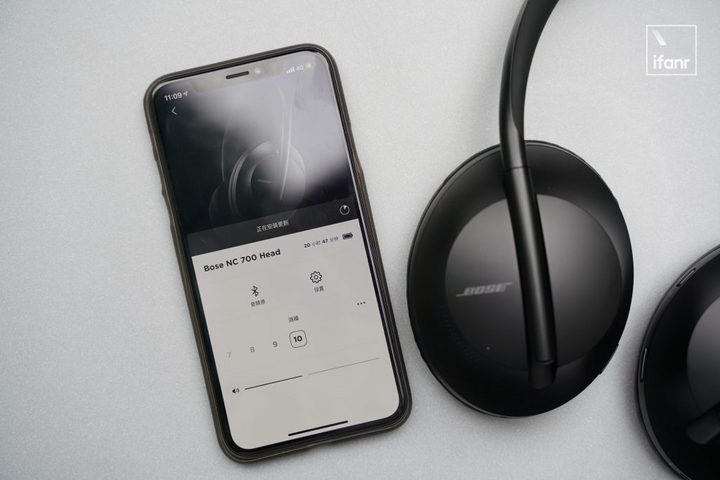
The Bose 700 eliminates the traditional three-speed noise reduction adjustment, allowing the user to switch freely between the 0-10 level. Arbitrarily preset three files in the app, you need to short press the button placed on the left side of the headset in order to switch.
The 0 level represents closed noise reduction. There are two noteworthy changes including a significant reduction in the wind noise and the weakened feeling of the earmuffs. This allows the user to keep the headphones on even during the conversation. The level 0 noise reduction mode is accurately dubbed as “clear mode.”
Bose QC35, Bose 700, Sony 1000X
It is worth noting that the 10-level noise reduction mode completely killed the QC35. In comparison to the Sony 1000X, a colleague compared the trial and noted that the Bose is better.
In my opinion, the QC35 does not deliver a satisfactory sound quality. If you compare, it is easy to understand that the Bose 700 produces clearer sound, and delivers better vocal and background layering than the QC35.
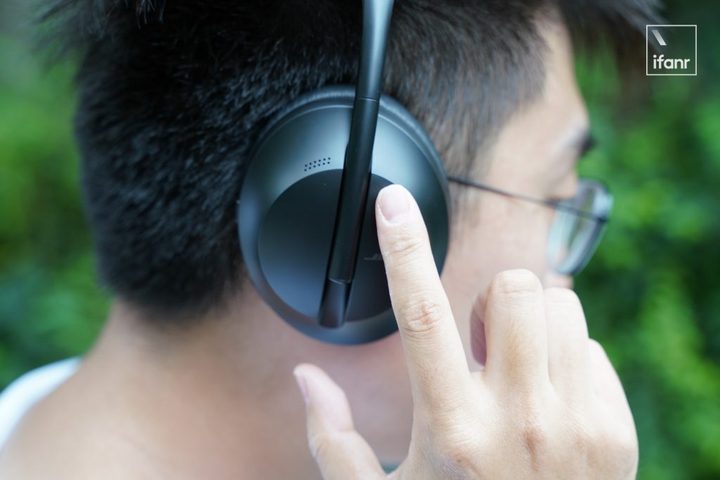
There are three buttons placed on the fuselage, and they are used to switch on and off, activate the voice assistant, and adjust the noise reduction level. Other tasks can be performed via touch operation. The right earmuff Bose logo features a small area that you can single click, and move up and down, and Slide left and right to complete tasks like adjusting the volume, switching songs, and starting a pause. I think the touch is not sensitive enough, though.
The unopened touch design is currently the trend of industrial design, for headphones that use blind operation; however, I prefer physical toggle switch on the QC35, which can be used to switch the headset off and on. Long pressing the button to perform the same task on the Bose 700 is relatively more inconvenient.
The Bose 700 reaps the benefits of the Bose multi-device connection as it can simultaneously connect two devices, and automatically switch to the last sounded device without requiring any sort of manual operation. The feeling of effortlessly switching between the computer and the mobile phone is worse than that of AirPods powered by the H1 chip.
Backed by a robust battery, the Bose 700 has a battery life of 20 hours. The wearing headphone shows the remaining usage time.
The Bose 700 needs to be paired with Bose Music, and you can set the level presets for the noise reduction here. The Bose Connect app did not match.
The overwhelming overthrow of the design of the QC35, Bose re-stands on the commanding heights of the head-mounted noise-canceling headphones. Aside from increasing the consistent noise reduction performance, the Bose 700 compensates for the sound quality.
Equipped with call noise reduction and the enhancement of voice assistants, Bose refuses to be identified as a pure noise reduction peripheral. It is gearing up to become a close-knit smart companion in the smartphone bonus.
The demand for air noise reduction on AirPods shows the kind of potential this market has to offer. It remains to be seen how long Bose can lead to the noise reduction segment.
As soon as Qualcomm announced the Xiaolong 855 Plus, more than five handset makers decided they’d launch a new smartphone equipped with the latest flagship chip in the second half of this year.
ASUS is the only manufacturer with Snapdragon 855 Plus and has already incorporated the chipset in the latest smartphone called ASUS ROG Phone 2. Details about exactly when will other manufacturers use this chipset is still far and between.
Aside from the aforesaid upgrade, ASUS is slated to roll out the usual updates to the ROG Phone configuration based on this hardware in collaboration with Tencent cooperation, offering a superior gaming experience to its huge fanbase.
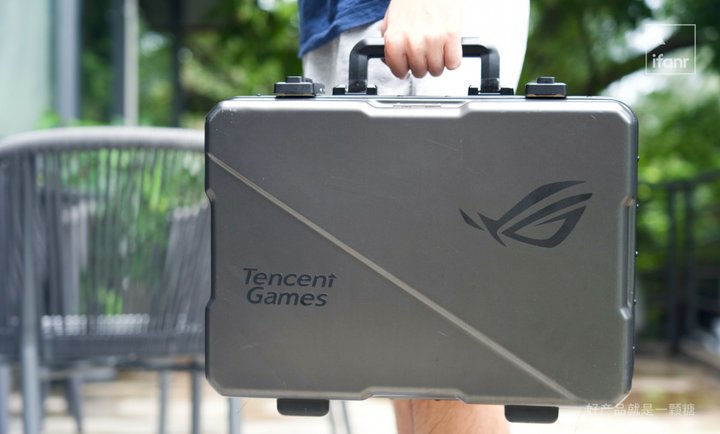
As soon as I arrived at the office today, WinBoy editor handed me a briefcase and said a three-digital password. This gave me an impression that I might be checking the military computer of Latitude 7214. I didn’t expect to open the briefcase but just to take a quick glimpse of ROG Phone 2.
However, it took a whopping 3 minutes to get the smartphone and its accessories out of the briefcase.
The texture is the highlight of the design
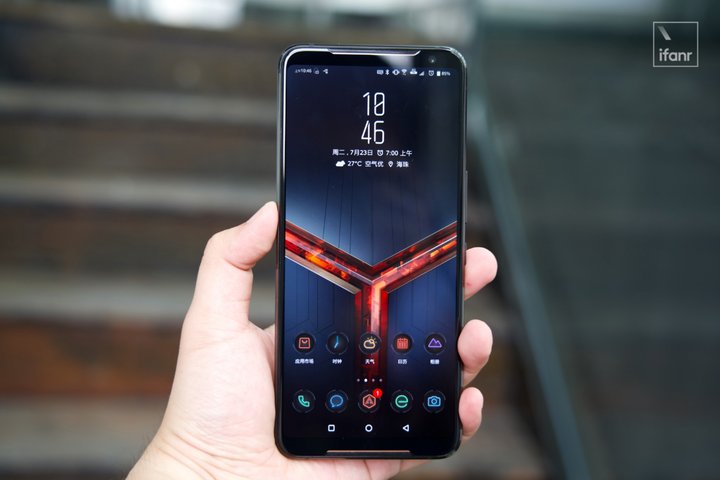
The ROG Phone 2 seems to bear a striking resemblance to its 2018 predecessor as far as the design is concerned.
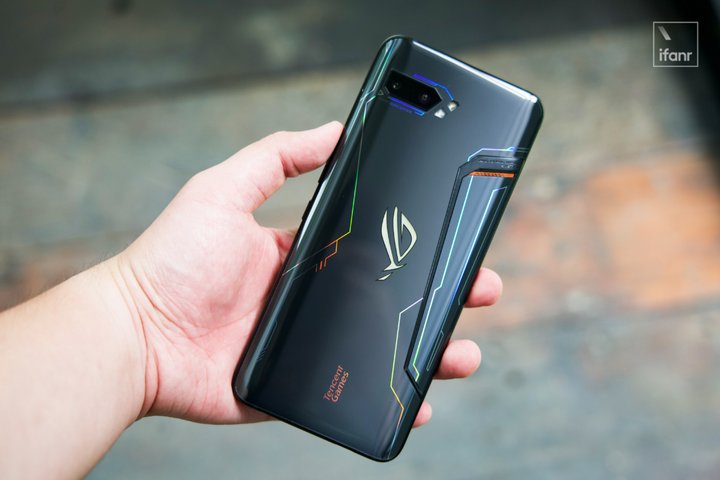
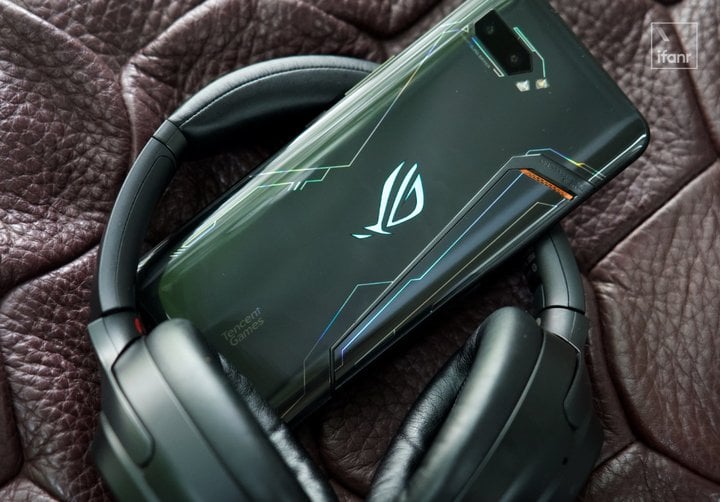
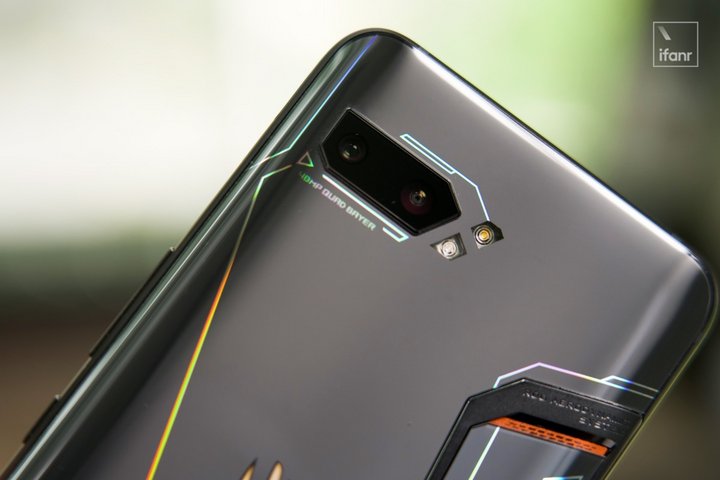
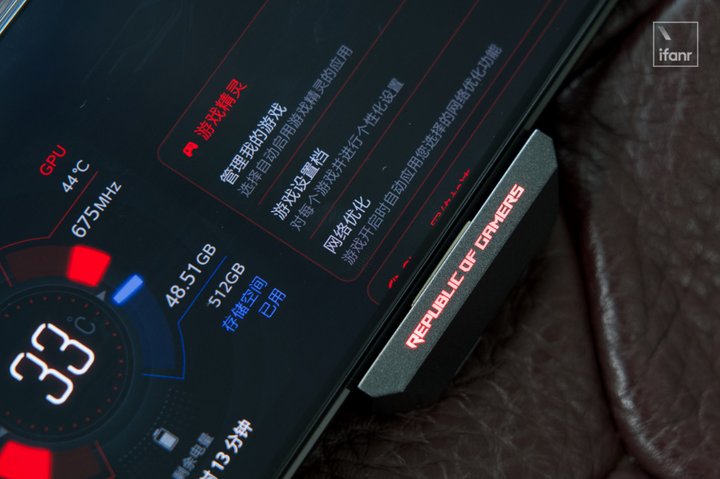
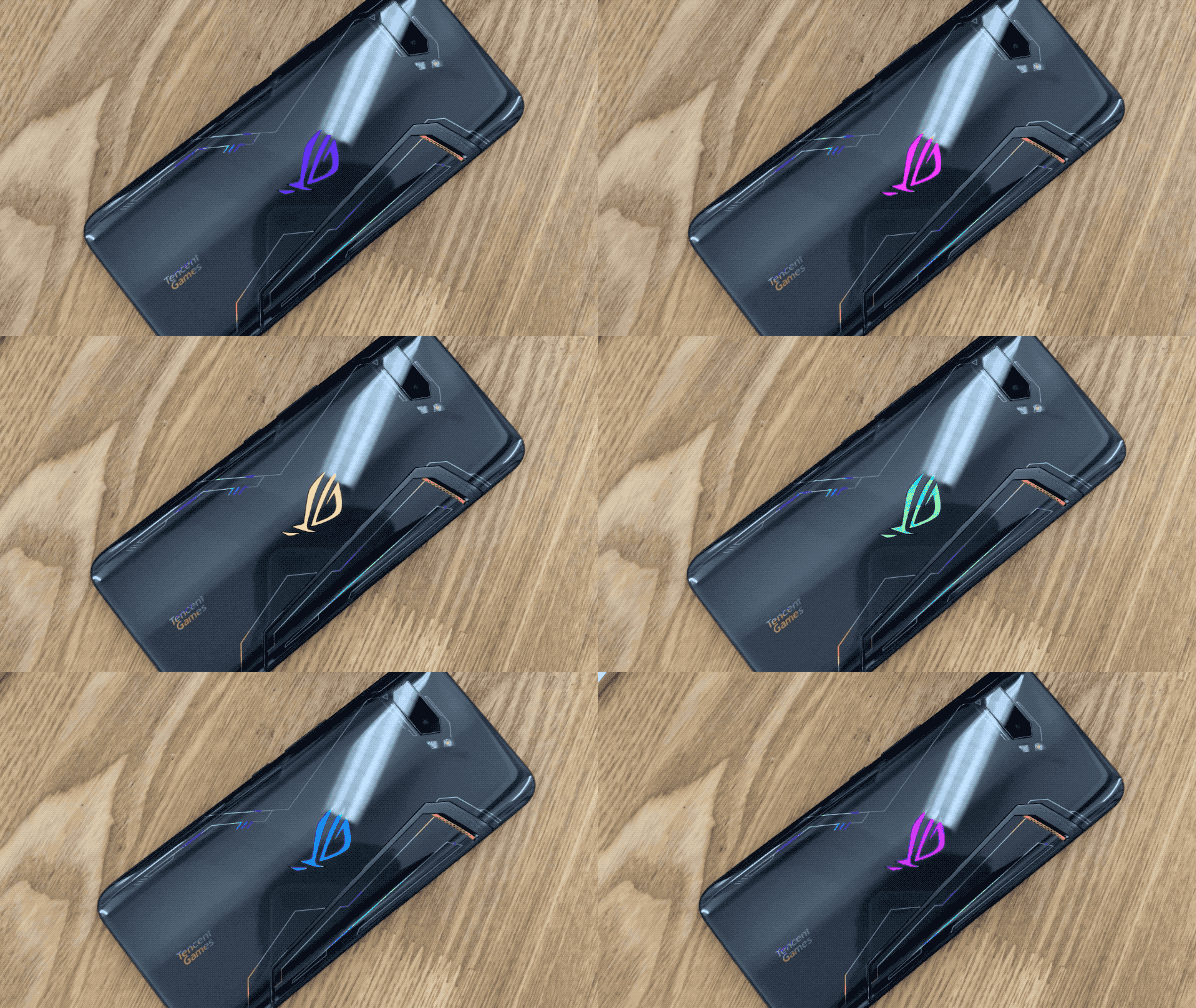
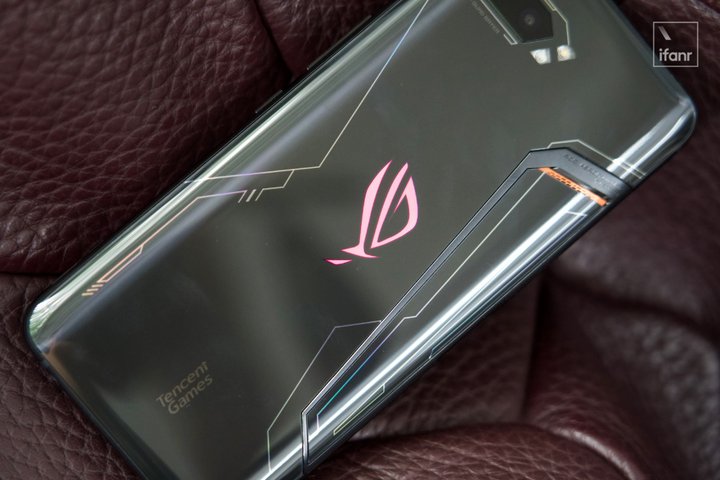
The slender body, which is bigger than my palm also looks quite familiar. Given that there is no specific use of the front of the shaped screen, the phone isn’t very unique in terms of aesthetics. The ROG breathing light, the hexagonal camera, the Maya covering the back Pattern, and the striking plating color are likely to grab your attention.
Although a layman might not understand the importance of certain hardware incorporated in the ROG Phone 2, these features and hardware are important as this is a game phone.
Similar to the gaming computer at Starbucks, that you come up with the brightest on the MacBook and the Surface.
Despite retaining nearly the same appearance, the ROG Phone 2 has undergone a slew of radical overhauls. These changes are more evident on the back of the phone.
First off, the fingerprint identification area has been revamped. The original ROG Phone adopted a capacitive fingerprint design, so we will see a dedicated area on the back of the phone.
ASUS has resorted to using the hexagonal design in the original design in this portion in a bid to retain the main style and ensure it doesn’t look cramped.
If you look at the smartphone from an aesthetic point of view or even from the comfort of using the phone, the fingerprint recognition of the back still affects the convenience of the user to use the mobile phone and the integration of the fuselage.
The ROG Phone 2 is equipped with an on-screen fingerprint recognition feature, which enhances the integrity of the back of the phone.
As far as the screen configuration is concerned, the ROG Phone 2 sports a 6.59-inch screen with a resolution of 2340 x 1080 pixels. Although it does not have 2K resolution, it supports HDR 10 and 240Hz touch sampling.
The latest ROG phone still has no specific use for the special-shaped screens. Nevertheless, it is highly likely that the shape enhances the overall gaming experience. Even if the special-shaped screen develops in Android for a couple of years, it is worth noting that there are several games that are still not compatible with waterdrop notch and bangs screens seen on some new smartphones.
In my opinion, the most appealing aspect of the screen is the 120Hz refresh rate. To facilitate user control of power consumption, ROG also provides a 60 / 90 / 120Hz three-speed refresh rate option in the settings.
However, as a person who has been “sweet” by a 90-liter 90-Hz screen, a person who does not leave the charging treasure, I, of course often open 120Hz, and then enjoy the silky as a pleasure.
Another evident adjustment can be seen in the design of the Maya pattern and the side edge cutting. The Maya pattern in the back area is no longer placed near the camera but stretches more boldly to the sides of the phone, and the viewing experience is more engaging than the previous generation.
The knife-cut modular filter screen has been replaced with a stripe design, unlike the previous two quadrilaterals. This portion looks more restrained now than the bolder Maya pattern.
Housed in a glass frame, the ROG Phone 2 looks and feels great. On the downside, the thickness and weight of the glass body, along with the internal heat dissipation system have made the ROG Phone 2 “a half-pound” heavier.
As a technical editor, I have used multiple phones including the iPhone XS Max (208 g) and Sony Xperia XZ2 Premium (236 g). The ROG Phone 2’s 240 g weight; however, redefines what I knew about the weight of the mobile phone (data source Ministry of Information Technology).
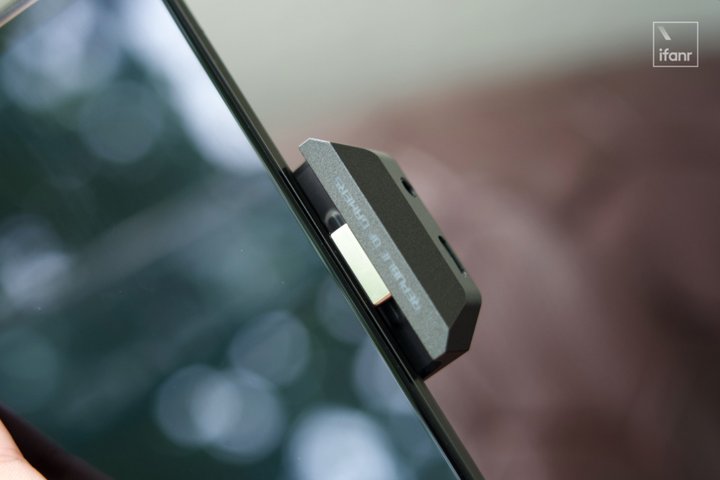
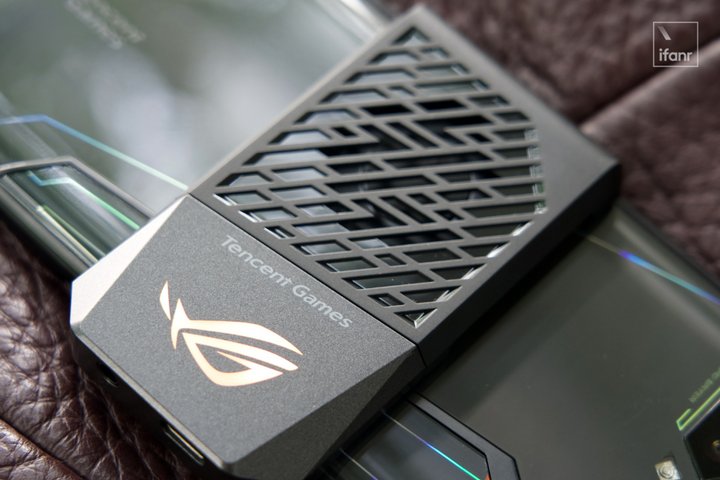
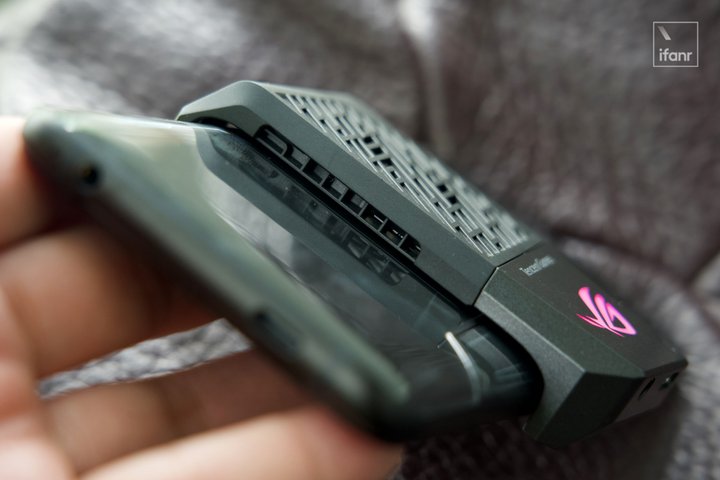
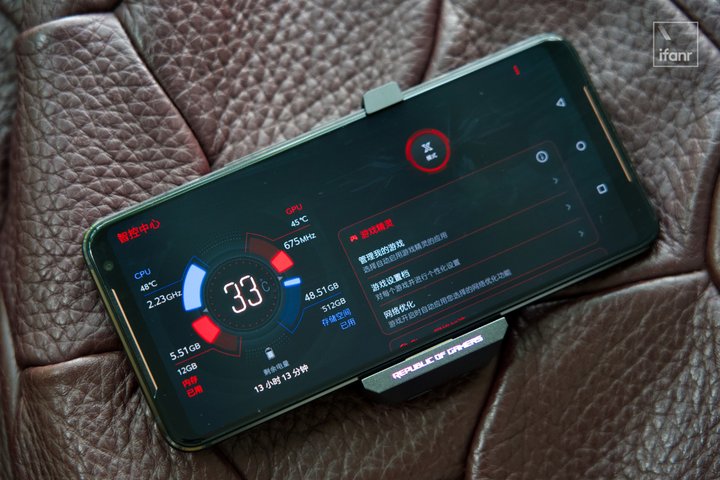
Taking accessories into consideration, the expansion performance of the ROG Phone 2 is nothing short of impressive. Aside from the 3D Vapor Chamber condensing system + copper plate thermal pad + graphene thermal pad design of the mobile phone body, similar to the ROG Phone last year, the new machine features an external cooling fan.
As a result, the side of the old and new ROG Phones will have a set of interfaces for external accessories, unlike ordinary phones. Moreover, we can connect the fan to the mobile phone and enable heat dissipation. Regrettably, this increases the overall weight of the mobile phone.
When you are playing your favorite game, the USB-C interface acts as a charging port of the mobile phone, preventing you from operating in the horizontal screen, as you’d normally do. Alternatively, you can connect the mobile phone to a dedicated base, expand the picture to the display, and use the mobile phone as a portable game console.
As for the conventional interface, the ROG Phone 2 is also quite comprehensive, with a 3.5mm headphone jack, in addition to the USB-C.
Following the elimination of the earphone hole in some phones, several users were left with no choice but to use wireless headphones. But much to their chagrin, the wireless earphones have failed to completely address the concern associated with the delay.
Thankfully, the ROG Phone 2 gaming smartphone has not dumped the headphone hole, and it is a wise decision, according to me.
The first Snapdragon 855 Plus has excellent performance
ASUS’s decision to employ the Snapdragon 855 Plus for its ROG Phone 2 isn’t surprising at all. Given that the ROG Phone used the upscale version of the Snapdragon 845 last year, ASUS has enjoyed a “special treatment” from Qualcomm.
Keeping in line with that, ASUS launched the Snapdragon 855 Plus, which seems more like the bloody version of 2018’s Dragon 845 to me. The only difference is that the upgraded Snapdragon 855 Plus broke the Qualcomm’s consistent product rhythm and was highly praised, and Qualcomm made it available to more manufacturers outside of Asus.
While I didn’t expect much from the Snapdragon 855 Plus before opening the box, it turned out to be the strongest Android phone as soon as I started checking this 855 Plus+12GB+512GB. It is the strongest Android phone. I even figured out the big difference between the Snapdragon 855 and the Apple A12 after running points, games, and comparisons.
This Qualcomm does not include too many adjustments to the configuration of the Snapdragon 855 Plus, particularly in terms of core frequency and GPU performance optimization:
The core frequency has been upgraded from 2.84GHz to 2.96GHz of the Snapdragon 855;
The graphics core Adreno 640 is optimized for gaming and entertainment features, with a 15% improvement in performance.
The Snapdragon 855 Plus deserves to bear the Plus suffix. These upgrades confirm that the product is indeed a revamped configuration for the performance of the mobile phone, making it a better gaming phone.
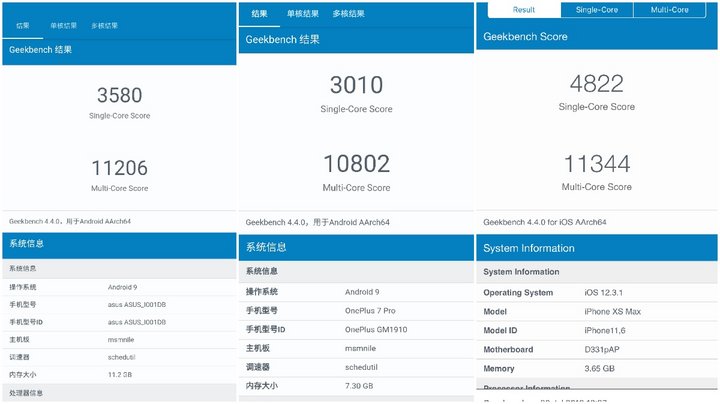
Through the comparison of GeekBench, we can see the performance gap between Qualcomm and Apple’s two processors:
Xiaolong 855 Plus / Xiaolong 855 / Apple A12
Compared to the 3010 / 10802 points (single / multi-core) of the Snapdragon 855 (sample plus one 7 Pro), the 3580 / 11206 points (single / multi-core) of the Snapdragon 855Plus is still quite impressive.
When compared to the Apple A12 (the prototype is iPhone XS Max), the multi-core performance is very close, but the single-core performance still has an evident gap in terms of performance.
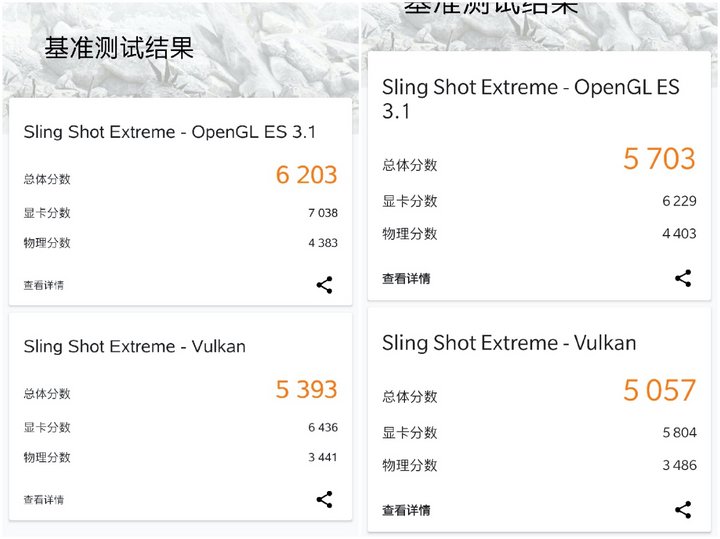
骁龙855 Plus / 骁龙855
The 3D Mark score shows the gap between the two Adreno 640s. In the Sling Shot Extreme OpenGL ES 3.1 test, the Snapdragon 855 Plus scored 6203 points, which is higher than the 5,038 points of the Snapdragon 855.
In the Vulkan performance, the Snapdragon 855 Plus surpasses the 5,057 points of the Snapdragon 855 with a score of 5393.
As far as processing power is concerned, the up-and-down Snapdragon 855 Plus can’t outperform the Apple A series in terms of single-core performance, but it has a significant improvement compared to the Snapdragon 855, which is already very strong, so this product without an iota of doubt, deserves to sit on the throne of the strongest processor in the Android camp this year.
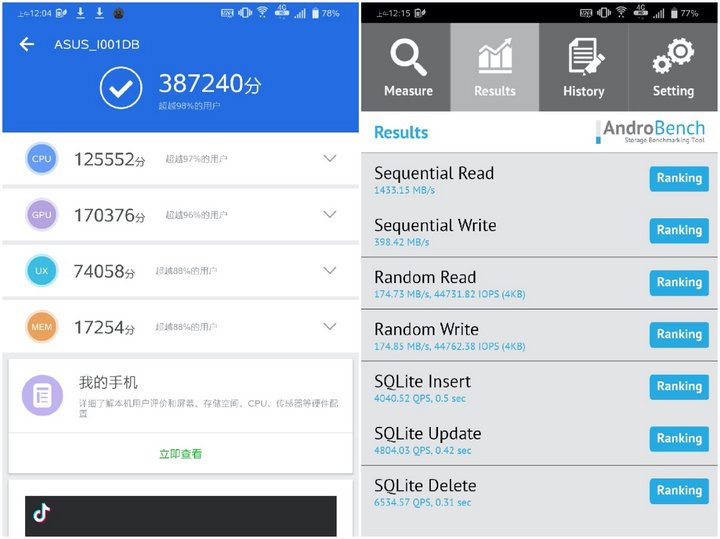
Ann Bunny integrated running score / AndroBench memory test (UFS 3.0)
As a regular user, you don’t need to worry too much about the score. After all, if there are not two different numbers, the gap between the Snapdragon 855 and the Snapdragon 855 Plus is still difficult to be reflected, because even before the upgrade. Dragon 855 has also run most popular games without any sort of lag.
It is worth mentioning here that the essence of this ROG Phone 2 is not only the replacement of a new processor but also an important part of the cooperation optimization with Tencent.
In other words, Tencent is customizing the game for the ROG Phone 2 hardware advantages and highlighting the features of the phone.
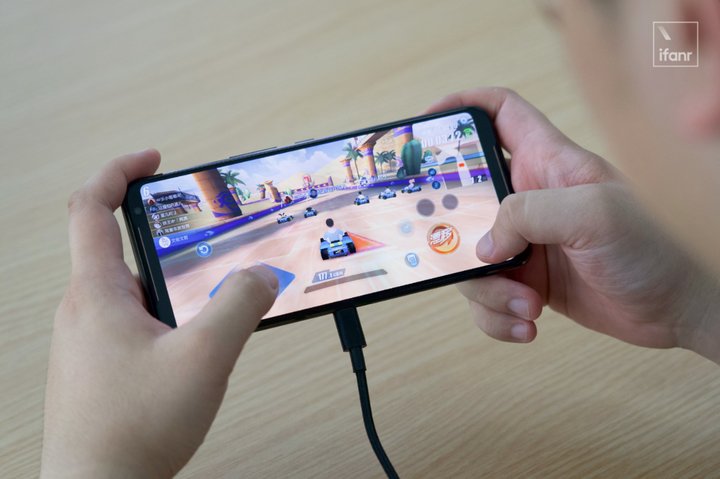
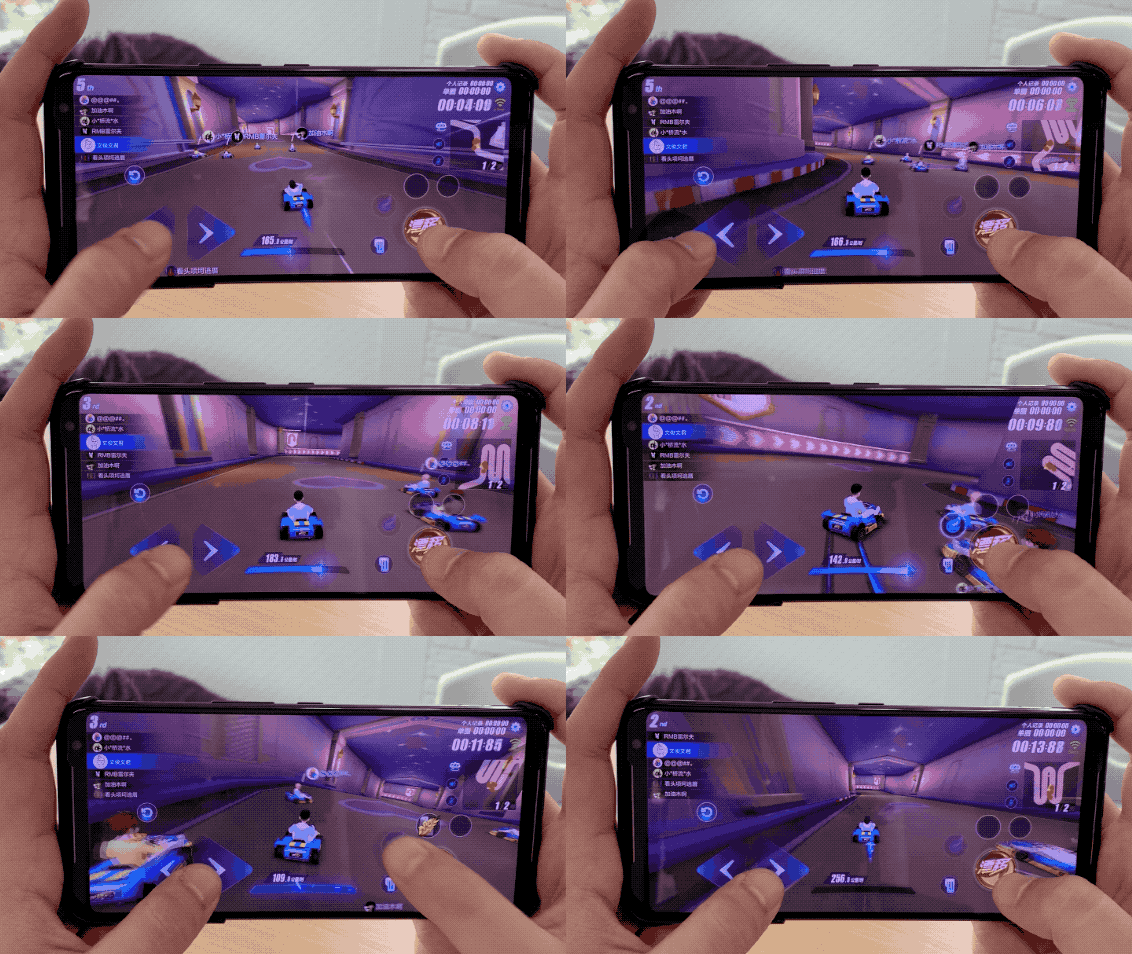
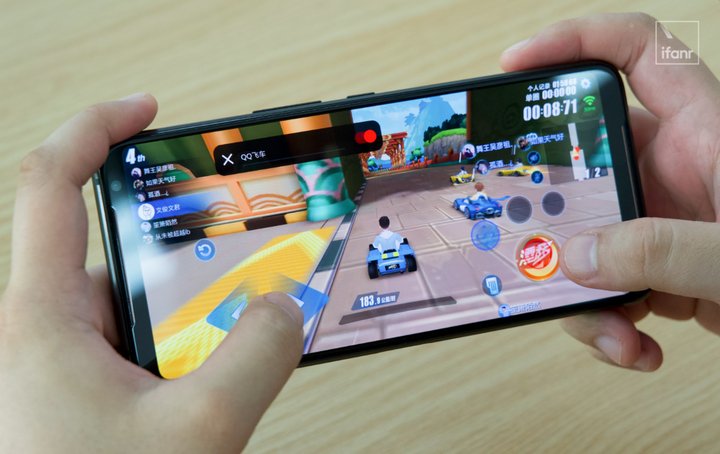
For example, a QQ car with 120 FPS operation:
For example, AirTriggers that can operate a racing game with four fingers:
For another example, let the eye behind the defeated family follow the “Glory of the King” with the rhythm of the game.
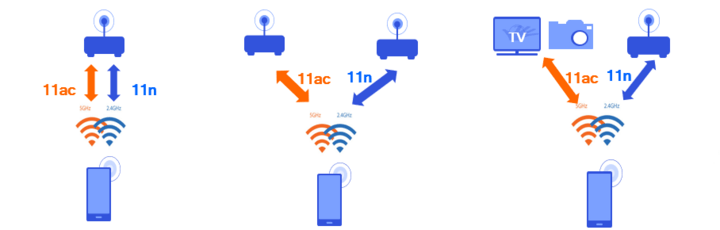
Another highlight of the launch of the new machine outside the Snapdragon 855 Plus mobile platform is the use of Qualcomm’s latest real-time dual-band WiFi technology. Ideally, the mobile phone can connect the WiFi signals in the 2.4GHz and 5GHz bands at the same time, that is, “dual-frequency integration.”
Thanks to the real-time dual-band WiFi technology, when a user connects to the home router, the mobile phone can connect to the network of two frequency bands, giving the network advantage of high-speed, low-latency 5GHz, and it guarantees the network through the 2.4GHz frequency band. Coverage and receiving capabilities.
Likewise, the game acceleration packet transmission can be performed in both 2.4GHz and 5GHz bands at the same time. This ensures a lower latency and higher performance WiFi network which is ideal for professional e-sports network acceleration mode – behind Qualcomm. The research and development of Tencent Lab allow real-time dual-band WiFi technology to smoothly interface with the company’s game accelerator.
The fire is fully open, is the fever touching?
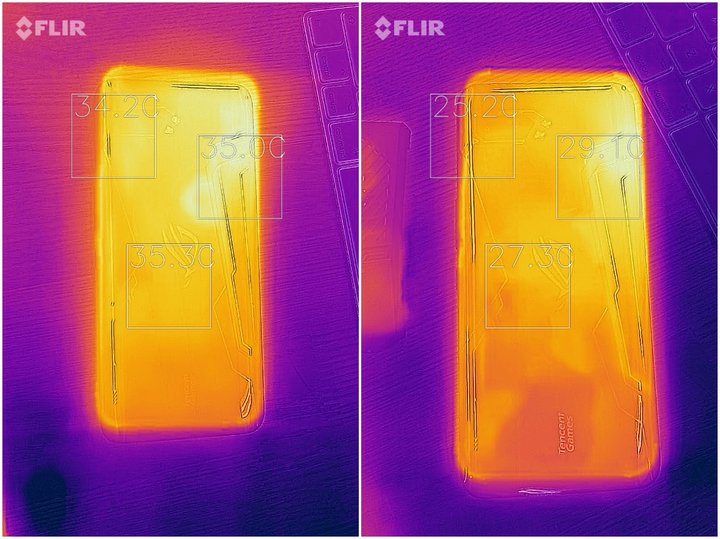
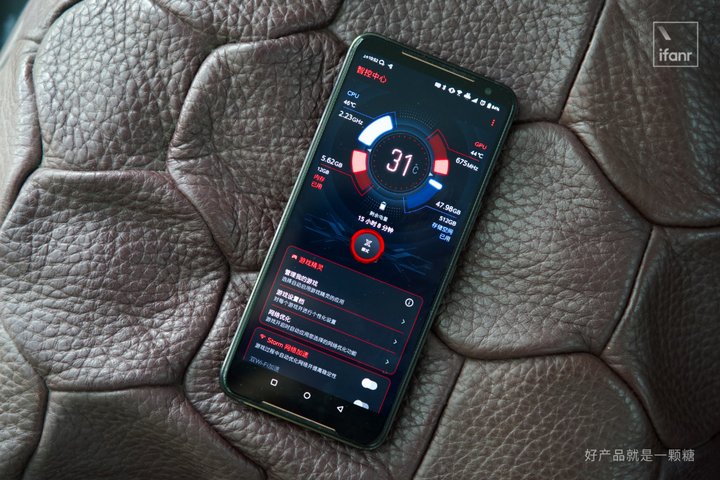
I tested the two scenarios without a fan and “installing fan + strongest wind speed”. After 30 minutes of continuous operation (room temperature 26 °C; test game “Peace Elite” HD HDR quality, highest frame rate), with the no limit on the maximum temperature of the fan-mounted body is 35.3 ° C, which, I think is just warm, and not too hot.
Next off, I fixed the fan on my mobile phone and switched to the 4th speed to continue the game. After 30 minutes, the maximum temperature of the fuselage was 29.1 °C and the minimum temperature was 25.2 °C. The temperature control performance was in line with ROG’s promotion of “maximum reduction of 5 °C”.
However, there is a theory to enjoy this cooling add-on. This theory is that it needs to utilize a certain amount of electricity.
This battery life is stronger than ever
Rather than the performance of saturated resaturation, I am more concerned about the life span of mobile phones. I have pointed out several times that “the performance of mobile phones is good, and no power is no good.”
On top of that, this is an entertainment-oriented game phone, and it is still a game phone that offers a refresh rate of 120Hz.
More than the overall performance, I am more concerned about how long ROG Phone 2 can play.
In terms of specifications, the ROG Phone 2 is backed by a robust 6000mAh battery. Yes, that’s right.
This is one of the few phones slated to launch this year that would be drawing its juices from a 6000mAh battery. Compared with the 4000mAh of the ROG Phone of the first-generation released in last year, the new machine has increased by 2000mAh, and that’s bigger than the battery capacity offered by the iPhone 8.
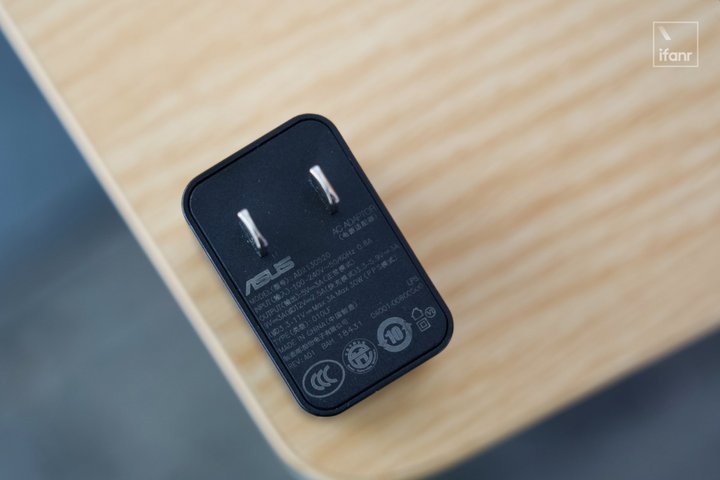
In order to juice up this 6000mAh battery without wasting a lot of time, the ROG Phone 2 comes with a 30W charger.
From the measured data, starting from 4% for 30 minutes, it can charge 37% of the electricity; the whole process is charged to 99%, which takes 1 hour and 45 minutes.
Once it was fully charged, I left no stone unturned in a bid to utilize the full battery life. However, I found it difficult to use up the 6000mAh battery.
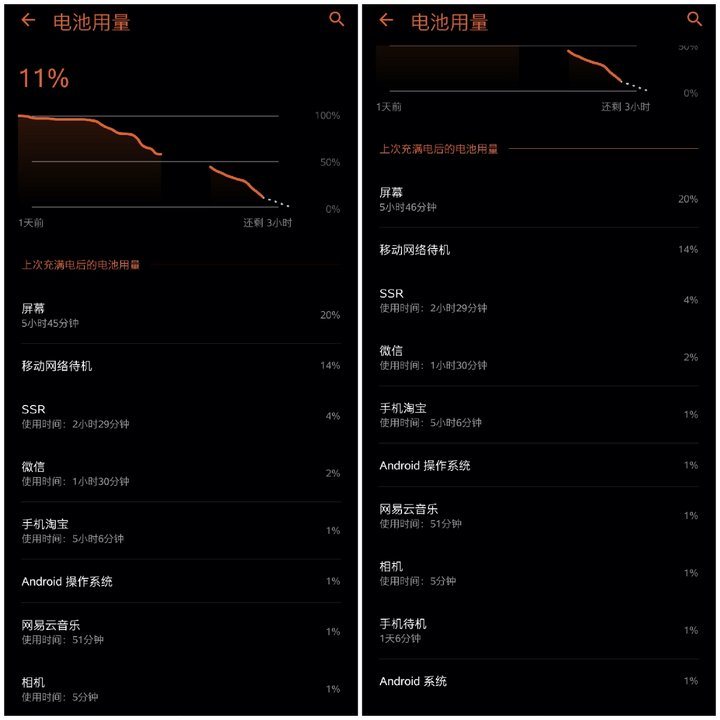
I started with the zero points on the 22nd, because I was just full of electricity at that time, after 8 hours of standby, the phone power was 96%. After finishing my work, I played games for 1.5 hours, listened to the songs for about one hour, watched 50 minutes of online video, and used WeChat Weibo continuously without going offline. Until the 23rd, my phone still has 10% remaining power, the phone shows the total screen time is 5 hours and 45 minutes.
It should be noted that this test is performed under the condition of a 120Hz screen refresh rate. If you use 60Hz used by most mobile phones, the battery life may get 1.5 days/charge level.
The camera performance is in line with the mainstream, which is good enough
Since the starting of this year, all sorts of mobile phones, whether it carries a one-thousand-yuan price tag or retail for thousands of dollars, the 48 million-pixel CMOS in the past six months, has evolved from a new thing to the current standard configuration of the Android flagships.
In the excitement of the camera, pixel jumped to a higher level again, I also had to admire the application speed of the new domestic mobile phone technology.
The ROG Phone 2 houses a 48-megapixel primary camera with a 13-megapixel sub-camera configuration; the main camera is the familiar Sony IMX 586 CMOS.
The combination of the two cameras is still a “high-pixel lens + 125° wide-angle” design. Since there is no lens specifically for telephoto shooting, the camera only provides 2 lossless zooms.
The three or four shots are quite useless. However, for a game phone, the ROG Phone 2 camera can deemed as a luxury.
When it comes to capturing memorable moments, the image performance of ROG Phone 2 is quite good. It features a 48-megapixel CMOS and has outstanding performance in image resolution.
The apple logo in the proofs can still see the full details after the image is enlarged, and the text under the logo can be displayed clearly after zooming in.
We turned on the automatic HDR mode of ROG Phone 2 at the time of the shooting. With the aid of HDR, the details of the clouds hidden in the highlights can be expressed, while the light and dark matching of the clouds highlight the layering.
Of course, this sample still retains a trace of HDR processing. If the user wants the picture to look more natural, you can adjust the contrast after shooting, and the picture will be better.
The close-up ability of the phone is also something to shout about. The surface details can be clearly displayed when shooting food. The blurring of close-up shooting is not bad either.
The color of ROG Phone 2 is primarily based on reduction, and it does not offer too many color adjustment, so it is still relatively flat when shooting food. For a more vivid and appealing color effect, you need to do some post-adjustment after shooting.
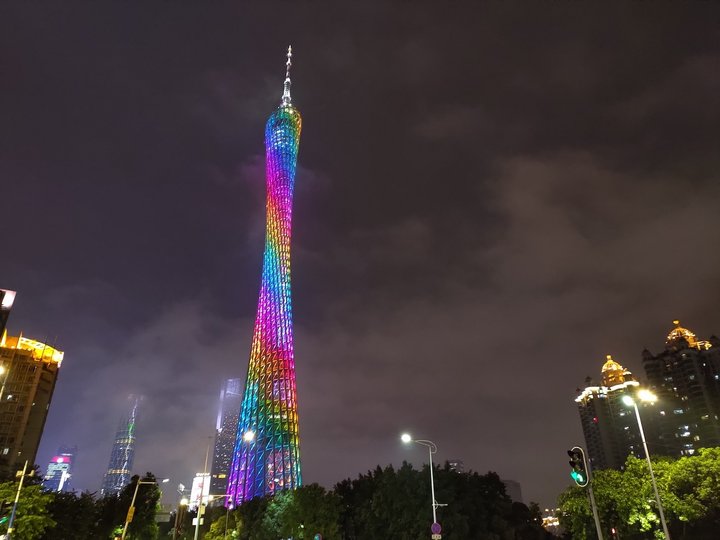
For nighttime photography, the ROG Phone 2 delivers an average imaging performance. We turned off automatic HDR shooting and found that ROG Phone 2 is still able to do light control work. While the night sky can be kept clean, we still managed to capture some of the details of the cloud in the picture.
Despite a complicated light environment on the opposite side, the ROG Phone 2 provides a stable output and capture perfect photos with color reproduction. However, because there is no automatic HDR assistance, some of the lighting positions are still exposed.
In addition to maintaining stability, it is imperative for the user to pay attention to the selection of the metering point. In this complex lighting scene, there are certain occasions when you need to press the exposure to retain more detail in the light.
While the ROG Phone 2 can keep the sky clean, there are still a lot of obvious smearing feelings when zooming in on the picture, and you are likely to experience a situation of low resolution at night. Note that these problems are only noticeable when you enlarge the image. It is ideally used to send Weibo and friends, but the impact is not impressive by any stretch of the imagination.
The battery is like a bull, a big horsepower muscle car
If I used the “Fighter in XX” to describe this product in 2019, you might think of me as a person who passed through in 2009. But in the face of this performance to achieve the same top-class products, I can hardly find an exaggerated sentence to describe this phone.
I am considerably inspired by racing games. As I was playing “Wild Car 9” recently, I suddenly flashed such a word in my head. I think the current ROG Phone 2 can be best described as a “muscle car.” To be precise, it can be described as a “high horsepower muscle car.”
Yes, it is like a high-powered muscle car in a mobile phone, because it packs the largest “horsepower” of all current Android phones. I won’t refer to it as a super run, because it’s obvious that its focus is on both configuration and performance.
Just like a gaming notebook, the phone is solid, it’s cool and it specializes in games, but it is big, thick, and hard at the same time. Although ROG has designed this phone to be less exaggerated, the hardcore style has always interpreted “I am a gaming phone, a Gamer or Geek device lover.”
As a game phone, the inclusion of 120Hz screen and Snapdragon 855 Plus enhances the overall experience and improves its market prospects; the cooperation with Tencent Games also makes ROG Phone’s hardware advantages more widely available. This is the first-generation ROG Phone 2 that has struck a perfect balance between performance and gaming.
If it is a game white, you can use its function as an aid; as an avid gamer, I would say, it is a game machine that offers strong performance, long battery life, a SCAR, and an SSS-class car.
The ROG Phone 2 has achieved a large number of upgrades in configuration department this year, taking the competitive incentives in the mobile phone market into consideration. There are still many aspects such as higher resolution screens (which are more pleasing), eye system design that needs improvement.
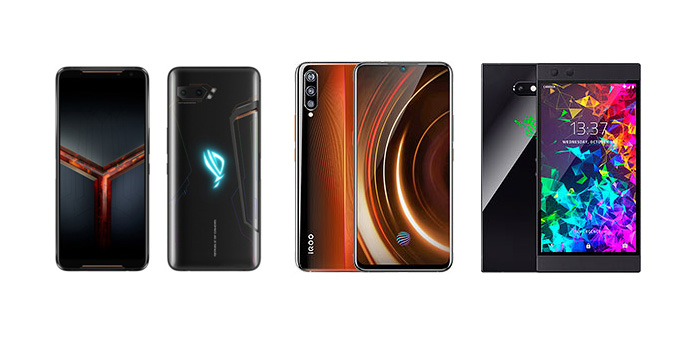
Since ROG Phone 2 went official, the world of gaming phones went to the next level. Now gaming-centric devices are a serious thing and the latest gaming phone is probably the most powerful Android phone out there. We already compared the new Asus flagship with Xiaomi Black Shark 2 and Nubia Red Magic 3. Now, it is time for the new amazing handset to face the remaining last-generation gaming phones out there. We are talking about the elegant Vivo iQOO and the Razer Phone 2 announced last year but still very actual. Who will win and which one has the highest value for money? Discover it with us by going through this specs comparison.
Asus ROG Phone 2 vs Vivo iQOO vs Razer Phone 2
Vivo iQOO
Asus ROG Phone II
Razer Phone 2
DIMENSIONS AND WEIGHT
157.7 x 75.2 x 8.5 mm, 196 grams
171 x 77.6 x 9.5 mm, 240 grams
158.5 x 79 x 8.5 mm, 220 grams
DISPLAY
6.41 inches, 1080 x 2340p (Full HD+), 402 ppi, Super AMOLED
6.59 inches, 1080 x 2340p (Full HD), 391 ppi, AMOLED
Triple 12 + 13 + 2 MP f/1.8, f/2.4 and f/2.4
12 MP f/2.0 front camera
Dual 48 + 13 MP f/1.8 and f/2.4
24 MP f/2.2 front camera
Dual 12 + 12 MP f/1.8 and f/2.6
8 MP f/2.0 front camera
BATTERY
4000 mAh, Fast Charging 44W
6000 mAh, Fast Charging 30W with Quick Charge 4+
4000 mAh, Fast Charging 18W
Fast Wireless charging 15W
ADDITIONAL FEATURES
Dual SIM slot, capacitive triggers
Dual SIM slot, Air Triggers, reverse charging, support to external accessories
Dual SIM slot, water resistant
Design
If you do not like gaming-centric aesthetics and you want a device which looks more like a traditional phone, then choose the Vivo iQOO, or at least it would be my choice. Vivo iQOO has a more elegant and even a more lightweight body. It looks like a normal flagship phone, but it still has an RGB light strip and capacitive buttons at the sides which can be used as triggers. If you need the best build quality, go for the Razer Phone 2 as it is water and dust resistant. Last but not least, Asus ROG Phone 2 is the more ergonomic one for gamers as it features AirTriggers and supports a lot of external accessories for advanced players.
Display
Here it is a hard fight between Razer Phone 2 and Asus ROG Phone 2. The former provides a higher level of detail as well as a higher peak brightness, while the latter comes with a lower detail but a better color reproduction (thanks to the HDR10 technology and high DCI-P3 coverage) and 240 Hz touch sensing for a more reactive gaming experience. Razer Phone 2 even comes with better stereo speakers (on the paper) as they support Dolby Atmos and they come with THX-certified amplifiers. Speakers are very important if you want an advanced multimedia experience as well as immersive gameplay.
Specs & Software
The highest performances are undoubtedly provided by the Asus ROG Phone 2. Indeed, it comes with the strongest processor: the Snapdragon 855 Plus providing 15 percent better graphics performance compared to the Snapdragon 855 (found on the Vivo iQOO), as well as a higher 2.96 GHz clock frequency. Further, the Asus ROG Phone 2 is the only to sport 12 GB of RAM and 512 GB of internal storage. It even comes with more advanced software as it is able to switch between a stock Android experience and a customized Android fork especially meant for gamers just like every ROG product.
Camera
Do not expect the best camera phone when you are about to choose a gaming phone. All of these handsets come with high-end cameras, but they are far from flagships. My favorite one is the Asus ROG Phone as it is the only to sport a 48 MP main sensor (besides its ultrawide lens), laser autofocus and super slow-motion at 480 fps (720p only). Further, it has a higher resolution for its front camera. But Razer Phone 2 still remains an amazing camera phone thanks to its OIS, a pretty nice 12 MP main sensor and an additional telephoto sensor with 2x optical zoom. Vivo iQOO does not convince me at all when it comes to cameras, despite it has a triple setup.
Battery
With a mammoth 6000 mAh battery, Asus ROG Phone 2 is more like a power bank rather than a normal smartphone. It wins the battery life comparison and it is even able to charge other devices thanks to its reverse charging technology.
Price
Asus ROG Phone 2 debuted in China with a €900/$1000 starting price, Razer Phone 2 started from €850/$950 (but now it dropped a lot), and Vivo iQOO starts from just €400/$445. While Vivo iQOO has the highest value for money, Asus ROG Phone 2 wins the comparison due to its amazing display, performance and a way bigger battery.
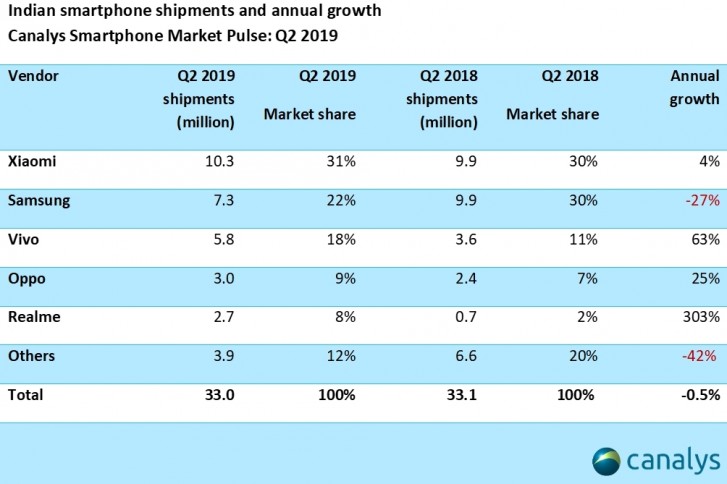
A couple of days back, research firm Strategy Analytics released its research data for the second quarter of 2019. The data reveals a strong showing for Chinese phone manufacturer, Xiaomi as well as other positive outlooks. Another research firm, Canalys has released its own report which throws more light on the performances of the top OEMs slugging it out in India at the moment.
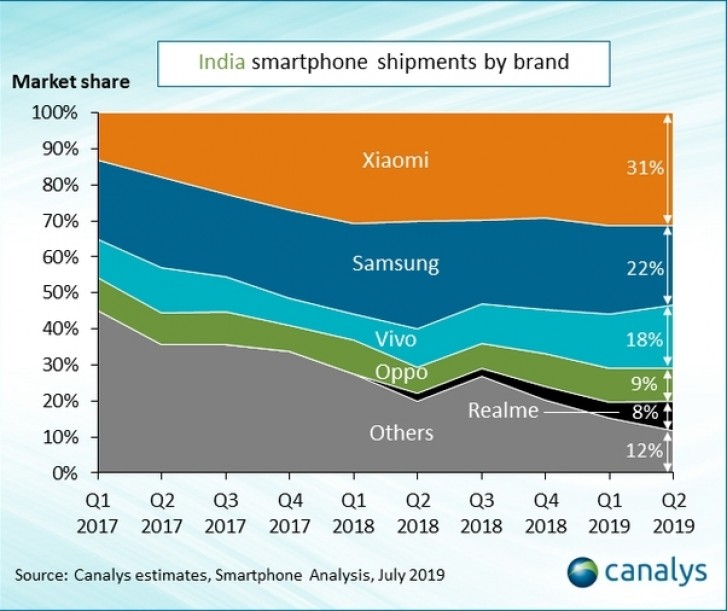
The analysis covers the second quarter of this year and it shows smartphone shipment slumped 0.5% as a result of the reluctance of feature phone users to upgrade to smartphones. The data again confirms Xiaomi still is the number one phone vendor in India in terms of shipment volume. The research firm also did point out that this is the eighth consecutive quarter the company is attaining this feat. Xiaomi shipped an estimated 10.3 million smartphones in Q2, slightly higher than the 9.9 million units it shipped in the same period last year.
Fellow Chinese phone makers, Vivo also recorded a massive increase in its sales by 63%. While Oppo and Realme, all BBK subsidiaries, equally grew significantly. Vivo flourished in the INR10,000 – INR15,000 price category, with impressive sales of the Vivo Y17 and Vivo Y91, bringing the Shenzhen company very close to Samsung.
Samsung still ranks as the second-biggest phone manufacturer in India but the firm’s shipments in Q2 2019 experienced a decline in sales and market share. Canalys says Xiaomi controls 31% of the market while Samsung manages to achieve a 22% market share.
Also worthy of note is that almost the entire smartphone market in India is controlled by the top 5 brands which accounted for 88% share of the market. This is a solid 8% increase YoY.
According to Canalys’ Reseach Director, the bulk of growth in the market comes from users who upgrade their entry-level to mid-range devices, priced between INR15,000 and INR20,000 (that’s around $200-$300). There are also speculations that manufacturers will stop producing phones for less than INR10,000 (about $150), so the market will get even more sluggish.
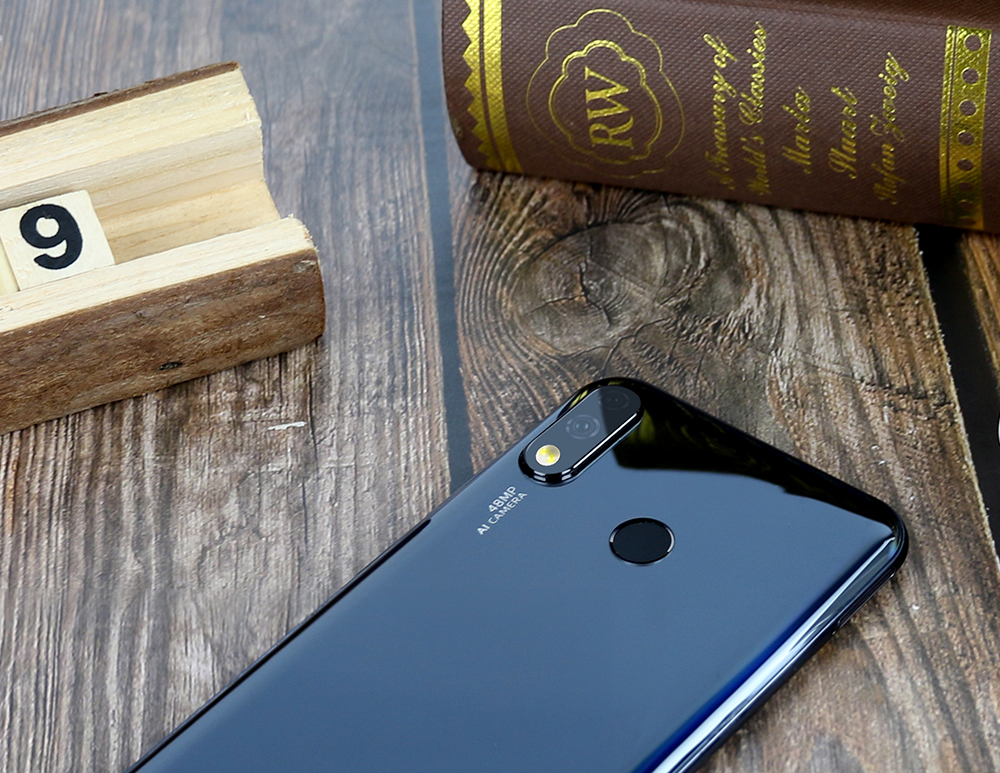
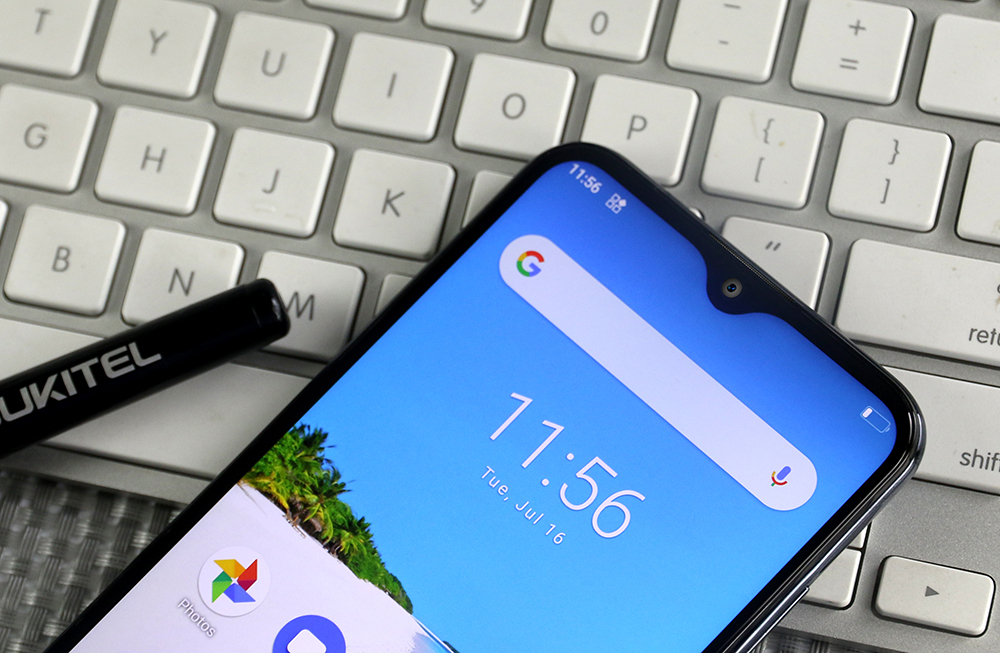
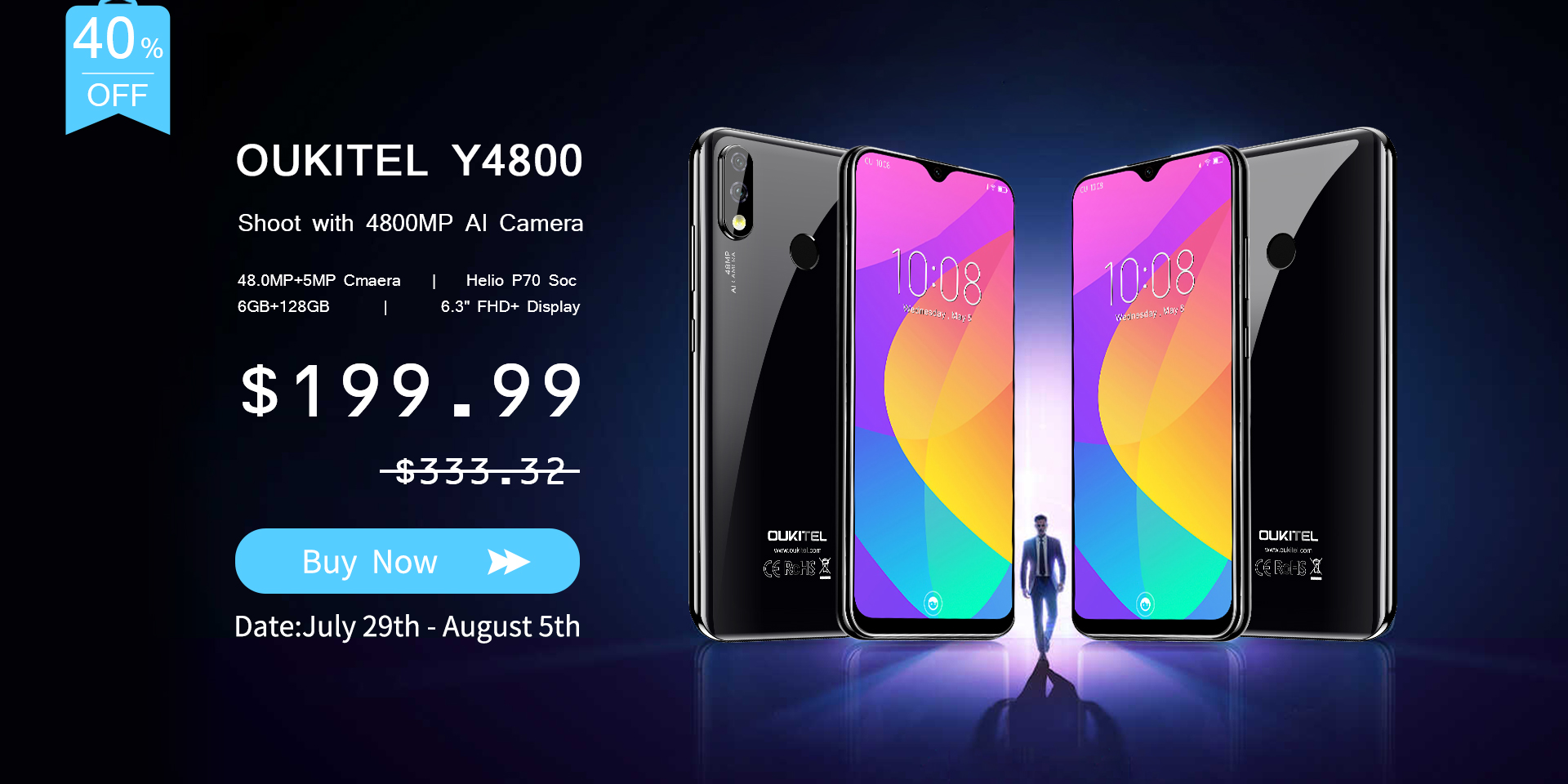
OUKITEL Y4800 released on July 22nd and is the first smartphone of OUKITEL Young series. It adopts a 48MP super HD flagship-grade camera and is powered by the latest MediaTek octa-core SoC, Helio P70, backed by 6GB of RAM and 64GB/128GB of internal storage. Belonging to the Young series, the Y4800 has great value for money while at the sale time having great specs. Now, the Chinese manufacturer holds another flash sale on their Official Store on Aliexpress for the 6GB/128GB configuration at just $199.99.
The most important feature of the Y4800 is the AI camera. The rear camera hosts a Samsung 48MP AI camera and 5MP secondary camera for flagship shooting experience. When in 48MP mode, photo details are crisp allowing for cropping without loss of details. The selfie camera also comes with a Samsung (16MP) sensor with wide-angle support for group selfies. What’s more, the Y4800 offers night mode, face beauty mode, slow motion mode, panorama mode, time-lapse mode, 48MP mode, and group selfie mode, satisfying your needs in every condition.
Besides the camera that is the killer feature of the device, there’s also a big, 6.3″ FHD+ waterdrop display and the narrow bezels and small bottom chin result in a 90% screen-to-body ratio. The heart of Y4800 is MediaTek’s Helio P70 8-core SoC accompanied by 6GB of RAM and 128GB of internal storage. The P70 has 12% increased performance compared to previous P-series chips. The 6GB of RAM is all you need for optimum multitasking while the 128GB of storage allows you to store up to 31,000 photos or 13,000 songs. And if you want more, you can add extra 256GB using the dedicated microSD slot. Lastly, the 4000mAh can give you 7 hours of gaming, 13 hours of video playback, and can be recharged in just 2 hours using the 9V/2A quick charger.
Overall, the Y4800 is worth buying as most smartphones with 6GB/128GB configuration sell for about $250. The flash sale will be valid until August 5th. You can get it here.
Google is doing things differently this year with respect to the Pixel 4. Apparently, it wants to control the narrative. Earlier, it released an official render of the phone, shortly after a leak surfaced on the web. Today, it has released the first official video teaser for the phone.
The less-than 30-second video doesn’t give us a good look at the design of the phone but it does confirm some rumors about its features.
First, the Google Pixel 4 will support Face Unlock similar to that of the iPhone X series. An official blog post by Google reveals more about this and it includes a cross-sectional image that shows all the components in the phone’s big forehead.
Starting from the left, there is a face unlock IR camera, followed by the main front camera, and then an Ambient light/Proximity sensor. Then there is the speaker in the middle or audio port as Google calls it.
To the right of the speaker is the Soli radar chip which allows you to control the phone with no hands. In the video, it is shown that you will be able to swipe to change tracks. You will also be able to wave your hands to silence alarms and calls. If you look closely at the video, there is a small animation at the top of the screen that shows when you make a gesture with your hand.
That isn’t the only thing the Soli radar is good for. Google says the device turns on as you reach for the phone, allowing the phone to unlock “all in one motion”.
We presume what happens “behind the scenes” is the radar senses the movement of your hand and then wakes the phone which then activates the face unlock system. It scans your face and then unlocks the phone. It is a pretty fast process, so you shouldn’t notice any lag.
Side Note: We can’t possibly be the only ones who think the Soli radar will make its way into the next version of Google Nest Hub?
Next to the Soli radar are the rest of the face unlock system which includes a face unlock dot projector, another IR camera, and a flood illuminator. Google says it will not only unlock your phone but also authenticate you for payments and applications. It will be called “Motion Sense” and will not be available in all countries.
You don’t have to worry about security as the Pixel 4 will feature the Titan M security chip where your face data will always be stored. Never online where it can be accessed by someone else.
The Pixel 4 is shaping up to be an interesting device and we have a feeling it may even launch earlier than its predecessor.
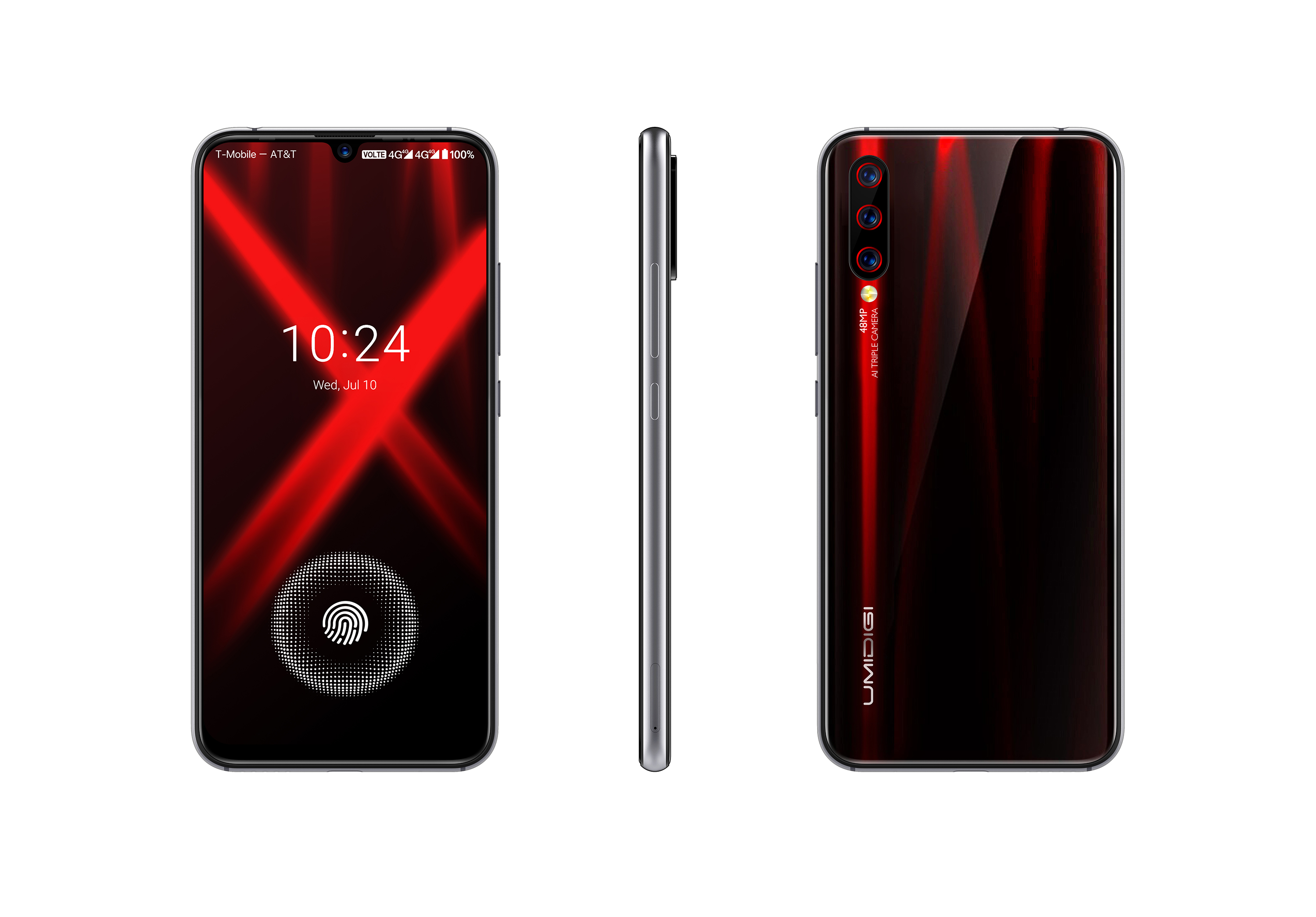
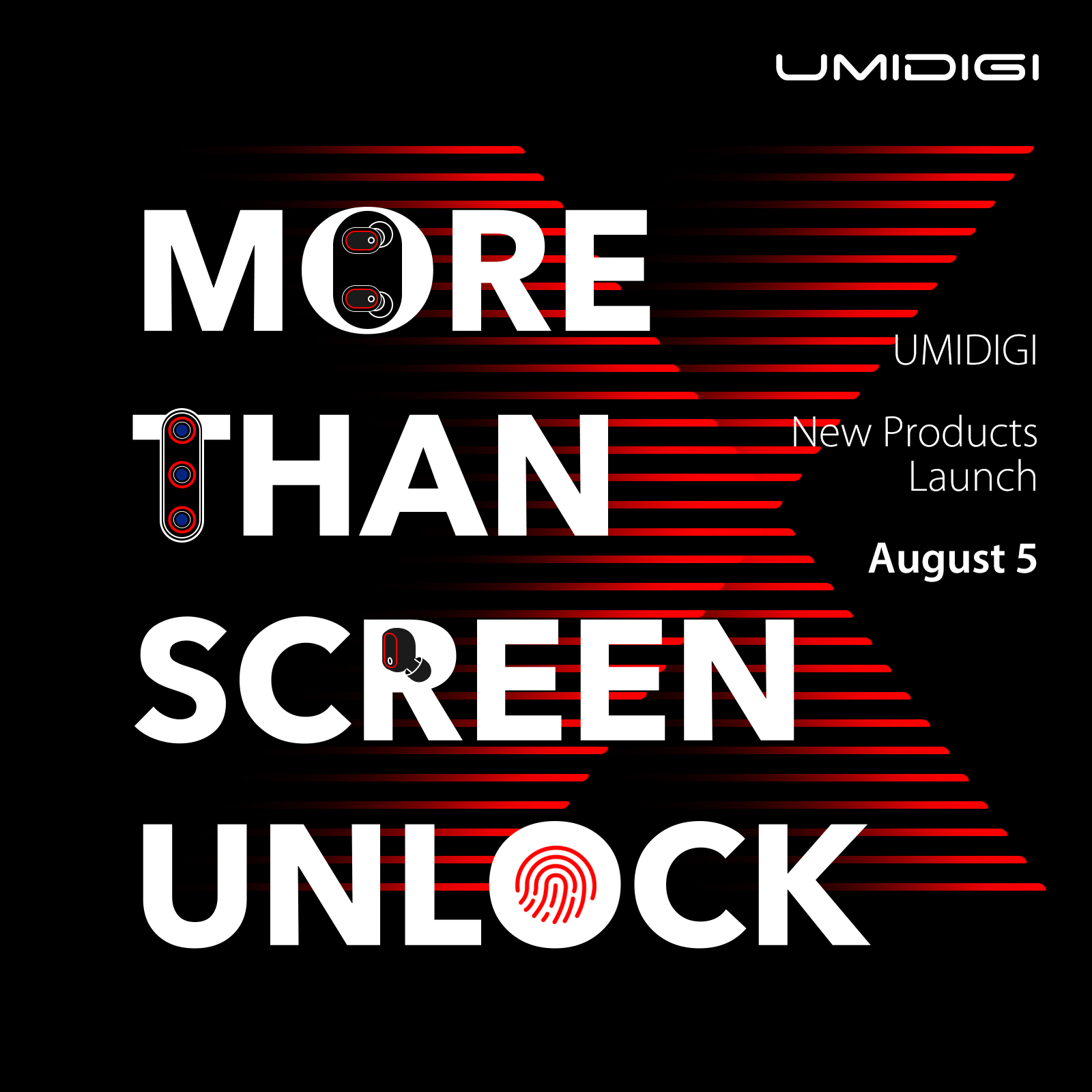
With rumors saying that Apple is also working on an in-screen fingerprint solution for a future iPhone, that suggests that similar solutions are the future of security on smartphones. Unlike the ultra-expensive iPhone, more affordable phones are already available with in-screen fingerprint sensors and the Chinese manufacturer UMIDIGI is bringing its own in-screen fingerprint phone to the market with its new value king UMIDIGI X. The X will be launched next Monday, August 5th, along with the company’s truly wireless earbuds, Upods.
Now UMIDIGI is sharing a video to show the evolution of lock and key and indicates the in-screen fingerprint unlock is the future for smartphones. In the video, the company indicates it will make in-screen fingerprint unlock affordable for everyone with UMIDIGI X.
In case you’re a bit behind on previous leaks, the UMIDIGI X has already been confirmed to pack the latest optical in-display fingerprint sensor, and leaked renders also unveil the smartphone will sport an AI triple camera setup that will include a 48MP sensor and an ultra-wide-angle lens. Also, it comes with a 6.35″ AMOLED display with a tiny waterdrop notch and it is rather slim despite the big, 4150mAh battery and NFC it comes with.
On August 5th, together with the UMIDIGI X, the company will reveal its new truly wireless earphones Upods. We expect more specs and prices to be revealed in the coming days. If you want to be among the first to get the UMIDIGI X, the company is giving you a chance to win its future smartphone here.
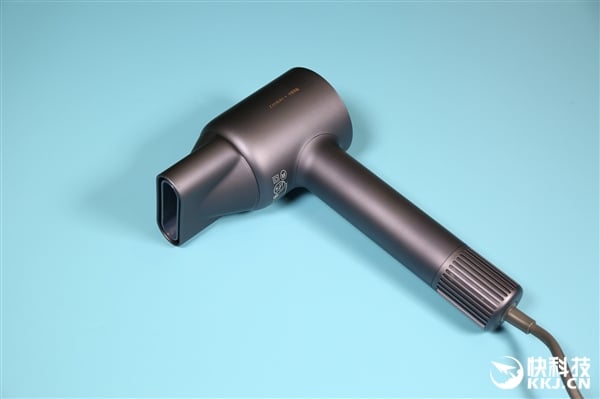
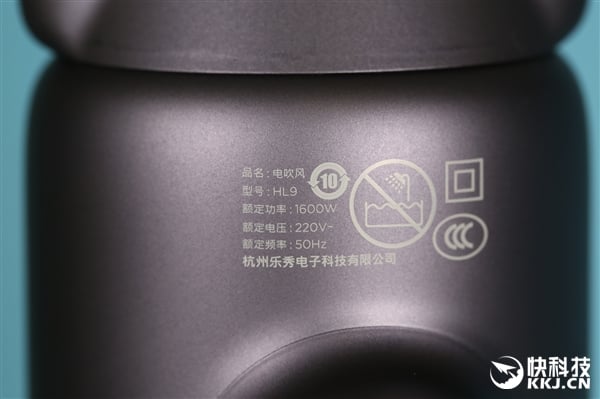
Xiaomi has launched a new product under the Youpin crowd funding platform. The product name translates to Zhibai three-layer hydrating hair dryer, which claims to be able to blow silky water and light hair, priced at 799 yuan ($115).
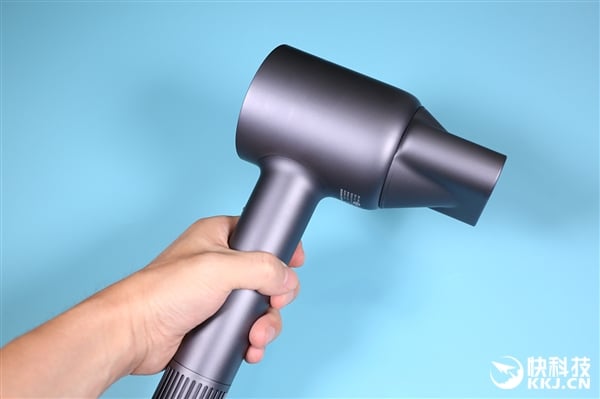
In terms of appearance, the Zhibai three-layer hydrating hair dryer adopts jellyfish purple color matching, and the surface is covered with anti-dirty hand paint. The sleek design won the German Red Dot Design Award.
The Zhibai three-layer water-cooling hair dryer uses an innovative three-layer water-cooling wind known as water ion technology. This is different from the traditional negative ion hair care technology as water ion technology can not only reduce hair frizziness like negative ions, it can also give the hair plenty of moisture, deeply nourish the hair, tighten the scales, and make the hair more shiny and beautiful.
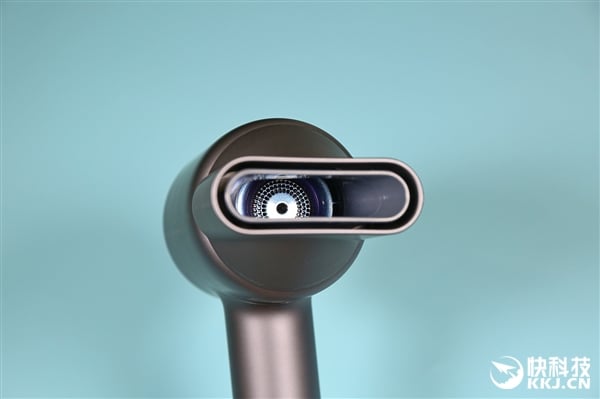
For hardware, it uses an high-performance, high-speed motor that delivers powerful wind power, output 1.6m per minute, and fast dry hair. The 6-wing airfoil blades are dynamically balanced and debugged, and the professional design of the rectifying blades makes the wind large and not dry, and the air blown out is more comfortable.
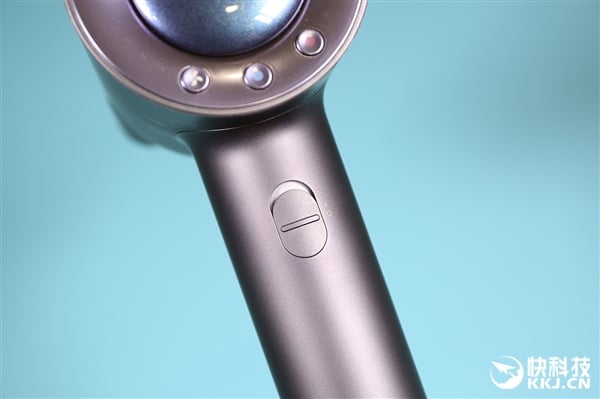
In addition, it features a cold and hot air duct, NTC smart temperature control technology to avoid thermal damage to the hair, as well as an outer ring cold air duct which reduces the body temperature, tighten the scalps. There is equally a double-layer magnetic shape air nozzle, 360° free rotation, heat insulation and anti-scalding.
The hair dryer is presently available on Xiaomi Youpin website for crowd funding with a price tag of 799 yuan. The exercise has been a huge success so far. The device will adopt a retail price of 1299 yuan ($188) after the crowdfunding exercise.
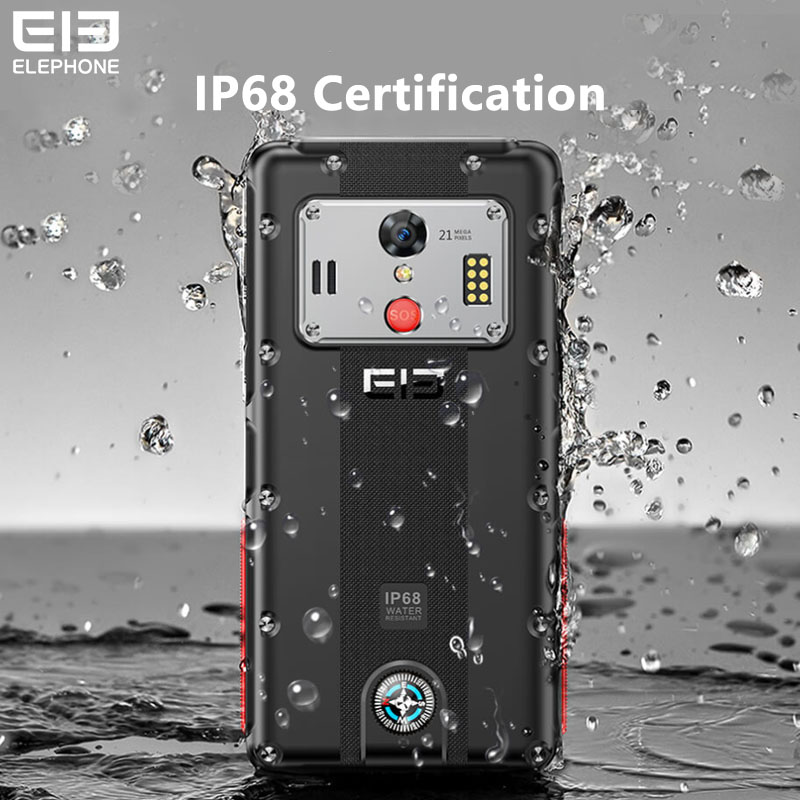
Last week, Elephone announced a promotion for its rugged 2K display smartphone Elephone Soldier on Gearbest. The promotion was supposed to end today but it got an extension for 7 more days and is offering 26% off on the official retail price. So, you can visit the promotion page on Gearbest and grab an awesome deal for just $189.99. Mind you that we are talking about the top version with 4GB/128GB memory configuration!
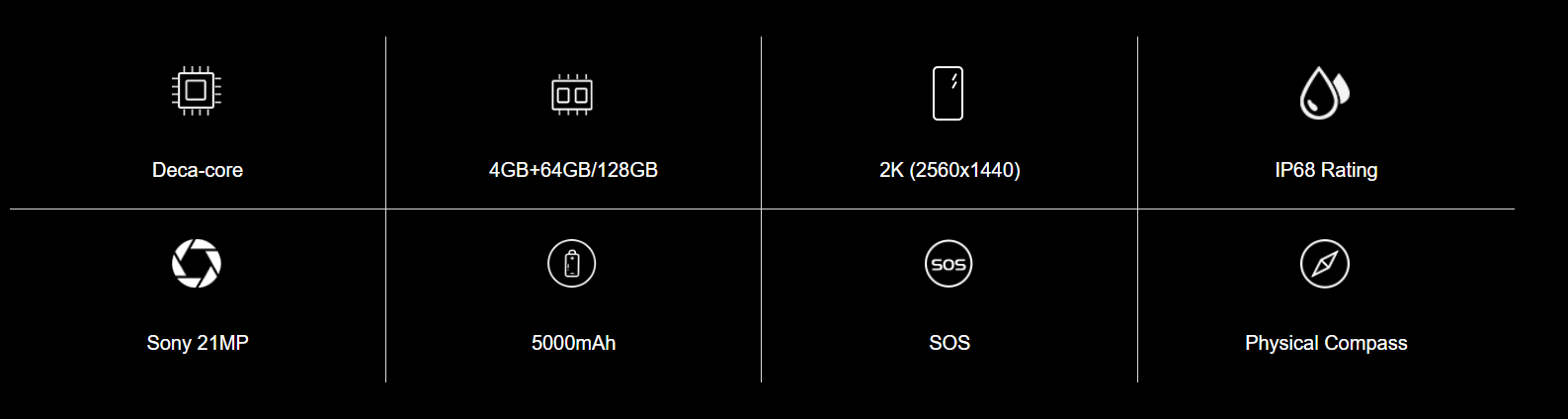
As for the phone’s specs, the Soldier comes with a couple of spectacular features. For starters, it prides itself as the first IP68 waterproof rugged phone with a 2K display. Apart from that, the device comes with a bug, 5000mAh battery that is necessary to feed the 2K display and deliver up to 20 days of standby time.
Other include the 10-core Helio X25 SoC coupled with 4GB/64GB and 4GB/128GB memory configuration. Also, there is a 21MP Sony camera, a physical compass, and an SOS button. If you are interested, you can get it until August 4th.
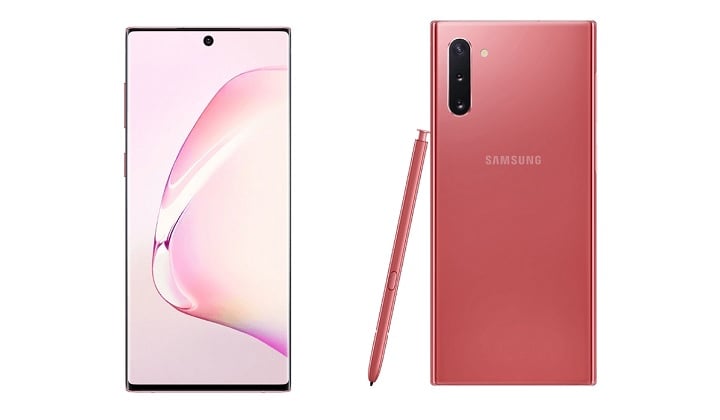
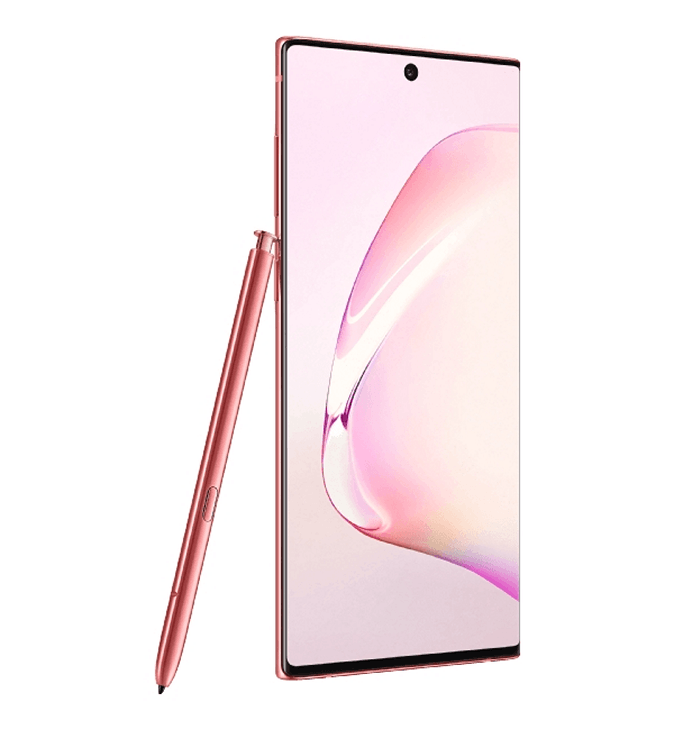
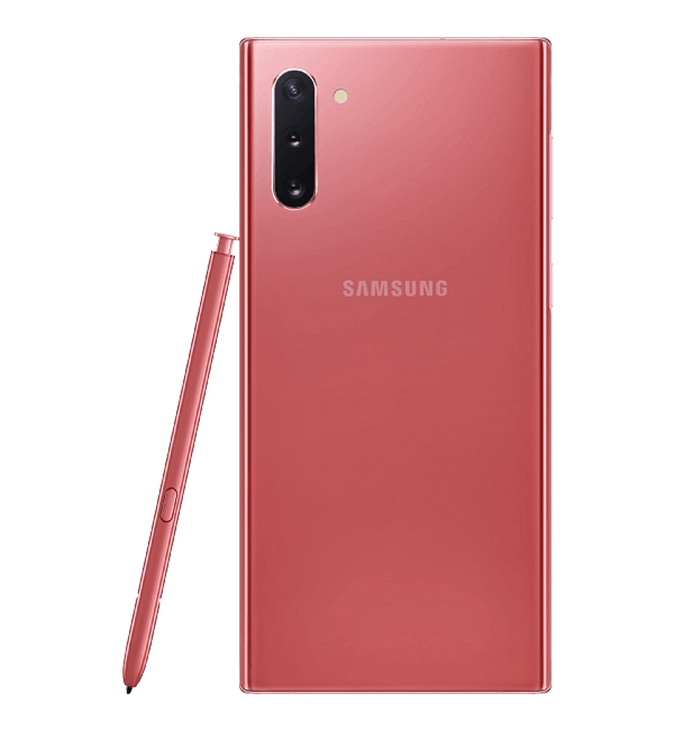
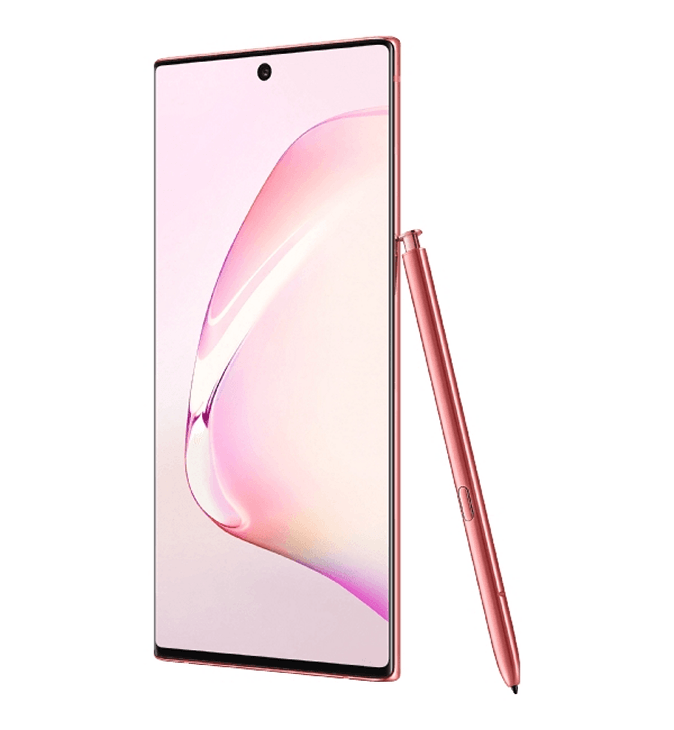
Samsung has been bolder when it comes to experimenting with colors in the last few years. For example, the Galaxy S10e comes in bright Canary Yellow and a beautiful Flamingo Pink. Today, press renders have surfaced of the Galaxy Note 10 in an equally stunning pink shade that we can’t help but drool over.
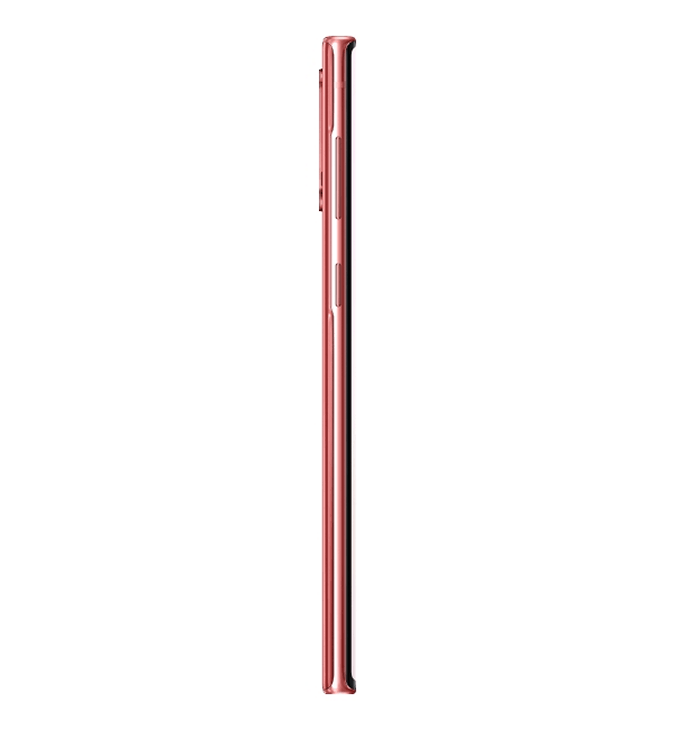
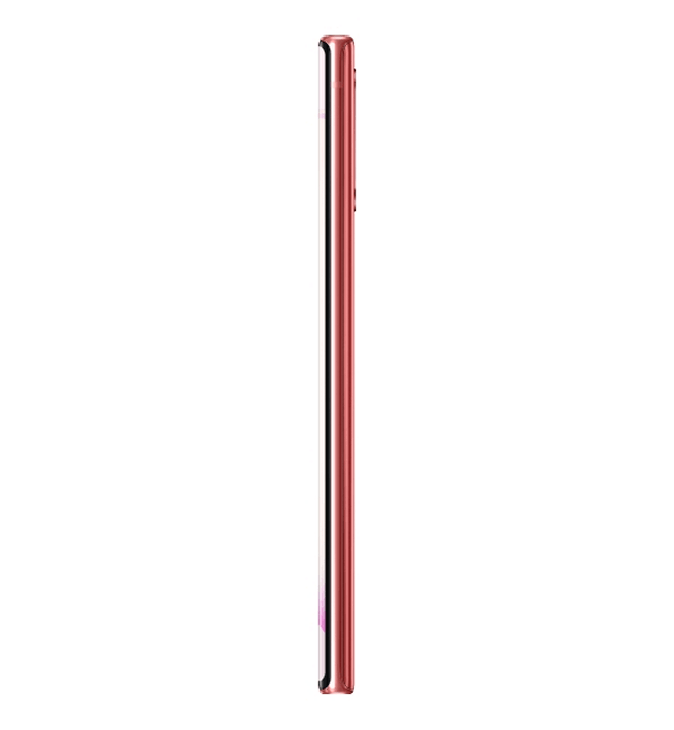
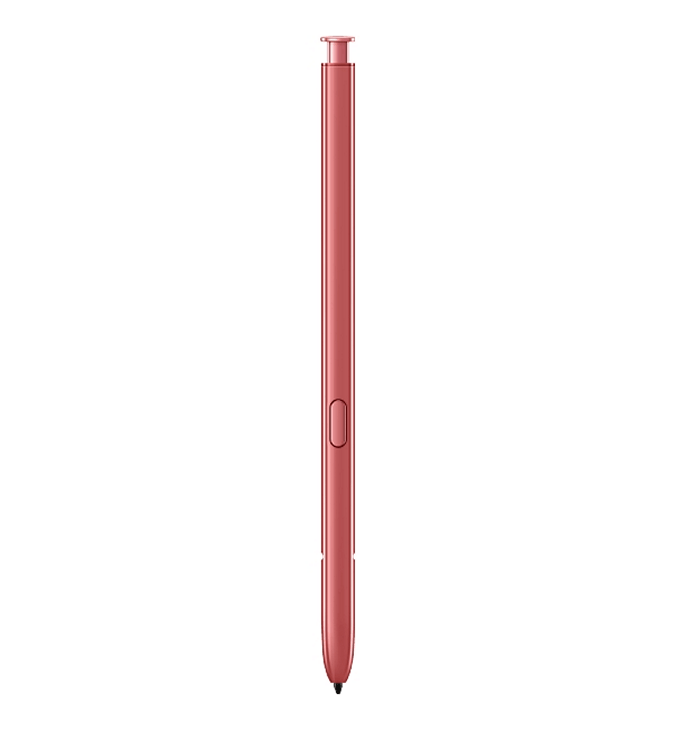
The renders were first published by Winfuture.de and they show the phone from a variety of angles. The pink paint covers not only the rear of the phone but also the sides. The stylus also has the same color.
There are reports the Galaxy Note10 will also be available in blue and green but we are yet to see pictures that confirm the claims.
1 of 6
Samsung Galaxy Note10 Pink
Samsung Galaxy Note10 Pink
Samsung Galaxy Note10 Pink
Samsung Galaxy Note10 Pink
Samsung Galaxy Note10 Pink
Samsung Galaxy Note10 Pink stylus
The Galaxy Note 10 will have a 6.3-inch AMOLED screen with a 2280 x 1080 resolution and Gorilla Glass 6 protection. Depending on the market, there will either be an Exynos or a Snapdragon processor inside the phone along with 8GB of RAM and 256GB of storage.
The phone will have a 10MP front-facing camera that can record 4K videos at 30fps. It will also have a 12MP primary rear camera with a variable aperture, a 16MP ultra-wide-angle secondary rear camera, and a 12MP telephoto zoom lens.
Samsung will include a 3500mAh battery with support for 25W fast charging and 12W wireless charging. The Galaxy Note 10 will run Android Pie out of the box.
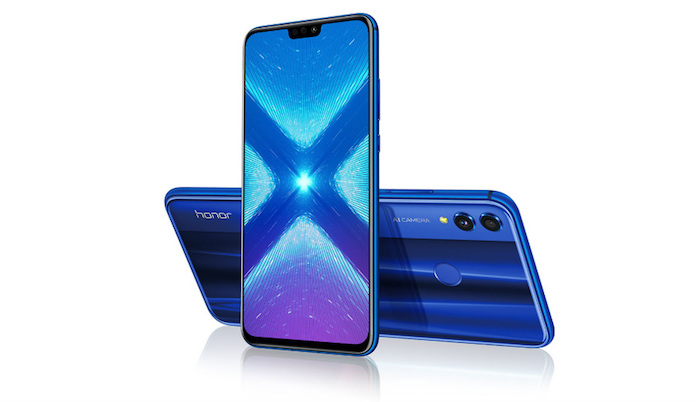
Both the Honor 8X and the Honor 10 were released last year and already have successors – Honor 9X and Honor 20 respectively. Both phones launched with EMUI 8.x based on Android 8.1 Oreo but have now been updated to Android Pie.
The evidence that both phones will get the update to Android Q are replies on Twitter to questions asked on if both phones will get the update.
Thank you for showing your interest for Android Q. We would like to inform you that our software team has already evaluated and confirmed the compatibility of Android Q upgrade with Honor 8X.
Thank you for showing your interest for Android Q. We would like to inform you that our software team has already evaluated and confirmed the compatibility of Android Q upgrade with Honor 10.
The Honor 8X and Honor 10 should get the update along with EMUI 10 which should debut with the Mate 30 series later this year. However, the update may not arrive on both phones until much later.
There are still other devices that Honor hasn’t confirmed will get the Android Q update such as the Honor View 20 and the Honor Play. We will be assuming that since it has confirmed the update for the Honor 8X and Honor 10, their siblings – the Honor 8X Max and Honor Note 10 will also be updated to Android Q.
Thank you for showing your interest for Android Pie, we would like to inform you that our software team has confirmed the compatibility of device with Android Pie with EMUI 9.1 and expected to be released the final version from 30th Jul’19 onwards.
In a more recent tweet, Honor India also confirmed that the Honor 7X will receive an update that brings EMUI 9.0 based on Android Pie starting July 30.
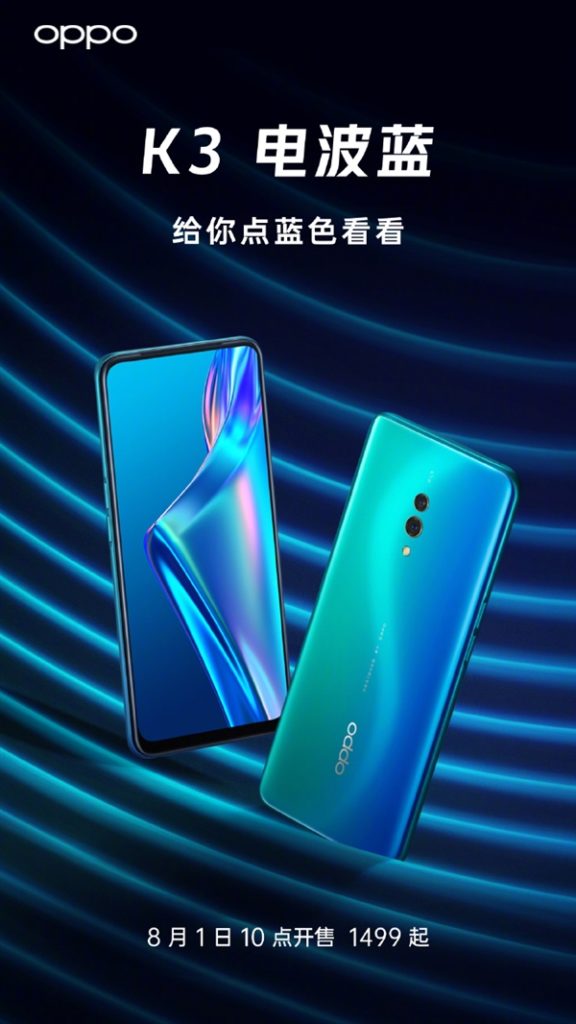
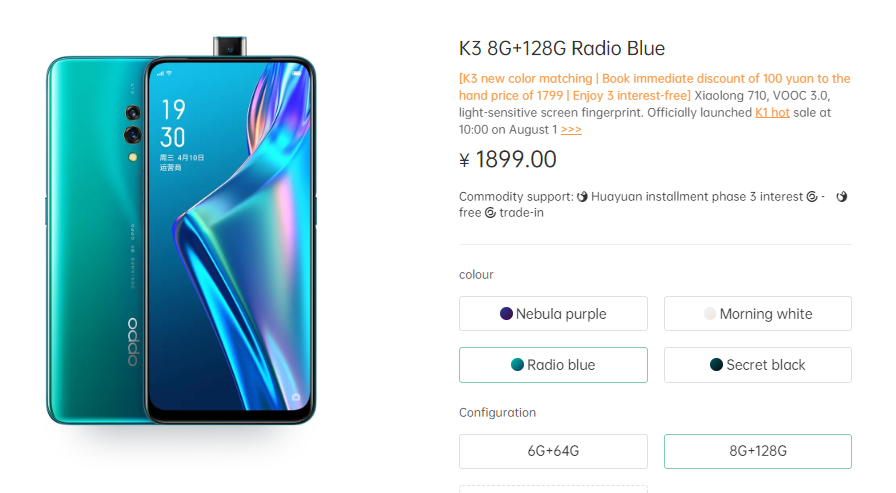
The OPPO K3 launched in India on July 19 and went on sale on July 23 as an Amazon exclusive. Before arriving in India, OPPO had launched the smartphone in China first. A new color variant of the K3 has been announced for the Chinese audience. Dubbed as Radio Blue, the new variant will be available to Chinese customers from August 1.
The Radio Blue color option is available on two variants. One with 6GB of RAM and 64GB of native storage, and the other with 8GB of RAM and 128GB of internal storage. Both devices are priced at 1,599 Yuan (~$232) and 1,899 Yuan (~$276) respectively. OPPO is offering a 100 Yuan (~$15) discount during the first sale. Apart from Radio Blue, the OPPO K3 is available in colors such as Morning White, Black and Nebula Purple.
OPPO K3 Specifications and Features
The OPPO K3 features a 6.5-inch AMOLED capacitive touchscreen with a resolution of 1080 x 2340 pixels and 394ppi pixel density. It delivers an aspect ratio of 19.5:9 and 91 percent screen-to-body ratio. The display is protected by Corning Gorilla Glass 5.
It is powered by a 2.2GHz octa-core Snapdragon SDM710 SoC with Adreno 616 GPU. The smartphone runs on the Android 9.0 Pie-based ColorOS 6. It is available in two variants, with 6GB and 8GB of RAM with 64GB and 128/256GB of internal storage respectively. The device does not get expandable storage.
The K3 has a dual camera setup at the rear with a pop-up selfie camera. The primary camera is a 16-megapixel unit and a 2-megapixel depth sensor with an LED flash. The secondary camera is a 16-megapixel motorized pop-up unit. The OPPO K3 gets an in-display fingerprint scanner. The device draws power from a 3,765 mAh battery with 20W VOOC 3.0 fast charge. Connectivity options include Wi-Fi 802, A-GPS, and USB Type-C 2.0. The device gets a 3.5mm AUX port with active noise cancellation.
We use cookies on our website to give you the most relevant experience by remembering your preferences and repeat visits. By clicking “Accept”, you consent to the use of ALL the cookies.
This website uses cookies to improve your experience while you navigate through the website. Out of these, the cookies that are categorized as necessary are stored on your browser as they are essential for the working of basic functionalities of the website. We also use third-party cookies that help us analyze and understand how you use this website. These cookies will be stored in your browser only with your consent. You also have the option to opt-out of these cookies. But opting out of some of these cookies may affect your browsing experience.
Necessary cookies are absolutely essential for the website to function properly. This category only includes cookies that ensures basic functionalities and security features of the website. These cookies do not store any personal information.
Any cookies that may not be particularly necessary for the website to function and is used specifically to collect user personal data via analytics, ads, other embedded contents are termed as non-necessary cookies. It is mandatory to procure user consent prior to running these cookies on your website.