The Redmi Note 7 Pro originally launched in two configurations – 4GB RAM + 64GB and 6GB RAM + 128GB. The phone will now also be available with 6GB of RAM and 64GB of built-in storage.
The announcement was made on Twitter by Manu Kumar Jain today. The new variant is priced at INR 15,999 (~$230) and is targeted at those who want more RAM but are fine with just 64GB of storage.
The tweet also revealed the new variant of the Redmi Note 7 Pro will go on sale tomorrow at noon and will be available for purchase on Mi.com and on Flipkart.
The Redmi Note 7 Pro has a 6.3-inch FHD+ Dot Drop Display. It is covered with Gorilla Glass 5 on both sides and comes in Nebula Red, Neptune Blue, and Space Black. There is a Snapdragon 675 processor under the hood. Irrespective of the variant you buy, users can add more storage via the hybrid SIM slot.
The Redmi Note 7 Pro has a 48MP primary rear camera paired with a 5MP sensor while a 13MP camera is in front for selfies and video calls. It also has a rear-mounted fingerprint scanner, a 3.5mm audio jack, and 4000mAh battery that charges via a USB Type-C port and supports Quick Charge 4.
In the year 2012, Samsung had launched the Galaxy Beam smartphone which came with an in-built pico projector. Even though the idea was quite interesting, the device didn’t find an audience or market.
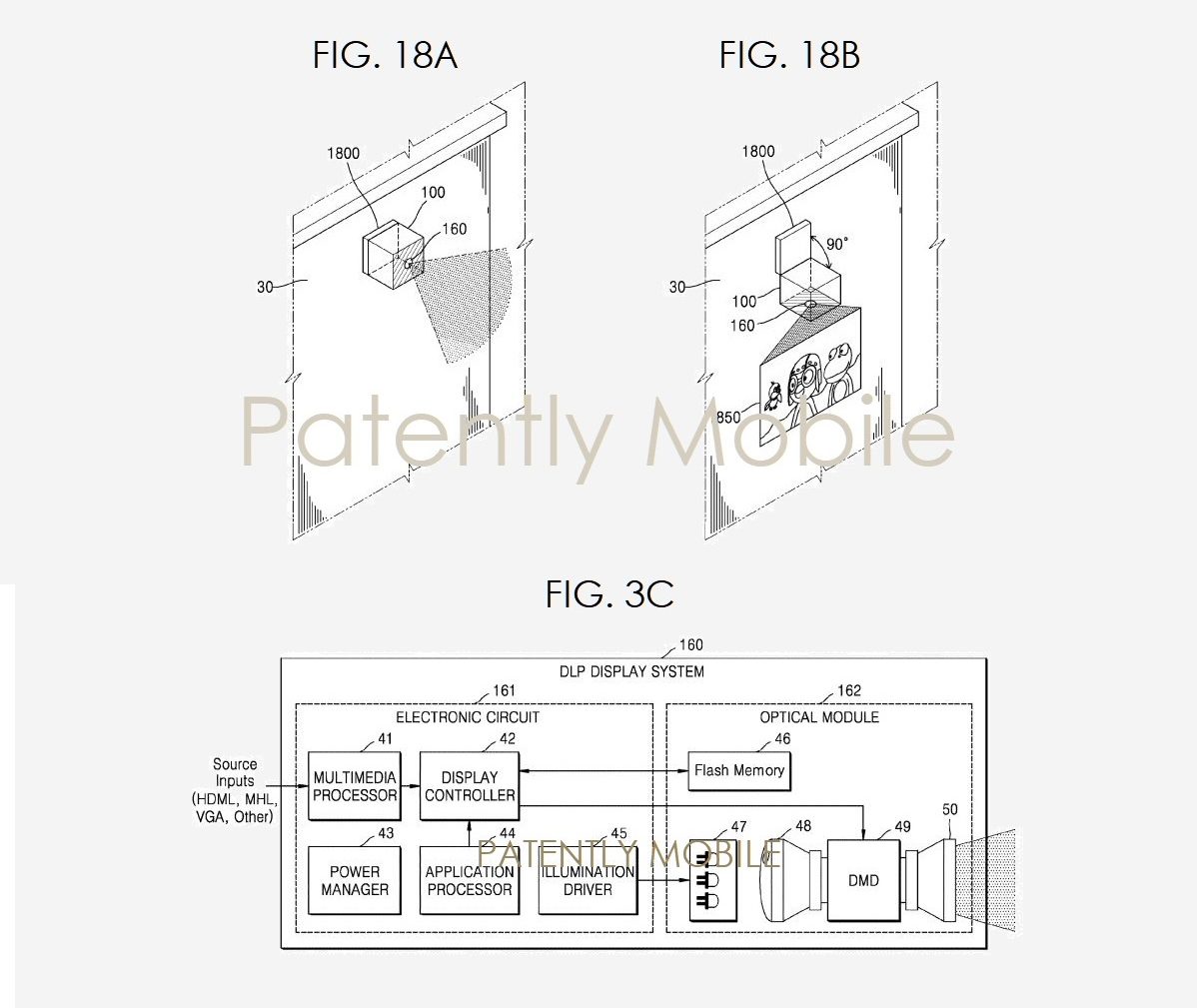
Now it seems that the South Korean giant has again taken up the projector idea and this time Samsung is working on introducing a mobile projector accessory for the company’s Galaxy smartphone series and other computing devices.
Last month, the US Patent & Trademark Office had published a granted patent from Samsung which is regarding a new kind of portable projector that could sit on a table or can be easily attached to a wall to show slides, pictures, videos or simply watch live TV. The projection system can be controlled by a smartphone or any other kind of computers such as a tablet, laptop, desktop, wearable devices like a smartwatch or a set-top-box.
However, do keep in mind that since the patent has been approved and the company might be working on it, it doesn’t mean that such a product will actually make it to the market commercially. It will be interesting to see what the company is planning with this one.
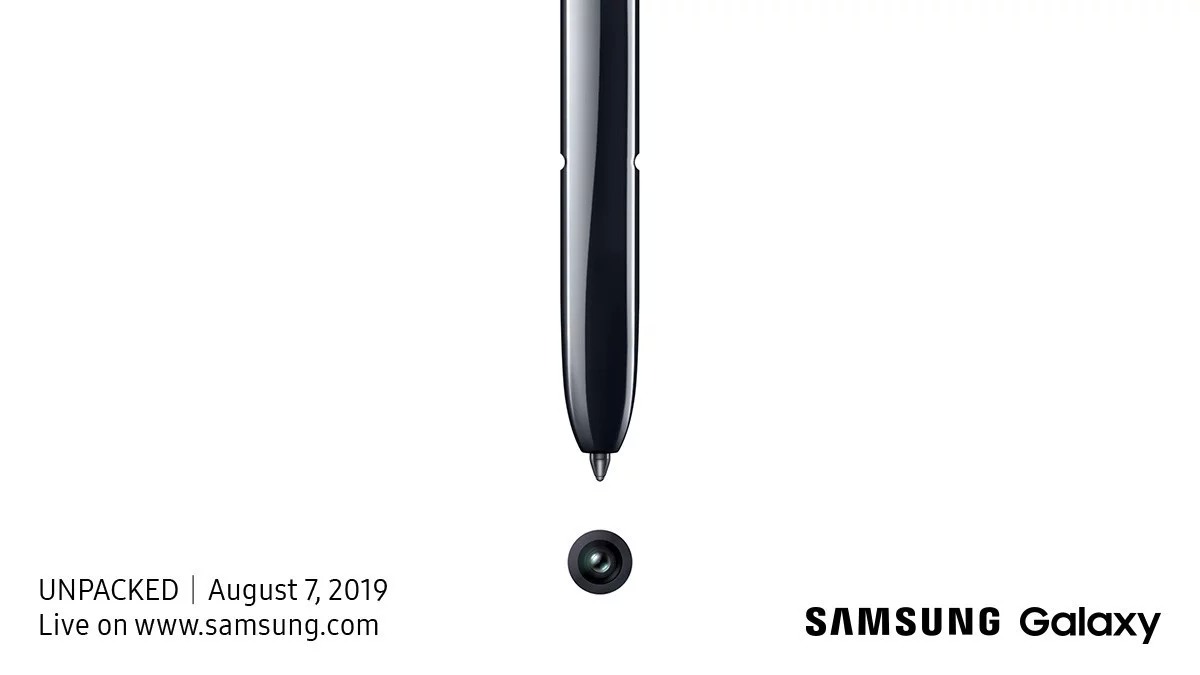
Meanwhile, Samsung is gearing up to launch its next-generation Galaxy Note series smartphones — Samsung Galaxy Note 10. The company has already sent out media invites for the “Unpacked” launch event on 7th August.
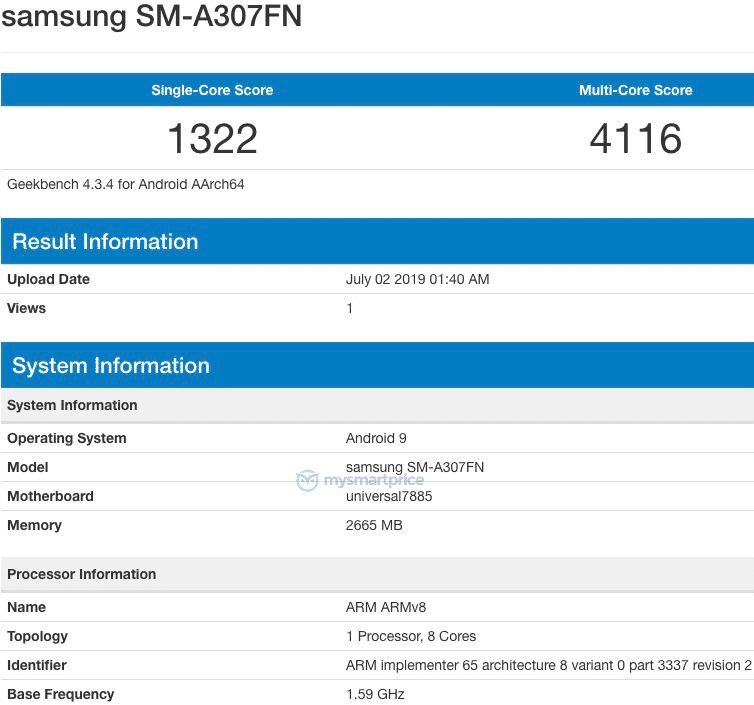
Samsung is reportedly working on newer versions of the Galaxy A series of smartphones that were announced in the first half of 2019. A fresh Geekbench listing SM-A307 Samsung phone has appeared today. It is speculated that the smartphone may debut as Galaxy A30s.
The SM-A307FN Samsung phone’s Geekbench listing has revealed that it is powered by Exynos 7885 chipset. The SoC is supported by 3 GB of RAM. In the single-core test, it has scored 1,322 points and it has recorded a score of 4,116 points in multi-core test.
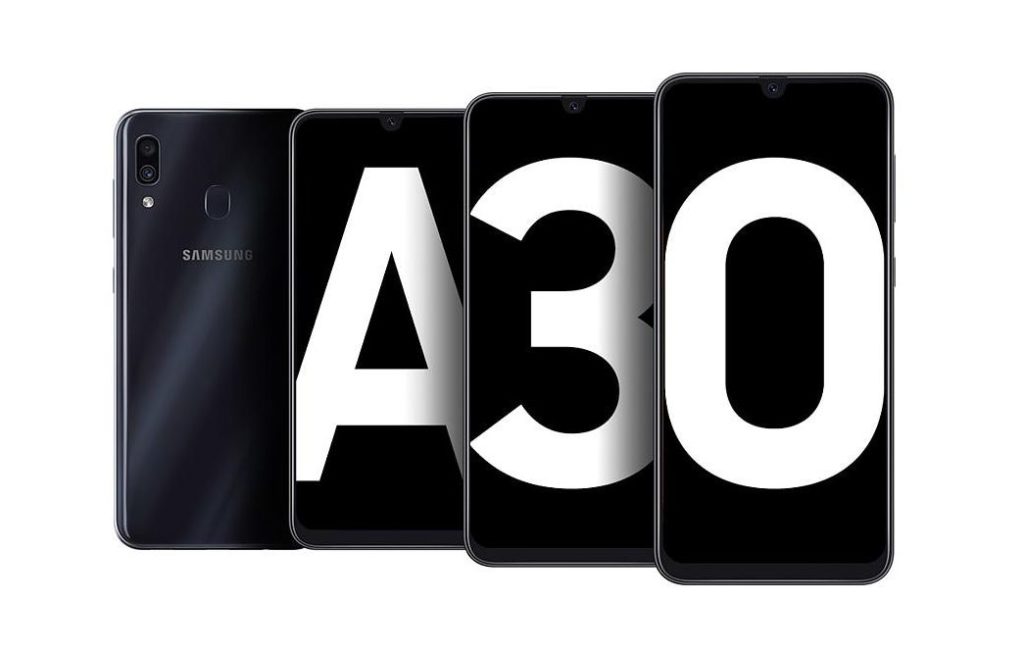
The Galaxy A30 that was announced earlier this year has a model number of SM-A305. Its Geekbench listing shows that it is fueled by Exynos 7885 chipset, but the device had actually arrived with Exynos 7904. It appears that the Exynos 7904 is read as Exynos 7885. Hence, there is a possibility that the SM-A307FN model that has been spotted on Geekbench could be also featuring the Exynos 7904 SoC like the A30 model.
The alleged Galaxy A30s is supposed to arrive with some sort of improvements over the A30. Hence, readers will have to wait more to know more on the enhanced specs of the rumored Galaxy A30s. It could be slotted between the Galaxy A30 and Galaxy A40. Hence, it is likely to borrow some features from the Galaxy A40 smartphone. The A30s may debut within the third quarter of the year.
The Galaxy A30 has a 6.3-inch S-AMOLED full HD+ display with Infinity-U notch design. The smartphone comes in 3 GB RAM + 32 GB storage and 4 GB RAM + 64 GB storage variants. The One UI based Android 9 Pie is loaded on the device.
The Galaxy A30 is fitted with dual camera setup on its rear. It includes a 16-megapixel primary sensor and a 5-megapixel secondary sensor. For capturing selfies, it has a front camera of 16-megapixel. The smartphone is backed by a 4,000mAh battery that supports 15W fast charging through USB-C.
The Xiaomi Mi Band has become one of the most popular wearable products thanks to its competitive price. Accompanied by its success, Xiaomi has already become a giant in the wearables market and got opportunities to participate in the rule-making of the market.
Recently Xiaomi released its fourth generation of Mi Band, which is considered as a most important upgrade of Xiaomi Eco-Chain.
Unlike other budget products, Mi band 4 doesn’t feel cheap or poor quality either. On the contrary, it’s amazing that we can have all those features inside such a small body at a good price. In this review, Let’s look at how well the Mi Band 4 keeps satisfied their users, and some experience detail as well.
Design & display
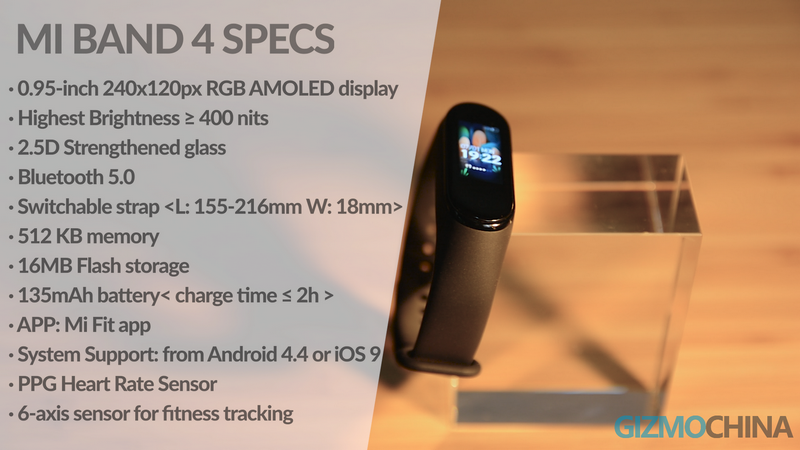
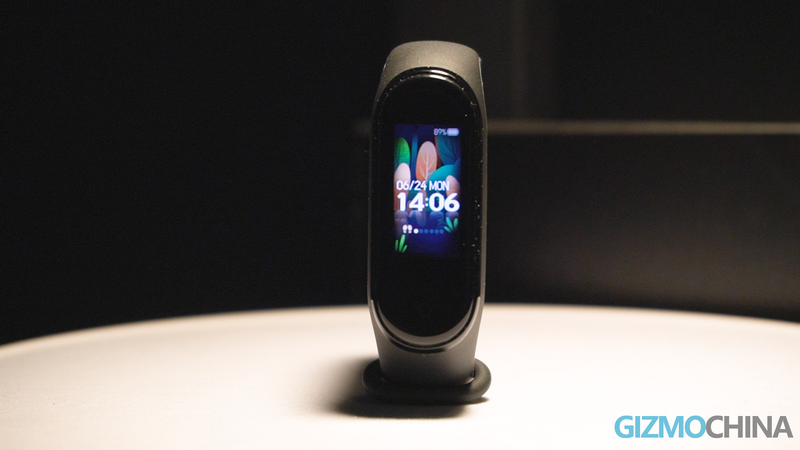
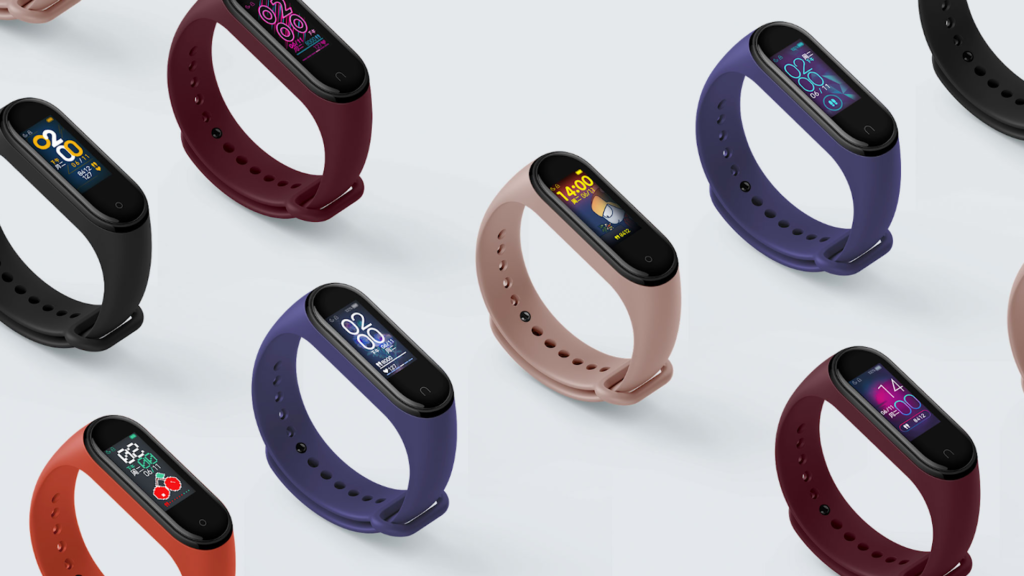
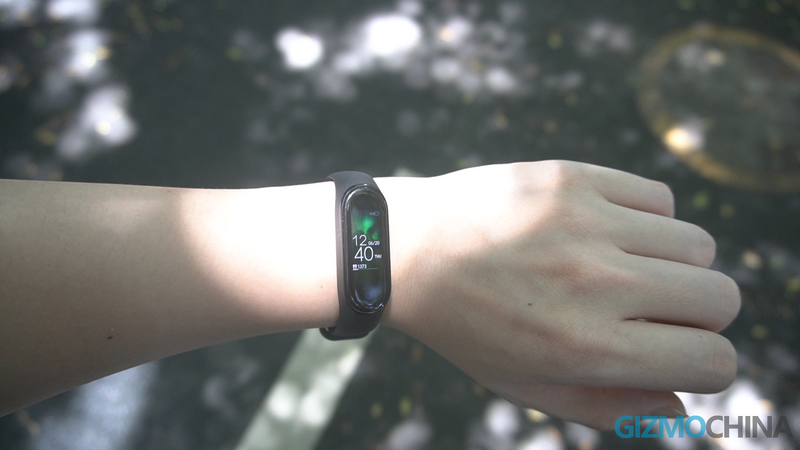
The biggest surprise of Mi band 4 is this 0.95-inch colorful AMOLED display with a 240×120 resolution, updated from a smaller black-and-white display on Mi band 3. Thanks to the RGB display, now you can download colorful info surfaces that you like in the Mi-Fit app.
But visually the display doesn’t fill the whole screen but leaves the upper blank area, which makes you not easy to ignore the obvious edges of the display. Besides this better display, the Mi band 4 also has better scratch-resistant glass protection. Unlike the entirely curved glass on the Mi Band 3, the Mi Band 4 uses a 2.5D glass. The new glass gives better and more angles to view the larger display. Another upgrade on the Mi band 4 is the brightness, highest at 400nits. It helps users to make out what’s going on the direct sunlight. An unfriendly experience about the display is that the band doesn’t provide options for changing the lock-screen time of inactivity, which is set at only around 4 seconds.
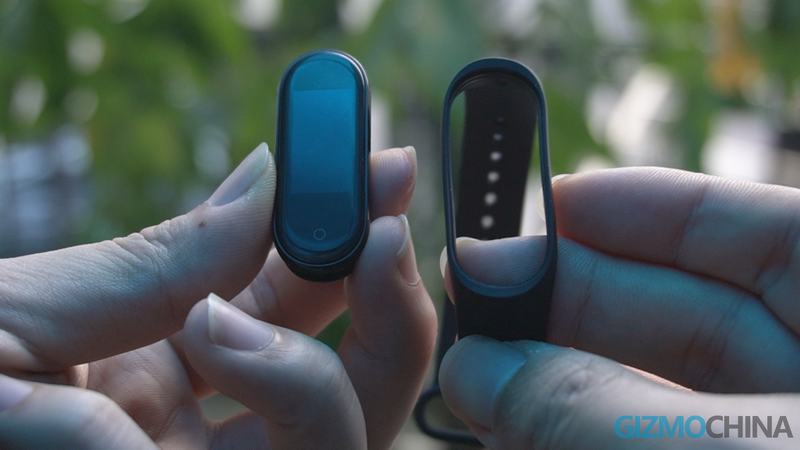
The weight of 22g, containing an RGB display and a multi-function tracker. Such a wonderful weight makes it not cause any discomfort on my wrist. The device is basically made by TPU material and the strap that comes with the device is rubbery, which is quite similar to the Mi Band 3. And the surface of the strap is quite smooth that it really feels good to contact with skin. Thanks to the comfort and well-made strap, it should fit most users’ wrists. The straps can be swapped out for different themes and colors, so you can have multiple-color straps from Xiaomi online shops, and some third-party alternatives as well.
Another added bonus is that the Mi band 4 supports 50-meter (5ATM) waterproof, which allows you to swim or even dive with it, but not just wear it in the shower.
Battery
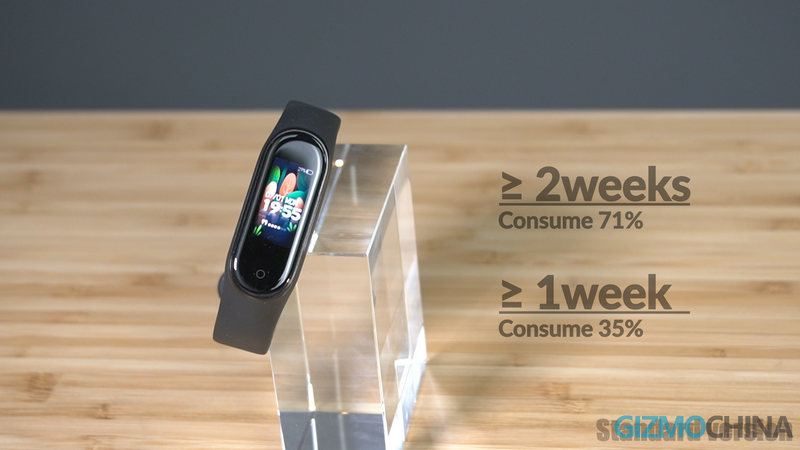
Great battery life has been a great feature for Xiaomi Mi bands. Though Mi band 4 has an RGB display, there is no compromise of its 20-day battery life. Mi band 4 has two different versions, the standard version, and the NFC version. According to Xiaomi official experiment results, the standard version can last for over 20 days, while the NFC version can last for over 15 days. As I used both versions for only one week, they both haven’t run out half of their battery life. The NFC version consumed a bit more power in terms of the NFC functions and the internal voice assistant.
Experience
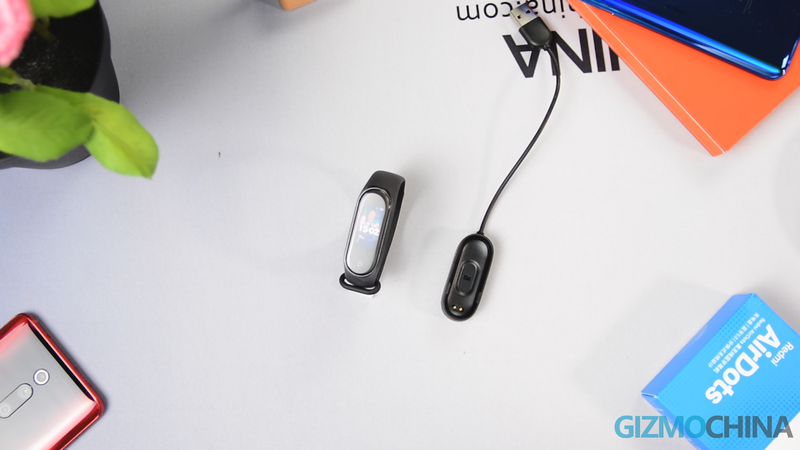
In my daily uses, there’re some details that I have to share with you. The first one is the wake-up action. it’s a pretty good experience to lift my wrist to view the info, which sometimes fails to recognize my action, but usually working quite well. Another problem is that charging is pretty annoying stuff here because you need to swap out the strap and put it into the charging base. It is not so difficult but not that easy either. A good message is that thanks to the long battery life, such an annoying feeling only occurs every 20 days. On the other hand, you don’t need to worry that it gets lost accidentally one day, because the annoying strap design is to ensure the device can stay firm and solid with the strap.
The only two differences between the standard version and the NFC version are the NFC function and Xiaomi voice assistant, Xiao Ai. However, these two features are more likely to attract Chinese users. Because most usage scenarios of NFC function were mainly advertised to replace some unencrypted transportation card in specific china cities. Thus, it won’t be very practical in other countries. As for voice assistant Xiao Ai, it’s Chinese-language based. So, if you’re not very good at Chinese, the NFC version is not in the list of my suggestion either.
Trackers & performance
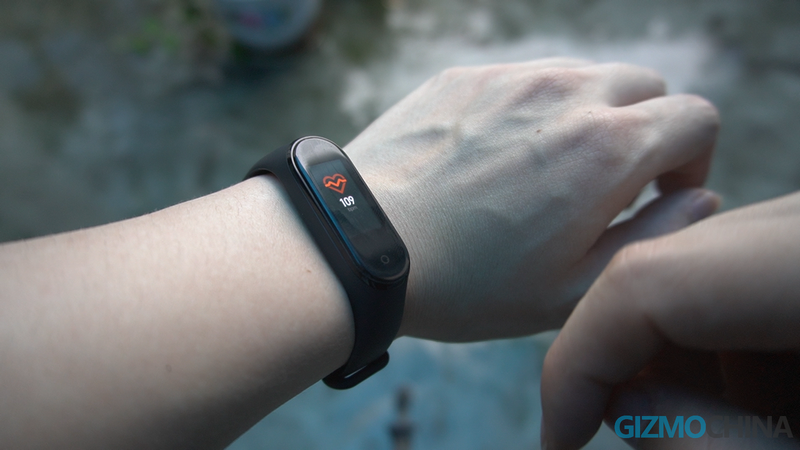
As a basic health tracker, Mi band 4 gives you a step counter, heart-rate monitor for the fitness purpose and a six-axis sensor for exercise tracking. It can recognize your workout moves, including running, cycling, swimming and so on. The functions here are pretty similar to the other trackers, like giving you running detail including average speed, pace, stride, total steps, uphill and so on. As a workout tracker, it can give you almost all you expect. The heart-rate monitor seems quite accurate and it can also work consistently throughout the whole day. It has options of various detection frequency between 1, 5, 10 and 30 minutes, which can accurately detect your state when doing something that brings your more emotional impact or focuses.
1 of 2
Heart-rate monitor
Meanwhile, it also contains a sleep tracker, which needs you to wear it when sleeping. Though I’m fine with it, I know some users may feel uncomfortable to wear something when sleeping. This is a very welcome feature for me to learn my exact time between light and deep sleep. But a small problem is that it cannot recognize shorter naps.
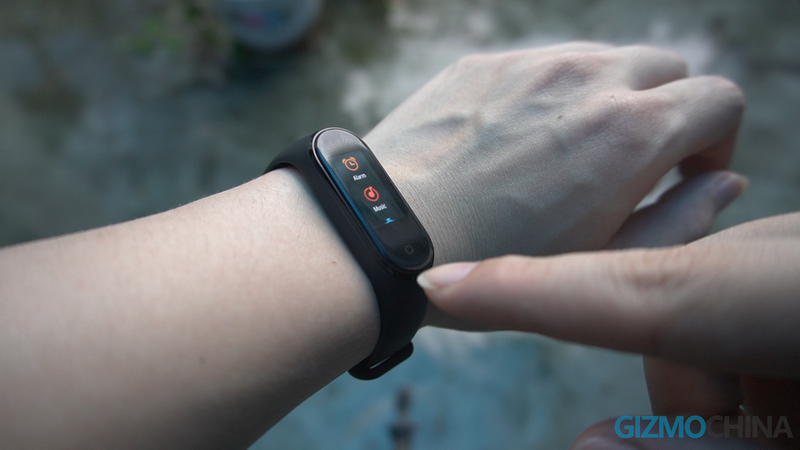
Besides the trackers, there’re some small functions like setting an alarm clock, setting a timer, and setting an idle alert to remind you to get some walk from sitting for a long while. You can also connect it with your phone to check all your fitness data, control the music player, see all kinds of notification and incoming calls. One more interesting function is that you can find your phone through the band, and find your band through your phone as well. It is a truly good experience for those who always waste time on finding their phone, like me.
Conclusion
Though I have experience of unpleasure on the Mi band 4, there is no excuse to admit that it’s still one of the most attractive basic wearables in 2019. But are there any better options beside Xiaomi Mi band 4? Absolutely, yes, there are. However, if you consider their price, it’s no doubt that those top-end smart bands or watches would cost significantly more. But will most users think it would be worth paying that money? I think the market share of wearables has already told us the answer.
Vivo had launched the Vivo Y12 smartphone in India with 4GB of RAM on June 20th. The device is powered by a MediaTek processor and packs a 5,000 mAh battery. Now, the Chinese smartphone manufacturer has now announced a new variant of the Y12 with 3GB of RAM.
The 4GB variant of the Y12 is available only with 32GB of on-board storage, although, it can be expanded via a microSD card. The smartphone is available for Rs. 12,490 (~$181) on Amazon, Flipkart and various offline stores. The 3GB variant of the device comes with 64GB of internal storage and also gets a microSD card slot. It is priced at Rs. 11,990 (~$174) and is available on Amazon and other offline stores. The device is available in two color variants, namely Aqua Blue and Burgundy Red.
Vivo Y12 Specifications and Features
The Vivo Y12 feature a 6.35-inch HD+ Halo FullView display with a waterdrop notch that houses the front camera. The display features an aspect ratio of 19:3:9 along with a screen to body ratio of 89 percent.
The device is powered by a 2.0GHz octa-core MediaTek Helio P22 processor, paired with up to 4GB of RAM and 64GB of built-in storage. The Y12 draws power from a non-removable 5,000 mAh battery with an intelligent power saving mode, and runs on the Android 9.0 Pie-based Funtouch OS 9.0. The device features an ultra-gaming mode that reduces frame drop, offering a smooth gaming experience.
The Vivo Y12 packs a triple-camera setup at the rear. The device has a 13-megapixel primary camera, along with a 8-megapixel wide-angle sensor and a 2-megapixel depth sensor. The rear cameras offer portrait mode and HDR support. The front camera on the Y12 is an 8-megapixel unit with ‘face beauty’ and ‘portrait mode’.
The smartphone supports 4G LTE, dual SIM, Bluetooth 5.0, A-GPS and GLONASS. It also has a rear-mounted fingerprint scanner for quick access.
In related news, Vivo is all set to launch the Vivo Z1 Pro in India tomorrow. The smartphone borrows quite a few features from the Vivo Z5x. The Vivo Z1 Pro features a 6.53-inch IPS LCD display with a punch-hole camera. The display supports a maximum screen resolution of 1,080 x 2,340 pixels with an aspect ratio of 19:5:9. The device is powered by a Snapdragon 712 chipset with up to 8 GB of RAM, while the top-of-the-line variant is expected to feature 128GB of in-built storage.
The smartphone gets the Android 9.0-powered Funtouch 9.0 OS with Vivo’s Multi Turbo performance enhancement, which ensures a smoother gaming experience, and Vivo’s Jovi AI assistant. The Vivo Z1 Pro draws power from a 5,000 mAh battery with 18W fast charging support and a triple camera setup at the rear.
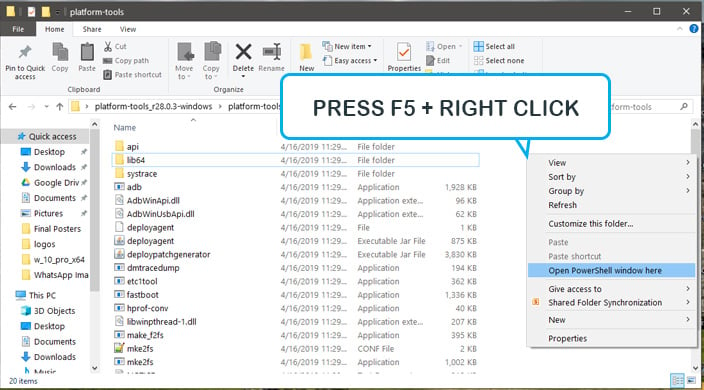
It’s been a few years since both the devices have launched. The OnePlus 3/3T has received their final significant updates of Android 9.0 Pie a few days ago. The official software is going to fade away this year for both the devices and the users have to rely on the third-party development for updates to the latest Android version. To facilitate users, we are here to let you know about the rooting procedure of OnePlus 3 and 3T.
The OnePlus 3T comes packed with Snapdragon 821, 6GB RAM, 64/128 GB internal memory, and a dual 16MP camera on the rear side. However, the OnePlus 3 carries a Snapdragon 820 SoC, 6 GB RAM with 64 GB Internal storage. It carries a 16-megapixel + 8-megapixel dual camera shooter on the rear side. On the front, there’s an 8-megapixel lens for beautiful selfies.
The OnePlus 3 was launched with Android 6.0 Marshmallow, and it received the Nougat update in the same year. It considerably received every Android update consistently.
The procedure to root either of the devices is the same. Rooting allows users to flash custom ROMS, and extend its functionality via third-party MODs such as Xposed and Substratum. It also allows removing unwanted stock apps from your device.
Note: GizmoChina.com is not responsible for any damage to data or device. You are performing the process at your own risk. It may also void your warranty.
After launching the Galaxy S10 smartphone series and announcing the company’s first foldable smartphone Galaxy Fold, South Korea-based Samsung is now all set to launch the Samsung Galaxy Note 10 series.
Today, the company has started sending out media invites for the company’s “Unboxed” launch event on 7th August at Barclays Center in New York. This is the same venue where the company launched the Galaxy Note 9 smartphone last year.
The launch invite from Samsung shows a picture of an S Pen and a single camera lens. This goes on to confirm the recent leaks related to the Galaxy Note 10 smartphones which suggested that the phones could feature a punch-hole display housing the front-facing camera sensor right in the center.
It is also being said that this time, the company could launch two smartphones under the Note 10 lineup, which includes the standard Galaxy Note 10 with a 6.28-inch display and another Note 10 series phone with a bigger display of 6.75-inch. The company may also be offering 5G variants of both of those phones, bringing the total of Samsung Galaxy Note 10 models to four.
Similar to the Galaxy Note 10 series, the upcoming Galaxy Note 10 models are likely to feature an ultrasonic in-display fingerprint scanner. Under the hood, the devices will be powered by the Qualcomm Snapdragon 855 octa-core processor or the company’s own Exynos 9825 chipset.
As per the reports, the upcoming flagship smartphones from the company wouldn’t come with a Bixby button and a 3.5mm headphone jacks. Also, the new top-end model in the Galaxy Note family may also include a Time-of-Flight (ToF) camera along with the triple rear camera setup.
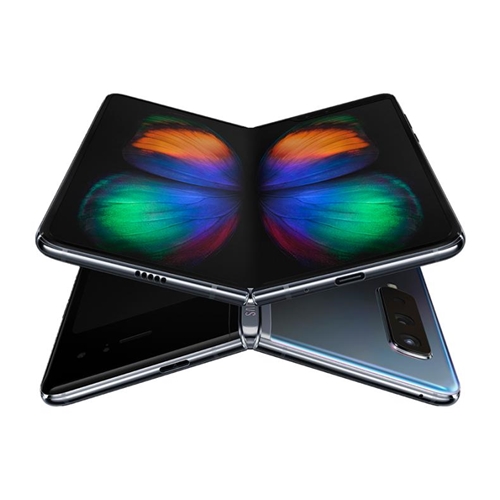
Apart from the launch of the Note 10 series smartphones, another reason for the event being an anticipated one is to get more details about the Galaxy Fold smartphone. While the company’s first foldable smartphone was announced in February, the phone is yet to go on sale after the display-related issues.
Reports indicate that the company has fixed the issues and is all set to start selling the Samsung Galaxy Fold smartphone. However, it remains to be seen if the company takes the stage on 7th August to announce the sale of the Galaxy Fold as well.
Samsung Galaxy Fold was supposed to a big product for the South Korean giant with it being one of the first true foldables in the market. However, in a bid to become the first mainstream phone maker with a foldable, the company rushed with its launch. With review units being recalled to pre-orders being canceled, the Galaxy Fold didn’t exactly get the start the company would have hoped. After the launch cancellation, Samsung promised that the Fold is coming soon, but we still don’t have a concrete release date.
Company’s CEO, DJ Koh now admits to the Independent that he ‘pushed it through before it was ready’. He further adds, “I do admit I missed something on the foldable phone, but we are in the process of recovery”. As for the status of the foldable device, Koh states that mass volume testing is ongoing right now. He states that there are more than 2000 prototypes being tested right now before the market launch of the device.
However, Koh didn’t reveal an exact time frame for the launch. All he said was the phone would be launched “In due course”. Well, given this statement, don’t expect the Fold to meet us anytime in the near future. Maybe, we’ll see it come to the market alongside the Huawei Mate X which is said to launch in September this year.
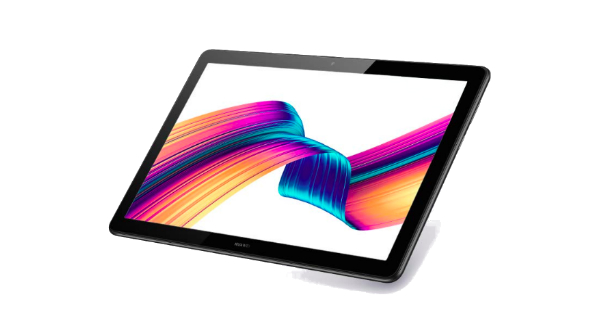
Leaked information that had surfaced in the last month had revealed that Huawei will be soon debuting its first tablet in India. The rumor has turned out to be true as the Chinese manufacturer has introduced the Huawei MediaPad T5 mid-range tablet in India. The tablet has a starting price of Rs. 14,990 and it will be available for purchase starting from next week in the country.
Huawei MediaPad T5 Specifications and Features
The MediaPad T5 is the very same tablet that was introduced in China in October 2018 as Honor MediaPad T5 with a starting price of 1,599 Yuan (~$233). The tablet houses a 10.1-inch display that offers full HD resolution of 1920 x 1200 pixels. Huawei has added an Eye Comfort mode for protecting the eyesight of users.
The Kirin 659 chipset that powered many of the Huawei and Honor branded smartphones in late 2017 and 2018 is present under the hood of the device. The SoC that includes 2.36GHz octa-core processor is coupled with up to 3 GB of RAM. The slate comes with up to 32 GB of native storage. There is a microSD card slot available on the device for additional storage.
The Android 8.0 Oreo OS customized with EMUI 8.0 skin is available on the MediaPad T5. There is a feature called “Children’s Corner” on the tablet that allow parents to regulate the content for the children. There is GPU Turbo 2.0 technology onboard for enhanced performance while gaming on the tablet.
The handset includes a big battery of 5,100mAh capacity. The connectivity features that are available on the device include Wi-Fi 802.11ac, 4G LTE, Bluetooth 4.2, GPS, microUSB 2.0, and 3.5mm audio jack. The tablet is also blessed with top-quality stereo speakers. The rear shell of the tablet houses an f/2.4 aperture 5-megapixel camera and it has a front-facing camera of 2-megapixel.
Huawei MediaPad T5 Price and Release Date
The 2 GB RAM + 16 GB storage edition of the Huawei MediaPad T5 carries a price tag of Rs. 14,990 (~$217). The higher model with 3 GB of RAM and 32 GB of storage costs Rs. 16,990 (~$246). The tablet will be available for purchase from July 10 through Amazon India. It remains to be seen whether it will be also purchasable through other online retailers in India.
The MediaPad T5 comes in Black color only. Buyers of the tablet will be provided with Rs. 2,998 (~$44) worth Huawei Earphone AM 12 and a flip cover for free.
Honor 9X smartphone has been in the new since past few weeks and now the company has confirmed that phone’s launch date in China. Huawei’s sub-brand has shared a new poster which reveals that the Honor 9X will get launched on 23rd July.
The smartphone is confirmed to come powered by the company’s own HiSilicon Kirin 810 octa-core processor made using the 7nm process node, which was launched last month. Last month, Xiong Junmin, vice president of Honor products, said the new X-Series will be powered by the Kirin 810 SoC.
The HiSilicon Kirin 810 is an octa-core processor which comes equipped with two Cortex-A76 high-performance large cores clocked at 2.27 GHz and six Cortex-A55 energy efficient small cores clocked at 1.88 GHz. It is coupled with Mali-G52 GPU for graphics processing.
As per the reports, the Honor 9X may come with an LCD screen that is between 6.5-inch and 6.7-inch in size. There is no mention of the design of the display but there will be a 20-megapixel or 16-megapixel camera on the front for selfies.
The reports indicate that the device will come with 4 GB of RAM and 64 GB of internal storage, along with a few other variants based on the memory configuration. It is expected to pack a dual camera module on the back side, featuring a 13-megapixel primary sensor and a 2-megapixel secondary sensor for depth sensing.
It is also being said that the phone will be powered by 3,000 mAh battery but it’s not yet known if the device will come with support for the fast charging technology or not. As for the software, the phone will be running Android Pie OS with EMUI 9 on top.
Recently, India’s first open-source Shakti processor was announced, which has been funded by the Indian Ministry of Electronics and Information Technology. Now, the Indian Institute of Technology (IIT) Madras has released the software development kit (SDK) for the processor.
The institute has also promised that the development board will soon be released. The RISE group at IIT Madras had started working on the Shakti project in the year 2016 with a plan to release a family of six classes of processors, each serving a different market. Also, the group has promised that the reference processors will be competitive with commercial offerings in terms of area, performance and power consumption.
The six classes of processors include E-Class, C-Class, I-Class, M-Class, S-Class, and H-Class. The E class is a 3-stage in-order processor targeted at embedded devices such as Internet of Things (IoT) devices, robotic platforms, motor controls, et cetera.
The C class is a 32-bit 5 stage in-order microcontroller-class of processors supporting 0.2-1 GHz clock speeds. It’s aimed at mid-range application workloads and has a very low power profile, along with optional memory protection.
On the other hand, the I class 64-bit out-of-order processors support 1.5-2.5 GHz clock speeds and support for multi-threading. It targets mobile, storage and networking applications. As for the M class processor, the M stands for multi-core and supports up to eight CPU cores.
The S class processors are aimed at the workstation and server-type workloads. It’s an enhanced version of the I class processor that features multi-threading support. The H class processor is for the high-performance computing and analytics workloads.
Its primary features include high single-thread performance, optional L4 cache, as well as support for Gen-Z fabric and storage-class memory. As per the reports, the RISE group is also working on two new experimental classes of processors — T-class and F-class.
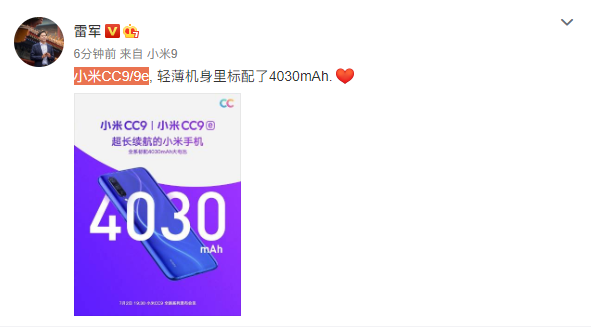
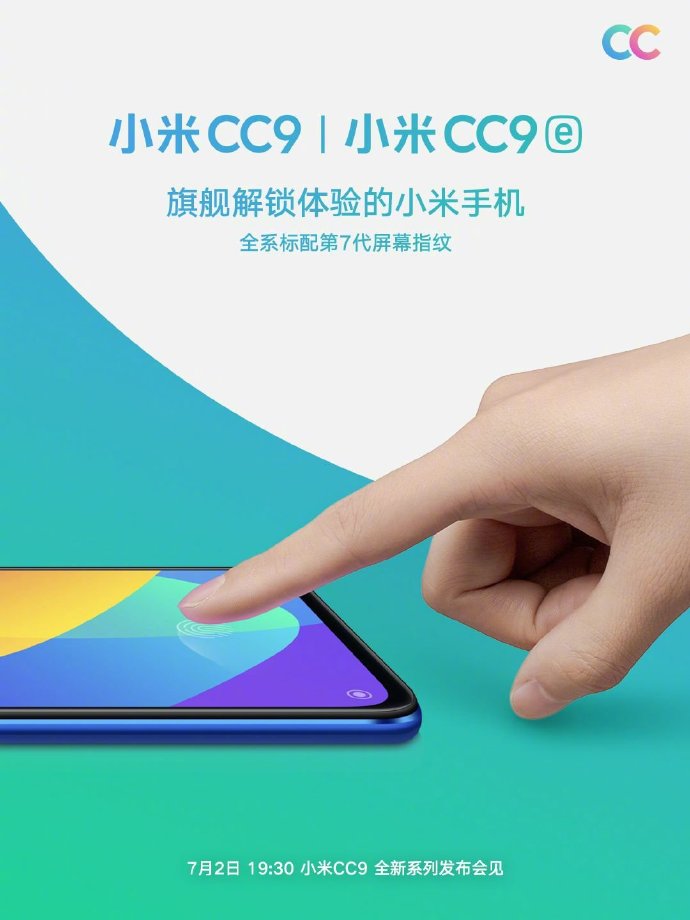
We’re going to see the Xiaomi CC9 and CC9E soon enough, but Lei Jun’s got more to tell first. According to the man himself, both variants will carry the same 4030mAh battery while still retaining slim builds despite the large batteries. On top of that, he also confirms that we’ll be seeing an in-display fingerprint sensor on both devices as well.
According to Xiaomi’s CEO Lei Jun, CC stands for Colorful & Creative and it is developed by the Chic & Cool 90 team. This team is composed of people born in the 90s who work at Xiaomi and Meitu’s research and development department. These devices are both very design oriented, so it makes why Xiaomi wouldn’t want to make these bulkier than need be.
This also explains why we’re getting in-display fingerprint sensors on both versions of the device. It makes sense to add new and cool features to a device focused mainly on being trendy and fresh. How the actual product will turn out remains to be seen, though we’ve got high hopes for this one. We’re also eager to know how it’ll turn out as the Mi A3 overseas.
Xiaomi Mi CC9 is supposed to be the mid-tier smartphone of the Mi CC series, while the CC9e is the elite variant. It will come in at least two vibrant color variants: White Lovers and Dark Blue Planet.The CC9e on the other hand, we’re not too sure about. There’s not a huge amount of news on it like there is about the CC9, though we do know it’s the elite variant. For more info before the launch, you can check our rumour roundup over here.
Earlier today, we reported that the Xiaomi CC9e was seen on Geekbench. None of the benchmark results revealed the exact chipset powering the phone but we were able to deduce it is actually the Snapdragon 665 chipset. Now, we can confirm it will actually be the first Snapdragon 665 phone.
Thanks to a new leak that shows images of the phone running system diagnostics app, AIDA64, we now know for certain that there is a Snapdragon 665 under the hood of the Xiaomi CC9e.
[envira-gallery id=”261968″]
The first of the images actually show the processor name as Snapdragon 640/665 but we already know there is no chipset called the Snapdragon 640 which leaves the SD665. The SoC has eight cores – four are clocked at 1.8GHz while the other four are clocked at 2.0GHz.
The original source of the images also revealed that the Xiaomi CC9 will be powered by the Snapdragon 710 processor and not the Snapdragon 730
AIDA64 confirms the phone runs Android 9 Pie and has March’s security patch installed. It also reveals the phone has a battery capacity of 4030mAh. But that’s not all.
If you take a look at the second image, you will see the Build ID says “laurel_sprout….”. The parameter that also says “Fingerprint recognition” (after translation) also has “laurel_sprout”.
If you have been following news of Android One devices, then you will know that all Android phones have the “sprout” suffix in their codenames. This means the Xiaomi CC9e will also be an Android One phone (at least when it launches outside China).
#Xiaomi Mi CC9e- 6-inch display 3940mAH 153.48×71.85×8.475(mm) 10W charging support
Upcoming leaker, Sudhanshu Ambhore, known for his Xiaomi-related leaks believes the Xiaomi CC9e will launch as the Mi A3 Lite. He revealed that in a tweet last week and this new leak reinforces it. Based on that, the Xiaomi CC9 might as well be the Mi A3.
Back in March, the guys at XDA-Developersfound details of upcoming Xiaomi Android One smartphones in firmware files. The devices which had the codenames “bamboo_sprout”, and “cosmos_sprout” both have 32MP front-facing cameras and in-display fingerprint scanners. While none of the codenames matches that of the Xiaomi CC9e, we do know it has a 32MP selfie camera and an in-display fingerprint scanner. The CC9 also has these two features but we don’t know its codename.
Nevertheless, these details reinforce that the Xiaomi CC9e and Xiaomi CC9 might launch in other markets as the Mi A3 Lite and Mi A3 respectively.
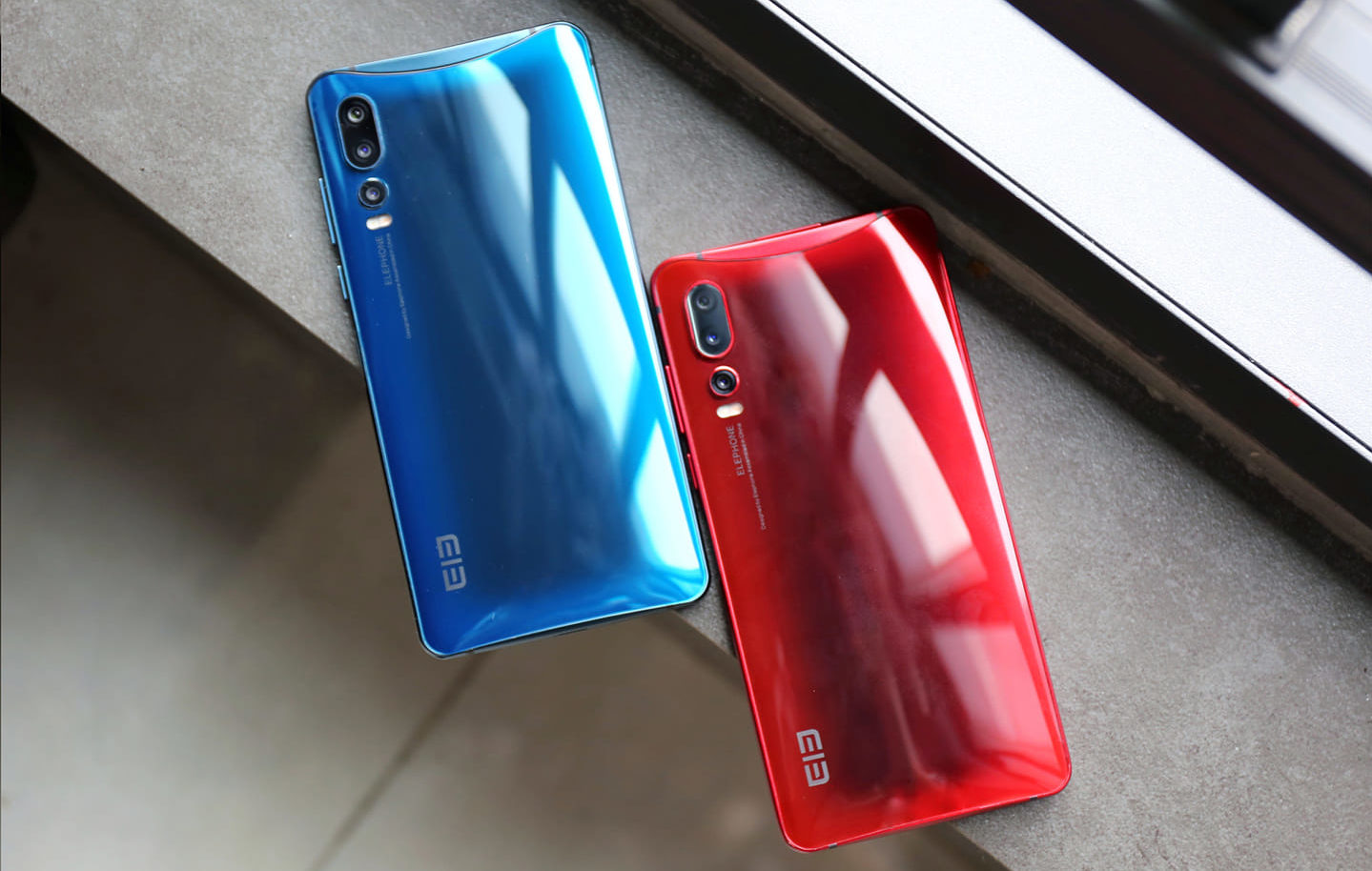
It seems that Elephone U2 may prove to be the Holy Grail for the Chinese manufacturer as it is selling like crazy both on the Aliexpress first sale and the Banggood promotion that is ongoing. Of course, the price that the company decided to put on the device plays a big role and for that reason, the company decided to extend the promotion on Aliexpress for another 5 days to allow for more users to buy one. The promo will end on July 6th and you can get the 4GB/64GB version for just $199.99 and the 6GB/128GB for just $239.99. At the same time, you can participate in the Giveaway to get one for free.
In the meantime, a photo sample shot on Elephone U2 surfaced and looks stunning with excellent dynamic range and color reproduction. Also, details are crisp thanks to the triple rear camera.
Elephone U2 comes with a 103% Wide-Gamut, 500nit Brightness 6.26″ FHD+ full display with a 93,1% screen/body ratio thanks to the pop-up front camera and ultra-narrow bezels. The pop-up camera hosts 2 sensors with 16MP/2MP configuration while the rear camera is a triple setup with 16MP/5MP/2MP sensors and f/1.6 aperture with Super Night mode. Also, it is powered by Helio P70 SoC backed by 4GB/64GB or 6GB/128GB memory configuration. The battery capacity is 3250mAh and supports fast charging while there are face & side fingerprint sensors and comes with Android 9.0 Pie. Visit the official product page to learn more about the device.
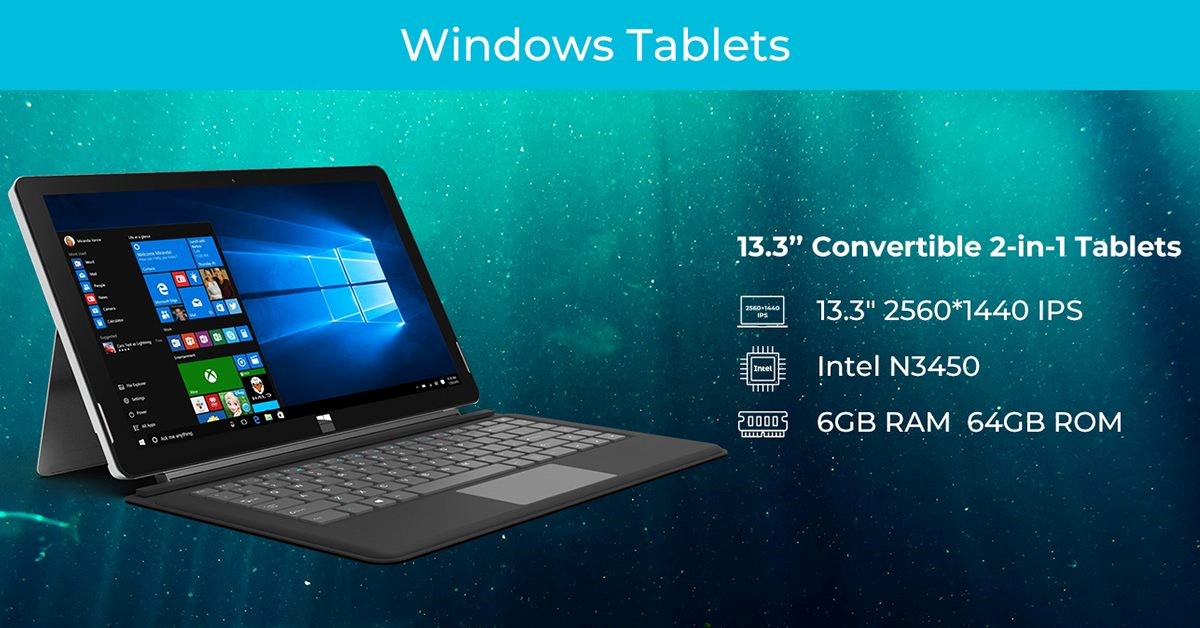
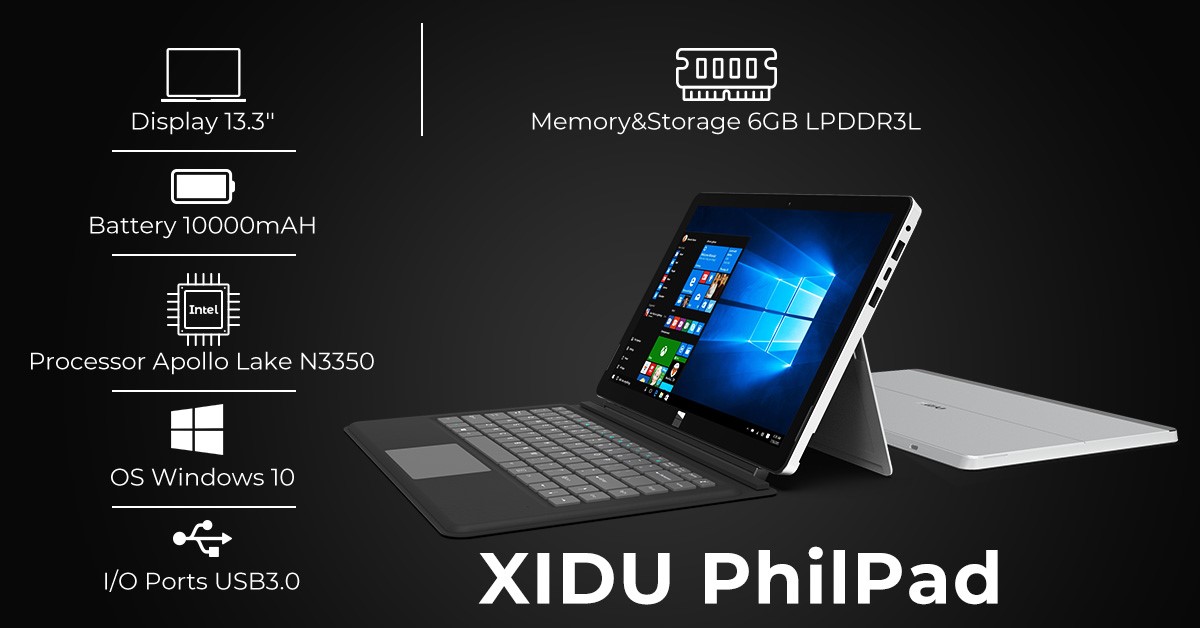
XIDU is actively promoting its laptop and Windows 10 tablets lately and a question has risen whether these models are better than one from a known brand with a similar price. Today, we take a look at the XIDU PhilPad 13.3″ tablet and Asus VivoBook 14″. They belong to different categories since the former is a tablet and the latter is a notebook but their price is similar.
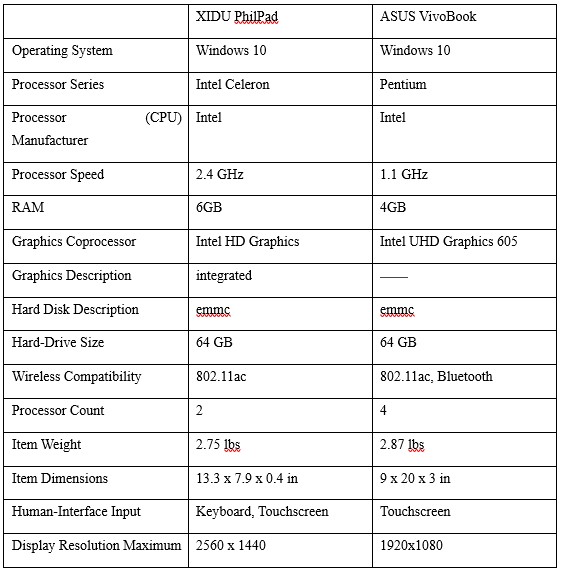
XIDU PhilPad has a better battery performance than the Asus VivoBook and it brings all-day battery life as well as a 2K (2560×1440) touchscreen display with IPS panel and easily upgradeable storage. On the other hand, the VivoBook comes with Bluetooth support but has less RAM than the PhilPad and that’s more important than Bluetooth support for most users.
Design comparison
With 17mm-thickness and 2.75 lbs weight, the PhiPad is slightly thinner and lighter than its opponent but both are quite portable undeniably. Of course, it is always easier and more convenient to carry a tablet than a laptop. Also, the PhilPad’s design in better with its metal case being impressive, but that’s subjective.
The VivoBook has an advantage when it comes to the display angle since it reaches all the way to 180 degrees flat whereas the PhilPad achieves 135 degrees but don’t forget the XIDU’s model is a tablet and you can just take off the detachable keyboard and use it as any other tablet. The keyboard provided is quite ergonomic and soft and using the kickstand of the tablet you can adjust it to your liking. Also, the PhilPad comes equipped with a pen as well!
When it comes to connectivity, VivoBook is the winner here as it has Bluetooth support via the Intel 802.11b/g/n/ac (2×2) Wi-Fi and Bluetooth 4.1 combo, 1 x USB 3.1 Type-C Gen 1, 1 x Micro USB 2.0, 1 x Micro HDMI, and headphone out/audio in combo jack. On the other hand, PhilPad lacks Bluetooth and comes with 1 x USB Type-C, 2 x USB 3.0, 1 x Microphone Jack, 1 x MicroSD card slot, 2 Speakers, 2MP front camera and 5MP rear camera that is something that VivoBook doesn’t have.
Display comparison
Usually, budget laptops come with low-resolution displays to cut costs but PhilPad comes with a 2K (2560 x 1440) display, far superior to the FHD display found on VivoBook. The good thing about both is that they use IPS panels that offer wide viewing angles and accurate color reproduction. Brightness is about the same in both laptops, and you might come up against issues using them in well-lit places. Other than that, both feature above average displays for their price with PhilPad being the winner thanks to the higher resolution.
Performance
When going for a budget laptop or tablet, you should expect some issues with performance when trying to run CPU-intensive tasks. The PhilPad’s Intel 4-core Apollo Lake N3350 CPU clocks up to 2.4GHz and delivers 30% more processing and 45% better graphics performance on Windows compared to its predecessors. Even some heavy games can run smoothly and the cool about this CPU is that it sports 4 cores for better multitasking instead of the dual-core Intel CPU found in VivoBook. What’s more, the PhilPad comes with 6GB of RAM, 50% more than the 4GB found on VivoBook. The difference in performance will likely not be noticed but it’s nice to know it’s there.
So, these are the main differences and similarities between the two contenders. If you are interested in the PhilPad, go ahead and visit their official store and grab some of the coupons provided for extra discount.
Xiaomi has applied for a trademark for the phrase “Xiaomi Express”. The trademark was applied for at the China Trademark Office back in August 2018.
According to reports, the trademark was filed under the following classes – class 9, class 35, class 38, class 39 and class 42. The application has already been approved for Class 38 and Class 39 which is for “information transmission” and “parcel delivery” respectively while the other classes are still pending approval.
The Class 38 trademark also covers telecommunications services; chat room services; portal services; e-mail services; providing user access to the Internet; radio and television broadcasting. While Class 39 trademark covers Transport; packaging and storage of goods; travel arrangement; distribution of electricity; travel information; provision of car parking facilities.
Prior to the filing of the trademark application, it was reported Xiaomi is working on launching a “next day” delivery service that will cover more than 150 cities in India. Based on this, there are speculations that “Xiaomi Express” might as well be the official name of this service.
But it might also be associated with Xiaomi’s Mi Express Kiosks which it launched in India back in May. The Mi Express Kiosks are vending machines loaded with Xiaomi, Redmi, and POCO devices. So, in addition to walking into a store or ordering online, you can also purchase a phone, power bank or any other available accessory from a Mi Express Kiosk and get it right away. Xiaomi may want to launch that in its home country too, hence the reason for applying for a trademark.
However, it is also possible the trademark may be used both for the kiosks and its planned delivery service.
When asked to think about innovative Chinese smartphones manufacturers, most people think to Huawei and Xiaomi. But there are also other companies which are doing their best at delivering the latest technologies, despite a lot of people around the world ignore them. Lenovo, Nubia, and ZTE are among these ones as all of them released a flagship phone with the support to 5G connectivity. We are referring to Lenovo Z6 Pro 5G Edition, Nubia X 5G, and ZTE Axon 10 Pro 5G. In each case, we are talking about 5G variants of existing flagships sold at very interesting prices. But are their 5G variants as interesting as other 5G handsets? And which one is the best? After reading this comparison, you will have an idea.
Lenovo Z6 Pro 5G vs Nubia X 5G vs ZTE Axon 10 Pro 5G
Nubia X 5G
ZTE Axon 10 Pro 5G
Lenovo Z6 Pro 5G Edition
DIMENSIONS AND WEIGHT
154.1 x 73.3 x 8.4 mm, 181 g
159.2 x 73.4 x 7.9 mm, 175 g
157.5 x 74.6 x 8.7 mm, 185 g
DISPLAY
6.26 inches, 1080 x 2280p (Full HD+), LTPS IPS LCD
Secondary display 5.1 inches 720 x 1520 pixels (HD+), OLED
6.47 inches, 1080 x 2340p (Full HD+), AMOLED
6.39 inches, 1080 x 2340p (Full HD+), Super AMOLED
Triple 48 + 20 + 8 MP, f/1.7, f/2.4 and f/2.2
20 MP f/2.0 front camera
Quad 48 + 8 + 16 + 2 MP, f/1.8, f/2.4, f/2.2 and f/1.8
32 MP f/2.0 front camera
BATTERY
3800 mAh, fast charging with Quick Charge 4 18W
4000 mAh, fast charging with Quick Charge 4+ 18W
4000 mAh, fast charging 18W
ADDITIONAL FEATURES
Dual SIM slot, 5G
Hybrid Dual SIM slot, 5G, waterproof IP68
Hybrid Dual SIM slot, 5G
Design
Most of the Nubia X 5G body is covered by displays: the phone features two displays so it can use the rear cameras as front cameras too. That means the phone does not need a selfie snapper, neither a notch to house it. So its screen-to-body ratio is incredibly high and there are no holes on the display. That is why (alongside the secondary display) its design is the most amazing. On the other hand, ZTE Axon 10 Pro 5G comes with the most interesting build quality as it is fully waterproof (up to 1.5 meters depth for 30 minutes) with the IP68 certification. Even Lenovo Z6 Pro 5G Edition has an awesome design, with a transparent back allowing to see its internal components, but I personally prefer the Nubia X form factor and its more compact body.
Display
When it comes to display quality, Lenovo Z6 Pro 5G Edition is the clear winner, at least on the paper. Thanks to the HDR10 standard and the high DCI-P3 coverage, it should provide the most accurate color reproduction. However, Nubia X 5G is much more interesting with its dual display. It has a classic 6.26-inch display on the front and a secondary 5.1-inch compact display on its back which you can use to save battery as it is smaller and the OLED technology consumes less energy.
Hardware/Software
These devices are all powered by the Snapdragon 855 chipset, so they offer amazing flagship-class performance, the best you can expect in 2019. Lenovo Z6 Pro 5G Edition wins the hardware comparison simply because it has the most powerful memory configuration: up to 12 GB of RAM and up to 512 GB of internal storage. And you can even expand the internal storage up to 1 TB thanks to a micro SD slot. The phones run Android 9 Pie out of the box.
Camera
It will be hard to establish a winner of the camera comparison between ZTE Axon 10 Pro 5G and Lenovo Z6 Pro 5G as their photo quality is very different depending on the scenarios, and both of them are able to shoot outstanding photos. I personally prefer the ZTE Axon 10 Pro 5G because its main sensor has a brighter focal aperture and OIS, as well as 3x optical zoom. These are very important features to get good photos. Nubia X 5G wins the selfie comparison as it is able to use its rear cameras as front cameras thanks to the secondary display.
Battery
Both Lenovo Z6 5G Edition and ZTE Axon 10 Pro 5G come with a big 4000 mAh battery, but 5G drains a lot, so we will have to test them thoroughly in order to establish if they are good battery phones and which one lasts more. Nubia X 5G has a smaller battery, but its secondary display might let it last more with some usage patterns. Note that ZTE Axon 10 Pro 5G is the only to feature wireless charging.
Price
We only know that ZTE Axon 10 Pro 5G carries a €900/$1015 price tag, while prices for Nubia X 5G and Lenovo Z5 Pro 5G are still unannounced. Independently from the prices, overall, my favorite one is the ZTE Axon 10 Pro 5G because of the bigger display, water resistance, stereo speakers and wireless charging.
We can’t really tell if the most famous series from Ulefone is the rugged Armor series or the big battery Power series. And that happens because both are excellent in their market segment. Power 6 is already out in the market for a while and while we know its strongest feature is its battery life, Ulefone released today a video to prove the endurance of the 6350mAh battery.
As we can see in the video, the device consumed just 9% of the total battery charge after 1.5 hours of heavy use that included a half-hour phone call, a half-hour online game, and a half-hour movie. On the basis of this data, the maximum continuous use reaches approximately 17 hours. And taking under consideration that an average heavy use in one day is 4.5 hours, Power 6 can go on for more than 3 days on a full charge. For less heavy users and thanks to the power-efficient Helio P35 SoC, it may support 4 days or even more.
Besides the excellent battery life, the device also comes with a large 6.3″ waterdrop display as well as 4GB of RAM and 64GB of internal storage. There is a dual rear camera with 16MP/2MP sensors and a front 16MP one that supports Face unlock combined with Fingerprint unlock for ultimate protection. Lastly, there is GPS/Glonass/Beidou/Galileo navigation system, global network support, NFC, and Android 9 Pie.
The Ulefone Power 6 is on promotion right now on Banggood and you can get it for just $159.99 with the offer expiring on July 7th. Apart from that, the phone has already arrived at distributors and deliveries should begin soon.
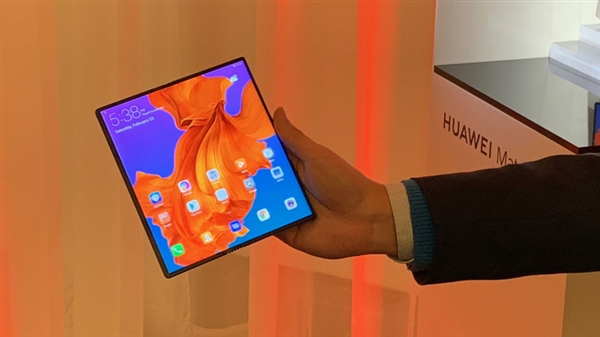
Huawei announced its first foldable phone – the Mate X at MWC 2019 in February. The device is preferred by most fans to the Galaxy Fold as it is seen as a true reflection of what is seen as a foldable phone. The Mate X adopts an out-folding design which ensures it is the same screen when folded that is in use when it is opened. Since the unveiling, expectations have run out as to the release of the phone. The device was earlier tipped to be released this June but a recent rumour says the Mate X will drop in December.
The price of the Mate X is now rumoured to be higher than what was expected. Previously, there were speculations that the Mate X will be priced around 12,999 yuan (~$1898). However, the latest news from China indicates that the phone could go for as high as 14,999 yuan (~$2191). For the global market, the price may even reach 17,000 yuan ($2,483), according to rumours.
The Mate X may still be a scarce product to come by even with the huge price tag. This is because the production process is slow, mainly due to the low yield of the foldable display panels. Initial stocking by Huawei for the first sale in China will be around 100,000 units. Considering the attention the phone courts, if this is true, the phone will be sold out in a flash.
By the way, the Mate X is also Huawei’s first 5G phone. So, the interest isn’t just for the foldable design but for the 5G connectivity it offers.
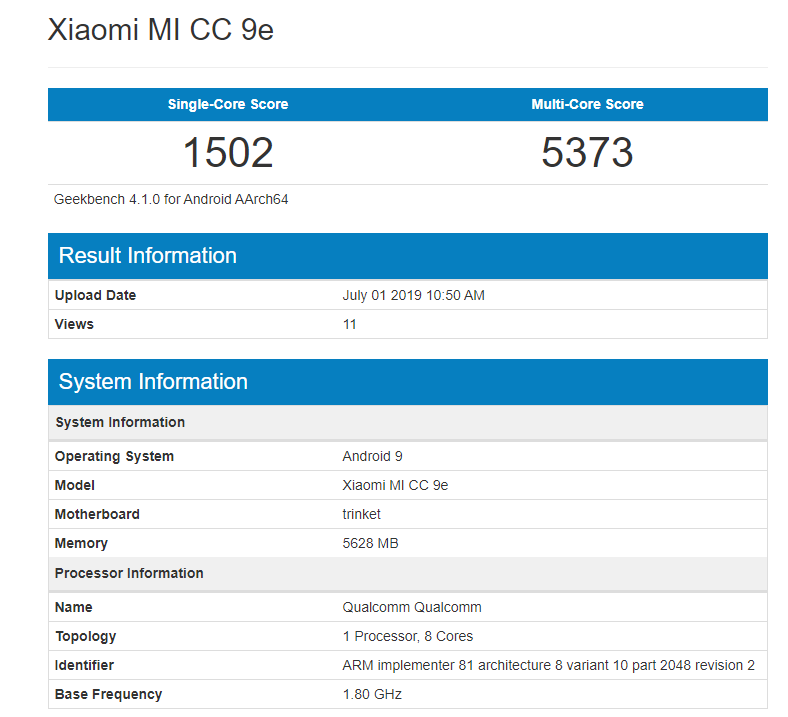
The Xiaomi CC9e just appeared on Geekbench less than a day before its official release. There are multiple benchmark results but none of them specifies the chipset powering the device.
The device was benchmarked earlier today as the “Xiaomi MI CC 9e” and the result shows the phone has 6GB of RAM and runs Android 9.
The benchmark results say the phone is powered by an octa-core processor with a base frequency of 1.80GHz. Before now, there were rumors the phone will be powered by the Snapdragon 710 chipset but these results prove that is not true.
All devices powered by the Snapdragon 710 have a base frequency of 1.71GHz and the identifier is quite different too. So what chipset is this? We have a pretty strong guess.
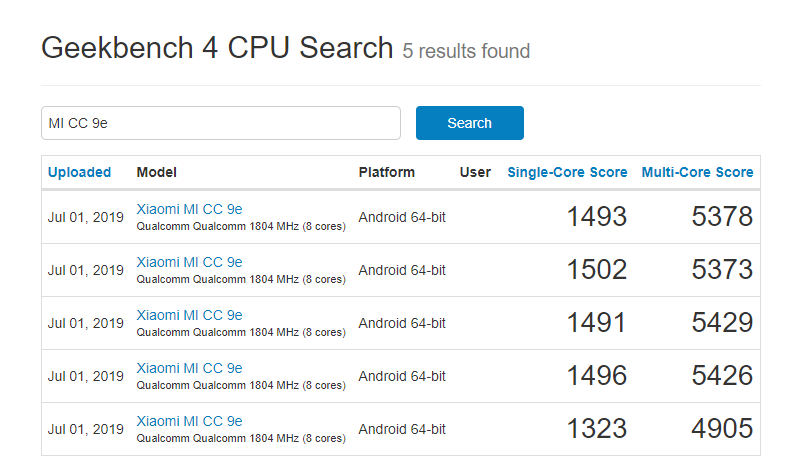
There are five different results in all and save for the last one, the rest have a single-core score of over 1400 and a multi-core score of over 5000 points.
We know it isn’t the Snapdragon 660 because the SD660 has a base frequency of 1.84GHz. We also know it isn’t the Snapdragon 636 or Snapdragon 632 as some publications have reported, as neither of these chipsets has a multi-core score of over 5000 points. It is also definitely not the Snapdragon 675 which not only has a much higher single-core score and multi-core score but also has a base frequency of 1.71GHz.
Seeing as the scores fall between those of the Snapdragon 636 and the Snapdragon 660, we strongly believe the Mi CC9e may be powered by the Snapdragon 665. This chipset was announced by Qualcomm back in early April but it is yet to appear in a phone.
The Snapdragon 665 uses the same Kryo 260 cores as the Snapdragon 660 and Snapdragon 636 but is built on a smaller node size (11nm) as against the SD660 and SD636’s 14nm node size. Apart from that, the Snapdragon 665 has a lower clock speed than the SD660 but higher than that of the SD636 which explains why its scores are in between those of both processors.
Take a look at the video of the Snapdragon 665 made by Qualcomm. The focus is on AI and how it helps improve photography. It is no coincidence that the Xiaomi CC9e is being marketed as a camera-focused device.
Xiaomi was the first to launch a phone powered by a Snapdragon 710 chipset as well as the first phone with a Snapdragon 712 processor. Who is to say they won’t be the first to launch a Snapdragon 665 phone too?
We are keeping our fingers crossed on this one but let us know what you think in the comment box below.
We use cookies on our website to give you the most relevant experience by remembering your preferences and repeat visits. By clicking “Accept”, you consent to the use of ALL the cookies.
This website uses cookies to improve your experience while you navigate through the website. Out of these, the cookies that are categorized as necessary are stored on your browser as they are essential for the working of basic functionalities of the website. We also use third-party cookies that help us analyze and understand how you use this website. These cookies will be stored in your browser only with your consent. You also have the option to opt-out of these cookies. But opting out of some of these cookies may affect your browsing experience.
Necessary cookies are absolutely essential for the website to function properly. This category only includes cookies that ensures basic functionalities and security features of the website. These cookies do not store any personal information.
Any cookies that may not be particularly necessary for the website to function and is used specifically to collect user personal data via analytics, ads, other embedded contents are termed as non-necessary cookies. It is mandatory to procure user consent prior to running these cookies on your website.