There is no limit to what can go wrong, especially when a ban from the U.S is involved. Following the removal of the Mate 20 Pro from the list of supported devices for the latest Android Q Beta release, an even more serious thing has just occurred. Google removed the most important Huawei’s flagship from the Android official website: Huawei P30 Pro and the first foldable and 5G phone from the company: Mate X. Until the removal from the list, the latter was present in the “Latest & Greatest” section of the website which contains the most important 5G phones, alongside the Galaxy S10 5G, the LG V50 ThinQ 5G and the Xiaomi Mi Mix 3 5G.
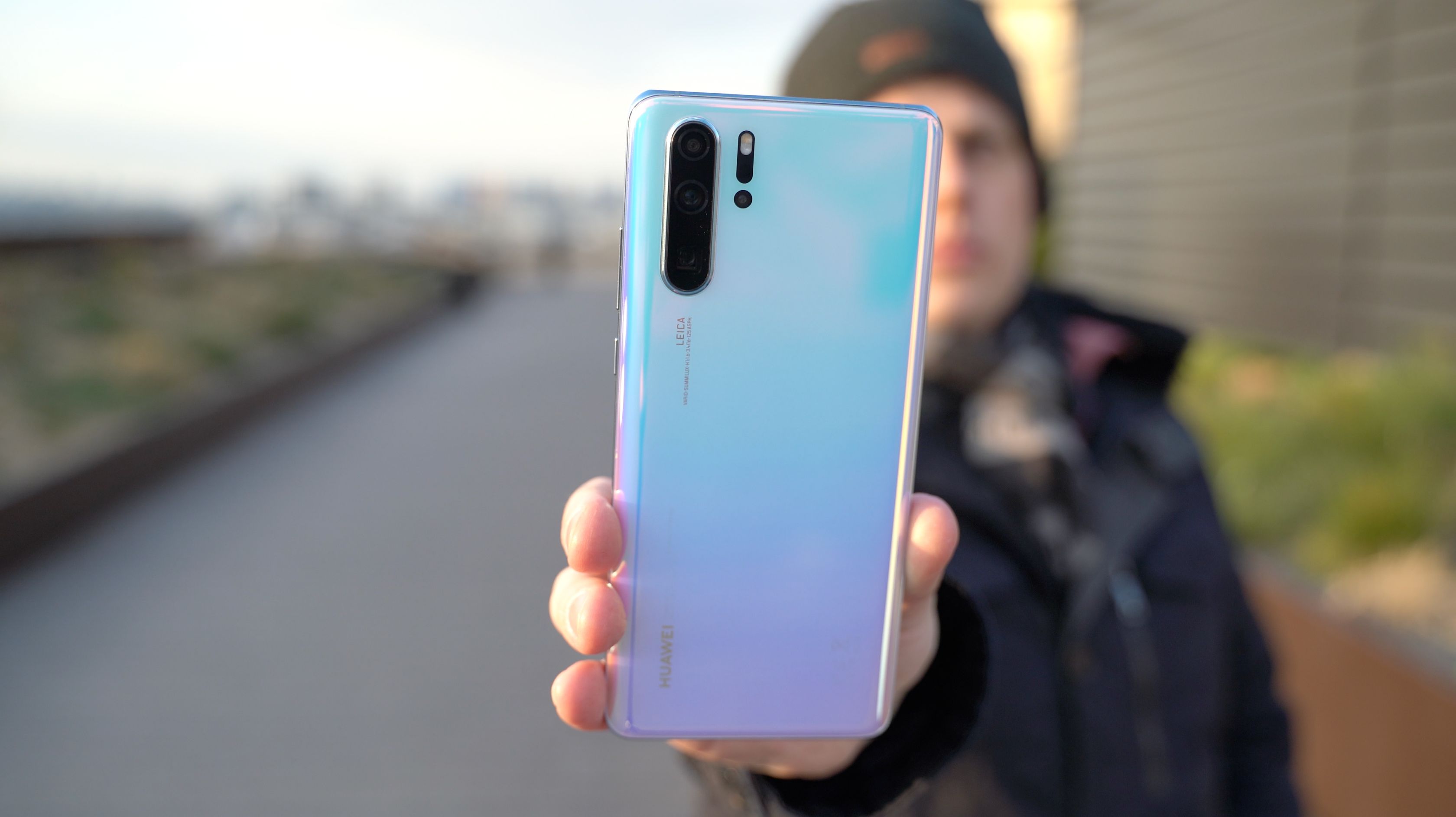
Huawei P30 Pro – Gizmochina
Before the U.S. ban and its insertion in the entity list, the Huawei P30 Pro was present in a section called “Cameras that catch the shot”, and it is all but surprising given that the P30 Pro is definitely the most innovative camera phone of the year. But now that section only contains Google Pixel 3, Motorola Moto G7 and OnePlus 6T. Last but not least, it seems that Huawei was also de-listed from the list of Featured Brands, but we are not sure whether it was prior to the ban.
Now, the list only includes Samsung, LG, Motorola, Google, Nokia, and Xiaomi. A few days ago, Google revoked the Android license to Huawei, that means its devices will lose Android updates and the access to Play Store. After that, Huawei declared that it will soon release its own operating system which will support Android apps that you can find on the Play Store, but its status is actually in question. According to the CEO, the operating system will debut this fall or next year’s spring.
After the U.S. ban, many of the most important hi-tech companies, components suppliers and chipmakers are keeping a distance from Huawei. Today, it is the turn of the SD Association: a non-profit organization that is known for being involved in the design, development, and manufacturing of products that support SD and micro SD cards. The list of members of the association contains the companies which can produce and sell products with SD cards support the SD standards and use SD and micro SD cards. Until a few weeks ago Huawei was in the list, but now it suddenly disappeared, according to a publication from SumahoInfo.
After noticing the absence of the Chinese giant in the member list, folks at Android Authority reached the SD Association for an explanation. As you could expect, the SD Association is complying with the order from the U.S. Department of Commerce that resulted in the inclusion of Huawei in the Entity List. A list in which you can find all those companies which need the authorization of the U.S. government in order to do business with other U.S. companies. Android Authority even talked to Huawei in order to have feedback about the matter.
A spokesperson from the Chinese company said that micro SD cards will keep working on the actual phones, but it did not release any comment about future devices. The latest Huawei flagships are not equipped with micro SD slots, but they use a new proprietary standard: Nano-Memory, which is a SIM Card-shaped memory card. However, all Huawei’s midrange and entry-level phones still come with a micro SD slot. The decision of the SD Association comes right after ARM (the company creating chipsets design used by Huawei for its Kirin processors) suspended the business with Huawei: the situation of the company could not be worse.
However, it looks like the company is not giving up and it is working with Google and other suppliers to find a solution. Even China confirmed its support to Huawei. Only time will tell.
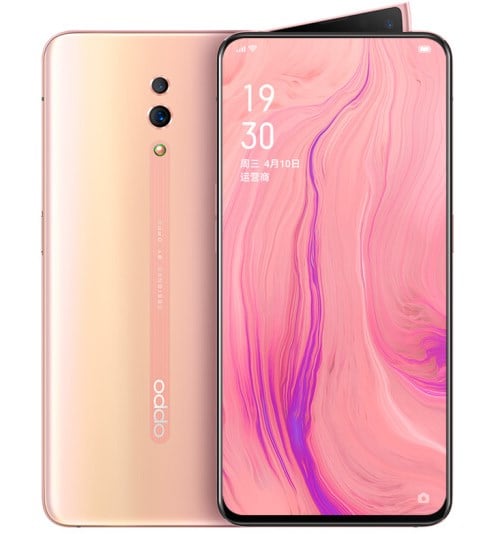
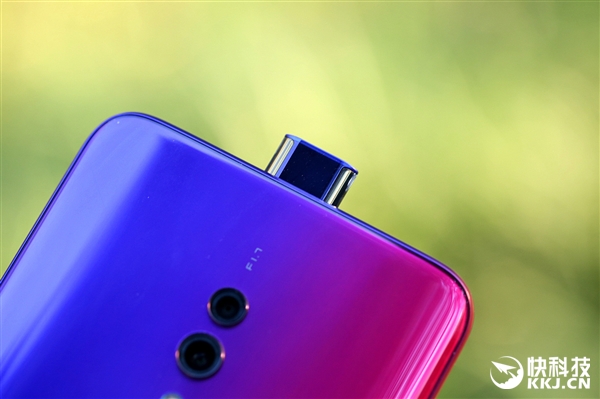
When it was officially announced, the Oppo Reno 10x zoom debuted in just two color variants: Ocean Green and Jet Black. Definitely not the most suitable colors for women who always have fewer choices than men when it comes to hi-tech products colors. Today, an official post on Weibo confirmed that the new flagship will soon hit the shelves in a new color variant and this time it will be perfect for women as it is a Pink edition of the handset. The Pink version of the Oppo Reno 10x zoom will be officially available in China starting from June 18th.
But you do not need to wait the official launch day to see it, as the renders are already online thanks to an official post on Weibo. The whole design of the phone, except for the front panel and the front side of the shark-fin pop-up camera, is covered in pink. The price will most likely be the same as the other color variants, that is 3999 Yuan for the configuration with 6 GB of RAM and 128 GB of internal storage, 4499 Yuan for the 6/256 GB variant and 4799 Yuan for the most expensive 8/256 GB configuration. Oppo Reno 10x zoom is also available in Europe, but we still do not know whether the Pink version will make its debut in the Old Continent.
Among the flagship’s key features, there is a rear triple camera composed of a 48 MP main sensor with an f/1.7 aperture, a 13 MP periscope lens with 10x hybrid zoom and 5x optical zoom, and an 8 MP ultrawide sensor. The AMOLED display comes with a 6.6-inch diagonal and a Full HD+ resolution with 1080 x 2340 pixels, while the processor powering the Oppo Reno 10x zoom is Qualcomm’s Snapdragon 855. The shark-fin pop-up camera module houses a 16 MP selfie snapper with an f/2.0 focal aperture.
Oppo announced its long-awaited smartphone dubbed the Oppo K3 earlier this month. Following in the footsteps of its well-received predecessors, the recently unveiled device is likely to garner huge popularity among Oppo fans.
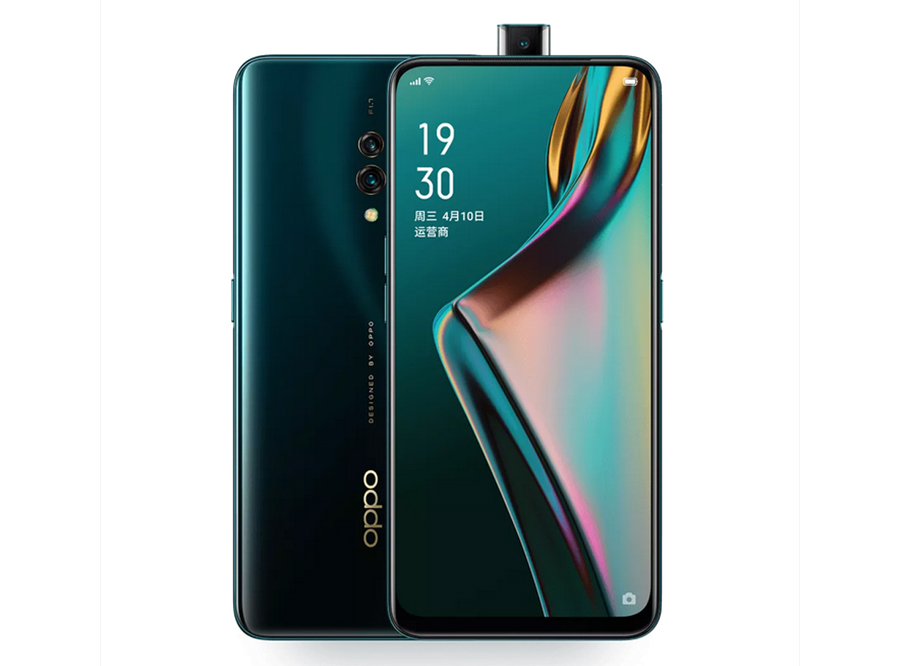
Top two variants of the Oppo K3 have gone up for sale on Giztop. The phone comes in two appealing color versions including Farm Black and Nebula Purple. Moreover, you can choose between 6GB RAM+64GB ROM and 8GB RAM+128GB ROM variants.
Carrying a $269 price tag, the 6GB RAM+64GB ROM model is available in Nebula Purple as well as Farm Black color versions. The slightly larger variant that ships with 8GB of RAM and offers a hearty 128GB of onboard storage capacity will set you back $319. This model comes in Nebula Purple and Farm Black color versions.
The Oppo K3 boasts an impressive array of features and top-end specs that justify the price tags it carries. First off, it sports a mammoth 6.5-inch OLED Full HD+ display with a high screen resolution of 2340 x 1080 pixels and a pixel density of 396PPI.
Furthermore, the K3 packs a powerful Qualcomm Snapdragon 710 AIE Octa-core processor along with a highly competent Adreno 616 GPU, under the hood. It features 6GB/8GB of RAM and 64GB/128GB internal storage capacity options.
On the optics front, the phone houses a 16MP+2MP dual camera set up at the back. Up front, there’s a 16MP pop-up camera for selfies and video chatting. The phone runs Color OS 6.0 based on Android 9.0 Pie OS and is backed by a 3765mAh battery that supports 20W VOOC 3.0 fast charging.
You can follow this link to check out more details about the Oppo K3 and place your order.
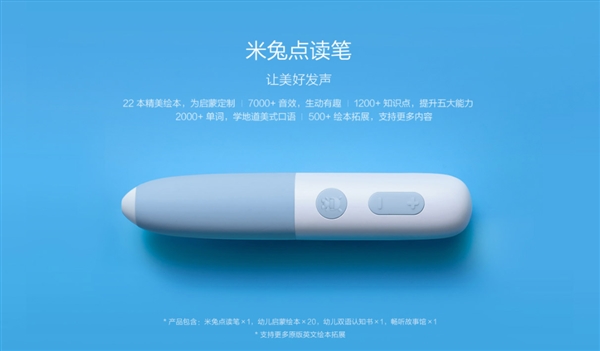
Xiaomi will be launching a new gadget for kids on May 27 which happens to be the international Children’s day. The product is dubbed Mi Bunny Reading Pen, designed to serve as a learning aid for children. The gadget will cost just 199 yuan (~$28) when it goes on sale at 10 AM on May 27.
The Mi Bunny Reading Pen adopts a simple, portable, yet beautiful design. The design and features are almost similar to the Machine Island AI Reading Pen that was launched in January this year. It is manufactured using materials that meet the US FDA food contact standard. The device has a built-in speaker that is loud enough. There is equally a story player and there is a button to playback the story with just a click.
This is an optical pen and it houses 22 beautifully-readable picture books, which are specially designed for enlightenment. It comes with the content of the Mi Bunny story machine, as well as the walking story machine. The device supports the addition of up to 500+ picture books. There is also bilingual learning (English and Chinese) which makes learning in Chinese and English easy.
A team of first-line early childhood education experts who contributed to the development of the product has tailored it for Chinese children of 2 years and above. It can help in improving the core competencies of cognition, language, psychology, socialization and self-care. There are over 1200 knowledge points, 2000+ English words crammed inside the resources on the pen.
As things get more and more tense between the US and China, Huawei is seeking funding. More specifically, the company’s looking to borrow a loan of $1 billion from a small group of people in its first major funding test since the US ban. According to insiders who refused to be named, Huawei is currently aiming for maturities of five and seven years.
Now, nothing’s exactly set in stone, and things are still in the early stages of discussion. As far as we’re concerned, a lot of details could still be changed an there’s no confirmation the deal will go through. If it does, the loan’s pricing — as well as the identities of the participating banks — could provide further clues on the market’s perception of Huawei’s financial strength.
The company had 37 billion yuan ($5.3 billion) of unsecured bank loans as of December, of which 2.8 billion yuan were due in one year or less, according to its 2018 annual report. It had cash and cash equivalents of about 2.6 times total borrowing.
Huawei’s latest fundraising attempt comes about four months after it obtained a 14 billion yuan loan from five Chinese banks. In September, the company raised $1.5 billion offshore from a group of 10 mostly international banks.
Trump was speaking at a news conference announcing a $16 billion aid package for farmers caught up in the US-China trade war when he addressed Huawei, which brings some interesting news. The company has been placed on a list that requires US firms get the US government’s permission to do business with it. This could mean Huawei still has a chance of working with US companies, though we’re not optimistic.
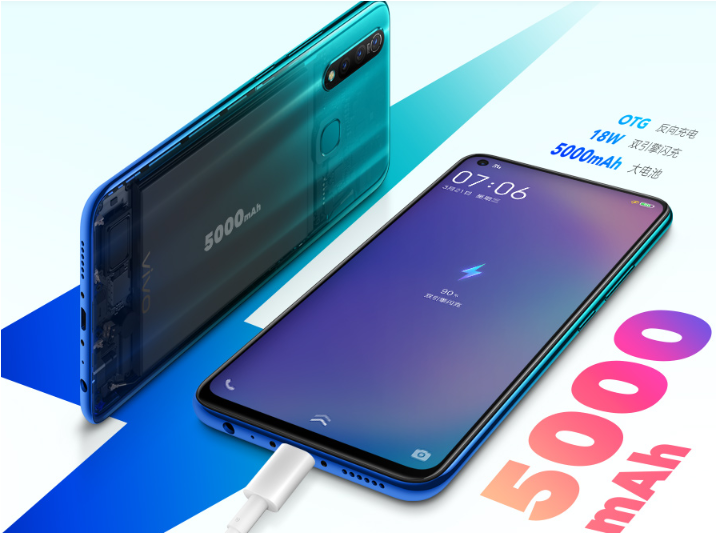
Vivo has updated the Z series with the launch of the Z5x today in China. Vivo Z5x makes a detour from its predecessors in terms of the design it features. The Z5x comes with a punch-hole selfie camera design which makes it Vivo’s first phone with such design. Vivo Z5x: Design
The device has a premium design but it obviously isn’t as sleek looking as the OPPO K3 which was launched yesterday. The punch-hole camera is located at the top left corner of the display. The design ensures the bezel at the top edge is very thin, just like that on the sides. However, there is a considerable bezel size at the chin.
The rear panel houses a triple camera setup. The sensors are stacked at the top left corner in vertical order with the LED flash at the bottom. The device also packs a rear-mounted fingerprint sensor. The phone features a metal body with well-chamfered edges. The volume button, as well as the power button, are located at the right side of the display. The left side houses the dual-SIM card slot.
Vivo Z5x Specifications
The Z5x sports a 6.53-inch Full-view LCD display with a resolution of 2340×1080 pixels. The phone is powered by a Snapdragon 710 chipset paired with 4GB/6GB and 8GB of RAM. There are 64GB/128GB storage options expandable up to 256GB via microSD card. The phone crams a mammoth 5000mAh battery under the hood and it is charged via a USB-C port. Despite the battery size, the phone is just 8.85mm thick and weighs 204.1g.
On the camera end, the punch-hole selfie camera is a 16MP sensor with f/2.0 aperture. At the rear, the main camera is a 16MP primary sensor with f/1.78 aperture. The second sensor is an 8MP ultra-wide angle camera while the third sensor is a 2MP depth of field sensor. For software, Vivo Z5x runs Funtouch OS 9 based on Android 9.0 Pie.
Vivo Z5x Pricing and Availability
As for the pricing, the Vivo Z5X 4GB+64GB variant comes with a 1,398 yuan (~$202) price tag, while the 6GB+64GB variant comes at 100 yuan higher – 1498 yuan (~$217). The 6GB+128GB variant adopts a 1698 yuan (~$246) price tag while the 8GB+128GB variant is priced at 1,998 yuan (~$289). The Z5x will be available in three color options: Extreme Night Black, Phantom Black, and Aurora. The Aurora variant has a gradient finish. The device is presently on pre-sale on Vivo’s official website and it will terminate on May 31. The mid-range model is expected to go on sale on June 1.
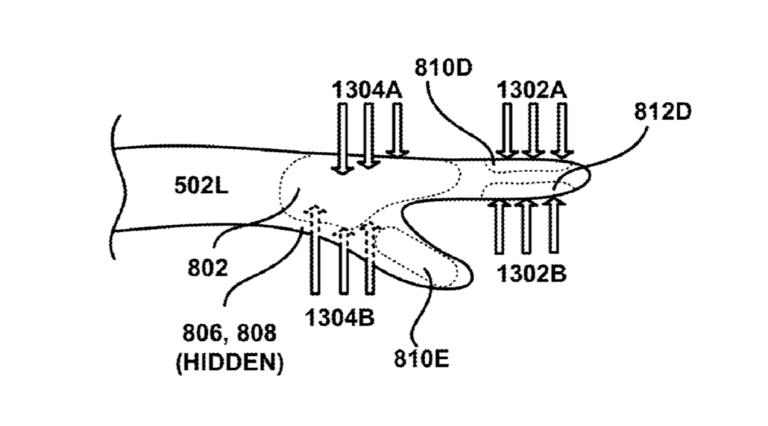
Sony has some splendid plans for making upcoming PlayStation 5 more ‘immersive’ and realistic. A recent patent published at USPTO reveals about the new VR glove which can convey a sense of touch with its sensory systems. The VR gloves with haptic feedback will create another dimension to feel “touch” while playing games. In other words, users can feel the texture of clothes and can feel every object with their hands.
The patent was filed back in September 2016. According to the patent description, the dynamic gloves convey a sense of touch and movement for virtual objects in HMD (Head-Mounted Display) rendered environments. The glove also carries a camera for detecting a location of the glove device in real space and a location of the HMD. There are many other sensory-equipments which will facilitate the sense of feeling in the glove.
Sony has plans to use the haptic device in different clothing worn by a user such as a glove, a hat, footwear, pants or shirt. It can also bring a sense of feeling in the head mounted display device. Sony describes the patent as:
A system and method of using a peripheral device for interfacing with a virtual reality scene generated by a computer for presentation on a head mounted display. The peripheral device includes a haptic device capable of being placed in contact with a user and a haptic feedback controller for processing instructions for outputting a haptic signal to the haptic device. The haptic feedback controller receiving the instructions from the computer so that haptic feedback of the haptic device changes to correspond to a user’s virtual interactions with a virtual object in the virtual reality scene as presented on the head mounted display.
The company has recognized various other uses of the VR glove using different systems like temperature control, compressed gas and liquid control, a motor, etc. The user would be able to feel the texture, shape of a virtual object, the intensity of pressure, movement away and nearing the object.
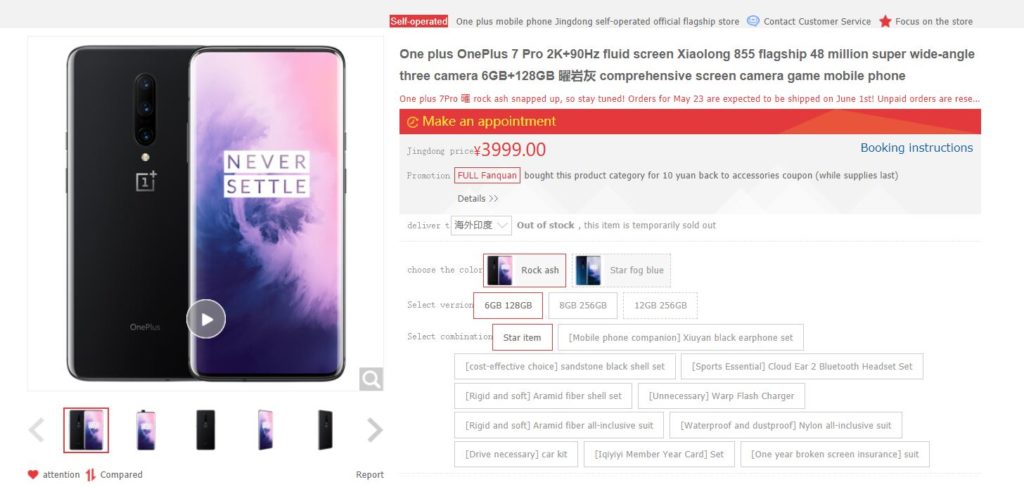
After creating a sales record in India, the OnePlus 7 Pro garnered sales worth 1 billion yuan (∼$144 million) within 60 seconds in China. According to China’s biggest e-tailer – JingDong, such a record-breaking collection made it the ‘best selling product on the whole platform.’
Some issues related to insufficient stock also erupted, but timely clarification from OnePlus CEO Pete Lau settled the matter. OnePlus will redistribute the OnePlus 7 Pro supply aimed for other regions back to the Chinese market. It is indeed a good step for the Chinese users, but what does it mean for the other regions? Are they going to suffer from long waiting period or OnePlus has another plan? Well, the company didn’t clarify anything yet, but we hope the other regions won’t get affected.
OnePlus 7 Pro is retailing in three different variants in China: 6 GB + 128 GB version is available for 3999 Yuan (~$578), 8 GB + 256 GB for 4499 yuan (~$651), and 12 GB + 256 GB for 4999 Yuan (~$723). The interested users can choose between two different colors of Nebula Blue and Mirror Grey as of now. It will be on sale again on May 28 at 10 AM (Beijing Time).
OnePlus 7 Pro features a Qualcomm Snapdragon 855 processor with Adreno 640 GPU. It comes with a 6.67-inch QHD+ fluid AMOLED curved display with a pixel density of 516 PPI. The super bright display also supports HDR10+. There’s a triple rear camera module with a 48-megapixel Sony IMX586 primary sensor, a 16 megapixel 117-degree ultra-wide angle lens, and an 8-megapixel telephoto lens. There’s a 4000 mAh battery with super fast Warp Charge 30 technology.
A recent update has added features like DC dimming and various other enhancements. Its display has been rated with an A+ rating by DisplayMate.
After OnePlus 7 Pro went for sale in India and few other regions, today it was available in its home country. China’s major e-tailer – Jingdong termed the OnePlus 7 Pro as the ‘best selling product on the whole platform.’ It garnered huge sales within few minutes in China, but soon after, it went out of stock. As like always, the company was once again met with a low-stock problem due to insufficient production capacity.
However, the OnePlus CEO Pete Lau came to the rescue and revealed about the efforts being made for the device’s availability in China. Pete said the company is redistributing the supply of other regions to meet the demand in China.
The OnePlus 7 Pro orders processed today are expected to ship from June 1. Whereas, the unpaid orders are still reserved for next 6 hours. The OnePlus 7 Pro is available in three different variants – 6GB RAM + 128GB storage, 8GB RAM + 256GB storage, and 12GB RAM + 256GB storage. Here is the pricing detail in China:
OnePlus 7 Pro was unveiled a couple of weeks ago with Qualcomm Snapdragon 855 coupled with Adreno 640 GPU. It carries a 6.67-inch QHD+ Fluid AMOLED curved display with the 90Hz refresh rate. It carries a triple camera sensor consisting of a 48MP Sony IMX586 primary camera, a 16MP ultra-wide camera, and an 8MP telephoto lens. On the front, there’s a pop-up 16 MP camera sensor for selfies and video calling.
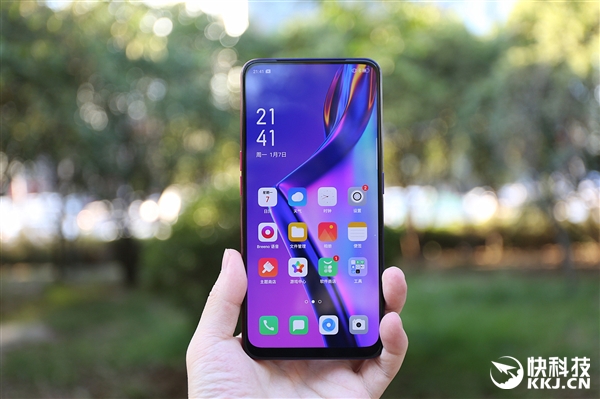
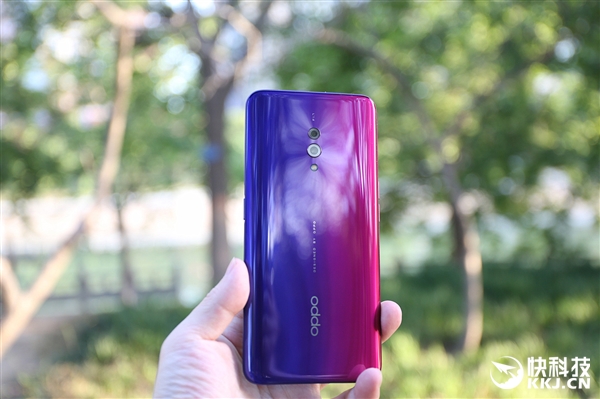
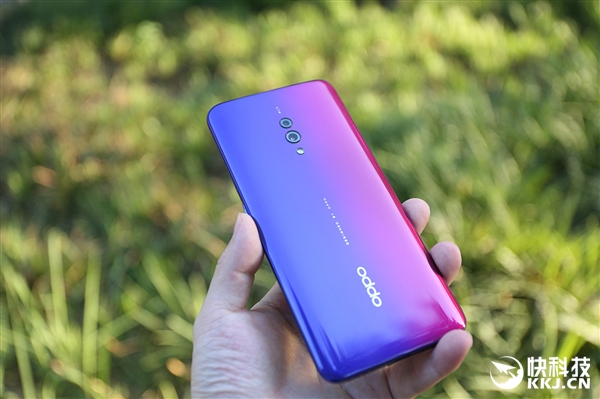
OPPO yesterday unveiled the much-anticipated OPPO K3 premium smartphone. The K3 has been a regular in leaks which had shown us the renders as well as the key specs. But in real life, the design and build beat our expectations. Chinese news blog MyDrivers have published a hands-on review of the K3. We bring you the pictures, showing the K3 captured from all angles.
OPPO K3 could be confused for a flagship phone, considering the premium build alone. However, the Snapdragon 710 chipset that fires up the mobile phone clearly places it in the upper mid-range category. The full-screen display is notch-less due to the use of a pop-up selfie shooter. Thus, the bezels at the top and sides are almost non-existent. The bottom chin has a sizeable amount which isn’t too wide. This design gives users an expansive 91.1% screen area to play with. The device features a 6.5-inch FullHD+ OLED display with a resolution of 1080 x 2340 pixels and an aspect ratio of 19.5:9. The phone also packs an in-display fingerprint sensor.
At the rear, there is a dual camera setup, with each of the sensors lying in isolation instead of being housed in a single ring. The main sensor is a 16MP Sony IMX519 sensor with f/1.7 aperture and a 2MP depth sensor. The pop-up camera is a 16MP AI sensor located at centre of the top edge. The sensor will open as fast as 0.74s, which is pretty fast. The pop-up camera also has a lifecycle of over 200,000 times usage. Thus, even if it is used up to 100 times a day, it will still last up to five years before the need to replace arises. The rear panel is made of glass with a colourful 3D gradient body.
To recap about the internals, the K3 features 8 GB of LPDDR4X RAM and comes with up to 256 GB of UFS2.1 flash storage. There is a dedicated microSD card slot on the gadget for expanding its storage but that functions also as a second SIM card slot. The K3 equally crams a 3,765mAh battery with support for 20W quick charging through OPPO’s VOOC 3.0 Flash Charge innovation.
On the software end, the device runs on Android 9 Pie-flavoured ColorOS 6.0. Check out more pictures of the OPPO K3 from below.
After Huawei got banned by the United States from doing business with the US-based company, Huawei said that the company was getting prepared for such move since last year and has enough stock to run business for coming few months.
The company also said that along with stockpiling chipsets, the company has been working on its own mobile operating system as well as an application store that can replace the Google Play Store.
The CEO of Lenovo Group said that the world’s largest PC maker is not planning to develop its own operating system (OS) and chips despite rising fears that a slew of other Chinese technology companies could find themselves facing the same fate as Huawei.
During a media briefing, Lenovo CEO Yang Yuanqing said, “Lenovo does not intend to develop operating systems or chips as globalization remains an inevitable trend, therefore it is not necessary for a company to specialize in everything. We will do our own job and do it well.” He added that the company will continue to cooperate with trusted partners to provide users with the best products.
The stance of Lenovo is in stark contrast with that of Huawei. The world’s leading telecom equipment manufacturer said that it has been preparing for years to cope with the possibility of it being cut off from US tech and has been developing its own technology, including chipsets and software.
Apart from Huawei, China-based DJI, which is the leading brand in the world when it comes to Drone technology, said that it has also been developing its proprietary technology as an alternative to US tech.
The comment from Lenovo CEO comes just days after Huawei was added to the trade blacklist by the United States that prevents the company from buying US technology. There are also media reports claiming that other Chinese company could also be added to the list as the US deems them as a threat to their national security.
As per the report from Bloomberg, the United States is currently deliberating whether to add Hangzhou Hikvision Digital Technology, Zhejiang Dahua Technology, Megvii, and two other video surveillance companies to its Entity List.
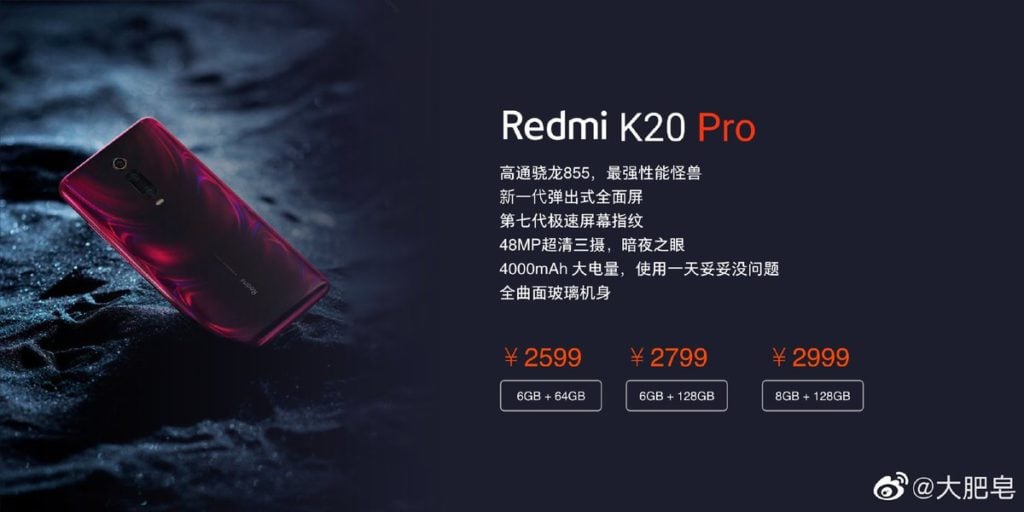
The Redmi K20 and Redmi K20 Pro flagship phones are scheduled to get unveiled on May 28. The pre-sales of the Redmi K20 phone has already started in China. Previous reports have suggested that the Redmi K20 Pro will be a more powerful smartphone powered by the Snapdragon 855 SoC and the K20 could be featuring a less powerful SoC. A freshly leaked poster on Weibo has revealed that the Redmi K20 Pro will be arriving in three variants. The pricings of the three models of the phone have also been disclosed in the new leak.
The leaked poster of Redmi K20 Pro that has appeared on the Chinese microblogging site has revealed that its base model with 6 GB of RAM and 64 GB of storage will be priced at 2,599 Yuan (~$376). The second model with 6 GB of RAM and 128 GB of storage will cost 2,799 Yuan (~$405). The highest configuration variant of the Redmi K20 Pro with 8 GB of RAM and 128 GB of storage will be arriving with 2,999 Yuan (~$434) price tag.
Previous leaks have claimed that the upcoming Redmi flagship phone will be also available in 8 GB RAM + 256 GB storage. However, there is variant is not mentioned in the above shown poster. The Xiaomi Mi 9 flagship phone that is powered by the Snapdragon 855 SoC has a base price of 2,999 Yuan (~$434). The starting model of the Mi 9 includes 6 GB of RAM and 64 GB of storage. The Redmi K20 Pro price leak suggests that its arrival may affect the sales of the Mi 9 smartphone.
The above poster states that the Snapdragon 855 powered Redmi K20 Pro features a notch-less display and a pop-up selfie camera. It is equipped with 48-megapixel triple rear cameras and 4,000mAh battery. Readers should aware of the fact that the authenticity of the image could not be confirmed. Hence, it is advisable to wait for further reports to confirm on the pricing of the Redmi K20 Pro.
Generally, manufacturers are used to release a flagship smartphone at a time, or one flagship product plus one small size model smartphone to meet different demands. However, with the development of high-end smartphones, Chinese mobile phone manufacturers have launched –Pro models, which have better performance than normal flagship smartphone.
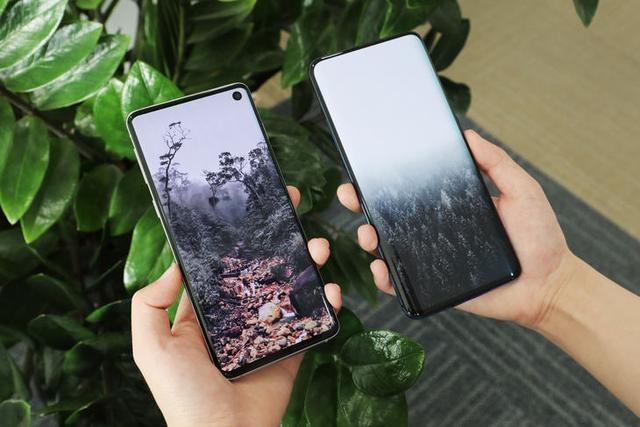
Recently, OnePlus launched their latest and strongest smartphone, called OnePlus 7 Pro, which features an AMOLED display with 90Hz Refresh Rate. How does the special screen stack up against Samsung’s flagship? Let’s check the comparative test.
We can find that curvature of the two smartphones is different from the pricture. The Samsung S10 has greater curvature, and the transition area is seamless. The advantage is that it can effectively reduce the influence of the curved screen for the operation. OnePlus 7 Pro has small curvature which makes the transition area not good.
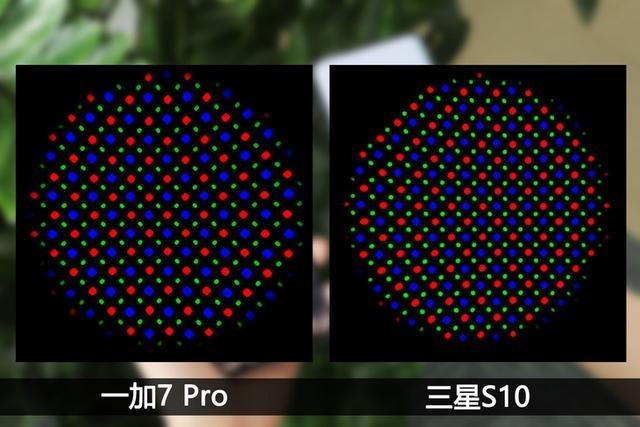
Magnify the OnePlus 7 Pro screen to pixel size, and you will see a typical Pentile diamond arrangement, which is no doubt that it is an AMOLED screen from Samsung. The most prominent feature of this arrangement is the exquisite text display, but it is easy to appear color edge. Fortunately, the resolution of both smartphones are up to 2K level.
OnePlus 7 Pro has much higher saturation of red than Samsung S10, and Samsung S10 has more natural transition between blue and green.
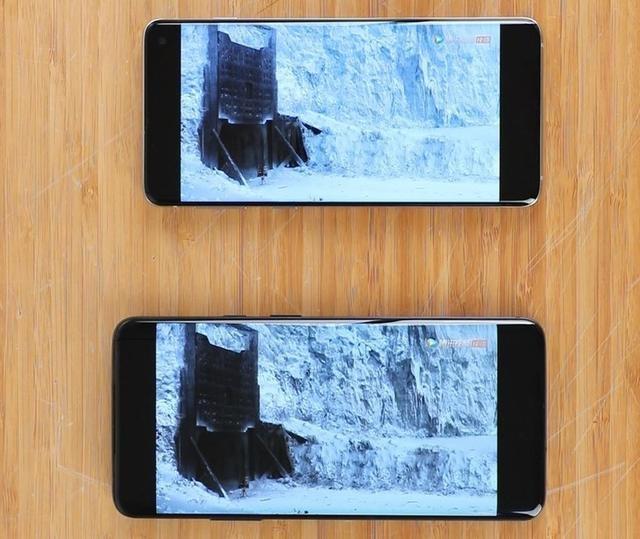
Set the screen brightness of the two phones to the maximum, and play video with the HDR video mode. The effect is as follows.
The overall brightness of Samsung is higher, which gets an edge in appearance. The overall display effect of OnePlus is a little too dark, which can’t show more details.
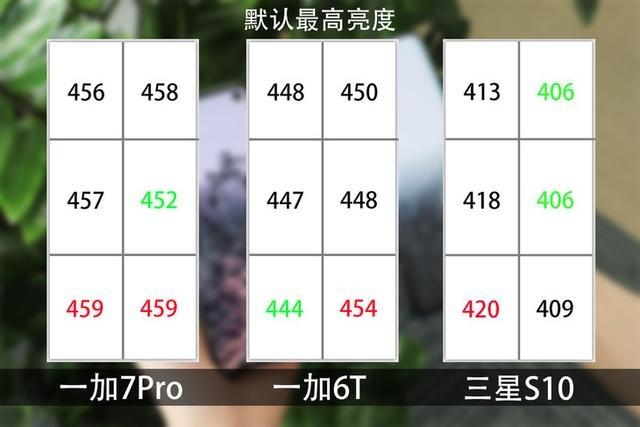
The disadvantage of OnePlus 6T is screen brightness, so let’s check out the comparison of the three smartphones. The average default maximum screen brightness of OnePlus 7, OnePlus 6T and Samsung S10 is 456nit, 448nit and 412nit.
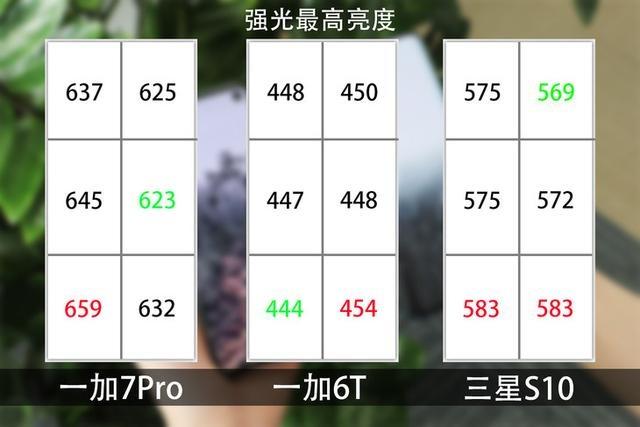
In the highlight, the average highest screen brightness of OnePlus 7and Samsung S10 is 636nit and 576nit. However, the OnePlus 6T still keeps the default maximum screen brightness (448nit) in the highlight. From the comparison, we can find that OnePlus 7 Pro has been improved in this aspect, which performs well.
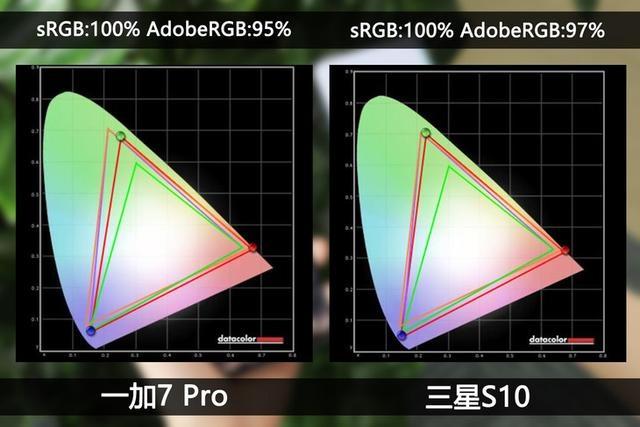
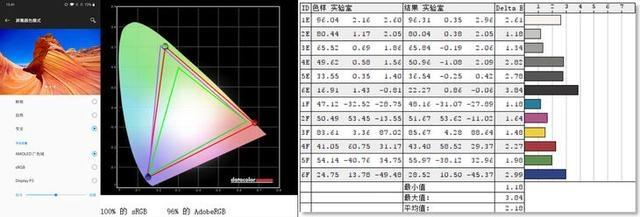
Generally, a wider gamut of colors results in a richer color display. We tested the default bright-color mode of the two smartphones through software, and the results show that the screens of both phones can exceed 100% in sRGB. Samsung S10 can reach to 97% AdobeRGB, and OnePlus 7 Pro reach to 95% AdobeRGB. Look at the color range picture below, obviously, OnePlus 7 Pro has a smaller range on the green display than the Samsung S10.
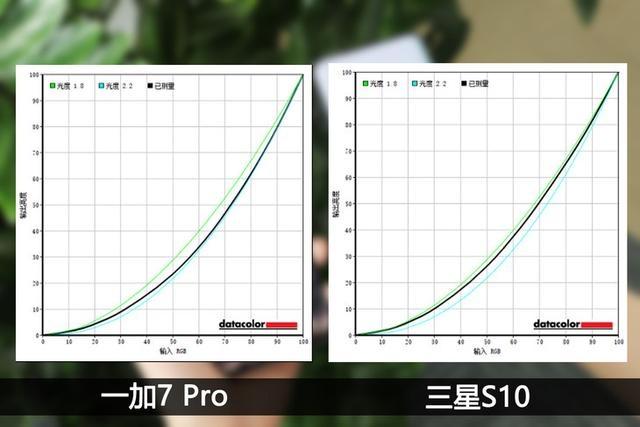
In the tone response test, the black line should be close to the light blue line. Look at the picture below, the black line of OnePlus 7 Pro is almost fit the light blue line, which performs better than Samsung S10.
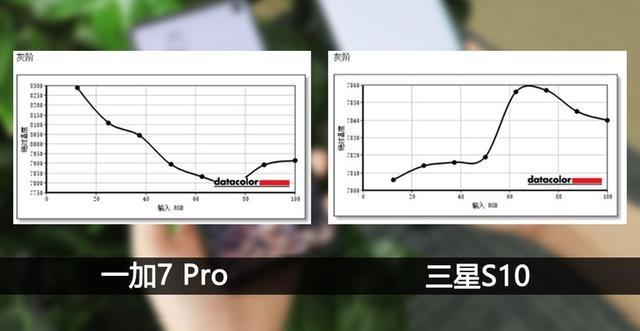
In the gray scale test, the two phones are tested in the highest brightness, OnePlus 7 Pro generally remained at 7900-7800k, and the Samsung S10 generally remained at 7860-7800k. Therefore, Samsung S10 gets a slight edge.
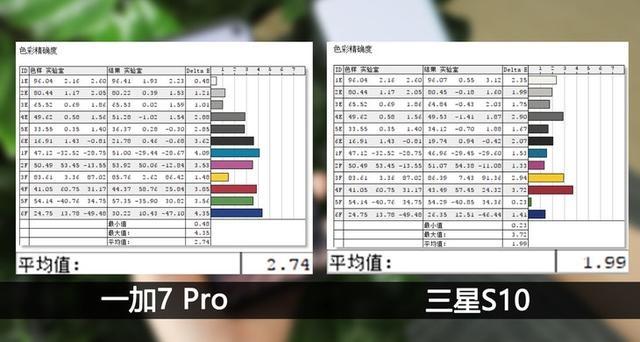
In terms of color contrast, the shorter color bar means the smaller color deviation, and the color displays accurate. In the default color vivid mode, OnePlus 7 Pro performs better in the white color, but Samsung S10 performs better in gray, black and green color. The color standard mean of OnePlus 7 Pro is 2.74, and Samsung S10 is 1.99.
OnePlus 7 Pro has AMOLED wide color range mode, which shows more colorful than color vivid mode. And the color standard mean is 2.1.
Battery
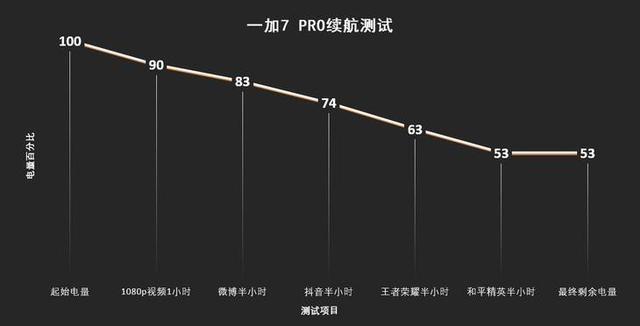
We used the phones to play 1080p video for an hour, browse microblog, TikTok, Arena of Alor and PUBG for half an hour respectively. OnePlus 7 Pro is fueled by 4000mAh battery, and after three hours, the OnePlus 7 Pro still has 53% battery. It’s hard that the OnePlus 7 Pro can get good battery life in the mode of 90Hz+2K.
Conclusion
From the test, we can see the progress of OnePlus screen, which has good color range and color standard. Also, OnePlus 7 Pro performs better than Samsung S10 in the test of screen brightness and tone response. Most worthy of mention is that the screen of OnePlus 7 Pro comes with 90Hz refresh rate, which Samsung doesn’t have. If you don’t mind the battery life, I think OnePlus 7 Pro is a good choice.
UPDATE: The pricing for the Redmi 7A has been announced on May 28.
They are as follows:
2GB+16GB – 549 Yuan ($80)
2GB+32GB – 599 Yuan ($86)
Goes on sale on June 6 at 10AM.
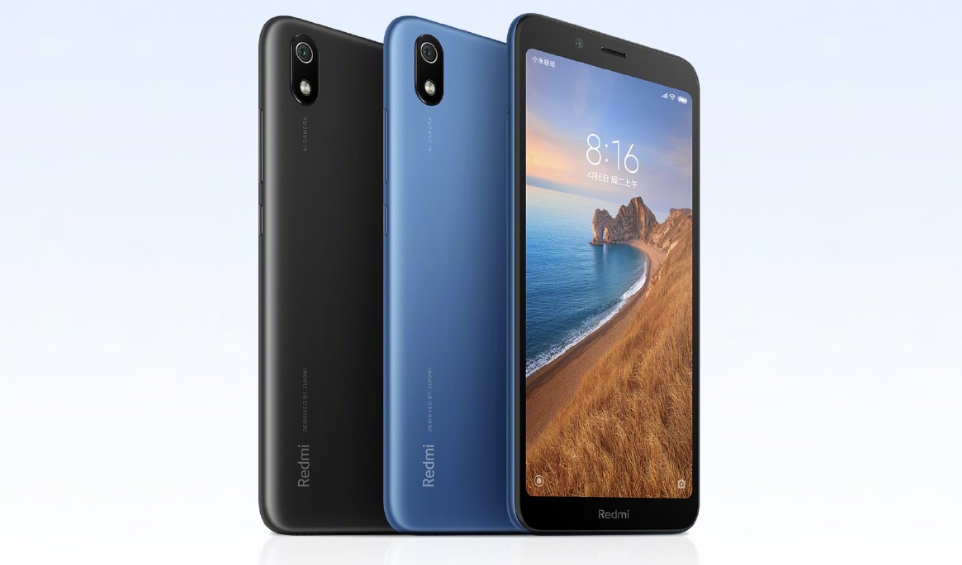
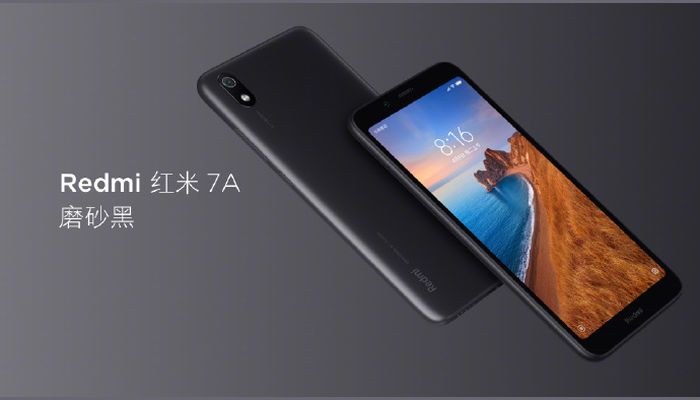
Last year in June, Xiaomi had launched Redmi 6 and Redmi 6A smartphones. Redmi which became an independent brand since the beginning of this year unveiled the Snapdragon 632 SoC powered Redmi 7 phone in March. The handset was introduced with a price tag of 699 Yuan. Today, Redmi silently took off covers from the Redmi 7A entry-level phone. It has arrived with a tall aspect ratio display, Snapdragon 439 and an AI powered rear camera.
Redmi 7A Specifications and Features
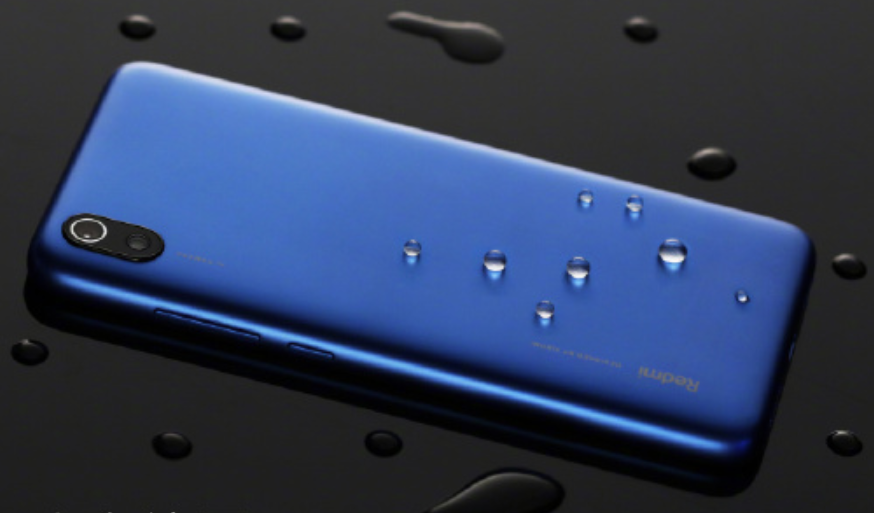
The Redmi 7A comes with a polycarbonate chassis with P2i nano-coating for splash-resistance. The Chinese firm has protected the SIM card tray, microUSB port and audio jack of the phone with rubber sleeves so that water does not seep inside it easily. The handset measures 146.30 x 70.41 x 9.55mm and weighs 150 grams.
The smartphone features a 5.45-inch IPS LCD display with 18:9 aspect ratio. It carries support for HD+ resolution of 720 x 1440 pixels. The display is bright enough for outdoor usage and there is an eye protection mode onboard for filtering the detrimental blue rays that are emitted from the screen. The display is surrounded by thick bezels and its chin carries the brand name of the company.
The 1.95GHz Snapdragon 439 octa-core processor fuels the smartphone. The Chinese firm did not revel amount of RAM and the internal storage options of the phone. The handset is equipped with a dedicated slot for microSD card.
The Android 9 Pie OS on the Redmi 7A is customized with MIUI 10 skin. It comes with simplified user interface and features like minimalist desktop, family guardian, giant font option, large volume controller and magnifying glass. The handset is backed by a 4,000mAh battery that supports 10W charging.
For photography, the Redmi 7A features an LED enabled 13-megapixel rear camera. It is assisted by some AI features such as PDAF fast focus, AI beauty and AI background blur. It features a selfie camera of 5-megapixel. The front camera doubles up for AI face unlock feature. The connectivity features available on the Redmi 7A are dual-SIM support, 4G VoLTE, Wi-Fi, Bluetooth 4.2, GPS, microUSB and 3.5mm headphone jack. The smartphone lacks support for fingerprint scanner.
Redmi has not disclosed the price tag of Redmi 7A. The company will be announcing it on May 28, the day when it unveils the Redmi K20 and Redmi K20 Pro flagship phones.
The Redmi 7 models such as 2GB RAM + 16GB storage, 3GB RAM + 32GB storage and 4GB RAM + 64GB storage are respectively priced at 699 Yuan (~$116), 799 Yuan (~$130) and 899 Yuan (~$144). Hence, there is a possibility that the Redmi 7A may hit the market with a price tag of 599 Yuan (~$86) like the Redmi 6A phone from last year. Probably, it may arrive with 2 GB of RAM and 16 GB of storage.
What do you think about the Redmi 7A? What will be the suitable price for the smartphone? Share us your views by posting your comments below.
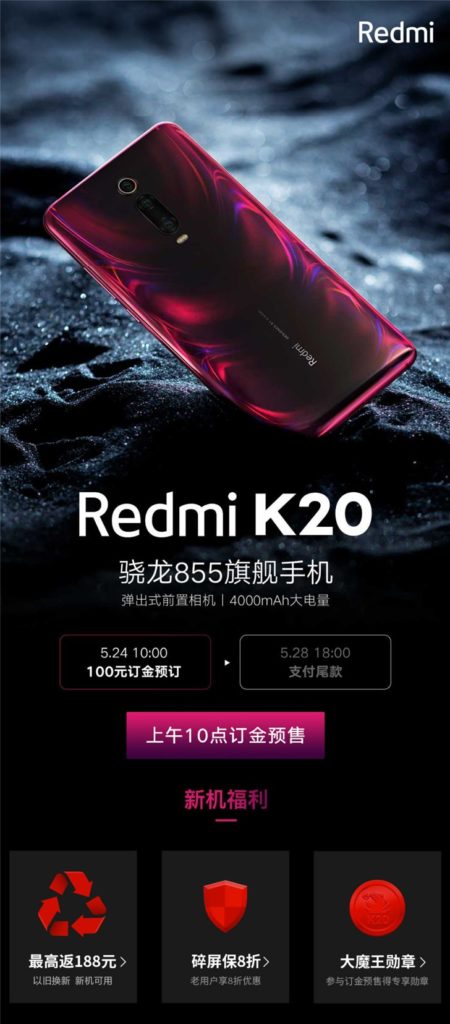
On Monday, Redmi had confirmed that it will be launching Redmi K20 flagship phone on May 28. Starting from today at 10AM (local time) in China, the Chinese firm is receiving the pre-orders of the Redmi K20 smartphone. Lu Weibing has confirmed through Weibo that the company has prepared enough stock of the Redmi K20 phone.
Weibing said that the pre-sale of the Redmi K20 has been started from today to meet the strong demand for Redmi phones. He has committed that the company has prepared enough stock of the phone. Those who pre-order the smartphone will benefit from priority delivery within 7 days.
In order to pre-order the Redmi K20, customers in China are required to book it with 100 Yuan. The remaining amount of the phone can be paid after the launch of the phone on May 28. The below shown pre-sale poster of the Redmi K20 has highlighted feature like Snapdragon 855 chipset, pop-up selfie camera, 48-megapixel ultra-clear triple rear cameras, 4,000mAh battery and 7th generation screen fingerprint unlock.
Redmi K20 Specifications
Recent reports have revealed that the Redmi K20 will be arriving with a notch-less display that will offer full HD+ resolution of 1080 x 2340 pixels. It is expected to arrive with an elevating camera of 20-megapixel. The company has already confirmed that the triple camera setup of the phone will include 48-megapixel Sony IMX586 primary sensor. It is rumored to be coupled with a 13-megapixel superwide lens and a telephoto sensor of 8-megapixel. The handset will carry support for 960fps slow-motion video shooting.
Apart from offering longer battery life, the Redmi K20 is speculated to carry support for 18W fast charging. It will be equipped with Game Turbo 2.0 for smoother gaming experience. The handset may come with up to 8 GB of RAM and up to 256 GB of native storage. The Android 9 Pie OS with MIUI 10 skin will come preloaded on the device.
Xiaomi is expected to release the Redmi K20 series in multiple markets. The Chinese firm has recently confirmed that the flagship killer smartphone will be also heading to India.
Xiaomi-backed Redmi is all set to launch its flagship smartphone Redmi K20 in China on 28th May. Ahead of the launch, the company has started teasing various features of this upcoming smartphone.
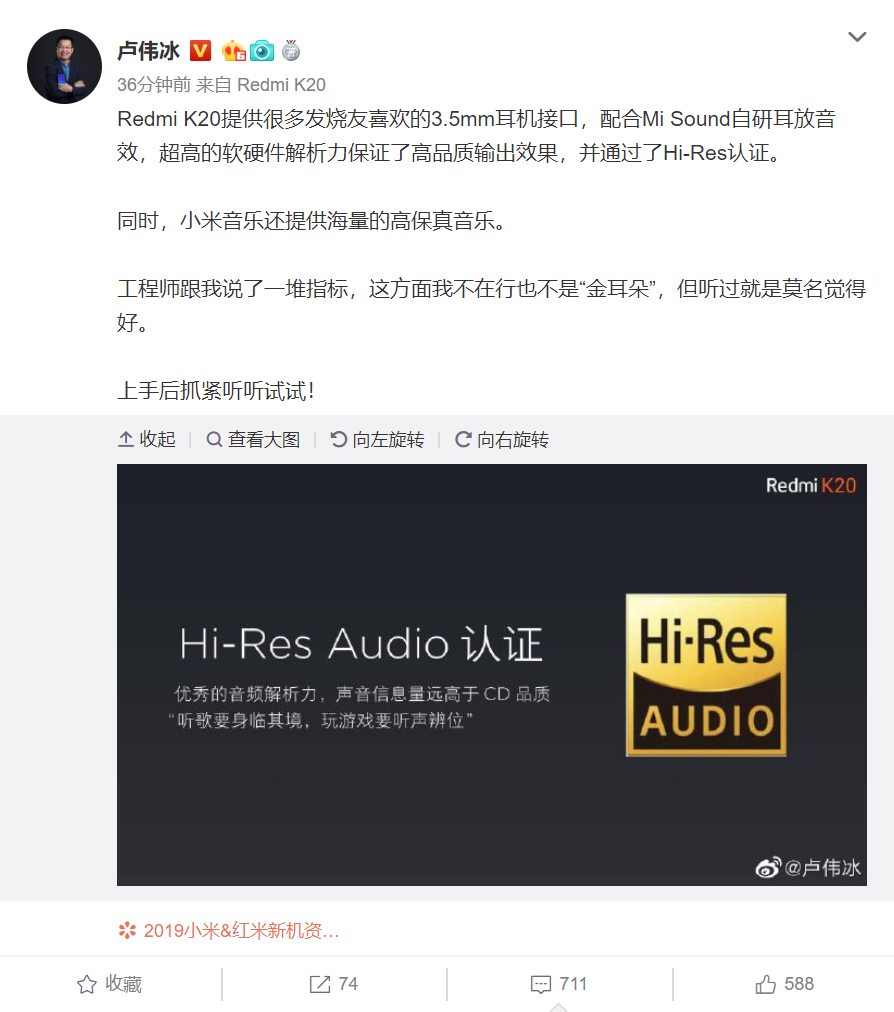
Lu Weibing, Vice President of the Xiaomi Group and General Manager of Redmi brand has now announced through a post on Weibo that the Redmi K20 smartphone will retain the 3.5mm headphone jack.
He says that the company decided to retain the 3.5mm audio jack as enthusiasts like it. With the company’s self-developed Mi Sound amp sound effects, it ensures high-quality sound output and has also passed the Hi-Res certification process.
Recently, the upcoming flagship smartphone’s render was shared by the company confirmed that it will have three rear cameras arranged vertically in the middle of the phone. The first camera sits separately from the other two and has a gold ring around it. The other two cameras are together in a black housing.
Redmi shared a picture of an official case last week, which had confirmed that the phone will come with a 48 MP Sony IMX586 camera sensor which will also have support for 960fps super-slow-motion video recording.
As per the reports, the Redmi K20 will have an AMOLED display, a pop-up selfie camera, a 7th gen in-display fingerprint scanner, and a 4000mAh battery. It will support 18W fast charging and has been reported to have a Snapdragon 730 chipset under the hood.
Along with the Redmi K20, the Chinese smartphone brand is also expected to launch the Redmi K20 Pro smartphone in China, which will be powered by the Snapdragon 855 octa-core flagship chipset. Both the phone will run Android 9 Pie-based MIUI 10 custom user interface on top of it.
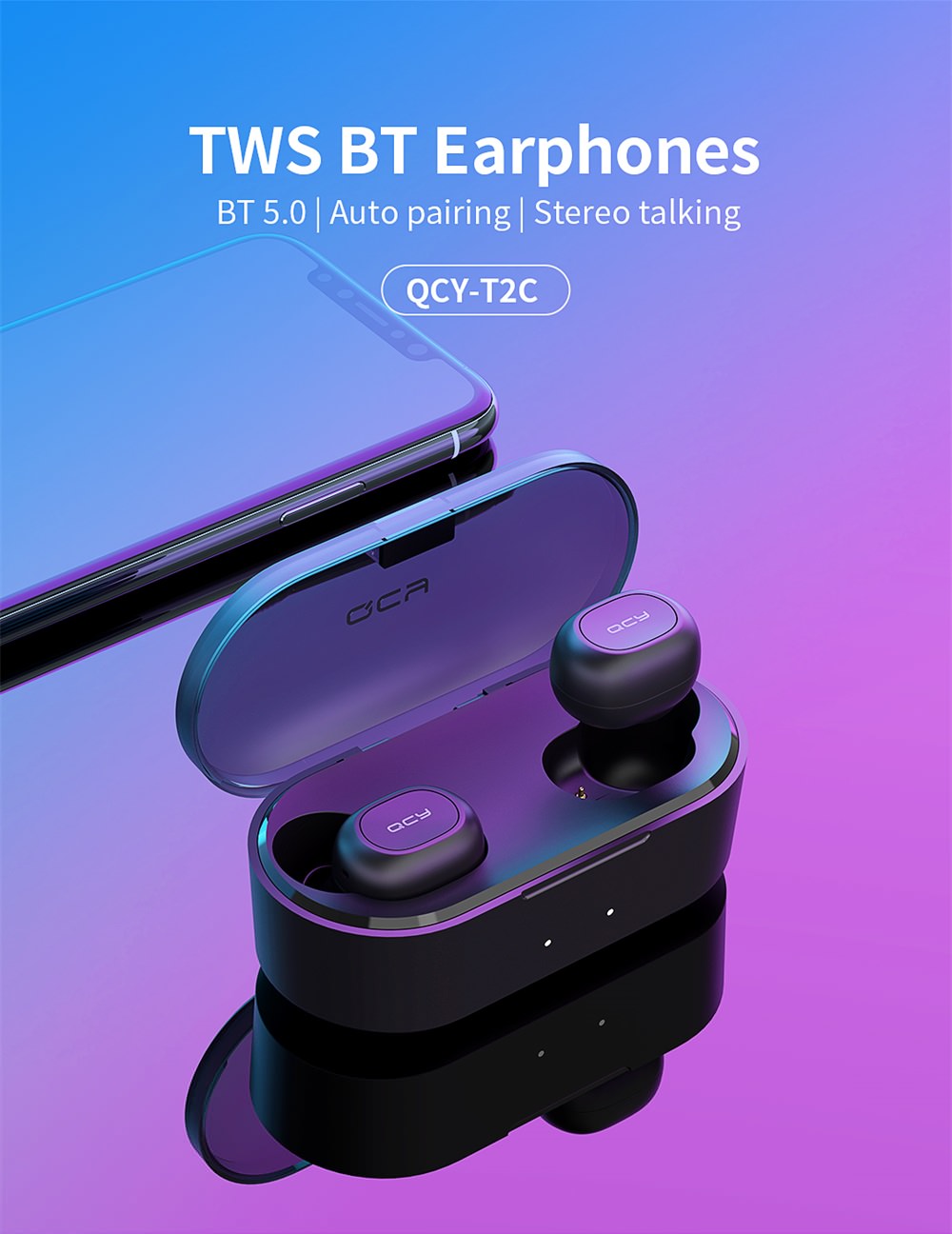
Looking for inexpensive earphones that don’t disappoint in terms of performance? We got good news for you!
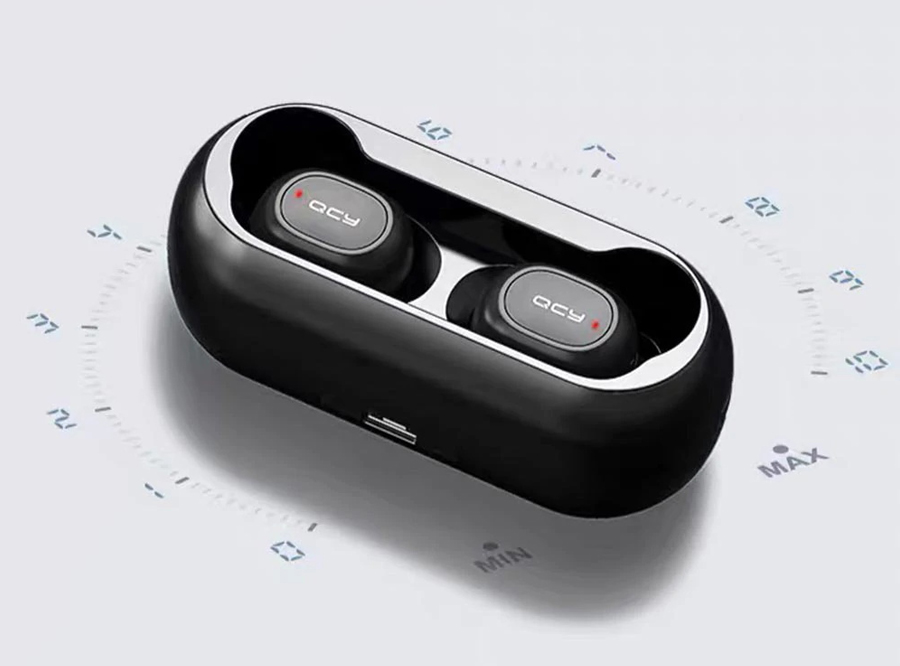
You can now buy the QCY T1C and QCY T1S Mini Wireless Earphones at lowered prices from GearVita. The aforesaid earphones have been assigned specific coupons that you can use to save a considerable amount of money at checkout.
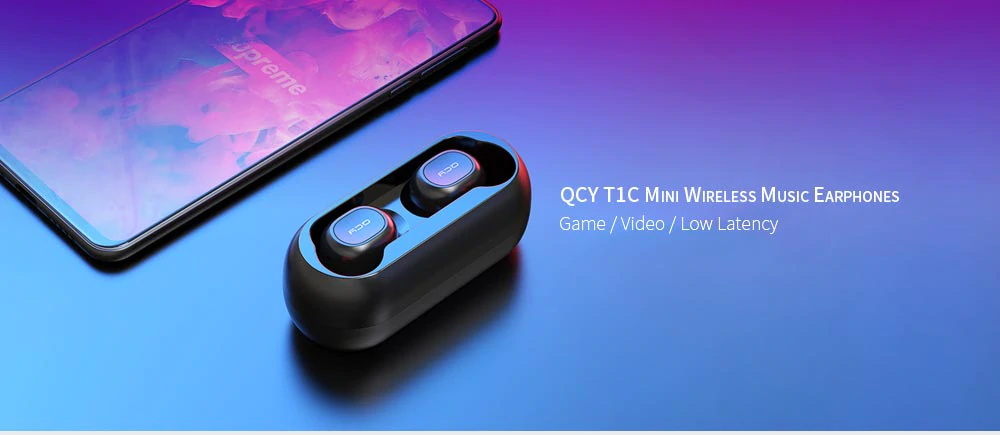
QCY T1C Mini Wireless Earphones
Powered by a professional Realtek chipset, the QCY T1C delivers superior acoustic quality. These comfortable-to-wear earphones provide deep noise reduction, Fever Hi-Fi sound quality with HiFi 6mm and also support binaural calls.
The feature-laden QCY T1C is currently up for sale bearing a $21.99 on GearVita, but you can use coupon code GVQCYT1CE and save $7. In other words, you can bring the original asking price of the earphones down to just $14.99 simply by applying the aforesaid coupon.
You can follow this link to grab the discount, which will be valid for the black color version of the QCY T1C Mini wireless earphones before the promo ends.
The QCY T1S Mini TWS Wireless Earphones would normally set you back $30.99, but GearVita users can buy it for a lowered price of only $21.79. Moreover, you can extend this 30 percent discount by using coupon code GVQCYT1S.
The aforesaid coupon helps you get an extra $3.80 off by bringing the original asking price of the QCY T1S earphones further down to just $17.99 during the checkout process. You can follow this link to take advantage of the discount before the promo comes to an end.
An absolute steal at this price, the QCY T1S offers Bluetooth 5.0 support for a stronger, quicker voice transmission as compared to the BT V4.0 and BT V4.1. It allows you to enjoy your favorite music anywhere anytime without the hassle of wires.
Last week, Xiaomi launched the Redmi Note 7S smartphone in the Indian market, which is the rebranded version of the Redmi Note 7 launched in China in January this year. The phone will be replacing the Redmi Note 7 with 12MP + 2MP camera sensors that was launched in India in February.
The Xiaomi Redmi Note 7S was available made available for purchase yesterday through online stores such as Mi.com, Mi Store app, and Flipkart in three color options — Onyx Black, Blue Sapphire, and Ruby Red. Now, the smartphone will also be available offline through Mi Preferred Partner Stores starting today, i.e. 24th May.
The Xiaomi Redmi Note 7S (Full Specs) comes with a 6.3-inch IPS LCD display featuring a “dot” notch, offering a Full HD+ screen resolution of 1080 x 2340 pixels. The front, as well as the rear side of the Redmi Note 7S, comes equipped with Gorilla Glass 5 panel.
Under the hood, the device is powered by the Qualcomm Snapdragon 660 octa-core chipset and comes in two variants — 3GB RAM + 32GB internal storage and 4GB RAM + 64GB internal storage. Both models are equipped with hybrid SIM slot for adding a microSD card.
The dual camera setup on the phone’s back panel features a 48-megapixel Samsung GM1 sensor with f/1.8 aperture and a depth sensor of 5-megapixel. It comes with features like PDAF, Electronic Image Stabilization (EIS), AI Portrait Mode and LED flash.
On the front side, there’s a 13-megapixel camera present inside the front notch of the phone, which can capture AI-driven portrait shots. The phone runs Android 9 Pie operating system customized with MIUI 10 custom interface.
The device is powered by a 4,000mAh battery that supports 10W charging through a bundled charger. However, the phone supports 18W fast charging but the users of the Redmi Note 7S will need to separately buy a Quick Charge 4 charger to take advantage of this feature.
Vivo India is expected to unleash two new Y-series smartphones in India such as Vivo Y12 and Vivo Y15. These phones will be joining the Vivo Y17 smartphone that was unveiled in India in the previous month with waterdrop-style notched screen and 5,000mAh battery. The specifications of the Vivo Y12 and Y15 have already surfaced in the recent reports. Today, 91mobiles has claimed that the Vivo Y12 will be releasing in the Indian markets with a price tag of Rs. 11,990.
Vivo Y12 Price in India
Citing information received from retail chain, the publication claims that the Vivo Y12 will be arriving in India in two models such as 3 GB RAM + 32 GB storage and 4 GB RAM + 64 GB storage. These variants are expected to release with respective price tags of Rs. 11,990 and Rs. 12,990. The exact launch date of the phone is not known yet. However, it is believed that it will be available through offline stores in the next few days.
Vivo Y12 Specifications
The Vivo Y12 will be arriving with a 6.35-inch Halo FullView display that features a small notch. it will carry support for HD+ resolution and an aspect ratio of 19.3:9. The phone is expected to offer a screen-to-body ratio of 89 percent. The MediaTek Helio P22 SoC with its 2.0 GHz octa-core processor is likely to fuel the smartphone.
The handset will boot to the FunTouch OS 9 UI based Android 9 Pie OS. It will be arriving as the cheapest triple camera smartphone from a mainstream brand. It is expected to include an 8-megapixel f/2.2 aperture sensor, a 13-megapixel f/2.2 aperture lens and a 2-megapixel f/2.4 aperture sensor. For shooting selfies, it will be fitted with an f/2.0 aperture 8-megapixel AI camera. For security, the Vivo Y12 is expected to arrive with fingerprint scanner and face unlock features.
The Chinese firm is rumored to introduce the Vivo Y15 smartphone alongside the Vivo Y12 handset. The Vivo Y15 may arrive with a starting price of Rs. 14,990. Rumors surrounding it have revealed that it will be also featuring the same display, processor, triple cameras and battery like the Vivo Y15. However, it may arrive with a base model with 4 GB of RAM and 64 GB of native storage. Also, it may come with a better selfie camera of 16-megapixel with f/2.0 aperture.
We use cookies on our website to give you the most relevant experience by remembering your preferences and repeat visits. By clicking “Accept”, you consent to the use of ALL the cookies.
This website uses cookies to improve your experience while you navigate through the website. Out of these, the cookies that are categorized as necessary are stored on your browser as they are essential for the working of basic functionalities of the website. We also use third-party cookies that help us analyze and understand how you use this website. These cookies will be stored in your browser only with your consent. You also have the option to opt-out of these cookies. But opting out of some of these cookies may affect your browsing experience.
Necessary cookies are absolutely essential for the website to function properly. This category only includes cookies that ensures basic functionalities and security features of the website. These cookies do not store any personal information.
Any cookies that may not be particularly necessary for the website to function and is used specifically to collect user personal data via analytics, ads, other embedded contents are termed as non-necessary cookies. It is mandatory to procure user consent prior to running these cookies on your website.