Advertisement

Redmi X name for Snapdragon 855 Redmi phone appears in poster

Redmi fans are eagerly waiting for the launch of Snapdragon 855 powered Redmi phone. Recently, the Chinese firm had released a video teaser of its upcoming flagship phone. It was revealed at the end of the teaser video that the phone will be arriving with a notch-less display and a pop-up selfie snapper. Fresh rumors that are doing rounds on Weibo suggests that the forthcoming Redmi flagship phone will be releasing in the market with Redmi X moniker. Also, a leaked poster of the phone has also appeared on Weibo.

The first image shows the Redmi X being advertised at some place in China. The black colored handset shown of the left side in the image does not seem to be the Redmi flagship phone because of the “Mi” text on its rear. It is the Xiaomi Mi 9 smartphone that features a vertical triple camera unit. The image does suggest that the rear design of the Redmi X Snapdragon 855 phone will be quite similar to the Xiaomi Mi 9 phone.

The Redmi X phone shown in the poster has a notch-less display and a pop-up selfie camera. The positioning of the elevating camera seems to be a bit weird since the official teaser of the phone had revealed that it is placed more towards the left on the top edge of the device. Hence, it appears to be a photoshopped image.

Redmi is yet to confirm the Redmi X moniker for its upcoming Snapdragon 855 SoC powered flagship phone. In January, a listing for the Redmi X phone was found on China’s Jindong Mall online shopping site. Since then, the rumor mill is speculating that one of the upcoming Redmi phones may carry the Redmi X name.

Another leaked poster (shown below) has appeared on Weibo. The text on the poster reads that the company will be announcing the Redmi X “national flagship” phone on May 14 through an unveil event in Beijing, China.

In January, a listing for the Redmi X phone was found on China’s Jindong Mall online shopping site. Since then, the rumor mill is speculating that one of the upcoming Redmi phones may carry the Redmi X name. Redmi is yet to confirm the Redmi X moniker for its upcoming Snapdragon 855 SoC powered flagship phone. Hence, there is no official confirmation on the launch date of the phone.

The Redmi X is expected to feature a notch-less displayor 6.3-inches. It is expected to be equipped with an in-display fingerprint reader. The smartphone may come with up to 8 GB of RAM and a maximum inbuilt storage of 128 GB. A 4,000mAh battery may fuel the phone. It may carry support rapid charging technology. When it comes to photography, the smartphone may offer users with a frontal shooter of 32-megapixel and a rear-mounted 48-megapixel + 8-megapixel + 13-megapixel triple camera module.

As far as the name of the Redmi 855 phone is concerned, fans are suggested to wait patiently for official information on further leaks to find out whether it will be called Redmi X or something else.
LG V50 ThinQ 5G to finally hit the shelves on May 10

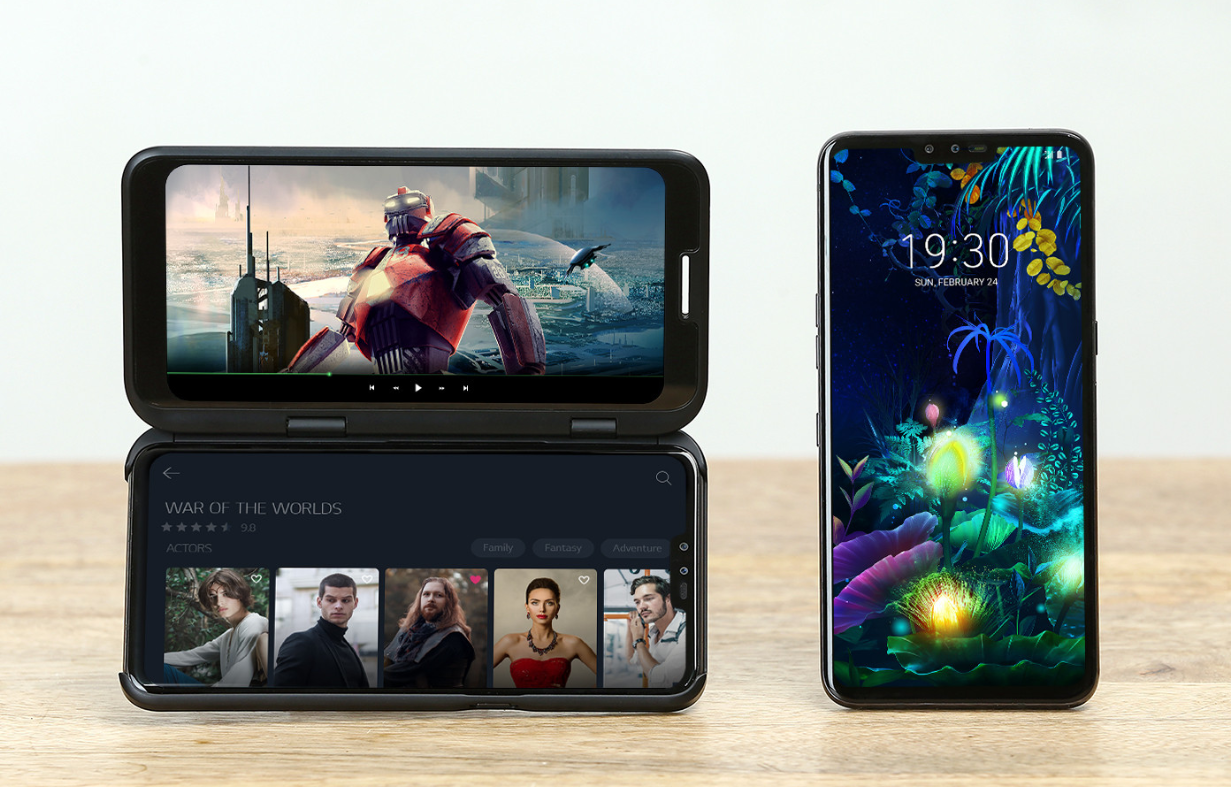
LG V50 ThinQ was expected to debut at the beginning of April alongside the Galaxy S10 5G. But the launch was delayed as the phone was yet to be optimized for perfect user experience. The delay of this LG model, as well as the Samsung 5G model, led to the delay of the rollout of the world’s first 5G network launched in South Korea. While Samsung was still able to release the Galaxy S10 5G in April, LG was not. Now, we finally know when its 5G-enabled flagship will finally hit the shelves. LG V50 ThinQ will be available starting from May 10 and it will come alongside an additional accessory adding a second display to the handset.

LG V50 ThinQ 5G

Despite the upcoming availability of two 5G smartphones in South Korea, it will still be hard for consumers to use 5G networks as local carriers are still in the early stages of building their networks based on the new connectivity standard. But there is nothing to worry about as the coverage will extend a lot in the coming months.

According to the company, due to its dual displays, the LG V50 ThinQ offers a similar feel as a foldable phone and it will be great, especially for gaming. The second display can be used as a controller while the game runs on the primary display. So, its good for gaming and multi-tasking.

The LG V50 ThinQ will be priced at 1,199,000 won that is equivalent to about $1035. It is a very interesting price as the phone is $173 cheaper than the Galaxy S10 5G edition. Coming to the main specs, the V50 sports a 6.4-inch Quad HD+ display, and it is powered by the Snapdragon 855 chipset paired with a Snapdragon X50 5G modem. It will be offered just in the 6/128 GB memory configuration with expandable storage. On the rear side, it sports a triple camera with an ultrawide sensor and a telephoto lens, while the battery comes with a generous 4000mAh capacity.

(Source)

Huawei aims to release a 5G TV in 8K resolution in 2019

Huawei has a very ambitious plan for this year, and it’s not just limited to the smartphone sector. The Chinese company is planning to release its first 5G TV as early as this year, in order to offer a complete ecosystem of hi-tech products. According to a popular media site, the Asian giant will release a TV with a 5G chipset and flagship-class specifications, including an 8K display and several smart features. Thanks to such a TV, people would be able to download 360-degree videos, VR content and other heavy video content in a short time, and they won’t even need a local connection, nor cable TV or satellite broadcast services in order to find a lot of content with outstanding quality.

Thanks to the 5G connectivity, the Huawei TV will also behave like a hub for smart home appliances. A 5G TV is definitely a step forward to take on Samsung‘s business which is one of the most important TV manufacturers in the world, as well as its main competitor in the smartphones market. Samsung has already released 8K TVs, but the Korean giant still does not have a 5G-enabled TV in its catalog. Besides trying to launch the first 5G TV, Huawei is also looking to conquer the PC market.

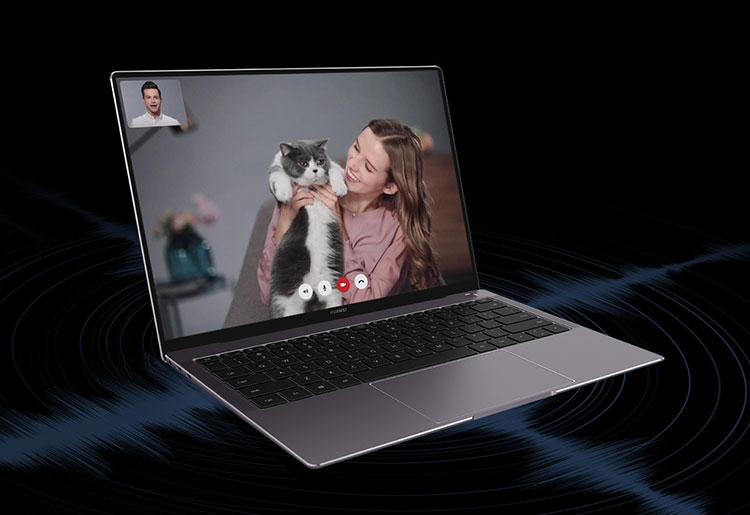
huawei matebook x pro 2019


Indeed, Huawei is aiming to enter the top five PC makers by 2021 and it will increase its shipments up to 3x times this year. According to Nikkei, the company is even developing its own CPUs for laptops, just like it does with smartphones through its HiSilicon business. Huawei is currently the world’s second smartphones manufacturer and it entered the PC market in 2017 with the MateBook series including ultrabooks which can be defined as more affordable competitors of MacBooks. In 2018, the company shipped more than one million PCs.

(Source)

Huawei, Xiaomi and Oppo to launch 5G smartphones in Switzerland this week

A few days ago Oppo unveiled the 5G variant of the new Reno line-up in Switzerland and announced that it would be available starting from the end of May. Now, it seems that there will be no need to wait until the end of this month, as it is available starting this week. And alongside the Reno 5G, even the first 5G smartphones from Xiaomi and Huawei will debut in the European country.

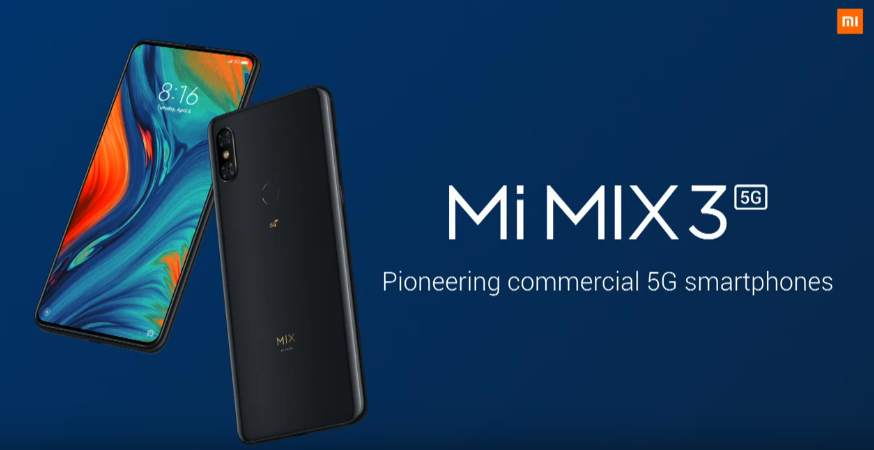
Mi MIX 3 5G

The announcement comes from the Swiss carrier Sunrise: the Oppo Reno 5G starts selling in Switzerland today, while both Huawei Mate 20 X 5G and Xiaomi Mi Mix 3 5G will be available starting from tomorrow, May 2. The Oppo Reno 5G carries a price tag of 999 Swiss francs, that is equivalent to about $980 at the current exchange rate. Huawei Mate 20 X will be available from 997 Swiss francs, that is about $978, while the Xiaomi Mi Mix 3 5G will be way more affordable with a price of 847 Swiss francs (about $831).


Powered by the Snapdragon 855 and supported by a Snapdragon X50 modem, the Mi Mix 3 is officially the most affordable phone in Europe to support 5G connectivity. Even the Oppo Reno has the same chipset and modem, while the Mate 20 X is equipped with a Kirin 980 chipset and the Balong 5000 5G modem. In case you missed the latest news, note that Switzerland is the first (and actually the only one) European country to have a nationally-available 5G network. The Swiss carrier Sunrise currently covers more than 150 Swiss cities and it will offer full coverage of the whole nation within this year.

(via)

Buy Xiaomi Redmi AirDots Wireless Earbuds at Unbeatable Prices

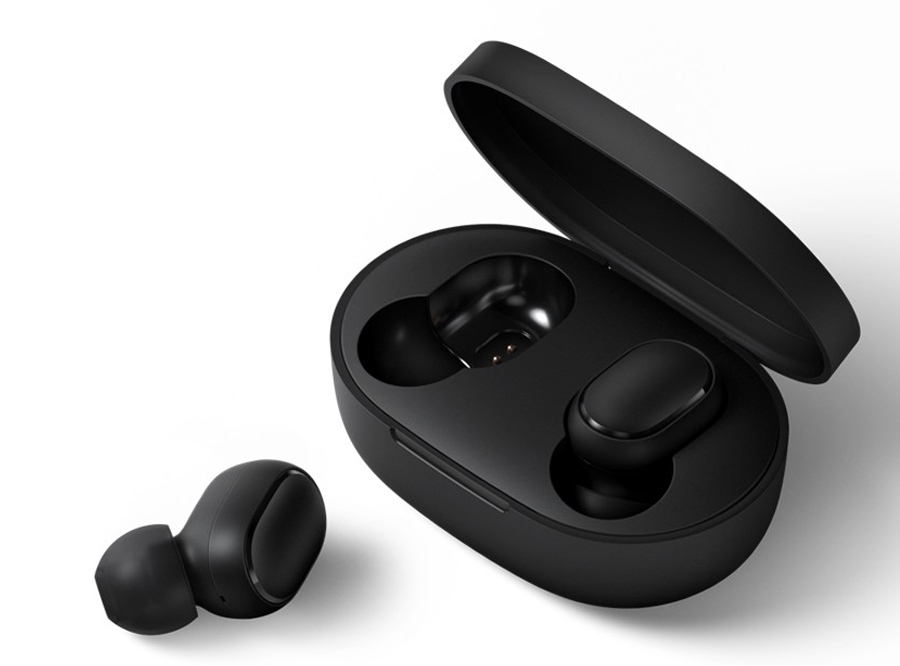
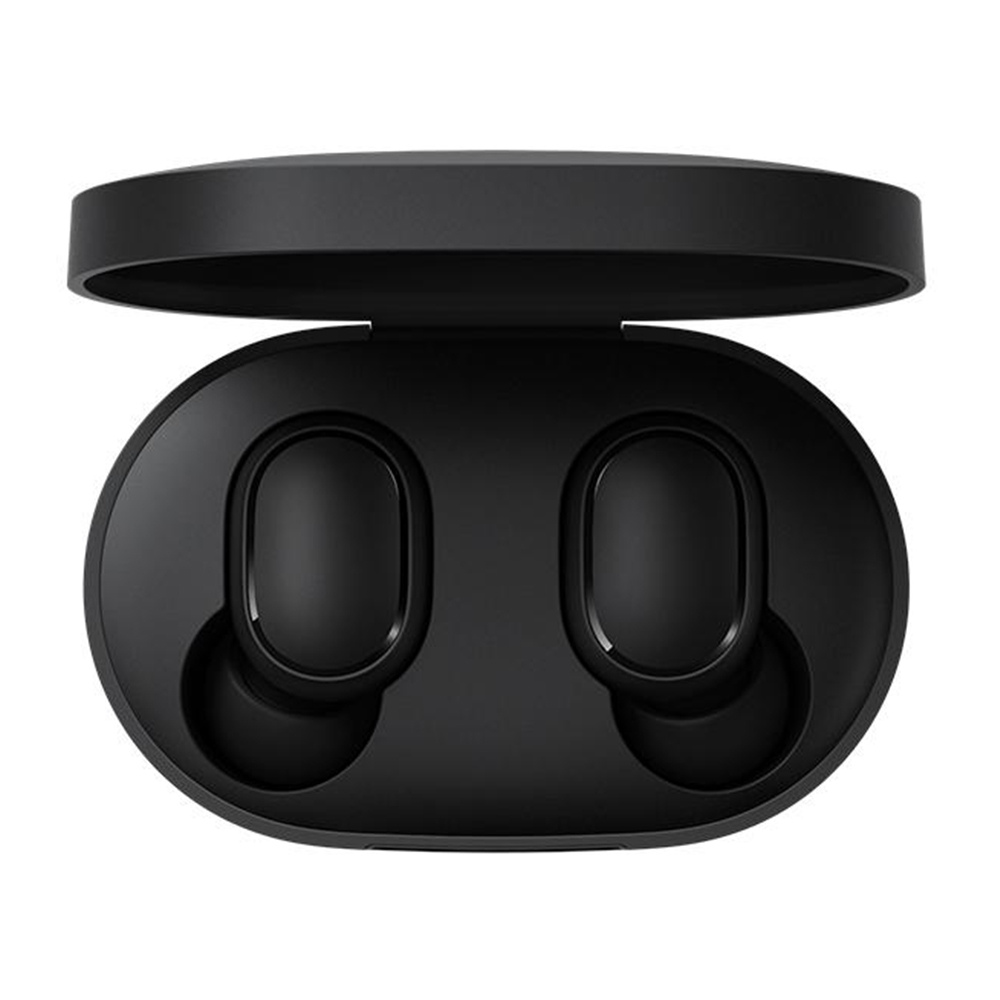
After launching the Mi AirDots Youth Edition wireless Bluetooth earbuds in its home market, Chinese electronics giant Xiaomi recently unveiled a pair of wireless Bluetooth earbuds called the Redmi AirDots.

These Xiaomi-branded wireless earbuds were launched during the official unveiling of the Redmi Note 7 Pro and Redmi 7 smartphones in China. Here are leading online stores where you can buy the Redmi AirDots at unbeatable prices.

Giztop

Equipped with a Realtek 8763 chip, the Redmi AirDots Wireless Earbuds adopts the latest Bluetooth 5.0 technology for a superior listening experience.
While the awe-inspiring features it boasts justify the $24.99 price tag the Redmi AirDots usually carry, you can now buy it for only $23.99 on Giztop. You can follow this link to take advantage of the discount before the promo wraps up!

 

Gearbest

As part of its imminent Super Deals, Gearbest is offering the coveted Redmi AirDots for a lowered price of just $33.99. This is a significant 12 percent reduction in the device’s original asking price of $38.53. You can follow this link to avail the discount, which will be valid for the black color version.


GearVita

As true wireless earphones, the Redmi AirDots eliminates the need for a connection between the left and right headphones without spoiling your overall listening experience. It uses Bluetooth 5.0 technology and comes with three freely adjustable earplug models.

The Xiaomi Redmi AirDots TWS Bluetooth 5.0 Earphones can now be yours for just $45.99 on GearVita. You can use coupon code GVRMDots to reduce the retail price to just $23.99.

You can follow this link to check out more details and place your order without wasting time.


Banggood

The black color version of the Redmi Airdots TWS Bluetooth 5.0 Earphone is currently up for grabs carrying a $64.56 price tag on Banggood. You can use coupon code 30725e to grab a noteworthy 35 percent off.

This ultra lightweight wireless Bluetooth headset from Xiaomi delivers a more stable transmission for softer and clearer sound during calls. You can follow to check out more details about the Xiaomi Redmi AirDots and place your order.

 

GeekBuying

GeekBuying is doling out a noteworthy 42 percent off on the Xiaomi Redmi AirDots TWS Bluetooth 5.0 Earbuds that normally sells for $49.99. Thanks to the aforesaid discount, you can now buy the coveted earbuds for a dropped price of only $28.99 on Geekbuying.

You can head straight to this link in order to avail the discount. Note that the promo is slated to end in just five days.
Apple patents acoustic fingerprint imaging for full-screen Touch ID

Smartphone industry is actively experimenting with the bio-metric security and is now offering in-display fingerprint sensor. Many smartphone manufacturers are now offering sixth-generation technology which provider wider fingerprint recognition area.

If you are among those who wishes for the whole smartphone display to act as a fingerprint sensor, then we have some good news. It seems that Apple is working on acoustic fingerprint imaging technology that can offer full-screen Touch ID.

Apple Acoustic Touch ID Patent

This will enable the company to offer Touch ID on iPhone without the need to embeds the sensor in the home button, and the company the continue offering clean full-screen design for the front panel.

With iPhone X, Apple replaced Touch ID with Face ID which uses TrueDepth camera array. This enabled the US-based company to have edge-to-edge display. However, Face ID still has some flaws that Touch ID continues to be better at, such as unlocking the iPhone without looking at it.

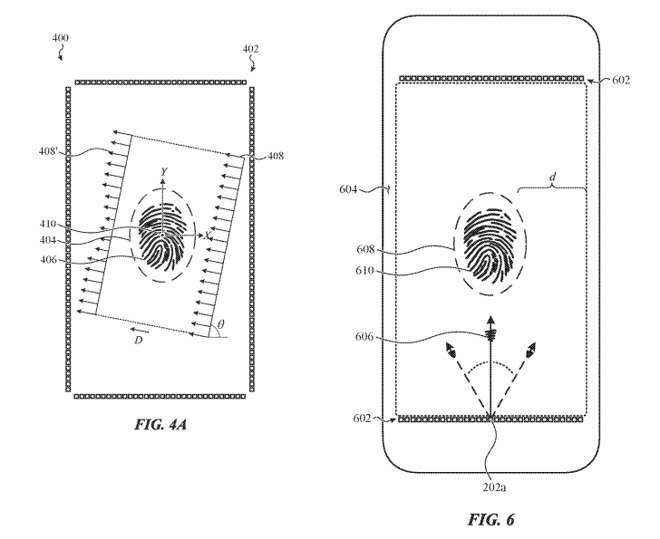
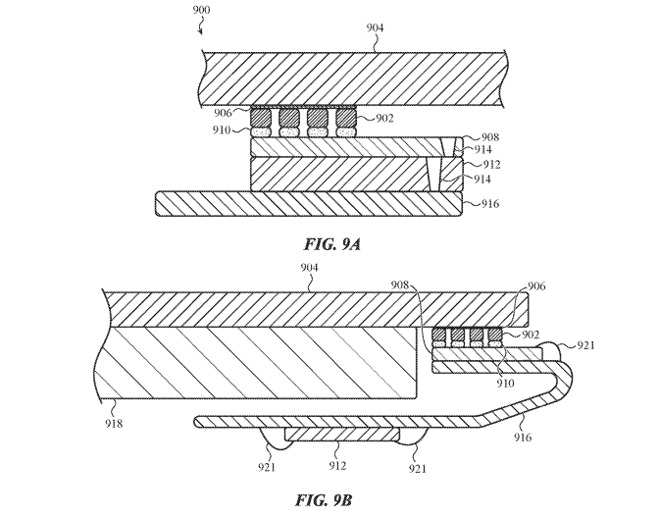
In a patent granted by the US Patent and Trademark Office, the company describes an acoustic imaging system for a surface. It is using a combination of acoustic transducers to vibrate a surface in a specific way, which can effectively turn the entire display into a fingerprint reader.

Apple Acoustic Touch ID Patent

Another patent named “Acoustic imaging system for spatial demodulation of acoustic waves,” covers the same subject area with a relatively similar technique, except that it goes into greater detail relating to transducer placement.

In the second patent, the company explicitly suggests that the object being detected “is a finger,” while the user input surface could be formed from “glass, sapphire, or metal,” with the obvious application being a touch-enabled display.

Read More: Apple hired Intel’s 5G mobile technology head before resolving its conflict with Qualcomm

While we doubt if Apple will move back to Touch ID for iPhone after ditching it in favor of Face ID. However, the full-screen fingerprint sensor will eventually become a reality given that most manufacturers have now adopted in-display fingerprint sensor. It’s just a matter of time and it will be interesting to see which make becomes the first to do so.

(Sources – 1, 2)

Lenovo Z6 Pro update adds DC dimming and several other features

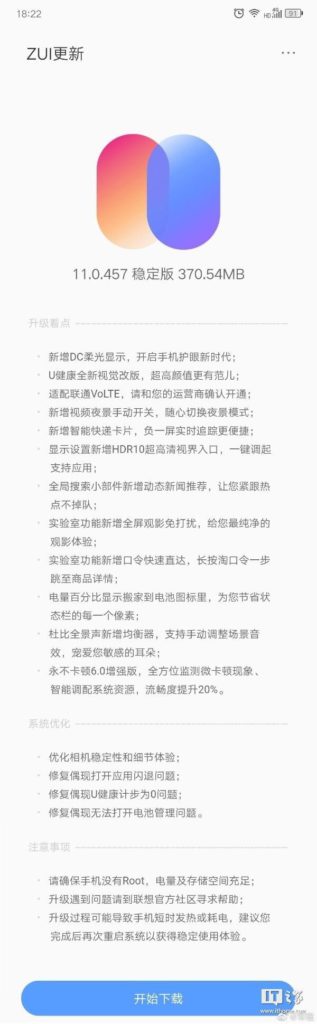
The Lenovo Z5 Pro GT’s successor – Lenovo Z6 Pro is receiving a new update with firmware version of 11.0.457. There are many new changes and advancements in the new yet enhanced ZUI iteration. Lenovo added much awaited DC dimming technique to lower the brightness on Z6 Pro. The device ditched the old PWN – Pulse Width Modulation technology to reduce brightness due to its ill effects on users’ eyes.

Lenovo Z6 Pro update

The latest update also visually revamps the U health app. There are some new features like the addition of a manual switch to toggle the night scene mode as per need, a courier card to real-time track the courier and dedicated HDR10 Ultra HD vision portal with single tap operation.

There are some UI changes to the global search widget, and now users can stay updated with the latest news. Other changes involve the addition of battery percentage icon, full-screen viewing, improved Coldfront liquid cooling system for intelligent resource usage. Furthermore, it enhances the camera stability with detailed experience for the users. It fixed issues such as occasional application flickering, inaccurate Uhealth step counter and battery management bug.

The update improves the customisability of the overall system on Lenovo Z6 Pro. It is a significant update which aims to improve the efficiency and performance of the device. The update will also protect your eyes from DWM unusual flickering with the new DC Dimming technique.

The ZUI 11.0.457 update is rolling out in China and weighs 270.54 MB in size. Users on several forums reported about the update. It may take some time to reach out on every Lenovo Z6 Pro unit.

(via)

Huawei P30 Pro users will get special VIP Customer Service in India

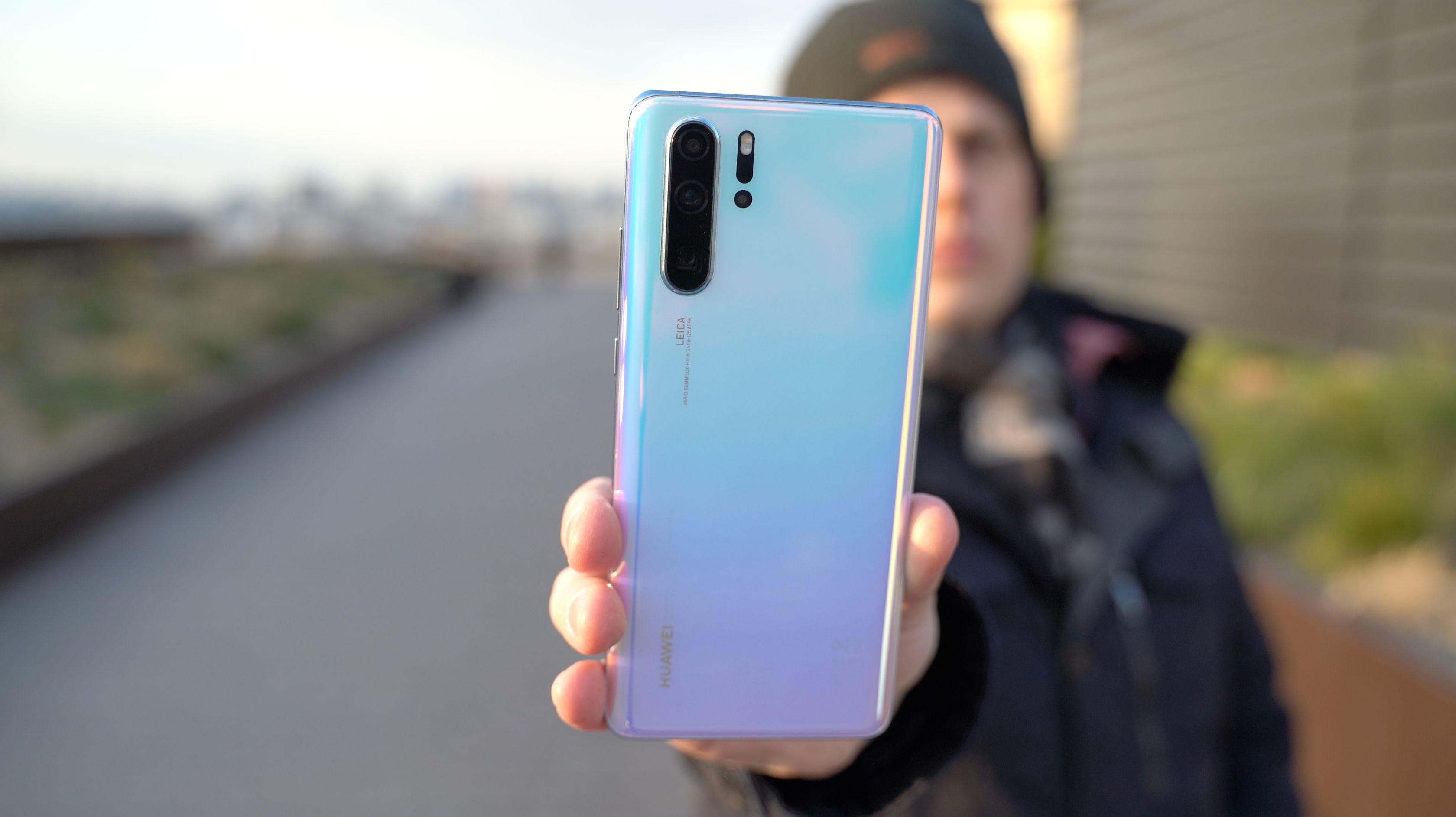
Huawei P30 Pro has garnered a lot of attention globally as well as in India, all thanks to its powerful camera setup. Given the phone’s popularity in India, Huawei is now looking to offer special services to its premium customers. The company has announced a VIP customer service facility for its ultra-premium smartphone users, the Huawei P30 Pro and Mate 20 Pro earlier today.

Huawei P30 Pro - Gizmochina
Huawei P30 Pro – Gizmochina

One of the highlights of Huawei P30 Pro‘s VIP customer service is free pick up and drop service at your doorstep. Further, the company promises faster repair turnaround times for the above-listed premium smartphones. There’s also a dedicated IVR on its toll-free number. Other premium services offered include VIP support staff at contact centers and token-free entry at its exclusive customer service centers.

“Customer delight and satisfaction forms the core of our very DNA, be it in terms of product innovation or service delivery. The VIP service is yet another step on our part to provide the best-in-class service to our esteemed consumers across India. The offer is applicable for all variants of the Huawei P30 Pro devices, irrespective of the purchase method, online or retail. Also, as long as the customers have purchased the specific device model, they are eligible to avail the VIP services within the specified warranty period.” adds Tornado Pan, Country Manager (Huawei Brand), Consumer Business Group, Huawei India

All of Huawei’s exclusive service centers are equipped to provide this VIP customer service to P30 Pro and Mate 20 Pro customers in India.

It’s good to see Huawei taking care of its customers in India. Both the P30 Pro and Mate 20 Pro are premium smartphones that also demand a premium price tag. The P30 Pro was launched in India for more than $1000. Adding this level of VIP service should further help the company improve its brand perception in the country.


Galaxy S10 5G explodes in South Korea, Samsung claims not their fault

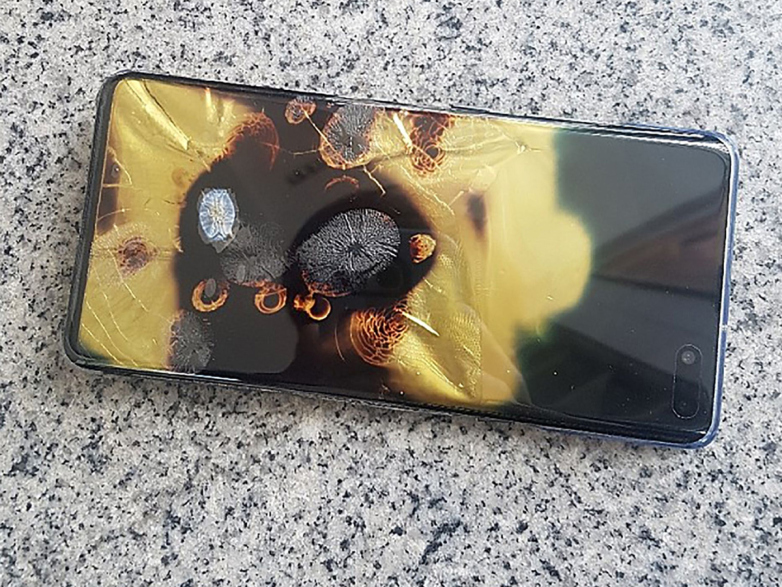
Samsung Galaxy S10 5G is among the first batch of devices launched with 5G compatibility. There are many key differences in Galaxy S10 5G variant than the standard version. Before launching, Samsung fully optimized the device for better 5G reception and performance. Despite all the optimization and tweaks, a Galaxy S10 5G unit explodes in South Korea.

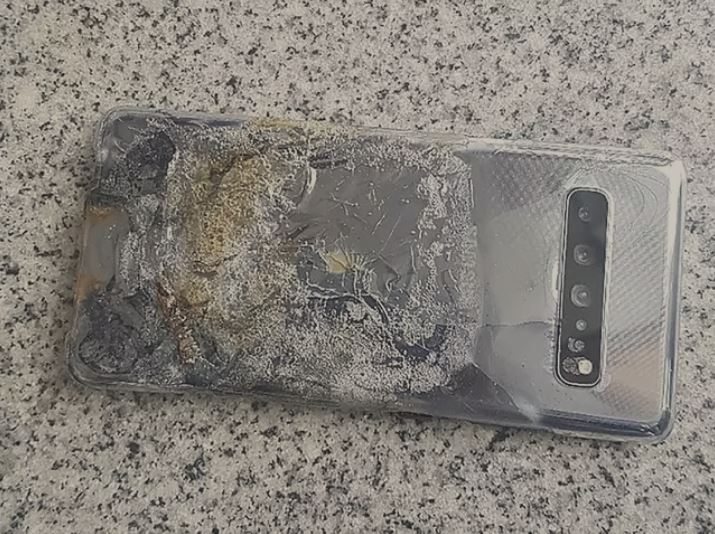
The owner said that his phone exploded without any reasons at all. The device was placed on a table when smoke engulfs it, said Lee, the owner of burned Galaxy S10 5G. The severe burns with the cracked display on both the front and back side of the device can be seen in the attached photo.

Samsung denies any reimbursements, as the company believes the damage is done due to external impact. After carefully inspecting the Galaxy S10 damage, Samsung refused to reimburse the smartphone which costs 1.39 million won (~$1226).

Samsung nowadays quickly investigates any fire and burn cases to bare-off Note 7 like situation. Samsung banned Note 7 in 2017 after multiple fire cases. Samsung reputation was at stake after the Note 7 fiasco. Since then, the Korean giant follows some stringent policies to check all the battery related issues.

Samsung launched the Galaxy S10 5G in South Korea on April 5. The device available for 1.39 million South Korean won aka $1300 with 256 GB storage, and soon it is surfacing in the US. In South Korea, three major telecom caries – SK Telecom, KT and LG Uplus provides 5G services.

The Samsung Galaxy S10 5G in Korea comes with Exynos 9820 octa-core processor featuring a 7-nanometer process. There’s a 6.7-inch Infinity-O display with a pixel density of 505 ppi. The S10 5G shares a triple rear camera module – 16MP ultrawide, 12MP telephoto, and a 12 MP wide-angle camera. A 10 MP selfies camera is present on the front side for selfies.

(via)

World’s first AI powered Virtual News Anchor from China lands in the UAE

China’s Sogou has signed a deal with Abu Dhabi Media, the state-owned broadcaster in the United Arab Emirates (UAE) to develop an Arabic speaking AI News Anchor. This will make it the world’s first Arabic speaking AI news anchor. These new-age AI anchors can potentially replace the conventional human anchors by providing news broadcasts 24 x 7, 365 days in the year.

Sogou AI news anchor lands in UAE
Source: ADM

Back in November 2018, Sogou, the search engine and AI giant from China had announced its AI news presenter in partnership with the state-owned Xinhua news agency. The AI news anchor can simulate a number of human-like traits. For example, the AI presenter can tweak its voice, facial movements and gestures to present a life-like image of a human presenter.

“The use of artificial intelligence and technological tools in the media sector will result in a qualitative leap forward within the media landscape in the UAE and the wider region,” said Omar Sultan Al Olama, the country’s minister of AI, in a statement.

worlds-first-ai-news-anchor-sogou
World’s First AI News Anchor on Xinhua News, developed by Sogou

China has invested heavily in AI in the past few years. In a recent report from Nikkei, it was revealed that Chinese companies have overtaken their US counterparts in its top 50 patent filers for AI ranking. The report adds that in the period between 2016 and 2018, China more than doubled the number of companies in the top 50 list. This number went up from 9 to 19, in a short three-year period.

(Source)


Google Pixel 3a and 3a XL expected to launch in India on 8th May as Flipkart exclusive

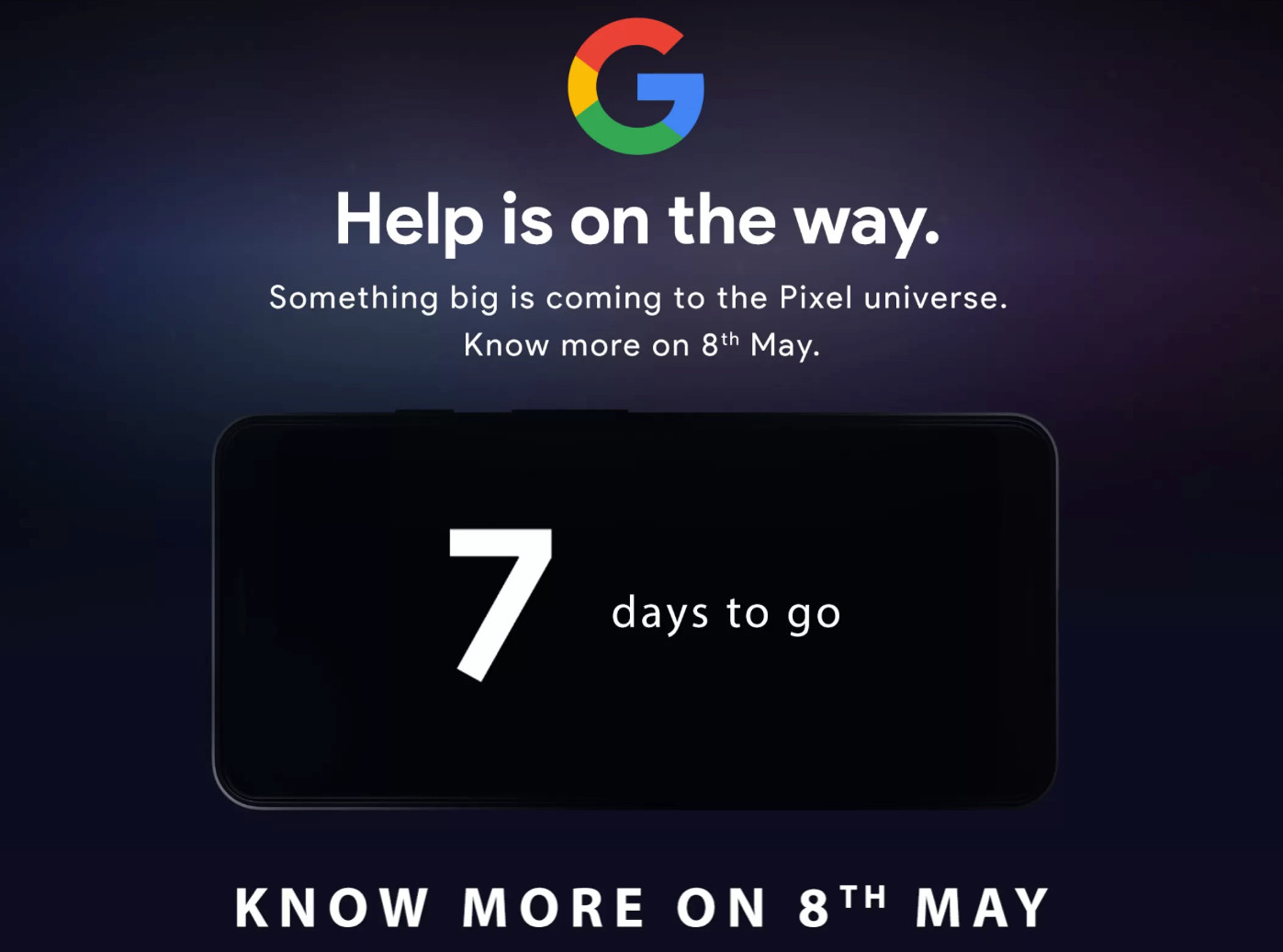
Google is all set to launch its all-new mid-range smartphones under the Pixel lineup of devices — Google Pixel 3a and 3a XL. The company has already scheduled a launch event on 7th May during the Google I/O annual developers conference, where it is expected to launch the new smartphones.

Now, it seems that both the new mid-range smartphones — Pixel 3a and Pixel 3a XL will be launched in India just a day after they make their global debut. Indian online marketplace Flipkart has made a landing page hinting the same.

Google Pixel 3a Flipkart Teaser

Flipkart is teasing the launch of new Pixel devices on 8th May in India, which is very likely to be the Pixel 3a and Pixel 3a XL smartphone, that have been leaked several times in the India. Right now, nothing more is known about the phone’s availability or pricing in India.

Recently, both the smartphones got their Bluetooth certifications which reveals that eight variations went through Bluetooth SIG – four for the Pixel 3a and another four for its bigger sibling the Pixel 3a XL.

Earlier leaks have confirmed that the Google Pixel 3a will be featuring a 5.6-inch Full HD+ display and will be powered by Qualcomm Snapdragon 670 chipset, coupled with 4GB RAM. On the other hand, the bigger model — Google Pixel 3a XL will feature a 6-inch Full HD+ display with the slightly improved Snapdragon 710 chipset.

The XL variant will be paired with 4GB RAM. Both smartphones will come packed with 64GB internal storage. As per the reports, both the smartphones are expected to retain the camera sensors of the original Pixel 3 models.

Read More: Google’s upcoming mid-range smartphone Pixel 3a appears on GeekBench ahead of official launch

As for the pricing, the 3a is expecyed to be available for around $500/€450 while the 3a XL is speculated to start at $600/€530. Both the smartphones will come in White, Black, and Purple colors with accents on the power button.

IDC: Huawei inching closer to Samsung with 50% YoY growth in Q1 2019 shipments

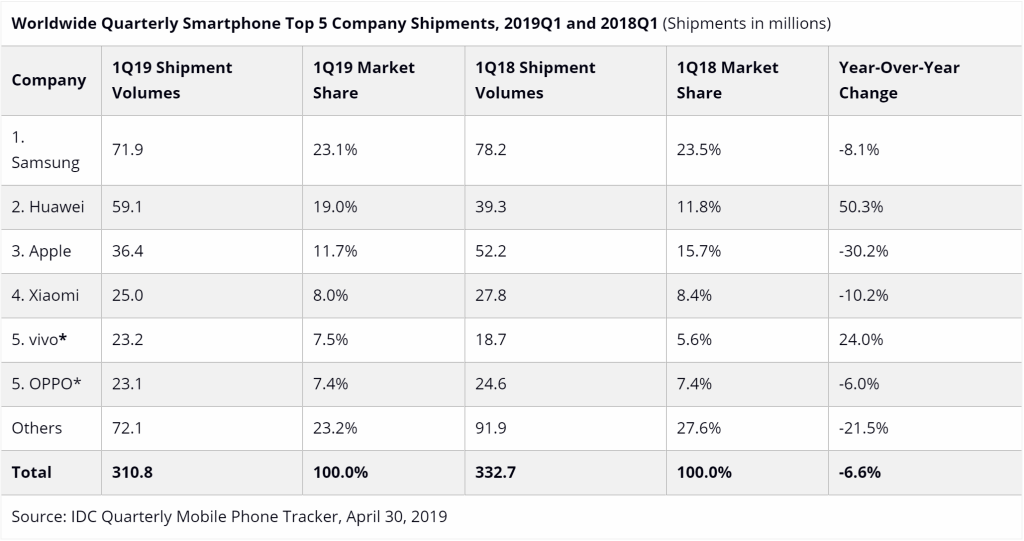
The Chinese smartphone and network equipment manufacturer – Huawei is inching closer to Samsung in terms of smartphone market share. In Q1 2019, Huawei managed to rake 19.0% market share just after Samsung’s 23.1%. Apple remained at 3rd place with 11.7% market share witnessing -30.2% decline in YoY basis.

Overall smartphone shipments in Q1 2019 reduced to 310.8 million against 332.7 million units in Q1 2018. Amid the slump in global smartphone shipments, only a couple of manufacturers recorded growth – Huawei reported 50.3% growth, whereas Vivo summarised 24% growth on YoY basis. On the other hand, Samsung, Apple, Xiaomi and OPPO shipped -8.1%, -30.2%, -10.2% and -6% fewer smartphones respectively in comparison with the Q1 2018.

idc smartphone

Amid the excellent reception of Galaxy S10 and Galaxy S10 Plus, Samsung reported decent profits as it struggled in mid-range and low-end product portfolios. Samsung is now eying profits from the Galaxy S10 5G, Galaxy A80 and Galaxy Fold in Q2 2019. Apple’s share reduced from 15.7% to 11.7% due to shifting focus on services. The Cupertino giant’s cloudy 5G strategy is also impacting the market share, as competitors like Huawei and Samsung already announced their own 5G smartphones.

Continuous improvements and innovations led to Huawei’s ascent in the past few months. Huawei P30 and P30 Pro’s huge demand derived the growth in the high-end market. Whereas its domestic adaptability in China further scaled sales leading to 7.0 points increase in the previous quarter. In-house equipment is also leading to increased sales due to affordable and optimized devices.

“It is becoming increasingly clear that Huawei is laser focused on growing its stature in the world of mobile devices, with smartphones being its lead horse,” IDC program vice president Ryan Reith said in a statement. “The overall smartphone market continues to be challenged in almost all areas, yet Huawei was able to grow shipments by 50%, not only signifying a clear number two in terms of market share but also closing the gap on the market leader Samsung. This new ranking of Samsung, Huawei, and Apple is very likely what we’ll see when 2019 is all said and done.”

Another Chinese smartphone maker – Xiaomi profits also reduced by 0.4 points to 8.0% of the overall share. Meanwhile, Vivo improved by 1.9% in its home market and claiming 7.5% overall market share.

(source|via)

OnePlus 7 Pro Geekbench listing confirms 12 GB RAM and Snapdragon 855

OnePlus 7 Pro is scheduled to go official along with OnePlus 7 smartphone on May 14. Around two weeks ahead of its launch, the OnePlus 7 Pro has appeared on Geekbench benchmarking platform. The listing again reveals that the smartphone will be hitting the market in 12 GB RAM edition apart from other RAM variants.

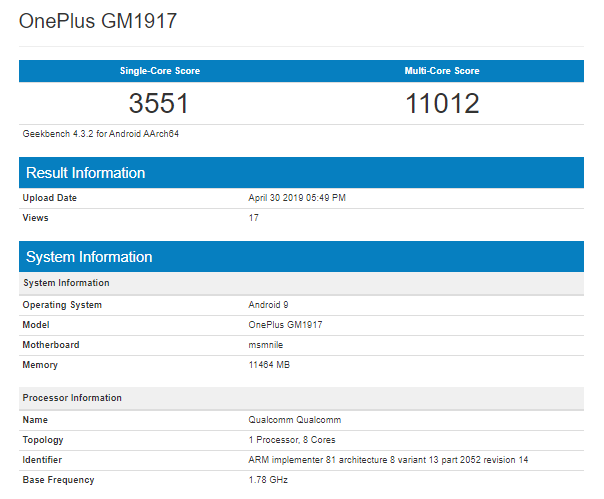
Recent reports have revealed that GM1917, GM1915, GM1913 and GM1911 model numbers belong to the OnePlus 7 Pro smartphone. The GM1917 has appeared on Geekbench to reveal some of its key specs. The Geekbench listing of the OnePlus 7 Pro confirms that it is fueled by the 7nm Snapdragon 855 mobile platform. The SoC is mentioned with its “msmnile” codename on the listing.

OnePlus 7 Pro Geekbench

The OnePlus 7 Pro smartphone is loaded with the latest Android 9 Pie OS. The SD855 chip is supported by 12 GB of RAM. In the single-core test of Geekbench, the OnePlus 7 Pro has scored 3551 points and it has recorded a score of 11012 in the multi-core test.

OnePlus 7 Pro Variants and Price (Rumored)

Recent reports have revealed that the OnePlus 7 Pro will be hitting the market in variants like 6 GB RAM + 128 GB storage, 8 GB RAM + 256 GB storage and 12 GB RAM + 256 GB storage. In Europe, the last two variants are expected to be respectively priced at 749 euros and 819 euros. There is no information available on the pricing of the 6 GB + 128 GB base model.

OnePlus 7 Pro Specifications (Rumored)

The OnePlus 7 Pro will be arriving with a curved and notch-less AMOLED display of 6.7 inches. The smartphone will offer quad HD+ resolution of 1440 x 3120 pixels and an aspect ratio of 19.5:9. It is equipped with an in-screen fingerprint reader.

The OnePlus 7 Pro will be the company’s first smartphone to arrive with triple rear cameras. It is rumored to include an f/1.6 aperture 48-megapixel primary sensor with EIS and OIS, an f/2.4 aperture 8-megapixel telephoto lens with 3x optical zoom and a 117-degree 16-megapixel wide-angle lens. For capturing selfie shots, the smartphone is equipped with an f/2.0 aperture 16-megapixel pop-up selfie camera.

Oneplus 7 Pro

The OP7 Pro smartphone will come packed with a 4,000mAh battery that supports 30W Warp Charge rapid charging. The handset is expected to arrive in the market in color variants like Blue, Grey and Brown. The Chinese firm will be also launching the OnePlus 7 Pro 5G version.

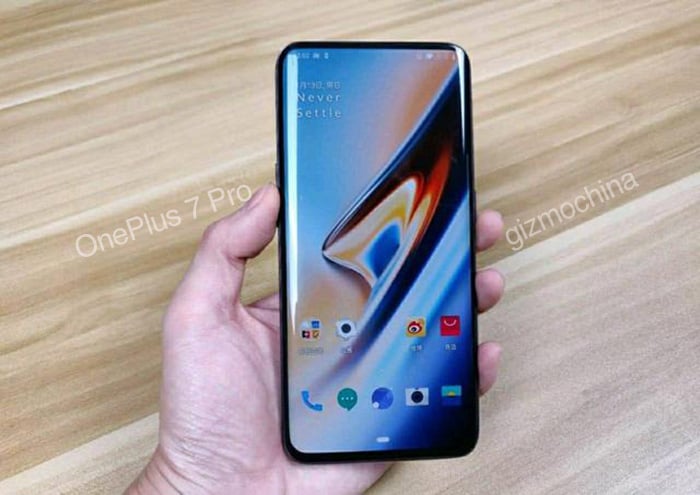
OnePlus 7 Pro tempered glass leak showcases the curved screen design

Recently, a full-page advertisement of the OnePlus 7 Pro appeared on the New York Times, revealing some key features of the upcoming flagship smartphone. It confirmed that the phone will come with a notch-less display.

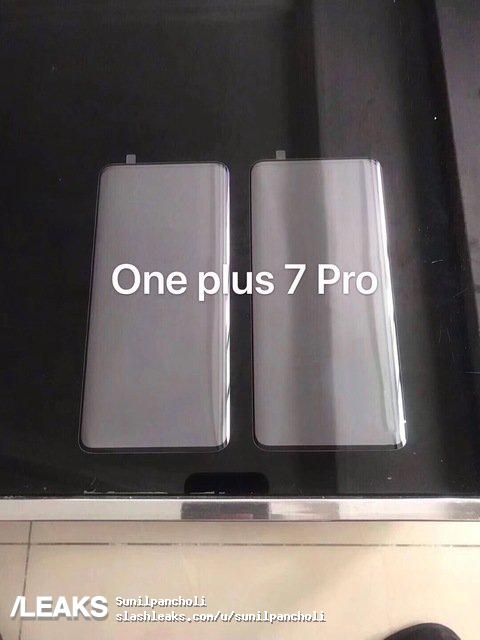
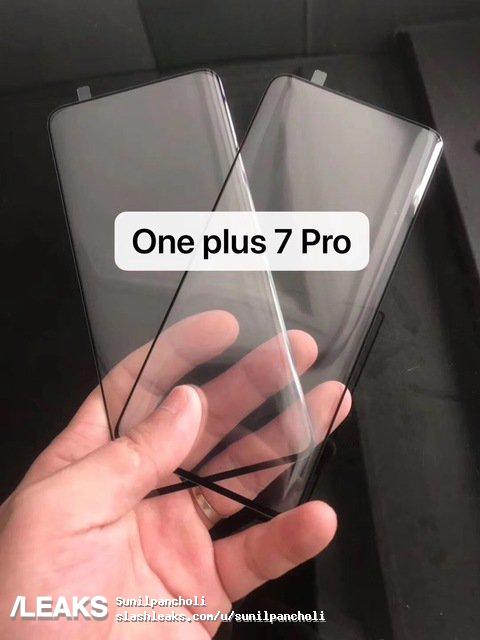
Now, ahead of the phone’s launch on 14th May, the tempered glass panel for the protection of display from minor scratches has surfaced online, revealing that the smartphone will come with a curved screen.

OnePlus 7 Pro Screen Protector

It shows that the screen curves towards the left and right edges, similar to Samsung’s Galaxy S-series flagships. The leaked screen protector also shows that the upcoming flagship smartphone will have minimal bezels surrounding the display. However, the bottom chin is a bit thicker compared to the other sides.

Earlier, the advertisement of the OnePlus 7 Pro shows the illustration of the phone’s internals, which confirms that the phone will come with a pop-up front-facing camera. Prior to that, the company had shared a small video teaser on its social media profiles which confirmed that the smartphone will come with a triple rear camera setup, with sensors placed vertically in the top-center position.

Recently, the company revealed that the display of the OnePlus 7 Pro has been rated ‘A+’ by DisplayMate, making it the best display in any smartphone at this point in time. The full report of the same will be published on 14th May.

As per the reports, the OnePlus 7 Pro will feature a 6.7-inch Super AMOLED display that is curved towards the left and right edges. It will support Quad-HD+ resolution of 1440 x 3120 pixels and will have a refresh rate of 90 Hz.

On the back side, the smartphone is expected to come with a 48MP primary camera paired with an 8MP f/2.4 telephoto lens and a 16MP f/2.2 ultra-wide angle lens. Running on Android Pie-based Oxygen OS, the phone is said to pack 4,000mAh battery with 30W Warp Charge fast charging support.

Read More: OnePlus 7 Pro’s camera can compete with “first tier” phones, claims OnePlus imaging director

Most of the details regarding this flagship smartphone has already leaked online or the company has confirmed through teasers. But to know for sure what the phone offers, along with its pricing and availability, we’ll have to wait for the official launch event on 14th May.

(Via)

Huawei shows off Mate X foldable smartphone at a 5G conference in China

Huawei had announced its first foldable and 5G compatible smartphone a couple of months ago, named Huawei Mate X. While the phone is yet to go on sale, the company is now showcasing the smartphone at various events.

Recently, during a 5G conference in Sichuan, China, Huawei showcased the Mate X smartphone for the first time in China. After the debacle of Samsung Galaxy Fold regarding the phone’s display issues, eyes are now on the Huawei Mate X.

The company has already confirmed that the phone is not just a concept and has already started mass producing the Huawei Mate X. In fact, the device has now been listed on the company’s website and is set to go on sale from June.

Huawei Mate X featured

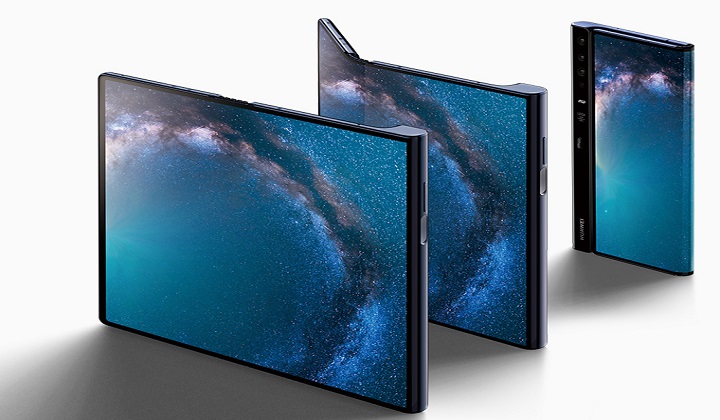
The Huawei Mate X features a large 8-inch screen with a 2480 x 2200 pixels screen resolution and an 8:7.1 aspect ratio when unfolded with pretty thin bezels. When folded, it transforms into a dual display phone – one side is a 6.6-inch (2480 x 1148 pixels) 19.5:9 display while the other is a 6.38-inch (2480 x 892 pixels) 25:9 display.

The phone is powered by the company’s own Kirin 980 chipset, paired with 8GB of RAM and 512GB of storage. It has dual SIM support (nano only) but only SIM 1 supports 5G. You can also swap out the second SIM card for Huawei’s NM card (256GB max.). It comes with the 7nm Balong 5000 modem which brings 5G support to the device.

It features three cameras on the back, which also double as the selfie cameras. The cameras were co-developed with Leica and are made up of a 40MP wide-angle lens, a 16MP ultra-wide angle lens, and an 8MP telephoto lens.

The phone runs the EMUI 9.1.1 custom interface, which is based on Android 9 Pie operating system out-of-the-box. As for the connectivity options, the device supports NFC, dual-frequency GPS, Bluetooth 5.0, Wi-Fi 802.11 b/g/n/ac, and USB Type-C port.

Read More: Huawei once again insists on its “employees ownership” story but doubts still persist

The device comes with two built-in batteries, which offers a total capacity of 4,500mAh. Huawei has also debuted its new SupercCharge fast charging technology which supports up to 55W. The company claims that the new SuperCharge allows users to charge the device from empty to 85% in just 30 minutes.

(Via)

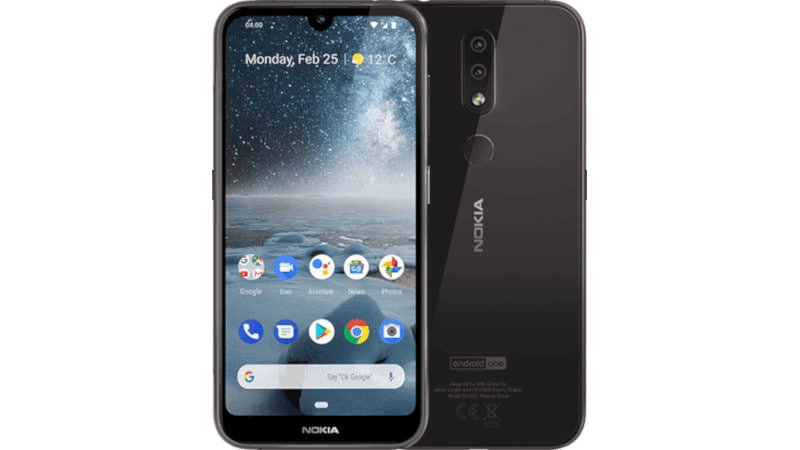
Nokia 4.2 is now up for pre-order in the US for just $189

The Nokia 4.2 was unveiled at the Mobile World Congress 2019 alongside the Nokia 3.2, the penta-lens enabled Nokia 9 PureView as well as the budget-friendly Nokia 1 Plus and Nokia 210  feature phone. Two months after unveiling the smartphone at MWC 2019, HMD Global has announced that the Nokia 4.2 will debut in the United States in two weeks’ time, precisely on May 14.

Ahead of the release, pre-orders for the smartphone have already begun at Amazon and B&H. The model is expected to b available on Best Buy as well but the pre-order page is not yet active. The model is expected to start shipping on May 14. In addition, you can find the 4.2 to buy in-store at select Best Buy stores starting June 9.

Read Also: Giveaway – Win a Xiaomi Redmi AirDots Wireless Earbuds

The Nokia 4.2 packs a 5.71-inch IPS LCD display with a water drop notch and HD+ resolution. The display also appears in the 19:9 aspect ratio. The Nokia 4.2 is powered by a Snapdragon 439 chipset and will be available in 3GB+32GB memory variants in the US, although there is a 2GB+16GB variant. The phone is fuelled by a 3,000mAh battery while there is equally a dedicated Google Assistant button. The budget model comes with top features such as NFC with Google pay support and Bluetooth 4.2. It is available in Pink Sand and Black. It adopts a retail price of $189 in the US.

NCC gives us first look at Mi Band 4, sports new design and new cable

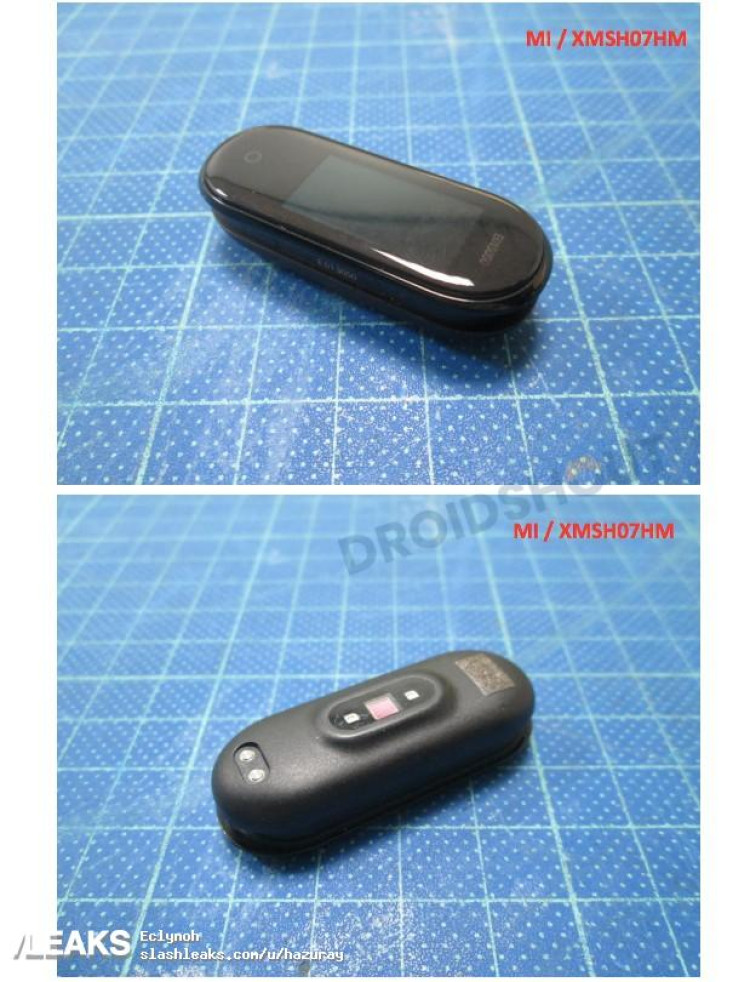
The Mi Band 4 is the name of Xiaomi‘s next fitness tracker. After more than a month since we saw it get its Bluetooth certification, fresh details have surfaced, and this time they are images of the device. The photos are from Taiwan’s NCC where the Mi Band 4 has been certified.

The 4th-gen Mi Band will have a rectangular screen with thick bezels around it and a piece of curved glass covering it. There is a circular halo capacitive button below the screen that replaces the recessed one from the Mi Band 3. The heart rate sensor makes a comeback but the sensor might be a better one.

Another big change is the position of the charging pins. They have been moved from the side on the Mi Band 3 to the bottom. This means the Mi Band 3’s charging cable won’t work for it. This is the same thing Xiaomi did with the Mi Band 3 as it also doesn’t work with the Mi Band 2’s charging cable.

[envira-gallery id=”250894″]

Thankfully, there is a picture of the new charging cable. The cable is designed like a cradle such that the tracker sits inside to charge. With the design of the Mi Band 4 changed, it will probably not also work with the straps of the Mi Band 3.

READ MORE: Xiaomi launches the DDPAI miniONE Dashcam with improved Night Vision camera

LG posts operating loss in Q1, smartphone division still struggles

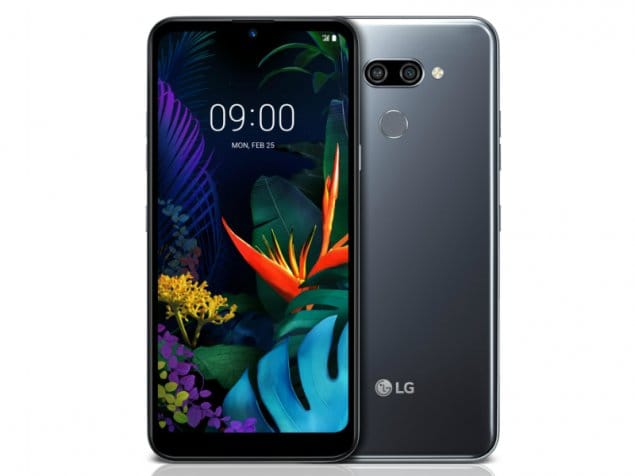
LG’s financial report for the first quarter of 2019 (Q1 2019) has been released and it shows the mobile division continues to struggle. The company’s revenue continues to decline with just KRW1.51 trillion ($1.34 billion) generated between January and March. This is 30% less year on year (YoY) and 11% less when compared with the previous quarter.LG K50 As indicated by the official statement, the LG Mobile Communications Company figured out how to limit its operational liabilities to KRW203.5 billion ($181 million) while in a procedure of reconstructing its cell phone business. It is expected that the launch of the LG V50 ThinQ 5G will make a positive impact in the second quarter, while the migration of the assembling plants from South Korea to Vietnam will improve productivity and aggressiveness in the second half of the year.
Read Also: LG will reportedly halt mobile phones production in its Korea plant this year

Apart from the mobile business, the other divisions ensured that the organization, in general, is in a solid state. The total income generated in the quarter was KRW14.92 trillion ($13.27 billion) and operational cost remained at KRW900.6 billion ($801.25 million). So the uplifting news is LG can bear to deal with its weak mobile division until it discovers its way back to gainfulness.

(source)

Vodafone allegedly found hidden backdoors in Huawei’s equipment – Bloomberg

Huawei‘s image continues to come into question repeatedly as it bothers on whether the Chinese giant can be trusted or not. Bloomberg has released a report which claimed that Vodafone Italy confirmed it found “hidden backdoors”  in Huawei hardware that might have enabled the Chinese company to access clients’ home systems.

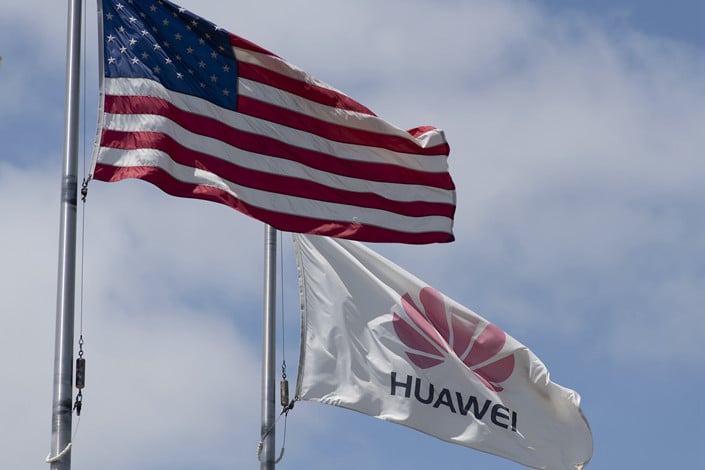
Huawei logo
THe US government has been at the helm of efforts to stop the use of Huawei technology globally

The vulnerabilities were found sometime between 2009 and 2011 in Huawei’s home internet routers, as well as its equipment used in parts of Vodafone’s network infrastructure. There was no proof of users information being compromised. Bloomberg reports that both the switch and system vulnerabilities kept on existing past 2012, and furthermore existed in the organization’s systems in the UK, Germany, Spain, and Portugal. Sources state that Vodafone kept on utilizing the hardware since it was less expensive than the challenge and the expenses to evacuate it.

In a statement given to Bloomberg, Vodafone recognized the vulnerabilities but challenged the timetable, saying they were settled in 2011 and 2012. Huawei says it was educated regarding the vulnerabilities in 2011 and 2012, and that they were fixed at the time.

The disclosures come as Huawei’s job in future 5G systems is under exceptional investigation worldwide over fears that its hardware could be abused to help in China’s knowledge endeavours. Numerous nations are at present investigating Huawei’s security protocols, as governments choose which parts of their 5G systems to allot to the Chinese tech giant. The US is moving to boycott the utilization of Huawei gears and is campaigning for its allies to do likewise. In the interim, the UK has apparently settled on a fundamental choice to permit the utilization of Huawei’s gear in non-core aspects of its systems, yet is experiencing pressure from US authorities to boycott it totally.

Read Also: Huawei once again insists on its “employees ownership” story but doubts still persist

In an official statement, Huawei labelled Bloomberg’s report “misleading” and said that the story “refers to a maintenance and diagnostic function, common across the industry, as well as vulnerabilities, which were corrected over seven years ago.” It added that “there is absolutely no truth in the suggestion that Huawei conceals backdoors in its equipment.”

(source)

Samsung Galaxy Fit and Fit-e pre-booking goes live in Portugal, full specs in tow

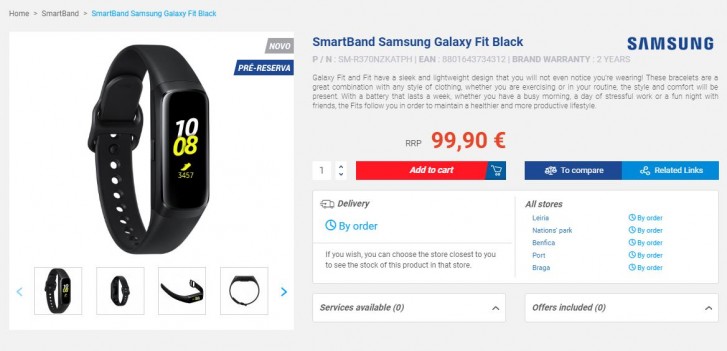
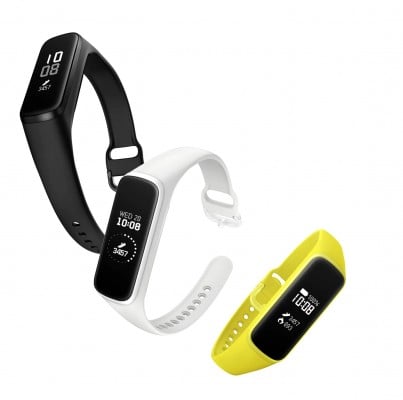
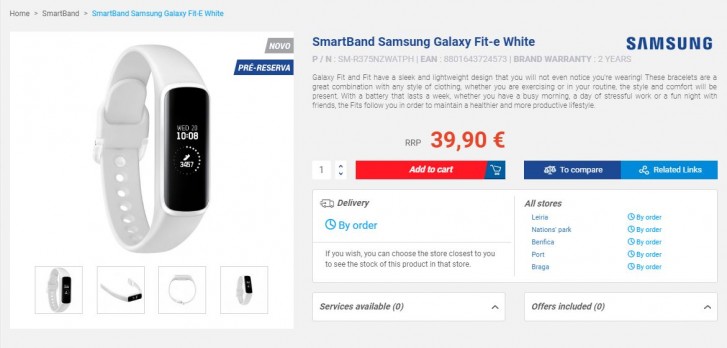
Samsung has been working on a fitness tracker designed for fans who don’t need the full user experience smartwatch offers but at the same time want a fitness tracker for basic parameters like heart rate, pulse etc. The device dubbed Galaxy Fit-e was spotted last week on Samsung Albania’s site. The device has again reappeared on the company’s Portugal website where the Galaxy Fit-e and Galaxy Fit are open for pre-booking.Samsung Galaxy Fit-e

The website also gives us an insight into some of the key specs of the Galaxy Fit models. According to the details available, the Fit-e will feature a 0.74-inch monochrome PMOLED display. It will run on the Cortex M0 processor with only 128KB of RAM and 4MB of internal storage. The fitness tracker only supports incoming notifications without the option to respond. In addition, the Galaxy Fit-e features automatic motion detection, sleep analysis and heart rate tracking.SamsunG Galaxy Fit-e

The battery cell is 70 mAh and Samsung claims that it is sufficient for 10 days of utilization on a solitary charge. The band weighs only 15 grams and features MIL-STD-810G durability and Bluetooth 5.0 support.Samsung galaxy Fit

The more costly Galaxy Fit will pack a 0.95-inch full-screen AMOLED display. It will be powered by a Cortex M33F SoC with 2MB RAM and 32MB of storage. Among the features onboard include notification interactions, automatic motion detection as well as sleep, stress, and heart-rate tracking thanks to its accelerometer, gyroscope and heart rate sensors. The device will pack a 120 mAh battery which will last as long as 7 days of autonomous use. The tracker weighs 23 grams and features the same MIL-STD-810G ruggedness and Bluetooth 5.0 support as the cheaper Fit-e.

Read Also: Samsung unveils the Sero TV which can be used in a vertical or horizontal orientation

The two models will get their interface from the new Realtime OS. As for the pricing, the Galaxy Fit-e starts at €40/$45 while the regular Gear Fit will set buyers back €100/$110. The Gear Fit-e will come in White, Black, and Yellow while the Gear Fit will be available in Black and Silver only. The two fitness trackers are expected to arrive in more markets soon.

(source)