Samsung’s newest foldables, namely the Galaxy Z Fold 7, Galaxy Z Flip 7, and Galaxy Z Flip 7 FE have stirred up strong consumer interest, according to internal figures shared by the company. The South Korean tech giant revealed that these seventh-generation foldable smartphones secured 210,000 pre-orders in just 48 hours in India. This marks a new high for Samsung’s foldables, nearly matching the record set earlier this year by the Galaxy S25 series.
Galaxy Z Fold 7, Z Flip 7, and Flip 7 FE: Pricing, availability, and color options
Samsung Galaxy Z Fold 7
Samsung attributed the overwhelming response to growing interest among young Indian consumers in premium devices with cutting-edge features. Priced at Rs 1,74,999, the Galaxy Z Fold 7 is available in Blue Shadow, Silver Shadow, and Jet Black, while the Galaxy Z Flip 7, which is available for Rs 1,09,999, comes in Coral Red, Jet Black, and Blue Shadow. Both are also available in Mint as an online-exclusive via Samsung.com. The Galaxy Z Flip 7 FE, which starts at Rs 89,999, is available in Black and White.
These new foldables are now open for pre-booking across major online platforms and offline retail outlets. As part of the launch offers, buyers can upgrade to the 512GB variant while paying the price of the 256GB model. Additionally, all three devices are eligible for up to 24 months of no-cost EMI, making the purchase easier on the pocket.
Samsung Galaxy Z Flip 7
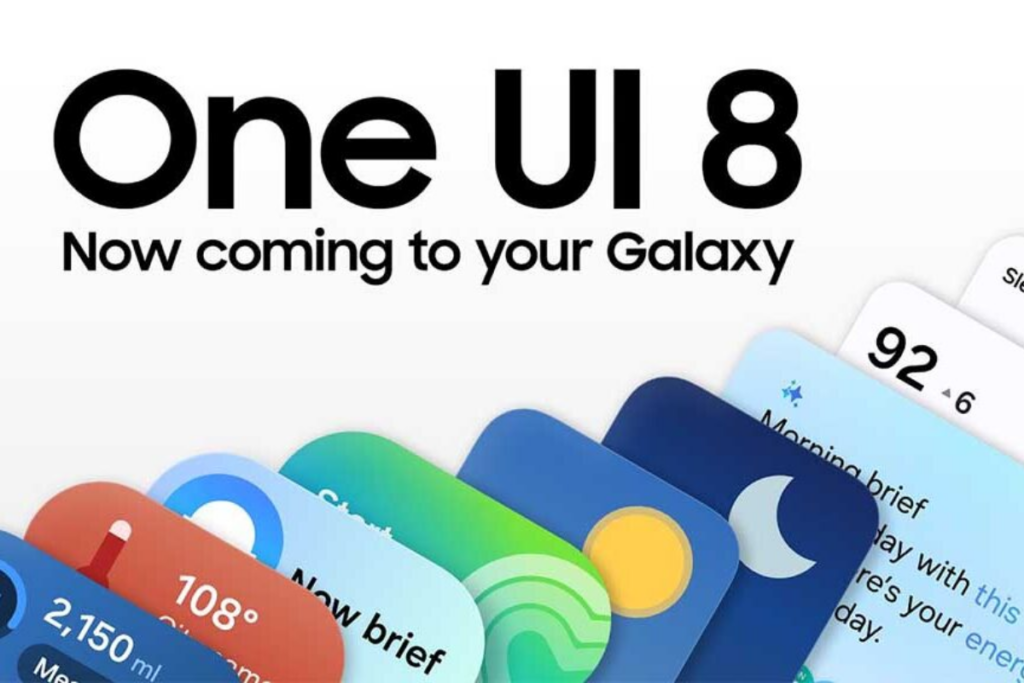
The Galaxy Z Fold 7, Z Flip 7, and Z Flip 7 FE are devices made in India, and they come preloaded with Android 16 and One UI 8. This new UI integrates multimodal AI features, including Google’s Gemini Live and Samsung’s own productivity tools, enabling seamless screen sharing, AI-assisted suggestions, and enhanced app-level privacy via Knox Enhanced Encrypted Protection (KEEP).
Samsung Galaxy Z Flip 7 FE
The Galaxy Z Fold 7 is thinner and lighter than ever, weighing 215 grams with an 8.9mm folded thickness. Its 8-inch AMOLED 2X inner display is brighter and larger than before, paired with a Snapdragon 8 Elite chipset and a 200-megapixel main camera. Galaxy Z Flip 7, on the other hand, packs a compact 4.1-inch FlexWindow, a 6.9-inch main screen, and a 4,300mAh battery, all in a slimmer, 188g frame. The Flip 7 FE is the company’s first-ever FE-branded clamshell phone.
For more daily updates, please visit our News Section.
Samsung has launched a new budget-friendly device in India, expanding its F-series lineup. According to the company, the Galaxy F36 5G is aimed at users seeking long-term software support and essential flagship-level features under Rs 20,000. With sale details and complete specifications now available, here’s everything you need to know.
Samsung Galaxy F36 5G specifications and features
Samsung Galaxy F36 5G
The Galaxy F36 5G sports a 6.7-inch Full HD+ Super AMOLED display with a 120Hz refresh rate and Corning Gorilla Glass Victus+ on the front. It features an Infinity-U notch design housing a 13-megapixel front camera for selfies and video calls. The device integrates a side-mounted fingerprint sensor for biometric security.
On the rear, the phone comes with a triple camera setup that includes a 50-megapixel primary lens with OIS, an 8-megapixel ultra-wide lens, and a 2-megapixel macro sensor. The primary camera on the back and the selfie camera have support for 4K recording. It comes with several AI-driven features like Object Eraser, Image Clipper, and Edit Suggestions.
The Galaxy F36 runs Android 15 with Samsung’s One UI 7 skin. Samsung has promised six generations of Android OS upgrades and six years of security updates, which is an impressive commitment in this segment.
Powering the phone is the Exynos 1380 chipset, combined with either 6GB or 8GB of RAM and 128GB of internal storage. Storage can be expanded by up to 2TB via a microSD card. The phone is equipped with a 5,000mAh battery that supports 25W fast charging, although no charger is included in the box.
The F36 supports 5G, dual-band Wi-Fi, Bluetooth 5.3, GPS, and USB Type-C. Other details include support for NFC with Tap and Pay and bottom-ported speakers with Hi-Fi audio. Equipped with a leather-back finish, the F36 sports a slim profile of 7.7mm and weighs 197 grams.
Samsung Galaxy F36 5G price and availability
The Galaxy F36 5G is priced at Rs 17,499 for the 6GB + 128GB model and Rs 18,999 for the 8GB + 128GB variant. It will go on sale starting July 29th via Flipkart and Samsung India’s official online store. It can be bought in shades like Coral Red, Luxe Violet, and Onyx Black.
Launch offers include a Rs 1,000 instant discount on all bank cards and an additional Rs 500 coupon discount. With these offers, the effective starting price drops to Rs 15,999. Buyers using Axis Bank Flipkart debit cards can also avail of 5% cashback (up to Rs 750).
For more daily updates, please visit our News Section.
On July 21, Oppo K13 Turbo and K13 Turbo Pro will be unveiled in China. With a few days remaining for the launch, the entire specifications of both smartphones have emerged on Weibo. Here’s a look at what to expect from these devices.
Oppo K13 Turbo, K13 Turbo Pro specifications
Oppo K13 series specs leak by DCS
As can be seen above, Chinese tipsters like Digital Chat Station and Bald Panda have all the important details about the K13 Turbo series. The leak reveals that it will feature a 6.8-inch flat OLED LTPS screen that supports a 1.5K resolution and a short-focus in-screen fingerprint sensor. Previous reports have revealed that it will also support a 144Hz refresh rate.
The Oppo K13 Turbo and K13 Turbo Pro will feature a 16-megapixel front-facing camera and a 50-megapixel + 2-megapixel dual-camera setup. Both devices are said to feature a 7,000mAh battery with 80W charging support.
The K13 Turbo and K13 Turbo Pro are equipped with Dimensity 8450 and Snapdragon 8s Gen 4 chipsets, respectively. These gaming-focused phones are also fitted with a built-in active cooling fan and RGB lighting.
Oppo K13 Turbo Pro leak by Bald Panda
In terms of build, both devices are said to have a plastic middle frame and an IP66/68/69-rated body. The Pro edition is said to measure 8.31mm in thickness and weigh 208 grams. As far as the non-Pro variant is concerned, it is said to have similar dimensions and weight.
Oppo has already confirmed that the K13 Turbo will be available in multiple configurations, such as 12GB+256GB, 12GB+512GB, and 16GB+256GB. On the other hand, the Pro version will be available in the same configurations, along with an additional higher 16GB+512GB variant. Both phones will come in black and purple shades. While the K13 Turbo will come in a white model, the Turbo Pro edition will have a silver option.
Oppo K13 TurboOppo K13 Turbo Pro
Speculations are rife that the Oppo K13 Turbo Pro may debut in markets outside of China in August or September. However, there is no clarity on whether the K13 Turbo will release globally.
For more daily updates, please visit our News Section.
OnePlus unveiled the OnePlus Pad 3 flagship tablet with the Snapdragon 8 Elite chip onboard, along with the OnePlus 13s, in June this year. However, the brand did not reveal its price and availability for the Indian market. Now, it has been confirmed when it will be available for purchase in India, along with its colour variants and configurations.
OnePlus Pad 3 availability confirmed
OnePlus Pad 3’s open sale will begin in September in India
According to OnePlus, the OnePlus Pad 3’s open sale will begin in September of this year. The tablet will be available in two configurations: 12GB+256GB and 16GB+512GB. It will be sold in two shades, such as Storm Blue and Frosted Silver. As far as pricing is concerned, the brand said that it will be revealed in the coming weeks.
OnePlus Pad 3 specifications
The OnePlus Pad 3 is equipped with a 13.2-inch LCD panel that supports a 3.4K resolution, a 144Hz refresh rate, and up to 900nits of brightness. Under the hood, the device features the Snapdragon 8 Elite chipset, LPDDR5x (12GB) / LPDDR5T (16GB) RAM, and up to 512GB of UFS 4.0 storage.
The Pad 3 houses a 12,140mAh battery with 80W charging. It has other features such as OxygenOS 15-based Android 15, eight speakers, an 8-megapixel front camera, and a 13-megapixel rear camera. The device lacks LTE support but has connectivity features such as Wi-Fi 802.11be, Bluetooth 5.4, NFC, and USB-C (Gen 3.2). It measures 5.97mm in thickness and weighs 675 grams.
For more daily updates, please visit our News Section.
Samsung’s Fan Edition lineup is about to grow. The Galaxy Buds 3 FE are expected to launch later in 2025, and leaked details suggest they may have a real edge over the regular Buds 3 — better noise isolation.
Galaxy Buds 3 FE (leaked render)
On July 19, 2025, leaker Evan Blass shared the first image of the Buds 3 FE on X. The design looks similar to the Buds 3 and Buds 3 Pro, with stems for touch controls like volume and playback. But unlike the open-fit Buds 3, the Buds 3 FE will use silicone ear tips — a simple change that could make a big difference.
A snug in-ear fit often means better passive noise isolation and, by extension, more effective active noise cancellation (ANC). That’s something the Buds 3 reportedly struggle with, given their open design.
The Buds 3 FE are also expected to bring ANC, Ambient Mode, improved battery life, and possibly Galaxy AI features like real-time translation through Interpreter Mode. Add in Bixby support, an equalizer via the Galaxy Wearable app, Bluetooth 5.4 with LE Audio, and they’re shaping up to be an appealing option in the budget wireless earbud space.
Galaxy Buds 3 (Image: Samsung)
As for pricing, rumors suggest a range of $99 to $129, with a possible launch alongside the Galaxy S25 FE.
With their in-ear tips, ANC, AI features, and a sub-$130 price point, the Buds 3 FE could end up being the better pick for users who care about sound isolation. Expect more details closer to their late 2025 release.
As expected, the last quarter of the year is anticipated to see the arrival of multiple flagship and sub-flagship phones in the Chinese market. In a new leak, tipster Digital Chat Station has mentioned the launch timeframes of the expected smartphones. Here’s a look at all the details shared by the tipster.
3November–December launches
Then, moving into November and December, we can expect the rollout of final flagship devices for the year as well as mid-range phones, featuring chips like the SM8845 and D8500. The SM8845’s final moniker is not known, but there’s a possibility that it could be called the Snapdragon 8 Plus / Turbo and is expected to bridge the gap between Snapdragon 8 Elite and Snapdragon 8s Gen 4.
Recent reports have revealed that the Redmi K90 Pro and Honor GT 2 series are expected to feature the Snapdragon 8845 chip. Based on recent reports, it can be said that the Chinese market will see the arrival of the Oppo Reno 15 series, Vivo X31 (or S30) series, iQOO Neo 11 (or Neo 20) lineup, Realme Neo 8 series, OnePlus Ace 6 lineup, and Redmi Turbo 5.
For more daily updates, please visit our News Section.
Vivo X200 FE is a solid budget flagship that brings a lot to the table, like a high-quality AMOLED display, a powerful MediaTek processor, and a massive 6,500mAh long-lasting battery — all at a starting price of INR 55,000. However, that’s far from being the only showstopper at this price point, as we’ve found four excellent alternatives that give the X200 FE a serious run for its money.
It’s a strong contender in this price segment, featuring a more powerful Snapdragon 8 Elite chipset than the Vivo X200 FE’s Dimensity 9300+. This means better gaming, multitasking, and a seamless software experience. Both phones have great AMOLED screens. The difference being higher peak brightness on the Vivo phone, but at 3200nits, the Xiaomi 15 offers great visibility outdoors. Plus, the latter offers a wider range of colors and Dolby Vision support.
The Xiaomi 15 has a more robust camera setup, featuring a higher resolution ultrawide camera and support for 8K video recording (versus 4K on the X200 FE). Another perk is its newer USB technology, which enables much faster data transfer. The only trade-off is the smaller 5,240mAh battery, but Xiaomi makes up for it with 50W wireless and 10W reverse wireless charging — both missing on the Vivo phone.
OnePlus 13s also uses the Snapdragon 8 Elite chipset, offering a clear performance edge over the Vivo phone. Its display is mostly the same in size and resolution, though it has a slightly lower peak brightness. On the plus side, it supports Dolby Vision and offers a clean software experience.
It lacks an ultrawide camera but features two solid 50MP sensors and supports 4K video recording from both front and rear cameras. There’s not much difference on the connectivity front, except for a newer Bluetooth standard on the OnePlus 13s. The battery capacity sits at 5,850mAh, lower than X200 FE, but still higher than most flagships.
If display and performance are your priorities, the iQOO 13 delivers big. It features a larger 6.82-inch AMOLED panel with higher resolution and a 144Hz refresh rate.
It’s also powered by the Snapdragon 8 Elite and comes with a triple 50MP rear camera setup capable of 8K video recording. On top of that, it supports super-fast 120W charging. The battery is slightly smaller than Vivo’s, but it’s solid at 6,000 (India) or 6,150mAh (global). On the plus side, it supports superior wired charging, a newer Bluetooth standard, and 360-degree NFC support.
Realme GT 7 Pro boasts one of the brightest displays in any smartphone today, peaking at 6,500nits. It also features a larger screen with Dolby Vision support and a powerful Snapdragon 8 Elite chipset.
Both phones have triple rear cameras, including a 50MP primary shooter, a 50MP telephoto unit, and an 8MP ultrawide camera. On the plus side, it supports 8K video recording. The 16MP selfie camera with 1080p recording can be a little disappointing, though. The global model matches the Vivo X200 FE in battery size, while the Indian model has a slightly smaller battery but faster 120W wired charging.
Please Note: When you buy something using the links in our articles, we may earn a small commission at no cost to you.
The Vivo X200 FE is a capable device, but it faces tough competition from phones that offer faster processors, better camera setups, brighter displays, and faster charging — all within a similar price range. If you’re looking to get more bang for your buck, the Xiaomi 15 and iQOO 13 stand out for their all-around strengths, while the Realme GT 7 Pro steals the show with its blazing display, faster chipset, and fast charging support. The OnePlus 13s combines the powerful Snapdragon 8 Elite chipset with a clean software experience.
The Oppo K13 Turbo series of smartphones will be unveiled on the coming Monday (July 21) in China. This will be the first time that the brand will be launching performance-focused smartphones. Recently, the K13 Turbo Pro, equipped with the Snapdragon 8s Gen 4 chip, was spotted on the Geekbench benchmarking platform. Now, the standard K13 Turbo has emerged on Geekbench, revealing its chipset, RAM, and Android version.
Oppo K13 Turbo Geekbench listing
The Oppo K13 Turbo has been spotted with the 3.25GHz Dimens ity 8450 chipset, 12GB RAM, and Android 15 on Geekbench. The device scored 1126 and 4999 points in the single-core and multi-core tests, respectively.
Oppo has already confirmed that the K13 Turbo will be available in three configurations, such as 12GB+256GB, 12GB+512GB, and 16GB+256GB. On the other hand, the K13 Turbo Pro will be available in the same configurations, along with an additional higher 16GB+512GB variant. Both phones will come in black and purple shades. While the K13 Turbo will come in a white model, the Turbo Pro edition will have a silver option.
Oppo K13 Turbo series specifications (rumored)
As per reports, the Oppo K13 Turbo series will feature a 6.8-inch OLED panel that supports a 1.5K resolution and a 144Hz refresh rate. For photography, it will feature a 16-megapixel front camera and a 50-megapixel + 2-megapixel dual-camera setup.
The Oppo K13 Turbo is said to be equipped with a 7000mAh battery with 80W charging. These performance-focused smartphones are also equipped with an active cooling fan and RGB lighting.
For more daily updates, please visit our News Section.
Samsung’s Galaxy Z Fold7 and Z Flip7, launched on July 9, 2025, have impressed foldable fans — but fixing their screens might leave you with sticker shock. With repair costs that rival the price of a new mid-range phone, Samsung Care+ could be a smart investment for owners of these premium devices.
Samsung Galaxy Z Fold 7
According to a European parts supplier cited by SamMobile, replacing the Z Fold7’s inner display costs a hefty €761 (around $890). Even swapping the smaller cover screen isn’t cheap at €525 (roughly $611). For the Galaxy Z Flip7, the foldable panel is priced at €342 ($400), while the 4.1-inch FlexWindow cover display costs €207 ($240). These prices don’t include labor charges for third-party repairs — meaning the final bill could be even higher.
Samsung’s regular warranty doesn’t cover accidental damage, which makes Samsung Care+ a tempting option. The Z Fold7’s Care+ plan costs $13 per month or $259 annually, while the Z Flip7’s plan is $10 per month or $169 per year. Both offer unlimited same-day repairs for screens or back glass with a $29 deductible per visit.
While Samsung touts durability upgrades, accidental drops and mishaps remain a real risk. Considering how quickly smartphones depreciate, paying out of pocket for screen repairs might even cost more than replacing the device.
Samsung is also expected to offer a one-time discounted inner screen replacement on eligible purchases — similar to its Galaxy Z Assurance program for the Galaxy Z Flip6 and Fold6.
With inner screen repairs for the Z Fold7 reaching up to $890 and the Z Flip7 topping $400, a protection plan like Samsung Care+ seems worth a closer look. You can find the details on Samsung’s official website.
Samsung’s upcoming tri-fold is making headlines lately, and for good reason. The company’s first triple-display foldable seems closer than ever to launch, and it has recently been revealed to carry the name Galaxy Z TriFold. Now, a new beta version of Samsung’s One UI 8 software may have just confirmed what’s powering it.
According to a report fromAndroid Authority, a code string found in the latest One UI 8 beta includes a snippet “siop_q7mq_sm8750.” The “q7mq” part is believed to reference the Z TriFold itself, while SM8750 is the model number for Qualcomm’s Snapdragon 8 Elite.
We are not surprised
That lines up with expectations. Samsung already uses the same flagship chip in its Galaxy Z Fold 7 and Flip 7, so it’s no surprise the tri-fold would follow suit. But it’s still a solid confirmation that Samsung isn’t holding back on performance for its most ambitious foldable yet.
If true, the Snapdragon 8 Elite could give the Z TriFold a major edge over Huawei’s Mate XT in terms of performance. It is powered by a 7nm Kirin 9010 chip, which operates at a maximum frequency of just 2.3GHz. By comparison, Qualcomm’s latest flagship reaches up to 4.47GHz on its prime core. It’s not even close.
Huawei is reportedly prepping a second-gen tri-fold for late 2025, likely powered by the Kirin 9020. But with a max clock speed of just 2.5GHz, even the updated chip may struggle to keep up with Qualcomm’s silicon.
Of course, hardware is only half the story. A seamless tri-fold experience will require software that knows how to make use of three screens, not just stretch apps across them.
Huawei has made strides on that front with its in-house HarmonyOS Next system. Now it’ll be interesting to see how Samsung plans to take advantage of the three displays on the Z TriFold.
Samsung is finally stepping up its customization game with a Glass UI effect, now available through its Theme Park app — and it looks like a direct response to Apple’s much-talked-about “Liquid Glass” design in iOS 26. While Samsung initially poked fun at Apple, it seems to be borrowing a page from its rival’s playbook — but with a more flexible approach.
The latest Theme Park update (version 1.1.01.23) rolled out on July 18, adding five new icon effects: Basic, Film Grain, Duotone, Glass, and Gradient. Unlike Apple’s Liquid Glass, which is still fine-tuning how visible icons appear on different backgrounds, Samsung’s take lets users tweak nearly every aspect of the look — including icons for third-party apps.
With the new Glass effect, you can adjust icon transparency, glow, hue, saturation, and even match them perfectly with your wallpaper for a clean, futuristic feel. Even notifications get a translucent makeover. And the best part? You don’t need a system update — it works right within One UI 8 on devices like the Galaxy S25 series and Z Fold 7.
Here’s how to set it up:
Just open Theme Park, tap “Create Theme”, head to the “Icon” tab, and select “Glass” from the dropdown. You’ll get sliders to fine-tune the effect until your icons blend seamlessly with your background. It’s a simple tweak that can completely change the vibe of your home screen.
The Theme Park update, now live, brings a slick glass-like aesthetic to Galaxy devices without the hassle. You can grab it through Samsung’s Galaxy Store or sideload the APK if it’s not yet available in your region.
Oppo seems ready to shake up smartphone photography once again. The upcoming Find X9 Ultra, expected in early 2026, is making headlines — not just for its upgraded cameras, but for a rumored Hasselblad Photography Kit that could take mobile shooting to a new level.
vivo X200 UltraXiaomi 15 Ultra
According to well-known Weibo tipster Digital Chat Station, the Find X9 series will build on Oppo’s partnership with Hasselblad, first seen with the Find X8 lineup. The Ultra model is tipped to feature a 200MP main camera, a 50MP periscope telephoto, and a 50MP ultrawide — a setup that promises serious image power. But what’s grabbing attention is talk of a dedicated Hasselblad Photography Kit, possibly offering snap-on lenses or accessories, similar to the Vivo X200 Ultra’s Zeiss kit. If true, Oppo could be setting its sights on camera-focused flagships like the Xiaomi 15 Ultra.
OPPO-Find-X8-Ultra
There’s more. Oppo is reportedly working on a MagSafe-style magnetic system for Android, using a thin 0.2mm magnetic ring on the rear panel. This would support 50W AirVOOC wireless charging, making for a sleek, snap-on charging experience. Paired with rumors of a MediaTek Dimensity 9500 chip, a 6.82-inch 2K+ OLED display, and a hefty 6,000mAh battery, the Find X9 Ultra could be packing some serious hardware.
Oppo’s collaboration with Hasselblad is also set to continue into 2026, blending Oppo’s AI Bokeh Engine with Hasselblad’s color tuning to deliver more lifelike photos. However, it’s unclear if sister brand OnePlus will stick with Hasselblad for its upcoming OnePlus 15.
If the leaks hold true, the Find X9 Ultra could redefine what a flagship camera phone offers — not just with specs, but with pro-grade accessories and thoughtful design. Oppo’s official reveal is expected in Q1 2026.
Samsung has finally launched the Galaxy A56 in the US, marking the return of its premium A-series lineup to American markets. While it brings a solid set of features, its price tag has stirred up some debate.
Sasmsung Galaxy A56 (left) and Galaxy A36 (right)
Starting at $499 for the 128GB model — or $549 if you want 256GB of storage — the Galaxy A56 is available in Lightgray and Graphite. It runs on Samsung’s new Exynos 1580 chipset and features a 6.7-inch FHD+ Super AMOLED display with a 120Hz refresh rate, a 5,000mAh battery with 45W fast charging, and a triple rear camera setup (50MP main, 12MP ultrawide, and 5MP macro). Out of the box, it runs Android 15 with One UI 7 and promises six years of updates, plus AI features like Object Eraser and Circle to Search.
But there are some notable omissions — the A56 skips on wireless charging and Samsung DeX, both of which you’ll find on the Galaxy S24 FE.
And that’s where the comparison gets tricky. The S24 FE, with its flagship-grade Exynos 2400e, IP68 water resistance, and wireless charging, originally launched at $649. However, recent discounts have brought it down to around $525 (128GB) or $585 (256GB) — making it a tempting alternative for buyers eyeing the A56. The S24 FE also features a much better display — Dynamic AMOLED 2X as compared to A56’s Super AMOLED. The FE model also offers full Galaxy AI support and DeX, giving it an edge not just on the spec sheet, but also in day-to-day use.
With both phones now priced within $25–$30 of each other, the A56’s $499 tag feels a bit steep, especially when the S24 FE offers much better performance and features. Unless Samsung trims the A56’s price in the coming weeks, many buyers may see better value in the discounted S24 FE.
You can check the latest deals on both models at Samsung’s official US website.
DOOGEE has officially unveiled its latest tablet lineup, the Tab E3 Series, targeting users who crave large screens, reliable performance, and smart multitasking tools. The series includes three models, Tab E3, Tab E3 Pro, and Tab E3 Max, each catering to different levels of usage, from casual entertainment to professional productivity.
Bigger, Smarter Displays Across the Range
The Tab E3 Series focuses heavily on screen size and quality. The base Tab E3 offers an 11-inch FHD+ display with a smooth 90Hz refresh rate, providing a fluid viewing experience for streaming and casual gaming. The E3 Pro takes it a step further with a 13-inch ultra-clear screen, ideal for those who need more space for creative tasks or media playback. At the top end, the E3 Max features a 14-inch 2.1K IPS display, delivering sharp visuals and ample room for split-screen multitasking.
All three models are equipped with eye protection mode, dark mode, and automatic brightness adjustment, ensuring a comfortable viewing experience whether used during the day or night.
Quad Speaker Audio and 3.5mm Jack Support
Audio quality is another standout feature of the Tab E3 Series. The base Tab E3 comes with dual 1217 BOX surround speakers, offering clear stereo output. For a more immersive sound experience, the E3 Pro and E3 Max are upgraded to quad 1217 BOX speakers, filling the room with richer, fuller audio, perfect for movies and games. All models also retain a 3.5mm headphone jack, giving users more flexibility for personal listening.
Massive Battery Life with Fast Charging Support
DOOGEE has equipped each tablet with a large battery to support heavy usage. The Tab E3 houses an 8800mAh battery, while the E3 Pro and E3 Max are fitted with 11000mAh and 13500mAh batteries, respectively. All three devices support 18W fast charging, minimizing downtime and making them ideal companions for on-the-go users who need extended performance.
Strong Performance Backed by Helio G100
All three models run on the MediaTek Helio G100 processor, designed to deliver smooth performance across apps and games. Each tablet features 8GB base RAM, which can be virtually extended up to 32GB, along with 256GB of internal storage. This combination supports heavy multitasking and storage-heavy tasks like media editing or app management.
With support for stylus input, split-screen functionality, and preloaded tools like WPS Office, the tablets are built for productivity just as much as entertainment.
Android 15 with Built-in AI Tools
The Tab E3 Series comes preloaded with Android 15 and features DOOGEE’s integration of Gemini AI. Users benefit from AI-generated notes, smarter search functions, and intelligent organization tools, all designed to streamline workflows and enhance efficiency. This AI focus sets the E3 tablets apart in the mid-range tablet market.
Versatile Camera Setup with Smart Tools
The Tab E3 and E3 Pro both feature a 13MP rear camera, while the front cameras differ: 5MP on the Tab E3 and 8MP on the E3 Pro. The E3 Max improves on this with a 16MP rear camera and 8MP front camera, making it the best option for video calls or quick content creation. Additional features like Google Smart Camera, face unlock, and FM radio enhance the usability and convenience of the camera setup.
For users seeking a ready-to-go workstation, DOOGEE offers a VIP Edition bundle that includes a stylus, Bluetooth keyboard and mouse, tempered glass screen protector, and a premium leather cover. This makes the E3 Series especially attractive for students, professionals, and creators who need a full-featured setup without buying accessories separately.
Discounts and Availability
The DOOGEE Tab E3 Series is now available for purchase through the official website and Amazon. Buyers can get 20% off on all models using the code KOLE320, along with a 30-day quality assurance. Final prices start at $199.99 for the Tab E3, with the Tab E3 Max priced at $263.99, E3 Pro at $239.99, and E3+ at $223.19.
Amazon buyers can also enjoy additional discounts with model-specific promo codes. The Tab E3 Max-V is available for £239.19 with code NXYUSFGO, while the Tab E3 Pro can be grabbed for £189.99 using code BMSBVNL8. For other models like the E3-V, you can use the code H7LN2MJ, and for the E3+, use 6INIGCBT for discounts of up to 25% off on Amazon.
The Pixel Watch 4 is just around the corner. Set to debut at the Made by Google event in New York on August 20, the next generation of Google’s smartwatch will debut alongside the Pixel 10 series.
We already have our expected features articles for what’s coming with the phones, so consider this your “everything we know about the Pixel Watch 4” piece. Spoiler alert: there aren’t many changes to the visual design, but there are definitely upgrades under the hood and in the software.
So, here’s everything we know so far about the Pixel Watch 4.
In what’s likely to be a divisive move, Google is sticking with the same Snapdragon W5 Gen 1 processor found in the Pixel Watch 2 and 3. Originally launched in 2022, this 4nm chip features four Cortex-A53 cores and handles tasks like notifications, fitness tracking, and Google Assistant without noticeable lag.
What’s changing is the co-processor. Google is upgrading to a Cortex-M55 co-processor in the Pixel Watch 4, replacing the Cortex-M33 used in previous models.
This upgrade is expected to deliver faster AI performance, enabling the Pixel Watch 4 to handle up to five times the workload. It will also help offload some of the heavy lifting required by Gemini AI, which is coming to the Pixel Watch 4 after the Galaxy Watch 8.
On paper, the wearable still packs 2GB of RAM and 32GB of storage, the same as its predecessor. The real improvements will come from software. The Watch 4 will come with Wear OS 6, bringing new watch faces, improved widgets, and a tighter integration between hardware and Google’s software ecosystem.
2. Bigger Batteries, Smaller Bezels
Google seems to be addressing the number-one complaint about its previous watches, i.e., battery life.
This time, the Pixel Watch 4 will come in two sizes, 41mm and, for the first time, 45mm. Both models will have slightly thicker bodies to accommodate bigger batteries. The 41mm version will pack a 327mAh cell (up from 306mAh in the Watch 3), while the 45mm bumps that to 459mAh.
These upgrades could translate into up to 30 hours of use with the screen always on for the smaller model and up to 72 hours in power-saving mode for the larger one.
Charging speeds are expected to improve as well. Google hasn’t shared exact numbers yet, but faster charging could mean topping up in under an hour, helpful for those who wear the watch overnight for sleep tracking.
And yes, the thick bezels from the earlier Pixel Watches might finally be going away. According to a previous leak, the Watch 4 will have thinner borders around the display, giving it a sleeker look and more screen real estate without increasing the case size dramatically.
3. More Customization
If the hardware isn’t getting a dramatic overhaul, Google is compensating by expanding personalization. The Pixel Watch 4 will launch in four colors: Obsidian (black), Silver, Gold, and Moonstone, a new gray shade with subtle blue undertones.
Beyond the watch cases, Google is also epxcetd to roll out a new lineup of bands. These include silicone for sport use, leather for everyday wear, Milanese loops for more formal settings, and even recycled fabric straps for those who prefer sustainable materials. There are also rumors of limited-edition straps to match the upcoming Pixel 10 phones.
It’s a subtle but important shift. Smartwatches are as much fashion accessories as they are tech gadgets, and Google appears to be treating them as such.
4. Small Tweaks to the Design
While the overall rounded shape of the Pixel Watch 4 isn’t changing dramatically, the body is reportedly a bit flatter. This helps the watch sit more comfortably on the wrist and improves the overall ergonomics, especially for those who wear it all day and night.
One interesting leak suggests a repositioned button and possibly a second programmable button. That could help power users access features or apps faster and improve interaction with Google Assistant.
The addition of Qi wireless charging is also expected, allowing users to juice up the watch using the same pads they use for their phones. This would be a long-overdue but welcome change, considering wireless charging pads are now common in homes and offices.
5. Wear OS 6 Out of the Box
The Pixel Watch 4 will be among the first wearables to run Wear OS 6, Google’s latest smartwatch platform. So you can expect smoother animations, new fitness tracking features, updated health metrics, and more responsive performance overall.
Google is also refining the tiles and widget system to make navigation more intuitive. Combined with Google Assistant and the Pixel ecosystem, this will likely offer the most cohesive Android smartwatch experience to date.
6. Final Thoughts
The Pixel Watch 4 doesn’t bring a major overhaul in some fronts. It doesn’t come with a new chip, radical health features, or dramatic design shifts. But it does mark a sensible evolution, refining what already worked and fixing what didn’t.
If you’ve been holding out for a Pixel Watch that can finally go a full day without charging, or if you’ve been wanting something larger and more customizable, this may be your year.
It won’t blow away the competition in raw specs. But it might just be the most balanced smartwatch Google has made to date.
For more daily updates, please visit our News Section.
Samsung‘s latest smartwatch lineup has gone all in on refinement and versatility, but the real divide in the Galaxy Watch 8 family lies between the standard Watch 8 and the beefed-up Watch Ultra.
The Watch 8 is sleek, minimalist, and ultra-thin, perfect for most people. The Ultra? It’s unapologetically built for those who push boundaries. So, who needs the Ultra over the regular Watch 8? Let’s break it down.
The Galaxy Watch 8 is light, slim, and wearable. It slips under sleeves, plays nice with business attire, and doesn’t scream for attention. That’s great if your daily routine involves meetings, emails, and gym sessions. But the Watch Ultra is a different kind of tool. It is made for outdoor explorers, athletes, and anyone whose day might involve a rocky trail or a dive into the ocean.
With MIL-STD-810H durability, 10ATM water resistance, and a titanium frame, the Ultra can take a beating. The standard Watch 8 isn’t fragile by any means, but it is built more for comfort than combat. If your watch is likely to be exposed to rain, dust, impact, or deep water, the Ultra is the one to trust.
2. Battery Life That Lasts Beyond the Gym
Battery life on the Watch 8 is decent: around a day and a half with typical use, depending on whether you go for the 40mm or 44mm variant. That is enough for most people. But for those who go off-grid for long hours, the Watch Ultra’s extended battery becomes a major advantage.
The Ultra uses a 590mAh battery and delivers around 72 hours with always-on display turned off, and about 48 hours with it enabled. Samsung also claims up to 48 hours of continuous workout tracking in exercise power-saving mode, or up to 100 hours of normal use with power-saving on.
3. Precision Tracking for High Performance Training
If fitness is your thing and you care about accuracy, the Ultra starts to make a lot of sense. While both watches share Samsung’s latest BioActive Sensor tech, complete with optical, electrical, and impedance sensors, the Ultra offers better GPS precision thanks to stronger dual-frequency signal tracking. It is the kind of feature you won’t notice during casual workouts, but makes a world of difference on trail runs, bike races, or urban obstacle courses.
This year’s new health tools like the Antioxidant Index, Vascular Load, and Bedtime Guidance are available across the board, but they are best utilized when paired with a watch that can consistently collect clean, accurate data. That is where the Ultra’s fit and sensor placement come into play. It is more stable on the wrist, which results in better tracking, especially during high-motion activities.
4. For the Data Hungry and Feature Hungry
If you are the kind of person who stores offline music, maps, workouts, and more on your watch, the Ultra’s upgraded 64GB storage makes a big difference. The standard Watch 8 offers 32GB, which is fine for casual use, but runners and travelers who don’t want to rely on a phone will appreciate the extra space.
It also helps that the Ultra can be updated with Samsung’s latest UI (One UI 8 Watch) and Wear OS 6, just like the regular model. But on the Ultra, everything feels a little more purpose-built, more room for interactions, better visibility with its ultra-bright 3,000 nit display, and a design that is made to be touched, tapped, and spoken to in real-world situations.
5. Not for Everyone and That’s the Point
The Galaxy Watch Ultra isn’t for the casual user. It is bigger, heavier, and more expensive. If you are mostly looking to track sleep, get nudged to breathe, or log a few steps a day, you don’t need the Ultra. The Watch 8 will do all of that with a much slimmer profile and a lighter price tag.
But if you demand more, more durability, more data, more battery, more precision, the Ultra delivers. It is for runners who train year round, hikers who navigate unknown terrain, and tech lovers who want every feature Samsung offers packed into one rugged frame.
The glamorous look of the upcoming Motorola x Swarvoski limited edition gadgets has been fully revealed in a fresh leak. Ahead of the official announcement, the Moto Razr 2025 Swarovski Edition and new Moto Buds Loop color variant are now on full display. So let’s check it out.
Leak Unveils Motorola x Swarovski Razr 2025 & Buds Loop
Motorola x Swarovski Razr 2025 and Buds Loop
Motorola’s new special edition flip phone and TWS earbuds had their complete design revealed in official looking renders on X (via @MysteryLupin). These designs are also in line with one of our previous reports. Looking at the Moto Razr 2025 Swarovski Edition, the entry level Razr flip phone is getting a premium makeover with a fabric like material on its outer panel. The cover also comes with various Swarovski crystals embedded in it.
You can even see three of these stones near the hinge mechanism. Apart from the overall look, this special edition variant likely offers identical specs to the regular Razr 2025. Motorola already unveiled the Moto Buds Loop in a French Oak variant that includes Swarovski crystals, but the Motorola x Swarovski collaboration is bringing a new variant that features the same design in an elegant new color.
Motorola clearly wants you to pair it with the limited edition Razr since these carry the same hue. It is also blending tech with fashion, with both gadgets being fancy and shiny accessories. The brand is set to take the wraps off the duo on 5th August 2025, so stick around for more.
For more daily updates, please visit our News Section.
The next addition to OnePlus’ flagship lineup may have just made its first unofficial appearance. A new leak has surfaced online, allegedly showing the OnePlus 15T, showcasing its compact design with a relatively smaller display. So let’s have a look.
OnePlus 15T Surfaces Online
Over the last couple of months, we’ve seen numerous compact flagship launches, and it appears that the trend is only gaining more traction. Various small phones are reportedly in the works, with a new post from Digital Chat Station sharing images of four of these models (via NotebookCheck). On Weibo, the known tipster shared a picture of four compact devices, with one of the models reportedly being the OnePlus 15T.
OnePlus 15T (Last Phone on the Right)
This could be the first ever look at the OnePlus 15T, but information on the device is still at large. As the name suggests, this is the successor to the OnePlus 13T (OnePlus 13s in the global market), which was the brand’s first compact flagship. DCS claims that there are a bunch of small phones coming this week, including the Xiaomi 16 series and the Vivo X300 lineup. He further adds that these models would feature at least 6,000mAh to 7,000mAh batteries.
Some of these are also expected to come with an upgraded fingerprint reader that levels up from the optical in-display sensor to a 3D ultrasonic scanner. Another notable feature might be wireless charging on these mini premium models. Keep in mind, we only get the front view of the supposed OnePlus 15T, so this is still just an unconfirmed sighting.
For more daily updates, please visit our News Section.
Google released Android 16 in early June, months earlier than its usual timeline. However, other brands are taking longer to roll it out to their devices, and that also includes Nothing. The brand has been quick with past OS releases, but this early arrival of Android 16 perhaps didn’t give it enough time to finish developing its custom skin, Nothing OS 4.0. The good news is that Nothing has already announced when the update will start rolling out, and we also have a strong idea of which devices are eligible and what new features to expect. Here’s everything you need to know about Nothing OS 4.0.
When will Nothing release Nothing OS 4.0?
Nothing has announced that it will release the Android 16-based Nothing OS 4.0 later this autumn, which means anything between September and November. It’s safe to say Nothing Phone (3) will be the first to receive Nothing OS 4.0. Sadly, it didn’t come with Nothing OS 4.0 right from the factory, even though Android 16 arrived a month earlier.
After the Phone (3), the update will gradually expand to the remaining models, and if history is anything to go by, the rollout shouldn’t take long to complete.
Before the stable release in Q3, Nothing will likely release Nothing OS 4.0 beta builds to ensure the software is free from critical bugs. This will also give users early access to the software before the wider rollout.
Nothing OS 4.0 (Android 16) eligible devices
The brand has confirmed that the original Nothing Phone (1) won’t get the Android 16 update. All other phones are eligible for the upgrade. Here’s the complete list:
Nothing Phone (3)
Nothing Phone (3a)
Nothing Phone (3a) Pro
Nothing Phone (2)
Nothing Phone (2a)
Nothing Phone (2a) Plus
CMF Phone 1
CMF Phone 2 Pro
Nothing promises three major Android updates to its smartphones, while its first flagship phone, Nothing Phone (3), promises five. This means the original Nothing phone has already reached the end of the road, as it was launched with Android 12.
What to expect from Nothing OS 4.0 and Android 16?
This major upgrade for Nothing phones will likely bring a progress-centric notification feature that will show instant updates from ride-share and food delivery apps directly on your lock screen and notification panel, reducing the need to open those apps. This is similar to iPhone’s Live Activities, Samsung’s Now Bar, and Oppo’s Live Alerts.
Android 16 makes notifications less cluttered by grouping multiple alerts from the same app and less overwhelming by reducing volume for rapid alerts from the same app. The former is already available for Nothing phones, but the latter isn’t. We might see that as well in Nothing OS 4.0.
The next upgrade may also include Android Protection, an array of security features that’s designed to protect users from online attacks, harmful apps, unsafe websites, scam calls, and more harmful activities.
The Nothing OS 4.0 will likely include more interactive widgets, mini-games, and glanceable notifications for Glyph Matrix (available on Nothing Phone 3) that’ll make it more useful and playful. However, we aren’t sure if Nothing will bring new changes to the Glyph Interface on older devices.
Nothing OS 4.0 will likely bring new features and enhancements across the UI. We’ll know more about them soon. Stick with us and don’t forget to regularly visit our Android 16 section for the latest updates.
Lenovo is gearing up to launch a powerful new Android tablet that targets gaming fans. The Xiaonxin Pro GT has already been confirmed to launch soon. Now, a series of teasers have just confirmed its high end performance, design, display and more. So let’s check it out.
Lenovo Xiaoxin Pro GT Teased
Lenovo Xiaoxin Pro GT
The Chinese tech giant shared a bunch of teasers on Weibo ahead of its official debut. Lenovo is working on the Xiaoxin Pro GT as an AI powered gaming tablet, separate from its Legion lineup, which typically includes all its gaming products. The upcoming gaming tablet sports a tall 12.1-inch LCD panel with a 3.2K resolution that is likely paired with 120Hz or 144Hz refresh rate.
Under the hood, it is equipped with the Snapdragon 8 Gen 3. While this isn’t as powerful as the Snapdragon 8 Elite on the Legion Y700 (Review), the chip is still quite capable for mobile gaming. The teasers also offer us a look at the front and back of the Xiaoxin Pro GT, which showcases the tall screen and its dual rear camera setup. It will come with stylus support, but it’s unclear whether this ships with the tablet or is sold separately.
All of this is housed in an ultra slim 5.99mm chassis, which weighs just 458 grams. Based on the teaser images, Lenovo could be building the Xiaoxin Pro GT with an all metal body. The brand has yet to announce the launch date for this gaming tablet, but earlier rumors had hinted at a July release. So stick around for more.
For more daily updates, please visit our News Section.
We use cookies on our website to give you the most relevant experience by remembering your preferences and repeat visits. By clicking “Accept”, you consent to the use of ALL the cookies.
This website uses cookies to improve your experience while you navigate through the website. Out of these, the cookies that are categorized as necessary are stored on your browser as they are essential for the working of basic functionalities of the website. We also use third-party cookies that help us analyze and understand how you use this website. These cookies will be stored in your browser only with your consent. You also have the option to opt-out of these cookies. But opting out of some of these cookies may affect your browsing experience.
Necessary cookies are absolutely essential for the website to function properly. This category only includes cookies that ensures basic functionalities and security features of the website. These cookies do not store any personal information.
Any cookies that may not be particularly necessary for the website to function and is used specifically to collect user personal data via analytics, ads, other embedded contents are termed as non-necessary cookies. It is mandatory to procure user consent prior to running these cookies on your website.