Advertisement

Lumio Arc projector teased as brand’s next big launch

Lumio, the new Indian smart TV brand that launched earlier this year, is preparing to introduce its second product. The company has officially teased a new projector called the Lumio Arc, ahead of a possible launch during Amazon Prime Day 2025.

The teaser went live on X (formerly Twitter) with the tagline: “Introducing Lumio Arc. Feels like Magic.” Sudeep Sahu, one of the founding members of Lumio, confirmed the news on X and said the team has spent close to a year developing the product. He added that the projector category needs meaningful innovation and that for many users, the Arc could be their first projector at home.

Lumio Arc Projector

The teaser video highlights the Arc’s design, which features a top-mounted circular lens at the front center. The surface around the lens appears smooth and matte, with softly curved edges that give the projector a clean, symmetrical look. Below the lens, a perforated grille likely functions as either a speaker outlet or a ventilation system. At the center of the grille, a single recessed oval element may serve as a sensor for keystone correction.

The overall body seems to use a matte black or dark metallic material. The design appears aimed at home entertainment users who want a modern, stylish device that fits well in living rooms.

While Lumio has not revealed any technical specifications or pricing details, the timing of the teaser aligns with Amazon’s upcoming Prime Day 2025 sale. Amazon has confirmed that this year’s Prime Day event in India will last for 72 hours, starting at midnight on July 12 and ending at 11:59 PM on July 14. Lumio may use this event to launch or showcase the Arc projector.

Lumio entered the Indian market in early 2025 as a new TV brand under Bengaluru-based Circuit House Technologies. The company was founded by former Xiaomi and Flipkart executives. Its debut smart TVs aimed to fix slow and clunky UI issues by focusing on performance and clean software. The Vision 7 QLED (full review) series and the flagship Vision 9 QD-Mini LED model both run Google TV with a custom “BOSS Processor” and come with features like Dolby Vision, Dolby Atmos, and 3GB RAM.

The Lumio Arc projector marks the brand’s entry into a new product category and signals an expansion beyond televisions. More details are expected closer to the Prime Day launch window.

In related news, Dangbei recently introduced the MP1 Max 4K projector featuring 3100 ISO lumens brightness, Google TV, and Dolby Audio. Meanwhile, Xgimi has launched its new MoGo 4 and MoGo 4 Laser portable projectors, both equipped with Google TV and built-in batteries for on-the-go entertainment.

For more daily updates, please visit our News Section.

Stay ahead in tech! Join our Telegram community and sign up for our daily newsletter of top stories! 💡

Xiaomi launches its first AI glasses with 2K video recording, voice assistant, and a 1999 yuan price tag

Xiaomi has entered the AI eyewear space with the launch of its first smart glasses. Aptly named Xiaomi AI Glasses, it is a lightweight wearable designed to blend camera, AI interaction, and mobile-device integration into a pair of 40-gram glasses.

The glasses come with a 12MP first-person camera, capable of 2K video recording at 30fps, and are paired with a five-microphone system for voice control, video calls, and sound capture. 

Xiaomi says the camera supports electronic image stabilization and can be triggered either by voice (through the built-in “Super Xiao Ai” assistant) or a physical camera button on the temple. 

You can use the glasses to livestream, video call, and hands-free photography, assuming you’re okay with an orange privacy light blinking during capture.

Xiaomi’s first AI glasses look surprisingly normal

Visually, the AI Glasses resemble regular eyewear and are available in three optional frame styles. They include electrochromic and colored lens options, with the former allowing users to change lens tint on the fly with a two-finger swipe. 

It also offers four levels of brightness adjustment. Xiaomi claims the glasses are designed with Asian face shapes in mind, based on data from 70,000 head scans, and feature a lightweight nylon frame and aviation-grade titanium alloy hinges.

As expected, these glasses are wired into Xiaomi’s broader ecosystem. The company pitches them as a control hub for Xiaomi smart devices, capable of doing everything from adjusting a thermostat to scanning QR codes for payments via voice commands like, “Xiao Ai, scan the code to pay.” 

The device supports 14 third-party apps for additional functions like livestreaming, simultaneous translation (in 10 languages), and real-time object and text recognition.

Xiaomi says you’ll get about 45 minutes of continuous video recording or 7 hours of music playback on a single charge. The device includes a USB-C port that allows for charging while in use.

Price and Availability

Xiaomi AI Glasses retails at 1,999 yuan (around $275), with the electrochromic lens version priced at 2,699 yuan ($370), and the color electrochromic model going for 2,999 yuan ($410). Fitting support is available both online and through Xiaomi’s optical retail partners.

The glasses also come with some features that aren’t fully functional yet. Some functions—like secure QR payments—are expected to arrive in a later OTA update, slated for rollout in late September.

For more daily updates, please visit our News Section.

Stay ahead in tech! Join our Telegram community and sign up for our daily newsletter of top stories! 💡

(Source)

Hands-on with the itel Zeno 5G: Brings multiple AI features to the masses

itel’s latest entry-level 5G smartphone, the Zeno 5G, recently landed on my desk, and I’ve spent some time exploring what this sub-Rs 10,000 phone brings to the table. Priced at Rs 9,299 (with a Rs 1,000 Amazon coupon), it seems positioned to be a no-fuss, future-ready smartphone. Here’s how my initial hands-on experience has been.

4Final thoughts

itel Zeno 5G case
itel Zeno 5G with case

After spending some hands-on time with the itel Zeno 5G, I can say this — it’s one of the most well-rounded budget 5G phones I’ve tested recently. The high refresh rate display, reliable performance, broad 5G band support, and practical design make it easy to recommend to anyone looking for their first 5G smartphone without breaking the bank. It’s also good to see several AI-driven features onboard, including the Aivana assistant for tasks like translation, content generation, and grammar checking, which enhance the overall user experience. Additionally, the phone ships with a protective case featuring reinforced corners to help guard against accidental drops — a thoughtful touch at this price point.

And the extras sweeten the deal: the phone comes with free screen replacement within 100 days, and it’s sold exclusively on Amazon. At Rs 9,299, this feels like great value — especially if you’re upgrading from a basic 4G device or gifting someone their first 5G experience.

Next

Redmi K Pad launched with 8.8″ 3K 165Hz LCD, Dimensity 9400+, 7500mAh battery & dual USB-C

Xiaomi has introduced its first compact tablet under the Redmi brand, the Redmi K Pad, featuring an 8.8-inch display and a premium, portable design. Aimed at gamers, students, and productivity-focused users, the tablet was unveiled during the company’s Smart Ecosystem event in China, launching alongside the Mix Flip 2 and Redmi K80 Ultra.

Redmi K Pad

Redmi K Pad Specifications

The Redmi K Pad features an 8.8-inch LCD panel with a 3008×1880 resolution and a 16:10 aspect ratio. The custom 3K screen supports a variable 165Hz refresh rate and a 372Hz touch sampling rate, delivering smooth visual performance for gaming and multimedia.

The panel reaches 700 nits peak brightness and includes DC dimming, HDR10, HDR Vivid, and Dolby Vision support. Xiaomi uses Real RGB pixel arrangement and Corning Gorilla Glass 5 for protection, while TÜV Rheinland triple certifications and S++ eye-care grading ensure reduced flicker and blue light emissions.

The Redmi K Pad is powered by MediaTek’s 3nm Dimensity 9400+ chipset, featuring an octa-core CPU with peak speeds of up to 3.73GHz and an Immortalis-G925 MC12 GPU. It also includes Xiaomi’s Rage Engine 4.0, which fine-tunes system-level performance and efficiency.

Redmi K Pad

The K Pad adopts Android’s first center-placed SoC layout, moving the heat source away from grip zones and allowing more uniform thermal control. It also uses a massive 12,050mm² aluminum alloy vapor chamber to sustain high performance, even during extended gaming sessions at 3K resolution.

The tablet runs HyperOS 2 based on Android 15, offering a clean UI and full support for Xiaomi’s connected ecosystem. It supports PC-level productivity apps, remote PC access, and seamless integration with Apple devices for cross-platform use cases.

On the rear, the K Pad houses a 13MP OV13B sensor with f/2.2 aperture and PDAF. The front camera uses an 8MP OV08D sensor for video calls and selfies. Both cameras are tuned for basic imaging and conferencing needs.

Redmi K Pad

The device is equipped with a 7,500mAh battery that supports 67W wired fast charging. It features Xiaomi’s “Bypass Charging Plus” system, which lets users power the device directly from the charger while gaming, helping to minimize heat generation. The battery is TÜV SÜD certified to maintain 80% of its capacity after 1,800 charging cycles.

The tablet comes equipped with a quad-ring symmetrical dual-speaker system that is 78% louder and 15% thinner than previous designs. It supports Dolby Atmos and features dual USB-C ports for enhanced flexibility.

There’s also a tri-antenna concurrent connectivity setup for improved Wi-Fi 7 stability and lower latency during online gaming. It also includes large X-axis linear motors for more immersive haptic feedback, while the all-metal unibody design contributes to both durability and a premium in-hand experience.

Redmi K Pad

Pricing and Availability

The Redmi K Pad is available in three colors: Spruce Green, Smoky Purple, and Deep Black. It comes in five memory variants:

  • 8GB + 256GB: 2,799 yuan (~$390)
  • 12GB + 256GB: 3,099 yuan (~$430)
  • 12GB + 512GB: 3,399 yuan (~$470)
  • 16GB + 512GB: 3,599 yuan (~$495)
  • 16GB + 1TB: 4,199 yuan (~$590)

The tablet is now up for sale in China.

For more daily updates, please visit our News Section.

Stay ahead in tech! Join our Telegram community and sign up for our daily newsletter of top stories! 💡

Xiaomi Launches Pad 7S Pro in China with 3.2K Display, XRing O1 Chip, and 120W Charging

Xiaomi has expanded its premium tablet lineup in China with the launch of the Xiaomi Pad 7S Pro. Positioned between the Pad 7 Ultra and the Pad 7/Pad 7 Pro, the 7S Pro becomes the third device to feature Xiaomi’s in-house XRing O1 chipset.

Xiaomi Pad 7S Pro
Xiaomi Pad 7S Pro

The Pad 7S Pro features a 12.5-inch LCD screen with a 3.2K resolution (308 PPI), a 144Hz refresh rate, and a 3:2 aspect ratio tailored for productivity use. The display is framed in a slim 5.8mm chassis, with the device weighing 576g.

Xiaomi Pad 7S Pro

It supports up to 16GB LPDDR5T RAM and 1TB UFS 4.1 storage. The device includes a large 10,610mAh battery and supports 120W fast charging. Xiaomi has integrated six speakers with Dolby Atmos, four microphones, a side-mounted fingerprint sensor, Wi-Fi 7, USB 3.2 Gen 1, an IR blaster, and runs on HyperOS 2.

Xiaomi Pad 7S Pro

Camera specs include a 50MP rear camera and a 32MP front camera. Designed for productivity, it supports “Remote Control PC” functions, Windows/macOS file transfers, and PC-grade software like WPS Office, CAJ Viewer, and ZWCAD.

Optional accessories include a ¥999 ($138) magnetic floating keyboard with a full-pressure-sensitive touchpad and a ¥200 ($28) stylus with 5ms latency.

Pricing & availability

The Pad 7S Pro comes in Black, Titanium, Purple, and Cambrian Gray, with the following configurations:

  • 8GB + 256GB: ¥3,299 (~$460)
  • 12GB + 256GB: ¥3,599 (~$500)
  • 12GB + 512GB: ¥3,899 (~$545)
  • 16GB + 512GB: ¥4,099 (~$570)
  • 16GB + 1TB: ¥4,499 (~$625)

The tablet is available across major Xiaomi channels in China.

(Source)

Redmi K80 Ultra launched with Dimensity 9400+, AI D2 chip, 7410mAh battery & 100W charging

Redmi has officially launched the K80 Ultra in China alongside the Mix Flip 2, adding a new high-performance model to its premium K-series lineup. The device brings upgrades across display, cooling, audio, and battery systems.

Redmi K80 Ultra

Redmi K80 Ultra Specifications

The Redmi K80 Ultra sports a 6.83-inch 1.5K flat OLED display with a 144Hz refresh rate and 480Hz touch sampling rate. It uses M9 luminescent materials and supports a peak brightness of 3200 nits.

Xiaomi has incorporated 2560Hz ultra-high frequency PWM dimming, full-brightness DC dimming, Dolby Vision, and HDR10+ certification. The screen is protected by Xiaomi’s Shield Glass and supports circular polarizers along with TÜV certifications for low blue light and visual health. It also carries China’s S++ visual comfort rating.

Redmi K80 Ultra

The Redmi K80 Ultra runs on MediaTek’s 3nm Dimensity 9400+ chipset, coupled with the Immortalis-G925 GPU. It has posted an AnTuTu score of over 3.24 million, making it the top performer among phones using this chip. Xiaomi has also equipped the device with its new D2 AI Display Chip, which supports frame interpolation and game upscaling. For thermal management, the phone features a 6500mm² 3D IceLoop vapor chamber with a two-tier raised design to enhance heat dissipation. The thermal system is supported by Redmi’s fourth-generation Fury Engine, which helps optimize performance.

The phone runs on Xiaomi’s HyperOS 2 based on Android 15, providing system-level optimizations, improved fluidity, and enhanced AI-driven features tailored to the K80 Ultra’s hardware capabilities.

Redmi K80 Ultra

Redmi has equipped the phone with a dual rear camera setup. It includes a 50MP Light Hunter 800 main sensor (1/1.55″) with OIS, and an 8MP 119° ultra-wide-angle lens. On the front, the device features a 20MP selfie camera capable of 1080p video recording at 60fps. The rear cameras also support up to 8K video capture.

The K80 Ultra houses a large 7410mAh battery composed of high-energy-density cells containing 10% silicon, reaching 827Wh/L. It supports 100W wired fast charging with Bypass Charging Plus, which helps in reducing heat during gaming or prolonged usage. Xiaomi claims the battery can deliver up to 2.26 days of typical use based on DOU testing metrics.

In terms of audio, the phone features symmetrical dual 1115 coaxial speakers and a 0916C ultra-wideband haptic motor with a closed-loop driver IC. The motor delivers improved vibration response and consistency. The phone supports Wi-Fi 7, Bluetooth 5.4, NFC, IR blaster, USB Type-C audio, and IP68/IP69 dust and water resistance. Security is handled via a 3D ultrasonic in-display fingerprint sensor.

Redmi K80 Ultra

Pricing and Availability

The Redmi K80 Ultra comes in four color options: Sandstone Grey, Moonstone White, Spruce Green, and Ice Peak Blue. It is available in five configurations:

  • 12GB + 256GB: 2599 yuan (~$360)
  • 16GB + 256GB: 2799 yuan (~$390)
  • 12GB + 512GB: 2999 yuan (~$420)
  • 16GB + 512GB: 3299 yuan (~$460)
  • 16GB + 1TB: 3799 yuan (~$530)

The phone is now up for sale in China.

For more daily updates, please visit our News Section.

Stay ahead in tech! Join our Telegram community and sign up for our daily newsletter of top stories! 💡

TECNO POVA 7 Series Launches in India on July 4: Key Features Detailed

TECNO will launch its POVA 7 series in India on July 4. The lineup includes five models: POVA 7 Ultra 5G, POVA 7 Pro 5G, POVA 7 5G, POVA 7 (4G), and POVA Curve 5G. All phones follow the brand’s focus on performance, battery life, and unique design.

TECNO POVA 7

A key highlight is the new Delta light interface. It responds to actions like playing music, adjusting volume, and notifications. The design has a geometric pattern and is built to feel solid in the hand.

The top model, POVA 7 Ultra 5G, runs on the MediaTek Dimensity 8350 Ultimate chip. It has a 6,000mAh battery and supports 70W wired, 30W wireless, and 10W reverse charging. It includes a 12-layer Hyper Cooling System, a vapor chamber, and 4D vibration for gaming. Sound is powered by dual speakers with Dolby Atmos. It also supports FreeLink for peer-to-peer calls and TECNO’s full AI suite through the AI Anywhere Portal.

TECNO POVA 7

The POVA 7 Pro 5G keeps the same design and charging support as the Ultra model. It also includes the full AI toolset, making it a solid mid-tier option.

The POVA 7 5G offers the same 30W wireless charging and AI features. It focuses on speed and day-to-day performance in a clean, minimal design.

The entry-level POVA 7 (4G) sticks to the same look, offers 30W wireless charging, and includes TECNO’s AI features, but skips 5G.

All phones include signal optimization for better connectivity. Dual rear cameras are shown in teasers, and more details are expected at launch. The series was recently introduced globally, and India pricing will be revealed on launch day.

For more daily updates, please visit our News Section.

Don’t miss a thing! Join our Telegram community for instant updates and grab our free daily newsletter for the best tech stories!

(Source)

Xiaomi Mix Flip 2 launched with Snapdragon 8 Elite, 5165mAh battery & Leica dual cameras

Xiaomi officially launched the Mix Flip 2, its second-generation clamshell foldable smartphone. The device arrives with meaningful upgrades across display, performance, battery, and design, positioning it as the most complete flip-style foldable Xiaomi has made so far. It is also the first flip phone on the market to feature a battery capacity exceeding 5000mAh.

Xiaomi Mix Flip 2

Xiaomi Mix Flip 2 Specifications

The Mix Flip 2 retains its predecessor’s dual-display layout but upgrades both screens for brightness, durability, and usability. The outer screen is a 4.01-inch AMOLED panel made from M9 luminescent material, reaching up to 3200 nits brightness and supporting over 500 optimized apps.

It allows full interaction with apps like messaging, maps, payments, and even video streaming. The inner screen uses the same M9 material, delivering 1.5K resolution, 120Hz refresh rate, 460PPI, and TÜV Rheinland triple eye-care certification. The 2160Hz PWM dimming support helps reduce flicker and eye strain.

Xiaomi Mix Flip 2

The phone is powered by Qualcomm’s Snapdragon 8 Elite chipset. It also debuts the industry’s first dual vapor chamber cooling system in a flip phone, with thermal modules placed on both the motherboard and lower half of the body to maintain sustained performance.

Mix Flip 2 runs Hyper OS 2 based on Android 15. The outer display supports app customization, multitasking cards, Xiao AI integration, and a unique animated pet wallpaper function where users can turn their own pets into interactive lock screen characters.

Coming to optics, the rear camera module includes two 50MP Leica-tuned sensors: a main Light Hunter 800 sensor with f/1.7 aperture, 2x optical-quality zoom, and optical image stabilization, alongside a 115° ultra-wide shooter. The camera system supports 4K/60fps video, Dolby Vision, and macro photography with a minimum focusing distance of 10cm. On the front, there’s a 32MP selfie camera.

Xiaomi Mix Flip 2

Xiaomi breaks new ground in the flip phone category with a 5165mAh “Jinshajiang” battery featuring 10% silicon content and 843Wh/L energy density. The company says the battery lasts 0.45 days longer than the iPhone 16 Pro in typical use. It supports 67W wired and 50W wireless fast charging.

The phone uses Xiaomi’s next-generation “Dragon Bone” hinge, engineered with a unique three-link and four-floating-plate design. It improves flatness when opened and durability when folded. The hinge uses ultra-flexible 50μm glass, and maintains a crease depth under 50μm even after 200,000 folds. The Mix Flip 2 also integrates car control for Xiaomi EVs and Apple ecosystem features like shared albums and file transfers.

Xiaomi Mix Flip 2

Pricing & Availability

The Xiaomi Mix Flip 2 is available in four color options: Shell White, Nebula Purple, Plum Green, and Grid Gold. It is available in three storage configurations:

  • 12GB + 256GB for 5999 yuan (~$835)
  • 16GB + 512GB for 6499 yuan (~$905)
  • 16GB + 1TB for 7299 yuan (~$1,015)

Sales have begun in China, with global availability yet to be confirmed.

Alongside the phone, Xiaomi also introduced the Mix Flip 2 Pocket Photo Kit priced at 699 yuan (~$95). This compact accessory connects via Type-C and allows users to instantly capture and print photos using sublimation technology. It includes a dedicated shutter button, built-in fill light, gesture and voice capture support, positive/negative film filters, and Leica-branded watermarks for a more authentic photo experience.

Mix Flip 2 Pocket Photo Kit

Printed photos are automatically laminated, protecting them from moisture and fading. The unique feature is the dynamic photo printing, which enables scanned prints to replay the original motion, bringing a new interactive layer to physical photographs.

For more daily updates, please visit our News Section.

Stay ahead in tech! Join our Telegram community and sign up for our daily newsletter of top stories! 💡

TCL begins printed OLED monitor panel production as brands test prototypes

TCL CSOT has started production of its first OLED display panel designed for monitors, marking a new step in the company’s broader display ambitions. According to industry insider VideoHall, several monitor brands have begun testing prototype units based on this new panel. This development signals an effort to break into a market that has long been dominated by Samsung Display and LG Display.

Credit: TCL CSOT

While China’s AMOLED industry has made progress in smartphone and laptop displays, large-size OLED panels for monitors and TVs have remained largely under the control of Korean manufacturers. TCL CSOT’s move into this segment comes amid growing demand for alternatives, especially from brands looking to diversify supply sources.

At SID 2025, TCL CSOT showcased a 27-inch 4K 120Hz printed OLED display sample. The commercial version, however, reportedly features a 144Hz refresh rate. Industry analysts view this as a potential issue, as the 144Hz spec sits in an uncomfortable position for the current monitor market. While it is not slow, it doesn’t fully meet the needs of creative professionals who prioritize 120Hz cinematic performance or gamers who often demand 240Hz and above.

As a result, most brands see this first-generation OLED panel as a transitional product. According to VideoHall, no company is expected to bring a monitor with TCL CSOT’s current OLED panel to market in the near term.

Despite this, the ongoing prototype testing signals growing interest in domestic OLED supply. If TCL CSOT can demonstrate consistent panel reliability, high color accuracy, and competitive longevity, it may eventually challenge the current OLED supply chain dominated by Korean firms. However, the path forward depends on resolving key issues such as burn-in resistance, refresh rate alignment, and production yield optimization.

In related news, TCL launches a massive 57-inch Dual 4K curved monitor with 120Hz refresh rate, 1ms response time, and USB-C docking. Meanwhile, Samsung has globally introduced its new M9, M8, and M7 Smart monitors, featuring 4K resolution, built-in Smart OS, and gaming support.

For more daily updates, please visit our News Section.

Stay ahead in tech! Join our Telegram community and sign up for our daily newsletter of top stories! 💡

(Source, Via)

TCL launches a massive 57-inch dual 4K curved monitor with 1ms response, 120Hz & USB-C docking

TCL has officially announced the 57R94, a massive 57-inch curved monitor featuring dual 4K resolution and QD-Mini LED technology. The display is now available in France, with global availability expected to follow in the coming months.

TCL 57R94 Monitor

TCL 57R94 Monitor Specifications

The 57R94 features an ultra-wide 32:9 aspect ratio with a resolution of 7680×2160, effectively equating to two 4K monitors side by side. TCL uses a 1000R curvature on the panel to enhance immersion, offering a 120-degree field of view that wraps around the user’s peripheral vision. The panel type is Fast HVA, and the monitor supports a refresh rate of 120Hz along with a 1ms response time.

TCL has integrated its QD-Mini LED backlighting system with 2,304 local dimming zones. This allows for deep contrast and improved HDR performance. The monitor achieves a peak brightness of 1200 nits and meets the DisplayHDR 1000 standard. The display supports 98% of the DCI-P3 color gamut, 99% of sRGB, and offers color accuracy rated at Delta E < 1. TCL also confirms Pantone validation and support for 10-bit color depth through 8-bit + FRC.

The monitor includes an adjustable stand that supports tilt (-5° to +20°), swivel (-30° to +30°), and height adjustment up to 110mm. It also supports VESA 100×100 mounting. The total weight with the stand is 18.3kg.

TCL 57R94 Monitor

In terms of connectivity, the monitor features two HDMI 2.1 ports, one DisplayPort 1.4, a USB-C port with 90W charging support, four USB-A 3.0 ports, and one USB-B port. It supports KVM switching, Picture-in-Picture, and Picture-by-Picture modes. The setup includes built-in 10W dual speakers for onboard audio.

TCL positions the 57R94 as a versatile display for professionals and gamers. The monitor includes game-specific features such as dark field control, custom crosshairs, a real-time FPS counter, and support for both FreeSync Premium and G-Sync. The monitor is also certified by Rheinland for low blue light performance.

In related news, AOC recently launched a curved ultrawide gaming monitor with a 250Hz refresh rate priced at just $250, while Philips has introduced a 27-inch QD-OLED gaming monitor that reaches an impressive 500Hz refresh rate.

For more daily updates, please visit our News Section.

Stay ahead in tech! Join our Telegram community and sign up for our daily newsletter of top stories! 💡

(Source)

MediaTek Dimensity 9300 Plus AnTuTu, Geekbench score

MediaTek Dimensity 9300 Plus

The Dimensity 9300 Plus is a flagship chipset from MediaTek, announced back in May 2024. It features a high-performance octa-core CPU and a strong Mali-G720 MP12 GPU with excellent graphics rendering capabilities. Here, we’ll look at the benchmark scores of this flagship chipset to find out how it stacks up against the competition.

Note: The following benchmark tests were conducted on the Xiaomi 14T Pro (powered by MediaTek Dimensity 9300 Plus)

MediaTek Dimensity 9300 Plus AnTuTu score

Dimensity 9300 Plus AnTuTu score

The Dimensity 9300 Plus scored a whopping 1,958,675 points on AnTuTu, which places it firmly in the ultra-premium category. Breaking that down, it notched 454,781 in CPU, 793,456 in GPU, 414,662 in memory, and 295,776 in UX — solid numbers across the board. The standout part here is the GPU score, which demonstrates MediaTek’s focus on further enhancing graphical performance.

The overall AnTuTu score is in the same ballpark as the Snapdragon 8 Gen 3, but it falls slightly behind the newer Snapdragon 8s Gen 4, which pushes past 2 million points. As for Samsung’s Exynos 2400, it doesn’t come close, managing around 1.7 million — showing that MediaTek still has a strong foothold in the high-performance space.

Dimensity 9300 Plus
AnTuTu score1,958,675
CPU454,781
GPU793,456
Memory414,662
UX295,776

MediaTek Dimensity 9300 Plus Geekbench score

Dimensity 9300 Plus Geekbench score

On Geekbench, the Dimensity 9300 Plus delivers impressive performance with a single-core score of 2,168 and a multi-core score of 7,015. These figures show MediaTek’s continued focus on all-big-core architecture, which helps it shine in multi-threaded workloads while still maintaining strong single-core efficiency.

The single-core performance aligns closely with the Snapdragon 8 Gen 3, and the multi-core score actually surpasses that of most current-gen chips. It comfortably edges past the Snapdragon 8s Gen 4 and leaves the Exynos 2400 behind, especially in multi-core performance — highlighting just how powerful this chip really is under sustained workloads.

Dimensity 9300 Plus
Single core2,168
Multi core7,015

MediaTek Dimensity 9300 Plus — key details you should know

The Dimensity 9300 Plus is fabricated using TSMC’s advanced and highly efficient 4nm process (third generation). The chipset features an “All Big Core” CPU configuration, meaning it uses only high-performance cores and no efficiency cores. Here’s what the Dimensity 9300 Plus’s CPU layout looks like:

  • One Cortex-X4 core at up to 3.4GHz
  • Three Cortex-X4 cores at up to 2.85GHz
  • Four Cortex-A720 cores at up to 2.0GHz

These high-performance cores provide the Dimensity 9300 Plus with immense CPU capabilities, ensuring smoother multitasking, responsive UI, and smooth gameplay in graphically demanding titles when paired with a capable GPU, such as the Mali-G720 Immortalis MP12. This is the GPU inside the Dimensity 9300 Plus, which does an impressive job at graphics rendering.

The Dimensity 9300 Plus also has a MediaTek NPU 790 generative AI engine, enabling on-device AI capabilities. The NPU brings support for on-device LoRA Fusion, NeuroPilot LoRA Fusion 2.0, and various LLMs, including Google Gemini Nano, Meta Llama 2, Llama 3, Alibaba Cloud Qwen, and Baichuan AI.

Regarding connectivity, the MediaTek chipset features a 3GPP R16 5G modem with a maximum download speed of 7Gbps, while a Wi-Fi 7 connection offers a maximum download speed of 6.5Gbps. The chip supports Bluetooth 5.4 standard and features multiple positioning systems (GPS, BeiDou, Glonass, QZSS, and NavIC). Additionally, there are various software optimizations, including MediaTek Xtra Range 2.0, MediaTek Wi-Fi UltraSave, and MediaTek 5G UltraSave 3.0 for reliable and efficient connectivity.

The Dimensity 9300 Plus is equipped with an Imagiq 990 (18-bit) ISP with support for up to 320MP resolution and up to 8K video recording. There are also several AI-based features, including the AI Semantic Analysis Video Engine with 16 categories of scene segmentation adjustments for enhanced cinematic video capture.

Dimensity 9300+
Release DateMay 2024
Process node4nm (TSMC)
CPU1 x Cortex-X4 @ 3.4 GHz
3 x Cortex-X4 @ 2.85 GHz
4 x Cortex-A720 @ 2.0 GHz
GPUMali-G720 Immortalis MP12
OpenGL ES 3.2, OpenCL 3.0, Vulkan 1.3 APIs
GAMINGMediaTek Adaptive Gaming Technology
Hardware ray tracing
MediaTek HyperEngine
Console-grade global illumination
NPUMediaTek NPU 790
Generative AI capabilities
Memory
Storage
LPDDR5T @ 9600 MHz
UFS 4 + MCQ
CameraImagiq 990 ISP (18-bit)
Up to 320MP camera
AI Semantic Analysis Video Engine
Up to 8K/30fps or 4K/60fps video recording
Display4K, up to 120 Hz
WQHD, up to 180 Hz
Connectivity5G support
Download speed: 7Gbps (peak)
Wi-Fi 7 (peak speed: 6.5Gbps)
Bluetooth 5.4

Nothing Phone (3) vs Nothing Phone (2): Every Major Upgrade Explained

With the Nothing Phone (3) release being right around the corner, the hype behind this device is building up. While the official launch is set for 1st July 2025, teasers and leaks have revealed practically every detail we need to know about the upcoming flagship phone from Nothing. So, how does it stack up against its predecessor? What are the upgrades? Read on to find out.

1. Nothing Phone (3) vs Nothing Phone (2): Premium Design & New Glyph Matrix

Nothing Phone (3)
Nothing Phone (3)

Carl Pei, the co-founder of Nothing, confirmed that the Nothing Phone (3) will be a true flagship and use premium materials to enhance its design. It is unclear whether this refers to a titanium frame, but we can expect a durable glass back and a tough metallic frame on the sides. Using Titanium could make this model lighter and more durable than the Nothing Phone (2).

But a big change for the brand is moving away from its iconic Glyph LED interface. Gone is the iconic Glyph light bar; it’s replaced by a sleeker Glyph Matrix LED panel in the upper right corner on the back. So you’re getting a dynamic screen for notifications and other effects, instead of multiple strips of LED.

Please Note: When you buy something using the links in our articles, we may earn a small commission at no cost to you.

2. Flagship grade performance & Longer software support

Nothing Phone (2)

Nothing Phone (2) debuted with the Snapdragon 8+ Gen 1 back in 2023, which was still a high end processor, but it was behind the current gen flagships that featured the Snapdragon 8 Gen 2 at the time. With the Nothing Phone (3), the brand is bringing the Snapdragon 8s Gen 4 chipset, which might imply a similar treatment, but the chipset is still faster than the previous generation.

The Snapdragon 8s Gen 4 is also the latest announcement from Qualcomm, bringing better and longer support overall. Nothing promises its longest software support yet, with 5 years of major Android updates and 7 years of security patches.

3. Faster Charging and Bigger Battery

Nothing phone 3 specs leak

Battery capacity is seeing a slight upgrade from 4,700mAh on the Phone (2) to a larger 5,150mAh cell on the Phone (3). While this isn’t a massive upgrade, the larger battery paired with a more power efficient chipset will definitely offer a longer battery life. The fast charging is also getting an upgrade from 45W to possibly 65W or 100W wired fast charging. Wireless charging will likely make a return once again.

4. More Versatile Cameras

Even for its time, the Nothing Phone (2)’s camera system lacked versatility. The primary and ultra wide angle lens were decent, but the lack of a telephoto shooter hampered the photography experience for many. Nothing learned from this, and packed both the Nothing Phone (3a) and the Nothing Phone (3a) Pro with this sensor. Meanwhile, the upcoming flagship Phone (3) could be getting a similar upgrade as well. This could include a larger sensor for sharper images across the triple camera setup, which includes the new 3x periscopic telephoto shooter.

For more daily updates, please visit our News Section.

Tech enthusiast? Get the latest news first! Follow our Telegram channel and subscribe to our free newsletter for your daily tech fix! ⚡

Sony BRAVIA 5 Series TVs Launched in India with Mini LED, 120Hz Display, and PS5 Features

Sony has launched its BRAVIA 5 series TVs in India, available in four sizes: 55-inch (K-55XR55A), 65-inch (K-65XR55A), 75-inch (K-75XR55A), and 85-inch (K-85XR55A). These models follow the BRAVIA 8 II series and bring AI-driven enhancements to both picture and sound quality.

Sony BRAVIA 5 4K Mini LED TV

All BRAVIA 5 series models come with a 4K UHD resolution (3840 x 2160) LCD panel. They feature Mini LED backlighting with local dimming zones and support a 120Hz refresh rate. Sony’s Cognitive Processor XR powers the display, offering image and motion processing designed to match how humans see and hear.

For picture quality, the TVs include XR Triluminos Pro for a wider range of colors, XR Contrast Booster 10 for deeper blacks and brighter highlights, XR Clear Image to sharpen visuals using AI, XR Motion Clarity to handle fast-moving scenes smoothly, and full HDR support including HDR10, HLG, and Dolby Vision.

The audio system delivers 40W output through four 10W Acoustic Multi-Audio speakers. It supports Dolby Audio, Dolby Atmos, DTS:X, and DTS Digital Surround. Audio enhancements include Acoustic Center Sync, which aligns sound with on-screen action, and Voice Zoom 3, which improves dialogue clarity.

Running on Android TV with the Google TV interface, the BRAVIA 5 series includes a built-in microphone and voice remote. It supports Studio Calibrated Mode for accurate picture settings, access to the Google Play Store, voice search, and content-specific calibration modes such as Netflix Adaptive Calibrated Mode, Sony Pictures Core, and Prime Video Calibrated Mode.

Gaming features are tailored for PlayStation 5 and include Game Menu 2 with Auto HDR Tone Mapping, Auto Genre Picture Mode, Variable Refresh Rate (VRR), and Auto Low Latency Mode (ALLM).

Connectivity options include Wi-Fi 6, Bluetooth 5.3, four HDMI 2.1 ports, two USB ports, Apple AirPlay and HomeKit support, and Chromecast built-in.

Pricing & avaialbility

The 55-inch model is priced at ₹1,37,740. The 65-inch is ₹1,73,840 (availability to be announced). The 75-inch is ₹2,84,990 and the 85-inch is ₹4,17,990. All models come with a one-year warranty and are available at Sony Centers, electronics stores, and online platforms starting today.

Please Note: When you buy something using the links in our articles, we may earn a small commission at no cost to you.

For more daily updates, please visit our News Section.

Tech enthusiast? Get the latest news first! Follow our Telegram channel and subscribe to our free newsletter for your daily tech fix!

Samsung’s Galaxy S26 Edge and Ultra just popped up in the IMEI database

Samsung seems to be sticking with its expanded S-series lineup. The company introduced the Galaxy S25 Edge earlier this year, and now it looks like the Edge variant is here to stay, at least for another generation. 

Both the Galaxy S26 Edge and Galaxy S26 Ultra have surfaced in the GSMA IMEI database ahead of their launch next year. 

Galaxy S26 Edge might launch alongside the rest of the S26 series 

According to the listing, the S26 Edge is registered under model number SM-S947U, while the S26 Ultra carries model numbers SM-S948U and SM-S948N. As usual, the “U” suffix denotes the US variants, while “N” points to the South Korean version.

There’s no sign yet of the standard Galaxy S26 or the S26 Plus in the database. But rest assured, they’ll likely show up in the near future.

What’s most notable here is that the Galaxy S26 Edge appears alongside the Ultra in the IMEI database. This could be a hint that Samsung might launch its thinner model at the same time as the rest of the S26 lineup; unlike the S25 series, where the S25 Edge was announced separately.

Under the hood, the S26 series is expected to mark the return of Samsung’s dual-chip strategy. After the Snapdragon-only S25 lineup (due to reported yield issues with the Exynos 2500), the S26 series will likely split duties between Qualcomm and Samsung silicon

Galaxy S25 Ultra

A report out of South Korea claims the Exynos 2600 will power the S26, S26+, and S26 Edge in Europe and Asia. Meanwhile, the Snapdragon 8 Elite 2 will fuel the S26 Ultra globally, as well as the entire series in key markets like the US.

In parallel, Samsung has also reportedly started internal development on One UI 8.5 for the S26 series.

Don’t miss a thing! Join our Telegram community for instant updates and grab our free daily newsletter for the best tech stories!

For more daily updates, please visit our News Section.

(Source)
Oppo Reno 14 Series Finally Gets an India Launch Date

In May 2025, the Oppo Reno 14 series officially debuted in China. The Reno 14 finally rolled out in the global market last week, with the Reno 14 Pro model being announced just yesterday (25th June 2025). Teasers and leaks for an Indian release have been making the rounds online, and now, we finally have a confirmed launch date.

Oppo Reno 14 Series Arriving in India Next Month

The Chinese tech giant just shared the Indian launch date via teaser posters. Both the Reno 14 and Reno 14 Pro will be unveiled in the region on 3rd July 2025, which is right after the Nothing Phone (3) release. The company will showcase these devices via a live stream that will kick off at 12PM IST. While the brand has yet to confirm the official pricing, a recent retail box leak carried a 54,999 INR price tag.

Oppo Reno 14 series teaser

In earlier teasers, the Reno 14 lineup was showcased with flagship grade durability along with an IP66, IP68, and IP69 rating for water and dust resistance. Despite their massive 6,000mAh+ battery packs, the Reno 14 measures just 7.42mm in thickness, while the Reno 14 Pro has a 7.5mm thick chassis. Oppo has also confirmed the MediaTek Dimensity 8450 SoC for the Pro model, while the base variant feature the Dimensity 8350 chipset.

The duo will arrive with a 50MP Sony IMX882 primary camera along with a 50MP 3.5x Samsung JN5 telephoto shooter. The Pro variant has a larger 50MP ultra wide angle lens, but the vanilla version packs an 8MP ultra wide camera. Apart from all of this, AI is one of the highlights of the Reno 14 series, with the brand pushing features like the AI Recompose, AI Perfect Shot, and AI Style transfer, among other useful tools.

For more daily updates, please visit our News Section.

Don’t miss a thing! Join our Telegram community for instant updates and grab our free daily newsletter for the best tech stories!

Samsung’s 2025 Bespoke AI Lineup Debuts in India: Laundry Combo, Smart Fridge, and More

Samsung just launched its 2025 Bespoke AI appliance lineup in India. The company says these new products will make daily tasks easier through artificial intelligence and better connectivity.

The new range includes refrigerators, washing machines, air conditioners, and a washer-dryer combo unit. Samsung built these appliances around four main benefits: Easy, Care, Save, and Secure.

New AI Interface Controls Everything

All appliances now come with Samsung’s AI Home screen interface. This touchscreen display lets you control connected devices, check appliance status, watch entertainment, and communicate with family members from one place.

The upgraded Bixby voice assistant can now recognize different users through Voice ID. When you speak, it switches to your Samsung account automatically for personalized settings.

SmartThings connectivity adds Family Care services. The system sends alerts to family members when something unusual happens, like when no activity is detected at expected times. This helps families keep track of elderly relatives.

Bespoke AI Laundry Combo

The standout product is the Bespoke AI Laundry Combo, priced at ₹3,19,000. This machine washes and dries clothes in one unit, so you don’t need to move wet clothes between machines.

The AI Wash & Dry feature detects fabric type, soil levels, and load weight. It then adjusts water amount, detergent, wash time, and drying settings automatically for each load.

Bespoke AI Laundry Combo

Heat pump drying technology reduces drying time by 60% and uses 75% less energy than regular dryers. The Super Speed cycle can wash and dry a full load in 98 minutes.

The machine has a 7-inch AI Home display that shows cycle progress, energy usage, and lets you control other home appliances. The Flex Auto Dispense System holds enough detergent for 32 loads. After each cycle, the Auto Open Door releases humid air to prevent bad smells.

Bespoke AI Refrigerator with AI Vision Inside

The Bespoke AI Refrigerator uses AI Vision Inside to recognize up to 37 fresh food items and 50 processed foods. You can check what’s inside remotely, track expiry dates, and get recipe suggestions based on available ingredients.

It has a 9-inch AI Home Display that works as a kitchen control center for schedules, entertainment, and appliance management. The Auto Open Door opens hands-free when you approach.

The refrigerator includes Twin Cooling Plus technology, Convertible 5-in-1 modes for flexible storage, and Active Fresh Filter+ that kills 99.99% of harmful bacteria. SmartThings Energy monitoring shows real-time power consumption.

Bespoke AI WindFree Air Conditioner

The Bespoke AI WindFree Air Conditioner starts at ₹36,000. It cools rooms through 23,000 micro-holes instead of direct air blasts, eliminating cold drafts.

AI Energy Mode cuts power consumption by up to 30% by adjusting compressor speed based on room temperature and your usage patterns. The AI system learns your preferences over time to improve efficiency.

Bespoke AI Top Load Washer

The Bespoke AI Top Load Washer starts at ₹24,500 for the 8kg model. AI Wash technology detects fabric type and weight, then recommends optimal settings automatically.

The AI system adjusts water level, agitation intensity, wash time, and rinse duration for each load. This provides 25% better fabric care compared to standard cycles. Other features include Ecobubble, Hygiene Steam, Stain Wash with built-in heater, and AI VRT+ technology.

Availability and Pricing

The 2025 Bespoke AI range is now available through Samsung.com, Samsung Exclusive Stores, and major retail and e-commerce platforms. The Bespoke AI Laundry Combo is priced at ₹3,19,000. The WindFree Air Conditioner starts at ₹36,000. The Double Door Refrigerator is priced from ₹44,000, and the Top Load Washer starts at ₹24,500 for the 8kg model. The French Door Refrigerator with AI Home display will be available starting in July.

For more daily updates, please visit our News Section.

Tech enthusiast? Get the latest news first! Follow our Telegram channel and subscribe to our free newsletter for your daily tech fix!

(Source)
Vivo Launches New Budget 22.5W Portable Power Bank with Built-in USB-C Cable

The next-gen Vivo X Fold 5 flagship foldable just debuted in China alongside a number of other gadgets like the Vivo Watch 5, Vivo TWS Air 3 Pro, and more. But apart from these new gadgets, the company also unveiled a new portable power bank with an affordable price tag. So lets’ check it out.

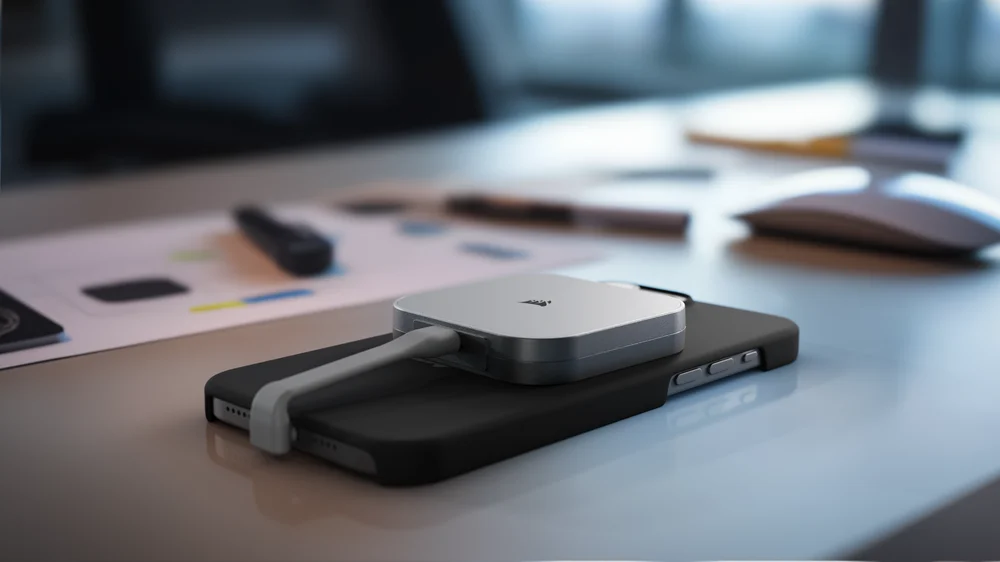
Vivo brings new 10,000mAh portable power bank

The Chinese brand’s new power bank is a portable charger that can power up your devices on the go. As per official claims, Vivo’s new power bank can charge an iPhone 16 from 0 to 53 percent in just 0 minutes thanks to support for 22.5W charging output. Meanwhile, the Vivo X200S and iQOO 13 can hit 33 percent and 35 percent charge in 30 minutes as well.

Vivo Power Bank

It features a portable and light form factor, with the new power bank measuring just 181 grams and 1.5cm in thickness. Despite its slim body, the power bank houses a massive 10,000mAh capacity, which also has various protection features to prevent over charge, over current, and short circuits for a worry free and safe charging. The body also has LED indicators that reveal the remaining charge levels and the power bank supports various charging standards like QC 2.0, PPS, and PD 3.0.

Thanks to its built-in USB Type-C cable, the 22.5W Vivo Power Bank can charge two devices at the same time. This is an affordable charging accessory that buyers in China can pick up for just 99 Yuan or roughly 14 US Dollars. It is unclear if Vivo will release this power bank in the global market, so stick around for more.

For more daily updates, please visit our News Section.

Tech enthusiast? Get the latest news first! Follow our Telegram channel and subscribe to our free newsletter for your daily tech fix! ⚡

Google Pixel 10 Full Specs Revealed: Brighter Display, Tensor G5, Camera Downgrades

The Pixel 10 is expected to launch on August 28, with Google officially announcing the device on August 20. After recent leaks about the camera specs and the cooling system of the smartphone, AndroidHeadlines has provided more details about the Pixel 10. As per the new report, the phone keeps the same 6.3-inch FHD+ OLED display with a 120Hz refresh rate and Gorilla Glass Victus 2. Brightness sees a jump, with high-brightness mode increasing from 1800 nits to 2000 nits, and peak brightness going from 2700 nits to 3000 nits.

Pixel-10-render

The Pixel 10 runs on the new Tensor G5 chip, made on TSMC’s 3nm process. It comes with 12GB of RAM and either 128GB or 256GB of storage. Google has not added a higher storage option or increased the base storage. The battery is slightly larger at 4970mAh. Wired charging now supports up to 29W, while wireless charging supports up to 15W using Qi2. Older Qi chargers will be limited to 7.5W.

The camera setup has changed. The main sensor is a 48MP unit, likely the same 1/2.0-inch sensor used in the Pixel 9a. The ultrawide camera drops to 12MP from last year’s 48MP. A new 10.8MP 5x telephoto lens has been added, the same one used in the Pixel 9 Pro Fold. While the hardware is a downgrade, Google’s software processing may help balance image quality. The phone does not support Ultra Res Zoom or ultra-stable video recording, which are limited to the Pro models.

Additional display details

All Pixel 10 phones, including the base model and Pro variants, are getting brighter screens compared to the Pixel 9 series. Adaptive refresh rate is still not supported on the base model. Only the Pro and Pro XL versions will have high-speed backlight modulation (PWM) to reduce eye strain.

As previously reported, the Pixel 10 will again skip vapor chamber cooling, which remains limited to Pro models. This may affect thermal performance.

(Source: 1, 2)

5 phones you can buy instead of Motorola Edge (2024)

Motorola Edge (2024) Best Alternatives

The Motorola Edge (2024) is an excellent mid-range smartphone. It boasts a gorgeous display, a fast Snapdragon chipset, and a large enough battery that lasts throughout the day — all at a sweet $350 price tag. However, it’s far from being the only showstopper, as several great alternatives exist that are better than this in one or more ways.

In this post, I have curated a list of the five best alternatives you could consider instead of the Motorola Edge (2024). Let’s have a look at them.

1. Google Pixel 8a

If you’re eyeing a flagship smartphone without going deep into the pocket, the Pixel 8a might be a good bet. It packs a 6.1-inch OLED screen that refreshes at 120Hz. Its 2000nits brightness ensures the content is visible outdoors without causing eye strain — and there’s Gorilla Glass 3 protecting the front.

The device is powered by an in-house Tensor G3 chipset, which is significantly faster than the Snapdragon 7s Gen 2 in the Motorola Edge (2024) and offers solid AI capabilities on-device. It promises seven years of Android updates, while the Motorola phone will only get two. That’s a significant gap, on top of faster software updates for the Google Pixel.

The Google Pixel 8a also excels in its camera capabilities, featuring a 64MP OIS-enabled primary camera and a 13MP ultrawide camera on the rear. The other side is equipped with a 13MP selfie snapper. Unlike the Motorola phone, the Pixel 8a can record 4K videos from both sides. Plus, it brings a range of AI-powered tools, such as Best Take, Magic Editor, Magic Eraser, Photo Unblur, and more.

The battery comes in at 4,492mAh, which should last for a day on regular usage. The 18W charging might feel a little slow, taking more than 1.5 hours to reach the full capacity. The Pixel 8a also supports 7.5W wireless charging.

Please Note: When you buy something using the links in our articles, we may earn a small commission at no cost to you.

2. Samsung Galaxy S22

It’s another flagship device on the list, available at half its original price. The Galaxy S22 boasts a premium design, featuring an Armor Aluminum frame and robust Gorilla Glass Victus+ protection on both sides. The screen measures 6.1 inches, featuring an AMOLED panel with HDR10+ and a 120Hz refresh rate.

The processing needs are fulfilled by a Snapdragon 8 Gen 1 chipset, which is faster than the Snapdragon 7s Gen 2 powering the Motorola Edge (2024). Since the Galaxy S22 was released in 2022, it ships with Android 12. However, you’ll receive an upgrade to Android 15 or Android 16 as soon as you set up the device. Since it promises four OS updates, Android 16 will be the end of the road. The latter part is also true for the Edge (2024).

The Galaxy S22 is equipped with a high-end camera setup, featuring a 50MP OIS-enabled primary camera and a 12MP ultrawide camera. There’s also a 10MP telephoto shooter on the rear side with 3x optical zoom, which isn’t present on the Motorola phone. The device can record up to 8K rear videos, while the 10MP selfie camera allows up to 4K video recording.

The battery capacity is a little disappointing at 3,700mAh, paired with 25W okay(ish) wired and 15W wireless charging support. The device also supports 4.5W reverse wireless charging for powering up your accessories. Unlike most smartphones that rely on optical fingerprint scanning, the Galaxy S22 offers an ultrasonic under-display fingerprint scanner, which is more secure, reliable, and faster.

Please Note: When you buy something using the links in our articles, we may earn a small commission at no cost to you.

3. Nothing Phone (3a)

The Noting Phone (3a) is another compelling option in the sub-$400 category. Besides a unique transparent look, there are several other aspects that the device gets right. That includes a slightly larger 6.7-inch AMOLED screen with a significantly higher peak brightness of 3000 nits compared to the Motorola Edge (2024).

Besides its design, Nothing phones are also known for a smooth and clean software experience. The Phone (3a) boots Android 15 and promises three major Android updates. It’s powered by a Snapdragon 7s Gen 3 chipset, which ensures smooth performance, and it’s also faster than Edge (2024).

The Nothing Phone (3a) also surprises with a 50MP telephoto camera (2x optical zoom), which is not often seen on mid-range phones. Besides this, there’s a 50MP OIS-enabled primary camera and an 8MP ultrawide snapper on the rear side. The front side features a 32MP snapper with 1080p video recording, while the rear setup can record up to 4K videos.

The smartphone houses a 5,000mAh battery, which should provide sufficient power for a full day on normal usage. It comes with 50W fast charging support, promising to fully charge the battery in just under an hour. There’s no wireless charging support, though. This would have been a nice addition, but the Nothing Phone (3a) is still a great value-for-money phone.

Please Note: When you buy something using the links in our articles, we may earn a small commission at no cost to you.

4. Samsung Galaxy A55

The Galaxy A55‘s design closely mirrors the look and feel of Samsung’s flagship S-series. It has an aluminum frame and Gorilla Glass protection on both sides. The IP67-rating ensures the device can withstand dust and water to some extent.

The Samsung phone features a 6.6-inch Super AMOLED screen with 1080p resolution, 120Hz refresh rate, and HDR10+ support. The brightness peaks at 1000 nits, which isn’t extremely bright when you’re outdoors, but it does the job. The device is powered by an in-house Exynos 1480 chipset, which ensures smooth performance in everyday tasks, such as messaging, browsing, and scrolling through social media apps. By the way, it’s faster than the Snapdragon 7s Gen 2 that powers the Edge (2024).

The Galaxy A55 features a triple rear camera, which includes a 50MP primary shooter with OIS, a 12MP ultrawide camera, and a 5MP depth camera. The front side is equipped with a 32MP selfie snapper. The smartphone allows up to 4K video recording from both sides.

The device has all the necessary connectivity features, including Wi-Fi 6, Bluetooth 5.3, NFC, and multiple positioning systems. To keep it powered on, there’s a 5,000mAh battery, which offers a day of backup on regular usage. It comes with 25W charging support, which takes around an hour and a half to reach its full capacity.

Please Note: When you buy something using the links in our articles, we may earn a small commission at no cost to you.

5. Moto G Stylus 5G (2024)

This is the cheapest on the list — even cheaper than the Edge (2024) — and still gets the job done. Additionally, it features a stylus for improved accuracy, accessibility, and enhanced productivity. It closely resembles the Edge (2024) except that it has a flatter display while the other one has a curved one.

The Moto G Stylus 5G (2024) features a slightly larger 6.7-inch AMOLED screen that refreshes at 120Hz. To bring the price down, Motorola had to cut some corners, and one of them comes in the form of screen protection. Overall, it’s a great display with vibrant colors and good viewing angles.

The device is powered by a Snapdragon 6 Gen 1 chipset, which closely matches the Snapdragon 7s Gen 2 performance, the same chip powering the Edge (2024). Both Motorola phones come with Android 14 out of the box. However, the Moto G Stylus (2024) will only get one Android update, while the Edge (2024) will likely get an additional major upgrade.

In terms of optics, the Moto G Stylus 5G (2024) features a dual rear camera setup comprising a 50MP OIS-enabled primary shooter and a 13MP ultrawide camera. The other side houses a 32MP selfie camera. Unfortunately, the device doesn’t support 4K video recording and only allows up to 1080p recording from both sides.

The smartphone ships with a 5,000mAh battery, easily lasting for a day on regular usage. Battery-conscious users might stretch it to more than a day. Moreover, the device supports 30W wired and 15W wireless charging.

Please Note: When you buy something using the links in our articles, we may earn a small commission at no cost to you.

Would you still pick the Motorola Edge (2024) over these value-packed smartphones? Also, let us know which one impressed you the most. Share your thoughts in the comments below.

Oppo K13x 5G First Impressions: Affordable 5G meets long-lasting battery and sturdy design

Oppo has added a new contender to the budget 5G smartphone market with the launch of the Oppo K13x 5G. Priced from Rs 11,999, this device appears geared toward users who want long battery life, practical design, and dependable day-to-day performance without breaking the bank. I spent some early time with the phone, and here’s what we’ve observed so far.

4Final thoughts

Oppo K13 5G
Oppo K13 5G with case

The Oppo K13x 5G manages to strike a careful balance between practical features and value. While the display resolution could have been higher, the presence of a high refresh rate and a responsive interface offset that limitation. Performance is consistent, the UI is clean and fluid, and the battery life is easily among the best in the segment.

With a competitive starting price of Rs 11,999 for the 4GB+128GB variant, this phone ticks the right boxes for users who want reliable connectivity, durable design, and battery longevity. However, I feel that the 4G RAM variant may result in lagging in the long run, ideally, I would suggest opting for 6GB or 8GB RAM variants with 128GB storage priced at Rs 12,999 and Rs 14,999, respectively. If you’re after a no-frills 5G smartphone that does the basics right and holds up through the day — and beyond — the Oppo K13x 5G is an option worth looking at.

Next