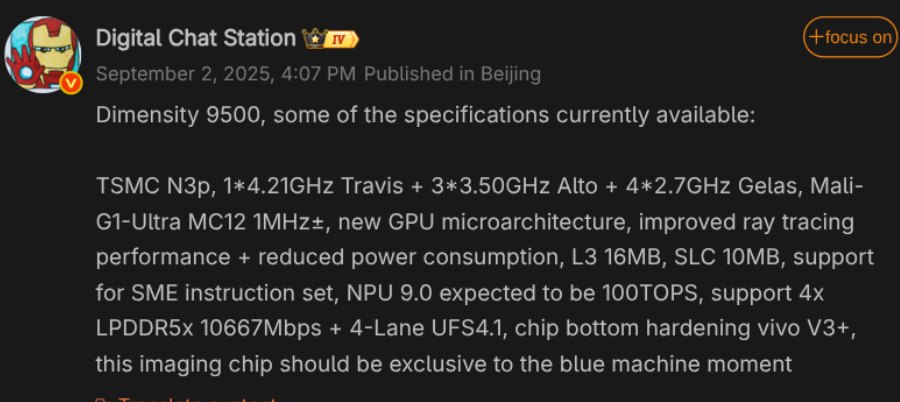
Qualcomm will hold the 2025 Snapdragon Summit between Sept. 23 and 26 this year. Likely, the US-based chipmaker will take off covers from the Snapdragon 8 Elite 2, which will power the next-generation flagship phones. A new Weibo post by reliable tipster Digital Chat Station reveals that this upcoming SoC will bring impressive upgrades in processing and graphics power.
Snapdragon 8 Elite 2: Major upgrade in CPU and GPU performance
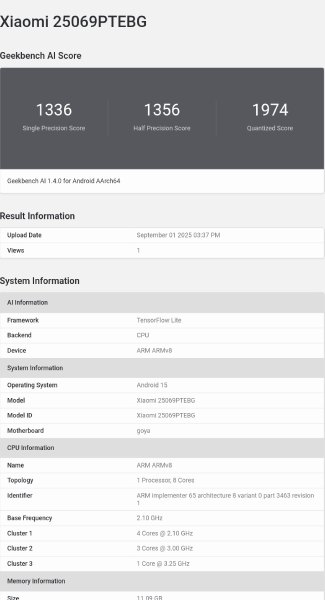
As per the leak, the Snapdragon 8 Elite 2 will introduce Qualcomm’s second-generation Oryon CPU architecture. On Geekbench 6, the chipset is reportedly targeting over 4,000 points in single-core tests and upwards of 11,000 points in multi-core scores. Compared to the first-gen Snapdragon 8 Elite, which scored around 3,100 and 9,800, respectively, the new chip promises a significant jump in performance.
The platform is also expected to feature a 16MB GMEM cache and an upgraded Adreno 840 GPU, designed to handle demanding visuals and graphics-heavy applications with ease. These upgrades suggest a focus on performance efficiency and better thermal control for future flagship devices.
Snapdragon 8 Elite 2
The Snapdragon 8 Elite 2 is rumored to have a 2+6 CPU structure with a maximum clock speed of up to 5GHz, offering significant improvements over its predecessor. Expected to be built with TSMC’s third-generation 3nm process, the CPU to have a base frequency of 4.4GHz, slightly higher than the 4.32GHz of the previous generation.
Based on previous patterns, Xiaomi is likely to be the first brand to launch phones powered by this chipset—specifically the Xiaomi 16 and Xiaomi 16 Pro. Other early adopters could include the OnePlus 15, iQOO 15, 15 Pro, Honor Magic 8 series, Realme GT 8 Pro, Nubia Red Magic 11 series, and Redmi K90 series.
The Oppo Find X9 Ultra and Vivo X300 Ultra arriving next year are expected to feature the new chip. However, it is unclear whether the Xiaomi 16 Ultra will feature the Snapdragon chip or the company’s in-house Xring SoC.
For more daily updates, please visit our News Section.
Huawei’s latest Pura 80 series has officially arrived in China, and this year’s lineup is all about pushing imaging technology forward while improving the overall user experience. The four new models, Pura 80, Pura 80 Pro, Pura 80 Pro+, and Pura 80 Ultra, bring the brand’s most advanced camera hardware to date, along with bigger batteries, better displays, and more versatile satellite connectivity.
Huawei Pura 80 Pro+
This is not just a routine upgrade. The Pura 80 series builds on Huawei’s imaging-first strategy, once driven by the P series and now fully rebranded under the Pura name. And while we still don’t know what chips power these phones (Huawei continues to stay mum), the hardware is ambitious across the board. Here is everything you need to know.
All four Pura 80 models share a sleek design language, with the Pro and Ultra models getting a touch more flair. The Pura 80 sticks to a 6.6-inch flat OLED panel, while the Pro, Pro+, and Ultra bump it up to a 6.8-inch curved OLED. The panels all support LTPO 1-120Hz adaptive refresh rates, 10-bit color depth (1.07 billion colors), HDR Vivid certification, and a peak local brightness of 3000 nits.
Second-generation Kunlun Glass is used across the range for added durability, and the entire series is IP68/IP69 rated for water and dust resistance. The Ultra takes it a step further with a unique “sun-pattern” rear finish and gold accents that subtly highlight its flagship positioning.
2. Big batteries for a long-lasting experience
If there is one practical area where Huawei clearly listened to user demand, it is battery life. The base Pura 80 comes with a 5600mAh battery that supports 66W wired and 50W wireless charging. The Pro, Pro+, and Ultra models all bump battery capacity to 5700mAh and support 100W wired and 80W wireless charging, plus 18W reverse wired and wireless charging.
Charging speeds are now among the fastest in the premium segment, which is especially welcome on devices focused so heavily on photography and AI-powered processing.
3. Imaging: where Huawei still plays to win
While the base Pura 80 has an impressive setup, including a 50MP main sensor with a variable aperture and a 12MP periscope telephoto (5.5x optical), the Pro, Pro+, and Ultra models leave no doubt that Huawei still aims to lead the smartphone camera race.
Both the Pura 80 Pro and Pro+ adopt a 1-inch 50MP main sensor with a variable f/1.6–f/4.0 aperture, optical image stabilization, and an updated image processing pipeline. These are backed by a 48MP telephoto camera capable of 4x optical zoom and tele-macro shots, a 40MP ultra-wide sensor, and a 1.5MP multispectral sensor that helps with color accuracy and depth mapping.
The Ultra takes the biggest leap with a dual-focal-length switchable periscope telephoto system. This innovative module allows users to switch between two native optical zoom levels: 3.7x and 9.4x, both using a 1/1.28-inch sensor for superb image quality across the zoom range. Huawei claims the Ultra’s main 50MP sensor also delivers 16EV of dynamic range, the highest ever recorded in a smartphone camera, with up to 15x higher dynamic range than the Pura 70 Ultra.
Beyond the numbers, Huawei is adding more computational photography tools to its lineup this year. New shooting modes include Nature, Film, Movie, and Cartoon presets, along with a real-time video fusion feature that improves highlight retention and tone mapping in difficult lighting.
4. Satellite messaging: smarter, faster, and two-way
Huawei was one of the first brands to adopt satellite messaging on its consumer smartphones, and the Pura 80 series evolves this capability further. The Pura 80 and Pura 80 Pro support two-way Beidou satellite messaging, allowing not just text but also photo transmission.
The Pro+ goes a step further with dual satellite system support (Beidou + Tiantong), enabling more consistent satellite lock-on and improved reliability during emergencies. Users no longer need to manually align the phone for transmission, the system intelligently manages satellite selection and connectivity.
5. Software smarts and AI integration
All Pura 80 models run HarmonyOS 5.1 and include Huawei’s Xiaoyi AI assistant. Huawei is pushing more AI-driven features this year, such as AI anti-peeping alerts, AI-based file transfer (AI Teleportation), and AI noise reduction for calls.
The Ark Engine, a new optimization framework in the Pro and Ultra models, is claimed to deliver up to 36% better performance than the previous generation, though Huawei has not disclosed the exact chipset in use. Expect these phones to run on updated in-house Kirin silicon or possibly new SMIC-manufactured 7nm or 5nm chips.
6. Pricing and availability
Huawei has already begun taking orders for the Pura 80 Pro and Pro+ in China, with the Ultra launching slightly later. The base Pura 80 will be available in July.
The Pura 80 series demonstrates that Huawei still sees imaging innovation as its key differentiator in a crowded smartphone market. The introduction of dual-focal-length telephoto on the Ultra model, along with continued use of 1-inch sensors and big batteries, makes the Pura 80 lineup a compelling option for mobile photographers and tech enthusiasts alike.
That said, the absence of any mention of 5G support or global availability remains a limitation for now, as these phones are likely to remain China-first products unless Huawei can overcome ongoing geopolitical restrictions.
Still, even in this limited scope, the Pura 80 series shows that Huawei is far from done reinventing the smartphone camera experience, and it will be fascinating to see how other brands respond in the coming months.
For more daily updates, please visit ourNews Section.
Samsung’s next batch of smartwatches is just a few weeks out from going official. The Galaxy Watch 8 series is expected to debut alongside the company’s latest foldables at its July Unpacked event.
If you’ve been keeping up, Samsung’s smartwatch strategy has followed a pretty predictable rhythm over the years. Two models per generation, usually offered in multiple sizes, and both Bluetooth and LTE variants.
Typically, there’s a standard model and a fancier Classic version with a beloved rotating bezel. But last year, Samsung skipped the Watch 7 Classic entirely and went with the more rugged Watch Ultra instead.
Now, if the leaks are to be believed, Samsung might be hitting rewind. The Galaxy Watch 8 lineup is rumored to bring back the Classic model with the physical rotating bezel. It’ll reportedly launch alongside the regular Watch 8.
So, what exactly can we expect from this year’s wearables? Here’s everything we know so far.
There’s nothing official from Samsung just yet, but thanks to a steady stream of leaks and renders, we’ve already got a pretty solid idea of what’s coming.
Design-wise, the Galaxy Watch 8 series is getting a major makeover. Both the regular and Classic models are expected to adopt a “squircle” shape, just like the rugged Galaxy Watch Ultra.
And this design shift isn’t just speculation, either. References to the new shape have popped up in Samsung’s One UI 8 firmware, and we have also had a good look at the Watch 8 Classic, thanks to the high-quality CAD renders.
Galaxy Watch 8 Classic CAD render
More recently, the Watch 8 Classic surfaced in a few real-life images, which confirms the Watch Ultra’s squircle design and return of a physical rotating bezel. It has three buttons on the right side and a speaker grill on the left.
Galaxy Watch 8 Classic live images
There appears to be a change in the strap system as well. Based on the leaked photos, the Watch 8 Classic doesn’t use the same strap connectors as older models. As a result, your old Galaxy Watch bands might not fit the new hardware.
2. AI, Health Features, and the Usual Speculation
Samsung itself has been hinting at “AI-powered” upgrades across its Galaxy ecosystem, and that likely includes the upcoming Galaxy smartwatches as well.
In a recent shareholder call, the company teased that an upcoming Galaxy Watch will feature an “innovative design and enhanced health-related features.” That could mean anything, but AI integration seems like a safe bet, given the industry-wide push in that direction.
Last year’s Galaxy Watch 7 introduced some AI-backed coaching tools, so it wouldn’t be surprising to see Samsung double down. We might see more personalized training plans, adaptive workout recommendations, or AI-generated health summaries that draw from multiple sensor inputs.
The Galaxy Watch 8 may also include non-invasive blood glucose monitoring. Samsung officially announced this feature in January, so it’s plausible to expect it in the upcoming Watch 8 series. There are also rumors that Samsung will introduce an “antioxidant index” as part of its Samsung Health suite.
3. Software Changes
As with most annual updates, the new smartwatches will launch with a refreshed version of Wear OS. There’s not a lot we know about the new OS, but it’s said to bring Samsung’s new “Now Bar” feature from phones to wearables.
If true, the Now Bar will act as a persistent, interactive widget that displays quick information and controls on the screen.
4. So, who is this for?
If you’re still using a Galaxy Watch 4 or earlier, the Galaxy Watch 8 series could be a meaningful upgrade. Between better sensors, a slightly improved battery, and updated software, there’s enough here to justify a switch, especially if you’ve missed the rotating bezel.
But if you’re coming from a Watch 6 or 7, the upgrades might feel incremental. Slight design refinements, an efficiency-focused processor, and some AI-driven software features don’t amount to a full generational leap.
As we move closer to the official launch, more concrete details will likely emerge. But based on what we know so far, the Galaxy Watch 8 looks like a careful generational evolution.
For more daily updates, please visit ourNews Section.
Apple just released iOS 26 with a new “Liquid Glass” design and some fresh features—one of which aims to extend battery life through intelligent resource management. However, it doesn’t come without a catch: users may notice a dip in performance while the system tries to save power. Apple was previously rumored to be working on an AI-powered battery management feature, which appears to be this “Adaptive Power” function.
Unlike the controversial UI redesigns, this could actually be a meaningful upgrade for the iPhone 17 lineup—if it’s done right. The iPhone 16 packs a 3,561mAh battery, and its successor, the iPhone 17, isn’t widely expected to feature a significantly larger one. In fact, the 5.5mm-thin iPhone 17 Air is rumored to include a battery as small as 2,800mAh.
To put that into perspective, the 5.8mm Galaxy S25 Edge—featuring the latest and most efficient Snapdragon 8 Elite chip—packs a relatively larger 3,900mAh battery. This “razor-thin” Android, unlike the other models in the S25 lineup, delivers mediocre battery life at best. You can learn more about the S25 Edge’s battery situation here.
While Apple has the advantage of deep software-hardware integration, and thus better power efficiency, the Air model’s battery capacity will likely still lag behind the base variant. That’s where the new AI-powered Adaptive Power feature could become essential for the iPhone 17 Air.
This feature may also help other iPhone 17 models maintain their lead in battery life, especially as most Chinese smartphone makers are already offering 6,000mAh+ batteries, thanks to silicon-carbon battery tech—which Apple has yet to adopt.
That said, the effectiveness of this AI-based resource management remains to be tested in real-world use, and we’re looking forward to evaluating it.
The Honor Magic V5, expected to launch by the end of June as the successor to the Magic V3, has now appeared on China’s 3C certification platform—revealing a key detail.
According to the listing (via Xpertpick), two models—Honor MTN-AN00 and MTN-AN80—support 80W fast charging, which is an upgrade over the 66W support seen on the Magic V3. This listing also reaffirms rumors of the phone’s imminent launch in China.
To recall, the Magic V3 featured a 5,150mAh silicon-carbon (Si/C) battery. The upcoming Magic V5 is rumored to pack a 6,100mAh unit, thanks to advancements in battery tech. Paired with a more efficient chipset, this should translate to longer battery life and less downtime from charging.
The Magic V5 was also recently spotted in the Geekbench database, confirming the presence of the Snapdragon 8 Elite chip—a step up from the Snapdragon 8 Gen 3 used in the V3. The phone scored over 3,000 and 9,000 in single- and multi-core tests, respectively.
What makes the Magic V5 even more exciting is the rumored 4,400mAh battery on the upcoming Galaxy Z Fold7—the same as its predecessor. In contrast, Honor seems to be pushing the boundaries on both battery size and design.
While the Magic V3 measured 4.35/4.4mm when opened and 9.2/9.3mm when closed, the Magic V5 is rumored to go under 9mm when closed. For comparison, the Oppo Find N5, currently the slimmest foldable, comes in at 8.9mm. If the rumors hold true, Honor could reclaim its title as the maker of the slimmest book-style foldable. We’re excited to see how this plays out.
Poco has begun teasing the Poco F7, which is expected to launch globally by the end of June. In the latest news, the phone has surfaced on Geekbench, revealing its chipset and a somewhat underwhelming performance.
The Poco F7 scored 1937 and 6021 in Geekbench’s single-core and multi-core tests, respectively. It is powered by the Snapdragon 8s Gen 4 chip, which also runs the recently released iQOO Neo 10. For perspective, the iQOO device scored 2093 and 6836 in the same tests.
While the lower CPU scores don’t necessarily mean a noticeably worse user experience—since UI optimization plays a key role—they do suggest that the F7 may fall short of the Neo 10 in demanding tasks. The relatively modest results hint at two possibilities: either a conservative approach to power usage, or ongoing tuning as Poco tests different performance profiles to balance battery life and compute.
Apart from the scores, the listing also confirms the tested variant has 12GB of RAM. To recall, the Poco F6 came with 8GB or 12GB RAM options and was powered by the Snapdragon 8s Gen 3—so we can expect incremental improvements in raw performance.
According to previous rumors, the Poco F7 could feature a 1.5K OLED display with a peak brightness of 3,200 nits—a noticeable jump from the F6’s 2400-nit panel. The screen size also reportedly increases to 6.83 inches, up from 6.67 inches. As for the camera, the F7 is expected to use the 1/1.95” Sony LYT-600 as its main sensor, the same one found in the iQOO Neo 10.
While pricing details remain under wraps, you can check out a real-life image of the Poco F7 below.
The OnePlus Nord 5 is moving closer to launch. After the global variant appeared on the UAE’s TDRA certification platform, the Indian version has now been spotted on Geekbench, revealing its processor and performance details.
OnePlus Ace 5 Ultra
The Indian model, listed as CPH2707, scored 1977 in single-core and 5090 in multi-core tests. It will run on the Snapdragon 8s Gen 3 chip, clocked at 3.01 GHz, with an Adreno 735 GPU. The phone will come with Android 15 and offer a 12GB RAM option.
According to tipster Abhishek Yadav, the OnePlus Ace 5 Ultra has launched in China with the MediaTek Dimensity 9400e chipset, while the upcoming OnePlus Nord 5 is expected to feature a Snapdragon processor.
The global and Indian Nord 5 variants carry model numbers CPH2709 and CPH2707. The Nord CE 5 models are listed as CPH2719 (global) and CPH2717 (India). Both the Nord 5 and Nord CE 5 are expected to launch on July 8, 2025. The Nord 5 has also cleared TDRA, GCF, IMDA, and TUV Rheinland certifications. The TUV Rheinland listing confirms a 6650 mAh battery with 80W wired fast charging.
Earlier reports noted that the Nord 5 global version first appeared on the TDRA platform under model number CPH2709, hinting that its release was near. It was initially expected to be a rebranded OnePlus Ace 5 Ultra Edition. That model features a 6.83-inch AMOLED display with 1.5K resolution, 144Hz refresh rate, and 1400 nits brightness, powered by the Dimensity 9400+ chip. It also includes a 6,700mAh battery with 100W fast charging, up to 12GB RAM, 256GB storage, a 50MP main camera, an 8MP ultrawide lens, and a 16MP front camera.
More details are expected in the coming weeks ahead of the official launch.
For more daily updates, please visit our News Section.
Red Magic has confirmed that its new Gaming Tablet 3 Pro, launched today in China, will soon be available globally under the name Red Magic Astra. The global version will have the same hardware as the Chinese model, including the Snapdragon 8 Elite chipset, ICE-X cooling system, and 9.06-inch OLED display.
The Astra’s OLED screen supports a 165 Hz refresh rate, 1,600 nits peak brightness, 1,000 nits global brightness, and a 1,000,000:1 contrast ratio. It has a 90.1% screen-to-body ratio with 4.9 mm bezels, a sub-1ms response time, TÜV Rheinland eye protection certifications, and a 5280Hz PWM dimming system.
The tablet runs on the Snapdragon 8 Elite chipset built with TSMC’s 3nm process. It also includes the Red Core R3 Pro co-processor, which handles gaming features like super resolution and frame rate optimization. The device comes with LPDDR5T RAM running at 9600 Mbps and UFS 4.1 Pro storage for fast performance.
Red Magic Gaming Tablet 3 Pro
Red Magic has added the ICE 3.0 cooling system with a sandwich VC structure, liquid metal 2.0, and an active turbo fan to manage heat during gaming. The tablet runs Red Magic OS 10.5, with the Cube Game Engine that optimizes frame rates, power use, and thermal performance. It also includes a PC emulator for local PC gaming and a Magic Companion 2.0 AI assistant for additional system functions.
The tablet has a 13MP rear camera and a 9MP front camera. It is powered by an 8,200 mAh battery that supports 80W fast charging and reaches 50% charge in 22 minutes. Bypass charging is also supported to keep the device cooler during gaming.
Other features include a Synaptics S3930 touch controller with 2000Hz touch sampling, dual super-linear speakers, dual X-axis linear motors, NFC, a fingerprint sensor, and both wired and wireless low-latency casting.
Pre-orders open on July 1, with general sales expected on July 10 or 11 through Red Magic’s website.
For more daily updates, please visit ourNews Section.
Huawei has launched the FreeBuds 6 Rose Gold Edition in China. The earbuds were earlier available for pre-sale but can now be purchased directly through Huawei’s VMall online store.
The FreeBuds 6 were first introduced in March and come with 95dB noise cancellation, Nearfield Link Search technology, and AI features designed to enhance productivity. At launch, Huawei offered the earbuds in Starry Sky Black, Sky White, and Aurora Purple. Now, the new Rose Gold option has been added. The earbuds have a glossy finish, while the charging case has a matte texture.
The FreeBuds 6 support high-res audio with 2.3 Mbps lossless transmission. The semi-open design makes them lightweight and reduces outside noise. The earbuds use an 11mm four-magnet dynamic driver and a micro flat tweeter for an immersive sound experience.
The earbuds offer two-way silent calling, allowing clear calls even in noisy places. The built-in Celia ear assistant supports real-time translation and can read out alerts from your phone. The earbuds also deliver reminders at scheduled times. Users can manage calls through simple head movements, and AI automatically adjusts volume based on the surrounding noise level.
Battery life is rated at 36 hours. A quick 5-minute charge provides 2.5 hours of playback. The earbuds also support smart charging, which learns the user’s charging habits to improve long-term battery health by up to 37 percent.
Pricing & availability
Huawei has priced the FreeBuds 6 Rose Gold Edition at 999 yuan. Customers can also buy the Huawei Care+ service at a discounted rate through VMall.
For more daily updates, please visit our News Section.
Huawei has introduced a new Light Blue color variant for the MatePad Pro 13.2 2025 tablet. The new option, available for the PaperMatte edition, features a silk-texture design that offers a softer, smoother feel.
The Light Blue model, officially called Feitianqing, uses 0.5mm aviation-grade ultra-thin glass fiber for added durability. The rear panel combines natural texture with multiple optical coatings to create a visual effect similar to real silk.
The device is also the first in the MatePad series to come pre-installed with the stable HarmonyOS 5.0 operating system. HarmonyOS 5.0 provides a PC-like user experience with features such as multi-window support, panoramic multi-window, and air-gesture file sharing for quick media transfer between devices.
Huawei has also enhanced the Celia AI virtual assistant. It now offers more intelligent and productive support for tasks like meetings, calls, and office-related functions.
The rest of the specifications remain unchanged from the standard model. The tablet features a 13.2-inch PaperMatte display that minimizes light interference and improves readability and touch interaction. The screen offers a 2880 x 1920 pixels resolution with a 144Hz refresh rate.
The MatePad Pro 13.2 Light Blue edition comes with 12GB of RAM and 512GB of storage. It is powered by a 10,100mAh battery. The tablet includes a dual rear camera system with a 50MP main camera and an 8MP ultrawide lens, along with a 16MP front-facing camera.
Pricing & availability
The new Light Blue variant of the Huawei MatePad Pro 13.2 is priced at 6299 yuan. It will go on sale starting June 18 via Huawei’s VMall online store. Alongside this new color option, Huawei has also introduced the Huawei Pura 80 Pro series and Pura 80 Ultra smartphones with Kirin 9020 processors and powerful camera systems.
Smartphone brands are constantly taking inspiration from one another. Android manufacturers are often inspired by the iPhone’s design elements, but Apple is usually a couple of years behind in terms of software features. The latest WWDC 2025 event had it showcased its new suite of software for its ecosystem, including the new iOS 26. Apple is finally bringing a bunch of long awaited Android features to the iPhones, so here’s what’s coming.
If you’ve used Google Lens or the popular Circle to Search feature on Android, you’ll instantly recognize this one. iOS 26 introduces a new Visual Intelligence, and as the name suggests, it is an on-screen search function. It allows users to take a screenshot and search for anything visible in any app. This includes text, objects, places, or even unknown products.
While Apple was pushing its Apple Intelligence with the iPhone 16 lineup, the new Visual Intelligence is powered by ChatGPT. So newer iPhones like the iPhone 15 Pro models and the entire iPhone 16 lineup can also perform more complex tasks and answer questions using AI.
2. Call Screening Finally Comes to iPhones Along With Spam Detection
iOS 26 Call Screening
Pixel users have long enjoyed the ability to let Google Assistant screen unknown calls and provide a transcript before they pick up. With iOS 26, Apple introduces its own version. So now, iOS 26 can answer the call automatically when an unknown number starts ringing you. Furthermore, it will even ask the reason for the call and display the response on the lock screen.
While Android has had spam filtering for messages for quite a while, iOS 26 now routes suspected spam texts to a dedicated Unknown Senders folder. By default, iOS 26 silences all unknown messages, so they won’t pop up as notifications unless previously approved by the user. It’s a small quality-of-life feature, but one that brings iPhones more in line with the smarter, less noisy inboxes Android users already enjoy.
3. Live Translation Across the OS
iOS 26 Live Translate
Android users have had real-time translation in various apps for years, especially via Google Translate. Now, iPhones get the same perk. With iOS 26, Apple expands its Live Translation feature to Messages, FaceTime, and even the Phone app, making it easier to communicate across languages without needing a third-party app.
4. Conclusion
Apple may not have taken the lead in terms of innovation, but iOS 26 is proof that the Cupertino based giant is still trying to keep pace. By finally adding features Android users have taken for granted, iPhone users now get a more intelligent, user-friendly experience. Better late than never right?
For more daily updates, please visit our News Section.
Last year, while the Chinese mobile device makers were releasing products with the Snapdragon 8 Elite, there was the disappointing Y700 Gen3, which didn’t feature the latest chipset, no TF card slot, and a smaller battery. And crucially, the screen is slow and unresponsive. However, the new Y700 Gen4 has a new look, the TF card slot is back, with the latest flagship processor, a sharper screen, and a larger battery.
WHERE TO BUY
Buy LENOVO Legion Y700 2025 on GEEKWILLS from $549
Design
The Gen 4 doesn’t differ much from its predecessors in terms of design. It features a one-piece aluminum body, making the entire back cover complete, both to the touch and to the eye. It’s still available in white or black, and although I’m holding the black version, I recommend the white. The black version, like the previous model, is prone to fingerprints.
On top of that, Lenovo has removed a camera to make it more of a gaming tablet. It would have been nice to make the camera bump smaller. The thickness of the body has been reduced to 7mm, while not much has changed in terms of weight.
The body comes with a Type-C port on the bottom and right side, both of which are capable of supporting 68W PPS fast charging. The port on the side supports up to 10 Gbps transfer rates and even has DP video output. According to our tests, it can connect up to a 4K 144Hz display. While it offers a 4K 160Hz option, the display will go black in that case. Also, the Y700 doesn’t recognize devices plugged into the USB-HUB that comes with the monitor at the same time. The USB-C recognizes devices, but it only has a rate of 480Mbps and doesn’t allow for video output.
Another thing I like is the TF card slot, which supports microSD cards up to 2 TB. I inserted a Samsung V30 microSD card here and tested the read and write speeds. When compared to the built-in UFS storage, the speeds are slow for this SD card.
UFS 4.1SD Card
On the front, the screen is still the same 8.8-inch LCD, not the more advanced OLED, but its resolution has been improved a bit, with a PPI of 408, and the display is more detailed than the iPad mini. So let’s put them together for comparison and see the difference. Playing an HDR video first, you can see that the Y700 has a lower contrast ratio and looks a bit gray, while the iPad is a bit better.
In terms of speakers, I don’t think there’s much improvement. So, here is a comparison: we can hear that it has fewer details in the background, like wind and sand sounds, compared to the iPad mini. While playing music, the sound is a bit harsh.
Gaming Performance The performance-related hardware on the
Every hardware on this Gen4 is, without exception, powerful. It packs a Snapdragon 8 Elite processor, LPDDR5X 9600MHz of RAM, and UFS 4.1 flash storage. This is basically the most powerful hardware combo available, so none of its scores are bad. Whether it’s 3DMark or Geekbench, it gets good scores. But as a gaming tablet, you can’t afford to lose frames and lag while you’re playing. So we ran 20 consecutive rounds of performance tests using 3DMark, and the Y700 was 77% stable against the Wild Life test at 2K resolution. If we move up to 4K, it drops to 67%.
Now let’s do some gaming tests. First up is Hongkai: Star Rail, running in Golden Hour. When we run it at 25 degrees Celsius room temp, with Performance Mode on, the frame rate is nearly perfect. But it was a bit of a power hog here, consuming 10% of the battery in a 15-minute test.
Next, we tried the more difficult game, Wuthering Waves. Right off the bat, the machine ran at 16W, which is pretty close to the power consumption we saw during the 3DMark test. But after about 6 minutes, it started to lag a bit. Occasionally, the frame rate would go back up to 60 fps. But as soon as we hit a complex scene again, the frame rate would still drop. The temperature peaked at 48 degrees, but it was mainly in the center of the back, so it wasn’t too uncomfortable.
We also found a few other interesting things during our testing. For example, turning off LENOVO’s Gaming Assistant may result in a better gaming experience. Normally, when playing Wuthering Waves in Balanced Mode, the Game Assistant will control the power consumption of the whole machine to around 7W. Although the temperature of the machine is much lower, this will bring the problem of dropped frames. So we tried turning off the Game Assistant and letting the system take over. We found that it performed better than Performance Mode, and at the same time, produced less heat. So sometimes, turning off the Gaming Assistant may be a better option.
Also, the Y700’s previous generations had a fatal flaw for gamers. While the screen’s touch sampling rate was advertised as “high”, the actual performance was not as good as some flagship phones. However, we found that the Gen4 performed much better compared to the Gen3.
If you’re using an emulator to play a game, but have to use a joystick. You can try turning on the peripheral mode and setting up mapping. But if your game or the emulator itself supports the joystick, such as Genshin Impact, ZZZ, and Wuthering Heights. Then I’d recommend turning it off, otherwise, it can cause some 1conflicts, resulting in the joystick being unavailable.
Battery Life Charging, Wi-Fi
The battery has been upgraded to 29Wh (7600mAh), from the previous 25.3Wh (6550mAh). It may just add 20 to 30 minutes of playtime. It doesn’t use the higher energy density silicon carbide cells. This may sound like bad news, but it could also be good news. That’s because while silicon carbide batteries can achieve larger battery capacity for the same size, they don’t last as long as regular lithium batteries. Still, Lenovo has kept several good settings to optimize battery life to protect the battery.
One of the best things about it is the bypass charging. Unlike the OnePlus Ace 5 Pro, which needs a stock charger to do that, the Y700 only requires a PD or PPS charger.
Charging power hasn’t changed much, remaining at 68 W. In real-world testing, it maxed out at 60 W, but only for two minutes, and reached 80 percent at 40 minutes, eventually charging to 90 percent in 61 minutes. If you charge it in a cooler place, say 25 degrees room temperature, it extends the maximum power input to 10 minutes, and reaches 80 percent in 35 minutes, eventually filling up in 58 minutes.
But it’s a deal that doesn’t seem particularly good value, it doesn’t charge much faster after all. If you use a third-party charger that only supports the PD protocol, it’ll reach 80 percent after 65 minutes and eventually take 93 minutes to a full charge.
In terms of battery life, we tested it with the following settings: one hour of Hong Kong Star Rail, half an hour of Wuthering Waves, and two hours of a movie. Eventually, 22 percent battery left.
In terms of WiFi, it supports the latest 802.11be standard, also known as WiFi 7. However, due to the impact of China’s 6G construction, the Gen4 only supports up to 160 MHz of bandwidth under WiFi 7. Therefore, its Wi-Fi can only handshake up to 2882Mbps, while the actual rate can reach more than 2000Mbps.
Cons & Summary
The launch price of the Y700 Gen4 is the same as the Gen3, but this time around, it is more like a gaming tablet. The larger heat dissipation plate and new chip layout make it hard to overheat and downclock during gaming. Performance is basically impeccable, and the new screen and new touch ICs have solved the previous touch latency issues.
However, it’s not without any drawbacks. The LCD screen, for example, can be a bit outdated against competitors like the iPad mini, or even the future Redmi and Red Magic. It only tops out at 600 nits of brightness, the contrast isn’t great, and it even drags down the Y700’s battery life to some extent. The Xiaomi Tablet 7 Ultra, for example, which we’re testing, is a 14-inch tablet, but the gaming power consumption is lower than that of the 8.8-inch Y700.
We have discussed all the pros and cons of the Y700 Gen4. Do you think it’s a better gaming tablet now?
WHERE TO BUY
Buy LENOVO Legion Y700 2025 on GEEKWILLS from $549
Android 16 is finally here, and it brings a number of visual changes aimed at improving the user experience. It also marks the earliest major Android release in years and lays the foundation for Google‘s new Material 3 Expressive design language. This is the Android 16 QPR1 beta release (Google just rolled out QPR1 Beta 2 with some fixes), currently available for supported Pixel devices. Let’s take a look at what’s new.
One small but useful addition is Live Updates. Instead of opening a delivery app every few minutes, you can now check the progress at a glance. While it starts with a handful of compatible ride-share and food delivery apps, more are expected to join as development progresses. Samsung’s Now Bar and OPPO and OnePlus’ Live Alerts will also integrate this feature to enhance the overall Android experience.
As for visual enhancements, there are quite a few. The text on the status bar now uses a bold font, making it easier to read at a glance. The tiles inside the control panel are now customizable, and the brightness and volume sliders also have a refreshed look.
Ever get tired of scrolling through notifications or struggle to find the one you’re actually looking for? Android 16 now groups notifications from the same app together, making it easier to find what you need.
For large-screen devices, Android 16 introduces a feature called Desktop Windowing, inspired by Samsung’s DeX. Check out the video below to see how it works and how it can help boost productivity on book-style foldables or Android tablets. You can also customize keyboard shortcuts to get the most out of your lightweight, efficient, yet capable device.
Another key addition is Advanced Protection, which Google calls its “strongest mobile device protection” yet. It can be enabled with a single tap and aims to protect users from online threats, harmful apps, unsafe websites, scam calls, and more.
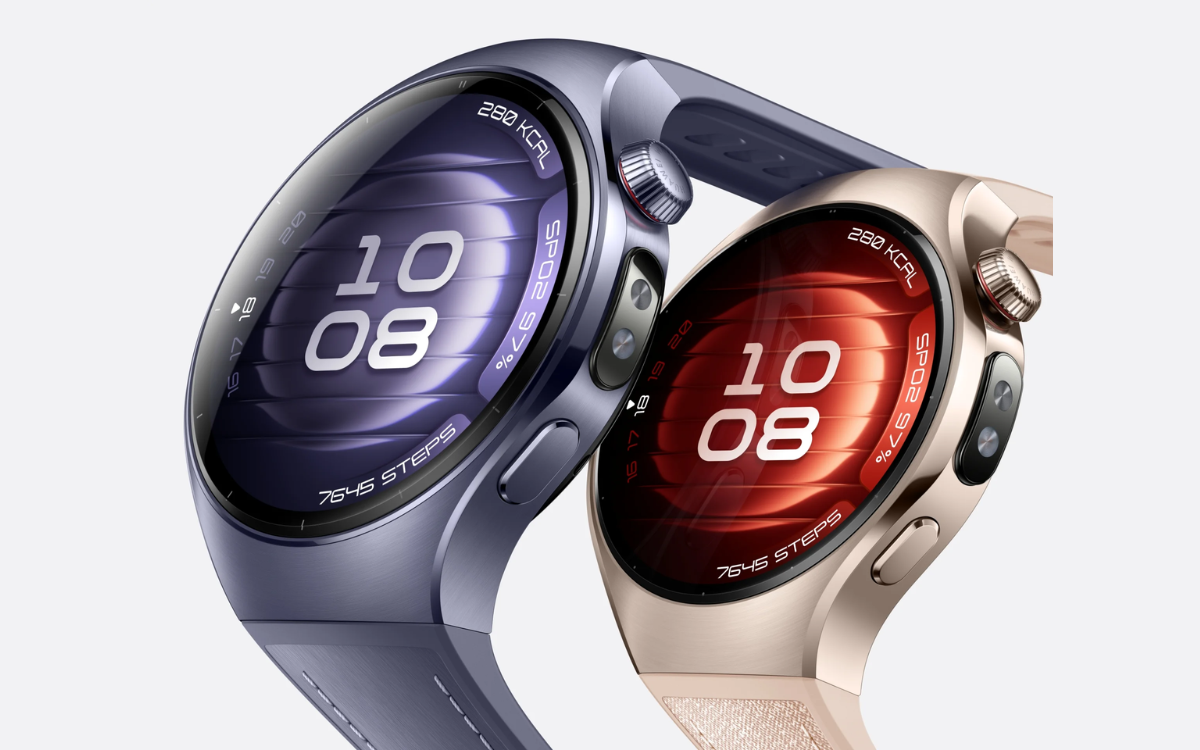
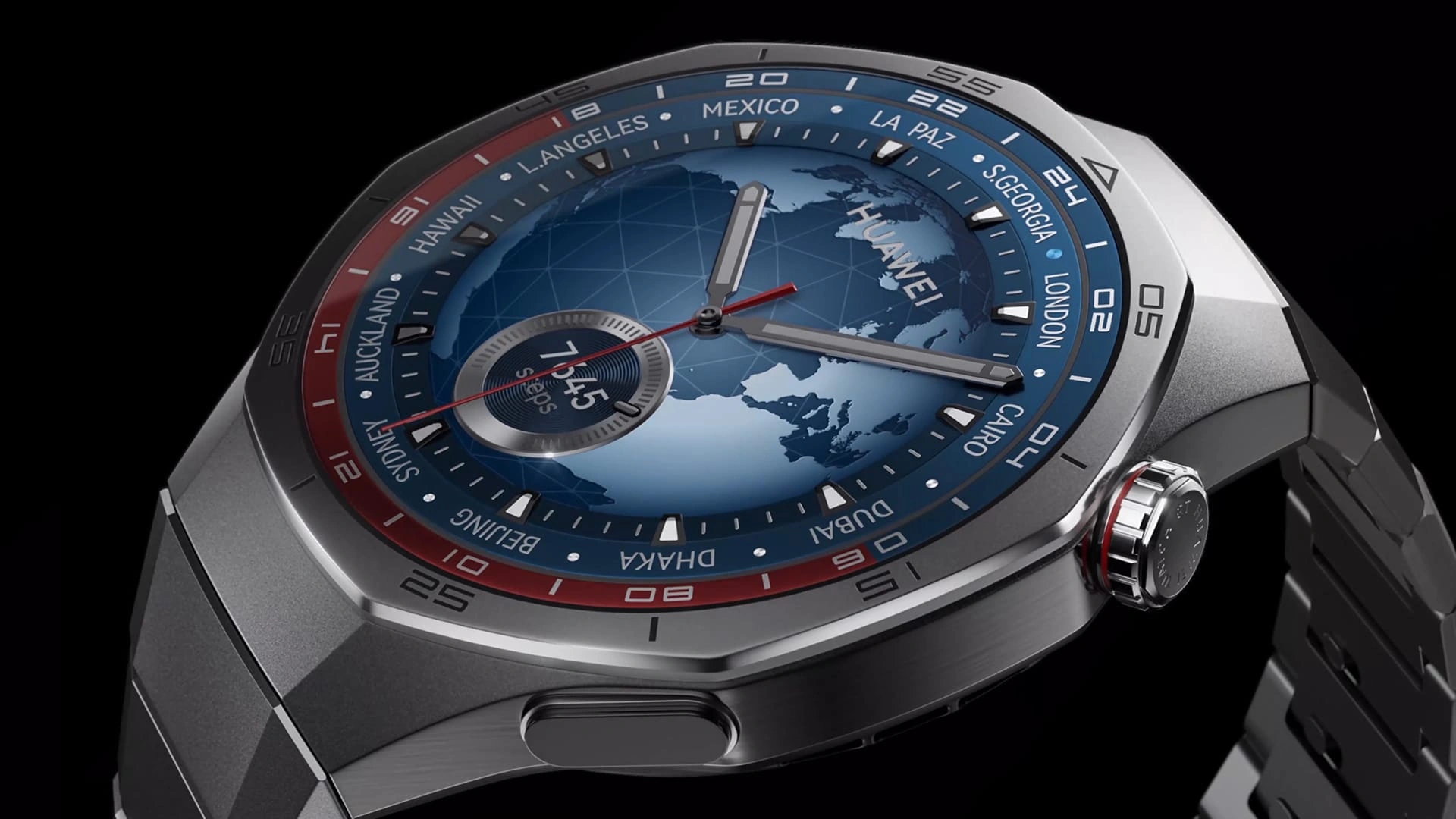
Huawei has recently launched the Watch 5 in China, alongside the Huawei Pura 80 Pro series and Pura 80 Ultra smartphones. The device, already available globally, is now available in the Chinese market with additional features.
The Watch 5 is available in two sizes. The 42mm model is offered in Dawn Gold, Nebula Apricot, Venus White, and Phantom Moon Black. The 46mm variant comes in Titanium Silver, Galaxy Purple, Jupiter Brown, and Sky Black.
The 42mm version measures 42 x 42.5 x 10.5mm, fits wrist sizes from 120 to 190mm, and weighs between 48 and 51 grams. The 46mm version measures 46 x 46.7 x 11.3mm, fits wrist sizes from 140 to 210mm, and weighs between 58 and 63 grams.
The 42mm model features a 1.38-inch LTPO 2.0 AMOLED display with a resolution of 466 x 466 pixels and peak brightness of 3000 nits. The 46mm model offers a 1.5-inch LTPO 2.0 AMOLED screen with the same resolution and brightness. The 46mm model features spherical sapphire glass and a case made of aerospace-grade titanium alloy. The 42mm version comes with a stainless steel case. Both models include plain leather composite straps.
A key new feature is X-Tap, which integrates ECG, PPG, and tactile pressure sensors in a small side window for advanced health monitoring. The Watch 5 runs on HarmonyOS 5.1 and is the first AI smartwatch to incorporate Pangu and DeepSeek large models. The Celia AI assistant supports voice commands for over 100 sports and 15 health apps, delivers personalized responses, and provides daily updates on weather, news, and more.
The watch supports gesture controls. Users can slide their thumb across their index finger to perform selection tasks or double-tap their thumb and index finger to confirm actions. These gestures allow users to manage phone calls, camera functions, alarms, music, video playback, and more. Additional features include smart car key functionality, smart home device control, eSIM support for calls and online music, and improved positioning accuracy with Sunflower technology.
Battery life is rated at three days for the 42mm model and four and a half days for the 46mm model in standard mode. Battery Saver mode extends life to seven days and eleven days, respectively.
Pricing & availability
Pricing starts at 2699 yuan for the 42mm model and 2799 yuan for the 46mm model, with higher configurations available. The Huawei Watch 5 is now on sale in China through VMall.
Xiaomi has officially launched its new Mijia 271L Three-Door Refrigerator in China, positioning it as a space-efficient, smart kitchen upgrade for modern homes. The appliance is now available at an introductory price of 1599 yuan ($222), down from its suggested retail price of 1899 yuan ($264).
Xiaomi Mijia 271L Refrigerator Specifications
The Mijia 271L fridge aims to deliver a mix of compact design and flexible storage, while addressing hygiene and energy efficiency. It features a slim 56cm wide, 60cm deep profile that occupies just 0.33 square meters of floor space.
This makes it well suited for small apartments and tight kitchen layouts, where maximizing usable capacity matters. In fact, the 271L volume is 61 liters more than Xiaomi’s previous generation of three-door models, while using slightly less floor area.
The exterior sports Xiaomi’s Ice Feather White finish, a textured surface designed to resist fingerprints and scratches. The look is minimalist, with a clean matte aesthetic that plays well with modern kitchen styles. Functionally, the surface is also magnetic, so users can attach notes and magnets without worry.
Internally, the three-door layout splits into a 151L fridge compartment, an 85L freezer, and a 35L variable temperature drawer. The middle variable zone offers impressive flexibility, letting users set the temperature anywhere from -20°C to 5°C in 1-degree increments. This means it can serve as an extra fridge, a soft freezer, or even deep-freeze storage depending on your needs.
Xiaomi has also leaned into hygiene with this release. The fridge compartment uses a silver-ion antibacterial and deodorization module, which achieves a 99.99 percent antibacterial rate and helps break down odor molecules. Cooling is delivered via a 360° frost-free air circulation system, so users won’t need to defrost manually.
The Mijia 271L is built with a variable frequency inverter compressor and inverter fan, paired with five temperature sensors to continuously monitor and stabilize internal conditions. Xiaomi claims the unit operates at just 36 decibels and consumes 0.59 kWh per day, achieving China’s top-level energy efficiency rating.
For added convenience, the fridge supports Xiaomi HyperOS and integrates with the Mijia app, allowing remote monitoring and control. The settings can be adjusted via smartphone or Xiao Ai voice assistant. It also features an LED control panel that provides quick access to temperature adjustments on the appliance itself.
Inside, the shelving is adjustable to accommodate bulky items like cakes or melons, and the freezer offers three large pull-out drawers for easy organization. The entire appliance measures 560mm wide, 600mm deep, and 1810mm tall, with a net weight of 50kg.
Anker has added two new GaN chargers to its Nano line. The new products include the Anker Nano Charger (35W) with a retractable USB-C cable and the Anker Nano Charger (130W) with six ports.
Anker Nano Charger (35W) with Retractable USB-C Cable
The 35W Nano Charger now comes in a rectangular shape. It is 10 percent smaller than a standard 30W charger. The size is 47.8 x 61 x 30 mm, and it weighs 120 grams. It does not have foldable plugs like Anker’s 45W charger, but its plug is designed to grip outlets more securely.
Its key feature is a 70 cm retractable USB-C cable, which Anker says can handle over 20,000 bends and retractions. In addition to the built-in cable, the charger has one USB-C port, allowing users to charge two devices at the same time.
The charger includes PowerIQ 3.0, which adjusts power based on the connected device, and ActiveShield, which monitors temperature. It comes in grey, white, and green. The price is €39.99 on Anker’s website and on Amazon.
Anker Nano Charger (130W, 6 Ports)
The Nano Charger (130W) is a desktop charger with six ports and a total output of 130W. It includes four USB-C ports and two USB-A ports. It is available in black and white.
The charger is 19 mm thick and weighs 320 grams. It comes with a soft AC plug and a storage bag. It can charge two 15-inch MacBook Air laptops to 50 percent in 30 minutes or a 14-inch MacBook Pro to 50 percent in 27 minutes.
Here are the max outputs for each port:
USB-C1: 100W
USB-C2: 65W
USB-C3: 20W
USB-C4: 20W
USB-A1: 12W
USB-A2: 12W
The charger supports PPS fast charging, PowerIQ 3.0, and ActiveShield 2.0. It costs €59.99 and is sold on Anker’s website and Amazon. It was first launched in China and is coming to North America soon.
Alongside its flagship Pura 80 Ultra model, Huawei just removed the covers on its new Pura 80, Pura 80 Pro, and Pura 80 Pro+. These are also premium devices with cutting edge camera hardware and sleek designs. So let’s check it out.
Huawei Pura 80 Pro Series
The new Pura 80 Pro series doesn’t skip out on the 1-inch camera sensor. Both models pack a 50MP 1-inch RYYB primary sensor that has a f/1.6-4 variable aperture and OIS support, along with a 40MP ultra wide angle lens, a 48MP RYYB periscope telephoto shooter with 4x optical zoom and OIS support, and a multispectral sensor. For selfies and video calls, the front houses a 13MP shooter.
Huawei Pura 80 Pro series
The Pro variants sport a taller 6.8-inch LTPO OLED display with a 1.5K resolution, 120Hz variable refresh rate, P3 wide color gamut, and 2nd gen Kunlun Glass (2nd Gen basalt tempered on the Pura 80 Pro+) for protection. Huawei’s entire Pura 80 lineup is equipped with the Kirin 9020 SoC. The regular Pro variant couples this with 12GB of RAM and up to 1TB of storage. Meanwhile, the Pura 80 Pro+ upgrades the RAM to 16GB with up to 1TB of storage.
A large 5,700mAh battery pack powers both variants, which support 100W wired fast charging, 80W wireless fast charging, and 18W reverse wired and wireless charging. Other notable features include two-way Beidou satellite messaging, side mounted fingerprint scanners, Bluetooth 5.2, NFC, WiFi 7, and Huawei Histen sound on the dual stereo speaker system.
Huawei Pura 80
The base variant doesn’t come with a 1-inch sensor, but still includes a 50MP main camera with f/1.6-4 variable aperture and OIS support. This camera is paired with a 13MP ultra wide angle lens, a 12MP periscope telephoto shooter with 5.5x optical zoom, and a 1.5MP multispectral sensor. The front retains the 13MP selfie shooter.
Huawei Pura 80
You get a smaller 6.6-inch flat LTPO OLED screen with an FHD+ resolution, a 120Hz refresh rate, 2nd Gen Kunlun Glass, and 3000 nits of peak brightness. Despite the smaller form factor, it still houses a sizeable 5,600mAh battery pack with 66W wired fast charging, 50W wireless fast charging, and 5W reverse wired charging. Other notable features include WiFi 7, Bluetooth 5.2, stereo speakers, Beidou satellite messaging, and NFC.
Pricing and Availability
Huawei announced the Pura 80 in four color options, namely Velvet Gold, Green, White, and Black. On the other hand, the Pura 80 Pro has Gold, Black, and White variants, while the Pura 80 Pro+ can be purchased in Red, Green, Black, and White. So here are their pricing details:
Pura 80Pro
12GB + 256GB – 6,499 yuan (roughly 904 US Dollars)
12GB + 512GB – 6,999 yuan (roughly 973 US Dollars)
12GB + 1TB – 7,999 yuan (roughly 1112 US Dollars)
Pura 80 Pro+
16GB + 512GB – 7,999 yuan (roughly 1112 US Dollars)
16GB + 1TB – 8,999 yuan (roughly 1252 US Dollars)
The pricing for the base variant has yet to be announced. Although, the Pura 80 Pro series is set to go on sale on 14th June 2025, while the Ultra goes on sale on June 26.
For more daily updates, please visit our News Section.
The Dimensity 9400 Plus was announced in April as a flagship chipset and a successor to last year’s Dimensity 9400. It’s built using TSMC’s 3nm cutting-edge technology and features a high-performance CPU and GPU that ensures smooth operations under heavy load.
Here, we’ll be looking at the benchmark scores of the flagship-grade MediaTek Dimensity 9400+ chipset to see how it stacks up against its competitors.
Note: The following benchmark tests were conducted on the Vivo X200s (powered by MediaTek Dimensity 9400 Plus).
MediaTek Dimensity 9400 Plus AnTuTu score
On AnTuTu v10, the Dimensity 9400 Plus scores over 2.9 million overall points. As for the breakdown, the CPU gets 625K points, the GPU gets 1.3 million points, the memory gets 509K points, and the UX gets 459K points.
For comparison, the Dimensity 9400-powered Oppo Find X8 has an overall AnTuTu score of around 2.7 million. If you look at the two AnTuTu scores, there isn’t a significant jump for the newer chip.
Dimensity 9400+
Dimensity 9400
AnTuTu score
2,907,358
2,754,825
CPU
625,811
622,149
GPU
1,312,632
1,220,751
Memory
509,570
489,110
UX
459,344
422,815
Dimensity 9400 Plus Geekbench score
On Geekbench 6, the Dimensity 9400 Plus scores 2,945 single-core points and 9,184 multi-core points. Again, it’s not a significant upgrade over the Dimensity 9400, which has 2,904 single-core and 8,812 multi-core points.
Dimensity 9400+
Dimensity 9400
Single core
2,945
2,904
Multi core
9,184
8,812
MediaTek Dimensity 9400 Plus – key details to understand
The Dimensity 9400+ isn’t a big upgrade over the Dimensity 9400. It still utilizes the same set of CPU cores (1 x Cortex-X925, 3 x Cortex-X4, and 4 x Cortex-A720), with the only difference being a slight increase in the CPU speed for the large core. There is no change in the instruction set (ARMv9.2-A) and manufacturing node (TSMC’s 4nm).
The GPU doesn’t bring any upgrades at all — still, a Mali-G9125 Immortalis MP12 based on ARM’s 5th-generation GPU architecture. While not a major one, improvements have been made to the MediaTek Frame Rate Converter feature. The new version can offer double the effective FPS in popular titles while simultaneously enhancing power efficiency by up to 40%.
Since agentic AI is everywhere, MediaTek certainly wouldn’t miss out on that, as the Dimensity 9400+ brings a 20% faster agentic AI performance over its predecessor with speculative Decoding (SpD+). The chip brings full support for the DeepSeek-R1-Distill (1.5B/7B/8B) model with on-device processing.
Connectivity isn’t receiving any significant upgrades, except that the newer Dimensity 9400+ chip extends phone-to-phone Bluetooth connections up to 10km, an increase from 1.5km on the Dimensity 9400. Everything else remains unchanged, which means it also features Bluetooth 6.0, Wi-Fi 7 (peak speed 7.3Gbps), and 3GPP Release-17 5G modem.
Here’s the spec sheet for additional details:
Dimensity 9400
Announced
April 2025
Process node
3nm (TSMC)
CPU
1 x Cortex-X925 — 3.73GHz 3 x Cortex-X4 — 3.3GHz 4 x Cortex-A720 — 2.4GHz
GPU
Arm Immortalis-G925 MC12 MediaTek HyperEngine Gaming Ray tracing support
NPU
MediaTek NPU 890
Camera
MediaTek Imagiq 1090 ISP Up to 320MP single camera Up to 8K/60fp video recording Features: Gen-AI Telephoto, Full range HDR zoom, real-time AI segmentation in video
Red Magic has officially launched its latest gaming tablet, the Red Magic Gaming Tablet 3 Pro. Marketed as the industry’s first OLED gaming small tablet, it features a powerful hardware setup focused on immersive gaming and smooth performance.
Red Magic Gaming Tablet 3 Pro Specifications
The Red Magic Gaming Tablet 3 Pro centers around a 9.06-inch OLED gaming display. The panel achieves an impressive 90.1% screen-to-body ratio, thanks to ultra-slim 4.9mm bezels. It supports a peak brightness of 1600 nits, with a global peak of 1000 nits, and delivers a 1000000:1 dynamic contrast ratio.
The screen runs at a 165Hz refresh rate with a sub-1ms response time, making it highly responsive for fast-paced games. TÜV Rheinland certifications for low blue light and flicker-free performance, along with a 5280Hz PWM dimming system, ensure eye comfort during extended gaming sessions.
Under the hood, the tablet is powered by the Snapdragon 8 Elite chipset, built on TSMC’s second-generation 3nm process. It pairs with the Red Core R3 Pro co-processor, which manages gaming-specific tasks like super resolution and frame rate enhancements.
The device uses full-speed LPDDR5T RAM at 9600 Mbps and UFS 4.1 Pro storage for fast load times and smooth multitasking. To maintain performance under sustained loads, Red Magic has integrated the ICE 3.0 cooling system with a sandwich VC structure, liquid metal 2.0, and an active turbo fan.
The tablet runs Red Magic OS 10.5, a platform built with gaming in mind. It features the Cube Game Engine, which optimizes frame rates, power usage, and thermal performance across more than 30 supported games. The software also includes a PC emulator for playing PC games locally, a Super Workbench suite for productivity tasks, and Magic Companion 2.0, an AI assistant that enhances both in-game experiences and overall system interactions.
The device offers a 13MP rear camera for casual photography and video capture. On the front, there is a 9MP camera designed for video calls and streaming, ensuring clear visuals for content creators and online gamers.
Powering the tablet is an 8200mAh battery with 80W fast charging support. It can reach 50% charge in 22 minutes and supports bypass charging to reduce heat generation during extended gaming sessions.
For precise control, the tablet features a Synaptics S3930 touch controller with a 2000Hz instantaneous touch sampling rate and a 240Hz native 10-finger sampling rate. It also supports call integration technology, allowing users to answer phone calls directly on the tablet.
The audio setup includes symmetrical dual super-linear speakers and dual X-axis linear motors for haptic feedback. Connectivity options include NFC, a fingerprint sensor, and both wired and wireless low-latency casting.
Pricing & Availability
The Red Magic Gaming Tablet 3 Pro is available in two color options: DaoFeng Transparent Dark Night and DaoFeng Transparent Silver Wing. Pricing is as follows:
The 12GB + 256GB variant is officially priced at 4199 yuan ($580), with an introductory price of 3999 yuan ($550)
The 16GB + 512GB version is priced at 4699 yuan ($650)
The 24GB + 1TB version is priced at 5999 yuan ($830)
For more daily updates, please visit ourNews Section.
Huawei has officially launched the Pura 80 Ultra in China, and it’s already making headlines over its impressive camera hardware. Among its various highlights, you get a triple camera setup with a 1-inch main sensor and the world’s first dual lens telephoto system. So let’s check it out.
Huawei Pura 80 Ultra: The next big flagship camera smartphone?
The Chinese tech giant’s Pura series of flagship devices is known for their impressive cameras and the proprietary XMAGE tech, and the Pura 80 lineup is no different. But the top model, Pura 80 Ultra, takes things a step further with brand new camera hardware. The primary sensor is already quite noteworthy since it’s a 1-inch 50MP camera with a f/1.6-4 variable aperture.
Huawei Pura 80 Ultra with dual lens periscope telephoto shooters
But Huawei pairs with a 40MP ultra wide angle lens, a 1.5MP spectrum sensor, and a 50MP + 12.5MP dual periscope telephoto lens setup. This offers 3.7x and 9.4x optical zoom. Huawei offers a moving telephoto lens that switches between the two periscope telephoto lenses (83mm and 212mm focal length, respectively). While this might sound similar to Xperia 1 VII’s setup, the Sony flagship offers optical zoom quality during its entire 85-170mm range (3.5x to 7.1x).
That’s not all, the 1-inch main shooter is a RYYB sensor for one of the best low light performances on any smartphone camera. On the front, the Huawei Pura 80 Ultra sports a 6.8-inch quad curved LTPO OLED display with a 1.5K resolution, 3000 nits of peak brightness, and 1-120Hz variable refresh rate. While Huawei usually keeps hush about the chip details, we know that the Pura 80 series packs the Kirin 9020.
This processor is paired with up to 16GB of RAM and 1TB of internal storage. A sizeable 5,700mAh battery pack powers this device, which supports 100W wired fast charging and 80W wireless fast charging. Other notable features include an IP68/69 rating for water and dust resistance, NFC, satellite connectivity, and Kulun glass for protection. Out of the box, it runs on the HarmonyOS NEXT
Pricing and Availability
Huawei announced the Pura 80 Ultra in two color options, namely Gold and Black. It has a starting price tag of 9,999 Yuan (roughly 1,390 US Dollars) for the 16GB + 512GB option, while the 16GB + 1TB variant costs 10,999 Yuan (roughly 1,530 US Dollars).
For more daily updates, please visit our News Section.
We use cookies on our website to give you the most relevant experience by remembering your preferences and repeat visits. By clicking “Accept”, you consent to the use of ALL the cookies.
This website uses cookies to improve your experience while you navigate through the website. Out of these, the cookies that are categorized as necessary are stored on your browser as they are essential for the working of basic functionalities of the website. We also use third-party cookies that help us analyze and understand how you use this website. These cookies will be stored in your browser only with your consent. You also have the option to opt-out of these cookies. But opting out of some of these cookies may affect your browsing experience.
Necessary cookies are absolutely essential for the website to function properly. This category only includes cookies that ensures basic functionalities and security features of the website. These cookies do not store any personal information.
Any cookies that may not be particularly necessary for the website to function and is used specifically to collect user personal data via analytics, ads, other embedded contents are termed as non-necessary cookies. It is mandatory to procure user consent prior to running these cookies on your website.