Back in April, Realme unveiled the Realme Buds Air 7 Pro as its latest gen truly wireless earbuds. These brought improved Active Noise Cancellation (ANC), dual DAC drivers, and much more. Now, the new Realme Buds Air 7 Pro has made its debut in India, alongside the Realme GT 7 and Realme GT 7T, so here’s everything you need to know.
Realme Buds Air 7 Pro: What does it offer?
The Chinese smartphone maker’s latest earbuds aren’t its premium offering, but they still offer some high end specs and features. It packs dual drivers (6mm tweeter + 11mm woofer) and Dual DAC audio processing for improved sound quality and deeper bass. One of its other upgrades is with the ANC, with the Buds Air 7 Pro featuring up to 53 decibels of noise cancellation (over 50 decibels on the Buds Air 6 Pro).
Realme Buds Air 7 Pro
Apart from these upgrades, the Realme Buds Air 7 Pro has a new charging case design that shifts from the pebble case on its predecessor to a new OnePlus Buds 2 Pro-like squarish design. On a single full charge, the Buds Air 7 Pro promises up to 48 hours of battery life when paired with this charging case. Other notable features include an IP55 rating for water and dust resistance, AI tools with real time conversation translation (supports 34 languages), 45ms ultra low latency mode, 3D spatial audio support, and dual device connection support with Swift Pair.
Pricing and Availability
The Realme Buds Air 7 Pro was announced in four colors options, namely Fiery Red, Racing Green, Glory Beige, and Metallic Gray. It has an official price tag of 5,499 INR. However, the Glory Beige and Fiery Red has a special launch price of just 4,999 INR. The hearables are available via the brand’s official website, Amazon India, Flipkart, Myntra, and popular retail chains.
For more daily updates, please visit our News Section.
OnePlus has just expanded its Ace 5 series of budget flagship lineup. The two new models are the Ace 5 Ultra and Ace 5 Racing Edition, which feature high end specs and features like flagship Dimensity 9000 series chipsets, huge batteries, and more. So here are all the details.
OnePlus Ace 5 Ultra (Left) and OnePlus Ace 5 Racing Edition (Right)
The OnePlus Ace 5 Ultra is the more expensive of the two and features more advanced features. It sports a tall 6.83-inch AMOLED display with a 1.5K resolution, 144Hz refresh rate, and 1400 nits of peak brightness. Under the hood, the Ultra is equipped with MediaTek’s latest and greatest Dimensity 9400+ SoC, which is apired with up to 16GB of LPDDR5X RAM and 1TB of UFS 4.0 storage.
The rear packs a 50MP (Main) + 8MP (Ultrawide) dual camera setup, while the front houses a 16MP shooter for selfies and video calls. A massive 6,700mAh battery pack powers this device, which supports 100W wired fast charging. The new OnePlus Ace 5 Ultra runs on the Android 15 OS based ColorOS 15 custom skin out of the box. Other notable features include an optical in-display fingerprint scanner, an Infrared sensor, Bluetooth 5.3, WiFi 7, and stereo speakers.
2. OnePlus Ace 5 Racing Edition
The OnePlus Ace 5 Racing Edition has been announced for a more affordable price tag, but still offers some next gen hardware. It sports a 6.77-inch AMOLED display with an FHD+ resolution, a 120Hz refresh rate, and up to 1300 nits of peak brightness. This model is equipped with the Dimensity 9400e, which is basically a cut down version of the Dimensity 9400 (faster than Dimensity 9300+). OnePlus pairs this with up to 16GB of LPDDR5X RAM and 512GB of UFS 4.0 storage.
For optics, the rear has a 50MP Main camera and a 2MP monochrome sensor, while the front houses a 16MP selfie shooter. While most of these specs fall short of the Ultra, the battery department is a different story. The OnePlus Ace 5 Racing Edition is powered by a humongous 7,100mAh battery pack, which is paired with 80W wired fast charging. Other notable features include an optical in-display fingerprint sensor, an Infrared sensor, stereo speakers, Bluetooth 5.4, and WiFi 7.
3. Pricing and Availability
Both devices are currently open for sale in the Chinese market. The Ace 5 Racing Edition is available in a Wave White, Wild Green, and Rock Black color option. Meanwhile, the Ace 5 Ultra can be purchased in Burning Titanium, Phantom Black, and Breeze Blue. These are also listed in multiple storage configurations, so here is their pricing:
OnePlus Ace 5 Ultra
12GB + 256GB – 2499 yuan (~346 USD)
16GB + 256GB – 2799 yuan (~388 USD)
12GB + 512GB – 2999 yuan (~416 USD)
16GB + 512GB – 3299 yuan (~457 USD)
16GB + 1TB – 3799 yuan (~527 USD)
OnePlus Ace 5 Racing Edition
12GB + 256GB – 1799 yuan (~249 USD)
16GB + 256GB – 2099 yuan (~291 USD)
12GB + 512GB – 2299 yuan (~319 USD)
12GB + 512GB – 2499 yuan (~346 USD)
For more daily updates, please visit our News Section.
Ever wondered which Ultra phone takes the best photos? Join me as we compare the latest camera-focused phones from Vivo, Oppo, and Xiaomi! In this story – we’ll cover four main camera sections: main camera, ultra-wide, telephoto, and ultra-telephoto.
Meet Our Camera Competitors
Let’s check out the three phones we’re comparing! Each one comes with impressive camera hardware, but as we’ll soon see, specs on paper don’t tell the whole story.
Interestingly, while Xiaomi and Oppo boast four cameras each, Vivo takes a different approach. Their fourth lens? It’s actually available as a separate $233 photography kit, almost like downloadable content for a premium game!
Since we want a fair fight, we won’t be discussing it in this comparison.
Curious about telephoto capabilities? Let’s start with those specs first.
Xiaomi and Oppo both have two telephoto lenses, while Vivo has just one 200MP 85mm telephoto that crops the image to zoom in further. Does this put Vivo at a disadvantage? With its smaller aperture and sensor, low-light performance might not be as good as its rivals—but let’s see what the actual photos show!
What about main cameras? Vivo zigs where others zag with a straight-up 35mm F1.7 lens, while Xiaomi and Oppo offer versatile 23mm defaults that can shift to 28mm and 35mm. This creates an interesting dilemma for our comparison: at 35mm, Vivo enjoys its native focal length advantage, while the others must crop. The same applies when we test 50mm and 70mm focal lengths—Vivo’s camera has to crop less from its 35mm starting point.
For wide-angle enthusiasts, Vivo provides a slightly wider 14mm view compared to the 15mm offered by competitors. Is one millimeter really noticeable? Take a look at these comparison shots from the Vivo X200 Ultra at 14mm versus 15mm:
When it comes to the wide-angle lens, Vivo offers a 14mm angle of view. Though it doesn’t seem like much of an advantage compared to the others’ 15mm, I’ll use Vivo to take a 14mm and 15mm view and simply compare the integrity of the object at the edges. It becomes clear that even though there is only a 1mm difference, the difference in viewing angle is still significant.
14mm vs 15mm on vivo X200 Ultra
But in terms of pixels and aperture, the three competitors are identical.
The final spec here is still missing a focus distance. Unfortunately, most of the competitors didn’t mention it. So we placed a hard disk at the end of the tape measure to test the focus distance. It can be noticed that although Vivo didn’t say they support macro, the wide-angle and telephoto can still achieve some macro effect. But with Oppo’s periscope telephoto, the focusing distance is very long, so sometimes when you use 6x, you have to turn on macro mode to get it in focus.
Lets Test the Main Camera and Ultra-Wide
We shot the photo of the building using a 35mm focal length during the daytime. Overall, the difference between them is not too significant. Each phone can provide high definition and rich details, with natural color reproduction and moderate contrast. Only the Vivo X200 Ultra uses the native focal length, while Xiaomi and Oppo use a cropped 1-inch main camera. Overall, all three phones meet high standards during the day.
What happens if it’s pure greenery? In the first group, Xiaomi has the highest saturation and more layers. It stands out when put together with the other two photos. But if you observe some out-of-focus greenery around the periphery, it can be a bit eye-catching. This also happens with the Vivo photos, but Oppo doesn’t have this problem. But overall, every photo is excellent. It’s three different styles. So, which one would you prefer? Feel free to share your thoughts in the comments section.
Let’s take a normal shot. Xiaomi’s image still clearly shows the plant details, with natural colors but a bit yellowish. The layering from the background bokeh is still as rich as ever, but it’s not as easy on the eyes as before. Vivo maintains the plant details while keeping the noise under better control, and the color performance is soft. Oppo offers clear plant details and good color reproduction, and the background bokeh is more pronounced, but the layering is still a bit weak.
When we switch to wide-angle, we can see bigger differences between the phones. Oppo’s photos look most like what I saw with my own eyes. But when you look at tree branches against the bright sky, you can see some unwanted green and purple edges, which makes the photo look less natural. Vivo’s photos have patches of green that look artificial and change too suddenly from one shade to another.
Xiaomi does the best job here, avoiding these problems.
In the Golden Hour, the native 35mm of Vivo’s has an obvious advantage. The picture performance is very solid, basically restoring the scene as I saw it with my eyes. The noise control is also very good. Xiaomi’s image, on the other hand, is very bright and unnatural, with the most serious smearing. Oppo, which also has a 1-inch sensor, is much more normal. But it also has varying degrees of flare, just like Xiaomi.
If you also switch to wide angle, everyone is different again. The best performer here is Oppo, with the image brightness in the middle of the three phones. Xiaomi is fairly good, but not as blue. Vivo has eliminated the presence of blue light. Also, notice that Vivo’s overall image is on the saturated side, but with the greenish white balance, it makes the whole image look very dirty.
If we go a little wider, things look a little different. Xiaomi is a little less bright overall, with the crowd below in pitch black and a bit of flare. However, the color reproduction is good, highlighting the main body of the building. Vivo maintains the details of the building while providing better brightness and clarity, but its white balance is still a little greenish. Oppo uses the same sensor as Xiaomi, but its overall performance is a little better than Xiaomi’s. The flare control is weaker than Xiaomi’s, with a bit of flare in front of each step light.
Ultra-Wide
In daylight, all the three models perform well. But if the YouTube image quality is sharp enough, it’s still obvious that Vivo is the sharpest and Xiaomi is the worst. It’s because at 85mm, only Xiaomi is not using a native focal length. But I’m not very satisfied with all three of them here. Oppo is clear enough, but its picture is a little yellowish. Oppo is relatively good at reproducing the scene I saw when I was shooting, but the contrast is not enough.
Next, let’s switch to another scene with contrasting lighting to check it out. The Xiaomi 15 Ultra shows excellent detail capture and background bokeh, with its larger aperture and lower ISO. But it still suffers from the same problem of color dispersion with the heavy tree roots above. The Vivo, on the other hand, has high color saturation but is slightly lacking in detail performance and foreground bokeh. In contrast, Oppo strikes a good balance between color reproduction, detail sharpness, and background bokeh, showing balanced imaging performance.
If we get to nighttime, all three don’t perform too well, in my opinion. It’s similar to the previous wide-angle photos at night. The difference is that Xiaomi is still using cropping here, which results in some degradation of image quality. Vivo, on the other hand, is affected by the white balance and a highly saturated filter, which makes the image look very dirty.
If we go longer to 135mm, Xiaomi and Vivo use cropping, while Oppo uses a native lens. The situation is a bit surprising. I like Vivo the most in this set of photos. The whole image is quite sharp, and the brightness is well balanced. Xiaomi still doesn’t do so well here, with a lot of dead blacks, off-color issues, and the island in front is also black.
Both Vivo and Oppo can see the green lawn on the island, but Vivo seems to have captured something else on the strip of lights, with a patch of yellow and orange.
If we start getting AI involved in the telephoto processing, most people will prefer Xiaomi’s high-contrast images if we don’t look closely. But let’s zoom in a bit, and we’ll see that although the strolling phones don’t see much noise, they all have some smearing. Vivo’s performance here is average. Although it retained the details of the office below, its contrast is the lowest. Oppo’s sharpness is a little worse, but it is balanced in brightness and color.
Portrait Test
Let’s move on and try to shoot portraits. Indoors, we used professional lighting and shot in the portrait mode that comes with the phone. The first was a telephoto shot. The sharpness of all three shots is very good. Among them, the Vivo’s effect may look more eye-catching at first glance, but a closer comparison will reveal that the eyes of the characters shot by the Vivo are missing some vividness, making Holly look a bit dull and robot-like. Although we did not intentionally create eye light when lighting, in the final shooting effect, Oppo handled the best.
Observing the transition between the background and the edges of the character again, we can see that both Xiaomi and Oppo transitioned naturally. The vivo, on the other hand, is not fine enough to deal with the hair details, and is directly defocused. After enlarging the photo, we can find that the three phones are different in skin detailing. Xiaomi adds more shine and brightening effects to the skin, but I’m a bit puzzled as to why it sharpens the flawed details of the skin. Vivo’s skin has too much of a matte look, but instead, it balances out the brightness of the original left and right sides, and lacks a sense of three-dimensionality. It even hides quite a bit of detail.
After switching to 85mm, the three shots are similar to the telephoto. The Xiaomi still retains the same CCD-like color and contrast. But there are some more problems encountered with the processor on the edges of the background and people. After we adjusted the aperture to the same F1.4, we found that the background bokeh of all three phones is not quite right. Vivo and Xiaomi look like that, but Oppo has too much force, showing not very natural.
By the time we get to mid-focus here, Xiaomi has some more problems with edge transitions. As with the 85 in the previous set, there is a very obvious raw transition. But compared to the previous set of images, this set of images can more directly see the three phones’ styles of portrait processing: the waxing Xiaomi, the AI sense of vivo, and Oppo is the most consistent in terms of character detail and color. However, the algorithm in the background of Bokeh still shows some problems.
But when we shoot in a poor lighting environment, the result seems to be a little different. Xiaomi performs the best here instead, with a prominent subject and natural color reproduction. Vivo counts something strange on the edges of the clothes and hair, Oppo is relatively restored to the scene, separating the subject from the background very well compared to the first two.
Telephoto Macro and Wide-Angle Macro
All three phones can render the spines and texture of the cactus, but the color and contrast performance vary. Xiaomi’s more vivid colors and higher contrast make the details of the cactus more prominent. Vivo’s colors are more natural, and the details are more balanced. Oppo looks more realistic in color reproduction, and the detail capture is equally good.
In terms of macro performance, all three phones managed to capture more details of the cactus, such as the texture on the leaves and the jagged edges. Xiaomi still stands out in terms of detail. Vivo maintains its natural color style. Oppo is quite balanced in terms of both detail and color.
Summary: Which phone has the worst camera?
That’s actually not a fair question! Each of these phones has strengths and weaknesses. During daylight, all three take excellent photos – you really have to look closely to spot the differences. It’s more about which phone’s style you prefer rather than which one is objectively better or worse.
Vivo shows its great ability in low-light situations in terms of photography, especially in telephoto shooting, with proper noise control and natural color reproduction. Its 35mm native lens delivers crisp and colorful images in daytime shots. While the white balance may be on the cool side in some cases, overall, Vivo offers a soft and appealing color style. The wide-angle only offers a 14mm viewing angle, but it offers a subtle advantage in terms of viewing angle width compared to the competition.
Oppo delivers a balanced and well-rounded performance in photography, both in terms of color reproduction and detail definition. When dealing with high-contrast scenes, Oppo can maintain a good balance of detail and color, especially in street and city architecture shots. Its wide-angle can reproduce the brightness and colors of the scene well, although slight flare is sometimes present. At the telephoto end, the native lens delivers sharp images and balanced brightness at 135mm focal length, showing Oppo’s prowess in telephoto shooting.
The Xiaomi excels in detail capture and background bokeh, especially when using large apertures and low ISO. Its wide-angle offers an angle of view between Vivo and Oppo, with good color reproduction. At the telephoto end, while there may be a drop in image quality in crop mode, contrast and detail performance improve with AI intervention. The Xiaomi performs well in scenes with high saturation and contrast, but sometimes suffers from yellowish or cool white balance issues. Overall, the Xiaomi Mi 15 Ultra is a phone that delivers high-quality images in a wide range of shooting scenarios.
Unfortunately, none of these phone cameras are perfect – they all have some weaknesses. But the good news is that these three options give you choices based on what matters most to you.
You might have also noticed we didn’t talk about video recording in this comparison. That’s because Oppo doesn’t have a proper video LOG profile yet (claimed to be updated soon), so it wouldn’t be a fair comparison. Would you be interested in seeing how these phones compare for video? Let us know in the comments under the video, and we might make a follow-up article just on video capabilities.
OnePlus is set to launch its Ace 5 series in China today (May 27). But ahead of the official unveiling, Li Jie, the president of OnePlus China, has confirmed the battery sizes for both devices. If you’re a mobile gamer and are looking for a new phone, the Racing Edition could be an appealing option.
Battery sizes confirmed
As per the president, the Racing Edition is coming with a jaw-dropping 7,100mAh battery. That’s bigger than the 6,415mAh in the Ace 5 and even the 6,260mAh in the compact OnePlus 13T. The Ace 5 Ultra? It’s no slouch either, rocking a 6,700mAh battery. For context, that’s some serious juice—perfect for marathon gaming sessions or binge-watching without sweating the battery bar.
However, the Ace 5 Racing Edition isn’t just about the battery. According to previous rumors, it has a 6.77-inch 1080p display, and runs on MediaTek’s Dimensity 9400e chip, paired with up to 16GB of RAM and 512GB of storage. Camera-wise, we could be looking at a 50MP main rear camera, a 2MP secondary one, and a 16MP front camera for your selfies or video calls.
Meanwhile, the Ace 5 Ultra steps it up with a 6.83-inch screen that’s got a higher 2800 x 1272 resolution and a smooth 144Hz refresh rate. This model is powered by the beefier Dimensity 9400+ chip. It also offers up to 16GB of RAM and a whopping 1TB of storage. Its cameras? A 50MP main, an 8MP secondary, and the same 16MP front shooter – this part is not too impressive.
Rumor has it the Ace 5 Ultra or the Racing Edition might hit global markets as the OnePlus Nord 5, but with a slightly tweaked Dimensity 9400e and a 7,000mAh battery. Honestly, OnePlus is going all-in on power and performance, and I’m stoked to see how these beasts hold up.
ASUS has launched the ROG Zephyrus G6X gaming desktop in China, and it’s now available on JD.com. The desktop comes in a mecha-style chassis with front RGB lighting and a transparent side panel. Lighting effects can be adjusted using the ASUS Ultra Center.
ROG Zephyrus G6X specs
It runs on the Intel Ultra 7-265F processor with 20 cores and 20 threads, reaching speeds up to 5.3GHz. The system includes 32GB DDR5 RAM and a 1TB PCIe 4.0 SSD. Graphics options include the NVIDIA GeForce RTX 5060Ti with either 8GB or 16GB of GDDR7 memory. Power is supplied through an 80 PLUS Platinum-certified 500W unit.
The desktop supports Wi-Fi 6 and Bluetooth 5.4. It ships with Windows 11 Home (Chinese version) pre-installed. Cooling is handled by dual RGB fans, and lighting sync is supported via ASUS Aura Sync and Armoury Crate.
Front I/O ports include two USB 2.0 Type-A, two USB 3.2 Gen 2 Type-A, one USB 3.2 Gen 2 Type-C, a 3.5mm headphone jack, and a 3.5mm mic combo jack. The back has two USB 2.0 Type-A, two USB 3.2 Gen 1 Type-A, one HDMI 1.4, one DisplayPort 1.4, one RJ45 LAN port, and three standard audio jacks for mic-in, line-in, and line-out. It also includes three HDMI 2.1 ports and three DisplayPort 2.1 outputs.
Pricing & availability
Pricing is set at 10,499 yuan ($1,457) for the model with the RTX 5060Ti 8GB GPU and 10,999 yuan ($1,527) for the 16GB version. With early discounts applied, prices drop to 8,499 yuan ($1,180) and 8,999 yuan ($1,249), respectively.
For more daily updates, please visit our News Section.
The Oppo Reno 14 series is inching closer to its global debut, and it looks like India will be among the first markets to receive it. A report by SmartPrix has revealed the launch timeframe of the Reno 14 series for the Indian market. In addition, the report includes a live shot of the Pearl White variant of the device that will be heading to India.
Oppo Reno 14 series launch timeframe for India (rumored)
Oppo Reno 14 Pro live image by SmartPrix
According to the publication, which cites tipster Yogesh Brar as the source, the Reno 14 series will be launched in India in the first week of July and will be available in two shades. While official details are yet to be shared, the live shot of the Pearl White edition shared by Brar showcases a 3D pattern design on the back along with a premium build featuring a metal frame.
Gemini AI integration
Oppo has already confirmed that the Reno 14 series will come with Gemini AI integration, courtesy of Oppo’s new partnership with Google. This AI feature will connect seamlessly with Oppo apps and services like Notes, Calendar, and Clock, enabling users to complete tasks within supported chats.
Oppo Reno 14 series specifications
For the unversed, the Oppo Reno 14 series went official earlier this month in China. The Reno 14 features a 6.7-inch OLED display with a 1.5K resolution. It is powered by the MediaTek Dimensity 8350 chipset, while the Reno 14 Pro variant runs on the more powerful Dimensity 8450. In China, the series ships with up to 16GB of LPDDR5x RAM and up to 1TB of UFS 3.1 storage.
The Reno 14’s triple rear camera array consists of a 50-megapixel main camera with OIS, a 50-megapixel telephoto lens offering 3.5x optical zoom, and an 8-megapixel ultra-wide lens. The Pro model’s camera setup swaps the 8-megapixel ultra-wide sensor for a 50-megapixel ultra-wide camera. On the front, both Reno 14 models feature with autofocus-enabled 50-megapixel camera for high-quality selfies.
Both models are equipped with a 6,000mAh battery with 80W fast charging support. The Pro model also supports 50W wireless charging. However, it is unclear whether the Pro variant heading to markets outside of China will retain the wireless charging feature. The series comes with other features, such an in-screen fingerprint sensor, dual speakers, and ColorOS 15-based Android 15. The entire series features an IP68/69-rated dust and water-resistant body.
For more daily updates, please visit our News Section.
Xiaomi launched the Redmi Book 14 Ryzen Edition 2025 in China on May 26. It’s now available on JD.com starting at 3,299 yuan.
REDMI Book 14 Ryzen Edition 2025 features
The laptop comes in two options: one with a Ryzen 5 7535H processor (6 cores, 12 threads, base clock 3.3GHz, boost up to 4.55GHz) and another with a Ryzen 7 7735H processor (8 cores, 16 threads, base clock 3.2GHz, boost up to 4.75GHz). Both models include 16GB LPDDR5 RAM running at 6400MT/s and 512GB of SSD storage. There’s also support for an extra M.2 SSD.
It has a 14-inch display with a 1920×1200 resolution, 60Hz refresh rate, and 100% sRGB color gamut. The laptop weighs 1.35kg, is 15.9mm thick, and is built with an aluminum alloy body and a CNC metal hinge. For cooling, it uses dual fans and dual 8mm heat pipes.
The battery is 56Wh and charges through a 68W USB-C adapter. Port selection includes two USB-C 3.2 Gen 2 ports, one USB-A 3.2 Gen 1, one USB-A 2.0, an HDMI 2.1 TMDS port that supports 4K at 60Hz, and a 3.5mm headphone jack. It runs Windows 11 Home (Chinese version) and supports dual-antenna Wi-Fi 6.
Pricing & availability
The Ryzen 5 version is priced at 3,299 yuan ($458), or 2,479 yuan ($344) after discounts. The Ryzen 7 model is priced at 3,699 yuan ($513), or 2,959 yuan ($411) after discounts.
Earlier in January, Redmi released the standard Redmi Book 14 (2025) and later the Refreshed Edition, which switched from an Intel Core 5-210H to the Intel Core i5-13420H. This chip has 8 cores, 12 threads, and a max turbo speed of 4.6GHz. It comes with 16GB LPDDR5 RAM, 512GB PCIe SSD, and integrated Intel UHD Graphics.
For more daily updates, please visit our News Section.
Moto G86 is expected to go official soon in multiple markets. Last year, the Moto G85 was rebranded as the Motorola S50 Neo in China. Therefore, it is likely that the G86 may get rebranded as the Motorola S60 Neo in China. In a new development, the alleged S60 Neo bearing the XT2527-3 model number has bagged TENAA certification in China. Here’s a look at the details that have emerged through the certification.
As per the TENAA listing, the alleged Motorola S60 Neo will feature a 6.67-inch OLED panel that offers a 1.5K resolution (1220 x 2712 pixels). Under the hood, it features a 2.5GHz octa-core chip, which according to other reports is the Dimensity 7300 chipset. The images of the phone haven’t appeared yet in TENAA’s database. What’s shown above is one of the recently leaked images of the Moto G86.
In China, the S60 Neo will be available with 8GB / 10GB / 12GB / 16GB of RAM and 128GB / 256GB / 512GB / 1TB of storage. For additional storage, it features a microSD card slot. The rated value of the S60 Neo’s battery is 6,520mAh. Likely, its typical value could be 6,720mAh and may support 33W fast charging.
The Motorola S60 Neo is equipped with a 50-megapixel + 8-megapixel dual-camera system. For selfies, it has a 32-megapixel front-facing camera. The S60 Neo is equipped with an under-display fingerprint scanner. The device measures 161.21 x 74.74 x 8.65mm and weighs 192 grams.
As per other reports, the S60 Neo may come with dual speakers powered by Dolby Atmos. It is also said to feature an IP68/69 and MIL-STD-810H rated body. In some markets, the device may pack a 5,200mAh battery.
For more daily updates, please visit our News Section.
Xiaomi is preparing to launch its next clamshell foldable, the Mix Flip 2, in June, according to a new leak from Digital Chat Station. The device will debut alongside other Xiaomi products, including the Redmi K80 Extreme Edition and Redmi’s compact gaming tablet. However, the Mix Flip 2 is expected to launch at a separate event from the Redmi devices.
Xiaomi Mix Flip
The Mix Flip 2 will be powered by Qualcomm’s Snapdragon 8 Elite. Unlike previous years, the Mix Flip 2 will be Xiaomi’s only foldable in 2025, as there are no plans to launch a Mix Fold 4. Previous leaks indicate the Mix Flip 2 will feature a 6.85-inch foldable OLED display with 1.5K resolution and a 120Hz refresh rate. It will measure 7.6mm when unfolded and weigh around 190 grams, making it thinner and lighter than its predecessor. The phone is expected to come with trendy accessories, reinforcing its lifestyle appeal.
The Mix Flip 2 has already received 3C certification in China, confirming its imminent launch. It is tipped to pack a 5,100mAh battery with support for 67W wired and 50W wireless charging.
On the camera side, it is expected to include a 50MP main sensor with OIS and a 50MP ultra-wide camera. Additional features include an IR blaster, NFC, an in-screen fingerprint scanner, and an IPX8 water resistance rating.
The global launch is likely scheduled for July, shortly after the China launch. Meanwhile, the Redmi K80 Ultra is expected to stay exclusive to China, though a global variant could launch as the Xiaomi 15T Pro in Q3 2025.
Mystic Leaks has released 40 wallpapers for the upcoming Pixel 10 and Pixel 10 Pro series. These were shared via Telegram. Each wallpaper has two versions—light and dark—so there are 20 unique designs in total.
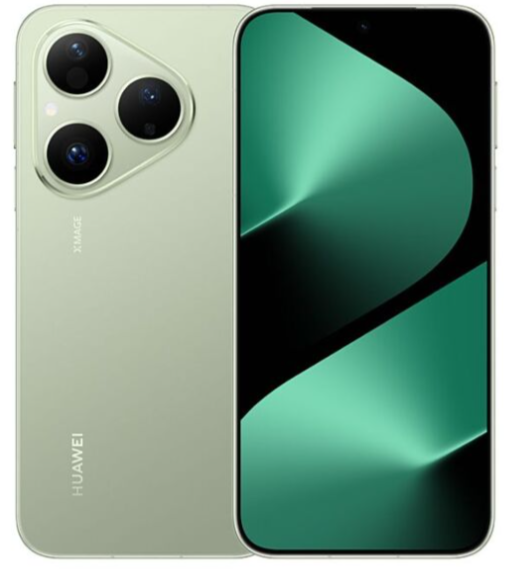
The wallpapers follow a consistent abstract style with a glass-like aesthetic. Each design comes in two versions, one light and one dark, resulting in 20 unique patterns with visual variations. The images shared so far are compressed, but full-resolution versions are available through the source link.
Earlier, Mystic Leaks also shared details about the Pixel 10 series color options. The base Pixel 10 will come in Obsidian (black), Blue, Iris (purple), and Limoncello (yellow). The Limoncello color is inspired by the Italian lemon liqueur. The higher-end Pixel 10 Pro and Pixel 10 Pro XL will be available in Obsidian, Sterling (gray), Porcelain (white), and Green.
The lineup includes four devices: Pixel 10, Pixel 10 Pro, Pixel 10 Pro XL, and Pixel 10 Pro Fold. All are expected to be announced together later this year. Google hasn’t confirmed the event date yet. The Pixel 9 was announced in August, while the Pixel 8 came out in October.
On the hardware front, the Pixel 10 series will debut the new Tensor G5 chip. It’s the first Tensor chip to be made by TSMC, using its 3nm N3E process. The chip has one Cortex-X4 core, five Cortex-A725 cores, and two Cortex-A520 cores. It includes Google’s custom TPU for on-device AI.
It also uses TSMC’s InFO-POP packaging and replaces Samsung-made parts with components from MediaTek, VeriSilicon, Chips&Media, and Google’s own ISP. This shift gives Google more control over the hardware.
For more daily updates, please visit our News Section.
Motorola is working on another G series phone called the Moto G96, expected to launch soon alongside the Moto G86. While there’s no official announcement yet, a new leak from Android Headlines shows images and key specs of the Moto G96.
The phone will feature a 6.67-inch curved pOLED display with a 144Hz refresh rate, 10-bit color, and Water Touch 2.0. It has a hole-punch cutout for the selfie camera. The design looks similar to the Moto G85, unlike the G86, which is expected to come with a flat display.
The Moto G96 will be available in four colors, all made with vegan leather: Cattleya Orchid (lavender), Dresden Blue, Greener Pastures, and Ashleigh Blue.
Inside, the phone is said to run on the Snapdragon 7s Gen 2 processor. It will come with 12GB of RAM and 256GB of storage. The 7s Gen 2 is a step up from the Snapdragon 6 Gen 4 used in the Moto G95, although Motorola is not using the newer 7s Gen 3.
The rear camera setup includes a 50MP Sony LYTIA 700C main sensor and an 8MP macro lens. The front camera is expected to be 32MP. The phone will have a 5,500mAh battery. Pricing details will be made official at launch, however, the phone is expected to launch below the ₹25,000 mark in India, which converts to around US$270.
For more daily updates, please visit our News Section.
Red Magic has officially launched the Red Magic 10S Pro and 10S Pro+ in China, introducing its most powerful gaming smartphones yet. Both devices are powered by Qualcomm’s latest Snapdragon 8 Elite Leading Edition processor, clocked up to 4.47GHz, and backed by up to 24GB of LPDDR5T RAM and 1TB of UFS 4.1 Pro storage.
The global launch of the Red Magic 10S Pro is scheduled for June 5, 2025, at 8:00 AM EDT. Ahead of this, Red Magic is hosting a sign-up event from May 26 to June 17, offering participants a chance to win a free 10S Pro or a full refund on their purchase.
The phones feature a 6.85-inch 1.5K OLED BOE Q9+ display with a 144Hz refresh rate, 960Hz touch sampling rate, and a screen-to-body ratio of 95.3%. The panel supports peak brightness of 2000 nits, 10-bit color depth, DC dimming, and 2592Hz PWM dimming for flicker-free viewing. RedMagic’s self-developed RedCore R3 Pro chip enhances gaming visuals with 2K+120FPS super-resolution and frame concurrency.
Cooling is managed by composite liquid metal cooling 2.0, a 3D ice-step vapor chamber covering 12,000mm², superconducting copper foil, and a built-in 23,000 rpm centrifugal fan. The design continues RedMagic’s cyberpunk aesthetic, with a flush rear camera housing and a visible spinning fan aligned with the cameras.
The Red Magic 10S Pro and 10S Pro+ are also the first in the series to include a PC game emulator, enabling compatibility with several titles on the Steam platform. Additional features include 520Hz shoulder triggers, multi-function NFC, 3.5mm audio jack, dual stereo speakers, three mics, and X-axis linear motors for enhanced haptics.
Camera hardware includes a 50MP main OmniVision sensor with OIS, a 50MP ultra-wide lens, and a 2MP macro camera. The 16MP front camera is embedded beneath the display using a new generation of AI under-screen technology.
The RedMagic 10S Pro houses a 7050mAh battery with 80W charging, while the 10S Pro+ gets a larger 7500mAh silicon-carbon battery and 120W charging, reaching 100% in 35 minutes.
For more daily updates, please visit our News Section.
Google’s custom chips are getting a new home. According to a report from Digi Times, Google is working out a long-term deal with TSMC to manufacture its Tensor processors for future Pixel phones.
The agreement will reportedly last anywhere from three to five years. If everything goes as planned, TSMC will be granted the rights to manufacture Tensor chips from the upcoming Pixel 10 to the Pixel 14.
This is a big move. Google has relied on Samsung Foundry since the debut of the original Tensor chip. However, as the Samsung Foundry is facing yield issues with its own Exynos 2500 SoC, Google seems to be taking a step in the right direction.
The Pixel 10’s Tensor G5 will be the first chip to come out of the new TSMC partnership. It will be manufactured on TSMC’s N3E process, a more advanced version of the 3nm node.
Compared to Samsung’s 4nm process used in the Tensor G4, this should bring better performance, lower power draw, and improved thermal efficiency. Basically, all the things Google’s chips have been criticized for.
Tensor G5 will be the first Tensor chip by TSMC
The Tensor G5, internally called “Laguna,” will come with a pretty typical layout: one Cortex-X4 core for performance, five Cortex-A725 cores for mid-level tasks, and two smaller Cortex-A520 cores for efficiency.
The main focus here is still on Google’s own TPU, its custom AI hardware that powers a lot of the on-device machine learning features, like voice typing, photo processing, and more. The goal is to keep more of that work local to the device instead of relying on the cloud.
Google is also using TSMC’s InFO-POP packaging for the chip, which should help make it thinner and better at handling heat. And it’s not just the foundry that’s changing. The Tensor G5 is dropping a number of Samsung-made components, too.
The image signal processor is now designed by Google itself. The display controller comes from VeriSilicon, the video codec from Chips&Media, and the modem is being sourced from MediaTek. It’s a pretty clear signal that Google wants more control over its hardware stack, while slowly distancing itself from Samsung’s ecosystem.
For more daily updates, please visit our News Section.
With the launch of the iQOO Neo 10, the company has expanded the Neo 10 lineup in the Indian market. Back in March 2025, the iQOO Neo 10R made its debut in India. So with both models being budget flagships, here’s everything different about these two devices.
iQOO Neo 10 vs iQOO Neo 10R: Design and Display
In terms of design, you can immediately tell that both devices are a part of the same family. They appear quite similar, with a distinct rounded square camera module at the back. But while the Neo 10 comes in Inferno Red and Titanium Chrome, the Neo 10R is available in MoonKnight Titanium and Raging Blue options.
iQOO Neo 10
On the front, the similarities appear once again as both models sport a tall 6.78-inch 1.5K AMOLED display with a 144Hz refresh rate. The iQOO Neo 10 has a few advantages, including a 4320Hz PWM dimming and higher peak brightness of 5500 nits. Interestingly, the iQOO Neo 10R brings a faster 480Hz touch sampling rate over the Neo 10’s 360Hz touch sampling rate.
Performance
iQOO Neo 10R
In terms of performance, the iQOO Neo 10 easily takes the lead thanks to Qualcomm’s newer and more powerful Snapdragon 8s Gen 4 SoC. The Neo 10R, on the other hand, packs the older Snapdragon 8s Gen 3 SoC. The former also tops out at 16GB + 512GB, while the latter’s highest variant offers 12GB + 256GB only. Since the iQOO Neo 10 is a next gen processor, you get better performance and power efficiency overall. The Snapdragon 8s Gen 4 also brings a big update on graphical performance, making it a great chip for mobile gaming.
Battery & Charging
iQOO Neo 10R 5G
Even in terms of battery capacity and charging speeds, the Neo 10 has the advantage with a humongous 7,000mAh battery pack that supports 120W wired fast charging. The iQOO Neo 10R houses a smaller but still notable 6,400mAh cell, with support for slower 80W wired fast charging.
Pricing and Availability
As of right now, the iQOO Neo 10R sells in India for around 27,000 INR for the base 8GB + 128GB model. This makes it a great choice to consider for those looking for a gaming phone at a strict budget of under 30,000 INR. However, the new iQOO Neo 10 isn’t a lot more expensive as it starting from 31,999 INR for the 8GB + 128GB model. For a slightly higher price tag, you get a larger battery, faster charging, and a more advanced chipset that can handle gaming better.
For more daily updates, please visit our News Section.
It has just been a month since the Oppo Find X8 Ultra came out, but its successor is already making headlines in the rumor mill. The latest headline is about the camera specs of the Find X9 Ultra, coming straight out of China.
Oppo Find X8 Ultra
The leak comes from Digital Chat Station, a tipster who is known for providing early information on upcoming phones. According to their most recent post, the Find X9 Ultra is currently in the prototype stage with some notable camera upgrades over its predecessor.
A 200MP telephoto?
The phone is said to include a 200-megapixel main camera with a large sensor, a 50-megapixel ultra-wide camera, another 200-megapixel periscope telephoto camera (also with macro capabilities), and a second 50-megapixel “super periscope” sensor that’s rumored to support 10x optical zoom.
The leak also includes a reference to the model number SM8850, which lines up with Qualcomm’s upcoming Snapdragon 8 Elite 2 chip. That tracks with earlier reports suggesting that while the standard Find X9, X9+, and X9 Pro will use MediaTek’s Dimensity 9500 and might show up in October, the Ultra model will come later (possibly in early 2026) and feature Qualcomm’s next-gen flagship chip.
Aside from the camera, the X9 Ultra is expected to have a 6.82-inch flat OLED display with a 2K+ resolution and 120Hz refresh rate. It’s also rumored to run ColorOS 16, based on Android 15. That software is expected to be officially announced sometime in Q3 this year.
No word yet on battery size or charging specs, but given Oppo’s recent releases, it probably won’t be anything too out of line. More details are likely to show up in the coming months.
For more daily updates, please visit our News Section.
Your phone falling into the water is probably one of the biggest fears people used to have. But improved durability and protection have allowed smartphones to survive these momentary plunges in recent years. However, this one Samsung Galaxy S23 Ultra managed to handle a lot more than a simple submersion after it faced arctic conditions.
Is the Galaxy S23 Ultra Arctic Proof?
The South Korean tech giant shared an interesting incident via the Samsung Newsroom. The story is from a Swedish professional wilderness guide, Mikael Krekula, who was testing out sonar equipment on the frozen Kalix River. But during these tests, his Galaxy S23 Ultra slipped from his gloved hands and fell into an ice fishing hole. The 2023 Samsung flagship was submerged in freezing ice-cold water and settled around three meters below the surface.
Mikael stated that “At that moment, I felt like I had donated my entire digital life to the river — photos, ID, credit cards and all my apps gone in an instant. It wasn’t just a phone to me. It was my work companion, essential in everything I do.” But thankfully, the Galaxy S23 Ultra managed to make a complete recovery despite facing such harsh conditions. A simple dip is understandable, but the device survived for around five hours.
He quickly launched a recovery mission and drilled eight surrounding ice holes to be able to reach his smartphone, and used a series of jerry-rigged tools (branches, shovel, and plastic bag). After getting a five hour ice bath, the Galaxy S23 Ultra managed to power on like nothing ever happened. To recall, the flagship phone features an IP68 rating that offers up to 1.5 meters of freshwater resistance for 30 minutes and dust proofing as well.
For more daily updates, please visit our News Section.
Red Magic has just announced a pair of new flagship gaming smartphones in China. The Red Magic 10S Pro and Red Magic 10S Pro+ arrive with powerful hardware, massive batteries, and various features that helps make them a great device for mobile gaming enthusiasts. So here’s everything you need to know.
The Red Magic 10S Pro lineup retains the active cooling design with the “Hot Wheels” system, which is a physical cooling fan built into the device. This is paired with a large VC mechanism that helps keep the device cool when gaming. Red Magic’s latest devices have the same design as its predecessors, with flat edges and a flat back. There are also the 520Hz gaming shoulder keys that mimic controller triggers.
On the front, the Red Magic 10S Pro models sport a tall 6.85-inch flat OLED (BOE Q9+) display, with a 1.5K resolution, 144Hz refresh rate, up to 960Hz touch sampling rate, and 2000 nits of peak brightness. You also get a full display experience as the selfie camera is housed under the screen.
2. Top-end Hardware
The Chinese smartphone maker released the Red Magic 10S Pro and Red Magic 10S Pro+ with the overclocked Snapdragon 8 Elite Leading Edition SoC, which is paired with LPDDR5T RAM and UFS 4.1 storage. Both models run on the Android 15 OS based Redmagic AI OS 10.0. For optics, the rear has a 50MP (Main) + 50MP (Ultrawide) + 2MP (Macro) camera setup, while the front has a 16MP selfie sensor.
A gigantic 7,500mAh battery pack powers the Red Magic 10S Pro+ with 120W wired fast charging support. Meanwhile, the base Red Magic 10S Pro supports 80W fast charging on a smaller (but still humongous) 7,050mAh cell. Other notable features include a 3.5mm audio jack, Bluetooth 5.4, NFC, WiFi 7, an in-display fingerprint scanner, an Infrared sensor, and dual SIM support. But one of the unique feature that this phone offers is support for an in-built PC emulator that makes it compatible with certain PC games via Steam.
3. Pricing and Availability
The Red Magic 10S Pro have been announced in Dark Knight and Day Warrior along with Deuterium Front Transparent Silver Wing variants. Meanwhile, the Red Magic 10S Pro+ has Dark Quantum, Dark Knight, and Silver Wing variants as well. These have also been available in multiple storage configurations, so here are their pricing details:
RedMagic 10S Pro
12GB + 256GB – 4999 yuan
16GB + 512GB – 5499 yuan
Red Magic 10S Pro Deuterium Front Transparent Edition
The company has also announced the Red Magic 10S Pro Mingchao Limited Edition model with 16GB + 512GB for 5999 yuan. These gaming phones are available for order in China right now, while the special edition variant will go on sale in June.
For more daily updates, please visit our News Section.
Samsung’s Galaxy A56 has hit a snag thanks to the May update, leaving some devices stuck on the boot screen. Thankfully, a user-discovered workaround offers a quick fix, sparing users from drastic measures.
The May 2025 update for the Galaxy A56 introduces Gemini Side button support, fixes known security issues, and is supposed to offer a smoother One UI experience overall. However, for some users, this update has caused a major hiccup: devices freezing on the “gears” loading screen, unable to boot fully. The issue, reported widely on forums like Reddit and Samsung Community, has sparked frustration among the affected A56 users, with their devices stuck in an endless initializing loop.
Here’s the fix:
However, the solution is quite simple: remove the SIM card, then restart the phone by holding the Volume Down and Power buttons until it reboots. Once the home screen appears, reinsert the SIM card. This method, confirmed by multiple users on Reddit and Samsung forums, has proven effective.
Though not an official solution, this workaround avoids the need for a factory reset, which would erase all data. Samsung has yet to acknowledge the issue formally, but a follow-up patch is likely in the works. For now, the SIM-removal trick is the go-to solution. If your A56 is stuck, try it and share your experience on social platforms.
Not every Galaxy A56 is affected, as many users report successful updates. Still, the boot issue is prevalent enough to raise concerns about the beta testing process and the overall stability of the package and upcoming builds. While this particular issue has an easy fix, not all update-related problems are as simple. That’s why it’s best to wait a week or two and check online if everything is stable before tapping ‘Download’ or ‘Restart now’.
Samsung’s next mid-range, the Galaxy A57, is entering he conversation with the discovery of its rumored Exynos 1680 processor. Spotted by GalaxyClub, this chip promises to elevate performance, hinting at exciting upgrades for the 2026 release.
Samsung’s Galaxy A-series continues its annual refresh, with the Galaxy A57 set to succeed the A56, which debuted in 2025 with the Exynos 1580. A new leak from GalaxyClub reveals the A57’s likely processor, the Exynos 1680 (model S5E8865), marking Samsung’s next step in mid-range chip development. The Exynos 1680 is expected to feature the brand’s in-house Xclipse 550 GPU, potentially based on AMD’s RDNA 3.5 architecture. For those unfamiliar, RDNA 3.5 is a part of the upcoming Exynos 2500, which is rumored to power the Galaxy S26 and the Z Flip 7 in most markets.
While performance specifics of the Exynos 1680 remain under wraps, it should build on the A56’s Exynos 1580, which scored an average of 906K on AnTuTu with a tri-cluster CPU (1x Cortex-A720 at 2.9GHz, 3x Cortex-A720 at 2.6GHz, 4x Cortex-A520 at 1.95GHz), per NanoReview. Speculation suggests a 15-25% performance boost, with AnTuTu scores potentially hitting 1.1-1.2M and a GPU score of 300-350K.
Samsung Galaxy A56 (left) and Galaxy A36 (right)
Nonetheless, none of this is official, and it’s best to wait for benchmark listings, which are likely to surface as we get closer to launch. The Exynos 1680 is expected to retain the 4nm process but may adopt a 1+4+3 core configuration.
To recall, the Galaxy A56 brought a 6.7-inch 120Hz Super AMOLED, 50MP triple cameras, 45W charging, and a 5,000mAh battery. For the A57, expectations include a telephoto camera with 2x or 3x optical zoom to compete with brands like Vivo, and 4K 60fps video recording. With a rumored price of ₹45,990 (~$550) in India, the A57 will launch sometime in the first half of 2026.
The Vivo T4 and T4x phones have already launched in India and the brand is said to be working on two more T-series models, such as the T4 Ultra and T4 Lite. A new report claims that Vivo is preparing to introduce the Vivo T4 Ultra in India as early as June, aiming to set a new benchmark in the lineup. The new phone is said to bring significant performance upgrades and advanced features.
Vivo T4 Ultra key details revealed
Vivo T3 Ultra
According to XpertPick, the Vivo T4 Ultra will come equipped with the MediaTek Dimensity 9300 Plus chipset, which is capable of surpassing 2 million points on AnTuTu—marking a significant jump from its previous generation, which featured the Dimensity 9200+ chip. The device is also expected to run on FunTouch OS 15, featuring new AI enhancements like AI Image Studio, AI Erase 2.0, and Live Cutout.
To recall, last year’s Vivo T3 Ultra was based on the China-exclusive Vivo S19 Pro. While both shared similar specifications, the T3 Ultra did not include a telephoto camera, which was available on the S19 Pro. In line with this trend, it’s speculated that the upcoming Vivo T4 Ultra might be based on the Vivo S20 Pro, which was launched in December 2024 in China.
The Dimensity 9300+ powered S20 Pro features a 6.67-inch OLED display with 1.5K resolution and 120Hz refresh rate, a 5,500mAh battery with 90W fast charging, and a triple rear camera setup consisting of a 50-megapixel main OIS sensor, a 50-megapixel ultra-wide, and a 50-megapixel periscope telephoto camera offering 3x optical zoom. Additionally, it sports a 50-megapixel front camera.
For more daily updates, please visit our News Section.
We use cookies on our website to give you the most relevant experience by remembering your preferences and repeat visits. By clicking “Accept”, you consent to the use of ALL the cookies.
This website uses cookies to improve your experience while you navigate through the website. Out of these, the cookies that are categorized as necessary are stored on your browser as they are essential for the working of basic functionalities of the website. We also use third-party cookies that help us analyze and understand how you use this website. These cookies will be stored in your browser only with your consent. You also have the option to opt-out of these cookies. But opting out of some of these cookies may affect your browsing experience.
Necessary cookies are absolutely essential for the website to function properly. This category only includes cookies that ensures basic functionalities and security features of the website. These cookies do not store any personal information.
Any cookies that may not be particularly necessary for the website to function and is used specifically to collect user personal data via analytics, ads, other embedded contents are termed as non-necessary cookies. It is mandatory to procure user consent prior to running these cookies on your website.