The Vivo T4 and T4x phones have already launched in India and the brand is said to be working on two more T-series models, such as the T4 Ultra and T4 Lite. A new report claims that Vivo is preparing to introduce the Vivo T4 Ultra in India as early as June, aiming to set a new benchmark in the lineup. The new phone is said to bring significant performance upgrades and advanced features.
Vivo T4 Ultra key details revealed
Vivo T3 Ultra
According to XpertPick, the Vivo T4 Ultra will come equipped with the MediaTek Dimensity 9300 Plus chipset, which is capable of surpassing 2 million points on AnTuTu—marking a significant jump from its previous generation, which featured the Dimensity 9200+ chip. The device is also expected to run on FunTouch OS 15, featuring new AI enhancements like AI Image Studio, AI Erase 2.0, and Live Cutout.
To recall, last year’s Vivo T3 Ultra was based on the China-exclusive Vivo S19 Pro. While both shared similar specifications, the T3 Ultra did not include a telephoto camera, which was available on the S19 Pro. In line with this trend, it’s speculated that the upcoming Vivo T4 Ultra might be based on the Vivo S20 Pro, which was launched in December 2024 in China.
The Dimensity 9300+ powered S20 Pro features a 6.67-inch OLED display with 1.5K resolution and 120Hz refresh rate, a 5,500mAh battery with 90W fast charging, and a triple rear camera setup consisting of a 50-megapixel main OIS sensor, a 50-megapixel ultra-wide, and a 50-megapixel periscope telephoto camera offering 3x optical zoom. Additionally, it sports a 50-megapixel front camera.
For more daily updates, please visit our News Section.
Poco’s upcoming F7 smartphone has appeared on multiple certification platforms in Asia, signaling its global launch is not too far off. After bagging the FCC certification earlier this month, the device has secured approvals in Thailand and Indonesia, confirming its readiness for market entry. Here’s everything that has surfaced about the Poco F7’s progress so far.
Poco F7 bags NBTC and SDPPI certifications
Poco F7 NBTC certified in Thailand
The Poco F7 has been listed on Thailand’s NBTC database under the model number 25053PC47G, confirming support for 5G connectivity. Simultaneously, it has been approved by the SDPPI certification authority in Indonesia. These regulatory green lights clear the path for the phone’s launch in both Southeast Asian markets.
Poco F7 SDPPI certified in Indonesia
Earlier this year, the Poco F7 Pro and Poco F7 Ultra, were introduced, and now this standard model is poised to join the lineup. Additional certifications have come from India’s BIS, Singapore’s IMDA, and Europe’s EEC, suggesting a broad global release is on the horizon. Rumors also suggest that the F7 is essentially a rebranded version of the Redmi Turbo 4 Pro, which debuted in China last month.
Poco F7 specifications (rumored)
According to reports, the Poco F7 will feature a 6.83-inch OLED LTPS display offering 1.5K resolution and a 120Hz refresh rate. Powering the device could be the Snapdragon 8s Gen 4 chipset. Interestingly, battery capacities may vary by region — with the global variant expected to feature a 6,550mAh battery, while the Indian version may get a larger 7,550mAh unit. Both are likely to offer 90W charging speeds.
For imaging, the Poco F7 could feature a 20-megapixel front camera and a dual rear camera setup comprising a 50-megapixel main sensor and an 8-megapixel ultra-wide sensor. Other expected features include an IR blaster, dual speakers, an IP68/69-rated build, and HyperOS 2.0 based on Android 15. It is speculated that the device will go official in June.
For more daily updates, please visit our News Section.
In this article, we will review a Super Affordable Entry-Level Phone – MEIZU Mblu 22 Pro. Within limited discount offers, this phone can even be available for less than $80 – arguably the most budget-friendly device we’ve ever tested. These devices primarily target users with needs of essential daily functions, such as individuals who prefer straightforward technology or simply require a reliable backup.
Let’s approach the Mblu 22 Pro with appropriate expectations. By the end of this review, you’ll gain clear insight into the current evolution of entry-level smartphones.
Unboxing
Let’s examine the package contents: basic manuals, 18W charger, USB-C cable, transparent phone case, SIM eject tool, and a pre-applied screen protector. While our phone didn’t have the screen protector pre-applied, the official website specifies retail units include factory-installed protection – yours likely won’t require manual application.
Design
The Mblu 22 Pro’s design follows mainstream conventions. The circular camera module positioned centrally contains three lenses (details forthcoming). Available in three colors, the white and blue variants feature subtle concentric patterns on the back. From a distance, it could easily be mistaken for a premium device. With IP52 dust/water resistance certification, an all-plastic body, and specialized impact-resistant construction, reliability shouldn’t be a concern.
The top edge houses an increasingly rare 3.5mm headphone jack and speaker grille. While audio quality won’t impress audiophiles, the loud volume output proves ideal for elderly users.
The bottom contains the USB-C port and hybrid SIM tray (supports dual SIMs or SIM+microSD card). NFC and side-mounted fingerprint recognition are both present – functionally, the Mblu 22 Pro leaves little room for complaint.
By the way, the operating system on this phone is Flyme Lite. Compared to FlymeOS, the Lite version is closer to stock Android. So don’t expect too much from its system.
Display
The 6.79″ 720P LCD display won’t satisfy those accustomed to flagship-grade screens. But at $80, let’s maintain perspective. The inclusion of a 120Hz refresh rate deserves mention. As long as the screen functions properly (which it does), this specification remains acceptable for its price tier.
Performance & Battery
It is powered by MediaTek’s Helio G81 chipset (AnTuTu score ≈230,000), and it handles web browsing and TikTok smoothly. Video playback works adequately for SDR content.
The 5000mAh battery with 18W charging easily lasts a full day, given its non-gaming usage scenario. Considering the price point, MEIZU has maximized component value.
Camera
The Mblu 22 Pro features a 50MP main camera and a 2MP macro lens. Sample images below demonstrate its capabilities – at this price, capturing recognizable subject matter constitutes success.
Main CamMain CamMacro Cam
Regarding the third camera: No functional information exists in the system interface or official documentation. Consider this module decorative until further notice.
Conclusion
Most tech enthusiasts won’t much covet this device, but the Mblu 22 Pro serves vital needs: calling, basic web browsing, and video playback with reliable software, most importantly, at a super affordable price tag. Its existence proves crucial for wide users who are concerned about budget and value for money. By delivering essential smartphone functions under $80, MEIZU is truly practicing universal access to mobile technology.
Google‘s highly anticipated Pixel 10 series has just surfaced in another report. This time, we get more information regarding the Pixel 10, Pixel 10 Pro, Pixel 10 Pro XL’s design, revealing new color options. So here’s everything that was leaked.
Google Pixel 10 Gets a new Limoncello
The latest info arrives from Mystic Leaks (Via AndroidAuthority) on Telegram. Reportedly, the Search Engine giant plans on releasing the Pixel 10 in four bright color options, which would include Obsidian (Black), Blue, Iris (Purple), and Limoncello (Yellow). The new yellow option is the new variant, which is inspired by the Italian lemon liqueur. For the higher end options, the Pixel 10 Pro and Pixel 10 Pro XL might come in Obsidian (Black), Sterling (Gray), Porcelain (White), and Green.
Google Pixel 10 Leaked Renders
So unlike the base model, the more expensive variants come with more sober/standard colors. Keep in mind that this is still just an unconfirmed report, so take this news with a pinch of salt. Since the official launch is still a while away, Google could even make changes to the final marketing names for these colors. Just yesterday, the Google Pixel 10 Pro was spotted in the wild during a commercial shoot.
This is all the information we have at the moment, so stick around for more. In related news, the Google Pixel 10 lineup could get a display upgrade with PWM dimming and flicker reduction to make it easier on your eyes. Meanwhile, the Pixel 9 series is getting an attractive discount for Memorial Day. An older Pixel 8 model even managed to survive 4 days in a tub of hot water, so click here to read about that.
For more daily updates, please visit our News Section.
A chilling video shared on Reddit captures a Samsung Galaxy S21 FE developing a green line on its AMOLED display mid-update, reigniting concerns about software-induced OLED defects. The incident, tied to One UI 6.1, highlights a costly issue plaguing Samsung users.
The Green Line issue, a persistent problem for AMOLED-equipped smartphones, has struck again, this time caught on camera. A Reddit user posted a video showing their Galaxy S21 FE developing a vertical green line during a One UI 6.1 update installation, released in April 2024. The user had avoided the update for a year, wary of widespread reports linking it to OLED defects across Samsung models like the S21 and S22 series.

The video reveals the update progressing smoothly until 60%, when a thin green line appeared, thickening as the installation continued. The user, who recorded the incident live, later shared images of the prominent line, a defect often rendering displays unusable. Seeking help, they approached Samsung Support, but the service center declined a free replacement, quoting ₹17,000 (~$200) for repairs—almost half the phone’s current price tag.
Samsung’s one-year warranty typically excludes such issues on older devices, leaving users with hefty repair bills. While Samsung has offered free screen replacements in some cases with proper escalation, many affected users face frustration. We hope smartphone makers take this issue seriously, and in the meantime, users are advised to wait at least a few weeks before installing the update.
Until the issue is addressed, users are advised to wait a few weeks and ensure everything is okay with the update package before installing it.
The iQOO Neo 10 has finally been announced as the brand’s latest budget flagship phone. It arrives with Qualcomm’s latest high end processor and an impressively larger battery pack. So read on for its specs, features, pricing, and more.
iQOO Neo 10 Specs: New Chip, Big Battery, & Ultra Smooth Display
The Chinese smartphone maker has announced the iQOO Neo 10 with a tall 6.78-inch AMOLED display with a 1.5K resolution, 144Hz refresh rate, 5500 nits of peak brightness, and up to 4320Hz PWM dimming. Under the hood, it is equipped with Qualcomm’s new Snapdragon 8s Gen 4 SoC, which will also power other budget flagships. This processor is paired with up to 16GB of LPDDR5X Ultra RAM and 512GB of UFS 4.1 storage. These specs make it a perfect smartphone for mobile gaming enthusiasts on a set budget.
iQOO Neo 10
A massive 7,000mAh battery pack powers this device, which supports 120W wired fast charging. The rear has a 50MP Sony LYT600 main camera along with an 8MP ultra wide angle lens. Meanwhile, the front has a 32MP shooter for selfies and video calls. Out of the box, the iQOO Neo 10 runs on the Android 15 OS based FuntouchOS 15 with iQOO promising 3 years of OS updates and 4 years of security patches. Other notable features include an in-display fingerprint scanner, NFC, Infrared sensor, IP65 water and dust resistance, WiFi 7, and Bluetooth 5.4.
Pricing and Availability
iQOO’s new affordable flagship arrives in two color options, namely Inferno Red and Titanium Chrome. It is also selling in four storage configurations:
8GB + 128GB – 31,999 INR (roughly 376 US Dollars)
8GB + 256GB – 33,999 INR (roughly 400 US Dollars)
12GB + 256GB – 35,999 INR (roughly 423 US Dollars)
16GB + 512GB – 40,999 INR (roughly 382 US Dollars)
The iQOO Neo 10 will go on sale via Amazon India and the brand’s official website from June 2, with pre-bookings kicking off today. iQOO is offering an instant 2,000 INR bank discoutn for SBI cards, along with a no-cost EMI options, and 4,000 INR exchange bonus. Those who pre-book also get a free iQOO TWS 1e earbuds.
For more daily updates, please visit our News Section.
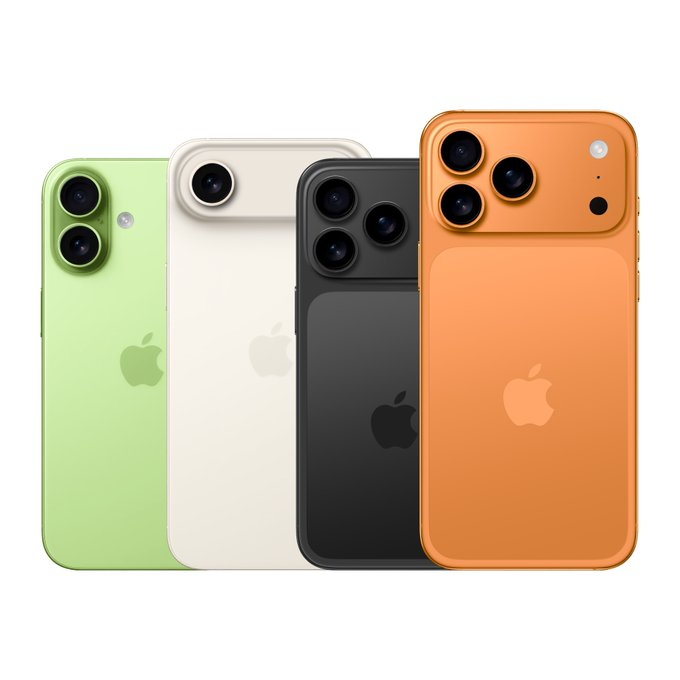
Apple is giving the iPhone lineup its biggest design makeover in years. The upcoming iPhone 17 series, especially the Pro models, is expected to feature a wider rear camera bump that stretches farther across the back of the phone.
The camera lenses will still be aligned on the left, but the LED flash, microphone, and LiDAR sensor could move to the right. There’s also some debate about whether the phones will have a dual-tone design on the back. Some leaks claim it’s happening, others say it’s not.
iPhone 17 Pro camera module
But this isn’t just a one-off redesign. After several years of playing it safe, Apple appears to be shifting gears starting in 2025.
According to a fresh leak out of China, the company is planning major design changes every year for at least the next three iPhone generations.
Punch-holes, under-display sensors, and the road to iPhone 19
Well-known tipster Digital Chat Station reaffirms reports of a camera module redesign in 2025 iPhones in their latest leak. Then, in 2026, Apple is reportedly turning its attention to the front of the phone.
The leak claims the iPhone 18 series will ditch the familiar pill-shaped module for the front camera and Face ID. It will be replaced by a cleaner punch-hole cutout for just the selfie camera.
And where does Face ID go? According to the leak, Apple’s long-rumored under-display Face ID tech could make its debut here, moving the entire system under the screen.
If that wasn’t ambitious enough, a bigger change might come in 2027. The iPhone 19 series is said to be Apple’s first true full-screen iPhone with no notch, no cutout. This means both the Face ID sensors and the selfie camera would sit under the display.
Rumors of a notchless iPhone have been around for a while, but this is the first time we’re hearing a clearer timeline. Of course, pulling off back-to-back design overhauls isn’t easy, even for Apple.
Under-display cameras still have a long way to go. Android brands like RedMagic have been experimenting with the tech for years, but image quality has yet to match what a traditional camera can do. So if Apple ships it in the iPhone 19, it’s possible there will still be trade-offs.
For more daily updates, please visit our News Section.
Android 15 is almost done and dusted, as Google is gearing up for the new OS release — Android 16. It’s confirmed to be released in June for Google Pixels — much earlier than previous releases. Motorola should also be preparing for a quick release. However, many of its devices have already reached the end of the road and won’t be getting any OS updates, including Android 16.
With the Android 16 release approaching, you might want to confirm if your Motorola device will miss out on the upgrade. We’ve prepared a list below that includes the devices that are unlikely to get the Android 16 update.
Motorola phones that won’t get Android 16 update
Motorola has yet to confirm which of its devices will be upgraded to Android 16 and which will not. So, we had to rely on the existing software policy and a little bit of guesswork to make the list.
Motorola Edge series
Motorola Edge 40
Motorola Edge 40 Neo
Motorola Edge+ (2023)
Motorola Edge (2022)
Older Edge models
Motorola Razr series
Motorola Razr 2022
Motorola Razr
Older Razr models
Motorola Moto G series
Moto G Stylus 5G (2024)/G Stylus 5G (2023)
Moto G Power 5G (2024)/G Power 5G (2023)
Moto G (2024)/G (2023)
Moto G84/G82
Moto G73/G72/G71/G71s
Moto G64/G62/G60/G60s
Moto G54/G54 Power/G53/G52
Moto G45/G42/
Moto G34/G32
Moto G24/G24 Power/G23
Moto G15/G15 Power/G14/G13
Moto G05/G04/G04s
Moto G Play (2024)/G Play (2023)
Older Moto G models
Motorola Moto E series
Moto E32/E32s
Moto E22/E22i/E22s
Moto E13/E14/E15
Older Moto E models
Motorola tablets
Moto Tab G70
Moto Tab G62
Motorola Tab G20
Lenovo Moto Tab
These Motorola phones and tablets will unlikely get Android 16 and future OS releases. If yours is on the list, I recommend waiting until the official list is out before upgrading to a newer model.
Motorola’s current software update policy is a mess
Motorola has an inconsistent software update policy. Take the Edge 50 Pro and Edge 50 Neo, for example, which promises OS updates for five generations, but the newer Edge 60 models will only get three. Ideally, Motorola should offer longer software support on newer models or at least match the previous generation’s, but downgrading it is certainly not encouraging.
Even the premium Razr 2025 models, launched this year, only promise three OS updates. Things only get worse as you move to mid-range and cheaper models, with most of them maxing out at just two.
Worst of all, Motorola hasn’t even announced future update eligibility for many models — and no, that’s not only true for older models but also for newer models, including the Moto G15 and G15 power.
In 2025, where brands like Samsung are offering as many as six OS updates to mid-range phones and seven to flagships, Motorola maxing out on just three is a big disappointment. The brand should offer at least five OS updates to high-end phones and at least three to budget models — and most importantly, it should clearly announce how many OS updates each device is eligible for. Motorola phones are great, otherwise.
Apple’s latest 13-inch MacBook Air M4 might just be the most balanced laptop you can buy today. And with a limited-time deal bringing its price down to ₹86,990 in India ($849 in the US), it’s not just powerful and portable, it’s also starting to feel like a steal.
From college students and creative professionals to remote workers and everyday users, the new M4-powered Air checks nearly every box that matters.
At first glance, not much has changed in terms of hardware aesthetics. The MacBook Air M4 carries over the same ultra-sleek chassis from its M2 and M3 predecessors, a remarkably thin and lightweight design that weighs just 2.7 pounds (1.2 kg) and measures 0.44 inches thick.
It still feels like the future, especially when you open the lid and see the vibrant 13.6-inch Liquid Retina display. Apple’s usual color suspects, Midnight, Silver, and Starlight, return, but this time there’s also a new Sky Blue option that shimmers beautifully under the light.
Underneath that familiar shell, though, everything gets a serious upgrade.
2. M4 Power and a Real Neural Leap
Apple’s M4 chip is the real reason this MacBook Air feels like a generational leap. The 10-core CPU, 8-core GPU, and 16-core Neural Engine combination turns this fanless machine into a shockingly capable productivity powerhouse.
Tasks like editing high-res photos in Lightroom, managing massive spreadsheets, and switching between dozens of browser tabs feel frictionless. Even casual video editing in Final Cut Pro hums along smoothly, which wasn’t always a given in older fanless MacBook Air models.
More impressively, Apple has built this machine with Apple Intelligence in mind. It’s not just a performance bump, it’s a signal of the AI-first future Apple is building toward. You’ll find on-device smart features like Mail Summaries, Clean Up in Photos, Genmoji, and Image Playground that lean on the Neural Engine for real-time inference, all while keeping your data private.
3. Display, Battery, and the Everyday Magic
There’s something deeply satisfying about working on a MacBook Air screen. The 13.6-inch display pushes 500 nits of brightness and covers the P3 wide color gamut. Whether you’re watching HDR content on Netflix or color grading your next YouTube upload, it just looks fantastic.
The new 12MP Center Stage camera makes a surprising difference on video calls too. Apple finally brought MacBook Pro-level camera quality to the Air.
Battery life is, again, excellent. Apple claims up to 18 hours of video playback and 15 hours of wireless web use. In real-world usage, it’s easily an all-day device. During testing, it handled a full workday of Slack, Zoom, Chrome, and Spotify without breaking a sweat or needing a charger.
4. The Right Ports and AI-Ready Features
The MacBook Air M4 still comes with two Thunderbolt 4 ports and MagSafe charging, and for the first time, supports dual external 6K displays. That’s a meaningful bump for power users and creatives who rely on multi-monitor setups. It also supports Wi-Fi 6E and Bluetooth 5.3, so it’s as future-proof as any ultraportable right now.
There’s no fan inside, yet thermal performance holds up admirably for a machine this size. And thanks to Apple’s tight hardware-software integration with macOS, everything feels snappy, fluid, and distinctly Mac.
5. The Deal That Seals It
What pushes this laptop into “no-brainer” territory is the current pricing. In India, it’s effectively ₹86,990 with a bank discount, down from its original ₹99,900. In the US, it’s now $849, which is a full $150 off the launch price. Even the higher-tier configurations, like the 512GB SSD and 24GB RAM variants, are seeing all-time low discounts.
Whether you’re upgrading from an Intel-based Mac or switching from Windows, the MacBook Air M4 now hits a rare sweet spot: high performance, premium design, ultra-long battery life, and future-ready AI features, all wrapped in a sub-₹90K or sub-$900 price point.
In a world where most laptops feel like they’re making trade-offs somewhere, the MacBook Air M4 quietly does everything right and it might be the best everyday laptop Apple has ever made.
For more daily updates, please visit our News Section.
The upcoming Samsung foldable phones, such as the Galaxy Z Fold 7 and Galaxy Z Flip FE, have already appeared on the Geekbench benchmarking platform. Today, the Galaxy Z Flip 7, which bears the SM-F766U model number, has also surfaced on the same benchmarking platform, revealing that it is powered by the Exynos chipset.
Samsung Galaxy Z Flip 7 Geekbench listing
As per the Geekbench listing, the upcoming Galaxy Z Flip 7 is powered by Samsung’s Exynos 2500 chipset, which is identified as the “s5e9955” model number in the motherboard field. The listing reveals that the Exynos 2500 is a 10-core CPU designed for efficiency and speed. This processor includes two cores clocked at 1.80 GHz, five at 2.36 GHz, two at 2.75 GHz, and a single high-performance core at 3.30 GHz.
Complementing the CPU is the Xclipse 950 GPU, 12GB of RAM, and Android 15. The device scored 2012 points in the single-core test and 7563 points in the multi-core test. The letter “U” in the model number suggests that the Galaxy Z Flip 7 variant that has emerged on Geekbench is the US variant.
In the past, when Samsung adopted a dual-chip strategy, it offered Snapdragon phones in markets like the US and China, while other markets were treated with the Exynos version. However, now that the Galaxy Z Flip 7’s US variant has appeared with an Exynos chip, it appears that the device may ship with the Exynos 2500 across all markets. At present, it is too early to draw a conclusion about the chipset that will power the Z Flip 7.
Samsung Galaxy Z Flip 6
According to reports, the Galaxy Z Flip 7 will feature a significantly larger 4-inch cover display, a notable design upgrade. The camera setup is expected to remain largely similar to its predecessor, with a 50-megapixel + 12-megapixel (ultra-wide) dual camera setup on the back and a 10-megapixel front camera, while the battery might see a bump to 4,300mAh.
For more daily updates, please visit our News Section.
Huawei just wrapped up a major launch event in China, unveiling the Nova 14 series and its first foldable PC. But the spotlight may soon shift to the company’s next big release: the Pura 80 series.
According to multiple leaks, the lineup will likely include three models — the standard Pura 80, Pura 80 Pro, and a top-tier Pura 80 Ultra. Among the three, the Pro model is now said to feature a custom image sensor developed by Huawei itself.
Huawei Pura 80 Pro to use custom SmartSens sensor
A new report from reliable tipster Digital Chat Station claims the Pura 80 Pro will feature a custom image sensor developed by Huawei. Specifically, it may use the SmartSens SC5A0CS, a 50-megapixel, 1-inch RYYB sensor.
This is in contrast with the tipster’s earlier claim. DCS previously hinted that the Pura 80 Pro would come with a Sony IMX989 sensor. And seems like Huawei was indeed testing the Sony sensor in the engineering machine of the Pura 80 Pro a couple of months ago. But DCS says the company has changed the course while finalizing the hardware.
If Huawei has only swapped out the main sensor, the rest of the rear camera setup may remain unchanged from previous leaks. It is said to have a 50-megapixel ultra-wide lens and a 50-megapixel periscope telephoto macro camera. And reportedly, all three sensors will use a custom RYYB color filter, which enhances low-light performance by increasing light intake by up to 40 percent.
Beyond the camera hardware, the Pura 80 Pro is also rumored to feature a 6.78-inch OLED display with a 1.5K resolution and support for LTPO variable refresh rate.
The Huawei Pura 80 series is expected to launch sometime in the second quarter of this year.
For more daily updates, please visit our News Section.
Xiaomi is preparing to launch a new Redmi gaming tablet by late June. The tablet is expected to debut alongside the Redmi K80 Ultra, which recently passed certifications in China and features a 7500mAh battery with 120W charging.
Redmi Pad Pro 5G
The upcoming Redmi gaming tablet will reportedly include bypass charging and a large battery, just like the K80 Ultra. Both devices are expected to be powered by MediaTek’s flagship Dimensity 9400+ chipset. Other confirmed features include an approximately 8-inch LCD display, dual speakers, and dual-axis motors. The tablet is rumored to be priced competitively, potentially undercutting Lenovo and RedMagic alternatives.
Earlier reports confirmed that Xiaomi is expanding its tablet lineup in 2025, with the Redmi gaming tablet as a key release. Tipster Digital Chat Station suggested a July or August timeline, aligning with Redmi’s previous flagship launch windows. The tablet may serve as a successor to the Redmi Pad Pro.
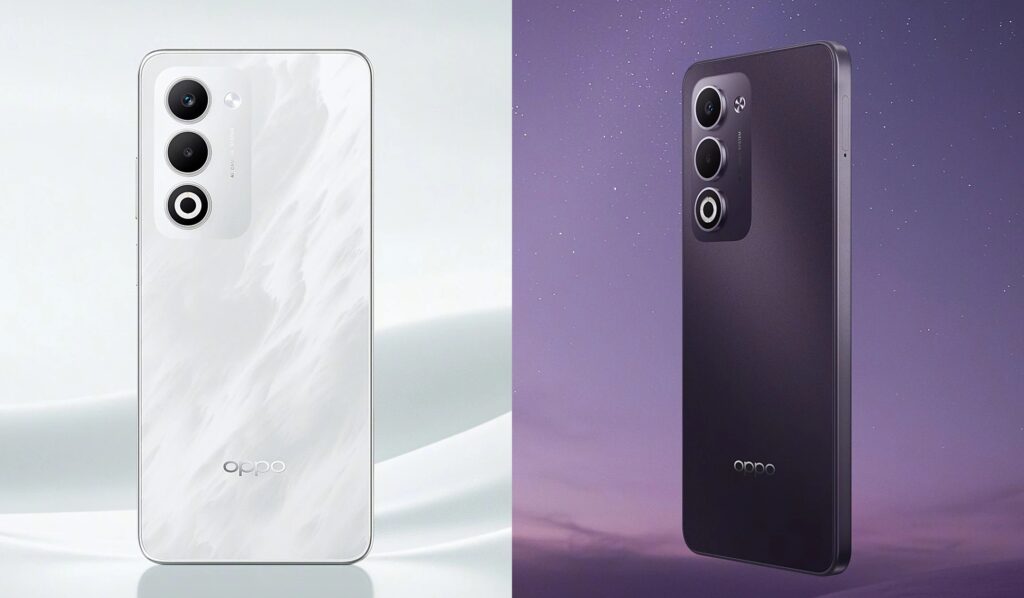
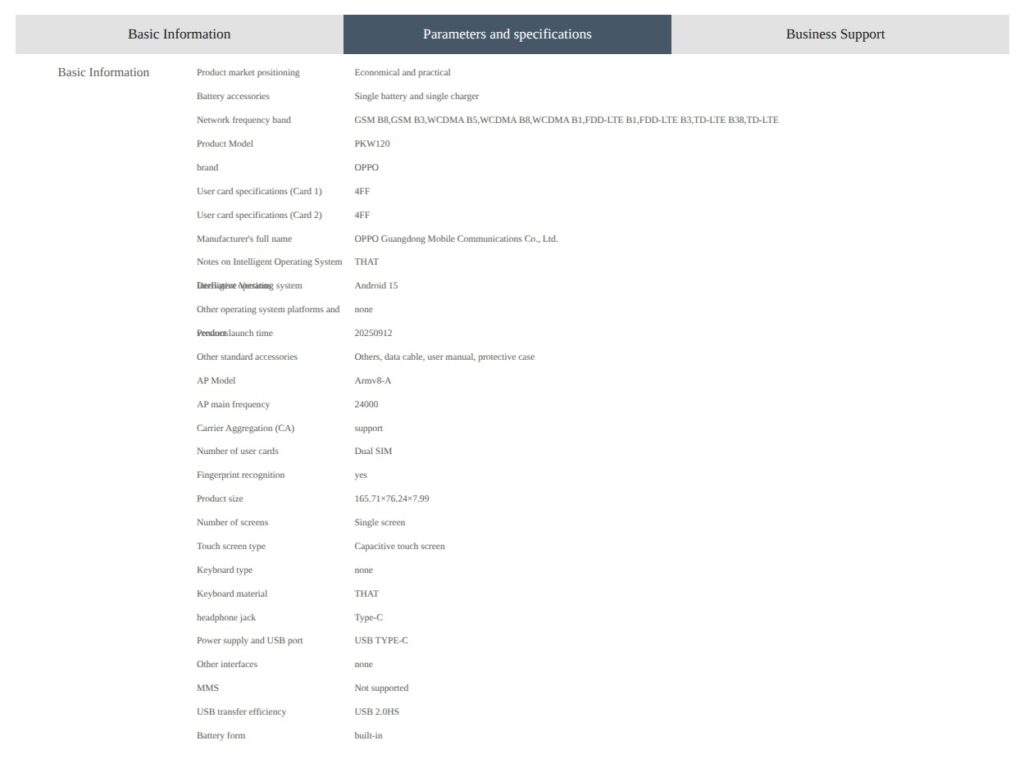
The device is said to feature an 8.8-inch LCD panel with a high refresh rate for smooth gaming visuals. Alongside the Dimensity 9400+, it will include dual X-axis linear motors for improved haptics, dual USB-C ports for flexible connectivity, and a dual-speaker setup for stereo audio.
A metal unibody build is expected, designed for both durability and portability during extended gaming sessions. The Redmi K80 Ultra, launching at the same time, will also include a 1.5K flat OLED screen, an ultrasonic in-screen fingerprint sensor, a metal mid-frame, and 100W fast charging.
For more daily updates, please visit our News Section.
OnePlus is scheduled to launch the OnePlus Ace 5 Racing Edition and OnePlus Ace 5 Ultra (Extreme Edition) phones on May 27 (tomorrow) in China. The same event will also see the arrival of the OnePlus Buds 4 true wireless earbuds. Ahead of the launch, the brand has not only shared a closer look at the new earbuds but also confirmed their price. Keep reading to find out everything OnePlus has officially revealed about the Buds 4 so far.
OnePlus Buds 4 key features
OnePlus Buds 4
The OnePlus Buds 4 aims to deliver a flagship audio experience, combining advanced noise cancellation with premium sound quality. The earbuds offer up to 55dB of noise reduction, supported by a broad 5500Hz frequency range. There’s an upgraded dual microphone setup with AI noise cancellation, which enhances call clarity.
The Buds 4 also comes with dual dynamic drivers designed to provide rich, balanced sound across high and low frequencies. The dual DAC ensures clear and immersive audio, while golden sound tuning promises an optimized listening experience. Other notable features include real-time AI translation and dual-mode translation for smoother conversations.
OnePlus has not yet released the complete specifications sheet, which will most likely be confirmed following the official launch tomorrow.
OnePlus Buds 4 price and availability
The OnePlus Buds 4 will be available for 449 Yuan (~$60), with a special student discount of 30 Yuan, bringing the price down to 419 Yuan (~$4,940). The earbuds will come in two colour options: Pine Green and Deep Space Grey. Sales are set to begin from May 27 at 16:00 in China.
For more daily updates, please visit our News Section.
Google Pixel 9 was launhed late last year with exciting specifications and features across the globe. The latest and powerful Pixel smartphones now gets an impressive discounts. The Memorial Day Sale is finally live, and the Pixel 9 series is getting up to $300 discount in the US. Speciafically, the respective discount of $200 and $300 are applicable on the Pixel 9 Pro 128GB and 512GB storage variants.
Meanwhile, the users can grab the Pixel 9 Pro 256GB at the discount price of $850 via Amazon.
Simialrly, the Pixel 9 is getting a $200 discount on the 256GB storage variant, actually it is available for $650. It is just a $50 expensive from the 128GB storage. Furthermore, the Pixel 9 Pro XL can be yours with a $250 discount on the 256GB storage. In other words, you can grab the Pixel 9 Pro XL 128GB variant for $900 and 256GB storage variant for $950.
Apart from the Google Pixel ecosystem, you can also get in to the galaxy of the Samsung Galaxy smartphones at a good discounts. Samsung Galaxy S25 Ultra 256GB is now available at the $1050, and the 512GB storage variant is on sale for the $1170.
Casio has listed a new limited edition Oceanus Manta, the OCW-S6000PB-7AJF, set to release in June 2025. The watch is priced at ¥385,000 (around $2,700) and will be limited to 600 units.
This model sticks to the usual Manta design but adds a few upgrades. The main highlight is the sapphire glass bezel. It’s cut with 12 outer facets and 60 detailed concave cuts, making the light reflect in different ways depending on the angle. Casio uses blue vapor deposition on the top and bottom, platinum gradation vapor deposition on the sides, and blue sputtering on the vertical surfaces. This gives the bezel a bright, shifting look that’s meant to reflect the line where the sea and sky meet.
The dial uses in-dial solar tech, which means the watch charges through the three sub-dials, allowing the main dial to stay bright white. Blue transparent coating is used on the sub-dials. The 12 o’clock index is blue sputtered, and the second hand is anodized blue. This contrast of blue and white gives the watch a clean and sharp look. City codes are laser-engraved on the inner dial, and most indexes are finished in silver plate.
The case is 10.3mm thick and still includes Bluetooth, radio, solar tech, and world time functions. The body is made of titanium with a titanium carbide treatment to help resist wear and improve color. The titanium bracelet has arrow-shaped H links and polished center links. Parts of the band are Zaratsu-polished for a smoother finish.
Casio has removed the outer titanium bezel frame to highlight the edge-to-edge sapphire glass. The case back is laser-engraved with a unique serial number, and each watch comes in a special box.
For more daily updates, please visit our News Section.
Xiaomi‘s recently unveiled electric SUV, the Xiaomi YU7, has been seen for the first time in its lava orange color. This confirms one of the three color options revealed earlier, alongside emerald green and titanium. The YU7 will launch in July and will be available in three versions: YU7, YU7 Pro, and YU7 Max.
Xiaomi YU7 Lava Orange Real Life images via ITHome
At the front, the YU7 has a closed grille design with a silver Xiaomi logo. It includes triangular vents on both sides and a center trim piece that matches the body color. The headlight setup is placed within a hollow air duct and supports 180-degree wide-angle lighting.
Image via ITHome
The SUV uses a fastback design. The rear features a full-width C-shaped taillight with a clear cover. The car measures 4999 mm in length, 1996 mm in width, 1600 mm in height, and has a 3000 mm wheelbase. The lava orange model also includes white decals and color-matched semi-enclosed wheels.
Xiaomi YU7 – Lava Orange
All models are powered by the NVIDIA Thor platform with 700 TOPS of computing power. The standard setup includes 1 lidar, 1 4D radar, 11 high-definition cameras, and 12 ultrasonic sensors, supporting Xiaomi’s assisted driving system.
Inside, the YU7 uses a wraparound cockpit layout with a large floating central screen. Xiaomi has replaced the flip-up display from the SU7 with the Sky Screen panoramic display. It has a handheld gear shifter, dual wireless phone chargers, and a new horizontal cup holder layout.
The front seats have built-in zero-gravity massage features. There’s a one-touch recline and recovery mode. The rear seats offer electric adjustment up to 135 degrees. A 6.68-inch screen behind the center armrest controls media, navigation, and car settings. A built-in fridge and 4/6 split rear seats are also included.
The YU7 has three powertrain options. The base model has a single motor with 235 kW, 528Nm torque, 0–100 km/h in 5.88 seconds, and a 96.3 kWh battery with 835 km CLTC range. The YU7 Pro has dual motors, 365kW, 690Nm, 0–100 in 4.27 seconds, and 770 km range. The YU7 Max has 508kW, 866Nm, 0–100 in 3.23 seconds, and a 101.7 kWh battery with 760 km range.
For more daily updates, please visit our News Section.
Motorola is getting ready to launch the Edge 2025 in the US. While the Edge 60 series is already available in Europe and Asia, the US variant hasn’t been announced yet. Now, new renders shared by Evan Blass (@evleaks) give a clear look at what’s coming.
The front design of the Motorola Edge 2025 looks almost the same as the 2024 model. It has a curved display with a centered punch-hole camera. The frame includes power and volume buttons on the right, and the Quick Button on the left, which returns from last year. This button can be set to open specific apps or features, like email or webcam mode.
The back of the phone shows a major change. The Edge 2025 will have three rear cameras instead of two. This results in a larger camera module and a redesigned LED flash. The phone also features a faux leather back and comes in a Pantone-style green color. It’s unclear if more colors will be available.
There’s no official spec sheet yet, but the phone is expected to have an OLED display with a high refresh rate, an in-display fingerprint sensor, IP68 dust and water resistance, a 5,000mAh battery, 68W wired charging, 15W wireless charging, and Android 15.
For comparison, the Motorola Edge 2024 had a 6.6-inch 144Hz pOLED display with a resolution of 2400×1080, a Snapdragon 7s Gen 2 chip, 8GB RAM, and 256GB storage. It used a 50MP Sony LYT-700C main camera with OIS, a 13MP ultra-wide with macro support, and a 32MP front camera. It also had stereo speakers with Dolby Atmos, Wi-Fi 6E, Bluetooth 5.2, 5G, and the same Quick Button.
There’s no confirmed launch date, but with this leak and last year’s June release, the Edge 2025 is likely arriving soon.
For more daily updates, please visit our News Section.
OnePlus has officially launched the Buds 4 wireless earbuds in China. The new earbuds come with significant upgrades over their predecessor, including 55 dB hybrid active noise cancellation with ultra-wideband coverage of up to 5.5 kHz.
Equipped with a triple-microphone system, the Buds 4 utilize AI-based call noise reduction to ensure voice clarity during calls, even in noisy environments. Audio performance is powered by a flagship-level coaxial dual-driver setup, now enhanced with dual DACs for more accurate sound reproduction. OnePlus claims this setup improves both bass and treble output and restores finer audio details.
The earbuds also include a “Golden Sound” profile, a personalized audio tuning feature that adapts to the listener’s ear profile for an optimal listening experience. On the software side, the Buds 4 introduce two new AI-powered translation features. The first is real-time voice translation, designed for use in foreign language learning or travel. The second is a face-to-face translation feature that enables two-way communication through a paired app.
The earbuds maintain a lightweight, compact design and are available in two color options: Pine Green and Space Gray. The exterior features a matte metallic finish for a premium feel and enhanced durability.
Pricing & availability
The OnePlus Buds 4 are priced at CNY 449 (approx. $62), with a discounted student price of CNY 419. Sales begin on May 27 at 16:00 CST in China.
The upcoming Pixel 10 has already been subject to many leaks in classic Google fashion. Specs, pricing, renders, you name it, it’s probably out there. But if that wasn’t enough, the device has now made a real-world appearance in possibly the most bizarre way yet.
A user on X stumbled upon a full-blown Pixel 10 commercial shoot while out for a walk in Vancouver. It’s a little hard to believe, but the user shared pictures of the shoot with a Pixel phone clearly in sight. The big giveaway, though, is the storyboard clearly mentioning Pixel 10.
🎬 Just out for a walk… stumbled onto a full-on commercial shoot for the Google Pixel 10 📱 They had a macro probe lens, a Panavision rig, and 20+ crew members… to film someone holding a phone 😂 If the Pixel camera’s so good, why not just use it? 👀 #BTS#Vancouverpic.twitter.com/muDluZfK75
From what we can see, the Pixel 10 keeps the same camera bar design as the Pixel 9—something early renders had already hinted at. Judging by the visible hardware, this might be the Pixel 10 Pro or even the Ultra, especially given the presence of what looks like a camera visor housing a temperature sensor.
It’s not just the design that appears unchanged. The Pixel 10 Pro and Ultra are rumored to stick with the same camera hardware as last year’s models. Instead of new sensors, Google is expected to lean on the upcoming Tensor G5 chip and its upgraded image signal processor to deliver improvements via software and algorithmic tweaks.
The base Pixel 10, though, might finally get in on the telephoto game. According to reports, it’ll feature an 11MP Samsung 3J1 sensor for optical zoom. It’s the same sensor Google used in the Pixel Fold and Pixel 9 Pro.
However, not all the camera news is great. Word is that Google might swap its current 1/1.31-inch GN1 sensor for a smaller 1/1.95-inch Samsung GN8 on the Pixel 10.
The ultrawide camera also reportedly takes a step down, from a 1/2.55-inch Sony IMX858 to a more compact 1/3.1-inch Sony IMX712. If that sounds familiar, it’s because those are the exact sensors used in the Pixel 9a. And yes, that’s bit of a letdown.
The new Asus ProArt P16 has launched in Germany and is expected to roll out to other markets soon. Both available configurations feature the AMD Ryzen AI 9 HX 370 processor, 32GB LPDDR5X RAM, and a 1TB SSD. Storage is expandable, though the second M.2-2280 slot is limited to PCIe 4.0 x2 with a 4GB/s bandwidth cap.
Asus ProArt P16 features
Display options include two OLED touchscreen panels: a 2880 x 1800 version with a 120Hz refresh rate and 400 nits brightness, and a 4K model with a 60Hz refresh rate. Aside from resolution and refresh rate, both panels offer identical specifications.
The laptop uses a triple-fan cooling system paired with liquid metal thermal paste for enhanced thermal performance and quieter operation. Under load, the system can draw up to 120 watts, dynamically split between the CPU and GPU.
Despite its performance hardware, the ProArt P16 remains relatively slim and light. It measures 0.59 inches at its thinnest point and 0.68 inches at its thickest, weighing 4.08 lbs. A 90Wh battery combined with the efficient Ryzen processor delivers decent battery life when the discrete Nvidia GPU isn’t heavily engaged.
For creatives, the trackpad features the Asus Dial Pad in the upper-left corner, designed for quick tool switching and timeline navigation in editing software. The device also includes two USB-C ports (one with USB 4, 40 Gbps), two USB-A ports, HDMI 2.1, and an SD Express 7.0 card reader with data speeds up to 985MB/s.
The base variant with an RTX 5060 GPU is priced at €2,699. The RTX 5070 version is available for €3,099. The ProArt P16 is listed on Amazon UK and Asus’ official US store, with wider availability expected soon.
We use cookies on our website to give you the most relevant experience by remembering your preferences and repeat visits. By clicking “Accept”, you consent to the use of ALL the cookies.
This website uses cookies to improve your experience while you navigate through the website. Out of these, the cookies that are categorized as necessary are stored on your browser as they are essential for the working of basic functionalities of the website. We also use third-party cookies that help us analyze and understand how you use this website. These cookies will be stored in your browser only with your consent. You also have the option to opt-out of these cookies. But opting out of some of these cookies may affect your browsing experience.
Necessary cookies are absolutely essential for the website to function properly. This category only includes cookies that ensures basic functionalities and security features of the website. These cookies do not store any personal information.
Any cookies that may not be particularly necessary for the website to function and is used specifically to collect user personal data via analytics, ads, other embedded contents are termed as non-necessary cookies. It is mandatory to procure user consent prior to running these cookies on your website.