Advertisement

Soundcore P41i Earbuds Featuring a Phone Stand, Adaptive ANC, and a Built-in Power Bank Launched

Anker has released the Soundcore P41i, a new set of wireless earbuds designed for everyday use with strong battery life and added utility. It sits in the mid-range segment and follows the premium Liberty 5, but offers a different approach focused on convenience.

Soundcore P41i

The standout feature is the 3-in-1 charging case. It holds a 3,000 mAh battery and works as a portable phone charger and stand. The case provides a 10W output using a built-in USB-C cable. According to Anker, it can charge an iPhone 16 Pro to 30 percent in 40 minutes, the Galaxy S24 in the same time, and the iPhone 14 Pro in 30 minutes. The case also doubles as a phone stand for horizontal viewing.

Soundcore P41i

The earbuds offer 12 hours of battery life with ANC off and 10 hours with ANC on. With the case, playback time reaches up to 192 hours. A 10-minute charge gives up to 5 hours of playtime. Active noise cancellation is adjustable through five levels and three modes: Adaptive, Manual, and Multi-Scene (Indoor, Outdoor, and Transport). The Soundcore app allows users to fine-tune settings, including ANC personalized to the ear canal.

Soundcore P41i

Each earbud includes six microphones with AI noise reduction for clearer calls. The drivers are 11 mm dynamic units. The earbuds use Bluetooth 5.3 and support multi-point connection and fast pairing. They are rated IPX5 for water resistance. The charging case features a built-in display showing battery levels for each earbud and the case, Bluetooth connection status, and whether it is charging another device.

Soundcore P41i

The total dimensions of the case are 75.4 mm long, 59.4 mm wide, and 29.6 mm high. The combined weight of the earbuds and case is 115.7 grams.

Pricing & availability

The Soundcore P41i is listed on the UK Soundcore website for £89.99 and is expected to launch in the US at $89.99. A broader rollout in other markets is expected.

In other news, Anker has introduced the Soundcore Sleep A30 earbuds, specifically designed for side sleepers. They feature 3-way noise cancellation, snore masking, and AI Brainwave Audio. Battery life is rated at 9 hours per charge, extending to 45 hours with the charging case.

For more daily updates, please visit our News Section.

Stay ahead in tech! Join our Telegram community and sign up for our daily newsletter of top stories.

The Top 7 Lightest Smartphones of 2025

Smartphones in 2025 are no longer just about speed, battery life, or camera prowess; they’re about feel. And weight is quietly becoming a spec that matters again. As phone screens grow larger and batteries swell past the 5000mAh mark, some manufacturers are pushing back against the gravity of modern slabs with smarter design, lighter materials, and tighter engineering. The result: a new wave of devices that somehow manage to pack flagship power or serious utility into bodies that weigh less than ever.

Here are seven of the lightest smartphones launched in 2025, across flagship, midrange, foldable, and even budget segments, that prove you don’t need to feel the heft to get high-end function.

Tecno Spark Slim

1. Samsung Galaxy S25 (162g)

Samsung kicked off the year strong with the Galaxy S25, a phone that returns to basics in the best possible way. At just 162 grams, it’s one of the lightest premium smartphones in recent memory, all without cutting the muscle. It runs on the 3nm Snapdragon 8 Elite chipset, co-engineered with Qualcomm, paired with a 4000mAh battery and a triple-camera system that includes a 50MP main sensor.

It’s rare for a flagship with a glass-and-metal build to drop below 170g, but Samsung managed to shave off weight from last year’s S24 (~167g) by refining materials and internal layouts. The 6.2-inch AMOLED screen, IP68 rating, and Gorilla Glass Victus 2 finish make it feel anything but stripped down. The Galaxy S25 is a reminder that premium doesn’t have to be heavy.

Please Note: When you buy something using the links in our articles, we may earn a small commission at no cost to you.

2. Samsung Galaxy S25 Edge (163g)

If the S25 is compact elegance, the S25 Edge is its futuristic twin, sleek, long, and impressively thin. At just 5.8mm thick and 163 grams, this 6.7-inch phone is lighter than many smaller devices. Samsung gave it the same Snapdragon 8 Elite processor and 12GB of RAM, but it sacrifices the telephoto lens and drops the battery slightly to 3900mAh to maintain that razor-thin profile.

It’s less about being the most powerful device on paper and more about showing what’s possible when you prioritize design. Samsung calls it the lightest “phablet-class” flagship of 2025, and it holds up in hand: light, sturdy, and surprisingly ergonomic for its size.

Please Note: When you buy something using the links in our articles, we may earn a small commission at no cost to you.

3. Xiaomi 15 (189–191g)

At first glance, Xiaomi’s latest flagship might seem like a typical premium phone. But at under 191 grams with a 5240mAh battery, the Xiaomi 15 is anything but average. It achieves the rare feat of combining longevity and lightness in a compact chassis. The 6.36-inch AMOLED display, 120Hz refresh rate, Snapdragon 8 Elite chip, and Leica-tuned triple 50MP camera system round out the package.

With 90W wired charging and a slim 8.1mm profile, Xiaomi shows how to maximize without overstuffing. In a market where most flagships with 5000mAh+ batteries weigh well over 210g, the Xiaomi 15 stands out as a clever exercise in balancing form and function.

Please Note: When you buy something using the links in our articles, we may earn a small commission at no cost to you.

4. Google Pixel 9a (186g)

Google’s Pixel 9a hits that sweet spot of size, weight, and simplicity. At 185.9g, it’s the lightest phone in Google’s 2025 lineup, even lighter than the flagship Pixel 9. You still get a 6.3-inch OLED screen, the latest Tensor G4 chip, and a generous 5100mAh battery.

The design is clean and practical, with a plastic-aluminum frame that keeps weight down without feeling cheap. It includes wireless charging, IP67 water resistance, and a dual-camera setup (48MP main + 13MP ultrawide). While it’s not featherlight by absolute standards, for a midrange 5G phone with real stamina, the Pixel 9a feels refreshingly light in the hand.

Please Note: When you buy something using the links in our articles, we may earn a small commission at no cost to you.

5. Vivo V50 (189g)

Vivo has quietly built a reputation for making well-balanced midrange phones, and the V50 continues that streak. With a 6.7-inch AMOLED screen and a 5000mAh battery, it should feel hefty, but it doesn’t. At 189 grams, the Satin Black edition of the V50 feels unexpectedly light, especially compared to similar phones that tip the scale past 200g.

It’s powered by a Snapdragon 7 Gen 3 chip with up to 12GB RAM, supports 90W fast charging, and includes dual 50MP cameras. Its 7.4mm thin body makes it easier to grip and pocket, while the polished design keeps it stylish. Vivo didn’t compromise on screen size or endurance, it simply engineered smarter.

Please Note: When you buy something using the links in our articles, we may earn a small commission at no cost to you.

6. Motorola Razr Ultra 2025 (199g)

Foldables are notorious for bulk, but Motorola’s 2025 Razr Ultra proves they don’t have to be. Despite a 7-inch inner screen, 4-inch outer display, and a huge 4700mAh battery, the Razr Ultra weighs just 199 grams. That’s practically unheard of in the foldable space.

The Snapdragon 8 Elite and 16GB of RAM make it a powerhouse, but it’s the titanium hinge and efficient component layout that really deserve credit. For comparison, Samsung’s Z Flip 6 (2024) comes in at around 188g with a far smaller battery. Motorola traded a few extra grams for all-day battery life, and it’s a fair deal.

Please Note: When you buy something using the links in our articles, we may earn a small commission at no cost to you.

7. Tecno Spark Slim (166g)

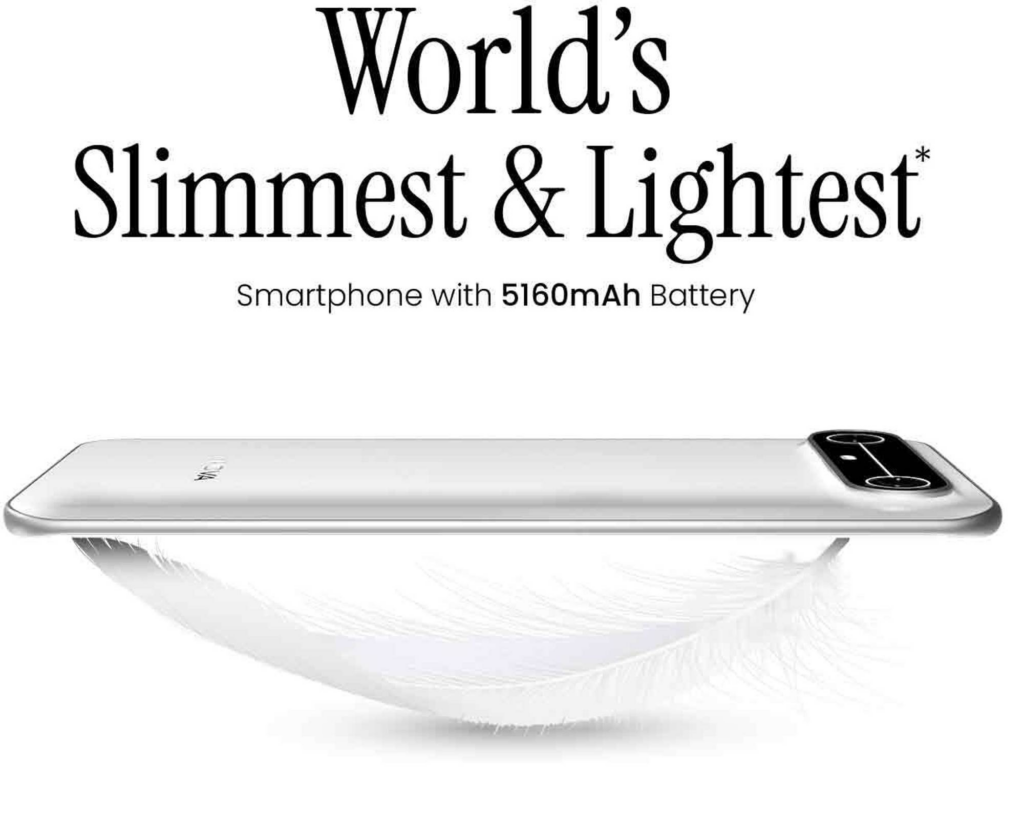
Tecno shocked the tech world at MWC 2025 with the Spark Slim, a concept phone that feels like it belongs in a sci-fi flick. Measuring just 5.75mm thick and weighing 166 grams, it’s the thinnest phone ever revealed, yet it houses a 5200mAh battery. Yes, really.

This phone is more proof-of-concept than daily driver, with modest specs and limited availability, but it makes a point: thin and light is possible, even in the budget segment. Whether or not the Spark Slim makes it to mass market, it sets a new benchmark.

For more daily updates, please visit our News Section.

Stay ahead in tech! Join our Telegram community and sign up for our daily newsletter of top stories! 💡

Sony FX2 Full-Frame Cinema Camera Announced: 15+ Stops Dynamic Range for Filmmakers

Sony has launched the FX2 (model ILME-FX2), the latest full-frame camera in its Cinema Line. It’s aimed at independent filmmakers and small crews looking for professional video tools in a compact body. The FX2 shares the same design as the FX3 and FX30 but adds key upgrades based on user feedback.

Sony FX2

Full-Frame Sensor and Recording

The FX2 uses a 33MP back-illuminated Exmor R full-frame sensor. It supports up to 15+ stops of dynamic range with S-Log3 and has dual base ISO settings of 800 and 4000. It can go up to ISO 102400 for low-light recording.

Sony FX2

It records in 4:2:2 10-bit All-Intra and supports formats like XAVC SI DCI 4K at 24p. It can record 4K at up to 60fps and Full HD at up to 120fps for slow-motion. You can load up to 16 custom LUTs for preview and use modes like Cine EI, Cine EI Quick, and Flexible ISO for log shooting.

The camera includes built-in S-Cinetone and several Creative Look profiles. It supports 1.3x and 2.0x desqueeze for anamorphic lenses.

Design and Build

The FX2 is compact and lightweight, measuring 129.7 x 77.8 x 103.7 mm and weighing about 679g. It has three built-in mounting points and an optional top handle. It includes an internal fan and heat dissipation system, allowing up to 13 hours of continuous 4K 60p recording.

Autofocus and Stabilization

It includes Real-Time Autofocus that tracks people, animals, birds, vehicles, and insects. It also features AF Assist, focus breathing compensation, and adjustable transition speed and sensitivity. Active and Dynamic Active Modes offer stable handheld shooting. Auto Framing and Framing Stabilizer features help when the camera is mounted on a tripod.

Display and Controls

The FX2 has a new 3.68-million-dot tilting electronic viewfinder and a 3.0-inch touchscreen LCD with a variable angle. The control layout includes a customizable BIG6 screen that shows FPS, ISO, shutter speed, white balance, look, and aperture. The camera interface rotates automatically for vertical shooting.

Stills and Modes

It includes a “Log Shooting” mode for high-resolution 33MP still photos. A MOVIE/STILL mode lever allows quick switching, and a long press on the Fn button brings up shooting mode options. Menus adjust automatically based on the selected mode.

Audio and Connections

The kit version includes a handle with two XLR/TRS ports and a 3.5mm mic input, supporting 4-channel 24-bit audio. It outputs video through HDMI Type-A (4K 60p, 4:2:2 10-bit, and 16-bit RAW). It has dual-band Wi-Fi, USB-C (10 Gbps with Power Delivery), and LAN support via adapter. It supports USB and network streaming.

Price and Availability

  • FX2 (body only): €3,199
  • FX2 with handle kit: €3,699
  • Available starting July 2025.

(Source)

ASUS ROG NUC 2025 Mini PC Debuts with Intel Ultra 9 and RTX 5080 GPU

ASUS has released the 2025 ROG NUC mini PC on JD.com. It features an Intel Core Ultra 9-275HX processor, NVIDIA RTX 5080 Laptop GPU, 32GB DDR5 RAM, and 2TB SSD. The system is priced at 24,999 yuan (~$3,470).

Asus ROG NUC 2025

The NUC has a compact size of 282.4 x 187.7 x 56.5 mm, with a total volume of 3 liters. It keeps the 2024 design and adds RGB lighting effects. The casing includes airflow patterns and lighting synced to different games.

The CPU is a 24-core, 24-thread chip with a max clock speed of 5.4GHz, 76MB cache, and built-in NPU. The RTX 5080 GPU runs at 175W and supports DLSS 4, Smooth Motion, and NVIDIA Studio features. The full system can use up to 250W of power across the CPU and the GPU.

For cooling, it uses three fans and dual vapor chamber heat plates. There’s a separate airflow for the memory and SSD to keep temperatures under control. This helps maintain performance during heavy use.

On the front, the NUC has one 3.5mm headphone jack, one USB-C 3.2 Gen 2 port, and two USB-A 3.2 ports. On the back, it offers four USB-A 3.2 Gen 2 ports, one Thunderbolt 4 port, one 2.5G LAN port, two HDMI 2.1 ports, and two DisplayPort 2.1 outputs. It supports four 4K monitors at once.

Connectivity includes Wi-Fi 7 and Bluetooth 5.4. The system runs Windows 11 and includes ROG BIOS for manual tuning. Users can adjust voltage, memory, and fan speeds. Armoury Crate software provides real-time system monitoring and control.

The NUC meets MIL-STD-810H durability standards and supports tool-free upgrades. It’s built for users who want strong performance in a small desktop without skipping on ports, cooling, or custom settings.

For more daily updates, please visit our News Section.

Tech enthusiast? Get the latest news first! Follow our Telegram channel and subscribe to our free newsletter for your daily tech fix!

(Source)

Realme GT 7 Dream Edition: What Makes It Different

The Realme GT 7 Dream Edition, which recently launched alongside the Realme GT 7 and GT 7T, is a limited-edition smartphone created in partnership with the Aston Martin Aramco Formula 1 Team. It brings unique design changes, exclusive software, and special packaging that set it apart from the standard model.

Realme GT 7 Dream Edition

The phone comes in Aston Martin’s Racing Green color, with silver-etched logos of both Realme and Aston Martin on the back. The rear also features aerodynamic flow lines inspired by Aston Martin’s F1 cars. The power button is yellow instead of the usual red or gold, and yellow accents are used around the camera island and lenses. The camera module itself is slightly smaller than the one on the regular GT 7.

The software includes an Aston Martin boot screen, custom app icons, exclusive wallpapers, and a special charging animation. These changes are built into the phone and are not available on other versions. The phone comes in a green collector’s box. Inside, it includes a black grip case with a cutout that shows the Aston Martin logo and a SIM ejector tool shaped like a Formula 1 car.

Realme GT 7 Dream Edition

The Dream Edition is only available in one configuration: 16GB RAM and 512GB storage. The hardware specs remain the same as the regular GT 7, but this version is designed to give a premium experience through its design and branding.

Pricing & availability

The Realme GT 7 Dream Edition is priced at ₹49,999 in India and €900 in Europe. It is available for pre-order and targets users who want more than just performance from their smartphone.

For more daily updates, please visit our News Section.

Stay ahead in tech! Join our Telegram community and sign up for our daily newsletter of top stories!

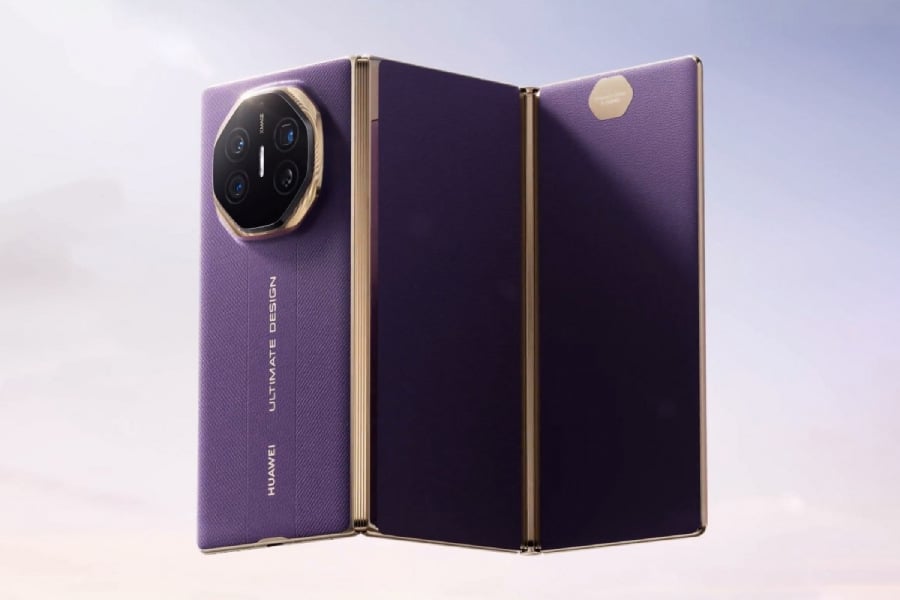
Samsung’s 7th gen foldables confirmed to launch with stable One UI 8

Samsung’s upcoming foldables, the Galaxy Z Fold 7 and Z Flip 7, are set to launch this summer, and they’re bringing something special: the stable version of One UI 8, likely running on Android 16 right out of the box. The company just kicked off its One UI 8 beta program and dropped some exciting hints about these devices, confirming their launch window and a fresh software experience. Here’s what’s coming.

Samsung announced its One U 8 beta program yesterday

In its announcement for the One UI 8 beta program, Samsung revealed that its “newest foldables” will hit the market this summer, likely in early July based on earlier rumors. The Galaxy Z Fold 7, Flip 7, and possibly the Flip 7 FE will be the first to ship with the stable One UI 8 update, making them some of the earliest devices to run Android 16.

One UI 8 enhances everyday convenience

This marks a major shift in Samsung’s Android OS rollout strategy. Until now, new One UI versions based on the latest Android release have typically debuted with the Galaxy S series. This year, however, the foldables are taking the lead—a change reportedly aligned with Google’s updated Android 16 timeline.

Samsung is calling One UI 8 a major step forward, packed with user experience (UX) improvements and AI-driven features to make daily tasks smoother and more personalized. The company’s tight collaboration with Google means this software will blend seamlessly with its foldable hardware, offering productivity-focused experience tailored for Galaxy users.

The One UI 8 beta is already rolling out for Galaxy S25 users in Korea, Germany, the UK, and the US, giving them a sneak peek at what’s to come. Other Galaxy devices and regions will get access later, but the Fold 7 and Flip 7 will lead the pack with the stable version pre-installed. Samsung says One UI 8 marks a new rhythm for its software updates, with big upgrades in interface design and AI capabilities that should make everything from multitasking to notifications feel more intuitive.

Don’t miss a thing! Join our Telegram community for instant updates and grab our free daily newsletter for the best tech stories!
For more daily updates, please visit our News Section.

(Source)

HONOR EarBuds X9 Launched with 12.4mm Drivers, 49dB ANC, and IP54 Rating for 299 yuan ($41)

HONOR released the EarBuds X9 wireless earbuds in China at their 400 series event.

HONOR EarBuds X9

Honor EarBuds X9 features

The X9 uses 12.4mm composite drivers and got Golden Ear Product Certification from China’s Electronic Audio Industry Association. They have 49dB active noise cancellation and spatial audio effects.

Each earbud weighs 5.3 grams and has dual microphones with AI noise reduction for calls. Users can pick from four sound settings: Powerful Bass, Warm Vocals, Classical Soundtrack, and Bright High Notes.

Battery life is the main feature. Each earbud has a 45mAh battery that lasts 9 hours. The 500mAh charging case gives 42 hours total. A 10-minute charge provides 3 hours of listening time through the USB-C port.

The earbuds connect with Bluetooth 5.3 and support SBC and AAC codecs. They work with Google Fast Pair and can connect to two devices at once. Touch controls handle music and calls. The earbuds have an IP54 rating, so they resist dust and water splashes.

Other features include Bluetooth ring search to find lost earbuds and automatic connection when you open the case. The earbuds come in blue and white colors.

Pricing & availability

The earbuds are available now in China. HONOR hasn’t said when they’ll sell them in other countries. The EarBuds X9 cost 299 yuan, which is about $41.

In other news, Anker has launched the Soundcore Sleep A30, earbuds designed for side sleepers with 3-way noise cancellation, snore masking, and AI Brainwave Audio. They offer 9 hours of use per charge and 45 hours with the case.

Don’t miss a thing! Join our Telegram community for instant updates and grab our free daily newsletter for the best tech stories!
For more daily updates, please visit our News Section.

HONOR 400 Series Gets China-Exclusive Upgrades: 7200mAh Battery and New Snapdragon Chip

HONOR has released the HONOR 400 and HONOR 400 Pro smartphones in China, offering notable upgrades compared to the global variants launched last week.

Display

Both Chinese models use a 6.55-inch FHD+ OLED flat display with 120Hz refresh rate and 5000 nits peak brightness. The screen has 3840Hz PWM dimming, 100% DCI-P3 color support, and aluminosilicate glass protection.

The Chinese Pro model uses the same 6.55-inch flat screen as the standard model. The global Pro version has a bigger 6.7-inch curved display with 2800×1280 resolution, but the Chinese version keeps the same specs as the standard model.

Performance

Honor 400 Pro
Honor 400 Pro

The Chinese standard model runs on Snapdragon 7 Gen 4, which is newer than the Snapdragon 7 Gen 3 in global models. The Pro version keeps the same Snapdragon 8 Gen 3 chip as the global variant. Both Chinese phones offer up to 16GB RAM and 512GB storage. Global models only go up to 12GB RAM. Both versions run Android 15 with MagicOS 9.0.

Cameras

Honor 400
Honor 400

The camera setup stays the same across all versions. Both phones have a 200MP main camera with a 1/1.4-inch sensor, f/1.9 aperture, and OIS plus EIS stabilization. They also include a 12MP ultra-wide camera with macro capability and a 50MP front camera with 4K video recording. The HONOR 400 Pro adds a 50MP telephoto camera with 3x optical zoom and 50x digital zoom using the Sony IMX856 sensor. The standard HONOR 400 can do 30x digital zoom.

Battery and Charging

This is where the biggest hardware change happens. Both phones now have a 7200mAh silicon-carbon battery, much larger than the global version’s 5300mAh battery. The HONOR 400 supports 80W wired SuperCharge, while the HONOR 400 Pro offers 90W wired charging plus 50W wireless charging.

Other Features

Both phones include IP68 and IP69 water and dust resistance with metal frame construction. They support USB-C audio, stereo speakers, in-display fingerprint scanning, and infrared sensors. Connectivity options include 5G SA/NSA, Wi-Fi 6, Bluetooth 5.4, GPS, and NFC.

HONOR 400 Series Pricing and Availability

The HONOR 400 starts at ¥2,499 for the 12GB + 256GB model, ¥2,799 for the 12GB + 512GB, and ¥2,999 for the 16GB + 512GB option. In US dollar terms, this equates to approximately $346, $388, and $416, respectively.

The more premium HONOR 400 Pro begins at ¥3,399 for the 12GB + 256GB variant, followed by ¥3,699 for the 12GB + 512GB, and goes up to ¥4,499 for the 16GB + 512GB configuration. These prices roughly translate to $471, $513, and $624, respectively.

In global markets, the HONOR 400 series has already launched in the European Union and the United Kingdom. The HONOR 400 is priced at £399.99 / €499 for the 12GB + 256GB version and £449 / €549 for the 12GB + 512GB model. The HONOR 400 Pro is offered globally in a single 12GB + 512GB variant priced at £699.99 / €799.

Both the HONOR 400 and 400 Pro are available in four color options: Sea Breeze Blue, Quicksand Pink, Moonlight Silver, and Magic Night Black. Sales are already live in China.

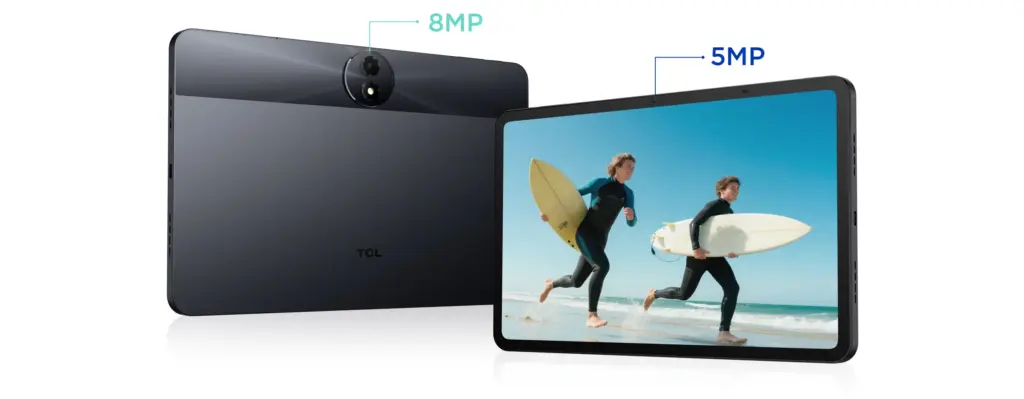
Honor has also launched the Honor Pad 10 tablet in Malaysia and Europe (France, Germany, Italy). It features a 12.1-inch 2.5K LCD display with 120Hz refresh rate, a Snapdragon 7 Gen 3 chip, MagicOS 9.0 (Android 15), and 8MP front/rear cameras.

For more daily updates, please visit our News Section.

Tech enthusiast? Get the latest news first! Follow our Telegram channel and subscribe to our free newsletter for your daily tech fix!

(Source)

Upcoming Galaxy Tab S10 Lite pops up on Geekbench with Exynos 1380 chip

Samsung is cooking up something new in its tablet lineup, and it looks like a budget-friendly option is on the way. A mysterious device, allegedly the Galaxy Tab S10 Lite, just showed up on Geekbench, spilling some key specs. With a familiar chip and a fresh OS, this tablet could be a solid pick for those seeking a Galaxy tablet that doesn’t ask for a flagship price. Let’s break down what we’ve learned.

Details from the listing:

The Geekbench listing reveals a Samsung tablet with the model number SM-X406B, which lines up with the naming scheme for the Galaxy Tab S series. This is almost certainly the Galaxy Tab S10 Lite, a more affordable sibling to the rumored Tab S11 and Tab S11 Ultra, which are said to pack the high-end MediaTek Dimensity 9400 chip.

The Lite model, however, keeps costs down with the Exynos 1380 chip, the same one used in the Galaxy A54. This chip, with its Mali-G68 GPU, has four performance cores at 2.4GHz and four efficiency cores at 2.0GHz, offering decent power for everyday tasks like streaming, browsing, and light gaming. The tablet scored 782 points in single-core and 2,637 in multi-core tests on Geekbench 5.5.1.

The listing also shows 6GB of RAM and Android 15, likely running Samsung’s One UI 7 for a smooth, modern interface. While other specs are still under wraps, rumors point to both Wi-Fi-only and LTE versions hitting the market. Compared to the Galaxy Tab S10 FE, which uses the beefier Exynos 1580 and starts at $499, the Tab S10 Lite could be priced closer to the $219 Galaxy Tab A9+, making it a wallet-friendly choice.

Samsung Galaxy Tab S10 FE series

No word yet on screen size, battery, or cameras, but the Exynos 1380 should keep it snappy for basic use cases such as watching YouTube or reading this article. With prototypes already being tested, the Tab S10 Lite might not be far off. Keep an eye out for Samsung’s next Unpacked event for more details on this promising mid-range tablet.

Don’t miss a thing! Join our Telegram community for instant updates and grab our free daily newsletter for the best tech stories!
For more daily updates, please visit our News Section.

(Source)

Credit cards & coins used to demonstrate the thickness of the “thinnest curved screen phone”

Infinix is gearing up to drop the Hot 60 Pro+, a phone that’s turning heads with its super-slim design. Fresh images have surfaced, showing off just how thin this device is, and it’s giving the Galaxy S25 Edge a run for its money in the sleekness department. With whispers of a big battery and a visible curved display, this mid-range contender is building some serious hype. Let’s dive into what these latest leaks reveal.

The Infinix Hot 60 Pro+ measures just 5.95mm thick—potentially making it the thinnest curved display phone when it launches. Following the hands-on video we shared yesterday, new images have surfaced, showcasing the slim profile and curved design of this upcoming mid-range.

One of the images shows the phone stacked against four credit cards and three coins, emphasizing just how incredibly slim it is. This kind of thickness demo brings to mind the official teasers for the Oppo Find N5. It’s interesting to see how quickly the industry is shifting back toward a thin-and-light design aesthetic. While the Galaxy S25 Edge, which uses a traditional Li-ion battery, delivers underwhelming battery life with its 3,900mAh pack, the Infinix model is expected to offer a relatively larger capacity thanks to Si/C battery tech.

Though marginally thicker, the Infinix Hot 60 Pro+ looks slimmer due to its curved sides

That said, the big unknowns remain the battery capacity and chipset. While it’s likely to outperform the flagship S25 Edge in battery capacity—and possibly in battery life—it’s still a mid-range device, making a flagship-grade SoC unlikely. For context, last year’s Hot 50 Pro+ 4G was 6.8mm thick, weighed 162g, featured a 5,000mAh battery, and ran on the MediaTek Helio G100.

While rumors suggest the same chipset may return in the successor, we hope Infinix opts for at least a 5G-capable SoC this time. On the battery front, improved silicon-carbon tech could help the brand pack enough capacity for reliable all-day battery life. Infinix hasn’t officially confirmed the Hot 60 Pro+ or set a launch date, but these leaks—backed by real-life images and videos—suggest it’s coming soon.

Don’t miss a thing! Join our Telegram community for instant updates and grab our free daily newsletter for the best tech stories!
For more daily updates, please visit our News Section.

(Source: GSMArena)

Japan Plans to Harvest Solar Energy from Space with Project OHISAMA

Japan is literally reaching for the stars with an ambitious new mission called Project OHISAMA. Spearheaded by Japan Space Systems (JSPACE), the project aims to wirelessly transmit solar power from space back to Earth. The possibilities for clean energy are endless, so read on to find out more.

Project OHISAMA: Japan’s Bold Plan to Harvest Solar Energy from Space

If successful, Project OHISAMA could revolutionize how we harness renewable energy by enabling solar power even at night, slashing dependence on fossil fuels, and marking a major milestone in sustainable space technology. The future of clean energy might just be orbiting above us. Work on this project has been ongoing since 2023, but it has recently made big strides in achieving the goal.

The Japanese government has also funded the research behind this. It aims to launch a small solar installation in space on the satellite would then transmit the energy down to Earth wirelessly. The idea of beaming down solar energy from space sounds like something from a Sci-Fi story. However, it will surpass many of the hurdles faced by conventional solar harvesting, like the weather and the general climate of a region.

Project OHISAMA Japan

At the moment, a trial run is planned in the future with a satellite that weighs around 180 kilograms. It will orbit the Earth from an altitude of 400 kilometres with solar panels measuring around 2 square meters. The harvested energy will then be transmitted as a GHz range electromagnetic wave that will be picked up by a ground station in Suwa, Japan. The accuracy is proving to be a bigger issue than the risks of harm. Energy being beamed down needs to hit a 40 kilometer wide receiver field at 28,000km/h. This could power many households despite only having a radiation density of the usual sunlight.

For more daily updates, please visit our News Section.

Tech enthusiast? Get the latest news first! Follow our Telegram channel and subscribe to our free newsletter for your daily tech fix! ⚡

(Via)

YEEDI Unveils M14 PLUS Robot Vacuum: Precision Cleaning Powered by Innovation

YEEDI has unveiled its latest innovation in smart home robotics, the YEEDI M14 PLUS. Launched on May 26, 2025, this next-generation robot vacuum and mop system is engineered to bring flagship-level cleaning performance, intelligent automation, and elegant design into a more accessible and versatile product. As a global leader in robotic home cleaning, YEEDI continues to push boundaries with the M14 PLUS, blending cutting-edge technology with aesthetics inspired by the graceful curves of gravitational space. Its flowing, multidimensional silhouette reflects both design sophistication and functional precision, setting a new benchmark for smart home appliances.

OZMO ROLLER Self-Washing Mopping Technology

A standout feature of the M14 PLUS is the OZMO ROLLER Instant Self-Washing Mopping Technology. Adapted from YEEDI’s flagship S14 PLUS, this advanced system delivers ultra-high pressure and speed, ensuring that the mop stays clean throughout the cleaning process. The upgraded instant self-washing mop effectively removes dirt and prevents streaks, leaving behind minimal water residue for fast drying. This technology is especially effective at tackling tough stains, and with the aid of advanced AI and navigation systems, it offers thorough, efficient coverage across all surfaces. The result is a powerful automated solution that guarantees deep, consistent cleaning with minimal effort.

ZeroTangle 3.0 Anti-Tangle Technology

For households with pets or long hair, the ZeroTangle 3.0 system is a game-changer. The M14 PLUS features a robust anti-tangle design that works in tandem with a powerful 18,000 Pa suction motor. This combination allows it to sweep and vacuum without the constant issue of hair entanglement. By significantly reducing the frequency of brush cleaning, it not only boosts performance but also enhances convenience and reliability over time. This seamless cleaning experience ensures smooth operation on various surfaces without the interruptions caused by hair clogging.

Tru-Edge 2.0 Adaptive Edge Cleaning

Corners and edges are often a challenge for robotic cleaners, but the M14 PLUS solves this with its Tru-Edge 2.0 Adaptive Edge Cleaning system. The roller mop extends continuously to maximize coverage, while smart TruEdge 3D sensors guide the robot along irregular edges without collisions. Internal corners receive full attention through dedicated side brushes and a front-structured light aids in obstacle avoidance. This multi-layered approach ensures comprehensive cleaning even in tight and tricky spots.

AIVI 3D 3.0 for Smarter Navigation

At the core of its intelligent navigation lies the AIVI 3D 3.0 Omni-Approach Technology. The system allows the robot to detect and avoid a wide range of environmental obstacles using image-based object recognition. It maps contours precisely and adapts its route accordingly, ensuring maximum cleaning efficiency while avoiding potential disruptions. With specific cleaning modes like “Carpets First,” “Carpet Deep Cleaning,” and “Carpet Avoiding,” the M14 PLUS handles different flooring challenges with optimized strategies.

Upgraded All-in-One OMNI Station

The M14 PLUS also debuts an enhanced OMNI Station designed for compact living spaces. This all-in-one station supports multiple automated functions such as Auto-Empty, Hot-Water Mop Washing, Auto Small-Tank Refill, and Hot-Air Drying. These integrated features enable full hands-free operation while maintaining top-tier performance. The compact size ensures it fits comfortably into smaller homes without sacrificing functionality.

A New Standard in Smart Cleaning

With the M14 PLUS, YEEDI successfully brings flagship cleaning features into a more accessible device. Its blend of powerful suction, self-maintenance technologies, smart edge handling, obstacle-aware navigation, and space-efficient design makes it a standout choice for modern households. The M14 PLUS redefines what users can expect from a mid-tier robot vacuum, delivering intelligent, beautiful, and effortless home cleaning.

Dyson Cool CF1 launched: Return of the fanless table fan

Dyson is bringing the iconic fanless design in its latest launch. But it’s not entirely a new product. The Dyson Cool CF1 is the sequel to Dyson’s original fanless tabletop fan, bringing various improvements. It features an upgraded design, better airflow, and more to upgrade your home appliance setup.

Dyson Cool CF1: What’s new and what’s cool?

The Dyson Cool CF1 is basically a relaunch of a compact table fan with a fanless design that is capable of delivering an airflow of 370 litres per second at the highest setting. There are up to 10 levels, but what’s more notable is its quiet operation. The fanless design enables the Cool CF1 to barely make a sound. Alongside the lowered noise, it also quite efficient. It has a max power consumption of just 30 watts, which is for its highest fan setting.

Dyson Cool CF1
Dyson Cool CF1

Dyson’s sleek new design on the Cool CF1 also adds an LCD screen to show key information. But if you’re worried about unnecessary light when sleeping, it even has a Night mode that dims the display and adjusts fan speed. Under the hood, the Cool CF1 packs a brushless DC motor. Essentially, it is a small personal fan so you miss out on certain features like a heater for warming the air.

While it does appear similar to the larger fanless air purifier models, Cool CF1 skips air purification as well. Dyson just announced this tabletop fan in the UK with a 249.99 GBP price tag. You can buy this model from the brand’s official stores and website. The brand is set to release it globally sometime next year.

For more daily updates, please visit our News Section.

Don’t miss a thing! Join our Telegram community for instant updates and grab our free daily newsletter for the best tech stories!

Xiaomi Launches Mijia High-Speed Hair Dryer Pro with Smart Scalp Protection

Xiaomi has launched its latest Mijia High-Speed Hair Dryer Pro, now available for pre-order at 579 yuan (approximately $80) on JD.com in China. The release follows the recent debut of the standard Mijia High-Speed Water Ion Hair Dryer, expanding Xiaomi’s lineup of smart personal care devices focused on efficient and safe at-home grooming.

Mijia High-Speed Hair Dryer Pro

Mijia High-Speed Hair Dryer Pro Specifications

The Pro model features a constant-temperature scalp protection mode that maintains airflow at around 50°C. Xiaomi has integrated a TOF (Time-of-Flight) sensor, NTC thermistor, and microprocessor to monitor and adjust the temperature up to 200 times per second. This real-time temperature control is designed to protect sensitive scalp areas while delivering a consistent drying experience.

The device uses a 110,000 RPM brushless motor that generates wind speeds of up to 70 meters per second. Xiaomi claims the dryer can handle short hair in about 30 seconds, shoulder-length hair in roughly 3 minutes, and long hair in about 5 minutes. The company has optimized the motor for reduced noise output, making it suitable for quiet environments.

It supports four temperature modes: cool, warm, hot, and alternate hot-cold, along with two wind speed settings. The built-in memory feature saves the last-used configuration, reducing the need for manual adjustment. It also features a smart LED ring on the nozzle that changes color based on the distance from the scalp, helping users stay within the optimal range during use.

Xiaomi has equipped the dryer with an ionizer that releases up to 200 million negative ions. According to the company, this reduces static, controls frizz, and improves overall shine and moisture retention. Lab data shows improvements, including a 51.69% increase in scalp moisture, a 35.7% boost in hair smoothness, a 45.58% enhancement in shine, and an 11.83% increase in hair strength.

The Mijia Hair Dryer Pro weighs 380g (excluding nozzle and cable) and measures 250.6 x 90 x 73mm. It comes in four colors: Mountain Green, Misty Purple, Rock Gray, and Pearl White, and includes a magnetic nozzle, a detachable air inlet filter, and a wall-mount holder. It runs on 220V~ at 50Hz with a rated power output of 1600W.

In related news, Xiaomi recently introduced a new washing machine featuring HyperOS, Blue Oxygen technology, and a slim design. The company also launched a 20L microwave that combines minimalist aesthetics with smart features and impressive efficiency.

For more daily updates, please visit our News Section.

Stay ahead in tech! Join our Telegram community and sign up for our daily newsletter of top stories! 💡

Realme going all in on battery: Upcoming 7,500mAh battery phone in the works

Realme just announced the Realme GT 7 and Realme GT 7T in the global market with impressively massive battery packs. But it seems like Realme isn’t planning to stop there and would take battery tech to the next level in an upcoming smartphone.

New Realme phone arriving with a gigantic battery

The Chinese brand revealed some of its future plans when speaking with AndroidHeadlines. Realme stated that it will launch another smartphone later this year, which will pack a huge 7,500mAh battery. In other words, its battery is even more massive than the 7,500mAh cells found in the Realme GT 7 and Realme GT 7T. So it is clear that the company isn’t focusing just on new processors, but also wants to upgrade the battery life performance.

Realme-GT-7
Realme GT 7

That’s not all; the strategy of focusing on making batteries larger is a part of the brand’s larger strategy. It wants to expand its identity from not only offering value-centric, but also elite battery life. Other Chinese brands like Oppo and Vivo are already pushing the boundaries in camera technology/photography experience, but Realme might wants its phones to stand out in endurance. There’s a chance that the upcoming 7,500mAh battery powered phone might be featured on a flagship model.

To recall, the Realme GT 7 Pro debuted with a sizeable 6,500mAh cell, so its successor (Realme GT 8 Pro) may feature this enormous battery. In stark contrast to Realme, Samsung just launched the ultra slim and light Galaxy S25 Edge with a tiny 3,900mAh battery, with Apple also rumored to be working on a similar iPhone 17 Air model as well.

For more daily updates, please visit our News Section.

Tech enthusiast? Get the latest news first! Follow our Telegram channel and subscribe to our free newsletter for your daily tech fix! ⚡

Samsung may merge key semiconductor chip units amid ongoing losses

Samsung’s once-proud semiconductor design unit, System LSI, is now at a critical inflection point. After years of setbacks including missed roadmaps, lost design wins, and deepening quarterly losses, executives are mulling what could be its most consequential reorganization since the 2017 Foundry split. According to insiders, three options are on the table: merge it with Samsung MX, fold it back into Foundry, or overhaul the division while keeping it independent. The favorite appears to be a reunion with Foundry.

Samsung

Internally, the stakes are massive. System LSI, responsible for Exynos APs and ISOCELL sensors, failed to secure a spot for its in-house Exynos 2500 chip in the Galaxy S25 lineup this year. That loss alone wiped out billions of won and undercut Foundry’s own revenue stream, since the chips were no longer being manufactured in-house. This dual hit is reportedly why the Foundry-LSI reunion is gaining momentum.

For context, the two units were a single entity under Samsung’s DS (Device Solutions) division until 2017, when Foundry was spun off to appease clients like Qualcomm and Nvidia. Keeping Samsung’s chip design and manufacturing arms separate helped ease fears of IP leakage. But now, as both units struggle with profitability and Samsung races toward the sub-2nm era, internal voices are calling for tighter integration, possibly even at the cost of customer trust.

Samsung’s MX division, home to its Galaxy devices, was briefly floated as a potential landing zone for Exynos development. But insiders say MX wants no part of a bleeding SoC team. Meanwhile, the newly formed Business Diagnosis Office has been auditing System LSI since January, with final decisions expected soon. Key discussions will likely involve Vice Chairmen Jeon Young-hyun and Chung Hyun-ho, and ultimately, Chairman Jay Y. Lee.

Whichever path Samsung takes, it will not be easy. The Foundry merger could unsettle fabless clients who fear their proprietary chip designs may be exposed. But in a market defined by shrinking process nodes and rising costs, survival may demand uncomfortable compromises.

In related news, a new leak suggests that One UI 8 will be the final major update for select Samsung devices, while the upcoming Galaxy Z Flip 7 is expected to feature the Snapdragon 8 Elite chip in most regions.

For more daily updates, please visit our News Section.

Stay ahead in tech! Join our Telegram community and sign up for our daily newsletter of top stories! 💡

(Source)

Logitech G PowerPlay 2 wireless charging mouse pad announced in India

Logitech is known for its PC accessories for regular users and even gamers. Now, its latest announcement brings the new Logitech G PowerPlay 2, which is a wireless charging mouse pad. This has just been launched in the Indian market, so here’s what you need to know.

Logitech G PowerPlay 2: What does it offer?

Logitech G PowerPlay 2 Wireless Charging Mouse Pad

The company’s latest product is an accessory for gamers. Since it offers wireless charging, the PowerPlay 2 offers constant charging for compatible gaming mice. One of the biggest gripes of a wireless mouse is the fact that you have to charge it every now and then. But the wireless charging mouse pad makes this process continuous and seamless. You no longer have to dock it, plug it in, or replace batteries, one needs to use their mouse as they usually do and have it get powered up.

Logitech’s G PowerPlay 2 wireless charging mouse pad features a slim new design that is 3.5mm in thickness while also expanding the entire charging zone by 15 percent for better charging coverage. This mouse pad employs a low frequency electromagnetic field and a Charging Coin inside the mouse. It has a simple setup requiring a simple plug and Coin insertion.

Logitech G PowerPlay 2 Wireless Charging Mouse Pad

As of right now, there’s a total of 10 Logitech gaming mice that support the PowerPlay 2. This includes popular wireless mice like G Pro X Superlight, G Pro X Superlight 2, G Pro X Superlight 2 Dex, G Pro Wireless, G903, G703, G502 X Plus, G502 X Lightspeed, G502, and G309. It is currently on sale via Amazon India for 12,495 INR introductory price tag, but its official retail price is set at 13,995 INR. The PowerPlay 2 also arrives just days after Logitech unveiled the G522 tri-mode wireless gaming headset.

For more daily updates, please visit our News Section.

Don’t miss a thing! Join our Telegram community for instant updates and grab our free daily newsletter for the best tech stories!
One UI 8 will be the last big upgrade for these Samsung devices

One UI 8 final update list

While the Android 15-based One UI 7 update is still rolling out, Samsung is already deep into the development of One UI 8. The beta program will reportedly go live in the upcoming weeks, while the stable release is confirmed for this summer. Unfortunately, this upgrade will mark the end of the road of major updates for a lineup of Galaxy devices across different price tiers and form factors.

Below is a list of Samsung phones and tablets that will receive One UI 8 as their final major upgrade. Since One UI 8 will be based on Android 16, we can also say this is the OS version they will spend the rest of their life running on.

No more major updates beyond One UI 8 for these Galaxy devices  

  • Galaxy S22
  • Galaxy S22+
  • Galaxy S22 Ultra
  • Galaxy S21 FE
  • Galaxy Z Fold 4
  • Galaxy Z Flip 4
  • Galaxy A73 5G
  • Galaxy A53
  • Galaxy A33
  • Galaxy M05
  • Galaxy F14
  • Galaxy F05
  • Galaxy XCover 6 Pro
  • Galaxy Tab S8
  • Galaxy Tab S8+
  • Galaxy Tab S8 Ultra
  • Galaxy Tab A9
  • Galaxy Tab A9+

While One UI 8 will be the last major update for these devices, they may receive incremental updates, such as One UI 8.1 or 8.1.1, and security patches for a while.

If your Samsung device is on the list, you might need to upgrade to a newer model next year to get the latest features and enhancements. Take a look at Samsung devices that offer 7 years of OS updates, 6 years of OS updates, and 4 years of OS updates to find your next upgrade with long-term software support.

Related:
1. Why One UI 8 is a far more important upgrade than you think
2. Every Samsung device that is eligible for One UI 8 update

When will Samsung start rolling out One UI 8?

Even though One UI 7 is still new, thanks to months of desperate delays, Samsung users have already started anticipating its next iteration, One UI 8 — and that’s a reason for it. Google usually releases a new Android OS around October, but Android 16 is coming a lot sooner this year — in June 2025, leaving Samsung less breathing room to prepare for its next big release.

Samsung has also confirmed that One UI 8 will start rolling out this summer. That means anything from June to September. While the exact rollout date is still under wrap, it’s good to see Samsung committing to a timeline. As always, there will be a beta program, which will reportedly kick off in the coming days.

Remember to visit our One UI 8 section regularly to stay up-to-date with the latest developments. Also, follow our Telegram channel and subscribe to our free newsletter for your daily dose of tech!

Also Read:
1. Android 16 beta is available for these devices
2. One UI 8 aims to protect users from fraud, scams, and theft

Nothing Phone (3) teaser offers us a sneak peek at its design

Nothing‘s next flagship smartphone is arriving soon. The Nothing Phone (3) is set to launch sometime in July 2025, but ahead of any official announcement, the device just had its design elements revealed in the latest teasers. So let’s check it out.

Nothing Phone (3) Teased

In the latest teaser, the smartphone brand confirmed that the Nothing Phone (3) will debut in July 2025, which is in line with our previous reports. Looking at the latest teaser image poster, we get a close up image of its upcoming flagship. The Nothing Phone (3) appears to have textured design elements, which include what appears to be a button as well. The rear also appears to have a dual textured design body, showcasing Nothing’s continued focus on refreshing design.

Nothing Phone (3)
Nothing Phone (3)

This is similar to the recently unveiled CMF Phone 2 Pro, an affordable smartphone from its budget sub-brand. Apart from this, the only other thing confirmed in the teaser is the Flipkart availability for the Indian market. Based on what we know so far, CEO and Found Carl Pei revealed that the Nothing Phone (3) will be a true flagship phone. It will arrive with “premium materials,” which may employ advanced glass or a titanium frame. The Glyph LED interface will likely make a return in this model.

The senior executive also talked about how there are “major performance upgrades” on the upcoming Nothing Phone (3). In other words, the next Nothing Phone could feature either a Snapdragon 8 Elite, Dimensity 9400, or Dimensity 9400+ SoC. This is all the information we have at the moment, so stick around for more.

For more daily updates, please visit our News Section.

Tech enthusiast? Get the latest news first! Follow our Telegram channel and subscribe to our free newsletter for your daily tech fix! ⚡

Galaxy Z Flip 7 to feature Exynos 2500 in just one market

Samsung’s next compact foldable, the Galaxy Z Flip 7, is just around the corner, and it’s already making headlines. While we’ve got a decent sense of what this clamshell phone will bring, the chipset situation has been a bit of a puzzle. A fresh report from Korea is finally clearing things up, suggesting an unexpected split in processor choices that could keep most fans happy. Let’s unpack what’s going on.

Samsung Galaxy Z Flip 7
Samsung Galaxy Z Flip 7 Leaked Render

Exynos 2500 or Snapdragon 8 Elite in your region?

According to Korean outlet Hangkyung, the Galaxy Z Flip 7 will come with two chipset options: the Exynos 2500 for devices sold in South Korea and the Qualcomm Snapdragon 8 Elite for everywhere else, including the US, Europe, and India.

This is a relief for folks outside Korea, as the Snapdragon 8 Elite is likely more stable and efficient than its Exynos counterpart. Testing shows it outmuscles the MediaTek Dimensity 9400 in CPU-heavy tasks, which means faster app launches, smoother multitasking, and better performance for demanding features like Samsung’s DeX mode.

While both chips should handle everyday tasks like scrolling, streaming, and gaming without issue, performance, heating, and battery life under sustained heavy workloads may differ, potentially disappointing users in Korea.

This news flips the script on last week’s leak, which claimed the Exynos 2500 would dominate “most countries.” That followed another Korean outlet saying Samsung was ditching Snapdragon entirely for the Z Flip 7. Hangkyung’s latest scoop suggests Samsung is sticking with Qualcomm’s top-tier chip for global markets, which should ease worries about performance gaps. Meanwhile, the Galaxy Z Fold 7 is expected to stick with the Snapdragon 8 Elite for Galaxy processor—also found in the Galaxy S25 series—across all regions, ensuring Samsung’s book-style foldable stays a powerhouse.

The Z Fold 7 and Flip 7 — reportedly launching alongside the Flip 7 FE — will debut at the upcoming Galaxy Unpacked event, scheduled for June-July, 2025.

Don’t miss a thing! Join our Telegram community for instant updates and grab our free daily newsletter for the best tech stories!
For more daily updates, please visit our News Section.

(Source)