Infinix has officially confirmed that the Infinix GT 30 will globally launch on Sept. 11. To recall, the device debut in India with an exciting price tag of Rs 19,499 (~$220) in India last month. For the global release, Infinix has partnered with Tencent’s TiMi Studio Group, the developer behind the tactical shooter title Delta Force.
Collaboration with Delta Force
Infinix collabs with Delta Force for GT 30’s global launch
The new collaboration will bring a special edition of the GT 30, which is expected to be featured in esports competitions across Southeast Asia. The GT 30 Delta Force Special Edition will also serve as the official tournament device for multiple regional events, offering players smoother frame rates and an edge in competitive gameplay.
Instead of the Dimensity 8350 Ultimate that powers the GT 30 Pro, the GT 30 features the Dimensity 7400 that promises stable performance for demanding games. The device retains the GT Trigger shoulder key, which uses capacitive sensors to replicate console-style controls. Besides enhancing gameplay in shooters and MOBAs, the trigger can also act as a shortcut for camera and video features. High-frame-rate certification for popular games such as PUBG Mobile, Mobile Legends and Delta Force confirms that the device can push up to 120 FPS for consistent responsiveness.
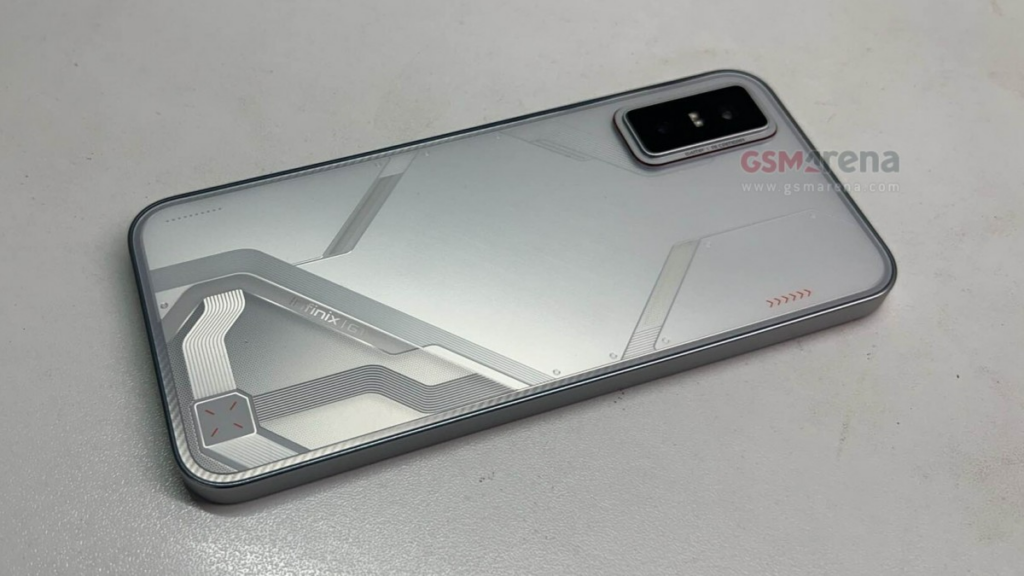
Infinix GT 30 in Shadow Ash
On the design front, the GT 30 introduces a Mechanical Light Waves aesthetic, offering two new colour options, Cyber Blue and Pulse Green, in addition to Shadow Ash and Blade White. The Shadow Ash variant will be a new addition for the global launch as the Indian version is already available with the other three colors. Recently, GSMArena shared the above image to showcase the design of the Shadow Ash edition.
For more daily updates, please visit our News Section.
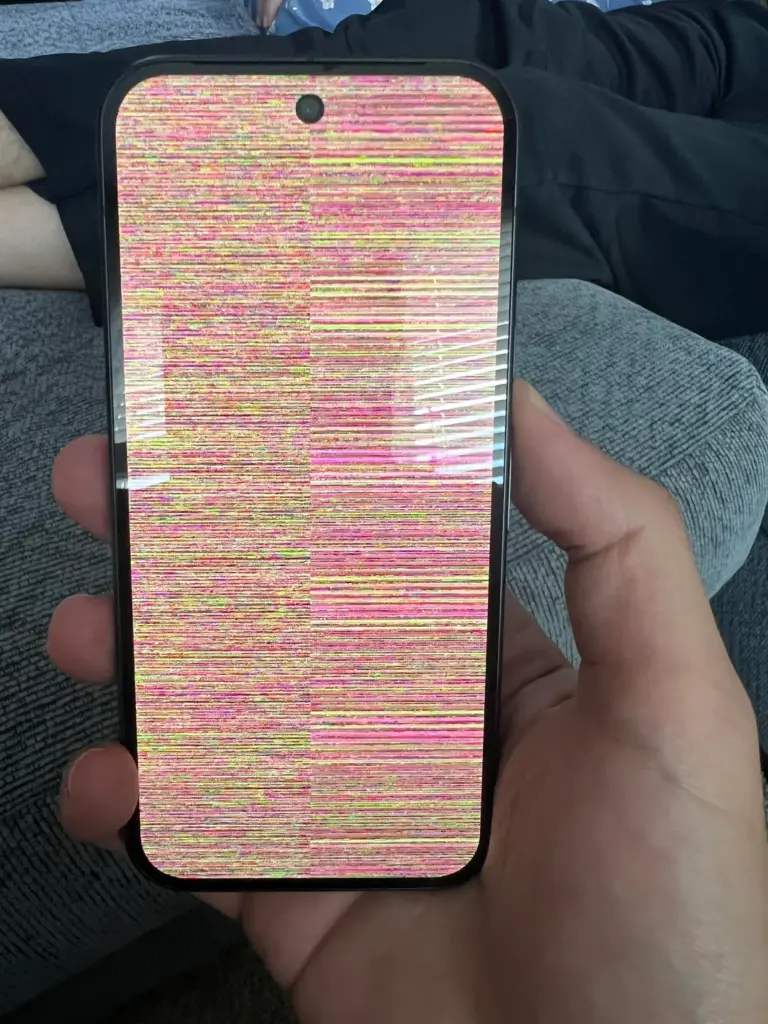
The Pixel 10 series has barely landed in customers’ hands, and complaints about faulty displays are already cropping up online. Early buyers say their phones are showing strange colored stripes — red, green, or blue lines flashing across the screen — making the device nearly impossible to use at times.
Image: u/Ok_Economist_3997 on Reddit
Reports first popped up on social media platforms such as Reddit and were later echoed by Android Authority. Some users note the glitch goes away after locking and unlocking the phone, but for others, the issue keeps returning. It’s not yet clear if the problem stems from the hardware — like the panel itself, the graphics chip, or even the motherboard — or if it’s a software bug that Google could fix with an update.
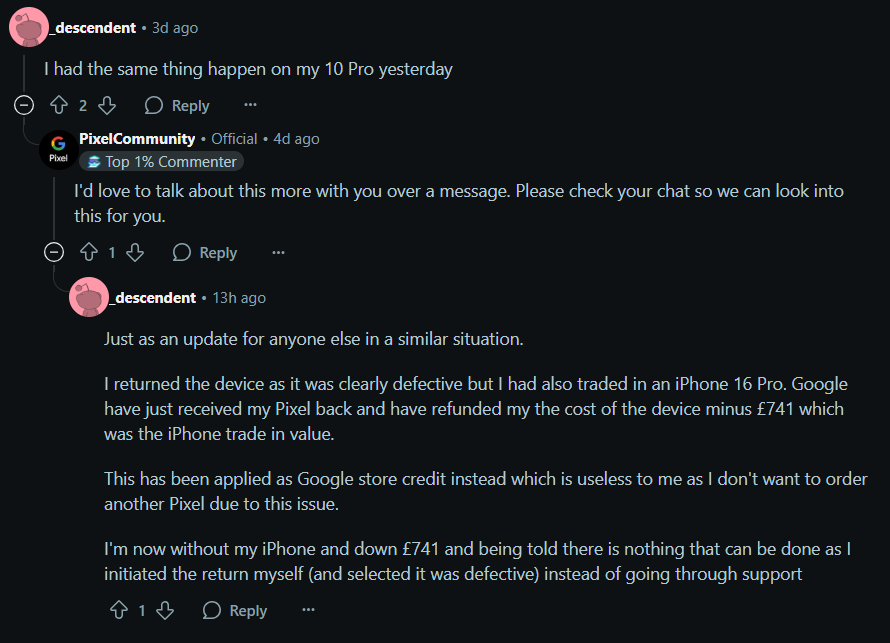
Google hasn’t publicly commented on the situation yet, leaving early adopters unsure about whether to wait for a patch or head straight to a retailer for a replacement. For now, the safer bet for affected users seems to be contacting Google support or swapping the device before wait times for replacements stretch out.
The timing couldn’t be worse. The Pixel 10 series, which began shipping on August 28, is the first Pixel in years to use a TSMC-made chip, and the gains in battery life are already clear. Google also refreshed the UI with its Material 3 Expressive design. But these early screen problems risk overshadowing those upgrades and could revive concerns about Google’s track record with hardware reliability.
Whether this turns out to be a quick software fix or a larger recall-worthy issue, Google will need to move fast to keep user trust from slipping.
Oppo is reportedly gearing up to launch the Oppo F31 series of smartphones this month (September) in India. Reports have revealed that the lineup will comprise three devices: Oppo F31, F31 Pro, and F31 Pro+. A fresh leak has surfaced online, courtesy of tipster Yogesh Brar, revealing key details about the colors, pricing, and USPs of the F31 models.
Oppo F31 series colors, features and pricing
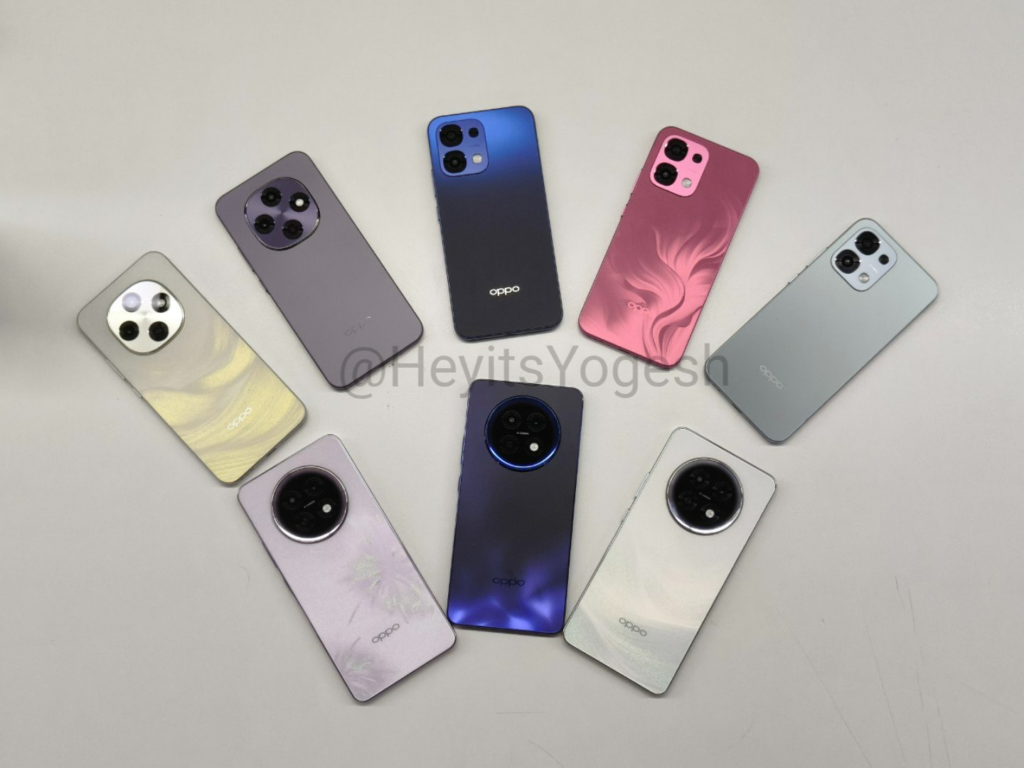
Oppo F31 series leak by Yogesh Brar
According to the leak, the standard F31 may come in Blue, Green and Red, the F31 Pro in Gold and Grey, and the Pro+ variant in Blue, White and Pink. The USPs of these three devices include 7,000mAh batteries, IP66, IP68 and IP69 protection, and 50-megapixel cameras.
In terms of pricing, the F31 Pro+ model is expected to cost around Rs 35,000 (~$400), while the F31 Pro could be priced at Rs 30,000 (~$340). The base Oppo F31 may arrive at Rs 20,000 (~$225), making it the most accessible option in the series.
Oppo F31 series to focus on durablity
Counterpoint’s Indian smartphone durability consumer study
In parallel, a recent market research conducted by Counterpoint Research, which surveyed over 4,500 respondents across 26 cities, found that 78 percent of users avoid using their phones in rain, water or extreme heat due to fear of damage. Repair costs were also highlighted as a burden, with a significant portion of users spending between Rs 2,000 and Rs 10,000 on fixes.
To address these concerns, OPPO emphasised that its phones undergo more than 150 quality tests at its Greater Noida facility before reaching stores. These include drop trials from 2.5 metres, water immersion at 1.5 metres for 30 minutes, and performance checks under extreme heat, cold and humidity conditions. The goal is to ensure that devices can withstand everyday accidents and harsh weather scenarios.
According to Oppo’s product strategy team, durability is no longer optional but a necessity. Certification processes such as SGS, TÜV Rheinland and MIL-STD-810H-2022 are being applied to new models, including the F31 series, along with OPPO’s 360° Armour Body structure for added protection. Counterpoint Research added that Indian consumers strongly associate durability with peace of mind, noting that 79 percent rank it as a top factor when buying smartphones.
For more daily updates, please visit our News Section.
The Mate TV and Mate TV Pro were definitely the big-screen highlights of Huawei’s launch event yesterday. But the company also introduced something more affordable with the Vision Smart TV 5 Pro.
The TVs come in 65-, 75-, and 85-inch sizes, with Huawei packing in a mix of fast refresh rates, advanced MiniLED tech, and its in-house HarmonyOS platform.
Huawei Vision Smart TV 5 Pro Specifications
The Vision Smart TV 5 Pro uses an LCD VA soft panel with 4K resolution (3840 x 2160 pixels), covering 95 percent of the DCI-P3 color gamut. The screen can adaptively refresh between 144Hz to 288Hz and can hit 1100 nits of peak brightness. To back that up, the set supports the HDR Vivid video standard.
At the hardware level, Huawei is using its Honghu Super MiniLED architecture, which allows for finer light control and a slimmer profile. The TV measures just 49mm in thickness when paired with an ultra-thin mount, and it comes in a single Obsidian Black finish.
Under the hood, the Vision Smart TV 5 Pro runs on HarmonyOS 4.3, paired with 4GB of RAM and 128GB of storage. The TV has a Huawei AI vision chip and a Honghu ultra-clear flagship processor that handles the heavy lifting, while Harmony AI adds features like cross-screen connectivity, and Celia voice assistant.
On the audio side, you get a 2.1-channel speaker system rated at 130W peak power, including a dedicated woofer for deeper bass and Huawei SOUND processing for more immersive playback.
Huawei Vision Smart TV 5 Pro Price and Availability
As far as pricing is concerned, the Huawei Vision Smart TV 5 Pro starts at 5,999 yuan (around $830) for the 65-inch model, 7,999 yuan (about $1,100) for the 75-inch, and 10,499 yuan (roughly $1,450) for the 85-inch. The TVs are already listed on VMall, Huawei’s online store.
For more daily updates, please visit our News Section.
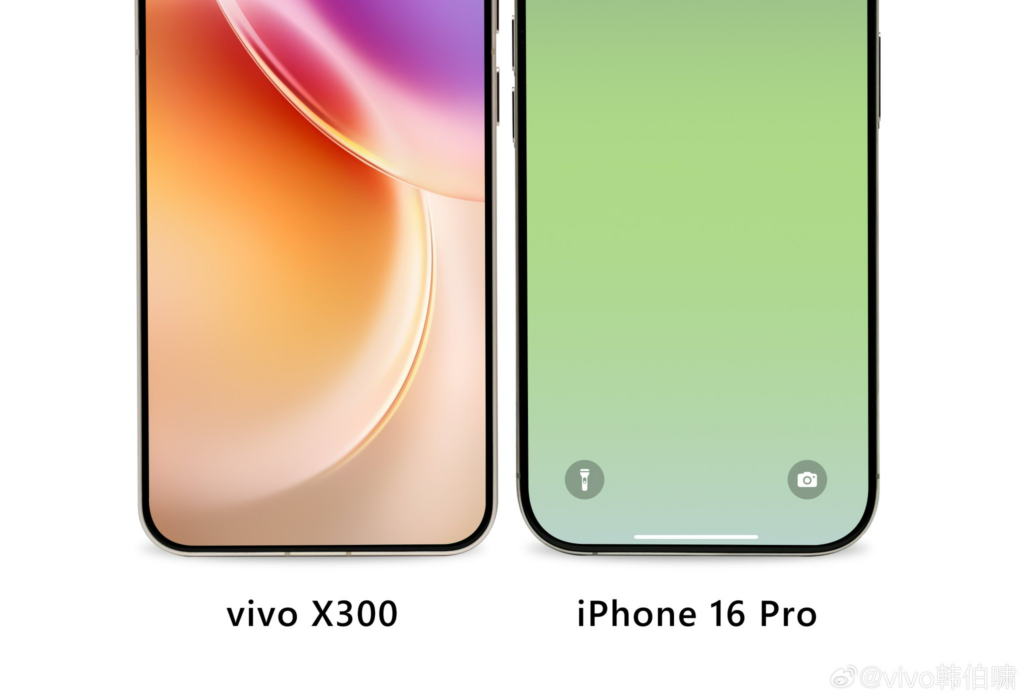
Vivo Product Manager Han Boxiao has been consistently sharing key details of the upcoming Vivo X300 series. In a new Weibo post, he compared the Vivo X300’s ultra-thin bezel design with that of the iPhone 16 Pro. Continue reading ahead to know the details shared by the Vivo executive.
Vivo X300 series to sport ultra-thin bezels
Vivo X300’s ultra-thin bezel display design compared with iPhone 16 Pro
According to Boxiao, the X300 series will feature the narrowest four-sided bezels seen on any Vivo smartphone to date. This has been achieved with the help of LIPO technology, which significantly reduces the border size for an edge-to-edge viewing effect. Rounded large corners have also been added to improve grip, ensuring the device feels comfortable to hold while offering an immersive full-screen look.
The display across the Vivo series is confirmed to use BOE’s customized Q10 Plus light-emitting material, co-developed with Vivo. This results in higher brightness, reduced colour deviation and improved power efficiency. The screens will also support Zeiss Master Color calibration, ensuring natural color reproduction whether viewing videos or high-resolution images.
Another key highlight is the dual eye-care system. The X300 series introduces 2160Hz high-frequency PWM dimming at full brightness, paired with full-brightness DC dimming. Users can switch between the two options depending on their preference, helping reduce eye strain from screen flicker. Together with upgrades from OriginOS 6’s visual comfort features, the phones are designed to offer protection across all conditions and usage scenarios.
According to reports, the Vivo X300 will feature a 6.3-inch display, which will enable it to compete with the upcoming iPhone 17 Pro. On the other hand, the Vivo X300 Pro is said to house a bigger 6.8-inch display. Both Dimensity 9500-powered smartphones are expected to launch in October in China. Readers can visit this post to know the officially confirmed camera details of the Vivo X300 and X300 Pro.
For more daily updates, please visit our News Section.
Huawei is expanding its Mate lineup to include TVs. Alongside the Mate XTs foldable and the MatePad Mini, the company unveiled its first-ever TVs branded under Mate: the Huawei Mate TV and Mate TV Pro.
The TVs are an extension of Huawei’s flagship Mate devices, and as a result, they share the same high-end approach to hardware. Huawei claims that the Mate TV is the first in the industry to run on a flagship dual-core smartphone-grade processor, which reportedly delivers a massive 490 percent boost in CPU performance compared to its earlier Smart Screen line of TVs.
That’s paired with the Honghu Vivid image-processing chip, allowing the set to handle 4K video in real time while pushing sharper detail and higher contrast.
The Mate TV Pro also comes with an unheard-of 12GB RAM and 256GB of storage, while the standard Mate TV has 8GB of RAM and 128GB of storage.
Even more notable is the fact that Huawei has swapped out the TV industry’s aging eMMC storage for UFS technology. It’s not saying which generation of UFS is inside, but the company claims app cold-start times are now just two seconds, which should cut down on lag.
Built for gaming
More than a standard TV, Huawei is pitching the Mate TV as a gaming machine. The company says its flagship GPU performance, HarmonyOS optimizations, and advanced cooling make it capable of running AAA games at high frame rates for extended sessions.
Control is another area where Huawei has made some exciting innovations. It’s new Lingxi remote now offers better pointing accuracy, less interference, and smoother control. More interesting are two optional accessories: Lingxi floating touch and a Lingxi stylus.
The floating touch is a separate controller with a touch surface and shoulder buttons, designed to mimic a gamepad while letting you navigate the TV. Huawei says it offers 8ms low latency and a vibration motor for haptic feedback. While gaming is the obvious use case, you can use it for tasks like photo editing or zooming in on images.
The Lingxi stylus, meanwhile, can be used directly on the TV for education, doodling, or creative projects. The pitch is that Mate TV can double as a family-sized digital canvas, not just a display.
On the software side, the TV runs HarmonyOS, so it ties into Huawei’s ecosystem of phones and tablets for app support and device continuity. The TV also supports face and voice recognition for personalized recommendations, parental controls, or switching profiles.
Audio and Screen
The Mate TV and Mate TV Pro also differ in their audio setups. The standard model uses six speakers (two full-range, two tweeters, and two woofers) in a 2.2-channel arrangement with Huawei Histen sound effects. The Pro model bumps that up to nine speakers (five full-range, two tweeters, and two woofers) with a 3.2.2-channel configuration and Huawei Sound processing.
Here’s the layout:
Mate TV (Standard):
Left and right channels: below the screen
Bass channel: behind the screen
Huawei Histen effects
Mate TV Pro:
Left, center, and right channels: below the screen
Bass channel: behind the screen
Left and right “sky” channels: angled upward
Huawei Sound effects
Moreover, the TVs flaunt an LCD (VA) screen with a 144Hz refresh rate, 4K resolution, 16:9 aspect ratio, and 7000:1 contrast ratio. The panel has a MiniLED backlight arrangement that delivers up to 4200 nits of peak brightness (varies by models).
Pricing and Availability
The Huawei Mate TV comes in 65-inch (¥8,999), 75-inch (¥11,999), 85-inch (¥15,999), and 98-inch (¥24,999) models, while the Mate TV Pro is priced higher with 75-inch (¥14,999), 85-inch (¥21,999), and 98-inch (¥30,009) options. Pre-orders open on September 4th, 2025, with sales starting September 26th in China.
For more daily updates, please visit our News Section.
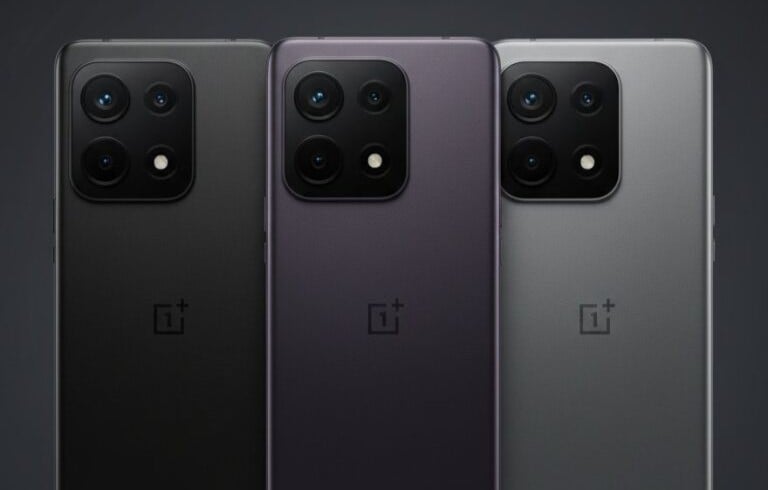
OnePlus co-founder Pete Lau has published a new community post that highlights the company’s next step in mobile photography. Without going into much detail at the start, Lau’s note makes it clear that a shift is underway in how OnePlus wants to approach smartphone imaging.
The OnePlus-Hasselblad collab comes to an end
OnePlus 15 to introduce DetailMax Engine
For the past five years, OnePlus has worked with Hasselblad to refine color science and image processing on its premium phones. This collaboration involved extensive work on tuning colours, light balance and realistic rendering, which helped OnePlus devices capture natural-looking images.
According to Lau, this partnership was not just technical but also a learning experience, embedding Hasselblad’s refined aesthetic sense into OnePlus’ DNA. With this chapter concluding, the company now prepares to take full ownership of its imaging technology.
Moving forward, OnePlus will rely on its own imaging platform called the DetailMax Engine. Lau explained that the aim is to provide clarity and realism, focusing on what users value most when they zoom into their photos.
Instead of artificial enhancements, the company plans to rely on advanced computational imaging to deliver detail-rich results that feel true to life. Early tests of the DetailMax Engine are said to be promising, with improvements expected as development progresses. Lau emphasised that the technology is designed to respond to user expectations rather than simply stack specifications.
While the collaboration with Hasselblad may be ending, OnePlus expressed gratitude for the achievements made together. The company also hinted at exploring new possibilities in imaging, promising that the upcoming flagship (OnePlus 15) with the DetailMax Engine will deliver the clearest and most realistic photos on a OnePlus device to date.
For more daily updates, please visit our News Section.
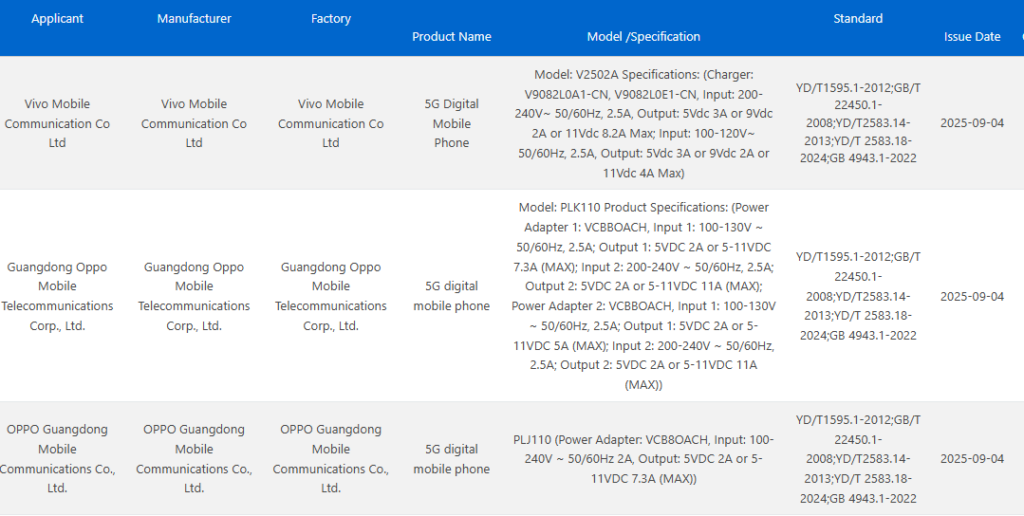
Several flagship phones are expected to debut next month (October) in China. Recently, the Vivo V2502DA phone, which is said to be the Vivo X300 Pro Satellite Communication Edition, was approved by the 3C authority in China. Now, the regular version of the Vivo X300 Pro bearing the V2502A model number has also appeared in 3C’s database. Additionally, the OnePlus 15 and Oppo Find X9 have also been approved by the 3C certification platform.
Vivo X300 Pro, OnePlus 15, Oppo Find X9 3C certified
Vivo X300 Pro, OnePlus 15, Oppo Find X9 3C certified
As can be seen above, the 3C certification platform has approved new smartphones bearing model numbers V2502A, PLK110, and PLJ110. These are said to be the Vivo X300 Pro (regular version – without satellite connectivity), OnePlus 15, and Oppo Find X9.
The 3C certification reveals that the Vivo X300 Pro may ship with a 90W charger, the OnePlus 15 may arrive with a 120W charger, and the Oppo Find X9 could be available with an 80W charger.
Among these, the OnePlus 15 was recently seen at the Geekbench benchmarking platform with the Snapdragon 8 Elite Gen 5 chipset, 16GB of RAM, and Android 15. Its global version bearing the model number CPH2747 was recently approved by TUV Rheinland. This listing also suggested that the device may ship with a 120W charger. Model numbers such as CPH2749 and CPH2745 are also said to be associated with the OnePlus 15’s global edition.
The standard Vivo X300 and the Find X9 Pro haven’t yet appeared in 3C’s database. Considering that these devices are expected to debut next month in China, they are likely to get 3C certification in the next few days. Recent reports have revealed that one of the Honor Magic 8 series phones and the Xiaomi 16 series phones have also bagged 3C certification. While the Xiaomi 16 series is expected to debut by the end of this month, the Honor Magic 8 series will launch in October.
For more daily updates, please visit our News Section.
Samsung could be about to shake up phone cameras again. A report from Korean outlet The Elec says Samsung Electro-Mechanics is developing a telephoto module with continuous optical zoom — something no mainstream smartphone has offered yet.
Most current phones use fixed zoom levels, like 3x, 5x, or 10x, and then rely on digital zoom for everything in between. That’s why image quality tends to drop once you move off those set points. A continuous optical zoom would change that, letting the lens shift smoothly across a range while keeping detail sharp.
The way it works is pretty complex: the lens is split into multiple groups, with some parts moving independently to adjust focal length. The trade-off? A bulkier module, trickier mechanics, and the need for razor-sharp alignment. Samsung has already filed patents in 2024 and 2025, hinting it’s been working on this for a while.
What’s interesting is who might be bringing it first to the mainstream smartphone space. According to the report, Samsung is pitching the tech to Chinese brands like Xiaomi, which are usually quicker to adopt experimental features. For Samsung’s component business, it’s also a smart play in a slowing market — focus on high-value modules like continuous zoom, variable apertures, and thinner designs, and sell them to as many phone makers as possible.
While some phone makers lean heavily on image processing rather than optics — take Google’s Pixel 10 lineup, which uses AI to enhance zoom shots instead of adding bigger and better telephoto hardware — most Chinese smartphone makers still pack the best lenses they can fit in their flagships. That’s why Samsung’s work on continuous optical zoom feels like one to watch.
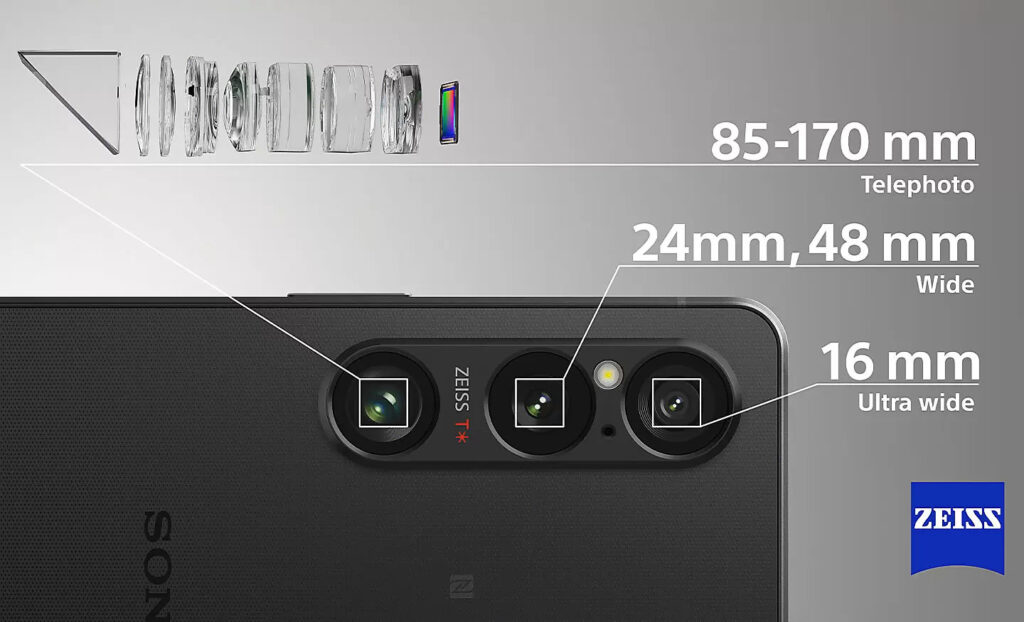
It’s worth noting this isn’t the first time we’ve seen seamless optical zoom in a phone. Sony’s Xperia 1 VII can move between 3.5x and 7.1x optically without much loss in detail. The problem? Xperia devices have never really clicked with mainstream buyers. They’re solid in some areas, but not well-rounded enough to compete with the big players in the space.
If Samsung’s development goes as expected, continuous optical zoom could finally make “super zoom” on smartphones more than just a marketing gimmick. But for now, it looks like Chinese flagships will get the first shot.
OnePlus is preparing to roll out its next flagship, the OnePlus 15, and early leaks suggest the company has something big lined up for display tech. The phone is expected to launch in China this October, with a new budget-friendly Ace 6 also on the way — and possibly even a new “Turbo” lineup.
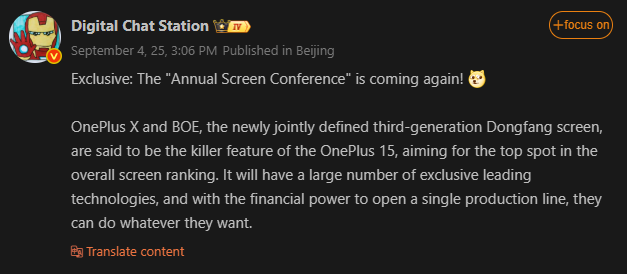
According to tipster Digital Chat Station on Weibo, the OnePlus 15 will be the first to use BOE’s latest Oriental X3 panel. If that sounds familiar, it’s because last year’s OnePlus 13 debuted with the X2 screen, which went on to snag DisplayMate’s top A++ rating. The X3 is said to push things even further, and BOE is reportedly planning to make the display official before the phone’s launch, much like it did ahead of the OnePlus 13 reveal.
According to previous leaks, the OnePlus 15 will feature a 6.78-inch display with a super-smooth 165Hz refresh rate — faster than the 120Hz panel on the OnePlus 13. However, the resolution is said to drop from 2K to 1.5K this year.
Under the hood, the phone is tipped to run Qualcomm’s Snapdragon 8 Elite 2 chip and pack a huge 7,000mAh battery with 120W wired charging. Design tweaks are also said to be in store, giving the device a new look compared to its predecessors.
Global pricing and availability are still a question mark, but for context, the OnePlus 13 is currently selling for around $873 on Amazon. If history is any guide, the 15 shouldn’t stray too far from that ballpark.
With a next-gen BOE screen, upgraded hardware, and a massive battery, the OnePlus 15 looks like it could be one of the most exciting Android flagships this year. All eyes are now on October for the official reveal.
Samsung’s Galaxy S24 might be staging a comeback in India, months after the Galaxy S25 took the spotlight. A new leak points to a Snapdragon-powered variant of the phone headed to the market — a twist few saw coming.
Snapdragon-powered Galaxy S24
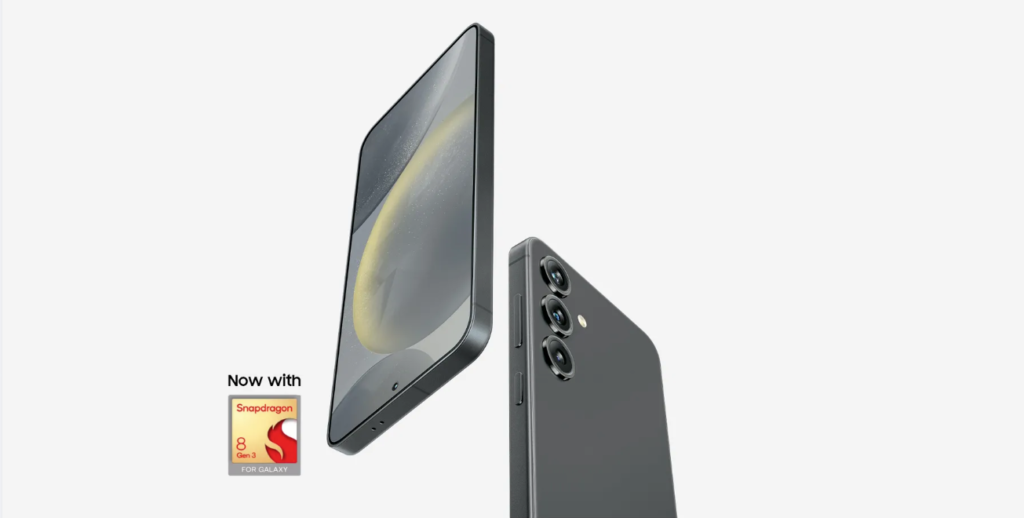
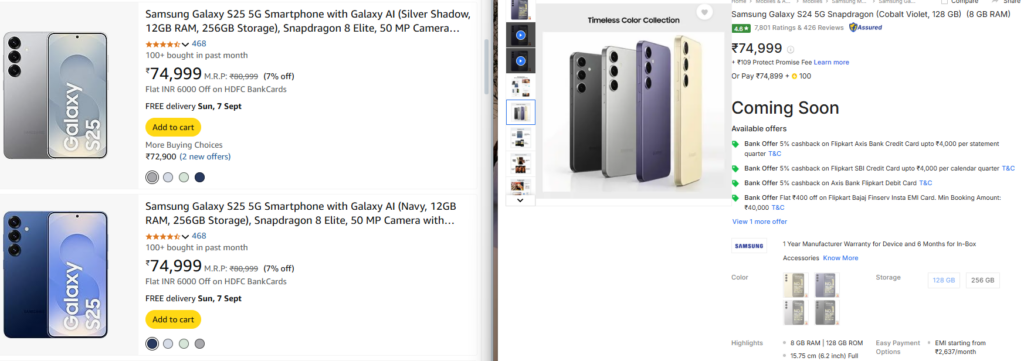
Evidence suggests this version will carry the model number SM-S921E, compared to the SM-S921B sold earlier in India with Samsung’s Exynos 2400 chip. Listings spotted on Flipkart show “Galaxy S24 5G Snapdragon” marked as Coming Soon at INR 74,999 (around $850), with the spec sheet clearly mentioning the Snapdragon 8 Gen 3 “for Galaxy” processor. That chip has so far been limited to regions like the US.
It’s not just Flipkart fueling the chatter. Geekbench results have surfaced for the SM-S921E, and Samsung’s own firmware servers — as noted by leaker @tarunvats33 — also reference the Snapdragon model. Add in dedicated Flipkart banners promoting the new chip, and it’s hard to chalk this up to a mistake.
But here’s the catch: should you actually wait for this Snapdragon 8 Gen 3-powered Galaxy S24? Probably not. The Galaxy S25 is already available at the same price on Amazon and comes with the newer Snapdragon 8 Elite chip — a clear step up from the 8 Gen 3. Meanwhile, the Galaxy S25 FE’s pricing is still under wraps, but looking at history, the S24 FE launched at ₹59,999 and now sells for just ₹39,999. With no major hardware changes in the S25 FE — not even the chipset — it’s likely to launch around the same price point and see steep discounts down the line.
So whether you want the best-performing chipset or the longest software support, the Snapdragon-powered S24 doesn’t look like the most sensible option. The only way it might make sense is if Samsung offers aggressive discounts, similar to its FE series — for instance, matching the current ₹51,998 price of the Exynos-powered S24.
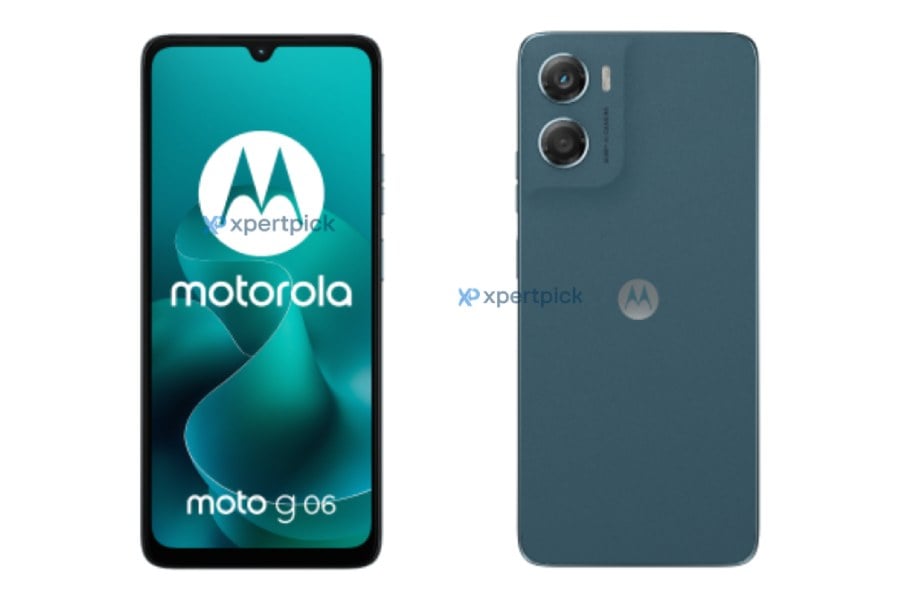
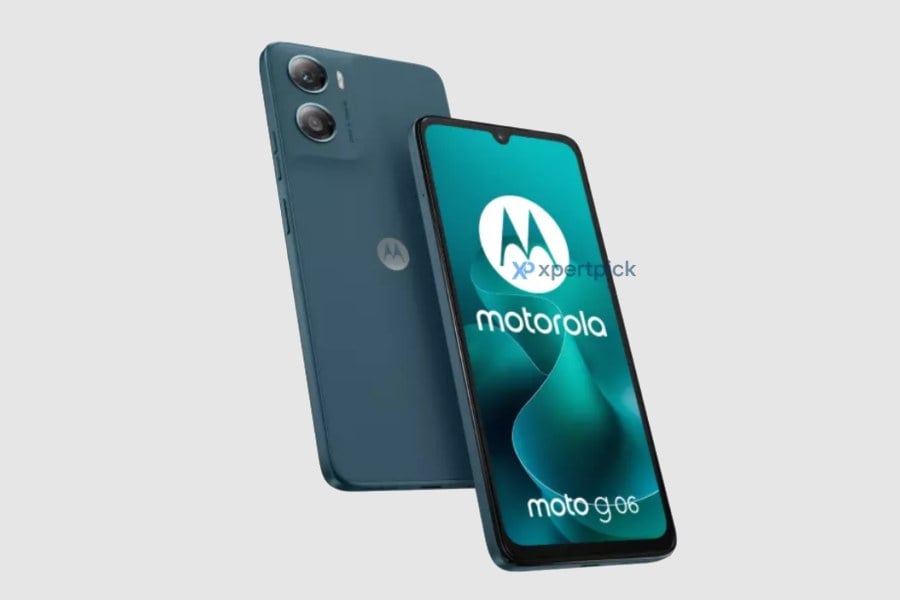
Motorola seems to be gearing up for another round of affordable smartphones, and the next one on the list could be the Moto G06. The device has surfaced in an extensive leak via XpertPick, revealing everything from its design to specs. So here’s what it offers.
Moto G06 Specifications
The Moto G06 is rumored to come with a 6.88-inch LCD screen with a waterdrop notch. The device has an HD+ resolution and a fairly modest 260ppi pixel density, but the big surprise here is a 120Hz refresh rate. Its predecessor, the Moto G05, offers a 90Hz refresh rate.
Inside, the G06 is said to run on the MediaTek Helio G81 Extreme chipset, paired with 4GB of RAM. Storage options are reportedly 64GB or 256GB. A 5,200mAh battery should keep things running for a while, though charging will reportedly top out at a slow 10W.
For cameras, Motorola may be packing in a 50-megapixel main shooter with autofocus, along with a flicker sensor for better lighting accuracy. On the front, users will get an 8-megapixel selfie camera.
Security-wise, the G06 will rely on a side-mounted fingerprint sensor. The phone is also expected to ship with Android 15 right out of the box.
In terms of design, the Moto G06 has a slim 8.31mm profile and a 194-gram weight. The device will reportedly come in Pantone-certified shades: Tapestry, Arabesque, and Tendril.
As for pricing, the Moto G06 is rumored to land at €119 for the 4GB/64GB model and €169 for the 4GB/256GB version. There’s no word yet on when or where Motorola will first launch the device, but we will be sure to keep you updated on that as soon as we hear more.
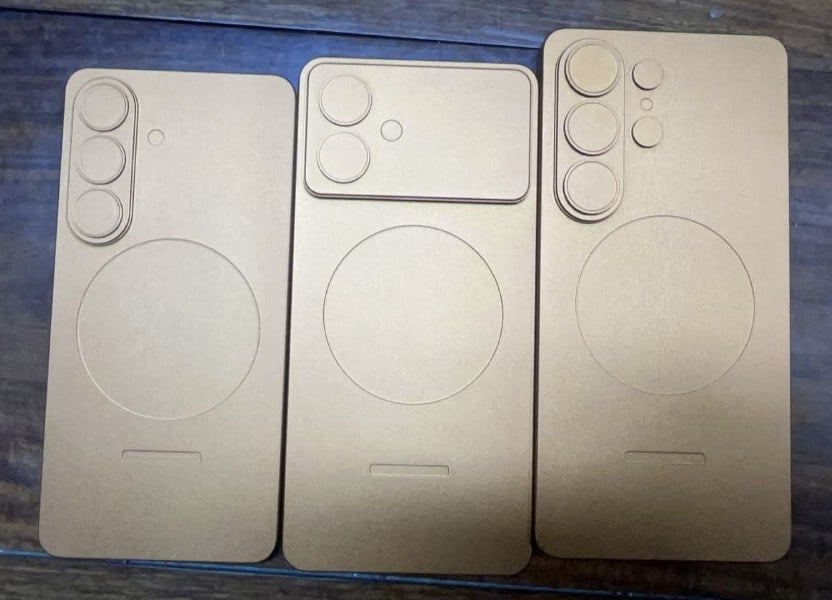
The first look at Samsung’s upcoming Galaxy S26 series may have just leaked, and it’s becoming a conversation starter. Reliable tipster Sonny Dickson shared an image of the dummy units that reportedly show the upcoming models.
The largest of the three is easy to identify as the Galaxy S26 Ultra. The other two are less clear, but the one on the left appears to be the standard Galaxy S26 (or the Galaxy S26 Pro, as rumors say), while the middle model could be the Galaxy S26 Edge.
S26 Edge could have a design similar to iPhone 17 Air
As you can tell, design-wise, the most noticeable change is on the S26 Edge. Instead of Samsung’s usual separate camera lenses, the device has a horizontal camera bar that spans across the back of the phone. Interestingly, that’s a look Apple is rumored to be adopting for the iPhone 17 Air and Pro.
The lenses themselves are still arranged in a vertical stack, alongside an LED flash in the same spot as before. According to leaker Ice Universe, the camera bar could house internal components, which in turn will make room for a larger 4,200mAh battery (up from 3,900mAh) and allow Samsung to slim the thickness down from 5.8mm to 5.5mm.
All three dummy units also show slightly squared-off edges on the corners and a circular indentation on the back. That indentation could be a hint for upcoming Qi2 wireless charging support with magnetic alignment. Google already brought the feature to the Pixel 10 lineup, so it looks like Samsung may be preparing to follow suit.
The Galaxy S26 lineup isn’t expected to arrive until early next year, which means Samsung still has time to tweak the design. So for now, it’s best to treat these details with a dose of caution.
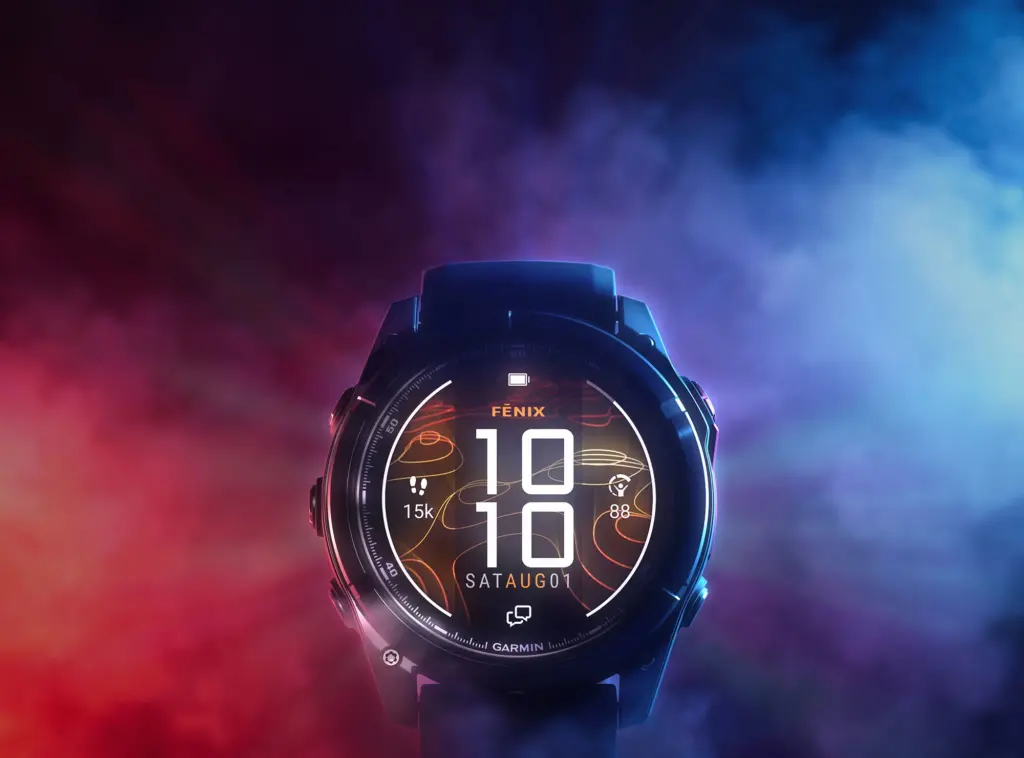
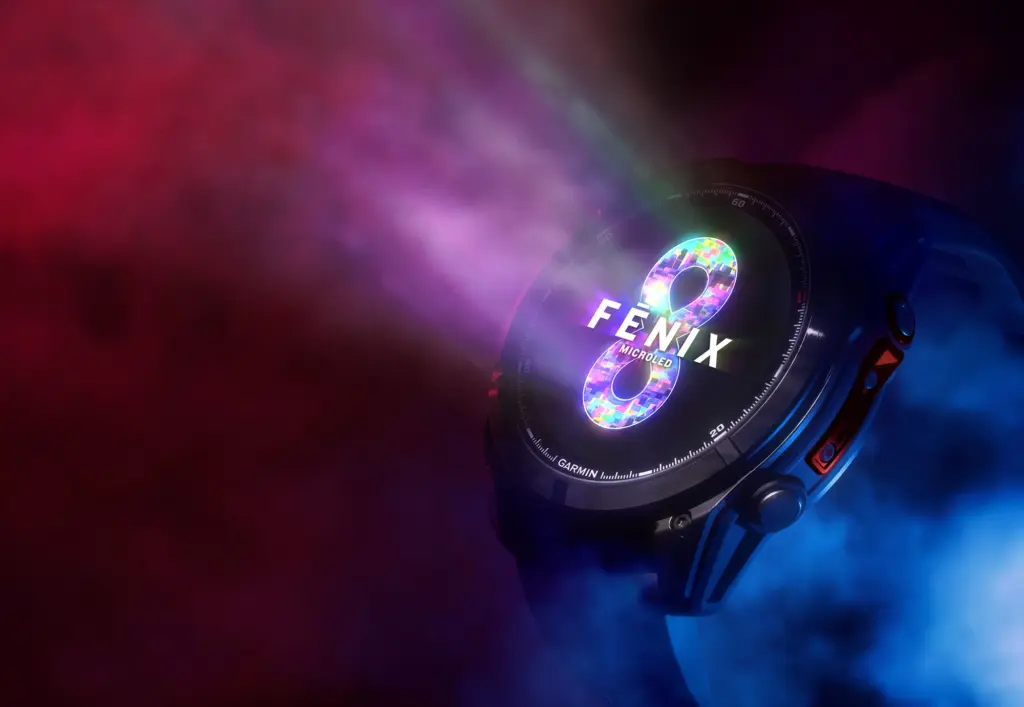
Garmin has introduced the Fenix 8 Pro series with significant upgrades in display technology and connectivity. The new lineup features both AMOLED and MicroLED display options across 43mm, 47mm, and 51mm case sizes.
The top-tier 51mm MicroLED model comes with a sapphire crystal lens, carbon grey DLC titanium bezel, and is priced at $1,999.99 USD. The AMOLED variants start at $1,299.99 USD.
Garmin Fenix 8 Pro Specifications
The Fenix 8 Pro equips the world’s first MicroLED display on a smartwatch. It features a 1.4-inch panel that delivers up to 4,500 nits of brightness using over 400,000 individual LEDs. The display supports full-color visuals with ultrawide viewing angles and remains visible even under harsh sunlight. The AMOLED variants offer similar clarity with longer battery life, reaching up to 27 days in smartwatch mode.
The watch comes with Garmin’s inReach technology, enabling two-way satellite messaging, location check-ins, and SOS alerts. It also supports LTE connectivity, allowing users to make voice calls and send texts directly from the watch without a paired smartphone. The Messenger Calls app facilitates direct calling over LTE, while LiveTrack lets friends follow your location in real time. All LTE and satellite features require an active Garmin subscription.
The Fenix 8 Pro sports a rugged design built to military-grade durability standards. It includes a titanium rear cover, leakproof inductive buttons, and a built-in LED flashlight. The watch is water-rated at 10 ATM and supports recreational diving up to 40 meters.
For navigation, the watch features preloaded TopoActive, golf, ski, and trail maps. It supports turn-by-turn directions, NextFork guidance, and Garmin’s SatIQ technology, which optimizes multiband GPS performance while conserving power.
It features an extensive suite of health tools, including ECG, Pulse Ox, sleep tracking, nap detection, skin temperature, jet lag adviser, and the Body Battery energy monitor. It also supports over 100 sports and activity modes, including triathlon, diving, MTB, skiing, and racket sports.
The Fenix 8 Pro supports Garmin Pay, music downloads from Spotify and other services, and smart notifications. It comes with 32GB of internal storage and a built-in speaker and microphone.
Pre-orders begin September 8. The Garmin Fenix 8 Pro lineup is expected to ship globally soon after.
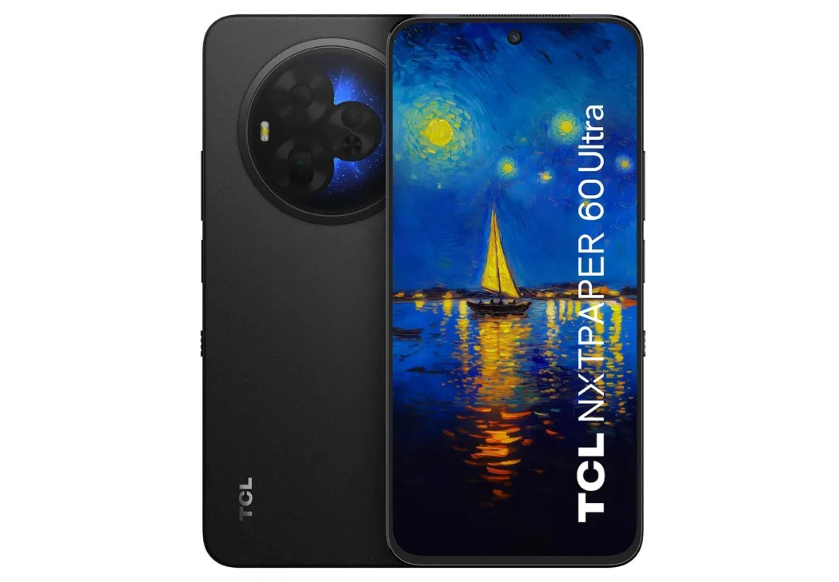
The smartphone trend this year has leaned heavily toward bigger batteries, with some devices packing up to 8,000mAh cells in surprisingly slim frames. TCL, however, is taking a different approach with its new NxtPaper 60 Ultra. Instead of chasing sheer capacity, it’s pushing size in another direction: screen real estate.
TCL NxtPaper 60 Ultra Specifications
The phone comes with a massive 7.2-inch display, housed in a body that’s taller than most flagships. At 174.5mm, it towers over Samsung’s Galaxy S25 Ultra (162.6mm) and the iPhone 16 Ultra (149.6mm). The panel itself is an LCD with FHD+ resolution and a 120Hz refresh rate.
As part of TCL’s NxtPaper lineup, the 60 Ultra features the company’s textured display tech designed to reduce glare and flicker. TCL claims it also cuts down on blue light, making the screen easier on the eyes at any brightness level.
Stylus support is included in the form of the T-Pen Magic, but there’s no built-in slot for it, so you’ll need a separate case if you plan on carrying it around.
Under the hood, the NxtPaper 60 Ultra runs on MediaTek’s Dimensity 7400 chipset paired with 12GB of RAM and up to 512GB of storage. Power comes from a 5,200mAh battery with 33W wired charging.
For cameras, TCL has packed in a 50MP main sensor with OIS, an 8MP ultrawide, and a 50MP periscope lens offering 3x optical zoom. Up front, there’s a 32MP selfie camera.
Pricing and Availability
The NxtPaper 60 Ultra will be available in Europe, Latin America, and Asia-Pacific. Pricing starts at €449 for the 12GB / 256GB version, while the 12GB / 512GB model goes for €499.
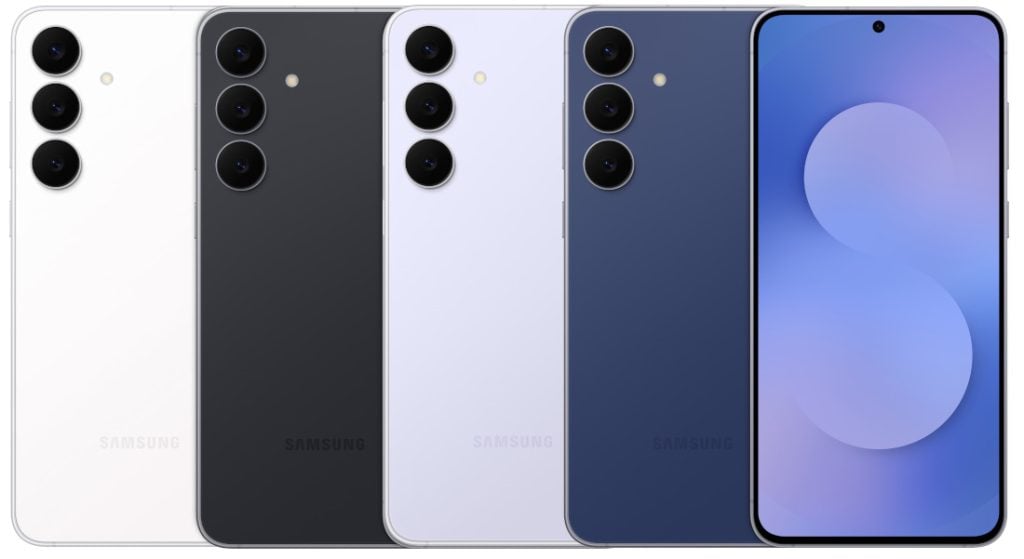
Samsung has officially unveiled the Galaxy S25 FE, the latest addition to its Fan Edition lineup. But how does it compare to last year’s Galaxy S24 FE? From performance gains to a more refined design, here are all the meaningful upgrades on the latest budget flagship phone.
The South Korean tech giant has dropped incremental upgrades on this year’s Galaxy S25 FE, but the display is virtually the same. While the 6.7-inch AMOLED screen remains the same, the body is getting more refined and sleek. The new Galaxy S25 FE features a slimmer 7.4mm chassis that weighs just 190 grams. This makes it both lighter and thinner than the Galaxy S24 FE, which measures 8mm in thickness and weighs 213 grams. Samsung has no plans for a major design overhaul for its flagship S series, and the S25 FE confirms its focus on refining the design.
Please Note: When you buy something using the links in our articles, we may earn a small commission at no cost to you.
2. Better Performance
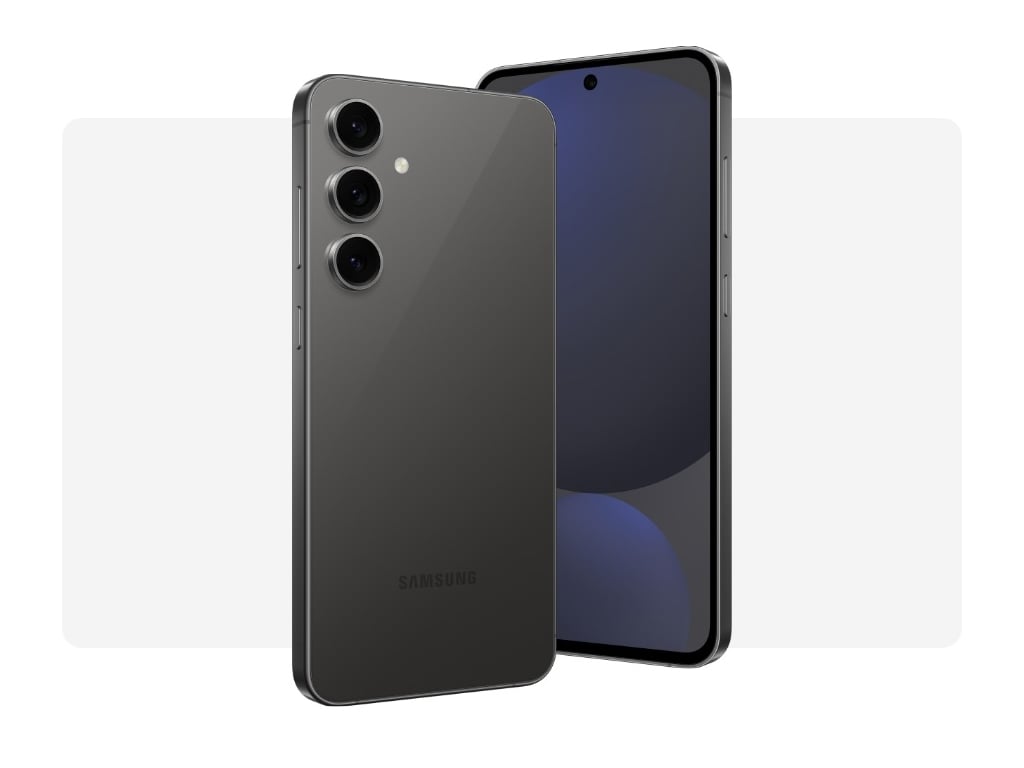
Samsung Galaxy S24 FE
The Galaxy S24 series debuted with the Exynos 2400 SoC last year, but the Galaxy S24 FE model got a slightly cutdown Exynos 2400e chip. But the latest Galaxy S25 FE model got the full-fledged Exynos 2400 chip, bringing a high peak CPU speed of 3.2GHz (over 3.1GHz on the S24 FE). While you won’t feel the difference in day-to-day use, the S25 FE should be capable of slightly better performance under heavy workloads.
3. Bigger Battery & Faster Charging
Another notable upgrade on the Galaxy S25 FE is the battery and charging department. Despite featuring a slimmer chassis, the Galaxy S25 FE packs a larger 4,900mAh battery pack, which supports 45W wired fast charging and 15W wireless charging. Meanwhile, the Galaxy S24 FE is powered by a 4,700mAh cell that only supports 25W wired fast charging. While you also get 15W wireless charging, the wired charging speeds were quite lacklustre.
4. New Selfie Camera
The camera setup on the rear is basically identical to the three sensors. However, the brand is offering a minor improvement to the selfie shooter. You now get a 12MP camera for selfies and video calls on the Galaxy S25 FE, which has a wider f/2.2 aperture. In comparison, the predecessor packed a 10MP front camera that had an f/2.4 aperture. On paper, this should allow for better selfies thanks to a higher resolution, with the wider aperture allowing more light into the sensor.
TECNO used the stage at IFA 2025 to show off a mix of new hardware — led by its MegaPad Pro tablet and a wider push into laptops for the European market. The company is positioning the tablet as an “Essential AI Tablet,” with features designed to appeal to both students and professionals, while its laptop rollout comes just in time for the back-to-school season.
The MegaPad Pro is a 12-inch device with a 2K display (450 nits brightness, 90Hz refresh rate) that aims to balance work and play. It comes with four Dolby-tuned speakers, a large 10,000mAh battery for roughly eight hours of heavy use, and AI-focused extras. A dedicated AI key gives quick access to TECNO’s Ella Assistant, which can help students manage assignments and notes or handle tasks like emails and presentations for work users.
On the laptop side, TECNO confirmed it’s expanding into Spain and France through a partnership with distributor MCR. Models like the MegaBook K15S, K16S, and the smaller Mega Mini G1 gaming PC are already on sale at retailers such as MediaMarkt and Carrefour. The company also teased its lightest 14-inch OLED laptop yet — the MegaBook S14, weighing just 899 grams — which is scheduled to launch in select markets in Q4 2025.
The move underlines TECNO’s ambition to grow beyond phones and into Europe’s PC space, where competition is heating up. With the MegaPad Pro taking aim at AI-driven productivity and the slim MegaBook S14 waiting in the wings, TECNO clearly sees IFA 2025 as its chance to step into a bigger spotlight.
Huawei’s Pura X, the world’s first wide-folding smartphone, is proving to be a hit in China. Since its launch on March this year, the phone has shipped more than 700,000 units, according to industry insiders (via ITHome). Nearly 100,000 activations were recorded in its first week alone, underlining the strong demand for Huawei’s unique foldable design.
The Pura X introduces a new approach to foldables with its wide 16:10 aspect ratio, aimed at making reading, split-screen use, and media consumption more natural than on taller folding devices. It also stands as the first phone to fully ship with HarmonyOS 5, bringing Huawei’s latest AI features and an upgraded assistant. Prices start at 7,499 yuan (about $1,037), positioning it in the premium segment but still competitive compared to rivals like the $2,000 Galaxy Z Fold 7.
Huawei currently commands about 75% of China’s foldable phone market, giving it a comfortable lead over competitors like Samsung, Oppo, or Vivo. The Pura X’s early momentum only strengthens that position. At the same time, Huawei is broadening its foldable lineup. The company has just launched the Mate XTs — the world’s second mass-produced tri-fold phone — alongside a new MatePad Mini. The first Mate XT model shipped close to 500,000 units in the first half of 2025 alone.
Looking ahead, industry insiders suggest Huawei has more in the pipeline. Plans reportedly include a double-folding Mate X7, and even a next-generation Pura X with a new display slated for 2026.
By combining HarmonyOS, unique form factors, and a steady release schedule, Huawei is reinforcing its dominance in foldables. The Pura X’s strong performance suggests the appetite for new designs is real — and Huawei intends to stay at the front of the race.
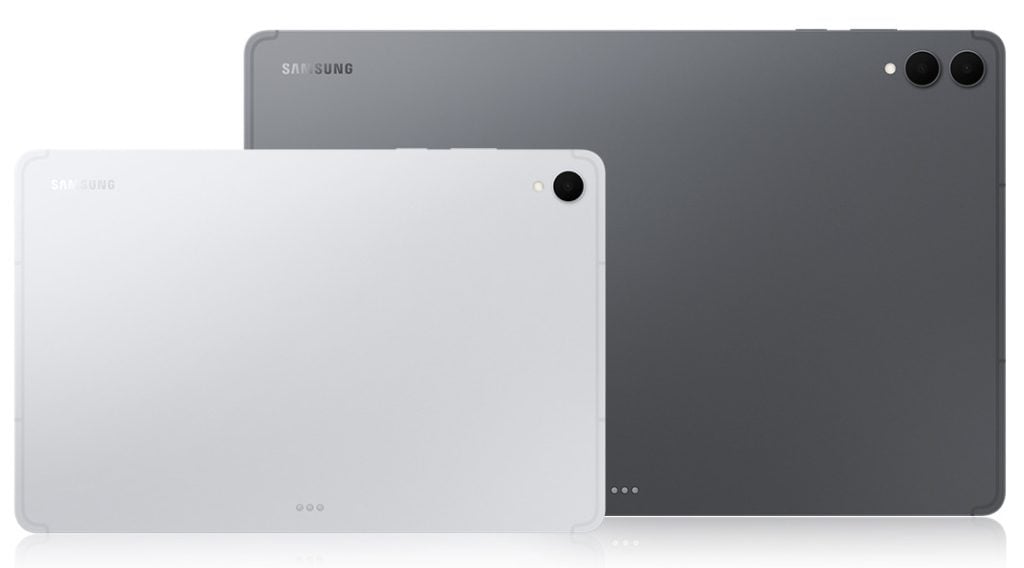
Samsung has officially unveiled its Galaxy Tab S11 lineup, bringing two premium tablets that pack high end hardware, super slim design, and tall, vibrant displays. From the latest MediaTek flagship chipset to Galaxy AI functionality, the Galaxy Tab S11 and Galaxy Tab S11 Ultra are the best tablets from the brand.
Samsung Galaxy Tab S11 Ultra
The Galaxy Tab S11 Ultra arrives as Samsung’s latest and greatest tablet. You’re getting flagship level specs and features, all of which are packed in a super slim and premium 5.1mm body (weighs around 695 grams). This makes it even thinner than Apple iPad. On the front, the Galaxy Tab S11 Ultra sports a huge 14.6-inch Dynamic AMOLED 2X display with a 2960 x 1848 resolution, 1600 nits of peak brightness, 5.2mm bezels, and a 120Hz refresh rate.
Under the hood, it is equipped with MediaTek’s most powerful chipset, the Dimensity 9400+. The high end processor is coupled with up to 16GB of RAM and 1TB of internal storage. Users can even expand the storage by up to 2TB via a microSD card slot. A massive 11,600mAh battery pack powers this model, which supports 45W wired fast charging. The Dimensity 9400+ has a faster NPU that powers Galaxy AI and various AI powered tools.
Samsung Galaxy Tab S11 and Galaxy Tab S11 Ultra
This includes Drawing Assist and Writing Assist for productivity tasks along with other popular features like Circle to Search. One can even use this model as a PC thanks to Samsung DeX. Samsung offers a dual camera setup on the rear with a 13MP main and an 8MP ultra wide angle lens. Meanwhile, the front houses a 12MP shooter for selfies and video calls. Other notable features include WiFi 7, Bluetooth 5.4, and both 5G and WiFi only variants.
Samsung Galaxy Tab S11
The base Galaxy Tab S11 is similar to the Galaxy Tab S11 Ultra in more ways than one. You’re getting the same Android 16 OS based One UI 8 custom skin with all of the new AI tools. It is also powered by the Dimensity 9400+ chip. However, the standard model gets a shorter 11-inch Dynamic AMOLED 2X panel with a 2560 x 1600 resolution, 1600 nits of peak brightness, and a 120Hz refresh rate.
The Aluminum Armor frame returns, as well as an IP68 rating for water and dust resistance. However, there are a couple of downgrades like a lacking ultra wide camera, a thicker 5.5mm chassis, WiFi 6E, and a smaller 8,400mAh cell. Other similar features include the new S Pen, quad speakers, and a microSD card slot for storage expansion.
Pricing and Availability
Samsung announced both the Galaxy Tab S11 and Galaxy Tab S11 Ultra in two color options, namely Silver and Gray. Both models are available for purchase in select models, with pre-reservations in India going live as well. So here are the pricing details:
Huawei has officially launched the FreeBuds 7i in China, priced at 599 yuan ($84). The new earbuds are available in Pearl White, Deep Space Grey, and Sakura Pink. The company has positioned the FreeBuds 7i as a mid-range TWS option that delivers improved noise cancellation, better call clarity, and support for immersive spatial audio.
Huawei FreeBuds 7i Specifications
The earbuds feature Huawei’s updated Smart Dynamic Noise Cancellation 4.0. The system uses three microphones along with a large 8mm² air duct chamber to absorb and counter external noise. Huawei claims an average full-band noise reduction depth of 28dB. The ANC system has a latency reduction of up to 50% and can adapt to changing environments in under 0.5 seconds.
Huawei has also focused on improving call quality. The FreeBuds 7i adds a bone-conduction microphone alongside the traditional mic array. The AI call noise cancellation system suppresses up to 90dB of background noise and reduces wind interference, ensuring clearer voice pickup even in noisy settings.
The earbuds come with 11mm quad-magnet dynamic drivers that deliver clear vocals and detailed audio output. They feature a 10-band EQ along with several audio presets, allowing users to fine-tune the listening experience. The earbuds also support spatial audio with head-tracking, creating a 360-degree surround effect, while on-device processing ensures compatibility across various video platforms and devices.
The 7i supports voice controls through Huawei’s Xiaoyi assistant for calls, music, and alarms. It also features gesture controls like nodding to answer or shaking to reject calls, while touch inputs let users adjust volume, switch ANC modes, and manage playback directly from the earbuds.
The FreeBuds 7i support Bluetooth 5.4 and audio codecs such as SBC, AAC, LDAC, and L2HC 2.0. There is no support for LHDC or aptX. Huawei enables pop-up pairing for devices running EMUI 10.1 and later, along with multi-device connectivity on HarmonyOS 3.0 and above.
In terms of battery life, the earbuds offer up to 8 hours of playback without ANC and 5 hours with ANC turned on. When used with the charging case, the total playback time extends to 35 hours without ANC or 20 hours with it. It also supports fast charging, delivering up to 4 hours of use from just a 10-minute top-up.
Each earbud weighs approximately 5.4 grams, while the charging case weighs 36.5 grams. The earbuds are also IP54-rated for resistance against dust and light splashes.
Alongside the earbuds, Huawei also introduced the Mate XTs, a tri-fold phone, and the MatePad Mini, a compact tablet packed with big features.
For more daily updates, please visit ourNews Section.
We use cookies on our website to give you the most relevant experience by remembering your preferences and repeat visits. By clicking “Accept”, you consent to the use of ALL the cookies.
This website uses cookies to improve your experience while you navigate through the website. Out of these, the cookies that are categorized as necessary are stored on your browser as they are essential for the working of basic functionalities of the website. We also use third-party cookies that help us analyze and understand how you use this website. These cookies will be stored in your browser only with your consent. You also have the option to opt-out of these cookies. But opting out of some of these cookies may affect your browsing experience.
Necessary cookies are absolutely essential for the website to function properly. This category only includes cookies that ensures basic functionalities and security features of the website. These cookies do not store any personal information.
Any cookies that may not be particularly necessary for the website to function and is used specifically to collect user personal data via analytics, ads, other embedded contents are termed as non-necessary cookies. It is mandatory to procure user consent prior to running these cookies on your website.